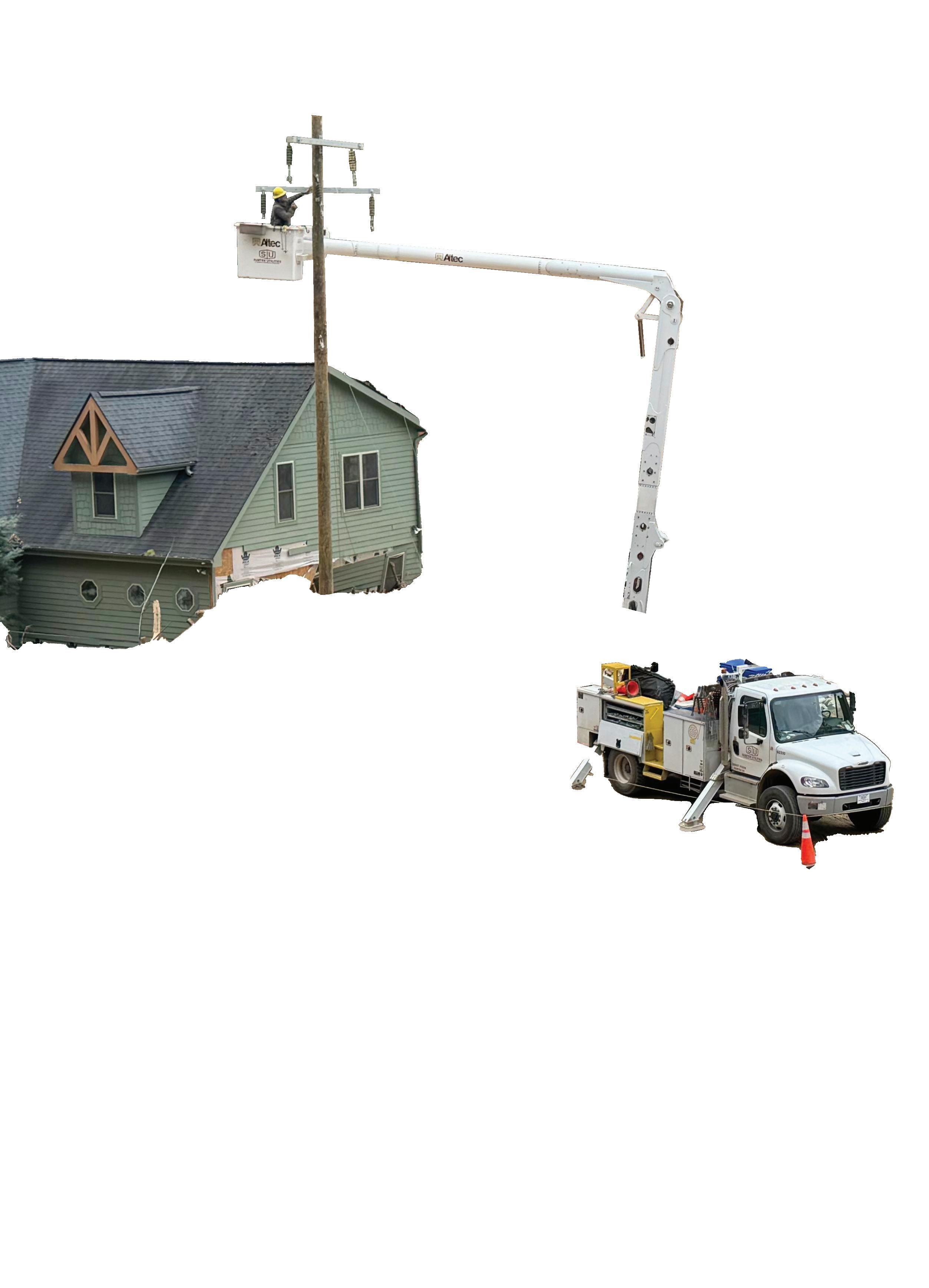









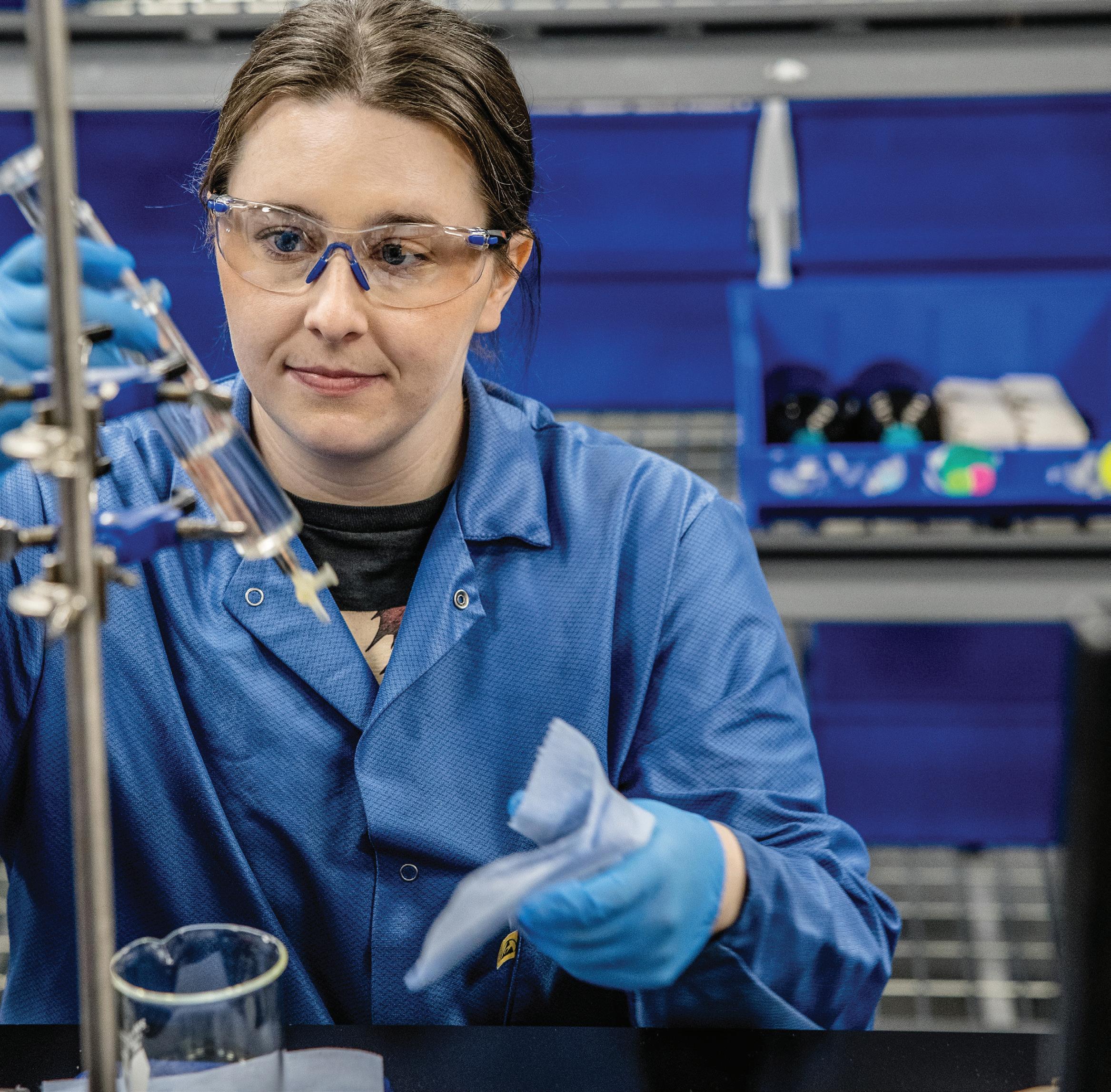
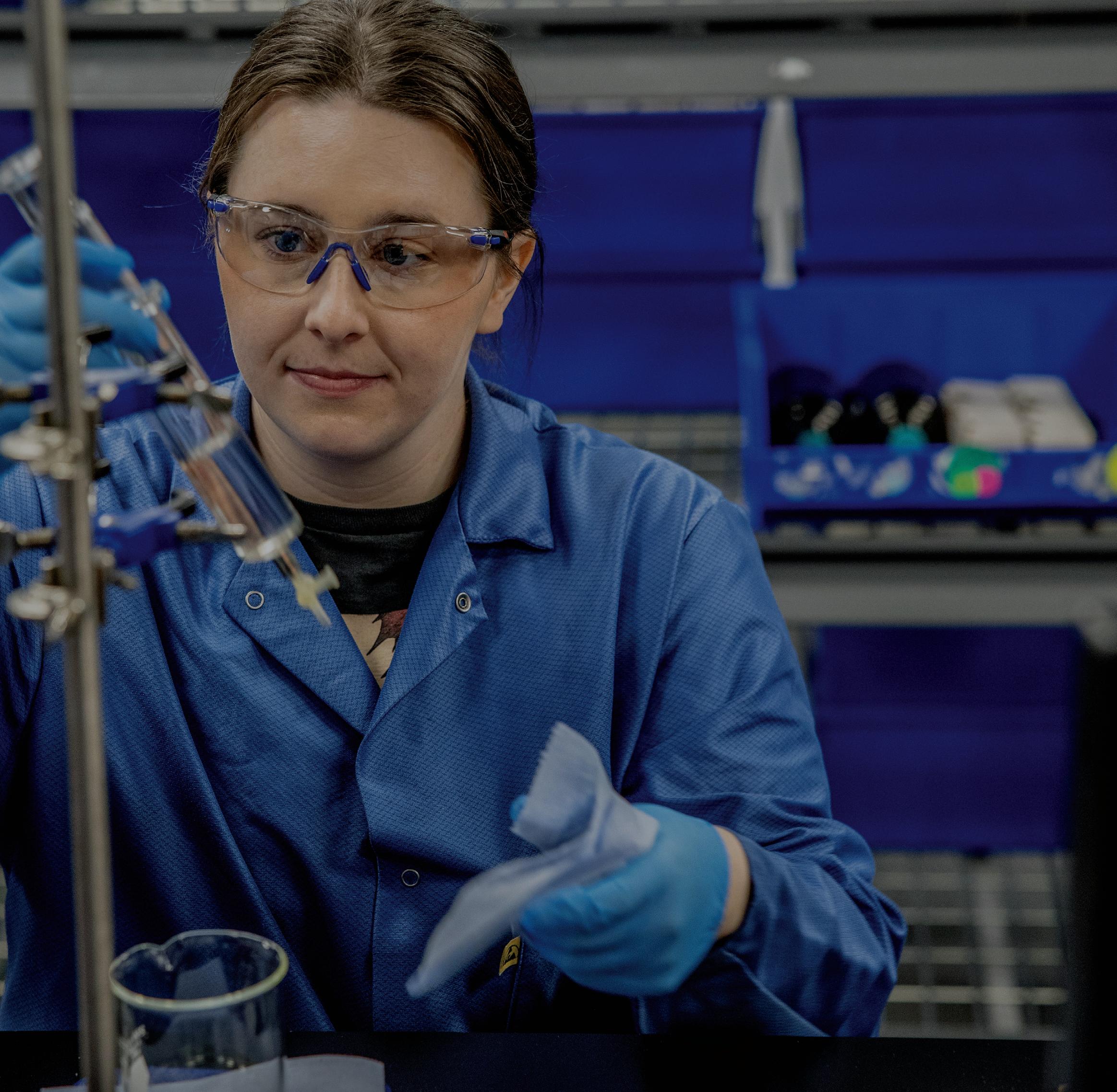

When the stakes are high, one call connects you to a partner with the full range of vegetation management, utility infrastructure, digital innovation and storm/emergency restoration services from the Asplundh family of companies. You’ll have a skilled workforce that shows up ready, the technology that drives performance and the resources to keep your project running strong. One partner. One call that gets it done. One Asplundh.




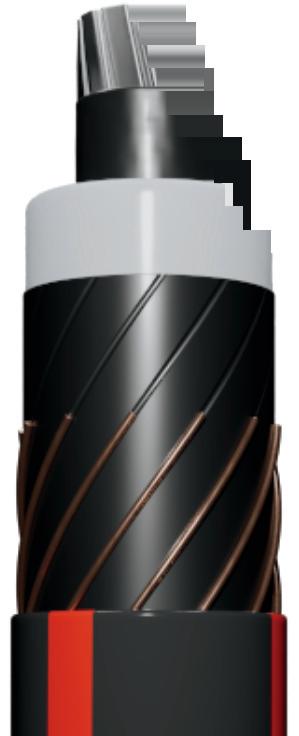
No burn-through eliminates elbow repairs
Lower material and installation costs
Mechanical strength protects conductors
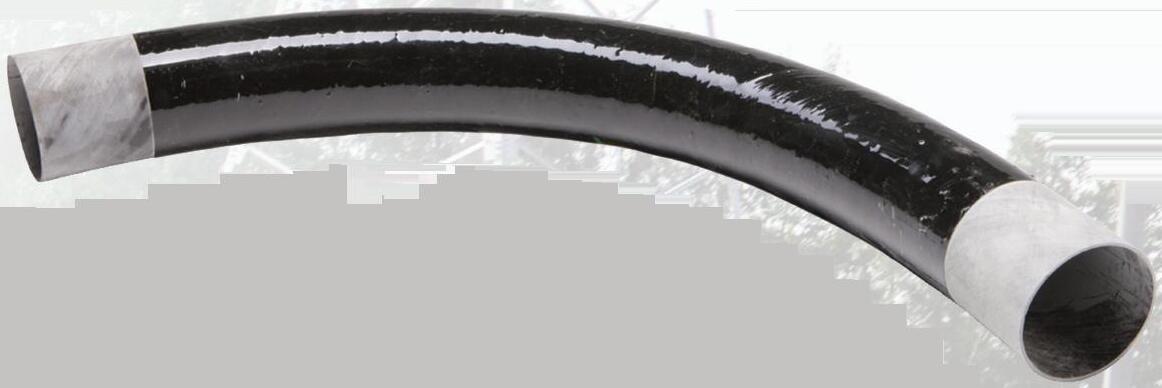




Low coefficient of friction for smooth pulls
Operable in temperatures of -40° to +230°F





AMY FISCHBACH, Head




ICE Agents Pose as Utility Workers at Three Oregon Homes, Rep. Says
Oregon State Rep. Ricki Ruiz, who represents Gresham, a Portland suburb, said he knew of three incidents where federal agents impersonated utility workers at the homes of his constituents. https://tdworld.com/55342792

We highlight our top five stories of 2025 based on popularity; included are a special report on reshoring, a commentary on grid inertia, and a utility case study on substations. https://tdworld.com/55339315

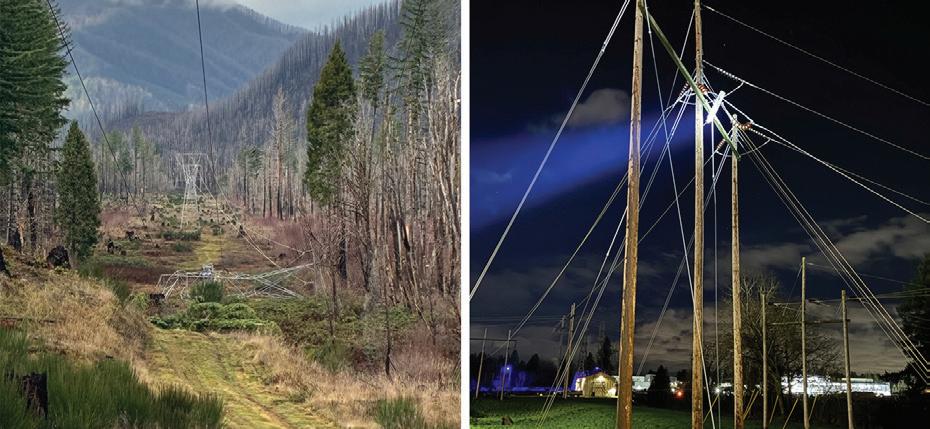
Lineworkers restored power to a majority of the impacted transmission lines within 48 hours of the initial power outages. https://tdworld. com/55341076
Group Editorial Director Nikki Chandler nchandler@endeavorb2b.com
Managing Editor Jeff Postelwait jpostelwait@endeavorb2b.com
Digital Content Specialist Christina Marsh cmarsh@endeavorb2b.com
Art Director Kermit Mulkins kmulkins@endeavorb2b.com
Head of Content Amy Fischbach afischbach@endeavorb2b.com
Technical Writer Gene Wolf GW_Engr@msn.com
Senior Editor-at-Large Geert de Lombaerde gdelombaerde@endeavorb2b.com
VP, Customer Marketing Angie Gates agates@endeavorb2b.com
Senior Production Operations Manager Greg Araujo garaujo@endeavorb2b.com
Ad Services Manager Shirley Gamboa sgamboa@endeavorb2b.com
Audience Marketing Manager Sonja Trent strent@endeavorb2b.com
Audience Development Manager James Marinaccio jmarinaccio@endeavorb2b.com
Endeavor Business Media, LLC
CEO: Chris Ferrell
COO: Patrick Rains
CRO: Paul Andrews
CDO: Jacquie Niemiec
CALO: Tracy Kane
CMO: Amanda Landsaw
EVP Endeavor Business Intelligence: Paul Mattioli
EVP Water & Energy Group
Diana Smith
VP of Content Strategy, Water & Energy Group Bob Crossen
T&D World (USPS Permit 795-660, ISSN 1087-0849 print, ISSN 2771-6651 online) is published 9 times a year (February to June, August to October and December) by Endeavor Business Media, LLC. 201 N Main St, 5th Floor, Fort Atkinson, WI 53538. Periodicals postage paid at Fort Atkinson, WI, and additional mailing offices. Canadian GST #R126431964.
POSTMASTER: Send address changes to T&D World, PO Box 3257, Northbrook, IL 60065-3257.
SUBSCRIPTIONS: Publisher reserves the right to reject non-qualified subscriptions. Subscription prices for 12 issues (9 print and 3 digital): U.S. ($137.50); Canada/Mexico ($170.00); All other countries ($210.00). All subscriptions are payable in U.S. funds.
Send subscription inquiries to T&DWorld, PO Box 3257, Northbrook, IL 600653257. Customer service can be reached toll-free at 877-382-9187 or at tdworld@ omeda. com for magazine subscription assistance or questions.
REPRINTS: To purchase custom reprints or e-prints of articles appearing in this publication, contact Reprints@endeavorb2b.com
PHOTOCOPIES: Authorization to photocopy articles for internal corporate, personal or instructional use may be obtained from the Copyright Clearance Center (CCC) at 978-750-8400. Obtain further information at copyright.com
PRIVACY POLICY: Your privacy is a priority to us. For a detailed policy statement about privacy and information dissemination practices related to Endeavor products, please visit our website at www.endeavorbusinessmedia.com
CORPORATE OFFICE: Endeavor Business Media, LLC, 30 Burton Hills Blvd, Ste. 185, Nashville, TN 37215, U.S.; www.endeavorbusinessmedia.com.
© Copyright 2026 Endeavor Business Media, LLC. All rights reserved. Printed in the USA.
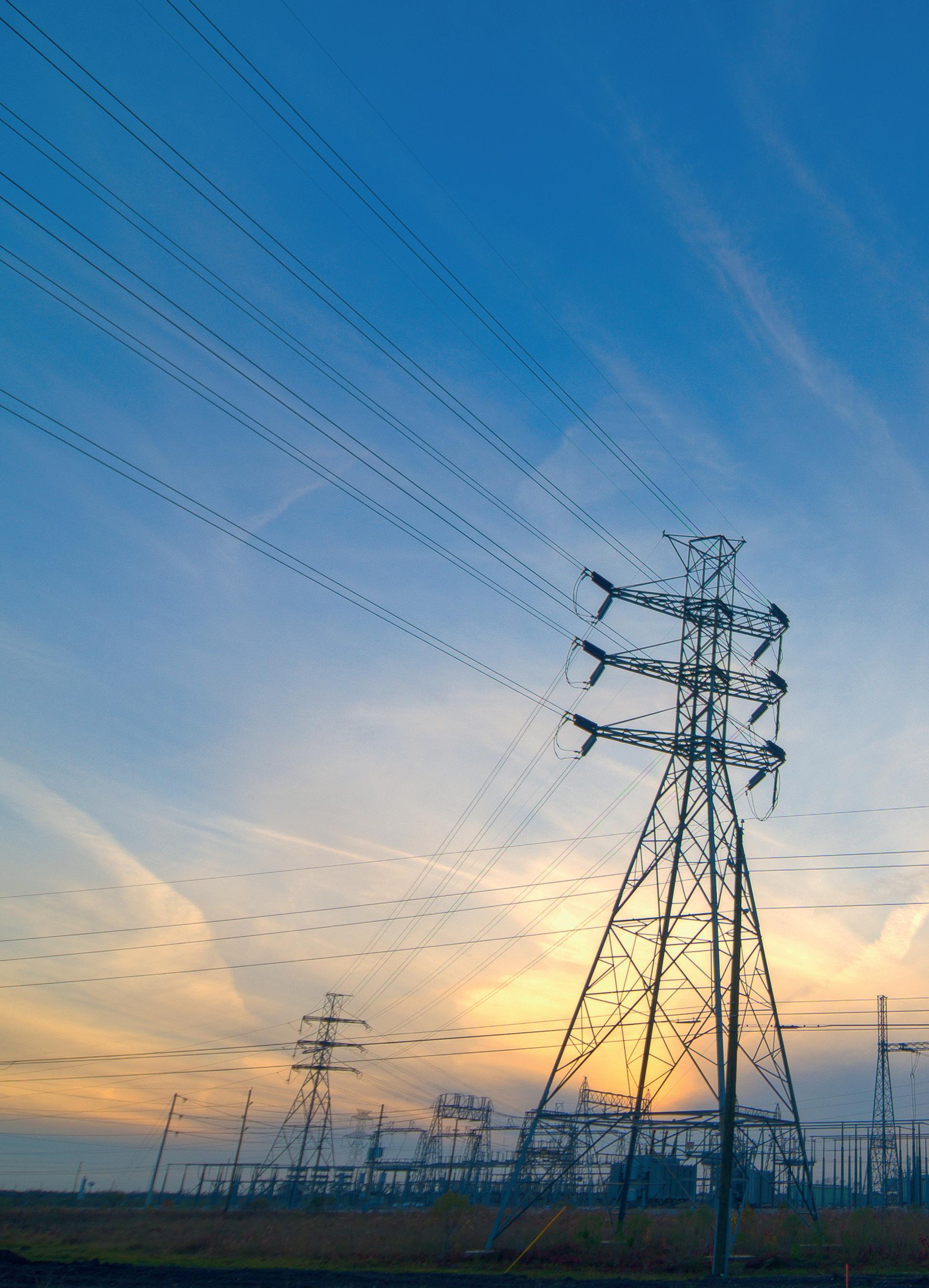






When hurricanes hit, our industry mobilizes. EVERYONE in the utility has a part in storm response and recovery: from line workers repairing and replacing damaged equipment, vegetation crews clearing fallen trees, customer service reps and communications managers keeping the public informed, logistics coordinators providing materials and shelter, and CEOs and directors overseeing resources, plans, and coordination. And that’s just a start. There is also engineering, data analytics, mutual aid coordination; it is a highly coordinated effort.
Our coverage of Hurricanes Helene and Milton, just a little over a year after they hit, looks at a slice of that response. On Sept. 26, 2024, Hurricane Helene struck as a powerful Category 4 storm, leaving widespread destruction in its wake and claiming more than 250 lives. Just two weeks later, on Oct. 9, Hurricane Milton hit Florida as a dangerous Category 3 storm, battering coastal communities still reeling from prior storms.
Helene and Milton were two of the most significant storms to hit Florida’s West Coast in the past 100 years. Together, they left an estimated 5.5 million customers without power across multiple states. Helene was unprecedented in its unusually slow inland track, bringing prolonged heavy rain and wind that caused flooding and extended outages in Georgia and the Carolinas. The storms caused severe damage to electric and water utilities well inland, and the combination of wind, flooding, and downed trees left some areas without power for several days.
Last month we featured a story about the aftermath, highlighting the tireless efforts of Duke Energy line workers and mutual aid crews, who worked long hours under extreme conditions to restore electricity, reopen critical services, and help communities rebuild. The article, written by Head of Content Amy Fischbach, shared the resilience, teamwork, and dedication that made the recovery possible. One of those line workers featured in the story was Greyson Stewart, a line apprentice 4 for Duke Energy in South Carolina. He said that growing up in Florida, he has seen a lot of hurricanes and what they can do, but the devastation that happened across the Carolinas was something he’d never seen before.
This month our special coverage continues with a “part 2” from Amy, looking at the massive destruction caused in iconic Chimney Rock and nearby Bat Cave, North Carolina. Both communities are along the Broad River watershed, so flooding heavily affects both areas. Duke Energy line crews had to restore power and rebuild infrastructure in extremely challenging conditions. With bridges washed out, roads inac -
cessible, and communication systems down, crews relied on “old-school” line work, helicopters, track equipment, and community support to reach stranded homes. Even a year later, rebuilding the community and infrastructure continues.
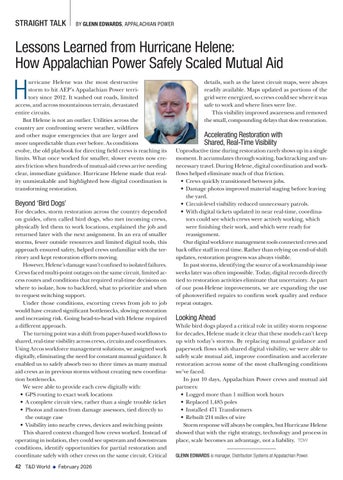
We also feature a Straight Talk from the manager of Distribution Systems at AEP’s Applachian Power, also deeply affected by Hurricane Helene. Glenn Edwards shares how Helene pushed Appalachian Power to rethink storm restoration. With roads washed out, crews scattered across the mountains, and hundreds of mutual-aid workers showing up at once, the old “bird-dog” system just couldn’t keep up for them. Helene became a proving ground for digital coordination for Appalachian Power.
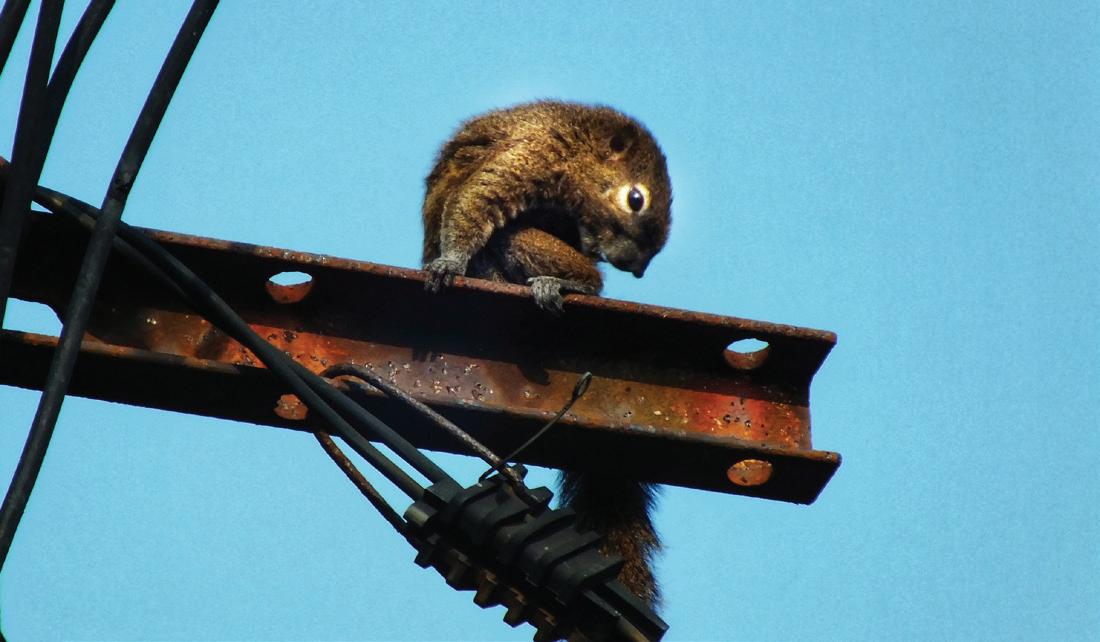
As an animal lover, I always appreciate it when we have wildlife mitigation articles. They can run the gamut from physical barriers and deterrents to habitat considerations, to detection, and monitoring systems. This month, we feature a piece from an engineer on “bird faults.” Kendrick Schaben offers an engaging look at wildlife faults, and why they’re harder to diagnose than we like to admit. Field crews may instinctively know the difference between a squirrel, a bird or a tree, but proving the cause when oscillography tells a different story is where things get interesting.
What makes this piece compelling is that it bridges field intuition with protection analytics. Birds, in particular, are a much bigger reliability player than people think. In some regions, they’re driving the majority of wildlife outages and, in fire territory, even ignition events. Schaben walks through real case studies (including multiple turkeys in a single Christmas morning flight path) to show how bird faults often behave like bolted faults and how reclosing tends to clear them quickly.
But the more important takeaway is about learning: More awareness of local wildlife behavior, paired with targeted mitigation like spacing, insulator covers or diverters, can make a meaningful difference in both SAIDI and fire risk.
These storms may have passed for now, but the lessons they left behind are shaping how utilities plan, respond, and restore. Storms like Helene and Milton remind us that the grid is only as strong as the people, processes, and knowledge behind it. What we’re seeing — from line work to protection analytics to digital coordination — is the industry learning in real time, adapting as landscapes, weather, and risks change. And the effort doesn’t stop when the headlines do.


and

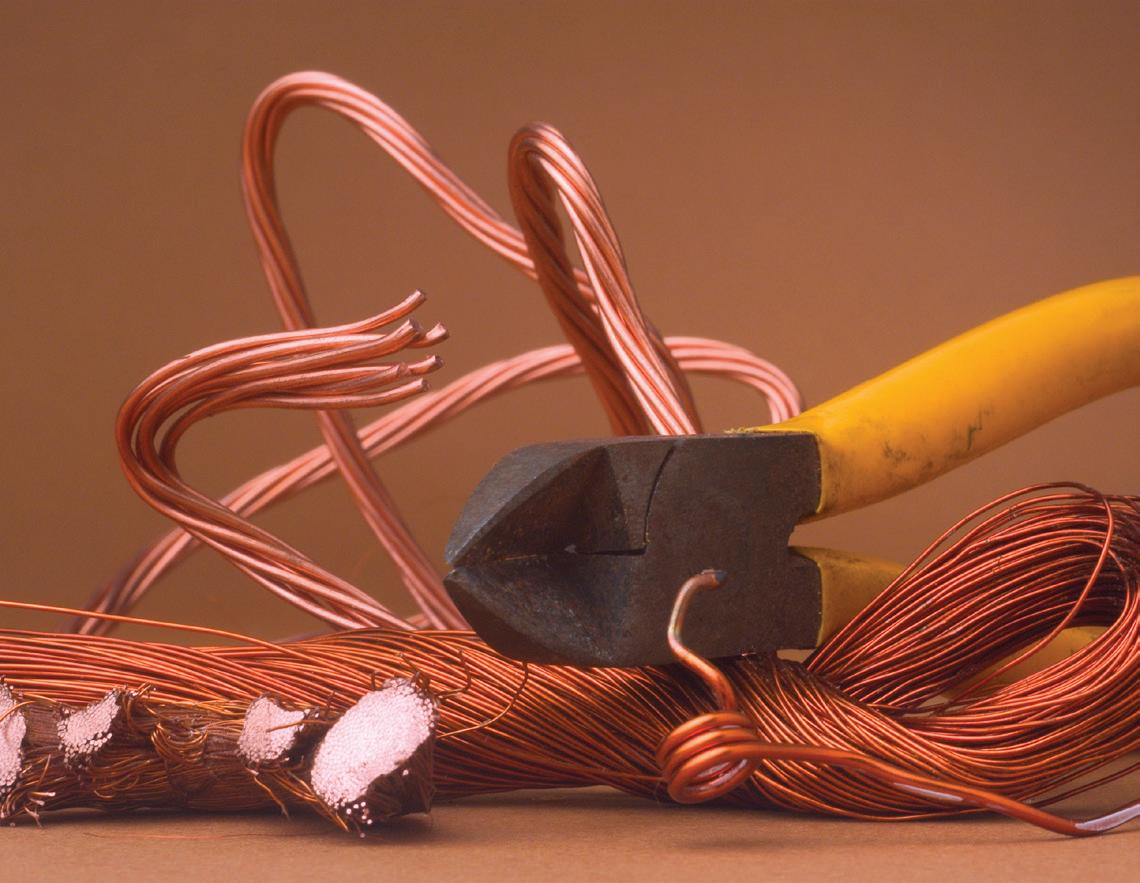
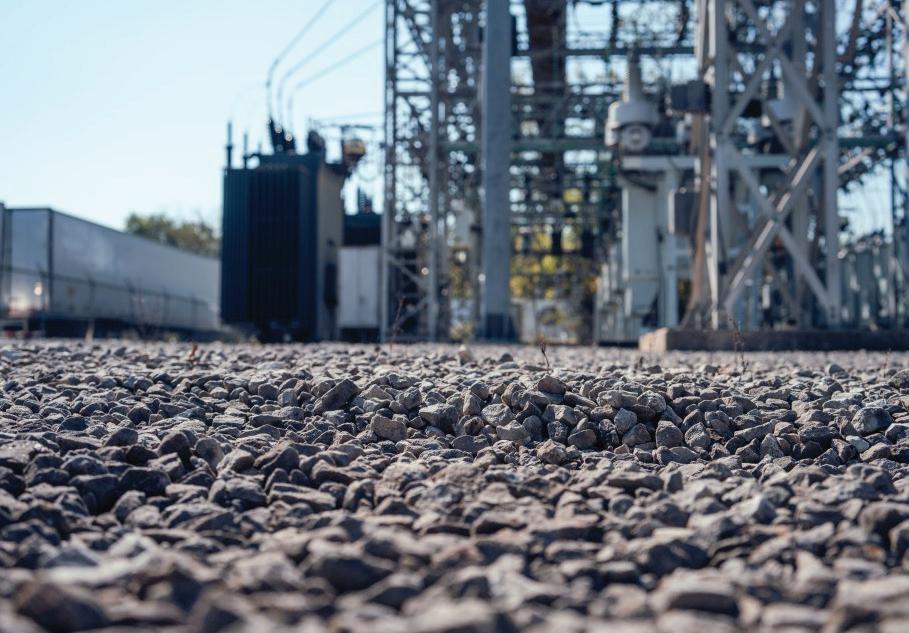
One of the expanding problems for utilities is copper theft. Actually it’s a grueling trial for everyone with an infrastructure that relies on copper wire, conductor, tubing, and any other copper related asset. The DOE reported that copper theft costs high-risk industries about US$1 billion annually. To put it in perspective, one study estimated that a single theft of about US$100 worth of copper can cost a business over US$5,000 to repair. It’s a flourishing racket because the price paid for copper by scrap yards is at near record highs and it’s difficult to prevent. Traditional anti-theft methods were developed before criminals became so sophisticated and they’re not working.
I was introduced to the copper theft shortly after becoming a substation engineer, (i.e., a very long time ago). The crime wasn’t as common in those days since it was more of a target of opportunity. We were installing a 2/0 copper grid in one of my substation projects. The wire had been placed in the trenches and welding started, but quitting time came and the crew went home. The next morning, no copper – it was an expensive lesson. Several years later I saw the crime had escalated. Thieves knew we used copper wire to ground our substation’s chain link fences.
What got me thinking about these incidents was a recent uptick in press releases from producers of copper theft deterrents. Then a major story about the growing problem appeared in the Wall Street Journal. They pointed out that copper theft is a spreading global problem that leaves a trail of disastrous damage behind it. The crime is costing utilities millions of dollars to repair and jeopardizes public safety. They quoted AT&T saying the thefts have cost them $76 million in the first ten months of 2025 alone and that’s only one company. That got AT&T lobbying federal, state, and local authorities to make it easier to replace the copper networks with modern technologies.
So what are these modern technologies that can throw a monkey wrench into the growth pattern of copper theft? As previously discussed, CCS products have proven to be successful deterrent. That has been joined by CCA (copper-clad aluminum core) products and many other conductor adaptations. Fabricators are also offering microscopic dots loaded with data, embedded RFID microchips with GPS, and laser-etching serial codes for conductors. Don’t forget the digital substation in this copper cable combat. These state-of-the-art facilities have removed thousands of tons of copper control cables with fiber optics and wireless communications.
Another up and coming application that caught my attention are the solar plus-storage streetlight systems. Traditional streetlighting uses thousands of miles of copper cable that are being stolen at an alarming rate. Cities and utilities are swapping those old-school streetlights out because these cutting-edge devices have no power cables, Also, they’re environmentally friendly with their clean energy replacements. Speaking of clean energy, EV charging cables are high on criminals’ hit list.
After removing all the fence grounding, a thief went inside the substation for the grounding wire on the steel structures and equipment. He did okay until he climbed onto the top of the station’s transformer and came in contact with an energized conductor. The death got a lot of media attention resulting in changes to our grounding standards. Instead of using copper wire, we switched to copper-clad steel (CCS) products for all above grade grounding pigtails, and the company’s copper thefts dropped significantly after that.
Tesla is testing the CatStrap DyeDefender theft prevention system on their high-speed EV charging stations. It resists cutting, but if it is cut, its pressurized staining dye system sprays a special bright-blue dye on the perp. It’s very hard to remove and it turns the thief into a giant Smurf, which makes identification easy! The system is being tested as an anti-vandalism and anti-theft deterrent on Tesla’s EV supercharging station cables.
Another promising deterrent tool is the integration of artificial intelligence (AI) into copper crime fighting systems. One promising adaptation is AI-power systems that are learning to differentiate between normal outages and copper theft induced outages by analyzing electrical patterns. Another benefit is it can spot the patterns in a gradually failing cable and allow replacement before a failure, which makes customer happier. Using an advanced technological approach is a marked shift in combating copper crimes from reactive to proactive. Plus it’s amusing thinking about a bright-blue thief trying to explain they’re not big Smurfs to law enforcement!
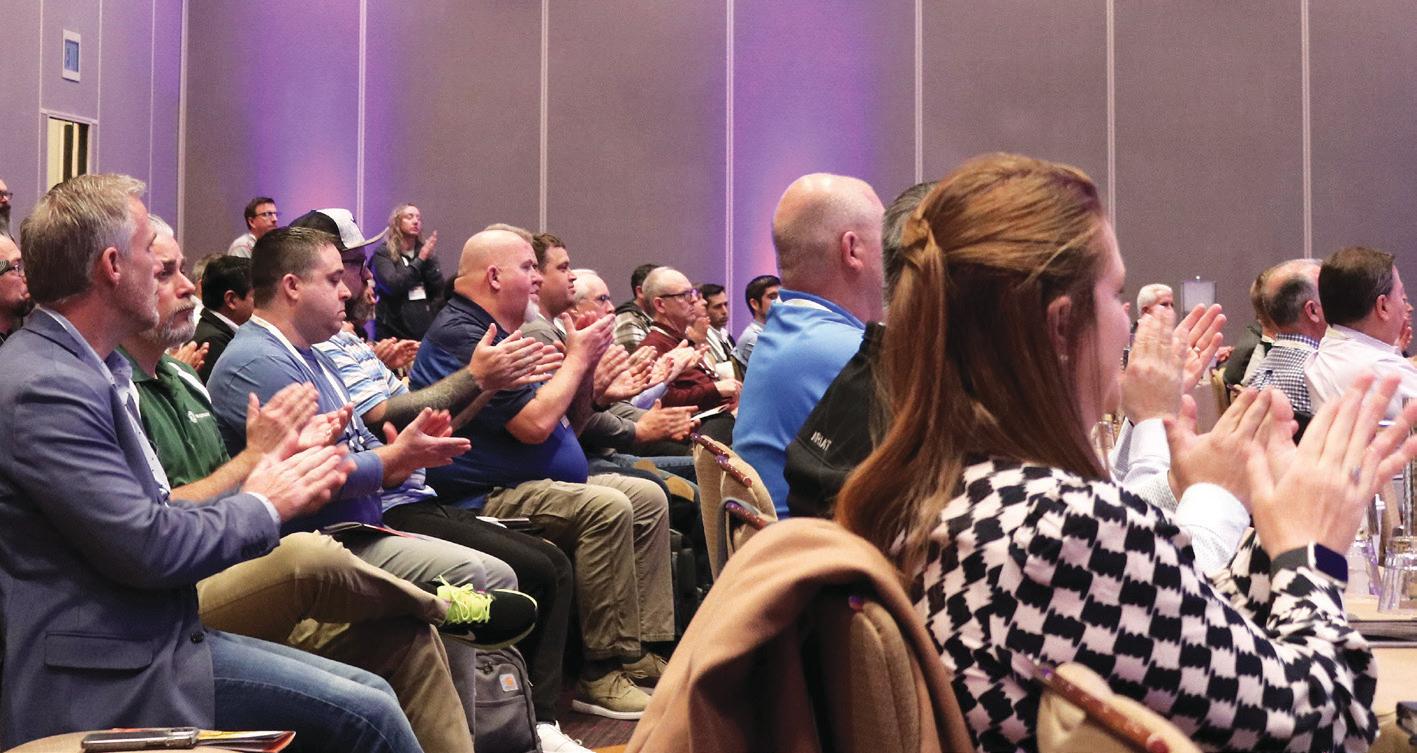






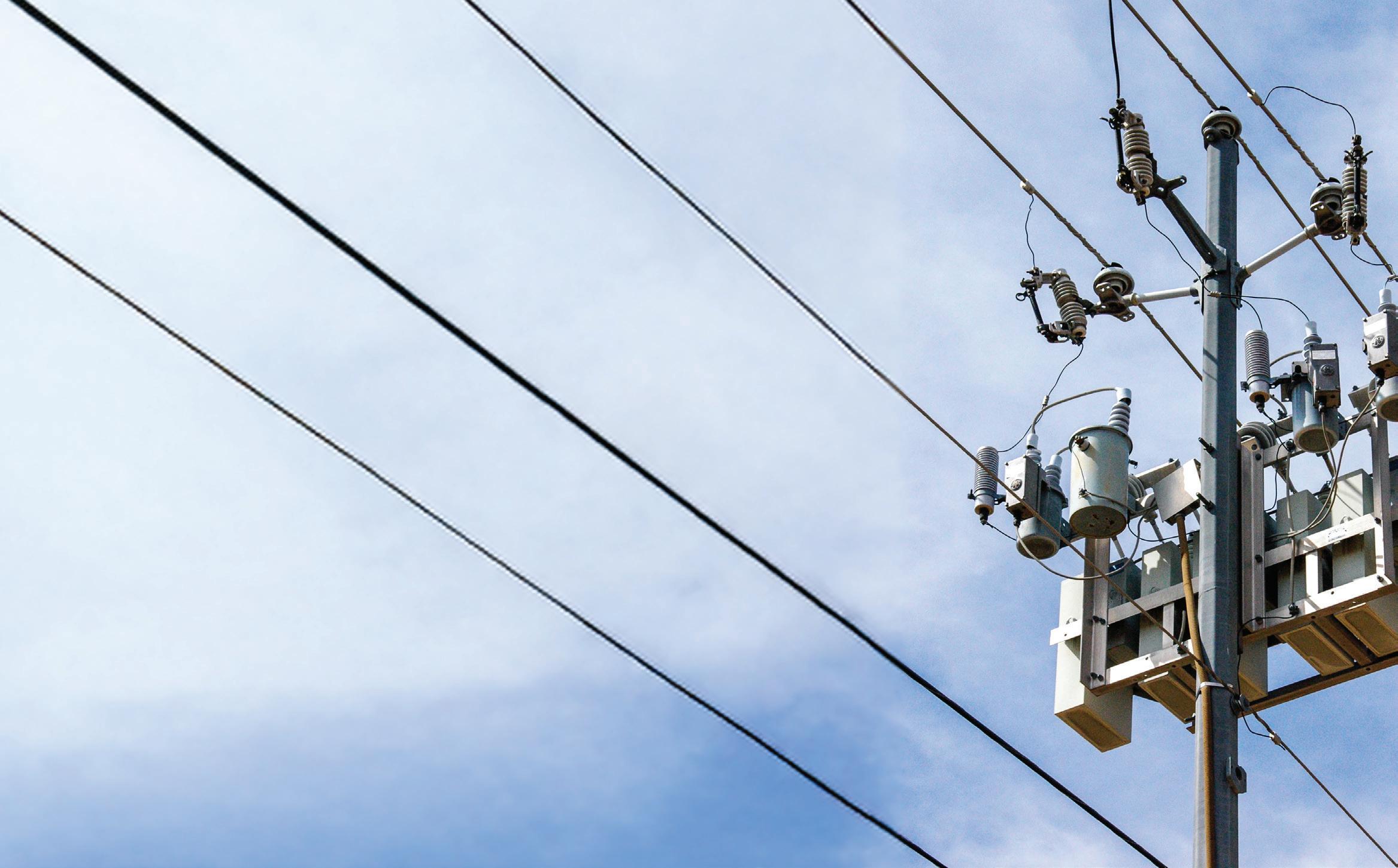
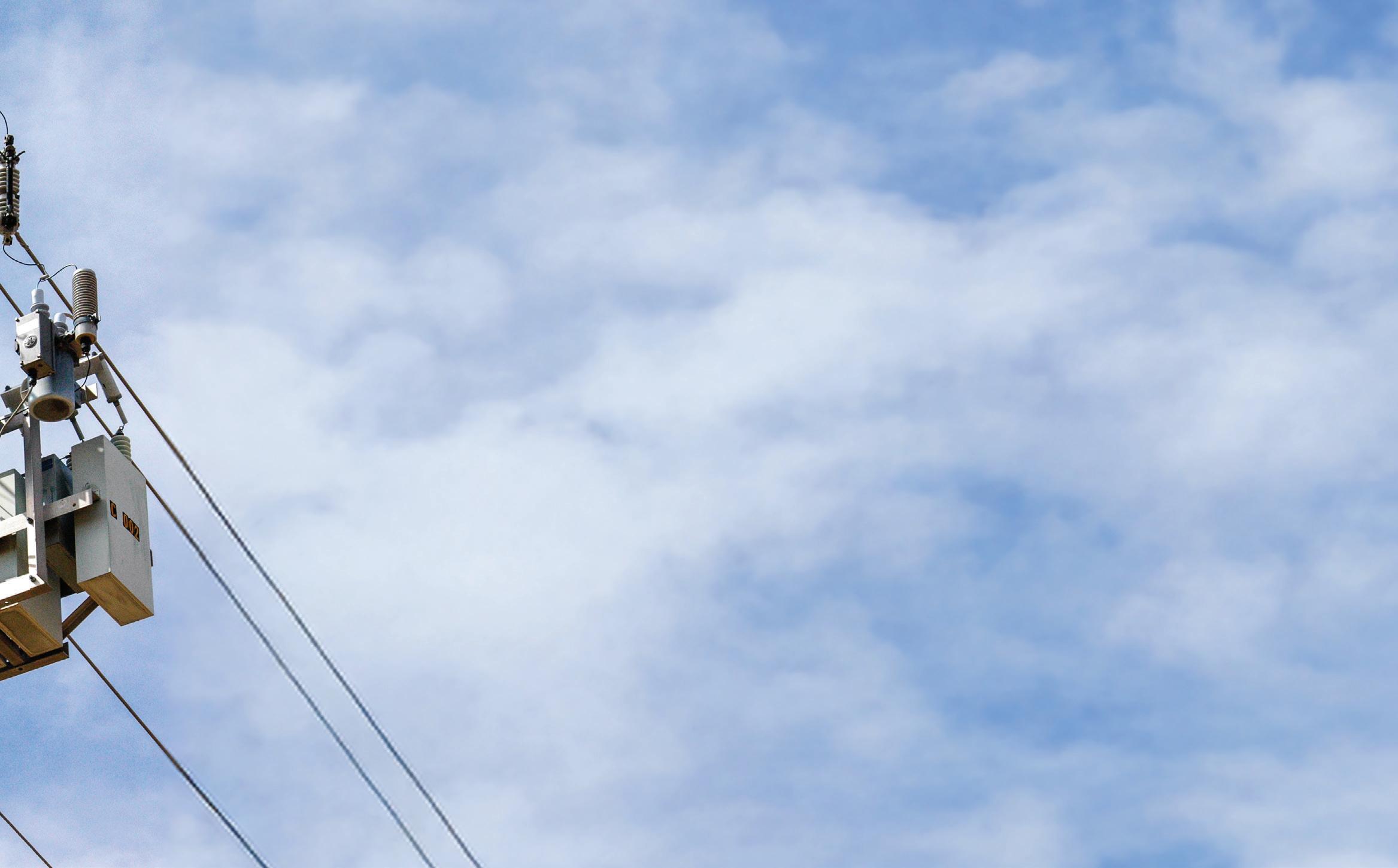
Utilities are shifting from a reactive to proactive approach to boost distribution system resilience.
Are you a fan of the underdog achieving improbable success? It’s a story as old as humankind. It taps into our basic nature of hard work, overcoming, and resilience. That’s why what’s taking place on today’s distribution system is so compelling and feels more meaningful. For years industry experts and authorities have said investments in the distribution system are lagging behind those of the transmission system. Of course, the distribution system has always had a lower profile, and the transmission system has always had those big-ticket projects.
It’s easy to see how the underdog concept came about but is it accurate? With extreme weather-related storms and growing power demand, it required a shift to an end-to-end modernization strategy for the entire power delivery system. So underdog may not be accurate, but stereotypes die hard and need a shot of reality to change. A perfect example of this comes from the Edison Electric Institute (EEI). EEI anticipates that its members’ power grid investment will be approximately US$1.4 trillion from 2025 to 2030. Interestingly, the members predict that they have spent about US$207.9 billion when the final 2025 dollars are compiled. The report also included a graph of how those dollars are broken-down with 32%, or roughly US$66.5 billion going to distribution upgrades. EEI went on to say that member spending on the distribution infrastructure will remain their largest single grid-related capital expenditure for the near future. Don’t forget, those expenditures represent more than wire and poles especially since distribution system has gone digital and one in particular is raising modernization eyebrows with
its potential. It’s DA/FLISR (Distribution Automation/Fault Location, Isolation, and Service Restoration)!
Automated restoration on the distribution system, now commonly referred to as DA/FLISR has reached a level of maturity that’s rapidly driving expansion of deployments at scale. It evolved from recloser loops schemes to the present version of DA/FLISR. DA/FLISR first appeared in the 1990s as utilities looked for ways to dramatically improve distribution system reliability. Since that time there have been several incarnations of DA/FLISR ranging from peer-to-peer approaches to centralized rules-based solutions.
Modern adaptations have reached a new level of sophistication, taking advantage of the integration of DA/FLISR into ADMS (Advanced Distribution Management Systems), which is grabbing the attention of the industry. That advancement is preparing DA/FLISR to be more responsive to dynamic distribution systems with DERs (distributed energy resources), two-way power flow, and future optimized network topologies. DA/FLISR is a key step and fundamental element for decentralization of the grid.
It’s been said that DA/FLISR systems are an efficient approach for addressing the unpredictability of the modern distribution system in an unstable environment. They also significantly improve the operators’ situational awareness, responsiveness, and overall performance while reducing the influence of outside forces on system reliability. At this point, it’s time to talk with an expert about DA/FLISR, so “Charging Ahead” contacted Brian
Deaver. Mr. Deaver is a senior technical executive and research manager for distribution operations at EPRI (Electric Power Research Institute), an independent, nonprofit energy R&D organization.
Mr. Deaver began saying, “DA/FLISR is a high value solution where the distribution system responds to a fault automatically. It isolates the fault and then through switching it reroutes power from another direction to restore as many customers as possible. When DA/FLISR was first introduced, there was only one source of power for the feeder, which came from the breaker in the substation. The control logic for those solutions could be customized for that normal configuration. Today, however, it’s possible to have distributed energy resources (DER) providing power from within those feeders, which greatly complicates the fault isolation and restoration process. Modern DA/FLISR systems must recognize and respond to challenging system interactions not experienced in earlier distribution networks. They must operate under unusual system conditions, which requires thorough testing and validation prior to deployment.” Deaver continued, “EPRI’s role as an independent, research organization is to
foster a standards-based environment, which enables utilities to integrate their diverse technologies into a cohesive, interoperable DA/FLISR system. A typical utility employs a number of distribution automated devices with a variety of abilities from multiple vendors that all have to work within the DA/FLISR’s capabilities. Essentially, it needs interoperability and techagnostic platforms to maximize the utility’s value of its existing asset investments.”
Mr. Deaver explained, “In addition to needing a tech-agnostic approach, EPRI is actively involved in developing system models and comprehensive industry standard test cases for DA/FLISR acceptance testing plans. These elements are critical for improving understanding, validation and deployment of fully automated DA/ FLISR systems. It’s especially important since there aren’t any standardized performance testing procedures available for DA/FLISR systems. That’s why EPRI is working on developing a framework for utilities and vendors to test and expand their confidence in DA/FLISR systems before full-scale implementation on specific utility infrastructure. It can enhance operator trust and identify performance restrictions without impacting the utility. Standardized performance tests detect potential points of failure and create a
level of confidence necessary to achieve the full potential benefits of a DA/FLISR solution, which can be significant.”
Concluding Deaver said, “Additionally, there’s a great deal of research going on to evaluate how the high penetrations of DERs affects DA/FLISR operations because utilities must understand the impacts of these elements on day-to-day operation. Models and techniques to reproduce how DERs behave on the distribution network and reduce their negative impacts are vital. We need to understand the effectiveness of the DA/FLISR system under realistic conditions and events. By taking advantage of these capabilities, distribution system operators can increase their understanding and confidence in DA/FLISR systems on their network, which will pay off with better utilization.”
The global DA market including FLISR was projected to reach US$21.5 billion in 2025 according to DMR (Dimension Market Research). They also expect it to grow to US$70 billion by 2034 for a CAGR (Compound Annual Growth Rate) of 14.0%. The marketplace for DA/FLISR is a growing sector. It’s driven by the need for enhanced grid reliability and the integration of renewable energy sources. The continued expansion of DA/FLISR technologies enables a growing number of utilities to improve their distribution system’s reliability, so let’s look at a few.
A DOE (Department of Energy) sponsored study on the potential for FLISR to improve reliability. One of utilities taking part was Pacific Gas & Electric (PG&E). DOE reported the study results were promising. PG&E deployed FLISR technology on approximately 30% of its circuits, costing US$194 million. The study reported, the implementation “derived an estimated 391 million avoided customer outage minutes, which translates to a benefit of US$828.8 million.” That’s a pretty good rate of return for the funds expended.
National Grid expanded its FLISR coverage in 2025. The end of March 2024 saw about 6.4% of its NY customers on FLISR circuits. That expanded to approximately 9% of its NY customer-base by the end of March 2025, which represents about 152,000 customers on 350 FLISR schemes.
National Grid has set a goal of having 60% of it NY customers connected to FLISR circuits in the near future.
DA/FLISR technology has been part of Southern Company’s grid modernization program for over a decade. It has significantly reduced outage impacts across their service territories. One of their subsidiaries, Alabama Power estimated “it has prevented more than a million customers from experiencing sustained outages.”
DA/FLISR implementations are revolutionizing electric distribution systems. Instead of widespread outages, DA/ FLISR limits a fault to a small segment. The duration of the outage is shorten by quickly restoring power to most customers within seconds or minutes, which means a more stable power gird. Automating fault response and rerouting power lowers CAIDI (customer Average Interruption Duration Index), SAIDI (System Average Interruption Duration Index), and SAIFI (System Average Interruption Frequency Index) numbers.
Several studies have shown that CAIDI and SAIDI are significantly reduced by minimizing outage durations. SAIFI improvements are less evident because it can’t prevent factors like tree contact or equipment failure from happening but knowing areas prone to this helps significantly. These are the key reliability metrics used to measure utility performance and compare how well their distribution network is performing against other utilities’ performance. Utilities with high CAIDI, SAIDI, and SAIFI numbers will get more scrutiny from regulators and customers alike. They look at utilities with high numbers in these categories as not being as reliable or resilient.
No matter how you look at it, it puts pressure on utilities to lower those indices by adopting cutting-edge DA/FLISR technologies. DOE estimates that DA/FLISR can reduce outage times by up to 50%. They also estimate that over 60% of US utilities had deployed some form of ADMS by the end of 2025, so it’s a trend that’s gaining momentum. Still there are those who are uncomfortable. It’s too trendy, but there’s a lot of experience with DA/ FLISR. And it’s needed now!
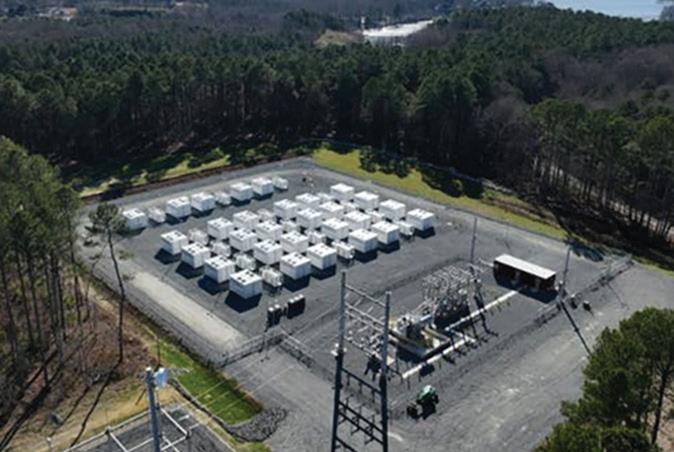
Duke Energy has announced operations of a 50 MW, four-hour BESS at its former Allen coal plant on Lake Wylie to serve customers in North Carolina and South Carolina, and has unveiled plans for additional battery storage and new jobs at the Gaston County site.
The BESS, at a cost of approximately $100 million, was completed under budget and before schedule, serving customers beginning in November. Final testing was completed in January 2026. Construction of a second BESS, a 167- MW, four-hour system, will initiate in May on 10 acres, where the coal plant’s currently demolished emissions control system was situated.
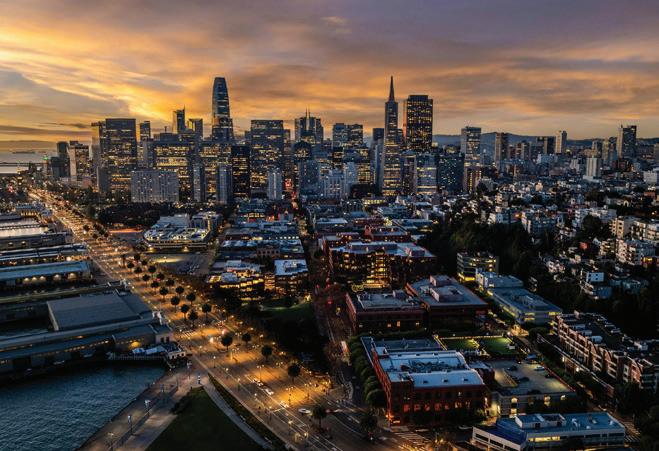
Pacific Gas and Electric Co. (PG&E) continues restoration efforts after a major power outage caused by a fire inside a PG&E substation at 8th and Mission streets in San Francisco over the weekend.
The outage began at approximately 1:09 p.m. Saturday, Dec. 20, and peaked about two hours later, impacting roughly 130,000 customers. San Francisco fire officials confirmed the substation fire in a post on X around 3:15 p.m. PG&E reported no injuries to employees or members of the public as a result of the incident.
“The damage from the fire in our substation was significant and extensive and the repairs and safe restoration will be complex,” PG&E said in an update on its website. PG&E has mobilized all available engineers and electricians and implemented a highly detailed work plan with an elevated focus on safety.
By Sunday afternoon, crews had restored service to approximately 114,000 customers, including about 4,000 restorations completed Sunday. As of noon Sunday, about 17,000 customers remained without power, primarily in the Presidio, Richmond District, Golden Gate Park and small areas of downtown San Francisco.
PG&E said it expects to restore all remaining customers affected by the substation outage by no later than 2 p.m. Monday. The majority of customers were restored within six to
Both lithium-ion battery systems are suitable for federal investment tax credits, which will offset 40 percent of the cost for Duke Energy customers. This includes an extra 10 percent for reinvesting into an energy community; the coal plant retired in December 2024.
Utility-scale battery systems are useful for cold winter mornings, before solar generation is available. During low-demand periods, they can also store excess energy, such as the clean power generated by Catawba Nuclear Station across Lake Wylie, for use during high-demand periods.
Duke Energy plans to make similar battery storage investments in multiple counties across the Carolinas. The company’s 2025

eight hours of the initial outage and that crews are continuing to pursue local restoration opportunities where conditions allow.
PG&E is communicating estimated restoration times directly to customers and providing updates through its online outage map. The utility acknowledged the disruption caused by the outage, particularly during the holiday season, and emphasized that crews will continue working until all customers are safely restored.
The cause of the substation fire has not been released, as there will most likely be an investigation and report. As our industry knows, substation fires are most often triggered by equipment failures, such as overheating, insulation breakdown or loose connections. These can lead to arcing or overloading. Oil-filled power transformers pose the largest fire risk in any substation, according to a 2019 report from David Petersile of Burns & McDonnell and Bill Mackay of Advanced Safety Systems.
Carolinas Resource Plan, now under review by state regulators, projects the addition of 6,550 MW of batteries by 2035 to protect reliability and meet growth needs in North Carolina and South Carolina, which is enough storage to power more than 5 million homes during times of peak energy use.
Duke Energy’s long-term plan maintains a diverse energy mix, adding solar, storage, nuclear and natural gas generation to
The Midcontinent Independent System Operator (MISO) has announced the selected developers for two competitive transmission projects in Wisconsin intended to support system reliability and long-term regional energy needs. Viridon Midcontinent LLC has been selected to develop the Wisconsin Southeast Competitive Transmission Project (WISE), and Transource, Inc. has been selected to develop the Bell Center–Columbia–Sugar Creek–Illinois/Wisconsin State Line 765 kV Competitive Transmission Project (BECI).
The WISE and BECI projects are the second and third of seven competitive transmission projects identified from MISO’s Long-Range Transmission Planning (LRTP) Tranche 2.1 portfolio, which was approved by MISO’s board of directors in December 2024.
“The selection of Viridon and Transource reflects MISO’s commitment to competitive processes that deliver value to our customers,” said Jeremiah Doner, MISO’s Director of Cost Allocation and Competitive Transmission. “These projects will play a critical role in enabling the energy transition while maintaining reliability and providing economic value for decades to come.”
The selections follow MISO’s competitive evaluation process, which assesses proposals based on cost and design,
meet electricity demand that’s rising at an unprecedented pace. Across the Carolinas, customer energy needs over the next 15 years are expected to grow at eight times the growth rate of the prior 15 years.
Duke Energy plans for battery storage at both of Gaston county’s retired coal plant sites along the Catawba River, Allen (1957-2024 in Belmont) and Riverbend (1929-2013 in Mount Holly).
Construction of the latter, a 115-MW, four-hour BESS, is expected to begin in late 2026, coming on line in late 2027.
As part of the company’s rate review before the North Carolina Utilities Commission, Duke Energy has proposed a third BESS at Allen to come on line by the end of 2028, as well as a regional operations, training and warehouse facility for batteries and renewables that could house 20-50 employees. Plans for both are under progress and subject to regulatory approval.
project implementation, operations and maintenance, and transmission planning participation. Collectively, the WISE and BECI projects include more than 300 miles of new high-voltage transmission lines and multiple new substations to support the delivery of electricity across the Midwest.
“Viridon stood out for WISE with its strong cost containment measures, lowest projected revenue requirement, and executed agreements ensuring timely project delivery,” said Doner. “For BECI, Transource demonstrated unmatched 765 kV capabilities, a robust design that reduces right-of-way impacts, and a clear plan for construction and operations.”
Both selected developers are expected to execute Selected Developer Agreements with MISO within 60 days. Construction activities will begin after the completion of required regulatory approvals and permitting processes.
PG&E Corporation said it will implement a series of organizational changes aimed at strengthening service to customers and communities across Northern and Central California while positioning the company to meet growing energy demand.
PG&E Corporation CEO Patti Poppe will continue to oversee the leadership team. PG&E Corporation is the holding company for Pacific Gas and Electric Co., the regulated electric and gas utility serving more than 16 million Californians.
Under the new structure, Sumeet Singh will become CEO of Pacific Gas and Electric Co. and executive vice president of energy delivery. Singh has served as




E M P O W E R I N G A
B E T T E R W O R L D WITH OUR




executive vice president of operations and chief operating officer since 2023 and has been with PG&E since 2000. The newly created energy delivery organization will combine operations, engineering and shared services teams.
Carla Peterman will become president of PG&E Corporation and executive vice president of customer and corporate affairs. Peterman joined PG&E in 2021 and most recently served as executive vice president of corporate affairs and chief sustainability officer. The new group will consolidate teams that engage with customers, policymakers and external stakeholders.
Jason Glickman will take on the role of executive vice president of strategy and growth, leading a newly formed organization focused on long-term planning and collaboration to address California’s increasing energy needs. Glickman joined PG&E in 2021 and has served as executive vice president of engineering, planning and strategy.
Marlene Santos will become chief transformation officer and executive vice president of the enterprise transformation office. Santos, who joined PG&E in 2021, will lead efforts to modernize and standardize business processes, including the company’s Lean operating system.




Chris Patterson will become senior vice president of government affairs. Patterson joined PG&E in 2018 and previously served as vice president of state government relations. His responsibilities will include legislative and policy advocacy at the local, state and federal levels.
Vincent Davis, who has led customer experience strategy since 2023, will become senior vice president and chief customer officer. Davis has been with PG&E since 2013.
Aaron Johnson will become senior vice president of local customer and community engagement and chief sustainability officer. Johnson joined PG&E in 2008 and will lead a combined team focused on regional engagement, philanthropy and sustainability.
Poppe, who joined PG&E in 2021, announced last year that she committed to an additional five years as CEO of PG&E Corporation.

If you’ve ever felt like you’re playing whack-a-mole with invasive and undesirable vegetation, you know how important it is to have effective, easy-to-use options for weed and brush control. With its recently expanded label for nationwide use in vegetation management applications, HighNoon® herbicide from Corteva Agriscience gives you and your contractors that option. HighNoon herbicide combines two powerful active ingredients, Rinskor® and aminopyralid, to provide selective activity that helps maintain desirable grasses and forbs while controlling some of your most troublesome weeds like annual and biannual thistles, poison hemlock and wild parsnip. But simply controlling weeds and undesirables is only one of the benefits of an integrated vegetation management (IVM) program using HighNoon herbicide. One Result. Countless Benefits. Used as part of a larger IVM program, HighNoon herbicide can allow native grasses and forbs to become established in rights-of-way. In turn, this helps:
1. Improve biological control. Native ground covers that are allowed to flourish can quickly grow to crowd out invasive or undesirable vegetation species, reducing stem counts over the long term with no additional labor required. HighNoon herbicide controls over 140 broadleaf weeds and annual grasses, and provides a valuable tank-mix partner for enhanced control of woody species like salt cedar and Russian olive, all while allowing valuable native grasses and ground covers to become established.
2. Reduce fuel for fire. Annual and invasive grasses that don’t germinate don’t contribute fuel for potential wildfires. An IVM program using HighNoon herbicide offers highly selective control of some of the most dangerous annual grasses, reducing the overall fuel load and helping mitigate the risk and spread of fire
3. Improve habitat, with less danger to native species. Use of selective herbicides such as HighNoon preserves the vegetation that serves as habitat for birds, pollinators and other species. In addition, control with herbicides means less mowing — and that means less risk to groundnesting birds and other wildlife.

4. Reduce regrowth and spreading. If the weed seed never germinates in the first place, it obviously can’t regrow, and it can’t go to seed later in the year. HighNoon herbicide offers extended residual control, helping prevent regrowth of broadleaf weeds and annual grasses.
Along with effective control of broadleaf weeds, HighNoon also gives vegetation managers an easy-touse liquid formulation that mixes well, offers low use rates and low odor, can be used up to water’s edge and, for those who spray sites close to pastures, carries no grazing restrictions. Add the fact that the proprietary Rinskor® active ingredient earned the Green Chemistry Challenge Award from the American Chemical Society’s Green Chemistry Institute, and you have a product that gives the industry a powerful, reduced-risk option for control of brush and weeds.
For more information on the benefits of HighNoon herbicide as a foundation component of an IVM program, reach out to your Corteva Vegetation Management Specialist, or visit HighNoonHerbicide.com.

Now approved across the country, HighNoon® herbicide targets over 140 broadleaf weeds and annual grasses—including poison hemlock, wild parsnip, and thistles—while protecting native vegetation.
As part of an Integrated Vegetation Management program, HighNoon helps:
> Simplify application — Low odor, easy mixing, and flexible use
> Protect habitat — Support pollinators and wildlife
> Block regrowth — Long-lasting residual keeps weeds from returning quickly
Learn more at HighNoonHerbicide.com or get in touch with your Corteva Vegetation Specialist.
Find your Specialist at VegetationMGMT.com/Specialist.

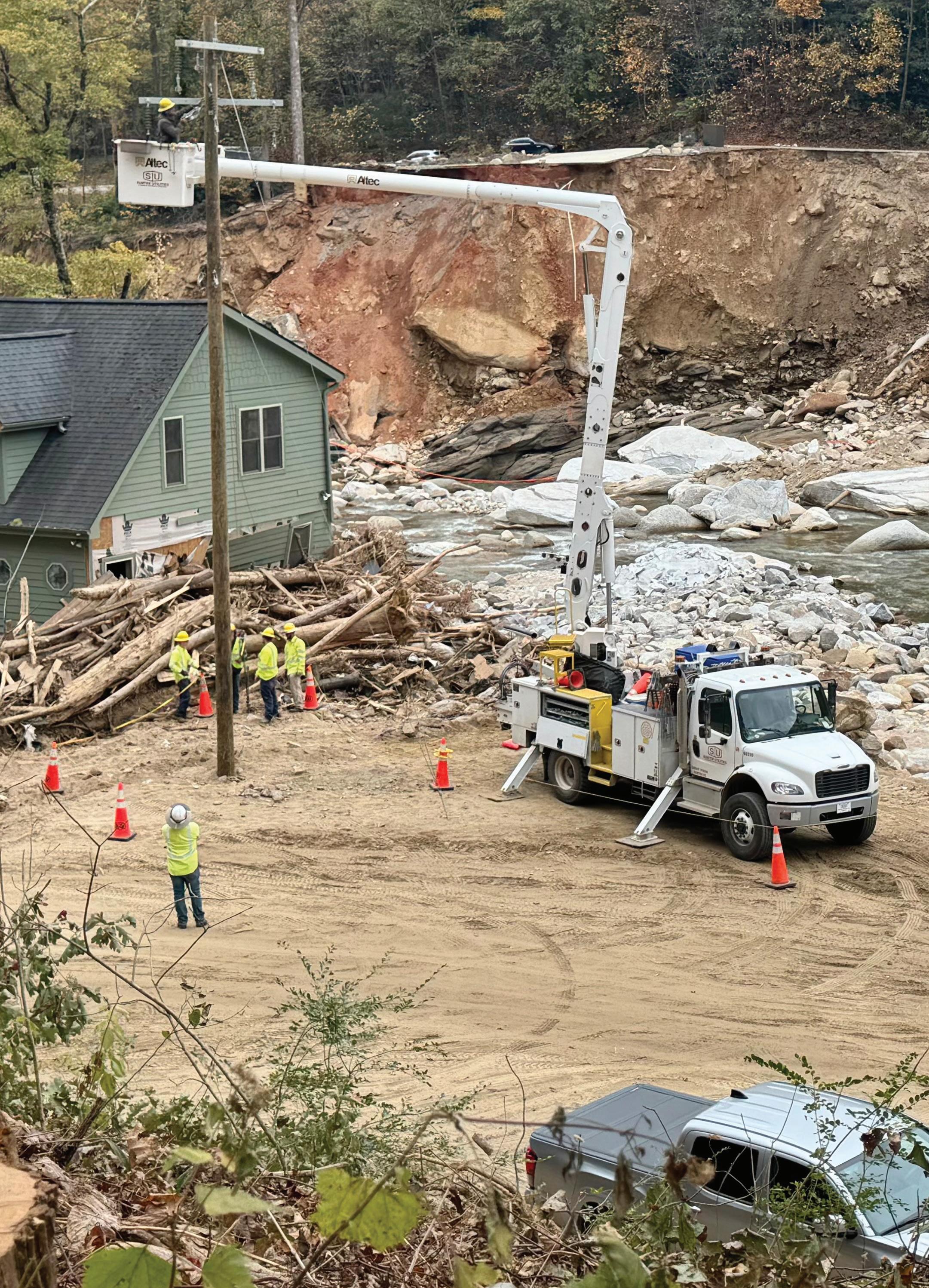
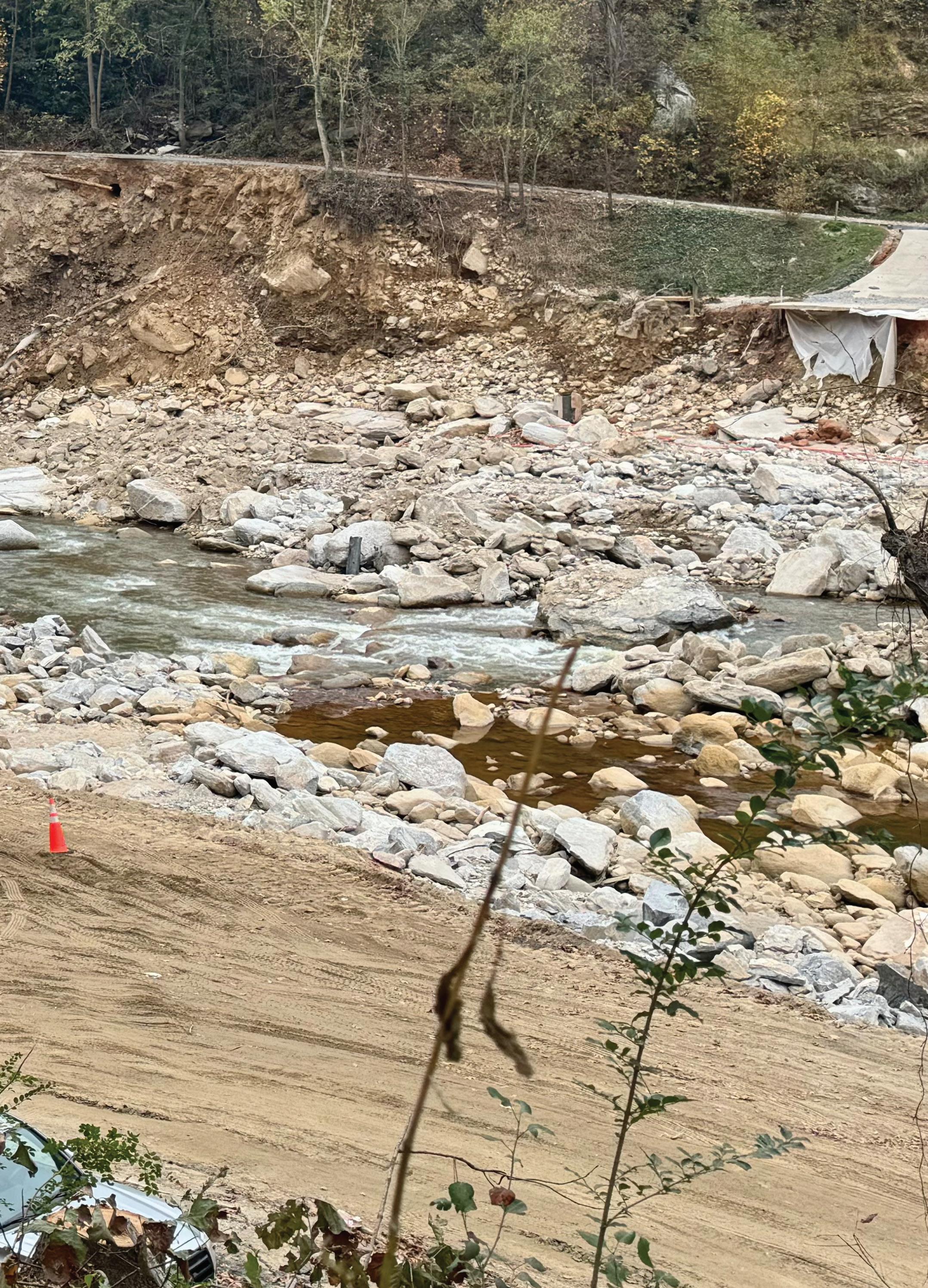
Part 2 of our Hurricane Helene series reflects on the restoration in the Chimney Rock and Bat Cave areas of Duke Energy’s service territory.
By AMY FISCHBACH, Head of Content
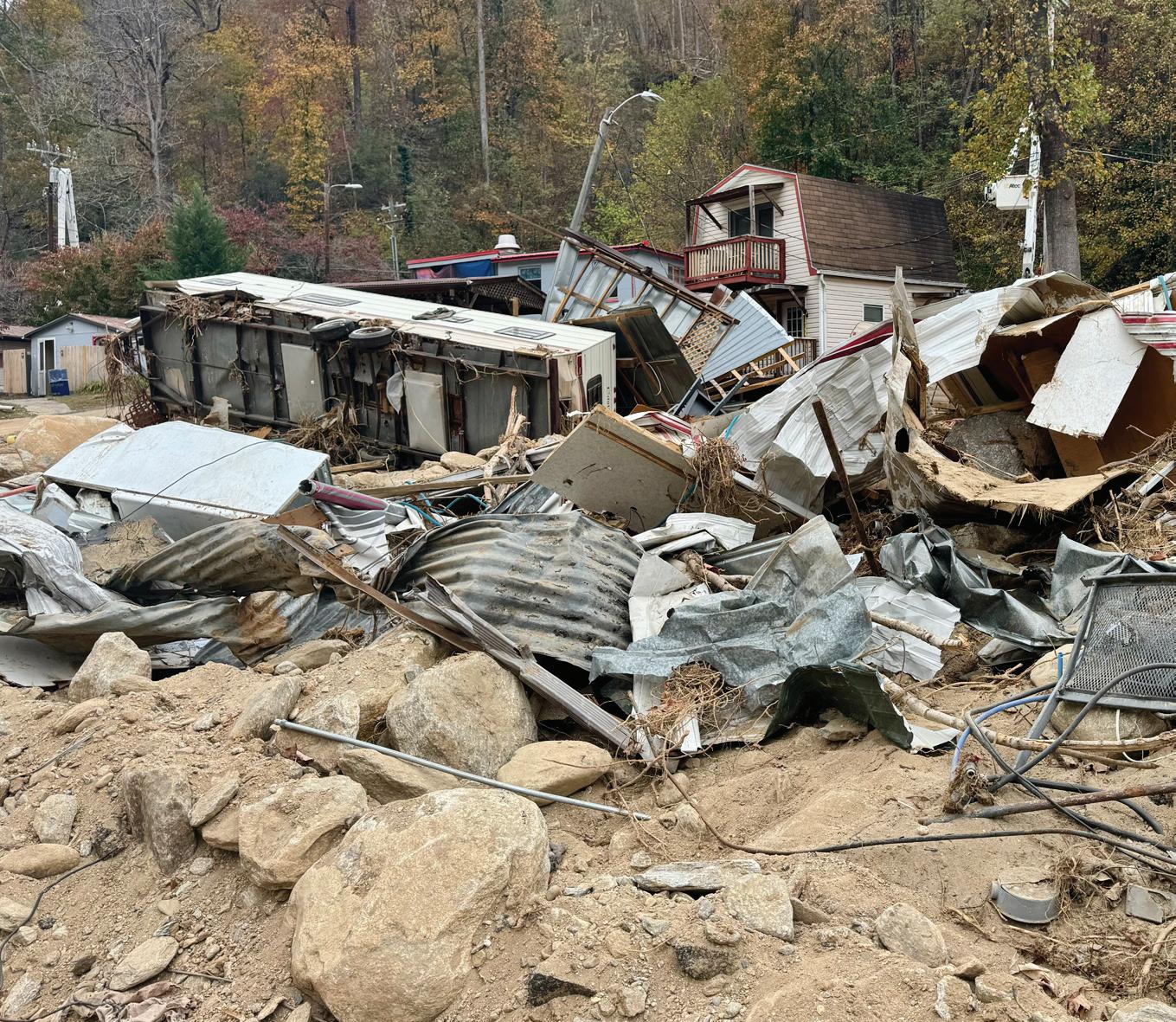
One year after Hurricane Helene swept away homes and uprooted trees, the community of Chimney Rock, North Carolina, is still under recovery. In October 2024, a raging river roared down Main Street, taking out five bridges and a mile-long street. As a result of the hurricane, at least one resident died, and homes disappeared due to the floodwater and devastation.
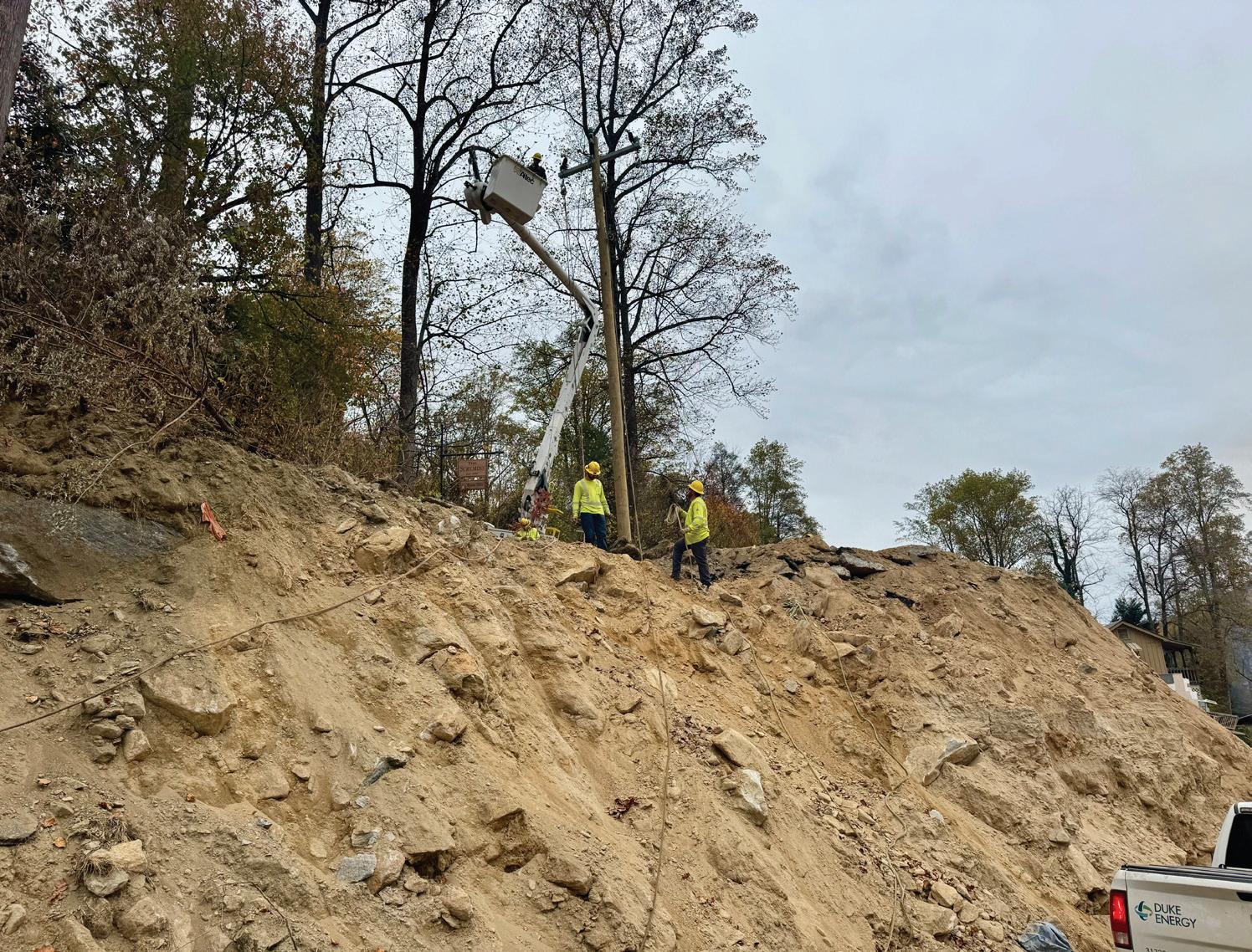
As soon as it was safe to begin restoration, Duke Energy’s line crews worked alongside mutual assistance partners to rebuild infrastructure and restore power, and due to the lack of cell service and inaccessibility of work areas, they resorted to old-school line work practices to get the job done in
both Chimney Rock and the nearby community of Bat Cave.
Miles Bell, a journeyman lineworker with 11 years in the trade, said he worked on storm restoration for three months with the first 31 days without a day off.
“Still today we are still technically on storm duty in certain places,” he said. “We literally had to build from the ground up.”
Bell, who competes on an International Lineman’s Rodeo journeyman team with Heath Burrell and Jordan Henderson, worked alongside other line crews to put in long hours even as they didn’t have power in their own homes. Here’s a look back at the restoration following Hurricane Helene.
A few days before the hurricane hit, Burrell focused on onboarding crews, reviewing rules and coming up with a game plan. The day of the storm, however, he remembered the wind gusts getting stronger, water rising and the interstate washing out. He was stuck in traffic for four hours until he was finally able to head back toward Asheville.
“It was total chaos,” he said. “I couldn’t even make it back to my service territory, there was no cell service and no one could communicate with anybody. You were trying to just make it through the day.”
Meanwhile, Henderson, who works as a first responder and troubleman for Duke Energy, said he recalled all the substations being out except for one in Hendersonville. As a result, he and the other line crews spent the first few days just clearing the roads and getting trees off the lines so they could put the lineworkers to work.
When Bell first arrived at Chimney Rock, he said the best way to describe it was “insanity.” He said it looked just like a war zone.
“Chimney Rock is an iconic place, and people all over the country know about it because it’s got a lot of history and is a big tourist location,” Bell said. “I live close by there, and it’s been kind of a staple for my whole life. When we were first able to make it there, it looked just like a scene out of a movie if somebody dropped a bomb. I would say 50% of the buildings were gone, the road was gone and the river was three or four times as wide as it used to be. It was total chaos and required a total rebuild.”
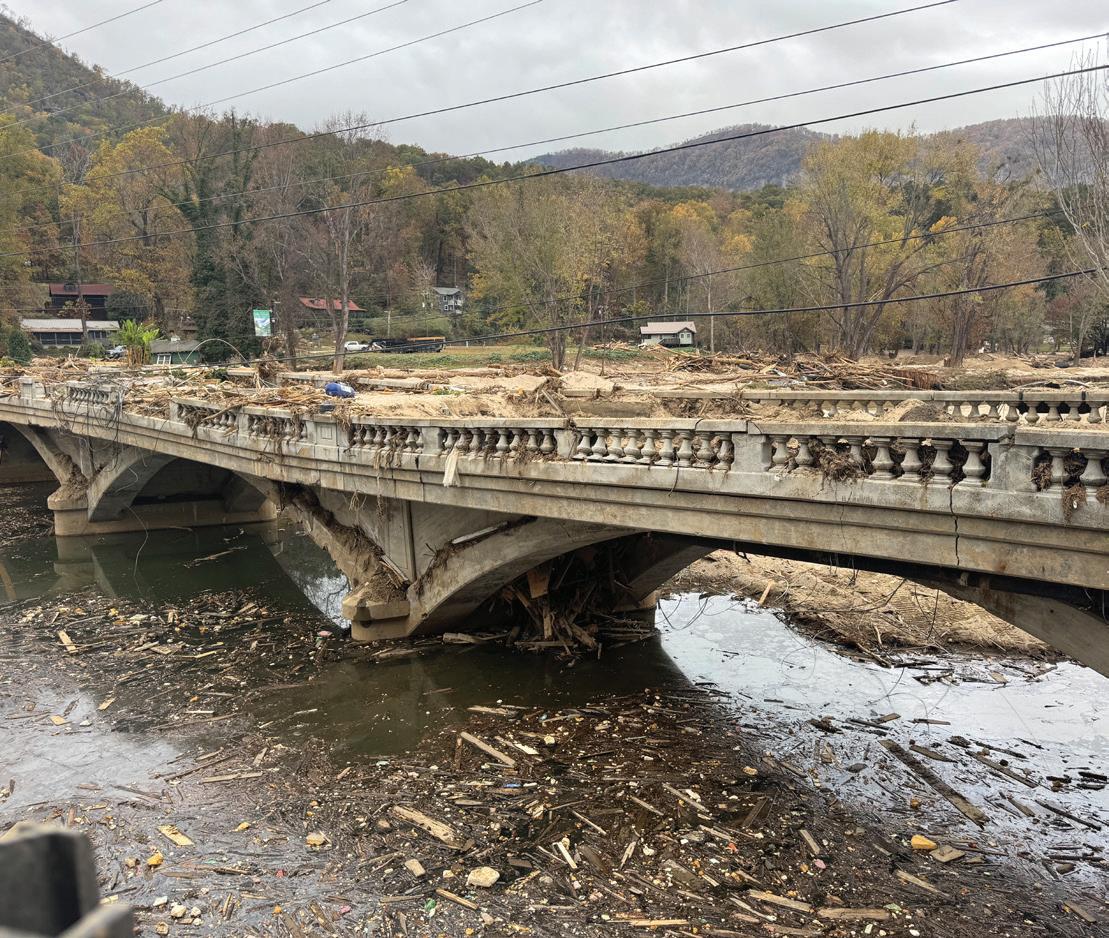
The line crews first focused on getting power back on to the fire department. Because the structures were so damaged in Chimney Rock, they focused instead on repairing the lights.
“We got as many streetlights on as we could just to bring some light back to the place,” he said.
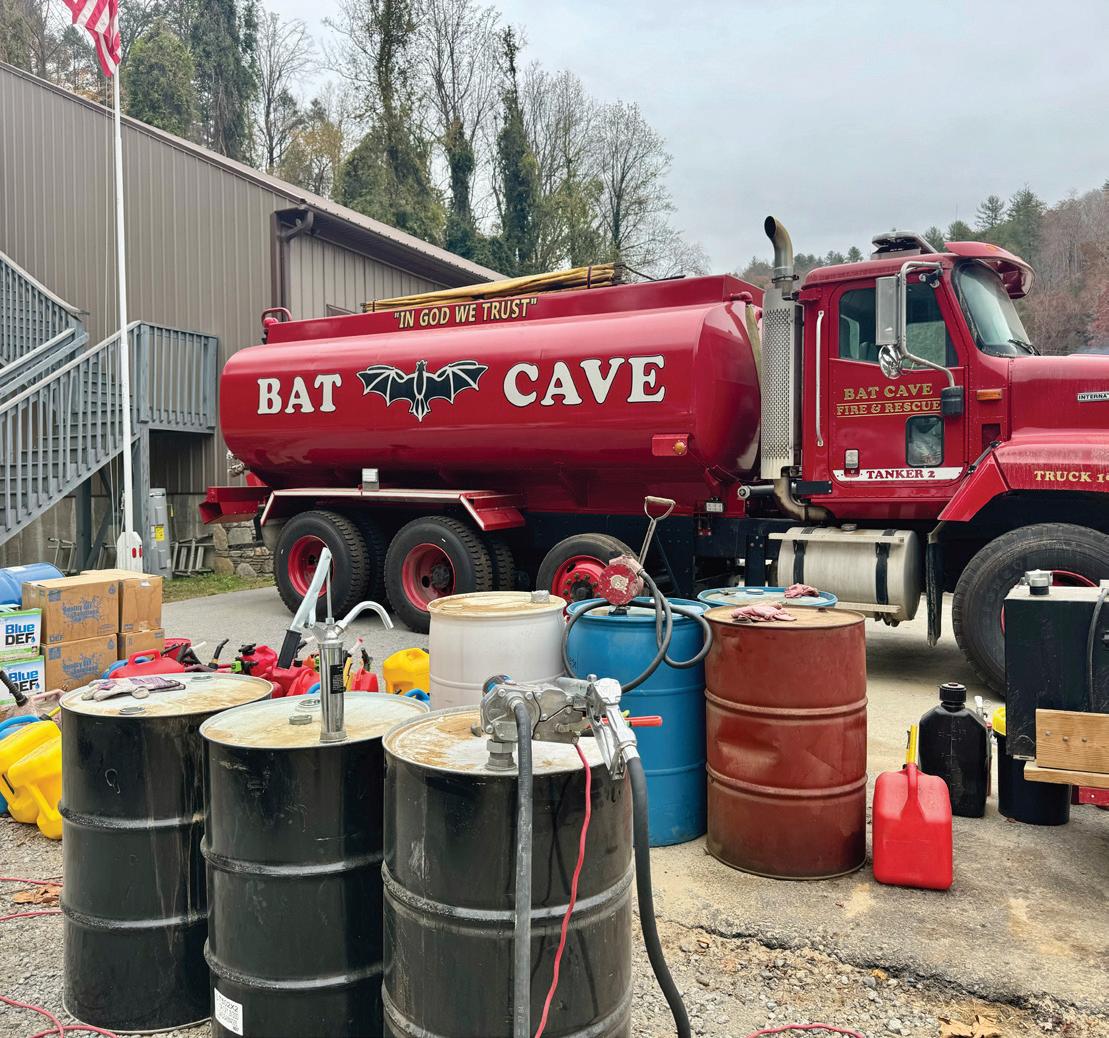
Right up the road, the line crews discovered a similar amount of damage in Bat Cave, which is on the same river. Because there was no road to get there, Bell remembered riding a Polaris sideby-side for eight hours just trying to access the area. They finally got permission to ride across private property and use private roads, which were “sketchy at best,” Bell said.
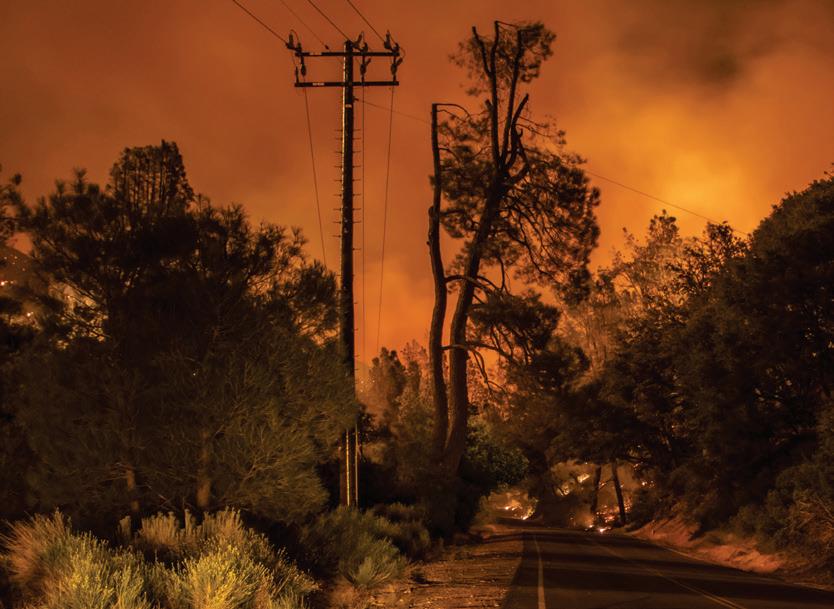
The reliability of the world’s electric power grid is tested time and again by extreme weather, challenging remote locations, or the use of inferior materials for supporting critical structures and circuits. These events can disrupt communities, compromise infrastructure, and leave millions without power. Each disruption underscores how essential it is to maintain strong, resilient connections.
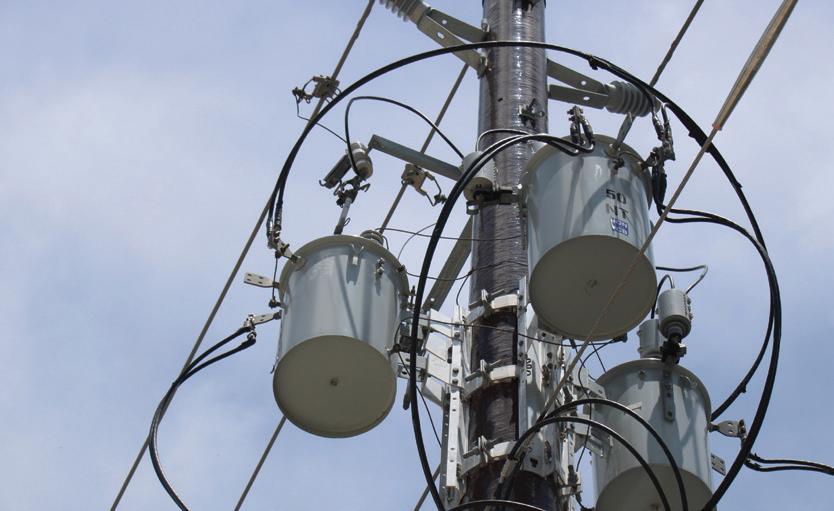
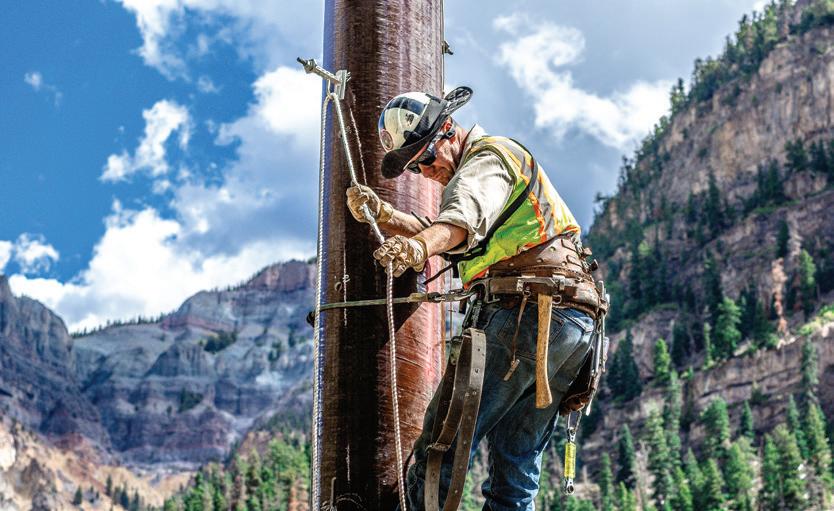
RS | Resilient Structures is a global leader in advanced composite utility poles, trusted by 500+ utilities in 30+ countries to deliver reliable, resilient, cost-effective grid infrastructure.

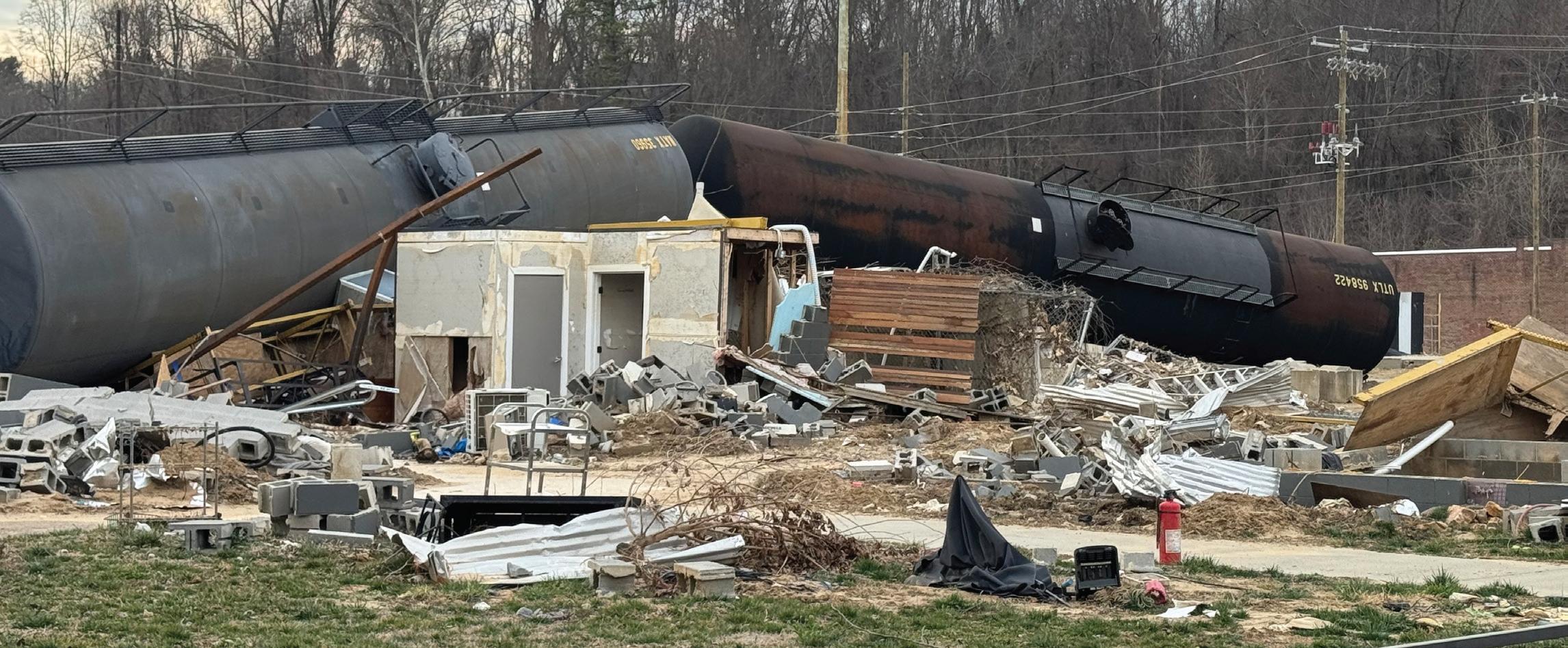
“Driving was nearly impossible,” Bell said. “The poor people who lived there were stranded for multiple days with no way out except for by helicopter because every road going in or going out was gone.”
After discovering a path, Duke Energy’s crews started getting big trucks into the area and trying to work, but the devastation was just unreal and the rights of way (ROWs) had completely disappeared, he said.
“We had to walk sometimes from house to house asking people, ‘Hey, can
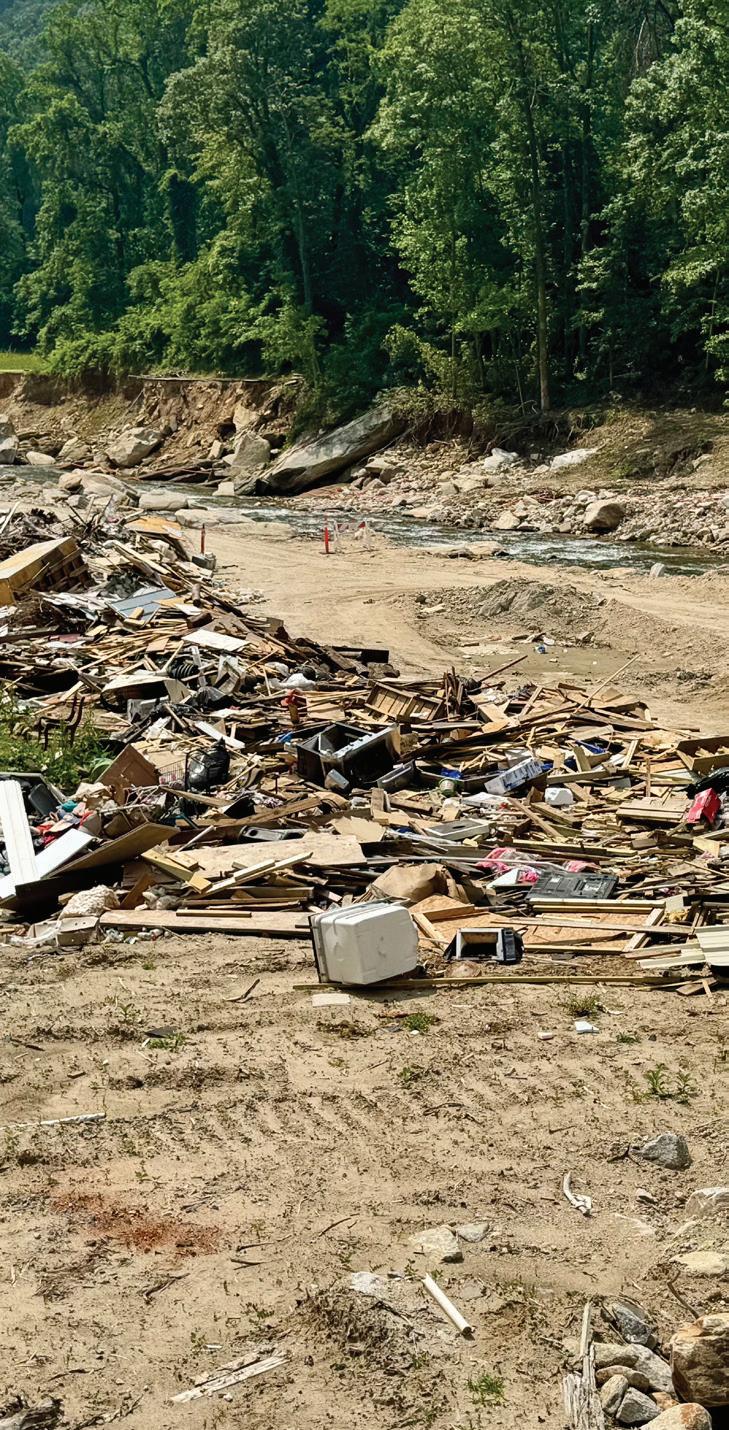
we put a power line through your backyard that didn’t use to be there?’” he said. “It was the only real estate left that we could get wire in the air. Everyone was accepting of that and told us to do what we had to do to get everyone’s lights back on. Everyone’s mantra was, ‘until we have power, nothing else matters.”
The Lineman’s Rodeo team of Miles Bell, Jordan Henderson and Heath Burrell share their tips for other lineworkers who need to restore power following a hurricane.
1. Don’t try to do it all yourself. Bell said it’s important to give up some tasks, delegate when possible and let others help you. While Bell hopes he never has to face a hurricane response ever again like Helene, he said he learned a valuable lesson. He was managing 200 people at the peak of the storm, and at first, he was trying to do everything on his own.
2. Get help with logistics. Burrell agreed, saying he eventually asked another lineworker from down east to help him with meals and logistics for the crews. “It was unreal the amount of stress that took from what I had to do each day,” he said.
3. Request a paper map for each storm response. Burrell said he has been in the line trade for 20 years, but he had never been on a storm where he had to work off a map and manage a big crew. He remembers managing a crew from Canada, and they came in requesting maps. “We spent hours
printing maps, and through this, we found out that’s the way to go,” Burrell said. “We get too reliant on these computers, and we’ve been using our mapping system for years, but the map doesn’t lie, and it’s easy to follow the road. One thing I’ve learned is I would probably request a map from here on out anywhere I’m working.”
4. Understand what others are going through. While Henderson has worked a lot of major storms including hurricanes in Florida, having that big of a storm at home where he lived put it into a different perspective. “I’ll always have that in the back of my mind as I’m traveling on other storms,” he said. “It opened my eyes a little more about what other people are going through in their homes and communities now that I’ve seen it happen here and had to deal with it while working.”
5. Look out for yourself and don’t get burned out. Before Helene, Henderson had worked at the most on two-week storms. After working 16-hour days for two weeks straight, he burned himself out. “I would really learn to pace myself if I had to work a storm of that magnitude again.”
Due to the inaccessibility of the work area, the Duke Energy line crews focused mostly on track machine work and setting poles with helicopters. For example, Burrell said they ended up setting 11 poles with a helicopter on the Big Hungry and Deep Gap line.
“Big Hungry Dam collapsed and washed the bridge out, and it had about 90 to 100 customers on the other side of the bridge,” he recalled. “There was zero access to any of it, so everybody was hand digging the holes, and then a helicopter came in for two days. There was some rough stuff on that line.”
At that time, Burrell was working on a circuit to a substation, which is currently feeding the community of Chimney Rock. His crews set 48 poles and built two miles of three-phase line in about three days thanks to the leadership of Joe Daniels.
“That was a huge project,” he said. “We had tree crews in there for five days just trying to give us access to our poles, lines and whatever was left. Half the road collapsed, and it was probably 70 ft to the bottom to the river. We also had rock crews in there beating on rock for a few days until we could get the pole line.”
Normally, the three lineworkers compete on a Rodeo team together, but during the storm response, they were working on opposite sides of the river, and the bridge was gone.
“We could see each other, but it took an hour to drive around to actually get to each other,” he said. “They were bringing the power line down one side, and we were rebuilding it on the other. We were trying to meet in the middle so we could get all the lights back on.”
When it comes to storm restoration, today’s line crews often depend on tools and technology to expedite response. In the case of the Hurricane Helene response, however, the lineworkers had to rely on old-school methods due to lack of cell phone coverage or electricity.
“Everything is now on the computer, but we had to go back to pen and paper,” Bell said. “We had no phones, and radios didn’t work because they were digital. I had to go home and get
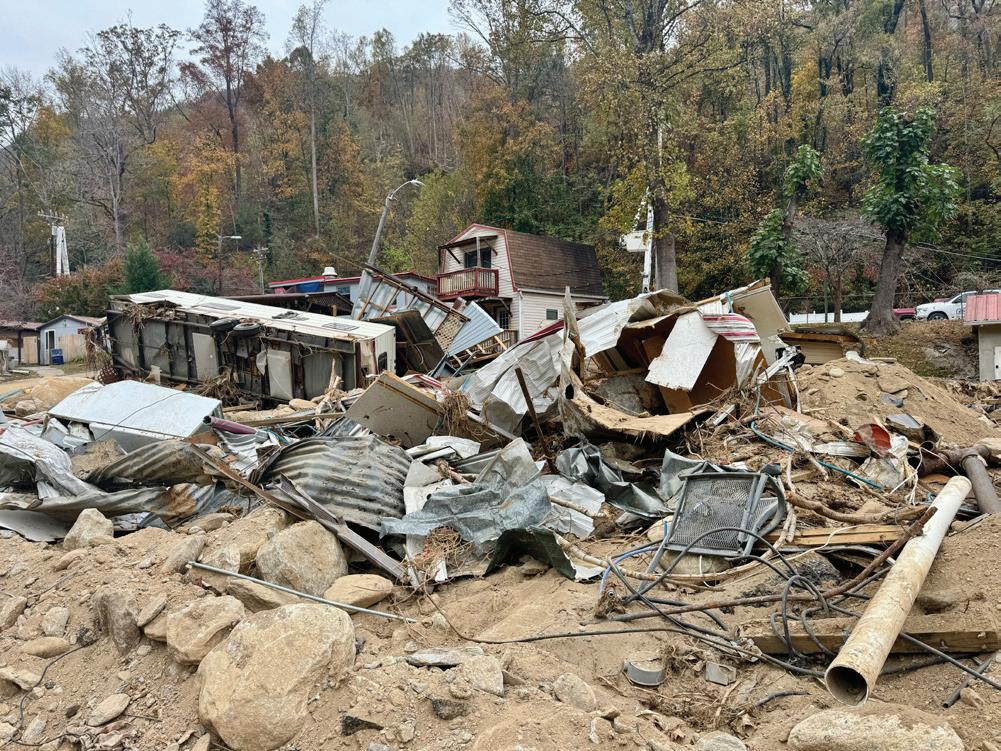
my kids’ walkie talkies just so we could talk. Our best practices were to just go back to the fundamentals when we all learned how to do line work without all the fancy stuff. We just had to take it back there, do all the little things and stay safe.”
Reverting to line work before the days of technology gave the apprentices a valuable learning opportunity to gain knowledge. With the substation submerged underwater, they had to learn about the danger of generators and the importance of testing and grounding.
“There’s still a bunch of guys coming up that might not ever get to experience anything like that,” Bell said. “Without having access to their phones, they had to go back to the basics of line work and start at a substation and work their way out without any direction, they had to cut right back to the basics of line work. It was a good learning experience because the substation was completely underwater, and we knew there was no power coming to it from our sides.”
To safeguard the line crews, it boiled down to flagging and tagging their lines, grounding and wearing their personal protective equipment (PPE). This was especially important because even though the substation was flooded and submerged underwater, generators could be on.
“Even though they were saying that everything was dead and there was no way there was power, you never know,” Burrell said. “You have so many people with generators and everything else, so we stuck to the basics of testing and grounding. I don’t know how many different lines were tested and grounded the whole time we were working. If I had a $5 bill every time we tested and grounded the line, I could probably go ahead and retire this year.”
While technology was basically “thrown out the window,” at the beginning of restoration, he said the best equipment the line crews had access to was a helicopter. In one area alone, the line crews set 190 poles with a helicopter, and if it hadn’t been for this assistance, restoration would have lasted weeks longer. In a lot of the places, it was challenging to hike on the rough terrain, let alone carry a pole.
“I can’t emphasize how much time that thing saved us as far as getting poles in and in the ground,” Henderson said. “Next to that was getting a track bucket in some places that would have

taken us a full day to do off hooks. With the track bucket, it took us two hours. The track machines and helicopter played a big role in this storm because there was a lot of inaccessible stuff.”
Another important tool in their storm restoration toolbox was a drone. Burrell said he teamed up with the local fire department for several days to fly the lines.
“We couldn’t get vehicles there, and the drone helped us out a lot just by being able to see what we had down and what we needed to plan for,” he said. “Other than that, the track equipment really saved the day.”
He said he was also an advocate for the side-by-sides due to the lack of roads available for the restoration.
“We’ve got two in our ops center, and there’s no telling how many miles we put on them,” he said. “Those saved a lot of walking.”
During the first few days of restoration, the lineworkers not only had to overcome challenges with the lack of coverage and
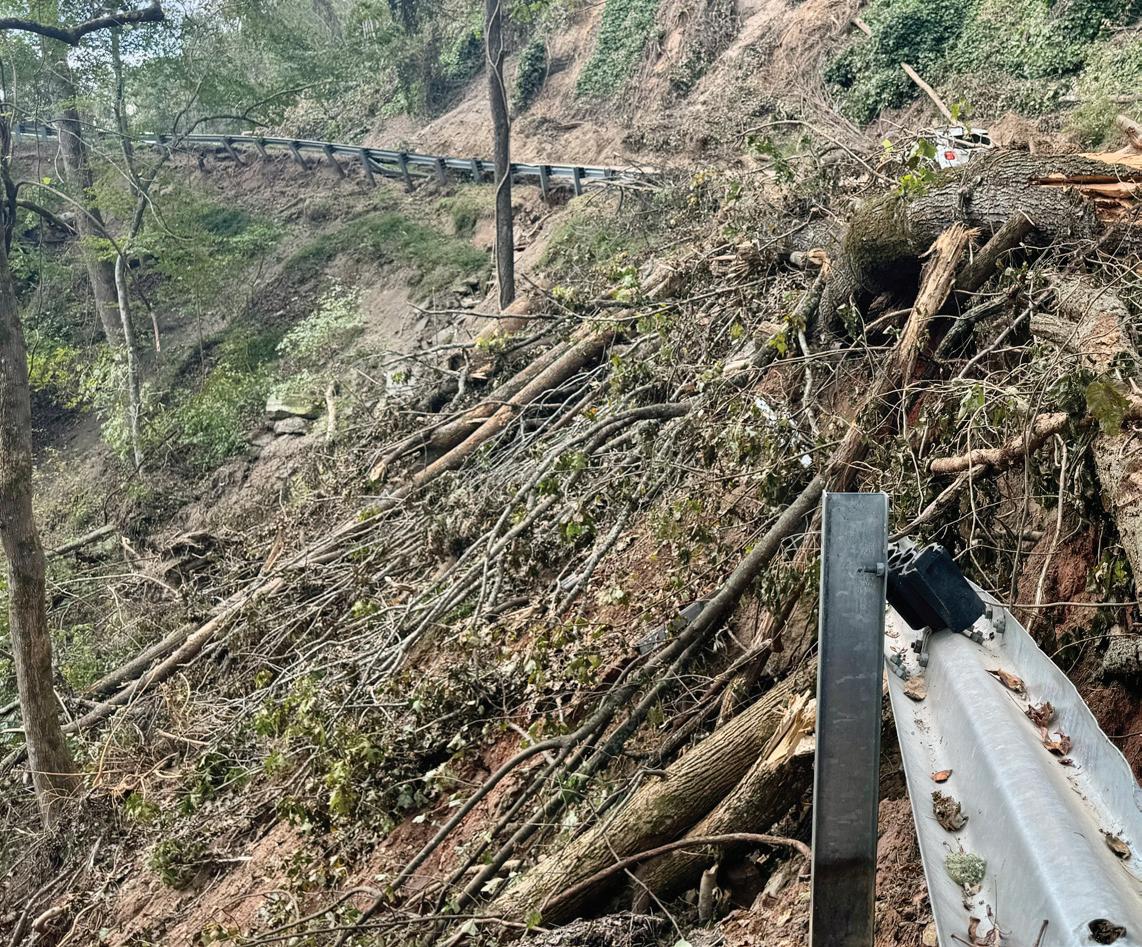
technology, but also floodwater. The standing water, however, was no match for the amount of trees that were downed by the hurricane. Bell said it normally takes him five minutes to drive to the op center, but after the hurricane, it took him 15 to 20 minutes just to try to navigate a way to
get there. His brother, who is a lineman on the transmission side for Duke Energy, however, had an even harder time.
“His op center is 45 minutes away from his house, but it took him 13 hours to get to work on the first day because he would run into a flooded bridge that was out
OUR WUNPEECE TRANSMISSION SPACERS REDEFINE THE INDUSTRY STANDARD FOR UNDERGROUND POWER TRANSMISSION INSTALLATIONS. WITH PRECISION ENGINEERING AND UNMATCHED QUALITY,
and have to turn around,” Bell said. “He basically had to cut trees out of the road.”
With the bridge and road completely gone, Duke Energy had local vegetation management crews on site, but the lineworkers also jumped into action to clear the debris and fallen trees.
“We had tree crews, but honestly, for the first week, everyone was a tree crew,” Bell said. “Our foremen would jump on their machines and build their own right of ways to get to the pole or across the creek. Everyone just kind of jumped in and made it happen.”
While they gave the technical tree trimming jobs to the professional arborists, but the line crews worked together to clear the roads.
“Everyone had chainsaw chaps and their PPE on to cut trees,” Bell said. “We had a lot of help from the community too. I’ve got several friends who do grading work, and they were following us around helping us to clear roads and anything they could to help us get the lights back on.”
The local farmers also pitched in with their tractors to help out with the road clearing. Because the line crews couldn’t start restoring power until the trees were off the lines and away from the roads, it was a joint effort.
“If we would have waited it would have doubled the time, and we wouldn’t have had the community come together like it did,” Burrell said. “Everyone jumped in, and that’s what go the lights back on the quickest.”
While the line crews were working 16-hour days in the field, their families were helping at home. Bell said without help from his wife and kids he couldn’t have been on the job helping people every day. After working long days, he would go home and kiss his kids on the head as they were sleeping and fire up the generator to take a hot shower at his house.
“They were really the backbone for me,” Bell said. “The only time they were able to see us is when they were helping to bring water or lunch. I was gone in the morning when they woke up and asleep whenever I got home.”






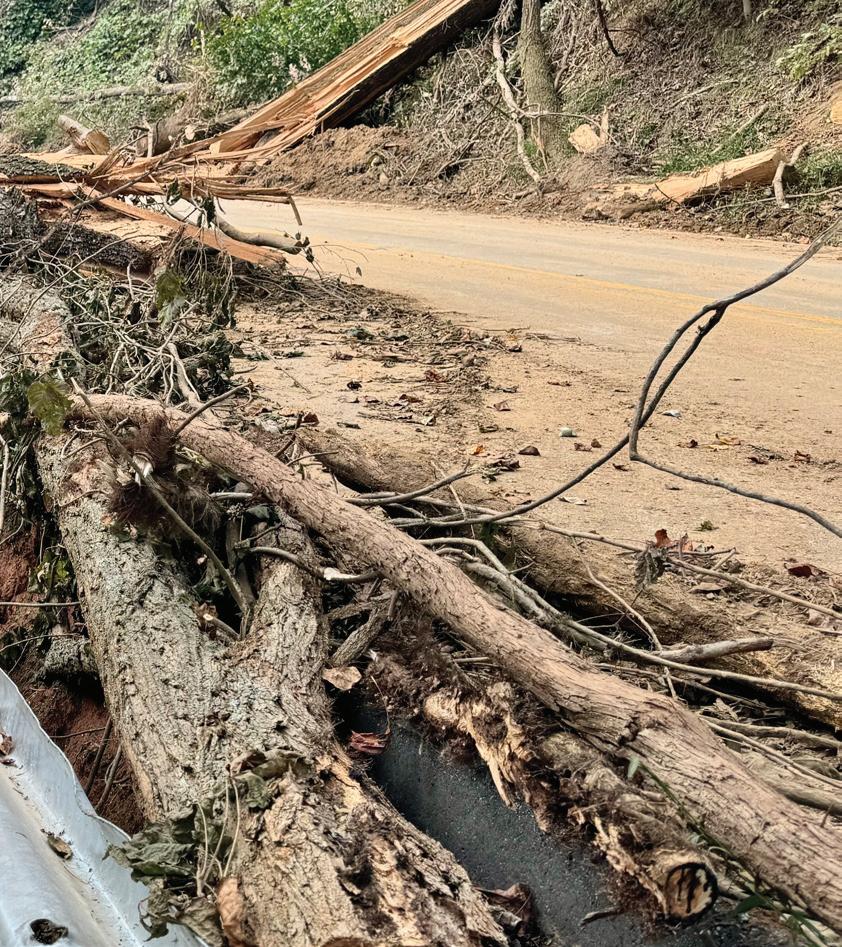
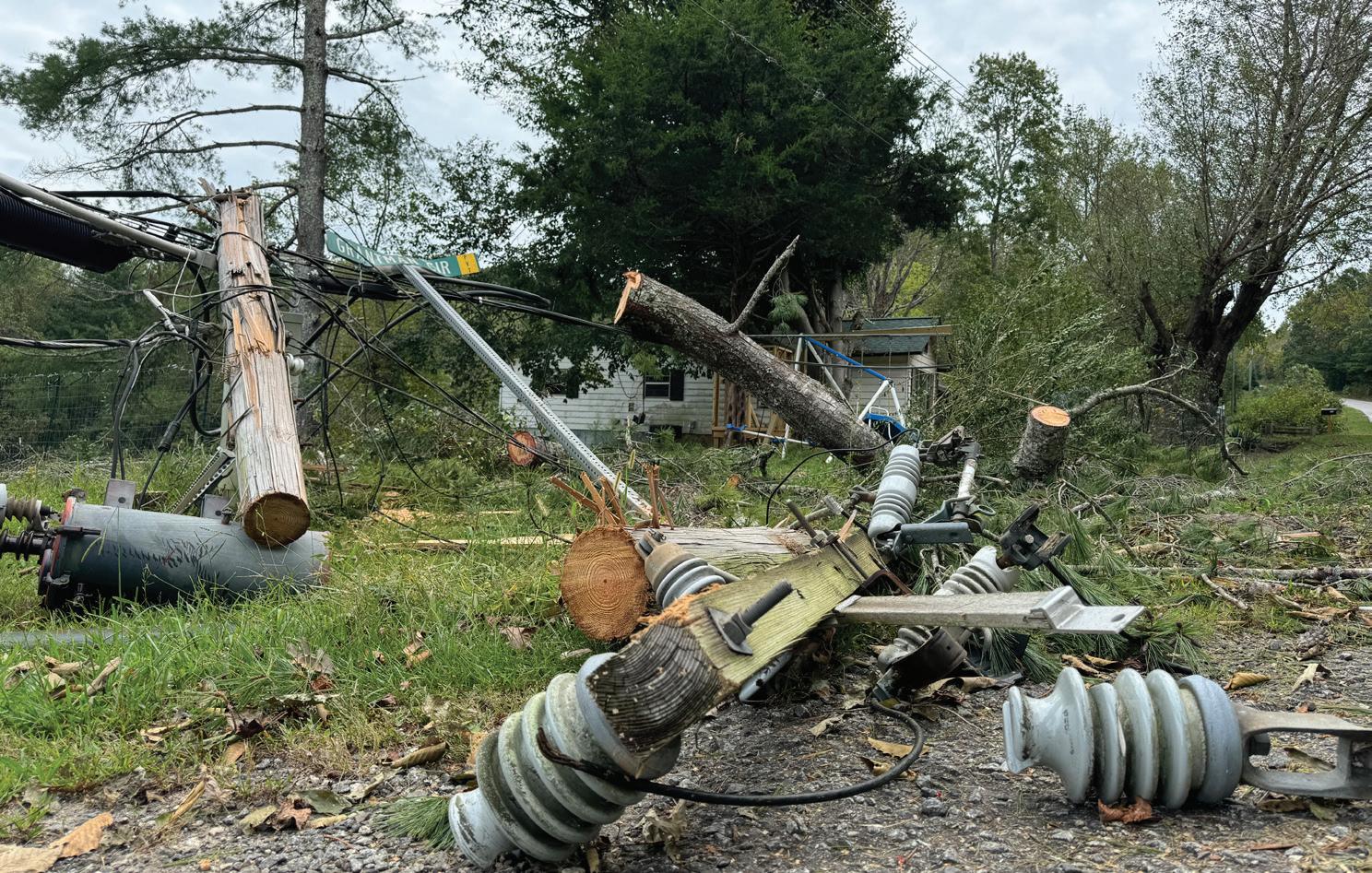
Burrell said his wife also volunteered a lot of her time to the restoration.
“She gave a lot,” he said. “She would come in and help in the op center with laundry and putting bags together and just provide assistance to me and those around us, so I am very thankful for her.”
Because he was managing more than 200 lineworkers, Bell had to find a way to feed the crews. He asked a friend who owns a BBQ restaurant to prepare meals using his food truck fueled by propane. Others also pitched in.
“Linemen’s wives were making sandwiches and trying to prepare meals for people because there was nothing available,” Bell said. “Most of the restaurants’ food spoiled before they could even use it. So it was kind of get what you can get and keep working.”
Case in point: for the first few days, Burrell said he and his crew members were living off of water and beef jerky bags. Henderson remembers eating lots of apples during the restoration.
“One day, a farmer came through, and most of their crop was destroyed,” Henderson said. “The whole bed of their truck was filled with apples, and they bagged them up and gave us 300 bags of apples. We ate apples for days and days.”
After the initial restoration, Duke Energy’s line crews are still working in the area to rebuild or repair the lines to the point where they can receive power.
“We are rebuilding lines and turning meters on to try to get power back on these structures,” Bell said. “We are trying to answer the calls of the individual structures that are ready, and we are figuring out how to build a line to it. As far as the community, there’s still a lot of work to be done there. Several relief groups are building all the town back. They’ve come a long way, but there’s still a lot of construction left to do.”
In fact, Duke Energy is still feeding all the customers with an alternate source and still doesn’t have the line built to where it used to be located.
“We had to backfeed from two different areas and split the customers up just to get the power back on,” Bell said. “It will probably be like that for at least two or three years, because that’s
how long it will take for the road construction to be finished. I hope I never face another one like Helene ever again.”
AMY FISCHBACH (afischbach@endeavorb2b.com) is the Head of Content for T&D World and the host of the Line Life Podcast.
Editor’s Note: To hear Miles Bell, Jordan Henderson and Heath Burrell share the stories about the Hurricane Helene response in their own words, listen to the two-part series about the hurricane response for the Line Life Podcast at linelife.podbean.com. Also check out Part 1 of this series, which talks about not only Hurricane Helene, but also the response following Hurricane Milton.




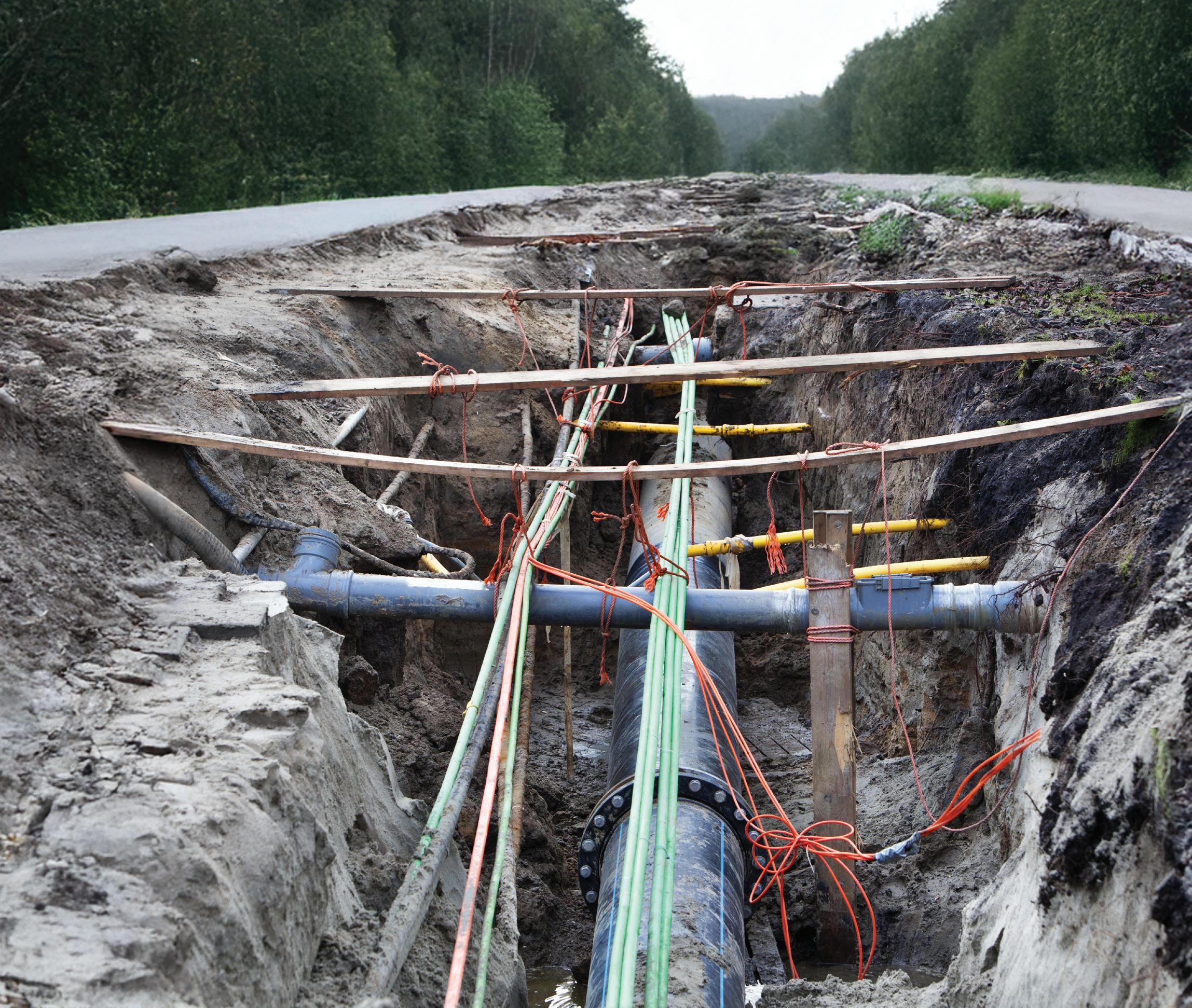
The MUDDI model is taking the guesswork out of digging for electric utilities worldwide.
By SCOTT SIMMONS, Open Geospatial Consortium
When a utility crew rolls up to a busy intersection, they’re not just cutting into asphalt — they’re cutting into uncertainty. Buried beneath the surface might be a century-old water main, a fiber-optic line installed last month or an unmarked power cable that could knock out service to thousands. Every year, these “strike incidents” cost utilities billions in delays, lawsuits and emergency repairs — not to mention the risk to workers’ safety.
For decades, engineers have been trying to answer a simple but stubborn question: What exactly is under our feet?
A breakthrough is now taking shape. Known as MUDDI — short for the Model for Underground Data Definition and Integration — this new framework is giving utilities a common language for underground data. The Open Global Consortium (OGS) is spearheading this global effort, and experts from across the world have shaped its design.
MUDDI principles are already being applied in the United Kingdom’s (UK’s) National Underground Asset Register (NUAR), which is bringing together data from more than 650 utilities and asset owners to reduce excavation risks and improve infrastructure planning.
Utility executives don’t need another acronym — they need fewer strikes, faster repairs and better coordination with other asset owners. That’s where MUDDI comes in.
Instead of every gas, water, electric and telecom company keeping their own incompatible maps with each using different terms, formats and coordinate systems, MUDDI creates a harmonized data model. Think of it as “Google Maps for the underground,” where all pipes and cables are described in the same way and displayed in the same frame of reference. The payoff is straightforward:
• Safety – Fewer worker injuries from unmarked lines.
• Reliability – Reduced outages from accidental strikes.
• Efficiency – Crews spend less time reconciling conflicting maps and more time fixing problems.
• Cost savings – Avoiding surprise encounters with hidden infrastructure prevents multi-million-dollar overruns.
As Chris Popplestone, senior data scientist at Ordnance Survey, explains, “The harmonized data model is that central target into which all the source infrastructure data is transformed. The
source data comes in all different shapes and sizes, but it all gets transformed to this harmonized model.”
In other words: utilities don’t have to change how they collect data. MUDDI takes care of the messy translation, ensuring everyone can work from the same page.
The UK has become the world’s test bed for this idea. Starting in 2019, the UK Government Digital Service (part of the Department for Science, Innovation and Technology and previously known as the Geospatial Commission) launched pilots in London and Northeast England. The goal was to prove that hundreds of asset owners could pool their records into a single system built on MUDDI principles.
It worked, and today, the National Underground Asset Register (NUAR) is live in Public Beta with data from more than 300 asset owners, ranging from nationalscale utilities and telcos to local authorities. Engineering firm AtkinsRéalis led the national rollout of NUAR as a minimum viable product to test it at scale, while software company 1Spatial has been handling the complex data transformation and ingestion. Ordnance Survey shaped the harmonized NUAR data model, built the underlying data store and developed the user interface. It now operates NUAR on behalf of the government with the platform fully operational at the end of 2025.
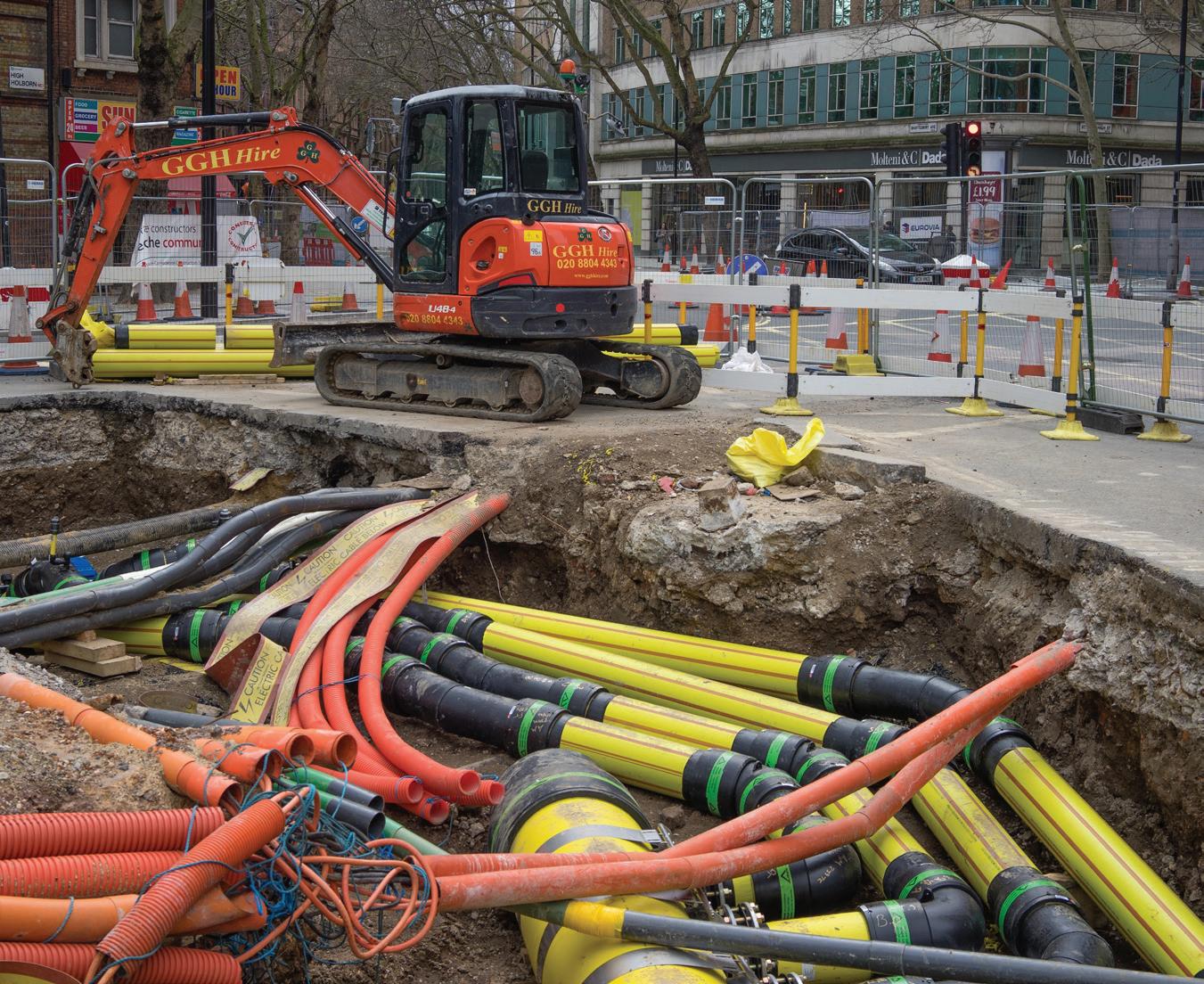
MUDDI provides precise mapping of underground equipment, even in dense, urban locations. Open Geospatial Consortium
The result is that field staff can now draw a polygon on a digital map where they plan to dig and instantly see every pipe and cable that might be affected — presented in a clear, uniform way regardless of who owns it. Popplestone, who specializes in geospatial data modeling and harmonization, said the NUAR pilot was based on an earlier version of MUDDI.
“The feedback we got from that pilot has fed into a new iteration of the model, which is now forming the basis of the national rollout,” he said.
Getting to this point wasn’t easy. One of the toughest challenges wasn’t technology — it was terminology. The same type of pipe might be described differently by two companies, or even by the same company in two different regions. A fiber-optic line in West Sussex might be recorded in a completely different way than the exact same cable in West Lothian.
That’s where MUDDI’s flexibility comes in. Carsten Roensdorf, NUAR product manager at Ordnance Survey and co-chair of the OGC MUDDI Working Group, puts it this way: “There is potentially so much variation that we have to be able to make tweaks and add things we haven’t come across in other data sets. The data model has to be modular and responsive — otherwise it collapses under the weight of exceptions.”
In practice, this means NUAR’s “excavation profile” was built with governance structures that allow new asset types or terms to be added without tearing down the whole system. The model can evolve as new technologies or infrastructure emerge, ensuring it stays relevant for decades.
While safe excavation was the first use case, the applications go much further. The same harmonized approach could help utilities and governments manage flood risk, track land ownership or even coordinate climate resilience planning. Anywhere multiple organizations need to pool different datasets into a single, reliable view, MUDDI offers a template.
1. Billions at stake. Utility strikes cost more than $30 billion annually in the United States alone. Some studies place the broader impact at more than $60 billion.
2. One language underground. MUDDI harmonizes asset data from hundreds of owners into a single, trusted view.
3. Proven at scale. The UK’s NUAR system is live with 650 asset owners, reducing risks and delays for field crews.
4. Flexible by design. MUDDI is built to adapt to new asset types, regulations and technologies without breaking the model.
5. Beyond digging. The foundation for disaster response, digital twins and smarter infrastructure planning can be used worldwide.
As Roensdorf explains, “Voices at the Open Geospatial Consortium that helped shape and influence MUDDI come from as far and wide as New Zealand, the Netherlands, Belgium, the United States, Canada and Scotland. That breadth gives MUDDI a great chance to succeed globally.”
For utilities facing cross-border projects, multinational investments, or the rising demands of regulators, that global outlook matters.
The risks of inaction are high. In the United States alone, the Common Ground Alliance (CGA) estimates that damages from utility strikes cost around $30 billion each year in direct and indirect expenses — covering everything from emergency repairs to lawsuits, lost productivity and insurance claims.
Some industry studies suggest the broader economic toll may be even higher









— potentially exceeding $60 billion annually when factoring in construction delays, private-line strikes and systemic inefficiencies. Regardless of which estimate you choose, the bottom line is clear: the costs are measured in the tens of billions every year.
And that’s only the financial side. Utility strikes also put lives at risk. Industry data indicates that excavation-related incidents in the United States result in more than 2,000 injuries and about 400 deaths each year.
The business case for harmonized underground data, then, is not only about saving money, it’s about protecting workers, reducing liability and preserving public trust.
NUAR offers several takeaways for utilities watching from abroad:
• Leadership matters — Government Digital Services played a convening role, but it took engineering leaders like AtkinsRéalis and technology providers like 1Spatial and Ordnance Survey to execute.
• Start small, scale fast — The initial pilots provided proof, but feedback loops drove the model’s refinement.
• Flexibility is key — No two asset owners describe their systems in the same way. The model has to accommodate differences without breaking.
• Engagement builds adoption — 650 asset owners didn’t sign up overnight. Consistent outreach and collaboration were crucial.
As NUAR expands across the UK, interest in MUDDI is growing worldwide. Countries facing fragmented underground infrastructure records — from North America to Asia — are exploring whether the model could help them avoid the same costly headaches.
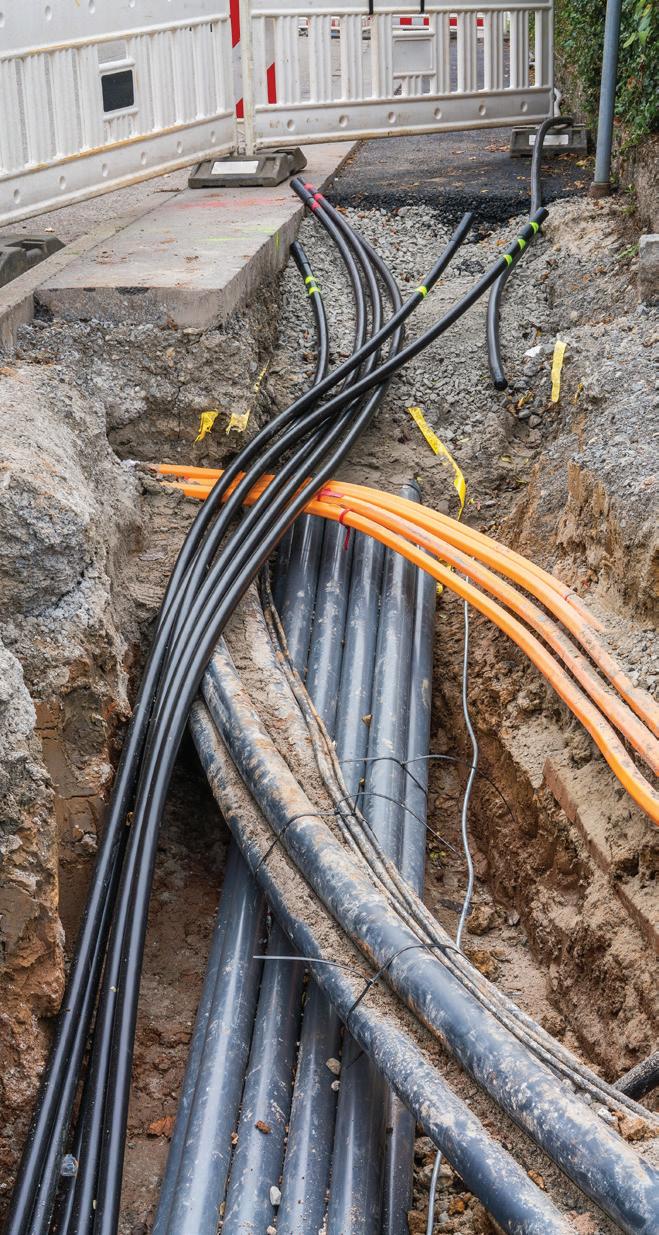
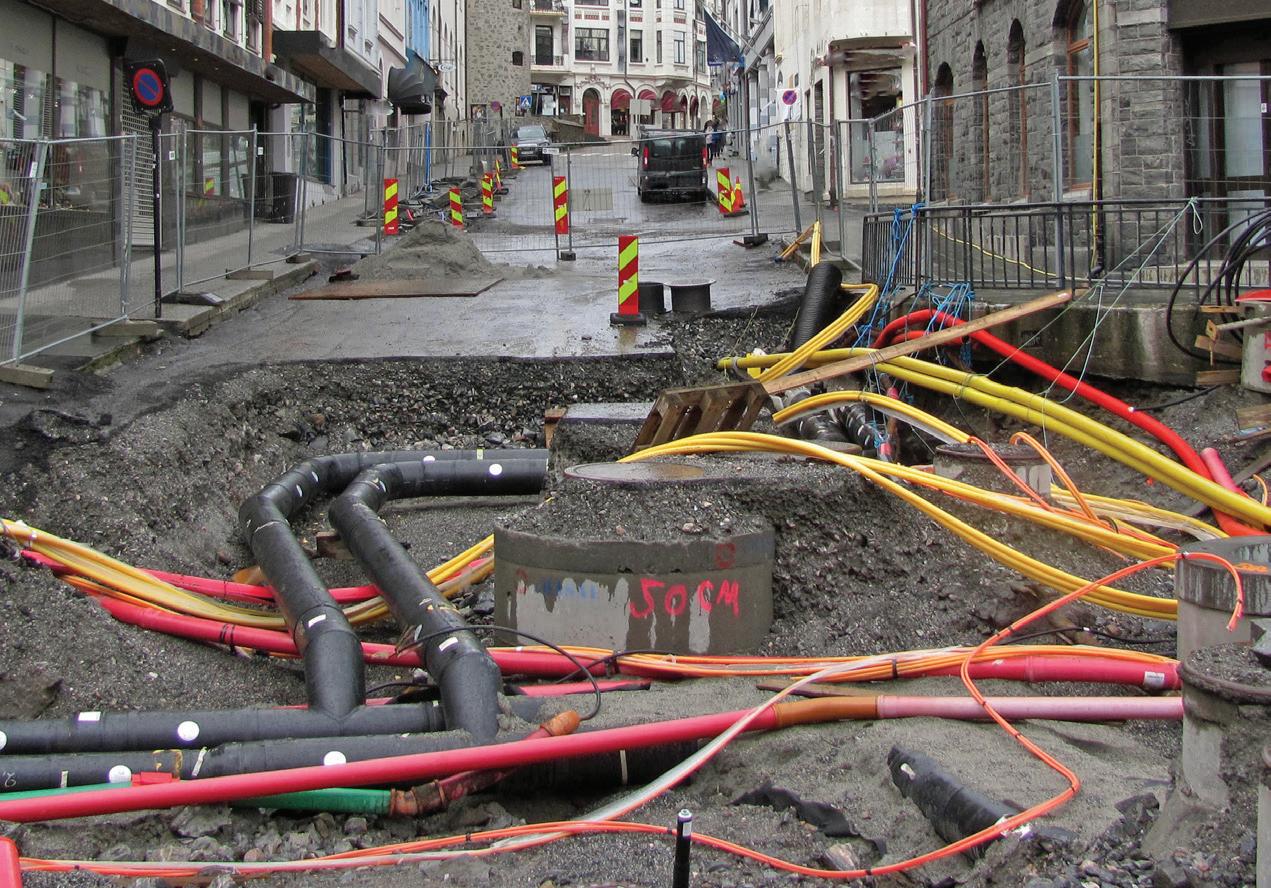
Digging often requires the repair of underground communications pipes and cables.
The hope, says Roensdorf, is simple: “With the progress MUDDI is making underground, engineers of the future will endure much milder headaches while pondering how to dig up street corners in years to come.”
For utility executives, the message is clear: the underground is no longer a blind spot. With harmonized data models like MUDDI, the industry finally has the chance to see beneath the surface and act with confidence.
Editor’s Note: Chris Popplestone and Carsten Roensdorf contributed to this article.
SCOTT SIMMONS is chief standards officer at the Open Geospatial Consortium (OGC), where he leads the global standards program that enables interoperable geospatial data and services across sectors. He oversees OGC’s consensus processes, coordinates with governments and industry and guides the evolution of OGC Standards and Profiles used worldwide.



A case study explores fault signatures like current climbs, voltage sags and recovery from bird contact.
By KENDRICK SCHABEN, Coos-Curry Electric Cooperative

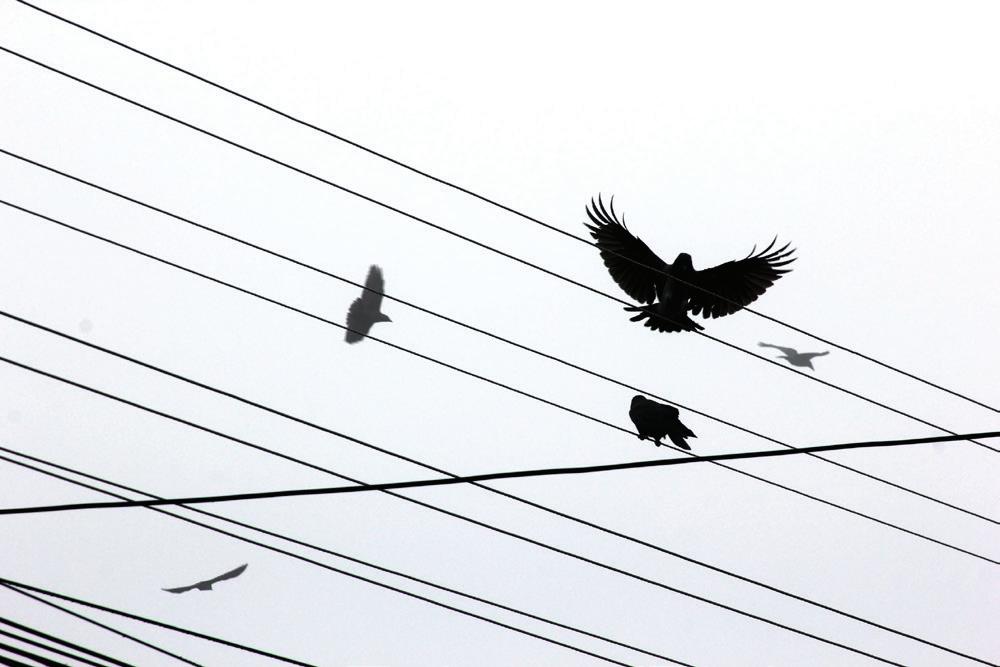
Most lineworkers, substation crews and troublemen can distinguish a wildlife fault (caused by a squirrel, for example) from a vegetation strike without pulling oscillography or running fault analysis. However, proving which came first, the squirrel or the tree, is trickier. In the field, fault causes often blur together. A squirrel might trigger the initial arc, only for a tree to drop the line minutes later. Oscillography offers clues, but interpreting those clues requires context — and a bit of detective work. Bridging what is observed in the field with what appears in oscillography may reveal consistent patterns. It is hypothesized different fault causes produce distinct electrical characteristics, which could help to identify more mysterious fault causes.
Outlined are real events on actual electric systems, complete with field-confirmed causes, fault analytics and a mix of dry data. The goal is to give field personnel a leg up when the cause of a fault is not obvious. It may also serve to help system protection designers to account for real-world fault behavior.
When wildlife meets energized equipment, the animal is often harmed or killed, even though the equipment may continue functioning. Cleanup and restoration are typically quick, but the exact cause is not always obvious. Wildlife faults vary widely, from birds bridging phases and rodents gnawing through cables to fish dropped onto conductors by osprey.
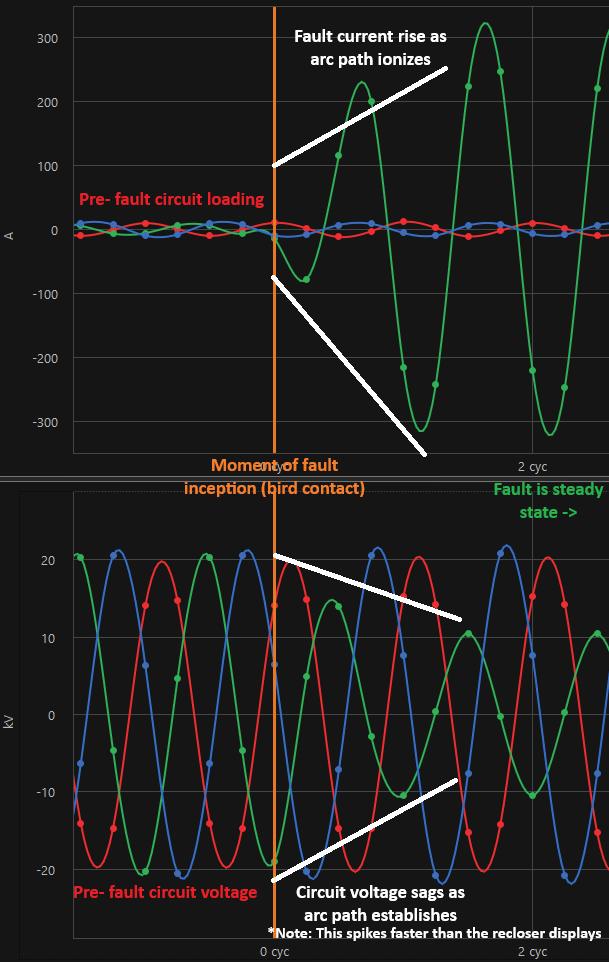
Turkey-induced phase-to-ground fault inception and clarification. A closer look shows the full fault current is achieved in approximately 2 cycles. The voltage waveform also shows why significant flicker from voltage sag is observed by all services on a circuit when a decent fault occurs. A trained eye combined with the recording capabilities also may be able to discern the phase slip in the voltage and current waveforms in the faulted phase. This effect is most visible by noting the dot locations on the waveforms and comparing the relative timing of the faulted phase as it starts to lag.
Each fault event may present distinct characteristics, shaped by fault asymmetry, path ionization and the limitations of recording instrumentation. Event analyses may include specific causes, system responses and evaluations of whether the equipment performed as intended — or whether successful operation was even feasible under the circumstances.
Electrical outages are frequently caused by birds. In one coastal rural utility in the Pacific Northwest, birds making direct contact with conductors accounted for approximately 75% of the 330 wildlife-related outages since 2016. An additional 5% stemmed from birds dropping prey onto conductors or building nests on power structures.
In other regions, birds also have been identified as a source of wildfire ignition. They have been observed getting shocked, catching fire and igniting the vegetation beneath when falling from a conductor.
By improving industry awareness of local bird populations, the likely cause and location of a fault can be predicted quickly and applied during the initial assessment. This insight is especially valuable
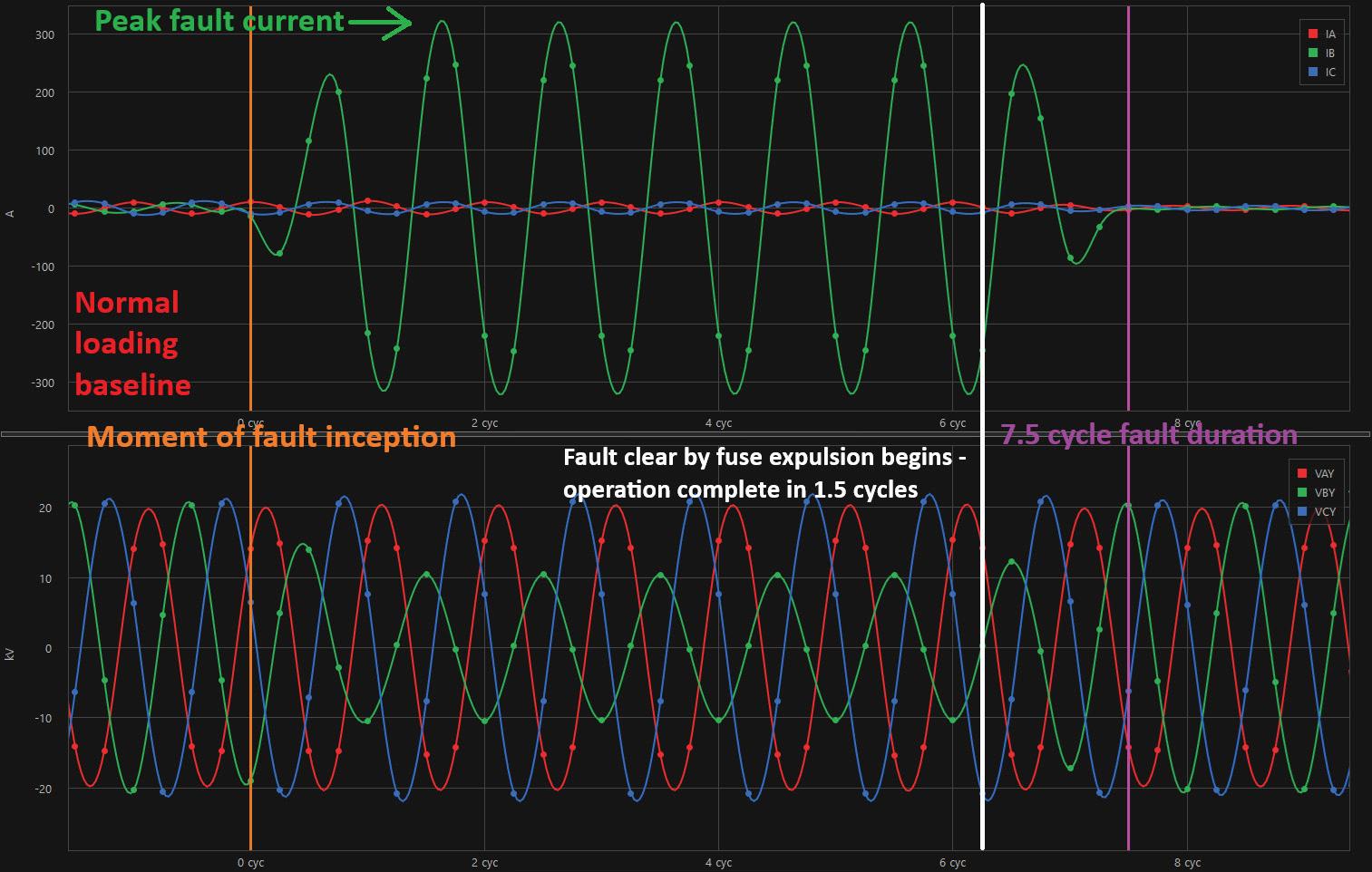
Overview of turkey-induced fault oscillograph. Maximum available fault current was achieved and sustained for approximately 7.5 cycles at 60 Hz. In this situation, the control can accurately render a true steady-state fault level. This observed fault level translates to positioning, predicted by electrical modeling at the same location the bird was physically found in the field. The electrical supply system impedance, without additional impedance from an object in between the wires (the bird), matches the oscillograph closely. Kendrick Schaben
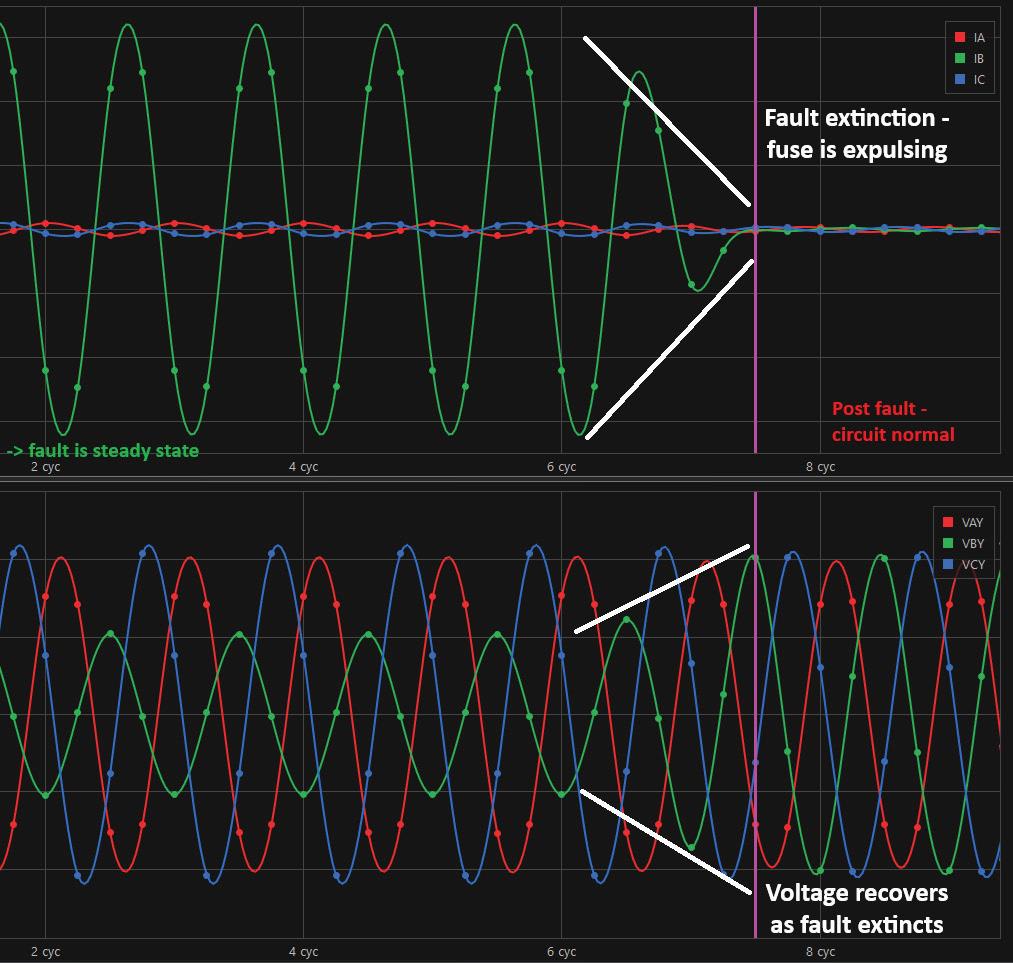
Turkey-induced phase-to-ground fault decay and clarification. Investigating the fault’s steady state is not too interesting, but the fault extinction occurs in about 2 cycles as fuse expulsion occurs. The voltage can recover rapidly as the supply has not slipped to anywhere near unstable levels. Post-fault, the circuit returns to normal loading level (albeit missing the tap with an open fuse). Kendrick Schaben
during lengthy inspections of 50-mile (80-km) circuits in terrain considered more accessible by helicopter than by vehicle.
This case study explores the nature of bird-induced faults based on three confirmed incidents on 14.4-kV
line-to-ground overhead distribution systems. In summary, the findings found that birds of all sizes usually can produce fault current magnitudes akin to a bolted fault. Additionally, reclosing is highly successful at shaking these birds off the conductor.
For this study, oscillographs were retrieved from upstream recloser controls for faults definitively caused by a bird. These controls are often many miles from the fault and seldom actually produce a reclose operation themselves, but they have visibility and recordings of the downstream faults. Many rural recloser controls farther out on the distribution circuits do not possess the ability to record these events at all.
The bird location was confirmed by field personnel, and modeled fault parameters were procured from a distribution system electrical model for each example. This provides the impedance inherent to the system up to that point, which allows for normalizing the faults to each other in terms of expected fault current magnitude. In this manner, observers are looking at apples-to-apples in terms of fault signatures.
A classic method of estimating fault locations from fault magnitude is by assuming the cause of the fault is either wire-to-wire contact (has only the system impedance) or through an object with additional impedance (assumed 40 Ω, a topic of frequent debate).
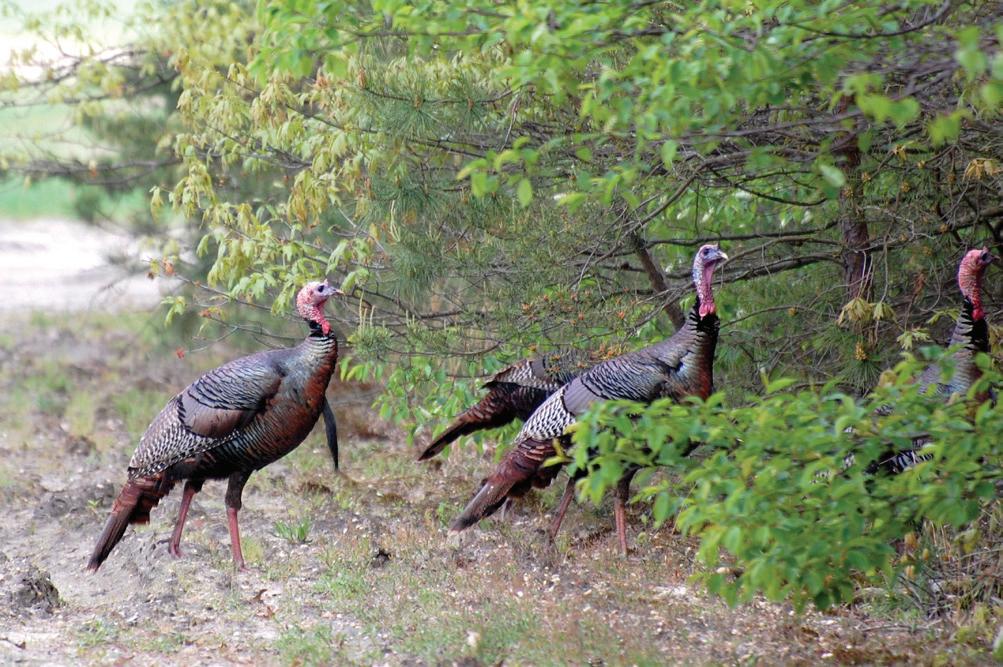
Case #1 involved a turkey-caused fault that managed to get between a phase and ground conductor. It is shockingly common, as turkeys like to gaggle up in the right-of-way under the power line. When the turkeys take flight, they are occasionally just the right size to manage brushing the wires of two different conductors.
The recloser observed and recorded the fault but did not achieve the timing to cause it to attempt reclosing. This fault was cleared by a downstream expulsion fuse. The initial current climb and voltage sag were examined more closely as well as the trailing fault extinction and voltage recovery.
Case #2 also involved a turkey making contact between phase and neutral conductors. On one particularly memorable Christmas day, three turkeys flew into the same 1000 ft (305 m) of overhead circuits, each incident spaced a few hours apart.
This fault was cleared significantly faster than in Case #1 (the fuse protecting the fault was smaller) and demonstrated control reporting limitations.
Case #3 consisted of a blue jay perched on lid of a casegrounded pole-mounted transformer, pecking at the high-voltage connection above the insulator. This type of contact has been repeatedly observed with Steller’s jays, whose height makes them especially vulnerable.
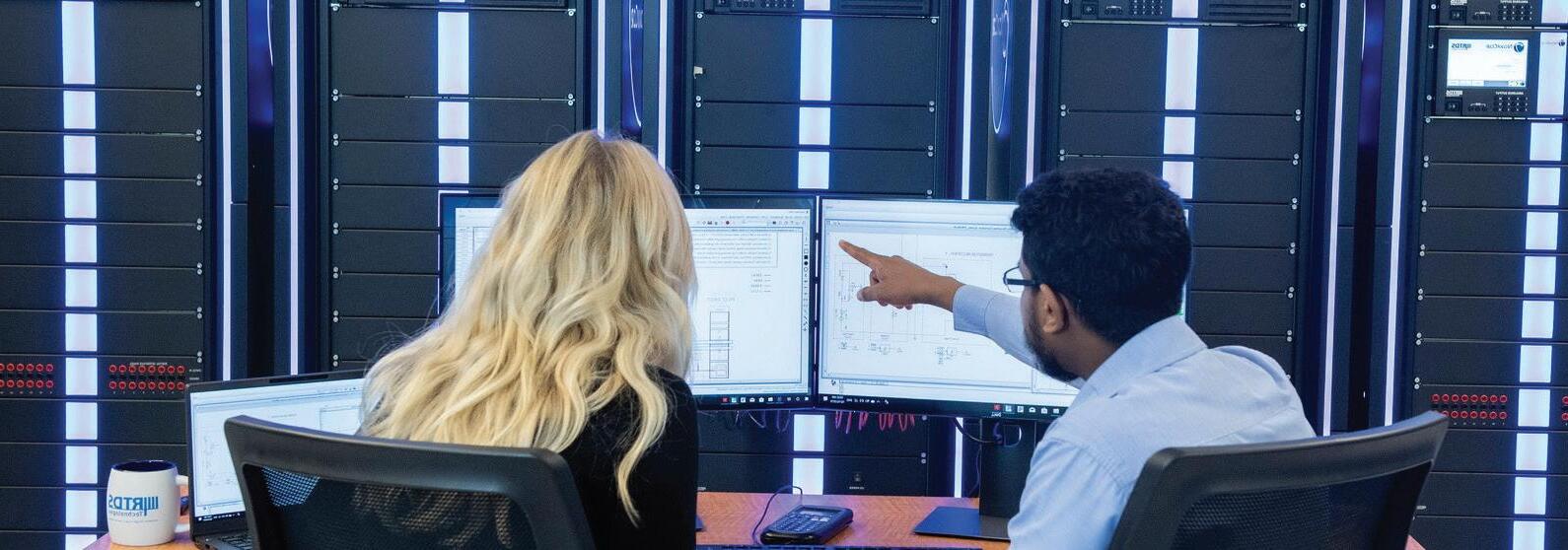

The RTDS® Simulator is a key technology for de-risking data center protection, automation, and control systems. HIL testing helps to identify power system vulnerabilities associated with data center integration, ensure their uninterrupted operation during power system events, and improve the speed and cost of data center deployment. Visit the website below to learn more.


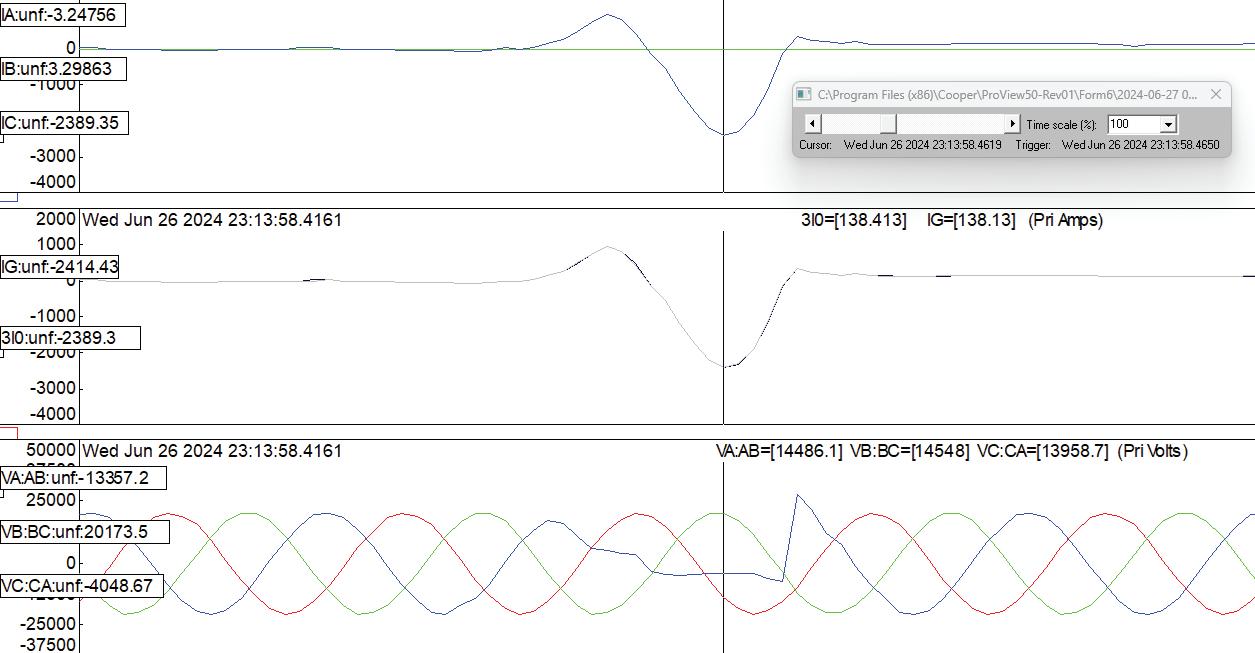
Blue jay-caused phase-to-ground fault. This is a good example as the peak current implies a steady-state fault current of 1.7 kA. The location that the obvious cause was found (launched bird, feathers everywhere, scorch marks) is only capable of producing 1.5 kA. The asymmetry arises as the initial fault levels have some inrush and would decay from 1.7 kA to 1.5 kA as the fault achieves steady state. Kendrick Schaben
The fault was cleared sub-cycle by downstream fusing, exhibited recloser reporting limitations and demonstrated obvious fault asymmetry.
Bird-induced outages often replicate conditions similar to bolted faults, including direct conductor-to-conductor contact. While there may be a slight delay in forming the ionization path, the maximum available fault current is almost always achieved. Preventing bird contact can be challenging. However, for locations identified as a frequent site of avian interference, targeted mitigation strategies like installing protective coverings for insulators and bushings, increasing conductor spacing or hanging bird diverters can prove quite effective at prevention. Furthermore, reclosing functions are highly effective at dislodging the avian impedance from the electric distribution system.
KENDRICK SCHABEN, P.E., is the staff engineer at Coos-Curry Electric Cooperative in Oregon, focusing on distribution protection, wildfire risk mitigation, and rural system reliability. His work spans fault analysis, contingency modeling, and system optimization. He is a licensed Professional Engineer and a U.S. Air Force veteran.
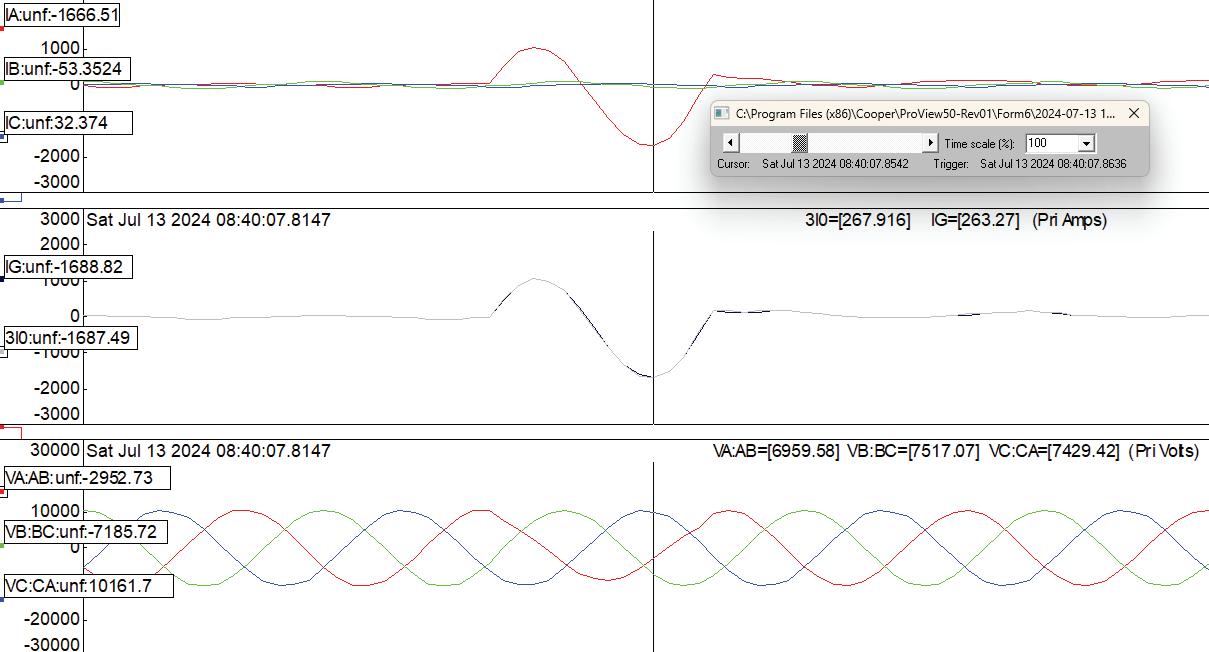
Turkey-induced phase-to-ground fault. This is quite interesting as the fault is formed and cleared in sub-cycle conditions. As can be seen, the peak current achieves a level of 1.67 kA. This corresponds to an actual sustained rootmean-square (rms) fault level of approximately 1.2 kA. The recloser control reports a peak rms value of 790 A. The recloser control is limited because it is estimating rms values based on the last two or three cycles. Since only one cycle is out of steady state, the recloser reports a false value somewhere between the loading current and the true fault magnitude. The actual 1.2 kA marries up with the electrical modeling for the maximum available fault at the exact location where the turkey was found. Kendrick Schaben
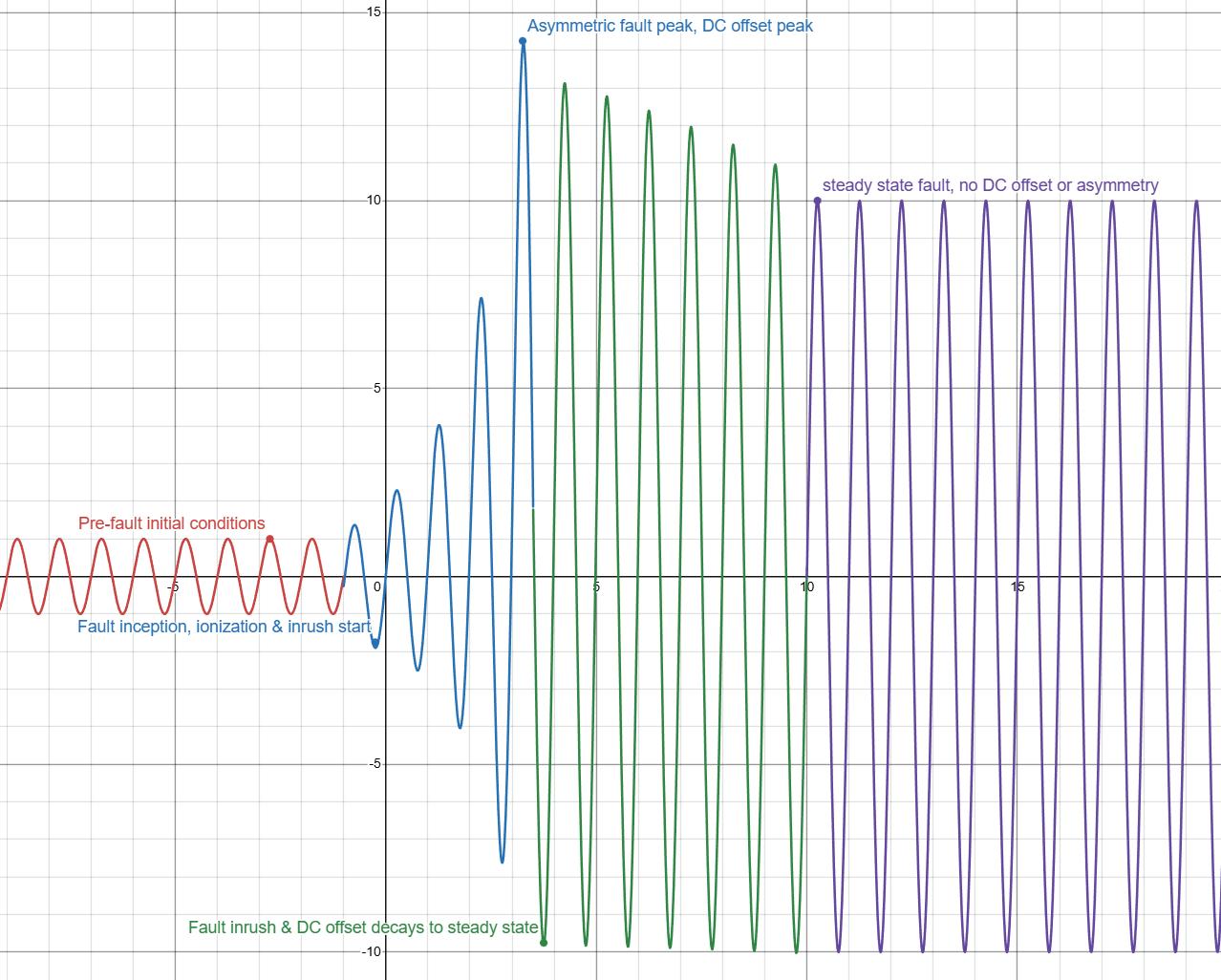
To better understand some behaviors in the waveform captures, this is an exaggerated fault waveform of fault ionization, asymmetry, dc offset and natural decay to steady-state conditions. Kendrick Schaben


BY AMY FISCHBACH, FIELD EDITOR
After working on the telecom side of the industry for years, he shifted gears and trained to be a lineworker at Eversource.
I worked for SNET, the first telephone company in the world. After many years, I was introduced to the construction side of the company. I was hooked. I spent 17 years as a utility lineman, but I always desired the electrical side of the trade. When I was offered the opportunity to switch sides, I jumped at the chance. Last year, I was in the twilight of my apprenticeship and topped out in November 2025.
My company has a fantastic training facility, but it was not available for daily training of apprentices. I immediately spoke to my managers to create a training yard for daily training of apprentices in an underutilized section of our supply yard. We set poles, ran wire and created a training yard that is used daily to train apprentices in real-life situations, non-energized.
I became a lineman in the phone company. We were required to set poles better than power companies because our lines require splicing up to 3600 pairs of wires. Electric companies only have a few wires to splice. I was lucky to get into the local power company. I have done my apprenticeship through Eversource, in conjunction with the Northeastern Apprenticeship Training Program (NEAT).
In our company, every day is a different job. We are often blessed with a capital job that offers in-depth training opportunities.
I do not have to travel for my job, but I also don’t have the access to adequate “hot time” jobs because I work for a local municipality.
I’ve worked many storms, and they have ranged from the benign to total destruction. All new recruits feel like they’re saving the world. Every lineman loves the overtime, but safety always comes first.
If you put safety as number one, everyone will go home the same way they came in. If you’re not safe, you don’t go home.
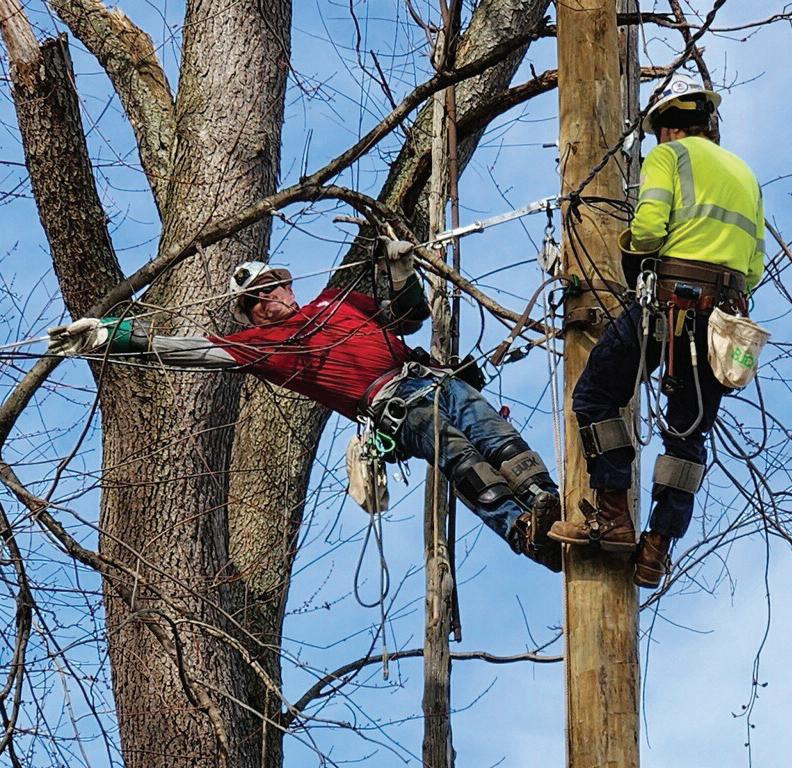
• Enjoys hiking and cycling.
• Likes to see the new tools and technologies at the International Lineman’s Expo.
• Said the training culture is the same yet the technology has changed in line work.
Being a lineworker is the best job ever. It’s a tough job but it’s great work, and you get satisfaction at the end of the day and good pay so you can get comfort in life. I advise anyone who is interested in a career in line work to do it.
Technical skills are important, but so is thick skin. Your union brothers will beat you down throughout your apprenticeship.
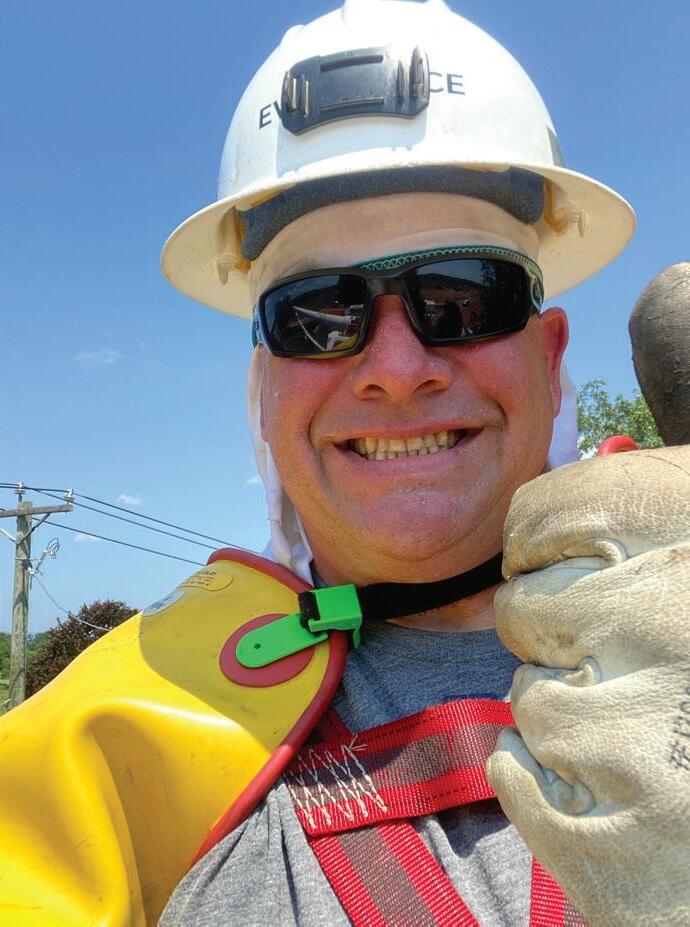
At 51 years old, I was the oldest apprentice Eversource has ever hired. In five to 10 years, I see myself retired. The future of line work will only get stronger.
Editor’s Note: If you would like to nominate an apprentice for Faces of the Future, please email Field Editor Amy Fischbach at amyfischbach@gmail.com All profiled apprentice lineworkers will receive a tool package from Milwaukee Tool. Also to listen to other stories about apprentices in the line trade, tune in to the Faces of the Future series for T&D World’s Line Life Podcast on Podbean at linelife.podbean.com
























By KIRK COFFEY, ATK Energy Group
The line trade is considered one of America’s top 10 most dangerous occupations, according to the U.S. Bureau of Labor Statistics (BLS). Case in point: between 20 and 30 electric powerline repairers and installers were killed on the job between 2011 to 2023, and in 2023, this number escalated to 40 lineworkers. In 2022, more than 2,300 lineworkers were injured severely enough to require days away from their normal work, and those in their first five years of service accounted for nearly 40 percent of injuries. Contributing factors could be lack of safety oversight, training gaps and lineworkers with limited experience.
Despite how vital safety is for any utility, the priority put on oversight can be pushed down by competing interests and complacency. Utilities, like every business, balance the costs of providing a service. Despite continued efforts to enhance training and engagement, recent statistics show that significant injuries and fatalities are occurring at a consistent rate. An employer’s reliance on safety oversight varies based on past experiences, the availability of resources and reliance on contractors. But regardless of the factors, a case is to be made for increased reliance on qualified safety professionals.
Safety oversight programs apply experience to mitigate risk. Unlike simple compliance checklists, oversight is active and on the job site. Trained observers go into the field, comparing real-time practices against a utility’s safety manuals and OSHA standards and offer crews feedback on the spot.
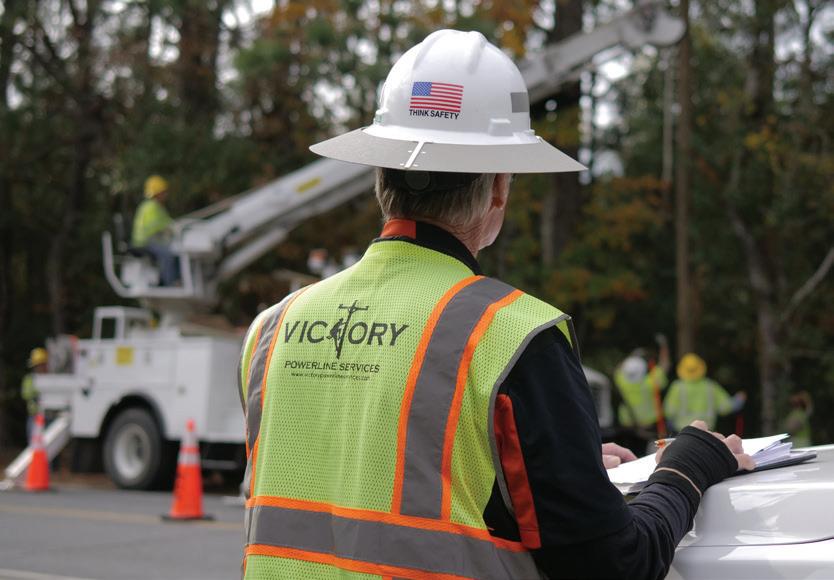
Done well, safety oversight reinforces fundamentals like “insulate and isolate.” For example, inspectors reinforce safe practices with crews like avoiding putting oneself between two differences of potential and ensuring protective cover-up is applied correctly. Although slowly booming into position and properly applying rubber hoses to dead end shoes, bells, and conductors takes more time, a crew working in this manner prevents injuries and fatalities. Oversight stops unsafe shortcuts before they become tragedies.
Factors like worker shortages are compounding an existing challenge: The industry must fill out its ranks while tackling an increasingly large workload. A shortage of skilled workers has accelerated promotions among utility and contract crews. It is not uncommon to find foremen with only five years of experience; per the BLS statistics, this is the higher end of the experience range with the most injuries.
Many lineworkers sign on for storm work because it offers lucrative short-term pay. Meanwhile utilities, driven by blue-sky workload and deadlines, must ramp up crews who often have less experience. The result: a less experienced workforce than in years past exposed to heightened risk.
These programs give utility executives insight that only a critical eye in the field can provide — something management doesn’t always have the time or staff for. This is not theoretical. In fact, good oversight programs reduce the total case incident rate (TCIR). A few years ago, an East Coast utility built an internal oversight unit for its distribution system. The initiative drove down serious injuries and fatalities. When the program was scaled back, accidents tripled. The lesson: oversight is a shield to ever-present risks.
While there is no agreed upon or mandated ratio of safety professionals to lineworkers, the National Association of Safety Professionals does offer a formula utilities can use. The NASP formula accounts for factors like the nature of the workplace and degree of hazard present. For utilities, investing in safety oversight and serious injury and fatality, SIF, prevention reduces costs and achieves the goal of getting lineworkers home the same way they arrive at work.
The alternative is far more costly. A single fatality can halt projects for weeks, ripple across states and trigger standdowns that delay projects or restoration for thousands of customers. A fatality forever changes the life of a family left behind. And for the utility or contractor that employed the lost worker, there are financial penalties and reputational damage.
Regulators and investors also notice that a poor safety record impacts an investor-owned utility’s shareholders or a contractor’s ability to bid on future projects. Insurance costs climb. Public trust erodes. Safety oversight is the right thing to do by workers but also good business.
The challenge, in part, lies in changing behavior on the job site. Lineworkers are independent, resourceful and not always eager to hear from management or thirdparty observers about how they should carry out their job. Oversight works when observers collaborate with crews rather than lob critiques at them. Connecting with a crew by sharing stories about what an inspector experienced as a journeyman or foreman helps deliver the safety message. For instance, reinforcing the importance of PPE for the eyes might resonate if an inspector shares a personal story of how a snapped guy wire blinded a lineworker who wasn’t wearing eye protection.
Observers build trust by working alongside crews. The best safety professionals offer praise along with correction. They demonstrate that oversight is not about bureaucracy but protecting life and limb. Lineworkers are like firefighters. Both vocations draw people who are proudly committed to what they do. Successful safety oversight programs ideally pull inspectors from the trade. With that experience, the inspectors show they are on the job to help.
Employment for electrical lineworkers is projected to grow 7 percent from 2024 to 2034, according to the BLS, faster than the average for all occupations. Each year, roughly 10,700 new openings will emerge, driven largely by retirements and turnover. That means thousands of new workers will need to master the hazards of line work.
Without safety oversight, new groundmen and apprentices will face more risks.
For utilities and contractors, safety oversight is not an optional cost but an operational necessity. Utilities should stand up independent programs, whether internal or third-party, as part of daily practice. Inspectors for these programs must collect data, provide trend analysis
and report on what they find, so there is accountability and improvement. Our industry can choose to run equipment to failure, but we can never think that way about the people who maintain the grid. Safe work practices and safety oversight stand as effective tools to prevent fatalities and injuries. Safety oversight typically produces critical coaching moments in 20 to 50 percent of observations. Oversight is not about slowing down the job. It is about ensuring that the men and women who climb poles, string lines and restore power return home safely every day.
Kirk Coffey (kcoffey@atkenergygroup.com) is director of Client Solutions at ATK Energy Group, the parent company of Victory Powerline Services. Over the past 26 years, he has gained a reputation for his commitment to improving organizational safety and efficiency in the electrical utility industry. A CUSP and former contract manager for an investor-owned utility, Coffey has more than a decade of experience in operations, workforce leadership and storm restoration.
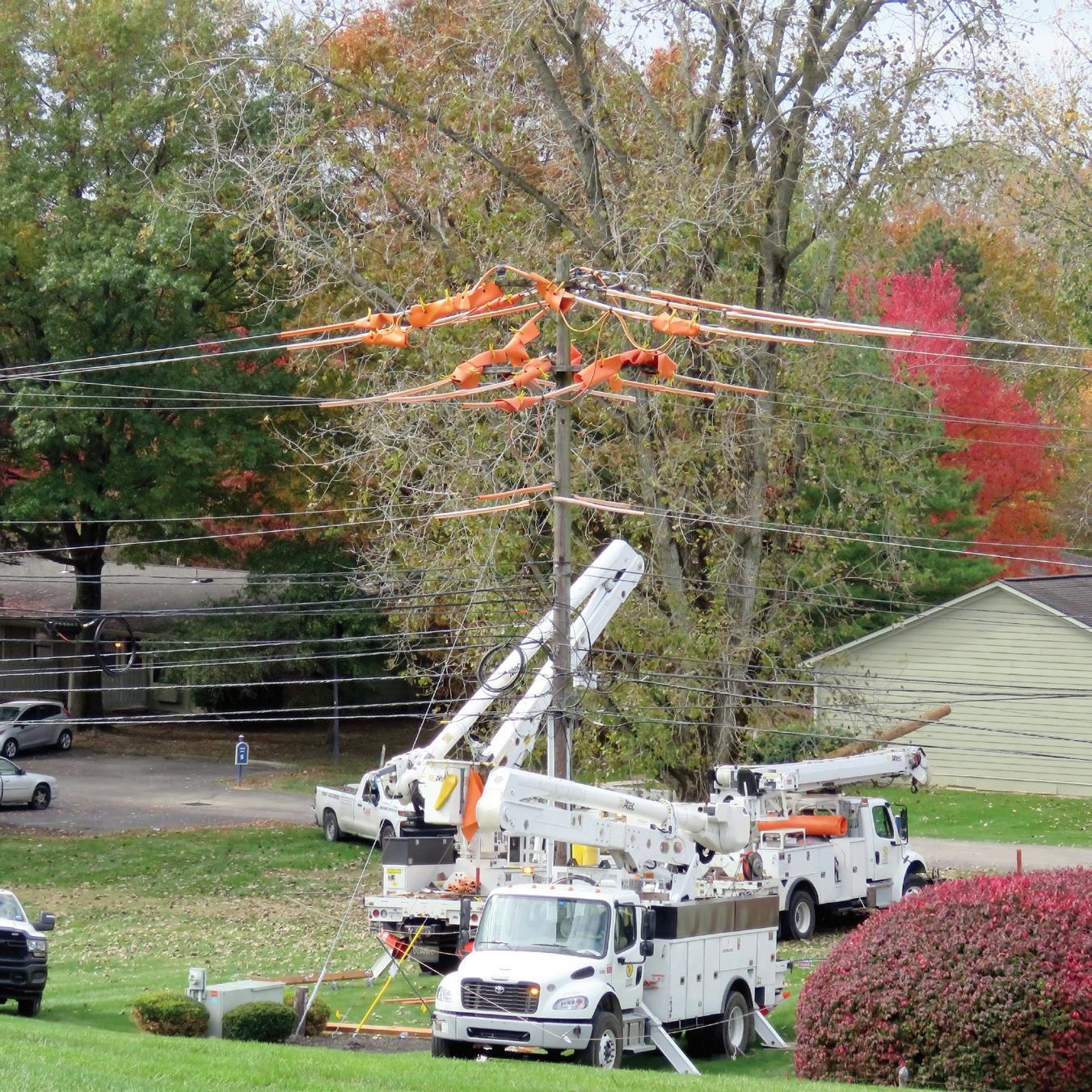
PHOTO BY CAMERON ROWLETT OF KUB
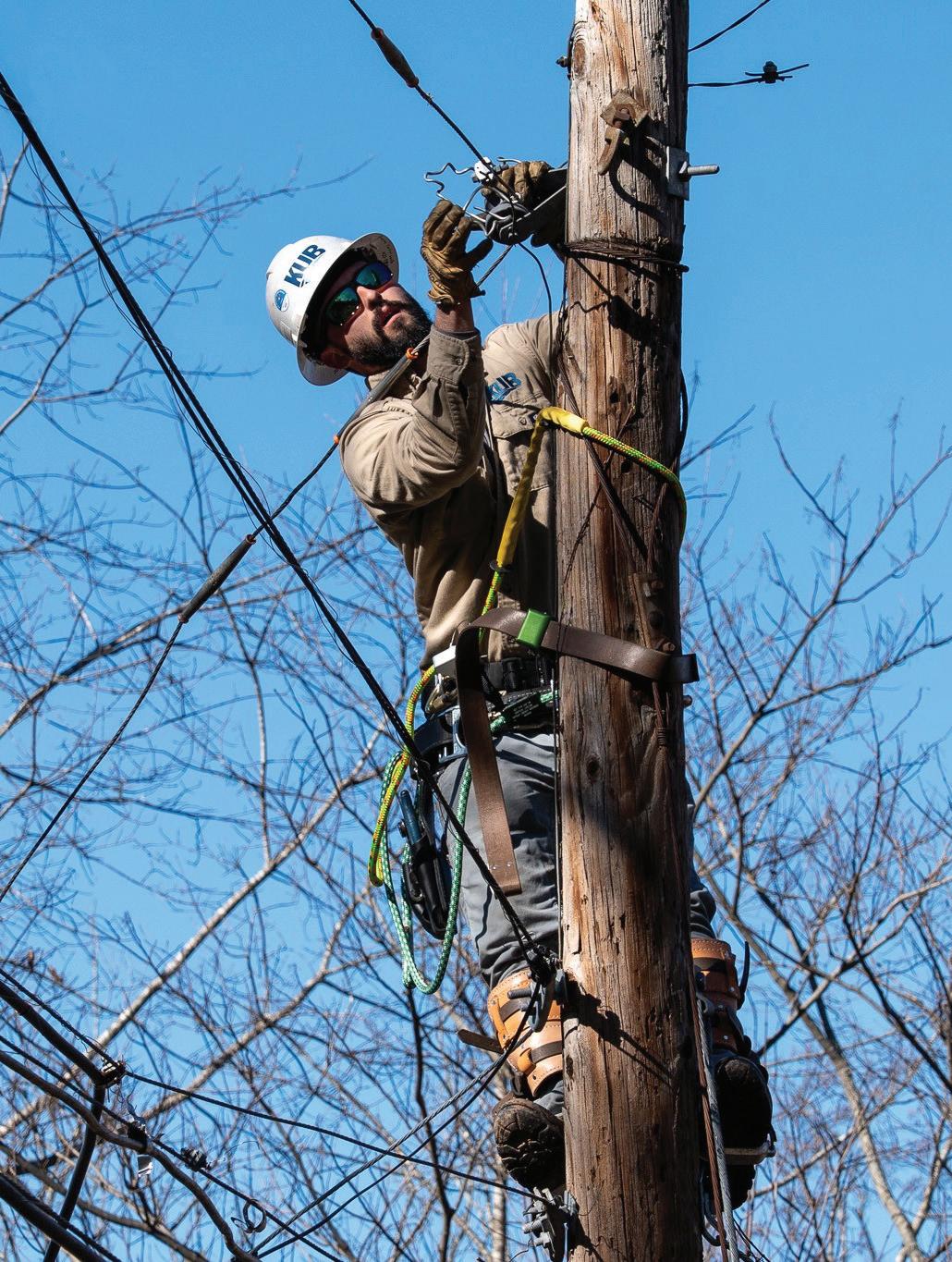
MEDIA SALES
Account Manager
Brent Eklund
Phone: 303-888-8492
Email: beklund@endeavorb2b.com
Account Executive
Andreja Williamson
Phone: 630-721-0712
Email: awilliamson@endeavorb2b.com
INTERNATIONAL SALES
Europe
Sarah Howell
Phone: +44 7935 299 884
Email: showell@endeavorb2b.com
South America, Central America
Fernanda Vega
Phone: +55 21 97673-9692
Email: fvega@endeavorb2b.com
Middle East, India, Asia, Australia, Africa
Saurabh Kapoor
Email: skapoor@endeavorb2b.com
EVENT SALES
Account Manager
David Silverstone
Phone: 561-285-2592
Email: dsilverstone@endeavorb2b.com
International Linemen’s Rodeo, and Events
Sam Posa
Phone: 913-515-6604
Email: sposa@endeavorb2b.com
MEMBERSHIP SALES
ANALYTICS INSTITUTE
Membership Development Manager
James Wingate
Phone: 404-226-3756
Email: jwingate@endeavorb2b.com
Utility Analytics Institute, Smart Utility Summit and Smart Water Summit
Hurricane Helene was the most destructive storm to hit AEP’s Appalachian Power territory since 2012. It washed out roads, limited access, and across mountainous terrain, devastated entire circuits.
But Helene is not an outlier. Utilities across the country are confronting severe weather, wildfires and other major emergencies that are larger and more unpredictable than ever before. As conditions evolve, the old playbook for directing field crews is reaching its limits. What once worked for smaller, slower events now creates friction when hundreds of mutual-aid crews arrive needing clear, immediate guidance. Hurricane Helene made that reality unmistakable and highlighted how digital coordination is transforming restoration.

details, such as the latest circuit maps, were always readily available. Maps updated as portions of the grid were energized, so crews could see where it was safe to work and where lines were live.
This visibility improved awareness and removed the small, compounding delays that slow restoration.
Unproductive time during restoration rarely shows up in a single moment. It accumulates through waiting, backtracking and unnecessary travel. During Helene, digital coordination and workflows helped eliminate much of that friction.
• Crews quickly transitioned between jobs.
• Damage photos improved material staging before leaving the yard.
• Circuit-level visibility reduced unnecessary patrols.
For decades, storm restoration across the country depended on guides, often called bird dogs, who met incoming crews, physically led them to work locations, explained the job and returned later with the next assignment. In an era of smaller storms, fewer outside resources and limited digital tools, this approach ensured safety, helped crews unfamiliar with the territory and kept restoration efforts moving.
However, Helene’s damage wasn’t confined to isolated failures. Crews faced multi-point outages on the same circuit, limited access routes and conditions that required real-time decisions on where to isolate, how to backfeed, what to prioritize and when to request switching support.
Under those conditions, escorting crews from job to job would have created significant bottlenecks, slowing restoration and increasing risk. Going head-to-head with Helene required a different approach.
The turning point was a shift from paper-based workflows to shared, real-time visibility across crews, circuits and coordinators. Using Arcos workforce management solutions, we assigned work digitally, eliminating the need for constant manual guidance. It enabled us to safely absorb two to three times as many mutual aid crews as in previous storms without creating new coordination bottlenecks.
We were able to provide each crew digitally with:
• GPS routing to exact work locations
• A complete circuit view, rather than a single trouble ticket
• Photos and notes from damage assessors, tied directly to the outage case
• Visibility into nearby crews, devices and switching points
This shared context changed how crews worked. Instead of operating in isolation, they could see upstream and downstream conditions, identify opportunities for partial restoration and coordinate safely with other crews on the same circuit. Critical
• With digital tickets updated in near real-time, coordinators could see which crews were actively working, which were finishing their work, and which were ready for reassignment.
Our digital workforce management tools connected crews and back office staff in real time. Rather than relying on end-of-shift updates, restoration progress was always visible.
In past storms, identifying the source of a workmanship issue weeks later was often impossible. Today, digital records directly tied to restoration activities eliminate that uncertainty. As part of our post-Helene improvements, we are expanding the use of photoverified repairs to confirm work quality and reduce repeat outages.
While bird dogs played a critical role in utility storm response for decades, Helene made it clear that these models can’t keep up with today’s storms. By replacing manual guidance and paperwork flows with shared digital visibility, we were able to safely scale mutual aid, improve coordination and accelerate restoration across some of the most challenging conditions we’ve faced.
In just 10 days, Appalachian Power crews and mutual aid partners:
• Logged more than 1 million work hours
• Replaced 1,485 poles
• Installed 471 Transformers
• Rebuilt 214 miles of wire
Storm response will always be complex, but Hurricane Helene showed that with the right strategy, technology and process in place, scale becomes an advantage, not a liability.
GLENN EDWARDS is manager, Distribution Systems at Appalachian Power.