2026-2027Logic/RhetoricHandbook

2026-2027Logic/RhetoricHandbook
TheLogic-Rhetorichandbookisyourguidetoallbasicpoliciesand standards for your 6-12th grade classes. However, the information hereisjustthetipoftheiceberg;fullschoolrulescanbefoundinthe family handbook (which you can find in the documents tab on ClassReach)andforeachoftheacademicguidesbelow,yourteachers haveaccesstofurtherresourcestohelpyouwhereyouhavequestions orneedtogrow.
R Respectauthority(Ephesians6:1-3)
O OthersareImportant(Mark12:30-31)
C Correction:acceptitandlearnfromit.(Proverbs12:1)
K Keepyourselfprepared.(1Peter1:13)
S Seekexcellence(Colossians3:23-24)
● Faith (πίστις, pistis) is not just the affirmation of doctrine. The faithful trust in God for all things, trusts his word, and follows his commandments.
● Hope (ἐλπίς, elpis) is not just blind optimism. The hopeful are clear-eyed. They see what is wrong, see what is right, and work to improve themselves and the world while waiting on the Lord’s deliverance
● Love/Charity (ἀγάπη, agape) is not mere affection or romantic love The charitable worship God; they will the good of the other; forgive enemies; refuse to judge others; sacrifice their own preferences for others; and humbly submit to suffer or even to die for their friends
● Justice (δικαιοσύνη, dikaiosynē) is not just about fairness The just give to everyone what they are due, live in harmony with friends and society, and remain faithful in doing what is right
● Temperance/Moderation (σωφροσύνη, sōphrosynē) is not just about food and drink The temperate balance all their priorities, remaining self-controlled with sleep, food, and entertainment so that less important things do not overrun more important things
● Perseverance/Fortitude (ἀνδρεία, andreia) is not just about fighting or military matters The courageous stay at their post, doing what is right, no matter what adversity they face.
● Wisdom/Prudence: (φρόνησις, phronesis) is not just about some areas of life. The prudent are reasonable in morality, career, relationships, and religion.
FestinaLente MakeHasteSlowly Masterbeforemovingon
MultumnonMulta Muchnotmany(integrate,breadthaccomplishedthroughdepth)
RepetitioMaterMemoriae Repetition:themotherofmemory/makinglearningpermanent
Songs,Chants,Jingles Addingmusicandrhythmmakesmemorystronger
EmbodiedLearning Becometruthseekers,activelearning
WonderandCuriosity Stirimagination,senseofaweinlearning,cultivatedelightandaffection
EducationalVirtues Becomewhatyoulove:Temperance,Constancy,Patience,Perseverance
Schole Restfullearning.Notanxiousorhurried.Enjoytheprocessoflearning
Attendance&Attention
Rememberthatclasstimereachesallthewayfromthefirsttothelastminuteofaperiod.Thismeans:
• Yourpromptarrivalforeachperiodisasimportantasyourattendanceforthewholeday.
• Parentsorolderstudentsareresponsiblefornotifyingadminofplannedorunplannedabsences.
• Whenyourteacherarrives,youshouldputawayyourprevioussubject’smaterialsandgetoutwhatyouknow you’llneedforthenextperiod
• Whenclassisnearingcompletion,donotbeginpackingupuntiltheperiodisactuallyover Itisyourteacher’s responsibilitytomakesureclassendsontime,notyours
Study hall periods are an essential piece of your schedule where you take charge of your time management and coursework Weknowourclasseshaveademandingworkload;that’swhywegiveyouopenperiodsforstudy Studyhalls shouldbe:
• Quiet
• Stationary(findaspotatoneofthedesignatedtablesandmakeityourown)
• Studious(ifyoufinishsomething,moveontosomethingelse;ifyou’restuck,askpermissiontoworkwithafriend orsolicitateacher’shelp)
Student Code of Conduct
AsrepresentativesofChristandCharis,Charisstudentsareexpectedtolivevirtuouslyatalltimesandinallplaces The followingcodeofconductprovidessomeframeworkforwhatthatshouldlooklike Thiscodegovernsconductbothin andoutsideoftheclassroombecauseChristianstudentsshouldlivewithintegritybymaintainingChristlikeattitudes andactionsinallfacetsoflife.Dependingontheseverityoftheoffense,studentsmaybesubjecttodisciplinaryactionfor actionsthatoccuroutsideofschool.
Charisstudentsareexpectedto:
1 Respectstaffbyobeyingallschoolruleswithoutarguing,complaining,orneedingreminders,andbyquickly andcheerfullyfollowingdirections
2. Respectthemselvesbyrefrainingfromtobacco,illicitdruguse,alcohol,andsexualactivityoutsideofthelawful bounds of marriage. The latter includes excessive displays of personal affection,coarsejokesorspeech,the viewingordistributionofsexuallyexplicitmaterial,andsexualharassment
3 RespectthegovernmentbyobeyingallstateandfederallawssofarastheBibleandconscienceallow
4 Showthatothersareimportantinboththeirspeechandconduct Thisincludes,butisnotlimitedto,listening respectfullytoothersandavoidinggossip,coarsejoking,andsarcasmthattearsothersdownbothinpersonand onsocialmediaorotherelectronicmodesofcommunication.
5. Humblyacceptscorrectionforanyviolationofrulesordirections.
6. Keepthemselvespreparedbypunctuallyarrivingatclass,preparedtolearnandcontribute,withallrequired materials.
7 Seek excellence by doing all assigned work honestly, in a timely manner, and to the best of their ability; participatinginandcontributingtoclassroomactivitiesanddiscussions;andavoidingconversationsandactions thatdistractorunderminetheirownlearningand/orthelearningofothers
8 Showhospitalityandgoodstewardshipbykeepingourfacilitycleanandordered Pickuptrash,keepyour belongingsintheproperplace,pushinchairs,andtidyclassrooms.
Students are expected to be good stewards of the physical resources and spaces of both Charis and any tenant that rents from Charis They are also expected to be models of good citizenship by keeping the facility clean and by refraining from actions that are destructive to property or disrespectful to others
1. Students are not allowed to chew gum while on school property to help with maintenance issues
2. Cell phones, iPods, and other electronic devices must be turned off and put away during school hours. Charis is not responsible for stolen property.
3. Students are expected to treat all school materials and facilities with respect and care. Students may be charged for any damage to the school’s property that is attributable to their actions.
4. Students should refrain from any romantic, physical displays of affection with fellow students while at school.
5. Students should not have guns, knives, or any other weapons on school property. Any weapon on school property will be immediately confiscated by school staff. The offending student will be taken to the school office, where the Headmaster will contact the student’s parents and determine appropriate consequences. The School Board reserves the right to suspend or expel any student it deems to be a threat to the safety of other students, faculty, or staff at the school.
Teachers may invite students to bring computers in during class time to enable them to do research or work on a group project. During this time students should only use their computer for the specified purposes.
Some students may have standing permission from the Headmaster to use a computer during study hall for an online class During this time students should only use their computer for that class
At other times students may want to bring in a computer to work on a paper or project during study hall. In those instances students must (1) get permission from the study hall supervisor and (2) be sure to only use the computer for the specified purpose they requested.
Age Limitations
Students ages 18 and younger are eligible to participate in athletics. Typically, students in grades 5-8 are eligible to try out for middle school teams; students in grades 9-11 are eligible to try out for junior varsity teams; and students in grades 9-12 are eligible to try out for varsity teams.
Participation in Athletics
The purpose of athletics at Charis Classical Academy is to give glory to God, to cultivate Christ-like character and good sportsmanship, and to develop a healthy lifestyle The official start of a season is the first practice or the tryout/evaluation date, whichever date is earlier Athletes are expected to attend and participate in all practices and games once the season has started, unless there is a health-related concern, family emergency, or poor academics An athlete needs to contact the coach at least 48 hours in advance if he/she needs to miss a practice or a game Parents and athletes are expected to contact both the coach and the athletic director if they are considering withdrawing from the team. Please consider the impact withdrawing from the team has on the other members of that team before making the final decision. Official notice of withdrawal needs to be put in writing and given directly to the coach and the athletic director. Any fees already paid will not be refunded or prorated.
Participating in athletics is a privilege and contingent upon meeting the following requirements:
• All athletes are required to demonstrate Christ-like character
• All athletes are required to be in good academic standing (at least a 2.0 GPA).
• All athletes are required to make up any school work missed because of an athletic event in a timely manner as directed by the teacher
• All athletes are required to attend all practices, games, and meetings on time. An athlete must inform his/her coach 48 hours in advance if he/she must miss a practice, game, or event.
• All athletes are required to respect all coaches and comply with the coach’s standards and rules.
Failing to comply with one or more of these requirements may result in decreased playing time or even sitting out of a game/meet. In addition, the coach and athletic director may require a meeting with the athlete and his/her parents to discuss the possibility of dismissal from the team.
Athletic Forms (annual submission required)
Charis Classical Academy student-athletes must have on file,via Classreach, the following completed forms:
• An official CCA Athletic Participation/Parental Consent/Physical Examination form.
• A signed Charis Classical Academy Athletic Participation Agreement
• A registration form for each sport.
All athletes and their parents are responsible to provide their own transportation to and from athletic events Parents must provide written permission to the office, the athletic director, and the coach if they want their athlete(s) to ride with another parent to an athletic event. No athletes will be allowed to ride with another athlete to or from an athletic event without written permission from the parent. Written permission can be through a signed note, an email, or a text.
Charis Classical Academy student-athletes will be issued uniforms and equipment, which will be in good condition. They are expected to take care of all items issued to them. At the end of the season, athletes must turn in all pieces. If any items are lost or damaged, the athlete or the athlete’s parents will be charged the full replacement cost.
All apparel worn to all athletic practices, games, and events should adhere to the Charis Classical Academy school dress code. Please remember that all athletes and coaches are representing Charis Classical Academy both at all practices, games, and athletic events.
Ifyouhaveaplannedorunplannedabsence,itisyourresponsibilitytoaskyourteachersformake-up work.
Ifitcomestolightthatanswersonatest,quiz,orotherassessmentarenotyourown,that assignment’sgradewillbereducedtoanFandaconversationincludingyourteacher(or headmaster)andyourparentswillensue.Cheatingincludesbutisnotlimitedtopeekingat a peer ’ s work, studying with an answer key, or taking a test “open-book” without permission

Inwrittenwork,copyingsomeoneelse’sideasorwritingwithoutgivingthemcreditischeating;we callitplagiarism Plagiarismisaformofstealingpunishablebylaw ItisdisrespectfultoGod,the sourceofallhonesty,truth,andoriginality,tootherwriters,especiallytothosestolenfrombutalsoto thelargeracademiccommunitythat’sinterestedinthetruthofwhereideascomefrom,andtoour classes which are expected to think through ideas and articulate arguments for themselves. Any writingthatincludesplagiarizedmaterialwillreceiveanFandmeritachatwiththeteacher, and/or theheadmaster Asecondincidentwillresultinhigherconsequences
(Grok 3, xAI, 2025, used for brainstorming and generating policy structure)
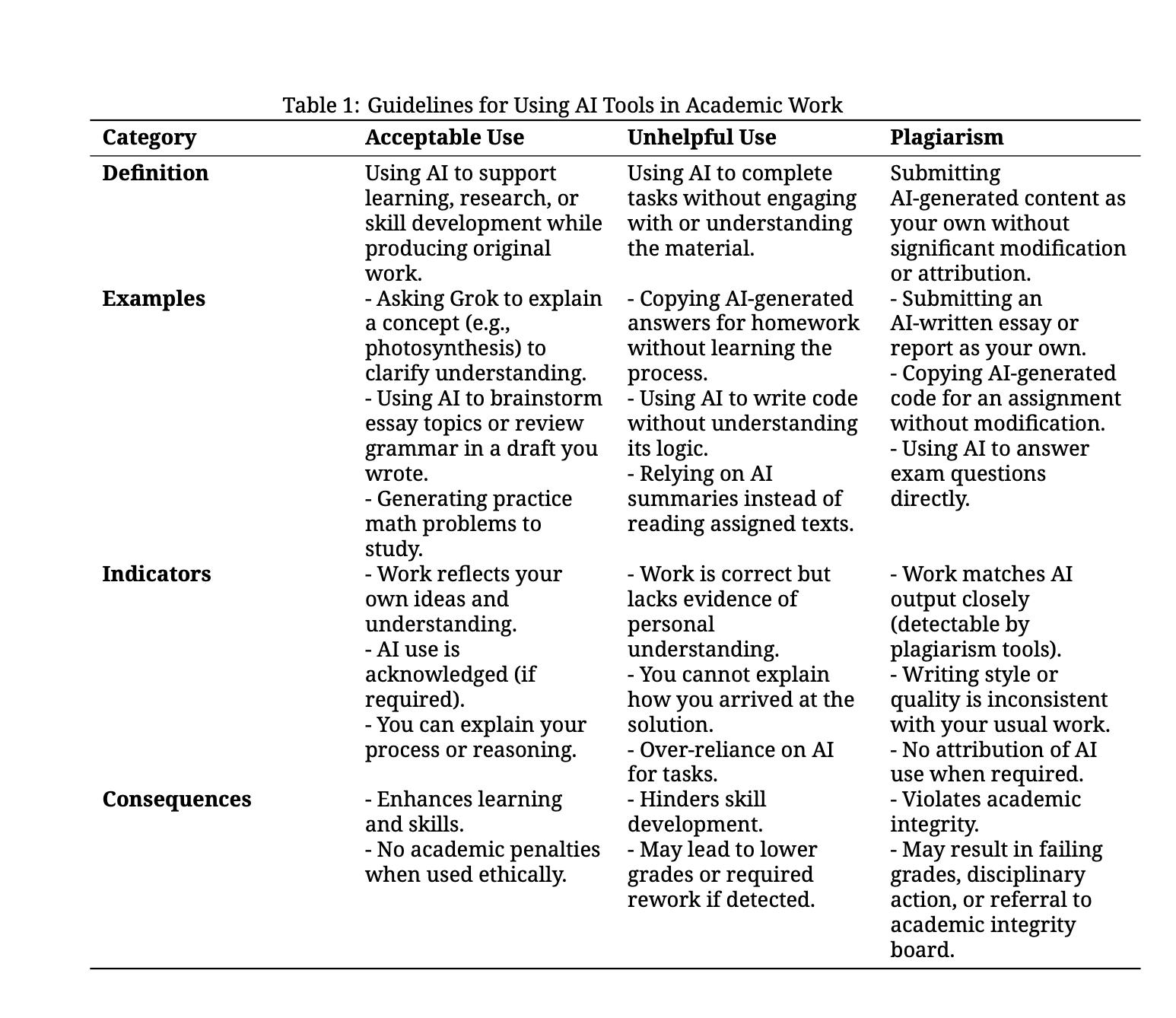
Artificial intelligence (AI) tools, such as Grok and ChatGPT, can serve as aids to learning when used with discernment and under strict oversight. However, their misuse risks undermining the development of critical thinking, personal effort, and the honest pursuit of truth, which are central to our educational philosophy All AI use must be approved by and disclosed to the instructor, documented in assignments (e g , via citation), and limited to preparatory or supplementary tasks Students must always produce their own final work, reflecting their understanding and effort. Because our purpose at CCA is to train students and give tools of learning, instructors may require that students not use AI for specific classes, papers, or projects.
AI tools may only be used with explicit instructor approval and in limited, specific contexts that support learning without replacing personal effort. Acceptable uses include:
● Research Support: Use AI to explore topics, summarize background information, or generate ideas, but always verify information with credible sources and create original work based on your understanding – Example: Generate ideas for a science fair project or brainstorm possible thesis topics.
● Concept Clarification Using AI to explain complex concepts when directed by an instructor, followed by independent work to demonstrate understanding.
– Example: With teacher permission, asking Grok to explain a theological concept (e g , the Trinity) to prepare for a class discussion, then writing your own summary
● Study Aid Creation: Using AI to generate practice questions or study tools under instructor guidance, with the student completing all answers independently
– Example: Asking Grok to create Latin vocabulary flashcards, then studying and testing yourself without further AI assistance
● Accessibility Support: Using AI for accommodations (e g , text-to-speech for students with documented needs), as approved by the school.
– Example: Using Grok’s voice mode (available on iOS/Android apps) to read texts aloud for a visually impaired student, with administrative approval.
The following uses of AI are strictly prohibited and considered violations of academic integrity and Christian character:
● Generating Assignment Content: Using AI to write essays, reports, answers, or code, even with modification, is dishonest and constitutes plagiarism.
– Example: Submitting an AI-generated essay on The Odyssey or copying AI-produced answers for a theology quiz
● Bypassing Personal Effort: Using AI to complete homework, solve problems, or produce work without understanding the material violates the virtue of diligence.
– Example: Using Grok to solve math problems or write code without learning the underlying principles
● Unauthorized Use: Using AI without explicit instructor permission, including during any graded activity (e g , exams, quizzes, or in-class work).
– Example: Consulting Grok during a timed writing assignment or test
● Failing to Disclose AI Use: Not acknowledging AI assistance when it is used, even in permitted contexts, is dishonest.
– Example: Using Grok to brainstorm ideas but claiming the work as entirely your own
● Acknowledge AI Use: If AI tools contribute to your work (e.g., idea generation or editing), disclose this in accordance with instructor guidelines, such as in a footnote or bibliography
● Verify AI Outputs: AI tools may produce inaccurate or biased information. Cross-check outputs with credible sources to ensure accuracy
● Use AI as a Tool, Not a Shortcut: Treat AI as a learning aid, like a textbook or tutor, to enhance your understanding rather than replace your effort.
● Follow Instructor Guidelines: Some courses may have specific rules about AI use Always check with your instructor or syllabus before using AI tools for assignments
● Develop Your Skills: Use AI to build your abilities, not to avoid critical thinking, creativity, or problem-solving
When AI contributes to your work, cite it appropriately For example:
● MLA Style: “Grok3(model number), xAI, 2025, used for brainstorming and editing assistance.” Check with your instructor or institution for specific citation requirements.
A numerical grading scale of 0-100 is used in grades 6-8. The following table illustrates the letter grade and quality point equivalents for numerical grades Report Cards show grades as numerical averages each quarter Semester averages are calculated by averaging the first and second quarter grades together in each subject
Average Letter Grade Quality Points
● 90-100=A 4 0
● 80-89= B 3 0
● 70-79= C 2 0
● 60-70= D 1.0
● 0-59= F 0 0
A numerical grading scale of 0-100 is used in grades 9-12, but includes -/+ when calculating transcript averages. The following table illustrates the letter grade and quality point equivalents for numerical grades Report Cards show grades as numerical averages as well as letter grade
Average Letter Grade Quality Points
● 93-100= A 4 00
● 90-92= A- 3 67
● 87-89= B+ 3.33
● 83-86= B 3.00
● 80-82= B- 2 67
● 77-79= C+ 2 33
● 73-76= C 2 00
● 70-72= C- 1 67
● 67-69= D+ 1.33
● 63-66= D 1.00
● 60-62= D- 0 67
● 0-59= F 0 00
Because of the level of difficulty, rhetoric math, science, and humanities courses will use a weighted scale as follow:
Average Letter Grade Quality Points
● 97-100 A+ 4 20
● 93-96= A 4 00
● 90-92= A- 3 67
● 87-89= B+ 3.33
● 83-86= B 3.00
● 80-82= B- 2 67
● 77-79= C+ 2 33
● 73-76= C 2 00
● 70-72= C- 1 67
● 67-69= D+ 1 33
● 63-66= D 1.00
● 60-62= D- 0.67
● 0-59= F 0 00
All course requirements must be fulfilled by the date determined by the course instructor and the administration Any required work not completed by that date will be awarded a grade of "0 " The student's final grade will be calculated after the date given for completion of the course using whatever grading system was employed for all other students in the course (unless other arrangements have been previously made) and including all grades earned up to that time Course instructors must provide the administration with a description of the grading system to be used as well as any and all evaluation materials (e.g. tests and keys) necessary for completing the course.
● 4 credits in Math
● 3 credits in Science (4 recom )
● 3 credits in a Foreign Language (4 recom.)
● 4 credits in History
● 4 credits in English
● 1 credit in Rhetoric
● 1 credit in Phys. Ed
● 2 credits in the Fine Arts (e g music, drama, art)
● 1 credit in Thesis
● 2 credits Enrichment
For various reasons a student may want to take classes from another institution (e g a foreign language that Charis does not offer, an additional enrichment course like pottery, or a class related to future career goals like programming or something in the trades). In order for a student to receive course credit at Charis the student must first discuss (1) the course they are taking, (2) the institution they are taking it from, and (3) their purpose for taking the course with the Headmaster; credits will be accepted at his or her discretion.
In general, Charis will accept credits from:
1) Public and other private high schools (both in-person and online).
2) Public and private universities (both in-person and online).
3) In limited circumstances, Charis will accept independent studies done with the permission and under the supervision of a Charis teacher and the Headmaster.
In all above cases credits will be accepted on a pass/fail basis and grades from these courses will not count towards a student’s GPA.
In late spring, Logic & Rhetoric students choose elective courses; it is their responsibility to make sure that they are completing all required courses and sufficient credits (most students will follow the recommended CCA scope while choosing individual elective courses). If students would like to add a class after the spring registration period has closed they must fill out the add/drop form (found on Classreach) within the first two weeks of the semester and submit it to the Headmaster who will approve or deny the request at his or her discretion.
There may be times when a student registers for a course only to come to discover that the course is not what they expected or that their schedule no longer allows sufficient time for the assigned coursework. If a student wishes to drop a course, the student must fill out the add/drop form (found on Classreach) listing: (1) what class they desire to drop, (2) why they wish to drop it, and (3) have this form signed by a parent. This form must be filled out no later than two weeks into a semester. The student must then meet with the Headmaster who will approve or deny the request at his or her discretion.
Logic and Rhetoric students (6th-12th grade) are required to maintain at least a 1 7 grade-point average during any semester. Progress reports are sent out at the midpoint and end of each semester. If a student's GPA (excluding art, lit/drama, music, and PE) is below 1 7 (i e a “C-"average) during any half of a semester (quarter), he/she will be placed on academic probation during the following quarter Exceptions will be made for students who have a grade point average of less than of the details of the probation in writing and will meet with the Academic Director or Headmaster (or the student’s core teacher) At the end of the following quarter, if the student's quarter GPA has not risen to at least a 1.7, the student may be expelled at the discretion of the board.
If a student receives a D or F the student’s teacher may assign remedial and/or summer work at his or her discretion Students that receive a C may be encouraged, but not required, to complete remedial and/or summer work. The goal of this work is to help prepare students to succeed at the next grade level.
• Assessment tests in the spring of each grade that assess progress in math, spelling, reading, and grammar
• 4th, 8th, & 10th grade: Classical Learning Test
• 11th grade: PSAT
• 11th-12th: ACT, SAT, or CLT per choice of individual student
Labeling Assignments/Tests: Please label all papers in top right corner with name, date, subject and assignment name in center
Late Work: While exact penalties will vary slightly from assignment to assignment, our default assignment policy for the Logic and Rhetoric levels is thus:
● Assignments are officially due on the specified due date within their given class periods.
● Assignments must be submitted in the format assigned by the teacher.
● Late work incurs a penalty of 20% per classroom day
● Extensions for late assignments must be requested from the teacher at least one day before the due date.
Foreachofthefollowingcategories,yourteachershaveresourcesthatcanhelpyoudeepenyourlearningskills.If youfeelyouneedhelpinoneoftheseareas,askthemforaresourcesuggestion!
● Planning &Organizing(timemanagement,taskinitiation,andsettinggoals)
● AttentionandAdvancedthinking
● StudySkillsandWorkingMemory
● ReadingWell
● WritingWell
● Test-TakingSkills
● GritandGrowthMindset(flexibility,perseverance,metacognition&problemsolving)
I. Notesareforreview
A The reason to take notes is not tohavesomethingtododuringclass,buttohelpyoureviewand remembermateriallater
B Simplytakingnoteswillhelpyouunderstandanddigestmaterial
C Sincenotesareforreview,theywillbeofnobenefittoyouifyoucannotreadthemoryouneverlookat themagain.
D. Theidealtimestoreviewnotesareduringthesameday,thenthefollowingday,thenaweeklater.
II. Howtotakenotes
A Takenotesinyourownwords
B Don’ttrytowritedowneverythingthatissaid
C Don’twritedownsolittlethatyoucan’trememberwhatthelessonwasabout
D Dowritedownkeyterms,dates,definitions,concepts,orideas
E. Douseabbreviationsorshorthand(ofyourowncreation) butmakesureyoucanunderstandthem!
**TheCornellMethodisagreatmethodtouseandmanystudentsfindhavingaspecificmethodhelpful. Ifyou wantmoreinformation,resources,ortraining,pleaseletusknow. Wearehappytoprovidethem.
Beforeyouread:
1. Researchforyourselforreviewwhatyoulearnedinclassaboutthe context,author,andsettingofthebook.(E.g.Dateofpublication? Authorbiography?)
2 Whatareyoucuriousaboutasyou’reabouttostartreading?(List twoquestionsincommonplacebook)
Asyouread:
1. Annotateorunderlineportionsofthetextthatstickouttoyou.
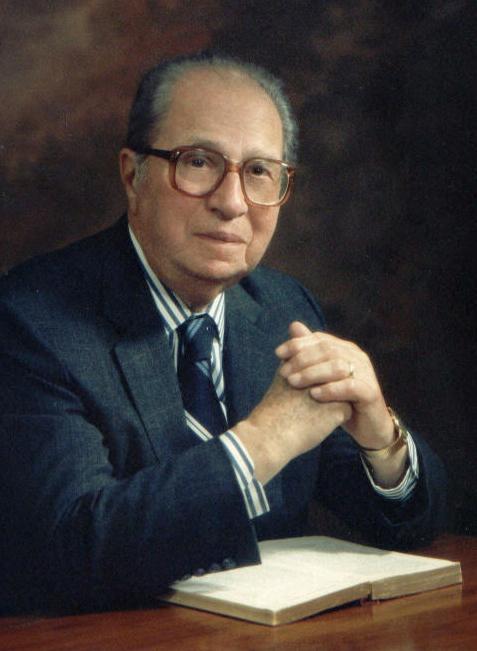
2. Writeyourowntitlesforunnamedchapters
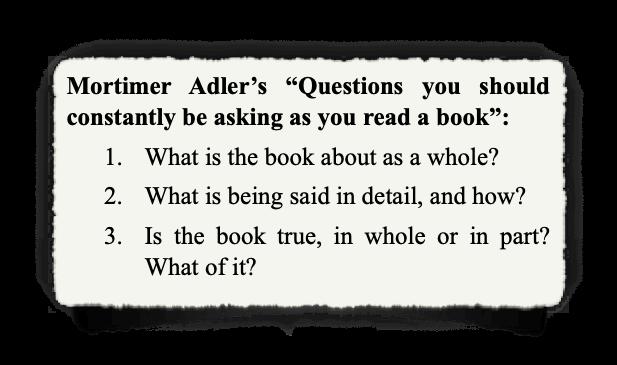
3. Listimportantquestionsyouhadaboutthetextthatyoucouldactuallydiscusswiththeclass.
4. Summarizechaptersusingafewsentencesorbulletpointstoremindyourselfofkeypoints duringdiscussion
5 Keeptrackofimportantcharactersandmakelistsoftheircharacteristics throughoutthebook
Afteryouread:
1. Lookthroughyourannotations,questions,andnotes
2. Makeconnectionsbetweencharacters,themes,andideaswithinandoutside thetext.
3 Look at any questions from before and while you read; are there any that remain unanswered?Liketheclassicaltrivium(Grammar,Logic,Rhetoric),thewayyouprocesswhatyouread shouldfollowthestepsoftasting,chewing,anddigesting Usethestepsbelowtohelpcultivatehealthy reading,thinking,andwritinghabits!
After an initial read, what tasted particularly good or bad? What did you underline or what stood out to you?
Jot down either a summary of the taste, a specific quote that stood out to you, or make a list of connections you see inside the text Now that it’s in your commonplace book, how is it sitting? You’ve swallowed it, is it worth chewing on a little more?
If what you ’ ve swallowed is resonating or reverberating in your mind, chew on it like a cow would its cud. Process in writing what is striking, why it strikes you, and if you agree or disagree with an idea, statement, or action. If you find something you think is true, good, or beautiful, write it down or commit it to memory

The classical trivium helps break down different aspects of writing Many courses will use a similar rubric to the one below
Course:
Name:
Date:
Points 5 3 1
Introduction Starts with an interesting quote or detail and provides important background information.
Thesis Takes a clear position and is stated concisely.
Structure Paper has at least three main body paragraphs; each paragraph has at least four sentences.
Organization Each paragraph has one main point that is connected to the thesis
Support Each point is supported by evidence; evidence is explained
Arrangement Paragraphs follow a logical and consistent order.
Conclusion Restates thesis, summarizes main points, and ends with a general comment.
Veracity Paper shows a correct understanding of the facts
Persuasiveness Paper uses the most pertinent information to make a strong argument.
Grammar Correct grammar, spelling, punctuation, and capitalization.
Grade & Comments
Lacking an interesting beginning or important background information.
Lacking an interesting beginning and important background information.
Thesis is unclear or not concise Thesis is unclear and not concise.
Paper is missing a paragraph or paragraphs are missing sentences.
Paragraphs have more than one point or make points not connected to the thesis
Points are unsupported or evidence is not explained
Paragraph order is either illogical or inconsistent.
Conclusion is poorly constructed or missing a component.
Minor misunderstandings or misinterpretations of facts
Paper is missing important information or fails to make a strong argument.
Obvious or numerous grammatical errors.
Paper is missing a paragraph and paragraphs are missing sentences.
Paragraphs have more than one point and are not connected to the thesis.
Points are unsupported and evidence is not explained.
Arrangement of paragraphs is haphazard.
Conclusion is poorly constructed and missing numerous components.
Numerous factual errors
Paper is missing important information and fails to make a strong argument
Grammatical errors are obvious and numerous.
Pre-writingisawaytogenerateideas,organizethoughts,andlayasolidfoundationforyourwriting. Itisoften temptingtoskipthisstepto“savetime”butdon’tgiveintothetemptation! Thisstepisessentialevenifyou justgiveafewminutesbeforeanimpromptuin-classessay Itgivesarichnessandintegritytoyourwriting In yourWriting&Rhetoriccurriculum,thisprocessisdonethroughdiscussion(dialecticconversation&the“Talk about It” section) This is essential topromotethoughtfulwritingfullofrichideas Outliningisalsoan important foundation that ishelpfultosequenceandorganizeideasaswellasawayforyoutoseefurther
researchthatmaybeneeded. Itcanalsohelpwithplacementofquotesandgivesacohesiontoyourwriting& revisionprocess,oftensavingyoutimeandeffortintheend.Similartobeingencouragedtothinkbeforeyou speak,thisstepisimportanttothinkbeforeyouwrite!
Justlikeeveryparagraphshouldhaveatopicandconcludingsentencesurroundinginformationorreasoning, yourwholepapershouldhaveintroductoryandconcludingparagraphs Youshouldbeabletotellsomeone exactlywhateachofyourparagraphssayandwhytheyarewheretheyare
Everypapershouldhaveathesisstatement,thatis,thepointyou’rearguingboileddownintoonesentence. Thesisstatementsmustbearguable,shouldappearinthefirstparagraphofapaper,andarestrongestwhenthey beginwiththeword“although.”
Youwillneverperfectlyarticulatewhatmustbesaidthefirsttime Foranywritingassignment,leaveenough timetoreadthroughitcompletelyandmakeeditsatleastoncebeforeyouturnitin
Nomatterhowimportantitistoyourtopic,trynottorepeatanywordstwosentencesinarow Strongverbsare highlyencouraged,butonceyouuseit,findanewone Useathesaurusifyoufindyourselffallingbacktothe samewordsorphrases.
Avoidintensifyingadverbs.Ifsomethingisquitestrange,youmightaswelljustsayit’sstrange.Ifsomeadverbs arecertainlyreallyveryquite,actuallyextremelyunnecessary,thenjustsaysowithoutputtingyourreaderto sleep.
MLA (Modern Language Association) style is most commonly used to write papers and cite sources within the liberal arts and humanities This resource, updated to reflect the MLA Handbook for Writers of Research Papers and the MLA Style Manual and Guide to Scholarly Publishing, offers examples for the general format of MLA research papers, in-text citations, endnotes/footnotes, and the Works Cited page
Basic in-text citation rules
In MLA style, referring to the works of others in your text is done by using what is known as parenthetical citation This method involves placing relevant source information in parentheses after a quote or a paraphrase.
In-text citations: Author-page style
MLA format follows the author-page method of in-text citation. This means that the author's last name and the page number(s) from which the quotation or paraphrase is taken must appear in the text, and a complete reference should appear on your Works Cited page The author's name may appear either in the sentence itself or in parentheses following the quotation or paraphrase, but the page number(s) should always appear in the parentheses, not in the text of your sentence
For example: Wordsworth stated that Romantic poetry was marked by a "spontaneous overflow of powerful feelings" (263)
Romantic poetry is characterized by the "spontaneous overflow of powerful feelings" (Wordsworth 263)
Wordsworth extensively explored the role of emotion in the creative process (263)
The citations in the examples above, (263) and (Wordsworth 263), tell readers that the information in the sentence can be located on page 263 of a work by an author named Wordsworth. If readers want more information about this source, they can turn to the Works Cited page, where, under the name of Wordsworth, they would find the following information:
Wordsworth, William Lyrical Ballads London: Oxford UP, 1967 Print
Citing authors with same last names
Sometimes more information is necessary to identify the source from which a quotation is taken. For instance, if two or more authors have the same last name, provide both authors' first initials (or even the authors' full name if different authors share initials) in your citation.
For example: Although some medical ethicists claim that cloning will lead to designer children (R Miller 12), others note that the advantages for medical research outweigh this consideration (A Miller 46)
For a source with three or fewer authors, list the authors' last names in the text or in the parenthetical citation: Smith, Yang, and Moore argue that tougher gun control is not needed in the United States (76)
The authors state "Tighter gun control in the United States erodes Second Amendment rights" (Smith, Yang, and Moore 76)
Citing multiple works by the same author
If you cite more than one work by a particular author, include a shortened title for the particular work from which you are quoting to distinguish it from the others. Put short titles of books in italics and short titles of articles in quotation marks.
For example: Assuming that private property is the root of all evil (Rousseau, Second Discourse), and believing that this damage could not be undone, there arose a desire in the early romantic movement to mitigate this damage by restoring the classical idea of the “General Will” (Rousseau, Social Contract).
In your first parenthetical citation, you want to make clear which Bible you're using (and underline or italicize the title), as each version varies in its translation, followed by book (do not italicize or underline), chapter and verse
For example:Ezekiel saw "what seemed to be four living creatures," each with faces of a man, a lion, an ox, and an eagle (New Jerusalem Bible, Ezek 1 5-10)
Simply list the name of the author and the title of the article.
For example: One online film critic stated that Fitzcarraldo is " ...a beautiful and terrifying critique of obsession and colonialism" (Garcia, “Herzog: a Life”).
For books, include the following:
1 Author: Begin the entry with the author’s last name, followed by a comma and the rest of the name, as presented in the work End this element with a period
2 Title (if it is an article, put it in quotes; if a book , italicize it
3 City of publication
4 Publisher
5 Year published
For example: Rousseau, Jean-Jacques. The Social Contract. New York: Penguin, 2006. For websites, include the following:
1 Include the author’s name (if available)
2 Put the title of the page or article in quotation marks
3 Include the name of the website in italics
4 Add the publication date
5 Include the URL (without “https://”)
For example: Douthat, Ross. “How Trump Sabotaged His Own Apotheosis.” Aei.org, 20 July 2024, www.aei.org/op-eds/https-www-nytimes-com-2024-07-20-opinion-donald-trump-republican-conventi on-html/
The most current dress code is on the school’s website and also in your profile tab on Classreach Please carefully review each year to make sure you are in compliance It may be helpful to print out the dress code and place it in your room or locker for quick reference.
CCA’s dress code is intended to reflect the school’s stated aims to honor God and disciple students It is designed to encourage modesty, decency, and propriety and to de-emphasize the use of clothing as a significant means of establishing self-identity or gaining attention or social status (Matt 6:28-34; 1 Cor 9:19-23; 1 Peter 3:2-4; 1 Tim 2:9,10; James 2:1-5)
The Headmaster, or one designated to act in his/her stead, retains the authority to determine the appropriateness of a given student’s attire or appearance, and may remove the student from campus or otherwise discipline any student deemed to be inappropriately dressed The administration also reserves the right to grant a limited variance to these regulations for special purposes, provided that high standards of modesty are always upheld.
Dress code adherence and violations are a parent’s responsibility If a student is in violation of any of the rules stated above the administration will contact the parents to inform them of the violation and remind them of these standards.
The word “commonplace” can be traced back to Ancient Greece, where a speaker in law courts or political meetings would keep an assortment of arguments in a “common place” for easy reference The Romans called them locus communis, which means “ a theme or argument of general application,” such as a statement of proverbial wisdom
Commonplace Journals have been used by scholars and readers throughout history Seneca, Leonardo Da Vinci, Marcus Aurilus (his became the Meditations), Thomas Jefferson, and even Bill Gates are examples of famous individuals who have kept a commonplace journal It is a way to enter into “The Great Conversation ”
A commonplace book is a personal journal that compiles quotes from books you read It may also include illustrations, personal thoughts, lists, and anecdotes. We gain great understanding and encounter poetic beauty that shape our souls as we read, and by writing those passages down as we go, we build a storehouse of virtue and wisdom, a treasure trove of literary gems, that can then take the form of action in our lives For, as Seneca says, “We should hunt out the helpful pieces of teaching and the spirited and noble-minded sayings which are capable of immediate practical application–not far far-fetched or archaic expressions or extravagant metaphors and figures of speech–and learn them so well that words become works ” Alan Jacobs observes that “ a book full of such passages would be a treasure-house,” which means that it is filled with materials “that you expect will repay repeated consideration ” That is, it contains passages, quotes, and ideas you’d want to look back on and reconsider. You will be creating a wealth of wisdom from what you read and will be able to carry these literary treasures with you through your journal. It is an opportunity to interact with rich ideas through the ages and create something of beauty for yourself
As you read through books you will be routinely discussing and writing about them Your Commonplace Journal will be a place for your mature reflections, your favorite quotes, and things you want to remember from the books you read. As you collect “treasures” you will be able to go back and use them for discussions and writing assignments
Commonplacing changes reading practices so that we slow down, digest, meditate, remember, and apply what we read.
As we think about setting up our Commonplace Notebooks in an organized fashion to help aid in our memory, application, and appreciation of the ideas notated, we refer to Mary Carruthers’s The Book Of Memory. Carruthers draws on ancient rhetorical traditions (like those from Aristotle, Cicero, and Quintilian) that carried into the Middle Ages, where memory was not just passive recall but an active, inventive tool for composition, meditation, reading, and producing new works in literature, sermons, music, architecture, and more.
From John Ahern’s Article “Setting Up A Commonplace Notebook” and his Summary of Mary Carruthers’s The Book Of Memory:
1 All thought is unoriginal You’re always re-assembling pre-existing thoughts Don’t even bother trying to come up with something new. Say goodbye to originality, ingenuity, and innovation.
2. So, in order to do thinking, the mental tool you’ll use the most is your memory. After all, it is not important to generate thoughts, but rather to remember the ones that have already been said
3 Your memory is like a room You put things in it to retrieve them later But it only works if the room is clean and tidy. If your memory is disorganized, like the Room of Requirement from Harry Potter, what was the point of memorizing? You’ll never be able to find the thing you put in there later.
4. Your memory is limited. But you can expand its capacity by creating a kind of “prosthetic” memory, a kind of “external hard drive ”
5. A notebook is a prosthetic memory. It’s where you keep the things you need to remember.
6. But you have to organize it. You do that by “putting” thoughts in certain “places.” These are the loci (places, in Latin)
7 The loci are headings in your notebook, places that you commonly consult in order to generate thoughts on that topic. Things like “Death” or “What does it mean to be human?” or “Homer Talking about Food ”
8 So, when you’re ready to speak or write about a thing, you go to that locus communis You consult the heading.
9. Although we said goodbye to them earlier, it turns out that originality, ingenuity, and innovation have returned We blend pre-existing thoughts into something new, when we write and speak It becomes something adapted for the present
Carruther’s analysis shows that the commonplace notebook served as a practical, external aid, a prosthetic or extension, of the trained internal memory Medieval and early modern thinkers viewed memory as a storehouse of loci communes ("common places" or shared topics, quotes, examples, and authoritative excerpts), which one would gather, organize, and internalize for later inventive use in writing or speaking.
We should follow the examples of the bees, who flit about and cull the flowers that are suitable for producing honey, and then arrange and assort in their cells all that they have brought in We also, I say, ought to copy these bees, and sift whatever we have gathered from a varied course of reading, for such things are better preserved if they are kept separate; then…we should so blend these several flavors into one delicious compound that, even though it betrays its origins, yet it nevertheless is clearly a different thing from whence it came (1). -Seneca “On Gathering Ideas”
As Ahern says, There’s no beehive without the cells, and there’s no commonplace book with headings. If you don’t have a place to put a thought such that you can retrieve it later, there’s no point in writing it down or remembering it ”
You will receive an A5 ruled Leuchtturm Journal 1917 at the beginning of 9th grade These high quality notebooks are sturdy, and come ready with numbered pages and a table of contents already set up.
1. Use nice pens and also your best handwriting to create something you will carry through your time at CCA and beyond.
2. Add your name and the Month/Year you started your Commonplace Notebook. Feel free to personalize this page with a quote and/or illustration Perhaps the quote could be something like this wisdom from St Jerome: “ to read without also writing is to sleep”
3 Go to the Table of Contents page “Content”. We will have a set of common headings or “loci communes” in all of our commonplace notebooks, and these headings will be used throughout your rhetoric years. However, feel free to add other headings as you see fit. It is best to stick to fewer headings, though; 10-15 total works best You will leave approximately 5 pages for each heading (If at any point you fill up the pages after a heading, you can continue the heading with another set of pages; be sure to indicate the addition in your Table of Contents!)
*You will see examples of questions under each category, you do not necessarily need to write these in your Commonplace Notebook
Headings (Loci Communes)
1 Humanity
e g What does it mean to be human? What are our obligations to each other?
2 God
e g Who is God and how are we to relate to Him? What is worship? What is glory?
3 The Good Life
e g What did our ancestors value in life? What is the purpose of life?
4 Redemption/Salvation
5. Evil & Suffering
e.g. What is the purpose of suffering/tragedy/death? The problem of evil
6. Fate/Providence
7. Government and Leadership
e.g. What is the ideal structure of government? What makes a good leader? Are there justifiable reasons for War? What are the repercussions of War?
8. Virtue/Vice
e.g. What is virtue/vice? How do we live a virtuous life?
9. Beauty, Art, and Imagination
10. Eloquence (pithy quotes, beautiful descriptions, misc.)
Each Entry
1. Choose which heading under which to include the quote and/or illustration you would like to enter. Turn to that heading in your notebook, and start your entry with the full title of the book, author’s name, and page number you are referencing
2 Entries could be any of the following:
a Quotes
b. Character Studies, Virtues/Truths
c Illustrations
d. Reflections/Summaries–personal interactions with ideas, truths, beauty, etc.
3. Each quote is followed by a citation and tag. Skip a line after the quote. On the following line, flush to the right and write the citation in print, which includes author, title, and page or line numbers
a Use “Ibid” where appropriate & use ellipses to cut out unnecessary parts of the quote
b. Cite each quote: include at least the page number and character speaking, though it may also be helpful to include the chapter or stanza (depending on the book).
Ie “Well then, said I, if God does not forsake me, of what ill consequence can it be?”-Crusoe, pg 91
c. Optional: Tag the entry with brackets for quick reference. For example, if I wanted to tag the entry with the theme of money I would tag it “[money]” Tags are normally themes, great ideas, or figures of speech [DOUBT VS FAITH, PATIENCE]
d. Optional: Date the entry
4. Skip two lines between each quote.
*Compiled from the following resources: https://tcshouston.org/commonplace-books/, https://paideiaacademics.com/commonplacing-the-introductory-lesson/,https://commonplacecorner.wordpress.com/2017/02/04/s tructuring-a-commonplace-book-jenny-rallens-method/, https://circeinstitute.org/blog/how-to-make-a-commonplace-book/
1. Observations: Write out observations from your reading. You may want to do this as you go. You may have multiple observations per category Types of things to observe could be:
Key Terms
Key Phrases
What terms are either repeated or essential for understanding the text?
What phrases are either repeated or essential for understanding the text? Emphasis
Comparison
Contrast
Does the author emphasize anything? (This is often seen by the amount of space an author gives to something )
Does the author compare one thing with another (similarity)? Some words used to indicate this would be “like” or “ as ” Explain what the author compares
Does the author compare one thing to another in the negative (showing dissimilarity)? Words such as “however,” “on the contrary,” “on the other hand,” and “nevertheless” indicate this Explain what the author is contrasting
2 Point or Plot Summary: Summarize the major points/propositions/arguments or parts of the plot of each assigned section/chapter in your own words If the assigned reading has more than one section, summarize each section. (Headings can sometimes help you identify these sections and their major points when given ) For more narrative books (i e fictional stories) simply summarize the important event(s) of the assigned reading. The point here is to be able to outline arguments of more overtly practical, argumentative books or outline the plot of more narrative books. These points should be written in single sentences think outlines (see pages 83-90 for examples of outlining sentences in How to Read a Book) Be sure to be as clear and thorough as possible.
3 Personal Reflection: Write out your own thoughts based on the reading Be sure to include page references. Additionally, write in complete sentences and do not start with the phrase “I feel like . . . ” ; instead use phrases like “this shows ” or “one can learn from this ”
Choose from the below list to create your personal reflection (you may choose more than one). You may not choose the same option two assignments in a row Please try to choose a different option each assignment
a. Explicit Argument: Respond to an explicit argument. If you think it is questionable or fallacious, explain why and name the fallacy if you can If you think it is correct, explain what the counter-argument to it would be and why you think the argument of the author is superior to the potential counter-argument.
b Confusing: Describe something you found confusing State what questions you have that if answered would clarify it for you.
c Entertaining: Is there something you found entertaining or stirring (funny, inspirational, saddening, etc ) Explain why you had this emotional response
d. AHA!: Explain an “aha!” moment you had for example, some revelation you had or something significant you learned
e. Application: Should this impact your thinking or behavior? If so, in what way and why? Your life should be grounded in the truth. This means that as you read you should constantly be asking yourself, “is this true?” And if it is true, you must then ask, “what ought I to do as a result of this truth?”
f Discussion Question: Formulate a thoughtful, contextualized question (i e one with the relevant context around it) and be prepared to guide the class through a discussion of it
g. Illustration: For narrative books, you may also draw a detailed picture of a scene from the assigned reading If you choose this option, please give it your best effort with as much detail captured as possible. If you type out your journal entry, and choose this option, simply insert the words “ see attached” under that heading, and attach your drawing to the back with the heading “Personal Reflection ”
4 Notable Quote: Write down one notable quote from the assigned reading and explain what led you to choose that quote The quote could be something that you found interesting or beautiful; it may be something you want to remember for future use or that just stuck out to you. Some of the best speakers, authors, and conversationalists are known for having a command of great quotes from great books Some sections might not have the best options to choose from, but every book you read will have at least one quote worth remembering. (Note: quotes and illustrations can be copied from your Commonplace journal )
There is tremendous value in working through a great book with knitted brow and pen in hand, poring over the pages and meditating on their meaning But there is also significant value in engaging with these great texts in a community as this allows you to share your insights and hear different insights that you might not have realized yourself; it also allows you to challenge the interpretations of others while you have your understanding challenged by them.
The goal of discussion is not to “win” or to show off; it is not even to follow a set process (discussion guidelines are a means, not an end). Rather, the goal of discussion is to seek and find what is true.
In order to seek truth we must first understand what the author is saying We cannot read him through an ideology or let our cultural milieu color how we understand her. Instead, we must seek to understand the author on his or her own terms This may require us to investigate how he or she uses certain terms or ideas (the same terms are often used differently by different authors or ages!), what implicit assumptions lie behind more explicit arguments (e.g. are they working from the premise that man’s nature is mutable? Very different conclusions will follow from this than will follow from the premise that man’s nature is immutable ), and to the extent that the author is building off of or responding to other authors (many of the authors we read are indeed participating in “The Great Conversation” and are intentionally alluding to the works of others), we may need to investigate how the text we are reading relates to or connects with other texts
Some discussions will be graded The goal of graded discussions is to encourage thoughtful participation from all students; the goal not to make anyone feel nervous or inadequate Discussions in general tend to be dominated by a handful of individuals, while many that have great insights remain quiet. Our goal is that all of you will feel equipped and confident to participate in thoughtful discussions, both in school and out If the idea of graded discussions makes you feel anxious or nervous in any way, please talk to your teacher; they are here to help you work through your fears.
Examples of excellent engagement in a discussion include things like, but are not limited to:
● Explaining an unclear passage
● Citing the text in support of an argument
● Making a text-to-text connection
● Making an insightful comment or observation
● Asking an insightful question
● Drawing another student into the conversation
Examples of things to avoid in discussion are:
● Interrupting another student
● Changing the subject too quickly
● Making a rude or purposefully irrelevant remark (e g a joke or a story that draws the class’s attention away from the discussion and towards oneself or something silly.)
ThepurposeoftheHouseSystematCharisClassicalAcademyistoenrichthecultureoftheupperschools(5th-12th grade)byfacilitatingconnectionsbetweenolderandyoungerstudentswhilecultivatingacommunityofdiscipleship, service,andservantleadershipinaccordancewithPhilippians2:2-8
“...beingofthesamemind,havingthesamelove,beinginfullaccordandofonemind.Donothingfromselfish ambitionorconceit,butinhumilitycountothersmoresignificantthanyourselves.Leteachofyoulooknotonlytohis owninterests,butalsototheinterestsofothers.Havethismindamongyourselves,whichisyoursinChristJesus,who, thoughhewasintheformofGod,didnotcountequalitywithGodathingtobegrasped,butemptiedhimself,by takingtheformofaservant,beingborninthelikenessofmen Andbeingfoundinhumanform,hehumbled himselfbybecomingobedienttothepointofdeath,evendeathonacross”
EachHouseiscomposedofbothstudents(5th-12thgrade)andfaculty StudentsarememberswhohelpservetheHouse Facultymembersserveonlytosupportandencouragetheleadershipastheygrowinleadershipabilities.
OursixHousesarenamedforheroesofthefaithwhoexemplifygodlyvirtues,character,andleadership.Each Househasaverserelatingtotheheroforwhichitisnamed,andHousememberswillreceivepointsduring SpiritWeekformemorizinghisorherhouseverse Oncethatiscompleted,studentsmayalsogainpointsfor theirHousebymemorizingotherHouseverses
Boethius:red
Proverbs2:6-7:“FortheLordgiveswisdom;fromhismouthcomeknowledgeandunderstanding;hestoresupsoundwisdom fortheupright;heisashieldtothosewhowalkinintegrity.”
Bonhoeffer:purple
Romans12:21“Donotbeovercomebyevil,butovercomeevilwithgood”
Athanasius:green
John1:14“AndtheWordbecamefleshanddweltamongus,andwehaveseenHisglory,thegloryasoftheonlySonfromthe Father,fullofgraceandtruth.”
TenBoom:orange
Is 32:2“Eachwillbelikeahidingplacefromthewind,ashelterfromthestorm,likestreamsofwaterinadryplace,likethe shadeofagreatrockinawearyland”
Wilberforce:navy
Amos5:24“Butletjusticerolldownlikewaters,andrighteousnesslikeanever-flowingstream”
Carmichael:skyblue
Isaiah61:1“TheSpiritoftheLordGodisuponme,becausetheLordhasanointedmetobringgoodnewstothepoor;hehassent metobindupthebrokenhearted,toproclaimlibertytothecaptives,andtheopeningoftheprisontothosewhoarebound.”