This June issue of International Process Engineer has been rejigged to better reflect the industry; in particular, we have added a recycling section to cover the growing circular economy. On a related note, the 2050 Net Zero commitments are already in place, with pressure from environmentalists to bring them forwards. Either way, the process industry (with produce like packaging, equipment and its constituent parts), is beginning to realise that making use of old stuff in new ways is paramount. Finally, A Recycling Revolution from Welding Alloys on page 44 looks at how hardfacing technology can help with improve efficiency at recycling plants.
Another piece on the circular economy, Scaling sulphate on page 36, looks at how Egger pumps has helped a Swedish start-up produce potassium sulfate to establish a new benchmark in green mineral production.
A second new section is Skills and Training. The cover story Transforming training looks at a process plant created by ABB at Imperial College, London, and how students at the university are making use of a new AIpowered digital solution called my Measurement Assistant Plus. In addition, International Process Engineer's editorial team attended the recent tradeshow CHEM UK, and have reported on several of the most interesting presentations: Slippery solutions on page 8 provides an overview of the lubricants industry, and Preservation properties on page 10 looks at environmentally friendly colloids.
Nicola Brittain Editor
OVERCOMING OBSTACLES
How non-contacting radar level transmitters help with measurement in tanks
FEEL THE HEAT
Heater technologies boosting electrification within the process industry
A life cycle assessment process that will improve efficiency at a biowaste plant
An efficient new method helps with unloading materials
The role of senior management in maintaining safety
28 A SHOWER SAFEGUARD
How an emergency safety shower can protect the workforce
30 INDUSTRY PROFILE
MD of Atex Explosion Hazards shares insights into his career
32 MINUS THE METAL
Removing metal from instant noodle production
How a closed loop model helps scale potassium sulfate production
Award winning solutions to the industry’s biggest problems
A solution that enables realtime object identification 42 A TESTING TIE UP
A collaboration that improves testing of Wi-Fi 7 products
44 A RECYCLING REVOLUTION
Hardfacing technology that protects hardware 46
How a higher spend on belts will improve waste processing
PUBLISHER
Jerry Ramsdale
EDITOR
Nicola Brittain nbrittain@setform.com
STAFF WRITER
Saskia Henn shenn@setform.com
DESIGN – Dan Bennett, Jill Harris
HEAD OF PRODUCTION
Luke Wikner production@setform.com
BUSINESS MANAGERS
John Abey | Darren Ringer
ADVERTISEMENT EXECUTIVES
Paul Maher, Iain Fletcher, Peter King, Marina Grant, David Pattison
e advertising@setform.com
CONTACT US...
t +44 (0) 207 253 2545
e mail@setform.com
SKILLS AND TRAINING
52 ENHANCING COMPETENCE
Structured training for fire and gas detection SHOW PREVIEW
54 PPMA
The latest in process packaging and design
Setform’s international magazine for engineers is published quarterly and distributed to senior engineers throughout the world. Other titles in the company portfolio focus on Oil & Gas, Design, Transport, Mining, Energy and Power.
AI is preparing students for an engineering career
THE SECO ROUND 20
New cutters and inserts from Seco help medium-to-rough milling of metals
The new generation of Seco Round 20 copy mills is suitable for use is a wide range of applications, including face, side, slot, plunge and ramp milling. Round 20 inserts are compatible with cutter bodies from previous generations and provide additional performance when working with challenging materials.
The products have been designed for highly productive medium-torough milling of steel, stainless steels and heat-resistant superalloys and can be applied to cast iron and hardened steels. The large-diameter inserts mean increased material removal rates and offer a costeffective means of generating an R10
mm radii with 20mm round inserts.
“The new generation of Round 20 represents a significant step forward on previous iterations,” said Seco product manager Benoit Patriarca. “With today´s Round 20, inserts can be indexed to four, six or eight positions, allowing users to match the insert consumption to the depth of cut being taken. This flexibility also means the new inserts integrate with existing and older cutter bodies that index to four or eight positions.”
For more information visit: www.secotools.com
THE DICE WIMES DOSING MODULE
A neat product from Meunier Technologies debuted at CHEM UK last month
The new Dice Wimes Dosing Module from Meunier Technologies was on display at CHEM UK last month. Significantly smaller than other chemical dosing modules, the product is leak free and designed to be durable and sustainable according to the company.
Features include six material and seal combinations to suit various chemical needs; dual-sized options
(DN15 and DN25) covering pump capacities of up to 750/hr; operating pressure of up to 10barG and integral locking ball valves.
The product offers adjustable pressure relief and loading valves as well as an integrated low flow detection and pressure switch.
A Canadian company, Meunier Technologies addresses municipal, industrial and institutional fluid handling challenges.
SEALING SOLUTION
A new product promises to manage and maintain the integrity of bolted joint assets via the cloud
Sealing solutions specialist
Flexitallic has released Flexlogics a cloud platform that digitises bolted joint integrity management.
The company describes the product as an integrity management solution that allows engineering teams to easily manage flanged connection programmes. The platform aims to ensure structured, standards-based execution with live data, integrated tools, and traceability.
INSIGHTS INTO CONNECTIONS
The tool provides insights into connection and component performance, helping safety-critical industries such as oil and gas, power generation, and petrochemicals, identify potential sealing failures before they occur.
The tool will replace spreadsheets and paper records with a connected, real-time solution that works seamlessly in both the field and control room. It also supports integration with existing systems and processes, offering flexibility for operations of all sizes.
IN LINE WITH THE PROCESS SECTOR’S DIGITISATION TREND
The product is part of the general acceleration of digital transformation across the energy and process sectors. By combining the convenience of cloud with engineering precision, the product helps process engineers better manage their joint integrity.
Flexitallic’s director of Joint Integrity Solutions and project lead on Flexlogics, said: “The product was developed to tackle the realworld challenges that engineers and technicians face on-site. It’s a practical tool that minimises human error, ensures compliance, and provides full accountability, all without adding unnecessary complexity.”
“As the energy and process sectors continue to evolve, Flexlogics is committed to digitisation and cloud solutions. By uniting engineering precision with cloud-based efficiency, it enables a proactive, data-led approach to joint integrity. The approach enhances safety, reduces costs, and lowers operational risk.”
KEY ATTRIBUTES
• Education: Field teams gain direct access to regularly updated training, procedural guidance, and best-practice documentation embedded within the platform.
• Engineering: Integrated calculators and selection tools support accurate gasket selection and bolt load calculations, in line with ASME PCC-1 and international standards.
• Workflows: Step-by-step digital guidance ensures consistent execution of bolting, inspection, and QA/QC activities, promoting accountability and compliance.
• Asset management: A searchable, centralised record of all flanged joints and equipment that provides access to specifications, inspection histories, documentation, and image records.
• Auditing and reports: Realtime dashboards and automated reporting give instant visibility of joint status, progress, and compliance, helping teams remain audit-ready at all times.
Flexlogics is an integrity management solution that allows engineering teams to manage flanged connections
SLIPPERY SOLUTIONS
Four lubricants experts gathered at CHEM UK to discuss dealing with onerous regulations, as well as the reasons for increased consolidation and diversification in the sector
Lubricants are ubiquitous across many key areas of process manufacturing - most notably in pumps, compressors, conveyors, hydraulic systems and turbines. Despite the product’s widespread use and the maturity of sector, ecosystems and supply chains within it are often complicated. Players include vendors, distributors, manufacturers, service providers and financiers and they must all comply with different regulations.
In an interesting panel debate held at the process and chemicals industry trade show CHEM UK last month, four lubricants luminaries discussed the challenges and opportunities faced by the sector.
The regulatory landscape for lubricants is ever changing
THE REGULATORY LANDSCAPE
A big topic for lubricants manufacturers is the ever changing regulatory landscape: common revisions might include reclassification of long-standing chemicals or how, when and where chemicals can be used. Similarly legislation from different regions might stipulate different conditions complicating trade between countries. David Wright the director general of the UKLA (United Kingdom Lubricants Association) said that recent tension related to the EU and UK’s regulatory practices was an example of this. “The EU has recently said that we need the highest level of protection possible, while the UK is
moving more towards a risk based exposure model, thereby ensuring the regulation is proportional. It should be remembered that the vast majority of chemicals placed on the market have been through extensive testing, a gateway process really, they are therefore very safe. The EU’s ‘absolute hazard approach’ means there is a divergence. He went on to explain that the UK’s more lenient approach could help businesses claw back some of the 1015% in lost trade following Brexit. Ryan Beckett international sales manager from SIP Speciality Oils And Fluids said “From our perspective as a small business, we ensure that compliance with regulation is part of
our value proposition, and so relay new compliance to customers. We also believe that regulation can spark innovative practices rather than prevent them.”
Beckett went on to explain that each supply chain participant will have a different regulatory environment and that small companies don’t always have a regulations department. “We therefore rely on industry bodies like the UKLA to scan the horizon,” he said.
Wright concurred with this and said it was an essential that the organisation supported smaller players in the field. He also explained that although the regulatory landscape was complex and often difficult to manage, rules created “can actually be a catalyst for change.” By way of example, he said, “the 2023 reclassification of formaldehyde as a product with a maximum emission limit, meant many manufacturers had to upgrade their processes. The regulations have changed again, but the industry effectively reinvented itself.”
AN INDUSTRY EXPERIENCING CHANGE
All panel members agreed that the industry had seen huge change over the last few years. Colin Morton, an advisor and consultant to the chemicals industry said: “The sector has really shifted. Brexit encouraged companies to create local rather than global supply chains, and the ongoing Ukrainian conflict and the resulting restriction on oil had a similar effect. In addition there is a huge push to move from fossil fuels to biooils.
With complexities of this sort, there has been a growing appetite for M&A and consolidation, since larger organisations are better able to deal with increased costs that came with these advances. A recent example was the acquisition of Chem Arrow by Motul a global leader in the supply of lubricants to the HVAC market. The move strengthens Motul’s global presence in the industrial sector and underscores its ambition to become a key global player in lubricants for metal parts manufacturing.
But as Morton said there are also moves in the other direction with some companies realising that a small tailored solution may be better able to navigate the changing landscape.
Examples given included Jim Ratcliff from Ineos’s acquisition of BP’s specialist business in 2021. This allowed Ineos to integrate BP’s Hull site and expand its footprint in Belgium. It also gave the smaller company access to technologies like Infinia advanced recycling technology for PET.
AGILITY IN THE SUPPLY CHAIN
The panel spent some time talking about how companies needed to be increasingly agile with the aforementioned changes putting pressure on business models. Andrew Gelder, technical product and sales development manager for Lubricants IMCD, explained that again he thought the solution was to ‘go local rather than global’ with a focus on agility. Although larger companies are better
equipped to deal with regulations, smaller companies can react more quickly to demands. Wright gave the example of Leeds-based Viccus Oils which received a call from a potential client in Sweden saying that they needed an environmentally sound lubricant for a ship’s stern. The MD was able ask his chief chemist to begin working on the product immediately and the company is now the market leader in the field. Gelder added: “A multi-national company would not be able to do this, large companies typically have multiple conversations and a complicated sign off process to before getting a new product off the ground.”
The UK’s new ‘risk based exposure’ model might help it claw back some lost trade
PRESERVATION PROPERTIES
Metalchemy’s metallic colloids are increasing shelf life and reducing toxins in everyday products, Saskia Henn reports
Colloids are mixtures in which microscopic particles of one substance are evenly dispersed throughout another substance, such as a liquid medium like water.
Known for their stability, uniform dispersion and ability to interact at the molecular level, colloids do not settle or separate over time.
Metallic colloids have been used for their antimicrobial and antioxidant properties for millennia. ancient Egyptians and ancient Greeks, for example, used silver for its perceived healing and antimicrobial properties, despite lacking concrete evidence to prove its efficacy.
HOW METALLIC COLLOIDS ARE BEING USED TODAY
In the modern world, metals are being are used in sectors such as nanotechnology, to preserve items such as food and cosmetics with their antimicrobial and antioxidant properties.
However, there are some downsides to metallic colloid technology, including high production costs, over-reliance on toxic chemicals and
high energy consumption.
The increasing regulatory restrictions such as EU/UK Biocidal Products Regulation and bans on hazardous preservatives in consumer goods, mean that metallic colloid technologies must adapt if they are to remain commercially viable.
MEET METALCHEMY
London-based chemical
manufacturer Metalchemy is leading the charge on this with its plantbased and biologically synthesised metallic colloids.
“We patented a plant-based method that that combines common plants with ionic liquids of metals. We can then produce these colloids by transforming the ionic liquids into particles of silver and gold in suspension water,” says Metalchemy cofounder and CEO Federico Trotta.
Metalchemy produces colloidal silver, gold and platinum for mass markets using a patented method and a sustainable process that lowers overall production costs and time.
“We already see considerable demand for the products and expect this to double in the next five years,”
says Metalchemy cofounder and CEO Federico Trotta.
The company’s approach significantly lowers carbon emissions compared with conventional methods, according to the company, which also claims that the process reduces ozone depletion potential and ecotoxicity for marine environments.
SECTORS THAT USE THE PRODUCT
Metalchemy’s metallic colloids assist in the production and preservation of cosmetics, food and medical products.
“Our mission is to apply sustainable preservation systems and remove toxic chemicals from our day-to-day products for a healthier, better future,” says Trotta.
Metalchemy’s green silver technology, for example, can be embedded in synthetic and biomaterial packaging, killing harmful bacteria, fungi and viruses, and delaying microbial spoilage. Perishable food products such as cheese, meats and vegetables kept in packaging made with the company’s metallic colloids can last up to twice as long as traditional products.
Metachemy’s technology is also effective for paper-based packaging, as well as conventional synthetics and novel biodegradable materials. The packaging technology is certified by ISO 90001 and ISO 17025 testing
compliant laboratory specification. The company uses platinum colloids for cosmetics, and adds anti-inflammatory properties and antioxidants into lotions and sprays.
In addition to packaging and cosmetics, the metallic colloids can
also be used in medical equipment, gels and wound dressings, providing antimicrobial action and antioxidant activity required in a hospital setting.
CHEMICAL INDUSTRY SUSTAINABILITY
Metalchemy’s vegan formula has its own unique characteristics.“The plants we use have antioxidants and antimicrobials - when you combine them with the silver you actually get a synergistic effect, which makes the particles active,” says Trotta.
The sustainability of the product through the company’s use of organic, natural plant extracts has become one of its strengths, challenging the misconception that sustainability has to be expensive.
Trotta says this misconception comes from sustainable processes traditionally being new processes and that these are often more expensive or less efficient at first.
He adds: “However, the chemical industry is currently innovating and looking into sustainability. Now the question is just ‘when’ rather than ‘if’ or ‘why’,” says Trotta.
Metalchemy’s colloidal silver, gold and platinum is available as a standalone mixture for companies to use independently, as well as through the company’s product development, scale-up and commercialisation services.
Metallic colloids can help to make cosmetics, packaging and medical tools
Federico Trotta - Metalchemy’s cofounder and CEO
TRAINING TRANSFORMED
Nicola Brittain attended a recent tour of ABB’s Imperial College carbon capture plant and heard how a new AI product, and generative AI more generally, is helping to transform training for chemical engineering students
My Measurement Assistant Plus was designed for assessment and maintenance of measurement devices
Like many large companies, technology megalith ABB works closely with universities to help them provide undergraduate chemical engineers with the skills they need to be able to work in industry.
12 years ago the company built a carbon capture plant within the chemistry division at top research university, Imperial College, and journalists were recently invited to an open day demonstrating how the plant is being used to train students using both generative AI tools, installed at the end of 2023 and a recently launched tool called My Measurement Assistant Plus website (see boxout).
The carbon capture facility was created to ensure that engineering students at the university would be equipped for roles as chemical engineers in the workplace.
HOW AI IS HELPING CHANGE THE CHEMICAL INDUSTRIES
Professor Omar Matar, head of chemical engineering, Imperial College, who presented on the importance of AI in industry at the open day, cited a 2021 paper from Accenture on AI. It reported that one third of daily tasks will be positively impacted by use of generative AI, he added that to make it work well, you need a combination of good data and qualified experts.
Matar when on to explain what was required of AI for it to be useful: “It is essential that this technology is quick and agile and imbued with the right information to help engineers make the right decisions. In the longer term it will help them determine whether their production or process facility is running optimally.”
INFLUENCE OF AI
Matar also said that the influence of AI on STEM education and the STEM industries more generally is multifaceted and being felt across all sectors: “AI tools are transforming research by automating data analysis, running complex simulations, and even generating hypotheses. He explained that this work helps to accelerate experimental cycles and potentially uncover insights that might have been missed.
MY MEASUREMENT ASSISTANT PLUS
The tour of the carbon capture plant at Imperial College, London was used to launch a new technology called My Measurement Assistant plus. The solution, an AI website accessed via a tablet, is projected to help resolve many technical support issues in minutes, boosting first-time fix rates by up to 50% according to the company
The product was designed for maintenance and troubleshooting of measurement devices at industrial sites. Leveraging generative artificial intelligence (GenAI), cloud computing and Augmented Reality (AR), the web application brings together data from multiple IT and operational technology sources, providing a single access point for information retrieval, device diagnostics, and remote support in industrial operations. The tool is integrated with ABB Ability Genix Copilot, a GenAI solution developed by ABB in collaboration with Microsoft to help industrial companies improve efficiency, productivity and sustainability by contextualising vast amounts of data.
At the event, Dave Lincoln digital lead for measurement and analytics at ABB explained that the company realised that many of its customers were struggling to maintain their measurement devices. He said: “When we looked at the technical support data collected by our factories and global service centres, we found that a staggering 80% of the questions that were being asked could be answered using the device documentation that is available now. The company therefore created a device with commissioning checklists, complete with videos, YouTube video shorts that contain information about how to perform particular tasks.
Lincoln explained that tools like this help young graduates to take on more complicated tasks than they might be trained for because they are aided by the co-pilot. Lincoln explained that this also helps with the skills shortage in industry: “With literally thousands of engineers retiring each year, tools like this become increasingly important because young graduates are having to take on way more responsibility than they could have imagined. He continued: “The copilot website helps young engineers take on this responsibility. It also means customers don’t have to worry about cybersecurity, the product doesn’t need software and engineers need no discussions with the IT department.”
LLMS ARE DRIVING INNOVATION
Large Language Models which are trained on large amounts of information and constitute a type of AI are driving innovations in data analysis simulation and decision making as well as helping researchers to share codes and methodologies in ways that were not possible before.
Algorithms are being used for things like Google DeepMind’s work with protein folding. Similarly the technology is being used for advanced climate modelling. Interestingly Matar went on to say that
AI is helping to foster interdisciplinarity within the sciences. He said that different branches have tended to operate in silos, and that they are being brought together by AI as long as departments are recording data and insights in a transferable way. Matar explained that AI is also useful for monitoring systems for faults - potentially reducing accidents and improving safety.
For more information visit: www.global.abb
CLEAN DESIGN
Tips on creating engineering equipment that meets modern food safety standards
In food processing, safety is not just a regulatory checkbox—it’s a critical element of product quality and brand trust. As public expectations and industry standards evolve, process engineers play an increasingly pivotal role in ensuring that manufacturing equipment supports safe, hygienic, and compliant food production environments.
This article explores key principles in the design and selection of food processing equipment that aligns with health and safety regulations, with a particular emphasis on material selection, design for cleanability, and modular maintenance features.
MATERIAL MATTERS: FROM THE GROUND UP
One of the most fundamental decisions in equipment design is material selection. For food-grade applications, the use of 316 stainless steel is often preferred owing to its superior corrosion resistance, particularly in environments exposed to acidic ingredients, high humidity, or cleaning chemicals. This material resists pitting and maintains structural integrity over time, reducing the risk of contamination from metal fatigue or flaking.
Equally important are gaskets, lubricants, and seals. These should meet food-safe standards, often
designated by governing body certifications. Using components that are chemically inert and resistant to breakdown under heat and pressure helps prevent contamination from degraded materials.
By specifying materials that can withstand repeated sanitation cycles without compromising function or safety, engineers can extend equipment lifespan while minimising food safety risks.
ELIMINATING AREAS THAT HARBOUR GERMS
One of the leading causes of microbial contamination in food facilities is the presence of harborage points
Process engineers must ensure that manufacturing equipment supports safe and compliant food production standards
with sensors and electronics MFC 400 for Safety Instrumented Systems
• Using the new OPTICHECK Flow Mobile app on mobile devices or FDT/DTM on laptops commissioning, parameterisation, verification, performance monitoring and application parameters can be managed on-site via a secure Bluetooth® connection (<20 m/65.6 ft) –ideal for inaccessible areas or EX Zone 1
hidden or hard-to-clean crevices where bacteria can accumulate. These include weld cracks, exposed threads, sharp corners, or overlapping joints.
Equipment designed with smooth, continuous surfaces and proper radius at bends reduces these risk areas. Polished finishes, particularly those rated to RA 32 or finer, prevent food residues from adhering and simplify the cleaning process. Designs that minimise horizontal surfaces or incorporate sloped edges further promote drainage and deter buildup.
In practice, cleanability should be engineered into the equipment from the outset. This includes designing components that are easily disassembled for cleaning, ideally without specialised tools, and ensuring that disassembly does not require reaching into blind spots or compromising worker safety.
MODULAR COMPONENTS: ACCESSIBILITY WITHOUT COMPROMISE
Process engineers are increasingly advocating for modular designs that facilitate both safety and operational efficiency. Equipment such as rotary feeders and coating systems can now be specified with features like swingout chambers or sliding assemblies that allow full interior access for sanitation and maintenance.
For instance, a rotary feeder with a sliding rail system enables operators to pull out internal components for inspection or cleaning without
needing to uninstall the entire unit. Similarly, liquid coating systems designed with hinged chambers or tool-free latches allow for faster turnaround between production runs or maintenance cycles.
This kind of modularity not only streamlines cleaning procedures but also reduces the risk of error during reassembly, this is an often overlooked contributor to crosscontamination or mechanical failure.
DESIGNING FOR GLOBAL COMPLIANCE
Food safety is a global imperative, and equipment used in processing environments must meet the regulatory expectations of diverse markets. Whether aligning with the European Union’s Regulation (EC) No 1935/2004, Canada’s Safe Food for Canadians Regulations (SFCR), or international schemes recognised by the Global Food Safety Initiative (GFSI), hygienic equipment design is foundational to compliance. Standards such as ISO 22000, BRCGS, and FSSC 22000 emphasise not only the safety of food-contact materials but also the cleanability, traceability, and maintenance of processing systems in place. For process engineers working across borders, specifying equipment that adheres to widely recognised sanitary design principles ensures greater ease of market entry, smoother audit outcomes, and consistent risk reduction across facilities worldwide.
ENGINEER-LED RISK MITIGATION
Ultimately, engineering plays a proactive role in food safety. By specifying equipment that is constructed with compliant materials, designed for optimal cleanability, and built for modular maintenance, process engineers can significantly reduce the risk of contamination events and downtime.
This systems-level approach to safety doesn’t stop at equipment design. Engineers should also evaluate how equipment integrates into broader production workflows. Are sanitary zones clearly defined and maintained? Is cleaning validation built into routine maintenance schedules? And are there mechanical or software safeguards to prevent operation during cleaning cycles?
These are not just design questions, they are operational strategies that can define whether a facility is merely compliant or truly optimised for safety.
In an industry where safety and quality are inextricably linked, the design and selection of processing equipment cannot be left to chance. Process engineers have the technical insight and strategic influence to ensure that every component, from the material makeup to the clean-in-place system, supports both compliance and operational excellence. As food safety standards continue to evolve, so must our engineering practices – prioritising not just performance, but protection.
Hygienic equipment design
A rotary feeder with sliding rail system helps operators pull out internal components for cleaning
OVERCOMING OBSTRUCTIONS
Emerson’s Sara Anderberg explains how intelligent signal processing enables noncontacting radar level transmitters to ensure measurement accuracy in tanks containing internal objects
Non-contacting radar level transmitters provide extremely accurate measurements in a wide range of applications and process conditions. However, tanks containing internal objects have traditionally proven challenging for this technology because these obstructions can interfere with radar signal processing and impact measurement accuracy. Radar devices calculate level by emitting microwave signals that reflect back to the transmitter from the material surface. However, tank obstructions can also reflect signals, making it necessary for transmitters to distinguish the real material surface echo from false echoes emanating from obstructions. Should a transmitter interpret a false echo as genuine, it could result in an inaccurate level reading and potentially lead to an overfill and spill. In tanks containing hazardous substances, this could endanger workers and cause costly environmental damage. Incorrect readings could also lead to an underfill, causing production inefficiencies or disruptions.
ALTERNATIVE SOLUTIONS
If a tank has an existing nozzle providing an unobstructed view to the material surface, the radar transmitter should of course be positioned there. However, this is rarely the case, so alternative solutions are required to mitigate against obstructions. For example, angled deflector plates can redirect radar signals that would otherwise reflect off an obstruction and back to the transmitter. This
enables the true material level to be distinguished more easily. Deflector plate installation can be challenging, however, especially in tanks with complex geometry or access limitations. Incorrectly positioned plates can block part of the radar signal, creating measurement ‘blind spots’, while material build-up on plates can alter their angle of reflection. Radar devices can also create a threshold that prevents false echoes from being considered as valid. Known as false echo suppression, this can be effective but also has limitations. For example, a tank needs to be emptied when establishing the threshold, which is inconvenient and can prolong commissioning. Also, the characteristics of echoes from obstructions can evolve over time, owing to factors such as changes in the vapour space or temperature, or coating from the process. Because a device creates a threshold based on echo characteristics at that time, any changes to echo characteristics may result in false echoes no longer being excluded from consideration.
Radar devices can also create a threshold that prevents false echoes from being considered as valid
Emerson’s transmitters enable accurate level measurements in tanks with obstructions
Rosemount non-contacting radar level transmitters from Emerson feature functionality that enables accurate level measurements in tanks with obstructions, without having to install deflector plates or run false echo suppression. A patented powerful signal processing algorithm known as Smart Echo Supervision dynamically evaluates the behaviour of all viable echoes in real time, then ranks them according to which behave most like a genuine surface echo over time. The echo that most behaves like a reflection from the material surface is then tracked as the genuine surface echo, with all others automatically suppressed. Crucially, the technology continually adapts to changes in echo characteristics, enabling Smart Echo Supervision to reduce or even eliminate the need for intervention against false echoes.
FEEL THE HEAT
The pressure’s on for the process industry to electrify, this article explores how heater technologies can help
The process industry faces mounting pressure to improve both operational efficiency and environmental performance. While electrification is a key component of this transformation, it is only one part of the solution. The real potential for achieving higher efficiency and sustainability lies in the use of advanced heater technologies in an integrated thermal loop, as Volker Metzger, Applied Thermal Expert at industrial technology company Watlow, explains.
Electrification is no longer a mere trend but an imperative. Industries are under pressure from regulators, consumers and shareholders to decarbonise, and electric heating systems play a critical role in achieving this transformation.
LEVERAGING ADVANCED HEATER TECHNOLOGY
Continuous helical flow technology has revolutionised the efficiency and reliability of electric heaters. Traditional heating systems often suffer from dead zones, leading to hotspots, coking and fouling. These issues reduce efficiency and increase maintenance needs, causing costly operational disruptions. Continuous helical flow technology mitigates these challenges by ensuring uniform
provide superior performance in high-temperature processes. These solutions offer advantages over traditional gas-fired systems, such as greater temperature control, reduced energy consumption and minimised maintenance costs.
PREDICTIVE AND DATA-DRIVEN
temperature distribution across the heating surface, significantly reducing fouling and extending the heater’s operational life.
Another key development is the use of medium voltage electric heaters, which handle the high-power demands of industrial applications while offering improved efficiency and safety. Operating at voltages up to 7,200 volts, electric heaters reduce the need for large step-down transformers and minimise the heat generated by cabling, leading to lower installation and maintenance costs.
TRUST IN THE THERMAL LOOP
However, the true potential of advanced heater technology is realised when it is integrated into a comprehensive thermal loop that includes not only heaters but also sensors, power management systems and data analytics. This systemwide approach enables companies to fine-tune their operations with unprecedented precision, ensuring tighter temperature control, optimised energy use and long-term sustainability.
When integrated with proportionalintegral-derivative (PID) controllers and real-time data analytics, modern electric heating systems such as medium voltage solutions,
The full advantages of electric heaters cannot be achieved without integration of predictive maintenance systems. By continuously monitoring system performance through real-time data analytics, operators can detect early signs of system wear, such as temperature drifts or anomalies, before they escalate into major issues. This approach helps reduce unplanned downtime, extend equipment life and lower maintenance costs.
Incorporating digitalisation into the thermal loop also allows for data-driven optimisation, enabling companies to reduce energy consumption by adjusting power usage based on real-time performance data. By analysing process trends and using predictive insights, companies can optimise energy use, providing a significant competitive advantage in an era where energy efficiency is paramount.
Electrification plays a pivotal role in improving efficiency and sustainability in the oil and gas industry. However, the real transformation comes from the integration of advanced heater technologies within a comprehensive and electrified thermal loop. Innovations like continuous helical flow technology, medium voltage electric heaters and predictive maintenance systems enable companies to achieve greater efficiency, lower emissions and enhanced reliability.
The Helimax – an efficient electric heat exchanger with continuous helical flow technology
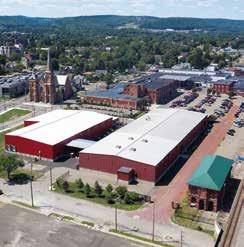
Watlow’s headquarters in St Louis, US
A Life Cycle Assesment will evaluate the environmental impact of Aduro’s processes
CLEAN CHEMICALS
An innovative life cycle assessment process promises to improve efficiency at a busy biowaste plant
Clean technology company
Aduro is using an innovative clean chemical process to transform lower-value feedstocks such as waste plastics, heavy bitumen and renewable oils into resources for the 21st century. In line with this, the company has engaged sustainability consultancy Delphi to conduct a Life Cycle Asessment (LCA) of the company’s hydrochemolytic technology for waste plastic processing.
Aduro is a developer of patented water-based technologies to chemically recycle waste plastics; convert heavy crude and bitumen into lighter, more valuable oil; and transform renewable oils into higher-value fuels or renewable chemicals. The company’s hydrochemolytic technology relies on water as a critical agent in a chemistry platform that operates at relatively low temperatures and cost, this helps convert low-value feedstocks into new resources.
Delphi - a specialist in corporate sustainability, climate change, the green economy, and cleantech innovation - is conducting the LCA as part of Aduro’s strategic roadmap to independently assess and quantify the environmental performance of its chemical recycling platform through a phased, data-driven process.
Aduro is a developer of patented waterbased technologies to chemically recycle waste plastics
INCREASED PRESSURE FROM REGULATORS AND CLIENTS
With increasing regulatory and market scrutiny of measurable environmental outcomes, the LCA provides a foundation for engaging stakeholders with credible, third party-reviewed information. Additionally, the LCA will provide critical data to assist in identifying and minimising inefficiencies and energy consumption throughout the process, helping to boost resource efficiency and reduce operational costs.
Aduro is processing waste plastics using hydrochemolytic technology
• -45 °C to +150 °C
• Efficient Heating and cooling
• Flow & pressure control
• Single/multiple fluid circuits
• Automated drain & refill
• Integrated pressure overlay
• Heat exchange pump option
Inspired by temperature
The Unimotive range is specially designed for applications in the automotive industry. Typical applications include temperature simulations as well as material testing and temperature-dependent stress and load tests for automotive parts and functional components.
www.huber-online.com
NEW: GREEN LINE models with natural refrigerant CO2
The project will begin with a screening-level LCA focused on greenhouse gas (GHG) emissions and energy use, associated with operating the hydrochemolytic technology process. This assessment, based on pre-pilot-scale performance data and new design parameters, will follow ISO 14040 and 14044 frameworks to provide insights into the technology’s environmental profile. This phase will lay the groundwork for future work as more detailed data becomes available. The screening assessment will support Aduro’s broader efforts to align its innovation strategy with the performance expectations of regulators, customers, and investors in the circular economy.
THE NEXT GENERATION PROCESS PILOT PLANT
Subsequent phases of the LCA will incorporate operational data from the Company’s Next Generation Process (NGP) pilot plant, which is currently under construction. The second phase will provide a more comprehensive, ISO-compliant assessment of all relevant life cycle stages, including feedstock sourcing and downstream product pathways. A final phase is expected to support
Delphi will provide an environmental assessment of Aduro’s processes
a comparative LCA, benchmarking the hydrochemolytic process against other chemical recycling approaches.
Our goal is to deliver a robust, independent assessment of the environmental impacts and benefits of Aduro’s process
WORK WILL PLEASE SHAREHOLDERS
“Assessing the NGP pilot plant for its environmental performance and impact will help with our commercial offering. Delphi is a is an ideal partner to perform the LCA work to assess and quantify the hydrochemolytic technology’s performance and its ability to support decarbonisation,” said Ofer Vicus, CEO of Aduro. “The outcomes from this work will inform our stakeholders with a transparent and data-driven view of our environmental profile and help position our technology as a viable solution for tackling plastic waste.”
“Our goal is to deliver a robust, independent assessment of the environmental impacts and benefits of Aduro’s process,” said Stephan Wehr, vice president, climate change at Delphi.
“The phased approach provides flexibility and responsiveness to available data while adhering to LCA best practices. Having supported LCA work on other chemical recycling processes, including pyrolysis, we see this as an important opportunity to highlight how alternative pathways like hydrochemolysis may demonstrate a distinct environmental profile, particularly in terms of GHG emissions and energy intensity.” Captions to go
Bitumen is being transformed at the plant
Clean Energy Safety Solutions
—
Supporting a Safer Journey to Net Zero
Dräger, with a legacy spanning over 100 years, is your trusted safety partner in this journey
We deliver comprehensive safety solutions tailored for the evolving clean tech landscape. From gas detection and respiratory protection to service and rental, we’re dedicated to protecting your team and assets in the face of new challenges across various sectors — be it hydrogen, carbon capture, battery production, offshore wind, waste-to-energy, or nuclear We are not just a supplier; we are a partner in your journey towards a safe and sustainable future.
UPGRADE THE UNLOAD
An energy efficient solution helps with the rapid unloading of stationary vehicles
Unloading bulk produce from silo vehicles can be a big part of the role for operators in the process engineering space, and a new unloading system from CVS engineering promises to make this part of the job more efficient. The product, called SKL-E Pack, benefits from low operating costs, quiet running and simple installation.
The product operates emission-free units that ensure a smooth unloading process for bulk goods. The product will be used by process engineers from the food production, construction, chemical and logistics industries as well as those working in recycling and environmental industries. One advantage of the system is that no engine or compressor of the delivering lorry needs to be running during the unloading of grain, sugar, flour, cement, lime, PVC granulates, soda or animal feed, ensuring a low emission and low-noise process. The stationary system can also be operated independently of the vehicle and is continuously available.
ADVANTAGES FOR FREIGHT AND TRUCK OPERATORS
The SKL-E Pack offers tangible benefits for haulage companies and fleet operators in particular. These include the fact that no onboard compressor is required and the investment costs per vehicle are reduced. In addition, there is no need for complex superstructures and maintenance costs are reduced since no additional technology is installed on the vehicle.
The system also offers flexibility in daily practice; any truck can carry any load - regardless of whether it is equipped with a compressor or not. This means that subcontractors or rental vehicles can also be used without any problems. Another plus point is that the stationary solution completely relieves the load on the truck engine, thereby extending its service life and reducing thermal and mechanical stress.
The SKIL-E Pack benefits from low operating costs
MORE PROCESS RELIABILITY
There are also clear advantages for bulk goods receivers. The SKL-E Pack enables consistent unloading regardless of which vehicle or subcontractor is used for delivery. The unloading process can be designed to be clean, quiet and efficient, which is particularly important in sensitive areas such as food factories, breweries or inner-city production sites.
In addition, customers remain independent of the haulage company’s technology, even if they do not use onboard compressors, unloading can still be carried out reliably. For companies with a high truck frequency, the system pays off in the long term thanks to standardised processes and the possibility of energy-efficient operation, for example when frequency converters are used.
INCREASING DEMANDS ON SUSTAINABILITY AND EFFICIENCY
The unit was developed as a response to increasing demands for sustainability and efficiency. However, it also contributes to operational optimisation, as the compressed air can be used for pneumatic conveying, for example.
“Until now, unloading was mainly
done via the compressor on the truck. However, truck-based systems have disadvantages such as a high noise level,” explains Patrick Zettler from CVS engineering. In addition to noise emissions, truck engine systems also lead to higher fuel costs and higher maintenance costs owing to increased mileage.
USER-FRIENDLY OPERATION
It is worth providing an overview of the product’s components. Depending on the application, the power pack consists of an oil-free screw compressor and an electric motor with 22 to 55 kilowatts. This combines the main advantages of stationary unloading in one product and offers users less downtime and reduced operating costs. An integrated control unit is used to adjust the volume flow and optimise energy consumption. Depending on the model and requirements, components such as a frequency converter, compressed air cooler and speed control are optionally included for even more efficient operation.
For more information: www.cvs-eng.de/en/
Looking to upskill?
IChemE is a market leader in professional training for the chemical, process and related industries.
Visit our website to browse the extensive range of courses on offer and search upcoming dates – online or face-to-face.
We also offer on-demand courses for independent learning when it suits you.
If you have a team to train, our expert trainers will come to you and provide customised courses if needed. Search our courses at
Process safety
█ Hazard identification and risk analysis techniques (including HAZOP and LOPA)
█ Process safety management
█ Understanding different hazards (eg hydrogen)
█ Human factors in the chemical and process industries
Contract and project management
█ Contract law for engineering contracts
█ Engineering project management
█ Applying the IChemE Forms of Contract
Process and plant operations
█ Chemical engineering core concepts
█ Distillation technology
█ Plant and production management
█ Scale-up of chemical processes
█ Introduction to sustainable process engineering
█ Sustainability leadership
█ Sustainability measurement
█ Material resource management and the circular economy
SAFETY FIRST
Senior management must take the reins when it comes to safety at process plants
At this year’s CHEM UK, two Institute of Mechanical Engineers (IMechE) seminars highlighted the influence of leaders and their role in forming a safe (or unsafe) working environment.
These talks, titled ‘Safety Panel Discussion: Leaders – it’s time to refocus on process safety management’ and ‘Safety Culture: Key considerations in pharmaceutical manufacturing’, come months after IMechE’s response to the UK government’s industrial strategy green paper last year.
The green paper stated that a successful industrial strategy can
only be delivered if the government works in partnership with all sectors. In the long term, a stable regulatory environment is essential to this.
A vital part to this sort of regulation is safety, which formed a central part of both ImechE seminars.
Both talks reached the same conclusion which underlined the importance of both plant upkeep and proactive leadership.
IMechE process industries division board member Alan D’Ambrogio, talked about the impact of ‘creeping change’ within a plant, referring to a series of small changes that can go unnoticed over time.
These changes can happen
as a result of degradation, risk assessments, and changes in equipment, management or ownership. As these changes are gradual, they are difficult to notice from one day to the next, and as a result, psychological shortcuts made by safety managers are normalised.
Most shortcuts are harmless, nothing more than the brain’s way of making sense of the world but where safety is a consideration, such practices can lead to blind spots.
Pharmaceutical committee chair for IMechE’s Process Industries Division Claire Edwards made the same point in her seminar on safty culture. She likens most of the brain’s
CHEM UK safety panel discussion: Richard Hellebrand Westlake Group; Richard Roff Costain, Christopher Mellows Zulu Joint Integrity, Alan D’Ambrogio (Chair, IMechE North East Region), Graeme Laughland TUV Rheinland
shortcuts to putting on your shoes; you do not need to remind yourself every morning what a shoe is and why your foot needs it because your brain has created a shortcut allowing you to understand this.
“Humans are hard-wired to create these heuristics,” she said, “it is therefore inevitable that that plants will degrade, and that operators will try to fill in the gaps. Because of these inevitabilities, a firm safety culture formed out of proactive leadership is key.
Often, people feel pressure to meet workplace standards that prioritise quotas over safety. “As leaders, we can exacerbate this because we’re looking for speed,” she added.
Those in leadership positions have a particular influence over how seriously safety procedures are observed and how well staff are protected in the workplace. If an employee comes to management with an observation about something they believe is unsafe, listening to
their concerns is important.
“If anything has that potential to be a serious incident or injury, make sure that is really deeply invested in and investigated,” says Edwards.
More important, however, is to read between the lines of your employee’s behaviour instead of discounting it as laziness.
“Was it actually that they were anxious? Was the task problematic from a safety perspective?” says Edwards. “Leaders should not accept a face-value answer, it might be deeper, be curious and try to understand what’s going on.”
It pays off, then, to have ears and eyes open as a leader to encourage others to feel empowered to bring potential issues to the table. After all, as D’Ambrogio said during his talk: “Learning from other peoples’ fear of accidents is a lot better than learning from an accident after the event”.
Plants will degrade over time and operators will try to fill in the gaps
Portable emergency showers are the best option for workplaces requiring flexible or temporary setups
A SHOWER SAFEGUARD
James Hamilton from Hughes Safety Showers explains how an emergency safety shower can protect the workforce in hazardous environments
The right emergency shower for your workplace depends on the environment in which it is used
In industries where chemical exposure is a risk, ensuring the safety and well-being of your employees is non-negotiable. Among the safety measures needed is an emergency safety shower, which can make all the difference in preventing serious injury following exposure to dangerous substances.
Investing in the correct emergency showers and adhering to relevant standards will protect the workforce and signal an employer’s commitment to creating a safe, compliant work environment.
SAFETY STANDARDS FOR EMERGENCY SHOWERS
Ensuring safety showers are effective during a chemical emergency means adhering to specific safety standards. These standards guarantee that the showers will function when every second counts:
• EN 15154: this European standard outlines the guidelines for emergency
eyewash and shower equipment in the UK and Europe.
• ANSI Z358.1-2014: the international benchmark sets similar requirements globally for emergency eyewash and shower systems.
By following these established standards, businesses ensure that the showers will activate efficiently in an emergency and that they can avoid costly regulatory penalties or legal repercussions owing to noncompliance. Most importantly, they help mitigate serious harm to workers.
TYPES OF EMERGENCY SHOWERS
The right emergency shower for your workplace depends on the environment in which it is used and the nature of the hazards present. Whether your facility is indoors, exposed to extreme outdoor conditions, or requires portability, there’s an emergency shower designed
to meet the needs of every setting:
Indoor showers
Unheated emergency showers are ideal for environments like laboratories, manufacturing plants and other controlled spaces. Showers should be easily accessible from all areas where exposure is likely and often feature cubicle-style enclosures with a sump and strip screen to contain water run-off and protect surrounding areas from contamination.
Outdoor showers
Outdoor safety showers must withstand harsh weather. For freezing conditions, specialised models are equipped with integrated trace-tape or immersion heating. Meanwhile, tank-fed showers are adaptable; they can be immersion-heated for cold regions or insulated and jacketed for warm environments. Furthermore, self-draining showers are specifically engineered for hot climates, ensuring
water in the standpipe doesn’t overheat from solar radiation, removing the risk of scalding when next used.
Portable showers
Portable emergency showers are the best option for workplaces requiring flexible or temporary setups. They are ideal for remote locations or areas without permanent infrastructure. These units are self-contained, require filling with water, and can be quickly relocated to the hazard site.
IMPLEMENTATION AND COMPLIANCE
When setting up emergency showers, it’s important to ensure they are correctly positioned and consistently maintained. Additionally, employee training plays a pivotal role in the system’s effectiveness. Ensuring your emergency showers meet the necessary standards and that your workforce is prepared can significantly reduce the risk of injury.
SITE ASSESSMENT
A comprehensive site evaluation is essential to determine the appropriate type of showers needed and their placement. Key factors include identifying hazardous areas, planning for water runoff and ensuring easy access without obstruction.
TRAINING
Every member of staff should be trained on the location, operation and importance of emergency showers. Familiarity with these systems empowers employees to act swiftly in an emergency.
DOCUMENTATION
Keeping accurate records of inspections, maintenance and training is crucial for demonstrating ongoing compliance. These records should include:
• Inspection logs: these track issues such as leaks, blockages or malfunctioning valves and document routine checks.
A portable emergency shower
• Maintenance logs: note any repairs or replacements to ensure the showers remain in optimal working condition.
• Training logs: keep a detailed record of all training sessions, including dates, participants and key points covered.
These records will ensure compliance and help keep the emergency showers in peak condition when needed.
Chemical exposure in the workplace is a real and present danger, making it essential to prioritise your employees’ safety. By investing in the right equipment, following safety standards and ensuring proper implementation, training and maintenance, you can safeguard your workforce and demonstrate your commitment to a safe, compliant workplace. For more information visit: www.hughes-safety.com
Unheated emergency showers are ideal for controlled spaces
Declan Barry, managing director of Atex Explosion Hazards
INDUSTRY PROFILE: DECLAN BARRY
AN INTRODUCTION
I am the managing director of Atex Explosion Hazards, a company with over 50 years of experience in explosion protection. Now part of the global Atex Group, the organisation provides a fully integrated source of process fire and explosion protection— offering complete survey, design, and engineering solutions tailored to industry-specific safety requirements.
A JOURNEY FROM ENGINEERING TO INDUSTRY LEADERSHIP
My career began in 1978 as a mechanical engineer in Ireland. While studying, I actively sought out practical work experience in machine
The managing director of Atex Explosion Hazards shares insights into his career and tells us why it has been dedicated to industrial safety
shops, production environments, and mechanical services. I quickly developed a strong affinity for tool making, particularly lathework, though milling never held the same appeal. I found manufacturing tasks like assembly and documentation tedious, and mechanical services like HVAC work didn’t align with my temperament. I realised early on that if I wanted variety and longterm growth, I’d need to aim higher. I therefore pursued a diploma in Industrial Management and Product Development, I studied for this between 1984 and 1987.
This decision proved pivotal, leading to my first role in explosion protection in 1987 as a project engineer. A
decade later, I finished as a general manager. One of the highlights of that period was developing and installing the first Pressure Hot Water Explosion Suppression systems for the dairy industry.
BUILDING A BUSINESS FROM THE GROUND UP
Although I didn’t grow up in an engineering household, I was influenced by relatives who had been succesful in the sector. One question I was asked that stayed with me was: “Do you want a job, or do you want a business?” A job can’t be sold. A business can, and more importantly, a successful one can grow even in your absence. In 1998, I purchased
The Passive Atex float valve
Pneumatic
L-R: Powder suppression bottle, Modern Ex guard control panel, Flameless venting
Explosion Hazards Limited, based in Lymm in the UK.
SEEKING OUT PROFESSIONAL NETWORKS
Being at the helm of a small business can be isolating, so I sought out professional networks and associations to stay connected and informed. I became an active member of the Institution of Engineers of Ireland, National Standards Association of Ireland, and participated in European and UK standards work through CEN TC305 and BSI EXL/23. I also contributed to industry bodies like SHAPA, MHEA, and IMechE.
CHALLENGES IN PRODUCT DEVELOPMENT AND CERTIFICATION
One thing product development teaches you is that you need to be sceptical of data sheets. Many products degrade over time—even if they’re rated for conditions like 50°C - longevity matters and needs to be displayed. Before launching any solution into the industrial market, full-scale stress testing is essential. Certification is a double-edged sword. Once a product is certified, any improvement must be justified financially—testing and recertification are extremely costly. The real problem with many of the notified bodies, is that they rarely understand the practical challenges, risks and hazards in industrial environments.
INDUSTRY EXPERTISE
Over the years, I’ve worked across a wide range of industries: food & dairy, chemical & pharmaceutical, power generation, cement, coal & biomass, woodchip, wastewater sludge, brewing, and confectionery. My
journey started with the dairy sector, where they wanted an alternative to 60 bar explosively detonated powder suppressants on their milk dryers. In 1987, we developed the first 10-bar hot water suppressant system with a lockable valve. However, client demand shifted toward integrated, turnkey solutions.
This required a broader product range and greater service capabilities. After I had acquired the older company Explosion Hazards Limited originally formed in 1973, the regulatory environment changed significantly—Halon was banned, and ATEX regulations demanded that we redesign and re-certify our systems. Despite efforts to compete globally, operating alone—from the USA to Australia—proved unsustainable for a small company. Joining the ATEX GmbH international group was a strategic move that enabled growth, resilience, and innovation.
THE VALUE OF EXPERIENCE AND EXPERTISE
Surveying to make a product sale can be an expensive business, and many clients need to complete an ATEX Explosion protection document or a DSEAR report before they decide what prevention and protection methods are practical for their applications. Unfortunately, these are sometimes handled by inexperienced engineers, resulting in copy-paste reports that lack actionable insights. This can leave clients more confused than informed.
To fill that gap, I now also manage the International Bureau of Explosion Safety, also known as Inburex UK, part of an international consultancy with over 30 years of expertise in fire, explosion, process safety and largescale testing.
REFLECTIONS
We asked Declan what professional advice he would give to his younger self, and he provided the following interesting points:
• Cash flow is king. Think twice before committing, and even more carefully before spending.
• When hiring, look for your own replacement.
• Your engineers are your best sales department.
• Clients don’t want to be bothered with problems – they want solutions.
• New products are exciting but costly. Do your research.
• Small businesses are tough –build partnerships and network constantly.
Inburex provides everything from inspections, product testing, and risk assessments, to ATEX/DSEAR reports, incident investigations, CFD and Quantitative Risk Assessment, incident investigation and SIL assessments. Training—both in-house and external, is having an educated client base which is the core part of our mission.
INDUSTRY EVOLUTION AND FUTURE OUTLOOK
Industrial safety has certainly improved. Explosion protection still revolves around three principles: venting, suppression, and isolation barriers. Today’s systems are more reliable, but their core functions haven’t changed.
What has changed is the mindset: clients are more aware and compliant these days, though safety is still too often an afterthought in the design phase—leading to delays and escalating costs. I often say, ‘people cause explosions, not the plant.’ but there is still room for improvement in certain industries.
For more information visit: www.explosionhazards.co.uk
MINUS THE METAL
Mettler Toledo’s Rob Stevens explores the role of metal detection when producing instant noodles
Instant noodles, a staple of convenience, present unique challenges in maintaining food safety and quality. From the raw ingredients to the final packaging, manufacturers can face risks of metal contamination throughout the whole production process. Metal detection technology offers critical solutions for addressing these risks, helping manufacturers maintain high standards of food safety and quality.
INSPECTION OF INSTANT NOODLES
Producing safe and high-quality instant noodles begins with the inspection of raw materials like flour and oil. These ingredients can carry contaminants such as ferrous and non-ferrous metals or stainless steel, which must be detected and removed before entering the production line. By
incorporating metal detection systems early in the process, manufacturers can reduce contamination risks further along in production.
Different metal detection systems are tailored to specific raw materials. Gravity fall systems, for example, are ideal for inspecting bulk powders like flour, while pipeline systems are used for liquids or pastes. Conveyorised systems, on the other hand, can be used to inspect raw materials such as bulk bags of flour before they are used in the mixing process. Installing these systems helps minimise the likelihood of physical contaminants passing into later stages of production where they could be broken down into smaller pieces, making them harder to detect and potentially causing damage to other production equipment.
EXPLOSION RISKS WITH FLOUR HANDLING
One significant challenge in noodle production involves the handling of flour. The dust generated during processing creates a potential explosion risk. Metal detection systems used in these environments must comply with explosion prevention regulations, such as ATEX / IECeX, to minimise these risks while maintaining product safety.
OVERCOMING DOUGH CREATION CHALLENGES
Once raw materials pass inspection, the dough creation process introduces new challenges. Moisture and salt content in noodle dough can interfere with metal detection systems due to the phenomenon known as ‘product effect’. This occurs when the moisture
Different metal detection systems are tailored to specific raw materials
Explosion Hazards Limited
Experts in explosion safety for over 50 years
Showcasing our products and services
Our specialist industries Dairy
& Beverage
Chemical & Pharmaceutical Coal
Biomass Safety Waste
Cement Industry
www explosionhazards co uk
Explosion Venting Explosion Isolation
Explosion venting devices limit the overpressure and mitigate damage to process equipment by controlled venting of the excess pressure with or without flame to a safe area. ATEX explosion venting systems offer an economical, cost-effective means for explosion protection. We have the latest and best in explosion venting technology, over 50 years of practical design knowledge and up to date computer modelling.
Explosion Suppression
Explosion Suppression Systems are fast fire extinguishing systems that detect the explosion pressure in a protected plant and then mitigates the flame/pressure damage to an acceptable level. For the very best in explosion suppression solutions, view our full range of ATEX solutions.
Most processes involve interconnection with associated vessels. To prevent propagation to other vessels, it is essential to apply appropriate explosion isolation devices to prevent flame, spark and/or pressure from transmitting to the other vessels. For the very best in explosion isolation solutions, view our full range.
Atex CO ACOM Systems
The Atex CO detection system uses advanced carbon monoxide (CO) sensors to detect early stages of powder combustion before a fire or explosion can be ignited.
Email: info@explosionhazards.com
or salt disturbs the magnetic field, similar to that of a metal contaminant, leading to false rejects, which can cause unnecessary product waste and disrupt production efficiency.
To address this issue, manufacturers use advanced metal detection systems such as multisimultaneous frequency technology and intelligent algorithms. This combined technology solution enables the system to analyse the product at multiple frequencies simultaneously, filtering out interference from moisture and salt while accurately detecting real contaminants. This significantly reduces false rejects and helps remove only truly contaminated products from the production line.
MAINTAINING CLEANLINESS AND METAL-FREE PRODUCTION
As the noodles progress through stages like sheeting, cutting, steaming and drying, the production environment becomes increasingly complex. Metal fragments from cutting blades also pose an ongoing threat, particularly as equipment wears down over time. In these stages, maintaining cleanliness is critical for protecting the safety of the final product.
Metal detection systems designed
with ease of cleaning in mind are essential. Regular cleaning of equipment between production cycles helps prevent cross-contamination, and systems that can be easily disassembled or cleaned in place make it easier to maintain high standards of hygiene. By integrating metal detection systems that are compatible with cleaning protocols, manufacturers can keep their production lines free from contamination while protecting product safety.
PACKAGING AND FINAL PRODUCT INSPECTION
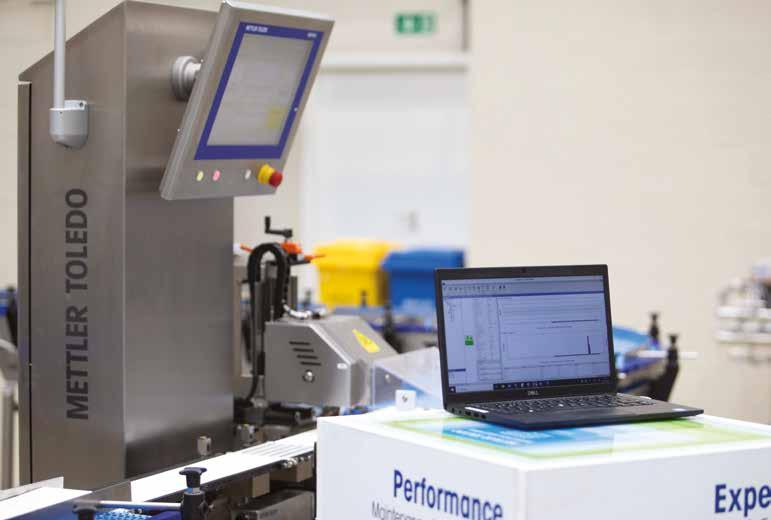
Once the noodles are packaged, metal detection systems continue to play a vital role in protecting the final product’s safety. During packaging, physical contaminants such as metal fragments can still enter the product, particularly if machinery components wear down. Metal detection systems used in the final stages of production help detect any remaining metal contaminants, helping the finished product to meet safety standards. Metal detection systems can be integrated with a dynamic checkweigher to provide a more powerful critical control point, by also verifying that portion sizes remain consistent, and preventing under- or
over-filling. In addition, some metal detection systems can be integrated with data-management software, providing real-time insights into production performance. This helps manufacturers identify and resolve issues more quickly, improving overall production efficiency.
COMBATTING COSTS
Cost control is a growing concern for manufacturers. Early detection of metal contaminants using metal detection technology helps reduce waste, minimises the need for rework and lowers production downtime. By catching metal contaminants early in the production process, manufacturers can reduce the risk of product recalls, which can be both costly and damaging to brand reputation.
Advanced metal detection systems, when combined with integrated data management software like ProdX from MettlerToledo, allow manufacturers to monitor their production lines in real-time. This not only helps optimise the production process but also provides insights that can be used to improve efficiency, reduce waste and lower operational costs.
CONCLUSION
As the noodles progress through stages like sheeting and cutting, the production environment becomes increasingly complex
Instant noodles, while simple in appearance, require advanced technology to meet the rigorous demands of modern food safety and quality standards. Metal detection systems provide an essential line of defence against contamination, helping manufacturers protect their products, maintain regulatory compliance and control costs. By implementing metal detection technology throughout the production process, manufacturers can rise to the challenge of producing safe, highquality instant noodles that meet consumer expectations.
For more on the subject read: https://www.mt.com/us/en/home/ library/guides/product-inspection/ ready-meal-industry-guide.html
For more information visit: www.mt.com
SCALING SULPHATE
Reto Steiner, Emile Egger and Cie SA explain how a closed-loop model helps scale circular potassium sulfate production
In the face of increasing regulatory and environmental pressure, the global fertiliser industry is accelerating its transition toward sustainable manufacturing models.
Among the new generation of innovators, Swedish startup Cinis Fertiliser, a green plant nutrition company, has gained attention for its pioneering approach to circular potassium sulfate (K2SO4) production. By upcycling industrial residues into high-purity fertiliser using a process powered entirely by renewable electricity, Cinis presents a new benchmark in green mineral production.
At the heart of this solution is an integrated system of robust process equipment, including advanced axial flow pumps supplied by Egger Pumps and thermal crystallisation technology engineered by Evatherm. This particular collaboration exemplifies how tailored process engineering can enable scalable, low-impact chemical production.
A CIRCULAR PRODUCTION MODEL FOR POTASSIUM SULFATE
Cinis Fertiliser’s patented process is built on the principle of circular resource use. Rather than relying on virgin raw materials or fossilintensive production routes, Cinis recovers potassium-rich and sulfaterich waste streams from industries such as pulp and paper (sodium sulfate), and bioenergy (potashcontaining fly ash). These byproducts, traditionally regarded as waste and often landfilled or discharged, become the core feedstocks in a reaction and crystallisation process yielding highpurity K2SO4
The company’s first industrial site, located in Örnsköldsvik, Sweden, is fully electrified with energy sourced from renewables and features a closed water loop. The design ensures minimal impact on surrounding ecosystems while supporting long-term operating
efficiency. According to Cinis, their method results in more than 90% reduction in carbon footprint compared with conventional processes like Mannheim furnace technology, which involves sulfuric acid and potassium chloride combustion.
HOW THE CINIS MODELS COMPARES TO OTHER FERTILISERS AND WASTE STREAMS
A key question for process engineers and industrial chemists is whether Cinis’ approach can be generalised or transferred to other fertiliser types or sectors generating high-salinity waste. The answer is conditionally yes—but only under certain technical and economic conditions.
The underlying concept of Cinis’ model is ion substitution followed by thermal crystallisation, using low-grade industrial byproducts with known and stable compositions. This framework may be adapted to produce other
An Egger elbow propeller axial flow pump at Cinis Fertiliser
sulfate-based or even nitrate-based fertilisers if certain criteria are met:
• Presence of concentrated, chemically consistent waste streams: Just as Cinis relies on predictable sodium sulfate and ash byproducts, other applications must secure feedstocks with defined compositions and limited impurities to enable stable crystallisation.
• Thermodynamic compatibility:
The targeted fertiliser salt must have solubility and thermal properties that allow efficient separation and recovery at scale using either cooling or evaporative crystallisation methods.
• Regulatory acceptance of byproduct use: agriculturalgrade fertilisers require tight control over contaminant levels (e.g., heavy metals). Adapting the model to other streams (e.g., phosphogypsum, desalination brines, lithium extraction residues) would necessitate additional purification stages, impacting feasibility.
• Market alignment: As with K2SO4, the target compound should have strong demand, preferably for crops requiring specialised nutrition (e.g., chloride-sensitive crops), to justify the investment in process adaptation.
In practice, extensions of this model are being explored. Other process engineering firms are following similar paths in upcycling desalination brines into magnesium fertilisers or recovering ammonium salts from industrial scrubbers.
While each case requires unique adjustments in process chemistry, separation design, and equipment selection, the core vision—converting industrial waste into plant nutrition—is broadly transferable. The challenge lies in scaling these systems while ensuring cost parity and environmental compliance.
HOW EGGER PUMPS ACHIEVE SCALABLE FLOW CONTROL
To support its high-throughput and low-impact production strategy, Cinis specified axial flow pumps from Egger Pumps for their fluid transport
needs. The startup integrated eight elbow propeller pumps, selected for their ability to deliver large volumes of corrosive slurry and solution with minimal energy input.
The elbow design of the Egger pumps allows for tight installation layouts while maintaining efficient axial flow performance. These pumps are engineered to withstand highly alkaline, sulfate-rich process fluids, offering reliable suction characteristics and smooth hydraulic behavior. This results in improved process stability across the multistep reaction, separation, and crystallisation phases.
Thanks to their robust construction and corrosion-resistant materials, the pumps require minimal maintenance and are ideal for 24/7 operation in closed-loop systems. Their high efficiency further supports the energy objectives of the all-electric plant.
INTEGRATED DESIGN WITH EVATHERM CRYSTALLISATION SYSTEMS
Cinis’ process is made possible through collaboration with Evatherm, a Swiss specialist in evaporation and crystallisation. The process configuration includes:
• Concentration stages to achieve optimal supersaturation
• Controlled cooling and crystallization
for selective salt recovery
• Efficient separation and drying systems to ensure fertilizer purity
Integration of Egger Pumps within Evatherm’s crystallisation design ensures that material flow rates and compositions remain consistent, which is crucial for maintaining crystal morphology and product quality.
OUTLOOK: REDEFINING FERTILISER SUSTAINABILITY
By rethinking how fertilisers are produced—shifting from extraction to upcycling—Cinis Fertiliser is demonstrating that sustainability in chemical manufacturing can be technically rigorous and commercially interesting.
With reliable equipment partners like Egger and Evatherm, the company has constructed a modular, scalable solution for clean potassium sulfate production.
If successfully adapted, this model could inspire similar efforts in nitrate, phosphate, or micronutrient fertiliser production, particularly in regions with significant industrial waste streams and access to renewable energy.
Eight Egger elbow propeller axial flow pumps are in use at Cinis Fertiliser
WATERY WINNERS
Regulatory body
Ofwat has awarded water industry innovators funding of £42.7m to deliver solutions to some of the industry’s biggest problems
Ofwat has announced winners of the Ofwat Innovation Fund’s Water Breakthrough Challenge. The winning companies and projects will solve challenges faced by the industry and will benefit from £42.7m in funds.
The projects will see water companies working with 70 partners including research universities, engineering powerhouses, environmental charities and NASA.
Between 2020 and 2030 the Ofwat Innovation Fund is investing £600m in innovative projects and technologies to benefit the “environment, society and customers,” according to the organistion.
The winning projects are required to put up at least an additional 10% themselves, taking the total value of money going into the scheme to £48.8m. Winners are required to openly share the lessons learnt from funded projects openly to ensure progress can be built upon by all water companies.
Between 2020 and 2030 the Ofwat Innovation Fund is investing £600m in innovative projects and technologies to benefit the environment, society and customers
AND THE MONEY WENT TO...
A collaboration called Space Eye has received £1.3m for a project that promises to transform the use of satellite technology for the water industry. The project will include the design, launch and operation of micro-satellites to provide imaging of the UK’s water pipe network. Machine-learning algorithms will enable Space Eye to quickly locate leaks in pipes that become visible by rising to the surface, identify water wastage from unauthorised or unnecessary water use, and analyse surface water to check whether harmful chemicals are impacting water quality, to help water companies fix problems quickly, resulting in fewer delays for customers affected by water supply issues and minimising disruption. The project will see five water companies in England and Wales, led by South Staffordshire Water, team up with US micro-satellite experts Quub, the University of Wolverhampton, Scottish Water and Spring – the centre of excellence for water sector innovation.
Another project called Sandscape, a collaboration between four water companies, led by Thames Water, has been awarded £2m to test at full scale tank-like robots (up to five metres in length) that make chemical-free ‘slow sand filtration’ more efficient. Slow sand filtration is a highly effective, nature-based solution for cleaning water, but has a built-in inefficiency because of the need to regularly stop and drain the sand filters of water to remove the sand layer containing the particles captured when making the water fit to drink.
A third project titled Smart Skies, Healthy Waters has been awarded £6m for a solution that will create a ‘drone- and lab-in-abox’ that provides on-site results and lab-grade analysis of coastal bathing water quality.Using automated drones, robotics and cutting-edge sampling techniques, Smart Skies, Healthy Waters aims to improve coastal water monitoring. This capability will significantly increase the monitoring and sampling frequency as well as the delivery of results, cutting the time from up to three days to a matter of minutes, meaning customers can access near live updates on bathing-water quality rather than having to wait. Northumbrian Water will work with Newcastle University, drone experts Skyports Drone Services, real-time sensor specialists Proteus Instrument and data experts Makutu Dot IO.
The Sandscape weed removal robot
The Sandscape English skimmer
TRACK & TRACE
A new solution called SmartID Edge enables real-time object and process transparency leading to accurate identification in factory environments
Digitisation and networking are central topics of our time. In the industrial environment, they shape concepts such as Industry 4.0 and the Industrial Internet of Things (IIoT). Networking plays a particularly crucial role in today’s automation systems in production and logistics. The goal here is to be able to call up the production processes’ exact status at any time and to keep a complete overview of the productionrelevant data at field level.
Key questions need to be asked to enable this including: How can users efficiently achieve maximum transparency in their production processes? And how secure is the communication between the network participants? A networking model
that answers these questions can be designed efficiently and securely using the SmartID-Edge concept from Leuze. The product offers intelligent identification by linking barcodes with virtual RFID tags to ensure secure, realtime data access at the end.
MODERN AUTOMATION
Modern identification systems typically need to be able to handle variable amounts of data and different code systems, depending on the object to be identified. With classic 1D/2D codes, however, these possibilities are limited because standardised bar codes such as a Global Trade Item Number (GTIN) only provide a defined, unchangeable and rather small amount of data. Furthermore, a bar code always
requires access to a higher level IT system such as MES or ERP, where the complete data record that the bar code represents is stored. RFID benefits from the flexibility of the data carriers (‘tags’) used, in addition to the physical principle’s other advantages. These usually have a freely programmable electronic memory meaning that product and process data required for specific situations can be stored directly on the object. For economic or technical reasons, however, it is not always practical or possible to use RFID. Frequent changes of media from bar code to RFID are also undesirable in continuous production processes because they result in increased effort in automation processes and data handling.
Smart ID-Edge links barcodes with RFID tags to enable real-time data access to products
STANDARDISED RFID MECHANISMS
This is where the SmartID-Edge concept from Leuze comes in. It uses standardised RFID mechanisms to process and store identification data while retaining the classic optical bar code technology. This is achieved by linking RFID data structures and command sets with standard bar code scanners and camera-based scanners using OPC UA as the data exchange
standard and a fully integrated AutoID Companion specification. Each physical bar code is assigned a virtual RFID tag, which is stored in a database on an edge server. Data is exchanged at field level exclusively between the bar code devices and the edge server. The system’s control system, for example a PLC, has no access to the edge server and the PLC can only access the bar code identification systems, although these
behave like RFID systems.
The system offers several integrated security mechanisms, including integrated end-to-end encryption via OPC UA. This opens up unprecedented possibilities for enriching data when identifying objects in the production process: In addition to the unique object ID, status information about the identification system as well as reading quality and other process and status data can be stored in a data record. This data record can be accessed directly in real time at field level.
Queries to MES and ERP systems are no longer necessary, which relieves data traffic in the networks and frees up system resources at the IT level. Multiple local sensor and AutoID networks can be synchronised via distributed edge servers meaning all identification events are available throughout the network at all times.
SmartID-Edge relieves data traffic in the networks and frees up system resources
A TESTING TIE-UP
A recent collaboration combines a multi-probe over-the-air test system with wireless connectivity that is set to provide a comprehensive evaluation of RF performance
Wi-Fi 7 is a standard designed to achieve high throughput for use cases such as ultra-high-definition video streaming, multi-user AR/VR/XR, and immersive gaming and entertainment. It is already being integrated into highend smartphones, AR/VR devices and
routers. The technology is expected to see further adoption in the future.
Advanced technologies such as 320 MHz channels, 4K QAM, and MLO (Multi-Link Operation) are incorporated in Wi-Fi 7. For device vendors, ensuring and guaranteeing the RF performance of their products is a critical challenge. Therefore,
RF evaluation is essential for reliable Wi-Fi 7 connection
the comprehensive evaluation of RF performance, including OTA measurements, is becoming increasingly important.
Semiconductor specialist Anritsu has launched a new evaluation solution combining Microwave Vision Group’s (MVG) multi-probe OTA (Over The Air) test systems with its
own Wireless Connectivity Test Set MT8862A to support IEEE 802.11be (Wi-Fi 7) OTA measurements.
This solution leverages Anritsu’s MT8862A to generate and analyse Wi-Fi 7 signals within MVG’s multiprobe OTA test systems, enabling manufacturers to efficiently perform Wi-Fi 7 RF evaluations through fast and stable measurement. Using the MT8862A’s network mode, RF evaluation can be performed at all data rates of major WLAN standards, including Wi-Fi 7. The setup also allows for the measurement of key parameters such as Total Radiated Power (TRP) and Total Isotropic Sensitivity (TIS).
“Integrating the MT8862A with our OTA systems brings the stability and speed needed to evaluate WiFi 7 performance at every stage of development,” said Sun Kim, product manager at MVG. “It ensures a streamlined workflow for engineers seeking to validate EHT (Extremely High Throughput) performance.”
Keita Masuhara, product manager, IoT Test Solutions., Anritsu, said: “We are pleased to be able to provide high-
quality Wi-Fi 7 OTA measurement solutions through our collaboration with MVG. We will continue to collaborate with industry leaders like this to provide our customers with a more stable and efficient measurement environment.”
Seamlessly integrated within MVG’s WaveStudio platform, combining Anritsu’s instrumentation with MVG’s advanced test chambers,
For more information visit: www.annitsu.com www.mgv-world.com Using the MT8862A’s network mode, RF evaluation can be performed at all data rates of major WLAN standards, including Wi-Fi 7
provides a reliable and highperformance testing framework for verifying Wi-Fi 7 device compliance, helping wireless device manufacturers optimise their product development and validation processes.
ABOUT MICROWAVE VISION GROUP
The Microwave Vision Group offers new technologies for visualising electromagnetic waves. With advanced test solutions for antenna characterisation, radar signature evaluation, and electromagnetic measurements, MVG supports company R&D teams to innovate and boost product development. MVG operates in 10 countries and generates 90% of its sales from exports. The group has generated revenues exceeding €100m.
Scan the QR code to discover how a change to genuine Fenner Dunlop ‘Made in the Netherlands’ conveyor belts saved a recycling plant €59,890 in just 12 months. www.fennerdunlopemea.com
A RECYCLING REVOLUTION
Recycling requires that diverse materials are cut and shredded, here we look at how hardfacing technology can protect hardware during this process
blades with a hardfacing solution from Welding Alloys
Sustainability and environmental responsibility are increasingly important in the race to combat climate change. The recycling industry stands at the forefront of this movement, playing a crucial role in reducing waste and conserving valuable resources. With facilities processing ever-increasing volumes of diverse materials, equipment is subjected to extreme wear and tear. Cutting and shredding components - such as sickle blades, hammer teeth, conveyor screws, and crusher jaws - face constant abrasion, impact, and material fatigue. One highly effective solution is the use of advanced hardfacing technology to protect these critical components, improving their wear resistance and extending their service life. Producer of advanced welding consumables Welding Alloys is at the forefront of this approach, providing tailored hardfacing solutions to recycling plants worldwide.
THE CHALLENGE: BLADE WEAR IN RECYCLING SHREDDERS
A recent case study illustrates the significant benefits of hardfacing. Greenworld, a Kings Lynn based recycling and waste management company, approached Welding Alloys in a bid to address a recurring issue: the sickle blades in its twin-shaft
shredder required replacement after approximately 500 hours of operation; owing to wear from the material being processed, including tramp material such as metal and hardcore. The shredder contained 167 sickle blades, and each replacement cycle involved two full days of downtime - a major disruption to production schedules. While the customer had consulted
the OEM, there were no substantial improvements in blade longevity at that time. Faced with rising costs and downtime, they needed a more sustainable, long-term solution.
THE SOLUTION: CUSTOMISED HARDFACING TRIALS
Welding Alloys proposed a trial using their advanced Hardface range of welding consumables. By hardfacing the blades with different consumables, specifically from the WA Integra series, they aimed to improve wear resistance and extend service life. The trial included hardfacing several worn blades and putting them back into service. After the trial, the customer installed the modified blades into operation and began closely monitoring performance.
THE RESULTS: LONGER LIFE, BETTER PERFORMANCE, FEWER PROCESSING CYCLES
The results were promising. Once the trial period ended, the customer removed and compared the trial blades with standard OEM versions. After 242 hours of service it was clear that the standard OEM versions had been outperformed by one of the Welding Alloys’ blades. It not only showed significantly better wear resistance but retained the original shape of the knives - particularly the tips.
Repaired
David Kilham, Greenworld with Jonathan Smith, Welding Alloys UK
Maintaining the tip of the blade is critical. Without it, material often remains unprocessed after a single cycle, forcing the machine to perform a second pass. By preserving blade geometry and sharpness, the hardfaced solution improved cutting performance, reduced the need for preprocessing, and directly contributed to increased throughput.
This success underscores Welding Alloys’ commitment to innovation and their ability to deliver customised solutions to meet the unique needs of recycling operations.
David Kilham, new sector development, Greenworld said: “We’ve seen significant results since working with Welding Alloys. The hardfaced blades outlasted our standard OEM blades by a significant amount, and that will have a direct impact on our operational efficiency. What used to be a 500-hour replacement cycle is now significantly extended, and this will reduce our downtime and maintenance costs considerably. On top of that, the cutting performance is noticeably sharper for longer, helping us improve throughput and reduce double-processing. The Welding Alloys team took the time to understand our challenges and delivered a tailored solution that truly works – it’s been a game changer for us.”
BENEFITS OF WELDING ALLOYS’ SOLUTIONS
1. Reduced downtime: By extending the wear life of critical components, Welding Alloys’ solutions minimise the need for frequent replacements, reducing downtime and enhancing operational efficiency.
2. Cost savings: The extended service life of equipment translates to cost savings, as the need for frequent replacements and maintenance is reduced.
3. Tailored solutions: Welding Alloys works closely with customers to trial and identify the optimal hardfacing consumable for each application, ensuring maximum effectiveness.
4. Improved wear resistance: The hardfacing process significantly
of a new and a refurbished blade from Welding
improves the wear resistance of equipment, ensuring that it can withstand the rigorous conditions of recycling processes.
5. Increased productivity: With more durable equipment, recycling facilities can operate more consistently, leading to increased productivity and output.
6. Sustainability: Prolonging component life reduces material waste and energy consumption associated with manufacturing and shipping replacements.
CONCLUSION: FUTURE-PROOFING RECYCLING OPERATIONS
The recycling industry is at the forefront of the global effort to create a more sustainable future. Innovations like those offered by Welding Alloys
are crucial in enhancing the efficiency and effectiveness of recycling operations. By addressing the challenges of wear and tear, and providing customised, field-tested solutions, Welding Alloys is setting a new standard for recycling equipment. As the industry continues to evolve, such innovative solutions will be instrumental in achieving greater sustainability and resource conservation.
Investing in advanced recycling technologies is not just a business decision - it is a commitment to a greener future. Solutions such as those from Welding Alloys help recycling facilities operate more efficiently, contributing to a cleaner environment and a more sustainable world.
Comparison
Alloys after operation
View of the shredder blades in situ
CONSCIOUS CONVEYING
How a higher spend on conveyor belts will result in much less intervention by engineers, increased levels of waste processing and a significantly reduced cost of ownership
No other industry places a wider, more aggressive range of demands on conveyor belts than the recycling industry. Every time a belt needs to be repaired or replaced operators will incur costs, not only direct costs but also lost processing time. Despite this, belt selection is all too often based on price.
This may be owing to a perceived lack of value of the materials being conveyed and/or a lack of understanding as to why the toughness and longevity of one conveyor belt can differ so enormously from another. Here, leading conveyor belt authority, Leslie David, provides insight into how to select belts that require significantly less repair and maintenance and provide a considerably longer and therefore more cost-efficient working lifetime.
OILS, RESINS AND CHEMICALS
Research shows that organic waste is the largest component of household waste mixture (69%). Surprisingly, plastic represents less than 11%.
Household waste contains very high levels of oils and resins that have an extremely detrimental effect on the performance and life expectancy of the rubber conveyor belts that carry
it from one recycling stage to the next. Within the waste there is a wide variety of chemical-based domestic products such as cleaning agents, bleach, corrosives and other chemicals harmful to rubber.
There are two distinct sources of oil,
resins, fats and greases. Vegetable oil is the most predominant source and is defined as all forms of oil and resin derived from flora and fauna. The other primary source is mineral oil, which is usually a liquid by-product of refining crude oil to make gasoline
Oils and chemicals seriously damage rubber
Household waste contains very high levels of oils and resins that have an extremely detrimental effect on the performance and life expectancy of the rubber conveyor belts that carry it from one recycling stage to the next
and other petroleum products. When oil penetrates the rubber covers of a conveyor belt it causes all kinds of problems. The first is a dramatic reduction in the ability of the rubber to withstand wear.
As the rubber softens it also steadily loses its tensile strength while at the same time becoming much more prone to cutting, ripping and tearing. The next stage is that the rubber begins to swell and distort. This causes steering and handling problems along with a serious reduction in the elongation at break (the amount of stretch before the belt snaps) and recurring splice joint issues.
OIL RESISTANCE TEST METHODS
There are two recognised methods to measure oil resistance - ISO 1817:2024 and the comparable, slightly less elaborate but equally stringent American ASTM ‘D’ 1460. In both tests, samples of rubber are fully immersed for a specific period of time in test liquids such as petroleum derivatives, organic solvents and chemical reagents, as well as reference test liquids. Changes in the geometry and dimensions of the specimen caused by absorption are then measured when the samples are removed.
Surprisingly, international performance standards for oil and
Serious distortion: the effect of oil on rubber
ASTM ‘D’ testing
grease resistance do not yet exist. This means that manufacturers and traders can safely claim that the belt they are supplying is sufficiently oil resistant for its intended use. To make things worse, there can be a strong element of deception concerning the matter of test methods.
DIN 22102 G. NOT WHAT IT SEEMS
Some of the largest manufacturers of belting in the world, especially those in Southeast Asia, use the DIN reference number 22102 G (DIN G) when referring to oil resistant belting. This is misleading because in reality there are no firm requirements, test methods or limits specific to oil resistant belting associated with DIN
Good quality oil resistant belts should have covers based on a combination of SBR (Styrene Butadiene Rubber) and NBR (Nitrile butadiene rubber)
22102 G. The letter ‘G’ is simply used to denote some form of resistance against oil or grease, but it is not an indication of the actual level or kind of oil resistance.
BUYERS GUIDE: WHAT TO LOOK FOR
There can be a marked difference in the kind of swelling and distortion caused by different oils and resins meaning different types of oilresistant rubber are required. Despite this, many manufacturers only offer one type, which is commonly designated as ‘Medium oil resistant’ (MOR). After first establishing what test method the manufacturer is using, the next thing to look for is a manufacturer that offers ‘specific
Longitudinal rips can destroy a belt in moments
task’ oil resistant rubber. For example, Fenner Dunlop offer two main types - ROM (for vegetable oils) and ROS for mineral oils and chemicals. They also have three additional grades that combine fire and oil resistance.
Good quality oil resistant belts should have covers based on a combination of SBR (Styrene Butadiene Rubber) and NBR (Nitrile butadiene rubber). Because of the high cost of nitrile butadiene, manufacturers who engineer their belts based on the principle of price competitiveness rather than performance and longevity, not only use lower-grade nitrile but also use as little of it as possible.
Mineral oil is much more aggressive than most vegetable oils, so a full Nitrile Butadiene Rubber (NBR) synthetic rubber is required. The greater the concentration of nitrile within the polymer, then the greater resistance there is, not only to oil but also to corrosives. This is because nitrile provides protection against a range of aggressive chemical elements such as sodium hydroxide and potassium hydroxide, nitric acid and ammonia. The key point to all this is that although premier brand quality belts come with a ‘higher’ price tag, their vastly superior resistance to oils and chemicals will undoubtably result in much less intervention, increased levels of waste processing and a significantly lower whole life cost.
In recycling, another prolific cause of repair and ultimately destruction is cutting and gouging of the outer rubber and carcass rips and tears
Insufficient fire resistance is a false economy
‘Sacrificial’ belts simply sacrifice output, money and time
RIP, WEAR AND TEAR DAMAGE
In recycling, another prolific cause of repair and ultimately destruction is cutting and gouging of the outer rubber and carcass rips and tears. When conveying materials such as scrap metal, wood and rubble for example, the ability to withstand the forces that cause such damage is essential.
Recycling plant operators need to recognise that a belt with strength and durability can last many times longer than a cheap alternative
The most common misconception is that fitting thicker, heavier belts will help, but this is very rarely the answer. Opting for low-priced ‘sacrificial’ belts is also not an economic solution. The very reason belts are ‘competitively’ priced is that they have been made using low grade raw materials, so they lack the necessary strength and durability. When the cost of incessant repairs and replacement belts are added together with the cost of downtime then the true cost is several times higher than a belt specifically engineered for the task.
ENGINEERED FOR THE TASK
The fact is that when ripping and tearing is a problem, the most practical and economical solution is to fit a conveyor belt that has a carcass that has been specifically engineered for the task. The big advantage is that they have highly engineered internal fabric plies that have three or more times the resistance to ripping and tearing compared with other conventional heavy-duty belt constructions of a similar tensile
strength. Combined with premium grade rubber covers that have higher overall strength and good resistance to cut and tear propagation, these belts are proven to provide up to four or five times longer operational life.
CONCLUSION
The recycling industry is experiencing more and more instances where belts last only a few months and, in some cases, a matter of weeks before having to be replaced. Recycling plant operators need to recognise that it is possible for a belt to last many times longer than is currently the case. There will always be pressures to reduce expenditure but belts that need frequent repair and replacement have exactly the opposite effect on the bottom line. Conveyor belts that stand the test of time invariably prove cheaper in the long run.
Quality belts help maximise productivity
ENHANCING COMPETENCE
A look at the importance of structured training for fire and gas detection engineers and recent developments in this field
Effective fire and gas detection systems are crucial for ensuring safety within process industries. Historically, the competence required to design and implement these high-integrity systems has often been acquired through informal, on-the-job experience. Recognising the critical need for structured training, recent developments have provided engineers with an opportunity to significantly enhance their understanding and skills through formalised programmes.
FGP TRAINING PROGRAMME
One prominent advancement is the certified Fire and Gas Practitioner (FGP) training programme. Developed through collaboration between specialist safety training providers and safety certification experts, the programme equips instrument and process engineers with a comprehensive understanding of fire and gas detection system principles and practices.
The FGP training programme addresses critical industry knowledge gaps by providing a structured curriculum over a three-day intensive course. The course covers essential topics, including the fundamental role of fire and gas detection systems, performance requirements, detector technology limitations, and strategic considerations for hazard analysis and detector placement. By thoroughly exploring legislative requirements and industry codes, the programme ensures that engineers develop systems compliant with current standards and best practices.
A distinctive component of the training is its emphasis on practical application through advanced three-dimensional fire and gas mapping software. This software facilitates precise evaluation and optimisation of detector placement, enabling engineers to model realworld scenarios and enhance system effectiveness. Participants gain hands-
on experience, significantly enhancing their practical competence in hazard analysis and detector layout planning.
An essential feature of the programme is its independent certification, awarded upon successful completion of the course and examination. This certification recognises an engineer’s competency formally, offering professional credibility and ensuring adherence to international safety standards. For both engineers and organisations, such certification serves as evidence of expertise and commitment to safety excellence.
Instrument and process engineers who undertake this training gain essential theoretical knowledge combined with practical experience, enabling them to design robust fire and gas detection systems confidently. Organisations benefit by raising
safety standards, reducing risks, and ensuring regulatory compliance, which are critical factors in maintaining operational integrity and protecting personnel and assets.
In summary, structured fire and gas detection training programmes, supported by independent certification, provide substantial benefits to engineers and their organisations. These programmes help address industry-wide competency gaps, significantly contributing to safer, more reliable process operations.
Author: Graham Duncan, managing director, Micropack Engineering Ltd.
The FGP training programme addresses critical industry knowledge gaps
APEC
Specializing in the design and manufacturing of ingredient automation equipment and controls for liquid coating and handling, continuous feeding, mixing and blending, weighing, batching, material handling and automation controls.
T +1 (616) 374-1000
E terrys@apecusa.com
W www.apecusa.com
LabFacility
The UK’s leading ISO 9001-accredited manufacturer and supplier for the complete temperature chain. From Temperature Sensors, Thermocouple Connectors and Cabling to supporting instrumentation and components, we are the GO-TO peopley.
T +44 (0) 1243 871280
E Sales@labfacility.com
W www.labfacility.com
Boehmer
Böhmer has focused on one product - the ball valve. The portfolio is nevertheless more than impressive: The application-optimized valves in the nominal sizes from DN 3 (1/8”) to DN 1400 (56”) are available in around 100,000 different designs..
T +49 2324 / 7001-925
E oertgen@boehmer.de
W www.boehmer.de
Rotork
A market-leading global provider of mission-critical flow control and instrumentation solutions for oil and gas, water and wastewater, power, chemical, process and industrial applications.
T +44 (0) 1225 733200
E mail@rotork.com
W www.rotork.com
HILLIARD
Hilliard offers a diversified product line for industrial applications in a wide variety of industries. Hilliard products are designed, manufactured and sold according to our customers’ applications.
T +1 607 733 7121
E rdoud@hilliardcorp.com
W www.hilliardcorp.com
Greenwich University
Wolfson Centre
Providing cost-effective solutions to industrial problems: Consultancy services and training for industries that handle powder or granular materials as part of their processes.
T +44 20 8331 8646
E wolfson-enquiries@gre.ac.uk
W www.bulksolids.com
PPMA – THE LATEST IN PROCESS AND PACKAGING MATERIALS AND DESIGN
PPMA Total Show to take place on the 23-25 September 2025 at the NEC in Birmingham is the largest processing and packaging machinery exhibition in the UK. The event will showcase the very latest in processing and packaging machinery, robotics and industrial vision systems, coupled with the latest innovations in materials, containers and packaging design.
The show covers the full spectrum of the industry; including food, beverage, pharmaceuticals, household products and toiletries, building materials and supplies, pet care,
micro-brewery and distilleries, FMCG, as well as contract packers.
Visitors will be provided with multiple opportunities to network, source new ideas and solutions, as well as meet with potential new suppliers, influencers, start ups and technical experts.
The show is expected to attract thousands of visitors who are looking to streamline their automation processes.
The organiser, Automate UK, has revealed a significant number of brand-new show innovations to enhance everyone’s show experience. These include a free PPMA Show
app, a dedicated live demonstration theatre and ‘Innovation Tours’.
Scott McKenna, chief operating officer at Automate UK, said: “The 2025 PPMA Show promises to be our most exciting exhibition yet. The team at Automate UK has been truly inspired this year; the sheer volume and quality of the show innovations that have been introduced are very impressive. These new features will greatly improve the show experience for everyone involved.”
Balance the chemical equation
Chemical processes need finesse as well as force. With gearless direct drive systems from Hägglunds, you gain stepless control over torque and speed in your reactors, mixers, agitators and more. Protected by our EX-proof motors, built-in torque limitation and cutting-edge condition monitoring, you can achieve conditions that improve your product – and your competitiveness. We drive what drives you.
Hägglunds is a brand of Rexroth. www.hagglunds.com