Last Wednesdayʼs release of the February Consumer Price Index CPI, showed that prices rose 0.3 percent month-on-month and 2.4 percent year-on-year in February. Core CPI , which excludes food and energy to better capture underlying price trends, was up 0.2 percent on the month and 2.5 percent annually. CPI measures the average change in prices that households pay for goods and services, making it one of the most widely followed indicators of inflation. However, much of the February data was collected before the outbreak of conflict in the Persian Gulf, meaning the report does not yet reflect the recent surge in energy prices. Within the CPI report, several categories already showed steady price increases. Energy costs rose 0.6 percent during the month, with gasoline increasing 0.8 percent and energy commodities rising 1.15 percent. Services prices advanced 0.3 percent, while housing costs also increased 0.3 percent, reflecting continued pressure in shelter and rent-related components. The CPI data indicate that inflation pressures were broad-based even before the recent energy shock. We anticipate that higher oil prices could push the headline CPI increase to roughly 0.6 percent month-on-month in March, potentially lifting annual inflation above 3.5 percent in subsequent months.
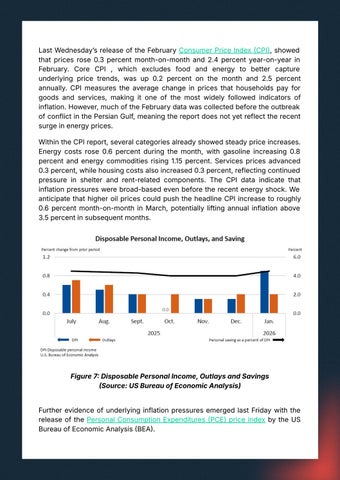
Figure 7 Disposable Personal Income, Outlays and Savings Source: US Bureau of Economic Analysis) Further evidence of underlying inflation pressures emerged last Friday with the release of the Personal Consumption Expenditures PCE) price index by the US Bureau of Economic Analysis BEA.