Vernacular Heritage contribution to Sustainable Architecture • Resilience and Intangible Heritage of Vernacular Architecture
71
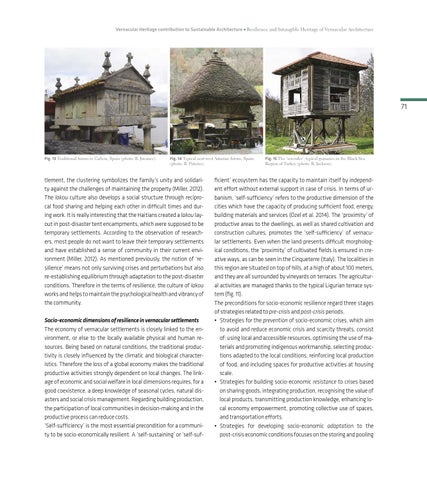
Fig. 13 Traditional hórreo in Galicia, Spain (photo: B. Juvanec).
Fig. 14 Typical nort-west Asturian hórreo, Spain (photo: R. Piñeiro).
tlement, the clustering symbolizes the family’s unity and solidarity against the challenges of maintaining the property (Miller, 2012). The lakou culture also develops a social structure through reciprocal food sharing and helping each other in difficult times and during work. It is really interesting that the Haitians created a lakou layout in post-disaster tent encampments, which were supposed to be temporary settlements. According to the observation of researchers, most people do not want to leave their temporary settlements and have established a sense of community in their current environment (Miller, 2012). As mentioned previously, the notion of ‘resilience’ means not only surviving crises and perturbations but also re-establishing equilibrium through adaptation to the post-disaster conditions. Therefore in the terms of resilience, the culture of lakou works and helps to maintain the psychological health and vibrancy of the community. Socio-economic dimensions of resilience in vernacular settlements The economy of vernacular settlements is closely linked to the environment, or else to the locally available physical and human resources. Being based on natural conditions, the traditional productivity is closely influenced by the climatic and biological characteristics. Therefore the loss of a global economy makes the traditional productive activities strongly dependent on local changes. The linkage of economic and social welfare in local dimensions requires, for a good coexistence, a deep knowledge of seasonal cycles, natural disasters and social crisis management. Regarding building production, the participation of local communities in decision-making and in the productive process can reduce costs. ‘Self-sufficiency’ is the most essential precondition for a community to be socio-economically resilient. A ‘self-sustaining’ or ‘self-suf-
Fig. 15 The ‘serender’, typical granaries in the Black Sea Region of Turkey (photo: R. Jackson).
ficient’ ecosystem has the capacity to maintain itself by independent effort without external support in case of crisis. In terms of urbanism, ‘self-sufficiency’ refers to the productive dimension of the cities which have the capacity of producing sufficient food, energy, building materials and services (Özel et al. 2014). The ‘proximity’ of productive areas to the dwellings, as well as shared cultivation and construction cultures, promotes the ‘self-sufficiency’ of vernacular settlements. Even when the land presents difficult morphological conditions, the ‘proximity’ of cultivated fields is ensured in creative ways, as can be seen in the Cinqueterre (Italy). The localities in this region are situated on top of hills, at a high of about 100 meters, and they are all surrounded by vineyards on terraces. The agricultural activities are managed thanks to the typical Ligurian terrace system (fig. 11). The preconditions for socio-economic resilience regard three stages of strategies related to pre-crisis and post-crisis periods. • Strategies for the prevention of socio-economic crises, which aim to avoid and reduce economic crisis and scarcity threats, consist of: using local and accessible resources, optimising the use of materials and promoting indigenous workmanship, selecting productions adapted to the local conditions, reinforcing local production of food, and including spaces for productive activities at housing scale. • Strategies for building socio-economic resistance to crises based on sharing goods, integrating production, recognising the value of local products, transmitting production knowledge, enhancing local economy empowerment, promoting collective use of spaces, and transportation efforts. • Strategies for developing socio-economic adaptation to the post-crisis economic conditions focuses on the storing and pooling