CWU’S STUDENT-RUN LIFESTYLE MAGAZINE | SPRING 2024 DL ON L&L MIRROR MIRROR pg. 40 pg. 10 FURRY FEVER pg. 71
PULSE


2 PULSE SPRING 2024 Skin Care Sculptra Chemical Peels Botox® Filler Kybella Medical Dermatology BOOK TODAY • 509-406-7208 • WWW.SKINUNFILTEREDMA.COM ELLENSBURG 1206 N Dolarway Rd Ellensburg, WA 98926 COSMETIC DERMATOLOGY OBAGI SkinMedica Latisse Weight Management ZILLAH 616 Railroad Ave • Suite D Zillah, WA 98953 ADVERTISEMENT
EDITORS’ NOTE
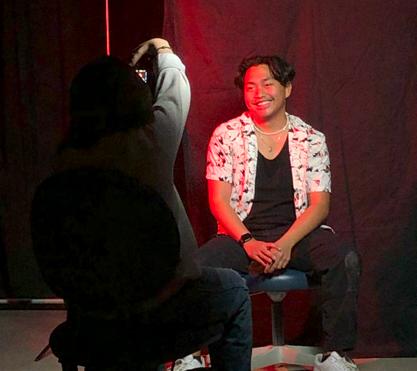
 photo by Yohanes Goodell
When the two of us began PULSE together in spring of 2023, the last thing in either of our minds was the possibility of taking on the position of editor-in-chief together after three short quarters. What began as a casual classroom friendship sparked over a mutual love of the “Twilight” character Charlie Swan has blossomed into a bond of care, respect and love.
There is nobody we would rather have worked with during our time at PULSE than each other and the incredible humans that we have had the gift of collaborating with. This spring, we have both started to find ourselves once again. As the sun shines brighter and flowers bloom around campus, we hope that you too, reader, can find yourself in the pages of this issue.
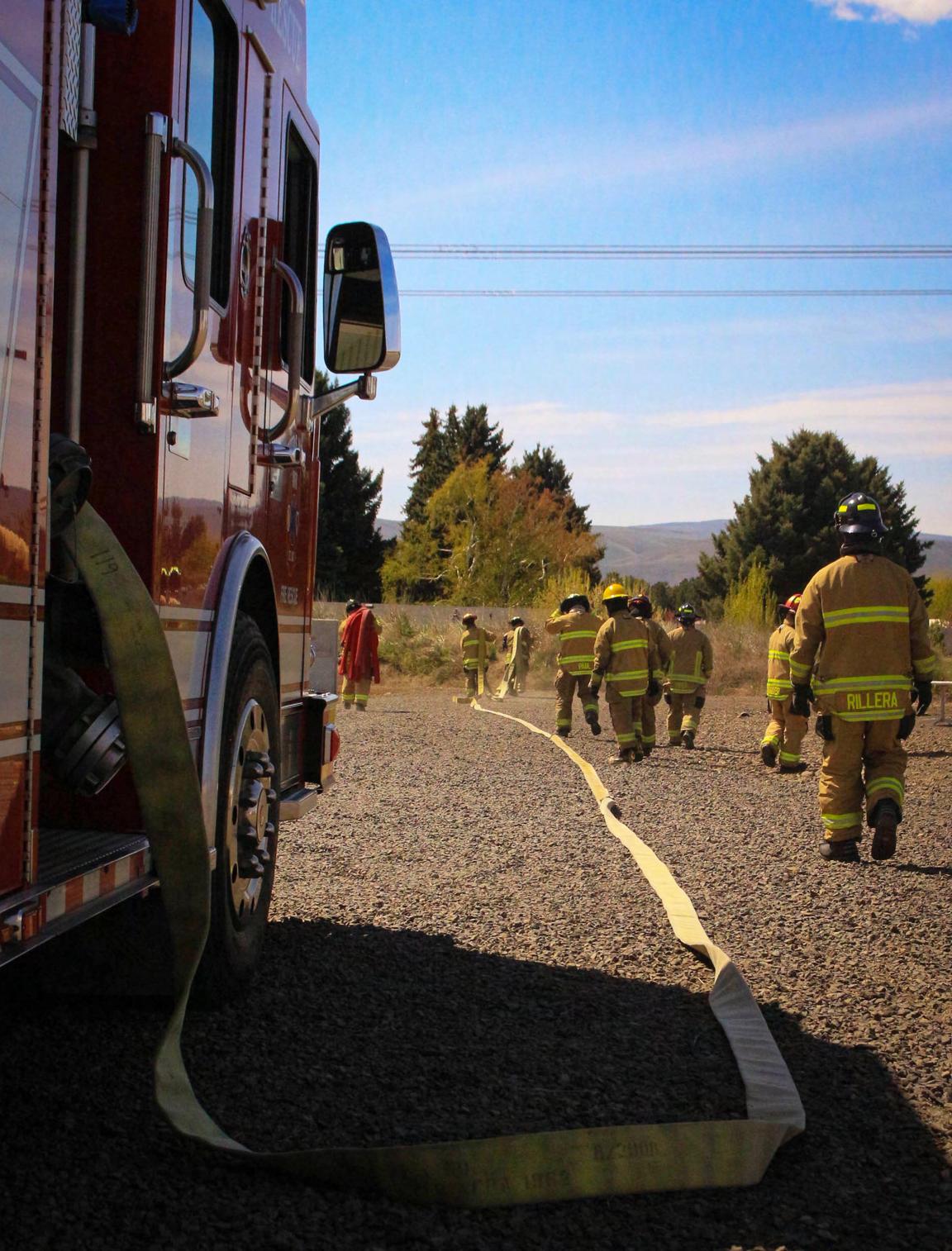
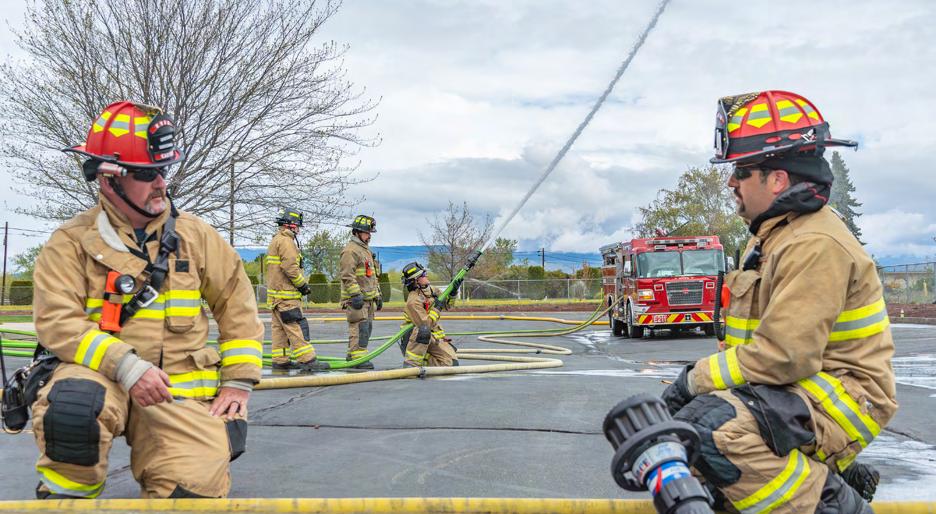
Learn about the everyday lives of local firefighters on page 14, following two of PULSE’s fantastic photographers on their own journey while shadowing these professionals.
Gain some insight on how fashion trends have changed through the ages to bend gender norms in “Walking the Line: Androgyny Through the Ages” on page 64.
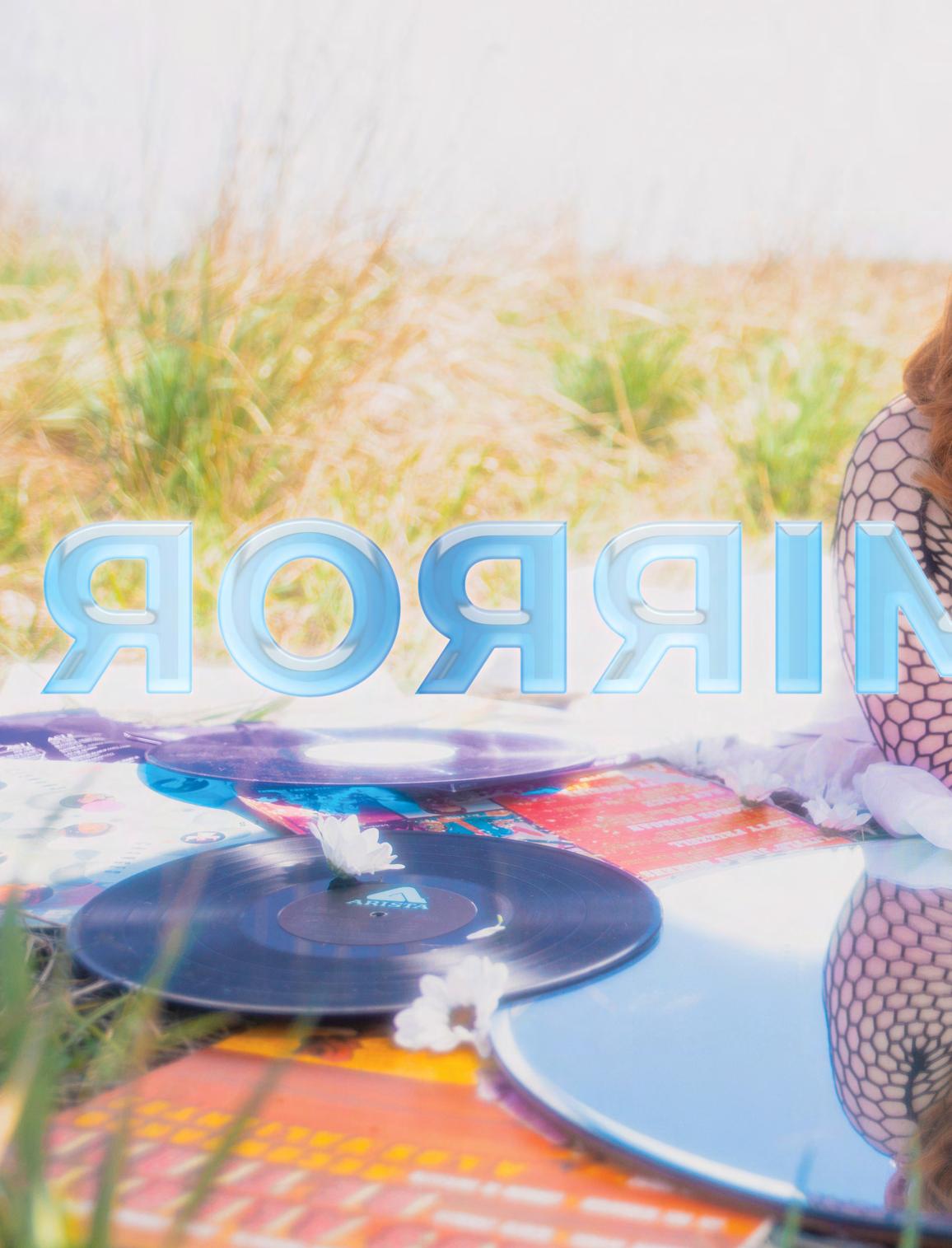
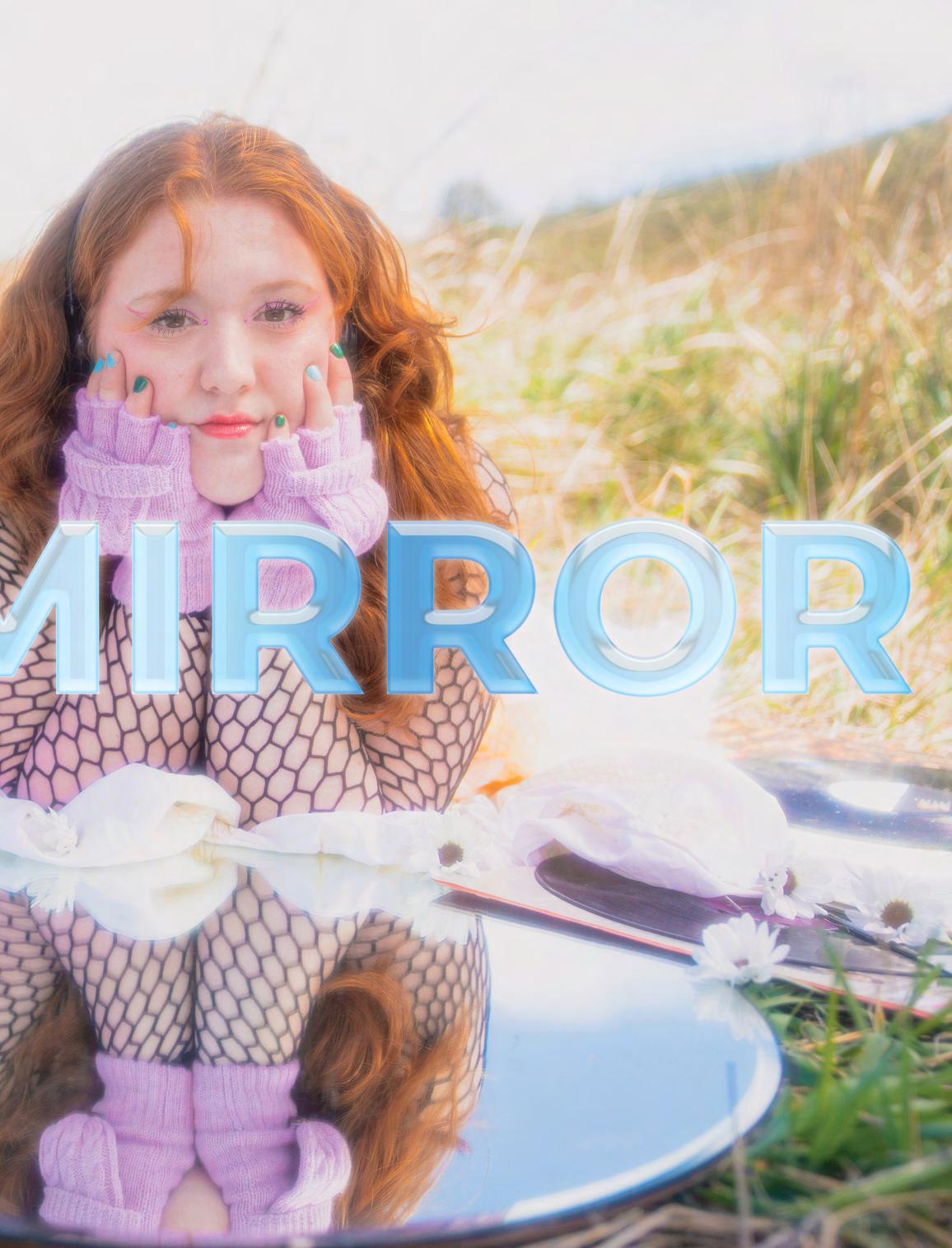
On page 40, fall through reflective portals into the dreamy, ethereal world of “Mirror Mirror,” one of our personal favorite photoshoots in the magazine.
While it pains us endlessly to leave PULSE behind, the memories and friends we made will stay with us forever, and we can not wait to see what the future holds both for the magazine and for each other.
We trust the hands that we are passing the PULSE torch to next quarter. We are overwhelmed with joy to see the way in which the magazine, and its students, will continue to grow and flourish. We will forever be avid readers of PULSE, and are happy to have been a part of its legacy.
Thank you, one last time, for reading.


WHAT’S INSIDE


OUR TOWN The DL on L&L 10 Day in the Life 14 of Firefighters LIFE HACKS Election 22 Perceptions MIND & BODY Body Dysmorphia 26 Piercing Looks 28 The Business 36 of Pleasure SPOTLIGHT: 40 Mirror Mirror 48 Acknowledgment or Afterthought? 54 Immigration Stories 60 Rate My Professor FASHION 64 Androgyny through the Ages AFTER DARK 71 Furry Fever 74 Burg Bud 79 Midnight Munchies 10 74 64
ON THE COVER
Jordin Smith striking a pose for the Mirror Mirror photoshoot
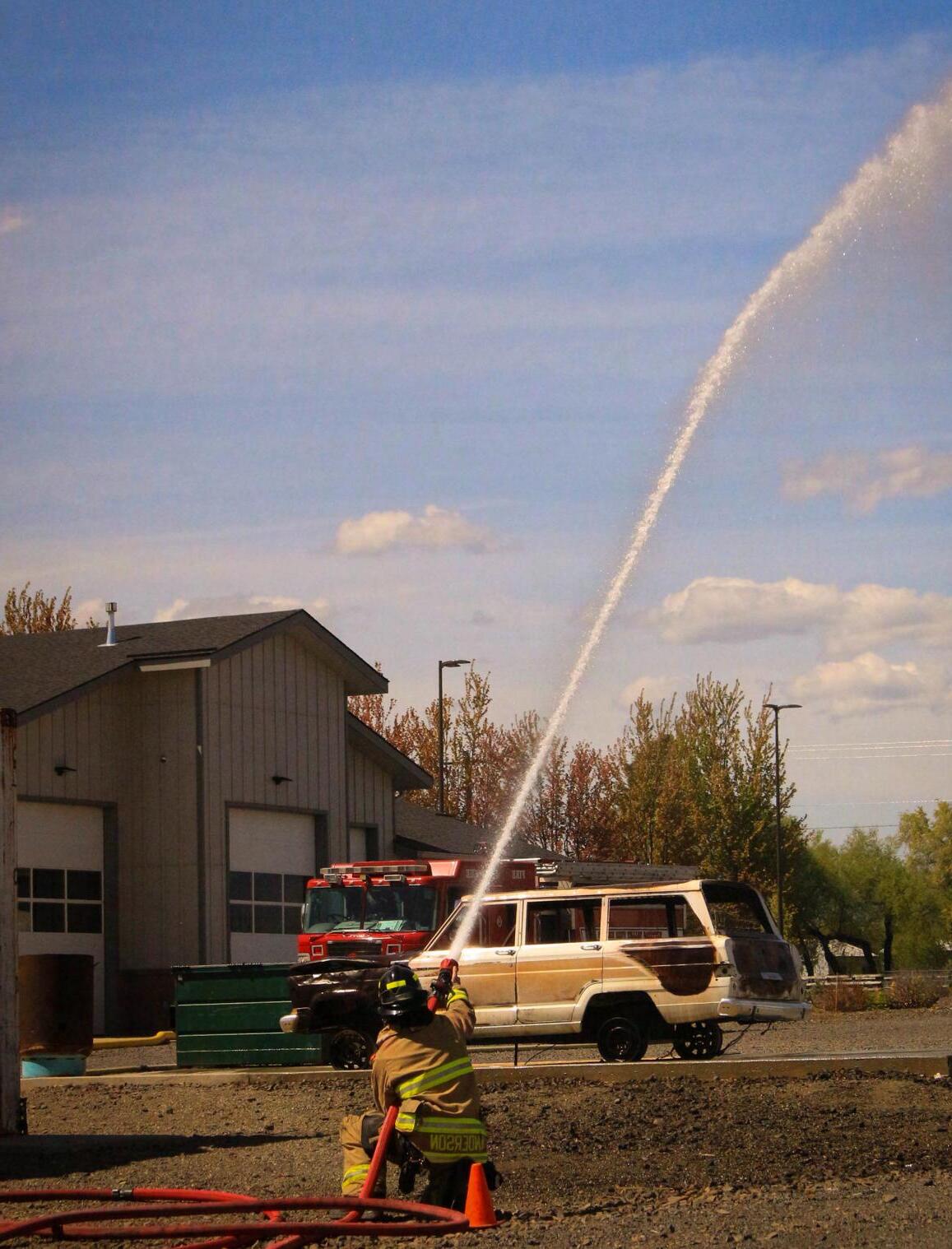
 photo by Gracen Bayer design by Madilyn Larsen
photo by Lindsie Avalos
photo by Gracen Bayer design by Madilyn Larsen
photo by Lindsie Avalos













PULSE STAFF

BEHIND THE



OUR TOWN

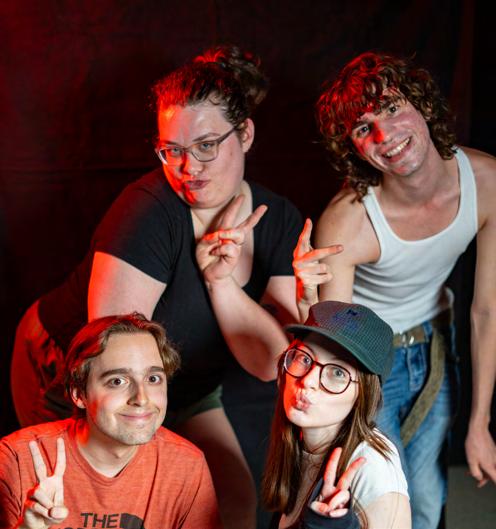
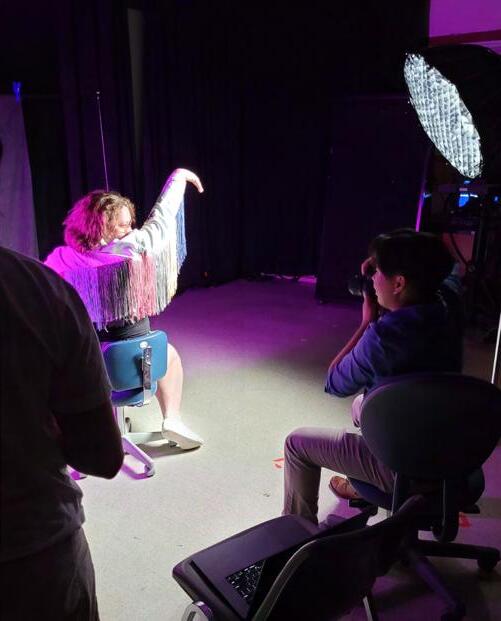

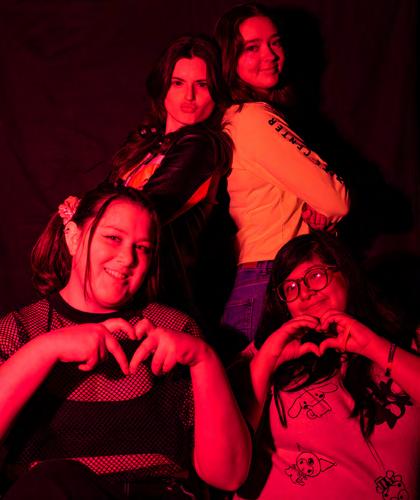
story by Gunner Stuns photos by Yohanes Goodell design by Alejandro Vizcarra
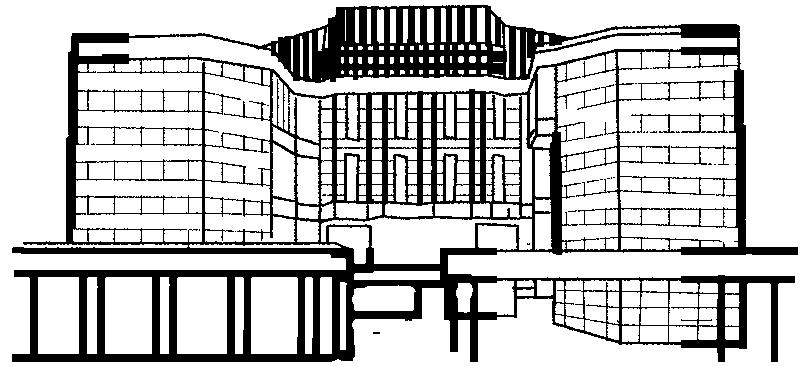
The DL onL&L
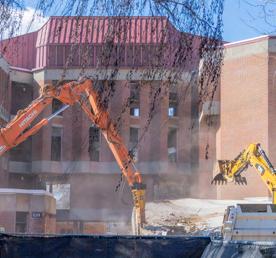
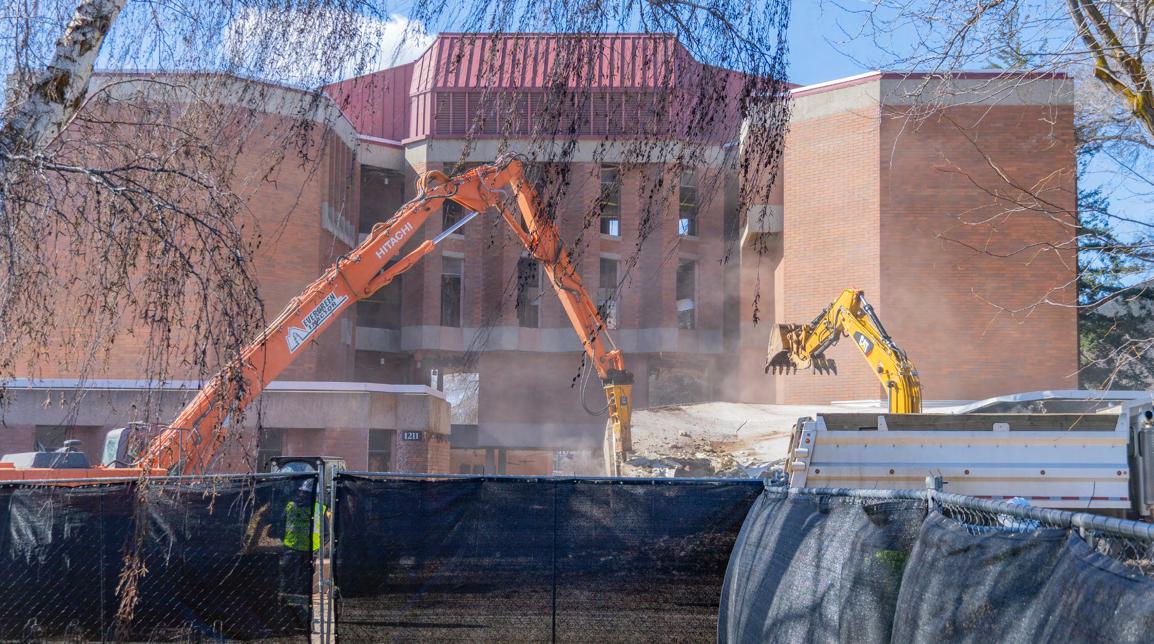
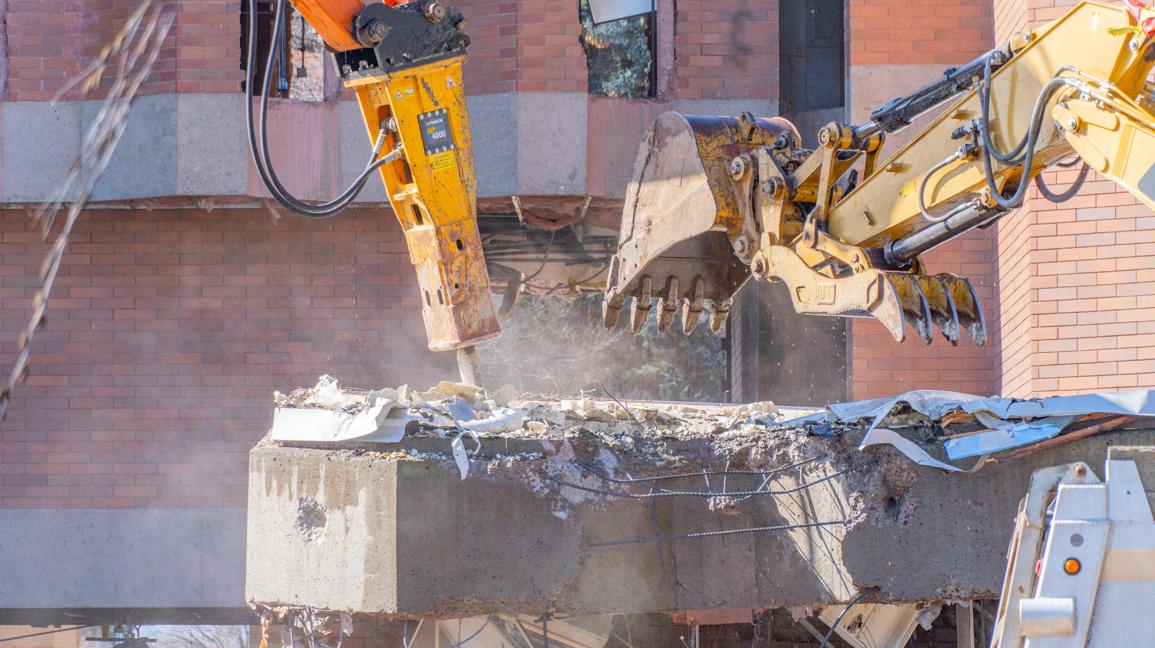
We are gathered here today in memory of a building that once stood tall at the north end of Central Washington University’s campus, the Language & Literature building, or L&L. Having been a staple of CWU’s English, world language and philosophy departments, the L&L building stood for over 50 years before its closure and demolition earlier in 2024. Many faces over the decades had passed through its confusing halls, ascended its seemingly-unending staircases and learned in its classrooms that looked over the rest of campus. In honor of the building’s longevity in CWU history, here is a retrospective look-back at the brick behemoth that was once called L&L.
A Brief Sense of History
Prior to its timely demolition and removal, L&L stood as CWU’s primary hub for the humanities discipline for around 53 years. According to a story written in the Spokane-Spokesman-Review from all the way back in 1967, drawn schematics were approved for the building that same year. The article further states that “The new language and literature building, to house the foreign language, English, and philosophy departments, is being designed by Grant, Copeland & Chervenak Architects, Seattle.” As those who have spent time in L&L can confirm, those plans certainly held true. It’s also written on the Pacific Coast Architecture Database that construction of the building took place from 1968 to 1969 and that it was finally opened in all of its linguistic and literary glory in 1971. From there, the rest is academic history.
10 PULSE SPRING 2024 OUR TOWN
Why Bye-Bye?
Eagle-eyed readers will notice just by walking through north campus that the Language & Literature Building stands no more. But for what reason? Why remove an academic structure that had been part of CWU’s history and housed several departments for decades? According to Joe Chanes, a construction project coordinator at CWU, there are two primary answers.
“The removal of L&L is part of a longterm goal for Central Washington University’s campus to reduce our carbon footprint,” Chanes says. He adds that L&L operates on CWU’s steam plant (which burns natural gasses) that the university is trying to move away from in favor of a more green, renewable source of geothermal energy. Another reason for the permanent dismissal of L&L, according to Chanes, has to do with the building’s lack of energy efficiency. “The design of the building during the 60s was not concerned about being energy efficient,” Chanes says. “The overall costs to maintain HVAC [heating, ventilation and air conditioning] equipment, having the equipment constantly running to maintain a comfortable temperature was no longer viable.”
Chanes also states that there were some challenges when it came to the process of demolishing L&L, mostly due to the fact that it was an old building. “The abatement [removal] of the building from hazardous materials such as asbestos was a time consuming process that required strict testing of each floor after abatement was completed to ensure it was a safe working space,” Chanes says. Another problem that crews faced when time for deconstruction came was the limited space offered by the area L&L once stood in. According to Chanes, the demolition crew had some trouble accessing the space with their heavy equipment and had to work harder to mitigate noise and dust so as not to interfere with the goings-ons of campus.
Chanes and his team are far from the first to note that the building’s time in the sun had long passed. PULSE’s sister publication, The Observer, published articles in both 2018 and 2020 noting that L&L was “showing age.” Reporter Nick Jahnke writes in the Nov. 15, 2018 edition that the building’s problems include everything from “uneven floors and tripping hazards to handicap accessibility issues.” According to the same issue, these developments had gotten bad enough to the point that “some of the L&L staff feel that many of these issues pose safety concerns and may even leave CWU open to lawsuits.”
The article from 2020 leaves less room for interpretation, with its headline reading “L&L building falling apart.” This piece from the March 4 edition that year goes on to describe several issues students and staff alike faced in L&L, including broken desks and unreliable elevators. It seems by all accounts that the common consensus was that L&L had run its course, even years ago.
So Long and Thanks for All the Memories
With the L&L building’s time on CWU campus now behind us, it seems only appropriate to share some last words on the storied structure in honor of its legacy. PULSE sat down with three former L&L residents to get their last thoughts and testaments regarding the place where they once taught.
There are few who spent as much time in L&L as Adjunct Lecturer Kevin Leaverton. Having been a student at CWU in the early 1990s, Leaverton possesses the perspective of one who had gone from attending classes in L&L to teaching them. “I was in that building from 1994 to 2022 pretty consistently,” Leaverton says. Serving as part of the English department, Leaverton’s office was stationed in L&L for 22 years (where he had a fourth floor view). He also taught several classes there, from literature to 20th century humanities.
“I liked the building as far as the architecture,” Leaverton recalls. “I liked it was right next to the library. Pretty close to big parking lots, you didn’t walk very far.” Like many others though, Leaverton is in agreement that it was time for the building to be put out to pasture. “Sometimes there were plumbing issues, there were often issues with electrical stuff and especially the elevator,” Leaverton says. “And if the elevator went out, the building wasn’t ADA compliant. So it was a problem.”
Leaverton notes that CWU maintenance staff did the best they could when it came to L&L, often trying to introduce new technologies to keep
facilities up to standard, but there was little they could do in the end. Leaverton also notes a particular incident regarding pest control. “We had a fly infestation that we just could not get rid of,” Leaverton says. “You just had to kind of live with it, they were in the windows.”
Another former resident of L&L is Spanish Professor Nathalie Kasselis, whose history with the building began when she started teaching there in 1996. “[L&L] is where I interviewed for my job at Central,” Kasselis says. “This is where I got tenure. This is where I got promoted. This is the time in my life where I had my two sons. So L&L is very, very dear to me.”
Kasselis taught Spanish in L&L and even briefly taught French prior to the hiring of a dedicated professor. One thing that she notes about the building was that it truly felt like a hub for the humanities departments, which created a community beyond world language and extended to other branches. “On the other floors, you know, philosophy was hosted as well as English,” Kasselis says. “So we had a community. We often met in the hallways, exchanged ideas, news and stories and so I think that was the best part of being in L&L.”
Kasselis adds that she also felt the sense of community fostered in L&L created an inviting space for students, where it was easy to find a professor’s office and get into contact with them outside of classes. In terms of negative aspects to teaching in the building, Kasselis notes many of the same issues as Leaverton, including difficulties with regulating temperature and plumbing.
On a more personal note, there was another anecdote connected to L&L that Kasselis shared. “I had a very close friend who used to teach Russian here in our department and in front of L&L, there was a bench,” Kasselis says. She goes on to talk about how she and her friend would meet at this bench on breaks, where they would have discussions, relax and talk over issues. “This bench was so symbolic of our friendship, that I was very sad actually to see it go,” Kasselis says. “I tried to see if I could talk to somebody and maybe rescue the bench, but I didn’t do that in time.”
12 PULSE SPRING 2024 OUR TOWN
Religious Studies Professor Jeffery Dippman also spent 15 to 20 years teaching in L&L, where most of his classes were geared towards Asian philosophy. When asked what some of his favorite memories of the building were, Dippman was quick to point to his office. “I love my office,” Dippman says. “Brick lined, nice corner, I had a view out. It was a comfortable office. It was quiet. Just a nice atmosphere.”
Dippman specifies that one of the best parts about the location of his office was its place on the third floor, where there was a large commons area that also housed the offices of his colleagues. In Dippman’s opinion, this setup was a big help to the learning environment. “We had a lot more one-on-one contact with students,” Dippman says. “Students were already in the building, so they dropped in to talk to us. I think in terms of student forward facing, L&L was by far much more conducive to what we do here in the department.”
Like Kasselis, Dippman also notes that there was a sense of community found in L&L, as compared to his current residence where he feels a bit more isolated. “I’ve got a couple of good colleagues in Asian studies,” Dippman recalls. “It resulted in four of us writing a grant for Korean studies and getting a three year grant. So we were able to kick off a Korean studies minor.” In terms of the challenges of teaching in L&L, Dippman’s observations were largely the same as those of Kasselis and Leaverton, including poor air circulation and unreliable elevators.
What’s Next?
The plot of land where the L&L building once stood won’t be all dirt piles, fences and construction equipment forever. With demolition now in the stages of completion,
planning is well underway in regards to L&L’s successor, the North Academic Complex. According to Chanes, this building will be in line with the renewable, geothermal energy style of power that CWU is transitioning towards.
“This complex is actually in two parts,” Chanes says. “You have the academic building that will stand in place of where the flag pavilion once stood and then you will have the GeoEco plant across the street in the parking lot of Dean Nicholson, which houses the mechanical equipment that will be fed by the geothermal well.”
SPRING 2024 PULSE 13
OUR TOWN
story by Yohanes Goodell photos by Yohanes Goodell and Lindsie Avalos design by
Alejandro Vizcarra
DAY IN THE LIFE OF FIREFIGHTERS
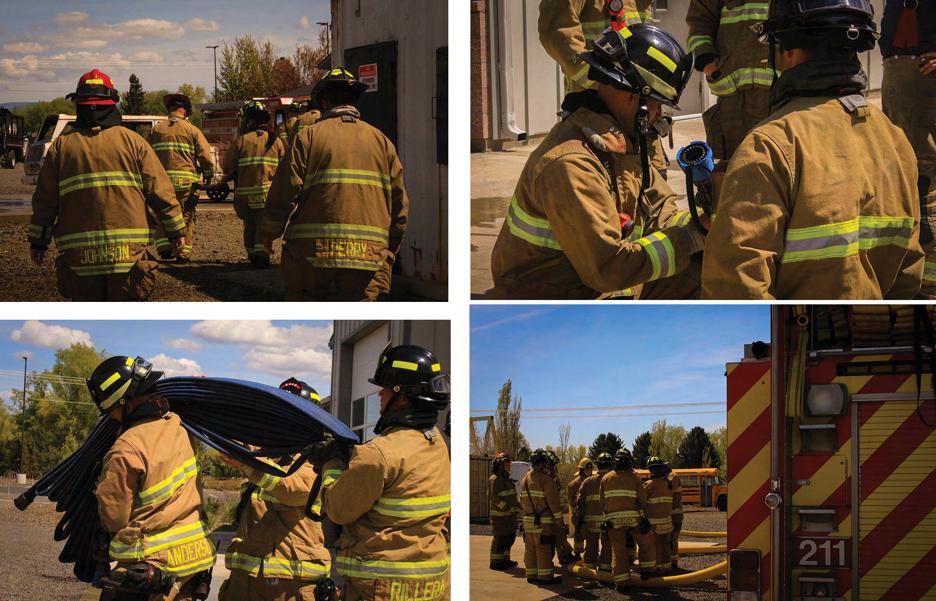
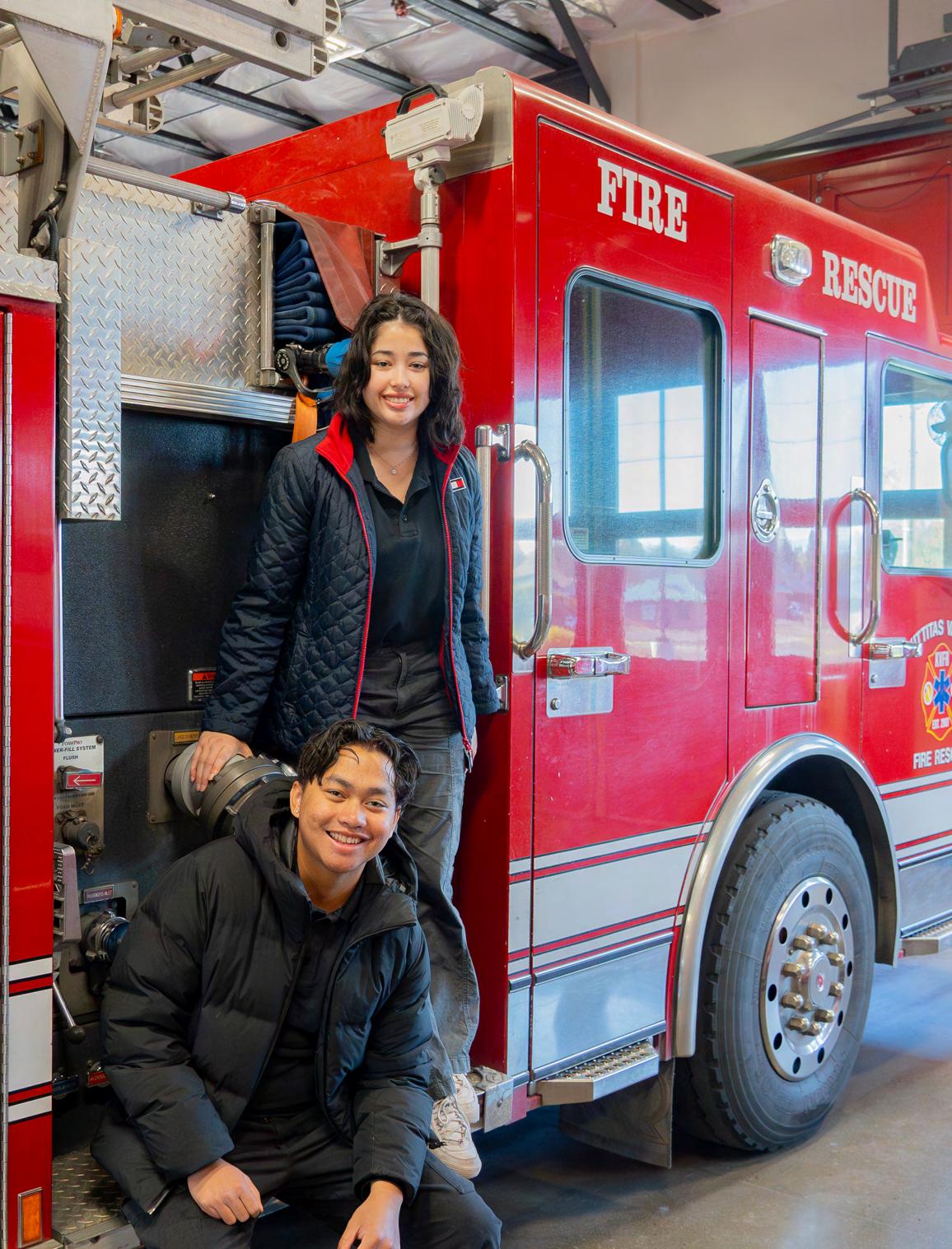
On a windy Wednesday morning the sun peeked from the clouds, and the smell of coffee wafted through the hallways of the Kittitas Valley Fire and Rescue, also known as KVFR. In fire station 2-9 on Mountain View Avenue, firefighters populate the building. Some teams hustle to head out for an emergency call, while others enjoy a cup of coffee before their long and busy day ahead.
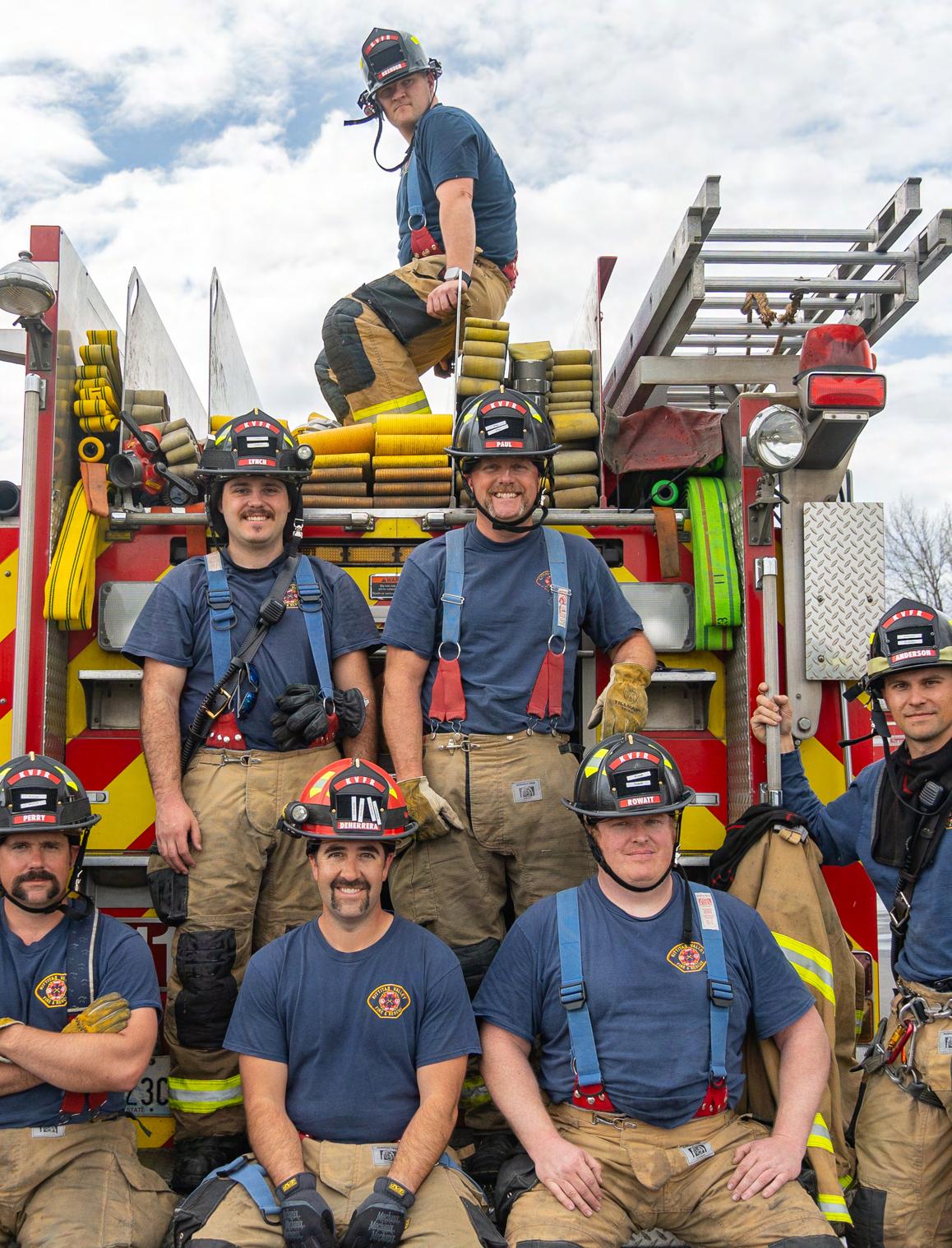
At station 2-9, a typical week is divided into three or four shifts made up of different teams. Each shift lasts for 24 hours and as a firefighter, one must always be prepared for any emergency. The firefighters at KVFR embody both
a unique skill set and a strenuous work ethic, as they are professionally trained in both responding to fires and medical-related incidents. Lindsie Avalos, a fellow PULSE photographer, and I had the unique opportunity of following the life of the firefighters in Ellensburg, Washington. We spent a full 24 hour shift with the crew, entering the station to start our shift at 8 a.m. and heading home at 8 a.m. the next day.
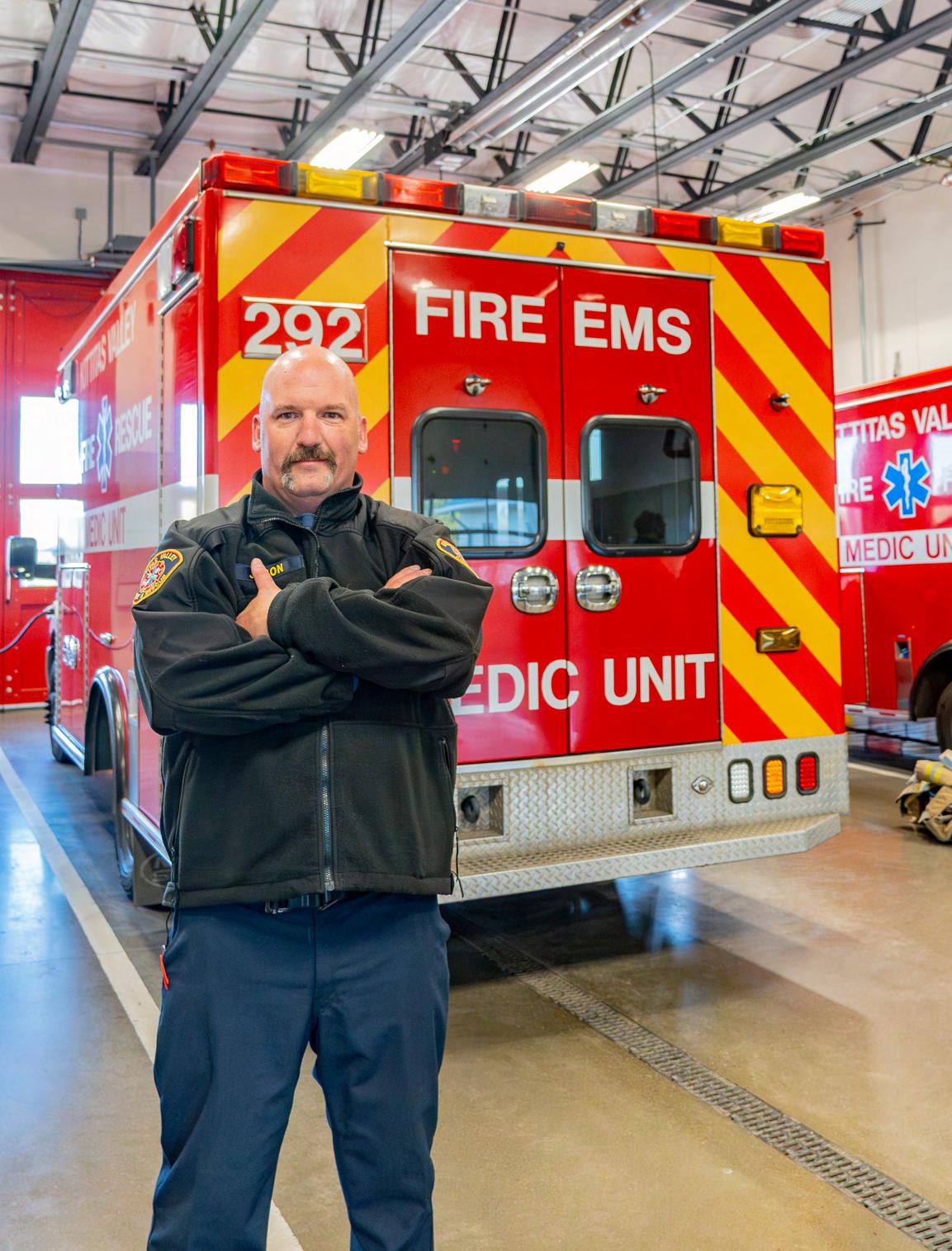
During the shift, I had the opportunity to sit down with our shift’s leader, Administrative Captain Paramedic Jason Carter. I asked Captain Carter for any advice he has for working in the fire department, a career he has
sustained for more than 20 years. “[S]imilar to the things that make anyone successful at what they’re passionate about,” he replied. “Hard work, dedication, attention to detail, always being a student, taking care of yourself and taking care of the people around you. When you love your job, you don’t consider it as work.” Captain Carter’s words, while showcasing the true embodiment of a leader, also encapsulate the livelihood of a firefighter. While their shifts are stressful and filled with numerous tasks, they know that through camaraderie and communication, firefighters can face a new call and ultimately, a new day, withW support from each other.
SPRING 2024 PULSE 15
8 a.m.
Upon arriving and conducting our ride-along with firefighter crew ‘B,’ Lindsie and I were greeted by our shift’s leader, Captain Carter. He escorted us to our rooms for our overnight stay. As a firefighter, everyone has their own room that they must live in for the duration of their shift. Typically, around 9 p.m. when calls subside, crew members can rest in their rooms until a call is announced.
Every room is equipped with both a flashing red light and an intercom speaker. When a call is sent out to station 2-9, the light flashes bright red and is followed by an alarm and a short description of the emergency call. While each shift begins at around 8 a.m., firefighters typically arrive 30 minutes beforehand to unpack their things and check-in; by 8 a.m., the previous shift checks out and the new shift prepares to meet the incoming calls.
8:30 a.m.
After Lindsie and I had settled in our rooms, Captain Carter escorted us around station 2-9’s vast facilities. From a multitude of different pieces of equipment in their onsite workout room to a modern and furnished kitchen, station 2-9 ensures a level of comfort that makes the building a second home.
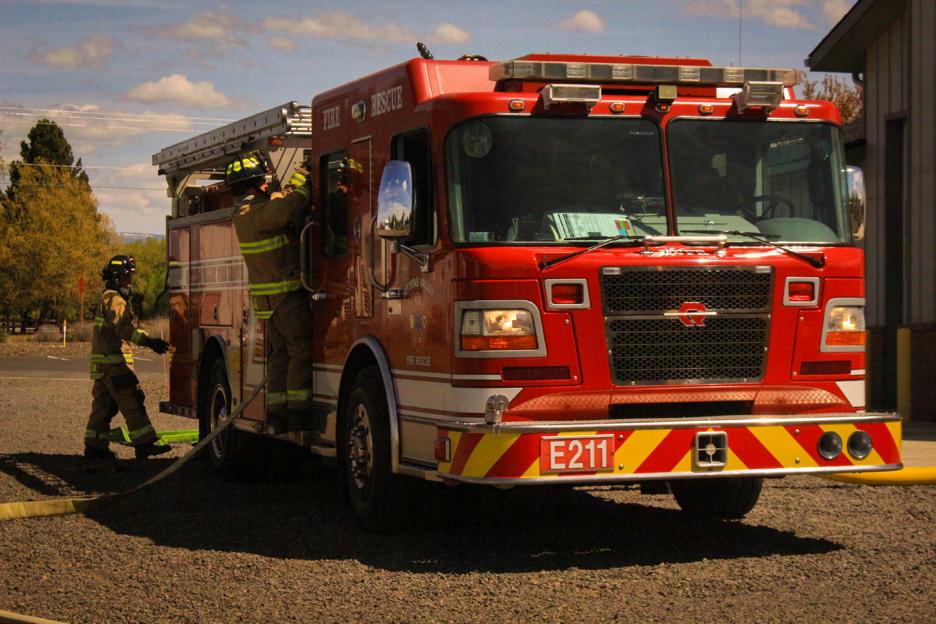
In addition to the amenities, the most active area was at the station’s bays, which are located at the heart of the building. Approximately four bays are on both sides of the large space, each constructed to accommodate the variety of different service vehicles: fire trucks, Emergency Medical Service (EMS) vehicles and a large decommissioned military truck that was transformed to hold hundreds of gallons of water in case of a fire in a remote area.
16 PULSE SPRING 2024 OUR TOWN
 Captain Jason Carter
OUR TOWN
9:30 a.m.
During our shift, fire station 2-9’s main activity involved taking part in ladder training and subsequent drills at a nearby building, fire station 2-1. Located off Vantage Highway, fire station 2-9 and fire station 2-1 work closely to not only respond to different emergencies, but also work together on trainings.
After Lindsie and I rode shotgun in two different EMS vehicles, we arrived at station 2-1 with the team from station 2-9. We were given a tour of their facilities and met the warm and welcoming 2-1 crew. As 2-9’s members were off in a classroom-style environment being lectured on rope rescue
training, Lindsie and I watched 2-1’s crew facilitate and execute a fire drill. Alarms rang signaling a typical fire-related call and once the team geared up, they quickly loaded into their fire truck and drove behind the 2-1’s fire station to a makeshift home that was filled with smoke.
While an actual fire was not started and rather a smoke machine was used, these drills are typical for firefighters during their daily routines outside of the public eye. One of the most fundamental acts of being a firefighter is consistently practicing the many components a team must perfect to ensure a safe response and rescue.
Noon
Lindsie and I returned with Captain Carter in 2-9’s fire truck around their typical lunchtime. On our way back, I sat in the passenger seat, enthralled by the multitude of switches and buttons that populate the vehicle’s console. Upon returning to station 2-9, we were given a brief lunch period.
While firefighters remain active the entire 24-hour shift, each team is made up of five or six firefighters who normally switch between different calls. When a call is announced, only two or three firefighters head out from their station, giving the others a chance to eat or do chores around the facilities.
SPRING 2024 PULSE 19
Yohanes Goodell
Lindsie Avalos
Upon finishing our meals, Lindsie and I set out to join the teams of 2-9 on different calls. The only sounds that are heard after a medical-related call are that of footsteps hustling to the EMS vehicles. The silence of the firefighters is an embodiment of their diligence to their positions; as they file into their vehicle, the driver gets into their seat, gripping the steering wheel as they prepare to speed towards the destination. Another firefighter sits in the passenger’s side, equipped with an iPad to inform the crew of the emergency they’re speeding towards. Lastly, a third gets in the back of the truck, prepping an equipment bag to be ready to bring with them once they reach their destination.
We were in ride-alongs driving anywhere from outside east Ellensburg, responding to an emergency of an elderly individual, to a search-and-rescue operation in the wilderness of the Yakima Valley, where a hiker had broken his leg.
The multitude of different calls highlights the abruptness and the ever-changing landscape of the life of a firefighter. The crew must always prepare for drastic situations in any type of environment and be willing to put all their energy in each call.
Captain Carter explains that a firefighter’s first year on the job is referred to as the “probation period,” which involves a multitude of tests and tasks that one must complete at their station after graduating from their school. One of the most fundamentally important tests as a firefighter is memorizing the layout of the city around one’s station. “At our fire station, our footprint is the valley’s floor,” Captain Carter says. “At the end of their probationary year, they are given blank maps and are told to label the roads. There are around 100-200 roads that they both do and don’t know that they have to fill in.”
The day for firefighters normally ends around 9 p.m., and while there are a plethora of possible emergency calls that might come in during the night, Captain Carter believes that the team should always eat dinner together, like a family having supper. However, even after bellies become full and the small talks turn to good-hearted laughs, each crew member designates himself a position. From filling the dishwashers and cleaning the table to wrapping up leftovers to store in the fridge, even when they’re not responding to calls, they are still doing team-related activities. While dispatch still announces calls late in the night, it was at this moment at the dinner table that I realized the true spirit and camaraderie of the crew.
After plates have been washed, their job still continues on into the night. Captain Carter upholds that communication is an integral part in their line of duty and demands one’s full attention each day. However, it’s also vital to spend time with family as well. Captain Carter explains that “there is a mindset that when you leave home, you leave home there. After working here, it’s important to leave work here.”
Despite Captain Carter stating the importance of a separation between home and work, the beauty of station 2-9 is that they have cultivated a household of their own. Even when the firefighters are at work and consistently being in stressful situations, they still can call each other a second family.

SPRING 2024 PULSE 21
9 p.m. 1 p.m.
Check out photographer Lindsie Avalos’ 24-hour vlog with KVFR here.

ELECTION PERCEPTIONS
22 PULSE SPRING 2024
story by Winnie Killingsworth and Michele Trombly | design and illustration by Madilyn Larsen
A marriage of enemies has many young American voters divorcing the two-party political system. Some see the Democratic and Republican parties as two sides of the same coin, and they don’t accept that currency. Voters from the Millennial generation (born between 1981 and 1996) and Generation Z, or Gen Z (born between 1997 and 2012) are looking for more. Many seem to find appeal in other active political groups in the United States that are not given the same platform as the two main political parties.
“We’ve got promises made, and promises not kept,” says Landis Hanson, a 2023 graduate who now goes by Rivkeh. “As young folks, we have had a lifetime of decreasing standards of living, a lifetime of increasing rents, a lifetime of wage stagnation… Neither party seems to be really talking about that.”
Who’s Voting?
Elections happen at every level of government in the United States. Oftentimes, the more people advocate for the candidate they prefer, the more coverage that candidate receives in the news and on social media. Elections are not always popular with younger generations, but Millennials and Gen Z are becoming more engaged politically as time progresses.
“I do see that the younger generations are more involved,” Michelle Carrillo, director of the Associated Students of CWU (ASCWU) Office of Governmental Affairs, says. “I do expect that number to grow.”
By looking at the results of a spring 2024 Harvard Youth Poll, a clearer picture can start to form about where the increased numbers could be coming from. Out of 2,010 participants, ranging from 18 to 29 years old, 53% say that they wil “definitely be voting” in the general election for president in November of this year.
They aren’t just talking about voting in general, but about voting for candidates that express care for issues they have with the current voting structure. The two party system that the U.S. has adopted doesn’t offer representation for everyone. That is just one of the issues that is a priority to young voters.
With another presidential election incoming, more Millennial and Gen Z voters are registering than ever before. Using data from the United States Census there is an idea of where the numbers have increased.
Through interviews for this article and a survey PULSE created and shared on social media, CWU students disclosed that they feel they have a lot to worry about. Grades, finances, student debt, healthcare and increasing living expenses are just a few of their concerns. The interviewees and survey partici-
pants also highlighted specific issues they consider when picking political candidates to support, including climate change, human rights, reproductive rights, immigration, the housing crisis and Israel’s ongoing genocide of Palestine.
“The younger generations are ready to speak up, and you can see that just around the world where everybody’s protesting, especially universities,” Carrillo says. “Voting is a privilege that I have, and my family doesn’t. The fact that I’m not using that privilege for something good, or for a change that I know could really benefit my family in the long run, I feel like that’s something that you really have to make students realize because I was a student that was raised [to] stay away from politics, [and that] your vote doesn’t matter.”
“We’ve got promises made, and promises not kept,”
-Rivkeh Hanson, CWU alum
Navigating the Landscape
Charli Sorenson is the president of the League of Women Voters (LWV) in Kittitas County. The LWV is a national nonpartisan organization that offers information on election candidates so that people can make informed voting choices.
Sorenson emphasizes the importance of social media when it comes to voting and the younger generations. “The whole reason we’re in social media is to get at the younger voters because right now my age cohort in any given election, 80% of the eligible folks are voting, whereas you’re lucky if you get 30%,” Sorenson says. “But you have the numbers. You can outvote us, you can completely turn around and change the narrative, you can make climate change mitigation the big push but you have to get out there and vote.”
An important part of the conversation about voting is the presence of barriers to using one’s voting power. This lack of access comes in many different forms. Where, when and how elections are held are all important things to consider. Mail-in
SPRING 2024 PULSE 23
who are mostly immigrants; they don’t have the opportunity to vote,” Noel Trujillo-Garcia, the civic engagement coordinator at ASCWU, says.
You can also be denied the ability to vote if you have a disability and are determined by the government to not be competent. How that is determined varies by state.
Timing is another factor that affects an individual’s ability to vote. The day of the presidential election always falls on a Tuesday, at the beginning of the traditional work week. In states where in-person voting is the standard, this makes it difficult for people to make it to the designated polling stations when they are open. Stations might be open only when individuals are working, or may be farther away than they can travel on their lunch break. Having reliable transportation to the polling station is another accessibility issue.
A simple way to help increase the accessibility of voting is offering better education so voters can feel more capable and confident about participating in the election process.
How do you feel about voting in the 2024 Presidential Election?
Out of 17 respondents to a PULSE Poll
and in-person voting are two systems that can impact an individual’s ability to exercise their right. Washington state is one of only eight states to allow all elections to be conducted entirely by mail, according to the National Conference of State Legislatures. This is also the method that the District of Columbia, where the national legislature sits, uses to conduct their elections.
Another hurdle is the requirements that one must meet in order to be able to vote at all. Just because you live in the U.S. does not mean you get to vote, even if you are a permanent resident. You have to be a U.S. citizen (unless you are in a U.S. territory), and you can not have been convicted of a felony. There are no exceptions to this rule. “I come from a family
Here at CWU, ASCWU hosts a Student Engagement Hub (SEH) as part of their civic engagement work that has volunteers from LWV who help with voting on election days and registering people to vote. “[It] doesn’t matter where you’re registered to vote,” Sorenson says. “You can go in there, print off the ballot…, fill it out [and] get it out in the ballot box.”
This helps students have their voices be heard in their hometowns while they are at college working toward their education. Sorenson also says that before the pandemic, “the ASCWU was really great at getting students voting…They’d get five, six seven hundred kids voting on Election Day.” ASCWU and LWV are currently working towards bringing the number of voting students back up to pre-pandemic rates.
Close to Home
Focus often falls on presidential elections, but local elections are where people can see more tangible effects of their votes in their community and beyond. Voting at the state level is particularly important for college students and those that fall within that age bracket.
The state legislature is who “control[s] the funding for the university,” Todd Schaefer, chair of CWU’s political science department, says. Voting for representatives and campaigning for bills has the potential to increase funding for students on college campuses. Schaefer also talks about the “bigger splash” one can make when they get involved in local or state level campaigns. In his classes, he offers extra credit for students who register to vote.
24 PULSE SPRING 2024 LIFE HACKS
AWFUL 41.2% BAD 17.6% NEUTRAL 17.6% FAIR 11.8% GOOD 11.8%
State and local elections see lower averages of voter turnout, despite individual votes having higher potential for visible impact. “Who Votes for Mayor?” is a Portland State University project that is interested in learning about the demographics of who votes in local elections. One of the project’s findings is that “fewer than 15 percent of eligible citizens are turning out to vote for community leaders like mayors and city councilors.”
Even when comparing the numbers from “Who Votes for Mayor?” with the voting statistics mentioned at the beginning of this article, voting turnouts barely exceed more than half.
History shows how the younger generations challenge parts of society and government with goals for improvement. Millennials and Gen Z are the next generations fighting to see change in political representation for themselves and others. Divorcing the two-party political system is an important step in that direction for them.

Total Population Stats for Elections
2012 election Total Population born between 1981 and 1994 2016 election Total Population born between 1981 and 1998 2020 election Total Population born between 1981 and 2002 REGISTERED VOTED 52.8% 41% 55.2% 44% 59.7% 52% SPRING 2024 PULSE 25
photo by Michele Trombly
From the U.S. Census Bureau
THE WARPED PERSPECTIVE OF BODY DYSMORPHIA
story by Anastasia Rothlisberger and Maria Mann photos by Gracen Bayer design by Ileana Rea Martinez
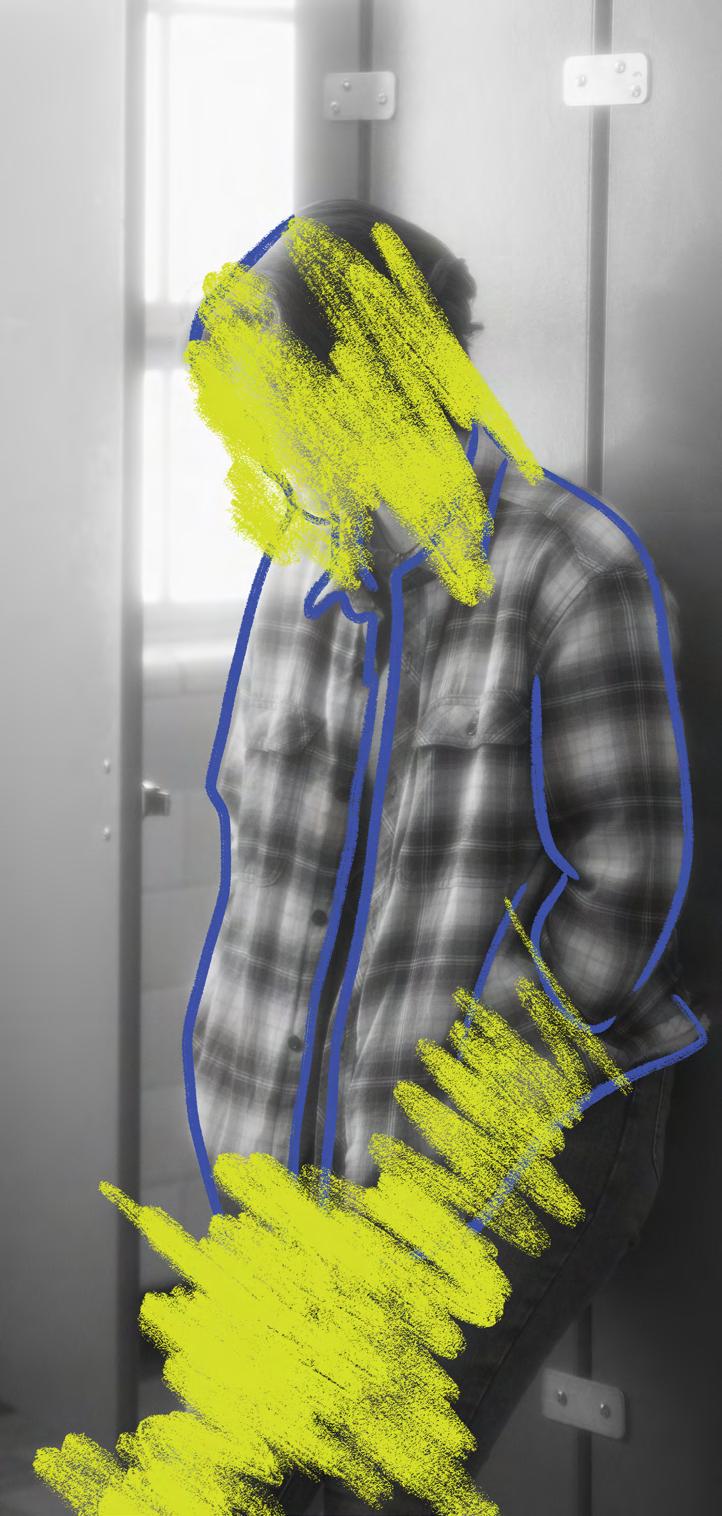
Sitting in class, your mind drifts away from the topic at hand. Your peers lean forward to take in the lecture, but you lean back in your chair, your eyes on the floor. Nothing can take your mind off of the feeling of your thighs pressed into the seat. While your surrounding classmates are absorbed in the PowerPoint presentation, you can’t help but think that they are all secretly staring at your legs. Not even the professor at the front of the room, who is droning on and on like the teacher from Charlie Brown, can snap you back into reality.
MIND & BODY 26 PULSE SPRING 2024
This is what a moment in the life of someone with body dysmorphia can look like. The world continues to move around them while their mind becomes trapped in an endless spiral.
What is It?
Body Dysmorphic Disorder [BDD] is a rather taboo topic. It can be sensitive to address, especially for those who have experienced it. Such a matter is important to consider because some people who have it are not even aware of what it is, let alone how it manifests or how it can affect their lives. It is especially common among young people. According to the National Institutes of Health, university students in particular experience BDD at a higher level than the rest of the population.
Emily Shaw, a nutritionist/dietitian counselor at CWU has worked with students in the Medical Center for about eight years. In that time, Shaw has pursued specialized education within the realm of eating disorders, and thus, body image and body dysmorphia.
“Body Dysmorphic Disorder is “a true mental health disorder,” Shaw says. “It’s a mental health condition where someone focuses…on a specific body part.”
BDD is a hyperfixation of perceived flaws that may not even be noticeable to others. Shariden Holland is a sophomore at CWU majoring in clinical physiology who suffers from BDD. According to Holland, her perception of herself through the lens of BDD affects the way she lives her day-to-day life. “It makes me so uncomfortable because I can feel it whenever I am sitting down or when I have to crouch down to pick something up,” Holland says.
Jacob Bass, a junior and woodwind performance major, also suffers from BDD.
“When it’s pretty bad… just the act of sitting in a room with another person makes me vehemently aware of how my thighs [and] stomach look,” Bass says. “It can be… all-consuming. I’d be sitting in a class and I couldn’t even pay attention to what was going on because it would be just so consuming.”
A warped, unhealthy obsession with one’s physical traits is the main symptom of BDD, usually causing those with dysmorphic thoughts to lose their sense
of self. According to the John Hopkins Medicine website, BDD can cause such a downward spiral that it may even result in the person experiencing suicidal ideation.
Are Eating Disorders and BDD the Same?
A common misconception about BDD and eating disorders is that they are directly linked. Although disordered eating is a common result of BDD, one can have BDD without developing an eating disorder.
“Whenever I’m explaining [it] to someone, I’m always like, ‘Okay, we have our thoughts, we have our feelings, we have our emotions and then we have our food intake,’” Shaw says. “And when they become really intertwined and start affecting each other, that’s what we get when we get eating disorders.”
Shaw goes on to explain that while BDD and eating disorders are interconnected, they are not mutually exclusive. “The connection that we have…is more disordered body image,” Shaw says. “So when we talk about disordered body image, that is someone’s desire or dissatisfaction with their body shape in their body size, that is typically connected to an eating disorder because that’s how people change what their body looks like.”
Holland’s own experience with the intricacies of these disorders is unique.
“I think that body dysmorphia came first, I feel like the eating disorder… was more so a byproduct of it,” Holland says. “I was always comparing myself to everyone else and kind of pointing out all of my flaws, especially in regards to maybe having more fat in one place on my body than other girls did. And then after having all of those observations, when I got into high school, that’s when all of the disordered eating behavior really started.”
Root Causes
When working with students who have these conditions, Shaw’s main concern isn’t diagnosis. “For me, I care more about the origin,” Shaw says. “So, where is this coming from?”
BDD has many causes that are difficult to pinpoint. “Body dysmorphic disorder develops from psychological, social, and biological factors,” according to the National Institute of Health. The symptoms of body dysmorphia typically begin during teenage years, and can be affected by a variety of factors including social and familial influence.
It started “around the age of 14 [or] 15…” Bass says. “I was more of a chunky kid and I know for my father, at least when I was young, he was very athletic… I remember as a kid, he would constantly be trying to get me to work out because he thought I was gaining too much weight and so that kind of put that seed in my head…”
Bass feels that one of the reasons his body dysmorphia persists to this day is due to stigma associated with his identity. The stereotype perpetuated as attractive in the media is often that of a “twink,” a traditionally thin, somewhat feminine man.
Holland’s body dysmorphia also started around the time she was a freshman in high school. It started from “my upbringing with my family,” Holland says. “Like my parents having struggles with their own weight, and I always got told that I was identical to my mom [and]. . .my mom didn’t like the way she looked.”
BDD in Athletes
Body dysmorphia is also quite prevalent in the sports world. It can be triggered from the act of comparing oneself to one’s teammates and competition.
In the case of Kelsea Nunes, a CWU nutrition grad student it started when she was a gymnast. “I was kind of towards the end of my gymnastics career towards puberty… All of the other gymnasts were kind of petite little girls,” Nunes says. “And then I was just super tall. I just felt bigger than everybody else, even though I was told that I wasn’t.” To this day, contrasting internal and external perceptions of her own body still affects Nunes.
According to Kelly Pritchett, a professor of nutrition and exercise science at CWU, it’s common for athletes to be dissatisfied with their bodies and think that losing weight will improve their
SPRING 2024 PULSE 27
performance, regardless of their current body size. However, this is usually not the case.
“[Disordered eating habits] have a negative impact, and that’s described in this new concept known as RED-S,” Pritchett says. “It was introduced in 2014 [and stands for] Relative Energy Deficiency in Sport and as part of that model, it talks about low energy availability or lack of energy to meet the demands of training. And as a result of that low energy availability, we see all these physiological ramifications. So bone health could be impacted negatively [and] iron, we may see a lack of menstruation in female athletes.”
The amount of time that a person has been in this chronic state of low energy availability will predict the severity of the outcome, according to Pritchett. RED-S can cause decreased muscle glycogen (energy stored in muscles), impaired coordination and decreased muscle protein synthesis (building muscles from protein). These are all highly detrimental not only to one’s abilities as an athlete, but also the way that they can function in everyday life.
BDD can also be experienced by bodybuilders and other athletes who do strength training. It can manifest as having an insatiable desire for bigger muscles, no matter the existing muscle mass. According to Pritchett, this is a phenomenon known as bigorexia or muscle dysmorphia. BDD in athletes can result in over-exercising which increases the risk for injury.
Body Image
In those with BDD, there is usually a stark contrast in how they perceive their own body and how others perceive their body.
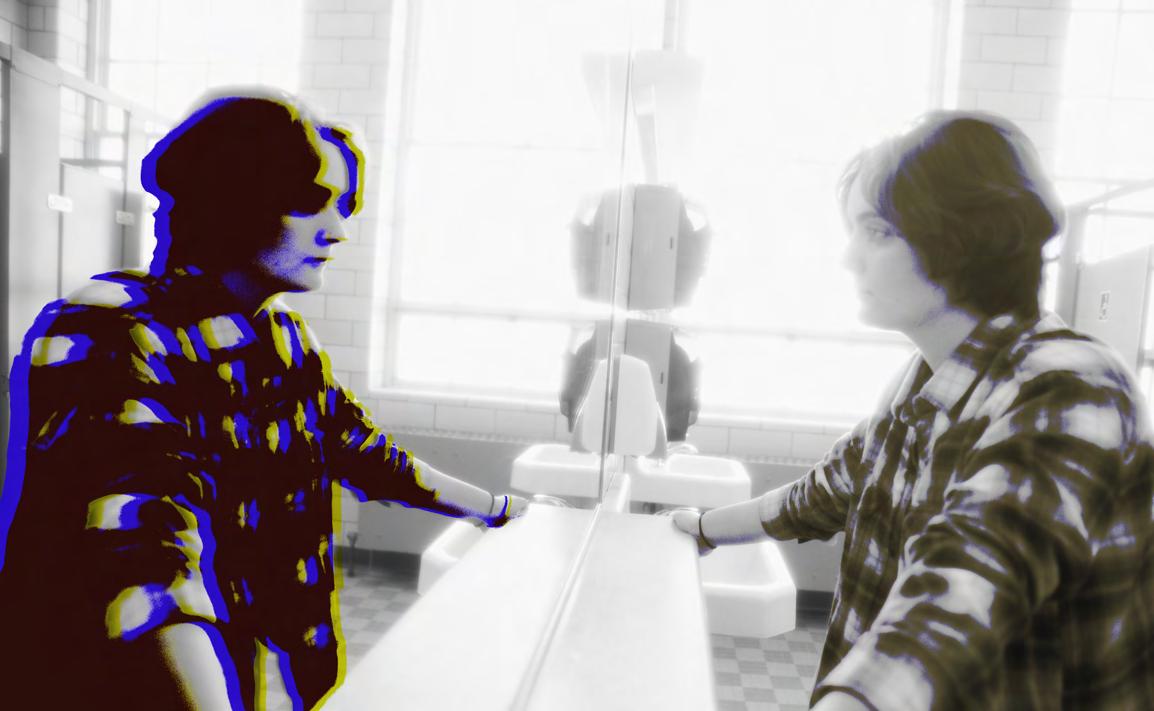
This is especially accurate for Holland. “It’s like night and day,” Holland says. “When I go into the bathroom at night or when I take a shower I feel like I have to turn off all the lights so I don’t have to look at my body in the mirror…But you know, my ex-boyfriend always told me that he found me beautiful and that he would love me if I were 60 pounds heavier or 30 pounds lighter. My friends always tell me that I’m beautiful. My parents think… I’m the prettiest thing on the planet, but I don’t see it and I don’t get it.”
MIND & BODY 28 PULSE SPRING 2024
BDD also affects the way that people dress and how they perceive clothing to fit them. Bass prefers baggy styles of clothing like sweatshirts because they feel safer and less revealing. Holland also favors looser clothing for similar reasons, and was victim to the idea that she needed to fit into her clothing rather than her clothing fitting her.
A good first step to promoting a healthier body image in society would be “having people talk about their experience with food, you know, building healthy relationships, the idea that food is value neutral,” Bass says. “There is no such thing as a guilty food…because there is no such thing as guilt as an ingredient. We need to have a serious discussion as a society as to how food… interacts with our lives and how we perceive the consumption of it; both positive and negative.”
Shaw expresses similar feelings. “My hope is that generations are starting to change how we talk about not just food, but talk about what bodies look like in conjunction with food, because really we all know at this point that what we look like is not a great example of what someone’s doing,” Shaw says. “So trying
to reimagine the way that we talk about food, and knowing that that 100% is not always connected to what our body looks like. And I think that, to me, is probably the biggest thing that we could do to help prevent it in future generations.”
According to Holland, the idea that a person being thin automatically means that they are healthy is something that needs to change. Social media has only contributed to these stigmas.
“The only things that you see on your Instagram explorer page are the things that are really popular on TikTok or whatever,” Holland says. “It’s always these really really hot people with really impossible body proportions that can only really be achieved by really specific genetics or with a lot of plastic surgery. But like my brain can’t comprehend, like, oh, that’s not real.”
Social media should be a space that promotes normal bodies and healthy eating. In reality, it can encourage disordered eating and comparison to unrealistic bodies, according to Nunes. Some people will use cosmetic surgery as a way of addressing their body
dysmorphia. However, Nunes suggests that this is ineffective because “if you don’t fix the mental health part of body dysmorphia, you’ll just find something else that you don’t like about yourself and then want to fix it.”
Resources
If you or someone you know may be suffering from BDD or eating disorders, please seek professional help.
CWU Student Counseling Services in Black Hall 225 provides care to students in-person or online through one-onone therapy, workshops and support groups. They can be contacted for appointments at (509) 963-1391 or by stopping by in person.
An app called TimelyCare which provides medical care and virtual counseling is also accessible to CWU students through their MyCWU account. The “Talk Now” feature can be used 24/7 to reach a provider within five minutes of calling.
Licensed dietitian Emily Shaw can be contacted for nutritional counseling through Student Health Services.
MIND & BODY
story by Cris Comp and May Borges | photography by Andy Rios | design by Madilyn Larsen (with contributions by Gunner Stuns and Lilly Montgomery)
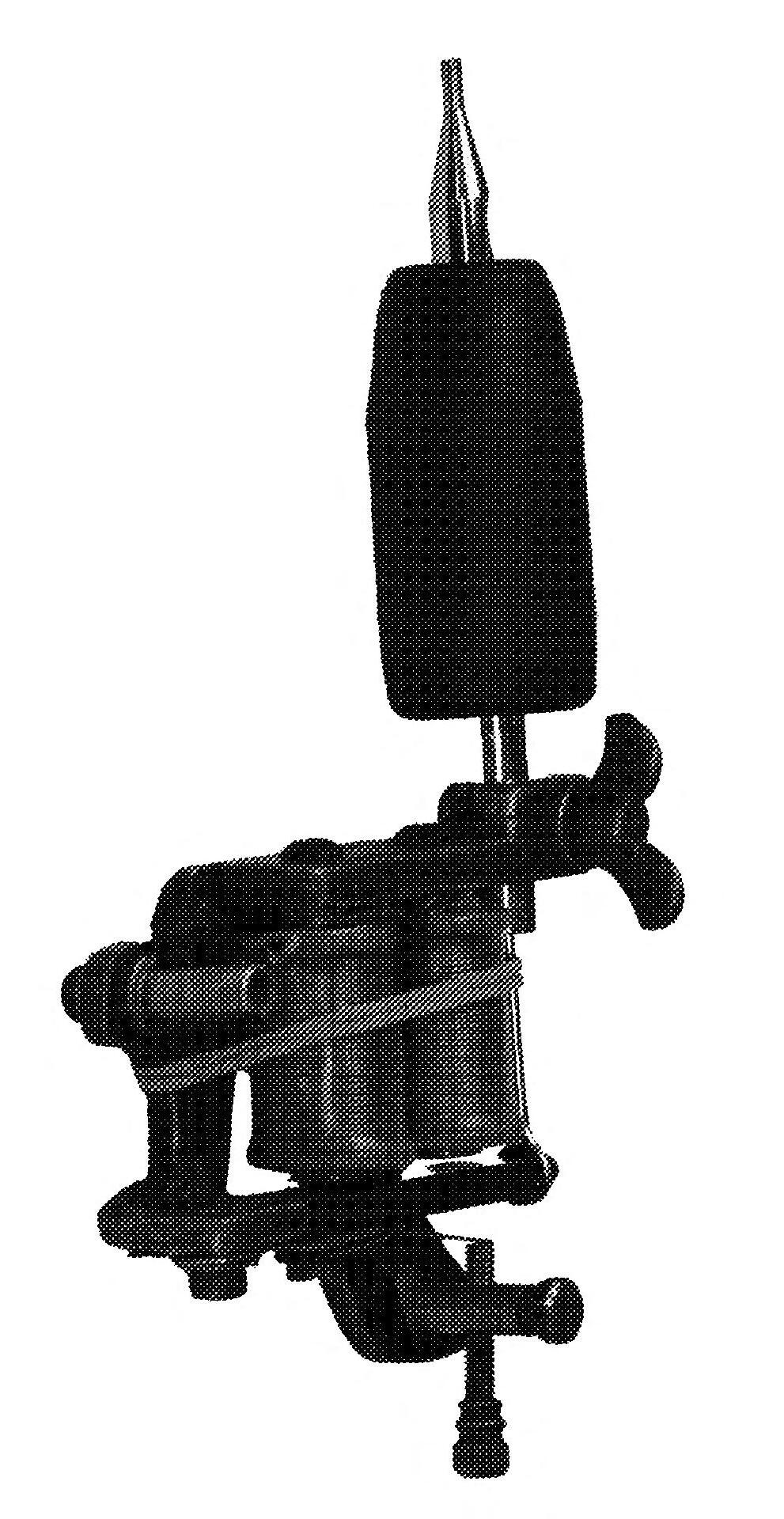
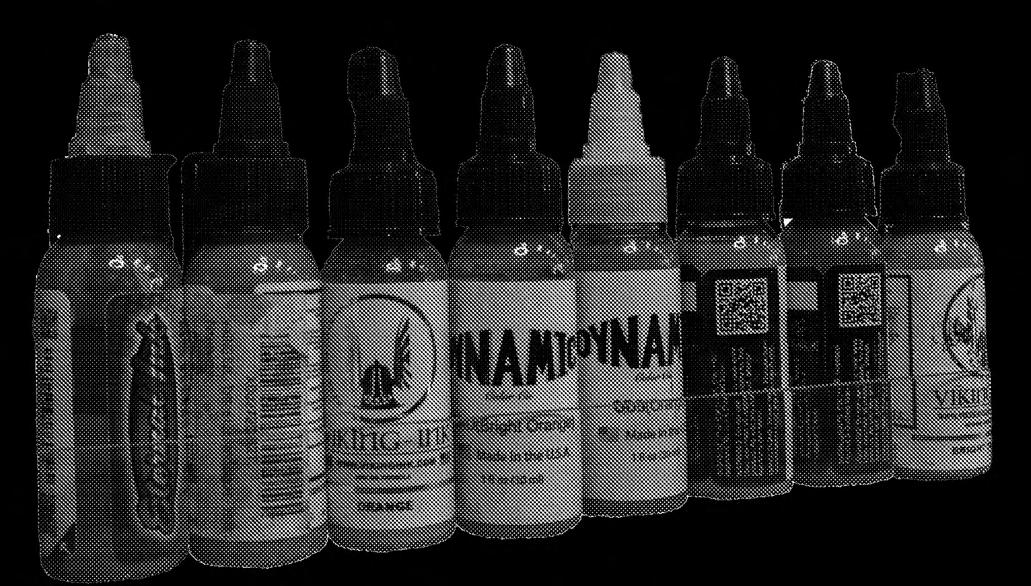
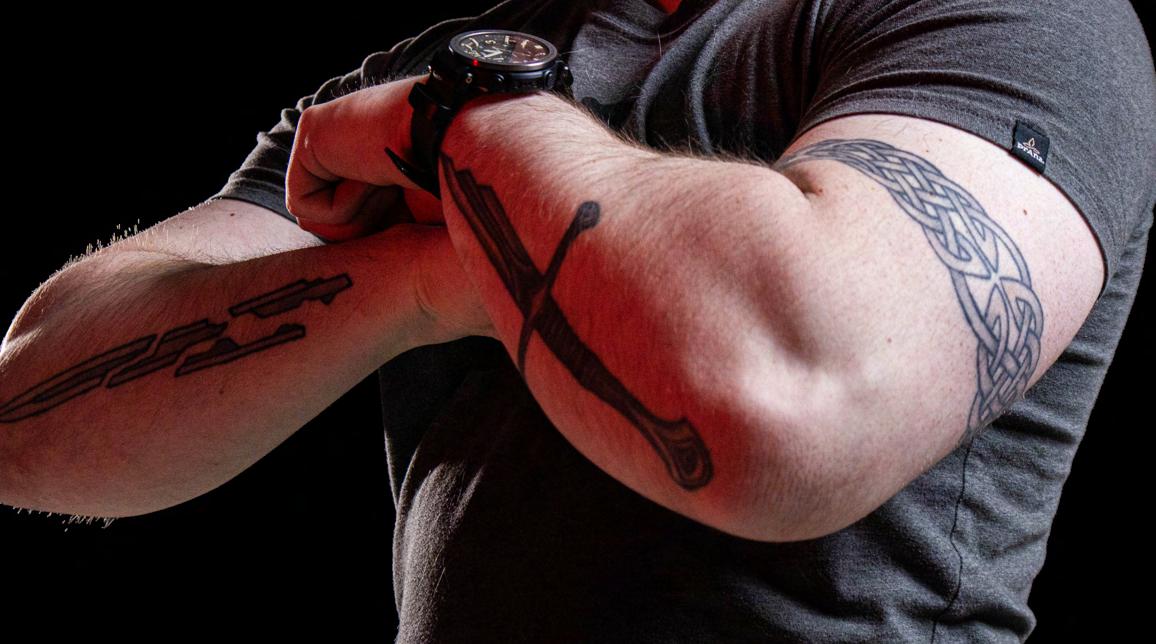
When you first step into the shop, you are greeted by the smell of cleaner and the buzzing of tattoo guns. Like an army of mechanical bees, ink is worked into clients’ skin at a calculated pace under the watchful eyes of tattoo artists as piercers in the back of the shop prepare hollow needles and jewelry to adorn their own customers.
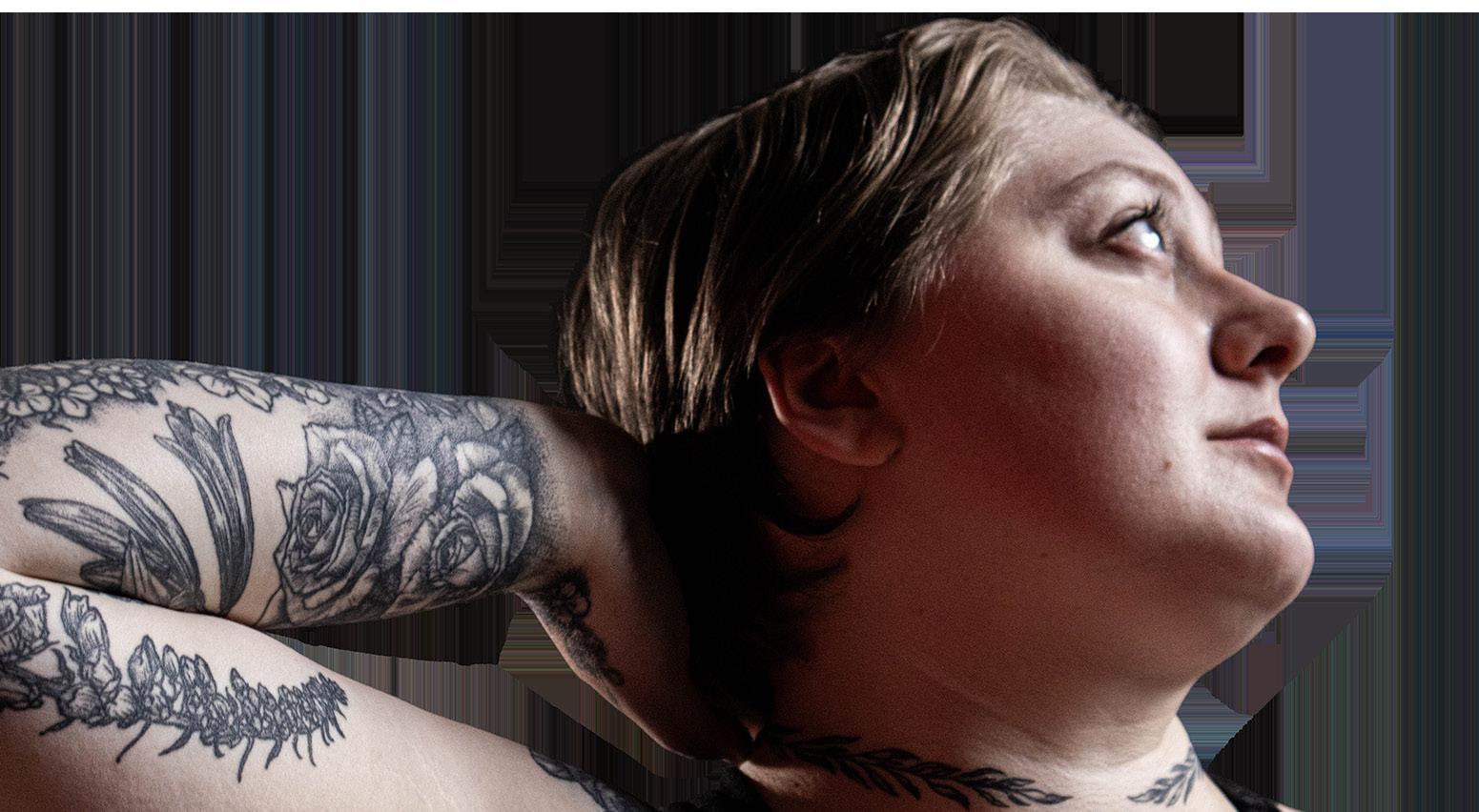
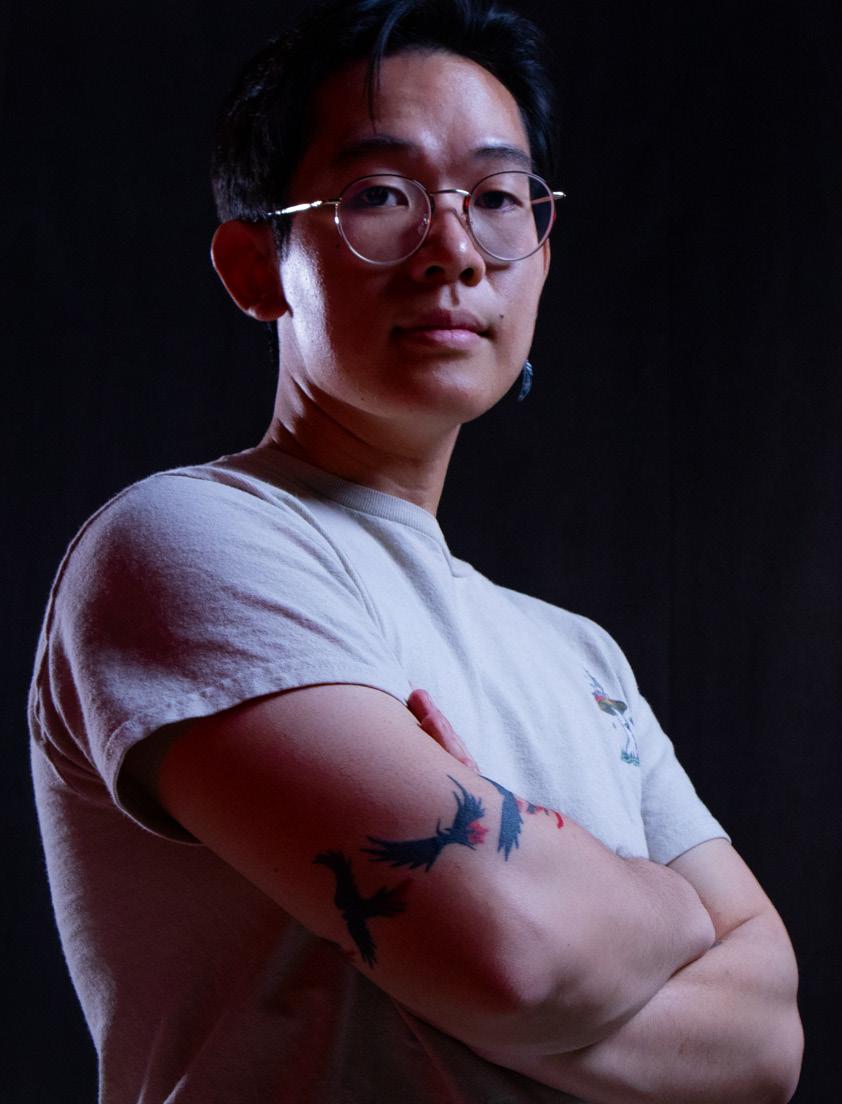
Tattooing and piercing are forms of body modification, permanent artistic changes made to someone’s body. Tattoos, piercings and alterations tell stories not only of the artists who create the pieces, but of the individuals who proudly wear those markings and jewelry as a means of self-expression.
Inking as an Art Form
“I’ve always been into tattoos and I’ve always been an artist, in one form or another,” says Meara LaFrance, a CWU alumna and tattoo artist at The Roost tattoo parlor in downtown Ellensburg. “When I was a teenager, I kind of dabbled in tattoos and apprenticing and whatnot. [I] got quite a bit of tattoos when I was a teenager. So I guess I just kind of got into it.”
LaFrance attributes her tattoos to the need for self expression and art. She always had the itch to be an artist and even got an art degree from CWU. According to LaFrance, her first tattoo came about by dipping her hand in paint and then tracing the outline before it was placed on her back. “It was supposed to be like a representation of being an artist,” LaFrance says. This experience was LaFrance’s first step into the world of becoming a tattoo artist, eventually taking steps to receive education, as well as earn the necessary license and certificates.
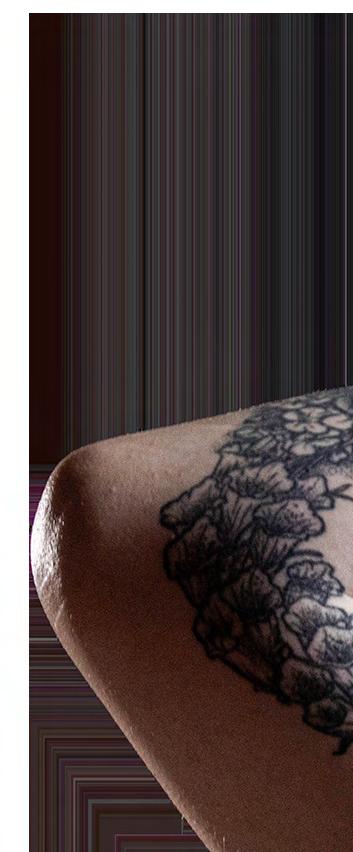
LaFrance estimates that her body is about 70% covered in tattoos now. You can see the style that she portrays in the black and gray designs of flowers that cover her arms like overgrown statues. According to LaFrance, the best way to get a tattoo is to find an artist that you can click with.
Building Bonds
Glenn Helm is a tattoo artist through The Union tattoo parlor in Ellensburg and, like LaFrance, he dedicates his career to making tattoos that his clients enjoy. His work invokes traditional Japanese styles with deep, complex colors and stunning visuals. Helm strives to create relationships with the people that come to him for his artwork.
“I think that’s definitely the most rewarding thing, for me,” Helm says. “Having really genuine connections with my clients, and feeling their trust… They know that they’re gonna get a good tattoo from us.”
Helm shares that acquiring new, permanent body art is not the only reason that people come to him and other artists for tattoos and piercings. “It’s kind of cliche to say, but tattooers do sometimes assume the role of a therapist,” Helm says. “You’re putting a person through a painful experience, and you’re kind of making them feel comfortable and natural.”


 Astor Powell-Pedersen

Receiving tattoos can be a grueling process, and depending on the size and placement, can take many hours and be very
turns out, may come with some positive side effects. When your body experiences pain, your brain releases chemicals depression and alleviate stress and anxiety, according to
Kam Schindewolf-Broyles, a fourth-year student in media and journalism and Asian studies, draws inspiration for their own tattoos and piercings from a wide variety of sources. 10 piercings and 11 tattoos adorn their body, accentuating their style and allowing them to express themselves in unique ways. The
“A lot of the bands and people who I style myself after had lip piercings,” Schindewolf-Broyles says, pointing to their spider
“Originally my goal was just these two lip piercings, the spider bites, but I had to start off with just the one. That’s what my
 Kayla Mead
Schindewolf-Broyles has two jobs, one through CWU another off-campus. For their off-campus job, they are not allowed to wear their facial piercings because of the nature of the work and stigmas associated with body modifications and professionalism.
“I work weddings and events where I have to look really presentable and nice,” Schindewolf-Broyles says. “And I’m allowed to have my tattoos out but I can’t have my piercings in because to my job, it makes me look unprofessional. The main thing I really hate is that…a lot of people don’t take me seriously because of my piercings and my tattoos.”
Schindewolf-Broyles adds that they believe body modifications like tattoos and piercings should not hinder anyone from being offered or completing jobs. “To me, it’s literally the exact same as wearing a necklace or wearing a ring or something like that,” Schindewolf-Broyles says. “It’s just jewelry.”
MIND & BODY
Cris Comp
Victor Limwanich
 story by Lilly Montgomery | design by Lizeth Valdes
Sex.
Just seeing that word written here might make you uncomfortable. Often constrained to talks in hushed tones or clickbait articles on the internet advertising new ways to please your husband, sex and its many facets are frequently shunned from the limelight of conversation and awareness.
This unique aspect of human living has a range of definitions and classifications far broader than could ever be listed between the covers of this magazine. From gender designations to procreation, sex can mean countless things for different people—including work—and should not be something that we are afraid to talk about.
Sex Work is Work
Sex work is a trade that goes shockingly far back in recorded history, and continues to develop and expand today. There are a wide variety of professions and activities that fall under the umbrella of sex work and the adult sector, from stripping to the street trade, but it is important to delineate who exactly is engaging in this labor. A written statement to the United Kingdom’s Parliament by Gaye Dalton, who used to work selling sex and now champions the rights of sex workers, outlines four main categories of individuals that engage in this work.
Elective sex workers are individuals that make the choice to enter the sex trade for their own benefit. Crisis sex work is that which it is used as a shorter-term solution to help financial or other issues. Survival sex workers are the third archetype outlined by Dalton, and are individuals that enter into sex work based on survival-motivated viability. Finally there are coerced sex workers, who are entered into the business under duress from another individual. Many assumptions about people in the sex trade are made and broadcasted from all corners, often tinged with a glaring lack of information on the subject.
“We’re seeing a sort of a backlash, or a resurgence of a lack of accessibility for knowledge about sex broadly,” M. Eliatamby-O’Brien, director of CWU’s women, gender and sexuality studies department and associate professor of English, says. Eliatamby-O’Brien has worked with community groups in places like Vancouver, B.C., where they have seen the impact of sex work and related legislation.
Eliatamby-O’Brien has also taught courses discussing issues of sexuality and gender, including modern views on the adult industry.
One topic that Eliatamby-O’Brien highlights is a pote-ntial reason for the resistance that many people feel to the topic of sex work. “Stigmas that relate to trans bodies being sexual, fat bodies, queer bodies, black and brown bodies, those obviously add to the level of what people feel in terms of both discomfort when discussing sex work, but also a desire to minimize it, control it or see it as somehow unpalatable.”
The Prevalence of Pornography
The American Psychological Association defines pornography as “writings or images… with blunt, often exploitative sexual content designed solely to arouse a sexual response and to satisfy the sexual urges of the beholder.” With the proliferation of sites like Patreon and OnlyFans allowing for small-scale content to be monetised more easily, pornography and sex work can look very different than they did at their advent.
“Porn tells us something about ourselves in our social world, right?” asks Griff Tester, professor in CWU’s department of sociology and an affiliate faculty member in the women, gender and sexuality studies program. Tester has taught courses in queer studies and performed graduate research that discussed the comparisons of race and gender in lesbian pornography produced by men versus that produced by women for women. “What we click on and what we buy,” Tester says, “tells us something about that, but it also reflects those inequalities and those biases and those prejudices that reflect in our society.”
Tester goes on to mention one interesting facet that some modern pornography has begun to explore more often: consent discussions. Not traditionally included (and often not even taking place behind the camera) in mainstream video pornography, these interactions often include discussions of likes, dislikes and sexual limits between partners before a sexual interaction. These talks are vital to ensuring that all participants are actively engaging in and consenting to the activities in the scene. Tester says that video pornography is becoming more open to including these discussions as “part of the storyline, and what you see in the build up to other aspects of the sexual scene.”
Eliatamby-O’Brien adds that these inclusions of consent discussions and normal mishaps “disabuse people of the notion that everything always has to be one type of sexy.” Showing sex in media with this authentic of a context is something that is relatively new to produced pornogra-
MIND & BODY 36 PULSE SPRING 2024
phy, and is opening doors to stigma reduction when it comes to porn and sex work.
The importance of accessibility also comes into play when discussing the sex trade. Not only does this kind of platform make content more readily available for adult consumers to find and engage with, but it offers an interface for a wider variety of creators as well.
“Platforms like OnlyFans can, don’t always, but give people more autonomy over the production, right?” Tester says. “They’re not performing for a studio who is telling them what to wear, how to wear it and then taking a certain percentage of it.” This flexibility allows for the creation of entirely self-driven content, but does not come without drawbacks.
“You have that access where individuals can make their content in their homes by themselves or with trusted friends, but at the same time, those platforms are still companies and businesses,” Tester adds. “That gig work, like we’re seeing in other gig work, can be very exploitative as well in the sense of the percent they take, how they take that money, and then the control over who has access to the internet and can be safe in their home creating content.”
Opinions on porn carry just as much variance as the category itself. Some individuals believe that pornography is purely exploitative, while others believe that it is a form of art. According to Tester and Eliatamby-O’Brien, pornography can also provide a sense of positive power and control for some participants. “There’s lots of ways in which it can be empowering, or at least meaningful for people that care about representation, about spaces where a diversity of bodies are presented,” Eliatamby-O’Brien shares.
Tester adds that diverse pornography can add to this empowerment, as it “expands our ideas about who’s desirable and what is desirable and how it can be desirable.”
Predation and Persecution
As society continues its quick march forward, the adult industry will continue to grow and change with it. Already, changes are being made that impact sex work and the lives of those who are involved in it in massive ways. In 2018, Senate and House bills titled Allow States and Victims to Fight Online Sex Trafficking Act (FOSTA) and Stop Enabling Sex Traffickers Act (SESTA) were passed into law. These legislations outline a motivation to protect individuals from online sex trafficking, but their impact has fallen rather far from their intent.
The bill was in part intended to target a website called Backpage, an advertisement platform similar to Craigslist that had been used by some individuals to facilitate and perpetuate sex trafficking. The website has since been removed from the internet, but the effects of FOSTA-SESTA remain for workers in the sex trade, many of whom have expressed extreme upset and disappointment with the laws.
According to one sex worker consulted by the Anti-Trafficking Review, “[FOSTA-SESTA] was written to remind whores that our lives are dispensable, we are not protected, our work is unseen and irrelevant, to destabilize our ability to live with any degree of agency, to flaunt the murders and negligent deaths of our loved ones as a daily reminder that the world does not mind at all watching us die and forgetting our names.” This individual and others like them see FOSTA-SESTA as a direct target to not only their work, but their lives.
Sex worker rights advocate Gaye Dalton discusses the ramifications of other legislation in her letter to Parliament. While she recognizes that there are many different circumstances for sex workers to be operating under, not all being voluntary, Dalton maintains that “[c]riminalisation does not help people get out of prostitution and legalization does not trap them in it.”
Others like Dalton advocate for ensuring that resources and education are readily available to members of the sex trade, and that legislation be put into place to safely regulate instead of restrict.
Amidst the effects of legislation and perpetuated prejudice, there is one thing that most people involved with these issues can agree is of the utmost importance: listening. “Listen to the people that are doing the work,” Eliatamby-O’Brien advises when asked how to better create safe spaces for sex workers. “I think that there have been so many choices made on behalf of sex workers that have had innumerably negative, impossibly negative impacts on the lives of people doing all forms of sex work, whether it’s online or clubs or dancing.”
Eliatamby-O’Brien continues, “So many different things, so many safety resources have been removed because, people with a little bit of knowledge and a little bit of anxiety about sex work, and conflating that with trafficking, have made these choices.” Allowing those without relevant knowledge or experience in the field to make decisions that impact sex workers and adult content creators is actively causing damage to the community. It is vital that guidance is instead handed over to the individuals whose lives will be directly affected.
SPRING 2024 PULSE 37
Late 1800s 24,000-22,000 B.C.E.
The Venus of Willendorf and other fertility carvings are created as symbols to bring luck in conceiving children, according to the Archaeological Institute of America; these may have also been early examples of pornography.
800 B.C.E.450 A.D.
Prostitution is a widespread profession in both Greek and Roman societies. Although the practice is generally accepted, those that work in this field are often slaves and looked down upon by others, as reported by an article in the World History Encyclopedia.
Photographing technology becomes more readily available to consumers, resulting in the production and distribution of pornographic content.

MIND & BODY 38 PULSE SPRING 2024

2018 Late 1900s
“A Free Ride,” one of the first surviving American films and an example of early video pornography, is produced.
The worldwide web becomes widely available; things like studio-produced pornography and video chat rooms allow the adult entertainment industry to grow.
2016
OnlyFans, one of several websites on which individuals can curate a targeted following, is developed. This and other websites quickly became popular among adult content creators for its paid subscriber-based format, allowing people to get paid for publishing content from the comfort of their home with little technology.
FOSTA and SESTA laws are enacted, placing strict regulations on sex work in a reported effort to stop sex trafficking.
SPRING 2024 PULSE 39
1915
40 PULSE SPRING 2024 SPOTLIGHT
photos and story by Gracen Bayer design by Madilyn Larsen
SPRING 2024 PULSE 41


irror mirror on the wall, what’s the most fashionable season of them all?
Spring has sprung, and with the allergies and famous Ellensburg wind comes the shedding of sweaters in exchange for dresses, skirts and shorts. Trade out the dark gray clouds for electric blue skies by stepping into our overly saturated wonderland of fitchecks, vibrant props and, of course, dazzling mirrors. If April showers bring May flowers, let June’s spring fashion leave you burning with a passion to reinvent your wardrobe!
42 PULSE SPRING 2024 SPOTLIGHT




44 PULSE SPRING 2024 SPOTLIGHT


46 PULSE SPRING 2024

Acknowledgement or Afterthought? CWU’s Relationship with the Yakama Nation
story
by Cris Comp and Quin Ford (contributions by Megan Foster and Lilly Montgomery) design by Ileana
Rea Martinez
“Central Washington University acknowledges the people who have been on this land since time immemorial. The Ellensburg campus is on lands ceded by the Pshwanapum and other bands and tribes of the Yakama Nation in the Treaty of 1855. The Yakama people remain committed stewards of this land, cherishing it and protecting it, as instructed by elders through generations. We are honored and grateful to be here today on their traditional lands, and give thanks to the legacy of the original people, their lives, and their descendants.”
This CWU Land Acknowledgement, published in June 2020, recognizes and pays respect to the original stewards of the land that the university stands on. According to the university, “It is intended to raise awareness of the enduring relationship between indigenous people and the land.” Representatives of the university read this acknowledgement at the start of most on-campus events.
Interim Director of American Indean studies and Director of research and sponsored programs Christy Gilchrist, who identifies as “Tlingit, which is Native Alaskan,” says it is “really important” for the university to have this acknowledgement “because we need to be reminded that we’re on someone else’s land.”
But sources on campus suggest the university could be doing more beyond the land acknowledgement to support recruitment and retention of Indigenous students as well as to strengthen ties with the local Indigenous community.
“I’ve heard one of the deans say that land acknowledgment at the end of their speech and stuff like that, but it always seems like it was kind of an afterthought,” says Shane Turntoes-Kuhnhenn, a senior in the anthropology program and a member of the Assiniboine tribe.
Patrick McCutcheon, professor of anthropology at CWU, adds, “If that’s all we do is acknowledge that, that’s great, but how is that helping them?”
Gilchrist says, “The Native American students chafe a little bit at the acknowledgement and wonder if there’s ever anything going to be anything more. We’re working on it, we really are.”
“I know it’s painful that it takes so long,” she adds.
“Don’t give up hope.”
What more can CWU do to engage and support Indigenous populations on and off campus?
48 PULSE SPRING 2024 OUR TOWN
The History
Long before the construction of Ellensburg and the founding of CWU, Kittitas Valley was, and still is, home to members of the Confederated Tribes and Bands of the Yakama Nation, including the Wenatchsahpam, Shyiks, Pisquouse and Klikatat peoples. While the Yakama Nation does not encompass all tribes of Washington, it does include 14 of the 29 tribes and bands in Washington state recognized by the federal government, according to the group’s website.
The history of how CWU was built on Indigenous land begins with the Treaty of 1855, created between the state of Washington and various tribes under the Yakama Nation. The articles of this treaty outline the specific boundaries of the land ceded by these Indigenous groups, including Kittitas Valley where Ellensburg now stands.
CWU was established in Ellensburg 36 years after the treaty. In recent times, CWU has created multiple memorandums of understanding, or MOUs, acknowledging that history and the fact that it stands on land originally inhabited by the people of the Yakama Nation.
McCutcheon points to the important role of former President of the university, Jerilyn McIntyre, whose administration penned a previous MOU with local Indigenous peoples. McIntyre became president at CWU in 2000 and spent eight years as the first woman to hold that position. It is widely reported that she helped promote enrollment and diversity within the university by increasing attendance of students of color and, according to McCutcheon, she invited Yakama Nation representatives to campus.
“A presidential invitation,” McCutcheon says. ”It doesn’t get any better than that.”
One factor impacting such CWU activities today is budget cuts due to the recession of 2008, sources say. “The state started pulling back funding from the university, which meant we had to raise tuition, which eliminated people who couldn’t afford to go to it, which is because of historic inequities,” McCutcheon says. “What unfortunately we’ve seen over time since then, is a decline in enrollment in Indigenous students on campus, a decline in participation in the American Indian studies program, a decline in those events that bring Indigenous people to campus to share with us their expertise and their knowledge.”
McCutcheon continues on the topic, saying, “I can’t provide that as a non-Indigenous person. I only can provide the history I know, the expertise I have as an archaeologist. I need those people to come in to complete the missing parts that I don’t have so that there can be a holistic understanding of the American Indian experience. We need Native people to feel they’re asked to come to campus, that the effort to get here is going to be supported.”
McCutcheon also brings up that there are more than a few reasons to provide an extra boost to Native American communities when it comes to outreach and reinforcement. “I
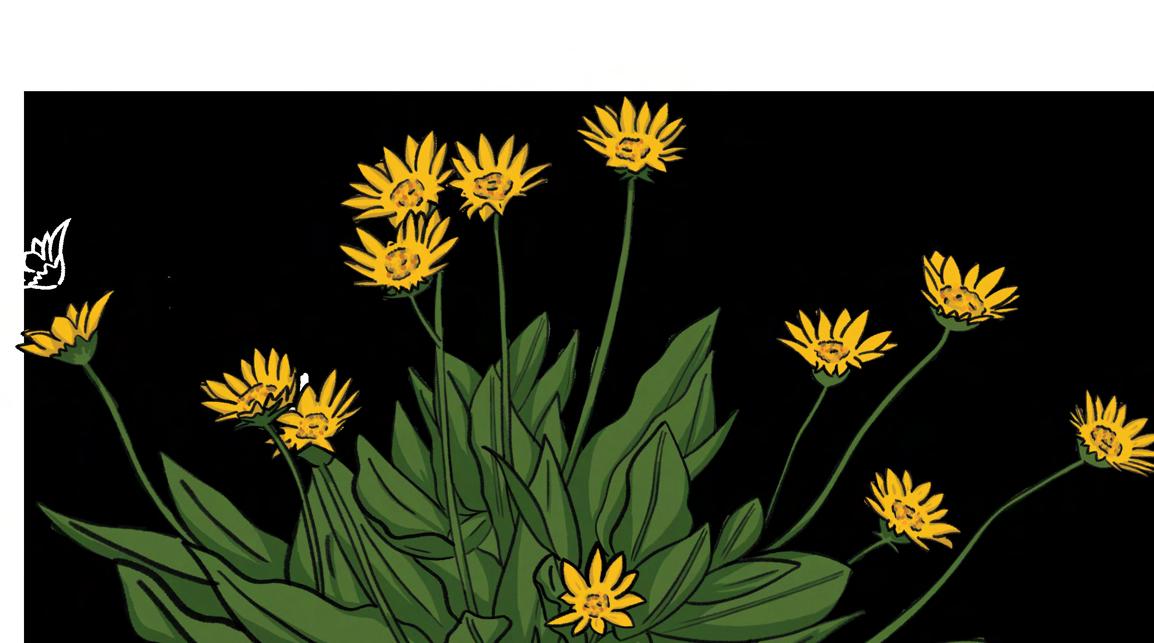 Eriophyllum Lanatum
do believe that Native American people should be given some additional help because we landed on top of them,” McCutcheon says. “There were 10 to 16 million people in just North America before Europeans showed up. And within four or five, six generations, those numbers were just cleaved.”
A Student View
The national average for college enrollment for Indigenous people is roughly 19%, according to the Native Forward Scholar’s Fund. This is less than half the national average of 41% college enrollment in America across all non-Indigenous populations.
“I think there should be an understanding that the people who can’t largely attend colleges and universities like this are the people who we’re trying to represent through these land acknowledgments,” Turntoes-Kuhnhenn says. “American Indians don’t go to college anywhere near the per capita rates of
other ethnicities… Just in accepting them into the university and saying, ‘Hey, we understand you have this knowledge and this information, these beautiful things to contribute to the world, and when we get you into this university and say you are welcome.’”
“Those kids don’t understand that they can go to college,” Turntoes-Kuhnhenn says. “I didn’t. I’m 30 years old, it took me until I was 26 to figure out I wanted to go back to school and Central became it. But I didn’t know it was accessible.” Turntoes-Kuhnhenn is a U.S. Army veteran who served for twelve years including tours overseas, after which he earned his G.I. Bill that allowed him to pursue higher education.
Growing up in a very small community, Turntoes-Kuhnhenn says his support network was spread apart and there were not many individuals close to him. Education issues and lack of outreach affected his ability to pursue a higher education, and even stunted his belief that he could go to college at all. “If I had started my college years before, I could be in grad school already,” he says. “I just didn’t know about the opportunities.”
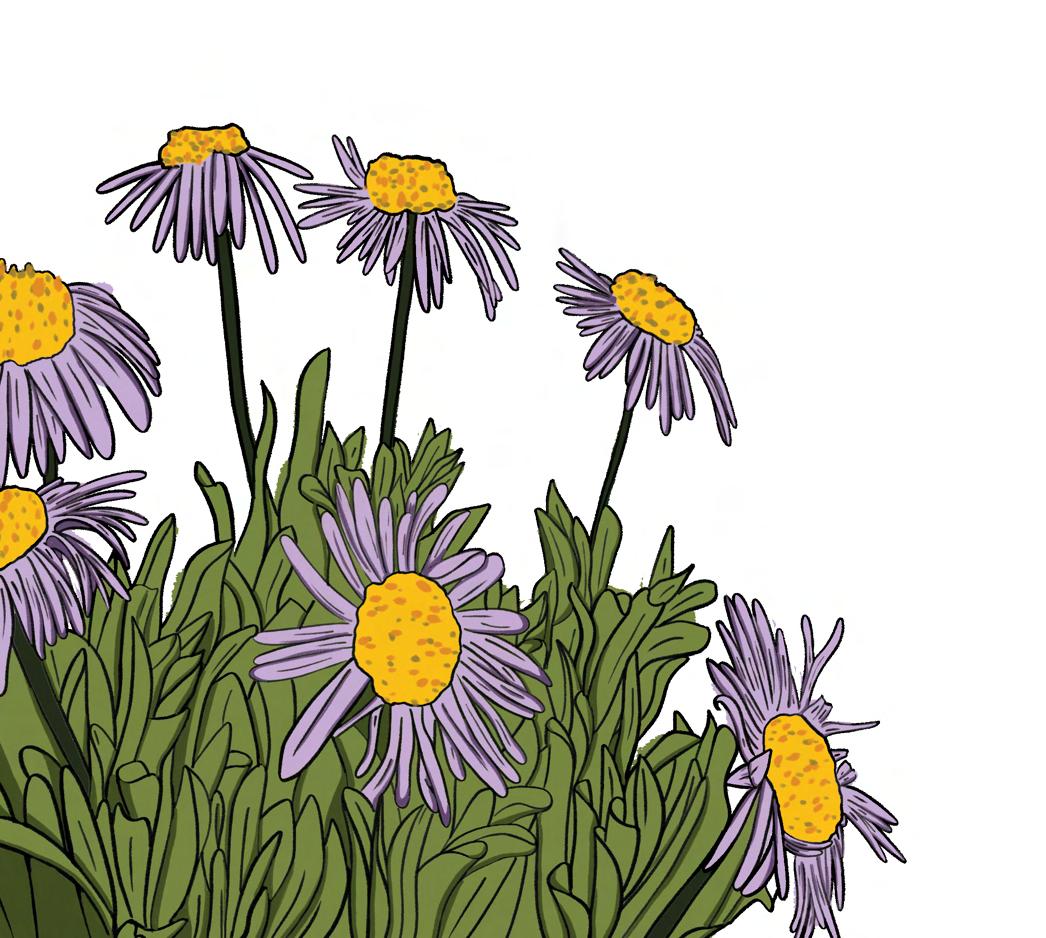
Erigeron Poliospermus

OUR TOWN SPOTLIGHT
Turntoes-Kuhnhenn says that an absence of information is the hardest part. “[P]eople who are going to be trying to use these programs have never had access or the capability or the opportunities to even access them,” he explains. “I think the outreach is probably one of the better things that Central can do, sending recruiters out there… You know, it’s tough and it’s difficult to try and convince people that college is an education, it’s a path, but destroying any barriers that could stop even one person from being interested.”
The Future
From funding to outreach, the issues of inequity and underrepresentation of Indigenous people on campus is one that affects not only CWU, but the surrounding areas and people as well. So, what can be done? How can CWU better engage Indigenous populations on and off campus?
“I’d love to be able to see a pathway between YVC [Yakima Valley College] and Central,” Gilchrist says. Partnering with
YVC would help grow American Indian studies here at CWU, as they have extended programming at their college.
Gilchrist mentions some additions that she would like to see implemented at CWU to help acknowledge the Indigenous population on campus. “I’m really hoping to start doing some multidisciplinary events,” Gilchrist says. “Something with arts and designs. You know, what if we had a basket weaving class?” This idea, along with presidential invitations to campus being extended to invite Native American community members, would help bolster the idea of not just making statements about support, but reinforcing them with actions.
McCutcheon says that one thing that could add to CWU’s level of openness to Native American student populations is “a program incentive for the Yakama Nation, or the other tribes [of] the treaty.” This could encourage students to engage with and attend CWU that may not have otherwise, heightening
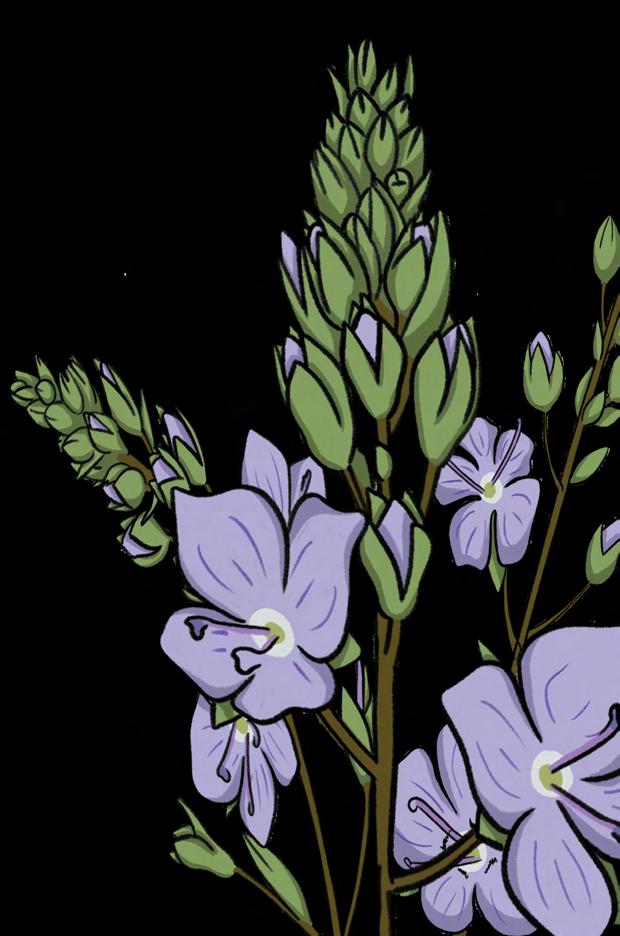 Veronica Anagellis Aquatica
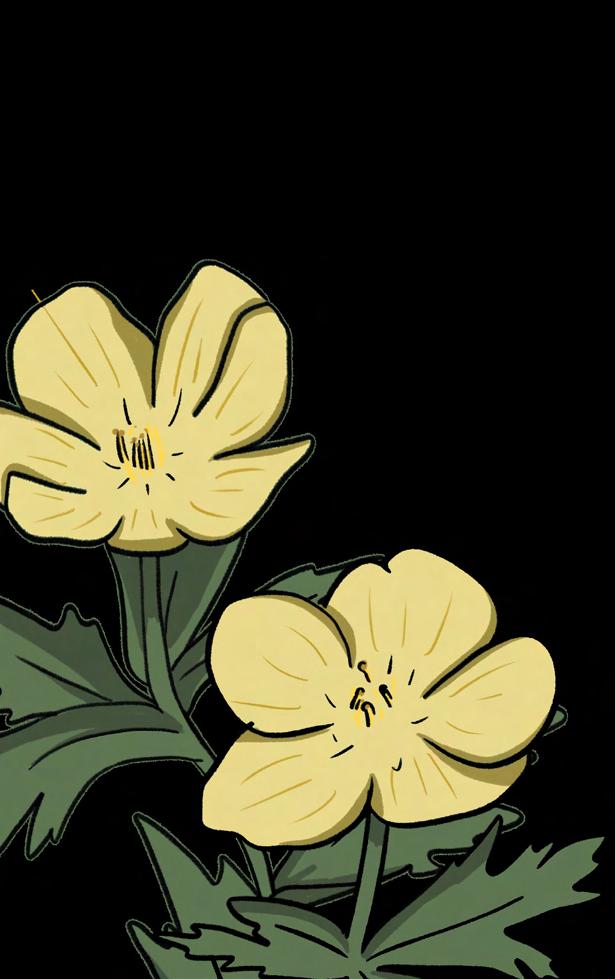
Trollius Laxus
Veronica Anagellis Aquatica
Trollius Laxus
attendance and awareness of Indigenous students on campus and in the community.
“We have a unique opportunity to invite students who provide that level of culture, that level of diversity,” McCutcheon adds. Not only would this help to build inclusion and diversity on campus, but this also goes hand in hand with responsive action the university could take to better promote the integrity of the acknowledgment.
Development of the relationship between CWU and local Indigenous tribes and bands is something that university leadership is attempting to navigate. “[The university is] trying to seek consultation and advice and support from other institutions about how we can develop more of that tribal relations office,” Lucinda Carnell, interim vice president of diversity, equity and inclusion at CWU, says. “We’re going to try to seek funding from the state to develop that…. Engaging with their
featured in this article depict plants native to the inland Northwest.
tribal relations office would allow us to develop those sorts of relationships and interactions with them.”
Another option for engagement is increasing the amount of communication between leaders of the Yakama Nation and leaders of the university. By holding conferences with Indigenous students and faculty members to establish those relationships, Gilchrist is working to increase vocality and visibility of these groups on campus. These meetings have been dubbed Native American Student Chats. The chats aim to increase outreach and conversation opportunities between Indigenous and non-Indigenous students and faculty.
According to Gilchrist, “There’s a vision of how we can really partner with the Nations and, in a meaningful way, respectfully reflect their needs, their vision and their hopes.”
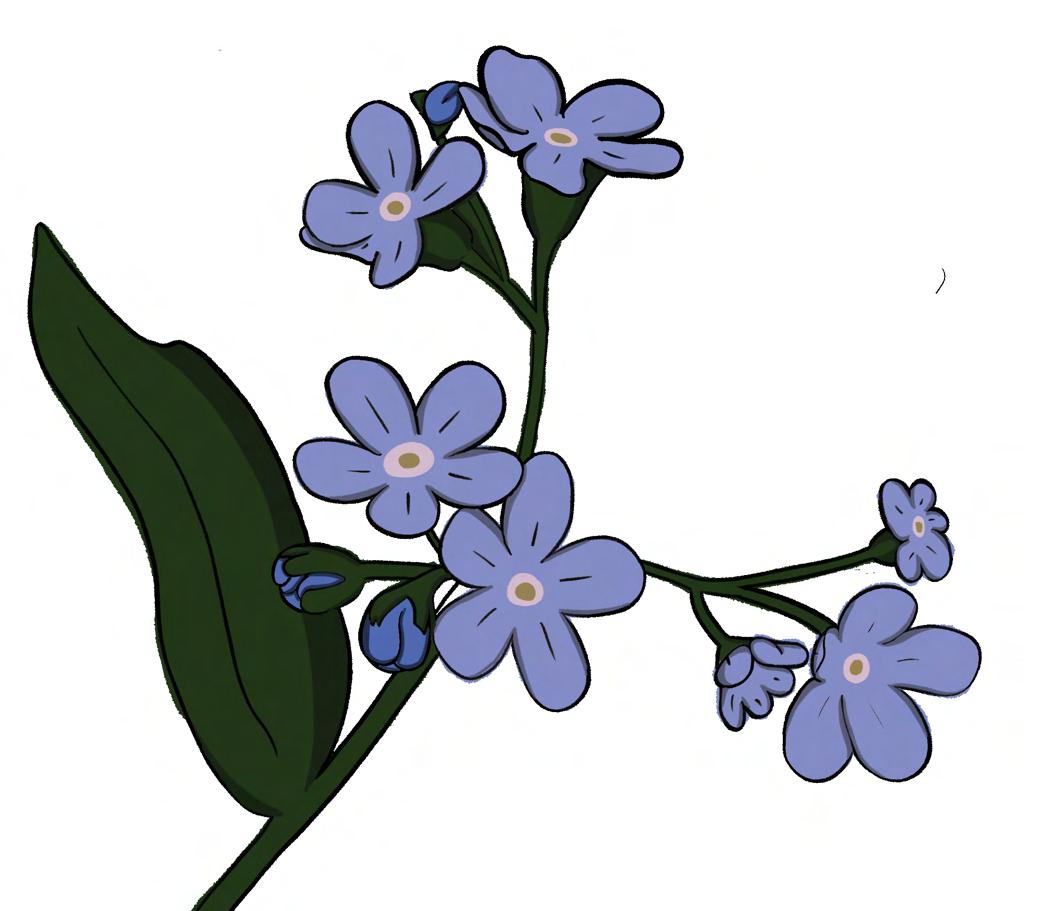 Hackelia Micrantha
Illustrations
Hackelia Micrantha
Illustrations




ADVERTISEMENT
R E
illustration by Madilyn Larsen


54 PULSE SPRING 2024 SPOTLIGHT



56 PULSE SPRING 2024 SPOTLIGHT

SPRING 2024 PULSE 57
Interview have been edited for length and clarity
58 PULSE SPRING 2024 SPOTLIGHT


Rate My Professor

OUR TOWN 60 PULSE SPRING 2024
story by Megan Foster and Isaac Dobmeier design by Deark Gamleah
With the internet at the tips of our fingers and our identities shielded behind a screen, we have the power to do a lot from our electronic devices. The modern higher education experience is steeped in technology. It permeates our social lives, our classes and our coursework.
Initially, coming to college can feel overwhelming. What classes should you take? What professors are good? How much homework will there be? The list goes on and on. Luckily, there are resources at students’ disposal. But how reliable are these resources, really?
Rating Systems In Academia: RateMyProfessor
RateMyProfessor is a website that allows college students to submit and review ratings of colleges and the professors within. The criteria for accessing and submitting these ratings is remarkably simple. All students have to do is type the website name into the search bar and look up their university or professor. A tool like RateMyProfessor gives users a rough sense of what their upcoming course might look like, with categories in the reviews including topics such as attendance, workload and the final grade of the reviewer.
“I try to [look at RateMyProfessor] at least every quarter to see… but a lot of times some professors aren’t on there,” Lizeth Martinez Arias, a sophomore in business administration, says. “It’s kind of like a try-and-see situation to see if the professor is good or not.”
For some students, RateMyProfessor is an essential tool when registering for classes. Luys Soto, a junior information technology administrative management major, uses it at the start of every quarter “to kind of know what professors to look out for.”
Other students stick to their senses. Nic Palaia, a freshman film major, has never used RateMyProfessor. “I honestly don’t know how to use it,” he explains. “I didn’t even really know it was a thing.”
Rating Systems In Academia: SEOI
Quarterly Student Evaluations of Instruction (SEOIs) that are available on CWU Canvas pages are another avenue for providing professors with anonymous feedback. Directly sanctioned by CWU, participating in SEOIs is encouraged through a pop-up seen every time Canvas is opened.
Palaia has submitted an SEOI for every course he’s taken, hoping his feedback improves the class for next quarter’s group of students. “I had an acting professor earlier this year and… he just asked straight up like ‘What are some things that he could do better?’” Palaia says. “[According to] a friend of mine who is in the class with him right now, he has applied a lot of what we talked about…to his current class and apparently it’s making it a much better experience.”
Viewing the feedback provided by students through the SEOI format is mandatory for instructors at CWU. For professors like Palaia’s, being receptive to this feedback allows for growth as a teacher in a way that best caters to the student population.
For other students, they may not feel that their teachers have been as receptive. “I know that the teachers are required to read them,” Brandon Mattesich, a freshman majoring in film, says. “Do I feel like they do much? Probably not.”
While it is required for professors to view the feedback that their students leave via SEOI, the overall effect it has on teaching is seen on a case-by-case basis. “I don’t know… to what extent they use all those ratings for,” Soto says. “I know a professor sometimes will mention them in classes, talking about previous ratings and what they’ve done to sort of improve themselves.”
Behind A Screen
With the anonymity that can come with an online presence, some users find themselves being more honest than they would in their everyday lives. “Yeah, I would say I would not be leaving negative reviews on teachers if they can see my name,” Mattesich says. Having to come into class and make eye contact with a professor that you just recalled in a negative manner could create an awkward environment. Tools with built-in anonymity offer students a safe space to express their concerns without the fear of consequences. Anonymous formats don’t guarantee negative feedback, but they can provide it a bigger platform.
“I feel like most of the time probably I think people just kind of do negative, just because… they want to really warn other people,” Soto says. “I think it’s probably rare that our professors are so good that you’d want to go out of your way to make it a positive. I don’t think it’s a good thing, but it’s just how it tends to go.”
While reviews published on RateMyProfessor aren’t obligatory for professors to view, they are free and available to them, and the rest of the public. Mary Eberhardinger, a professor in the communication department at CWU, expresses her thoughts on the topic. “It can be a form of character assassination,” she says. “Comments get published online, whether accurate or not. Whether someone was having a bad day or not. Whether someone was properly nourished or not. Whether someone took their medications that day or not.” Eberhardinger feels that improper use of anonymous rating systems can be “defacing and dehumanizing.”
SPRING 2024 PULSE 61
To Rate Or Not To Rate?
On the RateMyProfessor website, students have the option to create an account to submit their own anonymous reviews.
Mattesich explains one of his own reviews. “There was a class I took that… I felt like it was false advertising, and the professor was not the best,” he says. “I’ve done multiple [ratings]. I do it for really good teachers too, like if I think more people should take their class.”
Ratings left by students on RateMyProfessor or through SEOIs are entirely optional, so what might encourage one to leave a review?
“I was heavily encouraged by all of my professors to do that [SEOI] because they thought it would be better for them to know what they did right [and] what they did wrong so they could make a better experience for the next quarter or whatever their next class was gonna be,” Palaia says. “So I’ve done that for every class I’ve taken this year, every quarter.”
The Truth is Tricky
Anonymous reviews left on platforms such as RateMyProfessor can offer valuable feedback, but the validity of the critique isn’t guaranteed. So, how do you know what to trust?
“I would say, take it with a grain of salt,” Mattesich says. “Especially if you’re not 100% sure. If it [the professor in question] still sounds interesting [the] add/drop period is helpful. So if you’re concerned, just be ready to drop the class, but I mean, at least meet them, you know, talk to them.”
Forming your own opinions from your own experiences is an important part of growing. CWU offers an add/drop period for students during the first week of classes, which can be helpful in forming an educated opinion.
“I’ve had professors that will get low scores for their workload or so, and then I’ll take that professor anyways, and they’re good…” Soto says. “The workload might be a lot, but they’re good professors.”
The criteria behind other students’ ratings may be different from your own. When utilizing RateMyProfessor keep your educational wants and needs in mind.
“I think it just depends on how harsh they sound in the reviews or if they give them like a one-star review,” Soto says. “I’ll try to read it and see… if you’re nitpicking at small things.”
Academia-based rating systems have their own faults, some of which lie in societal stigmas. Human beings have biases. It is a part of our nature. However, they have the power to permeate into our everyday lives and impact those we are granted the power to review anonymously.
“[C]ountless studies show the SEIO/survey gender bias against female instructors in the pedagogical space,” Eberhardinger says. “The studies point to how women are held as less credible as male instructors, even though, in cases, they may be triplequalified versus a male’s single qualification in a particular area of expertise.”
These reviewer biases can range, some may be based on gender like Eberhardinger explains, whereas others could be rooted elsewhere. When navigating an anonymous digital landscape, it is best to do so with caution and awareness of potential biases.
Not exclusively restricted to professors, RateMyProfessor allows users to rate aspects of universities themselves on a 1-5 scale, averaging ten categories into one final score. CWU scores a 3.7 on the website, with 361 ratings.
Further statistics include scores of 4.2 for safety, 4.1 for facilities, 3.9 for happiness, 3.6 for opportunities, 3.5 for social, 3.5 for reputation, 3.5 for location, 3.5 for clubs, 3.3 for food and 3.2 for internet.
College ratings compiled by Rate My Professor
62 PULSE SPRING 2024 SPOTLIGHT
Safety Facilities Happiness Opportunities Location Social Clubs Food Internet Reputation CWU at a Glance CWU
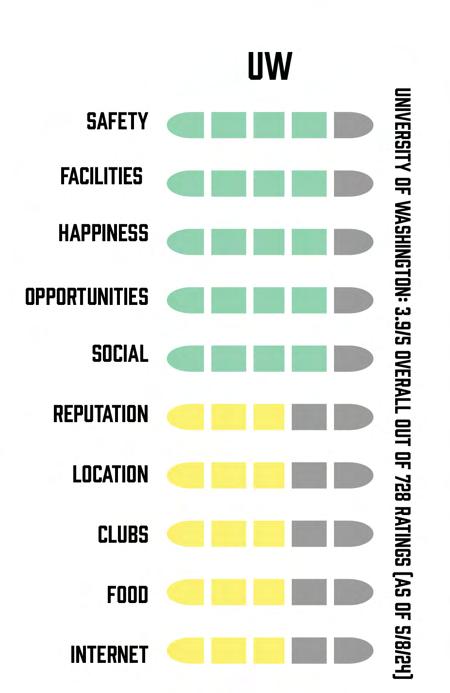
SPRING 2024 PULSE 63 Internet Safety Facilities Happiness Opportunities Location Social Clubs Food Reputation WsU Washington State University: 4.1/5
Food Internet Safety Facilities Happiness Opportunities Location Social Clubs Reputation WWU Western Washington University: 3.7/5 overall out of 670 ratings (as of 5/8/24) Safety Facilities Happiness Opportunities Location Social Clubs Food Internet Reputation EWU Eastern Washington University: 3.6/5 overall out of 325 ratings (as of 5/8/24)
overall out of 566 ratings (as of 5/8/24)

ANDROGYNY THROUGH THE AGES WALKING THE LINE
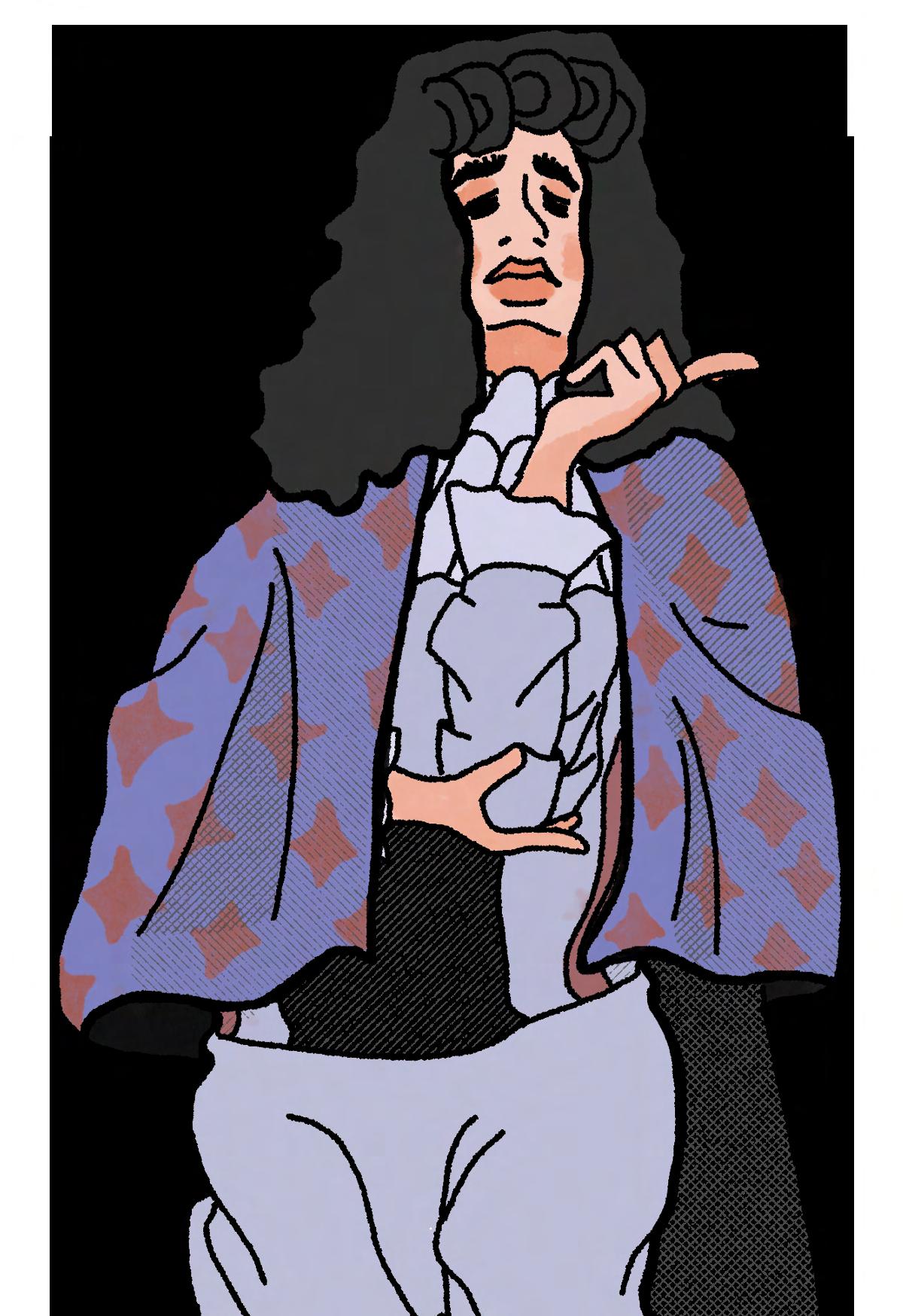 story by
Anastasia Rothlisberger
photos by design by
story by
Anastasia Rothlisberger
photos by design by
64 PULSE FASHION
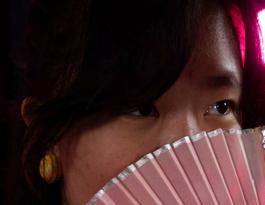
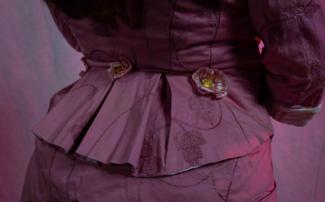

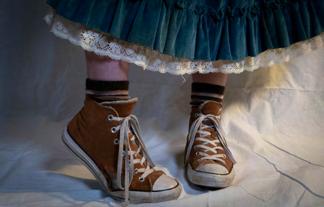


When you think of historical fashion, imagery of dreamy gowns with layers, dapper vests and coats, hand-embroidered fabric, heavy jewels and powdered wigs may come to mind. However, despite the prominent usage we see today, it wasn’t just women wearing gowns, makeup or even high heels, it was men. In fact, men were wearing these items before women.
As the world has evolved to the new standards of society, styles have too. The line drawn between what defines a piece of clothing as feminine or masculine consistently changes, and with it, a new idea of androgyny.
Pink and Blue
Pink is for girls and blue is for boys. While this may be categorized, for some, as the general rule of thumb today, was this always the case? “No,” Naomi Whiting, a CWU graduate student with the history department, says. “The answer is no…Originally it was blue for girls and pink for boys.” These gendered colors that we are so familiar with in today’s age were once reminiscent of the opposite values, and this opinion wasn’t unpopular. “Gender symbolism in American children’s fashions is ubiquitous,” Jo Paoletti, author of “Pink and Blue: Telling the Boys From the Girls in America,” says. “It is also transmitted clearly enough that most children know these unwritten rules thoroughly by the age of three.”
The thought behind the original denotion was that pink is a strong color, seemingly fitting for a little boy, and blue was pretty and dainty, seemingly fitting for a little girl, according to a 1918 article from the Earnshaw’s Infants’ Department.
“I remember when I had my son… I had him in pink all the time,” Andrea Eklund, professor and program coordinator of apparel, textiles and merchandising, says. “And my mother in law was like, ‘Oh, why is he wearing pink? That’s a girl’s color.’ I’m like, ‘Color? Pink is a color not a gender.’”
Today these lines continue to blur, but this designation of color between gender isn’t linear. “I think it’s very generational… but we’re getting more and more away from that and I love that,” Eklund says. While pink and blue are historically the most gendered colors, the viewpoints are dispersed. “It varies really widely from place to place, country to country,” Whiting explains. “Sometimes there’s yellow, but mostly [they’d] put them in white because then you don’t have to know what gender the kid is before they’re born.”
SPRING 2024 PULSE 65

Denoted to Gender
Through the test of time, pieces of cloth have been cut, sewn and stitched together to be worn across our backs, except now, these clothes are widely gendered. “[Men] were wearing, what we consider now, very feminine clothing,” Eklund says. “But it was just clothes.” Even with the societal stigmas that populate the physical, and digital, earth today, they are just clothes. “I mean, if you go back to, you know, Egyptian time… everyone was wearing a toga around,” Eklund says. “You’re all wearing a dress, you know, with a belt.”
The stigmas and stereotypes that now surround certain items of clothing have not been present throughout earlier periods in time. Accessories that are now widely worn by women, were once prominently worn by men.“You know, men used to carry purses,” Eklund
says. “They were like little satchels on their waist, and you carried all your important things in them. So it was very common for men to have like, beautiful little, basically little purses that they, you know, wore all the time.” While we can see the presence of these pieces in different periods, they haven’t been as prevalent in mainstream fashion. “I think of the ‘Friends’ episode where Joey has the satchel...” Eklund says. “[B]ut back then it was very normal, because you needed something to hold all your valuables.”
The appeal of what many would now categorize as a feminine look, was seen and felt widely by men. “A lot of men are wearing heels because it makes their legs look fabulous…” Whiting says. “The whole thing about high heels making your legs look good goes back

to the men with Marie Antoinette. They were like, ‘Man, my calves look great in this.’ Which is just wonderful.” From a modern perspective, it can be difficult to imagine these pieces worn in a different fashion. Hope Pringle, a senior in theater design and production, expresses the importance of adjusting your lens.“You have to try your best to take your modern lens out of it when you’re looking at past gender expression and gendered clothing because there was a lot of split divide, but that wasn’t all it was,” Pringle says.
Practicallity in Play
Pieces that are now notoriously known for their style, may have been originally created for practicality. “Okay, so heels… became a thing so that butchers wouldn’t have to stand in blood all the time,” Whiting says.
66 PULSE SPRING 2024 FASHION
“Then they end up being really convenient for horse riding, because you get your foot stuck in your stirrup and then you’re not sliding all over the place.” Eklund further explains the now glamorous shoe styles’ original usage. “Also, the streets are really gross,” she says. “They were nasty. So it was also [providing] a function, so [that] their actual foot would stay dry and cleaner.”
Style was perhaps restricted by the means of practicality and function. The things that were the easiest to make, were the things that were most commonly worn. “Skirts is the big one,” Whiting says. “Especially the further you go back the more skirts there are because pants are significantly harder to make than skirts, skirts are easy. So you have some sort of skirt pretty prevalent [in] most of the known world for all of ancient history, because it’s the easiest thing to make. It’s the most practical, least amount of effort.” Practicality and function was a big factor in childrens clothing. Gender neutral clothes can be seen on children throughout history.
“Dresses [are] specifically for young, younger boys specifically from the Victorian era,” Whiting says. “And you see that because there’s so many fastenings on men’s clothing that it is significantly easier to put a young child in a dress, because then you don’t have to worry about all of the buttons. And it makes a more streamlined process for taking care of the child until they can actually perform those functions for themselves.”
Style by Status
“It was very classist, you know, back then,” Eklund says. “But if you had the means… there was a lot of fashion.” Rather than presenting an idea of gender, some items were used to showcase one’s status in society.
“Wigs are wild,” Whiting says. “In Ancient Egypt you have wigs, and it’s more of seen as a status symbol rather than a gendered thing, and that goes through the 1700s, maybe into the 1800s, where you have the powdering of the hair specifically to… make you look older and more wise and all that.”
Wearing wigs was initially introduced by King Charles II, according to the European Fashion Heritage Association. Those who could afford the more expensive wigs, like the King and nobles, were able to have wigs made up of real human hair, while those who couldn’t afford them bought wigs made of goat or horse hair.
“It’s a status thing because [if] you can afford to wear someone else’s hair, you must have a lot of money,” Whiting says. “You get, also, women powdering their hair, like blue and pink, which is just fantastic.”
Geri Walton, a historical fashion blogger, explains this concept further. “Women’s hair powders could also be found in a variety of pastel colors such as violet, blue, or pink and often


SPRING 2024 PULSE 67
constrained scents such as lavender, roses, orange flowers, or jasmine.” However, white wigs were usually more popular amongst both genders because they were “rare and expensive,”
“It was very classist, you know, back then,” Eklund says. “But if you had the means… there was a lot of fashion.” Rather than presenting an idea of gender, some items were used to showcase one’s status in society.
“Wigs are wild,” Whiting says. “In Ancient Egypt you have wigs, and it’s more of seen as a status symbol rather than a gendered thing, and that goes through the 1700s, maybe into the 1800s, where you have the powdering of the hair specifically to… make you look older and more wise and all that.”
Wearing wigs was initially introduced by King Charles II, according to the European Fashion Heritage Association. Those who could afford the more expensive wigs, like the King and nobles, were able to have wigs made up of real human hair, while those who couldn’t afford them bought wigs made of goat or horse hair.
“It’s a status thing because [if] you can afford to wear someone else’s hair, you must have a lot of money,” Whiting says. “You get, also, women powdering their hair, like blue and pink, which is just fantastic.”
Geri Walton, a historical fashion blogger, explains this concept further. “Women’s hair powders could also be found in a variety of pastel colors such as violet, blue, or pink and often constrained scents such as lavender, roses, orange flowers, or jasmine.” However, white wigs were usually more popular amongst both genders because they were “rare and expensive,” Walton says.
Makeup was also a fashion trend that originated as a status symbol, for men and women alike. “Makeup being kind of the same sort of framework kind of develops, generally speaking, from having all of the diseases that we have in medieval Europe, because everyone’s dying all the time,” Whiting says. “So to sort of cover that up, if you’re wealthy enough, to make your complexion look better and nicer and then of course, you have the white makeup to show that you don’t have to go outside because you’re rich.”
Such an example is the famous Queen Elizabeth I. “It is known…that she contracted smallpox in 1562 which left her face scarred. She took to wearing white lead makeup to cover the scars,” Ben Johnson writes for Historic UK.
“Heels as well end up becoming status symbols,” Whiting says. “Heels kind of became a thing so that butchers wouldn’t have to stand in blood all the time. And then they end up being really convenient for horse riding because you get your foot stuck in your stirrup and then you’re not sliding all over the place.”
However, as time went on, it was less about practicality. “I don’t know if it’s necessarily with height, but the fact that you can wear heels. Heels tend to be not very practical,” Whiting says. “If you’re working in the field, you’re not wearing heels. You’re wearing straw sandals because it’s easier for you to work in. You’re not worrying about like, ‘Oh, [what] if I trip and fall then I break my ankle?’ and all that sort of fun stuff. Like ‘I’m going to prance around the palace.’”
But whether or not these fashion items were created for practicality or to flaunt wealth, they all were ungendered at some point in time.
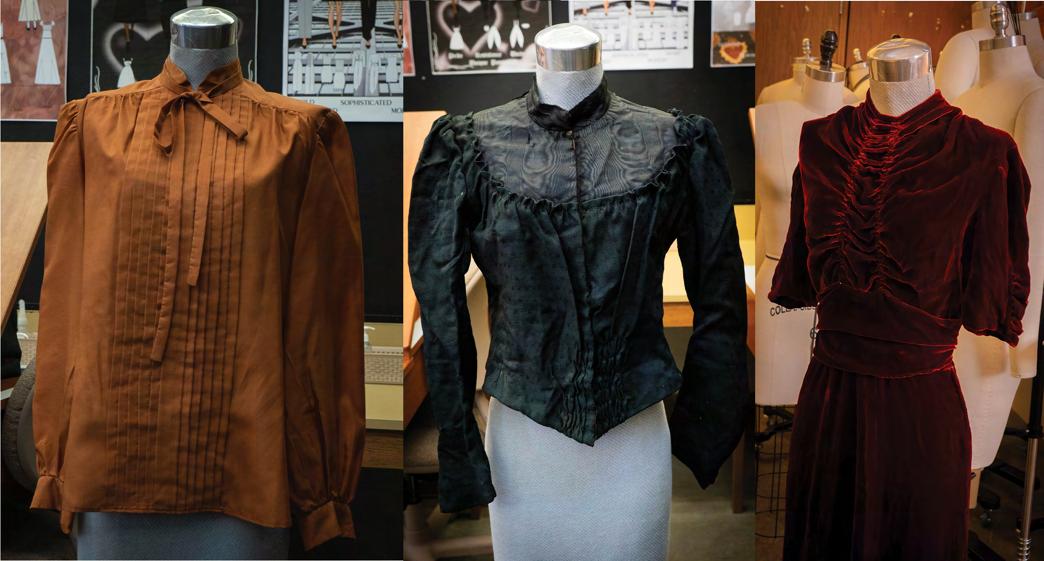
68 PULSE SPRING 2024 FASHION




Blurring The Line
As time has progressed, it is safe to say that the idea of masculine and feminine clothing is being challenged by the new minds of the fashion industry. “I love, you know, people who can walk that line and kind of flip back and forth,” Eklund says. “And just like, ‘What are you feeling today?’ And that’s what you’re gonna wear. I love that, and I think it’s super inspiring.”Walking the line between gendered fashion has become more popular in trends today. “You do see a lot more androgynous wear,” Whiting says regarding current fashion trends. “Which, totally down for that, and then you see the crossing, manipulating, ignoring of the gender division of clothes. Which is super fun.”
The gender fluid look is becoming a target market for brands. “We’re seeing more and more brands do that,” Eklund says. “And it’s amazing, because, you know, it’s just ‘What’s your body?’ Not ‘What’s your gender?’ Like, okay, take your measurements, and here’s the size you are. It’s not about, ‘Oh, well, men, it’s, you know, a 32-34, and for women, it’s the size, you know, 14.’ No, it’s just take your measurements and here’s the chart. It doesn’t matter where you’re at with gender, which I think is really nice. It, you know, levels the playing field.”
The prominence of the look on the racks may be in part due to the representation it’s getting in the media. “I feel like there’s a lot of very prominent celebrities that have been de-stigmatizing wearing clothing that isn’t typically seen on your gender…” Sophia Angstrom, a junior majoring in theater design and production, says. “I think it’s fantastic. I think everyone should wear whatever the hell they want and not be judged for it.”
Harry Styles, a famous musician and dabbling actor is a prominent example in pop culture today. Previously known as the heartthrob ladies’ man in One Direction, Styles is now recognized for his personalized suits, copious amounts of rings, dresses and feminized red carpet looks. While on tour for his studio album “Fine Line,” fans used his style as inspiration, showcasing all types of androgynous wear across the world.
Kurt Cobain, head singer and songwriter of Nirvana, was a roaring example of androgyny from the 90s. “Cobain was fearless when it came to dressing,” Mina Dragoni writes for L’Officiel. “He would often take to the stage in floral gowns or leopard jackets to emphasize the fact that he was unconcerned with the limitations of gender.” Cobain was widely known for challenging the status quo of the music industry, but with that rebellious spirit, he also challenged the stigma around gendered clothing.
“It’s very interesting to kind of look at historical figures that blurred those lines,” says Pringle. Celebrities like Harry Styles and Kurt Cobain are prominent figures in the public eye, they make perfect models to display the controversial blurring of lines between masculine and feminine fashion. As we look at the history of fashion over time, it is important to remember that clothes can really represent whoever is wearing them, regardless of gender. “I think that’s one of the amazing things about clothing is you can look through pictures from a really long time ago [and] if someone feels confident, they look amazing, no matter what,” Eklund says.
SPRING 2024 PULSE 69
YOUR FUTURE IN FASHION STARTS HERE
APPAREL, TEXTILES, & MERCHANDISING MAJOR
Combine creative, technical, and business knowledge to become a fashion industry leader of tomorrow.
Job prospects: Buyer, Merchandiser, Fashion Trend Analyst, Assistant Designer, Product Developer, Entrepreneur and more.
APPAREL, TEXTILES, AND MERCHANDISING (ATM)
The Apparel, Textiles and Merchandising department at Central Washington University offers fields of study that prepare students to become leaders in the fashion industry.
FASHION MARKETING SPECIALIZATION
Prepare yourself for a career in the global field of fashion marketing; exploring strategies, branding, consumer behavior and more.
Job prospects: Fashion Marketing and Promotions, Styling, Social Media Management, Editorial Communications, and Fashion Journalism.
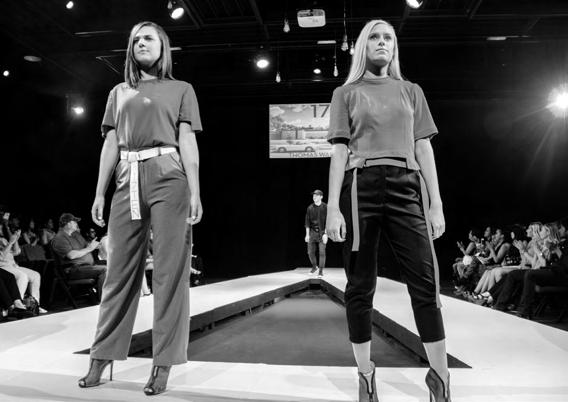

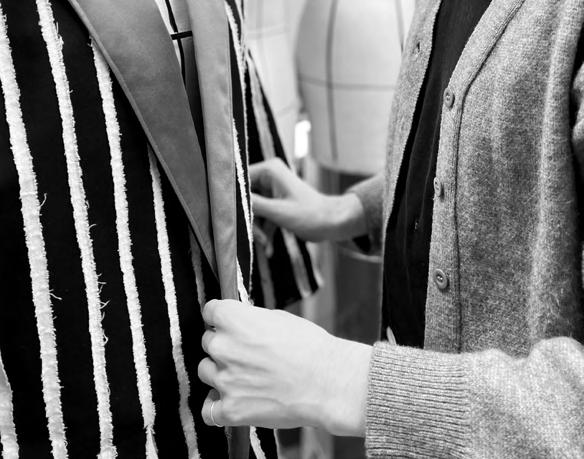
APPAREL DESIGN MINOR
Study the application of artistic and creative design elements, selection, and use of textiles, and the techniques for transforming design concepts into garments.
TEXTILES, & MERCHANDISING MINOR
Learn the basics of the apparel industry to enhance your business or creative-related major, in 21 credits.


70 PULSE SPRING 2024 OUR TOWN
BEST
AWARD WINNING PROFESSORS SMALL CLASS SIZES CWU is an EEO/AA/Title IX Institution. For accommodation email: DS@cwu.edu. APPAREL, TEXTILES, AND MERCHANDISING CENTRAL WASHINGTON UNIVERSITY andrea.eklund@cwu.edu • cwu.edu/apparel-textiles •@cwu atm
VALUE COLLEGE
APPAREL,


If you have spent any time on the internet in recent years, it is likely that you have encountered the concept of ‘furries’ before. Pop culture often pokes fun at this niche of individuals, but it’s time to let the people behind the masks speak. To learn more and dispel some common stereotypes, PULSE spoke with two individuals who engage with the furry community.
What exactly is a furry, and why do they do what they do? According to Joshua Mudd, a self-identified furry, it can be defined as “someone who takes an interest in the art of anthropomorphic animals, so animals that could talk, would walk on two legs, anything they could do like a human can.”
One of the first steps in becoming a furry is creating what is known in the community as a “fursona,” a kind of character (usually resembling a human-like version of a real or mythical animal) that encompasses all that the individual wishes their furry identity to be. These can be animal versions of the person themselves, or completely independent of who they identify as in real life.
Stepping Out
Levels of engagement in the furry community can look completely different from person to person. Some people choose to simply draw or commission these characters and leave their activity at that, while others take it a step further. For Mudd, his first introduction to the hobby was through a video game YouTuber who recorded content in something called a “fursuit,” a wearable costume created to resemble an individual’s fursona. This eventually led


story by May Borges and Lilly Montgomery photos by Gracen Bayer design by Lizeth Valdes

to Mudd creating his own fursona and acquiring a partial fursuit that lets him transform into Kawaffles, a silver fox.
For Noah Lux, a third-year film major at CWU, participating in the furry community looks completely different.
“I don’t really self identify heavily as a furry just because the community is very interesting to me,” Lux says. “It doesn’t connect to me in the same way that others do. I do enjoy it for different reasons. “
Lux shares that although he does not personally identify with the furry community, he is still able to engage with the concept of anthropomorphized animal characters. “I do have a mascot… He’s a white-bellied sea eagle named Tori.” Although this mascot is not a version of himself, as some furries may view their fursonas, Lux still has a personal connection with Tori. “For me, it’s less of a mirror of who I am and more of an extension of me,” Lux says.
Lux’s interactions with the furry community are largely businessmotivated. “I run a business within the fandom,” Lux says. “I sell and make fursuits and art and all sorts of stuff.”
This market that Lux has been able to tap into is lucrative, and the intense process of creating art and suits for buyers coupled with high demand can make price tags skyrocket.
“Prices can range from $5,000 to even $45,000 depending on the artist who makes it,” says Lux. Projects can take months or even years to complete, and can be made from a variety of differ ent materials. “I like the high-density project foam as opposed to Walmart, because Walmart foam can tear,” Lux


says, adding that poor quality materials are “not optimal if you're trying to sell a suit for a lot of money.”
“Isn’t that, like… a sex thing?”
Despite the support that the community shows for its fellow members, prejudice and false negative assumptions still run amok. From verbal harassment on campus to assumptions that their activities are inherently sexual, the furry community experiences a significant amount of prejudice and judgment. Although there are some people who choose to engage with the community in a sexual way, Mudd says that those individuals are a “very loud minority” and do not make up a large portion of the community as a whole.
According to Lux, another common assumption made is that he and other furries believe themselves to actually be animals. “I am just a guy in a suit,” Lux says. “It is perpetuated in this idea that it is sexual, and just assuming all these things. Many furries are anti-zoophilic, it is not a fetish.”


Em-paw-erment
Despite negative stigma and assumptions continuing to be made about its members, the furry community stands strong and proud. It is a source of passion, happiness and safety for many, and a few adverse opinions will not deter this group from engaging with that which they love.
Mudd shares that one of the biggest appeals of creating fursonsas and donning fursuits is the anonymity that comes with it. “A lot of people in the fandom are shy. It’s hard for them to portray themselves as themselves, you know? So this gives them an open space to do so.” By adopting these secondary identities, individuals are able to step out into new spaces online or in person with heightened comfort and confidence.
“Everyone should be able to like what they want, and there is no reason to judge people for their likes,” Lux says. “No person will make me give up my happiness because it is weird.”
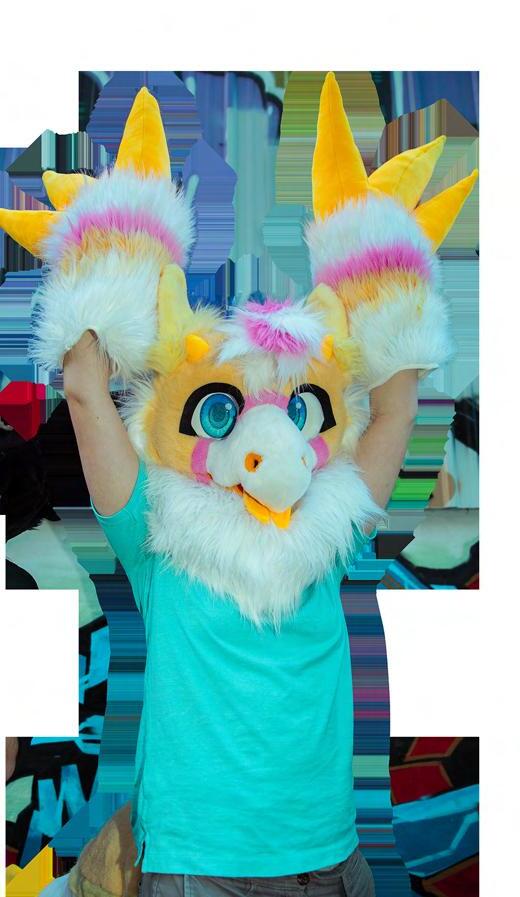
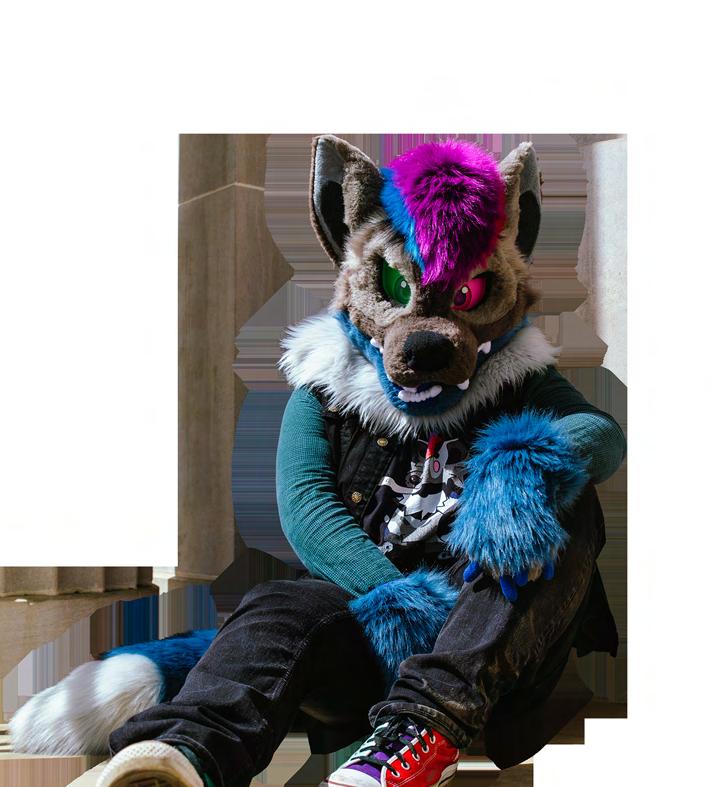

AFTER DARK





 photos by Andy Rios design by Ileana Rea Martinez
A flick of the lighter. A quick puff of smoke. Inhale. Exhale. “Ahh.”
The cannabis plant — otherwise referred to as marijuana, weed, bud or Mary Jane — has been around for centuries. The dried, leafy green buds from the plant can elicit different effects that intrigue a range of consumer needs, as well as societal stigmas.
Marijuana Misconceptions
“I mean, if you’re a stoner you’re lazy…” Dave Hubbard says, a lead budtender for The Fire House and The Station dispensaries in Ellensburg. “You get that all the time, you’re stupid…I think the biggest [stigma] is just laziness.”
The cannabis industry has its fair share of stigmas. This has been a common thread throughout history. Propaganda surrounding marijuana began to surface in the 1920’s and 1930’s.
“After the Mexican Revolution of 1910, Mexican immigrants flooded into the United States, bringing with them the recreational use of marijuana,” according to Alexander Campbell King Law Library website. “The drug became associated with the immigrants and the fear and, in turn, prejudice about the newcomers became associated with marijuana.”
Whether they are directed at those who partake or at the product itself, there are plenty of opinions.
“[Many] still think it’s a hard drug, like ‘Oh, you smoke weed you must do all this other stuff,’” says Aleana Bower, a budtender at The Fire House and The Station dispensaries in Ellensburg. “That’s not the case.”
Regardless of any explanation or excuse, Hubbard expresses that stigma will likely always be present within the cannabis industry.
“You can try arguing with them all you want, but I mean, the only thing I tell them is try it…” Hubbard says. “You can tell someone whatever, but until they try it and actually see, you know, it’s stigma and mindset.”
The Power of Plants
Cannabis “is an important herbaceous species originating from Central Asia, which has been used in folk medicine and as a source of textile fiber since the dawn of times,” according to an article from the National Library of Medicine entitled “Cannabis sativa: The Plant of the Thousand and One Molecules.”
Within each cannabis plant lives cannabinoids. Cannabinoids are responsible for the high that is often associated with marijuana.
“The word cannabinoid refers to every chemical substance, regardless of structure or origin, that joins the cannabinoid receptors of the body and brain…” according to the Alcohol and Drug Foundation (ADF).
Cannabinoids elicit effects within the human body by interacting with specific receptors within the central nervous system.
“To stimulate these receptors, our bodies produce molecules called endocannabinoids, which have a structural similarity to molecules in the cannabis plant…” Peter Grinspoon says in an article with Harvard Health Publishing. “The cannabis plant, which humans have been using for about 5,000 years, essentially works its effect by hijacking this ancient cellular machinery.”
The two most common cannabinoids are delta-9-tetrahydrocannabinol (THC) and cannabidiol (CBD). While these cannabinoids are increasingly similar in terms of chemical structure, they have vastly different effects.
“THC is the psychoactive part of it, that’s the part that’s going to get you stoned,” Bower says. “CBD is more of the relaxing,
74 PULSE SPRING 2024 AFTER DARK
anti-inflammatory, calming, anti-anxiety and that’s non-psychoactive so the CBD itself isn’t going to get you that stoned, but it’s going to have health benefits.”
Cannabis plants, while identical in structure, can come in different forms. In addition to THC and CBD, there is also the distinction between cannabis sativa and cannabis indica. The difference is important to understand because they can elicit different effects depending on what the user is looking for.
“So I always say sativa is more silly and giggly and awake…” Bower explains. “Indica is more in the couch, more relaxing. Definitely good for sleep.” While these are general guidelines, it is important to note that cannabis can affect everyone differently.
“[For] some, you know, indica might make someone feel like they’re on sativa… we all have different body chemistry,” Hubbard says. “So the way weed affects me is gonna be different than how it affects you.”
Weed in Washington
Washington state has over 600 marijuana dispensaries, according to the Washington State Cannabis website. Ellensburg is home to three.
Since the legalization of marijuana for recreational use started in 2012, the cannabis industry has only grown, and so has consumer usage.
Hubbard, who works for two dispensaries in the area, says the clientele ranges from the ages of 21 to 80. “I’d probably say, I mean we’re a college town, so 21 to 25/26 [is most popular],” he says.
According to a Monitoring the Future study from 2022, roughly 44% of young adults polled (ranging from the age of 19 to 30) had used marijuana for non-medical purposes in the past year. The study also reported 29% of adults using marijuana monthly, whereas 11% partake daily.
Timeline
In the 17th century the U.S. encouraged the growth of hemp for the production of products such as clothing, rope and sails, according to a marijuana timeline published by PBS.
In 1937 Congress passed the Marijuana Tax Act which was responsible for the criminalization of marijuana for recreational use. From this point forward possession of marijuana was restricted to specific authorized users.
Congress passed the Boggs Act in 1951. This act set mandatory sentences for drug convictions. According to the Drug Enforcement Agency (DEA), convictions were set to “two to five years for first offenders along with a fine up to $2,000, five to 10 years for a second offense, and 10 to 15 years for any subsequent offenses.”
In 1970 the Comprehensive Drug Abuse Prevention and Control Act and National Organization for the Reform of Marijuana Laws (NORML) was established. NORML is a non-profit public-interest advocacy group that was founded with the hope of aiding the fight toward marijuana decriminalization and continues to work for reform of federal and state marijuana legislature, according to the NORML website.
A committee was formed in regard to marijuana policy under President Richard Nixon. In 1972 after two years, the committee, formally known as the Shafer Commission, issued their report titled “Marijuana: A Signal of Misunderstanding.” This report formally advised Congress to decriminalize personal possession of marijuana.
California voters passed the Compassionate Use Act in 1996, which made California the first state to legalize marijuana for medical use.
In 2012 Washington and Colorado were the first two states to approve adult-use recreational marijuana measures.
Below is a map which depicts all advancements the industry has made since 2012.
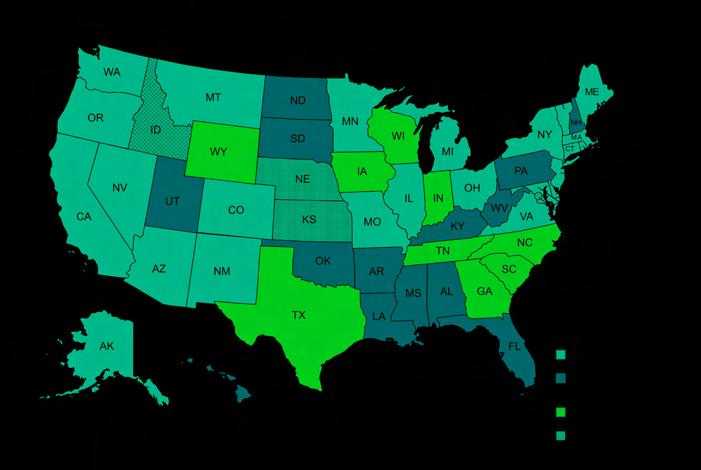
MAP TO MARIJUANA
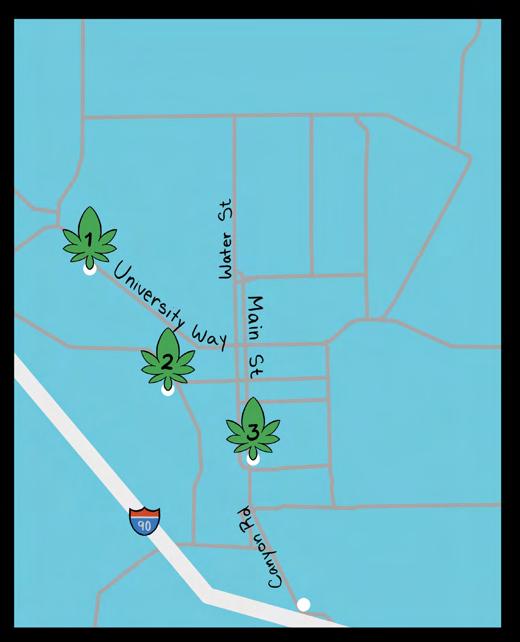

Green Shelf
Address: 400 S Main St, Ellensburg, WA 98926
Hours: Sunday-Thursday 9 a.m. to 9 p.m. & Friday-Saturday 9 a.m. to 10 p.m.

The Station
Address: 1514 W University Way, Ellensburg, WA 98926
Hours: Sunday-Thursday 9 a.m. to 9 p.m. & Friday-Saturday 9 a.m. to 10 p.m.

The Fire House
Address: 1714 S, 1714 Canyon Rd, Ellensburg, WA 98926
Hours: Sunday-Thursday 9 a.m. to 10 p.m. & Friday-Saturday 9 a.m. to 11 p.m.
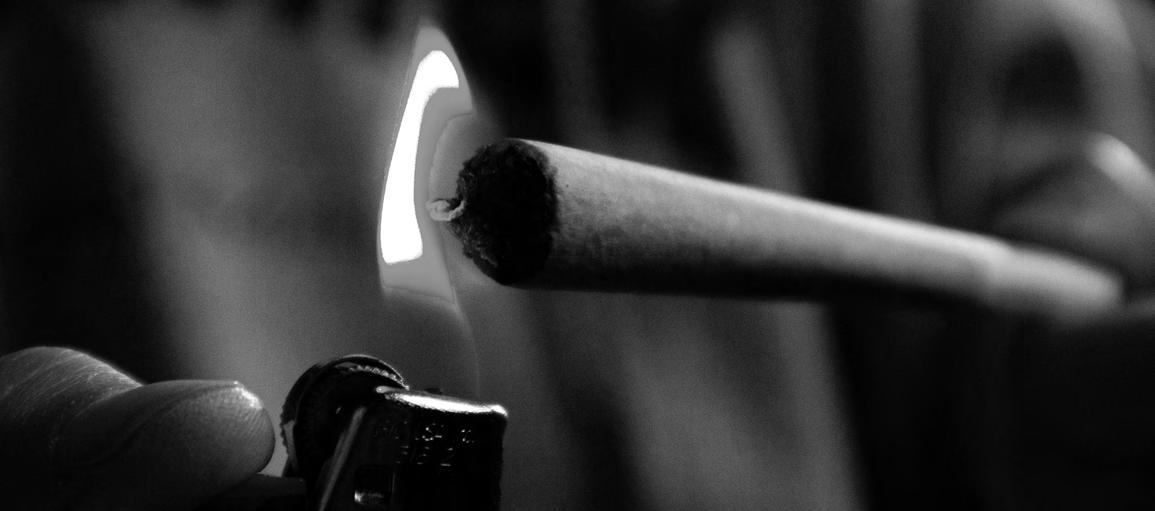
76 PULSE SPRING 2024 AFTER DARK
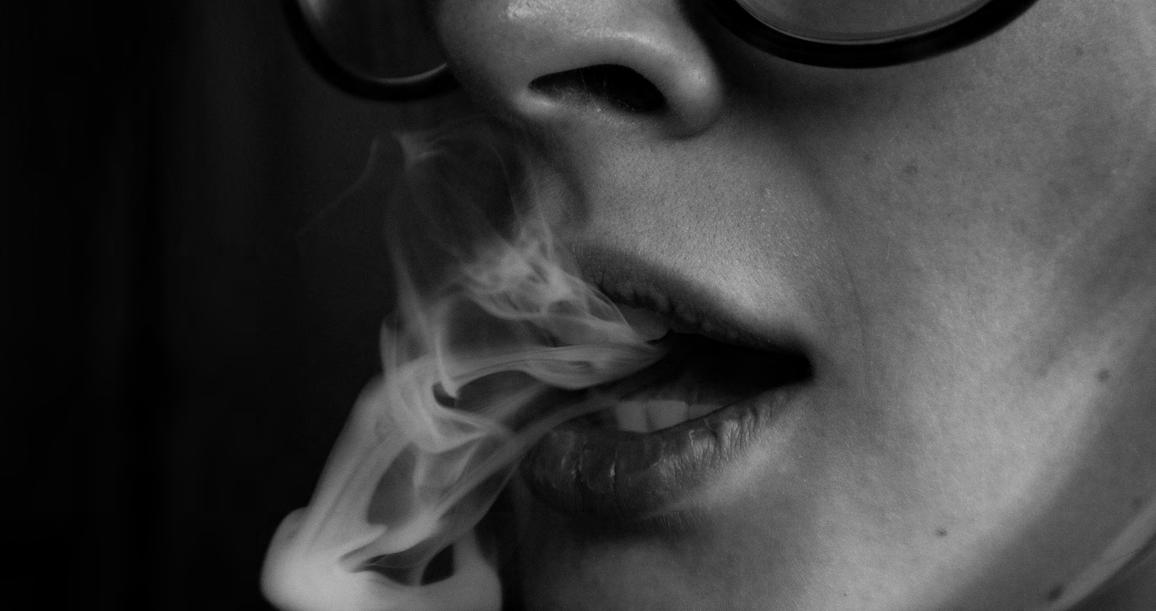
DOOBIE DISCOUNTS
Green Shelf
Tuesday
Student discounts
The Station & The Fire House
Everyday
Happy Hour: 10% off everything 9-10 a.m. and 9-10 p.m.
10% off for Veterans
Exempt from tax and 10% off with verified medical card
Tuesday
10% off students with ID
10% off Phat Panda products
Wednesday
10% off all wax
$11 3.5g flower
$9 1g concentrates
Friday
10% off all cartridges
Sunday
10% off seniors (60+)
Rewards
After 10 visits you get 15% (up to $15) off your next purchase




78 PULSE SPRING
 story by Gunner Stuns photos by Dominick Nagle design by Lizeth Valdes Editor-In-Chief’s Tip
The feeling crashes over you like a wave against the shore. Your stomach roars for something good to eat, even though the last thing you want to do is get up from your comfy lounging spot. Carefully, you tiptoe through darkened hallways so as not to awake anyone nearby, slinking into the kitchen to perform your culinary task. Pulling open the door to your refrigerator, your face is suddenly bathed in the dull yellow light of options aplenty. How do you choose? While the ways you can amend your problem are bountiful, there is one thing that’s undeniable– you have a case of the midnight munchies. To help you solve your culinary conundrum, PULSE polled students on their favorite types of midnight snacks and provided recipes for you to give a try.
The People’s Pie Chart
Fruits/Veggies

Classy Strawberries
-Strawberries
-Greek Yogurt
-Brown Sugar
Dip the strawberries in greek yogurt, then finish up with a garnish of brown sugar.

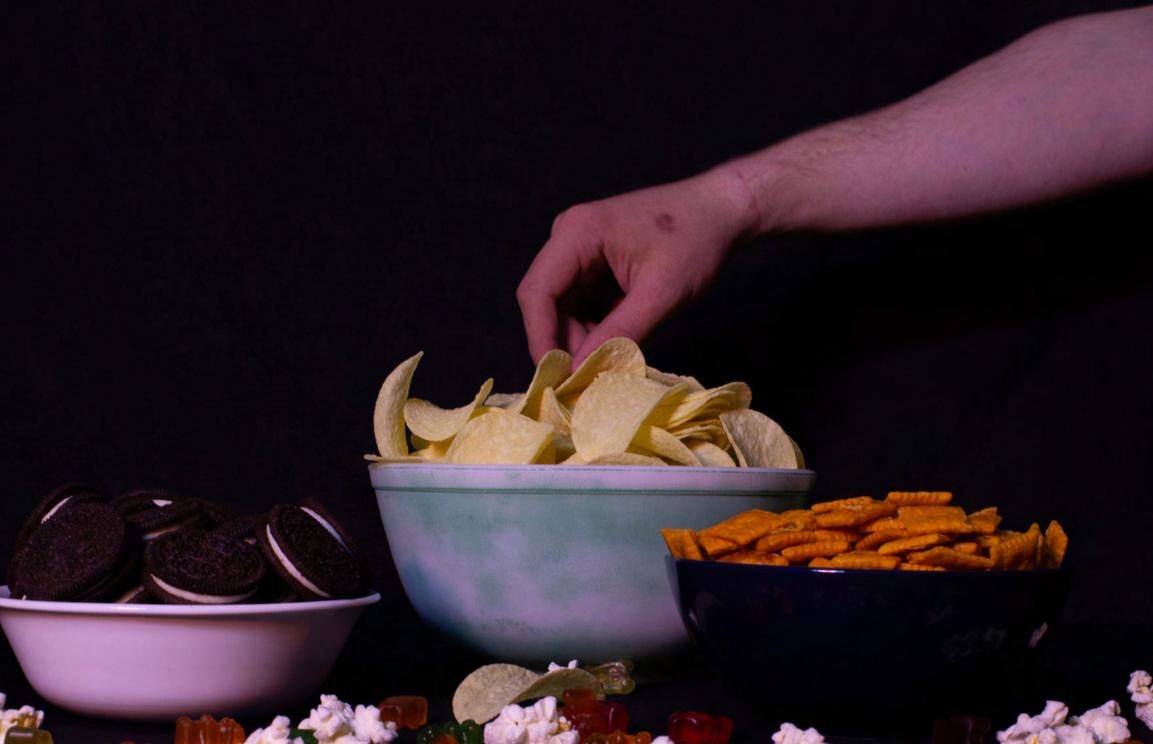
Full Meal/ Leftovers Sweets Chips/Crackers 4.0% 30.0% 30.0% 36.0% SPRING 2024 PULSE 79