SPRING 2018 | ISSUE ONE
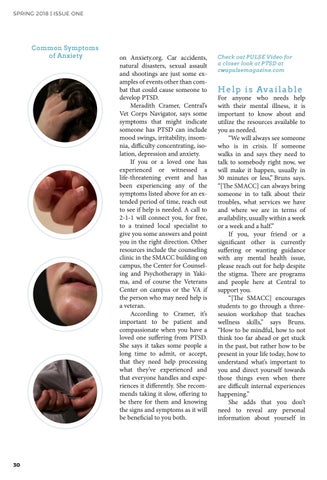
Common Symptoms of Anxiety
30
on Anxiety.org. Car accidents, natural disasters, sexual assault and shootings are just some examples of events other than combat that could cause someone to develop PTSD. Meradith Cramer, Central’s Vet Corps Navigator, says some symptoms that might indicate someone has PTSD can include mood swings, irritability, insomnia, difficulty concentrating, isolation, depression and anxiety. If you or a loved one has experienced or witnessed a life-threatening event and has been experiencing any of the symptoms listed above for an extended period of time, reach out to see if help is needed. A call to 2-1-1 will connect you, for free, to a trained local specialist to give you some answers and point you in the right direction. Other resources include the counseling clinic in the SMACC building on campus, the Center for Counseling and Psychotherapy in Yakima, and of course the Veterans Center on campus or the VA if the person who may need help is a veteran. According to Cramer, it’s important to be patient and compassionate when you have a loved one suffering from PTSD. She says it takes some people a long time to admit, or accept, that they need help processing what they’ve experienced and that everyone handles and experiences it differently. She recommends taking it slow, offering to be there for them and knowing the signs and symptoms as it will be beneficial to you both.
Check out PULSE Video for a closer look at PTSD at cwupulsemagazine.com
H e l p i s Av a i l a b l e
For anyone who needs help with their mental illness, it is important to know about and utilize the resources available to you as needed. “We will always see someone who is in crisis. If someone walks in and says they need to talk to somebody right now, we will make it happen, usually in 30 minutes or less,” Bruns says. “[The SMACC] can always bring someone in to talk about their troubles, what services we have and where we are in terms of availability, usually within a week or a week and a half.” If you, your friend or a significant other is currently suffering or wanting guidance with any mental health issue, please reach out for help despite the stigma. There are programs and people here at Central to support you. “[The SMACC] encourages students to go through a threesession workshop that teaches wellness skills,” says Bruns. “How to be mindful, how to not think too far ahead or get stuck in the past, but rather how to be present in your life today, how to understand what’s important to you and direct yourself towards those things even when there are difficult internal experiences happening.” She adds that you don’t need to reveal any personal information about yourself in