ENGLISH ESSENTIALS

REX SADLER
SANDRA SADLER
VIV WINTER
Our primary purpose in writing this workbook is to develop essential English skills. However, we also aim to motivate students to engage with the way our language works and to build confidence in their own ability to communicate effectively.
Essential English Workbook 2 is divided into four key sections for maximum accessibility and flexibility:
• Part 1: Language
• Part 2: Spelling & vocabulary
• Part 3: Literature
• Part 4: Writing
The Language section is designed to extend students’ understanding and control of language. The basics of grammar and punctuation are presented in a relevant and meaningful sequence so that students gain confidence as they improve their language skills.
The Spelling & vocabulary section will enable students to improve their basic literacy skills. All the list words have been chosen because of their relevance to real-life experiences. Students will often encounter these words and they will need to be familiar with both their spelling and the meaning. A good number have been specially chosen to help them expand their vocabulary.
The Literature section aims to develop comprehension skills through a wide range of high-interest literary, personal and everyday texts. These include stories, poems, newspaper articles, information reports, film reviews, comic strips, advertisements and posters, as well as extracts from novels, autobiographies and non-fiction.
The Writing section has been created to enable students to become better writers. Each writing topic examines a different writing skill, genre or technique. Writing styles such as narrative, descriptive, persuasive, informative and instructive are featured. The use of writing models and photographs helps target and improve specific writing skills.
A separate Teacher Book provides answers to all the comprehension, language, spelling and vocabulary questions in the student workbook. It has been designed as a tool for assessing student progress.
Rex Sadler, Sandra Sadler and Viv Winter

A phrase is a group of words that does not include a subject or a finite verb. It needs to be part of a sentence to make sense. A phrase usually does the work of an adjective, an adverb or a noun and often begins with a preposition or a participle.
These three phrases need to be attached to a sentence to convey meaning: into the wilderness trapped by floodwaters in shining armour
Indicate which group of words is a phrase and which is a sentence.
1 Over the hills and far away
2 A few days ago
3 It was an exciting film
4 Walking along the beach
5 Guess who’s coming to dinner
6 There’s a fly in my soup
7 Below the surface
8 The storm rapidly approached
An adjectival phrase adds meaning to a noun or pronoun and does the work of an adjective. It may begin with a preposition or a participle. The girl with the silver earrings was dancing on stage.
The adjectival phrase starts with the preposition ‘with’ and describes the noun ‘girl’. Sitting quietly, the students were watching a movie.
The adjectival phrase starts with the participle ‘sitting’ and describes the noun ‘students’.
Identify the adjectival phrase and the noun it describes in each sentence.
1 The cave with pillars of stalagmites was visited by many tourists.
Adjectival phrase: Noun:
2 The grass under the gum tree is dying.
Adjectival phrase: Noun:
3 It was a pirate ship flying a black flag.
Adjectival phrase: Noun:
4 The old mansion on the hill had been abandoned long ago.
Adjectival phrase: Noun:
Some phrases add meaning to verbs. They may tell the time, place, reason, purpose or manner of an action. They are called adverbial phrases. Hidden treasure was found on the seabed (place)
The emergency crew worked through the night. (time) A car approached with great speed. (manner)
Identify the adverbial phrase and the verb to which it adds meaning in each sentence.
1 The sun had set beneath the hills.
Adverbial phrase: Verb:
2 The ambulance was travelling at great speed.
Adverbial phrase: Verb:
3 That novel was written by Roald Dahl.
Adverbial phrase: Verb:
4 The flags were fluttering in the breeze.
Adverbial phrase: Verb:
5 She rode her horse with great care.
Adverbial phrase: Verb:
A noun phrase is a group of words in a sentence that together behave as a noun. A noun phrase does the work of a noun. Like a noun, it can be the subject or object of a verb. The red brick house has been sold. (subject) I would like to buy the large ripe plums. (object)
Identify the noun phrase in each sentence and state whether it is the subject or object of the verb.
1 We hoped to win the first prize.
2 Our neighbour’s dog barks incessantly.
3 The glistening snow began to melt.
4 He loves eating juicy meat pies.
A clause is a group of words expressing a complete thought. Every sentence has at least one clause, and often has more than one. Each clause contains a subject and a verb. There are two types of clauses you will encounter: main clauses and subordinate clauses.
A main clause (also referred to as a principal clause or independent clause) is a clause that makes complete sense by itself. It can stand alone as a complete sentence. main clause
We enjoy surfing.
Some sentences may contain two or more main clauses joined by a coordinating conjunction. Both these clauses can stand alone as a sentence.
main clause
main clause
We enjoy surfing and we often holiday at a beach resort. Every sentence must have at least one main clause.
main clause
subordinate clause
The Titanic was on its maiden voyage in 1912 when it hit an iceberg, subordinate clause which sent it to the bottom of the Atlantic Ocean.
The statement ‘The Titanic was on its maiden voyage in 1912’ is the main clause and makes perfect sense by itself. The other two clauses that depend on it are called subordinate (dependent) clauses.
Unlike a main clause, a subordinate clause cannot stand alone or function by itself. While it does contain a subject and a verb, it remains incomplete without a main clause.
There are three types of subordinate clauses: adjectival clauses, adverbial clauses and noun clauses.
• An adjectival clause is a subordinate clause that does the work of an adjective. It describes a noun and begins with a relative pronoun such as who, whose, whom, which or that.
main clause
adjectival clause
Roald Dahl was a famous writer who had been a fighter pilot in World War II.
• An adverbial clause is a subordinate clause that does the work of an adverb. It can tell how, where, when or why. It begins with a subordinating conjunction such as because, when, while, since, after, until, before, although, if, as, etc.
adverbial clause
main clause
Since it was published in 1969, The Very Hungry Caterpillar has sold a copy a minute.
• A noun clause does the work of a noun. Like a noun, it can be the subject or the object of the verb. It often begins with a word such as that or what to link it with the main clause. main clause noun clause
Many people think that the Harry Potter movies are enthralling.
Each complex sentence below consists of a main clause and subordinate clauses. Your task is to break down the sentence into clauses.
1 Dracula’s appearance was terrifying because he possessed sharp fangs that drooped over his lower lip.
Main clause:
Adverbial clause:
Adjectival clause:
2 The captain realised that the ship was sinking.
Main clause:
Noun clause:
3 Planet Earth is very small when it is compared with the Sun, which is 300 0 00 times the size of our planet.
Main clause:
Adverbial clause:
Adjectival clause:
4 Many species of turtle are endangered because humans have slaughtered them.
Main clause:
Adverbial clause:
5 Although her first Harry Potter novel was rejected by twelve publishers, J.K. Rowling knew that it would become a bestseller.
Main clause:
Adverbial clause:
Noun clause:
6 When Shakespeare’s plays were first performed, all the female roles were performed by male actors, since acting was considered not proper for women.
Main clause:
Adverbial clause:
Adverbial clause:
7 Because their fur is very thick, polar bears can swim for hours in icy water.
Main clause:
Adverbial clause:
Nouns are naming words. There are four types of nouns: common, proper, collective and abstract. Most nouns in English are common nouns.
• A common noun is a word that names general items such as a person, animal, place or thing. It does not begin with a capital letter unless it starts a sentence. boy wife student river car beach leopard finger
• Proper nouns are used to name a specific person, place, animal or thing. They always begin with a capital letter.
Wednesday Amelia Mazda Tokyo Google
• Collective nouns are used to name a collection or group of similar people, places, animals or things.

a flock of birds a school of students a forest of trees a gang of thieves
• Abstract nouns name qualities, ideas, feelings and actions. love beauty hope speed honesty anger cowardice
Choose the correct proper and common nouns from the brackets to complete each sentence.
1 The is a huge in that flows through dense . (jungle, Brazil, river, Amazon)
2 The was sailing across the to when it hit an . (iceberg, America, Titanic, Atlantic)
3 The of the was who lived in . (Galileo, telescope, Italy, inventor)
4 The capital of is and it is the of from many cultures. (people, New Delhi, home, India, city)
5 is the highest in the and its is always covered in (snow, mountain, Mount Everest, summit, world)
6 The called was written by who lived all his in (Shakespeare, play, England, life, Macbeth)
7 crossed the in his the and saw the east of . (ship, Australia, coast, Endeavour, Cook, Pacific)
8 explored and nearly lost his in the freezing . (life, Antarctica, conditions, Mawson)
Select from the collective nouns in brackets to complete each sentence. The first one is done to help you.
to grapes as
to flowers. (bouquet, bunch)
to ships. (convoy, school)
to aircraft. (ar my, flight)
(f lock, pack)
dancers. (troupe, directors)
to spectators. (crowd, team)
lions. (pr ide, herd)
to books. (library, pack)
(colony, hive)
to stars. (orchard, galaxy)
(gaggle, pod)
Form
• A noun is singular when it indicates a single item. For example: city house potato life branch belief
• A noun is plural when it indicates more than one item. For example: cities houses potatoes lives branches beliefs
• Most nouns form the plural simply by adding -s to the singular form. apple—apples balloon—balloons farmer—farmers
• For nouns ending in ‘s’, ‘sh’, ‘ch’, ‘x’, ‘ss’ or ‘z’, add -es to form the plural. wish—wishes box—boxes glass—glasses lunch—lunches bus—buses buzz—buzzes
• Nouns that end in ‘ay’, ‘ey’ or ‘oy’ form their plural by just adding -s tray—trays valley—valleys boy—boys
• Nouns that end with a consonant followed by a ‘y’ form their plural by changing the ‘y’ to ‘i’ and adding -es city—cities army—armies lady—ladies
• Most nouns that end in ‘f’ or ‘fe’ change their ending to -ves to form the plural. wife—wives calf—calves thief—thieves
(Main exceptions: dwarfs, beliefs, chiefs, roofs, cliffs)
• Most nouns that end in ‘o’ form their plural by adding -es. hero—heroes volcano—volcanoes tomato—tomatoes (Main exceptions: pianos, sopranos, photos, solos)
• If a singular noun ends in ‘oo’ or ‘io’, just add -s to form the plural. igloo—igloos ratio—ratios studio—studios radio—radios
Complete the phrases by changing the nouns to their plural form.
1 thief: a gang of 2 butterfly: a swarm of 3 match: a box of 4 wolf: a pack of 5 baby: a nursery of
6 story: an anthology of 7 hoof: a thunder of 8 glass: a pair of
9 tomato: a crop of 10 horse: a stable of
11 mosquito: a swarm of 12 mango: a crate of 13 compass: a pair of 14 lily: a bunch of 15 loaf: a basket of 16 watch: a display of 17 potato: a bag of 18 cherry: a bowl of
19 mattress: a pile of 20 chimney: a row of
21 photo: an album of 22 church: a city of 23 dish: a set of 24 pony: a string of 25 friend: a circle of
Rewrite the sentences to show the nouns’ plural forms.
26 gypsy: a caravan of 27 kangaroo: a mob of 28 strawberry: a punnet of 29 story: a book of 30 knife: a set of
1 The librarian collected the diary and dictionary from the shelf.
2 The student made a speech to the assembly.
3 The echo reverberated around the valley and cliff.
4 Our army together with our navy won a great victory.
5 The student attended class at the university.
Give the plural form of the following nouns, then arrange them in pairs in the categories given below. kidney dinghy dragonfly artery monkey blackberry peach valley canary galley rose fox beach daisy turkey caterpillar
Fruits:
Boats:
Flowers:
Places:
Insects:
Parts of the body:
Birds:
Animals:
Some nouns have irregular plurals. Some of these plurals have gradually evolved over the centuries, while others are derived from Latin and Greek words that were introduced into the English language. The following rules and examples will give you a better understanding of these irregular plurals.
• Instead of adding -s to form the plural, some nouns change their spelling or add letters. woman—women man—men child—children tooth—teeth foot—feet ox—oxen louse—lice mouse—mice goose—geese
• Some nouns have the same form for both the singular and the plural.
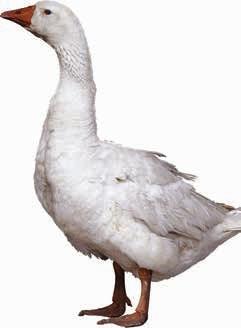
deer sheep salmon trout aircraft pyjamas scissors pliers pants trousers species police
• If a noun ends in ‘um’, the plural is generally formed by changing ‘um’ to -a datum—data stratum—strata curriculum—curricula millennium—millennia medium—media bacterium—bacteria (Some exceptions: hoodlum hoodlums, possum possums, tantrum tantrums)
• Many nouns that end in ‘us’ have their plural formed by changing ‘us’ to -i cactus—cacti fungus—fungi stimulus—stimuli nucleus—nuclei radius—radii syllabus—syllabi (Some exceptions: virus viruses, campus campuses, platypus platypuses)
• Nouns ending with ‘is’ have these letters changed to -es to form the plural. crisis—crises basis—bases analysis—analyses thesis—theses oasis—oases hypothesis—hypotheses
• Nouns ending with the letter ‘a’ usually have -e added to form the plural. (Today, adding -s instead of -e to many of these words is also acceptable usage.) larva—larvae alga—algae vertebra—vertebrae pupa—pupae formula—formulae persona—personae
• Many nouns ending with ‘on’ form their plural by changing the ‘on’ to -a. criterion—criteria phenomenon—phenomena
• The plurals of compound nouns are formed by adding -s to the significant word. mother-in-law—mothers-in-law passer-by—passers-by vice-president—vice-presidents
Using the above rules and examples as a guide, write the singular form of the irregular nouns.
1 cacti
2 salmon
3 syllabi
4 fathers-in-law
5 curricula
6 stimuli
7 termini
8 hypotheses
9 memoranda
10 formulae
11 radii
12 theses
Complete the sentences by using the plural form of the nouns in brackets.
1 The old farmer owned a flock of (goose) and a team of (ox).
2 The various news (medium) were collecting (datum) about the new self-driving cars.
3 In the desert, many of the (oasis) were surrounded by trees.
4 The (woman) and their (sister-in-law) were playing (domino).
5 It is important for (child) to look after their (tooth).
6 The athlete fell and injured his (vertebra) when one of his (foot) knocked over a hurdle.
7 The new government faced many financial (crisis).
8 In the laboratory, the scientists were studying specimens of (bacterium) and (fungus).
9 There are four older rock (stratum) in the cliff face.
10 The new applicant satisfied all the (criterion) for the job.
11 Some of the students had head (louse).
12 There were (deer) in the park and (salmon) in the river.
13 Icebergs are interesting natural (phenomenon).
14 Julius Caesar lived more than two (millennium) ago.
15 Blue-green (alga) in the river had caused the death of thousands of (trout).
16 Some (species) of rhinoceros are in danger of extinction.
Some nouns are onomatopoeic. That is, they are an imitation of the sounds associated with the thing they represent. These nouns can be used to indicate the sounds made by humans, animals, objects or devices. For example: buzz crash babble snap purr cackle moo pop
Complete each expression by adding a suitable sound word from the list. Use each word once only.
blast rustle beating crackle strumming clapping splintering wailing clatter tramp ringing flapping clanking blare slam ticking howling popping dripping twittering
1 the of flags
2 the of burning twigs
3 the of a siren
4 the of drums
5 the of wood
6 the of a door
7 the of a guitar
8 the of an audience
9 the of a tap
10 the of birds
11 the of an explosion
12 the of silk
13 the of dishes
14 the of boots
15 the of a phone
16 the of a chain
17 the of a trumpet
18 the of a clock
19 the of the wind
20 the of corks
Complete each sentence by adding onomatopoeic nouns from the brackets. Use each word once only.
1 The of horns, the of brakes, the of engines and the of sirens are the sounds of a busy city. (squeal, tooting, wailing, throbbing)
2 At the river we heard the of frogs, the of bees and the of birds. (chirping, croaking, buzzing)
3 The explorer woke to the of apes, the of lions and the of elephants. (trumpeting, gibbering, roaring)
4 In the forest we could hear the of wolves, the of owls and the of beetles. (droning, howling, hooting)
5 The soldier was terrified by the of bullets, the of artillery and the of jets. (zooming, pinging, booming)
6 On the farm we could hear the of ducks, the of horses and the of lambs. (bleating, quacking, neighing)
Complete Jessie Pope’s poem ‘Noise’ with appropriate onomatopoeic nouns from the list. The first letters are given. Choose carefully and make sure you use each noun once only.
clank roar crash whoop rattle hubbub thud slam boom throb tattoo rush crack din

I like noise.
The w of a boy, the t of a hoof,
The r of rain on a galvanized roof,
The h of traffic, the r of a train,
The t of machinery, numbing the brain,
The switching of wires in an overhead tram,
The r of the wind, a door on the s ,
The b of the thunder, the c of the waves,
The d of a river that races and raves,
The c of a rifle, the c of a pail,
The strident t of a swift-slapping sail –
From any old sound that the silence destroys, Arises a gamut of soul-stirring joys.
I like noise.
‘Noise’ by Jessie Pope
Adjectives describe people, places, animals and things. They add colour, size, shape, feeling and many other qualities to nouns. Adjectives are especially important when describing characters. Good writers choose their adjectives carefully to create clear pictures for their readers. Look at how two well-known authors use adjectives to describe the faces of their characters. The first is of Dally from The Outsiders by S.E. Hinton, and the second is of the formidable Miss Trunchbull from Matilda by Roald Dahl.

He had an elfish face, with high cheekbones and a pointed chin. She had an obstinate chin, a cruel mouth and small arrogant eyes.
The following adjectives describe appearance. Arrange them under their correct headings. There should be four words in each column. bloodshot spiky
Create adjectives from the words in brackets and complete the phrases. The first one is done as an example.
a result (benefit) 2 a reply (caution) 3 a description (graph) 4 a watercourse (nature) 5 a name (fiction) 6 a reward (finance) 7 a decision (haste)
a act (malice)
a playground (noise)
equipment (gymnast)
setting (peace)
(occasion)
(offend)
(influence)
Write the adjectives next to their meanings below.
Write each negative trait listed below next to the
Look at these sentences.
Jack is tall.
Jack is taller than Harry.
Jack is the tallest boy in the class.
The first sentence is a simple statement about one person. The second sentence makes a comparison between two people. The third sentence compares more than two people.
Adjectives have three degrees of comparison:
• positive (one): tall
• comparative (two): taller
• superlative (more than two): tallest

Irregular adjectives
• The usual method of forming the comparative is to add -er or -r
• The usual method of forming the superlative is to add -est or -st. tall—taller—tallest strange—stranger—strangest old—older—oldest
• When the positive form ends with ‘y’ preceded by a consonant, the ‘y’ is changed to ‘i’ before adding -er or -est. easy—easier—easiest angry—angrier—angriest
• When the positive form only has one syllable, ending with a consonant preceded by a single vowel, the consonant is doubled before adding -er or -est sad—sadder—saddest big—bigger—biggest
• When the positive form has more than two syllables, the words more and most are usually used. beautiful—more beautiful—most beautiful comfortable—more comfortable—most comfortable
Some adjectives do not follow the rules outlined above. The main exceptions are as follows. Positive Comparative Superlative good better best many more most little less least bad worse worst
Correctly add the positive, comparative or superlative form of each missing adjective.
1 Small is to smaller as big is to .
2 Happier is to as funnier is to funniest.
3 Good is to as is to worst
4 Rich is to as is to poorer
5 is to prettiest as lovelier is to
6 is to cleaner as dirty is to
7 Healthy is to as to sicker
8 is to least as more is to
9 Noisy is to as is to louder
10 Fast is to as is to slowest
When two persons or things are compared, the comparative form of the adjective is used. When more than two are compared, the superlative form is used.
Incorrect: The strongest of the two champions won the medal.
Correct: The stronger of the two champions won the medal.
Incorrect: This is the better of the three drawings.
Correct: This is the best of the three drawings. You should avoid using double comparatives or superlatives.
Incorrect: This hamburger is more tastier than the one I had yesterday.
Correct: This hamburger is tastier than the one I had yesterday.
Write the correct form of the adjectives in brackets.
1 This is the side of the street. (shady)
2 Of the three paintings, that one is the . (beautiful)
3 That must be the novel ever written. (weird)

4 Today’s science lesson was than yesterday’s. (interesting)
5 This is the dessert I have ever tasted. (delicious)
6 He is the cricketer in the club. (good)
7 She is the of the three children. (young)
8 Amy is the student in the class. (conscientious)
9 Her bike is than mine. (good)
10 Of all the team members, James had the chance of success. (little)
11 Bozo was the dog in the show. (friendly)
12 This film was the I had seen in a long time. (sad)
13 It was the thing he had ever done. (bad)
14 Your left hand is than your right hand. (strong)
Verbs show action. They are doing, being, saying and thinking words. A verb is the most important word in a sentence. Without a verb, no action can take place.
• A verb comprised of one or more words must agree with its subject in number and person. I run. She runs. You are running. They have been running.
• Note that when a verb is used in its infinitive form, it is preceded by ‘to’. to sing to ride to be to learn to fight to understand
Verbs create action and excitement
Action is created by using verbs. The short description below demonstrates the dramatic impact of verbs. Read the passage then write down all the verbs.

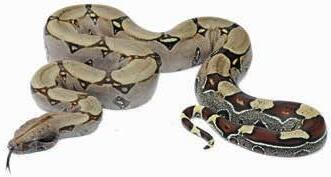
Harry sat up and gasped; the glass front of the boa constrictor’s tank had vanished. The great snake was uncoiling itself rapidly, slithering out on to the floor –people throughout the reptile house screamed and started running for the exits.
As the snake slid swiftly past him, Harry could have sworn a low, hissing voice said, ‘Brazil, here I come … Thanksss, amigo.’
• When the subject consists of a singular noun or pronoun, then the verb must be singular. Harry Potter is a student at Hogwarts school.
• Subjects joined by ‘and’ are usually plural. Harry Potter and Hermione are students at Hogwarts school.
• A collective noun takes a singular verb when it indicates a group of people or things regarded as one.
The Hogwarts staff teaches the art of magic. (The staff as a total unit is involved in the teaching of magic.)
• When a collective noun refers to individual members of a group of people or things acting independently, the verb is plural.
The Hogwarts staff have separate living quarters.
(The individual staff members are living independently of each other.)
• Singular pronouns such as ‘each’, ‘everyone’, ‘either’ and ‘neither’ are followed by a verb in the singular form.
Everyone at Hogwarts was learning magic.
• When a verb is separated from its subject by a phrase or other words, it should still agree with its subject, in singular or plural form.
The success of the Harry Potter books was phenomenal. (The singular verb ‘was’ agrees with the singular subject ‘success’ even though the phrase ‘Harry Potter books’ is attached to the subject.)
Choose the correct verb from the brackets to complete each sentence. The first one is done for you.
1 The students at Hogwarts (was/were) studying magic.
2 A knowledge of magical matters (was/were) important for Harry.
3 One of Harry’s friends (is/are) worried about his safety.
4 A set of wands (is/are) shown to Harry.
5 Games of Quidditch (was/were) played at Hogwarts.
6 Everyone in the class (has/have) enjoyed reading the Harry Potter novels.
7 A battle between good and evil (take/takes) place in the series.
Verbs indicate the time when an action takes place. There are three time periods: present, future and past. This aspect of a verb is called its tense.
• Present tense: I begin I am beginning
• Future tense: I will begin I will be beginning
Use the instructions in brackets to write a suitable form of the verb. The first one is done to help you. (Sometimes there is more than one answer.)
• Past tense: I began I have begun I had begun I was beginning were has
1 Harry a lightning bolt scar on his forehead. (present tense of to have)
2 Hagrid’s motorcycle once to Sirius Black. (past tense of to belong)
3 When Uncle Vernon (past tense of to try) to shoot at him, Hagrid (past tense of to bend) the end of the shotgun.
4 Some viewers (future tense of to find) the movies scary, but (future tense of to love) the special effects.