ENGLISH ESSENTIALS

REX SADLER
SANDRA SADLER
VIV WINTER WORKBOOK
Our primary purpose in writing this workbook is to develop essential English skills. However, we also aim to motivate students to engage with the way our language works and to build confidence in their own ability to communicate effectively.
English Essentials Workbook 1 is divided into four key sections for maximum accessibility and flexibility:
• Part 1: Language
• Part 2: Spelling and vocabulary
• Part 3: Literature
• Part 4: Writing
The Language section is designed to extend students’ understanding and control of language. The basics of grammar and punctuation are presented in a relevant and meaningful sequence so that students gain confidence as they improve their language skills.
The Spelling and vocabulary section will enable students to improve their basic literacy skills. All the list words have been chosen because of their relevance to real-life experiences. Students will often encounter these words and they will need to be familiar with both their spelling and the meaning. A good number have been specially chosen to help them expand their vocabulary.
The Literature section aims to develop comprehension skills through a wide range of high-interest literary, personal and everyday texts. These include stories, poems, newspaper articles, information reports, film reviews, comic strips, advertisements and posters, as well as extracts from novels, autobiographies and non-fiction.
The Writing section has been created to enable students to become better writers. Each writing topic examines a different writing skill, genre or technique. Writing styles such as narrative, descriptive, persuasive, informative and instructive are featured. The use of writing models and photographs helps target and improve specific writing skills.
A separate Teacher Book provides answers to all the comprehension, language, spelling and vocabulary questions in the student workbook. It has been designed as a tool for assessing student progress.
Rex Sadler, Sandra Sadler and Viv Winter
In English there are eight main parts of speech: noun, pronoun, adjective, verb, adverb, preposition, conjunction and interjection. Parts of speech explain how words work together in sentences.
PRONOUNS
Pronouns are used in place of nouns.
I me my you your he she it they their them
NOUNS
Nouns name people, places, things, creatures, feelings or qualities. student giraffe Olivia computer Africa freedom
ADJECTIVES
Adjectives describe nouns or pronouns. green tasty comfortable slippery hungry strong
PREPOSITIONS
Prepositions link a noun or pronoun to another word. above across below beneath during with into
CONJUNCTIONS
Conjunctions join words, phrases, clauses or sentences together. and but although because until however since while
VERBS
Verbs express all kinds of action. They are doing, being and having words. run sing be talk succeed fly have cry
ADVERBS
Adverbs add extra meaning to verbs, adjectives and other adverbs. slowly suddenly easily often soon early very
INTERJECTIONS
Interjections express an emotion or feeling. Wow! Ah! Oops! Alas! Hurrah!
What part of speech is each of the following words?
1 angry
2 oranges
3 and 4 arrive
5 courage
6 happily
7 slowly 8 into 9 Hey! 10 their 11 joyful 12 against 13 you 14 was 15 lazy 16 because 17 Ouch! 18 terrify
Choose words from the list to complete the sentences. near noisily volcanic they psst shuffled climbers and
1 The exhausted reached the mountain peak. (noun)
2 The old man along the road. (verb)
3 The ducks flew into the air. (adverb)
4 The students need to use paper pencil. (conjunction)
5 The cottage the river was flooded. (preposition)
6 ! Can you keep a secret? (interjection)
7 all enjoyed the school concert. (pronoun)
8 The eruption destroyed many homes. (adjective)
Identify the parts of speech of the words in bold.
1 We swam across the river.
2 The ugly duckling became a beautiful swan.
3 ‘Help!’ yelled the injured motorist
4 The tourist ordered fish and chips.
5 Yesterday he travelled by car to the city.
6 They waited patiently for the taxi.
7 The police arrested the robber
8 The hikers were entranced by the idyllic valley.
9 The audience was very pleased with their acting.
10 I wanted to buy a new coat, but it was too expensive.
Nouns are naming words. They are used to name people, places, things, creatures, feelings or qualities.
• People: friend, doctor, Amy, boy, mother
• Places: cinema, hospital, Brazil, school
• Things: rain, moon, December, soil
• Creatures: horse, eagle, spider, worm
• Feelings: anger, love, regret, joy
• Qualities: honesty, generosity, treachery
Now look at how Kenneth Grahame, in the first paragraph of The Wind in the Willows, has used nouns to create a vivid picture of the Mole doing his spring cleaning.
Identifying the nouns
Underline the nouns in this passage.
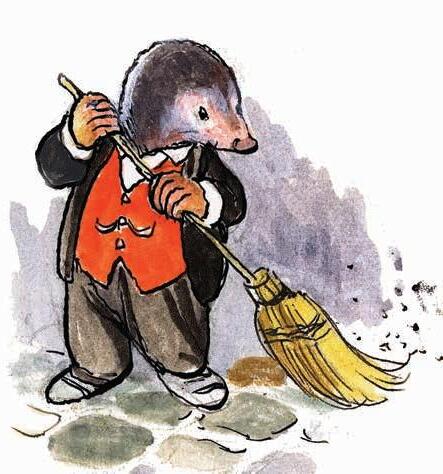

The Mole had been working very hard all the morning, cleaning his little home.
First with brooms, then with dusters; then on ladders and steps and chairs, with a brush and a pail of whitewash; till he had dust in his throat and eyes, and splashes of whitewash all over his black fur, and an aching back and weary arms.
from The Wind in the Willows by Kenneth Grahame
Place each noun in its correct category below.
book penguin bravery teacher hawk frog sailor bicycle hospital singer generosity helicopter elephant kindness hotel factory author freedom ladder university
People:
Creatures:
Places:
Things:
Qualities:
People
Choose the place that is most closely associated with each of the people given below.
laboratory church circus outer space observatory farmland jail nursery hospital court barracks library palace casino university bullring
1 soldier
2 clown
3 barrister
4 scientist
5 professor
6 queen
7 gambler
8 nurse
9 librarian
10 matador
11 baby
12 astronomer
13 congregation
14 prisoner
15 grazier
16 astronaut
Use the first-letter clues to identify the following creatures great and small.
1 A long-extinct reptile, the largest land animal ever known d
2 A small, vicious South American fish, dangerous to humans p
3 An animal often referred to as ‘king of the jungle’ l
4 An African wild horse that has black-and-white striped hair z
5 The largest sea bird, with a wingspan of three metres a
Nouns are words used to name people, places, things, creatures, feelings or qualities. There are four different kinds of nouns.
• Common nouns are words to name people, places, things or creatures. They do not begin with a capital letter unless they start a sentence.
boy car mother elephant river day shirt apple
• Proper nouns are used to name a specific person, place, thing or creature. They always begin with a capital letter.
Andrew Egypt November Toyota Mount Everest Peppa Pig
• Collective nouns are used to name a collection or group of similar people, things or creatures.
gang of thieves bunch of grapes pack of cards herd of elephants
• Abstract nouns are used to name feelings, emotions, qualities or ideas.
beauty hope speed fear truth freedom cowardice love
Common, proper, collective and abstract nouns are arranged in columns below. Choose the appropriate noun to fill the gap in each sentence. The type of noun required is indicated in brackets.
Common teacher heart shark helmet book house
Proper Harriet Mazda Shakespeare Paris Churchill Italy Collective forest range band team swarm congregation
Abstract energy friendship anger fright freedom heat
1 The praised the students for their good work. (common)
2 The capital of France is (proper)
3 A of bees entered the hive. (collective)
4 The caused the athlete to perspire. (abstract)
5 The human emotion of may cause conflict. (abstract)
6 The cyclist’s saved her from a severe head injury. (common)
7 A terrible caused his hair to stand on end. (abstract)
8 Many great plays were written by . (proper)
9 The visiting won the football match. (collective)
10 A with small print is hard to read. (common)
11 My best friend is called . (proper)
12 These hills were the home of a of outlaws. (collective)
13 Sprinting is an activity that uses a lot of (abstract)
14 The pumps blood around the body. (common)
15 is a popular make of car. (proper)
16 The church’s will now sing a hymn. (collective)
17 Many brave people have fought for their (abstract)
18 One of the most feared creatures of the sea is the (common)
19 During World War II, Winston led the British people. (proper)
20 A of trees is cut down every week to produce newspapers. (collective)
21 A good can last a lifetime. (abstract)
22 Our has a large veranda. (common)
23 A of mountains could be seen in the distance. (collective)
24 Rome is the capital of . (proper)
Choose the correct nouns from the brackets to complete each sentence.
1 Sometimes in may see a swimming in the . (Nile, crocodile, Egypt, travellers)
2 In ancient the on wore (masks, actors, Greece, stage)
3 is in the of the . (eye, beauty, beholder)
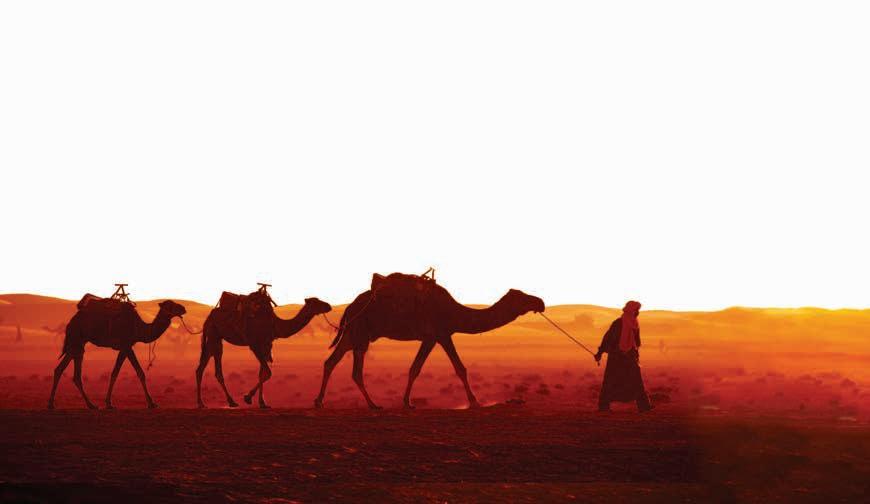
4 are sometimes called ‘ of the ’ because they can go for without drinking (water, desert, camels, weeks, ships)
5 makes the grow fonder. (heart, absence)
6 In the of , there are no main , only . (Venice, city, roads, canals)
• Proper nouns are the specific names we give to people, places, things and creatures. Proper nouns always start with a capital letter.
Tokyo France Sarah November Tuesday Indian Ocean
• Common nouns are names that belong to all objects of the same kind.
city country girl month day ocean
Find the common and proper nouns that match the clues below.
golf wallaby submarine Scotland Hyundai Michelangelo Vesuvius Sherlock Saturn Vienna Amazon oak prawn pasta oboe parmesan sugar Emily
1 the name of a planet
2 a precious metal
3 an animal that hops
4 a girl’s name
5 the name of a volcano
6 a famous artist
7 Italian food
8 a sweetener
9 a month of the year
10 a type of dance
11 a musical instrument
12 a river
13 a sport
14 a Roman amphitheatre
15 a department store
Washington Hollywood Colosseum gold
Tuesday Shrek Kmart Spain microscope April tortoise waltz
16 a type of cheese
17 a make of car
18 a slow-moving animal
19 bullfights are popular here
20 a cartoon character
21 a type of tree
22 a sea creature
23 a scientific instrument
24 an Amer ican president
25 a place of many film studios
26 a fictional detective’s first name
27 an underwater vessel
28 a day of the week
29 the capital of Austr ia
30 a part of the United Kingdom
Next to each country in the left-hand column, write the common noun that belongs to it.
Proper nouns
1 Italy
2 Scotland
3 Netherlands
4 Mexico
5 Russia
6 Australia
7 Norway
8 Egypt
9 India
10 France
11 Peru
12 Japan
Common nouns
llama
pyramids kilt
boomerang
champagne
kimono
tulips
caviar
sombrero
fiord
curry
pizza
The names of countries and cities are proper nouns. Match each capital city and country.
Madrid
Countries Capital cities
Netherlands China Sweden Spain

Countries Capital cities Egypt Canada England Greece
The name that describes the people who live in a country is also a proper noun. Next to each country, write the name for the people who live there. The first example is given to help you.
Country People Australia China Vietnam Russia Korea
Country People Japan Spain Switzerland Mexico Egypt Australians
• A collective noun is the word used for a collection or group of similar people, places, things or creatures.
a class of students a flock of sheep a clump of grass
• Abstract nouns name qualities, feelings, ideas, emotions, actions and events. They are things you cannot see or touch. honesty friendship wisdom peace history loyalty freedom respect
Completing phrases
Complete the following phrases by choosing suitable collective nouns from the list. Use each collective noun once only.
1 a of elephants
2 an of soldiers
3 an of photographs
4 a of bees
5 a of geese
6 a of directors
7 a of thieves
8 a of trees
9 an of musicians
a of ships
a of stars
a of kangaroos
of books
a of spectators
Choose from the collective nouns in brackets to complete the sentences.
1 The president assembled a of soldiers, a of ships and a of jets to prevent an enemy invasion. (fleet, squadron, battalion)
2 A of grasshoppers swarmed through the of trees, where the of cattle was grazing. (herd, orchard, plague)
3 A of actors and a of singers entertained the of young students. (class, choir, troupe)
4 He purchased a of flowers, an of poetry and a of cards. (pack, bouquet, anthology)
5 The of sailors watched the of seagulls searching for a of fish. (shoal, crew, flock)
6 The sheriff and his of lawmen pursued the of outlaws through the of trees. (grove, posse, gang)
Abstract nouns in proverbs
Choose the correct abstract noun to complete each proverb below.
1 is next to godliness. 2 is another day.
makes perfect.
is better than cure. 5 is the mother of invention. 6 breeds contempt. 7 will get you nowhere. 8 is a great healer. 9 is the best medicine. 10 goes before a fall.
Use the abstract nouns in brackets to complete each sentence.

1 The patient experienced great when the subsided. (relief, pain)
2 The young architect gained after she was praised for the of her design. (brilliance, confidence)
3 The conservationist enjoyed the of the ocean but hated the effect of on the sea creatures. (pollution, beauty)
4 is a of one’s country. (love, patriotism)
5 Many people who have help those living in (poverty, wealth)
6 was seen to be done when the judge handed down his (justice, sentence) laughter pride flattery necessity prevention time practice tomorrow
A sentence is a group of words that expresses a complete thought and makes sense by itself. It is made up of two main parts: a subject and a predicate.
The part that tells us who or what does the action is called the subject. The rest of the sentence, called the predicate, makes a comment about the subject and tells us what the person or thing does or what happens to him, her or it. One good way of finding the subject of a sentence is to first find the verb and then ask Who? or What? before it.
Notice in the following sentences that the subject is made up of all the words that are attached to the noun.
subject predicate
The lion / roared.
subject predicate
The king of the jungle / gave a thunderous roar. subject predicate
The king of the jungle looking down from the crag / gave a thunderous roar across the veld.
The subject of a sentence usually comes first, but sometimes it can be placed in the middle or at the end of a sentence.
predicate
subject
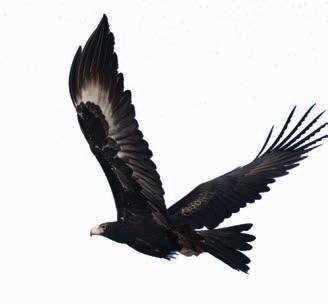
In the sky above hovered / a wedge-tailed eagle.
Create simple sentences by adding appropriate sound verbs from the box to to the subjects in the list.

Identify the subject in each sentence and write it down.
1 Norwegian explorer Roald Amundsen was the first person to reach the South Pole on 14 December 1911.
Subject:
2 The Eiffel Tower in Paris was completed in 1889.
Subject:
3 Onto the stage ran the main actors.
Subject:
4 Komodo dragons and orangutans are found in Indonesia.
Subject:
5 Around the bend of the river appeared a strange canoe.
Subject:
6 The ruins of the Colosseum and the Pantheon are situated in Rome.
Subject:
7 At the edge of the forest appeared a huge bear.
Subject:
Fill each gap with the correct famous person to complete the sentence.
J.K. Rowling
1 wrote The Witches, Matilda and Boy
2 was a famous Egyptian queen.
3 composed music even though his hearing was gradually deteriorating.
4 was the most married British monarch.
5 wrote more than 700 best-selling children’s books.
6 was the author of the world-famous Harry Potter novels.
7 was queen of England during the Spanish Armada attack.
8 wrote many of the world’s greatest plays.
9 declared the slaves to be free in the United States in 1863.
10 created the character of Mickey Mouse.
There are four types of sentences: statements, questions, exclamations and commands. All sentences start with a capital letter and end with one of three punctuation marks: a full stop, a question mark or an exclamation mark. The punctuation mark is an important way of indicating the type of sentence and its purpose.
• Statements are sentences that give information or express an opinion. They always end with a full stop.
The cyclone left hundreds of people homeless.
• Questions are sentences that ask for an answer. They always end with a question mark. Has the airport been closed yet?
• Exclamations are single words, groups of words or sentences that express strong emotions. They always end with an exclamation mark.
Hurray! (expresses happiness)
What a disaster! (expresses horror)
I can’t believe you escaped! (expresses surprise)
• Commands tell people what to do by giving a command or an order. They usually end in a full stop, but an exclamation mark may be used if the command is forcefully expressed.
Go to the evacuation centre.
Go to the evacuation centre!
Rewrite each sentence, adding a full stop, question mark or exclamation mark at the end.
1 Firefighters spent all night trying to contain the fire
2 That’s incredible
3 Are you going to make a donation to the appeal
4 Watch out There’s a snake on the path
5 In one town, every house was severely damaged by the cyclone
6 How can we stop people driving through dangerous floodwaters
7 It’s a miracle that we survived
8 How common are earthquakes in Australia
Choose the word that best describes the emotion expressed in each exclamation below. The first letter is given to help you.
1 Yay! I just won a trip to New York! e
2 That was terrifying! f
3 What a terribly dull movie that was! b
4 Oh, I didn’t see you come in! s
5 How humiliating! e
6 Don’t you smirk at me like that! a
7 How weird was that! c
8 Wow! What a hero! a
9 No, that can’t be true! He would never lie to me! d
10 What a ridiculous thing to say! s
Rearrange the statements to create questions. The first word is given to get you started.
1 The Amur leopard is a critically endangered species.
2 It takes a high level of skill to direct a movie.
3 They have finally managed to save enough money for a trip to Europe.
4 This has been the worst day in Australia’s sporting history.
5 Too many high-rise office towers are being approved in the city centre.
6 Everyone agreed that this was the best concert they had ever seen.
7 Koalas can sleep for as long 22 hours a day.
8 There will be a full inquiry into the scandal. Is Does Have Has Are Did Can Will anger surprise excitement admiration disbelief scorn embarrassment boredom confusion fear
A paragraph is a group of sentences that relates to one idea. Extended writing pieces, such as essays, stories and articles, are organised into paragraphs to help the reader follow the text. Starting a new paragraph indicates to the reader that a new idea is about to be introduced. A paragraph consists of three different parts.
• The topic sentence (usually the first sentence) concisely expresses the main idea of the paragraph.
• Supporting sentences provide further detail by giving examples, presenting information or making points that explain the main idea.
• The concluding sentence pulls the paragraph together by summing up or expanding on the main idea expressed. Here is an example.
topic sentence (main idea)
supporting sentences (three examples of what went wrong)
My new job at the supermarket was a disaster from the start.
My first task was to clean up a spill in Aisle 2, but I accidentally hit a customer with the mop handle.
Then I was told to stack the shelves with soft drinks, but I put them in the wrong places and had to do it all over again.
Just when I thought things couldn’t get any worse, I lost control of all the shopping trolleys I collected from the car park and crashed them into a car.
concluding sentence (sums up or expands on the main idea)
After a day like today, things can only get better!
There are three pieces of writing on the opposite page. The topic sentence at the start of each paragraph is missing. Choose the correct topic sentence from the list and write it on the lines provided at the start of the paragraph. Remember that the topic sentence must express the main idea of the whole paragraph, not just part of
1 Informative writing
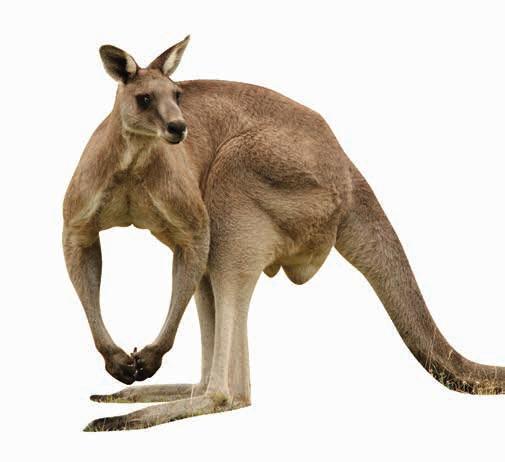
a Kangaroos are large and powerful animals.
b Although kangaroos in the wild rarely attack humans, it can be dangerous to approach them.
c Kangaroos are known around the world as Australia’s national symbol.

This is because they may become aggressive if they feel threatened, trapped or startled by the intrusion. Kangaroos are large and powerful, and their sharp claws and strong hind legs can cause terrible injuries to the face and body. Although kangaroos are peaceful animals, the safest option is to admire them from a distance.
2 Personal writing
a My town has beautiful autumn leaves.
b Autumn is a great time for gardening.
c Autumn is the time of the year that most inspires me.


There is a huge festival in my town to celebrate local farm produce and the arrival of autumn. The trees are always ablaze with glorious shades of red, orange and yellow leaves. It is also time for me to prepare my garden beds and plant vegetables for winter. I always feel satisfied with life by the time this beautiful season comes to an end.
Descriptive writing
The night was bitterly cold.
The wind blew the snow around.
Rich people decided to stay at home that night.

Snow lay heavily on the ground, and a hard, thick crust had formed in doorways and on fences. The wind that howled abroad was savage. It caught the snow and scattered it into the air. Bleak, dark and cold, it was a night for the well-housed and well-fed to sit around the bright fire; and for the homeless, starving wretch to lay down in the bare streets and die.
adapted from Oliver Twist by Charles Dickens
Adjectives are words that add meaning to nouns and pronouns. They describe people, places, things, creatures and feelings. Their main purpose is to give us a more graphic picture of nouns, as demonstrated in the following examples.
• colour: golden sunset
• place: a coastal path
• appearance: hunched shoulders
• taste: a delicious breakfast
• size: gigantic mountains
• number: sixty minutes
• shape: hooked beak
• emotion: joyful singing
• sound: shrieking seagulls
• direction: a southerly gale
• origin: a German car
• touch: soft velvet
Identify all the adjectives in the following sentences.
1 It was a dark and stormy night.
2 The best things in life are free.
3 Gigantic waves were buffeting the wrecked yacht.
4 The mechanic had a stylish green Italian car for sale.
5 In the distance Lancelot could see a gloomy, forbidding castle.
6 A fierce fire broke out in the derelict building.
7 The lorikeet has a red beak and colourful plumage.
8 The sound of howling wolves alarmed the sleeping travellers.
Choose suitable adjectives to complete the passage opposite. Use the clues to help you.

About a mile d
from the shore I saw the e billows of the ocean rolling like a g wall and plunging with a l t roar upon a l c reef, where they were dashed into w foam and flung up in clouds of spray. This spray sometimes flew exceedingly high, and, every here and there, a b rainbow was formed for a moment among the f drops.
adapted from Coral Island by R.M. Ballantyne
Choose the most suitable adjective in the list for each noun below. Use each adjective once only.
1 rain
2 dogs
3 an room
4 a injury
5 a pirate
6 a gymnast
7 a equation
8 a helicopter
monkeys 16 eggs boiled musical glittering poisonous mathematical painful torrential untidy galloping cloudless seedless skilful barking chattering villainous whirring
9 horses 10 grapes 11 a snake 12 a sky
a instrument 14 diamonds
Change the name of the countries in brackets into adjectives. The first one is done to help you.
1 flamingos (Kenya)
2 flags (Tibet)
3 soldiers (America)
4 palm trees (Fiji)
5 baths (Turkey)
6 dancers (Spain)
7 shamrocks (Ireland)
8 statues (Greece)
9 sausages (Poland) 10 bagpipes (Scotland) Kenyan