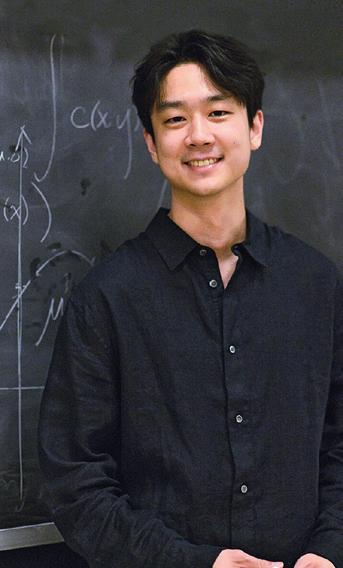
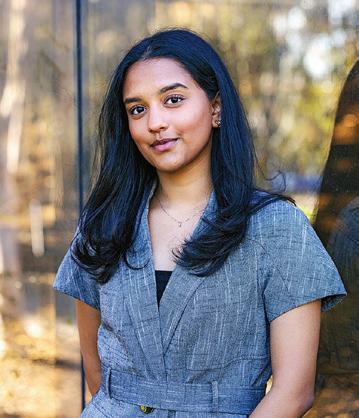



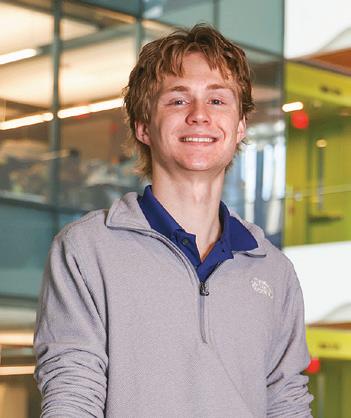
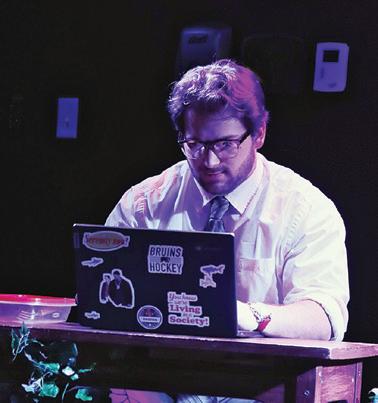
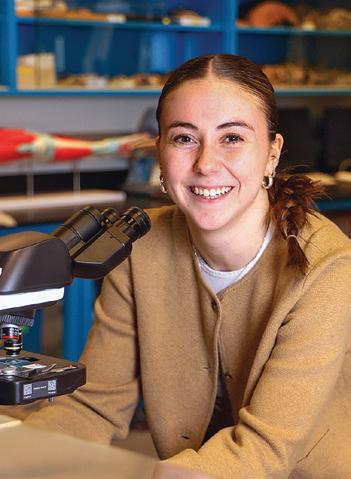
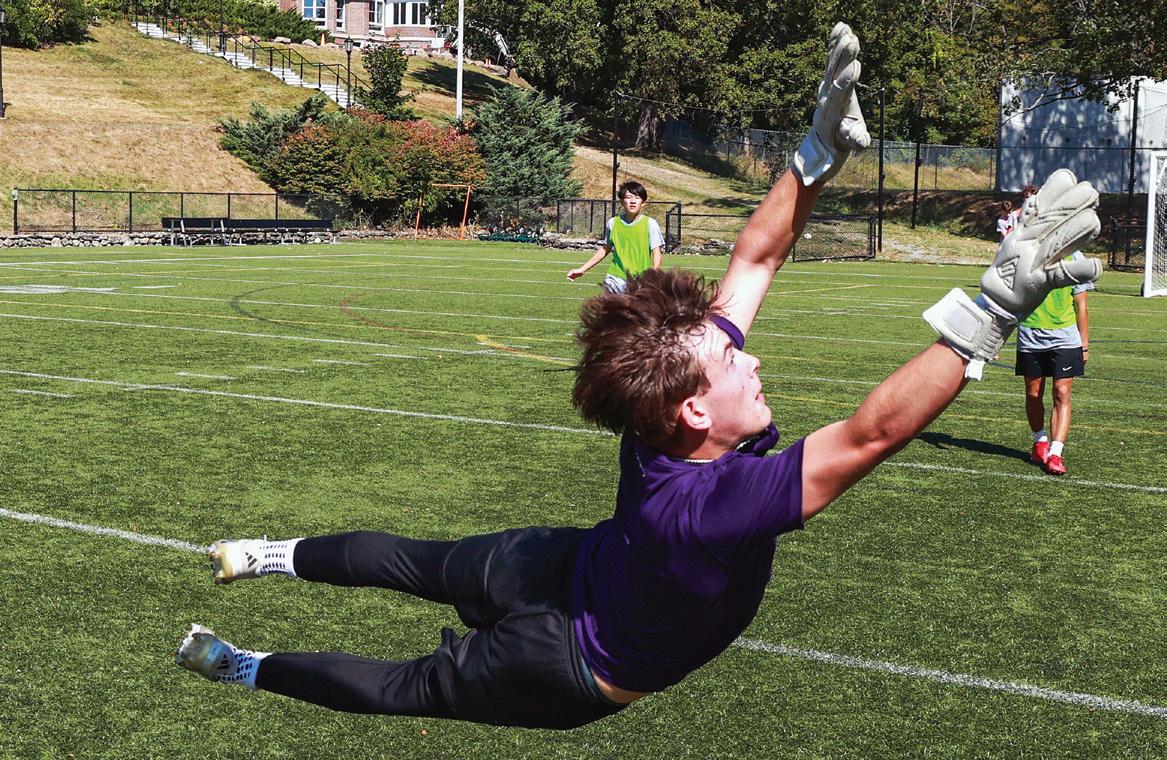
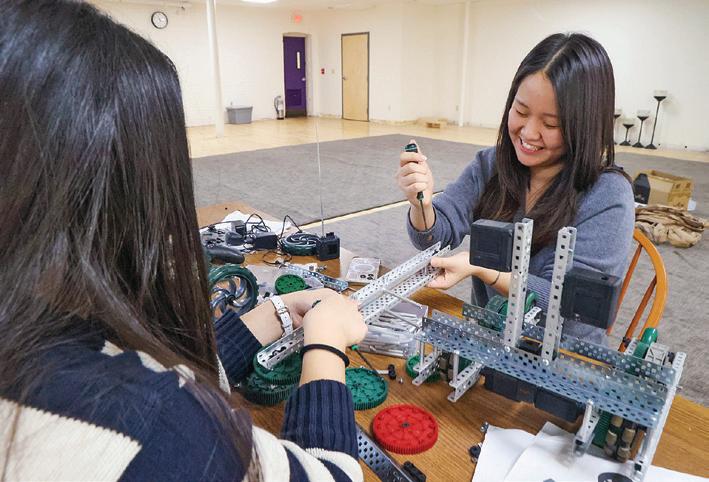
From engineering labs to theater stages, Cushing alumni reflect on how curiosity developed at the Academy shaped their path. They learned to embrace challenges, think independently, and connect ideas. These habits continue to guide their studies and careers as they make their way through college and into their early careers.
Cushing Academy exists for students and develops curious, creative, and confident learners and leaders.
Cushing Today is a publication of Cushing Academy’s Office of Marketing + Communications.
Head of School
Dr. Randy R. Bertin P’21, ’22, ’24, ’25
Associate Head of School
Catherine Pollock
Director of Marketing + Communications
Christian Housh
Magazine Design Good Design, LLC gooddesignusa.com
Contributing Writers + Editors
Dr. Randy R. Bertin P’21, ’22, ’24, ’25
Christian Housh
Amy Logan
Christine Foster
Photography
Rebecca Cinclair
Ed Collier
Gary Fournier
Siobhan Gazur
Anton Grassl
Tom Kates
Gabriella Miko
Colin Miller
Steve Musco
Philip Wexler P’19
Cushing Today welcomes your class notes, photography, story ideas, and comments. Please send them to communications@cushing.org, call (978) 827-7000, or mail to:
Communications Office
Cushing Academy 39 School Street
Ashburnham, MA 01430
Six alumni with one foundation: curiosity shaping paths, passions, and lifelong learning.
Throughout this magazine are links to extra content including photos, videos, and our website. Look for QR codes and links to explore more.
In 2024, Kaleb Joseph ’14 returned to campus to speak with students about embracing vulnerability. That message hit home with many students, including Ariba Haque ’25, currently a first-year student at UC San Diego. In our “Developing Curious Learners” feature, she encapsulates so much of what we strive for at Cushing Academy. She says, “Everything you want is on the other side of vulnerability — and Cushing taught me to be vulnerable.”
To be curious, to not know the answer to something and seek it out, is to be vulnerable. As an institution, Cushing Academy works tirelessly to create an environment that allows students to feel comfortable seeking out the unknown and encourages them to embrace challenge in order to advance their curiosity.
“Developing Curious Learners” is one of the six key pillars of Our Common Journey: Strategic Priorities for Cushing Academy 2025–2030. In this first year, our focus has been on foundational assessment and planning — and our Office of Academic Affairs has fully embraced the challenge of exploring what it means to develop curious learners.
Faculty members in each academic department have been working on reviewing and updating their departmental vision statements, with an eye for growth and planning in the years ahead. As Director of Academic Affairs Raja Bala frames it: “In a world where answers are everywhere, the real work is learning to ask the right questions.”
You’ll hear from our academic department heads, who share how their disciplines currently nurture curiosity at Cushing. Kurt Kublbeck P’16 speaks about embracing failure and empowering creativity in the sciences; Julia Ohm relays the importance of building confidence in public performance; Daniel Rodriguez drives home the value of connection in mathematics; Susie Cirone discusses our intentional focus on research in the social sciences; Courtney Lavin speaks about taking healthy risks and building critical thinking skills in English; Bruce Sinclair discusses an embrace of culture as a teaching tool in languages; and Jeanine Eschenbach relays the process of discovery and curiosity in the visual arts. And of creating an environment where curiosity can thrive, Spanish teacher Catalina Reinoso says, “I want them to love to learn and to not feel embarrassed to make mistakes. We all make mistakes.”
In addition to highlighting faculty voices, the feature looks at the recent Journeys of six young alumni whose curiosity was sparked at Cushing: Ariba Haque ’25 embracing challenge and pursuing a major in economics and political sciencedata analytics at UC San Diego; Lily Stone ’22 diving into interdisciplinary medical studies as a neuroscience major at Wellesley College; Brady Horgan ’23 leaning into his communication skills as an engineering major at Northeastern University; Oliver Wang ’19 exploring applied mathematics and aeronautical and astronautical engineering at Emory University and MIT; Louisa McGrath ’19 discovering how to learn on her own and jumping into the world of film and television at NYU’s Tisch School of the Arts; and William Lessard ’22, the athlete-turned-actor, pursuing theatre at Emerson College.
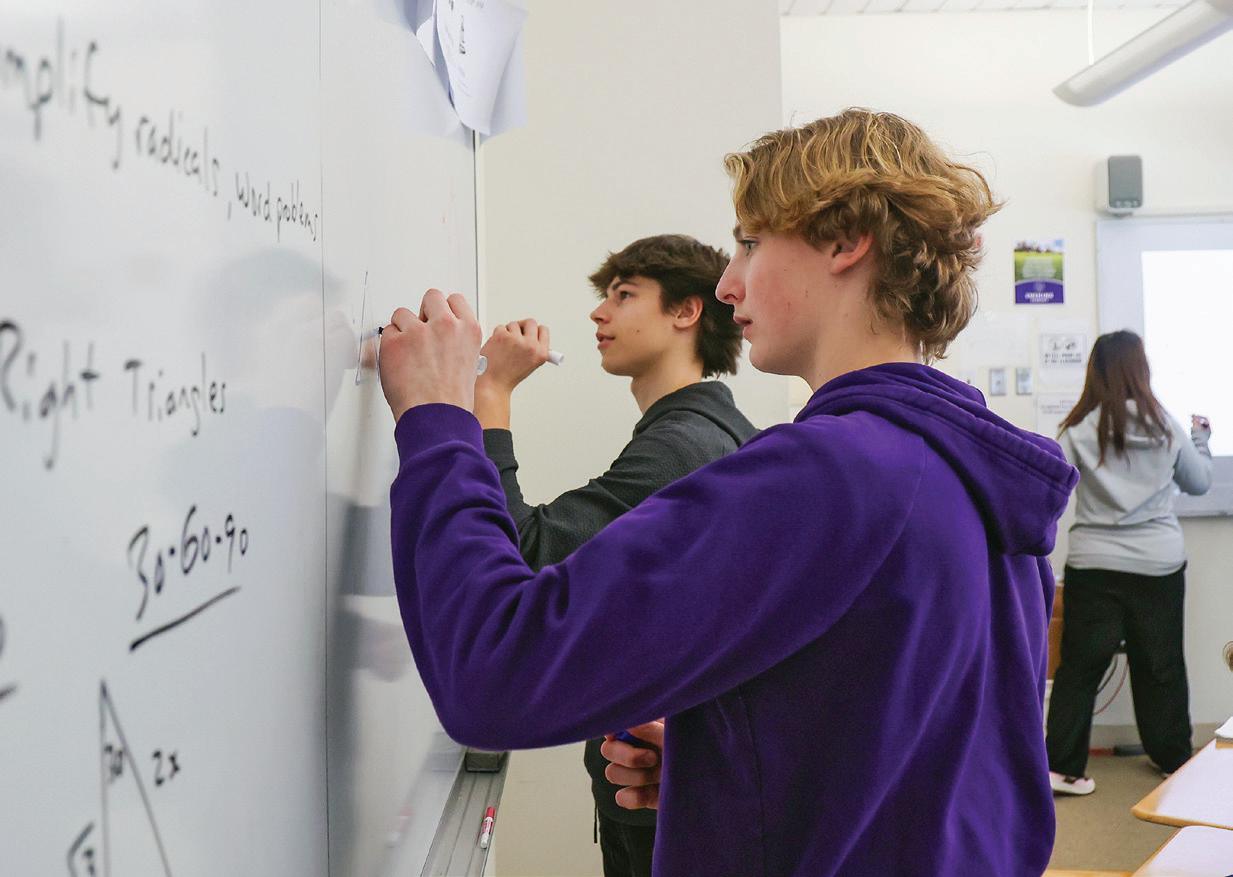
The throughline in all of these stories is the transformative effect of students and faculty working together to untap, amplify, and apply curiosity. As we look ahead to ways Cushing can continue to promote innovative teaching methods, specialized programs, and a communityfocused educational experience that sets us apart, developing curiosity will continue to be at the center of what we do. It is embedded in our mission: Cushing Academy exists for students and develops curious, creative, and confident learners and leaders.
Here’s to staying curious!
> Strengthening Community and Belonging
> Developing Curious Learners
> Developing Confident Leaders
> Promoting Student Health and Well-Being
> Ensuring Long-Term Sustainability
> Celebrating School Culture and Legacy
SCAN ME!
Read Our Common Journey: Strategic Priorities for Cushing Academy 2025–2030.
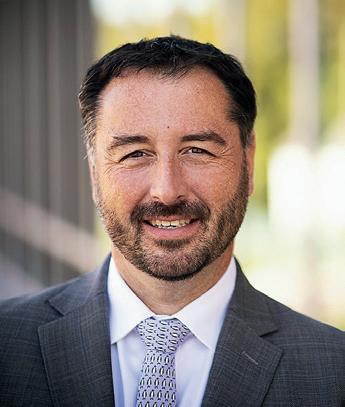
Randy R. Bertin, Ed.D. Head of School
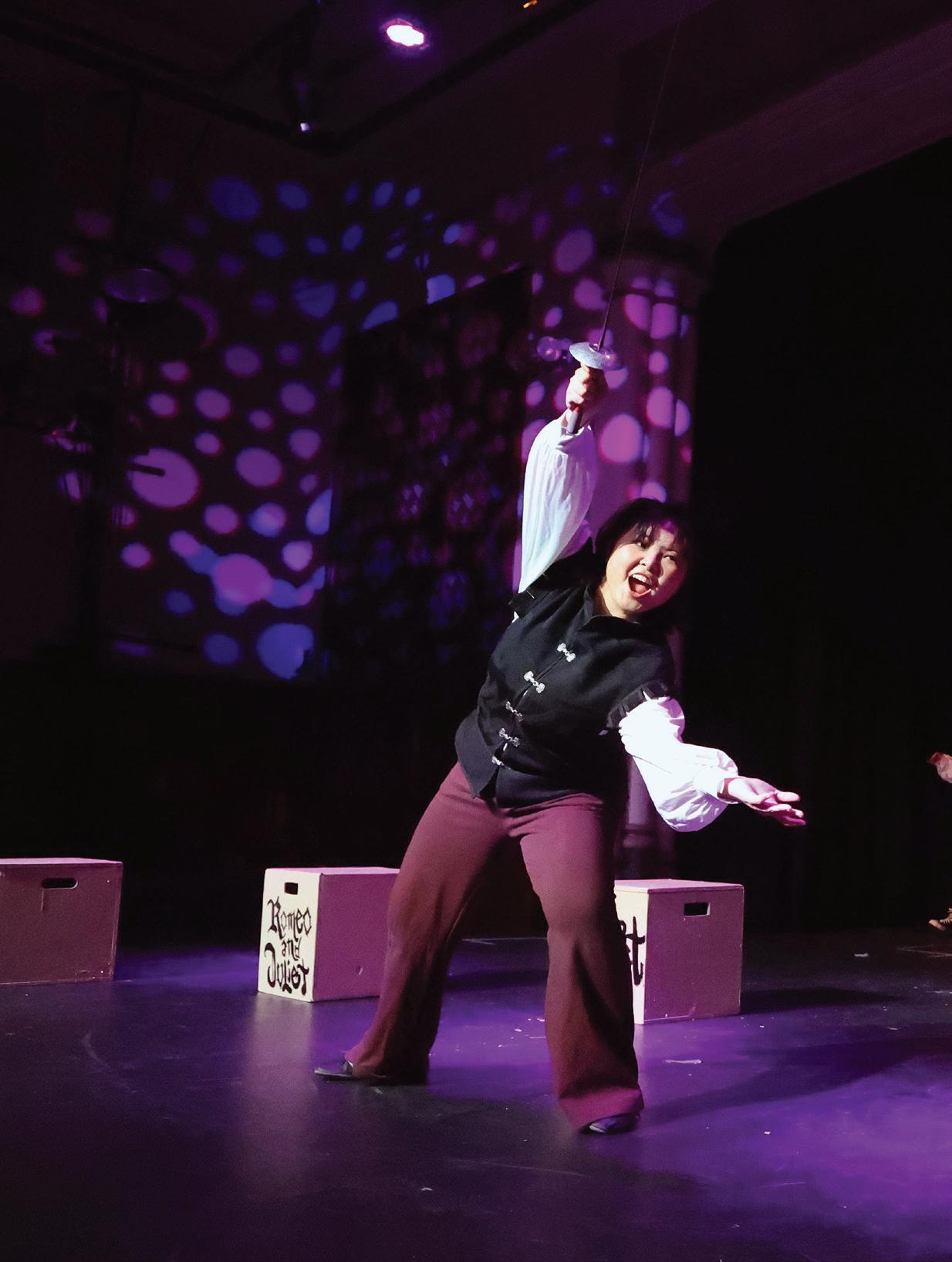
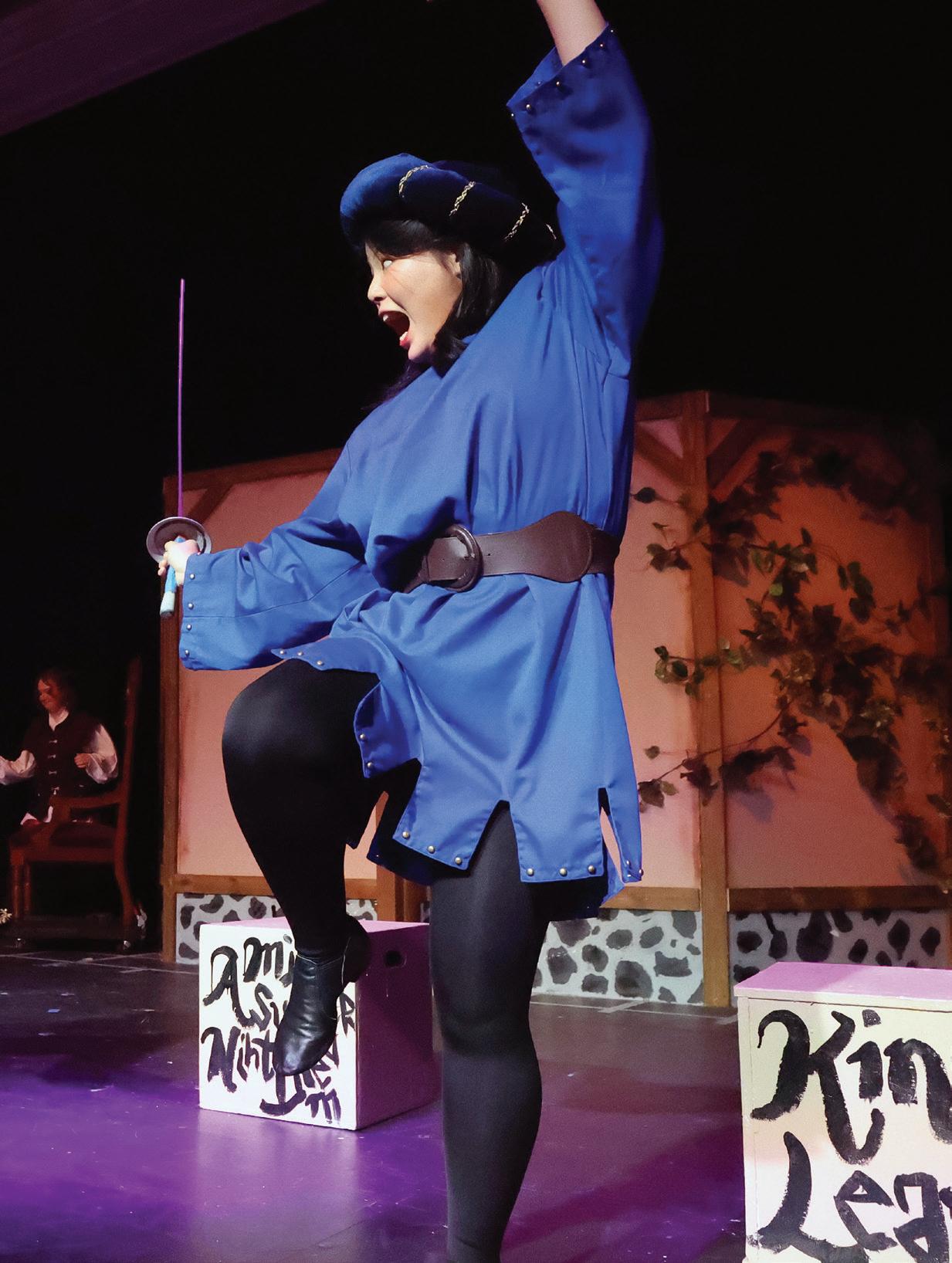
To be, or not to be... or something like that! The fall play took a comedic, high-speed tour through all 37 of the Bard’s comedies, tragedies, and histories in The Complete Works of William Shakespeare (abridged) [revised] [again]. Here, Yolanda Huang ’28 and Stella Sun ’27 perform a spirited retelling of Romeo and Juliet.

“What is it you plan to do with your one wild and precious life?”
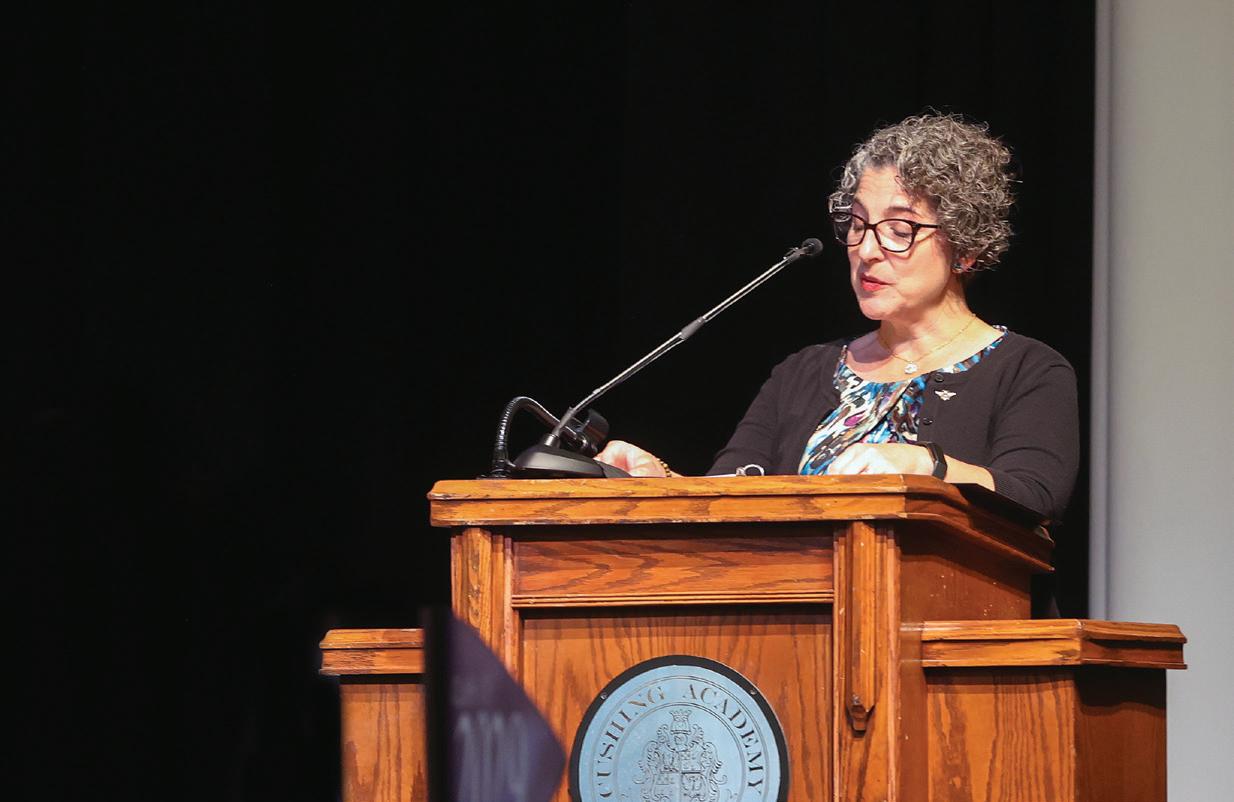
Faculty member Michelle Salvucci P’26 launched the school year with that question, inviting students at Convocation to reflect on creativity, purpose, and possibility.
A member of Cushing’s academic support department, Salvucci began her address by asking her audience to pause, reflect, and consider how they might live with intention. She grounded the community in a moment of collective stillness, planting their feet on the floor and breathing deeply before turning to that powered question, coined by poet Mary Oliver, to frame her message.
The quote, which also appeared in Cushing’s community read book, Callings: The Purpose and Passion
of Work by StoryCorps founder Dave Isay, asks readers to consider how they choose to live. For Salvucci, the answer lies in creativity — not as artistic talent alone, but as a way of thinking, solving, and imagining.
“Creativity is for everyone,” Salvucci told the gathered students and faculty. She described it as a form of invention: how students solve problems in math, interpret a text in a new way, support a friend, or adapt a coach’s instructions on the field. Creativity, she said, is about seeing the everyday differently, like holding a prism to the light and discovering a rainbow.
“Do what has never been done before,” she urged, reminding students that new approaches often come
from curiosity and a willingness to question assumptions.
Salvucci emphasized that creativity is not effortless inspiration, but sustained work. “Achieving creative pursuits often feels like a lofty goal, like it’s meant for folks who magically materialize greatness from the ether,” she said. “I believe that’s not the case.” Even her speech took work, carried out during
early morning walks across campus with her dog Lego, when movement and quiet allowed space for the ideas to emerge. Creativity, she noted, requires finding environments, both physical and mental, where imagination and discipline coexist. It is built through practice, repetition, and preparation long before moments of performance, competition, or assessment.
The final and most challenging element of creativity is risk. Creating something new requires vulnerability and a tolerance for failure, Salvucci argued. She reminded students that transformative ideas — from Van Gogh’s genre-breaking art, to Galileo’s radical understanding of the universe to Dr. Martin Luther King, Jr.’s vision of a new way of life for this country — were initially met with resistance. “Sometimes it takes the world a moment to catch
up with your new ways of thinking,” Salvucci said. “But keep going.”
In the end, Salvucci returned to the question that anchored her address, asking students to reflect on what ignites their curiosity and sense of purpose. She urged them to remain nimble in their thinking, open to growth, and willing to change course as they evolve. Creativity, she said, has the power both to challenge and to renew — and it is through that process that individuals shape their lives and the legacies they leave behind.
“You are right now on the journey that is your one wild and precious life, and you get to decide how you create it,” Salvucci reminded her audience. “I hope that you approach this year and the years beyond, examining what lights your soul on fire and chasing after exactly that.”
Creativity requires finding environments, both physical and mental, where imagination and discipline coexist.”
—MICHELLE
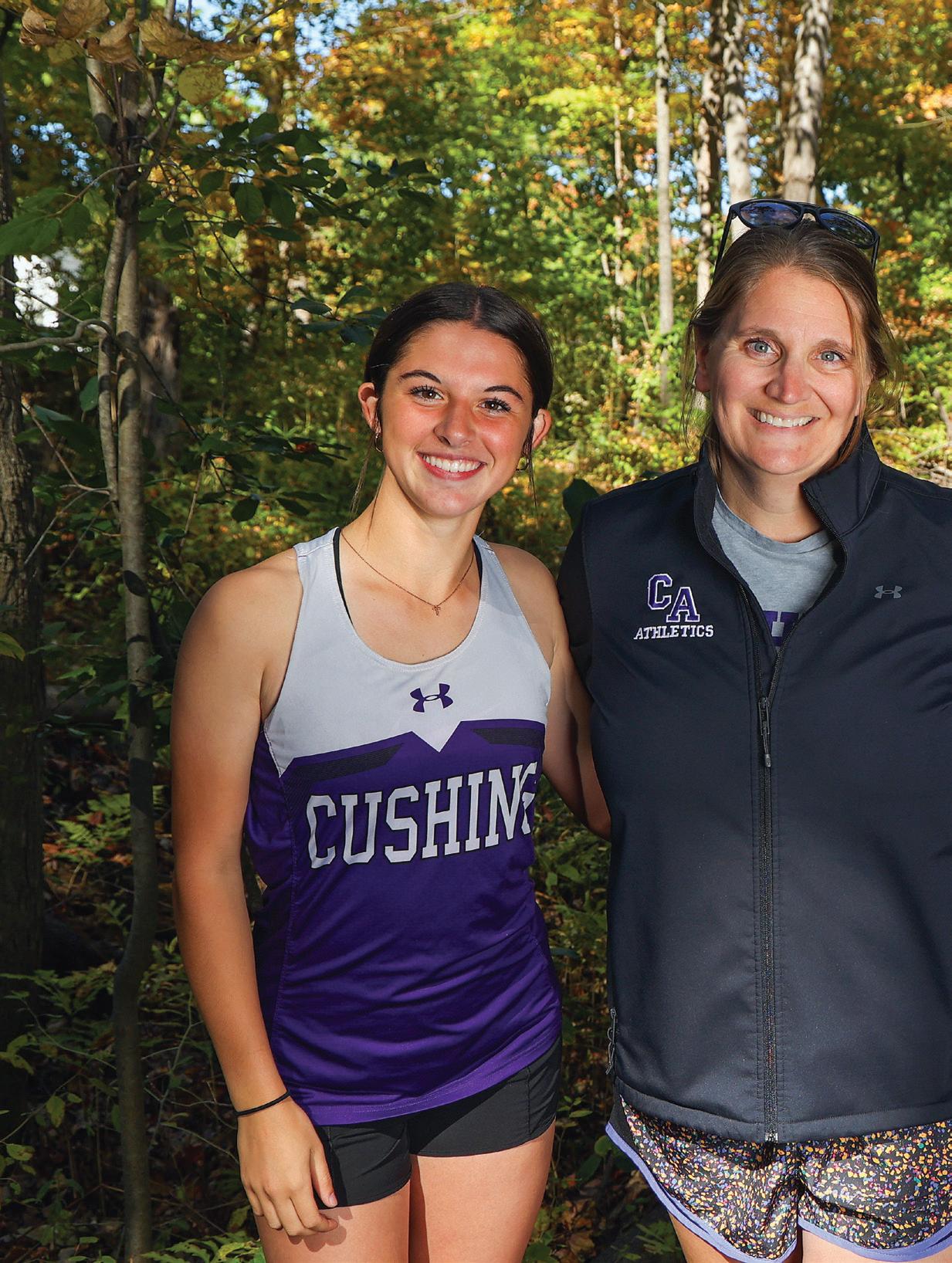
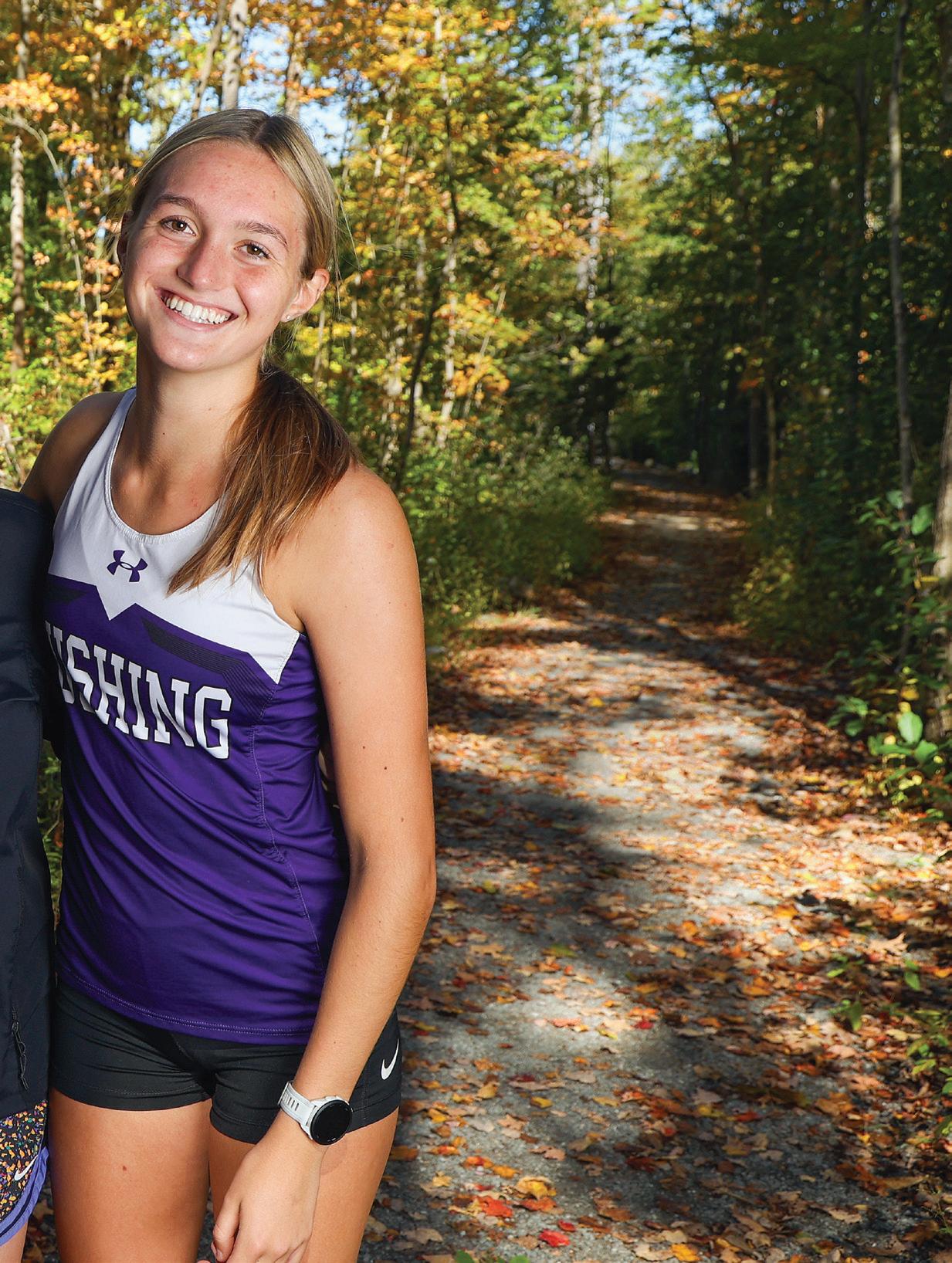
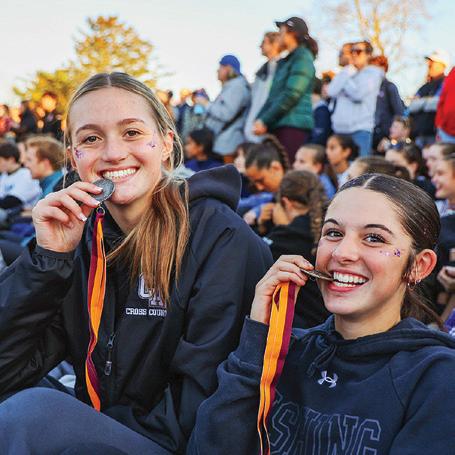
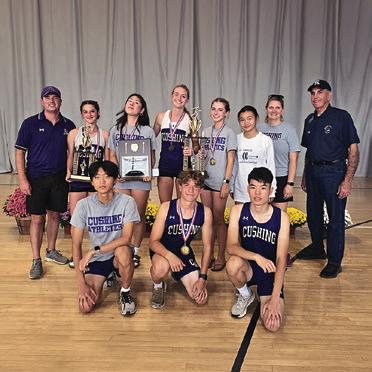
Olivia Richard ’28, Assistant Cross Country Coach Katy Marlow, and Candace Maple ’26 pose on Cushing’s cross country course during fall athletics media week. At the NEPSAC Cross Country Championships, Candace Maple came in second place overall and Olivia Richard placed 11th. Six Cushing athletes finished in the top 50 out of 210 competitors, and the Girls’ Varsity Cross Country placed 5th overall, a new Cushing record!
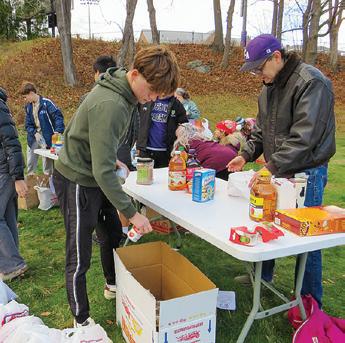
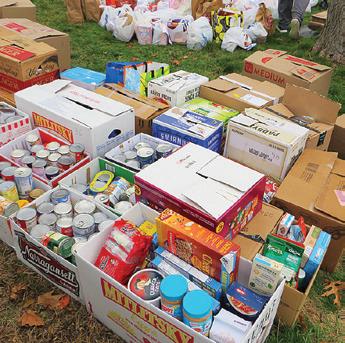
Every Thanksgiving, before a single dinner table is set in an Ashburnham home, Cushing students are hard at work making sure local families have enough to eat.
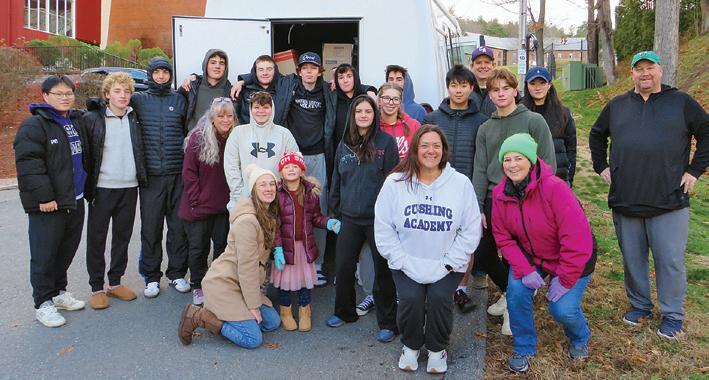
Teaming up with the Girl Scouts, Cushing students help lead the local food drive in a strong commitment to the Academy’s surrounding community. Penguins have been part of this project from its origins, when David Stone P’19, ’22, Cushing’s dean of faculty and a 26-year faculty veteran, launched the drive in 2013 through the local Boy Scout troop he led. At that time, Scouts placed bags around town with instructions for donating and then returned a week later to collect the filled bags. A group including student volunteers sorted the donations in the Cushing dining commons and then delivered them to two local food banks. The drive annually yields around 2,000 food items, which keep the shelves stocked for about one third of the year.
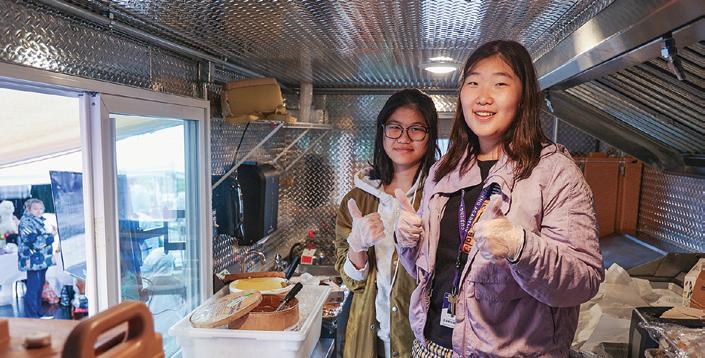
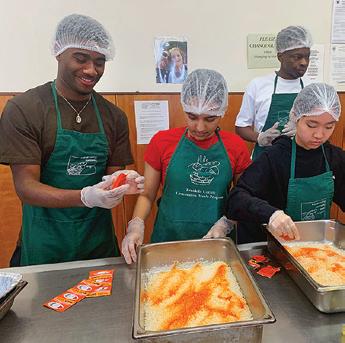
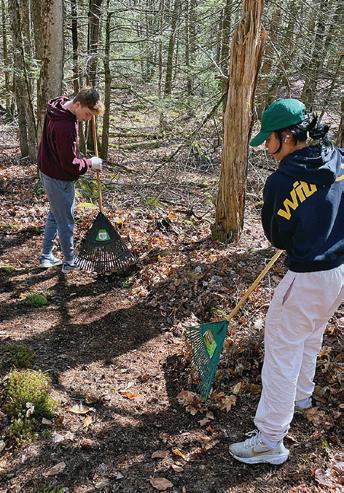
When the local Boy Scout troop disbanded during the pandemic, Director of Activities Donny Connors P’28 stepped in to carry the food bank efforts forward. Now Cushing students lead alongside local Girl Scouts. Over the course of the year, more than 50 students participate at various stages. Sometimes the efforts are spontaneous. Members of the boys’ lacrosse team heard the group could use some help and ran over to help lift heavy boxes of canned goods. “It was a special moment,” Connors recalls. But the food drive is just one thread in a much larger tapestry of outreach and engagement. Each September, students volunteer at the annual Celebrate Ashburnham Street Fair. Cushing brings its food truck, The Raft, and students hand out free, made-to-order ice cream sandwiches. They also volunteer at the
It’s important for our students to understand we’re not just an island here in the middle of Massachusetts. We’re part of a larger community and the larger community has needs that we can become involved in.”
When I volunteer, I feel like I am part of the community.”
—JAMIE PARK ’27
arts and crafts activity booth run by the Cushing Art Club. And every spring, in a beloved tradition, the entire Academy turns out for the Tony Fisher Day of Service to Others, where students and faculty fan out across the region to serve in whatever ways the community needs.
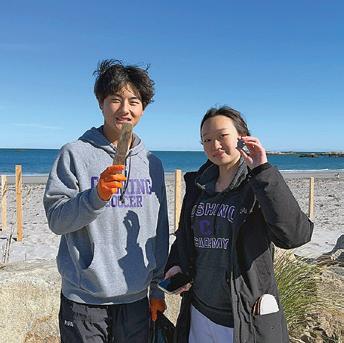
Individual students are driving initiatives of their own. Jamie Park ’27 founded Cushing’s Community Service Club during her sophomore year. Last fall the group organized a beach cleanup in Cohasset. Ten students from seven different countries boarded a bus at 6 a.m. on a Sunday morning to participate. “When I volunteer, I feel like I am part of the community,” Park says. “I belong here.”
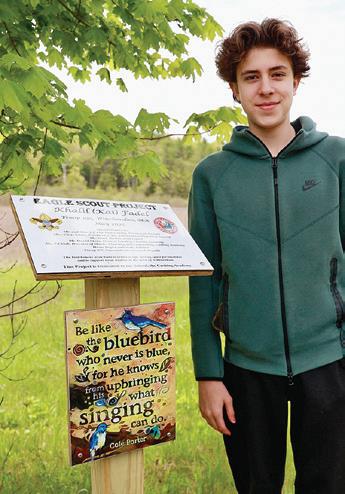
Another student, Kai Fadel ’27, recently completed his Eagle Scout project, developing a bluebird habitat on unused campus acreage.
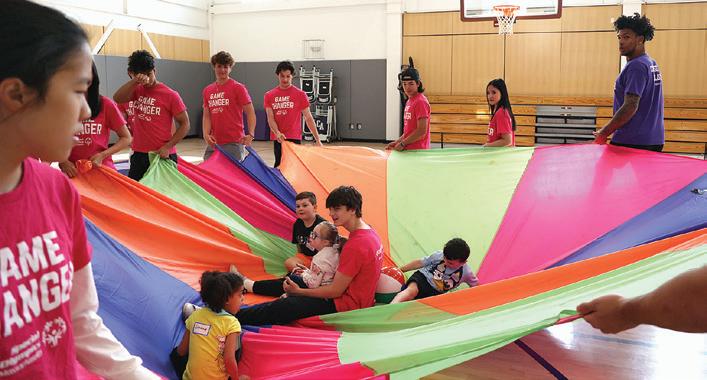
The rewards of service run in both directions. On Saturday mornings in the winter, and again in the spring, a core group of students willingly forgoes a chunk of their weekend sleep to spend an hour in Watkins Field House with Special Olympics athletes, ages four through eleven, who travel from across the region to play soccer, run obstacle courses, and be celebrated. History and social science teacher Christine Monahan P’24, ’26, who coordinates the program through the campus Kindness Club, says the bonds between the Cushing students and the children run deep. “I think we get much more than we give,” she says.
For Stone, it all points to the same thing: “It’s important for our students to understand we’re not just an island here in the middle of Massachusetts. We’re part of a larger community, and the larger community has needs that we can become involved in.”

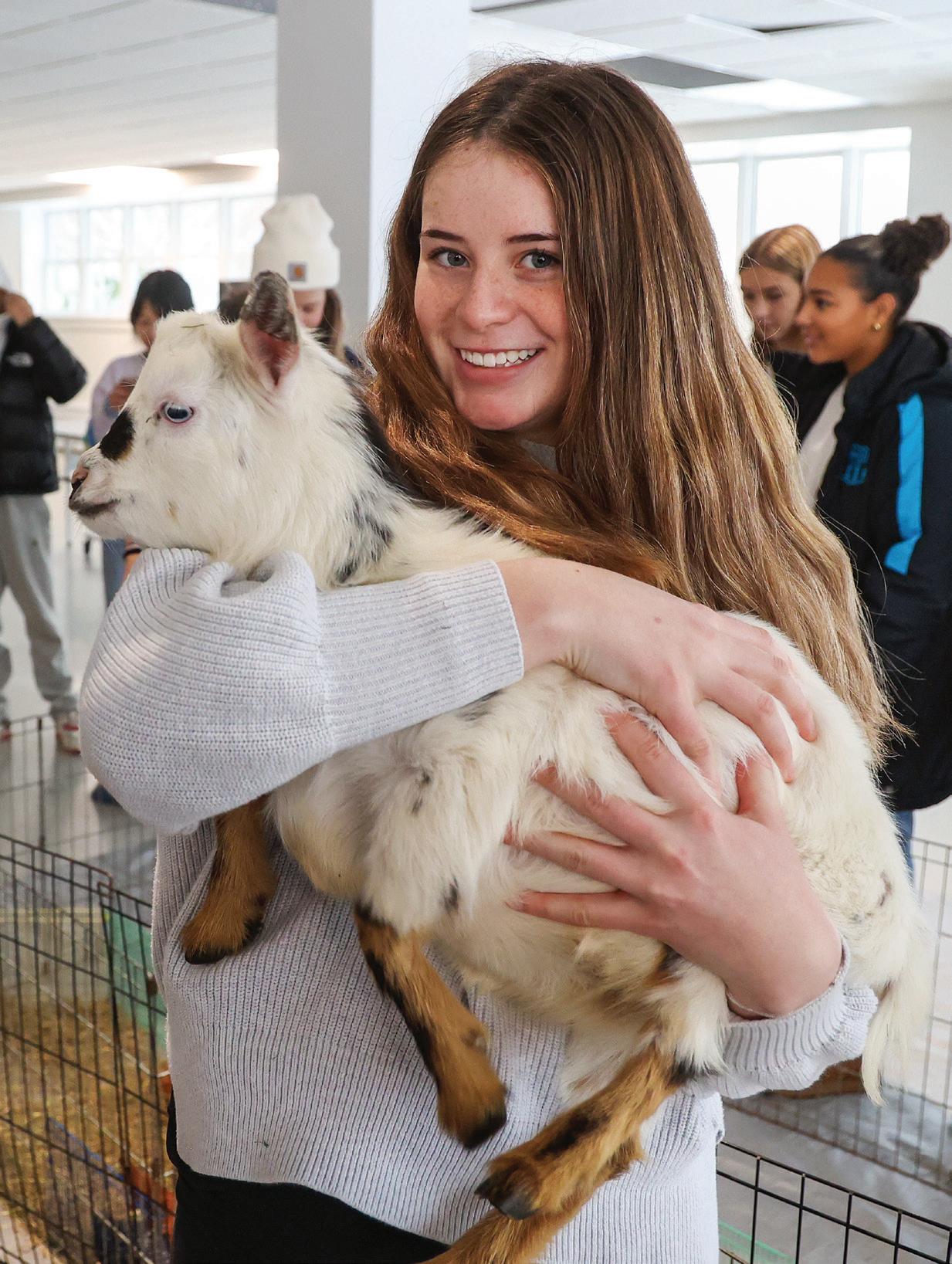
What is the best way to reduce stress during finals week?
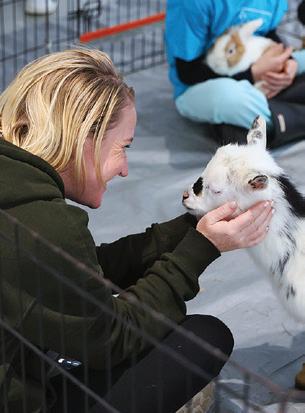
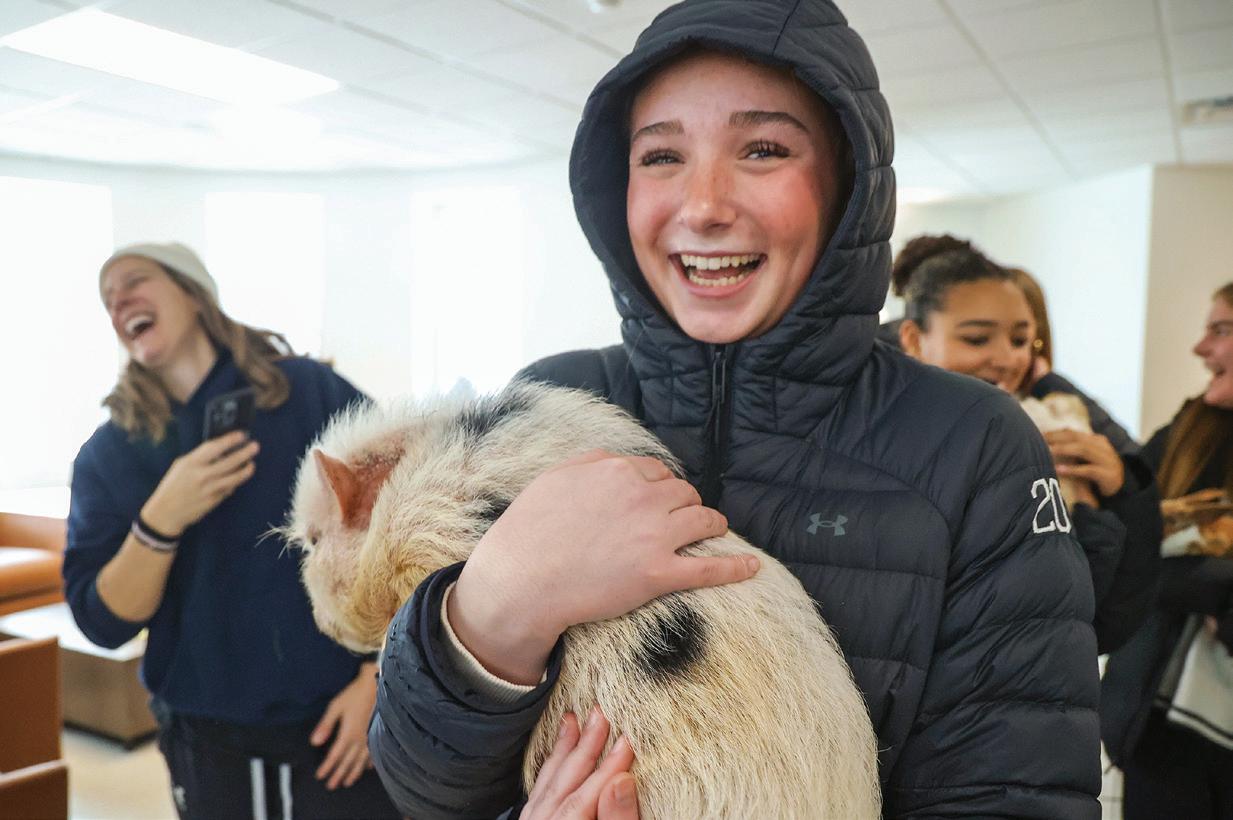
Petting some adorable animals! During finals week, the Office of Student Affairs hosts a petting zoo in the Fisher-Watkins Student Commons featuring chickens, ducks, bunnies, baby goats, and even a baby pig to help students unwind in between exams.
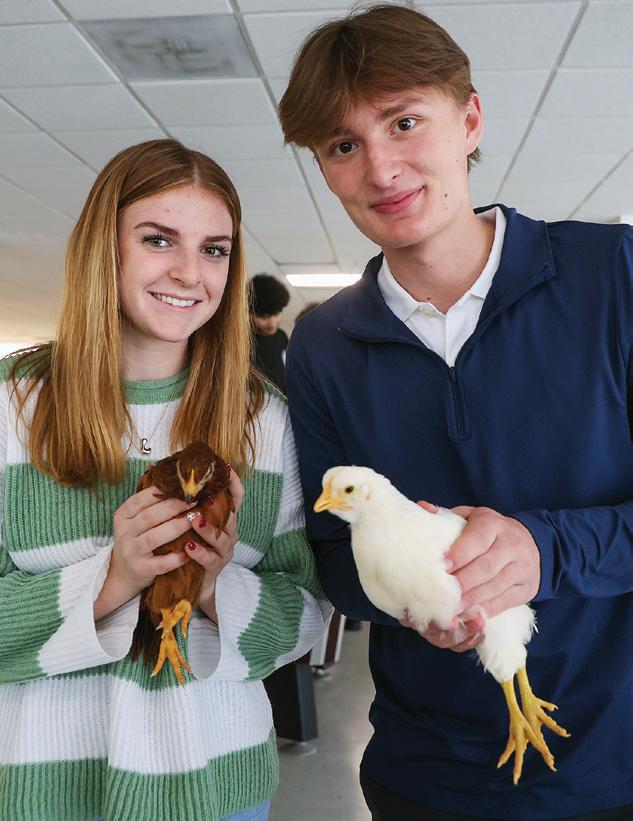
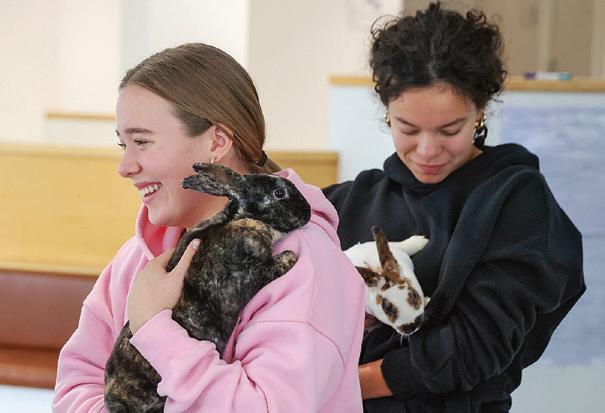
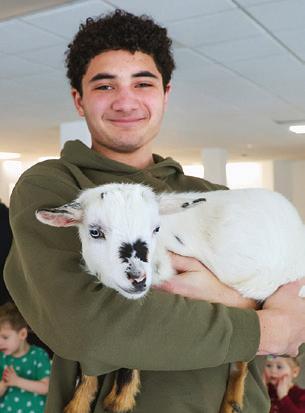
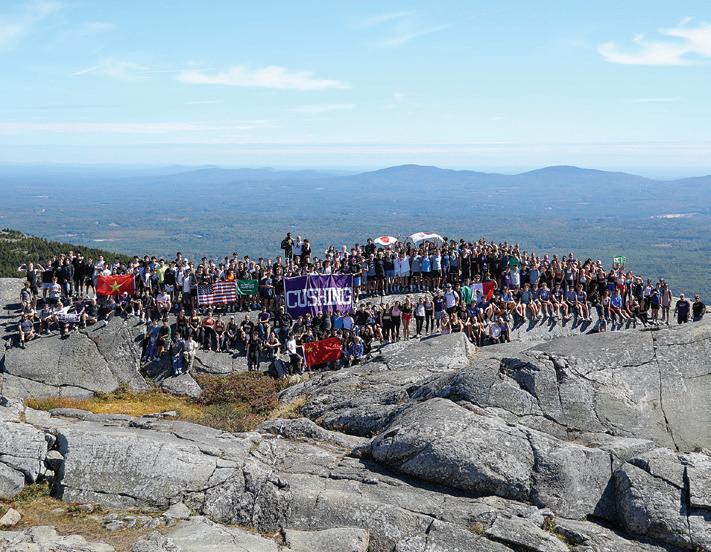
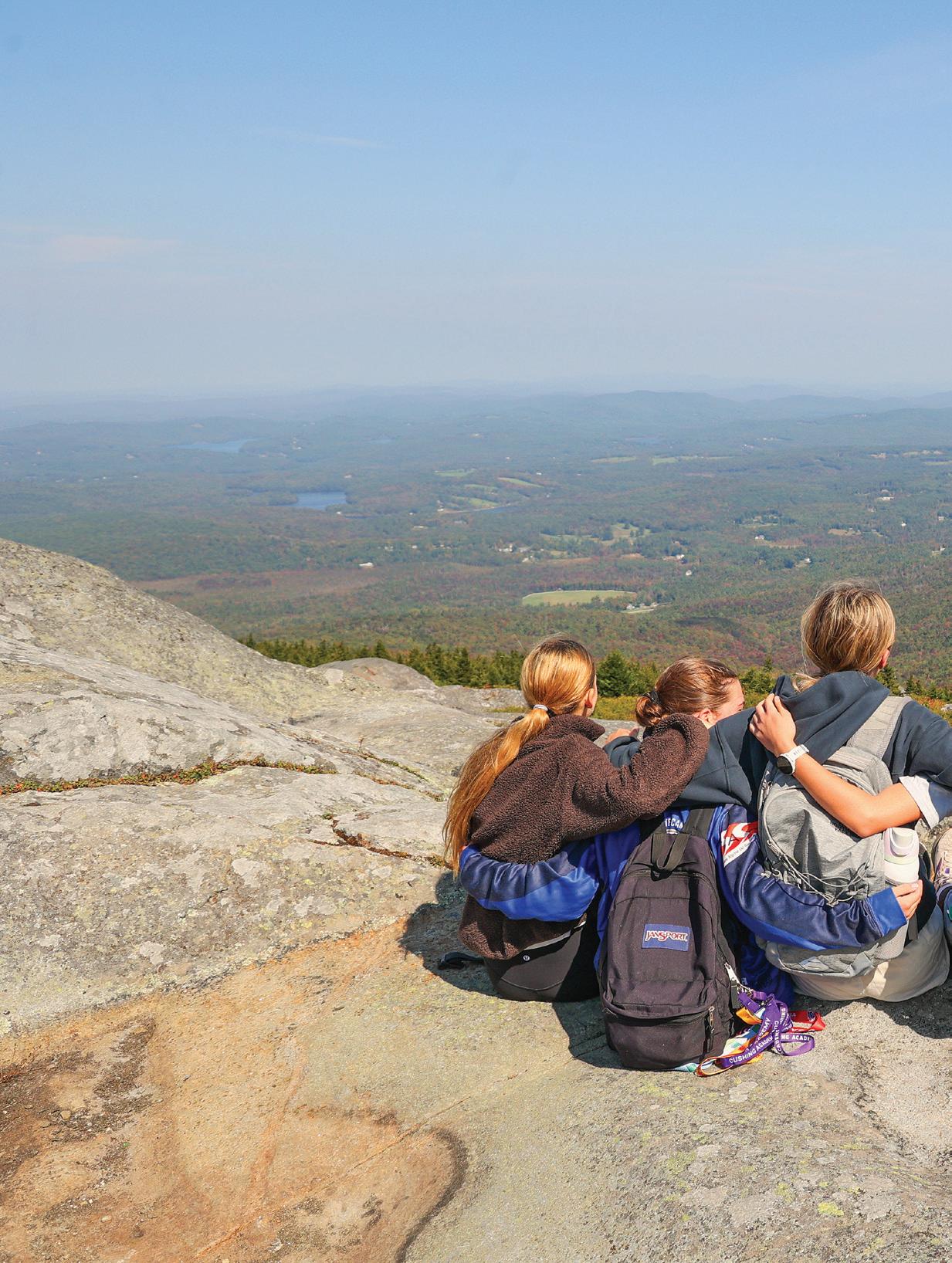
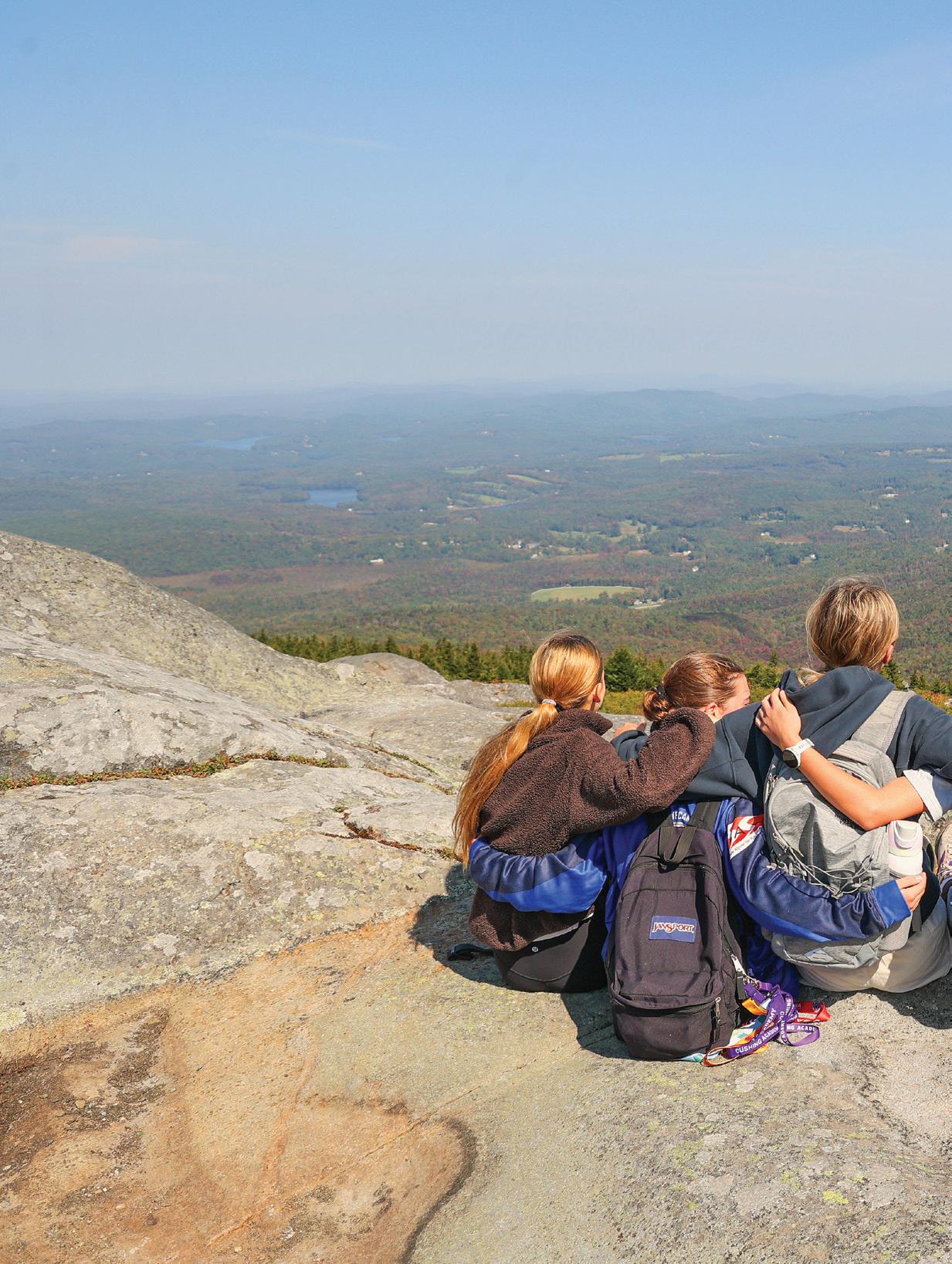
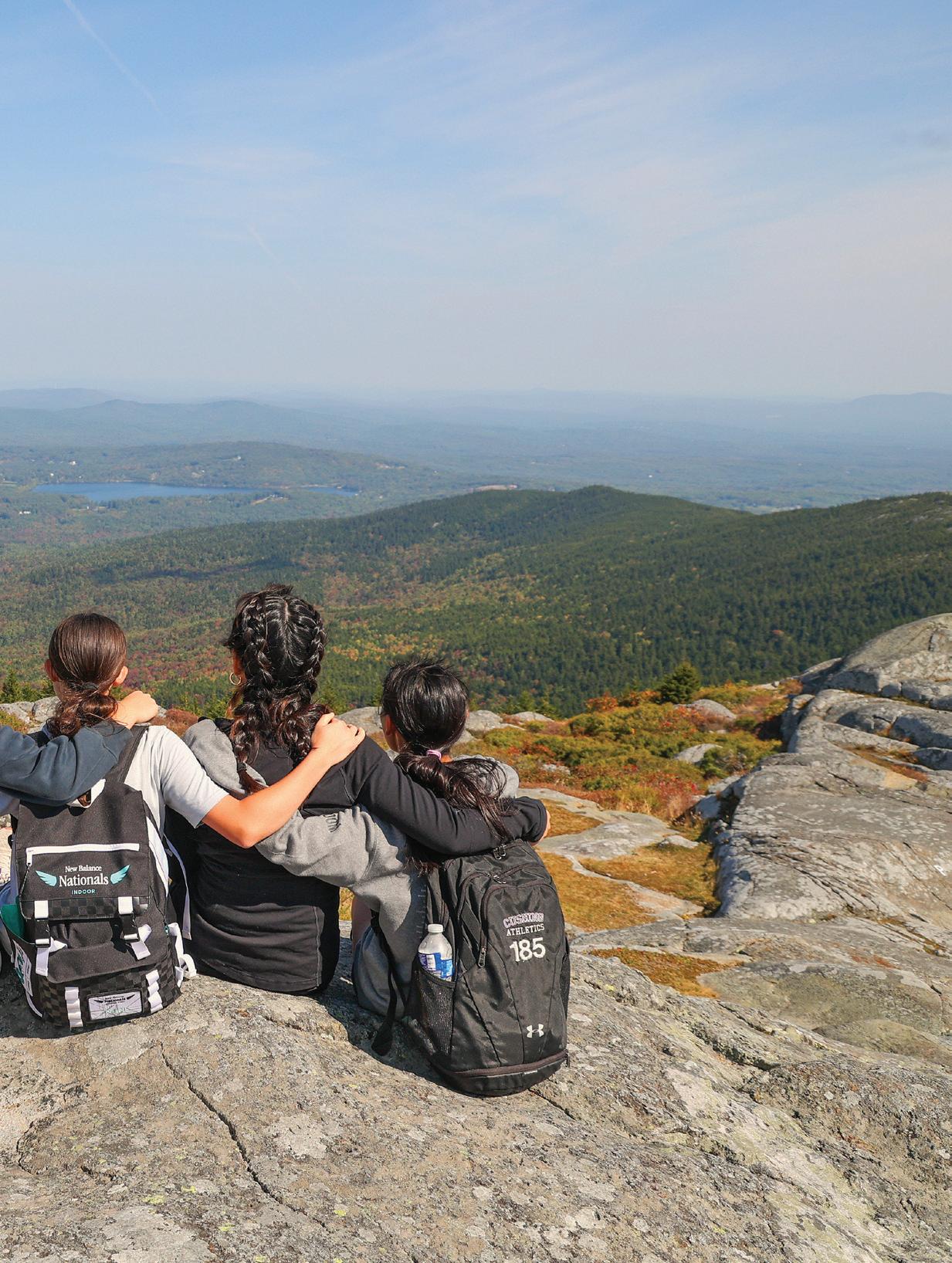
SEPTEMBER 19: Featuring friendships, challenges, and a push to the top of Mount Monadnock, Mountain Day 2025 was a huge success. #PoweredByCommunity #PoweredByTradition
Check out page 48 for more about 100 Years of Mountain Day!
CushingAcademyFans groups/CushingAcademyParents groups/CAPenguinNation
@cushingacademy
Cushing Academy Alumni Network
youtube.com/cushingacademy
flickr.com/cushingacademy
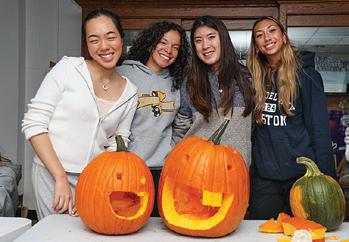
NOVEMBER 1: Week 8 Around Campus; World History, Honors Chemistry, and Donut Day on Halloween! Senior Pumpkin Carving and a rainbow during Boys’ JV Soccer. The best way to end October at Cushing!
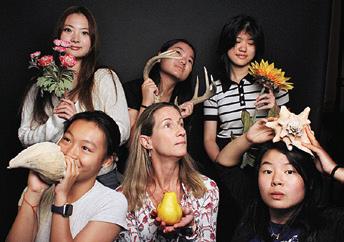
@CUSHINGVISUALARTS
SEPTEMBER 26: A moment for the creative art advisory selfies this past week!
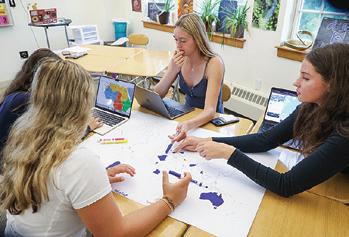
SEPTEMBER 27: Around Campus Week 3; In a rainy week, students engage in classes, athletes pose for Fall Media Week, and a heartfelt Journey Speech highlights the power of the Cushing community.#PoweredByCommunity
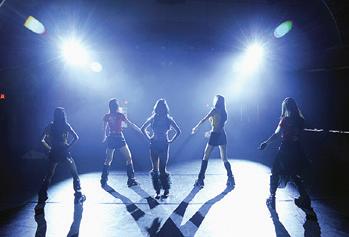
NOVEMBER 15: Around Campus Week 10; The first snow of the season, AP Literature, Pep Rally, Penguin Madness, Fall Dance, and a double win from the NEPSAC Championships and Field Hockey pushing into the playoffs. All in a week’s work at Cushing. #PoweredByCommunity
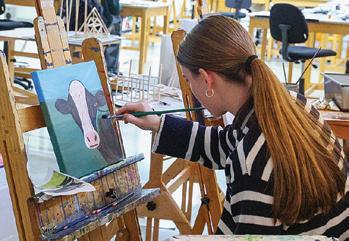
NOVEMBER 22: Around Campus Week 11; It’s cold on campus as students build a dream team in Algebra II, dress up for FOCO, and attend a rousing Field Hockey Championship. #PoweredByCommunity #PoweredByPeople
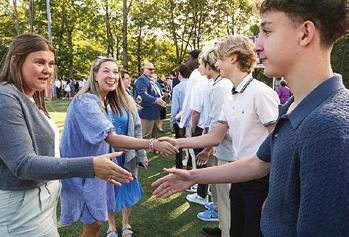
SEPTEMBER 13: Week One is in the books! From orientation and Community Read to Convocation and the All-School Handshake to the first week of classes and first athletic games, Cushing Penguins were ready to jump right in!
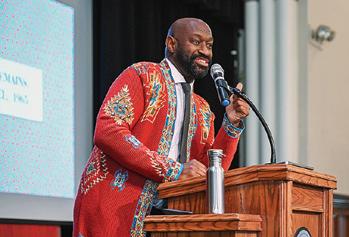
OCTOBER 15: Guest speaker Dante Micheaux takes us through the historical connection of fashion and African American history, and his personal work in the fashion scene.
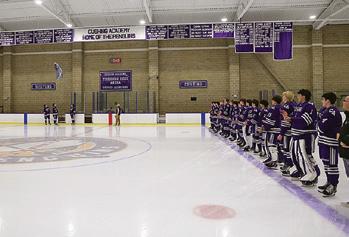
DECEMBER 3: Boys’ Varsity Hockey opens the 2025–2026 season by unveiling the 2024–2025 Elite 8 Championship banner at Theodore Iorio Arena. #PoweredByPeople #PoweredByCommunity
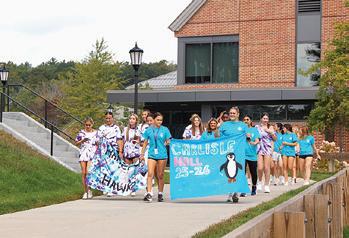
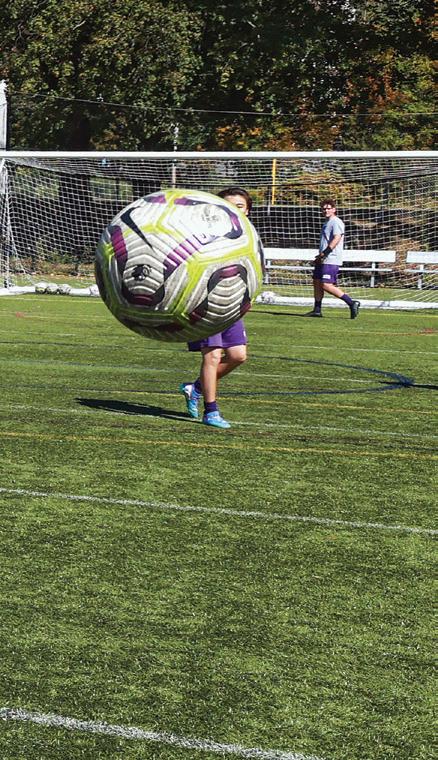
SEPTEMBER 16: Featuring spirited team entrances, Knockerball Soccer, caterpillar race, four-legged sprint, and egg dash, this weekend’s Dorm Olympics ceremony was a blast! #PoweredByPeople #PoweredByCommunity
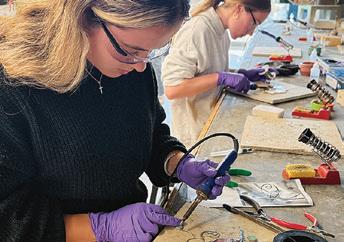
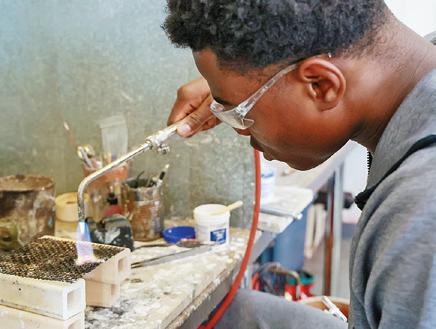
OCTOBER 17: Did you know in glass making, you also get to learn how to utilize a soldering iron? Check out Madi’s piece in action!
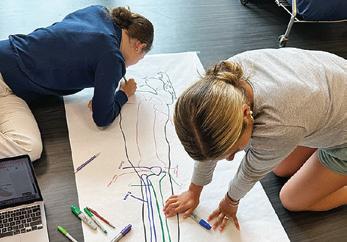
SEPTEMBER 25: Intro to Sports Medicine, four groups of three students each, with each group assigned body parts, trace body parts of one group member and then draw in the bones and label boney landmarks.
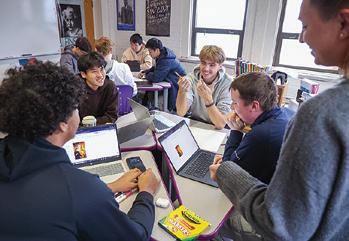
OCTOBER 23: American Literature — Students work on group projects where they explore the central themes of Arthur Miller’s The Crucible and illustrate them through visual symbolism, textual evidence, and collaborative analysis. #PoweredByCuriosity
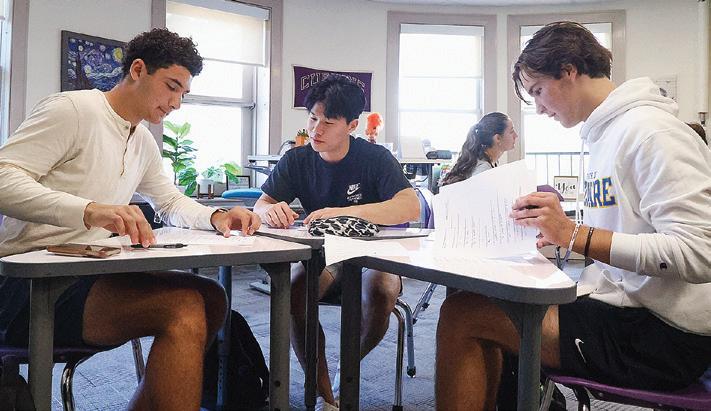
SEPTEMBER 12: AP U.S. Government and Politics: Mr. Stone’s Advanced Placement U.S. Government class kicks off the year with a surprise diagnostic test. All of the questions come from the official U.S. citizenship exam, giving students a fun way to check their beginning knowledge of key topics they’ll explore throughout the course.
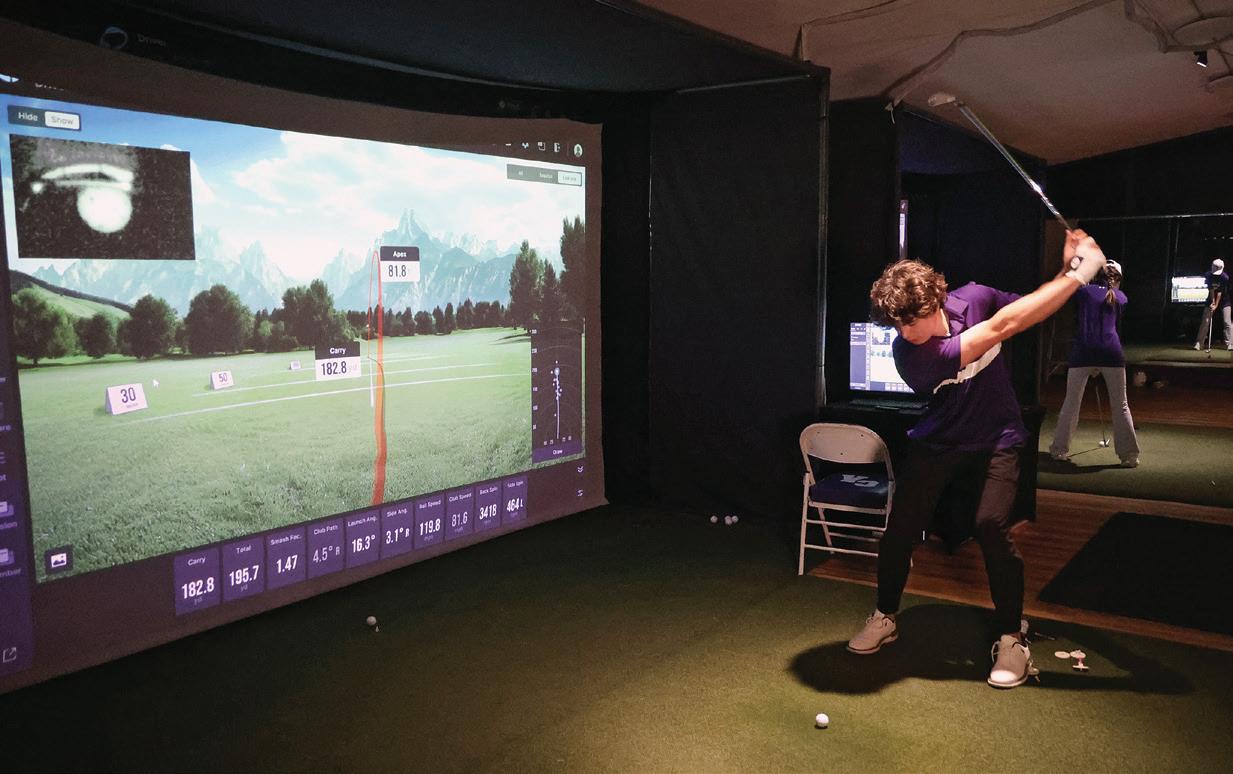
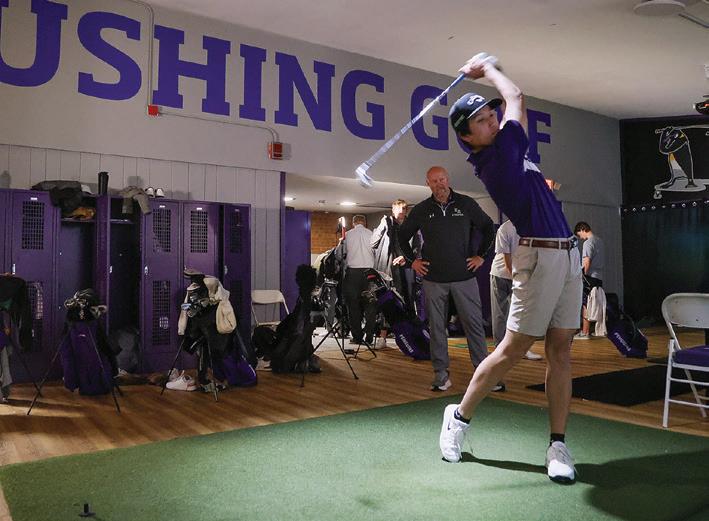
Tucked inside Heslin Gymnasium is a multipurpose space that has lived many lives. It was once Cushing’s main fitness center. Then, when the Watkins Field House opened in 2016 with its own weight facilities, the room became a robotics lab (which has since moved into the ground floor of the Main Building). Today, reclaimed and reimagined, it is now the Golf Team Room — a dedicated space for a once nomadic program that for years hit balls wherever it could: Vose House, Wilson Garage, even dorm hallways with hitting nets.
“We’ve never had a true home where we could leave things set up and kids could use them year round,”
says Head Coach Kurt Kublbeck P’16 “It’s always been very seasonal.”
That changed last spring. With generous support from anonymous donors who funded two golf simulators — each costing roughly $20,000 — and collaboration between Director of Athletics Brian Krauss P’27 and the facilities team, a first-class golf training center and gathering space was created. “Can we move lockers? Can we paint? Can we patch this?” Krauss recalls asking the Cushing facilities crew. “It’s always been ‘Yes!’”
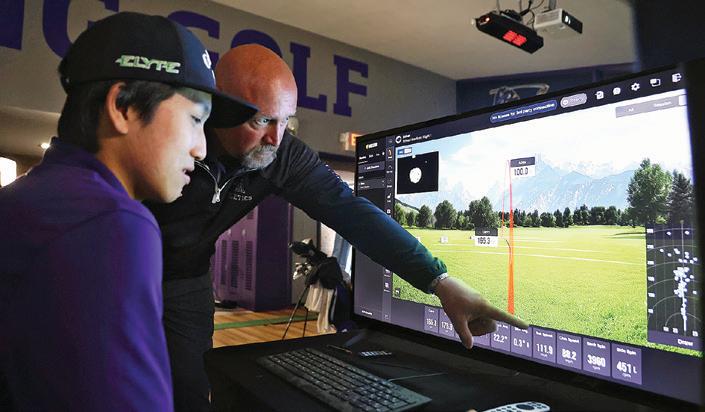
The heart of the room is the simulators themselves. Using high-speed camera technology, they
capture every aspect of a player’s swing — club speed, path, spin rate, and trajectory — delivering instant, datarich feedback. For Kublbeck, who is also the head of the science department, the precision is a game changer.
“I love the data, because those numbers don’t lie,” he says. “When kids are serious about golf and want to play at the next level, those numbers are important. They can see the actual data changing because of the adjustments they’re making in their swing and then they can see the consistency. That builds confidence.”
The impact is already visible. Players like Ryan Chen ’28, Ophylia Li ’26,
Angie Yu ’26, and Kevin Zhou ’27 make regular use of the space, squeezing in practice before class, after school, or on weekends. Instead of losing 30–40 minutes traveling to and from an off-campus driving range, they can devote that time entirely to training.
But for Krauss, the shift is about more than technology or convenience. “First and foremost, to give the program a home was a priority,” he explains. The room is not simply a simulator space; it’s the Golf Team Room — a place where players gather, store their gear, and build culture.
Golf, unlike many sports, rarely plays before a crowd. Matches are held off campus, without the visible fanfare of other sports. “It provides our students with a sense of inclusion and ownership,” Kublbeck says. “When you are on the hockey ice or the soccer field, that is your space. Now our golf athletes have a space on campus where they can be noticed and acknowledged as golfers.”
For recruiting, for player development, and for culture, the message is clear: golf matters here. A co-ed program with 22 student athletes at both the varsity and the JV level, the program is poised to grow. College golf teams have been recruiting — Ethan Hale ’25 is now playing at Bates College and Owen Donovan ’22 is at St. Lawrence University. Now, regardless of the weather outside, Cushing golfers can practice year-round, just like the indoor golf leagues featured on ESPN.
As the coach of Cushing’s golf team for a quarter-century, this new development is meaningful to Kublbeck. “I can now develop skills with a little more purpose,” he says. “You’re tapping into their potential and you’re tapping into their passion. When they see that they’re improving based on their work, they buy in a little more. The more buy-in you have, the stronger your culture is going to be.”
It
provides our students with a sense of inclusion and ownership… Now our golf athletes have a space on campus where they can be noticed and acknowledged as golfers.”
—BRIAN KRAUSS P’27 , DIRECTOR OF ATHLETICS
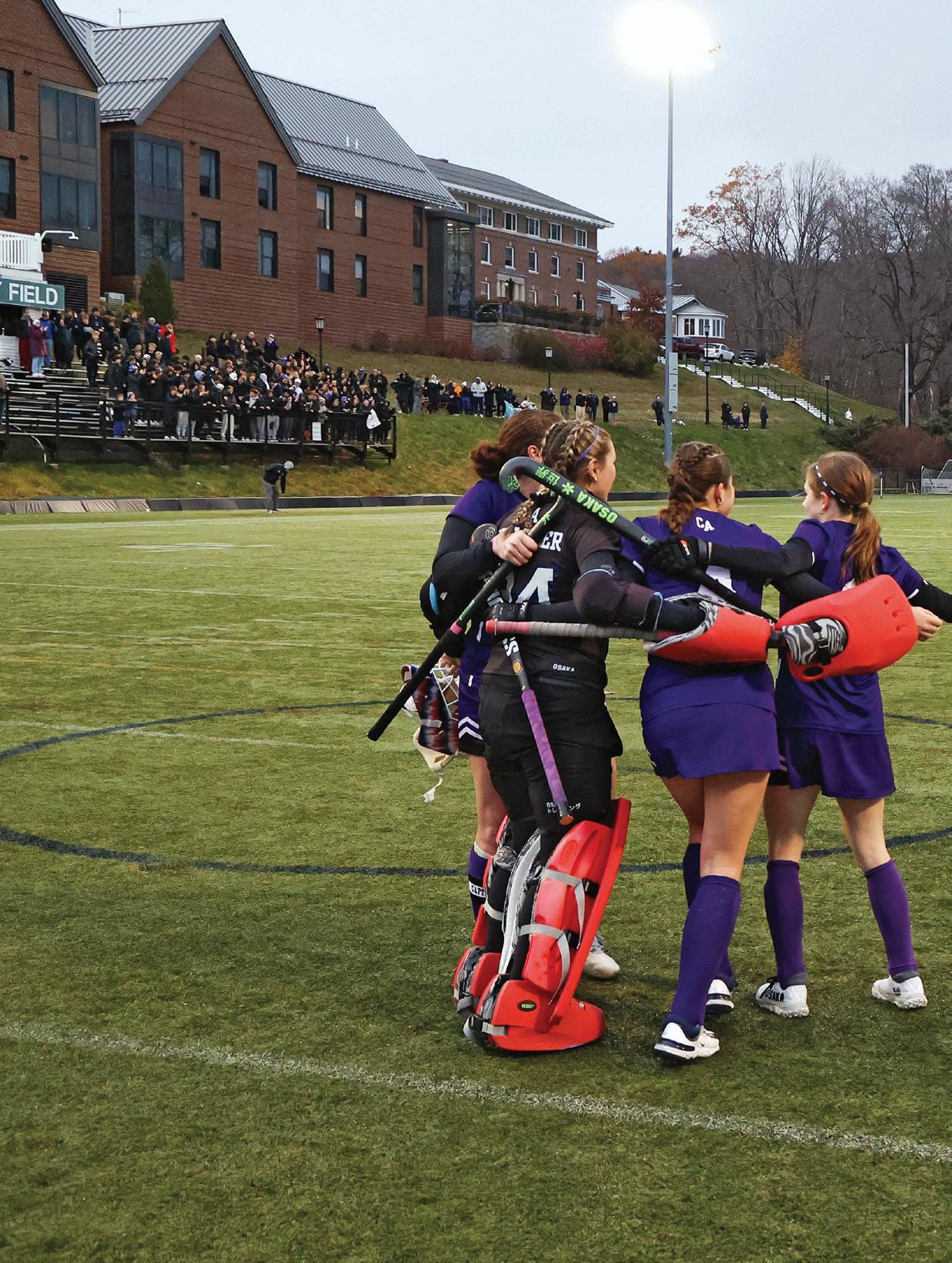
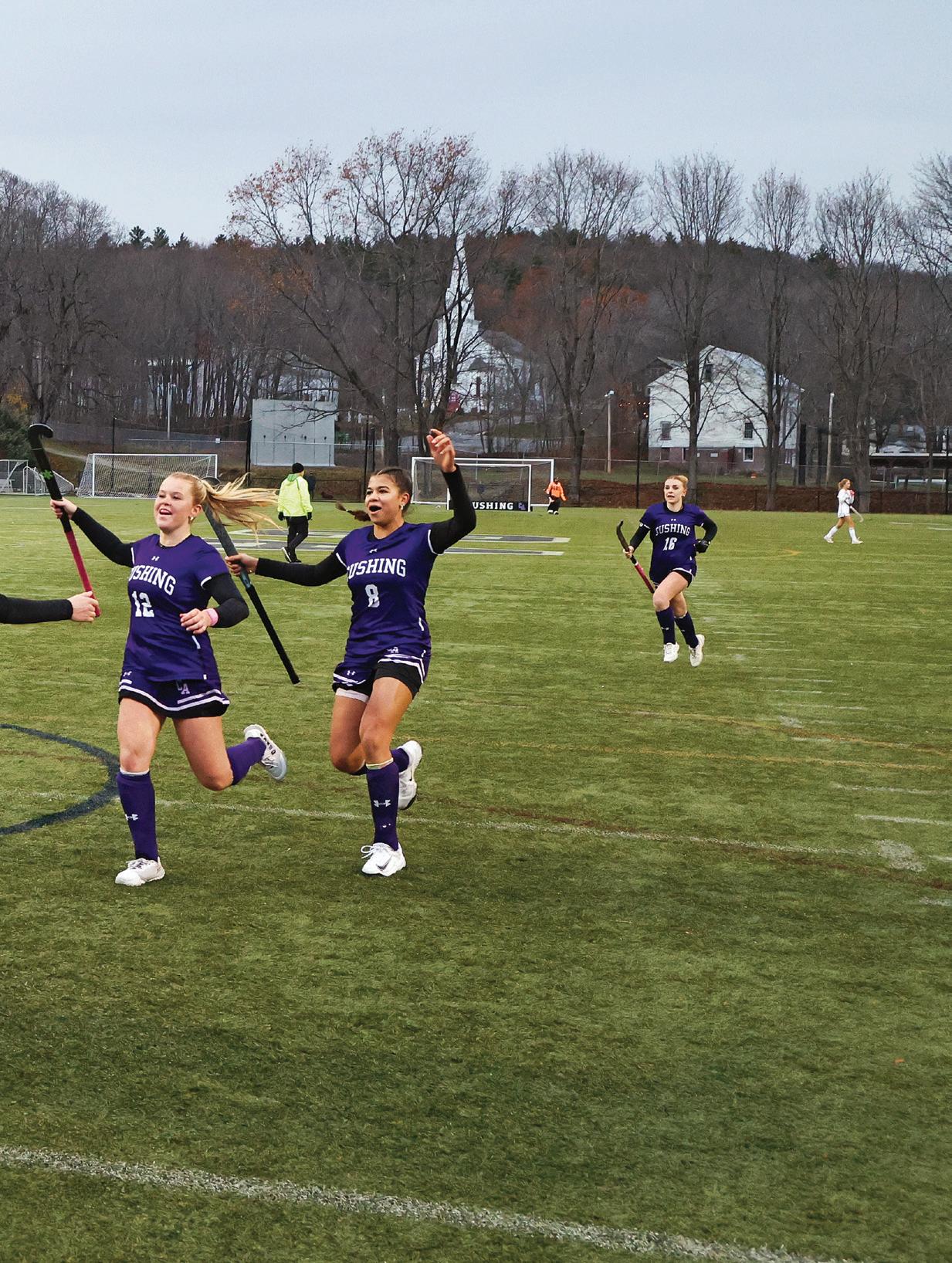
Girls’ Varsity Field Hockey celebrates a 2–1 home playoff victory against Suffield Academy in front of a packed house at Quimby Field. The team also beat the top-seeded Rivers School 2–1 en route to advancing to the championship game against Middlesex School. Field Hockey’s deep run through the Class B Playoffs capped a remarkable 17–4–1 season.

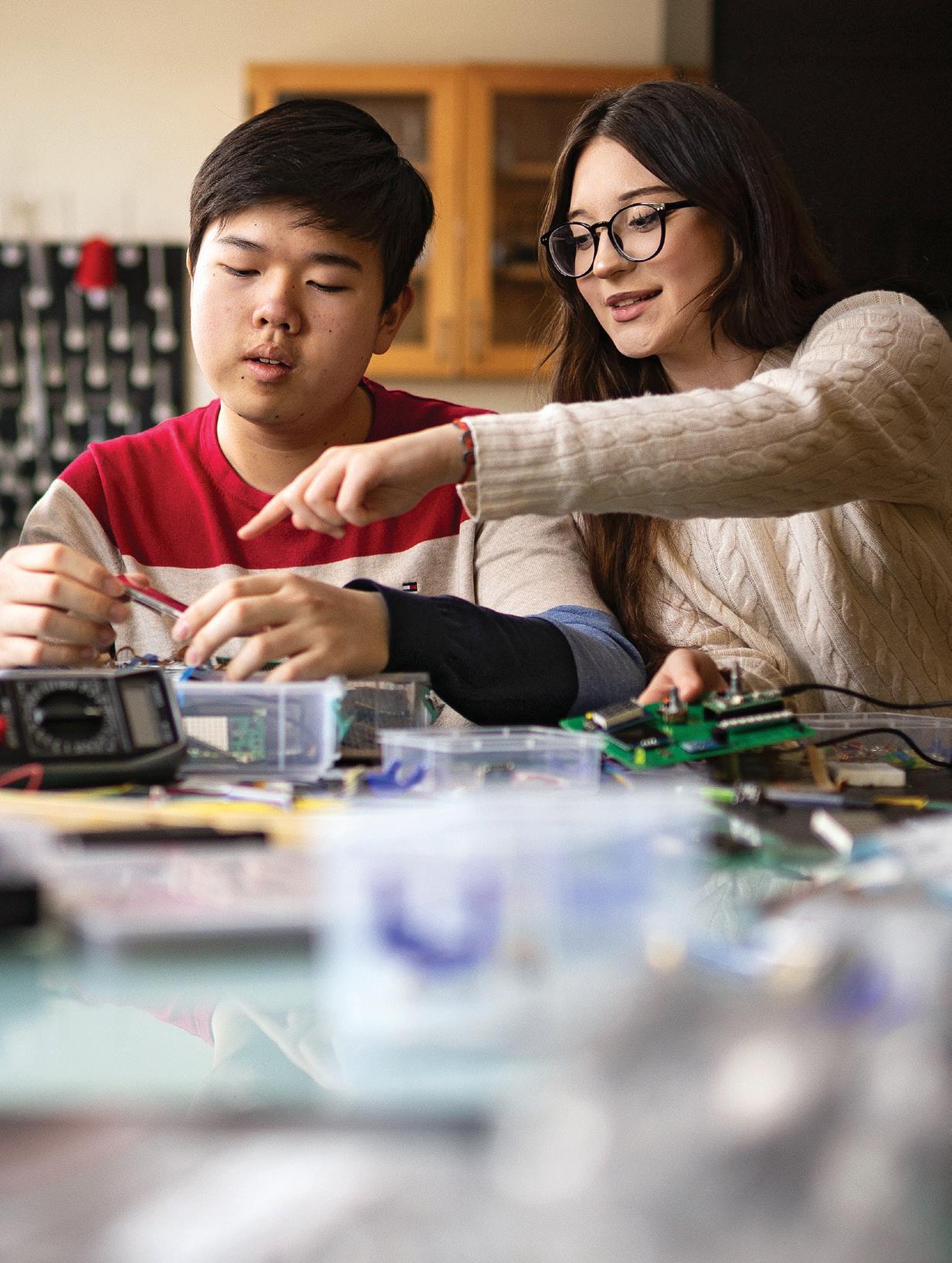
Curiosity is a mainstay in Cushing Academy’s longstanding mission to develop “curious, creative, and confident learners and leaders.” In a world where information is endlessly accessible, curiosity matters more than ever. “The question matters almost more so than the answer,” says Director of Academic Affairs Raja Bala. “The goal is to cultivate intellectual persistence — the confidence to probe deeply and keep asking when the first answer isn’t enough.”
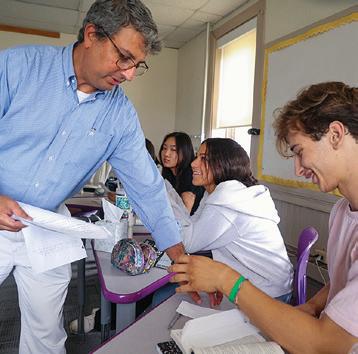
What makes Cushing’s approach distinctive, Bala suggests, is the belief that curiosity is contagious and visible. When a faculty member brings genuine passion to their subject, something shifts in the students around them. “Students just get a little bit more curious when they see that spark,” he says. “And that question of, ‘Why is this person so interested in that?’ opens the door to new possibilities.”
In the pages that follow, Cushing department heads share how curiosity takes shape in their own disciplines: the questions they are posing, the projects igniting student interest, and the ways they are helping Penguins discover that the pursuit of knowledge — and resiliency in the face of challenge — can, and should, spark joy.
Included in this feature are profiles of six young alumni, each with their own vivid stories about what they took from their time at Cushing.

In a world where answers are everywhere, the real work is learning to ask the right question.”
—Raja Bala, Director of Academic Affairs

“We challenge students to reach their full potential.
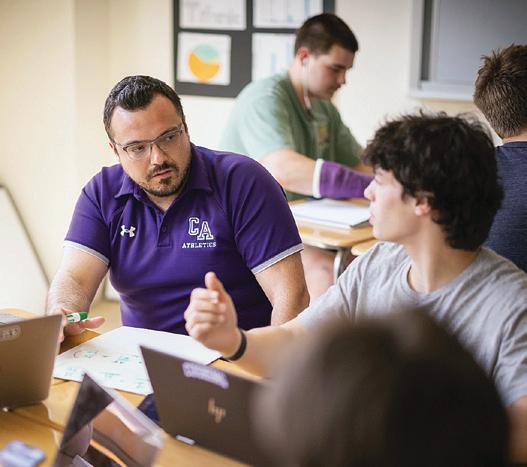
We want students to leave Cushing feeling confident — confident in their skills and in their understanding that math is a tool they can apply in so many different facets of life.”

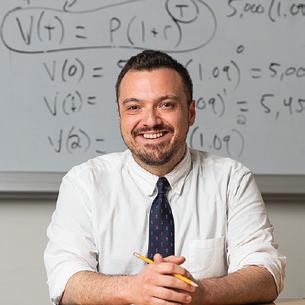
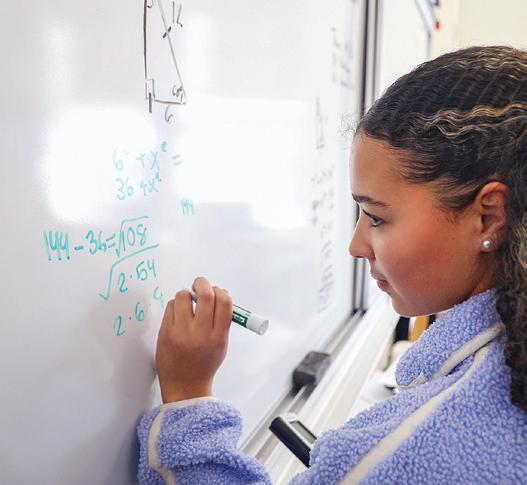
One strength of our department is showing students how to apply mathematical ideas in meaningful, creative ways. An example is our annual probability and statistics game night, which is the culmination of our unit on probability and expected value. Students use the math they’ve learned, but they apply it creatively. In class, we design games that are fun and replayable, and then we host an event where students from around campus come to the student center to play them. Our students step into the role of business owner or marketer, thinking about how to draw people in. They become the expert who can explain the math behind each game. It’s an event that combines creativity, strategy, and performance — and students love it.
You’ll also see curiosity sparked in our geometry classes, where students are frequently outside, working with nature and their surroundings, seeing how architecture, engineering, and the natural world can all be understood in a geometric way. Getting students outside the buildings helps them see math as a useful way of viewing the world around them.
Across the department, we try to build in choice and creativity wherever possible. In statistics, students design simulations around questions that genuinely interest them. One student ran a simulation to determine how likely the Patriots were to win the Super Bowl, while another was exploring how likely a state’s capital is to be within a certain distance of a US military base.
By designing games, running simulations, and connecting math to real questions, we want students to leave Cushing feeling confident — confident in their skills and in their understanding that math is a tool they can apply in so many different facets of life.

Setting the bar high at the start — not quitting — has become an important lesson.”
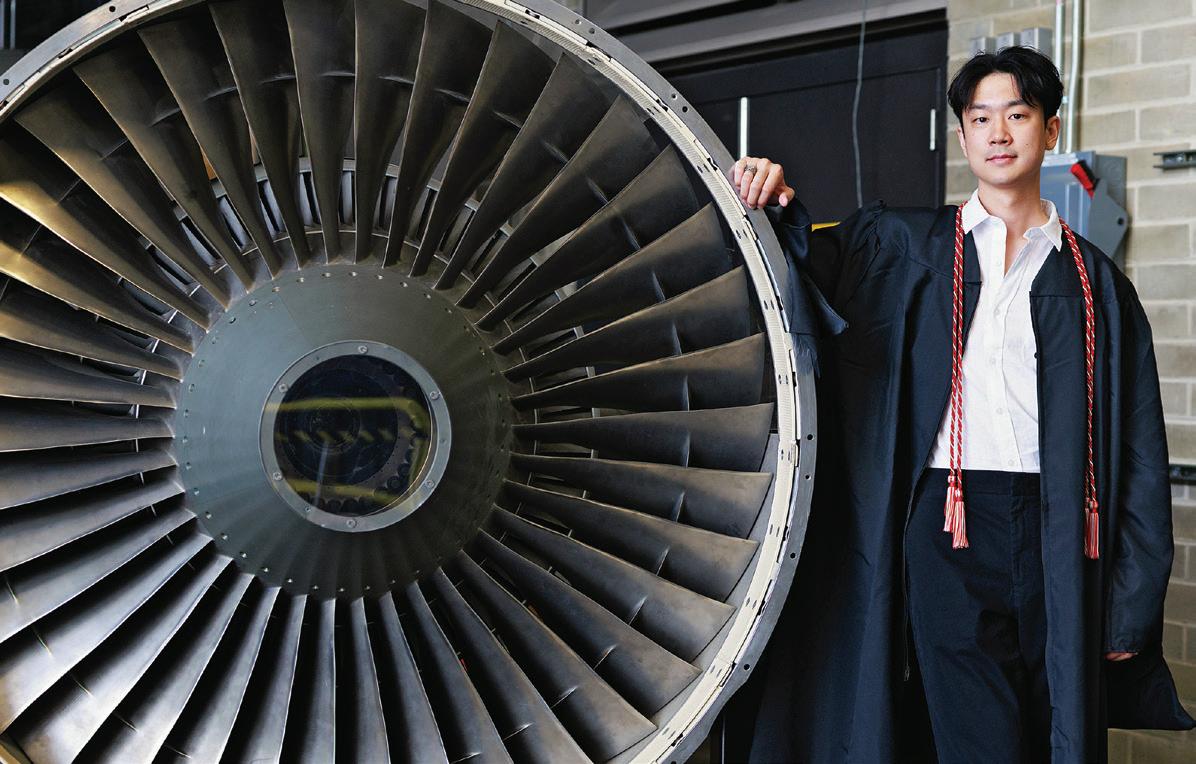
—Oliver Wang ’19, BS, Emory University MS, Massachusetts Institute of Technology
Oliver Wang likes to joke that he left Beijing to avoid running the required 1,000-meter race for China’s high school entrance exam. “I ended up running three years of cross country,” he says, “so I guess I failed miserably.”
Humor aside, Oliver’s decision to attend Cushing marked the beginning of something far more significant. From the moment he stepped onto the campus — greeted by an outgoing tour guide with a bright smile — he felt at ease navigating a new country and culture. What followed was an education built on vision, resilience, and fundamentals.
Math has always been his strongest subject, and he placed into AP Calculus BC as a freshman. Two weeks in, overwhelmed by the pace, he dropped the course. Under the guidance of Denis Shubleka, his advisor and longtime mentor, Oliver learned to embrace
challenge and re-enrolled in the course his sophomore year. Now, as he looks back, he sees that early discomfort as pivotal. “Setting the bar high at the start — not quitting — has become an important lesson,” he says. His Cushing classes demanded independence, selflearning, and persistence — habits that would later charge his academic career.
At Emory University and then at MIT, where Oliver pursued a PhD in AeroAstro focused on uncertainty quantification, those lessons resurfaced. Faced with dense research papers and abstract mathematical models that initially felt impossible to decipher, Oliver relied on the same muscle he built at Cushing: don’t quit. The result was a publication in a SIAM journal and continued research collaboration at MIT.
At MIT, he also explored optimal transport, a mathematically elegant
field blending optimization, statistics, and probability theory. His strong mathematical foundation, solidified at Cushing, proved essential.
Recently, however, Oliver broke his own rule and quit his program at MIT — his LinkedIn title is currently “PhD Dropout @ MIT” — to focus his passion and curiosity on real-world application. He founded a venture startup that worked to build AI-powered tools for vocational training, later pivoting to simulation data generation for scientific use cases such as weather forecasting. The insights he gained from that experience now inform his work at Northern Light Venture Capital, where he sources and evaluates new investments.
“In a world moving fast, fundamentals feel slow,” Oliver reflects. “But it’s always the fundamentals that matter.”
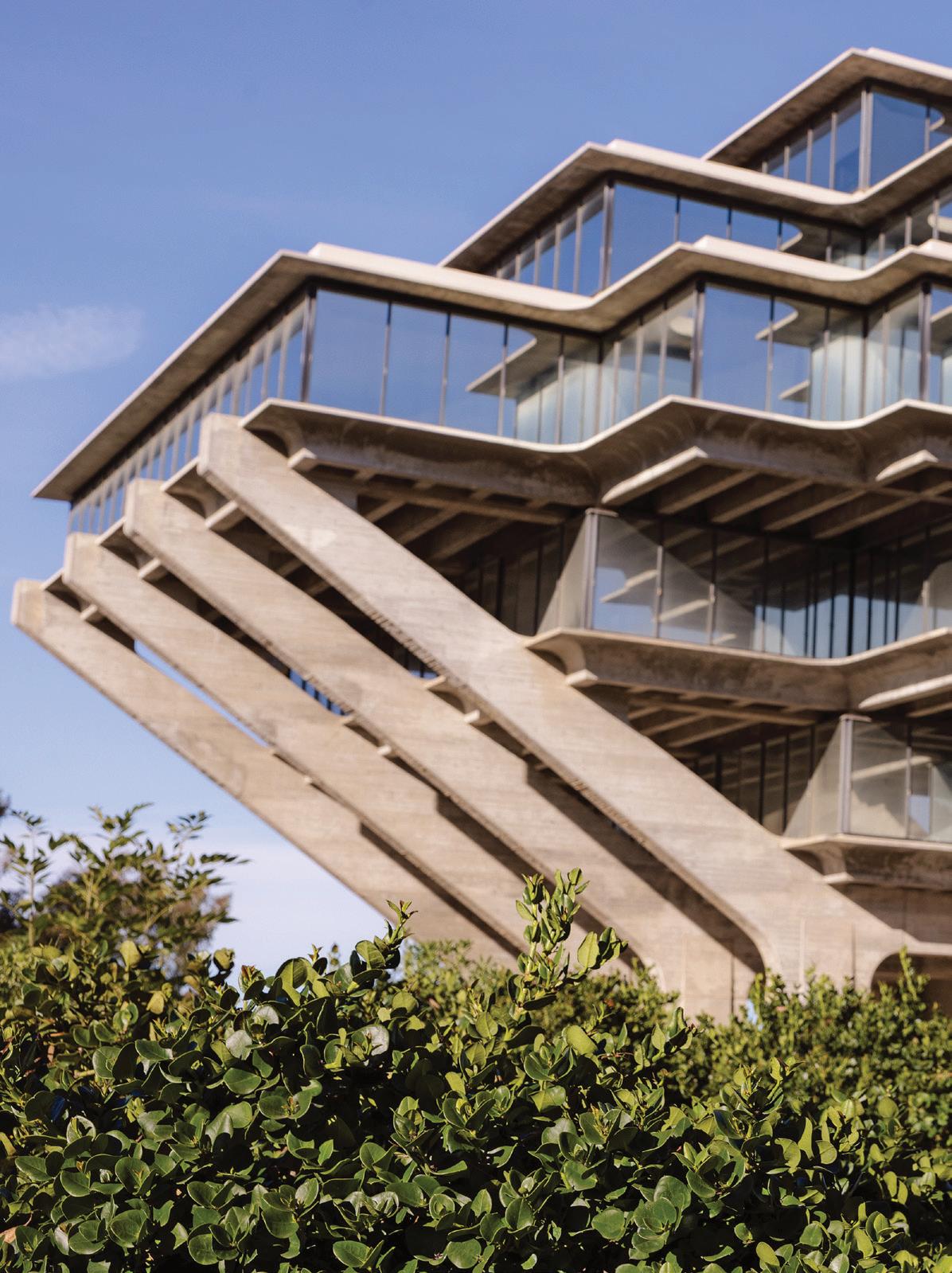
When Ariba Haque ’25 left Dhaka, Bangladesh to attend Cushing for her junior year, she had never even toured the campus. Knowing she was ready for more of a challenge, she found the school through an online search and took what she now calls a leap of faith.
In her family and culture, leaving home for high school — especially as the youngest daughter — was uncommon. But Ariba knew she needed a change from the school she had attended her whole life. She had no idea how that choice would transform her. “It ended up being the best two years ever,” she says.
Before Cushing, Ariba admits she did what was required and did it well, but she rarely went above and beyond. When she arrived in Ashburnham, she placed into challenging courses, including AP Physics — “My teacher for physics, Mr. Kublbeck, was one of the sweetest and most supporting teachers ever.” The adjustment was intense and included moments of frustration and self-doubt, but, supported by faculty and advisors, she began to lean into the challenge rather than running away. AP Calculus was a particular turning point: “It builds a lot of character when you
go through a class like that.” She earned a 4 on the AP Calc exam, enough to get college credits, which Ariba counted as a huge success. Likewise, AP Language with Raja Bala turned English from a language Ariba spoke fluently into a discipline that stretched her thinking. By senior year, her confidence grew dramatically. She won the English award each year she attended and earned Cum Laude honors at graduation.
Equally important was her personal growth. As one of the only South-Asian students at Cushing, Ariba chose to reach out instead of retreating inward. By practicing vulnerability, she formed genuine connections.
Now, as a major in economics and political science-data analytics at UC San Diego, she approaches course registration with excitement. “What can I add? How can I challenge myself further? It makes me think of all the possibilities,” she says. Ariba hopes to work in research or policy, possibly in developmental economics for an organization like the World Bank or the IMF. These days, Ariba looks at new opportunities the way she once looked at Cushing — as a leap worth taking.
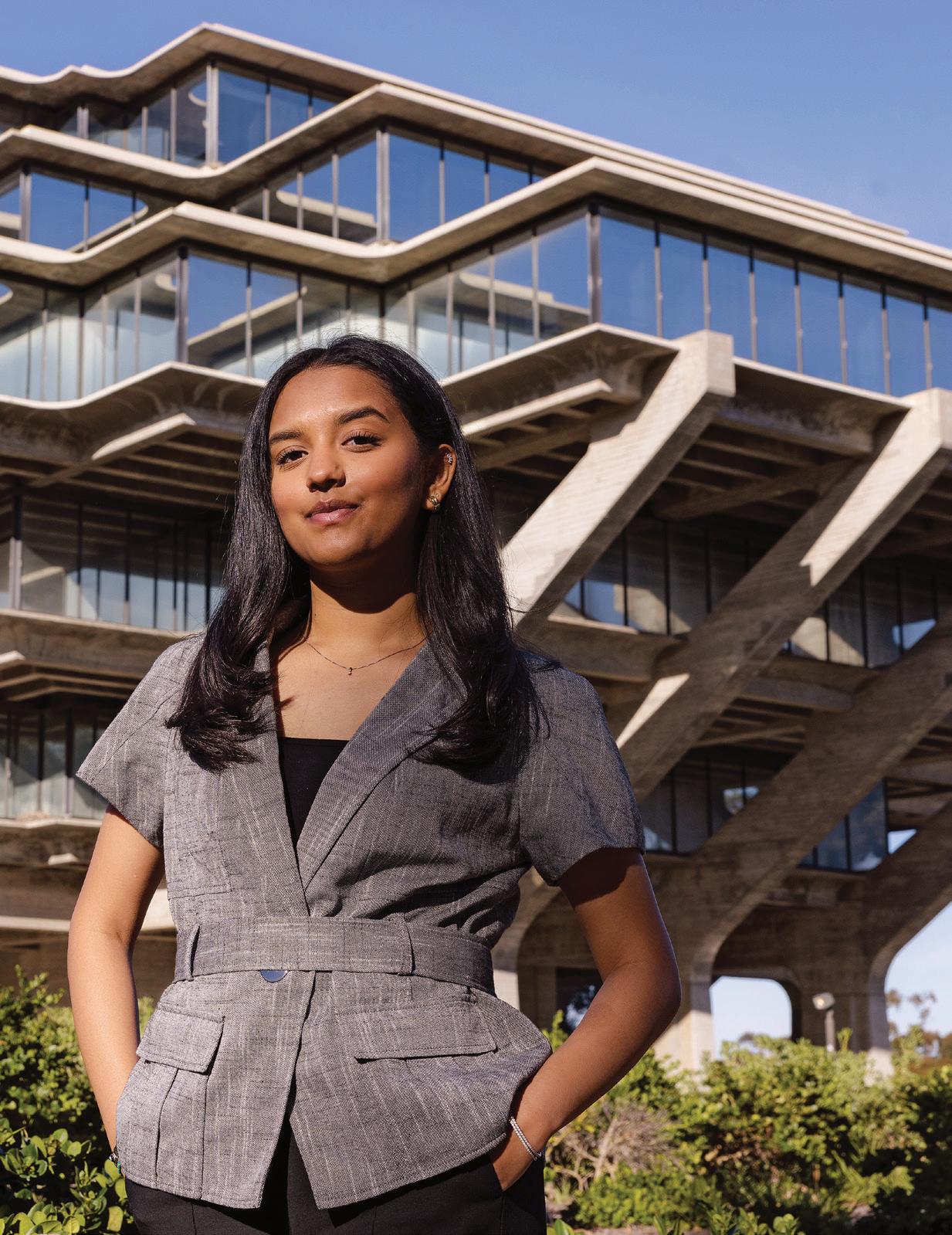

Everything you want is on the other side of vulnerability — and Cushing taught me how to be vulnerable.”
—Ariba
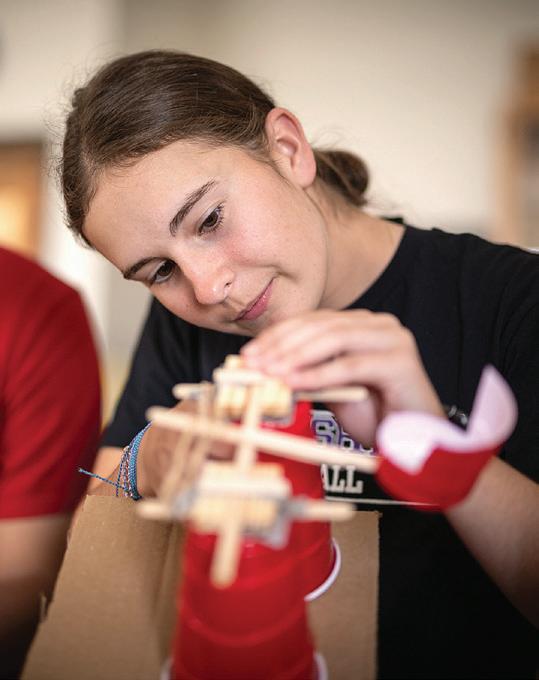
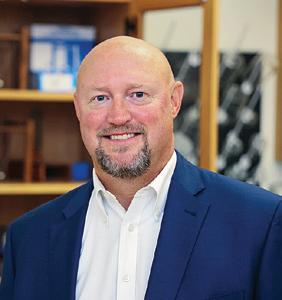

Being a science teacher wasn’t my original path. I was taking a year off to apply to medical school, and Cushing needed someone to cover a maternity leave. I stepped in for the year, taught chemistry and physics — also coached varsity basketball and varsity baseball — and lived in the dorm. I realized that this was my calling.
A lot of the students that I work with are very strong in science and math. However, taking creative risks is very difficult for some of them. In many cases, trying to pull those students into the creative realm of their thinking can be a challenge. I think one of the things we do very well as a department is to allocate assignments with big questions that have a lot of thought involved with them, with multiple pathways. When students see that there are multiple pathways to get to the same conclusion, that’s where their curiosity and creativity really thrives.
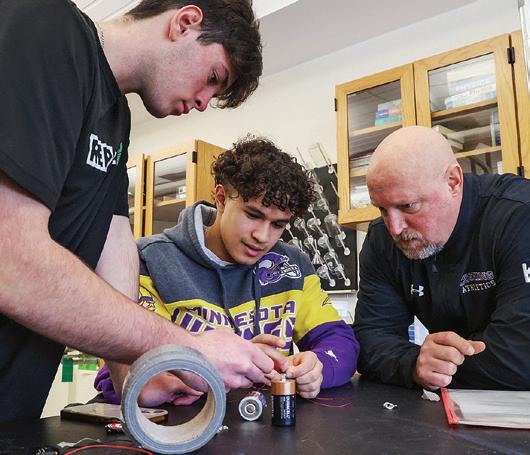
One of those big questions that students love is an open-ended project involving electricity, where they build an electrical device based on certain components, including batteries, wires, and resistors. One student chose to build a flashlight. It started out as a very challenging
experience because this student rushed into it without planning. The first attempt failed — the circuit didn’t work.
The student took a step back, retried it, but again, no light. They ended up short-circuiting the circuit — so two iterations that didn’t work well. Then, finally, something clicked. You could literally say a light went off in this case. The student found that if they planned things out and did a little research into the content, they were able to actually apply the principles of electricity to the project. They went home and worked on it all night. They came back the next day, having calculated the correct resistance for the circuit so that the light bulb wouldn’t blow. They eventually came up with a flashlight that was extremely durable, aesthetically pleasing, and very useful.
As a department, we hope that students take with them a sense of valuing ownership for their work when they leave Cushing. Also, we hope that they are willing to take creative risks beyond the classroom and really dive into their curiosity. When students realize that their curiosity can create just about anything, that’s when they’ll really make their mark beyond Cushing and build confidence that will last a lifetime.
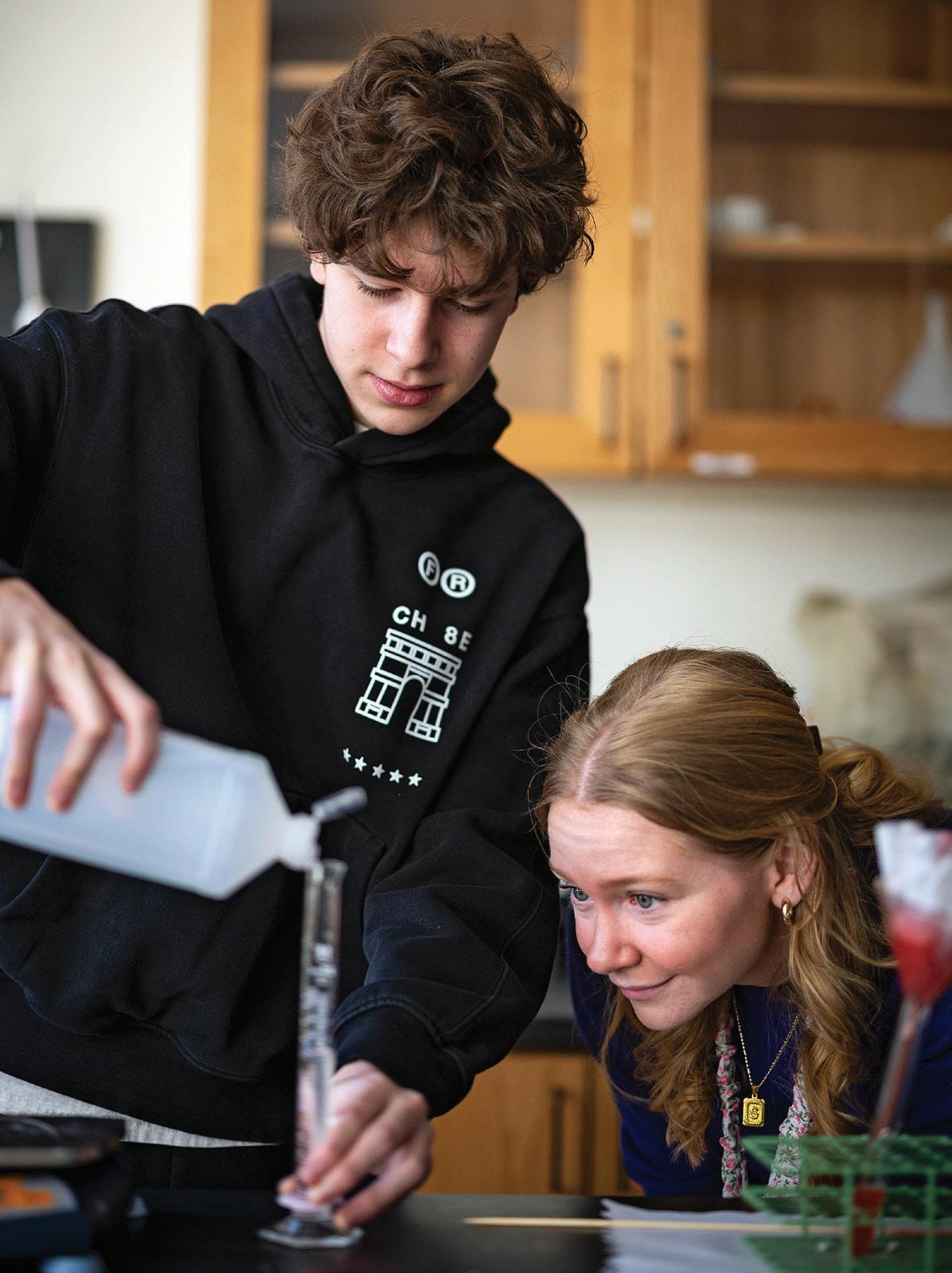

The learning comes from the journey — the ups, the downs, the things that go well and the things that don’t.”
—Kurt Kublbeck, Science Department Head
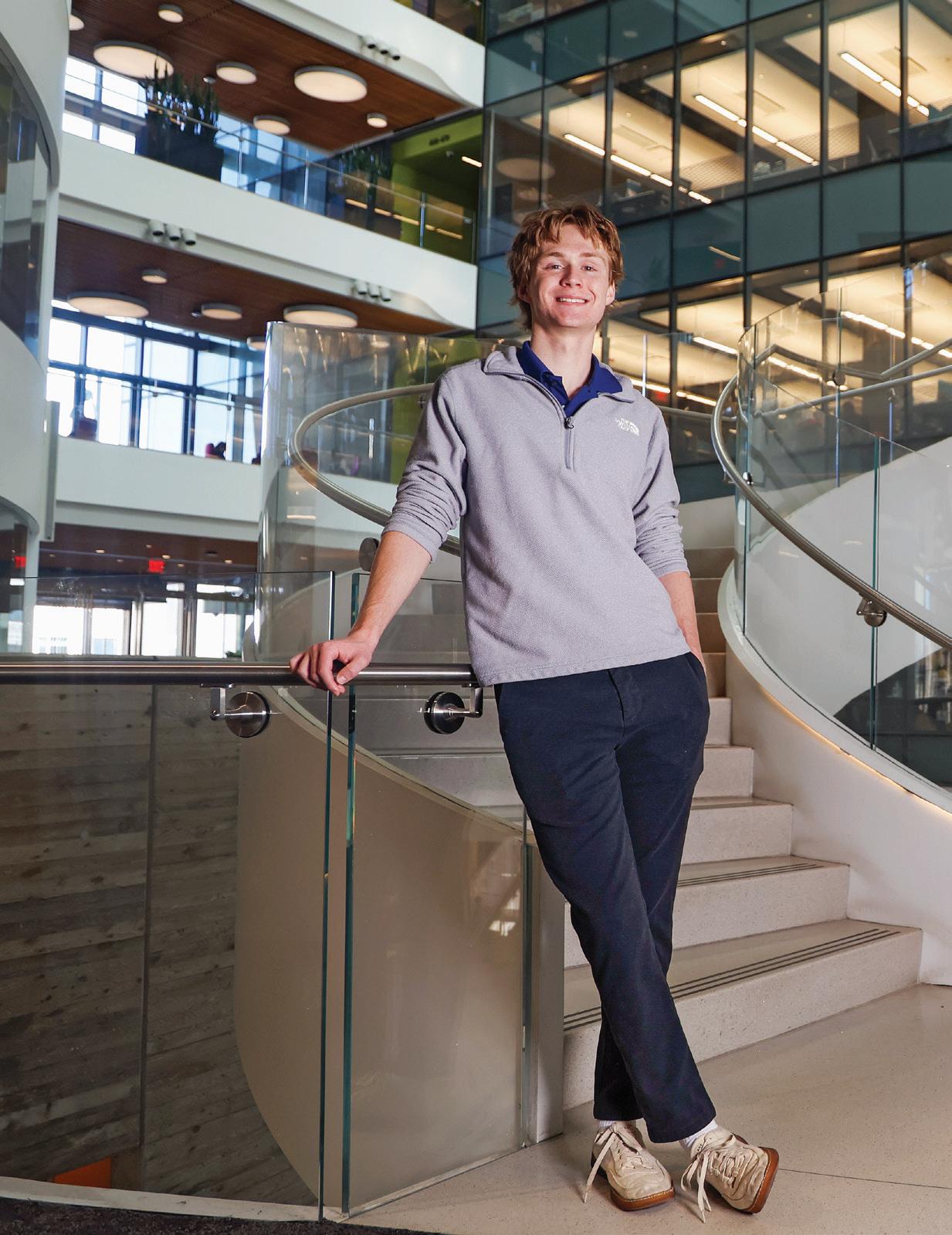

When I think about Cushing, I think about the connections you have with your dorm parent, your teacher, or your coach. Faculty are in your corner no matter what.”
—Brady
Horgan
’23,
Junior, Northeastern University
Brady Horgan’s path to engineering began at Cushing, but it was shaped as much by people as problem sets.
In Cushing’s engineering courses, Brady discovered he loved the way math could translate into something tangible — designs, systems, structures you could see and build. But what made that curiosity stick was the teachers who helped him truly understand the material. In math classes with Mark Burke P’16,’18 and Richard Devin P’06, ’24,’27, complex concepts became clear. “I think the math department at Cushing is unbelievable,” Horgan says. “They made it simple. They made it super understandable, and they were there for every question you would ever have. It definitely shaped the way that I study, in terms of not giving up.”
Senior year, Advanced Engineering sealed the deal. The class was collaborative and hands-on — everything Brady loved. One highlight was building an 18-hole mini golf course for students and faculty to play. The project included leadership, teamwork, and interaction — and it showed Brady that engineering was as much about working with people as it was about numbers.
Just as important as the coursework at Cushing were the relationships. “When I think
about Cushing, I think about the connections you have with your dorm parent, your teacher, or your coach,” he says. The accessibility of faculty stands out. “They’re in your corner no matter what. They’re looking out for you.” He points to his advisor, Raja Bala, who helped him explore his interests, adjust direction, and think intentionally about what came next.
Now an engineering student at Northeastern University, Brady continues to build on that foundation. Engineering coursework is rigorous, but he approaches it with the mindset he developed at Cushing: stay engaged, collaborate, and persist.
This past year, Brady began his first six-month co-op with a major HVAC engineering company — a firm that has done work at both Cushing and Northeastern. In a full-time, professional setting, Brady thrived. His technical knowledge stood out, but so did his ability to communicate, lead, and connect with colleagues — traits he honed in part as a proctor and team member at Cushing. By the end of the co-op, he had earned a job offer for after graduation.
What started as curiosity about how systems work has expanded into something broader — now Brady seeks not just to build systems, but to help guide the teams that design them.
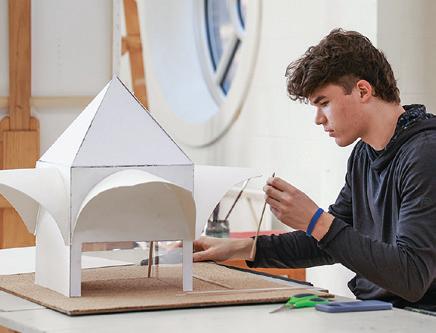

“We work hard to shift that lens when students say, ‘I can’t.’ They absolutely can.”

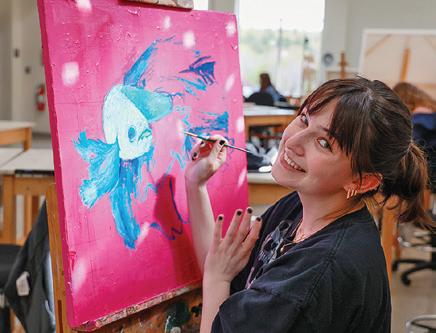
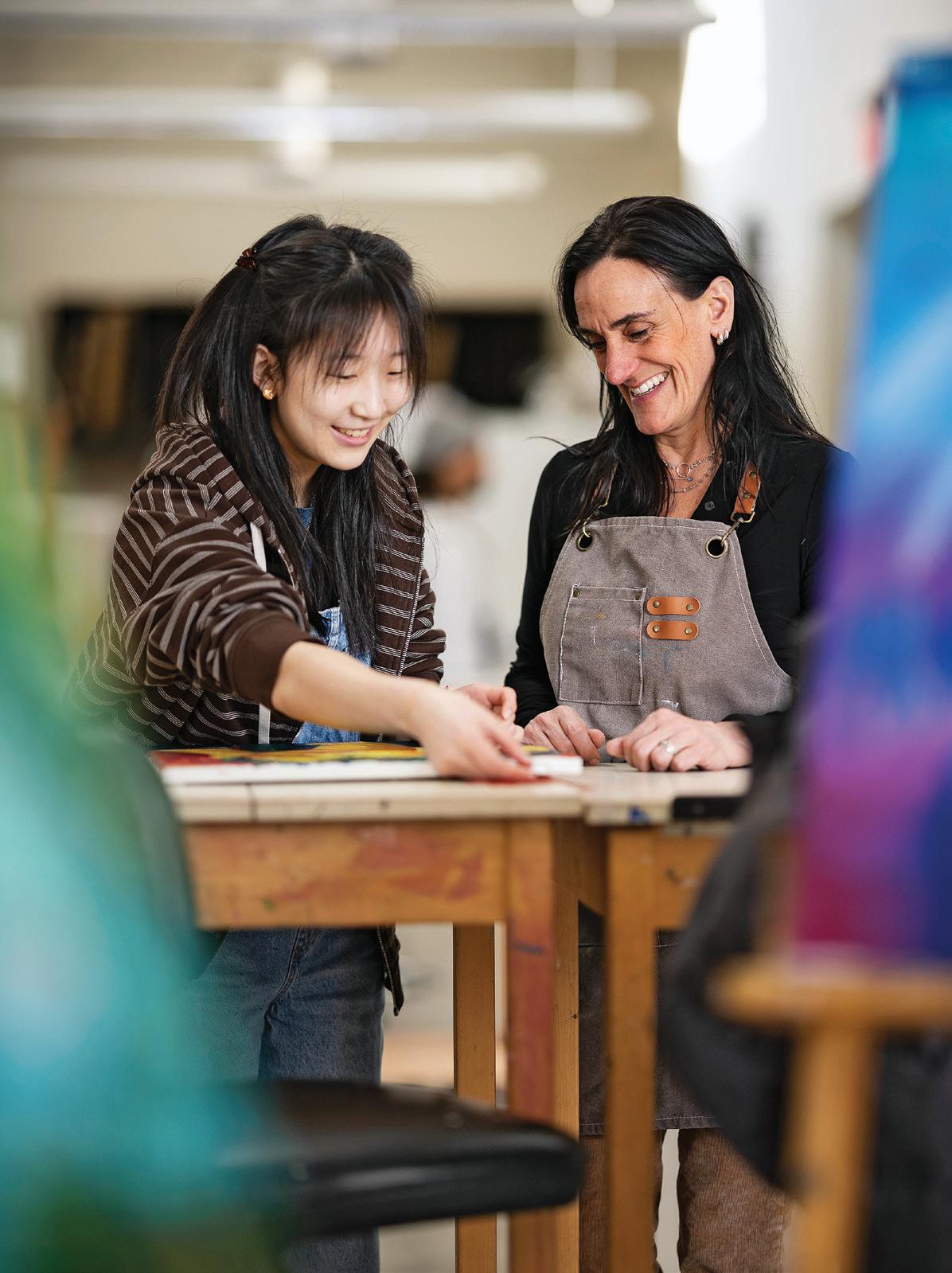
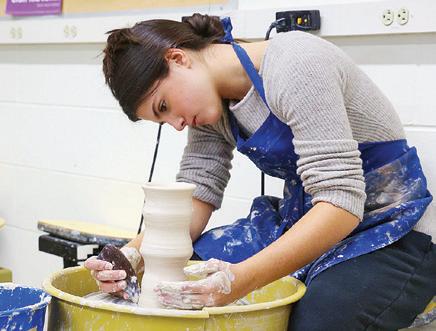
Students feel genuinely comfortable being curious here — comfortable enough that many spend their free periods and weekends in the visual arts building, not because they have to, but because something draws them back. It’s an environment where, no matter who you are — whether you’re simply here to draw or paint, craft a stunning piece of jewelry in metalsmithing, or spend hours working on your portfolio for an early decision deadline — you feel empowered. That sense of confident curiosity and belonging has students seeking out this space again and again, which is a wonderful thing. In thinking about being curious, a current student comes to mind. I had the pleasure of working with him when he first arrived at Cushing as a freshman. He was a wonderful student and athlete, but he came here for a lot of reasons — none of which were art. Still, he was immediately aglow in this space: questioning, full of wonder, yet also reticent and a bit nervous. He simply had never seen himself as someone like this. The following year, he enrolled in my architecture class, and after the first month, I realized he is a maker. He is a natural builder and visual thinker with an intuitive, designengineering brain. This year, he’s in advanced portfolio, which, for him, is almost a shock. He is still realizing that — in fact —
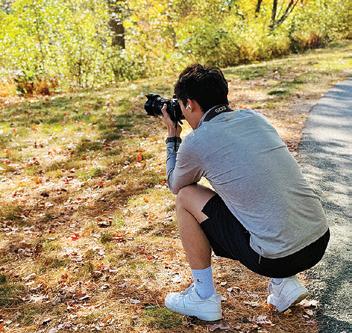
he can do this, and he is genuinely loving the work he is doing. The curiosity, joy, and wonder are there, and he has created some truly incredible pieces that are really all his own.
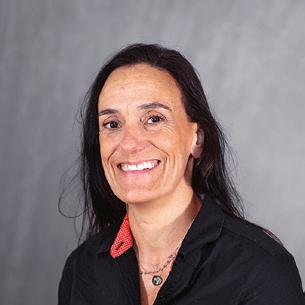
I believe people are inherently creative, but they don’t always know or believe it. What we hope is that students come to Cushing and discover that there is an artist in there! And that they begin to feel comfortable claiming that title. Regardless of background, confidence level, or how they’ve previously understood themselves as learners, we want every student to recognize that they are creative and that they can question what they see, challenge assumptions, and make something meaningful. Whether they go on to pursue art, business, law, science, or any other field, that openness will support everything that comes next. We work hard to shift that lens from “I can’t” to “I absolutely can.” We welcome all students into that aesthetic self-discovery, and we remain equally committed to cultivating a visual arts program of authentic joy and engagement: one that nurtures the new and unknown and also challenges our most dedicated student artists.
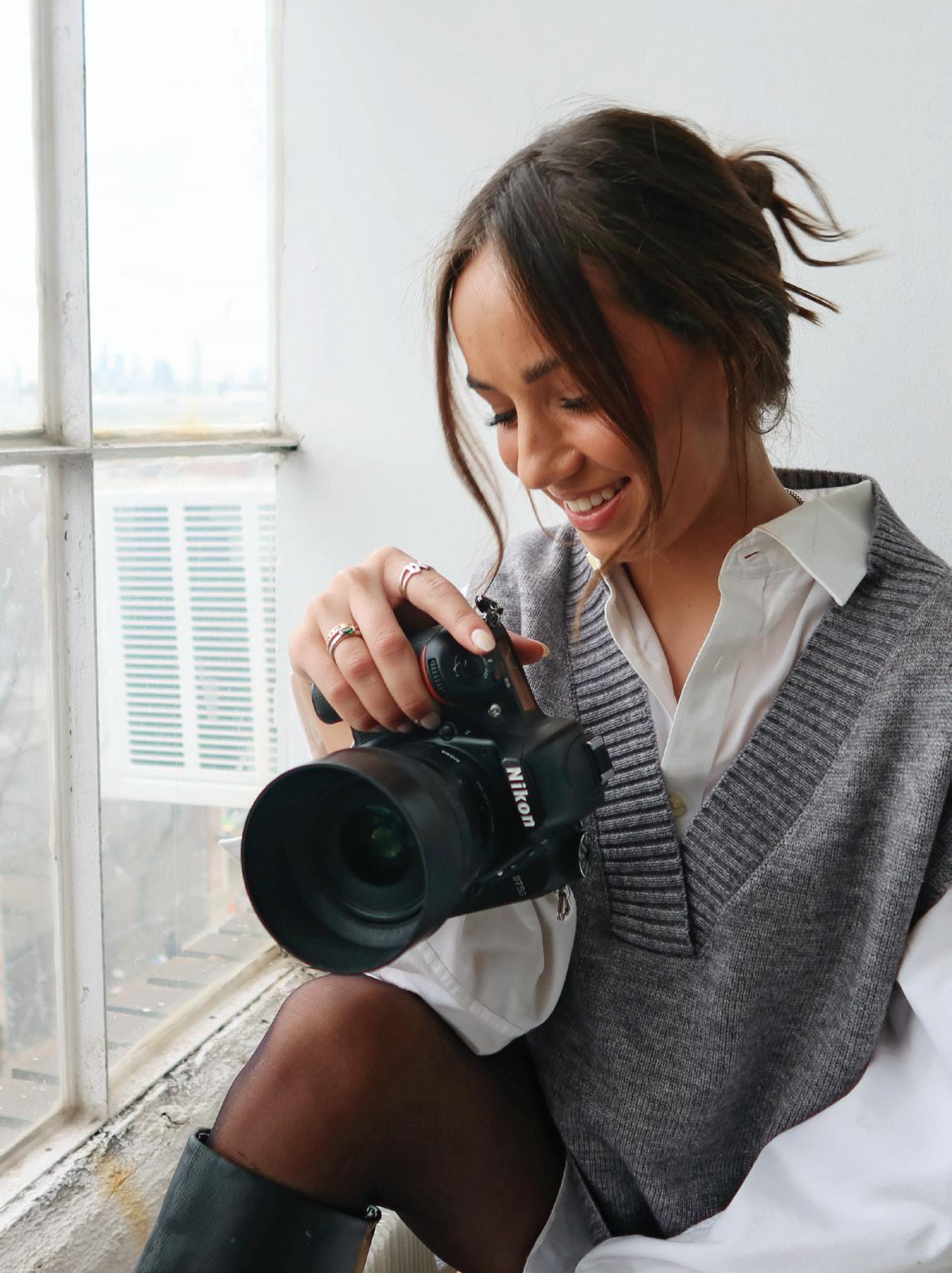
Louisa McGrath came to Cushing searching for academic support and balance — a place where she could grow without being held back by executive-functioning challenges. What she found was a nurturing environment that taught her how to learn.
With the guidance of academic support faculty, Louisa mastered time management. Today she still swears by the “five-minute rule,” which she learned at Cushing — if something takes under five minutes, do it now. More importantly, she began to understand how her mind worked. When traditional study methods fell short, she leaned on her understanding of how stories are structured, honed in part by participating in theatre at Cushing. After memorizing pages of dialogue as Maria in West Side Story, she realized she could approach history the same way — not by memorizing facts, but by finding the narrative arc.
Encouraged by mentors like Julia Ohm, Louisa learned to cut through self-doubt and trust her instincts. “I was given the option in college for extra time, and I decided to not take it,” she says. “I felt by the time I left Cushing, I had a handle on how I study and how I work.”
At New York University’s Tisch School of the Arts, Louisa earned a BFA in Film & Television. Today she works in New York as
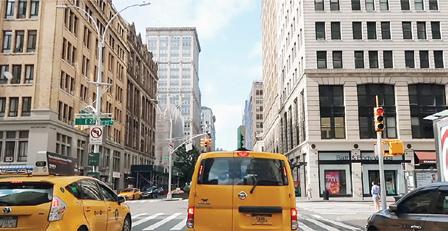
Louisa’s tour of her dorm room at NYU has hit more than 1 million views.
a freelance production assistant for luxury brands and major productions, while also developing her own projects and content. Her YouTube channel, begun in 2014, now boasts tens of thousands of followers. It became an early laboratory for creative risk-taking.
She loves working with makeup brands and fashion companies, especially during New York Fashion Week. “That’s always my favorite time of the year, getting to learn how different brands work together and how I can help them,” she says.
As she works, Louisa thinks back to Cushing and how the faculty there helped her build on her strengths. Beginning as a captain of Cushing’s field hockey team and continuing through her work on production sets, she embraces her mediator personality. She recalls recently being on a set where the stakes were high and people started to get uneasy. “I just was so proud of myself at that moment, because I was able to calm everyone down,” Louisa recalls. “That’s the moment I felt like I owned it. And that was right out of Cushing.”

It wasn’t just about learning material. It was learning about how I learn.”
—Louisa McGrath ’19, BFA, Tisch School of the Arts, New York University

If you have the chance to do it at Cushing, you’ve got to do it, because you never know what you’ll find.”
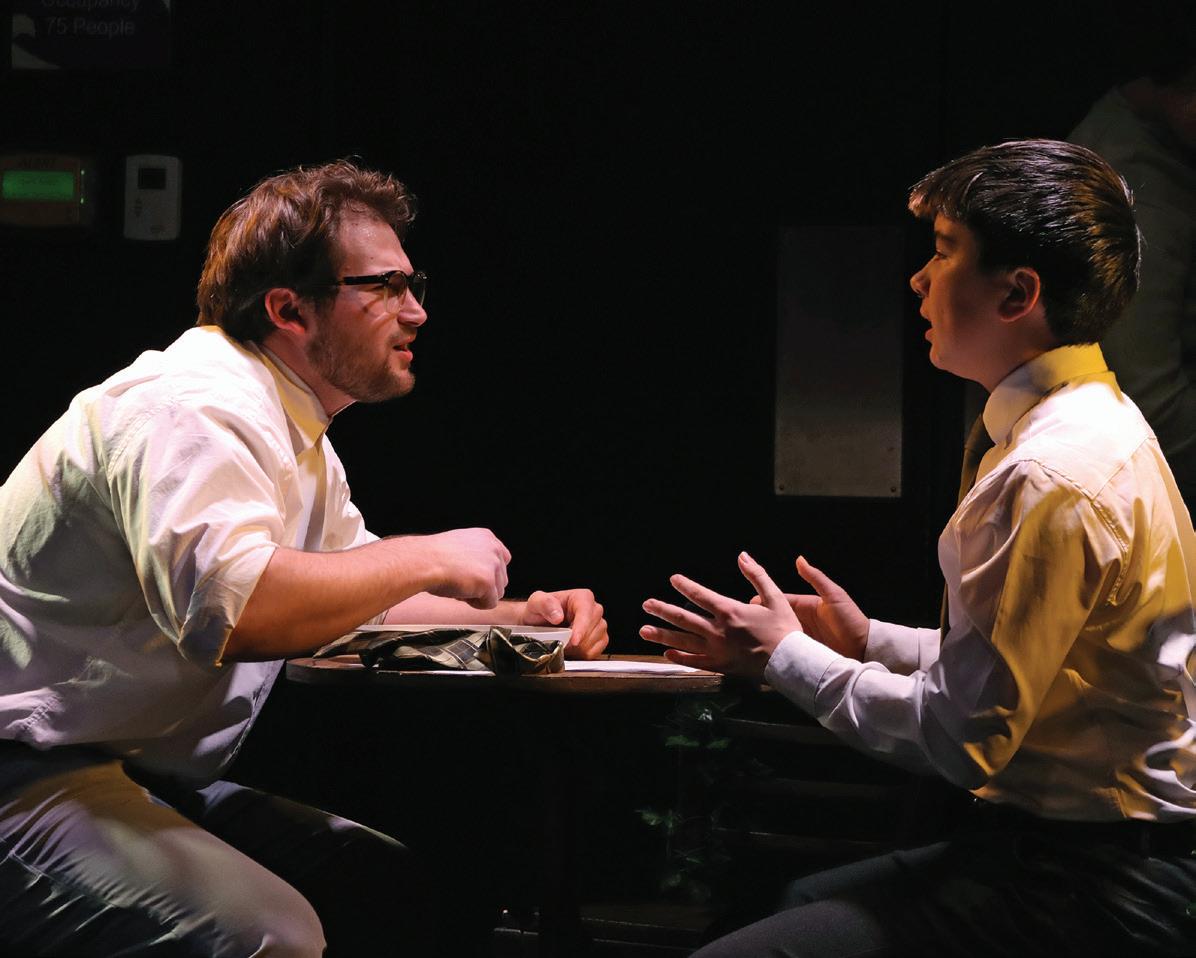
Wil Lessard arrived at Cushing expecting to focus on sports. Hockey, baseball — maybe even going on to college athletics. Theatre wasn’t part of the plan. But a freshman acting assignment required him to audition for West Side Story, and that moment changed everything.
Initially reluctant, Wil chose to sing “Friend Like Me” from Aladdin for his audition, leaning into humor and character. When he landed a role as Baby John — one of the Jets — he discovered something unexpected: the stage felt like home.
With support from coaches and teachers, he worked to balance academics, athletics, and acting, pursuing all three
seriously. A big, physical guy, he shines in character roles: “I love playing anybody who’s a little weird, a little out there,” Wil says. “I mean — sign me up. I love it!”
Central to that transformation was Julia Ohm, who opened his eyes to theatre’s deeper purpose. Acting wasn’t just about getting laughs; it was about telling stories that matter.
“Without her, I honestly don’t know what I would be doing,” Wil says. “She really opened so many doors for me in ways that I can’t even describe.”
Whether performing in the murder mystery Deathtrap or taking a lead role in I Hate Hamlet, Wil learned that curiosity means asking what a character
wants, what a story reveals, and how performance connects to an audience.
Now as a senior at Emerson College, where he is graduating with a degree in theatre and performance, that curiosity has only deepened. He plans to audition broadly after graduation, but is also considering pursuing a master’s in education and becoming a teacher, inspired by those like Ms. Ohm, who shaped him.
Looking back, Wil laughs at how accidental it all seems. He came to Cushing focused on sports. He left headed toward a theater degree — and with a sense that the thing you’re unsure of is the one worth trying.
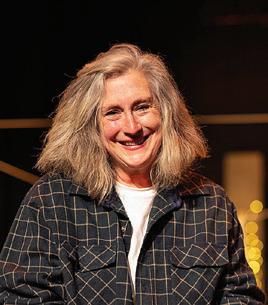

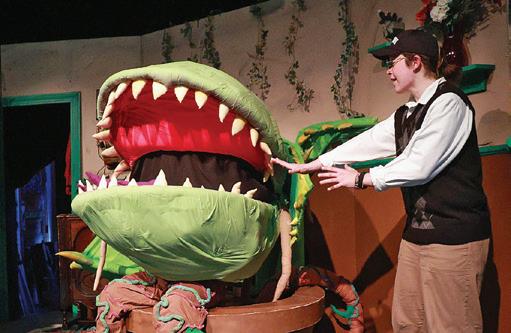
We work to develop relationships with them — to know who they are and what they need. Last year, we had a student who auditioned for the musical — and she was fabulous, but she was a little green. She ended up working on the tech crew for Little Shop of Horrors. She loved the intricacy of it. She helped with the scene changes and learned so much from it. The four plants were really the star of the show and the entire crew was remarkable in bringing all of them to life. Working backstage really heightened her curiosity, and she could watch all the performances, something that really helped her. When she auditioned for the next show, she was cast in an on-stage role.
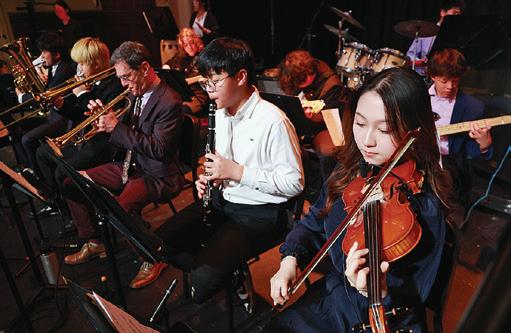
That kind of growth is possible because we try to engage and utilize each student and nurture their strengths. We understand this journey because our department is made up of performing arts professionals. Jerry Sabatini heads our Jazz Ensemble. Desh Hindle leads our music program. Eddie Buggie, our Director of Dance and also Cushing’s Director of Inclusion & Community Life, offers classes during the day and after school. Chelle Salvucci, a member of our Academic Support department, choreographs our musicals. We have more than 40 students taking music lessons with private instructors from Boston and the surrounding area. Because students are learning from professionals in our fields, we bring a really unique aspect to all the things that we do in the classroom and rehearsal.
In addition, we take two performing arts trips, one to New York City each year, and every two years to London. Students who join us are heavy hitters in theatre at Cushing. These trips really spark curiosity and interest — as students get an insider’s look at the world of theatre.
In teaching the performing arts, you’re inviting students to be vulnerable all the time. You’re asking them to utilize their life and experience, to tell their story, and you have to model that in some way. You have to show them that you, too, have been vulnerable and are with them on that journey. It’s really important to create a safe environment for growth and maturity. Helping students find out who they are, and then guiding them to have the confidence to share that with others and the characters they create — that’s the magic that we offer.
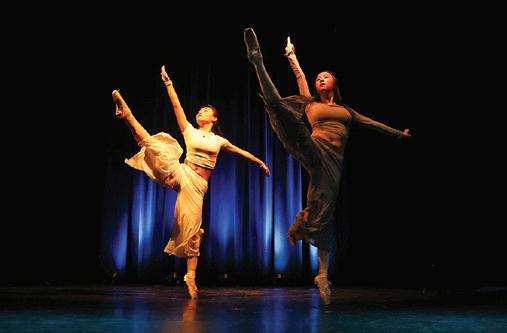
“Helping students find out who they are, and then guiding them to have the confidence to share that with others — that’s the magic that we offer.”

The best thing we can do for a student is send them out of our classrooms wanting more.”
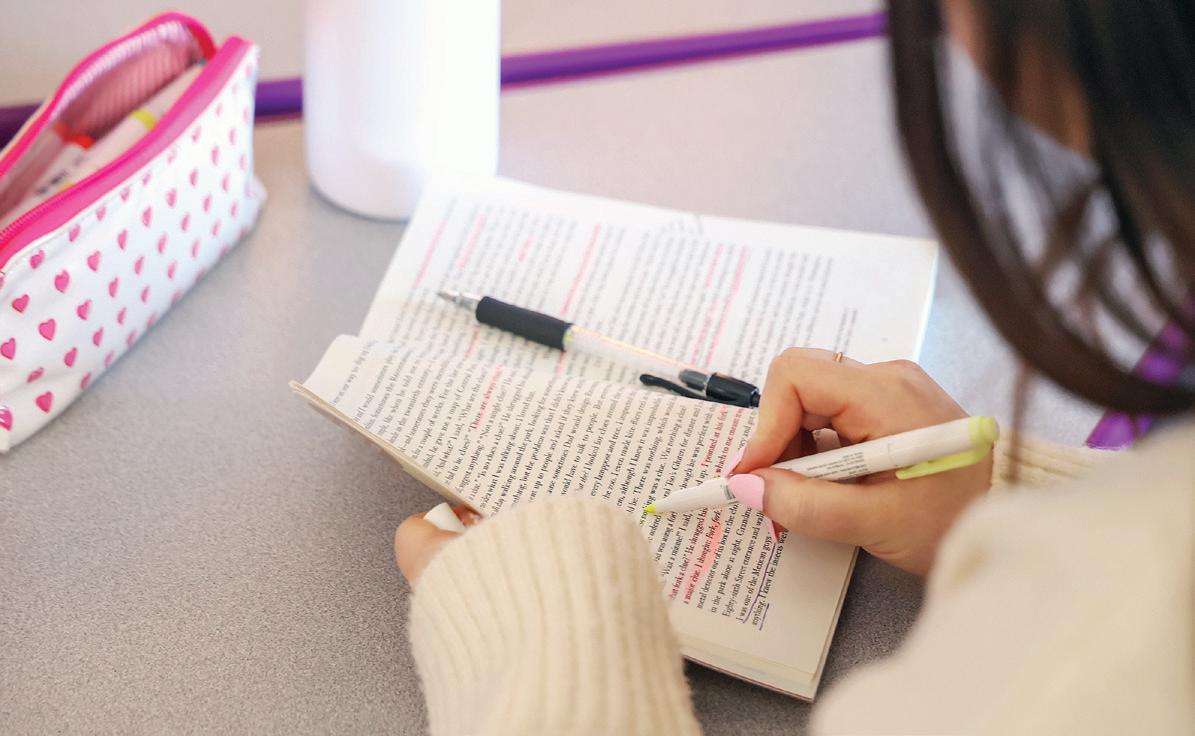

Every student is required to take an English class every year at Cushing, which means that every student spends a significant amount of the time on campus in the English Building. But for an entirely different generation of Cushing students, the “English Building” was where science classes were taught. Eye-washing stations and shower pulls have been replaced with Harkness tables and bookshelves, but the space itself continues to inspire inquiry and cultivate curiosity. We recognize the tremendous opportunity we have to reach and challenge all of our students. The best thing we can do is to send them out of our classrooms wanting to learn more. Whether it’s at the end of the day, the end of the year, or at the end of their time at Cushing, when a student walks out of the English Building, we want them to leave with a sense of joy in learning, and memories of an experience where they have learned to ask meaningful questions, test ideas, and experiment with answers; where they felt supported,
and developed a love of reading and learning, but also where they felt valued and comforted by the people that they were surrounded with and surrounded by. We celebrate moments of individual growth — like when a student has an ah-ha moment in group discussion — and embrace the way those successes play off one another to deepen communal learning experiences.
While we all bring profound personal passion for our subject, we recognize English is not easy for everyone. We believe if students are presented material in a way that allows them space to hone their critical thinking skills and to express themselves authentically — where they are not feeling pressured or judged — then we have done something really special in our classrooms. Our department encourages students to take healthy risks. By providing purposeful challenges and responding to students’ wide-ranging interests and educational needs, we inspire an engaging, joyful, and supportive environment where every learner can grow as a critical thinker, communicator, and creator.

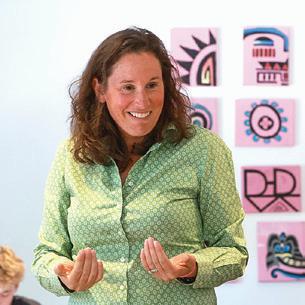
My interest in history actually comes from a difficult experience when I was in high school where I didn’t feel connected to the content. I actually went to college thinking ‘This is an open curriculum. I can avoid ever taking a history course.’ Then my first semester, I had an elective that really drew me in — that I thought was really relevant — and I ended up becoming a history major! I appreciate that not every student comes into the classroom feeling connected to the stories we tell. They might have had experiences where it’s felt hard or irrelevant, and so part of what we do is take on the challenge to find those connections and foster their curiosity.
In Modern World History last year, there was a student whose project evolved from researching the Holocaust into researching the Nanjing Massacre — and he presented that research at our Cushing Expo, our culminating research showcase where students investigate a historical topic and present their work publicly. This young man did work that was so complex and so sophisticated that he advanced to the national finals at National History Day. This is a student who self-identifies as a strong math and science student, and this year he decided to compete at National History Day again and is taking two AP history courses. So I think we have helped him see himself as a social science person, too!
Research is an intentional focus in our department, and is an essential part of our school culture. There was a student who didn’t do the research program last year, but she was watching. She knew about the Expo. She knew about the successes that a lot of our students had. As soon as the National History Day theme was published in the summer, she pursued research, and she came into the year already having read books and knowing what her theme
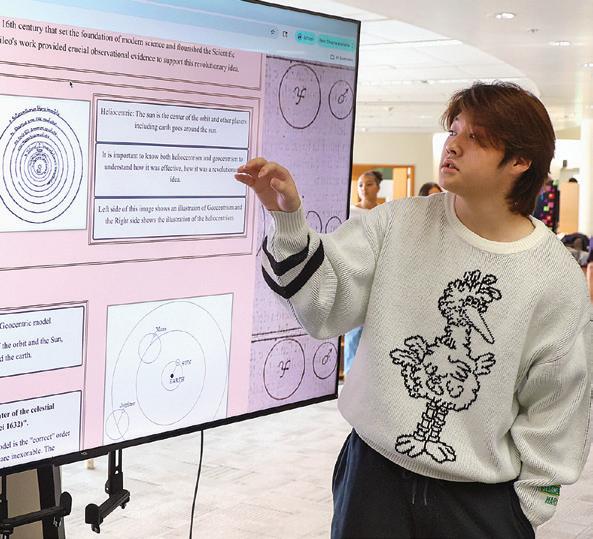
was going to be. While we’re not asking students to do that, it does become part of the culture, and students then see something outside of school that connects with them and realize they can use our curriculum to explore it further.
Our research process is so inclusive. That really fits our mission of taking students from every level of interest and helping to build their skills and build their curiosity. This fall, there was a student that we weren’t sure was going to understand how to find sources and build annotations, but he got a lot of teacher help and help from his peers, who had done the project last year and had signed on to be student research advisors to help the next generation. The pride that he felt presenting his research project at the Cushing Expo was visible in both his smile and the confidence with which he spoke.
“The Cushing Expo is aspirational. It gives students a public forum to be curious and to show what they’ve discovered.”
When Lily Stone arrived at Cushing, she pictured a career as a lawyer. She had always been interested in why people behave the way they do. But in her Honors Biology course in ninth grade, her curiosity found a new home.
Given the freedom to design her own research project, Lily proposed an ambitious idea: exploring whether a schizophrenia drug could be repurposed as a cancer treatment. With the guidance of her teacher, she learned how to refine a bold idea into a testable question. “Being able to find something that I was actually interested in was really important,” she recalls.
As she began to think of herself as a future doctor, her teachers at Cushing continued to encourage her to explore connections across disciplines. Lily completed four years of Spanish with Catalina Reinoso and pursued an independent study with Susie Cirone on racism in medicine and Black maternal health disparities. Those experiences deepened her commitment to becoming a physician who brings wisdom from many fields to her work.
Guided by the college counselors at Cushing, Lily intentionally picked a liberal arts environment, where she could continue
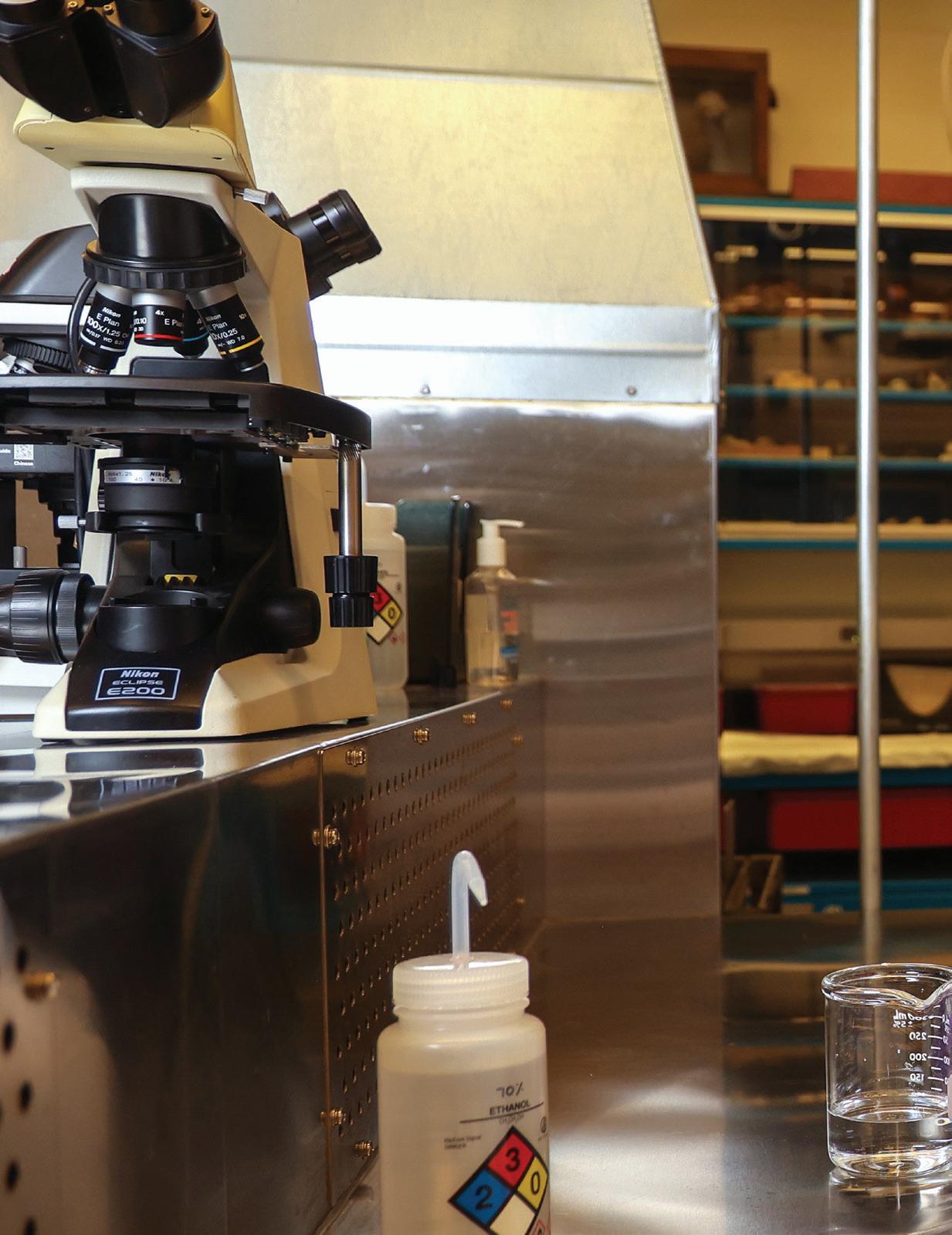
to dive into pre-med courses, Spanish, and humanities. Now a senior neuroscience major at Wellesley College, Lily has continued both her language learning — taking a Spanish class on medical communication — and her study of history. She believes this approach will make her a better physician. “I can converse with different communities,” she says. “I can understand why certain groups of people are less trusting of the healthcare system.”
Even in areas she finds challenging — like doing immunology research at Massachusetts General Hospital last summer — Lily brings a trait she learned at Cushing: the ability to lean into discomfort. She worked with researchers to help transplant patients develop the ability to tolerate their donated organs and wean off of immunosuppressive drugs.
For Lily, Cushing’s greatest gift was that interdisciplinary freedom: the ability to blend science with language, history, and humanity. “It’s not just about a diagnosis on a paper,” she says. “It’s about understanding the patient behind it.” After a gap year, Lily plans to head to medical school — hopefully at another place where science and other subjects can live in the same conversation.
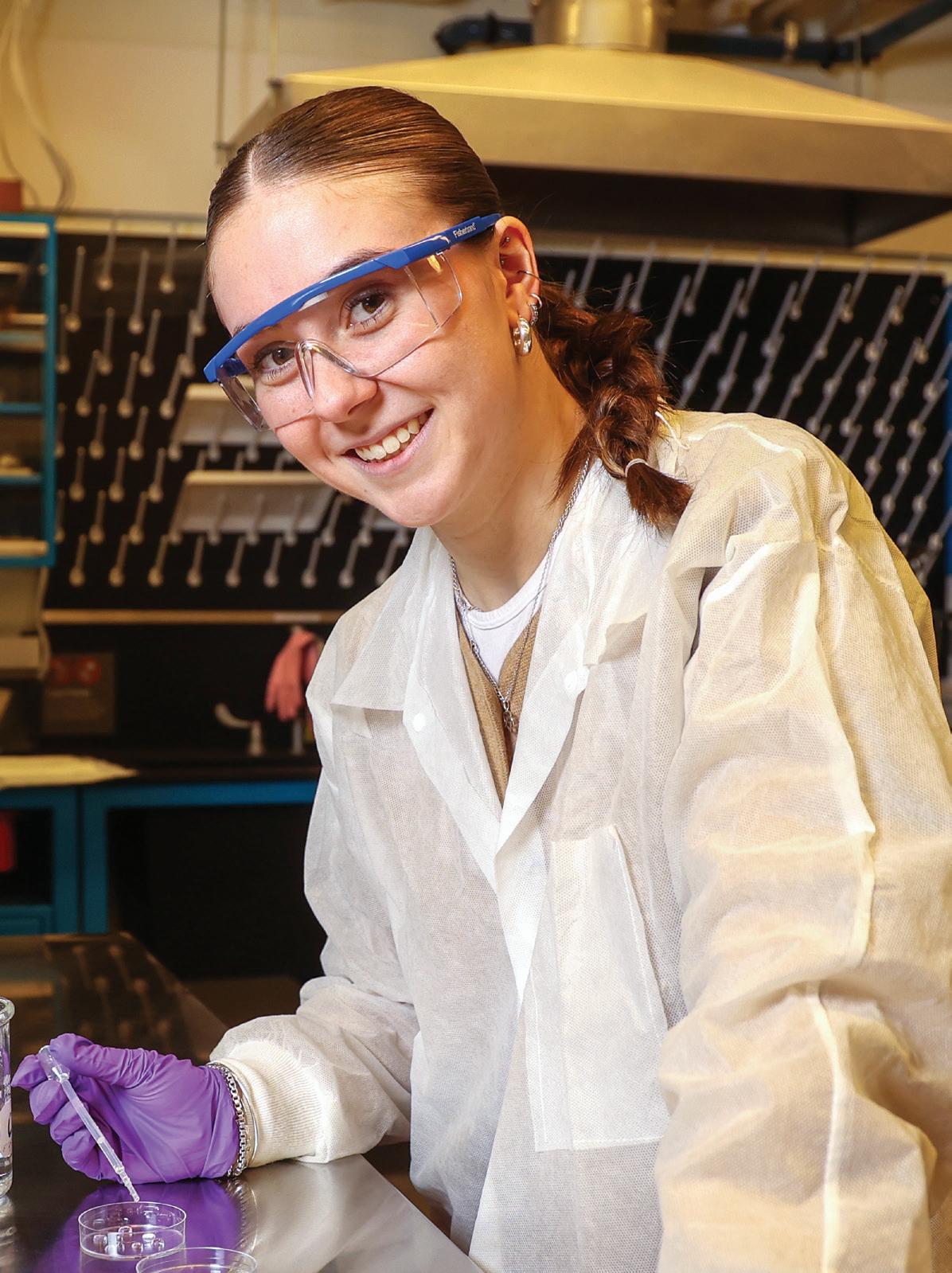

Cushing gave me the freedom to connect science with the human part of me.”

I want them to love to learn and to not feel embarrassed to make mistakes. We all make mistakes.”
—Catalina Reinoso, Spanish Teacher
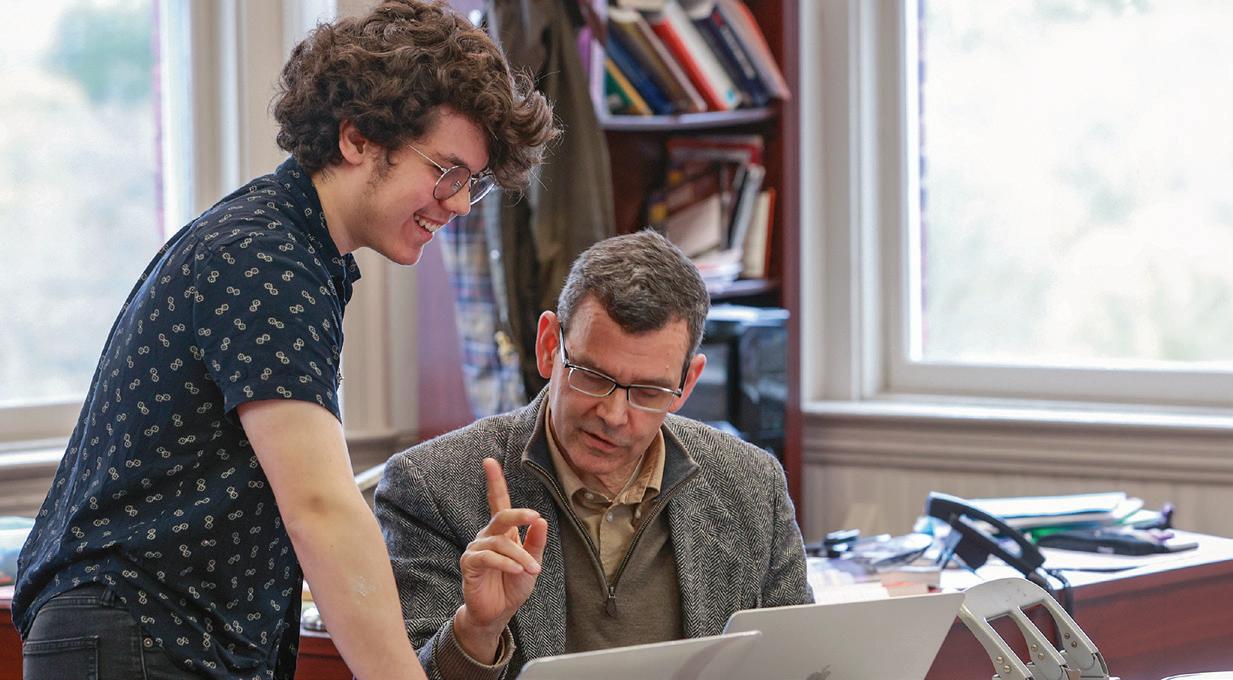

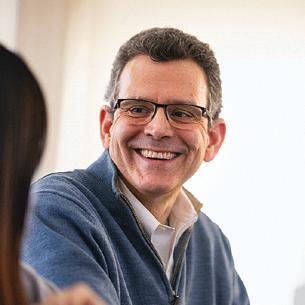

very rudimentary English skills. He worked hard and made extraordinary progress, gaining enough confidence to run for student body president — and win! He went on to Boston University, built a successful business in Turkey, and today, serves in Turkish parliament on the Foreign Relations Committee. That trajectory began in an ESL classroom. We teach grammar and vocabulary, but we also use a lot of multimedia to keep things relevant. We listen to published interviews to study different aspects of American culture. Students can do traditional written reports. They can do PowerPoint presentations. They can use their artistic skills, if they want to, and talk about what they’re trying to represent. Our classes are very small. That allows us to get a lot of one-toone time. If students are struggling in a particular area, and if we can’t do it in class, we meet with them outside of class. We can always find time to help a student who may be struggling.
ESL, we’ll start off with The Pearl by John Steinbeck. On a surface level, it’s very simple, but there’s a lot in terms of metaphors, in terms of plot, in terms of colonial history. It’s a great book to start with because it’s short. It’s relatively easy to read, but it teaches the students how to read between the lines. We end with Fahrenheit 451, which is tough even for a native speaker. Typically, that is their favorite novel, even though it’s the hardest one. We go through it page by page and make sense of it.
I do a unit with my listening and speaking class on the Cold War. We will often take a trip to the JFK Presidential Library and Museum in Quincy, Massachusetts. We go through the museum and have a leisurely lunch. If the weather is nice, we go out on the lawn next to the ocean, and it’s a very pleasant, fun day. Kids remember it for a long time. I have alumni come back, and they’ll be 40 years old, and we’ll talk about that trip.



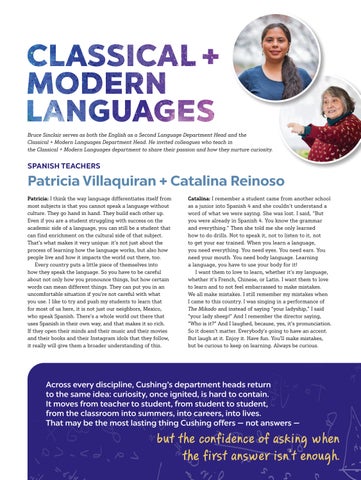
Bruce Sinclair serves as both the English as a Second Language Department Head and the Classical + Modern Languages Department Head. He invited colleagues who teach in the Classical + Modern Languages department to share their passion and how they nurture curiosity.
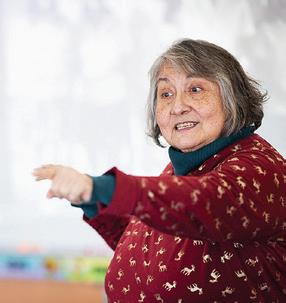
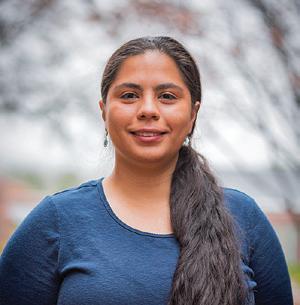
Patricia: I think the way language differentiates itself from most subjects is that you cannot speak a language without culture. They go hand in hand. They build each other up. Even if you are a student struggling with success on the academic side of a language, you can still be a student that can find enrichment on the cultural side of that subject. That’s what makes it very unique: it’s not just about the process of learning how the language works, but also how people live and how it impacts the world out there, too. Every country puts a little piece of themselves into how they speak the language. So you have to be careful about not only how you pronounce things, but how certain words can mean different things. They can put you in an uncomfortable situation if you’re not careful with what you use. I like to try and push my students to learn that for most of us here, it is not just our neighbors, Mexico, who speak Spanish. There’s a whole world out there that uses Spanish in their own way, and that makes it so rich. If they open their minds and their music and their movies and their books and their Instagram idols that they follow, it really will give them a broader understanding of this.
Catalina: I remember a student came from another school as a junior into Spanish 4 and she couldn’t understand a word of what we were saying. She was lost. I said, “But you were already in Spanish 4. You know the grammar and everything.” Then she told me she only learned how to do drills. Not to speak it, not to listen to it, not to get your ear trained. When you learn a language, you need everything. You need eyes. You need ears. You need your mouth. You need body language. Learning a language, you have to use your body for it!
I want them to love to learn, whether it’s my language, whether it’s French, Chinese, or Latin. I want them to love to learn and to not feel embarrassed to make mistakes. We all make mistakes. I still remember my mistakes when I came to this country. I was singing in a performance of The Mikado and instead of saying “your ladyship,” I said “your lady sheep!” And I remember the director saying, “Who is it?” And I laughed, because, yes, it’s pronunciation. So it doesn’t matter. Everybody’s going to have an accent. But laugh at it. Enjoy it. Have fun. You’ll make mistakes, but be curious to keep on learning. Always be curious.
Across every discipline, Cushing’s department heads return to the same idea: curiosity, once ignited, is hard to contain. It moves from teacher to student, from student to student, from the classroom into summers, into careers, into lives.
That may be the most lasting thing Cushing offers — not answers — but the confidence of asking when the first answer isn’t enough.

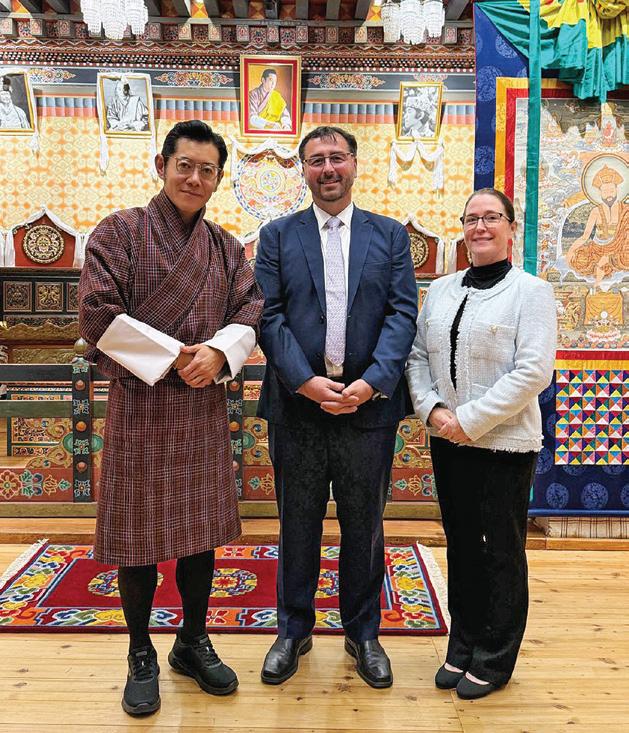
Every fall and spring, Cushing’s Head of School Dr. Randy Bertin travels to Asia. On those trips, over about two weeks, he meets with current and prospective families, nurturing the loyal network of those who love Cushing. This year he held more than 80 meetings across seven cities, including receptions in Seoul, Beijing, Shanghai, and Macau. Last fall, the trip extended through Thanksgiving with a four-night stop in Bhutan, and an audience with the King.
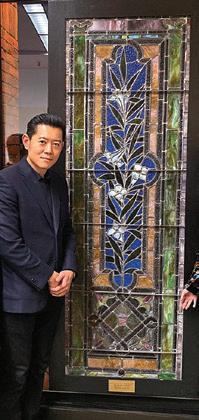
His Majesty Jigme Khesar Namgyel Wangchuck ’99 attended Cushing Academy before ascending to the throne in 2006 at the age of 26 as the fifth King of Bhutan. He and Dr. Bertin had connected when the King made a visit to campus in 2019, wanting to see a few of his former teachers. He toured the grounds, shot some hoops, and visited the library, where a stained glass piece he made still hangs.
Through the years, Dr. Bertin and the King have stayed connected through WhatsApp and through the Bhutanese ambassador to the United Nations at Bhutan’s diplomatic mission in New York. Each year before heading to Asia, Dr. Bertin would reach out with his
itinerary and suggest a stop in Bhutan. This year, the response was yes.
“When I sent that email, the response was, ‘We would love to have you,’” Dr. Bertin recalls.
The Bhutan itinerary, shaped with Dr. Bertin’s input, was intentionally designed as an educational and cultural exchange focused on schools, leadership, and the role of education in Bhutanese society. The trip included meetings with the Ministry of Education and the Vice Chancellor of the Royal University of Bhutan, visits to some of the nation’s leading schools, and a tour of the King’s mountaintop boarding school outside of Paro, The Royal Academy of the Druk Gyalpo’s Institute, a grades 7–12 campus featuring modern dormitories, a state-of-the-art library, and arts facilities. “It’s very similar to Cushing in a lot of ways,” Dr. Bertin says.
The formal audience with His Majesty lasted nearly two hours. A second, more informal dinner followed later in the week. The conversation, Dr. Bertin said, felt like catching up with an old friend, trading updates on family, faculty, and what has changed on campus since 2019.
What stuck with Dr. Bertin most was something the King said about Cushing: Of all the places and schools he has visited in the United States, Cushing is his favorite because “Cushing is a community built on love.”
“That’s the feeling people get,” Dr. Bertin reflects. “I do not know that I ever would have phrased it that way myself,
Cushing Academy students are following in the footsteps of graduates from years past and actively preparing to transform the world through academic studies, community service, and the teamwork of athletics and the arts. Your donation goes directly to equip students to change the world, both now and in the future. Be a part of the change. Support the Cushing Fund.
but there is a deeply student-centered culture of care and support here that truly permeates the campus.”
The renewed connection is already pointing toward something more concrete: a possible student exchange trip to Bhutan in the spring of 2027, along with broader academic collaboration between the two schools. For Dr. Bertin, it is a reminder of what his travels throughout Asia and throughout the world are really about. “If you are an alum, this is your place. You are always connected to it, and with that comes a responsibility to help strengthen it for the next generation.”
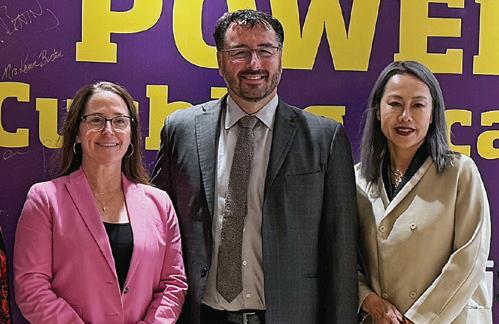
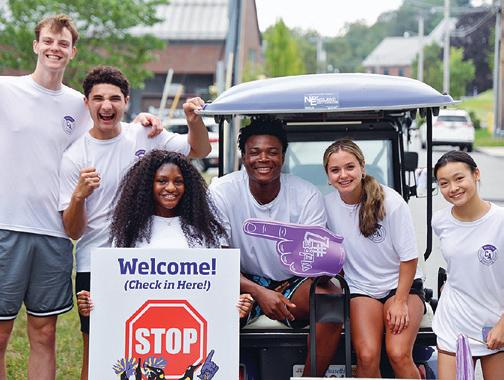
The Massachusetts Bar Foundation (MBF) President’s Award recognizes individuals who embody the Foundation’s commitment to advancing equal access to justice. The 2025 recipient, Hon. David G. Sacks, was honored for his lifelong dedication to fairness and equity within the justice system, as well as for his committed service as an MBF grant review volunteer. Judge Sacks received the award at the MBF’s Western Massachusetts Grantee Reception on October 23, 2025, at Western New England University School of Law.
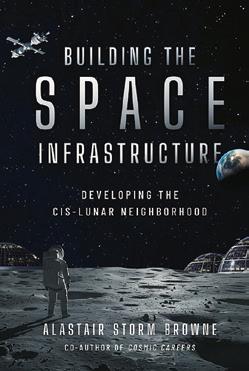
Alastair Browne released his second book, Building the Space Infrastructure: Developing the Cis-Lunar Neighborhood, in April 2025. In it, he examines how humanity can create a sustainable and flourishing presence beyond Earth. His passion for space exploration has long been evident even as a student at Cushing — his first book, Cosmic Careers, was published in 2021.
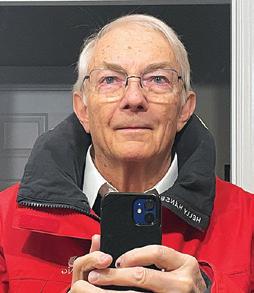
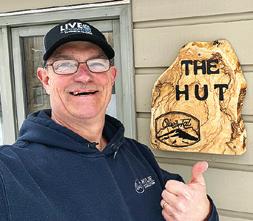
Brett Torrey writes, “After leaving Cushing in October 2025, I moved home to Manchester, VT following 35 years in schools and began a new chapter as a caretaker at Stratton Mountain. I now oversee about 90 condominiums in a community called Ober Tal, handling everything from A to Z. It’s been incredibly rewarding to put my handyman skills back to work, and even more meaningful to be home again, surrounded by
groups/CAPenguinNation @cushingacademy
Cushing Academy Alumni Network
family and friends. This transition has been a wonderful change for all of us — a different pace and way of life than I’d grown used to, especially after such fulfilling years at Cushing. I’m really looking forward to returning for Alumni Weekend in June and hope to see many familiar faces on campus. Thank you to all of Penguin Nation for the support and encouragement during my 10 years as Director of Alumni Relations — it was truly an honor. I hope to reconnect with many of you in June, and if you’re ever in Manchester, please don’t hesitate to reach out. Go Penguins!”
Bonnie (Stuart) Kane writes, “Had a great visit with Brett Torrey ’85 in Glens Falls, NY in July 2025 and am thinking about the spring reunion. I am currently attending UAlbany for a Master’s in Fine Art and employed at an artist residency in Saratoga Springs, NY.”
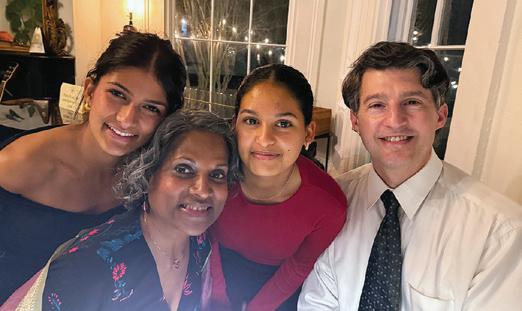
Elizabeth Johnson writes, “I have been blessed the last 34 years since graduating from Cushing. After graduation, I attended Wheaton College (MA) and graduated with a degree in Biochemistry then attended Thomas Jefferson University (PA) and got my MS in Biomedical Chemistry. I spent many years doing bench research and eventually landed in the clinical research industry. Currently, I’m a Clinical Trial Manager at BioNTech SE, and I manage cancer vaccine trials for head and neck cancer.
My husband (Daryl) and I married in 2002 and now we have two teenage daughters. Chandra is a freshman at Savannah College of Art and Design and wants to have a career in the arts, which makes her Grandma Carolyn and Grandpa Bob Johnson very proud! Priya is a freshman at Ayer Shirley High School, is on the soccer and track team, and works hard in school.
As you likely knew, the Johnsons adopted me from India and gave me the best life possible. But for many years, I’ve wondered about my Indian relatives, especially my supposed three birth sisters, who
were they, could I find any? 2025 was a year that I embarked on a journey to learn about my Indian identity. Later in 2026, three other Indian-adoptee women, who were also adopted in the 1970s, and I will travel back to India together, go to the orphanages from where we came and hopefully find our birth villages and maybe birth relatives! We will be filming this journey of discovery, and you can follow along with us! The documentary project is called “MAiDEn India.” Please follow us on IG @maidenindiafilm and watch our trailer on our website at maidenindiafilm.wordpress.com. None of us are film or production professionals, so if you have support or advice, find our email address on our website.”
Andrew Hobson — a proud Navajo and Irish athlete — won his third Masters World Championship in the Scottish Highland Games in October 2025 in Brandon, MS. He previously claimed titles in 2021 (Austin, TX) and 2022 (Moncton, NB, Canada).
Brett Peterson was named general manager of the 2026 U.S. Men’s National Hockey Team, a role he also held in 2024. In 2025, he served as assistant general manager of the gold medal winning team, coached by Ryan Warsofsky ’07 Brett currently serves as assistant general manager of the Florida Panthers.
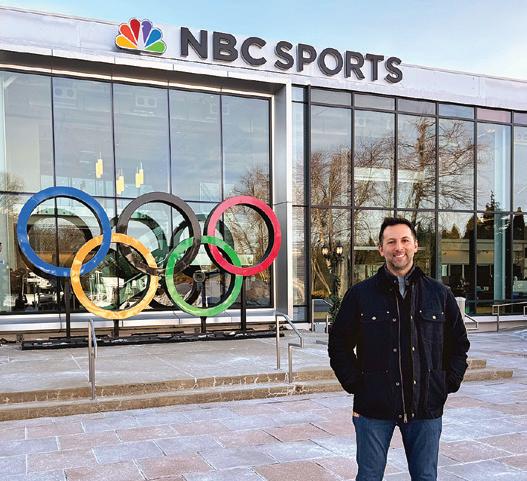
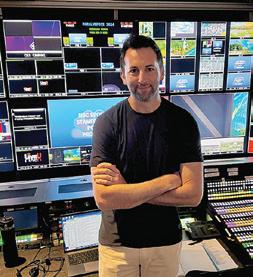
Chris Bourque will be inducted into the American Hockey League Hall of Fame as part of the Class of 2026. He was a key member of the Hershey Bears’ back-to-back championship teams in 2009 and 2010. Over his AHL career, Chris recorded 746 points (251 goals, 495 assists) in 794 regular-season games with Portland, Hershey, Providence, Hartford, and Bridgeport. He remains the league’s all-time playoff leader in assists (83), is tied for third in postseason points (118), and ranks second in playoff games played (138).
Paul Marmaro headed back to the Olympic stage for his fifth Games with NBC. This year, he served as a tape producer for Primetime in Milan with Mike Tirico, helping bring the biggest moments, stories, and energy to millions of viewers each night. Paul’s Olympic journey began with the 2018 winter games in PyeongChang, working alongside Erika Lawler ’05 Paul’s favorite Olympic sport is hockey, and he was hopeful that both the U.S. men’s and women’s teams would win championships (and they did!).
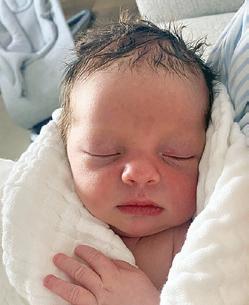
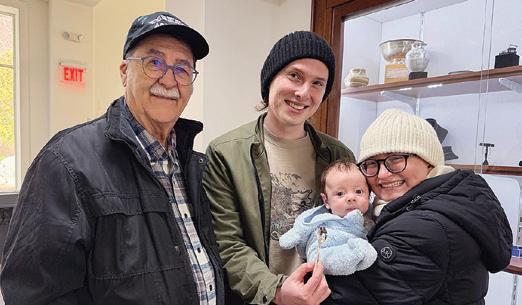
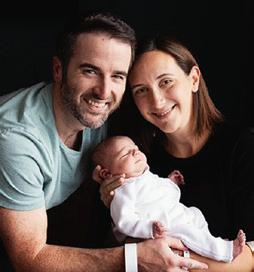
Tommy Powers and his wife Sara welcomed their newest addition, Margaret “Meg” Jane Powers, on October 21, 2025 — joining proud siblings Lucy and Henry!
Congratulations to Violette Gu on receiving the Excellence in Talent Management award at the 2025 Women in Finance Asia Awards, presented by Markets Media Group, which recognizes outstanding women across the financial centers of Hong Kong, Singapore, Tokyo, and Sydney. Violette is a senior investment officer at Millennium, a global investment firm.
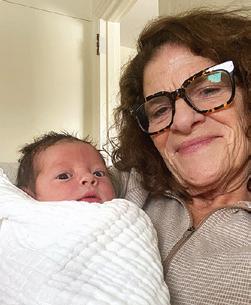
Colleen Fay writes, “I’m thrilled to introduce my grandson, Phthalo (pronounced Fay-low) Sage Fay, born on Sunday, December 21, 2025. He arrived weighing 7 pounds, 11 ounces and measuring 20 inches long.” Phthalo’s dad is Jack Fay ’16, Cushing’s own visual arts instructor.
Please send your news, notes, and photos to be included in the next issue of Cushing Today. Professional milestones, family news, fun facts, mini CA reunions — let your fellow Penguins know what you’ve been up to!
Email your submissions to alumni@cushing.org Be sure to include your full name and class year!
Join the Penguin Nation Facebook group by searching for “Cushing Academy Penguin Nation” or visiting facebook.com/groups/CAPenguinNation. Request to join, a member of our Advancement Team will approve, and you’ll be in touch with almost 3,000 other members of Penguin Nation.
Here we include the names of those whose passing we have learned of as of April 1, 2026. We extend our deepest sympathies to their families, classmates, and friends.
43
Marcia Fessenden Kelly-Hall
John Goldman
William H. Goodwin, Jr.
Barbara Dunton Gerlach
Jeanette Hunter Hennessy
Norma Perkins Slanetz
Nancy Canby Sunshine
Faith Peabody Bickford
Eugene R. Rice
James F. Williamson
Richard W. Carter
Shirley Mohler Giafaglione
Philip F. Johnson
Robert W. Goldman
Paul F. Hunt
Robert A. Munroe
Melinda Lonsdale Green
Miriam Hugins Mills
Donald R. Stivaletta
Marilyn Fox Pariseleti
Joan Anderson Bruno
Nancy Craig McGrath
Sylvia Wilson O’Donovan
Nancy Moody Reilly
Timothy N. Robertson
Margery Van Keuren Winter
Judith Smith Githens
John N. Van Epps, Jr.
Katherine Finnis Argo
John R. Corriveau
Judith Piispanen Pomerleau
Norma Jean Baumgartner Somers
Sarah Eaton Alton
William E. Davis III
George J. Keith
Wilfred T. Hood, Jr.
Wayne B. Smith
William A. Fuller
Roger J. Rosinski 1965
Cynthia Wiswall Litchfield 1966
Kathryn Williams Hubert
Peter B. Nathanson 1973
David W. Hosmer
Karen G. Hess
Tamsen D. Hood
John R. Magner
Flavio A. Vanoff 1987 B. John Burke 1991
Jason R. Kirwood
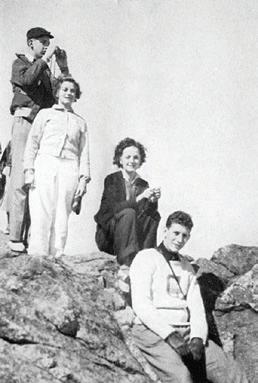
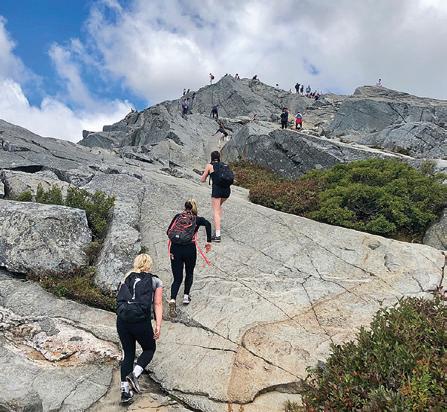
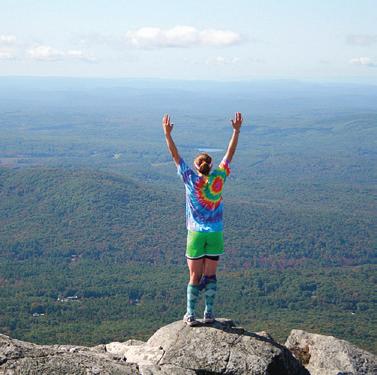
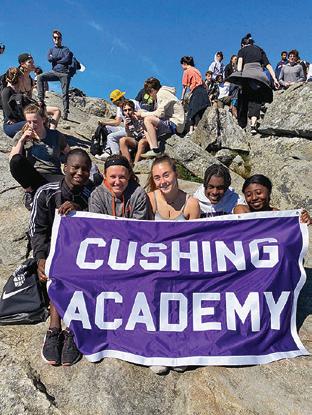
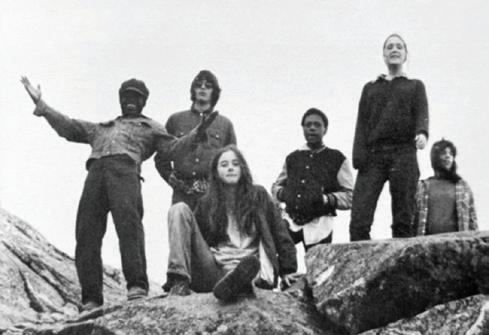
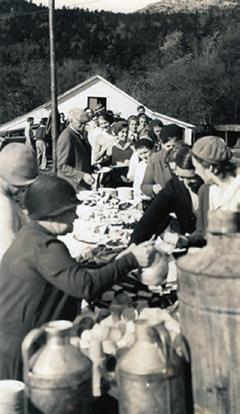
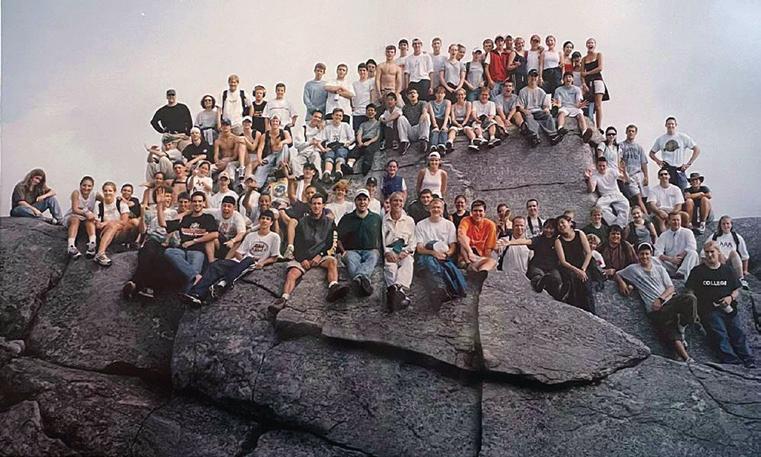
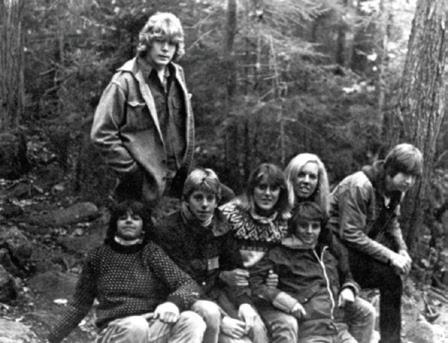
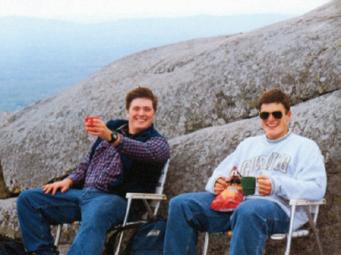
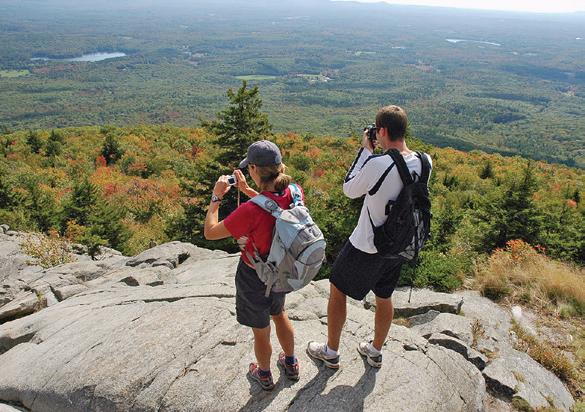
Cushing’s inaugural Mountain Day was held on October 7, 1926, to honor Dr. Hervey Cowell, a mountain climbing aficionado who served as principal of Cushing Academy from 1887 to 1926. Nearly every year since then, students and faculty have summited the peak of Mount Monadnock in the fall. As we prepare to celebrate the centennial of the first Mountain Day in 2026, we would love to hear your favorite memories of Cushing’s iconic tradition.