Cambridge Phonics and Handwriting
Learner’s Book Step 4B
Susan Iannuzzi
Susan Iannuzzi
Susan Iannuzzi

This Learner’s Book provides activities to support units 11–20 of Cambridge Phonics and Handwriting Step 4. The Teaching Resource provides full coverage of the Cambridge Phonics and Handwriting Framework and guidance on how the Learner’s Book activities develop the framework statements.
Activities can be used at school or at home. Children may need some support from an adult to understand the activity instructions. Additional guidance about activities can be found in the For teachers boxes. You can find videos and tips to help you say the sounds at our parent support site: https://www.cambridgeinternational.org/programmes-andqualifications/cambridge-early-years/parent-support/
The letter–sound for a phonics activity is referred to as the ‘target sound’. The target sound is shown in a box on the page. For example:
The target sound is the sound made by the underlined letters in the words.
In handwriting, children are continuing to learn how to join letters. It is good practice for children to apply all the joins they have learned in their answers to the questions in this Learner’s Book.


Write the missing letters y or ey to complete the words.
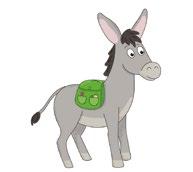
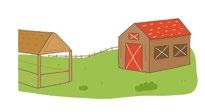
Read and colour the words with the target sound to help the donkey get home.

Activity 1: Ask the child to look at the pictures and tell you what they see. They then write the missing letters y or ey to complete the words.
Activity 2: Ask the child to read each word. They then colour the words with the long e sound to find the path between the donkey and its stable.
Activity 3
Read the words from the story. Match them to the picture.
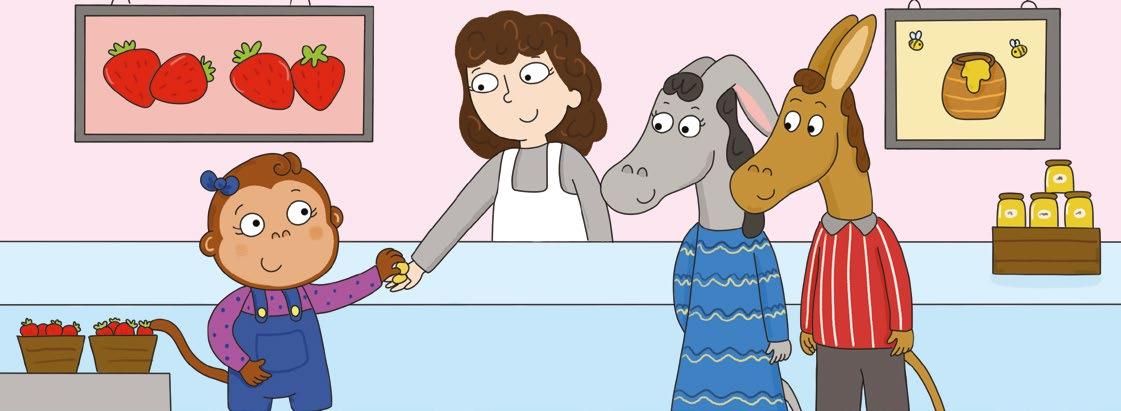
Activity 3: Ask the child to look at the picture. Ask them to read the words and then join each word to the correct object in the picture.
Activity 4: Ask the child to say each number. They then write the word for each number.
Sort the letters to write words with the target sound at the end.





Read and match the words to the pictures. Then write a sentence using some of these words.


Activity 5: Support the child to identify the pictures. Then encourage them to rearrange the letters to make words with the long e sound.
Activity 6: Help the child to read the words and match them to the pictures. Then ask them to think of a sentence that uses some or all of the words, e.g. The baby is happy on a windy and sunny day. Encourage them to write their sentence.
Read each word. Then write the words on the lines, copying the joins.
Write a sentence using two or more of the words from Activity 7, and join three letters in those words.

Activity 7: Ask the child to read each word. Then ask them to write each word, encouraging them to draw smooth joins.
Activity 8: Support the child to look at the words from Activity 7 and think of a sentence that includes two or more of them. They then write their sentence. The child should apply all the joins they know but pay special attention to the focus joins.