67
The Sea
The ever-present sea has also been vitally important for Cornwall's economic life. Although wrecking and smuggling are often portrayed in books as romantic activities, they were in fact a hard and often dangerous way for people to make a living. Although there is no record of the Cornish deliberately luring unsuspecting ships on to the rocks, there is plenty of evidence to show that local people habitually plundered vessels that had been wrecked on Cornwall’s dangerous coastline. The north coast was especially treacherous, giving rise to the grim rhyme:
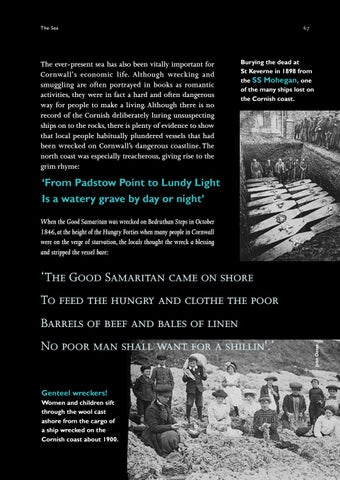
Burying the dead at St Keverne in 1898 from the SS Mohegan, one of the many ships lost on the Cornish coast.
‘From Padstow Point to Lundy Light Is a watery grave by day or night’ When the Good Samaritan was wrecked on Bedruthan Steps in October 1846, at the height of the Hungry Forties when many people in Cornwall were on the verge of starvation, the locals thought the wreck a blessing and stripped the vessel bare:
‘The Good Samaritan came on shore To feed the hungry and clothe the poor No poor man shall want for a shillin'.’
Genteel wreckers! Women and children sift through the wool cast ashore from the cargo of a ship wrecked on the Cornish coast about 1900.
John Oates
Barrels of beef and bales of linen