The Corne¬ Daily Sun


Monday email to potential compensation claimants.
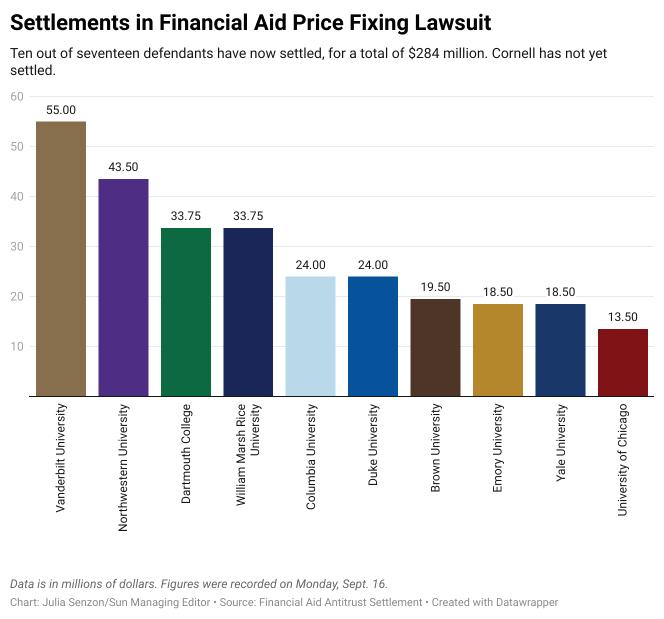
Sept. 17 — Cornell students and alumni who received need-based financial aid from the University between the fall of 2003 and Feb. 28, 2024, now have the opportunity to submit a claim to receive part of a $284 million settlement from a class action lawsuit.
The U.S. District Court for the Northern District of Illinois approved settlements for ten of seventeen universities named in Henry, et al. v. Brown University, et al., and a claims form became available on Friday, Sept. 13.
Cornell is one of seven universities that has not settled and remains a defendant in the case. Still, students considered to be in the “settlement class” at any of the universities can file a claim. Cornell students who attended the university between the fall of 2003 and Feb. 28, 2024, are included in this class.
“Assuming that about half of the estimated 200,000 Class members submit timely claims, the average claimant will receive about $2,000 from these Settlements,” wrote Financial Aid Antitrust Settlement in a
Plaintiffs in the lawsuit — filed in January of 2022 — claim elite universities colluded on financial aid decisions using an antitrust exemption within the Improving America’s Schools Act of 1994. The “568 exception” allows need-blind schools to collaborate on financial aid with other need-blind schools.
As a result, plaintiffs alleged that Brown University, the California Institute of Technology, the University of Chicago, Columbia University, Cornell University, Dartmouth College, Duke University, Emory University, Georgetown University, the Massachusetts Institute of Technology, Northwestern University, Notre Dame, the University of Pennsylvania, Rice University, Vanderbilt University and Yale University participated in a price-fixing cartel that artificially boosted the net price of attendance for students receiving need-based financial aid.
Students and alumni can submit a claim online until Dec. 17.
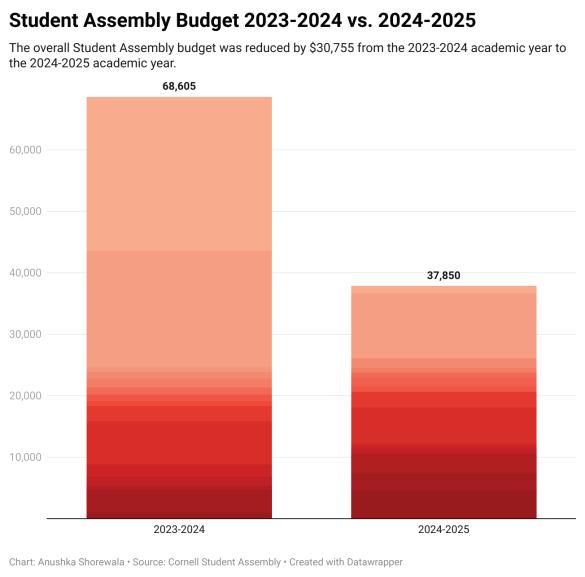
Sept. 13 — The Student Assembly voted on Thursday to approve a 37,850 dollar operating budget for the 2024-2025 academic year, marking a 45 percent decrease from the 68,605 dollars allocated for the last academic year.
According to S.A. Vice President of Finance Niles Hite ’26, one reason for this drastic decrease was to prevent committees’ excess spending on food and other expenses for Assembly-related meetings.
The S.A. budget is allocated across 17 expense categories, including “Internal Operations,” “Diversity” and “Academic.”
According to Hite, thousands of dollars were spent on food for Assembly meetings during the 20232024 academic year.
“I am not sure the exact amount, but [the amount spent on food was] definitely way more than what it should have been,” Hite wrote in an email to The Sun. “For me, I wanted to make sure that the money was going towards initiatives within the Assembly for the students that elected us rather than taking care of ourselves which is why I made it a lot lower than what it was last year.”
The budget of the Student Assembly is allocated from the Student Activity Fee. Through the
SAF, students indirectly contribute to the assembly’s funding.
“No money should be taken out for any pleasures for the Student Assembly,” Hite said. “We are here for the students to do stuff for campus — we should be doing that with the money that we are giving them.”
The Assembly began offering catered meals at meetings last year, but the absence of a defined budget led to significant overspending on
food, according to Hite.
“When people were meeting for certain committees for several hours, they would spend a lot of money on erroneous catering that they did not need to do, like very specialized food for each individual person, which would cost a lot of money, especially if they’re meeting every single week,” Hite said.
See BUDGET page 13
Sept. 14 — National Labor Relations Board Administrative Law Judge Geoffrey Carter ordered Starbucks to reopen “within a reasonable period of time” two Ithaca locations that closed after employees formed a union, stating that its move to “chill unionism” violated the National Labor Relations Act.
Carter ruled on Friday that the May 2023 permanent closures of the Ithaca Commons and Meadow Street Starbucks locations and failure to bargain with the union were unlawful, as the board found the stores were closed for “antiunion reasons” and in an effort to quell unionizations elsewhere.
The NLRB similarly ordered on July 6, 2023, that the third Ithaca Starbucks location on College Avenue — which closed on June 10, 2022 — must reopen “immediately.” The store remains closed.
Discussions surrounding the Ithaca Commons and Meadow Street store closures occurred only a few months after the stores unionized. On April 8, 2022, all three Ithaca stores voted to unionize. In the summer of 2022, Starbucks regional leadership began weighing the closure
of the Meadow Street and Ithaca Commons locations, citing high turnover and low profitability metrics, according to the NLRB ruling.
Carter found that profitability metrics were affected by union activity — including “economic losses” during employee strikes. He also found that employee turnover data included employees unlawfully fired for being union supporters and turnover connected to stricter enforcement of workplace policies that coincided with the start of the unionization effort.
The company can present evidence that was unavailable at the time of the unfair labor practice trial — which ended on April 25 — that could demonstrate reopening the two locations to be “unduly burdensome.”
In a statement to The Sun, Michelle Eisen, the Starbucks Workers United national organizing committee co-chair and bargaining delegate, wrote that SBWU is “pleased to see the NLRB continue to stand up for the law and support Starbucks workers’ union rights” and is “moving forward and focused on the future.” Eisen works as a barista at the first unionized Starbucks in Buffalo.

Replication Workshop: Using Stata to Create Data Visualizations 11 a.m. - 11:50 a.m., 291 Clark Hall
Leadership Workshop: Got the Degree, Grades, Connections? Employers Think Emotional Intelligence is Just as Important 5 p.m. - 6 p.m., Virtual Event
Info Session With The Hershey Company 5 p.m. - 6 p.m., 148 Stocking Hall
Greenhouse Session
5 p.m. - 7 p.m., Kenneth Post Laboratory Greenhouses
Cornell in Washington Alumni Panel and Reception 5 p.m. - 7 p.m., 1219 Martha Van Rensselaer Hall
Navigating Your First Career Fair
6 p.m. - 7 p.m., Toni Morrison Hall Multipurpose Room
Sunset on the Slope: Our Connection to the Earth 7 p.m. - 8 p.m., The Slope
(607) 273-0746
139 W. State Street, Ithaca, N.Y. VISIT THE OFFICE
www.cornellsun.com E-MAIL sunmailbox@cornellsun.com

Qualitative Analysis Workshop: Exploring Mixed Methods and Visualization Tools in MaxQDA Noon - 12:50 p.m., TBD
Practice Your Pitch
Noon - 12:50 p.m., 210 Carpenter Hall
Preparing for the Career Fair for Human Ecology Students
1 p.m. - 1:45 p.m., 1219 Martha Van Rensselaer Hall
Homelessness Action Project at Cornell Interest Meeting
5 p.m. - 5:45 p.m., B75 Warren Hall
Vegan Chicken Nugget Tasting
6 p.m. - 7 p.m., G42 Klarman Hall
Birding Club at Cornell Introductory G-Body Meeting
6 p.m. - 7 p.m., 76 Goldwin Smith Hall
Mastering the Career Fair: Alumni Insights for Success
6 p.m. - 7 p.m., Virtual Event
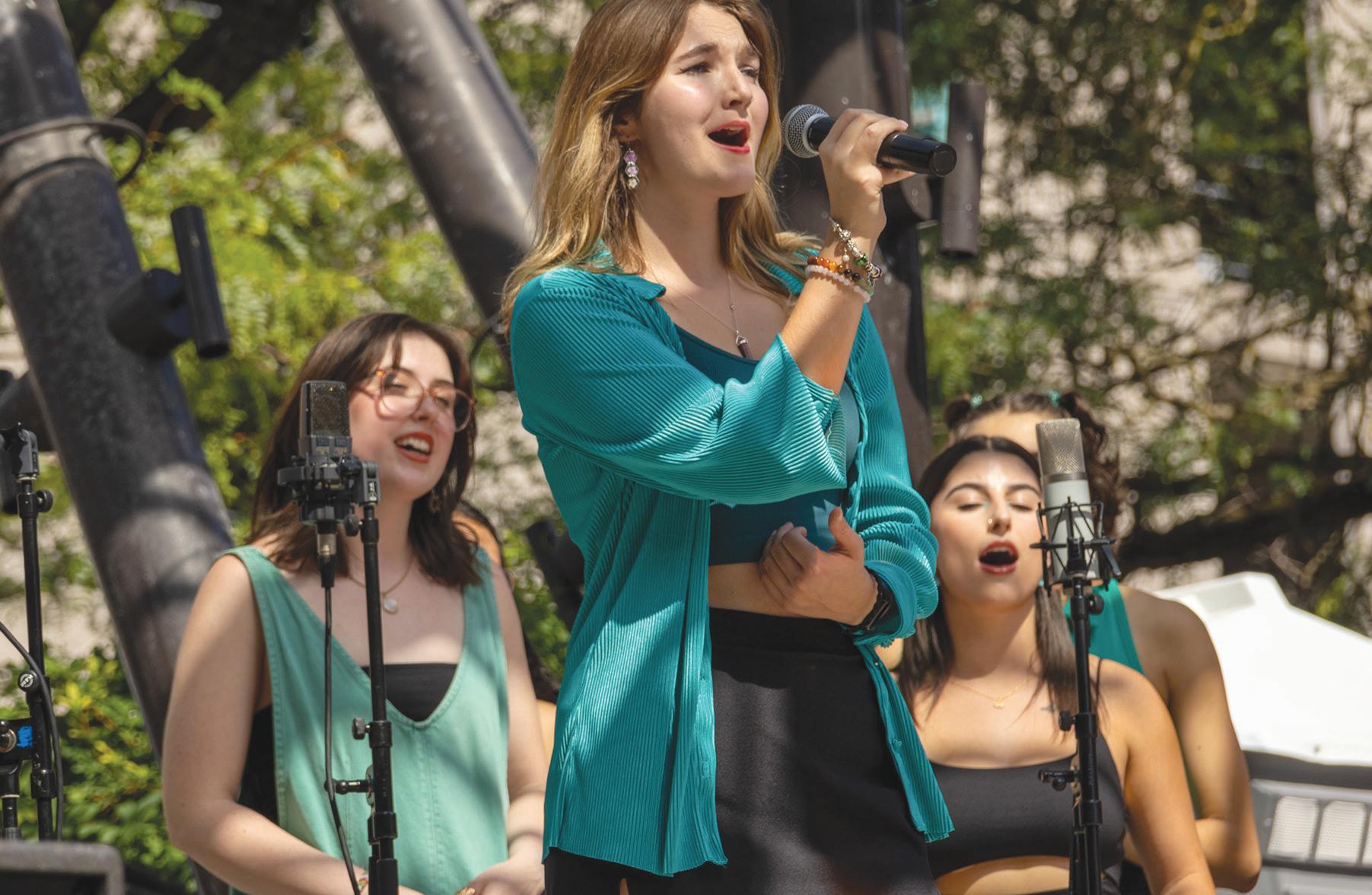
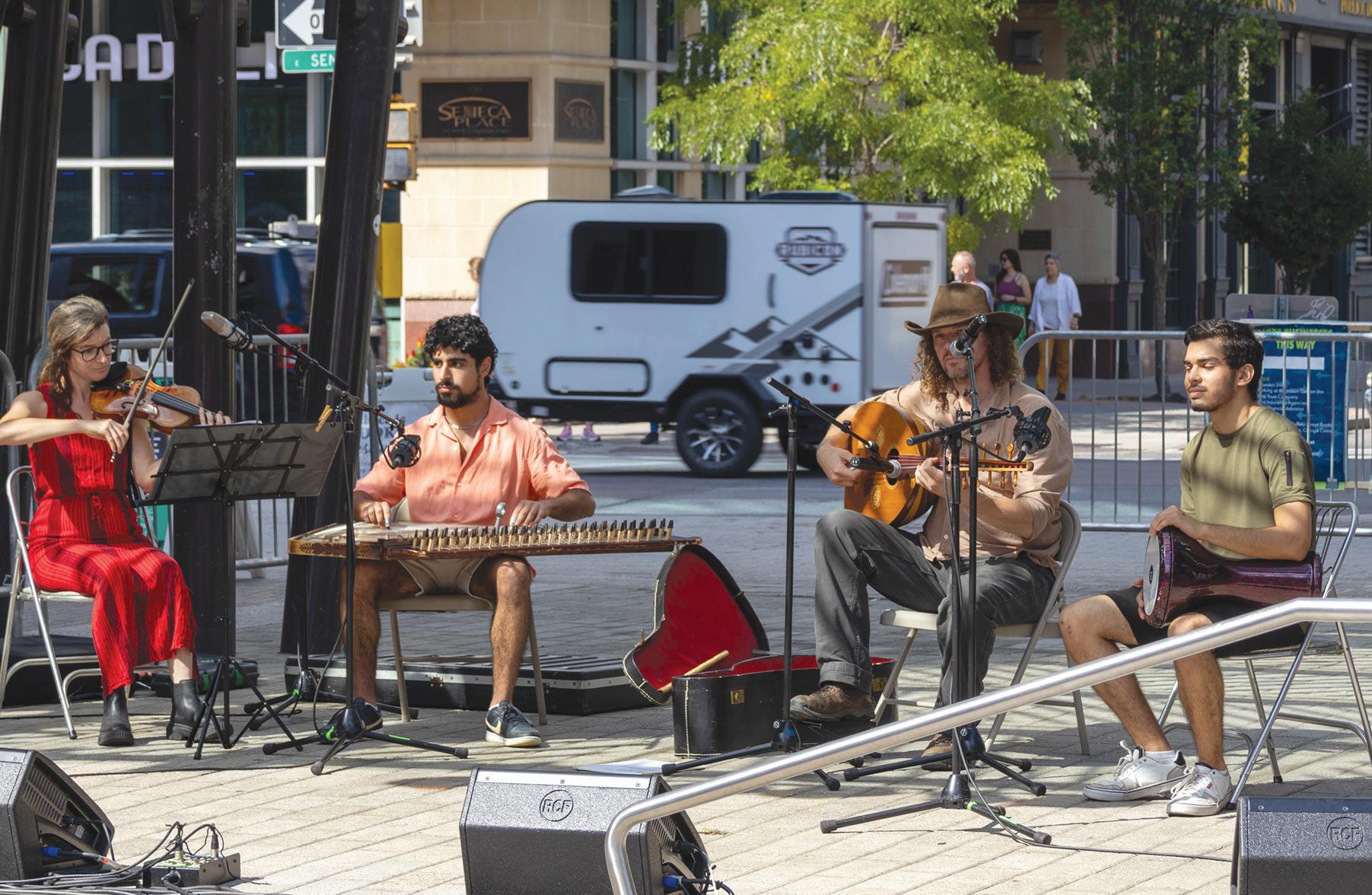
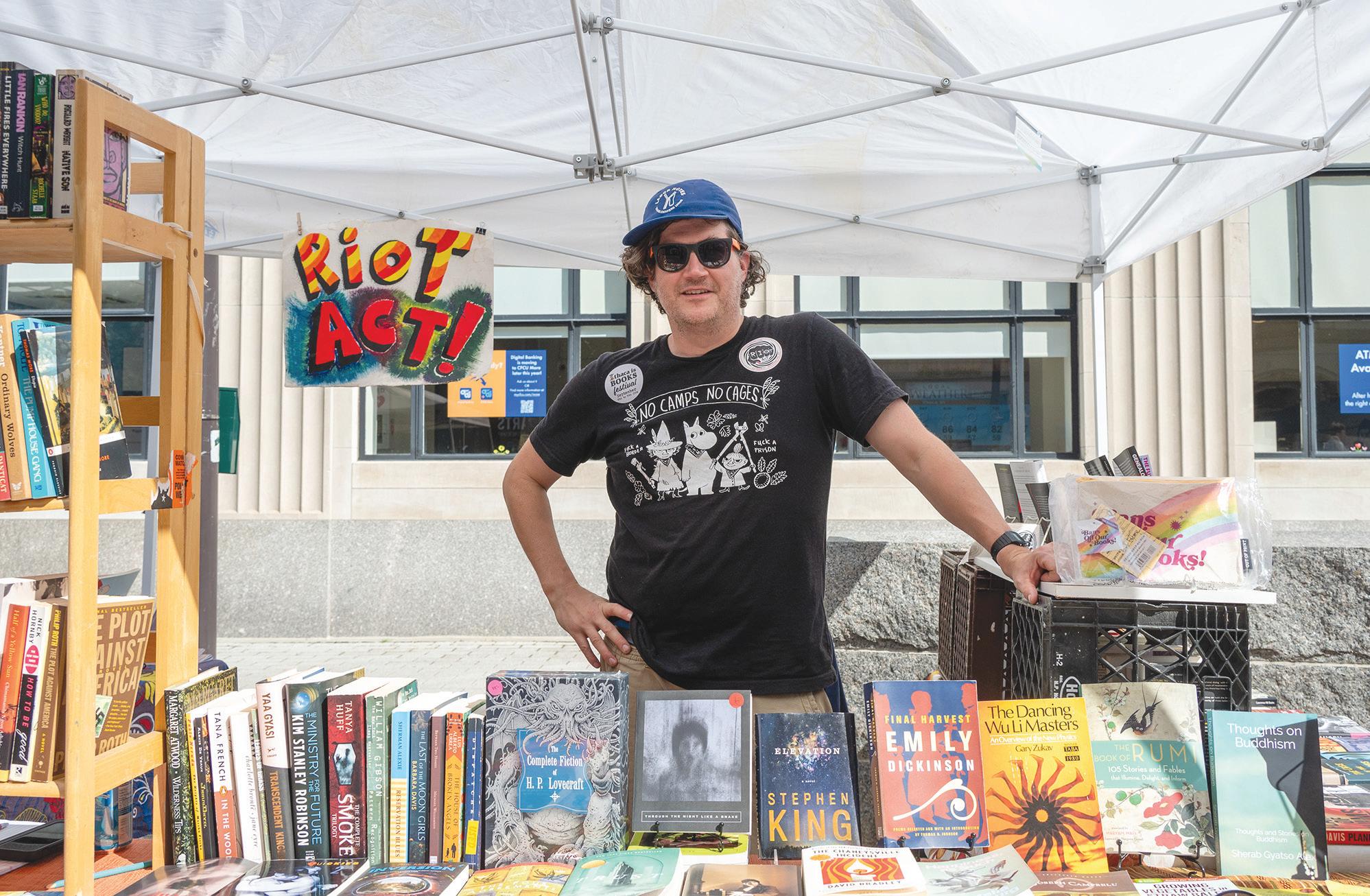
CU Downtown welcomed and introduced students to the downtown Ithaca area last Saturday, Sept. 14, 2024. Performances, tables and food flled the Commons
By




Sept. 6 — Workers of BorgWarner in Lansing, New York continue to strike after rejecting a contract offer on Sept. 6.
BorgWarner is an automotive parts manufacturer with locations across the globe. The company is one of the largest commercial employers in Tompkins County. It has approximately 1,000 employees spread between two plants, 700 of whom are represented by the Teamsters Local 317.
The new contract offered wage increases of 22.5 percent over a four-year period. 88 percent of the workers rejected this proposal, noting proposed changes that would decrease the benefit package employees would receive, which would reduce the total wage increase to only 18.5 percent over four years.
Many workers are also concerned with their job security as BorgWarner plans on shutting down one of its two Lansing plants by 2026.
This is the first time workers of BorgWarner have gone on strike in over 30 years as strikes across the country have become much more frequent. Representatives from BorgWarner did not respond to a request for comment.
BorgWarner worker Jeffery Nguyen said that he is on strike to fight for better working conditions and overtime policies. According to Nguyen, BorgWarner has a strict attendance policy and failure to follow the policy will result in termination.
Nguyen said he still enjoys working for the manufacturing plant, despite the changes he wishes BorgWarner to make. He said he worries about how the plant’s strict policies make other workers feel uncomfortable, but he is happy “they are now on their way to get it fixed.”
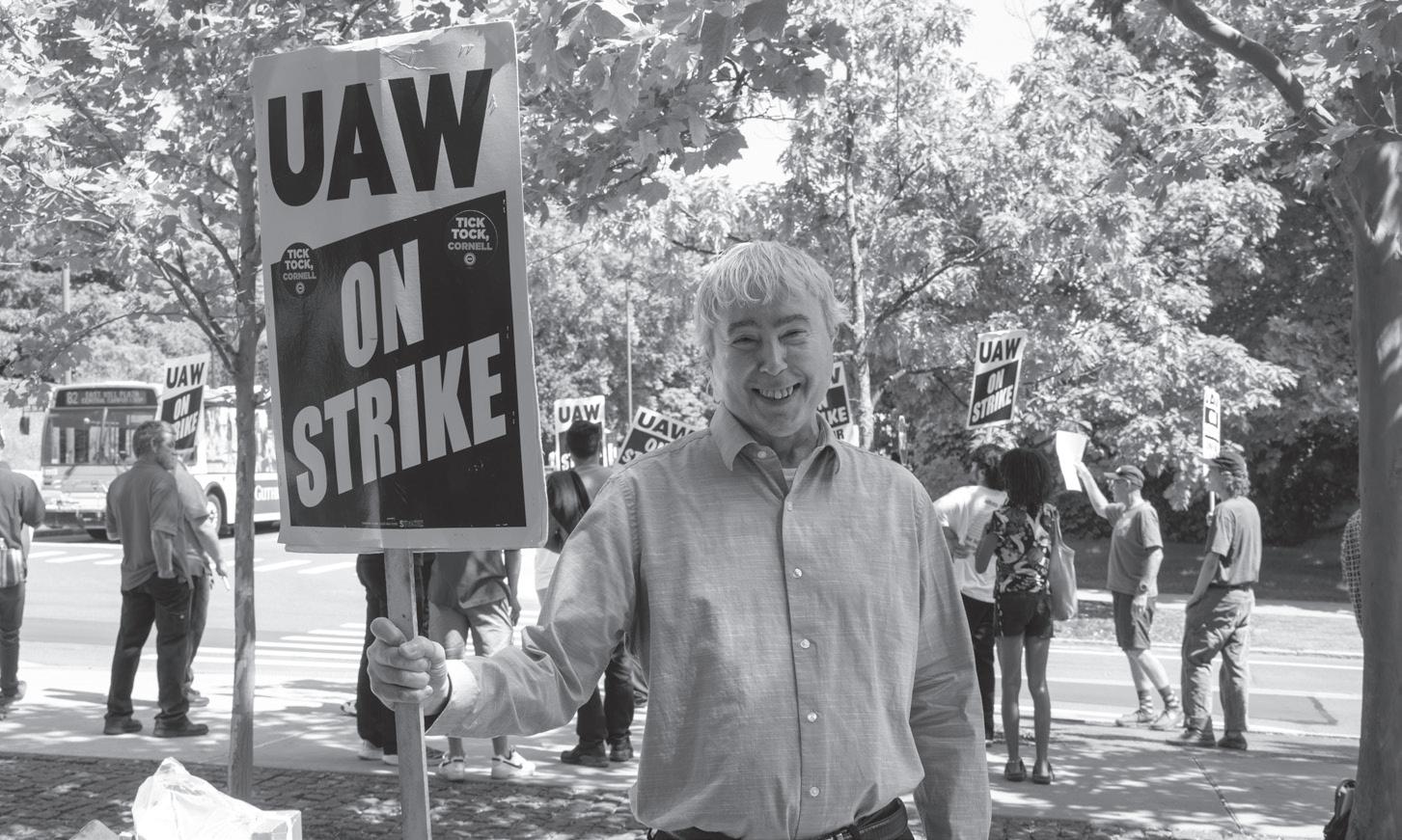
Lane Yon, another BorgWarner worker on strike, said that the UAW strike’s success at Cornell generated discussion among his co-workers as they hoped for a similar outcome.
“[UAW Local 2300] got a great contract,” Yon said. “As Teamsters, we’re trying to get there too with better wages, insurance policies and our pension. It’s the same blueprint as the UAW.”
Prof. Kate Bronfenbrenner ’76 Ph.D. ’93, industrial and labor relations, called the nation-
wide influx of strikes “contagious.” According to Bronfenbrenner, the amount of strikes has increased each year since 2021 and continues to grow.
“There’s a strike wave where unions are seeing each other strike, workers are seeing that other workers are gaining from striking and workers are angry,” Bronfenbrenner said. “They see the strikes that have happened elsewhere in the country and in this county, and they say, we’ve had enough. ”
2023 saw “major strike activity” with a 280 percent increase in strike activity compared to 2022 and 458,900 workers involved in work stoppages, according to the Economic Policy Institute.
Workers at BorgWarner are on strike at the same time as workers at Boeing and multiple major hotel chains. Last month, Cornell workers in United Auto Workers Local 2300 went on strike for the first time since the 1980s.
Bronfenbrenner said that one reason for the surge in strikes is the increasing disparity between
the wages of workers and executives.
“Companies like BorgWarner are making huge profits, and the workers feel like they’re not sharing those profits,” Bronfenbrenner said. “CEOs’ compensation has just grown, while the workers’ wages have stagnated. … Workers are just fed up.”
According to Bronfenbrenner, American companies are increasingly moving manufacturing jobs to Asia and Latin America, where they can pay workers lower wages than in the United States.
“Employers are constantly looking for something cheaper,” Bronfenbrenner said.
In 2023, BorgWarner announced that it would close one of its two Lansing plants by 2026.
A 2023 op-ed piece stated that BorgWarner would attempt to retain more than 70 percent of its “existing employment levels” despite closing one of its plants.

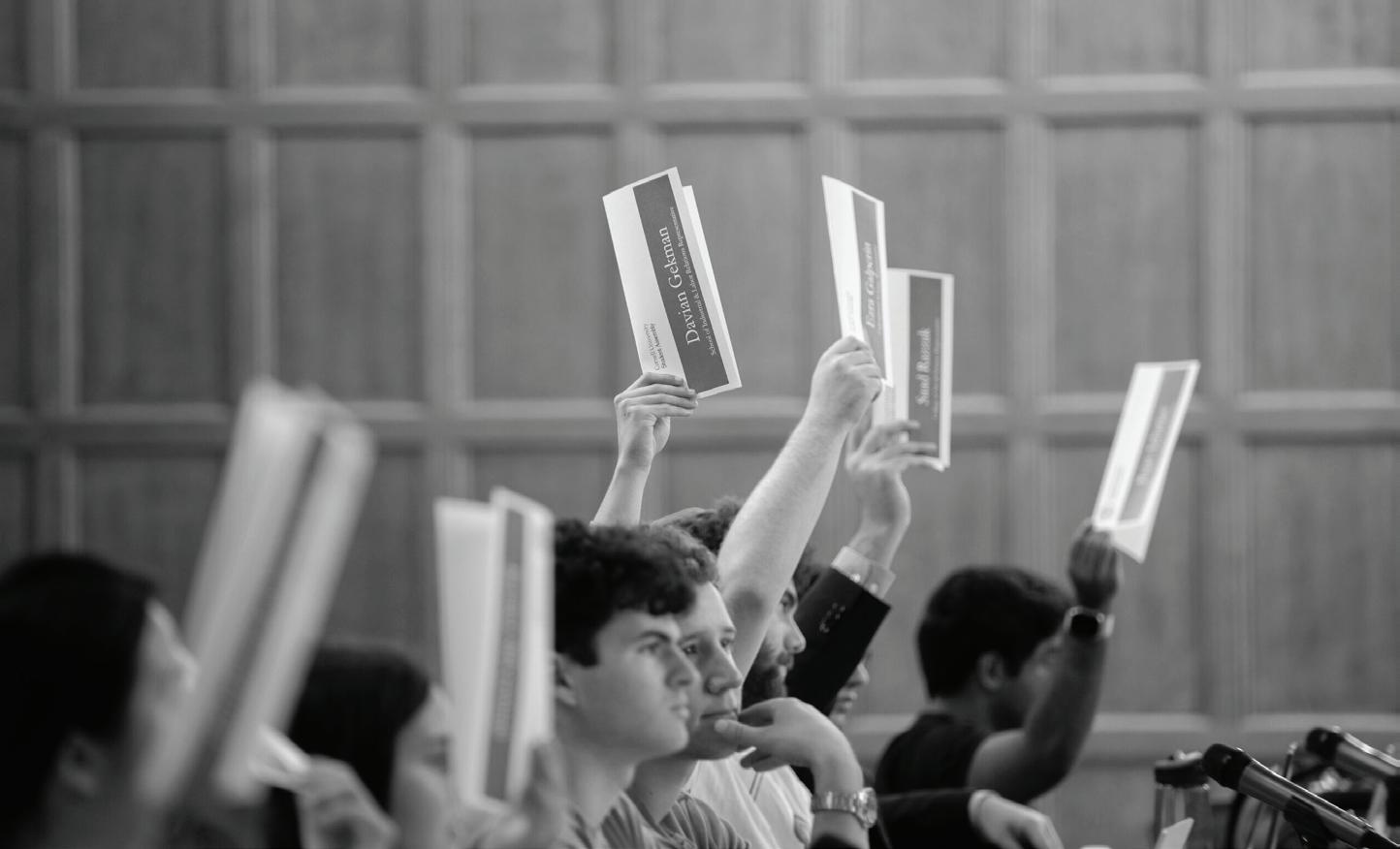
Sept. 11 — The Student Assembly has made fundamental changes to its bylaws during the first few weeks of the semester, prompting the governing body’s Office of Ethics to vote on the ethical implications of passing such resolutions.
Resolution 2: Executive Governance Reform — presented and passed during the assembly’s initial meeting on Aug. 29 — established new “deputy” positions to which current offi-
cers may appoint a new member and merged three leadership groups (the executive board, cabinet and committee) into one executive board, among other wording changes.
The executive board asserted that the changes were meant to make the assembly more transparent and organized, but the altered bylaws have spurred disapproval over both the changes themselves and the way in which they were passed.
Sophia Arnold ’25, director of the S.A. Office of Ethics, told The Sun that her office
had received complaints about the resolution, which was passed without discussion during the approximately 15-minute-long public meeting at the end of August. Resolution 2, along with Resolutions 1 and 3, was included under the meeting’s consent agenda, which generally consists of noncontroversial topics that do not require detailed discussion.
According to Arnold, The Office of Ethics voted on Sept. 1 that the passing of Resolution 2 was “unethical.”
“Even if it’s ‘pending adoption,’ the implementation of [Resolution] 2 in the meantime is even more unethical,” Arnold wrote to The Sun.
Arnold said that the resolution violated the bylaws themselves, pointing to Article X, which states that the bylaws may be modified so long as the amendment was submitted during the previous regular meeting.
S.A. President Zora deRham ’27 said she had sent the current assembly emails throughout the summer about the changes prior to the Aug. 29 vote. According to deRham, assembly members could ask questions after the first assembly meeting, but no one raised any concerns about the bylaw changes during that time.
“I was under the impression
that it was something that — since no one had any questions about [it] and everyone voted in favor of [it] — everyone was fine with,” deRham said.
Two formerly independent offices — the Office of the Student Advocate and the Office of Student Government Relations — now fall under the president’s office. OSGR Executive Director Hasham Khan ’26 was not aware of the office’s absorption until the beginning of this semester. Khan told The Sun that he plans to petition for his office to regain its independence.
“It was just an unusual change,” Khan said. “For the time being, I think it would work best in the interest of OSGR and the president [of the assembly] to work a little independently.”
DeRham explained that the shift was meant to bring the organizations closer together, as they had become less communicative in recent years.
“I do not seek to change the way that those bodies operate internally,” deRham said. “I believe that placing OSGR and OSA under the Office of the President provides easier and quicker and more direct lines of communication between them and us than existed in the past.”
By SKYLAR KLEINMAN Sun Senior Writer
Sept. 17 — Tompkins County unveiled its plan to turn a vacant county-owned building into an emergency shelter for individuals experiencing homelessness this winter on Wednesday, Sept. 11.
According to the county’s press release, the temporary shelter located at 300 North Tioga St. in Ithaca is part of the New York State-mandated Code Blue program which “[funds] counties to provide shelter during the cold weather months when temperatures are 32 [degrees Fahrenheit] or below with wind chill.”
Tompkins County Communications Director Dominick Recckio wrote in an email to The Sun that “the shelter is anticipated to house 60-80 individuals on any given evening.”
Code Blue funding has historically run from November through April.
Additionally, the county will offer a warming center which will function as a temporary relief shelter during extreme weather.
The designation of the former bank location as the 2024-2025 Code Blue shelter site follows the county’s efforts to issue a Request for Proposals this past July in which the county asked local firms to assist in providing shelter under Code Blue.
According to Recckio, “no businesses or nonprofits responded with a viable proposal to run the program,” leaving the Department of Social Services to assume responsibility for the operations of the program this season.
The Code Blue shelter will supplement St. John’s Community Services year-round shelter, also operated by the Department of Social Services, located at 618 West Martin Luther King, Jr. St. in the City of Ithaca.
been done all over the country for years by organizations and college campuses, and we collectively thought that Cornell should be no exception to that.”
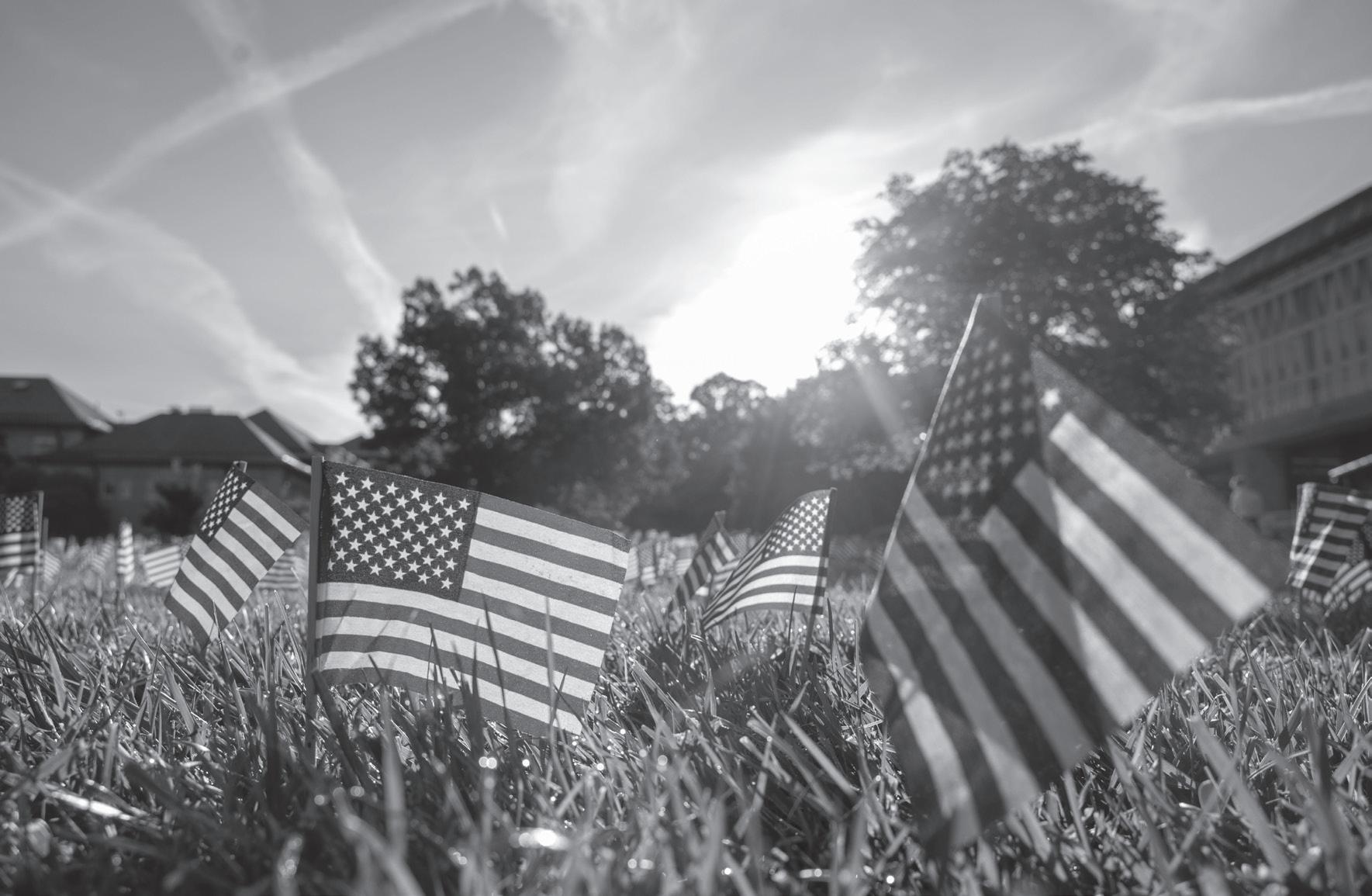
Sept. 11 — At approximately 7:30 a.m. on Wednesday, Sept. 11, the Cornell Republicans and Cornell Democrats joined forces to co-host the 9/11 Memorial Flag Planting. Members of the Cornell community attended in the early morning to help plant flags, paying their respects to the lives lost 23 years ago in the deadliest terrorist attack in U.S. history.
The memorial was held on the Arts Quad where flags were planted, each one representing a life lost on Sept. 11, 2001.
In a statement to The Sun, Cornell Democrats President Niles Hite ’26 shared his inspiration behind contributing to the flag planting.
“When it comes to 9/11 memorials, it’s tradition to place down flags for those that lost their lives,” Hite said. “This has
Chris Hunter ’27, a passerby, shared sympathy for those impacted by 9/11, taking a moment to reflect on this day on his way to class.
“I thought it was pretty solemn,” Hunter said. “I think it’s necessary to pay our respects to the lives that were lost that day.”
In a statement to The Sun, Max Whalen ’26, Cornell Republicans executive vice president, explained the significance of collaboration, stressing the importance of coming together and uniting for causes that truly matter.
“The Cornell Republicans are thrilled to have the Cornell Democrats join us in our annual flag planting event in honor of the victims of the Sept. 11, 2001 terrorist attacks,” Whalen said. “In a time of heightened rhetoric and division in our nation, we’re
committed to honoring all of those who’ve perished during the largest terrorist attack on U.S. soil.”
James Ronayne ’28 spoke to the importance of putting political beliefs aside to mourn a monumental loss of the nation. He explained that regardless of political party, community comes first, especially in times of sorrow.
“I think it was nice to see that there’s a community here that comes out and is able to do this, especially during the rough political climate in our country right now,” Ronayne said. “I think that it’s nice that they can come together for this goal and common support.”
To continue reading this article, please visit www.cornellsun. com.
Izzie Diallo and Isabella Hanson can be reached at idiallo@cornellsun.com and ihanson@cornellsun.com.
Bingo, voter registration and ‘Meet the Candidates’ were featured at watch parties
By GRACE LIU Sun Senior Writer
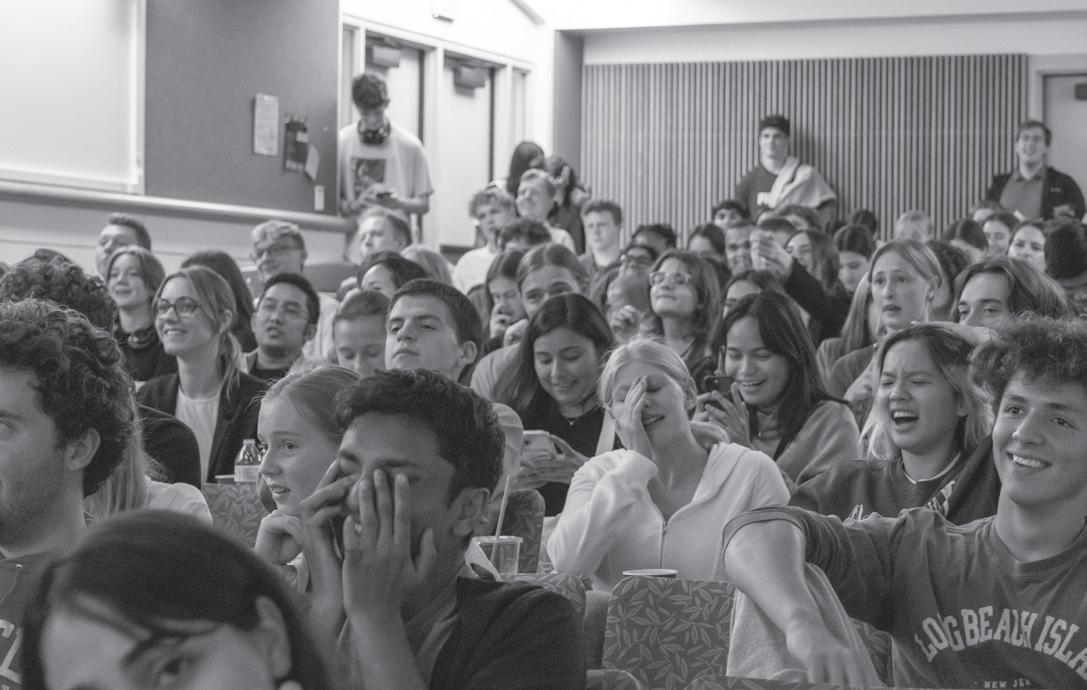
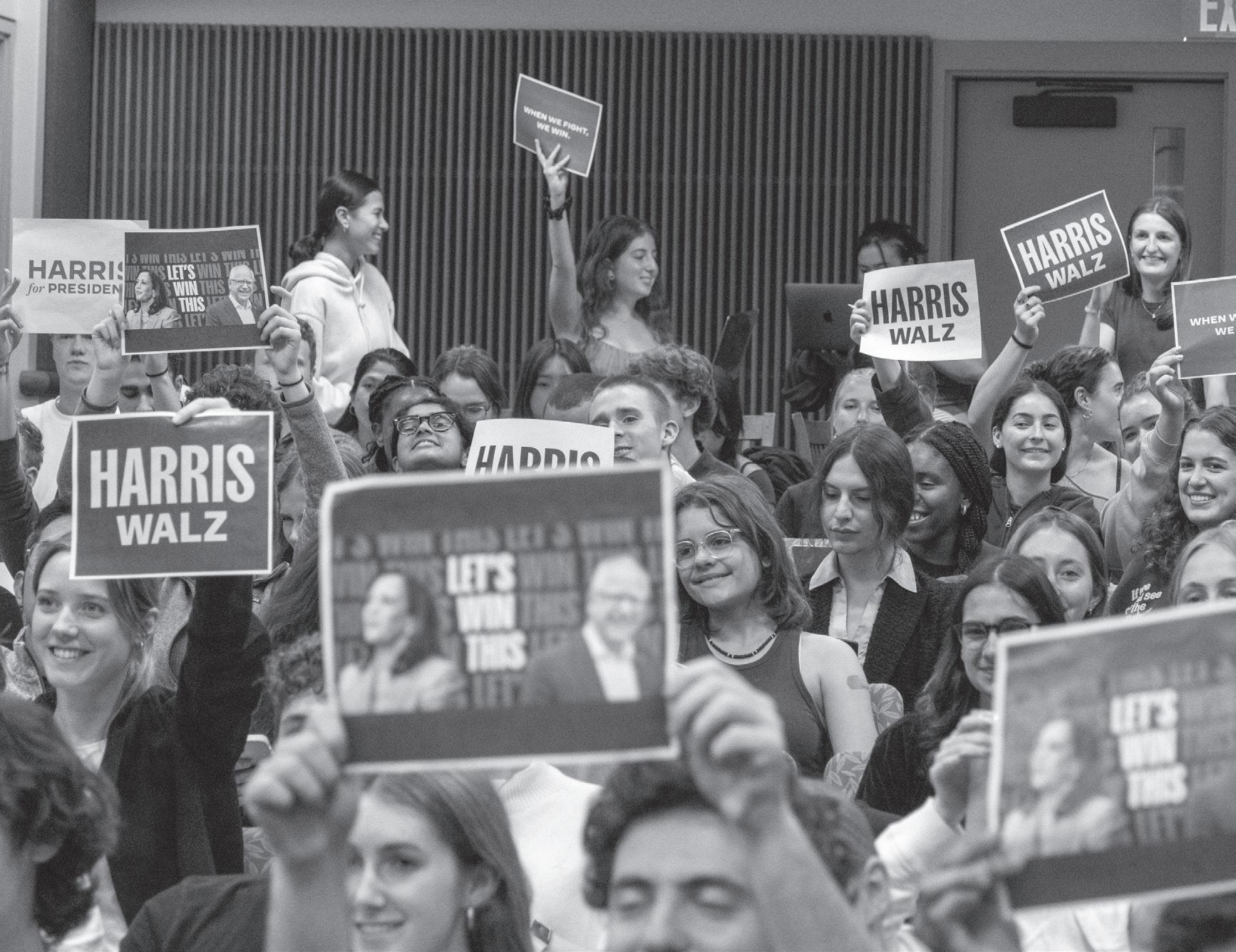
Sept. 13 — A packed Kaufmann Auditorium buzzed with anticipation as over 200 students counted down the minutes before the 2024 Presidential Debate was officially set to begin on Tuesday night.
Throughout the debate, students not only reacted to the face-off on the screen but to each other’s comments in the audience — occasionally yelling “Bingo!” as they crossed debate predictions off.
The Kaufmann Auditorium watch party — co-hosted by Cornell Democrats, Cornell Students for Harris, Students for New York and the Phi Alpha Delta Pre-Law Fraternity — was one of many spaces for Cornellians to connect throughout the debate. The organizations registered students to vote in New York before the debate began.
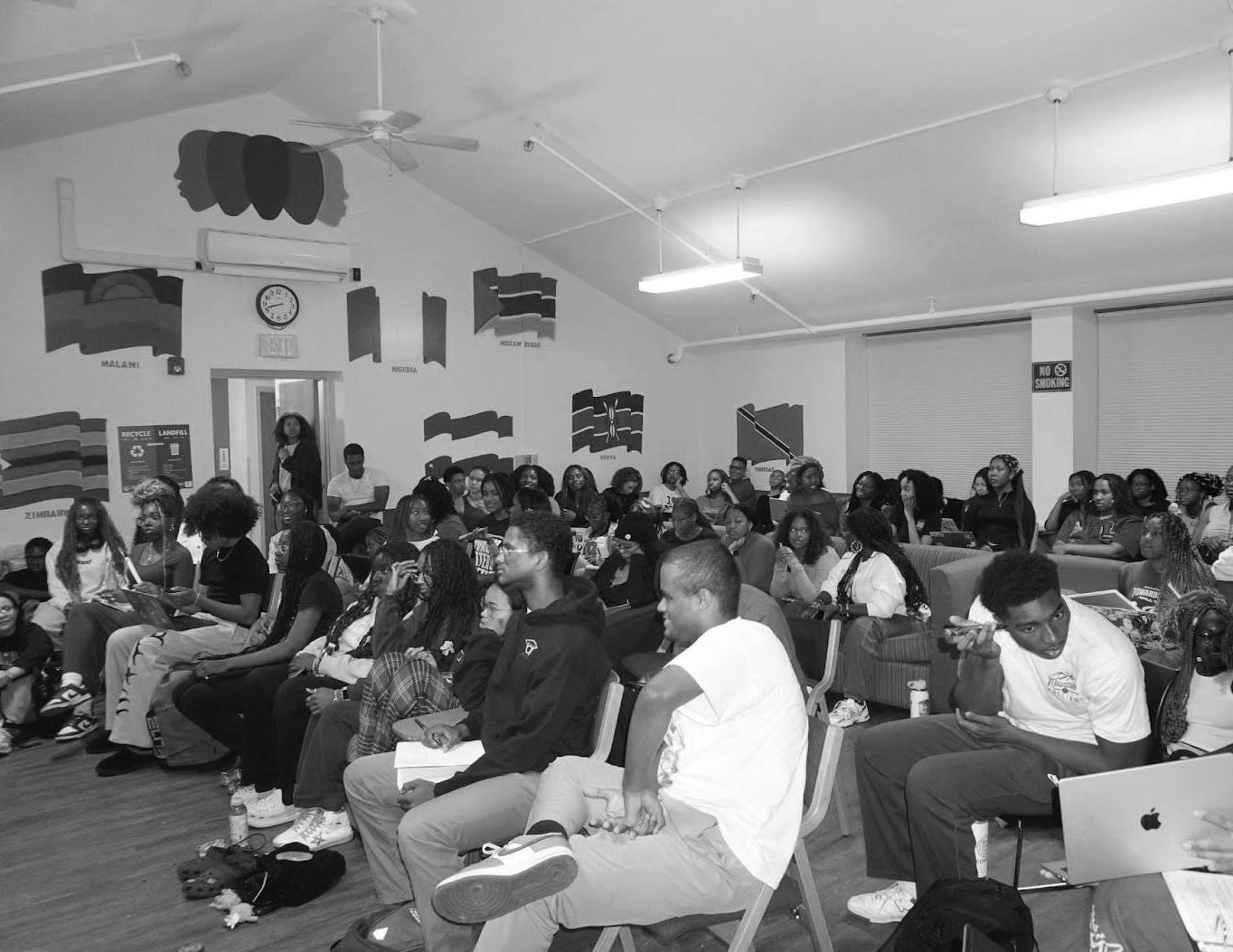
Black Students United organized a watch party following a “meet the candidates” session to break down who the candidates are and how their policies impact the Black community.
Cornell Republicans also hosted a watch party but did not respond to multiple requests for comment.
Tuesday marked the first debate between Democratic nominee and Vice President Kamala Harris and former president Donald Trump.
On Thursday, Trump announced that he would not debate Harris again.
Vice President of Cornell Democrats Saad Razzak ’26 believed Harris decisively won the debate.
“I think that in every single thing that was discussed, whether that was natural security, foreign policy, domestic policy
[or] economic policy, Vice President Harris just blew former president Donald Trump out of the water,” Razzak said.
BSU political action co-chair Eva Vanterpool ’27 also said that Harris’ messaging came across as more clear than Trump’s.
“I think that as a debate opponent, [Harris] was a lot stronger [in] her messaging, and it was a lot more clear than Donald Trump, who I think just kind of repeated the same messaging, [the] same rhetoric that we’ve heard a lot of times,” Vanterpool said. Trump made multiple false claims throughout the evening, including claiming that Haitian immigrants in Springfield, Ohio are eating pets and that Democrats support “execution after birth.” Moderators David Muir and Linsey Davis — who are ABC anchors — factchecked these claims in real time.
“I think that in every single thing that was discussed, whether that was natural security, foreign policy, domestic policy [or] economic policy, Vice President Harris just blew former president Donald Trump out of the water.”
Saad Razzak ’26
Some statements from Harris were false as well, including that Trump left the U.S. with the worst unemployment since the Great Depression.
GABRIEL LEVIN ’26
Editor in Chief
MAX FATTAL ’25
Associate Editor
HENRY SCHECHTER ’26
Opinion Editor
MARIAN CABALLO ’26
Multimedia Editor
MING DEMERS ’25
Photography Editor
ERIC HAN ’26
Arts & Culture Editor
SYDNEY LEVINTON ’27
Arts & Culture Editor
JADE DUBUCHE ’27
Social Media Editor
JESSIE GUILLEN ’27
Graphics Editor
JOLIN LI ’27
Layout Editor
PARIS CHAKRAVARTY ’27
Layout Editor
LUCY CAO ’26
Assistant Photography Editor
DANIELA ROJAS ’25
Lifestyle Editor
KIRA WALTER ’26
Lifestyle Editor
JULIA SENZON ’26
Managing Editor
ERIC REILLY ’25
Assistant Managing Editor
MARISA CEFOLA ’26
News Editor
MATTHEW KIVIAT ’27
News Editor
CHRISTINA MacCORKLE ’26
News Editor
KATE SANDERS ’27
News Editor
JANE McNALLY ’26
Sports Editor
GABRIEL MUÑOZ ’26
City Editor
KAITLIN CHUNG ’26
Science Editor
LAINE HAVENS ’25
Science Editor
ANUSHKA SHOREWALA ’26
Assistant News Editor
DINA SHLUFMAN ’27
Assistant News Editor
NICOLE COLLINS ’25
Weather Editor
ALLISON HECHT ’26
Newsletter Editor
Not all Sun articles end up in print: In fact, most of our amazing columns end up being published only on our website (www.cornellsun.com). Here are some of this week’s highlights in The Sun’s online opinion coverage.
Sept. 16, 2024: “It’s time to Weed out Weeder Classes”
“At Cornell, one common course for constant complaints is CHEM 2070. Not only is it the ultimate GPA killer, it also serves as one of the great determinants of whether a person can feasibly stay pre-med. Importantly, though, this gen-chem course assumes that students taking it have prior knowledge from AP Chemistry in high school. When paired with the cutthroat grading curve, this assumption makes 2070 especially difficult for first generation students. A student coming from a low-income background may have attended a high school which did not have an adequate AP Chemistry course or teacher, or worse yet, an AP Chemistry course to begin with.”
In her latest column, sophomore Asfi Tias takes on so-called Weeder Classes, proposing a shift towards pass-fail course that can both challenge and support their students. Read the full article on our website.
Sept. 17, 2024: “Unmasking Actvisism: Visibility: Makes Protest”
“This idea is not new. Personability has always been crucial for effective activism. We love to consolidate entire movements into the faces of a few relatable individuals. Rosa Parks became a face of the Civil Rights Movement not because she was the first to protest bus segregation (she was far from it), but because her image connected with people on a deep, human level. Park’s story helped crystallize the movement’s broader struggle into something personal; people felt like they knew her. Take Malala Yousafzai, who became the global symbol for girls’ education after being shot by the Taliban. Her face is now plastered all over books and posters. While there is not a singular notable individual in either of these protests, these examples illustrate a larger point: the visibility of individuals often gives movements a relatable, human face, which can foster support.”
In the inagural edition of Seth Berman’s new column “The Other Side,” we find an argument against the efficacy of anonymous protesting and a call for visibility among activists. Read the full article on our website.
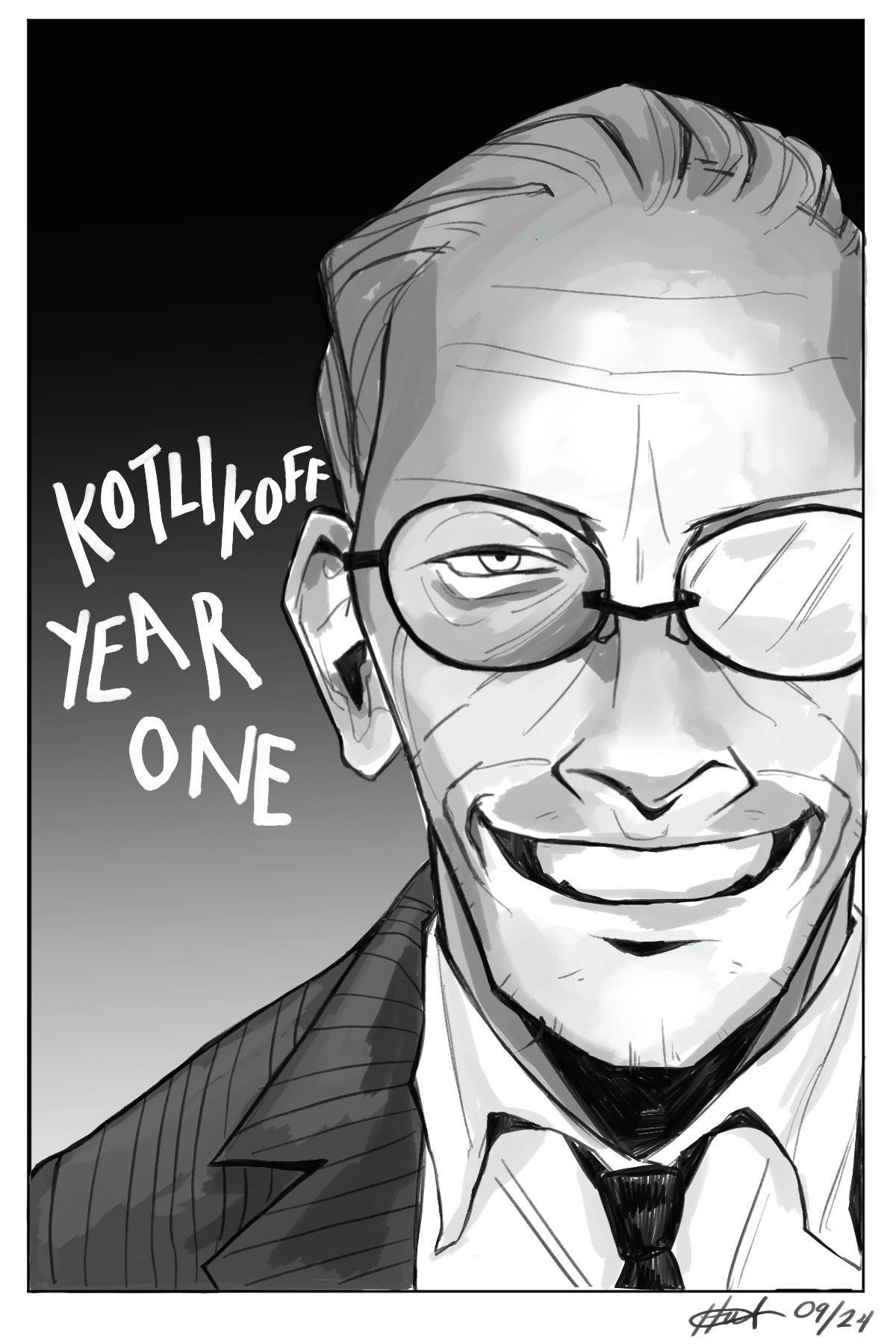
Michael Kotlikoff is the interim president and former provost of Cornell University. His two year term as president began in July of 2024. His office be reached at president@cornell.edu.
One hundred and forty-four years ago this week, the first issue of The Cornell Daily Sun was published. A source of Cornell news and a forum for campus-wide conversations, The Sun has enabled generations of Cornell students, faculty and staff to share their thoughts, amplify their concerns and, not infrequently, criticize the “administration.” Like our enduring system of shared governance, Cornell’s tradition of staunchly independent student journalism is part of our character. We would be a poorer place without it.
A few weeks ago I met with members of The Sun’s managing board. I asked them to reach out as much as possible to our community to broaden the range of voices and stories appearing in The Sun. I also committed to contributing my own perspective to these pages — a perspective gained through decades of running a research lab; teaching undergraduate, graduate and professional students; and as a department chair, dean, provost and now interim president. I will share my views regularly over the coming months, beginning with this submission that reflects my appreciation of, and some concerns about, our community.
I was recruited to Cornell in 2000 to lead a new initiative in mammalian genomics, and became part of a community I soon came to love. Cornell, I discovered, is rightly celebrated for its academic rigor and its unpretentiousness; its deep connections between faculty, staff and students and its ferociously committed alumni. During my interim presidency, I hope to strengthen our connections to each other — connections that have been strained in recent months and years by political events that provoke strongly held opposing views. An institution with a founding commitment to “any person,” Cornell must also be a place for every person: an institution where every person’s views are respected and their rights protected.
Carl Becker, one of Cornell’s most beloved historians, described Cornell as a place of “freedom and responsibility.” We each have the freedom to assert our views, and to try to convince others of those views through vigorous, principled and reasoned argument. We have the right to assemble to protest, and to speak truth to power. These cherished freedoms, together with a collective respect for each other, have served Cornell well since its founding.
Our considerable individual freedoms are bounded, however, by our responsibilities to each other. We do not have the right to threaten, to
infringe on others’ rights or to make demands based on threats of violence or destruction.
On the first day of class, a few individuals did just that, expressing their views not in broad daylight in the public square, but at 3:30 a.m. while wearing masks. Insisting, as reported in The Sun, that “debates and peaceful protests … will never be enough to achieve the change we demand,” they defaced property, broke a window and vowed to “continue to take action and escalate…” Such actions — regardless of their purpose, message or goal — have no place in our community.
Universities, from their earliest conception, were designed as places of debate, dialogue and reason. But they are also vulnerable institutions that prioritize individual freedoms and rely on reason rather than force to protect their ability to educate, pursue truth and create and disseminate knowledge. At Cornell, our codes of conduct and rules for expressive activity were designed to support, not suppress, free thought and expression. Our commitment to free expression notwithstanding, we must and will prevent our University from being repeatedly preyed upon by those willing to violate the rights of others and seeking to intimidate our community.
But more broadly, our community finds itself repeatedly presented with “demands” from individuals or groups asserting issues of injustice or unfairness. By their “or else” nature, demands violate the fundamental expectations of a community of scholars and misunderstand the purpose and processes of a great University. That purpose is to advance knowledge through education and discovery. In so doing, as Becker also noted, they “promote the humane and rational values which are essential to the preservation of democratic society.” Indeed, Cornell prepares students to be citizens of a democracy — a form of government where we don’t always get our way, and one that is often messy and flawed, but is also preferable to all of the alternatives.
The Cornell Daily Sun plays an important role in the process of community discourse about these issues, continuing a tradition that questions authority, while respecting civility, truth and each other, and remains dedicated to acting in the best interest of the community we care for so deeply. I hope, in the year ahead, that many more Cornellians — students, faculty and staff — will join in this conversation, strengthen this tradition and keep The Cornell Daily Sun rising every morning. I look forward to participating in that conversation.
Sophia Dasser is a freshman Computer Science and Philosophy major in the College of Arts and Sciences. Her fortnightly column Debugging Ethics explores the intersection of technology, ethics, and social justice. She can be reached at sd2229@cornell.edu.
Coming into Cornell, I was thrilled to see so many clubs centered around minorities in pre-professional industries. Walking through Club Fest, I saw signs like “Women in ___” and “Underrepresented Students in ___,” and for the first time, it felt like there was a place for me. As a Muslim woman, I had always felt unsure about how to break into competitive industries, and these clubs promised a supportive space where minorities could get ahead in fields that often felt out of reach.
But as I attended more interest meetings, I that many many general clubs also boasted their dedication to Diversity, Equity, and Inclusion. They spoke of DEI workshops, diversity-focused recruitment, and inclusive spaces. On the surface, this sounded amazing — a University-wide effort to address underrepresentation. But the more I thought about it, the more I questioned what DEI really meant in these spaces. In Cornell’s professional clubs, DEI seemed more like a box to check rather than a core value.
After talking to minority-specific organizations, I learned that many of them held workshops exclusively for minorities, offering a “safe space” for us to learn and grow professionally. It seemed like the perfect solution — until I saw a deeper issue. The uniformity of these efforts made me wonder: At what point does the strength in numbers found within the POC community blur the line between tokensim and genuine representation, leaving DEI efforts ambiguous in addressing the distinct needs of each minority group?
Cornell, like many institutions, has adopted the idea of “people of color unity,” assuming that all minority students face the same barriers in the workplace and need the same solutions. But to what extent does a recruiter’s knowledge of “diversity” apply equally to everyone in the room? The challenges faced by, say, an African American woman in tech are not the same as those faced by an Asian American man in finance. And these differences matter.
The experiences of minority groups are not monolithic. For example, Asian Americans often face a “bamboo ceiling” in the workplace, a term used to describe their underrepresentation in leadership despite their achievements. A study by Ascend found that although Asian Americans make up 12 percent of professionals in Silicon Valley, they hold less than three percent of executive roles there. Meanwhile, a 2019 McKinsey & Company report found that Black women are 58 percent more likely to feel the need
to prove themselves at work compared to white women. Latinos, the fastest-growing demographic in the U.S. workforce, hold less than five percent of executive positions. When we lump all minority groups together under a single DEI banner, we fail to acknowledge the specific barriers each group faces.
As a Muslim hijabi student, I’ve experienced firsthand how assumptions about my background affect how people perceive me. From teachers who assume I have a particular set of beliefs to peers who wonder how I fit into professional norms, these biases are always at play. Through my years of involvement in DEI initiatives both at my highschool and at the non-governmental organizations I’ve worked at, I’ve seen how minorities’ needs can sit on opposite ends of the spectrum, yet it’s easy to act as if one diversity initiative can solve all these problems at once. In reality, this approach is superficial. This need for specificity became clearer when I saw how Cornell Latinos in Business interacted, united by their shared language and cultural heritage. It gave them a sense of community and understanding that allowed them to address issues specific to the Latino experience — issues other minority groups may not fully grasp. I remember thinking, “I wish there was a similar space for Muslims at Cornell”. Like CLB, such a space could address the intersection of our religious and professional challenges.
Studies have shown that one-sizefits-all diversity programs are often ineffective. Cornell needs more individualized support systems that cater to the specific challenges of different groups. This could look like a mentorship programs tailored to specific minority groups or workshops addressing the unique needs of Black women entering the finance or Muslim women navigating corporate America.
At the same time, collaboration across different minority groups remains essential. The goal shouldn’t be to create silos, but to foster an environment where differences are acknowledged and respected, while still working toward common goals. Cornell has made undeniable progress in promoting diversity, but as minorities now make up over half the student body, grouping us together under one DEI initiative is no longer sufficient. The next step in fostering true inclusion is recognizing the distinct challenges minority groups face, and supporting them accordingly. While something is always better than nothing, it’s time to rethink how we approach diversity— and this is it.
Prof. Risa L. Lieberwitz
Risa L. Lieberwitz is a Professor of Labor and Employment Law in the School of Industrial and Labor Relations. She is the President of the Cornell University Chapter of the American Association of University Professors. She can be reached at rll5@cornell.edu.
This Committee on the Interim Expressive Activity Policy should apply a philosophy that values the broadest protection of academic freedom and freedom of expression as central to the public mission of the University. Academic freedom protects a broad range of teaching, research, extramural speech (on or off campus, concerning issues that may or may not be within faculty disciplinary expertise) and institutional governance-related intramural speech. The Committee should strengthen the Cornell Policy Statement on Academic Freedom and Freedom of Expression, rather than adding restrictions to it.
Without such protection, faculty, student and staff speech is subject to restrictions in the name of civility, order on campus or avoidance of conflict with legislators or other politicians. Without independence of thought and expression, our teaching, research and debate is chilled, watered down and loses the legitimacy that only academic freedom and freedom of speech can provide.
Further, there are serious concerns with both the procedural and substantive aspects of the IEAP.
First, there must be full and meaningful participation by all shared governance bodies in the review and decision-making process of revising the IEAP. According to the Cornell University bylaws, the faculty senate has jurisdiction over questions of educational policy that is general in nature. This would include an Expressive Activity Policy that affects academic freedom and freedom of expression inside and outside the classroom.
Respecting the role of the Faculty Senate will bring faculty expertise and experience into the process and is essential to bring legitimacy to this process. At the March 13, 2024 Faculty Senate meeting, then-Provost Kotlikoff made statements confirming the importance of the Faculty Senate’s role in considering an Expressive Activity Policy, including the Faculty Senate’s vote on any proposed or finalized policy. As recorded in the verbatim minutes of the March 13 Faculty Senate meeting, then-Provost Kotlikoff stated that “the role of the faculty and faculty senate in discussing and voting on this subsequent full policy, finalized policy is fully acknowledged. So, I don’t — I don’t see an issue there.”
Given the crucial role of higher education institutions in a democratic society, great weight must be placed on the interests of faculty and students to engage in free and open speech and debate. The traditional First Amendment “strict scrutiny” test is well suited to recognize these strong interests, whether or not the
speech occurs in public or private institutions of higher education. This would require the University administration to prove that it has a compelling interest in restricting speech and that the restriction is the “least drastic” (or narrowest) means possible to further that compelling interest.
Content-neutrality is a minimum requirement for any restrictions on freedom of expression, but is not nearly sufficient for the University to show a compelling interest in imposing a narrowly drawn restriction. Further, speech about controversial issues is inherently disruptive, including in public events such as invited speakers, or in protests or demonstrations. There must be much more than disruption, discomfort or inconvenience to justify restrictions on speech. There should be a heavy burden of proof on the University administration to provide clear and convincing evidence of imminent threats to health or safety. Two examples illustrate the overly broad nature of the restrictions of the IEAP. First, the Revised IEAP removed the “expectation” of registration of outdoor public events after faculty and students raised widespread objections about the chilling effect on speech and the surveillance mechanism created by requiring registration. However, the Revised IEAP continues to overly privilege registered outdoor events in ways that restrict expression, stating, “By choosing to register, organizers enable the university to…reduce the potential for unintended conflict with other scheduled activities.” However, the existence of a registered event is not a compelling basis for restricting speech, nor is prohibition of a protest at the same time as the registered event the narrowest means for achieving any interests of the administration. As the former Campus Code of Conduct provided, “The presence of a counter-protest does not itself constitute a disruption to a University function or authorized event. Moreover, those who oppose a speaker may thus make their views known.”
Another example of overly broad restrictions is the blanket prohibition of “heckling” speakers. This imposes a form of “civility” that broadly excludes speech that may be annoying or cause discomfort, but which does not automatically silence the speaker or prevent other audience members from hearing the speaker. There may be a point where heckling progresses to silencing a speaker, at which point there would likely be a basis for restricting it. However, protecting speech requires a more nuanced approach than a blanket prohibition on heckling.
By NICOLE COLLINS Sun Weather Editor
Aug. 4 — As summer wound down in Ithaca, it hosted haziness along Ithaca’s horizon and especially red and orange sunsets. Although some may find these vibrant colors beautiful, these hazy skies and red sunsets are evidence of massive wildfires burning thousands of miles away.
Many active large fires are currently burning in parts of the western U.S. and throughout many regions of Canada. The smoke from these fires rises into the atmosphere, gets caught in the jet stream — a current of fast winds high in the atmosphere — and is carried east across North America. As a result, much of the nation, like Ithaca, saw hazy skies.
Fortunately, once the smoke is lofted into the jet stream, it largely stays in the jet stream. Because the jet stream is located high in the atmosphere, it generally keeps the smoke from reaching the surface of the Earth and usually poses no serious air quality health risk to places far away from where

the fires are burning, even though the skies may become hazy.
However, many communities located near almost 30 current wildfires have been ordered to evacuate.
Due to the Park fire — now the largest wildfire in California this year — resi -
dents in several zones of four counties in northern California were warned to evacuate. The fire started on July 24 as a result of a car fire but has since exploded in size, burning nearly 400,000 acres and destroying more than 500 structures.
As climate change increases, most of the U.S. will con -
tinue to face an increasing danger when it comes to wildfires. In recent decades, western states have observed the most dramatic increase as these regions have witnessed a steady increase in the average amount of acres burned each year.
Scientists have attributed this escalation to climate change as rising temperatures have dramatically increased the amount of fire weather days across the U.S. Fire weather days are characterized as having hot, dry and windy conditions. In short, these days provide the optimal conditions for both starting and rapidly spreading wildfires.
Even though residents of Ithaca may feel relatively unaffected by the current wildfires in the west, the hazy skies serve as a reminder that on the other side of the country, people are losing their homes as their communities are swallowed by the burning fires.

By Kira Walter
Kira Walter is a Lifestyle Editor for the Cornell Daily Sun. She can be reached at style@ cornellsun.com.
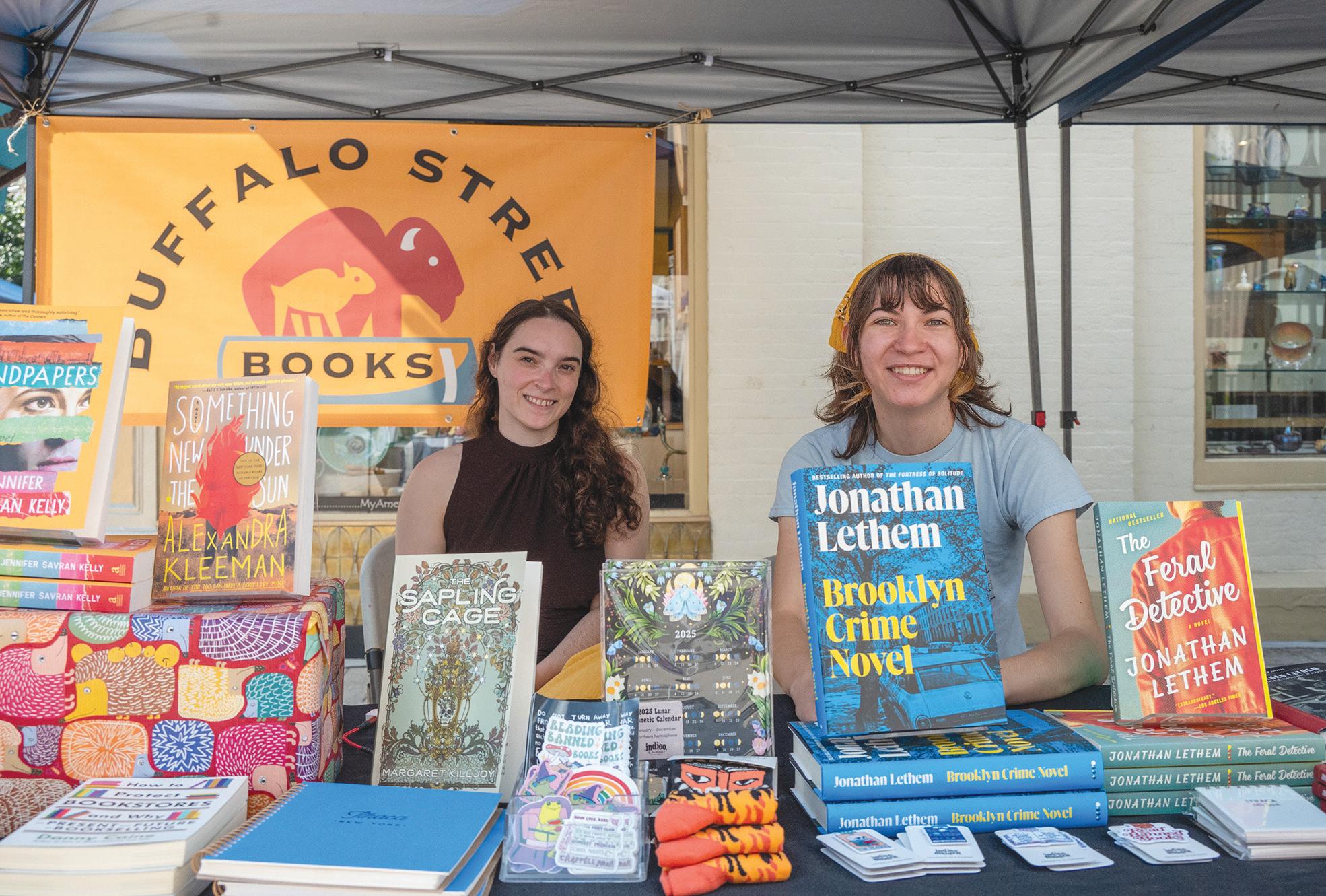
Last weekend, from Sept. 12 - 15, 2024, local literature lovers celebrated the 4th annual Ithaca Is Books Festival in the Commons. With open mics, guest readings, and an outdoor book fair, the event has expanded to include 19 different businesses, breaking records in comparison to previous years.
Home to Cornell, IC, plethora of local publishers, it’s no secret that Ithaca is a literary town. Readers, scholars, and book connoisseurs constantly flock upstate to explore universities, peruse endless libraries, and see visiting authors.
To celebrate the flourishing literary atmosphere in Ithaca, Buffalo Books, Autumn Leaves, and Odyssey Bookstore coordinated the first Ithaca Is Books festival in 2021. Since the Holy Trinity of downtown bookstore introduced this custom, it has only garnered more interest from booksellers and writers in the surrounding Finger Lakes community.
When asked about the festival’s recent growth, Autumn Leaves owner Ramsey Kanaan responded enthusiastically.
“The first year was throwing a stone into a pond and the ripples keep going, getting bigger and bigger,” Kanaan said. Founder of
PM Press, an independent collective publisher centered in Binghamton, Kanaan and his associates purchased Autumn Leaves from founder Joseph Wetmore on Jan. 1 2023. Since then, the PM Press team has assimilated to the Ithaca business family, preserving Autumn Leaves as a cultural trading post for musical and literary ideas.
Kanaan was particularly proud of the festival’s guest reader line-up: authors Katie Tastrom, Kenneth Wishnia, Jim Feast, Antonia Carcelen, and Kevin Young made second floor pit stops to discuss their publications. The owner also expressed excitement about moving festivities outdoors.
“This is the first year we’ve done a book fair outside in the commons,” he told The Sun.
One of several businesses that ran the pop-up bookshop on the commons was Burning Books, a radical Buffalo bookstore that supports movements against oppression. Co-owner Theresa Baker-Pickering was delighted about the chance to participate in outdoor sales and the festival’s unique collaborative experience.
“We like selling books outside, particularly events like this where people are already coming,” she said. “You get people showing up
By Eirian Huang & Kira Walter
Eirian Huang is a junior in the College of Arts and Sciences. They can be reached at ehh56@cornell.edu.
for the book fest and people who just stumble upon us.”
Baker-Pickering founded Burning Books with her husband on the anniversary of the Attica prison uprising in 2009. An exclusive focus on social justice issues and sustainability contribute to the store’s empowering influence on its own community: on Sunday, Sept. 15, this collection’s reach was extended to the Commons.
Because of the joint effort by bookstore owners, publications often out of reach are able to find their way into new hands here in Ithaca. The festival not only involves book talks and sales, but interactive activities to inspire a greater love for reading. From Drop In Journal Making at Ithaca Print Commons to a Poetry Slam at the Downstairs, orchestrators strived to accommodate all age demographics.
With an impressive 34 events hosted this year, the Ithaca Is Books Festival is only forecasted to achieve new heights. In regards to it’s success, Kanaan reiterated his plans to continue the tradition with even more added components.
“As it’s growing, we’re finding different ways to engage with the community,” he said. “We’re engaging more and more.”
BY KIRA WALTER Sun Lifestyle Editor
On the upper east coast, savoring September heat often becomes a celebration of late summer’s harvest season. Apple picking is a mandatory Cornell custom, but honey crisps and granny smiths aren’t the only fall favorites growing nearby. Here are some tips and tricks to on how to access local produce while the sun’s still out.
Stop By Anabel’s!
Affordable local produce is sold right here on campus! Sept. 18th marks the semester opening of Anabel’s, a student-run grocery store at Anabel
Taylor Hall. The small non-profit sells products from Ithaca vendors and a variety of options from partner farm Dilmun Hill.
Get Involved With Dilmun Hill!
Cornell’s renowned student farm has served the Ithaca community since 1996. Following the CSA season from June to August, there are still many ways to get involved with Dilmun Hill. Joining the Dilmun Hill club offers undergraduates the direct opportunity to visit the farm and take on leadership positions in agricultural operations. Students can keep updated on popup markets and cooking opportunities, including
Since the strike ended on September 2nd, Cornell dining has largely returned to its former glory. Cafes are serving full menus again, buffets are booming, and the box meal is becoming a relic of history. In two weeks, students have had the opportunity to explore all 33 dining units scattered across campus. The vast range of eating options can feel overwhelming and its easy to fall into a routine. If you’re looking to break habit and expand your dining horizons, here are some stellar places you might miss if you’re not careful…
One dining unit bouncing back post-strike is 104 West!, Cornell’s only Kosher Dining Hall adjacent to the Center For Jewish Living. While employees protested for better wages, Kosher students cooked for each other, further fostering the close community at CJL. Now, the dining hall is back in swing with a full staff from 11 a.m. to 2 p.m. and 5:00 p.m. to 7:00 p.m. on weekdays. 104 West! accommodates a variety of religious diets and is open for Shabbat dinners based on when the sunsets throughout the year. Meal swipes, bucks, and most forms of Cornell currency can be used here in addition to credit. Compared to other West dining halls, it’s slightly secluded but reviews unanimously praise this unit for some of the best food on campus.
Although a short walk from RPCC, many North Campus dwellers are unaware of McCormick’s at Moakley House. Named after Cornell varsity golfer Jack McCormick (57’), the golf course eaterie is open weekdays from 11:00 a.m. to 6:00 p.m. They close early at 5:00 p.m. on Saturdays and stay open 9:00 a.m. to 2:00 p.m. for Sunday morning golfers.
The McCormick’s menu features staples from Potato Wedge Poutine and Chicken Wings, unavailable anywhere else near North. Tavern classics like the Moakley Burger or a Loaded Nachos are served daily in addition to an extensive wine and beer list. BRBs, Cornell Card, and Credit are all accepted here! This fall, your meal plan can afford to take you out on the green.
Big Red Barn is certainly no secret, but its quaint rustic exterior may disguise some of the exciting hot sandwich options prepared at this destination. Although serving as the on-campus social center for graduate and professional students, Big Red Barn has become a cozy setting for undergrad
last week’s Salsa Making & Farm Workday, by following @dilmunhill on instagram.
Head Out To A U-Pick Farm! It may be a bit of a hike, but one of the best (and most fun) ways to find fresh produce is to touch grass and pick it yourself. Surrounded on all sides by upstate farms, Cornell is an ideal location for students looking to source their food right from the stem. From Indian Creek to Stick & Stone Farms, its easy to save a buck on tomatoes, herbs, apples, pepeers, and peaches by getting your hands a little dirty.
coffee chats and interviews. The former carriage house is surrounded by lush trees and hedges on all sides: wooden outdoor sitting tables let students soak in the autumn sun.
At this ideal study spot, signature sandwiches like the Barn’s Cubano and vegetarian Portobello Panini are hot-pressed and served fresh. This unit has soups and baked goods for BRB’s, Cornell Card, and credit. It is open from 8:00 a.m. to 3:00 p.m. every day of the week.
Coveted away in a cavern of Willard Straight, Straight From The Market is a delicious dining unit that often flies under the radar. Opened in 2018, this relatively recent eaterie offers a hot dish bar surrounded by salad, fruit medleys, and other enticing cold options. A rotation of daily specials from Paella to Peruvian chicken promise gourmet dishes often unavailable at buffet dining halls. From 11:00 a.m. to 6:00 p.m., this first-floor hotspot beside Terrace Lounge is a quick-bite goldmine: an army of takeout containers is readily available, and weighed at $8 per pound. If you’re looking to skip the ice cream line at Dairy Bar or dining halls, this joint is stocked with signature Cornell flavors. For BRBs, Cornell Card, and Credit, Straight From The Market is one of few retail locations where berries make a regular appearance.
Perhaps Cornell’s most beloved local coffee joint, Gimme! Coffee has three locations across Ithaca: one is right here on campus. At Gates Hall, Gimme! has one of the most expansive drink menus, including their addictive Stargazer cold brew and Japanese matcha. Open 11 a.m. to 3 p.m. on weekdays, the coffee roaster was founded in 2000 and re-established in 2022 as a cooperatively owned business. The Gimme! team has focused on ethically sourcing high-quality beans and is credited for an impressive staff of latte artists. Although this spot is cash and credit only, the lesser-known location may be the perfect place for an on-campus caffeine pick-me-up. As Cornell’s long-time contract with Starbucks expires in June of 2025, the locally-owned vendor is rumored to be a candidate in replacing the espresso magnate.
The semester is still young; the world of on-campus dining is filled with endless mystery. As the workload ramps up, good food often falls in the priority list. Don’t forget to fuel your studies with culinary excitement. Who knows… a dining sidequest may be just what you need to escape the fourth-week funk.

By KATE TURK and SHANNON LEE Sun Contributors
Sept. 15 — Two weeks ago, members of United Auto Workers Local 2300 ratified an agreement with the University that secured them a $43 million contract over the next four years.
As chatter about the strike dies down and campus “returns to normal,” The Sun dove into the history of union activity at Cornell as a reminder of UAW Local 2300’s persistent defense of employees’ rights on campus.
Prior to 1980, union activity at Cornell was decentralized and sparse. While a minority of Cornell employees belonged to various local unions, there was not a large enough body of unionized employees to exert power as a bargaining force against the might of the University.
In the fall of 1980, workers began efforts to organize into a singular union under the national umbrella of the UAW. They established the UAW Local 2300 — the local branch that represents Cornell employees.
The UAW’s presence on Cornell’s campus was contentious from the beginning — while recruiting employees, members of the UAW pinned pamphlets to a public bulletin board to spread the word. However, in September 1980, the University removed the UAW pamphlets from the public bulletin board, prompting the union to file an unfair labor charge through the National Labor Relations Board. The University claimed that the board was for official use only,
though workers retorted that they had been using the board for years without being told of this policy.
Three months later, Cornell was found in violation of NLRB labor codes for two separate incidents. In October 1980, employees were not allowed to distribute information about the UAW at an employee luncheon and, in a second incident, employees for the Office of Admissions were banned from donning any clothing representative of the UAW. Cornell was given no penalty on these charges.
A Sun article published in December 1980 stated that “The University is opposed to the unionization of its workers, and is willing to do most anything — even commit minor illegalities — to avoid unionization at Cornell.”
The 1980 article also mentioned that the two NLRB violations were just a few in a larger pattern of the University’s union-busting tactics since the UAW Local 2300’s inception on Cornell’s campus.
“Other examples include the censorship of all material relating to the UAW drive from University publications; restriction of unionization meetings during work breaks and a well-timed, limited raise in pay scales … to lure people from the unionization movement,” the article added.
A major force behind early unionization efforts was School of Industrial and Labor Relations alum Al Davidoff ’80. Davidoff started working as a custodian for Cornell in his senior year, simultaneous with the very
beginnings of the effort to organize a local UAW chapter. A witness to the unsatisfactory treatment of employees, Davidoff quickly became involved in labor activism and recruitment for the union. In 1981, 1,100 Cornell employees elected Davidoff, then just 23 years old, to be the first president of the UAW Local 2300.
David Sepulveda, more commonly known around campus as Okenshield’s “Happy Dave,” was also involved in the establishment of the UAW in 1980. He recalls working at Robert Purcell Community Center at the time and assisting in recruitment for the union.
“Reflecting on this strike and 1980, I feel that unionization is a necessary component for workers to fight for their rights in order to get the things
they need to make a living,” Sepulveda wrote in an email to The Sun.
Sepulveda said that the University has not warmed up to the UAW Local 2300 since its inception in 1980.
“I think whether in 1980 or now, the University has dragged its feet when it comes to negotiating in good faith, and many would rather the union wasn’t here at all,” Sepulveda wrote.
Not long after the establishment of UAW Local 2300 did the union start defending the livelihood of its employees.
A 1985 edition of the Sun states that in 1981, employees from all sectors of employment were earning less than those at peer universities.
Continued from page 1
After the store closures, students protested Cornell’s partnership with Starbucks, occupying Day Hall on May 11 and May 12, 2023, to demand that the University stop offering Starbucks products in its cafés and dining halls.
In August 2023, Cornell University announced it would cease its partnership with Starbucks by June 2025, when the current contract expires.
In an email sent to the student body at the time, then Student Assembly president Patrick Kuehl ’24 denounced Starbucks’s actions.
“Cornell doesn’t support labor violations,” Kuehl stated.
The movement to pressure Universities to end their partnership with Starbucks has since spread to other universities across the country, including Georgetown University and the University of Washington.
Nick Wilson ’26 — who writes a column in The Sun about activist issues at Cornell and in Ithaca — applied to the Ithaca Commons Starbucks location in September 2022. Despite his clean disciplinary record and punctuality at a Starbucks location in Illinois, Wilson — an outspoken union supporter on social media — was not hired for the Ithaca Commons
location, which had high employee turnover at the time.
This move to reject Wilson’s and other union supporters’ applications for the Ithaca Starbucks locations was cited in the ruling as evidence of “union animus” by the company.
Wilson, who participated in the May 2023 Day Hall takeover, celebrated Friday’s ruling, calling it a “good sign of hope” for the national Starbucks unionization movement.
“[The Ithaca Starbucks workers] have been subjected to, as is detailed in the ruling, really brutal and aggressive union-busting,” Wilson said. “I think this is further evidence that this is not keeping them down, that people are willing to fight and that there’s still an opportunity for change in Ithaca as a result of this and for some leverage to the national campaign.”
In a statement sent to The Sun, Starbucks spokesperson Jay Go Gaush wrote that the company was “reviewing the administrative law judge’s decision,” working on training “managers to ensure respect of our partners’ rights to organize” and “progressing negotiations towards ratified store contracts this year.”
Fill in the empty cells, one number in each, so that each column, row, and region contains the numbers 1-9 exactly once. Each number in the solution therefore occurs only once in each of the three “directions,” hence the “single numbers” implied by the puzzle’s name. (Rules from wikipedia.org/wiki/ Sudoku)




BYLAWS
from page 4
Aside from Nicholas Maggard’s ’26 swearing in as deputy president, no items on Resolution 2 were discussed prior to its unanimous passing during the meeting on Aug. 29.
At the end of last semester, the S.A. adopted a new timeline for passing resolutions, which allows members at least two weeks to read and consider proposals before conducting a formal vote. According to deRham, this change was meant to address the rushed nature of past assemblies, avoiding passing resolutions the day of their first reading.
The executive board had worked on the first resolutions in June, Maggard said. S.A. meetings during the summer are generally not permitted unless there is a pressing matter to be dealt with — an issue that was raised in complaints to the Office of Ethics.
However, Office of the Assemblies Director Jessica Withers explained that in some cases, according to the assembly’s governing documents, some resolutions may need to be drafted outside of the academic year.
Claire Ting ’25, who served as S.A. executive vice president last year, discussed how summer meetings were necessary due to major power transitions during the year she held the position.
“That being said, the assembly has historically had issues with transparency. I’m of the belief that if you were to make fundamental changes to the way the assembly operates, all stakeholders should be, at the very least, informed,” Ting said. “Given that the majority of the assembly this year are either entirely or relatively new, I think further discussion with the broader assembly should have been had.”
Deputy positions, according to Ting, had been considered but
never enacted in previous years. The implementation of these deputies stems from past instances of officers relying on unofficially appointed people to help complete their broad range of tasks.
“Officers have always had people that they rely on to help them with their responsibilities. … Before, they would rely on friends to help them carry out those responsibilities,” Maggard said. “So in order to make things more transparent in the Student Assembly, we actually codified this.”
DeRham reiterated that changes were meant to organize the assembly.
“It definitely adds more structure and organization to an otherwise discombobulated executive branch of our student government,” deRham said. “Now there’s an opportunity for more people to be involved to ensure that everything runs smoothly and in a timely manner.”
Maggard — who was nominated by deRham — will serve as Deputy President, now the third-ranking member of the assembly.
“That’s just super undemocratic, because people vote for the [president] and [executive vice president], right? All the e-board positions are internally elected by the assembly,” Ting said. “So for [Maggard] to just be appointed [ranking member] three does not sit well with me.”
Nicolas Jaimes ’27 was nominated by the president for the role of assistant president for policy. Kathy Liu ’26 will serve as deputy vice president for internal operations, and Flora Meng ’27 as deputy vice president of external affairs. No member has been appointed to a deputy position under the office of diversity and inclusion.
Olivia Holloway can be reached at oholloway@cornellsun.com.
from page 1
While allocating the budget for this year, Hite decreased the amount of funds committees receive, hoping it discourages extraneous spending. In addition to spending less money, the S.A. plans to implement stricter procedures for spending.
“I’ve definitely expressed in as clearas-day terms I possibly can to the people with these smaller budgets, be as efficient as you possibly can,” Hite said.
S.A. Vice President Adam Vinson ’25 also has plans to make committee spending more effective.
“There [are] a few committees where I’m going to be talking with people who are chairs and basically asking if it’s possible if we can
Physicists of 30 Years Ago Performed Marvel — Many Devices Perfected
Mechanism Described
The history of the development, the mechanical method of procedure and the practical use of the “Transmission ef Photographs Over Telephone Wires” were discussed by Dr. H. K. Ives, physicist, in the lecture given under the auspices of the Sigma Xi honorary fraternity in Rockefeller Hall last night. Dr. Ives took up each phase of the subject in order and explained what had been done by scientists in developing this wonderful device into a reality, which is every day proving its practical usefulness and efficiency. The lecture was illustrated by many pictures, slides and simple mechanical devices which held the interest of the large audience that almost filled the lecture hall.
In his lecture, Dr. Ives told something of the history of the work done in this field up to the present time. He pointed out that the invention was not entirely a new one, but that aa far back as thirty years ago people sent photographs over the telephone. Dr. Ives further explained that the present perfection of the method of transmitting pictures in this Ml in mm — high grade transmission system which modern scientists have available, and, secondly, by the fact that the present device could be fitted directly to the existing telephone -wires, thus eliminating the necessity for a lot of new apparatus strung out across the country.
Dr. Ives next explained the mechanism by which the actual transmission of photographs is carried on, taking up in detail the various devices by which the dark and light shades are converted into electric currents of different frequencies, and carried over a wlreto some distant place, where they are again expressed In black and white in the form of a complete picture. This, he pointed out, la made possible by the use of the so-called wireto some distant place, where they light shining through a very small part of the picture, gives off an electric current exactly proportioned to the amount of light which passes through the portion of the negative which is to be transmitted over the wire. He mentioned some of the difficulties encountered in working out the present transmitting apparatus, and explained how these difficulties had been overcome.
Uses Discussed Dr. Ives in conclusion discussed some of the uses of the device in question. He pointed out that in addition to the obvious usefulness of the scheme in transmitting pictures and cartoon, in a hurry from one section of the country to another for newspaper use, the device has already proven its vaiue to the police for sending fingerprints and the like in a very few minutes to the authorities in other cities, and also to the medica profession in sending X-Rays. He stated that picture, might also be sen by radio, but that this method was not as satisfactory as by wire, and that it was unnecessary since the connections by wire were already set up.
WASHINGTON (AP) .— The smallest corn crop since 1913 was the reward of American farmers this year who planted the fifth largest acreage to that crop in the history of farming. Not only was the harvest substantially below that of the last four years but the merchantable quality of this year’s crop is the lowest in 30 years, with the exception of 1917.
move some money around so that [the] committees that might need it more will get that funding they need,” Vinson said.
While serving as chair of the S.A. Environmental Committee and CALS representative last year, Vinson noticed that the Environmental Committee received more money than they used.
“When I chaired [the Environmental Committee], we never ate, [so] we never used [the funds],” Vinson said. “So I’m going to be giving that money to special funding projects, if I’m allowed to, which is the money that is requested by clubs and organizations that need it to host projects, whether they be trips or they’re trying to purchase an item.”
Avery Wang can be reached at awang@cornellsun.com.
Preliminary estimates of production, Issued today by the department or agriculture, placed the crop at 2,477,538,000 bushels, the acreage at 106,004,000 or 1-4 per cent more than last year and the merchantable quality of the crop as 63.2 per cent. Corn production during the last four years has averaged more than 3,000,000,000.
The white potato crop estimated at 454,119,000 bushels is slightly larger than the big crop of 1917 and 1922, yields in northern states running far above earlier expectations because in some regions the crop escaped frost and continued growing far in October. Per capita production this year is 4.08 bushels compared with an average of 3.76 bushels per capita during the last 20 years.
There will be an ample supply of good potatoes at moderate prices, government officials declared, at the cost
of low prices in some western Htates, some good potatoes will be fed..tn -live stock. There nre Indications that some of the crop may net j even be harvested. The average yield ran from 121.0 bushels as compared with 99.1 bushels for the ten year average.
Drought Great Factor
Drought in important southern producing states greatly reduced the sweet potato crop which is estimated as 75,620,000 bushels or about 25,000,000 below the average of the last five years and the smallest crop since 1916.
Flax seed production returned this year to the high level from the period of 1902 to 1908 and a total crop of 30,652,000 bushels is estimated, passing the record crop of 1902 by more than 1,000,000 bushels.
Tobacco production is 261,000,000 pounds less than last year, with a total crop of 1,213,970,000 pounds estimated. Bright tobacco shows a decrease of 115,000,000 pounds, cigar types 53,000,000 pounds and Maryland and Eastern Ohio export types 1,817,000 pounds. Quality of tho crop varies in New England, is good In Pennsylvania, not so good in the Miami Valley of Ohio and poor in Wisconsin.

DEBATE
Continued from page 5
“I do think in general she [Harris] was able to debunk a lot of the lies,” said Niles Hite ’26, the president of Cornell Democrats. “I’m glad they finally fact-checked him [Trump] in real time because they did not do that last time, which really hurt their [the Democrats’] campaign a lot.”
“For the first time, at least in my life, I felt a little bit of hope when Kamala Harris was talking of the American future.”
Eva Vanterpool ’27
The debate left some students with a sense of optimism.
“I think for the first time, at least in my life, I felt a little bit of hope when Kamala Harris was talking of the American future,” Vanterpool said. “And though I don’t think that Kamala’s message was perfect, … I do think that her message resonated a little bit better with myself, and I would say that was probably the consen-
sus in the crowd as well.”
Hite thought the debate would allow “the American people [to] finally realize that there is a way forward.”
“We should be trying to make policies that benefit the new people that are coming into said melting pot, that are making this place as wonderful as it is, not focusing on division,” Hite said.
Razzak said he did not “want to go back to the last few years of division, of just consistent vitriol and no bipartisanship.”
“After tonight it should be clear to everybody, anybody that’s on the fence — there is one right choice for America.”
Saad Razzak ’26
“I think after tonight it should be clear to everybody, anybody that’s on the fence, any Democrat who [is] not sure about voting, that there is one right choice for America,” Razzak said.
Grace Liu can be reached at gliu@cornellsun.com.
Continued from page 4
Bronfenbrenner said that the loss of one of the plants will have negative effects on both the workers and the community, foreseeing that these workers will have to turn to low-wage unorganized service sector jobs.
“It’s going to be a big cut in pay and the loss of health insurance,” Brofenbrenner said. “The ripple effect is so much greater than the workers’ jobs you lost. So that means fewer people paying taxes, which means less money for the public schools and less money to pave the roads.”
Prof. Ian Greer M.S. ’03 Ph.D. ’05, the director of the ILR Ithaca Co-Lab, said that when he visited the picket line, strikers shared their fear of losing their jobs from industry moving away from the country.
According to Greer, the UAW Local 2300 strike likely inspired BorgWarner workers. He also said that workers fear losing their jobs as industry moves away and as they manufacture products for combustion engines, a sector of the auto industry that is being replaced by electric vehicles.
“From talking to workers on the picket line, ongoing efforts to shift work to Mexico have upset people,” Greer said. “And then you add to it, the strike in Cornell, which I think sent the signal to workers, you can get a better deal by going on strike at the moment, if they didn’t already understand that.”
Bronfenbrenner said that workers are “not following the same old playbook,” increasingly learning from and supporting other strikes. But to make desired gains, Bronfenbrenner said, unions need to grow their membership.
“When workers feel empowered, that’s much more difficult for employers,” Brofenbrenner said. “All these factors — covid, recession, concessions, … the wealth gap — have led to workers being angry and fired up, … [however] unions would have to organize millions more workers to really have the power they need to grow.”
By SYDNEY LEVINTON Arts & Culture Editor
I’ll say it: I was a Belieber in my youth. So much so, in fact, that my first grade backpack had Justin Bieber’s face on it. More specifically, it featured the album cover of My World 2.0 — the 2010 record that constituted much of the soundtrack to my childhood. I haven’t been quite such a passionate Justin Bieber fan in many years, but I can still appreciate a good JB track when I hear it. This week, in honor of our return to school and that magnificent little backpack, I decided to jump back into My World 2.0
The album kicks off with what is indisputably one of Justin Bieber’s most iconic songs: “Baby,” featuring Ludacris. From the very moment I hit play on this song, images from the music video, set in a bowling alley, started flashing through my head — this might have even been the first music video I ever took it upon myself to watch. I rewatched it (purely for research purposes, of course) and it struck me just how young Bieber was when he first sang this song. Listening to “Baby” now, so long after I first discovered it, it struck
me just how young he sounds in this song. I would say that this only adds to the song’s power — it resonates even more that he’s singing about his first love when it seems all the more likely that this actually was his first love. As a bonus, I got a laugh out of Ludacris’s part when he raps “She made my heart pound / And skip a beat when I see her in the street and / At school on the playground.” While this is reflective for the older Ludacris, this is the stage of life Bieber was in at this time, only accentuating the age gap between the song’s contributors.
“Baby” is followed by the ever-popular “Somebody To Love.” Overproduced in the best possible way and featuring a simple but electric chorus (perfect for six to eightyear-old girls to sing along to), this song is one of the gems of My World 2.0. Next is “Stuck In The Moment,” undoubtedly the most underrated song from this album. Little me was so impressed by that vocal range, and I still am; for that reason, this song was, and still is, my favorite track on My World 2.0 . Again, I laugh about the lyrics — I question if he actually understood his own references to Sonny and Cher and Bonnie and Clyde.
“U Smile” is yet another chronically singable song off this album, but exposes just how young he is in a way unlike the rest of them. Those voice breaks during parts like “If you need me, I’ll come running from a thousand miles away” may demonstrate his youth, but they also make the song endearing. “U Smile” is followed by “Runaway Love,” and the second I heard that opening sound, I was smacked with an intense sense of nostalgia and remembered just how much I loved this song back in the day. He makes use of his range again through vocal climbs and exercises his lower register during the chorus, a rare sight in this album.
I honestly didn’t love “Never Let You Go” as much as the rest of My World 2.0 when I was younger, but upon listening again, I have a new appreciation for it. The layered vocals are extremely effective, and — gasp — the subject matter actually seems age-appropriate for a 16-year-old. “Overboard,” featuring Jessica Jarrell, has a killer chorus and epitomizes that late 2000s, early 2010s sound with its inclusion of piano. Bieber and Jarrell’s voices do not mesh as seamlessly as one would like, but each of their individual components are stellar.
My World 2.0 presents us with another collaboration in the form of “Eenie Meenie” with Sean Kingston (a problematic figure at the moment). “Eenie Meenie” is by far the most fun song on the album — it’s catchy, upbeat and dynamic. It also serves as the foil to “Up,” a slower, underappreciated track that creates a sense of balance in combination with “Overboard.” The iconic “That Should Be Me” finishes off My World 2.0 with an emotional flourish — angry baby Justin Bieber did not come to play! “Did you think that I wouldn’t see you out at the movies? / What are you doin’ to me? / You’re taking him where we used to go,” he sings with as much angst as he can muster.
Although this era of JB music is most definitely over, as evidenced by Purpose (2015) and Justice (2021), this excursion into the past with My World 2.0 was healing, in a way. I was reminded why I, along with just about every other girl my age that I know, was proud to be a Belieber: this is good sh*t.
By ISABELLA DiLIZIA
“Are your taints tickled??” cries Papa Emeritus IV, AKA Copia, to a sea of cultishly enthralled fans, his sequinned blue blazer resplendent under kaleidoscopic stage lights in Los Angeles’ Kia Forum. To those not familiar with the Swedish hard rock band Ghost, which was thrust into the mainstream with their 2019 hit “Mary On a Cross,” the band’s flamboyantly satanic theatrics seem a bit absurd. What do you mean there’s a rock band with a satanic pope frontman and mask-donning “ghoul” musicians frolicking onstage in front of fans belting out their pledge to the devil?
Over the summer, Ghost’s popularity culminated in the worldwide theater release of their highly-acclaimed concert film Rite Here Rite Now, featuring footage from their two-night performance at the Kia Forum in Los Angeles in September 2023, interspersed with a continuing narrative.
When Ghost first appeared in the hard rock/metal scene in 2010, no one knew what to make of their debut album “Opus Eponymous” with catchy gothic riffs and the phantasmagorical sight of Papa Emeritus I with his cloaked musicians performing eerie tunes. It wasn’t until their third studio album “Meliora,” helmed by the third frontman Papa Emeritus III, that the band achieved true mainstream success with their Grammy for Best Metal Performance in 2015, awarded for their single
“Cirice.” At that time, not many fans were aware that the band’s mastermind was Swedish musician Tobias Forge — known in Sweden’s underground scene for his death metal band Repugnant — who secretly was behind all of the “Papa Emeritus” characters onstage. He wasn’t officially unmasked until 2017, after a lawsuit from his former bandmates who claimed to not have been given equal partnership. Despite their falling out, Forge proved his songwriting prowess with the 2018 album Prequelle, which ushered in a new era led by newcomer Cardinal Copia as well as a more in-depth exploration of the band’s fictional lore in the form of 18 chapter videos on Youtube.
Ghost’s most recent album, “Impera,” was released in 2022 and received critical acclaim for its complex guitar melodies and drum rhythms, evoking ’70s and ’80s arena rock. “Impera” was supported by two world tours, Imperatour and Re-Imperatour, which were met with an explosion of new fans. Finally, after years of meticulously crafting the band’s musical aesthetic and accumulating a voraciously loyal fanbase, Forge was able to realize his dream of releasing a film that highlights the band’s triumph.
Although many fans, myself included, feared for the fate of frontman Copia within the satanic clergy, the film assures itself as less a harbinger of tragedy and more of a glorious celebration of life. Indeed, despite the uncertainty of the lore’s future, the movie displays the beautiful visuals and fantastic musicianship of the band as it celebrated two phone-

free nights at the Kia Forum before tens of thousands of fans, concluding the North American leg of their 2023 Re-Imperatour . The movie is able to transfix fans and the uninitiated alike, rife with quirky story elements, crunchy riffs that’ll make you headbang in your seat and beautiful melodies that encapsulate all that Ghost has to offer. Even if you aren’t so impressed by the satanic aesthetics, the music speaks for itself. Forge has emphasized continuously throughout his career that his primary goal is to bring joy and happiness to fans’ lives. At my live “ritual” I attended in August 2023, Papa Emeritus IV instructed all of us in the audience to take care of each other, yelling over ear-splitting guitar reverb: “I want you to give yourselves a round of applause. For being here tonight and having fun and enjoying life together. That is so goddarn important.” True to his word, the movie, co-directed by Tobias Forge and New York film-
maker Alex Ross Perry, is a passionate love letter to fans, presenting itself as “not a tale about death, but one of life.” To the delight of fans, a new ’60s-inspired song titled “The Future is a Foreign Land” debuted during the film’s end credits, a song which Tobias affirms is there to remind fans to “enjoy life, embrace it and do everything in your power to make life better for you and everyone you know.” After a limited four-day release from June 20 to June 23, the film earned a gross $4.77 million worldwide and skyrocketed to Ttp five at the worldwide box office and top 10 at the North American box office. All in all, Rite Here Rite Now is a testament to the happiness that Ghost brings to millions of fans, and perfectly illuminates the presence of joy throughout the chaos of life … all while hailing Satan.
UAW LOCAL 2300
Continued from page 10
Unsatisfied with their pay, they picketed across campus in the summer of 1981, advocating to equalize their wages with employee wages at peer institutions. During the strike, 900 maintenance and service workers endured lengthy contract negotiations continuing into the first few months of classes.
The 1981 strike was the longest strike since the most recent one and marked the first negotiation between UAW and the University, Corey Earle ’07 wrote in an email to the Sun.
During the strike, Doug Fraser, the national president of UAW, came to picket and brought along other supporters from Detroit.
This overwhelming support for striking workers even trickled into Ithaca’s business sector.
“Even local businesses supported union activities because raising wages would give employees more community buying power, and therefore have a ‘ripple effect’ on Ithaca’s businesses,” Davidoff said in a 1985 edition of The Sun.
During the recent strike, Collegetown restaurants felt a business boom as campus eateries were closed.
“Although there were shorter strikes in 1985 and 1987, several decades have passed since the last one, so many of today’s staff haven’t experienced a strike since starting at Cornell,” Earle wrote. “But many of the reasons for striking haven’t changed over the decades.”
Throughout struggles with the University, Sepulveda stated that employees have felt a bond with Cornell students, particularly those who have supported striking workers.
“Even local businesses supported union activities because raising wages would give employees more community buying power, and therefore have a ‘ripple effect’ on Ithaca’s businesses.”
Al Davidoff
“We love our students because we are all part of the Cornell community,” Sepulveda said. “Many of them stood alongside us on the picket lines, brought us food and gave us solidarity when we needed it the most.”
Despite recent victories, Sepulveda sees union power as a constant process.
“Even though we have made gains, there is a lot of work to be done,” Sepulveda said. “We have to stay vigilant and continue the struggle for a better tomorrow.
Kate Turk is a Sun Contributor and can be reached at kat229@cornell.edu.
Shannon Lee is a Sun Contributor and can be reached at ssl243@cornell.edu.
SHELTER
Continued from page 5
St. John’s provides temporary housing assistance for individuals experiencing homelessness yearround, as well as a food pantry and Friendship Center, which provides “warm showers, internet access, meals and a daytime refuge from harsh weather,” according to their website.
The City of Ithaca is currently establishing a permanent shelter that would offer as many as 100 beds to individuals experiencing homelessness. Tompkins County issued a request for qualification this past July which seeks development partners to help design a new shelter.
According to Recckio, the need for a new shelter was identified in 2023 in response to an average of 132 individuals per day who sought shelter from October 2022 to September 2023, and the county is currently “in
real estate negotiations” with plans to build a new shelter soon.
In the meantime, the Department of Social Services is working to ensure that the Code Blue shelter can provide for this demand. Individuals with interest or experience providing care to people in need are encouraged to apply for employment opportunities at the shelter through the county’s Department for Social Services.
Individuals seeking shelter can find information on the Department of Social Services 320 West Martin Luther King Jr. St. They can also contact the department at (607)2745680.
Skylar Kleinman is a Sun Contributor and can be reached at skleinman@cornellsun. com.

• A.D. White House
• Admissions Offce • Africana Library Center • Alice Cook Dining • Anabel Taylor Hall • Appel Commons • Baker Hall
Bard Hall
Barnes Hall
Bartels Hall
Bethe House
Big Red Barn
Carl Becker House • Carpenter Hall Library
Center for Intercultural Dialogue
• Clark Hall
• Computer Services & Financial Aid, East Hill Plz.
• Cornell Institute for Social & Economic Research • Cornell Store • Corson Hall
Court Hall
Dairy Bar
• Autumn Leaves Used Books (Ithaca Commons)
• Bear Necessities
• Center Ithaca
• Coal House Café
• Collegetown Bagels: CTown + Triphammer
• Commons Grocery
(Ithaca Commons)
• CFCU (Triphammer Rd.
+ East Hill Plaza)
• Corner of College & Dryden
• Corner of State & Aurora
•Express Mart, Comm. Crnrs.
• Hillside Inn
• Hilton Garden Inn
• Day Hall Main Lobby • Dickson Hall • Donlon Hall • Duffeld Hall
• East Hill Offce Complex
• Environmental Health & Safety Building
• Flora Rose
• Gannett
• Goldie’s (Physical Sci. Bldg)
• Goldwin Smith
• Hasbrouck Center
• Horticulture Offce
• Humphreys Service Building
• Ives Hall (ILR)
• Ivy Room (WSH)
• Johnson Museum
• Keeton House Dining
• Kosher Dining Hall
• Mac’s Café
• Martha’s (MVR)
• Mann Library
• Myron Taylor Hall
+ Hughes Dining
• Noyes Main Lobby
• Okenshields
• Holiday Inn
• Ithaca Coffee Co.
• Ithaca College, Phillips Hall
• Jason’s Grocery & Deli
• Kendal
• Kraftees
• Lifelong
• Oasis (Greenstar)
(Willard Straight Hall)
• Olin Hall
• Olin Library B Level
• Plantations Gift Shop
• Rhodes Hall
• Risley Dining
• Robert Purcell Community Center (RPCC)
• Sage Hall Atrium
•Sibley Hall, Green Dragon Café
• Snee Hall
• Statler Lobby
• Statler Terrace Restaurant
• Tatkon Center
• Teagle Hall
• Transportation Dept., Maple Avenue
• Trillium
• Uris Hall
• Vet Center (Shurman Hall)
•Weill Hall, M1 Rm + Synapsis
• Willard Straight Hall Lobby + Dining
• P&C Fresh (East Hill Plaza)
• Salvation Army
• Shortstop Deli
• Stella’s
• Warren Real Estate (Downtown + Community Corners)
Te Red
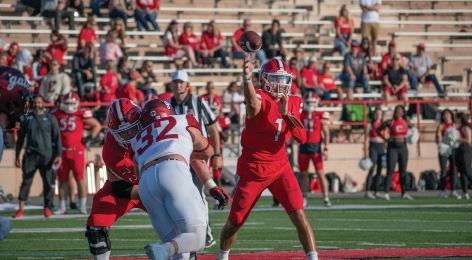
Cornell football started its 2023-2024 season on top of the world. It all kicked off in Bethlehem, Pennsylvania, with a strong win against Lehigh University, followed by a nail-biting triumph at Yale, overwhelming the defending champion Bulldogs late in the fourth quarter.
Unfortunately, the winning momentum didn’t stay with the Red for long. The team walked off Schoellkopf Field with former head coach David Archer ’05 for the last time on Nov. 18, 2023, after a heartbreaking 29-14 loss to Columbia, leaving them with a measly 3-7 record.
Only one day later, Nicki Moore, director of athletics and physical education, announced an immediate change in football leadership, relieving Archer of his responsibilities after 11 years of coaching for his alma mater.
On Dec. 7, 2023, Dan Swanstrom, then the University of Pennsylvania’s offensive coordinator and the previous head coach of Ithaca College, was named head coach of Cornell football. Tasked with turning around a once-renowned program, Swanstrom immediately got to work.
After a 12-practice spring season and focused pre-season camp, the Red is set to take on Colgate (0-3, 0-0 Patriot) at 1 p.m. on Saturday at Crown Field at Andy Kerr Stadium in Hamilton, New York.
“We haven’t played a game yet. All we’ve done is compete against each other day in and day out,” Swanstrom said. “So, the good part about this group is that they practice hard. They practice fast. We’ve been very focused in our work, and until the lights come on, you don’t know, but we’re hopeful that we’ll be tough and physical.”
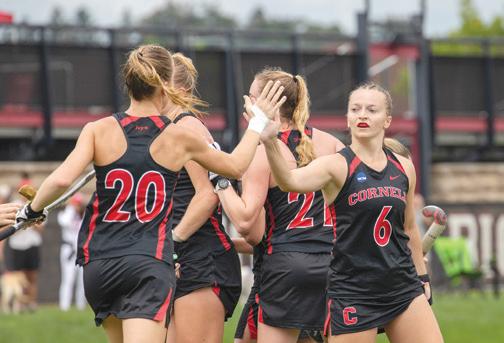
Heading into the season, Cornell ranked seventh in the Ivy League preseason poll, just ahead of last-place Columbia. This season’s schedule is nearly the same as last, with the same seven Ivy League matchups, in addition to Colgate and Bucknell. Newcomer UAlbany poses an exciting challenge, ranked 20th in FCS rankings.
“You know, we believe we can win some games, but right now, our concern really isn’t about wins, it’s not about losses [and] it’s not talking about championships, but just seeing this group of young men and how good they can play the sport of football,” Swanstrom said.
While the Red lost several key players to graduation, the 26 newcomers and impactful returning players on both sides of the ball are expected to bolster the team’s strength this season. Here’s a breakdown of each position, highlights of some key players and what to know about the new additions going into this season.
Defense: The defensive line remains largely intact, with last season’s 10-game starter Brendan Chesnut returning alongside key linemen like Muhammad Ali-Kobo, Hunter Sloane and Maxwell Van Fleet, all seniors. While the linebacker group saw some changes with the loss of Noah Taylor ’24 and Holt Fletcher ’24, senior Luke Banbury, who led the Red in tackles in 2023 and earned Phil Steele Second-Team honors, makes a strong return. Further, down the field, senior safety Trey Harris and junior safety Jeremiah Lewis offer additional support and protection.
Offense: On the offensive front, senior Jameson Wang returns as the Red’s star quarterback. He ranked third in the Ivy League in passing yards and completion, topped
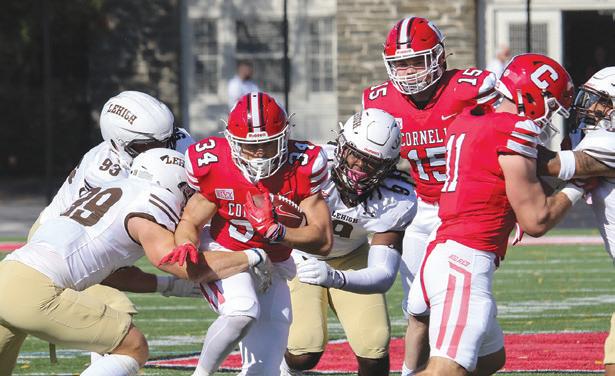
the Ivy League in rushing yards, threw the third-fewest interceptions in the conference and posted the league’s best completion percentage. Wang also earned Phil Steele Preseason All-Conference First Team honors. Wang is joined by junior wide receiver Davon Kiser, who received Second Team honors as both a receiver and special teams player for his role as the team’s punt and kick returner. Sophomore running back Ean Pope, sophomore wide receiver Samuel Musungu and junior wide receiver Doryn Smith will bring additional speed and agility to the Big Red’s offense.
Although the offensive line lost critical players like linemen Terrance Caldwell and Micah Sahakian to graduation, assistant coach Sean Reeder’s development of the young group has introduced new talent. Senior tight end Matthew Pilc also returns to strengthen the lineup.
Special Teams: Cornell notably lost Jackson Kennedy, a formidable All-Ivy kicker, punter and placekicker, to graduation. However, sophomore kicker Alan Zhao will look to fulfill kickoff, field goal and extra point duties, while senior Ayden McCarter is back as the punter after serving as holder last season.
New Additions: The Red’s roster will feature 25 first-year students and one transfer. Sophomore Devin Page, brother of sophomore offensive lineman Dylan Page, is a QB transfer from Penn. He is joined by two first-year quarterbacks, four wide receivers, one running back, four offensive linemen, one tight end, five defensive backs, three linebackers, four defensive linemen and one kicker/punter.
Anika Kolanu can be reached at akolanu@cornellsun.com.