The Corne¬ Daily Sun
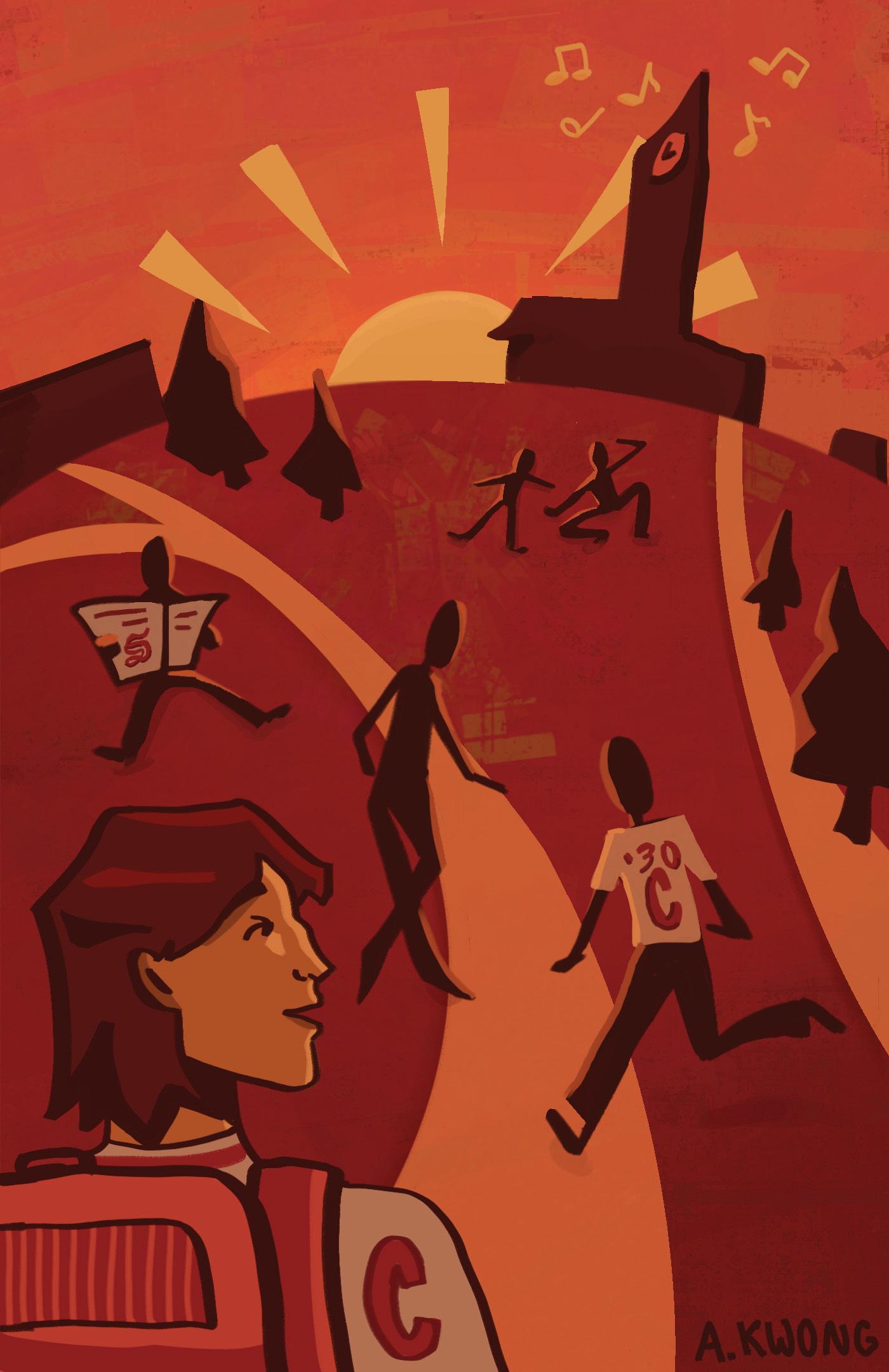
Enjoy a slice of Cornell life as you familiarize yourself with the University. Our biggest

Enjoy a slice of Cornell life as you familiarize yourself with the University. Our biggest
The Sun’s editors and reporters bring you a guide to life on the Hill. Inside you’ll
information on housing, student activities and more. You’ll also
Cornell Glossary
History Through The Sun
Housing
Which Classes to Take Clubs and Greek Life Alumni to Know Traditions Ice Cream Guide
Campus Guide
161 Things to Do at Cornell Campus Map
What Your School Says About You
City Guide
Arts in Ithaca Science Guide
Varsha Bhargava ’27 Kate Turk ’27
Everett Chambala ’27
Ashlin Kwong ’28

By SUN STAFF
Cornell has no journalism major — and we wouldn’t have it any other way. Here at The Sun, we subscribe to the philosophy that one learns best by doing. So it’s no surprise that at the nation’s oldest continuously independent college daily, we think of ourselves as the University’s journalism education. When you arrive on campus about a month from now, The Sun will also serve as your window to the world from our little corner of Ithaca.
Every month during the academic year, upwards of 200,000 students, parents, alumni, administrators and local residents read The Sun online. The Sun is cited in Cornell’s biggest lecture halls, in casual conversation and in national papers.
The Sun was founded in 1880. Since then, we’ve built up an impressive record of hard-hitting journalism and community service, and we have given generations of Cornellians something bet ter to pay attention to than their 10:10 a.m. classes.
We’ve also cultivated a lengthy roster of America’s top writers and business people, jumpstarting the careers of Sun graduates E.B. White 1921, Kurt Vonnegut ’44, Dick Schaap ’55, Oscar Mayer ’34 and Frank Gannett 1898. More recently, The Sun has been home to Pulitzer Prize winners John Hassell ’91 of The Star-Ledger of Newark, Molly O’Toole ’09 and Keri Blakinger ’14 of The Los Angeles Times and Katie Engelhart ’09 of The New York Times. ESPN’s Jeremy Schaap ’91 was a Sun sports editor and NPR’s David Folkenflik ’91 was editorin-chief. Former editor in chief Andrew Morse ’96 currently serves as president and publisher of The Atlanta Journal-Constitution and former managing editor Jeff Stein ’13 founded The Ithaca Voice and is currently the White House economics reporter at The Washington Post. Former editor-in-chief Marc Lacey ’87 is now the managing editor of The New York Times.
only works because of its members.
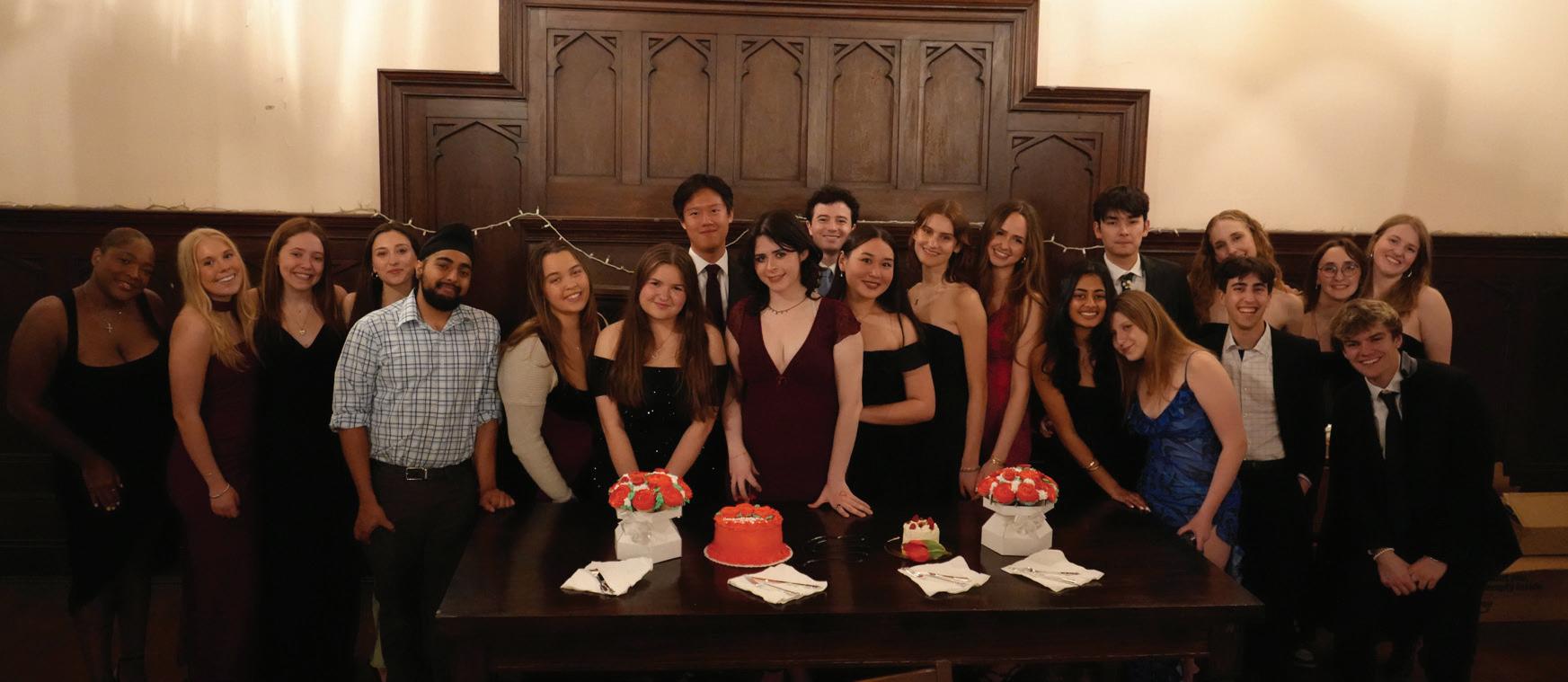
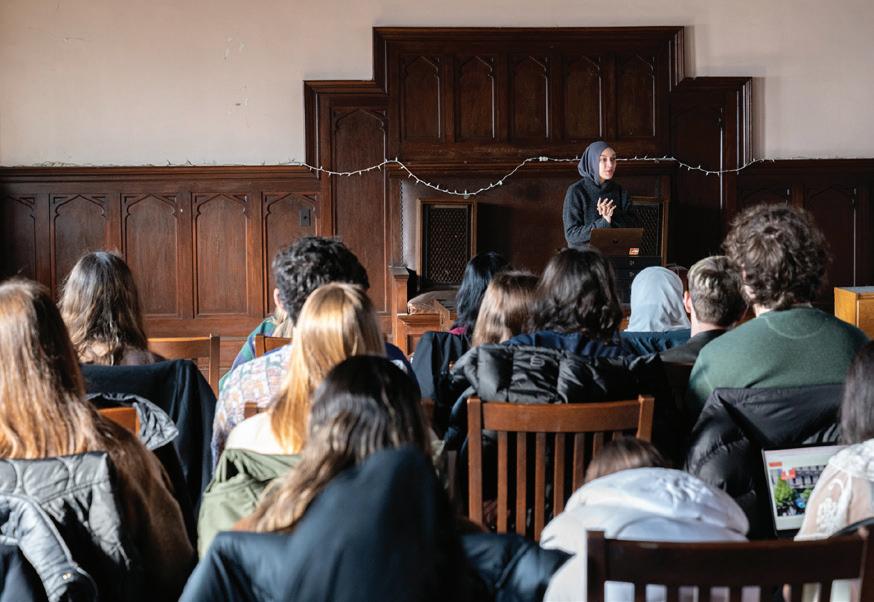
Editors spend what some might consider way too much time with one another, working on The Sun. But all agree on the irreplaceable role the paper has taken in their lives.
The News department — the paper’s largest — tracks and reports all campus life events and local and national issues relevant to you. Every day, the staff is talking to people around campus and conducting interviews in preparation for stories.
Where there’s news, The Sun is there reporting on it. From covering protest activity outside Day Hall and contentious Student Assembly elections, the News section has full access.
The Sports department works hard each day to keep Cornell ahead of the newest developments of the sporting world both inside and outside Big Red nation. With game recaps, athlete profiles and commentary on everything, you will always find action on the back page. And don’t forget to look for our special editions for an in-depth look at Cornell’s athletics.
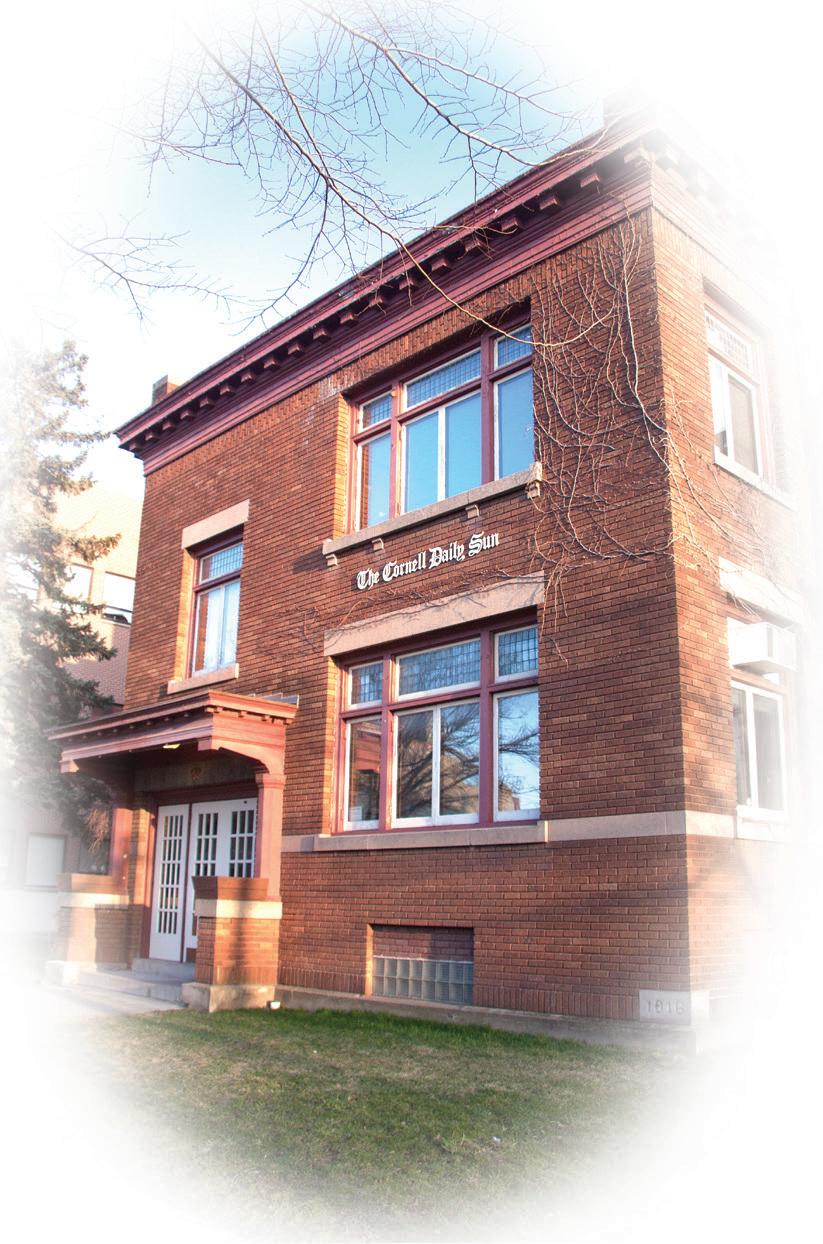
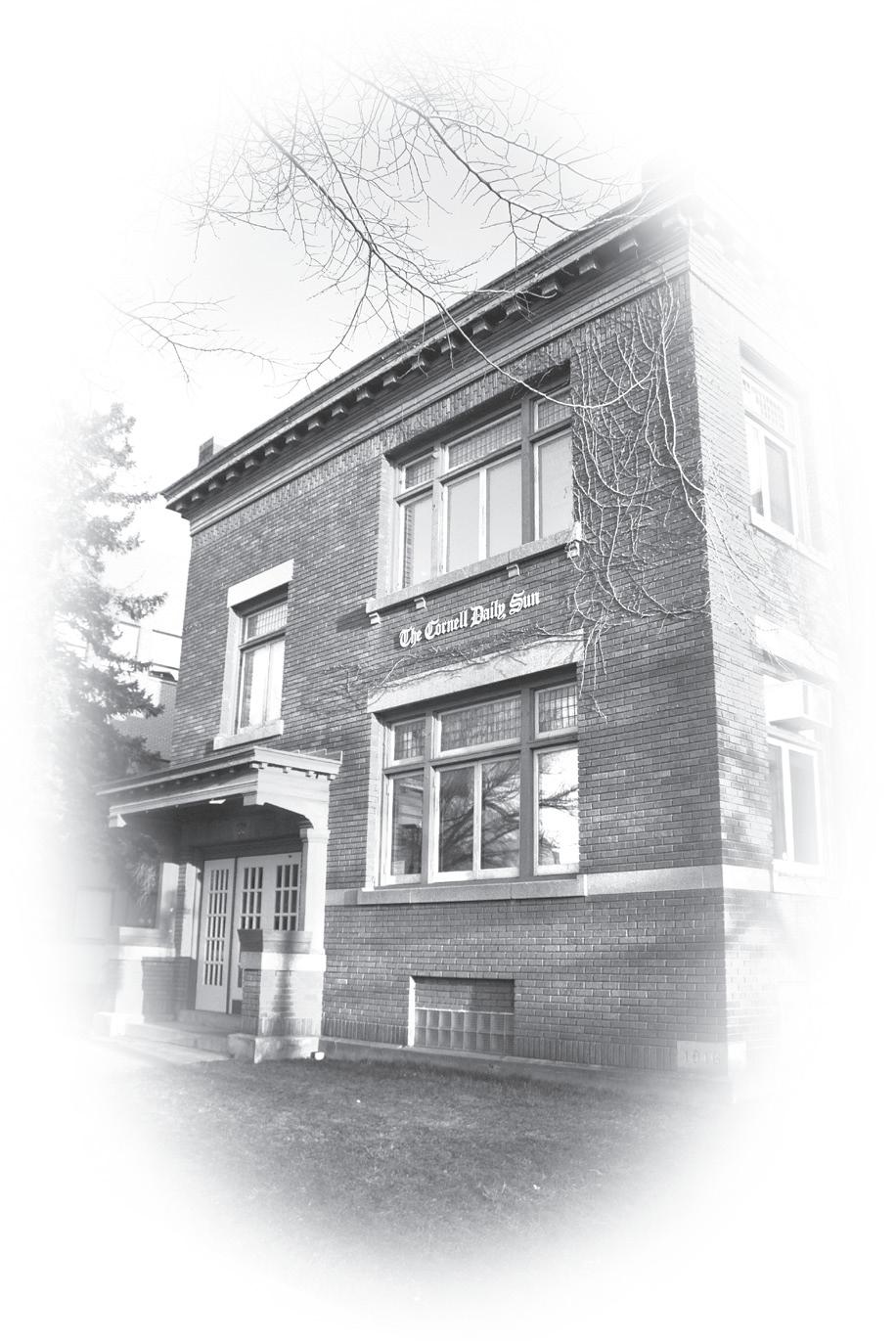
There is no regular day at The Sun, but here is what typically goes into producing a print paper once a week.
Morning:
Staffers read The Sun, go to class (maybe) and work on that day’s stories.
5 p.m.:
Editors arrive at The Sun’s office at 139 W. State Street, which is a 20-minute walk down the hill from Central Campus or a five-minute bus
The Arts and Culture department is The Sun’s cool crew.
From movie re views to exhibits at the Johnson Museum to local bands, Arts gives us the backstage pass to all the places to be and be seen.
Hidden behind the news, you will find The Sun’s Opinion department, a center of raucous campus debate where columnists and community members sound off about local and national issues alike.
The Science and Technology department plays a vital role at Cornell, one of the most profound research institutions in the world. Science reporters stay up to date with cutting-edge findings from Cornell scientists around the world.
The Sun’s Lifestyle department boldly provides advice, shares personal experiences and spotlights student life. The department includes dining, social, housing and campus culture.
If you want to become a part of this exciting tradition — and help write the next chapter of The Sun’s history — just show up. We’ll give you the skills you need for a career in news, sports and commentary.
Once you get to campus, you’ll see The Sun in dorms, dining halls and countless other locations — and every day online. But few realize what it actually means to “put out the paper.” Cornell’s only daily student-run newspaper is a multi-faceted organization that
A picture is said to be worth a thousand words, which is why The Sun’s Photo department is so vital to The Sun. Our photographers go to great lengths to ensure that a story is visually represented, even if it means trekking in the rain and snow all over central New York.
What photos cannot capture is handled by the Graphics department, which creates a diverse range of visual elements used in nearly all of the print editions (comics included!.
ride. They begin to lay out and edit the paper that will appear on newsstands the following day. Big stories appear up front and the cover page is decided.
7 p.m. - 10 p.m.: Editors, designers and photographers meet to discuss articles and placement stories. Editors read and edit articles, working with the writers for accuracy and clarity. Editors assign future stories; other editors work on editorials and last-minute stories. Photographers edit photos. Design staffers work on
pages as stories are finalized. Snacks, laughs, sweat and tears are shared.
10 p.m. - 12:30 a.m.: Breaking
Creative and always inquisitive, our Layout and Design department knows style like the back of their hands. They build the foundation of our paper by laying out every page in it.
The Sun is much more than a printed paper, though. The Sun strives every day to provide our readers with fresh and engaging content on its website. The Multimedia department works with other departments to produce videos that supplement print coverage. The creativity that the department puts into filming and editing makes the story truly come
to life.
The Social Media department works to keep our collective online audience of 75.7k followers constantly up with breaking news live updates, photo galleries and multimedia content on platforms including Instagram (@cornellsun), X and Facebook.
Always up for a puzzle, our Games department takes on the fun at The Sun. From crosswords to news quizzes, they bring on friendly competition.
A New York State for-profit corporation run entirely by students, The Sun rises every morning thanks to the Business department From selling advertisements to managing a
The Editorial Board
budget, the department keeps The Sun’s brand afloat and gives students the real-world experience of running a business.
And in between the blood, sweat and tears that go into daily production, we find the time to have fun and keep you all — our community of readers — curious, connected and better informed.
SO, READY TO JOIN?
Look for recruitment details on page 47. Email Sophia Dasser ’28 at editor-in-chief@cornellsun.com with questions.

By CORAL PLATT AND
Sun News Editors
This story was originally published on March 26.
Ivy Day at Cornell was a typical early-spring Thursday in Ithaca, with a sunny start and a rainy end. Architecture students cobbled together their 125th wooden Dragon Day sculpture, and Cornellians began driving, flying, busing and biking away for a break from campus.
And, at approximately 7 p.m., applicants to Cornell opened their decision letters to the sound of Cornell’s alma mater, welcoming them to join the 5,776 students in Cornell’s admitted Class of 2030.
The newly-minted admits to the Cornell community — hailing from all 50 states and 102 countries — will join a community of students studying nearly 80 majors
across eight different colleges.
From A.D. White Library’s study nooks to spikeball tournaments on the Arts Quad to checking boxes on the 161 Things list, the Cornellian experience awaits the newly admitted class. Admitted students can get a preview during Cornell Days on April 11, 12, 18 and 19 before joining the rest of the Cornell community for classes in August.
The number of students admitted in the Class of 2030 decreased by 0.8% from the Class of 2029’s acceptances. Last year’s acceptances by Ivy Day totalled 5,824, 48 admits more than this year’s batch.
There were several changes to the Cornell application process since the Class of 2029’s admission cycle.
For the first time since 2020, Cornell applicants were required to submit their SAT and/or ACT
test scores.
Additionally, following the November settlement between Cornell and the Trump administration to restore over $250 million in federal funding to the University, Cornell is now required to provide “anonymized undergraduate admissions data” to the federal government, according to the settlement. The data will be broken down by “individual schools, race, grade point average and standardized test performance.”
Early decision applicants were notified of their acceptances on Dec. 18, and are fully committed to attending Cornell with the exception of financial concerns. Students admitted on March 26 will have until May 1 to accept their offer.
Atticus Johnson can be reached at ajohnson@cornellsun.com, and Coral Platt can be reached at cplatt@ cornellsun.com.
By CORAL PLATT Sun News Editor
This article was originally published on March 31.
While over 16,000 undergraduate students at Cornell prepare for the final four weeks of class this semester, another 5,776 students in the recently-admitted Class of 2030 anticipate their arrivals to campus and commitment decisions.
The Sun spoke to some admits who shared their decision stories, excitement and nerves about attending Cornell. Decision Day
Informally known as “Ivy Day,” all eight Ivy League schools release their regular decision acceptances on the same day — this year, Ivy Day fell on March 26. Regular decision admits in Cornell’s Class of 2030 opened their application portals on to a burst of confetti and the University’s alma mater.
While the majority of students were accepted through regular decision, others applied and received decisions through other means, such as a binding early decision application or the QuestBridge National College Match, which offers a binding decision with a full-ride scholarship for low-income students.
Regardless of each student’s acceptance timeline, opening up decisions elicited a range of reactions across the admits.
Nerves ran rampant for some. Anushka Pophali, from Basking Ridge, New Jersey, plans to study healthcare policy if she commits to Cornell, and shared that her lead-up to Ivy Day was not stress-free.
“I was super, super nervous leading up to Ivy Day,” Pophali wrote to The Sun. “I spent most of that Thursday in a daze while my friends tried to distract me from my feelings of impending doom.”
She added that she felt “extremely relieved” and cried after receiving her acceptance.
Upon opening his acceptance, “[four]
By EVERETT CHAMBALA Sun Assistant News Editor
This story was originally published on June 19.
US News & World Report ranked Cornell University 13th best university in the world, according to its annual Best Global Universities Rankings, released on June 16.
At No. 13 out of 2,250 ranked universities, Cornell received a global score of 84.2.
Cornell rose by three places since the 2025-2026 global rankings, overtaking Dartmouth at No. 331, Brown at No. 144, Penn at No. 17 and Princeton at No. 16 — which Cornell tied with last year. Harvard, MIT, Yale and Columbia ranked at No. 1, No. 2, No. 8 and No. 10, respectively.
At No. 10, Columbia beat Cornell as the top-globally-ranked university in New York State this year.
In a Sept. 22 statement released prior to the 2025-2026 rankings, U.S. News & World Report acknowledged that Columbia falsely reported information in previous years, writing that in 2025, it would rank Columbia “but will continue to assess on an ongoing basis Columbia’s
inclusion in the Best Colleges rankings.”
The U.S. News & World Report uses 13 indicators and weights, with global research reputation, regional research reputation and number of publications among the 10% most cited making up the top three most weighted indicators. The report chooses an initial pool of 2,438 universities, then ranks from the top 2,250.
This year, the included universities spanned 105 countries.
Clarivate’s academic reputation survey is then used to determine both global and regional research reputation. The survey, conducted from 2021 to 2025, asks academics from around the world to provide opinions on programs and disciplines with which they are familiar.
Data from Clarivate’s web of science, which measures the total number of research papers published in acclaimed journals, is used for the “publication” indicator according to the U.S. News.
The U.S. News & World Report released its 2025-2026 Global University Rankings in June 2025. Its best college rankings are scheduled to be published this September.
Everett Chambala can be reached at echambala@cornellsun.com
years of stress basically vanished at once” for Josh McMurray ’30, a student from Hollywood, Florida who plans to major in math and is also considering double or triple majors in sociology and statistical science. He also had a tearful acceptance.
“I sobbed for roughly 30 minutes,” McMurray added.
Others, such as Felisha Liang ’30, a fiber science student from Taiwan, felt differently before the decision arrived. Ivy Day did not feel like a “make-or-break moment” for Liang, who had already been accepted into another program she liked.
“I wasn’t particularly nervous,” Liang wrote to The Sun. “... It felt more like if I got in then that’s incredible, but if not I’ll be okay, and I think that mindset helped me stay grounded.”
Some felt pure happiness after opening their decisions, like Pennsylvanian Eliza Moore ’30, who received an early decision acceptance and plans to study government at Cornell.
“When I got into Cornell, I was overjoyed!” Moore wrote to The Sun. “It felt like all of my hard work had finally paid off. My parents were so excited and proud of me.”
Kendrick Sellers ’30, a Chicago native who plans to study biology on the pre-medicine track at Cornell, described feeling “starstruck” upon receiving his acceptance.
Sellers received a full-ride scholarship to Cornell through the Posse Foundation. The Posse Foundation works to “broaden the pool of students who enroll at the best institutions of higher education” by supporting students who may be “overlooked because of structural inequality and an over-reliance on traditional measures of aptitude,” according to the foundation’s website.
To continue reading this story, please visit cornellsun.com.
Coral Platt can be reached at cplatt@cornellsun.com.
By HOPE THOMAS Sun Staff Writer
This article was originally published on March 6.
Various Cornell classes across departments have begun integrating artificial intelligence to supplement students’ learning and improve efficiency.
Cornell recently appointed Prof. Thorsten Joachims, computer science and information science, to the new position of vice provost for artificial intelligence strategy on Jan. 1.
In a statement to The Sun, Joachims wrote that when he taught CS 3780: “Intro to Machine Learning,” he allowed the use of generative AI for projects. Instead of students spending many hours “stumping the TAs” while trying to debug challenging code, students were able to ask questions relevant to the course content.
“I saw fewer struggles, and they could engage with the TAs on the interesting machine learning questions — not why their code was throwing some mysterious error,” wrote Joachims.
Vice Provost for Academic Innovation Prof. Steven Jackson, information science, wrote that the use of chatbot tools has allowed students to receive immediate answers for simple questions, mitigating the need for them to rely on office hours for minor questions.
“We expect these experiments [of classes using chatbot tools] to continue and potentially expand as we see evidence that they strengthen student learning and engagement,” Jackson wrote in a statement to The Sun.
While the use of AI for supplementing instruction increases, the Cornell GenAI Education Working Group, including faculty, staff and students is where questions regarding AI in the classroom are discussed. This group is part of the University’s AI Advisory Council. Their goal is to ensure that students receive
quality education, feedback and grading to their students.
These goals are implemented through conducting surveys on GenAI, campus-wide programs regarding Critical AI Literacy and working with Cornell Information Technologies and researchers to assess new software, according to its website.
One newly incorporated AI is HiTA, which has been utilized by departments including language, information science and computer science programs, and across schools including the S.C. Johnson College of Business and Weill Cornell Medicine, according to Prof. Rene Kizilcec, information science.
HiTA, which provides academic assistance for higher education through teaching and learning according to its website, operates differently from generative AI platforms like ChatGPT, Microsoft Copilot and Google Gemini.
“[Generative AI] is designed to give you answers fast, to solve your problems fast, and that is not desirable in education, where learning is a process that requires learners to engage in effortful deliberative, intentional processes,” Kizilcec said in an interview with The Sun.
Unlike these generative AI chatbots, HiTA does not directly solve students’ homework problems. The goal of the site is to help students with concepts by providing them with hints, according to Kizilcec.
Cornell classes typically use Canvas as their site for course organization, announcements, homework and exams. In classes like INFO 4100: “Learning Analytics,” which is taught by Kizilcec, HiTA is used instead, offering course assistance and feedback to students.
To continue reading this story, please visit cornellsun.com.
Hope Tomas can be reached at hthomas@ cornellsun.com.
By ANJELINA GONZALEZ Sun Senior Writer
This article was originally published on Sept. 8.
Two Cornell students legally hunted a bear and processed the animal in a Ganedago Hall kitchen on Sept. 6, according to a University spokesperson.
The University spokesperson wrote in an email to The Sun that the students had valid New York State hunting licenses used to hunt and bring a bear into Ganedago Hall over the weekend.
“A police report was made when a complaint was filed late Sunday night, but no charges have been filed,” the spokesperson wrote.
A report of Cornell students skinning a bear in a Ganedago Hall kitchen area prompted a response from the Cornell University Police Department on the evening of Sept. 7, according to a post on the Tompkins County Scanner Beat Facebook group.
A post from Sidechat about the skinned bear at Ganedago Hall featured a picture of the animal.
Comments within the thread varied between degrees of backlash and humor in response to the report. Some expressed discomfort with the situation, others applauded the students for their “skill” and one user questioned the legality of their actions.
Black bear hunting season begins as early as Sept. 6 in the southern zone of the state for early firearms, according to the N.Y. State Department of Environmental Conservation. For Ithaca and Tompkins County, early bowhunting of black bears does not begin until Oct. 1. The Sun could not confirm where the bear was hunted.
A Ganedago Hall kitchen was closed following the skinning of a bear on Sept. 6.
The first-floor kitchen is currently closed until further notice, according to a sign in the area.
Since the evening of Sept. 7, images of the bear
By MARY CAITLIN CRONIN, SOPHIA DASSER AND VARSHA BHARGAVA Sun Editor-in-Chief, News Editor and Managing Editor
This article was originally published on May 1.
President Michael Kotlikoff drove his car into a Cornell student and ran over the foot of a recent graduate following a Cornell Political Union debate on the Israel-Palestine conflict the evening of April 30, according to video footage obtained by The Sun.
In a May 1 email to the Cornell community, Kotlikoff described being followed to his car after the debate and “accosted” by a group of students and non-students who he wrote were “shouting,” “blocking the car” and “banging on the windows” before he left the parking lot. Kotlikoff described the encounter as a “harassment and intimidation incident” and wrote that he “waited until [he] saw space behind the car.” Kotlikoff did not mention any collision between the vehicle and the individuals.
Video footage obtained by The Sun shows Students for a Democratic Cornell members Aiden Vallecillo ’26 and Hudson Athas ’27 being struck by the car. In the video, no person can be seen touching the vehicle before it drove into Vallecillo and Athas.
The Sun spoke to Vallecillo, who said that he, Athas, SDC pres-
ident Sophia Arnold ’26 and SDC member Aislyn Berg ’27 followed Kotlikoff to ask about free expression on campus after the event. After entering his car, Kotlikoff “rapidly backed into” Vallecillo and Athas and then drove off, according to Vallecillo.
The two have not been contacted by the University since the incident, Vallecillo told The Sun. Kotlikoff’s email was released without reaching out to any students involved for a statement or to fact check, he added. When reached for comment by The Sun on the contents of the footage — including the footage that disproved Kotllikoff’s claim that students “bang[ed] on” his vehicle — a University spokesperson acknowledged the new information and affirmed that the University still stands by Kotlikoff’s email statement.
The Incident
The incident occurred after CPU’s “Israel Was Not Justified in its Response to Oct. 7” debate featuring guest speaker Norman Finkelstein the evening of April 30, where Kotlikoff presented an opening statement. After the event ended, four SDC members — and bystanders not recognized by Vallecillo — followed Kotlikoff from Goldwin Smith Hall to his parked car near Day Hall, Vallecillo told The Sun.
Vallecillo said that
he and the three SDC members attended the debate to listen to Finkelstein speak, and were not aware that Kotlikoff would be present.
“We decided to converse with Kotlikoff after Finkelstein — as well as a number of student debaters and Kotlikoff, himself — encouraged the proliferation of free speech on campus,” Vallecillo said.
The SDC members asked Kotlikoff about the Expressive Activity Policy, temporary suspensions on campus, the referendum and free speech during the five-minute walk to Kotlikoff’s car, Vallecillo said. In his email, Kotlikoff wrote that the individuals “loudly shouted” questions at him and refused to stop recording after he indicated that he did not want to engage further.
“We weren’t all shouting at him — it was mostly one person who was talking with him and just trying to have a conversation,” Athas told The Sun. “I feel that he violated his own proclaimed philosophy of free and open discussion, and I don’t believe it was anything that could remotely be (Courtesy of Students for a Democratic Cornell)
Vallecillo described the president as “dismissive,” “disinterested” and “disrespectful” in response to their questions.
carcass on top of a kitchen counter began circulating on Reddit and Sidechat as students expressed concerns. One Reddit user stated, “I am a fan of hunting. But this kid needs to see someone and if protesting is a suspendable offense, this should be also……. This is not okay.”
Several Reddit users commented on the size of the bear in the image, speculating that the bear was a cub. It is illegal to shoot a bear cub while hunting in the southern zone.
Others commented on the potential health hazard of skinning the bear in a communal space.
“Really shouldn’t butcher bear meat in a shared space. They’re one of the few remaining trichinosis vectors - and that concrete floor doesn’t look sealed…,” one Redditor wrote.
Anjelina Gonzalez can be reached at agonzalez@cornellsun.com
By EVERETT CHAMBALA Sun Assistant News Editor
This article was originally published on June 13.
Editor’s Note: This article contains references to antisemitic language.
The University reported Austin Franco ’28 to the Office of Civil Rights for a bias incident in which he responded to a job offer with “Not interested in working for a jew. Thanks.” on Handshake, according to a June 8 X post from Gabe Einhorn, co-founder and CEO of the company which Franco was accepted to. The Sun spoke to Franco and Einhorn following the incident.
Franco initially applied to a growth/sales role at Einhorn’s real estate startup, VrfyID, on May 26 through Handshake, a digital hiring platform, according to Einhorn. He was accepted in the first round and Gabe’s brother Aiden, who co-founded VrfyID, asked to set up a time for a meeting on May 29. Franco responded the same day with times he was available. Gabe told The Sun that both him and Aiden then offered two dates for students to attend, neither of which Franco went to. When Aiden followed up on June 8 to ask Franco about his attendance, Franco responded with “Not interested in working for a jew. Thanks.”
After Aiden Einhorn messaged Austin Franco ‘28 on Handshake, Franco responded with “Not interested in working for a jew. Thanks.” (Courtesy of Gabe Einhorn)
Gabe, who describes himself as a “proud Jew” who always wears a kippah, and Aiden were both “taken aback” when they initially read the message and did not know how to react, Gabe told The Sun.
Franco found out Gabe and Aiden were Jewish based on their “first and last name, LinkedIn, and physiognomy,” according to a statement Franco wrote to The Sun.
Physiognomy is an 18th and 19th century practice of studying facial features to determine character and temperament. The practice is now regarded as pseudoscience.
Gabe’s post was shared on X on June 8 and amassed over two million views in less than a week. In the post, he attached a screenshot of his exchange with Franco and described the hiring process, ending his caption with “Sad world.”
Gabe had previously posted about facing antisemitism while attempting to film street interview content and faced many comments denying that antisemitism existed, he told
The Sun.
Gabe posted the screenshot with Franco’s name crossed out, hoping to “prove a point to people that antisemitism exists” without causing personal damage to Franco, he said.
“He’s just a student, he might not know any better — it could be people in his environment, or on social media he saw something about Jewish people and he is just following the wave,” Gabe said.
However, comments on the post revealed Franco’s crossed out last name through a photo editing software, leading to his identity being revealed to the public.
Franco learned about the X post on Monday morning and wrote that he began facing doxxing and intimidation, which included “digging up personal information, harassing via email and phone employers, and receiving threats,” according to a statement from Franco to The Sun.
“The whole debacle caused undue stress for my family, and they were assumed guilty by association. I was unperturbed by the events and hope to come out of this experience with a better idea on life,” Franco wrote in a follow-up statement to The Sun.
On the morning of June 9, Franco took to X to respond to Gabe’s post and the responses, criticizing Gabe and the response from “[Gabe’s] community.”
“My experiences with Jews have not been pleasant … this is not to say I havent had positive experiences, but on the aggregate that is not the case,” Franco wrote on X. “Given that I have been doxed and intim[id]ated by your community including having my personal life investigated for no other reason than a single comment I cant imagine any reasonable person not coming to a similar conclusion.”
In an interview with The Sun, Gabe criticized Franco’s response.
“I don’t think his response did him any justice. I think the best response that he could have done was just apologize and say it was a mistake and he didn’t mean it directly,” Gabe told The Sun.
When The Sun asked if an investigation was being conducted by the University, a University spokesperson wrote that “Cornell University learned of a deeply disturbing comment by a student on the Handshake platform in violation of the online job board’s terms of service and Cornell Career Services’ terms and conditions for job seekers. The student’s action has been reported to the Cornell Office of Civil Rights as a bias incident.”
SOPHIA DASSER ’28
New York, N.Y. Editor in Chief
SOPHIA ROMANOV IMBER ’28 Miami, Fla. Associate Editor
RAYEN ZHOU ’29 New York, N.Y. Opinion Editor
ZARA CHEEK ’28 Baltimore, Md. Opinion Editor
JADE DUBUCHE ’27 Bronx, N.Y. Multimedia Editor
BENJAMIN LEYNSE ’27 Leonia, N.J. Multimedia Editor
SOPHIA TORRES LUGO ’26
Redwood City, Calif. Business Manager
DOROTHY FRANCE-MILLER ’27
Glens Falls, N.Y. Marketing Manager
KENDALL MURPHY ’28 Bethesda, Md. Advertising Manager
VICTORIA WROBLEWSKI ’28 Commack, N.Y. Human Resources Manager
MELISSA MOON ’28 Los Angeles, Calif. Arts & Culture Editor
JAMES PALM ’27 New York, N.Y.
Assistant Arts & Culture Editor
MATTHEW RENTEZELAS ’28 Cherry Hill, N.J.
Assistant Arts & Culture Editor
HAZEL TJADEN ’28 Dobbs Ferry, N.J.
Assistant Arts & Culture Editor
MARC STAIANO ’27 Long Island, N.Y.
Assistant Arts & Culture Editor
KATELYN HALVERSON ’28
Long Island, N.Y. Lifestyle Editor
AVA BETNAR ’29 Wilkes Barre, Pa. Assistant Lifestyle Editor
SANIKA SARAF ’28 St. Louis, Mo. Assistant Lifestyle Editor
KATHERINE ISTOMIN ’29
Long Island, N.Y. Social Media Editor
ASHLIN KWONG ’28 Chicago, Ill. Graphics Editor
TAVAN BHATIA ’27 Westport, Conn. Games Editor
From the Editor
VARSHA BHARGAVA ’27
Basking Ridge, N.J. Managing Editor
KATE TURK ’27
Gulf Breeze, Fla.
Assistant Managing Editor
CORAL PLATT ’29 Portland, Ore. News Editor
ATTICUS JOHNSON ’28 Cary, N.C. News Editor
MARY CAITLIN CRONIN ’28 New York, N.Y. News Editor
EVERETT CHAMBALA ’27 Tully, N.Y. Assistant News Editor
SHUBHA GAUTAM ’28 Columbia, Mo. Assistant News Editor
GISELLE REDMOND ’28 New York, N.Y. Assistant News Editor
ANGELINA TANG ’28 Bufalo, N.Y.
Science & Technology Editor
TANIA HAO ’28 Ithaca, N.Y.
Science & Technology Editor
SIMRAN LABORE ’27 St. Louis, Mo. Weather & Climate Editor
MATTHEW LEONARD ’28 Queens, N.Y. Sports Editor
GRACE REUBEN ’28 Charleston, S.C. Sports Editor
JANE HAVILAND ’28 Barnegat, N.J. Features Editor
NATHAN ELLISON ’28 Jericho, Vt. Photography Editor
NATHAN BO ’28 Los Angeles, Calif.
Assistant Photography Editor
ADELAIDE CHOW ’29 New York, N.Y. Assistant Photography Editor
MIA SOFIA ORENGO ’28 Los Angeles, Calif. Video Editor
SMRITHE RAJESH ’29 Richmond, Va. Newsletter Editor
AMELIA GARCIA ’27 Williamsburg, Va. Data Editor
RENA GEULA ’28 Great Neck, N.Y. Layout Editor
HUNTER PETMECKY ’28 Los Angeles, Calif. Layout Editor
It is tempting to describe Te Sun as a watchdog. Tat is part of our role. We are a check on the positions of power within our community: on assemblies, on administrators, on council members. When decisions are made, you can count on Te Sun to be there. When words begin to obscure more than they reveal, you can count on Te Sun to clarify them. When power operates within the shadowy corners of our campus, you can count on Te Sun to shed light.
But we know that accountability alone is not enough.
Te greater threat facing our University is not simply hostility to the press, for the check of power will always remain an irritant to those in its spotlight. Rather, the much quieter, much more dangerous threat is the dimming — the apathy, the slow erosion of rigor and intellectual curiosity that should light a fame in every single one of us, for it certainly blazes bright within Te Sun. It’s the very idea that passion is embarrassing, that depth is tedious, that precision is optional so long as a take is quick and loud. Te big threat is not censorship, not hostility, but surrender to the darkness of mediocrity that dims us. Te Sun burns to resist that dimming.
To report with Te Sun is to fght against the gravity of the easy answer and the dimming of discourse.
To report with Te Sun is to enjoy the slow, to ‘embrace the suck,’ to sit through meetings that run too long, to read through documents that are dense, often deliberately so, to talk to people who disagree with each other — and often with us.
But the reward for that tedium is beautiful. Te reward is respect, accountability and, most importantly, representation. When reporting is done well, it afrms the terms on which our shared life on campus is organized. It reminds us that our administrators’ authority is not self-justifying, that our student leaders possess positions out of trust, not title, that our institutions belong to the people who inhabit them, that they belong to us.
Te Sun is no narrator, nor is it frictionless afrmation, nor is it outrage on demand. Te Sun is an archive. Te Sun is our community’s record of itself.
When archives are not held in the hands of the people, they become negotiable, and even worse, they become contingent on whoever happens to be in power.
So we will be bold. We will be bright. And we will be yours.
And so long as Te Sun continues to rise, we will refuse to be dimmed.
Sophia Dasser, editor-in-chief
Welcome to Cornell, Class of 2030! As you make your trek to Ithaca — whether it’s a 5-hour drive or a 15-hour flight — you’re entering an entirely new stage of your life. It’s easy to dive headfirst into class schedules, coffee chats and club recruitment, but take a moment to celebrate what an amazing accomplishment it is to begin college. Celebrate that you made it here because there’s simply no diminishing the time, effort and dedication you devoted to arriving at this moment. Familiarity will take time, and for the next few months, every step will be new territory. But you must embrace it rather than reject it for the path of least resistance. College is a chance to learn more about yourself, so stay open-minded, talk to anyone and everyone — you’ll realize that people are more willing to help than you might think. This significant change is an opportunity to build a life of your own, one that is not confined to the social expectations set by your previous chapter.
Our ideas of college can largely differ from the reality of being on campus. The imagination can prepare us for what’s to come, but it can also disappoint us when we’re faced with different outcomes. Remember that you don’t need to adhere to your own expectations. Your major can change; you might join a comedy club; you might even study abroad 10,000 miles away. You truly never know what can happen, so don’t be dissuaded when things change; often, it’s for the better. Now, while you’re going through this stage of self-growth, remember that college isn’t just about you. You’re building new relationships and discovering the world from a new perspective. At Cornell, you’re also contributing to a long history of brave individuals; you’re joining the likes of Toni Morrison M.A. ’55, Ruth Bader Ginsburg ’54 and Bill Nye ’77, just to name a few. So challenge yourself because growth doesn’t happen when you’re comfortable. A bold university demands boldness, for both its legacy and yours.
Learn from our history: the power of our campus and the power of your voice. From the Willard Straight Hall occupation in 1969 to the Arts Quad encampment in 2024, you can join the long line of students who have fought for their convictions. Ithaca may be isolated, but a college campus can ignite powerful conversations about how we engage with our communities and the world at large. Physically, our university is nothing more than a collection of buildings and students, so as students, we shape what Cornell is every day by standing up for what we believe in. If we make up Cornell, then collectively we are Cornell. It’s a responsibility we accept with grace through every course and every semester.
Now, enjoy the time you have here. Sure, time will fly. Sure, four years will pass by before you know it. But enjoying your time looks like embracing each day and the agency that comes with it. Curate your life to look the way you want it to look. A new environment and new people bring novelty to each day, and you can decide how each day goes. It’s going to be great, and we can’t wait to see you on campus.
Oh, and if you’re ever wondering what’s going on, pick up a copy of The Sun on your way to class. We’re always here for you.
— Sophia Romanov Imber, associate editor
The Sun's View
It’s vitally important that the Cornell campus understands the deliberative process that goes into writing Sun editorials. So here’s what you should know about what a Sun editorial is — and isn’t.
The Sun is a newspaper that embraces different perspectives on the issues that matter. Editorials that appear in The Sun don’t necessarily represent the personal viewpoints of every member of The Sun.
Editorials serve as a testament to our paper’s long-standing values. They are a way for the Editorial Board of The Sun to take a stand when history calls for it. They are a voice for what The Sun as an institution believes in. The Editorial Board, which consists of the editor-in-chief, associate editor and opinion editor, works closely together to produce editorials that are bold and well-researched.
It should never be assumed that the opinions outlined in any given editorial speak for every member of The Sun individually. Editorials are also entirely independent of The Sun’s news coverage, meaning that the views they express have no influence on the facts of objective news stories or the process that goes into writing and reporting on them.
Personally harassing members of a student-run newspaper over the content of an editorial is immature and unacceptable, especially when those members were not involved in the creation of that editorial. Only the editor-in-chief, associate editor and opinion editor write editorials at The Sun.
The Cornell Daily Sun has been a fiercely independent, community-driven organization for 145 years, and editorials are one important way The Sun has remained that force for positive change all along.
— The Editorial Board
The Cornell Daily Sun is devoted to publishing a broad and diverse set of content from the Cornell and greater Ithaca community.
Guidelines on how to submit can be found at cornellsun.com. And here is our email: opinion@ cornellsun.com
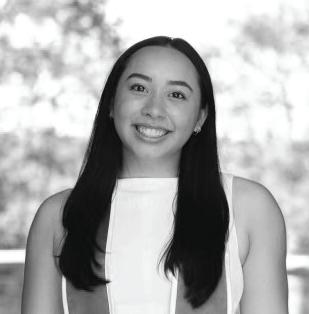
Julia Senzon is a graduating senior from the College of Agriculture and Life Sciences. She served as the editor-in-chief on Te Sun’s 143rd editorial board, the managing editor on the 142nd editorial board and a news editor on the 141st editorial board. She can be reached at jsenzon@cornellsun.com. She currently works at NewsGuard as an editorial intern.
The first time you saw my name was likely in a byline. Next to that would have been a fancy title — news editor, managing editor or editor-in-chief.
I am absolutely humbled to have held some of the top positions at The Sun. From covering vandalism to research cuts to protests to the Student Assembly, I am deeply gratified to have written over 100 articles.
Yet after penning piece after piece, talking to hundreds of sources and editing out thousands of Oxford commas, what is most remarkable to me is not how special this work is, but, in fact, just how accessible and applicable it is.
Over the past decade, legacy media has declined in influence and trust, replaced by a decentralized and democratized media sphere. With an iPhone in your pocket, you can record and transcribe an interview, photograph and videotape uncensored scenes and disseminate live updates to a global audience as they occur.
As student journalists, we live at the intersection of these two media spheres: trained on traditional journalism practices and institutional knowledge, while simultaneously reporting on our peers with relatively limited resources. We experience the very issues and tensions we capture on our pages, and work to document the truth in the minutes we can squeeze in between classes — without care for salary or awards.
I seek to practice the thorough interviewing and fact-checking evident in the legacy media coverage that recently exposed Cesar Chavez’s sexual abuse allegations and traced inconsistent dialogue surrounding the Iran war.
And yet, I am equally inspired by Darnella Frazier, who bravely recorded the viral video documenting police officer Derek Chauvin’s choking of George
Gabriel Muñoz
Floyd for nine minutes and 29 seconds. The then-17-year-old’s cellphone footage became key evidence in Chauvin’s trial for Floyd’s death.
I am moved by the Minneapolis bystanders who captured the scenes preceding Alex Pretti’s untimely death at the hands of Border Patrol agents. While Kristi Noem told the nation that Pretti had “attacked” officers while “brandishing” a gun, bystanders’ footage makes clear that Pretti was instead holding up his phone while helping a woman officers had just pushed down at the time of his murder.
As autocratic protest repression and repressive immigration enforcement play out on the streets, I urge you to employ the skillset of a traditional journalist and the eyes of a citizen journalist. Do not let fascism or the revolution go untelevised or unwritten.
And beyond adopting the skills of a journalist, I urge you to embrace the mindset of a journalist. To be a journalist means to care about the ordinary: to be amazed by it, confused by it and concerned by it.
It means embracing connection, curiosity and community. It means believing action starts with knowledge: not the kind drawn from academic texts buried in syllabi, but that which is based on the testimonies and observations of your neighbors.
Pursuing journalism requires fundamentally believing that other people are a force of good, and this is what makes journalism worth it. Once you care, you will recognize just how many other people care too.
To be a journalist means to care about the ordinary: to be amazed by it, confused by it and concerned by it.
In a world increasingly burdened by anti-intellectualism, echo chambers and hyperindividualism, the perspective of a journalist is genuinely radical.
So I encourage you to be curious. Do not take what is told at surface value. Talk to different stakeholders — especially the ones you disagree with — before making declarations and endorsements.
Truly engage with the community around you. Attend city council and school board meetings. Research local politicians and policies.
Be a little nosey. Take out your noise-cancelling headphones, and listen to what people are complaining about on the bus and in the line for food.
Ask how people are doing — how they are really doing. What do they need help with? When do they feel unheard?
Embrace gossip. No, not just the who’s dating who. Gossip about your salary with your coworkers and your treatment by your boss. Gossip about the struggles your friends and family are facing with their access to healthcare, housing and employment. Commonality is bridged through conversation. You will never understand just how much the people around you share until you open your ears and your mouth. Journalism is a lifestyle that has kept me mystified and driven for the past four years. Journalism is a lens that I will seek to maintain for the rest of my life.
So I proclaim as a manifestation, rather than an absolute reflection of reality: Everyone’s a journalist. It is not enough to support journalists — be one.
taking ownership. While I was previously solely beholden to the personal consequences of my decisions, I now lived in a reality where the decisions I made as a writer and editor deeply afected the people in the articles I pitched and drafted, along with our readership.
Tis was a truly daunting experience. From covering court cases to contentious protests, student journalism proved to be not only about writing, but also about grappling with the impact of what was left on the page.
For instance, I had the opportunity to showcase the great work some of our community members do to improve the lives of their fellow Ithacans. Even getting the opportunity to tell the stories of those who impacted my fellow students and professors when they were no longer with us, and seeing the impact it had with those dear to them reinvigorated me to keep showcasing what our community had to ofer.
involved or making the wrong decision? It’s not unusual to get overwhelmed and shut down because it is the option that keeps your conscience clean. But this is simply intellectually disingenuous. Te truth is that even the decision that you let AI make for you will have consequences, just as if you had taken ownership of where you invested that energy.
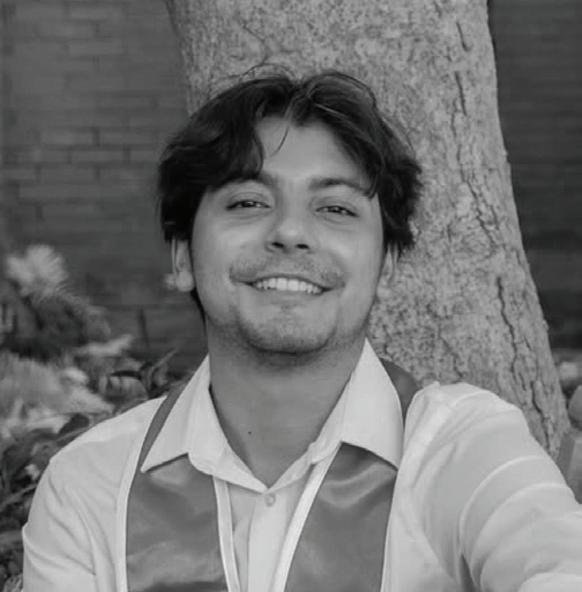
Gabriel Muñoz is a graduating senior from the College of Arts and Sciences. He served as the city editor on Te Sun’s 143rd editorial board, a news editor on the 142nd editorial board and an assistant news editor on the 141st editorial board. He can be reached at gmunoz@ cornellsun.com. He currently works at Goldman Sachs as a full-time analyst.
Likemany of my fellow graduates, I entered college focused on a defned path: Follow the syllabus, get decent enough grades and most importantly, make memories with friends. Cornell did teach me a whole lot about sticking to a routine, delivering under tight deadlines and producing quality work to refect the efort I put into it.
Yet, when I ponder what has truly stuck from my three and a half years on the Hill, I resonate most with what one of my professors told me: “It doesn’t matter how much you learn here about physics, literature and mathematics if when you step of campus you forget that those subjects are above all else, about the people whose lives you interact with every day.”
Tese words hold a dual meaning. First and foremost, they drive home the importance of holding empathy. Secondary to that, though, is the importance of your sense of ownership over yourself and your own actions.
Troughout college, there is no place where this translates more than to my work at Te Sun. Te paper gave me my frst opportunity to learn frsthand about the fallout of
Of course, I was also confronted with angry emails, direct messages and even getting yelled at in person over my coverage of contentious issues on campus — all of which served as reality checks of the gravity of the work that I did for Te Sun. While discouraging at times, they were also a source of feedback that allowed me to refect on what my stories did for the community — good or bad. For better or worse, everything I, or one of my writers, wrote for the paper was up for debate once I pressed the publish button.
Tere is nothing worse than abdicating our autonomy, and not engaging is just that.
What I witnessed time and time again at Cornell was that my peers would shy away from a job like mine — a responsibility to make decisions that could have social consequences. If they don’t get involved, they can’t get blamed for it. However, instead of shying away from it, I frmly believe that we should lean into that gravity.
Tere is nothing worse than abdicating our autonomy, and not engaging is just that. Either the majority that will participate and make a decision for us, or worse, our decision-making will be outsourced to pattern recognition software.
I understand that initial reaction: Why risk getting
In the few months that I have spent out of college, I have found that the same paradigm continues to apply to my life. Tere is no safety net of falling back on the syllabi to carry you through the slow weeks and the unmotivated mornings. With no future benchmark to look forward to, everything from now on becomes an optional box that you can choose whether to check or not. Taking care of yourself, investing your time into the activities and people you love and pursuing a new passion are all core skills I took from college, but remain just as relevant as when I was a freshman unpacking in my Jameson Hall dorm room all those years ago.
And while it is bittersweet to leave it all behind, Cornell really gifted me with wonderful years full of growth and transformation, which I will always cherish.
I was blessed to have great mentors and peers who inspired me to broaden my engagement and involvement throughout my college career and beyond. I often enlisted the help of my wonderful friends Sofa Rubinson ’24 and Julia Senzon ’26, whose help and advice always carried me through my reporting and made me not only a better writer but also a more considerate reporter and human.
In the classroom, my professors Irina Troconis, Imane Terhmina, Kathleen Long and Liliana Colanzi challenged me beyond my perceived intellectual limits. Tey taught me that taking ownership over my own education means taking pride in my work, even when it did not always land as I would’ve hoped. And of course, I am particularly grateful for their belief in my far-fetched ideas for research papers.
Most importantly, I would like to thank my parents. Teir decisions to leave Venezuela and move to the U.S. made it possible for me to attend a university like Cornell. Los quiero muchísimo, gracias siempre por todo.
And to everyone else who has stuck to reading to the end of my column — whether we’ve crossed paths at Cornell or not — always remember to do the greatest good and have a great time while doing it.
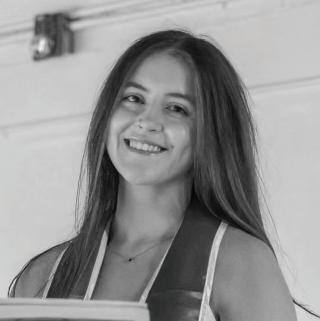
Jane McNally
Jane McNally is a graduating senior from the College of Agriculture and Life Sciences. She served as the hockey beat editor on Te Sun’s 143rd and 142nd editorial boards, and the sports editor on the 141st editorial board. She can be reached at jmcnally@cornellsun.com. She currently works at College Hockey News as a reporter.
Lots of things end with a bang, something very finite — lasting — where you feel the reverberations even when it is over.
Graduation is a lot like that. All your friends and family convene to celebrate. You buy an expensive white dress and wear a peculiar hat and robe. You walk across a stage and are handed a slip of paper worth hundreds of thousands of dollars. Confetti, streamers, champagne; all the stops.
My graduation happened on March 27. It was none of those things. It took place in Loveland, Colorado, in front of a couple thousand people. In a hockey arena, too — considering I’ve spent the majority of my college experience in rinks across the country, that part felt fitting, a poetic ode to the last four years of my life.
There was no celebrating, no regalia, no parents or family or friends. Just me,
my laptop, some media folk I had made small talk with in the press box, and the big bold letters flashing on the scoreboard. Denver 5, Cornell 0.
And that was it. That was the end.
I graduate from Cornell University on May 23, but I’ve already gotten my degree from The Cornell Daily Sun University. Every other thought in my mind over the last four years has had to do with covering Cornell men’s hockey for The Sun — story ideas, people to interview, film to analyze, tweets to send, stats to decode. This paper, and this role, was my whole entire life.
Sitting in the press box in Colorado, it did not feel like something so momentous was finally ending. Part of it felt like routine, because I’d experienced games like this many times before. But this, I knew, was different. Never had I been so belligerently dumbfounded staring at my blank Google Doc. Because how do you spell the end of everything that has made you who you are?
I’m at a similar crossroads right now. For this graduation column, I could preach the tiresome advice of a college graduate. It is probably best if you don’t listen to me. I’m taking my expensive, prestigious Cornell degree and, instead of becoming a doctor or a lawyer or a banker, I am becoming a sports journalist. I’m not exactly the Ivy League’s poster child.
How do you spell the end of everything that has made you who you are?
I have nothing profound to say. Just gratitude, which I want to express in my final piece of writing for The Sun, over 250 bylines later. Yeesh. What’s a few more words?
I point you toward Cornell University’s primary fight song, “Give My Regards to Davy,” played after every goal and a tune I’ve probably heard over a thousand times — hell, I heard it 10 times in one single game.
According to Wikipedia, the song tells the tale of “a fictional encounter between an anonymous student, David Fletcher ‘Davy’ Hoy, the registrar and secretary for the committee on student conduct, and Thomas Frederick ‘Tee Fee’ Crane, the Professor of Languages and the first Dean of the College of Arts and Sciences revolving around the student’s expulsion for binge drinking.”
Give my regards to all the women carving out a path in men’s sports: Never stop taking up space.
I won’t be giving my regards to Davy, nor will I be grabbing drinks at Theodore Zinck’s when I get back next fall. Because, for me, there is no next fall, nor is there still the existence of Theodore Zinck’s.
Instead, give my regards to 139 W State St., the place where I spent many evenings with watering eyes, clicking through errors on Adobe InDesign. Give my regards to Thai Basil for fueling these late nights.
Give my regards to those who came before me at The Sun, sports editors and reporters alike, especially Aaron Snyder ’23 — for pushing me to run for sports editor when I was a sophomore, but even before that, for taking a shot in the dark on a soft-spoken freshman who missed all of The Sun’s information sessions that fall and sent a feeble email asking to cover men’s hockey.
Give my regards to Lynah Rink, old and rickety and the best barn in college hockey. Give my regards to the waft of fishiness at the Harvard game and the melting ice. Give my regards to the Lynah press box, so narrow that the entire row would have to file out to let anyone in.
In fact, give my regards to press boxes everywhere — may they be filled with more and more women with each coming game. Give my regards to all the women carving out a path in men’s sports: Never stop taking up space. And give my regards to the great sport of hockey, which for every 50 positive experiences also deals me a negative one, from an angry emailer to someone questioning my credentials or stopping me before the team locker room. I will never stop being proud to be a woman covering men’s ice hockey.
Give my regards to the coaches, Casey Jones ’90 and Mike Schafer ’86, for opening your arms and giving unrivaled access to a student journalist. For all I learned through our lighthearted conversations outside the locker room, I learned so much more from the harder conversations we had after losses or sweeping roster changes. They treated me like a professional, not a student, and they are some of the people I will miss the most. To the players, too, for always taking the time after skating miles during games to answer my questions. There is no story to write and no role for me without them.
Give my regards to The Cornell Daily Sun, where I arrived as someone who simply liked to write and left as a writer. Where I learned everything I now know. Where I wrote some not-so-great stories, but some pretty great ones, too. Where I had the best job in the world. I’ll never stop talking about it, I can assure you that.
’d be lying if I said that Cornell was the school I dreamed of attending. But if I told you I didn’t love it here from the minute I saw it, that would be a lie as well.
I have a vivid memory of how I felt about Cornell in my sophomore year of high school, after my campus tour. I wrote down in my diary that Cornell was one of the nicest schools I’ve seen so far — it was just too bad that it was in *sigh* Ithaca. Te reason I dared turn up my nose at beautiful Ithaca was the same reason I toured Cornell as only a sophomore: I was already living here.
Tis is a townie’s refection on her Cornell tenure, a wild four years that doesn’t even represent a quarter of the time she has lived in Ithaca, N.Y. I have not yet steeled myself to leave behind prelims, papers and people I love so dearly, let alone the town where I learned to read and write. A place I once longed to escape from has now cemented itself as my home in every sense of the word. Maybe writing this column will help me approach the realm of acceptance, and by the last word I will feel prepared to say goodbye.
I’ve fallen in love with every inch of this town a thousand times over as I’ve shared it with the people that have made college a million times better.
Admittedly, being a townie is not a unique experience. It is possible that the person reading this is one of the 100-odd Ithaca High School graduates who also chose to stay local. I do think that every one of us has a unique relationship to Cornell and to our hometown. For me, the decision to stay in Ithaca was made easier when my parents decided to move away. Tis meant my mom would not be a professor at Cornell anymore, and I’d have to travel elsewhere to visit them. As an added perk, I’d be around to see my high school friends when they came home for their breaks. Maybe I had contempt for Ithaca due to its lack of excitement, and I was skeptical of Cornell because of how often it made the local news. But by the end of high school I had softened my
stance towards my ‘gorges’ (albeit understimulating) town. Te excitement of starting college helped me get over any reservations I had about remaining here while all my friends moved on.
Being familiar with the city did not make freshman year any easier. Even though I stayed put geographically, my environment had changed drastically. I felt socially anxious and out of place, even after a semester of making friends and settling into routine. I learned that how quickly you adapt to college has more to do with who you are than where you are, and that I am the kind of person that grows into things. It takes a while for my anxiety to fade and be replaced with better emotions, but I connect very deeply with places (and with people) once enough time has passed. And I feel extremely lucky to have spent four extra years reinforcing my connection to such a wonderful, unique place.
I think the greatest gift of being a townie at Cornell is getting to see Ithaca through the eyes of your new friends. As a freshman I lamented what I thought I was missing: a new area to explore that would make the transition into adult life feel special. I worried that I’d never truly connect to Cornell because of the familiarity it held. In reality, I’ve fallen in love with every inch of this town a thousand times over as I’ve shared it with the people that have made college a million times better.
It is still jarring to drive down Triphammer Road from North Campus and reach the gas station where I pumped my frst tank after getting my driver’s license. I go to the quasi-abandoned mall and I can mentally conjure the ghosts of storefronts past (though they were always few and far between). Of course, some relics remain: the quarter-turn candy machines we abused until they dropped free M&M’s, the Claire’s where I got my ears pierced, the Regal Cinemas where I had my frst kiss. My memories get worn around the edges as new ones form: Target runs with my roommates and nights laughing at Zocalo’s over a shared margarita tower. I never knew such mundane places could hold such multitudes.
I’m disappointed (but not surprised) to say that writing this column has not made saying goodbye to my home feel any easier. I’ll be vulnerable and admit that I’m tearing up
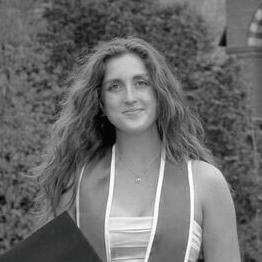
Maya Blanchard is a graduating senior from the College of Agriculture and Life Sciences. She served as a staf writer for the Arts department. She can be reached at mblanchard@cornellsun.com.
right now. My mind is racing with introspection on the major I completed and the minor I didn’t, the club meetings I went to and the ones I skipped, the nights I’ve spent laughing and crying and freaking out and growing older. I don’t want to shy away from the ugly memories. I’ve learned my lesson from my 18-year-old self, once apprehensive about staying in a place so weighed down with all the heartbreak of coming-of-age. Eventually, all feelings of confusion, boredom, embarrassment and loneliness that attach themselves to your hometown fade evenly into nostalgia, and all you see when you walk down memory lane is a person who was, and still is, experiencing life for the very frst time. How lucky was I to get to prolong my childhood, to keep growing in the place that has nurtured me for so long?
After I graduate, Cornell will become just another section in the tapestry of Ithaca I display in my mind. Old memories were overwritten by new ones, past heartbreaks dulled as fresh ones replaced them and experiences that still feel current have already faded into the background. My love for this school feels so achingly concrete that I can’t believe I didn’t immediately embrace it. And to Ithaca: 20 years went by too fast. I’d like to stay and be a kid a little bit longer, but my lease is up.
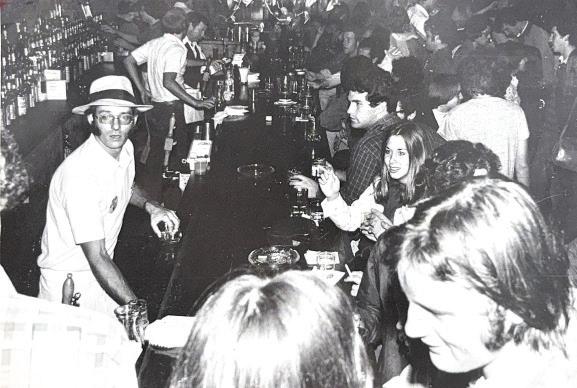
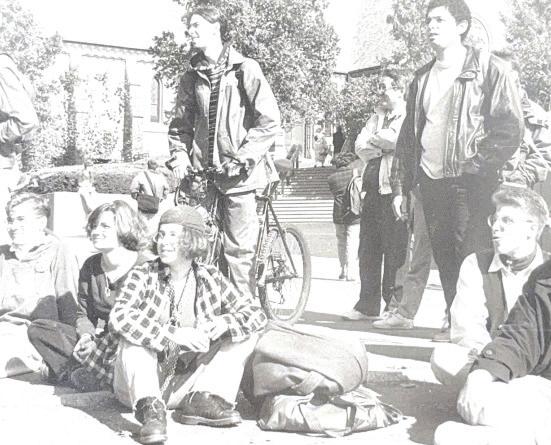
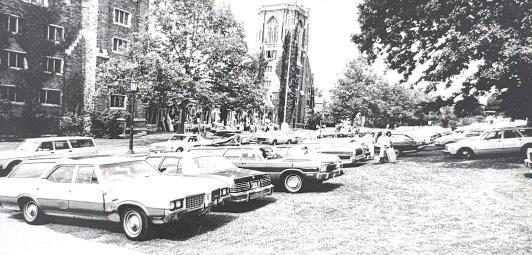
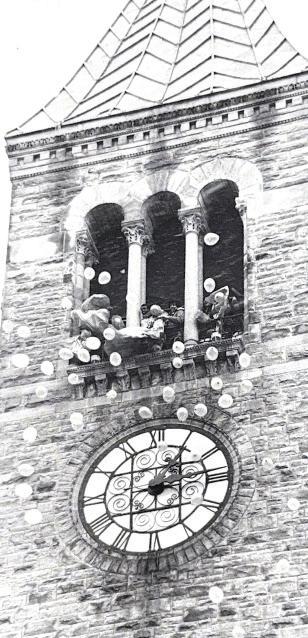
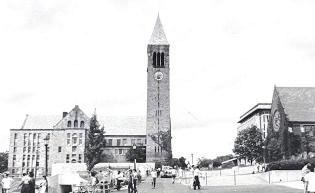
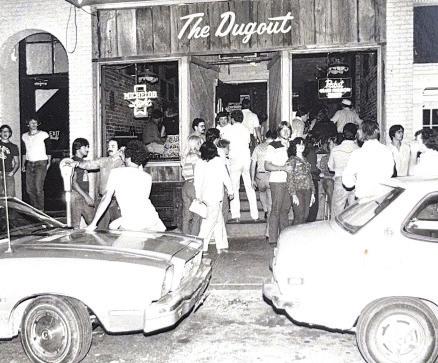
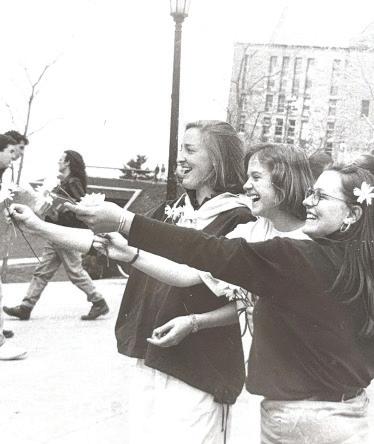
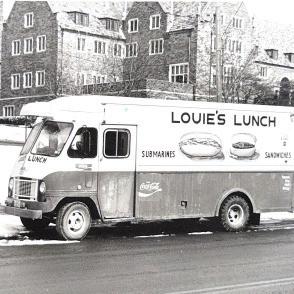
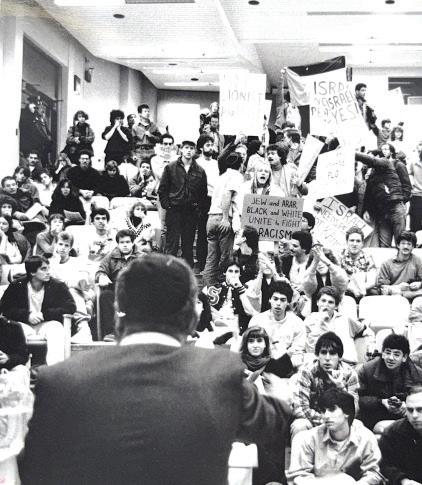
Generations of Cornellians have climbed the Slope, grabbed a bite at Louie’s Lunch, flipped through The Sun at a hockey game an d spent their non-academic hours perusing campus with friends. Take a gander at campus life, good eats, sunny days, game-day traditions and more through The Sun’s archive. These images span decades on the hill.


By PEARL ZHANG Sun Contributor
This story was originally published on April 24.
Two Cornellians, Cherie Animashaun ’27 and Priya Abiram ’26, were awarded the Her Campus e.l.f.ing Amazing 22 Under 22 Class of 2026 award on March 26. The award showcases 22 graduating college women who are young changemakers in their respective fields, including advocacy and public policy, entrepreneurship and environment and STEM.
Her Campus, a media platform “dedicated to empowering college women around the world,” partnered with e.l.f. Cosmetics, a beauty brand known for its affordable and cruelty-free makeup and skincare, for the award’s third consecutive year.
The Amazing 22 Under 22 award emphasizes not needing to “wait until you graduate college, move to a new city, or land your first ‘real’ job to start chasing your dreams.”
Through the award, Her Campus and e.l.f recognize how “these bold disruptors are transforming ideas into action, leading with kind hearts, turning passion into purpose, and dreaming with their heads in the stars.”
Cherie Animashaun: “Closing The Opportunity Gap For Young Women In Leadership, Policy, & Business” Animashaun is a junior who studies government in the College of Arts and Sciences. She founded her own nonprofit, called Her Rising
Initiative, at 16 years old in 2021. The initiative now has nearly 100 chapters in middle schools and high schools across the country.
Her Rising hosts afterschool clubs that inspire young girls, especially girls of color, to get involved in politics and business, whether it is through bringing them to the United Nations headquarters or meeting a member of Congress at Capitol Hill, according to Animashaun.
The nonprofit also hosts an annual Girls Who Lead conference, bringing women at the top of their fields to lead free workshops about fashion, business, engineering and more, according to Animashaun.
In an interview with The Sun, Animashaun explained her background and how it led her to start Her Rising. She grew up in Evanston, Illinois and noticed that, “there were very few opportunities for [young women of color]” and that “a lot of girls get left behind.”
”I knew if I was able to create something more culturally relevant, intentionally designed and youth-led, it’d actually reach those girls that often get left behind,” Animashaun said.
The idea did not come without challenges, however.
“When I first told people about the nonprofit, they were really, really confused — even the people who were really close to me,” Animashaun said. “Where I’m from, that’s not the traditional path. I was in high school, I was broke and I’m trying to build a nonprofit to give resources to other peo-
ple, whereas most nonprofits are [created by] rich people who are much, much older.”
Animashaun said her biggest challenge was getting taken seriously. She said she would send 50 to 100 emails every day to potential partners and sponsors, with most not replying or only responding with words of encouragement.
Animashaun said these challenges “built a resilience” in her. Being at Cornell further taught her to be resilient, she said.
The University has “not been the most helpful when it comes to supporting nonprofits and social impact work,” Animashuan said. “There’s very few nonprofit founders at Cornell, but we all agree that the funding here is really scarce for that.” She hopes Cornell will provide more support for students serving their communities through nonprofit work.
However, Animashuan is “really grateful” for professors and classes that gave her a “roadmap” for her ambitions.
“When I came here, I had ideas and dreams, but coming here it was like ‘No, this is how you actually get it done,’” she said.
On her showcase for the Amazing 22 Under 22 award, Animashaun said she prioritizes sharing how she lands these opportunities and how she can pass her knowledge about being a founder onto others. Animashaun frequently posts scholarship and internship opportunities for other young girls on her social media.
To continue reading this story, please visit cornellsun.com.
By TEJU VIJAY Sun News Writer
This story was originally published on Feb. 10.
Every year, on Valentine’s Day eve, thousands of Cornellians log into their emails, awaiting a message from Perfect Match revealing their potentially perfect Cornell love.
Perfect Match is a student-developed matchmaking service for Cornell community members that matches participants with potential romantic partners for Valentine’s Day using a machine learning algorithm. As of Feb. 10, over 3,600 Cornellians had already submitted their Perfect Match survey, according to its website.
The survey asks participants questions about their interests, academic pursuits, relationship preferences and dealbreakers, according to Elif Yilmaz ’27, Perfect Match’s treasurer and business team lead. The matchmaking algorithm then reviews survey responses, assigns compatibility scores across users and returns top matches.
Playing Cupid for Cornellians
Founded by Jamal Hashim ’22 in 2019, Perfect Match was originally developed to uplift spirits on campus and reduce isolation among Cornell students. Seven years later, Perfect Match still reaches and connects thousands of Cornell students, alumni and faculty members through its specialized survey.
The current Perfect Match team consists of nineteen undergraduate students, split between the engineering and business teams. The engineering team builds the website interface, tunes the matching algorithm and visualizes survey results. The business team conducts user research, reaches out to potential partners, manages Perfect Match’s image social media platforms and organizes events to increase engagement.
The team is tight-knit, Daniel Chuang ’26, engineering team lead and data analysis subteam head for Perfect Match, said, with each member contributing to the shared goal of uplifting and connecting Cornellians. For Yilmaz, Perfect Match’s romance-driven mission and start-up energy drew her in initially.
“I wanted to be in the startup environment where it’s all about love,” Yilmaz said. “I’m a lover girl. That’s honestly why I joined.”
Chuang initially joined to apply his interest in data analysis and visualizations to an engaging and widely viewed project.
“Something that I care a lot about is if I’m putting in a lot of time to make analyses, I want people to see it,” Chuang said.
A One-of-a-Kind Experience
Perfect Match offers a unique way for Cornellians to find partners and friends outside of more common dating services. The Perfect Match team cited how popular dating apps like Hinge and Tinder place extra emphasis on the photos that participants submit rather than personality and compatibility.
“On Hinge, you get to choose two or three prompts, and you see just answers to these three prompts, some of their lifestyle choices and their face … It doesn’t really say much about someone’s persona,” Yilmaz said. “I think one of our biggest differentiators is asking those very detailed questions, and also asking who you are looking for in a partner, and making matches based on that.”
Students might be more interested in filling out Perfect Match because it attracts a group of Cornellians that is “different than the typical dating app pool,” Chuang said. He added that Perfect Match typically gets higher participation from both females and males, which is uncommon for traditional dating apps, which are typically male-dominated.
Other college campus matchmaking services like Marriage Pact, which is an annual matchmaking survey that started at Stanford, also collect survey responses for research, but Chuang said that Perfect Match operates with the singular motive to connect Cornellians.
“We’re doing something just out of good will,” Chuang said. “It’s just to make Cornell a hopefully happier, funner place to be at.”
Crafting the Perfect Survey
The Perfect Match survey asks unconventional questions like “What is your Rice Purity Score?,” as well as Cornell-specific questions like “Biggest niche Cornell red flag?” and “Next year, I want to complete this task (from 161 Things Every Cornellian Should Do)...” To develop these questions, the entire Perfect Match team works together to brainstorm, starting months before Valentine’s Day.
To continue reading this story, please visit cornellsun.com.
By Varsha Bhargava
Crosswords by Varsha Bhargava ’27
By Varsha Bhargava
6 Routes 30 and 90 are common lines for this mode of transport across campus
8 Fun happening on campus, perhaps during O-Week
1 From the Schoellkopf Stadium's stands, you will yell "__ ___ Red!"
1 As they say, "Ithaca is _____s!"
2 __ the Hill. Soon to be you!
By Varsha Bhargava
5 Number of attempts a Cornellian hopes to take on the swim test
ACROSS
6 Routes 30 and 90 are common lines for this mode of transport across campus
By Varsha Bhargava
8 Fun happening on campus, perhaps during O-Week
1 As they say, "Ithaca is _____s!"
1 No. 1 place to watch the sunset
2 __ the Hill. Soon to be you!
4 Climb all 161 steps to get to the top of this
By Varsha Bhargava
3 A beautiful body of water with a trail entrance on North Campus
5 5,776 _____-admitted first-years opened their acceptance letters from Cornell this year
4 Some say that last year's skinned bear still lingers on campus in this form
By Varsha Bhargava
1 No. 1 place to watch the
3 A beautiful body of water with a trail entrance on North Campus
By Varsha Bhargava
1 No. 1 place to watch the sunset
4 Climb all 161 steps to get to the top of this
4 Some say that last year's skinned bear still lingers on campus in this form
5 5,776 _____-admitted first-years opened their acceptance letters from Cornell this year
7 Find Cornell's hidden tunnels, __der the ground
1 A professor may let you ___ __ on a class before you add it to your schedule
1 A professor may let you ___ __ on a class before you add it to your schedule
7 Find Cornell's hidden tunnels, __der the ground
2 What a student may say when they see Cornell's waterfalls for the first time
3 Class at 8:40 a.m. is far too _____
1 Visit the iconic _____ Bar on campus for a cold sweet treat
4 Typical weather for Cornell's campus, pack your umbrella!
5 You may be able to score this Indian dessert drink if you visit a House Dinner on West Campus
Cornell is one of eight
What you may have said when you got into Cornell
may have to ___ly at 8:40 a.m. to be awake for your early morning lab section
2 What a student may say when they see Cornell's waterfalls for the first time
1 Visit the iconic _____ Bar on campus for a cold sweet treat
4 Typical weather for Cornell's campus, pack your umbrella!
3 Class at 8:40 a.m. is far too _____
5 You may be able to score this Indian dessert drink if you visit a House Dinner on West Campus
2 Cornell is one of eight
3 What you may have said when you got into Cornell
4 You may have to ___ly at 8:40 a.m. to be awake for your early morning lab section
By Lora Sarkisyan
Our mini crosswords are freshof-the-press! We began producing mini crosswords during the 25-26 academic year and they have been a fan favorite ever since. Stay tuned on The Sun’s site for daily mini crosswords and weekly large crosswords during the school year. Perfect for teasing your brain, avoiding paywalls and dillydallying in long lectures!
By Ashlin Kwong
By AMINA McCAIN Sun Lifestyle Writer
Picture this: You’re walking in the library, down the street or quite literally anywhere on campus, and you see someone you kind of know — not particularly a friend, but not a stranger either. You debate in your head whether or not you should say “hi.” As you mentally go back and forth, you end up passing each other without even making eye contact, the awkwardness looming in the air as you both say nothing. Why do we do that? Why not just say hi?
This phenomenon has happened to all of us. Of course, there is an underlying fear that they won’t remember you or don’t think you’re on the same level of acquaintanceship to say hi. This happened to me just last week as I waved to a friend of a friend who I had talked to the previous evening. When I waved, he gave me a confused and passive wave back. Though I must admit, I have definitely done the same when people I did not expect to be on a waving basis with have said hi to me. Whether out of fear, embarrassment or just forgetfulness (in part because we can meet about 10 new people a week), we find ourselves sticking to a pattern that often
doesn’t allow for waving at people who pass by. But as a result, we miss out on opportunities to build community for ourselves. You might have your friend group or a couple of people that you’re around on a regular basis, but what about the people beyond your close circle? And outside of networking, why can’t we build connections simply for the sake of connection?
As college students in the digital generation, we are so hesitant to engage in conversation with strangers. We avoid any uncomfortable interaction simply by looking down at our phones. People try to avoid awkwardness as much as humanely possible, but awkwardness is inevitable — something that we should accept in our day-to-day lives. Saying hi doesn’t have to be such an intimidating task.
I know putting yourself out there can sound daunting to some. As Cornell students, about every second of every day is scheduled to a tee, leaving very little time to hang out with even the people you’re actually close to. However, fostering more connections with others can be accomplished through simply waving to the people who live across the hall from you or sparking up a conversation with the person you sit next to in lecture every
other day. In a school with around 16,000 undergraduates, you can find friendship beyond the six people you consistently hang out with.
Keeping this in mind, I have adopted a new mindset: Just say hi! More often than not, even if the other person doesn’t think to say hello first, they will appreciate you reaching out to them, even if it’s just through this small gesture. In a place where there can be so much isolation, a small wave can truly make someone’s day. This can go for anyone on campus: your TA, the residential and dining staff you see every day, the person you were forced to be in a group project with or even your situationship! Nobody is off-limits. If you feel motivated to give them a hello, just go for it.
By MARTHA DOLAN Sun Lifestyle Writer
As someone who grew up in the same small town in Upstate New York my entire life, coming to Cornell was a huge culture shock. I went from the population of my town being around the same size as my residency hall. Growing up and knowing the same group of people from kindergarten onward shaped my life in a way that I cannot begin to describe. I felt as if my identity was primarily sculpted when I was very young, and everyone had me pretty much figured out.
myself that I always wanted to be. Regardless of how determined I was to achieve these quintessential college goals, the pressure proved to be unnecessary and stressful. I recognized that all of these ambitions that I had placed at such a high importance in my mind would come in their own time. I had to take a step back and let go of these expectations. Only when I did that did I start to fully enjoy college.
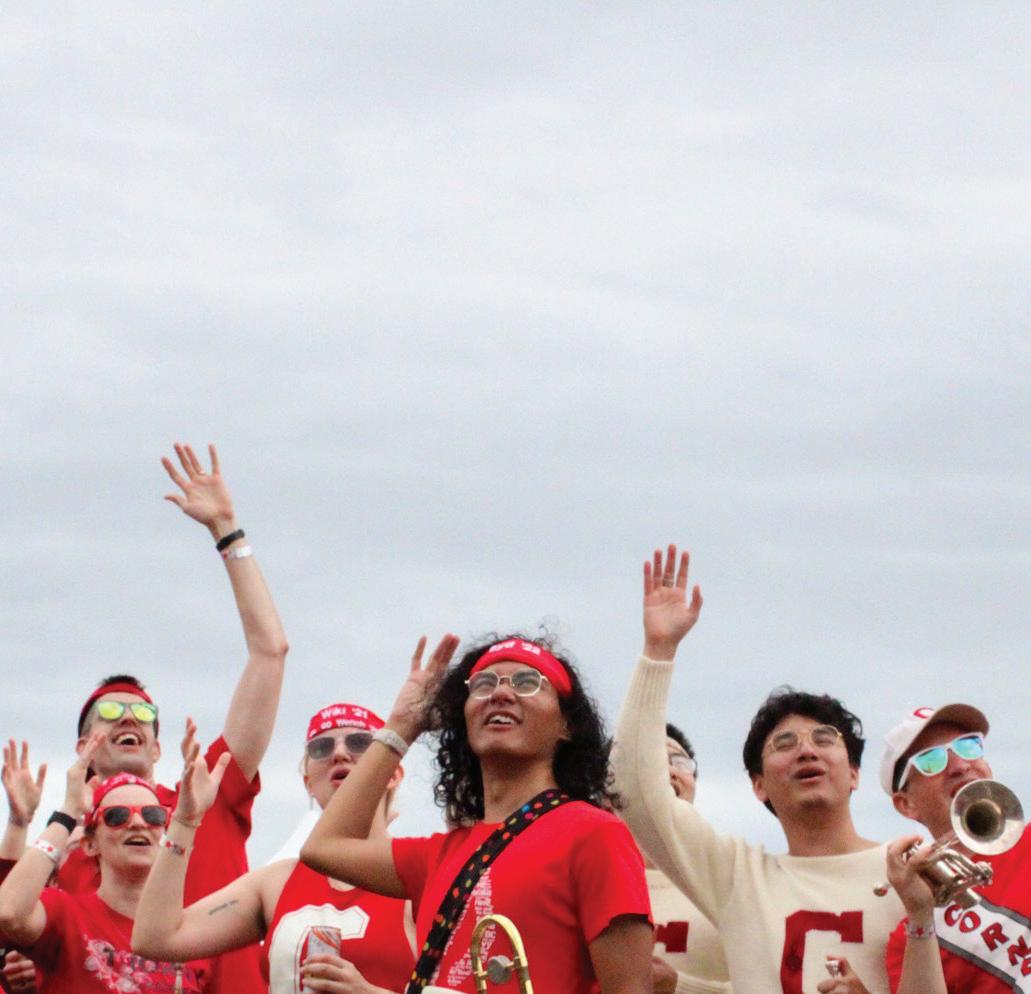
By MELANIE DELFOSSE Sun Lifestyle Writer
So, I leave you with this: Say hi and don’t be afraid of any embarrassment. They may brush you off and act awkward (which you can do nothing about), or it could lay the foundations for a glorious relationship. And for bonus points: Saying hi to people in passing when walking down the street makes you look infinitely cooler. Obviously not everyone is going to be your best friend, but not everyone has to be a stranger. Do it for yourself. Just say hi!
When I graduated high school and prepared to come to college, a whirlwind of emotions and possibilities occupied my mind. I came to the realization that — for the first time in my life — I would be going to a new place, where nobody would know me. I had never had to adjust to a new lifestyle outside of my hometown before, and the thought simultaneously excited me and terrified me.
In high school, I felt as if I had my entire life figured out. I knew what I wanted to do for a career and I had an established friend group. I had fallen into a comfortable routine and rhythm, because I never knew anything else. However, the idea that I could completely reinvent myself when coming to college greatly intrigued me. I had the potential to change my style, personality and hobbies. I spent the summer planning who I wanted to be. I bought new clothes, perfected my Instagram account and made Pinterest boards to plan out my “college aesthetic.”
Leaving my hometown for the first time was uncomfortable, and it forced me out of the shell that I had felt so secure in while growing up. When I first arrived at college, I had the opportunity to evaluate who I truly was and diverge from the traits that seemed so obvious to me in high school. I remember sitting in my dorm room during the first week of college and feeling lost. I sent a video to my best friend from home explaining that nobody here knows me. No one knew my name, my history, my character. It was a daunting feeling at first — I had to start from scratch. There was a constant feeling of pressure to meet new people, join as many clubs as I could and excel in my classes. In a way, I felt the need to constantly prove myself. College was supposed to be the place where I made lifelong friends, explored my passions and became the version of
While I wasn’t sure what to expect when coming to a place where I essentially had to start over, I learned more about myself than I initially anticipated. I found friends that truly understood me — not the version of me that I thought I wanted to reinvent. I became more independent and learned to make decisions without second guessing myself or seeking approval from others. I started listening to music and bands I had never heard of just because the people who live across the hall from me listen to them. I’ve even started to make my bed every morning — something that I never did in high school. These subtle shifts in my life have been transformative in my college experience so far, as they continue to shape my identity.
Of course, some key elements of my life have remained the same. I still take my coffee without sugar, still sleep with the same stuffed animal and still wear the same perfume every day because it reminds me of home. These small details that have remained constant remind me that life is always changing, whether that be my environment or the people I surround myself with. I’ve learned that even when life is in a state of limbo me, that doesn’t nec essarily mean that I have to change with it. Sure, I’ll evolve and the changes will come natu ly, but who I am at my core will stay the put so much pres sure on yourself to revamp your entire life or personality before arriving at college. It’s okay to not know your major or who your best friends
There’s one freshman year piece of advice you’ve probably heard: explore off campus. But with balancing classes, club recruitment and trying to form new friendships, finding places off campus can take low priority. It can be hard to know what there is to do in Ithaca –– though to figure that out, you just need to find what’s interesting to you. An easy way to do this is through clubs.
One of my first times going off campus was by volunteering with the Pre-Professional Association Toward Careers in Health , through which I volunteered at Ithaca’s annual cupcake competition my first fall semester. Not only did I get to try some delicious cupcakes, but I also learned about various businesses and non-profits around Ithaca.
An easy place to find volunteering opportunities is (of course) ClubFest, where many of the clubs will promote or even require volunteering as a core pillar of membership. I reached out to Cornell’s PATCH and Cornell Hunger Relief Program to ask about volunteering, and like a variety of non-profits, there are lots of clubs promoting all different types of volunteering.
Lily Ehsan ’27, one of PATCH’s community service co-chairs, said that PATCH tries to make volunteering “simple, flexible and engaging, inspir[ing] students to get involved out of genuine interest rather than obligation.” They offer many different opportunities from blood drives and writing letters to hospitals, to their sub-committees like the Science Kits and Giggle Buddies programs. This allows students to “choose projects that reflect their personal passions while addressing different community needs. For example, working with Loaves and Fishes connects students with food insecurity issues, while Science Kits lets members inspire curiosity in underprivileged students” according to Ehsan.
CHRP similarly emphasized volunteering in Ithaca. As Shalini
Ramakrishnan ’27, CHRP’s outreach chair, put it, “engaging with the Ithaca community is a meaningful part of being an active and informed community member.” She added that they prioritize partnerships with local hunger relief organizations who “are eager to have the help of students in addressing food insecurity.”
Both clubs also encourage group volunteering. Ramakrishnan said it’s “a fun way to make new friends while also helping the community,” and that any hurdles of transportation are “definitely worth it to get more students involved.” Ehsan noted similar motivators like “build[ing] community among PATCH members while allowing us to accomplish more together,” and making “service feel fun and collaborative rather than like an individual task.”
As for how they volunteer, Olivia Kornstein ’26, CHRP’s president added that they focus on “local food pantries in Ithaca, such as Salvation Army and Loaves and Fishes … [and] food packing events on campus for community members who are experiencing food insecurity.” In addition, CHRP hosts the Big Red Food Drive at the end of each school year, and also has G-Body meetings that focus on specific advocacy or volunteer efforts.
PATCH, being a broad pre-health club, has a variety of volunteer opportunities. This benefits the Ithaca community and the student volunteers as well. Ehsan pointed out that “our goal with PATCH’s community service is to create a supportive environment where students can grow as leaders while making a positive impact beyond campus.” In addition, their sub-groups, which require an application and hold weekly meetings, “ensure the community receives focused and consistent support” and promote the formation of “long-lasting relationships with the people they work with” according to Ehsan. However, it’s also possible to volunteer without a club. While you’ll certainly see groups from Cornell and Ithaca College, volunteering independently or casually with friends is easy! Porchfest this
year made volunteering super easy –– a quick Google Form with my availability was all I needed to sign up.
For me, these volunteering opportunities were so convenient and the organizations made them very simple –– they worked with my schedule and time restrictions. If you find yourself with a busy schedule (like most Cornell students), this can be an accessible way to get more involved in the community in a way that works for you.
If you’re looking for ideas, any fun events you’ve gone to or heard about likely take volunteers — Ithaca has a variety of festivals throughout the year, and volunteers help run almost all of them. I like finding them from weekly dorm emails or posters, Visit Ithaca or even from my professors promoting events. As an added bonus for volunteering at these events, you’ll usually get some sort of benefit ranging from free t-shirts, water bottles or even a discount on food at the event.
Beyond these one-day events, many non-profit and charity organizations around Ithaca need volunteers. One of the most wellknown is Loaves and Fishes, a community kitchen that gives out meals in Downtown Ithaca. Other local spots that you may have visited include the Alley Cat Cafe and Tompkins County Public Library, along with Finger Lakes ReUse, Sciencenter and Free Science Workshop. With all of these organizations and volunteer opportunities, you can surely find something that aligns with your interests and schedule.
If you’re not already doing so, it can be difficult to put yourself out there and start volunteering in Ithaca. While most of us likely volunteered in high school, the shift to college may make those habits harder to maintain. However, I would strongly encourage everyone to find something — a charity that you support, a club that piques your interest or even just an event — and make an effort to volunteer.
By MAYA ROTHBARD Sun Lifestyle Writer
Classes, on average, last 50 to 75 minutes. A meeting, on the other hand, is rarely just a meeting. It’s the prep beforehand, the countless Slack messages (that I can never keep up with) and worst of all, the follow-up Google Doc after. It’s sprinting with a protein bar in hand from your 4:10 p.m. class in Klarman Hall to your bi-weekly G-body meeting in Duffield Hall that starts at 4:30 p.m., rehearsing what you’re about to say, while still thinking about what you just left. It’s the accumulation of club E-board weekly meetings, project teams, research, part-time jobs and the subtle but constant pressure to be visible in all of them.
Cornell doesn’t just encourage involvement — it quietly celebrates over-involvement. I’ll speak briefly from my personal experience, as I am in 10 clubs and trying to balance the workload of my double major and minor. Still, I have this lingering feeling that I am not doing enough. There is always another committee to join, another leadership position to apply for, another meeting that promises to be the one that ‘really matters.’ When everyone around you is just as busy — or at least appears to be — productivity starts
to feel like the only acceptable baseline. The bar keeps rising, and somehow, no matter how full my schedule becomes, it never quite feels full enough.
And so our calendars swell with Google Calendars’ increasing color variations, like our own personal mosaics — intricate, crowded and carefully arranged to prove that every inch of space has been accounted for. Each new shade becomes a badge of productivity, a visual reassurance that we are in demand. But like any mosaic assembled too tightly, the beauty begins to blur. What once looked vibrant starts to feel overwhelming, the colors bleeding into one another until the picture is less about purpose and more about pressure; not because we can’t handle our coursework, but because we don’t want to miss out — on leadership, on community, on opportunity. We say yes to more because we care. We say yes because everyone else seems to be managing it well. We say yes because Cornell is full of ambitious people doing ambitious things who are off to live their ambitious lives.
But ambition has a cost. When meetings fill every open hour, there’s little room left for thinking, for rest, for the
nothing for more than an hour? That is what makes me realize that the meetings at Cornell are much harder than the classes. I feel almost euphoric when I get time to relax — like I’ve stumbled into a luxury I didn’t realize I’d been missing.
None of this is to say that clubs and organizations are the problem. They are the heart of this campus. They’re where friendships form, ideas turn into initiatives and students practice leadership in real time. They’re what make Cornell feel alive. The issue isn’t involvement itself. It is the quiet competition to maximize it.
Maybe the harder question isn’t how to survive a packed calendar, but why we feel compelled to fill it so completely. What would it look like to treat empty space not as wasted time, but as something necessary? What if we valued depth over breadth — staying longer in fewer rooms, instead of rushing through many?
The next time I open my Google Calendar and feel that familiar whiff of anxiety, I will try to pause before adding another block of color. Because at Cornell, the challenge isn’t just keeping up with our classes. It’s learning how to protect our time in a culture that constantly asks for more of
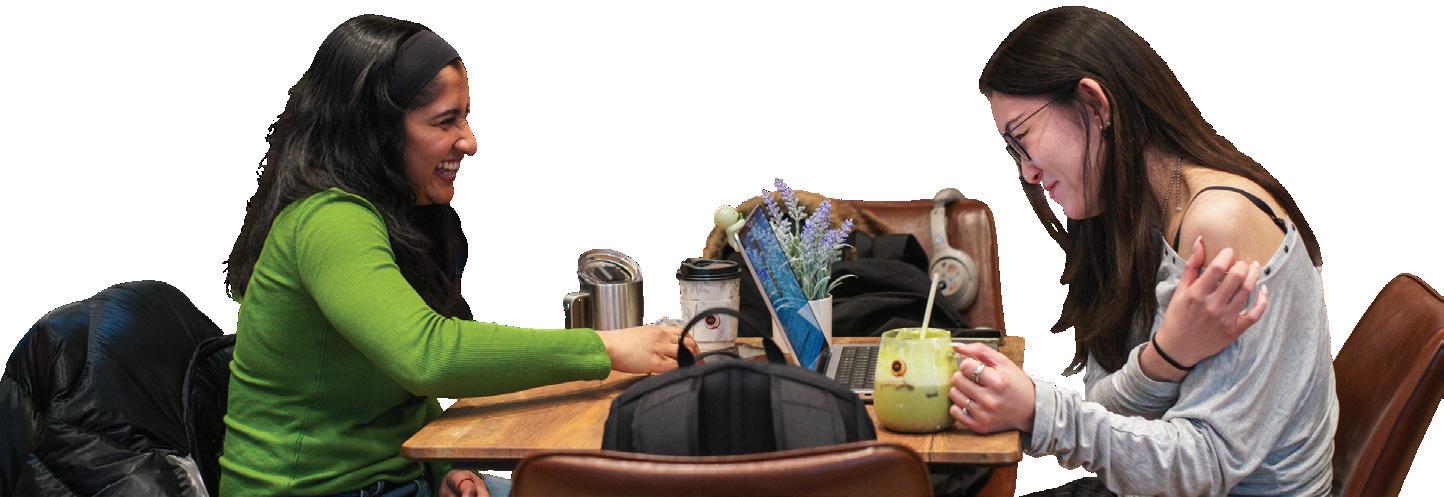
By RUHI DATAR Sun Lifestyle Writer
We’ve all been there — a gloomy Ithaca Monday morning, dread for your next class and a long week ahead. All you want to do is throw on your most comfortable pair of sweatpants and rush out the door with a messy bun. Sure, some might say that comfort is key, but I’d argue that there is something else that can actually make a bigger difference: the intentionality of dressing up and having a slow morning routine.
For me, the best days always start with a little ritual — my roommate and I listening to “Charm” by Clairo, sipping on our coffee and getting ready at the same time. We pick out cute outfits, do our makeup and put our best foot forward. It’s peaceful, it’s calming and, honestly, it sets the tone for the whole day.
I’ve noticed such a huge difference between days when I take my time in the morning, versus the days I’m scrambling out of bed before my 8:40 am class, still half-asleep. The days when I wake up earlier and allow myself that hour to get ready feel so much more productive and optimistic. The act of dressing up and taking time in the morning
isn’t just about looking good — it helps improve several other aspects of my day:
A sense of control. Taking the time to get ready in the morning, instead of rushing out the door, gives me a sense of control over my day. Especially at a school like Cornell, where it’s so easy to feel overwhelmed by everything that needs to get done in your day; but slowing down – intentionally choosing an outfit I feel good in, doing my makeup, sipping on my cold brew – gives me a moment to breathe before the my classes and whatever else I have planned. It’s a simple act of self-care that helps me mentally prepare for whatever ensues during the day. I’ve found that the calmness usually lingers, and I find myself feeling more centered, even when the schedule gets busy. There are many small acts people incorporate into their morning routines that help them feel more in control. For example, Kate Sahin ’28 explains that “making my bed in the morning gives me a sense of order to start my day,” while Estelle Emmons ’28 says “I take my vitamin supplements every morning to feel more put together.” Boost of confidence. There’s also something about putting on a well-thought-out outfit that makes
By MAIA MEHRING Sun Lifestyle Columnist
You’re studying in Olin Library when a Gmail notification banner pops up: “ONE WEEK AWAY: Cornell Career Fair Days All Industries Fair.” Or maybe it’s a hiring representative from your dream company, notifying you of an interview request. Regardless, you know you have to dress the part — after all showing up in gray sweatpants and a hoodie is unlikely to make the best impression.
But how do you know if you’re expected to dress in smart casual, business casual, business professional or full-blown business formal attire? And what is even the difference between those categories? As a post on LinkedIn would say, here’s the TLDR: Business formal
This is the most traditional and conservative level of professional dress, usually relevant for high-stakes professional situations common in industries such as finance, law and accounting. Though business formal isn’t usually applicable in college, important opportunities like job interviews, career fairs, formal networking events, collegiate competitions or presentations in front of faculty or industry representatives may call for high-quality clothing. A typical business formal outfit can include a matching suit (blazer and pants or skirt), a tie, a button-down shirt or blouse and closed-toe dress shoes.
Business professional
you feel more put-together — like you have your life in order, even if you really don’t. Studies have shown that dressing well can actually boost confidence and even improve performance. While a good outfit can make you feel more put together and confident, it’s also about how it affects your mindset. Psychologists refer to this as enclothed cognition — the idea that what we wear can influence our mindset, behavior and even how we perceive ourselves; it’s all about embodying confidence. Improves your overall mood. Wearing an outfit you love also brings a small but meaningful boost to your day. Fashion is a form of self-expression, and the clothes we choose can shape how we feel about ourselves. When you put on something that makes you feel happy – whether it’s your favorite sweater, a bold pair of sunglasses, or your best fitting pair of jeans – it can shift your entire mindset. Sanika Saraf ’28 states, “Whenever I wear my jean jacket I feel good. I love a Canadian tuxedo.” Even on tough or gloomy days, dressing up can act as an uplifting force. Mikayla Thomas ’28 illustrates this perfectly: “I always wear my favorite Free People tank top to boost my mood because the shirt feels like summer, which makes me feel happy.”
Business professional attire, though slightly less rigid than business formal, is still structured and polished. An outfit on this level might include a blazer paired with dress pants or a skirt, a blouse or button-down and professional shoes. You don’t necessarily need a tie, for example. Full suits are still common, but not always required. At Cornell, this is a common expectation for internship interviews, career fairs and employer information sessions, especially in fields with selective recruitment cycles (finance, consulting, law, etc).
casual
A business casual outfit is a more relaxed, but still put-together, style. Many Cornell career fair events call for business casual attire (and the expectation is usually explicitly stated in career fair emails). Students also may opt for business casual at less formal networking events, office internships (depending on the company or office) or cam
outfits in this category are dress pants or a skirt with sweaters, blouses, collared shirts or cardigans and flats or loafers. No blazer required.
Smart casual
This is the least formal out of the four options, and it blends casual clothing with a neat top, sweater or casual blazer. It’s polished without being overly structured. At Cornell, smart casual is often appropriate for informal coffee chats, student organizations with guest speakers or more relaxed workplaces, especially in creative or tech-oriented spaces.
Resources
Once you master the difference between levels of formality and what kinds of events call for each one, you must then tackle the challenge of affordability. One of the best resources to take advantage of is The Wardrobe, a student organization on campus that provides free professional attire to all students throughout the semester. Give The Wardrobe team at least 48 hours notice, and you can borrow clothing of your choice. You can request various items in different colors and sizes free of charge. When your order is ready, you can pick it up at Barnes Hall. After wearing your items, you return it to the Barnes Hall location, and the organization will take it from there — you don’t even have to worry about cleaning it!
If you want to invest in some business attire staples without breaking the bank, affordable options include H&M, Uniqlo and Old Navy, as well as department stores such as Macy’s or Nordstrom if you’re looking for a classic blazer or pair of dress pants. Even though a high-end suit may last a long time, white shirts and blouses may not (at least they don’t for me, especially when I often wear down my favorite three items). You don’t need to spend hundreds of dollars on just a few items, especially when pieces from the stores mentioned above look just as good.
Finally, if you’re pursuing an unpaid internship this summer, you should also consider applying for Cornell’s Summer Experience Grant, as one of the expenses you can request a grant for is professional attire. This is a competitive need-based grant, but if you meet the requirements, receiving a grant that covers the cost of your clothing can be a huge weight off your shoulders.
It can feel intimidating when you’re tasked with finding an outfit appropriate for a professional event, but with a resources


This year, O-Week will take place from August 18-23, with freshmen beginning their move-in on August 17.
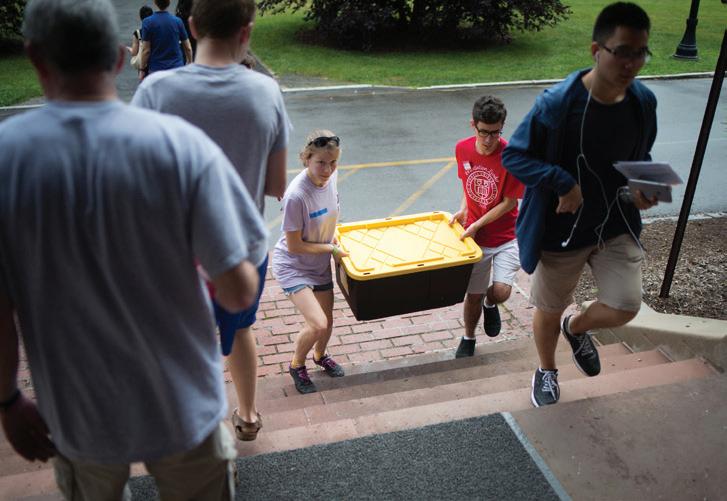
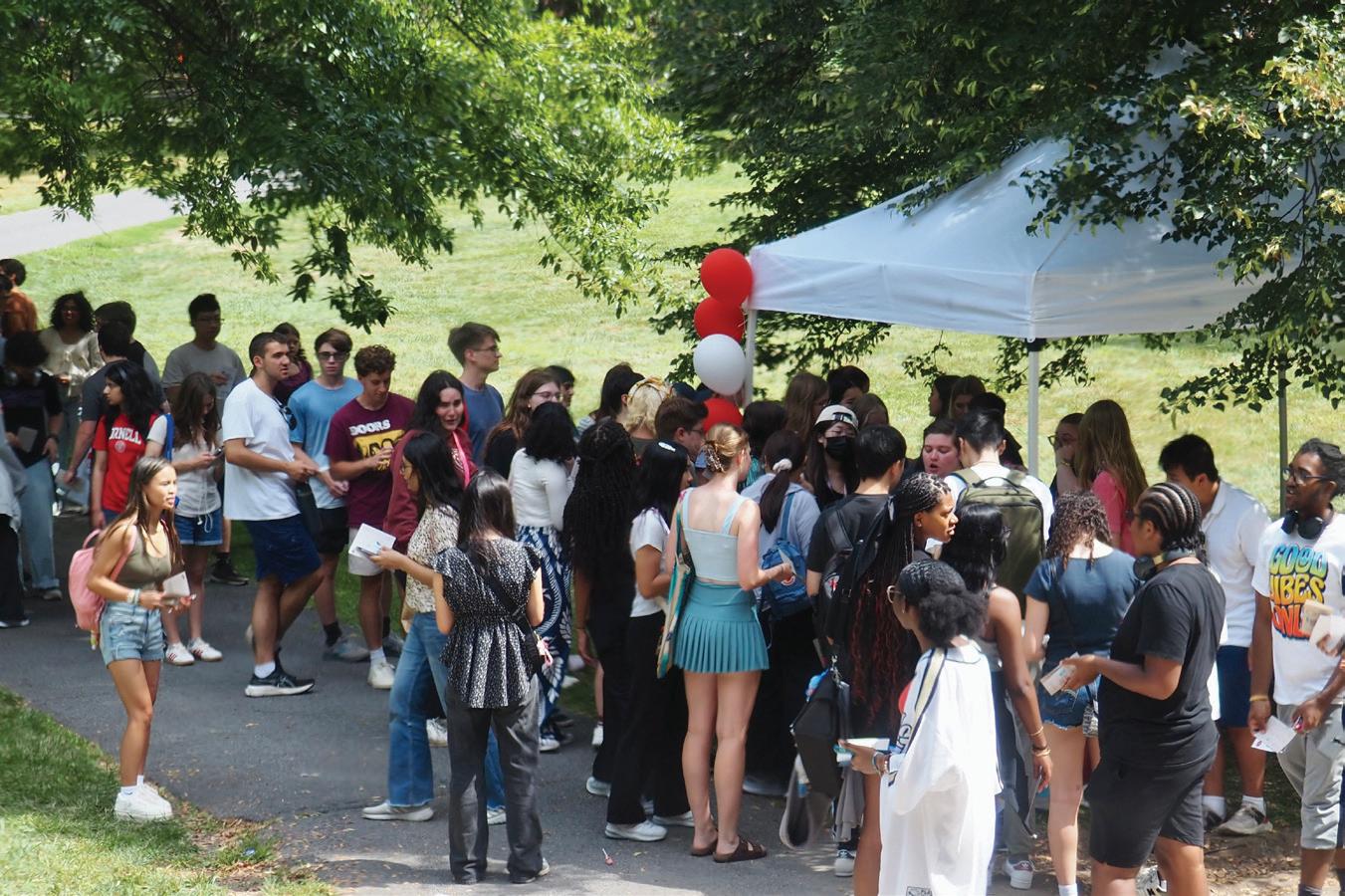
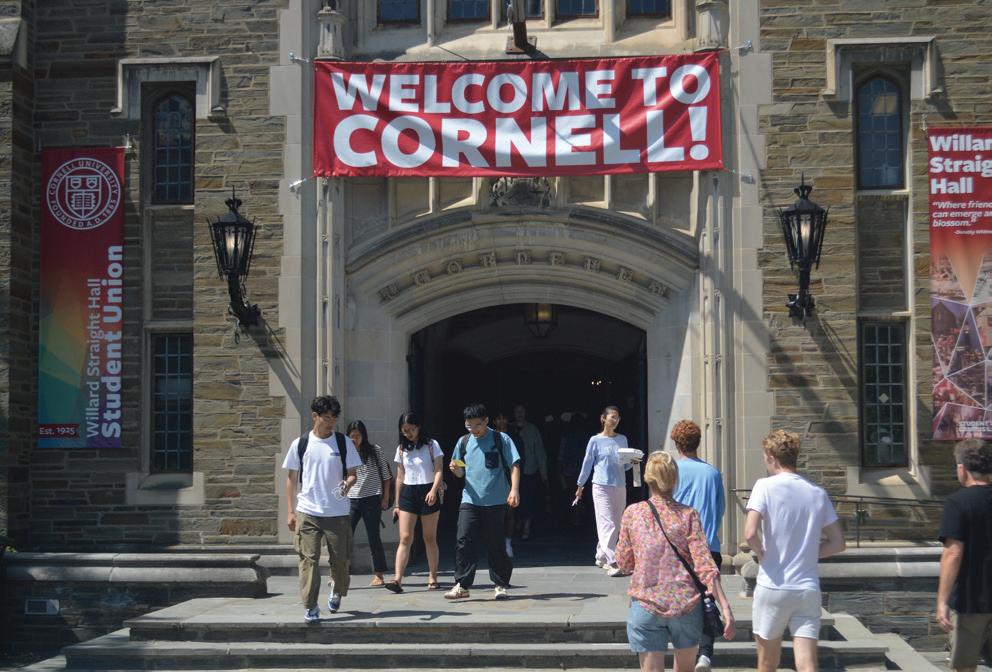
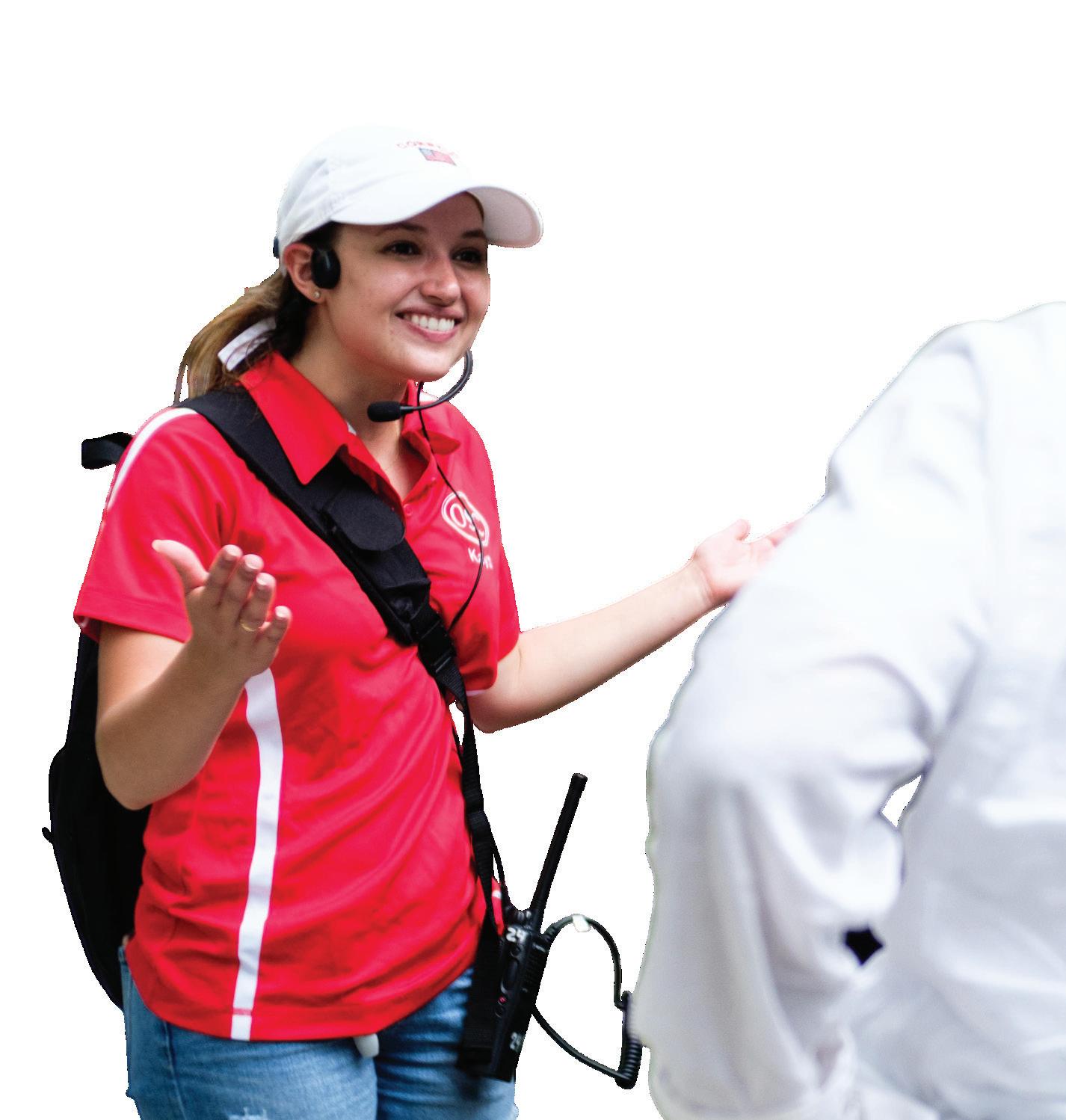
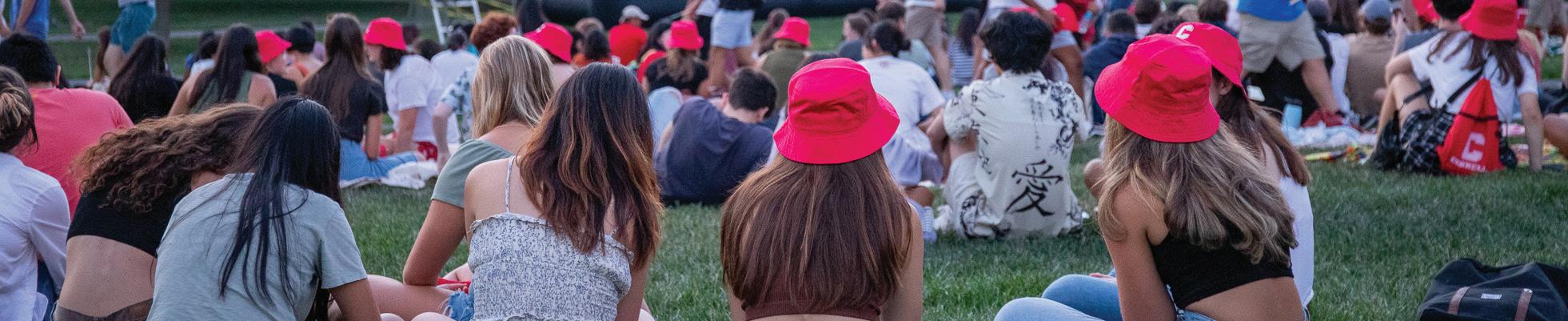
Orientation Week at Cornell over the years, from the lenses of The Sun’s Photography department. O-Week is famously full of new friendships, bonding activities, sight-seeing and a bustling campus full of new, eager students.
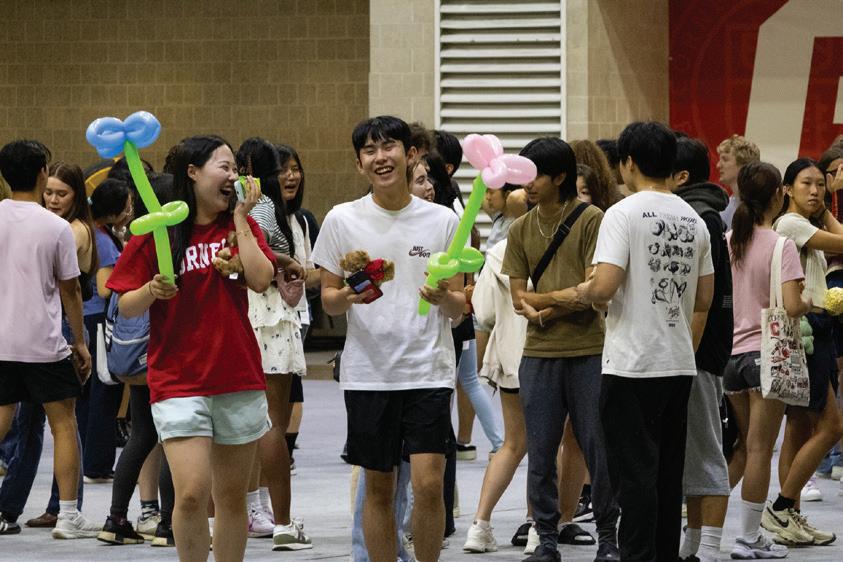
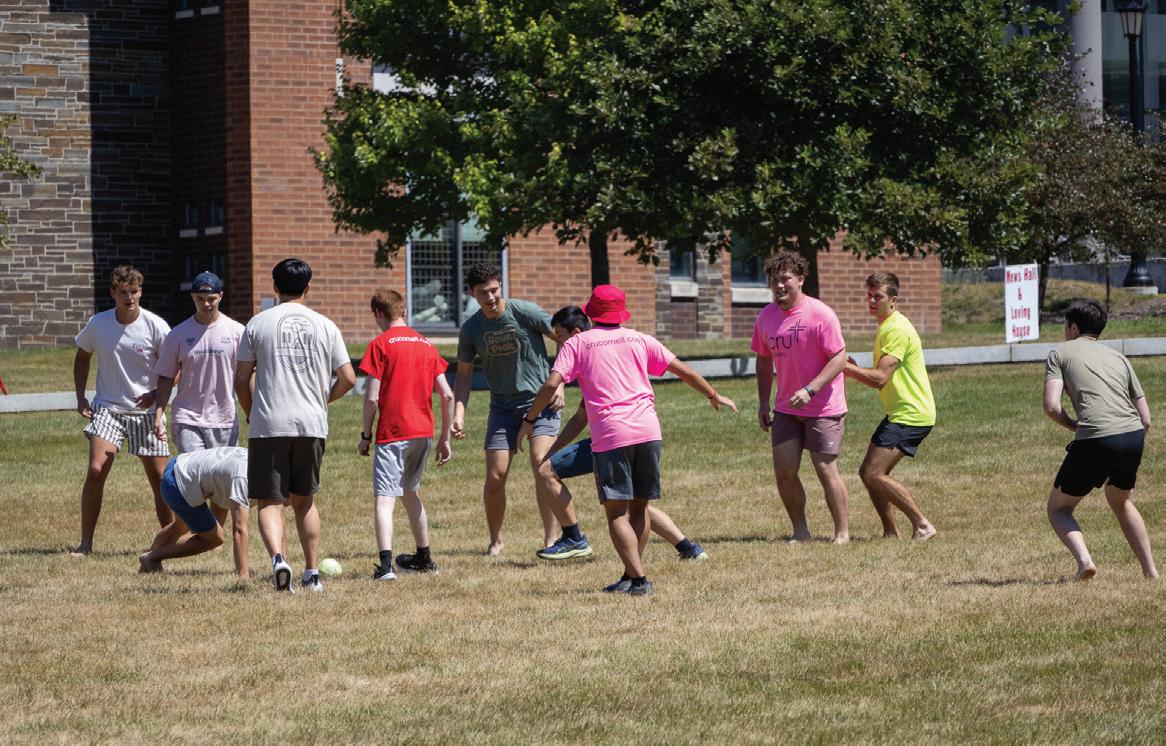
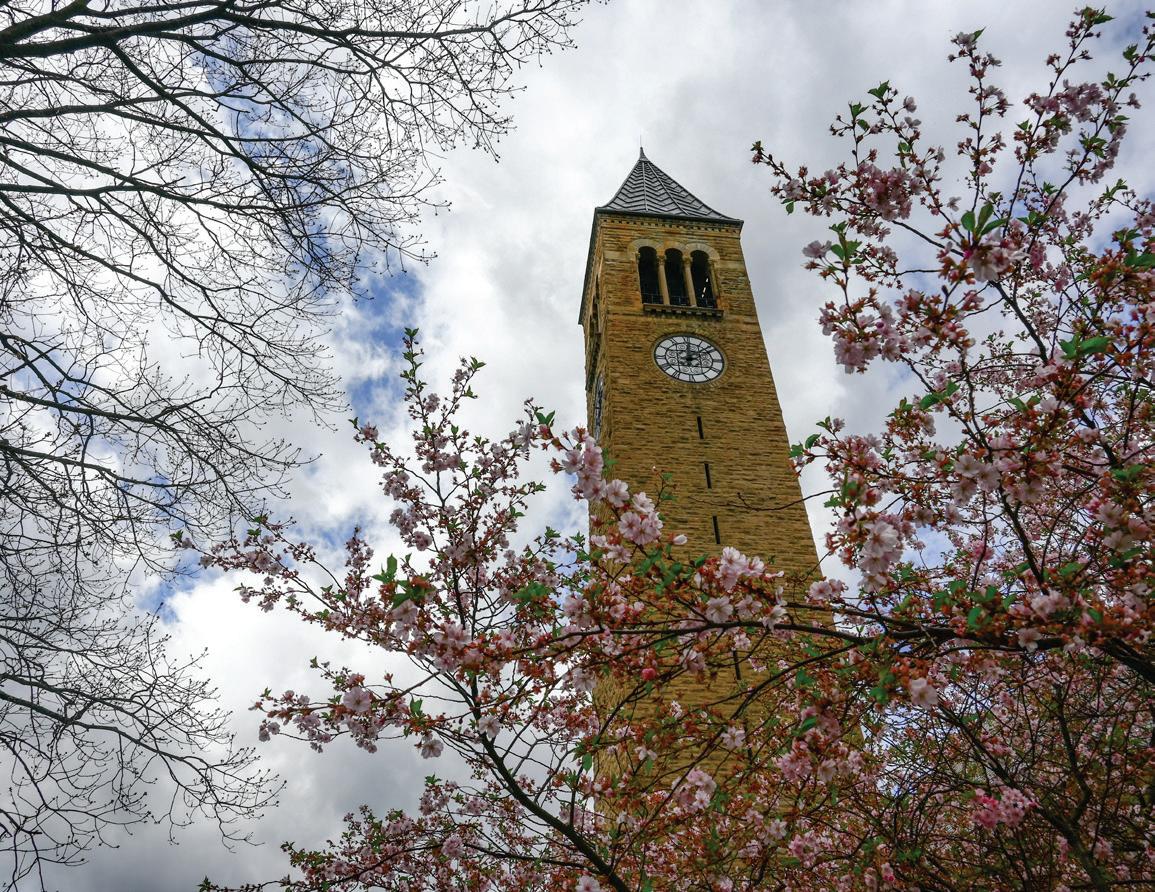

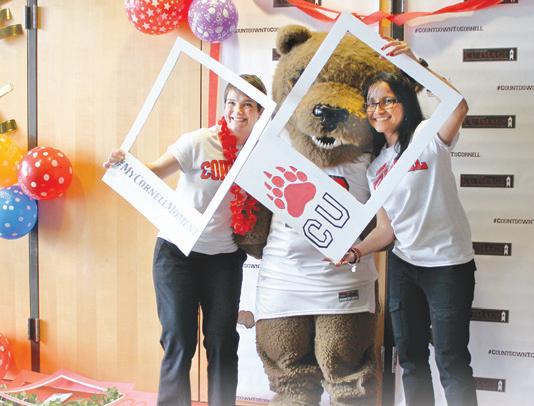
Welcome to Cornell, Class of 2030. You arrive from all 50 states and 102 countries, from nearly every language and tradition a college campus can hold, to spend the next four years on a campus that is now, undeniably, yours.
The Cornell Daily Sun has been Cornell’s living record since 1880, which is to say that for 145 years a rotating cast of undergraduates has walked into our downtown office and decided, against most reasonable advice, that Cornell in all of its dimensions, the shadowy parts and the glistening ones, the assemblies and the protests and the snowstorms and the Saturday games and the meetings nobody else sits through, is worth putting on the record — and starting next month you are worth putting on it too, because you are what happens to Cornell next, and what happens to Cornell is kind of our thing.
Over the next four years, you will come to understand Cornell not through a brochure or a tour or a welcome speech but through the slow accumulation of our record, day by day, and by extension through what it comes to hold about you. But, our record is only as true as it is representative, and a paper written entirely
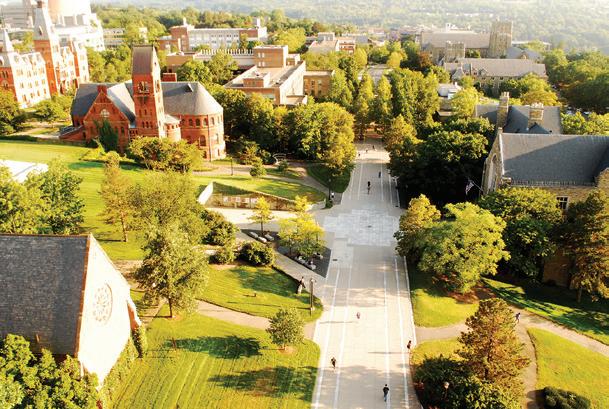
by undergraduates is only as representative as the undergraduates who write it.
Which is where you come in. The Sun is written, edited, photographed and published entirely by students who decided, at some point in a semester like the one you are about to start, that they wanted to be one of the people keeping that record rather than one of the people kept in it. If you feel that same pull at all, follow us on Instagram at @cornellsun for recruitment updates, walk into our office at 139 W. State St., submit a guest piece to our Associate and Opinion editors or write to me directly. There is always room on the masthead for the next class of folks willing to help keep the record true.
You will hear the chimes soon. You will cross the gorges in the fog and stare down the slope at a sunset that will embarrass every sunset you have seen before it. You will build a version of yourself that you have only just started to imagine. And through all of it, The Sun will keep the record, on you and with you.
— Sophia Dasser, editor-in-chief of The Cornell Daily Sun’s 144th Editorial Board
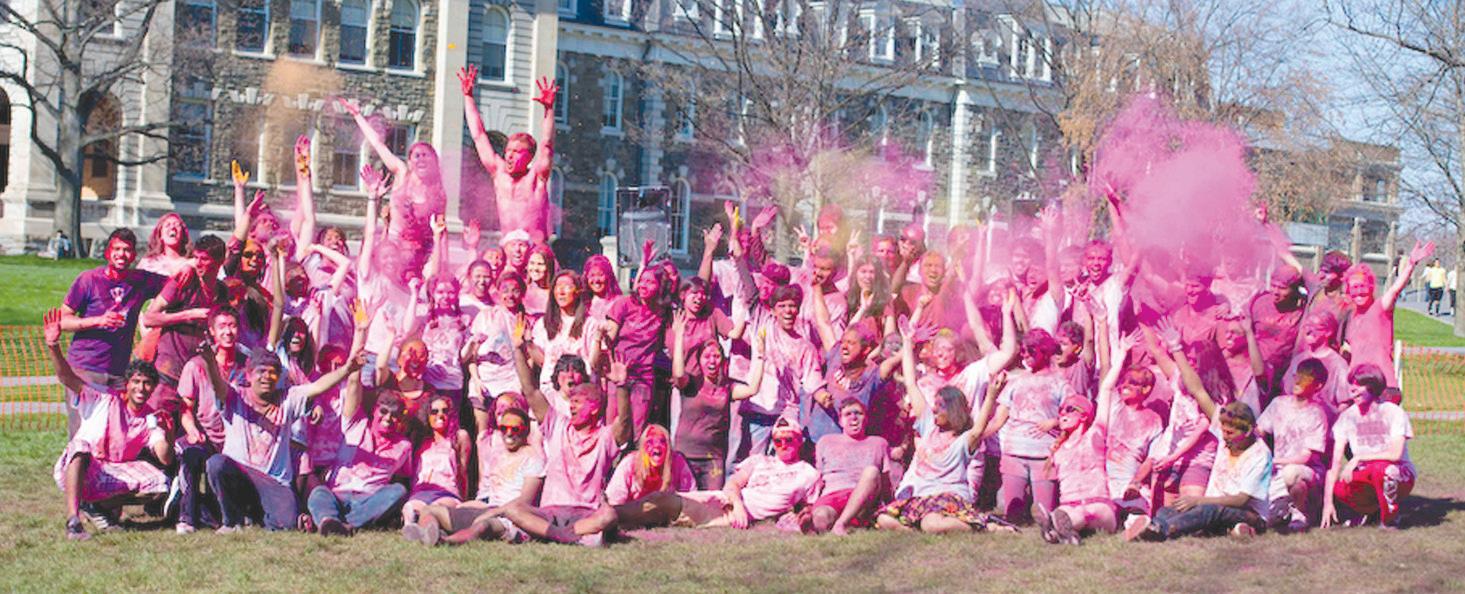

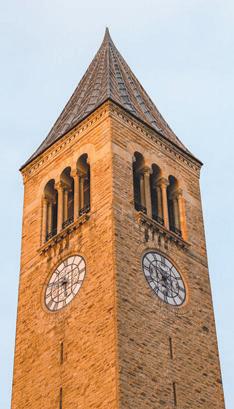
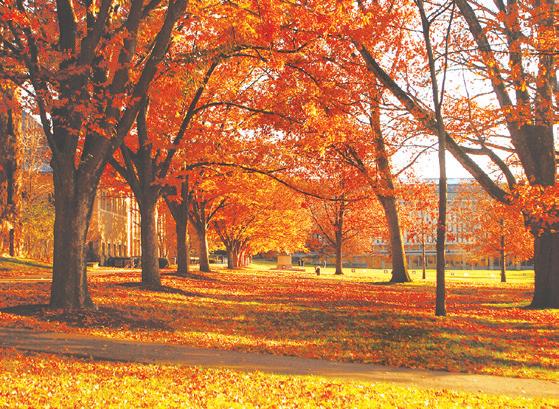
Say what?
Studying in the Cocktail Lounge? Eating at CTB? Learn what’s what: all the terms you need to know.
AAP: College of Architecture, Art and Planning. Found on the north end of the Arts Quad.
AEM: Applied Economics and Management, the only major in the Dyson School.
Appel: Formally named North Star, this North Campus dining hall is known as the “crown jewel of Cornell Dining.”
Big Red: The nickname for all Cornell athletic teams.
Big Red Bucks: Points that can be used in a-lacarte dining facilities, such as Bear Necessities, to buy food. Better known as BRBs.
Borg: Black out rage gallon. A St. Patty’s Day darty tradition.
CALS: College of Agriculture and Life Sciences. Also called the “Ag School.”
CAS: College of Arts and Sciences. The biggest of Cornell’s eight undergraduate colleges.
CCC: Cornell Concert Commission, the organization that brings big-name bands to campus.
Central: Central Campus, the area between the gorges that includes nearly all of Cornell’s academic buildings.
Chalkings: Announcements written in chalk on the campus sidewalks.
Cocktail Lounge: Underground, 24/7 study sac in Uris Library with comfy, sleep-inducing chairs — great for a midday nap!
Coffee Chat: Often scheduled by email, this is a preliminary meeting for many club and project team applications.
Commons: A stretch of State Street in downtown Ithaca closed to vehicular traffic. Go there to find shops, restaurants and many craft and musical fairs.
Cornell Cinema: Sells discounted tickets to more than 150 films a year right in the basement of Willard Straight Hall.
CTB: Collegetown Bagels, the reliable spot for any bagel concoction you could possibly dream up.
C-Town: Collegetown, the business district of Ithaca located next to campus. There are apartments, shops, restaurants and bars on this stretch.
Dairy Bar: Cornell-operated dairy shop that serves ice cream, milkshakes and more. Look out for the chocolate milk, made from Cornell’s very own chocolate cows!
Day Hall: Home of University resources and administrators — like its president. Frequent hotspot for protest on campus.
Dragon Day: Tradition started by Willard D. Straight in 1901, in which architecture students build a giant dragon and parade it around the campus before spring break.
EARS: Empathy, Assistance and Referral Service, a free and confidential peer counseling service.
Fishbowl: A glass-enclosed reading room in Uris Library with rows of reading-conducive desks. Perfect for studying. That’s it. Nothing alcohol-related, why do you ask?
FWS: 1. First-year writing seminar, required for nearly all freshmen. 2. Federal Work Study, a financial aid program.
Ganedago: An upperclassmen residence hall on North Campus. May or may not be haunted by the ghost of an angry bear.
Gorges: Ithaca’s claim to fame, muse of the saying, “Ithaca is Gorges.” These rock-lined waterfalls are hard to miss on campus, but swimming in them is dangerous and prohibited in most areas — be careful.
Ho Plaza: The area between the Cornell Store and Willard Straight Hall, which often hosts student rallies.
Hotelies: Students in the School of Hotel Administration.
I.C.: Ithaca College, the college across town from Cornell.
ILR: School of Industrial and Labor Relations, nicknamed “I Love Reading.”
JAM: Just About Music, a residential program house.
The Johnson: Cornell’s Herbert F. Johnson Museum of Art, free and open to the public.
Libe Café: Where great minds meet daily over coffee inside Olin Library.
Libe Slope: A very steep hill separating West Campus from Central Campus. You’ll want to be there on Slope Day ... but otherwise only take the walk when you’re up for a work-out.
Louie’s Lunch: Late-night staple, found on North Campus between Balch and Risley Halls. Louie’s best foods include their near-legendary fries.
Loving House: A program house to enhance the living experience of LGBTQ+ students.

MVR: Martha Van Rensselaer Hall, home of the College of Human Ecology and Cornell Brooks Public Policy.
Nasties: Affectionate nickname for the greasy, a-la-carte dining facility in RPCC.
Noyes: The student center on West Campus, home to a state-of-the-art gym and Jansen’s Market.
Orgo: Organic chemistry. Two words: Fear it. Okies: Short for Okenshields, Central Campus’ only dining hall. Uncontested as the student favorite.
Prelim: A Cornell-specific term for a fulllength exam that is not a final. Known as “midterms” at most other colleges, but Cornell wanted to be unique.
PSB: Physical Sciences Building, home to Goldie’s Cafe and STEM studiers.
Quad: Quadrangle, a rectangular section of campus that houses one of Cornell’s colleges, such as the Ag Quad, the Arts Quad and the Engineering Quad.
R.A.: Resident adviser, the upperclassman in charge of keeping order in your residence hall. Don’t make their life too hard.
RHD: Residence hall director, the R.A.’s boss. You want this person to be on your side if you’re in trouble.
ROTC: Reserve Officers’ Training Corps, a collegiate-level military organization. Members can be found running through the woods in camo at odd hours.
RPCC: Robert Purcell Community Center, one of two community centers on North Campus. It is home to numerous study lounges, Bear Necessities, and a gaming lounge.
S/U: Pass-or-fail grading that is an option in some courses (satisfactory or unsatisfactory).
S.A.: Student Assembly, a student governing body that has jurisdiction over the student activity fee and makes recommendations to the administration.
Schwartz Center: Home of Cornell’s performing and media arts department. Located in Collegetown, it hosts many student performances and visiting shows.
Slope Day: An end-of-the-year celebration in the spring when Cornellians gather on Libe Slope, hang out with friends, listen to music and have a few (or more) drinks.
St. Patrick’s Day Ginger Run: St. Patty’s day tradition that takes place annually during the Collegetown darties.
The Straight: Willard Straight Hall, Cornell’s student union, which contains dining facilities, a study lounge, the Cornell Cinema movie theater and registered student organization offices.
SAFC: Student Assembly Finance Commission, in charge of distributing money to registered student organizations.
State Street Diner: A restaurant west of the Ithaca Commons. Stop by if you’re looking for greasy, home-style cooking and waitresses who will call you “honey.”
T.A.: Teaching assistants, often graduate students who lead discussion sections for large lectures.
TCAT: Tompkins Consolidated Area Transit, the bus company that serves the Ithaca area. All first-years receive a free bus pass to take you to 8:40 a.m. classes or home from late-night escapades.
Touchdown: Cornell’s mascot. Despite being named after our occasionally ailing football team, Cornellians still look to him for spirit.
Townie: A local Ithaca resident.
Ujamaa: A multi-year residential community on North Campus that celebrates Black heritage. Wegman’s: The massive and hyper-popular supermarket downtown. Great place to shop if you cook for yourself a lot.
Westchester: Where the most unique, inquisitive, humble and hard working Cornellians come from. Its residents comprise approximately 69 percent of each graduating class. (A Westchester resident wrote this.)
Yellow Deli: A cute, homey cafe on the Commons open for late night eats. Just don’t ask too many questions about who’s making the food....
Zeus: Temple of Zeus, the best place to be seen pretending to do work on campus. Also a favorite spot for
and say hi!
By SUN STAFF
On April 27, 1865, the governor of New York State signed Cornell University’s charter, establishing the university that its founder, Ezra Cornell, would later describe as “an institution where any person can find instruction in any study.”
While The Sun was not established until 15 years after the University’s founding, the publication has continuously followed the University and kept Cornellians informed for over 140 years.
On this page, we’ve laid out a few of The Sun’s front pages that showcase what many would call some of the defining moments of the University’s history.

“Cornell’s Stand In Face of War to Be Revealed” | The day after the Pearl Harbor attacks on Dec. 7, 1941, the front page of The Sun (above) featured various Associated Press wires regarding World War II and the attacks. Cornell President Edmund Ezra Day issued a statement the following day, telling Cornellians to stay “at their jobs” until more definitive information regarding the country’s role in the war was provided. Throughout the war, Cornell was greatly disrupted — men were called to enlist in 1943, and The Sun became a weekly known as “The Cornell Bulletin.”
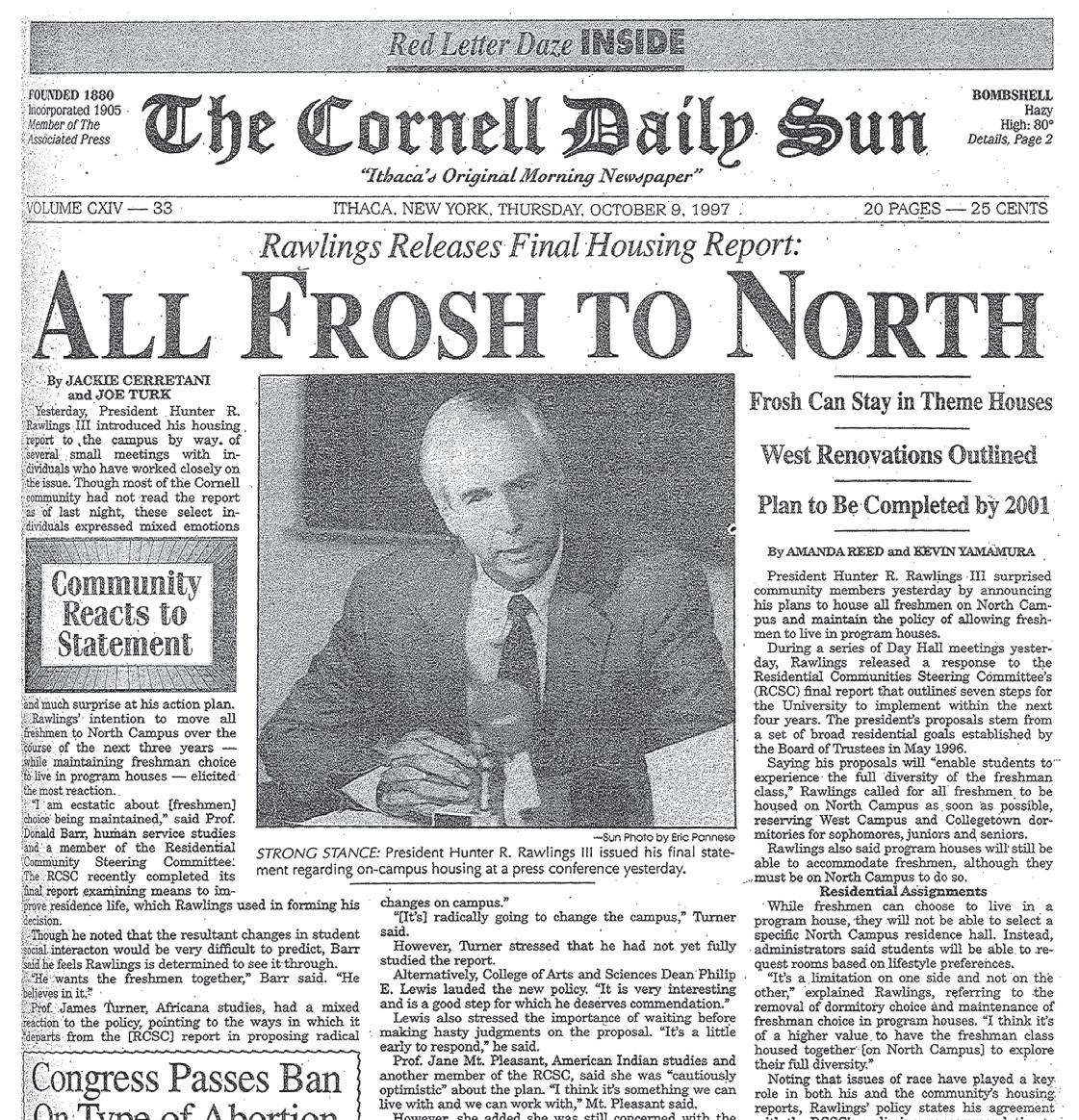
Rawlings’ seven-point plan | On Oct. 8, 1997, President Hunter R. Rawlings III announced his plan to move all first-year housing to North Campus and all upperclassmen housing to West and in Collegetown. The following day, The Sun (above) led with the headline “All Frosh to North.” Rawlings’ plan lead to the construction of Mews and Court-Kay-Bauer Halls, as well as the West Campus housing system.
The land grant university of the future | In December 2011, thenNew York City Mayor Michael Bloomberg announced that Cornell had won the city’s Applied Sciences competition, which granted the University the right to build a new technology campus on Roosevelt Island in Manhattan. Cornell is thought to have won the bid after Stanford University, Cornell’s rival throughout the competition, dropped out and billionaire Chuck Feeney ’56 donated $350 million to the University for the campus. The Sun reported on the announcement during Cornell’s winter break and published the news online, with the print version (right) making its debut at the start of the spring semester. The campus opened on Roosevelt Island in Fall 2017 and the full buildout is to be completed by 2037.
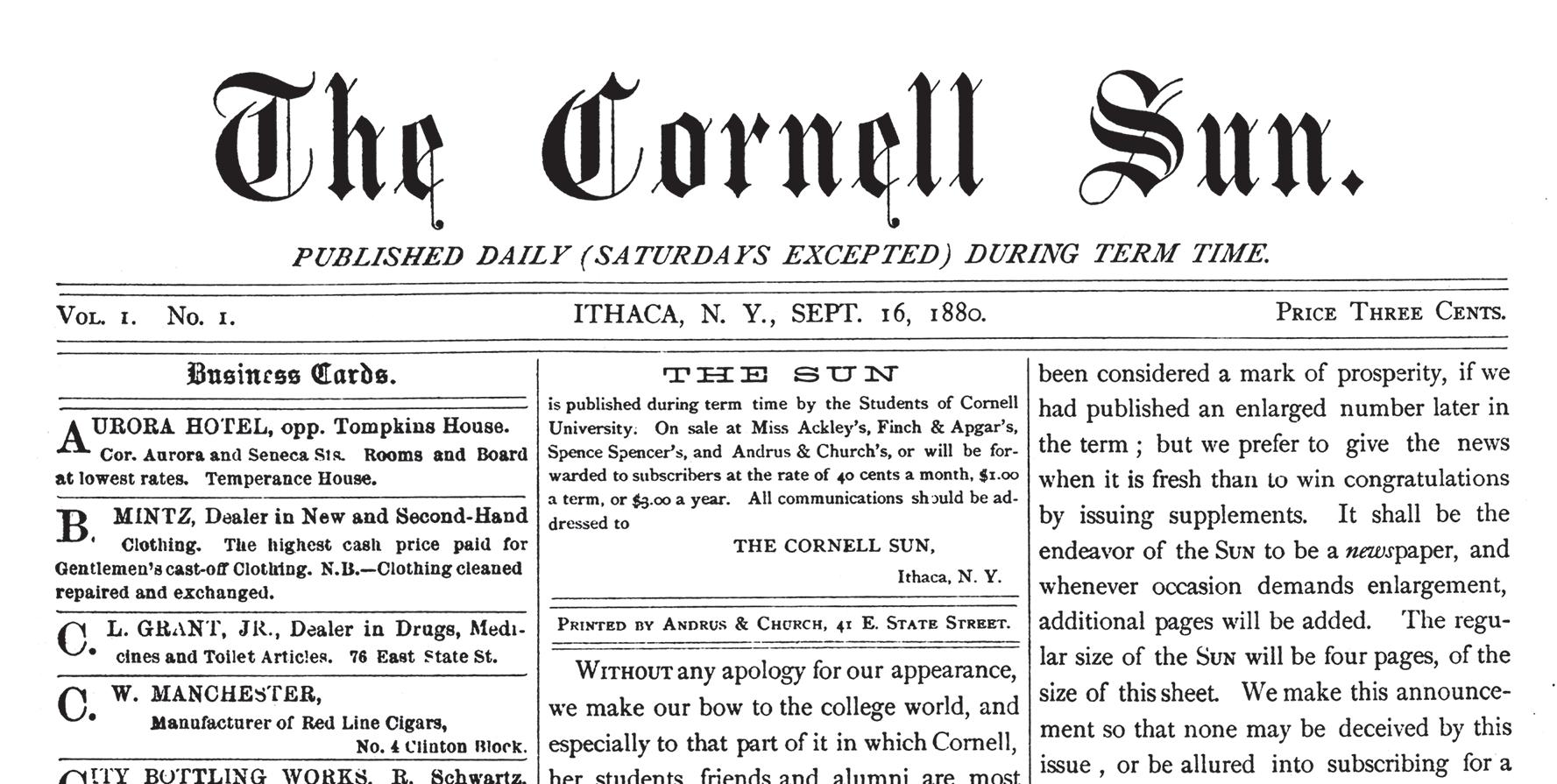
“Without any apology for our appearance” | The Sun’s inaugural issue was published on Sept. 16, 1880, 15 years after Cornell’s charter was signed and 18 years after the signing of the Morrill Land-Grant Act, which allowed states to establish a university with the purpose of benefiting the state.
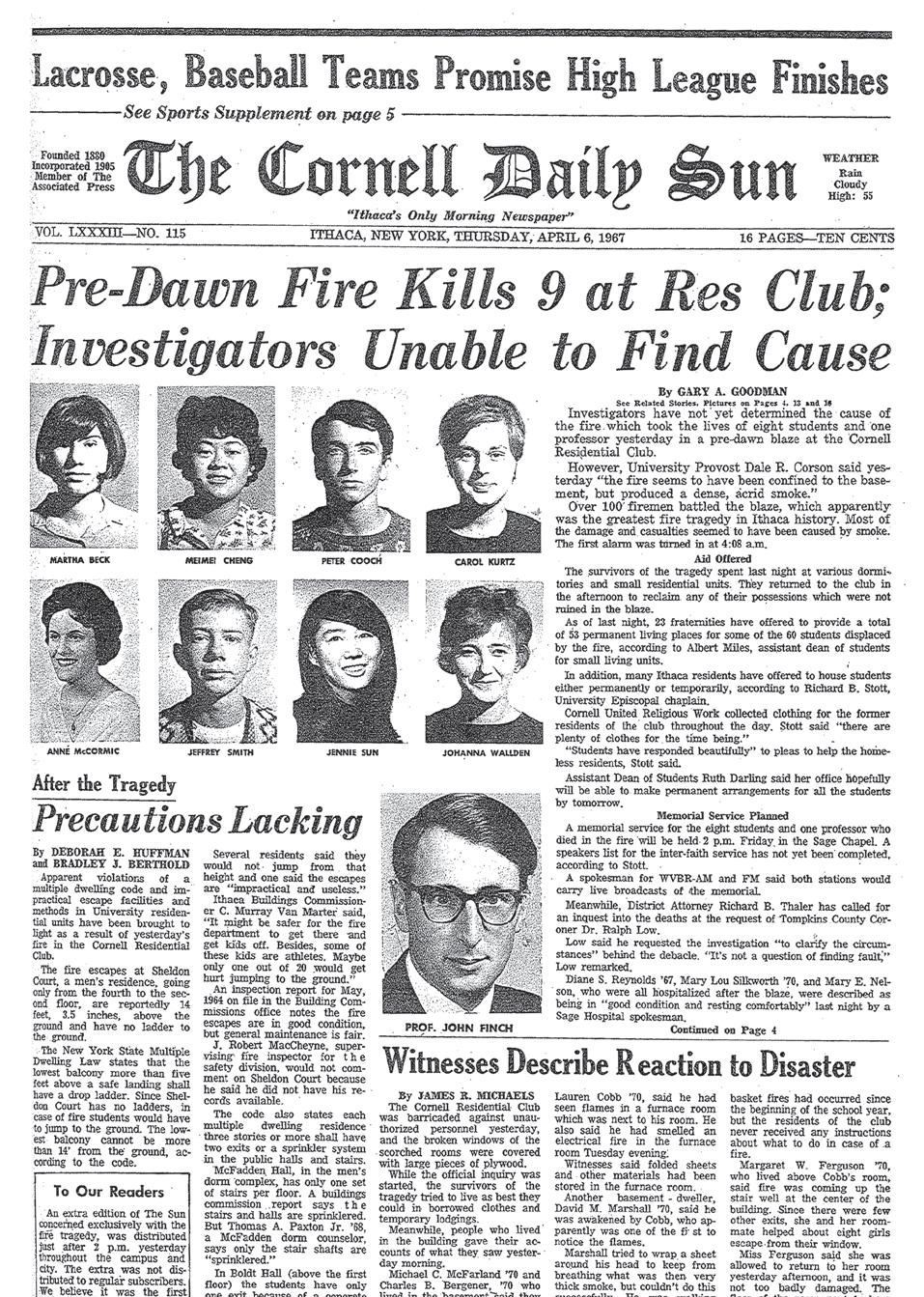
Cornell’s capitulation | Fifty years ago, approximately 100 black students took over Willard Straight Hall and ejected Cornell employees and visiting family members from the building. The following day, April 20, 1969, students emerged from the Straight. Marking the end of a decade full of racial tensions, Cornell was divided. Tensions ultimately culminated with the resignation of its president and the future establishment of shared governance on campus. The Sun’s extra edition (right) announced the takeover.
‘Precautions Lacking’ | In April 1967, a fire at the Cornell Heights Residential Club — which is now the Ecology House on North Campus — killed eight Ph.D. students and a professor. The following day, The Sun published a story on its front page (left) about the lack of fire safety precautions in University residences. To this day, the cause of the fire is officially unknown, although following the event, Cornell invested in fire safety measures across campus.
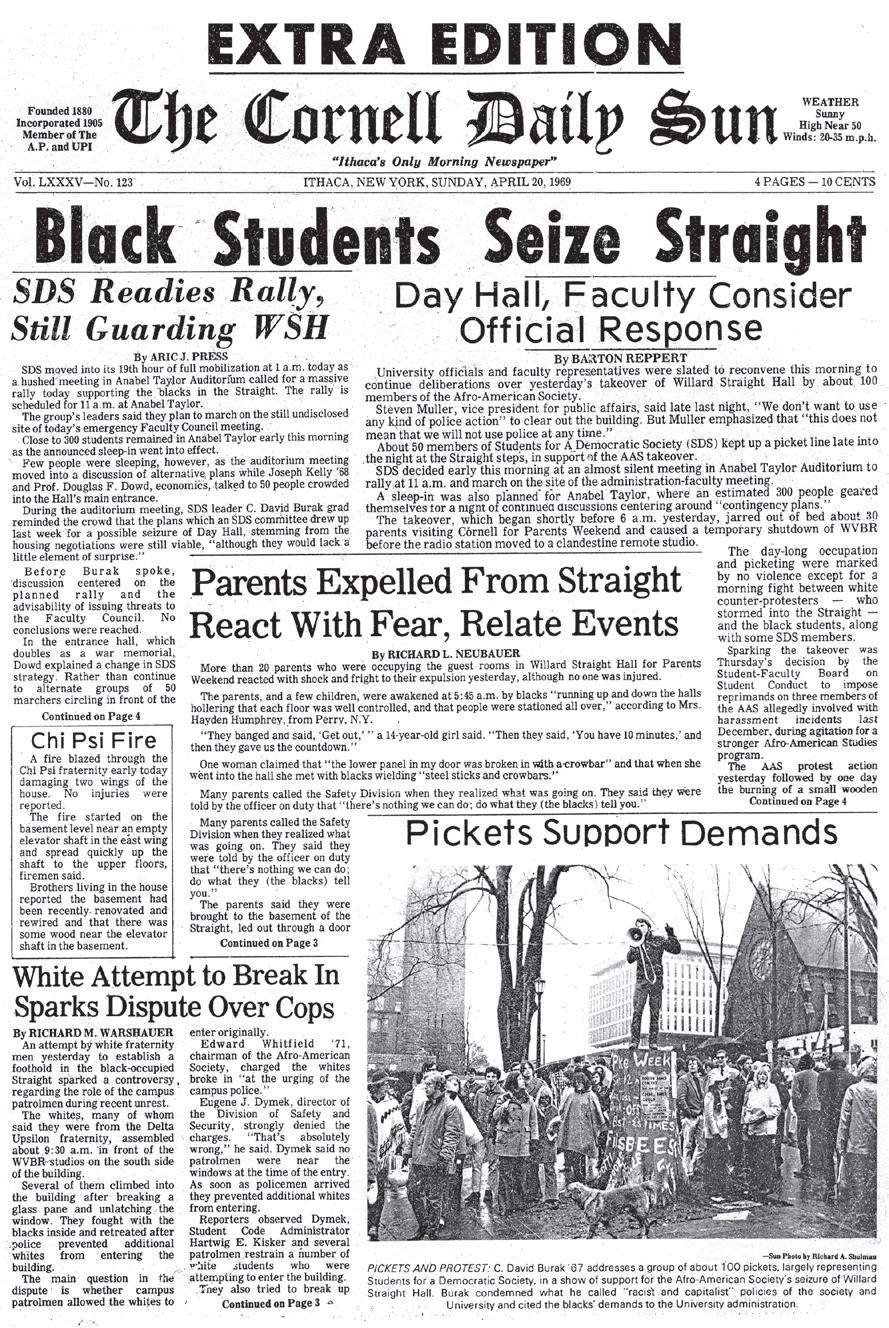
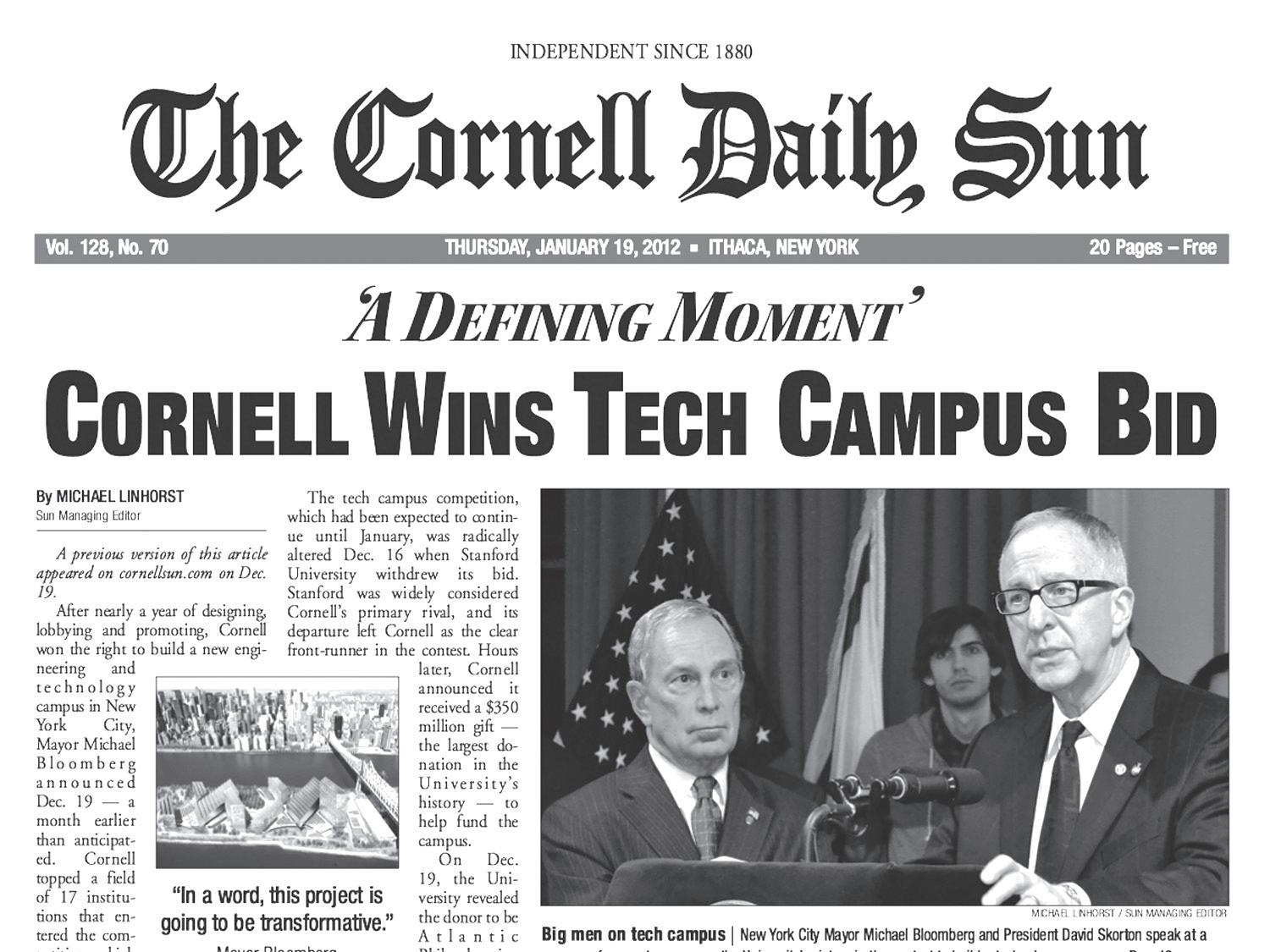
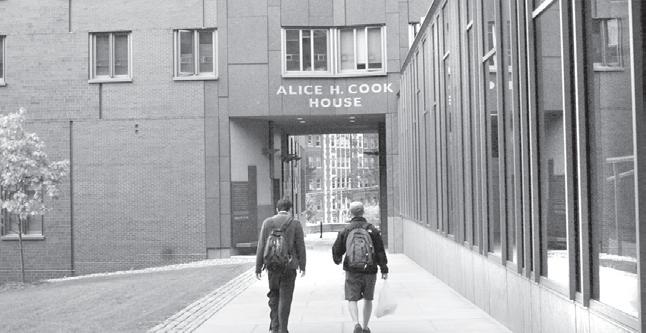
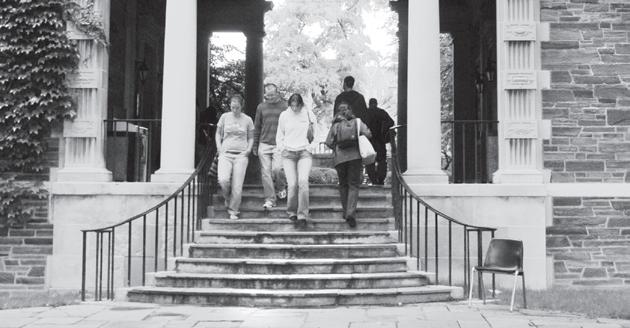
By SUN STAFF
In 1900, the Cornell student body was housed entirely in fraternities and boarding houses — no real dormitories existed. According to Cornell: Glorious to View , a history of Cornell written by history Profs. Carol Kammen and Walter LaFeber, Andrew Dickson White, Cornell’s co-founder and first president, believed students should live on their own. Clearly, times have changed. Now required to live on campus, the Class of 2030 arrives at Cornell with a wide range of housing options.
This class will be the sixth to live in the newly constructed dorms that are a part of the North Campus Residential Expansion. The entire NCRE — with five new dorms and a laundry list of new accommodations from a new gym to a dining hall — opened in Fall 2021 after over five years of planning.
Three of the five dorms will house first-year students this year — Barbara McClintock Hall, Hu Shih Hall and Ruth Bader Ginsburg Hall. The dorms — which began housing first-years when they opened in Fall 2022 — are named for Nobel Prize winner Barbara McClintock ’23, M.A. ’25, Ph.D. ’27, renowned Chinese scholar and diplomat Hu Shih ’14 and the late Supreme Court Justice Ruth Bader Ginsburg ’54. While these dorms are the newest and most modern halls on North Campus, they have been reported to be less social with their suite-style setup.
But the luxury of hardwood flooring, adjustable overhead lighting and pingpong tables in lounges make these dorms highly desirable.
Clara Dickson Hall
Named after A.D. White’s mother, Clara Dickson Hall has also held the unusual nickname, “The Big Dick.” The dormitory was originally intended to house only women, but is now co-ed. Almost 500 students can fit in this five-story dormitory making it the largest in the Ivy League. Not as conveniently, though, Dickson has only four bathrooms per floor.
Dickson is also full of single rooms, a rarity for first-years at most colleges. Many rooms stand on long hallways with lounges in the middle. During the 2025-2026 academic year, half of Dickson will house first-year students, and half will house sophomores.
Court-Kay-Bauer Hall
Opened in 2001, this residence conveniently features the beloved air conditioning other dormitories lack. While Ithaca does live up to its reputation of frigid winters, cool air is definitely welcome on those first few humid days of school. At its opening, this perk gave the dorm its nickname, “Court Resort.” As one of the most modern dormitories, Court-Kay-Bauer Hall also boasts brightly painted walls and comfortable common areas.
But all is fair, or pretty fair, in dormitory life, as the rooms in the CKB are also known to have almost paper-thin -
walls.
Mews Hall
Mews opened alongside Court-KayBauer and has a structure and facilities that closely mirrors that of its sibling dorm. Mews also contains 22 lounges, including the spacious, semicircular Lund Lounge that overlooks Rawlings Green. Mews residents also enjoy proximity to Appel Commons, one of the community centers on North Campus.
Mary Donlon Hall
Some say that Donlon Hall is “thong-shaped,” a description somewhat fitting considering its reputation for being a social dormitory.
The majority of the rooms are doubles on co-ed corridors — wings which lead to lounges in the middle for social activity. While most bathrooms are single-sex, there is an occasional co-ed one.
Socializing may be a constant for life in Donlon, but the dormitory also has a recently-renovated library on the first floor. The library was repainted and recarpeted and serves as a quiet and convenient retreat for some serious studying.
Low Rises 6 and 7
Step inside the Low Rises and you’ll feel like a rat in a maze. Winding corridors and unexpected turns are the norm in these dormitories. But at the time the buildings were constructed, the Low Rises’ small, somewhat isolated suites were a novel proposition.
Constructed at a time of high economic inflation, the Low Rises were built to be long-standing and to foster diversity and interaction between students in their small building communities. A typical suite consists of one bathroom, two double rooms and two single rooms.
In the midst of rural Ithaca, High Rise 5 and Jameson do their best to stir up a bit of urban life with their architectural styles intended to resemble city living. Their organization is very similar to that of the Low Rises, also with suites for community interactions.
The most distinctive feature of the High Rises is arguably their Sky Lounges (complete with A/C!). Located on the top floor of each building, they provide an unparalleled panoramic view of North Campus.
Balch Hall, a residence for female-identifying students, was constructed in the 1920s as the second dormitory on North Campus, according to Cornell Then and Now by Prof. Ronald Ostman, communication.
Generations of Cornellians and architectural trends later, Balch’s Gothic style and ivy-covered exterior continue to exude a timeless and classically collegiate character.
After undergoing recent renovations, both North and South Balch Hall will host first, second, third and fourth-year female students in the fall.
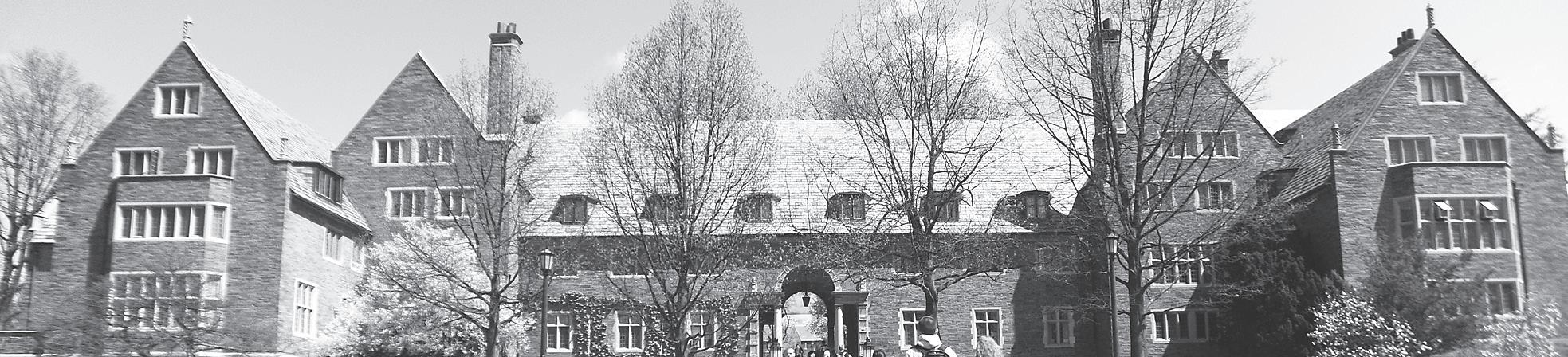
By SUN STAFF
All Cornellians, including firstyears, may apply to live in program houses, the majority of which are located on North Campus. The houses allow students with an interest in a particular theme to live together.
Akwe:kon (pronounced “A-gway-go”) is dedicated to Native American heritage. Its 35 residents share an interest in Native American culture, family and community. Many Akwe:kon members take part in an annual smoke dance and powwow.
Ninety-six students with a passion for the environment can choose to live in the Ecology House. Typical events include environmental discussions, hikes and kayaking
trips.
Located adjacent to West Campus, the Equity and Engagement Living Learning Community opens opportunities for 35 upperlevel and transfer students to focus on successful education, retention and identity development. Some of the programs offered include discussions and training opportunities on social justice, sexual orientation and gender identity.
The Holland International Living Center, more commonly known as HILC, is home to international students as well as those interested in global, political, economic, social and cultural issues. Some of the center’s programs include international affairs discussion groups, ice-cream hour and talent shows.
Music lovers at Cornell can
choose to live in Just About Music, known appropriately as JAM. The 144 residents range from students who enjoy listening to music to students who sing or play musical instruments. Members of JAM can take advantage of the house’s pianos, drum set, C.D. library, practice rooms, concert stage, recording studio and weekly listening parties.
The Loving House is a section in Mews Hall that can accomodate 30 residents. It aims to enhance the intellectual and cultural enviornment of Cornell in regards to LGBTQ+ and allied community experiences.
The only program house situated on West Campus is the Language House, located in the Alice Cook House. The Language House is open to sophomores through
seniors hoping to become fluent in Arabic, French, German, Japanese, Mandarin or Spanish.
57 students interested in Latino culture live in the Latino Learning Center, or LLC, located in Anna Comstock Hall. Each week, in an event called “Café Con Leche,” students discuss issues facing Latino people across the world.
Students hoping to learn about other cultures may decide to live in the Multicultural Living Learning Unit, known as McLLU and pronounced “McClue.” This program house is located in Clara Dickson Hall, a freshmen dormitory. Members of McLLU celebrate diversity by holding presentations and festivities centering on their assorted backgrounds.
With 190 residents, Risley
Residential College for Creative and Performing Arts is one of the largest program houses on campus and has its own dining hall. Risley is also home to recording and video-editing studios. Some of the programs Risleyites host each year include concerts, shows and art exhibits.
Ujamaa — pronounced “oo-jama” — is home to 140 students who share an interest in Black history and culture. The name Ujamaa comes from a Ki-Swahilian word that roughly translates to “a community that works together as a family.” The house also focuses on advancing the academic and professional goals of its residents. Ujamaa’s members engage in discussion, hold dances and work with many social-action groups.
FDSOC 1101: “Science and Technology of Foods”
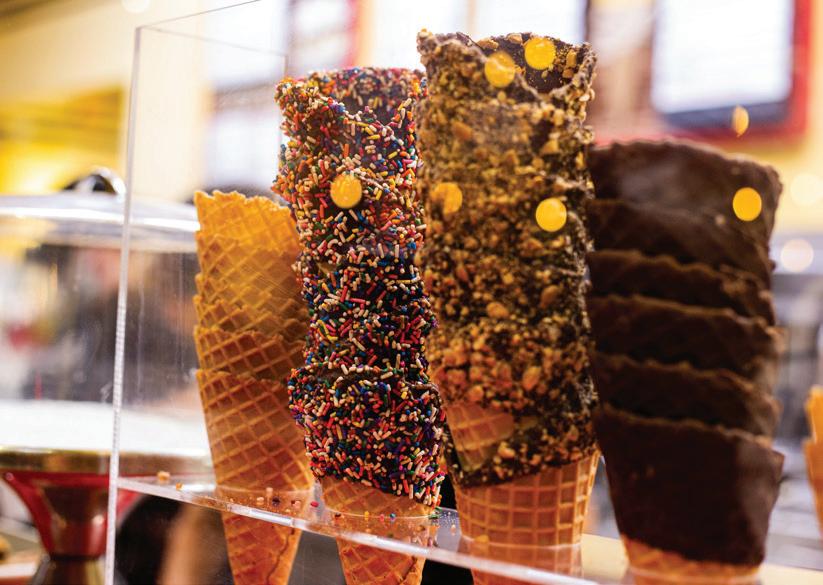
Arguably the most recognized Cornell course, this 1-credit class teaches students the science of making ice cream, and culminates in an end-of-year flavor-off where students put their new knowledge to use to design an all-new ice cream flavor. The winning team’s concoction — decided among finalists by student tastings — is then served in The Cornell Dairy Bar for one year. Stop by The Dairy Bar on Tower Road to try “Slope Day Spice,” last year’s horchata-inspired winning flavor!
HD 3620: “Human Bonding”
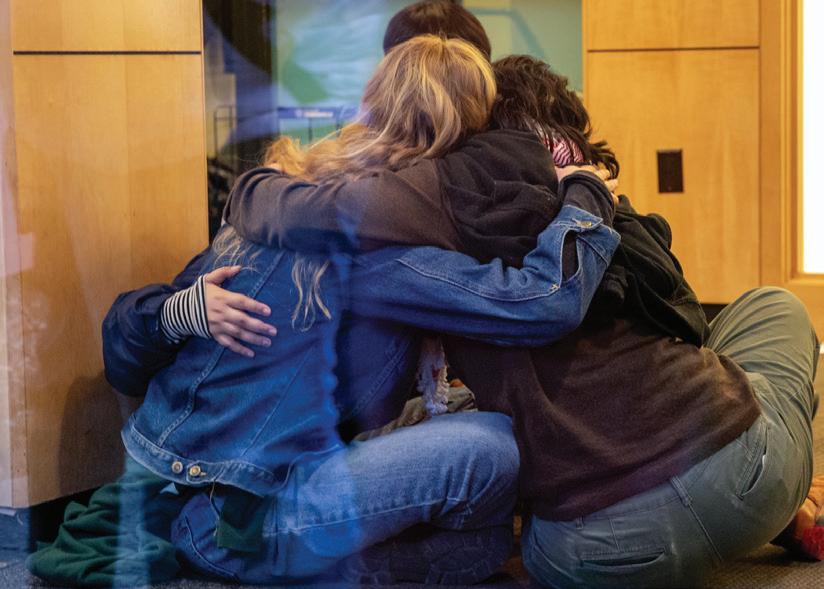
Covering topics ranging across sex, love and intimacy, this course tackles how humans connect with one another from a scientific level, and offers pieces of wisdom on how to form and cultivate successful relationships. With over 600 students enrolled each spring, it stands among Cornell’s most popular offerings. Students praise the life and social skills they emerge with, often citing it as one of the most useful classes of their collegiate career.
BIOEE 1560: “Introductory Oceanography”
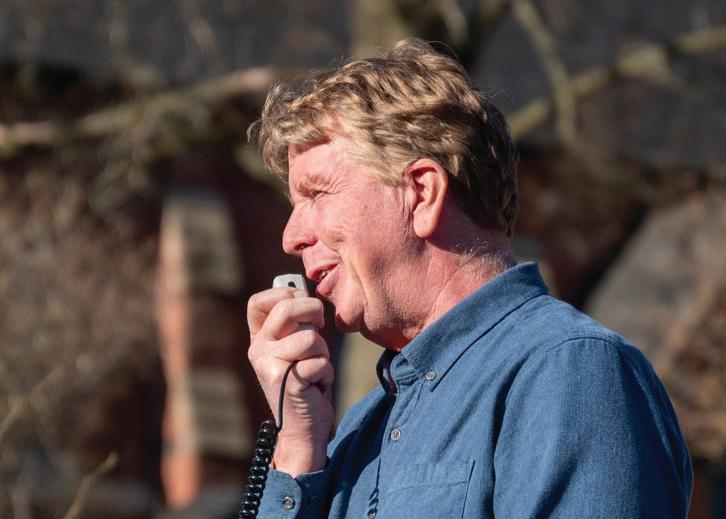
Travel under the sea with beloved Prof. Bruce Monger, earth and atmospheric sciences (left). Widely regarded as a whimsical and eye-opening biology course, this class covers environmental threats to the oceans, global warming and culminates in writing a letter to a government representative about a climate issue of your choosing. Enroll to check off #18 on the 161 List, meet your new favorite professor and learn more about environmental conservation.
AMST 2001: “The First American University”
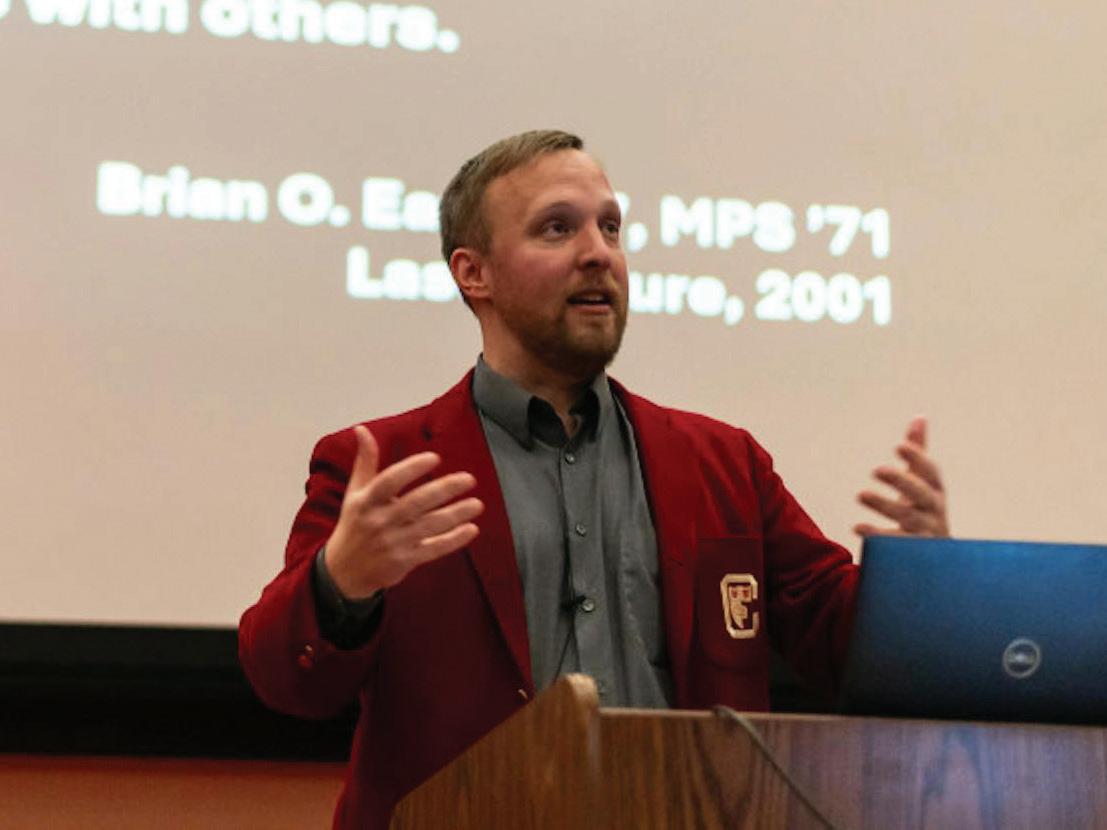
This 1-credit class, taught by Lecturer Corey Earle ’07 (left) — nicknamed “Cornell’s ultimate storyteller”— explores the University’s development through the ages and emphasizes the importance of learning your place in history. “There are stories behind everything on campus and they teach us about how we got to be where we are,” Earle said in a 2024 lecture. “Every name on every building has a story and you should wonder about them when you are walking on campus.”
Welcome to college! While the unfortunate truth is that many of your classes are likely to be mind-numbing lecture halls that don’t understand the concept of “too much reading” and not the Dead Poet’s Society-esque small discussions you dreamed your collegiate life would entail, Cornell is known for a handful of classes that shake up the routine and add some excitement to your soon-to-be overwhelmed schedule.
So, while you still have that characteristic first-year light in your eyes, glance over some The Hill’s best options — just keep in mind you may not be able to score a spot in some of these sought-after courses until your senior year.
HADM 4300: “Introduction to Wines”
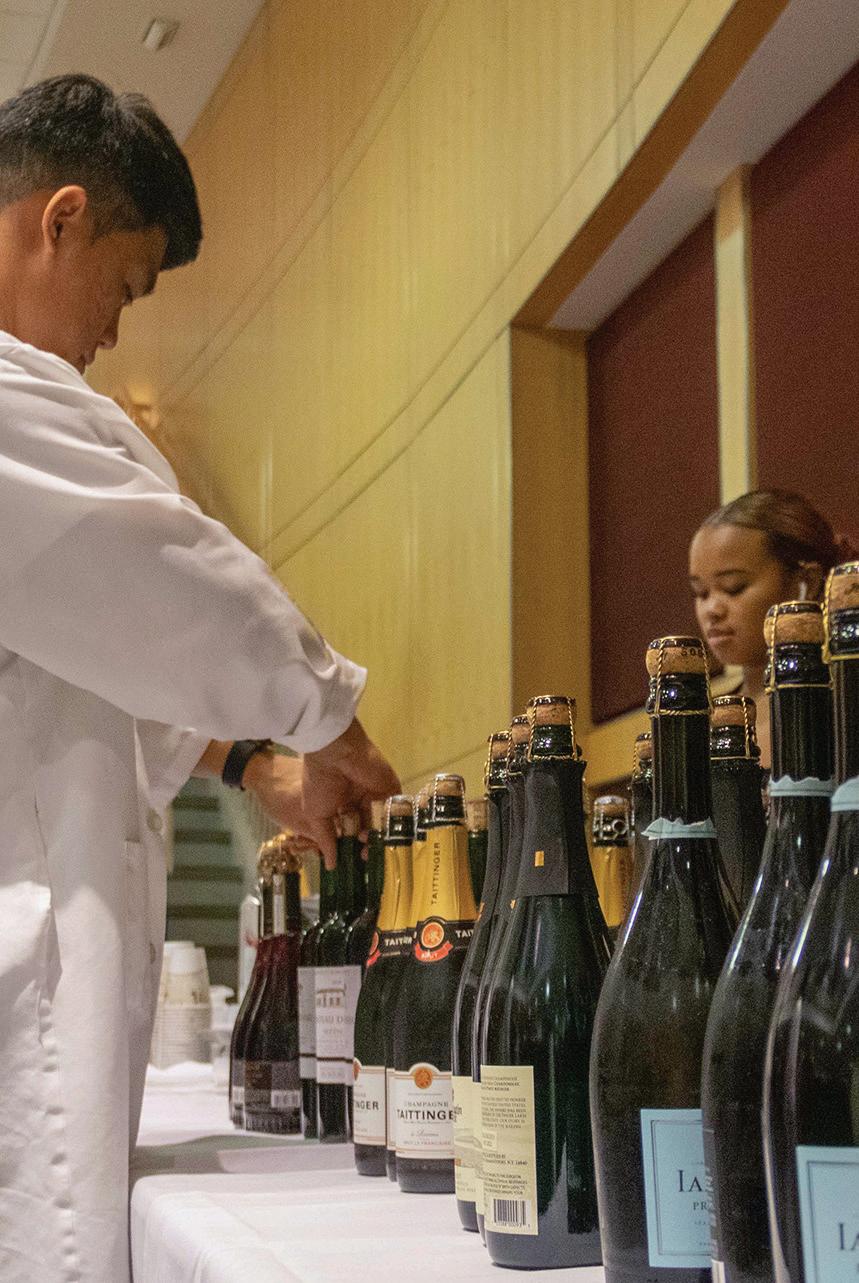
Item six of “161 Things Every Cornellian Should Do” (see pg. 27), this 2-credit pass/fail course is a must-take for a complete Cornell experience. Essentially a souped-up excuse to day-drink, this class offers weekly wine tastings and imparts on students the finer points of wine etiquette and pairings.
(Pro tip: If you T.A., you get to take home the extra wine bottles.)
So as you stroll around campus in the fall and spot upperclassmen carting around what appear to be mini briefcases on Wednesday afternoons, don’t be fooled — they’re not Dyson kids, they’re just wine aunts (and uncles) in the making.
PLSCI 2010: “Magical Mushrooms, Mischevious Molds”
Less psychedelic than it sounds, this 2-credit class dives into the weird biology and unique properties behind mushrooms and other fungi. For example, did you know that fungi are more closely related to animals than plants? Learn this and more intriguing facts about these alien-like opisthokonts in this fun and kooky student favorite.
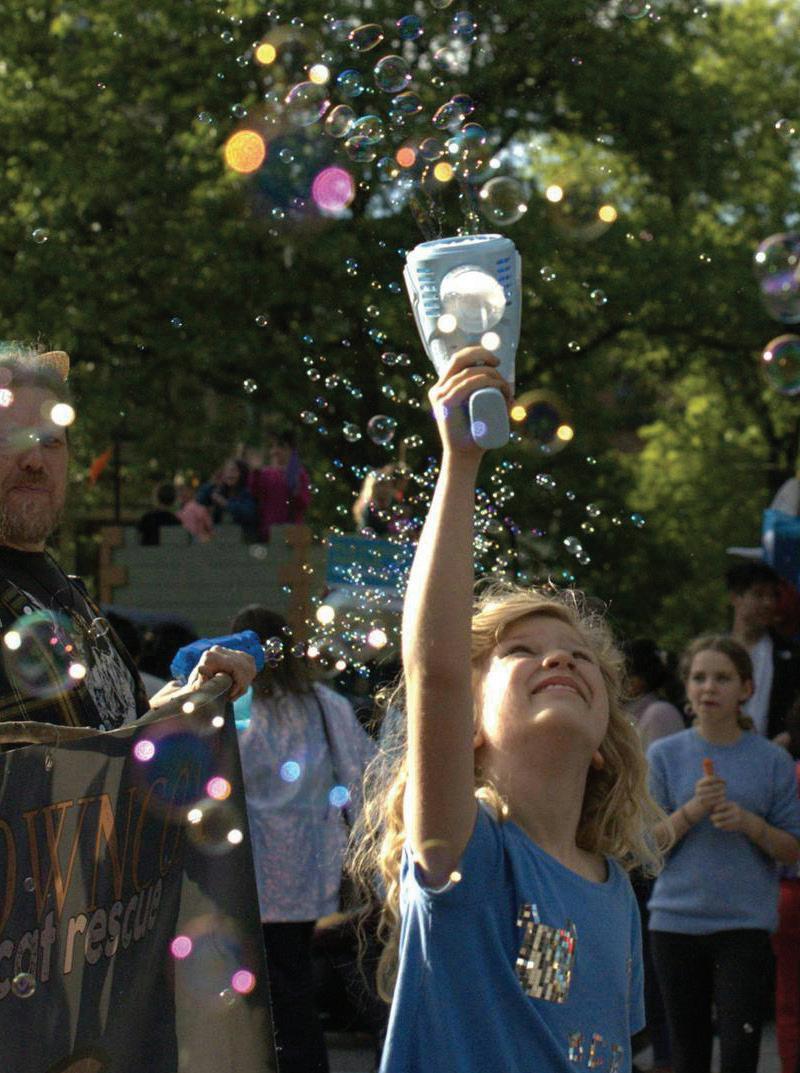
This 3-credit class, touted alongside Human Bonding as one of the more useful courses for everyday life, explores what happiness really means and how to cultivate it in your own life.
If you can’t fit in your schedule, Prof. Emeritus Harry Segal, who used to teach the class, created a YouTube channel to share his musings with his students and the world on happiness and how to capture it (@HarrySegalTheHappinessChannel).
By SUN STAFF
If your schedule has not been sufficiently crammed with lectures, work, parties, meals and sleep, you might want to look into joining a club to fill those few extra minutes each week. Cornell has a niche for virtually every interest, no matter how esoteric. Whether you’re an aspiring guitarist or an expert knitter, it is likely you will be able to find a group of like-minded students to share your passion with. Below is a sampling of some of the more prominent clubs on campus.
Academic Groups
Looking to get your inner nerd on? Head on over to the Chess Club’s meetings to practice checking your mates. Fed up with classes? Take your frustration out in the Cornell Speech and Debate Society. Big museum fan? Join Curate Cornell.
Pre-professional organizations from pre-law to pre-med also offer communities of students headed toward similar goals.
Many computer and information science and engineering students find themselves involved in one of the 34 project teams on campus, ranging from autonomous sailboats to robotics to rockets.
Affinity Groups
Across campus, there are many identity-based centers to support and empower students from historically marginalized backgrounds, housed in Student and Campus Life. For student-run clubs, there are dozens of communities, many supported by “umbrella organizations” with significant funding, including Haven (the
LGBTQ+ student union), the Interfaith Council, the Gender Justice Advocacy Coalition and the International Students Union. From specific career support groups like Women in Computing at Cornell and the Black Ivy Pre-Law Society to more general ones like the Cornell Asian Pacific Student Union to the First Generation Student Union, students are sure to find a group to call home.
Athletic Groups
Stay moving with club sports or intramural competitions! There are plenty of ways to stay active with Big Red Yoga, Cornell Running Club and the countless dance teams on campus. For the more kinetic ways to de-stress, try your hand at Bhangra, an Indian dance troupe, or Yamatai, a taiko drumming group.
Musical Groups
Cornell offers dozens of outlets for those looking to express their musical creativity. You won’t be able to turn a corner the first couple weeks of class without seeing a flyer for an a cappella tryout (Did you know that Cornell is rumored to be the inspiration behind Pitch Perfect, with 15+ distinct a cappella groups?) or a chalking pointing you in the direction of band auditions. Love to sing but better suited for the shower? Look no further than the Mediocre Melodies, an a cappella group that describes itself as “bad singers for a good cause.”
The University chorus, jazz ensembles, symphonic band, marching band, symphony orchestra and glee club are all open to the musically inclined. There are more than a dozen
for prospective members to choose from, each with a unique style.
If you’d rather experience music than make it, join The Cornell Concert Commission, which organizes most of the major musical events that happen on campus. The group has brought big-name acts as Ken Carson, Mannequin Pussy, mxmtoon, Young Thug and Icona Pop over the years. Or, check out the Fanclub Collective, which hosts independent and local acts.
Political Groups
The Cornell Democrats and the Cornell Republicans represent the two major political parties on campus, each engaging in its own brand of activism and spreading awareness of political issues. Meanwhile, Cornell Political Union hosts a diverse array of speakers to provoke thought and debate from all sides of the spectrum. Last year, they hosted Curtis Sliwa, who ran against Zohran Mamdani for mayor in New York City’s last mayoral election.
Theatrical Groups
For students who want to spend their years at Cornell in the spotlight, look out for the Melodramatics, a group that brings together talent from Ithaca College and Cornell alike to put on a full-length musical every semester. If your vocal chords can’t cut it, check out Cog Dog’s theater troupe to participate in straight plays and the occasional student-written production.
If the spotlight’s not for you, but you still love theater, join a production crew — these groups are always in need of helpers behind-thescenes to make the theatre
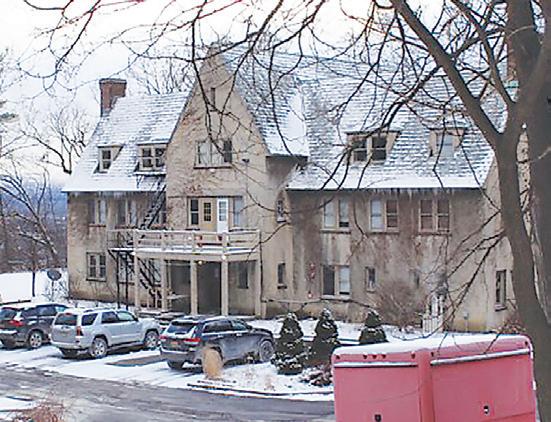
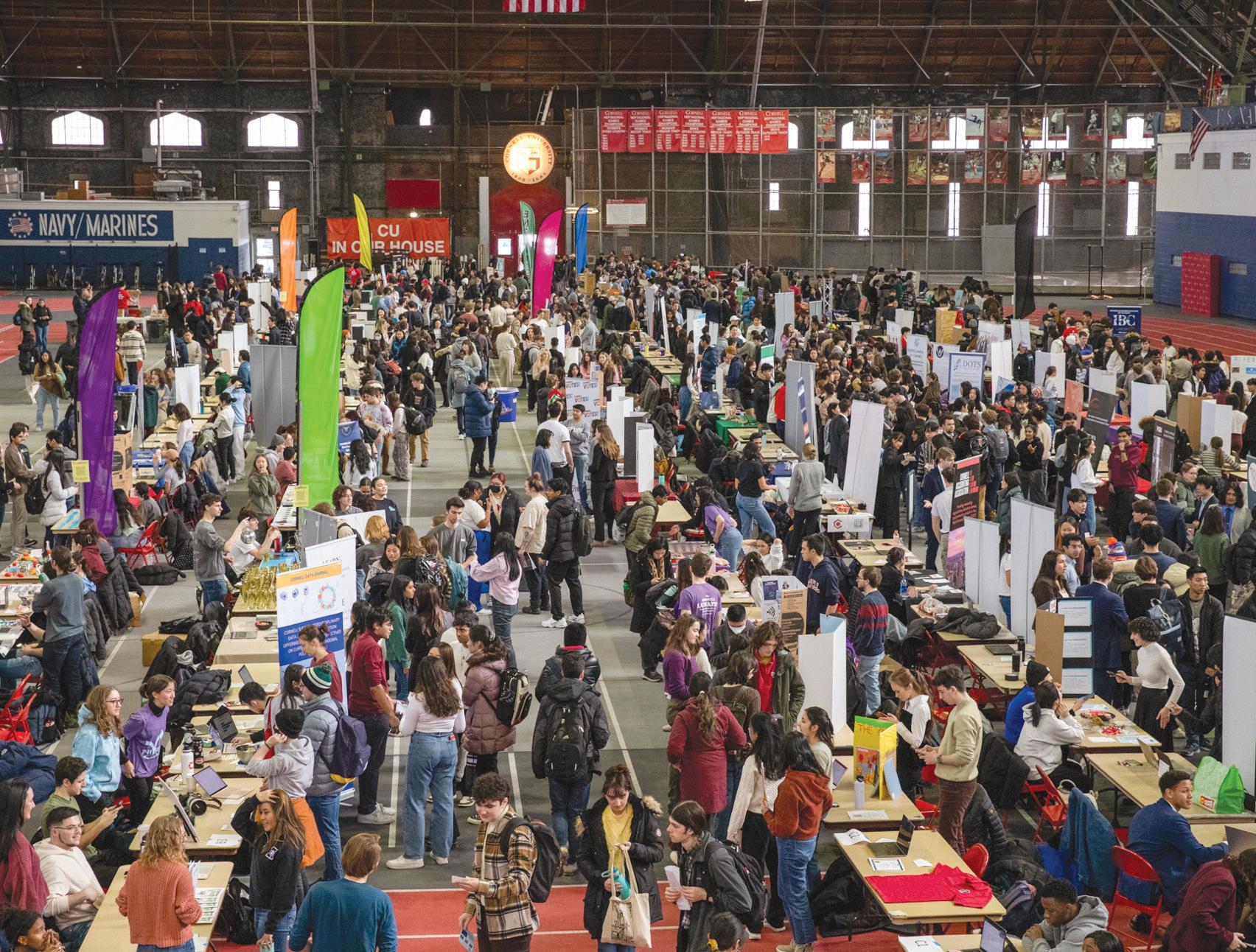
come to life.
Or, check out one of Cornell’s many skit and improv comedy groups. Check out the Whistling Shrimp if you’re in the mood for a more off-the-cuff style of humor.
Nature Groups
It’s no surprise that Cornell, with its entire agriculture school and its reputation for sustainability, boasts an assortment of eco-minded clubs, from advocacy to animal care.
To learn about all the opportunities, get involved with Eco Collaborative, an umbrella for all sustainable student groups. Sunrise Cornell is one of Cornell’s more-involved environmental advocacy groups. Looking for something more fun? If foraging in the woods sounds like your idea of a perfect afternoon, the Fantastic Fungi Fanatics might just be your people. This group goes on excursions to find different kinds of mushrooms in the wild! Bird lovers should look to join
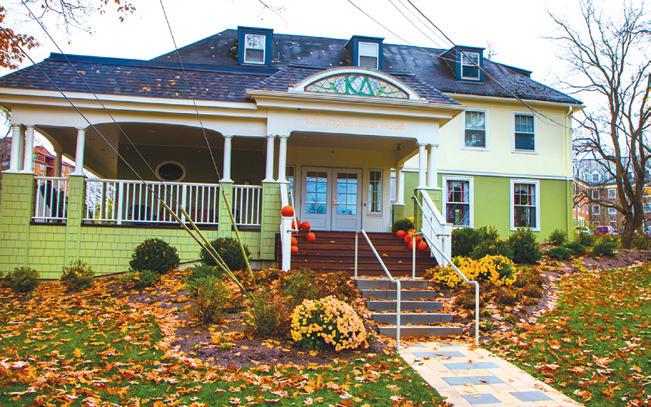
the Cornell Raptor Program, where you can learn to care for and train birds of prey. Another option for plant lovers is Cornell’s Varsity Botany club (which, as a bonus, often has free plant giveaways!).
Miscellaneous Groups Cornell’s many groups include caffeine addicts in search of community. Those looking to find the perfect cup of joe can join Cornell’s Coffee Club and enjoy free weekly tastings, or join the ranks of Cornell’s new matcha club, created in 2025.
This is only a small sampling of Cornell’s diverse and whimsical assortment of student clubs. With over 1,000 registered student organizations on campus, you are sure to find the group for you.
Be sure to attend Cornell’s Club Fest, scheduled for Sept. 12 on the Arts Quad, to check out the rest of the student groups active on campus.
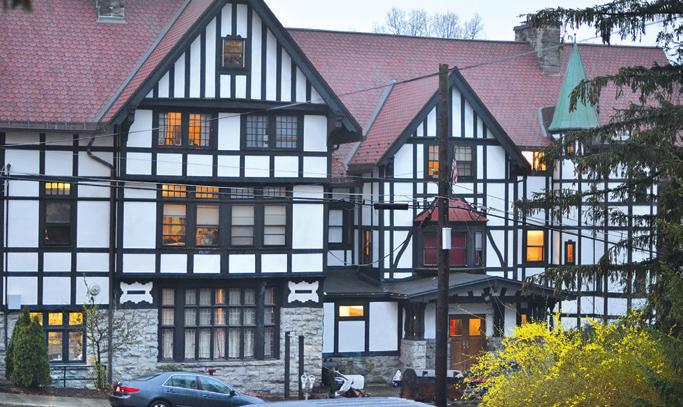
By SUN STAFF
Congratulations, you made it into an Ivy League. But now comes the hard part: making friends. For some, clubs and extracurricular activities are the way to make friends in college. However, for a third of students, Greek Life is the go-to to get your party on, navigate social circles, learn traditions and give back to the community through philanthropic events. Multicultural organizations also offer a chance to connect with people from a similar identity through scholarship, service and
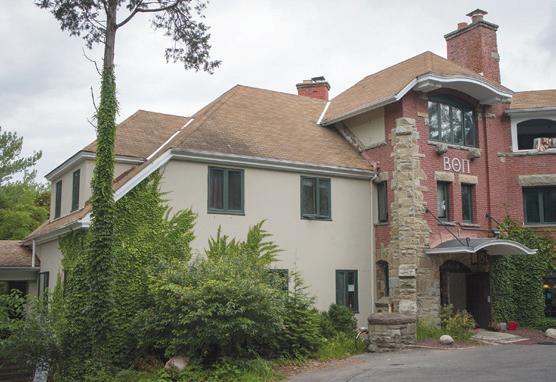
cultural events like dances and performances. If any of these sound appealing, then Greek Life might be for you!
There are over 60 chapters on campus, all which appeal to different crowds and take on various functions. Unfortunately, you’ll have to be patient, as Cornell does not allow sororities and fraternities to recruit first semester freshmen (multicultural groups are the exception!).
On the plus side, this gives you plenty of time to research and ask around to make sure you join the right organization for you. Tables at Club Fest and
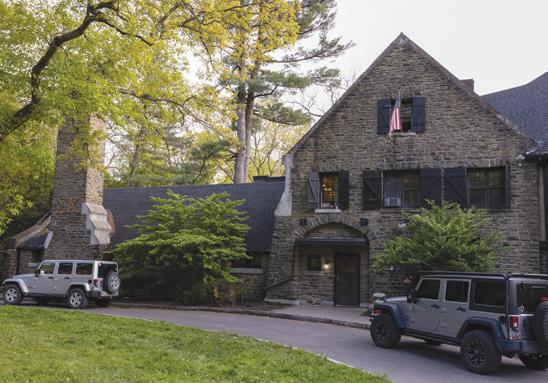
open houses offer an insight into the vibes of different chapters.
Once you’ve decided you want to give Greek Life a shot, keep an eye out for information to come about rush in the Spring. Don’t worry, you will have winter break to prepare as recruitment typically starts up the week before the spring semester.
Sorority recruitment is notoriously more regimented, with potential new members having to rush every chapter. For fraternities, rush is more casual, as freshmen can choose the houses
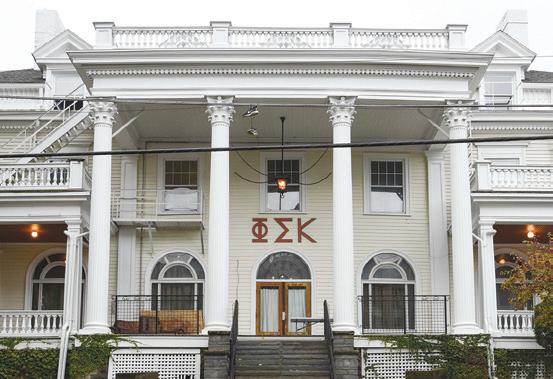
they want to visit and interact with members in a more relaxed setting. If coming back to campus early doesn’t sound like your thing, continuous open bidding (casually known as COB) is an alternative opportunity to join that remains open through the fall semester.
In general, there is no standard way to pick the right organization for you. The best way to find your people is, you guessed it, be yourself. Getting into the “top house” may sound cool, but oftentimes being a bouse mogger is better than being a touse squid.
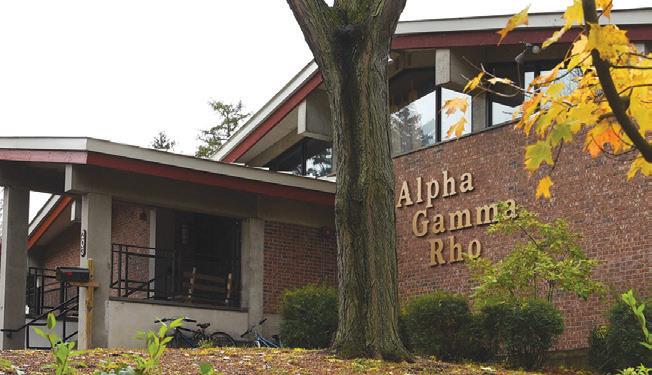
(Translation: go where you’re appreciated). Don’t fret if you end up rushing and don’t like it either, as you’ll always have the option to disaffiliate.
Greek Life can be a great opportunity to understand how to navigate friendships, learn life skills and also gain connections that last a lifetime, if done right. Many alumni maintain lifetime connections, and return to campus to check in on how their chapters are doing. Giving Greek Life a shot can be incredibly impactful and you never know where your connections might lead you!
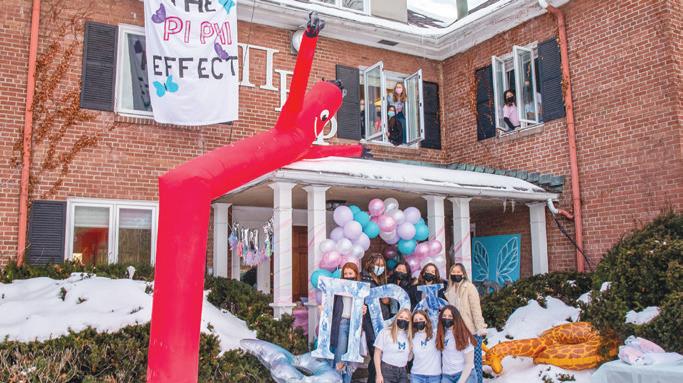
The Sun compiled a list of some of the most impressive names that Cornell has produced throughout the years. At holidays you can boast to your family that you walked the same halls as famous actors, authors, scientists, Nobel and Pulitzer Prize winners and even a U.S. Supreme Court Justice.

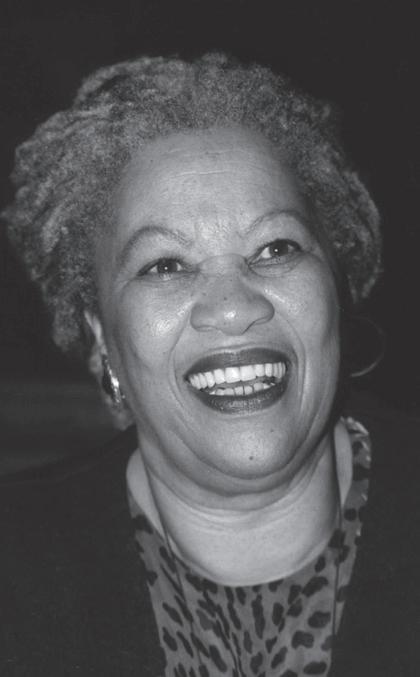
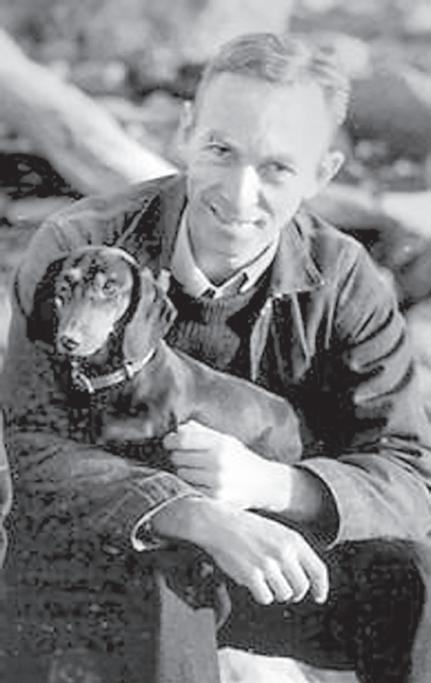
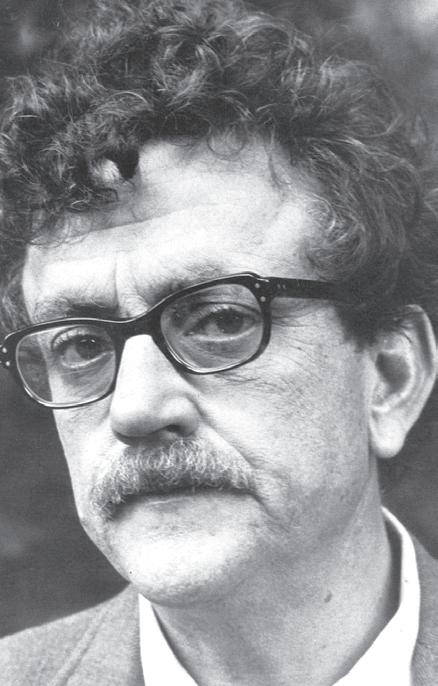
NAME: Ruth Bader Ginsburg
DEGREE: Bachelor of Arts in government, 1954
WHAT TO KNOW: Ginsburg served as a U.S. Supreme Court Justice from 1993 until 2020. A lifelong advocate for gender justice, she was the first Jewish woman and second woman to ever serve as a Justice. At Cornell, a freshman residence hall was built in her name following her death in 2020.
NAME: Toni Morrison
DEGREE: Master of Arts in English, 1955
WHAT TO KNOW: Known for her PulitzerPrize winning novel Beloved, alongside other acclaimed works including Song of Solomon and The Bluest Eye, Morrison is renowned for writing about the Black American experience. She was presented the Presidential Medal of Freedom by Barrack Obama in 2012.
NAME: E.B. White
DEGREE: Bachelor of Arts, 1921
WHAT TO KNOW: A Pulitzer Prize winner and recipient of the Presidential Medal of Freedom, White was best known for authoring two classic children’s books, Charlotte’s Web and Stuart Little. The former Sun editor-in-chief co-authored one of the definitive guides to English grammar, syntax and style, The Elements of Style, with William Strunk Ph.D. ’96.
NAME: Kurt Vonnegut
DEGREE: Dropped out in 1943
WHAT TO KNOW: Vonnegut, an author best remembered for his award-winning anti-war novel Slaughterhouse-Five, studied biochemistry at Cornell for three years before dropping out to join the Army. While at Cornell, he served as the associate editor and the assistant managing editor of The Sun.
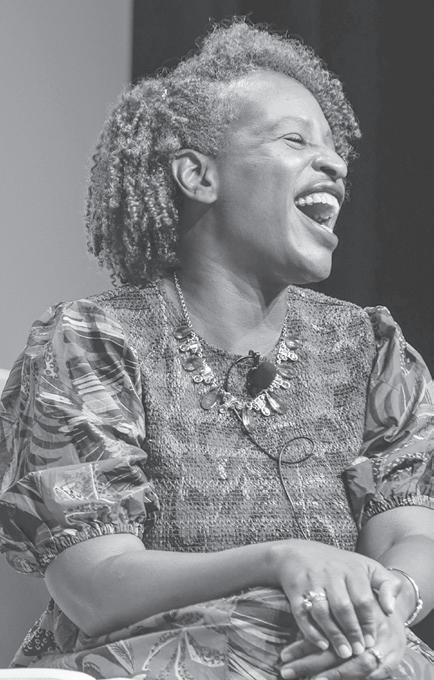
NAME: Nicola Yoon
DEGREE: Bachelor of Science in electrical engineering, 1994
WHAT TO KNOW: Yoon is a famous Jamaican-American writer best known for her modern books which have been the subject of well-known movies, including The Sun is Also a Star and Everything, Everything
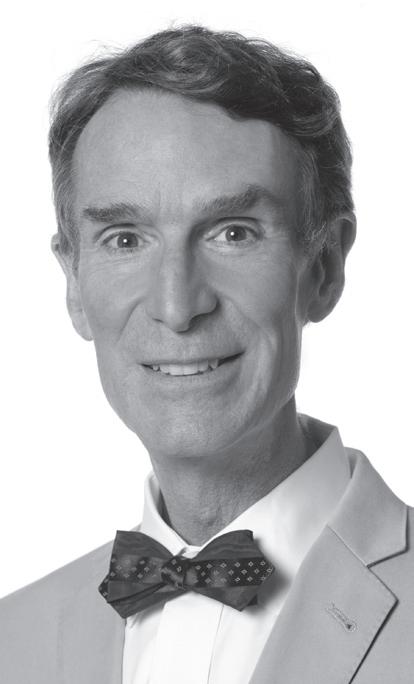
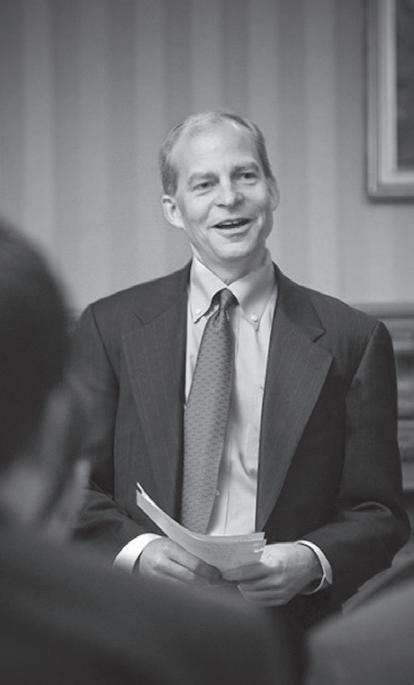
NAME: Bill Nye
DEGREE: Bachelor of Science in mechanical engineering, 1977
WHAT TO KNOW: Nye, winner of 19 Emmy awards, is a renowned science educator. Known to most of our generation as “The Science Guy,” he is said to make appearances every now and again on campus as a guest lecturer or throwing frisbees.
NAME: H. Fisk Johnson
DEGREES: B.A. in chemistry, B.A. in physics, 1979; Master of Engineering, 1980; Master of Science in applied physics, 1982; MBA, 1984; Ph.D. in applied physics, 1986
WHAT TO KNOW: CEO of S.C. Johnson, his family is the namesake of the University’s Samuel Curtis Johnson Graduate School of Management. Fisk is known for his efforts to improve sustainability in business and combat plastic pollution.

NAME: Jane Lynch
DEGREE: Master of Fine Arts, 1984
WHAT TO KNOW: Glee fans know her as Sue Sylvester, but Lynch boasts an impressive resume beyond her breakthrough role, including a Golden Globe and appearances in The Marvelous Mrs. Maisel, Only Murders in the Building and animated favorites (Rio, Shrek, Ice Age). Cornell’s 2026 convocation speaker, Lynch has also appeared on Broadway in Annie, Funny Girl and more.
NAME: Christopher Reeve
DEGREES: Bachelor of arts in English; Music Theory, 1974
WHAT TO KNOW: A Grammy and Tony winner with a brief stint on Broadway, Reeve was best known for his role as the original Superman in the 1978 film — the most expensive movie ever made at the time. At Cornell, you’ll find a plaque dedicated to Reeve in the entrance hall of the Schwartz Center for the Performing and Media Arts.
NAME: Frank Morgan
DEGREE: Bachelor’s degree, 1912
WHAT TO KNOW: An actor across film, silent movies and radio, Morgan went down in history for his performance as The Wizard of Oz in the 1939 film (though he actually played five distinct roles throughout the movie). He was an active member of the Cornell University Glee Club.

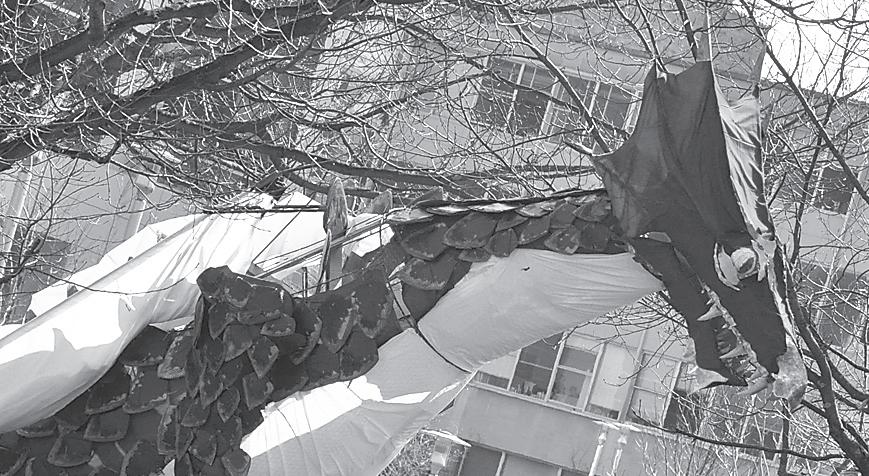
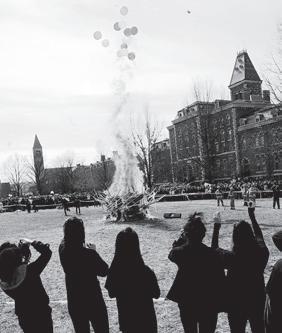
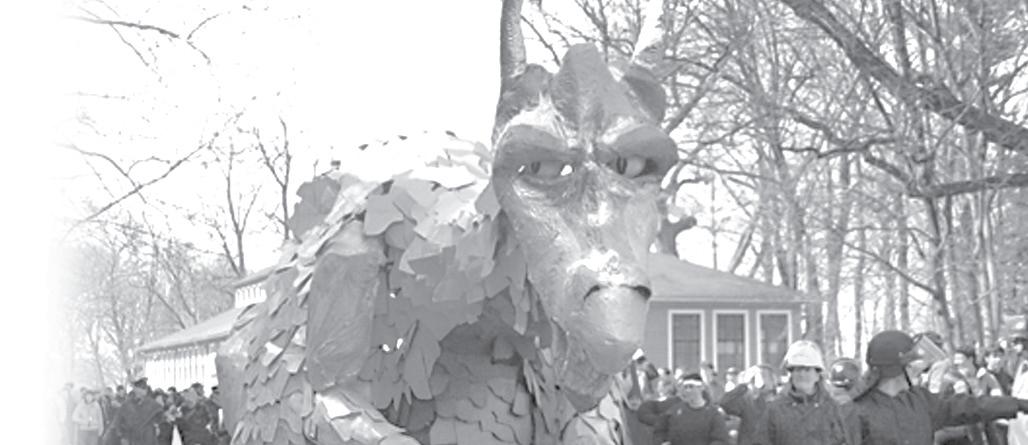
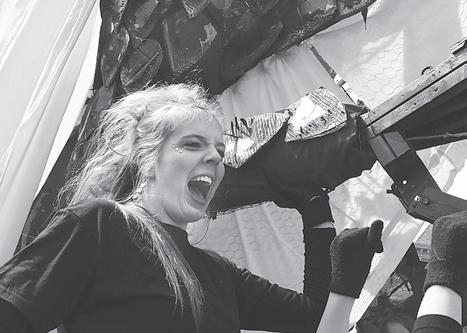
the 1960s.”
This story was originally published on March 27, 2024.
Dragon Day is a cherished tradition at Cornell University that students say fosters a sense of creativity, camaraderie and community. Every year on the day before spring break, first-year architecture students parade a dragon they built across campus, which battles a phoenix built by students in the College of Engineering.
The creation of Dragon Day is credited to Willard Dickerman Straight ’01, namesake of the Willard Straight Hall Student Union. Although the year of the first Dragon Day’s celebration is unknown, there is evidence that it started as early as 1902. As an architecture student, Straight wanted to create an event where architecture students could come together and enjoy building something amid their challenging course load.
“Straight was a senior architecture student at the time and was involved in various student leadership roles, and the story is that he just wanted to organize a celebration to bring together architecture students,” wrote Prof. Corey Earle ’07, American studies, in an email to The Sun.
Earle explained that, initially, the day wasn’t known as “Dragon Day.”
“The architects were calling their creation a dragon at least by the 1920s, but the name ‘Dragon Day’ doesn’t seem to become common usage until the 1980s,” Earle wrote. “That said, many aspects of the tradition [were] pretty solidified by
Straight originally began Dragon Day as a St. Patrick’s Day celebration, with the event coinciding with the holiday.
“Details are a little murky on the origin, but the generally accepted story is that Willard Straight, Class of 1901, organized a St. Patrick’s Day-themed event for architecture students, which included a large snake to commemorate St. Patrick’s driving the snakes out of Ireland,” Earle wrote. “There’s evidence as early as 1905 of architects and engineers decorating campus with orange and green in honor of [St. Patrick’s day].”
In 2013, after spring break was moved later into the semester, the date for Dragon Day was moved to the day before the start of break. Earle explained that this change separated the festival from St. Patrick’s Day.
Since its inception, Dragon Day has been characterized by ruckus, chaos and disorderly conduct, Earle explained.
“The event has been somewhat chaotic since the start, with some early iterations devolving into fierce snowball fights between architects and engineers,” Earle wrote. “The sense of chaos was embraced by organizers by the 1970s and 1980s, [when] a tradition of pranks and vandalism became somewhat more common, with green paint decorating campus landmarks.”
In response to this chaos, the University at one point decided to cancel the event altogether.
“In 1990, the Department of Architecture officially canceled the event due to ‘danger and cost,’ but it returned as a somewhat more organized and regu-
lated holiday,” wrote Earle.
Despite its disorganized past, Dragon Day has always been a day when students come together to celebrate in a creative way.
A Sun article published in a Freshman Issue from 1985 detailing Dragon Day describes the collective spirit of the architecture students in preparation of Dragon Day, a time when students came together to share their creativity and camaraderie.
“Running on adrenaline and coffee, the human powered, freshman architect class’s dragon lurched forward on the Friday after St. Patrick’s Day — Dragon
Day. The structure’s debut was the climax of a week of intense preparation and notorious all-nighters at Rand Hall,” the article states. “As soon as the green light for dragon construction was given, the class abandoned their current studio projects to plunge into the College of Architecture, Art and Planning’s traditional dragon-making.”
Current students in the College of Architecture continue to echo similar sentiments shared by students over 100 years ago.
To continue reading this article, please visit www.cornellsun.com.
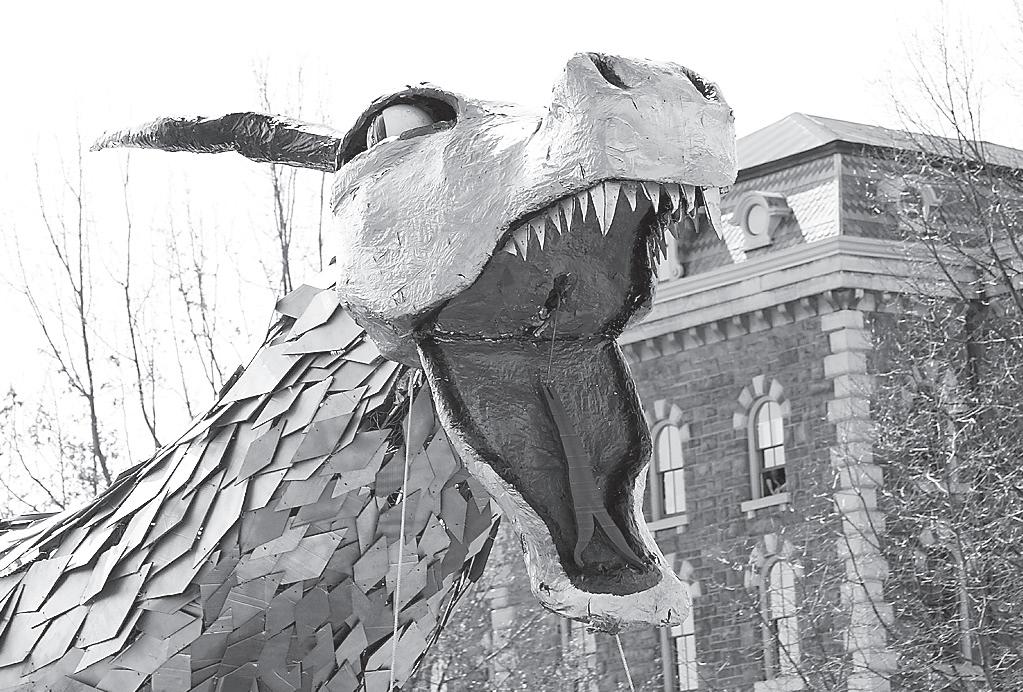
For most of the year, the steep hike from West Campus to Central is considered a nuisance on the way to class. Yet at the end of the school year, Libe Slope is transformed into the venue for Slope Day, Cornell’s beloved end of the year celebration.
Each year, the Slope Day Planning Board works hard to
select the entertainers, whose identities are kept a closely guarded secret until about a month before the big day. For this reason, trying to guess the performers has become a favorite activity for many Cornellians waiting for classes to end.
The tradition traces its roots back to 1901, when it was known as Spring Day.
The celebration morphed to Spring Fest before coming to its current incarnation: Slope Day.
Unlike the festivities students have enjoyed in recent years, Spring Day hosted attractions like fire-eaters, snake-charmers, cowboys and sailors on the Arts Quad. Spring Day was known as one of Cornell’s first excuses to cancel class in the name of mass debauchery.
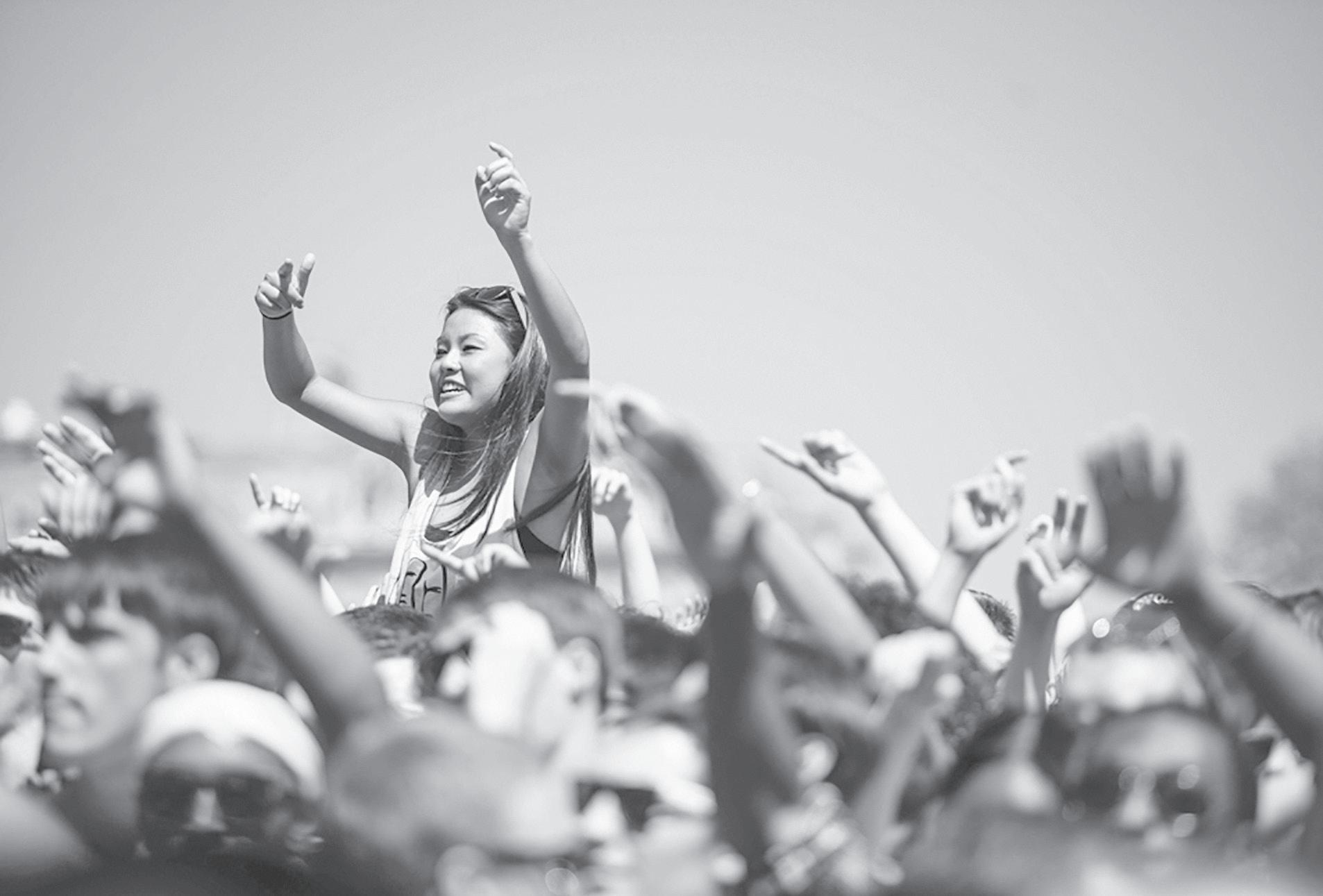
The original springtime carnival originated in 1901 because of financial strains to the University’s Athletic Association. To fundraise, the Big Red’s sports teams, drama clubs and musical groups organized a benefit concert. The event struggled at the box office, but managed to inspire an impromptu parade to draw attention to the concert.
More changes to Slope Day occurred in 1985 when the legal drinking age changed from 18 to 21.
2025 : The Chainsmokers, Daya
2024 : Louis the Child, Gunna
2023 : A Boogie wit da Hoodie, Flo Rida
The performance was so well-attended that both the concert and the parade were repeated the following year, and the celebration before the show raised more money than the production. From then on, Spring Day became a campus-wide custom.
At the brink of the first World War, many Cornellians believed that they had celebrated their last Spring Day. However, after World War II, the celebration returned with the moniker “Spring Weekend.”
Due to protests and unrest that plagued the University in the early 1960s, the celebration was canceled in 1963.
The next incarnation of Slope Day, known as Springfest, appeared in the late 1970s.
After the drinking age changed, the University stopped serving alcohol to everyone at the event and now requires a wristband, though students still find creative ways to drink (refer to number 22 on the 161 List for inspiration).
“In the years that followed ... a number of students were treated for alcohol related emergencies,” said Tim Marchell ’82, director of mental health initiatives at Cornell Health.
In response to the emergencies, the University attempted to end Slope Day in the early 1990s. As an alternative, a Universityorganized event was offered on North Campus.
Since 2003, Slope Day has maintained a new format that includes live entertainment.
For years, Slope Day was held on the last day of classes, but begining in 2014, the tradition was moved to the day after classes ended due to changes in the academic calendar.
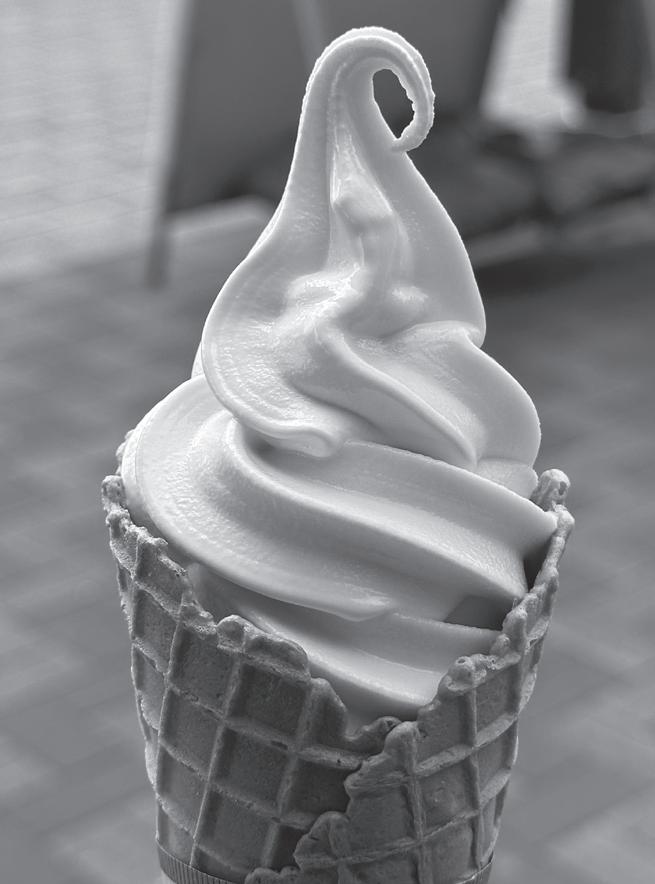
While we believe that Cornell looks the most beautiful at the start of the fall semester, it is also unfortunately the most unbearably hot during that season. To beat the heat and cool down after a back-breaking, sweat-inducing move-in weekend, head out for some ice cream and explore the city of Ithaca while you’re at it. Below are four recommendations (in no particular order) for all you incoming freshmen and your families.
If you want to stay on campus and enjoy some exceptional ice cream, stop by the Cornell Dairy Bar on East Campus. For the past 138 years, the Cornell Dairy Bar has been creating ice cream from the University’s own dairy cows. There are currently 22 year-round flavors offered, in addition to seasonal picks. A perk of any University meal plan is that serve-yourself Dairy Bar ice cream is available in each of Cornell’s student dining halls (find the biggest selection and the biggest line in Morrison Dining Hall), but if you want to have Cornell Dairy’s entire selection in front of you, pay a visit to Stocking Hall, where the Dairy Bar is located. About a 20-minute walk from North Campus, you don’t need a car to make this journey. When you arrive, you’ll notice the large, white sculpture of a milk bottle out front. Because the Dairy Bar is located in the lobby of Stocking Hall, there’s plenty of seating around the shop. The recently renovated hall, with clean lines and an all-white interior, offers plenty of seating with a casual and modern vibe.
After trying 20+ flavors, The Sun’s top picks are Bavarian Raspberry Fudge and Kahlua Fudge. Bavarian Raspberry Fudge is a “vanilla custard ice cream with old-fashioned fudge pieces and a raspberry swirl.” Smooth and reminiscent of raspberry cheesecake, the little punches of tart raspberry and creamy fudge complement each other. Kahlua Fudge is “Kahlua ice cream with a chocolate fudge swirl.” The java flavor packs a punch in this pick for a delicious option that wakes you up and satisfies your chocolate cravings all in one scoop.
Fun Fact: The Dairy Bar made a limited edition flavor (“Big Red, White & Biden”) in honor of self-proclaimed ice cream fanatic President Joe Biden, who was the Convocation speaker for Class of 2017.
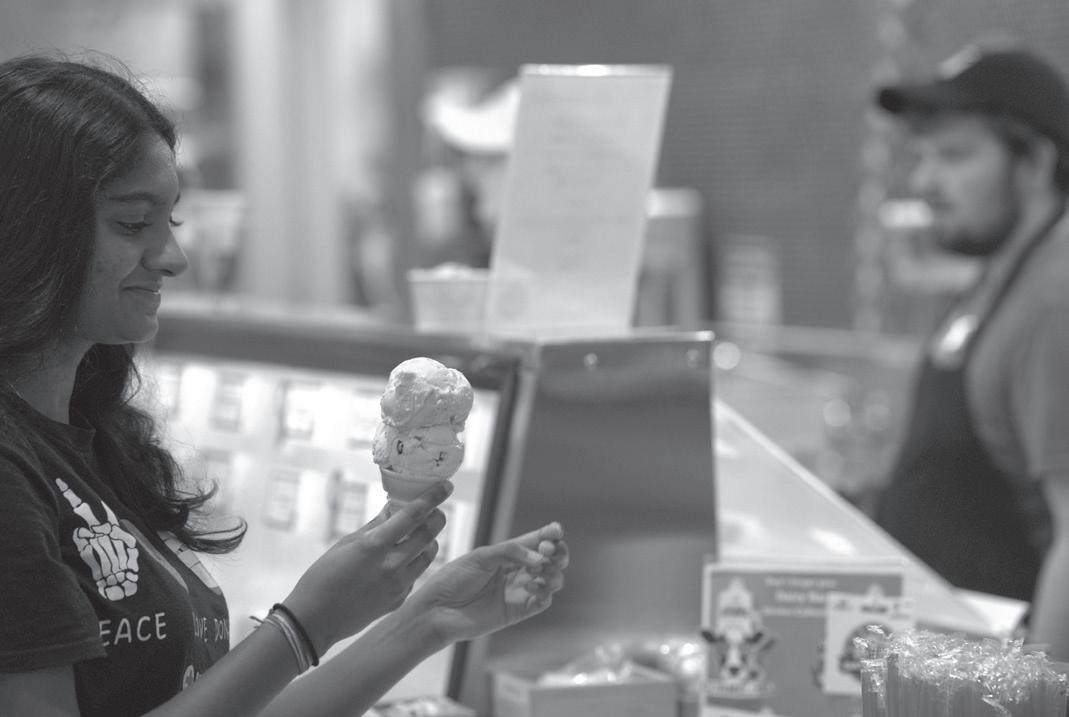
215 N. Cayuga St, Ithaca 8421 State Route 89, Interlaken
Another dessert staple of Ithaca’s food scene is Cayuga Lake Creamery, which has served homemade ice cream flavors in the Ithaca area since 2004. Known for its rich, creamy consistency, Cayuga Lake Creamery typically has 30 flavors of ice cream and sorbet available daily, served on rotation. These flavors range from Cookie Explosion to a Wine Ice Cream Sorbet. Non-dairy vegan options, sorbets and gluten-free offerings are always available.
We are absolutely over the moo-n about their Purple Cow flavor — a creamy, black raspberry ice cream with snappy chocolate chunks that refreshingly tops off a perfectly sweet cone. It’s signature vibrant color and fun name keep it a classic!
Their Sea Salt Caramel ice cream is well known, and for good reason. The perfect combo of salty and sweet, a match that is absolutely addicting. Another staff pick is the Soy Cherry Jubilee. Enjoyers of Ben & Jerry’s classic Cherry Garcia
700
Founded in 1936 by Cornell alumnus Leo Guentert 1920, Purity Ice Cream may be located the farthest from campus of the three establishments in this list, but it has the greatest variety in terms of both flavors and products.
Of their 34+ flavors of ice cream (some of which are vegan), some of our favorites are Bulldog Crunch and Green Tea — good in scoops or blended into milkshakes. Bulldog Crunch is a “praline-flavored ice cream with caramel swirl and chocolate-covered pecan candies.” Bulldog Crunch is absolutely mouth-watering. The caramel and praline flavors are very strong, but the pecans and chocolate balance that creaminess and sweetness with their crunchiness and slight bitterness. Green Tea is much less sweet and made from “green tea powder blended with vanilla ice cream.” This lighter, more refreshing option is a great afternoon pick-me-up. Among its more decadent offerings, Purity’s sundaes are warm, gooey and comforting. From Chocolate Chip Cookie to Apple Crisp, dig into these delicious offerings, topped with scoops of your choice of ice cream and plenty of whipped cream.
15 Livermore Crossing, Dryden, N. Y.
The Frosty Cow, an outdoor stand along the side of the road on the way to Cortland, offers 50+ flavors of soft-serve ice cream in addition to an assortment of handscooped flavors, milkshakes and more. The outdoor venue makes a great place to stop and appreciate upstate New York’s natural beauty with friends. Best of all, the stand is right next to a field of dairy cows that you can say hello to while you wait for your order to be prepared! Sundaes, slushies, smoothies and shakes galore, this menu has an item to satisfy every craving, even serving energy drinks and a full espresso bar. Experimental flavors can be infused into any soft-serve or slushie concoction you can dream up, from “Cranberry” to “Chocolate Jalapeno.” Or, try a flurry and blend in any candy or cereal of your choosing.
Top pick: “Red Solo Cup” — True to its name, this decadent sundae fills up an entire red solo cup with layers of hard-scooped strawberry, raspberry and amaretto cherry ice creams interrupted with strawberry, red raspberry and cherry dip toppings and smothered in whipped cream.
will love this one. This pick is not overly sweet, but perfectly creamy nonetheless.
While we love the original Interlaken shop, the Dewitt Mall location in Ithaca has our heart. The location offers ice cream, milkshakes, sundaes and novelties as well as indoor seating.
Unlike many of the local ice cream destinations, Cayuga Lake Creamery is open year round. This makes it your perfect destination during Ithaca’s infamous mid-January false springs.
Seating is both outdoor and indoor at the Dewitt Mall location, and there are wonderful things to say about both. The decor of Ithaca’s Cayuga Lake Creamery is standout, with cozy warm lighting and a funky indoor porch. However, there’s nothing like an spot on the outdoor porch to people watch in the heart of downtown Ithaca.
In addition to ice cream, the Interlaken roadside location also offers hot food such as soup, grilled cheese, chili, hamburgers, veggie burgers and even fried clams, and hot coffee. Still, nothing tops their roadside peanut butter ripple and ginger flavors. Enjoy!
Besides ice cream, Purity offers frozen yogurt, pastries and espresso alongside a full kitchen menu, offering an array of burgers, sandwiches and fries to dip in your milkshakes.
Of our recommendations, Purity is also number one in the seating department. With abundant indoor and outdoor seating, Purity is extremely group-friendly, and its logo-covered decorations and booths give the space a relaxed, retro diner-like ambience.
If you can’t make the trek to the original location on Cascadilla Street, a smaller stand can be found in Center Ithaca, a small indoor mall located smackdab in the middle of Ithaca Commons.
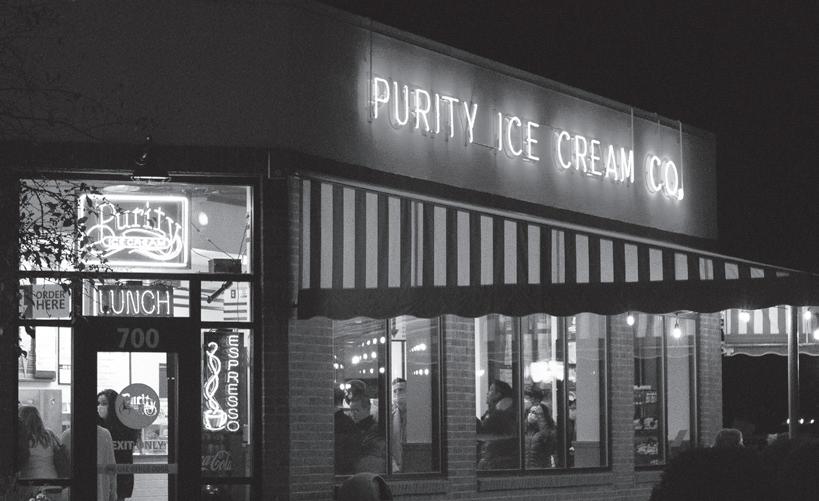
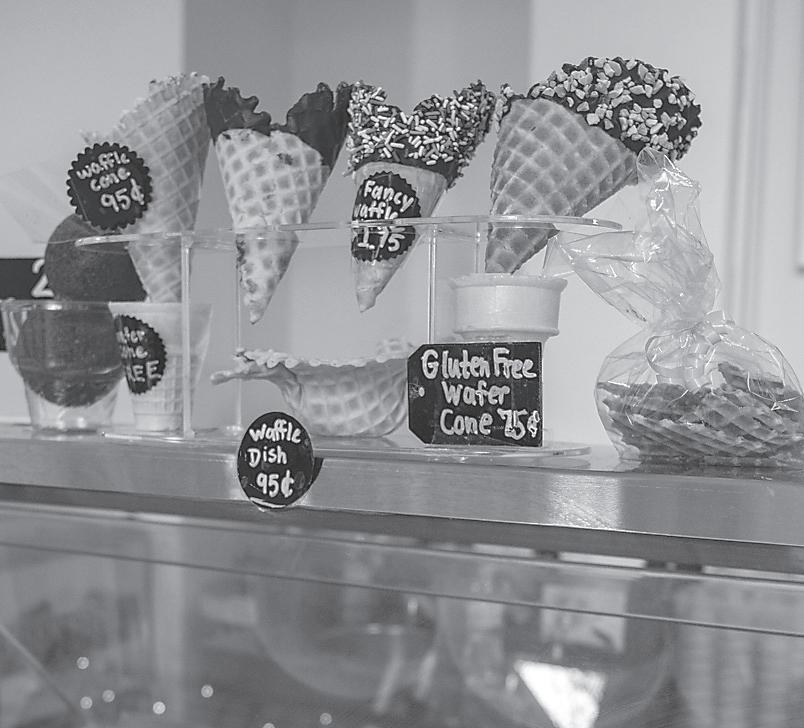

With over 4,000 acres of beautifully dynamic landscape, the Cornell Botanic Gardens is a wonderful place to visit, especially when the much-awaited seasons of spring and fall grace Ithaca. The breathtaking plant biodiversity — the gardens offer a collection of grasses, herbs, flowers, vegetables, rhododendrons and vines, to name a few — will provide intrigue, calm and rejuvenation to any awful day. Starting your visit with the 12 specialty gardens located at the heart of the grounds — which surround the stunning Brian C. Nevin Welcome Center — is highly recommended. The Botanic Gardens are open from dawn to dusk all year, and if you’re up for it, guided tours are also available. So if you would like a breath of fresh air, charming scenery and a better understanding and appreciation of biological diversity, then waste no time and head over to the gardens!
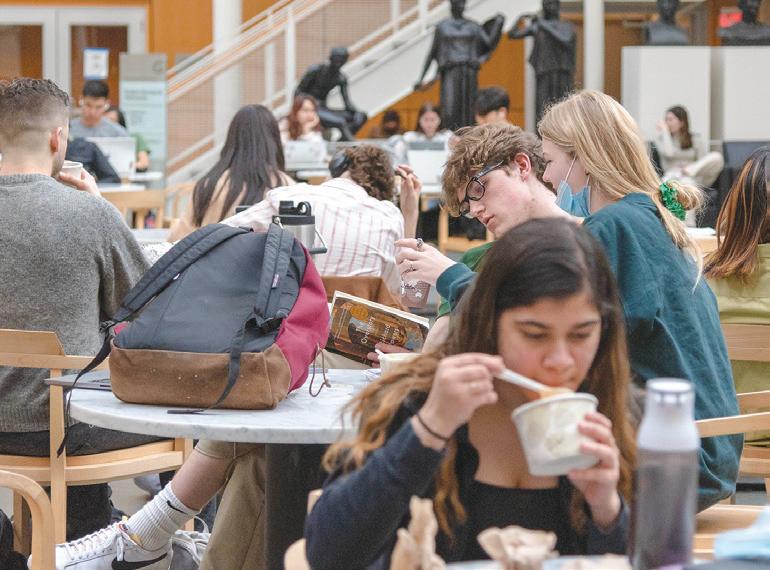
Temple of Zeus embodies everything that a college student could want in a coffee joint. The cafe’s prime location on the Arts Quad makes for a convenient coffee break, a great meeting spot to work or wind down with friends and a fabulous study spot after a tiring class. Although Zeus’ tables are usually filled most weekday afternoons, a table in the Klarman atrium is worth the wait.
Cafe options range from espresso drinks to kombucha, and if you’re lucky, your drink may be blessed with latte art. And don’t forget to try the food! The cafe’s sandwiches and soups are not only delicious, but fresh. Whether you are a student in Arts & Sciences or not, Zeus has become a favorite for Cornellians of all persuasions and occupations.
From burritos to gyros and chicken tenders, Terrace has a bite for everyone. Located on the ground floor of the Statler Hotel, Terrace bustles with students from hotelies to ILRies to everyone in between. Every dish is customizable and made to order, whether you’re in the mood for pho noodles or curry, or are running to class and need some morning caffeination or a smoothie. Be sure to check out their famous orange chicken burrito (offered Wednesdays and Fridays). On any day of the week, the burrito line runs long,
too — but the lines are worth it. So, grab a bite at the best spot to get the most bang for your BRBs on campus.

Te display of human brains, particularly those identifed with specifc individuals, evokes a variety of reactions: horror, distaste, curiosity and fascination. Experiencing this frst-hand only involves a short trip to Uris Hall’s second foor, where a display case features Cornell’s Wilder Brain Collection. Te collection, which at one time featured 1,600 animal and human brains, was established in the 1880s by Dr. Burt Green Wilder, Cornell’s frst zoologist. Te University stopped accepting additional brains in 1940, and at present, only 70 remain.
Te steps of Olin Library are sonically calibrated and actually sound musical notes when stones are thrown on them. Although stone-throwing is now forbidden due to safety concerns, a cursory Google search will produce online video and audio footage of it that can be found on YouTube, which seems to suggest that the entire terrace above Olin—not just the steps—are sonically calibrated.
A journey through time to the year 2000 B.C., is still beyond the scope of modern technology. However, seeing clay tablets from 4,000 years ago only requires a journey to the library. Te Rare and Manuscript Collections in Kroch Library is open to everyone and includes tablets inscribed with cuneiform writing as well as handwritten manuscripts from the medieval period, an original copy of the Gettysburg Address and everything in
Cornell is home to more than a dozen libraries. With so many to choose from, your choice of library depends on as much what you’re looking for as on what kind of person — and student — you are: every single one has a personality of its own.
Uris
Uris Library has been dubbed “Club Uris” by students who can make light of the fact that, on any given day, the Cocktail Lounge is the place to be with doors open 24/7 (cocktails not included).
You read that right: Students can make their party rounds and then get right back to Club Uris to burn the midnight oil with some after-hours studying. With 24-hour access, why bother paying rent? Bring a sleeping bag and a toothbrush, and you’re set! (Editor’s Note: The Sun does not endorse living in the library.)
Tucked inside is the A. D. White Library, known also as the “Harry Potter” library for its carved-stone fireplace and spiral staircases through the stacks.
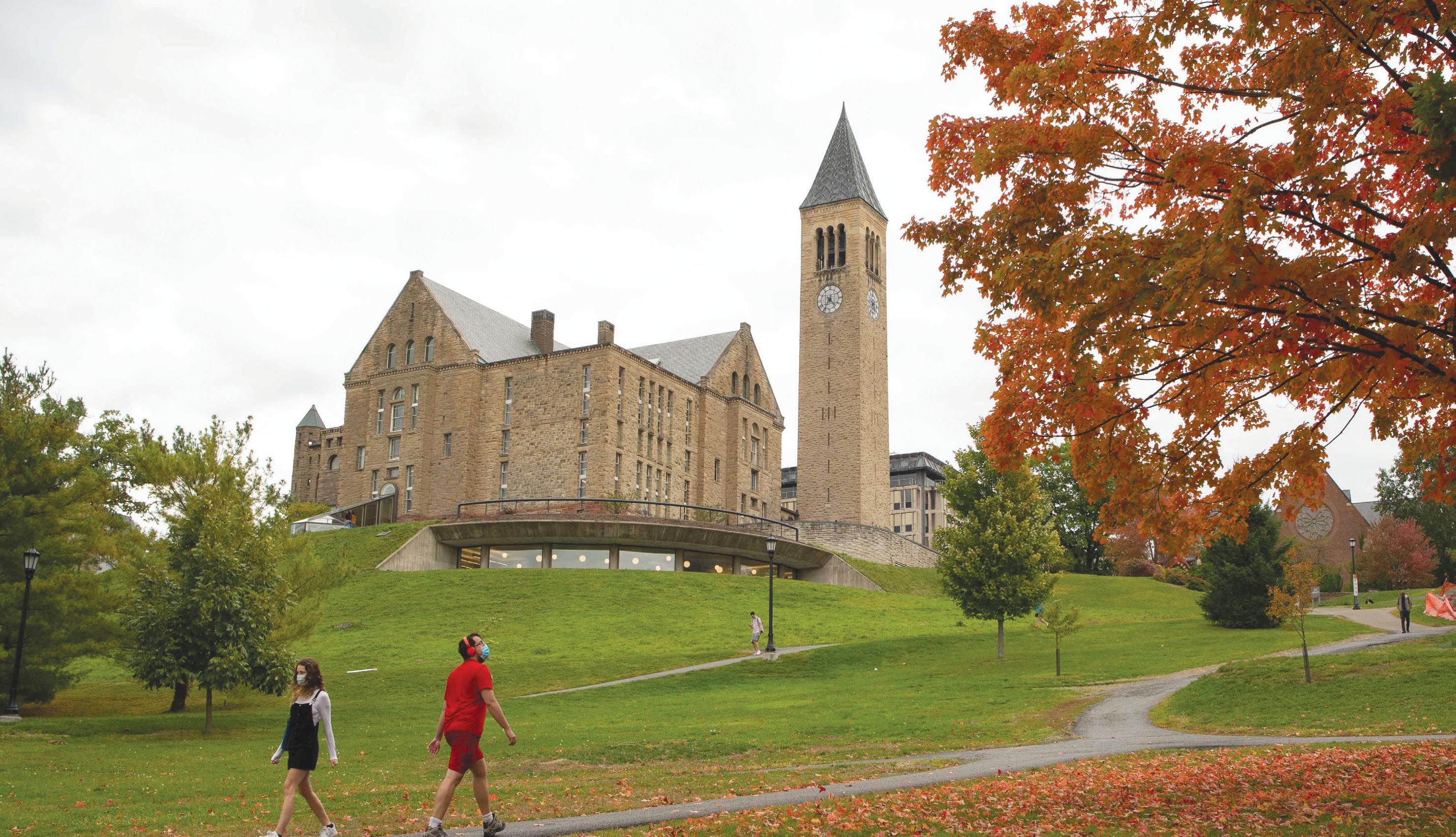
For those looking for more of a lounge than a club, Olin Library may be the place for you, keeping its doors open until midnight. Olin has its other charms, too: it is one of Cornell’s primary research libraries, complete with its own periodical room.
The Amit Bhatia Libe Café on the main level is the best spot on campus for a latenight caffeine fix before those all-nighters. The full-service café remains open until 11 p.m., excepting Fridays and Saturdays.
Mann
One of the steady workhorses of Cornell’s libraries is Mann, which serves the College of Agriculture and Life Sciences and the College of Human Ecology. Mann sits on the far side of the Ag Quad. Its ends-of-the-earth location, made worse by Ithaca’s cold winter weather, makes studying there a trek too far for some students, but the more determined recommend its spacious halls for this very reason. Plus, with plants strewn all over, its green-covered study spaces are a less
depressing alternative for day-long finals lock-ins.
Engineering
Carpenter Hall houses a 24/7 study space, and as you would expect, it has an abundance of stressed engineering students — ahem, an enormous computer lab.
Law
With its arched ceiling, the Law Library in Myron Taylor Hall is the second Hogwarts Castle-comparison. But beware: All those serious law students like their peace and quiet.
Nestlé
The students in the School of Hotel Administration may spend much of their time in “real world” learning situations, but even they need to study, too. The Nestlé Library in Statler Hall has assembled the largest collection of hospitality academic resources in the world, and it has a more social atmosphere than the typical study space.
Fine Arts
The Mui Ho Fine Arts Library can be
Beyond resources on some of Cornell’s more creative fields, AAP students can borrow tons of equipment like cameras, tripods, light kits, backdrops, digital audio recorders, speakers, microphones and more.
The John Henrik Clarke Africana Library located near North Campus provides a collection of over 22,000 volumes of African, African American and African Caribbean resources. Named for a pioneer of the field of Africana studies, the library serves the Africana studies curriculum and the public.
Off the Beaten Path
Remaining facilities include libraries for the School of Industrial and Labor Relations, the math department and the Johnson Graduate School of Management. In Lincoln Hall’s Music Library, a curious student can peruse resources and listen to recordings of musicians from The Beatles to Tupac Shakur.
20 years. Thousands of memories. 161 traditions. Two decades after the original list debuted, the outgoing 142nd Editorial Board revamped our famous list, updating the quintessential experiences that define life on the Slope. So grab a carnelian colored pen (or steal one from the A.D. White House), and get to checking!
o 1. Make the library into your bedroom and have sex in the stacks
o 2. Go to the Cornell-Harvard men’s hockey game and throw fish on the ice
o 3. Go to Zeus after class. Sit on a bench because all the tables are being used for coffee chats
o 4. Take off to NYC for Fall Break, being sure to post on Instagram about it at least twice
o 5. Sled down Libe Slope during a snow storm
o 6. Take Hotel Administration 4300: Introduction to Wines
o 7. Take AMST 2000 and learn some Cornell history from Corey Earle ‘07
o 8. Streak across the Arts Quad
o 9. Go sake bombing at Plum Tree
o 10. Order ice cream at the Dairy Bar
o 11. Climb the rock wall in Bartels Hall
o 12. Listen to a full chimes concert from the clock tower. Guess the songs played
o 13. Order the same thing off the Collegetown Bagels menu all four years
o 14. Register for classes during Freshman Pre-Enroll, then switch out of every single one by the time Add/Drop ends
o 15. Dress for 70 degree weather. Cry as you walk home in the freezing cold that night
o 16. Steal a vegetable from the Cornell Botanic Gardens. Savor it
o 17. Go to the Fuertes Observatory on North Campus and gaze at meteor showers
o 18. Enroll in BIOEE 1540: Introductory Oceanography as a joke, then fall in love with Bruce Monger and attend every class
o 19. Have a snowball fight in May
o 20. Stick your hand inside a fistulated cow
o 21. Skip class to play SpikeBall on the Arts Quad
o 80. Go ice skating at Lynah Rink
o 81. Request a song to be played on the clock tower
o 82. Watch the ginger run
o 83. Walk to class in the snow, uphill both ways
o 22. Bury a bottle of Barton’s on the Slope. Dig it up on Slope Day.
o 23. Enjoy golden hour from the Cornell Botanic Gardens
o 24. Attend the Apple Festival on the Commons
o 25. Flirt with your professor
o 26. Bomb a prelim
o 27. Ace the next one to save your grade

o 28. Steal a bunch of cups from the dining hall and never give them back
o 29. Attend Hotelie prom
o 30. Take a selfie with Happy Dave from Okenshield’s
o 31. Take three finals in two days because they were just over 24 hours apart
o 32. Get heartburn at the Chili Cook-off on the Commons
o 33. Enjoy Ithaca’s two months of warm weather — spend a summer here!
o 34. Go to a Shabbat dinner at 104West!
o 35. Watch the AAP students parade down East Avenue on Dragon Day
o 36. Walk out of class to warm weather and immediately get a beer at CTB
o 37. Build a snow penis or count how many you see around campus
o 38. Dress up and view The Rocky Horror Picture Show at Risley
o 39. Take a class you think is impossible just for fun
o 40. Go to Catherine Valley for a wine tour
o 41. Kiss on the suspension bridge at midnight
o 42. Take Plant Pathology 2010: Magical Mushrooms, Mischievous Molds
o 43. Shop at the Friends of the Library Book Sale
o 44. Get a University parking ticket, then sweet-talk your way out of it
o 45. Buy an Ithaca Is Gorges t-shirt, then get sick of wearing it and buy a dumb variation (Ithaca Is Gangsta, Vaginas Are Gorges, Ithaca Is Long Island…)
o 46. Learn the “Alma Mater,” “Evening Song” and “Give My Regards to Davy.” Hum them when you hear the chimes
o 47. Attend an opening at the Herbert F. Johnson Museum of Art
o 48. Smuggle food from the dining hall and run for your life as they try to get back your stolen cookies
o 49. Make the Walk of Shame. See an ex on your way home
o 50. Have dinner at a professor’s house
o 51. Get wasted at a professor’s house
o 52. Take a selfie with a Cornell president
o 53. Play a game of tag in the Kroch Library stacks
o 54. Take a class that meets outside
o 55. Start your freshman year pre-med. Graduate from Dyson.
o 56. Kayak or canoe on Beebe Lake
o 57. Watch dancers fly through the air at Pao Bhangra show
o 58. Have a midnight picnic in the Ag Quad

o 59. Wait in line for half an hour for an orange chicken burrito at Terrace
o 60. Ignore the “No Winter Maintenance” signs … slip and fall down the stairs
o 61. Sit in Libe Café when you have no work to do and watch worried students down gallons of coffee
o 62. Write an angry letter to the editor of The Sun
o 63. Get swarmed by freshmen as they migrate back to north
o 64. Explore the secret underground tunnel between Uris and Olin libraries
o 65. Request an item from the library’s Rare and Manuscript Collection.
o 66. Pretend you are Harry Potter and study in the A.D. White Reading Room
o 67. See the brain collection in Uris Hall
o 68. Use all your CityBucks at 7-11 on Keystone and Twisted Tea Light
o 69. Submit a guest column for Sex on Thursday about your raunchy sexcapades
o 70. Eat your way through the Farmer’s Market
o 71. Sleep through your alarm for a 1:25 p.m. class
o 72. Take part in a psychology experiment and get a measly number of SONA credits
o 73. See Ezra Cornell’s body in the crypt
o 74. Occupy Willard Straight or storm Day Hall
o 75. Watch as a virgin crosses the Arts Quad at midnight and A.D. White and Ezra Cornell walk towards each other to shake hands on Halloween
o 76. Live through an Ithaca blizzard and tell your friends you survived frostbite
o 77. Throw a flaming pumpkin into the gorge
o 78. Join an intramural sports team. Take it too seriously and get matching uniforms
o 79. Spend all your lectures figuring out the Wordle and Connections. While sitting for the final, wish you had taken notes instead.
o 84. Hook up with someone in your dorm and then see them every day afterward
o 85. Write dirty messages with rocks in the gorge
o 86. Eat a chicken parm sandwich from Louie’s Lunch
o 87. Walk the runway as a model in the Cornell Fashion Collective’s annual fashion show
o 88. Sleep through pre-enroll and change your major as a result
o 89. Gain the freshman 15. Pay $145 for a gym membership and don’t go.
o 90. Play trivia at Collegetown Bagels on Tuesday nights
o 91. Go bowling at Helen Newman Lanes
o 92. Get a ticket for peeing on the Law School
o 93. Have a friend’s parents take you out to eat at Thompson and Bleeker or Simeon’s
o 94. See a concert at Barton Hall
o 95. Order off the secret menu at Louie’s Lunch
o 96. Cheer on your friends as they perform at the Schwartz Center
o 97. Pick next year’s ice cream flavor
o 98. Nap in every library on campus
o 99. Get too drunk before homecoming. Miss the game
o 101. See Yamatai bang it out at Clubfest
o 100. Take a midnight nap in Uris Library Cocktail Lounge and wake up 3 days later
o 102. Visit Ithaca Mall, realize it is severely lacking, then drive to Destiny USA Mall in Syracuse
o 103. Take a night prelim near the vet school, walk back in the dark
o 104. Get thrown out of Balch Hall
o 105. Attend a show at the State Theatre or Hangar Theatre
o 106. Go to an a cappella concert
o 107. Walk to a fraternity party with your entire freshman floor. Get turned away
o 108. Put on a swimsuit and jump into the cold water at Second Dam
o 109. Take part in Holi and get colorful
o 110. Eat at each dining hall at least once
o 111. Try to order pizza from a Blue Light phone
o 112. Have a traumatic OurBus experience. Never return
o 113. See a film at Cornell Cinema
o 114. Ride a horse at Oxley Equestrian Center
o 115. Take the BASICS program. Do it with a beer in hand
o 116. See how long you can go without doing laundry
o 117. Get lost during O-week as a freshman, and end up in the Commons
o 119. Check out a charger from Olin. Don’t give it back
o 120. Lose a friend over signing a lease in Collegetown
o 121. Walk holding hands around Beebe Lake
o 122. Buy a Cornell-grown apple from a vending machine
o 123. Get tapped for a secret society
o 124. Go skinny dipping in a gorge
o 125. Get more downvotes than upvotes on Sidechat
o 126. Host a prefrosh
o 127. Drive your car up and down Libe Slope
o 128. Make a chalking. Weep when it rains that night
o 129. Attend a Sun meeting
o 118. Have the Hideaway bartender take a picture of you because your fake doesn’t scan
o 130. Take photobooth pics at Hideaway and post them on your Instagram story
o 131. Eat hungover brunch at Morrison or Appel
o 132. Turn down a flyer at Ho Plaza and say “I already got one”
o 133. Rush a fraternity/sorority or mosey a Co-op during your freshman spring
o 134. Meet Bill Nye ’77, “The Science Guy,” and give him a hug
o 135. Ski at Greek Peak
o 136. Crash a political rally on Ho Plaza
o 137. Get on the wrong TCAT and end up at Ithaca College
o 138. Watch women’s hockey dominate any team who steps on the ice
o 139. See how many people you can cram into your dorm room
o 140. Order Wings Over after 2 a.m.
o 141. Make the trek down the hill: go to a townie bar
o 142. Tell a professor what you really think of his/her class
o 143. Drink with your R.A.
o 144. Go to the sex shop, called the “Adult Outlet,” on the Commons. Gawk
o 145. Run out of BRBs in March. Live off campus events’ free food for the rest of the year
o 147. Get asked if you are pregnant at Cornell Health
o 148. Attend a show at the State Theatre or Hangar Theatre

o 146. Heckle your tour guide friend as they’re leading a group of prospective students around campus
o 149. Go to ClubFest as a first-year and sign up for a dozen clubs that you’ll never go to
o 150. Complain about the Slope Day headliners
o 151. Ask for an extension on a term paper
o 152. Visit Nocturnal Cafe under The Sun’s office
o 153. Accidentally rip a poster at the poster sale. Tell no one
o 154. Play mini golf at the Sciencenter
o 155. Hook up with your hot T.A.
o 156. Go swimming at Treman State Park, Buttermilk Falls or Second Dam

o 157. Furnish an apartment entirely with items from Ithaca Reuse and the Dump & Run
o 158. Walk to a fraternity party as a senior; convince yourself you were never one of them
o 159. Fail your swim test, just for kicks
o 160. Eat a Pinesburger, then watch water flow over Taughannock Falls, the highest single-drop waterfall east of the Rockies
o 161. Climb all 161 steps to the top of McGraw Tower
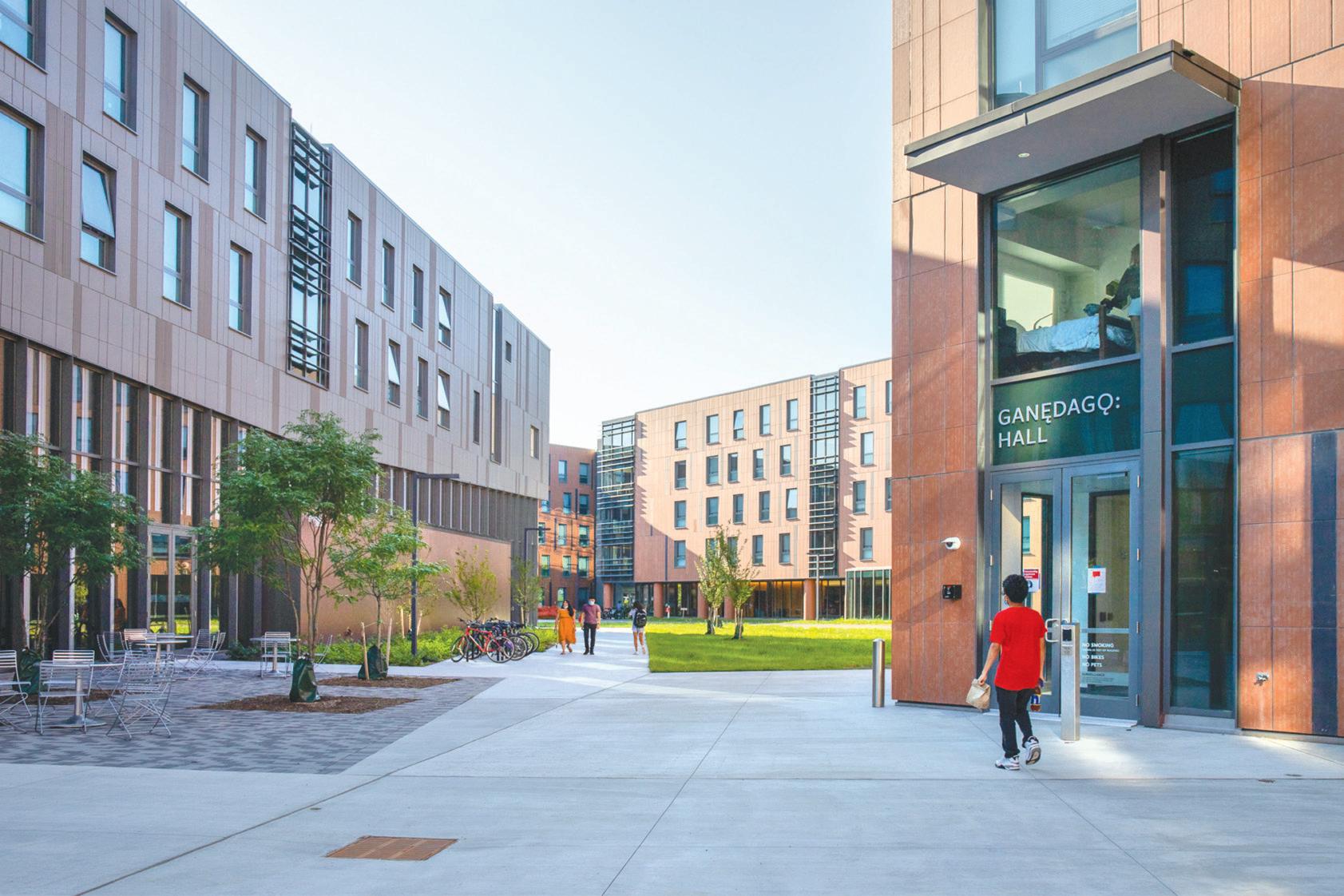
1
Formerly
In fall 2021, Morrison Hall and Ganędago Hall opened to house freshmen for their first semester. Morrison’s dining hall opened in the spring. The complete NCRE — with five dorms, a new fitness center, an additional dining hall and many other facilities — was finished in fall 2022. The housing complex serves both freshmen and sophomores.
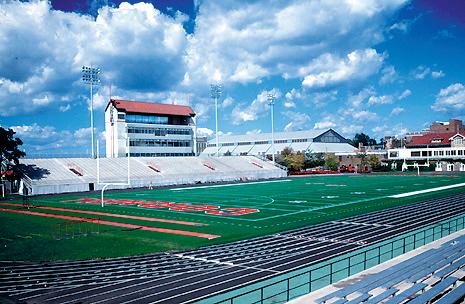
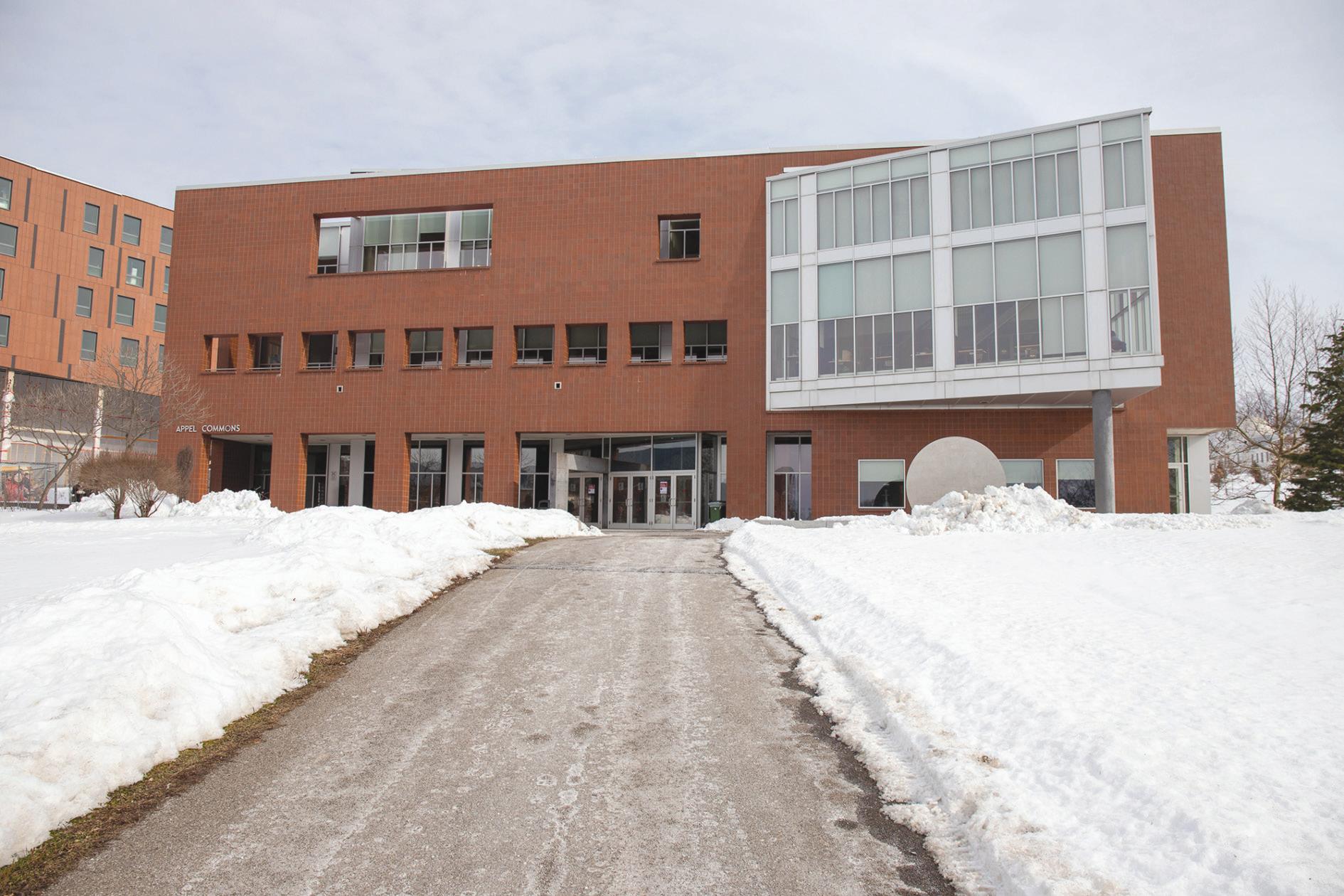
The
stadium for Big
The big football stadium for the Red’s football games. You’ll likely come here during Saturday home games,
You’ll likely come here during
home games, where you’ll sit in the Crescent (students had previously sat in the g randstand on the other side of the field before the Athletic Depar tment changed the seating arrangements a few years ago). The traditional “Freshmen on the Field” event takes place at the first home football game.
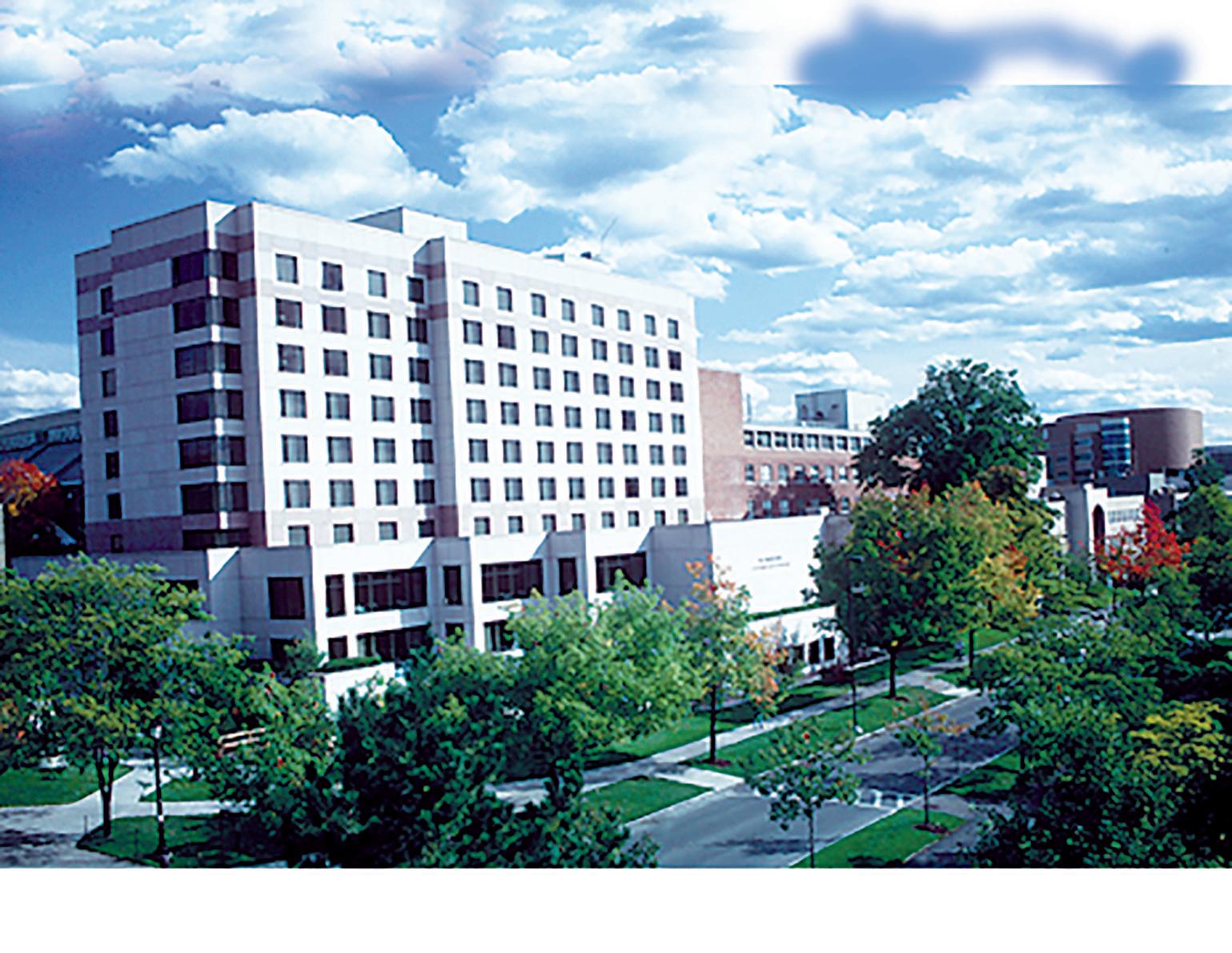
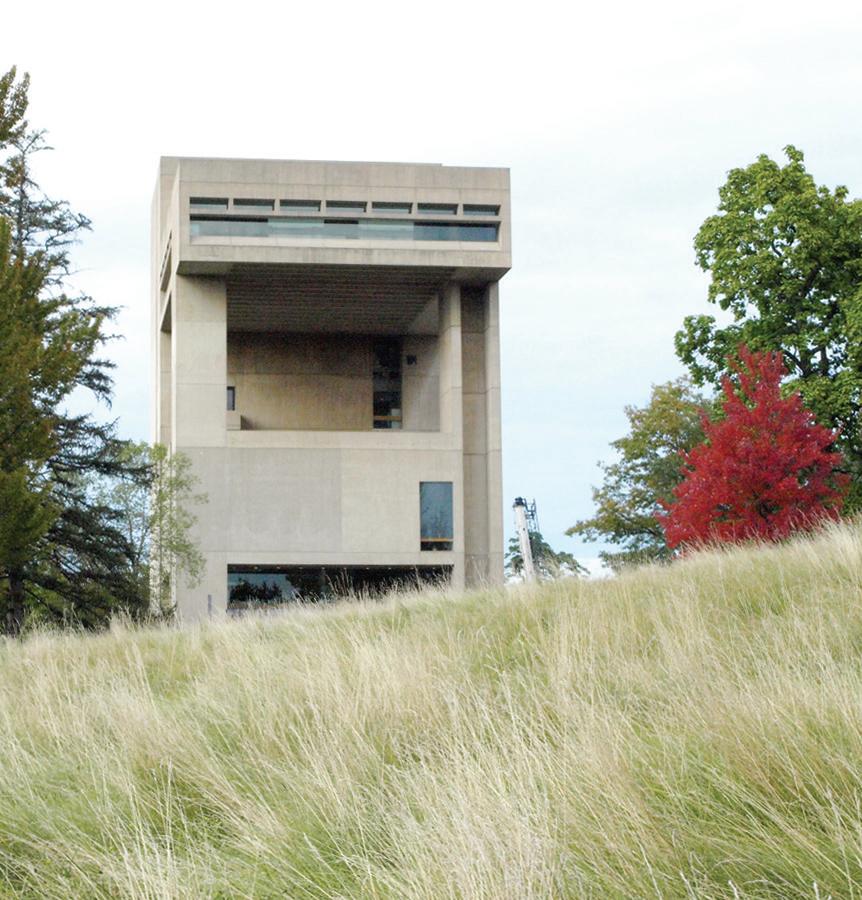
The Herber t F. Johnson Museum of Ar t houses Cornell’s ar t collection, begun by President Andrew Dickson the 1880s. The building was designed by renowned architect Pei in 1973. The museum has 30,000 works in its permanent tions and hosts about special exhibits each The sixth floor gallery offers a beautiful Ithaca and Cayuga
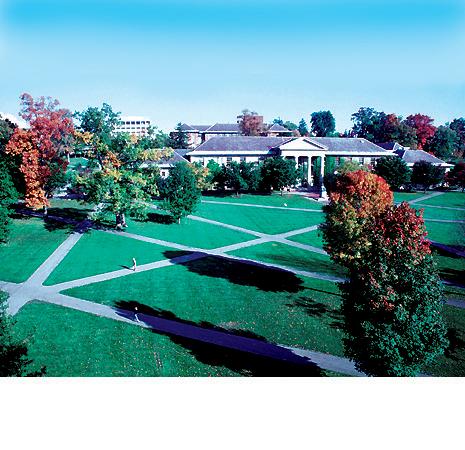
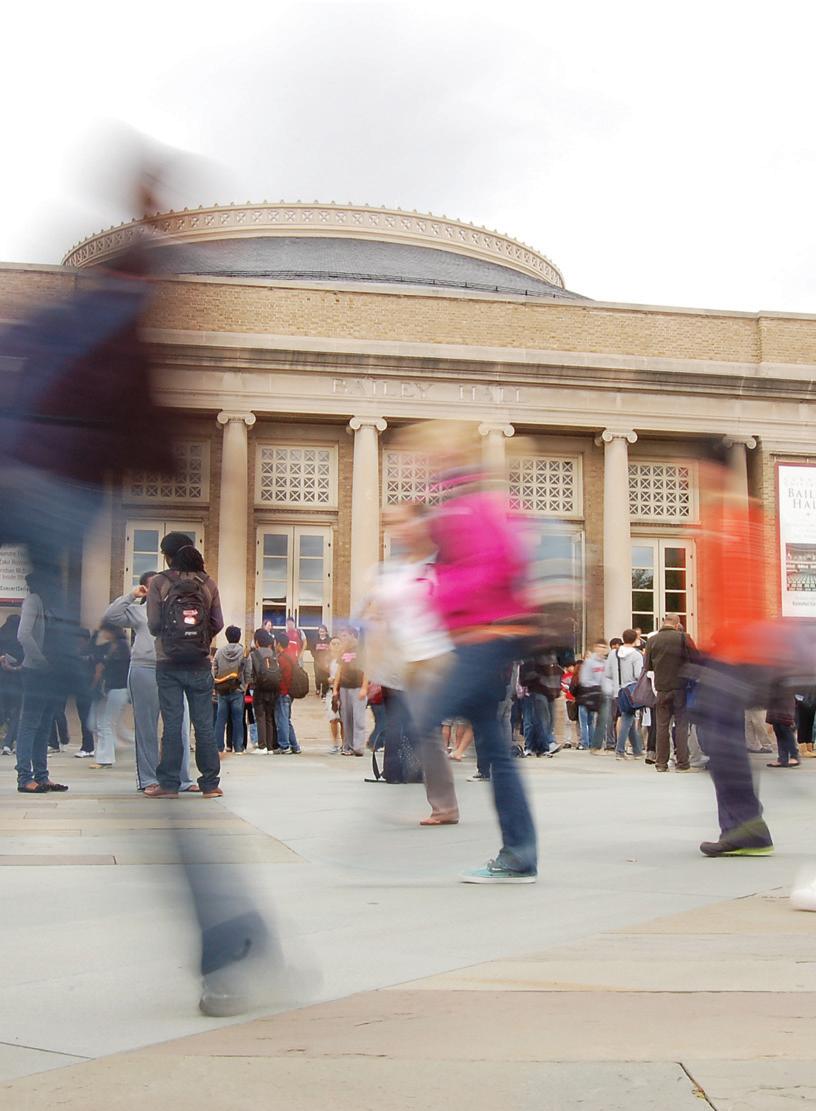
of your major, you’ll defnitely cross the Arts Quad hundreds of times before you graduate. When it’s not snowing, raining, too cold or blocked by construction, students lay out on the Quad to do study, tan or people-watch. Tossing frisbees
This was the University’s orig inal quadrangle, and it remains the center of campus. Regardless of your major, you’ll definitely cross the Ar ts Quad hundreds of times before you g raduate. When it’s not snowing, raining or too cold, students lay out on the Quad to do some studying, work on their tans or people-watch. Throwing frisbees or footballs is also recommended.
During most years, Cornell Night, a show sampling several of the University’s per forming g roups, is held here on the last night of orientation. In addition to the huge introductory psycholog y class, some big campus events occur in Bailey — including concer ts and lectures. Years ago, the building housed a debate from the 2006 New York State gubernatorial campaign.
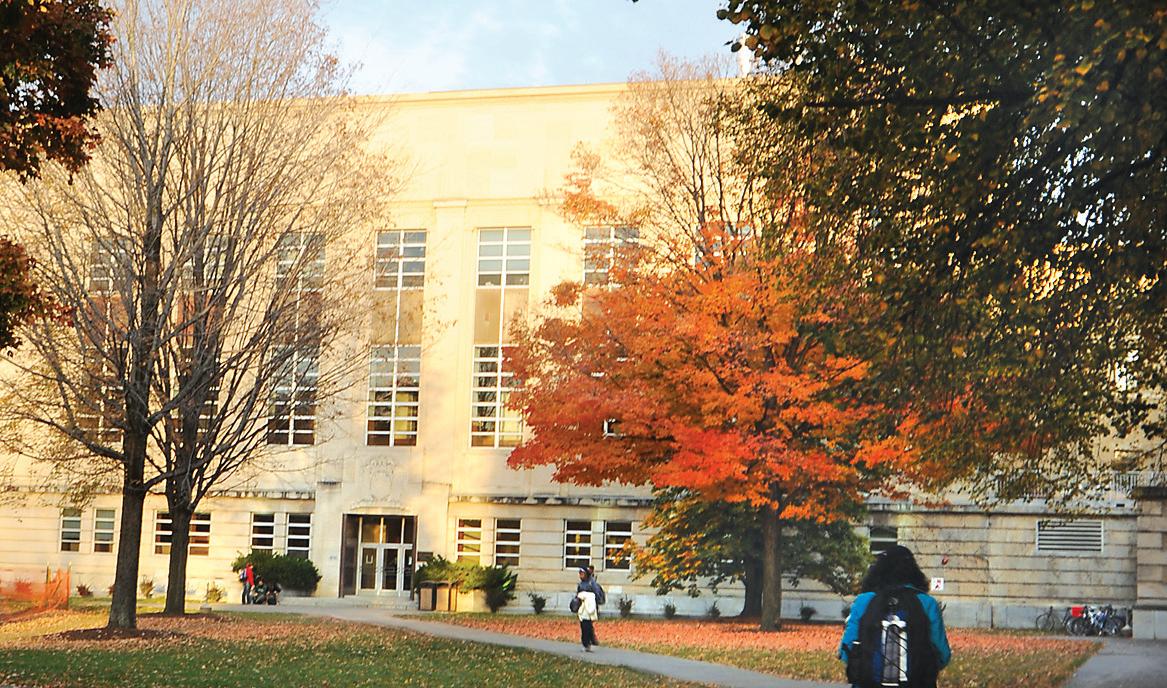
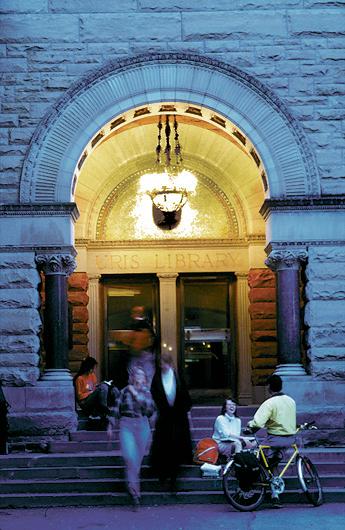
The biggest and brightest library on campus, the orig inal por tion of Mann Library features stunning Ar t Deco ar twork and detailing. With a renovation completed in 2007 Mann is now a state-of-the-ar t facility for studying, out-loud g roup work and computer lab use. For students in the College of Ag riculture and Life Sciences, Mann Library is definitely the place to be.
Filled with comfor table study lounges, like the Cocktail Lounge, this is underg raduates’ favorite spot to hit the books or take a nap. Its A. D. White Reading Room regularly makes lists of the most beautiful library rooms in the world. The ordinary stacks are a bit unattractive, but are usually a last resor t if every other seat is full. Adjacent is Olin Library, the largest library on campus, and the underg round Kroch Library
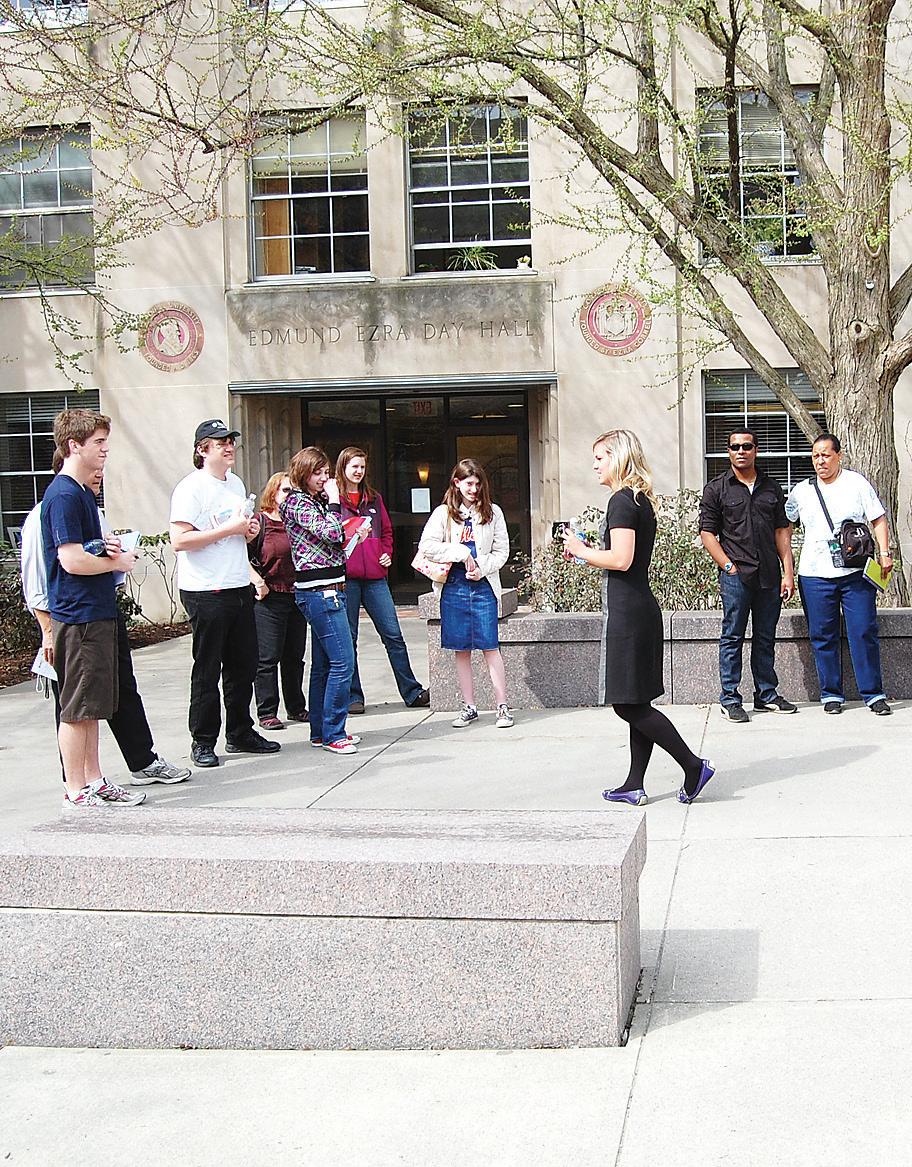
The building where Cornell’s administrators work. The bursar’s office, financial aid, the University reg istrar, the Judicial Administrator and many other depar tments that keep Cornell running make their home in Day Hall. The top floor has g reat views. (Editor’s Note: The J.A. doesn’t look too kindly on your taking more than one piece of fruit from campus dining halls.)
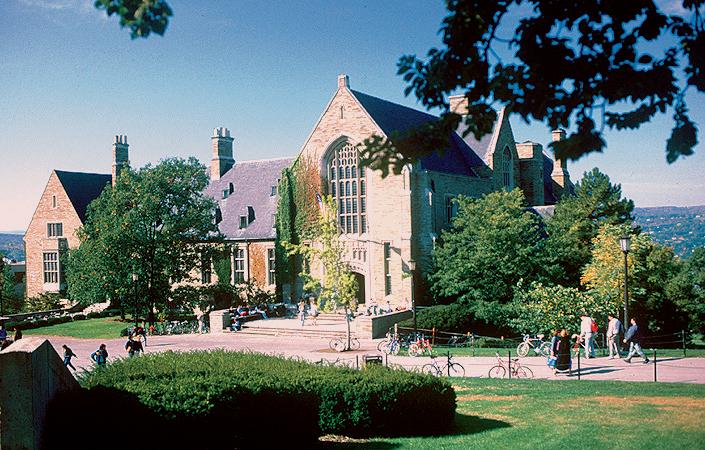
The Straight, the nation’s first student union, is home to the dining hall Okenshield’s, student lounges, a movie theater and a browsing library
Many organizations have their headquar ters in this building. The Student Assembly meets and special events occur in the massive Memorial Room, which features multi-story windows and an intricate wooden hammerbeam ceiling.
By LIFESTYLE DEPARTMENT
editor)
My darling freshmen, it’s time for your first existential crisis!
During the great torture that is the Common Application process, you had to pick a major. But how to decide? Do you pick what inter- ests you or what your college counselor says is best? Luckily for you, at Cornell, you are initially only trapped within a college. Choosing between internal schools is often the least important decision, right? You pick the easiest major to get into, and you can just change it when you get on campus. So simple!
That is, until you find yourself reloading the website, absolute- ly stunned by your college’s distribution requirements and your major’s core classes. College of Arts and Sciences? Yes, you need to study a foreign language. Pre-med? Kiss study abroad goodbye.
When you get on campus, you’ll hear the same monotonous introductory questions: Where are you from? What dorm are you in? What major are you? Oh, what do you want to do with that? [Insert minimal job prospects answer.] Conversations fade into the background… Westchester, Donlon, government, lawyer (of course). … Bay Area, High Rise 5, Dyson, consulting (naturally).
These questions are perfect for Orientation Week and navigating the start of classes, but the repetitiveness starts to wear away at the questions’ significance, and even in your junior and senior years, they won’t go away. It’s sort of like family holidays: You come up with an answer just to get out of the conversation, but then the answer becomes your reality, and all of a sudden you’re pre-law.
So, to celebrate the start of a new school year, let’s discuss what your college says about you. Let’s also examine job opportunities before the Bermuda Triangle of Talent (consulting, finance, Big Law) captures us all.
Starting off strong, we have Arts and Sciences: the college where a double or triple major is more frequent than an internship offer. Joking … I promise.
If you’re in A&S (emphasis on the ampersand), you’re ambitious and enjoy a variety of courses. Don’t fret; that variety is imposed. The downside of such a large college is that it’s easy to get lost in the shuffle. It’s the only college you can apply undecided to, so for all you indecisive people, you’re just delaying the inevitable. You can procrastinate your homework, but no one wants to see a ninth-semester senior.
You probably spend all your time in the Arts Quad or only take classes adjacent to your major. But that’s no fun. Instead of letting A&S consume you, try getting a taste of courses away from the quad. Sure, we’re all going to take HADM 4300: “Introduction to Wines,” but why not sample a business-focused course? There is really no need to zero in on one field; we won’t all go into academia. Actually, we can’t. Have you seen those terminated Grad PLUS loans? So, I take what I said back: Let’s surrender to the Bermuda Triangle of Talent. Who are we kidding? It was bound to happen anyway.
Speaking of business, we have the SC Johnson College of Business, which includes the Dyson School of Applied Economics and Management and the Nolan School of Hotel Administration. But Dyson for undergrads is under the College of Agriculture and Life Sciences? I don’t know; I’m still very confused, but oh well.
If you’re in Dyson or Hotel, you must love wearing a suit. Which reminds me: FIND A SUIT! (Cornell offers resources for free rentals!) You’ll need it for club recruitment and job recruitment and interviews and presentations and, oh goodness, when are you not wearing a suit? Probably when you’re traveling because you all seem to leave early for every break. This comes from a place of envy.
The stereotype for Dyson kids and Hotelies is that your rig- orous coursework demands proficient knowledge in the politics of coloring books and artisanal craftsmanship of folded towel swans, but that’s too reductionistic, so I’ll opt for something better: Excel sheets, food & bev and LinkedIn. Y’all love coffee chats but probably don’t have a stable coffee order, and that’s okay. We can’t all be baristas. Don’t worry — the English majors will hold down the fort.
Oh, CALS, I can’t tell if you love the environment in an “I study sustainability” way or an “I support data centers” way. You’re probably all following the ever-changing legal environment that does not care about the environment. When you’re not hugging trees, you’re admiring how sustainable Cornell is with all of the flights we take to reach Ithaca and escape it. You’re in a great college to help the world, but the world seems to be hell-bent on ending. Save the bees, I guess.
For your sake, I hope you have insomnia. If you’re in AAP, you
are committed to late nights and impossible projects. (Is your sleep paralysis demon Touchdown in a dorm kitchen, too?) You get your own cubicle (apparently exclusive to archies), which probably seems cool, but I think you’ll get sick of it pretty quickly — maybe you’ll be lucky enough to get a desk by a window, though! You also have impeccable fashion taste; by far, AAP outfits dominate Green Dragon and Temple of Zeus cafe. What would Cornell do without its AAP students? Build another Uris Hall, probably.
What a great time to be in CIS when AI is taking over. The word “pivot” has been uttered maybe a thousand times since the latest Opus update, but, hey, at least you get to use AI in your Big Tech interviews, right? Wrong. But maybe slapping the word AI and exposing every API key in your terribly vibe-coded app will save you from the atrocities of tech recruitment … just call yourself a founder, and you’re all set! Some things, however, will never change. Computer science majors will still find a way to have a superiority complex over information science majors, yeah, we get it — you took Algos; you’ll still end up working the same exact job (i.e., “Stealth Founder”, i.e., unemployed). If you have any early classes, which you will since Algos has been offered only at 9 a.m. for the past four years, I hope you’re a morning person, because that walk to Gates from North is loooonnnnggggg. You do have Gimme Coffee!, though, one of the best and most expensive spots on campus!
Every time I enter Duffield Hall, I have the growing suspicion that everyone has been studying there for more than 12 hours. If you’re studying engineering, you’re likely glued to your computer. If you think you can escape the horrors of club recruitment in engineering, you can’t. Project team recruitment might make you question every- thing, but once you’re in, it might be the one place you actually get to “do” engineering. And don’t worry, it becomes your whole life. Sayonara to your social life. Because if you study engineering, your friends won’t hear the end of it. I can still hear the echoes of project teams, problem sets and prelims even in the summer.
Going to be honest here, I only think of fashion when it comes to HumEc. Considering how chic Thread Magazine and Cornell Fashion Collective are, I don’t mind y’all getting your own college. Yes, yes, we cannot neglect human development and the nutritional sciences, but are you guys also getting down with your OOTDs? I didn’t think so.
Besides rivaling the AAP students’ style, you also rival A&S for the easiest (and fakest) pre-med track; I’m looking at you, human biology, health + society.
If you’re in HumEc, you probably thought about studying sociology before realizing it’s a Ponzi scheme.
If you’re an ILRie, you probably think you’re better than the people studying government in A&S or more ethical than the busi- ness majors in Dyson, but we all know that most of you don’t care about unions. You settled here rather than the other colleges either because you’re an athlete or pre-law, applied just to transfer out, are actively transferring out to restore your self-confidence or are staying for the alumni connections. Your choice, no other options.
Try to make friends because you’ll be seeing the same faces again and again. Only when you get those core requirements done by your junior year will you meet new people. I also hope you love reading, because there really isn’t anything else you’ll ever be doing this year.
Last, but certainly not least, the college that wants to save the world but ends up compromising anything for that government internship.
Apparently, A&S students can also major in Public Policy, so I’m not sure what the point of Brooks is.
You’re either working on a policy brief, memo or navigating Washington, D.C. through LinkedIn. And you’ll always talk poli- tics. Forgive me if all your theories about UFOs, lizards, assassina- tions and Big Pharma are ruining the date.
I do love Martha’s Cafe; I’ll give you that. Those power greens bowls are worth all the insufferable debates about universal healthcare. I’d even entertain a conversation about your dream policy that you would, of course, implement after your future presidential inauguration.
From the outside, the allure of the small city Cornell calls home is not immediately clear. But Ithaca, with all its quirks and eccentricities, is full of opportunities for exploring and having fun. Known for its vibrant, artsy community, Ithaca boasts more than 400 street murals, more restaurants per capita than New York City and over 150 waterfalls within a 10-mile radius. In 2025, CNN named Ithaca “America’s best town to visit.”
The heart of downtown is called The Ithaca Commons. Three city blocks made into a pedestrian mall in the 1970s, the Commons have been a hubbub of shops, cafes and restaurants ever since. Reopened in 2015 after years of renovations, it offers a range of retail options from jewelry stores and bookshops to a branch of the Cornell Store. If you’re hungry after a long day out and about, the restaurants on the Commons offer everything from Mediterranean to Thai, whatever your taste may be.
Throughout the year, the Commons plays host to a number of different celebrations where students and residents of Ithaca mingle. In October, Apple Fest brings orchards and entertainers downtown, and participants sample every type of apple concoction you can think of. In February, Chili Fest turns the Commons into a bustling fair filled with aromas from local restaurants as they bring their A-game chili to be taste-tested by the public. In the summer, Ithaca Festival celebrates Ithaca itself, all its quirks included, with a parade and entertainment around town.
Though there are plenty of great campus dining options, some restaurants are iconic for Cornell students. Moosewood, which made its name in the ’60s with its world-famous organic vegetarian cookbook, sits on E. Seneca Street and still serves the same plant-forward cuisine. Glenwood Pines, on Route 89 near Taughannock Falls State Park, serves what it calls the world-famous Pinesburger and offers a beautiful view over Cayuga Lake. For a fancier night out, dress up and head to Simeon’s, a French restaurant on the Commons, or Thompson and Bleecker on E. Seneca Street (but beware that you may have to wait in line, as the upscale Italian restaurant doesn’t take reservations). For an Instagram-worthy brunch, Milkstand on N. Meadow Street is a favorite. For animal lovers looking to satisfy their caffeine fix, stop by the Alley Cat Cafe near the Commons.
Right off Route 13 on Steamboat Landing, the Ithaca Farmers Market is a must-visit. Local vendors sell delicious food, wine and seasonal produce from April to December on Saturdays and Sundays. Right along Cayuga Lake, it is an iconic destination worth checking out.
If you are into museums, more than a few can be found nestled within Ithaca’s treelined boundaries. The Sciencenter on Route 13 is geared toward younger kids, but still provides fun exhibits for the college-aged crowd. The Museum of the Earth, located on Trumansburg Road, is part of the Paleontological Research Institution and features a treasure trove of fossils and dinosaur bones. The Herbert F. Johnson Museum of Art, just off the Arts Quad on Central Campus, houses works by artists from the ancient world to today, and also features a rotating cast of temporary exhibitions. For bird lovers and nature enthusiasts in general, Cornell’s Lab of Ornithology provides a fun, educational experience.
The Shops at Ithaca Mall is a great option to make your latest Target run or satisfy your Best Buy needs, just a 15 minute bus ride from North Campus. For better clothing options, drive an hour to Syracuse to visit Destiny USA, the largest mall in New York State. As far as grocery stores are concerned, there’s always Wegman’s, a supermarket that is so much more than a supermarket. Those not from around here may be surprised at its size and the amount of ready-cooked food available. Trader Joe’s, just down Route 13 from Wegman’s, offers its fix of Everything But the Bagel Seasoning and Scandinavian Swimmers.
For nature lovers, Ithaca is the place to be. Beautiful waterfalls litter the campus and city, including Ithaca Falls, a short walk from campus. Drive just 20 minutes to Trumansburg, N.Y. to visit Taughannock Falls, the tallest single drop falls east of the Rockies (at 215 feet, it rises about three stories higher than Niagara Falls). Be sure to check out local swimming holes in the gorges, including First Dam and Second Dam, both just a 20 minute walk from Collegetown for those without cars. Robert H. Treman State Park is another great option: for a $10 per car entrance fee, visitors can enjoy over 1,000 acres of hiking, waterfalls and swimming — complete with a diving board. Make sure to visit these spots early in the year; it gets cold quicker than you think!
Once the winter weather hits, though, there are still plenty of outdoor activities to emjoy. Greek Peak, just a 30 minute drive away in Cortland, is the closest ski area in the region. If you can’t afford a season pass, check out the resort’s college night deal: every Monday night, you can enjoy a $26 lift ticket and half-off wings if you present a college ID. The Cornell Ski and Snowboard Club provides weekly shuttles to Greek Peak during the winter season to club members.
Several wineries line Seneca and Cayuga lakes, providing picturesque venues for wine tours. Of course, you have to be 21 to sample the wines, so it’s more usual for upperclassmen to take excursions into wine country. For those of age, though, the wine region — often compared to Napa Valley in California — is well worth a visit.
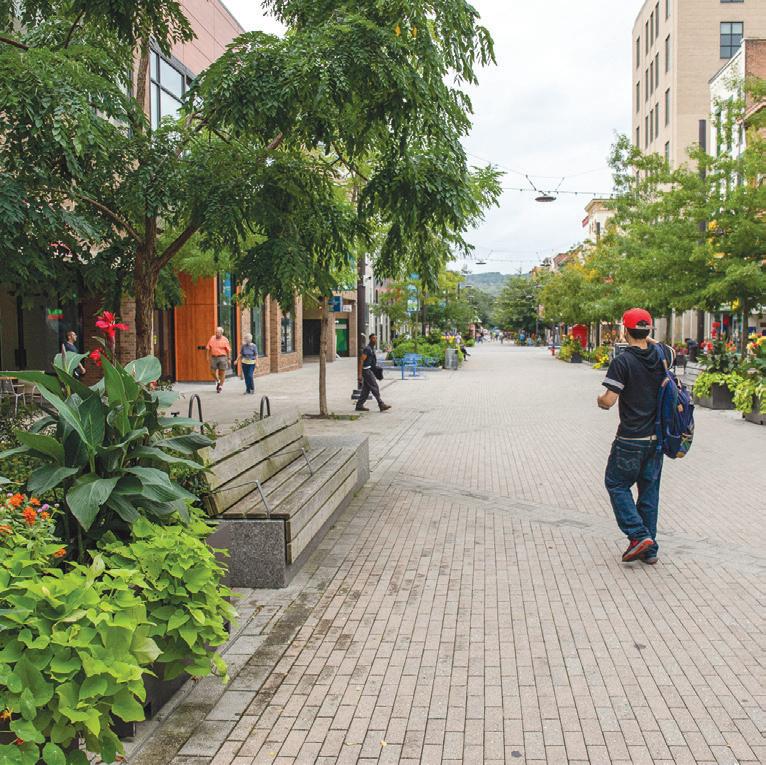
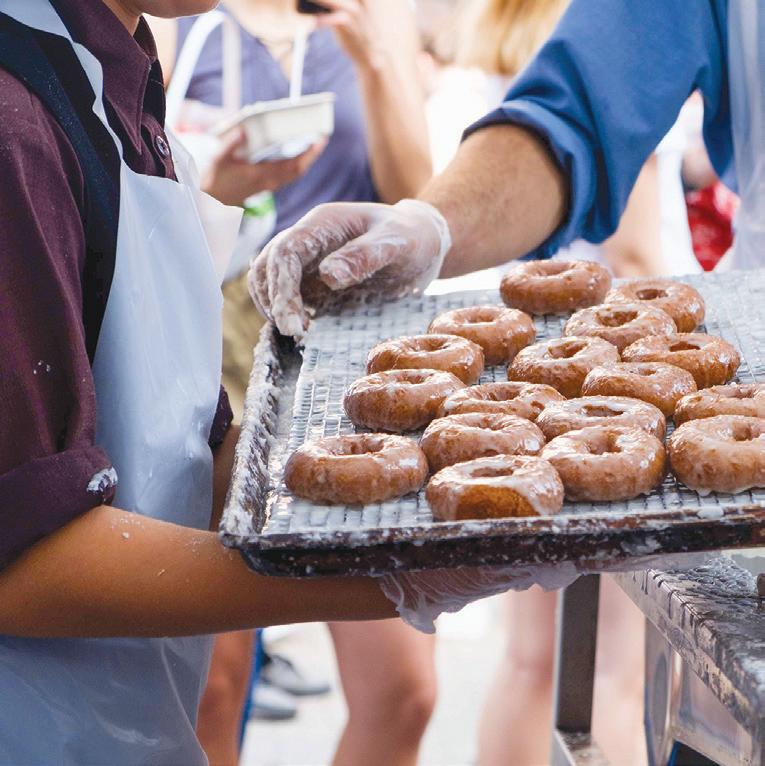

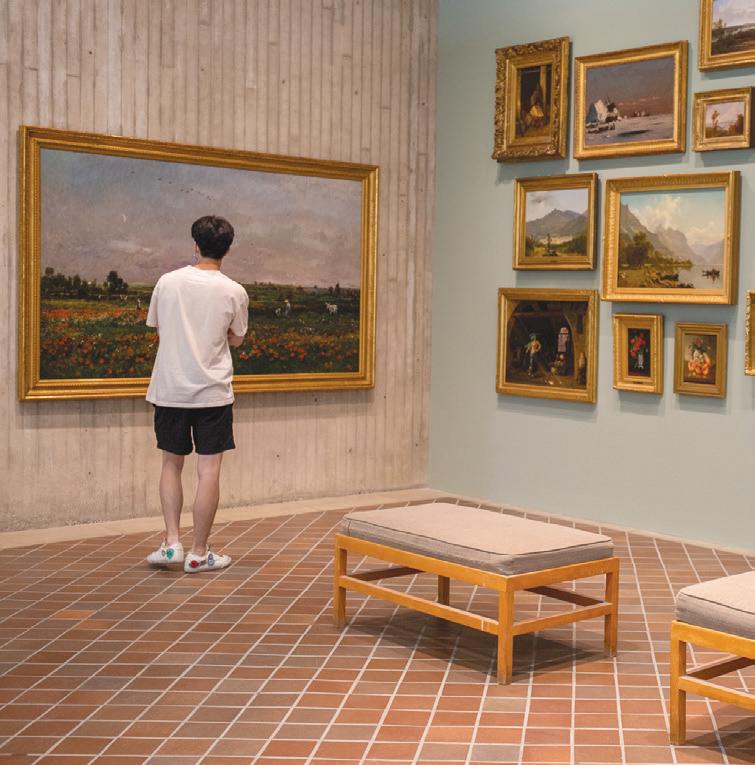
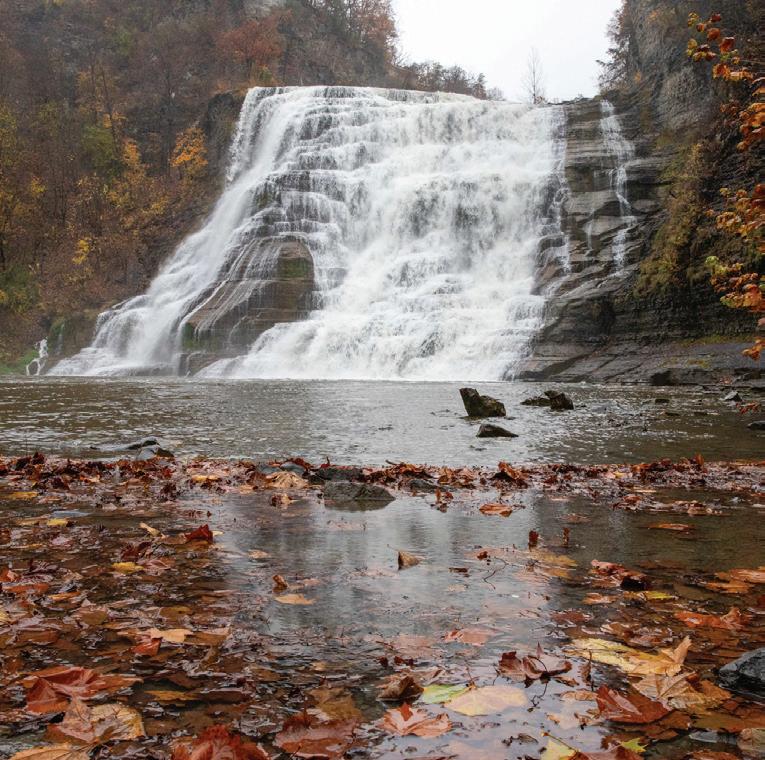
So. You’re in college. In Ithaca. What to do now?
When prelims, lab reports and snow aren’t getting you down (read: seldom), there’s a lively arts scene right outside your doorstep to keep you sane. From barn-burning bashes in Barton to art appreciation in the Johnson, there’s something for every taste. Cornell may be known for its cows and gorges, but it’s no slouch when it comes to music, theater, film and fine art.
And don’t forget the turf around the Hill. Ever since it made an appearance in Homer, Ithaca has been an arts-obsessed little town, with a local music scene bursting at the seams and a host of other cultural offerings to keep the hippies and Hillsters entertained. So make use of your time here, hit the town and remember — grades may last a semester, but art lasts forever.
— The Arts Section
Cornell Concert Commission
The heavy hitters in the campus concert scene. They’re the ones responsible for the big blowouts at Barton (Wavves, Avicii, etc.) and the early fall show on the Arts Quad. Now you know where your Student Activity Fee goes.
Featuring performers on the fortepiano or harpsichord, C.C.H.K often hosts guest pianists performing on historical keyboard at the auditorium in Barnes Hall. Eighteenthcentury style German chamber organ on stage, as well as two concert grand pianos. The Green Room is the Music Department’s primary performance space an intimate setting for recitals, chamber music and small ensembles.
They only put on one show a year, but don’t call them lazy: These cats work year-round to throw Cornell the biggest and baddest party around, and the music’s just half of it. Feeling woozy? Thank your lucky, Slope Day Programming Board stars that there’s free water (and port-o-potties) within crawling distance.
The State is Ithaca’s very own Fillmore, MSG and Royal Albert Hall, all rolled into one. A cinema following Ithaca’s brief tenure as the Hollywood of the East, its ornate interior has hosted the likes of Norah Jones, Cat Power, Elvis Costello and Arlo Guthrie over the years. You can also find the occassional stand-up show, with John Mulaney paying a visit to the theater last Spring Break.
If you want to hear the sweet sounds of the Cornell Symphony Orchestra or the thoughts of Nobel Prize winners that have included Elie Wiesel and Toni Morrison, then Bailey’s your best bet. The classroom for some of Cornell’s largest classes doubles as a venue for more subdued performances.
Risley Hall North Campus
As with all things arts-related on campus, Risley Hall is right in the thick of the concert scene, hosting smaller acts like The Pains of Being Pure at Heart in years past, while welcoming Cornell’s own singers and songwriters to rock their halls. The hall also plays host to student productions as well as pole-dancing shows and just about anything you could imagine.
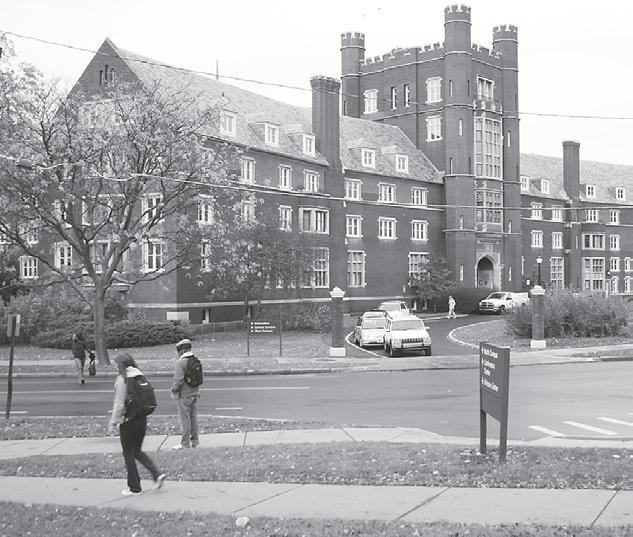
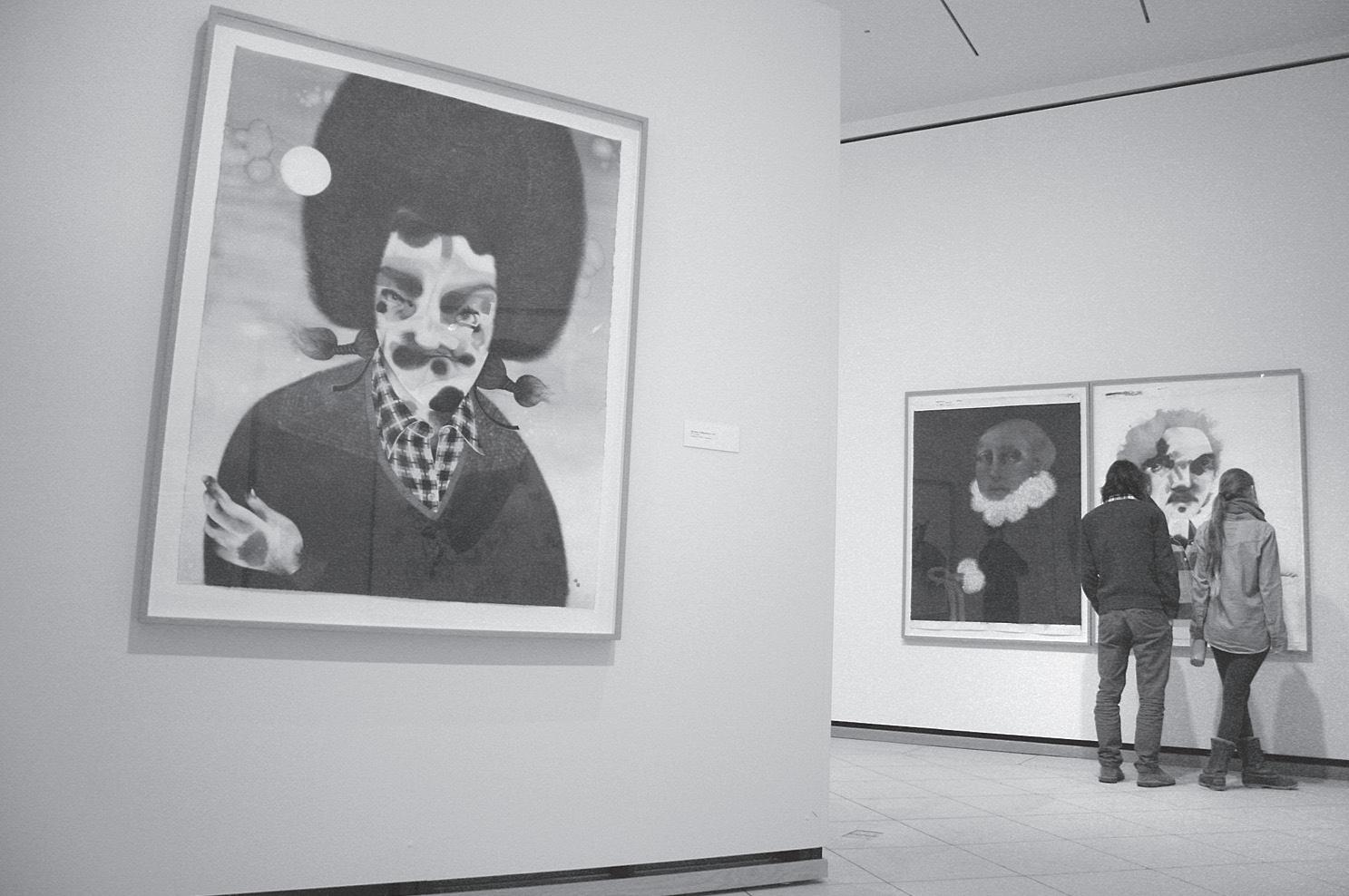
There might be track and field equipment on the floor and ROTC classrooms for a backstage, but Barton is a bona fide big star attraction. Ever heard of Carly Rae Jepsen, Young Thug or Trevor Noah? They’ve all stopped by the last few years, and Barton Hall is the undisputed king of campus venues, with a capacity around 5,000 and ... interesting acoustics. In 2025, Ken Carson played a sold-out concert in Barton Hall. One other quirk: Most shows are on Sunday nights — the track team gets Barton on Saturdays.
For a more intimate live music experience, be sure not to miss the thriving bar music scene around town. Ithaca Underground, a nonprofit supporting Ithaca’s local music community, brings over 40 shows to the city every year. Watering holes like The Nocturnal Cafe and The Bike Bar book acts throughout the year.
The epicenter of madness and debauchery on campus ... at least for one day a year. The headliner last year was The Chainsmokers with special guest Daya, joining an already impressive roster that includes Flo Rida, Kanye West and Drake. It gives you something to look forward to during the long, cold winter.
Schwartz Center for the Performing Arts 430 College Ave.
The home of Cornell’s Performing and Media Arts Department hosts campus-produced plays, musicals, movies and dance performances throughout the fall and spring in addition to can’t-miss semesterly events such as Festival 24, in which students write and produce plays in just 24 hours.
Risley’s drama-oriented denizens give Cornell plenty to laugh, cry and think about, offering everything from nights at the circus to period-faithful reproductions of Don Giovanni. Don’t miss the annual production of The Rocky Horror Picture Show!
Even with all of the campus offerings, there’s a thriving drama scene in the city of Ithaca. The Kitchen Theatre (417 West State St.) offers classical and modern productions year-round and the newly renovated Hangar Theatre (801 Taughannock Blvd.) performs for those lucky enough to stay for an Ithaca summer. Speaking of which, the Ithaca Shakespeare Company puts on Shakespeare in the Botanic Gardens in July.
The Herbert F. Johnson Museum of Art, Cornell University’s own fine art museum located conveniently on the Arts Quad, has a prolific collection of contemporary and historic works of art, including many Asian artifacts. The temporary galleries change almost monthly and the Johnson frequently hosts events and lectures related to the works shown. Less known is the fact that the Johnson owns many more works than it can show at any given time: hidden in the archives are more Hokusai prints, original Rembrandt plates and the paintings of abstract expressionists like Michael Goldberg. These works are available for free viewing to students — an awesome privilege — and can be seen by making an appointment with a curator. Also, once a year, the History of Art Majors’ Society, a student-run group, curates a show accompanied by essays and interactive exhibits.
Architecture students are notoriously mysterious, always locked up in Rand Hall producing God - knows - what. Hartell Gallery is a little known way of sneaking a peek at their curriculum. Nestled under the dome in Sibley Hall, the (spatial) center of the AAP community hosts a range of exhibits throughout the year. During mid - terms and finals, stop by to see the studio works of students pinned up — not just drawings of buildings, but frequently hand - built models and constructed work.
Cornell conceals a small but productive discipline in the fine arts within its College of Architecture, Art and Planning. The two galleries at Tjaden Hall put on constantly changing exhibits throughout the year — a glimpse into the discourse on campus. In years past, exhibits have offered everything from huge plaster casts of bulging bodies to delicate paintings of Iraqi aerial landscapes. The Olive Tjaden Gallery and the Experimental Gallery are open during the week. Check at the AAP registrar’s office for a schedule of shows.
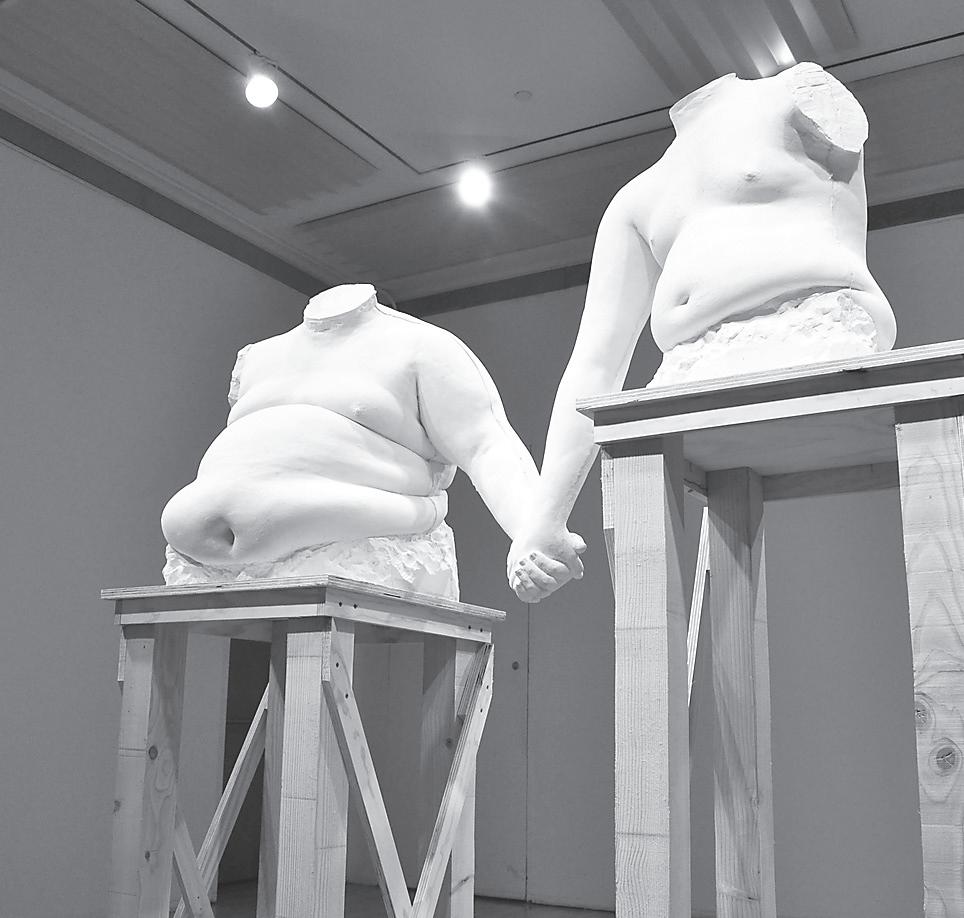
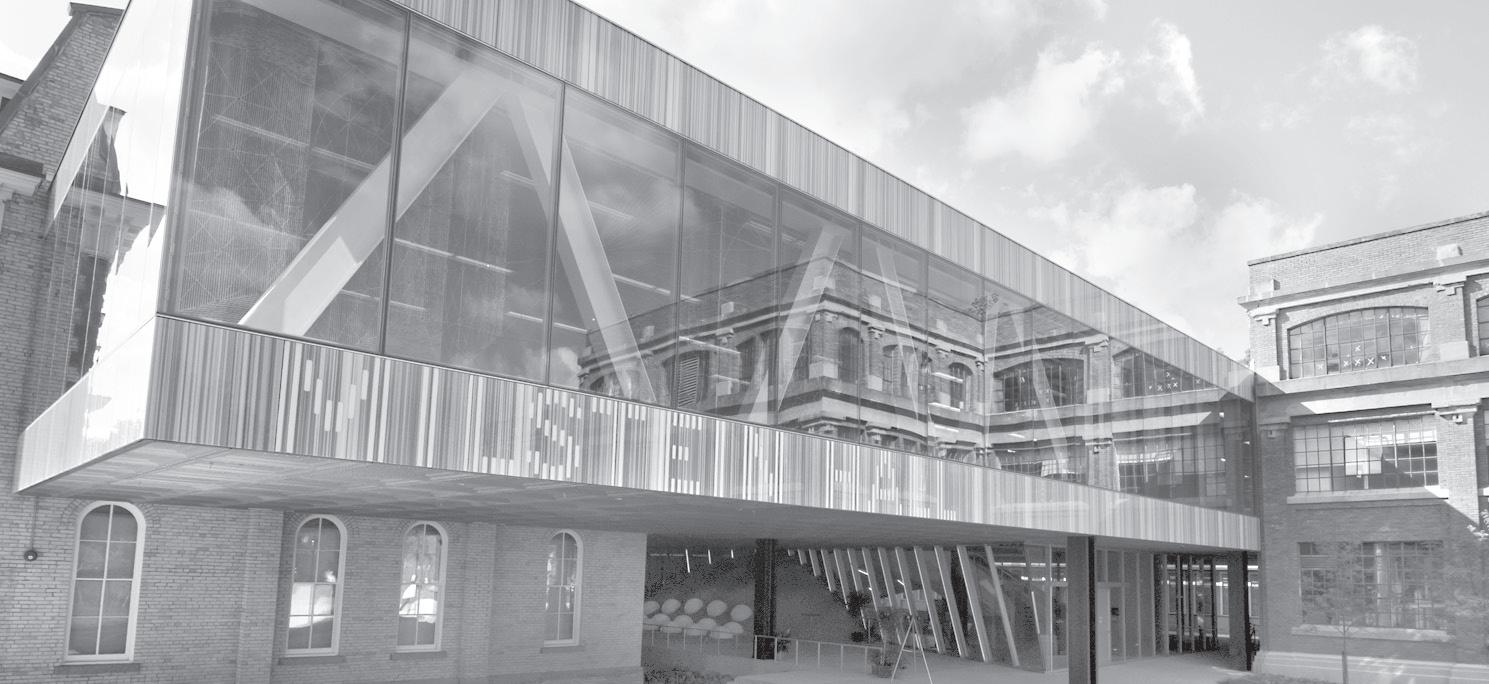
Nope, that’s not a U.F.O. — Milstein Hall, designed by Pritzker Prize-winning architect Rem Koolhas and conceived as the home to Cornell’s esteemed architecture program, is a dazzling and starkly modern architectural marvel. The 47,000 square foot building, which officially opened in August 2011, was the first new building to be dedicated to Cornell’s Architecture, Art and Planning program in over 100 years. Architectural highlights of the structure include the glass-encased “upper plate,” which cantilevers almost 50 feet over University Avenue (in laymen’s terms: it looks like it’s floating), and the lower-level dome, which supports both the auditorium’s raked seating and the stairs that lead to the studio above. Even if you’re not an architect, you owe it to yourself to pay a visit to this prestigious structure and sit on one of its colorful globes.
One of the beautiful works by a Cornell architecture grad in the Ithaca area, Simon Ungers’ ’80 minimalist cube is located out by Route 79 near Ithaca College. A pristine concrete box surrounded by acres of wilderness included in the property, the house stands as a tribute to the beauty of old school modernism in all its glory — stark, individualist and monumental despite its small scale. Simon Ungers was the son of the late O.M. Ungers, who taught at Cornell and whose works abroad have influenced generations of designers. Borrow a friend’s car and drive up to Makarainen Road, near South Hill, to creep around.
Beyond being the home to a prolific art collection, the Herbert F. Johnson Museum of Art is a complex and interesting space designed by Pei Cobb Freidd Partners — whose most famous architect is I.M. Pei, designer of the Louvre. Situated at the end of the northern row of the Arts Quad, the Johnson Museum functions as a viewing device for the lake and the landscape. The building has distinct and interesting spaces on each floor, from the big courtyard in the middle to the panoramic conference room on the top floor. A stark contrast to the historic decadence of the other buildings on the Arts Quad, the architecture of Pei’s Johnson Museum deserves its own look.
When crossing the Stewart Avenue bridge from North Campus’ Fall Creek Road towards the West Campus dorms, you will see a two-faced work of architecture that is shrouded in mystery. On the North Campus side, the building displays a modernist façade — a pure white plane with a cut opening. Looking across the gorge from the West Campus side, the building, flanked by Rockledge fraternity, appears to be the gateway into an Egyptian tomb. The late Carl Sagan, legendary Cornell astronomer, renovated the former meeting place of the senior honor society Sphinx Head into his study and part-time home. Designed by the late Guillermo Jullian de la Fuente (a protégé of Le Corbusier and one-time Cornell professor) and his wife Ann Pendleton, Carl Sagan’s cliff-edge study is a structural and formal marvel.

Cornell Cinema Central Campus
Billing itself as a “year-round film festival,” it screens a frightening number of feature films, documentaries and shorts. Showings are usually in Willard Straight Hall or Uris Hall. Do yourself a favor and make it a regular stop; there are multiple films a day and a constantly changing lineup the live talks by directors and music-accompanied silent films are just icing on the cake. Seriously, you’re lucky.
Cinemapolis
120 E. Green St.
A gift from silverscreen gods, this Ithaca fixture screens independent, foreign and mainstream films on a daily basis. If you do not make at least a couple trips here come Oscar season, consider yourself behind the curve. While you’re there, treat yourself to some harissa-flavored popcorn.
Regal Cinemas
The Shops at Ithaca Mall, 40 Catherwood Rd.
And you thought college meant never going to the mall again. But if you absolutely must see the midnight debut of the next Marvel flick, hoof it over to Regal, home of the Hollywood blockbuster and normal release schedule.
By SUN STAFF
1. Be a farmer for the afternoon at a Dilmun Hill Student Farm work party.
An entirely student-run, organic farm that practices sustainable agriculture, Dilmun Hill is located on Route 366 (Dryden Road), just across from Judd Falls Road, near the Cornell Orchards.
The farm hosts weekly work-parties and invites everyone to experience the latest in sustainable agricultural practices, support the farm, join their community and go home with fresh produce.
If visiting the farm seems like a bit of a journey, visit Dilmun Hill’s on-campus farm stand in front of Mann Library (on the Ag Quad) and inside the library lobby on rainy days.
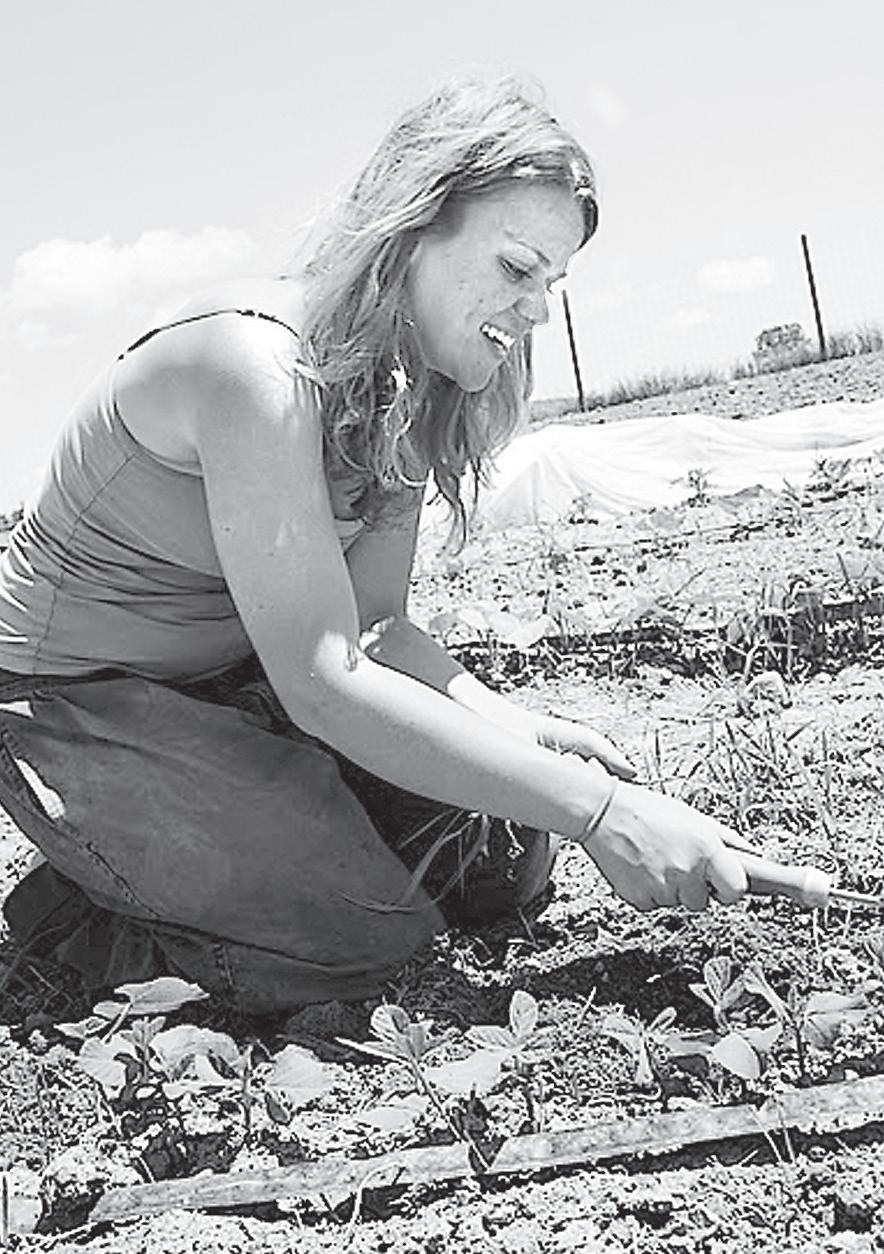
2. Check out the 200,000 species in the Cornell University Insect Collection.
The Cornell University Insect Collection includes more than seven million insect specimens representing about 200,000 species, or roughly 20% of the world’s described insect fauna. The collection is housed in approximately 16,500 drawers held within in a climate-controlled facility located on the second floor of Comstock Campus.
The insect collec ipates in the annual celebration — a one-day with educational exhibits groups, from children to Insectapalooza typical takes place at the end October.
3. Check out Cornell’s particle
by the Cornell Laboratory for Accelerator-based Sciences and Education, which has an annual budget of $35 million for energy, maintenance and equipment.
At this point, students who don’t know much about physics are probably asking what the facility actually does.
Not to worry! Prof. Emeritus David G. Cassel, physics, was more than happy to answer that question.
“It accelerates particles,” he said with a smile.
4. Go stargazing at the Fuertes Observatory.
Fuertes Observatory, located on North Campus past Helen Newman Hall, houses a 12-inch refractor telescope with a mechanical tracking mechanism operated by weights, like a grandfather clock. Though no longer used for research purposes, the observatory is used for introductory astronomy classes and is open to the public.
The Cornell Astronomical Society runs public viewing nights at the Fuertes Observatory on every clear Friday night during the semester from 8 p.m. until midnight. In addition to seeing Saturn (if you’re lucky), you can join the club for an evening of sea shanties atop the roof of the observatory.
Come back for telescope trainings and learn how to operate the 100+ year old Irving Porter Church Refractor, lovingly nicknamed “Irv” by the astronomy students.
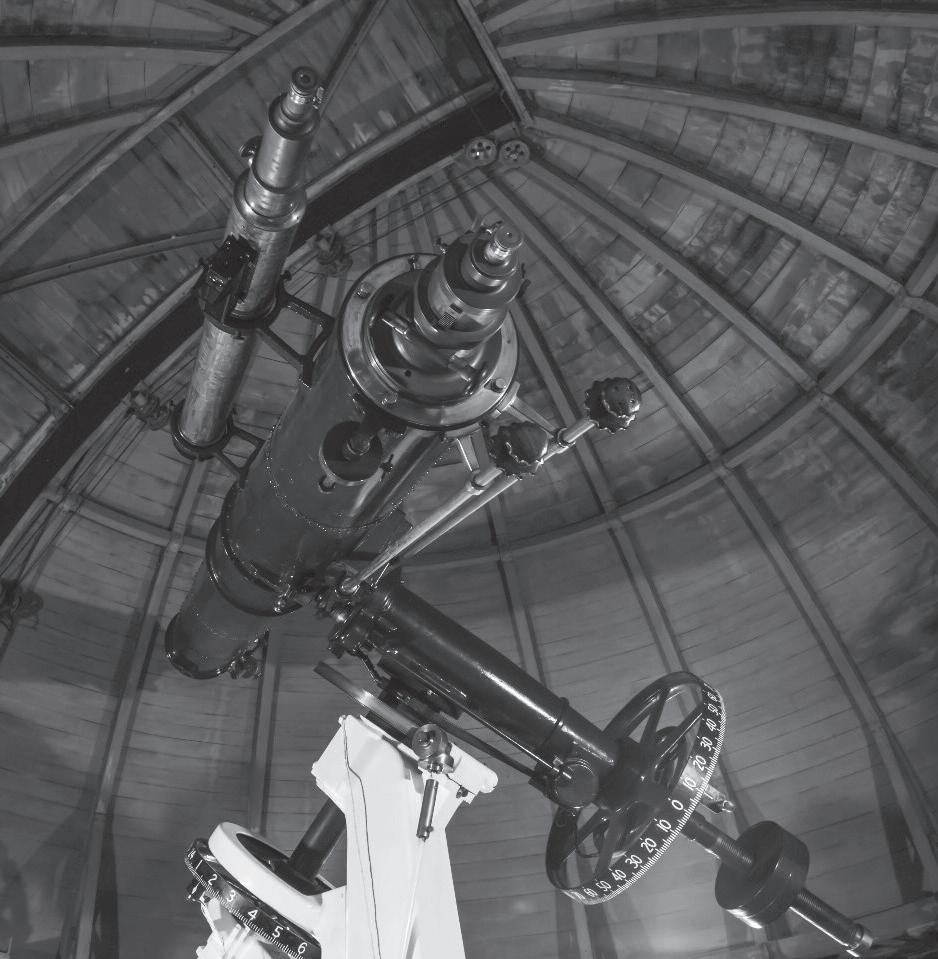
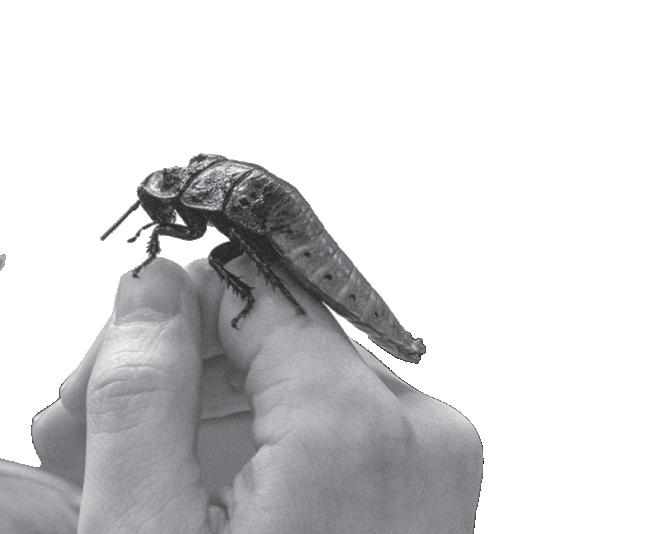
At Cornell’s Schoellkopf Stadium, as excited fans cheer on football players from the stands, something lies hidden below — 40 feet under the surface of the Earth.
A ring-shaped tunnel, roughly half a mile in circumference, is situated just under the boisterous stadium. Here, scientists work day and night to unlock the secrets of the universe.
Sound like an urban legend or the plot of a science-fiction movie? It’s not. It’s Cornell’s very own particle accelerator.
In the 1990s, it was the highest luminosity electron-position collider in the world. Today, the accelerator, formally known as the Cornell Electron Storage Ring, remains at the cutting edge of discovery in accelerator physics.
The particle accelerator runs 24 hours a day, seven days a week with the exception of maintenance periods. It is operated
5. Take a trip to the Lab of Ornithology’s sanctuary.
Founded in 1915, the Cornell Lab of Ornithology is a world leader in the study, appreciation and conservation of birds. The lab is not on campus, but is easily accessible by a shuttle bus that stops at Corson-Mudd Hall.
The lab is located in Sapsucker Woods, and guided bird walks through Sapsucker Woods Sanctuary are offered for beginners on Saturdays and Sundays from April to September.
The Visitor Center at the lab is home to a large observatory with chairs, telescopes and bird feeders, interactive exhibits, a world-class collection of bird art and sculpture and the Macaulay library — the world’s largest archive of animal sounds and video.
The 220-acre sanctuary, which includes forest trails, boardwalks through thick marshes and a tranquil pond, is open every day from dawn to dusk. Plus, look out for the annual Great Backyard Bird Count, which drew one million participants in 2026.
Dear First-Year Students:
Congratulations on your acceptance to Cornell, one of the nation’s fnest research institutions. Our advice to you is to make curiosity your key. Question everything, fgure out how things work and begin to explore and discover. Cornell has so much to ofer to the inquisitive student. Tese are the same halls where Carl Sagan pondered the cosmos and where Bill Nye began as a budding Science Guy. Tey were both curious and you should be, too. So feed your curiosity by reading Te Sun’s science section and learn about the science happening around you every day.
By SUN STAFF
ASTRO 1102: “Our Solar System” — Not satisfied with the Fuertes Observatory and yearning to learn more about our universe? Take this intro to how our solar system came to be, a course that traces its roots back to Carl Sagan, former professor, NASA advisor and renowned science communicator. A class designed to be digestible for STEM and non-STEM majors alike, it tackles the everlasting question of the possibility of life beyond our planet.
EAS 1220: “Natural Hazards” — Earthquakes, tsunamis, hurricanes, volcanoes galore. Learn all about the hazards that wreak havoc around the globe.
ENTOM 2030: “Honey Bees, Their Intriguing Biology and Interactions with Humans and More” — Buzzzzzzz... Students swarm to this wacky entomology class to learn about the stripey insects that buzz around our gardens. Learn about bee species, pollination, sustainable agriculture and mitigating bee decline while gaining an appreciation for the powerful pollinators through this course.
HD 2600: “Introduction to Personality” — What makes up personalities and how can those biological, social or cultural aspects be measured? Dive into these questions and learn about personality psychology while discussing historical debates over personality.
NS 1150: “Nutrition, Health and Society” — Enroll in this introductory nutrition class and learn to stay healthy in the college world of late munchies and sleepless nights. Iconic Prof. David Levitsky, nutritional sciences, is sure to keep you entertained with songs about the digestive system and snacks in class.
PSYCH 1101: “Introduction to Psychology” — This class has consistently ranked as one of the University’s most popular classes throughout the ages. Held in Bailey Hall to accommodate its large enrollment, it explores broad questions about morality, intelligence, how the brain works and why we do what we do.
Theobald Smith 1881 discovers the first Salmonella enterica bacterium. Hypothesizing it to be the cause of common hog cholera, Smith named the microbe after Daniel Elmer Salmon DVM 1872, who led the research team under the United States Department of Agriculture (Salmon was also the first recipient of a DVM degree in the United States). Though Smith’s theory was later proven incorrect, the Salmonella genus was found to be responsible for several infectious illnesses, such as typhoid fever and food poisoning.
Philip Levine M.D. ’23 discovers the Rh factor in blood after observing hemolytic disease in infants. Levine found that a “negative” pregnant mother’s antibodies can destroy the red blood cells of her child if the child’s blood was “positive” (containing the Rh antigen). Today, an infant’s afflicted blood can undergo immediate treatment to prevent major repercussions.
1974
Henry Heimlich ’41 M.D. ’43 publishes an article promoting an anti-choking technique consisting of repeated abdominal thrusts, now commonly advertised as the “Heimlich maneuver.”
1978

Florence Kimball
DVM 1910 graduates from Cornell to become the first certified female veterinarian.
William F. Friedman 1914 leads the research division of the U.S. Army’s Signals Intelligence Service to break the difficult Japanese PURPLE cipher, providing Japanese diplomatic secrets to the United States government before World War II.
Stephen Moulton Babcock master’s degree 1875 develops the Babcock Test, an inexpensive method of measuring the fat content in milk that allowed farmers to produce consistent quality dairy. From 1907 to 1911, Babcock led a series of single-grain experiments to measure relative nutritional value among grains for cattle, leading to the establishment of nutrition as a science.
William J. Wilgus, a correspondence student at Cornell between 1883 and 1885, designs and oversees the construction of New York City’s Grand Central Terminal. Chief Engineer of the New York Central Railroad, Wilgus was responsible for the introduction of electric trains into the terminal as well as the idea for two-level stations below ground.
The first successful implantable pacemaker — invented by Wilson Greatbatch BEE ’50 to regulate beating of the heart — enters use after extensive animal testing. Greatbatch’s pacemaker used a mercury battery as an energy source, different from earlier designs.
Prof. Hans Bethe, physics, participates in the preliminary design meetings for the atomic bomb. A major player in the Manhattan Project, Bethe also participated in the development team for the hydrogen bomb. During the process, he hoped to prove the weapon impossible to create and serve as a force for disarmament.
The cyanoacrylate commonly known as Super Glue hits shelves, having been developed as an adhesive called “Eastman 910” by Harry Coover M.S. ’43 Ph.D. ’44. Able to bond solid objects as well as human tissues, the glue is also known for its forensic ability to capture fingerprints.
Gregory Goodwin Pincus ’24 begins testing the combined oral contraceptive pill after studying the ability of progesterone to inhibit fertility. The pills — approved by the Food and Drug Administration in 1960 — are now used by over 100 million women worldwide as a form of birth control.
Walter McCrone ’38 Ph.D. ’42 performs several days of forensic testing on the Shroud of Turin, a linen cloth that appears to bear the image of a bearded man who had undergone crucifixion. McCrone concluded that the Shroud had been painted, due to the presence of red pigment that others had deemed blood.
Jon Rubinstein ’78 M.Eng ’79 leads the eight-month development of the iPod, Apple’s first portable music player. Rubinstein later became senior vice president of Apple’s newly-created iPod division in 2004.

Barbara McClintock ’23 M.A. ’25 Ph.D. ’27 becomes the first and currently only woman to win an unshared Nobel Prize in Physiology or Medicine for her discovery of genetic transposition in corn plants. Transposable elements are DNA sequences that can move throughout the genome, changing how certain traits are turned “on” or “off.”
Prof. Mae Jemison M.D. ’81 becomes the first African-American woman to travel into space, serving as the science mission specialist on the Space Shuttle Endeavor’s second spaceflight. Jemison went on to start The Jemison Group, a company that focuses on integrating technologies into developing countries.
Prof. Steve Squyres ’78 Ph.D. ’81, astronomy, leads the Mars Exploration Rover Mission as principal investigator. The mission, through the rovers Curiosity and Opportunity, returned significant findings about Mars, including evidence that water once flowed on the planet’s surface.
Prof. Kenneth G. Wilson, physics, directs the establishment of the Cornell Theory Center (now the Cornell University Center for Advanced Computing in Rhodes Hall), one of five original supercomputer centers created to provide high-speed computing resources within the United States.
Arthur Ashkin Ph.D. ’52 wins the Nobel Prize in physics in October 2018, setting the record for the oldest person to receive the award in Nobel’s 123-year history. His record was then broken in 2019. Ashkin split the award with two of his co-researchers. Together, they researched and invented “optical tweezers,” which allowed Ashkin to pick up living bacteria without damaging them.
What’s that? You don’t know the difference between Schaap and Schafer? You better start reading.
Arena: Bruce ’73. Played lacrosse and soccer for the Red. Former coach of the U.S. men’s soccer team the New England Revolution and member of the National Soccer Hall of Fame.
Bartels Hall: The athletic facility formerly known as Alberding and the Field House. Unfortunately, the Alberding family no longer felt the need to fork over the big bucks — enter Mr. Bartels.
Barton Hall: The cavernous main gym. Big place where ROTCs hang out, also headquarters for powerhouse indoor track teams and the location of many Cornell final exams. Originally built as an airplane hangar, it is the former home of hoops squads.
Baughan: Matt. Golf coach, who has been leading the Red for over two decades. Also has the honor of being head teaching pro at Cornell’s beautiful Robert Trent Jones golf course.
Bettman: Gary ’74. First commissioner of the NHL. Known to show up at Lynah Rink to take in a game every now and then. All three of Bettman’s children have attended Cornell.
Big Red: 1. A type of chewing gum. 2. The nickname for all Cornell athletic teams. Go Big Red! (Or if you are reading The Sun, just Red).
Big Red Bear: Cornell mascot. Although the bear is brown, not red, students still hold it dear and often pass it in the crowd at football games, when people actually show up.
Boiardi: George ’04. Men’s lacrosse player who died after being struck by a lacrosse ball in a game against Binghamton in 2002. He was a four-year starter and captain, set to graduate two months after death. Head coaching position named in his honor.
Boothe: Kevin ’06. Anchor of the offensive line during his Cornell career, opening lanes for Red backs. Drafted by the Oakland Raiders in the sixth round of the 2006 NFL Draft, won a Super Bowl with the Giants in 2008 and 2012.
Bowman: Rich. Former women’s track and field/cross country coach. In his 38 years at Cornell, he coached over 150 athletes to Ivy League and Hep championships. Living legend.
Brown: The color of dirt, but also an Ivy school that doesn’t believe in grades or sports. Officially nicknamed Bears, but the students still call themselves Bruins — their old nickname. Still, as the saying goes, if it’s Brown, flush it down.
B.U.: Boston University. Hockey rival that pulled out of the ECAC in the 80s with several other teams to form Hockey East. Inspiration for the all-purpose cheer “Screw B.U., [insert opposing team here] too!”
Buczek: Connor ’15, M.B.A. ’17. Formerly a men’s lacrosse legend Buczek became Head Coach of Men’s Lacrosse in Spring 2020 after spending five seasons on staff, first as a volunteer assistant coach for two years and then as an assistant coach for three seasons. He led the team to a national championship this year.
Colangelo: Bryan ’87. Former GM of the Philadelphia 76ers who played guard for the Red while on East Hill. Averaged three minutes a game in 42 contests. Trust the process.
Colgate: Relatively substantial rivalry outside the Ivy League. Their fans throw Big Red chewing gum when the men’s hockey team is visiting, Cornell fans throw Colgate toothpaste when Raiders are in town.
Columbia: Does not even have men’s lacrosse or hockey teams. In the 1980s, the football team broke the all-time NCAA record for consecutive losses. Although it has improved of late, the school would throw a parade down Broadway if it actually won an Ivy title. Added bonus: Opponents can laugh at their light blue uniforms.
Cornell: Glorious Ivy League university — perhaps you’ve heard of it. Nationally notable in rowing, wrestling, men’s and women’s hockey and men’s lacrosse, among others.
Crew: Grueling year-round sport. Has perhaps the most underrated athletes at Cornell. Who else could endure severe hand blisters or 5 a.m. runs down to the boathouse for two-hour practices in 30-degree weather? Pain is their life’s blood. That said, rowers are widely considered to have the best bodies on campus.
Cullen: Terry and his late father Bob, that is. Father-son team that coached the Cornell sprint football team “forever” and guided the Red to countless CSFL titles. In 2006, the Red achieved perfection for the first time since Purple Rain was popular, going 6-0 en route to a national championship. Altough he retired in 2023, Terry is honored by the name of the head coaching endowment
— the job is literally named after him.
Dartmouth: Small school, but with proper nourishment could become a full-grown university like the rest of its Ivy pals. Nicknamed the Big Green, a name stolen from the children’s movie of the same title.
Davy: Fight song, played after Cornell scores in any game the Big Red Band bothers to attend, except for basketball where it plays it whenever it can at its own obnoxious decibel level. George M. Cohan stole the melody from “Give My Regards to Broadway.”
Dennison: Liz. Former head coach of the women’s rowers and current associate director of rowing. EAWRC Co-Assistant Coach of the Year in 2011.
Derraugh: Doug ’91. Returns for his 19th season as head coach of the women’s hockey team. He guided the Big Red to the national title game in his fifth season and back-to-back-to-back NCAA Frozen Four appearances in 2010, 2011 and 2012. Ivy champs in 2017.
Diakomihalis: Yianni ’23. One of the greatest Cornell wrestlers in history, Diakomihalis won four national champion titles, a world silver medal, four NCAA titles, four All-American and EIWA titles and becoming a four-time Ivy League Wrestler of the Year, among other lengthy accomplishments. Post-graduation, Diakomihalis is training for the Olympics.
Durant: Adrian. Head coach of men’s track and field/cross country. Coach for U.S. Virgin Islands at the 2016 Rio Olympics, sent four past and present Cornellians to Rio as well. More swag than you can measure.
Smith, coach of 21 years.
Gallagher: Patrick. Head coach of the women’s swim and dive squad. Before, head coach at St. Francis where he is the program’s winningest coach. Game (a.k.a. The Game): Cornell vs. Harvard, hockey style. Action on the ice nearly paralleled in the stands. People throw fish (and in one instance, an octopus) at Harvard players. People used to tie chickens to the net between periods, but the ECACHL stepped in recently. People swear a lot. In between all this, the Red and Crimson play some great hockey. We laughed, we cried. A must see.
Graap: Jenny ’86. 29-year women’s lacrosse coach who helped the women’s laxers to a turnaround season in 1998. She took the team to the Final Four in 2002, garnering Coach of the Year awards. Led the team to its first ever co-Ivy League title and another NCAA berth in 2006, won Ivy title in 2017.
Dryden: Ken ’69. Three-time All-American, perennial All-Star and Stanley Cup netminder for the Montreal Canadiens. Found his real calling practicing law, however. He was named the general manager of the Toronto Maple Leafs in 2004 and inducted into the College Sports Information Directors of America Academic All-America Hall of Fame in May 2005. His No. 1 was retired and lifted into the rafters of Lynah Rink in 2010.
ECAC: Eastern College Athletic Conference Hockey League. Large coordinating organization overseeing collegiate sports up and down the eastern seaboard. More specifically, the major college hockey league that Cornell calls home. Gives schools like Union and St. Lawrence an excuse to feel smarter.
Eldredge: Dave ’81. Considered one of the best polo coaches in the country. In 2008, the men’s team overcame its underdog status to reach the national finals, where it lost. Grand total of 15 national titles and 37 national championship appearances, last coming in 2016. In a 2018 article published by The Sun it was reported that Eldgredge retired after 33 years as the University investigated claims of misconduct.
Farlow: Julie ’97. Alumna is the head coach of the softball team. Two-time second-team All-Ivy while playing at Cornell, first woman to bat over .400, Cornell athletics hall of famer. In a 2019 report by The Sun, Farlow was involved in a controversy when several of her players came forward, detailing years of mistreatment.
Ferguson: Rob. Entering his fifth season as the head coach of the Cornell women’s soccer team, was hired as the sixth head coach in program history in Feb. 2020. Prior to his appointment, Ferguson served as an assistant coach under previous head coach Dwight Hornibrook.
Friedman Center: State-of-the-art wrestling facility featuring practice and match space, weight rooms, offices, study rooms and locker rooms. Benefactor is Stephen Friedman ’59, President Bush’s former chief economic advisor.
Garner Emily. Head coach of the womens basketball team. Prior to coming to te Red she guided Trinity (Conn.) to a pair of NCAA Tournament appeareances (2023,2024) and the schools first-ever NESCAC regular season title. She replaced Danya
Hall: Melanie. Served as assistant and associate head coach, before becoming head coach of the Cornell gymnastics program in June 2021. She has coached the team toseven Ivy Classic and two ECAC team titles Harvard: Smug Ivy League school loaded with money, squash courts and grade inflation. Top-ranked rowing, swimming and hockey teams. Nicknamed Crimson — the bastard child of the color red and poop. Also, introduced the world to the Winklevoss twins. Yuck. Helen Newman: Original headquarters of Cornell women’s athletics, now North Campus’ home to pickup basketball games, an indoor swimming pool and a state-of-the-art fitness center. Also houses one of the premier bowling alleys on campus or in Ithaca for that matter.
Hoy: Former home of Cornell baseball. First man to hit one over the formerly big right field fence was Lou Gehrig, according to legendary historian and sports writer Kenny “The Haunter” Van Sickle. The second — again according to Kenny — was George H.W. Bush, in his Yale days, before he moved on to better things.
I.C.: Ithaca College, the school on the other hill. Division III kingpin in just about every sport. Nicknamed the Bombers, possibly because of an affinity for cheap Ithaca bars.
Jaques: Jon ’10. Head coach of the men’s baketball program. A former captain for the reds, Jaques then spent 12 years as an assistant coach for the Cornell team. He had been the program’s associate head coach since 2022 before being put at the helm in 2024, bringing a depth of experience in the Ivy League during his tenure.
Kerber: Chris. Former lightweight crew coach and the winningest in Cornell’s history. ECAC Lightweight Coach of the Year thrice. Led squad to national championship in 2017. Dominance.
Kennett: Todd ’91. BMA. Coach who established lightweight crew dynasty — leading the squad to three consecutive national championships before becoming the heavyweight crew’s fearless leader in 2008. Enjoys putting his team on the erg machine before sun-up.
Klinkov: Ariana. Assumed the role of Head Coach of Women’s Fencing in September 2019. Klinkov led the Red to 20 victoires in her first season as coach. The team has since kept their momentum collecting top 10 national rankings easily and winning four All-Americans.
Lynah: Lynah Rink, cradle of Cornell hockey fanaticism. 4,000-plus person capacity. Hockey analyst Barry Melrose’s favorite college hockey rink. Where legends are born and opponents’ dreams are crushed.
Lynah Faithful: Half-crazed Cornell hockey fanatics who never miss regular or postseason home games. Climb and bang on Plexiglass and throw newspapers, garbage and fish at opposing players.
GLOSSARY
Continued from page 20
Manfred: Rob ’80. This ILR alumnus is the commissioner of Major League Baseball. Often seen fielding grounders at Hoy Field. Invented an inning clock once.
Marinaro: Ed ’72. The best player in the Red football history. Appeared on the cover of Sports Illustrated on Nov. 1, 1971 and was featured in a Fall 2007 issue. After a brief stint in the NFL, he followed in the footsteps of another former great — “Broadway” Joe Namath — and tried his hand at acting.
Moore: Nicki. The 15th Director of Athletics at Cornell, and the first woman to do so, Moore began her post in November 2022. Prior to joining the Red, she was Vice President and Director of Athletics at Colgate University.
Moran: Richie. Hall of Fame lacrosse coach. Took Cornell to the NCAA playoffs countless times, winning three national championships along the way. Was once dubbed by Sport magazine as “The Electric Pear.” Presented with the 2012 Spirit of Tewaaraton Award.
Newman Arena: Home of the Red basketball and volleyball teams. Located in Bartels Hall.
Newman: Wes ’09. Cornell swim and dive alumnus, now lead-
ing the men’s squad. A Canadian, so swimmers have been practicing in maple syrup so the water feels easier at meets.
Nieuwendyk: Joe ’88. Once NHL Rookie of the Year for Calgary with 51 goals. Took faceoffs for the Dallas Stars until he was traded to the New Jersey Devils to win a third Stanley Cup in 2003. Cornell MVP in 1987 and a NHL All-Star. He has also won the Conn Smyth and Olympic gold. No. 25 retired at Lynah Rink on Feb. 26, 2010.
Noel: Andy. Cornell’s Athletic Director from 1999-2022.
Oversaw 106 Ivy League Team titles and 35 national championships. His legacy is carried on by current athletic director Nicki Moore.
Novakovic: Joanna ’03. Head coach of Equestrian since 2014. Won the Ivy league in 2018, sending riders to nationals is not uncommon.
Palmer: David. A two-time world champion, now the head coach of the squash program entering his fourth year. Once awarded a Medal of the Order of Australia by Queen Elizabeth II of Down Under. Got royalty in his DNA.
Penn: Slimy Ivy rival in Philadelphia. It has strong athletic teams and questionable recruiting ethics. Learn to hate them. They’re ruthless, bad sports and play to win at whatever cost —
even if it means throwing toast on the football field. And they call themselves Quakers.
Pepicelli: Dan. Head coach of the baseball team entering his 10th year. In his first two seasons, Coach Pep brought over his expertise from baseball powerhouse Clemson to revamp Cornell’s baseball program. Future is looking up for the Red on the diamond.
Princeton: Yawn. Nickname: Tigers. Location: New Jersey, but shockingly fields top-notch basketball and lax teams anyway. Has won more Ivy League titles than any other school with its shady recruiting.
Redman: Cornell wrestling mascot. Has been known to randomly show up at men’s basketball games. Identity unknown.
Sarachan: Dave ’76. Former head coach of the Chicago Fire, an MLS team. Led Red booters to two NCAA bids in his final seasons at the helm. Two-time All-American at Cornell.
Schaap: 1. Dick ’55. Highly acclaimed newsman who died in 2001. Veteran sports journalist, author of numerous books, sports correspondent for ABC News and host of ESPN’s Sports Reporters. Oh, and he was also once the editor in chief of The Sun. 2. Jeremy ’91, ESPN. Followed in dad’s footsteps and is currently correspondent for ESPN’s Outside the Lines. Also, former sports editor at
The Sun. Came to Ithaca prior to Cornell’s Sweet 16 matchup with Kentucky to report on the men’s basketball team. “In Ithaca, New York, Jeremy Schaap, ESPN.” So legit.
Schafer: Mike ’86. Men’s hockey coach who steered his team to ECAC tournament victories in his first two seasons, then to the squad’s first Frozen Four appearance in 23 years in his eighth. In his 10th, 200506, guided the Red to a 22-9-4 record in which the team came a goal away in triple overtime against Minnesota from making the Frozen Four. Fans greeted him then and now with the chant, “Kill, Schafer, Kill.” Retiring this past year, Schafer ‘86 is leaving behind a lasting legacy.
Schoellkopf: Stadium which hosts football and men’s and women’s lacrosse. Nice view of Ithaca and most of Central New York on clear days on the Crescent side. Artificial playing surface has been called “the Cadillac of turf systems” but has seen its last days at Schoellkopf, giving way to the new wave FieldTurf which recently debuted.
Smith: John. Men’s soccer head coach entering his ninth year. He comes to Ithaca from Palo Alto, where he was the associate head coach for Stanford — a team that won the 2015 NCAA title. Earned a win against nationally-ranked Syracuse in his second
season. An England native, he knows a thing or two about soccer, or “football.”
Swanstrom: Dan. Formerly the head coach at crosstown Ithaca College, compiling a 32-11 record record he joined the Red as head coach of the football team late 2023. Be on the lookout for a breakout season to come.
Tanasoiu: Silviu. Romanianborn head coach of the men’s tennis team who has led the Red for the last 14 years. Won an Ivy championship and went to second round of NCAAs in 2017.
Tatum: Mark ’91. Played baseball at Cornell, named deputy commissioner and Chief Operating Officer of the NBA in 2014. This completes the trifecta of Cornellians leading pro sports. NBA’s most powerful Tatum. Vande Berg: Trudy. Entering 10th year as head coach of the volleyball team. During her second year, led her squad to the program’s most wins since 2006 and highest conference finish since 2008.
Yale: Mediocre Ivy misfits. Not really good at any sport, but what else can you expect from a school in New Haven? Also called the Bulldogs and the Elis. By the way, what’s an Eli?
Zordani: Katie. The current head coach of the women’s tennis team, Zordani began her role in 2022 after an extensive playing career.
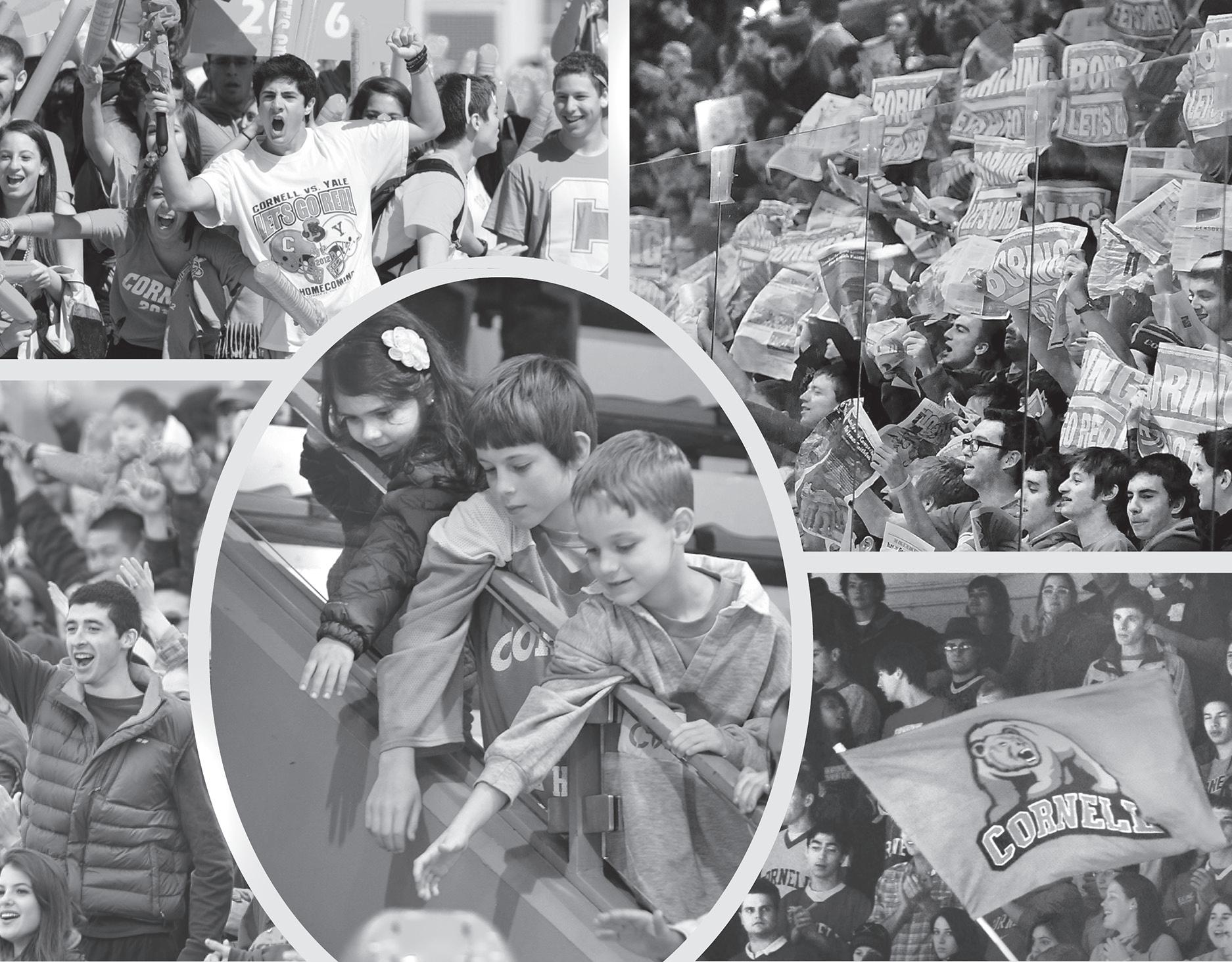
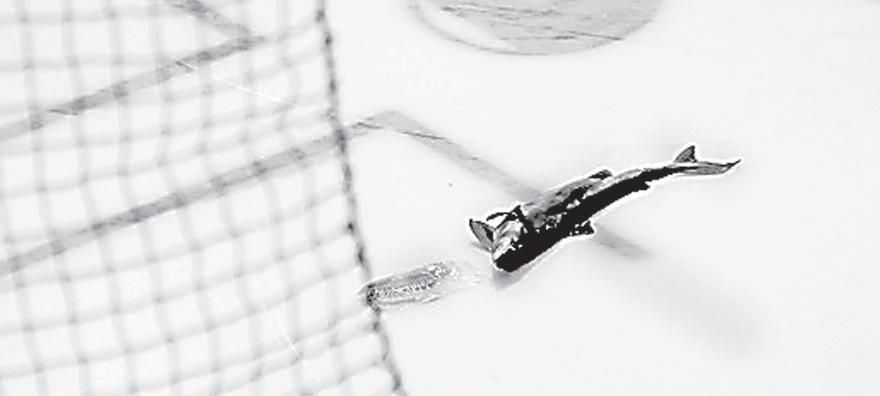
By LUKE PICHINI Former Sun Sports Editor
This story was originally published on Jan. 26, 2020.
Whenever Harvard visits Lynah Rink to face Cornell men’s hockey, in a bout of upstate hospitality, fans warmly welcome the Crimson by throwing scores of fish onto the ice.
The tradition has been in place since the early 1970’s and has become a staple for fans. Matthew Frucht ’21, Daniel Morton ’21 and Jake Polacek ’21 were among the fans who participated in the age-old tradition.
This weekend’s contest was not the first rodeo for the three juniors.
Last year, the group waited until the last minute to pick up their fish. After
driving around Ithaca and Lansing, Frucht and Polacek picked up several mackerels at a market and planned an exchange at the rink with Morton, who was busy at the time.
“We actually exchanged [the fish] in the bathroom at Lynah,” Polacek said. “As we were walking out, a cop walked in.”
The two escaped the sticky situation with their fish undetected.
“We were both in the same bathroom stall, so it was a little bit sketchy,” Morton said.
The group planned their scheme for several weeks. On Thursday, they picked up 10 fish, including six big ones.
Before the game, the three made it through the first round of security and went to their seats in Section B.
“Wearing hockey jerseys and a jacket, you can fit a fish in the sleeve of your
arm,” Frucht said. “And that’s what I did.”
Even with the University’s rule of a zero-fish policy, the three, like scores of the Lynah faithful, were not deterred from carrying out their plan.
“They have all of the rules and sent an email about the zero-fish policy,” Frucht said. “But after freshman year, we realized that there is some leeway if you can sneak it in.”
The school mascot was even in on the action last year.
“Last year at the game, Touchdown the Bear was in a hockey jersey and was holding this giant plush fish above his head,” Morton said. “They encourage it, even though they technically can’t.”
But the plan floundered when Morton’s fish were confiscated in the stands by security.
“There was a guy walking around, and I thought he was a student,” Morton said. “I had my jacket cracked open because it was getting hot. I had a bag tucked inside my sleeve and he must have spotted it.”
Despite Morton’s best efforts, he had to release his fish.
“So then, he was like questioning me,” Morton continued. “I tried to hold him off, but he called his superior, and I had to hand it over.”
Armed with plenty of other fish, though, the trio still had the necessary ammunition to carry out the tradition. With the Harvard skaters ready to enter the ice, Polacek made the first move, tossing the first sea creature of the evening.
“As soon as the goalie touched his foot on the ice, it was flying,” Polacek recounted.
After the initial wave of fish was thrown out onto the ice, fans continued to heave fish as the Harvard skaters clung to the wall in an effort to avoid any pelting.
Although the three were active participants in the tradition, they did note some of the unsavory side effects that come with this tradition. Some fans hurled Swedish fish onto the ice, but the candy wound up staining the ice.
“We got to get rid of the Swedish fish,” Polacek remarked. “It ruins the ice.”
But frozen fish can stink for its own reasons, too. Because frozen fish thaw out and become wet, fish juice ended up raining down over the rink.
“It starts to smell like a fish market five minutes before puck drop,” Polacek said.
In regards to the actual game, the three enjoyed the experience as well.
While the contest was scoreless for the first 56 minutes, the three noted the energy from the Lynah Faithful. Freshman Jack Drury’s goal for Harvard silenced the crowd, but sophomore forward Michael Regush’s response on the power play revived the fans.
“I think that’s the loudest I’ve ever heard it,” Morton said, referring to the noise following the Red’s tying goal.
While there may be formal rules that prohibit the fish-throwing tradition, it continues to live on, uniting the Cornell fanbase, just as it did for these three juniors.
To all the non-athletic regular people out there (formally known as NARPs by the athletes) — whether you were a former benchwarmer, middle of the pack, superstar who fell just below the standards or simply someone who prioritized academics in high school and wants to branch out, fear not — Cornell offers a plethora of activities for you to get in tip top shape or simply make friends through a fun activity (outside of walking up the hill to North campus after class). From clubs to classes to intramural sports, there are plenty of ways to stay active around Cornell’s beautiful campus.
Cornell is unique in that it requires two Physical Education classes to be completed for most non-transfers to graduate. Even if you fall outside of the group which is required to take them, a P.E. class is a great way to learn a new skill, step out of your comfort zone and make some memories. Notable options include sailing, ballroom dancing, taekwondo, caving, tree climbing, riflery and bowling. No matter what you choose, make sure to come in ready to learn and give it your best shot, you never know who you’ll meet!
PRO TIP: Cornell Fitness Centers also offer free classes throughout the semester, including yoga and zumba. Their schedule can be found on
For people seeking fulfillment outside of classes, a wide variety of clubs exist at Cornell. Many can be seen showing off their gear or skills at Club Fest, which is a great way to learn about the options available and see if you fit the vibe of the group. Club sports offer the opportunity for community through a committed practice schedule and many meet two to three times a week for practices and travel for matches across the country. Many are beginner-friendly as well and offer varying levels of competition for all levels of experience.
Intramural sports are another great option for friendly competition and include flag football, soccer, basketball, volleyball and bowling. There are different offerings in the fall and spring, so make sure to check dates and sign up deadlines on the IM sports web site. Tournaments are held with a paid referee staff, making a great option for you and your friends to test your abilities against other stu dents,dust off the cobwebs and re-live your middle school soccer glory. There are also non-competitive leagues
for groups looking for a more casual experience alongside fraternity and sorority leagues, making intramurals a solid option for anyone looking for a competitive environment without the high stakes of weekly practices.
There are four fitness center buildings spread across campus, each with their own options for students who want to get a workout in on their own timing. North Campus has both Helen Newman and Morrison, equipped with racks, free weights and machines. Keep an eye on a list of classes offered through these centers, too. Be warned, though, the membership is only free for the first couple weeks and there is usually a big rush of people.
Outside of the gym, there are lots of free indoor and outdoor courts and facilities around campus where you can play basketball, soccer, volleyball, badminton, squash, tennis and go swimming. For the outdoorsy crowd, Lindseth Climbing Center is a great place to train your grip strength and socialize, while Lynah Rink offers open ice-skating hours during the week.
PRO TIP: Helen Newman, Teagle and Noyes offer free equpment rentals for badminton, soccer, tennis, basketball and more if you don’t have any gear but still want to play. Check the recreational services website for more info.
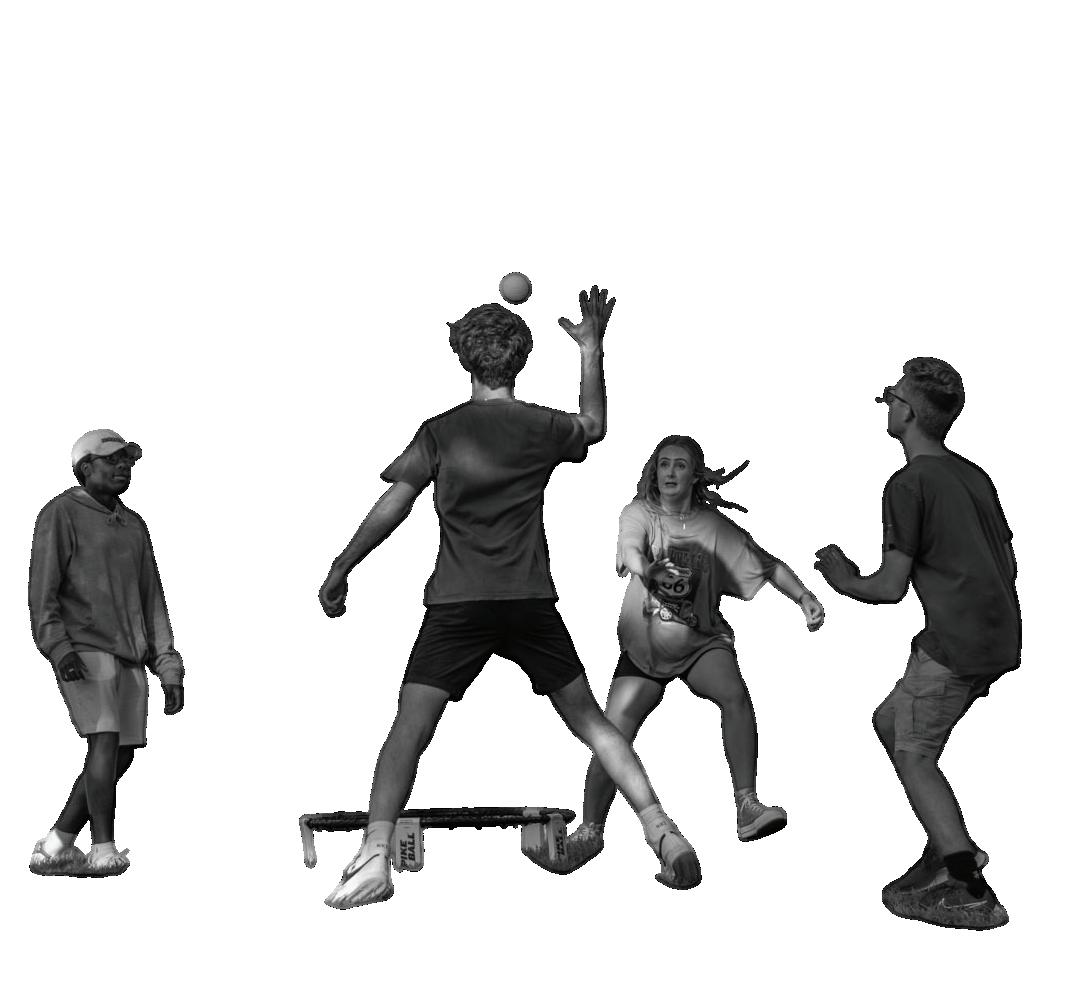
Ithaca is, in fact, gorges, and there are countless hikes, trails and opportunities to get outside which you can take advantage of during your free time. State parks like Robert H. Treman, Buttermilk Falls and Taughannock Falls have spectacular views, maintained hikes and swimming areas to cool off in, while the forests around Ithaca are chock-full of trails like the Black Diamond Trail, South Hill Recreation Way or Monkey Run to get lost on runs or weekend adventures with your friends. Don’t wander too far, though, because there are tons of trails right on campus where you can get a walk in and enjoy nature between classes, such as Cornell’s Botanical Gardens, the Arboretum, Beebe Lake, Fall Creek gorge and Cascadilla Falls.
PRO TIP: Remember to stay safe and actually pay attention to the gorge safety video before jumping in anywhere where you aren’t familiar with.
By VARSHA BHARGAVA Sun Managing Editor
Hiking boots or a sturdy pair of sneakers
As they say, Ithaca is gorges! As a student in Ithaca, natural beauty will surround you — from the obvious gorges, to waterfalls, state parks, scenic lakes and forested hikes. Bug spray will also be your friend on these adventures.
Along with the rocky paths you might encounter on rugged hiking excursions, Cornell also packs ample hills into your everyday walks to class.
You may find yourself climbing almost 100 feet just to get to your morning lab — cough cough, Libe Slope. Your future self will thank you for some sole support. Blankets upon blankets
Ithaca winters are cold. Space heaters aren’t permitted in most residential halls, so go ham with the throws, comforters and duvets. Feel free to build a nest of blankets to retreat into after braving Ithaca’s wintry weather — you deserve it.
And don’t forget your Twin XL mattress topper for sweeter dreams!
A good winter jacket
Again, Ithaca winters are cold. Don’t get caught in sudden snow or gusty weather without a befitting jacket.
Go crazy with your winter style — choose your own flavor of warmth, whether it be fluffy, furry, puffy or insulated, and don’t forget to pair your stylish new jacket with a warm hat, scarf and spiffy pair of gloves
Umbrella
For surprise drizzles — or downpours — on your way to class. An umbrella makes for a colorful and fashionable accessory that can accentuate an outfit and keep you dry.
Your favorite sled or snowball maker
Though snow days are uncommon at Cornell, students still partake in good old fashioned snowy fun from time to time.
Build a snowman, find the fastest way down a big hill (see No. 5 on the 161 Things list) or launch a snow ball at your roommate when the snow hits — with whichever activity you choose, snow day paraphernalia is a fun addition to the books and black pens you’re packing right now.
A strong desk fan
Believe it or not, Ithaca can also be pretty toasty, especially during the start of the fall semester! A fan is a must-have item — and known to go out of stock at the nearby Target.
Hats off to you if your dorm comes air-conditioned, but to the unlucky majority of students without AC, a fan will save you from sweltering in your dorm for the first couple months.
Other hot weather attire is also recommended for the beginning of your fall semester — don’t forget a spirited (& red) homecoming outfit!
Swimsuit
Take a dip at the Robert H. Treman State Park or Cayuga Lake at the Taughannock Falls State Park off campus while it’s warm! As always when swimming in natural areas, make sure to check the swimming guidelines before diving in.
And of course, get ready for your Cornell swim test!
Tote bag
An essential for lugging around your laptop after class hours and blending in at the farmers market among the artisianal booths and stylish locals. Craftier students can adorn theirs with patches or pins, and a diverse selection can be found at many local shops.
Picnic blanket
Watching the sunset on the Slope is a must. Avoid the scratchy grass with your own picnic blanket to lounge on with your friends.
Playing cards
A great way to make friends during O-Week, cards are a lightweight and simple way to share laughs in a competitive, low-stakes environment. The Sun encourages you to pick up a few games, including our favorites: Egyptian Rat Screw/Slap, Spoons and B.S.
Self care
Undoubtedly, Cornell is a time-demanding school. From back-to-back classes, to p-sets, to exams, to extracurriculars, to socials and more (half of it in gloomy weather), it is necessary to take a breather and spend time for yourself. Your mental health is so important!
Bring things that will make you happy. A journal, sheet masks, Legos, puzzles, crafts, crochet, art supplies, books, tea, sweet treats, a meditation mat, a heating pad or whatever will help you wind down.
Your favorite reusable water bottle
At any point in the day, you’ll see students toting around reusable water bottles (which, without question, they are emotionally attached to). These bottles are dented, scratched, covered in stickers and possibly haven’t been washed in weeks. That being said, remember to pack a straw cleaner and some handy water bottle cleaning tablets!
Reading pillow
If reading is your go-to, and you love to settle into bed with a good book, treat yourself with a supportive reading pillow. They’re also great for slump days where you open up your textbooks in bed.
A must for late-night lock-in sessions. They will also accompany you through wistful campus walks where you need to block out the outside world (start making your go-to playlists now). Noise-canceling is a plus, but not a necessity — make sure not to zone out too hard and stop to chat once in a while.
Desk mirror
Great for applying make-up before a night out with your friends (don’t forget to pack make-up remover!), taking zoomed mirror selfies and getting some up-close face time with yourself. Even better if your mirror is lighted, since dorms aren’t known for their great lighting.
First-aid kit and OTC medicine
Paper cuts, scrapes in the woods and the occassional campus stumble (don’t worry, no one will remember your wipe out on the Goldwin Smith stairs) will
sometimes require band-aids or some Neosporin treatment.
Pack some over-the-counter medicine (think Advil, Tylenol, Midol, DayQuil, etc.), too, for sick days and menstrual cramps. You won’t want to make the trip to 7-Eleven or the Cornell Store when you really need it. Don’t forget your allergy meds!
College-ruled notebooks
In college, your learning is in your hands. You’ll want to take notes every lecture to make sure you ace your prelims, midterms and finals. Some professors don’t allow technology in classrooms (increasingly so), so come prepared with pens and paper.
Stationary like blue and black pens, sharpies, No. 2 pencils, erasers, highlighters, scissors, tape, index cards and sticky notes will make all the difference, too. Maybe even treat yourself with some glittery gel pens
Envelopes and stamps
Keep in touch with your loved ones through snail mail! There’s nothing like recieving a handwritten letter from a long-distance friend, family member or partner.
Depending on the layout of your new dorm, you may not always have an outlet easily accessible by your bed, so getting the super long charging cords or an extension cord is a helpful luxury. Power strips can be handy too! Check on your dorm’s extension cord policy first.
Although it is a pricey addition to your charger repertoire, a portable charger can make all the difference for off-campus excursions.
Wipes, sprays, Febreeze, paper towels and more will be a life-saver when you move in and have to upkeep your room throughout the school year. Dorms often have communal large vacuums for students to use, but having a small handheld vaccuum for yourself is great for cleaning up study sesh crumbs and getting into small corners.
Study snacks
Speaking of crumbs, don’t let your brain go hungry during your late-night grinds. Pack some snacks to power your studies. Don’t forget a microwave-safe bowl for leftovers!
Room decor
Whether it’s polaroids with your elementary school best friends, a handwritten letter from your favorite teacher or posters from your first concert, a touch of familiarity will make all the difference in a new place.
Keep lighting in mind, as well. The dreaded “big light” in your dorm room may not be the perfect match for your intended aesthetic. Sunset lamps and fairy lights are known to make a room feel cozy! Check your dorm’s guidelines for what’s allowed on the walls first.
You can also bring a plant to keep you company and liven up your space!
Shower shoes
Communal showers. That’s it.
Athletic clothing
Since most students have a Physical Education requirement, gym shorts and running shoes are a must. Whether you’re sailing across Cayuga Lake, dancing with friends or bowling at Helen Newman, it’s important to dress comfortably and functionally. Avoid unfortunately sweaty jeans.
Formal attire
Interviews, coffee chats, date nights, banquets and more will require a more upscale wardrobe, and you don’t want to be caught off guard by the dress code (see page 13 for a guide). Pack your suits, ties, dress shirts and pants, formal dresses and formal shoes or heels
No worries if you don’t have these with you, since there are resources at Cornell that allow you to rent business attire for free. Check out The Wardrobe on campus, located in Barnes Hall, to order an outfit!
Miscellaneous
Laundry detergent, batteries, toiletries, glasses (and sunglasses), all of your socks and underwear, wallet, backpack, towels, shower caddy, hair ties, jewelry, laundry basket, laptop, nail clippers and file, menstrual products, perfume or cologne, deodorant, lotion, sheets, calculator, phone wallet (for your student ID), hair brush, hangers, desk organizer, Brita pitcher, hand sanitizer, command strips, planner or calendar, tissue box — just to name a few. Stock up on extras of everything! Travel bag or mini suitcase
Whether you’re making a day trip to Syracuse to party it up, living out your Carrie Bradshaw dreams in New York City — after a five-hour bus ride — or heading out of town to visit your high school bestie, you’ll need a way to transport your toothbrush, change of clothes and digital camera. Try not to exceed the luggage limit on your preferred mode of transportation.
A hankering for apples, tunes and more
There’s much fun to be had in Ithaca itself! Get ready to ring in your experience as a Cornell student by attending some — or all — of Ithaca’s wacky festivals.
Apple Harvest Festival, lovingly known as Apple Fest, and Porchfest take place in September, the Downtown Chili Cook-Off hits town around March, Ithaca Festival takes over in May, Ithaca Pride Festival and the Southside Community Center’s Juneteenth festival touch down in June and Ithaca has even more to offer during the year if you keep an eye out.
Save some room for a couple apple cider donuts from the Ithaca Farmers Market, too.
Resource for shopping
Take advantage of the Dump and Run while packing or shopping. The organization aims to reduce waste, promote reuse and support local charities and is based out of The Shops at Ithaca Mall.
In August, college students in Ithaca can present their school IDs and have exclusive access to a sale of gently used items — like clothing, backpacks, storage containers, bedding and more — that students donated at the end of the previous school year.
This story was originally published in The Ithaca Times as a part of The Sun’s Summer Fellowship and has since been expanded.
AND YOU HAVEN’T THE SLIGHTEST CLUE WHAT’S GOING ON. MAYBE YOU GOOGLED A FEW FACTOIDS FOR YOUR 650-WORD SONNET TO CORNELL AND THAT GOT YOU IN HERE, AND YOU THINK YOU KNOW EVERYTHING. BUT WHAT DO YOU REALLY KNOW OF OUR BIG CAMPUS OF BIG PEOPLE AND BIG IDEAS AND BIG BUILDINGS? HOW WILL YOU KNOW WHO’S IN CHARGE, AND HOW WILL YOU KNOW IF THEY’RE PLAYING IT FAIR? HOW WILL YOU KNOW WHO TO YELL AT, OR WHO TO DEFEND? HOW WILL YOU KNOW IF THE CLUB YOU’RE JOINING IS LEGIT? IF IT HAZES? HOW MUCH THEY’RE SPENDING ON THAT NEW BUILDING, OR WHAT YOUR NEW CLASS’S POLICY ON A.I. IS? TUITION IS RISING HOW MUCH? WHAT JUST HAPPENED IN THE COMMONS? WHO JUST RAN OVER WHO’S FOOT? WHICH COACH WAS FIRED? HIRED? SOMEONE GOT ARRESTED AGAIN? WHO’S SPEAKING ON CAMPUS, AND WHERE CAN I GET MY TICKETS? WHERE DO I TAKE MY DATE IN ITHACA? SHOULD I DATE AT CORNELL? (NO) HOW MANY CRUSHING DEFEATS CAN THIS TEAM BEAR? WE’RE AN ONLINE SCHOOL NOW? HOW DO I BECOME A BIG FISH IN A BIG POND? WHAT’S THE STORY? SURE, YOU COULD READ SIDECHAT….
IF YOU BELIEVE THAT KINDA STUFF. OR, YOU COULD
E A D
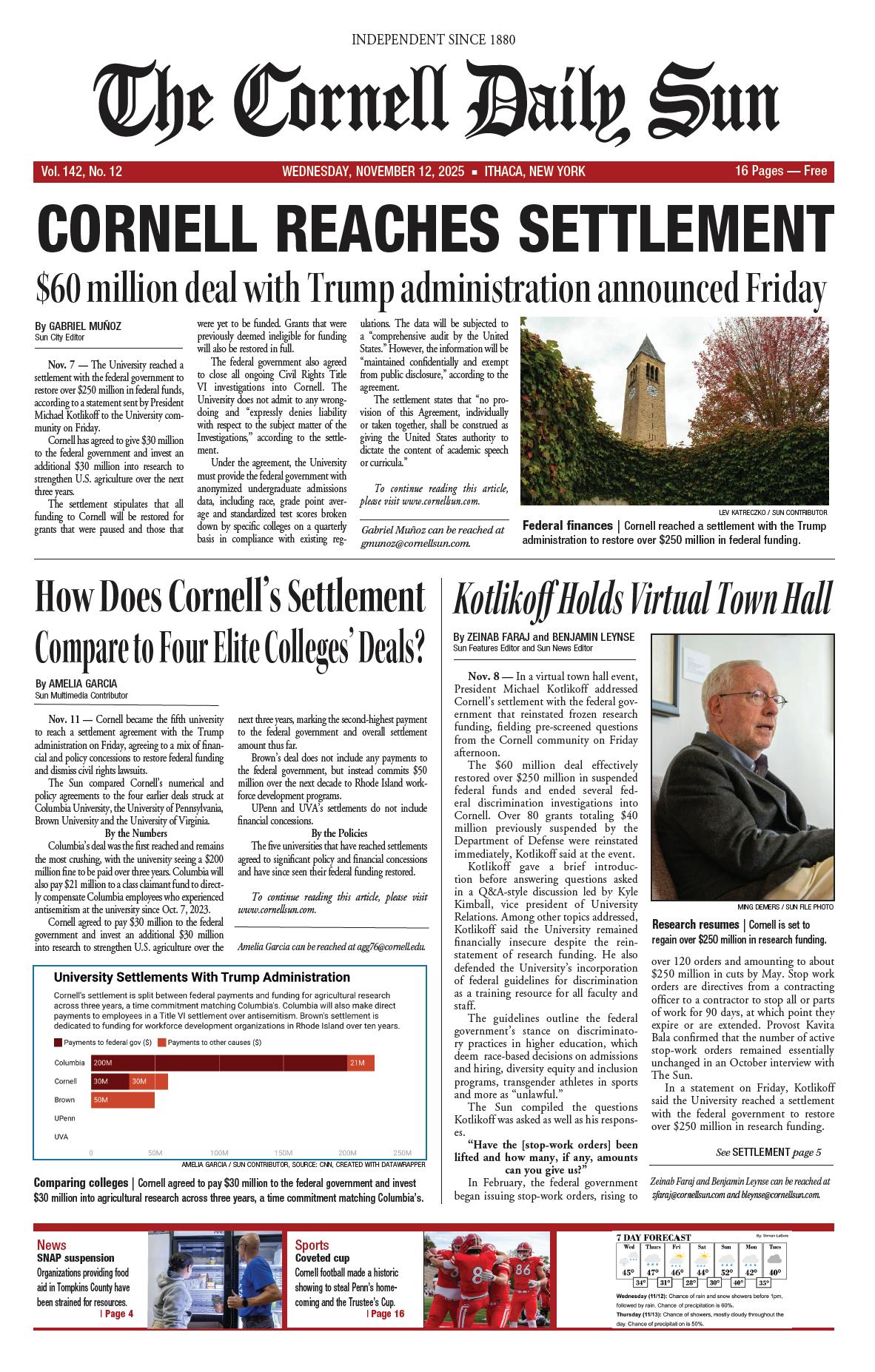
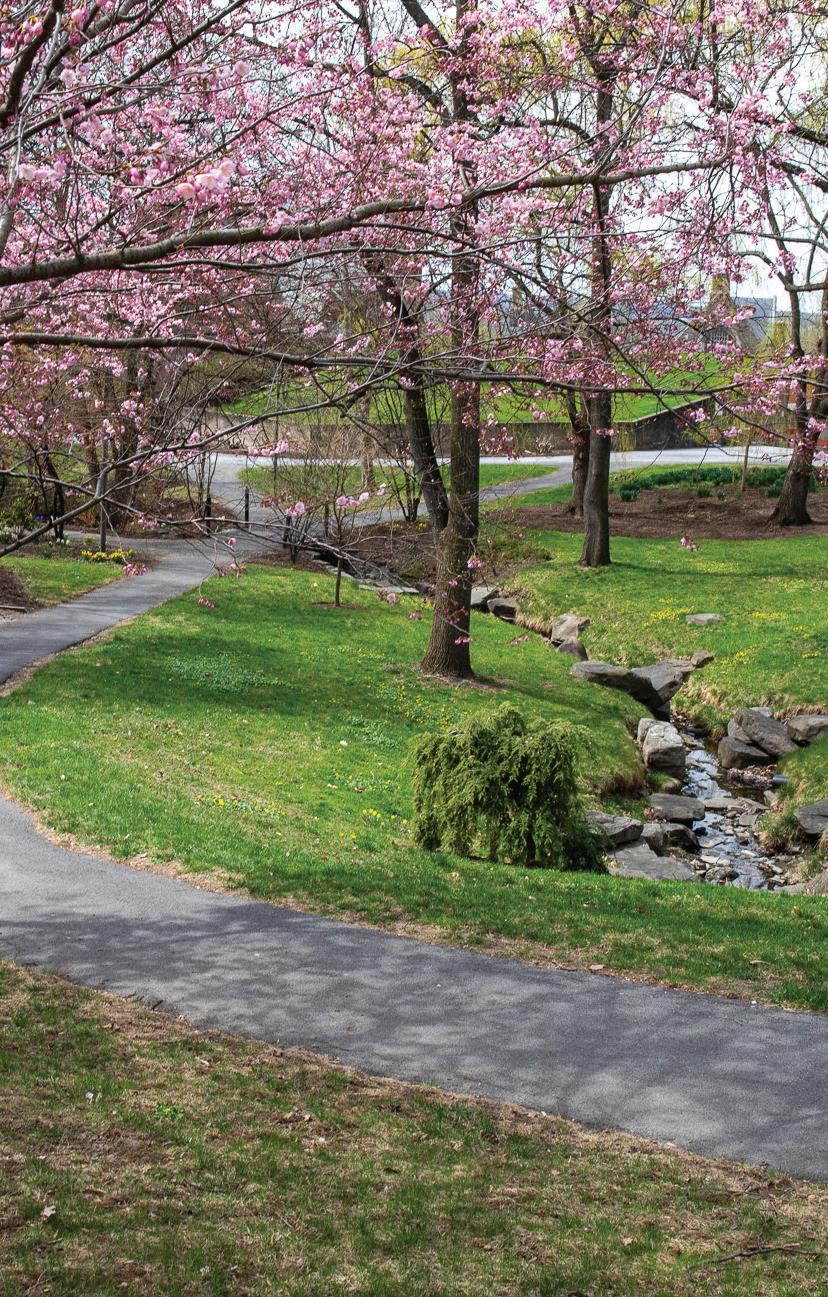
Best university in the country.
13
Best university in the world.
No. 13
Best law school in the country.
No. 1
“Law Schools With the Most Graduates at Big Law Firms” in the country.
According to U.S. News & World Report.
Cornell Law School posted the highest legal employment rate among U.S. law schools for its 2025 graduating class.
99.49%
Legal employment rate for the 2025 graduating class.
All but one out of Cornell Law’s 197 juris doctor graduates in 2025 secured full-time, long-term employment requiring or anticipating bar passage within 10 months of graduation, according to ABA.
Ivy Day at Cornell was a typical early-spring March 26 in Ithaca, with a sunny start and a rainy end. Architecture students cobbled together their 125th wooden Dragon Day sculpture, and Cornellians began driving, flying, busing and biking away for a break from campus.
And, at approximately 7 p.m., applicants to Cornell opened their decision letters to the sound of Cornell’s alma mater, welcoming them to join the 5,776 students in Cornell’s admitted Class of 2030.
The newly-minted admits to the Cornell community — hailing from all 50 states and 102 countries — will join a community of students studying nearly 80 majors across eight different colleges.
From A.D. White Library’s study nooks to spikeball tournaments on the Arts Quad to checking boxes on the 161 Things list, the Cornellian experience awaits the newly admitted class.
The number of students admitted in the Class of 2030 decreased by 0.8% from the Class of 2029’s acceptances. Last year’s acceptances by Ivy Day totalled 5,824, 48 admits more than this year’s batch.
There were several changes to the Cornell application process since the Class of 2029’s admission cycle.
For the first time since 2020, Cornell applicants were required to submit their SAT and/or ACT test scores.
Additionally, following the November settlement between Cornell and the Trump administration to restore over $250 million in federal funding to the University, Cornell is now required to provide “anonymized undergraduate admissions data” to the federal government, according to the settlement. The data will be broken down by “individual schools, race, grade point average and standardized test performance.”
Early decision applicants were notified of their acceptances on Dec. 18, and are fully committed to attending Cornell with the exception of financial concerns.
Cornell received five major donations that resulted in name changes in its colleges and schools in the past six years, exceeding the amount of similar donations in the past 30 years, according to figures published in the Cornell Chronicle.
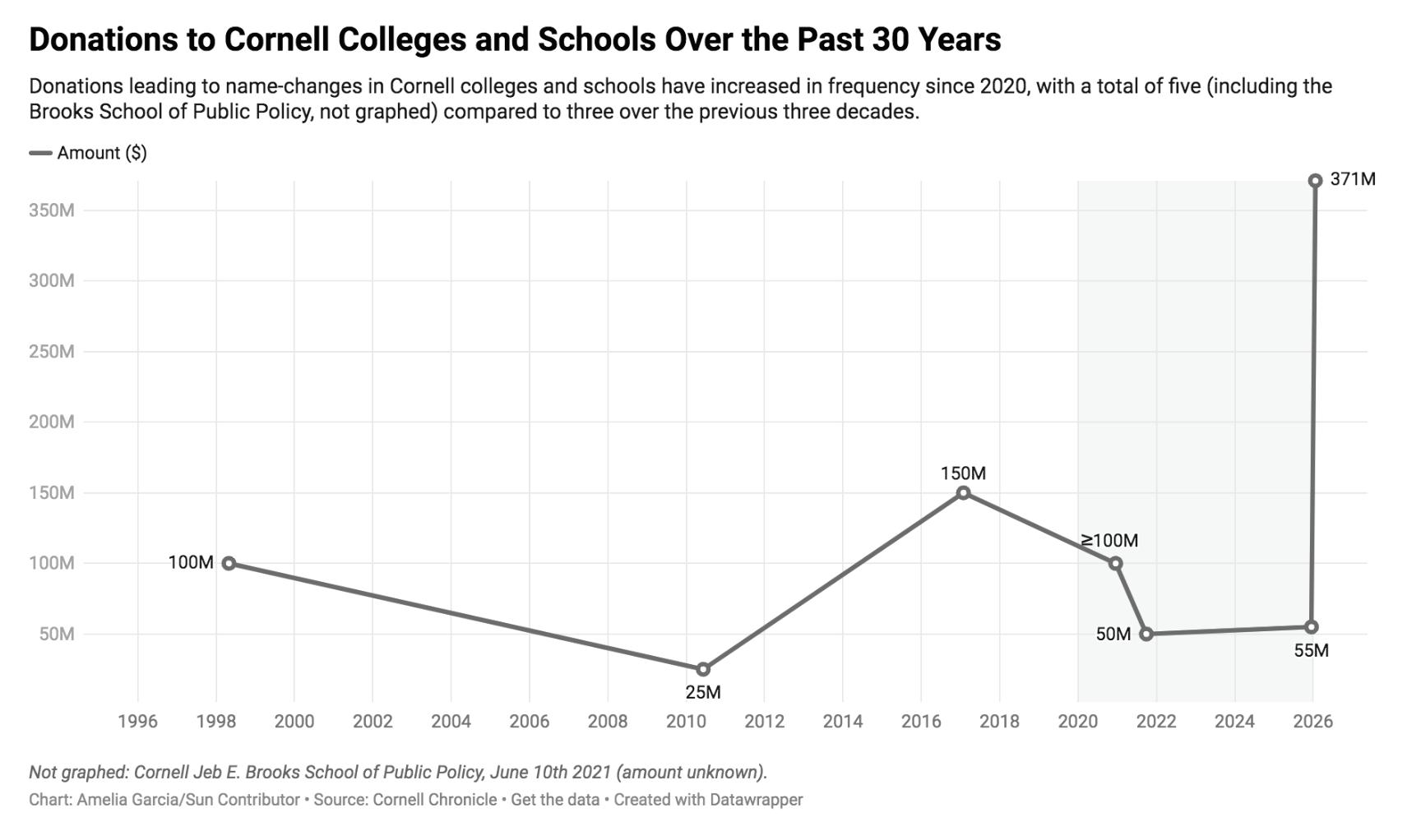
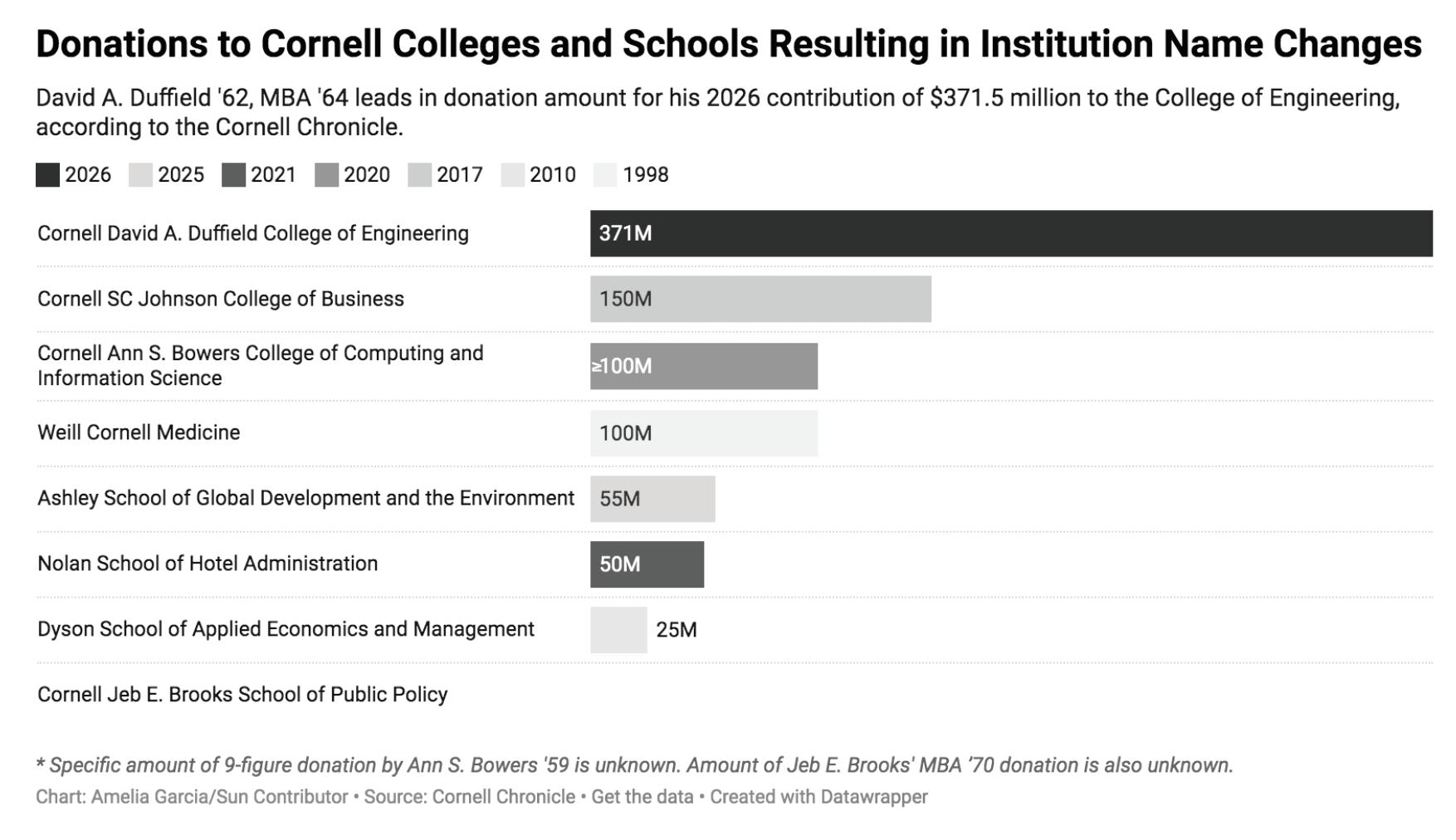
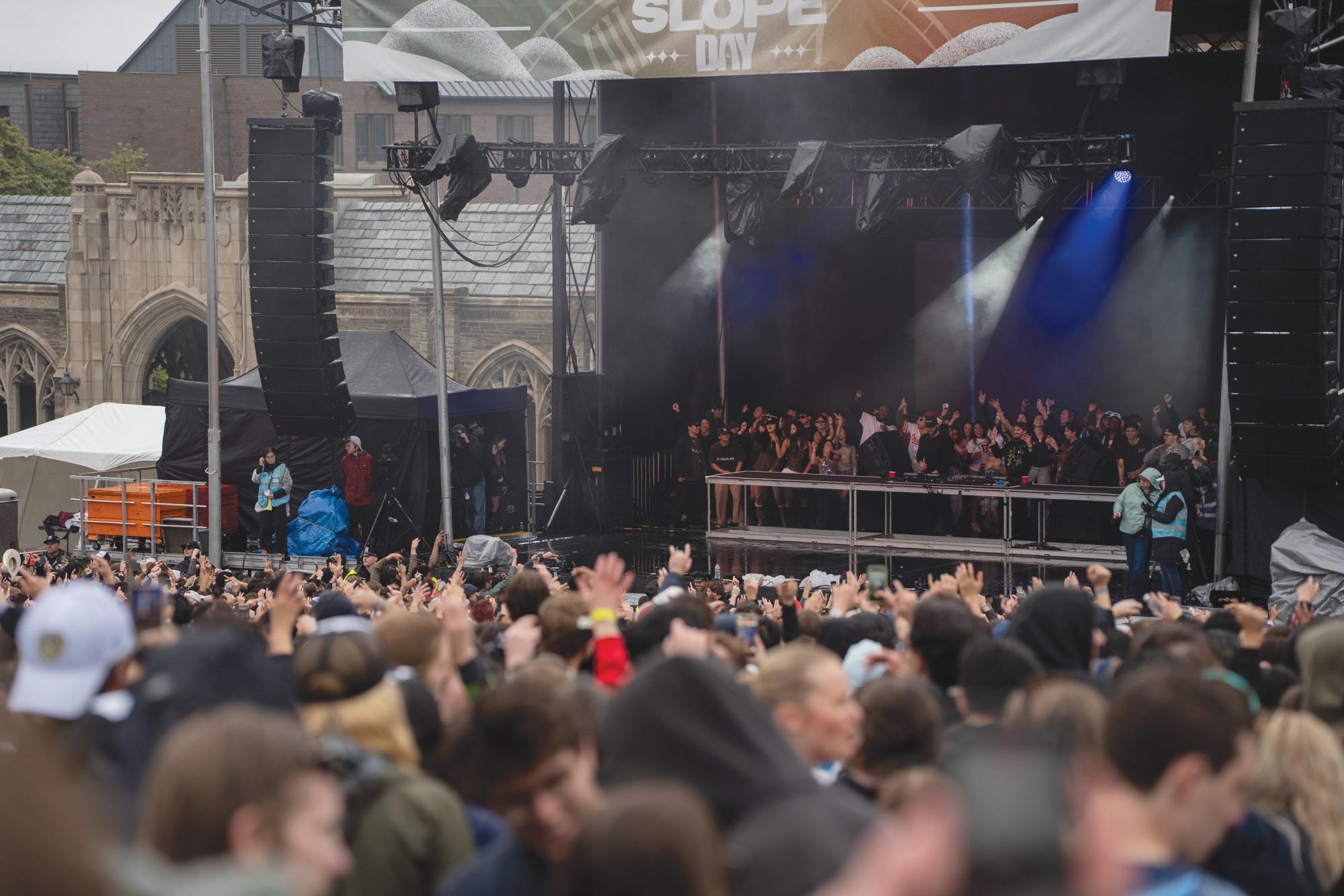
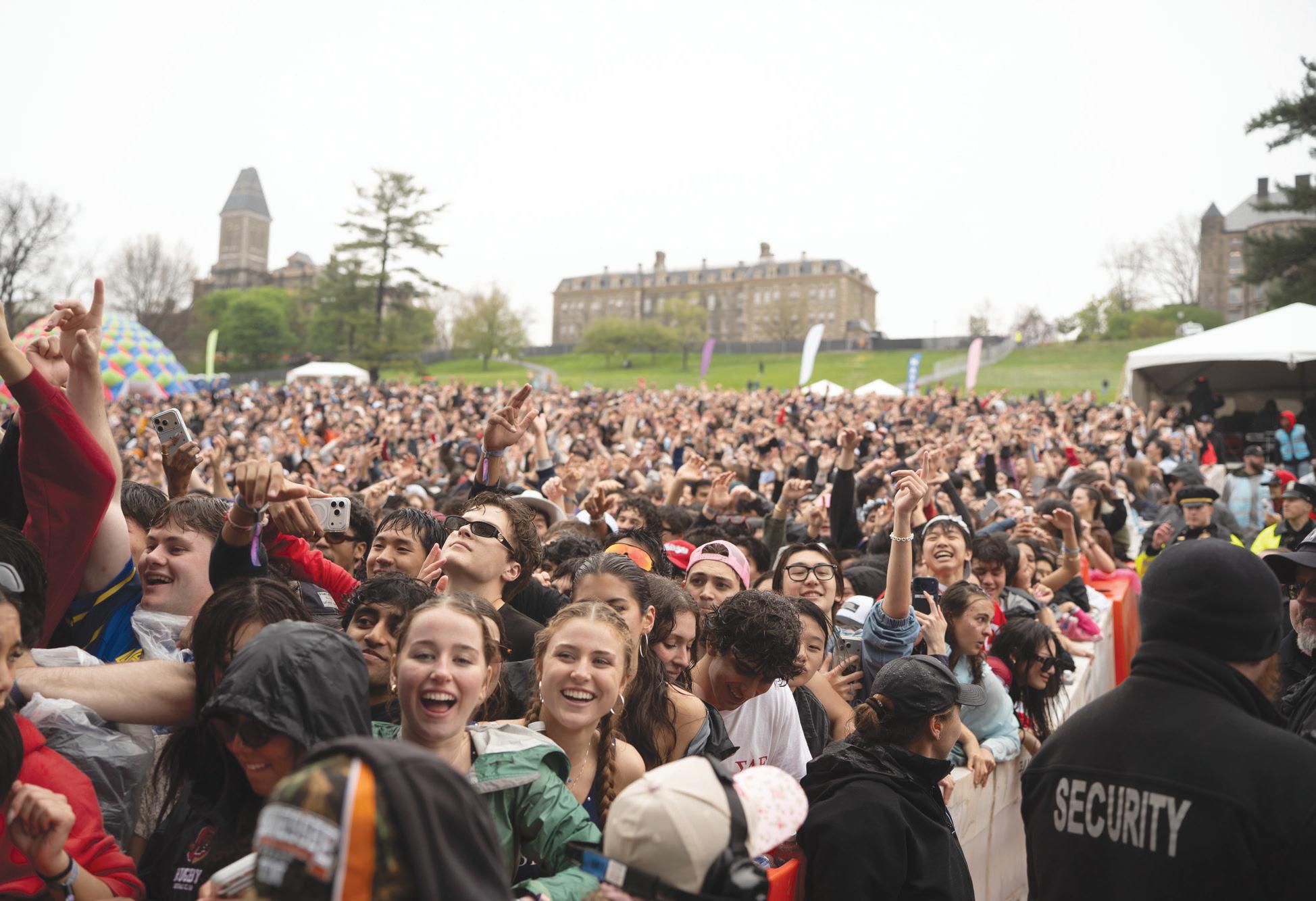
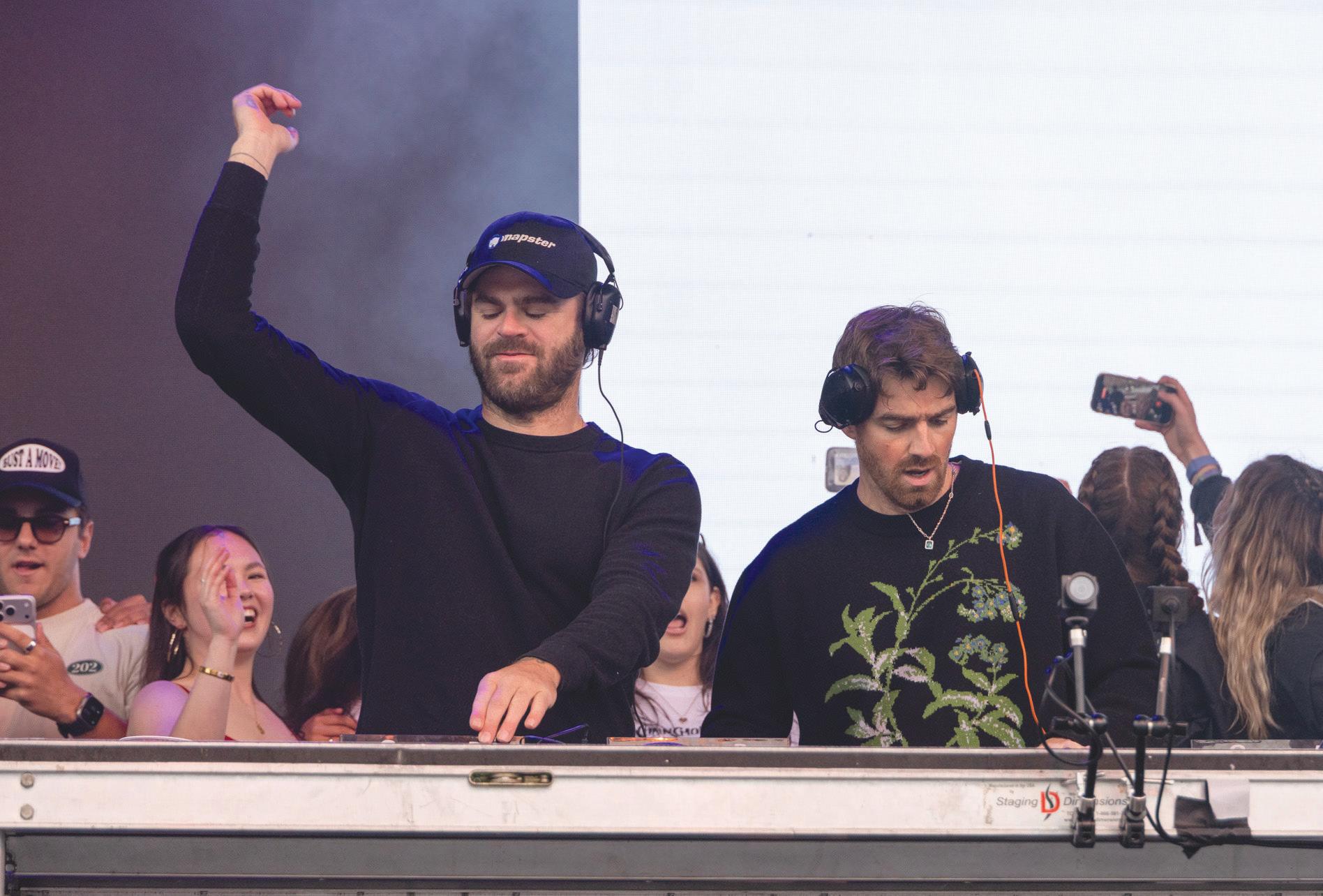
The Chainsmokers headlined Slope Day with supporting act Daya in a rainy concert.


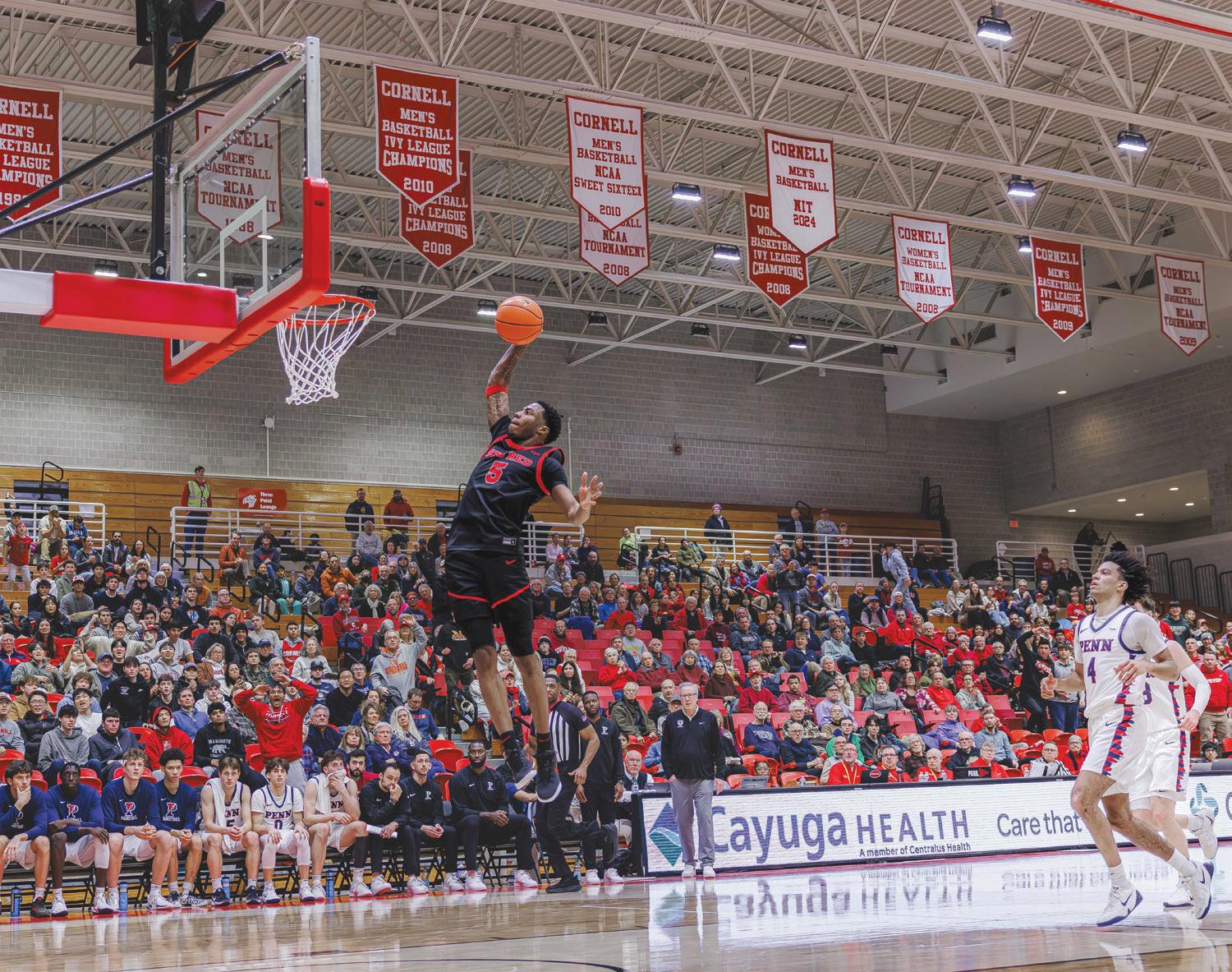

“ICE
Cornellians rallied against ICE on and off campus this year.
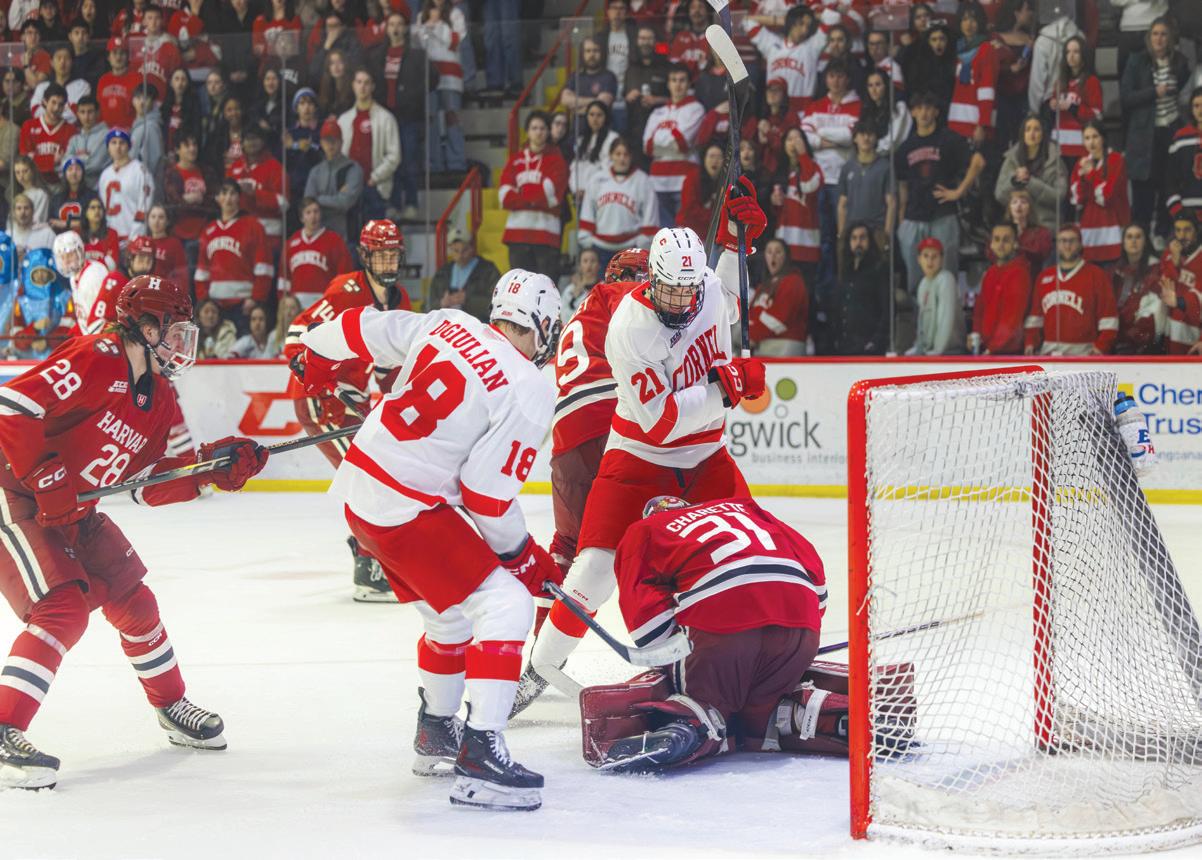
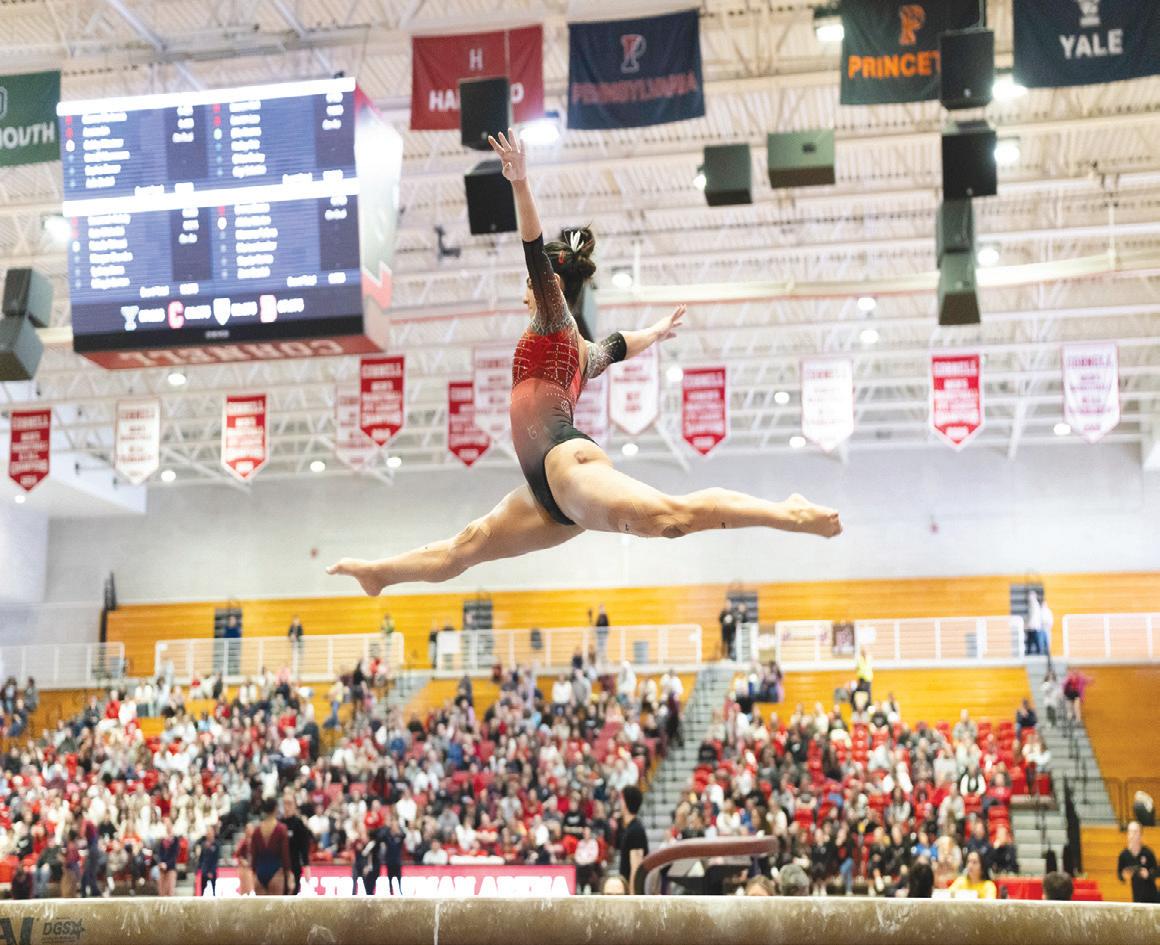
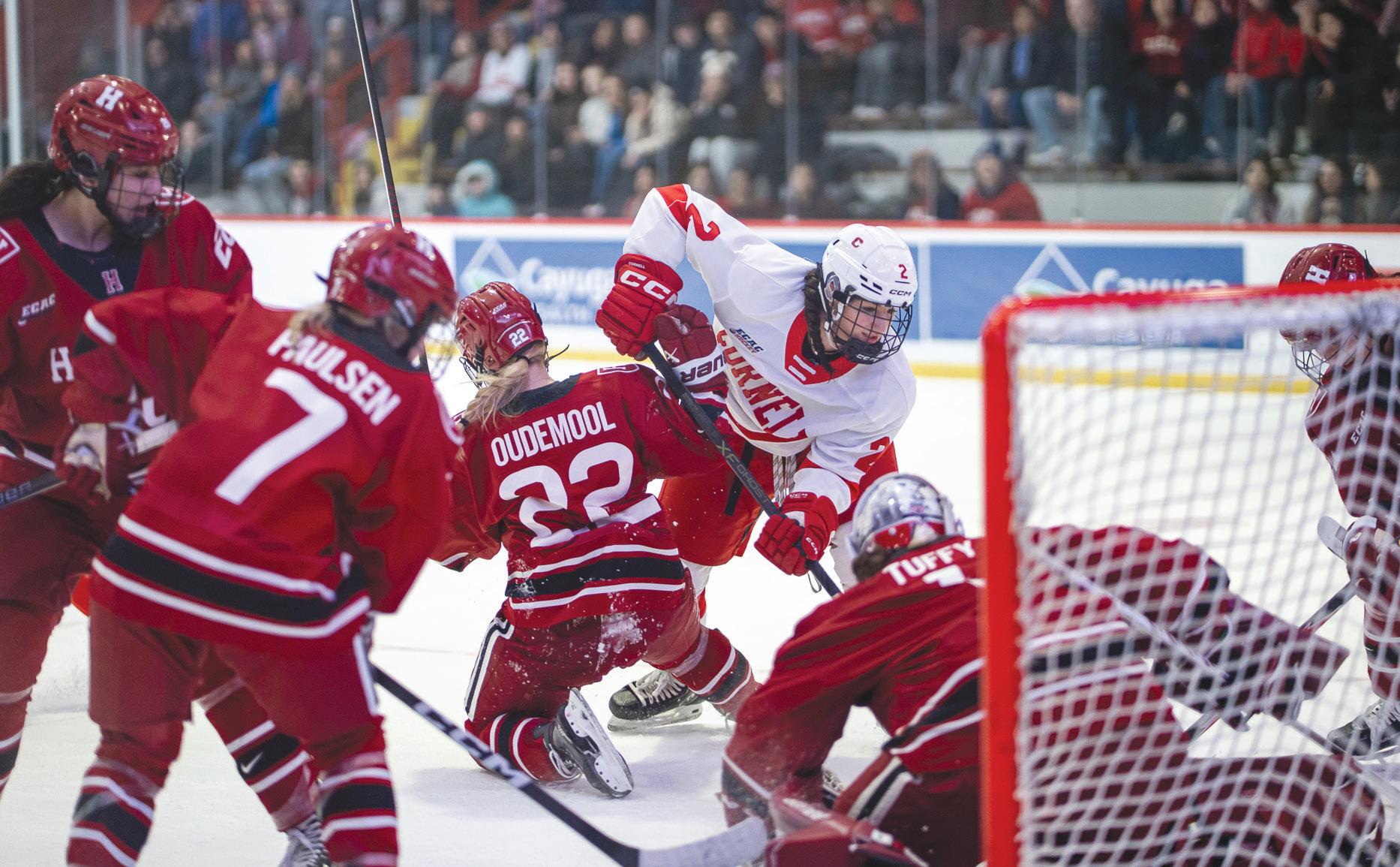
Student athletes showed off their talents in stiff competitions all year long.
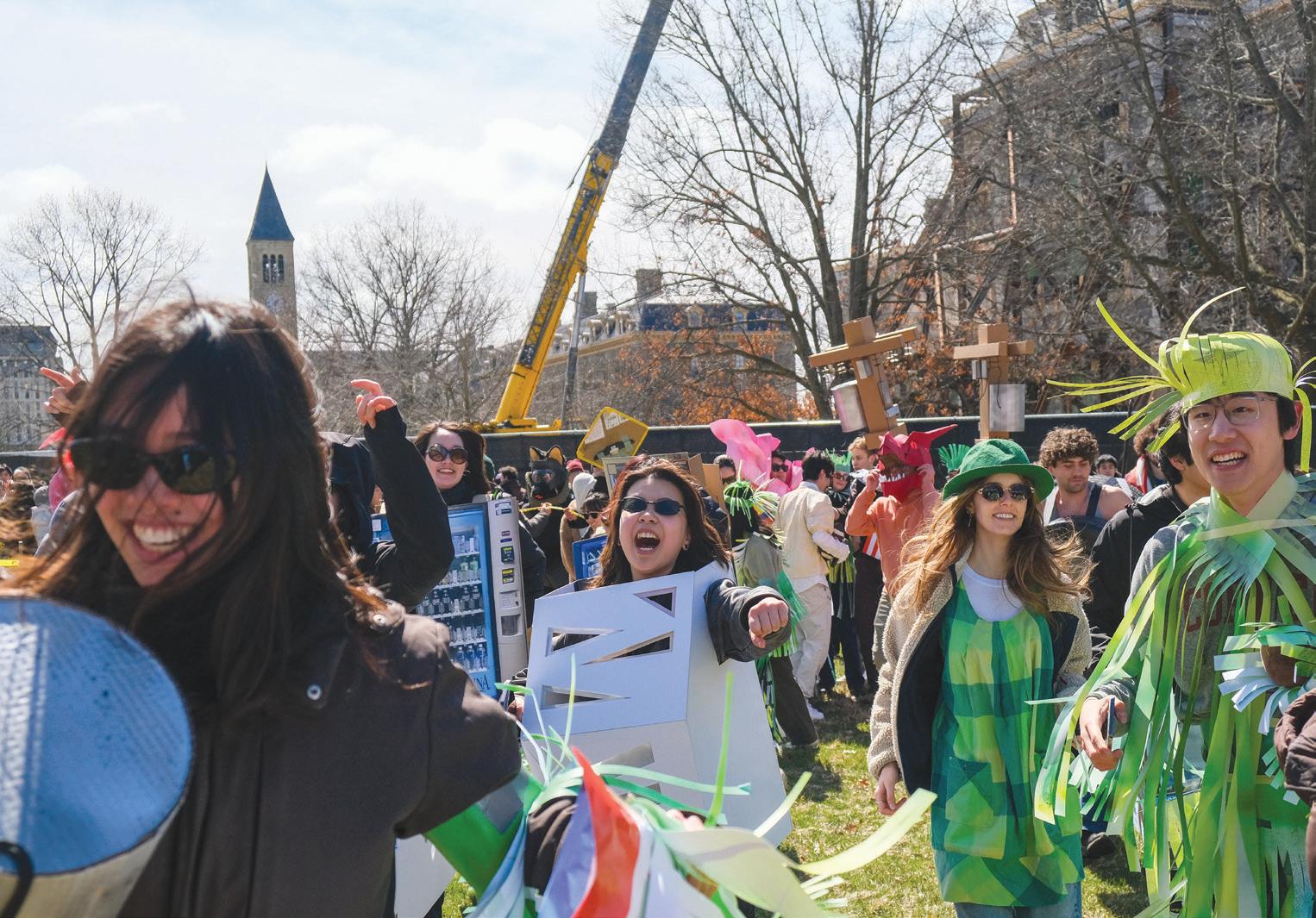
First-year students from the College of Architecture, Art and Planning car ried on a 125-year tradition of leading Cornell’s Dragon Day on March 27, marking the culmination of their semester-long effort to design and build a
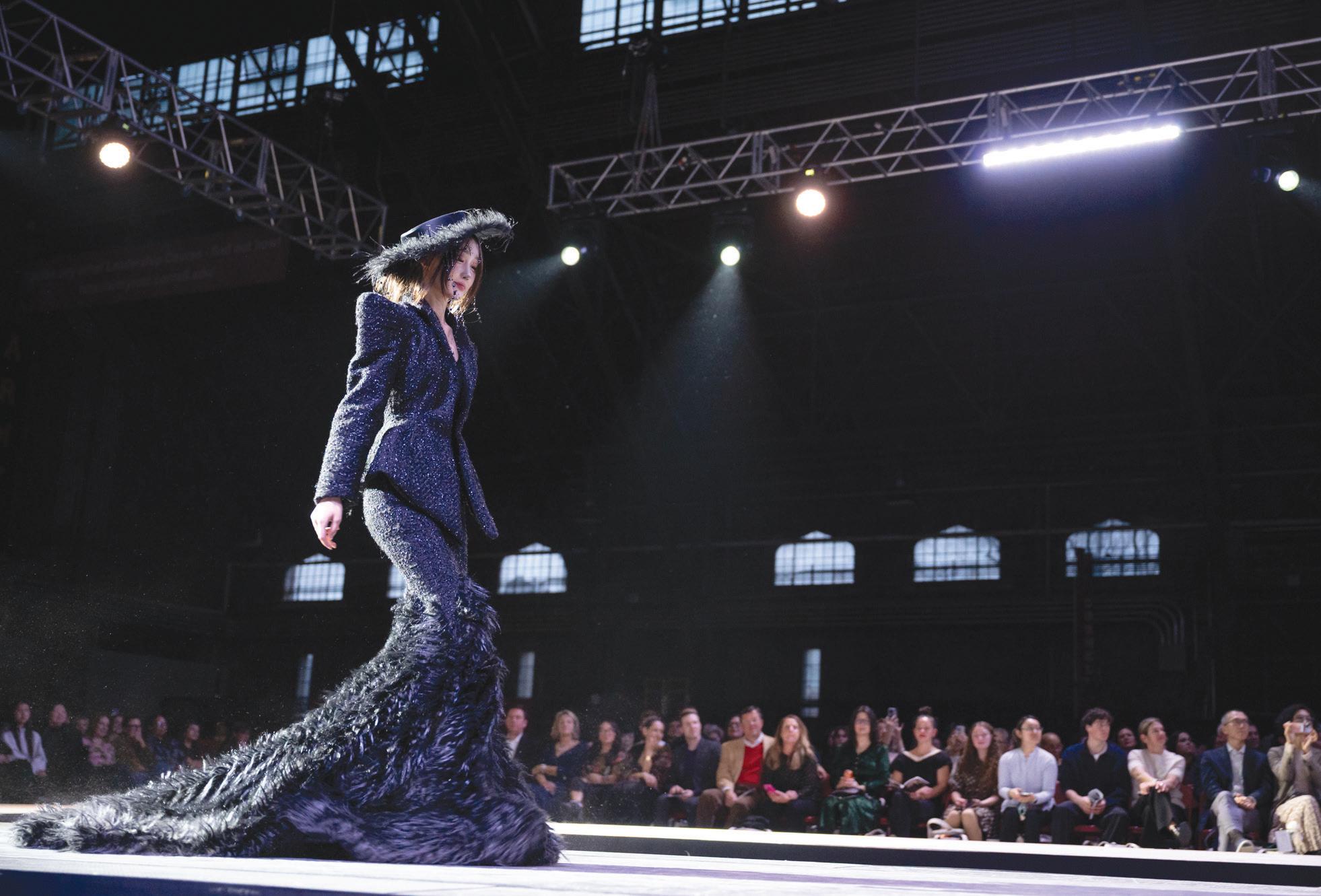
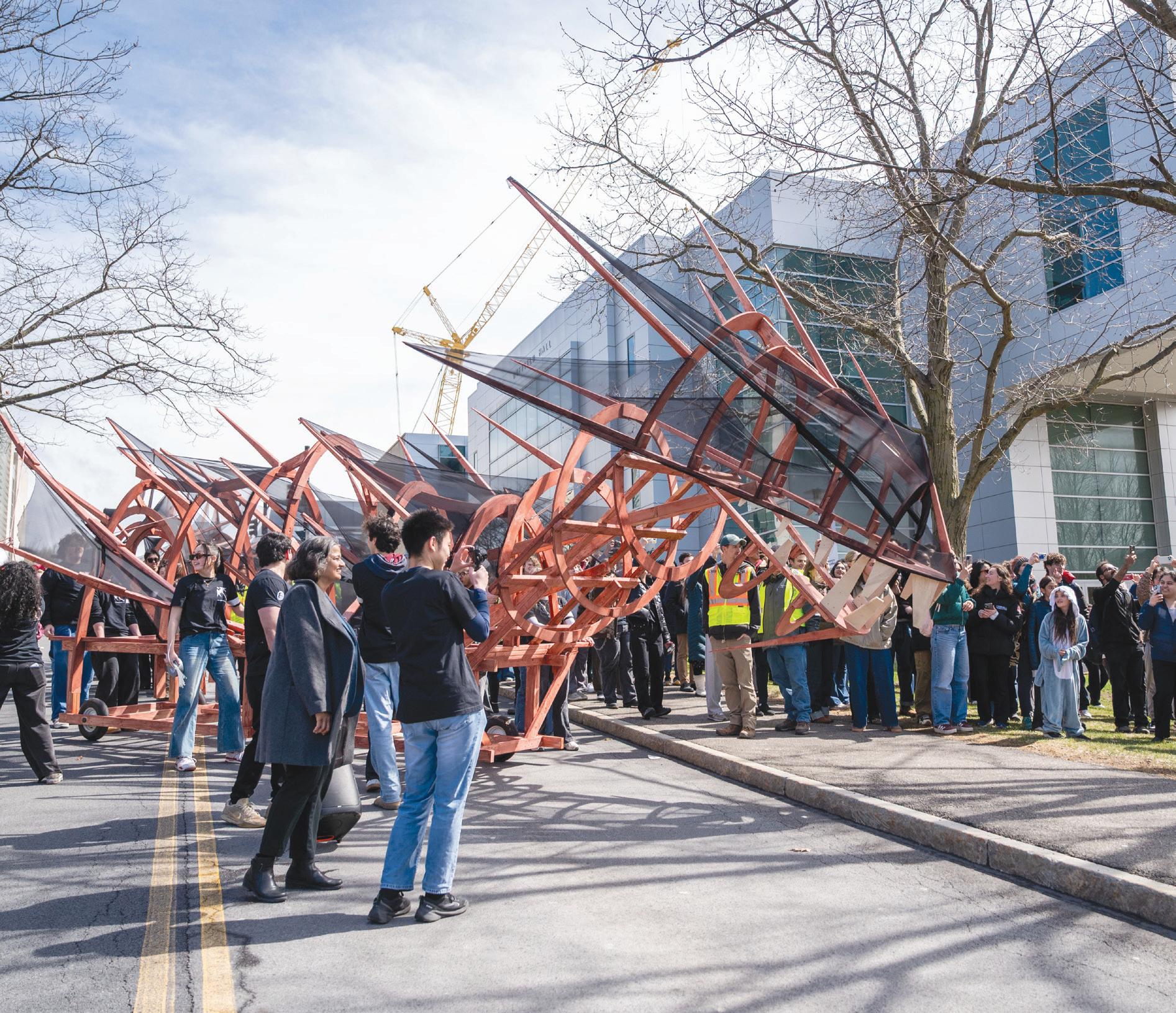
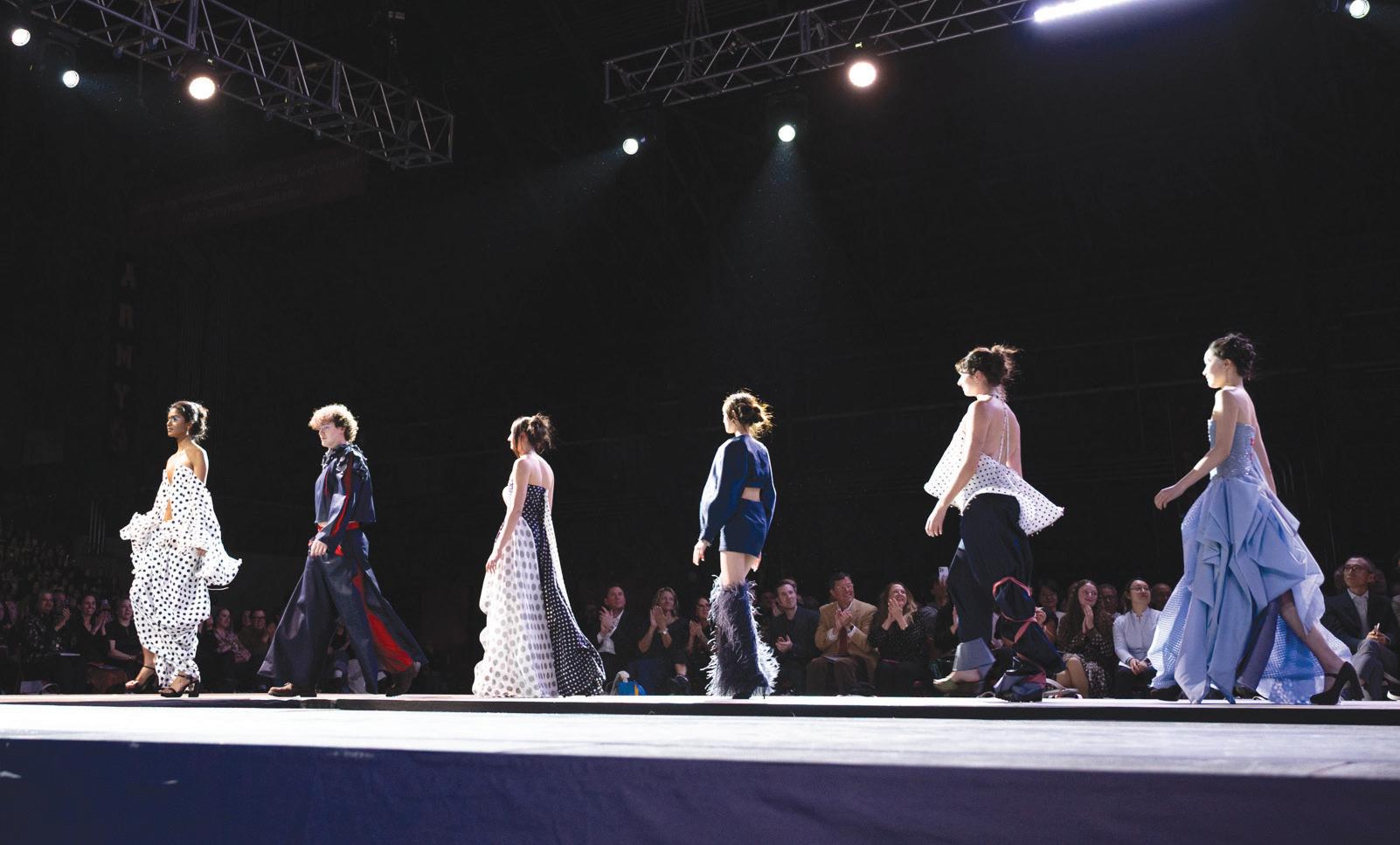
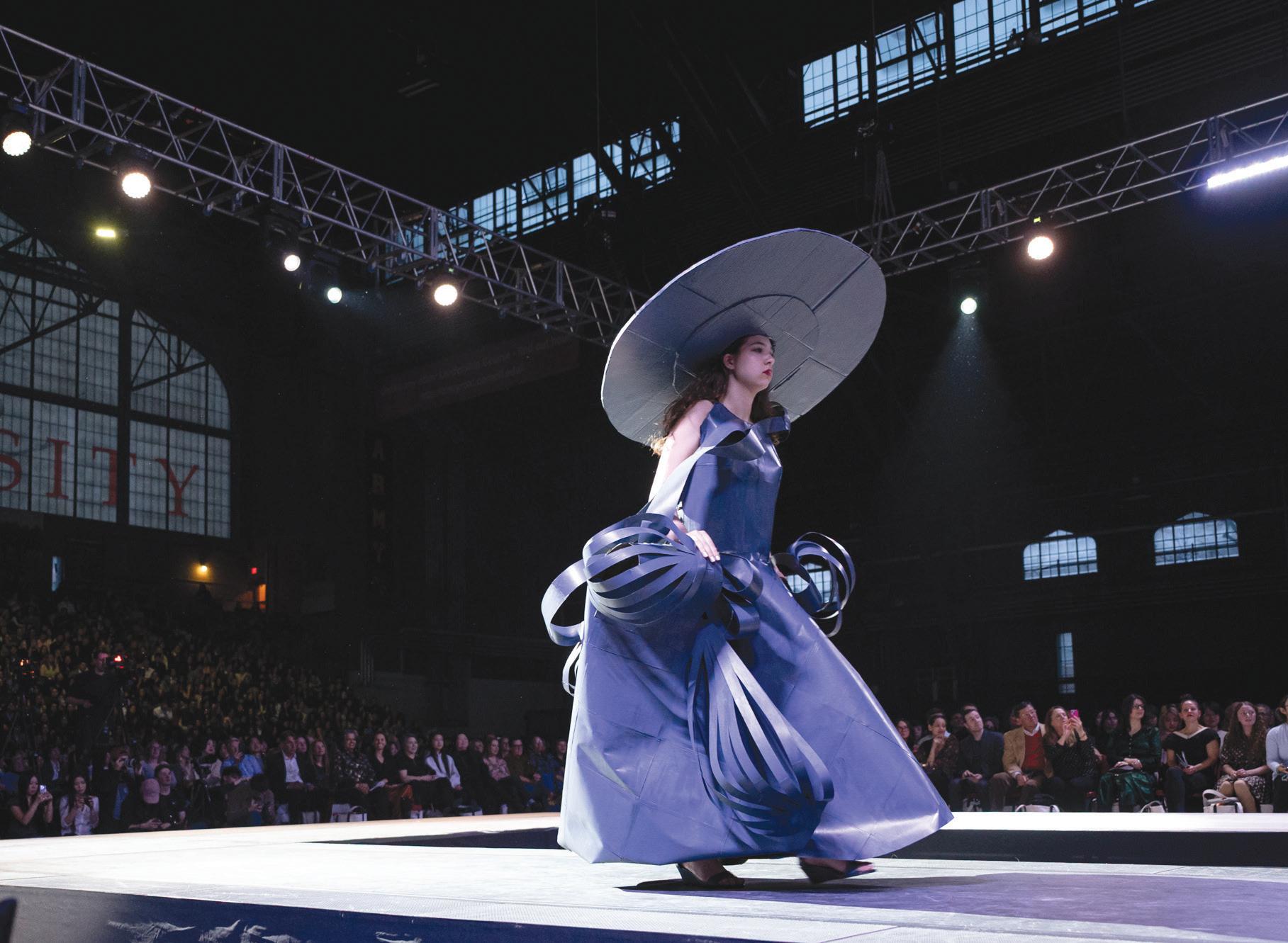
Cornell Fashion Collective’s 42nd annual runway show was held on March 21 and featured designs from four different levels, all with different themes. The show is the second largest annual student-run event on campus, and hosted over 3,000 attendees this year.
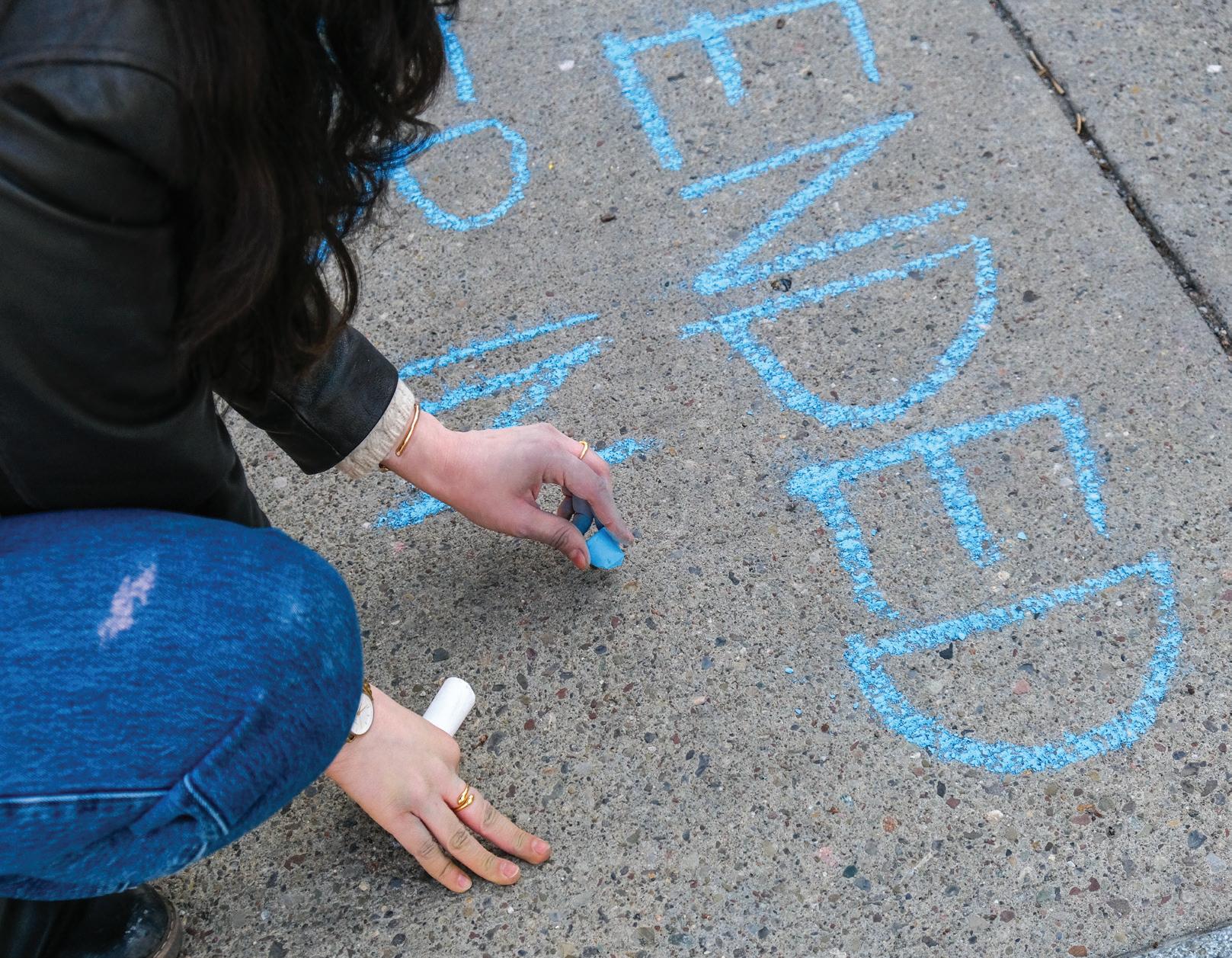
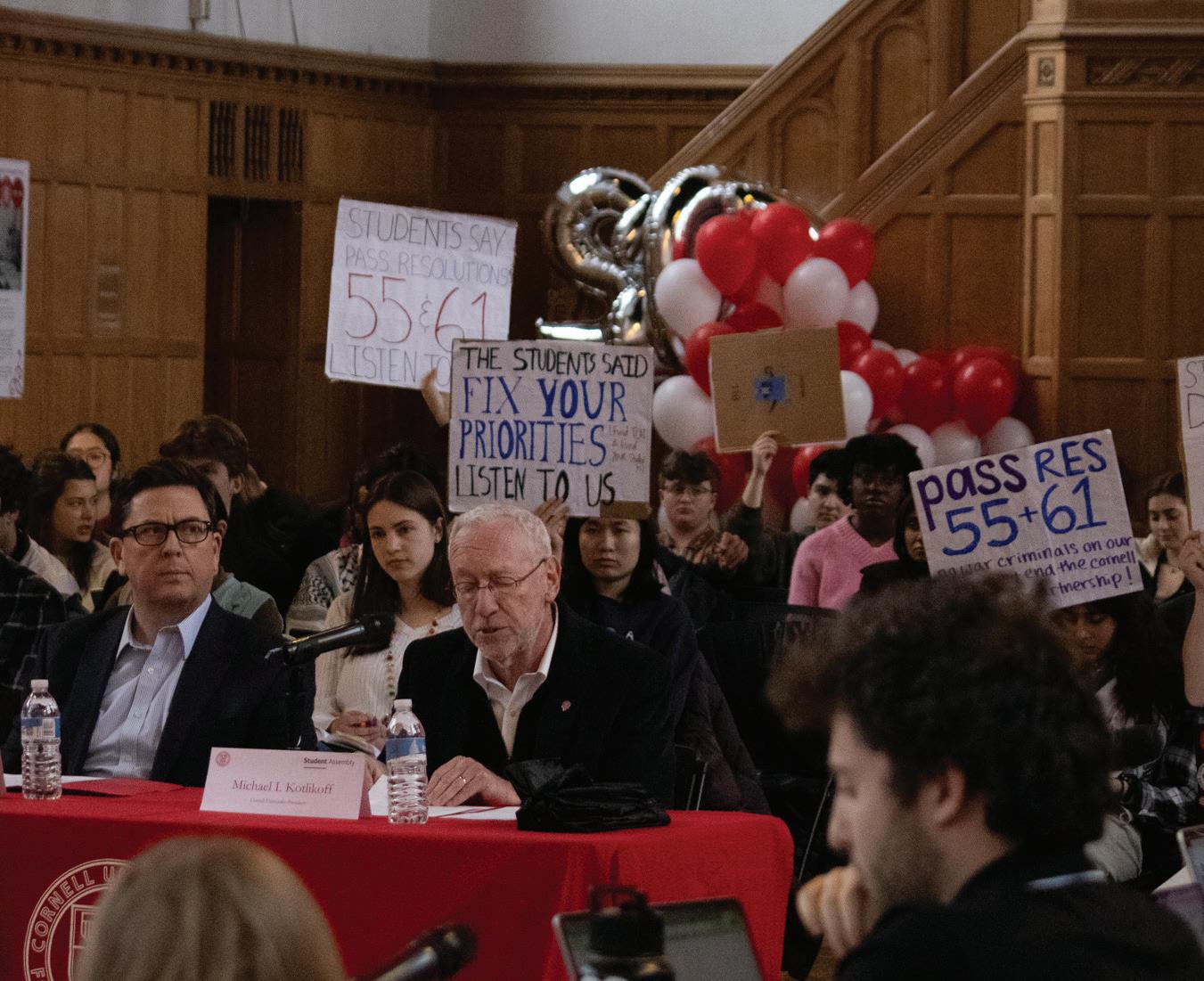
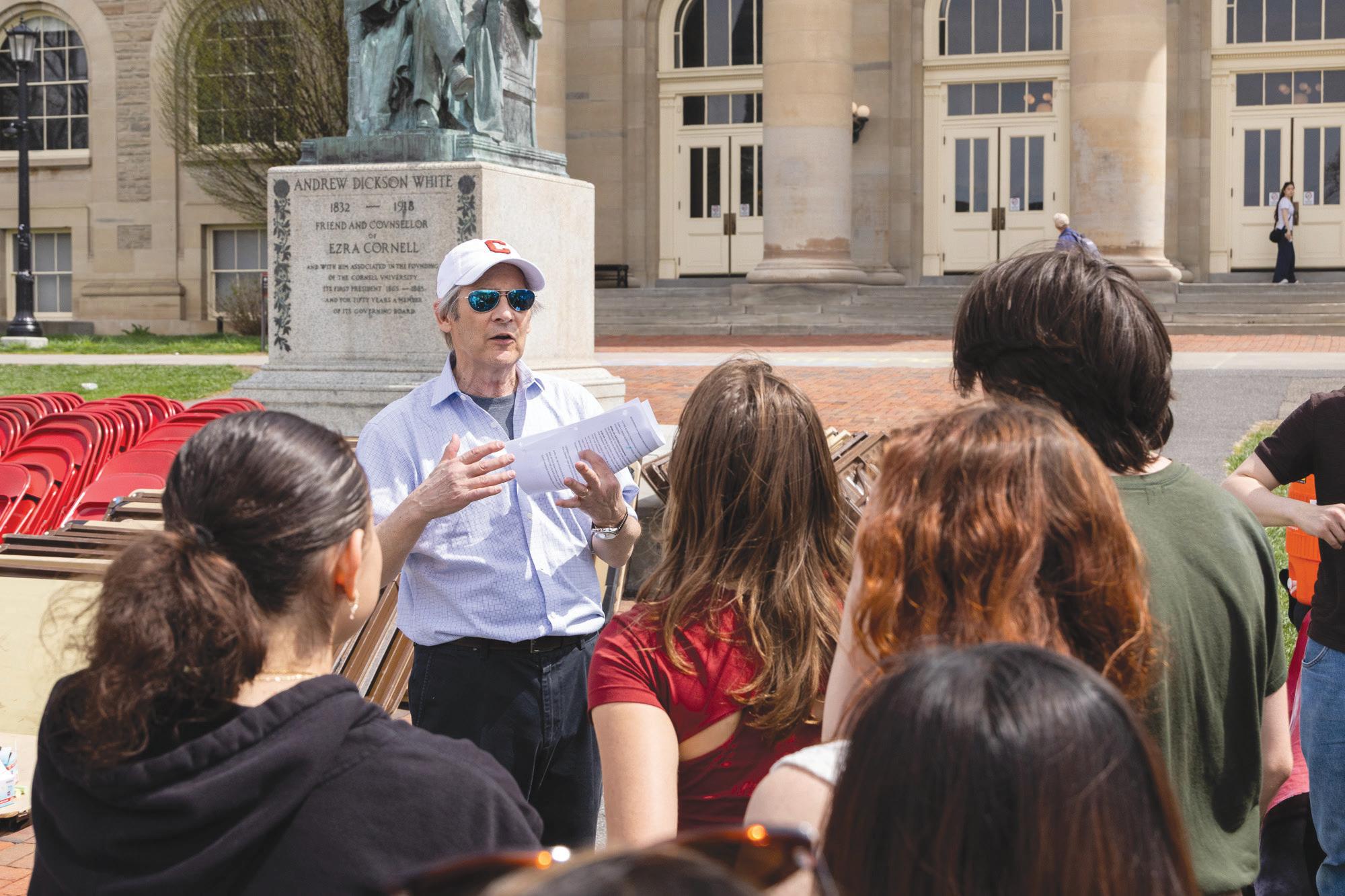
Continued from page 5
Franco declined to comment when asked if Cornell was investigating him.
On March 10, the Anti-Defamation League gave Cornell a “C” grade in its third annual Campus Antisemitism Report Card. The ADL classifies a “C” grade as “corrections needed.
Handshake also messaged Aiden, stating that it reached out to both the student and the school directly and claiming Franco’s conduct was in violation of its Terms of Service.
“Handshake takes any report of harassment or hate speech seriously. Whenever content is flagged as potentially violative, we promptly investigate and take appropriate action in accordance with our policies. For privacy reasons, we don’t comment publicly on individual users or the outcomes of specific investigations,” a spokesperson from Handshake wrote to The Sun.
Gabe does not plan to pursue further action and did not reach out to Cornell or Handshake.
“[With] all these comments [that are] antisemitic, I think the best thing is just to not let it get to you and not respond to it,” Gabe said.
He also hopes that Franco will learn from the experience.
“At the end of the day, I hope he realizes that he shouldn’t have generalized like that. … You never know who you might work with, or work for, or be friends with that comes from a different background or different religion,” Gabe told The Sun. “I really don’t wish that he ends up not finding a job from it. I just hope he learns from it, and people can realize he
changed and accept it.”
When asked about his reactions to the exchange, Franco wrote to The Sun, “If I ever have children, this will make for an interesting bedtime story. I probably also gave Gabe Einhorn the best PR his company will have in the near future and wish him the best with his startup.”
In his follow-up statement, Franco reflected more on his experience.
“It seems part of youth is to do crazy or drastic things, and though I imagine this is different from the path most take it fulfills the requirement, nonetheless,” Franco wrote. “Such actions might not be the brightest ideas in hindsight; however, they are still important to developing character and integrity. And hopefully the prior experience coupled with the many more I will have throughout my life serve to be fulfilling and reflective.”
The University spokesperson ended their statement to The Sun emphasizing the University’s disapproval of antisemitism and hate speech.
“Cornell condemns antisemitism and all forms of hatred and discrimination in the strongest possible terms. The university is steadfastly committed to fostering a safe, inclusive, and respectful environment for every member of our community,” a spokesperson wrote to The Sun.
Everett Chambala can be reached at echambala@cornellsun.com.
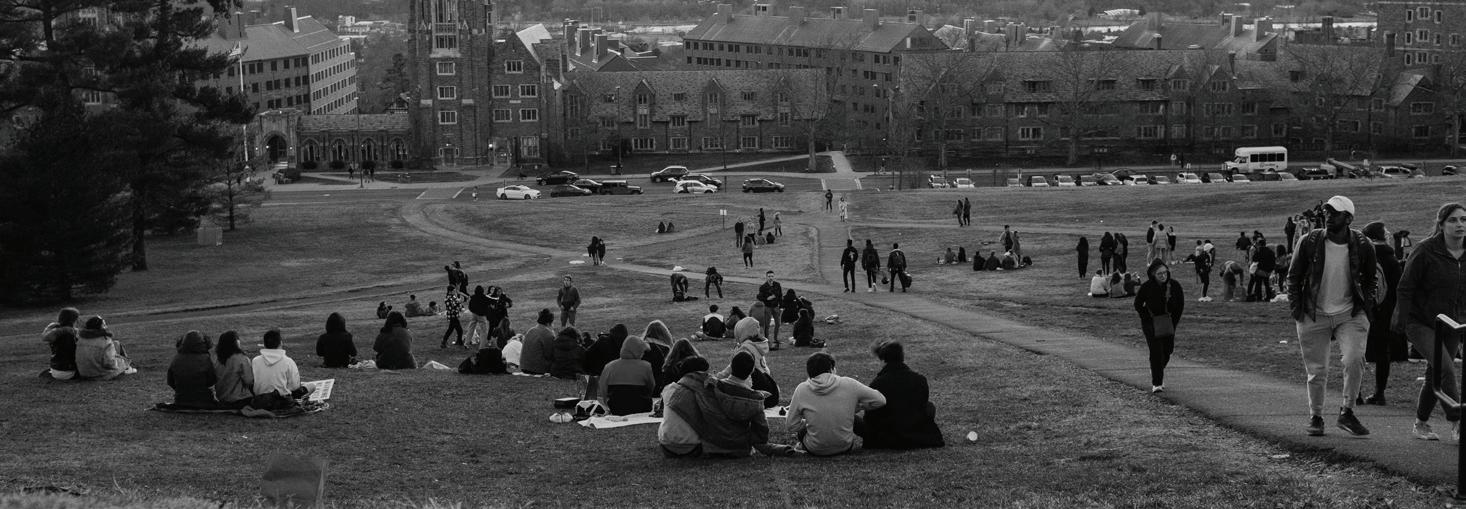
Continued from page 5
As he approached his car, Kotlikoff said “good night” to the students and got into his car as the SDC members continued to attempt to speak with him, according to video footage obtained by The Sun.
Kotlikoff wrote that these individuals “surrounded”, “block[ed]” and “bang[ed]” on his car. According to video footage obtained by The Sun, students surrounded the car and one student blocked the rear of the vehicle by standing behind the car, but no one touched the vehicle.
Video footage showing no students touching the vehicle leading up to Kotlikoff striking Athas and Vallecillo. (Courtesy of Students for a Democratic Cornell)
SDC wrote in a statement to The Sun that “there was no attempt to intimidate Kotlikoff, physically or verbally and students consistently remained a safe distance away from him.”
Kotlikoff then “waited until [he] saw space behind the car” and used his “car’s rear pedestrian alert and automatic braking system” to “slowly maneuver” out of the parking spot, Kotlikoff wrote in his email to the Cornell community.
The footage shows 15 seconds passed between Kotlikoff entering the vehicle and backing out of the parking spot.
While leaving the parking spot, Kotlikoff backed into Athas with his car and ran over Vallecillo’s right foot after Athas asked “am I allowed to stand here?” while standing behind Kotlikoff’s car, according to video obtained by The Sun.
Kotlikoff drove away without saying anything to them while Vallecillo yelled to Kotlikoff, “You just rolled over my f*cking foot, oh my god”, according to Vallecillo’s statement to The Sun and video footage obtained by The Sun.
Following the incident, the SDC members called the Cornell University Police Department, who responded to the call, took statements from the SDC members and called for Cornell Emergency Medical Services.
Cornell EMS were dispatched to the Day Hall parking lot at 8:31 p.m., mentioning a “college male” whose “foot was run over by a vehicle,” according to an audio recording of the Tompkins County police scanner.
Vallecillo told The Sun he was seen on site by Cornell EMS, but has not received any further medical treatment. As of Friday, he told The Sun that his right foot is “painful … to walk on.”
No charges have been pressed, and Vallecillo said he feels “fearful” and “intimidated” of pressing charges with CUPD “considering Michael Kotlikoff is the boss of CUPD” and has released a statement that includes “false information about us and our actions,” he said.
In his Friday email, Kotlikoff described the individuals involved as students and non-students who “are known to Cornell for their past conduct” and have “a long history of ongoing verbal and online abuse” towards members of Cornell’s administration and staff” and “disruptive protest.”
Vallecillo described Kotlikoff’s characterization of the individuals as a “deliberate lie” and said all four SDC members who were in the Day Hall parking lot have “no prior conduct record.”
“[On Thursday,] Michael Kotlikoff made it clear that he would rather violently attack students than engage with us,” Athas wrote in a press release sent to The Sun. “This is representative of the culture that Cornell’s administration cultivates on campus, where students are afraid to speak out against University administration for fear of repression.”
Mary Caitlin Cronin can be reached at mcronin@cornellsun.com, Varsha Bhargava can be reached at vbhargava@cornellsun.com and Sophia Dasser can be reached at sdasser@ cornellsun.com. Shubha Gautam ’28 and Atticus Johnson ’28 contributed reporting.
Applications open Aug. 1 - Sept. 6
The nation’s oldest continuously independent college daily, The Sun will help you learn how to be a better writer and communicator. Hone your reporting skills and kick-start your journalism career with us!
Follow @cornellsun on Instagram for updates on information sessions and more application info.



Why would you work for a newspaper ?…
Because behind the articles, there’s a team that brings in more than a half million dollars worth of revenue every year. Join The Corne¬ Daily Sun !
As a member of our business team, you’ll gain valuable knowledge in sales, advertising, marketing, social media, human resources and event planning. You’ll be working one-on-one with clients, while gaining the sales experience and communication skills necessary to be a leader. Hey, before you know it, you might even be managing this department.
Interested in being a part of our team? Look out for our information sessions in the fall, or send an e-mail to business-manager@cornellsun.com.
By AVA BETNAR Sun Assistant Lifestyle Editor
It’s a question we have all been asked at some point or another. One’s house is a testament to their character — whether they are the courageous Gryffindor, kind Hufflepuff, smart Ravenclaw or cunning Slytherin. It’s a very important distinction.
The Sorting Hat of the Harry Potter universe assigns students to each of the four houses based on their personal qualities and desires. Similarly, at Cornell, each of us belongs to the college that best represents our interests, values and goals. So, what house would students from each of Cornell’s colleges belong to?
Let me transport you from the wondrously wearying Cornell to the wizardly world of Hogwarts — where students drink Butterbeer (not Celsius), ride brooms (not scooters) and use wands (not Apple iPad pencils). As Cornell’s honorary Sorting Hat, “there’s nothing hidden in your head the Sorting Hat can’t see, so try me on and I will tell you where you ought to be.” (And for the record — no, not everyone will be Ravenclaw.)
Gryffindor
Gryffindor is one of the most popular houses, considering Harry Potter himself belongs to it. Gryffindors are bold, daring and adventurous. They have courage in their convictions and are not afraid to speak up for themselves, others or their beliefs. Pride and loyalty are two of their most defining traits.
The School of Industrial and Labor Relations? Better be…GRYFFINDOR! ILRies are advocates and leaders. They work tirelessly to support individuals, organizations, economies and communities. Like Gryffindors, they stand firm in their commitment to justice and equity.
The Brooks School of Public Policy also embodies the values of Gryffindor. With many being politically active and involved, students in Brooks are passionate about advocating for the rights of others. As future leaders, politicians, doctors and lawyers, they are strong-willed and devoted to service.
Hufflepuff
Although often perceived as the most “boring” of the four houses (seeing as few significant characters belong to it), Puffs have an unmatched sense of character. They are hard workers and model teammates, characterized by their integrity, kindness, reliability and respect — in general, they’re well-rounded and wholesome people.
Unmistakably, students of the College of Human Ecology are Puffs. They are driven by the mission to improve human lives by contributing to causes greater than themselves. Human Ecologists are deeply committed to their communities and to each other, making them model Hufflepuffs.
As literal leaders in hospitality, students of the Nolan School of Hotel Administration are also Puffs. Hotelies have strong interpersonal relationship skills and value collaboration. In service to others, they strive to make positive contributions to people, industries and society.
The College of Agriculture and Life Sciences upholds Hufflepuff’s sense of community. Students in CALS work together across disciplines to improve the environment, animals, food systems and human lives. Their research not only stems out of curiosity, but also from the desire to positively impact the world.
Ravenclaw
Ravenclaws are known as the “smart ones.” However, there is more to them than just wit. They are passionate, creative and curious problem-solvers with a deep passion for their craft. As you can see, Cornell as a whole embodies many of these virtues (on a scale from one to ten, the
By YIANNI METIS Sun Lifestyle Writer
Cornell is a great place for a midnight walk. With dark streets and expansive stretches of nature, you really have no choice but to get into the vibe. Having taken my fair share of these, I want to go over some of the best routes on and off campus.
The North to South route is the first to come to mind. It starts anywhere on North, goes through the Balch Arch and over Thurston Avenue Bridge. From there, the best variation is to cut to the back of the Arts Quad to pass the slope. After walking through Ho Plaza and the law school to get to Collegetown, 7-Eleven is a prime spot for a snack or drink.
The walk is a perfect 15 to 20 minutes each way, and you pass the top of the slope without walking up or down it. Stopping for a second at the slope has you question every decision you have ever made, but then you keep walking two minutes later.
Living on or starting your route from West Campus makes it harder to get that perfect walk in. The shortcut behind the law school is an efficient way to get to Collegetown, but it is just too quick, and you don’t see many people or enough of the campus. The only really great spot visually is a gorge just before Collegetown, but you get that on any walk there.
The only real option is to go up that slope. It is tiring, but rewarding at the end of your journey. So, starting from West, Baker flagpole is the first place to hit for the view from that empty middle section between Hans Bethe House and Flora Rose House. Then, you can go
up the middle of the slope and through the Arts Quad to Feeney Way. I like to head toward and go through the Engineering Quad from there, since I don’t go there often, and the little bridge and mini-forest route to Collegetown is calming.
The walk is another smooth 30 to 40 minutes total, and it gets around the campus. Walking up the slope builds up that motivation for the rest of the walk. Going along the main roads of campus, you either see people you know or occasionally run into Batman.
I have never gone to East Campus at night, or really during the day either. I went to the Dairy Bar and Botanic Gardens once at 8:40 a.m. for a class. I don’t know what possessed people to be willingly all the way out there at 8:40 a.m., but I don’t want to find out who lurks there at night.
There is actually a really nice path from behind Warren Hall to the Botanic Gardens, but I’m not walking all the way to Warren or the gardens. It also seems like it would be horrendously scary at night, so I would have to go with someone — and even then maybe not.
Midnight walks are not just about where you walk, but also what you listen to when you walk. Songs that you play on latenight walks either prove they’re not elite or show why they need to stay on your playlist. When it’s late and there is not much going on outside, the music only has to compete with your thoughts. Songs are judged on a high bar, because they can’t just be the background music you play when you study. They need to step up and be the MVP of the moment.
Some songs can’t live up to those expectations.
The best kind of song for a late-night walk shares some similarity with a good song for a highway car ride, but there are some nuanced differences. While a midnight car ride is great for songs that flow smoothly, songs that mix well with the beats of footsteps can truly enhance the walking experience.
In the car it always seems to be better the faster you go with these songs, but there’s many ways to walk. It could be slow, fast, straight from point A to B or take alternative side routes. Knowing the right song to get the right vibe for the walk is crucial.
A great midnight walk can come in many forms, but these were the two routes that have stood out to me the most at Cornell. Of course, I haven’t mentioned the walk from Collegetown back to West or North after a night out. That walk is usually uphill and more difficult for certain reasons, so it doesn’t always make for a good time.
If you want to be better than the people around you, go on night walks, and act like you are more philosophically inclined after doing
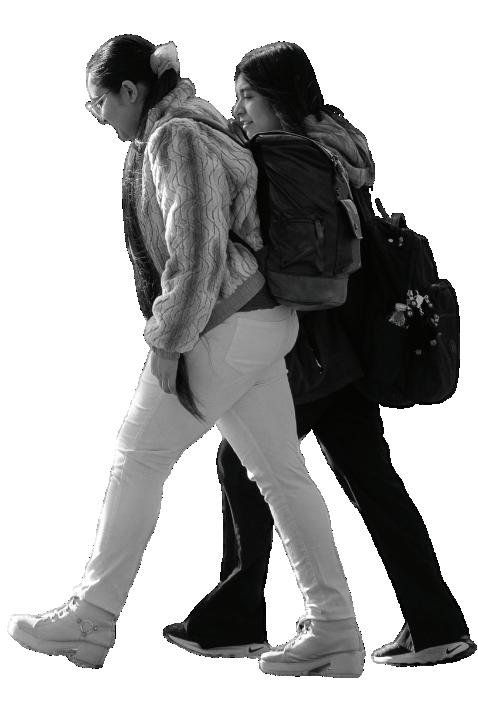
University may be nine and three-quarters Ravenclaw).
The College of Arts and Sciences is home to the intellectually curious. Students major, double major or even triple major across a diverse range of disciplines, whether that be philosophy, language, astrobiology, anthropology, Earth and atmospheric sciences or government — wherever their passions take them! They carry an open mind when exploring courses and ideas.
Students in the College of Architecture, Art and Planning are among the most creative and artistically inclined at Cornell. They are visionary thinkers — imaginative, innovative, expressive and inspired. Like Ravenclaw, AAP pushes boundaries to transform the spaces they occupy, whether that be a canvas, a city, a model or a new design.
Slytherin
Slytherin is notorious for being the most “evil” of the houses, with notable former student “He-Who-Must-NotBe-Named.” But there is more to Slytherin than just dark magic. Slytherins are ambitious, cunning, resourceful and achievement-oriented, driven by the desire to succeed (again, many similarities to Cornell as a whole).
Without a doubt, the College of Engineering belongs to Slytherin. Engineers are incredibly competitive and intense — both in their classes and on project teams. They are driven by the desire to secure that summer internship and land among the upper half of the bell curve. Inherently, engineers are resourceful, seeking to innovate in practical and creative ways.
The Dyson School of Applied Economics and Management is another quintessential Slytherin. Students in Dyson are the ultimate networkers, taking advantage of every opportunity that comes their way. They have sharp leadership instincts and are shrewd, confident, proud and strategic. Their ambition knows no bounds.
Compiled by Lifestyle writer Jared Miller ’28, these are testaments from 30 students on why they are happy to attend Cornell — and why you should be, too.
1. The weather is great, especially in the fall when the seasons change.
2. The connections I made here are lifelong connections.
3. I found a home here with great people.
4. My friends.
5. Academic prestige and also my friends.
6. My best friends go to school here, too.
7. The people and how they hold themselves make me a better person.
8. The distance away from New York City offers independence but access to the city.
9. The natural beauty of campus. It’s so beautiful.
10. I really like the faculty; everyone is super knowledgeable, and there are a lot of opportunities for my field.
11. I love my extracurriculars. I felt welcomed despite my religious differences, and people accepted my faith.
12. There are a lot of different opportunities and perspectives.
13. The friends I have and the community I was able to make.
14. I like the community, and even though it may take some effort to find your community, it’s super tight-knit once you do.
15. I really love the friend group that I’m in, and I am grateful that I was lucky enough to receive a higher education.
16. The campus.
17. I’m an international student, and Cornell is a community of belonging in which students can feel at home.
18. People say orientation week friend groups don’t last, but mine did.
19. The people here are so nice and cool.
20. People are impressed whenever I mention that I go to school here.
21. I made a really nice group of friends here.
22. I really like the dorms; all of the facilities are super nice.
23. I found a really good group of friends, and I like hanging out with them.
24. The people are so great.
25. I just think that everyone here is a lot nicer and less competitive than I thought they were going to be.
26. I really like my major. It’s so interesting, and the people in it with me are so nice.
27. I like the clubs I’m in. They’re really fun, and I got to meet some cool people.
28. I met some people who helped me bring myself out of my comfort zone, and I tried things here I never would have done in high school.
29. The people here that I’ve gotten to meet are so cool. I am grateful I got to know them.
30. I really like the gorges.
By MELANIE DELFOSSE Sun Lifestyle Writer
While weather nice enough to spend a few hours outside is sporadic this spring, on the off chance that my weather app does show it’s above 45 degrees, I’ll find myself wanting to go for a run.
Given Ithaca’s weather, this isn’t too often — so to try to save time and gradually return to longer treks, I’ll usually find a route that’s around one mile. Enough to get my heart rate up and to see a bit of nature, but not so much that I’d end up walking most of it (which can also be super fun, but can feel like a misuse of time with so many assignments, projects and applications due). Here are a few of my favorite routes and tips for a quick, casual run.
Beebe Lake
This was my favorite route during freshman year — I lived nearby, so it was easy to just put on some shoes and go for a quick run around the lake. It’s beautiful, especially passing by the waterfall, and best of all, there’s barely any hills. This is also a fair ly popular spot, which made me feel safer, espe cially as it got darker earlier. Finally, it’s easy enough to add on extra mileage: You can run into the Botanical Gardens, onto the path by the Sackett Foot Bridge or even just run around the lake multiple times (as I’ve seen when someone has lapped me while I’m finishing up my first
mile). This is still one of my favorite routes, even though I barely run it now that I live on West Campus.
North Campus to Collegetown
If you’re on North Campus and craving a poke bowl, wings or any other Collegetown food, why not just run there? As the weather improved last year, I would take this route more and more often to get random snacks or foods I wanted. Now that I live much closer to Collegetown, I walk a new path along the Law School even more often and still appreciate seeing a bit of nature before getting my food. I’m definitely looking forward to living in Collegetown this fall, where this route will be just out my front door.
Adventure Around Campus
Running from your dorm to anywhere on campus can also be a fun route, especially if you find someplace new to explore in the process. The one time I joined Running Club for a run, we went somewhere
roots and can focus on getting to yap with your friend.
West Campus to Stewart Avenue Bridge
I ‘discovered’ this route by simply opening up Google Maps and looking for a spot that was about half a mile away from my West Campus dorm for a mile round trip — a condition that the Stewart Ave Bridge fits perfectly for those living on West Campus. It helped that the bridge is over a beautiful waterfall, letting me see a bit of nature before heading back to my dorm. Google can easily lead you astray, like it unfortunately did to me when I ran to Ithaca Falls, and subsequently had to walk half a mile uphill back to my dorm. However, if you double check the elevation gain-loss (and not trust Google when it says the route is “mostly flat”), you can ensure the run is within your limits. This is my new favorite route now that my Beebe Lake route is farther, and it still lets me see some of nature’s beauty on a short run near my dorm. Overall, I’d highly recommend a run (when the weather is nice enough), given how entrenched Ithaca is by beautiful waterfalls, trails and scenery. So if you ever have time and an itch to get your heart pumping (beyond just walking up the slope), find somewhere to run a mile away from you — there’s plenty of
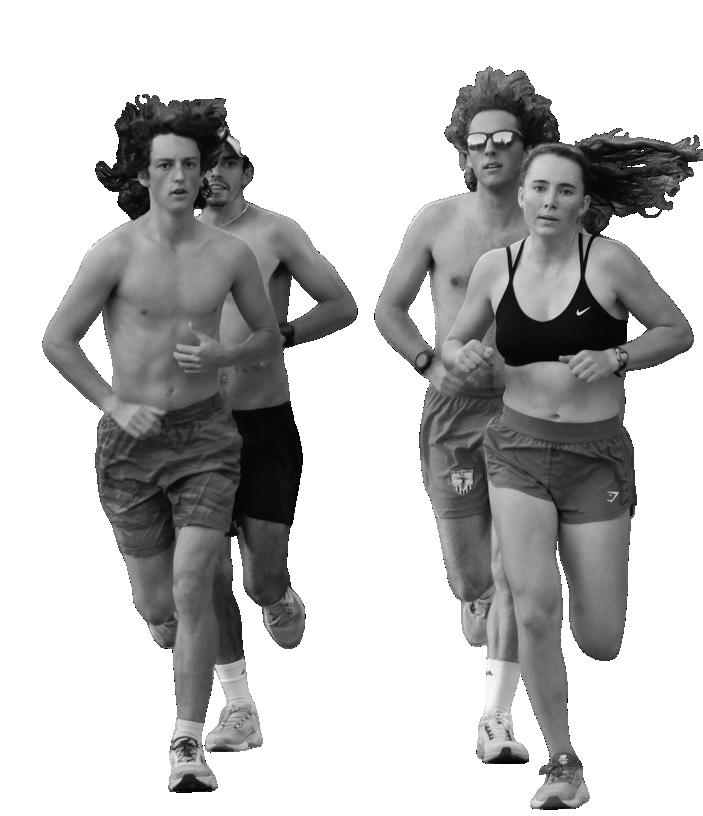
By JENNA TULL Sun Lifestyle Columnist
Dear Freshman,
By JARED MILLER Sun Lifestyle Writer
While I doubt this concept is listed in the dictionary, I feel as though a majority of people living in big communities have experienced the concept of a real-life recurring character. Living on a college campus, we all have our own set of routines. Generally, we enter the same buildings, eat at the same places and walk the same routes daily. With so many people on campus, we are bound to share similar routines with other people.
Therein lies the concept I like to refer to as a “recurring character.” In a sitcom, a recurring char appears peri ically and is recognized by the audience, but has min imal impact on the plot.
While the comparison is not one-toone, as our lives do not have scripted plots, I believe the metaphor fits really well. You may share a major or live in the same dorm, and as a result, you see this person literally all the time. Walking along the Ag quad, they’re there, waiting for the elevator, they’re there. There is no escaping your recurring character(s). Yet the more interesting idea to me is what I like to call the “recently unlocked character.” In a video game, there are characters that you have to wait to unlock before they become playable. Another way to conceptualize it is learning a new word. I recall learning the word “impeccable” in school. I had never heard it before, but once I learned it, I suddenly started hearing it everywhere. The word “impeccable” always existed; I had just overlooked it. This
concept is far more interesting to me, as even though you have never met before, you suddenly start to see this character literally everywhere.
Let’s try a thought experiment. Think about the last lecture you attended, whether it was this morning, last week or whenever. Now I want you to take a second and think about your professor. I don’t want you to think about the discussion you had, the material they covered or anything related to the actual lecture. I would like you to think about what color their pants were. I’d assume they were wearing pants, right? The thing about our brains is that there are so many details we see every day
at a random apartment party. This minor stray away from routine changed both of our lives, yet the inciting incident was so insignificant. With our daily routines being so rigid and the butterfly effect being so prominent, our best friends are out there, and we met them because we arrived at Trillium ten minutes earlier than usual.
In our lives on campus, we come across literally thousands of people daily. Yet in our 16,000-person community, how many people would you really say that you know?
with the college campus phenomenon of meeting someone for the first time and then suddenly seeing them everywhere. A thought that has recently consumed me is how I had been running into this person everywhere before meeting them, and I had just not yet registered the familiarity in their face, or ever really taken note of them.
Someone who I now consider a friend once walked past me on campus daily, and we never even acknowledged each other’s existence. This person was previously hidden and is now visible.
We see each other on campus almost every day, yet neither of us would have thought to say hello if we had not met
Welcome to campus! I hope the first few weeks have been full of exciting adventures and plenty of new friends – and hopefully a few fun flings. Now that you’ve all settled in, and homecoming is just around the corner, I feel it’s my duty to provide the Class of 2030 with some tips and tricks on navigating the (Big Red) sex scene. With over 16,000 undergraduate students, you have plenty of options.
Fraternity Men
The go-to option when you first get on campus. You’ll promise yourself you won’t get attached, but after spending an intimate night together after formal, you’ll realise you caught feelings. Sex with a fraternity guy is overhyped and underwhelming, especially when it’s 3 a.m. and you’re both on (possibly more than a few) substances. Plus, the walk back to High Rise 5 is killer in 10-degree weather. However, if hooking up with one is necessary, I suggest finding a boy in a “mid-tier” fraternity – someone chill and not too weird, but also without an enormous ego. Just don’t be shocked when all his fraternity brothers hit you up when things inevitably end poorly.
Sorority Girls
When hooking up with a sorority girl, prepare to be stressed out. You’ll
be transported right back to high school when you walk past a group of her friends and they all look at you and giggle. If she invites you over to the house, everyone will see you coming and going. She’ll talk a big game at the party, but once you get back to the room she’s probably really shy. You never know what you’re gonna get, she may be down for a quick hookup or expect a bouquet of roses and dinner with the family. Either way, you’ll get to attend date night at Lot 10 and catch her staring at you in the library six months from now.
Athletes
The (not so) hidden gem. Athletes truly make the best one-night-stands. With their gorgeous physique, endurance and perpetually busy schedule, you know you’re in for a good time with no commitment required. Not only will you have an amazing time, they might even get you some hockey game tickets. They will definitely kick you out after hooking up because they have practice in the morning, but the sex was so good it doesn’t even matter.
Everyone Else
If you are looking for a normal, average hookup, I suggest this is where you focus your attention. ILR and Hotelies are the most fun and chill students, so they are a great option to hit up in between classes. Also, you might get invited to the Hotel Prom, where the Hotel seniors throw a formal dance for their friends. Engineers probably don’t have time to mess around,
When I played video games growing up, the completionist in me wanted to unlock every playable character possible. In the virtual world, I left no rock unturned in the quest to play as every possible character. Yet I wondered why I spent more energy growing a network in the virtual world than in my real one. I propose we start to live our real lives the same way as our virtual ones. Say hi to that person that you seem to see everywhere, and more importantly, say hi to someone you have never met before. In a community as ginormous as ours, everyone’s goal is always to make a big campus feel small. One thing I don’t think people take advantage of enough is to enjoy the limitless supply of friendship opportunities that comes with a big campus.
So say hello to your recurring characters and do what you can to unlock new ones. Broadening your network is something that you can always do more of, and I think a great place to start is with someone you don’t know, but somehow can’t seem to get rid of.
sexual health, relationships and more under punny pseudonyms.
but if they do, don’t expect too much. You might wake up in the middle of the night to them doing problem sets or bragging about how many credits they take. Pre-Med and Pre-Law students definitely have a work-hard playhard mindset, which ends up making for a good fuck-buddy. They can be very freaky and down to try new things, but don’t expect a relationship to come out of this hookup – they are way to focused on balancing their LSAT or MCAT studies with getting fucked up on the weekends.
Bonus (Ithaca College and Townies)
When swiping Tinder or Hinge, you will inevitably come across a townie or Ithaca College student. While it may seem fun to mess around with someone you know you won’t run into on campus, it is always safer to stick with Cornell students. But, if you do end up on the Ithaca College campus, the TCAT Route 11 bus should get you back to Cornell in time for your 8 a.m. class.
Closing
I hope these guidelines help you to make smart and informed decisions about your sex life here at Cornell, and especially help you achieve a few orgasms before Halloween. Remember to stay safe, always obtain consent and don’t hook up with your TA unless you know you’ll be getting an A+ out of it, because an orgasm is never guaranteed (very unlikely considering Cornell’s grade deflation).

Roommates v Dorms v Gorges v Fraternities
Sororities v Campus Organizations v Sports
Your child might not have time to let you know what’s going on at Cornell every day.
WE DO!
The Corne¬ Daily Sun, the student newspaper of Cornell, can be sent to you every week of the academic year. We’ll keep you informed of campus news, issues and opinions.
Your child spends three-quarters of their year at Cornell. Doesn’t it make sense to find out what’s going on here?
By BROOKE ANACLETO Sun Contributor
This story was originally published on May 3.
For many mechanical engineers of the Cornell College of Engineering, 125 Upson Hall is a home for academic advising. But in addition to advising resources, the room is also a space for MechE students to connect with their community and discover the magic of two small, pink, glow-in-the-dark creatures: axolotls.
From their first day in the MechE advising office, the two axolotls — named Axle and Throttle — have made it big.
“Call them the unofficial mascots of MechE,” said Ashley Blank, assistant director of undergraduate affairs in the College of Engineering.
The axolotls have built a powerful community, Blank said, made advising welcoming to all students and created a culture that makes the MechE advising office home for so many, whether for academic assistance or a good smile after a long day.
The Magic of Axle and Throttle Blank is the reason there are axolotls on campus today. She comes from a background in elementary education, which influenced her decision to bring a pet into the office.
“I found it pivotal that we had some sort of classroom pet during that time,” she said, referring to her time in elementary education.
When Blank was searching for a unique pet to welcome students into the MechE advising office, she looked to her good friend in Rochester, who breeds axolotls.
Just like that, the magic of Axle and Throttle was born. Each axolotl has its own personality that it brings to the office.
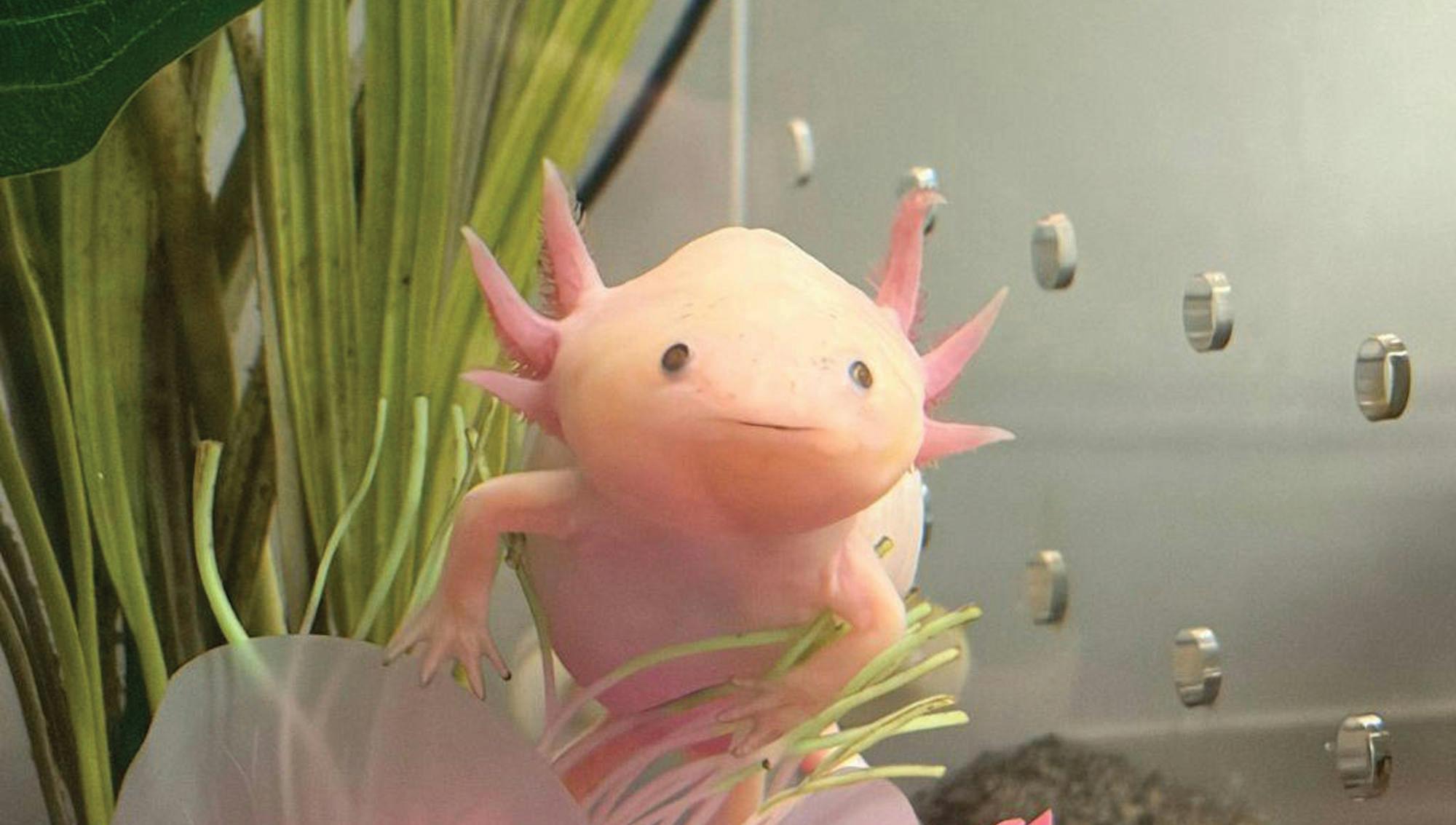
“Axle follows my finger — I think she thinks it’s a worm — and it was so fun to just watch her swim around,” said Diya Mehta ’26, a mechanical engineering student. “Throttle is just a silly guy who just floats up at the top most of the time, but he occasionally decides to get zoomies.”
Although the two amphibians are separated by a glass barrier to avoid competition and breeding, they like to interact with one another through the glass on occasion.
“She’s [always] kind of digging at the bottom of the barrier to get to Axle,” Blank said about Throttle.
A Look Into the Office
Colorful lights, plushes of axolotls, pictures everywhere and a giant tank garner the MechE advising office.
Each year on Feb. 1, the office celebrates
National Axolotl Day, Blank said. The office makes axolotl-themed goodie bags for students that highlight the importance of the axolotls to the MechE community.
Another important part of the office culture includes maintaining a weekly fun fact board about the axolotls, inspired by a student worker in the MechE office, according to Blank. It also acts as a space for students to express themselves.
The discussion board has even included polls, “would you rather” questions and student doodles of Axle and Throttle.
More than Mascots
The axolotls have drawn in many students who would otherwise not have spent time in the MechE advising office, according to Blank.
“The Mechanical Engineering community is fairly tight-knit, especially with all the classes we
have together until senior year, but the axolotls have given us so much more of a community,” Mehta said. “I used to come by just to see them, and even if I was stressed or worried, just seeing them with their derpy smile made me smile.”
Axle and Throttle have not only drawn attention from MechE students, they have made an impact across campus and beyond.
Cornell Days was huge for the axolotls, Blank said, with tour guides peeking in throughout the day, and people being really excited to go see them.
“A faculty member didn’t believe they existed until he came in,” Blank recalled. “He was like, ‘Wait, really?’ Like, they’re animatronic or something.”
The axolotls’ magic extends outside of the tank. There are inflatable costumes of the axolotls that have been worn all around by members of the advising center. Pictures detail their many adventures, including in MechE classrooms, to brighten students’ days.
Axle and Throttle have even inspired engineering projects. Last year, one club on campus mimicked the design of a robot after Axle and Throttle, Blank said.
“It’s like I said, it’s grown leaps and bounds further than I ever expected it. And I’m just really happy that they kind of grasped onto that idea”
Axle and Throttle are not just office pets — they are a vital part of many students’ Cornell experience.
To continue reading this story, please visit cornellsun.com.
By KITTY ZHANG Sun Staff Writer
This article was originally published on June 1.
National Dinosaur Day is on June 1 each year. To celebrate, The Sun enlisted the help of Prof. Warren Allmon, earth and atmospheric sciences, and Dr. Brendan Anderson, an earth and atmospheric sciences professor at SUNY Oneonta. Both are paleontologists from the Paleontological Research Institution and spoke with The Sun to answer readers’ dinosaur questions on just about everything — hot takes, feathers, intelligence and, of course, sex.
Ready to dive into the dinosaur world? Let’s go!
Are birds really dinosaurs?
“Birds are dinosaurs. Period,” said Anderson. “The passenger pigeon is a dinosaur…A dinosaur-shaped chicken nugget is [made of] a dinosaur.”
So what’s the deal with feathers?
“We know that many of them had feathers. So, that’s no longer fantasy. There’s data for that,” said Allmon. “We actually know a little bit about the color of the feathers.”
“Feathers have two kinds of colors. They have structural color, which is iridescence, like a hummingbird. And then they have pigment, [which is] held in tiny bodies called melanosomes…so if you find really well-preserved fossil feathers, sometimes you can detect these melanosomes and reconstruct what the pigments may have been.”
How can scientists tell female and male dinosaurs apart?
“When some dinosaurs are preparing to make eggshells, they lay down a special bone [medullary bone], so if you find that special bone [in the fossil], you know that it’s a female,” said Anderson. “Usually if there’s a big version and a small version of a [vertebrate] species, usually the big version is the female because eggs take more [energy] to produce. That’s a general pattern that is true in a lot of living animals that are vertebrates. So if we find a big and a small version of a species, the assumption is that usually the small shell is probably the male.”
How do we know what dinosaurs sounded like? Are they realistically portrayed in Jurassic Park?
“A lot of that [in Jurassic Park] was fictional,” explained Anderson. “They mixed animals and mechanical sounds.”
For example, the Velociraptors are voiced by penguins and toucans, and the Dimorphodon is voiced by baby brown pelicans. Other dinosaur sounds used a mixture of living animal noises from alligators, elephants, tigers and tortoises, along with bird recordings provided by the Cornell Lab of Ornithology.
But for some dinosaurs like Parasaurolophus, which has a big tube connected to its nose, scientists can look at animals today that also have resonating chambers to help figure out what they sounded like.
“[Scientists] take a CT of the skull and say, if air passes through this structure, what does it sound like?” said Anderson.
So by using CT scans and comparative anatomy, scientists can model how air would move through the skull and see what kinds of sounds and echoes that structure could produce, helping recon-
struct the types of vocalizations the dinosaur may have made, Anderson added.
Hot take: Jurassic Park will happen within 50 years.
“The bad news is that DNA is a very fragile molecule,” said Allmon. “It does not preserve easily at all.”
The oldest known DNA recovered to date is around 2 million years old, while dinosaurs went extinct around 66 million years ago. Although the film suggests that dinosaur DNA was preserved in amber, studies have shown that DNA does not ‘survive’ for the length of time in amber, as the genetic material has degraded far beyond the possibility of scientific recovery.
As a result, serious discussions about de-extincting organisms like the woolly mammoth (which went extinct 4,000 years ago) or the dire wolf (13,000 years ago) would not happen with the dinosaurs.
“There’s no evidence that [dinosaur de-extinction] could happen,” said Allmon. “Though amber is amazing, it doesn’t preserve [ ancient DNA that long], or at least not that we have found … Jurassic Park for really old things is not possible.”
How did dinosaurs have sex? How do they have babies?
“Dinosaurs only reproduce by eggs,” said Allmon. “So how did dinosaurs do it? Well, if dinosaurs are the ancestors of birds, then probably they did a cloacal kiss.”
“The male gets on top of the female and … they tuck their tail in between the tail feathers of the female and their cloaca, which is this common opening of the urogenital and digestive tract and they just touch like this. It takes like a second, and
the sperm is transferred.”
“[However], some birds do have penises and some birds do [reproduce through] intramissions,” said Anderson. “So different dinosaurs might have different sexual reproductive processes.”
According to both Allmon and Anderson, at the end of the day, dinosaur reproduction remains largely an educated guess from paleontologists, who infer the behavior and process by comparing dinosaurs with their closest living relatives: birds and crocodilians. Direct evidence from fossil records is lacking because reproductive organs, such as penises, are composed of soft tissue that would have rotted away before being able to mineralize into rock.
So how did the T. rex do the deed without crushing each other?
“Carefully,” said Anderson. “It’s a joke…[but] elephants do successfully mate so you can get to several tons and still work this out…There’s a paper that came out recently about injuries received during mating for hadrosaurs… these would be injuries you’d expect by something [big in size] that was mounting the other.”
Were dinosaurs a social species? Or did they just mate and leave?
Just like modern birds have different social behaviors, dinosaurs probably had different social behaviors too, explained Allmon.
To continue reading this article, please visit cornellsun.com.
Brooke Anacleto can be reached at ba454@ cornell.edu. Kitty Zhang can be reached at kzhang@cornellsun.com.
By AIDEN GADDIS Arts and Culture Contributor
This article was originally published on April 17.
What is the first thing that comes to mind when you think of Michael Jackson? The moonwalk, a single rhinestone glove, black loafers with white socks (which he somehow made work), mirrored sunglasses, the red Beat It jacket, Neverland Ranch, Sugarfoot, Bubbles the chimpanzee … What? You were with me until Sugarfoot?
Is it possible that you remember Michael Jackson’s androgynous voice, his gravity-defying dancing and his iconic beats — but don’t recognize “Sugarfoot”?
Let’s try this a different way. What do The Jacksons, Madonna, Elton John, Lionel Richie, Janet Jackson and Michael Jackson all have in common?
Come on … you know this.
Sugarfoot, of course.
Sugarfoot, or otherwise known as Jonathan Moffett, is the legendary drummer behind some of the most iconic live performances in modern music, whose relationship with Michael Jackson and his family spanned more than 30 years. In addition to the Jacksons, he played for many other artists, including Madonna for five years, George Michael for two years and Elton John for two years, on some of their most defining tours.
His drumming wasn’t just accompaniment, it was timing, tension, energy. Rhythm! His beats shaped performances, penetrated souls and made you, or your parents, move — whether that meant dancing, or for those of you that lack rhythm, just nodding along. Sugarfoot was the force at the center of the spectacle — the nuclear fusion that made the stars shine.
With the new Michael Jackson biopic Michael on the horizon, I wanted to talk to someone who was part of that world, and that someone is Sugarfoot.
Prior to speaking with him, I put my world-class investigative skills to work by typing his name into Google. There, I found YouTube videos of Sugarfoot playing in front of a gazillion people with Madonna at Live Aid at JFK Stadium in Philadelphia in 1985, as well as a full performance from the Jacksons’ 1984 “Victory Tour,” where I watched him hold down center stage behind the relentlessly energetic, single-gloved Michael Jackson.
After decades in the music business, countless drum strikes and playing for crowds in excess of 100,000, Jonathan Moffett sat down with me to talk about his life and the upcoming movie Michael.
My first question was, “Why Sugarfoot?” In reply, Moffett
politely smiled indicating that this was not the first or last time he would be asked that question. “I got that nickname when I was young,” he answered. “I was playing in a band and the leader said everyone had to have a nickname. He said the way I worked the pedal for the bass drum was sweet, so he named me Sugarfoot. I hated it. That didn’t sound cool at
all. I wanted something tougher like Ace or Duke or Titan, but he insisted on Sugarfoot, and it stuck.”
As someone who has always wanted to play the guitar, but has yet to invest much time in it, I asked him how he learned to play the drums. He explained that he was self-taught, learning by ear — listening to records featuring drumming legends like Ringo Starr of the Beatles and Charlie Watts of the Rolling Stones and playing along with their songs. Although he cannot read music, this method gave him a highly sensitive ear. That ability to pick up notes audibly turned into a skill that allows him to learn songs quickly.
Having watched some of his performances on YouTube, I asked him what the most intense concert he ever played in was. “All of them,” he answered. “I kind of get into a zone when I play, so for me, they are all intense. However, I will say that as far as the shows themselves go, Michael played every concert like it was the most important one of his life. He put everything into every performance. He learned something from every performance, each one building upon the next, getting better, inching closer to perfection as he went along.”
Sugarfoot hasn’t just played with famous musicians; he’s played with icons. I was curious how that happened. For
example, how did he go from playing with The Jackson’s “Victory Tour” in 1984 to Madonna’s “The Virgin Tour” in 1985? His answer indicated the economic reality of musicians. If the star is not performing, then touring musicians are not working. He explained that Madonna had heard him play and reached out to him about traveling with her, stating, “Since Michael was working on preparing for his Bad Tour, I had time, so I told her yes.” Most musicians would be lucky to work with one legend during their lifetime; however, Sugarfoot effortlessly moved from one to the next. Still, Michael was his clear favorite. In fact, he told me that he had been rehearsing with Michael Jackson for his “This Is It” residency, which was set to take place at London’s O2 Arena the night before Michael died.
“We were rehearsing the night before he died,” Sugarfoot recalled. “After rehearsal, we spoke, we told each other we loved each other, and then we hugged. That was the last time I saw him. At least I got to tell him how I felt.”
After a sullen moment, I shifted the interview to the new movie. I asked how he felt about watching something in a movie theater that he lived through. “I’m just excited to see Jaafar play Michael,” Sugarfoot responded. “He’s Jermaine’s son, I’ve known him most of his life. It must be surreal for him to play his uncle in a movie.”
I asked him what he knew about the movie itself and how he felt about it.
“I was invited to the set, so I went to check it out,” he answered. “I saw Jaafar there. We hugged. It was a deeply emotional moment for both of us. It’s a lot of pressure to play the greatest entertainer of all time, but I think he’s definitely the right guy to do it.”
As a collector of vinyl records and a self-proclaimed music expert, interviewing Sugarfoot provided me with an insider’s perspective of not only what it is like to perform at concerts, but also what it is like to make music. If you want to hear Sugarfoot right now, just open Spotify and play Madonna’s song “Like a Prayer.” That’s him playing the drums.
So, the next time you think of Michael Jackson — the moonwalk, the glove, a grown man holding a chimpanzee — listen a little closer.
Because somewhere beneath it all is a beat you’ve heard before.
You just didn’t know its name.
But now you do.
Sugarfoot.
Aiden Gaddis is a member of the class of 2027 in the College of Arts and Sciences. He can be reached at ajg335@ cornell.edu.
By PRESLEY GRAUER
This article was originally published on April 27.
As a house manager at the Cornell Cinema, every shift without fail, somebody stumbles into the theater as a mistake looking for the stairs to the fourth floor or curious about what is inside. Although the cinema has a loyal following amid the Cornell and greater Ithaca community, it remains relatively undiscovered for some undergraduates. In its nearly 56 years of existence, the cinema has exhibited an immense amount of digital and 35mm film screenings, hosted guest panels of industry giants and simply been a place of community for film-goers to see a movie they might not be able to at a commercial cinema.
Since the COVID-19 pandemic, there is an assumption that cinemas have not been able to fill seats due to an increase of streaming platforms acquiring films before they can get a box-office release. While this may be true in some respects for some older audiences, studies show that Gen Z audiences have not lost their connection to the cinema. In recent years, many have claimed seeing art-house, experimental or classic movies as performative or too niche, but there is nothing performative about the conversations that ensue outside the Willard Straight theater after a viewing of a cult classic
or documentary. The steady incline of younger audience attendance at the cinema is proof that the art of filmgoing is not lost, and it is merely waiting to be fully realized by our generation. The cinema is still a landmark of community for many, and the Cornell Cinema prides itself on being this exact third space of culture.
I had the opportunity to speak to the Director of Cornell Cinema, Molly Ryan, about what makes the cinema special in terms of community and engagement with art in a post-covid world. Ryan described her entrance to Cornell Cinema after the pandemic in 2022: “This kind of global catastrophe had shattered ways of being in community, had disrupted these patterns of cultural activity and behavior and had made a lot of people really anxious about being in community and crowds.” Throughout her time at Cornell Cinema, Ryan highlights an increase in student attendance at the cinema especially since the introduction of the mystery screening and the suggestion box. The incorporation of customer input, the student advisory board and Ryan’s film expertise has culminated in varied films series meant to tap into the curious nature of the Cornell community. Ryan continues, “The news media loves a story about how cinemas are dying and I would say Cornell Cinema stands as a counter example to that idea. We are seeing a lot of appetite for coming together to enjoy films on the big screen as they’re kind of meant to be experienced as an art form.”
The Cornell Cinema has experienced this rise in Gen Z interest in attending independent theater, looking for an experience they cannot receive from a subscription. Ryan echoes this sentiment, “The experience of going to the cinema fits in this kind of like sense of nostalgia and sort of an embrace of opportunities that feel a little old school, but remain as cool as they ever were. … I think this is similar to polaroid cameras and vinyl records.”
In a post-pandemic world, many are looking to recreate, or rediscover, the art of community in spaces that are not purely school or going-out. Gen Z is hungry for conversations, shared interests and connection through something that is bigger than a weekend party. The cinema is a special part of Cornell campus because it encourages the Cornell community to actively engage with a film in a way that a commercial cinema experience or required film for class does not. The curation of the film series is a work of art in itself, combining high-brow, popular, art-house and classics into a semester where anyone should be able to go watch a film they love — or hate.
To continue reading this article, please visit cornellsun.com.

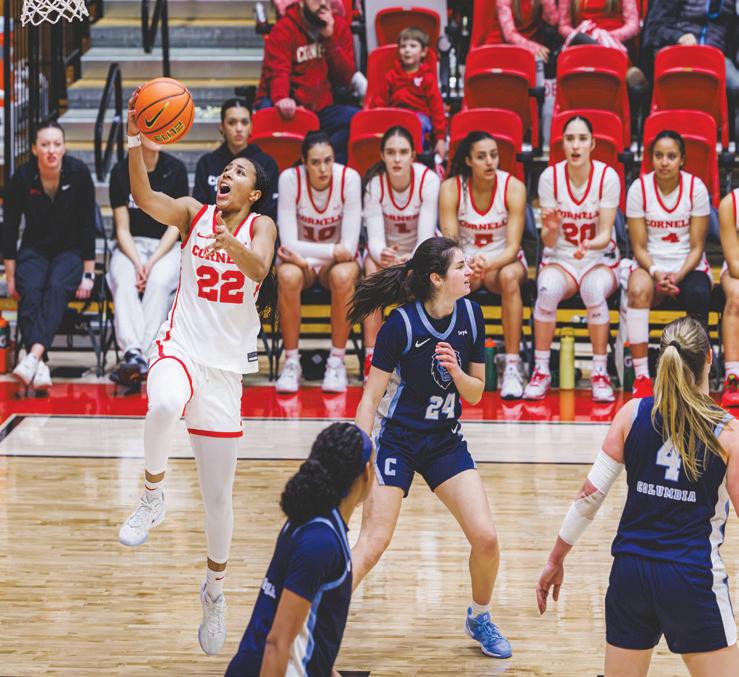
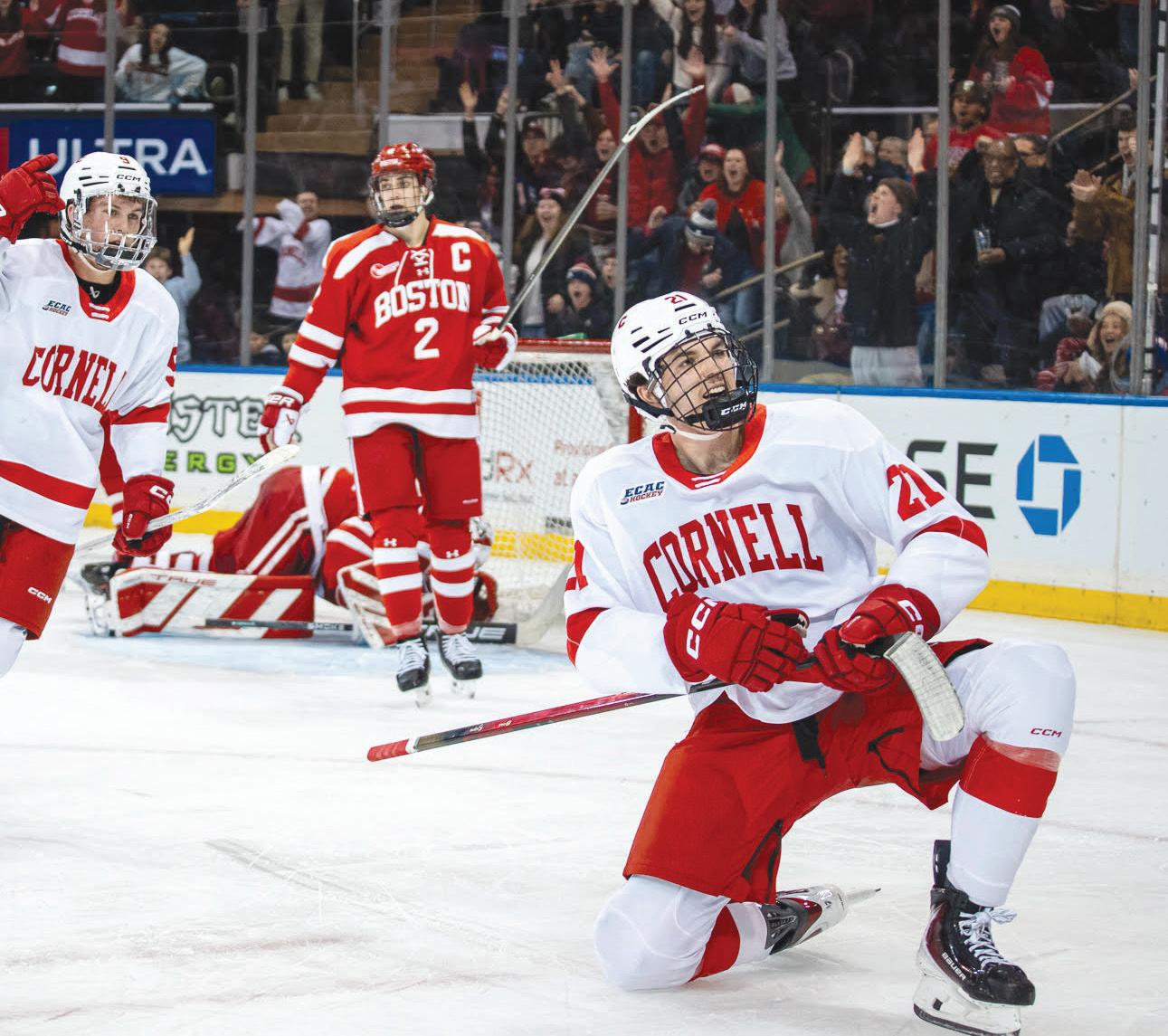
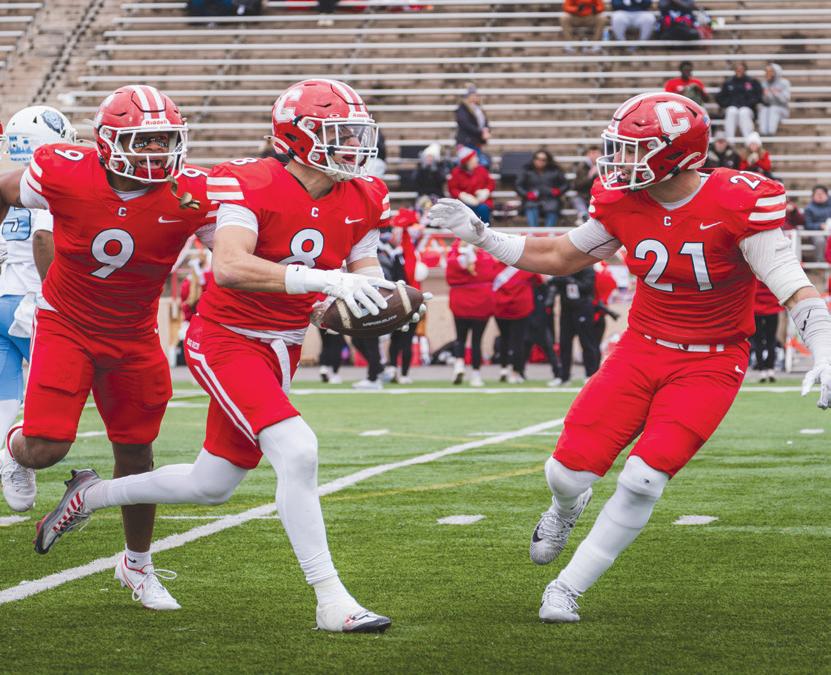
By TYLER GOLDBERG Sun Senior Writer
This story was originally published on July 1.
For the sixth consecutive NHL draft, a Cornellian has been selected. This year it was incoming freshman defenseman Cole Tuminaro. The Illinois native was selected in the fifth round, pick 140, by the Colorado Avalanche.
In addition to Tuminaro, Charlie Puglisi was selected in the seventh round, 202nd overall, by the Nashville Predators. Puglisi announced his commitment to Cornell, but will not be joining the team next season. Born in 2008, the Latham, N.Y. native is poised to make the NCAA jump in the 2028-29 season.
tinuing to make strides in his defensive abilities. His work resulted in him being ranked the 96th overall North American Skater by Central Scouting in the 2026 NHL Draft and receiving the call from the NHL.
“Actually, I heard my name called on TV before I got the call,” Tuminaro said in an interview with Eyewitness News. “[Being drafted] was a really surreal experience.”
Despite Tuminaro talking with “between 28 and 30” of the NHL franchises before the draft, the Avalanche ultimately highly coveted Tuminaro, trading up to select him.
Prior to joining the Red, Tuminaro will
“There was just [the] highest level of interest from Cornell from the start.”
Cole Tuminaro, incoming freshman
June 24: Two women’s hockey players in the Class of 2025 are selected in the PWHL Draft, headlined by Rory Guilday ‘25 picked in the first round.
24: Two women’s hockey players in the Class of are selected in the PWHL Draft, headlined by Rory
Sept. 5: Legendary men’s hockey goaltender and NHL Hall of Famer, Ken Dryden, dies at 78 after a battle with cancer.
5: Legendary men’s hockey goaltender and NHL of Famer, Ken Dryden, dies at 78 after a battle with
Tuminaro spent the 2025-26 season with the Chicago Steel of the United States Hockey League. The 6’4” defenseman uses all of his frame to be a defensive presence. He was eighth in the USHL for penalty minutes last season with 148.
“Certainly it’s [playing physical] a big part of my game,” Tuminaro said in an interview with WTVO Rockford. “But it’s not the only part of my game. Nowadays, the way that hockey is progressing, you really need to be able to do it all.”
attend Colorado’s development camp, getting a chance to skate with the Avalanche’s other prospects and receive guidance from the professional coaches in the organization.
While his journey to being an NHL draft pick might be over, his road of development will continue, with his next big stop being Ithaca and ECAC hockey.
Sept. 26: Field hockey shuts out No. 17 Yale, 2-0, in the first-ever game at the new Marsha Dodson Field.
26: Field hockey shuts out No. 17 Yale, 2-0, in the first-ever game at the new Marsha Dodson Field.
Sept. 27: Men’s soccer stages a come-from-behind victory to top Yale for the first time in 10 years.
27: Men’s soccer stages a come-from-behind victory to top Yale for the first time in 10 years.
Nov. 8: Football downs Penn, 39-17, at Franklin Field to claim the Trustees Cup and extend its winning streak to four for the first time since 1999.
8: Football downs Penn, 39-17, at Franklin Field claim the Trustees Cup and extend its winning streak to
Nov. 29: Boston University reclaims the Kelley-Harkness cup as the Terriers defeat men’s hockey, 2-1, at Red Hot Hockey at Madison Square Garden.
29: Boston University reclaims the Kelley-Harkcup as the Terriers defeat men’s hockey, 2-1, at Red
Jan. 19: Men’s basketball’s senior guard Cooper Noard becomes the 29th player in program history to hit the 1,000 point benchmark.
Feb. 8: Senior Ketki Ketkar becomes Cornell’s first individual Ivy League champion in program history after securing the epee title.
Feb. 19: Rory Guilday ‘25 wins an Olympic gold medal in Milan as Team USA downs Team Canada in the women’s hockey gold medal game. Brianne Jenner ‘15 and Kritin O’Neill ‘20 earned silver medals for Canada.
March 6: Women’s hockey’s season ends in the ECAC Tournament semifinals with a 7-2 loss. After reaching the Frozen Four the year prior, Cornell is the first team out of the NCAA Tournament.
March 14: With Cornell hosting Ivy Madness at Newman Arena, men’s basketball fell to top-seeded Yale in the semifinals. The loss marked the fourth year in a row that the Red had its season ended by the Bulldogs.
March 15: Men’s hockey defeats Harvard in the deciding Game 3 of the ECAC quarterfinals at Lynah Rink, punching its ticket to Lake Placid.
March 27: Men’s hockey’s season ends in the NCAA Tournament regional semifinal after a 5-0 loss to Denver in Loveland, Colorado. Two juniors ink NHL contracts in the days following.
April 25: Men’s tennis secures its first Ivy League title since 2017 after a 4-3 win over fellow Ivy leader Columbia. Rodrigo Fernandes defeated the two-time NCAA singles champion in the process.
April 25: Women’s lacrosse defeats Yale, 11-10, on senior day. The Bulldogs were previously unbeaten in Ivy League play and topped the conference standings.
April 27: With her 19th home run of the 2026 season, senior Lauren Holt sets the Ivy League single-season home run record. Softball concludes its season with a 21-22 record, its best since 2013.
May 9: Men’s lacrosse’s national title defense falls short as it falls in overtime to Johns Hopkins in the first round of the NCAA Tournament held at Schoellkopf Field.
The defenseman is not all physicality, as he contributed five goals and 11 assists for the Steel. Tuminaro will be entering with a Cornell recruiting class of nine players, including one other NHL draft pick, forward Brad Gardiner.
While it remains up in the air how much playing time Tuminaro will enjoy, his steady progression is evident.
In his first USHL season, Tuminaro totaled just 6 points. After being sidelined by a shoulder injury one game into his second USHL season, Tuminaro did not stall in development. Instead, he rounded out his game while con-
“Cornell, Ivy League, was definitely on my radar when the recruiting process started,” Tuminaro said. “There was jusåt [the] highest level of interest from Cornell from the start. Their program has been awesome the last however many years. Fantastic coaching staff and a great campus. They consistently develop guys into pros.”
The Cornell Sun’s Hockey Beat will have continued coverage of Men’s Hockey’s offseason.
Tyler Goldberg can be reached at tgoldberg@cornellsun.com.
By TYLER GOLDBERG AND ELI KWAIT Sun Senior Writer and Sun Staff Writer
This story was originally published on June 21.
June 17 represented not just a new step for the Professional Women’s Hockey League, as the first entry draft with four new franchises and 12 teams total, but also a next step for eligible draftees. For the second year in a row, a Cornell alumna was drafted in the first round of the PWHL draft. While some former Red would have to wait longer to hear their names called, all five of the women’s hockey seniors who declared for the 2026 PWHL draft were selected.
With five draft picks (not including Ashley Messier ’25), Cornell tied for second among colleges in producing PWHL talent, trailing only Penn State. By night’s end, six Cornellians joined the women’s professional league, and if signed, will bring the total of alums in the league to 16. Here’s what PWHL franchises should expect from Cornell’s draftees.
Grace Dwyer ’26
The first Red player off the board, Grace Dwyer ’26, was drafted in the first round, 10th overall, by the Boston Fleet.
A staple of the Red’s top pair, Dwyer amassed 76 points over 134 NCAA games with Cornell, along with providing physical, shutdown defense. A quiet personality off the ice, Dwyer lets her game speak for itself.
“[Dwyer] doesn’t say a lot, but her actions speak very loud,” said head coach Doug Derraugh ’91. “She’s big, strong and wants to play more physical than college hockey allowed her.”
The 5’8” blueliner can quarterback a power play, but also shines on the penalty kill. And while it is still up for question whether Dwyer will remain a two-way player in the professional ranks, the former captain of the Red is looking forward to making the jump to the PWHL.
“It’s a step above [college],” Dwyer said. “The physicality and pace is a lot faster… I like playing that style, moving the puck quick.”
Despite dominating the PWHL awards, the Fleet lost four defenders to expansion and instantly filled a position of need with the selection of Dwyer. Still, Boston has high-end blueline talent in PWHL Rookie of the Year and Clarkson alumna, Haley Winn, and PWHL Defender of the Year Megan Keller. Dwyer will provide a steady presence on the second or third pair as well as offensive upside as a defender who can move the puck.
Avi Adam ’26
Avi Adam ’26 was drafted in the second round, 24th overall in the 2026 PWHL draft by the Montréal Victoire.
The 5’9” center led the Red in scoring during the 2025-26 season with 29 points (12 goals, 17 assists) in 33 games played. Adam possesses a PWHL-ready skillset, bringing size and scoring ability to Montréal, which will enjoy the forward’s ability to park netfront and score in close, or beat defenders with her speed down the wing.
The Nova Scotian will join the 2026 Walter Cup champions, a team that features stars such as Marie-Philip Poulin and Abby Roque.
“It’s a little intimidating,” Adam said when asked about entering the defending champions’ locker room. “But, I’m definitely excited to get started.”
The Victoire took a large hit in PWHL expansion, losing six players, including two middle-six centers, Hayley Scamurra (Las Vegas) and Shiann Darkangelo (Detroit). Adam will help fill the center position.
When the Red needed goals in the playoffs, it was Adam that provided, scoring in each of Cornell’s three postseason matchups, including two game-winning goals against Colgate — the first of which sealed game one in overtime.
To continue reading this story, please visit www. cornellsun.com.
By AUSTIN CURTIS Sun Staff Writer
This story was originally published on April 27.
Sophomore Rodrigo Fernandes didn’t have time to process what he had just done.
The moment the ball left his racket on the final point — a smashing volley at the net to close out a three-hour war — his teammates stormed the court. The sophomore had just stunned two-time NCAA singles champion and professional tennis player Michael Zheng, lifting the Red past No. 22 Columbia 4-3 in a match that carried everything on the line: an Ivy League title, an automatic NCAA Tournament bid and a Senior Day farewell that neither of the team’s two seniors will ever forget.
“I was in shock for a few seconds, but I didn’t have much time to think because I saw all my teammates running to me and celebrating,” Fernandes said.
For the first time since 2017, Cornell seized the Ivy League tennis title.
The stakes entering Saturday’s match at Reis Tennis Center were clear: Columbia had already clinched at least a share of the Ivy League title with a conference-leading 6-0 record. Cornell, at 5-1, needed a win to tie Columbia for first, co-owning the crown. This head-to-head victory earned a berth to the National Tournament for the Red. The Lions had roared into Ithaca with a 19-match Ivy League winning streak — but Cornell silenced them.
An Auspicious Start
Cornell drew first blood by taking the doubles point, with freshman Rethin Pranav Senthil Kumar and sophomore Rushil Khosla claiming the No. 2 spot 6-4 and junior Felipe Pinzon and senior Petar Teodorovic doing the same at No. 3, also 6-4. The No. 1 doubles match was left unfinished,
since the Red already clinched two of three matches to earn the first point. It was a critical early foothold — one the Red would need.
1-0 Cornell.
Singles play followed, and the match quickly became a seesaw.
Pinzon fell at the No. 5 singles spot 6-3, 6-1. But his teammate Kumar had his back, continuing his brilliant spring at No. 4 with a 6-4, 6-2 triumph against his Columbia adversary. The freshman has now gone 14-1 in his last 15 matches, winning 13 matches straight.
Cornell ahead 2-1.
“I was in shock for a few seconds, but I didn’t have much time to think because I saw all my teammates running to me and celebrating.”
Sophomore Rodrigo Fernandes
Lions Roar Back Columbia, however, answered. Its No. 2 player defeated Teodorovic in straight sets, 7-6 (7), 6-3. Senior and team captain Aman Sharma fell in a three-set battle at No. 6, losing 6-3 in the decisive set, despite winning the second 6-4. Suddenly, Columbia led 3-2 with two matches remaining, one win away from claiming the title outright.
Verdes Keeps the Dream Alive
Junior Eric Verdes stood between Cornell and elimination.
At No. 3 singles, Verdes dropped the first set and fell behind a break in the second before steadying himself, taking the set and forcing a deciding third set. Serving for the
match at 5-4 in the third, while managing cramps in his wrist, Verdes attacked the net relentlessly, hitting clean volley winners to close it out 4-6, 6-3, 6-4.
The packed Reis Center crowd turned its full attention to the one remaining match: No. 1 singles.
Fernandes Stuns Grand Slam Veteran
What followed was three hours of college tennis at its highest level as Fernandes faced off against Zheng.
Zheng is not just a two-time NCAA singles champion, but a professional, currently ranked 154th in the world, who even competed in this year’s Australian Open and won a main draw match. When Zheng and Fernandes last met, at the ECAC Championships in February, the Columbia star triumphed over Fernandes with a 6-3, 6-3 victory.
Saturday’s rematch told a different story.
Fernandes won the first set in a tiebreak, 7-4, after both players served well and endured grinding points. The second set was identical — another tiebreak — but this time Zheng claimed it 7-5.
A third set would decide the match — and a ticket to the NCAA Tournament.
Fernandes broke Zheng to take a 5-3 lead, then served out the match. He finished on a volley winner, and right as the ball left his racket, his teammates had already stormed the court. The final score: 7-6 (4), 6-7 (5), 6-3.
“It means a lot to me,” Fernandes said. “It shows that all the work, all the hours on and off the court have been paying off and allowing me to get better. It was really good to have a match like this, so I can understand what the level is like and what I’m capable of, especially competing with a guy that is top 150 in the world for three hours.”
To continue reading this story, please visit www.cornellsun.com.
Austin Curtis can be reached at acurtis@cornellsun.com.
By JANE McNALLY Sun Hockey Beat Editor
This story was originally published on Feb. 17.
It’s not every day that the top two teams in the country have the chance to square off before the final dance.
At this moment, Cornell is the best hockey school in the Ivy League.
It took the help of out-of-town results, but the men’s and women’s hockey programs — both ranked No. 11 in the nation — earned their respective 2025-2026 Ivy League champi onships over the weekend of Feb. 14-15.
The pair of titles brings the total to 45 earned between the two pro grams, dating back to 1966. This year marks the eighth time both the men and women have won the cham pionship in the same year.
The women’s program secured the title on Feb. 13 in the final weekend of the reg ular season. Cornell had just defeated St. Lawrence, 4-3 in overtime, before checking the Princeton-Yale score from its locker room in Canton, New York.
A 2-0 loss for Princeton clinched the pro gram’s 18th — and third consecutive — Ivy League title.
“We needed some help here in the last week, but we did our part,” said women’s hockey head coach Doug Derraugh ’91. “I’m proud of the girls to be able to get the Ivy League Championship this year. It was a lot of teams that were competing for that and it was a real close run right until the end, and so for us to come out on top is huge.”
The men’s program took a slightly different path to its 27th Ivy League championship and first since 2024. Still with another Ivy game to play — at Princeton on Saturday — and two weeks left in the regular season, a bevy of clinching scenarios were at play this past weekend.
Neck-and-neck with Dartmouth, the Red needed the
recruiting troubles.
Until this year. The Ivy League has four teams — on both the men’s and women’s sides — with winning records (above .500). The race to both crowns saw an unprecedented amount of competition, levels not seen since before the 2019-2020 NCAA season was cut short.
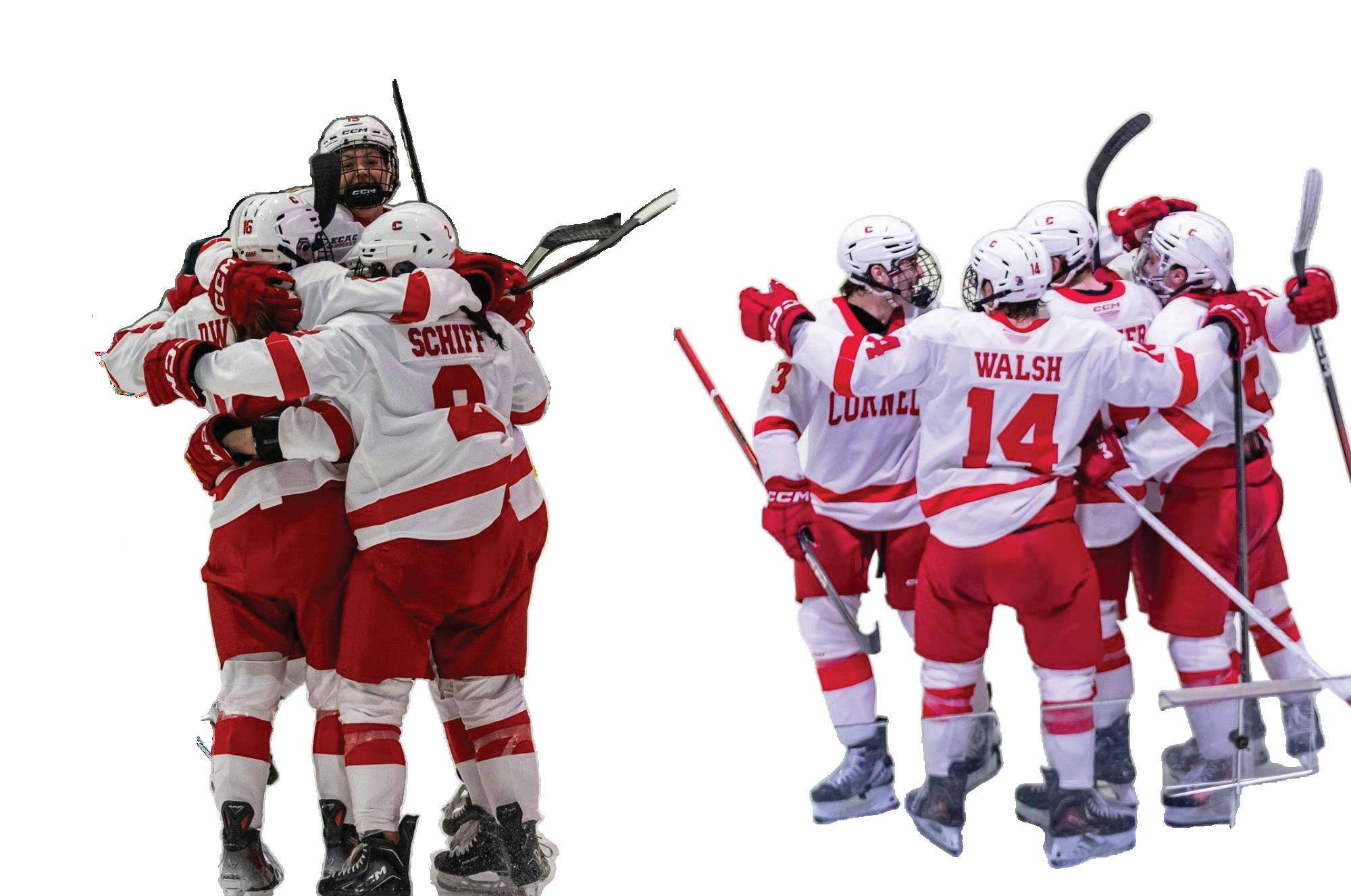
because of the Ivy League’s parity this season — since the COVID-19 pandemic, Ivy League programs have struggled to return to their former prominence, before the age of fifth-years and
On the men’s side, the Ivy League has not seen more than two of its teams achieve winning records in a single season since 2018-2019 (three), and four Ivies have not been above .500 in one campaign since 2015-2016. This season — though there are still some games to play — looks to change that, as four squads (Cornell, No. 14 Dartmouth, Harvard, Princeton) boast winning records heading into the final two weekends of play.
The numbers are eerily similar on the women’s side — the four Ivy League teams above .500 at this season’s conclusion (Cornell, No. 8 Yale, No. 9 Princeton, Brown) are the most since the 2019-2020 season. It is the pursuit of the title — what it takes to get there — that makes the end result all that much more worth it.
“I don’t think [the Ivy League] has just returned to form. I think it’s taken another step from where it was,” men’s hockey head coach Casey Jones ’90 told The Sun earlier this season. “I think there are not only good teams, I think some of them are very good teams. That’s the exciting part.”