The Corne¬ Daily Sun



Students organize “Vigil for Trans Lives” in response to political commentator
RUBINSON
As the academic year theme of freedom of expression continues to test the limits of speech on campus, Cornell Republicans brought conservative political commentator Michael Knowles to campus in an event that was met by a receptive packed auditorium and a vigil outside the venue where students called Knowles a “sick man.”
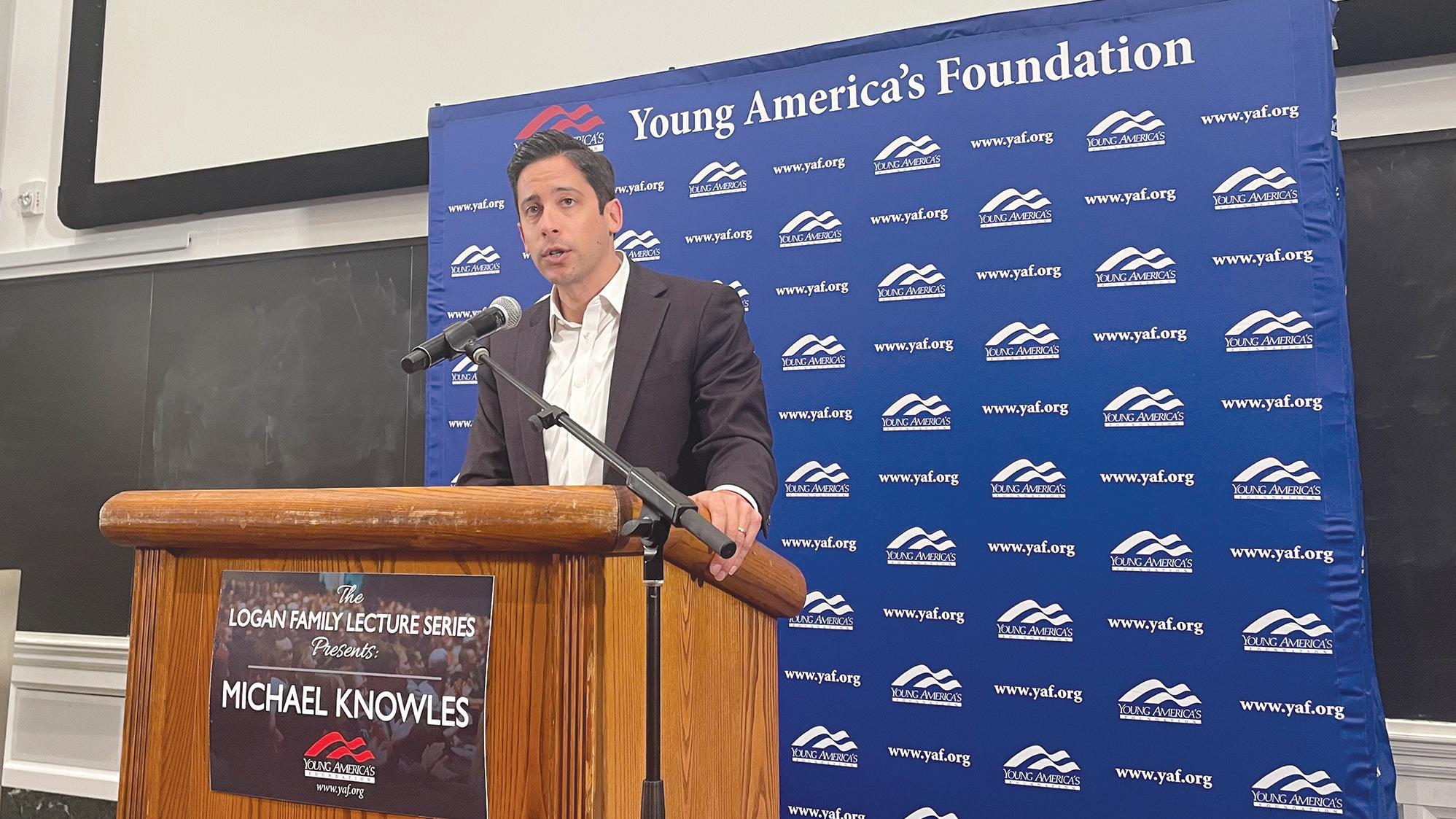
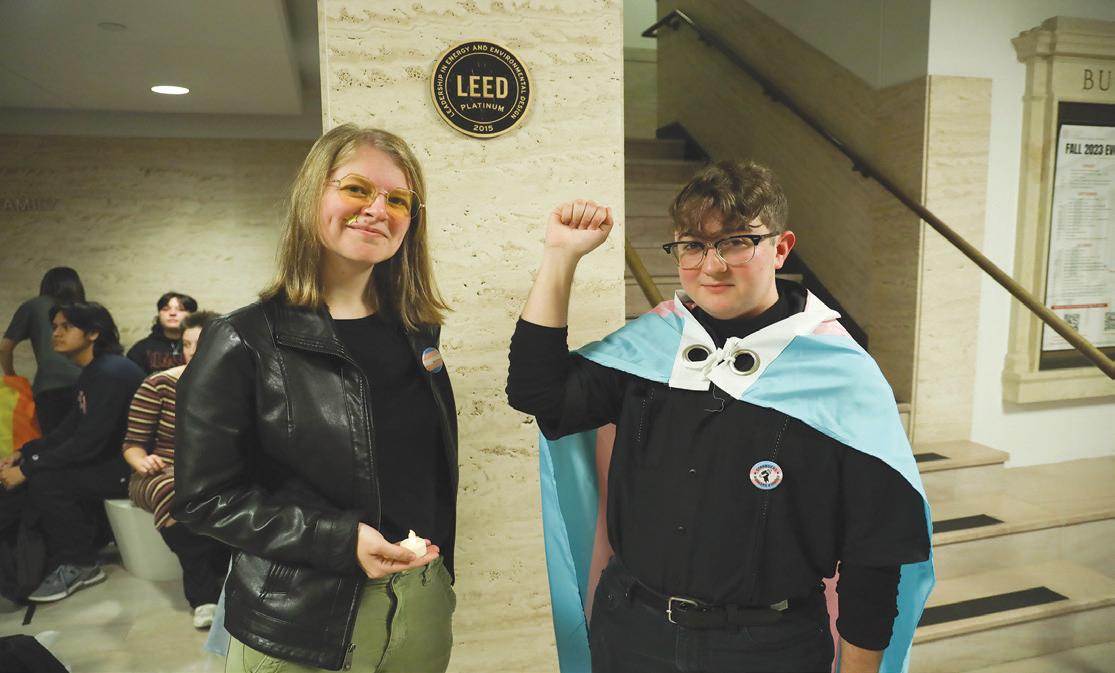
Knowles, known for being a host on Ben Shapiro’s The Daily Wire, led a lecture on “The Mirage of Free Speech” at a campus event sponsored by the Cornell Republicans and the Young America’s Foundation on Monday, Nov. 6. Knowles spoke to a full audience of more than 260 Cornellians, as some students without tickets on the standby line were turned away. Thirty minutes prior to the event, Cornell Progressives held a “Vigil for Trans Lives” — which attracted approximately 60 students by its conclusion — as a direct response to previous remarks made by Knowles against transgender people, said organizer Evan Sunshine ’24.
“The organizers do not condone anybody who is going in to put a stomp on
the freedom of expression — it’s the year of freedom of expression, sure he has the freedom to speak his mind in a closed Republican space organized by Cornell students — that’s his right,” Sunshine said.
“But we also have a right to congregate outside of the room and hold a peaceful vigil in honor of the trans lives that he condemns.”
Knowles was quoted at the Conservative Political Action Conference last March saying that “transgenderism must be eradicated” from public life, and he has frequently used campus visits to espouse hateful rhetoric against transgender people. Knowles did not respond to two requests for comment prior to the event.
At the vigil, students held electric tea light candles and gave testimony about the many obstacles transgender people face, including being ostracized by their families, being ridiculed online and elevated risks of mental health problems, such as anxiety and depression. Sunshine shared that as a transgender man, he was the target of threats after a video of him crying about the discrimination he faced as a Starbucks employee went viral last October — including by Knowles, who posted a video calling Sunshine a “troubled person” with a “severe
mental illness.”
The presence of a conservative figure on campus prompted many to recall when students protested and disrupted Ann Coulter ’84, a conservative media pundit, in an event last November. When Coulter was introduced, one student played “Entrance of the Gladiators” by Julius Fucík — commonly known as the Circus Theme. Students consistently interrupted her speech, shouting obscenities and phrases such as, “We don’t want your ideas here! Leave! Leave!” Coulter ended her intended hour-long event in 20 minutes.
By MING DeMERS and ANUSHKA SHOREWALA Sun Assistant Photography Editor and Sun Staff Writer
Singing echoed throughout Anabel Taylor Hall on Wednesday, Nov. 1, as approximately 40 people — including Cornell students, city of Ithaca residents and rabbis from local synagogues — came together in celebration of community and shared faith.
Cornell Hillel hosted the gathering, named “Community Gathering for Comfort, Healing and Solidarity.” The event brought together “the Jewish community from Cornell and the greater Ithaca Jewish community and [their] many allies to sing and uplift each other in these scary times,” according to the original event flier.
Over the past two weeks, Cornell community members have held largely peaceful rallies and vigils from both pro-Palestine and pro-Israel groups. However, the University also saw incidents of anti-Israel and anti-Zionist graf-
fiti, as well as threatening and hateful antisemitic and anti-Muslim speech posted online. Patrick Dai ’24 has been charged in connection to the antisemitic threats.
Emily Block, managing director of Cornell Hillel, told The Sun the purpose of the event was to bring Cornell and the greater Ithaca area together in “solidarity and strength of the Jewish community.”
“The community is really working through the stages of grief,” Block said. “It’s been very challenging.”
Block said that she often interacts with students and tries to support them as best she can, being aware of the current emotions on campus. She recalled a student likening hatred on campus to a snake.
“I feel like [hatred on campus] is like a snake. We keep cutting off its head, and it keeps coming back bigger and stronger,” Block said, recounting the words the student said to her. “I think the events of this week were the culmination of that.”
For Block, Wednesday’s event
was crucial to acknowledge and contend with the emotions on campus.
“I think there’s a tremendous sense of sadness. People are feeling just deeply sad about what’s happening right now both on campus and in Israel,” Block said. “And I also think… there’s anger in different ways, whether it’s anger at one another for campus tensions, or just anger at the situation. And I think that events like this are so deeply important because they provide an outlet of emotion — in particular, grief — in a way that’s healthy and productive.”
Rabbi Talia Laster, a campus rabbi and organizer of the event, told The Sun that she expressed her well wishes for Dai’s mental health while sharing her concerns about the Jewish community being targeted on campus.
To continue reading this story, please visit www.cornellsun.com.
Ming DeMers can be reached at mdemers@cornellsun.com. Anushka Shorewala can be reached at ashorewala@cornellsun.com.
By ISKANDER KHAN Sun Staff Writer
With election day on Tuesday, Nov. 7, voters in the Fifth Ward will see Jason Houghton’s name on the ballot in the race for the two-year seat. After his loss to Clyde Lederman ’26 in June’s Democratic primary election by just 10 votes, Houghton continued his campaign as an independent candidate.
Houghton’s bid for Common Council comes as Ithaca sees its first general elections with the re-drawn ward map. The redrawing left the Fifth Ward –– which now encompasses Cornell’s North Campus, Cornell Heights and University Hill –– populated predominantly by Cornell students.
Though he grew up detasseling corn in small-town Iowa, Houghton said he found a home in Ithaca, where he has lived for 17 years. Houghton described the current state of affairs in Ithaca as pivotal and a large influence for launching his bid.
“I’m running for Council
because I think it’s a really critical time for Ithaca,” Houghton said. “We are getting a new city manager. We’ll have a new mayor. We’re going to have a new police chief. Our City Comptroller has recently announced his retirement, and our city attorney has recently resigned. So lots of change is coming to the city.”
Behavioral Economics Workshop: Gautam Rao
11:40 a.m. - 1:10 p.m., 165 Statler Hall
Econometrics Workshop: Eric Mbakop
11:40 a.m. - 12:55 p.m., 498 Uris Hall
Microeconomic Theory Workshop: Arjada Barhi
11:40 a.m. - 12:55 p.m., 494 Uris Hall
Electrical and Computer Engineering Seminar: Jack Hare - Pulsed-power as a Driver for Nuclear Fusion Noon - 1 p.m., 233 Phillips Hall
National First Generation College Student Celebration Lunch Noon - 1 p.m., 401 Warren Hall
Across the Archives: Southeast Asian Manuscripts 3 p.m., Virtual Event
“CD19 CAR T cells: a paradigm for the living drug concept” — Dr. Michel Sadelain
4 p.m. - 5 p.m., Lecture Hall 5, Vet Medical Center
Paralegal Job Search
4:30 p.m. - 6 p.m., G76 Goldwin Smith Hall
‘The Value Gap: Female-Driven Films from Pitch to Premiere’ — A Book Talk by Courtney Brannon Donoghue
4:30 p.m. - 5:30 p.m., Film Forum, Schwartz Center for Performing Arts
Immigration Essentials for F-1 and J-1 Students Traveling Abroad
5 p.m. - 6 p.m., Virtual Event
Paris Prelaw Info Session
5:30 p.m., Virtual Event

Cornell Cancer Support Group Noon - 1:30 p.m., 221 Weill Hall
Fostering Inclusivity: Community-Based Research on Gender and Development in East and Southern Africa
12:20 p.m. - 1:10 p.m., 135 Emerson Hall
Public Health Impacts Networking Session 3 p.m. - 5:30 p.m., S2005 Schurman Hall
The Demands of Justice: Enslaved Women, Capital Crime and Clemency in Early Virginia, 1662-1865 4:30 p.m. - 5:30 p.m., 107 Olin Library
Coffee and Conversations: Public Health at Cornell! 5 p.m. - 6 p.m., B51 Warren Hall
Laidlaw Scholars Symposium
5 p.m. - 6:30 p.m., Klarman Hall Auditorium and Atrium
World on the Brink: The United States, China and the Race for the 21st Century 5 p.m. - 6:30 p.m., 151 Warren Hall
Cornell Men’s Basketball vs Morrisville State College 7 p.m., Bartels Hall
Experimental Sound Series at Cornell presents: Improvising Bodies, Dance and Music: Cornell University Music
7:30 p.m., Memorial Room, Willard Straight Hall
Continued from page 1
Following his loss to Lederman, Houghton reevaluated his campaign strategy, noting crucial failures — including the fact that it took him until mid-to-late April to collect signatures and receive approval from his employer to run.
“By the time I started putting my name out there and campaigning, students were really focused on finals,” Houghton said. “My outreach to students during the primary was really lacking.”
Houghton is running a joint campaign and platform with fellow Fifth Ward candidate and neighbor of his, Margaret Fabrizio, who is vying for the four-year seat. While initially uncertain about continuing to run after his June loss, he said others spurred him on.
“Several people, both within and outside the ward, contacted me and really encouraged me to keep running,” Houghton said. “So after a couple months of indecision, I decided I would continue to run.”
Aside from the changing landscape, Houghton highlighted affordability as his other key reason for running — and also a threat to his ability to call Ithaca home.
Lederman has proposed the use of rent stabilization under the Emergency Tenant Protection Act as a potential solution to Ithaca’s housing woes. While Houghton said he said he is not opposed to the policy, he expressed fear forexpressed fear for unintended consequences, noting that Ithaca is a market where just a few landlords can greatly influence prices.
“I’m very much for exploring the ETPA,” Houghton said. “But I do fear that if we started to implement rent stabilization we might have instances where landlords take buildings that are six units and reduce them to five, or where they’ll create a five percent vacancy rate that would disqualify us from use of the act. We are not New York City.”
Instead, Houghton indicated that he would be more enthusiastic about rent stabilization if it were enacted county-wide or along with nearby municipalities, despite the fact that it would be most applicable to Ithaca, as it only applies to buildings of six or more units built before 1974.
Affordability in a city where nearly 60 percent of land is tax-exempt, Houghton said, also involves support from Cornell, at least at a level similar to Cornell’s peer schools. But with the Common Council approving a 15-year memorandum of understanding between Cornell and the city just last month, Houghton added that garnering that support from the University remains difficult.
Houghton said he would not have signed the MOU, though he clarified that he understood the pressure the Common Council faced to sign it.
“I think the City Council voted for [the MOU] because they felt pressure with the new labor contracts,” Houghton said, also pinning blame on the city’s lack of planning. “The city put itself in that situation for lack of foresight … It was a short time until they had to finalize next year’s budget — the $4 million was guaranteed for
them for next year if they agreed to this. If they didn’t agree, the timeline was very short, and the $4 million was uncertain.”
Houghton said he does not believe reliance on Cornell’s generosity is sound policy. Instead, he is looking towards state-level policy approaches guaranteeing support from the University.
“Win or lose, I would like some legislation in Albany that somehow obligates Cornell to contribute to the city. I don’t think the city should just be reliant on Cornell’s generosity,” Houghton said, citing models from other cities which would tax dorms or profit-generating centers like the Statler Hotel.
Houghton noted that he understands the importance of tax exemptions for universities.
As part of this mission to get Cornell to contribute more to the city, Houghton also proposed tying Cornell’s contribution to the city’s tax levy.
“I would continue to work for legislation that creates a formula so that when our tax levy goes up, Cornell’s contribution goes up,” Houghton said. ”That just obligates them in some way to the city the way the rest of us are obligated.”
Houghton is also advocating for closer collaboration between the City of Ithaca and Tompkins County, as well as with adjacent municipalities like Lansing, Dryden, Cayuga Heights and the Town of Ithaca.
To continue reading this story, please visit www.cornellsun.com.
Iskander Khan can be reached at ikhan@cornellsun.com.
By ISKANDER KHAN Sun Staff Writer
Tis article was originally published on April 24, 2023.
Still acclimating to college life, there are many priorities that might be top-of-mind for a Cornell firstyear student. Running for elected office is not usually one of them.
However, this is exactly what Clyde Lederman ’26, a first-year student in the School of Industrial and Labor Relations, is pursuing.
Lederman had just finished his first semester at the University when he launched his campaign for Ithaca Common Council alderperson.
Lederman — who is running as a Democrat — has his eyes on a twoyear seat representing Ithaca’s fifth ward, first announcing his plans last December. On campus, Lederman is involved with the Cornell Prison Education Program and is the clerk for the Office of the Assemblies.
“I decided to run [for a seat on Ithaca Common Council] because students in Ithaca deserve an alderperson who will fight for affordable housing and quality public transportation,” Lederman wrote in a December Facebook post announcing his candidacy.
The fifth ward represents North Campus and the Cornell Heights area, along with much of University Hill. If elected, Lederman would become the youngest member of the Common Council at just 19 years old.
Lederman officially launched his campaign on Sunday, Jan. 8, with
a fundraiser in his hometown of Nyack, New York. He was joined by former Congressman Mondaire Jones, also a Nyack native, who Lederman had volunteered for in 2020.
Lederman credited his upbringing for his early interest in politics and labor relations.
“I’ve always had a political orientation. That comes from my family and how I grew up,” Lederman said. “My mother, she’s a fourth-generation union member.”
This political awareness was only made more acute by disputes Lederman witnessed growing up in Rockland County — from disputes involving the East Ramapo Central School District to zoning issues in the community.
Lederman said he first thought about running for Common Council following disputes over TCAT funding last December.
“I remember in particular when Cornell turned down the funding increase [for TCAT], which was something like $75,000,” Lederman said. “And to me, that was a real wake-up call.”
Lederman is referring to the University’s denial of an 8 percent increase in funding to TCAT, for which the University cited a lack of “any specific justification for such a large increase.”
To continue reading this story, please visit www.cornellsun.com.
Iskander Khan can be reached at ikhan@cornellsun.com.
By PARKER PICCOLO HILL and CARLY HERMANN Sun Contributors
Anabel’s Grocery hosted its second annual fall fundraiser collaboration, “Gather and Give for Annabel’s,” on Nov. 4 at the Terrace Restaurant in the Statler Hotel.
Anabel’s Grocery is a non-profit, student-run grocery store located in Anabel Taylor Hall that aims to help students on campus access high-quality, affordable grocery items. It sources its food from local farms and stores, such as Fort Baptist Farm and Wide Awake Bakery.
The purpose of the event was to raise money for the organization’s subsidy fund, which helps lower the price of the items in the store. Their goal is to keep their prices close to those of big box grocery stores like Wegmans or Target, which is difficult without funding from the community, according to Matthew Livingston ’26, a member of the marketing and fundraising team at Anabel’s.
Organizers aimed to raise $10,000 for Anabel’s. Last year, the store was able to raise about two-thirds of
this amount, Livingston said. Prior to the event, $4,500 had been raised.
“It’s kind of like a cycle where you go to our store to buy very, very cheap food,” Livingston said. “And by buying the food, supporting the store [or] donating to the fundraiser, you help keep the prices low for people that need it.”
The event featured raffle tickets and a silent auction, as well as food, beverages and a performance from Cornell acappella group Nothing But Treble for attendees to enjoy.
The fundraiser was a collaboration between students from Applied Economics and Management 3385: Social Entrepreneurship Practicum: Anabel’s Grocery, Hotel Administration 4315: Nonprofit Social Enterprise and Food Justice and Hotel Administration 4340: Catering and Special Events Management.
“[Catering and Special Events Management] is in charge of actually running the event day of — we’re the operations team,” said Camille Dell’Olio ’24, a student in the Catering and Special Events Management
class. “[Nonprofit Social Enterprise and Food Justice and Hotel Administration] is in charge of marketing and [public relations] functions behind the scenes.”
Visiting lecturer Anke Wessels teaches the Anabel’s class and serves as the director of the Center for Transformative Action, a fiscal sponsor for Anabel’s Grocery. She described the event as a “gift” from the hotel school.
“[Professors Kolakowski and Kingra of the Hotel Administration classes] decided it would be fun to hold a fundraiser as part of the experience of the two classes,” Wessels said. “They did that [for other organizations besides Anabel’s]... and then last fall they said ‘Hey, what if we do this for Anabel’s?’ Because it’s an obvious collaboration. It’s around food and food justice, and it’s right here on campus and would support students.”
Wessels explained that in the spring, Anabel’s can rely on Giving Day donations, but the fall gala offers an opportunity to spread the word about the organization and further grow the subsidy
fund.
Teagan Smith ’25, the purchasing coordinator for Anabel’s, said fundraising is critical to the organization’s success.
“The subsidy fund is really our lifeblood in the store,” Smith said. “It’s what allows us to provide customers access to cultural, nutritious and local food at prices which continue to surprise our visitors. Subsidizing the food makes it more accessi-
ble to the many students on campus who will experience food insecurity in their time at Cornell.”
Livingston said that beyond students, the greater Ithaca community benefits from Anabel’s.
“I’ve seen my fair share of adults that go in and buy prepackaged meals and produce for a whole week because that’s what they use to cook their food — that’s incredible,” Livingston said.
During the event, Jacob Blizard ’25, who is part of Anabel’s store operations team, gave a short speech to attendees on the crucial role fundraisers play in supporting Anabel’s.
To continue reading this story, please visit www.cornellsun.com.
Parker Piccolo Hill can be reached at pip7@cornell.edu. Carly Hermann can be reached at cmh432@cornell. edu.

By CHRISTINA MACCORKLE Sun Staff Writer
In its Thursday meeting, the Student Assembly passed resolutions protecting Haven — the Cornell LGBTQ+ student union — from exposing members’ identities and proposed Election Day be recognized as a holiday within the University. The S.A. also discussed polling the student body on whether or not to keep median grades on transcripts and the finances of Outdoor Odyssey.
Removing Median Grades from Transcripts
Currently, Cornell transcripts list course names, grades received and the median grade of the course. This practice began in 2008 after resolutions from the Student Assembly and Faculty Senate. In recent years, students have reflected on how median grades may have actually led to more academic stress and comparison.
The S.A. also discussed Resolution 30: Removing Median Grades, which was submitted by Jahmal Wallen ’24, undergraduate representative to the University Assembly, and Niles Hite ’26, College of Agriculture and Life Science representative.
Wallen spoke about how Cornell’s decision to add median grades to transcripts in 2008 is not shared by peer institutions.
“Cornell is the only school within the 71 schools within the Association of American Universities [that includes median grades on transcripts]. No other Ivy League [university] does it,” Wallen said.
The resolution emphasized the
negative impacts that including median grades on transcripts can have on students.
“Cornell’s practice of including median grades on transcripts disadvantages and demoralizes students, devalues academic accomplishments in the classroom, detracts from learning, fosters unhealthy risks and undermines holistic education and individual growth,” the resolution reads.
The S.A. debated the advantages and disadvantages of including median grades.
Some members highlighted that median grades can be helpful in contextualizing performance.
Kassandra Jordan ’24, College of Agriculture & Life Sciences representative, noted that for many engineering courses, having visible median grades is meaningful when evaluating transcripts. Benjamin Terhaar ’25, Brooks School of Public Policy Representative, agreed and noted that for pre-medical students, contextualizing grades is essential.
S.A. members then began discussing whether they could reach a decision that was truly representative of the student body without hearing their input.
Rocco DeLorenzo ’24, vice president of finance, said that the S.A. can not accurately represent the perspectives of the entire student body and that additional measures should be taken to develop a broader understanding of the student body’s opinion.
To continue reading this article, please visit www.cornellsun.com.
Christina MacCorkle can be reached at cmaccorkle@cornellsun.com.
Continued from page 1
According to Nic Oke ’26, co-president of Haven — Cornell’s LGBTQ student union — some students who interrupted Coulter faced disciplinary actions from the University under the Student Code of Conduct, which prohibits “substantially obstructing or interfering with the lawful exercise of freedom of speech.”
This protest now comes in the academic theme year of “The Indispensable Condition: Freedom of Expression at Cornell.” When justifying the theme year, President Martha Pollack said in a University-wide email: “As we witness assaults on free expression and academic freedom from both ends of the political spectrum, it is vitally important that we, as a community of scholars, engage deeply with these values and the issues that can emerge in upholding them.”
To kick off the event, Dean of Students Marla Love reminded participants that Cornell values free and open inquiry and strives to create a community where diverse opinions can be expressed and heard.
“As provided in University policy, the speaker has a right to speak without intimidation, and the audience has the right to hear what the speaker has to say,” Love said.
Rodge Reschini ’24, president of the Cornell Republicans, introduced Knowles by painting a dire picture of the state of free expression at Cornell and imploring his peers to engage with opposing ideas.
“Cornell fails when it graduates students who cannot suffer the existence of opposition. So many of our classmates are distraught by the mere idea of sharing a zip code with the people to whom they disagree,” Reschini said. “We believe that our values and perspectives are worth fighting for and that they must be heard.”
Reschini and Cornell Republicans did not answer questions provided by The Sun.
Knowles began his speech by addressing and denouncing the recent antisemitic threats made on campus by Patrick Dai ’24, likening him to Hamas. He continued by saying that conservative expression was under attack and those who silence them should be

punished, too.
Knowles also directly addressed Sunshine as students continued their vigil well into the event.
“I understand there was a trans solidarity protest outside the venue led by a gal who went viral for complaining about working at Starbucks,” Knowles said, misgendering Sunshine.
Knowles expressed his surprise about the lack of resistance he received at Cornell, which he called “one of the early hubs of leftist violence on campus,” referring to the Willard Straight Hall takeover of 1969 when Black students brought guns into the building and protested against
“Cornell fails when it graduates students who cannot suffer the existence of opposition.”
Rodge Reschini ’24
the University’s slow progress in establishing a Black studies program.
Knowles is no stranger to receiving pushback from college students. Last spring, he was met with protests at multiple universities as he conducted the first leg of his campus tours, including at Purdue University and the University of Buffalo. At the University of Pittsburgh, students organized down the street of Knowles’ speech and even set an effigy of Knowles on fire.
Knowles went on to discuss what he sees as parallels between the Israel-Hamas war and the actions of domestic groups, such as elements of the Black Lives Matter movement. He referenced a now-deleted tweet posted by the organization’s Chicago chapter depicting a Palestinian paraglider and the words “I Stand with Palestine,” which depicted now discredited photos and videos. He claimed the post was an endorsement of Hamas’s attack on Israel.
To continue reading this article, please visit www.cornellsun.com.
Sofa Rubinson can be reached at srubinson@cornellsun.com. Evan Liberman can be reached at ell74@cornell.edu.

RACHEL CANNATA ARTS CONTRIBUTOR
Sufjan Stevens is one of my favorite musicians. My parents would play the CD of Illinois through our minivan’s radio on road trips when I was young, so I have a nostalgic tie to his music. He is somewhat of an enigma, with an elusive public persona, sharing very limited information about his personal life on social media and not doing many interviews. This is especially appealing during an age of music in which it’s difficult to separate the art from the artist, given how much we’re able to know about them through the internet.
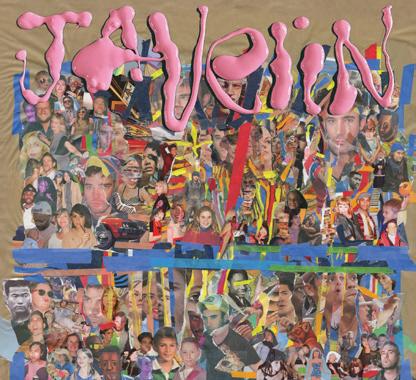
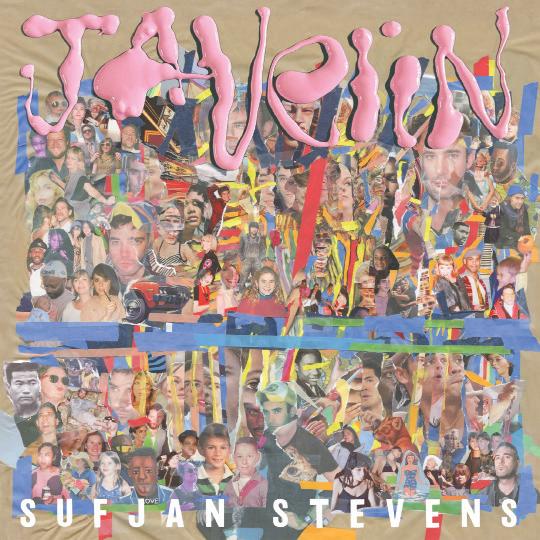
Sufjan has a very broad discography, having released 13 studio albums, three soundtracks, 13 EPs, two mixtapes and more since 1999. He has a beautiful habit of making music to cope with tragedy. In 2015, he released Carrie and Lowell , inspired by the death of his mother, and in October, he released Javelin , dedicated to his late partner, Evan Richardson, whom he lost in April. The album takes us through his grief, which reveals itself through his tired voice and intricate lyrics that
wax and wane through the hopelessness and hopefulness of losing someone you love too early.
His older albums are characteristically folk, but he experiments with electropop on his project The Ascension , which he put out in 2020. Javelin brings together elements of his old and new sounds and demonstrates his evolution as an artist in a fascinating way. It preserves the dense, intricately poetic lyrics of Carrie and Lowell and the swelling structure of Illinois , but rather than building up to brass instruments, the majority of his songs end by morphing into a sound that calls back to The Ascension. Sufjan frequently layers sounds and instruments in unexpected ways. In Javelin , this layering happens with combina-
tions of piano, guitar, flutes, chimes, synth and a chorus of voices that back his own as the gently powerful focal point.
“Goodbye Evergreen,” the opening track of the 42-minute album, starts stripped-
down with just Sufjan’s strained voice and a piano. It’s a heartbreaking ballad about what it feels like to lose something that was supposed to last. It builds and morphs into electropop with clashing sounds that unsettle the listener, corroborating the
message of the song. Throughout the album, he subtly compares romantic love to religious love, with many of the songs resembling hymns. He has historically been involved with Protestant churches, and this religious influence comes through in his music in interesting ways, such as in the album’s fifth song, “Genuflecting Ghost.” It seemed purposely ambiguous whether he was speaking to God or to a lover. He draws together worship and physical intimacy when he says, “Sacred word, bind me, insult / As I praise your name” or “Give myself as a sacrifice / Genuflecting ghost, I kiss no more.” Musically and lyrically, this song and others have characteristics of Protestant hymns. The melody is simple and repetitive; it builds into a chorus of voices, mimicking worship.
The album finishes with a hopeful song called “There’s a World,” completing his grief with acceptance of something
beyond death. The album is honest and bold. For better or worse, his emotion is infectious and haunting. He often builds long outros into his songs, consisting of quiet chanting voices or soft instrumentals that give space to digest the dense lyrics.
The album exists outside of a time period because of its unique sound and because Sufjan makes no references to any particular era. He sticks mostly to descriptions of feelings intimately close to himself and references that are universal, for example, about nature.
Sufjan creates unexpected pairs, musically and conceptually, with this album. Folk and electronic, hope and death, feelings that seem deeply personal and somehow universal. Even when the intricate lyrics go over your head, as they often go over mine, Sufjan is a master at creating a feeling and bringing the listener into his mind. It definitely isn’t casual listening music, but it’s a beautiful album that deserves to be heard.
College campuses are presented with a unique situation when it comes to fashion. With such a large collective of students with similar social influences (at least in terms of interacting on campus) and similar clothing stores in close proximity, there is, despite a still widely varied sense of style, a sort of hive mind when it comes to how to dress. Students noticeably follow the same fashion trends, oftentimes down to the same pieces of clothing. This can be viewed at a generational level as well, but on college campuses especially, emerging trends wash over the student body quickly and intensely, often fading in just the same way to yield to the next craze. At Cornell specifically, while
the transition from summer to fall wardrobes has begun, there are certainly silhouettes and styles that have prevailed as the first semester fashion template. Staples of the “Cornell look” include flowy maxi skirts, especially white linen ones, as well as open back tops. With Urban Outfitters being the closest clothing store to campus (as well as the only thing to do in Ithaca and retail therapy for stressed college students), one particular open back top has gained traction. The pairing of long skirts and tighter tops create a silhouette that is also mimicked by loose lowrise pants and cropped shirts. As the weather cools down, tops with an asymmetrical hem have also cemented a place in the trend cycle. On both short sleeve tops and sweaters, tops that have a hem that cuts from high to low across the waist have become a familiar sight.
As open back shirts drop out of rotation due to dropping temperatures, these tops will continue to grow in popularity.
In addition to clothes, certain accessories have also become an expected addition to a typical Cornell student outfit. Over the ear headphones are commonplace, serving as both a useful and stylish accessory. Quickly overtaking wired and bluetooth headphones as the dominant form of music-listening, these headphones will become even more essential as they also protect students’ ears in cold weather, although in the face of snow many students may be forced to revert to classic earmuffs in place of their cuter alternatives.
In terms of footwear, vintage style shoes with a pop of color seem to be the go-to, especially when paired with the aforementioned pieces. A revisitation of the classic black and
white Adidas trend from the late 2010’s has gained popularity, but in a chicher, more interesting way, with the paradigm example being the Adidas Sambas. If there’s one thing that defines Gen Z fashion, it’s the layering of statement pieces. While many of the trends I’ve described are staple pieces, and therefore relatively basic, there are plenty of bold variations of these same general ideas.
So what comes next? I’ve already talked about several possible adaptations of current trends for the winter, but as temperatures in Ithaca drop, there will also be new emergent styles of hats, boots, gloves, etc. While the question of hats and gloves is up in the air, I predict that campus will see an upshoot in oversized leather jackets, especially furlined ones, and boots consisting largely of typical black combat/
snow boots and more comfortable, slipper-like ones. In future weeks, keep an eye out for the already established trends and arising ones — you might be surprised by just how much uniformity you find on such a large campus.
KATIE CHEN ’25 Business Manager
SHEILA YU ’25
Advertising Manager
NOAH DO ‘24 Associate Editor
HUGO AMADOR ’24
EMILY VO ‘25
JONATHAN MONG ’25
JULIA SENZON ’26
JULIA NAGEL ’24
GRAYSON RUHL ’24
TENZIN KUNSANG ’25
JOANNE HU ’24
MARISA CEFOLA ’26
FATTAL ’25
MING DEMERS ’25
KATE KIM ’24
Editor ISABELLE JUNG ’26
VEE CIPPERMAN ’23
ESTEE YI ’24
PAREESAY AFZAL ’24
ANGELA BUNAY ’24 Editor in Chief
SOFIA RUBINSON ’24
Editor GRACE XIAO ’25 Web Editor
AIMÉE EICHER ’24
Assistant Managing Editor
UYEN HOANG ’25 Assitant Web Editor
ANNA LIANG ‘24
Assistant Advertising Editor
ERIC REILLY ’25 News Editor
GABRIEL MUÑOZ ’26
NIHAR HEGDE ’24 Arts & Culture Editor
DANIELA ROJAS ’25
RUTH ABRAHAM ’24
MEHER BHATIA ’24
MARIAN CABALLO ’25 Assistant News Editor
CARLIN REYEN ’25 Assistant News Editor
KIKI PLOWE ’25
Assistant Arts & Culture Editor
CLAIRE LI ’24
Assistant Photography Editor
DAVID SUGARMANN ’24
Assistant Sports Editor
KASSANDRA ROBLEDO ’25 Newsletter Editor
ELI PALLRAND ’24
Senior Editor
JASON WU ’24 Senior Editor
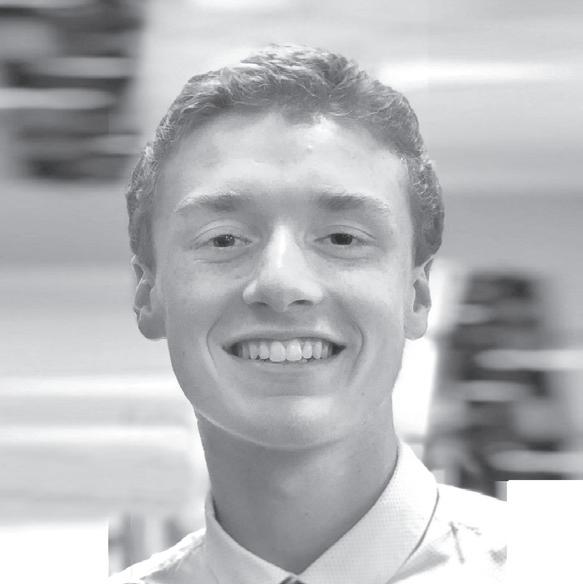
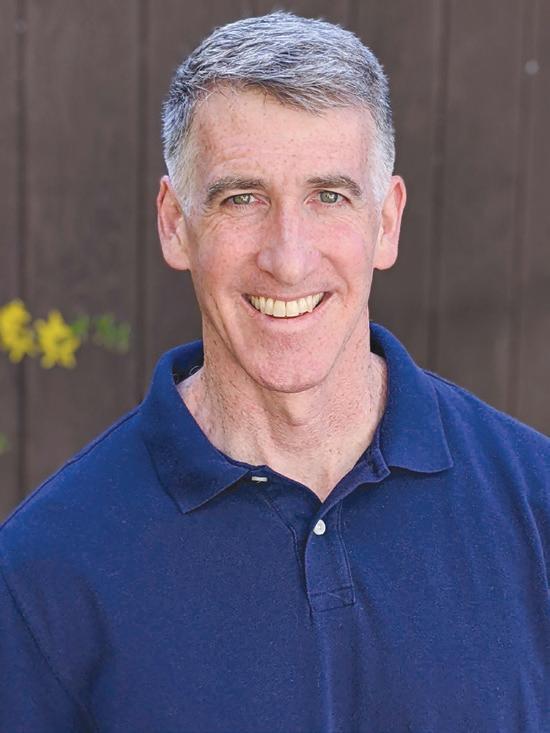
Brenner Beard is a fourth year student in the College of Arts & Sciences. His fortnightly column Agree to Disagree is a collection of musings and opinions on campus and the Cornell community at large. He can be reached at brennerbeard@cornellsun.com.
Ihave had it about up to my neck with Cornell professors complaining about “cheating” and “AI” in their classes. We all have had these professors, or at least are familiar with the trope. They get up, blow cobwebs out of their ears and proceed to rant about “kids these days” and “new technology,” and all of that. “Cheating is on the rise,” is an all too familiar refrain for Cornell’s student body. Yet in every instance, it’s painted as our fault.
I’d like to offer a parallel explanation to the dusty and oft-reused one of our professors. If there is a cheating epidemic, professor laziness and inflexibility is just as much to blame as student dishonesty. In a changing academic and technological environment, our faculty have either refused to adapt or taken the easy way out, all while keeping their expectations for academic integrity the exact same.
Fanning the flames further are University policies which reinforce the idea that grades and our self worth are one and the same. There exists a perfect storm in which an unwillingness to change by all parties involved has allowed human nature to run rampant and given our behind-the-times professors something to complain about.
The Cornell Daily Sun is devoted to publishing a broad and diverse set of content from the Cornell and greater Ithaca community.
We want to hear what you have to say about today's paper or any of our pieces.
Guidelines on how to submit can be found at Cornellsun.com. And here is our email: opinion@cornellsun.com
How many of you have taken Canvas prelims before? For the underclassmen whose formative high school years were spent in the depths of the pandemic, online assessments may be all you know. For those counting their gray hairs like myself, we remember a bygone era of bluebooks, pencils and scantrons. Somehow, though, despite our re-emergence from virtual learning, our means of assessment have remained virtual still.
Now, listen, I’m not complaining. I enjoy my Canvas prelims in the comfort of my bedroom just as much as the next student. At the same time though, the hypocrisy of our faculty on this topic makes me incensed. The very same professors who moan and gripe about the lack of integrity in my generation are too often the ones who insist on cutting corners and giving us these online tests.
So why do professors cop out to virtual test taking services? For the same reasons that students cop out and cheat on these tests — It’s convenient! For the students: don’t know an answer? Let your computer tell you! For the professors: Don’t want to grade 400 exams by hand? Let your computer do it! Laziness begets laziness. It is with a total lack of self-awareness that a professor can complain about the laziness of today’s student body without looking in the mirror and seeing that same laziness reflected in themselves. To the professors: If you truly care about academic integrity, give us in-person, paper-and-pen exams. But, if you value the free time Canvas gives you and continue to utilize it, shut up and stop shaming us.
Alternatively, and a little less mean-spiritedly, maybe professors and students alike should turn our ire upon the University itself. If we want to talk about an institution failing to keep up with the times, look no further than Cornell.
If there is a cheating epidemic, professor laziness and inflexibility is just as much to blame as student dishonesty.
In their push and pull effort to remain innovative yet esteemed, Cornell has incentivized both instructional apathy and rampant cheating. The Center for Teaching Innovation strongly supports the use of new online tools such as Canvas, yet according to some professors, offers little more than instructional videos on how to actually use them.
Teaching an old dog new tricks takes a lot more effort than that. With those minimal resources, setting up autograde on a Canvas quiz must be a victory in itself to some professors.
The stage is set for students to cheat. It is the University, then, that provides the final impetus for students to give in to their worst impulses. By insisting on reporting class medians on our transcripts, the school allows employers and grad school admission teams to compare us to our peers at first blush.
If the median is a B+, an A- is hardly enough to show you mastered the material, let alone are deserving of a job. Thus, the moral calculus of perhaps opening another tab on a browser is made that much more worth it. It’s a tandem of hard line policy and ease of access that turn some of the best students into a professor’s worst nightmare.
Am I saying that cheating is right? Unequivocally no — cheating on a test is a morally incorrect deed that is no better than telling a lie. That being said, if it is truly as big a problem as professors say, then a solution requires more analysis than simply playing the blame game.
By denying the role that policy and their procedures play in enabling academic dishonesty, professors might as well be putting their heads in the proverbial sand. If you expect us to learn, then we as students reserve the right to expect some effort from you. Otherwise, all this complaining is at best virtue signaling, and at worst, nothing more than hot air.
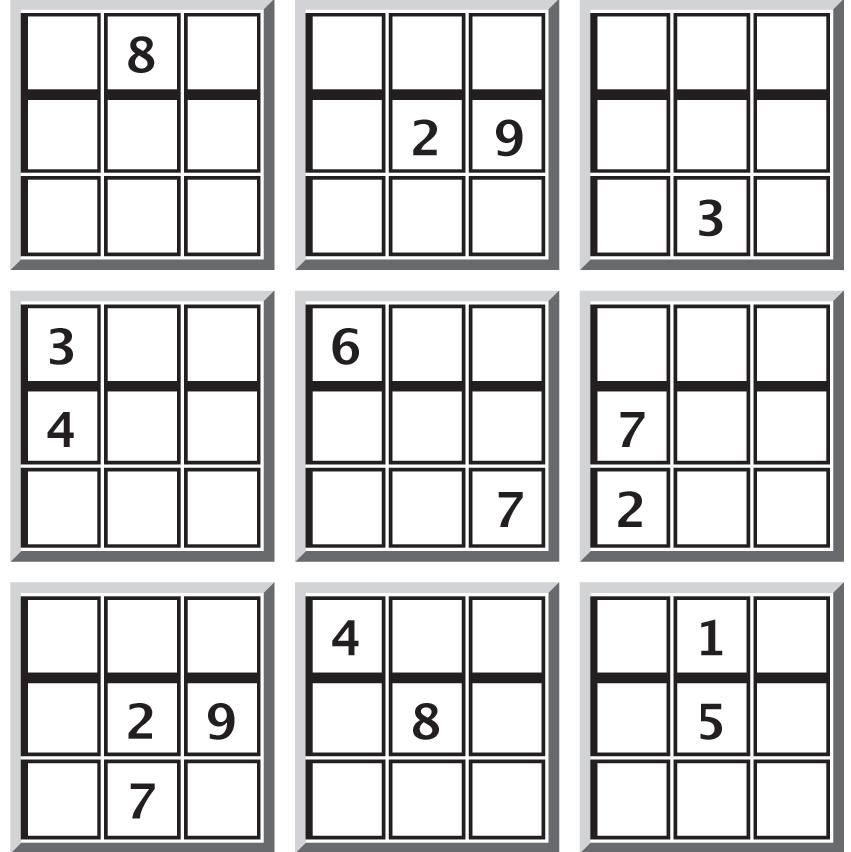
Fill in the empty cells, one number in each, so that each column, row, and region contains the numbers 1-9 exactly once. Each number in the solution therefore occurs only once in each of the three “directions,” hence the “single numbers” implied by the puzzle’s name. (Rules from wikipedia.org/wiki/ Sudoku)

By GRAYSON RUHL Sun Sports Editor
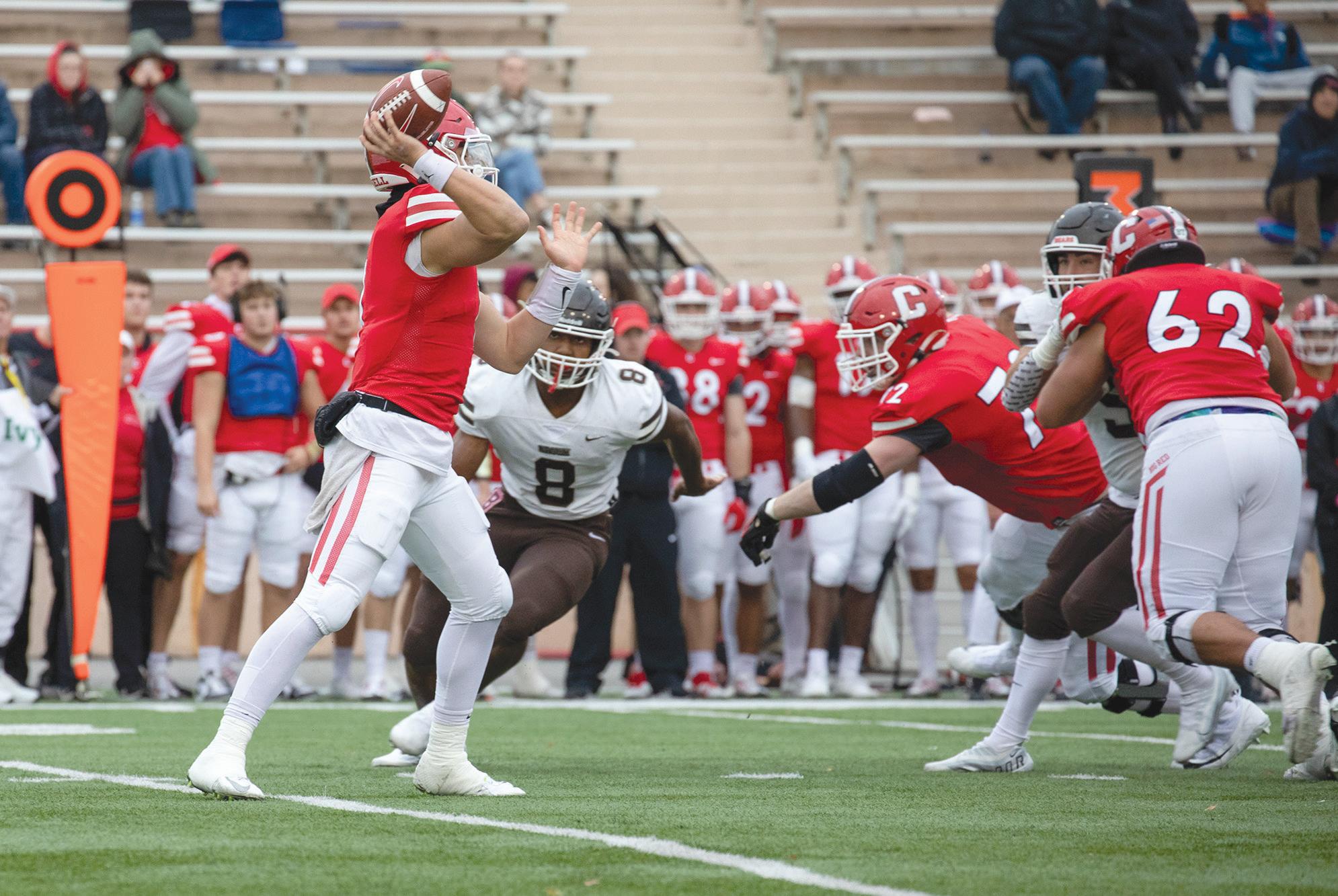
It has been a number of years since football played meaningful games in November. But when the team traveled to Philadelphia to take on Penn on Saturday, Nov. 4, much was on the line. Both Cornell (3-5, 2-3 Ivy) and Penn (6-2, 3-2 Ivy) entered the day just a game out of first place in the Ivy League.
In a matchup of teams that like to hold the ball, it was Penn’s ground game that was the difference maker. Running back Malachi Hosley was unstoppable, finishing the game with 261 yards and two touchdowns, and the Quakers won a crucial contest, 23-8.
It was no surprise that there were a number of lengthy drives in the first half, with Cornell and Penn leading the Ivy League in time of possession. Penn started the game with the ball, and immediately began working down the clock with a mixture of the run and pass games.
The Quakers’ opening drive of 13 plays and 64 yards stalled inside the red zone, where Cornell’s defense forced a field goal attempt. Kicker Graham Gotlieb’s attempt from 28 yards was good, and Penn took an early 3-0 lead following a six minute drive.
The Red began its opening drive solidly, with a 21-yard pass from junior quarterback Jameson Wang to sophomore wide receiver Doryn Smith. The drive slowed when Cornell was held to just five yards on its next three plays, and the Red was forced to punt.
Looking to build on its lead, the Quakers embarked on another lengthy drive. The 11-play, 79-yard drive featured a trick play reminiscent of the Philly Special to convert a third down, and a 35-yard pass down the left sideline to set up a goal-to-go opportunity.
After failing to get into the end zone on its first three attempts, Penn punched it in on a one-yard quarterback sneak on fourth and goal. The Quakers’ second drive of more than six minutes grew the lead to 10.
As the first quarter drew to a close, the Red set out on a lengthy drive of its own, methodically moving the chains. Cornell converted three third downs and one fourth down as it worked its way into Penn territory.
However, faced with a 4th and 5 from the Penn 35, Wang’s pass to Smith was two yards short of the line to gain. Despite possessing the ball for nearly 10 minutes, the Red turned it over on downs.
After two long drives, Penn wasted no time on its third possession. On the first play from scrimmage, quarterback Aidan Sayin handed the ball off to Hosley on the right end. Hosley got a number of blocks to spring him free, and sprinted down the right sideline for a 68-yard touchdown rush. Cornell was able to block the extra point attempt, but the Quakers held a 16-0 lead midway through the second.
Facing an early hole, the Red looked to score points before halftime. Cornell converted a first down, but a sack from defensive lineman Joey Slackman was too
much for the Red to overcome, and the team punted for the second time.
Coming back from halftime after being shut out for the first 30 minutes, the Red’s offense began to heat up. Wang connected with sophomore wide receiver Davon Kiser on passes of 15 and 32 yards to work the ball into Penn territory.
A couple of rushes from Wang got Cornell into the red zone, and on a 4th and 1 from the Penn 5, Wang found Smith open in the end zone for a touchdown. Opting to go for two, the Red converted on a reverse to Kiser.
Building on the momentum of the offense, the Red’s defense forced a threeand-out. Cornell got the ball back on its own 17 with a chance to tie.
Like the first drive of the third quarter, Cornell was able to move the ball down the field. Wang connected with freshman wide receiver Samuel Musungu and Kiser to get into Penn territory.
The Red converted two third downs and a fourth down to get into the red zone, but eventually settled for a field goal attempt. Senior kicker/punter Jackson Kennedy came out for a 28-yard attempt, but Penn blocked it, and Cornell came away with no points.
After going three-and-out on its opening drive of the half, Penn wasted no time extending its lead. On the first play from scrimmage from its own 4-yard line, Hosley got the handoff up the gut. He was able to cut back to the middle of the field, and ran untouched for a 96-yard score,
putting Penn up by 15.
Down two possessions heading to the fourth quarter, the Red began picking up chunk plays. Wang completed four passes of over 10 yards as Cornell marched down the field.
Cornell had a prime opportunity to score, with a goal-to-go chance from the two-yard line. Nevertheless, an incompletion followed by three stuffed rushes shut down the Red’s attempt to get back into the game. Despite driving 78 yards on 12 plays, Cornell came up with no points.
The Red had another crack on offense midway through the fourth, but Wang was picked off looking for senior wide receiver Nicholas Laboy down the right sideline. Cornell had a last gasp in garbage time, working the ball inside the Penn 10, but ran out of time before it could score.
The Red’s numbers look solid on paper, as Wang finished with 325 passing yards, and Cornell outgained Penn and held the ball for nearly 38 minutes. The issue for Cornell was finishing drives, as the Red turned the ball over on downs twice in Penn territory and had a field goal attempt blocked. For Penn, it was the run game that got the job done, as the Quakers averaged a whopping 9.8 yards per rush.
To continue reading this story, please visit www.cornellsun.com.
Grayson Ruhl can be reached at gruhl@cornellsun.com.