baiRRO ALTO in loco
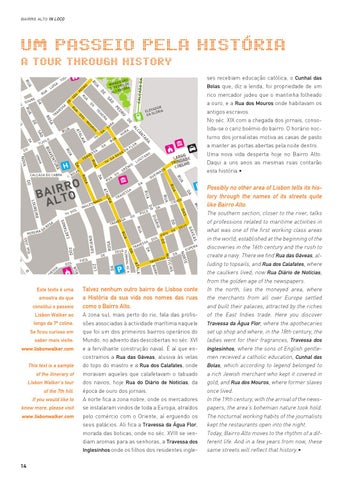
UM PASSEIO PELA HISTÓRIA A TOUR THROUGH HISTORY ses recebiam educação católica, o Cunhal das Bolas que, diz a lenda, foi propriedade de um rico mercador judeu que o mantinha folheado a ouro, e a Rua dos Mouros onde habitavam os antigos escravos. No séc. XIX com a chegada dos jornais, consolida-se o cariz boémio do bairro. O horário nocturno dos jornalistas motiva as casas de pasto a manter as portas abertas pela noite dentro. Uma nova vida desperta hoje no Bairro Alto. Daqui a uns anos as mesmas ruas contarão esta história.•
Possibly no other area of Lisbon tells its history through the names of its streets quite like Bairro Alto.
Este texto é uma amostra do que constitui o passeio Lisbon Walker ao longo da 7ª colina. Se ficou curioso em saber mais visite: www.lisbonwalker.com This text is a sample of the itinerary of Lisbon Walker’s tour of the 7th hill. If you would like to know more, please visit www.lisbonwalker.com
14
Talvez nenhum outro bairro de Lisboa conte a História da sua vida nos nomes das ruas como o Bairro Alto. A zona sul, mais perto do rio, fala das profissões associadas à actividade marítima naquele que foi um dos primeiros bairros operários do Mundo, no advento das descobertas no séc. XVI e a fervilhante construção naval. É aí que encontramos a Rua das Gáveas, alusiva às velas do topo do mastro e a Rua dos Calafates, onde moravam aqueles que calafetavam o tabuado dos navios, hoje Rua do Diário de Notícias, da época de ouro dos jornais. A norte fica a zona nobre, onde os mercadores se instalaram vindos de toda a Europa, atraídos pelo comércio com o Oriente, aí erguendo os seus palácios. Ali fica a Travessa da Água Flor, morada das boticas, onde no séc. XVIII se vendiam aromas para as senhoras, a Travessa dos Inglesinhos onde os filhos dos residentes ingle-
The southern section, closer to the river, talks of professions related to maritime activities in what was one of the first working class areas in the world, established at the beginning of the discoveries in the 16th century and the rush to create a navy. There we find Rua das Gáveas, alluding to topsails, and Rua dos Calafates, where the caulkers lived, now Rua Diário de Notícias, from the golden age of the newspapers. In the north, lies the moneyed area, where the merchants from all over Europe settled and built their palaces, attracted by the riches of the East Indies trade. Here you discover Travessa da Água Flor, where the apothecaries set up shop and where, in the 18th century, the ladies went for their fragrances, Travessa dos Inglesinhos, where the sons of English gentlemen received a catholic education, Cunhal das Bolas, which according to legend belonged to a rich Jewish merchant who kept it covered in gold, and Rua dos Mouros, where former slaves once lived. In the 19th century, with the arrival of the newspapers, the area’s bohemian nature took hold. The nocturnal working habits of the journalists kept the restaurants open into the night. Today, Bairro Alto moves to the rhythm of a different life. And in a few years from now, these same streets will reflect that history.•