
BLUE IssueMOUNTAIN25 REVIEWTHEAJOURNAL OF CULTURE A deep dive with pulitzer prize winner diane seuss An artistic Umphrey’sAfreenofExpressionFaithwithKhundmiriMcGee&theSweetwater420FestivalMichaelRomkeyPlaysBluegrasswithVAmpires Diane seuss aruni kashyapthe main squeeze July 2022 Lorette C. Luzajic Breaks All the Genre Rules A Sit Down with Brian Olson of Cafe &newdischellstuartMicrofiction,Poetry,IntermezzoFiction,&Essayspoetrylifewith


Escaping the
kingdom of funkdom
By: tim conroy My wife, Terrye, and I collect trash on our Friday walk. It’s her idea. We pluck up cigarette butts, chip bags, and candy wrappers around the entrances to the high school. We bag Fireball mini-bottles and dixie cups on a drainage path next to the football field. There’s always a honey hole of hard seltzer and beer cans around the utility boxes that lead us to a busy street. Our handy pincers snatch up pieces of Styrofoam, straws, napkins, and plastic lids as we walk by the small shopping center. We spot crushed cigarette packs, bottle caps, and more wrappers on the weedy edges on the last stretch of our walk. We arrive home with a full bag and recycle what we can. I don’t know what story the litter says about society, but it’s the same type of trash each week. I feel better for the rest of the day, and then I slip back into a funk. I can’t shake it.
It’s not that I don’t try. My wife and I write Senators to demand commonsense gun reform, wear silicone wristbands to support Ukraine, fundraise, contribute to the World Central Kitchen’s projects, participate in interfaith peace vigils, curse Putin, pray and feel helpless. I muster more hope for the world when I am active in it.
11
With the world stuck on the pandemic rollercoaster, Americans exploding into bits from guns that fire hypersonic bullets, and Putin’s despicable war on Ukraine, the whole world resembles my cousin’s prediction that we’ll be raptured after barbeque but before the banana pudding. His prediction began as a low drum roll in the 1980s and now sounds like cymbals smashing. I have never seen a man more animated and happier than when he’s chatting about Christians ziplining to heaven. What can my cracked butt do? I’m a poet that believes the bible thing is (literally) an extended metaphor to get over your damn self. Sometimes I think it’s the one book that deserves to be banned. Since childhood, I have talked to the Metaphor (God), trying to understand why a dad would smack around his children and wife. I still do. Sometimes the Metaphor answers me with a friend’s supportive phone call, a found poem, or a roadside savior who conjures a fanbelt and puts it on. Confused, you bet I am. Do I engage in magical thinking? Damn straight! I’m human, trying to get beyond what festers in and around the cosmos. How can the world and I get through this sulfurous time? Is it even possible? I ask, but no images connect. I have slipped into the worst part of who I am. Maybe it’s due to my natural snark, but social activities require more energy than I care to muster. I’ve been as cantankerous as a worn-out wolverine these past few years. My wife will testify to my swings and how I drift away in our conversations. I whirl around in my head, enumerating, I guess, what I am missing. I dwell on politics, dead loved ones, and rejections, which only unleashes a pile of yuck. I turn bitterness and judgment on others, especially my spouse. I buzz around with the maturity of a mosquito, injecting my funk into you and you. What the hell is wrong with me? Why do I judge anyone, especially those who love me? The child, preteen, teenager, man, and older citizen disappoints again. How can I get myself out of my stinky state? Who am I to spill my garbage when we bury children, neighbors can’t afford the rent, and people dig mass graves? Are my funk and the world’s funk connected? My eyes roll with that thought. My door closes. I read poetry, draft a poem about the war, and spiral more inward. I become smaller and suffer from not balancing my life with engagement. My poetry becomes derivative. I don’t listen to the small voice that beckons me to focus outward, diminish my ego, do something concrete and reconnect to the world. Metaphor knows it’s easier to blame, despair, and wallow in the Kingdom of Funkdom than to do anything about it.
Blue Mountain Review / July 2022 2
But in time, I pull away, and my heart encapsulates its beat. Whoever you are when you show me your kindness, acceptance, compassion, and love, I belong again. I feel my elusive Metaphor again. You help me out of my funk. When I dwell less on myself, the world enlarges, and poetry discovers me. You remind me how to listen, and when I hear deeply, I feel connected to my wife, loved ones, strangers, and the world. And I tell you, and I know this, I fail you. But you make me want to try. I yearn for the interactive transformation between us when we forgive, love, and rescue one another. Could my funk or even your funk be related to the world’s struggles? I don’t know, but when we’re together and listening to each other, my cousin’s doomsday date is off, way off. You make me want to pick up a tiny portion of the world and meet people like you. And just like that, I see it; my Metaphor is a grabber. I run outside to tell Terrye, gardening, it’s Friday, and it’s time to grab each other. She laughs. She saved me long ago.

33 MUSIC INTERVIEWS........................PAGE 89 Umphrey’s McGee......................................Page 91 The Main Squeeze......................................Page 95 Michael Romkey........................................Page 99 Sweetwater 420 Fest.................................Page 103 SPE CIAL FEATURES .......................... PAGE 105 Brian Olson...............................................Page 107 Fabulous App............................................Page 113 Shannon Dominy.......................................Page 117 Rachel Kokler............................................Page 121 Stephanie Baber........................................Page 125 Montana Agte-Studier...............................Page 127 Cody Dawkins...........................................Page 131 First Mountain Tasting Room..................Page 135 Pendley Creek...........................................Page 141 Movie Review: Batman.............................Page 145 Book Review: Lakewood .............................Page 151 Book Review: The Lookout Man.................Page 155 Book Review: Someday The Plan of a Town..................Page 157 Book Review: The Lost Thing..................Page 161 POETRY.......................................... PAGE 169 South Loudon Street, Yesterday, Today, Tomorrow by Sean Murphy...........Page 171 INTRODUCTION....................................PAGE 1 LITERARY INTERVIEWS ........................ PAGE 9 Diane Seuss................................................Page 11 Stuart Dischell ..........................................Page 17 Jasper Fforde............................................Page 25 John Sibley Williams..................................Page 27 Lorette C. Luzajic.......................................Page 29 Marc Jolley................................................Page 33 Tara Skurtu................................................Page 35 Jeanne De Vita............................................Page 41 Jennifer Davis...........................................Page 43 Aruni Kashyap...........................................Page 47 Peter Riehl.................................................Page 49 Ralph Pennel..............................................Page 51 Nabeela Washington..................................Page 55 James Rawlings & Maria S. Picone............Page 61 Monica Kim................................................Page 65 Kailee Pedersen.........................................Page 69 Betsy Aoki..................................................Page 73 Alison Bonn................................................Page 77 VISUAL ART INTERVIEW ..................... PAGE 81 Afreen Khundmiri.......................................Page 83 . TABLE OF CONTENTS

4 Malcolm & Hillie by Robert Petrillo......................................Page 173 Ave, Old Dog by Kirk Glaser......................Page 177 On the Virtues of Animalsby Stan Sanvel Rubin...................Page 179 Return by Paula Friedman .......................Page 181 Stay by Michél Claudio.............................Page 185 C onsidering Sypes Canyon Road by Kevin Miller...................Page 189 St.Margaret of Antioch by Brenda Edgar..........................Page 191 In the Florida Marsh by Danielle Lemay.........................Page 193 Herpetology by Eric Chiles.......................Page 197 Car Camping by Mark Spitzer...................Page 199 The Concrete Window of Arwad by Craig Martin Getz.....................Page 201 Twenty-three incorrectly by Violet Piper.........................................Page 205 The Office by Douglas Cole......................Page 209 Opening Day by Bill Siegel........................Page 211 Of Heart & Stone by DeShawn...................Page 215 Oxycontin Canary by Daniel Edward Moore........................Page 217 Sounds of Silence by Ellen Rosenberg (visual art)................Page 219 co nsummated in the act by Yours Truly..............................Page 223 Woody Guthrie by Garland Strother.................................Page 229 Blue Circus by Lynne Kemen.....................Page 233 Draught by Julie Enszer............................Page 235 Mezzo Soprano by Heather Harris.............Page 237 MICRO-FICTIO N............................... PAGE 241 Blue Begonia by Michele Wong................Page 243 Occurrences on Bubb Road by David Denny......................Page 245 FICTIO N......................................... PAGE 247 The GateGatelessbyBert McMeen...............................Page 249 The Monarch in Winter by Len Messineo......................Page 255 The Big Cheese by Lou Storey...............................Page 257 ESSAYS ........................................... PAGE 261 Pretty Ridge by Barbara Weddle...............Page 263 Near Death Experiences by Joshua Beggs......................................Page 267

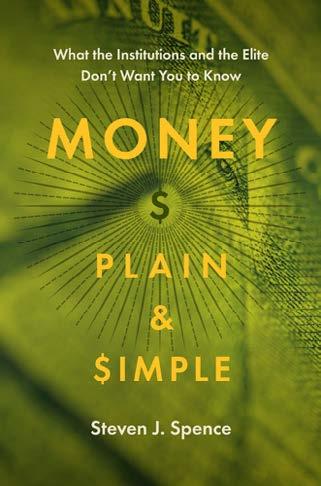
55 Paradise Road By Marilyn Kriete WINNER 15 New Adult Non-Fiction BEA FINALIST NIEA Non-Fiction—Troy King Fractals By Kimberley Cetron FINALIST BEA Performing Arts (Film, Dance,Theatre,Music) 16th NIEA PerformingEducation Arts Knock! andLessonsKnock!:LearnedStoriesShared By Douglas Thompson and Echo Montgomery Garrett FINALIST BEA Business PlainMoney& Simple By Stephen J. Spence WINNER BEA Finances A Season in Lights By Gregory Erich Phillips GRAND PRIZE WINNER 2020 CISBA Contemporary and Literary Fiction WINNER 16th NIEA Book Cover Design: Contemporary Fiction—Troy King BEA Performing Arts (Film,Theatre, Dance, Music) FINALIST 16th NIEA Contemporary Fiction Suspension By Andrea Faye Christians Falling Up in the City of Angels By Connor Judson Garrett Qurbaan By Zaira Pirzada Fragrance of a Shadow By Connor Judson Garrett and Kevin N. Garrett FORTHCOMING FEBRUARY 2023 The Box Must be Empty By Marilyn Kriete FORTHCOMING MARCH 2023 Spellbound Under the Spanish Moss By Connor Judson Garrett and Kevin N. Garrett WINNER 15th NIEA Book Cover Design: Fiction—John J. Pearson FINALIST BEA Book Cover Design: Fiction—John J. Pearson 2021 Pulpwood Queen Book Club Selection Harry Potter the hallways between classes. hope my grandchildren will be caught with Spellbound. —Peter Onorati, film and television “Connor and Kevin Garrett have spun an exceptional ‘Tale of Georgia are the perfect setting for this mythological folktale of betrayal and dark magic. But heroic sacrifice and love balance out poisonous fruit, dreamcatchers, and flower that never dies.” — Susan Cushman, author of Cherry Bomb and Friends the Library “Ingredients are what we all are searching for. The Garretts’ challenges underneath the skies of dusty Georgia. As Spellbound reveals more of its complicated world, Arrested Development, 2-time Grammy award winning recording artist and activist lucidhousepublishing.com FORTHCOMING TITLES CONGRATULATIONS TO OUR AUTHORS BEA - Book Excellence Awards • NIEA - National Indie Excellence Awards • CISBA - Chanticleer International Somerset Book Award




thefabulous.co

77 SHOW HOURS Friday 6-9p • Saturday 1-4p + 6-9p • Sunday 1-4p 938 Canton Street, Roswell • 770.299.1122 JOHN-MARK GLEADOW NOV 13 - 14 MICHAEL FLOHR OCT 22 - 24 THOMAS ARVID DEC 4 - 5 VININGSGALLERY.COM @VININGSGALLERY Grande Premiere, 48 x 24 New Wine, 24 x 48 Cool Daddy, 43 x 17


8 click here to Learn More - Sharpen technical skill - Increase appeal in the job market - Learn creative ways to inspire WriterWorkingThe From Inspiration to Publication Join us for online courses Get Inspiration Professional edge Gain Confidence
Clifford Brooks was born and raised in Athens, Georgia. His first poetry collection, The Draw of Broken Eyes & Whirling Metaphysics, was re-issued by the SCE Press in July 2020. His second fulllength poetry volume, Athena Departs: Gospel of a Man Apart, as well as a limited-edition poetry chapbook, Exiles of Eden, were published by the SCE Press, second editions, in August 2020.
Clifford is founder of The Southern Collective Experience, a cooperative of writers, musicians and visual artists, which publishes the journal of culture The Blue Mountain Review and hosts the NPR show Dante’s Old South. He is on the faculty of The Company of Writers, co-hosts This Business of Music & Poetry, and provides tutorials on poetry through the Noetic teaching application. In 2022, Clifford launched classes on teachable.com and hired to teach creative writing with the UCLA Extension program. about the instructor


LiteraryInterviews

LiteraryInterviews

At this point in my life, poems are nearly always with me. That is, I get up in the night to pee, and I think lines in my mind. There is a very narrow gap between living and poeming, because my primary relationship at this point is with poetry. As a younger poet, I probably was more reliant on inspiration. These days, I tend to work with certain goals and obsessions in mind. Each poem builds on the last; a poem isn’t an isolated experience but part of a sustained re lationship. I do consider each manuscript to be supported by a particular muse or series of muses. For Four-Legged Girl, it was Myrtle Corbin, a woman born with four legs, in 1868, who spent a good portion of her life in sideshows. Peacocks was haunted and graced by early still life painters, the female subjects of portrait painters, and the trinity of Amy Winehouse, Janis Joplin, and Freddie Mercury. frank: sonnets was guided, of course, by poet Frank O’Hara, but also Keats, Dickinson, James Joyce, and Chekhov, and my friend Mikel, who died in the mid-1980s of AIDS, and his living friend and lover, Alan, and my living son, Dylan, and my friend, composer Kurt Rhode, and my mother and sister. Without my mentor and friend Conrad Hilberry, I never would have published at all. Minus my muses, I’m a wet rag.
iane Seuss is the author of five books of poetry. Her most recent collection is frank: sonnets (Graywolf Press, 2021), winner of the 2022 Pulitzer Prize in Poetry, the 2022 PEN/Voelcker Award for Poetry Collection, the 2021 National Book Critics Circle Award for Poetry, and the 2021 Los Angeles Times Book Prize for Poetry.
DDIANEWITHSEUSSBY:NICOLETALLMAN
1111 INTERVIEW
Previous collections include Still Life with Two Dead Peacocks and a Girl, (Graywolf Press 2018) and FourLegged Girl (Graywolf Press, 2015), a finalist for the Pulitzer Prize. She was raised by a single mother in rural Mich igan, which she continues to call home. What does your writing life look like? Do you have a particular schedule, habits, or process?
I have always written around my actual life, rather like a stream trickles around, under, and over rocks and fallen logs, i.e., the necessities of life. Working for money, cooking, cleaning the shack, caretaking, are the givens, and the writing is shaped by those concrete realities. I mean, this is no different than most human beings on earth—aside from the rich, but we needn’t speak of them! I have always written when I can and must. That often meant in the middle of the night, or between the divorce hearing and grading papers, but I managed to do it, partly because I learned early-on to write in my head, no matter what else I’m doing. The most wonderous grace were the three writing residencies I was fortunate enough to participate in. Residencies provided unimaginable blocks of relatively unburdened time (when I could push away the worries) in a landscape that woke up my senses. I wrote a good por tion of my previous collection, Still Life with Two Dead Peacocks and a Girl, at Hedgebrook, generated more work for that collection and designed the manuscript at MacDowell, and got a good start on frank: sonnets at Willapa Bay AIR. The pandemic has been a sort of dreadful residency, in its way, and I’ve written a draft of my next collection from within the confines of my house. How do poems come to you? Do you have any specific muses?
Your latest book frank: sonnets, recently won the Pulitzer Prize. Congratulations! Being from Michigan myself, I love to see Michigan poets receiving recognition and accolades, and especially smaller town/rural poets who don’t necessarily have as many traditional connections and opportunities as big-city poets. Tell us about your book and what inspired you to write it. As I read it, it felt a bit like reading a very beautiful memoir in verse. I’m curious why you chose the sonnet as the form for what appears to be confessional work.
Thank you, Nicole, for the congratulations. I’ve been overwhelmed by the good will that read ers have brought to frank: son nets, which to me feels like part of the collaborative nature of the book. There are many iden tities and realities that make pathways to publication and recognition difficult, and one is that of a rural Midwesterner, a “flyover” poet, without, as you say, the connections and rec ognition that literary hubs may provide. My first book came out when I was forty, my second, at fifty, which is not unusual for women poets. Issues of access are extremely nuanced, and more than I can take on in this format. Let me just say I’ve been luckier than most, and I’ve managed to stay true to who I am and to my own upbringing and experience. I’m not brag ging; I have no other choice. I do challenge myself to think about the rural with depth and ambivalence. There is nothing homespun in my work. As you know, the rural has often been and continues to be a danger ous space for BIPOC, queer, and trans people. As for the book and what inspired it, and why the son net form: Various friends had suggested I write a memoir, but I just couldn’t hear it in prose, or in some sort of episodic, linear trajectory. I was fortu nate enough to spend a month away from home at a beautiful
Blue Mountain Review / July 2022 12

The poem unfolded in my head, my thoughts narrating what had just happened, one beat away from the present tense. Then, a line came to me, “I’m a little like Frank O’Hara without the handsome / nose and penis and the New York School and Larry / Rivers.” There was Frank, in all his glory. He stepped in. By the time I got to the cabin and got it all down on the computer, I realized it could be arranged in fourteen lines, and that the last two lines functioned as an unrhymed couplet. It also had that “liveness,” that kinetic quality of O’Hara’s poems. Just that quickly, the book came into focus. (Blue Ford Focus!!) I could write a memoir in sonnets, with a Frank O’Hara pres ent-centeredness, even while remembering. It could be a collection that looked back from the perch of the present tense, and that not only remembered, but looked at the nature of memory. The book developed, and shifted, and re-focused from there, but the ribs of that ship came to me at Cape Disappointment. I noticed that you collaborated with your son, Dylan, on frank: sonnets. Tell us more about that process. Have you collaborated with other artists? I consider frank: sonnets deeply collaborative, though not in the way we tend to think of collab oration. Dylan lives about ten hours north of me, so most of our communication is via the phone or through messages. The written messages brought the structure and voice to the poems “about” him and our relation ship. I would arrange them into poems, but often the phrasing and content are his. The poem on the subject of the word “disabled,” printed on the back of the centerfold at the heart of the book, is his.
residency in southern Washington State, on a strip of land between the ocean and a bay. I went there open to what would come. I was feeling downhearted about the spiraling down of a relationship—my last that could be called romantic—and I took a drive to Cape Disappointment in a rental car, a blue Ford Focus. When I arrived, I didn’t have it in me to hike out to the lighthouse, so I crawled in the back seat of the car and slept. When I woke, I started back to my little cabin, and during the drive the lines for frank’s first poem came into my head. “I drove all the way to Cape Disappointment…”
1313
The iconic photo on the book’s cover was taken by Alan Martinez, friend and lover of the photo’s subject, Mikel, who features in many of the poems. I also used (always with permission) phrases from some of Alan’s own writing. My mother is a collaborator, in providing me with idioms and diction in some of the poems, including “wish in one hand, shit in the other,” and everything that phrase represents. Then, there are the book’s muses and spirits, the literary muses I mentioned earlier but also the dead. Primarily my father, and Mikel, who both gleam from every page. Finally, there is the editorial collaboration with Jeff Shotts, Executive Editor and Director of Poetry at Graywolf Press. What are you working on next? Any preview you can give us regarding themes, form, or subject matter?
Well, I’ve completed a draft of my next book. I’ve been working on it through the pandemic, and as frank: sonnets did its work in the world. My process is a little odd, maybe, but I tend to not allow myself to do what I’ve done before, at least not in the same way. It was very difficult to move on from sonnets, as I love that form so much, and it became the doorframe for at least one way of telling the story of my life. All that is to say that this new collection is not frank. It is composed of longer poems, most in free verse, though I do some loose ballad forms and some fugues. A version of me is still the speaker, but I’d say the poems are more rhetorical and also wilder. The question I brought to them is: “What can poetry be now?” At times, during the pandemic and through the last Administration, with the suf fering of the Earth, the animals, human beings in this country and across the globe enduring violence, racism, fascism of ev ery ilk, I lost a good portion of my faith in poetry. For me, that was very dangerous. I had to find a way to address that with out sugarcoating it. I’ll continue to work on that draft, through revisions, additions, subtrac

Blue Mountain Review / July 2022 14 tions, and I also will work on some essays. The book of poems will be out from Graywolf Press in 2024.
What are you reading right now, and what poets (living or dead) most inspire you?
I tend to read a wide range of things at a given time. I don’t do much pleasure reading. Isn’t that sad? Current ly I’m reading essays by and about Theodore Roethke for a talk I’m giving on his book The Lost Son. He, too, was a Michigan poet, a poet of land, muddy roots, and father-loss. I’m also reading essays by Anni Albers, the Bauhaus weaver. Poets who inspire me: Of the fa mous dead ones—Keats, Dickinson, Hopkins, Robert Hayden, Frank O’Hara, Lucille Clifton, Gwendolyn Brooks, Celan, Akhmatova, Rimbaud, Baudelaire, and a zillion of the lesser knowns. Of the living poets, right now, there are too many to mention and I don’t want to leave anyone out. I will mention some younger poets (younger than I am, which is just about everyone) with new work out or forthcoming that I learn from and love: Jamika Williams, Virginia Konchan, Melissa Studdard, Jennifer Huang, Elise Houcek, Tommy Archuleta, Kelly Cressio-Moeller, Aaron Coleman, Caylin Capra-Thomas, Monica Rico, Michael Chang, Nathan McClain, Suzanne Frischkorn, Heathen Derr, Courtney Faye Taylor, H.R. Webster, C. Russell Price, Jennifer Franklin, Laura Minor. I mean my god, the names SWIRL. I’m inspired by poets in first-time workshops in commu nity centers or libraries or on Zoom. Poets who write under duress. Who write in secret. Who write for their lives. Lucille Clifton’s mother, who was forced to burn her poems, as Clifton writes in “fury.” “she gives them up. / they burn / jewels into jewels. / her eyes are animals. / each hank of her hair / is a ser pent’s obedient / wife. / she will never recover…”
Mm, nice question. Reminds me of that Lou Reed song: “Just a perfect day / You made me forget myself / I thought I was someone else / Someone good.” If I was here in my house—it’s hard now to imagine anything else—I’d hang out in the backyard with some iced coffee and my dog, who would still be alive, and watch birds come and go. Take a walk. Think some lines and write them down. More idyllic would be to take a road trip with no destination in mind. I’d have a tent in the car, and drive in the direction of the setting sun. Radio on. I liked it when you didn’t pre-select songs. They selected you. How do we keep up with you online? I’m on Twitter (@dlseuss) and Face book. I’ve pretty much avoided Insta gram. Don’t ask me why. It’s not like I’m pure or anything.
I was a guest poetry editor for a good period of time, but I had to step away due to my other commitments. Guest house is brilliant, and it’s all because of its founder and editor, Jane Huffman. Its look, its brilliant forward writ ten for each issue, its editorial taste and eye, are all Jane’s. She’s a genius editor. In addition to writing, you also teach. Tell us how teaching fits into your life, where and what classes you teach. I taught for years as Writer in Residence at a small Mid western college. I finally made the leap and took early re tirement. For a variety of reasons, I was simply exhausted. From there, I did stints as a visiting professor at Colorado College, the University of Michigan, and Washington Uni versity in St. Louis. I have lasting connections with stu dents from each of those programs. The pandemic pretty much shut that down. Now I’m doing readings and craft talks for programs as a Zoom visitor. It’s sort of like being a ghost, but with a lot less power. I see teaching as an art and craft that requires an equal devotion as poetry. We all know that being a writer of merit does not insure that one will be a strong teacher. I loved teaching. For me, it was a happy career. And now, I love facilitating workshops and talking with students about poems. Maybe someday I’ll be able to be in their presence again. Teaching kept me young-in-spirit and asked me to think, year after year, with beginner’s mind. Since I am largely self-educated, it forced me to keep self-educating, and that was a good thing for my writing.
What does a perfect day look and feel like to you? In non-pandemic times, where would you go, what would you do, eat, experience?
You are an editor for Guesthouse. Tell us about the work you do for that gorgeous publication.


What’s the dividing line in Stuart Dischell? Where do “you” split from “you the poet”?
1717
In a not dissimilar manner, as a writer, I like to think I have voices rather than one voice—what does Whitman write at the beginning of Song of Myself? — “One’s-Self I sing, a simple separate person, Yet utter the word Democratic, the word En-Masse. “
BY: CLIFFORD BROOKS
The dividing line can be both mysterious and painfully clear. Some of my poems, particularly in Backwards Days and Children with Enemies seem ripped from the headlines of my life at the time. As of now, however, I am trying to make poems “imagined not recalled” as Robert Lowell wrote. Good luck with that ! Of course personal facts and events intrude. But my perverse joy would be for the reader to believe what I invented was true and that what I recollected was imagined.
If you put on a Dischell Dream Tour with 4 poets and musicians (dead or alive) who would they be and why? Certainly, I would be the warm-up act at best on such a tour—and the only live one.
It is an error in thought to believe that poets in their poems are themselves—one would not make that mistake with an actor. Poets can be actors, too—the way anyone can be an actor. I am both a “self” yet also the “selves” of others I have known or whose voices I have inhabited. As people are we the same in all circumstances? Do we use the same diction or syntax or tone in all situations? I doubt it. Just listen to anyone tell stories about themselves. Why would it be different in a poem? Robert Frost’s greatest creation was Robert Frost.
INTERVIEW STUARTWITH DISCHELL
As a poet, one creates a voice or voices to speak through. It is part of the imaginative act. Each finger belongs to the author but each finger has a different print.
I mean you want to look closely at the rose but you don’t want a pile of petals and a stem with thorns after all is done. The knowledge of craft of teachable; it is more difficult to guide students to follow their intuitions.
As an educator, what does teaching do for your creative process? Well, it keeps me reading new poets and poetry as well as drinking deeply once again the brew of the poets I love. It is indeed a privilege to talk about my favorite poets like Burns and Wordsworth, Moore and Brooks. It also makes me more alert to the structures and strategies of poems as methods for classroom discussions. My students frequently introduce me to new poets through their presentations and enthusiasms. Sometimes at seminars or conferences, I teach a class called “Now Look What You Have Done” in which which we talk about the conscious and unconscious choices that the writers has made in the composition of the poem. The problem for the writer/teacher is the breaking down of the imaginative process into exercise prompts that are intended to be generative—sometimes automatically, as if one could just sit down and write a poem in a room full of other budding poets.
I would invite saxophone great Eric Dolphy to be important on the bill—I am continuously moved by the lyrical tones of his horn. I would invite the Roman poet Ovid because I am sure he would be great company backstage or in the Green Room. I would ask Janis Joplin to sing. The reasons are obvious and maybe she would wake up all the dead as well.
18
Photo credit: Cyril Caine
Finally, I would wish my dear friend Thomas Lux back to life. He was a marvelous, brilliant, important poet who made every moment on Earth I was lucky enough to be around him significant. How does music play into your creative process?
I started out wanting to write songs and sing them and play them on the guitar. When I was about eighteen, I per formed on one of those Sunday evening public interest segments on our local radio station hosted by a local song writer and singer. A few days later I encountered Ted, a folky country singer in his forties who played in some of the off-shore (mainland) juke joints. He told me, “I heard you on Dickie’s show the other night. Those are really good songs you write, but, man, the way you sing them and play the guitar is terrible.”

I grew up with the notion that Paris was the most wonderful place on Earth because my grandparents had lived there in the early part of their marriage before emigrating to the United States where they would find poverty and my grandfather would drown in his thirties. According to my grandmother, everything was better in Paris—the bread, the produce, even the wind. Over the years, my family has remade its own history in Paris. My parents lived there frequently in the 1980s and early 90s when they were strong enough to live abroad and the exchange rate for retirees was in their favor. I have continued these journeys—40 some over my lifetime, accelerating in the last Mostdecades.ofmy
I don’t write songs anymore but I do say my poems aloud as I am writing them. My poems are meant to be read out loud—not just on the page.
1919
Some poets I know write with music in the background. I can’t. Good music makes its own demands on me. What’s a horrible practice too many writers buy into you’d love to see people release?
Well, I don’t know about prose writers, but I would like to see fewer poets think that each of their collections has to be oriented towards an explicable project. If authors manage to implicate themselves in the process then there is the possibility of heat—but many collections sag under the weight of their research and seem quite intellectual in their approaches. I don’t believe however that it is a “horrible practice.”
I think all writers try to do their best. You spend a good deal of time in France. What is it that keeps bringing you there?
newest friends are French, and I enjoy their perspectives both on me and my country. They are like me because they complain a lot and are quite sensitive to rude behavior. Despite their irony, Parisians I know are very empathetic and emotionally agreeable. Of course, I am generalizing. The great difference as I see it is that Euro peans have learned that they live in history; whereas we Americans seem to live in issues. History is a clarifying perspective; issues tend to distract. So, I feel when I am in Europe that I am living more in a historic rather than hysteric moment.

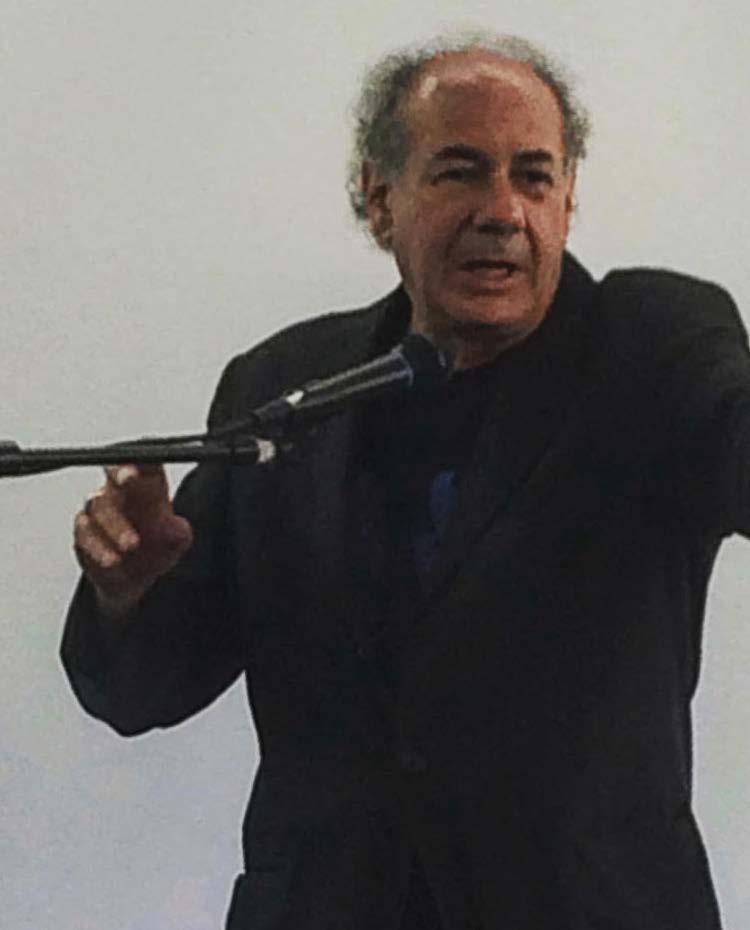
So, may I ask what is the resonance of the title “The Lookout Man”? Is it like a sentinel on a tower as in your poem “The Enchanted Bells”; or someone who looks out for his friends; or someone who looks outside himself; or a lookout man as in someone in a crime?
All of the above.
20
I am pleased that at my age, I believe I am continuing to discover new ways to make and phrase poems. At the same time, “The Lookout Man” goes back to the first principles of the origins of family and the origins of the world. In poems with titles like “Lines of the Prodigal,” “Lines about Mountains,” “Lines about the Snow,” or “Lines of Evolu tionary Progress,” I have tried to dig into elemental mines. I have also hit some pressure points in several elegies for lost friends. I wish I were better at describing my own work, but I am continuously trying to figure it out. I guess I am suspicious of those who understand their poems too well. That’s for others to learn. Or maybe it’s just not my style or manner of intelligence. But this book does feel different to me. I could feel it sometimes in the poems while I was writing them. Even now, a year and more since I turned in the final manuscript, I am writing new “Lines” which are taking me into even stranger subjects.
Lookout for the next book!
What makes your new book, “The Lookout Man,” different from your other work?
But I freely confess I don’t understand the language well enough to understand much that goes on around me there—so it is somewhat of a projective reality cultivated in me since childhood.


2121 Click For Details Learn how to create a profitable online course and compete to winNextThe$100K. CompetitionCreatorBig


Atlanta & Nashville CREATIVE CRAFT COCKTAILS & CIGARS PROGRAM IN A 1920’S SPEAKEASY ATMOSPHERE www.redphonebooth.com


Launched in 2000, Carve is an international quarterly and home of the renowned Raymond Carver Short Story Contest. Each print and digital issue features our signature HONEST FICTION − stories that use ordinary language to convey “immense, even startling power” − plus poetry, nonfiction, illustrations, interviews, and more that aim to demystify the writer’s journey and inspire literary conversations. Whether a reader, writer, or both, we invite you to subscribe and discover all that we talk about when we talk about great literature. Subscribe at carvezine.com Use code BLUEMOUNTAIN to save 10%. "Carefully treads the water between being a magazine for people who want to read great literature and for writers—and elegantly swims in the middle as one for both." -NEWPAGES REVIEW, SUMMER 2016 COME FOR THE STORIES, STAY FOR CONVERSATIONS...THE


“The Constant Rabbit” deals with the issue of “otherness” and societal fear in the face of change. What sparked the drive to write this novel?
BY: CLIFFORD BROOKS
INTERVIEW JASPERWITH FFORDE
2525
How do you deal with stress on the business side of writing like deadlines, interviews, fan correspondence, and staying sane?
I think a changing shift in my own awareness in how my nation was sold to me as ‘the good guys’ when even the most cursory glance shows that the UK has some glaring failures, not only how it conducted itself in the past, but how it has failed to recognise those errors, and in some walks of life, continue to do so. I grew up in a dysfunctional family, and anyone who has done the same, doesn’t really see there’s a problem until later on, when you start to critically evaluate the way people have behaved. It’s the same thing with nationhood. Growing up in a nation with a dodgy history is the same - you think it’s normal, because the true level of poor conduct is hidden from you, usually by simply ignoring it, or misdirection. ‘The Constant Rabbit’ was my way of trying to put in words what I was feeling. That much has to be done, and that we are all in some way complicit.
In our discussions on NPR you talked about “narrative dare”. Please give us a quick rundown on that concept. How do you raise the bar on the dare to stay sharp?
How has the current geo-political shift in an awareness of inclusion and diversity affected your creative writing experience?
Writing is my love and my work and my job all in one, so I tend to approach it in that manner. Sit down,
Sure. The ‘Narrative Dare’ is dazzlingly simple. You set yourself a conceptual dare, then have to write your way out of it. The basis of the idea is quite simple, and revolves around the idea that any book - no matter how dumb the idea - can be written and written well with the requisite skills and patience, and also that narrative challenges that you can’t abandon - this is a dare, after all - allows one to dig deeper and harder and with greater levels of daring into the authorial tool box to finesse out your impossible dare. Basically, the weirder the dare, the better. The ND for ‘Early Riser’ was ‘Write a thriller set in a world in which hu mans have always hibernated’. For ‘The Constant Rabbit’ it was: ‘The demonised minority other in the UK are rabbits. Discuss.’
It’s always been there in my writing, so for me it’s more of a relief that things that I have always held important are finally becoming more front and centre. I was more subtle in previous books with these themes, as no-one wants to be preached at, but in 2020’s ‘The Constant Rabbit’ I was more overt - and now I’m thinking that I should have gone further. That the punches I pulled should not have been pulled. But writing is always a compromise between entertainment and politics, and my books are generally for entertainment.
26 get on with it, this is what I do. It’s like a building project that requires a lot of attention to detail, will not take less than a couple of years and there are going to be unpredictable pitfalls and delays along the line that have to be over come. But the house needs to be built, and it will. I was sort of thinking of ‘Mr Blandings builds his dream house’ as a metaphor for writing, but I haven’t seen the film for decades, so I’d probably be wrong..
What project is staring you in the face right now?
A sequel to ‘Shades of Grey’, a book I wrote over ten years ago and readers are threatening to burn me in effigy if I don’t get on with it. It’s quite fun, revisiting the characters and situations, and trying to figure where I was going with it! I’m 80,000 words in, and am having one of those periodic resets, where I reread the original book to get my bearings and then just start at the beginning of the MS again, and comb my way through it once more...

INTERVIEW
BY: LYNNE KEMEN
Who is John Sibley Williams? What is it about your life that created you as a writer?
Although I have a wealth of incredible and painful memories from childhood, likely the most significant factor was being an only child. I had a rather wild and full imagination, which led me to invent my own world, populating it with characters, acting out scenes, reading books aloud to myself, and other strange things that felt at the time and continue to feel magical.
2727
You have published several volumes of beautiful poetry and have two award-winning books being released at the same time. Which themes do you keep wanting to revisit?
JOHNWITHSIBLEY WILLIAMS
You said that one of your young daughters asked you to read your book, TheDrowningHouse, to her. What was that like? How has parenthood changed you as a writer? That was a particularly emotional moment for me. I have twin five-year-old daughters, one of whom is transgender, the deep struggles my partner and I face every day, my fears for how they will be treated by society (as mixed-race girls in an often ugly, judgmental world), and my hope that we’re raising them well enter, sometimes quite subtly, into most of my newer poems. When Kaiya held up my new book, glowing with joy and maybe pride, and asked me to read a few poems…I really don’t have words. As it pertains to parenting, there’s the practical and inspirational sides. I write less, sleep less, can concentrate less. Raising twins is even more exhausting than I could have imagined. But within the stress and anxiety, I have expanded my definition of love to such a degree that I can no longer say I’d experienced it before my kids. My heart is more troubled but fuller. And the themes of parent
Though each poem possesses its own unique demands, themes, and structures, my work is always heavily rooted in human attachments and disconnects: to others, self-perception, culture and politics, landscape, language, hurt and healing. My goal for every poem is to try to enter into a conversation, to spark some kind of fresh connection. Often history and myth reach out to embrace (or suffocate) the present. Often one very human, very emotional experience gets filtered through the lens of a larger cultural or political struggle. And there’s my privilege. I cannot escape my privilege. I cannot pretend I don’t live in a tumultuous world where people repeat the same mis takes, often with violent consequences. And, probably like everyone else, I have no idea who I am or what defines me. So those tinges of realistic darkness always worm their way into my work. At the same time, I’d like to consider myself a fairly hopeful person. So, I often include those tiny shards of light tucked away within us that make the rest of this living worth it. In the end, we write about what haunts us, what keeps us up at night, what stalks our mind’s periphery, just out of sight, emerging from the darkness to remind us how fragile we really are.

28
hood now infuse the very bones of each new poem. What is your writing process like?
Thanks so much for asking! My website is https://www.johnsibleywilliams.com, and it includes doz ens of recently published poems, information about my books, details about my poetry critique and literary coaching work, as well as the virtual classes I host as founder of Caesura Poetry Workshop: https://www.johnsibleywilliams.com/about-caesura Photo Credit Staci Michelle Williams
I usually start with a single haunt ing image written at the top of a Bepage.ita dead horse bloated by a riv er, my young daughter tearing up the paper swans I made for her, or the implication of what once hung from a tree that now wears a tire swing Then I try to weave a world in which that image makes sense. I have multiple notebooks filled with individual lines, words, images without context, and I tend to flip through these while writing to see if any previous little inspirations might tie into the new world I’m creating. That said, I do some times start with a concept, theme, or other larger motivation, often cultural or political. But I tend to find these ideas and themes spring naturally from whatever I write, and it usually feels more organic if I begin with an image and let the context find its voice. Another very important element to my composi tion process is how a poem sounds when read aloud. Poems are music. Poems have internal inflections, rhythms, and cadences that can only be recognized and appreciated when vocalized. To me, that’s when a poem truly comes to life. So, I al ways read my lines aloud, over and over and over again, and often the next lines spring directly from this vocalization. I hear what’s meant to come next. How do we find you and your publications?

In addition to your regular publication, you have some other programs. Can you tell us about them? We offer online writing sessions- single event generative workshops, as a way for the community to get together to write regularly. We have bimonthly challenges, where many writers write about one artwork.
2929
BY: LYNNE KEMEN
INTERVIEW LORETTEWITH C. LUZAJIC
Tell us about The Ekphrastic Review. When did you come up with the idea, how long have you been publishing it? In July 2015 The Ekphrastic Review was born. My intention was to have a site to share ekphrastic information and archive it for my own interest, more about my own hobby. I had no idea it would strike such a chord and morph into this amazing resource and journal when I started out. What do you think makes TER unique? I wanted to be a resource and community, with connection to the people contributing and reading, connecting them as well. A living arts journal, rather than something remote and aloof. It was also very important to focus on the ekphrastic niche, expanding the practice of ekphrasis itself rather than becoming more generalized. Let’s start by asking you to explain what the term “Ekphrastic” means to you.
Ekphrasis originally had a specific purpose- poetry or literature describing an artwork, to those who couldn’t see it. If there was an artifact or painting, there was no way for the piece to be widely seen. It was a rare privilege. Today we can replicate imagery with inexpensive reproductions or books or just Google it. Technically, ekphrasis means describing, but the The Ekphrastic Review writing inspired by art www.ekphrastic.net context is much different today. I use the word to mean “writing inspired by art.” Ekphrastic, to us, is about writers engaging in a meaningful way with art. How often does your Review publish? Who are your readers and who are the people who submit work to you? We publish every day, and we publish two challenge showcases monthly. Our readers are people of all walks of life who are curious or passionate about visual art and love literature. We are very proud to feature a constant stream of epic talent, with established, wellknown, well loved writers from all over the world, and we are also proud to feature first time writers, young writers, institutionalized writers (senior centres, prison, addiction rehab and more). Contemplating visual art can help us process a wide variety of ideas, give us a connection to the past, future, to other people, other cultures, other experiences, to beauty, to pain and grief, to the universe and the divine. Art and writing are powerful instruments of reflection and we want to introduce all kinds of people to ekphrasis.


30
I am not really sure how I knew “writer” was an identity so early on, but I have always identified that way. It was a bit pompous in first grade, no doubt, but I would sneak into the adult shelves of the library to pull out poetry books. I loved the beauty of phrases and the negative space on the book pages. I would borrow my sister’s Fisher Price typewriter and peck out little stories even then! I was also interested in visual art history quite early, but didn’t see myself as a painter. I was very creative and dabbled in all kinds of arts and crafts but was most interested in the stories of other people’s paintings and the artists’ lives. I attended journalism school in university instead of studying poetry or art history, where my heart was- I wanted to be practical. But news is a very different game than literature, competitive and fast-paced and depressing! I finished but felt I had made a terrible mistake. I went to a friend’s who lived by the ocean to take a few weeks to recover from school, and while he was at work cut up a stack of magazines he had. I became very excited about collage. I was so involved in art that I started to miss writing, and that’s how I came to the beautiful accident of the journal. And here we are.
This last year and a half has been very different. How has it affected your publication? How has it affected you personally and artistically?
I started looking for ways to connect as a community online and started up the workshops. These have been intimate, informal, and educational sessions where we gather to write together, discuss art, and share our inspirations. This year, I have had struggles with inflammatory arthritis. I have been grateful for the art and poetry, for the people, for technology, because it has truly sustained me, distracting me from my woes and allowing work and a role I find very meaningful, that I am capable of. How terrible it would be if I was a dancer or actor instead of writer and editor!
I know that you are both an artist and a poet. When did you begin your creative journey? Did one art form come first?

How do we find you on social media? The best place is my personal Facebook page and The Ekphrastic Review page on Facebook. I’m looking for help for Twitter and other social media so that we can get more and more eyes on our amazing writers. Photograpphy Credit: Moshe Sakal

Blue Mountain Review / July 2022 32

How and when did Mercer University Press get its start?
What is your favorite aspect of creating and publishing over the last 22 years? Every book is new and is a new birth of either academic knowledge or creative expression of an author’s imagina tion. As I wrote once, “Books are both vehicles to knowledge and witnesses to flourishing.”
FREELANCE
MUP began on July 1, 1979 as the first initia tive of the new President of the University, R. Kirby Godsey. Godsey thought a universi ty press would add to the significance of the importance of the university academically and culturally.
STAFF Marc Jolley (1995) is the director and editor-in-chief. Mary Beth Kosowski (2008) is our director of marketing and sales. She is a one-person team that promotes 35 new books each year with professionalism and wisdom.
Moore (2022) is our customer client liason and handles orders and works with our social media exposure.
PRESS BY:
Marsha Luttrell (2000) is our publishing assistant and works with authors on a daily basis and procures our print Jessicaing.
INTERVIEW
All of our covers and jackets are designed by Burt&Burt Studio, local graphic artists. They make us look not just good, but beautiful. Copyeditors: We use 5-6 copyeditors that know what they are doing. Four of them have been working with us for 8 years or longer. OFMARCWITHJOLLEYMERCERUNIVERSITY CLIFFORD BROOKS
Jenny Toole (1997) is our business associate and takes care of the entire business side of the press from paying bills to royalties, and she takes care of our inventory and oversees the shipping and receiving of the warehouse.
Introduce us to you and your team.
3333

34 Are there any new projects or affiliations on horizonthe for your press? Not presently. Securing 35 new books out of about 275-300 proposals each year is about all we can manage.presently What does it mean to Press?UniversitybypublishedbeMercer Quality. As orbutinternalapprovedscripteachPresspresspeer-revieweda(Universitystandards)manuisnotjustbyreviewbyareadertwooutsideof the office to insure the quality of the work. But also, the physical book is a well-made book. We use acid free paper. We have books printed on natural paper (not bleached white). Natural paper is more readable and is easier on the eyes. I like to think that we are beautiful inside and out. What is the mission of Mercer University Press.
Mercer University Press supports the work of the University in achieving excellence and scholarly disci pline in the fields of liberal learning, professional knowledge, and regional investigation by making the results of scholarly investigation and literary excellence available to the worldwide community. The Press just completed its forty-second year of publishing, and has now published nearly 1,700 books.
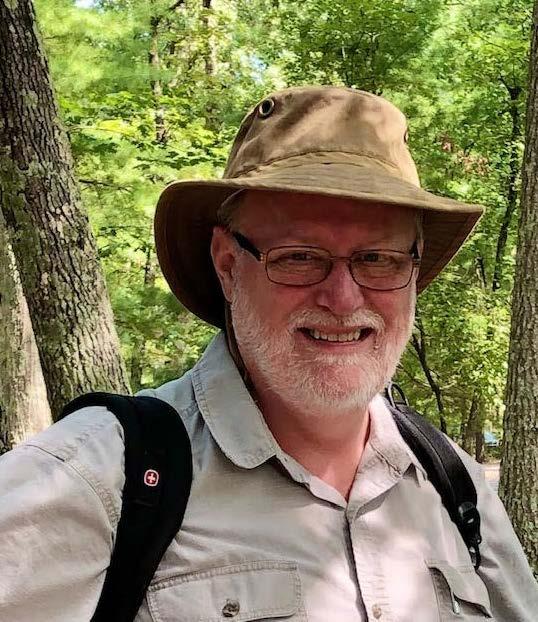
Wow, this is quite a question! Let’s take the safe route: I spent my childhood and teen years feeling like an outsider in a small city in Florida, where probably the most exciting thing to do was drive a little over the low speed limit on Tickle Tummy Hill, a little bump in a little road downtown—and as soon as I turned eighteen I hitched a ride to Bos ton with a classmate, who dropped me and my teal plastic trunk off at college. And there (Boston, not that college) I discovered home—and, eventually, after many years, the courage to surrender to poetry. What does your editing process look like? Do you find that it takes you back in time to relive that moment? “I am once again where I never was before” These lines from Geoffrey O’Brien come to mind. Every poem is a new language you learn while you write it. Same goes for revising and editing.
The whole time I work on a piece, I’m trying to relive the moments I try to express. And this is impossible, of course, because memory, like language, is an asymptote; it’s always only continually approaching the thing, the source it aims to live, relive, express. But it never meets it at any finite distance. Dreams are asymptotic, and so is poetry—all you can do is word and shape the words as accurately and truthfully as you can to express what cannot be said in words, to get as close as you can to the feeling.
3535 INTERVIEW
It’s funny, dancing used to make me incredibly anxious. Probably it had to do with my Catholic upbringing—stand, sit, kneel, add a little daily shame and guilt to boot, enough to shrink natural joy into a controlled body and mind, and my torso became a box. That, and on the other end of the spectrum, my hippie dance-obsessed mother. Always dancing in public to cover bands—jazz hands raised high, wild spins, sometimes barefoot, often the only one out there, and always trying to drag me (literally) to dance in front of everyone. Thinking of this now makes me smile and laugh, but when I was young I was mortified.
The one constant in my editing is reading aloud. When I’m coaching poets I often say, Read it aloud and feel it while you read it—the wording, the layering of detail in the lines, rhythm of the language, necessary or redundant repe tition, the punctuation. I spend a lot of time on line breaks and punctuation—they actually edit language without changing the language, it’s incredible.
When I’m working on a poem, the poem is the boss of me. Which is to say it guides me into the discovery of it. Just like life, in writing it’s impossible to know our arrivals from the start. Do you dance? If so, what in these turbulent times gives you calm to enjoy it? How do you maintain cool?
I love to dance all silly, wild, and joyfully—at home by myself.
Now dance breaks are my new reset button, I’ve been making them a daily ritual to get through these times of pan demic, societal turmoil, democracy at stake, and now war. And as I’ve been living pretty isolated in Romania, so far
TARAWITHSKURTUBY:CLIFFORDBROOKSHowdidyouspendyourchildhoodandteenyears?
Blue Mountain Review / July 2022 36 away from my home conti nent and my loves, writinglongmyhope-plumpsdancingheart.Withdaysofcoach ing, organizing for Writers ing),procrastinat(or,myandBooktionvoterstoreourtionDemocraticforAc(checkoutnewbookandlibraryregistraprojecttheVote),workingonownwritingmorelately,dancing
energizes me to do more of the important work, in writing and in the onemittedthatcommunity,I’mcomtointhislife. Tell us about your theyouprojectsWhatpurchase.availableworkfornewdohaveonhorizon?
I’m laughing as I write this, because well,hadpublisherswithI’vetheoddest,Iwouldn’t quite call it luck. The Amoe ba Game, my first full-length collection, came out in 2017 with Eyewear Publishing, but due to director Todd Swift’s unacceptable behavior and business practices, I made the hard decision to take it out of print and get my rights back in 2018. (And a big grateful shout-out to Society of Authors and the international writing com munity on Twitter, whose support made this possible.)

I have to say, taking my book out of print the first year of publication, though far from ideal, was better than keeping it in print with an abusive press. Getting my rights back was an act of love and respect—for myself and my work 100%. The hard part is I’ve sold all my remaining copies and the book is unavailable except for ones that pop up online every once in a while—sometimes for over 500 bucks a pop, which is ridiculous. I get regular requests from people who’d like to buy it, and I’m grateful that somehow the book lives on during this time in which it doesn’t have a body, and I know in time it will find a good supportive press for another edition.
3737
I’m smiling just thinking about it.
And, well, I guess I haven’t really thought much about collaborating with anyone dead—maybe I’m limiting myself and should be more open. (If only they’d figured out teleportation, time travel might seem more doable.) When it comes to the living, I feel the luckiest because I get to edit po ems with Lloyd Schwartz, my first poetry teacher
And the saga continues with my upcoming collection (I’m still laughing—laughter is such an essen tial coping mechanism, isn’t it?). Shortly after I took The Amoeba Game out of print, Salmon gra ciously offered me a new poetry collection. Faith Farm, which I began in 2016, navigates the limits of love, the end of a marriage, faith and faithlessness, sins and virtues, grief and healing, arriving at regeneration and hope. And here’s the volta: Faith Farm was supposed to appear this fall, but the press, having a hard time, can no longer give it the home it was offered. I’m blessed to have a lot of support around this book, and readers who want to read it, and I can’t wait to find it the home it deserves so that I can share it with all of you. I think it has some of my strongest work yet.
And for my new project, I’m switching gears from poetry to prose for Don’t Ask Me Why I Live Here, a collection of memoir essays that holds a close-up lens to painfully hilarious and hilarious ly painful befores and afters that rainbow into unexpected arcs during my time in Romania. And, panned-out, a reflection on the many places in which we live and struggle, hurt and heal, lose and regain faith, grow out of and into ourselves.
If you could collaborate with anyone alive or dead, who would it be, what’s the project you’d write down?
One thing I love about writing is you don’t have to worry about your band breaking up. That said, I do love a collaboration—I’ve always had the idea to collaborate with scientists to do a study of brains on poetry. Writing it, reading it, having it read. I’d love to see all the places poetry literally lights up the mind. I like to collaborate organically with community, because community is how we get through and make change. My favorite collaboration so far is International Poetry Circle, an online initiative I started in the earliest days of quarantine. Poet ry lovers and poets around the world recorded themselves reading poems to help us all feel more connected and hopeful. It became a hashtag overnight, and there were poems in about twenty languages, on all social media platforms. Many people wrote to let me know how much these vid eos carried them through this challenging time.

How does place figure into your work?
As a first-generation college graduate who had no academic guidance or financial resources, I know how hard it can be, and how impractical it can feel, to choose poetry. I tried not to be a writer until my mid-to-late twenties. I didn’t trust that persistent voice inside telling me I needed to write, that maybe I was a writer. Luckily when I was in my mid-twenties a professor asked if I wrote poetry, which was the turning point for me. This is all to say that if someone who knows you well recogniz es before you do that you’re a writer, listen to this. Surrender to the writing, to your need to write, to that nameless thing inside of you saying you might be a writer. Say out loud to yourself: I am a writer. Say it until you believe it. (I used to feel awkward saying I’m a poet; now I know it’s who I am and I don’t question it—belief in the self, like craft, comes through practice.)
Most important: Give yourself permission. This leads to more freedom, which leads to more per mission, which gets better and better. Know you are right on time. And that your community is out there.
Also, every single thing you do leads to the next thing—unpredictable but true; trust me. Tara Skurtu is a two-time Fulbright grantee and recipient of a Robert Pinsky Global Fellowship and two Academy of American Poets prizes. She is the founder of International Poetry Circle, a steering commit tee member of Writers for Democratic Action, and works as a writing coach. Tara is the author of The Amoeba Game, and her poems have appeared in Salmagundi, Plume, The Common, The Baffler, and Poetry Wales
What’s some advice for those hoping to follow your lead that no one told you?
38 and now one of my closest friends. We recently read each other’s manuscripts, and I can’t stop thinking what a gift it is to be alive on this earth at the same time with each other and our poems.
You know, for most of the pandemic I was alone in my apartment in Bucharest, where I talk to hardly anyone. I had almost no desire to write. And when I did write, I wrote memories with people in places where I came alive with hope, loss, grief, regenera tion. When I’m having a new experience in a place, when I’m coming alive, connecting with people I love, associations activate—this is when the writ ing forms. To me, the environment of place is peo ple, and the landscape of a poem is truth, honesty, and love; so in everything I write, place enters.

3939 Look no further... ONE MONTH FREE plus... 1 DAY FREE TRIAL! OfficeEvolution.com/locations/roswell • roswell.ga@OfficeEvolution.com PRIVATE OFFICES, COWORKING & MEETING ROOMS 470-514-1500 821 Atlanta Street, Roswell, GA 30075 *Inquire within for further details





I teach both creative writing and editing courses at Exten sion and am the Managing Editor of the UCLAX literary journal Southland Alibi. As of this interview, we’re preparing the inaugural issue, so it’s been a long and exciting road to creat ing something that’s brand new, but I couldn’t be more grateful for the oppor tunity to contribute and work with the amazing editorial team and staff.
What is the most important skill you think aspiring writers should have?
I think aspiring authors need to be strong readers. I encounter so many writers in my private practice who choose a genre or story format because they think it’s “easy.” If you’re doing it correctly, writing is still work.
Make a plan. Read the best and most successful work in your target genre published over the last 3-5 years. We spend so much time on the Internet for entertainment, but many aspiring authors have no idea who the bestselling authors in their target genre are, what their covers look like, which publishers are acquiring the most
4141
While it can be fun, exhilarating, even maddening, creating a powerful and engaging story requires an understanding of the craft. No matter what genre, length, format, etc., you plan to write, read, read, and read more. Study fifty first pages. Why does the first sentence start where it does? What details are provided? Why does the work “matter?” If you can answer these questions, in essence, reverse engi neering a successful work, you can better understand the parts you’ll need to craft in your own work.
What is the story of Jeanne De Vita? I’m most definitely a WIP! (Work in progress!) For the last decade, I’ve been a developmental editor and writing instructor, but over the last few years my writing has real ly taken front and center. I was a staff writer for two years working on very tight deadlines, producing a huge volume on content very quickly (30,000-60,000 words a month), so I really learned firsthand that writing is something I can do day in, day out, when I’m tired, whether I’m “feel ing” creative or not, and etc. That was really inspiring to me because ideas are so exciting, but truly, the execution of the idea on the page is everything. That’s where the hard work and the pain is, but also the joy.
How do you operate within the UCLA Extension Writer’s Program?
What’s your philosophy behind quality teaching? I wanted to be a teacher from an incred ibly young age and have vivid memo ries of being so terribly frustrated in school, even in college and grad school, by instructors who were subject matter experts but who, I felt, didn’t understand how students learn. I try to create a curriculum no matter what I teach that empowers the student. It doesn’t matter if I’m an expert if I can’t translate my skills into practical lessons that the stu dents can immediately apply to their own work. I think that’s the best way to summarize my teaching philosophy: immediately action able. I hope that every student who studies with me leaves that course feeling far more informed not just about the topic but how to meaningfully engage with the material independently long after the course concludes. This is especially important for writers and editors who invest in courses to learn to do something better, faster, and with a greater return on the invest ment for the time they have to spend.
Want to write horror novel but have never read a book other than Stephen King back in high school?
Stop! Start reading horror, but not just one book or author. Read work similar to what you’d like to write as well as books/stories which might be very different. Study the genre and the techniques successful writers employ to tell those stories.
INTERVIEW JEANNEWITH DE VITA
BY: CLIFFORD BROOKS

Name one writer who has had a permanent impact on your work? This may sound cliché, but my moth er. My mom, who passed in 2015, was a traditionally published author of both fiction and nonfiction. She was a prolific writer, and the original DIY-er. Mom didn’t have a college degree. She didn’t have any advantages or take any shortcuts. She read voraciously and deconstructed books. She was rejected thousands of times over the years but also published more than 25 books that were sold worldwide and translated into dozens of languages. She passion ately wanted to write and did not give up until she taught herself how to do it as well as the pros. Mom’s idol was Nora Roberts, and I have a picture of her from a conference where they are standing side by side accepting awards together. She was featured in People magazine, had a book optioned for film, and got to do what she loved until the day she died. That, to me, is more than just inspiring; it’s my personal family legacy and I couldn’t be more grateful to have had her as a role model.
Jeanne De Vita Writing as Callie Read.calliechase.com/BugChase
42 successful work, and how self-pub lished authors are finding success. Approach your writing project with love but your writing career like a business. Study. Invest. Plan. Execute. Prepare to fail, and be ready to try again. Believe me, it’s worth it!
Series synopsis: When the zombie apocalypse hits Los Angeles, the undead aren’t the only monsters unleashed on the city. Bea “Bug” Aisling is a survivor trying to find what’s left of humanity in herself and the people still living. When Bea is bit but doesn’t immediately turn, the race to understand the mysterious connection between shapeshifters, zombies, and humans becomes urgent...and personal.
Bug a paranormal dystopian series on Amazon’s Kindle Vella, was an Amazon Editor’s Pick and was called a breakout debut in the Kindle Vella launch day press release. Bug has consistently ranked in the Top 25 series on the Vella platform of more than 10,000 series.

LSU DIRECTOR OF CREATIVE WRITING
Ironically, in spite of my desire to move far away from Alabama, I primarily write about the same tiny town I wanted to escape as a kid. I know it is a bit of a cliché, but writing allows me to make sense of a senseless world. Alabama can be an amazing place, but it has a dark history that is always just beneath the surface (and sometimes, front and center). As a kid growing up in an evangelical Christian home, I struggled mightily with the cognitive dissonance I witnessed all around me. The values I was taught in the home and at church were often not reflected in the way people were treated. It was very confusing and unsettling for a kid, and I turned to books for answers, escape, and like-minded companionship. Eventually, I began writing my own stories, just trying to sort the why of it all. Writing has been a refuge for me ever since, and though many aspects of my relationship with my work have evolved over the years, that has stayed constant.
Outside of travel, what makes you, you. How has art saved your life?
INTERVIEW JENNIFERWITH DAVIS
What makes LSU’s creative writing program different from others?
BY: CLIFFORD BROOKS
4343
As for what makes me, me, at least in this stage of my life: I direct an MFA program, teach, and I have four kids, so that pretty much sums it up.
Jennifer S Davis: You slid into Louisiana by way of Colorado - born in Alabama. What did that travel allow that suits you best to sail LSU’s creative writing program? Like many restless, artsy kids from small, rural towns, all I ever wanted to do was escape my hometown as soon as possible. I was a first-generation college student, and my parents insisted that I go to school in-state because they couldn’t fathom why any reasonable person would pay for out-of-state tuition. I attended the University of Alabama, and within a year I found a way out via a student exchange program. I headed to Missoula, Montana at 20, and from there moved around for years: Denver, Rio de Janeiro, back to Tuscaloosa for grad school, Miami, Spokane, New Orleans, Sarasota, back to Denver, and finally, Baton Rouge in 2012. I’ve taught in some capacity pretty much everywhere I have lived, including at six different colleges/universities, so I have a broad view of how different universities and creative writing program’s function. I have a good idea of what works and what doesn’t and a deep understanding that a program, at its heart, is its people. I’ve worked in places of scarcity and places of plenty, and though money is always helpful, a program is most successful when the students and faculty are the focus and have a voice. This is only my second year as Director, and I am following in some big footsteps; Jim Wilcox was a phenomenal director for many years here at LSU. I am still learning the ropes—there are so many moving parts to a program—and I make plenty of mistakes, but I try to maintain a spirit of generosity with others, and so far, that generosity has been returned tenfold. I have enjoyed everywhere I have worked, but the people here—the undergrads, the graduate students, and the faculty—are truly exceptional, both as artists and human beings. I’ve seen enough of higher ed not to take that for granted.
We are a small, three-year program, with a low facultyto-student ratio, and a low teaching load. (Students teach one course per semester.) All students are funded and funded equally. Non-differentiated funding reflects a core tenet of our program: all students are equally valued. We offer classes in more genres than most programs: playwriting, screenwriting, fiction, poetry, creative nonfiction, new media, translation, and more. We are genre-flexible, which means that students, regardless of the genre in which they enter the program, can take
The aspect of our program that I personally love the most is that it is collaborative rather than competitive. The supportive tone of our community is due in part to the equal funding, but we also resist being labeled as a certain kind of program where a certain kind of writing is produced. There is no hierarchy of aesthetics here. We have students writing highly experimental work, students writing more traditional work, and everything in-between. The students are tight-knit and supportive of one another, and we all celebrate successes together and allow room for each student to define what success means for them.
One of the benefits of having a small program (6-8 students per year/18-24 students total) is that students have the opportunity to assume leadership roles pretty easily here. Students host Underpass, the graduate reading series, curate and host Delta Mouth, our literary festival, and edit NDR, the graduate-run literary journal. Students can serve as grad assistant to the MFA program or intern on The Southern Review. We also have a very active English Graduate Student Association, which hosts the Mardi Gras Conference annually. Students teach composition and creative writing, and for those who want to stick around, we also offer competitive postdocs that afford recent grads an opportunity to teach intensively.
What help do you provide for graduates struggling to publish? What professional writing (i.e., agents, contracts, teaching, tutoring, marketing, etc.) education do you include?
44 any of our workshops, and many of our students write and publish in multiple genres. That is not to say that students are required to work in multiple genres other than one mandatory class in a secondary genre. We have some people on fire for poetry or fiction, and that is absolutely fine. We have others writing hybrid theses or working on multiple projects across genres, and that is great, too. Students can take up to three courses outside of the department, which allows for even more exploration and growth. We have a philosophy of yes here at LSU. If you want to do it, we will help you make it happen. We are not a studio program. There is a substantial literature requirement (four non-creative writing classes in the English department). Some potential applicants seem a little hesitant about this requirement, particularly those from other disciplines with limited experience with lit courses. More often than not, our students end up loving their lit/ theory courses, and they forge deep and transformative relationships with our wonderful lit faculty, many of whom serve on MFA thesis committees.

4545
It is common for most faculty to incorporate professionalization into our workshops. We do this through the class topics (I’m teaching a fiction workshop this semester that is devoted, in part, to improving the performance of our own work at public readings) and guest lectures by writers, editors, agents, etc.
The EGSA and the MFA program both run professionalization series that discuss a variety of essential skills. (Some of the topics this year have been talks on getting an agent and selling a screenplay.) We also have a dedicated MFA jobs placement officer.
All of this to say: there are a ton of professionalization opportunities here at LSU, and students often parlay what they learn here and the experience they gain in leadership roles into jobs in teaching, editing, publishing, and arts administration. Our students do really well in the world. What is Baton Rouge really like? Is it livable? Baton Rouge is a great place to live, and we have much more to offer than our proximity to New Orleans, which is 70 miles away, though that is certainly a plus. Baton Rouge—state capital, home to the Blues, crawfish boils, zydeco, and swamp tours—is situated in a unique part of the country on the east bank of the Mississippi River. Culturally and politically diverse, Baton Rouge has a burgeoning literary and arts community and an impressive restaurant scene for a city its size. We have an excellent city park system and one of the best library systems in the country. Baton Rouge is large enough that there is always something to do and small enough that you can hole up and work if you need to without suffering too much FOMO. LSU might be known for its football, but with the larger metro area population at 870,000, Baton Rouge is much more than a college town. Yes, it is hot and humid from May through September. Yes, there are hurricanes. (Believe it or not, you get used to hurricane season rather quickly.) Yes, there are a lot of bugs. But there is also great food and great music and festivals for just about anything you can imagine—more than 400 in Louisiana annually—celebrating everything from strawberries to crawfish to jazz. Baton Rouge is also an incredibly beautiful place that is renowned for its wildlife and diverse bird populations—there is a reason Audobon spent so much time here—and its stunning landscape, which is dotted with majestic cypress trees and live Outoaks.of the many places I have lived as an adult, I have stayed in Baton Rouge the longest by far. There is just something about this place—its gothic beauty, its complex history, its rich cultural diversity, it’s absolutely unique sense of place—that makes a writer want to write.


Blue Mountain Review / July 2022 46 MFA IN CREATIVE WRITING • POETRY • FICTION • NONFICTION • NEW MEDIA • PLAYWRITING • SCREENWRITING GENRES : JANUARY 15, 2023 APPLICATION DEADLINE: WWW.LSU.EDU/HSS/ENGLISH/CREATIVE_WRITING/ABOUTTHEPROGRAM THREE-YEAR PROGRAM TEACHING$17ASSISTANTSHIPS,850 LOW TEACHING LOAD GENRE FLEXIBLE • JASON BUCH • JENNIFER S. DAVIS • FEMI EUBA • LARA GLENUM • ZACK GODSHALL • ARIEL FRANSICO HENRIQUEZ • MARI KORNHAUSER • MAURICE CARLOS RUFFIN • JOSHUA WHEELER FACULTY


ofWhoARUMIWITHKASHYAPBY:CLIFFORDBROOKSareyouandhowdoyoufitintothelifepoetry?
I am a storyteller at heart, and I like to share stories based on what I have experienced in the form of poet ry, essays, and fiction. Even the poems I have written have a story. It wouldn’t be wrong to call them perhaps fiction in verse. I grew up in Assam, India, where poetry was both oral and in print. One of the languages I grew up speaking, Assamese, is colorful with folk songs for almost every occasion of the year, and people know these by heart. Our cultural festivals are lush with folk songs and rich in imagery and metaphor. In short, I grew up in a culture saturated with poetry. Even at home, my parents often used verses, and short rhymes, to make a point. In the Assamese language, there is something called “fokora-jujona,” short verses that stress moral suggestions, reality checks, life lessons, advice, etc. This is generational wisdom that has been orally transmitted across time. Peo ple in my family use them often to make a point and offer a life lesson. So, I have grown up in a culture that is saturated and infused with the power of poetry. But we also have a solid written tradition that starts in the 5th century: the ballads, Forest Songs, Cowherd Songs, Bihu songs, fifteenth and sixteenth-century one-act plays in verse, and modern poetry in the twentieth century. After colonial ism, Assamese Romantic poets derived a lot of inspiration from the British Romantics. Eliot and Pound heavily in fluenced Assamese modernism. Pablo Neruda is a legend in Assam. People have written odes to Garcia Lorca. We have a long relationship with American poets, poetry, and social movements. Thus, I have grown up soaking in the oral poetry that I have mentioned and attending open mikes, sometimes even held on the roadside, by poetry enthusiasts. Poetry is part of our everyday lives. What do you love most about teaching? What drew you to the University of Georgia? I am an academic, so I must go where I get a job because academic jobs are scarce. Of course, I was drawn to the work done by my current colleagues when I applied for this job, but now, I like many things about life in Georgia. Especially after the pandemic, I am grateful for my blessings. It is a beautiful gift that I have a job and can write what I want to do, and I will be supported for it. I love the interactions with my students and seeing them grow over the years in teaching. But I must add that I also like teaching because it helps me grow as a writer and scholar. While teaching, I learn from my students. My undergrad uate students often ask a question that would make me think so much that I would spend an entire class talking about it. Afterward, that discussion become the genesis for an essay I may write because the answers I came up with on facing the ques tion surprised and stimulated me. Similar ly, helping others craft their stories better helps my work. My students’ talent and daily growth constantly remind me of what I should and shouldn’t do in my fiction.
4747 INTERVIEW

Tell us about the book you’re promoting now.
How do you give your all in the classroom? Is the role of an educator one like a divine calling? It is not a divine calling for me. It is a job, and I love this job. I also think I would be a ter rible business person, doctor, scientist, or accountant. So, in a sense, this is the only skill I know that I am good at, and I like using it for the betterment of society through my class room space. I don’t think I need to give my ‘all’ in the classroom. I think I should show up, do the job well, and give what the students ‘need’ from me. Every semester, there is a new batch, and the requirements are different, and I adapt my lessons accordingly.
My poetry collection, There Is No Good Time for Bad News, is now out. It is a collection of poems that depicts what it means to live under prolonged state violence. I hope the collec tion will generate conversation about human rights and justice and the role poetry can play in challenging official narratives. In so many ways, this collection is a sequel to my first novel, The House With a Thousand Stories set in India against an insurgency against the Indian government. It was crushed brutally, and the army committed numerous human rights violations. Very little about this is known, and I interviewed many people to write my novel. However, many anecdotes and stories I collected didn’t make it to the novel. I wanted to honor the survivors of the insurgency in my society by sharing those stories with the broader world.
48

Part of this guidance has involved trying to put a multitude of books, the “right” books (if that’s a thing), in front of students, playing to their likes and their personalities. It means making sure that they learn close reading techniques and granular analysis. But the analysis has to be fun, it has to stimulate conversation, it has to connect to their lives, or else, what are we doing here?
Iam a high school English and Spanish teacher in Sacramento, CA. I can be found on Twitter: @chillsatwillpo1. My DMs are always open. I’m on IG: @chillsatwillpodcast. The podcast can be found on Apple Podcasts (https:// podcasts.apple.com/us/podcast/the-chills-at-will-podcast/id1521946141), Spotify, and virtually anywhere you listen to podcasts: just search “The Chills at Will Podcast.”
INTERVIEW OFPETERWITHRIEHLCHILLSATWILL BY: CLIFFORD BROOKS
To talk to a student who’s equally excited as you are about a writer, a story, a chill-inducing phrase? That’s as good as it gets. And so, in this way, the English-teacher-to-literary-podcasthost hasn’t been that huge of a leap. Language is invigorating, illuminating, baffling, and self-propelling, and whether it’s a Lupe Fiasco bar that stretches the imagination, a Steph Cha beautifully-
Someone saying that they “don’t like to read” is for me like someone claiming the sky is orange or that they eat with their elbows. Inconceivable! Everyone (ok, almost everyone) loves to read-they just need to find the right author, or the right poem, or the right series, or the right turn-of-phrase. The chills are there waiting-fairly patiently.
4949
PODCAST
These days, I’m reading Harlem Renaissance poetry and nonfiction with my students-Langston Hughes’ work always resonates, as do Zora Neale Hurston’s essays. I recently read the staggeringly good Your House Will Pay by Steph Cha-what an upsetting and beautiful work of art that reminds us how the past is never past, nor that far away. Oh, man, the list is interminable…Mirin Fader’s Giannis was one that so skillfully gave context to one of the greatest stories of modern times. Deesha Philyaw’s award-winning The Secret Lives of Church Ladies, Kyle Beachy’s genreerasing The Most Fun Thing, Alan Chazaro and Sara Borjas’ modern and classic and profoundly-musical poetry, and always, always, rereads of Jess Walter’s Beautiful Ruins and Mario Puzo’s over-the-top The Sicilian (book’s always better than the movie!). I have always been a reader and a lover of language, and part of being an educator for 18 + years has been my desire to be a passionate guide along the way for students looking for powerful texts and writers (read: all students). I am convinced that everyone will become a reader if placed in front of the right book or story..

words that conclude Tobias Wolff’s “Bullet in the Brain,” a master work of art that informs both my podcast title and its ethos, art is found in so many places, and it is impossible not to be changed by it, to want to share it, to revel in Myit.
(Also, for some reason, while waiting for my son to be born, my vague previous ideas about a literary podcast crystallized while my besainted wife was preparing to be induced. The least I could do-thanks, WhenBabe!)the pandemic hit, I was, like so many others, at home doing my work, still busy with our growing family, but looking to create during such a mystifying and upsetting time. My first episode came out on April 1, Lastly,2020. this podcast comes out of grieving the loss of my brother Tim in 2018. An image: circa 1998, my lead blocker, my role model, my hero finishes a book that I had recommended to him, S.E. Hinton’s That Was Then, This is Now, and shaken by the staggering and chillinducing and mind-numbing ending, he (literally) throws the book against the wall and stares into space for (one minute? seven?) a time. Tim loved hard and lived passionately, and I have found some momentary relief from grief from sharing a similar passion with my Likelisteners.thetwo
50 drawn scene that makes you stop and close the book for a minute to let it all sink in, a Khaled Hosseini characterization that makes you want to read it three times to take in its myriad meanings, a Robert Hayden rhetorical question that reverberates for days, years: these scream out, needing to be shared.
podcast is unique due to the diversity of genres-I’ve spoken to songwriters, comedians, “literary fiction” writers, unclassifiable writers, poets, short story writers, nonfiction writers, children’s book is also unique in its focus on formative texts in the writers’ lives, as I truly believe, to quote my former student Jackson, perhaps quoting another sage, “to know the creation, you must first know the creator.” On The Chills at Will Podcast, we discuss those lines that we respond to on a visceral basis, that move us, give us chills, and make us all say, “Check out this line! Check out this scene…You have to read this!”
Myauthors.podcast

Midway began as an idea in the fall of 2004. We, the four founding editors, knew we wanted to start a literary journal, but we weren’t sure what that meant yet. The four of us were Hamline University MFA grads, and we had all served (though at different times) on the staff of the Hamline literary journal, Water~Stone.
How and when did Midway Journal get its start?
Shortly after finishing the program, we started meeting at what eventually became the unofficial Midway Journal headquarters, a coffee house in St. Paul, Minnesota, called Cahoots. We knew we wanted to do something new, and we knew we wanted to do something that appealed to our collective aesthetic, as well. We decided we would try something radical (radical for the time, that is). We decided to create an online journal that would always be online and would never serve as an online presence of a “print” iteration of the journal. This was at a time when authors had to differentiate between print publications and online publications in the acknowledgements section in their books, if the publisher let the author count the online publications at all (which was the case quite often). There was quite a bit of resistance then to viewing online publishers as legitimate entities. We wanted to change that conversation and be on the front line of the conversion. This, of course, is mostly behind us, though the sentiments still linger in academia, which has yet to catch up. After nearly a year of planning, we put out our first call and crossed our fingers. We couldn’t have been happier with the results. By fall of 2006 we launched our first issue, and we have been publishing uninterrupted since.
5151
OFRALPHWITHPENNELMIDWAYJOURNALBY:HEATHERHARRIS
What is your favorite aspect of creating and publishing Midway Journal?
One of my favorite aspects of publishing is finding “hidden gems,” and being able to promote emerging voices. We do not refer to the submissions queue as the “slush pile” at Midway. The authors who have submitted have put a lot of hard work into their projects and we endeavor to give each author serious consideration for their hard work. Midway will never be a solicitation only journal. One of the reasons we began Midway in the first place was to provide a high-quality publication destination for authors creating high quality work that didn’t quite fit with other publications looking for more “traditional” or more “Avant Garde” creations. That’s in part where the name comes from. We positioned ourselves, and continue to do so, as mid-way between the binary aesthetics. The name also identifies where the four of us were living geographically at the time. All four of us lived in the Midway area of the Twin Cities, the boundary/boarder between Minneapolis and St. Paul. It is also the geographical location of the Minnesota State Fair Grounds, and why our logo is a multi-colored Ferris Wheel. Minnesotans affectionately refer to the Minnesota State Fair as the “Great Minnesota Get Together,” and we wanted to capitalize on that energy. The State Fair is an incredible emergence of energies and entities, and we wanted to build a publication that served to do the same artistically/critically/socio-politically. Quite coincidentally, Minnesota is also midway between the coasts, which also represent two very different schools/styles. We decided to publish in the middle of the month on the 15th, also, just to get a little more mileage from the name. And, I feel we’ve been able to maintain these positionings faithfully.
INTERVIEW
Yes, as a matter of fact there is. Midway will be running a new contest in late fall this year. It will be strictly a poetry contest, and it will run annually in addition to the -1000 Below: Flash Prose and Poetry contest, which runs in the spring. The new contest will begin this coming fall. Unlike the -1000 Below contest, this will be open to any forms/ lengths of poetry. We are very excited to unveil the new contest, and we will begin promoting it this summer. We will also be offering editing services soon. We don’t have a hard date for this yet, but we are/have been in conversation over the details. We do know that we will roll it out sometime this Althoughyear. this isn’t exactly new, we are planning to return to the historic KGB Bar in New York City for our annual reading series, Midway Meets Manhattan. The pandemic has kept us away for two years now, but the goal is to start back up next Whatspring. is new, however, is we are also looking to expand our reading series into other cities, such as Chicago and the Twin Cities (under different names, of course). The launch of these additional series
there
52
Are any new projects or affiliations on the horizon for Midway Journal?

is currently COVID dependent, so stay tuned if you are in these areas!
Have patience and persistence. And be a good listener. Someone once told me that bowling “the first 300 game was the hardest” and the others were much easier after that. This is true for publishing too . . . for the most part. Knowing where to send our work isn’t always clear cut when we first start out. We all know the places where we are “supposed” to publish our work, but that isn’t always the best place to begin. New and newer journals are generally easier to place work in, as they will
5353
helpThisapositionacan’tseeAdditionally,services.smallpayingthatyou,thelooksomeoneyet.beItandthegoanywhere,pickedisn’tIfsubmission.withtomoreandtosubmissionshavelikelyfewerconsiderwillhavetimespendeachyourworkgettingupbackintoworkrevise.maynotreadyHaveoverworkforevenifmeansafeeforifyougetreadingatjournal.willanynew
What advice would you give to new writers (who are just starting to send their work out or who have yet to land their first publication) about cracking the “publishing code” and getting their work into journals, and specifically into Midway?


To that point, Midway currently is making it a goal to publish more “new/ emerging” voices. We’ve seen an uptick in submissions from younger authors as of late and we are actively working to make more space in the journal for some of those voices. Read a couple of issues before submitting though. See if you think your work is a good fit for the journal. What kind of work excites you most? In other words, what are you hoping to publish from your submissions queue that you feel might separate Midway from some other journals?
Blue Mountain Review / July 2022 54
First and foremost, we are looking for work that is language driven and form forward. We are first looking for work that is aesthetically ambitious and willing to explore the boundaries between genres, or even ignore them altogether. We like work that defies categorization, that aims to deterritorialize and subvert expectation. We’re interested in work that might ask us to examine characterization, narrative structure, the line, diction and/or voice through an ecocritical, post humanist, or anti-capitalist lens. We want work that simultaneously defies and reaffirms our expectations. And, we want work that actively dismantles social constructs and narratives which attempt to subjugate or oppress traditionally marginalized Thatcommunities.isnotto say, however, that we don’t also appreciate a wellcrafted story which conforms with more traditional literary forms. The work will just be that much more meaningful to us and to our readers if it meets one or more of these other
writer get a first-hand look at the internal workings of a journal and the kinds of decisions editors make that might mean a work gets rejected or published.
Most importantly, if someone says in passing, send me something, by all means send them something. Follow through. Once we land that first publication, we can repeat those actions. It’ best to stay objective. Try not to take the rejections personally. We all get rejected. Journals have limited space for work and so they can only accept so many pieces for each issue each year.

What differentiates Lucky Jefferson from other literary publications? What separates Lucky Jefferson from other literary publications is that we don’t have the typical publisher business model motivating us. We also work hard to ensure that contemporary poems, stories, and art reflect our values and the diverse reality of the greater world. With the publishing industry being traditionally more non-Black than BIPOC, we’ve never had a problem centering communities that our board and staff identify with. We also don’t take ourselves too seriously and we’re not afraid to take risks. We operate in a collaborative way, including volunteers and students in the fabric of our work. We’re not striving to NABEELAWITH WASHINGTON
It wasn’t until 2018 when I would go back to school for Creative Writing and English to strengthen my academic and creative writing abilities; it was also during that time that I decided that I wanted to create the community I was searching for and thus Lucky Jefferson was born.
Tell us about Lucky Jefferson and what inspired you to start the zine.
INTERVIEW
EDITOR IN CHIEF LUCKY JEFFERSON
BY: NICOLE TALLMAN
The magazine that you see now was honestly an attempt to surround myself with amazing writers and artists. What I didn’t know was that Lucky Jefferson would become larger than our initial community; we’d go on to print three to four issues a year, releasing more than nine digital issues across collections.
5555
Lucky Jefferson was founded on the principle of centering community, specifically people from historically underrepresented communities.
I was inspired to create Lucky Jefferson during my pursuit of a master’s degree at Southern New Hampshire University. It was in that program that I realized my limited network with writers and artists. I had spent my undergraduate years at The University of Alabama at Birmingham, a research university, navigating career options in healthcare but also marketing, communications, and art.

It’s strange because half of the time I don’t know what I’m looking for until it’s in front of me. I think this frame of mind helps us to avoid bias and restricting the full caliber of our writers. We reject the idea of that “great thing” because we’re all capable of creating great things. And how it’s packaged will look differently depending on whose submitting and Storiesediting.come in a myriad of forms and rhythms and it’s important to have an open mind because you never know what story will touch you and stick with you. You never know how a story might transform your perspective. How do we keep up with you and Lucky Jefferson on social media? Folks can keep up with our work at luckyjefferson.com and we’re on Instagram, Twitter, and Facebook at Lucky Jefferson. Anything else you’d like us to know? We’re gearing up for our tenth issue, Sonder. Stay tuned for the early submission informationaccessonour website!
continue the status quo, but we are looking for ways to reimagine what’s possible. How can we make books more engaging? How can we connect with folks who have a limited understanding of the literary world and humanities? We aren’t driven by revenue—we are driven by people and the stories that make each of us special. What do you look for when choosing work for publication?
Blue Mountain Review / July 2022 56


Blue Mountain Review / July 2022 58 Green Writers Press , a small, Vermont-based publishing company, is dedicated to spreading environmental awareness and social justice by publishing authors who proliferate messages of hope and renewal through place-based writing and environmental activism. In the past five years, Green Writers Press has expanded significantly, publishing such authors as Julia Alvarez, Chard deNiord, John Elder, and Clarence Major. Read more at www.greenwriterspress.com p poetry p literary magazine Whole Terrain p nonfiction p fiction p ya If you’d like to buy any of the books listed here, just contact your local, independent bookstore. We are located in Brattleboro, Vermont | media@greenwriterspress.com | 802.380.1121 giving voice to writers & artists who will make the world a better place Distributed by IPG/Chicago green writers press } https://bookshop.org/shop/greenwriterspress [ literary collections }[ new poetry }[ new fiction }[ new nonfiction }


5959 APRIL 19 THE CROCODILE BRIDE ASHLEIGH BELL PEDERSEN Ashleigh Bell Pedersen writes in a style all her own. The Crocodile Bride is a generous, tender novel with unforgettable characters and a perfect, transcendent ending.” —Carter Sickels HUBCITY.ORG/BOOKSSPARTANBURG,SC FROMVOICESSOUTHERN PRESSCITYHUB MARCH 29 THRESH & HOLD MARLANDA DEKINE This book is a prayer and a fist, a history and the hope that comes only from true reckoning, the listening that makes light.” —Ashley M. Jones MAY 17 GEORGE MASA’S WILD VISION: A JAPANESE IMMIGRANT IMAGINES WESTERN NORTH CAROLINA GEORGE MASA Brent’s book transcends time with creative insights and reflections on the natural world that honor George Masa’s ‘Wild Vision.’” —Paul Bonesteel ALSO FROM HUB CITY PRESS COMING THIS SPRING FROM HUB CITY PRESS “““
Founded in Spartanburg, South Carolina in 1995, Hub City Press, is the South’s premier independent literary press. Focused on finding and spotlighting extraordinary new and unsung writers from the American South, our curated list champions diverse authors and books that don’t fit into the commercial publishing landscape. Hub City is interested in books with a strong sense of place and is committed to introducing a diverse roster of lesser-heard Southern voices.




PAT METHENY ROAD TO THE SUN ALBUM OUT NOW : CD / VINYL / DIGITAL Road to the Sun showcases Metheny’s developed musical hallmarks in compelling new and bravely wrought compositions, expertly performed by kindred spirits and modern masters. All Music Harmonically adventurous...beautifully nuanced... toys interestingly with a musical language shared by Debussy and Django Reinhardt....it presents significant additions to the solo, ensemble and transcription repertory from an unexpected quarter. Wall Street Journal


BY: NICOLE TALLMAN
James: For the first two years, we didn’t have a Managing Editor, and a lot what Maria is handling now was on my plate. I was thrilled that she was willing to step up and become our first Managing Editor, so we’ve been working out
6161
What are your specific roles with the magazine?
Tell us about Chestnut Review.
INTERVIEW JAMESWITHRAWLINGS & MARIA S. PICONE OF THE REVIEW
CHESTNUT
Maria: I’ve been with the magazine since August 2020 as prose editor and I wound down from that position late last year to become Managing Editor. I handle communication and coordination between the poetry and prose departments and our special projects. I’m also working on developing new initiatives for CR along with our Editor in Chief (James).
Maria: One reason I love Chestnut Review (CR) so much is our focus on authors and artists, as well as our staff. We promise to read and respond to all submissions within 30 days, and, in my tenure here, there’s only been a handful of submissions that have fallen through the cracks—usually rectified by a simple query. We read all submission packets all the way through and we also stay in communication about our contest submissions. As a writer myself, there’s nothing more disappointing than submitting and never hearing back, or waiting a long time when it’s a piece I’m excited about. I’m willing to be patient because I know how thinly stretched most lit mags are, but I also tend not to support magazines that feel dysfunctional and/or uphold practices I don’t agree with. No lit mag is perfect, but I wish all outlets treated my work the way I see CR doing for its submitters. Like most lit mags, we have a volunteer staff, so we try to be considerate of their time and give back in various ways, such as feedback on their writing, community events, and paid feedback. So when you solicit paid feedback from CR, your money not only supports the magazine—most of it goes directly to the humans who are giving you the feed back.
James: I really like hearing Maria say that about wishing others treated submitters like we do, because that was a major impetus in creating CR in the first place. I had a lot of frustration coming from long wait times and no compensation, and I resolved the only way I’d take the leap of creating a new magazine was if I could address those issues. So, from the beginning, the 30-day turnaround, a significant honorarium, and respect for the artist were core beliefs. And of course, our slogan “for stubborn artists” comes straight from the idea that all of us need to be a little bit stubborn to be creatives: to create in the first place, but definitely to withstand the inevitable rejections that accompany any attempt to publish. We had no idea how that would resonate: over and over, our submitters refer to that and identify themselves as fellow stubborn artists and writers.
62 how various tasks fall under her responsibilities. For me it’s very gratifying to hand the reins to someone I trust who now has the time to help us grow through her own vision. It’s given me the opportunity to focus on newer projects, such as retreats, that are going to be part of our growth over the next few years.
What do you look for when choosing work for publication? Any special tips for first-time Maria:submitters? This depends on our readers’ and editors’ taste—we have a diverse staff and we don’t run themed issues or contests. We love voice-driven narrative stories and poems that authentically embody identity. We’re also into work that is so unique that we couldn’t imagine it in any other form. We publish nine poems and five stories per issue, as well as five pieces of art including our cover. For art, we love beautifully-rendered, abstract and/or ecologically-minded work—but feel free to surprise us! For first-time submitters, I would say: check over the guidelines and don’t sweat the small stuff. You don’t need to withdraw your submission if you misspelled someone’s name or if there’s a typo in your cover letter or didn’t single space your writing. Editors are humans too; we make hilarious mistakes at times and we know the submission process can be stressful. However, please do contact us if you want to rectify a mistake, especially for a paid submission, as soon as possible.
James: I think it is easy to deceive yourself that work is ready for publication: obviously, everyone wants to have their work in print and sometimes you feel like you should be submitting everything everywhere. We receive fantastic submissions, more than we could ever publish, but we also get work that just is not ready and that needs revision. For our free categories, it costs you nothing but time to submit, but that doesn’t mean to send any random piece. Make it your best. You know what your best is—we all do, we can classify our work into first rank and secondary—and make that your submission. Just as a random shot of your cat probably won’t make our cover, a poem you dashed off five minutes before probably isn’t going to be selected either. Give the work the time it needs.
Once a reader has seen your piece, we can’t offer refunds or let you modify it.


Maria: We are on Facebook, Instagram, and Twitter. We run feedback giveaways on the first Friday of each month and we have a monthly newsletter that drops around the 15th. You can also follow me personally on Twitter. I Tweet out opportunities and sometimes talk about my own writing and editing for lit mags. Anything else you’d like us to know?
James: I’m reading Beyond That Valley of Wildflowers by the late Gary Blankenburg, and starting George Saunders’ A Swim in the Pond in the Rain, which I’ve been wanting to get to for a while. How do we keep up with ChestnutReview on social media?
What books are you both reading right now?
Maria: Our Stubborn Writers’ contest will open on April 1st and remain open until May 15th. Our judges this year are Tara Isabel Zambrano for prose and Rita Mookerjee for poetry. Regular submissions will remain open as well—up to three poems and one flash are always free to submit, where longer prose submissions and 4-6 poem packets are paid. In the summer, we’ll have our prose chapbook contest, looking for longer works and/or collections of between 5,000 and 8,000 words. We look forward to reading your work. If you have questions, please feel free to use the contact form on our site and/or send me an email directly: maria@ Wechestnutreview.com.havealotofexciting opportunities coming up, so please keep an eye out on social media for calls for staff, new workshops, and other announcements.
Maria: I’m reading The Sun is Also a Star by Nicola Yoon, and Sara Siddiqui Chansarkar’s flash collection Morsels of Purple. Sara has a prose chapbook coming out at CR this summer. For poetry, my next TBR is Odes to Lithium by Shira Erlichman.
6363

Blue Mountain Review / July 2022 64 Chestnut Review FOR STUBBORN CHESTNUTREVIEW.COMARTISTS Accepting submissions 365 days a year

Which is a favorite poem within your manuscript and why? This is hard to choose, but I think my favorite poem in my manuscript is “Contained in this car.” It was my first time visually experimenting with my poems, adding in shapes / outlines to trap lines inside the shape (to reflect how I sometimes feel trapped within my dreams / nightmares). I also experimented with font size and color, inspired by Douglas Kearney’s poems. Beyond the visual form, I like the way in which this poem explores reality and dream life blending into one another and trying to imagine dreamt ways out of trauma.
BY: CLIFFORD BROOKS
When I first started writing, I didn’t start with poetry – I began with fiction. I honestly never expected to be drawn to poetry the way I am now, but I love how this form allows me to experiment in so many ways, how poetry is accessible (and not a luxury, as Audre Lorde writes) how it can be used to fuel movements and nourish community. That is why I’m called to this art – both to explore my inner self and ask questions of myself, but to extend that to my community and broader society. To question structures and systems, and question and imagine what can be created instead.
How has life designed you as a poet? What calls you to this art?
What is the theme of your collection?
on Dreamterludes.... “A poem is a kind of dream; or, a dream is a kind of poem. Or, at their most memorable, they blur image, strangeness, emotion. In Monica Kim’s dreamterludes, the boundaries between waking and dreaming are blurred, where the space between “conscious waking” and “subconscious dreaming” is “magic.” It is not the innocent, parlor trick magic of the child but rather, an alchemy of space, language, and meaning. Active shooter, climate crisis, surveillance state, the female body, these are among the poems’ concerns. At times, the language is straightforward, and at others it is lyric infused with drawings and images, white space, and punctuation as interruption to animate the poems. In dreamterludes, we experience new truths and new questions. This is a stirring and compelling voice. These poems are artful, revelatory, and unforgettable. What a joy to read, experience, and dream alongside them.”
---Lee Herrick
6565
I started a dream journal in May 2021 and noticed themes and patterns as I wrote down my dreams. One question that stuck with me was if my conscious life affected my subconscious, or if my subconscious affected my conscious – or both, at the same time. My collection includes a variety of dream poems, navigating the themes (fantastical magic, haunted memories from school, fears and anxieties surrounding family, processing traumas, structurally oppressive systems and breaking out of them, hopeful desires, friendships) found in my dreams, and asking how they are influenced from my waking life, or influence my waking life.
INTERVIEW MONICAWITH KIM
66 1ST PLACE ASIAN-AMERICAN POETRY CHAPBOOK CONTEST WINNER

The very first poem I wrote was “Does magic not exist?” and it was before I began even keeping my dream journal. My first and previous chapbook collection was on the theme of multiverses, and I began thinking of dreams as different universes in my life. “Does magic not exist?” sprung from that idea, and it went through multiple revisions and experimentations, but in terms of sound and visuals. Half of these poems came from me reading through all of my dream journal entries and categorizing them into different themes, and trying to create poems through those themes –– this is the case for “Fear,” “I am dreaming in a climate crisis,” “DREAMING IN A SURVEILLANCE STATE,” “How Gen Z is it to have social media anxiety dreams?” and “& yet in dreams, there is love.” Not every poem is visually experimental, but in the more “traditional” ones that work off a form (such as “Recurrence,” which is in the pantoum form) I wanted to find ways to break from form. Other poems didn’t necessarily begin as dream poems (“Dreaming / Waking” but I incorporated into the chapbook since they felt aligned with the patterns in this manuscript. Because dreams themselves feel so flighty, so un-linear, I wanted to try to do the same with my poems. Are there any projects you’re working on now, or plan to in the future? Right now, I’m in a writing workshop called Building an Intentional Community for Writers of Color, for fiction and non-fiction writers. It’s getting me back into using my fiction muscle – I think I’m going to attempt (for the thousandth time) to finish a short story collection. The idea I have for the collection is a retelling of different Grimm’s fairytales, through various Korean American experiences (first-gen and lowincome, mixed race, adoptee, etc.) all set in college and grappling with different campus issues (sexual assault, suppression of protest, hazing, etc.)
6767
In terms of craft, how did you put these poems together?
Besides that, I’ve been working on a poetry project since late last year that I’m going to title “intrnt grl,” exploring the different experiences I’ve had on the internet since I first was on when I was in 5th grade. I want to question, and think through, both the good and bad experiences I’ve had on the internet: community and fandom building, privacy and surveillance, identity breakthroughs. I plan for this project to incorporate some of the visual experimentations I’ve learned through writing dreamterludes! Follow this link to hear all the winners speak on NPR’s Dante’s Old South

Blue Mountain Review / July 2022 68
byINCONTAINEDTHISCARMonicaKim
How has life designed you as a poet? What calls you to this art?
6969
BY: CLIFFORD BROOKS
I didn’t originally conceive of the poems in Vanishings as comprising a chapbook. When it came time to compile a chapbook and enter the contest, I ended up choosing instinctually based on what “felt right.” Some poems are very explicitly autobiographical, while others utilize fictional, mythical, or historical voices to tell their stories. Ultimately, I do think the chapbook ended up serendipitously clustering around themes of loss and alienation, but this was somewhat accidental. Which is a favorite poem within your manuscript and why? “Vanishings” is the final poem of the chapbook and gives the chapbook its title. I started writing it in a very streamof-consciousness way, without much of a plan (I think this is how some of my best poems start out). It eventually became a meditative exploration of the trauma of adoption and the historical trauma associated with the author Georges Perec and my own experience of Jewish diasporic identity.
The poem persistently uses square brackets ([]) in the manner of the Leiden Conventions, which come from my Classical background and are used in epigraphy. When these brackets contain letters (e.g., “[abc]”) they indicate a restoration by an editor to a manuscript. I deliberately use these to evoke a literal, textual loss by substituting certain words in the poem, such as “adoption,” with bracketed replacement text. Furthermore, Georges Perec himself was an Oulipo writer who frequently evoked loss in his work by using wordplay and deliberate omission. I enjoy the poem because it works on several referential levels with respect to its erasure tactics (epigraphy, the Oulipo movement). It is also a genuinely felt dissection of my experiences as an adoptee and my attempts to grapple with identity and family history. How does your chapbook engage with your Asian American identity?
There are poems in the chapbook that are very explicitly about my life as a Chinese adoptee, and there are also poems that have no autobiographical elements—for example, one poem is written from the perspective of John the Baptist’s severed head. In my poetry, I find the issue of racial identity inescapable, because when it is present it exists in contrast to Asian-
INTERVIEW KAILEEWITH PEDERSEN
What is the theme of your collection?
I didn’t think I would be a writer when I was younger, actually! I started out as a pianist and later transitioned to opera in college, which is coincidentally when I also became more serious about my writing. At the moment, I’m focusing more on my prose writing, but I still love how poetry can really bring out the musicality of language. As a singer, I’m often singing poetry that is set to music as well, so both arts really feed on each other.
What’s on the horizon for you as a writer?
literatureAmerican that draws on a culturally
Blue Mountain Review / July 2022 70
poetsAsian-Americanexpectationsbetweenisstilladdressnotmypossess.whichbackground,AsianIdonotWhenpoetrydoesexplicitlyrace,Ifeelthereatensiontheofandthe
2ND PLACE ASIAN-AMERICAN CHAPBOOK CONTEST WINNER
Once that novel is ready to go on submission to publishers, I’ll start working on my second novel. It’s looking like it might be science fiction! I also would like to spend some time this year working on more poetry and short stories; my novel has really eaten up all my writing time and I miss writing short-form works.
POETRY
subject matter— as though my interest in Ancient toItforI’vewhoseanbybeenhonoredRegardless,questionable.isJewishtranslationGreekandantiquitysomehowI’mtohaveselectedLeeHerrick,adopteepoetworkadmiredalongtime.feelsgreathavethis chapbook recognized by another AsianAmerican adoptee in the arts.
I just signed a few months ago with my incredible literary agent, Paul Lucas at Janklow & Nesbit, and I’m currently working on revisions for my novel, a Midwestern Gothic family drama that leverages Chinese mythology to explore anti-Asian racism and queerness in rural Nebraska.

7171
BYWISTERIAKAILEEPEDERSEN —for Kieren Why have I followed my lover to court in Heian-kyō? How can I love this man, father of the second empress, he who exposes me to the pettiness of other women, their shallow and inept verse dragging their floor-length hair behind them no more skilled than an uneducated silk-weaver flaunting their Chinese before me the modest daughter of a provincial aristocrat who should have been born a man? Izumi Shikibu will say I am willful, conceited arrogant, rude. She is right. In the winter I stand near the window always, tired of drinking and carousing at every hour in every season. Young men and their affairs please me not—here I am finely aged, writer of waka, diarist, three decades into my life. Lady-in-waiting, the delight of Fujiwara no Michinaga, yet so full of scorn. Lady Saishō tells me in Ezogashima the wisteria blooms handsomely. Entwined like the long and supple bodies of young lovers breathless beneath it, my rich and perfumed namesake. My daughter now in another man’s household, tells me her husband has brought her lilac but not wisteria. Here in the capital we do not grow it like they do in Ezogashima, so far from me I have seen only its reflection on a hanging screen.
A THRENODY
γοήμεναι
DYINGHESLASHES
BY KAILEE PEDERSEN
ONLY SILENCE
IN
EMPTY
IN THE ABSENCE OF MUSIC THERE IS IN THE ABSENCE OF TEXT THERE IS ONLY SPACE ANCIENT GREEK THE VERB TO BEWAIL IS BELOW, PLEASE DETAIL THE PRACTICE OF MOURNING IN HOMER I have written for you: IN THE MY COUSIN HAS SHOT SHE IS MY THROAT BLOOD WOVEN THE OF
GRASS
A DOE
INTO
—in which a white person asks me, “Where are you from?”
FIELD
The edge of colonial imagination. The burnt ash beneath the family tree. The Orient, the Middle Kingdom, wooden ships burning in the Yangtze. In Nanning all that I am is a column of unbroken ice. A carcass, already dying on the hospital steps. Let me shatter like precious crystal, a thousand shards of porcelain, hold them to the light. See how they glitter, my body a cracked vessel, cobalt oxide set afire in the kiln. in which a white person asks me, “Where are you really from?”
LOOM
Blue Mountain Review / July 2022 72
Smiling blonde women in red and white. My mother, hair in curlers: “Let’s drive to Omaha this weekend.” Barbecues, corn on the cob seared to ecstasy. My reflection monstrous, repulsive, as was predestined. I am the impostor, the leftovers at Thanksgiving. Toss me away, wheat from chaff. Discard the innards.
I took one college poetry class with Ishmael Reed and then didn’t get into writing poems again until I was a newspaper reporter, trying to express myself creatively after chasing stories every day. In those days of print-only, no Internet, we cared about column inches, and writing as short and punchy as possible, bringing to life the telling Itdetail.made sense that I would pick up poetry again, because of that resilient aesthetic in my day job. And there’s a sense among the best reporters that while you are digging for facts you are also getting at the hidden truths. Doesn’t poetry do that There’stoo?that William Carlos Williams quote: It is difficult to get the news from poems yet men die miserably every day for lack of what is found there. – William Carlos Williams, “Asphodel That Greeny Flower” I left newspaper reporting to get an MFA in poetry at the University of Washington, and I have been on the poetry path ever since. (I also went into technology but that’s a different story.)
HowBETSYWITHAOKIBY:CLIFFORDBROOKShaslifedesignedyouasapoet? Whatcalls
I
first wrote poems in kindergarten and at that time I was addicted to rhymes. It was also a time when I first started writing plays, so a lot of times the plays’ lines had rhymes to them. It was much easier for my fellow kids to remember lines that rhymed!
The theme for The Demons Take the Field arose out of my debut poetry collection, Breakpoint which came out in March 2022 from Tebot Bach. Breakpoint is very much about women in tech: confronting technology, race, gender and all the emotions that arise from that, and in the first section of that book I tried to setup the voice of the book using poems about my Japanese-American family, and folklore from Japan.
I’d have to say “Ōmagatoki” which is a poem that tries to depict a liminal time of day. The sun is setting, it’s dusk, and it’s the moment in Japanese folklore when you can meet evil spirits or really any kind of supernatural creature.
What is the theme of your collection?
you to this art?
7373 INTERVIEW
Which is a favorite poem within your manuscript and why?
Well, the Japanese demon poems threatened to take over the book, so I booted all but a few of them out of Breakpoint and then promised the miscreants “you can be in the next book.” So, in that sense the chapbook title The Demons Take the Field is really in homage to them – they didn’t really belong in the book about technology but they will get their own say as they take the field in this new manuscript.
I got interested in researching and studying them after I started working on writing science fiction and fantasy, and feeling like so many folks were writing in Japanese mythos without the heritage and in some places any scholarship. Yōkai themselves were popularized in Japan by Japanese artists in the 1800s, and then in the 1900s til now revived and commercialized further again into anime, video games, manga, and so on. These are spirits that are constantly capturing the imagination and modernizing themselves over and over. A fun online resource if you are interested is Matthew Meyer’s web site, yokai.com. He’s an artist who has created many books (I have them all!) about the yōkai based 3RD PLACE ASIAN-AMERICAN POETRY CHAPBOOK CONTEST WINNER on research in Japan, talking to locals and capturing their stories. What else are you up to besides poetry and how can people find out more?
It’s the uncanny hour that is hard to summarize, except for the hackles that rise up your neck. That poem is me trying to capture that elusive moment. Why write about Japanese demons, the yōkai?
74
So far, in addition to speculative poetry, I’ve published Japanese-themed science fiction in Uncanny Magazine and Fireside Magazine. Short fiction is still really hard for me, and I am still trying to learn the craft! I update betsyaoki.com with my readings, events and publications, and you can reach me via the contact form there. Or find me tweeting at twitter.com/baoki and on https://www.instagram.com/betsyaoki7669/.

76 Storytellers Unite “1455 exists to connect communities, instigate discourse, and celebrate storytelling in its myriad forms. All our free programming is dedicated to this mission, and we remain proud that our work serves as a viable showcase for the type of talent and empathy on display throughout all our programs.” 1455 is a nonprofit organization seeking to advance the appreciation of and passion for storytelling through programs that support expression, education, and the sharing of writing and literature. It holds events throughout the year dedicated to supporting writers of all ages and skill levels. A Place for Storytelling Sean Murphy Executive Director, 1455 @1455litarts 1455litarts.orgLearn more at Join Our Creative Community Writers •• Artists •• Musicians •• Performers


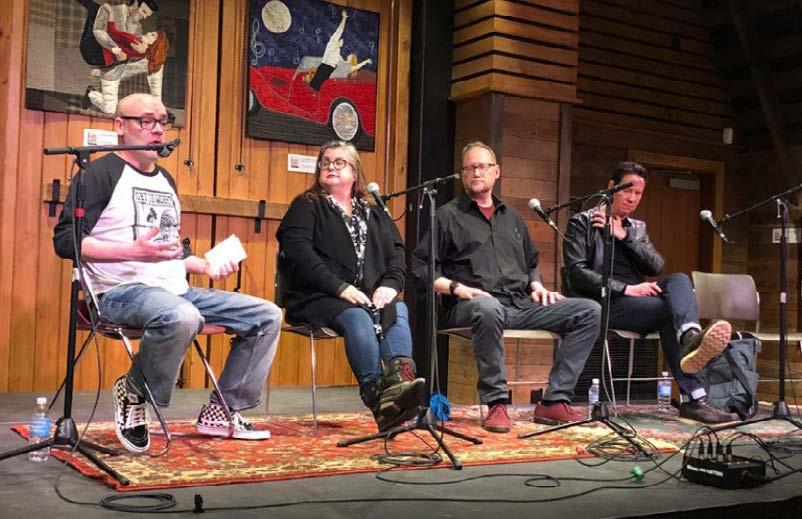


You’ve written a lot of comedy but BuiltByHartis a drama. What was it about this story of 1930s dust bowl migrants in California that drew you?
The one thing I’d always—ALWAYS wanted to write was a screenplay. I tried for years to complete a feature-length script and could never get through one. I couldn’t seem to write one, but also? I couldn’t stop trying to write one. When I was 38, I was diagnosed with a very early, easily treatable form of breast cancer. It was just enough of a wake-up call for me to get my act together. The key turned out to be joining a writing group. I’d bring in ten pages at a time, and eventually, with the encouragement of my fellow aspiring writers, I finished one. Preschool Wars was about two friends battling to get their toddlers into a fancy LA preschool. The script was by no means a masterpiece, but just finishing it was such an accomplishment. I learned to put aside my perfectionist tendencies and embrace the concept of a “vomit draft.” In other words, I finally accepted that the story didn’t need to be perfect before I started writing. I just needed to get it down on paper.
I’ve always been drawn to so many diverse aspects of the entertainment industry that it took me a while to figure out where I belonged. My dad and I used to watch stand-up comedy together growing up, and I always knew it was something I wanted to try one day. At the same time, I always loved singing and expressing myself through music and song lyrics. I feel so fortunate to have had a chance to explore these different avenues of artistic expression.
The biggest challenge I faced as a beginning screenwriter was developing the plot. I’m very good at coming up with a concept and characters but executing the details—the actual “what happens and when” was difficult for me. So, as an experiment, I decided I wanted to try to adapt a true story to see if that made the process any easier.
7777
INTERVIEW WITH
As a parent living in the age of climate change, I wanted to find a story that reflected the challenges of raising a child while facing an uncertain future. I imagine perhaps that’s how parents felt during the Great Depression, so I searched “children” and “The Great Depression” and came across the book, Children of the Dust Bowl, which chronicled the lives of refugee children who had fled the Midwest in the 1930s and settled in California. This was a few years ago when our own nightly news was full of reports of immigrants being placed in cages under the Trump administration. The parallels between the way our country was treating immigrants, and the way the desperate Midwest farmers were treated when they arrived in California in the 1930s, were too glaring to ignore. So here was an uplifting, true story that I’d never heard of, where acceptance and generosity triumph over the forces of oppression and fear. The stars aligned, and I felt I had to write it.
BY: DEBBIE ALISONHENNESSEY BONN
you said you wanted to be a screenwriter early on, but it took you a while to get there. Tell us a little bit about your path.
Your writing has taken many forms - songwriting, stand-up comedy, articles, screenwriting.
Built By Hart was the second script I wrote. Mind you, I rewrote Preschool Wars so many numerous times trying to improve the story that it felt like twenty different scripts when all was said and done. I finished Hart right at the beginning of the pandemic. Suddenly I was a mom of a then 6-year-old son, thrust into zoom school and end-of-the-world supermarket shopping. A fellow writer from my group helped me do one quick round of rewrites before I submitted it to Nicholls. I figured I had nothing to lose. I was honestly floored when it made it to the
Blue Mountain Review / July 2022
Your screenplay BuiltByHart won the Screen Craft Family Screenplay Competition and made it to the quarterfinals two years in a row in the Academy Nicholl Fellowships in Screenwriting. The second time was after a rewrite and out of 8,191 entries. Tell us a little about rewriting the script. What kinds of changes did you make?

7979
The Journalism degree was supposed to be a practical way to earn a living as a writer, but yeah, that didn’t pan out. It was never my passion; what can I say? Still, it’s nice to have a master’s degree. And yes, I do love taking writing classes. The deadlines. The camaraderie with the other students. The education. The instructors. Classes are the best, but they do add up after a while, monetary. So that’s why finding my writing group ended up being such a game changer for me. Suddenly I had deadlines, encouragement, and support from a gathering of like-minded, aspiring writers. We all truly want the best for one another. And we’re dedicated to improving our craft. I look forward to our weekly Thursday night gatherings because after five years together, it’s not just about the writing, it’s about the friendships we’ve formed.
Has being a mom changed your writing? Becoming a mom truly helped me find my voice as a writer. I now know what I want to say and why I want to say it. There’s an urgency driving me to get the stories out of my head and onto paper. And to prove to my son that if you set your mind to a goal and work hard at it, you can achieve it. On the practical side, becoming a mom also helped me become far more productive. If you know you only have an hour to write before your kid comes home and demands dinner, you force yourself to write in that hour! I can honestly say that I’ve gotten more done in the past five years as a mother with very little free time than I did in my twenties when I had all the time in the world! Plus, writing is my therapy. It’s my escape. It’s the world I can control. There’s nothing I’d rather do in my free time—when my son is at school, and my husband is at work— than sit at my dining room table with my dog in my lap and get lost in my writing for hours on end.
quarterfinals. A few months later, the same draft ended up winning the Screen Craft Family Screenplay competition. To say these acknowledgments were much-needed boosts of confidence doesn’t even begin to explain how much the accolades meant to me.
What are you reading/watching now?
I’ve been trying to watch a lot of TV in the name of research (yeah, that’s it, research) since I’m working on two spec pilots right now. My son and I watch Ghosts (both the American and BBC versions) and Abbot Elementary. My husband and I are finally getting a chance to watch Succession. And when I’m on my own, I’ve been watching Better Things, and Our Flag Means Death, both of which are amazing. I’m reading writer/producer Brett Paesel’s memoir
Mommies Who Drink
In the midst of homeschooling my son the following year, I did my best to rewrite the third act and resubmitted it to the Nicholls again, hoping it would improve it enough to make it to the semifinals. Unfortunately, it did not. But the notes I received from the judges were very consistent and clearly articulated what needed to be done to get the script to the next level. One day, I’ll return to the project and make those changes. But for now, I decided I was ready to return to writing comedies.
You have a Master’s in Journalism from Boston University and have taken some intense courses in screenwriting. You are also a strong proponent of writers’ groups. What are some of your favorite writing programs, and what makes an effective writers’ group?
80 The BLUE MOUNTAIN call SUBMISSIONSfor The Blue Mountain Review is accepting new submissions of Poetry, Prose, and Visual Art. The Blue is a Southern publication, but we draw no boundaries or borders on that interpretation. “Southern” is a soul more than a spot on a map, and everyone is south of somewhere. We seek pieces that boldly create something new from the ether of the timeless, works that go beyond sparking interest to ignite something that smolders. Works that matter today and will still matter tomorrow. Visit our submissions page www.southerncollectiveexperience.com/the-blue-mountain-reviewat Review


InterviewsvisualArt

Interviewsvisual

I struggled so much and to avoid going to school, I tried all sorts of crazy things. Like one time I tried burning my fingers and ended up lighting the storage room on fire. At one point, I pretended to talk to spirits so my par ents would keep me at home. Over my early childhood, I made every excuse known to a pre-teen and my poor par ents had heard it all. I had to up-thegame each time for them to believe me. One day I fake cried with a stomach ache and ended up in a coma. Doctors performed an appendectomy on me because they didn’t understand why I was in so much pain. During the sur gery something unexpected happened and I fell into a coma. I regained consciousness after three days. That incident changed me completely. I struggled quietly for many years but I promised myself that I would never do anything that would hurt me, in fact I became determined not to quit school and to prove to the world that I am normal. I knew I had to work extra hard to achieve my dreams. I owe alot to my English teacher, Mr Geroge Anthony. He noticed that I was differ ent and took the time to understand and coach me on how to overcome my challenges. He would give me tips on how to pronounce words and how to
What does your name translate to? We all search for meaning and purpose, a sense of belonging to a greater com munity. My source of energy comes from helping others by using my voice and talents and I am at peace with my self when I’m engaged in charity work or creating art, both which give me a great sense of purpose. I graduated with a finance degree and went straight into the corporate world where I worked for several years. Although grateful for the experience, work was a huge energy drain for me. I did not find a sense of purpose and I had strong feelings that it was not my calling. Every fiber in my body was giv ing me signs and I finally came to terms with these signs and quit. It did take me a while after I quit to find my calling. I slowly gravitated towards art for a couple of reasons, my father was an artist and after his death, painting gave me a sense of connec tion to him which gave me peace. The second reason is dyslexia. I grew up not knowing I had dyslexia and once I found out, it hit me like a ton of bricks but while it was kind of depressing to find out, my childhood experiences made so much more sense. I immediately knew that I had to begin sharing my journey as so many others are suffering, which is why I began to focus my energy on social causes. Nobody on this planet is perfect, and there are things that we simply cannot change – and that’s okay! Instead of seeing your flaws as obsta cles, look for ways to make a difference.
8383
INTERVIEW AFREENWITH KHUNDMIRI
“Life isn’t about finding yourself. Life is about creating yourself.” ― George Bernard Shaw. My name, Afreen, is Persian and translates to Praise and Acclamation. Dyslexia created a void between you and education. How did you close that gap?
BY: CLIFFORD BROOKS How do you define yourself in the Universe?


Blue Mountain Review / July 2022 84 play on my strengths. I clearly remember the first things he taught me, “try to understand the word, take your time to read and place your finger under each sentence so you won’t jump or skip lines”. It was these small techniques, which gave me confidence. My con fidence grew more and more each day and I also became more aware of my abilities. I began ap plying the techniques Mr. George taught me outside of school and I came up with my own system to mask mistakes. The con fidence boost made me more active and social. Being on stage and facing people was my biggest fear as I struggled with word pronunciation but that didn’t stop me. Mr. George pushed me to audition for a Char lie Chaplin role for the school play. I got the role and nailed it. Since Charlie Chaplin was a silent actor, it was perfect for me and helped me overcome stage fright. I went on to play Charlie Chaplin for four years in high school. I had no idea what Dys lexia was growing up, just that I was different from everyone around me. I naturally gravitated towards sports, art and stage plays as I excelled in these areas. I knew deep inside that I would never be able to compete in traditional studies but my drive to make my family proud was always there, so I made it a mission to excel where I could. I participated in many stage shows and

I quit my IT auditing job after 8 years in 2018 to become a full time artist. After the loss of my father, Talib Khund miri, an accomplished Islamic architect who designed over 500 mosques throughout southeast Asia, I was search ing for peace and purpose. I wanted to be connected with him somehow and painting was the medium. Art brings happiness into my life and is how I communicate my feelings; connect with my faith and with others. As my artwork gained fame, I received requests to donate my paintings to raise money for charity. I donated several paintings and along the way, I came to the realization that there are so many people that want to donate and help charities and there are also so many people in need. I took immediate action. There are so many great charities but I thought that I too could make a little difference and founded Lillah Services Inc. Lillah means for the sake of Allah without expecting anything in return and I chose the name in memory of what my father who would always say to give with no expectations.
Charity work is so fulfilling and rewarding, though at times dealing with so many real issues and suffering takes a toll on you. I have developed a great network in the US and India and have a great team that delivers on the mission
8585 painting competitions. I won many awards for the school and made headlines in my city’s newspaper, but still failed to divert the teachers attention from my lack of interest in general academic studies. Despite gaining attention and popularity, I was never able to shake the feeling of being dumb in school. Although I didn’t know I had Dyslexia, I knew I was different. What makes you happy?


86
Identity: I was lucky to grow up in a home where art was celebrated, it was part of our life. I loved how my father would bring home designs and share his work with us. As his designs were mainly Islamic architecture, at an early age it instilled in me a connection with history and identity of being a muslim. We all want a connection to our iden tity and it gives us a feeling of purpose. My paintings are generally on the topics above. Identity is especially important to 2nd and 3rd generation muslims now living in the U.S. and I try to bring a connection back for folks to remind them of their rich heritage.
Social Change: My faith commands me to stand with the oppressed and use my voice for change. Through the Lillah Services platform, I bring awareness and assist the less privileged with critical medical care, food nourishment and education Inspiration:assistance.Ialsoshare
of Lillah Services, every day. Painting and charity work make me whole and happy. The apple doesn’t fall too far from the tree, as the saying goes. My father, too, was very involved with charity work. How has your faith inspired your peace, your fierceness, and your art?
a lot about my experiences to raise awareness about dyslexia, with hopes that it may shed light and help someone deal or bring closure to an aspect of their life that has been haunting them. I have also spoken about social issues such as the role of mothers in marrying their daughters off at a young age, color equality, farmers rights and religious racism.
Faith is at the center of my activities, in some cases directly and in some cases not so directly, but it’s woven into my work. Whether it’s social change, inspiration or identity, my faith guides me and nourishes me.


8787

Interviewsmusic

Interviewsmusic

More About Asking For A Friend: Mostly recorded in three distinct sessions at three different studios during the pandemic and never played live—their first album since 2009’s Mantis of which fans haven’t gotten a sneak peek of from stage—Asking For A Friend explores a feeling that UM guitarist and vocalist Brendan Bayliss describes as “tapping into the idea that we were all isolated yet somehow still connected and experiencing the same emotions.”
March 11, 2022 - Chicago, IL - It’s been twenty-four years since Chicago’s own eclectic rock and roll outfit Umphrey’s McGee played their first show together. In those two dozen decades, the band has all but conquered the live music scene, put out 14 studio albums and countless live releases, and quite frankly, matured—as band members, husbands, fathers, and importantly, as musicians and songwriters. Their collective, earned maturity has never been more prevalent than on UM’s forthcoming full-length album of entirely new music, Asking For A Friend—a collection which legendary music journalist and author, David Fricke, calls “the best and most emotionally direct album Umphrey’s McGee have ever made.”
That isolated feeling is perfectly captured in the album’s cover art: the lonely, surrounded-by-clouds peak of Chicago’s John Hancock Center (or 875 N Michigan Ave) photographed by “Chicago’s Picture Poet” himself, Barry Butler.
O
July 1st via Nothing Too Fancy Music; Talking Circles podcast deep-dives behind the songs of Asking For A Friend; Hear new single “Small Strides” now “Asking For A Friend is 14 songs of crisis and doubt, theirs and ours, that point forward again.” - David Fricke
9191
Today, the band premiered the second track on Asking For A Friend, “Small Strides.” Standing on a rock-solid foundation of drums and bass from Kris Myers and Ryan Stasik, respectively, “Small Strides” highlights how UM processes individual influences—in this case everything from kick-drum driven pop and dance music to heavier, guitar and synth riffing—and recapitulates them into a style and sound synonymous with the band while singer Brendan Bayliss’s opening line encapsulates a universal feeling of the past few years: “I’m so tired of the run around / Everybody’s all wired to burst.” Fans can hear “Small Strides” at this link, check out the previously-released single “I Don’t Know What I Want” here, and pre-order or pre-save Asking For A Friend ahead of its July 1st release right here.
INTERVIEW UMPHREY’SWITH MCGEE GO ABOUT REFINING THEIR SIGNATURE SOUND ON UPCOMING ALBUM ASKING FOR A FRIEND BY: HEATHER HARRIS
ut
In a first for the band, Umphrey’s McGee have teamed up with Osiris Media to produce Talking Circles, an Asking For A Friend-centric podcast. With episodes leading up to the album release and stretching through the summer, Talking Circles will tell the story of the writing and recording of this set of brand new songs. Utilizing demos, live recordings, alternate takes, mix stems, and interviews with all six band members, fans of the band will get a unique look into the creative process—including the story of how Asking For A Friend came together in the middle of a global pandemic, as well as look at the space this album occupies in the rich history of Umphrey’s McGee.
Session two found the band at guitarist Jake Cinninger’s home studio in Niles, Michigan, deep in the throes of the first few months of the global pandemic. Working on new music by day and performing via live stream at night proved to be highly successful and entertaining for the band who’d just been sidelined a mere three months before. The final full-band session for Asking For A Friend took place at ECTO productions in Chicago, a.k.a. the band’s production warehouse. Relying on the record during the day/perform at night mentality once more, UM completed full-band, live tracking for the record before putting finishing touches on from their home studios. “It was a real welcome change to be able to sing the vocals in my pajamas,” says Bayliss.
Pulling the ripcord and taking an enforced Photo credit: abby fox photography
Photo credit: Phierce Photo credit: josh timmermans
Photo
Asking For A Friend began to take shape in a pre-COVID world during September 2019 when the band met up with longtime UM engineer Greg Magers and producer Ryan Hewitt (Red Hot Chili Peppers, The Lumineers, The Avett Brothers) in Nashville for a session that would ultimately produce standalone UM single “Suxity” as well as the first few tracks of this new album.



More About Umphrey’s McGee: Chicago’s eclectic rock band Umphrey’s McGee has been keeping fans on their toes for 24 years now. Though often pigeonholed into “jam band” circles, Umphrey’s doesn’t fit that traditional mold; and their fans don’t either. Is it prog rock? Song-forward Beatles-esque arrangements? Be careful, they might hit you with some metal riffs mid-set, too. Amongst 2,200+ gigs and 250 million+ tracks streamed, you-had-to-be-there moments include the band’s performance at the first-ever Bonnaroo and selling more CDs (remember those?) than any other act on the bill. A leader in the live music world, Umphrey’s McGee became the first group to launch its own single-artist streaming service with UMLive.net, which houses recordings of every gig since 2005. The service has since grown and now lives on through Nugs.net, which is used by the likes of Pearl Jam, Bruce Springsteen, and more.
9393
Photo credit: Jake Wisdom Photo credit: Dave Decrescente Photo credit: phierce photo Photo credit: Tara Gracer
break after twenty years of touring resulted in not only a complex emotional reaction from members of Umphrey’s McGee. “Those first three months felt like an eternity,” keyboardist Joel Cummins says. But “there was a huge excitement and motivation when we got back together again. More than ever, we realized how much we needed each other and this music. But their reunion also refined a newfound approach to letting their new music flow freely; not overthinking it. “This album reflects how our songwriting has really come a long way since the days of putting ‘legos’ together, a term given to explain our past process of assembling the greater sum of the parts in eclectic fashion,” says drummer Kris Myers. “Instead, we were able to naturally connect with these songs with our hearts, and a little less from our heads through simple, serene songs.” The end result is an astoundingly cohesive fourteen song album that feels like a fresh statement from a group of world-class musicians and friends reapproaching their craft with a new lens, but long time fans will be happy to know that the Umphrey’s McGee they know and love is still very much present on Asking For A Friend, just more refined. More focused.
Catch Umphrey’s McGee On Tour:
Photo credit: Levene Photographers
Photo credit: JRemy Photography
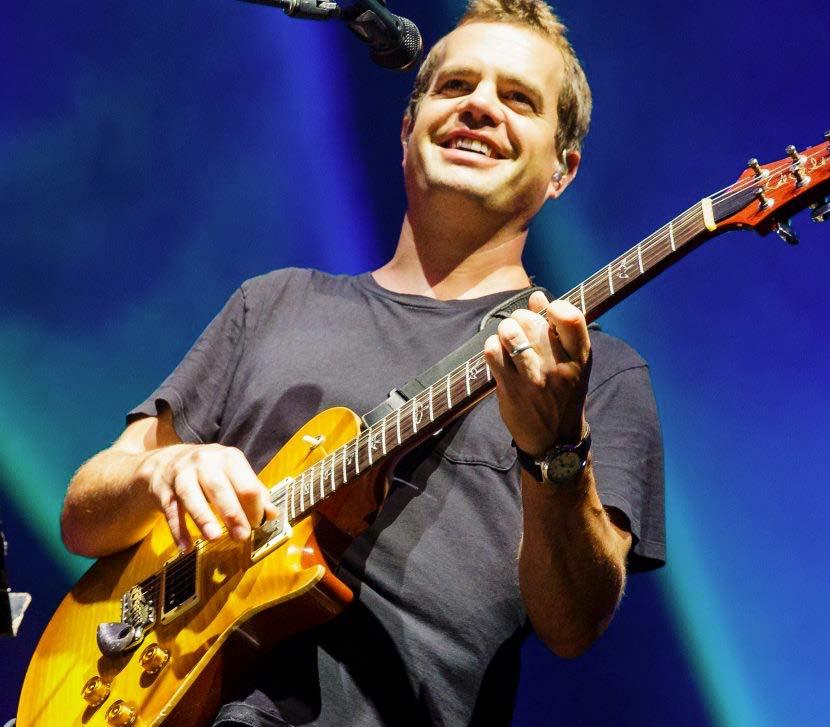


Blue
Mountain Review / July 2022
Beyond intimate backstage encounters and ski trips with their most diehard fans, Umphrey’s McGee instituted the groundbreaking “Headphones & Snowcones” program, granting fans access to professional headphones and a soundboard-quality mix to listen wirelessly at shows. At their UMBowl, they empowered the audience to vote on the setlist in real-time and choose favorite improv themes via text message. In 2017, they stepped into another realm altogether by integrating themselves into the VR Platform Endless Riff. All of the above has earned the band status as kings of the live music scene with a standing yearly 3-night engagement at Red Rocks, their own events in Iceland (Rockjavick) and Mexico (Holidaze), and co-hosting Chillicothe, IL’s long-running Summer Camp festival. In June, Umphrey’s McGee’s new release Asking For A Friend will showcase more evolved songwriting and thoughtful arranging from a band continuing to grow and mature with their droves of die-hard, longtime fans.

Who are your top five major influences and why?
Most of the covers we do are songs that the band members grew up listening to and love, so it’s usually just stuff that we get excited about playing. We often make an attempt to add something unique to the arrangement or change up the feel of the song. Sometimes when choosing songs we won’t even listen back to the original and will just jam on it from memory and a different feel happens naturally that way. Playing this stuff on the road also really helps - after years of touring all the originals and covers that we play tend to evolve organically and take on a life of their own.
Stevie Wonder, James Brown, Michael Jackson, Prince and New Edition honorable mention Biggie Smalls, Frankie Beverly & MAZE and Boyz II Men - Corey
What are you reading right now?
Probably we would define ourselves by our dedication to our craft, to musicianship and love for the music, for the fans and for each other. That’s what had kept us going throughout our career and that’s what makes us feel like we’ll never stop. – Max
9595
My top 5 musical influences
I’m reading Foundation by Isaac Asimov - Reuben
If you could put on a concert with three other bands, alive or dead, who would it be? Why those bands?
For bands of the past: Earth Wind and Fire, Led Zeppelin, Allman Brothers. You get funk and soul, hard rock, and psychedelic/blues/jam, but in all cases you have classic songs and melodies, and a ton of groove. For bands of today maybe Anderson Paak with the Free Nationals, Khruangbin, and Tame Impala. Those are three bands that have amazing songs and each has a unique and unmistakable sound that draws from the past but also sounds new. Defi nitely big influences and inspirations on us. - Max
Every cover you play you put your own signature spin on. How do you pick the songs you cover and who do you add your own flavor to it?
INTERVIEW WITH BY: CLIFFORD BROOKS THE MAIN SQUEEZE
The Main Squeeze possesses a funk rarely found in one band. How do you define yourselves?
Stick to what you know how to do best and execute with the highest con fidence and don’t. be afraid to jump out of your comfort zone. - Rob
96
How much natural and technical training do you feel is necessary to get ahead in your profession?
Some form of training and practice is essential in any profession, including music. The ways in which you develop your skills can vary with all the tools we have at our disposal in 2022. The fact that we have mostly every piece of recorded music at our fingertips in combination with YouTube, you can really learn a lot on your own. It’s just a mat ter of staying focused, putting the work in, and differentiating yourself stylistically so you can find your own sound. - Smiley What advice do you have for musicians trying to get ahead in the game?

9797 How have you stayed sane in the time of COVID? The pandemic was a blessing in disguise for the band because it allowed us to feel what it was like to be off the road. We had been touring consistently for 8 years, averaging 150 shows a year, so we appreciated the break. Once we set tled in to this new reality, we were naturally writing a lot together and used it as a positive. We were also very lucky to all be living within 5 minutes from each other during the lockdown, so we were able to meet up a lot. - Smiley What big projects do you have on deck? We have our new album coming out this Spring that we’re very excited about! We also spent our time off of the road stacking a bunch of unreleased music that we’re putting the finishing touches on. There will we be plenty of new Squeeze coming your way soon! - Corey How do we keep up with you online? Instagram: @instasqueeze Facebook: The Main Squeeze TikTok: Spotify:YouTube:@mainsqueezebandTheMainSqueezeTheMainSqueeze

For me, everything is about the creative process. And work. I live for both. Whether you’re writing or playing music, it’s about being open to inspiration and the whole experience that follows from being involved in that process. I’ve heard it said that mathematics is the language of the universe. Math is not my friend except that music is a kind of math. On some level — no, this is not an acid flashback — music is an analog or algorithm or whatever the right word is, of bot math and the underlying deep structure of being itself. (Maybe this is an acid flashback.)
WITH
How deep do your roots go? Tell us about your unique journey to master the mandolin.
The mandolin is my mistress (don’t tell my wife), but I’m not sure I’m its master. I am merely a humble pilgrim on a long and meandering journey reaching from the past through today and into whatever the future holds.
BY: CLIFFORD MICHAELBROOKS ROMKEY
I believe anytime you are playing music, you’re having a conversation with God. Or the universe. Or life. Whatever word you want to use. (I’m cool with “God.”) If you can open yourself to that — well, now you’re doing something worth doing. How would you describe the relationship between a poem and a song? What’s the connectivity of sound between them? They’re one in the same. But I’m an English major.
I started on guitar, which I still play. When I was 13, we had a family friend who was a 1960s folksinger. He fingerpicked a Gibson classical guitar.
I’d always been interested in music, but when I heard “House of the Rising Son” and Dylan’s “Don’t Think Twice,” I was hooked. I played guitar all the way through college. I was in a hippie country band — the Burrito Brothers, Asleep At The Wheel, the Dead. In fact, we opened a show for the Burrito Brothers and did some other shows like that. At some point I became interested in old fiddle tunes, probably from listening to people like Doc Watson and Clarence White play them on the six-string. So I got a Martin D-35 and taught myself “Billy in the Low Ground.” That went on for a goodly while. It finally occurred to me: “Hey, these are fiddle tunes. What if I tried playing them on the fiddle?” I played a lot of fiddle for about 10 years and have recently picked it up again. My son, Matt, who is a hell of a mandolin player, started playing after being inspired by Chris Thile. So I ended up getting a mandolin — a 1949 Gibson F12. And, frankly, it was easier to play than the fiddle. You have a pick instead of a bow, and there are frets on the neck, it’s a lot more like a guitar. It was an easy transition from violin to mandolin by way of guitar. Fast forward 20 years. I’ve had a lot of mandolins — today Matt has the ’49 Gibson — and it’s just my passion. What is your philosophy behind a well-lived life?
9999
INTERVIEW
Who are your heroes of music? Why?
TheyWhy?worked hard and were creatively inspired. You have to work at it for it to be anything, even if your horizon is modest. You’re also a novelist. Fill us in on your catalogue.
Blue Mountain Review / July 2022
I wrote a series of vampire novels, the best know being, “I, Vampire.” For me, it’s either writing or music. Writing is a lonely pursuit. Especially today. If you’re a musician, even if you just perform in the coffee shop or at your kitchen table with a friend or two, it feeds your soul.
Everybody sits at the feet of Bach. I’m not a classical player, but I do play some Bach every morning on the mandolin. My list would be too long. Thile is a mandolin monster. My former teacher Mike Compton, who played a long time with John Hartford. Adam Hurt, my clawhammer teacher. Jerry Garcia, who blew it. The Beatles, who didn’t.
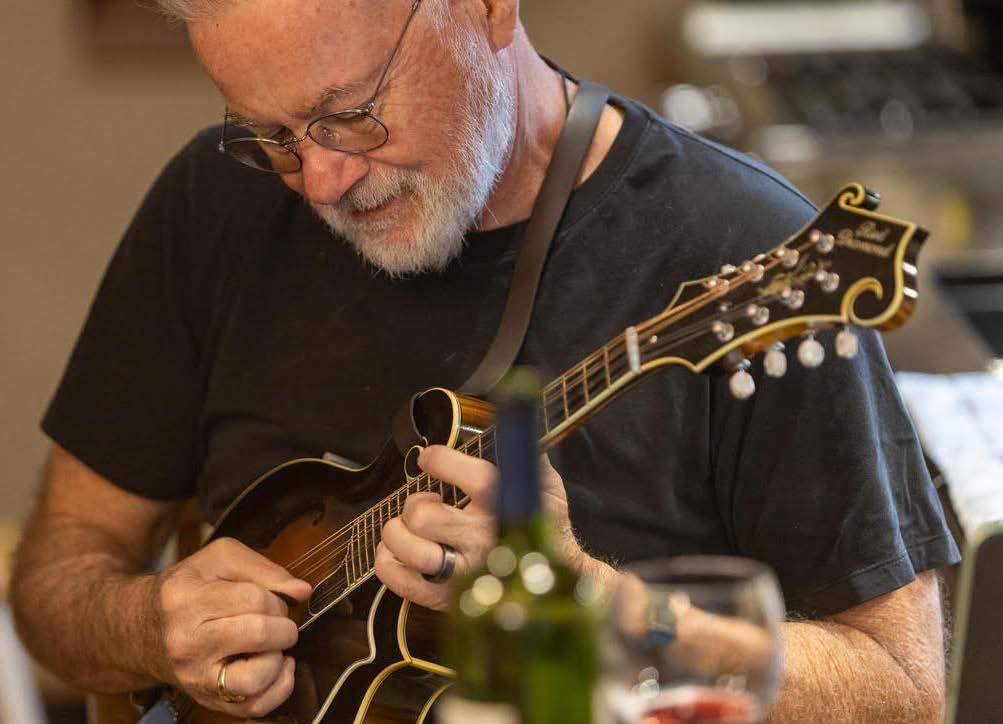
101101
What’s a question you’ve never been asked but would love to answer? What is the air-speed velocity of a sparrow? What are some of your favorite venues to perform? The Telluride Bluegrass Festival. How do you stay positive and productive? It’s who I am. I’m an optimist working out of a cynic’s duck blind. What new projects are you on top of now? I’m getting serious about doing some recording. I have a new MacBook Pro M1 Max on the way. I’m really looking forward to plugging in my interface and some mics and passing the winter productively. How do we keep up with you online? Www.bucktownrevue.com. And The Bucktown Revue YouTube channel.


www.southerncollectiveexperience.com/the-blue-mountain-review/

103103
INTERVIEW WITH
BY: ANDY SWEETWATERWHITEHORNE 420 FEST
I must agree with Trey. I never needed you like this before. In my adult life, I have always had the pleasure of being carefree and catch the wind to take me wherever I wanted to go. Nine times out of ten, I found that place to be live music. Concerts, gatherings, festivals, symphonies; I even enjoyed attending my young nieces’ dance recitals. Then, in a flash, like all of us so quickly learned, it was gone. No more feeding my life, my heart, or my soul with that which had always been my go-to when I just needed a reset in life. During those two long years, I found myself streaming hours of live music on many different channels just to get my fix. I bided my time and patiently waited. I was lucky enough to attend several “COVID SAFE” events during the summer in 2021 (wearing a mask and socially distancing the entire show). They always seemed shrouded by a negative energy filled by fear of the unknown; I never felt completely full. 2022 arrived like a welcome refreshment to a parched traveler. I was going to be able to attend one of my favorite festivals, partly because it takes place in my own proverbial backyard, and partly because the music always delivers. I was not disappointed.
April 28-May 1, I attended the Sweetwater 420 Fest presented by Happy Ending Productions. I was home. The moment I walked in, I could smell the festival air and hear the excitement and prattle stirring amongst a common ally, my fellow festivalgoers; I knew this year was going to be different. I knew that I was Withback. artists varying from seasoned veterans to new members of this great community of musicians, the festival delivered at every level. This festival is not only for music. One of the main themes of Sweetwater 420 Fest recurring every year (as it typically coincides with Earth Day) is, “We’re here for a good time, She’s here for a long time” and to that end there was an excellent Eco-Village designed to raise consciousness and concern, whilst paying respect to this great planet on which we all depend. Focus on sustainability, the concepts of reduce, reuse, and recycle, and philanthropy through music were more of this common theme. Additionally, it is filled by an amazing Food Court featuring some classic Festival Favorites – I am pointing at you, Island Noodles – along with a variety of Atlanta food trucks. The experience


Images by Jessica Hayes
104
doesn’t stop there. A market filled by over 25 artists featuring items including clothing, photography, paintings, jewelry, and even things you may have left at home. Sunscreen and sunglasses were both popular must haves. All of this was fueled by music. Loud drums, singing guitars, chatty horns, and screaming admirations from a willing audience ready to be taken on an adventure. Every moment of each day found new highs from some new artists, followed by a lesson in pure improvisation and musical weirdness by veterans who have long paved the way for the new class to come and learn.
Of these, my favorite performances will have to be those from my own favorites Umphrey’s McGee and Trey Anastasio Band, the latter of which pinned the words to his Covid Anthem, “I Never Needed Your Like This Before.” Understandably, my favorite moment of this festival occurred during the final show by a 20-year-old band with only one album and has only had five live performances in the past 20 years, Oysterhead. A power super trio made up of Trey Anastasio (Phish, Trey Anastasio Band), Les Claypool (Primus, Claypool/Lennon Delirium), and Stuart Copeland (The Police). The level of weirdness, nuance, and pure genius that come from this trio top just about any live show I have seen in any capacity. Only five performances in past 20 years – and I am fortunate enough to have now seen them twice in that time. Sometimes you never know what you need until it arrives. I am thankful for this experience and remain hopeful that our re-introduction to the live experience continues to be fueled by the lessons of the past, and our renewed hopes for a better tomorrow. As this festival so beautifully reminds us, “We’re here for a good time. She’s here for a long time.” I encourage anyone seeking a new experience with music, an excellent fan community, and a good time to check out Sweetwater 420 Fest. It will not disappoint!


SpecialFeature

SpecialFeature
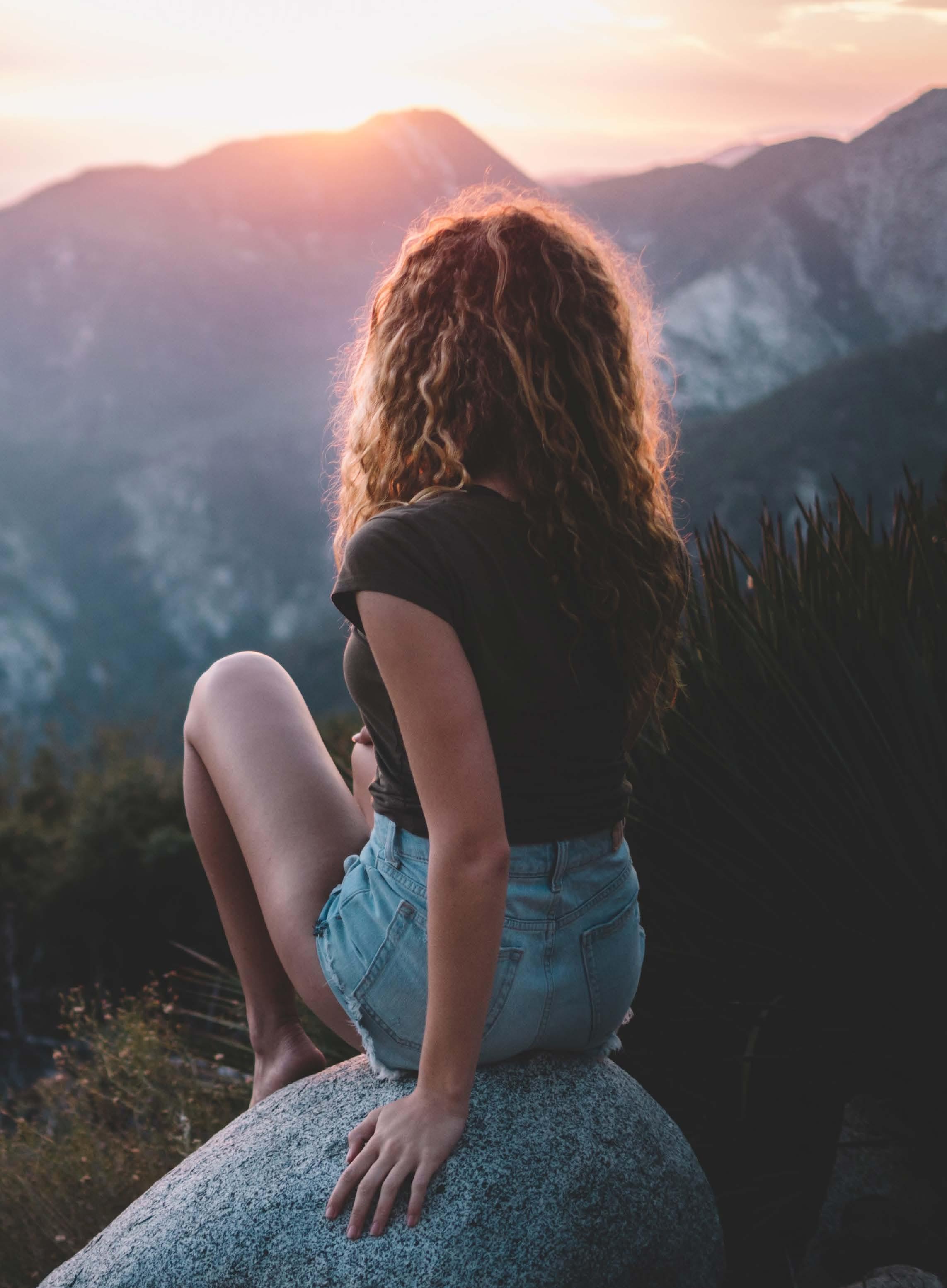
When in 1988 I met my wife, Page, in the Café I had just opened in Brookwood four months earlier, and shortly thereafter committed in my mind that she was to become my wife and the mother of our children (Godwilling), I also told myself that we would not work together. So much for that dictum! (Clearly the future holds unknowns for us all...every day!)
Page has remarkable talents and skills in envisioning, organizing, planning, and seeing plans through to completion. She is, as well, supremely energetic. Page gets things done! Thus, I asked her to contribute her thoughts and efforts, so that we could meet the challenges as a team. She jumped in, and has had incredible impact on what Café Intermezzo is, what we do, and all that we accomplish Page has brought our bakery, and our organization, to new levels of successful operation. She continues today, leading our bakery manager, Omar Sharifi, and our team of baking artists, to ever new and delightful presentations of the beautiful and delicious Baker’s Art! I am forever grateful for whom she is, and what we are accomplishing together.
introducution by Brian Olson
You brought Cafe Intermezzo from first thought to now several locations. What is it that drove you to build this unique experience?
In 1969, I had just finished my Junior year at the University of Arizona. I lived at home, and hit the road for the summer to Indianapolis, to spend time with my girlfriend’s family, and to possibly find work with a band, as I was a drummer. My girlfriend’s dad was an Indy race driver named Roger McCluskey, and I got to the city a couple days before the 1969 Indy 500. (Roger placed 11th, and his partner, A.J. Foyt, placed third.) The day after the race, just before the Awards Banquet, my brother-in-law called to tell me my mom wanted me to come home. My parents were vacationing in Northern Arizona at the home of friends, and my dad had a stroke while fishing. He was 47.
INTERVIEWBROOKS WITH BRIAN OLSON CAFE INTERMEZZO
BY: CLIFFORD
107107
As my partner in life, she was, of course, also my partner in owning our business. About five years ago, we were moving toward securing the locations in Dallas, Texas, and then in Nashville, on track to share our European Coffeehouse concept with guests in other parts of the country. Various circumstances brought the two closer together in timing, and that brought financial pressures. Commensurately we faced challenges with the management of our bakery, EPIC Baking, which creates cheesecakes, tortes and cakes for our cafés. Pastries are fundamental to the European Coffeehouse which Café Intermezzo embodies, and are, along with coffees, the Prime Ingredients to what we do, to whom we are.
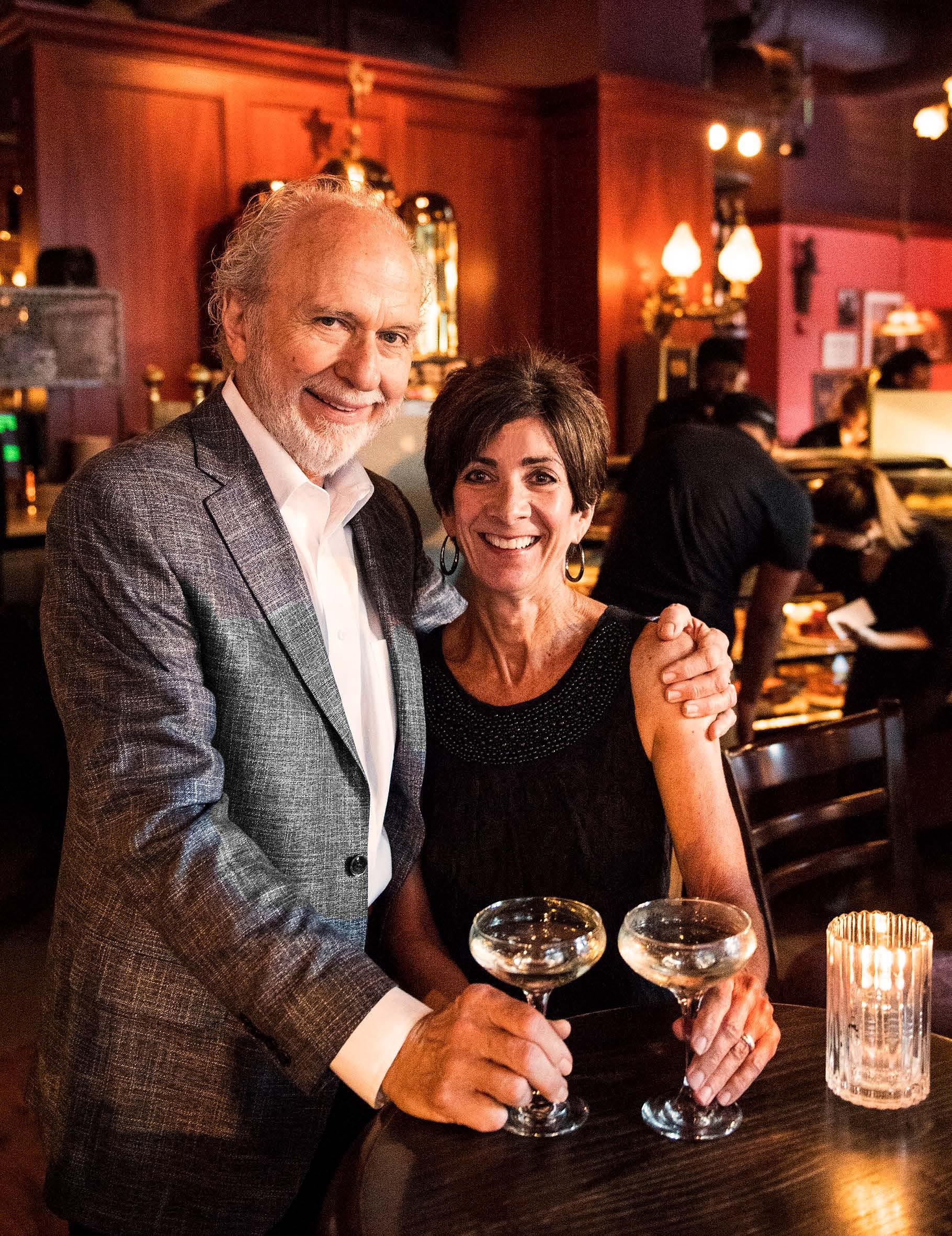
Two years later, in 1971, I arranged to travel to Europe for the first time. I started in Berlin, where my cousin’s sister-in-law, Bitti Steckel, who grew up there, showed me the city. She introduced me to a konditorei, the elegant European café, which immediately touched my heart and soul. A seed was planted. I proceeded through Germany to Switzerland and Italy and Austria, loving the distinct cultures while gently nurturing that seed of love of the European coffeehouse. Who are you? Give us the story about you that gives you purpose. Back to Tucson the next month, I worked another year managing the record store and finishing at the U. of Arizona. I had for many years longed to move back to my original home town of Minneapolis and, following my mom’s new marriage in 1972, did so. I got together with my Dad’s old boss in the outdoor advertising industry, a man named Bob Naegele, whom I had known and admired all my life. I met with his son, Bill, who had developed a passion for the restaurant industry, and was building restaurants in the Twin Cities. Bill’s passion and enthusiasm for life and for the restaurant business touched my soul. He opened a new restaurant in Palm Springs, California, and hired me to learn restaurant management there, beginning in February, 1973. The European Coffeehouse ”seed” was being nurtured. I began learning management through working 70-hour weeks, as the manager wanted me to “really
109109
Roger drove me to the Indy airport (at times hitting 110 to make the flight). I got to Phoenix, then drove with the manager of a record store my dad owned in Tucson, to the little town of Pinetop. I sat with Dad through the night, saw my mom and sister, got a little sleep, and Dad passed-away at 9 Iam.was 21, and immediately took over management of the record store.


110
learn!” I was 25, so it worked, having little sleep on long days and long weeks on my Then,feet. that summer, Bill had me return to Minneapolis, where I was an assistant manager at a new restaurant he was building called Pracna on Main. The building had been built as “Pracna Saloon” in 1890, and it was in “Nordeast Minneapolis,” Minneapolis’ Eastern European enclave, on the Mississippi overlooking downtown. Bill had purchased a copper and brass espresso/cappuccino machine from an importer in Los Angeles. The machine was connected by the electrician, and burned out before the plumber had connected the water. Bill asked me if I could fix it. (I believe this was another stepping-stone on my European Coffeehouse journey.) I am somewhat mechanical, and got the machine working through numerous discussions with Anatol Carpiac, a man my age who ran operations at American Best Coffee in Sun Valley, California—the company from which Bill purchased the custom-built cappuccino Imachine.learned all about the machine, and the recipes for the cappuccino beverages, proceeding to teach the staff how to make them—and how to appreciate them. The sales of the cappuccinos grew dramatically, and extremely profitably. In the Spring of 1974, I traveled to Tucson to visit my mom and sister, and then flew over to LA to meet Anatol and his father, Joseph Carpiac. They were, and Anatol is, wonderful people, who fast became dear friends! I decided to begin selling the machines in the Upper Midwest in my spare time. Before long, I foresaw the ability to make a living at it, so I painfully left Naegele Restaurants, and began traveling 5 states to sell machines to restaurant owners who had no idea of their cost—or their profitability! My role was to educate them on both! After a few years traveling the upper Midwest, I studied the American map to determine a territory in the US where I could have a larger, wider market for the espresso machines, as well as fresh pasta machines that we had also begun importing. I chose the Southeast, with my base in Atlanta.



111111 What are you reading right now?
In late 2017, after having “shopped’ the Nashville market for a number of years, we located a space in a new building in the SoBro area, named such due to its location just south of Broadway. We first opened Café Intermezzo Nashville in October, 2018, and then, after the Covid closure period for all the Cafés, reopened Nashville in October, 2020. We are fortunate to be in a strong growth area in that strongly-growing city, and we are welcoming a wonderful future for the Café there.
In 2008, I was approached by a firm from Spain, named Areas, asking if I had considered licensing my concept, and if I had considered Atlanta Airport as a potential location. I affirmed both, and my licensees and we opened Café Intermezzo in Atlanta Airport in December, 2009. It had a very strong 10-year run, with the lease ending in 2020. (In the later years, we were the fourth busiest restaurant of the more than 130 restaurants in Atlanta Airport.)
Tell us about the different locations Cafe Intermezzo occupies. What urged you to open there?
C. S. Lewis (but not Narnia)
The original and first location, in Dunwoody, I discovered in early 1979, as Park Place Shopping Center was under construction. It touched me, with its high ceilings, its narrow, deep space, and the “Park” in the middle. Outdoor terrace seating is fundamental to a true European coffeehouse, and I was excited by the fact that Park Place provided the beautiful, lush “park” setting in the middle, directly in front of the potential Café space that I chose. (This represented a wonderfully-apropos alternative to the typical restaurant settings in strip centers, where the patio looks out over a parking lot.)
What music gets you off the grid and into a healthy headspace? I am a drummer/percussionist, and that, coupled with having run a record store during my college years—back when we offered 45-rpm singles, as well as the formats for each “album” of mono and stereo lp’s, cassettes, and 4and 8-track tapes—made music a big part of my life. I listen to many classical composers and conductors; jazz; rock from “my” era, including the Beatles, Eagles, Paul McCartney, and Stones; some “folk,” such as Bob Dylan, Peter, Paul and Mary; and some country—including my fellow Tucsonan, Linda Ronstadt (who was a year ahead of me there in high school).
In 2013, we decided to move the Brookwood café to Midtown, in a new building developed by Steve Selig at 11th and Peachtree. It’s a wonderful location, in a high rise next door to the Loews Hotel. That evolved to become a superb choice! In 2015 we located Avalon under construction in Alpharetta, and in discussions with North American Properties, the developer, were able to secure a green space in “the center of the Center,” and built a free-standing, smaller-footprint Café Intermezzo. We have been so fortunate to witness and participate in the growth of Alpharetta and the Avalon area, and the popularity of the Café has been dramatic and most welcome!
8 years after opening the Dunwoody café, in the desire to grow and provide the European Coffeehouse experience to more guests, I discovered an available space in the Brookwood section of South Buckhead. It was an old building, and we built that business over the course of 25 years and 4 months. One night in April, 1988, four months after opening, two ladies walked in, and I was taken by their beauty, especially one of them. I approached her to learn her name, and that wonderful person became my wife, Page, and the mother of our three children! I am grateful to the Brookwood Café Intermezzo for many, many memories, but especially for that of meeting Page!
Where did the name “Café Intermezzo” originate?
We are charged with the responsibility to deliver to each guest on each visit a European Coffeehouse Experience that turns the moment into a departure to another time, another place, through appeal to the five senses. (Food and beverage a merely a part of the mix!) We endeavor to create beautiful memories, and have a significant distinction of having served as a haven of romance for so many people over all 43 years of our service. First dates, blind dates, engagements, marriage proposals…even marriages in the Café…all serve to make romance an integral part of Café Intermezzo’s raison d’etre…reason for being
What is the philosophy that rules the way you do business?
What is your responsibility to your customers?
What are a few big misconceptions about taking on a business like yours?
Bill Naegele, who brought me into the hospitality world; Joseph and Anatol Carpiac, who showed me the world of espresso and cappuccino; and Page Middleton, who brought me into the essence of what True Love really manifests.
In the process of creating my notebook of ideas for the concept of my European Coffeehouse, I determined what this was to be about, and from this evolved the name “Café”, representing “coffee,” and “Intermezzo,” representing “intermission,” a break in one’s day. I sought to create the sociological premise of “The Third Place”…that part of our human life where we don’t reside (“The First Place”); where we don’t earn our livelihood (“The Second Place”); but where we enjoy time relaxing and thinking and planning and enjoying and just being: “The Third Place.”
We are convicted to the tenet that our role, our responsibility, is to transport our guests to another time, another place…to make people happy…to create lasting memories.
People…including managers and staff…tend to consider that we work in a restaurant whose primary purpose is to serve food and beverage. While we do serve food and beverage, these are essentially part of the equation, simply a means of exchange. Our real purpose is to serve experiences. Our real purpose is to create moments which become lasting memories. People can “eat and drink” anywhere, including simply consuming groceries at home. We all “go out” in order to enjoy and experience. We at Café Intermezzo endeavor to deliver the 300-year-in-the-making European Coffeehouse Experience, where life is planned, where big events are made, where love is enflamed, where lives create and enjoy lasting memories. Who was your biggest influence and/or mentor in this process?
Blue Mountain Review / July 2022 112
Did you have capital in the beginning to open the first Café?
I actually had essentially very little capital to put it together. I relied on faith in making it work, and from and through that was able to engender the capital from 3 investors…my mom and the Carpiacs…and a loan from a banker, Woodie Malone with Trust Company Bank, who was the only banker, of 5 that I approached, who believed in the concept and in Ime.am truly grateful to all of these people who believed, and who helped make it happen!
It is the stories of our members that inspire us. With more than 30 million downloads, you can imagine the person al stories that we hear about. There are people who begin their Fabulous journey as they enter their 90th decade. There are those who face debilitating accidents needing to redefine their entire life. We hear quite often from people who actually quit smoking for good. There are active members in war-torn countries, and those without a home that
We’re committed to using evidence-based research to find the absolute best ways to help you become a better per son. We’re committed to creating a magnum opus, the most effective behavioral change experience out there. Were there particular trials and tribulations you triumphed that inspired Fabulous? How did you find strength?
What is your responsibility to your customers?
As a member of Fabulous now for over a year, I gotta ask: How are the narrators of those enchanting pep talks?
Who’s the brain trust behind Fabulous and why did you decide to create it?
113113
Growing up in Tunisia, Sami and Amine were only 16 when they met. A friendship formed like brotherhood, and they would meet again in Paris on the other side of their studies. They shared a common drive: how to help every human being in the world step into the life they want to live. They knew science would be at the heart of their work, and that they wanted it to be beautiful. With their early iteration, they reached out to Taylor, an award-winning designer in Malaysia. Together, these three co-founders crystallized their vision. The Fabulous path would soon lead across the Atlantic Ocean. Their work was welcomed into an incubation lab for startups at Duke University led by world-renowned Behavioral Economics Professor Dan Ariely. Since then Fabulous has expanded to work with other world-class professors around the globe.
INTERVIEWBROOKS WITH FOUNDERS OF THE FABULOUS APP
BY: CLIFFORD
Thank you for calling them enchanting! That is a high compliment in my book. Speaking as the writer of all coach ing in the app, I can share a secret or two here. We were not meek when it came to screening thousands of voices. It was more than a casting call; these words had to find their center of gravity. There was a moment where I could hear these particular voices as I wrote - that’s when I knew we were on to something special. We now joke that we’re like members of a band, someone on lyrics, someone at the mic, with that unspoken communication that band-members might feel as they create something that has an essence beyond any one person.
Blue Mountain Review / July 2022 114
still tap in and take part in striving, every day. It’s an honor to walk, side by side, with so many people building their best life. Their triumphs and tribulations are the ones that inspire us every day. How does Fabulous outdo all others on the playing field? How do you stand out?
What bands and/or books are the creators of Fabulous into right now? The company supports reading amongst ourselves as part of what it means to work at Fabulous. We have a book club in real time, as well as a reading board that keeps asynchro nous conversations going, so folks can read when they like and leave com ments for the next reader, whenever that might be. These books are on a wide range of subjects: a few scientists we return to are Carl Sagan and Rich ard Feynman; and psychologists like Carl Rogers and James Hollis. We love the work of Kristen Neff on compas sion and the neuroscience of Andrew Huberman. What’s your philosophy to a life well lived? The app is based in part on Stoic philosophy. Take Epictetus saying, “It’s not what happens to you but how you react to it that matters.” And Seneca reminding us of
There is one thing that saturates all we do: the sincere hope to better our members’ lives. This is not imagined, it is felt. Our app sits squarely in the ‘tech for good’ lane. The vast numbers of millions of downloads are - in truth - millions of human beings, each with their own story, each with a beating heart. That is what drives each of us every day to do what we do as a company. Like King, and Gandhi, and Niehbur, we place our satisfaction in our effort, not in the results of our effort.


115115
As for why, these are individuals who are able to touch the real and yet hover and create a space so others can access it in their own way. This is not an app that shies away from life’s difficulties. We will all encounter them, each in our way and in our own time. There is grief, there is beauty, there is tension, there is relief. This is not an app that will sugar coat that truth. Instead we seek to meet every individual where they are, which will be different from year to year, even month to month, or day to day, sometimes hour to hour. How do we find you online?
You can find us online through our main website, https:// www.thefabulous.co/ or through any of social channels - Ins tagram - Twitter - Facebook. Tap, like, follow, subscribe :)
Fabulous members will be able to answer this one, it’s no secret that we return to Sufi poetry quite often. The words of Rumi, Saadi, and Hafez saturate the app, as does those of Mary Oliver. There is also prose that almost reads as poetry from writers like Annie Dillard, Alice Walker, Lucille Clifton, May Sarton, Maya Angelou, Viktor Frankl, Toni Morrison, and Nikki Giovanni.
the importance of our relationship with time, writing, “The greatest obstacle to living is expectancy, which hangs upon tomorrow and loses today.” And Marcus Aurelius’ words reminding us to be present with nature: “Meditate often on the interconnectedness and mutual interdependence of all things in the universe. For in a sense, all things are mutu ally woven together and therefore have an affinity for each other.” Who are your favorite poets? Why?


Explore Indulge Unwind in the High Country 711 Ma in Street, Blowing Rock, NC | meado wbrook-inn.com | 828.295.4300



Life overall has been pretty great. I have a loving family, a fantastic support system and a very cute little dog. I’ve recently been working on my green thumb, and my plants have brought me a lot of joy. I’m a writer and an artist, so I have outlets for my feelings and needs. The past few years have been full of pain and grief and light and joy, and I am making it.
What do you bring to Athens, Georgia and what does it give back?
Visit Athens is the Convention and Visitors Bureau for Athens, GA. Our goal is to spread the word about all that Athens has to offer so that people from all over can come and experience this fantastic town. That means we write about Athens on our blog and our website, we post about Athens on our Instagram, Facebook, Twitter, Linked In and Tik Tok, we bring folks from the media here so that they can witness first-hand how great this place is. We work hand-in-hand with the local businesses to show folks all they have to offer, whether it’s a mind-blowing meal, acres of gardens, a nature playscape or craft beer. We also help conventions and meetings find spaces, book hotel rooms and register their participants.
INTERVIEWBROOKS SHANNONWITHDOMINY
Life during Covid has been incredibly hard, but I’m managing to keep my head up and my mask on. Athens is a great place to be, even in tough times, because there are so many communities and activities. I’m one of the more covid-cautious folks that I work with, but even so, there are plenty of places with outdoor seating, outdoor activities or open-air spaces, and many of the local businesses are still being cautious, which I truly appreciate.
117117
BY: CLIFFORD
Athens is a medium-sized city with a small-town feel. I am constantly realizing that someone I’ve just connected with knows someone I know through another channel, and it’s almost always a joy. So in a nutshell, Athens provides a vibrant, colorful community. Whether it’s through Good Dirt Pottery studio where I throw, Canopy Studio where I take aerial classes or the Classic Center where Visit Athens is housed, the culture and communities here are wildly artistic and pleasantly interconnected.
As far as what I bring to Athens, I’d like to think that every link in those communities is essential in making Athens what it is. My own artistic spark, my joy in the people here and my desire to share Athens with the world through Visit Athens are what I give to this town, and I hope and think that’s valuable and valued. Tell us about the visitor’s center and how it plays out in Athens.
Shannon Dominy - How has life been for you?

The farmers market. A good book. My plants, which I’m managing to keep alive. Rain. My dog. My family. Very comfy clothes. All of these things nourish my soul and bring me joy.
One of my favorite parts of my job at Communications Manager is getting to highlight local business owners. Telling their stories is always so much fun. For example, on the day of the groundbreaking we went to Condor Chocolates with a Fox 5 Atlanta camera crew, and we got to see how they make their chocolate, hear about their origin story and really get a feel for who the folks behind Condor Chocolates are. I shared it on our socials, and shared those stories again when Fox 5 published them.
At Visit Athens we work as a team, and we genuinely enjoy it. Last month The Classic Center broke ground on the Classic Center Arena, which was a huge event for us. The whole Visit Athens team was at work early and late that day. We supported the Classic Center team, worked with media to make sure they had the info and assets they needed, facilitated interviews, executed a tour with media and meeting planners and hosted two meals for all of the visitors so we could get to know them and they could get to know us and get to know Athens. And that’s the job, right? We get to work together with a fantastic team of people to make Athens shine.
Telling the stories of Athens means finding the stories of Athens! I thought I knew this town before I started this job, but I had no idea. The depth of these interconnected communities create such amazing attractions and events.
What makes you happy?
Folks that are part of one dance company are also part of the local aerial studio who also have local artists involved who know local potters who are also part of the Athens Symphony which plays at the Classic Center each year where other local dance companies perform, and the circle goes on. There is a chain of quirky, passionate folks that weaves through the whole town, and getting to see even a small part of that as a visitor is a real joy. This community adds depth to every event and every piece of art, and I think that’s invaluable.
119119
At the heart of these local businesses are real people with dreams and passions, and I really believe that if we can convey those oh-so-human traits to the public they won’t be able to stay away. Stories are part of connection, and we all want to tell our story and connect to the stories of others.

Blue Mountain Review / July 2022 120 www.mupress.org Use coupon code MUPNEWS online for 20% discount off your entire order or call 866-895-1472 toll-free —Shipping charges will apply—




Since a young age I was interested in the human body. My family used to say I would become a doctor. I was a dancer, elite cheerleader, and an athlete. I loved the mental and physical benefits of working out. During high school I became interested in long-distance running. I injured myself and was frustrated. Thinking that my young body was invincible, I did not rehab properly. When I got back into training, all I felt was pain during exercise. I knew it was possible to become pain free as I watched others have success doing so. I set my intentions on figuring out how to do just that. Along the way I realized my passion and gifts for the subject. As for nutrition- I have always enjoyed learning about the benefits of eating healthy, and the healing properties of food. I still have a lot of learning to dobut have been blessed with all that I have experienced thus far.
What is your philosophy on a healthy lifestyle?
A “healthy” lifestyle is not a fad. It is not something you can purchase, make happen overnight, nor is there a secret ingredient. And it is not a one size fits all. It is an individual’s approach to a balanced lifestyle which includes phys ical, mental, emotional, and spiritual well-being. Nutrition and exercise are the top holistic interventions towards enhancing quality of life and reversing/slowing disease. I try to incorporate a well-rounded training style following this model, while still prioritizing and valuing the client’s goals.
How do you unwind?
As much as I enjoy being around others, I love to be alone. Visiting my favorite coffee shop, reading, spending time outside, and catching up on sleep!
121121
INTERVIEWBROOKS WITH RACHEL KOLKER
What makes you happy, Rachel?
Getting to do what I love wakes me up everyday. Seeing the long-term impact of helping others brings me a lot of joy. How did you choose nutrition and exercise as your core vocation?
BY: CLIFFORD
What is your responsibility to your clients?
My responsibility to my clients is to have a lasting impact on their life through the lens of health and wellness. My clients look up to me to practice what I preach.


1. The mind-muscle connection is so important. There is so much more to fitness than big biceps or trying to close your exercise rings for the day.
4. Value the importance of de-stressing your life. Prolonged stress in the body keeps you from a number of your fitness goals.
On the back of my business card is a bible verse from Isaiah 40:31. It reads, “But those who hope in the Lord shall renew their strength.” I like to empow er others to see that life has significant meaning. Happiness is circumstantial, while joy is an experience that lasts and causes us to keep pressing on. We are capable of being truly renewed in strength to press on through the hills and valleys of life.
What is your life motto?
5. Progress over perfection.
2. Stop obsessing over the scale. This is not the fullness of success in wellness.
6. Focus on “living foods”, aka foods that are alive.
123123
What are some of your top tips for exercise and nutrition?
3. WATER. We do not drink enough water, myself included.

“Clifford Brooks has the rare gift of combining a lyric intensity and a grounded honesty in his poetry, one that reflects an amplified, passionate, and giving soul, but one that understands, very well, the suffering that sculpts a genuine heart...In these poems–whether narrative or lyric, minimal or dithyrambic, Brooks knows human passion, how it must suffuse any art worth making.”
There are storytellers, and there are stories. Occasionally, we find no distinction between them. This is the case with Clifford Brooks.
Clifford
Now for a limited time, the entire collection available, signed and personalized. To find out more reach out directly to the author at cliffordbrooks@southerncollectiveexperience.com and use “CCB3 Poetry Bundle” as the subject line. cliffordbrooks@southerncollectiveexperience.com
Blue Mountain Review / July 2022 124
–William Wright, author of Tree Heresies and 2015 Georgia Author of the Year in Poetry
-Kelli Allen, author of Imagine Not Drowning (2017), How We Disappear (2016), Some Animals (2016), and Otherwise, Soft White Ash (2012) Clifford Brooks’s Athena Departs is tornadic, both in its dizzying whirl of settings, images, and motifs and in its sheer elemental energy....There is nothing faked here, nothing pretended to. Athena Departs is poetry fully meant by its creator, delivered with the force of a whirlwind.
—Dan Albergotti, author of Millennial Teeth
“Clifford Brooks writes a passionate, eloquent poetry, as wide-ranging as the models he sometimes invokes, including the blues and the epics.” Robert Pinksy, former Poet Laureate of the United States
the poetry collections of Brooks


At Sofar, we create space where music matters. We host intimate, pop-up concerts in unique venues around the world featuring emerging artists. The shows are all designed to highlight the artists in a pared down setting without distractions—people talking, ordering drinks, texting—different from the typical venue experiences. Guests select a show knowing only the neighborhood and basic characteristics (is it outdoors? BYOB?), and the full details are revealed the day before. The artists are kept secret until guests arrive! Each lineup features three performances from a variety of genres, so people come to our shows with an open mind, ready to discover their new favorite artist. How does Sofar Sounds choose its artists and how does the company support them?
Ultimately, Sofar fosters a global community, which has led to collaborations, signings with labels and agents, and artists finding paid gigs abroad or when they’re touring in different countries, giving them the chance to build a new fanbase. What’s more, Sofar handles show promotion, provides staff to sell their merch at the gig and handles all logistics an artist would typically need to manage. Artists tell us they find it incredibly valuable having a full and
125125
We want to create a platform for emerging artists to play in a unique setting to an engaged audience. Emerging artists can apply to perform in one or more cities (we host shows in more than 400 cities around the world), and their performance will be reviewed by our booking teams. We book three unique acts for each show, allowing for a diverse line-up of independent artists who get the chance to play in cities all around the world, often before they have a dedicated fanbase.
BY: CLIFFORD
Please tell us about Sofar Sounds.
INTERVIEWBROOKS SOFARSTEPHANIEWITHBABERSOUNDS
Sofar Sounds is live again and folks are finally able to dance. How do you heal hearts broken by COVID? Music allows people to step away from outside distractions; tapping into a place where healing lives. Those looking to heal may find what they need wherever music finds them. How did life prepare you for your position? What is your position? What flair do you bring to the team? I am our Senior Curator Development Manager; working with an amazing community of people organizing shows in hundreds of cities worldwide. I started as a City Leader with Sofar in 2016; throwing shows in Detroit … and transitioned into a variety of roles following that. I’ve experienced the realities of operations and engagement in such a way that I can credibly support individual and global needs and bring that lens to this role daily.
126 attentive audience of 100 people who want to experience new music as they build their careers. During the pandemic, when we were unable to host shows in-person, we paid 3,000 artists for their canceled shows, not recouping the advance once shows came back. We also found new ways to promote artists within our community, through livestream performances on YouTube and more.
For More Information Contact: Blake Edwards : Senior Curator Development Manager Blake is a dad; a dreamer; and a Detroiter. He believes that music and culture connect people more dynamically than most things in this world -- and works to support this dynamism in some way every day.

BY: CLIFFORD
Honestly, a bit weird. For a moment there, people were talking of being past COVID, when in fact it’s still quite prevalent, and now it’s surging again in many places like NYC, where I am. It’s been hard, everyone having to decide for themselves their own risk and comfort levels, which can vary drastically from that of their friends’. For my part, I’ve kept a pretty strict hermitage these past two years. But as the weather warms this time around, I’ll be tiptoeing back into society—I’m exhilarated to see old friends and visit old haunts, but I’m nervous, too. I, as do we all, contain multitudes, right? This is what makes us, and keeps us, human. I’m both very much the same, and at the same time very much not the same person who closed the door to the apartment behind her on March 6, 2020. It’s a wonderful, scary, beautiful new day, no matter what it holds, and I look forward to meeting you all in it. Who are you? What makes you tick? What makes you sad and keeps you happy?
Who am I? I ask myself that every day. That started as a joke, but I realize it’s semi-true. I think it’s important to give oneself breathing space to grow, expand, adapt, or change completely, especially now. I’ve started to realize a dream this year of being a marble sculptor, and recently I’ve been looking at myself the same way I do the slab of silvercloud alabaster on the stool in my window. Who, or what, am I, at my core? What needs to be chipped away, and what will be revealed in doing so? Am I a swan or a bust or a vase, a snake or a pearl-laden oyster? What I love is learning, learning more always, but not just anything—I’m partial to nature and science and art. Little facts thrill me. I learned from Tove Jansson how many times a piece of moss can be stepped on before it dies (three). From Antoine de Saint Exupery, how old flight maps were made (simply fly straight and try not to hit the mountain you don’t know is there yet). I also have a list of new skills I’d like to learn (here’s looking at you, fencing).
I get bummed about today’s millionaires and billionaires (the fact that there should be no billionaires is a whole nother conversation) throwing their extreme wealth where it isn’t needed—specifically, into space. Not much has changed since the 60s space race, when we saw the same disappointment, frustration, and ambivalence during interviews in Summer of Soul—Harlem Music Festival attendees lamenting the fact that there is so much to be done here, on Earth, so many real problems to address, that it seems beyond comprehension for so much money to be tossed off-planet. It’s cool that we went to the moon, sure, and it’s arguably pretty “cool” that we’re now on the cusp of civilian space leisure cruises. But in this case, there’s a pretty big gap between what’s cool, and what’s right. As an ever-relevant Dr. Ian Malcom once said, “Your scientists were so preoccupied with whether or not they could, that they didn’t stop to think if they should.” I’m all for discovery and knowledge, but the conquests of the mighty few do not reflect kindly into the lives and struggles of the many. There are millions of people hurting, broken systems to fix, animals and plants and ecosystems in crisis. I want a world in which money is given where it’s needed, where longstanding systems that make the rich richer and keep the poor poor can be broken down and rebuilt correctly, and a world in which we give this planet, our home, another chance, stop writing it off as done and gone, and let it wow us once again.
INTERVIEWBROOKS MONTANAWITHAGTE-STUDIER
127127
How do you feel these days, as we inch closer to the other side of COVID?
Blue Mountain Review / July 2022 128
And so I look out my window. Often to the profile of a hawk or falcon. Not so much at the moment— they’re all off nesting (check out Cornell’s bird cams!)—but soon again, soon. It’s the little things, the small pleasures that fill me up these days. Lemon curd on fresh French bread. The ludicrousness (ludicrosity?) of a 34lb hunk of stone in a Washington Heights 5th floor walkup. The playfulness of words and how recess is their favorite subject. The tapestries hanging in the Cloisters, and on the pages of Rilke’s The Notebooks of Malte Laurids Brigge.
You write, yes, but you also spread wings into other creative genres. Tell us a little about your scope. My second language is music, I started playing flute when I was four. I began with the Suzuki method, which emphasizes listening—really listening, not just for the notes but for the feel of it, the inflections and emotions—akin to learning a language. And I feel like I’ve carried that foundation though with me into everything I make and do now. Not just music, but all my art forms: I listen to my brush, to the paints mixing with each other; to the ink of my pen impregnating my paper; to the alabaster, to the duet of hammer and chisel; and for my photography and my writing, two art forms in which you cannot hide, I listen to the birds, the snails, the trees and the flowers, the bikes and sidewalks and trash cans and cars, and of course, to other humans.
What is your responsibility as a creative force?
While I do feel it’s my responsibility to be part of the fight for human rights and social justice, as well as the rights of trees and other living things, I won’t say my responsibility as a creative force is to fix these huge problems myself (though that won’t stop me from trying). But I will say my responsibility is to change the world. I don’t mean in some grandiose way in which that phrase is always used. I mean—she sees a sculpture of mine and realizes she, too, can make magic with her hands. I mean—they get excited and toss up a quick Google after reading one of my essays or poems and realize they don’t have to work


If you’re taking a Masterclass, who’s teaching and what are you learning?
William H. Gass — How to make the perfect omelet. Where do you like to get lost / lose track of time?
in an office, there are jobs where they get to touch plants or rehabilitate birds. I mean—he hears my music and goes out to buy a viola. Maybe I’ll make more of an impact and maybe I’ll make less. But it’s my responsibility to put something good and true out there, and create even the tiniest butterfly wing flap. It’s in the little moments, the small individual choices, those decidedly human road forks that the world changes, and I plan on being there for that.
129129
On a sunny fire escape or roof with a notebook, more often than not closed while I play hookey instead with the clouds. Across the table from someone who interests and delights me. Oh so quietly slipping a kayak through lily pads in search of smiling newts and quick turtles. Drawing and redrawing images until I like the outcome — the other day it was faces, and then feet, and tomorrow it’ll be horses, which, as anyone with a sense of humor will tell you, are impossible to draw.

130 The BLUE MOUNTAIN call SUBMISSIONSfor The Blue Mountain Review is accepting new submissions of Poetry, Prose, and Visual Art. The Blue is a Southern publication, but we draw no boundaries or borders on that interpretation. “Southern” is a soul more than a spot on a map, and everyone is south of somewhere. We seek pieces that boldly create something new from the ether of the timeless, works that go beyond sparking interest to ignite something that smolders. Works that matter today and will still matter tomorrow. Visit our submissions page www.southerncollectiveexperience.com/the-blue-mountain-reviewat Review

BY: CLIFFORD
The pursuance of personal goals and the need for consistent progres sion. The thought of being complacent drives me more than anything. How did you build the company you now enjoy? How did the idea first come to you? In 2003, I began seeing photos of installed decorative concrete from companies in other states and I was instantly intrigued. I began researching for training courses to attend and everything blossomed from there. In the beginning of the company, we primarily focused on resurfacing existing concrete areas, such as patios, sidewalks and pool decks. As the years went on, we ventured into other aspects of concrete such as stamping, staining, epoxy coatings and polished concrete. As new in novation has entered the market, we have constantly pushed to evolve with it. What advice do you have for those looking to step up into your line of work? I would have to say patience and persistence is key. Invest in quality training courses and seek as much knowledge as possible to hone your craft. How do you stay sane in this mad world? I preserve my sanity through physical fitness and maintaining a healthy lifestyle.
131131
Cody Dawkins, what makes you tick?
INTERVIEWBROOKS WITH CODY DAWKINS

132 How do people keep up with you online? You may find us at our website https:// concreteaestheticsga.com, on our Facebook page Concrete Aesthetics, LLC and on Ins tagram @concreteaesthetics1.


Are you, or someone you know on the spectrum? Do you constantly feel out of place due to Autism? Did a late-in-life diagnosis give you some peace of mind, but leave many more unanswered questions?
Educated Compassionate Honest LearnTechniquescoping InspirationGet Gain Confidence Learn More & Enroll Here
withAdultingAutism
Blue Mountain Review / July 2022 134
Lectures and Mentorship on How to Thrive on the Spectrum
- About Your InstructorClifford Brooks is founder of the Southern Collective Experience and Editor-in-Chief of The Blue Mountain Review. Aside from his business ventures he is also a poet. To date Clifford has two full-length collections of poetry, The Draw of Broken Eyes & Whirling Metaphysics and Athena Departs: Gospel of a Man Apart, Exiles of Eden is a limited edition chapbook available solely from its author. Over the last twenty years Clifford traversed the traditional route in publishing and learned how to create, sell, and market creative writing. Throughout his tenure as writer and educator, Clifford stands as an advocate for those on the autism spectrum. As board member of Autism Speaks, he is intimately aware of the need for greater community and understanding. Here on Teachable, Clifford shares his wisdom on living the creative life and adulting with autism.


BY: CLIFFORD
What does your establishment bring to the scene that others are missing?
The first thing a lot of people get wrong is that wine is supposed to be high-brow or fancy. Sure, there are some very expensive and delicious wines out there. The reality is all wine is made by hard-working people. It’s an agricultural endeavor much like growing wheat or raising cattle. It’s hard work with a lot of uncertainty. You don’t know what the weather will do that year, or how the vines will mature, or what you’ll need to do to create a great product. In the end, wine is a celebration of all that hard work. It’s made by everyday people and should be enjoyed by everyday Nextpeople.to that, too many people think you need to spend big money to get good wine, or that you have to like a certain style of wine. That’s just not true. “Good wine” means something different for everyone. One person might like sweet white wines from Georgia and the next person might like dusty old-world reds. Both people are right and neither person should judge the other one for what they like. Wine is for everyone and our job is to help you find a wine that you like at a price you’re comfortable with, regardless of what anyone else thinks.
WITH FIRST
135135
There comes a time in life when your desires change from chasing the big win to seeking quality of life. When our youngest left the house for college, my wife and I decided to downshift a little and create a life that better suited us. I’ve been making software and doing software consulting since 1995. It’s been a wonderful career, but it all happens on a screen - in the ether. There’s nothing to show for it when you close the laptop or the power goes out. You rarely get to see the human impact of software. It’s too abstract. I wanted to do something more human, more direct, where I could actually see the customers enjoy what we were doing for them. When someone comes into the wine shop we have a conversation about what they like, what they are looking for. It’s immediately rewarding to help another human find what they want, learn a little about wine, or discover something new. What are a few of the biggest misconceptions about wine?
Our goal is to provide a comfortable place for people to enjoy and learn about wine, and to make new friends. People can visit vineyards and wineries all over North Georgia, and they should. There are a lot of wonderful people mak
INTERVIEWBROOKS TASTINGMOUNTAINROOM
FROM J Tell us how life brought you to open the First Mountain Tasting Room.
How do we keep up with you online?
The best thing is to get on our email list at firstmoun taintasting.com. Club Members get notifications of all our events and new releases first, then we send an email to everyone on the list. After that we’ll post to Facebook, Instagram, Snapchat and other social media outlets. Links to all our social media pages are at the bottom of our website at firstmountaintasting.com
136 ing good wine in the area. We opened because there wasn’t a place for people to sample a wide range of local and global wines in one spot. It’s a gathering place for locals and visitors to get a sense for what they like. At First Mountain Tasting Room you can try over 300 wines from all over the world, and when you find something you like you can buy the bottle to take home. You can’t do that in a typical bar, tasting room, or retail store. It’s the combination of tasting room and bottle shop that makes it special.


At the age of 2, I was mimicking my mother’s belly-dancing routines and nightly lullabies were provided by my father’s southern rock bandmates. To say I was immersed in music and dance, would be an understatement. Years of dance, music and a little theater, lead to many opportunities, such as performing with Disney, joining an elite group of NFL women as an Atlanta Falcon Cheerleader, judging numerous cheer/dance competition’s nationwide, owning a traveling school of dance and being able to share my passion as a dance instructor for 20+ years. How does the First Mountain Tasting Room add to the vibe of downtown Jasper, Georgia?
FROM PleaseSTACEYintroduce
You have been an artist from birth. What are some of the adventures you’ve enjoyed with art at the helm?
yourself and how wine makes life hum. Stacey James-Cornelius. Friend to many, wife, mother, dog lover, seeker of experiences and memorable moments.
Folks have shared that we’re adding a cultural vibe to downtown Jasper, which has been long overdue. Growth is always rewarding, and we’re thankful to be a part of Jasper’s hospitable Mycommunity.favoriteexperience at FMTR is witnessing the moment folks identify certain smells/tastes of the wine. Their larger-than-life eyes and excitement is priceless!
Open a good bottle of wine and your conversations have endless possibilities.


STAFF: MEGAN WRIGHT
First and foremost I am a mom to a precious baby boy. Being a mom is something that brings me joy. I find pure happiness in serving others, which is one reason I truly enjoy bartending. When I go into FMTR I know I’m going to thoroughly enjoy my day and leave there happier than when I came in. What brought you into the First Mountain Tasting Room?
Who are you and what makes you happy?
Compassion, knowledge, and dedication are three things I bring most when I step foot into our wine shop. I keep our guests coming back by entertaining them and engaging with them. I have fun with what I do which makes it feel less like a job to me. Seeing our guests leave with a smile on their face is what it is all about to me.
Blue Mountain Review / July 2022
Stacey is the whole reason I’m at FMTR! We just so happened to be in the same place at the same time. I was getting my hair done at Salon 84, and as most do when they get their hair done I was going on and on with my stylist about how I just wasn’t happy at my current job. Stacey overheard and poked her head around the mirror and said, “I’m opening up a new wine shop downtown, why don’t you come talk to us.” I don’t know what she saw in me that day, but I am so incredibly thankful she did. What do you bring to the overall harmony of the joint?
What music do you love to spin while people enjoy the spread? When it comes to music I pick what I play based on who is in the shop. I like to mix it up a little. Some nights I’ll play country and other times you’ll find us jamming out to Fleetwood Mac or other 70’s bands.


Sometimes, they just come to me and I’ll jot them down in my phone real quick. Other times, we will taste the beer to get some inspiration. Sometimes, I’ll google “rhymes with” whatever style I’m looking for. My favorite is when regulars come up with names and start having fun with it.
Who are the full faces of Pendley Creek?
Jasper is an up and coming small town. We knew we wanted to open a brewery in the town that we live in. Now, it is just a waiting game for other businesses to open. It’s pretty cool to be on the leading edge of new businesses coming into town. We meet so many people that tell us they have never been to Jasper before when they come to the brewery. For too long, Jasper has been skipped over for Ellijay and Blue Ridge. We hope to change that.
141141
What makes your brewery stand out?
One thing that makes us stand out from other breweries is being able to talk to the guy who made the beer behind the bar. Usually, tap-room staff would be completely separate from brewery staff. But, since we are such a small operation, patrons can literally meet the brewer whenever they come in. Additionally, we constantly rotate recipes, so we do not have any flagship beers. Basically, if you find something you like, it may be gone by the next time you come in. This keeps things fresh for both us and the people coming in.
INTERVIEWBROOKS PENDLEYWITHCREEK
How does downtown Jasper, Georgia forged your scene?
BY: CLIFFORD
Pendley Creek Brewing Company is owned and operated by husband and wife team, Daniel and Pam Briordy. Since Daniel has an aversion to self-promotion, I (Pam) will be answering these questions. (I do not have this problem). When you come into the brewery, you will only see us. Daniel brews all the beer and does most of the cleaning. I do all the behind-the-scenes, not so fun stuff like reports and taxes. But, I also have some creative endeavors like making the signage. I also was able to make the logo for Second Saturday in downtown Jasper, which is pretty neat. Daniel came from a home-brewing background before working in a commercial brewery in Blue Ridge. I am a licensed professional counselor and have been working at the same place for the past 10 years. I do look forward to having one job again.
How do you pick your beer names?
Why Pendley Creek?
Daniel likes to stick to traditional, true to style, beers. The ingredients of beer can be seen in our taproom, torched into the wood. At any given time, there are 12 different styles on the board, so something for everyone. At the present moment, we have a wit, pilsner, gruit, pale ale, brown IPA, amber ale, marzen, porter, festbier, bock, dark lager, and a west coast IPA. We always have a collaboration with local Meadery, Waldmet Cellars, on the board… that’s the gruit. It’s nice having something different that Daniel wouldn’t typically do.
143143
We wanted the name of the brewery to reflect something about this town that locals would immediately know. Our logo features the outline of sharp top mountain, covered in hops, with Pendley Creek flowing off of it, along with a forest of barley. What do you see for the future of Pendley Creek?
We hope to have more events, most definitely. This summer, we have Second Saturdays with live concerts. We hope to show more outdoor movies since Stegall Drive provides a natural place to do this. Basically, anything that brings people to downtown is good for the brewery and other surrounding businesses. We are invested in this town and excited to see it grow. As of now, we are thinking of ways to utilize our basement space and the possibilities seem endless. In the next year, our goal is to expand to downstairs…either as an expansion or a complementary business.
What kind of beers do you make?

Why is there a shower in the bathroom? This is probably the question we get asked most. Daniel jokes that we should put “Shower $5” on the menu. Basically, the previous owner of the building was building out what is now the taproom to be an apartment. Now, the shower is a good place to store mop buckets and dirty mop heads. I should really come up with a better story for that question.


For more than 80 years, the brooding vigilante known simply as the Dark Knight has been firmly rooted in our pop culture psyche. Batman has been portrayed in a variety of ways on the big and small screens, ranging from wildly ridiculous camp to the most hard-boiled grit. Director Matt Reeves has pulled off an almost impossible feat by giving audiences a totally fresh take on Mr. Wayne. Bob Kane and Bill Finger invented Batman, who first appeared in Detective Comics (vol. 1) #27 in 1939. Dennis O’Neill and Neil Adams evolved Batman into a darker pulp persona with complex psychological ruminations in the early 1970s and 1980s. Two of the most definitive story arcs for the character were Frank Miller’s Batman: Year One (1987) and Alan Moore’s Batman: The Killing Joke (1988), which laid the framework for future adaptations across many mediums. Tim Burton’s tremendously successful 1989 Batman film, starring Michael Keaton, propelled him into the current cinematic landscape and enthralled viewers all over the world. After following sequels were critically and commercially derided, a rebirth was required. In 2005, Christopher Nolan responded with his Dark Knight trilogy, a reworking that demonstrated a far more grounded vision and laid the groundwork for the modern Batman of the next decade. Because of Nolan’s realistic approach, the audience was able to relate to both the man and the mask, implying that the cape crusader ideal is attainable and more symbolic of greater callings. In this context, actor Christian Bale set the bar high for whoever succeeds him as the venerable cowl’s next wearer. Director and co-writer Matt Reeves reinvents billionaire Bruce Wayne as a reclusive rock star, extravagantly squandered away in drab excess and a sickly countenance in this latest installment. When Wayne wears the mask, his entire being becomes unyielding and militarized. One of the most compelling aspects of witnessing this superhero in his early years is the fact that he isn’t invincible. Early clashes demonstrate a level of inexperience and vulnerability. All of this takes place in the bleak and desolate landscape of Gotham City’s squalor and degradation. The fact that The Batman isn’t really a superhero movie may surprise audiences. The batmobile, the teched-out costume, and, of course, Alfred with his trusty gadgets are all present. But, happily, everything is electrifyingly new and alive under Reeves’ assured direction.
Bruce is forced to question and confront his history and purpose by Reeves and Peter Craig’s writing, which also invites the audience to question narratives in their own lives. Reeves avoids referring to characters by their comic
BY: CHRIS TERRY
MOVIE REVIEWTHE BATMAN
145145
Reeves has transformed a well-known story into an operatic and gothic epic. Instead of loud and dynamic blockbusters, this Batman is more akin to grim 1970s crime thrillers. With its unpredictable and kinetic action, comparisons to flicks like The Warriors and Seven come to mind. There’s no denying that this is a Matt Reeves film, since it achieves the same hypnotic effect as his Planet of the Apes franchise. It’s a fun spectacle, but it’s also one with significant emotional stakes. The film recognizes and reinvents comic book lore in significant and daring ways.

Bruce Wayne’s dark instincts are well embodied by Robert Pattinson. We have an actor who is not just ready but also eager to explore this character’s strange, reclusive inclinations. This isn’t the dashing billionaire in a costume that we’re used to seeing. In the bat costume, this is more Edward Scissorhands, disconnected and disillusioned. We find him two years into his Batman career, high up in Wayne Tower, cut off from society. Pattinson and Zoe Kravitz (Selena Kyle, a.k.a. Catwoman) have incredible chemistry. She’s physically and emotionally a perfect match for him. There’s no demure, dainty Catwoman here—only a strong survivor and idealist with a loyal heart and quiet strength. She’s just one of a great supporting ensemble who all get plenty of opportunities to show off their acting chops. Jeffrey Wright, who will later become Commissioner Gordon, is a stoic voice of idealism and morality.
John Turturro’s Carmine Falcone is the embodiment of mob cool. As Alfred, Andy Serkis exudes a powerful yet compassionate warmth. Colin Farrell, who plays the nefarious Oswald Cobblepot, a.k.a. “The Penguin,” might just be the scene stealer of the show. He is completely unrecognizable under prosthetic makeup artist Michael Marino’s astounding work. The Riddler, played by Paul Dano, is terrifying, and his hatred against Gotham gives the film’s backbone. You get the distinct impression that he is a twisted and disturbed individual. Reeves collaborates with incredible artists and craftspeople to create a film that is both airy and impressionistic.monumentalsubstantial,yet Greg Frazier, who nominatedwas for an Villeneuve’sworkAwardAcademyforhisonDenis Dune, lends the enchantmentsame to this film. His superb use of shadow edgytension.ofasilhouetteandelicitsgenuinesensedreadandThefeeling is amplified by rainoftoaddsdesign,costumeDuran’sJacquelinewhichweightthevisionpouringandneon
Blue Mountain Review / July 2022 146 book titles in this reality. Even the title, “The Batman,” conjures up an aura of existential ambiguity around a hero who isn’t sure what he wants to call himself at first. “I’m Vengeance” he snarls to a street gang member, and that’s the only thing he knows about his identity.

The Batman is the detective story that Bruce Wayne has always deserved: a psychological criminal caper that is equally fascinating, gorgeous, and horrifying. It’s one of the most complex and well-written superhero pictures in recent memory. The Batman is, at its core, a deeply personal character study of a man overwhelmed by his grief and wrath. Matt Reeves has triumphantly constructed a masterpiece that is distinct from its liveaction equivalents while remaining loyal to Gotham lore in general. In the end, this picture has firmly established itself as a highlight in the legendary hero’s illustrious career. It’s also, dare I say, the best one yet.
**9/10 stars**
lights. The vibe of the film may be described in a single word: visceral. Every footstep, punch, and kick is amplified by the booming sound design, which transports you to the animalistic roar of his muscular batmobile, and a thumping nightclub with pulsating red lights. The enormous score by composer Michael Giacchino adds to the impact of these sequences. It’s percussive and horn-laden, and it’ll shake your core. Simply put, it is the most beautiful Batman film ever made.
147147

www.southerncollectiveexperience.com/the-blue-mountain-review/


DistanceThreehoursistoolong.doesn’tgrantapassoncloseness.
from The Book of Old Gods
Concrete shoes: C’mongirl,theshoesdon’tfit. Lakes, the deepest hands go into earth, to water, to be seen, noticed, lightened, untethered from any harmful star.
Torn from its moorings, cascading (she) tap dancing, toned, emboldened except what she carves out for others.
Sunset Calling Over Seven Thousand Miles
Virago– dominate the expanse, reaching, wrenching the horizon loose.
Gnarled through fisted hands thepast,thefirstdays,forcingelasticityintotime.


151151 BOOK REVIEW

TOUCHPOINT PRESS, PAPERBACK, $16.99
He will miss Nixon’s resignation, the impact of Roe vs. Wade, Carter’s presidency, the Iranian hostage crisis, the World Trade Center opening, and if he stays a great deal longer, much more. But that might inspire another story.
Robert English, the aptly named young writer, has decided against summer school, but also against returning home to his parents, who now live in Atlanta but had resided in the little college town where Robert and his twin sister were born and grew up. Robert has a job tending to the house and pets of one of his professors in the college town where he has begun his studies. The professor, a historian, is going away with his wife for a research sabbatical, but the house, it turns out, had belonged to Robert’s parents, and he had lived there for several years as a child. The house is mainly remembered as the site of an unforgettable accident, which Robert helplessly witnessed from the house, of his young twin sister’s death in a fall from a tree-house in the yard. That accident is a haunting event, but only one of many things, past and present, that complicate young Robert’s current existence, and especially his relationships to many of the young girls in whom he has taken an interest during his time in the small college he has chosen instead of more prestigious institutions near his parents’ home in Atlanta. Though the family’s past explains in some way the young man’s enrollment in this small remote college, his finding a job caring for the professor’s dogs and the house his own family once lived in sets up complications.
BY:LAKEWOODWILLIAMWALSHBY:TOMMCHANEY
Blue Mountain Review / July 2022 152
Robert English’s “Summer Journal” deals with various ordinary demons, and, as it happens, puts a good many more demons on the table. Told in a series of diary entries, most of them relatively tame with a few dramatic moments that result in physical injury, his story concludes with the young man’s decision not to continue in his small college or to go back to his family’s new home in Georgia, but, despite a confession of unworthiness, he chooses to hide a kind of archive of his life up to the current time in what is now the professor’s house. Then, he plans to head out. He says that he will go to Paris, from which he hopes to return as a better man. He’s still very young, and though his life up to the moment of this planned departure is, in effect, a linear personal account, he will not conclude with James Joyce’s lyrical determination to embrace a new notion of what the heart is for or to clearly engage in a quest that might require him to invest in remedies for the flawed culture he is temporally leaving behind in 1973.
William Walsh is an established writer of fiction, poetry, and commentary who conducts the low-residency creative writing program at Reinhardt College in Waleska, Georgia, where he also teaches English. His newest book, Lakewood, is a novel, a first-person narrative of a young college student’s eventful summer out of school in 1973.


Marco Rafalà’s debut novel, How Fires End, avoids Mafia tropes for a moving depiction of multi-generational loss and love, grief and gratitude, heartbreak and hope.
Christopher Castellani, author of Leading Men introducing
“ “ Beautiful, mesmerizing, consoling, and under immaculate control, Marco Rafalà's How Fires End is a powerful novel about the religion we create for ourselves as we face that which perhaps even God has not imagined for humanity.
“ “ How Fires End is a raised fist of a novel, one filled with men’s brutal tenderness and tender brutality. It is both a subtle and powerful indictment of the silences between generations and a poignant testament to the bond between sons and fathers of all kinds. A blazing debut by an important new Italian-American voice.
BookClubPickFirst SCE purchase your copy herepurchase your copy here
—Alexander Chee, author of Edinburgh, The Queen of the Night, and How to Write an Autobiographical Novel
-Kirkus Reviews
““
Blue Mountain Review / July 2022 154
RafalàMarco


155155 BOOK REVIEW

Well, the usual concerns and hopes for a wide readership.
It is more a work of the imagination than recollection, though, inevitably, recollection plays its triggering part of the poem’s sense. Tell us the story behind “The Work Zone”.
Dischell never twaddles over details - never insists upon himself. When you read his lifetime of work you catch his voice but never with the same nuance. It prevents him from boring us. It prevents boredom within himself. THE LOOKOUT MAN is us at critical time at crossroads, “What if?”
Soft-spoken, gracious, brilliant - these are all Dischell but it this book he’s a rogue. He bristles and wears armor in this book without beating his chest. Reading it, anyone breathes in a braver self. It is invigorating.
“For Oksana Shachko” haunts me. What’s the soul of this piece?
THELOOKOUTMANBY:STUARTDISCHELLBY:CLIFFORDBROOKS
THE LOOKOUT MAN stands apart from Stuart Dischell’s precious work. You see a seed of “The Yellow Slicker”poetry years before even that - to a poet who melds as time flows. He never compromises. Dischell’s poetry winds Donne, Gluck, Rilke, and Simic, previous to that sitting with legends where now he inhabits a world at that table.
UNIVERSITY OF CHICAGO PRESS, PAPERBACK, $18.00
I have a great friend since college in the novelist, poet, and editor Askold Melnyczuk who is of Ukrainian heritage . Through him I became interested in Ukrainian history, art, and literature. When the radical feminist arts collective FEMEN appeared on the scene I was appreciative of their boldness. Later I saw the film Je Suis FEMEN in which she played a major part. When I discovered she was a trained artist, an icon painter, everything made a different kind of sense to me. It was her art she was concentrating on at the time of her death which was reported as suicide though others may differ.
What concerns did you have, if any, about this book?
Blue Mountain Review / July 2022 156
What sets THE LOOKOUT MAN aside from your previous collections?
There’s not much of a story. We all get stuck in traffic--but I was thinking particularly of certain Southern and Western Cities that have little or no zoning. I particularly saw this when I visited Houston some years ago. Literally, I horse next to an apartment complex next to a gas station. Was there particular music you can remember listening to with the construction of this book? I don’t listen to music when I write. It would not be fair to the music because I am constantly muttering my words over and again creating my own “broken music” as Roethke called it.
157157 W. W. NORTON & COMPANY, HARDCOVER, $26.95 BY: TODD BOSS BY: CLIFFORD BROOKS BOOK REVIEWSOMEDAYTHEPLANOFATOWN

“Unencumbered” echoes in my mind as the poetry never loads the reader. It is a freedom, learned acceptance of hard things. A childlike wonder, not naivety, prevents melodrama in bone snapping places that stickiness is too common.
My nomadic lifestyle. I’d just left Tangier for Tarifa, both mazy seacoast towns, and I was renting a little secondfloor garret I needed a skeleton key to access. It’s funny how anyplace can feel like home once you’ve given up a permanent address. Looking out on a cobbled crook of street, over its wooden doors and balconies and alleyways, I felt somehow like I’d been there before. That déjà vu feeling — what is that? It’s as if the map of reality suddenly overlays upon a mental one. The plan of a town matches the plan in your mind. I liked the way this idea encapsulated nomadism and the search for home, without and within.
What sparked the experimental design of “Workmen Discarding a Parquet Floor, Vienna,” “The Keenest Blade,” and “Parenting You”? “Blade” has a blade of a split stanza slicing through it. “Parquet Floor” is tiled. “Parenting You” takes bull-riding imagery as a cue to disassemble the words themselves into jolting frags of twist, the goal of which is to buck the reader. I love it when a poem can enact its verbs. It proves them out. The letter, the word, the line, the stanza—these are malleable materials, they want to be worked like wood or clay, they don’t just want to mean, only.
The most eloquent words in that poem aren’t in the poem itself but in the quote the poem contains, from an article in The New York Times in which Sam Anderson describes, in vivid detail, what it’ll be like when Michelangelo’s precariously mounted, splintering sculpture of David inevitably comes crashing to the marble floor of the Uffizi Gallery. I was obsessed with the idea that such a great work of art will eventually shatter to pieces, reduced to stone bits no bigger than the one David first loaded into his fabled slingshot. I started that poem two or three ways before I hit upon the opening sentence I needed: “The sculptor made a giant of the boy who killed the giant with his slingshot big as a hammock and his rock as big as a boy.” I had so much fun playing with perspectives of size and time and legend all at once, using an image that I knew everyone would be familiar with. Meanwhile, I was dealing with a difficult teenage boy of my own at home, whose Goliath crash appeared imminent too. I distinctly remember how sensual it was, sculpting the poem from these materials.
The new collection, SOMEDAY THE PLAN OF A TOWN, sits beside you on a bus ride across the nation of imagination. Boss experiments, rearranges, plays with words while retaining structure. It’s a balancing act he honed here as he mirrors in his new life surfing the world.
What is the principle and technical uniqueness of SOMEDAY THE PLAN OF A TOWN from your previous works? I wrote it all over the world, which means the scope is wider than my previous stuff. No more poems about the Wisconsin farm I grew up on. No more poems about my abusive tragic marriage, ugh. Buh-bye. Also, maybe it was mostly Trump, or the irretrievable way in which America is dumbing its citizenry down to little gullible nubs of reality TV demographics, but I was kinda done with my country too. The gaze of this book is broad because it’s abroad. Every American could use a good long break from America right about now, for perspective. Where did you find the title?
Tell us about “The Sculptor Made a Giant of the Boy”.
Blue Mountain Review / July 2022 158
Todd Boss builds books off how his roots move through life. Familiarized with Boss’s “yellowrocket” in 2010, I know his tone, how it evolves while retaining the core voice. His roots never broken, but ever-enriched by time with a golden thread of honesty he’s owned in spade from early days.

Full-Page Ads: Single Ad, per issue.......................................................$400 4 Ads paid in advance, per issue...................................$375 will work with nonprofits for donations to advertise. Half-Page Ads: Single Ad, per issue.......................................................$200 4 Ads paid in advance, per issue...................................$185 Quarter-Page Ads: Single Ad, per issue.......................................................$125 4 Ads paid in advance, per issue...................................$115

161161 BOOK REVIEW

Tell us the significance of the title of your book. What’s its fit in the whole collection?
THELOSTTHINGBY:SARAHGORDONBY:CLIFFORDBROOKS
Blue Mountain Review / July 2022 162 MERCER UNIVERSITY PRESS, PAPERBACK, $17.00
Which single poem is “your baby” out of them all? (I promise we won’t tell the others.)
The entire book is, in one way or another, all about loss. Of course, the most common daily experience of loss for all of us is the small things—car keys, glasses, or perhaps more significantly, a treasured piece of jewelry. Those moments, frustrating and even sad as they may be, are merely microcosms of the macrocosm of loss that is life, that is to say, the death of loved ones, the failure or loss of a relationship, or of belief. I think that’s what these poems are trying to get at, from one angle or perspective or another. To be a witness to that loss and to try to express the dark and the light in our lives is my intent.
Oh now, you wouldn’t make me choose among my children, would you? Would I favor one more than another? I do admit that on some days I think of one of them as my prize—yesterday it was the opening poem, “In the Valley of the Shadow,” the day before perhaps “In the Elysian Lounge”—solely based, perchance, on the way the sun hits the page at that hour! I will admit, however, that I love knowing which ones my readers like best; that’s always a fascinating revelation. What hones you as a poet? What keeps you sharp? Reading all kinds of things, including much poetry! Like Flannery O’Connor, every day I read the newspapers— Atlanta Journal and New York Times—and jot down stuff that interests me. As you can see, I think, from the poems, I wrangle with spiritual and theological questions, love reading and thinking about art, contemplating the strange and the bizarre. Morning is my writing time, my best time for letting loose my imagination, and I’m retired now and can enjoy that. Afternoons and evenings are for reading. What is your responsibility to your readers? I believe it’s to present the truth as I see it, in language that is fresh, arresting, and, I hope, memorable. My take on life is mine, of course, though always I aspire to reach readers who identify with subject, theme, point of view. For example, it’s amazing to me how many of the readers of The Lost Thing have responded to “In the Elysian Lounge,” though it’s far from what many of them may believe about the afterlife.
How do you approach and knock out the editing process? With time! I am a strong believer in revision, and, for me, that requires time apart from the poem—even quite a while, in some more difficult iterations! I put the draft away and come back to it, pretending (yes) that I’ve never seen it before and that this child doesn’t have any claim on me. Even that poem’s tug at my sleeve shouldn’t mean I relent in my discipline of getting it as strong as it can be, so that it can stand on its own two feet.
Sales Links: amazon.com mupressorders@mercer.edu

Blue Mountain Review / July 2022 164 T H E E D W A R D S S T U D I O S Y o u r B r a n d ' s H o m e S t u d i o R o s w e l l , G A Sleek Modern Creative See Your Next Session Here... Located in the heart of Historic Roswell and a short 30-minute commute from Atlanta, GA; The Edwards Studios is the home for creators to create lifestyle content for their clients. Services the studios provides are Podcast Recording on professional gear, Interchangeable living room sets, backdrops for your creative use, and an office setting for the working professional. Capture Behind The Scenes of the working professional in the Office Center, Showcase casual work from home lifestyle, record your message in our podcast station, set your camera to capture mode The space is available for rent! Head over to our contact page on our website Our host is beyond excited to greet you! How to rent for your creative needs? cristhaedwardsconsulting.com/the-edwards-studiostheedwardsstudios.com/bookthestudiorenedwards.com/edwards-studios Studio Opening Special $40/hour Contact Us for More information!


Blue Mountain Review / July 2022 166
167167 Bright Hill Press and Literary Center of the Catskills CELEBRATING 30 YEARS featuring world renowned master teaching artists and more than 20,000 poets and writers Seeing Things with Robert Bensen After the Beginning: What's Next? with Georgia Popoff Ekphrasis Creative Writing Workshop with Mark Blickley Photography & Ekphrastic Writing with Lynne Kemen and Nick Kelsh National and International Poets and Writers and so much more in 2022 Word Thursdays The Word and Image Gallery The New York State Literary Map Arts Education Workshops www.brighthillpress.org


Blue Mountain Review / July 2022 168 A SUBLUNARY EDITIONS New & Forthcoming The Posthumous Works of Thomas Pilaster Éric Chevillard A Cage for Every Child S. D. Chrostowska Vagaries Malicieux Djuna Barnes Anecdotes Heinrich von Kleist Homecoming Magda Isanos The Last Days of Immanuel Kant Thomas De Quincey Morsel May Sleep Ellen Dillon Three Dreams Jean Paul & Laurence Sterne SUBLUNARYEDITIONS.COM “Poetry sublunary.”alwaysis —Julio Cortázar


poetry

poetry

without English man cash registers in establishments called Joe’s, Frank’s, and Ed’s. Places that purport to buy and sell mostly make good on making offers entirely too easy to refuse. Small cyclones of caffeine, ashes, and gasoline could instigate some excitement if they were capable of combustion. Broken glass is always on the clock, screaming out for bike tires, bare feet, or even sneakers with large enough holes. The city squirrels will always survive, escaping overhead on power lines and sleeping safely at night, in the trees.
Stubbed cigars, spotted mufflers, and Styrofoam cups, smoked out and cast aside, seek comfort in corners brilliant with filth. Barbershops and bowling allies offer respite or at least shit talk and shitty pitchers of beer priced for Happy Dark-skinnedHour.women
171171
Train tracks muted in dry mounds of dirt are like unimagined books shelved in underfunded Wind-whippedlibraries.
Side street after side street, lined with auto shops and experts better at repairing cars than themselves. Blue-collar honeybees scour the parched grass for anything flowering, desperate for a feracious day’s work.
SOUTHMURPHYLOUDON STREET, YESTERDAY, TODAY, TOMORROW
BY: SEAN
For Sale signs encourage gambling and keep poker faces amidst mid-afternoon Banksthunderstorms.incapable of nostalgia attempt to recall what it was like when there was desire or reason for armed robberies.
172
Service stations and convenience stores offer fuel and lottery tickets for people willing to pay for a way Windowsout.close the blinds, resignedly, on sex without love, drugs without joy, and violence without blood.
Sean Murphy has appeared on NPR’s “All Things Considered” and been quoted in USA Today, The New York Times, The Huffington Post, and AdAge. His work has also appeared in Salon, The Village Voice, The New York Post, The Good Men Project, Memoir Magazine, and others. His chapbook, The Blackened Blues, is forthcoming from Finishing Line Press. He has twice been nominated for the Pushcart Prize, and served as writer-in-residence of the Noepe Center at Martha’s Vineyard. He’s Founding Director of 1455 (www.1455litarts.org). To learn more, please visit seanmurphy. net/ and @bullmurph.
173173
BY: ROBERT MALCOMPETRILLO AND HILLIE
A man I know will likely die this year. He’s ninety-one; his body let him down. His wife and he look forward without fear; they welcome it as Jesus did his crown. Acceptance is the strongest antidote to grief, which left untended surely kills. Above the pain of thorns the heavens float with promise sure of balm for all our ills. I am no Christian, no, but they have shown me piety beyond a doubt or creed. The sweetest peace is reaped by those who’ve sown the seeds of love, then shared with all who need. I will not bend my knee in mournful prayer but weep with joy for them beyond our care.
Rob is a retired high school English teacher who currently leads a poetry workshop at The University of Southern Maine/OLLI and edits the OLLI Art and Literature Journal. His poems and essays have been published in several literary magazines and local newspapers over the years, including Sky Island Journal, The Blue Mountain Review, Frost Meadow Review, The Portland Press Herald, Reflections, and the anthology A Dangerous New World: Maine Voices on the Climate Crisis. He lives in the present in Westbrook, Maine, with his partner and their cat.

PHONE REPAIRS•TABLET REPAIRS •LAPTOPS REPAIRS •TECH SUPPORT •COLLECTIBLES •ACCESSORIES • PHONE PAIRS•TABLET REPAIRS •LAPTOPS REPAIRS •TECH SUPPORT •COLLECTIBLES •ACCESSORIES • PHONE REPAIRS•TABLET REPAIRS •LAPTOPS REPAIRS •TECH SUPPORT •COLLECTIBLES •ACCESSORIES • PHONE REPAIRS•TABLET REPAIRS REPAIRS •TECH SUPPORT •COLLECTIBLES •ACCESSORIES • PHONE REPAIRS•TABLET REPAIRS •LAPTOPS REPAIRS SUPPORT •COLLECTIBLES •ACCESSORIES • PHONE REPAIRS•TABLET REPAIRS •LAPTOPS REPAIRS •TECH SUPPORT LECTIBLES •ACCESSORIES • PHONE REPAIRS•TABLET REPAIRS •LAPTOPS REPAIRS •TECH SUPPORT •COLLECTIBLES SORIES • PHONE REPAIRS•TABLET REPAIRS •LAPTOPS REPAIRS •TECH SUPPORT •COLLECTIBLES •ACCESSORIES REPAIRS•TABLET REPAIRS •LAPTOPS REPAIRS •TECH SUPPORT •COLLECTIBLES •ACCESSORIES • PHONE REPAIRS•TABLET REPAIRS •LAPTOPS REPAIRS •TECH SUPPORT •COLLECTIBLES •ACCESSORIES • PHONE REPAIRS•TABLET REPAIRS REPAIRS •TECH SUPPORT •COLLECTIBLES •ACCESSORIES • PHONE REPAIRS•TABLET REPAIRS •LAPTOPS REPAIRS SUPPORT •COLLECTIBLES •ACCESSORIES • PHONE REPAIRS•TABLET REPAIRS •LAPTOPS REPAIRS •TECH SUPPORT LECTIBLES •ACCESSORIES • PHONE REPAIRS•TABLET REPAIRS •LAPTOPS REPAIRS •TECH SUPPORT •COLLECTIBLES SORIES • PHONE REPAIRS•TABLET REPAIRS •LAPTOPS REPAIRS •TECH SUPPORT •COLLECTIBLES •ACCESSORIES REPAIRS•TABLET REPAIRS •LAPTOPS REPAIRS •TECH SUPPORT •COLLECTIBLES •ACCESSORIES • PHONE REPAIRS•TABLET REPAIRS •LAPTOPS REPAIRS •TECH SUPPORT •COLLECTIBLES •ACCESSORIES • PHONE REPAIRS•TABLET REPAIRS REPAIRS •TECH SUPPORT •COLLECTIBLES •ACCESSORIES • PHONE REPAIRS•TABLET REPAIRS •LAPTOPS REPAIRS SUPPORT •COLLECTIBLES •ACCESSORIES • PHONE REPAIRS•TABLET REPAIRS •LAPTOPS REPAIRS •TECH SUPPORT LECTIBLES •ACCESSORIES • PHONE REPAIRS•TABLET REPAIRS •LAPTOPS REPAIRS •TECH SUPPORT •COLLECTIBLES SORIES • PHONE REPAIRS•TABLET REPAIRS •LAPTOPS REPAIRS •TECH SUPPORT •COLLECTIBLES •ACCESSORIES REPAIRS•TABLET REPAIRS •LAPTOPS REPAIRS •TECH SUPPORT •COLLECTIBLES •ACCESSORIES • PHONE REPAIRS•TABLET REPAIRS •LAPTOPS REPAIRS •TECH SUPPORT •COLLECTIBLES •ACCESSORIES • PHONE REPAIRS•TABLET REPAIRS REPAIRS •TECH SUPPORT •COLLECTIBLES •ACCESSORIES • PHONE REPAIRS•TABLET REPAIRS •LAPTOPS REPAIRS SUPPORT •COLLECTIBLES •ACCESSORIES • PHONE REPAIRS•TABLET REPAIRS •LAPTOPS REPAIRS •TECH SUPPORT LECTIBLES •ACCESSORIES • PHONE REPAIRS•TABLET REPAIRS •LAPTOPS REPAIRS •TECH SUPPORT •COLLECTIBLES SORIES • PHONE REPAIRS•TABLET REPAIRS •LAPTOPS REPAIRS •TECH SUPPORT •COLLECTIBLES •ACCESSORIES REPAIRS•TABLET REPAIRS •LAPTOPS REPAIRS •TECH SUPPORT •COLLECTIBLES •ACCESSORIES • PHONE REPAIRS•TABLET REPAIRS •LAPTOPS REPAIRS •TECH SUPPORT •COLLECTIBLES •ACCESSORIES • PHONE REPAIRS•TABLET REPAIRS REPAIRS •TECH SUPPORT •COLLECTIBLES •ACCESSORIES • PHONE REPAIRS•TABLET REPAIRS •LAPTOPS REPAIRS SUPPORT •COLLECTIBLES •ACCESSORIES • PHONE REPAIRS•TABLET REPAIRS •LAPTOPS REPAIRS •TECH SUPPORT LECTIBLES •ACCESSORIES • PHONE REPAIRS•TABLET REPAIRS •LAPTOPS REPAIRS •TECH SUPPORT •COLLECTIBLES SORIES • PHONE REPAIRS•TABLET REPAIRS •LAPTOPS REPAIRS •TECH SUPPORT •COLLECTIBLES •ACCESSORIES REPAIRS•TABLET REPAIRS •LAPTOPS REPAIRS •TECH SUPPORT •COLLECTIBLES •ACCESSORIES • PHONE REPAIRS•TABLET REPAIRS •LAPTOPS REPAIRS •TECH SUPPORT •COLLECTIBLES •ACCESSORIES • PHONE REPAIRS•TABLET REPAIRS REPAIRS •TECH SUPPORT •COLLECTIBLES •ACCESSORIES • PHONE REPAIRS•TABLET REPAIRS •LAPTOPS REPAIRS SUPPORT •COLLECTIBLES •ACCESSORIES • PHONE REPAIRS•TABLET REPAIRS •LAPTOPS REPAIRS •TECH SUPPORT LECTIBLES •ACCESSORIES • PHONE REPAIRS•TABLET REPAIRS •LAPTOPS REPAIRS •TECH SUPPORT •COLLECTIBLES SORIES • PHONE REPAIRS•TABLET REPAIRS •LAPTOPS REPAIRS •TECH SUPPORT •COLLECTIBLES •ACCESSORIES REPAIRS•TABLET REPAIRS •LAPTOPS REPAIRS •TECH SUPPORT •COLLECTIBLES •ACCESSORIES • PHONE REPAIRS•TABLET REPAIRS •LAPTOPS REPAIRS •TECH SUPPORT •COLLECTIBLES •ACCESSORIES • PHONE REPAIRS•TABLET REPAIRS REPAIRS •TECH SUPPORT •COLLECTIBLES •ACCESSORIES • PHONE REPAIRS•TABLET REPAIRS •LAPTOPS REPAIRS SUPPORT •COLLECTIBLES •ACCESSORIES • PHONE REPAIRS•TABLET REPAIRS •LAPTOPS REPAIRS •TECH SUPPORT Ifixcanthat! 47 M O U N TA I N S I D E V I L L AG E P K W Y #103, J A S P E R , G A 30143 I N T H E R O CCO ’S PA R K I N G LOT O F F H W Y 515 (770) 894-3496 COME FOR THE REPAIRS, STAY TO CHECK OUT THE COLLECTIBLES. OVER 1000 OF DRAGONBALL Z & MARVEL ITEMS FOR YOU TO TOTALLY NERD OUT WHILE YOU WAIT. V I S I T E D R J A S P E R . CO M TO L E A R N M O R E FFA M I LY O W N E D & O P E R AT E D • B E S T P R I C E S I N TO W N


177177
BY: KIRK GLASER
Dogs and whistlers, barkers and hustlers of gods, mothers of lost children, others whose lot falls to be fathers of daughters walking away with pills in their mouths, I have nothing to call you home from your ills, nothing to say that you can sell as a stay against time.
There’s no reason to believe the dawn yet there it is, drawn against the gray again, mocking us with promise of gain. I’d offer you a ray of hope, but my hop lost its lot, the sprocket broke, my pocket has a hole in it, and I can’t unlock the app. My pap might have run over the dog, said dread things, but now is dead. Also dear ones he said, though my ear won’t remember how to blow on those embers, so I bow out, not accuse, no excuses, please, for my own shortcomings, no pleas shot among stars to tar his name.
AVE, OLD DOG
Someone said there’s a world in every word. Or the other way around. I hope it was me, but my mind shreds everything it sheds light under. Words do this to us. Stay. Sit. Say. It. The whistle I use to call my dog has whittled down to a distant sound, an ounce of ruin in ears once sharp, still she will run at its inkling, some ease in knowing that distant tinkling is just a stage, only age, that disease we all bear from here to the grave, the rave not to go gently into, that gave us this drive to make things, dive into language for thousands of years, only to lose it— our ears, that is, to ingenious noise, the engines we nose along our free ways, or maybe (before the eyes go, yes) images still can till the mind’s soil, paintings on the wall, panting hunger driving us all back to hand print oil, first graffiti, fist of art deep in the cave, to have and to hold. So sing ave to skin, to growing old, no sin in a word that means welcome or farewell.
Kirk Glaser’s poetry has been nominated twice for the Pushcart Prize and has appeared in The American Journal of Poetry, Nimrod, The Threepenny Review, Catamaran, Marsh Hawk Review, The Main Street Rag, The Cortland Review, and elsewhere. Awards for his work include an American Academy of Poets prize, C. H. Jones National Poetry Prize, University of California Poet Laureate Award, and Richard Eberhart Poetry Prize. He teaches at Santa Clara University, where he serves as Director of the Creative Writing Program and Faculty Advisor to the Santa Clara Review. He is co-editor of the anthology, New California Writing 2013, Heyday.

BY: STAN SANVEL RUBIN
That1. they don’t expect more than you can give unless you’ve taught them to, the way we teach children, to expect too much. That2. they live in their being like their skin, as Rilke wrote, they see with whole eyes. They watch for us. That3. you can love them or hunt them. That they can love you or hunt you. That they sense your every move. That you can hurt them. That they know you will try.
179179
ON THE VIRTURE OF ANIMALS
Stan Sanvel Rubin, retired educator from NY state, lives on the north Olympic Peninsula of Washington. His poems have appeared in magazines including Agni, Georgia Review, One, Hole in the Head, Poetry Northwest and others. Recent anthologies include Moving Images: Poems on Film (2021) and the Nautilus award winning, For Love of Orcas (2019). His four full-length collections include There. Here. (Lost Horse Press) and Hidden Sequel (Barrow Street Book Prize).

Old irritations, griefs and numbness, took turns with us, though we found no local provocation.
181181
We passed the slower hours wondering about winter on the north coast, or whether to head east first for Wyoming, yellow Idaho, Maybe turn south and cross the border, on to Tierra del Fuego. Before we knew it we were already gone.
Everything around us looked grand-the Andes, Urubamba, the dense entrance to the selva.
Waitressing at the harbor, we watched fisher folks, and the green waters bumping with boats shawled in eelgrass.
One morning I woke to hear my mother’s voice calling out in the thin pre-dawn light. I blinked and blinked until my childhood bed disappeared and I once again discovered myself twisted in the sheets of a familiar cot. Other odd visitations came to pass-the appearance of past lovers, always much longed for and always out of reach.
RETURNBY:PAULAFRIEDMAN
At first, even discomfort was edged with excitement, a welcome intoxicant on long drives in backs of cattle trucks. After some months, we noticed that beneath the landscape’s foreignness breathed a nagging familiarity, as if some primordial geography, runneled with pits and twists had begun to affect us, especially our moods.
182 Everything, each thrill and torment that had already happened looped continuous, evading terminus. Only months before, watching those boats on the north coast harbor, we’d envisioned a different journey; a long freefall through air or water as we waved hail and farewell to anyone ever close to us. We must have thought we could move about without ourselves. We turned back.

the redheaded stepchild a home for rejected poems visit www.redheadedmag.com for more information & submissions The Redheaded Stepchild only accepts poems that have been rejected by other magazines. We publish biannually, and we accept submissions in the months of August and February only. We do not accept previously published work. We are open to a wide variety of poetry and hold no allegiance to any particular style or school.


185185
First there was a word and the word was a whisper: Stay But I have always been the first to speak English, albeit broken like the cracked frame that housed our faded family photo, candy smile children posing for the camera like tourist brochures to the Cancun I never got, or the butterfly reserve that flew away same as my mother before the youngest turned 14, same as the first time I was nearly 7 and still playing Thundercats in my closet: hanging upside down, legs wrapped around the wooden bar that never boasted any clothes or even a coat—which reminds me of the first time mother bought me a coat, forest green like leaves I never saw until we ran away and she remarried a man who would take us all down to North Carolina. I was the first to walk through town, unaccompanied by prying eyes—adult or sibling towitnessingtag-alongwhatitmeantbeother:notwhite|Black enough to be in any space, safe or otherwise the first to know that fox tails were meant for foxes and not little girls wrapped up for winter
STAYBY:MICHEL CLAUDIO
But I have always been the first— so I will be the one to swallow my pride, lower expectations, understand that no doesn’t always mean never that sometimes you have to save yourself in the place where you already stand, mend the never wanted and somehow learn to be more than what was born in your becausebloodsomeone cared enough to ask that you, please, just stay
*This poem was inspired by poets Erin Adair Hodges and theirLeblancCourtneyforwork Portrait of the Mother: 1985 and Say Yes ofprovidedeachrespectively,,ofwhomsomethewords for the first two lines.
like the waxy Loblolly that refuses to lose its leaves oh, how I refused to part with that coat! despite the ridicule I received from classmates marching for animal rights not that I didn’t love all the animals, but how could I give away one of the few gifts ever granted? the coat that continued to give, carving out a circle no one wanted to join, providing a quiet place for study to be the first graduate first college student, hold a job that wasn’t on my feet or flat breakingbackcircles—the ones that travel like some 80s cult classic back to my great-great they called Leopoldina, or “the dark one” who was able to pass into spaces like the Hungary Ballet, provided she left her daughter behind in Germany, who would leave her daughter for whoAmerica,wouldleave her daughter for freedom, who would leave her son—and daughter— for a better whocookie-cuttermanwomenalwayssaygood-bye.


BY: KEVIN MILLER
SYPES
CONSIDERING CANYON ROAD
Tell the story of spring snow, the goose, how white disappears in cloud and the neighbor boys return from fishing invisible except their general direction, gray cottonwood tapers behind them.
189189
Tumbleweed lines the fence like rattan towels wedged for flood. This pasture’s endless when it needs cleaning. Tobacco Roots west keep everyone humble, your three-horse barn and five-dog porch bracket the swing under the willow. What secrets do you whisper to this pup?
the new hound, fences, repairs on a failed gate, your father’s truck crossing the cattle guard, horsehair tufts on barbs wave like prayer flags.
Kevin Miller/Miller’s fourth collection received the Wandering Aengus Press Publication Award in 2019. MoonPath Press will publish his chapbook Spring Meditation in 2022. Miller taught in the public schools of Washington State for thirty-nine years. He lives in Tacoma, Washington.

191191
In some stories, she irritates the dragon’s throat from the inside until he coughs her up, but in my favorite, she stabs her way out of him with a crucifix, crawls out of the wound after three days in the moist belly, like my babies who were cut from me leaving my body poisonous and defeated, broken beyond repair.
BY: BRENDA
ST.MARGARETEDGAR OF ANTIOCH
Brenda Edgar is an art history professor and emerging poet from Louisville, KY. Her work has appeared in The Comstock Review, The Shore, and What Are Birds?, and will be featured in the next issue of The Tusculum Review.

In our cruddy shoes with buckets and nets, my little brother and I sifted through shallow water. Apprentice crab-catchers, we thrashed the saltwater, searching the muddy slop for grey-blue crabs. Our mother’s boyfriend followed our pointing fingers and then splashed knees-high, after the zigzagging critters, net crashing into the water like a diving gull. Hot with the grime of salt and sand, our lips cracked with thirst, we bent over the bucket to count our haul. For all my days of catching crabs I never touched a live one. I never wanted to know how they felt, blowing spit-bubbles in the bucket-water, insect eyes unseeing. I hated the drive home, suffocating in the backseat with crabs clawing for air.
BY: DANIELLE LEMAY IN THE FLORIDA MARSH
193193
Danielle Lemay grew up in rural Florida among ducks and retirees. She is a scientist and poet, now living in central California with her wife, kids and chickens. Her poetry has been nominated for Best of the Net in 2021 and has appeared or is forthcoming in ONE ART, Limp Wrist Magazine, Lavender Review, and elsewhere.

195195 FRONTEXTOS V I S U A L P O E T R Y | V I S U A L A R T T o b r o w s e a v a i l a b l e w o r k , v i s i t : h t t p s : / / w w w . o c t a v i o q u i n t a n i l l a . c o m / C o n n e c t : I n s t a g r a m : @ w r i t e r o c t a v i o q u i n t a n i l l a T w i t t e r : @ O c t Q u i n t a n i l l a click here to purchase


Mostly I caught garter snakes, put them in the window well that lit the cellar steps, fed them scraps, watched them writhe up the window screen until Mom made me set them free. What else hid deep within the garden’s stone wall?
197197
HERPETOLOGYCHILES
The scales of Indigo racers, shiny as coal, and rat snakes whispered escape through the tall grass and leaves, synchronized ribs running to all the wood’s hidden places. I would catch them when I could, hold the crook of a stick on their necks, and then pinch behind their jaws with thumb and finger while their tails wrapped my wrist in a Cleopatra bracelet, their forked tongues tasting the air, round eyes unblinking.
Their onion skin sheddings laced in the stone wall betrayed them, fascinated me. They had eye bubbles. Perhaps it was the idea of slipping off skin like clothes, becoming new and clean rather than slimy like everyone thought. Yellow-striped garter snakes - named for something that held up stockings - coppery milk snakes which legend said would steal a sip from a cow’s udder.
BY: ERIC
After a newspaper career, Eric Chiles began teaching writing and journalism in colleges in eastern Pennsylvania. He is the author of the Chapbook “Caught in Between,” and his poetry has appeared in The American Journal of Poetry, Canary, Chiron Review, Gravel, Main Street Rag, Rattle, Tar River Poetry, ThirdWednesday, and elsewhere. In 2014 he completed a 10-year section hike of the Appalachian Trail.

aandchugwalkstaggerIfromthatwithawakingthenmeteoriteatdawnthekindoficeformsonwindowsbreathinginsidebustthecrustthroughthesleetoninanorangejuicegetmyselfDenveromelet
BY: MARK SPITZER
CAMPING
199199
CAR my wife hates it when I throw the futon in the Jeep and set off on the interstate but I love driving until the radio fizzles and finally make it to Amarillo so park behind a Hampton Inn crawl inside my sleeping bag and crash like a the staff can’t tell me from their guests these workers are a different shift so I take a couple coffees to go and go and go and go and go when I’m not with her this is always the best bed in town.
Mark Spitzer is the author of over 30 books, most of them about monstrous fish and their environmental concerns. He has been a professor of creative writing at Truman State University and the University of Central Arkansas. Spitzer researches Ozark folklore and hikes with his dog. More info at sptzr.net.

BY: CRAIG MARTIN GETZ
201201
THE WINDOWCONCRETEOFARWAD
Stay there, both of you, looking out the concrete window. This was taken before you were tall enough to understand. Don`t turn around in search of your ball, your kite. Just go home for dinner. To sleep. Maybe it’ll wash up, the odds a million-fold among drifting debris, foam in the hands of our final mother, her embrace as complete as your tiny island. Avoid the mainland, avoid developing any pursuit of useless invention, a steel bridge, a steel opinion, steal time & keep looking out the concrete window.
Craig Martin
Getz (Willingboro, NJ, 1964) left LA for Barcelona in 1989. His poetry has appeared in DIAGRAM, Mastodon Dentist, Blue Earth Review, Barcelona INK #8, Emerge Literary Journal, Subliminal Interiors, The Gorilla Press, Agave Magazine, Wilde Magazine, Northwind Magazine, Your Impossible Voice, featured as poem of the week on The Missing Slate, The Tishman Review, Assaracus, Parentheses, Nimrod International Journal, and Angel Rust (Nov. 2021); bilingual publications in Spain: Poetas en Red, Poetas en mayo. Selected poetry/photography/videos at https://craigmartingetz.com/ These 3 poems belong to his upcoming 6th collection, “Between the Clock and the Bed”.

203203 A r t A r o u n d S c u l p t u r e s B i k e R a c k P r o j e c t R o s w e l l i n P r i n t P o p U p P e r f o r m a n c e s P o p I n S e r i e s L o c a l A r t i s t s M a r k e t p l a c e M u c h m u c h m o r e ! Roswell Arts Fund, an independent 501(c)(3) nonprofit organization, is the designated arts agency for the City of Roswell, GA. Roswell Arts Fund is funded in part by the City of Roswell, the Fulton County Board of Commissioners, the Imlay Foundation and the Community Foundation of Greater Atlanta. R o s w e l l A r t s F u n d . o r g E x p e r i e n c e R o s w e l l , G A t h r o u g h i t s p u b l i c a n d p e r f o r m a n c e a r t o p p o r t u n i t i e s !




INCORRECTLYTWENTY-THREEPIPER
I’m not supposed to be doing this I’m supposed to be over there there in the fog, in the sparkling underneath a boyfriend driven, curious, suspicious, sexy (head down, eyes wide, eyes narrowed, ass out) I’m supposed to be out of breath I’m supposed to be conserving it, cherishing hybernating my beauty and casting it out like a net the elders chant at me, stomping their feet around the fire Let it ignite your passions! it only melts, chars, scars they inflict what was inflicted; we are all in That Fraternity where is there room for me to chalk it out where can I lay my map flat and can I use it as a fitted sheet to hide the borders and the archipelagos I will never explore? how long will I be folding and unfolding and when will I start crumpling and thrashing instead? I dirty my apartment with my skin cells and wipe myself up with the wrong brand of rag it’s a rag. it’s a everythingrag! keeps turning into a rag rag is Thing Death I’m folding, sopping up, burning I already do the only things I will ever do The Final Things I’m not on a sacred train I’m sitting behind you in traffic! inching, with you, towards what you keep screaming is the Terrible Ugliness BY: VIOLET
205205
Blue Mountain Review / July 2022
Violet Piper is a recent graduate of UC Santa Cruz, where she studied astrophysics. She is now writing in Brooklyn. you just push me away raisins in a rising loaf (galaxies in the inflating emptiness) you just hold me at arm’s length as I will hold the next band of twenty-threes like sick babies over Our fire and they will sit behind us in traffic and they will never, ever do the right thing.

G E T I N V O L V E D W I T H
Autism Speaks is dedicated to promoting solutions, across the spectrum and throughout the life span, for the needs of individuals with autism and their families. We do this through advocacy and support; increasing understanding and acceptance of people with autism; and advancing research into causes and better interventions for autism spectrum disorder and related conditions. Autism, or autism spectrum disorder (ASD), refers to a broad range of conditions characterized by challenges with social skills, repetitive behaviors, speech and nonverbal communication. According to the Centers for Disease Control, autism affects an estimated 1 in 54 children in the United States today. Learn more about Autism Speaks or how you can get involved at www.autismspeaks.org/get-involved
AUTISM SPEAKS



Enter Blingbling Foreign looking, undocumented, and apparently homeless, he’s implicated in a hip hop murder His lawyer, the hard boiled Raleigh, keeps him from Homeland’s clutches until a routine DNA test exposes a secret that threatens to destroy his client, his career, and much more.
It’s the day after tomorrow
The Bill of Rights has been swallowed by the Patriot Amendments Science bends the knee to state sponsored Creationism The Supreme Court is powerless before the Patriot Tribunal and the Homeland Police upholding their motto, “Always Watching.”
“This is a one of a kind novel Terry Hawkins is a bold and fearless writer ” Tom Perrotta, author of The Leftovers and Mrs Fletcher American Neolithic Terence Hawkins
Release Date: November 4 Pre order at thecalliopegroup com the skin o dreams: new and collected poems 1995 2018 Quraysh Ali Lansana “Quraysh Ali Lansana has woven a roadmap of poems and prophecy from Tulsa to Chicago, slowly breaking open the voices of history with each step. Follow the path on these pages to enter your own skin ” Tyehimba Jess, Pulitzer Prize winner, Olio the skin of dreams is a remembering, an offering and a gathering of geographies Traversing twenty three years of earth and breath, Quraysh Ali Lansana’s first new and collected works roadmaps small town Oklahoma to southside Chicago in compelling poems that question, surprise and dare As a direct descendent of the Black Arts Movement and last student of Miss Gwendolyn Brooks, Lansana explores the complicated internal and external terrain of Blackness and history from a post King, post Kennedy childhood through the election of the first non White president while grappling with the definition of home These are poems that cry, sing, scream and see Available now at thecalliopegroup.com
America is Police State Lite


THE
An office a space almost homey, big desk with a bottle of whiskey in a drawer, couch and overstuffed chairs, double-hung windows with counterweights rattling in the wall, rain falling and noise from the street below, frosted glass door with name in backward letters, an outline of someone appearing on the other side. We’re chasing a moth in the kitchen, door wide open trying to coax it out. This way this way errant spirit. We are good buddhas, this way
BY: DOUGLAS COLE OFFICE
209209
Douglas Cole has published six collections of poetry and the novel, The White Field, winner of the American Fiction Award. His work has appeared in several anthologies as well as journals such as The Chicago Quarterly Review, Poetry International, The Galway Review, Bitter Oleander, Chiron, Louisiana Literature, Slipstream, as well Spanish translations of work in La Cabra Montes. He is a regular contributor to Mythaxis, an online journal, where in addition to his fiction and essays, his interviews with notable writers, artists and musicians such as Daniel Wallace (Big Fish), Darcy Steinke (Suicide Blond, Flash Count Diary) and Tim Reynolds (T3 and The Dave Matthews Band) have been popular contributions. He also writes a regular monthly column called “Trading Fours” for Jerry Jazz Musician and has recently been named the editor for “American Poetry” in Read Carpet, an international, predominantly Spanish-language journal produced by Maria Del Castillo Sucerquia from Columbia. In addition to the American Fiction Award, he was awarded the Leslie Hunt Memorial prize in poetry, the Editors’ Choice Award for fiction by RiverSedge, and has been nominated three time for a Pushcart and Best of the Net. He lives and teaches in Seattle, Washington. His website is https:// douglastcole.com/.

OPENINGSIEGEL DAY
211211
An eggshell at river’s edge, a thimble almost too white, too empty. Kingfisher screeching across the water and back. The mud and moss sun-faded beer cans, oil swirls and foam. Oak leaves, black now from a lifetime at river’s bottom. I’d never call it babble what the river whispers to the rocks. Upstream, the fishermen cast their lines, The men quiet and deliberate in the current, the kids a parade through the brush. Walking ahead, I follow the smell as it grows, thinking of horses or mules when I find the hoof prints, negative images of the leg I find farther on, bone exposed at the joint. Ten feet away, the open-mouthed grin of the rackless head. Squatting, I look closer, and the smell hits me Legs and head, tufts of fur, rotted meat of deer skinned by poachers and discarded I hear the others catch up to me. Someone says, It’s a pretty river, isn’t it? I stand, turn around, and hold out the egg to hide the deer’s carcass from the kids. I wonder what kind of bird hatched from this? I ask them.
BY: BILL
Bill Siegel is inspired by jazz, Japanese wood-block landscape prints, and his own search for meaning in this sometimes disjointed but always beautiful world. He writes about fishing (as a child), family (growing up), jazz (as an adult), and the best of all possible planets (where we live). His work appears in In Motion Magazine, Blue Mesa Review, Brilliant Corners, Cruzando Fronteras (Crossing Borders), JerryJazzMusician, Rust+Moth, Rabid Oak, Naugatuck River Review and other print/online publications. He is a contributor to the books, "Indigenous Pop: Native American Music from Pop to Jazz" (University of Arizona Press) and "Beyond Lament: Poets of the World Bearing Witness to the Holocaust" (NorthWestern Press).

Roasted to Order From our farms to your cup, we guarantee you'll love this coffee! myalmacoffee.com @myalmacoffee ORDER TODAY


& STONE
OFDESHAWNHEART
215215
of biting frost of trapped heat on matter exposed matter exposed to the elements of heart and stone of his and hers his and hers, single and joint, paired and divided, together separately together separately choosing one and the other over and again over and again, circumstances be damned, never mind the time the time lost is but a pebble on a mountain range, a speck amid the vastness amid the vastness of heady heights and weighted wings, high and heavy high and heavy, intoxicatingly steady or steadily intoxicating steadily intoxicating the atmosphere where emotions consume emotions consume logic and all that came before touts its worth touts its worth of effort and ache, of destiny and decision, of beauty of beauty formed, reformed, chiseled and shaped of heart and stone BY:
DeShawn, senior editor for AtlantaWrites.com, is a novelist, avid traveler, and real fly-by-the-seat-of-her-pants type who enjoys shots of adrenaline and welcomes a little mystery into her life. Passionate about literary arts, her published works include novels, short stories, and a series of children’s books. She holds an MA in Creative Writing, a passport screaming for more stamps, and a backpack for her nomadic ways, which refuse to rest.

BY: DANIEL EDWARD
In her torn yellow coat and black miner’s hat the oxycontin canary floated between old men’s hands under acres of rock, as if breathing, working, and dreaming were things the buried knew how to do better with ten milligrams down the pipe before dawn, twenty milligrams if the back starts to chirp and forty if the hours add up too fast as dust becomes danger and lungs remember that old rusty cage on Grandma’s porch where canaries slept belly up quiet as a pill vial’s hopeless beak no hunger could make sing louder.
217217
OXYCONTINMOORE CANARY
Daniel Edward Moore lives in Washington on Whidbey Island. His poems are forthcoming in Lily Review, The Cape Rock, Notre Dame Review, Front Range Review, Ocotillo Review and Iron Horse Literary Review. His book, “Waxing the Dents” was a finalist for the Brick Road Poetry Prize and published in 2020. His recent book, ‘Psalmania’ was a finalist for the Four Way Books Levis Prize in Poetry..

219219 SOUNDS OF SILENCE VISUAL ART BY ELLEN ROSENBERG

220 Writing a Book? 470-239-8547 | www.BookLogix.com BookLogix will edit, design, publishprint, market, and sell your book.



January 19 April 13 May 4 May 18 June 15 11:11 Press Visit us at 1111press.com




223223 consummated in the act Yes AH has a melody, it can’t be written down, subtle Power Mercifully sideless bull’s eye crown; it’s a melody that sings dawn-fresh horizon-free, secret mantra inner-hearing secret silently, profound secret effortlessly understood thought-free, secure between temples presence wholly edgelessly: one’s egoless deity unseen beholdingly, welcoming as path/entry self-meditatively: mindstar focus making Love already GodSunny: natural awareness unglued to mortality...or mentalitybetrayed by bodyshell is me consummated in the act of creativity, highest level splendor mind-exertionmasteredfree: unfindable by vision quest BY: YOURS TRULY
Blue Mountain Review / July 2022 224 or rote ceremony, un pindownable by seeking scientifically, unled astray by roller coaster human history, (former) skin blockade now giftbox of centrality— authentic access at once where mere close to cannot be : I AM identity clean through pharaoh egoity— (not so) secret intimacy infinite gate goal : wise to con of in or ego-projectedout soul essence of Godbody selfawareness filling the . . . emptiness that gives all atoms their stability (notably the atoms now digesting poetry)— pointing to GodSky always mindcloud ofemPoweredcentrality,bytheMercymind-mirrorstainlessly: reflecting all [these] senses at once unfixatedly, identically Day One good deLight right availableuninterruptedlyceaselessly:nowawarethought-free(not
225225 by effort) but essence of GodGlow concept-free: stabilized as wisdom-eye’s unlidded necktop place : GodSpace unity all ways (also) beholding Face : emanating vivid understanding concept-free [don’t look for it 3D]... bliss quality of AH assists fruition unarrogantcertainty:Godbody rising per discovery, discovery itself knocking per out of deLight way— surely as GodSunshine’s un divided by brainray— mental prism liberated by one’s own GodGlow... Where is it? Self-realizing (right now) [this] brainbow... OK to call it ‘I AM?’ But beware of dam word ‘Thee,’ as that notion casts out true I AM identity. That’s base idolatry?
Blue Mountain Review / July 2022 226 Exodusted by crossing clear through blood red sense sea— dawn-fresh repeatedly, sublime sabbath rest profound sabbath activity: creating authenticcurrently:Edenpromised land illuminatingly— kindled by AH spArk undoused by baskingself-recognitionneedlessly...seekingessenceindiscovery: mystic magnetized by deLight unattachedly: splendor overflowing diverse shells intimately... learningUntonotgrasp at it? Bestows the death of greed: skullvases root/blooming GodSun... Raising EdenSeed! Cultivated to fruition where one’s own body : needn’t be berated all-centralornamentingtheLifeTree:View
227227 following you faithful lifetimelessly— wisdom-eye aglow through headhoods GodSky refreshinglyclarity—ineffable as understood consummatedthought-free:intheactof AH ongoingly AH pronounced silently: intimately justimperishably:radiatingnowwhere just now is Presently.Constantconstant... How sexual is skullcore wholly mating Godbody? Consummated in the act of sabbath restfully— Lovemaking one’s center seamless universally. Sexy where central meets seamless? Holy of holies : [your] flesh naked basking in KnowGlow’s motionless breeze—
Blue Mountain Review / July 2022
“When ecstatic meditation mates with poetry creation, deLightning strikes to point to understanding wordlessly--thus the joyous challenge to express linguistically.” yours truly, the happy recluse” (secret citizen of Cleveland, Ohio) spends much of his timelessness mating ecstatic meditation & poetry creation — giving mindful birth to understanding wordlessly; thus the joyous challenge to express linguistically. Far too reclusive to give readings, he may reply to (hate-free) emails.
kenpgoodman@yahoo.com
‘yours truly, the happy recluse’ states this as his reason for being:

WOODY GUTHRIE
BY: GARLAND STROTHER
229229
He was an Oklahoma song writer singing rainbow blues for low pay in unkept tent camps and country taverns farm hands came to for beer, news, and the votary tales of lust lonely men tell each other when times are hard and women few or lost forever. Some nights the need to talk about it hits them late like lard in the gut. Living outside the light, they can’t go home the way they are, not until pride grows back, caught and kept in the cotton patch or wheat field grown ripe once the earth turns its own soil dark again and deep. Riding rails or day-hitching black broken highways, he cut the other side of the country into long lines of song melodies never could turn soft, telling us all in the honor of work the stories that still need singing today.
Garland Strother, a retired public library director, lives in River Ridge, Louisiana, outside of New Orleans. His poems have appeared in Louisiana Review, Texas ArkansasReview,Review, Coffee Press Journal, North publications.Anthology,theUSAPoetryAspirations,Poetry,Quarterly,DakotaPrairieAscentTiptonJournal,DeepSouth,SouthernPoetryandother



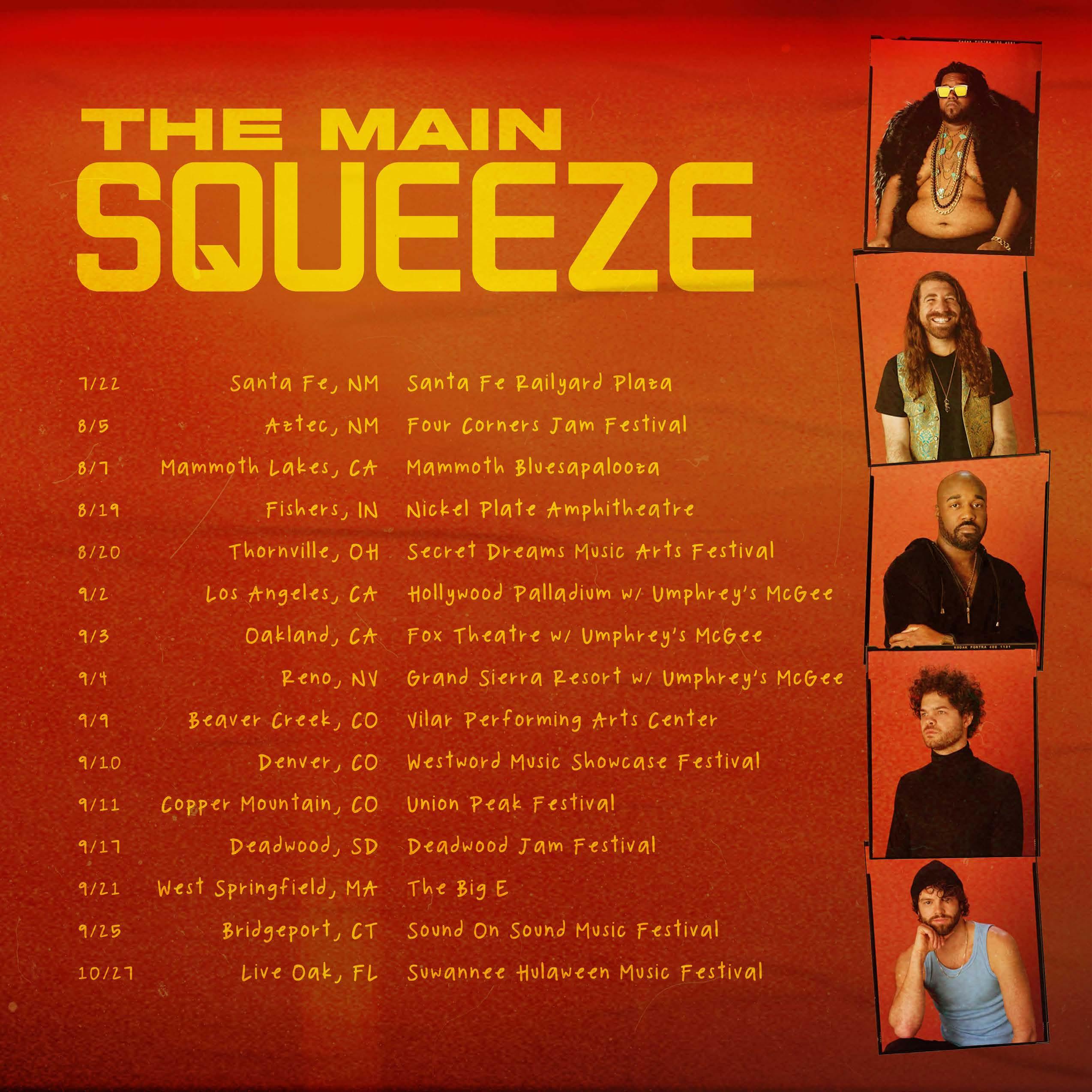
BLUE
The fish floundered--These are for you --thrusting flowers at Mademoiselle Suzanne Valadon-- shyly hopping away, neither fish nor fowl. Otis watched the green donkey who, bending his head smiles sincerely, flaring his nostrils. In a sea of geometry, Suzanne’s calfs swim past triangulation. Bent blue-hued imbued her erect nipples, weightless, waiting blue heart forever beating.
“Blue Circus” Marc Chagall (1950)
Suzanne’s strands slipped, eel-like feel-- Diana, the lunatic, leaned lightly, Violinmooning.ofventricles vexed, waterlogged, scaling scales musically and marked across the skin of a fish. It’s all how you juggle the chaos, the strife of a circus life. A sashay with a shark in my heart.
BY: LYNNE KEMEN
CIRCUS
233233
on the Board of Bright Hill Press. She is an Editor for the Blue Mountain Review and lifetime member of The Southern Collective Experience. Blue Circus by Marc Chagall Oil on Canvas
Blue Mountain Review / July 2022 234
a citizen of Upstate New York. Her chapbook, More Than a Handful was published in 2020. She is published in Silver Birch Press, The Ravens Perch, Fresh Words Magazine, Spillwords, Topical Poetry, Blue Mountain Review. Lynne
Lynne Kemen is stands

235235
For Regina The sun is setting on the bay I sit bathed in warm light waiting for you and your beloved to arrive for dinner I have not yet seen your new car—completely electric completely recyclable, seventy miles per charge, fifty miles per gallon of back up gasoline. I have not yet told you how beautiful it is or updated you on my wife’s new job, the book I am researching or talked at length about the new, giant puppy. You have not yet told me about the cancer in your breast. How the tumor is small. How a mammogram caught it early. How one protein is negative, meaning not fast-growing, less likely to be invasive. How you will have surgery, then radiation. I have not yet told you, I will give you my hair to have a sheitel made by the best Orthodox wig maker in town. I have BY: JULIE ENSZER
DROUGHT
not yet kissed my beautiful Blondie, your wonderful poodle, and snuggled with her over dessert. I have not yet driven home to the Motel 6, crying, wondering how to survive this time of life. Right now, in this peaceful moment, I am smiling in the warm sun, drinking a cold glass of water. It slakes my dry throat.
Blue
Mountain Review / July 2022
Julie R. Enszer is the author of four poetry collections, Avowed (Sibling Rivsalry Press, 2016), Lilith’s Demons (A Midsummer Night’s Press, 2015), Sisterhood (Sibling Rivalry Press, 2013) and Handmade Love (A Midsummer Night’s Press, 2010). She is editor of The Complete Works of Pat Parker (Sinister Wisdom/A Midsummer Night’s Press, 2016), which won the 2017 Lambda Literary Award for Lesbian Poetry and Milk & Honey: A Celebration of Jewish Lesbian Poetry (A Midsummer Night’s Press, 2011), which was a finalist for the 2012 Lambda Literary Award in Lesbian Poetry. She has her MFA and PhD from the University of Maryland. Enszer edits and publishes Sinister Wisdom, a multicultural lesbian literary and art journal, and a regular book reviewer for the The Rumpus and Calyx. You can read more of her work at www.JulieREnszer.

BY : HEATHER HARRIS
Flutters palpitate her as she rises for curtain call. lights blink twice, and there’s no turning back. Curtains slice in half, the starlet is bathed in iridescent anticipation. The orchestra opens. she Andtrills!theburdens of this life are now weightless.
Otherworldly, sonatas and angelic symphonies
THE MEZZO-SOPRANO
237237
For: Charlene Chi Kim Waiting, she exhales her scales and sighs. She thinks over the treacherous terrain she’s trod, the hours of harrowing sacrifice. Now the culmination of her diligence swiftly approaches. She examines her porcelain face; her reflection ethereal against her crimson corset, and matching audacious lips. Her wild flaxen, hair now tamed and trundled-up like medieval royalty. She wonders: who is this being? A knock at her dressing room door; a display, a spray of her favorite exotic blossoms, with a note, “you were created for this!” She already knows who they are from, and precisely why he cannot come; The three darlings needing: meals, bedtimes, and all the stability an artist simply cannot provide on her own. A tear wells in the corner of eye, but is quickly plucked and banished— In spite of herself, the show must go on. ***
Mountain Review / July 2022
Blue
Heather M. Harris is an emerging writer of memoir, poetry, shortstories, children’s books, and an illustrator who lives and writes in the New Orleans area. Heather holds a Master’s of Arts and Teaching and a Bachelor’s of Arts and Sciences in Psychology both from Southeastern Louisiana University. Heather is a contributor for The Blue Mountain Review, and a member of The Southern Collective Experience.
pour forth from her being; there is no denying, the purpose of her existence. Now, the spectators sit beneath— the shrouded cloud of her voice, And rain, uncontrollable rain, showers the theater. She is, The Mezzo-Soprano.

This is a collection that will break your heart and hand it back to you illuminated between the cracks, for like Kintsugi, the Japanese art of using gold to highlight the cracks in repaired pottery, Ingram’s poems embrace wounds and imperfections rather than glossing over them, modelling that through careful attention and reflection, the selves we can create after we have been broken can be stronger and more beautiful than before.
introducingLauraIngram
the latest work from
To puchase your copy or contact the poet: subatomicteenager@gmail.com Each copy $10
The Ghost Gospels Holding the reader a willing captive in the liminal spaces between life and death, survival and surrender, recovery and decline, Laura Ingram dazzles the heart and mind with the tenderly-wrought insights of a young woman coming to terms with the aftermath of her eating disorder. As the narrator trains her own thoughts away from hunger, the reader is fed hearts from jars, blackberry brambles, and boxes hidden under beds, hearts that have been pickled and skipped like stones across the tops of creeks, hearts grass stained and wobbling and scrubbed pink in the kitchen sink. And bones—bones blooming and curved like question
gospelsghostthepoemsby:lauraingram
evensignature.”pharmacist’sskinagainst“scrawledburiedkissedbonesmarks,andand[the]likeaYet,astheimagery blooms and fills and increases, becoming ever more tangible, the narrator fears she will dissipate into something no longer substantial, and “you will remember she is only ulna and aspartame and leave her in search of something more solid.”


micro-fiction
micro-fiction

Michele Wong is a teacher by day. By night a literary traveller experimenting with plot and form. Her interest in writing first stemmed from creating some indie theatre and video pieces. She was fortunate to have her first play selected as a finalist in the Canadian BC play competition and one script, Madam White Snake & Billy Buckwheat as a winner for the City TV Vancou ver Story Initiatives. She’s had two honorable mentions, one in the Lorian Hemmingway Competition and the other in the Writer’s Digest Short Story Competition, as well as been twice long-listed in the Fish Short Story Prize Contest.
243243
Suzanne Kamata is an American writer from South Carolina currently living in Japan. They are the author of several books, including the novel THE BASEBALL WIDOW (Wyatt-Mack enzie Publishing, 2021) and a forthcoming chapbook of stories-in-verse, WAITING (Kelsay Books, 2022).
BLUE BEGONIA
BY : MICHELE WONG
She’s been gone for a hundred days too long. Yesterday on Channel Nine, she was filmed floating in the moon-lit dark, repairing a spectrometer, then later, running like an Amazon on the treadmill which she must do to stop bones from shattering. Every You-Tube fan (but me) feels close to her heroics. At night, she stares at a blue begonia I pressed for her.
Always, I reply, “Yes, Mama,” staring at the moon and its silence.
Almost godlike, she floats in orbit sending weekly emails from the space-station— “Wash rice before cooking.” “Do not Wikepedia your homework.” “Look for me towards the north star.” “Use conditioner to moisturize your hair.”


245245
Last summer a man was found floating face down in the percolation pond. He had drained a bottle of vodka, filled his pockets with rocks, and walked into the tepid water until his lungs went soggy. When the sheriff removed the yellow crime scene tape from around the tree trunks, the children could once again take the short cut trail to the 7-11. Let not the path of commerce be blocked, neither by procedure nor by pity.
This summer I float on an inflated rubber duck in my neighbor’s swimming pool on the hottest afternoon of the year. The smoke rises from his absurd barbeque, sends signals to the hikers in the foothills that we come in peace, we suburban loafers of the flatlands.
BY : DAVID DENNY
“I can imagine,” I say. “I can’t,” he says.
When he flips the steaks, the grill sizzles with pleasure, as the fat carries on a conversation with the red-hot coals. I paddle the duck in a circle, one hand pushing the water one way, the other hand pulling in the other. And the sun dares the clouds to come near—the white hot sun in the terribly blueDavidsky.
OCCURRENCE ON BUBB ROAD
Denny’s fiction has recently appeared in Narrative, New Ohio Review, and Catamaran. His books include Sometimes Only the Sad Songs Will Do, The Gill Man in Purgatory, and Some Divine Commotion. More information: www.daviddenny. net.
“Hey, you know what?” my neighbor says, apropos of nothing. “That floater in the percolation pond was my wife’s first husband. He never did recover from the war in Afghanistan.” “Is that why he did it?” I ask. “Did what?” my neighbor says. “Oh, that. No, well yes. She says he came home a haunted man.”


fiction

fiction

I ran away from the group home in December with my coke-dealer boyfriend Hungren. He pulled up in his old Porsche, smiled with that cracked front tooth, and got out to help me put my duffel bag in his trunk. Soon we were weaving through traffic. He cut in front of a red car and the car honked. Hungren let him pass and then followed him into an empty parking lot. The car had tinted windows and I was shaking.
Hungren reached under his seat and took out a gun. But no one came out or did anything, so he put the gun back and we sped away. When we were almost at his place, I put my hand on his leg. We pulled into a parking space and I said, “So you’re gonna pay for my dance lessons, right?”
In my duffel bag I had a trophy from freshman year of high school, before I moved up north. It was a golden statue of a dancer. The engraving makes me proud, and I read it every day: “Cindy Fay, Winner, 5th Dance Drill Team Competition.” Now I could practice my dance routines in Hungren’s place. I also watched music videos on TV. After I’d been at his place for a couple of weeks, a video came on with dancers moving together like a flock of birds. They were dancing to a Doobie Brothers song. I had a copy of that song on a tape. The dance had a lot of turning and jumping and putting their arms up high. I started dancing with them, and practiced it because I wanted to show Hungren. Manhattan was so cold in November. I’d come up there from Texas to find a place to stay, dance, and search for some friends. I was so glad I’d met Hungren.
BY: BERT MCMEEN
THE GATELESS GATE
“What do you think, Cindy?” he said. Looking into my eyes, he nodded. Upstairs, he took me straight to the bedroom.
As I walked up the steps from the subway to Broadway, I could see snow falling, beautiful with the trees, tall buildings, and white sky. The air was crisp, and I could see it when I exhaled. Snow flakes landed on my gloves and I looked at them and licked them. Slush was on the sidewalk. The intersection at 72nd Street was busy, because another street cut through Broadway. I had to find a headshop to get Hungren and me a new pipe. He’d told me I could try some crack. My cheeks, lips, and nose were really cold. I passed a newsstand on the corner, which was shaped like
249249
I passed a fancy supermarket with cheese in the window, then a big bookstore. Just as I saw a head shop, there was a topless guy, with tattoos, walking towards the entrance. His ears and hair were dirty. He screamed, “You shit! You shit! You didn’t give me the shoes! You shit! Why did you leave the apartment? What the fuck’s wrong with you?” I was getting nervous and didn’t go any closer.
“If you want me to be from someplace you call India, yes. Would you like something free from India? Maybe that bag of sweetened chips there?” He pointed to a bag near the gum. It looked like a bag of potato chips, but it had foreign writing on it. “What do you mean?”
“What’s his problem?” I walked in. The smell of tobacco was thick. Tons of pipes--right away I saw the bongs-and tons of tobacco. Dust covered a long glass case in front of the cash register. In the back corner of the shop was a little kitchen with a stove, fridge, and metal sink. I looked at the pipes he had in the case. Some wooden, some glass, some like sports cars. He also had metal pipes with red stems, along with ashtrays, cigars, incense, gum, nuts, and hard candies.
“Did you know that guy?” I asked, glancing into the shop. It was shaped like a hallway.
Blue Mountain Review / July 2022
Nikhil walked in behind me, swaying a little as he walked, then sat behind the cash register.
“This is the way it is, is it not?” Nikhil said, smiling. “This is the life.”
250 a doghouse. Hanging above the cashier’s head were magazines with pictures of naked women. And more magazines hung along the sides of the stand. The cashier was like a pimp, surrounded by his prostitutes, taking people’s cash.
He was tall and a little bit round, with a small head and a big nose. His hair was short and I thought he might be from India--he looked like some of the people in those Indian movies where there’s singing and dancing. He had on dressy black pants and a white, button-down shirt.
“Not that I remember,” Nikhil said. He had an accent. “Are you concerned?”
The first time I saw Nikhil was when he came out of the shop a few seconds later with a big smile on his face. “Can I help you?” he asked the topless guy. The topless guy replied, “You left me there, you shit!” Nikhil continued smiling. The topless guy’s head swung sideways and he walked away. Nikhil looked at me peacefully, and I started feeling calmer. I walked towards him and said, “Why was that guy screaming?”
“How old are you?” he asked. “I’m 16, and I’m not buying cigarettes,” I said. “I was looking at the pipes. Are you from India?”
Suddenly, I asked Nikhil, “How can we escape?”
“Your searching and clinging make a gate where there was none.” I forgot to buy the pipe.
“That is what I mean, for free.”
251251
Hungren had a friend who lived in Soho. It was near Chinatown. The rooms in the apartment were weird-most of them didn’t have any windows.
On Christmas Eve, while I was waiting for Hungren to finish some business, there was a guy selling books on the sidewalk. On the back of one of them was a picture of an Indian guy meditating, draped in a blanket and barefoot. Something made me buy that book. It was about Neem Karoli Baba, who was born in Akbarpur, which is south of Texas but on the other side of the world.
Nikhil said, “Let go of your money stuff, and your borders, and your concepts.”
What’s his problem? I thought. Why would he give me something for free? “Are you the owner?” I asked. “Yes. I also have a shop in Soho. I bought this one last year.”
There’s one story from that book that I started reading every day. A man had a daughter who was playing games at the window of their apartment on the fifth floor. She was three years old and fell out the window. But she landed softly, because Maharaj-ji’s spirit caught her.
“Why would you give me something for free?” I asked.
In February, Hungren burned that book right in front of me. Then he got his mirror and cut us four lines of coke to celebrate his latest deal.
“You would never give anything to someone for free?” he said, laughing. I started laughing too.
It turns out that he was a saint who says to remember God, see God in every person. For many years he wandered, homeless, and people called him Maharaj-ji. His only possession was that blanket, and people said it smelled like a baby’s.
On the wall behind him was a wooden rack full of cigarettes. There were many kinds--Kool Full Flavor, Virginia Slims, Doral Ultra Light, Marlboro Menthol. The Marlboro boxes, red and white, stood out from the rest. I’d smoked cigarettes but I knew they caused cancer--and a smoker had told me not to start. But sometimes Hungren would tear open a cigarette and put some tobacco into a pipe that already had pot. And then there was the cocaine, which sometimes I couldn’t stop thinking about.
The next night I pretended I was that little girl falling. Maharaj-ji would pay for those dance lessons. I let him pack my duffel bag, put it on my shoulder, and take me out on the fire escape. The wind was blowing in my ears and hair as I gripped the handrail, and then I was gone.
Blue Mountain Review / July 2022 252
Bert McMeen is an Internal Family Systems (IFS) practitioner and coach (bertmcmeen.com). His background includes training in creative writing, clinical psychology, mindfulness, acting, martial arts, and yoga. Additionally, as a technical writer for Google and other companies, he has written for a software engineering audience for many years. He also has a law degree and has worked as a journalist. Among his ancestors are Alabama, Arkansas and Tennessee settlers.
I refused to have some, and he slapped me across the face. After he left the room, I did a little dance, just for myself. I put my arms up high, turned, and jumped.

-Susana H. Case, author of Dead Shark on the N Train and Drugstore Blue
When scoliosis pushed her to retire from her career as a massage therapist, Angela Dribben still wanted to be of service, so she began doing legacy work through her local hospice. She felt she needed to gather skills if she was going to honor others, and she started an MFA program at Randolph College. From there her work made its way into journals such as Crab Creek Review, Cider Press Review, San Pedro River Review, Blue Mountain Review, and Crack the Spine. Her first mixed media piece is coming out in Patchwork. Her first collection, Everygirl is now out in advanced sales with Main Street Rag
-Paige Lewis, Spacestruck “Angela Dribben’s poetry does not look away, even from difficult truths. She brings to the page a gift for sound and image, but it’s her compassionate wisdom that makes Everygirl a book like no other, embracing both indictment and forgiveness, suffering and gratitude, its music that of the phoenix the moment the flames in her throat become song. Bring your broken pieces, your trouble with the world. Everygirl is the best friend to whom you may tell everything, in the dark beneath a fistful of stars, and come away more loving, more loved.”
253253
the debut collection from
-Rhett Iseman Trull, author of The Real Warnings, editor of Cave Wall to learn more & purchase visit: https://mainstreetragbookstore.com/product/everygirl-angela-dribben/
“Wordsworth wrote that any great writer must create the new taste by which they’ll be enjoyed. In Everygirl, Angela Dribben doesn’t just offer a new taste, she’s created an entire menu. From tragically vivid poems about surviving military school, to surreal poems exploring belonging, Dribben had me eating out of the palm of her hand. Dribben writes “To love and to see are not the same,” and I agree. But I do both love and see this book.”
angela Dribben
“How can I believe Adam/ came first when the flower precedes the fruit?” Angela Dribben writes in Everygirl. Coming of age in a Virginia of hunting dogs, pick-ups, and hog farms, these poems, evocative in their details of men “smelling like labor,” food, such as gelatinous ham, military school life for young women, menstruation, rape, and including occasional photographs, bluntly acknowledge the destructive impact of male prerogative when social class and rural life leave few ways out.”


Blue Mountain Review / July 2022 254 Sizes and Settings The Hudson Review Inside Cover Full Page Half QuarterPagePage Rates Contract rate (as quoted above): 15% discount on four consecutive issues.All advertisements subject to approval of editors. Space cannot be canceled after copy deadline. Payment due 30 days from date of invoice. Full Page and Cover 4.5'' x 7.5'' Half PageHorizontal4.5'' x 3.625'' Vertical 2.125'' x 7.5'' Quarter Page 2.125'' x 3.625'' ADVERTISING INFORMATION Halftones:133Format:PDF Screen Acrobat Distiller Settings: General: Optimize PDF • Resolution:2400 dpi • Binding:Left Compression: Uncheck all three Bicubic Downsampling (Resampling) boxes (Color,Grayscale,and Monochrome Bitmap Images) • Check Compression for Color and Grayscale Bitmap Images and set Automatic,Quality:Maximum.Compressionto for Monochrome Bitmap Images is CCITT Group 4 • Compress Text and Line Art box should be checked Fonts: Check the Embed All Fonts box • When Embedding Fails,specify Cancel Job • For Embedding specify Base 14 Fonts • Always and Never Embed should remain empty Advanced: For Options,select all except Use Prologue • For Document Structuring Conventions (DSC) specify Process DSC Comments,Preserve EPS Information from DSC,and Preserve Document information from AllDSCitems not mentioned should be turned off,set to default or to none.Use the Distiller PostScript Printer Description (PPD). Ads are printed in black and white. Discounts and Terms Deadlines The Hudson Review appears quarterly,in January,April,July,and October.We Toandandcriticism,bookpoetry,fiction,translations,essays,literarypublishreviews,lettersfromabroad,chroniclesofart,music,dance,theatre,film.reservespace,pleasecontact: Eileen etaloneTalone@hudsonreview.com The Hudson Review 33 West 67th Street New York,NY 10023 212.650.0020 tel www.hudsonreview.com1x 4x Spring:March 15 Summer:June Autumn:September15 15 Winter:November 15 200170400340500425600510
again. Another telemarketer. Selling books of coupons: oil changes, dinners for two, video rentals, family portraits, at a reduced price. Do they not realize that his every whim will issue in opulent feasts, he thinks. Palaces built in his honor, statuary commemorative of his revered name?
255255
What would Marx have said, this fixation on meaningless baubles. Fortunately, he has studied much, made productive use of his time. He reads Karl Marx, Friedrich Engels in the original German. Consumes little. Practices the ancient samurai arts. He takes his sword with the commemorative lacquered bamboo hilt from the mantel. A gift from Emperor Kimoto himself. He draws it from the sheath. Hiiee! he shouts. He parries, lunges, feints. Swish, swish, swish, his strokes effortless, precise, deadly. He catches a glimpse of himself in the vanity mirror on the closet door. Straightens his spine. In his early days he was known for his prowess, his stalwart posture, his marshal air. But he still has on his pajamas. It will not do to receive an emissary from the palace dressed like a Thecommoner.phonerings
hen the monarch butterfly flits by his window in the late-winter squall, perches on the handlebars of an abandoned bike, the great hero knows that it is a sign, knows that his long exile is at end. Even now his palace guard has routed the pretender king, quashed the blackguard army, recaptured the palace. Soon he will be restored to his rightful throne. Even now, he knows, the revolutionary force is sending out an envoy to receive him. He goes into the kitchen, turns on the radio. “Blizzard conditions expected, more snow on the way.” Worst winter on record. Everywhere there is hunger and hopelessness. He warms his coffee in the microwave. The phone rings. He answers it with nervous expectation. Wrong number. He turns on the TV. The Price is Right, the glitter of jewelry, appliances, the shiny automobile showcased by the sequined model. The bidding starts. The audience shouts with jubilation. Deplorable.
THE MONARCH IN WINTER
BY: LEN MESSINEO
W
Blue Mountain Review / July 2022 256
The phone rings. His landlady. “Your rent is due, Mr. Owen, and you have not paid last month.”
Len Messineo is a jazz musician and fiction writer from Rochester, NY.
He fears even now, they are being led into the labyrinthine dungeons that undergird the city. They will be interrogated, tortured, led to the square where they will be hanged. It is not unlikely that his covert mission will be uncovered. He sighs. He says a silent prayer. He pops a frozen dinner into the microwave, turns on The Simpsons.
He declines. He curls up under the afghan and takes a nap. When he wakes, it is nearing four-thirty. Groggily, he puts on slippers, goes downstairs, opens his mailbox.
At five-forty-five in the evening, the winter light is fading. He sees again the monarch butterfly. It has lighted on the windowsill. A startling contrast to the white snow, it’s iridescent wings open and close. With no warning, the butterfly is plucked from its perch by a black crow. The crow studies him with piercing yellow eyes. It flies off with a flutter of wings. He shivers, hugs his robe to himself. Has the planned insurrection come to naught? Has the pretender king’s blackguard army routed the revolutionary force?
He slams down the phone. Let the small-minded carp. He has important matters to address. Were she not so shrewish, he might find her a position in the new revolutionary government, an undersecretary post perhaps.
A flier from A-1 Rent-A-Furniture. Coupons from Aldi’s. A notice that 6th Street will be closed while they install new sewage pipes. “Patience,” he councils himself. The Taj Mahal was not built in a day. He turns on the television. Dr. Phil. The theme, incest among identical twins, “Double your pleasure, double your fun.”

In the drought scorched summer of nineteen-eighty, I am in the middle of my first week of working as an art handler, caretaker of the art in the galleries of the Brooklyn Museum. As an artist just out of college, jobs like these are few and far between. I am eager to immerse myself in work, feeling privileged and somewhat unworthy to be part of such a noble institution. The museum’s curatorial offices are small and airless, a no-frills functional setup of low ceilings, dull gray drywall, and flickering fluorescent lights—the result of the architectural intension of keeping distractions to a minimum in support of the tasks of research and administrative paperwork. In stark contrast, the galleries and public spaces of the museum are heavily laden with grandeur, generous in classical ornamentation and eye-catching detail. Polished ceramic tile floors glow reflecting light from the building’s central sun-filled dome. Interplay of shadow and light define the hallway procession of columns, each regally crowned in Corinthian acanthus leaf motifs. Above, barrel-vaulted ceilings lattice in connection to the floor supported by white marble archways. All of this grandeur given for free to the public.
“It’s cheese!” Pat is looking directly at me, the new guy on the team, “So strong! Do you smell it?” “Yes, of course, cheese!” I lie. It is not cheese. I realized it is me. That morning in my one-room low rent apartment, I’d woken up to discover my water turned off. No hot, no cold, nothing. After the last three months of not being employed and short on funds, it had come down to a choice between paying for water or electricity. Sweat-drenched evenings made keeping the fan spinning a top priority. My first museum paycheck, I’d get the water turned back on, but for now, I’d have to improvise. Dank with sweat and pasty from sleep, I was desperate for a shower that was clearly not possible. Pulling the milk carton from the fridge for my morning coffee it struck me—milk bath! Why not? I poured the milk into a large bowl and proceeded to gently bathe my face, neck, and torso with polite little splashes, the way I imagined it was done in simpler times. The milk felt silky between my fingers, luxuriously refreshing. I scooped up chilled handfuls, marveling at how quickly I felt revitalized and ready for another day at my new job. I was proud of my clever solution, at least until that moment later in the office when I realized I’d turned myself into a walking hunk of gouda.
257257
“I smell it too,” the Director’s administrative assistant Pat agrees. She is sitting at her desk, head thrown dramatically back, nose held high to mirror her boss. Tilting my head, I smell nothing.
mell that?” sniffs my new boss Sara Faunce, the esteemed Director of the Paintings Department.
“That smell is stronger over here,” Pat says, happy for an excuse to abandon her typewriter and embark on an olfactory treasure hunt. She noses her way to where I am installing a cup dispenser next to the water cooler.
“It’s coming from the vents!” I shout, stepping toward the door, away from their inquiring noses, “I’ll go check on it!” I dash heroically out of the office as if ready to confront the nefarious cheese-making laboratory somewhere hidden in the museum’s basement.
THE BIG CHEESE
BY: LOU STOREY “S
For the rest of the day, I make sure to keep myself busy in the more open and airy spaces of the galleries, room after room of beautiful paintings. Commanding my official conservation-approved feather duster wrapped in an anti-static cloth, one by one, I gently caress the surface of the gilt-framed canvases, each scene inviting the possibility of momentary escape. I backpack my way through landscapes of glorious sundrenched treelined mountains, fields freshly plowed and aglow in late summer wheat, quiet dawns in verdant early morning forests. In the portrait gallery, my archival cloth gently lifts the fine dust of city living from a collection of somber faces as I butler my duster across receding hairlines and finely detailed outfits of elegant fashion, playing manservant to the rich and powerful.
Blue Mountain Review / July 2022
Leaving the museum I am greeted by a cool breeze, the companion to a summer shower. Reaching the bus stop, I decide to save myself the fare while also sparing passengers my dairy stench. Starting the three mile walk to my apartment, I resist the urge to body fist a posture of protection against the rain. Instead I arch full chested, allowing the warm torrent of water to find all of me, head to toe. Sparkling rivulets rush along the curb, waterfall down concrete steps, a powerful current carrying away the accumulation of grime and debris. Women, men, children, pushing through doorways, step out onto the pavement, bewildered, expectant, delighted. Each block I travel, humanity is exiting storefronts and brownstones, abandoning the civilized containment of parched walls, floors, ceilings. Each of us wanting to steep a while longer in the sensation of this needed moment of baptism, a promise of cleansing. Hopeful, against all reason, that a simple thing like rain can wash all of our troubles away. Lou Storey is a visual artist and retired psychotherapist living on the edge of the Savannah River, Georgia, with Steve, his husband of thirty-four years. Lou’s fiction and creative nonfiction writings have appeared in The New Yorker, New York Times Tiny Love Stories, River Teeth’s Beautiful Things, Tin Can Literary Review, Multi plicity Magazine, Beyond Queer Words Anthology and in academic journals related to supporting creativity and mental well-being, as well as issues connected to LGBTQ older adults.
Toward five o’clock, the remaining museum visitors make their leisurely way to the exit, serene in having taken in their share of beauty. The sharp edge of shadows soften along the rusticated walls as the tall arched windows darken with clouds. Distant thunder travels down the marble halls followed by the muffled sound of rain, a much-needed reprieve to the thirst-chocked city.
My jobs until now have been labor intensive and dreary; late-night stocking shelves of canned goods, hauling plates of food with a smile that begs for tips, affixing metal parts to endless widgets that move too fast down a factory conveyor belt. This job feels like a happy mistake, too good to be true. Something I will mess up and loose sooner or later. But hopefully not today, which is keeping me busy and far away from the curatorial office. My fragrance is ripening by the hour. I note the guards sniffing in corners, wondering at the mysterious odor. I keep moving, careful not to be in one place for too long.

259259 Click Here to Get Started More than 100,000 members have already turned their know-how inot a proftiable business, and you can too. Our CreatorCourseChecklist


ACHARYADHRUVIBYART SAVE 25% ON SUBSCRIPTIONS WITH THE PROMO CODE GR25 THEGEORGIAREVIEW.COM

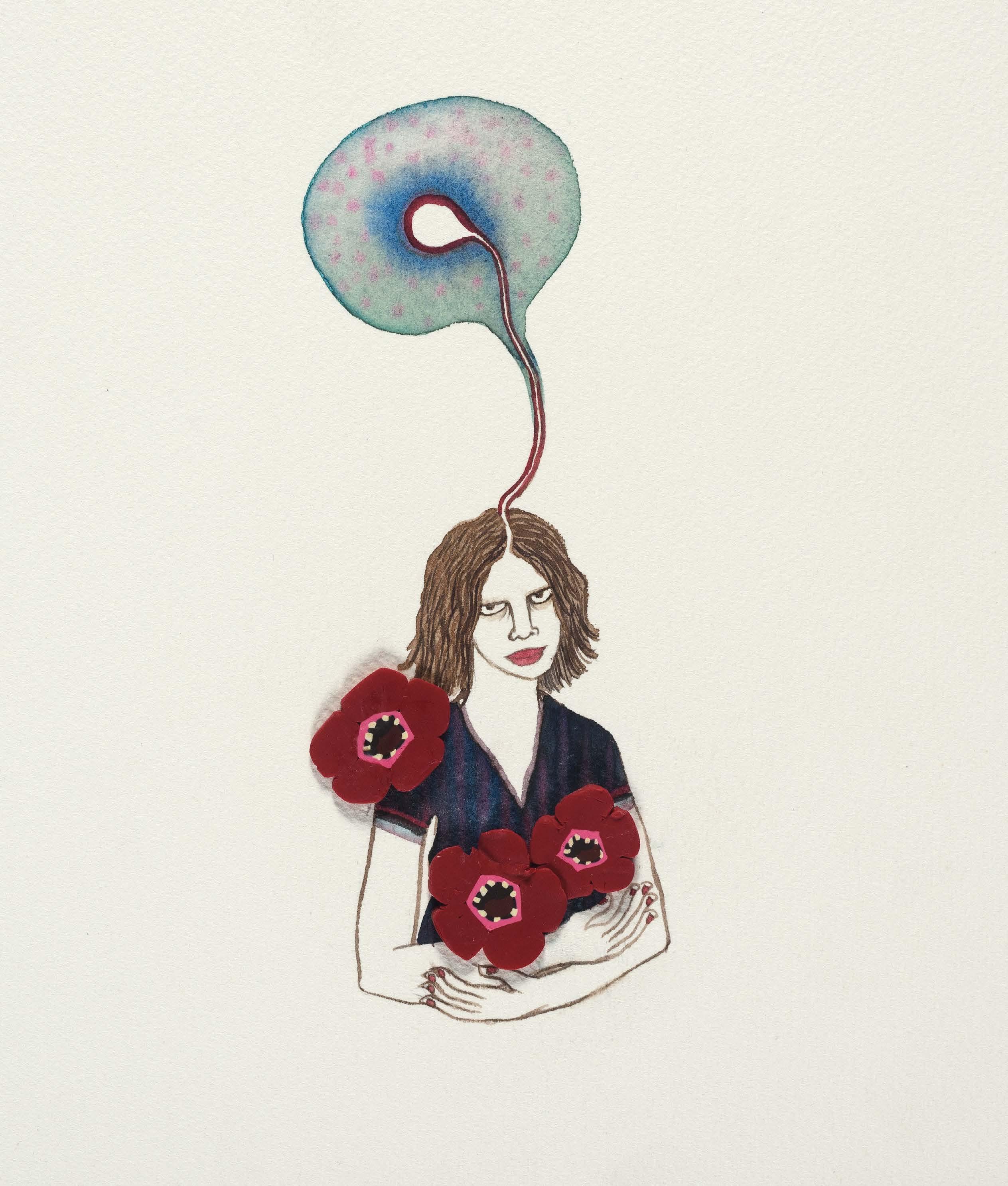
essays

essays

My mother was born and grew up in Morehead, Kentucky, in a place called Pretty Ridge. Born in 1921 she was the first in a large succession of children (thirteen in all). As such she was expected at a very early age not only to watch after her younger siblings but to perform a multitude of difficult tasks—work the fields, hand-wash clothes, milk cows—to name a few. Compounding matters was the fact that my grandmother was extremely bullheaded and many of my mother’s tasks had to be carried out under the forceful command that was part of my grandmother’s nature.
263263
In December of 1942, a year after my birth at City Hospital, my mother, with me in tow, took a trolley to the Greyhound bus station, bought a one-way ticket with money borrowed from the distant cousin and returned to her parents’ cabin in Kentucky. In spite of his irresponsible ways, my father, for whatever reason, wanted the marriage to continue. He quickly sent off, in care of general delivery to Morehead’s post office/general store a couple of poignant letters in which he attempted to persuade my mother’s posthaste return. When he failed to receive a reply, he set out to “rescue” her.
When my grandmother failed to provoke a response from her daughter, she yelled for her to cease scrubbing clothes altogether and go start the evening meal. Which my mother did. However, no sooner had she built a fire in the coal stove than my grandmother yelled for her to forget about supper and go feed the chickens. On it went until my mother, fed up with her mother’s obstinate ways, crammed the one other dress she owned into a pillow case and stomped off through a thicket to the road where she caught a ride to a distant cousin’s she knew would soon be moving to Cleveland, Ohio. My mother, agreeing to work as a domestic for the cousin, went along. A year later she met my father. My father was a dashing figure back then, an Errol Flynn-handsome man to whom personal neatness and stylish ways (his own) were something to be maintained first and foremost. My mother, still quite the ingenue at 18, was enamored of him in spite of the fact that he was nine years her senior and had served a stretch in the penitentiary for theft. They soon married. Life with my father soon proved no easier than the life my mother had left behind in Kentucky. He was not a man who worried greatly about the rent on their despairing tenement flat, was quick to anger, had a penchant for the bottle, possessed a vast capacity for deceit, and, lacking any propensity for work of any kind, was often unemployed even though most of the work force had gone off to war. (My father had been declared 4F because of his incarceration.)
One steamy summer day my mother was in the front yard standing over a wash tub scrubbing clothes. My grandmother, in an especially pigheaded mood that day, had launched a venomous attack against her daughter: she hadn’t sorted the clothes into proper piles, she hadn’t carried enough water from the well to fill the rinse tubs, she hadn’t wiped the wire clothes line before pinning the clothes to it, and so on and so on.
BY: BARBARA WEDDLE
PRETTY RIDGE
The redbud and dogwood were starting to bloom along the rugged hillsides when my father nudged his Model A Ford into the brooding hills of Morehead. As my mother was to relate the tale over and over during the years to follow, his arrival in that mountainous region of primeval forests was unexpected, and when he drove into Rowan County inquiring as to where the Hardy place was, word quickly spread that a stranger was in the parts. My mountaineer forebears were and still are a clannish, enigmatic, suspicious people, and the belief quickly formed that my father, in his stylish suit and fancy shoes, was a revenue officer. There quickly developed an unspoken conspiracy to thwart him, and although he was usually greeted in a friendly manner, his directional inquiries
Now the homeplace was in a hollow instead of on the edge of a ridge and there was no need to climb a mountain since there was a hard road that led up the mountain on the other side; however, the man didn’t tell my father that, and my father, most appreciative for what he assumed to be good and honest directions, bought some pickled bologna, a soda, and a few crackers at the small grocery, then got back in his car and backtracked a mile down the road as he’d been told to do. He didn’t see the man slap his leg and laugh once he had driven off.
Just as dusk began to blanket the ridges and the nascent thought that he’d never rescue his bride crept into his mind, my father came upon a small two-room structure at the head of a hollow and saw my mother’s father standing next to an old jalopy of a truck with wooden rails fitted to the bed.
Of course the man knew where my grandfather lived. There was not a soul in the county who didn’t. However, according to the mustached man, my father needed to drive a mile back up the road from whence he’d come. From there (and going afoot) he would need to follow some old wagon ruts through some heavy thickets, climb a steep mountain to the ridgeline, then walk exactly 500 paces past a clearing marking an old homesite. Just beyond the homesite he’d find the Hardy place on the edge of a little ridge.
Hence, driving off in a direction (a wrong one) given him by a friend of my grandfather’s, my father rounded a curve to see a small grocery with a gas pump out front. The small grocery belonged to my grandfather’s brother; however, my grandfather’s friend had not told my father that. He pulled his car to a stop, stepped out, propped one tailored pant leg on the running board and inquired from a handlebar-mustached man at the pump as to how to get to the Hardy place.
Blue Mountain Review / July 2022 264 were often met with vague responses of “just a mile up the road,” “up the branch,” or “around the ridge,” and, not infrequently, he was given wrong directions altogether.
A mile back down the road my father left his car when there was only the wagon-rutted spur covered nearly over by spongy black humus the mustached man had told him about and walked along the spur and then the bank of a creek he eventually had to cross on a foot log (the man had failed to mention a creek) in order to climb the steep mountain. At the ridgeline, my father became confused. The man had not said whether to walk north 500 paces or south 500 paces. He walked the wrong way—north. Soon he came out into a small clearing where a thin strip of a man (another of my grandfather’s brothers) was steering an old buggy-top car with a rumble seat around and around a fallow patch of garden in back of a log house. When the thin man saw the tired stranger standing in his sideyard, he steered his car over to him, came to a dust-flying halt, and greeted him with a large smile. It never once dawned on my father as to why the man had a car if his home wasn’t accessible by some type of road as he’d been told. His face flushed, his body covered with forest duff, and his fancy shoes scuffed to ruin, he was barely able to ask for new directions.
“You see that ridge yonder?” The man pointed and made a vague allusion to a log house just out of sight around the ridge he was pointing at. My father was utterly exhausted by now, and though it seemed that he was again being sent back the way he’d come, he wiped his forehead with the back of his hand, thanked the man, then turned and walked back to the ridge. He immediately found the log house—right where the thin man had said it was. A man in dungarees, an uncle of my grandfather’s, was in a garden by the house working over the ground with a hoe. My father introduced himself then explained his predicament. The man listened without interruption then referred indirectly to a log cabin down a Thislane.
time, my father did suspect he was not being given straight answers. And he was getting short on patience. He scratched the side of his face with a fingernail and looked away at the glow of the sun (now setting) over the rounded hills. It seemed he had been climbing about those hills for days when, in fact, it had only been hours. However, he just asked the man for a drink of water then continued on his way.
My mother remained with my father for many years. They produced five more children before my mother finally left him and moved to the city where she got a job in a factory and eventually divorced him. My father followed a year or so later; however, my mother never took him back again, and after I was grown, my father ended up living not far down the interstate from me until he died in 1988.
265
Bio: Barbara Weddle has written travel articles, personal essays, inspirational essays, book reviews, and how-to articles for more than 300 online and print magazines. She lives in Kentucky and enjoys road tripping.
The hood on the truck was up and my grandfather, bent over the engine replacing a head gasket, turned and stood arms akimbo when he heard my father yell out a weak halloo. He had no doubt who the played-out, bedraggled stranger, his tailored pants now mud-spattered and tattered by bramble bushes and cockleburs, was. He also knew, rouge that he was, his daughter missed her husband and was ready to return to Ohio. Finally, my grandfather was a pragmatic man, and despite the fact that he harbored a secret dislike for his son-in-law, he stretched out a hand to welcome him. That night my father fell into a grateful and exhausted sleep on a pallet on the living room floor in his father-inlaw’s cabin after a supper of cornbread, fried chicken, and soup beans. In the morning, my grandfather, his jaw set, reluctantly bade his daughter and granddaughter farewell, then appointed his oldest son to accompany them back to where my father had left his car.
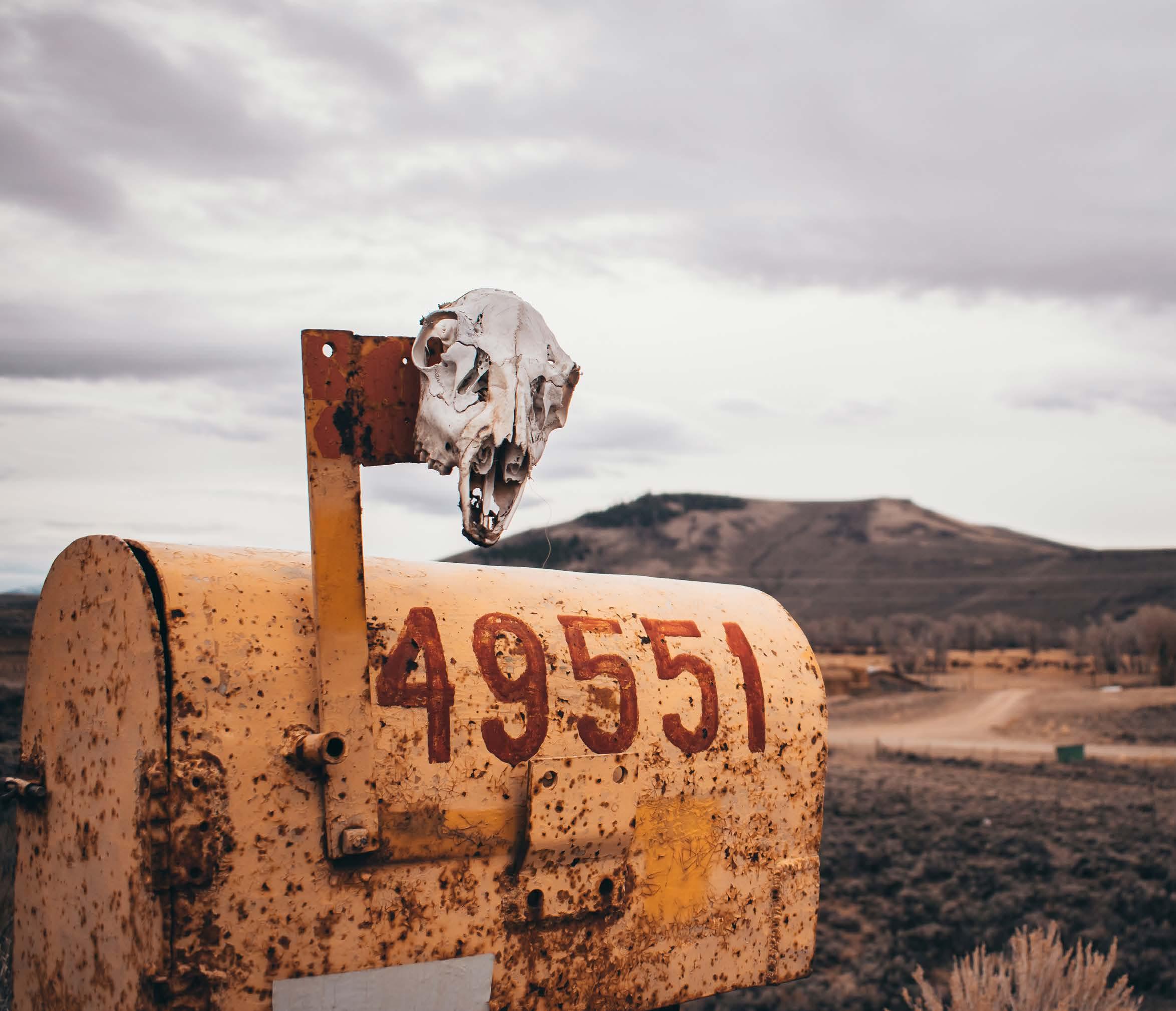
Blue Mountain Review / July 2022

Secondly, and more importantly, my parents had finally decided that I was old enough to be left at home alone. With our computer. Which had internet. And I knew the password. The moment their four-door rolled out of the driveway that first night alone, I logged on and Googled that mysterious word. Sex. Far less crisp and clean than it sounded, as it turned out. Exciting, though? Oh. Yeah. A few hours and the end of a childhood later, when my parents’ garage door squealed open again, they found me on the couch, twiddling giddily with my Game Boy, the computer’s browser history spotless. And that would have been it—mission accomplished, end of story—had I not gasped awake later that night, panicked, sweat-soaked, stricken with a horrible thought. What if internet companies operated on a sort of…pay-per-view system? Did they send my parents an itemized receipt at month’s end? Six dollars, the bill might say, for all the cat videos you watched, two ninety-seven for email, and a dollar twenty-five for Googling every term in our catalogue related to ‘sex.’
It was one of those gorgeous autumn afternoons outside. Partly cloudy. Cool and breezy. Birds all a-chirp as they chased each other through the trees. A perfect day, I might’ve said. As long as I could spend it inside. But as I was playing my Game Boy on the living room couch, cocooned in Doritos bags and Pepsi bottles, I suddenly noticed—too late—a shadow looming over me. I turned around. Looked up. And met my mom’s eyes. Well, I thought. This is it. She’s gotten the internet bill. Time to die. I should back up, though. Internet bills hadn’t typically inspired mortal fear in me. It was only that month’s bill in particular, because…well, a couple of reasons.
Of course, internet bills don’t actually work like I’d thought they did. When it came, my parents glanced at it, paid it, never mentioned it again. The cord holding up the paper guillotine snapped, and it fluttered lazily to the ground, landing some distance behind me. My life—now much longer than I’d anticipated—went back to normal. Inside, I nestled back into my spot on the couch. My lust for life fell between the cushions, turned stale and went moldy around the edges, forgotten.
And I suddenly noticed—again—too late—a few years and the end of a childhood later—a shadow looming over me. I turned around. Looked up. And met Death’s empty, obsidian eyes. He smiled, liplessly, down at me. Reached out a hand and unfurled his fleshless fingers. We’ve been walking together ever since.
NEAR DEATH EXPERIENCES
267267
BY: JOSHUA BEGGS
Firstly, I’d recently turned eleven, that age when playground conversations start filling with all sorts of curious new words, like erection, and boobs, and best of all, sex. I didn’t have a clue what any of them meant. But I wanted to. Sex, I’d whisper to myself late at night, puzzling over its meaning. Sex. Sex? Sex! How crisp, how clean, how exciting a sound!
For the next few weeks, I could almost feel the internet bill looming over my head, a paper guillotine, ready to drop. So it came as an almost euphoric relief, that gorgeous autumn day, when my mom only asked if I wanted to go for a walk with her. She didn’t even have to bribe me with Oreos, or shackle our ankles together by tying my shoelaces to hers: I just nodded dumbly, scrabbled off the couch, thrust open the door with tingling fingers and reveled in my first gasp of fresh air. Nothing to instill a lust for life like realizing you don’t have much left to lust over.
Outside, the birds flew south for the winter. Clouds scudded along on an ever-chillier breeze. My mom kept going for walks, alone. Until she couldn’t anymore.
Blue Mountain Review / July 2022 268
Joshua Beggs is a 2019 graduate from Hendrix College and a current MD candidate at Kansas University Medical Center, with publications appearing in Bamboo Ridge, MAYDAY, Fleas on the Dog, Chestnut Review, and elsewhere. In his free time, he volunteers as a Spanish interpreter at his local free clinic, makes a podcast (which his mom says is awesome), and maintains an ongoing writing portfolio at his very imaginatively named website, joshuabeggs.com.

click here to purchase

270 YourtoReadyMakeBrand Best-Seller?a Whether you’re starting something new or considering refreshing an existing brand, we’ll help your message stand out from the rest. Our award-winning team builds brands from scratch, and we make existing brands better with smart design, compelling copy, and innovative www.lookandfeelbranding.comteam@lookandfeelbranding.comstrategy.Contact our brand experts at team@lookandfeelbranding.com. Mention Blue Mountain Review for a free mini brand evaluation. BusinessServices:& Brand Coaching Branding RebrandingStrategy&Brand Refresh BookDigitalWebsiteGraphicNamingContentBloggingCopywritingPackagingCreationDesignDevelopmentMarketingCover&LayoutDesign

271271
James Sutton
J.D. Isip is a full-time professor at Collin College and a writ er. His poems, plays, fiction, and essays have appeared in a variety of national magazines and journals. His first collection of poems, Pocketing Feathers (2015), was released by Sadie Girl Press, and his second collection,Number Our Days, will be released by Moon Tide Press in 2023. He grew up in Long Beach, California, served in the U.S. Air Force, and worked for Disney before he started teaching.
Dusty Huggins is a family man, musician, writer, and lover of literature. His interest in writing surfaced during his freshman year at Young Harris College due to an English professor nurturing his interest, stimulating passion, and building the confidence required to find his way as a writer. Dusty is the founder of the Atlanta blues-based, Southern rock band The Ides of June, and also performs as both the lead vocalist and bassist. He is a member of The Southern Collective Experience acting as the music editor for its journal of culture The Blue Mountain Review. In his spare time Dusty enjoys touring with The Ides of June throughout the southeast.
Angela Gregory-Dribben lives with her two favorite redheads down in a bottom in Southside Virginia where they are hard at work growing the fattest sandwich tomato in the Piedmont’s trademark red clay. Her poetry and essays can be found or are forthcoming in Main Street Rag, Deep South, Blue Mountain Review, San Pedro River Review, Motherscope, Crab Creek Review, Crack the Spine, Cirque, decomp, New Southern Fugitive, and others.
A Bread Loaf alum, she is currently a student in Randolph College’s MFA.
angela contributingdribbenseditor
Jan ToaThomasSaraKevinKennyJoshuaJoanJasperKoprivaSeptOgerRawsonEliasonLessyKurfessTuckerHeftiba
Shannon Perri holds an MFA in Creative Writing from Texas State University and a master’s degree in Social Work from the University of Texas. Her writing has appeared in various newspapers and literary magazines, such as Houston Chronicle, Austin-American Statesman, Joyland Magazine, and fields magazine. Her short story, “Liquid Gold,” was a finalist for the 2019 Texas Observer Short Fiction contest; her story, “The Resurrection Act,” was awarded a 2016 Joyland Magazine Publisher’s Pick; and her story, “Orientation,” was nominated for a Pushcart Prize. She lives in South Austin with her husband, son, and menagerie of pets.
J.D. contributingIsip editor
photography credits
Lucas BiancaAsimArtemAndreaNinaMasjidPhotoMatthessHillPiacquadioBeliaikinAlnamatSalgado Carla Schizzi VinCottonbroStratton Erik MarceloLeahJonnyIkeHassanGustavoGodisableFurkanfdemirMcLeanJacobFringOuajbirLouieNatividadLewKelleyDias Marcelo Miranda Mart MinMeijiiProductionAn Moritz Nicole ThiaSamRodrigoAvaglianoFeksaLionuHoaNg Toa Heftiba Vin ZacharyAug DeBottis Ralfs SharonRyanRobRikkiRhandBlumbergsMcCoyChanLaughterWaltonMcCutchenson Cover Photo: Cyril Caine
CONTRIBUTING EDITORS
dusty huggings music editor
Victor Chaidez
Alec IanHaleyGenFerdDrewDiegoChrisBenjaminAviAtikhDouglasBanaRichardsCombsCurryPhDauIsaacsPolPhelpsDooley
shannon contributingperrieditor


Blue Mountain Review / July 2022 272
Tom Johnson was born in Roswell, Ga. He went to college focused on a career in Information Technology but to make ends meet, he worked in a few demanding sales jobs that taught him the ins and outs of marketing. He had always loved writing and he found that marketing gave him an outlet as well as a way to pay the bills. He enjoyed those aspects of his work so much that, after college, he decided on a career in sales instead of going straight into IT. Within a few months, he studied for and passed the Georgia Real Estate Exam. For the next four years he worked for Remax and later Lindsey and Pauly as a seller’s agent. After that, he became the Director of Marketing and Residential Support for a computer company. There he helped them to increase their visibility, develop new leads and on occasion, write content for client’s websites. In late 2009, he decided to go solo as a freelance tom contributingjohnsoneditor
Casanova Green is a writer, singer/ songwriter, educator, and pastor. He is a 2010 graduate of Ohio Northern University where he earned a BA in Language Arts Education, with a minor in voice. In 2018 he earned an MFA in Creative Writing from Reinhardt University located in Georgia’s Etowah Valley. Casanova is a member of the Southern Collective Experience, often serving as a contributing editor. He has been published in several publications including The Blue Mountain Review, Raw Art Review, and Fredericksburg Literary and Art Review. In 2019, Casanova published a mini-chapbook of poetry entitled Whispers & Echoes, and his first book of poetry Things I Wish I Could Tell You is scheduled to be published in 2020.
Casanova has done extensive ministry work since the age of nine, and has served as both a worship leader and choir director for over twenty years. He released his first album A Worshiper Mentality in January 2016, and his second album Songs from the Journey: Part 1, in August 2019. He is currently working on his third album Songs from the Journey: Part II, which will be released in 2020. Currently, he is the Owner of CGCreate LLC and serves as the lead pastor of True Vision Christian Community in Lancaster, OH, where he and his family reside.
Clifford Brooks is the CEO of the Southern Collective Experience and Editor-in-Chief of the Blue Mountain Review. He is also the journal’s content editor. Aside from these duties, Clifford is the author of The Draw of Broken Eyes & Whirling Metaphysics, Athena Departs, and Exiles of Eden. These collections of poetry can easily be found online.
Emily contributingKerlin editor
clifford editor-in-chiefbrooks
Andy Whitehorne is a writer and live music fanatic residing in Atlanta, Georgia. He spent two-and-a half-decades regularly attending live concerts and working in the hospitality industry. He holds a BFA in theatre, currently works in customer success, and is the Music editor of the Blue Mountain Review. andy contributingwhitehorneeditor
casanova Contributinggreeneditor
Emily Kerlin has published poems in Intima: A Journal of Narrative Medicine, Bridge, Cider Press Review, Storm Cellar, The Pittsburg Poetry Journal and Blue Mountain Review. Her chapbook, Eighteen Farewells, won second place in the 2020 Women of Resilience Chapbook Contest. She attended Antioch College and holds a Master’s degree from the University of Illinois in Bilingual Education. Her current home is in Urbana, Illinois where she works with international students and families. You can find her at emilykerlin.com


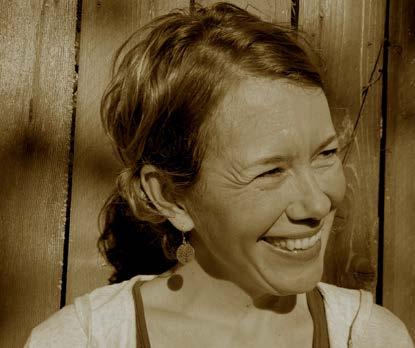
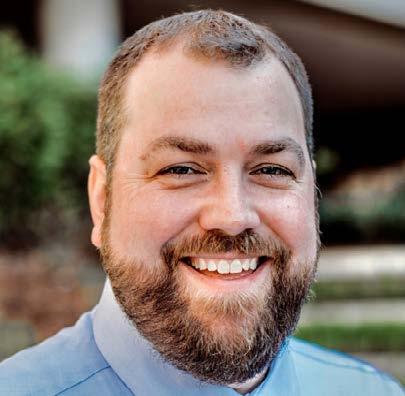

273273
Megan’s first book ‘The Coolest Monsters, A Collection of Essays’ was published in 2018 by Texas Re view Press. Her debut novel ‘Farm Girl’ is forthcoming. Megan has won numerous national awards including a Pushcart Prize. Her work has been listed in The Best American Essays of 2019. Re cent publications included pieces in The Threepenny Review, Hotel Amerika, The Florida Review, and Creative Nonfiction Magazine. Megan serves as a mentor to young writers and loves developing cross-genre and innovative creative writing pedagogy for her workshops and classes. She is currently con ducting research for an environmentally themed novel as well as writing personal essays and poems. Megan lives in New Hampshire where she loves walking her dogs, running, and cooking with local foods.
Chris contributingterry editor
rebecca ContributingEvanseditor
Megan contributingbaxtereditor
Jess Costello is a fiction editor, writer, counseling student, and indie music nerd based in Massa chusetts. In addition to The Blue Mountain Review, her work has appeared in Boston Accent and iO Literary, and she covers local art for Boston Hassle. She is at work on a novel. jess contributingcostelloeditor
Laura Ingram is poetry editor and social media manager for the Southern Collective Experience. She has had work published in one hundred journals and magazines, among them Gravel and Juked. She is the author of four poetry collections: Junior Citizen’s Discount, Mirabilis, The Ghost Gospels, and Animal Sentinel.
Mildred Kiconco Barya is a writer from Uganda and Assistant pro fessor at UNC-Asheville where she teaches creative writing and world literature. Her publications include three poetry books as well as prose, poems or hybrids in Tin House, poets.org, Poetry Quarterly, Asymptote Journal, Matters of Feminist Practice Anthology, Prairie Schooner, New Daughters of Africa International Anthology, Per Con tra, and Northeast Review. Her nonfiction essay, Being Here in My Body won the 2020 Linda Flowers Literary Award and is forthcoming in the North Carolina Literary Review. She received a Ph.D. in English from the University of Denver, MFA in creative writing from Syracuse University, and B.A. in Literature, Makerere University. Visit her blog: http://mildredbarya.com/ Mildred K. contributingBaryaeditor
Jennifer Avery is an editor and writer from the foothills of North west Georgia. Her poetry has been published in the Blue Mountain Review and featured on Dante’s Old South. She spends much of her time attempting experiments in skincare and wordcraft. She is currently working on her novel, Ezra in Every Dimen sion
Bio: Rebecca Evans earned an MFA in Creative Nonfiction at Sierra Nevada University. She’s hosted and co-produced Our Voice and Idaho Living television shows, advocating personal stories, and now mentors teens in the juvenile system. She’s the co-host of Writer to Writer podcast on Radio Boise. Her poems and essays have appeared in The Rumpus, Entropy Literary Magazine, War, Literature & the Arts, 34th Parallel, and Collateral Journal, among others. She lives in Idaho with her three sons.
jennifer Contributingaveryeditor
Born and raised in the land of peaches and peanuts: Georgianative, Kaitlyn Young is a freelance graphic designer-specializing in both print and digital editorial designs. kaitlyn young design & layouts
Laura contributingIngrameditor
Chris Terry draws from his fanatic love of films & music when crafting his reviews. After receiving his Master›s in Fine Arts from the Sa vannah College of Art and Design, he’s gone on to work on numerous independent and major films along with producing film scores and music for a wide variety of genres. Chris is currently working with the film production company Fifteen Studios on upcoming projects.


Asha Gowan, poetry editor, hails from Chapel Hill, NC. She writes poetry, fiction, and non-fiction. Her subject matter usually revolves around matters of the heart, but natural world and its imagery also figure prominently in her work. She has publications in The Coraddi, Blue Mountain Review, The Gathering of Poets, and other magazines and journals.
slade contributinggottliebeditor
Hester L. Furey is a poet and literary historian who lives in Atlanta. Hester L. contributingFureyeditor
Slade Gottlieb is a fiction writer born in Atlanta and raised in Milton, Georgia. He received his BA in creative writing from Oberlin College and his MFA from California College of the Arts. He’s published short fiction in print editions of the Plum Creek Review and Wilder Voice. Slade currently resides in Oakland, California, where he is at work on his debut novel. He currently co-edits fiction and poetry for The Blue Mountain Review.
Lynne Kemen lives in Upstate New York. Her chapbook, More Than A Handful (Woodland Arts Editions, was published In 2020. Five of her poems appeared in Seeing Things Anthology, Edited by Rob ert Bensen. Her poems are in La Presa, Silver Birch Press, The Ravens Perch, Blue Mountain Review, Fresh Words Magazine. She was Runner Up for The Ekphrastic Journal’s competition of Women Artists. She is on the Board of Bright Hill Press in Treadwell, NY.
lynne contributingkemen editor
Debbie Hennessey was named AC40 Female Artist of the Year by New Music Weekly and scored a Top 20 Hit on their AC40 Charts. A song she co-wrote recently hit the Top 5 on Roots Music Report’s Americana Country chart. Her songs have been honored by Great American Song Contest, International Song writing Competition, Billboard World Song Contest, and others. Her music and videos have aired on USA/UHD Networks, NBC, GAC, Extra, and The Next GAC Star. She has over a dozen releases on her label Rustic Heart Records and is a voting GRAMMY member. In addition, Debbie was the managing editor of LA411 & NY411 for Variety and has created several magazines and directo ries for various industries over the years. Through her company Entertainment Editorial, she works with a diverse range of clients to meet their editorial needs. She also writes for Dante’s Old South Radio Show blog and the Blue Mountain Review. You can find Debbie at www.entertainmenteditorial.com and www.debbiehennessey.com.
Debbie contributingharriseditor
Heather contributingHarriseditor
asha contributinggowan editor
Edward Austin Hall lives in Atlan ta, where he writes whatever he can get away with. edward austin hall contributing editor
Blue Mountain Review / July 2022 274
Nicole Tallman serves as Poetry and Interviews Editor for The Blue Mountain Review. She is the author of Something Kindred (The Southern Collective Experience Press) and Poetry Ambassador for Miami-Dade County. Find her on Twitter and Instagram @natallman and nicoletall man.com. nicole contributingtallmaneditor
Heather M. Harris is an emerg ing writer of memoir, poetry, short-stories, children’s books, and an illustrator who lives and writes in the New Orleans area. Heather holds a Master’s of Arts and Teaching and a Bachelor’s of Arts and Sciences in Psychology both from Southeastern Louisiana University. Heather is a contributor for The Blue Mountain Review, and a member of The Southern Collective Experience.


