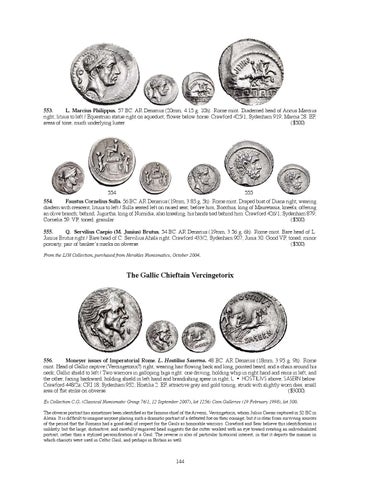
553. L. Marcius Philippus. 57 BC. AR Denarius (20mm, 4.15 g, 10h). Rome mint. Diademed head of Ancus Marcius right; lituus to left / Equestrian statue right on aqueduct; flower below horse. Crawford 425/1; Sydenham 919; Marcia 28. EF, areas of tone, much underlying luster. ($500)
554
555
554. Faustus Cornelius Sulla. 56 BC. AR Denarius (19mm, 3.85 g, 5h). Rome mint. Draped bust of Diana right, wearing diadem with crescent; lituus to left / Sulla seated left on raised seat; before him, Bocchus, king of Mauretania, kneels, offering an olive branch; behind, Jugurtha, king of Numidia, also kneeling, his hands tied behind him. Crawford 426/1; Sydenham 879; Cornelia 59. VF, toned, granular. ($500) 555. Q. Servilius Caepio (M. Junius) Brutus. 54 BC. AR Denarius (19mm, 3.56 g, 6h). Rome mint. Bare head of L. Junius Brutus right / Bare head of C. Servilius Ahala right. Crawford 433/2; Sydenham 907; Junia 30. Good VF, toned, minor porosity, pair of banker’s marks on obverse. ($500) From the LJH Collection, purchased from Herakles Numismatics, October 2004.
The Gallic Chieftain Vercingetorix
556. Moneyer issues of Imperatorial Rome. L. Hostilius Saserna. 48 BC. AR Denarius (18mm, 3.95 g, 9h). Rome mint. Head of Gallic captive (Vercingetorix?) right, wearing hair flowing back and long, pointed beard, and a chain around his neck; Gallic shield to left / Two warriors in galloping biga right: one driving, holding whip in right hand and reins in left, and the other, facing backward, holding shield in left hand and brandishing spear in right; L • hOÍTiLiuÍ above, ÍAÍerN below. Crawford 448/2a; CRI 18; Sydenham 952; Hostilia 2. EF, attractive gray and gold toning, struck with slightly worn dies, small area of flat strike on obverse. ($3000) Ex Collection C.G. (Classical Numismatic Group 76/1, 12 September 2007), lot 1256; Coin Galleries (19 February 1998), lot 300. The obverse portrait has sometimes been identified as the famous chief of the Arverni, Vercingetorix, whom Julius Caesar captured in 52 BC in Alesia. It is difficult to imagine anyone placing such a dramatic portrait of a defeated foe on their coinage, but it is clear from surviving sources of the period that the Romans had a good deal of respect for the Gauls as honorable warriors. Crawford and Sear believe this identification is unlikely, but the large, distinctive, and carefully engraved head suggests the die cutter worked with an eye toward creating an individualized portrait, rather than a stylized personification of a Gaul. The reverse is also of particular historical interest, in that it depicts the manner in which chariots were used in Celtic Gaul, and perhaps in Britain as well.
144