


PUBLISHER
Sandy Jones • 208-703-7860 christianlivingmag@gmail.com
EDITOR
Gaye Bunderson editorgaye@gmail.com
Submit story ideas, article submissions & press releases
GENERAL INFO christianlivingmag@gmail.com 208-703-7860
ADVERTISING & SALES
Kimberly McMullen • 208-703-7509 kim.bcliving@gmail.com
GRAPHIC DESIGN
Denice King • 208-918-5190 www.greentreedkdesign.com
Chad Estes
@Starrynightmedia
CONTRIBUTORS
Larry Banta, Steve Bertel, Daniel Bobinski, Rick Chromey, Tom Claycomb III, Roxanne Drury, Joan Endicott, Doug Hanson, Leo Hellyer, Rosie Main, Dave McGarrah, Gary Moore, Mark Naito, and Bethany Riehl


By Sandy Jones
Happy New Year!
There’s just something refreshingly empowering about a new year. January 1. So many people see this as the proverbial “first day of the rest of your life.”
Many have followed what Scripture tells us to do and have invited Jesus into our hearts; and then for many of us, we talk about how excited we are to go to heaven when we pass from this earth. If you declare with your mouth, “Jesus is Lord,” and believe in your heart that God raised him from the dead, you will be saved. For it is with your heart that you believe and are justified, and it is with your mouth that you profess your faith and are saved (Romans 10:9-10 NIV).

What if I were to propose that the day you invite Jesus into your heart is your Day One instead? That that day is truly the first day of the rest of your eternal life. Would that statement challenge you to look at living out the rest of your life differently? It did me.
As a young mom I remember too often thinking, “I’ll do this differently next time with the boys,” until the ‘next times’ became fewer and fewer as they grew up, and their interests and level of maturity changed. In my own immaturity I thought life gave you do-overs for everything. Until one day I woke up to realize that the boys didn’t want to play Candyland or Chutes and Ladders any more. They’d moved on to games that required more skill and intellect, until they eventually moved on to the all-encompassing video games.
First I told myself that next time I’d slow down and take more time, or play more often. By the time it came to video games I told myself that “someday” I’d have the time to figure those games out, so that I could play with them without slowing them down or frustrating the daylights out of them.
And before I knew it they were graduating high school, moving forward as young men with their own lives. As a mother I was proud of them and the choices they were making, although I looked back longingly wishing I’d realized much earlier in my own life that there’s not always a chance to do-over.
This pattern was one I repeated in so many areas of my life, including my walk with The Lord. As a girl, and even a teen, I told myself I’d grow to “know” Him. Like I was going to absorb knowledge of Jesus by osmosis. Then I told myself that “when I had time” I’d do Bible study, and figure it all out. It wasn’t until my 34th year, when my sweet Steve boldly told me, one month before we were to be married, that it was time for us to get back to church, and get our lives fully on the right track. He was raised Lutheran, and I had primarily attended Baptist churches – so our church experiences were vastly different. With both of us unwilling to compromise to the other’s “religion,” we knew that we had to find “our own way.” We decided we needed to go “church shopping,” promising ourselves that we wouldn’t get complacent and with me digging in my heels and reminding Steve that I’m a social butterfly, so if we were going to do this, we couldn’t make friends there for a while. I was determined that if we were going to do this, then I was going to finally learn what I’d professed to believe since I accepted Jesus into my heart when I was 7 years old at Vacation Bible School.
That is exactly what we did, too. We found a wonderful Bible believing, Bible teaching church. We jumped in, fully dedicated to our mission. Steve and Sandy’s self-guided tour, if you will. We attended church every Sunday morning. There was no Google yet, so we did our research the old-fashioned way. Digging deeper into each week’s message, while reading the Bible daily, until we felt that we understood the lesson, so that we would then be ready for the next Sunday. Then the church we had joined brought in a new young worship leader. A young man who clearly loved The Lord, and studied Him on a much deeper level than we had. He introduced worship songs that called God different names, such as Jehovah Jireh. All new things to research. Who was Jehovah Jireh? Who was Emmanuel? Who was Adonai? Who were all these people? For a while we even questioned if we’d stumbled into a cult. LOTS of research. Three years of digging deep, while mostly staying to ourselves in spite of the numerous invitations we received to lunches, or home groups, or any number of ways to make friends – with me fearing that I would lose




my intensity, that I would stop thirsting for The Truth, always looking forward to the hope and promise of spending eternity with Jesus, the Son of the Living God.
Then came my husband’s cancer diagnosis. His time in Vietnam decades before had exposed him to the dreadful Agent Orange, and we got the news that he has an incurable form of lung cancer. Suddenly “eternity” seemed so much closer than we had anticipated.
THURSDAY
One day while driving through traffic I was listening to a pastor on the radio; okay, I was probably only half listening because looking back I can’t even recall who the pastor was. But at that moment in my life, what he said suddenly made perfect sense, and looking back it seems so obvious – how could I have missed this for most of the last 30 years? He pointed out that at the moment you invite Jesus into your heart you become a member of His family. That your “eternity” begins that day. That moment. That is your Day One! We have no need to wait to pass on from our earthly bodies to start living our eternity with Jesus – we already are!
As we go into this New Year, a year full of promise, with opportunity ripe for the picking, if you don’t already know Jesus as your Lord and Savior, please don’t make the same mistakes I made so much of my life. Don’t wait for more time, or the right amount of knowledge. Rest in the fact that He’s waiting to take that first step with you – your own personal Day One!
There are many wonderful Bible believing, Bible teaching churches that can help to lead you to The Lord, or you are more than welcome to call our Prayer Line listed on page 3 of each issue, or reach out to us. To quote an old adage, life is short, but eternity is forever – why not start today?
Until next time…
God Bless n
There would be no Christian Living Magazine without our advertisers. Please frequent their businesses and, while there, tell them how much you appreciate their support of this publication. They play an important role in supporting what we do. And to all of you who shop our advertisers regularly, thank you as well.


By Daniel Bobinski
Regular readers have seen my column in this publication for 12 years. Some also know that I served six years in the Navy, that I then owned a management and leadership training company (Leadership Development, Inc.), that I wrote an international bestseller on creating workplace teams, and for more than three decades, I poured my heart into helping people develop excellence at their work. After 35 years of that, I decided I was done. In 2024 I closed up shop.
Except the word “retirement” doesn’t appear in the Bible.
I wanted to do more ministry. In addition to my “tentmaking” profession, I’ve always been involved in ministry in some way. In 1988 I was a youth director. Then I was in a Christian band that actually got songs on the radio. Following that, God distinctly took me out of music and gave me a teaching ministry. I went back to college at age 34, earned degrees in adult education, and eventually got a doctorate in theology.

Over the decades I served as a men’s pastor, adult Sunday school teacher, and teaching pastor. I even taught for four years at Idaho State. But whether it was in a church classroom or a corporate boardroom, the thread remained the same: I wanted to help people grow.
So, after I “retired” in 2024, I did what I’ve always done – I prayed. “God, what do YOU want me to do?” For years, He’d been whispering that He was going to use me for something. I just kept asking what that something was.
The answer came through a most unexpected phone call. I was looking for a venue at which an evangelist friend could speak when he came to town, and someone referred me to the Biblical Studies Center (BSC) in Boise. Long story short, when the BSC’s administrative assistant learned about my background, she said, “You would be a good replacement for our outgoing Academic Director.”
I told her if the Director (Barry Watts) was interested in talking with me, she could set up a meeting.
Next thing I knew, I wasn’t retired. I was rewired as the new Education Director for the Biblical Studies Center near Boise State University.
For fifty-two years, the BSC has served as a satellite campus for Oklahoma Christian University, offering college classes on the Bible. Boise State University students take classes with us, earn credit at OCU, then transfer those credits to BSU as electives. It’s been a quiet, faithful ministry to students seeking to deepen their biblical knowledge while pursuing their degrees.
But something exciting is happening now.
This past year, the BSC’s Board of Directors made a strategic decision to expand our mission beyond serving students. Don’t misunderstand. We will always reach out to Boise State students, but now we’re also reaching out to the community and to churches throughout Idaho’s Treasure Valley to help raise up ministry leaders.
Why? Because many pastors simply don’t have the bandwidth to train people for ministry. The demands of preaching, counseling, administration, and pastoral care leave little time for deeper biblical training and leadership development. Yet the need for equipped, biblically grounded leaders has never been greater.
The BSC has the space. We have the resources. We have the passion. And now we have a plan.
In addition to a wide array of classes that anyone can take, starting in 2026, the BSC is offering certificate programs in:
• Apologetics
• Biblical Studies
• Biblical Counseling
• Missions & Intercultural Studies
• Christian Education
• And eventually, Worship Arts
People can take just one class or pursue a full certificate. And these aren’t casual classes. These are comprehensive programs designed to equip people who are serious about growing in their faith and/or stepping into ministry, whether vocational or volunteer.
In other words, at the BSC, anyone can now get biblical training without leaving Boise or paying seminary costs. It’s an excellent, local, inexpensive option.
The BSC’s motto is, “A place to connect and grow.” Those aren’t just words on a website.
A PLACE – Our building is just a block south of Albertsons Stadium. It’s an incredibly versatile space with multiple meeting rooms, a full library, a complete kitchen, and a classroom recently outfitted with state-of-the-art video equipment. It’s set up to be a genuine community hub.
TO CONNECT – At the BSC, people develop new perspectives on the world, engage in meaningful conversations with others, and make lasting friendships. It’s a place where authentic Christian community can flourish.
AND GROW – This is where our expanding mission comes in, and it’s what has me so energized about this new season in my life.
Every Sunday morning at 10 a.m., I facilitate a weekly Bible discussion at the BSC that anyone can attend. It’s become one of my favorite parts of the week, with people asking great questions and encouraging one another to grow in their faith.
We also host monthly worship evenings, which we hope to expand to twice a month. There’s something powerful about gathering simply to worship – no agenda, no sermon, no program. Just God’s people lifting their voices together.
We’re also launching a monthly speaker series, bringing in local, regional, and national speakers to address issues specific to our Christian faith. In a world where believers face increasingly complex questions about culture, ethics, and apologetics, we need thoughtful voices speaking into these conversations.
There’s more, but bottom line, the BSC is becoming more than a place to take classes. It’s becoming a hub for the Christian community in Idaho’s Treasure Valley, where seekers, students, church members, and ministry leaders can find solid biblical teaching, authentic community, and opportunities to grow.
So whether you’re a student at Boise State, a church leader wanting to develop your people, or someone exploring a deeper calling, c’mon down. The Biblical Studies Center is right across the street from BSU. We’re a place to connect and grow, and we’re “rewiring” our purpose to reach out to more people. I encourage everyone to plug in. n
The BSC’s address is 1025 Belmont St. in Boise. See the class schedule and learn more at www.boisebsc.org
By Roxanne Drury
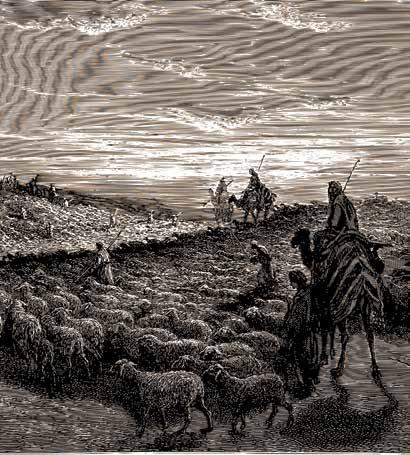
What, no map? When God called Abraham to be the father of a new nation (Genesis 12:1-4), He told him to leave his homeland and go to a place that would be shown to him. Wait, what – no planned destination? YIKES! But Abraham did it. Every call from God is an invitation to leave something or someplace so that we might be free for something or someplace else that He has for us.
When the call comes, we are often asked to leave something safe, familiar, and comfortable. However, safety can sometimes limit our opportunities for a greater life, personally and spiritually. When we accept the invitation, we free ourselves to grow and see a broader vision of life, love, and purpose through the eyes of God.
Trusting God enough to follow the call is the hardest part. What my husband Steve and I have learned is that holding onto the control we think we have keeps us from experiencing everything God has planned for us.
Last Wednesday night, we hosted our final Community Group gathering at the home we’ve lived in since moving to Idaho 10 years ago. We’re about to move soon. The group has met here on Wednesday nights for nearly six years. These dear friends reminded us of all the wonderful times we’ve shared in our home – laughing, praying, studying the Word, sharing, crying, crafting, eating, and simply experiencing life’s ups and downs together. Not to mention all the kids’ Bible studies, art classes, game nights, and Christmas cookiebaking sessions that took place under this roof. Along with women’s

breakfasts, brunches, luncheons, and farewells, the countless meals and holidays spent with friends and family are too many to count, just as the children and dogs we’ve hosted for days or weeks at a time. So much has happened under this tent.
A friend reminded me of Isaiah 54:2. Isaiah was speaking to the Israelites about hope and promise, and that God was about to do a new thing. Today, it encourages us to ask God to open wide the doors of opportunity, possibility, fulfillment, God’s promises, and purpose. His divine love prompts us to be ready for the next season and perhaps future gatherings of His people, people we don’t even know yet.
“Enlarge the place of your tent, stretch your tent curtains wide, do not hold back; lengthen your cords, strengthen your stakes.” – Isaiah 54:2
This verse encourages us to expand our horizons, stretch our faith, and increase our influence on others by stepping out of our comfort zone, broadening our reach, and deepening our roots. It challenges us to leave our bubble and make space for growth and new opportunities that can impact more people for the Lord (Philemon 1:7). When God calls, we don’t need to fear or hold back. He has a plan, and it is for good (Jeremiah 29:11). God was in our old house; He’ll be in our new home.
Continued on page 11











By Rosie Main
In a world overflowing with diet trends, conflicting health messages, and endless quick-fix promises, many Christians are realizing that the answers we seek were already given – from the beginning. Scripture reveals a clear blueprint for how God designed His people to live, nourish, rest, and thrive. This is the heart of the principles to aim for a healthier lifestyle rooted in God’s original design, supported by modern science, and lived out through simple, daily stewardship.
As you consider your goals for the new year, I invite you to explore these principles and join us for our January “Rebuilding the Temple” seminar, where we walk deeper into this transformative journey.
Basic principles we will discuss:
1. Increase Consumption of God-Made Food
“I give you every seed-bearing plant…and they will be yours for food.” (Genesis 1:29)

God designed humans and food to work together in perfect harmony – real, whole, unprocessed foods created to fuel life, not disease.
Have more “Food by God”:
• Fresh fruits and vegetables
• Seeds, nuts, roots, and herbs
• Clean, biblical proteins
• Healthy fats like olive oil and avocado
• Pure, mineral-rich water
Our “Rebuilding the Temple” program emphasizes these biblical foundations by removing the harmful substances – refined sugars, seed oils, artificial additives, and processed foods – that contribute to inflammation, hormone imbalance, fatigue, gut dysfunction, and chronic disease.
Science confirms what Scripture established: when we nourish our bodies with God-made foods, healing begins.
2. Clean vs. Unclean Foods
The Bible’s distinction between clean and unclean foods is not about legalism – it’s about protection. Foods that God called “clean” promote cellular health and reduce toxic burden. Foods labeled “unclean” often act as scavengers, filtering toxins from the environment. Clean proteins include wild-caught fish, grass-fed beef, pastured poultry. These reduce inflammation and support immune function. Unclean or bottom-feeding seafood, processed meats, and factoryraised proteins increase toxic load and burden the digestive system. When believers choose clean, ethical, God-made sources of protein, they aren’t just eating differently, they’re living differently.
3. Fasting, Rest, and Biblical Rhythms
Throughout Scripture, God establishes holy rhythms for the body and spirit:
• Fasting for clarity and renewal
• Sabbath for rest and repair
• Feasting for joy and fellowship
• Daily rhythms of sunrise and sunset

• Seasons of work and seasons of stillness
These rhythms aren’t suggestions – they’re part of God’s care plan.
Our “Rebuilding the Temple” program mirrors these biblical patterns through lifestyle coaching that promotes circadian alignment, stress management, proper sleep hygiene, and mindful fasting. Even Jesus fasted before stepping into His calling; how much more do our bodies need these rhythms today?
Rest is spiritual. Stillness is spiritual. Fasting is spiritual.
And together, they bring the body back to God’s divine order.
4. Detoxifying the Temple Scripture repeatedly describes the body as the temple of the Holy Spirit. A temple must be cleaned regularly – not out of guilt, but out of honor.
Increase detox principles such as:
• Bitter herbs (hyssop, ginger, dandelion, etc.)
• Hydration with minerals
• Broths and nutrient-rich healing foods
• Removing processed oils and sugars
• Reducing toxin exposure
We incorporate advanced detox strategies supported by functional medicine, clearing out toxicity from plastics, pesticides, environmental chemicals, and inflammatory foods.
A clean temple allows the Spirit to move freely – emotionally, physically, and spiritually.
5. Discipline as Worship: A Spirit-Led Relationship with Food
What we eat is more than a choice – it’s worship.
I suggest to believers:
• Break emotional eating cycles
• Heal from guilt and shame
• Practice moderation
• Eat slowly and prayerfully
• Seek the Holy Spirit’s guidance
With lifestyle coaching built around identity, purpose, and Godhonoring discipline, true discipline is never punishment. It is a path to freedom. Food becomes a tool for healing, not a source of bondage. And the believer becomes strengthened for the calling God has placed on his or her life.
Join us on Saturday, January 24, from noon to 3 p.m. for our free “Rebuilding the Temple” seminar at Main Health Solutions, 2300 W. Everest Ln., Suite 175, Meridian (healthy lunch included).
If something in your heart is stirring right now, that’s your invitation. God has MORE for your life, your energy, your purpose, and your health. To learn more and reserve your spot, call or text your name to (208) 859-6170. n
For further support with your health goals or more information, go to MainHealthSolutions.com.





By Tom Claycomb III
Memorizing is hard work. The first thing I have to do is convince you that it’s worth a man’s while to memorize Scriptures. Why not be hunting/fishing?
Hebrews 11:6 teaches us “he that comes to God must believe that He is, and that He is a rewarder of them that diligently seek Him.” You must believe that it is worth a man’s time to seek hardcore after God.
The second thing I have to do is to convince YOU that it’s possible for YOU to memorize. I’ve taught people from 6-85 to memorize. Let’s do a little exercise. What’s your name? Wife’s name? Address, phone #, email, birthday? See! You can memorize!
It’s hard work, and there’s also a spiritual darkness you’re fighting. At first you’ll feel mentally handicapped. It’s like working a muscle. Imagine you’ve never hiked. Your first backpacking trip will be tough.
You may say, “I own a Bible, so why memorize?” To engage in war against the enemy you have to have your “sword of the spirit” (Word of God) with you. That’s how Jesus fought the devil after His 40-day fast. He didn’t have a Bible with Him.
I used to fast on Sundays and after church would memorize. If the Pastor said a cool verse, I’d memorize it. One Sunday I felt prompted to memorize 2 Timothy 2:16: “But shun profane and vain babblings, for they will increase unto more ungodliness.”
That week an employee [I worked with] was doodling. While helping her catch up, she started talking some wild stuff. I told her to get to work. We caught up and she started again. I thought of the verse I’d just memorized. Why memorize it if I wasn’t going to tell her why I couldn’t flirt with her. Long story short, she went to church and got saved. Just because I memorized and applied that verse.
I’ve since learned from my wife, who is a teacher, that there are three learning styles: kinesthetic, auditory, and visual. One guy I know taught memorizing by visualizing word pictures. To remember the 12 Israeli tribes he said picture a Levi jacket. But this jacket is multi-colored. Levi is one tribe and the colored jacket represented the coat of many colors of Joseph, another tribe. It didn’t have buttons but a zipper which reminds you of the tribe of Zebulun and so his system went. I figured it’d be easier to just memorize than to remember the 5,000,000-word pictures.
Here’s how I memorize. If you’re memorizing a whole chapter, memorize the first verse then start on the second one. Say both and go to the third one and work on down the chapter. You want to say it perfectly or you’ll imprint it wrong in your head.
When I first started, I checked to see if I even knew John 3:16. Pitiful. I’d gone to college 5½ years and yet hadn’t even studied the Bible. Speaker and writer Bill Gothard prompted me to memorize Matthew 5, 6 and 7. In about 1½ hours I had 11 verses. I still remember how clouded my mind was. That was phenomenal for me. In 1½ weeks I mastered the three chapters and could say them straight through without looking. For me that was unheard of. Your mind will get sharper as you memorize.
Memorizing a 25-verse chapter is easier than memorizing 18 scattered verses. Most chapters are a flowing story – example, Psalms 23. To the contrary though, memorizing Proverbs is like memorizing the dictionary, sometimes a different thought in every verse. This makes memorizing Proverbs a bit more difficult.
A buddy shared a great idea. He’ll read as his nightly Bible reading the chapter that he’s memorizing. After a week or two it’s easier to memorize. Sound advice. If God’s talking to you through a verse or verses, memorize them and figure how to incorporate them into your life.
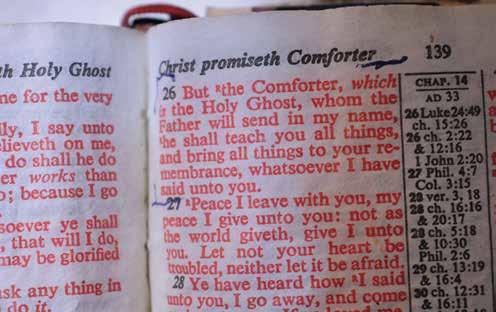
I started reviewing on Sundays. But after a while I’d be spending my whole time reviewing and never have time to move onto new material. I worried I’d forget what I worked so hard to memorize, but John 14:26 teaches us that, “The comforter, which is the Holy Ghost, will call all things to your remembrance whatsoever that I have commanded you.”
I count a verse memorized if I wake up the next morning and say it correctly. I’m then ready to move on to the next verse/chapter.
Gothard teaches about meditating on God’s Word. Here’s what meditating means to me. Let’s say a verse stands out to you. That’s the Holy Spirit prompting you to memorize/meditate on it and figure out how to apply it in your life.
That’s the quest of a hardcore memorizer – to figure out how to apply something written by shepherds 2,000-8,000 years ago into your world. If you don’t figure out how to apply it in your world, then why even memorize?
After memorizing a verse, think on it. Reference other verses that relate. Pray and figure how to apply them in your life. When I memorize a chapter, I may only understand three verses. Don’t panic. In His timing He’ll give you understanding of how to apply it.
I was shocked to find out that Scripture works in the real world. I’ve learned: “If it doesn’t work in the real world, then it’s not real!” I worked for 45 years in the beef packing world, which is a rough business, and it worked there.
That’s the quest of a hardcore memorizer. To figure out how to put something written 2,000-8,000 years ago into your world. You must know that it is worth a man’s while to seek hardcore after God. If I don’t accomplish anything else, from now on when you pick up your Bible, I want you to do so in reverence. You’ve got a weapon of war in your hands. n
For more information about anything in this column, contact Tom at tomclaycomb3rd@gmail.com.
Continued from page 7
We can learn a marvelous lesson from Abraham. Abraham packed his belongings and headed out of town. He didn’t know where he was going or why he was going there. But he knew the God who asked him to do it – and so he went. No questions asked. No complaints. No hesitation. Abraham simply trusted. And so can we, because we know the same God Abraham knew, and God is trustworthy. Plus, at least we have a map.
Though bittersweet at times, when God calls, there is a greater purpose beyond what we can imagine (Ephesians 3:20). I look forward to seeing what He has planned for you and for us as we answer when God calls.
“Now to Him who is able to do immeasurably more than all we ask or imagine, according to His power that is at work within us, to Him be glory in the church and in Christ Jesus throughout all generations, forever and ever! Amen.” – Ephesians 3:20-21
“For My thoughts are not your thoughts, neither are your ways My ways,” declares the Lord. “As the heavens are higher than the earth, so are My ways higher than your ways and My thoughts higher than your thoughts.” – Isaiah 55:8-9
“See, I am doing a new thing! Now it springs up; do you not perceive it? I am making a way in the wilderness and streams in the wasteland.” – Isaiah 43:19 n
Roxanne Drury is a wife, mother, grandmother, and retired Christian preschool teacher who served the Lord in children’s ministry for over 45 years. She has written a group study guide on Psalm 23, as well as other books. She may be reached at glorylandbooks@gmail.com.




By Dr. Rick Chromey
If Increase Mather were alive today, he’d likely be the kind of pastor who’d be a popular podcaster, bestselling author, and political influencer. The type who could discuss theology over coffee, reconcile enemies, and lead family devotions. Mather was intense, brilliant, and fearless in the face of kings, colleges, demons, and culture.
We live in a time when Christian conviction is shrinking. Parents struggle to pass down their faith, colleges drift from their principles, fear dominates headlines, politics seems unstable, churches face divisions, and biblical literacy is fading.
Sound familiar?
It should. Increase Mather lived through all of it –400 years ago.
And the remarkable thing is this: Mather didn’t just survive it. He shaped it. He stood in the gap. He fought for truth. He held the line for the next generation. And in many ways… he won.

Mather’s story reads like a mini-series – faith, family, political intrigue, college battles, spiritual warfare, and even a daring escape under disguise. You can’t make this stuff up.
Increase Mather was born in 1639 into a world on fire – spiritually and politically. His father, Richard Mather, a Puritan pastor in England, refused to compromise his faith, rejecting the bishop’s demand to wear a white surplice. Under pressure, he moved his family – his wife, Katherine, and four sons – to New England.
Increase grew up in a home where the Bible was read every morning and evening. The Mather family didn’t just “go to church” – they were the church. Psalms were sung, catechisms memorized, and family prayers spoken aloud.
And then tragedy visited his life. At age fifteen, his mother died, sending Increase spiraling into grief and spiritual turmoil. He later wrote that he fell into “anguish and horror” until he finally surrendered his life fully to Christ.
That moment forged his life and Divine Calling.
Increase entered Harvard at age twelve. And quickly discovered this historic university was in mission drift. The school’s charter stated the “main end of a student’s life” was “to know God and Jesus Christ,” but in practice, pagan writers – Cicero, Seneca, Epictetus – shaped the curriculum. Ancient philosophy gradually supplanted biblical authority, opening the way for students to explore skepticism, atheism, and Enlightenment ideas. This “drift” impacted churches since Harvard was a clergy training school.
Consequently, his father removed him from Harvard and handed his training to Pastor John Norton in Boston, who shaped him into a preacher, scholar, and defender of the faith.
After a study and preaching stint in Ireland and England, Mather returned to Boston and married Maria Cotton, daughter of the famed theologian John Cotton. Together they raised ten children – including the brilliant, prolific author Cotton Mather (who penned 388 books and pamphlets).
The Mathers believed family worship wasn’t optional. It was the engine of generational faith. In one diary entry, Increase poured out a father’s prayer: “Tears gushed from me… that my children may live to do service for the Lord.”
And that prayer was answered. The Mather home produced pastors, scholars, authors, and leaders.
In 1685, Mather became president of Harvard and stepped into a spiritual battle. The Puritan founders envisioned Harvard as a place where Scripture shaped intellect, character, and calling. But a new faction – broad-minded, reason-heavy, less doctrinal – wanted something different. They weren’t full-blown “infidels” yet – that wouldn’t happen until the late 1700s – but they were moving in that direction: less supernaturalism, more Enlightenment moral philosophy.
Increase pushed back hard.
He reminded Harvard elites that the point of education wasn’t classical elegance – it was Christian character. He warned that too many graduating clergy sounded more like Aristotle than Christ. He met privately with students, urging them to repent and live holy lives. He fought for a Bible-centered college when few others would.
But the tide had turned. In 1701, Mather was pushed out, and seven years later, the more liberal John Leverett took the helm. He guided Harvard toward a path that started with intellectual skepticism but eventually led to agnosticism, atheism, and hostility toward Christianity.
Mathers saw the future. He preached a sermon called “Ichabod” – “the glory has departed” – warning that once a college abandons Christian foundations, the culture will follow.
By the 1680s, New England faced a new threat: the English Crown. King James II dissolved the colonial government, installed the authoritarian Sir Edmund Andros, restricted worship, and seized printing presses.
The colony needed a defender. They chose Increase Mather. Because the Crown saw him as a threat, he fled Boston in disguise with his teenage son, Samuel, then sailed to London, where Mather spent three years lobbying for New England’s rights. Then the Glorious Revolution happened (James II was ousted), and Mather seized the moment. In 1691, he secured a new charter for Massachusetts that restored:
• Representative government
• Local control
• Protection of property
• Religious liberty for Protestants
Mather later wrote: “God has made me instrumental in obtaining for my country a Magna Charta…”
Without Increase Mather, New England’s political liberty might have died 80 years before the American Revolution ever began.
Now comes the part everybody knows – Salem. But here’s what most people don’t know: Increase Mather helped shut the famed witch trials down.
The crisis erupted from a toxic mix of fear, spiritual confusion, frontier warfare, church division, and even Caribbean folk magic (brought by enslaved persons from Barbados). Some pastors fueled the panic.
Mather did not.
In his 1692 book, “Cases of Conscience”, Mather argued that the courts were making a terrible mistake by accepting “spectral evidence” – testimony that someone’s ghost or “shade” had harmed another. He warned: “It were better that ten suspected witches should escape than that one innocent person be condemned.”
Governor Phips read Mather’s work, shut down the spectral evidence, and the executions stopped. Mather brought biblical justice back to a community swallowed by fear.
Mathers lived long enough to see New England change dramatically. Towns grew. Churches struggled. Colleges declined. Moral life softened. And yet he kept preaching, warning, teaching, discipling, and pleading for revival.
On August 23, 1723, Mathers died in the arms of his son Cotton. His legacy was extraordinary:
• More than 125 books and sermons
• A multigenerational ministry dynasty
• The preservation of colonial liberties
• One of the most influential voices in stopping the Salem witch hunts
• A model of family discipleship
Sources:
• And a prophetic warning that when Christian education falters, a nation stumbles with it
Increase Mather wasn’t perfect. But he lived up to his name. He was faithful and fruitful, bringing an increase. And maybe that’s the lesson for us today.
We don’t need perfect leaders. We need godly, productive ones. We need men and women who will stand in the gap – committed, grounded, and fearless – when their culture shifts, their institutions tremble, and their communities lose their way.
Increase Mather did it in the 1600s. Who is God calling to do it again...today? n
Dr. Rick Chromey is a historian, theologian, and educator who speaks and writes on matters of religion, culture, and history. He also leads Bible and Church History tours for churches, schools, and faithbased organizations. Rick and his wife Linda live in Star, Idaho. www.rickchromey.com.
1. Michael G. Hall, The Last American Puritan: The Life of Increase Mather, 1639–1723 (Wesleyan University Press, 1988), 7–11.
2. Cotton Mather, Magnalia Christi Americana (1702), Book III.
3. “Rules and Precepts of Harvard College” (1646).
4. Increase Mather, The Order of the Gospel (1700).
5. Increase Mather, “Ichabod” Sermon (1702).
6. Elaine Breslaw, Tituba, Reluctant Witch of Salem (NYU Press, 1996).
7. Increase Mather, Cases of Conscience Concerning Evil Spirits (1692).
8. Cotton Mather, Memories of Remarkables in the Life and Death of Dr. Increase Mather (1724).







By Gary Moore
I recently read a blog from the Smalley Institute that I really liked. It was titled, “How to Let Go of Your Marriage Without Giving Up on Your Marriage.” I want to share some of that blog with you. Every marriage goes through “rough times”. It’s interesting that many of these times begin not long after the honeymoon. It’s during that time that we are beginning to discover who the person really is that we married – after the “sales and marketing season”. And not everything we discover excites us. The “I didn’t know that” things begin to show themselves. And if we haven’t been taught what to do with these discoveries, they will begin to pile up and move from just being irritants, to becoming deal breakers. We may even consider just giving up on our marriage.
Maybe that’s you. Maybe you find yourself tired and exhausted from trying to save your marriage. You’re worn out from pursuing, explaining, defending, managing. You know something has got to change. But you’re terrified that “letting go” means quitting. So, you keep holding on. Keep controlling. Keep exhausting yourself.
Let me use the blog to challenge your thinking. Letting go of your marriage is not the same as giving up on your marriage. Most people confuse letting go with giving up because they sound similar. Giving up says: “I quit. I don’t care anymore. This is hopeless. I’m done.” Letting go says: “I can’t control this. I’m going to trust God with the outcome and focus on what I can control – my own transformation.”
Giving up is about bitterness and resignation. Letting go is about love and trust. Giving up abandons the relationship. Letting go releases your death grip on outcomes you can’t control while you do the work you can control.
Here’s the key difference. When you give up, you stop caring. You check out emotionally. You abandon your spouse to their struggles. When you let go, you care so much that you’re willing to release them to God’s care instead of keeping them trapped in your control.
Letting go isn’t stopping loving them. It’s starting to love them the way Jesus loves us – without demanding they earn it, without controlling their choices, without making your love conditional on their performance.
Here’s a story from the blog. Meet Rachel and Tom. Their marriage had been in crisis for two years. Both had hurt each other deeply. Both felt justified in their anger. Both were waiting for the other to change first.
They were stuck in a stalemate, each holding the marriage hostage until the other capitulated. And the marriage was dying. Finally, they made a decision together. They would let go. Not give up. Let go.
They both stopped waiting for the other to change first. Stopped keeping score. Stopped using past hurts as weapons. But they didn’t


stop working on the marriage. Instead, they each focused on their own transformation. Rachel worked on her criticism and contempt. Tom worked on his defensiveness and withdrawal. They let go of timelines. Let go of demands. Let go of expectations that the other would be perfect.
But they showed up with love anyway. Rachel loved Tom even when he didn’t deserve it. Tom honored Rachel even when she didn’t earn it. They gave each other to God’s care. But they didn’t abandon each other.
Eighteen months later, they renewed their vows. Not because the old marriage was fixed. But because they’d built an entirely new one. A marriage based on letting go instead of controlling. On loving when it’s undeserved. On trusting God instead of demanding change.
The transformation happened because they let go. Not because they gave up.
Here’s the paradox you must hold: Trust God with your marriage. AND work on yourself in your marriage. Let go of controlling the outcome. AND do your part in the process. Surrender your spouse to God’s care. AND love them well anyway. This isn’t contradictory. It’s both/and.
You can’t control whether your spouse changes. But you can control whether you do. You can’t control the outcome of your marriage. But you can control whether you become someone worth being married to. You can’t make your spouse love you. But you can become someone who loves well regardless of whether they reciprocate.
That’s the paradox of letting go without giving up: You release what you can’t control (them) while you double down on what you can control (you). You trust God with the marriage (outcome) while you work on yourself in the marriage (process).
And miracles happen. Not always the miracles you expect. Not always the timeline you want. But somehow, when you finally stop trying to control everything, things start to shift.
It’s weird how often marriages improve when one person stops trying to change the other and starts working on themselves. It’s strange how frequently spouses become curious about their partner when that partner stops pursuing and starts transforming.
God has you. God has your marriage. Even if it doesn’t work out the way you want, God is still in control. And your transformation in the process? That’s never wasted. n
Note: The Smalley Institute has as a part of this blog A Step-byStep Guide to Giving Up. If you’d like a copy, send me an email request (glmoore113@gmail.com) and I’ll email you one.


By Bethany Riehl
Welcome, my friends, to the year of our Lord, 2026.
Can you believe it? How are you feeling? Maybe you’re apprehensive. Maybe you’re excited.
Maybe you’re just thankful to have all of the decorations back in the garage.
Me? I’m a sucker for a new year, making plans and resolutions, dreaming dreams – essentially, I’m the exact target audience for those useless-but-oh-how-tempting yearly planners.
I’ve bought – and within weeks forgotten about – several through the years.
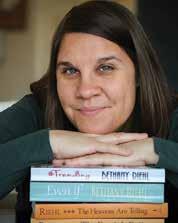
Although at this moment, I stand before you (metaphorically) with a handful of markers in one fist and a Fitbit in the other, I really only have a small idea of what this year will hold – I don’t have a big picture view. Neither do you.
But there is One who knows completely. God planned each day before the foundation of the world. He knows the end from the beginning. And no matter what may come, He and His plans for you and for me are good.
At the end of Numbers 6, Moses gives Aaron, the high priest, a blessing to say over the people as he made the sin offering, the burnt offering, and the peace offering.
This is my prayer for all of us this next year:
“The LORD bless you and keep you…”
It’s easy to look to the world for accolades, assurances, and answers. But who better to receive a blessing from than our Creator? He who took on flesh and did not despise us, but entered the dirt and grime with us, in order to lift us out of it by living the life we couldn’t, paying the debt we owed, and rising from the dead to give us new life? We once were lost in our sin, living in darkness, separated from the blessing and keeping of God.
But “For our sake He made Him to be sin who knew no sin, so that in Him we might become the righteousness of God” (2 Corinthians 5:21).
If He is for us, who can be against us? No matter what may come, if we are His, we know that the Lord has taken care of our greatest need: to be cleansed from our sin and reconciled to Him. If the world curses us, we need not fear. We have the Almighty God blessing us.
If we lose everything, He keeps us tight in His hand. Nothing shall sweep us away.
“…The LORD make His face to shine upon you and be gracious to you…”
God’s face is toward those He loves. He considers them, knows them, cares intimately for them. May we walk in His light, knowing with full assurance that God is in our corner. Let’s seek His face; He’s shining it upon us.
“And those who know Your name put their trust in You, for You, O LORD, have not forsaken those who seek You” (Psalm 9:10).
“…the LORD lift up His countenance upon you and give you peace.”
Continued on page 19




By Steve Bertel
(Editor’s note: This is the first installment of a two-part article.)
It’s basically a slave auction.
Where young girls are forced to parade on makeshift runways, allowing men –many, American men – to bid on them.
Threatened with beatings or death if they don’t then meet the needs of their despicable male customers.
Forced to hand over all their earnings to their procurers, often getting only a pittance in return.
Trapped in a world of sexual and psychological torture.
And many haven’t even reached their 18th birthday.
Such is the life of countless women in the Philip pines. Young women who started off meaning well – wanting to find jobs so they can help financially support their dirt-poor families back home. But invariably, the girls find themselves sliding down that slippery slope into a world of prostitution.

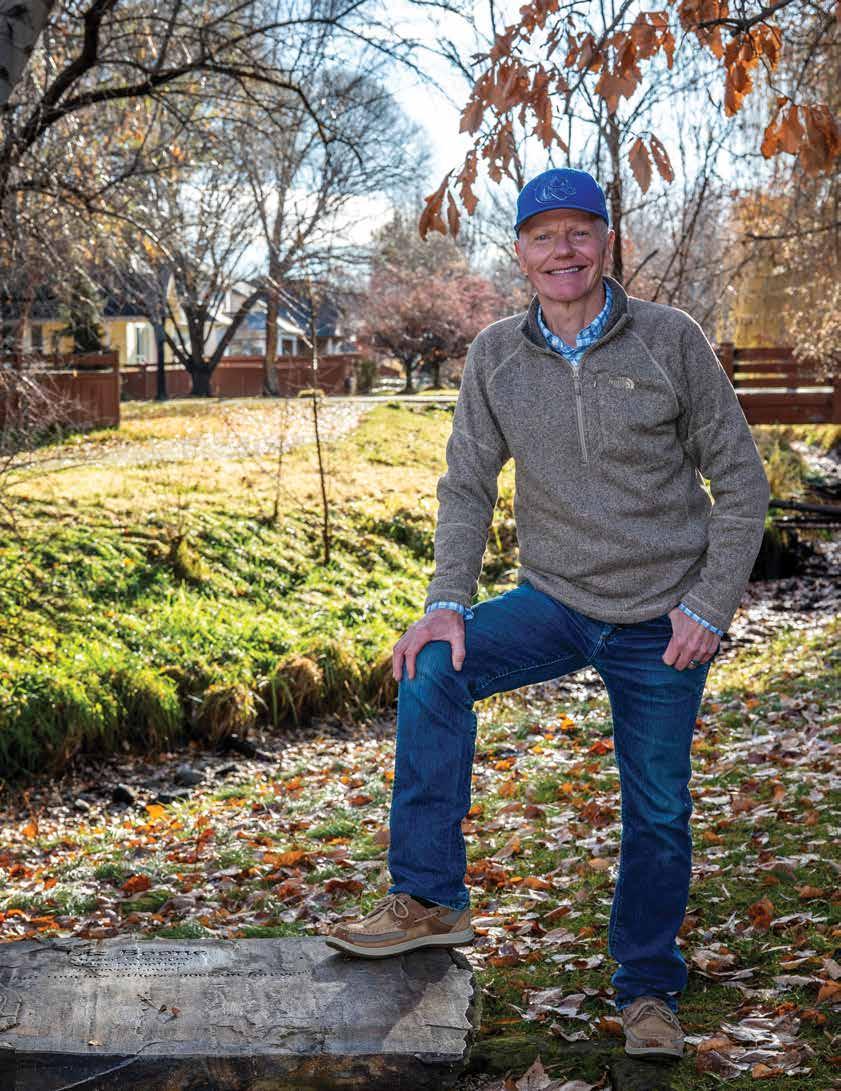
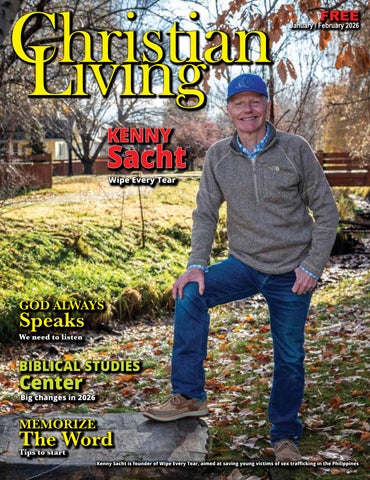
Kenny Sacht is shown with his wife, D.A.
taught for one year at a Christian school in Medford, Oregon, then attended seminary, graduating in 1981 – the same year he and his wife “D.A.” were married. (Today, they have five daughters, a son, and eighteen grandchildren.)
Eventually moving to the Boise area, Kenny became a high school teacher and basketball coach at Cole Valley Christian School.
Occasionally, he’d take his students on what he called “cross-cultural experiences,” long field trips – road trips, actually – to places like Washington, D.C.
One day, in 2007, “A Christian friend of mine from the Philippines was looking for a basketball coach to help with his ministry,” Kenny explained. “Kids in the Philippines love basketball; it’s the #1 sport there. In general, Filipinos are very poor people. So, we figured bringing in American high school students who are 6’5”, 6’6”, 6’8” would be quite a big deal for them.”
is founder of Wipe Every Tear, and both he and his wife have a huge heart for young women in the Philippines who are victims of sex trafficking. (Photo taken from www.wipeeverytear.org)
And fighting to survive in a never-ending cycle of threats. Of fear. Of abuse. Of darkness. But the Boise-based nonprofit group Wipe Every Tear is working to break that cycle.
“I grew up in a non-believing home in Oregon,” said Wipe Every Tear founder Kenny Sacht (pronounced “sacked”). But then, while attending Southern Oregon University in Ashland, he experienced what he would later describe as a “radical transformation” during the so-called “Jesus Movement” of the mid-’70s. One day, his buddy and their two girlfriends were hanging out together. “We had a couple of beers and went down to the Student Union Building to play some air hockey, when we noticed a poster advertising a free concert,” he said. So they decided to check it out. However, the only seats available were in a middle section, near the very back of the crowded venue.
The man performing on stage had long hair and a beard – typical of the times – and was playing a piano. As soon as he started belting out songs about love and Jesus and the power of the Holy Spirit, Kenny realized, much to his disappointment, “Oh, this is just another one of those religious concerts.” But he and his friends decided to stay, not wanting to go through the trouble and embarrassment of saying, “Excuse me. Excuse me. Excuse me.” to all the people they would have to scoot past in front of in order to leave.
Little did Kenny know at the time that the performer would go on to become world-renowned Christian recording artist Keith Green – and that, staying seated allowed the Holy Spirit to dramatically change his life. “Listening to Keith Green’s Bible-based rock songs, listening to the powerful lyrics, I came to know Jesus that night like never before,” Kenny remembered. “God touched my heart in a very intimate way during that concert – and my life has never been the same!”
Going from a non-believing college student to a man who was now deeply spiritual and empathetic, Kenny graduated from college,
So Kenny rounded up a group of his basketball students and, with their parents’ permission and financial backing, they all boarded a flight to the Philippines. Once there, they held a week-long basketball camp in the city of Manila, combining the popular sport with sharing the Word of God. To many who had never heard it before. “Many of those who attended our camp were in their late teens to early twenties, living in slums with their families, since hunger and poverty are really rampant in the Philippines,” Kenny pointed out. “So we reached out to them like any ministry, and God just opened doors for us. After all, who would’ve thought we could use an orange basketball for the glory of Jesus?” he smiled.
Kenny described the event as “… much like a sports camp, like many churches here in America do. In addition to playing basketball games, we also provided them three free meals every day. Many of those kids – and many of the people in the Philippines – don’t even eat one meal a day. In fact, some don’t eat for days. Or they eat very little. Maybe one little meal with rice. If that. Sometimes, they may get a little bit of meat, but that would be their only protein. Plus, we gave each kid in our basketball camp a free pair of new tennis shoes, since many kids over there don’t even have shoes to wear, let alone new ones.”
The following year, Kenny, his wife, and a group of students made another trip – this one, a little different from the first. “Very few girls in the Philippines play basketball. But many play volleyball. So, in June of 2008, we brought over Cole Valley’s volleyball coach and girls from the school’s volleyball team,” Kenny recalled. “And we held a two-week volleyball camp for the teenaged Filipina girls” – providing, like before, gifts, fellowship, Bible teachings, and three filling meals a day.
Even though, during his first trip, he had witnessed first-hand the abject poverty and hunger Filipinos struggle with every day, the 2008 trip “was when I first got a real feel for the poor,” he said. “One like I never had before.”
The most memorable example: a young woman named Cecile. “During our volleyball camp, she had expressed that her teeth were
hurting,” Kenny recalled. “And that she was hungry. But it wasn’t like kids here in America do when they whine about ‘Boy, I’m soooo hungry!’ when they really aren’t. I could tell Cecile was truly hungry. She kept saying, ‘Lolo Coach, I get really hungry.’ All the kids over there affectionately call me ‘Lolo’ – the Tagalog, the Filipino word for ‘grandfather.’
“So I took her aside and started talking with her. She held out her little hand – which was about half the size of mine – and she said, ‘I get only about this much rice once or twice a day.’
“And wow! – it was like God drew an arrow out of a quiver, pulled it back on a bow, and shot it deep into my heart. It hurt so bad. As it says in Lamentations 3:12-13, ‘He used His bow, and set me as a mark for His arrow. He has taken out His arrows and sent them into my heart.’
“Cecile then explained to me, ‘I’m not hungry right now, because I’m here at camp and we have all this food. But when I get home, my family and I get real hungry.’
“I asked her about why her teeth were hurting. She said, ‘I have this thing – what do you call it?’ Because her English wasn’t that good.
“I said, ‘A cavity?’
“And she said, ‘Yeah! A cavity. And it hurts so bad.”
“As an American who has health insurance and dental care, I asked her, ‘Have you ever been to a dentist?’
“And she replied, ‘My family is so poor, we can’t afford a dentist.’
“And again, it felt like God shot another arrow right into my chest –an arrow of righteousness, an arrow of ‘God Justice.’ My chest started hurting. And I began crying.
“It was then when God showed me Revelation 21:4 that says, ‘He will wipe every tear from their eyes. There will be no more death or mourning or crying or pain, for the old order of things has passed away.’
“And then, I felt God’s arm around me, like a coach who loves his player and puts his arm around him on the sidelines. And God said to me, ‘You know, I’m going to wipe away every tear on my side of Heaven. I want you to begin wiping away tears on your side of Heaven. And I want you to begin with her.’
“And, when I shared with Cecile what God had just told me, she started crying. Then I started crying even more. I was a mess! I had snot going everywhere. I had no tissue, nothing. I was the biggest mess I’d ever been in my life!
“When the camp was over, I went to the pastor who was heading up the camp, told him my story, and asked him, ‘My wife and I would like to help Cecile and her husband. Can you help us? Can you help us feed her? How can we help her?’
“Well, long story short, we soon began financially supporting Cecile and her family, regularly sending them money for food. After all, God said, ‘Wipe every tear.’ No more crying, no more pain, right?”
As far as Cecile’s persistent mouth pain, Kenny and his wife were also finally able to get the young woman the dental care she so desperately needed. But she didn’t have just a single cavity. Or as Kenny pointed out, “Twenty-seven cavities – yes, twenty-seven cavities –and two or three extractions later, she’s now no longer suffering.” Then, a few weeks later, after Kenny and his wife had returned home to the United States, he received a letter from Cecile in which she wrote: “Hello, Coach. I want you to know all my pain is finally gone. Thank you. Thank you so much.”
But God wasn’t yet finished directing Kenny’s steps. Cecile was only Step One.
Step Two came a few months later.

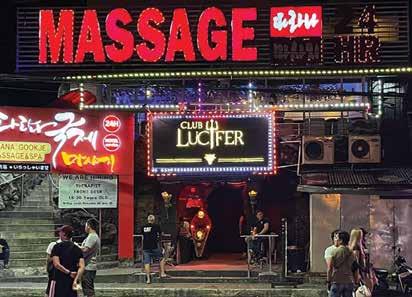
Kenny recalled, “That following December, I was in my living room, working online, on my laptop. It was late; about 10:30 at night. My wife and kids were all in bed. And I happened to come across an article about sex trafficking – in the Philippines.”
He was curious. After all, he hadn’t seen any evidence of sex trafficking during his two previous overseas sports camp trips. And certainly no blatant red-light districts. But the article said the Philippines was a hotbed for prostitution. In fact, reports say the Philippines has some 500,000 sex workers, the highest in the region.
So he read the article. Then another. Then another. “And it led me on an hours-long research of the whole sex trade in Southeast Asia,” he stated. He learned prostitution is illegal in the Philippines, of course, but many law enforcement authorities turn a blind eye to it. The main reason? Sex tourism – in which people (particularly Americans) come to the Philippines to engage in illicit sexual activities – brings a lot of money to the impoverished country. Money that also reportedly goes into some authorities’ pockets.
The more Kenny read, and the more he learned, the more heartbroken he became. To the point where, “I started crying. I looked down, and there were tears on my keyboard,” he recalled. “So I metaphorically raised my hands – rather sheepishly, I must admit. Not enthusiastically; like, ‘Here I am, Lord! Take me! Send me!’ – but I told God, ‘Please help me, from here in Boise, Idaho, to set just one girl free.’ I had read about girls trapped in the sex trade who were about the same age as my own lovely daughters. And the thought of them being trafficked was more than I could bear. So I kept wondering, How can I set just one girl free?”
For decades, Kenny had prayed about helping others. “I told God, I want you to break my heart with the things that break your heart. I prayed that prayer for over twenty years,” he stated. “And that night, sitting alone in my living room, I began to experience God’s heart for the poor, for the broken and, specifically, for all the sex-trafficked girls.”
Continued on page 18
Continued from page 17
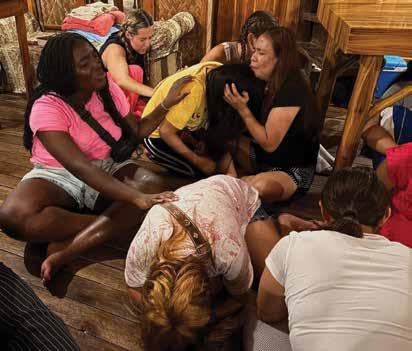
“I told God, I want you to break my heart with the things that break your heart. I prayed that prayer for over twenty years.”— Kenny Sacht
ahead of me. Then it jumped rather cat-like onto the roof. It was dressed as a human, and was looking at me with hideous, beady eyes. At that point, it was about twenty feet in front of me. And it screamed out in anger [in a very deep, loud, raspy voice] ‘I hate what you’re doing! I hate what you’re doing – especially in the sex trade!’ Then it vanished into thin air!”
At first, Kenny was startled. He didn’t know what to do, or what to think. “But then, God spoke to me. He told me, ‘It wants to pounce on your car, glare at you right through the windshield, and scare you so much that you twist the steering wheel, go off the road, crash into a power pole, and die. That’s its plan for you.’ God then showed me a vision of a newspaper obituary – my obituary. It read, as most obituaries do, ‘Kenny Sacht feel asleep at the wheel and died on a rural country road. He was a teacher at Cole Valley Christian School. He started an organization called Wipe Every Tear. He is survived by his wife and children … blah blah blah.’ But God told me, ‘I will not let that happen.’”
So Kenny and his wife organized another sports camp trip to the Philippines. “Only this time, not only were we going to minister to the young people as we had before, but I wanted us to go out afterward as teams and try to rescue young girls from the sex trade. Surprisingly, when I told our students’ parents what I had in mind, every one of them was fully supportive. They all said ‘Go for it!’” So I really respected the fact they trusted me with their kids,” Kenny said.
But the school’s administration was a bit skeptical. “Once our dean got word of it, he said, ‘What in the world are you doing?’
The next day, he talked with his wife and family about what he had learned. And about his desire to help the victims. But he was in a quandary. “I’m a pioneer. I’m a Let’s-grab-a-machete-and-cut-through-the jungle kind of guy. I truly wanted to do something to help these girls. But, for some reason, I didn’t have it in me to go forward,” Kenny admitted. At the time, he and his wife were working multiple jobs to make ends meet and be able to minister the gospel. As a Christian school teacher, he was earning less than most of his public-school counterparts. He worked in real estate. Had a painting business on the side. His wife even managed her own cleaning business.
But his wife also had a desire – an even stronger desire than his – to help the trafficking victims. “She said, ‘Yes! Let’s do this! And let’s call it Wipe Every Tear!’ So her faith strengthened my faith,” Kenny pointed out; proving that, sometimes, God temporarily reverses roles in a marriage to serve His purpose. “So you might say Wipe Every Tear became an organization in spite of me,” he chuckled.
What’s more, it wasn’t long before even his grown children joined in, essentially saying, “We’re all in this together as a family … so we’re going to do this as a family.”
They figured their first step was to find – rent – a “safe house” for girls in the Philippines sex trade, to give them a secure and comforting place to stay for a while, far removed from their abusive life on the streets. But money was still tight. So Kenny and his family prayed about it – and God miraculously provided. Not only helping them find a secure house, but bringing to them a woman named Rebecca Angeles, who became the organization’s Filipina Director.
God had set His plan in motion.
But Satan wasn’t happy. And wanted Kenny to change his mind. Kenny prefaced relating his experience with, “You may think I’m a weirdo when I tell you this, but it really happened.” Late one night, he was driving home along a dark rural road south of Boise, “away from all the city lights,” as he put it. He stopped at an intersection. There was one car ahead of him.
“In my headlights, I saw this ‘thing’ – what I knew was a demonic entity – suddenly appear out of nowhere. It’s eyes were staring at me, as it walked in front of the car ahead. Then it suddenly disappeared!
“I drove about another mile, stopped at another intersection, and the ‘thing’ suddenly appeared again – this time, on the hood of the car
“So I explained to him, ‘We teach our kids here at Cole Valley to take up the cross and follow Jesus, correct? That’s what we’ll be doing. If you say ‘No,’ what will that be telling our kids?’
“And the dean understood that. He said, ‘You know, you’re right. I get it.’
“I told him, ‘Sure, there are risks. But we will be taking precautions. We’re going to be as careful as we can. But we’re going to go out, find girls in the sex trade, and bring them hope, freedom, and a great future.’
“Some people feel they are ‘called’ by God to certain missions. I felt God was ‘inviting’ me to the Philippines. To partner with Him. He was already working in my heart. So I wanted to take him up on that invitation.
“Finally, our dean looked at me across his desk and said, ‘[In all your other trips,] you’ve never let me down. Don’t let me down here. Don’t lose one of our kids.”
“I told him, ‘I can’t guarantee that. But I’ll do my best. I know God will be with us.’
“And with that, we were off and running.
“That’s how Wipe Every Tear began.”
In Part 2 of this article, in our upcoming March/April issue, we’ll follow Kenny and his team as they spread out into the dark – and sometimes, dangerous – streets of the Philippines, rescuing young sex workers, and leading them into the full grace and light of God’s unconditional love. n
If you’d like to help support Wipe Every Year, or find out how you can accompany Kenny and his team on one of their overseas trips, you can learn more at the organization’s website: wipeeverytear.org. Or you can call Kenny directly at (208) 866-1967.
Steve Bertel is a multi-award-winning professional radio, television, print media, and social media journalist, who retired after a 30-year broadcasting career. Now a busy freelance writer, he wrote a debut suspense novel, “Dolphins of an Unjust Sea”, available on both Amazon and Kindle. Steve and his wife of 43 years live in Meridian, Idaho. He can be reached at stevebertel65@gmail.com.
Continued from page 15
Psalm 139 gives us a picture of what it looks like for God’s countenance to be upon us. He knows us better than we know ourselves. He knows our motives even better than we do. In Charles Spurgeon’s sermon, “The Incarnation and Birth of Christ,” he says this: “Not only when you were born into the world did Christ love you, but His delights were with the sons of men before there were any sons of men…I am sure He would not love me so long, and then leave off loving me.”
God’s great love toward us is from everlasting to everlasting – what greater peace can be given?
I wrote earlier of a bright excitement heading into this year. And while I have my work schedule planned out, a few resolutions taped to the mirror, and a pocketful of dreams I’m dreaming, I know that this year is going to be difficult in many ways. There are big changes coming in our family that will require resilience, patience, and a true reliance on prayer. I am not naïve enough to think that my plans will in any way come through; I’ve lived long enough to know that the LORD is in the heavens and does what He pleases (Psalm 115:3).
And He has every right.
If I find the tasks He sets before me to be heavy, I can know that He is truly the one doing the heavy lifting, giving me just enough weight to build up necessary spiritual muscles. He will bless me and keep me.

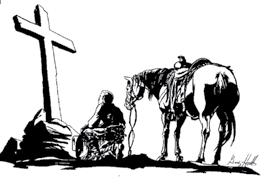
If He showers me with earthly blessings I am not expecting, I will be ready to praise Him with a song of thanksgiving. He will make His face to shine upon me and give me peace. I can do this – and so can you – because He is a great and gracious God. And if you need help remembering – as I often have – go to Psalm 103 and sit in it until it seeps deep down in your heart and you can say with David, “Bless the LORD, O my soul, and all that is within me, bless His holy name! Bless the LORD, O my soul, and forget not all His benefits, who forgives all your iniquity, who heals all your diseases, who redeems your life from the pit, who crowns you with steadfast love and mercy, who satisfied you with good so that your youth is renewed like the eagle’s” (Psalm 103:1-5).
He will lift up His countenance upon us and give us peace. No death, no lay off, no broken heart, no broken bone, no financial loss, no law, no hardship, tragedy, or joy or gain, or any good thing for that matter will take any of that away. It is true all the time: the LORD forgives, heals, redeems, crowns, and satisfies. This year and all the rest. n
Bethany Riehl lives in the Treasure Valley with her husband, three kids, and a dog. She writes articles and fictional novels when she can, and her one desire is to point others to the love and sufficiency of Jesus Christ.


By Joan Endicott
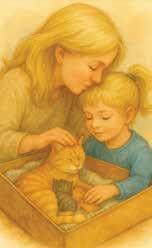
Dear Young at Heart, this column is the second in the “I Get To!”® series with GiGi & Joy. I pray this series creates a special opportunity for you to enjoy personally, while also sharing these stories and life lessons with the little ones you love, as well. May it connect with all ages, giving wonderful moments of compassionate conversation that serve to ground every heart, regardless of age, in the timeless truths of God’s Word.
And she giggled remembering the day Thomasina tried to steal spaghetti right off the table.
GiGi smiled softly. “Ohhh, every memory holds so much love!”
GiGi reached over and gently held Joy’s hand. “Sweetheart,” she said, “grief is a little word that carries huge feelings and meanings. It can feel confusing, lonely, heavy, and unfair. Grief is a companion none of us ever want to walk with… yet we all will.”
Joy sniffed and nodded.
“Grief comes,” GiGi continued, “when the thing we wished, with all our heart, wouldn’t happen… does.”
GiGi paused, letting it settle. “Life won’t ever be the same, because someone who made your world warm and wonderful isn’t here anymore – to cuddle, to climb into your lap, to follow you around the house, to be part of your everyday moments.”
Joy wiped her cheeks. “I miss her so much already. I’ll miss who I was when she was with me, and who we were together.”
GiGi squeezed her hand. “That’s exactly what grief is – it’s missing them, missing what they brought into your life, missing the ‘you’ that existed when they were here. You see, sweetheart, everyone, even a tiny tabby cat, is an irreplaceable gift from God.”
~ Joan AI
generated art submitted by
Joan Endicott
The moment Joy appeared in the sunroom doorway, her red puffy eyes already telling the story of her hurting heart, she fell into GiGi’s lap and open arms – the way a hurting heart runs toward the comfort that feels like home.
“GiGi…” Joy whispered, her voice trembling, “my kitty… my Thomasina… she died.”
GiGi’s eyes filled with tears as she held Joy tighter. “Oh sweetheart…”
Through bursts of tears, Joy shared, “She wasn’t sitting in the window waiting for me when I got off the bus…so I started looking… (pausing to catch her breath between sobs) I found her under the big evergreen tree…she looked like she was sleeping.”
GiGi held her close, rocking her gently, letting the silence be her safe place. Princess curled at Joy’s feet, almost as if she understood too.
After a long moment, GiGi whispered, “Oh sweetheart… Thomasina was such a special friend. Your hurt in your heart is so big because your love for her is so big.”
Joy cried harder. “She was with me since I was little… I made her that box with a soft blanket when she had her kittens… She always slept at the foot of my bed… And now she’s just… gone.”
GiGi wiped tears from Joy’s cheek. “Tell me anything your heart wants to say. Your words, your tears, your memories – they all matter.”
So Joy talked.
She talked about Thomasina’s silly sideways run.
About how she loved to jump and play in the freshly dried laundry. About the way she curled around Joy’s ankles like a furry sock.

GiGi continued gently, “That big hurt inside you? That’s your huge love for her that feels like it has no place to go.”
Joy leaned her head against GiGi’s shoulder, letting the tears come again.
“It’s good to cry,” GiGi whispered. “Tears are God’s beautiful way of helping cleanse our heart. He cares so deeply about your pain that Scripture says He saves your tears – every single one.”
Joy’s eyes widened slightly. “He saves them?”
“Yes,” GiGi whispered. “You and your tears matter that much to Him.”
GiGi paused for a bit, then added: “You know, darling, it’s helpful to know that grief doesn’t only come when someone dies. We can grieve many things in this life.”
Joy looked curious, so GiGi continued: “We can grieve when a friend moves away, or when a dream doesn’t happen, or when something we hoped for doesn’t turn out the way we imagined. We grieve change. We grieve endings. We grieve the moments we wish we could go back to.”
Joy nodded slowly.
“We feel such loss when anyone or anything meaningful either changes or goes away.”
Joy leaned into her: “I never knew grief covered so much.”
“It does,” GiGi said gently. “And that’s why your heart feels so full, almost too full, sometimes. Because grief stretches across all the places love once lived.”
Joy looked up. “So… what do I do now?”
GiGi sighed, remembering. “When my precious Penny went to Heaven, my heart felt like it would never stop aching. You remember the stories… we laughed all the time, talked for hours about what truly matters in life, prayed together and encouraged each other in the Lord.”
Joy nodded.
If you have found this or another ar ticle valuable, please consider helping us bring stories like this to our community by suppor ting Christian Living Magazine, a 501(c)3 ministr y, at


Referrals
“So now,” GiGi said, “I still talk to her sometimes. I tell her how much I miss her. I laugh about the funny things we laughed about before. And I thank God for making my life so much richer and wonderful with her in it. She’s not here to hug in person, but I can hug her in my heart.”
Joy smiled through her tears. “I think I’ll talk to Thomasina too.”
GiGi looked into Joy’s eyes. “As grief walks beside you, as unwanted as it is, I want you to get to know another special friend: self-compassion.”
Joy tilted her head. “What does that mean?”
“It means you treat your hurting heart with the same kindness you give others. You speak gently to yourself. You say, ‘This hurts, and it’s okay to hurt.’ You rest when you need to. You cry when you need to. You breathe slowly and remember that Jesus is near.”
Joy nodded thoughtfully. “I want to learn to do that.”
GiGi smiled softly. “And sweetheart, there’s something else that helps when grief feels so big you don’t know what to do with it.”
Joy looked up, waiting.
“When your grief feels huge,” GiGi said softly, “like a stormy wave inside your chest, imagine a gentle, kind voice inside your own heart stepping forward. That voice is your self-compassion.
Picture it taking the sad part of your heart by the hand and whispering, ‘I’m here. I care. You’re safe with me.’”
Joy closed her eyes. “It’s like the kind part of my heart gives the sad part a hug.”
“That’s exactly it,” GiGi said, stroking her hair. “That’s how God helps your heart heal – one kind, gentle moment at a time.”




GiGi gazed out the window, her eyes soft and faraway.
“Nothing will ever be exactly the same,” she said quietly, “because Thomasina isn’t here to make it so. But what a beautiful gift God has given: the gift of remembering. Of telling stories. Of keeping the love alive by sharing it.”
Joy sighed deeply. “Just like that Diamond Rio song you like, GiGi… sometimes you just want ‘one more day.’”
GiGi smiled, “Yes, we’ll always want one more day with those we love. That’s why Heaven will be so wonderful.”
Then GiGi began humming the melody, pulling Joy into another warm embrace.
Joy rested her head on her GiGi’s shoulder.
“Thank You, God,” she whispered softly, “for Thomasina… and for helping me feel Your love as I learn how to miss her.” n
Connection questions: 1. What was your favorite part of the story? 2. What do you love about that part? 3. Would you like to do that too? 4. What will that look like? 5. Today, when you look through your self-compassion lens, what do you see?

Grab your FREE copy of Joan Endicott’s “I Get To!”® book at www.JoanEndicott.com. See Joan’s encouraging words in her short videos on social media. Joan is an Award-Winning Keynote Speaker, Author and Coach whose coaching has reached over 30 countries. Find out more about her speaking and coaching here: www.JoanEndicott.com.










By Dave McGarrah
As a local pastor and the guy who started Master Minded Ministries with my wife, Jerri, I’ve had the privilege of seeing something truly special: an incredible hunger for authentic, relevant, and indepth biblical understanding here in the Treasure Valley.
We’re living in a world completely overloaded with information, but let’s be honest – we’re starving for true wisdom. I see people searching everywhere: searching for meaning, searching for truth, and searching for a faith that’s not just an emotional high but something that makes solid, intellectual sense.
That seeking spirit is exactly why Master Minded Ministries exists. Our mission is simple but powerful: to equip and encourage every believer and seeker to engage with the Bible in a way that truly transforms their mind and, by extension, their entire life. We want to foster a community of people dedicated to mastering the truths in God’s Word, learning to think critically, lovingly, and biblically about everything around us.
We’re absolutely not trying to replace the wonderful stuff happening in your home church. Not at all! We see Master Minded Ministries as a helpful supplement – a specialized resource for anyone who just feels that pull to go deeper. We offer a unique kind of fellowship, a real “neutral territory” where honest questions meet genuine faith. Whether you join us for a weekly study, a specialized workshop, or check out our online materials, everything we do is designed to peel back the layers and illuminate the path to a clearer, richer understanding of Scripture.
But if there’s one part of our ministry that has really clicked with the spirit of the Treasure Valley – the program I believe is uniquely suited to handle the challenges of our modern world – it’s what we call the “Deep Dive.”
The Deep Dive is way more than just another Bible study; it’s an expedition! It’s a deliberate, immersive effort to transport ourselves back to the first century – and before – to the time when the sacred texts were written and to the people who first heard them. Think about it this way: Imagine receiving a letter written just for you 2,000 years ago, in a foreign language, within a culture and political climate you know absolutely nothing about. If you don’t have that context, you’re almost guaranteed to misunderstand key points, misinterpret meaning, and miss the profound original intent of the author. That is the massive challenge we face every time we open the Bible.
The Bible isn’t just a collection of nice, timeless quotes. It is a series of historical documents written to a specific group of people living under a specific set of circumstances. To truly grasp the power of the gospel, we need to answer one fundamental question: “What was actually going on back then and how does that apply to the times we are NOW living in?”
During the Deep Dive, we pull back the curtain on the historical, cultural, political, and geographical background of Scripture. We dig into the intricacies of Roman rule, the competing Jewish groups (like the Pharisees and the Sadducees), and the important symbolism in everything from a shepherd’s staff to a farmer’s seeds. Take the famous example of Jesus talking about a mustard seed –the smallest of all seeds. A first-century listener wouldn’t just hear a sweet metaphor; they would understand the incredible agricultural reality. They would know that the mustard plant, once grown, was notoriously tough to get rid of, representing the unstoppable, expansive, and sometimes messy growth of God’s kingdom. Suddenly, a
simple verse has weight, texture, and immediate relevance.
The Deep Dive gives you that essential context, transforming the Bible from a flat, two-dimensional text into a rich, three-dimensional world you can truly inhabit.
One of the most exciting things about the Deep Dive is who shows up. Our fellowship is made up of a wonderfully unique group of people, all drawn together by a common curiosity and genuine respect for the text.
The Treasure Valley, like everywhere else, has seen a rise in the “nones” (those who claim no religious label) and, perhaps more importantly, the “dones.”
The “dones” are people who are simply done with church. Maybe they had a painful experience, got burned by church politics, or just found the traditional Sunday service lacking in intellectual depth. They might love God, or at least be open to the possibility, but they are wary of the institution. They want truth, but they are done with the drama.
This is exactly where Master Minded Ministries and Tuesday Night Live come in. We operate with no affiliation and zero denominational connection. We don’t ask you to subscribe to a creed; we just ask you to bring your Bible and your questions.
This non-threatening, neutral territory is the perfect bridge for the “dones” and the “nones.” It offers them a space where they can:
• Fellowship and meet some great people on a similar journey
• Engage with the real substance of Scripture without the pressure of an altar call
• Invite friends who would never step foot inside a traditional church – a skeptical co-worker, a questioning family member, or a neighbor interested in the historical significance of the Bible
The Deep Dive becomes an evangelistic tool simply because it respects the intelligence of the seeker. We meet people right where they are – at the point of their intellectual curiosity. We treat the Bible as the serious, historically grounded, divinely inspired document that it is, and we just let the context speak for itself.
Let me be absolutely clear: the Deep Dive is designed to supplement your traditional church, not compete with it. A healthy church provides community, worship, sacraments, and a consistent, multifaceted spiritual diet. But given the busy schedule of a typical week, it’s virtually impossible for a church to spend several continuous hours dissecting the nuances of, say, the Greco-Roman legal system and how it influences Paul’s letter to the Romans.
Master Minded Ministries fills this gap. We are the workshop for the intellectually rigorous exploration of the text. And this depth benefits everyone, including lifelong churchgoers. The person who understands first-century Jewish wedding customs, for example, will never read Jesus’ parable of the ten virgins the same way again. That richness enriches their faith, their worship, and their appreciation for the sermons they hear on Sunday. It transforms simple belief into a deep, well-reasoned, and resilient conviction.
Our ministry is for anyone interested in what the Bible says, regardless of where they are on their spiritual journey. We have attendees who are seminary graduates, those who have never been to church, and everyone in between. Our unifying factor is a commitment to the text and a desire to be “master-minded” – to have our minds shaped by the Master’s Word.
In my years of ministry, I’ve watched the profound transformation that happens when context suddenly clicks. It’s like turning a blurry
black-and-white photograph into a vivid, high-definition, color image.
When we study the harsh realities of taxation under Rome, the Sermon on the Mount gets a new edge. When we understand the intense political and religious tension surrounding the Samaritan people, Jesus’ interaction with the woman at the well becomes an act of radical, culture-defying love. When we grasp the immense pride a shepherd would have in his flock, we truly feel the weight of the Psalmist’s cry, “The Lord is my Shepherd, I shall not want.”
The Deep Dive isn’t just about accumulating facts; it’s about inspiring awe. It’s about recognizing the magnificent, intricate wisdom of God – a wisdom so deep that it wove itself perfectly into the tapestry of human history.
This deep engagement builds a faith that is sturdy and lasting. It’s a faith that can stand up to the intellectual challenges thrown at it by the modern world because it is grounded in historical fact and literary integrity.
Treasure Valley, if you’re reading this, I want to extend a personal invitation:
• If you’re a “done” who is hungry for truth but wary of the building, come and join us. Leave your baggage at the door and just meet some people who love to think.
• If you’re a church member who wants to supplement your already wonderful spiritual journey with a deeper, richer understanding of the world of the Bible, the Deep Dive is for you.
• If you are simply anyone interested in what the Bible says, without affiliation, bring your questions, your curiosity. We offer territory for an honest conversation.
We believe that the more you know about the setting, the more the message will change your life. Master Minded Ministries is here to help you dig, to explore, and to ultimately unearth the unparalleled richness of God’s Word.
Come join us on our next Deep Dive, and let’s travel back in time together to witness the gospel message as it was truly meant to be understood. n
For more information on our next Deep Dive and the various ways Master Minded Ministries is serving the Treasure Valley, visit our website, www.mastermindedministries.org, or contact us directly at mastermindedministries@gmail.com. Come hang out with us on Tuesday nights and bring a friend.
Dave McGarrah is a pastor and co-founder with his wife, Jerri, of Master Minded Ministries.

By Dr. Larry Banta
Shortly before dawn Jesus went out to them, walking on the lake. When the disciples saw him walking on the lake, they were terrified. “It’s a ghost,” they said, and cried out in fear.
But Jesus immediately said to them: “Take courage! It is I. Don’t be afraid.”
“Lord, if it’s you,” Peter replied, “tell me to come to you on the water.”
“Come,” he said.
Then Peter got down out of the boat, walked on the water and came toward Jesus. But when he saw the wind, he was afraid and, beginning to sink, cried out, “Lord, save me!”
Immediately Jesus reached out his hand and caught him. “You of little faith,” he said, “why did you doubt?” – Matthew 14:25-31
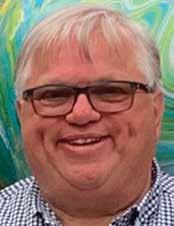
As long as Peter kept his eyes on Jesus, the wind and the waves were of no concern. He turned away from looking at Jesus and saw the wind, he lost hope, and started to sink. It is so easy for us to lose our focus on the eternal and start to see the wind.
Considering the current world situation, one might easily become quite overwhelmed. Everything seems to be falling apart. There are storms, fires, earthquakes, hurricanes, wars, persecution, deadly riots and terrorism. Evil seems to be everywhere and increasing.
In John 6.33 we read: “I have said these things to you, that in me you may have peace. In the world you will have tribulation. But take heart; I have overcome the world.”
By focusing on Jesus instead of the wind, we have true hope. Hebrews 11:1 tells us, Now faith is confidence in what we hope for and assurance about what we do not see. This is what the ancients were commended for.
Faith is the foundation for hope. Faith is in something real; the Truth found in God’s unfailing Word. It is easy to start focusing on the wind and forget the basis of our faith. We begin to lose hope as we focus too much on the wind. We have to refocus on Jesus, every day, not just on Sundays. Take time away from the worries of this world, dig into the Word, meditate on it, remembering what our true foundation is. Here is the foundation of our faith, providing true hope:
1. God created everything. He is the first cause, the cause without His own cause.
2. Man chose to disobey God, giving rise to sin and rebellion through all the generations of humans.
3. We inherited the sinful nature, but we can be forgiven for anything we have done, if we repent and believe in Jesus. We then become new creatures, the old has passed away (1 Corinthians 5:17).
4. We have a choice as to where we will spend eternity: choose redemption through Jesus or reject Him. No other choices.
5. Though we are redeemed and able to live without being slaves to sin, the world is not redeemed yet. There is evil in this world, and we are in a constant battle against spiritual forces of evil (Ephesians 6:12).
6. Our only real purpose in life is to bring glory and honor to our God.
7. We are eternal beings created as a soul and we happen to have a body.
8. We can have abundant life here as stated in John 10:10 – “The thief comes only to steal and kill and destroy. I have come so that they may have life, and have it in abundance.”
The 9th source of hope: There is a great reward awaiting us when we finish this race knowing Jesus: Heaven. Those without the hope found in the relationship with Christ look at the wind, the trouble and evil in the world and conclude that either there is no God or that we have displeased the goddess of the earth, or some other false deity. They feel we have a responsibility to turn the world around, make it better, create a heaven on earth, a utopia.
We, however, are very small and powerless in the eternal sense. We cannot control the weather, earthquakes, natural disasters. We cannot even control our own lives as to how long we will live or what tomorrow may bring. We can control our eternal destiny, however, by accepting the free gift of God for eternal salvation.
If we have lost hope and have become overwhelmed with the circumstances of life, how can we get back in focus? Without hope there is no meaning in life. Hopelessness is a real cause of losing the will to live and taking one’s own life. So, it is essential that we maintain hope, and help to instill it in others.
Starting the journey back to hope means getting back into a relationship with God, refocusing on Jesus rather than the wind.
Delight thyself also in the Lord; and he shall give thee the desires of thine heart. – Psalm 37:4
As we delight in the Lord through His Word, in prayer, and with praise, we begin to see how much He loves us. Our desires then change to be His desires.
Return to fellowship with other believers. For good reason we are told in Hebrews 10:25 – And let us consider how we may spur one another on toward love and good deeds, not giving up meeting together, as some are in the habit of doing, but encouraging one another – and all the more as you see the day approaching.
• If you do not have a regular church, seek out one that is Biblebelieving. Joining a small group is also a powerful way to maintain our hope and perspective.
• Work on gratitude and praise, considering our blessings, whether great or small, and then giving thanks to God for all of it. Lifting our hearts in praise and worship helps us to see how great and wonderful He is (Philippians 4:6).
• Restore your priorities in life. Sometimes our outside activities take over and we lose our focus. Our first priority is our relationship with Christ, taking care of ourselves so we are able to care for our other priorities. This would include our family, friends, our work, ministry and other activities.
Our life will be filled with blessings if we seek Him first. We can have joy and abundant life even when circumstances are difficult.
Losing hope is a serious problem. Sometimes it is more than just spiritual. It can be a symptom of a serious mental disorder such as major depression or bipolar disorder. Help is available through local mental health professionals. Treatment works and can be life-changing. For immediate help, the local emergency rooms can get you into the proper treatment, or use the national mental health hotline 988. This will put you in touch with a local crisis team that can talk with you and guide you toward the proper help.
Psalm 42:5
Why, my soul, are you downcast?
Why so disturbed within me?
Put your hope in God, for I will yet praise him, my Savior and my God.
Focusing on the wind will take our eyes off of Jesus and the hope we have in Him, then we start to sink. Keeping our eyes on Jesus, we will be able to deal with whatever the wind and waves may bring our way, and we will have joy and hope in our journey. n
Dr. Larry Banta is an author of several books, a retired psychiatrist, and a former missionary. He served in India, Mexico and Kenya. He and his wife, Evelyn, a counselor, travel together to provide consultation and training in various international locations.
By Mark Naito
We have New Year’s diets, fitness, fasting and other resolutions, but what about our tech and faith? Merriam-Webster Dictionary defines “resolution” as the act or process of resolving.
But what can possibly be a “tech resolution”?
Not sure about you but whatever it is, it must be sustainable. Something that you not only see results right away but can keep it going without going crazy.
Something to ponder in 2026 is a statement from Bill Gates’ book, “The Road Ahead,” written back in 1995. He wrote: “Frankly, I’m not too concerned about the world whiling away its hours on the information highway. At worst, I expect, it will be like playing video games or gambling… A more serious concern than individual overindulgence is the vulnerability that could result from society’s heavy reliance on the highway.”

My New Year’s challenge to you and your family is to take inventory of how much screen time you to have per day and week. Don’t justify the “why” but consider how much you truly use screens throughout the week: smartphone, tablet, desktop computer (at home or work), TV, in stores or restaurants, etc.
From this you can ask yourself, “Why am I compelled to do this?” If you’ve been reading our past articles, you have seen a theme. When you are with someone in person or wanting to catch up with someone, do it in person and without screen distractions. Especially your time with the Lord. Get a good old physical Bible and paper journal with pen. This is one fundamental that we encourage at Navigating Tech Family – being relational and in person. Why?
Because God created us to be this way.
See Acts 2:41-42 – “Then those who gladly received his word were baptized; and that day about three thousand souls were added to them. And they continued steadfastly in the apostles’ doctrine and fellowship, in the breaking of bread, and in prayers.”
We were meant to have fellowship and to be with each other for further nourishment of our soul. The Holy Spirit works when we’re person-to-person, and your fellowship will be much richer as you do more things with others.
Something to think about with screens is sometimes they have hints of isolation. Webster’s Dictionary defines isolation, in part, as “detachment from others, often involuntarily.” And from my many times in public settings, people may be right next to each other but are isolated with whatever they are consuming on their smartphones or TV. Try observing people the next time you’re at a restaurant, movie, coffee shop, etc. You will be surprised to see that people appear to be having a good time, but if they are looking at any screen, they are consumed by that medium.
Ahh, but this is such a downer!
Seems like it, but take a couple of weeks break from tech and see how truly refreshed you are. For some help you can check out Navigating Tech Families Reset Tech Kit which will help guide you through this process with tools and resources.
To help you with this, know your family ultimately does not care about most of the things you strive for every day. As a former healthcare professional in hospice and a memory care administrator, I can assure you that no person at end-of-life ever once said anything other than that they wanted to connect with certain people or make amends with others. Nothing about one last golf game, promotion, trip, etc. And your kids will not be mad at you for not getting them those “xyz” electronics but will care more about the time you spent with them without devices. Maybe you won’t hear that right away, but at some point, that will come up in their conversations. n
Mark Naito is passionate about helping people by seeking ‘root cause’, providing result-oriented solutions and good outcomes. His passion has always been to empower others to be educated to make their own informed decisions on what makes sense for themselves or their family. He started Navigating Tech Family toward that goal. He is a family man with a beautiful wife and kids and loves doing life with his family in the outdoors. He may be reached at mark@navtechfam.com.


By Gaye Bunderson
Everyone in life is on a journey. Tammye Lee found herself on a long journey to discover how she was called to serve the Lord. Her story starts in Southern California, where she was born 62 years ago. “We grew up in church,” she said, “and as my understanding of God grew, I made a commitment to Him. On October 30, 1978, when I was 15, I became very aware and conscious that I needed to make that commitment.”
Later, at age 18, she felt a temptation to pull away from the Lord; but she persevered, remained steadfast in faith, and began to seek His will. She prayed frequently wherever she was and no matter what she was doing, asking the Lord: “‘What do You want me to do, and where do You want me to go?’ I was seeking His direction.”
To say the answer did not come quickly nor in a flash of lightening would be an understatement. It was a long wait after spending time in Europe and in the little hub of Mountain Home,
Idaho, for her to know God’s will. But she was determined to discover it.
She ended up in Mountain Home because her husband was in the U.S. Air Force. During his career, the couple spent four years in England and six in Germany. Their family grew to include a daughter and son; and they now have three grandchildren.
Lee continued praying, even as the years clicked by, and eventually got a stirring of an answer: “I felt called to the ministry.”
Ministry can be a broad field, so she persevered to understand her calling in more detail. Back in Idaho, she studied to become a certified nurse’s assistant, or CNA. She worked with various home health services but felt a desire to work with people in their homes.
She started to think about pursuing a chaplaincy. Lee stated that in 2000, the Lord told her that chaplaincy could be anywhere, including on the air base – or in people’s homes. “I said ‘yes’ to that, not really knowing where I was going.”
Lee attends The Rock Church in Mountain Home, and a former pastor’s wife there, Reba Bailey, had a spiritual sense for people and what they were to do and where. Bailey suggested Lee attend Northwest University of Kirkland, Wash., online. Lee felt the Lord said to her, “‘Do this and see what doors open’.” NU is a Christian college, with a full College of Ministry.
“The university was going to teach me what I needed to become a minister,” Lee said.
At one point, Lee was hired as a CNA at Horizon Home Health & Hospice in Mountain Home. Then Bailey was also hired at HHH&H and became Lee’s boss. As Lee explained it: “She remembered my feeling of being called to chaplaincy. She did not change the rules but made a way for me to be able to serve as a chaplain while going to school. She helped to facilitate a way of fulfilling my call without changing any HHH&H rules.
“I got my Bachelor of Arts degree in 2020. It took me six years of online schooling, yet I was able to serve as a chaplain because of being in school. I became a Licensed Minister in June 2019. Once again, I needed the classes before I would be able to take the test and be interviewed to become a minister.”
She’s served as a chaplain for many years at Horizon Home Health & Hospice. (Chaplains are religious professionals in various settings, including hospitals and homes, rather than a religious institution such as a church. Today, Lee stated, hospitals and hospices require a master’s degree. “The educational requirements are getting stricter.”)
Lee said that finally getting to her position at HHH&H was a long journey of prayers and opportunities to learn how to do the work she was destined for. At one point, she spent a year and a half back home in California, taking care of her mother. “I encourage people to be with their families.” So she herself went to provide caregiving for her own mom. “She had been very independent but lost her hearing and eyesight. She died at the age of 93. I was rehired with Horizon Hospice after caring for my mother and returning to Idaho.”
She refers to her current work as an aspiration fulfilled.
“God gives you a dream and you kind of pursue it; but there is a waiting time. You wait patiently, but you’re not stagnant – you keep moving forward.” She recalled Abraham and Sarah’s long wait for a son.
What qualities make Lee suited for her calling, does she feel?
“I think God works with you from the beginning [in your youth and throughout the years]. I grew up in a desert somewhat isolated; and even as a youngster, when someone new moved into the area, I’d go knock on their door, and say ‘Hi, I’m your neighbor!’”
She’s fluent in the art of hospitality and is comfortable dealing with people, including elderly people.
“I have a caring attitude and good listening skills. Also, I don’t just go into a home with spiritual awareness but also awareness of people’s physical needs – and there’s often many physical needs.”
She conceded her hospice chaplaincy can be difficult work but said, “When you’ve been called, you’ve also been gifted. This work fulfills something in me.”
She can get as much out of it as she gives to others. But it can feel burdensome at times.
“When you see a lot of struggle, it does affect you, and you can’t always meet someone’s needs. I don’t go in to pursue my beliefs; I ask, ‘Are they okay where they’re at?’”
Is there some unfulfilled need in the patient? Occasionally, people in hospice may not be letting go of something in their past, giving them a feeling of unfinished business, she has discovered.
“Is there some unforgiveness in them, someone they’re not at peace with? Do they feel they need to be forgiven, or is there someone they need to forgive? I might ask, ‘Are you at peace with your Creator?’ I want them to find that peace before they go. I give them tools; they have to make the decisions. I have to honor them as people and go in with a servant’s heart.”
Is she able to depend on others if she needs a listening ear: pastors, co-workers, friends, family?
“All of the above,” she said, then stating with a laugh, “or I veg out on a TV show. The Lord helps me; I pick up my Word or sing a song.”
She also gets solace from her co-workers at Horizon Home Health & Hospice and said, “I support them and they are supportive of me. We are very attached to one another. They support your dreams, and they encourage you.”
What about family? Her grown children stay in touch but live elsewhere. Her husband Robert served God for many years, but when God opened a door for his wife, he said to her, “I am going to go do something.” He told her she was going to fail and left her. “God said 20 years ago ‘chaplaincy’, but I was willing to lay it down,” Lee said. She did not feel guided to lay it down, and now says of her husband, from whom she’s separated but not divorced, “Robert is in God’s hands.”
She met a woman who needed a place to live and the two are now housemates. “She’s like a sister and prays with me.”
She’s worked with hospice patients in their 20s and, most recently, worked with a male patient nearing 101.
There exists no official code of conduct for hospice chaplains. Nonetheless, Lee said, “If you work for a hospital or an agency, there is a dress code, a behavior code, you respect the wishes of the patient, and you respect their beliefs.”
If people make requests of her, she stated, “You sometimes have to be creative.”
One man was unable to get up, walk, and go anywhere but requested a baptism by water. So she and others brainstormed options and Lee felt the Lord was telling them, “Use a blue sheet.” They did, and the man had his symbolic baptism.
When visiting a hospice patient in the home, she may bring up the topic of visitations, if the patient is not uncomfortable with that. She explained she does that so that they are not afraid, nor are their family or other caregivers, should they begin talking about someone who has ‘visited’ them, perhaps a departed relative.
“The Bible says God sends others to minister to us; maybe it’s angels or maybe it’s loved ones. Why deny that? I want them to be in peace.”
She shared a story about someone who was dying and said, “I see Jesus; He’s on a bridge. Why is He standing on a bridge?” The conclusion was: It’s time to cross over – and to do it without fear, by doing it with Jesus.
One woman who got COVID-19 and was alone in isolation claimed her departed mother came and sat on her bed with her. How does Lee feel about her own limited time on Planet Earth? She explained that everybody is afraid of the unknown. Even if a person has faith, he or she is venturing into something unfamiliar, an unknown place that has yet to be fully experienced. Understandably, there are questions and some trepidation. She likened it to traveling somewhere you’ve never been before and know nothing about. But, she said, “We can embrace the journey.” She stated, “It is a privilege to serve people as they approach their journey into eternity. I am honored that the Lord called me to this ministry.” n

By Steve Bertel Ecclesiastes
3:1 tells us there’s a time for everything, a season for everything … a time for one chapter to end and another to begin.
Such is the case for the historic Ten Mile Community Church.
In 1953, the little nondenominational church on a rural hilltop in south Meridian, near the intersection of Cloverdale and Columbia roads, held its first service. It had started some 40 years earlier as a Sunday School in a one-room schoolhouse. When it became a house of worship, parishioners chose the name Ten Mile Community Church. Why? Well, it depends on who you ask. Those whose relatives helped settle the church – and perhaps the most historically-accurate reports – say it was named for the nearby grange hall and wide-spot-in-the-road community of Ten Mile which, back in those days, was located at the intersection of what is now Eagle and Columbia roads, about one mile west of the church’s current location. Others say it was named for Ten Mile Creek, an irrigation waterway that runs through the church’s 10-acre property.
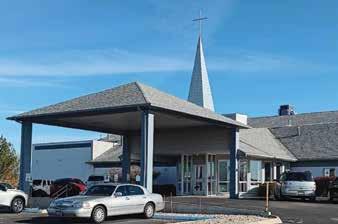
So why the name change? “Well, communities change as time passes – and what was once commonly known as the Ten Mile Community is no longer recognizable,” Pastor Day said. “Starting with Ten Mile Road being established five miles from [our church’s current] location and, more recently, the Ten Mile interchange on Interstate 84, becoming a core landmark in the Treasure Valley has made it confusing for our church to be called Ten Mile Community Church. People in the community don’t know our history. To deal with the confusion, the hard-butnecessary decision for us was to change our name. Many people naturally talk about us as the ‘church on the hill’ which led us to our new name: Hilltop Community Church.”
Then there was the added confusion between the longstanding Ten Mile Community Church in south Meridian and the more recently-named Ten Mile Christian Church in north Meridian. People unfamiliar with the two churches would head out to attend a wedding, a funeral, a concert, or a retreat at “Ten Mile” and would invariably end up going to the wrong church. And would invariably end up being late for the event.
Regardless of how the name originated, November 30 of last year marked the end of one era and the start of a new one, when the little nondenominational church on a rural hilltop became officially known as – appropriately – Hilltop Community Church. It’s one of the churches in the Valley that still has deep roots in the community. “Several core families have been here since the beginning, when it was a Sunday School held at Ten Mile School in 1914,” Lead Pastor Ben Day pointed out.
The church has grown over the decades, particularly over the past thirty years or so, as ground is broken on more and more subdivisions and more and more shopping centers throughout Meridian and Kuna.

So, during the summer of last year, church leaders began seriously entertaining the idea of changing the name. Church members were asked to submit ideas, ideas for names which would reflect the church’s heritage and history, names that would reference the Bible, and names which would hopefully alleviate any further confusion in the community.
On October 12, the congregation voted on choices for the church’s new name – choices congregants had submitted – and, for legal purposes, to amend its by-laws to reflect the name change.
Once the choice was made – almost 90 percent of members voted for the “Hilltop Community Church” name – then the real work began.

Because changing a church’s name is not an easy job. In Ten Mile’s case, everything from Articles of Incorporation on file with the Idaho Secretary of State’s Office to letterhead to bank notes to legal deeds to signage to website and social media addresses to even contact information for vendors all had to be changed. Administrative Pastor Mike Jacobsen, who started at the church in August, 2024, coordinated that rather herculean task, which entailed a ton of work behindthe-scenes. And a task that took several months to complete.
Separate teams were formed to a create a new logo, develop new branding, come up with a public relations plan to help spread word of the new name, and changing everything –even swapping out the church library’s return-book stamper.
1912 – Ten Mile School opened
1914 – The first Sunday School classes were held at Ten Mile School, the first Sunday School in the area
1925 – The school became officially affiliated with the American Sunday School Union
1926 – The first VBS (Vacation Bible School) was held
1930 – A fire at the school prompted officials to move the Sunday School to Columbia School, two miles west
1932 – The Sunday School was moved to the Ten Mile Grange Hall at Eagle and Columbia Roads
1947 – The Ten Mile School became part of the Kuna School District
1950 – The school became a church
1953 – The church’s dedication and its first service were held on April 5 (Easter Sunday)
1955 – Excavation under the church began, to provide Sunday School classrooms. The project was completed in March, 1957
1966 – Ten Mile became affiliated with Village Missions
1968 – The basement of a planned two-story building was completed, with a kitchen, an all-purpose room, a pastor’s office, classrooms, and more
1972 – Additional land was purchased and a parsonage was built
1980 – The church’s Awana program began (teaching youths from three years old to high-school age)
1981 – The first Easter Sunday service was held in the current sanctuary. It was dedicated May 23, 1982
1997 – Expansions were completed, including a new foyer, a drive-up portico, a gymnasium, downstairs classrooms, a day care office, and more
2025 – Ten Mile Community Church officially became Hilltop Community Church on November 30
But even though the name has changed, the church’s core beliefs – as Pastor Day pointed out – remain the same. “We still focus on biblical truth, we still believe the same things, and we are still here for the community,” he emphasized, “but now, with a name that we hope will gain clarity, so people know who we are and are able to find us.” The church’s leadership team underscored that in an October, 2025 email to the congregation: “Above all, we remain committed to the Gospel. That is our foundation, our mission, and our joy. … The Gospel is what matters most; it is the heartbeat of our church and the vision God has given us. … We are excited for what’s ahead and grateful for the unity God is building among us.”
And, even though its still, in many respects, “the little country church on the hill,” it passionately continues outreaching to the community, following the words of Matthew 5:14: “You are the light of the world – like a city on a hilltop that cannot be hidden.”
You can learn more about Hilltop Community Church, its purpose, its life groups, its ministries (for all ages), the worldwide missions it supports, and its Sunday morning services by going to the church’s new website: hilltopcc.net.n





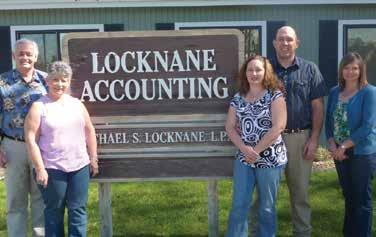

By Leo Hellyer
Well, here we are in 2026. If you are reading this, God is not done with you yet. He has something else in store for YOU! God has more that He wants you to accomplish here on Planet Earth.
If we look back at 2025, I am sure you will agree that much happened in that 12-month period of time. Who knows what will happen in 2026, but there is one thing we can be certain about and that is: God is in control.
God cares about us, God loves us, God is always communicating with us, but sometimes we don’t hear Him. He is communicating, but we aren’t paying attention.
In Psalm 19:4 we read: “The heavens declare the glory of God; the skies proclaim the work of his hands. Day after day they pour forth speech; night after night they reveal knowledge.”
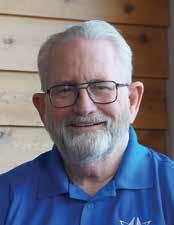
God communicates to us in many ways. All we have to do is eagerly listen and we will be blessed with His presence, wisdom, love and clarity.
Let’s remember that the Bible is the wholly inspired Word of God. In Isaiah God tells us, “So do not fear, for I am with you; do not be dismayed, for I am your God. I will strengthen you and help you; I will uphold you with my righteous right hand.”
A short while back I had a very crucial ministry decision to make, and I wanted to make sure that I was listening to God’s guidance and not my own thoughts. I prayed; I sought the wise counsel of others around me. I was still uncertain of which direction to go. I decided to step away from all the confusion and go to a Christian concert to relax and hopefully be blessed.
As the concert began, I had a peaceful feeling come over me, and I knew something special was going to happen that night. I was able to block out all the distractions of daily life and concentrate on the message of the songs that were being sung. At one point I looked up and realized that all the available seats were full up to the rafters. It was later pointed out that this night was the highest attendance for a faith-based concert in the history of Extra Mile Arena in Boise. God had been communicating to a lot of people, and we were going to be richly blessed. Many people throughout the arena sponsored children around the world that evening. Many people accepted Christ as their Lord and Savior around the entire arena.
As the headliner, Brandon Lake, was singing and sharing, God spoke to me and gave me the answer to my ministry decision. God told me very clearly, “Leo, you are a man of God and a follower of Jesus Christ.” He impressed upon me that I cannot deny that or water it down. The truth is the truth: the only way to salvation is through Jesus Christ, and I must openly and freely express that to those He brings across my path. Message received!
God spoke clearly to me at a Christian concert and, praise God, I was listening.
In Philippians 1:6 we learn that God began a good work in us and that He will continue working with us and molding us into who He designed us to be until Christ comes back to claim His kingdom. God speaks to us all the time. God speaks to us in good times and bad, day and night, when we are alone and when we are with others, when we are at peace and when we are at war, when we are captive and when we are free, when we are happy and when we are sad, when we are healthy and when we are ill, when we are prosperous and when we are in need. All we need to do is to take time to listen. If you want to hear from God Almighty, the Creator of the Universe, give Him your most valuable commodity – your time. Set aside time in your schedule to block out all distractions and listen to God. Sometimes He is very quiet and subtle, sometimes not so much. God loves us so much that He never forces us to do anything, at any time. He communicates with us and lets us decide which di-
rection to go: follow Him or someone or something else.
You can receive God’s blessings and guidance through His Word, his followers, nature, books, houses of worship, music and any other means that He chooses to use. The methods God uses to communicate with us might change, but He never does. He always gives us unconditional love, mercy, grace, and compassion. He is always there to keep us on course. When we stumble, He picks us up, dusts us off, loves on us, and puts us back on the correct path.
The secret to a blessed relationship with God is to be ready, be seeking, and be available. When God speaks to you, He doesn’t expect you to keep it a secret. He wants you to share with others what He has done for you. God wants you to get the word out. He will bring people along your path that He wants to communicate with, through YOU! You can be the conduit through whom God reaches lost souls. Listen for God, listen to God, and be available for God to use you in reaching others. n
Leo Hellyer is a non-staff pastor with a local church. He has been married to his wife, Norma, for 53 years and has served with Boise Rescue Mission for over 25 years. He is co-founder and training counselor with Taktikor Defense Group. If you have questions about Real Man’s Toolbox, or need other assistance, he may be reached at silverplate426@msn.com or (208) 340-5544.
Fill in each answer, one letter per square. Then ar range t he letters in t he highlighted squares to reveal
By Doug Hanson
We hear it from the pulpit: “Trust in God.” We hear it from others: “Trust in God.” We see it stated on our dollar bills: “In God We Trust.” But what does it mean to trust in God with our finances? It is an important question since money is an integral part of our daily lives. For answers, let’s take a journey through Psalm 104.
God’s Preeminence. Psalm 104 begins with an acknowledgment of God’s glory. “Praise the Lord, my soul. Lord my God, you are very great; you are clothed with splendor and majesty” (v. 1). God is the ultimate authority in the universe, unmatched in every way, and is worthy of our highest praise. There is no better place to put our trust than in the sovereign ruler of the universe.

God’s Power. The psalmist continues with an example of God’s power over creation. God covered the earth “with the watery depths as with a garment; the waters stood above the mountains then.” But at His command “the waters fled” to never again cover the earth (vv. 5-9). Since God has this magnitude of power, He can certainly be trusted in our everyday finances.
God’s Provision. In the next nine verses we see the myriads of ways He sustains His creation (vv. 10-18). He provides rivers for the “beasts of the field” to “quench their thirst.” He provides trees for the “birds of the sky to nest” and “sing among the branches.” He provides plants “for people to cultivate, bringing forth food from the earth.” He provides refuge for His creatures, “the crags are a refuge for the hyrax.” The universe continues because God sustains it. He is the provider of all life’s needs and therefore the one we can turn to in our finances.
God’s Plan. He provides darkness at night when “all the beasts of the forest prowl” and daylight when “people go out to their work, to their labor until evening” (vv. 19-23). There is no detail that God overlooked in His creation, creating night and day for specific benefits to His creatures. If God, in His plan, causes the sun to rise every morning and the moon to come out every night, He can be trusted to help us in the ebb and flow of our finances.

God’s Wisdom. The next stanza highlights the wisdom of God (vv. 23-26). “How many are your works, Lord! In wisdom you made them all; the earth is full of your creatures.” In God’s wisdom, He made us. In His wisdom, He cares for us. And, because of His wisdom, we can rely on Him to guide all aspects of our lives – even our dollars and cents.
God’s Timing. This section (vv. 27-30) begins with “All creatures look to you to give them their food at the proper time.” We learn that God, in His timely provision, satisfies us “with good things.” And God is in the process of continually renewing the earth to provide for our needs. Just as nature has seasons, we too have financial seasons of life in which God can be trusted.
God’s Glory. Psalm 104 began by acknowledging God’s glory and the psalm ends the same way (vv. 31-35). “May the glory of the Lord endure forever; may the Lord rejoice in his works.” The writer of the psalm encourages us to sing praises and rejoice in the Lord through meditation. If God is worthy of our praise, He is worthy of our financial trust.
As we trust in God, let’s keep Paul’s words in mind: “Not that I am speaking of being in need, for I have learned in whatever situation I am to be content. I know how to be brought low, and I know how to abound” (Philippians 4:11-12). Whether we have little or much, God can give us contentment. Just ask Him! He is trustworthy. n
Doug Hanson is an investment advisor with Christian Wealth Management in Boise, Idaho, providing biblically responsible investment advice to Christians. For more information, visit investforthegloryofgod.com or contact him at doug@christianwm.com or (208) 697-3699.
Investment advisory services provided by Creative Financial Designs, Inc., a Registered Investment Advisor. Securities are offered through CFD Investments, Inc., Member FINRA & SIPC. 2704 South Goyer Road, Kokomo, IN 46902, (795) 453-9600. Christian Wealth Management, LLC is not affiliated with CFD Investments, Inc. or Creative Financial Designs, Inc.