
FUTURE CONSTRUCTOR & ARCHITECT MAY 2024 ISSUE 171
Clear UV protection for vertical
xterior surfaces
Dela
to untreated wood
Improves and maintains the appearance of wood
Highly water and dirt resistant
Available with (420) or without (410) active ingredient for mould and algae protection
No sanding necessary when topping up coating


515288
FUTURE CONSTRUCTOR & ARCHITECT MAGAZINE
EDITOR IAL
Rebecca Kemp rebecca@redhutmedia.com
PRINT & DIGITAL ADVERTISING
Sam Ball sam@redhutmedia.com
Jim Moore jim@redhutmedia.com
PRINT DESIGN MANAGER
Jack Witcomb jack@redhutmedia.com
DIGITAL DESIGN MANAGER
Matt Morse matt@redhutmedia.com
ACCOUNTS/ CREDIT CONTROL
Rachel Pike accounts@redhutmedia.com
PUBLISHER
Sam Ball sam@redhutmedia.com
As we bid farewell to last month's April showers, we're reminded of the impact that water has on our daily lives. From navigating through flooded streets to disrupted travel plans and logistical challenges, substantial amounts of water can profoundly influence our routines.
The recent floods in Dubai are a stark reminder of the havoc that extreme weather events can wreak on infrastructure. With a year's worth of rainfall inundating the city in just 12 hours, the aftermath left runways submerged and even luxury cars floating down streets. While cloud seeding was initially blamed for the deluge, attention has shifted towards the broader implications of climate change.
Here in the UK, we've experienced our share of flash floods, too, prompting architects, housebuilders and specifiers to reassess their approach to urban planning. On page 2 8 , Richard Eddy, Category Manager of Underground and Utilities at Polypipe Building Products, sheds light on the importance of sustainable drainage systems (SuDS) in mitigating flood risks and safeguarding our communities for the future.
In the realm of building design, advancements in glass technology are also playing a crucial role in adapting to the challenges posed by climate change. On page 08 , Phil Brown, Technical Advisory Service Manager at Pilkington UK, explores the innovative glazing solutions that are enhancing the resilience of buildings against extreme weather events, from flood-resistant glazing to energy-efficient alternatives.
I hope you enjoy this issue. Don’t forget, you can also access the magazine’s features, product news and supplier information on FC&A’s user-friendly and engaging website. Fully responsive, the website allows you to read all the latest stories on-the-go either on your phone or tablet. Simply search www.fca-magazine.com.
The world's first green hydrogen refuelling network for recreational boating will be brought to life by Zaha Hadid Architects in partnership with NatPower H. SEE PAGE 32.
High-rising structures demanding non-combustible cavity trays, now have a compatible NonCom weep. The NonCom Beak Weep is different.
• The taller a building rises, the more sensitive it is to wind pressure.
• The outlet protects against direct wind restrictive interference.
• The outlet also has radiused sides allowing mortar wash debris to spread and drop at the critical evacuation point.
Non-Combustible Beak Weeps, from the longest-established cavity tray company
The Cavity Trays Helpdesk – your route to compliancy and consistency in construction


LEGAL & BUSINESS:
Is Georgian-style development the best means of delivering 'gentle density'? Grant Leggett, Executive Director at Boyer (part of Leaders Romans Group), investigates.
VOICE OF THE INDUSTRY:
Richard Eddy from Polypipe Building Products illuminates the crucial role SuDS plays in combating urban flooding and enhancing environmental sustainability.
GLASS & GLAZING:
From solar control to flood resistance and low-carbon options, Phil Brown, Technical Advisory Service Manager at Pilkington UK, talks about how innovative glass technologies protect buildings and occupants against extreme weather events.
CIRCULAR ECONOMY & CONSTRUCTION WASTE REDUCTION:
Explore the power of retrofitting and reusing materials with Lime Green and the Alliance for Sustainable Building Products (ASBP) to slash carbon emissions and minimise waste in the built environment.
AI, ROBOTICS & 3D PRINTING:
Simon Herod, International Lead at EstimateOne, explores the transformative potential of AI-driven tools for boosting accuracy, optimising supply chains and minimising delays.
ACOUSTICS & SOUNDPROOFING:
Sophie Weston, Head of Marketing at Geberit, reveals the challenges and solutions of acoustics in residential buildings and explores the path to a more peaceful living environment.
ACCESS:
From compliance with stringent regulations to providing robust protection in case of fire, discover why architects are prioritising third-party-tested access panels to ensure building integrity and safety.
BUILD FOCUS: F loating A rchitecture, W ater- B ased C ities & M arina D esign:
The world's first green hydrogen refuelling network for recreational boating will be brought to life by Zaha Hadid Architects in partnership with NatPower H.
TECH INSIGHT: RCI :
Ardit Strica, Technical Manager at Onduline Building Products, provides a comprehensive overview of low-pitched roofs, their challenges and the transformative benefits of sub-roof systems.
20 26
Snøhetta's latest masterpiece is the world's largest climatised reading space. From its innovative design to its sustainable technology, this architectural marvel redefines the role of libraries. 28 24 10 14 32 34 16
THE AQUATICS CENTRE, PARIS, VENHOEVENCS AND ATELIERS 2/3/4/:
Designed by VenhoevenCS and Ateliers 2/3/4/, the award-winning Aquatics Centre in Paris is the only permanent new building for the 2024 games.
BEIJING CITY LIBRARY, SNØHETTA:
High-rising structures demanding non-combustible cavity trays, now have a compatible NonCom weep. The NonCom Beak Weep is different.
• The taller a building rises, the more sensitive it is to wind pressure.
• The outlet protects against direct wind restrictive interference.
• The outlet also has radiused sides allowing mortar wash debris to spread and drop at the critical evacuation point.
Non-Combustible Beak Weeps, from the longest-established cavity tray company
The Cavity Trays Helpdesk – your route to compliancy and consistency in construction
01935 474769 enquiries@cavitytrays.co.uk www.cavitytrays.co.uk Yeovil

A contemporary addition to our concrete paving portfolio.
Developed with UK designers, our unique granite-inspired blends are brought to life through a patented colour application - creating a multihued, subtle and elegant aesthetic.


Manufactured using MaxiMix® Technologyfor looks that last and stay true to your design.

The Midlands and North division of international contractor, McLaren Construction, has announced a record turnover of £271m for the latest financial year. Following a year of expansion for the division and McLaren Construction group as a whole, the milestone follows news that the contractor generated overall revenues up 22% to £964m in 2022/2023 and is on course to break the £1bn annual turnover barrier in 2023/2024. The contractor has experienced growth over the past 12 months, with new appointments across its leadership, project and sustainability teams and six projects handed over for 2022/2023.
Holmes Miller has outlined its commitment to a carbon-neutral built environment with the publication of a refreshed sustainability charter. The practice has updated its 2020 charter, to reinforce the integration of sustainability principles into every project and service it offers. Ambitious targets set out for the coming year include: Integrating Passivhaus principles into design approaches – regardless of whether a project is targeting Passivhaus certification – using a new embodied carbon assessment across all projects, monitoring in-use energy across all projects and by promoting both post-occupancy evaluation and monitoring office energy use to improve performance.
FC&A ROUNDS UP THE LATEST INDUSTRY NEWS AND UPDATES.

Heatherwick Studio has unveiled its latest project, a design school and makers’ space for Universidad Ean in Colombia. The studio has been appointed to create a new home for the university’s School of Sustainable Design, located on the existing campus in central Bogotá.
Th e seven-storey building sits on Calle 72, one of the city’s main arteries, with the front facade made up of colourful, crafted columns and open terraces. The design pays homage to the local craft traditions, including Werregue basketry, a form of weaving unique to Colombia’s Wounaan indigenous community.
T he building will serve as a new centre for the campus, complementing the existing heritage structures on the site and providing a rare new public space in the city. The design team is also working on innovative facade materials to deal with the high levels of sunlight at this altitude and ensure the longevity of the building.
C olombia is the world’s second-most biodiverse country, and Bogotá is considered one of the leading cities in terms of sustainable development. Universidad EAN’s ambition is to celebrate this by bringing the cloud forest, which surrounds the country’s capital, to the building. The studio’s biophilic design will incorporate local plant species on the open terraces and usher in nature to the metropolis as part of the pledges made by the city as a signatory to the C40 Urban Nature Declaration. This will be the studio’s first project to go to construction in South America, with works expected to start in 2025.

E liot Postma, Group Leader and Partner at Heatherwick Studio, says: “Creativity is intrinsic to the city of Bogotá. You see it everywhere. We want students to feel proud of their campus before they even enter the building, arriving through a public square that offers passers-by a welcoming, communal oasis amidst the hard urban surroundings.”
www.heatherwick.com

The latest appointments from the construction and architectural industries.
DUDLEYS MAINTAINS GROWTH WITH TWO NEW APPOINTMENTS
Structural and civil engineering consultancy Dudleys has recruited two professionals to its team in Leeds following the sustained growth of the business. Dudleys has also relocated its North West office to central Manchester. David Cardani has joined as a Principal Engineer. With more than 34 years’ industry experience, David is a highly-skilled engineer and will provide senior support to clients across the board in all sectors.
Frances Wallbank has also joined Dudleys as a Graduate Engineer. Having graduated last year with a first-class honours degree in BSc civil engineering, Frances took on a five-year apprenticeship before joining Dudleys, where she will shadow the senior team on projects spanning residential, commercial and care sectors.
One of the construction sector’s fastest-growing consultancies, EDGE, has solidified its presence in Leeds with new office space for its expanding team of project managers, cost managers, building surveyors and advisory services professionals. The move comes as a result of major business growth across the region just two years after EDGE opened its first Leeds office in January 2022, and coincides with a raft of senior staff appointments.
The latest additions to the team include Mathew Ingall-Tombs as Associate Director, Andrew Hope-Robertson as Clerk of Works, as well as Laura Grainger and Gordon Parkinson as Senior Project Managers.
This further expansion of services in Leeds represents the latest step in EDGE’s growth strategy.
One of the UK’s biggest tier-one contractors, Mace Group, has completed Stage 1 (Leadership and Culture) of Building a Safer Future’s Champion assessment scheme. The champion assessment requires organisations to commit to putting building users first in an ongoing building safety journey and provides organisations with actionable data and practical tools to help review and upgrade processes and regain public trust following the Grenfell Tower disaster. Mace has been awarded the ‘Certificate of Commitment and Progress – Building Safety Stage One’ in recognition of its successful completion of the first of the two champion assessment modules. Steve Elliott, Non-Executive Chair of Building a Safer Future, commented: “It’s fantastic to see Mace coming through this first stage of the BSF Champion assessment. Their leadership is critical in bringing about change in the UK built environment industry. I congratulate them on their achievement of the Stage 1 certificate.”
One of the North East’s most experienced sales figures has joined the team at Miller Homes North East. Lauren Angus, whose career in the housebuilding industry spans more than 18 years, has been appointed Sales Director at Miller. Among her key strengths is her knowledge of the newbuild market, which began when she joined the industry in 2006. Lauren, from Sunderland, joined Miller – which currently has 10 live developments and a further four due to launch this year –from Taylor Wimpey North Yorkshire, where she held the position of Sales and Marketing Director. Miller, one of the North East’s leading housing developers, has announced plans to construct more than 500 homes this year as far afield as Bedlington, Durham and Seaham.

Systems starting from £17.90 per metre

Phil Brown, Technical Advisory Service Manager at Pilkington UK, part of the NSG Group, highlights the innovative glazing solutions that are helping to protect buildings and occupants as climate change increases the risk of extreme weather events.
PILKINGTON UKIn an era marked by the escalating impact of climate change and an increasing frequency of extreme weather events, architects and specifiers face a dilemma: meet the challenges head on or carry on as before.
T he choice here, of course, is obvious. With higher temperatures, more intense storms and flooding, the need for resilient building materials has never been more urgent.
C limate change demands innovative solutions to mitigate its impact on the built environment. From heatwaves and heavy rain to hurricanes and wildfires, building materials are increasingly at the mercy of nature. Conventional building materials and design practices are often ill-equipped to withstand extreme weather conditions, resulting in costly damage and risks to public health and safety.
M odern, advanced glazing is a critical line of defence in buildings to help protect against the elements.
A mong the challenges architects and specifiers must face is the rising threat of heatwaves, which can have a dramatic impact on public health when buildings run the risk of overheating. Architects are turning to innovative glazing solutions to meet this problem.
E ncouragingly, architects and specifiers are taking the right steps to make sure that our homes remain comfortable and safe even when extreme heat threatens. In a recent survey by Pilkington UK, nine in 10 architects said they were already going above and beyond the minimum requirements to tackle overheating in homes to protect residents.
Solar control glazing has emerged in the UK as a critical solution for addressing overheating in homes, in part driven by the introduction of
Part O of the Building Regulations in England in 2022. These products, like Pilkington Suncool, limit solar gain in buildings to keep heat out. This also reduces the reliance on mechanical cooling systems like air conditioning, helping make our buildings greener.
B eyond homes, organisations have been working hard to retrofit buildings, from offices to schools, with heatwave-beating solar control glass. For example, two West Midlands primary schools, Ridge Primary School and Gig Mill School, replaced 380m 2 of glazing with Pilkington Suncool 70/35 solar control glass. The glass helps to keep the buildings at a comfortable temperature without compromising on natural light, creating a suitable learning environment. In educational buildings, access to daylight has been shown to result in a demonstrable improvement in student academic achievement, behaviour, calmness and focus, so ensuring such environments do not overheat is crucial.
W ith schools contributing to 36% of public sector emissions, solar control glass helps reduce their carbon footprint while also reducing the cost of expensive air conditioning.
A dvanced glass also has a more direct role to play in the critical infrastructure designed to protect against the impact of climate change. A new glass flood barrier in Kendal, for example, epitomises the strength and resilience provided by modern glazing. The glass flood barrier safeguards thousands of homes and businesses without protruding on the town’s historic beauty and riverside view.
A t the heart of this strategy lies a sophisticated glazing solution. Engineered with alternating layers of glass and interlayer, the creation forms a robust 35mm laminated glass,

fortified by Pilkington Activ selfcleaning technology, which is designed to withstand the intense pressure that flooding poses. Projects like these demonstrate the versatility of glass in protecting our communities from the impact of climate change.
Before any glass can go to market, it must be assessed. This is particularly important for resilient glazing, where durability is critical to help protect against the damaging effects of climate change. Manufacturers of laminated glass and coated glass ensure their products are extensively tested for durability, adhesion, resistance to abrasion and condensation – with much of this testing being undertaken independently by recognised laboratories. In the case of Pilkington Activ, its long-term, selfcleaning performance is also evaluated. Furthermore, glass specifically intended for use in flood barriers is subject to detailed load-resistance calculations and modelling to make sure that it can safely hold back the threat of rising water levels.
I t’s important that glass reduces its contribution to climate change, while also helping buildings and residents to be protected from the impact of extreme weather events.
I n the quest for resilient glazing solutions, architects and specifiers are turning to Environmental Product


Declarations (EPDs) as a valuable tool for assessing the environmental impact of building materials, signalling a manufacturer’s commitment to measuring and reducing the environmental impact of its products and services.
A new low-carbon glass, Pilkington Mirai, recently acquired an EPD, which verified it as the lowest-carbon glass of its kind, with 52% less embodied carbon than standard float glass. Importantly, while this glass offers the additional benefit of reducing the carbon footprint of a building, it does not oblige the architect or developer to compromise on performance, quality or aesthetic appearance.
A s climate change continues to exert its influence on the built environment, the importance of resilient building solutions cannot be overstated. By embracing this according to the building’s specific needs, architects and specifiers can play a pivotal role in developing buildings that are better equipped to withstand the challenges of a changing climate.
As we confront the realities of climate change on our weather and landscape, it is critical we prioritise resilience in our designs to ensure that the safety, sustainability and longevity of our buildings is maintained for generations to come.
www.nsg.com

Sections starting from £1.00 per metre

Decarbonising the UK’s built environment is a key goal for Government with several ambitious targets set for local authorities, industry and business between now and 2050.
LIME GREEN AND THE ALLIANCE FOR SUSTAINABLE BUILDING PRODUCTS (ASBP)
So is the construction sector doing enough? Should we be prioritising retrofit over demolition and new build? And, how can we minimise construction waste and embrace a more circular economy? Here, we speak to two expert organisations in the field to find out.
R etrofit – it’s a big buzzword at the moment amongst professionals, and for good reason. It’s estimated that 80% of the buildings we’ll still be occupying in 2050 already exist; decarbonising them is going to be essential.
W hile it’s not always the cheapest option, it’s by far the greenest. Embodied carbon associated with a new building is, on average, twice that of a deep retrofit*.
S imon Ayres from Lime Green in Shropshire knows a thing or two about retrofit, having created lime-based products over the last 20 years that greatly enhance the longevity and thermal efficiency of solid wall buildings. Latest figures show there are still some 7.7 million solid wall homes in the UK –many in need of retrofit measures – and that’s before you consider commercial spaces.
S imon says: “Circular principles mean long-lasting design, maintenance, repair, reuse, remanufacturing, retrofit, recycling and upcycling, and you need to adopt these if you want new or existing buildings to function well for future generations.
“ Retrofit can seem like the boring option but it shouldn’t be, it should be the first consideration. For architects, it can be really exciting to take something and completely reimagine it for the future.
“ So much can be done now in terms of thermal efficiency with proven products, such as wood fibre insulation (made from the waste products of the timber industry), allowing older buildings to be fit for the future.
“ Of course, it’s not always possible or desirable to retain absolutely everything and, here, the next consideration has to be how to reclaim some of the building’s components. For example, we have so many beautiful brick buildings in this country because lime mortar – traditionally used and unlike modern counterparts – erodes before the brick, so you would be able to reuse the brick in this or another project. We really need to think disassembly rather than demolition.”
S imon’s advice to architects and specifiers would be to be bold in your thinking; it is not just new builds where you can make your mark.
We know Government is looking deeper into the whole area of retrofit and whoever is going to take this forward over the next five years needs to commit some serious funding to achieve their targets. We also need to upskill the industry quickly and ensure retrofit and a circular state of mind are at the heart of architecture degrees.
T he Alliance for Sustainable Building Products (ASBP) has been calling for greater reuse of building materials within the construction industry for over a decade.
T he construction industry accounts for over a third of global carbon emissions and produces around 60 million tonnes of construction and demolition waste annually in the UK. Whilst

much of this is recovered and recycled (though downcycled – which loses its value), only a small percentage is reused.
E stimates suggest** that 22.3 MtCO 2 e of GHG emissions could be saved over nine years by increasing our reuse of construction products. This is a significant opportunity to reduce the industry’s carbon footprint, minimise waste and deliver cost efficiencies.
T he ASBP’s ‘Reuse Now’ campaign, launched in August 2023, aims to become the ‘go-to’ place for practical guidance and information on the reuse of products in construction. Outputs to date include in-person events, webinars (for example, on material passports – information to identify materials and aid reuse); a directory of physical and digital reuse platforms and hubs; reuse case studies and blog posts.
T he campaign builds upon the ASBPled DISRUPT research projects, which explore the innovative reuse of structural steel in construction and encourage the adoption of new circular economy business models. A free-to-download toolkit has also been published, providing major supply chain stakeholders involved in steel reuse with guidance, business considerations, case studies and more, to facilitate new market entrants and, ultimately, achieve a greater supply of reused steel in the construction industry.
S teel is one of the most widely-used and resource-intensive materials used in construction. Although commonly recycled at end of life, the reuse of steel is minimal despite the apparent environmental, carbon and circular economy benefits, though there are an increasing number of case studies. The high value of steel at end of life can be realised by being reused in a wide range of construction applications.
Scenario mapping conducted as part of the research shows that reclaimed steel has the potential to make significant contributions to our net-zero targets, saving
up to 250,000+ tonnes of CO2 per year by 2050, in addition to substantial cost savings on construction projects of £40m a year.
O ne of the main barriers identified, which is preventing the significant uptake of steel reuse, is the lack of available material generated during refurbishment and demolition projects. Through the DISRUPT II project, ASBP is engaging with the demolition sector to create new sector guidance and incentivise demolition contractors to favour reuse over sending scrap for recycling.
S imon adds: “Reusing materials isn’t a new phenomenon. Brick, stone, timber and metals have been recycled for hundreds of years. Roman masonry from Wroxeter can be seen reused around the local village, including the church. Ships timbers were used for oak framing, and lime plaster was normally crushed and reworked into new lime plaster, especially in cities far from sand quarries. We need to value materials and be less of a throwaway economy.”
T here’s a long way to go to meet our decarbonisation targets, but the work of ASBP to raise the profile of construction product reuse and a will to reimagine what already exists means there are strides in the right direction. We need to run, not walk, though, if we want to meet the targets already set.
W hen you have to build new, those buildings need to be designed in layers that are flexible, adaptable and easily maintained, which can be deconstructed for reuse. At its most basic, it’s about LEGO-inspired design, with components and systems creating buildings that can be taken apart and put back together in the same way or completely differently, adding in elements or taking them away to be reused in a different project; longlasting, robust elements that can be replaced when damaged but not to the detriment of the other pieces around it.
U ltimately, consideration of the material choice is essential, with priority given to

lower-carbon options, including natural materials from renewable sources and those that can be deconstructed and reused at the end of life, because today’s new build is tomorrow’s retrofit.
www.asbp.org.uk/workstream/reuse-now www.lime-green.co.uk
SOURCES:
*Net Zero Carbon Guide **https://green-alliance.org.uk/wp-content/ uploads/2021/11/Less_in_more_out.pdf


Artificial intelligence (AI) is everywhere, weaving its way into every corner of our lives and industries. For the construction landscape, it’s not just a trend – it’s become the new normal. So get ready, because we’re about to embark on a journey where AI reigns supreme, transforming how we estimate costs and manage projects like never before. As someone who works alongside estimators daily, I know the pain points all too well, says Simon Herod, International Lead at EstimateOne.
ESTIMATEONE
By harnessing the power of AI, construction firms are not only slashing preconstruction costs but also gaining a competitive edge in the market. With AI-enabled tools at their disposal, estimators can turbocharge their productivity, minimise errors and generate estimates with unparalleled precision and speed. This translates into more competitive proposals, paving the way for increased profitability and business growth.
T he rate of AI adoption is staggering. According to McKinsey’s 2023 AI report, one third of all respondents say their organisations are already regularly using generative AI in at least one function 1 . With AI scepticism still prevalent in the industry, what are the transformative potentials of AI in construction and how it will benefit your estimating team?
Sharper
I n the world of construction estimation, accuracy is king and could be the driving factor to win you the project. With AI algorithms at our fingertips, we’re taking accuracy to a whole new level.
A I can analyse large amounts of data and identify patterns that would be difficult for humans to detect. This can lead to more accurate cost estimates, better project scheduling and an improved level of safety on construction sites.
B ut AI’s impact transcends mere number crunching. Take the E1 platform, for instance. With AI integration, it automates
the process of document superseding, intelligently suggesting updates based on document names.
E mphasising this point is vital: AI isn’t here to replace the estimators’ role. In fact, according to the House of Lords’ Communications and Digital Committee, jobs in construction are deemed unlikely to be fully replaced by AI, with less than 30% of workloads being completed with AI support 2 . Instead, AI serves to enhance efficiency and eradicate human errors, bidding farewell to manual guesswork and welcoming a new era of unparalleled precision and decision making.
W ho has time for endless Excel spreadsheets and mindnumbing calculations? Not us, thanks to AI-powered project planning tools. It’s like having a virtual assistant that sifts through mountains of data in seconds, churning out detailed reports and forecasts at the snap of your fingers.
E stimators hold the key to making crucial cost-versusquality decisions and balancing labour, equipment and materials. Accurate cost forecasting and budget management empower contractors to make informed choices and maintain financial stability.
D igital software has revolutionised the cost estimation process, preventing bids that are either too high or too low and eradicating the frustration of inconsistent quotes. Three out of five professionals in the built environment

expressed either agreement or strong agreement that digitalisation has enhanced their organisation’s capabilities in cost estimation, prediction, planning and control 3
A I is the next step in this process, streamlining reporting, tracking and communication with other stakeholders in the project with real-time data sharing. This is where AI truly leaves its mark on the industry. Amidst ongoing labour shortages plaguing the sector, AI steps in by creating a reliable subcontractor database for present and future collaborations
E fficiency is the name of the game when it comes to estimating. With AI in our corner, we’re optimising resource allocation like never before.
W ith its dynamic scheduling capabilities, AI ensures resources are always allocated efficiently, maximising productivity and minimising downtime.
T he team at E1 are well aware of the impact any delay in delivering estimates can have on a project, not only incurring costs but also affecting a construction firm’s competitiveness.
I t may make estimators appear less qualified compared to other bidders, cause tardiness in proposal submissions and limit the number of proposals that can be submitted annually.
A s AI continues to revolutionise the construction industry, there has never been a better time to embrace its transformative potential in estimation processes. By harnessing the power of AI, construction firms can gain a competitive edge, drive profitability and navigate the complexities of modern construction projects with confidence.
A s AI continues to evolve and become more accessible, the seamless integration with Building Information Modeling (BIM) and other cutting-edge technologies makes the possibilities for its application in construction estimation endless. Let’s empower construction firms to deliver projects with unparalleled accuracy, clarity and efficiency to innovate the construction landscape further.
www.estimateone.co.uk
FOOTNOTES:
1 https://www.mckinsey.com/capabilities/ quantumblack/our-insights/the-state-of-ai-in2023-generative-ais-breakout-year
2 https://publications.parliament.uk/pa/ld5804/ ldselect/ldcomm/54/5402.htm
3 https://www.rics.org/content/dam/ricsglobal/ documents/research/Digitalisation%20in%20 construction%202023_final.pdf


Unwanted noise in the home continues to have a direct impact on the wellbeing of homeowners, particularly in the bathroom, with research showing that the issue is far bigger than many of us might think. Here, Sophie Weston, Head of Marketing at Geberit, explores the challenges of designing out noise inside the home.
GEBERIT
Ar chitects and specifiers are increasingly aware of the need to mitigate the impact of external noise, such as road, rail and air traffic, for building occupiers.
N oise impact assessments are commonplace in planning applications and are required to show that any new development is not adversely impacting residential or commercial properties located nearby. And, the World Health Organisation, which has been tracking noise levels for over a decade, describes noise pollution as an “underestimated threat” that contributes to everything from stress to high blood pressure, cardiovascular disease, dementia, diabetes and, of course, hearing loss.
H owever, the issue of noise is not restricted to the outside world. Rapidlyincreasing numbers of connected devices, poor end-user awareness and
lack of clarification in UK standards and Building Regulations can leave many people unable to shake off the effects of noise in the home, too.
T here is even an argument that increased external sound insulation has actually amplified noise within the home, highlighting internal noises more than ever before.
T he issue is bigger than some might think. Geberit research published in a previous white paper 1 shows that 38% of people say noises inside the home, such as electrical appliances, bathroom noise or central heating systems, affect them more than traffic from outside.
I n the bathroom, one in four of us (28%) are regularly disturbed by bathroom sounds at night or when trying to relax, and one in five (19%) homeowners are
regularly disturbed by flushing toilets, running taps or pipe and drains.
C ritically, more than half of respondents (51%) cited unwanted noises as having a negative impact on their wellbeing.
P art of the challenge is that there is very little clarification within the relevant UK regulations on what products should be used to achieve specific sound pressures, particularly when it comes to water and bathroom noise.
For example, BSI’s British Standard 8233:2014 Guidance for Sound Insulation and Noise Reduction in Buildings simply states that water systems, including hot and cold water services and waste pipes, “are not to cause disturbance in normal use”. This rather vague guideline is the standard’s only reference to reducing sanitary noise in buildings.

T he UK Building Regulations are no more specific. Building Regulations (2010) Approved Document E ‘Resistance to the passage of sound’ largely focuses on measures to control external sound. It does stipulate that any wall or floor should reduce the noise transmitted to the next room by 45 dB or more, but then fails to set a maximum noise level. Importantly, nor does it mention the use of any acoustically-optimised products.
T he onus, it seems, is on designers and architects to make well-informed choices to reduce the impact of noise inside the home and, in turn, increase wellbeing.
T here are products available in the UK market to mitigate the impact of noise in the bathroom. Sound-optimised drainage piping can reduce noise transfer from flushing water, washbasins or showers. Likewise, wall-hung toilets with concealed cisterns can prevent noise from travelling down the wall and through the floor.
H owever, without specific UK standards on the noise pressure from water systems inside new buildings, there is no requirement for a building to meet a baseline figure.
This is in contrast to Germany, where the DIN 410 acoustic standard outlines maximum acoustic levels in a building. It also outlines buildings’ sound insulation with requirements and verifications, as well

as clear requirements on internal noise. It sets maximum requirements for sanitary noise at 30dV(A) in terms of LAFmax, n.
T here is also no defined approach to testing and, therefore, no incentive for different specifiers across a single project to work together and undertake collaborative testing to ensure that they are achieving the best acoustic rating –as is the case for heating or energy loss.
S ome leading manufacturers, including Geberit, are working to the best practice German standards for products sold in the UK market. Still, until UK standards are revisited and maximum figures outlined (not to mention a defined approach to testing acousticallyoptimised products), it will remain a challenge to specify a well-informed, collaboratively-tested solution across an entire building. And, as our research shows, noise in the home is affecting the majority of homeowners.
I t’s time for the UK to revisit standards and outline maximum sound pressure figures and fair testing – thus enabling the industry work together to achieve better results for our end users.
www.geberit.co.uk
SOURCE: 1Geberit - ‘A Sound Solution – Embedding Acoustics into Building Design’
Starting from £1.10 per sq. foot

The need for proper fire safety measures in commercial buildings is now more critical than ever, meaning the design process poses new and unique challenges, while architects are required to stringently adhere to fire safety regulations and standards.
PROFAB ACCESS
Here, Profab Access, a leading manufacturer of access panels, highlights the vital role that third-party fire-tested access panels can
play in fire safety and how, by specifying products that have undergone such testing, architects can ensure the integrity of their buildings.

Following the Grenfell Tower fire in 2017, the Golden Thread concept was introduced as part of the Building Safety Act, which highlights the need for better documentation, transparency and accountability in the context of building safety.
A foundational element in ensuring the quality, safety and longevity of a building, it signifies the link between the initial design intent, through to the construction and maintenance stages of a building’s lifecycle.
N aturally, architects are among those who uphold a great responsibility in ensuring that the Golden Thread is adhered to during a building’s initial design stages.
C ommercial buildings house numerous complex systems, including fire suppression systems, electrical installations and HVAC infrastructure. One critical component that houses these components is access panels.
I n the world of modern architecture, functionality and compliance must meet,
and this can be achieved through an architect’s choice of access panels. Beyond their functional purpose of providing access to these systems for maintenance personnel, they stand as vital yet overlooked components within the broader framework of fire safety within buildings.
D uring a building’s initial construction, it is essential that architects seek to install fire-rated access panels where third-party certification can be supplied. An example of this third-party certification is the Certifire scheme.
T he significance of Certifire-rated products extends beyond adherence to regulations, and represents a commitment to safeguarding lives and property. With this in mind, architects should always prioritise the specification of Certifire-rated access panels for several reasons.
F irstly, Certifire certification provides a mark of quality and reliability. This guarantees that the products have undergone rigorous testing and are proven to withstand the spread of fire for a specific

period of time and that they comply with relevant European fire test standards. This certification provides architects with the confidence that the access panels they specify meet the highest standards for fire safety in their buildings.
B y specifying Certifire-rated access panels, architects can ensure that the building’s fire safety systems are robust and reliable in the event of a fire. These panels provide the highest standard of protection against the spread of flames and smoke through containment, acting as a barrier to control the fire, which gives occupants more time to evacuate safely. This, in turn, can minimise the risk of both structural damage and loss of life.
C ommercial buildings are environments where the safety of hundreds or even thousands of occupants is at stake and where the rapid spread of fire can be catastrophic. The need for this swift and effective containment of flames and smoke is all the more crucial in these buildings. Here, the Grenfell Tower fire serves as a stark example of the potential consequences of specifying building materials and products that fail to provide this effective containment.
W ith regards to the responsibility of architects to uphold the Golden Thread, the installation of Certifire-rated access panels provide a transparent link between design intent and real-world performance. By specifying panels with a proven track
record of fire resistance, architects can weave a clear thread of accountability, and thus always remain compliant with the requirements of the Golden Thread.
T he importance of fire safety cannot be overstated, and every design decision during a building’s construction must reflect this priority. As architects navigate the complexities of evolving safety standards, they must prioritise solutions that uphold the highest standards of fire safety integrity.
B y working with reputable manufacturers who offer Certifire-rated products, architects can be confident that they are choosing products that have been rigorously tested and proven to perform in the event of a fire, and demonstrate a dedication to public safety.
A s a leading supplier of Certifireapproved products, Profab Access is now offering customers ‘Certifire as Standard’ after investing in extensive third-party fire testing across its product portfolio, in order to provide customers with the ultimate peace of mind.
T he presence of Profab Access’ panels within a building’s structure can ensure architects are able to fortify the building’s fire safety resilience, help to safeguard the lives of occupants, whilst ensuring that building safety regulations are always met with confidence www.profabaccess.com
Slotted Channels from £5.60 each

As architects, you know better than anyone that structural components are vital – no structure, no building. But you also know that it’s the non-structural elements – the balustrades, handrails, fencing, decking and more – that make the space stylish, comfortable and somewhere people want to be, says F.H.Brundle.
F.H.BRUNDLE
At F.H.Brundle, we’ve been supplying quality products and exceptional service for over 135 years. We understand the challenges you face in sourcing reliable, high-quality, nonstructural systems for your commercial projects.
T hat’s why we offer a comprehensive range of products that don’t compromise on style, function or add weeks to your project times –regardless of size and volume.
Vast choice of balustrades and handrailing
B alustrades have boomed in popularity in recent years. At F.H.Brundle, we’ve responded by offering the UK’s biggest selection of metal and glass balustrade systems, letting us cater to virtually any vision.
P roducts like our sleek and minimalistic Pro-Railing range, available in stainless-steel and marine-grade Duplex 2205, offer a wide variety of components for quick and easy installation.
Architects can choose from glass panels, round tubes, perforated metal or wire mesh infill solutions to create balustrades that are both functional and aesthetically pleasing.
W hat’s more, we’re one of the UK’s biggest distributors of handrail solutions, meaning that no matter the setting, we’ll have a product that will excel on your next project.
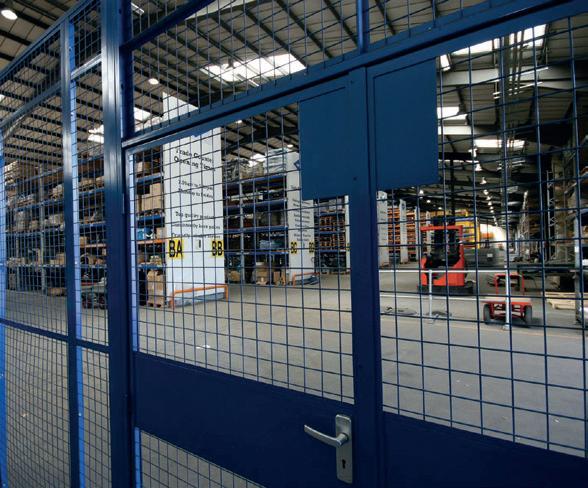
P erimeter security is a crucial aspect of many commercial projects. We provide robust, highly-secure products that don’t make you compromise on aesthetics.
O ur stylish made-to-measure steel gates come with a rapid turnaround, meaning no frustrating hold ups, helping your project finish on schedule.
For gardens, walkways, balconies or rooftop terraces, our aluminium decking systems are the perfect choice. Exceeding the highest European safety standards (EN 13823, EN 13501 and EN ISO 1716), they deliver exceptional strength and durability.
Additionally, the Synergised system achieves Euroclass classifications of A1 and A2fl-s1, making them ideal for hightraffic areas and compliant for installation in high-rise buildings.
H owever, products are only the start of what makes F.H.Brundle an outstanding supplier. What truly sets us apart is our unwavering commitment to expert support. Our team of specialists is here to assist you throughout the entire process, from product selection to technical guidance, and even providing readily-available CAD files for all our systems. This eliminates the need for timeconsuming technical drawings and ensures our products fit in seamlessly with your plans.
I n construction, time is money – and that’s why our products have been meticulously selected for low maintenance and quick, simple installation.
W hat’s more, we offer free delivery across the UK, eliminating logistical headaches and further streamlining the process.
O ver the years, we’ve built up a network of depots, which means we can quickly dispatch products and have them with you in no time. We have branches in East London, Ilkeston, Southampton, Newton, Birmingham, Glasgow and Cardiff – plus, in Burton, our state-of-the-art 270,000ft 2 distribution centre. Our huge stockholding means we can get you the products you need when you need them.
A t F.H.Brundle, we see ourselves as an extension of your team. We provide the tools and expertise you need to bring your architectural vision to life.
W ith our extensive product range, dedicated customer support and focus on time-saving solutions, we give you what you need to create outstanding commercial and domestic spaces.


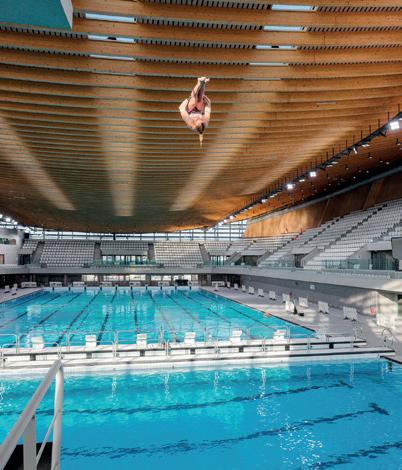
100 years after it last hosted the games, Paris is gearing up for 2024. Having created the design for the Aquatics Centre, architect firms VenhoevenCS and Ateliers 2/3/4/ are thrilled to witness its realisation.
VENHOEVENCS AND ATELIERS 2/3/4/
The only permanent new building for the 2024 games – together with the expanded green public space and the new bridge that connects the stadium with the Stade de France and the rest of Paris – the Aquatics Centre is an important investment in the future of Saint-Denis and the Paris metropolitan region. The innovative, award-winning project is set to create an unforgettable experience of the games and promises a lasting legacy for the neighbourhood and beyond. Winner of the Le Grand Prix du Grand Paris 2023 and Grand Prix BIM d’Or, the building is designed for multifunctional use. During the games, the competitions for diving, synchronised swimming and the qualifications for water polo will take place here. The building will function as a swim training facility during the Paralympics and, after the games, the building will remain as centre for various sports for the neighbourhood.
Eco-friendly design
Wood, one of the quintessential bio-based construction materials, has been used to create the main structure of the building. The design of the Aquatics Centre features a
wooden roof with a suspended shape and minimal construction height that strictly follows the required minimum space for tribunes, people and sightlines, thereby minimising the amount of air that needs to be conditioned over the coming 50 years. By using wood for this monumental structure, the design doubles the required minimum percentage of bio-sourced materials. The arena under the roof, with tribunes on three sides, can host 5000 spectators around an innovative, modular and multifunctional competition pool.
E nergy consumption is one of the big challenges for swimming pools due to water treatment and high-temperature demands. By reducing the energy demand and creating a smart energy system, 90% of the needed energy can be provided with renewable or recovered energy. The solar roof will be one of the biggest solar farms in France and will cover 20% of all required electricity production. 100% of the energy produced by the solar roof is utilised directly on site. All tribune chairs are newly designed and made of 100% recycled plastic collected from the neighbourhood.
©Architecture: VenhoevenCS & Ateliers 2/3/4/. Photo: Salem Mostefaoui.
©Architecture: VenhoevenCS & Ateliers 2/3/4/. Photo:

©Architecture: VenhoevenCS & Ateliers 2/3/4/. Photo: Salem Mostefaoui.



T his design goes beyond environmental regulations and requirements. Sustainability and biodiversity are at its heart. It is a modern and innovative sports complex surrounded by abundant vegetation that will make a major contribution to creating a liveable and healthy city district for the people of Saint-Denis. The Aquatics Centre invites nature into the heart of the new city district in the making with a proposal that includes the addition of 100 trees and shrubs that will be planted to improve the quality of life and air, stimulate biodiversity and create new ecological connections. By gathering people around sports and leisure, the new Aquatics Centre creates a neighbourhood that builds bridges between cultures and districts whilst making use of the facilities and surrounding public spaces. There is also the literal connection, with a new pedestrian bridge that crosses the highway and connects the public spaces around Stade de France with the Aquatic Centre and the new heart of the future eco neighbourhood of La Plaine Saulnier.
www.venhoevencs.nl www.a234.fr/en



CA Group Complete Assurance Guarantee is the industry leading full system guarantee, with periods of 25, 30 or 40 years.

At CA Group we believe a Guarantee is more than just a number, it must also include for:
• Guarantee issued direct to client, and fully transferable
• No reduction in Guarantee period for inclusion of solar PV installations
• Meticulous system testing as a full assembly for durability, structural integrity, thermal performance, fire resistance, acoustics, weather & air tightness and Non-Fragility
• Independent Agrément certification, LPCB, LPS1181 and Secured by Design accreditation
• Stringent quality, environmental and Health & Safety control measures, ISO 9001, 14001 and 45001
• Installer support, training, design assistance and routine on-site quality inspections
• Aftersales care, periodic building inspections
• Environmental and social governance, independent system EPD’s and third party sustainability endorsement
Find out more
Visit
• Backed by Confidex® and Confidex Sustain® by Tata Steel for up to 40 years

Density is also a key theme of the National Planning Policy Framework (NPPF) – or more specifically, ‘gentle density’ – says Grant Leggett, Executive Director at Boyer (part of Leaders Romans Group).
BOYER
Pl anning policy also gives considerable weight to ‘beauty’, as determined by the work of the Building Better, Building Beautiful Commission and exemplified in its report ‘Building More, Building Beautiful: How design and style can unlock the housing crisis’. The report used extensive polling to show that, in the design of new homes, traditional building design was preferable to contemporary architecture. Across all demographics, a large majority agreed that newly-built properties should fit in with their surroundings. Support was used to substantiate the claim that NIMBYism can be overcome if design better reflects people’s desires for traditional architecture.
B ut what role should politicians have in prescribing specific styles of architecture? In advocating gentle density, the NPPF identifies mansard windows as "well designed" and states that considering them harmful to the character of neighbourhoods is "wrong". To my mind, making value judgements about specific architectural features a step too far for planning policy. After all, whether any architectural feature is ‘right’ or ‘beautiful’ depends upon the context.
M y view is that good design is closely linked to good land use. In most situations, especially in urban areas, density has many advantages. It helps create a mixed and balanced community, allows a range of facilities in close proximity, is economically advantageous and can facilitate a greater variety of uses, such as live/work and co-living. Denser schemes also have the potential to be more sustainable, not least in terms of sustainable transport, if located close to public transport or within reach of local services. Developable land, especially in cities, is a scarce resource, and it is essential that potential development capacity is not wasted.
W hile beauty and density are dependent on context, the similarities end there. In fact, context is one of the many features that demonstrates why the two cannot be synonymous. Poundbury, the Duchy of Cornwall’s experimental Georgian pastiche development in Dorchester exemplifies this. Georgian architecture may represent the very best in design to some; to others the repurposing of a centuries-old style is regarded defeatist, retrograde; even ‘Disneyesque’.

IS THE EXECUTIVE DIRECTOR AND HEAD OF BOYER’S LONDON PLANNING TEAM. HE LEADS A TEAM OF 14 CONSULTANTS ON A WIDE SPECTRUM OF PROJECTS ACROSS LONDON AND THE SOUTH EAST, INCLUDING LARGE-SCALE REGENERATION PROJECTS, URBAN EXTENSIONS AND MORE BESPOKE, HIGH-VALUE RESIDENTIAL DEVELOPMENT.
And I would also question whether Georgian architecture allows greater density. In London, three-storey homes with generous gardens both front and back represent low density.
Perhaps the Poundbury approach will help encourage local communities to accept development; even higher-density development. But this only works in areas where the average density is lower than a typical neo-Georgian development. Take that approach in London, and the acceptable densities currently achieved will be lost, homes will become increasingly scarce, prices will sky rocket and local centres will become desolate and unviable.
To my mind, planning policy has no role in prescribing either a specific architectural style or a national baseline for density. Politicians should avoid tinkering with policy, especially when the motivation is politically motivated and the likely outcome is, at best, uncertain.
Both aesthetic and functional values were prioritised when the water supply company Aarhus Vand planned a new domicile.
RMIG Solutions was contacted and a perforated metal facade with an aquatic theme was designed using RMIG ImagePerf, illustrating the company’s water-related activities.
Indoors, the creative workspaces were also clad in perforated metal to make them resemble free-floating water lilies, harmonising with the exterior design.
01925 839610 • info.uk@rmig.com • rmigsolutions.com



Technical characteristics
Raw material: Aluminium 55HQ / EN 1050
Pattern: RMIG ImagePerf
Thickness: 3.0 mm and 1.5 mm
Surface treatment:
Natural anodising N1 (exterior)
Finishing operation: Forming and bending


Tel: 01738 634 803 Email:


Snøhetta’s Beijing City Library has opened doors for visitors as the world’s largest climatised reading space. It is the firm’s latest innovation in the library typology, 35 years after it began work on Bibliotheca Alexandrina in Egypt. The project introduces a contemporary yet indelible place for learning, knowledge sharing and socialising to Beijing’s rich cultural and intellectual scene.
SNØHETTA
Th e new library is located in Tongzhou District, a designated sub centre of Beijing that is often considered the eastern gateway of the capital. As one of three new major cultural buildings in Tongzhou, the library further establishes the area as a vibrant district and an extension of Beijing’s urban fabric. It anchors the neighbourhood’s ambitious masterplan and will help to catalyse its transformation from a relatively undeveloped area into a lively arts and cultural destination. New transit links to Beijing’s centre are underway, promising to further integrate Tongzhou with the city and drive visitors to the sub centre.
S nøhetta was awarded the Beijing City Library in 2018 through an international competition, and the project was completed with local partner ECADI.
A decade or so ago, libraries were thought to be a disappearing typology as digitisation has increasingly made information accessible at any time and place. To reinstate the library’s relevance in the 21st century, Snøhetta set out to offer a new vision for how it looks, works and serves the community. The library draws focus on the physicality of a book as an object and the conscious exercise of turning the pages to take in the written word as the primary experience amidst the picturesque setting of hills, trees and the Tonghui River.
To reestablish the library’s role as an important pillar of public and intellectual life and become more than a mere repository of books, Snøhetta has positioned the building as a centre for
learning, culture and community. Drawing on the historical origins of libraries finding innovative responses to the needs of their time and place, Beijing City Library makes the open exchange of ideas and human dialogue its core purpose. Throughout, there are dedicated spaces for exhibitions, performances, conferences and the restoration of ancient books. The building firmly rejects the argument that the library is becoming a derelict typology with the numerous possibilities it creates by fostering an emotional connection between books, people and the natural landscape beyond.
S culpting the valley and the hills within
T he glass-lined building invites nature into the reading space and lends transparency to the enriched interior environment when


viewed from outside. At the heart of the library is a sweeping, nearly 16m-tall welcoming forum off of which rise stepped terraces along smooth, rhythmic curves. Carved through the centre is a meandering pathway called the ‘valley’, which serves as the main circulation artery of the building. The valley mirrors the course of the nearby Tonghui River, seamlessly continuing the experience of the landscape beyond and linking the north and south entrances to lead visitors to all other spaces inside.
T he terraced hills rising from the valley are designed to create a sculpted interior landform that serves as the ground, seating and shelving – an informal zone with opportunities to relax, talk or read quietly, all while staying connected to the larger space. Semi-private reading areas and conference rooms are embedded into the hills, while book stacks and table seating are set on long, flat areas atop. This central, open area is fully accessible and incorporates one of the largest book Automated Storage and Retrieval Systems (ASRS) in the world.
P unctuating the large space to transition between the scale of the valley and the books are tall, slender columns that mushroom into flat panels shaped like ginkgo leaves – referencing a 290-million-


year-old tree species native to China. The overlapping panels and the interstitial glass inserts create a canopy-like roof that floods the interiors with filtered daylight. Under this ginkgo canopy, one can reach the summit that overlooks the valley of books and the horizon of the vast landscape beyond. This experience of oneness with the immediate surroundings and the imagined world offered in books allows the reader to forge memories that are unique to the place.
At the northern and southern edges of the building, where real ginkgo trees are planted at the entry points, the hills focus their views outwards to enhance the connection with nature further. The library celebrates Beijing’s natural and cultural heritage by integrating reading, performance and landscape together.
S etting the green standard with sustainable technology
T he Beijing City Library rethinks how libraries today can address the pressing climate challenges while incorporating cutting-edge technology to improve visitor experience. The building achieved China’s GBEL Three Star, the highest attainable sustainability standard in the country, by minimising both embodied and operational carbon. The project is as
much a steward of its environment as of the communities it serves.
The use of modular components and a rationalised structural grid reduces the manufacturing waste for the building. For the ginkgo tree columns, a single module type is rotated on a 9 x 9m grid throughout the building to give the appearance of variety while being efficient to fabricate and install. These columns also house integrated technology to control interior climate, lighting and acoustics, as well as collect rainwater from the roof to be reused for irrigation by channelling it to a green infrastructure system.
G enerous roof overhangs reduce solar gain on the glass facades – currently the largest load-bearing glass system in China – achieving an important design element without compromising on sustainability. To further optimise the facade, the design reduces the height of the glass on the east and west wells and uses insulated low-E glass. The roof has integrated photovoltaic (BIPV) construction elements that replace the conventional roofing and facade materials, utilising the prime exposure of the rooftop to sunlight for renewable energy production.
www.snohetta.com


IS THE CATEGORY MANAGER OF UNDERGROUND AND UTILITIES AT POLYPIPE BUILDING PRODUCTS. HE BRINGS EXTENSIVE EXPERIENCE IN DEVELOPING INNOVATIVE DRAINAGE SOLUTIONS. WITH A FOCUS ON SUSTAINABILITY AND RESILIENCE IN URBAN INFRASTRUCTURE, RICHARD LEADS INITIATIVES TO INTEGRATE EFFECTIVE WATER MANAGEMENT PRACTICES INTO CONSTRUCTION, CHAMPIONING SUDS TO ENHANCE COMMUNITY WELLBEING AND ENVIRONMENTAL HEALTH.
Climate change and the increase in urban flooding pose a significant challenge to the UK’s ageing sewer infrastructure. Despite sustainable drainage systems (SuDS) being available for some time, adoption of these systems has been slow, even with the rollout of Ofwat’s Code for Adoption guidance in 2021, says Richard Eddy, Category Manager of Underground and Utilities at Polypipe Building Products.
If we are to work toward a more sustainable, flood-resilient future, architects and housebuilders need to understand the key considerations regarding the environmental impact of developments, the barriers preventing the adoption of SuDs and the legislative changes set to make these systems a mandatory part of new residential projects.
S ustainable drainage systems are designed to tackle the challenges of urban flooding and water management in a more environmentallyfriendly way. Unlike conventional drainage solutions that typically direct stormwater into sewers and watercourses, SuDS mimic natural processes to manage rainfall by storing water, allowing it to infiltrate into the ground or slowly releasing it. This approach not only lessens the impact of urban development on the natural water cycle but reduces the strain on our sewer systems.
T he benefits of SuDS include mitigating urban flooding by reducing the runoff entering sewer systems during heavy rainfall, which improves water quality by naturally filtering
out pollutants. Moreover, SuDS can enhance biodiversity and urban green spaces by being incorporated into the landscape in the form of green roofs, rain gardens and permeable pavements, all of which contribute to the cooling of urban environments by counteracting the urban heat island effect.
A rchitects and housebuilders, therefore, have both a challenge and an opportunity to innovate and integrate SuDS as standard practice in their projects. This will help them to align with broader environmental goals and legislative requirements while also meeting the needs and expectations of future residents.
D espite the benefits and growing support for SuDS, their adoption across new developments faces several barriers. A key issue is the UK’s fragmented regulatory landscape, with varying local standards causing confusion and complex approval processes deterring developers.
A mbiguity in SuDS definitions and guidelines complicates their integration into projects, making it difficult for builders to comply with regulations and achieve environmental


benefits. There is a lack of technical expertise in hydrology and site-specific conditions also pose a challenge as designing the system often requires a bespoke approach. This has raised concerns about high upfront costs, particularly for retrofitting sites, which has historically deterred developers despite the potential long-term savings.
O vercoming these obstacles requires cohesive policies, clear guidance and more support for developers via technical resources, specialist support, training and even financial incentives. This means that, in order to promote sustainable drainage practices and address the challenges posed by climate change, cross-part collaboration is needed.
T he adoption of sustainable drainage systems in the UK is significantly influenced by the
legislative framework that governs water management and urban development, notably the Flood and Water Management Act 2010. This legislation promotes SuDS use in new and redeveloped sites by mandating approval for drainage systems to manage surface water sustainably.
S chedule 3 of the act is yet to be fully implemented across England and is particularly important as it mandates the implementation of SuDS in all new residential developments larger than 100m 2 . Although Schedule 3 has been in force in Wales since 2019, its introduction in England marks a significant step towards standardising the use of SuDS and integrating them into the broader planning and development process.
T he necessity to comply with these regulations means that developers must integrate SuDS considerations from the earliest stages of planning and design.
This can involve navigating complex approval processes, adapting designs to meet specific site conditions and ensuring that SuDS features are maintained over the long term.
T he legislative environment fosters innovation and sustainability, encouraging creative water management solutions that add value to developments. So, while the industry’s understanding of SuDS and legislation is evolving, we should see this as an opportunity to enhance urban sustainability and resilience.
E ffective SuDS implementation depends on understanding a site’s unique characteristics, such as environmental conditions, soil types, topography and hydrology. These factors determine how water behaves, impacting the suitability and effectiveness of various SuDS components.
C ustomising SuDS solutions to fit the unique conditions of a site ensures that they will complement the natural water cycle. For instance, areas with permeable soil can use infiltration features, while urban areas might employ green roofs or permeable paving. Proximity to watercourses could also enable the creation of features like wetlands for additional drainage and environmental benefits.
T his approach not only maximises the performance of the drainage system but also can lead to cost savings over time. By aligning the drainage strategy closely with the site’s natural characteristics, it’s possible to reduce the need for extensive engineered solutions, which can be more expensive to install and maintain.
A site-specific approach to SuDS encourages a more thoughtful and integrated planning process, requiring collaboration among developers, planners and engineers to create solutions that respect and enhance the natural environment.
W idespread SuDS adoption in the UK represents a vital step towards mitigating flood risks, enhancing urban resilience and promoting environmental sustainability. Certain areas, particularly those prone to flooding or undergoing rapid urbanisation, stand to benefit significantly from the integration of SuDS.
E ffective collaboration between the drainage sector, policymakers, housebuilders and developers is essential for promoting SuDS. The drainage sector can provide expertise and innovation, while policymakers provide clear guidelines and incentives, all of which will enable and support developers looking to integrate SuDS into their projects.
O f course, the successful and widespread adoption of SuDS will involve addressing misconceptions about costs, maintenance and feasibility. Instead, we must highlight successful case studies, provide clear cost-benefit analyses and offer technical support to help the industry gain and build confidence in both the benefits and implementation of SuDS.
A s climate change intensifies, the requirement for a sustainable, resilient future becomes more critical. By making SuDS a priority in our housing development projects, we are investing in the future health of our communities and ensuring they are equipped to handle environmental challenges.
www.polypipe.com
Jon Ackroyd is this month’s exclusive Q&A profile. Jon is an Architect, retrofit champion, Carpenter and Founder of Ackroyd Lowrie, an award-winning, east London-based practice. Here, Jon discusses his inspiration, how he learnt to harness the power of dyslexic thinking to forge a successful career, his advice for aspiring architects and how Ackroyd Lowrie is supporting future generations.


Tell us about your career journey. How did you get started in the field of architecture?
As a child, school was difficult. I couldn’t articulate my thoughts in writing and would muddle up my words, but it wasn’t until I was nine that I was diagnosed as dyslexic. I found solace in drawing, so art GCSE was an obvious choice. Here, I learned about Richard Rodgers, a well-known visionary Architect who was also dyslexic. This inspired me so much that, when I turned 17, I walked into an open day at Rodgers’ firm, asked for an internship and got it. And so began my career in architecture.
At the Richard Rodgers Partnership (as it was known then), a colleague encouraged me to apply for my bachelor’s degree at Cardiff University, and this was the start of my formal qualification. These early interactions not only shaped my interest in sustainable design, but also showed me how thinking differently was an asset.
Were there any pivotal moments or experiences that solidified your decision to pursue a career in architecture and design?
A pivotal experience that shaped the direction of my career was my time at Architype. Architype is one of the UK’s leading sustainability practices, and the more projects I worked on with this emphasis, the quicker I realised this is what I wanted to specialise in.
While at Architype, I set up the research and innovation group with a colleague, Gareth Selby, to develop radical ideas around sustainability in buildings. Innovation was part of Architype’s ethos, and they later brought in Research Specialist Lisa Ann Pasquale to further develop knowledge. Together, we undertook Government-funded, post-occupancy research on the performance of schools in use, as part of the Technology Strategy Board.
This research really grounded architecture in reality for me. It taught me the importance of analysing data and real opinions to properly understand how buildings do and don’t work.
If you hadn’t followed your passion for being an architect, what other career path would you have pursued?
When I returned to London, I moved into a warehouse community in Vittoria Wharf on Fish Island, Hackney Wick. Here, makers and creators were working side by side, and this unity inspired me. As well as designing buildings, my research at Architype had taught me the importance of understanding how they are built, so I undertook a City & Guilds qualification in carpentry. My love of making things meant carpentry or construction could’ve been an alternative career.
I believe it’s really important for aspiring architects to understand the practical aspects of the profession, and gaining hands-on experience is the best way to achieve this. Ackroyd Lowrie has its own academy to bring students from different backgrounds into paid apprenticeships and onto BTEC qualifications, and part of this training includes hands-on learning, such as bricklaying and carpentry.
Who has been your greatest influence and source of inspiration?
Richard Rodgers was extremely influential on my career and my view of my dyslexia. From him, I learned that my dyslexia wasn’t the curse I thought it was. Rather, it’s the reason why I’m creative and can think around corners rather than in a straight line. Nature is another huge source of inspiration. The simple elements of light, sun and water show how structures can work and how sustainable cycles are created.
Then there’s also Jane Jacobs, Author of The Death and Life of Great American Cities, a remarkable book about urban planning, neighbourhoods and why cities do or do not function.
Ackroyd Lowrie’s design for a major, mixed-use retrofit scheme in Camberwell that will repurpose a civic building into new homes, community and commercial space

What’s been the most memorable project you’ve worked on, and for what reason?
Alva Coachworks in north London.
This was a really ambitious retrofit to transform a Victorian tram repair depot into pioneering film and photographic studios and an event space. We wanted to celebrate the building’s heritage and character while also achieving the client’s vision and reducing energy consumption. This involved overcoming many hurdles, including adjusting the building’s height, upgrading the 100-year-old sawtooth roof, designing custom roof trusses to support sliding acoustic partitions and installing a unique hydraulic ramp for access, to name a few.
It’s memorable because midway through the project, funding was put on hold, and it remained in danger of not being finished. Due to the imagination of the project team and the sheer resilience of the client, it succeeded and proved a real lesson in overcoming adversity. The result has been described as a ‘wowfactor’ space, and Alva Coachworks was highly commended by AJ Retrofit and an AJ Specification exemplar project for technical merit.
Can you share a personal anecdote or experience that taught you a valuable lesson about being an architect?
On one of my early projects, we ran into difficulties with the contractors on site. The roofing had failed, water was pouring through the building, and the construction team wasn’t accepting accountability. This taught me two things. One, I needed to know more about how buildings are built, and two, how to manage very complicated and difficult issues with people.
To resolve the situation, I created my own methodology, SOCIAL, which teaches how to communicate efficiently by combining professional and personal journeys. To begin, we need to ‘slow down’ and prioritise self care, which allows us time to ‘organise’ thoughts and do any necessary research. We can then ‘communicate’ clearly and effectively, ‘implement’ and ‘action’ accordingly and, ultimately, ‘learn’ from the situation to avoid future occurrences. So much in our industry demands a fast pace and immediate response, but this isn’t always the right approach. I teach our staff and academy students this method to help achieve a positive work-life balance.
Could you walk us through a typical workday in your current role?
I get up at 6.30am, and my wife and I jump into a freezing-cold plunge pool! I liken this to drinking four cups of coffee; it’s a great way to get energised and grounded for the day ahead. We’ll then have breakfast with our kids, and I’ll head to work. Depending on what day of the week it is, the activities vary. Mondays are always organising, planning and internal meetings; mid weeks involve external client or consultant meetings and design reviews; and on Fridays, I have one-to-one meetings with the senior team before a lunchtime teambuilding social. Most days, I also swim in the London Fields Lido as this gives my brain a chance to reset and is often when I get my best ideas.
What is your favourite building and why? I’d read about Luis Barragán’s Capuchin Convent Chapel in Mexico City, but it wasn’t until I visited that I realised what
a master Barragán was of controlling space and light. Standing inside, seeing the light come though the window and feeling the sensation of the sun of my face was quite a magical moment. It felt like God was shining in the room. Photos of this building really don’t do it justice.
If you were hosting a dinner party to discuss architecture and design, and you could invite three individuals, either from the past or the present, who would you choose to join your conversation?
For a heavyweight ‘titans of architecture’ discussion, I’d invite Michelangelo, Walter Gropius and Zaha Hadid. I think it would be fascinating to see how a classical master, a modernist and founder of the Bauhaus movement, and a famously opinionated, avant-garde leader would debate!
For a more informal evening, it’d have to be Samuel Mockbee, Cedric Price and Jane Jacobs. These were all visionaries, and I’d love to talk to each of them about how we’re still adopting their ideas in our designs today.
Looking ahead, what exciting projects or initiatives can we anticipate from you in the coming year? Project wise, I’m working on a major, mixed-use retrofit scheme in Camberwell that will repurpose a civic building into new homes, community and commercial space. The first of our co-living schemes completes imminently in Harrow and will be followed by the launch of our white paper discussing opportunities in this rapidly-growing market.
Most central London local authorities, as well as the City of London Corporation, have introduced a new policy to prioritise retro first, so we’re also working on schemes to reimagine old buildings and encourage alternative uses, such as hotels, retail and leisure. I’m also excited to progress our work at Dagenham Farm with Growing Communities. Here, we’re developing a series of outdoor classrooms to increase their outreach programme and better facilitate urban regenerative farming.
In terms of Ackroyd Lowrie, this year, our first graduates from the academy will begin either a full-time university Part 1 course or our own Part 1 apprenticeship programme (in collaboration with London Southbank University). We’ll also release series three of our successful podcast, Urban Forecast, and continue hosting our networking series, Breakfast Club Briefings, both of which connect politicians, planners, developers and property decision makers to discuss the future of cities and how urban spaces can work better for their inhabitants

The world’s first green hydrogen refuelling infrastructure for the recreational boating industry will be initiated in 25 Italian marinas and ports with refuelling stations designed by Zaha Hadid Architects (ZHA).
A€100m investment led by NatPower H (part of the NatPower group), the green hydrogen infrastructure will begin installation in the summer of 2024 and targets the provision of 100 refuelling stations throughout the Mediterranean over the next six years, with further expansion to the world’s most popular regions for recreational boating.
P roduced with wind, solar and other renewable energy infrastructure, green hydrogen is converted into a stable, natural resource using NatPower H technologies to meet the ever-increasing global demand for sustainable sources of power. Emitting only water vapour and warm air, hydrogen generates electrical power in a fuel cell. The 100 refuelling stations operational by 2030 will deliver up to 3650 tons of green hydrogen annually, eliminating approximately 45,000 tons of greenhouse gas emissions from the Mediterranean’s recreational boats every year.
N atPower H has developed a green hydrogen fuel solution based on three key principles: safety, scalability and sustainability. The NatPower H stations will supply hydrogen using proven RINA
PED-certified, low-pressure metal hydrides technologies for marine applications that ensure compactness, safety and resilience in compliance with industry regulations and certifications together with a meticulous focus on circularity and the protection of marine ecosystems.
“ On the back of a renewable project pipeline that already exceeds 23GW, we created NatPower H – the first global operator for the production, storage and distribution of green hydrogen – to build the world’s first hydrogen refuelling infrastructure for recreational boating,” states Fabrizio Zago, Group CEO at NatPower. “We believe hydrogen to be one of the most efficient solutions capable of driving the energy transition of the entire recreational boating and yachting industry. Specifically, the use of hydrogen as an energy carrier through fuel cells and electric motors is proving to be one of the most promising options, offering excellent performance while respecting the environment.”
T he boating industry is increasingly demanding ever more sustainable vessels, and the world’s shipyards are responding with solutions to reduce the
ecological impact of their operations. The demarcation of protected marine areas around the world, which now prohibit the use of diesel engines, underscores the importance of ecologically-sustainable developments in the industry. This rapid energy transition is currently held back by the lack of infrastructure for distribution and refuelling with zeroimpact energy sources.
I nstalling the infrastructure to deliver green hydrogen, NatPower H aims to create a network of sustainable energy hubs in all major Italian marinas and establish ideal conditions to facilitate the ongoing development and use of hydrogen-powered vessels.
“ The Italian shipbuilding industry leads the world in terms of the number of boats built, and our aim is to facilitate the energy transition of this crucial market, promoting the use of hydrogen-powered boats with no direct CO 2 emissions,” says Andrea Minerdo, CEO at NatPower H. “Although the project has only just been launched, we already have a pipeline of 25 agreements with Italian marinas and ports, allowing us to start developing a global network of widespread hydrogen fuel stations.”


The refuelling stations’ design has been developed from ZHA’s Computation and Design Research Group’s (ZHA CODE) collaborations with Block Research Group and Incremental3D, investigating unreinforced masonry structures, 3D-printed concrete and sustainable digital concrete construction. Evident in the team’s acclaimed Striatus Bridge in Venice and the Pheonix Bridge at the Holcim Innovation Hub in Lyon, circular construction integrating computational design and 3D printing reduces the structural materials required by up to 50% with no compromise in performance using blocks that can be easily disassembled and recycled.
“Built with low-carbon concrete, the structural strength of ZHA’s hydrogen refuelling stations is generated through geometry rather than increased use of materials. Combining the latest innovations in construction techniques with the historic engineering developed throughout the Mediterranean by the Romans more than 2000 years ago, the stations use advanced circular building technologies, reflecting NatPower H’s commitment to an ecologically-responsible future,” says Filippo Innocenti, Director of Zaha Hadid Architects.
NatPower H has also announced its partnership with Bluegame, the Sanlorenzo Group’s renowned yacht builder, which is designing and constructing hydrogenpowered chase boats for two of the six teams participating in the 37th America’s Cup held later this year in Barcelona.
NatPower H is collaborating with ZHA to construct green hydrogen refuelling stations that are ecologically responsible and meet the highest safety standards. Drawing on ZHA’s research into modular systems, the design is adaptable to the many varied locations throughout the Mediterranean, enabling a customised configuration for each refuelling station based on specific local needs such as overall size, seating, bike-charging facilities and the pedestrian circulation within each port and marina.
U tilising 3D robotic material placement to create the segments of each structure, the stations are fullyrecyclable, dry-assembled masonry, minimising construction waste while also enhancing material efficiencies. The layered composition of 3D-printed blocks echoes the processes evident in nature that create the striated structures and fluid geometries of natural formations within Mediterranean landscapes and marine ecosystems.
Supporting both the ‘American Magic’ team of the New York Yacht Club as well as the ‘Orient Express Racing Team’ of France’s Société Nautique de Saint-Tropez, NatPower H will supply green hydrogen and implement refuelling procedures for each of the teams’ chase boats during their preparations for the Americas Cup this October. This partnership is part of a broader programme by NatPower H, demonstrating the benefits made possible with the establishment and widespread distribution of green hydrogen to the rapidlygrowing sustainable boating market around the world.
T he green hydrogen refuelling infrastructure for the recreational boating industry has been developed by NatPower H in collaboration with Zaha Hadid Architects, BluEnergy Revolution, Fitchner, Linde, Studio Maresca, S.i.g.e. and Tecma Solutions. www.zaha-hadid.com

Roof pitches not only contribute to a building’s aesthetic appeal but also play a crucial role in its functionality and durability. Ardit Strica, Technical Manager at Onduline Building Products, provides a comprehensive overview of low-pitched roofs, their challenges and the transformative benefits of sub-roof systems.
ONDULINE BUILDING PRODUCTS
The definition of a pitched roof, according to British Standard BS 5534, is a roof with a pitch greater than 10° and less than 75°. For low-pitched roofs, anything under 20° is generally considered as low pitch, while anything below 10° is deemed a flat roof. Several factors influence the selection of a roof pitch, including material availability and cost, aesthetics, construction ease or difficulty, weather conditions and local building permissions. The client’s preferences and the architect’s designs also play a pivotal role in determining the roof pitch, as it significantly impacts the external appearance of a building, making it a crucial aesthetic consideration.
The pitch of a roof is not only an aesthetic choice but also a practical one. Different loads, such as snow, wind, dead load and live load, exert forces on a roof structure, making it essential to tailor the pitch to suit the local weather conditions.
The choice of roofing material further influences the final pitch with concrete, clay and slate being common options. However, low-pitched roofs present unique challenges, particularly in terms of effective water drainage.
Low-pitched roofs, often applied to extensions, come with their set of advantages and challenges. While they may be considered more aesthetically pleasing than flat roofs, slow water runoff and limited tiling options are key drawbacks.
In contrast to steep-pitched roofs, where water runoff is rapid due to gravity, low-pitched roofs struggle to shed water efficiently. This can lead to water pooling on the roof, causing leaks and potential damage to the property. Additionally, the limited availability of suitable tiles for low-pitched roofs poses a challenge for designers and builders.
In recent years, changes in permitted development rights have provided homeowners with greater flexibility in renovating and extending their properties, making low-pitched roofs more appealing. The option to lower a roof pitch gains traction as it allows for additional ceiling space, aligning with the increased trend in property extensions and renovations.
The choice of roof pitch becomes crucial in home extensions, with flat roofs being a common option due to their spacesaving and contemporary aesthetics. However, pitched roofs, especially those matching the main property, contribute to a more cohesive visual appeal. The introduction of low-pitched roofs in extensions provides an opportunity to use matching tiles, ensuring uniformity with the existing property.
While low-pitched roofs offer several advantages, the limitation in available roofing tiles has been a significant hurdle. This is where sub-roof systems come into play, revolutionising the possibilities for roofing design and functionality.
A sub-roof is an additional protective layer within the roof structure, acting as the primary waterproofing layer under the tiles when the tiles’ minimum pitch cannot be met.


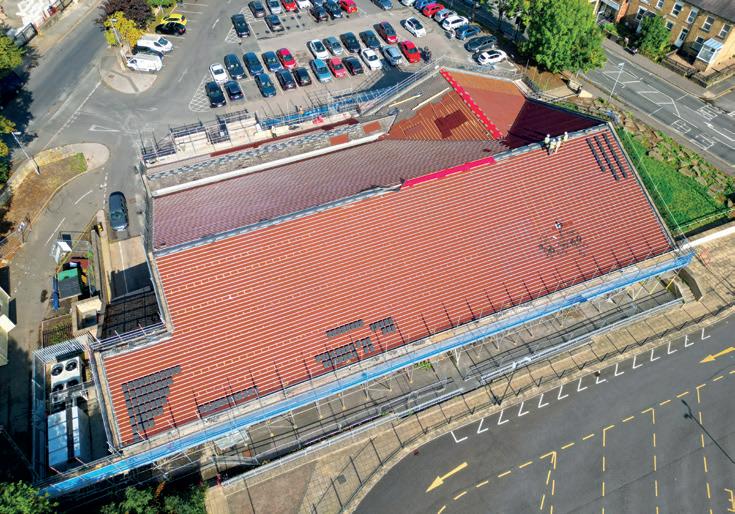
British Standard BS 5534 acknowledges situations where using roofing products below the recommended pitch is challenging and emphasises the need for a functional, weatherproof sub-roof system.
Sub-roof systems change the dynamics of traditional roof structures. Instead of relying solely on tiles for waterproofing, the sub-roof becomes the main waterproofing layer, allowing the tiles to serve as a secondary defence against water ingress. This innovation enables the use of all types of concrete, slate and clay roof tiles at pitches as low as 10°.
Flat sub-roofs involving nonbreathable felt on a rigid sarking board and corrugated sub-roofs utilising bituminous corrugated roof sheets are two prevalent options in the market. While both provide solutions for lowpitched roofs, corrugated sub-roofs offer enhanced ventilation, minimising the risk of moisture build up and timber rot.
The rise in popularity of sub-roof systems is attributed to the newfound freedom they offer in roofing projects. Whether the project involves a lowpitched roof or not, a suitable sub-roof system provides flexibility in choosing roof tiles, enhancing both aesthetics and functionality.
One significant advantage of sub-roof systems is their ability to accommodate heritage sites and older properties. By allowing the use of existing or reclaimed tiles, sub-roofs maintain the original look and feel of the property while providing an additional layer of protection against water ingress.
A prime example of an innovative sub-roof system is our ISOLINE LOW LINE solution, which is the only subroof system in the UK to be BRE tested and BBA accredited to as low as 10° with a 30-year guarantee. Made from approximately 50% recycled material and specifically designed for use on low-pitch roofs, this lightweight bituminous underlay sheeting is fitted under roof tiles, thus being shielded from elements such as wind and rain, making it an exceptional long-lasting waterproofing solution.
As the construction industry continues to evolve, innovations like sub-roof systems play a crucial role in addressing challenges and expanding possibilities. The ability to create visually-appealing, functional and watertight low-pitched roofs opens up new avenues for architectural creativity and sustainable construction practices. With a deeper understanding of these concepts, professionals in the field can make informed decisions that contribute to the overall success and longevity of their projects

One of the UK’s largest built environment events, UK Construction Week (UKCW), is returning to London’s ExCeL, from 7 to 9th May, with a host of new features including interactive demos, international pavilions and a list of prestigious speakers.
After being officially opened by Architect and TV Presenter, George Clarke, visitors can see the debut of a new Live Demo Theatre, Skills and Training Hub, a constructionspecific Recruitment Zone and new C-Suite Summits to name but a few, as well as a host of international exhibitors housed in pavilions from India, China, Turkey, Italy, Czech, Poland and Latvia.
UKCW London is once again co-located with Concrete Expo and the Offsite Show, as well as the UK’s premier event for the self-build sector, Grand Designs Live.
The construction show will host over 300 exhibitors, showcasing many products and services, from concrete and construction technology to safety services and alternative sustainable materials. Confirmed names include Creagh Concrete, FONN, Celsa UK, PlanRadar, Ford, O’Reilly, Clark Drain, CONTAINEX, Oracle and many more.
At this year’s exhibition, visitors can look forward to attending talks and panels hosted by key high-profile speakers, including former England international Footballer Trevor Steven and Andrew Lewer MP.


Trevor Steven, whose football career included 36 England caps, is now a Mental Health Ambassador at Causeway Technologies and will be speaking on day one of UKCW (7th May). Also in the line up is Andrew Lewer MP, Chair of the All-Party Parliamentary Group for SME housebuilders and LUHC Select Committee, who will discuss his plans for a ‘Builders’ Manifesto’.
Back for its seventh year running, the popular Role Models campaign will, for the first time ever, host three categories; Rising Star for Apprentices, Pioneer and Icon, to broaden its acknowledgments. Entries are now open, with the shortlist to be announced at the UKCW London show and the winner crowned at UKCW Birmingham (running from 1st to 3rd October).
The campaign welcomes anyone who works in the sector, including architecture, engineering, construction technology and property development, and is aimed at inspiring others to share their stories and career journeys.
What’s more, across the three days, visitors can also look forward to these new highlights, features and dedicated areas:
Skills: With an even larger emphasis at this year’s show on skills development, apprenticeships and training in the industry, new features include a live challenge featuring some of the world’s best in BIM digital construction; a new collaboration with the CITB (Construction Industry Training Board) and new show zones focused on skills, training, careers and recruitment.
Careers and Recruitment Zone: Another new area created in response to exhibitor and visitor feedback, this will not only be a focal point for all those working in recruitment, or simply looking for that next new role. Visitors will have face-to-face access to specialist recruiters from the construction sector, with discreet interview rooms allowing candidates to have onsite consultations.
Concrete Expo: Co-located with UKCW London, from 8 to 9th May, visitors can expect to see a Live BIM for Concrete Interactive Visitor Experience; technical advice clinic and a new dedicated area for testing, repair and reinforcement; the event will be showcasing an impressive selection of concrete products, equipment and services exhibitors.
To find out more about both shows and to register for UKCW London for free, visit the below website.
https://ukcw-london-2024.reg.buzz/cab-pr

Nestled within the dynamic neighbourhood renowned for its high concentration of architects and designers, this year’s festival – taking place from 21st to 23rd May – promises its most extensive line up yet with more venues, showrooms and installations than ever before.
Expect a diverse array of over 600 curated events spanning across EC1, complemented by a network of over 160 local design showrooms and 300 exhibiting brands, spread across 12+ unique venues. A series of site-specific installations, along with special projects and collaborations will once again adorn
CLERKENWELL DESIGN WEEK
the streets of Clerkenwell and various exhibition venues, offering festival goers and the general public a fullyimmersive experience.
On Clerkenwell Green, British stone suppliers Albion Stone and Hutton Stone have commissioned architecture practice Artefact to design an installation,


showcasing natural stone bricks, which have about a quarter of the embodied carbon than traditional clay bricks. ‘Brick from a Stone’ will illustrate the relatively simple and low-energy process a stone brick goes through to be produced via a colonnade of six columns, reaching heights of 3m at its tallest, constructed from stone bricks in two rows with a roof to provide shelter.
A drinking trough for dogs will also be built, mirroring an existing old stone slab on the site originally designed for cattle.
Also presented on Clerkenwell Green is ‘Stone Tapestry: Beyond the Surface by Stone Federation’, which features materials not only from Albion Stone and Hutton Stone but also from Britannicus Stone, Dunhouse Quarry and Tradstocks. The federation has once again collaborated with architect firm Squire & Partners to create an explorative exhibit designed to demonstrate the sustainability, versatility and beauty of natural stone. This year’s feature will be realised by the Stonemasonry Company and Webb Yates Engineers.
In the atmospheric setting of House of Detention, Artist Ben Cullen Williams will captivate visitors with his audio-visual installation, delving into the impact of the simple grid on our physical spaces, lives and day-to-day existence. ‘Grid System’ will immerse the viewer in an evolving light installation that continuously explores these ideas, mapping grids onto the viewer as they become part of the artwork itself.
Building on its recent collaboration with Surface Designer Orsi Orban, Duffy London will transform the historic St John’s Gate of the Order of St John with its latest installation for the festival, Gatekeepers. Inspired by organic forms found in nature, a series of sculptures are crafted to evoke a dynamic sense of movement, as though poised to spring to life.
Meanwhile, Material Bank – one of the world’s largest marketplaces for searching, sampling and specifying architecture, design and construction materials – will introduce its signature box to London during the festival, joining forces with a multitude of brand partners. Designed by the company’s chief design officer, the giant box installation measures 4.8 x 6.5 x 2m and will be located in St John’s Square.
Visit the below website to register for free festival passes.

SCHLÜTER-SYSTEMS
Schlüter-Systems is well known for creating long-lasting bathrooms. Past shortcomings in the design of new-build properties and retrofits have shown the importance of protecting the fabric of bathrooms with reliable waterproofing. This is underlined by the NHBC’s forthcoming (July 2024) technical guidance. The changes require the use of substrate boards that are fully resistant to water and, ideally, will mitigate the creation of condensation within the wall build up. Schlüter-KERDI-BOARD features an XPS foam core and is faced on both sides with a reinforcement layer and fleece webbing that offers an ideal key for tile adhesive. Energy and direct cost savings in terms of lower installation costs can be achieved across various products; for example, intelligent lighting systems such as Schlüter-LIPROTEC are plug and play. Lastly, with heat pump technology replacing conventional boilers, the industry needs to change how it thinks about space heating and its delivery. Schlüter BEKOTEC-THERM hydronic underfloor heating facilitates the creation of lower temperature circuits, with the pipework clipped into studded boards, which offer an improved annual output factor while also acting as a decoupling layer.
www.schluter.co.uk


01530 813396

STYLE
Style has further improved its glass division by relocating the fabrication facility from Germany into the UK. For customers looking for Style’s non-acoustic, glass horizontal and folding sliding wall partitions, the UK fabrication facility will speed up production schedules and enhance delivery lead times. “We’re delighted to announce this enhancement to our operation,” said Mark Cowley, who heads up Style’s glass division. “The product components are still manufactured by our trusted partners in Germany; however, by housing ample stock at our new UK fabrication and assembly facility, we can respond far quicker to orders. Our HSW and FSW glass solutions are extremely popular with retail outlets, residential applications and corporate and hospitality venues, which often require a rapid turnaround when a glass moveable or folding wall is needed. The new facility is located in the Midlands and, as well as quickly assembling the walls, we can offer additional solutions too, such as powder coating and specialist glass finishes. This is a very important new initiative for Style and one that will be warmly received by our UKwide customers.”

www.style-partitions.co.uk


01202 874044


www.schoeck.com


No need to compromise on performance, quality or service. Schöck products meet full compliance with relevant UK building regulations, are approved by the BBA, NHBC accepted and classi ed as re resistance class REI 120.


An external wall insulation (EWI) system manufactured by Sto has optimised fire protection for a multi-block residential development.


OWA UK
When Schüco needed to improve the sound quality within its UK showroom, OWA UK was the first to hear the call. The showroom is ideally suited to hosting events and displaying the Schüco product range, but there was a concern that echoes made it hard for visitors to hear those speaking. Over the conference space, large, monolithic rafts were created with OWA RAW, a surface that mimics concrete while offering high sound absorption. Above the mezzanine level, three raft and canopy solutions are on show. In adjacent areas, the OWAtecta S14 Selecta one-piece perforated metal canopies with black acoustic fleece and Class-A acoustic pads were installed. Above the bar area, OWAconsult Corpus cuboid shapes were installed.
www.owa-ceilings.co.uk enquiries@owa-ceilings.co.uk
Located alongside the River Thames at London’s Isle of Dogs, Ocean Wharf was built circa 2000 and comprises four blocks of flats ranging from seven to 12 storeys. To comply with amendments to Building Regulations, which ban combustible materials in external walls of buildings over 11m, the existing expanded polystyrene insulation (EPS) system installed by another manufacturer had to be removed and replaced.
T he project’s first phase comprised two buildings that had the StoTherm Mineral K EWI system specified to meet the required fire rating while maximising thermal performance. BBA certified, StoTherm Mineral K features A1 mineral fibre insulation boards, and the system is classified with an A2-s1,d0 reaction to fire in accordance with BS EN 13501.
S pecialist surface finisher, One & Maike, was responsible for installing StoTherm Mineral K on behalf of principal contractor Osprey, a facade remediation specialist. The insulation boards were fixed directly to the existing concrete substrate avoiding the need for a cavity. StoLevell Duo Plus, a strong mineral adhesive, was applied to the back of the insulation boards, and additional fixings were also used to secure the insulation boards to the substrate to suit wind-load conditions. Sto-Glass Fibre Mesh was then embedded into the outer surface of the reinforcing coat providing crack resistance to the system.
To reflect the buildings’ original aesthetics, the system was finished with StoSilco K1.5, a silicone resin render ensuring high levels of water repellence and protection from harsh weather conditions. This was applied across an area totalling 2500m2, creating elevations featuring various colours, including white, terracotta and blue.
d.newton@sto.com

F. BALL AND CO.
F. Ball products, including dual-purpose Stopgap Fill and Prime thixotropic primer and Stopgap 1200 smoothing compound, have been used to create a large-scale, high-performance flooring finish in the new Nottingham Central Library. Contractors used F. Ball’s Stopgap Fill and Prime and Stopgap 1200 smoothing compound to prepare metal raised access panels in all areas, creating a perfectly-smooth surface for floorcoverings. Once the primer had cured, F. Ball’s Stopgap 1200 smoothing compound was applied to create a smooth base for the installation of floorcoverings. Contractors then used F. Ball’s Styccobond F46 pressure-sensitive acrylic adhesive to install Gerflor safety flooring in all areas where subfloors had been prepared.
www.f-ball.co.uk
WEST FRASER
01538 361633

With accessibility to the site of the new Kirkwall Care Facility on Orkney being almost as challenging as the weather the island’s inhabitants endure, a rapid-assembly panelised timber frame presented itself as an ideal build solution, with the main contractor’s joinery workshops utilising West Fraser’s SterlingOSB Zero as the sheathing to the roof, walls and floors. Contracts Manager for R. Clouston, Andy Smith, comments: “The machinists and joiners produced all the roof and floor cassettes and panels for the care home; with 9mm SterlingOSB Zero on the top and underside of factory-insulated, warm roof cassettes, while the floor cassettes have an upper layer of 18mm SterlingOSB Zero.” uk.westfraser.com
Building on the success of its well-established Multiboard, the Kent-based manufacturer of insulation and waterproofing solutions, Marmox, has recently introduced the new Fireboard to its range.
MARMOX

Id eal for both internal and external wall insulation (IWI/EWI) applications, the stone-wool-based board features the same ‘honeycomb’ surface structure as Multiboard to create an A1 noncombustible-certified render-backer that is weatherproof. This means they simply will not degrade, whatever the weather throws at them.
T he Fireboards are available in thicknesses of 20, 50 and 100mm, in a standard size of 600 x 1200mm, while the polymer-modified mortar coating is applied to both faces. Fireboard can also be specified for internal use on walls or ceilings to take a plaster finish. The 20mm Fibreboard, though, is especially suited for lining window and door reveals to tackle cold bridging and improve overall U-values. Then, while the thermal conductivity of 0.037W/mK delivers very good thermal insulation, thanks to the tiny air pockets within the micro-fibre structure of the stone wool, this structure also serves to interrupt the pathway for sound transmission through solid materials, such as stonework or other masonry.
T he boards have a nominal density of 150kg/m 3, while their core material offers a compressive strength of 90 tonnes/m 2
M arketing Manager for Marmox, Grant Terry, commented: “The introduction of Fireboard into our range significantly enhances our offer to the construction industry, meaning we have an A1 noncombustible backer board for internal or external use, which can safely be installed across timber- or steel-framing systems as well as masonry. Also contributing significant thermal and acoustic performance, we expect Fireboard to find applications in new-build and refurbishment work within the residential, commercial and other sectors. We are already seeing strong interest from specifiers and specialist fire protection contractors as we make the industry aware of Fireboard’s multiple benefits through our sales team, the trade press, industry events and our social media.”
S o sure is Marmox of Fireboard, its website states: “So, what sets it apart? A1 fire protection, sound absorption and thermal insulation all in a thin, lightweight yet rigid board, which is weather resistant and will not degrade – however wet it gets! To top it off, no pre-treatment is needed –you can render or plaster directly onto it. Sound too good to be true?”
M armox Fireboard has been tested to prove compliance with BS EN 1182, EN 1716 and EN 13823 (resistance to fire test) conducted by UKTC, along with other testing completed by the BRE. Technical details can be found in Marmox’s technical brochure, which can also be downloaded from https://www.marmox. co.uk/products/marmox-fireboard.
Houses being newly constructed in the UK must not expose occupants to the risks associated with radon gas. Designers and contractors have a legal duty of care to ensure properties comply with regulations appertaining to the locality to mitigate the impacts of this carcinogenic radioactive gas.
CAVITY TRAYS

Mo st radon-induced lung cancers develop through exposure to low and moderate doses over time in people’s homes, where the gas can seep in through a variety of ways.
R adon is odourless, colourless and tasteless, and is produced when uranium naturally decays within the ground. Radon is everywhere – it is simply the extent that varies. Radon does not naturally occur within a building – responsibility lies with those who put the building on the land. Whenever a property is built on radon-emitting ground, the building prevents its release and dissipation.
R adon can seep into and accumulate within buildings – homes, schools and workplaces. Radon emits heavily ionizing radiation called alpha particles. When inhaled, they can damage DNA and cause lung cancer.
To prevent radon seeping into a building, gasproof protection covering the entire building footprint at ground level is established, protecting from outer skin face to outer skin face.
T his usually takes the form of a gas-grade membrane protecting the oversite, which interfaces with radon barriers that integrate with the membrane and travel through the inner skin, transversing the cavity and projecting through the outer skin at a lower level. This configuration prevents the gas from continuing its upward journey, and airbricks, located under the barrier level in the exterior walls, ensure the trapped gas can evacuate the structure.
B ut there is a problem. The construction design, internal floor levels and external ground levels dictate actual DPC and barrier positions, and those positions give rise to a regularly reoccurring failure. Wherever there is an external door opening in the exterior wall, one has to unite the membrane level with the barrier level. At the same time, protection must travel to below sill level (of the exterior doorway) whilst also ensuring all cavity closers to door opening reveals are, likewise, integrated, so protection is continuous with no gaps upwardly or sideways. Addressing the reveals is the point where failings arise.
C omplementing the radon barrier range from Cavity Trays is the Type PAT Protective Adjustable Threshold, a three-dimensional preformed DPC gasgrade component that is bedded within the external door opening and into its reveals prior to the frame being installed. Adjustable side connectors, which attach and adjust in level, provide a continuous link to the adjacent cavity barriers. Cavity closers to the opening are accommodated within the Type PAT reveal moulded recesses. The assembly provides continuity of gas protection around and under the external opening. An integral drainage facility provides an escape route should water seep within the under-threshold sealed area.
S hould ground levels prevent straight-through gas evacuation via Cavibricks, the gas can be evacuated above barrier level (and thus ground level) by incorporating cranked vertical sleeves with integral cloaks that lap and seal to the radon barrier. Find a three-minute demonstration here: https:// youtu.be/-o-vSrcmYvI?si=Zn5A1Kp3sE0DVP0a T he World Health Organization (WHO) states that, globally, residential radon exposure alone in 2019 was estimated to have caused 84,000 deaths by lung cancer.
HVAC DESIGN
CIAT

Weleda has used CIAT heat pumps to embrace innovation in temperature control at its new warehouse facility. Faced with the challenge of efficiently managing a diverse range of stock worth more than £1m, Weleda sought a sustainable solution that would address both heating and cooling requirements throughout the year. The unique demands of storing valuable stock necessitated a forward-thinking approach to heating and cooling. After thorough consideration of various options, Weleda opted for a first-of-its-kind solution proposed by HVAC designer Bruce Boucher Consultancy (tBBC), using CIAT heat pumps. The HVAC design specialist collaborated with AFS (Air Filtration Solutions) and recommended a reverse-cycle, air-to-water heat pump system. The key components of this innovative solution include the cutting-edge CIAT air-to-water heat pump, an industrial air heater and a pre-insulated piping system. The air heaters offer adjustable nozzles for optimal air distribution in high-ceiling warehouses. When combined with a nominal 120kW reverse-cycle heat pump featuring four scroll compressors from CIAT, this solution provides efficient heating and cooling for the open warehouse. www.ciat.com

BG ELECTRICAL
The Evolve range of decorative switches and sockets from BG Electrical is proving a winner for electrical installers as they combine end-user demand for style and value with easy, quick-fitting and ‘noreturn’ reliability. The range is suitable for domestic and commercial applications and is the perfect way to ensure all essential power points enhance decor. The slimline switches and sockets are designed with screwless face plates, which easily clip on and off to make decorating easier. Launched by Luceco under its specialist wiring and accessories brand BG Electrical, the Evolve range boasts eight different colours, including brushed steel, black chrome and matte blue, as well as satin brass, polished copper, matte black, matte grey and pearlescent white.

The revitalised Ayr Riverside has become a pivotal public space connecting the High Street and Ayr River. The urban rejuvenation honours the site’s historical context through the incorporation of both hard and soft landscaping, modern street furniture and enhanced lighting. A team comprising Ayrshire Roads Alliance (ARA), architect firm Austin-Smith:Lord, civil engineering and MEP consultant Harley Haddow and marine specialist Arch Henderson Engineering were instrumental in bringing this vision to life. Harley Haddow enlisted Thorn Lighting’s design team for a complementary lighting scheme. The project required a sensitive balance between luminaires to achieve the correct lux levels and uniformity while maintaining a unique and contemporary appearance. The selected products also had to integrate seamlessly with the chosen CMS system and avoid using columns with visible joints that detract from the aesthetics. These challenges were addressed with Thorn’s Contrast luminaires, known for their distinctive and elegant design, complementing modern and classic architecture within the urban environment. Finished in RAL 9006, these luminaires offer a balanced white light in 4000K, emphasising modernity and visual appeal.
www.thornlighting.com/en//products/outdoor-lighting/ surface-mounted-architectural-floodlighting/contrast

FUJITSU GENERAL AIR CONDITIONING UK
Fujitsu General Air Conditioning UK is introducing a sleek new local controller for Airstage systems designed to blend seamlessly with any installation space. A Good Design Award winner in 2022 and selected as a finalist in the 2023 IDEA awards, the UTY-RVRY model is mounted on a frosted panel and uses mirrors and glass to create a unique floating appearance that complements the interior design. Information is only visible during operation, with the controller appearing as a mirror at other times. Coloured LED lighting indicates different modes of operation, and the light can be switched off to eliminate glare at night, making it an ideal option for hotel rooms.
DIFFUSION
www.fujitsu-general.com/uk

Diffusion is celebrating scooping an award at the CIBSE Building Performance Awards 2024. The company’s new Modular Highline 235 Fan Coil range won the Product or Innovation of the Year – Thermal Comfort category of the awards. The new range has been developed to create the perfect indoor environment, offering modular design – an industry first. With compact dimensions and advanced components that deliver low sound levels, reduced energy consumption and optimal performance, the Highline 235 also has significant sustainability benefits. Diffusion’s modularisation of its fan coil product impressed the judges, who said it was “a practical, well-thoughtthrough design” that delivered on customer feedback.
www.diffusion-group.com
To address increasing demand and exceed criteria laid down in the latest Building Regulations, Gilberts is launching a new, fullytested range of insulated smoke and fire dampers. The insulated dampers complement Gilberts’ established Ductgard units for HVAC ductwork.

With growing emphasis on managing the risk of smoke and fire within building safety, one of Britain’s leading air movement engineers, Gilberts, is leading the way to optimise control. www.gilbertsblackpool.com


T he insulation element of the new dampers helps minimise the risk of heat transfer and thus the risk of fire spreading beyond the compartment. Its performance exceeds the two relevant layers of fire safety in buildings: Integrity of compartmentation and structural safety.
S pring and thermal fuse activated, the insulated dampers offer fire resistance of EI30, EI60, EI90 and EI120 for general ventilation systems with walls and partitions of various ratings. T hus, they deliver effective cut-off partitioning between the fire-engulfed zone and the remaining part of the building, helping maintain the building’s integrity.
T he range is fully tested and certified to EN 15650, EN 13501-3 and EN 1366-2.
T he introduction of the insulated dampers builds on Gilberts’ 60+ years’ heritage of bringing to market advanced technology that enhances the design, safety, energy efficiency and occupier comfort of non-domestic buildings.
A ll Gilberts’ products – standard lines and bespoke solutions – are designed and developed in accordance with the BS EN ISO 9001:2015 quality standard in the company’s state-of-theart 140,000ft 2 facility in Blackpool.
info@gilbertsblackpool.com


Knauf Insulation has launched Rocksilk RainScreen Cavity Systems, a range of complete, tested systems designed to simplify specification and support compliance in cladding and masonry facades. The systems consist of sheathing insulation, fixings and cavity barriers.
“The Building Safety Act places much more scrutiny on everyone working on high-risk buildings,” said Luke Davies, Rock Mineral Wool Product Manager at Knauf Insulation. “The ‘gateways’ it introduces, plus the ever-stricter compliance criteria of the Building Regulations, mean it’s never been more important to get your specification right. That’s why we’ve launched these systems – to make it easier for specifiers to meet these challenging requirements with a single system, backed up by rigorous test data.”
The Rocksilk RainScreen Cavity Systems combine existing Knauf Insulation rainscreen products with a series of new cavity barrier solutions, including open-state cavity barriers with an intumescent strip, a closed-state cavity barrier and further additions to Knauf Insulation’s innovative face-fixed masonry cavity barrier range launched last year. The full range of cavity barriers enables specifiers to choose the system that best meets their fire performance needs, confident it has been tested to the relevant standards. Rocksilk RainScreen Cavity Systems can be used with the major substrate types, including blockwork, steel and timber.
The full range of cavity barriers consists of:
Rocksilk RainScreen FireStop Slab is a cavity barrier manufactured from rock mineral wool, suitable for use as a vertical cavity barrier in buildings with a ventilated cavity, and vertically and horizontally in buildings with masonry facades
Rocksilk RainScreen OSCB and OSCB Plus are horizontal cavity barriers manufactured from rock mineral wool, shrink wrapped with a reactive intumescent strip, for use in ventilated cavities up to 450mm
KNAUF INSULATION
Rocksilk RainScreen FFCB is a patented cavity barrier made from rock mineral wool, which is designed to be face fixed to Rocksilk RainScreen Slab as the masonry facade is constructed. It is non combustible with the best-possible Euroclass A1 reaction to fire classification and is manufactured using Knauf Insulation’s unique bio-based binder, ECOSE Technology. It is the only cavity barrier that can be fixed to the face of the sheathing insulation without needing to cut into it, which reduces waste, saves time and protects performance.
Each cavity barrier has been tested as part of a system with Rocksilk RainScreen Slab sheathing insulation to provide fire resistance in the appropriate rainscreen facade applications. Rocksilk RainScreen Slab sheathing insulation is non-combustible rock mineral wool and is suitable for use in higher-risk buildings and at any height. Rocksilk RainScreen Slab has Agrément certificates from the BBA for the broadest range of build ups and the widest range of thicknesses of any rainscreen solution on the market.

www.knaufinsulation.co.uk/rainscreen-cavity-systems

Known and trusted in the industry for decades, Cedral continuously drives innovation to generate new product options for facades and roofs, elevating aesthetics and creating building solutions that are both practical and stylish.
Why should you recommend Cedral facades?
Long life expectancy: Fibre cement is a strong, durable and versatile material, which means that Cedral facades have a minimum life expectancy of 50 years
Easy installation: Cedral’s all-in-one cladding solutions include easy-cut planks, colour-matched trims and bespoke accessories
Stylish contemporary designs: Cedral Lap facades are specially designed so the planks are overlapped when installed to create a traditional clapboard aesthetic, while Cedral Click is a tongue-andgroove material which creates a modern, flush-fitting facade
CEDRAL
Cedral Colour Collections: The Cedral Colour Collections are designed to offer customers even more choice, with 21 on-trend shades curated into four unique collections. Each collection – Design, Expressive, Natural and Classic – is created for contemporary living to resonate with homeowners’ personalities and lifestyles.
Mix-and-match options: Cedral facades combine harmoniously with other materials such as wood, brick or plaster; play with colour and light and dark shades to create stunning installation patterns
Accessories to complete the job: Cedral colour-matched trims include corners and edges, as well as Cedral Click clips and colourmatched screws to ensure facades can be assembled quickly and correctly, creating a refined, premium finish

Professional installation: Cedral Select Professionals are expert facade installers who have been carefully vetted by Cedral and receive ongoing training and technical support on the latest product innovations. By working with one of Cedral's installers, customers can be confident their products are fitted according to the company's recommendations and come with 10-year product and workmanship guarantees.
What are the benefits of working with Cedral slates?
Long life expectancy: Cedral fibre cement slates are among the strongest in the market, with a minimum life expectancy of 50 years
Easy installation: Cedral slates are lightweight and easy to work with and can be placed on lighter roof structures without the need to strengthen them, making them an ideal option for renovations. A dry-fitting process eliminates the need for mortar.
Essential accessories: Cedral’s portfolio of roofing products includes a range of fittings and accessories for pitched roof ventilation, verges, ridges and hips and general fixings
Style choices: Slates come in four eyecatching designs – Rivendale, Birkdale, Thrutone Textured and Thrutone Smooth – offering a range of slates that are perfect as both a roofing material and a unique option to create a full envelope with the facade.
Both facades and slates offer:
Low maintenance: Manufactured to withstand nature’s harshest conditions, fibre cement doesn’t rot, rust, warp or crack and is fire, insect, bacteria and algae resistant
Excellent fire performance classification: Cedral has a long-standing commitment to ensuring materials comprehensively meet the fire performance classification A2-s1,d0 to EN 13501-1:2018
Sustainability: Cedral wants to build a more durable world and bring sustainability to life. The company focuses its business towards building a more sustainable world for those around it.
Customer satisfaction: Get more from Cedral Cedral helps homeowners achieve their dreams, whether that’s a new-build or renovation project. Browse case studies to hear from its satisfied customers about their cladding and roofing projects and read customer testimonials by visiting the below website.
Three is the magic number for Senior Architectural Systems as solutions from the manufacturer’s extensive range of aluminium windows, doors and curtain walling help complete The Barnum – a new residential development on Nottingham’s Queen’s Road.


GEZE UK
GEZE UK has demonstrated its commitment to specifiers and architects with the recent appointment of Alex Flokkas, who has joined the renowned manufacturer of door and window control systems as Specification Manager covering the South of England. Alex will focus on collaborating with and supporting architects and end users providing technical solutions for all GEZE products, ensuring compliance with all the latest legislation and regulations. He will be the first point of contact at all stages of the specification process. With over 20 years in the construction industry with a focus on windows, doors and the glazing sector, Alex brings a wealth of knowledge. Previously, he has assisted architects, contractors and end users with high-end prestigious projects from residential new builds to Grade I- or Grade IIListed buildings. Said Alex: “I am excited to join a global and well-established company that is 160 years’ strong. GEZE’s work culture and values are key to its success, and I am thrilled to join a business that mirrors my own values and principles.”
www.geze.co.uk
Designed by Franklin Ellis Architects and built by main contractor Graham Construction, the new ninestorey building has been developed by Blockworks, a joint venture between Bloc Group and Network Rail. The project, which is one of the largest recent developments in the city, has been built on what was a vacant site next to Nottingham’s railway station, helping to regenerate the wider area and provide a boost to the local rental market.
Senior collaborated with specialist installer Duplus Architectural Systems to specify three of its most popular products, including its award-winning PURe window system, which has been installed throughout the 345 individual apartments. Producing exceptionally low U-values thanks to its patented thermal design, both tilt/turn and casement window styles have been used.
Safety and security throughout the development have also been enhanced through the use of Senior’s SPW501 aluminium commercial door. This highperformance, thermally-broken polyamide aluminium framing system is ideal for busy environments and is available in multiple configurations and designs. On the groundfloor communal areas, the facade design has benefitted from Senior’s slimline SF52 aluminium curtain wall system.
enquiries@sasmail.co.uk

Transforming this beachfront area of Brighton, Sea Lanes is the UK’s first national open-water swimming centre. At the core of the development is a 50m, six-lane, open-air heated swimming pool, supported by a vibrant commercial centre that includes health and fitness specialists, food and drinks providers, office space and retail outlets. Designed to deliver an accessible and inclusive environment, visitors to Sea Lanes are welcomed into the main pool building through a TORMAX automatic sliding entrance system. The single-leaf door is powered by a TORMAX 2203 drive which, at a height of just 100mm, is discreet and unobtrusive. Combining cutting-edge power electronics with proven motor technology, the drive delivers unparalleled reliability and longevity. “It has been great to be involved in such a communitydriven project,” comments MD for TORMAX, Simon Roberts. “It is an inspiring development that has brought life back to a previously derelict site. All visitors can access the facility via a ramp up to the automatic sliding entrance.”
www.tormax.co.uk 01932 238040

Popular for over a decade, the Dekordor 3D range from Vicaima has long been a first choice with specifiers of living and working spaces. With its attractive textural and hard-wearing surface, ideal for contemporary surroundings as well as demanding locations, this competitively-priced interior timber door or door kit has much to commend for both modern private dwellings and social environments. Now, with innovation and inspiration firmly in mind, the range has been reimagined for a new generation of specifiers, with no less than 15 tonal and textural options, making flexible design and performance available to suit a wider range of project budgets.
VICAIMA

While colours like the original Horizontal Grey remain as popular today as it always was, a fresh palette has been introduced to satisfy modern trends and encompassing both vertical and horizontal textured faces. For those who seek the neutrality of crisp and light colours, Arctic and Silver Oak blend perfectly with busy surroundings and make excellent use of light in small spaces. Conversely, where rich, warm tones would be ideal and needed to emulate otherwise expensive alternatives, Chocolate, Urban and Light Walnut provide the perfect solution. However, if the desire is to embrace a more monochrome look, new Carbon Black, Grey Oak or Cloud White could provide the answer.
D ekordor 3D is not just about door appearance either. It can be provided in Vicaima’s full gambit of performance solutions. Manufactured with fire (whether FD30 or FD60), security (including dual scope and SBD accreditation) and acoustic certification (ranging from 34 to 45 dB), the range can be supplied as part of a matching door assembly and with associated joinery, such as skirting and wall panels. Furthermore, flexible design options, such as factory glazing, decorative grooves and inlays, are also possible. In short, it is tailored to your project needs, whatever they may be.
For more information about the Vicaima Dekordor 3D range, download the brochure or request a colour sample of your chosen finish via the email address below.
CRL
Incorporating hinges into a frameless glass shower door installation for a seamless look is now easier than ever with Bellagio from CRL, available in nine on-trend finishes and a sleek yet high-performing design. Bellagio has a minimalistic and compact design, with a square-cornered look that is elegantly modern; its clip-on cover plates discreetly hide the screws. Choose from Chrome, Matte Black, Brushed Nickel, Brass, Satin Brass, Gun Metal, Brushed Gun Metal, Satin Brushed Copper and Matte White. Match the finish with the many complementary products in the CRL range, from clamps and doorknobs to support bars, for a cohesive look all tied together with a clever choice of high-quality hardware. Made from solid brass, the Bellagio hinge can be positioned in various ways to suit the specific needs of the space, including with small clearance gaps for use without seals. This enables a comfortable shower area to be created in even the most awkwardly-shaped of bathrooms with ease.
www.crlaurence.co.uk

SFS GROUP FASTENING TECHNOLOGY

SFS Group Fastening Technology has launched a brochure outlining its NVELOPE Capability range, which supports rainscreen subframe systems and myriad design solutions to meet virtually any project’s requirements. The 132-page publication offers information on the manufacturer’s advanced fixing and rainscreen subframe systems for the building envelope, with the contents page listing the latest additions to the range, introducing SFS ConnectSuite, project builder and thermal builder, drawing overlay and cutting service, specification and approvals. Also included on the contents page are thermal solutions, corrosion in subframe systems, fire safety, NVELOPE systems, cavity fire barriers, bracket options and first-level fixings. Profiles (rails), second- and third-level fixings as well as hanger options and, importantly, accessories. Then, on page six, the reader is offered guidance on using the NVELOPE Capability brochure with explicit instructions: “To do this, identify the right NVELOPE subframe system for your decorative panel type. Identify the right bracket for the situation. Select the level one fixings. Identify the right profile and cutting service options. Select the level two fixings. Select the level three fixings. Choose any accessories you may need.”

SFS GROUP FASTENING TECHNOLOGY
SFS Group Fastening Technology has launched an innovative new range of single-ply membrane fasteners in three sizes featuring a unique self-coring washer design, with a choice of two head drives and hardened drill points, plus two types of slimline drive bar and other benefits, all aimed at giving the installer full confidence in securing the widely-used, triple-layer, insulated panels. SFS’ new SXP range is being introduced in three variants, with the 25mm SXP2 intended to secure panel overlaps, while the 35mm SXP5’s proportionately-longer point is for drilling into light-gauge steel and the 47mm SXP14 delivers the greatest drilling capacity to tackle heavy-gauge steel.
uk.sfs.com
0330 055 5888
01706 863600
uk.sfs.com

JAMES HARDIE
James Hardie has launched a metallics range in the UK. The Hardie Architectural Panel Metallics range comes in gold, copper, gunmetal, silver, steel and bronze and is available for all 8 and 11mm Hardie Panel products. The formula prevents against UV, fade, rot and is fully weather resistant. Lee Bucknall, UK Country Manager at James Hardie, commented: “At James Hardie, we know that a property’s exterior is an important way to make a design statement. These innovative metallic shades, the first to the UK market, form a key part of our portfolio of patterned profiles, surface finishes and colours for use in residential, commercial and industrial applications.”
www.jameshardie.co.uk/en
0121 311 3480

Franke has unveiled the premium model in its flagship Water Hub range: The Mythos Water Hub electronic multi-functional tap. The tap offers an all-in-one solution for home water needs that prioritises user convenience and customisation to deliver ‘water your way’ from various options. Standing elegantly at 440mm tall and boasting a rotatable knob for effortless electronic functions alongside an easy-to-use single lever for standard hot and cold water, the Mythos Water Hub is constructed from sustainable solid stainless steel and offers five-in-one and six-in-one functionalities. The five-in-one model provides filtered ambient, chilled and sparkling water on top of standard mains hot and cold, while the six-in-one design adds the convenience of filtered instant boiling water.
www.franke.com
0161 436 6280

A 100% affordable housing scheme at Arnold Road in Bow, East London, will create 62 homes in two mid-rise buildings of six and eight storeys.
SCHÖCK
De signed by architect firm Henley Halebrown, the scheme – which was shortlisted for the 2020 Housing Design Awards – is cleverly woven into a compact triangular site. The architectural concept breaks what might have been one long building block into two separate buildings, permitting morning and afternoon light to penetrate
between the buildings. This reduces their impact and improves the microclimate for residents and neighbours as well as increasing the surface area of the new buildings to achieve 80% dual-aspect homes. Together, the buildings frame an entrance courtyard designed to encourage residents to meet and talk and children to play together.

The heavy masonry facades incorporate recessed balcony terraces, and Schöck has supplied Isokorb structural thermal breaks for both the in-situ concrete balconies and the precast concrete facade banding. On the eight-storey south block, the inset balconies are supported on two sides using the Schöck Isokorb T-type Q. This is a load-bearing thermal break element for transferring shear forces on supported balconies, recessed balconies and for occasional peak shear forces. The six-storey north block features typical internal corner balconies with external corner column support and again features the Schöck Isokorb T-type Q, along with the T-type H for the transmission of planned horizontal forces parallel and/or perpendicular to the insulation level.
For the precast stone bandings on the project, two Isokorb products were utilised. The T-type F, which is a load-bearing thermal insulation element for curtain parapets and balustrades, which transfers normal forces, moments and shear forces. The T-type K is also used and is a loadbearing thermal break element for free cantilevered balcony construction and transfers negative moments and positive shear forces. For Arnold Road, the product had to be specially adapted and required a bespoke design 500mm in length – but supplied in 1m lengths. The precaster, Barnsley-based Con-Tech Services, then cut the Isokorb in half on site for the required detail. To avoid any clash of reinforcement, the two covers were designed and detailed with 50mm cover required on the north and south elevation and 30mm cover required on the east and west elevation.
T he fully-compliant and dependable Schöck Isokorb range offers the widest selection of structural thermal break solutions from any European supplier; and, in the UK, enables projects to meet full compliance with the necessary Building Regulations (and the impending Future Homes Standard criteria, where relevant). In addition to the Isokorb types used in this project, there are also solutions for concrete-to-steel, steel-to-steel, renovation projects – and even a maintenance-free alternative to wrapped parapets. All products have the security of independent BBA certification, which provides NHBC approval. The temperature factor requirement (fRSI) used to indicate condensation risk, which must be equal to or greater than 0.75 for residential buildings, is also easily met by incorporating the Isokorb.

Mobile access control integration makes entry to The Light Bulb building effortless for customers.
Sm art Spaces has partnered with trusted identity provider, HID, to make access to Workspace’s The Light Bulb building in south west London fast, simple and secure by making door access credentials available in Google Wallet for all SME customers who lease offices and studios at the centre.
Today, any registered Android smartphone user can gain quick and seamless access to The Light Bulb by holding their device near any NFC-enabled HID Signo reader, with doors then opening automatically.
S mart Spaces is the first HID technology partner to carry out such a Google Wallet integration project, with Workspace the first customer in the world to benefit from this innovative technical collaboration.
A FTSE 250 company, Workspace owns and manages 4.6 million square feet of flexible office space across 76 locations in London – home to some of the capital’s brightest young companies who rent and design their own space and join a vibrant community of other businesses.
C hris Boultwood, Workspace’s Head of Technology, says: “Our customers are agile, ambitious SMEs who are digitally savvy, and we know how much they appreciate having ease of access to the building with just their phones. We’re always looking to make their experience as seamless as possible, and the HID/ Google Wallet door access is a natural step forward at The Light Bulb. We’re now excited to start rolling this out across other London locations.”
S mart Spaces’ OS is used by Workspace’s customers to not only access the building, but to book meeting rooms and receive information about events and activities happening onsite, with the software branded MyWorkspace.
U nlike issuing traditional plastic RFID access cards, shifting to digital offers self service plus the seamless provisioning of credentials, making it far easier for all concerned – Workspace’s customers as well as onsite facility management staff.
“ This partnership highlights our commitment to providing a wider range of secure and convenient mobile experiences for workspaces for all types

of end users – from SMEs to larger enterprises. As we diversify and expand our mobile solutions portfolio globally, stay tuned to see more Google Wallet integrations in the coming year,” adds Sanjit Bardhan, HID’s Vice President and Head of Global Mobile Business.
S mart Spaces’ goal is to be the world’s leading smart building operating system for commercial real estate. Winner of the Santander Technology Business of the Year in 2023, a raft of prestigious projects in the UK now use its software, which has put London at the centre stage of global smart building implementations.
Dan Drogman, Smart Spaces’ Chief Executive Officer, says: “At Smart Spaces, we continuously strive to provide the best possible user experience for our customers. The tap-and-go functionality and convenience offered by Google Wallet provides this seamlessly. We’re delighted we’re the first to offer this to our customers.”
For more information, visit the website below.

With full conformity to the ‘Reaction to Fire rating’, A2,s1-d0, three Powdertech powder coating finishes have been used in the eye-catching refurbishment of cladding on a student accommodation block at Bournemouth University. The designers proposed a robust replacement system which, on completion, would exceed current high-rise cladding legislation. “Our finishes all use powders from premium architectural powder coating manufacturers and are applied in a controlled environment that ensures compliance,” said Richard Besant, Director at Powdertech. “And all meet the A2,s1-d0 rating.”
Pe at Fire’, a finish from Powdertech’s Rust collection, a Wood Finish shade and a RAL colour were selected by the client to be used across the building facade. The building owners insisted on complete and independent fire testing of all the chosen products for the cladding. A fire barrier system was set up in Belfast under BS 8414 testing criteria, to be conducted before acceptance of the proposed design and fixing solution. The finishes were applied to and tested on the Metalline Unity A2 Secret Fix rainscreen and Unity A2 Through Fix panels. The results demonstrated full compliance.
A lso important was the need to impact futureproofing of the building by improving the building facade lifespan. In its exposed coastal site, close to the Bournemouth seafront, the
accommodation block is subjected to the environmentally-harsh conditions of salt spray and abrasive sea winds. The powder coating finishes were applied as marine grade with close attention paid to metal protection pre-treatment. A 25-year warranty was provided for all three finishes used in this project with an expected 40-year lifespan.
T he combination of the three finishes on the facade has created a high-rise building with an interesting and visuallypleasing aspect.
P owdertech’s Rust finishes are similar in appearance to Corten steel, but unlike Corten, the finish is stable and does not leach away or cause staining after rain. All three finishes offer high-performance protection against corrosion and abrasion with excellent adhesion and good colour


stability. Crucially, whilst providing the warm appearance of wood, Powdertech Wood Finish will not warp, rot or mildew, even in the harshest of climates.
“ During the project, we met up with and stayed in close touch with the main contractor, Starfish, and with Metalline, our direct client,” said Richard. “This ensured a good level of understanding and communication throughout the project, which is always invaluable to a successful outcome.”

