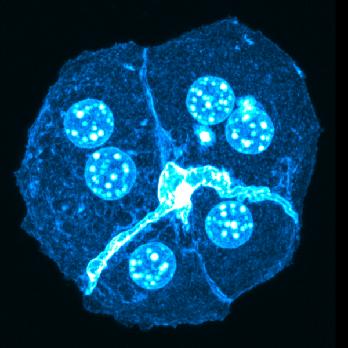
The illustrations in this booklet are biological cells. They are not decorative alone; they are symbolic. Cells are the building blocks of life — dynamic, generative, constantly renewing themselves. They contain within them both memory (DNA) and the capacity for adaptation (growth, healing, reproduction).
A charter, too, is a living entity. It carries the memory of our moral inheritance — the wisdom of traditions, struggles for justice, and shared aspirations. But like a cell, it is not static: it divides, evolves, and responds to new environments. Charters grow with us, adapt to crises, and regenerate hope across generations.
• Just as a cell’s membrane defines boundaries while remaining permeable to exchange, a charter holds firm principles while remaining open to dialogue and renewal.
• Just as a cell’s nucleus carries genetic memory, a charter carries the DNA of human dignity and compassion.
• Just as a cell’s organelles work in cooperation, a charter’s principles only thrive when enacted by communities, institutions, and individuals in harmony.
• And just as cells replicate to build tissues and organs, charters must be ratified, embodied, and multiplied across the world to give life to compassionate systems.
By choosing cells as illustrations, we are reminded that the Charter for Compassion 2.0 is not a static proclamation, but a living organism — fragile and resilient, local and global, ancient and new. It breathes with our commitments, grows with our actions, and evolves with the challenges of our time.
This Guidebook is dedicated to Karen Armstrong, whose vision gave birth to the Charter for Compassion in 2009. With courage and clarity, she reminded the world that compassion lies at the heart of every great moral, spiritual, and philosophical tradition. She called us to practice compassion not as sentiment but as discipline: to “dethrone ourselves from the center of our world and put another there.”
Charter for Compassion 2.0 is rooted in her original call but grows in response to the urgent challenges of our time. It draws on wisdom from diverse voices— scientists, spiritual leaders, activists, and cultural thinkers—who together affirm compassion as the central force for healing, justice, and the future of life on Earth.
Dedication
Karen Armstrong, historian of religion and founder of the Charter for Compassion, has consistently taught that compassion is not sentimental but the central moral principle across all faiths and human traditions.
Notable Charters
A charter is more than a document. It is a compass — a written declaration of rights, responsibilities, and shared values that guide the course of human life together. Historically, charters began as legal instruments granted by monarchs or governments, establishing privileges, duties, and protections. Over time, they evolved to embody something larger: the moral and ethical foundations of societies, and in many cases, humanity itself.
Today, charters function in two forms. Some are legal and political, with binding authority — like constitutions, international treaties, or frameworks of governance. Others are moral and inspirational, rooted in the collective will of people to envision a better future. Both types carry weight because they make visible the commitments by which communities and nations seek to live.
The Cornerstone
Perhaps the most famous early charter is the Magna Carta, sealed by King John of England in 1215 under pressure from rebellious barons. Though originally intended as a peace settlement between the king and his nobles, it planted revolutionary seeds: the principle that the monarch was not above the law and that subjects were entitled to certain protections, including the right to due process.
Magna Carta’s survival was not inevitable. After King John’s death, it was William Marshal, widely considered one of the greatest knights of his age and regent for the young King Henry III, who ensured its reissue and enforcement. Through his stewardship, the Magna Carta endured, eventually becoming the foundation of English constitutional law and an inspiration for democratic systems across the globe. Its legacy reminds us that charters can outgrow their original context to become symbols of liberty, accountability, and justice.
Charters That Shaped the Modern World
Following Magna Carta’s example, other transformative charters have emerged across history:
• The United Nations Charter (1945): drafted after the devastation of World War II, it established the UN and set forth principles of international peace, security, cooperation, and human rights. Its opening words, “We the peoples of the United Nations…”, declare sovereignty not only for governments but for humanity as a whole.
• The Universal Declaration of Human Rights (1948): chaired by Eleanor Roosevelt, this declaration is not legally binding but is morally authoritative. It enshrines the principle that “all human beings are born free and equal in dignity and rights.” It echoes Magna Carta’s insistence that no authority is above the inherent dignity of persons.
• The Earth Charter (2000): developed through a decade-long global consultation, it articulates an ethical framework for building a just, sustainable, and peaceful world. It is one of the clearest expressions of the idea that human rights and ecological integrity are inseparable.
• Regional and National Charters have also carried transformative weight: the African Charter on Human and Peoples’ Rights (1981), the European Union Charter of Fundamental Rights (2000), and the Canadian Charter of Rights and Freedoms (1982) each give unique voice to the principles of justice, dignity, and belonging in their contexts.
Charters as Living Compasses
What makes charters enduring is not only their legal status but their moral authority. They are signposts pointing to the kind of society — and humanity — we wish to become. When communities ratify a charter, they step into a covenant with one another, across time and space, pledging to live by shared principles that transcend immediate interests.
The Magna Carta taught us that even kings must be accountable. The UN Charter showed that peace depends on shared responsibility. The Universal Declaration of Human Rights proclaimed dignity as humanity’s birthright. The Earth Charter expanded the circle of care to include the Earth itself.
Charter for Compassion 2.0: A Continuation of the Tradition
The Charter for Compassion, first launched in 2009, stands within this great lineage. It is not a legal instrument but a moral one — calling humanity back to the ancient and universal principle of compassion. Like the Magna Carta, it emerges from a recognition of suffering and imbalance. Like the UN and Earth Charters, it seeks to establish a shared framework for action beyond national boundaries.
With the renewal of Charter for Compassion 2.0, we affirm that compassion is not only an inner quality but a structural force that must shape governance, economics, culture, and ecological stewardship. It continues the long tradition of charters as living promises — documents that do not merely describe the world as it is but envision the world as it could be.
From the barons at Runnymede to the halls of the United Nations, from Eleanor Roosevelt to Indigenous wisdom keepers who framed the Earth Charter, charters have been humanity’s way of naming our deepest values and binding ourselves to them. They are not static relics; they are living covenants, continually renewed.
The Charter for Compassion 2.0 joins this tradition. It stands as both an inheritance and a call — drawing from the wisdom of past charters while inviting us to imagine a future where compassion, justice, and dignity form the bedrock of human life.
Notable Excerpts from Global Charters
Magna Carta (1215, England)
Excerpt: “No free man shall be seized or imprisoned, or stripped of his rights or possessions, or outlawed or exiled, or deprived of his standing in any way, nor will we proceed with force against him, or send others to do so, except by the lawful judgment of his equals or by the law of the land.”
The Charter of the Forest (1217)
Excerpt: “Every free person may enter and use their woods or land in the forest without fear or punishment, as long as they respect their neighbors.”
United Nations Charter (1945)
Excerpt: “We the peoples of the United Nations, determined to save succeeding generations from the scourge of war… to reaffirm faith in fundamental human rights, in the dignity and worth of the human person, in the equal rights of men and women and of nations large and small…”
Universal Declaration of Human Rights (1948)
Excerpt: “All human beings are born free and equal in dignity and rights. They are endowed with reason and conscience and should act towards one another in a spirit of brotherhood.” – Article 1
French
Excerpt: “Men are born and remain free and equal in rights. Social distinctions can be founded only on the common good.” – Article 1
African Charter on Human and Peoples’ Rights (1981)
Excerpt: “Every individual shall have the duty to respect and consider his fellow beings without discrimination, and to maintain relations aimed at promoting, safeguarding and reinforcing mutual respect and tolerance.” – Article 28
Declaration of the Rights of Man and of the Citizen (1789, France)
Alma-Ata Declaration (1978, Kazakhstan, World Health Organization)
Excerpt: “The people have the right and duty to participate individually and collectively in the planning and implementation of their health care.” – Article VII
Earth Charter (2000)
Excerpt: “We stand at a critical moment in Earth’s history, a time when humanity must choose its future… We must join together to bring forth a sustainable global society founded on respect for nature, universal human rights, economic justice, and a culture of peace.” – Preamble
Charter of Fundamental Rights of the European Union (2000)
Excerpt: “Human dignity is inviolable. It must be respected and protected.” – Article 1
Charter of the Organization of American States (1948, Bogotá, Colombia)
Excerpt: “The historic mission of America is to offer to man a land of liberty and a favorable environment for the development of his personality and the realization of his just aspirations.” – Preamble
Charter for Compassion (2009)
Excerpt: “Compassion impels us to work tirelessly to alleviate the suffering of our fellow creatures, to dethrone ourselves from the center of our world and put another there, and to honor the inviolable sanctity of every single human being, treating everybody, without exception, with absolute justice, equity, and respect.”
Closing Note
These charters, spanning eight centuries and every region of the globe, reflect humanity’s evolving attempt to codify its deepest values: liberty, dignity, solidarity, sustainability, and compassion. Charter for Compassion 2.0 emerges as the next
Charter for Compassion (2009)
The Charter for Compassion was born from a bold vision: to place compassion at the heart of public and private life, across religions, cultures, and nations.
In 2008, renowned interfaith scholar and author Karen Armstrong was awarded the TED Prize. Her wish was simple yet profound: to help create, launch, and propagate a Charter for Compassion based on the Golden Rule. The global TED community rallied around this vision, and Chris Anderson, curator of TED, called it “one of the most important initiatives ever launched for humankind.”
To bring the Charter to life, Armstrong convened a Council of Conscience—a group of leading thinkers, activists, and religious leaders from across the world— who synthesized thousands of contributions from citizens worldwide. The process represented one of the earliest large-scale exercises in collaborative, global moral imagination.
The final text was launched in November 2009 with extraordinary recognition. At the United Nations in New York, faith leaders and activists gathered to celebrate its unveiling. On the same day, the Sydney Opera House lit up in acknowledgment, and the Australian Parliament formally adopted the Charter, making compassion a principle recognized at the highest level of civic life. Similar events echoed across cities worldwide, symbolizing the Charter’s universal resonance.
The principle of compassion lies at the heart of all religious, ethical and spiritual traditions, calling us always to treat all others as we wish to be treated ourselves.
Compassion impels us to work tirelessly to alleviate the suffering of our fellow creatures, to dethrone ourselves from the centre of our world and put another there, and to honor the inviolable sanctity of every single human being, treating everybody, without exception, with absolute justice, equity and respect.
It is also necessary in both public and private life to refrain consistently and empathically from inflicting pain. To act or speak violently out of spite, chauvinism, or self-interest, to impoverish, exploit or deny basic rights to anybody, and to incite hatred by denigrating others—even our enemies—is a denial of our common humanity. We acknowledge that we have failed to live compassionately and that some have even increased the sum of human misery in the name of religion.
We therefore call upon all men and women to:
• Restore compassion to the centre of morality and religion
• Return to the ancient principle that any interpretation of scripture that breeds violence, hatred or disdain is illegitimate
• Ensure that youth are given accurate and respectful information about other traditions, religions and cultures
• Encourage a positive appreciation of cultural and religious diversity
• Cultivate an informed empathy with the suffering of all human beings—even those regarded as enemies
We urgently need to make compassion a clear, luminous and dynamic force in our polarized world. Rooted in a principled determination to transcend selfishness, compassion can break down political, dogmatic, ideological and religious boundaries. Born of our deep interdependence, compassion is essential to human relationships and to a fulfilled humanity. It is the path to enlightenment, and indispensable to the creation of a just economy and a peaceful global community.
From this beginning, the Charter quickly evolved into more than a document. It became the foundation for a global movement of Compassionate Communities, Partner Organizations, and grassroots initiatives spanning education, healthcare, business, interfaith collaboration, the arts, and social justice.
Today, the Charter for Compassion organization supports nearly 600 Compassionate Communities in over 55 countries, along with thousands of partner groups working to embed compassion into everyday structures of society.
The Charter is a living document—a call to action that continues to grow and adapt as humanity faces new challenges. Charter for Compassion 2.0 honors its legacy while updating its language and vision for today’s urgent needs, ensuring that compassion remains a luminous, guiding force for our shared future.
Charter for Compassion 2.0 (2025)
A Charter for Compassionate Transformation: From Inner Healing to Planetary Flourishing
The Great Turning
We, the global community of Earth, stand at a threshold moment in human and planetary history. The principle of compassion, which has always resided at the heart of all religious, ethical, spiritual and indigenous traditions, now calls us to a profound transformation, from separation to kinship, from charity to justice, from competition to cooperation and from human-centered thinking to universal awareness. We recognize that authentic compassion begins with the understanding that inner healing extends outward through just relationships, regenerative systems, and reverent care for all life. Compassion is both a deep awareness of suffering and a courageous commitment to transformation, addressing symptoms and root causes through intentional action and structural change.
Call to Transformation
We are called to make compassion a clear, luminous and dynamic force in our world as it awakens to greater interconnection and wholeness. Rooted in inner healing and manifested as justice, this expanded compassion can dissolve our perceived boundaries between self and other, human and nature, past, present and future. Born of our deep interdependence with all life, compassion is essential to human relationships and to the continuation of life itself on Earth. It is the path to collective healing and indispensable to the creation of regenerative economies, restorative justice and a thriving planetary community. We call upon all beings to join this great work of our time: the transformation of our civilizations from systems of domination to cultures of partnership, from economies of extraction to economies of care, from a patterned consciousness of separation to an expanded awareness of sacred kinship with all life.
The Living Promise
This Charter is our sacred promise to life itself, a commitment to embody the change we seek, to heal wounds we have inherited and to plant seeds of flourishing for generations yet to come. It is an invitation to participate in the greatest story ever told: the story of life awakening to its own sacred nature and choosing love over fear, cooperation over domination and healing over harm.
May our words become actions, our actions become culture and our culture become the foundation for a world where all beings can thrive in dignity, beauty, and beloved community.
Transformative Compassion
Compassion is not an option. It is the key to our survival. ~Karen Armstrong
The day will come when, after harnessing space, the winds, the tides and gravitation, we shall harness the energies of love. And on that day, for the second time in the history of the world, man will have discovered fire. ~Teilhard de Chardin
When we begin to perceive ourselves and the world as interconnected and interdependent, compassion naturally arises. It is not something we impose—it is who we truly are. ~Jude Currivan
Selfishness beats altruism within groups. Altruistic groups beat selfish groups. Everything else is commentary. ~David Sloan Wilson
Compassion is the golden thread that connects our inner lives with the outer world, our personal healing with systemic justice, and our human story with the wider story of the Earth. To live compassionately is to participate in transformation —of ourselves, our societies, and our shared future.
Transformative compassion is not a passive feeling. It is a discipline, a power, and a pathway: the discipline of daily practice, the power to heal divisions, and the pathway toward a flourishing planet.
Compassion as Universal Practice
Karen Armstrong has shown that compassion is the shared moral heartbeat of every tradition. Across cultures and centuries, the Golden Rule reminds us to treat others as we wish to be treated. This universality makes compassion both deeply ancient and urgently relevant: a principle we can trust as the basis for a peaceful, just, and sustainable world.
Compassion as Cosmic Force
Teilhard de Chardin envisioned love as the evolutionary fire drawing humanity toward wholeness. “Someday,” he wrote, “we will harness the energies of love… and for the second time in the history of the world, we will have discovered fire.” Jude Currivan affirms this from a cosmological perspective: the universe itself is woven of relationship and resonance. Transformative compassion aligns us with the very fabric of reality—an interconnected cosmos in which the flourishing of one is bound to the flourishing of all.
Compassion as Evolutionary Advantage
David Sloan Wilson, evolutionary biologist, confirms through science what mystics intuited: groups that cooperate and care for one another outcompete those that don’t. Compassion, fairness, and cooperation are not naïve ideals but survival strategies for life itself. Compassion is, quite literally, evolution’s way of ensuring resilience.
Compassion as Daily Discipline
Cognitively-Based Compassion Training (CBCT), developed at Emory University, demonstrates that compassion can be cultivated like any skill. Through attention training, perspective-taking, and deliberate practice, CBCT helps us strengthen resilience, deepen empathy, and translate care into action. Compassion is not only innate—it is trainable.
Compassion as Cultural Transformation
Riane Eisler contrasts dominator cultures—rooted in hierarchy and violence—with partnership cultures based on equality and care. David Korten calls for “living economies” that nurture people and planet rather than extract and exploit. Together they show that compassion must be more than personal: it must become a design principle for society, shaping how we govern, educate, and share resources.
Compassion as Sacred Reverence
Matthew Fox reminds us that compassion flows from awe. To see the world as sacred is to feel reverence for its beauty and grief for its wounds. In this way, compassion arises as an outpouring of love from the depths of our spiritual encounter with creation.
Compassion as Revolutionary Love
Valarie Kaur calls compassion “Revolutionary Love”—the labor of choosing to care for others, for opponents, and for ourselves. Revolutionary love insists that no one is disposable and that justice requires not only resistance but renewal. Compassion here is courageous, urgent, and public: a force for solidarity and transformation.
Compassion as Pilgrimage and Simplicity
Satish Kumar embodies compassion in action through simplicity, ecology, and nonviolence. His teaching of “Soil, Soul, Society” reminds us that the wellbeing of the Earth, the individual spirit, and the wider community are inseparably linked. As a young man, Kumar walked thousands of miles for peace, relying on the compassion of strangers. His life shows us that compassion is not abstract—it is lived in the soil beneath our feet, in the reverence of the soul, and in the structures of society.
Compassion is not a trait reserved for saints and sages; it is a skill that can be cultivated by anyone willing to train the mind and open the heart. ~CBCT Training Material
Compassion is not only a personal virtue but a social necessity for building partnership cultures. ~Riane Eisler
The Great Turning from Empire to Earth Community depends on rediscovering compassion as the organizing principle of our economics, politics, and daily lives.
~David Korten
When awe leads to gratitude, gratitude leads to compassion, and compassion leads to justice.
~Matthew Fox
Forgiveness is not forgetting. Forgiveness is freedom from hate. And compassion is the practice that makes that freedom possible. ~Valarie Kaur
Compassion is not just for human beings; it includes animals, trees, rivers, mountains. It is a way of seeing the world as sacred. ~Satish Kumar
Supporting Wisdom
The foundations of transformative compassion rest not only on contemporary voices and movements but on the enduring wisdom of humanity’s collective heritage. Across cultures and centuries, teachers, prophets, and communities have testified that compassion is essential for our survival and flourishing. These words still guide us, reminding us that compassion is not abstract—it is a lived force that connects self, justice, Earth, and community.
The Inner–Outer Continuum: Self-Compassion as the Root of Service
You yourself, as much as anybody in the entire universe, deserve your love and affection. ~Buddha
The journey of compassion begins within. The Buddha’s words remind us that to deny ourselves love is to undermine the very foundation from which compassion flows. Self-compassion is not indulgence; it is alignment. When we treat ourselves with patience, forgiveness, and care, we create the inner capacity to extend those same qualities outward. Transformative compassion insists that personal healing and systemic healing are inseparable. Only by tending to the wounds within can we participate fully in healing the wounds of the world.
Justice as Compassion’s Expression
Injustice anywhere is a threat to justice everywhere. ~Martin Luther King Jr.
Dr. King’s words echo through time as a call to act. Compassion that remains confined to private feeling is incomplete; it must move outward into justice. To witness suffering caused by systemic inequality and remain silent is to betray compassion’s demand. Transformative compassion refuses neutrality in the face of oppression. It dismantles structures that exploit, marginalize, and harm, while simultaneously building regenerative systems that nurture dignity and equality. Justice is not an alternative to compassion; it is compassion in action.
When we heal the Earth, we heal ourselves. ~ Indigenous teaching Indigenous wisdom reminds us that our lives are interwoven with the land, waters, and skies. The illusion of separation—between human and Earth, between one species and another—has bred ecological crisis and spiritual disconnection.
Transformative compassion restores kinship. It honors the Earth not as resource but as relative. Healing rivers and forests becomes inseparable from healing communities and souls. When we act with reverence toward the planet, we rediscover our wholeness. Compassion thus expands beyond the human sphere to embrace all beings and systems of life.
Cooperation Over Competition: The Power of Togetherness
If you want to go fast, go alone. If you want to go far, go together. ~African proverb
This proverb offers a profound reminder that compassion thrives in collaboration. Competition may bring quick victories, but it cannot sustain the long journey toward justice and peace. True transformation requires patience, cooperation, and shared responsibility. Compassion urges us to co-create, to join hands across divisions, and to recognize that our well-being is bound together. In community, compassion multiplies. Alone, it flickers; together, it endures.
The Wisdom Compass
From the Buddha to Dr. King, from Indigenous elders to African proverbs, humanity has always known that compassion is the thread that holds life together. These voices converge to affirm that:
• Compassion begins with the self and radiates outward.
• Compassion demands justice in the face of oppression.
• Compassion expands to embrace Earth as kin.
• Compassion thrives in cooperation and solidarity.
Supporting wisdom thus affirms the foundations of transformative compassion: a way of being that heals, connects, and empowers. It invites us to embody compassion not only as personal practice but as collective destiny—an inheritance we are called to live into, together.
Wisdom as compass
Seven Practices of Transformative
Compassion
Compassion is not only a principle to believe in but a discipline to embody. To move from aspiration to transformation, compassion must be lived in daily practice. The following ideas are not prescriptive steps but invitations—practices that weave together inner healing and outward service, individual renewal and systemic change. They help us align our lives with the foundations of transformative compassion: the Inner–Outer Continuum, Justice as Compassion’s Expression, Kinship Beyond Separation, and Cooperation Over Competition. Peace comes from within. Do not seek it without.
~Buddha Our human compassion binds us the one to the other—not in pity or patronizingly, but as human beings who have learnt how to turn our common suffering into hope for the future.
~Nelson Mandela
If you want to go fast, go alone. If you want to go far, go together.
~ African proverb Injustice anywhere is a threat to justice everywhere.
~Martin Luther King Jr.
1. Begin Each Day with Inner Practice
Daily practices such as compassion meditation, gratitude journaling, or mindful breathing cultivate the inner stability and warmth needed for outward action. These moments of grounding help us pause, soften, and align with our deeper values before engaging the world. Over time, they strengthen resilience and open the heart, allowing compassion to become our default mode of response rather than a rare exception.
2. Create Community Healing Circles
When communities gather to share stories of struggle and resilience, compassion deepens collectively. Circles of trust, listening, and storytelling foster solidarity by reminding us that pain and joy are shared experiences. Healing circles help transform isolation into belonging and create safe spaces where collective wounds can be acknowledged and tended to with compassion.
3. Support or Initiate Cooperative Projects
Compassion thrives when embodied in systems of cooperation rather than competition. Community gardens, food co-ops, time banks, or collective housing projects are not only practical but symbolic: they demonstrate that when we care for one another, everyone thrives. Such initiatives become living laboratories for cooperation over competition, modeling new ways of relating and working together.
4. Engage in Solidarity Work
True compassion does not stop at empathy; it moves into justice. Engaging in solidarity work—supporting campaigns for equity, ecological regeneration, or indigenous rights—links our inner compassion with systemic change. Solidarity is compassion expressed as action: standing with those who suffer and working to transform the conditions that cause suffering.
5. Cultivate Daily Acts of Kindness
Small, intentional acts of kindness—listening attentively, offering a word of encouragement, sharing food, writing a note of gratitude—create ripples of compassion that extend far beyond what we see. These gestures are the “everyday practice” of compassion, reminding us that transformation is not only in great movements or systems but in the texture of daily life. When practiced regularly, kindness trains the heart to respond with generosity and helps shift cultural norms toward care.
6. Practice Deep Listening
Deep listening means hearing beyond words, giving full attention without judgment, and holding space for another’s truth. It transforms relationships by replacing the urge to respond or fix with the discipline of presence. Listening with compassion allows others to feel seen and valued, and it opens pathways for healing that argument or advice could never achieve.
7. Reflect and Renew Through Gratitude
Gratitude is a practice of remembrance: noticing the blessings of life even in difficult times. By pausing each day to acknowledge what sustains us—relationships, nature, breath, acts of kindness—we renew our capacity for compassion. Gratitude shifts focus from scarcity to abundance and strengthens the resilience needed for long-term service and justice.
This structure gives you a full week of compassion practices, each anchored by a timeless quote. Together, they balance inner work, interpersonal care, systemic engagement, and spiritual renewal.
Together these practices show that compassion is not a distant ideal but a lived reality. From the quiet of meditation to the urgency of solidarity, compassion transforms both our inner lives and the systems we inhabit.
My religion is very simple. My religion is kindness.
~The Dalai Lama
The most basic form of compassion is to listen.
~Thich Nhat Hanh
Gratitude is the fairest blossom which springs from the soul. ~Henry Ward Beecher
As you consider these seven practices, take time to pause, breathe, and reflect. Reflection is itself an act of compassion— listening deeply to your own heart and to the wisdom that arises in silence. You may wish to journal, share in a circle, or simply hold these questions gently in your awareness.
Seven Day Reflection Journal: Practicing Transformative Compassion
Day 1 Inner Grounding
Within you there is a stillness and a sanctuary to which you can retreat at any time and be yourself. ~Hermann Hesse
The wound is the place where the Light enters you. ~Rumi
None of us can be free until everybody is free. ~Maya Angelou
Practice: Begin each day with meditation, gratitude journaling, or mindful breathing.
Reflection:
• When I pause to center myself, what do I notice in my body, my emotions, my thoughts?
• How does this quiet practice ripple into the way I engage with others?
• Where do I most need to extend compassion to myself right now?
Day 2 Communal Healing
Practice: Create or join a healing circle to share stories of struggle and resilience.
Reflection:
• Who in my community might need a safe space for sharing and listening?
• How can I contribute to fostering belonging and mutual care?
• What personal story of struggle or resilience might I offer as a gift to others?
Day 3 Cooperation
Practice: Support or initiate cooperative projects such as food co-ops, gardens, or time banks.
Reflection:
• Where in my life do I default to competition? How does that affect others?
• What opportunities exist in my community for cooperation or shared work?
Day 4 Solidarity
Practice: Engage in solidarity work by standing with those who face injustice.
Reflection:
• Whose suffering calls to me most urgently right now?
• What concrete steps can I take to move from empathy to action?
• How might I embody compassion not only in personal relationships but in the pursuit of justice?
Day 5 Daily Kindness
Practice: Intentionally offer small acts of kindness each day.
Reflection:
• What simple act of kindness can I offer today—to a friend, a stranger, or myself?
• How do I experience kindness received from others?
• What would the culture of my family, workplace, or community look like if kindness was its guiding norm?
Day 6 Deep Listening
Practice: Listen deeply, without judgment or the need to respond.
Reflection:
• Do I listen to others with openness, or do I prepare my response as they speak?
• What wisdom emerges when I listen deeply—not only to others but to myself, the Earth, and the stillness?
Day 7 Gratitude and Renewal
Practice: Reflect daily on what you are grateful for, especially in difficult times.
Reflection:
• What am I grateful for in this moment, both large and small?
• How can gratitude sustain me when compassion feels heavy or exhausting?
• How might gratitude itself be an act of compassion toward the world that sustains me?
Closing Thought
A week of compassion practice is not an end but a beginning. These seven invitations—inner grounding, communal healing, cooperation, solidarity, kindness, listening, and gratitude—form a cycle of renewal. Each week, we are invited to return again, deepening our practice and widening our circle of care. Over time, these daily rhythms weave compassion into the fabric of our lives, transforming not only us but the communities and systems we touch.
To cherish what remains of the Earth and to foster its renewal is our only legitimate hope of survival.
~Wendell Berry “Give to every other human being every right that you claim for yourself. ~Thomas Paine
“The destiny of future generations depends on the actions of the present. ~Mikhail Gorbachev
When we are in touch with the deep source of our being, we can touch the suffering of the world with a heart of compassion. ~Thích Nhất Hạnh
Rights-Based framework for Dignity
Compassion must extend beyond personal feeling into the structures and systems that shape our shared life. A Rights-Based Framework for Dignity ensures that compassion is anchored not just in aspiration but in enforceable commitments, governance, accountability, and adaptability.
This vision builds on the legacy of pioneers who gave moral weight to universal human rights, ecological integrity, and the dignity of all beings. From Eleanor Roosevelt, who guided the Universal Declaration of Human Rights, to Rachel Carson, who awakened ecological consciousness, to Joanna Macy and the call to act for future generations, the principle is clear: compassion without justice is incomplete, and dignity without accountability is fragile.
Indigenous wisdom keepers, such as those of the Haudenosaunee Confederacy and voices like Robin Sweetgrass Klimmer and Miriam-Rose Ungunmerr-Baumann, remind us that dignity is inseparable from Earth itself and from deep listening to the land, ancestors, and descendants yet to come. Thinkers such as Barbara Marx Hubbard, Jean Shinoda Bolen, Vandana Shiva, Amartya Sen, Nelson Mandela, Wangari Maathai, Hannah Arendt, and Pope Francis widen this framework, grounding it in politics, spirituality, science, and ecological justice.
Principles
1. Anchored in Universal Rights
This Charter is grounded in internationally recognized human rights instruments while extending moral consideration to all sentient beings and Earth systems. Our circle of care expands to embrace both human dignity and the rights of nature.
• Eleanor Roosevelt: As chair of the drafting committee for the Universal Declaration of Human Rights (1948), she affirmed that dignity must be protected in the “small places, close to home,” or it is protected nowhere.
• Hannah Arendt: Warned that the essence of dignity is the “right to have rights,” even for those cast outside nation-states.
• Vandana Shiva: Extends rights to Earth systems, affirming: We are all members of the Earth family. Our first identity is that we are Earth beings.
• Wangari Maathai: Linked human rights with ecological justice, showing that environmental destruction is inseparable from poverty and oppression.
• Pope Francis: In Laudato Si’, reminds us that A true ecological approach always becomes a social approach.
2. Co-Governance and Shared Power
Dignity is protected when affected communities—including future generations and morethan-human beings—co-own decision-making processes and hold meaningful power in governance.
• Joanna Macy: Through the Council of All Beings practice, she invites us to speak as rivers, animals, or future generations, embodying co-governance beyond the human.
• Jean Shinoda Bolen: Teaches that circles are a new model of governance— egalitarian, participatory, and transformative: When women come together and make a circle, a new form of consciousness is born that is capable of transforming society.
• Nelson Mandela: Through Ubuntu, affirmed: To be free is not merely to cast off one’s chains, but to live in a way that respects and enhances the freedom of others.
• Miriam-Rose Ungunmerr-Baumann: Offers Dadirri, the practice of deep listening, as a foundation for relational governance rooted in respect and presence.
• Robin Sweetgrass Klimmer: Teaches that protecting rights of Earth is protecting the breath of grandchildren: When we defend the Earth, we are defending our grandchildren’s breath.
3. Evidence-Based Accountability
We commit to systematic monitoring through transparent dashboards, regular audits, and public accountability measures that transform dignity from aspiration into trackable, measurable reality.
• Amartya Sen: Developed the “capabilities approach,” emphasizing that freedom and dignity must be measured by people’s actual ability to live lives they value.
• Dacher Keltner: Demonstrates through science that compassion and dignity are measurable—linked to health, cooperation, and wellbeing. “Dignity is the deep recognition of our shared humanity. Compassion is how we enact that recognition in daily life.”
• Eleanor Roosevelt: Reminded us that universal rights must be judged in “small places, close to home,” not just in theory.
The Seven Generations Principle
“In our every deliberation, we must consider the impact of our decisions on the next seven generations.” –Haudenosaunee Teaching
The Seven Generations Principle is a sacred teaching rooted in the traditions of the Haudenosaunee (Iroquois) Confederacy and shared among many Indigenous peoples of North America. It calls us to make decisions with a long horizon of responsibility: to weigh not only immediate effects, but also the well-being of those who will live seven generations after us.
This principle affirms that:
• We are part of a continuum of life—inheriting the Earth from our ancestors, borrowing it from our descendants.
• True stewardship requires us to care for the land, waters, animals, and communities so that abundance endures.
• Responsibility to future generations is inseparable from gratitude to those who came before us.
In an age of climate crisis, ecological destruction, and fragile democracies, the Seven Generations Principle invites us to expand our moral imagination. It asks:
• What would leadership look like if every law, policy, or action were designed for people and beings centuries yet to come?
• How would our economics change if future generations had a place at the table?
• What becomes possible if we act as good ancestors?
The Seven Generations teaching is a compass for adaptive evolution—a way of ensuring that compassion remains alive not only for today but for all who will follow.
Barbara Marx Hubbard and Conscious Evolution
“Crisis is an evolutionary driver. We are being born as a universal humanity, capable of co-creating a future of compassion, cooperation, and dignity.” – Barbara Marx Hubbard
Visionary thinker Barbara Marx Hubbard devoted her life to the idea of conscious evolution: the belief that humanity can choose to direct its evolutionary path. Rather than being driven only by biology or technology, we are called to evolve consciously toward compassion and co-creation.
She often spoke of the crises of our time as “birthing pains”—indications that humanity is being born into a new stage of existence. In this vision, dignity is not a static right but part of an unfolding process: every individual carries the creative spark needed to shape a life-sustaining civilization.
Her teaching affirms that:
• Evolution is no longer accidental—it is a responsibility.
• Compassion and dignity are the guiding principles for our collective birth.
• By co-creating with one another and with the Earth, we align with the deeper currents of the universe.
Barbara Marx Hubbard reminds us that adaptive evolution is not only about survival but about possibility: the conscious choice to midwife a future rooted in compassion and shared dignity.
4. Adaptive Evolution
The Charter is a living document, evolving with social and ecological change, ensuring relevance for current and future generations.
• Rachel Carson: In Silent Spring (1962), transformed awareness of ecological fragility, showing that new knowledge demands moral and systemic adaptation.
• Joanna Macy: Describes the Great Turning—our epochal shift from industrial growth to life-sustaining civilization. Acting on behalf of future generations is compassion as time-traveling responsibility.
• Barbara Marx Hubbard: Taught “conscious evolution,” the idea that crises are evolutionary drivers, pushing humanity to co-create a compassionate and cooperative future. “We are being born as a universal humanity, capable of co-creating a future of compassion.”
• Wangari Maathai: Demonstrated adaptive change through grassroots ecological action—planting trees became a symbol of societal renewal.
• Seven Generations Principle: Indigenous wisdom that every decision should consider its impact seven generations ahead.
The Rights-Based Framework for Dignity expands compassion into a systemic force. It is anchored in rights (Roosevelt, Arendt, Shiva, Maathai, Francis), shared through co-governance (Macy, Bolen, Mandela, Ungunmerr, Klimmer), measured with accountability (Sen, Keltner, Roosevelt), and sustained through adaptive evolution (Carson, Macy, Hubbard, Maathai, Indigenous wisdom).
Together, these voices affirm that compassion is not sentimental—it is structural. It is not static—it is evolutionary. It is not limited to humans—it embraces all life, present and future. This framework calls us to build cultures where dignity is lived, protected, and continually renewed.
A Global Tapestry of Dignity
The call to dignity is as old as humanity itself and as urgent as the crises of our time. From every culture, wisdom tradition, and movement for justice, the message resounds: compassion must be woven into the fabric of law, governance, ecology, and community. To affirm dignity is to recognize that our lives are bound together — across nations, across species, across generations.
The Universal Declaration of Human Rights reminds us that All human beings are born free and equal in dignity and rights. Yet in a world where so many still suffer from war, poverty, displacement, and ecological collapse, this truth is not self-fulfilling. It requires guardianship. It requires compassion that is not sentimental but courageous — a force that protects the vulnerable, empowers the excluded, and refuses to abandon those whose rights are threatened.
Indigenous wisdom deepens this horizon of responsibility: “We do not inherit the earth from our ancestors, we borrow it from our children.” Human dignity cannot be separated from ecological dignity. The soil, the waters, the forests, and the air are not possessions but trust — entrusted to us on behalf of generations yet unborn. To live compassionately is to live as good ancestors, ensuring that what we pass on sustains life rather than diminishes it. The Earth is the commons of humanity, a shared home that transcends national borders and political divisions. The health of one region affects the climate of another; the destruction of a forest ripples across the planet.
And as Baruch Spinoza declared, An injustice committed against anyone is a threat to everyone. Dignity is indivisible. To allow exploitation or oppression anywhere is to erode the very foundation on which we all stand. Global compassion demands that we refuse to treat any people, community, or being as expendable.
From Latin America, liberation theologian Leonardo Boff reminds us that the cries of the Earth and the cries of the poor are one: Cry of the Earth, cry of the poor: it is the same cry, the same wound, the same betrayal of life. For Boff, compassion becomes authentic when it refuses to separate ecological destruction from human injustice. To heal one, we must heal both. And Rigoberta Menchú Tum, an Indigenous leader from Guatemala, insists that peace and dignity cannot exist without equity: Peace is not only the absence of war. As long as there is poverty, racism, discrimination, and exclusion, we’ll be hard-pressed to achieve a world of peace.
This framework affirms that compassion must be structural, measurable, and evolutionary. It must root itself in universal rights, extend into co-governance, be made accountable through evidence, and adapt with the changes of history and ecology.
Awe, Nature, and Compassion
Inspired by Dacher Keltner’s Awe
Awe is the feeling of being in the presence of something vast that transcends your understanding of the world.
~Dacher Keltner
Psychologist Dacher Keltner shows through decades of research that awe is not rare — it is everywhere. One of the most universal sources of awe is the natural world: towering trees, star-filled skies, rushing rivers, the small details of moss, leaves, or bird song.
When we pause to notice, nature awakens in us a sense of vastness and connection. Awe shrinks the ego, softens selfcenteredness, and opens us to compassion. It reminds us that we are part of something infinitely larger, a living web of dignity and belonging.
Guidelines for Practicing Awe in Nature
1. Slow Down and Notice: Pause in front of a tree, cloud, or stone. Let yourself look closely, without rushing.
2. Seek Vastness: Walk under a night sky, along a coastline, or in an open field. Feel the immensity that dwarfs your worries.
3. Listen Deeply: Attend to the subtle sounds of nature — wind through leaves, the rhythm of waves, or birdsong. Listening creates connection.
4. Find the Extraordinary in the Ordinary: Awe doesn’t require grand landscapes. It can be in the veins of a leaf, the symmetry of a shell, or the resilience of a flower breaking through concrete.
5. Share the Experience: Tell someone what awed you. Studies show that sharing awe increases empathy and strengthens bonds.
6. Let Awe Guide Action: When awe moves you, ask: How can I protect and honor this source of wonder? Let reverence lead to care for Earth.
Seven Practices of Dignity
Rights-based dignity is compassion made visible in the structures of society. It moves beyond sentiment to create systems that protect freedoms, nurture equity, and extend care to the Earth and future generations. By practicing dignity together, we embody compassion not only in personal relationships but also in governance, economics, and community life.
The following seven practices invite individuals, communities, and institutions to anchor dignity in daily action. Each practice is a seed of transformation, cultivating a culture where compassion and justice become inseparable.
1. Map Community Human Rights and Equity Issues
Every community carries both wounds and possibilities. Mapping human rights and equity issues reveals where dignity is denied and where compassion can bring repair.
• Host community listening sessions to gather lived experience from marginalized groups.
• Share findings publicly to generate awareness and collective action.
2. Establish Citizen Assemblies and Intergenerational Forums
Shared power is the foundation of dignity. Citizen assemblies, youth councils, and intergenerational forums bring diverse voices into governance.
• Convene assemblies where everyday citizens deliberate on issues of justice.
• Form youth councils to shape policies affecting future generations.
The success of a society is to be evaluated primarily by the freedoms that members of that society enjoy. ~Amartya Sen
To be free is not merely to cast off one’s chains, but to live in a way that respects and enhances the freedom of others. ~ Nelson Mandela
All human beings are born free and equal in dignity and rights.
~ Universal Declaration of Human Rights, Article 1 (drafted under Eleanor Roosevelt, USA)
My humanity is bound up in yours, for we can only be human together. ~Desmond Tutu
• Create forums that weave the memory of elders with the innovation of youth.
3. Develop Transparent “Compassion Dashboards”
What we measure shapes what we value. Compassion dashboards track indicators such as equity, wellbeing, and ecological health, making dignity visible and actionable.
• Identify community-chosen indicators of dignity.
• Ensure data is accessible — online dashboards, community boards, open gatherings.
• Use results to guide budgets, policies, and collective priorities.
4. Create Accountability Rituals
Accountability must be more than statistics; it must become a culture. Rituals — shared reviews, storytelling, ceremonies of truth-telling — embed compassion in governance.
• Host annual community reviews with honesty about progress and failures.
• Invite stories of lived experience to humanize data.
• End each ritual with clear commitments for the year ahead.
5. Protect Earth as a Rights-Bearing Entity
Dignity extends beyond human beings to rivers, forests, soils, and ecosystems. Recognizing the rights of nature grounds human dignity in ecological integrity.
• Advocate for local recognition of rivers, forests, or ecosystems as legal persons.
• Establish ecological guardians or councils to speak on behalf of nature.
• Practice rituals of gratitude and care for the land as acts of dignity.
6. Foster Intercultural and Interfaith Dialogue
Dignity flourishes when diversity is honored. Dialogue across cultures and faiths builds bridges of respect and expands compassion’s circle.
• Create safe spaces where cultural traditions are shared as gifts.
• Organize interfaith councils to address community issues collaboratively.
• Celebrate diversity through festivals, art, and storytelling that affirm human dignity.
7. Create Future Generations Councils
True dignity includes those not yet born. Councils dedicated to future generations ensure that decisions today protect and empower life tomorrow.
• Appoint “future generations representatives” in local councils or organizations.
• Include children and youth as present-day voices for the future.
• Use the Seven Generations principle: assess decisions for their impact centuries ahead.
The Seven Practices of Dignity call us to act as guardians of humanity and Earth alike. By mapping injustice, sharing power, measuring compassion, cultivating accountability, protecting nature, fostering dialogue, and honoring future generations, we weave compassion into the living structures of society.
To practice dignity is to remember: compassion is not only a private virtue but a public duty. It is how we ensure that every being — human and more-than-human, present and future — can thrive in freedom, equity, and belonging.
Cry of the Earth, cry of the poor: it is the same cry, the same wound, the same betrayal of life. ~Leonardo Boff
Peace is not only the absence of war. As long as there is poverty, racism, discrimination, and exclusion, we’ll be hard-pressed to achieve a world of peace. ~Rigoberta Menchú Tum
In our every deliberation, we must consider the impact of our decisions on the next seven generations.
~Haudenosaunee (Iroquois) Teaching, North America
Dignity is the ground upon which compassion stands. Without dignity, compassion risks becoming charity; with dignity, it becomes justice. A rights-based framework reminds us that compassion is not only an inner disposition but also a collective responsibility to ensure that every person, every community, and even the Earth itself is treated with respect, fairness, and care.
These reflections are offered as invitations to explore how dignity is upheld in our lives and communities. They ask us to look closely at the ways we share power, protect the vulnerable, expand our circle of moral concern, and adapt to the changing needs of our times.
As you move through these seven days, you are invited to hold both the universal and the particular: the universal call to honor human rights, and the particular ways your community can embody those rights. Together, these reflections affirm that compassion
Seven Days of Reflection: Rights-Based Framework for Dignity
Day 1 Inclusion and Voice
• How do my community’s decision-making structures include — or exclude — the most vulnerable?
• Whose voices are absent, and how might I help bring them into the circle?
Day 2 Ecological Dignity
• In what ways can we extend dignity not only to people but also to the natural world around us?
• What would it mean for me to honor rivers, forests, or animals as rightsbearing beings?
Day 3 Accountability
Where, after all, do universal human rights begin? In small places, close to home… Unless these rights have meaning there, they have little meaning anywhere. ~Eleanor Roosevelt
The best way to predict the future is to create it together. ~Peter Drucker
“What gets measured gets improved. ~Peter Drucker
“Justice is truth in action. ~Benjamin Disraeli.
It is not the strongest species that survive, nor the most intelligent, but the ones most responsive to change. ~Charles Darwin
• What accountability systems could make compassion measurable and transparent?
• How might storytelling, ritual, or public dashboards bring dignity into view?
Day 4 Adaptation and Evolution
• How do we ensure this Charter — and my own commitments — evolve with the needs of our time?
• Am I willing to let compassion grow and adapt, even when it challenges old assumptions?
Day 5 – Global and Local Responsibility
• Where does my community’s struggle for dignity connect with global struggles?
• How do my choices ripple outward, shaping lives and ecosystems beyond my immediate reach?
Day 6 Shared Power
When have I experienced governance that felt truly participatory? What practices could make shared power more authentic in my family, workplace, or community?
Day 7 Intergenerational Care
How do I embody responsibility for future generations in the choices I make today? What does it mean for me to live as a good ancestor?
These seven days of reflection remind us that dignity is dynamic, relational, and global. By taking time to pause with these questions, we begin to see that compassion is not just a private virtue but a public responsibility — one that must be anchored in rights, practiced in governance, made transparent through accountability, and handed forward as a legacy to future generations.
The future will belong to those who can imagine it, design it, and execute it ~Kate
Raworth
The measure of love is to love without measure. ~St. Augustine
Expanding Our Circles of Consciousness
If you want others to be happy, practice compassion. If you want to be happy, practice compassion. ~Dalai Lama (ties to CBCT framework)
Hope is not a lottery ticket you can sit on the sofa and clutch, feeling lucky. It is an ax you break down doors with in an emergency. ~Rebecca Solnit (aligned with Kathryn Goetzke’s view of hope as actionable and practical)
To expand compassion is to expand consciousness. Compassion is never static — it begins within us, but it cannot remain there. It must ripple outward into our relationships, our systems, our care for Earth, and our responsibility to future generations. This section of Charter for Compassion 2.0 explores how humanity can widen the circle of belonging, recognizing that we are not isolated individuals but participants in a vast web of inter-being.
The principles gathered here reflect voices across cultures, faiths, disciplines, and generations. They remind us that compassion is inner training and outer action, personal encounter and systemic justice, awe for life and hope for the future. Each principle enriches the others, forming a circle of wisdom that is as dynamic and interdependent as life itself.
These principles form a living whole. Conscious transformation grounds us in love and hope. Relational reverence teaches us to embody that love in our encounters. Shared stewardship ensures those encounters shape just systems. And awe and wonder expand the horizon, reminding us that our circle includes Earth and future generations. Each principle flows into the others like tributaries of one great river. Without inner work, justice falters; without relationships, hope grows thin; without stewardship, awe remains sentimental; without awe, transformation risks becoming self-centered. Together, they form a circle that keeps widening, carrying us toward a compassionate future.
Principles of Expanding Circles
1. Conscious Transformation (Inner Training, Love, and Hope)
Compassion begins with inner work — cultivating awareness, presence, and hope. It asks us to quiet the ego’s insistence on separateness and awaken to our deep interconnection with all beings. CBCT reminds us that compassion can be systematically cultivated through meditation and reflection. Kathryn Goetzke’s work on hope reframes it as a teachable skill that strengthens resilience. Scarlett Lewis’s Choose Love Movement shows how courage, gratitude, forgiveness, and compassion can be daily practices. Nobel laureate Liu Xiaobo lived this principle in his words, “I have no enemies and no hatred.” And Parker Palmer deepens this path by teaching that expanding compassion requires circles of trust — spaces of honesty, integrity, and courage where our inner lives are held in community.
2. Relational Reverence (Encounter and Love-in-Action)
Compassion flourishes in authentic relationships. Martin Buber’s “I–Thou” encounter reveals the sacredness of the other. Thomas Keating shows that prayer and silence dissolve illusions of separation and open us to divine love. David Geffner’s Loving Classroom brings these values into education, nurturing respect and kindness in youth. Leymah Gbowee and Ellen Johnson Sirleaf remind us that love and solidarity can end wars and rebuild societies. Robin Wall Kimmerer expands this relational reverence beyond humanity to reciprocity with the Earth. Wendell Berry insists that true compassion is always local and embodied: how we care for land, neighbors, and communities reveals our reverence for life.
3. Shared Stewardship (Commons and Justice)
Compassion extends into the systems we build. It demands that resources and power be shared fairly, and that communities co-create structures of justice. Eleanor Ostrom demonstrated how cooperation, not competition, sustains the commons. Shirin Ebadi insists that compassion requires human rights protections for women and children. Kailash Satyarthi and Malala Yousafzai show that protecting children and ensuring education are acts of global compassion. Tawakkol Karman calls us to courage in democratic struggle. And the wisdom of Ubuntu — “I am because you are; you are because I am” — reminds us that stewardship of the commons is stewardship of ourselves.
4. Awe and Wonder (Kinship with Earth and Future Generations)
Expanding compassion means living in awe of life itself. Abraham Joshua Heschel spoke of living in “radical amazement.” Dacher Keltner’s research shows that awe makes us more altruistic and connected. Lyla June Johnston teaches that love of land, ancestors, and prayer belongs to the struggle for justice. Greta Thunberg embodies intergenerational responsibility, demanding accountability for the climate crisis. Wangari Maathai showed that restoring ecosystems is an act of healing for both Earth and people. And Wendell Berry reminds us that awe is grounded in soil, work, and community — that to love the Earth is to love our own future.
All real living is meeting. ~Martin Buber
We don’t have to love each other to sit together and talk, but we have to love each other in order to go forward together. ~Leymah Gbowee
No society can legitimately call itself civilized if a child goes hungry. ~Kailash Satyarthi I am because we are. We are because I am. ~Ubuntu Proverb
We must learn to live together as brothers or perish together as fools. ~Wangari Maathai
Our goal should be to live life in radical amazement… Get up in the morning and look at the world in a way that takes nothing for granted. ~ Abraham Joshua Heschel
Supporting Wisdom
Seven Principles of Ubuntu
Ubuntu is often expressed in many ways across Southern Africa — not as a rigid code but as a living philosophy. Still, educators, community leaders, and scholars have distilled seven guiding principles of Ubuntu that capture its spirit. These are sometimes taught in schools and community-building programs:
1. Respect and Dignity
Every person is worthy of respect, regardless of status, background, or belief.
2. Compassion and Care
To be human is to feel the suffering of others and to act with empathy and kindness.
3. Community and Sharing
Well-being is communal, not individual. We flourish when we share resources, joys, and responsibilities.
4. Hospitality and Generosity
Strangers are welcomed as kin; generosity extends beyond one’s family or tribe.
5. Forgiveness and Reconciliation
Healing requires the ability to forgive and restore relationships, even after deep harm.
6. Solidarity and Cooperation
Challenges are met together. Ubuntu emphasizes cooperation over competition, mutual aid over self-interest.
7. Interconnectedness and Harmony
Life is a web: one’s humanity is bound up in the humanity of others, and the Earth is part of this sacred whole.
Eleanor Ostrom’s Principles of Shared Stewardship
Eleanor Ostrom (1933–2012) won the Nobel Prize in Economics for proving something revolutionary: communities can govern shared resources (“the commons”) successfully — not through top-down control or free-market competition, but through cooperation, trust, and collective responsibility.
1. Clearly Defined Communities
Everyone knows who belongs and what is being shared.
2. Fair Rules for Use
Rules are tailored to local needs and conditions, not imposed from outside.
3. Inclusive Decision-Making
All members affected by decisions have a voice in shaping them.
4. Community Monitoring
Those using the resource also help monitor its use, ensuring fairness.
5. Graduated Sanctions
Rule-breakers are corrected gently at first, with escalating responses only if necessary.
6. Conflict Resolution Mechanisms
Communities create accessible, low-cost ways to resolve disputes.
7. Local Autonomy
Communities have the authority to govern themselves without interference.
8. Networks of Support (added in later work)
Local groups link into wider networks, strengthening resilience across regions.
Ostrom’s research shows that trust, empathy, and cooperation can govern commons — whether forests, fisheries, schools, or even climate action.
Principles from the Wisdom of Thomas Keating
Thomas Keating (1923–2018), Trappist monk and co-founder of the Centering Prayer movement, believed that the deepest wellspring of compassion is found in silence and surrender.
1. Consent to Presence
Compassion begins in saying “yes” to the divine presence and action within us.
2. Healing the False Self
Inner prayer gently dismantles the ego’s illusions of separation, opening the way for authentic love.
3. Silence as Gateway
In silence, we discover a space beyond words where we connect with God, ourselves, and others.
4. Compassion as Fruit of Prayer
Deep prayer naturally flowers into compassion, not only for those we love but for all beings.
5. Transforming Suffering
Through contemplative practice, personal wounds become sources of empathy and solidarity with the suffering of the world.
6. Unity with All
The aim of spiritual life is union — with God, neighbor, Earth, and the cosmos itself.
Wisdom as compass
Seven Practices of Expanding Our
Circles of Consciousness
Compassion is not only a principle to affirm but a discipline to embody. To expand our circles of consciousness means to live as if no one — not the neighbor, not the stranger, not the Earth itself, nor the generations yet unborn — is outside the circle of our concern.
These practices are not rigid prescriptions. They are invitations to widen our awareness and our care: beginning within ourselves, moving into our relationships, extending to the systems we share, and opening to the vast mystery of life. Each practice draws on the wisdom of teachers, activists, and traditions that remind us that compassion is both ancient and urgently needed today.
Day 1 Practice Presence and Inner Training
Start by turning inward. Set aside time each day to pause in stillness, whether through meditation, prayer, journaling, or mindful breathing. By calming the mind and softening the heart, we create the inner conditions for compassion to grow. As CBCT teaches, when we train attention and cultivate awareness of interdependence, we become less reactive and more responsive. This is where transformation begins — within the self.
Day 2 Enter the I–Thou Encounter
Every interaction can become sacred when we see the other as a full human being and not an object. Practice listening without interruption, giving your full presence, or even offering a silent blessing in your heart to those you meet. Martin Buber reminds us that in these authentic encounters, the divine is present. This practice trains us to see the sacred spark in everyone — friend, stranger, or even adversary.
The root of compassion is compassion for oneself. ~Pema Chödrön
Day 3 Join or Create a Circle of Trust
All real living is meeting. ~Martin Buber
In a circle of trust, we discover that we are not alone with our fears and hopes. ~Parker Palmer
My humanity is bound up in yours, for we can only be human together. ~Desmond Tutu
We cannot expand consciousness alone. Gather with others in a circle of trust, as Parker Palmer suggests, where people listen deeply, share honestly, and hold each other without judgment. This might be a small group of friends, colleagues, or community members. The discipline of holding space for each other creates a soil where compassion flourishes, and it reminds us that healing is both personal and collective.
Day 4 Act in the Spirit of Ubuntu
Ubuntu teaches that our humanity is bound together: “I am because you are.” Each day, practice Ubuntu by seeking opportunities for solidarity and generosity. Share a meal, support a neighbor, affirm the dignity of someone overlooked, or stand with those marginalized. Living Ubuntu means remembering that our lives are interwoven, and compassion is not a private virtue but a communal way of being.
Day 5 – Steward the Commons
Compassion is not only interpersonal — it is systemic. Stewardship means protecting what is shared: water, land, air, public space, community resources. Begin with small acts: conserve energy, care for a park, support fair economic systems, or advocate for policies that protect the vulnerable. Eleanor Ostrom’s work shows that cooperation and shared responsibility can sustain the commons. When we care for the commons, we care for the fabric of life itself
Day 6 – Cultivate Awe and Wonder
Spend time each day in awe. Step into a forest, look at the night sky, listen to a piece of music, or contemplate art. Allow yourself to feel small and yet connected to something vast. Awe shifts our perspective, softens our ego, and awakens reverence for life. Research shows it increases generosity and care. Awe draws us into kinship with Earth, ancestors, and future generations, dissolving boundaries that keep us apart.
Day 7 – Live with Courageous Hope
Hope is not passive optimism but an active choice to shape the future. Each day, take one small step that embodies hope: write a letter, mentor a child, join a campaign, plant a tree, or speak for the voiceless. Nobel laureates like Malala Yousafzai and Kailash Satyarthi remind us that courageous hope can liberate children, open schools, and transform communities. To act in hope is to declare that compassion belongs to the future.
Conclusion
These seven practices remind us that compassion is not an abstract virtue but a lived reality. It is born in the quiet of presence, deepened in the sacredness of encounter, nurtured in communities of trust, and woven into the fabric of shared stewardship. It flourishes when we live Ubuntu, blossoms in awe, and carries us forward in courageous hope.
To expand our circles of consciousness is to take seriously the truth that no one — not the vulnerable child, not the stranger across borders, not the Earth itself, nor the generations to come — is outside the circle of care. Each practice is an invitation to live compassion not only as a belief but as a way of being, a discipline that transforms our inner lives and the systems we inhabit. Together, these practices form not a checklist, but a rhythm — a cycle of compassion that, like life itself, keeps expanding outward in ever-widening circles.
The greatness of humanity is not in being human, but in being humane. ~Mahatma Gandhi
Our goal should be to live life in radical amazement. ~Abraham Joshua Heschel
One child, one teacher, one book, one pen can change the world. ~Malala Yousafzai
Compassion is the radicalism of our time. ~Dalai Lama
Invitation to Reflection
To expand our circles of compassion is to remember that no one is outside the circle of care — not the stranger, not the Earth, not the generations yet to come. These reflections are invitations to pause each day, to consider where your life touches the larger web of humanity and creation, and to ask: How can I live as if compassion truly knows no boundary?
We can never obtain peace in the outer world until we make peace with ourselves. ~Dalai Lama
Seven Days of Reflection: Expanding Our Circles
of Conscious
Day 1 Conscious Transformation
True transformation begins within. To widen our compassion outward, we must first cultivate it in ourselves. This does not mean becoming perfect; it means learning to meet our own suffering with tenderness so that we can meet the suffering of others with authenticity. Practices like meditation, journaling, or even a mindful walk can help us shift from reactivity to responsiveness. The compassion we extend to ourselves becomes the wellspring from which we offer compassion to others.
Reflect: Where in my life do I resist extending compassion to myself, and how might softening here allow me to expand outward in love?
Day 2 Relational Reverence
When we encounter another person… let it be a holy moment.
~Henri Nouwen
Courage is what it takes to stand up and speak; courage is also what it takes to sit down and listen. ~Winston Churchill
Every person we meet is more than a role, a label, or a function; they are a mystery carrying sacred depth. To practice relational reverence is to honor the humanity of others without reducing them to “us” or “them.” Martin Buber described this as the “I–Thou” encounter, a way of meeting the other as sacred. This practice calls us to listen with presence, to suspend judgment, and to see each encounter as an opportunity to affirm dignity.
Reflect: What would change if I approached each person I meet today — cashier, neighbor, colleague, stranger — as a sacred “Thou” instead of an “It”?
Day 3 – Circles of Trust
Compassion grows in community. A circle of trust is a space where people can share stories, struggles, and hopes without fear of judgment or betrayal. In such spaces, we practice deep listening, courage, and presence. Parker Palmer reminds us that healing and transformation require the support of others; no one expands consciousness alone. These circles are seeds of beloved community, and they teach us that trust itself is a form of compassion.
Reflect: Where in my life can I create or join a circle of trust, and what fears must I release to enter such spaces with honesty?
Day 4
Ubuntu and Shared Humanity
Ubuntu is the African wisdom that teaches, “I am because you are.” It is a reminder that our lives are intertwined, that my flourishing is bound to yours, and that the dignity of one cannot be separated from the dignity of all. Living Ubuntu means practicing generosity, forgiveness, and solidarity — not out of pity, but from recognition of our shared humanity.
Reflect: In what ways do I already experience Ubuntu — and where am I being called to live more fully as if “my humanity is bound up in yours”?
Day 5 Stewardship of the Commons
The commons are the resources we share: air, water, land, culture, community spaces, even the digital world. Too often they are exploited for short-term gain. Eleanor Ostrom’s work shows us that communities can care for the commons when they practice cooperation and accountability. Stewardship requires us to act not as owners but as caretakers, recognizing that the Earth and its gifts belong equally to all beings and to future generations.
Reflect: What commons am I a part of — neighborhood parks, rivers, schools, or digital communities — and how might I care for them more intentionally?
Day 6 Awe and Wonder
Awe is not an escape from reality but a deep immersion in it. It arises when we stand before the vastness of life — a night sky, a sunrise, music, a newborn child — and feel both small and connected to something infinite. Research shows awe increases empathy and generosity, softening the ego’s boundaries.
Reflect: When was the last time I experienced awe? How might I cultivate more moments of wonder that open me to kinship with all beings?
Day 7 Living with Hope
Hope is not wishful thinking or naive optimism. It is a discipline, an orientation of the spirit, a choice to act even when outcomes are uncertain. Hope widens the circle of compassion by binding us to future generations: we act not only for ourselves, but for those yet to be born.
Reflect: What small act of hope can I take this week — in my family, community, or the wider world — to ripple compassion forward into the future?
If you want to go quickly, go alone. If you want to go far, go together. ~African Proverb
The environment is where we all meet; where we all have a mutual interest; it is the one thing all of us share. ~Lady Bird Johnson
The universe is not outside of you. Look inside yourself; everything that you want, you already are. ~Rumi
Hope is a state of mind, not of the world. Hope, in this deep and powerful sense, is… an orientation of the spirit. ~Václav Havel
Implementation and Accountability
There is no power for change greater than a community discovering what it cares about.
~Margaret Wheatley
What gets measured gets done. ~Peter
A Charter is not simply a statement of values; it is a living covenant that must be renewed through practice, evaluation, and collective responsibility. Implementation and accountability ensure that the Charter for Compassion 2.0 remains more than words on paper — that it becomes a dynamic force shaping communities, institutions, and global networks.
These commitments are designed to keep the Charter flexible, participatory, and adaptive, recognizing that compassion must be lived differently in diverse contexts. At the same time, they root the Charter in shared principles of justice, equity, ecological care, and solidarity. Accountability transforms vision into measurable progress, while mutual support ensures that no community works alone.
Principles Expanded
1. Local Adaptation
Compassion is universal, but its expression must honor local histories, cultures, and needs. Each community, organization, or bioregion is encouraged to interpret and implement the Charter in ways that reflect their unique context — while staying true to its core principles. In some places, this may mean focusing on reconciliation and healing historical wounds; in others, ecological restoration or youth empowerment may take priority. Local adaptation ensures that compassion does not become a one-size-fits-all model, but a living, responsive framework that reflects the wisdom of place and people.
2. Measurement and Monitoring
What we measure reveals what we value. To make compassion tangible, signatories commit to developing locally relevant indicators that track progress across personal, communal, institutional, and ecological dimensions. These indicators might include reductions in violence, improvements in mental health, equitable access to housing and education, or ecological regeneration. Monitoring should be transparent and participatory, with “compassion dashboards” or public reports that allow communities to see how values translate into action. This principle ensures compassion is not only heartfelt but measurable and accountable.
Drucker
3. Regular Review
Compassion is a dynamic force, not a static doctrine. To remain relevant, the Charter itself must evolve alongside changing social and ecological realities. A global review process every seven years provides the opportunity to reassess language, commitments, and practices. This process must prioritize diverse voices — particularly those most affected by systemic harm and marginalization — so that the Charter remains rooted in lived experience. Regular review ensures the Charter stays alive, adaptive, and attuned to the challenges of the present and the possibilities of the future.
4. Network of Support
No community embodies compassion alone. Signatories commit to mutual support, resource sharing, and collaborative action across borders. This network connects Compassionate Communities, educational institutions, faith traditions, and grassroots movements, creating a web of solidarity. Through knowledge exchange, joint campaigns, mentoring, and shared resources, the network strengthens each local initiative and amplifies global impact. The network ensures that compassion spreads not only as an idea but as a shared practice of belonging to one another.
Closing Thought
Implementation and accountability are what transform the Charter from an inspiring text into a living covenant. Through local adaptation, measurement, regular review, and mutual support, compassion becomes durable, measurable, and transformative. Together, these principles make sure that Charter for Compassion 2.0 remains not only visionary but also practical — a living promise renewed in every generation.
The world as we have created it is a process of our thinking. It cannot be changed without changing our thinking.
~Albert Einstein
We must open the doors of opportunity. But we must also equip our people to walk through those doors. ~Lyndon B. Johnson
Individually, we are one drop. Together, we are an ocean.
~Ryunosuke Satoro
We cannot live only for ourselves. A thousand fibers connect us with our fellow men. ~Herman Melville
Alone, we can do so little; together, we can do so much. ~Helen Keller
Supporting Wisdom
Accountability is not simply about tracking or compliance; it is the discipline of ensuring that compassion becomes visible in the real world. Each of the seven principles rests on a foundation of lived wisdom and tested theories from thinkers, organizers, and movements across cultures. This section draws connections between their insights and the practical commitments of Charter for Compassion 2.0.
1. Local Adaptation
Compassion must be lived in ways that honor culture, history, and place.
True compassion is never imposed; it grows out of context. Margaret Wheatley, in her work on organizational change, reminds us that transformation begins when communities discover what they care most deeply about. Local adaptation ensures that the Charter does not become a rigid template but a living framework translated into the language of each place.
• There is no power for change greater than a community discovering what it cares about. ~Margaret Wheatley
Theoretical grounding: Wheatley’s systems thinking emphasizes self-organization and emergence: lasting change arises not from outside control but from within a community’s shared purpose and narrative.
2. Participatory Voice
The voices of those most affected must shape the work of compassion.
Eleanor Roosevelt, who chaired the drafting of the Universal Declaration of Human Rights, insisted that human dignity must guide governance. Participation means shifting power from elites to those historically silenced. It resonates with Paulo Freire’s pedagogy of the oppressed: authentic transformation requires the oppressed to be agents of their own liberation.
• Until the lion learns to write, every story will glorify the hunter. ~African Proverb
Theoretical grounding: Participatory democracy and deliberative theory stress that inclusion of marginalized voices deepens legitimacy and leads to more just outcomes.
3. Measurement with Meaning
What we measure reveals what we value.
Peter Drucker, often called the father of modern management, insisted that effective leadership requires clarity of purpose and measurable outcomes. But he also warned against reducing measurement to numbers alone. Albert Einstein echoed this caution: values like justice, compassion, and dignity cannot always be quantified but must remain central.
• What gets measured gets done. ~Peter Drucker
• Not everything that can be counted counts, and not everything that counts can be counted. ~Albert Einstein
Theoretical grounding: Drucker’s theory of “management by objectives” stresses alignment between purpose and measurement. Applied here, compassion requires indicators that reflect human flourishing, ecological integrity, and justice — not just economic output.
4. Transparent Review and Renewal
Compassion is dynamic; it must be renewed to remain alive.
Every seven years, this Charter commits to review — echoing ancient practices like the biblical “Sabbath year,” where societies reset their commitments to justice and land. Review processes ensure flexibility and responsiveness to changing contexts.
• The world as we have created it is a process of our thinking. It cannot be changed without changing our thinking. ~Albert Einstein
• “We must open the doors of opportunity. But we must also equip our people to walk through those doors. ~Lyndon B. Johnson
Theoretical grounding: Learning organizations (Peter Senge) emphasize continuous cycles of reflection, adaptation, and renewal. Systems remain healthy when they evolve with feedback, rather than cling to outdated assumptions.
Wisdom as compass
Peter Senge’s Theoretical Principles
1. Systems Thinking (The Fifth Discipline)
Core Idea: Everything is interconnected; problems and solutions can’t be understood in isolation. To make lasting change, we must look at the whole system, not just its parts.
2. Personal Mastery
Core Idea: Continuous personal growth and self-awareness are essential for collective transformation. Individuals cultivate clarity of vision, patience, and resilience.
3. Mental Models
Core Idea: The assumptions, beliefs, and stories we carry shape how we see the world. Change happens when we surface, question, and reshape these mental models.
4. Shared Vision
Core Idea: Transformation happens when people hold a common picture of the future they want to create together. Shared vision fosters commitment rather than compliance.
5. Team Learning
Core Idea: Groups can develop intelligence and creativity greater than the sum of their members. Team learning grows from dialogue, deep listening, and collective inquiry.
How This Relates to Implementation and Accountability
Senge’s framework suggests that accountability is not just about monitoring results but about becoming a learning system:
• Regular review (mental models, shared vision).
• Local adaptation (systems thinking, shared vision).
• Continuous learning (personal mastery, team learning).
• Network of support (team learning across communities).
5. Network of Support
No one embodies compassion alone; we are stronger together.
Networks amplify local efforts into global transformation. They are built on reciprocity, solidarity, and knowledge sharing. This principle echoes Manuel Castells’ “network society” theory, which shows how networks, rather than hierarchies, now shape global change.
• Individually, we are one drop. Together, we are an ocean. ~Ryunosuke Satoro
• We cannot live only for ourselves. A thousand fibers connect us with our fellow men. ~Herman Melville
Theoretical grounding: Network theory highlights how decentralized cooperation allows ideas, resources, and practices to scale across communities while preserving autonomy.
6. Intergenerational Responsibility
Compassion calls us to act for those who will inherit what we create.
Indigenous wisdom emphasizes the principle of Seven Generations: every decision must consider its impact far into the future. This principle aligns with ecological economics and sustainability science, which frame justice not only for the present but for those yet unborn.
• In every deliberation, we must consider the impact of our decisions on the next seven generations. ~Great Law of the Haudenosaunee Confederacy
• We do not inherit the earth from our ancestors, we borrow it from our children. ~Native American Proverb
Theoretical grounding: Theories of intergenerational equity (e.g., Edith Brown Weiss) frame sustainability as a moral obligation: resources must be passed on in no worse condition than they were received.
7. Continuous Learning and Adaptation
Compassion grows through humility, reflection, and change.
B.B. King reminded us that learning is a resource no one can take away, while Henry Ford emphasized learning from failure. Together they call us into humility and resilience — qualities essential to living compassion as an evolving discipline.
• The beautiful thing about learning is that no one can take it away from you.
~B.B. King
Theoretical grounding: Adaptive management and double-loop learning (Chris Argyris) show that effective organizations don’t just correct mistakes but reexamine the underlying assumptions that produced them. Compassion, too, requires continuous reflection and renewal.
Closing Thought
Theories of management, systems thinking, and sustainability remind us that accountability is not about surveillance or control, but about responsibility, adaptability, and care. From Wheatley’s call to honor local stories, to Drucker’s insistence on meaningful measurement, to Indigenous teachings about seven generations, these wisdom streams converge to affirm that compassion must be accountable if it is to be transformative.
Principles from Margaret Wheatley
1. Emergence and Self-Organization
Core Idea: Order arises naturally in living systems when people are free to connect and collaborate around shared concerns. Change does not come from top-down control but from relationships and local action.
2. Relationships as the Foundation of Change
Core Idea: Relationships, not structures, are the pathways of change. When trust and connection deepen, systems transform from within.
3. Conversation as a Core Practice
Core Idea: Real change begins with simple, honest conversations. Dialogue creates space for new possibilities to emerge.
4. Start Small, Go Deep
Core Idea: Large-scale change begins in small groups. When a few people gather with commitment, their actions ripple outward.
5. Discovering What We Care About
Core Idea: Transformation happens when communities discover and act on what matters most to them. Shared care is the seed of resilience.
6. Living with Uncertainty
Core Idea: Life is inherently uncertain, and control is an illusion. Effective leadership embraces uncertainty and works with it creatively.
7. Turning to One Another
Core Idea: In times of division, fear, and complexity, the most radical act is to turn toward one another in compassion and dialogue, rather than away in blame or despair. Reminding us that community and connection are how we endure and transform.
Seven Practices for Implementation
and
Accountability
Compassion becomes real when it is put into practice, not only in our personal lives but in the ways we build communities, shape institutions, and hold ourselves accountable. These seven practices are designed to help individuals and groups embody the commitments of Implementation and Accountability. They offer practical pathways for ensuring that compassion is locally adapted, inclusively voiced, transparently measured, continuously renewed, globally connected, future-oriented, and always evolving.
Day 1 Listen to Local Voices
Compassion must be grounded in context. What works in one community may not work in another, because histories, cultures, and ecological realities differ. Listening to local voices honors the wisdom of place and ensures that compassion is not imposed but co-created. This means gathering stories, holding dialogues, and inviting people to speak for themselves. When local concerns shape global principles, the Charter becomes a living, breathing document.
Day 2 Share Power Through Participation
Wisdom sits in places. ~Keith Basso
The greatest challenge of the day is how to bring about a revolution of the heart, a revolution which has to start with each one of us. ~Dorothy Day
The test of our progress is not whether we add more to the abundance of those who have much; it is whether we provide enough for those who have too little. ~Franklin D. Roosevelt
We are made wise not by the recollection of our past, but by the responsibility for our future. ~George Bernard Shaw
True accountability requires a shift in power. Too often, decisions are made by those far removed from the people most affected. Participatory governance reverses this pattern by creating councils, forums, and structures where youth, marginalized communities, and underrepresented voices shape decisions. Shared power is more than consultation; it is co-creation. Compassion demands that dignity is protected by inclusion, not exclusion.
Day 3 Measure What Matters
We measure what we value — and what we measure, we strengthen. Accountability in compassion means creating tools to track progress: compassion dashboards, public audits, storytelling sessions, or ecological indicators. These measures should reflect not just economic growth but human and ecological wellbeing. When communities publicly track compassion, they make visible the values they aspire to, holding themselves to a higher standard of justice and care.
Day 4 Review and Renew Regularly
Compassion is not static. It must evolve as our world evolves. A regular cycle of review — every few years, or every seven years at a global level — ensures that the Charter remains responsive to changing realities. Review is not about faultfinding; it is about renewal. It is an invitation to ask: What have we learned? What needs to be strengthened? What must we let go of? Through review, compassion is not weakened but deepened, continually refreshed for new generations.
Day 5 Strengthen the Web of Support
No community embodies compassion in isolation. Accountability grows stronger when we link across borders and traditions, sharing resources, mentoring one another, and amplifying impact. Networks of support transform isolated efforts into a global movement. When one community struggles, another steps in to help. When one discovers an effective practice, it is shared freely. Together, we weave a web of solidarity that no single thread could sustain alone.
Day 6 Act for Future Generations
The principle of intergenerational responsibility reminds us that every decision ripples forward in time. Indigenous traditions teach us to consider the impact of our choices on seven generations yet to come. Accountability to the future means protecting ecosystems, nurturing children, and planting seeds of justice that may not bear fruit in our lifetimes. Compassion demands that we act not only for ourselves but for those who will inherit what we leave behind.
Day 7 Embrace Learning and Adaptation
To live compassion is to live with humility. Mistakes will be made; initiatives will fall short. What matters is whether we learn from them. Continuous learning transforms failure into wisdom and adaptation into resilience. This is the opposite of rigidity: it is the recognition that compassion is a discipline that grows stronger with practice. When we learn and adapt, we model to others that compassion is not perfection but persistence in love.
Closing Thought
These seven practices — listening, sharing power, measuring what matters, renewing, supporting, acting for the future, and learning — create the scaffolding of accountability. They remind us that compassion is not just an emotion but a structure of life: rooted in care, built through cooperation, sustained through renewal, and handed forward to future generations.
“No one is useless in this world who lightens the burdens of another. ~Charles Dickens
The true meaning of life is to plant trees, under whose shade you do not expect to sit. ~Nelson Henderson
The measure of intelligence is the ability to change.
~Albert Einstein
Invitation to Reflection
Accountability is often thought of as a system of rules or oversight, but within the Charter for Compassion it means something more profound: a practice of care. To be accountable is to take responsibility for how our actions — and inactions — shape the lives of others, our communities, and the Earth itself. It is how compassion becomes more than a feeling; it becomes a way of living that can be seen, felt, and measured in the world.
These reflections invite us to slow down and consider how compassion is embodied in the structures we build, the voices we elevate, and the choices we make. They are not instructions or checklists but openings for deeper awareness. Each reflection points to a practice that keeps compassion alive: listening, sharing power, measuring wisely, renewing commitments, strengthening networks, acting for the future, and embracing learning.
Taken together, they remind us that accountability is not a burden but a gift. It is the steady discipline of ensuring that compassion endures — across cultures, across generations, and across the everchanging landscapes of our lives.
Speak only if it improves upon the silence. ~Mahatma Gandhi
When spider webs unite, they can tie up a lion. ~Ethiopian Proverb
Justice cannot be for one side alone, but must be for both. ~Eleanor Roosevelt
We must be willing to let go of the life we planned so as to have the life that is waiting for us. ~Joseph Campbell
We are like islands in the sea, separate on the surface but connected in the deep. ~
William James
Seven Days of Reflection: Implementation and Accountability
Day 1 Listen to Local Voices
Every community has wisdom embedded in its stories, struggles, and dreams. True compassion begins by listening — not to respond, but to understand. Reflect on whose voices guide your choices. Who remains unheard? What would shift if their stories shaped the path forward?
Day 2 Share Power Through Participation
Compassion without participation risks becoming paternalism. Accountability asks us to widen the circle of decision-making, even if it means relinquishing control. Reflect on where you might share power more generously. What might emerge if those most affected were at the center of shaping solutions?
Day 3 Measure What Matters
We measure what we value. If we only measure profit, we will serve profit. If we measure wellbeing, we will nurture wellbeing. Reflect on what indicators truly matter in your life and community. How could compassion be made visible and trackable where you live or work?
Day 4 Review and Renew Regularly
Commitments grow stale if never revisited. Review is an act of care — a way to honor what is working, release what no longer serves, and recommit with clarity. Reflect on the cycles of your own life. Where is renewal needed? What practices could help you return to compassion with fresh energy?
Day 5 Strengthen the Web of Support
No one sustains compassion alone. We need each other. Networks of care amplify our strengths and carry us when we falter. Reflect on the web of support in your life. Where do you give and where do you receive? How can you strengthen the bonds that allow compassion to flourish collectively?
Day 6 Act for Future Generations
Accountability stretches beyond our lifetimes. Every choice is a legacy for those who will inherit our decisions. Reflect on the future generations — your children, your community’s children, the children of the Earth. How might your daily choices shift if you acted with their wellbeing foremost in mind?
Day 7 Embrace Learning and Adaptation
To practice compassion is to accept imperfection. Mistakes and failures are not signs of defeat but invitations to learn. Reflect on a recent experience that did not go as planned. What lesson might compassion reveal within it? How could you adapt, turning this experience into wisdom for the journey ahead?
Closing Thought
These reflections invite us into the rhythm of accountability — listening, sharing, measuring, renewing, connecting, caring for the future, and learning. Together, they transform compassion from an aspiration into a discipline that grows deeper through practice.
The future depends on what you do today. ~Mahatma Gandhi
It is not the strongest of the species that survive, nor the most intelligent, but the one most responsive to change. ~Charles Darwin
The Living Promise of Compassion
Another world is not only possible, she is on her way. On a quiet day, I can hear her breathing. ~Arundhati Roy
The Threshold We Stand On
This is not an ending, but a threshold. Each page of this booklet has opened us more deeply into the truth that compassion is not an ornament on the margins of human life — it is the thread that binds us together, the force that heals our divisions, and the path that will lead us toward a future in which all beings can flourish.
We live in a time of both peril and possibility. The wounds of injustice, ecological devastation, and violence are undeniable. Yet so too is the rising awareness that humanity must transform — not only in policy and practice, but in consciousness. Compassion 2.0 calls us to this great turning.
The Work of Heart and Mind
To live compassionately is to engage both head and heart, wisdom and love. The mind offers clarity, discernment, and the capacity to envision systems that uphold justice. The heart offers tenderness, courage, and the capacity to hold suffering without turning away.
When the brain and heart work together, compassion becomes more than empathy — it becomes action. The neuroscientists remind us that compassion is trainable, rewiring our very brains for care. Spiritual teachers remind us that compassion is the deepest truth of the human heart. And activists remind us that compassion must become visible in the streets, in the laws we pass, and in the ways we share power.
This is not soft work. It is strong work — resilient, rigorous, demanding. It requires that we learn to listen more deeply, to unlearn habits of fear and domination, and to relearn the ancient wisdom of kinship and cooperation.
A Call to All Generations
This Charter is a living bridge — it carries forward the wisdom of our ancestors and extends it toward generations yet unborn. The Seven Generations Principle asks us to consider how today’s choices will echo into the distant future. Compassion is not only a gift for our time; it is a seed we plant for the wellbeing of those who will inherit the Earth.
To the young: this Charter belongs to you as much as to anyone. Your courage, creativity, and clarity will shape how it grows.
To the elders: your stories, guidance, and steady presence are needed more than ever. To each of us, wherever we stand: we are called into this work together, across differences of age, culture, and belief.
A Benediction of Compassion
May your inner healing deepen so that your wounds become wells of wisdom.
May your communities grow in justice so that none are left behind.
May the Earth be restored by your care, so that rivers sing and forests breathe again.
May compassion — luminous, courageous, enduring —be your daily practice and our shared future.
The Charter as a Living Document
Charter for Compassion 2.0 is not a text to be framed and forgotten. Like the biological cells that inspired the illustrations in this booklet, it is alive. It adapts, evolves, and regenerates through the actions and commitments of those who carry it forward.
Every time you choose kindness over indifference, the Charter grows. Every time a community organizes for equity, the Charter deepens. Every time we honor the Earth as kin, the Charter flourishes.
This is the living promise: that compassion will not remain an aspiration on a page, but will take root in our practices, our cultures, and our systems until it becomes the foundation for a new world.
Together in the Great Story
Compassion is the greatest story humanity can tell itself now — a story not of despair but of renewal, not of isolation but of interbeing. It is the story of life awakening to its sacred nature, of civilizations shifting from domination to partnership, of humanity remembering itself as part of a larger Earth community.
This story is not complete without you. Each person who reads these words is already part of the weaving. Your life, your actions, your commitments are chapters in this unfolding narrative of transformation.
The world is waiting. The Charter lives through us.
Brief Biographies of Referenced Thinkers, Leaders, and Artists
Karen Armstrong (1944– ) – British author and former nun, Armstrong is one of the world’s foremost scholars of religion. She wrote The Case for God and founded the Charter for Compassion in 2009.
Maya Angelou (1928–2014) – American poet, singer, memoirist, and civil rights activist. Her groundbreaking autobiography I Know Why the Caged Bird Sings made her an international voice for resilience and dignity.
Hannah Arendt (1906–1975) – German-born political philosopher, noted for her works on totalitarianism, authority, and the nature of evil. Her book The Human Condition is a cornerstone in political theory.
St. Augustine (354–430 CE) – Early Christian theologian and philosopher from North Africa. His works, especially Confessions and The City of God, profoundly shaped Western Christianity and philosophy.
Henry Ward Beecher (1813–1887) – American Congregationalist clergyman, social reformer, and speaker known for his support of the abolition of slavery and emphasis on God’s love.
Wendell Berry (1934– ) – American poet, farmer, and environmental activist. His writings, including The Unsettling of America, emphasize sustainable agriculture, community, and reverence for nature.
Leonardo Boff (1938– ) – Brazilian theologian, writer, and activist, a key proponent of liberation theology. His work connects spirituality with ecology and social justice.
Jean Shinoda Bolen (1936–2024) – American psychiatrist, Jungian analyst, and author. Her books, such as Goddesses in Everywoman, integrate psychology, feminism, and spirituality.
Martin Buber (1878–1965) – Austrian-Israeli philosopher best known for I and Thou, a seminal text on dialogical existence. He emphasized the sacredness of relationships.
Buddha (Siddhārtha Gautama, c. 563–483 BCE) – Founder of Buddhism, an Indian prince who attained enlightenment. His teachings on suffering, compassion, and mindfulness shaped one of the world’s major religions.
Joseph Campbell (1904–1987) – American mythologist and writer, known for The Hero with a Thousand Faces and for popularizing the concept of the “hero’s journey.”
Rachel Carson (1907–1964) – American marine biologist and conservationist whose book Silent Spring launched the modern environmental movement.
Teilhard de Chardin (1881–1955) – French Jesuit priest, paleontologist, and philosopher. He integrated evolution with Christian theology, envisioning humanity moving toward an “Omega Point” of unity.
Pema Chödrön (1936– ) – American Tibetan Buddhist nun and teacher. Her books, including When Things Fall Apart, are widely read for their insights on compassion and resilience.
Winston Churchill (1874–1965) – British statesman, Prime Minister during World War II, Nobel Prize-winning writer, and one of the most influential leaders of the 20th century.
Jude Currivan (1955– ) – British cosmologist, planetary healer, and futurist. She explores science and spirituality in works like The Cosmic Hologram, focusing on unity and evolutionary purpose.
Charles Darwin (1809–1882) – English naturalist and biologist, author of On the Origin of Species. His theory of evolution by natural selection revolutionized science.
Charles Dickens (1812–1870) – Celebrated English novelist and social critic. His works, such as Oliver Twist and A Tale of Two Cities, exposed poverty and injustice.
Benjamin Disraeli (1804–1881) – British statesman and novelist, twice Prime Minister of the UK. Known for his social reforms and expansion of the British Empire.
Peter Drucker (1909–2005) – Austrian-American management consultant and writer, often called the “father of modern management.” He emphasized purpose, effectiveness, and social responsibility in organizations.
Shirin Ebadi (1947– ) – Iranian lawyer, judge, and human rights activist. Awarded the 2003 Nobel Peace Prize for her work on democracy and human rights, especially for women and children.
Albert Einstein (1879–1955) – German-born theoretical physicist, best known for the theory of relativity. He also spoke passionately about peace, human rights, and the moral dimensions of science.
Riane Eisler (1931– ) – Austrian-born American scholar, systems scientist, and cultural historian. Author of The Chalice and the Blade, she advocates for partnership-based societies over domination models.
Pope Francis (1936–2025 ) – Born Jorge Mario Bergoglio in Argentina, he is the 266th Pope of the Catholic Church. His papacy emphasizes humility, social justice, ecology, and compassion.
Matthew Fox (1940– ) – American theologian and spiritual writer. Founder of Creation Spirituality, he integrates mysticism, social justice, and ecological consciousness.
Mahatma Gandhi (1869–1948) – Indian lawyer, activist, and leader of India’s independence movement. He pioneered the philosophy and practice of nonviolent resistance (satyagraha).
Leymah Gbowee (1972– ) – Liberian peace activist who led a women’s movement that helped end the Second Liberian Civil War. Awarded the Nobel Peace Prize in 2011.
David Gershon (1951– ) – American social change leader, author of Social Change 2.0, and co-founder of the Empowerment Institute. Known for large-scale transformation initiatives like Peace on Earth Zones.
Kathryn Goetzke (1971– ) – American entrepreneur, mental health advocate, and founder of the International Foundation for Research and Education on Depression. Creator of the “Hope Matrix” and The Shine Hope Company.
Mikhail Gorbachev (1931–2022) – Soviet statesman who introduced reforms (glasnost and perestroika) that helped end the Cold War. Awarded the Nobel Peace Prize in 1990.
Thích Nhất Hạnh (1926–2022) – Vietnamese Buddhist monk, teacher, poet, and peace activist. Founder of Plum Village, his teachings on “engaged Buddhism” spread mindfulness and compassion worldwide.
Václav Havel (1936–2011) – Czech playwright, dissident, and statesman. The last President of Czechoslovakia and the first President of the Czech Republic, he was a voice for democracy and human rights.
Nelson Henderson (1895–1975) – Canadian farmer and writer, best known for his line: “The true meaning of life is to plant trees under whose shade you do not expect to sit.”
Abraham Joshua Heschel (1907–1972) – Polish-born American rabbi and theologian, known for his works on Jewish mysticism and social justice. He marched with Martin Luther King Jr. in Selma.
Hermann Hesse (1877–1962) – German-Swiss novelist and poet, awarded the Nobel Prize in Literature in 1946. Works like Siddhartha and Steppenwolf explore self-discovery and spirituality.
Barbara Marx Hubbard (1929–2019) – American futurist and visionary. A leader in conscious evolution, she inspired movements for peace, creativity, and planetary transformation.
Valarie Kaur (1981– ) – American civil rights activist, filmmaker, and founder of the Revolutionary Love Project. Author of See No Stranger, she calls for love as a force for social transformation.
Thomas Keating (1923–2018) – American Trappist monk and theologian. A founder of the Centering Prayer movement, he emphasized contemplative practice as a path to divine love.
Helen Keller (1880–1968) – American author, lecturer, and activist. Deaf and blind from early childhood, she became a global advocate for people with disabilities and human rights.
Dacher Keltner (1961– ) – American psychologist and professor at UC Berkeley. His research on awe, compassion, and human connection has shaped modern social psychology.
B.B. King (1925–2015) – American blues guitarist and singer-songwriter. Known as the “King of the Blues,” his music spoke to human struggle and resilience.
Martin Luther King Jr. (1929–1968) – American Baptist minister, activist, and Nobel Peace Prize laureate. Leader of the U.S. civil rights movement, known for his philosophy of nonviolence.
Robin Sweetgrass Klimmer (1960– ) – Indigenous healer and teacher of Cree heritage. She works on integrating Indigenous spirituality, healing traditions, and ecological wisdom.
Tawakkol Karman (1979– ) – Yemeni journalist and human rights activist. Awarded the 2011 Nobel Peace Prize for her role in Yemen’s Arab Spring movement.
David Korten (1937– ) – American author, activist, and economist. His books, including When Corporations Rule the World, call for ecological sustainability and economic justice.
Satish Kumar (1936– ) – Indian-British activist and former Jain monk. A lifelong advocate for peace and ecology, he is known for his “Soil, Soul, Society” philosophy.
William James (1842–1910) – American philosopher and psychologist, considered the “Father of American psychology.” He was a founder of pragmatism and explored religious experience.
Lady Bird Johnson (1912–2007) – First Lady of the United States (1963–1969), wife of Lyndon B. Johnson. She championed environmental beautification and conservation projects.
Lyndon B. Johnson (1908–1973) – 36th President of the United States. His “Great Society” programs expanded civil rights, Medicare, and anti-poverty initiatives.
Lyla June Johnston (1989– ) – Indigenous scholar, musician, and activist of Diné (Navajo) and Cheyenne descent. Her work bridges Indigenous wisdom with environmental justice.
The Dalai Lama (1935– ) – Spiritual leader of Tibetan Buddhism, Nobel Peace Prize laureate, and global advocate for compassion, peace, and interfaith harmony.
Scarlett Lewis (1969– ) – American educator and activist, founder of the Choose Love Movement after her son was killed in the Sandy Hook tragedy. She teaches social-emotional learning rooted in compassion.
Wangari Maathai (1940–2011) – Kenyan environmentalist, political activist, and Nobel Peace Prize laureate. Founder of the Green Belt Movement, she empowered women and advanced ecological restoration.
Joanna Macy (1929– ) – American eco-philosopher and Buddhist scholar. Known for The Work That Reconnects, she teaches resilience and activism in the face of ecological crisis.
Nelson Mandela (1918–2013) – South African anti-apartheid leader and Nobel Peace Prize laureate. He became the country’s first Black president and a global symbol of reconciliation.
Herman Melville (1819–1891) – American novelist, short story writer, and poet. Best known for Moby-Dick, his works explore humanity, morality, and the natural world.
Rigoberta Menchú Tum (1959– ) – Indigenous Guatemalan human rights activist and Nobel Peace Prize laureate. Her autobiography I, Rigoberta Menchú brought international attention to Indigenous struggles.
Henri Nouwen (1932–1996) – Dutch Catholic priest, professor, and spiritual writer. His works emphasize vulnerability, community, and God’s unconditional love.
Eleanor Ostrom (1933–2012) – American political scientist, first woman to win the Nobel Prize in Economics. She studied the governance of commons and collective resource management.
Thomas Paine (1737–1809) – English-born political activist and revolutionary. His pamphlets, including Common Sense, inspired American independence.
Parker Palmer (1939– ) – American educator and writer, founder of the Center for Courage and Renewal. His work emphasizes community, vocation, and integrity.
Kate Raworth (1970– ) – British economist, author of Doughnut Economics, advocating for models that balance human needs with ecological boundaries.
Eleanor Roosevelt (1884–1962) – American diplomat and activist. She chaired the UN committee that drafted the Universal Declaration of Human Rights.
Rumi (1207–1273) – Persian poet and Sufi mystic. His poetry celebrates love, unity, and the divine.
Ryunosuke Satoro (1899–1962) – Japanese writer and poet. Best known internationally for his saying: “Individually, we are one drop. Together, we are an ocean.”
Kailash Satyarthi (1954– ) – Indian activist against child labor and advocate for children’s rights. Awarded the Nobel Peace Prize in 2014.
Amartya Sen (1933– ) – Indian economist and philosopher, Nobel Prize laureate. Known for his work on welfare economics, justice, and human development.
Vandana Shiva (1952– ) – Indian scholar, activist, and ecofeminist. She is a leading advocate for biodiversity, food sovereignty, and environmental justice.
Rebecca Solnit (1961– ) – American writer, historian, and activist. She is widely admired for her works on feminism, social justice, and hope in activism.
Greta Thunberg (2003– ) – Swedish environmental activist. She sparked a global youth climate movement with her school strike for climate action.
Desmond Tutu (1931–2021) – South African Anglican bishop and Nobel Peace Prize laureate. He was a leader against apartheid and a champion of truth and reconciliation.
Miriam-Rose Ungunmerr-Baumann (1950– ) – Aboriginal elder, educator, and artist from Australia. She introduced the concept of dadirri — deep listening and silent awareness.
Margaret Wheatley (1944– ) – American writer, teacher, and management consultant. Her work explores leadership, complexity, and community-building.
David Sloan Wilson (1949– ) – American evolutionary biologist. He advances the study of altruism and group selection, connecting evolution with compassion and cooperation.
Malala Yousafzai (1997– ) – Pakistani education activist and Nobel Peace Prize laureate. She survived a Taliban attack and became a global advocate for girls’ education.
A Charter is not simply a statement of values; it is a living covenant that must be renewed through practice, evaluation, and collective responsibility. Implementation and accountability ensure that the Charter for Compassion 2.0 remains more than words on paper — that it becomes a dynamic force shaping communities, institutions, and global networks.
These commitments are designed to keep the Charter flexible, participatory, and adaptive, recognizing that compassion must be lived differently in diverse contexts. At the same time, they root the Charter in shared principles of justice, equity, ecological care, and solidarity. Accountability transforms vision into measurable progress, while mutual support ensures that no community works alone.
African Charter on Human and Peoples’ Rights (1981)
Also known as the Banjul Charter, it affirms both individual rights and collective duties, reflecting African traditions of solidarity. It emphasizes equality, self-determination, and the responsibilities individuals have toward their communities.
Alma-Ata Declaration (1978)
Adopted at the International Conference on Primary Health Care in Kazakhstan, it declared health a fundamental human right and called for “Health for All” through community-based care. It was groundbreaking in linking social justice, equity, and public health.
Charter for Compassion (2009)
Initiated by author Karen Armstrong and launched at the United Nations, this charter affirms compassion as a universal principle across religious, ethical, and cultural traditions. It calls for compassion to be at the center of morality, justice, and social life.
Charter of Fundamental Rights of the European Union (2000)
This document consolidates the fundamental rights of citizens and residents in EU member states, covering dignity, freedoms, equality, solidarity, and justice. It underscores the inviolability of human dignity and its protection as the basis for law.
Charter of the Organization of American States (1948)
Signed in Bogotá, Colombia, the Charter created the OAS, uniting nations of the Americas around democracy, peace, sovereignty, and development. It stresses solidarity among nations and the protection of human rights.
Cognitively-Based Compassion Training (CBCT)
Developed at Emory University, CBCT is a secular meditation-based program inspired by Tibetan Buddhist practices. It teaches compassion as a trainable skill that enhances resilience, reduces stress, and deepens empathy across personal and professional settings.
Charters, Teachings, and Principles of Human Dignity and Compassion
The Earth Charter (2000)
A product of global dialogue among environmentalists, spiritual leaders, and activists, the Earth Charter calls for building a just, sustainable, and peaceful global society. Its principles integrate ecological integrity, human rights, economic justice, and nonviolence.
French Declaration of the Rights of Man and of the Citizen (1789)
Born of the French Revolution, this declaration established liberty, equality, and fraternity as universal rights. It proclaimed that sovereignty rests with the people and that social distinctions must serve the common good.
Haudenosaunee (Iroquois) Teaching, North America
The Great Law of Peace of the Haudenosaunee Confederacy, one of the world’s oldest participatory democracies, emphasizes consensus, shared responsibility, and harmony with nature. Its influence can be seen in later democratic frameworks, including the U.S. Constitution.
Magna Carta (1215)
Signed at Runnymede, England, this “Great Charter” limited the powers of the king and established that no one is above the law. It became a foundation for constitutional government and the rule of law worldwide.
Seven Generations Principle
An Indigenous teaching from the Haudenosaunee and other Native nations, it calls for considering the impact of decisions on the seventh generation into the future. It is a guiding principle of sustainability, stewardship, and intergenerational responsibility.
United Nations Charter (1945)
The founding document of the United Nations, signed after World War II, created a global framework for peace, human rights, and international cooperation. It begins with the historic words: “We the peoples of the United Nations…”
Our heartfelt gratitude extends first and foremost to Sue Cooper of Compassionate Nottingham (UK) for her thoughtful stewardship and coordination of the Charter for Compassion 2.0 project. Sue’s patient facilitation, inclusive approach, and steadfast commitment have guided this global process with grace and clarity, ensuring that voices from around the world were heard and woven together into a single tapestry of shared purpose.
Charter for Compassion 2.0 has been inspired by and built upon the enduring foundation of the original Charter for Compassion (2009), first launched at the United Nations. It carries forward the same call — to awaken compassion as a practical and transformative force in the world — while expanding its language and commitments to reflect our growing interdependence and collective responsibility.
We acknowledge the deep historical roots from which this Charter arises. We owe gratitude to early guiding documents such as the Magna Carta (1215), which laid the groundwork for principles of justice, equity, and accountability that continue to shape moral and civic imagination today — pointing the way toward liberty through shared responsibility and the rule of law.
We also honor the Charter of the Forest (1217), which recognized that land and its resources are not private possessions but sacred trusts — to be held in common for the benefit of all. It established one of the earliest legal foundations for the stewardship and equitable use of natural resources, a reminder that dignity, survival, and community well-being are inseparable from the health of the Earth.
Our sincere thanks go to the global community of the Charter for Compassion — to every individual, partner, and compassionate city who responded to the invitation to reimagine what this Charter could mean in our time. Your reflections, stories, and insights have shaped a document that honors diversity and deepens our shared sense of responsibility to one another and to the planet.
We wish to express particular appreciation to Flo Aeveia Magdalena and the Soul Support Group for their generous collaboration and integral guidance; to the Living Cities Earth People Circle for offering a holistic, systems-based lens on compassionate transformation; and to Dr. Meher Engineer, Anne-Marie Voorhoeve, and Calen Rayne, whose perceptive suggestions helped re the language of Charter 2.0 with clarity and coherence.
Finally, to all those unnamed but not forgotten — the dreamers, writers, teachers, artists, and activists whose work sustains the living spirit of compassion — we extend our deepest gratitude. This Charter belongs to you, and to all who dare to imagine a world built upon love, justice, and the unbreakable bond of our shared humanity.