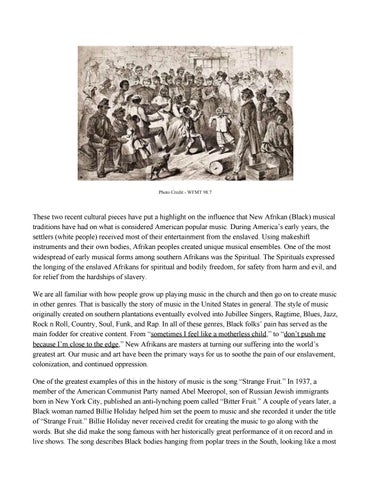
Photo Credit - WFMT 98.7
These two recent cultural pieces have put a highlight on the influence that New Afrikan (Black) musical traditions have had on what is considered American popular music. During America’s early years, the settlers (white people) received most of their entertainment from the enslaved. Using makeshift instruments and their own bodies, Afrikan peoples created unique musical ensembles. One of the most widespread of early musical forms among southern Afrikans was the Spiritual. The Spirituals expressed the longing of the enslaved Afrikans for spiritual and bodily freedom, for safety from harm and evil, and for relief from the hardships of slavery. We are all familiar with how people grow up playing music in the church and then go on to create music in other genres. That is basically the story of music in the United States in general. The style of music originally created on southern plantations eventually evolved into Jubillee Singers, Ragtime, Blues, Jazz, Rock n Roll, Country, Soul, Funk, and Rap. In all of these genres, Black folks’ pain has served as the main fodder for creative content. From “sometimes I feel like a motherless child,” to “don’t push me because I’m close to the edge,” New Afrikans are masters at turning our suffering into the world’s greatest art. Our music and art have been the primary ways for us to soothe the pain of our enslavement, colonization, and continued oppression. One of the greatest examples of this in the history of music is the song “Strange Fruit.” In 1937, a member of the American Communist Party named Abel Meeropol, son of Russian Jewish immigrants born in New York City, published an anti-lynching poem called “Bitter Fruit.” A couple of years later, a Black woman named Billie Holiday helped him set the poem to music and she recorded it under the title of “Strange Fruit.” Billie Holiday never received credit for creating the music to go along with the words. But she did make the song famous with her historically great performance of it on record and in live shows. The song describes Black bodies hanging from poplar trees in the South, looking like a most