






by Larry Hovis CBFNC Executive Coordinator
COMING OFF THE HEELS OF CBFNC’S 20th ANNIVERSARY in 2014, a discernment process conducted by the Coordinating Council in 2015-2016 resulted in new ministry priorities, all of which start with the letter “E”:
• Equip Ministers and Churches
• Embrace Neighbors
• Engage Students and Young Adults
As we have lived into these priorities, a fourth “E” has emerged, “Enhancing Fellowship,” which relates to identity, community and partnership. In our upcoming issues of The Gathering, we will focus on these priorities, beginning in this issue with “Equip.”
In 2016, Southeastern North Carolina was devastated by Hurricane Matthew and its resulting floods. Two years later in 2018 an even larger area was severely impacted by Hurricane Florence. While much of life has returned to normal in those areas, the effects of these major storms still linger and some of the impacted communities will never be the same.
As I write this article in April, our churches, our fellowship, our nation and our world find ourselves in the midst of another kind of “storm” – the COVID-19 Coronavirus. How are we dealing with this storm? What will life be like after it is behind us?
One of CBFNC’s ministry priorities is Equipping Ministers and Churches. We describe this task as follows: CBFNC supports and strengthens ministry leaders and the churches they serve. The primary ways we have sought to do that have revolved around Church Resources, Ministerial Resources and Ministerial Transitions.
How has the current COVID-19 storm affected these equipping ministries? Fortunately, we are also guided by strong core values, including flexibility, which we describe in this way: We aim to be adaptable, responsive and relevant so that we may act quickly and effectively as new needs and ministry opportunities arise.
For CBFNC, the COVID-19 storm began when we made the difficult decision to cancel the 2020 Annual Gathering (shortly before cancellations of other aspects of society became widespread). We viewed the Annual Gathering, especially its workshops, as a primary avenue of equipping ministry leaders. In fact, historically, many of our equipping ministries have taken place in face-toface settings.
Our ministry priority of Equipping Ministers and Churches has not changed, but the delivery system for

doing that has changed significantly. Since this crisis began, we have focused our energies on equipping churches as they seek to continue their ministries. These efforts have centered around four areas:
We established a Coronavirus Resources landing page on our website, cbfnc.org, that contains relevant resources from a variety of sources –governmental agencies, ministry partners, churches, and our own staff, to name a few. We are continuously collecting, reviewing, curating and producing relevant resources to help churches and their leaders figure out how to keep their ministries going while physically separated. We also offered churches without an online giving platform the option to process gifts from their congregations through CBFNC’s online giving platform.
We are convening groups of people, primarily on Zoom, to share ideas on particular topics ranging from worship to childcare. These virtual gatherings not only provide relevant, helpful information, but also build community in this season of separation.
INDIVIDUAL CONSULTATIONS AND ASSISTANCE
Our staff is also spending a lot of time on our telephones, consulting with pastors, associate ministers and other church leaders to offer advice and support for the challenges they are facing.
GRANTS —We are offering a variety of grants to congregations so they can maintain, and even expand their ministries during this time. These grants include local missions, hunger ministries and technology enhancement.
ROBUST COMMUNICATION —In order to facilitate all of these resources, we strive to communicate regularly and clearly through a limited set of platforms that are available to most of our fellowship, including our newly re-vamped website, a special e-newsletter, social media such as Facebook, Zoom, and of course that old-fashioned technology, the telephone!
I am proud of CBFNC – our staff, our churches, their leaders and our partners. Through this season, we have shown that even though we can’t know exactly where things are headed, we have been nimble and flexible, faithful and effective, all of which will help us better Equip Ministers and Churches in following God in mission to the world.
At the end of 2018, CBFNC received a $1,000,000 grant from the Lilly Endowment Inc.’s Thriving in Ministry initiative to help establish the Helping Pastors Thrive program.
Since then, CBFNC has been developing and implementing the program, which provides NC pastors with ongoing opportunities and environments for relational learning, spiritual formation, and professional development throughout all stages of their vocation. Helping Pastors Thrive has quickly become a cornerstone in how CBFNC equips ministers and churches.
The program includes three initiatives focusing on three distinct vocational stages:
• New Pastors Cohort Program—for pastors in their first three years of post-seminary congregational ministry.
• Workshop Retreats for Pastors—for early and mid-career pastors navigating the complex challenges of pastoral ministry in established congregations.
• Pastor-in-Residence Program—for late career pastors who are nearing retirement and desire dedicated time away from their ministries to reflect on the meaning of their vocation, to prepare for their final years of pastoral service, and to share what they have learned with younger pastors.
The New Pastors Cohort program began in 2019 with the launch of an initial two-year New Pastors Cohort that consisted of seven pastors and three mentors. The group setting allows for peer interaction, sharing and learning. A second cohort will begin in the fall of 2020 and applications for participation are currently available at helpingpastorsthrive.org.
In addition to the New Pastor Cohort, the Workshop Retreats and Pastor-in-Residence programs launched earlier this year. Read the stories that follow about those programs.
The Lilly Endowment Inc. is an Indianapolis-based private philanthropic foundation, created by members of the Lilly family through gifts of stock in their pharmaceutical business, Eli Lilly & Company. Its grantmaking in religion focuses on supporting efforts to strengthen the leadership and vitality of Christian congregations throughout the country and to increase the public’s understanding of the role of religion in public life.
Pastors from across North Carolina gathered at St. Francis Springs Prayer Center in Stoneville to participate in the first workshop retreat sponsored by CBFNC’s Helping Pastors Thrive program. The retreat, a two-day event that included worship, prayer and fellowship, explored pastoral leadership in an age of polarization led by Dr. David R. Brubaker, professor of organizational leadership and dean at Eastern Mennonite University. Dr. Brubaker, an expert on conflict within organizations, recently released a book on the topic entitled, When the Center


Does Not Hold: Leading in an Age of Polarization (Fortress Press, 2019).
Pastors at the workshop shared their own experiences of how the heightened sense of division along social, political and theological lines influences and permeates congregational life. The overarching concern among the group was that ministering to a widely diverse congregation in this moment of our history can be a real challenge. “On the one hand we want to celebrate the fact that God is above partisan politics and the church should be a place where our sole allegiance is to God and
following Jesus, not to a particular party or ideology,” said Brubaker. “But to navigate important issues is often to invite conflict, and most churches are not good at managing healthy conflict.”
The pastors participated in several exercises that provided useful, practical insights into communicating across divisions and cultivating congregational practices that acknowledge difference and constructively address conflict as a spiritual practice. According to Brubaker, the anxiety that potential conflict creates can, if constructively acknowledged, help build resilience.
The February gathering was the first of a series of workshop retreats for pastors and staff ministers through CBFNC’s Helping Pastors Thrive program. Susan Beaumont, a celebrated consultant, author, coach and spiritual director, was secured to lead a workshopretreat in the Fall of 2020. The topic of the retreat was drawn from her most recent research and book, How to Lead When You Don’t Know Where You’re Going. It

“. . .we want to celebrate the fact that God is above partisan politics and the church should be a place
where our sole allegiance is to God and following Jesus, not to a particular party or ideology...”
now seems prescient in light of the COVID-19 pandemic. Before this crisis, all church leaders sensed we live in a time in which we don’t know exactly where we are going. The Coronavirus crisis brought that sense into stark reality. We still plan to offer that workshop, with the added element of leading in a pandemic, on October 5–6 in Raleigh.
For more information, visit the Helping Pastors Thrive website at helpingpastorsthrive.org.
“The beginning is the most important part of the work.” —Plato, Republic
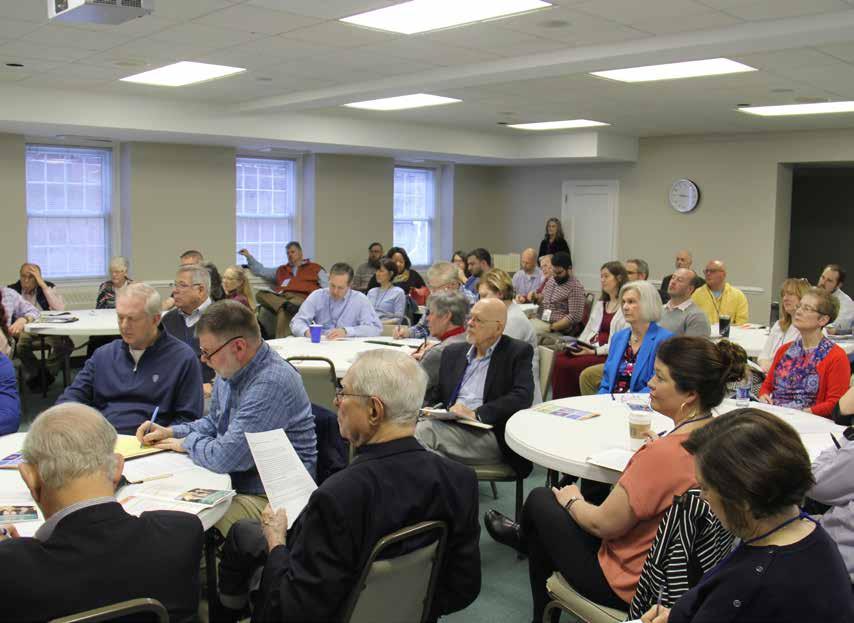
STARTING WELL AS A NEW PASTOR IS CRITICAL for sustaining a meaningful, rewarding and fruitful ministry over a lifetime. Learning from peers and seasoned mentors is essential to starting well, and CBFNC recognizes the value of bringing new pastors together for that purpose. The vocation of ministry is a shared one.
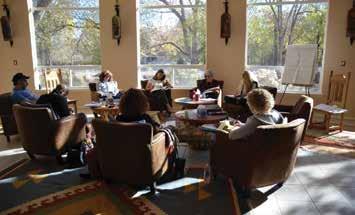
CBFNC’s Helping Pastors Thrive Program is currently forming a cohort of new pastors that will begin a two-year journey in formation and learning starting in September of 2020. Limited to eight participants, the cohort is designed to be a community and space for interaction, learning, support and growth.
Helping Pastors Thrive is a ministry of the Cooperative Baptist Fellowship of North Carolina.

By Dr. Mike Parnell Pastor at Temple Baptist, Raleigh
Iparticipated in the inaugural workshop retreat that is part of the “Helping Pastors Thrive” program, which I am part of at Duke. There are three parts to this program. There is the study leave (similar to a sabbatical) that I am doing at Duke Divinity School. There is an aspect of the program that is helping new pastors as they begin the work of ministry. Finally, there are the workshop retreats.
The retreat was held at St. Francis Springs Prayer Center in Stoneville, NC, which is out in the middle of nowhere. We had little to no cell service. There was no Wi-Fi. In current reality, we were cut off from the world—and that was not a bad thing!
Too often we are tied to our phones. I watch people with their phones. The students I see at Duke roam the campus with heads down, looking at their phones. It amazes me that they do not run into each other.
Being away from my phone and the Internet allowed me to become more aware of where I was and what surrounded me. One of the highlights for me was taking a short hike in the woods. There is a long walking trail that winds through the forest behind the center. It is a bit hilly and so walking was somewhat of a challenge, but walking through the woods did me much good and I was able to reconnect to God in the midst of the wild.
published a great book on leadership in our current reality entitled, When the Center Does Not Hold: Leadership in the Age of Polarization.
His focus was on how we who lead congregations face the conflicts that arise. He told us of the levels of conflict that congregations go through and how we can recognize the ways that little disagreements turn into nasty fights.
The one thing that I took away from the workshop is how Brubaker says that our current reality is one that is full of opportunity for disagreement. When we discover that the person we are conversing with finds out where we stand on an issue, it can go from being friendly to frigid to fiery in a millisecond.
The time we find ourselves in is much like my early days as a pastor. Those days were ones where there was a clear divide. In Baptist life there were two camps: the conservatives and the moderates. When you met someone you did a little song and dance with that person to find out what side the person was on. If you found out that they did not agree with you theologically, the conversation generally was over.
There is great sadness in me that we live in such a polarized environment. We base the value of our relationships solely on agreement on issues and identity questions.
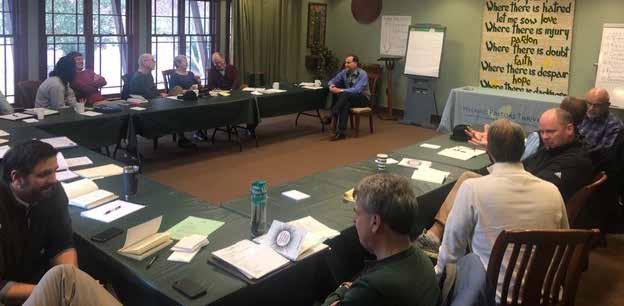
The workshop was “Pastoral Leadership in the Age of Polarization.” David Brubaker led our group. He has
I have many friends that I do not agree with on many topics. But my relationship to them is not based on agreement. My relationship is based on mutual respect and love for who they are, not what they believe. The world would be a better place if we all could get there.

As one of the three core initiatives of CBFNC’s Helping Pastors Thrive program, Pastor-in-Residence is a paid, four-week residential study leave offered to latecareer ministers of CBFNC congregations. Participants are provided housing and financial support at a CBFNC partner theological school and may participate in campus activities, utilize resources such as the library and faculty, and focus their time on professional development, spiritual formation and rest from the day-to-day work of pastoral ministry. CBFNC also provides support for each pastor’s congregation during the residency, if needed.
The inaugural Pastors-in-Residence completed their leave in the spring, just before the COVID-19 pandemic struck. Rev. Charles Bryan, pastor of First Baptist, Butner and Rev. Dr. Michael Parnell, pastor of Temple Baptist, Raleigh, were the first two to complete the new residency program.
Rev. Bryan spent his residency at Gardner-Webb University with housing in an on-campus apartment in a graduate residence. After 36 years in ministry, seven of which have been at Frist, Butner, he says he had never had an extended leave. “I had never had a sabbatical or taken off more than one week at a time. I really felt like doing this residency would help me finish up my ministry,” he said.
In addition to speaking to students in a number of classes, Rev. Bryan used his leave to prepare his preaching schedule for the remainder year, relax and enjoy some of the University’s athletic events. He says he wanted a working sabbatical because he likes teaching, interacting with students and being in the classroom. “But the best part was the rest—to be able to truly step away,” he added. “This residency gave me the opportunity to actually rest and be refreshed in my ministry.”
Bryan says he is fortunate to have had a congregation that fully supported his leave and that his church has an associate pastor who could preach while he was away, and deacons who stepped up to help provide pastoral care.
Dr. Parnell spent his residency at Duke Divinity School and chose to commute to campus because of its proximity to home. While he admits that in hindsight, living on campus would have been advantageous, the drive each day gave him time to pause and clear his head.
On his second day on campus, Dr. Parnell heard Jim Wallis, globally respected writer, teacher, preacher,
and justice advocate, speak about polarization in our country. “Admittedly, I didn’t have a real plan in place when I started this residency. But I left that lecture with the deep impression that this issue is what I needed to work on during my leave,” said Parnell.
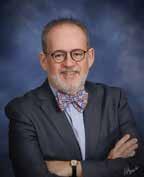
“I decided to use my time to do some in-depth research on the parables of Jesus to maybe write a book or curriculum to remind the world that we need to meet Him again—or for the first time. But in four weeks, I only scratched the surface,” he said.
Parnell also attended the first CBFNC Workshop Retreat for Pastors while he was on leave. “That workshop retreat, which was on this very topic, provided more information for my study and insight from fellow clergy” he said.
In his 34 years of ministry, Parnell says this was the first time he had ever had any leave beyond taking a week here and there for vacation. “The exposure to Duke Divinity School was a tremendous blessing. This residency gave me the chance to really step away. It was reinvigorating for me and for my ministry” he said.
Parnell offers some advice for those who may consider taking part in the Pastor-in-Residence program. “First, stay on campus to get the full experience. And don’t be worried about having a plan formalized before you begin. Be open to where the Holy Spirit may lead you,” he said.
As of this magazine’s printing, CBFNC’s Helping Pastors Thrive program is currently seeking applicants for the Pastor-inResidence program in the fall. The application is due August 1, 2020 and is available online at: helpingpastorsthrive.org. Dates of the residency may change due to the COVID-19 pandemic.
By Seth Hix CBFNC Associate Coordinator
At some point, every church finds themselves without a pastor. Regardless of the reason for the minister’s departure, this time of transition is critically important for every congregation. And often, a pastoral vacancy is commonly associated with a high level of unfamiliar anxiety.
Pastoral transitions are a normal—even healthy— part of congregational life. The church’s ministry does not end when there is a pastoral vacancy. In fact, many opportunities for renewal and reformation arise in the midst of a pastoral vacancy.
From our earliest days, CBFNC has assisted churches in transition. While the system has changed over the years, our commitment to helping churches find pastors has remained central to the work of “bringing Baptists together.”
“When done
well, a healthy transition can propel a congregation into a season of renewed spiritual fervor and thriving ministry. When done poorly, a transition can start or continue a congregational tailspin that threatens the viability of a church.”
–Dr. Bill Wilson, director of the Center for Healthy Churches

However, as the landscape of congregational life continues to change, so too, does the way in which congregations navigate a ministerial vacancy. The educational experiences of young clergy is vastly different than that of previous generations. The vocational paths of ordained clergy are no longer consistent. Even the networks within Cooperative Baptist life are dramatically shifting as local congregations no longer define their ministry partners primarily through a denominational identity. In response to these new realities, the CBFNC Ministerial Transition Team felt like the time was right to recalibrate how we assist churches in the midst of a ministry transition.
Perhaps now more than ever our congregational systems, and the ways in which we support and connect
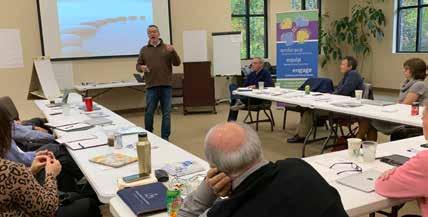
A few years ago, CBFNC expanded this work through the development of a candidate database, as well as the inclusion of a small team of well-respected congregational leaders called Ministerial Transition Facilitators (MTF). Strategically spread out across the state, the MTFs worked directly with local search committees and stayed in regular communication with each other and the CBFNC office. This approach capitalized on the relational networks of Jack Causey, Mike Cogdill, Terry Hamrick and Mike Queen. These men continue to actively assist congregations in transitions as interim pastors, consultants or search team coaches.
them to one another, call out for innovation. Ministry in the 21st century, post-COVID-19 world cannot thrive without renewal.
In an effort to expand our offerings to local congregations and search teams, CBFNC has entered into a new partnership with the Center for Healthy Churches (CHC) based in Clemmons, NC. This dynamic partnership will not only reshape our approach to assisting churches in transition, but will also deepen each congregation’s internal awareness of their unique history and gifts.
The CHC has already successfully coached dozens of congregations in North Carolina, including several in our own fellowship. The CHC process will allow CBFNC congregations to receive a more consistent offering in congregational and search team coaching from an expanded group of talented leaders across our state.
CHC’s process is based on spiritual discernment, appreciative inquiry, emotional intelligence, and a new approach to actively finding your next pastor. “Customized for each unique church, this partnership brings proven and effective guidance to CBFNC congregations at a cost that is reasonable and
manageable for churches,” adds Wilson.
We have identified 12 highly qualified men and women who will serve as pastoral search coaches for CBFNC partner congregations that choose to enlist our assistance with their search. CBFNC will maintain our ministry job board on our website (cbfnc.org) as well as continue to provide resume service for churches and candidates free of charge.
DANNY STAPP SERVED AS CHAIR of the pastor search team during First, Wilson’s most recent pastor transition. He was a firsttimer to the pastor search process and felt that CHC made it very easy to comprehend.
Stapp adds that CHC’s search process increased congregational engagement. “We held three Congregational Conversations where members of our search team sat with different folks from our church, giving us the chance to get to know others we might not have otherwise. It created a unique opportunity to hear different perspectives from people we have gone to church with for years,” he said.
The church had been without a pastor for three years and learned some very hard lessons along the way, according to
REALIZING AFTER-THE-FACT that the role of pastor search team chair can be a daunting task, Will Hege admits, “I probably didn’t realize what I agreed to when I said yes.”
Thankfully, the church had enlisted the help of CBFNC and CHC. “I believe that the CHC process gave me the framework to follow, not just personally, but to be able to follow and LEAD the team. I was able to articulate where we are going next, what we needed to do and when we needed to do it,” Hege said.
“As a father of three and business owner, I really didn’t have time to reinvent the pastor search process. But when I was given the process to execute, I had the time and mental capacity to execute at a high level,” he added.
Hege felt like CHC’s process was thoughtfully and completely
However, through our new partnership with CHC, we will now offer a variety of options to congregations that desire additional help throughout the search process. Levels of engagement can include facilitating congregational conversations, development of pastoral/church profiles, as well as “handson” interview techniques and resumé reading skills. These enhanced coaching options will follow CHC’s search process.
Stapp. “We tried to do it on our own with our first committee but that process left us still searching for a pastor. Ultimately, that led us to CHC in 2019 and we really benefited from those tough talks. As painful as that year was, our church will benefit in the long run from going through all that together. CHC played a big part in helping us heal,” said Strapp.
“CHC laid out a complex plan that wasn’t too overwhelming and followed a timeline. Within six months we were ready to call a new pastor,” he said. “I don’t know if we would have come across our candidate without the help of CHC.”
CBFNC thanks Dr. Mike Cogdill for serving as interim at First, Wilson. Due to scheduling conflicts as a result of the COVID-19 pandemic, the church has not been able to announce its candidate.
laid out. “The guideposts provided by CHC were incredibly helpful in establishing goals and reaching them along the way. [Bill] and his team gave us the tools and confidence to succeed.”
Ardmore also conducted three congregational conversations that Hege says uncovered a united theme within the church that this was “not about what I want, but about what the church needs.”
“I truly believe that this program matched Ardmore with a gifted pastor and leader. We encountered and met with some very fine pastors doing great work all across the country. But in the end , we felt led by the Holy Spirit to Tyler and felt he was worthy of the call,” Hege said.
CBFNC thanks Mike Queen for serving as interim at Ardmore and welcomes Tyler Tankersley who began in August 2019.
By Wanda Kidd CBFNC Collegiate Engagement Coordinator
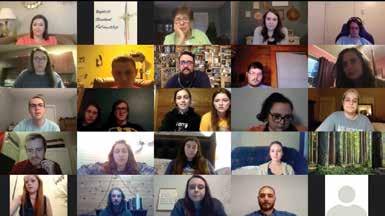

CBFNC’s investment in ministering to young adults and college students has always been integral in our overall commitment to serving Christ. During the COVID-19 upheaval, our college ministers continued to connect with their students, as well as reach new students through social media, regular online worship and Bible study, one-on-one check-ins, and fun activities such as virtual game nights and Netflix parties.
One of the joys of collegiate ministry is our relationship with students in marking milestones. We celebrate the beginning of each new semester, join together for an annual retreat, and encourage and embrace students who serve in summer and semester missions. However, the launching and blessing of students into the world as graduates is always the highlight of the year.
With campuses closed this year due to the pandemic, we had to devise a new way to mark this important milestone for our students. Seniors were asked to send in a video with a statement about the value of CBSF on their life. The videos were then used as part of a statewide, online worship service where all of the college ministers offered a blessing to each graduate along with music, prayers, scripture and a homily. View the video celebration at cbfncyoungadults.org. Thank you to all in our fellowship for providing the support that lets CBFNC be present with students during this uncertain time.





Given by . . . in Honor/Memory of
John Vestal in memory of Cindy Vestal
Kaylee Godfrey in honor of Emily Hull McGee
Lisa Rust in honor of Marc & Kim Wyatt
Jane and Dan Mitchell in honor of Jack & Mary Lib Causey
Mary Ann Howell in memory of Rev. Alfred Ayscue
Raymond “Skeeter” Collins
Donald Hawkins to the Causey Fund
Richard King to the Causey Fund
Andy and Amy Jung to the Causey Fund
Kenneth Chapman to the Causey Fund
Robert Ray to the Causey Fund
Carol Hunter to the Causey Fund
Dan Mitchell to the Causey Fund
Pat Hardin to the Causey Fund
February – March 2020
Campbell University Divinity School
First, Henderson
First, Mt. Airy
First, New Bern
First, Statesville
First, Wadesboro
Gardner-Webb School of Divinity
Greystone, Raleigh
Hester, Oxford
Piney Grove, Mt. Airy
Sandy Cross, Hobbsville
Sardis, Charlotte
Donate to CBFNC today! www.cbfnc.org/give

CAN PLANT SEEDS OF BLESSING, OF HOPE, AND OF HELP. Designate a gift for scholarships, new church starts, or where it is most needed.
Our encouragement and support go to the following ministers who have recently moved:
Tracie Jernigan to The Summit, Sylva as co-pastor
Michael Lasater-Sizemore to Benson, Benson as minister of youth and children
Dominique Nash to The Summit, Sylva as co-pastor
Samuel Vanslyke to First, Bladenboro as lead pastor
CONGRATULATIONS TO DR. MITCH SIMPSON upon his retirement after 47 total years in ministry! Mitch served as senior pastor at University Baptist in Chapel Hill for the last 30 years.
Contact Jim Hylton at 336.759.3456 for more information.

Gifts from individual supporters established this endowment fund to supplement the CBFNC annual operating budget. Gifts to this fund assist all areas of CBFNC ministry as we strive to join the work of God in the world.
When you make a move or know of someone who has changed places of ministry, please send us an email: seth.hix@cbfnc.org.
For assistance to search committees and ministers seeking vocational discernment, visit the Equip Ministers and Churches page on our website at cbfnc.org or call us at 336.759.3456 or 888.822.1944.

CBF Virtual General Assembly June 22–27
SEPTEMBER
CBFNC Youth Beach Retreat September 25–27 Fort Caswell

OCTOBER
CBFNC Fall Workshop October 5–6
Greystone, Raleigh

We are updating our mailing list and shifting to a quarterly publication. If you want to continue receiving this magazine, please take a few minutes to update your information on our website by JULY 1. Otherwise, this will be your last copy of The Gathering. Go to SUBSCRIBE! in the main menu of our website:


You do not need to subscribe again if you’ve already returned a subscription postcard to us or completed the online subscription form. Thank you!