



I have been a member of eight Baptist churches and served student internships in two more. I was privileged to pastor four of them. These ten churches were located in two states and a variety of communities, ranging from a small town with a population of only 200 to the capital cities of Virginia and North Carolina. They also ranged in size, from a very small church that could barely afford a pastor to much larger churches with many staff members.
Some leaned a little toward the left side of the theological spectrum while others leaned a little toward the right, but none strayed far from center. These churches exhibited some socioeconomic diversity, though most of the congregants in all of them were solidly middle class. Each church was predominantly white, though some had a smattering of people of color.
Six of these churches were “Old Firsts.” At one time, they had been at the religious and cultural center of their communities. The other four were located in suburban settings, planted at a time when their communities were new and growing with young families. By the time I reached those churches, the growth had moved to other areas.
In other, basic ways, these churches were all very much the same. All had a building. All had a full-time, paid pastor. All had Sunday School, worship in the church building on Sunday morning, deacons, committees, and other church programs and ministries. In these ways, these churches were like most American churches, regardless of denomination.
I love these churches and the many thousands of others like them. I especially love the churches that make up CBFNC. They nurtured me and continue to shape and form me as a follower of Jesus Christ. This kind of church is what “works” for me.
I have to admit, though, that this kind of church is “working” for fewer and fewer people today. And because I believe God’s love and grace through Jesus Christ is too precious to keep to myself, because I believe God’s love and grace through Jesus Christ is meant to be shared with every living person, because I believe the church is God’s primary way of introducing people to God’s love and grace through Jesus Christ and forming them as followers of Jesus, I am also supportive of starting new churches and even brand new expressions of church.
In CBF of North Carolina, there are several ways we help start new faith communities:
Latino Churches – With the support of Linda Jones, CBFNC helps our Latino brothers and sisters start new churches. Some historic CBFNC churches partner with these church starts by providing meeting space and other resources.
Mission Churches in NC – In addition to Latino churches, CBFNC has supported new churches in NC that serve the needs of other international groups, primarily immigrants and refugees from other nations who now make their home in NC. Linda also oversees this work.
CBF New Church Starts Initiative – Under the leadership of Andy Hale, new church start pastor in Clayton, CBFNC
by Larry Hovis, CBFNC Executive Coordinator
joins with the larger CBF community to start other new churches, designed to reach those who are not part of a traditional church.
Fresh Expressions – This is a relatively new approach to starting new faith communities that began in the United Kingdom and the Church of England and has spread to other parts of the world (see related article on page 5).
CBFNC seeks to be a resource for existing churches and a catalyst for starting new faith communities. It’s not either/or but both/and. Bishop Graham Cray, former leader of Fresh Expressions UK, explains it like this:
“Mixed economy” is an expression that originates from Archbishop Rowan Williams when he was a Bishop in Wales. The thinking behind it is that new congregations and church plants are not to replace existing churches with their approach, but complement them.
There is much good work to be done by traditional churches and they need to be supplemented and complemented by new forms of church to reach those that remain untouched by existing churches.
It is a partnership between the two and not a competition. The intention is not to replace one another, and neither is it to operate in isolation from one another but rather supplement with mutual prayer, recognition and learning from one another. Interview with ChristianityToday.com When it comes to church, one size (or style or expression) no longer fits all. We need a mixed economy of church in America today, and in CBF of North Carolina. That’s the kind of ecclesiological economics I pray we can all get behind.
The CBFNC Coordinating Council (CC) and Endowment Management Board (EMB) are jointly proposing changes to the CBFNC Bylaws that would eliminate the EMB. Responsibilities now assigned to the EMB would be assumed by the CC. There are several reasons for the proposal:
The CC is the legal board of directors of CBFNC and ultimately responsible for administering all CBFNC finances.
“Management” of CBFNC endowment funds has never been done by the EMB but delegated to a management company, currently the CBF Foundation.
In most non-profits, all fundraising (annual funding, capital funding, endowment funding) is carried out under a common strategy, not segregated to different organizations.
The proposed Bylaw change will be presented for vote during the business session of the Annual Gathering and discussed during a business breakout the same afternoon (see schedule on page 7). Read the full text of the proposed Bylaw changes at www.cbfnc.org/2018proposedbylawchange
by Dr. Doug Hammack, Sr. Pastor, North Raleigh Community Church
A few years ago, I was excommunicated from the denomination that ordained me. I wrote a book. They didn’t approve.
In their defense, it was an unsettling book. Wrestling with the exodus of young people from church, it was an attempt to tell the Christian story to their worldview. That made it tough for folks not living in that worldview.
So, I was kicked out. And our church, voting to stay together, was kicked out too. For us, that meant we lost our building. It was a crisis; we were orphaned and homeless at the same time. The folks at Temple, Raleigh, heard about our plight. They invited us to share their campus. With enough space for both of us, we arranged a rental agreement.
Crisis averted. That’s how it started. A rental agreement to avert a crisis. But it turns out, we’ve stumbled into something even better.
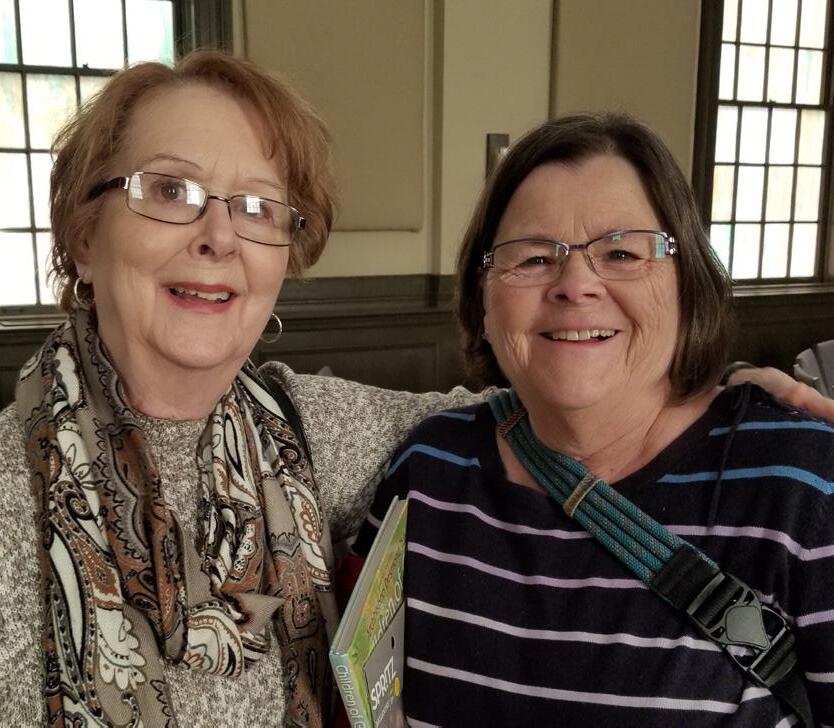
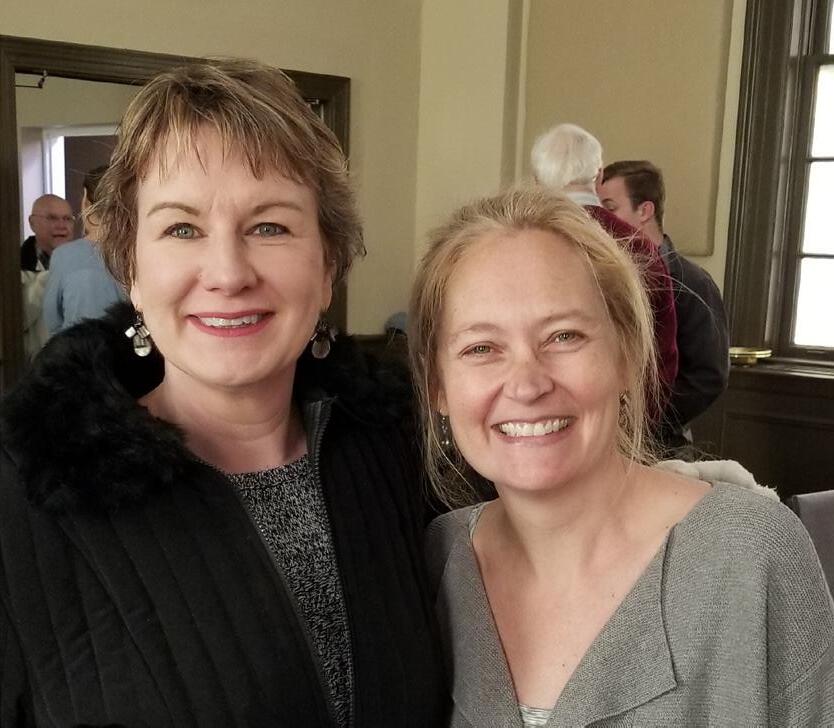
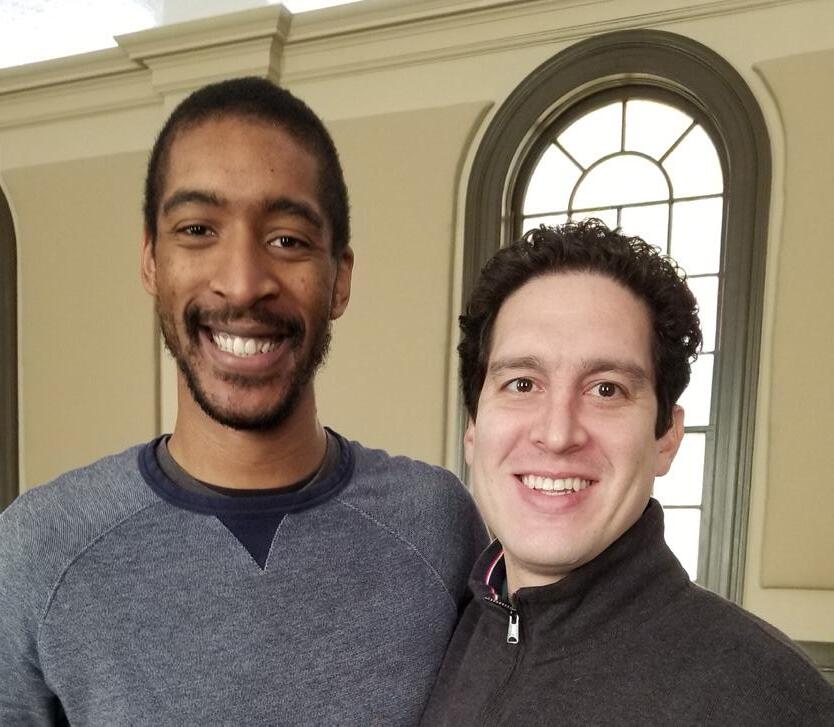
Renting became Relationship. Temple is a pretty traditional church. We’re pretty untraditional. Together, we’re learning “oneness that is not sameness.” Dr. Mike Parnell (Temple’s Sr. Pastor) has become a good friend. I swing by his office each Sunday morning to chat before we lead our respective services. Our churches potluck together. We do service projects together. We do a few Sundays together each year. We both enjoy the energy of a full building, babies and grandmas all together. Together really is greater than the sum of the parts.
This couldn’t have happened if Temple had only been interested in rental income. From the start, they made it clear they wanted relationship with us. After our troubles, we were distrustful and a little stand-off-ish. But older and wiser than us, they were patient, kind, and loving. They accepted us with our untraditional idiosyncrasies. They made relationship possible. In the years to come, it is our deep hope to be as supportive and strengthening of them, as they have been of us.
Reimagining Church Buildings. During our crisis, we imagined renting a while, saving up, and buying our own building. It’s what churches do. In hindsight, if we had done that, the pressure to raise money would have undercut the work we’re doing to rethink church. Our relationship with Temple has fundamentally shifted my thinking, not just for us but for the way churches do space.
Two things true of the American Church today ...
We own a lot of buildings. I read recently we own between $300-$500 billion in property.1 That’s a lot of space. A lot of rooms.
The American church is in decline. The way we do church doesn’t work for a lot of people. That leaves a lot of our buildings underused.
From a historical perspective, this isn’t a horrible thing. We tend to lose our way through the centuries. But we also tend to find it again. Like a tree, our tradition gets blight from time to time. When it does, we are chopped down and consigned to the fire. But from the stump, a shoot of new life always emerges. It is our way to lose our way. It is also our way to find it again when we do.
All over the nation, we are. We are finding our way again. New thinking, new experiments in spiritual community, and new ways of imagining our Christian narrative are all helping us find our way again.
Our own community’s positive experience sharing space with Temple has awakened my imagination for how the American Church might support these new experiments, this new Reformation. Instead of resisting radical experiments in rethinking Church, we could do what Temple did. We could share. We could support.
In the last Reformation, we burnt one another at the stake. I think Temple’s approach is better.
1 https://www.huffingtonpost.com/jeff-schweitzer/robert-jeffress-romney_b_1002753.html
A few years ago, a CBFNC-sponsored research project identified the greatest challenge facing our local congregations as Aging Membership. This was certainly no surprise to most people involved in congregational life over the past few years. Yet, a less publicized trend has recently bubbled to the surface that is equally concerning for many churches across North Carolina (and across the country). That is, Aging Church Facilities. It is only logical to assume that as our local congregations age, so too do the buildings that house them.
Many CBFNC congregations across our state are blessed to have a beautiful sanctuary, an abundance of education space, and possibly even a large recreation center. Church facilitates frequently parallel the historical mission of the local church (worship, outreach, ministry, etc.) through the decades.
congregations responding to community needs. Community needs, however, vary greatly in each different setting.
Churches in smaller communities across our state like Edenton, Edenton, and First, North Wilkesboro, host community events like Baccalaureate services, dinners for hospital or school employees, local athletic team banquets, and blood drives, among other events. These churches leverage the location and size of their facilities to meet community needs. First, Jamestown, has also recently begun a local farmers market that draws people from the community to their church parking lot on Wednesday evenings. The goodwill created in the community through these local endeavors may or may not ever lead to new members, but is certainly in keeping with the mission of the local church to serve its community.
by Seth Hix, CBFNC Church Engagement Coordinator

Current worshippers, who may not have a historical connection to their local congregation, can often gauge what the church’s priorities were in a given generation by the construction dates of the campus facilities. At best, these facilities reflect the unique calling of a particular congregation to a particular mission. At worst, a hodge-podge of various church facilities simply reflects the ministry trends of the times.
However, when considering the current challenge of aging facilities, we must not overlook the faithfulness of the people who followed God’s leadership to build them in years past. The construction of these facilities was often the result of visionary fundraising campaigns that required significant financial sacrifice on the part of church members.
A few common refrains are easily heard in 2018 among local congregations (beyond Baptist): failing HVAC units; leaking roofs; outdated children and youth spaces; cracking parking lot concrete; new building codes; and the general rising costs of facility maintenance. When these challenges are coupled with decreasing attendance, it can put a significant strain on a church budget.
CBFNC congregations are responding in creative ways. A high percentage of local congregations in our Fellowship are big steeple or “First Church” congregations, often located in the center of their community. Innovative ministry has been birthed in many of these congregations because of the accessibility of their facilities. The development of Weekday School Programs, Food Pantries, ESL classes, After-School Programs, AA meetings, and community gardens have all been created by traditional
In a large city like Charlotte, St. John’s utilizes its facility to benefit faith-based non-profits. St. John’s has set aside office space in their church facility for organizations like Crop Walk and Baptist Peace Fellowship, among others. Churches in college communities like First, Elon, and First, Boone, regularly host meals and other events for college students in their community.
However, some church facilities have simply outlived their usefulness. Perhaps a building is no longer functional for current and/or future ministries, or the building has become too expensive to renovate. Whether it is a historic sanctuary, a large unused educational building, or a recreational facility that no longer serves the needs of the community, many local congregations are forced to ask tough questions about their specific calling and mission. The difficulty of these congregational conversations is heightened by the deep-seated emotional connections to decades of effective ministries.
Pressure can also come from local municipalities or nearby organizations (businesses, colleges, etc.) to sell or re-purpose church facilities for other uses. First on Fifth, Winston Salem, has recently made the difficult decision to tear down a portion of their facility for the sake of future ministry opportunities.
Since church buildings are often the biggest financial investment made by a community of faith, this topic requires intentional prayer, honest dialogue, and faith family discussions. Poised for future ministry opportunities, CBFNC congregations across our state are thinking imaginatively about their church buildings. As faithful Baptists, the decisions are ours to make.
We want to hear from you! Given the wide variety of congregational settings of CBFNC churches, let us know how your community of faith creatively utilizes your current facilities. E-mail me at seth.hix@cbfnc.org with your church’s story.
by Travis Collins, Director of Mission Advancement and Southeast Regional Coordinator, Fresh Expressions
When I arrived at Richmond, VA’s, Bon Air Baptist Church in 2002 to be their pastor, one of the best things going on there was a new (one-year-old) form of church that had sprung up out of Bon Air. This new form of church was for people in recovery. “Northstar,” as that new form of church became known, had exceeded everyone’s expectations, and had resulted in lots of transformed lives.
At the time, I’d never heard of “fresh expressions,” but when I did I thought, “Northstar is a fresh expression of church!” Soon people from our congregation had begun a fresh expression (new form) of church in the international community and the prostitute community. After a while, the fresh expression in the prostitute community didn’t make it, but that is part of the fresh expressions story, too—the willingness to try things that might not work.
In 2014, I left the full-time pastorate to join the Fresh Expressions U.S. Team. For two years, I was a small part of what God is doing through the Fresh Expressions movement across the U.S. I missed being a pastor, and accepted the call to be pastor of First, Huntsville, AL, in 2016. My deep belief in fresh expressions as a means of reaching unreached people followed me to Huntsville.
We have begun fresh expressions of church in the recovery community, the arts community, and in an underserved neighborhood. I don’t know what the future of those new forms of church will hold—remember, the willingness to risk is part of the commitment to fresh expressions—but people are already talking about the next fresh expression of church. We met recently with some young adults interested in a fresh expression of church among the online gaming community!
The term “fresh expressions of church” appeared in the Church of England report titled Mission-Shaped Church in 2004, and a year later the network/movement called “Fresh Expressions” organized. Fresh Expressions U.S. now supports attempts to launch these new forms of church.
Defining a Fresh Expression is a bit like defining love. Nevertheless, here is a definition of a fresh expression which originated in England:
A fresh expression is a form of church for our changing culture established primarily for the benefit of people who are not yet members of any church.
So, a fresh expression is not a new worship service, a mission project, or Church-lite. A fresh expression is
n often initiated by an established church and connected somehow to an existing/inherited church.
n outside the walls and traditions of established churches.
n primarily for those who are not likely to engage with an established church.
n contextualized. Indigenous.
n attentive to a micro-culture or sub-culture— i.e. a group of people who share a similar interest, hobby, need, or meeting place.
n usually small-scale and usually led by volunteers.
n putting the church that Jesus loves closer to where the people Jesus loves actually are.
A fresh expression begins with an agenda no more complicated than loving people and wanting somehow to be like Jesus to them. From that grow opportunities to invest in people’s lives, ways to serve them, conversations about things that matter, and, after time, invitations to some sort of get-together in a home or neighborhood gathering spot. As God provides sacred openings in people’s lives, there will emerge some form of discipleship, worship, fellowship, ministry/service to each other and to others, and even an outward orientation toward missions and evangelism. A fullblown fresh expression has been born when there is a Jesus-centered community of faith exhibiting all these elements of Church—just not in the form of Church that you and I probably know—among people who probably never would have come to your church building or mine.
Remember, this is not a faddish program to grow the attendance at our churches. It’s not a gimmick to funnel people in through our doors. It is true that our congregations grow if someone who attends the fresh expression then decides to come to our church or if people hear about our fresh expressions and are drawn to our missional reputation. God’s Spirit might use the launching of a fresh expression to revive and renew a stalled, lethargic congregation.
To see a fresh expression as a means to grow your present congregation, however, is to miss the point. The point is the Great Commandment and the Great Commission.
Samuel Shoemaker asked, “Can your kind of church change your kind of world?” It’s a poignant question. If you cannot answer with a strong affirmation, don’t chuck your church; use the strengths of your congregation to begin a fresh expression.
You can find out more about fresh expressions of church at freshexpressionsus.org.
Leadership Institute | March 15
Tunes & Tales | March 15
Friday Gathering | March 16
All Are Called Forum | March 17

www.cbfnc.org/fitchurch

Join us for three days of fellowship, learning, and growth, March 15-17, 2018, at Knollwood Baptist Church in Winston-Salem.
Thursday highlights:
Uplifting discussions by Matt Bloom about daily happiness, thriving, and wellbeing.
Old-time mountain music and stories by popular musicians, David Holt and Josh Goforth.
Friday highlights:
CBFNC’s annual family reunion featuring 40+ Fit Church workshops. Find two that will engage, inform, and motivate you in all areas of your life.
Messages of encouragement and inspiration from our keynote speaker, the Rev. Richard Joyner, and our worship leader, the Rev. Prince Raney Rivers.
Saturday highlights:
Spend the morning exploring the Church’s role in building healthy communities. This event is specifically designed to encourage and empower laity.
Info: www.cbfnc.org/fitchurch
Thursday, March 15th
1:00 – 5:00pm Leadership Institute – Matt Bloom www.cbfnc.org/leadershipinstitute
7:30 – 9:30pm Tunes and Tales – David Holt & Josh Goforth www.cbfnc.org/tunesandtales
Friday, March 16th www.cbfnc.org/2018annualgathering
8:00 – 9:00am Peer Learning Group Breakfast
8:30 – 11:00am Registration
9:00 – 10:30am BWIM Convocation
9:30am Living Water Café + Exhibit Hall Open 11:00am Opening Session
11:45 – 1:45pm Food Truck Lunch / Exhibit Hall / Fellowship time
1:45 – 2:45 Workshop Session One
3:00 – 4:00 Workshop Session Two
4:15 – 5:00 Ministry Celebration and Business Session
5:15 – 6:45 Fellowship Dinner
7:00 – 8:30 Worship
8:30pm Fellowship & Refreshments Following Worship 9:00pm Divinity Student Gathering
Saturday, March 17th
9:00am – 12:00pm All Are Called Forum www.cbfnc.org/allarecalled 9:00am – 12:00pm Divinity Student Experience
A sample of workshops at the Friday Gathering
The Changing Face of Family Ministry n Moving Casual Conversations into Christ-Focused ‘Conversions’ Creating a Community Culture Where Every Story Matters n God, Evolution, the Big Bang: Why I Believe in All Three Disaster Preparedness for Aging Adults--How Churches Can Help n Multiple Religious Belonging and the Church Clergy/LayLeaders as First Responders to the Military and Veteran Population n The Seven Money Types Welcoming and Nurturing Both Visitors and New Members n The Alphabet of Errors: How to Teach the Bible Better Making Shifts Without Making Waves n Archaeology and the Bible: Friend or Foe? Conflict and Communication: Opportunities for Growth n Redefining Success Virtues, Vices, and the Quest for the Good Life n Religious Liberty for All Y’all
Three questions for Richard Joyner, our Friday speaker:
Our annual theme is Fit Church. How does your ministry emphasize fitness?
Our church emphasizes human development, which means seeing fitness in a holistic sense. We need to address physical health, mental health, family health, and community health to truly be a faithful community.
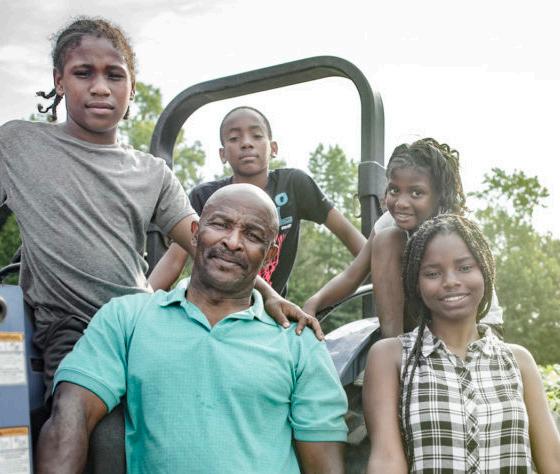
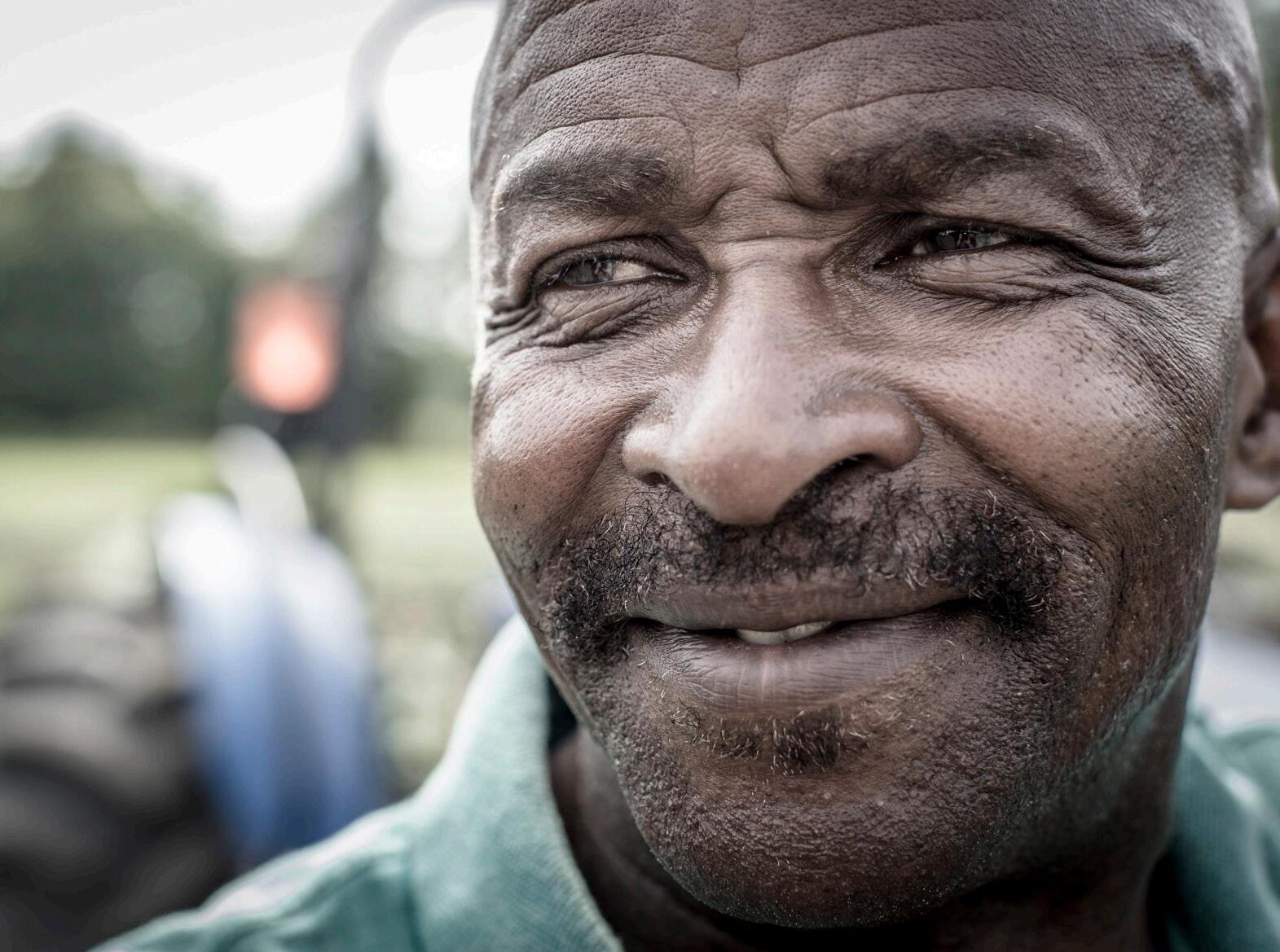
Healthy eating and physical fitness run through all of our programming, from sermons to Sunday school to afterschool to summer camp. Our garden provides fresh, healthy produce to our programs, our events, our families, and our community.
We offer health screenings and comprehensive services during worship so good health supports our faith. We empower our youth to be leaders in their community and in their family through their work with our bees and in the garden. They reduce their family food bill through produce they grow and sell. They invest in their own educational future by earning scholarship money through selling our honey and running our mobile food markets.
Our focus is on honesty and connection without blaming or shaming. Everything in our ministry connects to health, as it is critical to our faith and our community.
What do you do to maintain fitness? (physical, spiritual, mental, etc.)
I am committed to my own personal health so I can be strong for my community. My day starts at 3:30am with solitude and prayer. I keep ongoing family and community prayer calls throughout the week. I run 25 miles a week. I bike 150 miles a week. I focus my food on a plant-based diet and I love to start my day with a coldwater douse and fresh juices that include a kick of ghost pepper to get me going.
I focus my days and my energy on the families in my community, especially our children. It is the joy of the children that keeps me the most healthy.
What is your history or connections with CBFNC?
My connections with CBFNC are deep and important. We have worked together for the sake of our children, focusing on summer camps and service projects in the community. We understand the value of people and connections in our community and that has brought us together across the years and through a number of different initiatives.
I am looking forward to being with you all in March. The dialogue that we can create in our congregations and in our communities together is more important now than ever before, and I am so happy to be a part of these conversations with you.
Anna Anderson, CBF Field Personnel, speaks about Richard Joyner:
How did you come to know about Richard and his ministry in Conetoe?
Several years ago, Layne Rogerson, who was serving at Oakmont, Greenville, and on the CBFNC Wealth and Poverty Committee, was doing some race relations meetings and introduced us to the Conetoe Family Life Center. We had a meal together and talked about what each ministry was doing. We became very excited about what they do. At the end of the meal, Richard gave us a jar of honey – they also bee keep!
How did you become involved in the Conetoe ministry?
Last year, LaCount and I went out as volunteers to help with music and art one day a week in an afterschool program. The children are from very troubled family situations. These kids are angry; I’ve never seen deeper at-risk children. They didn’t want to sing, so we began helping with homework. Consistent leadership is a real challenge here. I think it has surprised Richard that we keep coming back. We do whatever they need us to do.
How would you describe Richard?
He is all over the place, so busy…. He is one of the most passionate persons I’ve known about helping people and working in this community to make a difference. Richard started this ministry because healthy food was more than ten miles away. During his first year as a pastor here, he did 30 funerals and everyone was under 40. All were preventable with better diets and foods. He started a garden so the children would learn about healthy food — how to grow, cook, and eat healthy foods. The youth take the lead in many ministries. He believes that if you change the youth, you change the mindset of the entire community.
by Seth Hix, CBFNC Church Engagement Coordinator
The Church is changing. Just look around. Attendance patterns have changed. The pews (assuming, of course, that your church has pews) are not as crowded as they once were. Financial-giving patterns are changing. The church budget is a moving target for many congregations. Worship has been in flux for decades — choir-led or band-led, liturgical or casual, contemporary or contemplative. As the ways in which people engage with each other change, so do the ways people engage with the Church and with God.
A minister recently commented, “Conversations about spirituality and questions of faith have left the church Fellowship Hall and entered the coffee shops … if not cyber space!” In the midst of these seismic shifts facing the Church, we must also consider their effect on the role of vocational ministry. Does this new reality inform our understanding of God’s calling ministers to do Kingdom work? How do those called into vocational ministry engage with the Church and community?

Allow me to introduce you to Libby Johnson: business woman, mother, hairdresser, wife, Campbell Divinity School graduate, life coach, professional speaker, teacher, and minister called by God to full-time ministry. Libby’s journey to understand, acknowledge, and live into her God-given calling is indicative of the variety of ways in which God is working in our world today.
Libby Johnson’s call into full-time vocational ministry did not spring from a Disciple Now weekend or summer youth camp. No, her call was in the midst of a more than twenty-year career as a hairdresser. God led Libby to pursue a formal theological education later in life and to creatively engage her passionate care for people into her various vocational pursuits.
Libby’s journey has seen many twists and turns as she struggled with God’s call to serve in a ministry “behind the chair” or in front of a crowd. Libby does not feel a call to formal pastoral ministry within a local church. Rather, she seeks to re-define what the “life and work of a minister looks like” in her own calling. For now, she speaks at conferences, fills pulpits, and listens to clients — for some as a hairdresser and for others as a certified coach.
While Libby’s story is unique, it is not an aberration. Churches and ministers across our Fellowship are opening themselves up to new possibilities. In many ways, Libby exemplifies the ingenuity and entrepreneurial spirit that is gaining momentum among people called by God into vocational ministry. At the same time, local congregations are re-defining the roles of professional clergy, either out of financial necessity or as a result of new ministry trajectories. It is a privilege to witness how God is using both CBFNC ministers and CBFNC churches to change the face of vocational ministry before our very eyes.
In February 2018, CBFNC Coordinators began a strategic process to pray for each of our 300+ local partner congregations. The coordinators will collectively reach out to around a dozen congregations each month to ask about specific prayer concerns. Then, at our monthly meetings, we will voice those concerns to God and one another.
While this significant endeavor will take place over several years, please know that our prayers are not limited to each month’s prearranged congregations. We regularly lift up local congregational prayer concerns and will continue to do so. If you would like to share a concern with us, please contact Seth Hix, Church Engagement Coordinator at seth.hix@cbfnc.org
Look for the list of congregations that we prayed for each month in our ENews. If you’d like to sign up for CBFNC’s ENews, visit www.cbfnc.org/news/enewsletter
Collegiate Ministry by Frances Jones, Raleigh in memory of Cindy Vestal
CBFNC by Larry and Jan Ballard, Raleigh in honor of Tommy and Pat Hardin
Collegiate Ministry by Dennis and Betsy Herman, Raleigh in memory of Kay Huggins
CBFNC by Henry Skinner, Jr., Wilson in memory of Sarah Beddingfield
Wyatt Ministry by Ann Wall, Raleigh in honor of Scott Hovey
Collegiate Ministry by Elaine White, Cullowhee in memory of Amy Hardee and Ricky Hardee
Welcome House, Winston-Salem, by Kevin, Bond, Ella, and Hannah Kiser, Pfafftown in honor of Cathy Kiser and Kyle, Carly, and Audrey Kiser
CBFNC by Kim and Robby Ray, Charlotte in honor of Jack and Mary Lib Causey
Our encouragement and support go to the following ministers who have recently moved:
Greg Barmer to First, Washington, as Pastor
Judy Harris to First, Rockingham, as Music Director
Rafael Hernandez to First, Huntersville, as Latino Minister
Holli Holmes and Rhody Mastin to Millbrook, Raleigh, as Student Ministers
Timothy Peoples to Emerywood, High Point, as Pastor
Mikaela Priddy to Neil’s Creek, Angier, as Director of Music
When you make a move or know of someone who has changed places of ministry, let us know by e-mailing us at cbfnc@cbfnc.org
For assistance to search committees and ministers seeking vocational discernment, visit our reference and referral page on our website at www.cbfnc.org or call (336) 759-3456 or (888) 822-1944.
To contribute, e-mail smitchell@cbfnc.org.
December 2017 Contributions
Undesignated: $124,332 Designated: $198,125
January 2018 Contributions Undesignated: $172,645 Designated: $421,335
April 2017 - March 2018 Monthly Undesignated Goal: $110,269
CBFNC’s youth ski retreat had 350+ youth from 20 churches! The next CBFNC youth retreat is at Fort Caswell, Sept.7-9.
December 2018 - January 2018
Angier, Angier College Park, Winston-Salem
First, Boscoe Memorial, Buies Creek
CBFNC ministry coordinators are available to visit your church to speak, preach, teach, consult, lead, and minister. Contact the CBFNC office for more information.
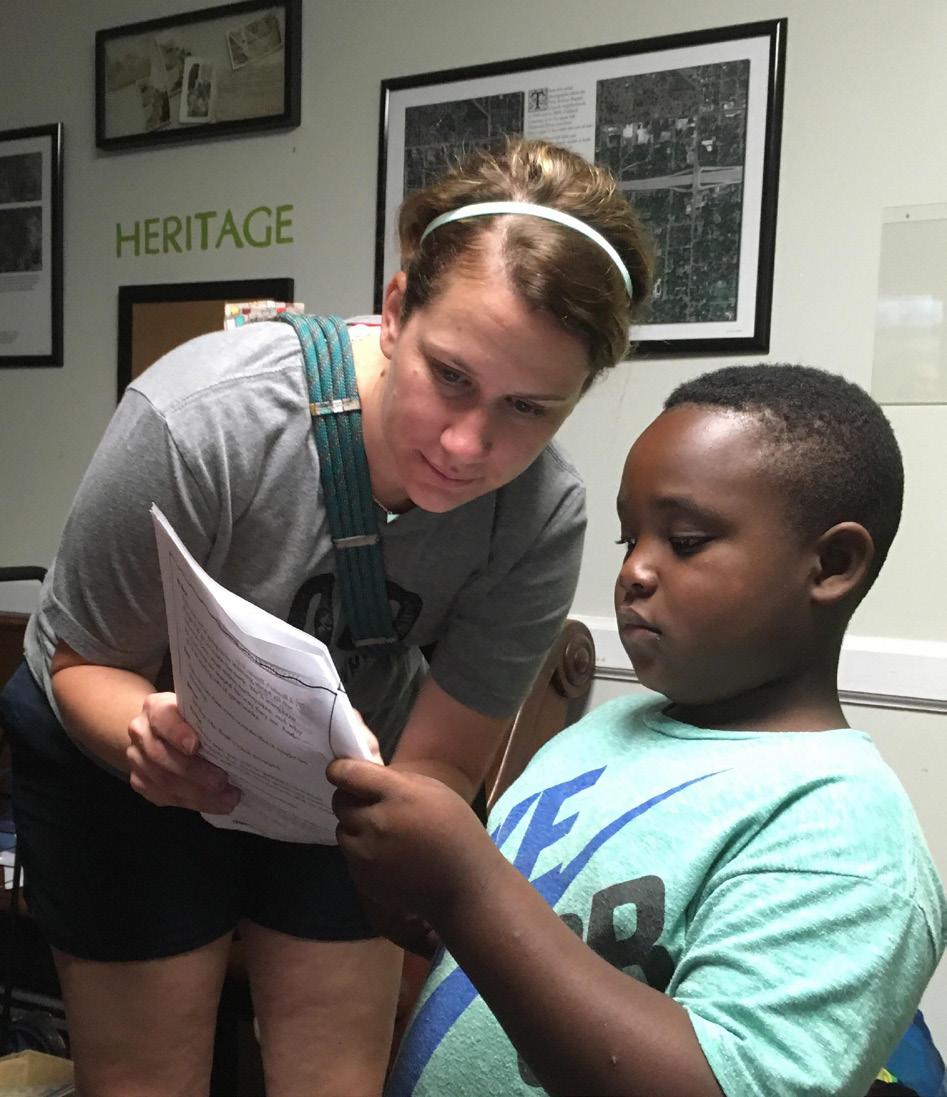
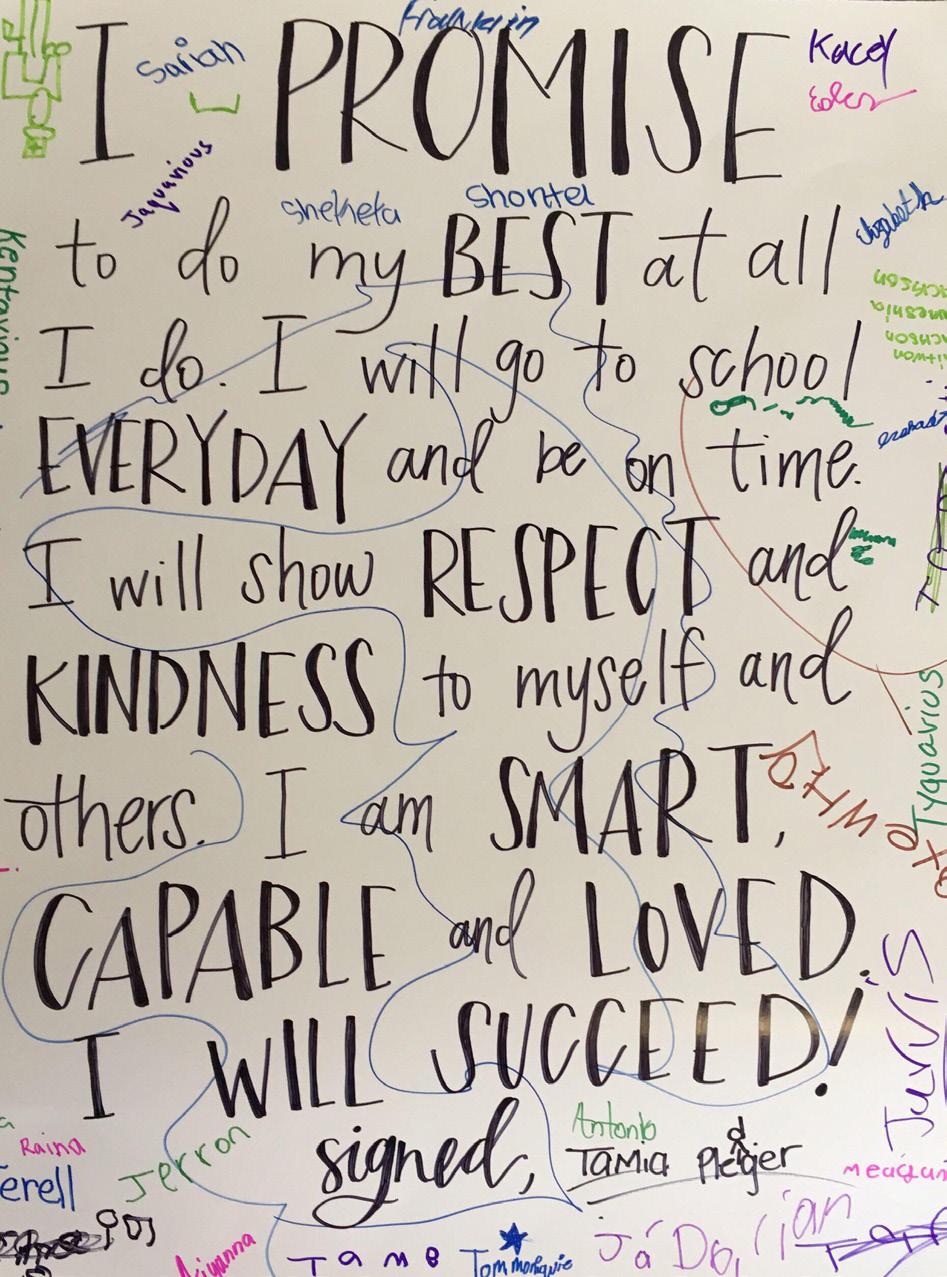
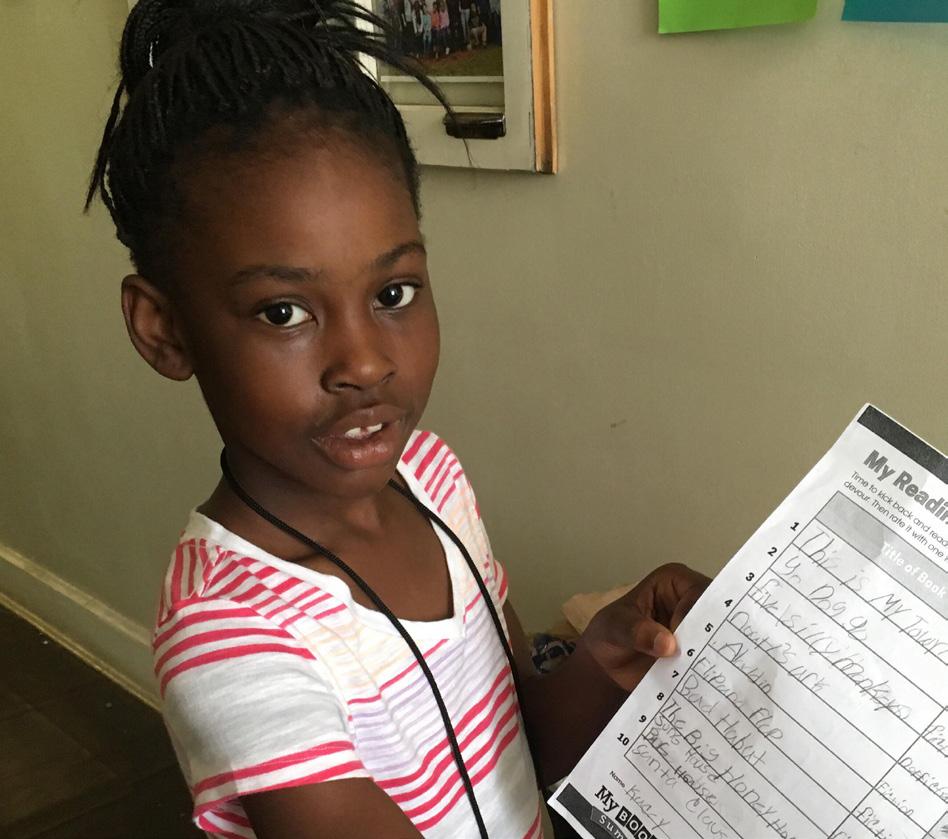
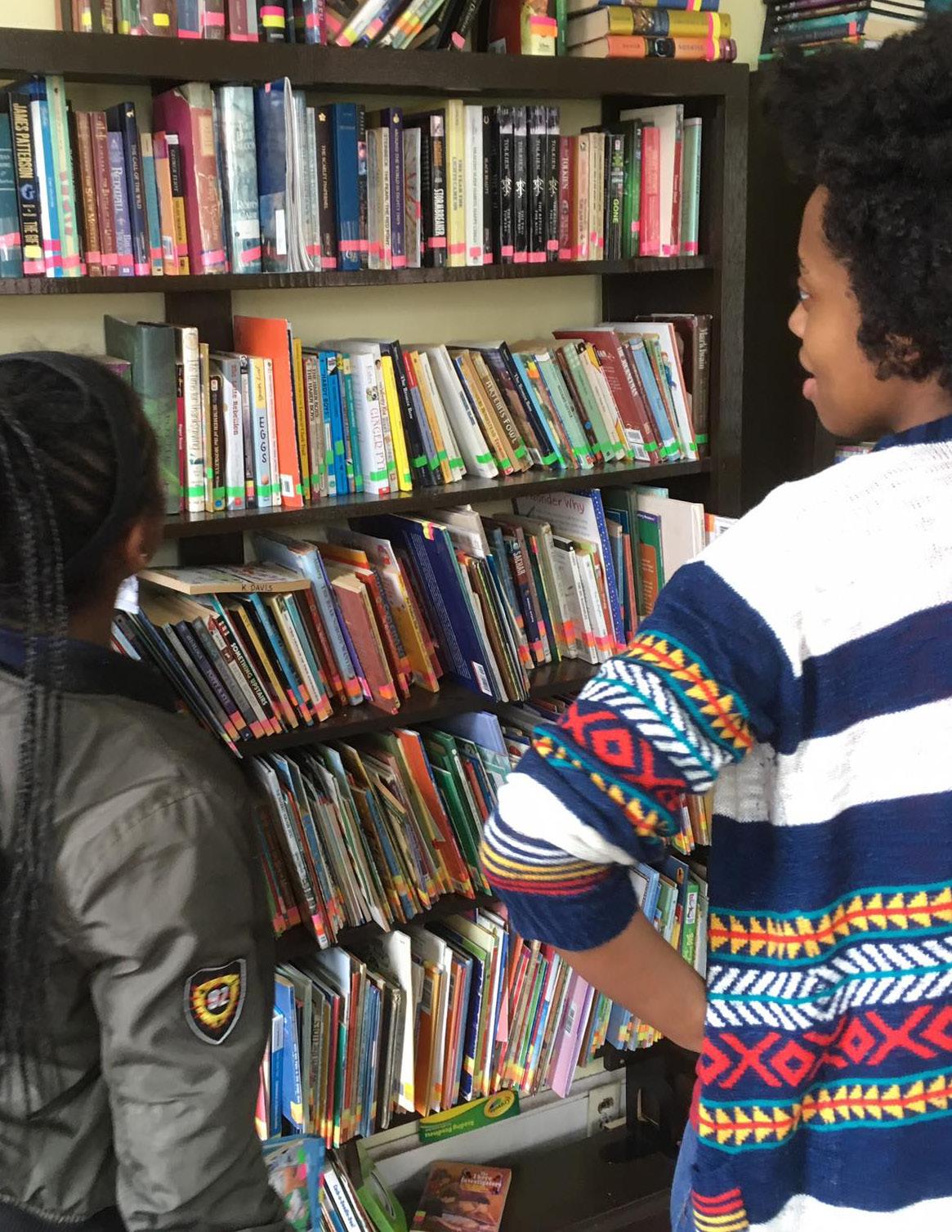
When you think of the future, what color do you see? CBF Sessions participants asked elementary school students at Park Avenue Baptist Church’s Literacy Camp this question along with several more as part of the 2017 CBF Global General Assembly in Atlanta. The answers were as unique as each child interviewed.
by Jaime Fitzgerald, CBFNC Collegiate Ministry Intern, Western Carolina University
Trey Lyons, CBF Field Personnel and Pastor of Communication and Engagement at Park Avenue, Atlanta, shared the staggeringly high statistics of high-school dropout rates and students reading at lower levels than academically appropriate for age. After gaining valuable insights from Trey about Literacy Camp, which runs four weeks each summer, along with historical and sociological information about the area where
the church is located, our group spent time learning about some of the individual campers by asking some of the following questions: What makes your heart sing? What is your daily routine? What is a typical dinner conversation at your house? What scares you? What are you most excited about for the future?
Our group consisted of nine young adults from many different walks of life, some seminary or college students and others discerning vocation. By the end of Sessions, we all learned what it means to see and love humanity through the eyes of Christ. The time spent talking with the students was eye-opening, enlightening, heart-breaking, honest, and beautiful, as the answers spoken by preschool to fifthgrade students forced our group to see that childhood for many is not filled with hopscotch and kickball but with the anxiety of deportation and financial instability.
As our group observed the children playing and laughing, we could not tell from the outside how much pain each little body held. Through the noise of singing and reading, we could not hear the gurgle of hunger in their bellies. When we took time to listen to the sacred story each child shared with us, we found that dinnertime was not a spread of vegetables and meat with parents asking about their day. Rather, dinner often was a meal alone consisting of leftovers or whatever could be found, without their parents who were working late into the evening to make ends meet.
Literacy Camp at Park Avenue provides a safe space for children to simply be children. Literacy Camp nourishes children physically with breakfast and lunch each day, emotionally with the stability of caring and compassionate adult leaders, and educationally by creating space for reading and learning to increase confidence and competency.
Though the children still worry about apartment eviction and how their family will pay the bills, their words of hope infinitely overpowered the worries. When we asked, “What makes your heart sing?”, their faces lit up. Their voices strengthened, offering answers such as seeing people smile, country and pop music, colorful unicorns, and reading. The colors of these children’s future are indeed bright — red, teal, yellow, blue, and pink to be exact.
888-822-1944 www.cbfnc.org
Cooperative Baptist Fellowship of North Carolina Bringing Baptists of North Carolina Together for Christ-Centered Ministry
Return Service Requested
2018 Children’s Choir Festival
March 3, 2018 First, Greensboro
Christian Coaching Exploration Conference Call
March 6, 2018 10-10:45am Call (641) 715-0635, access code: 973776#
2018 Youth Choir Festival
March 9-10, 2018
Wingate University
Register Today! www.cbfnc.org/fitchurch
2018 CBFNC Annual Gathering
March 15-17, 2018
Knollwood, Winston-Salem
Leadership Institute - Thursday, March 15
Tunes & Tales - Thursday, March 15
Friday Gathering - Friday, March 16
All Are Called Forum - Saturday, March 17
Growing Young Regional Workshop
April 14, 2018
Temple, Raleigh
Foundations of Christian Coaching (501)
April 16-17, 2018
Christmount Conference Center, Black Mountain
WNCBF Spring Gathering with Ed Kilbourne
April 26, 2018 First, Waynesville
Establishing a Dynamic Coaching Relationship (502)
June 11-12, 2018
Christmount Conference Center, Black Mountain
CBF Global General Assembly
June 11-15, 2018
Dallas, TX
Growing Young Regional Workshop
August 18, 2018
First, Mocksville