Jamie Rorrer The Gathering, Editor Director of Communications
Amy Cook The Gathering, Graphic Designer Communications Specialist
Subscribe to The Gathering and our weekly eNews on our website at cbfnc.org. Fill out a subscription form by clicking the SUBSCRIBE button.
As you may have noticed on the cover of this magazine, CBFNC has a new look! This refreshed logo was unveiled during the 2021 virtual Annual Gathering in March and we are currently updating all of our communications platforms to include this new look.
The logo refresh was one of the projects undertaken last year by our new director of communications, Jamie Rorrer, working in collaboration with a consulting firm, the CBFNC staff and the Communications and Marketing Committee of the Coordinating Council.
The updated logo features a bolder, more modern look, created with several design goals in mind: simplification, modernization, flexibility and better alignment with the larger CBF family.
It retains some of the elements from our previous logo such as the dogwood flower, the centrality of the cross and shades of blue and green. Be on the lookout as we roll out this new logo across all of our materials.
The Gathering is a seasonal publication of the Cooperative Baptist Fellowship of North Carolina, 2640 Reynolda Road, Winston-Salem, NC, 27106.
CBFNC Has a New Look!
Community Glimpses of Beloved
Many years ago when I was in college, our student group from First, Raleigh took a spring break mission trip to New York City where we participated in all kinds of ministries. One day a group of us worked at a ministry center in a drug-infested, crime-ridden area on Manhattan’s lower East Side. We were asked to do two things: clean up the trash from an area that was being renovated and lead a prayer luncheon. We performed our clean-up duties with diligence and devotion. As the noon hour approached, the prayer luncheon participants started arriving. We were more than a little surprised as we began to realize that this was a prayer luncheon for the homeless.
Once we got over our initial shock, we went on with our prayer service. One of the students played the guitar and led us all in singing a variety of hymns and choruses. I presented a brief devotional message. Then, we shared prayer requests, which in some ways weren’t all that different from what we were used to hearing back home. But in other ways they were very different: not only prayers for the sick, but prayers that friends would be able to obtain medicine and medical care; not only prayers for families, but prayers for children and parents whom they hadn’t seen in a long time; not only prayers for spiritual needs, but prayers for basic physical needs like food and clothing and shelter. It was an quite an eye-opening experience for our group of middle-class college students from North Carolina!
After worship, we all shared a simple lunch meal together: soup, crackers and some kind of colored liquid that I think was Kool-Aid. We did not segregate ourselves but intentionally sat among and between our homeless guests. We talked, laughed and enjoyed fellowship with each other. It wasn’t the most elegant meal I had ever experienced, but as we humbled ourselves and broke bread with people who were very different from us, I noticed a strange taste. What was it? And then I figured it out. It was a little taste of the beloved community.
Fast forward three decades.
In the summer of 2012, I travelled to Canada for a glimpse at what the future church might look like. The Canadian Baptists I met were no longer under the delusion that they live in a culture dominated by a Christian worldview. They didn’t pretend that the average Canadian understands what church is or feels the need to be a member of a congregation. They were learning to view their own
By Larry Hovis CBFNC Executive Coordinator
communities in much the same way missionaries view the places around the world in which they serve.
While in Canada, I had the privilege of preaching in Bromley Road Baptist Church in Ottawa (where Marc and Kim Wyatt were members at the time). This historically Anglo church and its buildings looked and felt much like our CBF churches in North Carolina. However, in worship that Sunday, in addition to those who had traditionally been part of that church, there were also significant numbers of persons of color, particularly Haitian and Karen immigrants. These newcomers were welcomed, embraced and integrated into the congregation in every way and were breathing new life into that old, established church.
Ten years ago in Canada it appeared to me that there were two kinds of Canadian Baptist churches. The first kind mourned the loss of a past where they were the centers of their communities and attracted many folks “like them” (white Baptists) to their services and ministries. They were declining rapidly and in some cases closing their doors. The second kind, like Bromley Road, were learning to embrace their neighbors from around the world. Those churches now have a bright future, but it looks very different from the past.
What was true in Canada a decade ago is becoming a reality for us in NC. By 2030, if trends are not reversed, a significant number of churches will cease to exist. For many churches, survival will depend on their ability to reach a different kind of population and not just see them as targets for outreach ministries, but actually to incorporate them into the life of the congregation. In short, they will learn to cultivate a new form of beloved community.
According to the King Center, this term “beloved community” was first coined in the early days of the 20th century by the philosopher-theologian Josiah Royce. It was popularized by Dr. Martin Luther King, Jr. and appeared often in his sermons and writings. In Facing the Challenge of a New Age, King states, “But the end is reconciliation; the end is redemption; the end is the creation of the beloved community.”
Jesus described this kind of beloved community in the parable of the Great Banquet found in Luke 14. A wealthy person throws a lavish party. The invitation goes out first to those who are most like the host. They make excuses as to why they can’t come. He then invites a second group, folks who are a little more distant but there is still room for
See “Glimpses of Beloved Community” on page 4.
Glimpses of Beloved Community,
more. So he invites folks far off, who are very different from the first-invited, to come and enjoy the riches of his table.
For me, King’s vision of the beloved community is basically Jesus’ vision of the kingdom of God. It is not something far away but can be experienced in the here and now. It is something that the church has the potential to experience, even cultivate. But it will require that we sacrifice our own
continued from page 3.
preferences and prejudices and make room for those who might be quite different from us economically, racially or culturally.
The vision of a church embracing beloved community is worth pursuing in its own right, purely because Jesus told us that’s what it means to follow him. It is also worth a church pursuing because it may be the best hope for survival.
Welcoming Outsiders From Being Outsiders to
TA young couple’s story of love, immigration and a call to help others
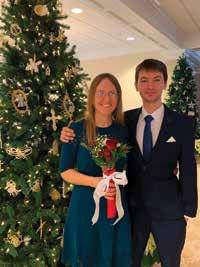
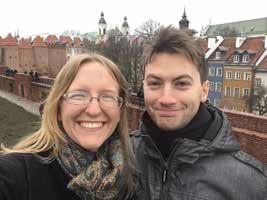
By Szymon and Ashley Glimasinski House Hosts at Welcome House Raleigh
he story of how an American woman and a Polish man became House Hosts at Welcome House Raleigh begins in a housekeeping closet, but first you need to know how we got to the closet.
Ashley was born and raised in Raleigh, NC attending Trinity Baptist Church. Not long after graduating from NC State University, she began teaching English and doing mission work in Japan and 11 other Asian countries. Her experience on the international mission field made her realize that the faith she had received as a child didn’t match the faith she was growing as an adult, and she felt the call to go to seminary and explore what God had to teach her. She returned to the U.S. to attend Fuller Theological Seminary in California where she heard about a summer opportunity to live, work and do missions in a national park.
Szymon was born and raised in a small town in Poland. He didn’t know much about different cultures until attending college in Krakow, a big city with a multicultural environment. That experience gave him an interest and “appetite” for learning new ways of experiencing the world. During college he had his first deep dive into a different culture through
summer jobs in Germany where he worked without knowing the language. However, his true and life changing decision was to go to the USA for the Work and Travel Program in a national park.
So there we were, an American and a Pole from opposite sides of the world, working in Glacier National Park at the same lodge, in the same job in housekeeping and in a place neither of us would have been if God hadn’t somehow put us there.
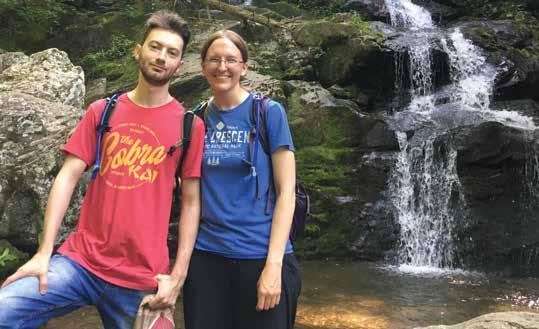
Szymon and Ashley hiking in Shenandoah National Park during their honeymoon.
We spent the summer working together, developing friendship and, many hikes and linen bags later, love. But summer ended fast and we were separated by miles of land and ocean; Ashley returned to California and Szymon to Poland. The only thing keeping our bond together was hope, persistence and love. We fought the nine-hour time difference and talked on the phone every day, but visas to visit each other were hard to come by and plane tickets were expensive for two graduate students. We were able to visit each other only twice in a year and a half; once in Poland and once in California.
When Ashley finished seminary, she took a leap of faith with a job teaching ESL in Poland and moved across the ocean to be in the same country as Szymon. After so many months of living separate lives, we finally got to share our days together—going on dates, cooking and eating meals together, visiting friends and family and so many other things that couples take for granted. All that time we’d spent in conversation prepared us for time together in-person and our relationship simply fell into place like it was meant to be.
A year later Szymon popped the question and Ashley said, “Yeaaah . . . maybe.” But she meant yes, in retrospect. We decided to move back to the U.S. to get married. We had no idea how difficult it would be.
When most couples get engaged, they start thinking about their wedding colors, venues and bridesmaids. Instead, we were thinking about government forms, background checks, interviews and being separated in different countries again. It’s hard to plan your wedding around a fiancée visa, because you don’t know when the visa will be granted.
Szymon’s visa was granted in December 2019, three months after Ashley had come back to the U.S. and eight months after we applied. We had 90 days to get married, so we had a simple ceremony at Trinity, Raleigh just two
weeks after he arrived in North Carolina. Even after all this, our immigration story wasn’t finished. Our next step was to apply for Szymon’s Green Card or permanent residency. It took us more forms, interviews and nine months of Szymon not being allowed to work in the U.S. before the Green Card was granted.
Somewhere in all the immigration chaos the world shut down due to COVID-19, and yet, with God’s grace we made it this far. Even during this unsettling time, we felt a call to missions and to help others who had struggled through immigration and intercultural communication. We heard that Welcome House Raleigh needed a new House Host and God’s plan just sort of fell into place.
We’ve both been outsiders, foreigners in a strange land: Ashley in Japan, Asia and Poland, and Szymon in the USA and Germany. We know what it’s like to not fit in, to not understand the customs or how to read signs and menus, to feel like a stranger even if you don’t look like one. It can be a difficult and lonely feeling, and it doesn’t just happen all at once on arrival.
Fortunately, in both of our situations, there were people to meet us at the airport, to give us a warm meal and a bed to sleep in. These same people and others reached out to us and kept checking on us to make sure we were okay, that we were comfortable and that we were adjusting to the new country and culture. Although we cannot begin to imagine what our Welcome House guests have been through before coming to the U.S., we can extend the same hospitality and care that was given to us. We pray that through our hospitality, we can make the adjustment a little bit easier and provide friendship and Christ-like love to those who step through our doors.
As House Hosts, Ashley and Szymon provide a welcoming space for newly arrived refugees at Welcome House Raleigh. They are live-in volunteers, providing consistent daily oversight of the ministry while encouraging safety and community among the guests .
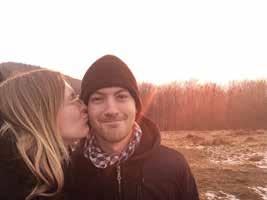
A mountaintop kiss in Poland.
Happily reunited in Warsaw, Poland.
The Glimasinskis’ wedding day.
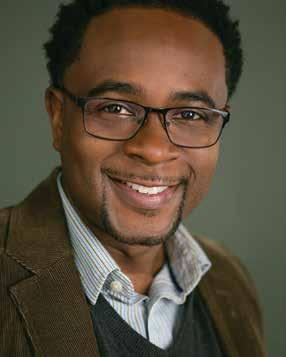
Jemar Tisby
A Workshop with on Race, Religion
and the Church’s Reckoning
The two-part, online workshop is sponsored by Stacking Stones Ministry, Helping Pastors Thrive and the Racial Equity & Justice Team of CBFNC.
This is an online (Zoom) workshop. Registration is required and is $10 for both sessions.
Part 1
Tuesday, May 18 | 7:00–8:00 p.m.
Part 2
Tuesday, June 1 | 7:00–8:00 p.m.
Jemar Tisby is the author of the New York Times bestseller, The Color of Compromise, president and co-founder of The Witness: A Black Christian Collective, and co-host of the podcast, “Pass The Mic.”
He grew up just north of Chicago and attended the University of Notre Dame. He went on to join Teach For America and was assigned to the Mississippi Delta Corps where he taught sixth grade at a public charter school and later went on to be the principal. He received his Master of Divinity from Reformed Theological Seminary and is presently working toward his Ph.D. in history at the University of Mississippi studying race, religion and social movements in the 20th century.
“The Church needs a carpenter from Nazareth to deconstruct the house that racism built and remake it into a house for all nations.”
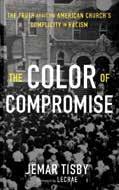
Participants will receive a copy of The Color of Compromise: The Truth About the American Church’s Complicity in Racism. (Zondervan, 2019)
Learning to Be COURAGEOUS CHRISTIANS
By Scott Hudgins Director of Helping Pastors Thrive
Jemar Tisby has become a leading voice at the intersection of race, history and religion in American life. His 2019 book, The Color of Compromise: The Truth about the American Church’s Complicity in Racism, landed in bookstores at a moment when many were searching to more fully understand the legacy of white supremacy and racism in America. It became a New York Times bestselling book in which he examines how people of faith, especially white congregations, participate in the ongoing inequities and injustices in society. His searing indictment is matched by his deep commitment to transformation and racial justice solutions that inspire action. His second book, How to Fight Racism: Courageous Christianity and the Journey Toward Racial Justice, speaks to that commitment by offering a range of steps and actions that people of
God’s Plan
By Kim Wyatt
CBF Field Personnel and Co-Founder of Welcome House
Ifaith may take to confront racism in our communities, our churches and in our own lives.
CBF North Carolina’s Racial Equity and Justice Team seeks to provide congregations helpful, practical resources to engage in the work of racial justice. The team sponsors educational events, such as the Jemar Tisby workshop, throughout the year to help churches build awareness of racism and its dehumanizing effects. A goal of the REJ Team is to bring individuals and churches together to learn from each other. In bringing people together, the team seeks to create a place where courageous Christianity is nurtured and together we are inspired and motivated to confront and address racism and white supremacy in our communities, our churches and our nation.
want to share the love of God in Christ Jesus with all the ESL students I teach. The problem is, they can’t fully understand the language required. So, I remain hopeful and patient. It may take many months—even years—to equip them with enough English to share the Gospel using words. It may take that and more to gain the trust necessary to share such world-changing good news.
And so, I pray for my students, especially for the one student who among many will one day be prompted by the Holy Spirit to say, “yes” to Jesus.
Because of the pandemic, we were forced to close our face-toface ESL classes last year. Instead, we transitioned to phone and computer platforms. This change has been very well-received. We went from 10 face-to-face classes weekly to 35 virtual ones!
Our student numbers and teacher volunteers have also increased. Because the classes are online, they can be held at a time that works best for both teachers and students. In the same way, students and teachers may live practically anywhere. We serve students across North Carolina. Teachers are volunteering from as far away as Asheville, New York and even central California.
One of the remote ESL teacher volunteers is a Christian married to an Afghan pastor. She speaks the dialects of Afghanistan. I am so happy that she has joined our ministry.
Recently, two of the Afghan ESL students I teach shared with me that they were leaving Raleigh. They are both moving to—wait for
it—central California! That’s right! Both moms are packing up their families and moving to the same city as my new ESL Teacher. The class is a bit sad that these special friends are moving to the other side of the country. But everyone is happy that they are moving close to their new ESL teacher and American friend that just so happens to speak their language and lives in California; it’s all God’s plan.
I must admit I didn’t consider this kind of answer to my prayers. God is so good!
Kim Wyatt teaching ESL classes to immigrants online.
By Jamie Rorrer CBFNC Director of Communications
“Job well done! This 2021 Gathering was done beautifully! After the marvelous closing sermon in which I found myself both ‘Amening’ and ‘tearing up,’ I can honestly say that this virtual meeting found its way into my heart and soul. I appreciate you all!”
–Jack Glasgow Senior Pastor at Zebulon, Zebulon
“Thank you and all CBFNC for a wonderful, virtual series of empowering and inspiring sessions today. Seeing folks, albeit from my chair here in Hobbsville, and worshipping together, has been invigorating. God bless you all. Looking forward to tomorrow, and all the days to come, utilizing these lessons as we connect with our community.”
–Gary Nistler Pastor at Sandy Cross,
Hobbsville
A Look Back at
For two days on March 18 and 19, the CBF North Carolina family enjoyed a wonderful time of worship, learning and fellowship through the Virtual 2021 Annual Gathering. The all-virtual format was a first in our history. We are so grateful to all those who worked hard to make it possible and to all those who took the time to engage with us.
Annual Gathering is by far CBFNC’s premier event and one of the most cherished things that we get to do as a fellowship. It is one of the ways through which we are working to build the beloved community as we seek to equip, embrace and engage CBFNC’ers.
While we missed gathering in-person this year, there were still aspects of Annual Gathering offered that many have come to expect over the years. There was engaging worship (both in word and in music), 17 informative workshops and several opportunities to connect with others across the state via Zoom.
More than 500 people registered to participate. Videos of the main sessions, Opening Plenary with Emily Hull McGee and Timothy Peoples and Closing Worship with Jerusha Neal, reached well over 1,000 views across multiple platforms. So though we were not able to be together physically, in many ways we were able to reach more people through the virtual format.
“. . .you will more than
Annual Gathering
2021
Additionally, we were blown away by the generosity of our fellowship in giving to the Annual Gathering Offering. Because of many of you, we surpassed our goal and raised over $20,000. We are so grateful for each dollar that was given and for the support that will enable CBFNC to remain your steadfast partner in the year ahead, innovating and adapting alongside you as we find our footing on the other side of this pandemic.
Annual Gathering 2021 was a big success thanks to many people! But don’t just take our word for it. Read some of the feedback we received from others:
ENOUGH Than More
The thing I most appreciate about CBFNC is its relevance—the pivot you referenced—and its authenticity. The gathering was just that— scripturally and theologically sound while being relevant to the changing season we are experiencing. Thanks for seeing to the details to make sure that it looked seamless to the rest of us. It was tremendous. I’m grateful for the ways CBFNC supports our church and the Kingdom of God.”
–Aileen Larimore Pastor of
Ecclesia, Fairview
always have than enough. . .”
“I know many people were involved with planning and implementing this Annual Gathering and I know the time for feedback will come. But I wanted to tell you after day one how meaningful it has been for me; one of the most memorable and enjoyable I can remember, despite it being virtual. From someone who is tired of virtual, who works with people who are tired of virtual and ministers to people who are tired of virtual, I really loved today. Every part of it was professionally done and included the right voices at the right time. So thank you and the staff of CBFNC for this.”
–Dane Jackson Minister with Students and Their Families at Providence, Charlotte
Recordings of Annual Gathering 2021 are available on our website, cbfnc.org
Meet Our New Moderator
Questions with Jeff Harris”
Do you have a hidden talent? If so, what is it?
I recently ran sound, while leading worship, while serving as host of the Zoom meeting.
What book are you reading now or have you recently read?
I’m currently re-reading Surprised by Hope (N.T. Wright). This was a formative read for me when I first read it over a decade ago and it’s making for good reading this Eastertide.
What’s been your favorite binge-worthy show/series this past year?
Jodi and I enjoyed season three of Ozark last spring and are currently awaiting the fourth and final season. Right now, I’m watching The Wire.
Where was the last place you visited?
As a celebration for being fully vaccinated, a good friend and I spent a couple of days fishing on the South Holston River in Tennessee.
What are you most looking forward to in a post-pandemic world?
I’m excited to devour the salsa bar at my favorite Mexican restaurant. Take-out Mexican food just isn’t the same.
During the CBFNC Virtual Annual Gathering in March, Jeff Harris was elected to serve as the new moderator of our Coordinating Council. He has been serving as moderator-elect for the past two years and been actively involved in CBFNC life for many more.
Jeff has served as the pastor of First, Tryon since 2009. His wife, Jodi, also serves First, Tryon as the minister of education and children. They have three children, daughters Harper (14) and Tilly (7), and son, Simms (11). When they are not at church, they enjoy playing outside and listening to live music. Jeff is a graduate of Appalachian State, Campbell Divinity School and McAfee School of Theology.
What do you do to “refill your tank?”
Fly-fishing is my favorite way to “refill the tank.” I love fishing for rising wild trout with dry flies on small mountain streams and floating the New River for smallmouth bass. My favorite fishing writer, John Gierach, explains: “I used to like fishing because I thought it had some larger significance. Now I like fishing because it’s the one thing I can think of that probably doesn’t.”
How would your friends describe you?
I hope they would describe me as dependable and kind.
Name something that makes you happy.
A Sunday afternoon nap is hard to beat, and I have had more than usual over this past year.
Name something most people don’t know about you.
I was an avid snowboarder when I was younger. When I was a student at App State, I would carefully arrange my spring semester so I could spend as much time on the mountain as possible. I even took a few eight o’clock classes because of this. I also lived in Winter Park, CO for a season, working evenings so I could ride every day.
What are you looking forward to as moderator of CBFNC?
I am looking forward to an in-person Annual Gathering! My fingers are crossed for 2022. Also, I’m looking forward to exploring what it means to be faithful disciples in this polarized world of ours.
By Ellen Sechrest Manager of Global Missions Engagement for CBF Global
WEncourager YOU an Are
hen we think of the word “encourager,” we are often reminded of someone who was kind to us and provided encouragement when we needed it most. Or maybe we think of a time that we ourselves were the encourager for someone during a challenging time. Churches can be encouragers, too, through CBF Global’s Encourager Church program, which is an important link between local congregations and field personnel serving throughout our country and world.
Cooperative Baptists have a long-held core value to appoint field personnel to locations where they can have a long-term presence. By doing so, their work develops long-lasting relationships, deeper connections with the community and the ability to partner with locals in the work they are doing.
The Encourager Church ministry was created to pair local congregations with field personnel to build both a partnership and to offer a reciprocal relationship of support. CBF Encourager Churches are an important component to the work of CBF field personnel around the world. Such relationships invite the church into a unique and intimate role in missions. It brings churches into the historic role of sending members of its body into the world as we cultivate beloved community, bear witness to Jesus Christ, and seek transformational development.
would be more interested in: medical, refuges, church/ community development, teaching, immigration, poverty, food sustainability, etc. Then, after a prayerful time of discernment and more conversation, the church selects the focus area. The next step is to identify which field personnel best fits their interest.
Once a church has looked at the ministry opportunities and selects the field personnel unit to partner with, we initiate an email conversation and schedule a video meeting. This meeting helps both the church and field personnel learn more about each other, what the desired relationship will look like, how the church can undergird the work of the field personnel, how the field personnel can help the church understand the needs of their community and what support the church can offer.
Encourager Churches typically offer three financial components to this work: gifts to the on-going work of CBF (in the areas of Young Baptists, Advocacy, Diversity, Identity, Chaplaincy, Global Missions, etc.); gifts to the OGM (Offering for Global Missions, which provides presence on the field); and then the Encourager church gift that helps fund the specific ministries of the field unit. I often refer to the Encourager Church gifts as the “grandparent” funds that allow the field personnel to share the love of Christ in so many creative ways in their ministry settings.
So how does the Encourager Church ministry work?
When CBF churches are looking to deepen their mission support, they contact our Global Missions department. We begin with a conversation about the church’s strengths, mission involvement, desire to expand their mission presence, levels of CBF funding and their interest to become an Encourager Church. There is also information on our website at www.cbf.net/encourager-church.
After the initial conversation, we often meet with the missions committee (if there is one), the church staff or the missions point person. We then begin to narrow the focus of what type of ministry would make for a good partnership for the church and what area of focus the congregation
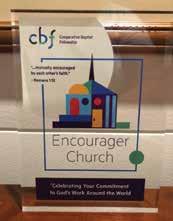
After a church has decided to become an Encourager Church, we establish a covenant between the congregation and field personnel unit. This usually includes a signing ceremony with a representative from the church, the field personnel (in-person if possible or by video) and myself or another CBF staff member. We present the congregation with the Encourager Church award to represent the covenant relationship between the church, field unit and CBF.
We are grateful for the work of CBFNC and the partnership with CBF and the Encourager Church ministry. Currently there are about 15 churches in the state of North Carolina who serve in an Encourager Church role.
Is your church ready to be an Encourager Church? Contact me at esechrest@cbf.net and let’s get started.
Encourager Church Spotlight: Mount Pisgah Fayetteville
By Scot & Paula McCosh Senior Pastor & Associate Pastor at Mount Pisgah, Fayetteville
Acountry church with a global impact. That’s the vision we had upon arrival at Mount Pisgah nearly 10 years ago. Our location, just off I-95 next door to Fort Bragg in Fayetteville, places us half-way between New York City and Miami. Therefore, we can easily connect with a majority of the U.S. population and folks from around the world. Yet, outside of our support of deployed soldiers and chaplains, we didn’t have a personal connection to CBF field personnel beyond our borders.
Enter Matt and Michelle Norman, CBF Field Personnel
Currently, the Normans are Cooperative Baptist Fellowship field personnel serving in Barcelona, Spain. The city has seen diverse growth in population, including large numbers of refugees and immigrants from around the world. The Normans are engaged in ministry to assist local churches in connecting with their secular community as well as welcoming immigrants and refugees.
Before they were serving in Spain, the Normans were right here in North Carolina and our congregation had the joy of hosting them at the parsonage as they came to share their story with us. Our congregation fell in love with their joy and exuberance. A partnership was formed and an
Encourager Church covenant was signed. But we weren’t sure what would happen next.
We committed to what financial support we could collectively give and also challenged families and individuals to share additional support. We knew we would stay in touch, be in prayer for the Normans’ work ahead and continue to tell their story. What we weren’t expecting was to send a team to partner with them and to watch it transform our outreach right here at home.
Paula, who served on the former CBFNC Missions Council, knew that the Normans were open to hosting small teams to see their work and to learn from it. She challenged our congregation to send a team. Much like we see in Jesus’ final ministry and moments, three women stepped up to join her, two of whom were senior adults. Matt, Michelle and Paula hatched a plan to have our team assist them with a Vacation Bible School-type ministry where our team’s crafting skills would compensate for their lack of knowledge of the local language.
Scot McCosh catches up with Michelle Norman.
A Mount Pisgah member and local children ready to board the church bus.
When they arrived in Spain, our team was greeted warmly and the two youngest ladies settled into their rooms to rest after the flight. The seniors, though, were so excited to be somewhere new that they dropped their bags and ventured out into the town on their own, learning what it’s like to be a foreigner in a distant land. Those few hours were the start of a journey that would change our congregation’s view of our own community.
The team had a great week in Spain, forging friendships and seeing God’s movement in ways and places they’d never imagined. As they shared their stories with the rest of us when they returned, a contagious energy infected the collective with a desire to use their experience as a catalyst in our own community.
Having experienced what it’s like not knowing the language and culture of the place in which you’re living and working, a stirring began to reach out to a local mobile home park just down the road from our church, which is occupied by Spanish speakers from all over Latin America. Through some serendipitous connections we were soon offering kids clubs in the mobile home park, filling our church bus up twice a week and building relationships with our international neighbors. What started as an Encourager Church trip became an Encouraged Church transformation!
Encourager Church Spotlight: Hominy, Candler
By Melissa Hughes Pastor of Families Hominy, Candler
What does it mean to be an Encourager Church for our CBF field personnel? Hominy wanted to know more and started asking questions about this unique opportunity early last year.
Supporting global missions is something that our congregation has done very well throughout its history. From generation to generation, our members have heard the stories of missionaries who are spreading the love of Christ in our country and around the world. We have partnered with many individuals and families including Bill and Audrey Roberson who served in Vietnam. We have invited missionaries to speak in our church whenever possible and have given monetarily to foreign and domestic mission opportunities each year. Our children have studied missionaries and their families on Wednesday nights and have raised money to build wells in a place they have only visited in photographs.
Several years ago, our children studied about Gennady and Mina Podgaisky who serve in Kyiv, Ukraine. When they were on leave in the USA at that time, we invited them to our church to share their story and were immediately drawn to their sweet and caring disposition.
Our field personnel partners who live at the crossroads of the world helped us to see that we too live at a major crossroads and that, like them, we’re called to engage our global neighbors with Good News.
As COVID-19 locked down Spain in 202021, we’ve fervently prayed for our ministry partners and saw through their journey just how dangerous the pandemic could be. Their responses encouraged us to take the virus seriously and once again positively impacted our ministry here in North Carolina. Being an Encourager Church for us has meant being an Encouraged Church, whose eyes, hearts and hands are opened to a broader world and a bigger God. You can learn more about the Normans’ work in Spain at cbf.net
We found out that they were back in the U.S. in January 2020 and we knew that we had to have them in our sanctuary again. They led our adult Bible study and Gennady preached during worship, sharing all about their mission at Village of Hope in the Ukraine. Those who were there that morning were so blessed and encouraged by their words that becoming an Encourager Church seemed like the next logical step. So we began the process of making it official.
But by March, our plans were soon put on hold because of the pandemic. Though we haven’t been able to do the things we had planned, that hasn’t stopped our love, prayers and support for this amazing family. We hope that in the coming months and years we can learn more about what it means to be an Encourager Church and help them fiscally and physically as they share the love of Christ halfway around the world.
Since December 2002, Gennady and Mina Podgaisky have been serving in Kyiv, Ukraine. They facilitate the ministries of the Village of Hope, a ministry center that assists foster families. Learn more about their ministry at cbf.net.
An Encourager Church ceremony.
IBy Marc Wyatt CBF Field Personnel and Co-Founder of Welcome House
n February, the President signed an executive order that would increase the number of vetted refugees resettled in the United States to 125,000 for fiscal year 2022. The year begins October 1, 2021. President Biden went on to say that he wanted to consult with Congress “about making a down payment on that commitment as soon as possible,” hinting that he may act to raise the current 15,000 cap issued by the previous administration, which is the lowest number set for refugee admissions in American history.
This news was received with great optimism across the U.S. refugee resettlement non-profit spectrum. In North Carolina, CBF Field Personnel Kim and Marc Wyatt, founders of Welcome House, have been busy preparing for the ramp up. Carolyn McClendon, manager of Welcome House Raleigh, and her staff have also been busy making preparations to welcome new guests.
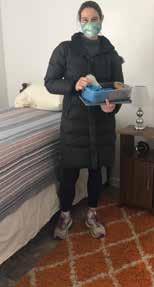
There’s a lot of excitement around Welcome House. Welcome House staff and volunteers have given the five-bedroom guest house, owned by Crabtree Valley, Raleigh, a thorough spring cleaning. Every room has been sanitized by our hospitality team, which is made up of vetted and trained volunteers from local partner congregations.
It was work of joy often accompanied by the sweet sounds of singing around the house while folks worked. If it was broken, we fixed it. If it was old, we’ve replaced it. Most of the repair work was done by our heroes, the Westwood Baptist Church handyman crew. In 2019, under Senior Pastor Tom Ogburn’s leadership, Westwood, Cary became a CBF Encourager Church for our ministry. We continue to be inspired by our friends who so generously support this mission to provide Christian hospitality to our refugee neighbors.
We are now ready for guests to begin arriving in greater numbers. Our most recent guest, an Iraqi refugee, moved out of Welcome House in January marking the 425th guest we have hosted since the ministry’s launch in 2015.
Excitement to welcome more immigrant neighbors is also building in the form of donations. We’ve had to rent more storage space because of
the donations of lightly-used household items coming in daily. Pat Dunn and her church, Immanuel, Greenville, hosted a donation drive in February where they collected household cleaners, personal hygiene and kitchen items. Many of these items were used to set up two apartments for two arriving refugee families. Pat emailed a week later to say she was coming back with another vanload of things because her church family doesn’t want to stop.
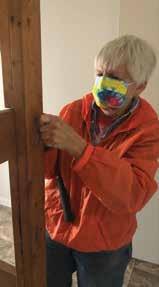
Most days, Marc can be found in his pick-up truck zigzagging around the Research Triangle collecting lightly-used household items from supporters of Welcome House. We’ve had to install Covid protection protocols in this effort where donors send in pictures of their items. They either bring their items to our storage facility, or a curbside collection is made. Volunteers help with the move-in and set-up, wearing facemasks and adhering to social distancing protocols. There is always great joy shared by all as the Welcome House or apartments are transformed into “home sweet home” for those who have lost theirs.
According to Dr. Scott Phillips, executive director of the U.S. Committee for Refugees and Immigrants (USCRI) North Carolina Field Office and our main agency partner in Raleigh, they are expecting approximately 130 refugees to begin arriving between now and the 2022 fiscal year that begins in October. USCRI is one of four Research Triangle regional agencies; and altogether, we expect approximately 400 refugees to arrive this year. Beyond the Raleigh area, the Triad and metro Charlotte areas are the primary urban resettlement locations in North Carolina. Prior to 2017, refugee agency affiliates located in Asheville, New Bern and Wilmington received vetted sponsored refugees. We expect these satellite programs will begin welcoming refugees the last quarter of 2021, so now is the time to prepare.
Join the welcome by contacting the Wyatts at wyatt@cbf.net and learn more at WelcomeHouseRaleigh.org.
PICTURED ON PAGE 14: (top) A family from Wilmington donates a U-Haul full of home furnishings to the Welcome House ministry; (middle left and right) Volunteers set up bedrooms for anticipated refugee families; (bottom left) Cleaning supplies donated by Immanuel, Greenville used to set up apartments for the arrivals of refugee families in Raleigh; (bottom right) Welcome House Raleigh Manager Carolyn McClendon organizes the kitchen for the next guests.
MINISTERS ON THE MOVE
Our encouragement and support go to the following ministers who have recently moved:
Graham Byrum to First Baptist, Farmville as Pastor
David Phillips to First Baptist, Black Mountain as Pastor
Matt Riggsbee to First Baptist, Hillsborough as Pastor
Harry Workman to First Baptist, Wadesboro as Pastor
When you make a move or know of someone who has changed places of ministry, please send us an email: seth.hix@cbfnc.org.
For assistance to search committees and ministers seeking vocational discernment, visit the Equip Ministers and Churches page on our website (cbfnc.org) or call us at 336.759.3456.
CBFNC HONORARY & MEMORIAL GIFTS
January – March 2021
Kathy Driver in honor of CBFNC ministry staff, Larry Hovis, Seth Hix, Mary Kaylor, Wanda Kidd, Scott Hudgins, Santiago
Reales and Andy Jung whose approach to ministry engages and encourages lay persons to become partners in creating and sustaining the Beloved Community.
Jane and Jerry Myers in honor of Andy Jung
Lisa and Kenneth Rust in honor of Marc and Kim Wyatt
Deborah and Donald Cherry in honor of Anna Cherry
Belle Allen in honor of Gwen and Steve Canady
Carol Polk in honor of Larry and Kim Hovis
Candace and Douglas Murray in honor of Jack Causey
Henry Skinner in honor of Dr. Chris Thomas
Jennifer and Seth Asbill in honor of Jessie Croom
Carolyn Purcell in honor of Jack Causey and memory of Mary Lib Causey
Hanna and Scott Hagaman in honor of Jack Causey
Linda Denney in honor of Becky Keesler
John Vestal in memory of Cindy Vestal
Katherine Kiger in memory of Betty Jane Mullikin Stanley
Susan Corbitt in memory of my Girls in Action leaders at Hester
Baptist Church
Phyllis Edwards in memory of Dr. James Murphy
Priscilla and John Singletary in memory of Mozelle Marshall
Lindsay and Joshua Owens in memory of Rev. Roger White
John Tayloe in memory of Rev. Ronald McSwain
Harriet and David Whiteman in memory of Rev. Henry Stokes
Linda and Frank Leonard in memory of Rev. Reginald Dawkins
R. Carroll Sasser in memory of Carmen B. Sasser
Carol Dunning in memory of Bill Dunning
Susan and Larry Vestal in memory of Robert R. Williams
www.cbfnc.org
NC 27106 Bringing Baptists of North Carolina Together for Christ-Centered Ministry
Return Service Requested
A Look Ahead . . .
MAY
A Workshop with Jemar Tisby on Race, Religion and the Church’s Reckoning
(A 2-Part Workshop Series) May 18 (& June 1)
JUNE
Presentación De La Palabra: La Predicación Expositiva Contextual (Extending The Word: Contextual Expository Preaching) (May 11, 18, 25 &) June 1, 8, 15
A Workshop with Jemar Tisby on Race, Religion and the Church’s Reckoning (A 2-Part Workshop Series)