CATHOLIC CONNECTION
The Fire of the Spirit
The Fire of the Spirit
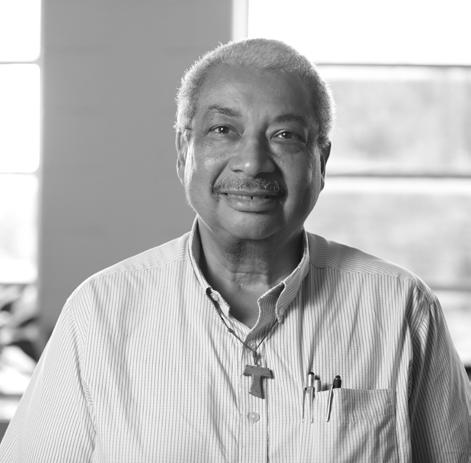
Bishop Francis I. Malone
EDITOR
Sophia Romanski White



Volume 35 Number 10
THAT EVERYONE MIGHT HAVE FOOD.
Let us pray that everyone, from large producers to small consumers, be committed to avoid wasting food, and to ensure that everyone has access to quality food.
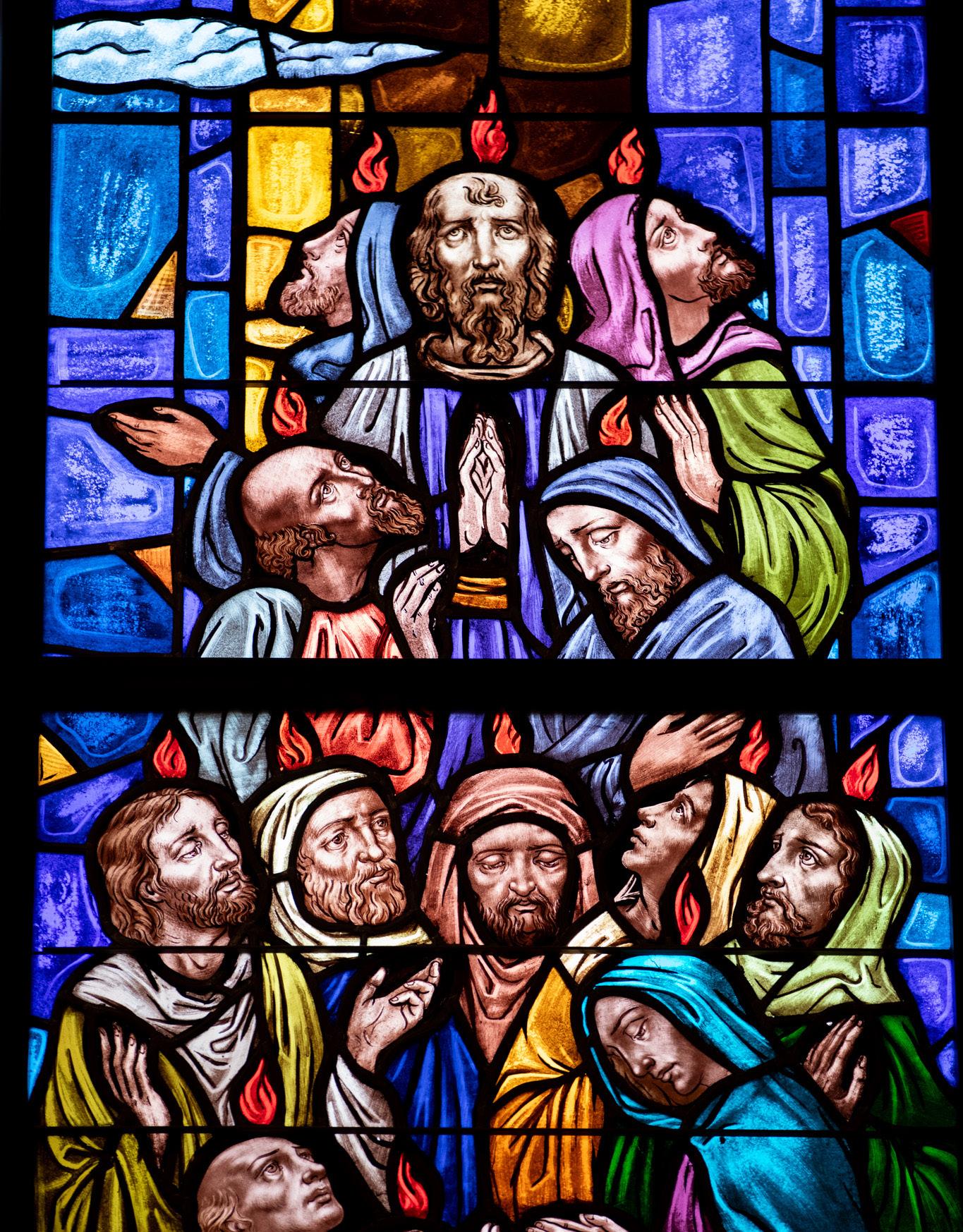
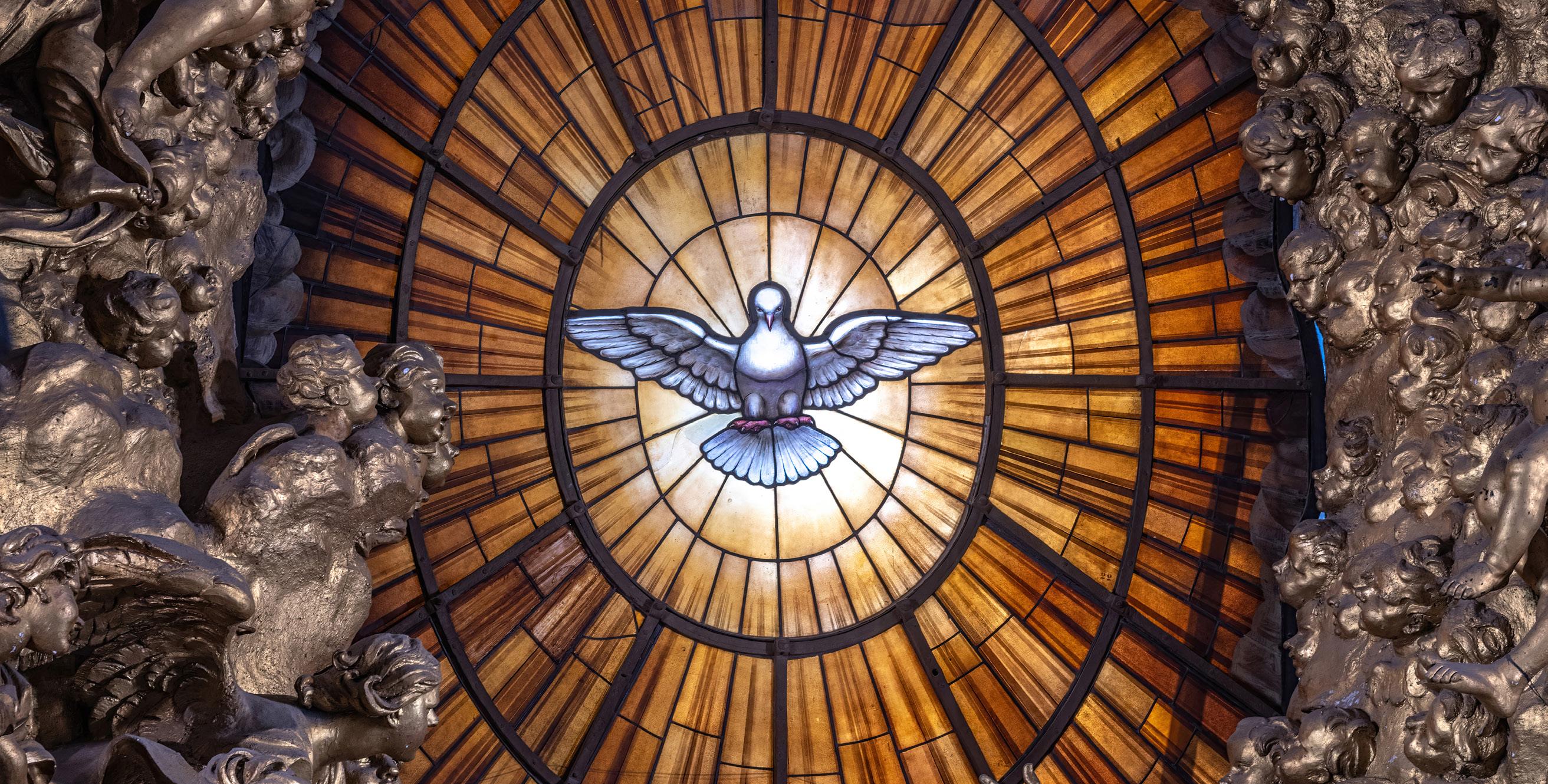
Cover photo: Stainded glass window depicting the Solemnity of Pentecost, in which the Holy Spirit descended upon the apostles and the Blessed Mother. St. Joseph Catholic Church, Shreveport.
Photo by Sophia Romanski White
SUBSCRIPTIONS & ADDRESS CHANGES
Blanca Vice bvice@dioshpt.org 318-868-4441
SUBMISSIONS
Sophia Romanski sromanski@dioshpt.org
The Catholic Connection is a member of the Catholic Media Association
The Diocese of Shreveport complies with Virtus' Protecting God's Children program (www.virtus.org). Online sessions are available. To report child sexual abuse by a cleric or church worker in the Diocese of Shreveport, call your local law enforcement agency and Mary Arcement Alexander, Diocesan Victim Assistance Coordinator at 318-588-2120. Thank you for helping to keep our children and vulnerable adults safe.
The Catholic Connection is funded in part by a grant from the Catholic Home Missions Appeal and donations to the Catholic Service Appeal.
MISSION STATEMENT
The Catholic Connection is a monthly publication funded by your Catholic Service Appeal, mailed to every known Catholic household in the Diocese of Shreveport. Our mission is to advance knowledge and understanding of our Catholic faith among the faithful. We seek to foster the application of Christ's teachings and our Church's mission in our daily lives and to encourage our sense of Catholic identity within our family, parish, and faith community.
Karla Alvarez
Dr. S. Germain Cassiere
Karen Dill
Amy Fakhre
Kerri Frantz
Diane Libro
Lisa Marcalus
Lucy Medvec
Lisa Miller
Jennifer Nix
Dr. Laurie Salvail
Tracie Stroud
Noemi Saybe
Very Rev. Mark Watson
Mike Van Vranken
MAY 16 & 17 CATHOLIC COMMUNICATIONS
CAMPAIGN
The CCC helps the Church spread the Gospel message through the media locally and nationally. Half of all donations collected stay in our diocese to support our local communications needs while the other half supports Catholic communicators at the national level via websites, social networks, television, radio, and print.
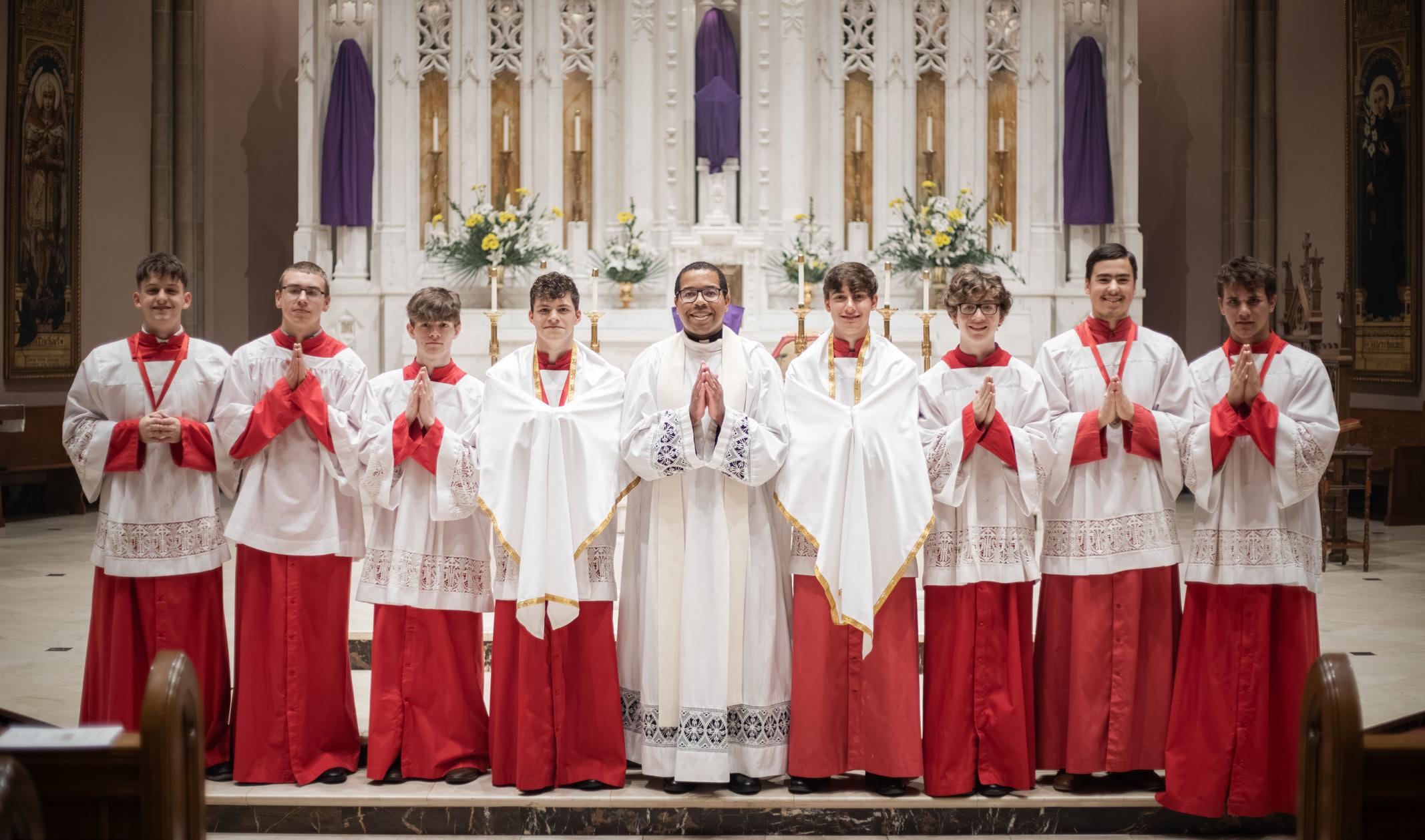
Confirmation; St. John the Baptist Church, Many; 4:00 PM
Fr. Rigoberto Betancurt Cortés
Confirmation; St. Pius X Church; Shreveport; 11:00 AM
Fr. Karl Daigle
Confirmation St. Joseph Church; Mansfield (Candidates from St. Ann Church, Stonewall); 6:00 PM
Confirmation; Our Lady of the Blessed Sacrament Church; Shreveport; 5:00 PM
Red Mass; Holy Trinity Church; Shreveport; 9:00 AM
of
Confirmation; St. Joseph Church, Shreveport; 6:00 PM
Mass; Our Lady of Fatima Church, Monroe; 9:00 AM: Confirmation; Jesus the Good Shepherd Church, Monroe; 11:00 AM
Confirmation; St. Thomas Aquinas Church, Ruston; 5:00 PM
Memorial of St. John I
Confirmation; St. Mary of the Pines Church, Shreveport; 1:00 PM
Memorial of Our Lady of
Feast of St. Matthias the Apostle
St. Frederick High School Baccalaureate Mass; Jesus the Good Shepherd Church, Monroe; 5:00 PM: St. Frederick High School Graduation; Jesus the Good Shepherd Church, Monroe; 6:00 PM
of St. Bernardine of Siena
Fr. Calistus Barasa
Loyola College Prep Board Meeting; St. Vincent’s Hall, Loyola College Prep Campus, Shreveport; 5:15 PM
Memorial of St. Philip Neri
Earl Provenza
Confirmation; Our Lady of Perpetual Help Church, Farmerville; 6:00 PM
Feasts & Solemnities Priest(s) in the Diocese of Shreveport to pray for daily
SUGGESTED PRAYER FOR OUR PRIESTS:
Gracious and loving God, we thank you for the gift of our priests. Especially ___________________________________ (insert name(s) here) Through them, we experience your presence in the sacraments. Bishop Malone's Calendar Special Events in the Diocese of Shreveport
of St. Augustine of Canterbury
Memorial of St.
& Companions
6:00 PM
Confirmation; St. Joseph Church, Zwolle; 6:00 PM
Help our priests to be strong in their vocation. Set their souls on fire with love for your people.
Grant them the wisdom, understanding, and strength they need to follow in the footsteps of Jesus.
Inspire them with the vision of your Kingdom.
Give them the words they need to spread the Gospel.
Farmer’s Market Grand Opening Bake Sale Fundraiser 1700 N 7th St., West Monroe, LA, 9:00 AM - 3:00 PM
Allow them to experience joy in their ministry.
Help them to become instruments of your divine grace.
We ask this through Jesus Christ, who lives and reigns as our Eternal

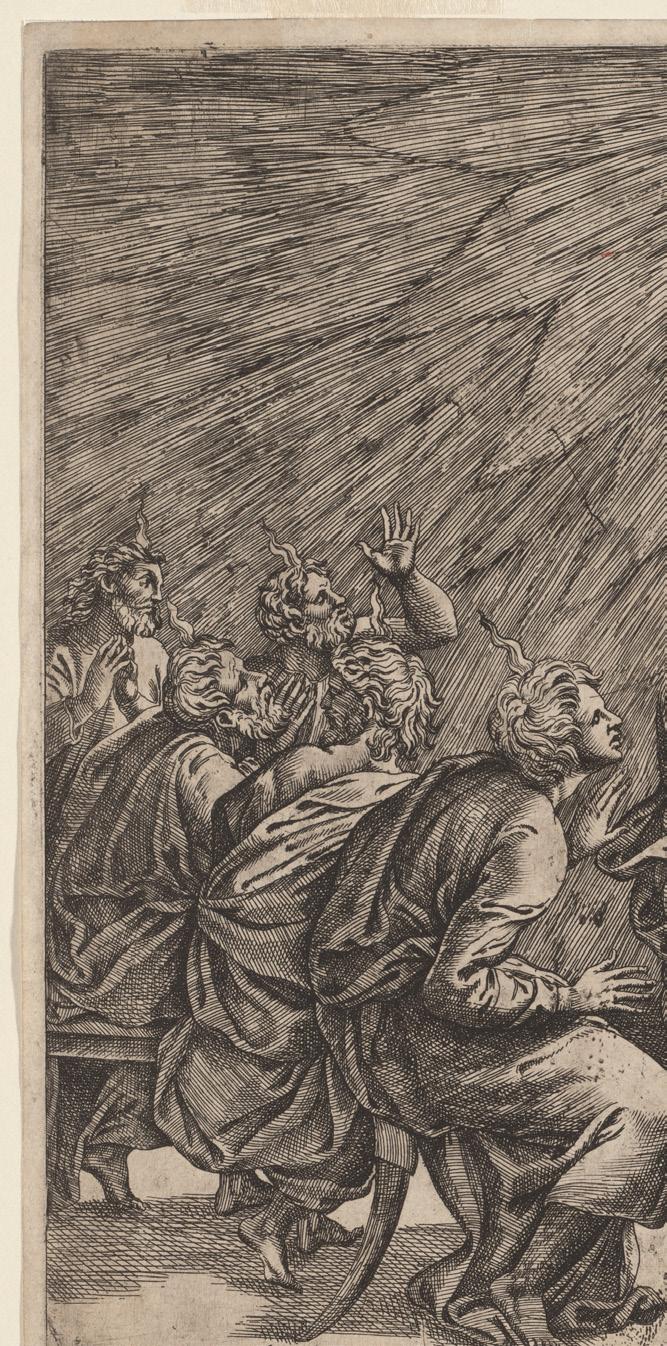
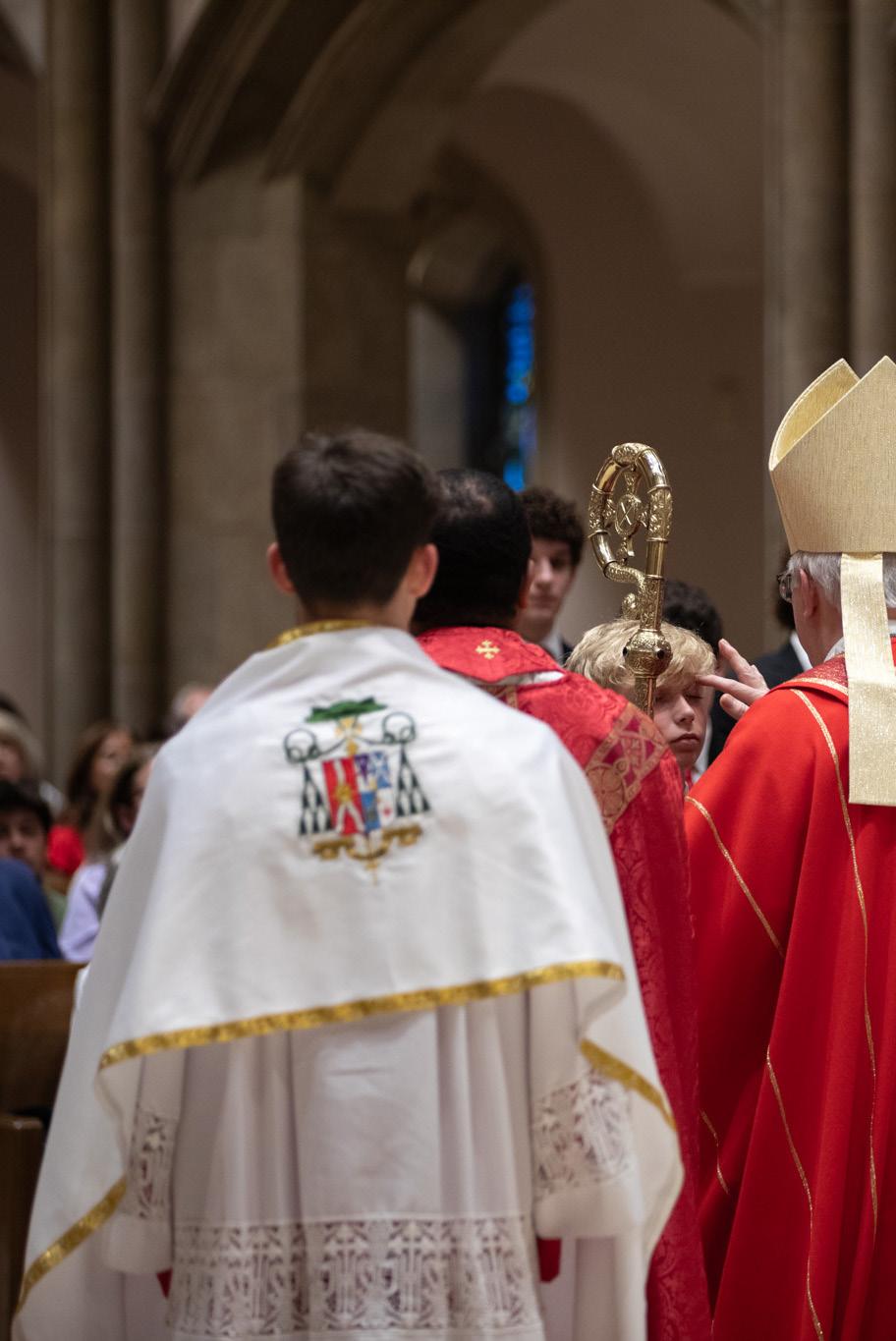
Not a Graduation, but a Fire Dr. S.G. Cassiere returns with more Thoughts from the Pew, reflecting on the sacrament of Confirmation and what it means to reveive the Holy Spirit.
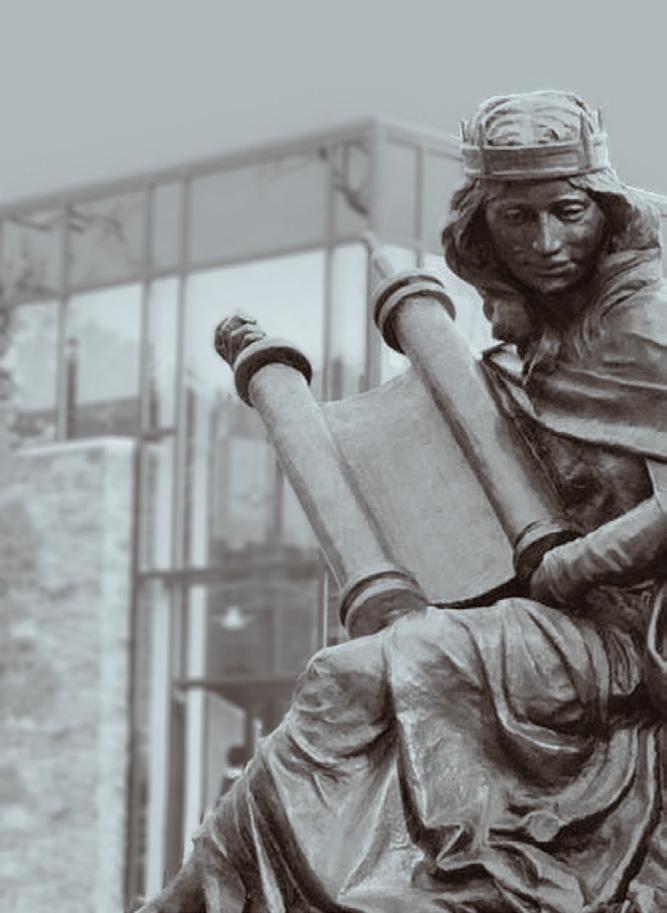
Very Rev. Mark Watson on the Church’s relations with other religions, especially Judaism, and how we as Catholics are called to open dialogue with our brothers and sisters of other faiths.

“When he proclaims and promises the coming of the Holy Spirit, Jesus calls him the ‘Paraclete,’ literally, ‘he who is called to one’s side,’ advocatus.” (CCC 692)
This line from the Catechism of the Catholic Church is at the beginning of a long, complicated exploration of who and what the Holy Spirit is. This definition of the Spirit as an advocate, and, later in the same paragraph, a consoler, is the one that spoke to me as I worked on this month’s issue.
I ask myself often what this magazine needs to be in order to best serve the people of our diocese. What do people want to see? What do they need to see? How can I best communicate the message of the Gospel through this medium?
Funnily enough, I very rarely have the answers. But someone else does.
God knows what you all need from this publication. He knows how my talents can best help you. He sees me floundering about and, even when I neglect to ask for his help, shows me the right direction. There is no way this magazine gets made every month without divine intervention. This month, as the print deadline loomed, I tried to actively turn toward the Spirit instead of just relying on my own abilities to bulldoze my way to the finish line. I’ll leave you all to decide if this month is better than usual, but I am certainly more confident in the Holy Spirit than in myself.
Jesus gave us the Spirit to help and guide us on our mission. He’s there for us, to advise us, console us, and walk with us on our journeys. Remember to turn and talk to him this month. He’s right there, called to your side, walking right next to you every day. 18
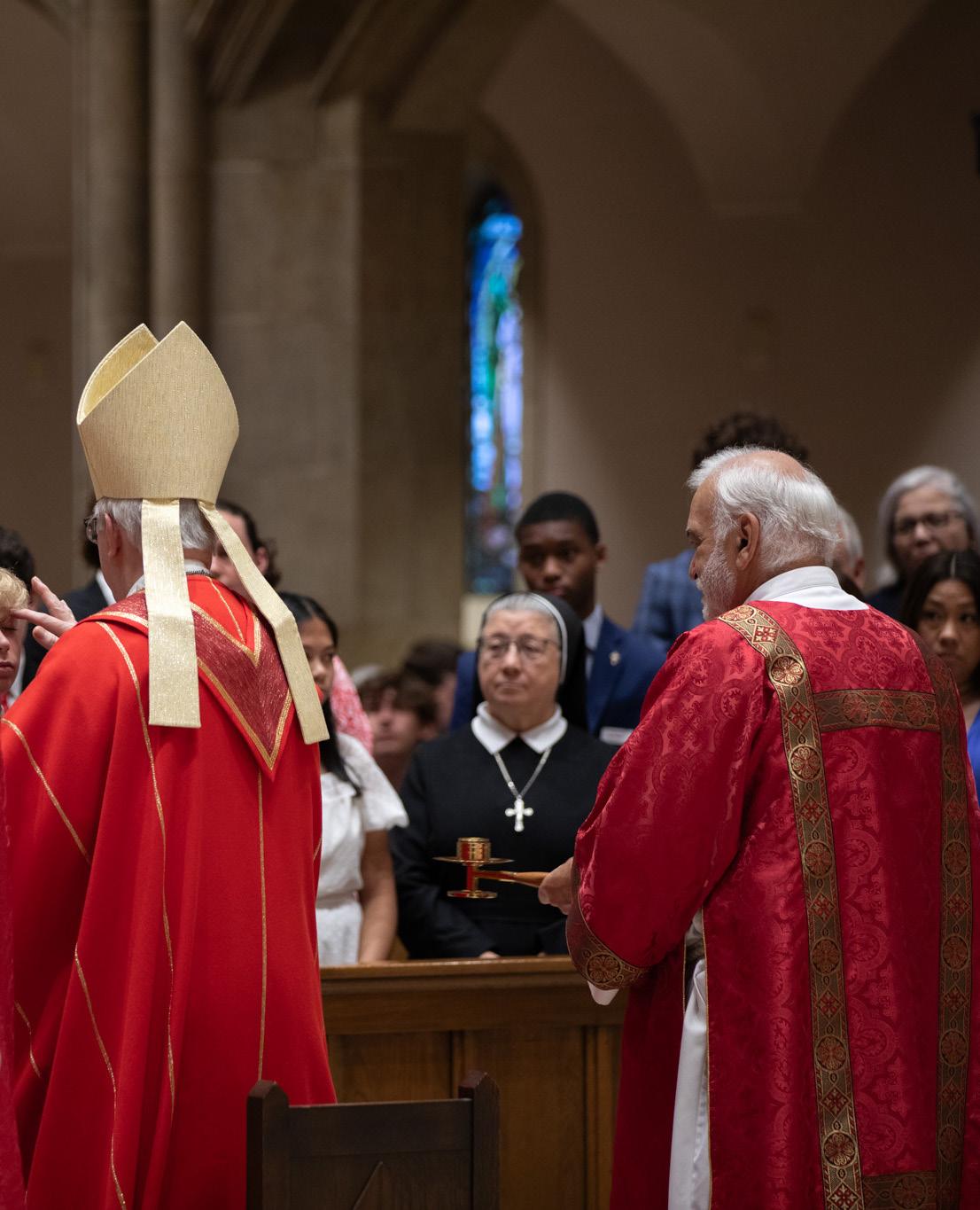
On the afternoon of November 18, 2019, I was driving the first of many trips from Little Rock to Shreveport. My passenger was my bishop – the bishop of Little Rock – as we headed to Shreveport for the formal announcement of my appointment as Bishop. With a three-hour drive, Bishop Taylor and I had a lot of time to talk, and I had many questions for him about this new venture in my life. The one I recall most clearly was, “What do you enjoy the most about being a bishop?” I fully expected him to say, “When I get to ordain a man to the priesthood.” But instead, he immediately answered, “What I enjoy the most is when I confer the Sacrament of Confirmation.”
Now, I had confirmed many people over the years as a pastor (with special dispensation), and they were joyful events – but as a bishop, I would possess the fullness of the Priesthood, and confirmations would become a normal part of my ministry.
We bishops refer to the liturgical season of Easter through the month of June as the “Confirmation Season.” Most of our parish confirmations occur then, and although I cannot recall exactly how many confirmations
I conferred during the last six-plus years, I most assuredly repeat Bishop Taylor’s sentiments: I think I enjoy confirmations the most.
In response to my “follow-up” question of “Why were confirmations the most enjoyable?” he cited the joy he witnessed in the faces of those about to be confirmed. I have absolutely witnessed that joy unmistakably present in the faces, eyes, and voices of those I confirmed.
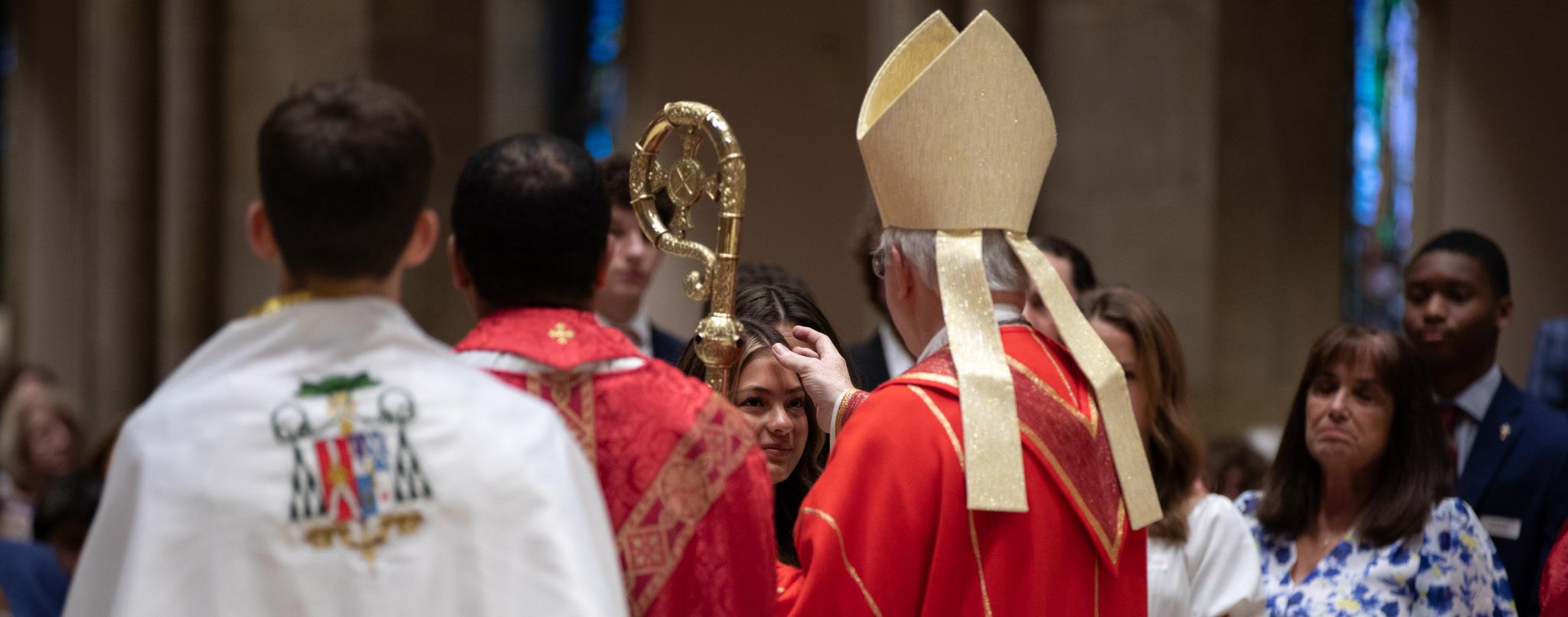
My practice is to arrive a half hour or so early to spend that time with those about to be confirmed. We talk over the ceremony, so I can try to alleviate nerves they might have beforehand. I always recount the ride with my bishop and his take on the sacrament. And I emphasize that this sacrament is an “unrepeatable” moment in their lives – I want them moving beyond distractions to focus solely on the power and presence of God’s Holy Spirit. Mentioning the seven gifts they are about to receive, I remind them how, in His own way, God is going to change them that day; admitting I have no idea in what way they will be changed, only that through the Holy Spirit they will be changed –and they must be open to whatever transformation God wills for them.
Most of you readers were already confirmed – you received the gifts of the Holy Spirit and possess the transforming “fire” of that Spirit in your lives. The question for you and me, then, is: how aware are we, years and years later, of the presence and power of that Spirit imparted through the hands of the bishop? How often do we call upon the Spirit with ALL of His power to change us, transform us, and give us needed direction and answers? Or have we forgotten? I tell the candidates that God is ready to answer our prayers and help us through the most difficult times. All we have to do is place our prayers before Him and wait for His answer.
An important part of this sacrament is that it IS unrepeatable. The Holy Spirit never leaves us once we receive Him, and oh, how powerful is His touch! Might I suggest that, whether your confirmation is this year or was fifty years ago, you use this Easter season, this Confirmation season, to call upon God’s Spirit to refresh the daily and forever presence of God’s Spirit in your life here and now! Come Holy Spirit!

En la tarde del 18 de noviembre de 2019, conducía el primero de muchos viajes de Little Rock a Shreveport. Mi pasajero era mi obispo —el obispo de Little Rock— y nos dirigíamos a Shreveport para el anuncio formal de mi nombramiento como obispo. El trayecto dura unas tres horas, así que el obispo Taylor y yo tuvimos mucho tiempo para conversar. Yo tenía muchas preguntas que hacerle sobre esta nueva etapa en mi vida. La pregunta que recuerdo con mayor claridad fue: “¿Qué es lo que más disfruta de ser obispo?” Esperaba plenamente que dijera: “Cuando puedo ordenar a un hombre al sacerdocio.” Pero esa no fue su respuesta. Dijo, inmediatamente: “Lo que más disfruto es cuando confiero el sacramento de la Confirmación.”
Como párroco, había confirmado a muchas personas a lo largo de los años, y eran momentos llenos de alegría; pero ahora sería obispo, y al poseer la plenitud del sacerdocio, las confirmaciones se convertirían en una parte normal de mi ministerio.
Nosotros, los obispos, nos referimos a la temporada litúrgica desde la Pascua hasta el mes de junio como “la temporada de Confirmaciones”. La mayoría de nuestras confirmaciones parroquiales ocurren entonces, y aunque no puedo recordar exactamente cuántas confirmaciones he conferido en estos más de seis años, puedo repetir con total seguridad el sentir del obispo Taylor: creo que lo que más disfruto son las confirmaciones.
Cuando le hice una pregunta de seguimiento —“¿por qué las confirmaciones son lo más agradable?”— mencionó la alegría que veía en los rostros de quienes estaban a punto de ser confirmados. Yo he sido testigo de esa alegría, claramente visible en los rostros, en los ojos y en las voces de aquellos a quienes he confirmado.
Tengo la costumbre de llegar unos treinta minutos antes, y dedico ese tiempo a estar con quienes van a ser confirmados. Repasamos la ceremonia para tratar de aliviar cualquier nerviosismo que puedan sentir de antemano. Siempre les cuento sobre aquel viaje con mi obispo y su perspectiva sobre el sacramento. Enfatizo que este sacramento es un momento “irrepetible” en sus vidas. Quiero que dejen de lado cualquier distracción y se concentren en la poderosa presencia del Espíritu Santo de Dios. Menciono los siete dones que están a punto de recibir y cómo, a su manera, Dios los va a transformar ese día. Les digo que no tengo idea de cómo serán transformados, solo que, por medio del Espíritu Santo, SERÁN transformados —y deben estar abiertos a cualquier transformación que Dios quiera para ellos.
La mayoría de ustedes ya ha sido confirmada. Han recibido los dones del Espíritu Santo y poseen el “fuego” transformador de ese Espíritu en sus vidas. Sin embargo, queda una pregunta:
¿qué tan conscientes somos, años y años después, de la presencia y del poder de ese Espíritu impartido por las manos del obispo? ¿Con qué frecuencia invocamos al Espíritu con TODO su poder para que nos cambie, nos transforme y nos dé dirección y respuestas? ¿O lo hemos olvidado? Les digo a estos candidatos que Dios está listo para responder nuestras oraciones y ayudarnos en los momentos más difíciles. Todo lo que tenemos que hacer es poner nuestras oraciones ante Él y esperar su respuesta.
Una parte importante de este sacramento es que ES irrepetible. El Espíritu Santo nunca nos deja una vez que lo recibimos, ¡y cuán poderoso es su toque! Permítanme sugerir que, ya sea que su confirmación sea este año o haya sido hace cincuenta años, aprovechen esta temporada de Pascua, esta temporada de Confirmaciones, para invocar al Espíritu de Dios y renovar la presencia diaria y permanente de su Espíritu en su vida aquí y ahora. ¡Ven, Espíritu Santo!
Para obtener más información sobre las oportunidades del Ministerio Multicultural en la Diócesis de Shreveport y para encontrar nuestros horarios y lugares de misa en español, por favor escanee el código aquí.


If you’re needing a little dose of grace and mercy today (and who doesn’t?), you need go no further than the southern stretch of Line Avenue. In front of a neat, little, gray cottage on the street’s eastern side, you’ll see a sign announcing “Grace and Mercy: Christian Gifts.” Inside, you will find a colorful array of meaningful gifts and décor for any occasion: baptisms, weddings, First Communions, confirmations, and birthdays. Introduce yourself to Allyson and Timothy Lawson, the store’s owners – they’ll gladly share their testimony of how the Holy Spirit led both to change careers and open a Christian gift shop.
Their friend Cindy “birthed” the Catholic gift shop several years earlier, then, while pilgrimaging to Rome with the Lawsons lasst year, Cindy randomly said to Allyson, “I’m thinking of selling my business. Would you like to buy it?”
Asking no questions, Allyson immediately said yes! Minutes later, though, she was plagued with doubts. She wasn’t interested in owning a gift shop and already worked as a yoga instructor, and her husband had his own business. But she shared the idea with Timothy, who first prayed about it, then enthusiastically supported her. And just like that, a few months later found them the proud owners of this venture. As Allyson shared her favorite scripture verse, Matthew 7:7, “Ask and you will receive; seek, and you will find; knock, and the door will be opened to you,” she said she realized that the Holy Spirit had opened a door and nudged her through it.
Applying her interior design experience to remodel the store, Allyson’s vision for it was partially driven by an urge to transform a front room into a prayer room. That room has become a peaceful sanctuary that glows with the presence of the Holy Spirit, where many customers stop first when they come to browse. Works by local artists line the walls, and a huge, wooden, peg board enables visitors to leave prayer request cards and take up requests to pray over for others. The cards are attached by nails shaped like the spikes on the Cross at Calvary—small but powerful reminders of God’s grace, mercy, and love. Allyson said many people leave that space with tears on their faces.
And the rest of the store is so much more than a gift shop! On any given day, you might discover a local author signing books, a florist teaching a class on design, an artist teaching a class called “Paint and Pray,” or the journaling group that calls themselves “Shared Ink.” Everyone is welcome! Regulars drop by just to visit, chat with other customers, or play with Haddie Mae, the resident pet. Coffee drinkers help themselves to assorted flavors of Catholic coffee, cleverly named after familiar saints. Two personal favorites are St. Padre Pio Espresso and Our Lady of Guadalupe Mexican Mocha. Pour yourself a cup, sit back in a comfortable chair, and soak up the soothing atmosphere.
Along with religious articles, the store offers a nice selection of books, T-shirts, jewelry, candles, and impressive art. Allyson explained that “Christian Gifts” was added to her shop’s name because she wanted to offer items that appeal to people of all Christian denominations.
And this place is a true family affair. I’ve met Allyson’s parents, mother-in-law, and daughter, who help behind the counter. They might tuck a printed scripture verse in your purchase, but even if you leave empty-handed, you will leave feeling welcomed and loved.
The best part of my frequent visits is visiting with Allyson and Timothy. They radiate the joy of Jesus, and in looking back on this eventful year, they realize God gave them and their family a new mission. As Allyson summed up in a recent visit, “If I can just lead someone to Jesus every day, that is why God put me here.”
Karen Dill is a spiritual director for the Diocese of Shreveport and a parishioner at St. Elizabeth Ann Seton.
This is the fifth article in our series exploring significant events, archival holdings, and select churches in the Diocese of Shreveport’s 40-year history.
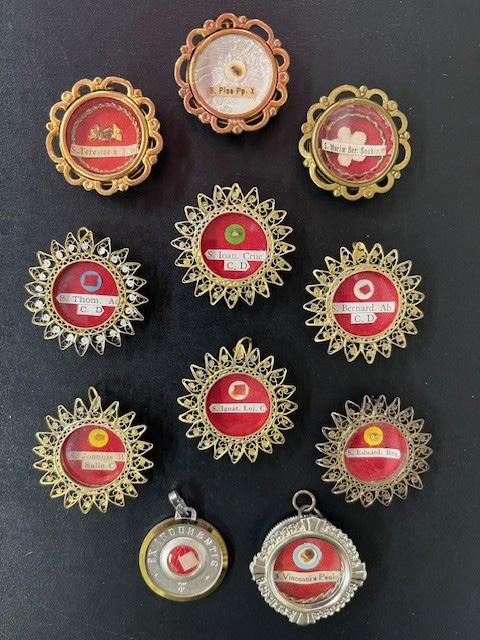
Letter(s) after a saint’s name indicate whether he or she was a Confessor (C), Doctor of the Church (D), or king (Reg.). Red silk is the most common background and usually used for martyrs and those on fire with the Holy Spirit, while white silk represents the saint’s holiness or purity. ‘Thecas’, locket-like vessels, are often enhanced with delicate gold braiding, as seen in those of St. Thérèse and St. Bernadette..
Although they have no “power” apart from God, relics are tangible links to the saints, those holy men and women who carried with them the fire of the Holy Spirit. In venerating these sacred items, we humbly seek a saint’s intercession for our concerns or our thanksgiving for graces God bestowed. Drawing us into a deeper communion with the saints and God, relics also give comfort through knowing the saints join their prayers with ours. Newly-dedicated altars often include a holy item related to the saint for whom the church is named, thus continuing the custom of erecting altars over saints’ remains. The Bible several times references objects that channeled divine action, including 2 Kings 13:20-21, when a man’s body carried out for burial was flung into Elisha’s tomb and touched the prophet’s bones, and the man came back to life. We also read in Matthew 9:20-22 of the woman who suffered 12 years from hemorrhages and was healed by touching just the fringe of Jesus’ cloak.
The Vatican holds that “relics in the Church have always received particular veneration and attention because the body of the Blesseds and of the Saints, destined for the resurrection, has been on earth the living temple of the Holy Spirit and the instrument of their holiness, recognized by the Apostolic See through beatification and canonization” (Congregation for the Causes of Saints, “Relics in the Church: Authenticity and Preservation, Rome, 2017).
We are fortunate to have numerous relics in our Archives, many with official paperwork certifying their validity, some of unknown provenance, and a couple whose contents – and
authenticity – are known only to God. Usually written in Latin (or the local language), the document bears the ecclesiastical authority’s signature and official stamp on paper, and its format can range from an elaborate certificate (sometimes a work of art itself!) to a simpler piece of paper. Our relics of special interest with authoritative documents include sacred particles from the cave of St. John the Baptist; a fragment from a bone of St. Vincent de Paul; an unidentified particle from Pope St. Pius X; a bit of clothing (indicated by “Ex Indumentis” embossed on the theca) worn by Bl. Elisabetta Renzi, foundress of the Sisters of Our Lady of Sorrows; bone fragments from both St. Bernard of Clairvaux (Abbot, Confessor and Doctor of the Church) and St. Bernadette; and dust of the body mixed with dust from the first coffin of St.
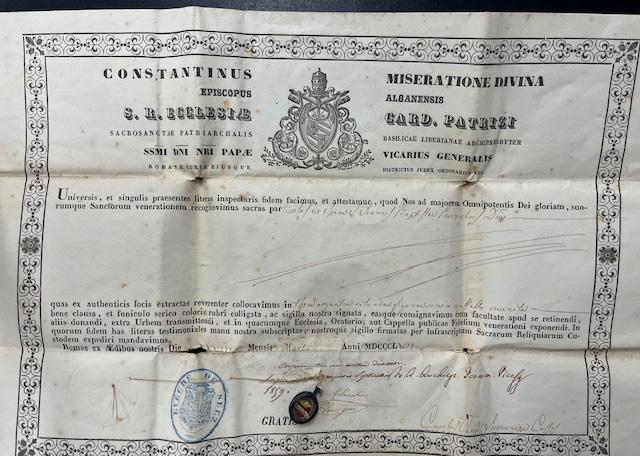
Notice how the oval capsule is secured with a fragile piece of thread, which has remained intact for nearly 170 years.
Thérèse of the Child Jesus, Doctor of the Church. Of equal interest, but lacking supporting documentation, is a relic purportedly of the English king, St. Edward the Confessor.
If your church has a reliquary, take a few moments before or after Mass to take advantage of that sacred pipeline by praying to the saints. They’re here for us.
The bishop shook his hand, smiled for the photo, and moved on.
Evan stood in line with the other youth, jacket folded over his arm and his sponsor already halfway down the aisle. Incense still hung in the air. Someone whispered, “Congratulations.” Another said, “You’re done now.”
Done.
That night, the suit went into the closet, the certificate went into a drawer, and Evan slept well. The following Sunday, he didn’t return. Nothing felt broken.
Nothing felt missing. If anything, he felt relief – one less thing to keep up with. Evan had no idea that what he received was not an ending.
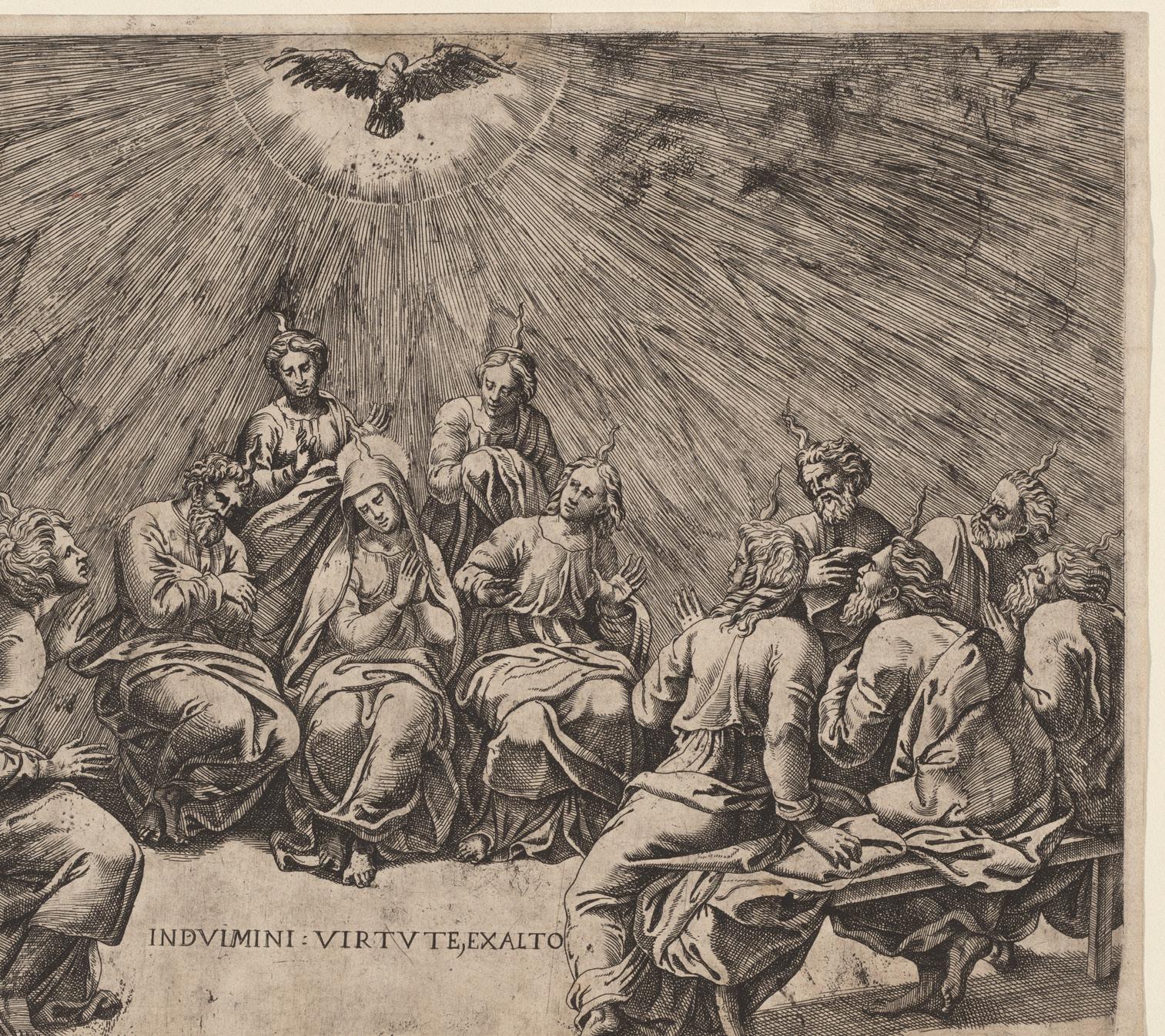
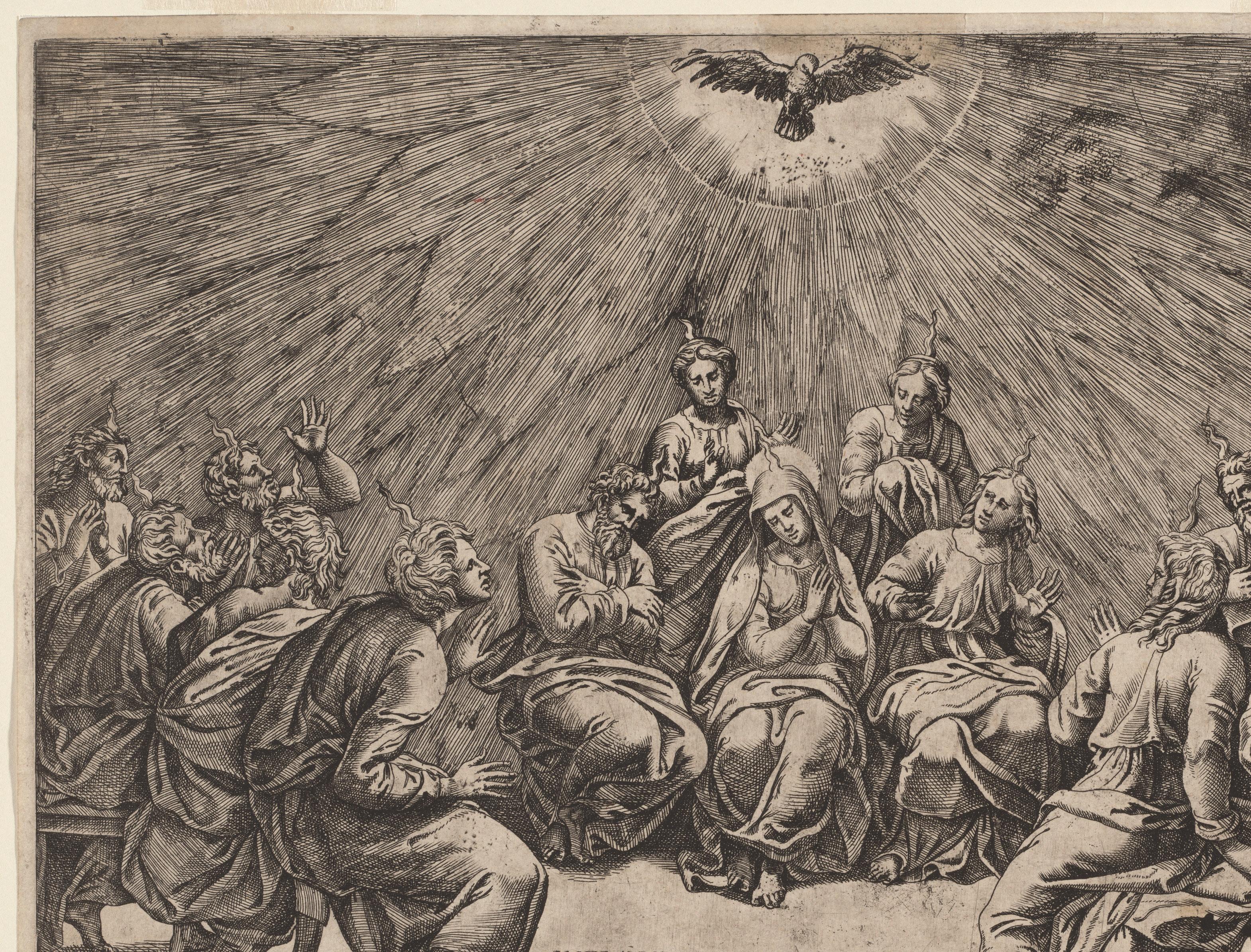
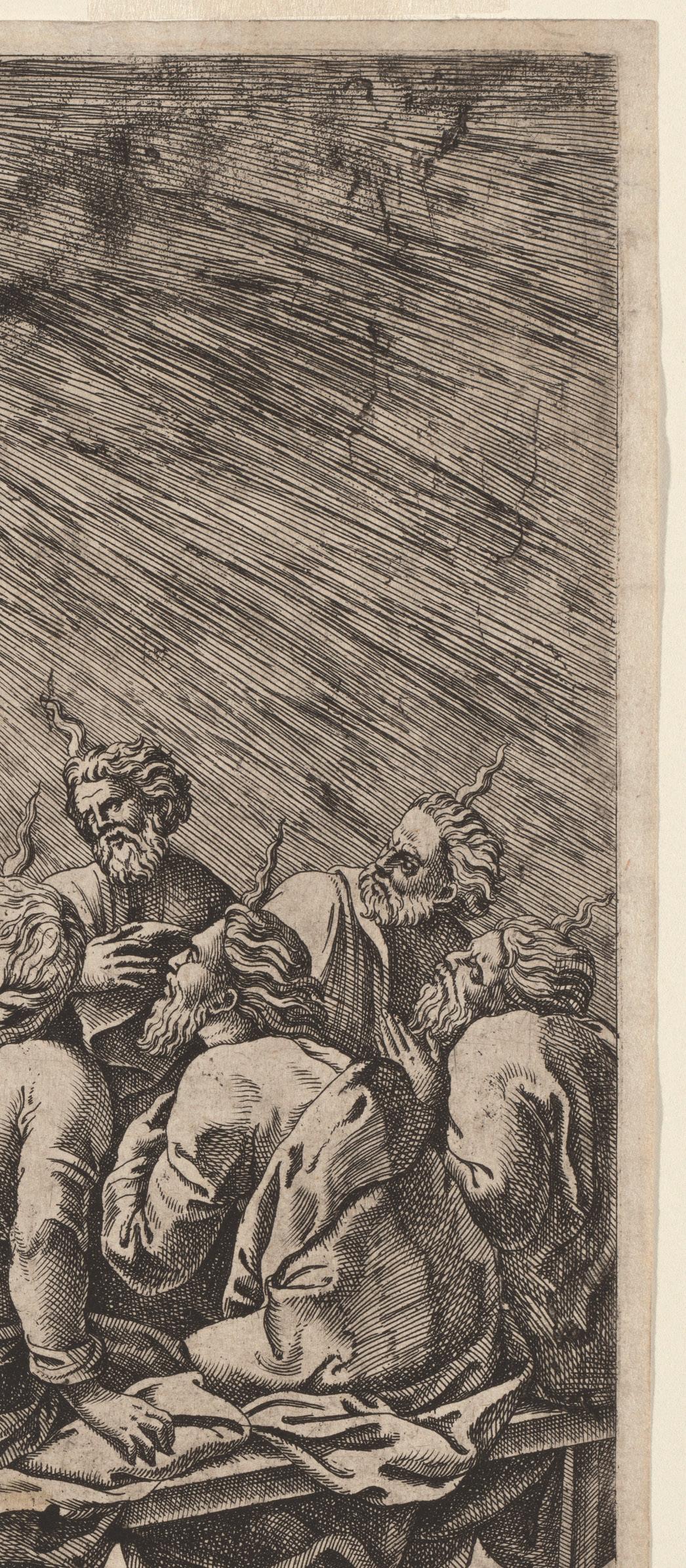
Pentecost is not a finish line. When the Holy Spirit descended at Pentecost, He did not come to congratulate the disciples. He came to change them.
The Apostles did not leave the Upper Room with certificates or a sense of completion. They left speaking languages they had never learned, proclaiming a truth they could not contain, and accepting a mission that would cost nearly all of them their
lives, and cost all of them their peace.
Pentecost was not a celebration of maturity. It was an ignition. That distinction matters – especially when we speak about Confirmation.
To call Confirmation a “graduation” misunderstands both the sacrament and the Spirit who is given. Graduation implies completion, independence, and departure. Pentecost implies dependence, mission, and risk.
If Confirmation is framed – explicitly or implicitly – as the moment when obligations end, then it should not
Firesurprise us when many walk away. They are not rejecting the faith – they are simply acting in accordance with the metaphor they were given.
But Confirmation was never meant to signal that formation is finished! It marks the moment when Christian life becomes serious.
If our Confirmation did not change how we live, it is not because the Spirit failed – but because we learned to live as though He could be ignored.
The fire that finishes what Christ began is Pentecost. Christ gives life.
The Spirit gives power.
The same Spirit who hovered over the waters at creation, who overshadowed Mary at the Annunciation, who descended upon the Apostles as fire – that Spirit is given in Confirmation not to soothe, but to strengthen. Fire does three things: it illuminates, exposing what is true; it purifies, burning away what does not belong; and it spreads, refusing to remain contained.
A faith that never burns is a faith that was never allowed to catch.
The Spirit does not confirm us into comfort. He confirms us into wtiness.
Fire is dangerous. It rearranges priorities. It makes neutrality impossible. That is why the Holy Spirit is so often reduced to a feeling or a symbol. A gentle warmth can be ignored – a fire demands a response.
Jesus Himself warned that His coming would divide – not because He delights in conflict, but because truth requires choice. The Spirit does not confirm us into comfort: He confirms us into witness.
Confirmation is not for the gifted, but for the sent. The sacrament does not presuppose spiritual excellence. It presupposes need.
The Spirit is given not because we are ready, but because we cannot do without Him. Confirmation does not mark the moment we become adults in the Church; it marks the moment the Church dares to entrust us with her mission.
That mission begins quietly – in fidelity, in prayer, and in courage that shows itself over time. But it must start.
Pentecost is not confined to a single day. The Spirit does not retire after the ceremony.
If our faith has grown lukewarm, there
is only one answer. It is not nostalgia or blame: it is a return to Confession, to the Eucharist, to prayer that costs something. Fire can be rekindled, but only if we stop treating it as decoration.
The Spirit Still Descends
The Holy Spirit has not changed. The world still needs witnesses, not graduates.
What we received was never meant to be put away in a drawer. It was meant to be carried into the world – quietly, faithfully, and sometimes at great cost.
Pentecost was not an ending. It was the moment the Church caught fire.
S. Germain Cassiere, MD, FACP is a retired Internist and parishioner at the Cathedral of St. John Berchmans, writing on faith, virtue, and the Catholic spiritual life from the pew perspective.

Starting in May, Catholic Charities is offering free, one-on-one, professional financial counseling to anyone in the community who wants to enroll.
The City of Shreveport officially contracted with Catholic Charities to be the nonprofit provider of the Financial Empowerment Center (FEC), which works to provide expert assistance to families with low to moderate incomes and who seek financial stability.
For years, we proudly offered Money School each week as a way to provide basic money management skills to people seeking emergency rent or utility assistance, and this continues (those in need should call Monday morning to reserve a space).
But we have long felt that emergency assistance wasn’t enough. People arrive, get their education, get their assistance, then leave. We rarely, if ever, see them again.
Anyone with an income knows there is more to managing money than can be taught in two hours—our clients
living on the financial edge need more guidance.
The Financial Empowerment Center follows a national model that addresses a broader range of topics tailored to the goals of the people we serve. The six primary topics are: budgeting, banking, credit, debt, savings, and legacy planning. Participants develop a plan and goals, and counselors coach them through the tools to achieve those goals.
Are you returning to the workforce and want to ensure you can cover your expenses? Counselors can walk you through budgeting and savings for emergencies.
Do you need to increase your credit to buy a car or house? Counselors can help build credit.
Are you intimidated by all the legal language of estates and legacies? Counselors can make sure you are taking care of yourself and your loved ones.
Our belief in serving the whole person enhances the model. If we cannot address a client’s need, our team
refers them to a host of partners and resources. We expect to be working closely with Goodwill of North Louisiana, Volunteers for Youth Justice, and Volunteers of America North Louisiana.
First piloted in New York City under Mayor Michael R. Bloomberg in 2008, the Shreveport FEC is one of dozens across the country affiliated with the Cities for Financial Empowerment. FECs nationally have worked with almost 200,000 clients, helping them reduce individual debt by over $344 million and increase family savings by more than $69 million.
Our team is ready to assist anyone. To learn more or set up an appointment, visit www.ccnla.org.

Diane Libro is the Executive Director of Catholic Charities of North Louisiana.
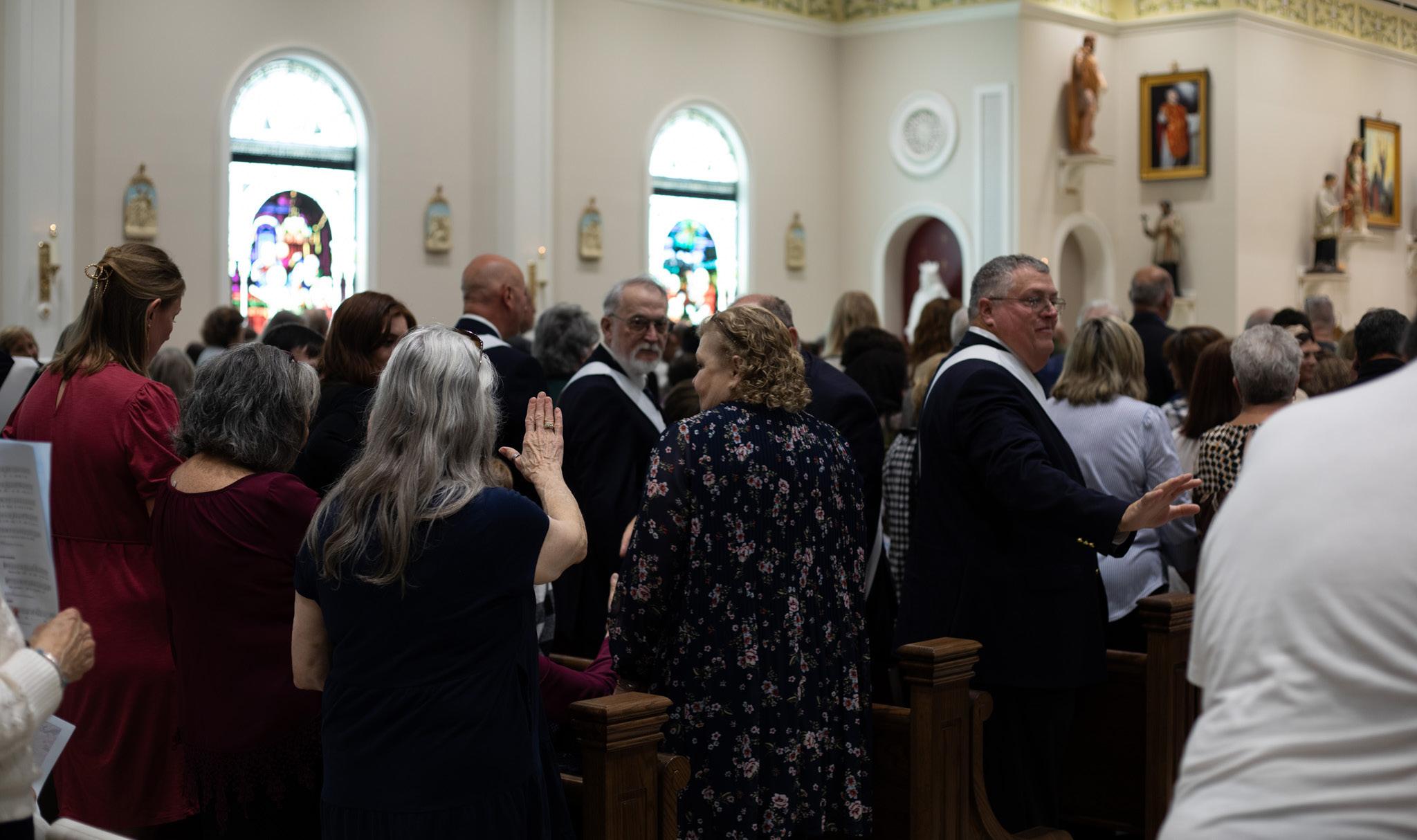
The first Mass I ever attended was on an Ash Wednesday. I didn’t know what to expect and certainly didn’t know how to participate. But one moment made me feel I was invited into a family –when people I had never met faced me and said, “Peace be with you.” Now, being the awkward person that I am, I replied with a sheepish, “Hi, nice to meet you… uh... You too!” My fiancé, (now husband) responded smoothly, of course, with a reverent, “Peace be with you.”
It wasn’t until I received the Sacraments of Baptism and Confirmation as I entered the Catholic Church that I truly felt the Peace of Christ was with me. But then, as the Sacred Chrism touched my forehead, I felt the warmth of the Holy Spirit’s flame now dwelling inside. I was sealed! …and ready to deliver His peace to the world.
Since entering the Church, I've grown familiar with various communications for the Sign of Peace. Some people offer
a reserved nod, and others present a wide smile. A minority wiggle a peace sign, while some families even share a kiss. I’ve heard and participated in discussions around the appropriate technique, but after reading "The Weight of Glory" by C.S. Lewis, the Sign of Peace has changed for me, forever.
Lewis wrote, “Next to the Blessed Sacrament itself, your neighbor is the holiest object presented to your senses.” This statement shook me. I knew of two indisputable absolutes for all baptized Christians: one is that we are sinners and can never be holy by a sheer act of will, and the second is that we are all sacred tabernacles in which the Holy Spirit dwells. Lewis’ statement immediately inspired me to consciously live this profound truth – starting with the Sign of Peace. As I look around at my Brothers and Sisters, I intentionally seek to see our God in each one. I look at each person with deep love, in unity with Christ. I beckon my heart to feel the holiness of
each precious temple.
Since that inspiration, I have prayerfully focused on pushing this view beyond that singular moment in Mass and out to as much of the world as I can. I attempt to give more grace to my fellow Christians, including myself, remembering that even when we are damaged or damage ourselves, the Holy Spirit’s seal is resilient. My challenge to myself and to you is to make a concentrated effort to treat each other as the holy tabernacles that we are – seeing each person with reverence, peace, and adoration.

Jennifer Nix is a parishioner and catechist at St. Elizabeth Ann Seton Catholic Church in Shreveport and the Day Service Coordinator at Hope Connections.
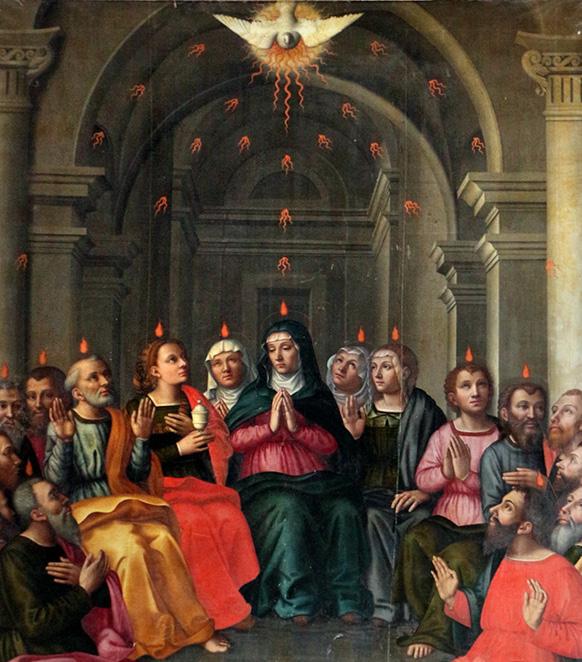
Each year at Pentecost, we recall the blazing descent of the Holy Spirit – the same Spirit who strengthens the baptized in the Sacrament of Confirmation and sustains husbands and wives in the Sacrament of Matrimony. Both of those sacraments involve maturity and serving the community, yet the Church distinguishes the importance of each one’s unique purposes and requirements.
The Catechism reminds us that the Church is a “communion of saints” and a communion “in holy things” (CCC 948). Within this communion, Confirmation completes baptismal initiation and empowers a person to live the Christian life more fully. Matrimony, however, is unique among the sacraments: its ministers are not the clergy but the spouses themselves – a man and a woman – who exchange vows and confer the sacrament upon one another. Ideally, a husband and wife enter marriage after both have received the Sacrament of Confirmation and, thus, commit themselves to serving the Lord and their community. However, the Church teaches that the only sacramental requirement for a sacramental marriage is that at least one spouse be a validly baptized Christian.
While Confirmation deepens the life of grace with God, Matrimony is a covenantal union between a man and a woman and God. Confirmation is a personal sacrament; Matrimony is a shared vocation lived together by a husband and wife with God.
This distinction clarifies why the Church does not require Confirmation
for marriage; in fact, imposing it as an absolute condition could create an unintended pressure that leads someone to seek Confirmation merely as a prerequisite for marriage rather than as a free, faith-filled response to Christ. The sacraments are never to be forced or treated as bureaucratic hurdles, so the Church wisely avoids tying the two sacraments together in a way that obscures their distinct preparation and response.
Still, the Church strongly encourages Confirmation before marriage. As the Acts of the Apostles shows, Confirmation – originally expressed through the laying on of hands –communicates the fullness of the Holy Spirit (8:15-17). Pope St. John Paul II beautifully taught that in Matrimony, spouses share in the very love of God poured into their hearts “through the Holy Spirit” (cf. Rom 5:5). How fitting then, that a couple preparing
for this sacrament be strengthened by the Spirit’s gifts!
The Code of Canon Law (CIC) expresses this clearly: “Catholics who have not yet received the sacrament of confirmation are to receive it before they are admitted to marriage, if it can be done without grave inconvenience” (CIC, c. 1065 §1).
And recommends: “To receive the sacrament of marriage fruitfully, spouses are urged especially to approach the sacraments of penance and the most Holy Eucharist” (CIC, c. 1065 §2).
Thus, Confirmation is encouraged, but not required. Baptism alone is sufficient for the validity of Matrimony. Yet, how beneficial Confirmation is for married life! Received worthily, it strengthens the seven gifts of the Holy Spirit – wisdom, understanding, counsel, fortitude, knowledge, piety, and fear of the Lord. These gifts are not simply for personal growth; they equip Christians for service, fidelity, and perseverance. In marriage, they help spouses discern God’s will, endure trials with courage, and love one another with Christ-like devotion
Cada año, en Pentecostés, recordamos el ardiente descenso del Espíritu Santo— el mismo Espíritu que fortalece a los bautizados en la Confirmación y sostiene a los esposos en el sacramento del Matrimonio. Ambos sacramentos implican madurez y servicio a la comunidad; sin embargo, la Iglesia distingue sus propósitos y requisitos de maneras importantes.
El Catecismo nos recuerda que la Iglesia es una “comunión de los santos” y una comunión “en las cosas santas” (CIC 948). Dentro de esta comunión, la Confirmación completa la iniciación bautismal y capacita a la persona para vivir la vida cristiana con mayor plenitud. El Matrimonio, sin embargo, es único entre los sacramentos: sus ministros no son los clérigos, sino los mismos esposos—un hombre y una mujer— quienes intercambian los votos y se confieren mutuamente el sacramento. Idealmente, un esposo y una esposa ingresarían al matrimonio después de haber recibido ambos el sacramento de la Confirmación y, así, haberse comprometido a servir al Señor y a su comunidad. Sin embargo, esto no siempre sucede. De hecho, la Iglesia enseña que el único requisito sacramental para el matrimonio es que al menos uno de los esposos sea un cristiano válidamente bautizado.
Mientras que la Confirmación profundiza la vida de la gracia, el Matrimonio es una unión conyugal y sacramental entre un hombre y una mujer. La Confirmación es un sacramento personal; el Matrimonio es una vocación compartida y vivida juntos por esposo y esposa.
Esta distinción ayuda a comprender por qué la Iglesia no exige la Confirmación
para contraer matrimonio. De hecho, imponerla como condición absoluta podría generar una presión indebida—llevando a alguien a solicitar la Confirmación solo como un requisito para casarse, y no como una respuesta libre y llena de fe a Cristo. Los sacramentos nunca están destinados a ser forzados ni tratados como obstáculos burocráticos; por ello, la Iglesia sabiamente evita unir estos dos sacramentos de un modo que oscurezca su preparación y finalidad propias.
Aun así, la Iglesia recomienda encarecidamente recibir la Confirmación antes del matrimonio. Como lo muestra el libro de los Hechos de los Apóstoles, la Confirmación— expresada originalmente mediante la imposición de las manos— comunica la plenitud del Espíritu Santo (Hch. 8, 15–17). San Juan Pablo II enseñó de manera hermosa que, en el Matrimonio, los esposos participan del mismo amor de Dios derramado en sus corazones “por el Espíritu Santo” (cf. Rom 5, 5). Por eso resulta tan apropiado que quienes
se preparan para este sacramento sean fortalecidos por los dones del Espíritu.
El Derecho Canónico lo expresa claramente: “Los católicos que aún no hayan recibido el sacramento de la confirmación han de recibirlo antes de ser admitidos al matrimonio, si puede hacerse sin grave inconveniente.” (c. 1065 §1)
Y recomienda: “Para recibir fructuosamente el sacramento del matrimonio, se exhorta encarecidamente a los esposos a acercarse a los sacramentos de la penitencia y de la santísima Eucaristía.” (c. 1065 §2)
Por tanto, la Confirmación se recomienda, pero no se requiere. El Bautismo por sí solo es suficiente para la validez del Matrimonio. ¡Y qué beneficiosa es la Confirmación para la vida matrimonial! Recibida dignamente, fortalece los siete dones del Espíritu Santo—sabiduría, entendimiento, consejo, fortaleza, ciencia, piedad y temor de Dios. Estos dones no son únicamente para el crecimiento personal; capacitan a los cristianos para el servicio, la fidelidad y la perseverancia. En el matrimonio ayudan a los esposos a discernir la voluntad de Dios, afrontar las pruebas con valentía y amarse mutuamente con una devoción semejante a la de Cristo.
Noemi Saybe es la directora de Matrimonio y Vida Familiar de la Diócesis de Shreveport.
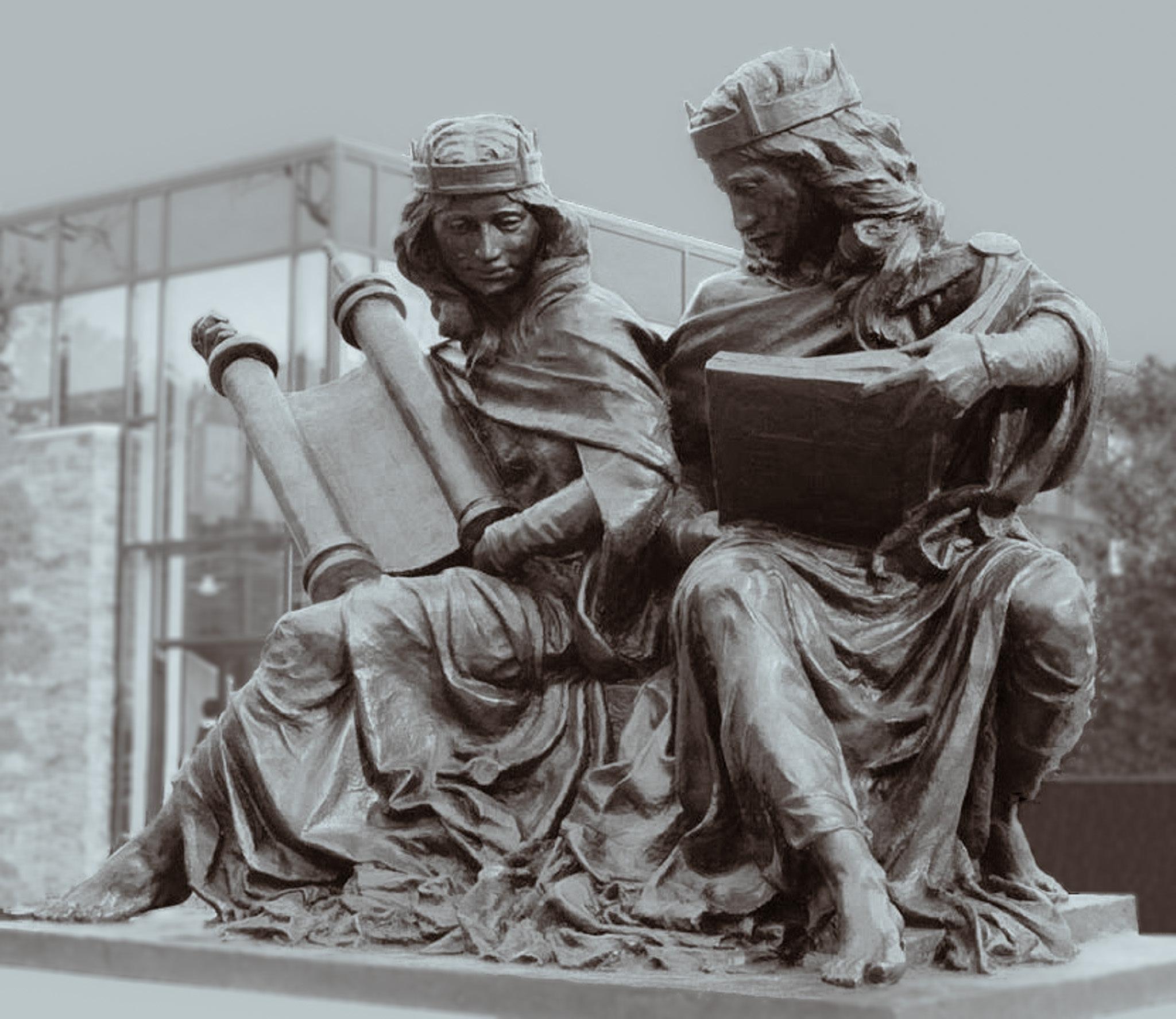
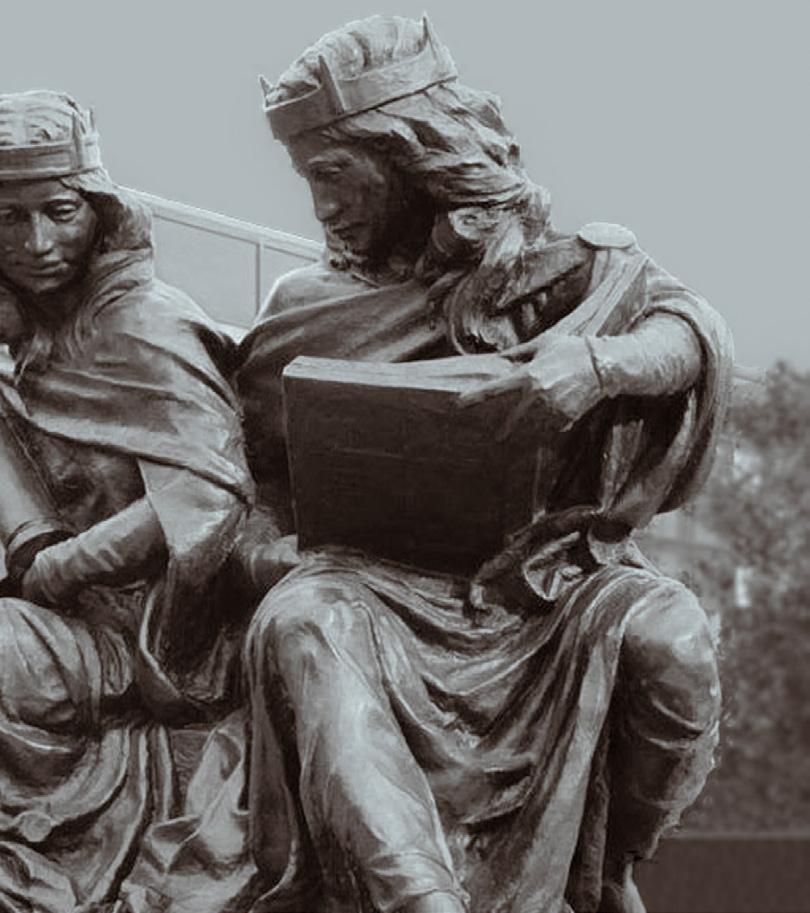
The document’s title, Nostra Aetate, is the first two words of the document in Latin and means “in this age of ours.” The document opens by stating that this is a time of greater bonds between peoples and the appropriate time for the Catholic Church to review its relationship with non-Christian religions. It reflects a new openness to non-Christian religions, especially the
Jewish Religion. Nostra Aetate shows that the Catholic Church desires to build fellowship between nations and non-Christian religions, stating that all men and women form one human community and God created one people to inhabit the whole earth.
The idea central to this document is that: “The Catholic Church rejects nothing of what is true and holy in
these religions. She has a high regard for the manner of life and conduct, the precepts, and doctrines which, although differing in many ways from her own teaching, nevertheless often reflect a ray of that truth which enlightens all men and women” (§2). The document further states that the Catholic Church proclaims – and is duty bound to proclaim without fail – Christ who is the Way, the Truth,
and the Life (John 14:6). In Him, in whom God reconciled all things to Himself (2 Corinthians 5:19), we find the fullness of our religious life.
The Catholic Church encourages her members to enter with prudence and charity into discussion and collaboration with other religions’ members. Christians are to “witness to their own faith and way of life at the same time” and are to “acknowledge, preserve and encourage the spiritual and moral truths found among nonChristians, also their social life and culture” (§2).
The document recognizes the special ties that the Catholic Church has with the Jewish people through Abraham, the Patriarchs, Moses, and the Prophets.
From the beginning of the Catholic Church, the Hebrew Scriptures were the beginning of her Sacred Scriptures.
Salvation is from the Jews and, from a Christian perspective, through Jesus who was Jewish. St. Paul the great Christian missionary was a Pharisee who cared deeply about Jewish people’s blessings. He taught that Judaism was the good olive tree upon which the wild olive branches of the Gentiles were grafted.
The Council encourages mutual understanding and appreciation of these two religions through biblical and theological enquiry and through friendly discussions.
Central to Nostra Aetate is our looking back to the past and no longer engaging in antisemitism. Catholics should not speak of Jews as rejected or accursed based on Jesus’ Passion and Death. “Indeed, the Church reproves every form of persecution against
whomsoever it may be directed” (§5). The Catholic Church states that “she deplores all hatreds, persecutions, displays of antisemitism leveled at any time or from any source against the Jews” (§4). The document concludes with an exhortation that Catholics be at peace with all.
I decided to add to my presentation on Nostra Aetate ideas taken from a document written in 1974 by Johannes Cardinal Willebrands in his capacity as President of the Commission for the Catholic Church’s religious relations with the Jews and – aptly – entitled, “Guidelines on Religious Relations with the Jews.”
These guidelines recognized that, after the Holocaust, Jews and Christians did not know one another. Nostra Aetate was written from this lack of understanding, and it has brought about a new dialogue between Catholics and Jews.
The guidelines state that dialogue is not monologue; rather, it is a means of knowing the other and learning about the other religion’s riches. It includes truly sharing one’s beliefs and allowing the other to share their own beliefs.
This call to dialogue recalls a highlight during my seminary education at St. Mary Seminary and University, in Baltimore. We participated in the “Seminarians Interacting” program, which gave seminarians of different religions the opportunity to come together and dialogue. Our session included members from the Jewish, Catholic, Greek Orthodox, Muslim and Protestant faiths. During the first half of the year, students visited two theological schools or institutes of different religions. I visited the
Howard School of Divinity in Washington, DC, and a Muslim institute in Baltimore. I remember learning true differences among us, as well as gaining new insights.
During the year’s second half, participants gathered in a New York State retreat center to discuss death and dying from each of our faith tradition’s perspective, concluding with a final meal together. Throughout the yearlong program, there was a sense of transformation that took place in the participants; I was pleasantly surprised at how we truly came together as brothers and sisters.
Nostra Aetate’s guidelines regarding use of the Bible note the importance of presenting the Hebrew Scriptures in the context from which they were taken and in their fulfillment in the New Testament. Christian Scriptures should not be used as a means to show the Jewish people in a negative way. It is the same God who inspired both Testaments.
During Jesus and the Apostles’ lives, Judaism was a complex reality, embracing many different trends and many spiritual, religious, social, and cultural values. The Old Testament – and the Jewish tradition founded upon it – must not be set against the New Testament to present the Old Testament as constituting a religion of only justice, fear, and legalism with no appeal to the love of God and neighbor.
Jesus and His Apostles were Jewish. The Second Vatican Council stated that the New Testament is hidden in the Old Testament and the Old Testament is manifested in the New Testament. Jesus presented Himself as the Jewish Messiah presented himself:
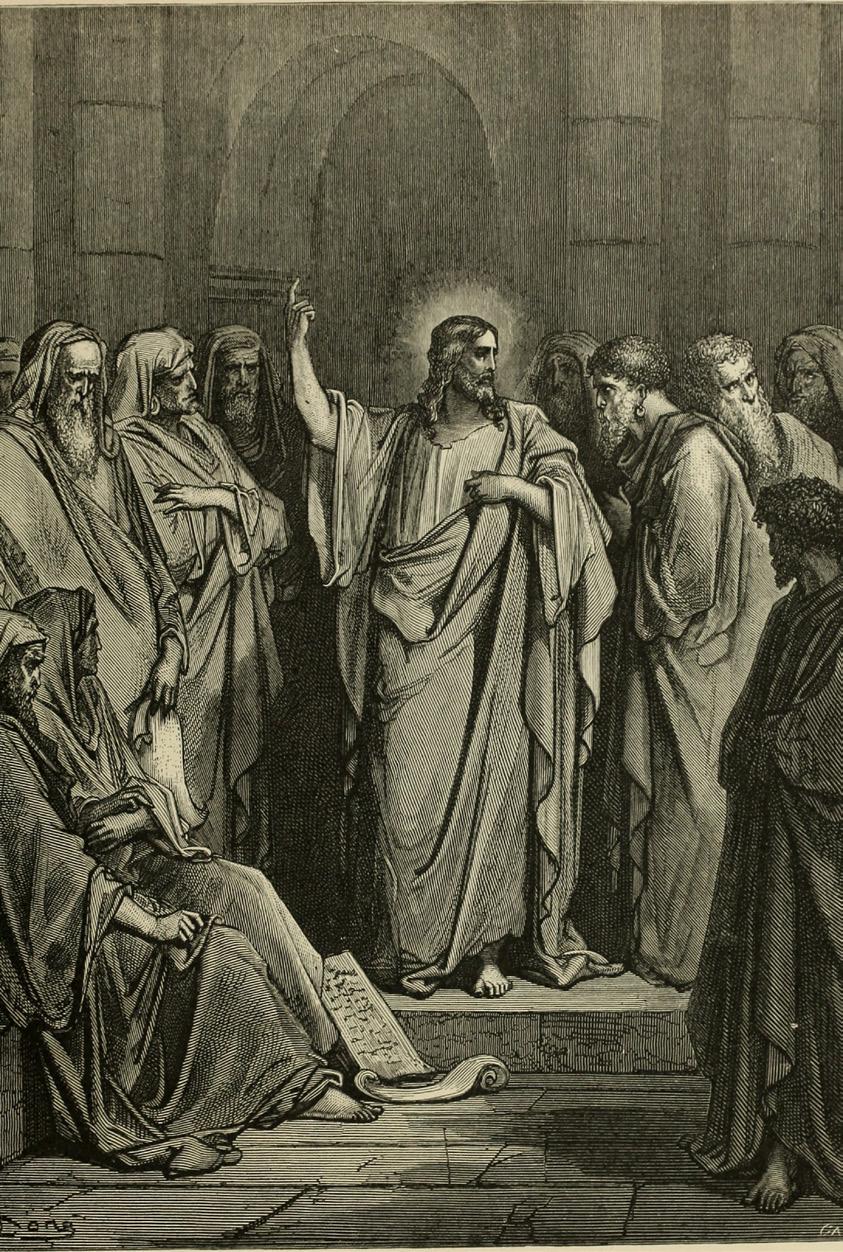
of Lent during the Jubilee (Holy Year) of 2000. On its first Sunday, March 12, 2000, Pope John Paul II presided over a prayer ceremony entitled the “Day of Forgiveness.” In the prayer service, the Pope and other Cardinals prayed for forgiveness for sins committed by members of the Church and sins committed in the name of the Church over the centuries. Among those past sins were sins committed against the Jewish people.
On March 16, 2000, the International Theological Commission (ITC) promulgated the document Memory and Reconciliation: The Church and the Faults of the Past.* In this document the ITC writes (in §5.4): “The Church’s relationship to the Jewish people is unlike the one she shares with any other religion. …”
pagan ideology that was Nazism” that “despised the faith of the Jewish people” and “their very human dignity.” And the document asks, “Did Christians give every possible assistance … to the persecuted Jews?”
The section’s final paragraph concludes, “This fact constitutes a call to the consciences of all Christians today, so as to require ‘an act of repentance (teshva),’ … and to be a stimulus to increase efforts to be ‘transformed by renewal of your mind’ (Rom ,12:2) as well as to keep a ‘moral and religious memory’ of the injury inflected on the Jews.” This memory must be deepened. This memory must lead to action and must keep us from future sin.
These documents remind Catholics that our Church was born of the Jewish faith. Therefore, while we are to recognize our differences, we are to respect each other and always be willing to share the truths of our faith with one another.
as the fulfillment and perfection of the earlier Revelation.
The Jewish and Christian traditions are based on the Word of God, and its teaching expresses the value of the human person. Love of the same God must show itself in effective action for the good of humankind. The document calls Jews and Christians to work together on the local, national, and international levels to build peace and social justice.
The Church & Faults of the Past International Theological Commission
I end my presentation with the focus
The hostility or diffidence of numerous Christians toward Jews in the course of time is a sad historical fact and is the cause of profound remorse for Christians aware of the fact that ‘Jesus was a descendent of David; that the Virgen Mary and the Apostles belonged to the Jewish people; that the Church draws sustenance from the root of that good olive tree onto which have been grafted the wild olive branches of the Gentiles … that the Jews are our dearly beloved brothers … in a certain sense … “our elder brothers.’”
The ITC continues (in §5.4) that the Shoah was “the result of the
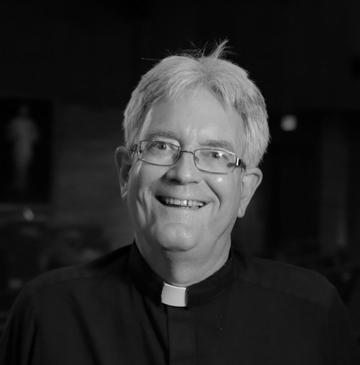
Very Rev. Mark Watson is the pastor of St. Mary of the Pines Parish in Shreveport, LA.
*Quotations from Nostra Aetate are taken from the translation found in: Second Vatican Council, Declaration on the Relation of the Church to Non-Christian Religions [Nostra Aetate], in Vatican Council II: Volume 1: The Conciliar and Post Conciliar Documents, ed. Austin Flannery [Collegeville, Minnesota: Liturgical Press, 1996].)
Memory and Reconciliation: The Church and the Faults of the Past are found at https://www.vatican.va/roman_ curia/congregations/cfaith/cti_documents/rc_con_cfaith_ doc_20000307_memory-reconc-itc_en.html.
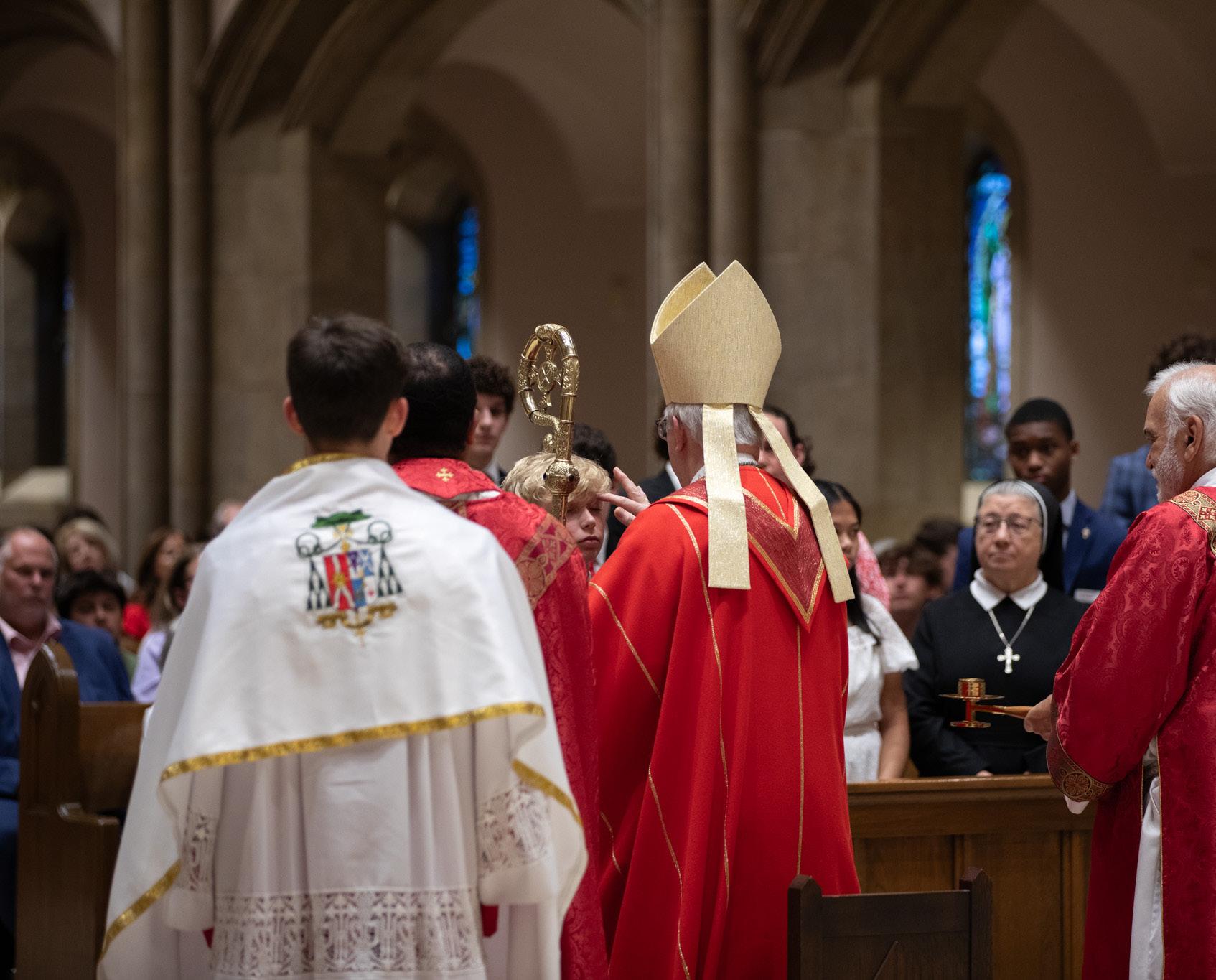
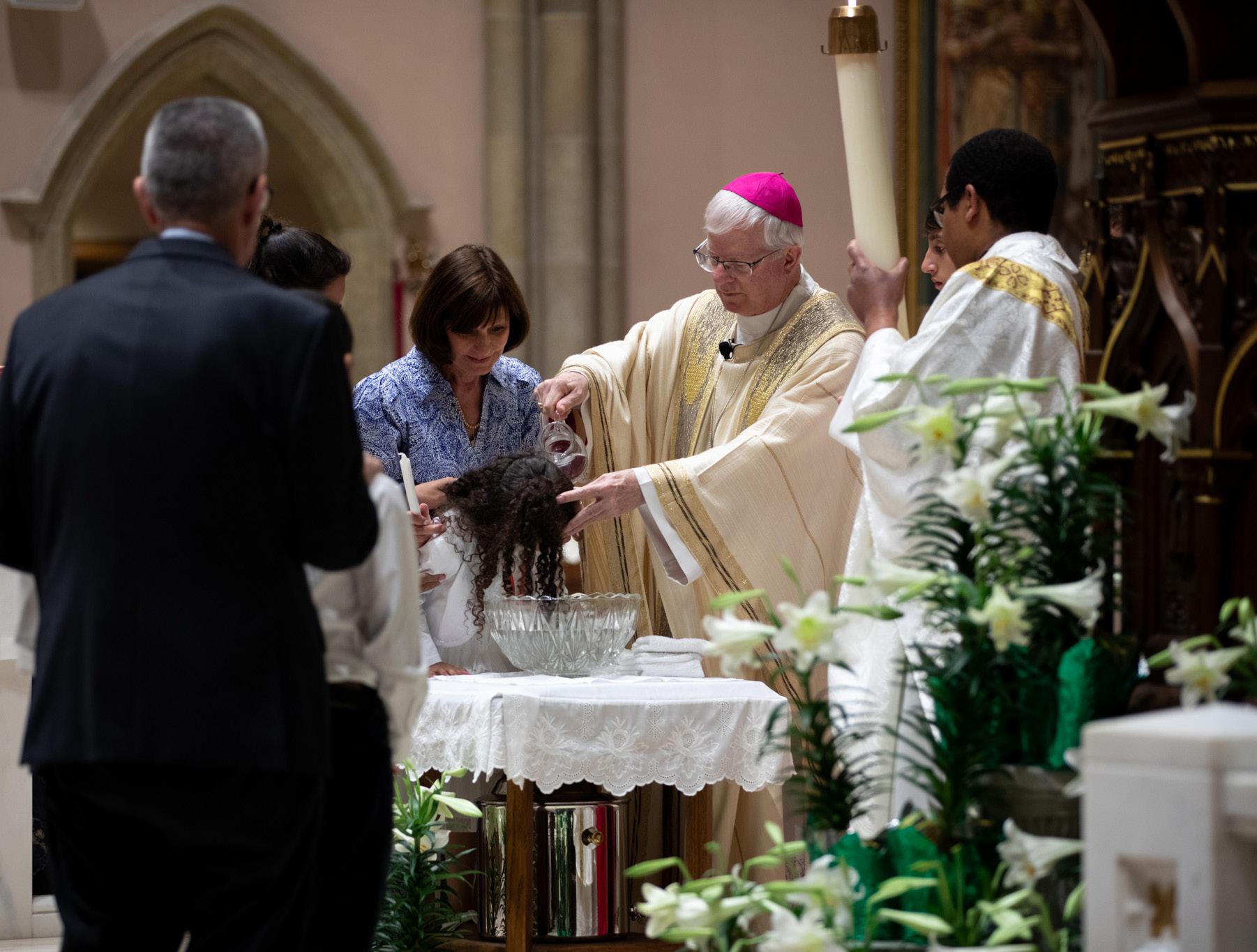
The spring season brings me so much joy as Director of Faith Formation and Youth for the Diocese of Shreveport. Over the next few months, we will witness so many people receiving the sacraments of initiation. We already welcomed over 250 new Catholics in our diocese at the Easter Vigil, with a record number receiving all three sacraments of initiation. Every April, May, and June, we watch numerous young children receive the Eucharist for their first time and nearly as many older youths receive the Sacrament of Confirmation. For us Catholics, this time of year highlights and magnifies our sacramental life.
I love this sacramental season, when the Holy Spirit is moving in so many directions. He is ever present to us when we are anointed with chrism oil, when the priest or bishop lays hands on us, and when the bread and wine transform into the Body and Blood of Christ. It’s through the sacraments that we receive the tools to call upon the Spirit for help, comfort, and wisdom – and the Paraclete always comes to our aid in our times of need! It is a privilege just to know that our faith is a gift of the Spirit and that the gift is strengthened each time we ask
Him for guidance.
And so, during this season, we rejoice in knowing God’s sanctifying grace is bestowed on so many. The Spirit leads us to Christ and recalls to our minds the Paschal Mystery. Do not be afraid to call on the Advocate! Do not hesitate to lean on the One that can bring you so much joy, love, and ease. Do you feel lost or have you forgotten your mission? I encourage you to call upon the Holy Spirit. He prepares us and goes with us as we spread the Good News. Can’t think of a prayer? Ask the Spirit to teach you how to pray. Are you nervous before a test or presentation? Ask the Spirit to calm you. Our visible reliance on the Spirit should witness to what He has done in our lives.
As we prepare to watch these momentous sacramental events, let us not forget our own journey through the sacraments. Reflect on your path to Baptism, Eucharist, and Confirmation. While many of us were baptized as infants, it’s a joyous occasion to recall – your own introduction into Christ’s family. The Holy Spirit was present then, is now, and forever will be. Call upon Him. He is waiting.
Come, Holy Spirit, fill the hearts of your faithful and kindle in them the fire of your love. Send forth your Spirit and they shall be created, and you shall renew the face of the earth. Holy Spirit, come rest on us.
Kerri Frantz is the
Director of Faith Formation and Youth Ministry for the Diocese of Shreveport, LA.
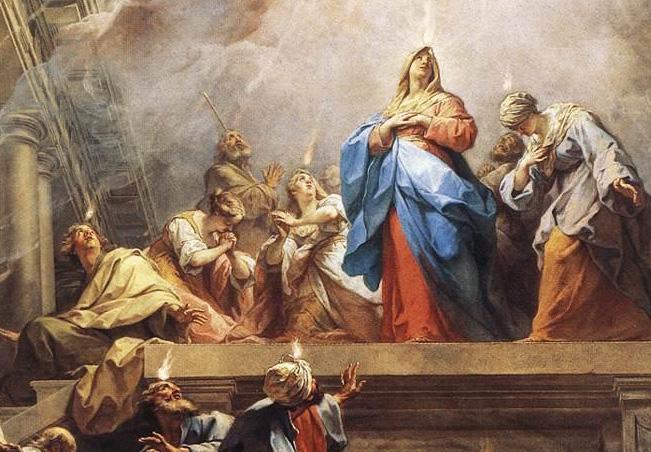
Pentecost fulfills Christ’s promise that: “You will receive power when the Holy Spirit has come upon you, and you will be my witnesses in Jerusalem, throughout Judea and Samaria, and to the ends of the Earth” (Acts 1:8).
This promise is not simply a moment in salvation history – it is deeply connected to our Catholic identity. Through Baptism and Confirmation, the Holy Spirit pours God’s love into our hearts and calls us to imitate Jesus. In these sacraments, we receive affirmation as God’s beloved children are strengthened through trials, and are sent forth to evangelize in communion with the Spirit.
To understand this more clearly, we
look at Jesus’ baptism.
“After Jesus was baptized, he came up from the water and behold, the heavens were opened, and he saw the Spirit of God descending like a dove and coming upon him. And a voice from the heavens [said], ‘This is my beloved Son, with whom I am well pleased’” (Mt 3:16–17).
In this moment, the Father affirms Jesus as His beloved Son, revealing His filial identity. Scripture tells us that immediately afterward: “Jesus was led up by the Spirit into the wilderness to be tempted by the devil” (Mt 4:1).
The enemy challenges Jesus’ identity: “If you are the Son of God…” (Mt 4:3,6).
The temptations appeal to different forms of hunger –food, power, and recognition. In each case the enemy attempts to draw Jesus away from His filial obedience to the Father.
Yet, Jesus remains united with the Holy Spirit and stands firm in the truth of who He is. In doing so, He dismantles the enemies’ lies and shows us how to remain faithful to our identity even amid trials.
Thus, Jesus reveals what it looks like to live in harmony with the Holy Spirit. After His baptism, He begins His public ministry – preaching, healing,
and casting out demons. His life shows us that identity and mission are inseparable.
But the temptations in the desert teach another important reality: after a moment of divine affirmation, the enemy often introduces doubt. Jesus’ response shows that remaining grounded in our identity as beloved children of God gives us the strength to resist those lies.
Jesus’ life becomes a blueprint for us. Just as He lived in communion with the Spirit and remained faithful to the Father, we are called to do the same.
Sacraments: Our Pentecost Anointing
Through the Sacraments of Baptism and Confirmation, we receive the fullness of the Holy Spirit.
Baptism brings us into God’s family, as St. Paul reminds us: “The love of God has been poured out into our hearts through the Holy Spirit who has been given to us” (Rom 5:5).
Confirmation strengthens the grace of Baptism and perpetuates the reality of Pentecost within the Church. Through it, we receive Holy Spirit’s gifts – wisdom, understanding, counsel, fortitude, knowledge, piety, and fear of the Lord – so that we may bear witness to Christ.
These gifts are not meant to remain hidden, so the enemy distracts us and convinces us that we are unworthy or these gifts are not real. Yet, the mission of the Church is carried out through the Holy Spirit’s power.
As St. Paul writes: “Our Gospel came to you not in word only, but also in power and in the Holy Spirit and with much fullness” (1 Thes 1:5).
Like Jesus, we are called to move from affirmation to mission, living in union with the Spirit and sharing the love of Christ with those around us.
In ministry, I have encountered many people who feel the Holy Spirit is distant from them. Some believe they are unworthy of God’s love, while others doubt that the gifts of the Spirit are meant for them. These struggles are often rooted in a misunderstanding of our identity.
When we see ourselves through the lens of insecurity, we can forget the truth God spoke over us. Pentecost, however, reminds us that the Holy
Spirit is not distant – He dwells within us, strengthening us and leading us closer to the Father.
When we recognize our identity as beloved children of God, the lies of unworthiness begin to lose their power.
And so, Pentecost reveals something profound about our Catholic identity:
•We are beloved children of God, affirmed by the Father.
•We are empowered by the Holy Spirit, filled with the fire of divine love.
•And we are sent as witnesses to bring the Gospel to the ends of the earth. Just as the Father affirmed Jesus and the Spirit empowered His ministry,
God does the same for us through the sacraments. When we understand our filial identity, we can resist the enemy’s lies and live with confidence in the gifts that God gives us.
The fire of Pentecost was never meant to remain confined to the Apostles –it was meant to spread through the lives of believers.
And so, we continue to pray: “Lord, enkindle in us the fire of your love.”
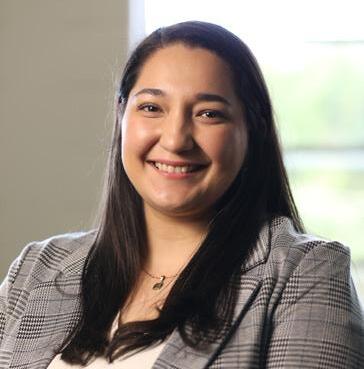
Karla Alvarez is the Director of Multicultural Ministry for the Diocese of Shreveport.
Pentecostés cumple la promesa de Cristo: «Pero recibirán poder cuando el Espíritu Santo descienda sobre ustedes, y serán mis testigos en Jerusalén, en toda Judea y Samaria, y hasta los confines de la tierra» (Hch 1,8).
Esta promesa no es simplemente un momento en la historia de la salvación; está profundamente conectada con nuestra identidad católica. A través del Bautismo y la Confirmación, el Espíritu Santo derrama el amor de Dios en nuestros corazones y nos llama a imitar a Jesús. En estos sacramentos recibimos la afirmación de que somos hijos amados de Dios, somos fortalecidos en medio de las pruebas y somos enviados a evangelizar en comunión con el Espíritu.
Para comprender esto con mayor claridad, podemos mirar el bautismo de Jesús.
«Después que Jesús fue bautizado, salió enseguida del agua; y en ese momento se abrieron los cielos y vio al Espíritu de Dios que descendía como paloma y venía sobre él. Y una voz desde los cielos decía: “Este es mi Hijo amado, en quien me complazco”» (Mt 3,16–17).
En este momento el Padre afirma a Jesús como su Hijo amado, revelando su identidad filial. Inmediatamente después, la Escritura nos dice: «Entonces Jesús fue llevado por el Espíritu al desierto para ser tentado por el diablo» (Mt 4,1).
El enemigo desafía rápidamente la identidad de Jesús: «Si eres el Hijo de Dios…» (Mt 4,3.6)
Las tentaciones apelan a diferentes formas de hambre: hambre de alimento, hambre de poder y hambre de reconocimiento. En cada caso el
enemigo intenta apartar a Jesús de su obediencia filial al Padre.
Sin embargo, Jesús permanece unido al Espíritu Santo y se mantiene firme en la verdad de quién es. De esta manera desmonta las mentiras del enemigo y nos muestra cómo permanecer fieles a nuestra identidad incluso en medio de las pruebas.
Jesús: El Modelo de la Filiación Guiada por el Espíritu
Jesús nos revela cómo vivir en armonía con el Espíritu Santo. Después de su bautismo comienza su ministerio público: predica, sana a los enfermos y expulsa demonios. Su vida nos muestra que la identidad y la misión son inseparables.
Las tentaciones en el desierto también
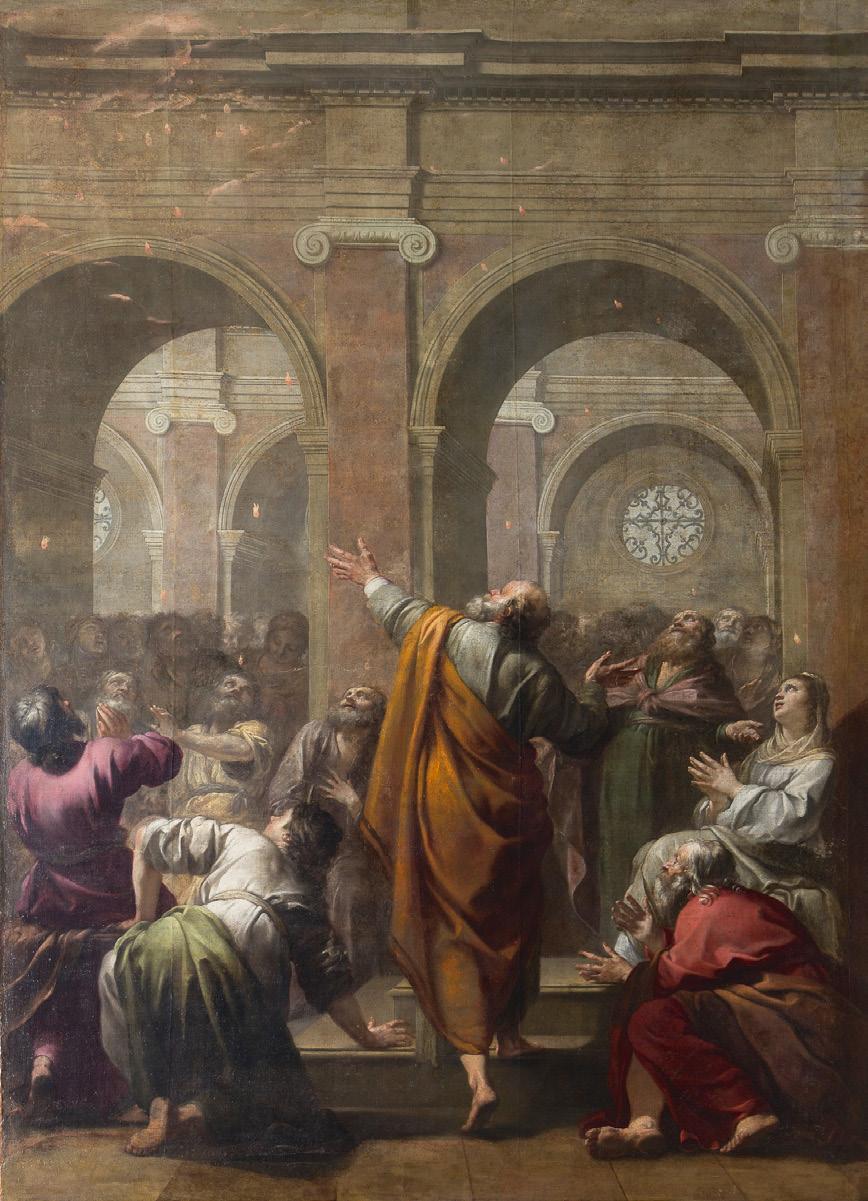
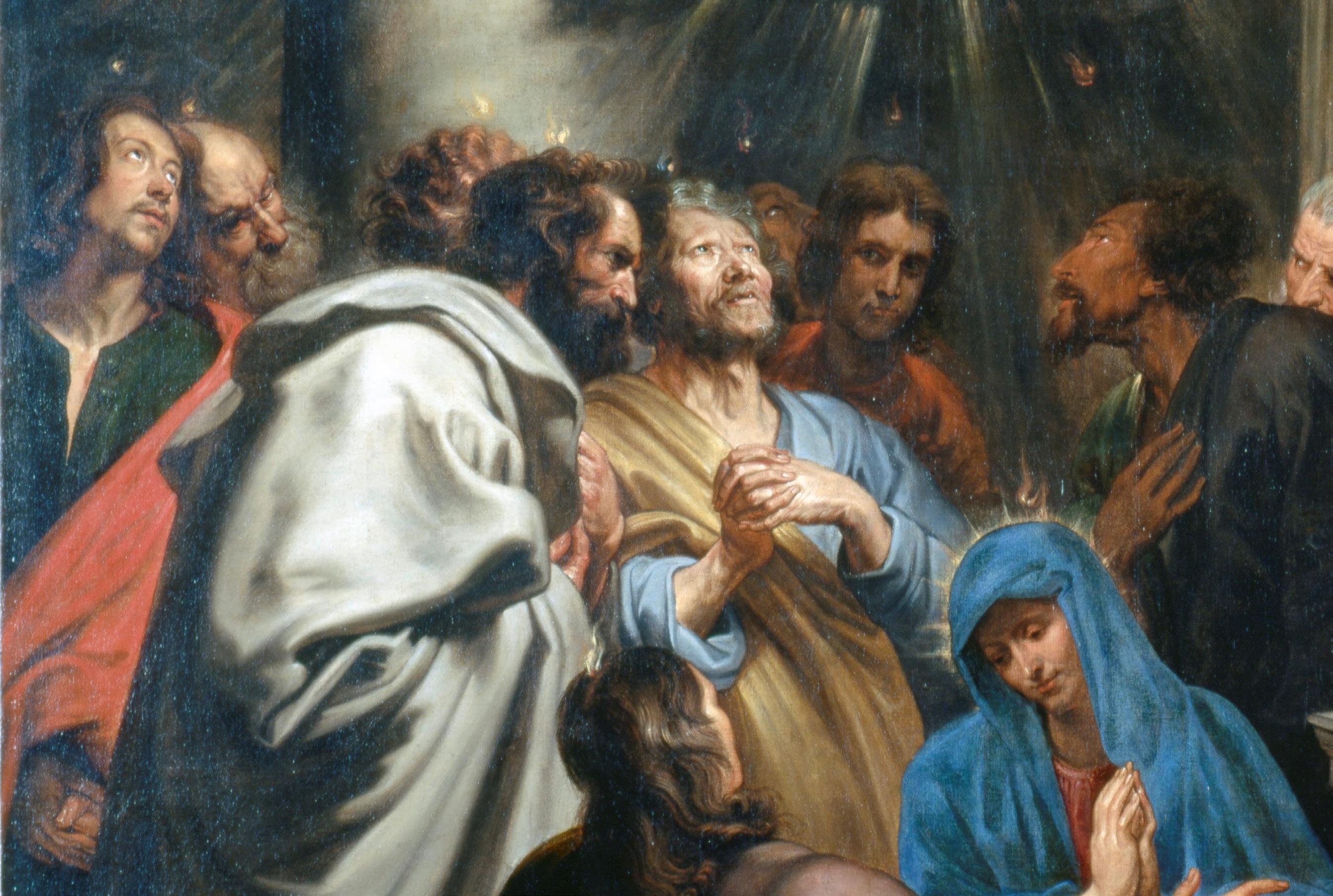
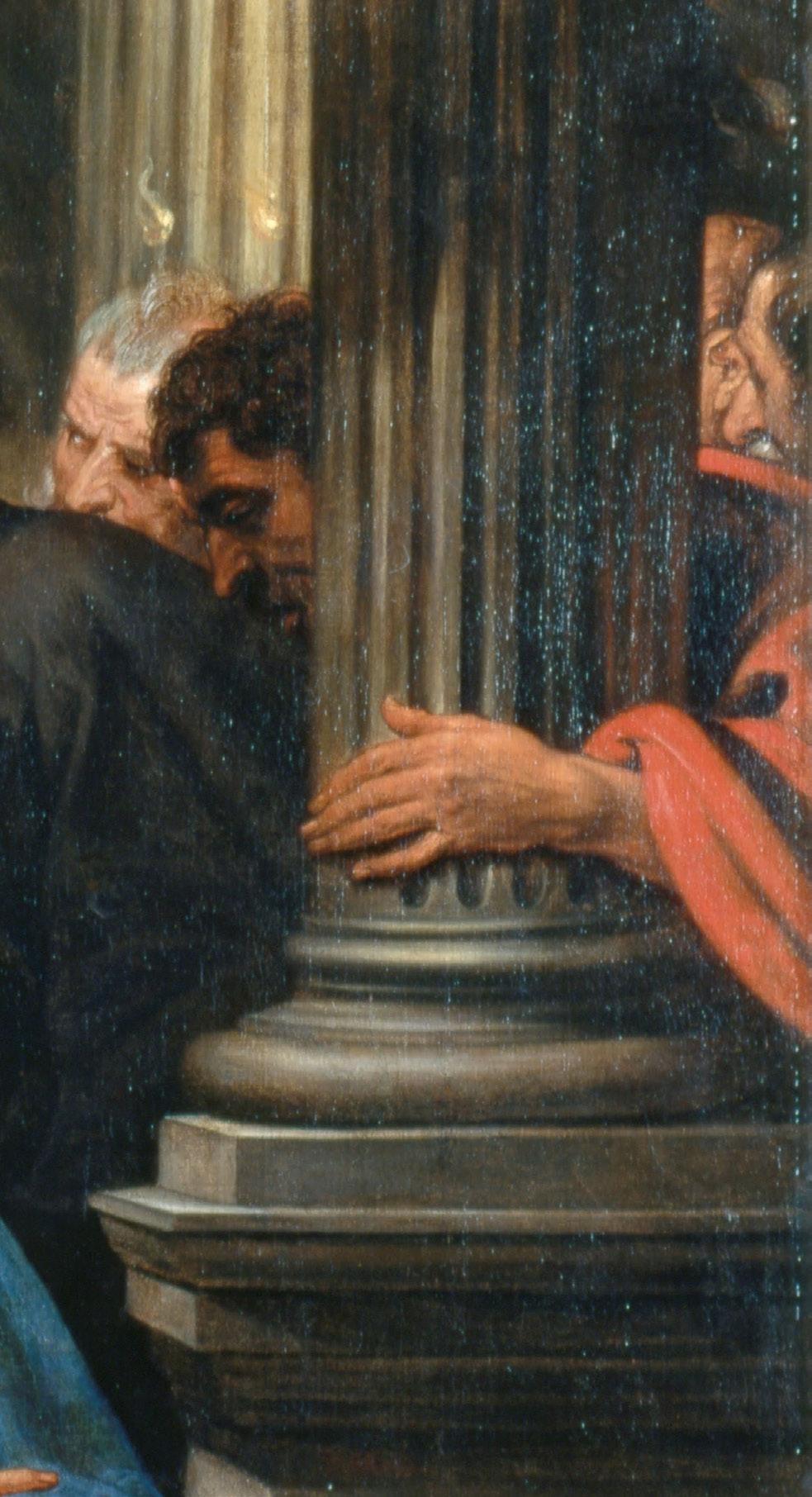
Image: Anthony van Dyck. “Outpouring of the Holy Spirit.” 1618-1620. Oil on canvas. Prussian Palaces and Gardens Foundation Berlin-Brandenburg.
nos enseñan algo importante. Después de un momento de afirmación divina, el enemigo suele intentar introducir la duda. La respuesta de Jesús nos muestra que permanecer firmes en nuestra identidad como hijos amados de Dios nos da la fuerza para resistir estas mentiras.
La vida de Jesús se convierte así en un modelo para nosotros. Así como Él vivió en comunión con el Espíritu y permaneció fiel al Padre, nosotros estamos llamados a hacer lo mismo.
Sacramentos: Nuestra Unción de Pentecostés
A través de los sacramentos del Bautismo y la Confirmación, recibimos la plenitud del Espíritu Santo. El Bautismo nos introduce en la familia de Dios. Como nos recuerda san Pablo: «El amor de Dios ha sido derramado en nuestros corazones por
el Espíritu Santo que se nos ha dado» (Rom 5,5).
La Confirmación fortalece la gracia del Bautismo y perpetúa la realidad de Pentecostés dentro de la Iglesia. Por medio de ella recibimos los dones del Espíritu Santo: sabiduría, entendimiento, consejo, fortaleza, ciencia, piedad y temor de Dios, para que podamos dar testimonio de Cristo.
Estos dones no están destinados a permanecer ocultos. Una de las estrategias del enemigo es distraernos o convencernos de que somos indignos o de que estos dones no son reales. Sin embargo, la misión de la Iglesia se lleva a cabo mediante el poder del Espíritu Santo.
Como escribe san Pablo: «Nuestro Evangelio no llegó a ustedes solamente con palabras, sino también con poder, con el Espíritu Santo y con plena convicción» (1 Tes 1,5).
Al igual que Jesús, estamos llamados a pasar de la afirmación a la misión, viviendo en unión con el Espíritu y compartiendo el amor de Cristo con quienes nos rodean.
En el ministerio he encontrado a muchas personas que sienten que el Espíritu Santo está distante de ellas. Algunas creen que no son dignas del amor de Dios, mientras que otras dudan que los dones del Espíritu sean para ellas.
Muchas veces estas luchas están arraigadas en una mala comprensión de nuestra identidad.
Cuando comenzamos a vernos a nosotros mismos desde la inseguridad, podemos olvidar la verdad que Dios ha pronunciado sobre nosotros. Sin embargo, Pentecostés nos recuerda
que el Espíritu Santo no está distante: Él habita en nosotros, nos fortalece y nos guía más cerca del Padre.
Cuando reconocemos nuestra identidad como hijos amados de Dios, las mentiras de indignidad comienzan a perder su poder.
Misión: La Identidad de Pentecostés en Acción
Pentecostés revela algo profundo sobre nuestra identidad católica.
•Somos hijos amados de Dios, afirmados por el Padre.
•Somos fortalecidos por el Espíritu Santo, llenos del fuego del amor divino.
•Y somos enviados como testigos para llevar el Evangelio hasta los confines de la tierra.
Así como el Padre afirmó a Jesús y el Espíritu fortaleció su ministerio, Dios hace lo mismo con nosotros a través de los sacramentos. Cuando comprendemos nuestra identidad filial, podemos resistir las mentiras del enemigo y vivir con confianza en los dones que Dios nos ha dado.
El fuego de Pentecostés nunca estuvo destinado a permanecer encerrado en el aposento alto; estaba destinado a extenderse a través de la vida de los creyentes.
Y así continuamos orando: «Señor, enciende en nosotros el fuego de tu amor».
Karla Alvarez es la directora del Ministerio Multicultural de la Diócesis de Shreveport.
In his letter to the Galatians, St. Paul explains what happens when we allow ourselves to be led by the Spirit of God, listing the virtues manifested when we conduct our lives accordingly. But these virtues are not attained by clenching our fists, gritting our teeth, and trying really heard. No, these attributes of moral excellence sprout in our lives as we heed His promptings: “... The fruit of the Spirit is love, joy, peace, patience, kindness, generosity, faithfulness, gentleness, and self-control. If we live in the Spirit, let us also follow the Spirit.” —Gal 5:22,25
Notice, Paul writes in the singular –“fruit of the Spirit is” – which seems to indicate that when we follow the Holy Spirit’s lead, we realize the sprouting of these nine virtues collectively. Merely living momentby-moment while following God’s Spirit brings such power that love, joy, peace, patience, kindness, generosity, faithfulness, gentleness, and selfcontrol become who we are – as God’s loved and forgiven children. Thus, being conscious of our daily encounters with the Holy Spirit brings freedom to “walk in” or be led by His promptings, and the result is
this “fruit” manifesting in how we live.
Is it always easy? Of course not. Following the Spirit this way requires ongoing discernment – and I’m talking about discernment of Spirits. We must develop the habit of consciously and consistently asking, “Is what’s happening in my life right now coming from the Spirit of God or coming from a spirit not of God?” Once answered through prayer and internal sifting of our thoughts, emotions, and inner movements, we are then free to decide: follow the Spirit of God or not.
“Every mature disciple discerns all day long”
Always Discerning, Joseph A. Tetlow, SJ
To discern, when you next have a choice to make, consider your options, and note with each one how it makes you feel: anxious or calm and at peace, or agitated and sad. Or maybe another emotion or image begins to surface. Ask God where that feeling, emotion, or image is coming from. Is it generated by the Spirit of God or by something not of God, such as your own ego? Be willing to sit and pray with it. If it’s not from God, discard
the idea, and let it go. If you are moved to understand that it comes from God, then continue praying with it and ask God how He wants you to proceed.
This is difficult with split-second decisions, but when you can practice discernment of spirits and follow the promptings of the Spirit of God, the fruit of love, joy, peace, patience, kindness, generosity, faithfulness, gentleness, and self-control grow in your life. Each encounter with the Holy Spirit will bring the miracle of much more fruit. Suddenly, you will realize that walking in union with the Spirit is the best life ever, and you will find that the Fire of the Spirit is purifying everything you do.
Mike Van Vranken is a spiritual director for the Diocese of Shreveport and a teacher of new spiritual directors for the Archdiocese of New Orleans.
Thanks to our Recent Donors:
(005)2 Cathedral of St. John Berchmans Burse #2
The Congregation of St. John’s Roman Catholic Church
(011)2 Rev. David Richter Memorial Burse #2
Anonymous In memory of Walter Jarzabek (015) Bishop’s Seminarian Burse
Mr. & Mrs. Donald J. Nici
(023)2 Msgr. Edmund J. Moore
Memorial Burse #2
Patricia L. McGraw
(024) Rev. Joseph Puthuppally Memorial Burse
Samuel & Lisa Feldhaus
Edward & Cathy Dinger
(030) Ottis & Anne Krup Littlejohn Memorial Burse
Mr. & Mrs. Joseph W. Littlejohn
(035)4 Dr. James V. & Rosemary C. Ward Burse #4
Mrs. Rosemary C. Ward
(059) ACTS of Northwest Louisiana Burse
Chad & Angela BonDurant
(063) Rev. Charles Glorioso Burse
Patricia E. Carney
Josephine Glorioso
(064) Ricky Whatley Memorial Burse
Mr. and Mrs.William Long
Incomplete Burses:
(001) Fr. Mike Bakowski Memorial Burse #2 ($1450)
(002) Joseph & Antoinette Bakowski
Memorial Burse ($3250)
(003) Sam R. Maranto Memorial Burse ($1750)
(004) Kathryn Atherton Cook
Memorial Burse ($450)
(005) Cathedral of St. John Berchmans Burse #2 ($6501)
(006) Msgr. J. Carson LaCaze
Memorial Burse #3 ($150)
(007) Dr. Carol Christopher Memorial Burse ($1200)
(009) St. John Berchmans Knights of Columbus Council 10728 Burse ($1550)
(011) Rev. David Richter Memorial Burse #2 ($7850)
(015) Bishop’s Seminarian Burse ($8593)
(016) Elaine Malloy Frantz Memorial Burse ($1000)
(017) Msgr. George Martinez Knights of Columbus Council 1337 Burse #2 ($4004)
(018) Knights of St. Peter Claver
Council 144 Burse ($1500)
(021) Rev. Edmund “Larry” Niehoff Memorial Burse ($4050)
(023) Msgr. Edmund J. Moore
Memorial Burse #2 ($4500)
(024) Rev. Joseph Puthuppally Memorial Burse ($9150)
(025) Kathleen Hightower Memorial Burse ($800)
(027) Rev. Richard Lombard Memorial Burse #4 ($5000)
(028) Friends-n-Faith Burse ($750)
(029) Rev. Kenneth Williams Memorial Burse ($400)
(030) Ottis and Anne Krupa Littlejohn Memorial Burse ($9200)
(035) Dr. James V. & Rosemary C. Ward Burse #4 ($7220)
(036) Msgr. Earl Vincent Provenza Burse #7 ($4551)
(038) The Malone Family Burse ($500)
(039) St. Elizabeth Ann Seton Knights of Columbus Council 9260 Burse ($1300)
(045) Sister Martinette Rivers, OLS Memorial Burse ($700)
(046) Domestic Church Burse ($5000)
(047) Troops of St. George Burse ($7000)
(048) Rev. Joseph Kallookalam, CMI Burse ($5000)
(050) St. Joseph Shreveport Mary’s Workers Burse #3 ($395)
(052) Dr. Matthew Ragan Green, Jr. Memorial Burse ($2875)
(053) Leo N. Plette Memorial Burse #2 ($3376)
(054) Fr. Franz Graef Memorial Burse ($5000)
(056) Hazel Iles and John Paul Woodley, Sr. Memorial Burse ($860)
(057) Father Robert Inzina Memorial Burse ($5000)
(058) Monsignor Warren T. Larroque Memorial Burse ($5000)
(059) ACTS of Northwest Louisiana Burse ($1800)
(060) Father David Buss Memorial Burse ($5000)
(061) Sister Maria Smith, DC Memorial Burse ($6500)
(062) Joan E. Anderson Sneed Memorial Burse ($2200)
(063) Rev. Charles Glorioso Burse ($6450)
NEW BURSE (064) Ricky Whatley Memorial Burse ($500)

To donate to the Catholic Service Appeal, please scan here!
To donate to an established seminarian burse, please scan here!

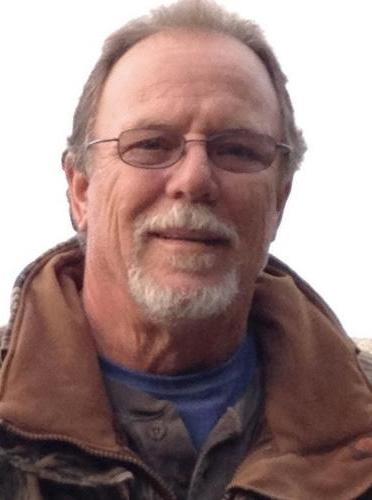
“He was as easy to love as he was hard to lose.”
Our newest seminarian burse was established in memory of Richard Edward Whatley, a parishioner of and faithful servant to St. Jude Parish in Benton, Louisiana. He passed away unexpectedly on February 25, 2026.
Ricky was active in many ministries at St. Jude including Wednesday night community dinners, bereavement ministry, men’s weekly prayer group, cooking food for the needy and elderly, volunteer maintenance of the St. Jude campus, ACTS team member, and so much more. He was recently awarded the 4th Degree Regalia sword for the Knights of Columbus and cooked at the Knights’ Lenten fish fries.
As written in his obituary, it was obvious through his acts of service that, “Ricky’s life was not about himself. He accepted the challenge that our true purpose in life is to care for others during our time here. Maybe he wasn’t able to finish his bucket list, but he surely completed the mission that God had for him.”
Ricky Whatley’s memory will continue on through his seminarian burse which will fund education and formation of seminarians for years to come.
Friends and family members can contribute to the Ricky Whatley Memorial Burse by sending their donation of any amount to:
Diocese of Shreveport
ATTN: Vocations Office 3500 Fairfield Avenue
Shreveport, LA 71104
Gifts to the Diocese of Shreveport's Seminarian Burse Program create a legacy of giving in support of our seminarians. It currently costs an average of $50,000 per year to educate and support one seminarian and we are blessed to have six at this time.
A seminary burse can be opened with a donation of $250 or more. A burse is completed when it reaches $10,000. Once a burse is open, it can receive donations in any amount. Burses can be opened to memorialize a loved one, honor a priest, and represent a group or organization. Anyone can contribute to any of the diocese's incomplete burses.
For a list of incomplete and completed burses, please scan the QR code on this page or visit www.dioshpt.org/ seminarian-burses
For more information on how to establish or contribute to a burse, please contact the Development Office at (318) 219-7260.
(030) Ottis & Anne Krupa Littlejohn Burse ($9200)
(024) Rev. Joseph Puthupally Burse ($9150)
(015) Bishop’s Seminarian Burse ($8593)
(011)2 Rev. David Richter Burse #2 ($7850)
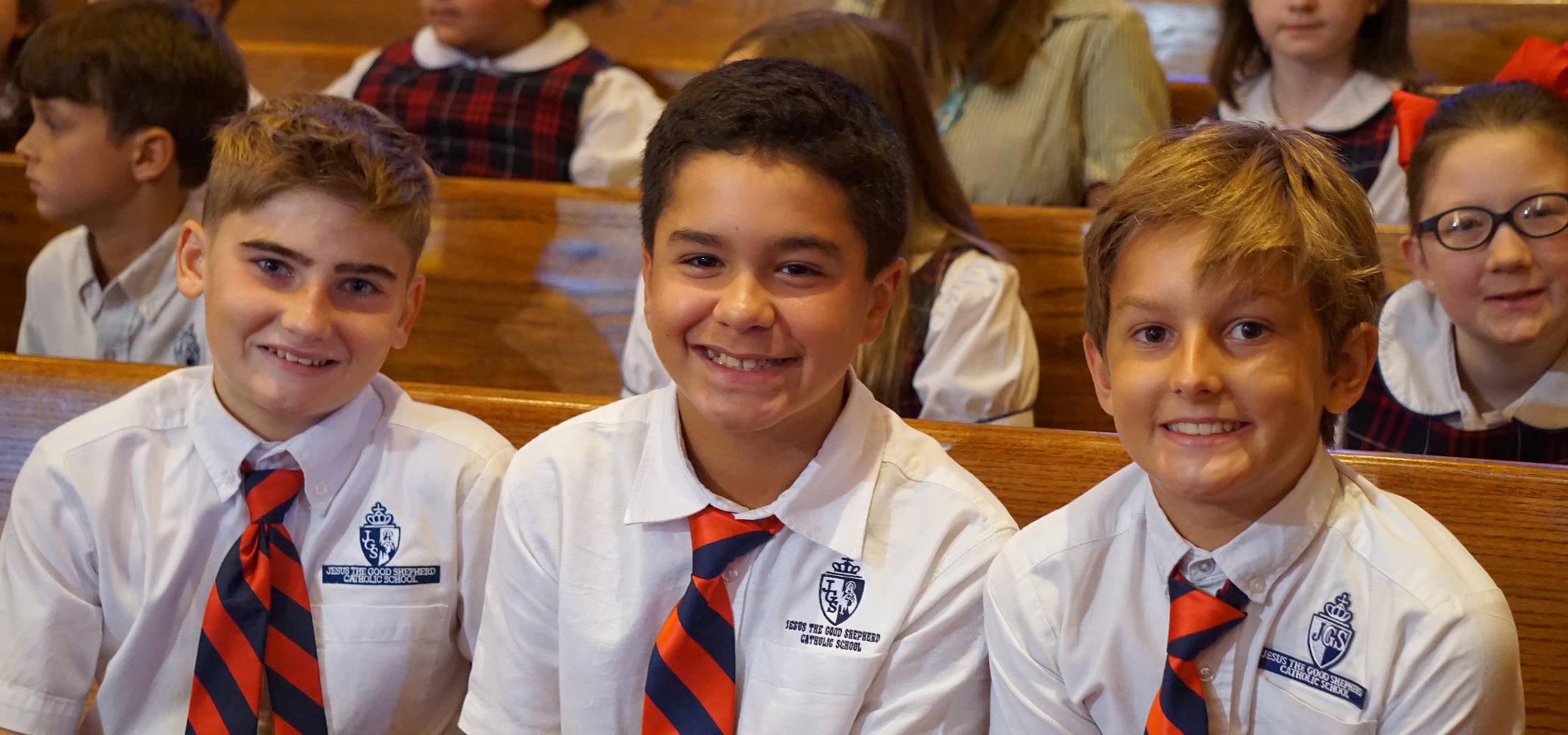
There is something unmistakable about the Holy Spirit’s presence in a Catholic school. You can feel it in the joyful noise of student chatter and laughter in the hallways, in the quiet reverence of prayer during adoration, and in the small but powerful moments where faith takes root in a child’s heart. At Jesus the Good Shepherd School, the Holy Spirit is alive, active, and guiding every part of our mission.
You witness it when a class receives the traveling statue of Mary during the Friday school Mass. This special tradition simply places a desksized Marian statue in a classroom for one week, but the impact is profound. Students lead the Rosary, offer intentions, and grow in their understanding of Mary’s intercession. It is faith formation beyond theory to lived experience, and we witness the Spirit moving through children’s faith and prayer, on a weekly basis.
You see it in service as well. In creating original artwork for charitable causes
like St. Vincent de Paul Community Pharmacy, gathering backpacks for underprivileged children in Honduras, and volunteering as altar servers or altar society members, our children learn early that the gifts God gives them are meant to be shared. Generosity becomes habit, and compassion becomes instinct.
The Fire of the Spirit also burns brightly in academic life. Our commitment to strong reading outcomes and academic excellence is not separate from our faith. When students discover confidence in the classroom, they are better prepared to hear and respond to God’s call in every aspect of their lives – the classroom, the field, and the community.
And formation means preparing students morally for the realities of their modern world. Today, that means we converse about responsible technology use, social media safety, and bullying – but through a Catholic lens of dignity, respect, and moral responsibility. The Spirit equips us not
only for church pews but for digital spaces and daily decisions, too.
As we look ahead to milestones like our upcoming Lumen Accreditation process, we do so with confidence and purpose. Accreditation affirms excellence, but the true measure of our school is the faith that flows from it. That faith is seen daily through our teachers’ lived vocations, in our families’ partnerships, and in students who lead with kindness, serve with joy, and pray with sincerity. At Jesus the Good Shepherd School, we do more than educate – we form hearts and minds for Jesus! By God’s grace, that Spirit and our school continue to grow and thrive.
Amy Fakhre is the Director of Development at Jesus the Good Shepherd Catholic School.

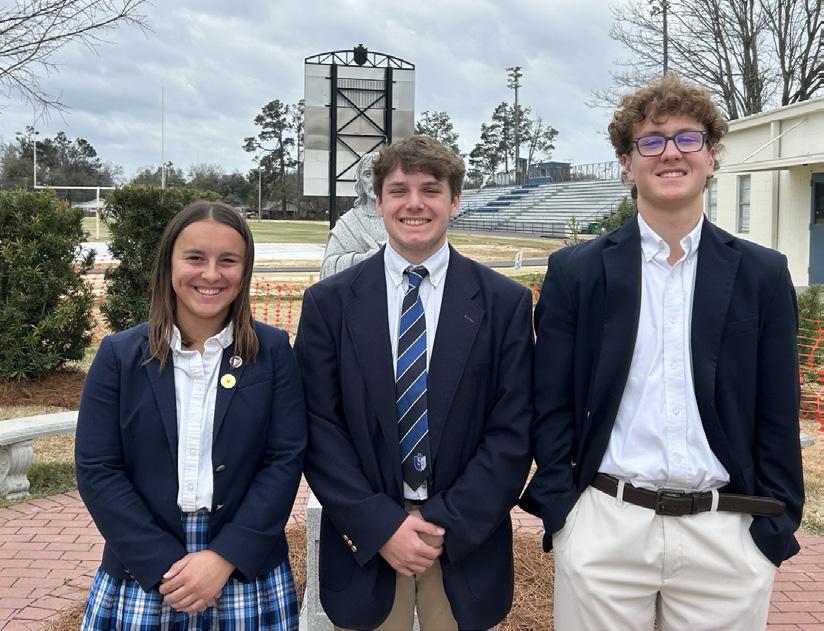
t St. Frederick High School, the Fire of the Spirit is alive in our students, guiding them to deepen their faith and courageously share it with others. Through the International Baccalaureate Middle Years Programme (IB MYP), students complete a Personal Project that challenges them to engage in longterm research, collaboration, and purposeful action. This year, several projects became powerful testimonies to the work of the Holy Spirit, inspiring our school community and beyond.
Camille deGravelle, a sophomore, transformed her love of athletics and faith into a digital ministry. Building on her Instagram initiative called Sunsets and Scriptures, Camille launched a podcast titled “Fight the Good Fight.” Her episodes explore how motivational language in sports serves as a metaphor for the Christian life, making faith relatable to a broad audience.
Through interviews with fellow students, Camille highlights how young people live their faith daily and are examples for others. She quickly produced ten podcast episodes and grew her audience from 20 to over 200 listeners, reaching beyond local followers to listeners across the United States and as far away as France and Chile.
Camille credits her involvement in Fellowship of Christian Students (FCS), Bible study, and religion classes for providing the foundation to share her faith with confidence. She reminds her listeners that faith, like athletics, requires continual practice: “The more you practice, the stronger
you become.”
Ryan Southwell discovered his own voice through his project, “For His Glory,” a series of faith-based videos shared on social media. He admits to struggles with social anxiety, but stepping out in faith to create these videos strengthened his confidence and sense of purpose. A defining moment came when a viewer he did not know messaged him asking for
prayer. In that instant, Ryan realized his witness could truly impact others. His spirit was ignited during an ACTS retreat for teens, he said, where he felt called to do more and to take a bold step in sharing his faith. Through daily journaling, prayer, and Scripture reading, his faith has strengthened. He even responds now to Snapchat messages with a simple but powerful reminder: “Remember, Jesus loves you.”
Archer Ashbrook combined entrepreneurship and evangelization through his project, Carry Your Cross Athletics, an on-demand apparel business featuring Christian messages.
What began as a school project has grown into a successful venture and a meaningful way to share his faith publicly. Archer learned that starting a business can be both achievable and impactful when guided by purpose.
He credits retreats, FCS, and the efforts of the St. Frederick Discipleship Team for inspiring him to be more courageous in expressing his faith. Through his designs, Archer encourages others to carry their faith into daily life.
The three students shared a common observation: their peers are becoming more comfortable and confident in expressing their faith. What began as individual projects has sparked a broader movement within our school community – one marked by authenticity, courage, and a desire to witness Christ to others.
At St. Frederick High School, the Fire of the Spirit is not a distant symbol; it is visible in the lives of our students. Through creativity, leadership, and faith-filled action, they are learning that the Holy Spirit calls each of us to step forward, to serve, and to share the Good News.
Indeed, the Spirit is on fire at St. Frederick High School.
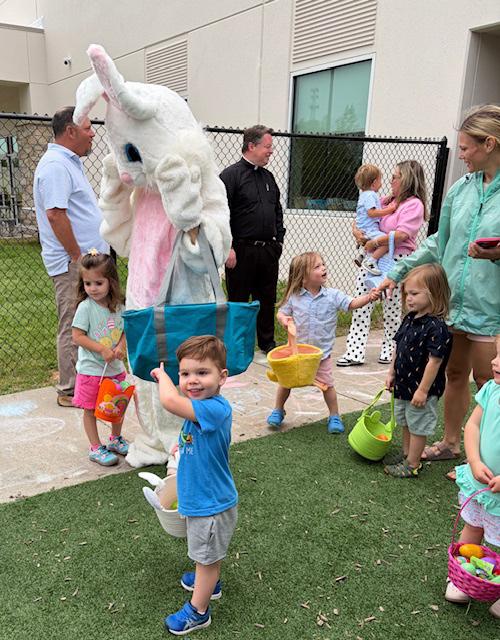
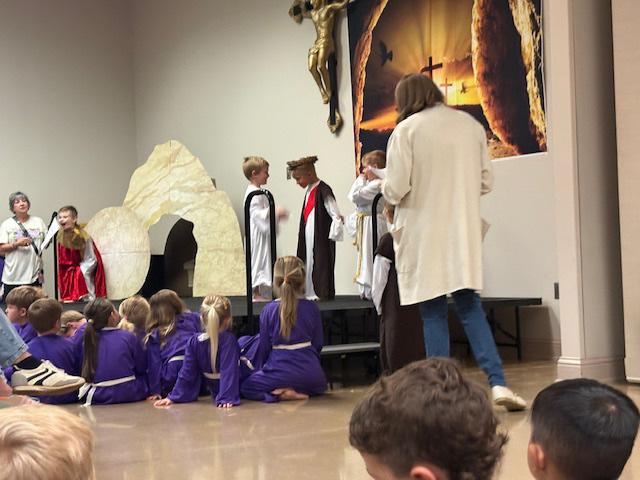
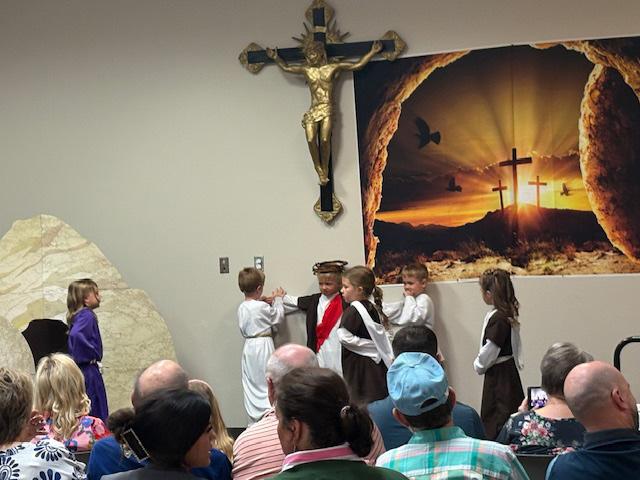
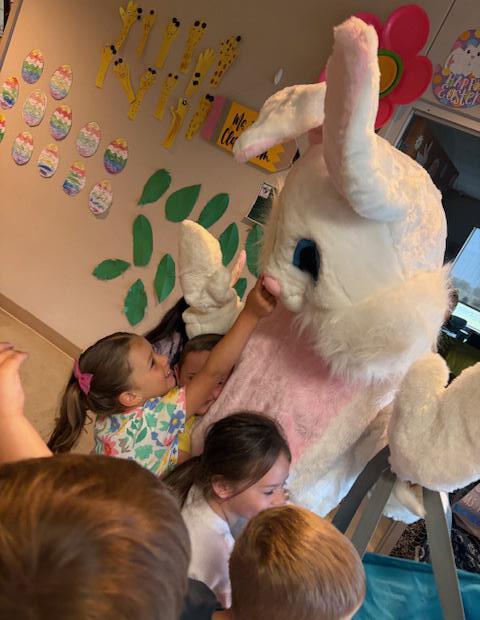
If you are familiar with St. Jude Day School and MDO, you know we love to celebrate! We focus on learning our Catholic faith, honoring special days, and celebrating holidays. On St. Joseph’s feast day, we hosted a breakfast to show our love for our fathers and to honor St. Joseph, the head of the Holy Family and patron of the Church. Children made a special card to express their love for their dad, and the Family Life Center filled with grateful dads and proud children, as they enjoyed this special time together before starting their day.
During Holy Week, the children performed our annual, heartwarming, Easter play for our families. “The Easter Story” was written and directed by Debbie Richardson with assistance from Beckie Harrison, both are
teacher’s aides. All would agree it was a very moving performance! It was hard to hold back tears as we witnessed tiny voices speak the words of the Gospel and act out the Resurrection of Jesus.
“He is not here: He has risen.” — Matthew 28:6
And there wouldn’t be an Easter celebration without an egg hunt and visit from the Easter bunny! Absolute joy filled our school as the excited children eagerly hunted for eggs with their classmates and families. We all look forward to the egg hunt tradition every year. Whether it’s held indoors or out, the children always have fun and go home with a basket full of sweet treats and treasures.
“For God so loved the world, that
He gave his only Son, that whoever believes in Him should not perish but have eternal life” —John 3:16.
If you would like more information about St. Jude Day School, please contact Amanda Chapa at 318-7462508 ext. 201 or Sjds@stjudebossier. org.
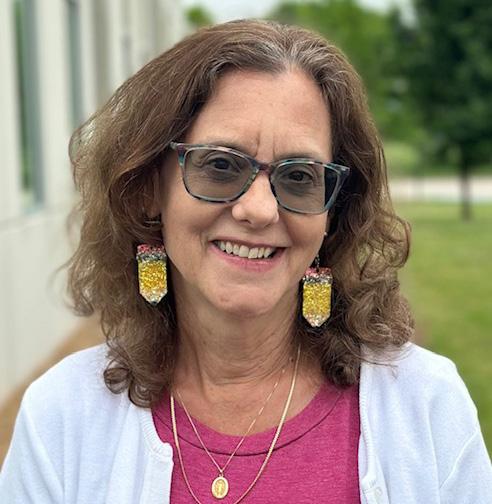
Sharon MaCabe is the Pre-K 3 teacher at St. Jude Day School & Mother’s Day Out.
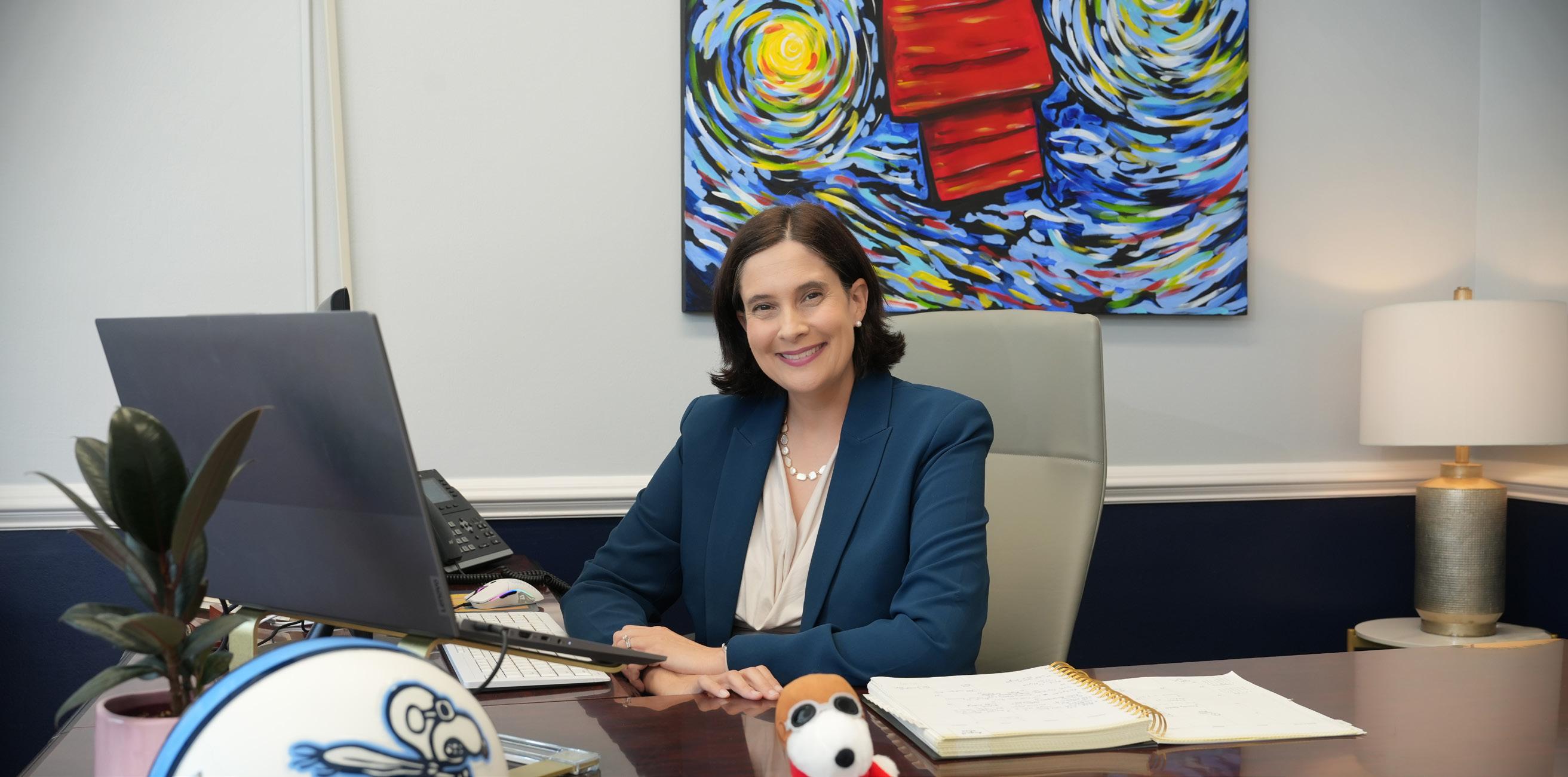
As we move into May, I find myself both grateful and energized by all that has taken place at Loyola College Prep this year. It has been a season of growth, achievement, and deepened purpose for our students, faculty, and families.
One of the most visible highlights is the success of Flyer Football this past fall. Our student-athletes represented Loyola with excellence, discipline, and heart, reminding us that athletics at LCP are about much more than wins and losses. They are about teamwork, leadership, and living our values on and off the field.
Beyond athletics, this strong academic year has been filled with student achievements across classrooms, competitions, service projects, and campus life. Our students continue to challenge themselves, support one another, and strive for excellence. Their curiosity, creativity, and commitment inspire us daily.
Everything we do flows first from our Catholic identity. Faith is not an add-on at Loyola, it is woven into our academics, activities, relationships, and service. This year, our faculty spent intentional time deepening their understanding of Ignatian Pedagogy; reflecting on how we teach, how students learn, and how reflection and action shape young people who are thoughtful, compassionate, and prepared to serve others. We are also excited about continued progress on Jesuit Hall, formerly the Residence building. This project is an important step forward for our campus and our mission. We will share more details soon and look forward to updating our community as plans take shape.
Admissions remain strong, and we are grateful for the families who continue to place their trust in Loyola College Prep. It is a joy to welcome new students each year and watch them grow into confident, capable young men and women.
A true point of pride for our school is our college placement program. Under the leadership of our Director of College Placement, Anna Beth Clark, students receive personalized guidance in their freshman year and continuing through senior year. From meeting deadlines and securing strong letters of recommendation to maximizing scholarship opportunities, our students are supported every step of the way. This intentional, individualized approach makes a meaningful difference for our families and our graduates.
As we look ahead, I am especially excited to celebrate our seniors and their many accomplishments. Their successes reflect years of hard work, strong mentorship, and a community that believes deeply in their potential.
Thank you for being part of the Loyola College Prep family. Your support, prayers, and partnership allow us to continue forming students who are intellectually competent, morally grounded, and ready to make a difference in the world.
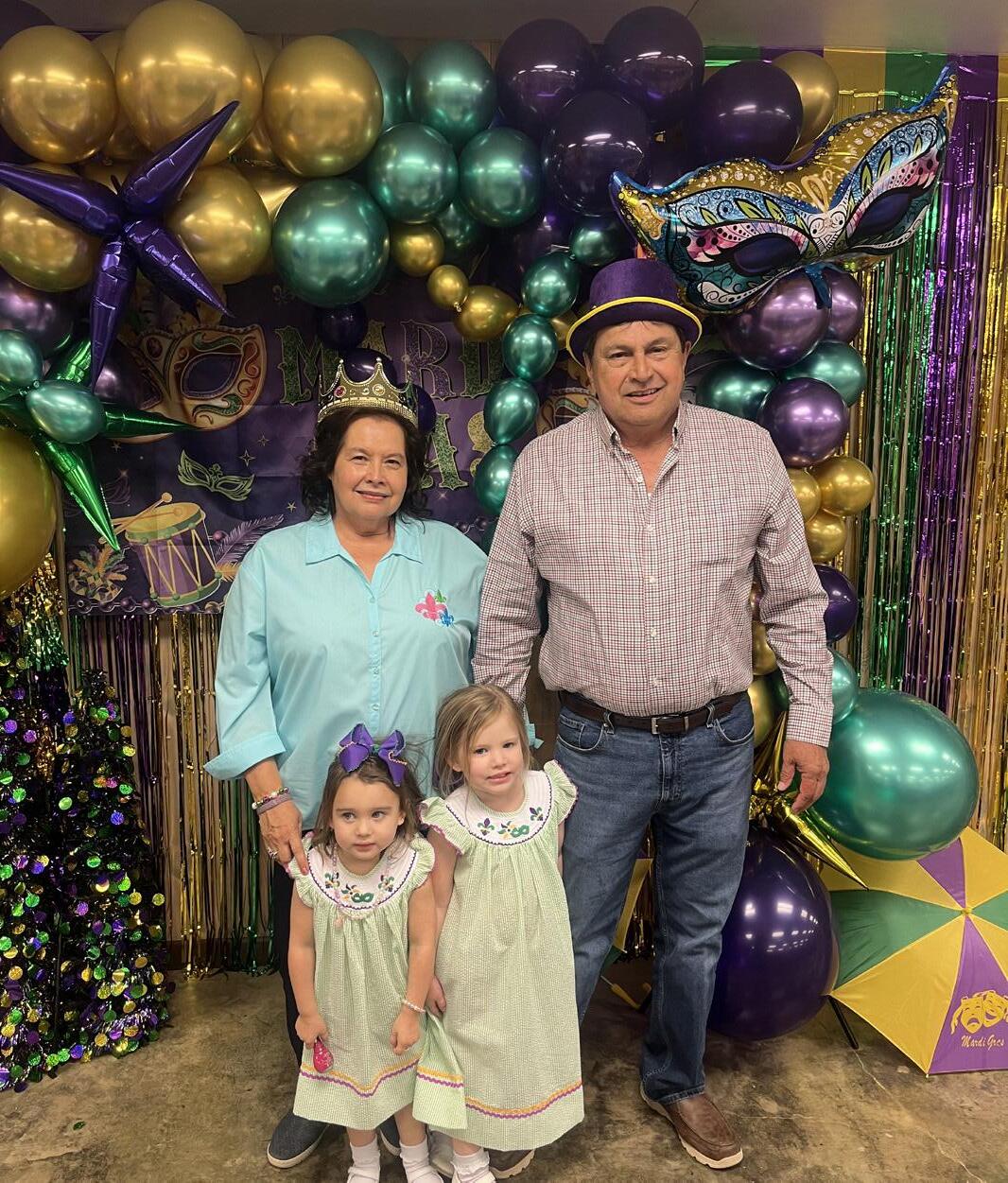
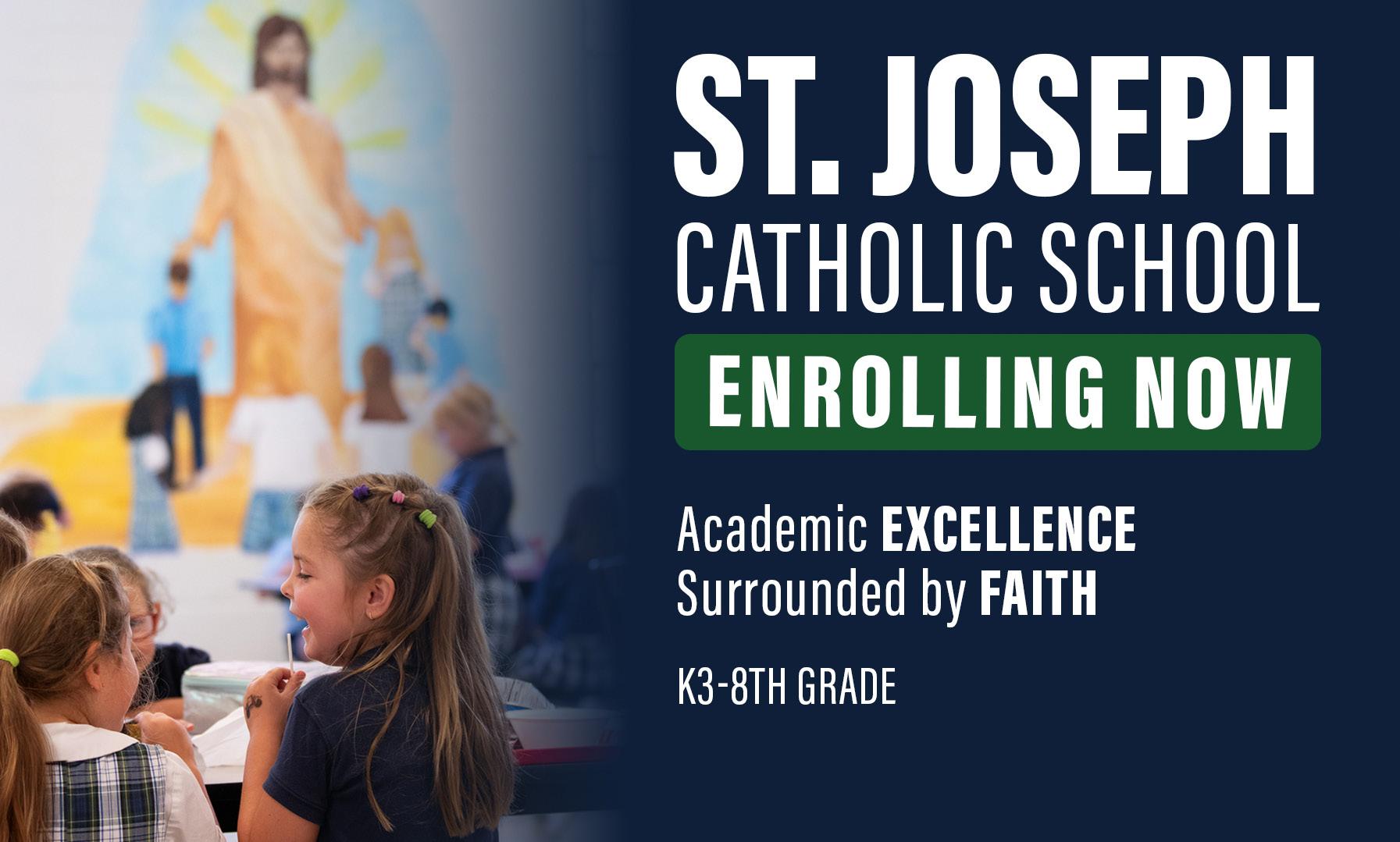
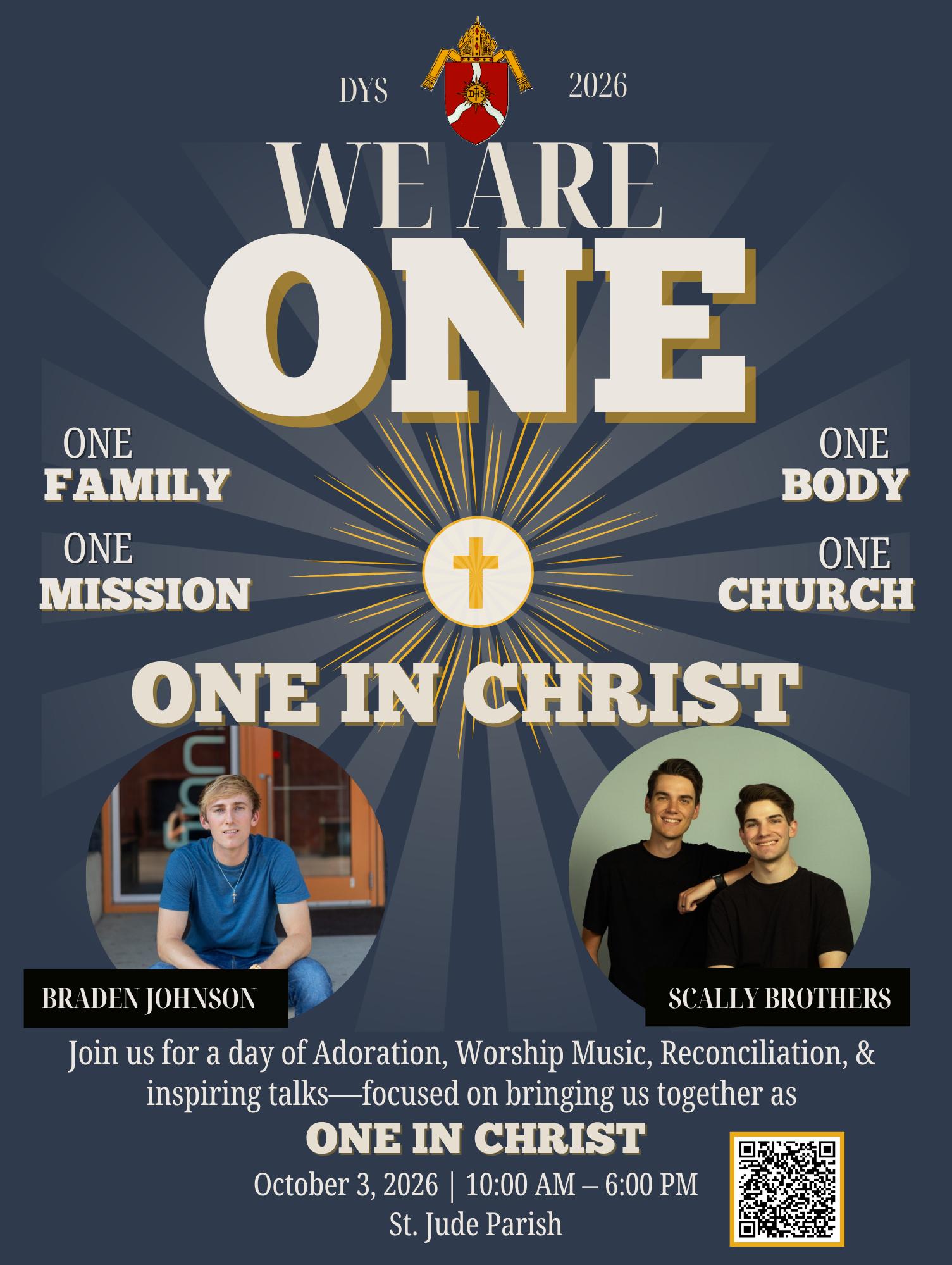
Please Join Us For A 30th
for
The Holy Sacrifice of the Mass will be celebrated on 6th day of June, 2026 at 4:00 PM.
St. Mary of the Pines Catholic Church 1050 Bert Kouns Industrial Loop Shreveport, LA 71118
A gathering meal will follow. Please RSVP to the church office at 318-687-5121
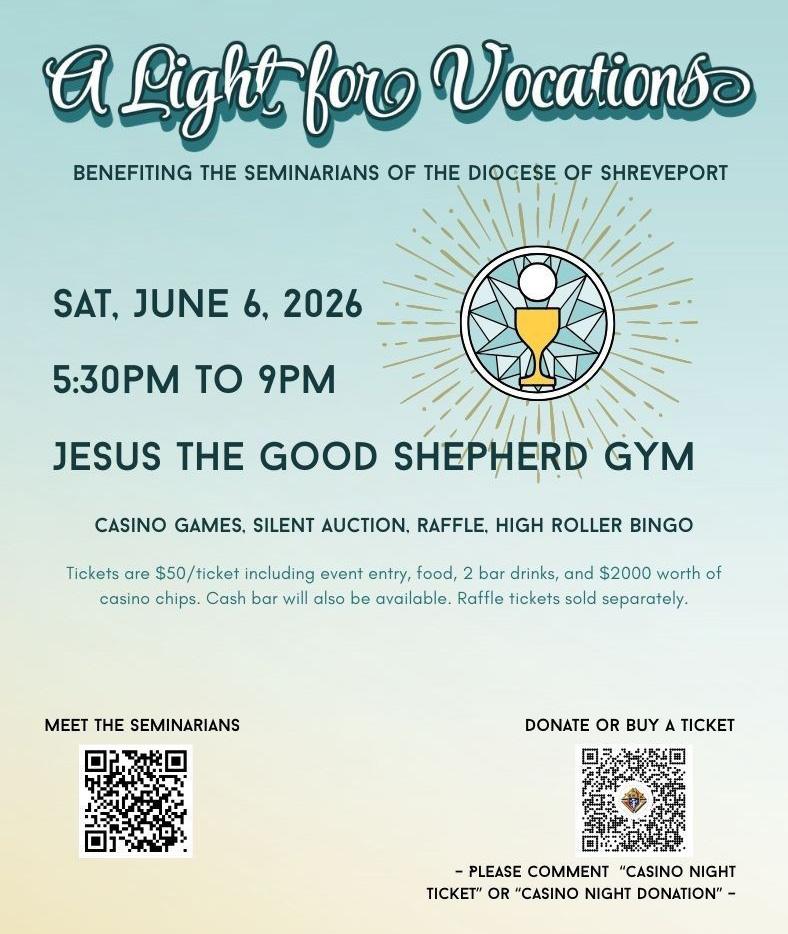
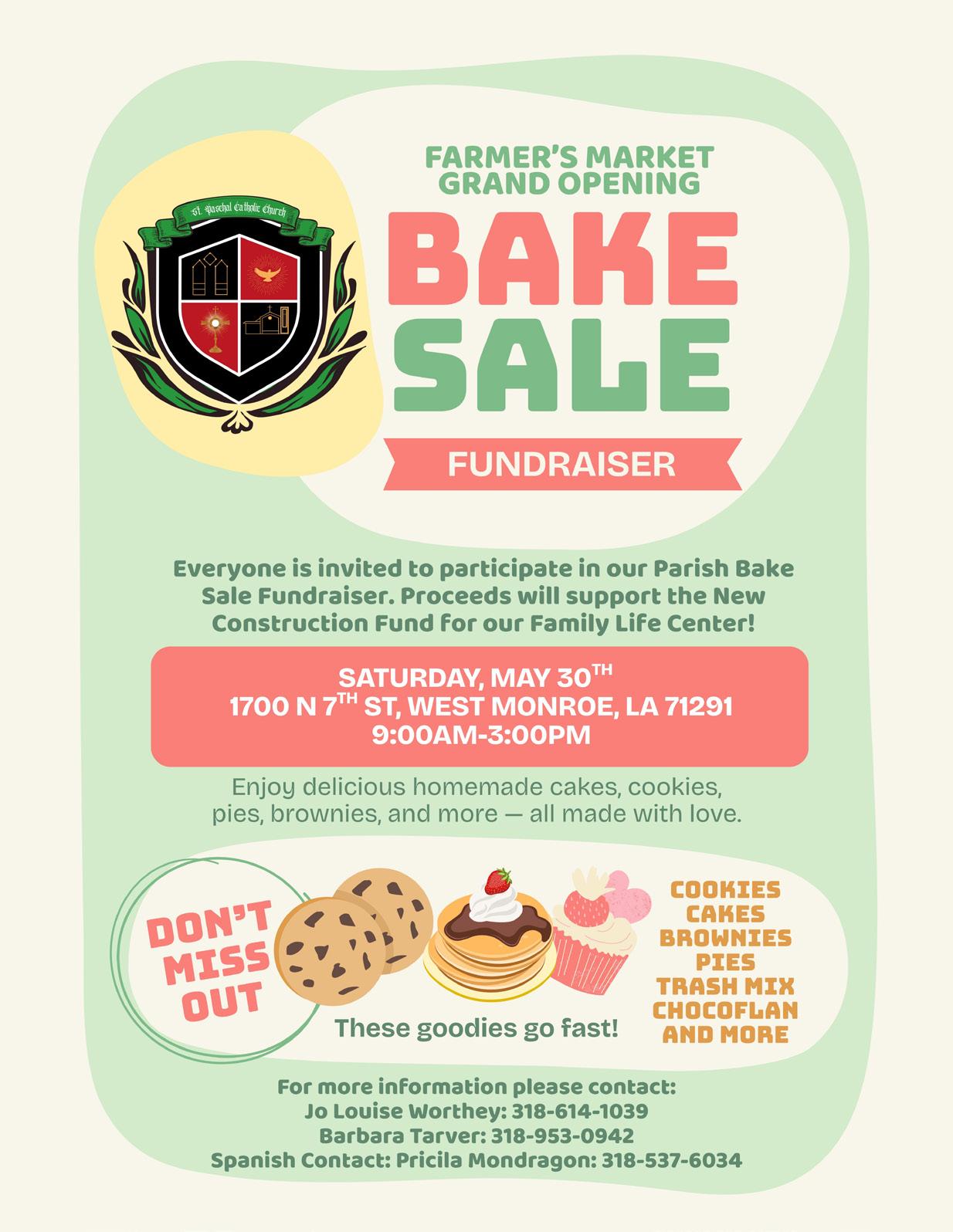
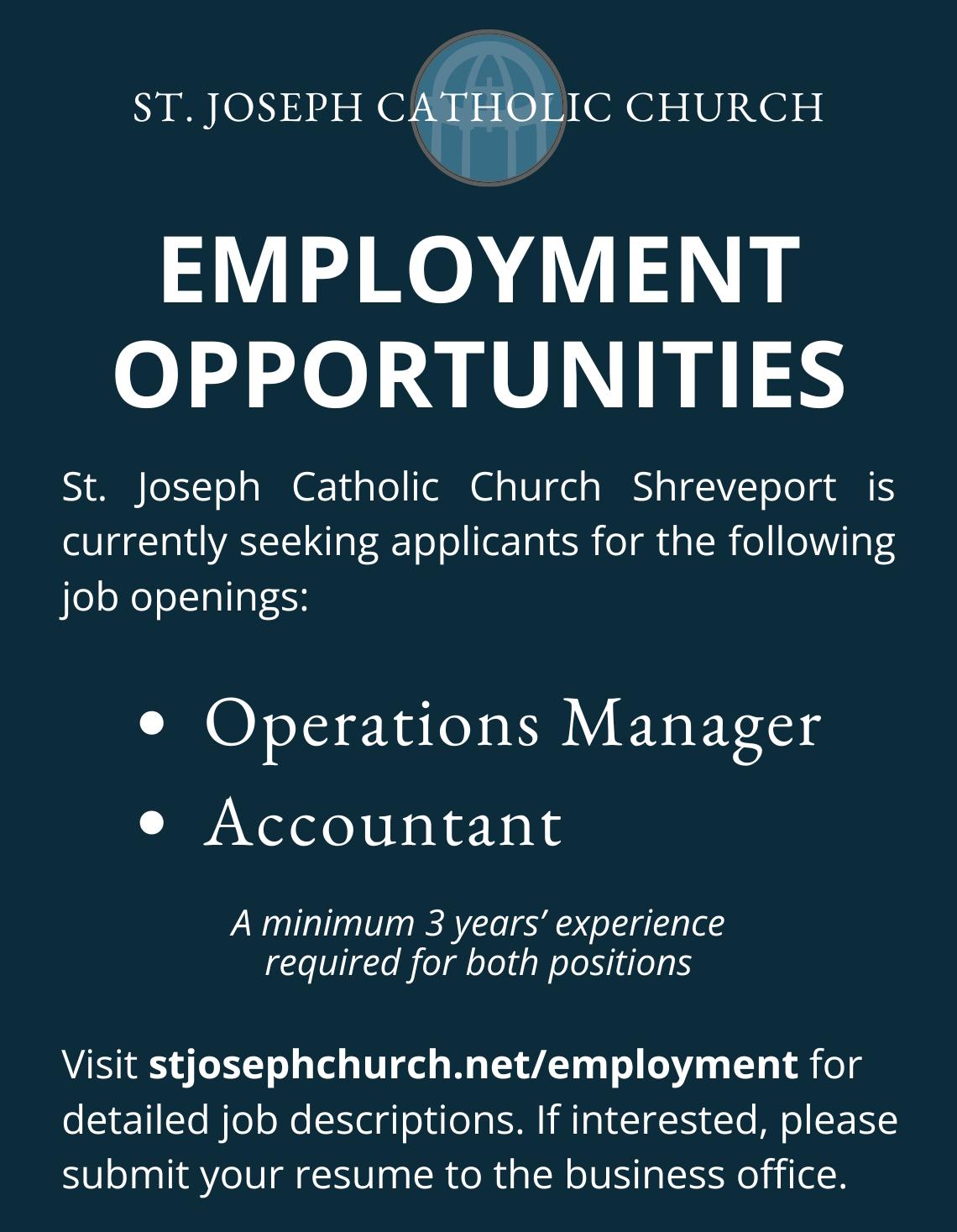
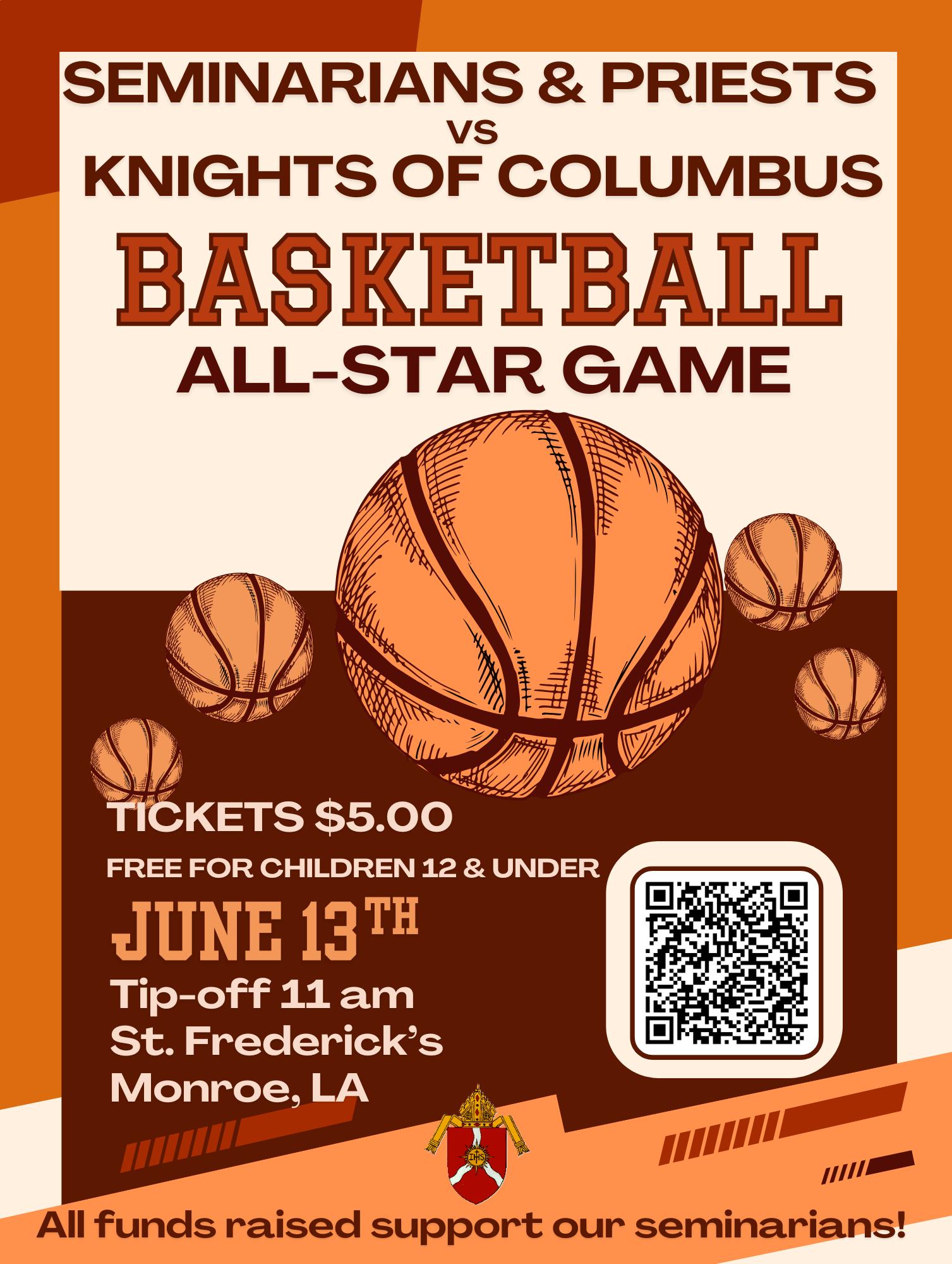
DIOCESE OF SHREVEPORT
3500 Fairfield Ave. • Shreveport, LA 71104
Catholic Connection USPS 024-824 is published monthly except for July by the Diocese of Shreveport, 3500 Fairfield Ave., Shreveport, LA 71104. Periodicals Postage PAID at Shreveport, LA 71102. POSTMASTER: Send address changes to Catholic Connection, 3500 Fairfield Ave, Shreveport, LA 71104.