CATHOLIC CONNECTION
CATHOLIC CONNECTION
PUBLISHER
Bishop Francis I. Malone
EDITOR
Sophia Romanski White
EDITORIAL BOARD
CONTRIBUTORS
Genevieve Aranda
Mary Arcement Alexander
Linda Bader
Ashley Bartels
Dr. S. Germain Cassiere
Karen Dill
Amy Fakhre
Carol Gates
Amanda Hall
Diane Libro
Very Rev. Peter B. Mangum
Lisa Marcalus
Jennifer Nix
Mae Operario
Kara Price
Jessica Rogers
Dr. Laurie Salvail
Elias Stroud
AUGUST 2026
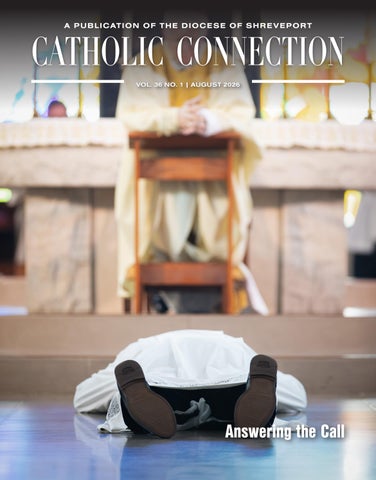
Volume 36 Number 1 ANSWERING THE CALL
P ope Leo XIV's Prayer Intention For The Month of August
FOR EVANGELIZATION IN THE CITY.
Let us pray that in large cities often marked by anonymity and loneliness we find new ways to proclaim the Gospel, discovering creative paths to build community.
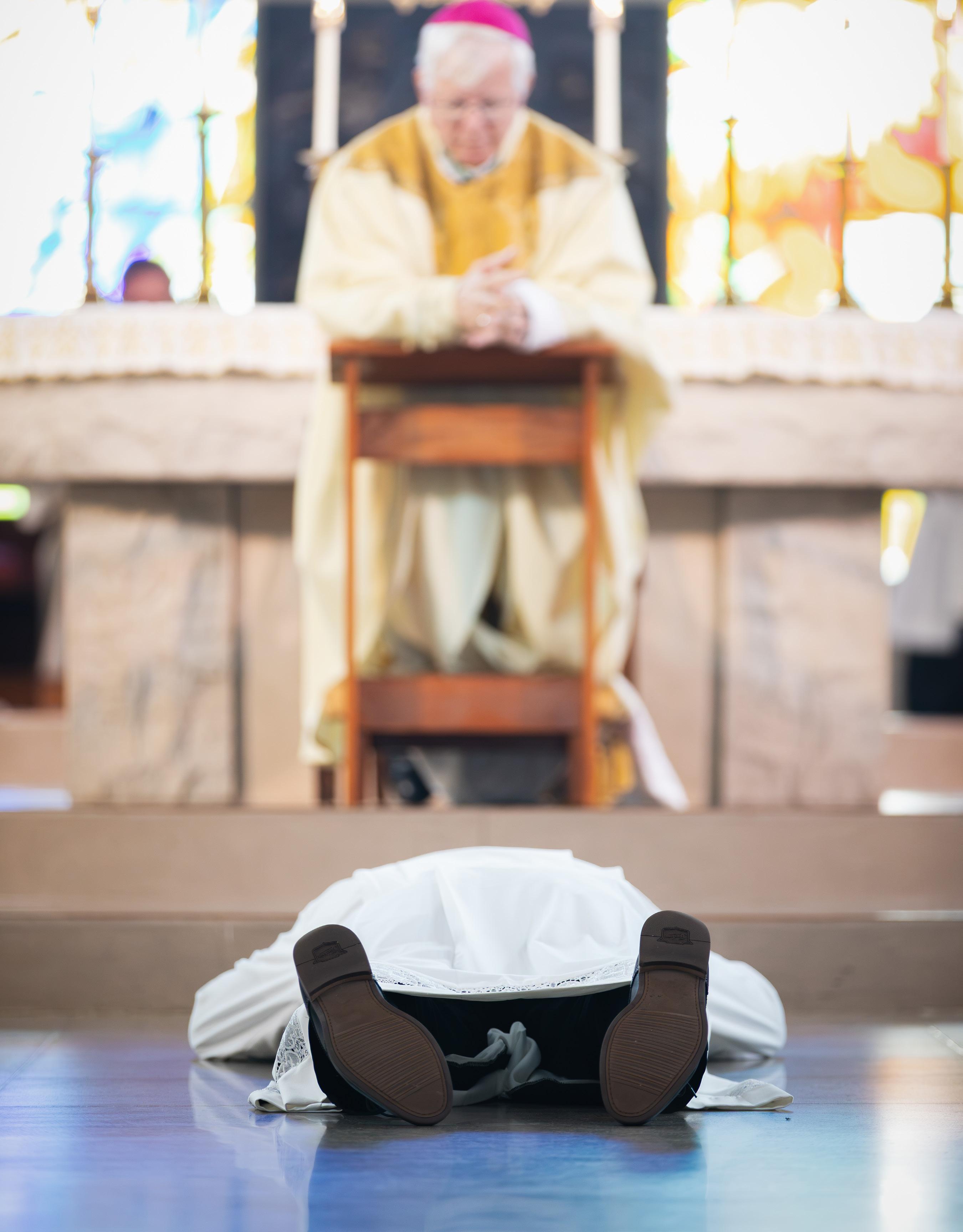
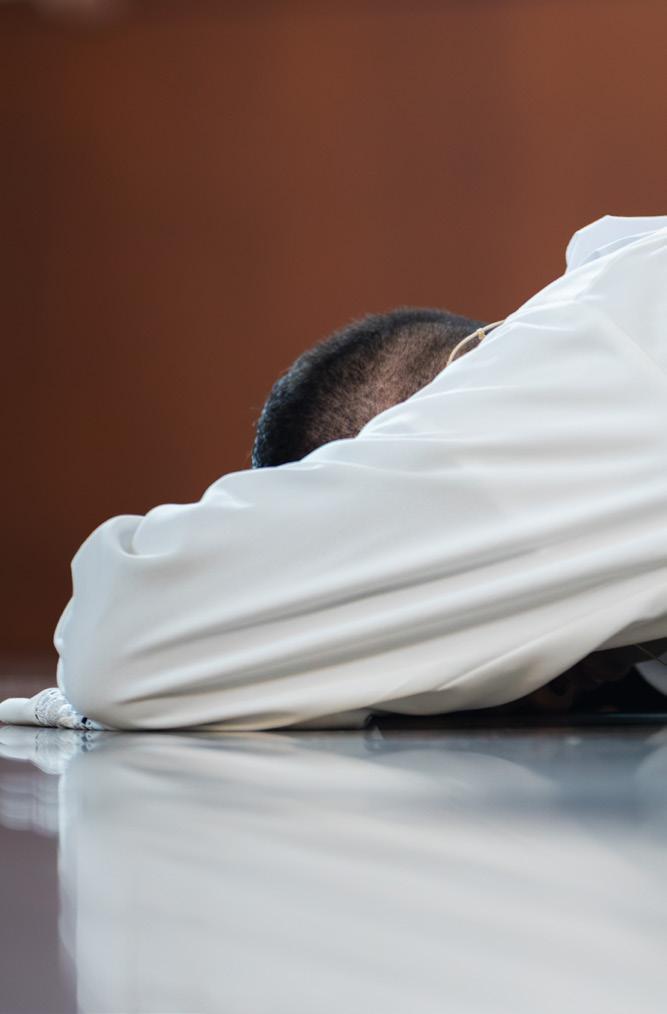
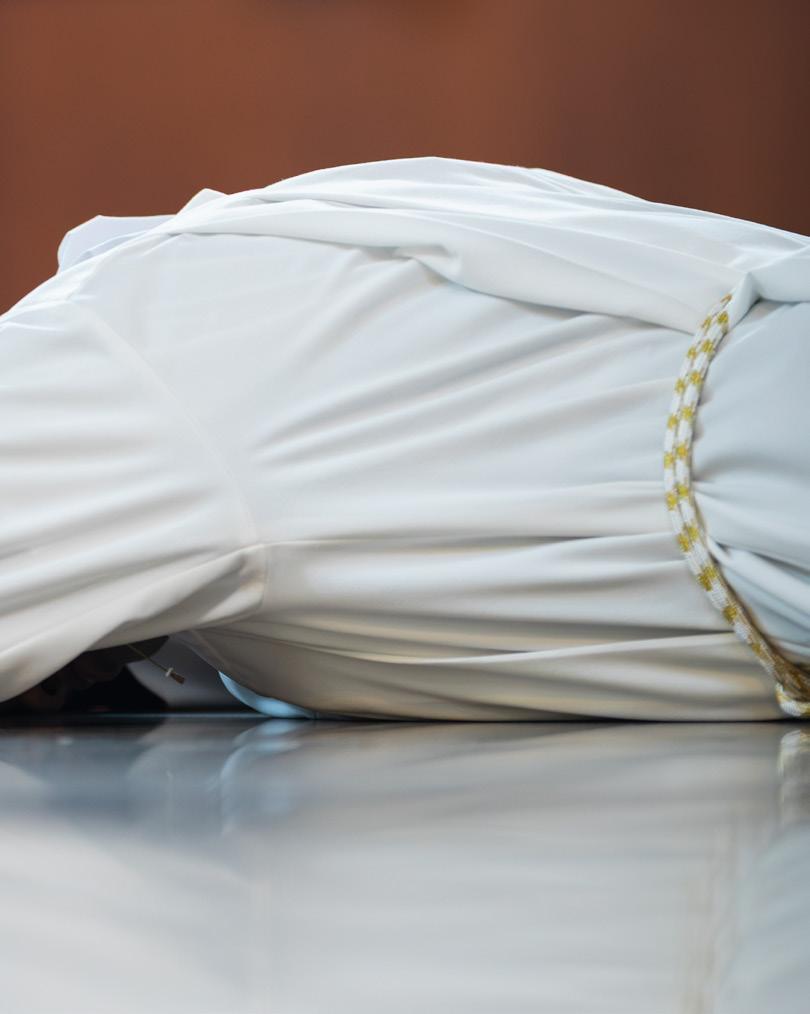
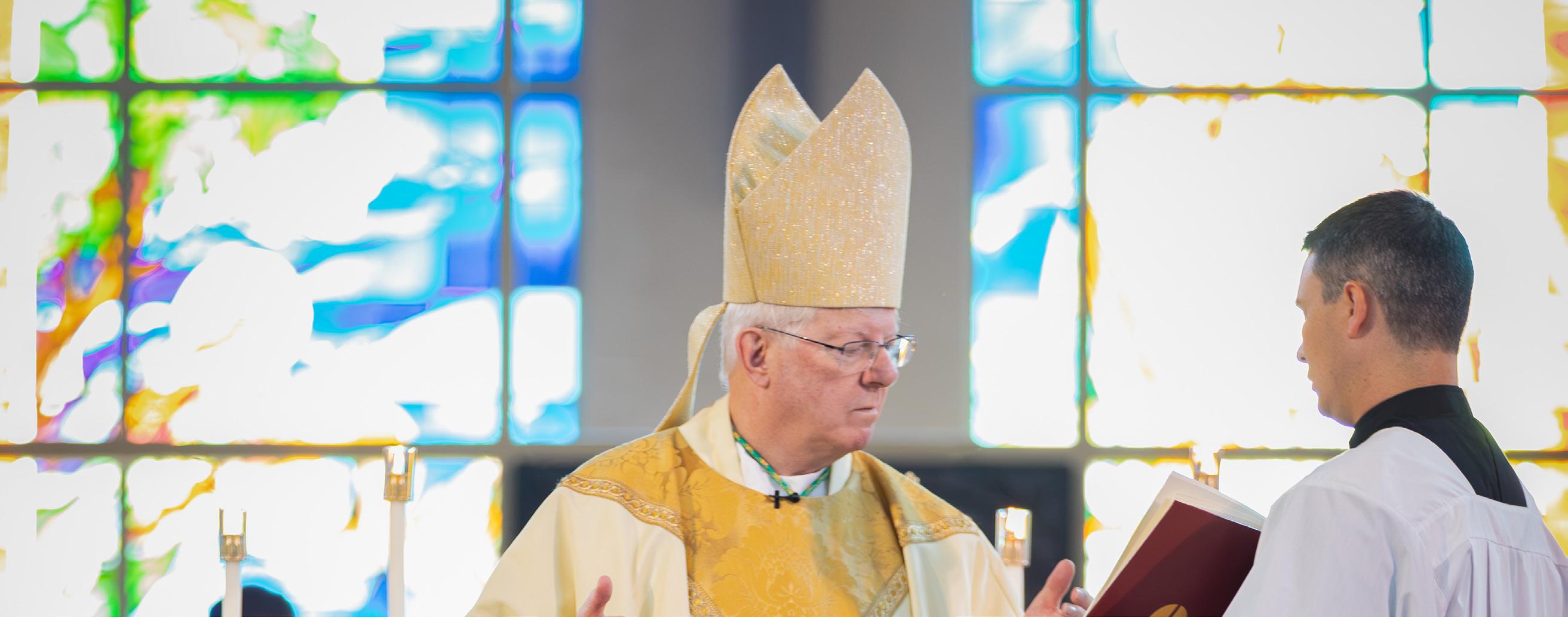
Cover photo: Deacon Tristan Frisk at his ordination to the Transitional Diaconate on June 27, 2026 at St. Jude Catholic Church in Benton, LA. Photo by Sophia Romanski White
SUBSCRIPTIONS & ADDRESS CHANGES Blanca Vice bvice@dioshpt.org 318-868-4441
SUBMISSIONS
Sophia Romanski sromanski@dioshpt.org
The Catholic Connection is a member of the Catholic Media Association
The Diocese of Shreveport complies with Virtus' Protecting God's Children program (www.virtus.org). Online sessions are available. To report child sexual abuse by a cleric or church worker in the Diocese of Shreveport, call your local law enforcement agency and Mary Arcement Alexander, Diocesan Victim Assistance Coordinator at 318-588-2120. Thank you for helping to keep our children and vulnerable adults safe.
The Catholic Connection is funded in part by a grant from the Catholic Home Missions Appeal and donations to the Catholic Service Appeal.
MISSION STATEMENT
The Catholic Connection is a monthly publication funded by your Catholic Service Appeal, mailed to every known Catholic household in the Diocese of Shreveport. Our mission is to advance knowledge and understanding of our Catholic faith among the faithful. We seek to foster the application of Christ's teachings and our Church's mission in our daily lives and to encourage our sense of Catholic identity within our family, parish, and faith community.
August Second Collections
AUGUST 8 & 9 DIOCESAN HISPANIC MINISTRY
This collection helps to support Hispanic communities in the Diocese of Shreveport. 100% of donations remain in our diocese.
Rev. Kevin Mues
Deacon Charles Thomas, OFS
Rosalba Quiroz
Karla Alvarez
Tracie Stroud
Msgr. Rothell Price
Fr. Raney Johnson
Fr. Matthew T. Long
Memorial of St. John
Fr. James McLelland
Fr. Mark Watson
Fr. Do Minh Vu, ICM
Feasts & Solemnities Priest(s) in the Diocese of Shreveport to pray for daily
Bishop Malone's Calendar Special Events in the Diocese of Shreveport
Pasta,
and Priestly Ordinations;
Feast of the Transfiguration of the
Back to School Convocation Mass for Catholic School Educators; Saint Vincent Chapel, Shreveport; 9:00 AM
Fr. Keith Garvin
Richard Norsworthy Fr. Mark Franklin
Fr. Gabriel Cisneros Campos Fr. Fidel Mondragón
Patrick Madden
Seminarians’ Luncheon; Catholic Center, Shreveport; 12:00 PM
Solemnity of the
Priest Retirement Committee Meeting; Catholic Center, Shreveport; 11:00 AM
of
Fr. Peter Romanus Mallya, FMH Fr. Philip Michiels
Kevin Mues
Red River Catholic Candlelight Mass for Young Adults; St. Joseph, Shreveport; 7:00 PM
All deceased priests of the Diocese of Shreveport Fr. James Dominic Thekkemury
SUGGESTED PRAYER FOR OUR PRIESTS:
Gracious and loving God, we thank you for the gift of our priests. Especially ___________________________________ (insert name(s) here) Through them, we experience your presence in the sacraments.
Memorial of St.
Fr. LaVerne “Pike”
Bishop Francis I. Malone Fr. Kelby Tingle
Memorial of the
the
Fr. Duane Trombetta
Fr. Jerry Daigle, Jr. Fr. Jean Bosco Uwamungu Fr. Nicholas Duncan Fr. Charles Ssennyondo
Help our priests to be strong in their vocation. Set their souls on fire with love for your people.
Grant them the wisdom, understanding, and strength they need to follow in the footsteps of Jesus.
Inspire them with the vision of your Kingdom.
Give them the words they need to spread the Gospel. Allow them to experience joy in their ministry.
Help them to become instruments of your divine grace.
We ask this through Jesus Christ, who lives and reigns as our Eternal Priest. Amen.
Lord
Fr. James Moran
Fr. Joseph Ampatt
Thomas
Fr. Peter Mangum
Vianney
Memorial
St. Pius X Memorial of the Queenship of the Blessed Virgin Mary
Memorial of St. Clare
Memorial of St. Alphonsus Liguori
Assumption of the Blessed Virgin Mary
Memorial of St. Maximilian Kolbe
Memorial of St. Bernard
Feast of St. Bartholomew
Pianos,
Cathedral of St. John Berchmans Parish Hall, Shreveport; 5:00 PM
Memorial of St. Monica
Feast of St. Lawrence
Bingo on the Bayou (a fundraiser for Catholic Charities of North Louisiana); Shreveport Convention Center; 5:30 PM
Fr. Rigoberto Betancurt Cortés
Fr. Adrian Fischer, OFM
Fr. Karl Daigle
Fr. Charles Glorioso
Fr. Joseph C. Howard, Jr.
Fr. Timothy Hurd
Fr. Osang Idagbo, CM
Fr. Joseph Martina, Jr.
Fr. Joseph Maddala
Fr. Calistus Barasa Makokha, FMH
Fr. Bwalya Mobe
Memorial of St. Dominic
Augustine
Passion of St. John
Baptist

Called First to Holiness
Dr. S.G. Cassiere’s first Thoughts from the Pew installment for Volume 36 begins a year’s worth of reflections on aspects of our faith that we often overlook.
23
Roman Phase Advances
Rev. Peter Mangum shares an exciting update on the Cause for Canonization for our local heros and Servants of God, the Shreveport Martyrs.
FROM THE EDITOR
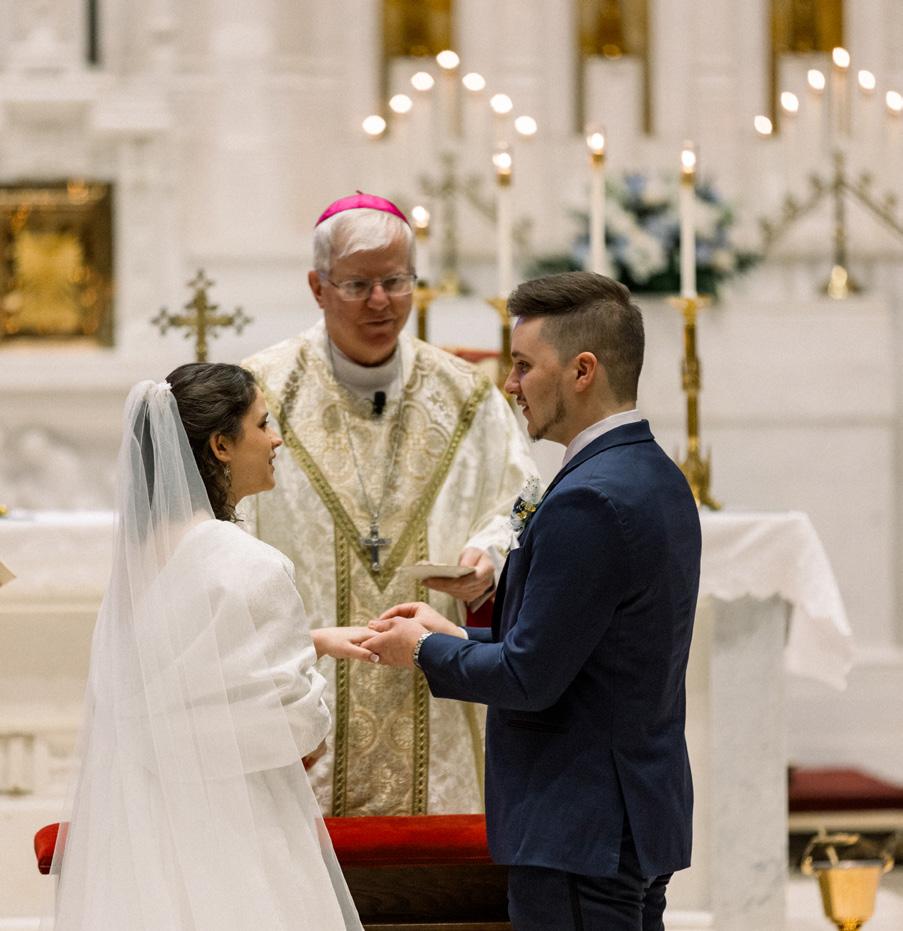
Our last vocations issue was June 2025. Back then I had been engaged for almost a year. By the time you all receive your copies of this magazine, my husband and I will have just celebrated our sixmonth milestone.
With this wealth of experience now behind me, I can confidently say that marriage is super awesome. Much of the advice we got leading up to our wedding amounted to essentially the following: It’s not going to be easy, and that’s ok. Prepare for your marriage, not just your wedding. The first year is the most challenging.
This is all solid advice. It is challenging to step from relative independence to sharing every decision. It is challenging to make sure you both are talking to each other about everything, even things that may not seem important (and especially the things that are obviously very important). It is challenging to get used to each other’s habits - the good and bad - that likely went unnoticed during your courtship but sure do get real noticable once you live together.
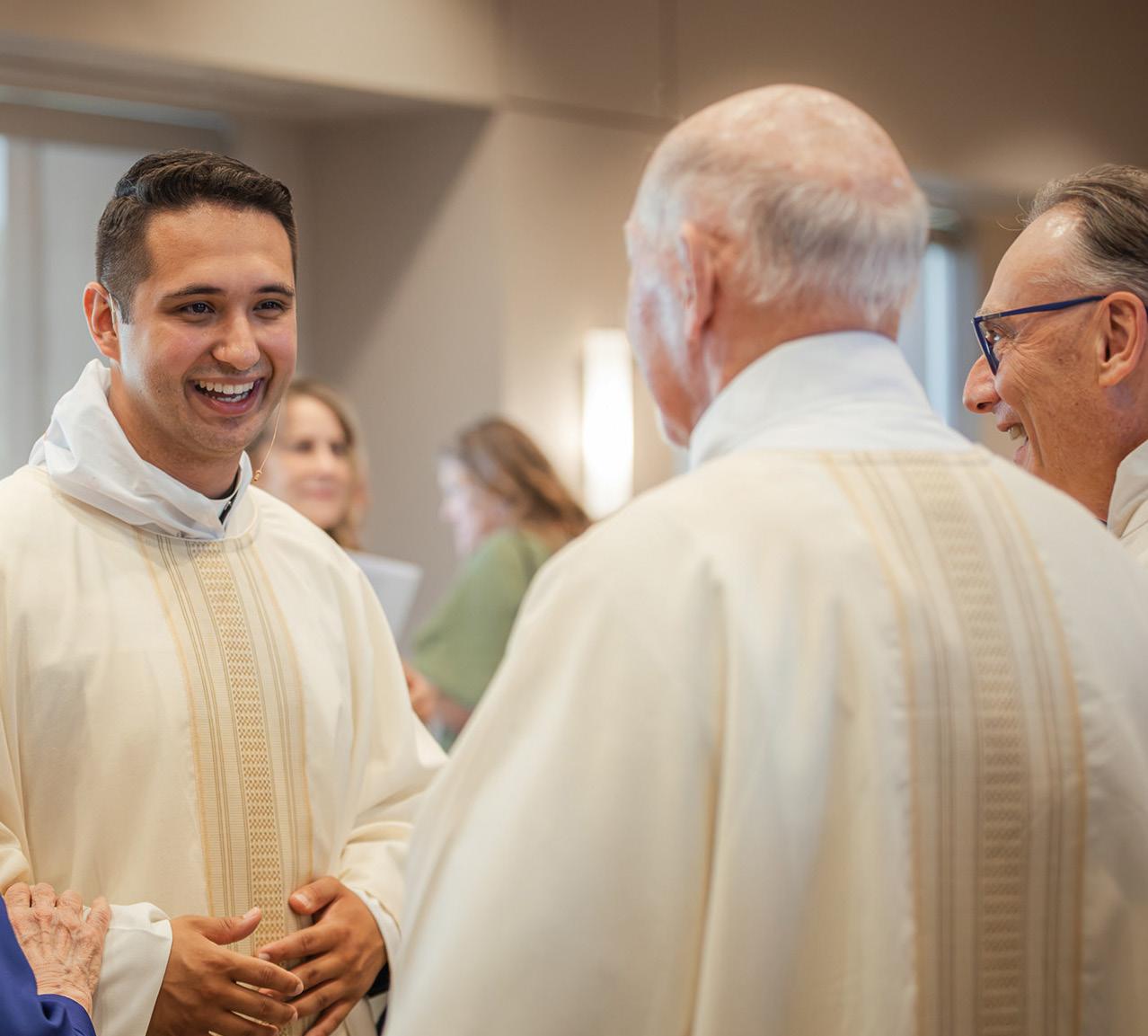
31 Congratulations, Deacon
Tristan Frisk! Celebrate the ordination to the Transitional Diaconate of our dear friend, Tristan.
It’s not easy to be married, but when you’re with the right person, and you know you’re following the will of God, it is very simple. The decision to get married wasn’t mine. It was ours: mine, my husband’s, and God’s. We spent almost three years praying separately and together to discern whether this was the right call, and even after just half a year, I can emphatically say that, yes, it was. And, not to sound premature, but something tells me that “yes” will only get more emphatic as the years progress.
So, I would like to dedicate this issue to my husband, Austin. God gave us a wonderful first six months. I can’t wait for the rest of it.
FROM THE BISHOP
Sometime in the near future, I hope tospend a week in Philadelphia. I don’t get many opportunities to visit my family, so it’s special when one comes my way. In addition to visiting my siblings, I try to do certain things when there. First on my list is “visiting the graves,” a tradition I find spiritually enriching. My parents, a sister, and my grandparents are buried in New Cathedral cemetery near one another, along with aunts and uncles, most of whom I remember quite well. I stop by each and offer prayers for the happy repose of their souls. Those who know me in Shreveport or Arkansas even ask upon my return: “Did you visit the graves?” This practice is important to me as it keeps the memory of these loved ones close to my soul. I am also prompted by the Scripture that tells us, “It is a holy and wholesome thought to pray for the dead” (2 Macc 12:46).
A second practice, germane to this article, is visiting the parish church of my youth. It takes me back a couple generations to my great grandparents, grandparents, aunts, and uncles who, like my siblings and me, received all their sacraments there. Stopping by the baptistry, in which we were received into the Church as infants, recalls First Communions, confirmations, and for
me, my ordination to the priesthood. I stand in the sanctuary in the place where my bishop, Andrew McDonald, imposed his hands on my head in 1977 to ordain me a priest. I usually pray there awhile in thanksgiving for this sacred ministry’s gift. Another spot in the sanctuary always draws me, returning me to a 1959 Sunday Mass I served as a very young boy. I remember it clearly: the warm Sunday morning, the young priest celebrating Mass, the beautiful Latin prayers we prayed. This particular memory is etched in my mind, so I recall clearly the Lord’s voice – while the priest elevated the Sacred Host and Chalice – saying to me, “One day, I want you to do this too.” For almost 50 years, in answer to the frequently asked question of when I knew God was calling me to the priesthood, I do not hesitate: it was that moment, that Sunday, in that Church, and in that spot of the sanctuary when I was given “the call.” For some, the call was to the Sacrament of Marriage – as my parents received it in 1946, just a few feet from where the Lord spoke to me. God called them just as He called me. When thinking of the vocation to which He called us, we have to conclude, I believe, that an integral part of that moment is when we had to have not only open ears but an open heart to listen to Him speak to us, single us out for that moment; and
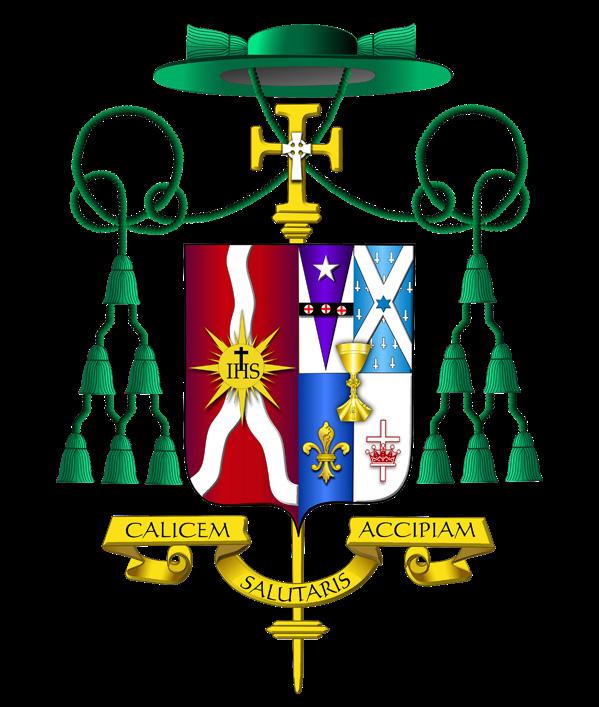
then, to recognize that singling out throughout the years that followed and realize that He was indeed calling us to pursue Him in the direction we took and is still ours today. This means He has been accompanying us throughout the years to this very day, in all we are doing and with all the crosses and joys our vocation brought. I was never told it would be easy; in fact, I was assured in my prayers and on the journey that a vocation, a true calling from the Lord, would always have its fair share of the Cross. However, more than the difficulties would be the incomparable joy of knowing: I was doing what He wanted me to do simply because He wanted me to do this for Him. And ultimately, isn’t this what a vocation rooted in the Lord is all about: a calling into the unknown future of crosses and joys from the Lord? For, this vocational call and other countless ways He DID call me were for me to live a life designed for His glory. My coat of arms and episcopal motto scripturally reflect my feelings when I ponder the calling received so many years ago: “How can I give thanks to the Lord for all that He has given to me? The cup of salvation I will take up, and I will call upon the name of the Lord” (Ps 116:12-13).

por el obispo
En algún momento en un futuro cercano, espero pasar una semana en Filadelfia. No tengo muchas oportunidades de visitar a mi familia, así que cuando surge una, es algo muy especial. Además de visitar a mis hermanos, trato de hacer ciertas cosas mientras estoy allí. Lo primero en mi lista es “visitar las tumbas”, una tradición que encuentro espiritualmente enriquecedora. Mis padres, una hermana y mis abuelos están sepultados en el cementerio New Cathedral, cerca unos de otros, junto con mis tíos y tías, a la mayoría de los cuales recuerdo muy bien. Paso por cada una de sus tumbas y ofrezco oraciones por el eterno descanso de sus almas. Quienes me conocen en Shreveport o Arkansas incluso me preguntan cuando regreso: “¿Visitaste las tumbas?” Esta práctica es importante para mí porque mantiene el recuerdo de estos seres queridos muy cerca de mi alma. También me inspira la Escritura que nos dice: “Es un pensamiento santo y piadoso orar por los difuntos” (2 Mac 12,46).
Una segunda práctica, relacionada con este artículo, es visitar la parroquia de mi juventud. Esto me remonta un par de generaciones, hasta mis bisabuelos, abuelos, tíos y tías, quienes, al igual que mis hermanos y yo, recibieron allí todos sus sacramentos. Detenerme en el baptisterio, donde fuimos recibidos en la Iglesia siendo bebés,
me recuerda las Primeras Comuniones, las Confirmaciones y, en mi caso, mi ordenación sacerdotal. Me paro en el santuario, en el lugar donde mi obispo, Andrew McDonald, impuso sus manos sobre mi cabeza en 1977 para ordenarme sacerdote. Normalmente permanezco allí un momento en oración, dando gracias por el don de este sagrado ministerio.
Hay otro lugar del santuario que siempre me atrae y me transporta a una Misa dominical de 1959, en la que serví como monaguillo siendo un niño muy pequeño. Lo recuerdo con claridad: aquella cálida mañana de domingo, el joven sacerdote celebrando la Misa y las hermosas oraciones en latín que rezábamos. Ese recuerdo quedó grabado en mi mente, por lo que también recuerdo claramente la voz del Señor —mientras el sacerdote elevaba la Sagrada Hostia y el Cáliz— diciéndome: “Algún día quiero que tú también hagas esto.”
Durante casi 50 años, cuando me preguntan en qué momento supe que Dios me llamaba al sacerdocio, no dudo en responder: fue en ese instante, ese domingo, en esa iglesia y en ese lugar del santuario donde recibí “el llamado”. Para algunos, el llamado fue al Sacramento del Matrimonio, como lo recibieron mis padres en 1946, a solo unos pasos del lugar donde el Señor me habló. Dios los llamó a ellos, así como me llamó a mí.
Cuando pensamos en la vocación a la que Él nos llamó, creo que debemos concluir que una parte esencial de ese momento fue tener no solo los oídos abiertos, sino también el corazón abierto para escuchar su voz, para permitir que nos señalara personalmente en ese instante. Después, con el paso de los años, hemos podido reconocer ese llamado y darnos cuenta de que realmente nos estaba invitando a seguirlo por el camino que elegimos y que seguimos recorriendo hasta el día de hoy.
Esto significa que Él nos ha acompañado a lo largo de todos estos años, hasta este mismo día, en todo lo que hacemos y en todas las cruces y alegrías que nuestra vocación ha traído consigo. Nunca se me dijo que sería fácil; de hecho, en la oración y a lo largo del camino se me aseguró que una vocación, un verdadero llamado del Señor, siempre tendría su parte de Cruz. Sin embargo, por encima de las dificultades está la incomparable alegría de saber que estaba haciendo lo que Él quería que hiciera, simplemente porque Él quería que lo hiciera por Él.
Y, al final, ¿no es eso precisamente una vocación arraigada en el Señor? Un llamado hacia un futuro desconocido, lleno de cruces y alegrías que vienen del Señor. Porque este llamado vocacional y las innumerables maneras en que Él SÍ me llamó tenían como propósito que viviera una vida diseñada para su gloria.
Mi escudo episcopal y mi lema reflejan, desde la Sagrada Escritura, los sentimientos que experimento cuando medito sobre el llamado que recibí hace tantos años: “¿Cómo pagaré al Señor todo el bien que me ha hecho? Alzaré la copa de la salvación e invocaré el nombre del Señor.” (Sal 116,12-13)
Para obtener más información sobre las oportunidades del Ministerio Multicultural en la Diócesis de Shreveport y para encontrar nuestros horarios y lugares de misa en español, por favor escanee el código aquí.

Vocation Evolves Every Day
One of the most blunt assessments of Christian vocation can be found in the Vatican II Decree on the Apostolate of Lay People.
“A member who does not work at the growth of the body to the extent of his possibilities must be considered useless both to the Church and to himself.” (Apostolicam Actuositatem 2)
It conjures up an almost comical image of being thrown bodily from the Cathedral and the doors locking behind me. The reality is deadly serious – to be declared useless to God? Let’s not even go there.
Because of our great need for priests, we have oversimplified this search for vocation. We speak of it in a binary: religious or not? Young people are asked to discern the voice of God and make a once and forever choice.
When they have decided, we consider that question answered and go on to ordination, vows or marriage.
I would argue vocation is far more nuanced than that.
The above quote says we are to “work at the growth of the body.” The Catechism says humanity’s vocation
is “to be transformed into the image of the Father's only Son” (1877). On the World Day of Prayer for Vocations this year, Pope Leo XIV said God has planned “a unique path of holiness and service” for each of us.
Vocation is a process of listening, responding and evolving.
In the year 2000, on the cusp of this new millenium, I graduated with a degree in Journalism, convinced I was going to bring justice to communities through the stories I told in newspapers.
By 2009, the industry was collapsing around me, and my own discernment of married life and responsibilities of family led me to the social service sector. A series of positions, detours and experiences followed. Never had I imagined leading Catholic Charities, but when this opportunity opened, I felt God calling me to it.
When I look at my co-workers, I see the same story. We have two attorneys and a former real estate agent who could be making far more money in those fields than they do at Catholic Charities. Other staff members are not Catholic or grew up far from Shreveport.
Yet, in listening to God and choosing
His path, they are able to use their skills and talents to serve the poor and vulnerable here. Last year, more than 2,500 people benefited from their choice.
That’s what vocation is about. “The Church was founded to spread the kingdom of Christ over all the earth for the glory of God the Father, to make ALL men partakers in redemption and salvation, and through them to establish the right relationship of the ENTIRE world to Christ.” (AA2, emphasis mine)
God calls us. He uses us – both our strengths and weaknesses. It up to us to respond, over and over.
We grow closer to Him and build the body of Christ.
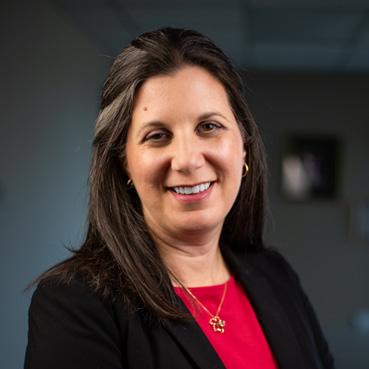
Diane Libro is Executive Director of Catholic Charities of North Louisiana.
Business and Beauty
In Papal Documents
This is the seventh article in our series exploring significant events, archival holdings, and select churches in the Diocese of Shreveport’s 40-year history.
Pope Francis said that “Beauty is the work of the Holy Spirit that harmonizes everything…” and I find this sentiment especially true when it comes to papal documents. I’m fascinated by the artistry in handlettered decrees and blessings--the precise calligraphy, elegant prose, and ornate embellishments. These details seem to add a spiritual gravitas to the message.
There is an elegant formality to the structure of a papal bull, the pope’s official decree in which he erects a new diocese, appoints a bishop, announces a holy year, canonizes a saint, and executes other important decisions. The word bull is derived from the Latin bulla (bubble), and originally described just the document’s metal seal, but eventually came to mean the decree itself. Composed in Latin, bulls are written in preciselyspaced calligraphic script and start with the greeting of the pontiff: (Name), Episcopus, Servus Servorum Dei – Bishop, Servant of the Servants of God. The introductory words of the document are called the incipit (“it begins”), indicating its purpose. Pope John Paul’s 1986 bull that created the Diocese of Shreveport starts with Pro grege (“for the flock”), signifying he is announcing something important to the Catholic faithful of the area. The one by Pope John Paul II that designated Bishop William B.
Friend, then-Bishop of AlexandriaShreveport, as the new Bishop of Shreveport begins Venerabili fratri (“To my venerable brother”), since he was already a bishop. Those for Bishop-elect Micheal G. Duca from Pope Benedict XVI and for Bishopelect Francis I. Malone from Pope Francis have the greeting, Dilecto filio
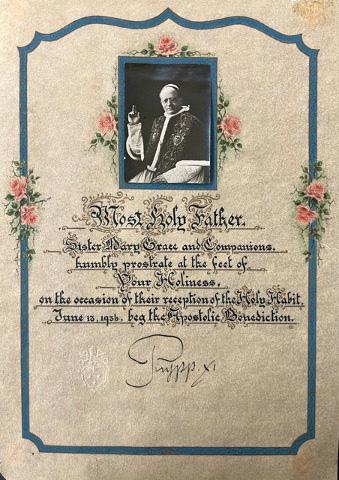
(“To my beloved son”), highlighting the spiritual father-son relationship. Words of support and encouragement for the responsibilities that lie ahead come next, followed by an explanation of the local circumstances and rationale for the decree. Bulls conclude with the place, date, and year of the pope’s pontificate. At the bottom, a round metal seal (traditionally) joins the yellow silk cords woven through the parchment, authenticating the document.
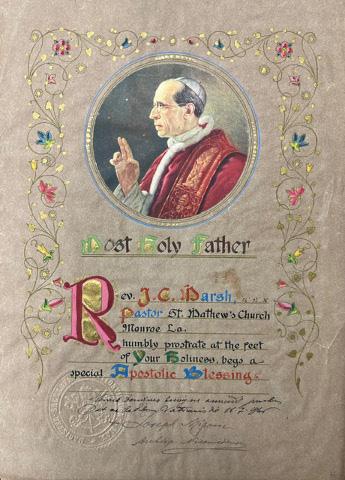
Among the various apostolic blessings in our Archives, two stand out in particular because of their exquisite
hand-lettering, embellishments, and illumination. One was presented to Sr. Mary Grace (Lagano) and Companions, Daughters of the Cross, by Pope Pius XI on June 13, 1936, commemorating their reception of the Holy Habit. The individual letters are miniature works of art in themselves and those detailed flourishes surrounding the capital letters and the delicate lines underneath the words add even more beauty. The inks used on this 90-year-old document – which is on very thick parchment–are still quite dark and clear.
The other apostolic blessing of note was given by Pope Pius XII to Rev. (later, Msgr.)
John C. Marsh, who was pastor of St. Matthew Church from July 1945 to November 1970. It was signed July 7, likely in the 1940s, although the exact year is difficult to decipher. While the calligraphy in this blessing is less ornate than in the other’s, the hand-painted letters and tiny flowers adorned with gold remain remarkably vibrant nearly eight decades after they were drawn.
Lisa Marcalus is the archivist for the Diocese of Shreveport.
Called First to Holiness
The boy Samuel heard his name in the night but did not yet understand who was calling.
Jeremiah heard the call of God and protested that he was too young. Peter saw the miraculous catch and fell to his knees, aware of his sinfulness. Paul was stopped on the road he chose and sent down the road Christ chose for him.
None of them began by designing a life plan. They were called.
That is where every true vocation begins: not with self-invention, but with God’s initiative. God calls first. Man answers second. A vocation is not God admiring our readiness – it is
God inviting our surrender.
Service is the shape a vocation takes. Holiness is the purpose for which it is given.
The saints prove the point. They did not become saints in the same way. Some were scholars and some beggars, some parents and some priests, some consecrated virgins and some widows, some rulers and some servants, some fiery and some gentle, some hidden and some public. God does not massproduce saints. The call to holiness is one, but the paths by which He forms saints are wonderfully varied.
When Catholics hear the word “vocation,” many immediately think
of priests and religious sisters. That is good and necessary. The Church must pray seriously, as our Lord commanded, that “the Lord of the harvest” send laborers into His harvest. No parish, diocese, or Catholic family should treat that prayer as optional. No priests… no sacraments.
Vocation is broader than that. God calls His people to serve Him in different ways. Some are called to the altar, some to marriage, some to religious life, and some to single life. Some are called to hidden service, caregiving, teaching, suffering, prayer, or works that receive little notice. The forms of service differ. The first vocation of every Catholic is not to a role – but to holiness.
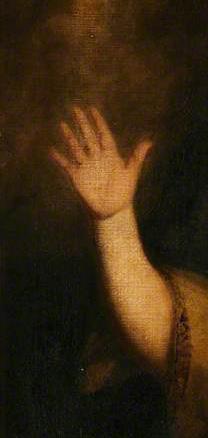
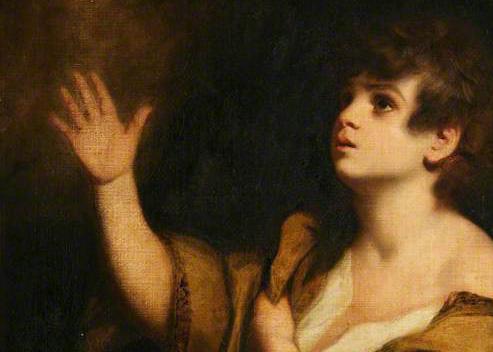
Image: Joshua Reynolds. “The Calling of Samuel.”1770 - 1776. Oil on Canvas. National Trust Collection, United Kingdom.
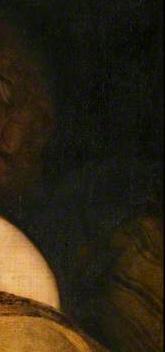
That matters, because we can easily confuse vocation with activity. A person may be busy in parish life and still be avoiding holiness. Another may be hidden, unknown, and outwardly unimpressive, yet answering God with great fidelity. A vocation is not merely activity performed for God – it is a life surrendered to Him.
This is especially dangerous in parish life, where activity can wear the clothing of holiness. A person can serve on committees, volunteer often, and speak Catholic language, yet still remain unconverted in the places where conversion is most needed: patience, forgiveness, humility, purity, honesty, prayer, and charity at home. Catholic usefulness can become a hiding place from Catholic conversion.
God does not call us first to be useful –He calls us first to be His.
God often gives talents that help reveal how we may serve Him, but talents alone do not determine vocation. Gifts are clues – they are not the Caller.
A person may be gifted in many ways and still not be called to a particular state of life or form of service. These gifts do not replace discernment, grace, obedience, and prayer. A fruitful vocation requires more than talent. It requires docility, humility, fidelity, sacrifice, charity, and perseverance.
Docility allows the soul to be led by God instead of simply insisting on its own plan.
Humility keeps a person from becoming too impressed with himself. God does not call the self-impressed because they are impressive; instead, He calls sinners willing to be remade.
Fidelity proves the vocation after the first enthusiasm fades. The call may be heard in a moment, but it is answered over a lifetime.
Sacrifice is unavoidable because every true vocation costs something. Discipleship costs. Vocation is not sustained by convenience; rather, it is sustained by grace.
Charity gives vocation its meaning. A vocation is not self-display; rather, it is love taking concrete form. Without charity, even religious work can become performance, control, resentment, or spiritual bookkeeping.
Perseverance keeps the soul from mistaking difficulty for failure. Early enthusiasm is cheap; long obedience is expensive. Yet grace works slowly, often quietly, and usually through the daily duties we are tempted to dismiss as ordinary.
The opposite traits are vocationwreckers. Self-will wrecks docility.
Pride wrecks humility. Inconstancy wrecks fidelity. Comfort-seeking wrecks sacrifice. Self-love wrecks charity. Discouragement wrecks perseverance.
Vocations are not usually wrecked all at once. They are weakened by slow corrosion. A person stops listening, then he starts managing God. Then the call becomes something he possesses rather than something he received. He begins to think of his vocation less as a trust from God and more as personal property: my role, my reputation, my comfort, my plans. That is dangerous ground.
A vocation can survive weakness. It cannot survive possessive ownership. Weakness can still kneel – ownership stands there with crossed arms.
This is why every Catholic must return to the foundation. Before any particular state of life or form of service, God calls every soul to Himself.
Samuel heard his name. Jeremiah was known before he was formed in the womb. Peter was called from his nets. Paul was stopped on the road. Their stories differ, but the pattern remains.
God calls first. Man answers second. The road differs – the command does not: Be holy.
S. Germain Cassiere, MD, FACP is a retired Internist and parishioner at the Cathedral of St. John Berchmans, writing on faith, virtue, and the Catholic spiritual life from the pew perspective.
A Peaceful Gnawing
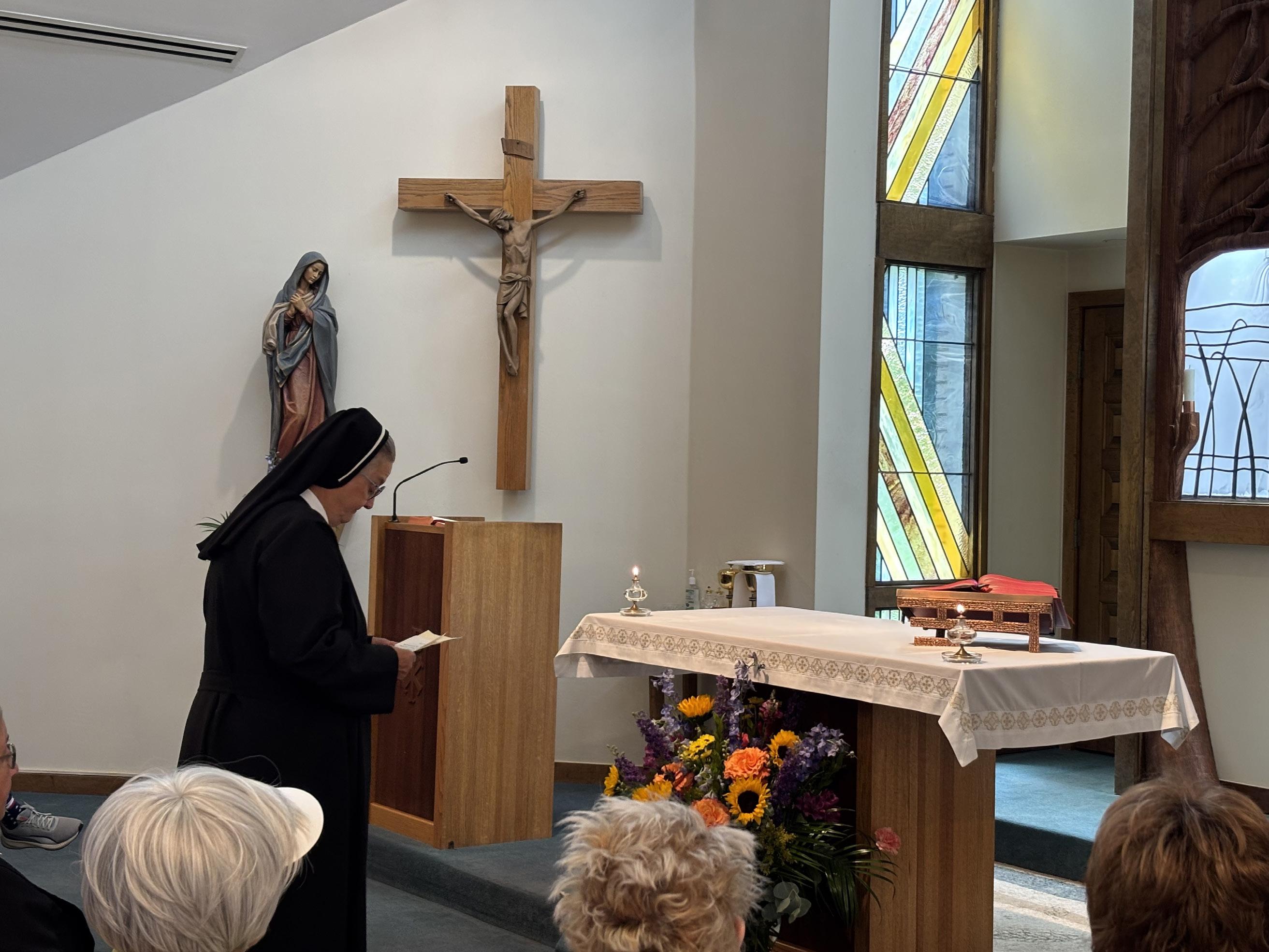
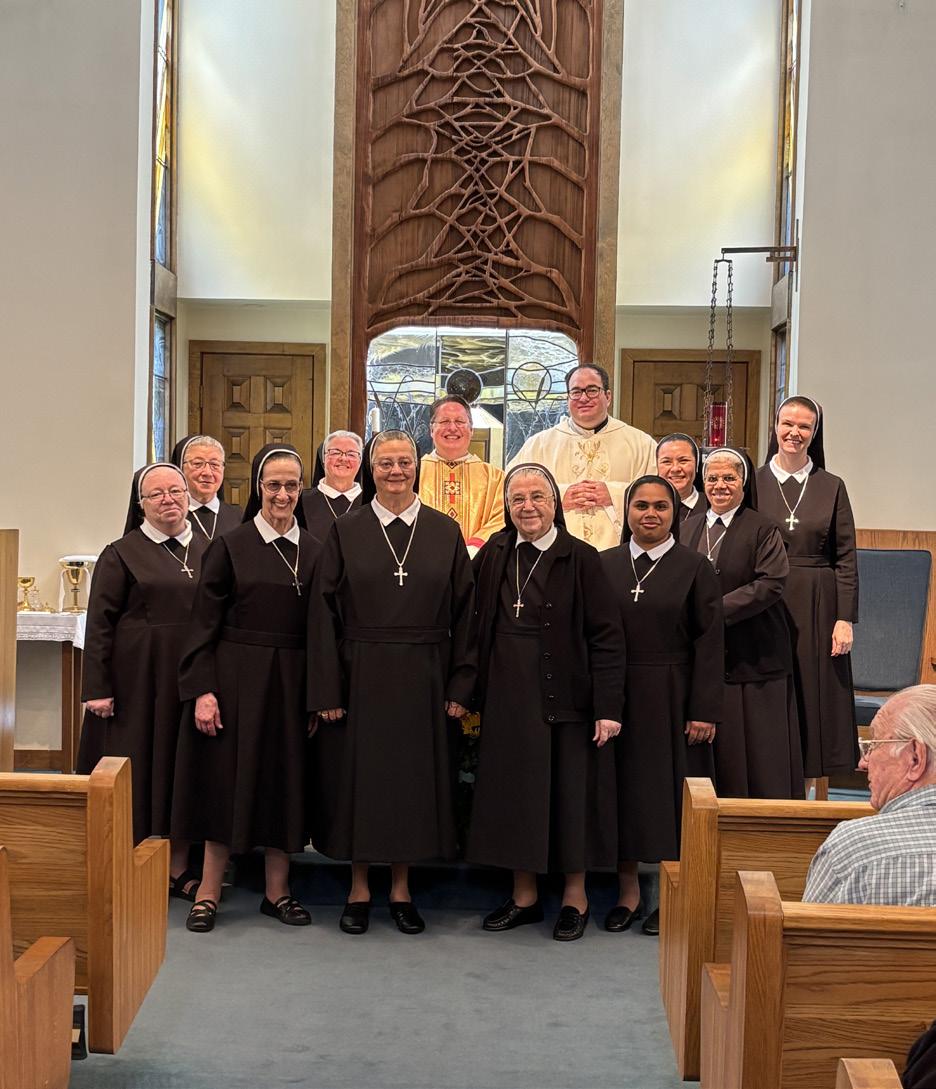
On a rainy Saturday morning in June, I attended the Mass at Our Lady of Sorrows (OLS) convent that celebrated the 50th anniversary of Sister Johnnette Brocato’s vows to become a nun.
Despite the weather, it was standing room only in the chapel: five priests, one seminarian, family members, friends, musicians, and residents of OLS Community Homes in Alexandria. A multitude of admirers were there to celebrate her Golden Anniversary. As I heard her softly and reverently rededicate herself to God,
I wondered what brought her to this day? When and how was she moved to become a sister of this particular order? In today’s culture, this calling seems mysterious and extraordinary. So, a few days later, I sat with her in the quiet convent library and listened to her love story.
Bishop Greco was instrumental to her beginnings. He had asked this congregation, founded in Italy in 1839, for sisters to come to the Diocese of Alexandria and assist poor and uneducated families who needed help with life skills. They were also
asked to teach the African-American children in parochial schools, starting with the OLS school in Moreauville; help in the established boys’ homes in Pineville; and, later, help in a school he established in Clarks (southeast of Monroe) for the mentally challenged. In 1961, OLS nuns were assigned to the new Holy Rosary school in Shreveport, where Johnnette was eventually a student. She laughed when telling me she hated school but loved the nuns.
Johnnette and her twin sister were the youngest of six children, all
girls! Their mother died when Johnnette was nine months old, so her two older sisters assumed many household responsibilities, helped by their maternal grandmother. Their father worked hard so his girls could attend Catholic schools. “We didn’t have everything our classmates had,” Johnnette said, “but we always had what we needed. And we loved each other dearly. We all took our daily responsibilities very seriously. We thought that was the normal thing to do.”
After Johnnette applied for work at the post office following her graduation from St. Vincent’s Academy, a former OLS school teacher suggested she help in the residential school in Clarks, founded by Bishop Greco for people with developmental disabilities. She instantly felt peace and happiness beyond anything she had ever experienced and wondered, “Maybe, God is asking me something?” She attended Northeast Louisiana State University for a few semesters while continuing to help in Clarks, then the OLS sisters invited her to explore her vocation, and she joined the order.
Johnnette described her call to vocation at this time as “a peaceful gnawing.” She said she had known from childhood that she was called to do something for God, so becoming a sister seemed to be her destiny.
Following two years of preparation, she was invited to live and study at their convent in Rome to begin her novitiate. Family members were a bit skeptical and hated to see her leave, and she knew they thought she would give up quickly, but her beloved father gave her sage advice: “Sugar, you are choosing a hard life. But I want you to be happy and faithful. You have my blessing.” Over the next two years in Rome, she met her now long-time companions, Sister AnnaMaria and Sister Carla, and became convinced that God wanted her to live this life.
During these novitiate years, however, she had little contact with her family, lacking today’s technologies.
Johnnette returned to Shreveport in 1976 to take her vows at Holy Rosary. Sadly, her father suffered a stroke that morning and was unable to attend the ceremony, and she hurried to be with him as soon as Mass ended. He recovered to live two more years. His death in 1978 filled her with both sadness and a conviction that she must trust God.
Assigned to teach at Holy Rosary in Shreveport and Christ the King in Bossier City, Sister Johnnette said, “Teaching was not my thing.” She took her final vows and was transferred to St. Mary’s Residential Community in Alexandria, where she supervised 59 male residents, ages 16-24, in a dormitory setting. Working again with people who have a developmental disability brought her challenges and great joy. “Those guys were tough,” she said with a grin, “but I was tougher!” She and Sister Carla helped open three OLS community homes for residents in the Alexandria area. She said those were the years when she was living her true calling to the fullest.
Transferred to the convent in Shreveport twelve years ago to help with the sisters here, Sister Johnnette described her typical day with a smile: “I’m a jack-of-all-trades and a master of none!” Morning prayers, breakfast, assisting with the financial books, cooking, maintaining the property, and helping sisters who need personal assistance—she does it all for the love of God. “I’m happy. It’s never boring. I can’t get to everything. But God is always there to help me,” she said. This reporter heard no word of complaint.
To answer my last question, “What would you say to a woman, today, who is trying to discern her vocation in life?” Sister Johnnette offered these words of wisdom: “God has a lot for
us to do. You have to smell like a sheep in order to be one. Be ready to do it with no reservations. You must lose yourself, but trust me — you will gain more than you would ever believe possible!” he said she has no regrets: “No human man could ever fit the bill for me. I wish I could be more pious. But God loves me just like I am. I can only blame myself when things don’t work out. Oh—one last thought. Don’t make plans because it won’t happen. God works in strange ways.”
I came away from our conversation thinking that all of us could apply her wisdom to whatever vocation we find ourselves in. Her contagious joy is a testimony to her decision – made fifty years ago. Happy anniversary, Sister Johnnette!
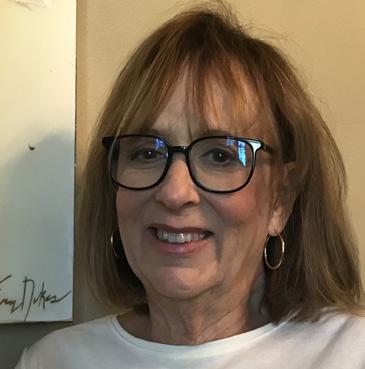
Karen Dill is a spiritual director for the Diocese of Shreveport and a parishioner at St. Elizabeth Ann Seton.
Chosen:
A Vocation Story
Palm leaves rustled on the modest hut’s thatched roof as villagers shuffled inside for Christmas Midnight Mass on December 24, 1989. A young boy of 17 years sat with his family in the makeshift mission church that could only fit about fifty people. His was one of the many Catholic families that converted from Hinduism in the quaint village of Kothapalli in Andhra Pradesh, India.
He lived in a world divided – his family devoutly followed Jesus but were forced to live in a culture that stifled Christians. Given the name Joseph, he was required to also have a non-Christian name in order to be recognized by the Indian government. He had a vision for his life as a young Catholic and Indian man, but that was all about to change.
Father John Leonchini, an Italian missionary priest and rector of a minor seminary, gave the homily that Christmas evening. The village’s people frequently asked him, “Father, could you build us a church?” Tonight, he had an answer... but it would come with a precious price.
“If you can send me a boy for the seminary this year, I will have a church built for you.”
Young Joseph had never considered going to seminary. But somehow, in his heart, he knew he was being called in that moment to not only give his village a real church building, but also become a priest.
In the following days while he was discerning, he was surrounded by the ideals of two worlds. Some discouraged the vocation, arguing it was throwing
away what was important: “What is life without marriage?” This was the standard of success in the eyes of so many in his village. Yet, others encouraged him, expressing what an honor it would be to serve as a priest.
His mother, especially, spoke gentle, wise words to her son saying, “I know everyone in the village says that you should study and get married and get a good job and have a happy life. But you are being called to something special. You are being called to offer your life to God. Not everyone is given this opportunity. This is God calling out to you.”
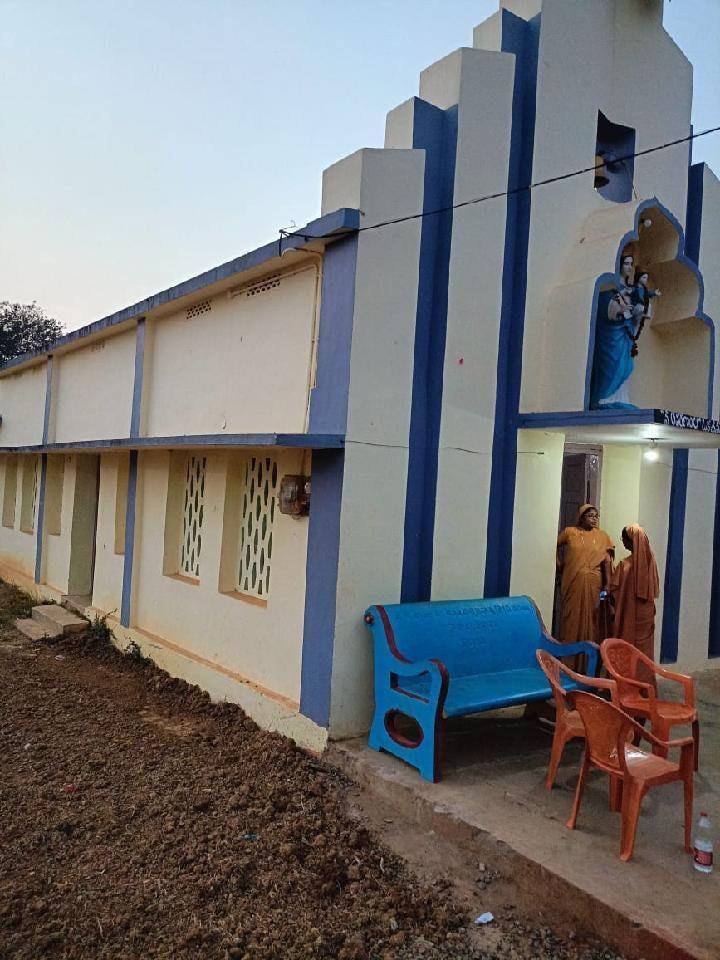
His mother’s encouraging words and prayers quickly made the decision clear. He would answer the call to the priesthood.
In April of 1990, building began for a church, and in June of that year, young Joseph joined the seminary.
Ordained Father Joseph Maddala on March 19, 2001 – the Solemnity of St. Joseph — he celebrated a special Mass in the new church, ten days after his ordination.
He had the honor of celebrating Mass
at his village’s church a handful of times. One of those was the funeral of his precious mother, to whom he attributes his answering God’s call.
On September 8, 2023, Father Joseph arrived in America, on the Feast of the Nativity of the Blessed Virgin Mary. Here, he began a new journey – serving the people of the Diocese of Shreveport.
Jesus said, “You did not choose me but I chose you. And I appointed you to go and bear fruit, fruit that will last” (John 15:16). This verse echoes through Father Joseph’s story. He didn’t choose the priesthood; God chose him. And the fruits of his willful acceptance of that call are mounting. Not only does a village in India now have a church, but souls around the world have been touched by his pastoral care.
When asked if Father Joseph had any words of advice for young men discerning God’s call to the priesthood, he said, “Most of the time [for] candidates who go into this vocation, it’s because it’s something they have wanted for a long time. For me, that wasn’t the case. I didn’t even know what it really meant to accept this call. In my journey, I grow closer to Christ daily. I believe God calls many to serve. You must take the opportunity given to you. He doesn’t only call prophets and apostles, God still calls today. Whether it is the priesthood or not, be open to that call. Even if it’s not what you expect.”
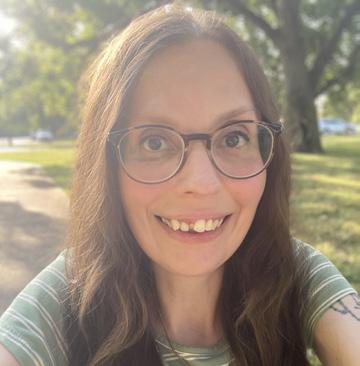
Jennifer Nix is a parishioner and catechist at St. Elizabeth Ann Seton Catholic Church in Shreveport and the Day Service Coordinator at Hope Connections.
Make plans, God laughs.”
What’s in a Vocation?
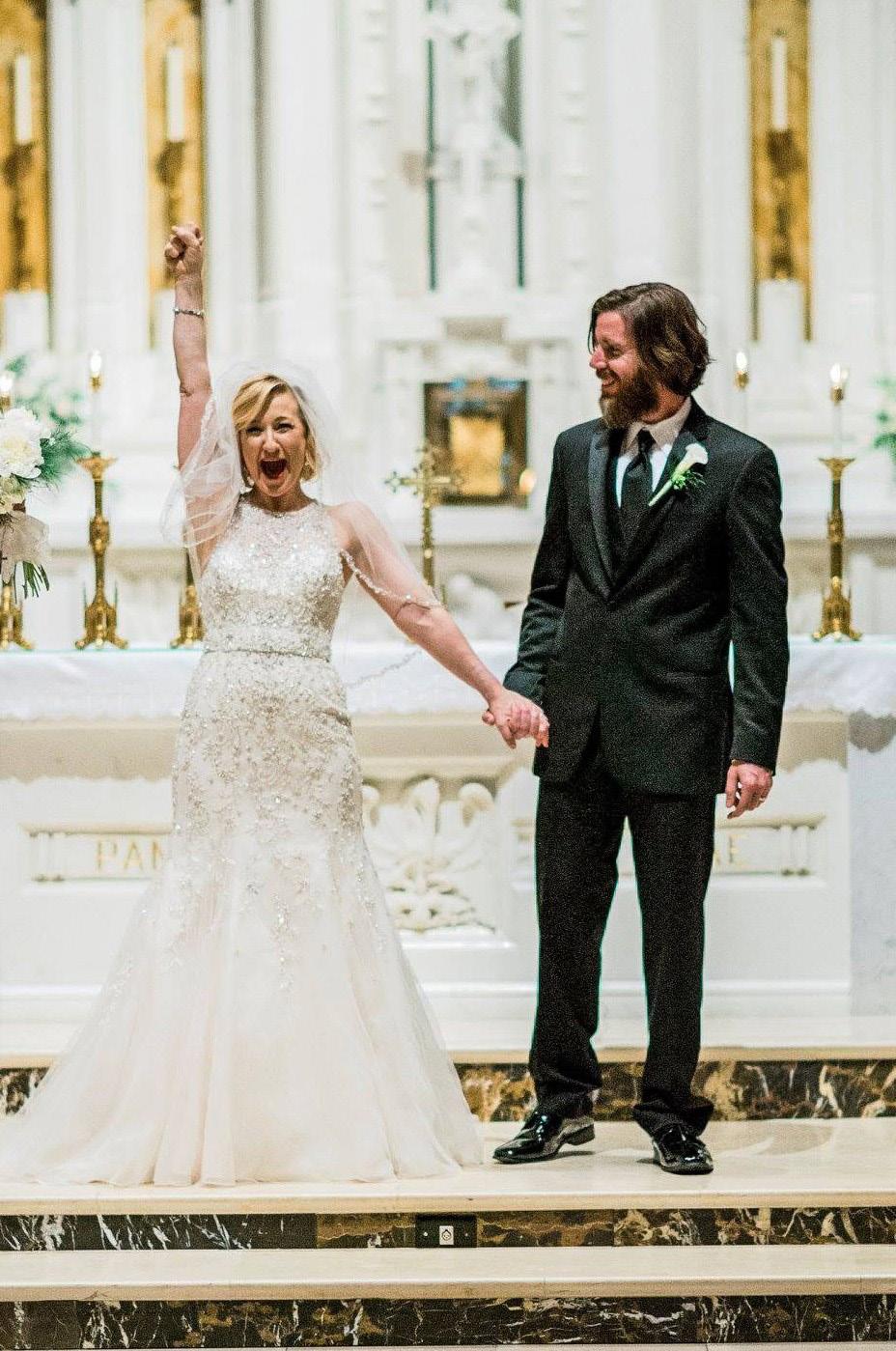
If this Yiddish Proverb is indeed true, then God had a big laugh at my eight-year old self. It was then that I made my big plans to be a wife and mom before the age of 30. When 30 came and went, I found myself (roughly age 35) sitting in Fr. Karl’s office while he was still head pastor of St. Joseph. I sat there lamenting how I did not understand why God had still not called me to the vocation of marriage. Father was gracious and kind as he allowed me to go on and on until, finally, he ohso-gently reminded me that, perhaps, it was because God was calling me to the vocation of single life. As I fought back my tears, I silently screamed, “Nooooooo!!” in my head, hoping God heard my cries of anguish. It would not be until the fall of 2014, age 44, when I finally surrendered my vocation desires to God and told Him with a sincere heart that I was ready to be the best God-loving single person there ever was. Being the good and gracious God that He is, in less than 90 days, Ryan became my boyfriend, who six months later became my fiancé, who nine months later became my husband. Marriage was indeed my vocation after all.
Brothers and sisters, the Church tells us that we will be called to one of the following: the priesthood, the consecrated religious life, married life, or single life. What I find interesting is how many of us, myself once included, tend to focus primarily on the married life above all others. With that said, I realize a select number of men know as young boys that God is calling them
to the priesthood, much like a select number of young girls feel the call to consecrated religious life. Despite this reality, I still dare to say that even those select number of men and women still, at some point in their lives, dream of married life. We could ponder all of the “whys” of this (somewhat true) statement, but at the end of the day, what matters most beyond the “whys” is our “yes” to God when He calls us.
To those who said yes to married life, I leave you with three thoughts: first, marriage is hard, and it takes a lot of work, but when you know that God both called you to married life as well as personally chose your spouse, your marriage will never feel like hard work. Second, do not wait until you need help from a priest or licensed counselor – seek help at God’s first nudge. Lastly, choose your spouse every day, especially on the days you
like them the least.
To those who said yes to single life, I leave you with one thought: God did not forget nor abandon you. Being single is not a curse nor a punishment. Rather, it is a unique calling for a select few who possess a quality, a gift that can only be harvested and refined through your vocation as a single person. If you haven’t yet, set your intention on being the best God-loving single person there ever was.
To the men who said yes to the priesthood and the women who said yes to consecrated religious life, I leave you with my heartfelt gratitude. Thank you for saying yes. Thank you for loving and praying for us. Thank you for your leadership and guidance. Thank you for shining God’s light to all who know you. We, as your brothers and sisters in Christ, are so happy to call you Father and Sister respectfully.
“For as in one body we have many members, and the members do not all have the same function, so we, though many, are one body in Christ and individually members one of another. Having gifts that differ according to the grace given to us, let us use them.”
Romans 12:4-6
Mary Arcement Alexander is a Licensed Professional Counselor & the Diocesan Victim Assistance Coordinator.
Love Reigns
Shelby and Meredith's Story
"I came so that they might have life and have it more abundantly." — John 10:10
My story today is called Love Reigns. Love is Shelby's middle name, and Reign is Meredith's middle name. Together, Love Reigns tells our story – and how God called us to live the vocation of marriage and family.
In the moment I was told I could not – or should not – have children, the words didn't just land in my ears; they landed in my heart. I remember the doubt. I remember the fear. I remember wondering if motherhood was something I would only ever dream about, but never live. But when the world said no, God called my husband, Michael, and me to trust Him. We were told having children would be risky, difficult, and that we should reconsider. Yet, the vocation of marriage is not built on fear, but on faith. It is a calling to welcome God's gift of life, to trust His providence, and to grow together in holiness.
When Shelby was born, I didn't just see a baby. I saw God's faithfulness. I saw prayers answered. Holding her for the first time, I understood that marriage is about far more than building a family – it is about cooperating with God's plan for life and helping one another become saints. As Shelby grew, every milestone reminded us that our vocation did not end with her birth. Her first laugh. Her first steps. Her first time calling me "Mama." Every moment became another opportunity to teach her to know Jesus, to pray
with her little hands together, to love others, and to discover the joy of living the Catholic faith.
Then, just when we thought our hearts were full, God expanded our family in a different way. Years after Shelby’s birth, Meredith came to us through adoption. She entered the world through circumstances she did not choose, but God had already chosen her to be our daughter.
When we said yes to adoption, we were not rescuing a child – we were responding to God's call. The waiting was difficult, but the day Meredith became part of our family reminded us that love is not measured by biology but by faithful self-giving. I will never forget the first time she called us "Mama" and "Daddy." In that moment, we experienced another beautiful truth about our vocation: families are built by love, sustained by sacrifice, and strengthened by God's grace.
Our witness as a faithfully married couple, our daily prayer, our forgiveness, and our trust in God become the first Gospel our children encounter. Looking back, I realize that God gave us far more than the gift of children. He gave us the vocation of marriage, a path to holiness with every joy and every uncertainty. Shelby and Meredith are our story and also reminders that every family has a vocation and a challenge of faith. And so, when we despair, God gives
us hope. It is in this hope that Love – God Himself – Reigns: Hope for ourselves and for our families. Hope for the Church and our community. Hope for our conversion and the return of our souls and hearts to Jesus and His holy Church.
Shelby and Meredith came into our family differently. One came through pregnancy against the odds. The other came through adoption after a long journey. Yet, both daughters became gifts entrusted to us by God. Our vocation has never been simply to get married and have children. It has been to lead them to Christ. That calling continues long after childhood. Parents never stop praying, loving, encouraging, interceding, and witnessing faith. Whether our children remain close to the Church or sadly wander for a time, the vocation of marriage calls husbands and wives to persevere together, entrusting themselves and their children to the Lord. Marriage is not only about the spouses. Marriage is the mission of the domestic church where Christ is known, loved, and followed.
Ashley Bartels is a parishioner at St. Elizabeth Ann Seton Parish in Shreveport, LA.
El Reinado del Amor
La historia de Shelby y Meredith
«Yo he venido para que tengan vida, y la tengan en abundancia.» —Juan 10:10
Mi historia de hoy se titula
El Reinado del Amor. Love (Amor) es el segundo nombre de Shelby, y Reign (Reina) es el segundo nombre de Meredith. Juntos, *Love Reign* expresa nuestra historia y cómo Dios nos llamó a vivir la vocación del matrimonio y la familia.
El momento en que me dijeron que no podía —o que no debía— tener hijos, esas palabras no solo llegaron a mis oídos; llegaron a lo más profundo de mi corazón. Recuerdo la duda. Recuerdo el miedo. Recuerdo preguntarme si la maternidad sería algo con lo que solo podría soñar, pero nunca llegar a vivir. Pero cuando el mundo dijo que no, Dios nos llamó a mi esposo Michael y a mí a confiar en Él. Nos dijeron que tener hijos sería arriesgado, difícil, y que debíamos reconsiderarlo. Sin embargo, la vocación del matrimonio no se fundamenta en el miedo, sino en la fe. Es un llamado a acoger el don de la vida que Dios nos regala, a confiar en su providencia y a crecer juntos en la santidad.
Cuando nació Shelby, no vi solamente a una bebé. Vi la fidelidad de Dios. Vi oraciones respondidas. Al sostenerla por primera vez en mis brazos comprendí que el matrimonio es mucho más que formar una familia: es cooperar con el plan de Dios para la vida y ayudarnos mutuamente a llegar a ser santos. A medida que Shelby crecía, cada etapa de su vida nos recordaba que nuestra vocación no terminó con su nacimiento. Su primera risa. Sus primeros pasos. La primera vez que me llamó «mamá». Cada momento se convirtió en una nueva oportunidad
para enseñarle a conocer a Jesús, a orar con sus pequeñas manos juntas, a amar a los demás y a descubrir la alegría de vivir la fe católica.
Luego, justo cuando pensábamos que nuestro corazón ya estaba lleno, Dios hizo crecer nuestra familia de una manera diferente. Años después, Meredith llegó a nosotros por medio de la adopción. Ella vino al mundo en circunstancias que no eligió, pero Dios ya la había elegido para ser nuestra hija. Cuando dijimos sí a la adopción, no estábamos rescatando a una niña; estábamos respondiendo al llamado de Dios. La espera fue difícil, pero el día en que Meredith pasó a formar parte de nuestra familia nos recordó que el amor no se mide por los lazos biológicos, sino por la entrega fiel de uno mismo. Nunca olvidaré la primera vez que nos llamó «mamá» y «papá». En ese momento experimentamos otra hermosa verdad sobre nuestra vocación: las familias se construyen con amor, se sostienen con sacrificio y se fortalecen por la gracia de Dios.
Nuestro testimonio como matrimonio fiel, nuestra oración diaria, nuestro perdón y nuestra confianza en Dios se convierten en el primer Evangelio que nuestros hijos encuentran. Al mirar hacia atrás, me doy cuenta de que Dios nos dio mucho más que el regalo de los hijos. Nos dio la vocación del matrimonio: un camino hacia la santidad en medio de cada alegría y de cada incertidumbre. Shelby y Meredith son nuestra historia, pero también son un recordatorio de que toda familia tiene una vocación y un desafío de fe. Y así, cuando caemos en
el desaliento, Dios nos da esperanza. Es en esa esperanza donde el Amor —Dios mismo— reina. Esperanza para nosotros y para nuestras familias. Esperanza para la Iglesia y para nuestra comunidad. Esperanza para nuestra conversión y para el regreso de nuestras almas y nuestros corazones a Jesús y a su santa Iglesia.
Shelby y Meredith llegaron a nuestra familia de maneras diferentes. Una vino por medio de un embarazo que parecía imposible. La otra llegó mediante la adopción después de un largo camino. Sin embargo, ambas hijas fueron dones que Dios nos confió. Nuestra vocación nunca ha consistido simplemente en casarnos y tener hijos. Ha consistido en guiarlos hacia Cristo. Ese llamado continúa mucho después de la infancia. Los padres nunca dejan de orar, amar, animar, interceder y dar testimonio de la fe por sus hijos. Ya sea que nuestros hijos permanezcan cerca de la Iglesia o que tristemente se alejen por un tiempo, la vocación del matrimonio llama a los esposos a perseverar juntos, encomendándose ellos y a sus hijos al Señor. El matrimonio no trata solamente de los esposos. Es la misión de la Iglesia doméstica, donde Cristo es conocido, amado y seguido.
Ashley Bartels es feligresa de la parroquia de Santa Isabel Ann Seton, en Shreveport, Luisiana.
Discernment and Decisions
Along with writing about our summer each new school year, we were asked to answer, “What do I want to be when I grow up?” High school added a twist, however, asking what God might be calling me to as a vocation for life. Since raising a family was my life-long dream, my gut clenched at first, assuming God preferred we “give away everything and follow Him,” which I thought only meant religious life. Having two priests and a Sister in extended family (and happy in their lives), it was a very real option, but my gut forgot that our loving God calls us to our heart’s desire. Fortunately, a teacher clarified that discerning God’s loving call is different than deciding on a choice.
When deciding, we list pros and cons from personal preferences, values, circumstances, and (our) logic. I chose class electives based on my interests, schedule, and the expected workload, and I investigated career options based on a sufficient salary, likely daily satisfaction with accomplishments, and time for “fun” outside of work. Business- or biology-related careers were a fast “Nope! Not my gift,” while astronomy and literature were both appealing. Bottom line: What did I
want?
Discernment, however, seeks God’s will for us, which often surprises us! He is our ever-loving Father who wants us to be fulfilled more than we do, and He knows how that is accomplished. Yes, He has a plan with tasks that only I can complete as perfectly as He wishes, but my personal spiritual wellbeing is part of that plan’s success. Silly me, that I thought God would simply use me as a resource to fill a need when my heart longed for something else! Would a loving parent with so many options plan that for their child? God our Father loves us, His children, more than any human parent ever has or could, and He is omniscient and all powerful. He knows our hearts’ good desires… He placed them there! He wouldn’t give them to us and intend to leave them unfulfilled!
For I know well the plans I have in mind for you … plans for your welfare and not for woe, so as to give you a future of hope.—Jeremiah 29:11
Learning to Discern
How, then, do we discern God’s will? Conversation and a relationship with
Him are the obvious starting points, but how can I be sure I hear Him and not me or “other” voices? A prayer life is essential. Period. Spiritual advice from an advisor or priest is a true blessing, as are devout friends who listen carefully and prayerfully.
I lost my angst when I finally realized that God wants us to hear Him so He can guide us to the verdant green pastures of abiding peace – throughout our life. His direction resonates in our hearts’ deepest good desires, including some we don’t yet know we have, as I learned: An introvert who preferred learning and programming and feared public speaking, God first led me to find joy in teaching technical skills I confidently knew, then placed me in classrooms then conference rooms to share our faith, where I experienced deep fulfillment. He leads us gently to discover and nurture our full nature.
But to follow His lead, we must hear Him; so, as daily as possible (or multiple times daily), make that quiet time to simply “listen for your conversation” with Him, even if only a few moments. Pay attention to what bubbles up in your thoughts, from grand inspirations to the little joys and
aches. Through these we discover the sources of our true peace and unrest: the uncapped toothpaste perhaps annoys less because of the mess than as possibly “one more” sign of a spouse’s unconcern with what matters to me. And the deep sighs that emerge when I spend a few minutes just sitting after Mass or while observing family at play—these reveal what brings a peaceful joy.
While perusing persistent thoughts, listen for God’s voice in the mix. Where does an unexpected perspective suddenly appear or a previous perspective suddenly seem less realistic? What perceptions or ideas for action bring an abiding peace, where God is usually found, and which ones bring restless angst (deeper than nervousness)? Deep calm, excitement, and joy usually point to God, whereas emotions and joy we’d expect Jesus to avoid are likely not of God (e.g., fear and anger). After a more serious conflict, I mulled over words to bring to our next encounter. Some resonated with truth and calm at the thought of being spoken. Others had a delicious self-righteousness that were fueled by anger and hurt. God’s choice of words became easy to recognize!
Discernment and Vocation
Different than daily discernment, determining God’s call to a vocation is so serious and impactful that ordination and consecration to religious life come only after years of formation and study. Some wish our Church’s marriage preparation included a longer discernment process for this important call, particularly with fewer lifelong models in today’s society. (There is no current official program for discerning a permanent single, unconsecrated life vocation, only conversations with a priest or spiritual director.) It’s vital that we perceive whether the inner desires God reveals are fulfilled in our avowed vocation.
During this, God sometimes calls us to investigate a direction we’re not intended to embrace, perhaps because he knows our impact on others and their impact on us throughout the journey. Consider that we don’t date with the intention of marrying each person; rather to determine the potential for marriage in the relationship. This is the norm! God calls some to discern marriage through dating or a religious vocation when He knows it is not the ultimate vocation. To paraphrase an adage, “Better to have discerned out than never to have discerned at all!”
Perhaps, we’ll have more confidence in our ultimate decision by looking elsewhere or gain valuable experiences for a later ministry. Or, we might have other tasks God planned for us to complete first. I was certain I was called to marriage, but Mr. Right remained hidden until my thirties. In the meantime, I learned so much from so many that my intent in marriage was healthier when Mr. Right appeared, and I was free when others needed help during crises, including my parents. Credit goes to God, who arranged it – not me! I was blessed and grateful to ease others’ trials – a lesson that opened me to accept necessary aid in later circumstances.
Living Our Vocation… to the End
Our vocations have a permanency, most notable when the Sacrament of Holy Orders permanently changes the soul. Consecrated men and women also retain their consecrated status beyond death, albeit without the same indelible mark, and through marriage vows, a validly married person is always known as a spouse to the other (although our relationship changes after death). And a favorite reality of mine: at a child’s conception, the mom and dad are forever a mom and dad, whether our child was born and currently lives on earth or passed on from this life.
Circumstances, however, might change how we live that vocation. Discernment continues to know each day how we’re to live our current duties and fulfill our hearts’ ongoing desires. A friend learned this when she first discerned to continue working in her city, although she wanted to be closer to grandchildren; however, waiting enabled her to retire and relocate when grandchildren suddenly needed fulltime care.
Age is the most obvious cause for significant changes: retirements and empty nests prompt re-evaluation of our direction. Heavily involved in our boys’ youth organization for over a decade, my husband had nothing once that ended… until invited into another opportunity, one in which we have both found fulfilling activities that draw on our parenthood experiences. God is so good!
We know our goal, heaven. God knows our path and the vocation that brings us there with the greatest satisfaction. He knows the bumps and falls and has already arranged workarounds and recoveries. He created us to love us, and that never ends, despite our worst days. He wants our life filled with blessings, sometimes as joys and sometimes as trials, but always with His presence and guidance. Devote time to sharing your heart with Him so He can reveal it more clearly to you. Then follow our Shepherd as he leads you to the peace or excitement you long for, to find a fulfillment greater than we can imagine. May God bless you and your families!
Linda Bader is a writer and copy editor for Catholic publishers who enjoys making faith concepts relatable in daily life.
The Vocation of the Laity
The Laity, those not called to religious life or the priesthood, are called, by virtue of their baptism, to live out the Gospel in their lives and workplace. For some, that workplace is in the Church, including volunteers and paid staff. They answered the call to serve through a specific ministry or ministries.
This article highlights some of those who felt called to work in the parish or diocesan office and continued saying yes for many decades. Through their roles, they answer the call to serve as the “salt and light” (Matthew 5:1314) in the midst of the Church and local community, making the Church present in the world, each in their own way. Here are a few of their stories.
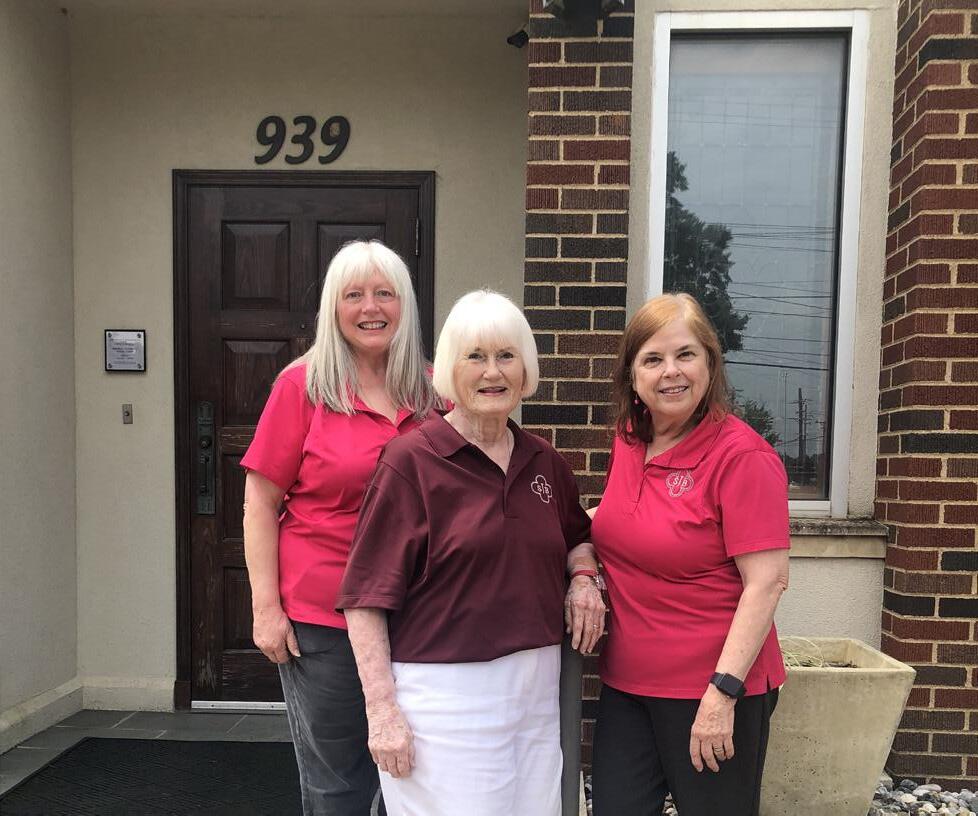
hospitality. She is often heard saying, “Have a Blessed Day” and “Keep a PMA, Positive Mental Attitude.” It is clear that her joy is doing God's work with God's people.
Bobbie Sue Shelton has served God’s people at the Cathedral of St. John Berchmans since February of 1990 – that is over 36 years! Msgr. Earl V. Provenza hired her as both the church and his personal secretary. Her duties have included answering phones, scheduling Masses, maintaining sacramental books and records, taking dictation (for those born after 2000, look that up), preparing the bulletin and other correspondence, helping teams with events, and taking care of whatever other parish secretarial duties might be needed. Beginning in the front office, Shelton has always been there for people, and she remains in the office, available for fellow staff members, parishioners, and everyone throughout the diocese. Many remember her from her early days at St. John. Although some duties changed and Shelton now works 21 hours a week, she continues to stay “Busy, busy for the Lord,” as Msgr. Earl would say.
Dotye Sue Stanford grew up in Shreveport attending the Methodist Church. The Eucharist drew her to the Catholic faith. Her first vocation was to married life, which expanded after 12 years to a call to teach junior high and high school (including drill team), while also working in a doctor’s office, on a shrimp boat, and for a bait camp. Feeling called to religious life, Stanford completed OCIA to become Catholic then joined the Poor Clare Nuns in Brenham, Texas, in 1990. Before taking her first vows, God told her she was needed out with His people, not in a cloistered order. She “argued” with Him, but of course, He won. When she returned home to Shreveport in 1992, Msgr. Earl V. Provenza called her into service. After a daily Mass, he asked whether she was looking for a husband or praying for a job... she said a job. He needed a receptionist the following week, and so began her first stint at St. John Berchmans, for 5 years. After 19 more years at St. Joseph in Shreveport, she began her second round at St. John –for the last 9 years. That’s 34 years of service for the diocese. Stanford also served briefly with the Society of St. Vincent de Paul Hurricane Harvey Relief, and now, her current role in Family Life Ministry has included: sacramental prep, grief support, and
In 1994, Carol Gates was a parishioner of St. Paul Church in Minden when Fr. Pike Thomas asked her and her husband, John, to volunteer as mentors for engaged couples. That opened the door to decades of ministry, with positions at St. Paul in Minden, St. Joseph in Shreveport, and the Cathedral of St. John Berchmans. She noted that a favorite project at St. John was the compilation of the 1902-2017 parish history, and while in formation with deacon candidates in 2005, Gates and seven other lay persons received their certificates as Lay Ecclesial Ministers. During the last 32 years, her pastoral ministry roles have blessed her with the opportunity to wear many hats, some of which are receptionist, faith formation & RCIA/OCIA assistant, sacramental helper, editor of website pages and bulletins, and hospitality team member. She looks forward to continued service for the parish.
These three long-time employees’ combined years of service for God’s people exceeds 102 years – and all three said they still love their roles in the parish and continue to learn new things.
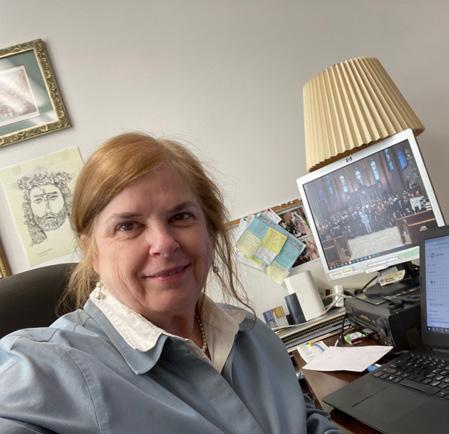
Carol Gates is the Lay Ecclesial Minister and head of St. John Berchmans Cathedral Pastoral Ministries.
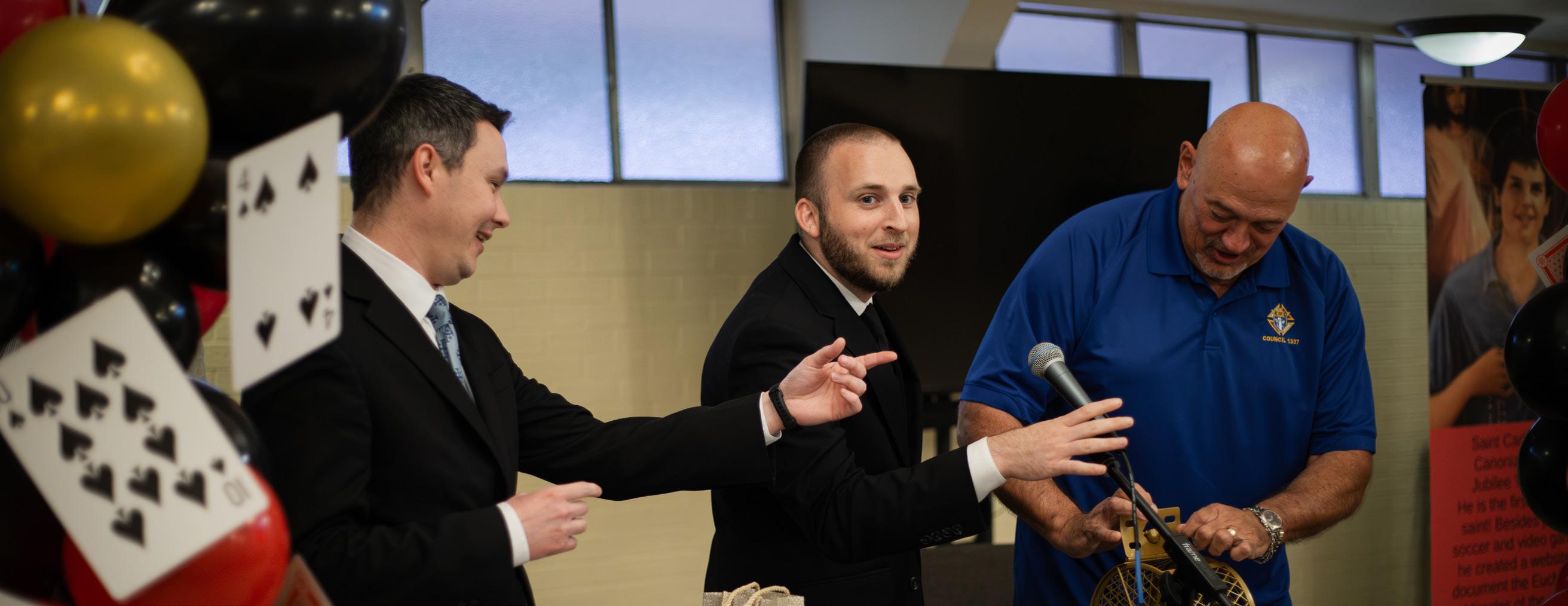
Monroe Knights of Columbus Raise Funds for Seminarians A Light for Vocations
Every vocation begins with a courageous “Yes.” A young man answers God’s call to the priesthood, but he does not make the journey alone. Behind every seminarian stands a community of faithful Catholics whose prayers, encouragement, and generosity help make that calling possible.
For the members of Knights of Columbus Council 1337 and the Monroe Kaycee Auxiliary, supporting those future priests has become more than a charitable cause. It has become a mission.
The Knights of Columbus Council 1337 of Monroe, Louisiana was founded in 1908 and is still vibrant and active today. The ladies’ auxiliary, Monroe Kaycee Auxiliary, proudly supports the Council with their spiritual endeavors each year.
For the 2025–2026 fraternal year, Council 1337 made the intentional decision to dedicate its fundraising efforts to one singular purpose: supporting the seminarians of the Diocese of Shreveport. Through the generosity of parishioners, local businesses, and community supporters, the Knights and Auxiliary dedicated nearly $40,000 this year to seminarian support and vocational initiatives.
Although the Council has several
fundraising efforts each year, the annual 28-Day Christmas Raffle remains its signature fundraiser and a beloved tradition throughout the Monroe and West Monroe community . Building on that tradition, the Knights of Columbus 1337 and Monroe Kaycee Auxiliary introduced a new fundraiser in 2026: “A Light for Vocations – Casino Night.”
Held on June 6, the inaugural event was created to support current seminarians while establishing a vocation-focused fund to promote priestly vocations, encourage discernment, and provide lasting support for future seminarians. Guests enjoyed casino-style games, High Roller Bingo, a multi-prize raffle, silent auction, wine pull, food, and fellowship, all in support of an extraordinary cause. The event exceeded every expectation, raising more than $30,000 for seminarians and vocational efforts within the Diocese of Shreveport and the Eastern Deanery.
The success of these events is measured by more than dollars raised. It is measured by the future priests they will help form. By supporting vocations today, we help ensure that future generations will continue to receive the sacraments, hear the Gospel proclaimed, and be guided by faithful priests who have answered God’s call.
As the Knights of Columbus Council 1337 and Monroe Kaycee Auxiliary look ahead, they invite the entire Diocese and Catholic community to join them in our collective call to serve Christ. Whether by joining your own local Knights or Ladies council, promoting vocations within your church by speaking to young men about their spiritual futures, buying raffle tickets or event tickets, or simply praying earnestly for the seminarians both present and future, you can be involved and make a difference.
The future of our Church depends not only on the men answering God’s call, but also on the faithful who stand beside them. Together, through our prayers, generosity, and encouragement, we can help ensure that our seminarians have the support they need to become the holy shepherds our parishes, families, and communities will rely on for generations to come.
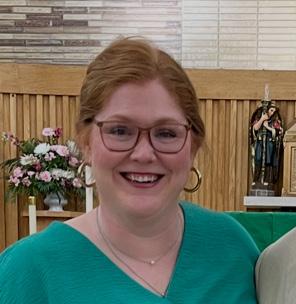
Jessica Rogers is the President of the Monroe Knights of Columbus Auxiliary.
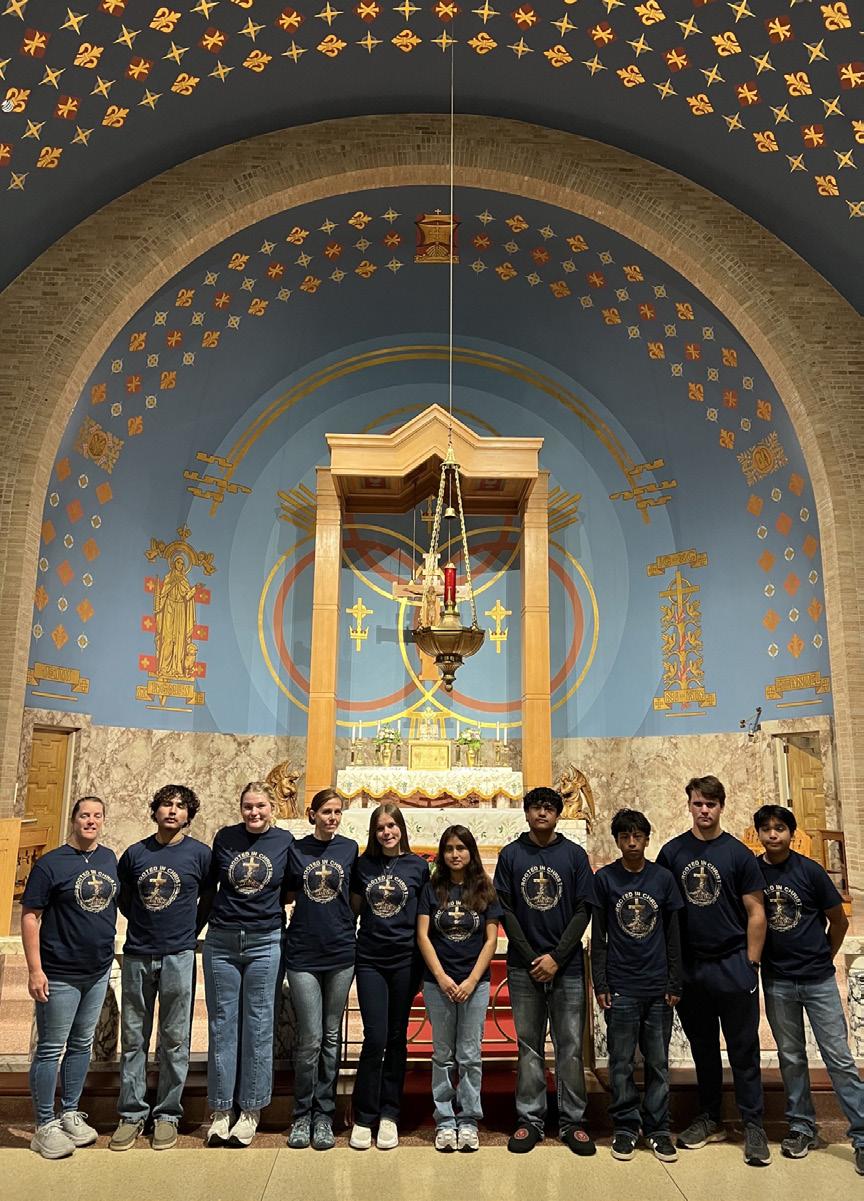
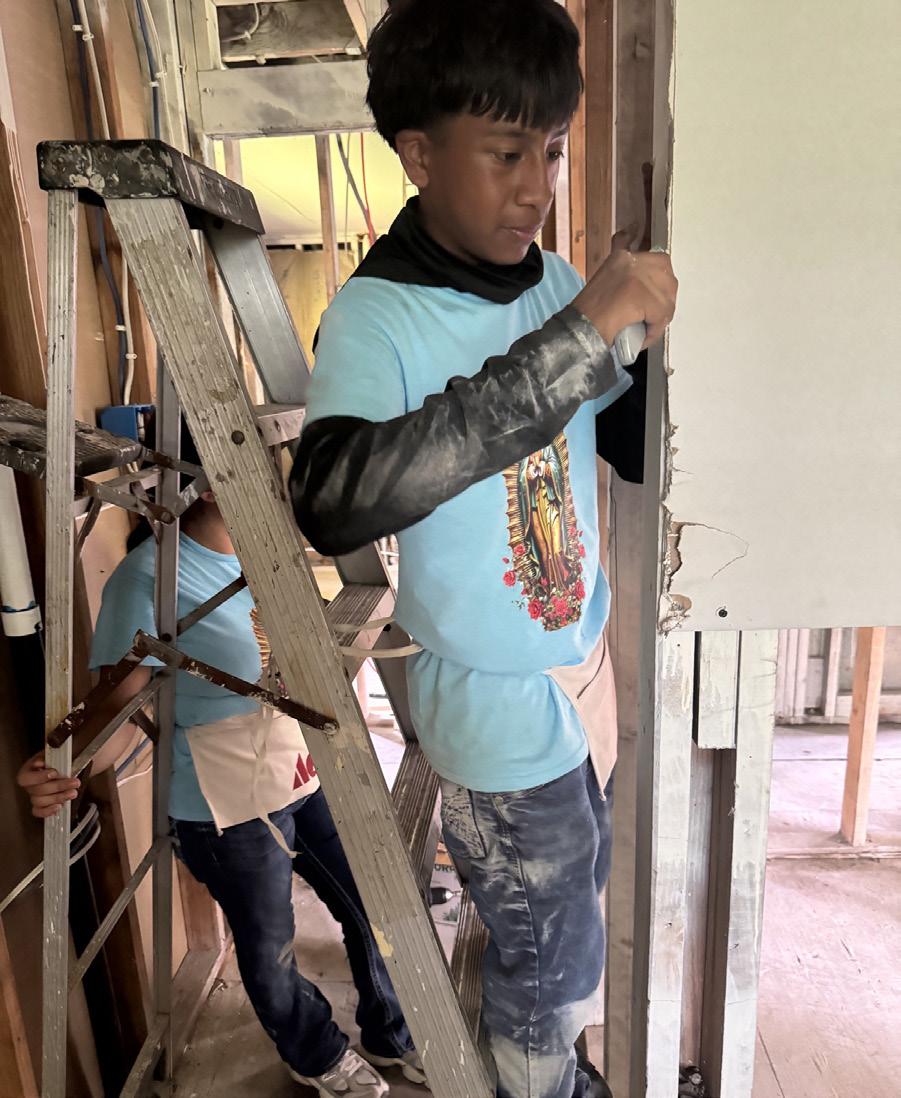
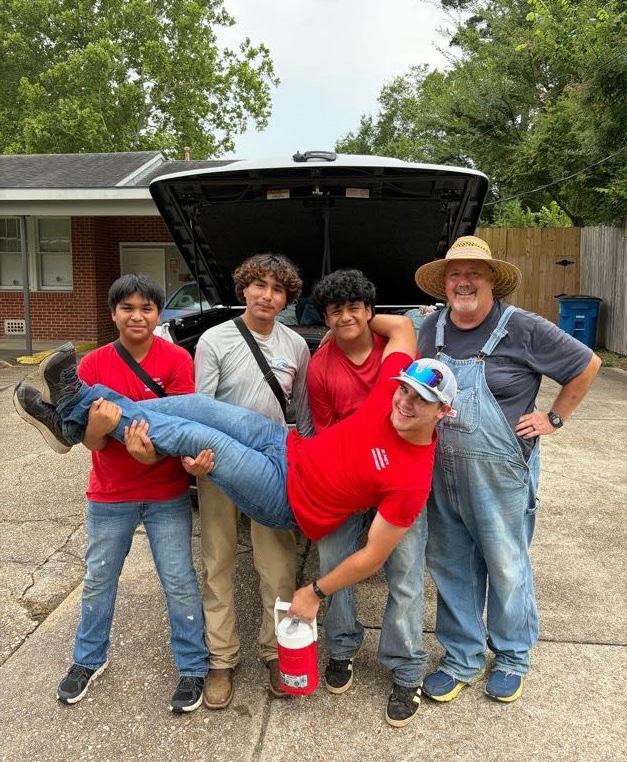
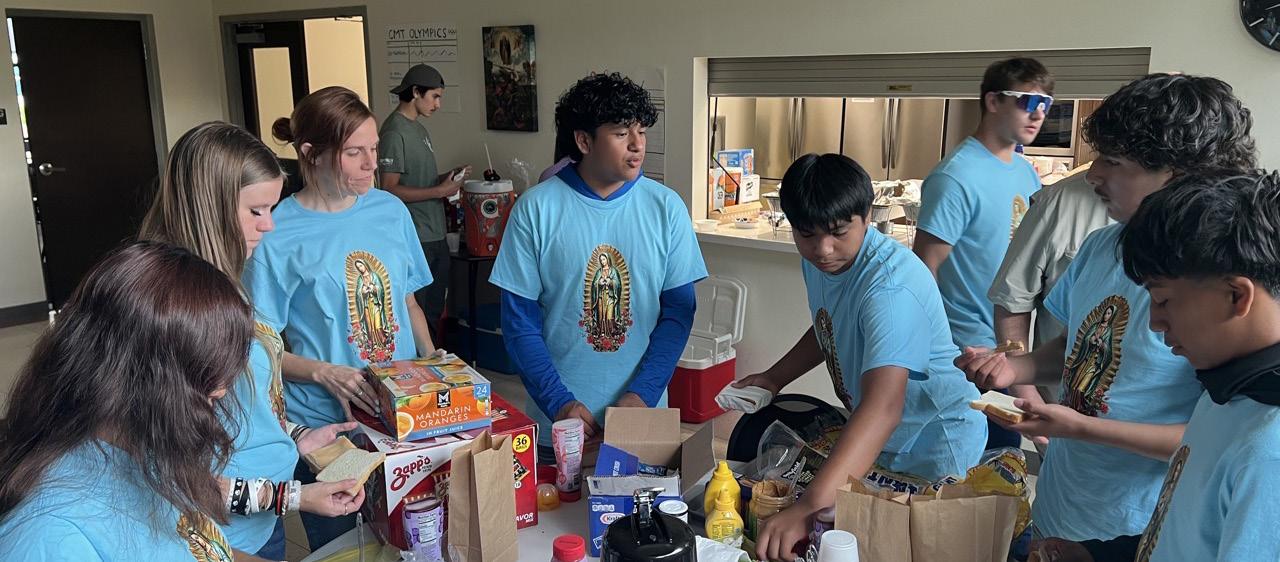
St. Pius X on a
Mission
When the St. Pius X youth group asked if they could go on a mission trip, it truly touched my heart. As their leader, I knew I had to do everything I could to help make that dream a reality. Together, we organized four different fundraisers to secure the necessary funds. What made this effort even more special was that the youth themselves chose the fundraisers and carried out the work to make each one successful – a true testament to their dedication and mission spirit.
We worked with Catholic Mission Trips to organize the mission. Our trip’s home base was at St. Agnes Church in Baton Rouge, which is also where Missions of Charities in Baton Rouge is located. The Missions of Charities nuns operate the Queen of Peace Shelter and Soup Kitchen. Our group spent one day to help the nuns clean the shelter, and we assisted Catholic Charities with cleaning and painting an apartment, which prepared it to become a safe and welcoming home for a family. We were further blessed with the opportunity to clear debris from the surrounding outdoor areas at St. Gerard Majella.
Our group also helped hang sheetrock for an elderly woman working to return to her home after fire damage. Each act of service reminded us that even small contributions can make a
profound difference in someone’s life.
While the physical work was impactful, the spiritual growth we experienced was equally meaningful. As quoted by one youth, “It taught me how much good a small group of dedicated people can do, and how fulfilling it is to serve others.” We attended daily Mass at the church where Mother Teresa brought the Missionaries of Charity Order to Baton Rouge, and we participated in a beautiful time of Adoration, listened to powerful testimonies, and engaged in small group discussions. Through these moments, many of our youth gained a deeper understanding of themselves, discovered the power of forgiveness, and strengthened their faith.
This mission trip was more than just a service project – it was a transformative experience for all of us.
Mission accomplished – Mission success!
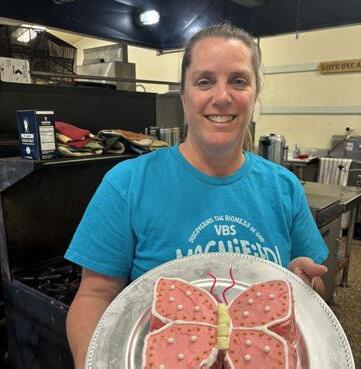
Amanda Nicholas Hall is the Youth Director at St. Pius X Parish in Shreveport, LA.
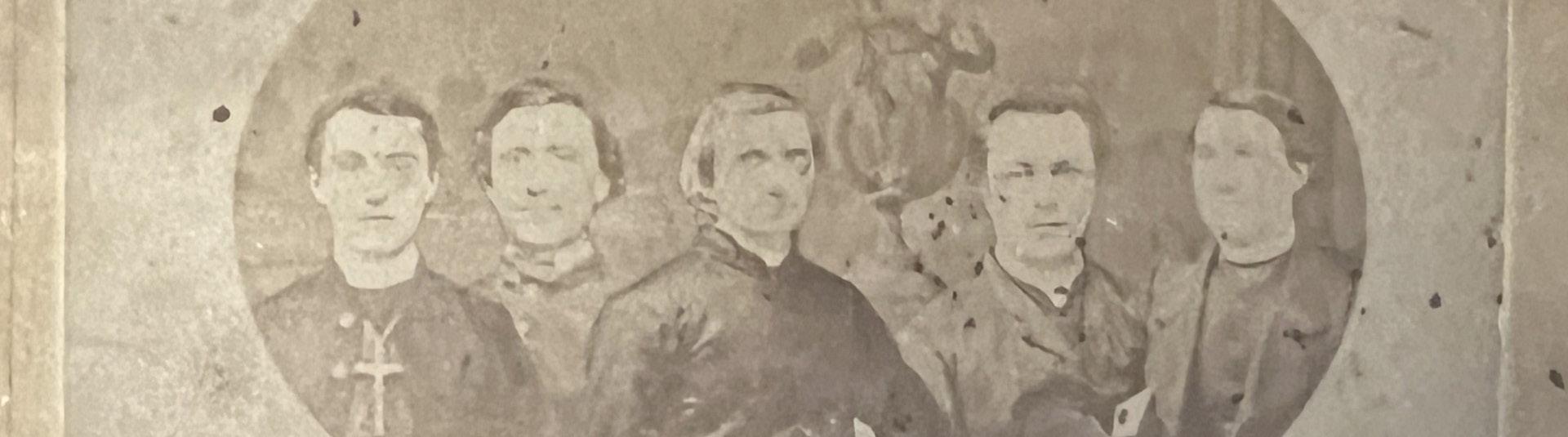
Roman Phase Advances for the Cause of the Five Shreveport Martyrs
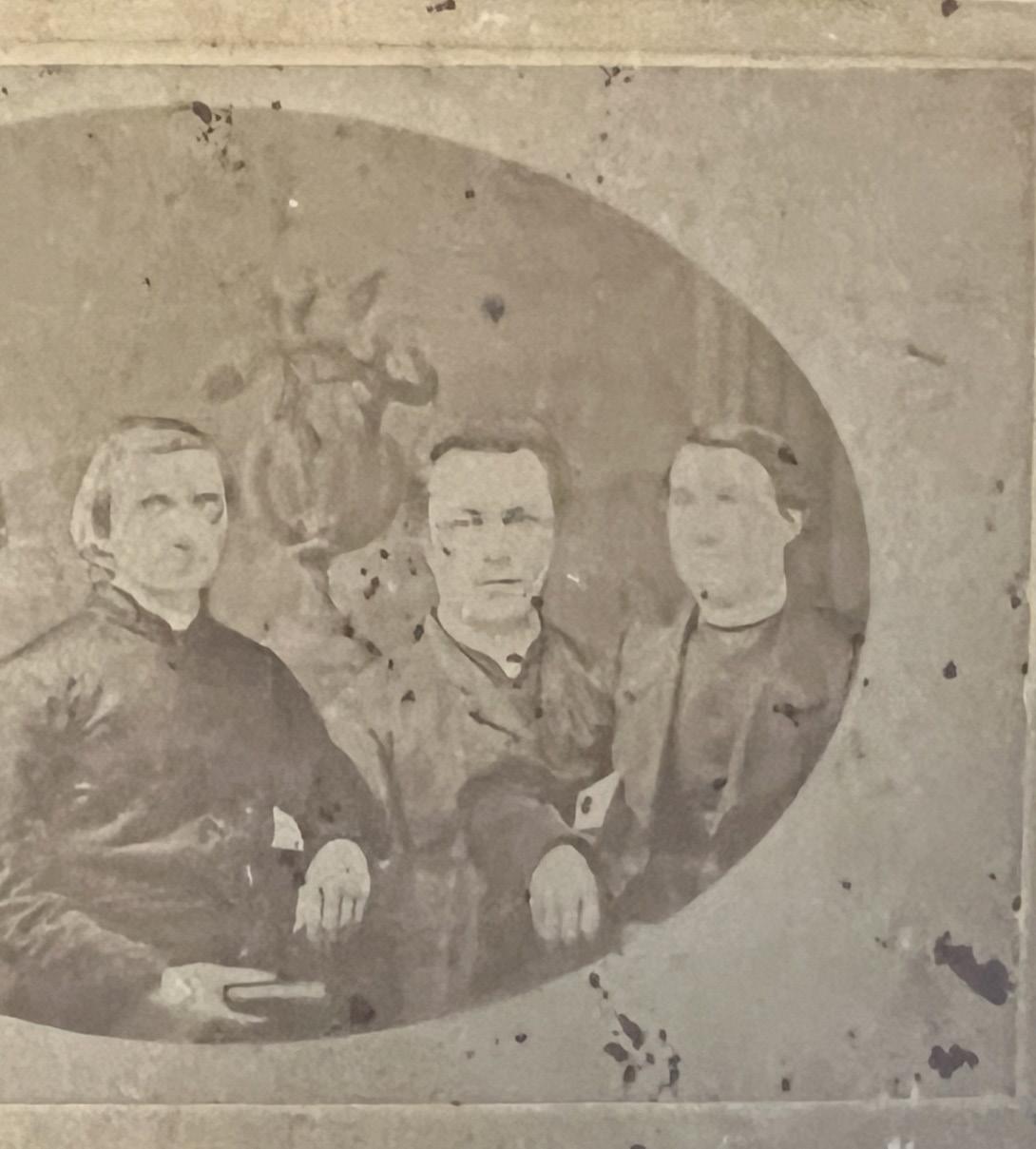
The Diocese of Shreveport received joyful news from the Dicastery for the Causes of Saints regarding the Cause of the Five Servants of God of Shreveport: Fathers Jean Pierre, Isidore Quémerais, Jean Marie Biler, Louis Marie Gergaud, and Francis Le Vézouët.
In a formal decree issued by the Holy See, the Dicastery declared the diocesan inquiry into their lives, oblatio vitae (offering of life), and reputation for holiness and signs to be juridically valid. This decree confirms that the diocesan investigation was conducted in accordance with the norms established by the Church and allows the Cause to advance to the next stage of its examination in Rome. This milestone represents the fruit of many years of prayer, historical research, testimony, and dedicated work carried out within the Diocese of Shreveport. It is also a moment of gratitude for all those who contributed to preserving and promoting the memory of these remarkable missionary priests.
During the Yellow Fever epidemic of 1873, Father Jean Pierre chose to remain at his post when many others fled the danger. Fathers Isidore Quémerais, Jean Marie Biler, Louis Gergaud, and François Le Vézouët freely entered the quarantined city knowing it meant their deaths, and in faithful service to Christ and His people, they cared for the sick and
comforted the dying. Indeed, they gave their own lives in an extraordinary act of pastoral charity.
The Church now continues its study of their witness and sacrifice. Work will proceed on the preparation of the Positio, the comprehensive study upon which the Cause will be examined during the Roman Phase. This important work will be undertaken by the Cause's Postulator, Dr. Waldery Hilgeman, before being presented to the Dicastery for the Causes of Saints for further evaluation.
This decree is also a reminder that holiness is not merely a story from the past. The witness of these five priests continues to speak powerfully to our own time. Their courage in the face of suffering, their unwavering fidelity to their priestly mission, and their generous self-giving love remain a source of inspiration for all who seek to follow Christ more faithfully.
Those who worked closely with the Cause often remarked on the beauty of these saints’ testimony and the enduring relevance of their example for the Church today. Their lives remind us that authentic Christian holiness is found in humble service, sacrificial love, and steadfast trust in God's providence.
As we rejoice in this important development, we also recognize that
the Cause’s journey continues. We invite all the faithful to persevere in prayer, asking God, through the intercession of the Five Servants of God of Shreveport, for the graces and favors they seek. May their example strengthen our faith, deepen our charity, and draw us ever closer to Christ.
For updates on the Cause, historical resources, prayer materials, and information about how to support this effort, please visit ShreveportMartyrs. org.
Today is a day of thanksgiving and renewed hope. Entrusting the next stage of the Cause to God's providence, we pray that the witness of these Five Servants of God may continue to inspire the faithful of North Louisiana, Brittany, France, and beyond, and that, if it be God's will, their path toward the honors of the altar may continue to advance for the good of the Church and the glory of God.
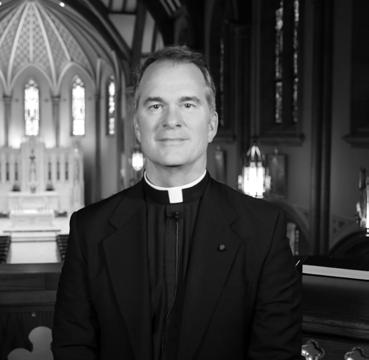
Very Rev. Peter B. Mangum is pastor of Jesus the Good Shepherd Parish in Monroe, LA.
Servants of God
THE SHREVEPORT MARTYRS
Martyrs of Charity
Quick Facts
Declared Servants of God on Dec 8, 2020
Father Jean Pierre founded Shreveport ’s first library and permanent Catholic church, funding it by tutoring children before formal schools existed
Father Isidore Quémerais died just after turning 26 and was among the first to volunteer in epidemic relief
Canonized: 1975 by Pope Paul VI
Father Jean Marie Biler continued their work, summoned two priests for help, and died ten days later
Father Louis Gergaud went to Shreveport after Biler ’s call, saying “it is my duty and I must go,” despite the certainty of death
Father François Le Vézouët went to Shreveport despite warnings, calling it his path to heaven
Legacy

biography
T he Shreveport Martyrs are a group of five missionary priests from small villages throughout Brittany, France who ministered in rural north Louisiana from 1854-1873. They all made a free and willing offering of their lives in a single cause of martyrdom to charity in the 1873 Yellow Fever Epidemic of Shreveport They are: Father Isidore
Quémerais, Father Jean Pierre, Father Jean-Marie Biler, Father Louis Gergaud, and Father François LeVézouët
This “heroic brotherhood” of priests each made a conscious choice to enter a quarantine knowing they would die, but persisted to the end in serving others for the Gospel imperative of John 15:3: “Greater love than this has no man than to lay down his life for his friends ”
Pray for Us
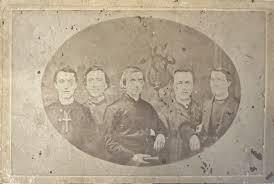
Educational legacy in rural and isolated areas
A stronger Catholic presence in an area of Louisiana that was Protestant in its settlement
The legacy of their heroic decision to offer their lives to ser ve others
LEARN



Youth Column Hello!
Welcome to the brand new Youth Section of the Catholic Connection! Every month, a few pages will be dedicated to stories written by and for young Catholics in the Diocese of Shreveport. Our Junior Reporters are on the ground in their schools and parishes searching for and sharing stories that are meaningful to them.
This month, we have four brilliant authors sharing their thoughts and insights in print for the first time. We hope to inspire more young people to step up and speak, using this space to communicate stories vitally important to such a large demographic of our Church.
If you’re young and passionate (or you know someone who is), this space is for you! To find out more about the Catholic Connection Junior Reporters, please email the editor at sromanski@dioshpt.org.
Never Too Young
Dear young people, you know that Christianity is not an opinion nor does it consist of empty words. Christianity is Christ! It is a Person, a Living Person! To meet Jesus, to love Him and make Him loved: this is the Christian vocation” (Message Of The Holy Father John Paul II For The 18th World Youth Day, April 13, 2003, vatican.va). As a young person myself, I find that youth especially give many excuses in their call to serve the Lord. It is easy to tell ourselves that we are too young or we can’t make a difference because of our age. Our culture makes it easy for us to believe these lies, but the lives of countless young saints show that youth can do extraordinary things for the Lord.
We have been called by God to serve
Him and to bring His love to the world, and this vocation does not have an age requirement. There are many ways anyone, no matter our age, can answer this call. Some people may be called to serve their community, which can look different for each individual. Visiting nursing homes, volunteering to teach children, cleaning up trash, and serving at a soup kitchen are all realistic service options – even service not directly related to sharing the gospel. All the good that is done for the Lord gives Him glory and can also inspire others. By acting as the hands of Christ, those called to service can draw people to Him.
Others may be called to behindthe-scenes work. Praying for and encouraging others may not seem a big deal, but these actions fuel the fire
of God here on Earth. Behind every saint is someone who helped him or her through prayer or counsel. Not everyone gets their work for God on full display, but praying constantly strengthens the whole body of Christ.
Another way to serve the Lord is through evangelization. Jesus sent us to make disciples, but this looks a lot different than it did two thousand years ago. It can be nerve-racking, not to mention awkward, to approach a stranger and explain Jesus to them, but that is only one way we can make Jesus known. A great way to share Jesus is through our actions. The first step is to not to be embarrassed about our faith, then we can start work. Setting a holy example and bringing Christ into all we do will draw people to Him. By radiating the joy of the Lord, we become the smile of Jesus.
These are just some of the ways everyone can live the Christian vocation, no matter their age. We meet Jesus in prayer, love him in service, and make him loved through evangelization. For teens especially, who are discerning their future vocation of religious life, marriage, or virginity, living this way helps direct their path. No one is too young to be holy.
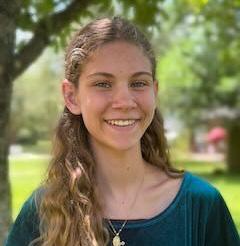
Genevieve Aranda is a 10th Grade homeschool student, Yout Advisory Council Member, and a parishioner at St. Joseph Parish in Shreveport, LA.
The Beauty of Serving
“Instead, he emptied himself, taking the form of a servant being made in the likeness of men, and accepting the state of a man. He humbled himself, becoming obedient even unto death, even the death on the Cross.” —Philippians 2:7-8
I’ve been altar serving for a little over six years, since sixth grade, and it has been one of the best things to happen to me! Like other kids my age, I was trying to understand who I was, but I felt alone in the process – I was insecure and liked niche and nerdy things. Being 11 years old, I was also confused about the faith and didn’t really understand why Mass was so important. I thought it was boring and dreaded going every weekend.
I don’t remember who brought it up, maybe Father Karl Dingle or my parents, but someone told my sister and me about altar serving. I’ve seen kids doing it at Mass, but I didn’t know much about it, however, my sister and I were interested, so we went to a training session. It’s hard to recall everything, but I remember putting on the vestments and feeling at home. At my first Mass, I was really scared and excited – it was me, my sister, and our friend Isabella Murphy. Bella, class of 2026 from LA Tech, taught us everything we needed to know about altar serving. Then, all three of us served together almost every Saturday for about three years.
Through altar serving, I learned a lot about the faith. I paid attention to the words of the readings, psalm, Gospel, and homily. I also listened to prayers spoken during the consecration, the words that turned ordinary bread and wine into the living Body and Blood of Jesus.
Even now as an incoming 12th grader, I’m still learning about the faith. I first served because I was bored during
Mass, but now I do it because I love it. Because of altar serving, my faith grows stronger every time I serve; even the times when I don’t feel like it or I’m tired, I go anyway because it’s what I’m called to do for myself and my community. I love serving on the altar before God with my fellow altar servers, priests, and deacons – it’s an honor and a privilege.
If you believe you are being called to become an altar server or your child could become one, I highly encourage you to talk to your priest to discern this calling. We are called to become more like Jesus, and that includes being servants to one another.
Kara Price is a Summer Intern at St. Jude Parish in Benton, LA.
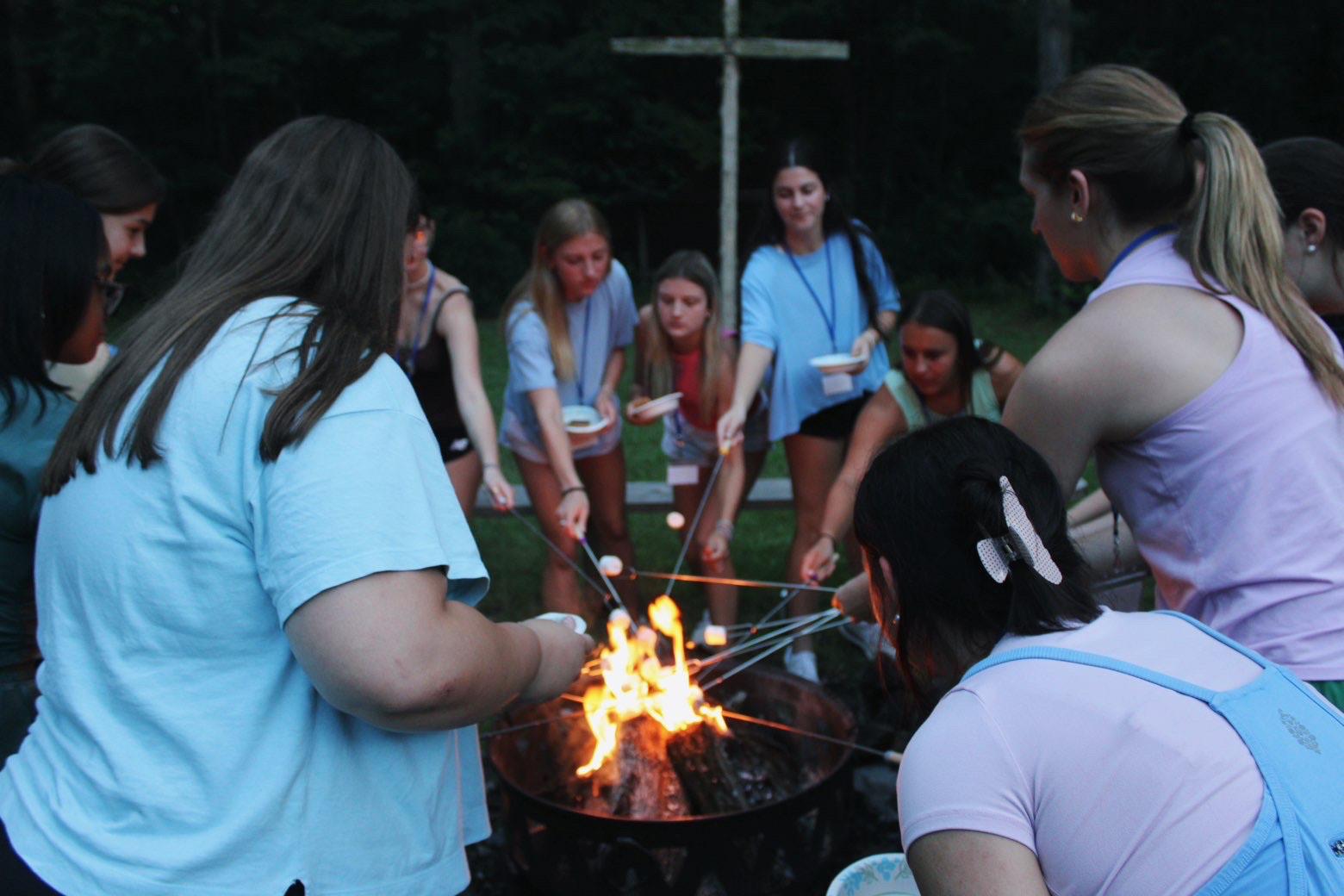
Youth Vocations in Monroe Louisiana
Who can receive a vocation? The answer is: anyone! We all have a vocation, which is, by definition, a divine calling from God to lead a life of love, service, and purpose. Through our respective vocations, we use these gifts to fill the Kingdom of Heaven.
In Monroe, Louisiana, there has been an increase in communities for faithful young adults, including the Young Men’s Retreat (YMR) and Young Women’s Retreat (YWR) groups. These practicing faith communities for young people hold weekly Bible studies, serve the community, and hold annual retreats similar to the Men’s and Women’s ACTS.
I had the opportunity to interview the directors of YMR and YWR, Garrett Taylor and Lizzie Southwell, respectively, and ask them how they have been navigating these calls in their lives and what’s next for YMR and YWR.
Southwell and Taylor are parishioners of Jesus the Good Shepherd in Monroe. They work with their parish to build up the community of young Christians throughout Monroe.
Their callings towards YMR and YWR look very different. YMR was founded by a group of guys who held weekly Bible studies at the Knights of Columbus and wanted to turn their group into something more. Taking initiative, Taylor became the Young Men’s Retreat Director. As for Southwell, she was asked to serve as the director of YWR, and through many prayers, God gave her the sign that this was what she was meant to do and where she was meant to be.
God places signs in our lives that can be easy to miss, but the more we open our ears and hearts to listen, the harder those signs become to ignore.
As directors of the Youth Retreats, their daily work consists of a lot of organizing, phone calls, and ensuring everything runs smoothly. But they are not alone, having team members at their side to help with whatever they need. Their effort is not something they go through alone; it is built on a community.
The retreats take months to plan, with hard work put in by everyone involved. The directors and team leaders willingly pour in so much of their time, effort, and spirit so that they can foster faith in those who may need direction.
Even though called to lead those younger than themselves to Christ, both Southwell and Taylor expressed that they have learned so much from doing this. When we come together in Christ, there is always something we can learn from one another, no matter our role, they said.
As for the future of these retreats, they hope it can expand into other areas, not just Monroe. The YWR and YMR communities are not just for Catholics (though built on a Catholic foundation). If you reach out, you will be accepted with open arms. For more information, go to @ymr.nela and @ywr.nela on Instagram.
In 1 Timothy 4:12, St. Paul says: “Do not let anyone look down on you because you are young, but set an example for the believers in speech, in conduct, in love, in faith, and in purity.” Impact isn’t defined by who you are; it’s defined by what we do. When we listen to God’s voice, we are called to put his love into action. Our vocation shows us that listening to God’s calling for us can become something greater than we could ever imagine. No matter how young or old you are, there is no set time for when we should listen to God’s voice. We should always be listening to God’s voice.
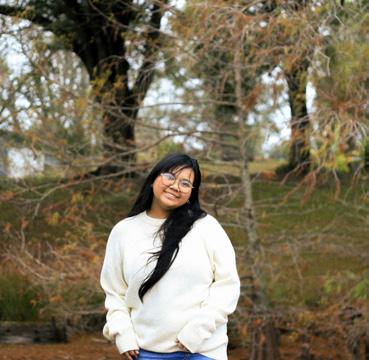
Mae Operario is a senior at St. Frederick High School and a parishioner at Our Lady of Fatima Parish in Monroe, LA.
Image: Participants roast marshmallows at the Young Women’s Retreat. Phooto by Mae Operario.
Youth Column
The Importance of Life After Confirmation
“In him we were also chosen, destined in accord with the purpose of the One who accomplishes all things according to the intention of his will, so that we might exist for the praise of his glory, we who first hoped in Christ.” — Ephesians 1:11-12
Confirmation is one of the three sacraments of initiation. A lot of us, especially those currently in high school, were confirmed in eighth grade. Something you were probably told throughout Confirmation preparation is that Confirmation isn’t a graduation from the Church and that there’s so much more to it. But what should be done with the graces received in Confirmation?
I, for one, was never really informed about one of the most important parts of life: vocations! In simple terms, a vocation is God’s calling for one’s life. What the Lord has planned for us is very important. Whether it be matrimony, Holy Orders, religious life, or single life, each vocation is uniquely important. It is essential for us to listen and pray about our vocation and what God has planned, especially for those in high school!
As paragraph 994 of the Third Baltimore Catechism (TAN Classics, 2010) teaches: “We should finally determine our vocation: 1) By leading a holy life that we may be worthy of it; 2) By praying to the Holy Ghost for light on the subject; 3) By seeking the advice of the holy and prudent persons and above all our confessor.” It’s very important that we live a holy life and look up to those around us, but it is more important that we look up to God. While yes, those around us may help, God knows best.
We can also look to the book of Ephesians to see that God really does have a plan for our whole life: “In him we were also chosen, destined in accord with the purpose of the One who accomplishes all things according to the intention of
his will, so that we might exist for the praise of his glory, we who first hoped in Christ” (1:11-12). This is a really beautiful piece of Scripture. It shows how we were each chosen by God for a specific task in life.
In a short interview with Father Raney, the vocations director of the diocese, he listed easy and simple steps for young people to listen for their vocations: “Go to Mass every Sunday, go to Adoration every now and then; pray the Rosary frequently, and ask God directly through prayer.” Now, this most likely won’t suddenly make you understand every step in God’s plan immediately, but it’s a simple way to deepen your relationship with God and understand how He wants you to live.
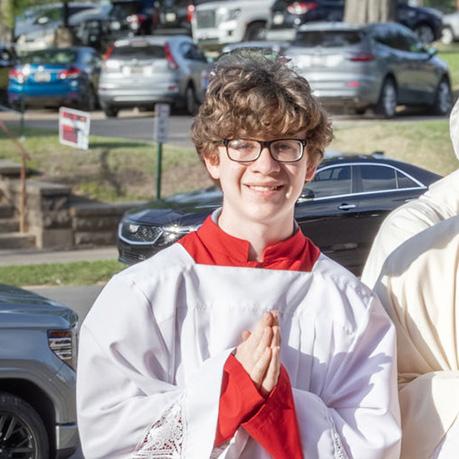
Elias Stroud is a Youth Advisory Council Member and a parishioner at St. Jude Parish in Benton, LA..

DIOCESE OF SHREVEPORT NON-DISCRIMINATORY SCHOOL POLICY
July 2026
Shreveport, Louisiana
The Diocese of Shreveport School system re-affirms its nondiscriminatory policy on the basis of race, sex, color, national, and ethnic origin in its educational programs, activities, and employment policies in accordance with Title VI of the Civil Rights Act of 1964, Title IX of the 1972 Educational Amendments, and Sections 4.03 (a) and 4.03 (c) Revenue Procedure 75-50.
All students, faculty members and staff, without exception, are admitted to all rights, privileges, and activities generally accorded or made available at the schools which do not discriminate on the basis of race, sex, color, national, and ethnic origin in the administration of its employment policies, admission policies, scholarship, and loan programs, and athletic and other school-administrated programs.
St. John Berchmans, Shreveport
St. Joseph School, Shreveport
Loyola College Preparatory, Shreveport
Jesus the Good Shepherd, Monroe
Our Lady of Fatima, Monroe
St. Frederick High, Monroe
Sr. Carol Shively, OSU Superintendent
Seminarian Burses
Thanks to our Recent Donors:
(005)2 Cathedral of St. John
Berchmans Burse #2
The Congregation of St. John’s Roman Catholic Church (015) Bishop’s Seminarian Burse
Kevin & Jeanne Long (023)2 Msgr. Edmund J. Moore
Memorial Burse #2
Patricia L McGraw
(024)2 Rev. Joseph Puthuppally
Memorial Burse #2
Edward & Cathy Dinger
(030) Ottis and Anne Krupa
Littlejohn Memorial Burse
Mr. & Mrs. Joseph W. Littlejohn (035)5 Dr. James V. & Rosemary C.
Ward Burse #5
Mrs. Rosemary C. Ward
(036)7 Msgr. Earl Vincent Provenza Burse #7
Mr. & Mrs. Paul Miramon
Drs. Steve & Diana Bienvenu
(061) Sister Maria Smith, DC
Memorial Burse
Mrs. Pat Johnson (In honor of Margaret Rivoire’s 90th birthday)
Pat & Marie Jones (In honor of Margaret Rivoire’s 90th birthday)
(063) Rev. Charles Glorioso Burse
Roslyn & Tom Mee (064) Richard Whatley Memorial Burse
Mr. & Mrs. Fred Hensel
St. Jude Catholic Church Knights of Columbus
Ray & Martha Whatley (065) Jacquie Bierwirth Memorial Burse
Ms. Nichole Bourgeois (In memory of Jacquelyne Ranae’ Bourgeois Bierwirth)
Anonymous
Mr. & Mrs. Donald J. Nici
NEW BURSE (066) AMCA Trevison
George & Carmen Trevison
Incomplete Burses:
(001) Fr. Mike Bakowski Memorial Burse #2 ($1450)
(002) Joseph & Antoinette Bakowski
Memorial Burse ($3250)
(003) Sam R. Maranto Memorial
Burse ($1750)
(004) Kathryn Atherton Cook
Memorial Burse ($450)
(005) Cathedral of St. John Berchmans
Burse #2 ($6676)
(006) Msgr. J. Carson LaCaze
Memorial Burse #3 ($150)
(007) Dr. Carol Christopher Memorial Burse ($1200)
(009) St. John Berchmans Knights of Columbus Council 10728 Burse ($1550)
(011) Rev. David Richter Memorial
Burse #2 ($9150)
(015) Bishop’s Seminarian Burse ($9093)
(016) Elaine Malloy Frantz Memorial Burse ($1000)
(017) Msgr. George Martinez Knights of Columbus Council 1337 Burse #2 ($5004)
(018) Knights of St. Peter Claver
Council 144 Burse ($1500)
(021) Rev. Edmund “Larry” Niehoff
Memorial Burse ($5050)
(023) Msgr. Edmund J. Moore
Memorial Burse #2 ($5700)
(024) Rev. Joseph Puthuppally
Memorial Burse #2 ($500)
(025) Kathleen Hightower Memorial
Burse ($800)
(027) Rev. Richard Lombard
Memorial Burse #4 ($5000)
(028) Friends-n-Faith Burse ($750)
(029) Rev. Kenneth Williams
Memorial Burse ($1400)
(030) Ottis & Anne Krupa Littlejohn
Memorial Burse ($9600)
(035) Dr. James V. & Rosemary C.
Ward Burse #5 ($3470)
(036) Msgr. Earl Vincent Provenza
Burse #7 ($5001)
(038) The Malone Family Burse ($500)
(039) St. Elizabeth Ann Seton Knights of Columbus Council 9260 Burse ($1300)
(045) Sister Martinette Rivers, OLS
Memorial Burse ($700)
(046) Domestic Church Burse ($5000)
(047) Troops of St. George Burse ($7000)
(048) Rev. Joseph Kallookalam, CMI Burse ($5000)
(050) St. Joseph Shreveport Mary’s Workers Burse #3 ($395)
(052) Dr. Matthew Ragan Green, Jr. Memorial Burse ($2875)
(054) Fr. Franz Graef Memorial Burse ($5000)
(056) Hazel Iles and John Paul Woodley, Sr. Memorial Burse ($860)
(057) Father Robert Inzina Memorial Burse ($5000)
(058) Monsignor Warren T. Larroque
Memorial Burse ($5000)
(059) ACTS of Northwest Louisiana Burse ($1800)
(060) Father David Buss Memorial Burse ($5000)
(061) Sister Maria Smith, DC
Memorial Burse ($6700)
(062) Joan E. Anderson Sneed
Memorial Burse ($2400)
(063) Rev. Charles Glorioso Burse ($7950)
(064) Richard Whatley Memorial Burse ($2325)
(065) Jacquie Bierwirth Memorial Burse ($1550)
(066) AMCA Trevision ($1000)

To donate to the Catholic Service
Appeal, please scan here!
To donate to an established seminarian burse, please scan here!

Congratulations, Deacon Tristan Frisk!
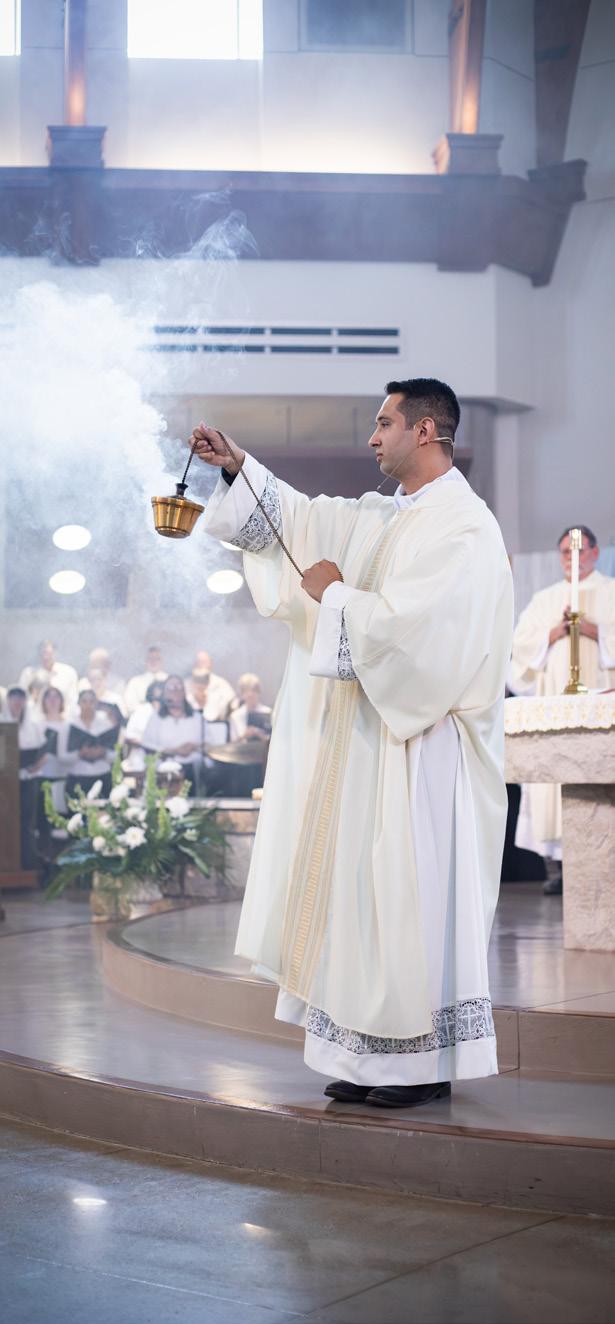
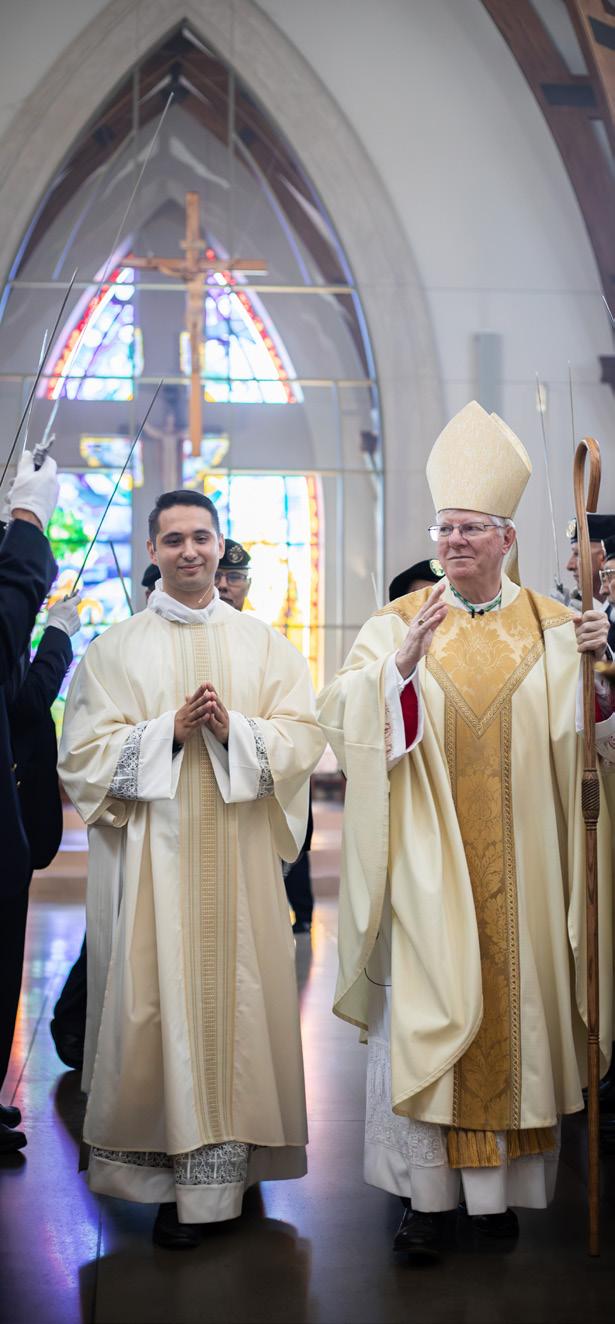
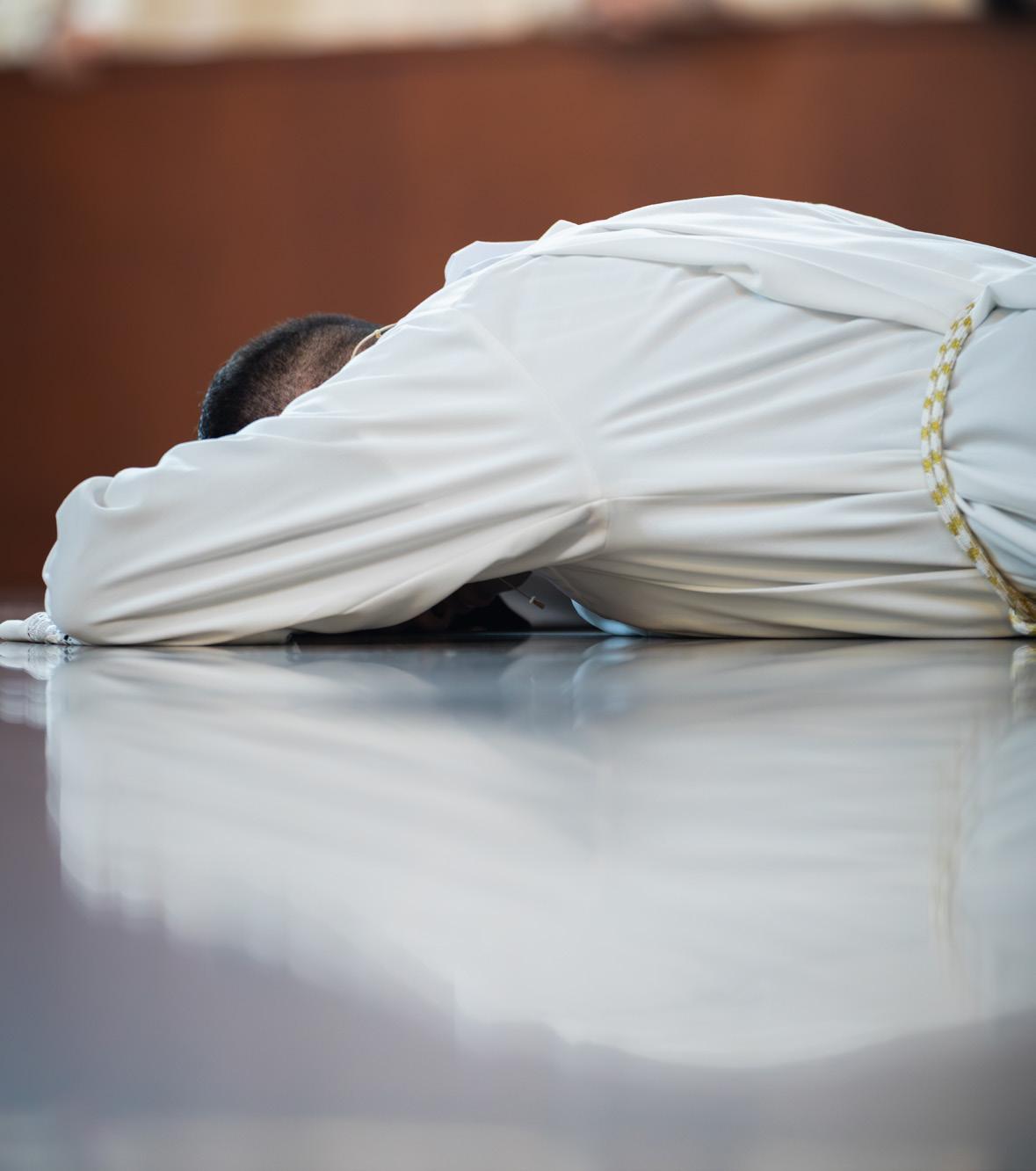
Thanks be to God! On June 27, 2026, Tristan Frisk was ordained to the Transitional Diaconate. We will continue to pray for him throughout the final year of his formation and beyond. May God bless Tristan and his family abundantly in this time of joyful celebration!
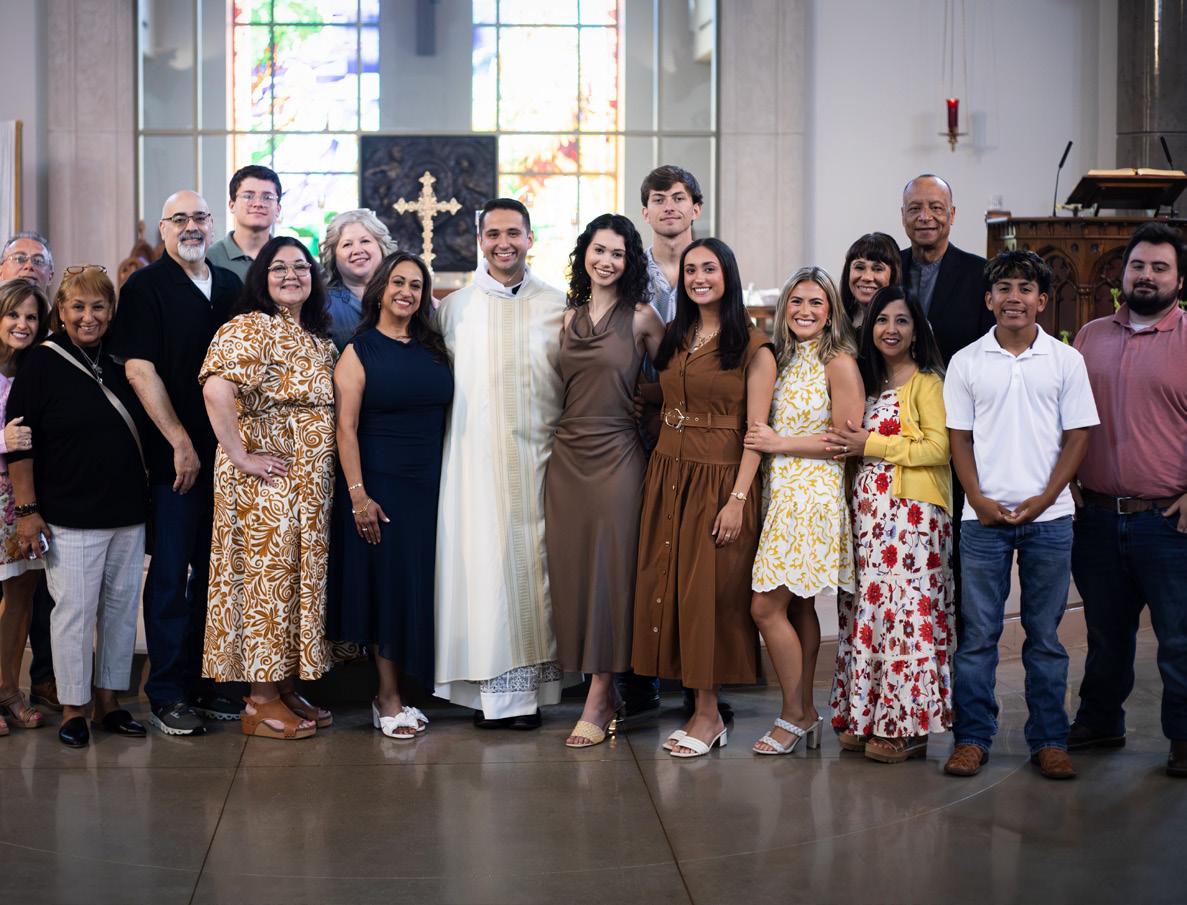
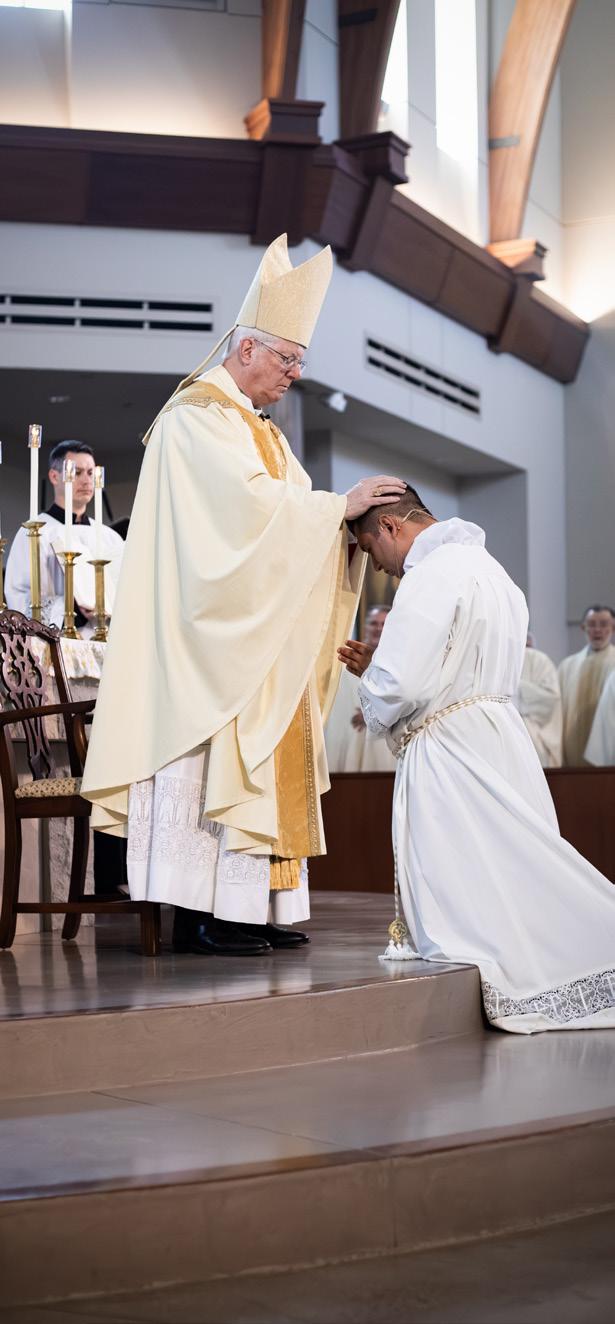
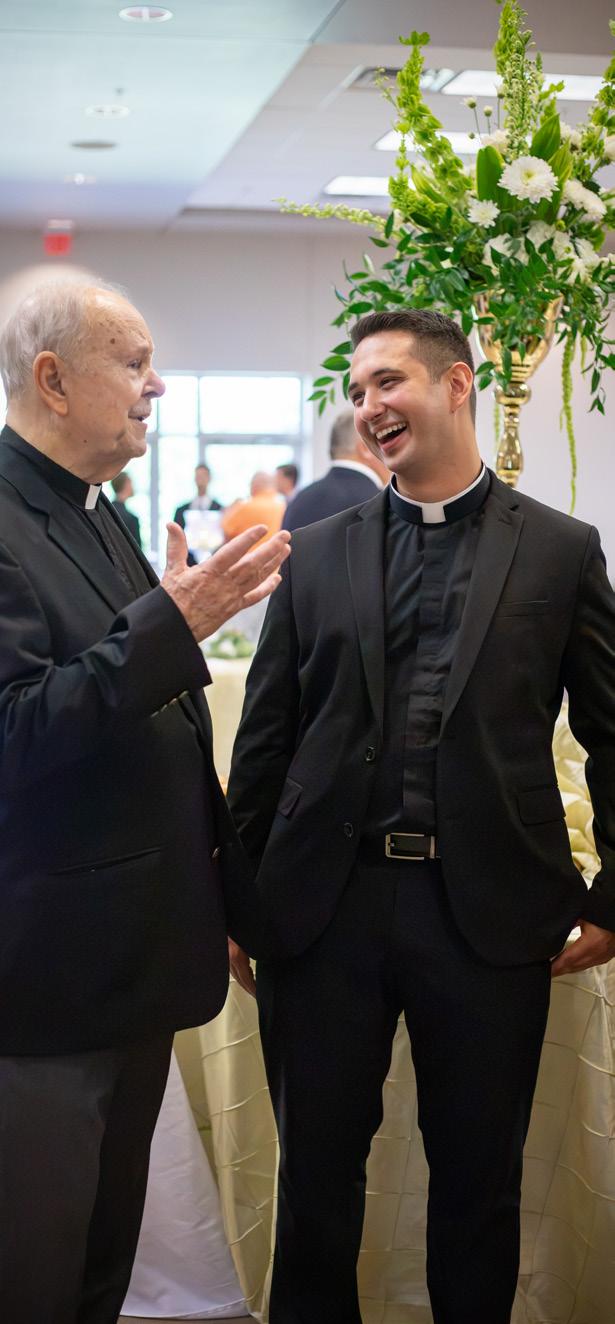
Jesus the Good shepherd CatholiC sC hool
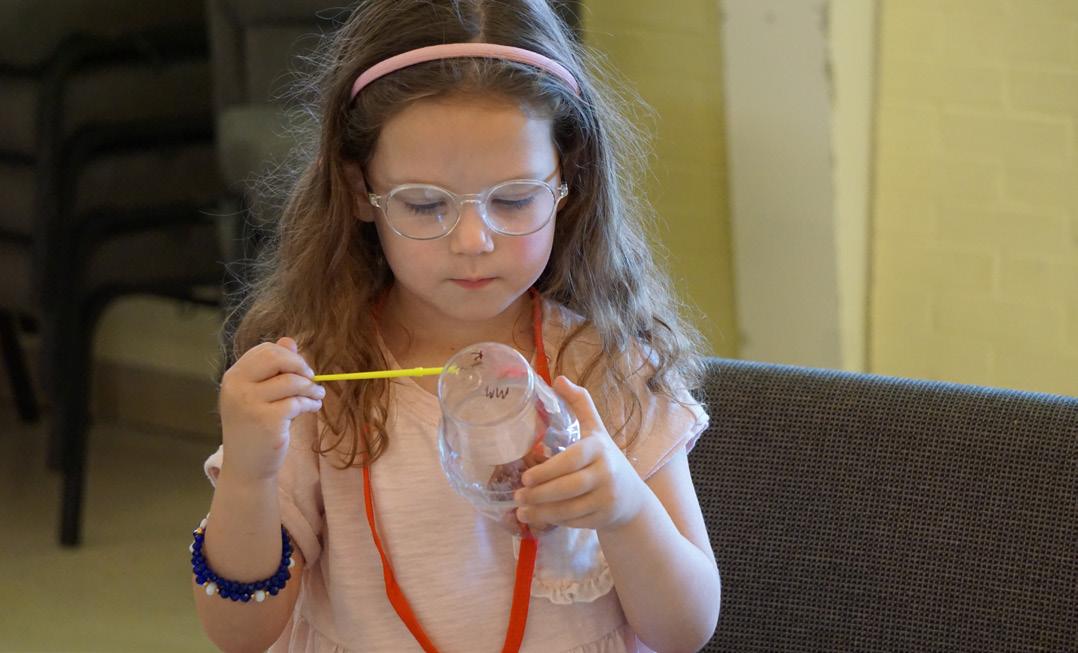
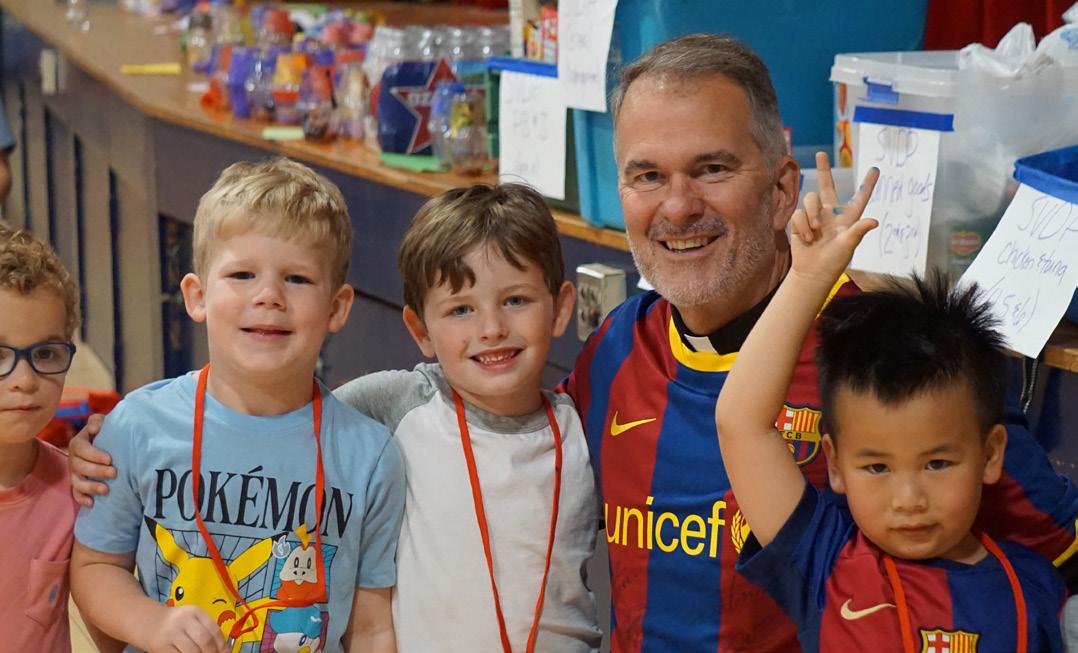
Answering God's Call to Vocations: JGS School and Church
At Jesus the Good Shepherd Parish and School, we are blessed to witness God's call unfolding in many beautiful ways. While vocations are often associated with the priesthood and religious life, the Church reminds us that each person is called to serve the Lord through their unique gifts, talents, and daily witness. This summer, our parish and school community are celebrating that truth in a special way.
The week of July 6-10, our parish welcomed over 200 children to Vacation Bible School as they journeyed "Around the World with the Virtues” alongside the Assorted Saints. Throughout the week, children encountered inspiring saints such as St. Juan Diego, St. Brigid, St. Martin de Porres, St. Nicholas, and St. Kateri Tekakwitha while learning about the virtues of faith, hope, and love. Through skits, Bible stories, crafts, music, games, and the beloved Mystery Key Hunt, all managed by our fantastic group of VBS volunteers, our young people discovered that holiness is not reserved for a select few, it is a calling extended to each one of us.
This spirit of vocation and joyful service also fills our school as we prepare for the 2026-27 academic year. We are excited to welcome five outstanding educators who have answered God's call to teach and form young hearts and minds. Joining our Ram Family are Holly Aulds, a veteran educator with ten years of experience and a passion for nurturing preschool learners; Kourtney Aulds, whose love for helping children grow academically and spiritually shines through her nine years in education; Savannah Frantz, an enthusiastic young
teacher entering her fourth year in the classroom; Ashley Luffey, a proud JGS alumna returning home to inspire the next generation of students; and Gracie Foust, whose gifts in education, family life, and ministry beautifully complement her role as our new physical education teacher.
Each of these young women, alongside our current teachers and faculty, reminds us that teaching is more than a profession, it is a vocation rooted in service, sacrifice, and love. As a Catholic school community, we are grateful for educators and faculty who model Christ's example and help our students recognize God's presence in their everyday lives.
May this new school year inspire all of us to listen for God's voice and courageously answer His call, wherever He may lead us.
Amy Fakhre is Director of Development at Jesus the Good Shepherd Catholic School, Monroe, LA
loyola ColleGe prep
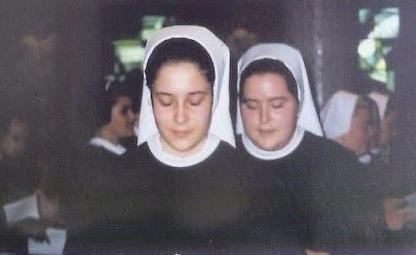
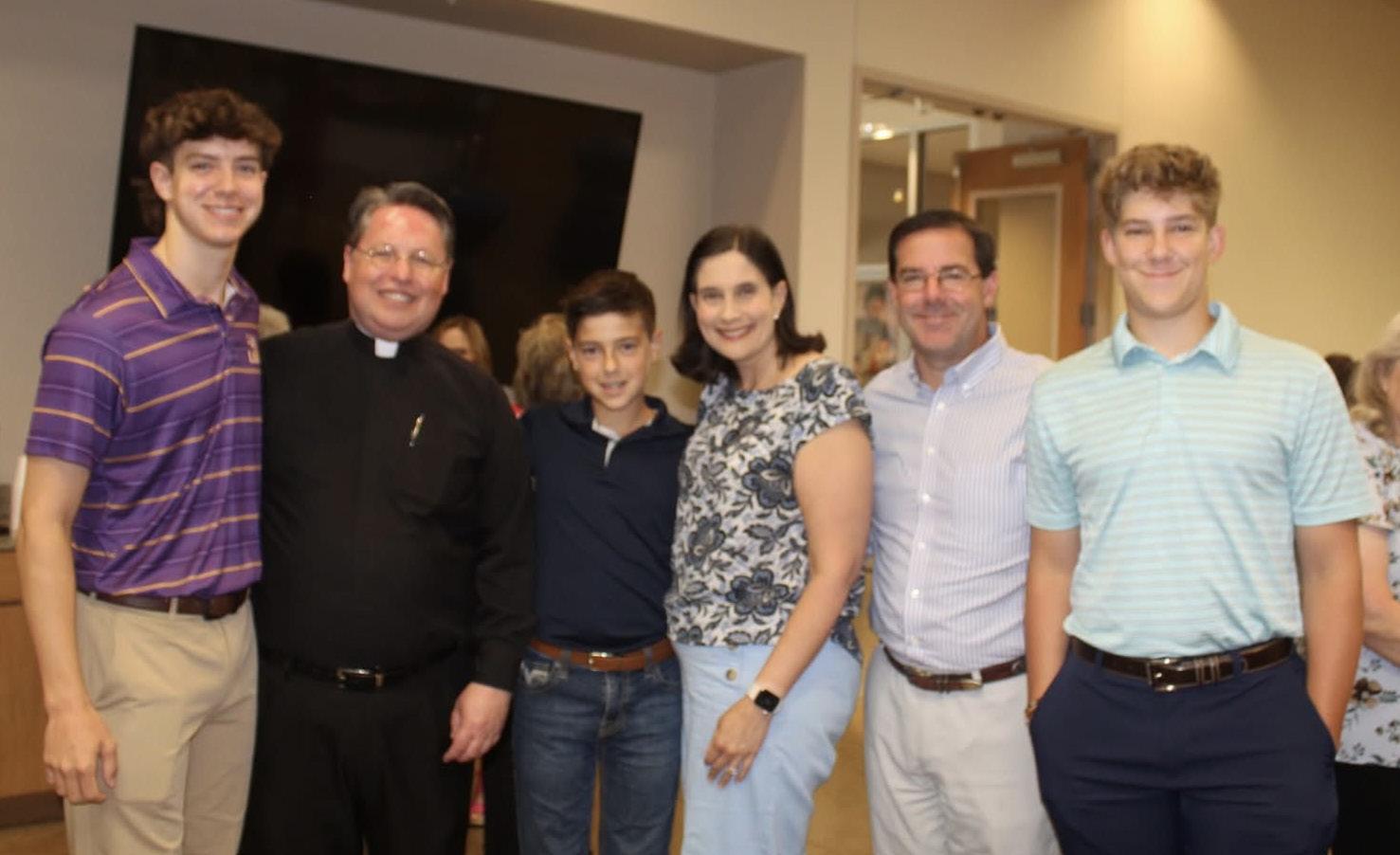
How Catholic Schools Taught Me to Say
‘Yes’ to God
Through my teens and into my twenties, I struggled to understand what God was asking of my life. I attended a Catholic high school and still remember the priest once asking me whether I had ever considered becoming a nun. My immediate answer was no. But the question lingered in my heart long after the conversation ended, and I later wondered if he saw something in me that I could not yet see.
Working part-time as a Catholic youth minister in college was a turning point. I had the privilege of meeting priests, brothers, and sisters whose joy, peace, and commitment deeply inspired me. Their witness made faith feel alive and tangible in a way I had not previously experienced, and I sensed God inviting me to listen more closely.
At the age of 19, I entered the convent. Those years were some of the most formative of my life – I studied Sacred Scripture, Church history, papal encyclicals, and Vatican documents, while also exploring leadership roles within the Church. It was a time of extraordinary growth! My understanding of my faith deepened in ways I never expected, and my life’s direction was profoundly shaped for the better.
However, God’s plan for me was not to remain in the convent. I came to understand that He called me to a different vocation: motherhood. Eventually, He also called me to serve in Catholic education as a principal. What I had thought might be a lifelong path was, in fact, a sacred season of preparation.
Looking back, I realize that God’s will is not always a straight line. It is a journey of trust, surrender, and continual
conversion. Each step, even those that feel uncertain, can lead us closer to holiness if we remain open to His voice. The twists of my past prepared me for aspects of what I am called to today.
At Loyola College Prep, we strive to teach our students how to listen for God’s voice in their own lives. We want them to develop a personal, real relationship with God, one that is not just learned in the classroom, but lived in prayer, reflection, service, and daily choices. We believe that when students learn to recognize God’s presence in their lives, they begin to see that faith is not abstract but deeply personal and active.
My prayer for students and young people today is that they take time to truly listen for God’s call in their lives. His plan leads not to confusion, but to joy, purpose, and growth. The Church needs priests, brothers, and sisters, but it also needs faithful lay people who are willing to serve, lead, and love in the world.
We are all called to be missionaries in our own way. And in the end, the goal is the same for every vocation: to reach heaven by becoming saints.
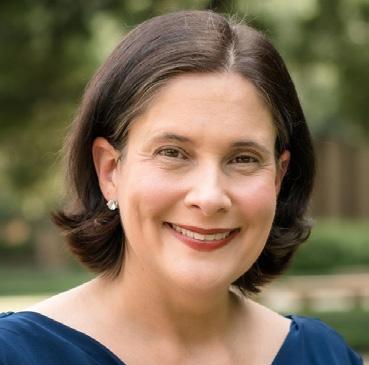
Dr. Laurie Salvail is Principal of Loyola College Prep in Shreveport, LA.
Around the diocese...

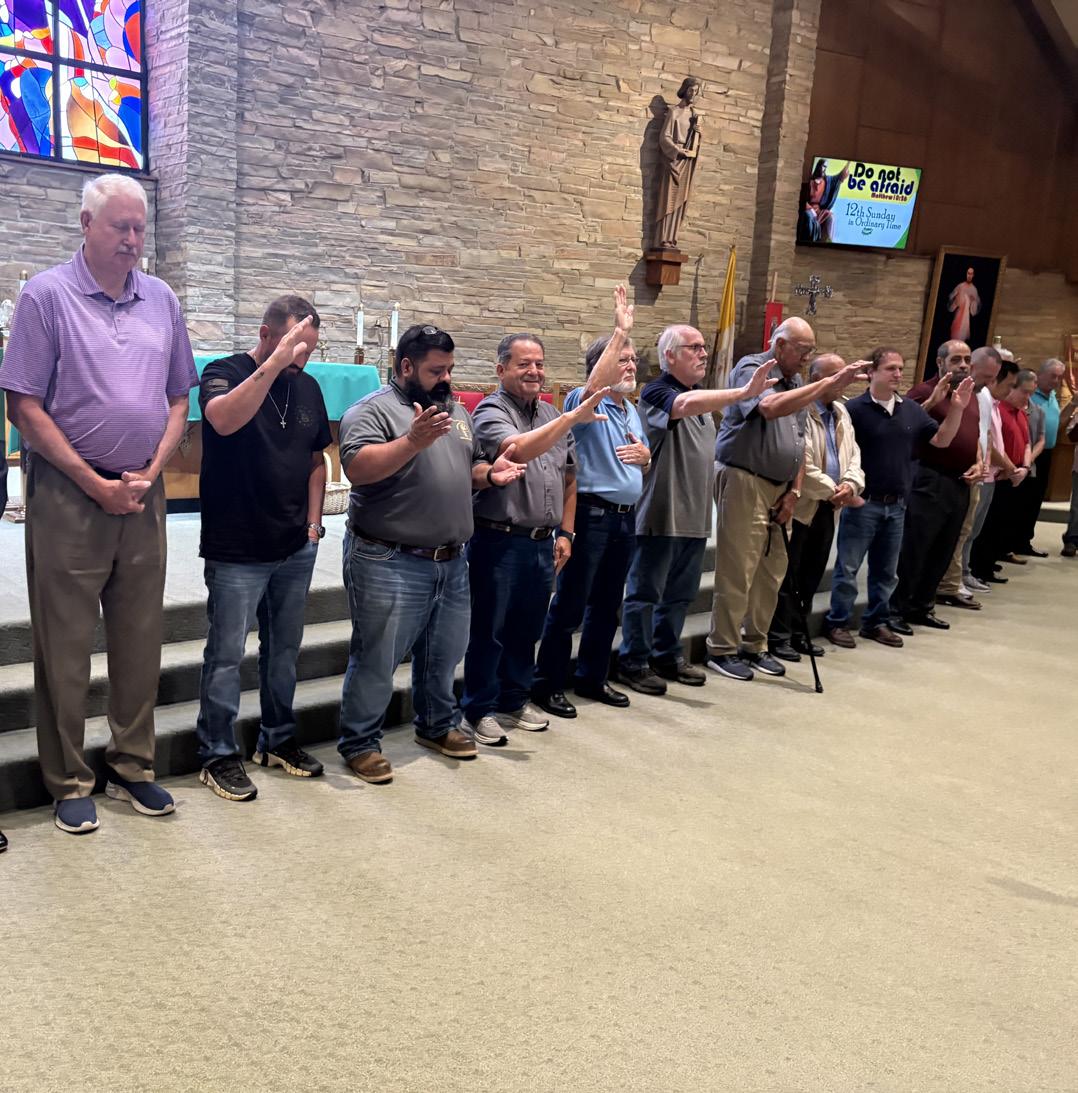



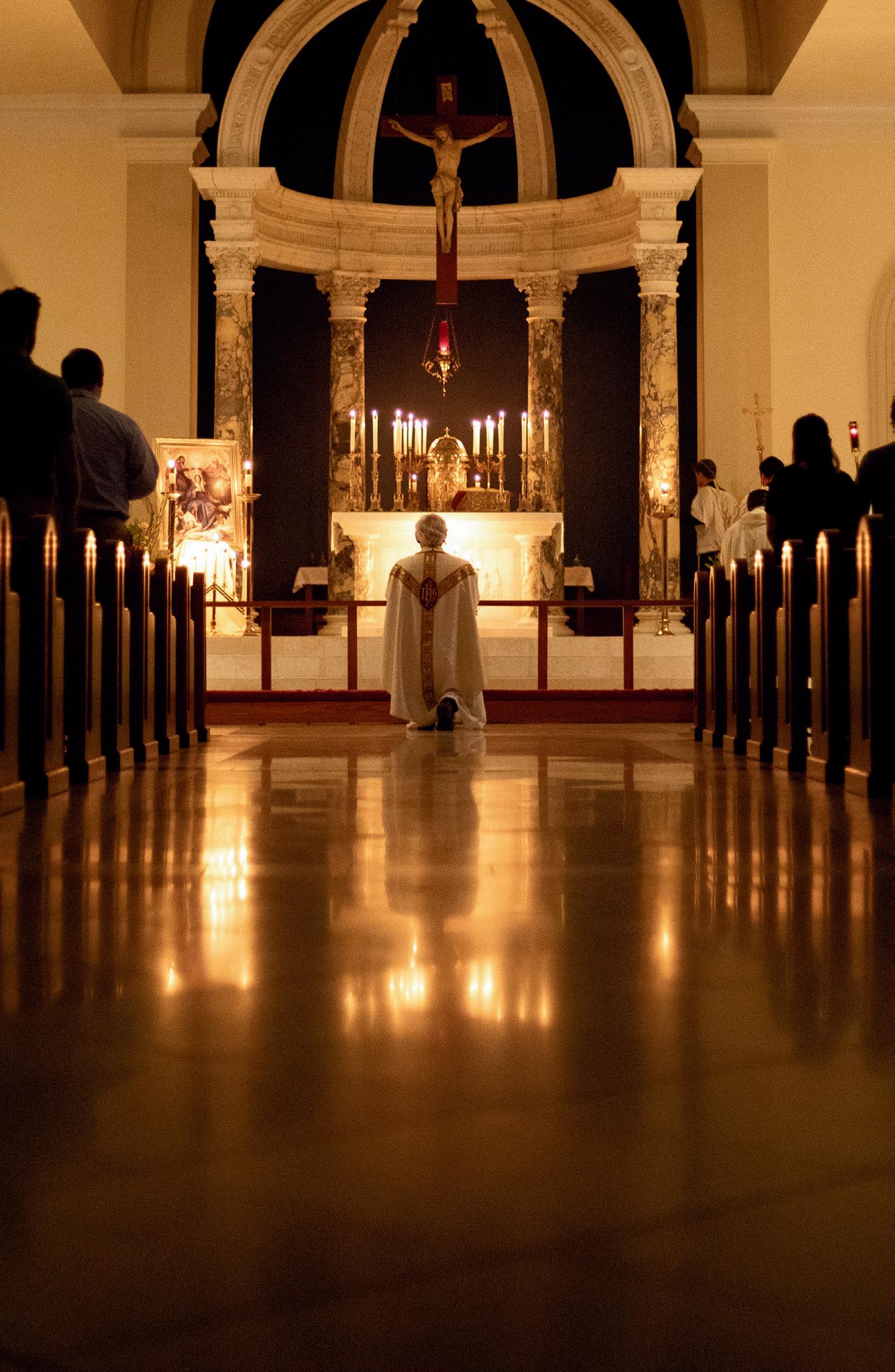


DONATION REQUEST LE T TER for Tuition Assistance and Scholarships
Dear Sir/Madam,
I hope this message finds you well My name is Tessa Hoff, principal of Our Lady of Fatima Catholic School. I am reaching out on behalf of our Tuition Assistance and Scholarships Incentive, a program dedicated to providing meaningful support for those in need through direct donations to students enrolled at or seeking to enroll at Our Lady of Fatima Catholic School.
We are currently seeking donations for 30 students to help sustain and expand our impact for the 2026 - 2027 school year Your generous contribution would directly support:
Current OLFS Kindergarten students who were denied state scholarship funds
Current OLFS 1 grade students who were denied state scholarship funds st
Siblings of current students who were denied state scholarship funds
New families pursuing a Catholic education through OLFS
We believe that collective kindness creates lasting change, and we would be deeply honored if you would consider supporting our mission. Please help us stand in solidarity with families in our local community by contributing any amount to assist these children in current need of scholarships.
Donation Details:
If you would like to discuss potential collaboration, we would be more than happy to provide everything needed Given our non-profit status, donors will be given a letter of donation for tax purposes Please call the school office at 318-387-1851 to discuss direct donations.
Thank you very much for your time, consideration, and support We truly appreciate your generosity and commitment to creating positive change.
Warm regards,
Tessa Hoff
CATHOLIC CONNECTION
DIOCESE
3500 Fairfield Ave. • Shreveport, LA 71104
Catholic Connection USPS 024-824 is published monthly except for July by the Diocese of Shreveport, 3500 Fairfield Ave., Shreveport, LA 71104. Periodicals Postage PAID at Shreveport, LA 71102. POSTMASTER: Send address changes to Catholic Connection, 3500 Fairfield Ave, Shreveport, LA 71104.