
The writing of the Caribbean Early Childhood Development Good Practice Guide would not have been possible without the contributions of the following persons across the region who variously contributed in meetings, responded to telephone interviews and email questions, hosted the writers of the Guide in field visits to confirm information and validated the examples of good practice selected for publication:
Representatives of Early Childhood Services who pretested instruments used to identify potential good practices for inclusion in the Guide:
– Earla Esdaille, former Head of Early Childhood Education Training Centre, Ministry of Education, Antigua and Barbuda
– Jacqueline Morris, former Head of Early Childhood Education Unit, Ministry of Education, St. Kitts and Nevis
Representatives of Ministries of Education who led country teams to identify potential good practices for inclusion in the Guide, and who contributed to the final selection process:
– Susan Smith, Anguilla
– Embler Spencer, Antigua and Barbuda
– Catherine Blackman, Barbados
– Nadera Ross, Belize
– Carol Bennett, Cayman Islands
– Ellen Rhodriquez, Commonwealth of The Bahamas
– Veda George, Commonwealth of Dominica
– Charmaine Christopher, Grenada
– Ingrid Trotman, Coorporative Republic of Guyana
– Joan Reid and Marlene Turner, Jamaica
– Inez Thompson, Montserrat
– Rosalind Otto, St. Kitts and Nevis
– Agnes Prince, St. Lucia
– Gwenette Cambridge, St. Vincent and the Grenadines
– Adita Maharaj, Trinidad and Tobago
– Heidy Williams, Turks and Caicos Islands
– Genevieve McMaster, Virgin Islands
Representatives from regional and international agencies who contributed to the selection of good practices for inclusion in the Guide:
– Patricia McPherson, Caribbean Community Secretariat
– Dr. Idamay Denny, Paul Murphy, Dr. Martin Baptiste, Caribbean Development Bank
– Sisera Simon, Organisation of Eastern Caribbean States, Education Development Management Unit
– Shelly-Ann Harper, United Nations Children’s Fund, UNICEF Office for the Eastern Caribbean Area
Representatives of ministries and agencies within countries that assisted in the process of confirming information on the good practices selected for inclusion in the Guide, supplied photographs and examples of materials:
BELIZE:
– Alberto August, Ed.D,, La Isla Carinosa Academy, Caye Caulker, Belize
– Diana Pook, Civic Education Coordinator COMPAR, Department of Human Services, Ministry of Human Development and Social Transformation, Belize
CAYMAN ISLANDS:
– Lesley Maddock and Josie Hoar, Little Trotters Farm and Nursery School, Grand Cayman
GRENADA:
– Susan Parke, Theresa Fletcher, Cynthia Isaac, Bernadette John, Karen Worme, Early Childhood Education Unit, Ministry of Education, Grenada
– Leranda McIntosh, Mt. Rich Preschool, St. Patrick
– Denise Keens Douglas, Mileage Preschool, Grenville, St Andrew – Glenda Bowen, Seventh Day Adventist Preschool, Mt. Rose, St. Patrick
– Parents of Children attending the schools
ST. LUCIA:
– Dr. Kim Gardner; Aretha Cooper, Elaine Clement, The Child Development and Guidance Centre, La Clery, St. Lucia
Evodia Cassius, TLC Preschool, Bisee
– Kim Cayol, Precious Jewels Preschool
– Nurse Morgan-Raphael, Babonneau Health Centre
– Nurse Bernadette Felix-Regis, Castries Health Centre
– Parents of children attending schools and Child Development and Guidance Centre
Independent experts who validated the content of the Guide for publication:
– Fortuna Anthony, former Chief Education Officer, Government of St Lucia
– Dr. Jackie Bird, Pediatrician, Director of National Child and Adolescent Health Services, St Lucia.
– Janet Brown, Co-founder of Parenting Partners Caribbean, and former Head of Caribbean
Child Development Centre, The University of the West Indies, Open Campus, Jamaica
– Rose Davies, PhD, Chair of the Joint Board of Teacher Education, Mona, and former Senior Lecturer Early Childhood Education, The University of the West Indies, Mona, Jamaica
– Cathryn O’Sullivan, Early Childhood Education Specialist at Caribbean Child Development Centre, The Open Campus, The University of the West Indies, Jamaica
– Dr. Maureen Samms-Vaughan, Pediatrician, Head of Child Health, The University of the West Indies, Mona, and former chair of the Early Childhood Commission, Jamaica.
– Vanta Walters, former Head of the Early Childhood Education Unit, Ministry of Education, St. Kitts and Nevis
Notwithstanding the wide range of inputs into the process of developing the Caribbean Early Childhood Development Good Practice Guide, the responsibility for this final output rests with the authors and any errors and omissions thereof are not to be attributed to the other participants in the process
– Leon Charles and Sian Williams Co-facilitators and Writers of the Caribbean Early Childhood Development Good Practice Guide
Global and regional education research shows that the early years of a child are critical for shaping intelligence, personality and social behaviour. Recent studies of early childhood education also demonstrate that it is one of the smartest investments governments can make. Findings show that:
– each United States Dollar (USD) invested in early childhood development (ECD) results in a return of more than USD7.00;
– quality early childhood development (ECD)—ensuring the physical, social, emotional, and intellectual development of young children in a safe and nurturing environment—increases a child’s potential earnings as an adult by up to 60%;
– the annual rate of return on preschool investment is estimated at 10% or higher over students’ lifetimes; and
– quality ECD decreases social disparities and gender inequality.
Moreover, recent compelling regional research about how preschoolers learn has led educators and Policymakers to recognise how making improvements in the physical environment, curriculum reform and strengthening caregiver/teacher competencies can positively affect the development of the poorest and most disadvantaged child1.
Since the establishment of the Caribbean Development Bank (CDB) in 1969, the Bank’s mandate has been to reduce poverty and foster inclusive sustainable development, with emphasis on the provision of inclusive and equitable quality education. Notwithstanding the commendable progress made in improving access to basic education and, despite all efforts by governments, civil society, CDB and other development partners, the Region has not yet achieved quality education for all at the pre-primary stage.
1 Children in Focus Volume 1, UNICEF, 2008.
As part of our commitment to build and share knowledge in order to improve development outcomes in our Region, we have partnered with UNICEF to publish this Caribbean Early Childhood Development Good Practice Guide. This gender-responsive Guide draws on the experiences and lessons learnt by regional ECD practitioners, and has been informed by extensive consultations across the Region.
This publication provides valuable evidence that all children are capable of learning and that they learn best through methods, and in environments, that respect their individual development and personal interests. The contents of the Guide have also been aligned with the United Nations’ Sustainable Development Goals. The Guide aims to be a “go-to” resource for those charged with creating programmes for young children at all stages, in all settings.
It is CDB’s hope that Policymakers, administrators, teachers, parents and other development stakeholders will embrace the Caribbean Early Childhood Development Good Practice Guide, and ensure that all young children in our Region benefit from the best early childhood education programmes that will secure their success later in life.
Monica La Bennett Vice-President (Operations)
Caribbean Development Bank

In April 2012, the Caribbean Development Bank and the Government of Saint Kitts and Nevis hosted a Regional Conference entitled Toward Poverty Reduction: Maximizing the Return on Investment in Early Childhood Development in the Caribbean. Based on the discussions and expected outcomes the participants indicated to Development Partners in the region that it would be useful to gather good practices in design and implementation of Early Childhood Development Policies and Programmes.
After much detailed work, the United Nations Children’s Fund and the Caribbean Development Bank with great support from the Caribbean Community, present this rich publication with some of the best practices that can be found in the region. There are many good practices and programmes, the present guideline just include some of them to serve as example and model for the Caribbean countries.
This good practice guide, will serve as a reference for national authorities and civil society organizations in the design of new Policies and Programmes to guarantee the full implementation of the International Convention of the Rights of the Child, ratified by all the countries in the Caribbean region, and to achieve one of the Sustainable Development goals target:
“By 2030, ensure that all girls and boys have access to quality early childhood development, care and preprimary education so that they are ready for primary education”
It is hoped that given this specific goal related to education, an adequate investment in ECD services will have a broader impact in all the Sustainable Development Goals and targets. However, the investment on ECD programmes and services is essential to achieve all the Sustainable Development Goals.
The international community already agrees on the importance of the early moments which contribute to the full development of children under 5 years old, as well as the importance of ECD programmes to cope with social inequities and to guarantee that all children reach their maximum potential. We are assured that high quality ECD programmes will provide protection, emphasizing violence prevention, build resilience in children to handle negative stress, and equip all children and their caregivers with the knowledge and skills to support positive developmental outcomes in the 21st century.
The countries in the region face several challenges and difficulties to guarantee the universal access to high quality ECD services for children under five; however, the present document demonstrates how it is possible mobilize and coordinate services with other partners in order find the best way to build and sustain services to guarantee children’s rights. However, the emphasis at this stage is the holistic approach to child development; which means that the responsibility for the development of children lies not only with their parents/guardians but with the representatives of other agencies such as health centres, ECD centres/schools, religious groups and the communities with which they interact.
We encourage you to use this guide, as examples to build new and emerging national programmes to address your main challenges. Consider your children needs and characteristics to build more resilient and high quality programmes to guarantee all children in the Caribbean region the best start possible, and therefore guarantee a more sustainable and equitable society.
Aloys Kamuragiye Representative
UNICEF Office for the Eastern Caribbean Area
every child
CARIBBEAN EARLY CHILDHOOD GOOD PRACTICE GUIDE
ASQ Ages and Stages Questionnaire
ASQJ Ages and Stages Questionnaire Jamaica
BEAMS Basic Education Access, Management and Support
BMCs Borrowing Member Countries
BNTF Basic Needs Trust Fund
BOOST Building Opportunities for Our Social Transformation
CANTA Caribbean Association of National Training Agencies
CARICOM Caribbean Community
CCDC Caribbean Child Development Centre
CCHS Community Child Health Service
CCSI Caribbean Child Support Initiative
CDGC Child Development and Guidance Centre
CDB Caribbean Development Bank
CHAT Checklist for Autism in Toddlers
COMPAR Community and Parent Empowerment
CPOA Caribbean Plan of Action for Early Childhood Care, Education and Development
CVQ Caribbean Vocational Qualification
ECE, ECCE Early Childhood Education, Early Childhood Care and Education
ECD Early Childhood Development
EI Early Intervention
ELLM Early Literacy and Learning Model
KDIs Key Development Indicators
M&E Monitoring and Evaluation
MHD Ministry of Human Development
MOE Ministry of Education
MOH Ministry of Health
NaRCIE National Resource Centre for Inclusive Education
NCTVET National Council for Technical and Vocational Education and Training
NGO Non-Governmental Organization
NSTP National Skills Training Programme
OECS Organisation of Eastern Caribbean States
PEP People Employment Programme
PQA Programme Quality Assessment
PTA Parent Teacher Association
RCP Roving Caregivers Programme
RCPQA Roving Caregivers Programme Quality Assessment
RTU Reaching the Unreached Programme
SDG Sustainable Development Goal
SREI/SR&EI Screening Referral and Early Intervention
UNICEF United Nations Children’s Fund
USA United States of America
UWI The University of the West Indies
UWIOC The University of the West Indies Open Campus
XCD Eastern Caribbean Dollar
USD United States Dollar
The Caribbean Early Childhood Development Good Practice Guide is designed to assist Policymakers, planners, officers and practitioners in the field to design and deliver good quality care and learning experiences for children in their countries.
The introductory pages provide the background to the development of the Guide and the processes used to identify and select good practices in the region, and to write and review the completed work prior to publication.
The Good Practices are set out in eight sections as follows:
1 Designing Early Childhood Policies: The selected practice is the design process undertaken in Grenada commencing in the late 1990s.
2 Designing Standards for Early Childhood Development: The selected practice is the design process undertaken in Grenada commencing in the late 1990s immediately preceding the Policy design process.
3 Early Intervention to Identify and Treat Developmental Challenges: The selected practice is the system for screening, referral and early intervention in St. Lucia.
4 Early Stimulation for Children Zero to Three: Two practices were selected for inclusion in this area of the Guide: a programme with parents in Belize and a programme with caregivers in home based nurseries in St Kitts and Nevis.
5 Pre-school Curriculum and Programme Delivery: The selected practice is the pre-school curriculum and programme delivery in Grenada.
6 Design of Learning Environments - Physical Structures: The selected practice is the design of learning environments (physical structures) in Guyana.
7 Teacher and Practitioner Training: The selected practice is the teacher and practitioner training system in Grenada.
8 Parent Engagement: The selected practice is from a nursery school in the Cayman Islands.
Each of the eight sections follow the same format and logic in presentation:
a. The conceptual framework for the practice, setting out the evidence for effectiveness of the practice including evidence from the Caribbean Community;
b. A summary of the essential elements for effectiveness in the practice;
c. An introduction to the good practice selected, followed by a detailed description of the design of each of the elements in that practice. Examples of alternative approaches from elsewhere in the region, where relevant, were included under each element;

d. Text boxes identifying the key lessons emerging to guide good practice;
e. The enabling factors that facilitated the design of the selected practice in the country;
f. The challenges faced during implementation in the country;
g. The positive results and benefits realised in the country; and
h. The relationship of the effectiveness of the practice to the achievement of goals and targets for the Sustainable Development Goals of the 2030 Agenda for Sustainable Development agreed at the United Nations Sustainable Development Summit in September 2015.
The need to identify and share good practice in Early Childhood Development in the Caribbean Community was expressed as a recommendation by National Early Childhood Development Coordinators participating in the Regional Conference Towards Poverty Reduction: Maximising the Returns on Investment in Early Childhood Development in the Caribbean, hosted by the Basic Needs Trust Fund of the Caribbean Development Bank in collaboration with the Government of St. Kitts and Nevis, in April 2012.
The countries of the Caribbean Community have strong traditions in the support of the development of young children prior to age of school entry. In recent decades there have been collective commitments undertaken to give regional impetus to national action. The adoption of the Caribbean Plan of Action for Early Childhood Education, Care and Development in 1997 prompted the development and implementation of a number of initiatives across a wide range of early childhood programming interventions within the region. These initiatives addressed Policy development, implementation of regulations and minimum standards, design of learning environments, implementation of early stimulation and early intervention programmes, curriculum development, programme delivery and teacher and practitioner training. Implementation of these initiatives varied across countries, with different countries placing emphasis on different programming interventions. As a result, various countries currently have strong interventions in some areas, and interventions in need of strengthening in others. National Early Childhood Development Coordinators expressed the desire to learn from each other, especially in areas where their national programming was in need of strengthening.
In response to this expressed need, the Caribbean Development Bank initiated a process to capture and record lessons learnt from the implementation of early childhood development interventions, in international and regional research and in programming experience in the region, that have achieved positive developmental results in countries in the Caribbean Community. These interventions have been captured in this ‘good’ practice guide to be disseminated to Ministries of Education and other ministries responsible for early childhood care and development, for use by Policymakers, officers, practitioners and caregivers in early childhood development work and in training and professional development programmes.
The eight areas in which good practices are featured in the Guide will be useful to a wide range of interested stakeholders including government officials working with early childhood service providers in a variety of capacities in education, health and social services; owners of early childhood institutions; managers and supervisors of early childhood institutions; parents; teachers; practitioners; researchers; development cooperation partners; students; and interested members of the general public. These different stakeholders can use the content in a variety of ways to suit different audiences and purposes.
The Guide is published as a web-based flip-book, linked to the more detailed information and resources on other websites. The content can be downloaded. Examples of ways in which the content can be used include:
z To strengthen Policy in support of early childhood development. The content of each of the good practices can be used to support Policy in a number of ways, including in Policy briefs; advocacy material; design of Policy components; setting of targets and indicators for Policy action plans.
z To inform the improvement of existing programmes in support of early childhood development and to design new ones.
z To provide content for training and professional development programmes in the selection of course content and the construction of manuals and supporting handouts.
The areas for which ‘good’ practices were sought were identified by the Caribbean Development Bank, who selected the eight areas to be developed for the Guide:
A consulting technical team was appointed by the Bank to develop a process for approaching seventeen Borrowing Member Countries to engage them in the identification of potential ‘good’ practices in these eight areas for inclusion in the Guide. The countries approached were: Anguilla, Antigua and Barbuda, Barbados, Belize, Cayman Islands, Commonwealth of the Bahamas, Commonwealth of Dominica, Grenada, Guyana, Jamaica, Montserrat, St. Kitts and Nevis, St. Lucia, St. Vincent and the Grenadines, Trinidad and Tobago, Turks and Caicos Islands and the Virgin Islands. In each country, the approach was made through the Ministry of Education, to engage National Early Childhood Development Coordinators in the task.
To guide the National Early Childhood Development Coordinators in the identification of potential practices, the technical team prepared briefing notes on the evidence from international and regional research studies for each of the eight areas, together with templates for Coordinators to use to guide their submissions of areas for consideration from their countries. Coordinators were encouraged to put a team in place to include perspectives from other key ministries and agencies involved in early childhood development. Two virtual meetings were held with the Coordinators to introduce the process and to provide guidance as required.
Those countries submitting templates with supporting practices eligible for inclusion in the Guide were invited to prepare presentations for consideration by the National Coordinators, representatives of the United Nations Children’s Fund, Caribbean Development Bank, the Caribbean Community Secretariat, and the Education Development Management Unit of the Organisation of Eastern Caribbean States Secretariat at a three-day meeting held in Barbados in April 2016. The Coordinators presenting were asked to present a concise summary of why the practice submitted is be considered “good”, explaining the basis on which their assessment is being made. Eighteen presentations were prepared. Following this meeting and a subsequent meeting held virtually with Coordinators, including one Coordinator who had not been able to be present at the meeting in Barbados, a selection of practices was made for each area using a rating system designed for the process. For each area, one country example was selected as the key practice to be focused on for each area (two examples in the case of early stimulation for children from birth to three years of age) with other eligible practices identified for inclusion as alternative approaches from elsewhere in the region. The process from the design of briefing notes to the selection of practices to be included in the Guide took just under five months.
The content for the selected practices was developed from the information provided by the respective National Early Childhood Development Coordinator for each selected practice, together with information supplied by participants at the meeting on other alternative approaches in the region. The process of development was iterative as drafts were exchanged back and forth between the consulting technical team and the national coordinators and teams, and refined on numerous occasions. The format for compiling the content for each of the Good Practices followed the same outline for ease of reference by the user of the Guide.
Validation of the information on each of the selected practices at the national level was undertaken by the consulting technical team in collaboration with the National Early Childhood Development Coordinators. The process of validation varied according to the selected practice and the type of information required for verification, as follows:
The selected practice is the design process undertaken in Grenada commencing in the late 1990s. Validation of the information received included follow up discussions in-country with the Officers in the Early Childhood Education Unit of the Ministry of Education, review of documentation of the design process including consultation documents and official records, and review of the Policy revision process undertaken after the passage of Hurricane Ivan.
The selected practice is the design process undertaken in Grenada commencing in the late 1990s immediately preceding the Policy design process. Validation of information received included follow up discussions in-country with the Officers in the Early Childhood Education Unit of the Ministry of Education, review of documentation of the design process including consultation documents and official records, and further consideration of the implications for practice in early childhood settings during the ‘limbo’ period between completion of design of the standards and implementation
The selected practice is the system for screening, referral and early intervention in St. Lucia. Validation of information received included follow up discussions in-country with the Ministry of Health and Wellness, the Child Development and Guidance Centre, and the Head of Early
Childhood Development in the Ministry of Education; review of documentation including training and practice manuals, samples of guidance to parents, data and official records of early intervention; site visits to selected early childhood centres and health centres to review the operation of the system; and interviews with parents whose children are in receipt of early intervention support. The discussions and document review produced useful material for inclusion in the Guide as annexes, and provided more detail to be included in the descriptions of the elements of the practice in operation.
Two practices were selected for inclusion in this area of the Guide: a programme with parents in Belize and a programme with caregivers in home based nurseries in St Kitts and Nevis. Validation of information received included follow up communications by email with the National Early Childhood Development Coordinators in both countries; additional discussions by telephone and email with the officers responsible for the implementation of the early stimulation programme in the Ministry of Human Development in Belize and review of published training manual and operational guidance; and review of training and performance monitoring formats and content sent by St Kitts and Nevis. A planned validation visit to Belize to observe the programme in operation was postponed due to the impending threat of Hurricane Matthew. A validation visit to St Kitts and Nevis was not planned.
The selected practice is the pre-school curriculum and programme delivery in Grenada. Validation of information received included follow up discussions in-country with officers of the Early Childhood Education Unit, teachers, parents and pre-school operators; review of documentation including curriculum materials and guidance to practitioners; site visits to selected early childhood centres in the public and private sectors to review the curriculum in use. The discussions and site visits proved invaluable for assisting in the documentation of programme delivery, including the use of a developmental checklist for monitoring children’s progress and an accompanying guide for teachers (both subsequently attached as annexes to the Guide).
The selected practice is the design of learning environments (physical structures) in Guyana. Validation of information was undertaken through the review of photographs submitted of elements of the design, together with email communication with the National ECD Coordinator for any clarifications arising.
The selected practice is the teacher and practitioner training system in Grenada. Validation of information received included follow up discussions in-country with officers of the Early Childhood Education Unit, teacher-trainers, and teachers-in-charge in public and private pre-schools; review of training manuals, methodologies, training videos and materials used in training; and data and official records of training undertaken since 2008. The interviews were particularly useful for documenting a record of the phased approach to implementation of the training across the sector.
The selected practice is from a nursery school in the Cayman Islands. Validation of information received included follow up communications by email with the National ECD Coordinator; discussions by telephone and skype with the owner/operator of the nursery school and with the principal; review of the quality assurance documentation made publically available by the Government of the Cayman Islands in the form of inspection reports; review of documentation on the nursery school’s website, and review of documentation submitted by the school including Policy for parents, newsletters and mechanisms for sharing information on their children. The discussions and document review produced useful material for inclusion in the Guide as annexes. A validation visit to the Cayman Islands was not planned.
The draft Caribbean Early Childhood Development Good Practice Guide was developed in eight sections, including annexes with pertinent samples identified through the validation process together with copies of manuals and guidance produced at regional (with respect to early stimulation) and national levels. On completion, each of the eight draft sections was sent for further review to the respective National Early Childhood Development Coordinator for the key country practice selected in each area and to Coordinators for those countries identified as having alternative approaches to be included.
Persons with diverse expertise and experience in early childhood development in the region were identified in a process of consultation with the National Early Childhood Development Coordinators and representatives of regional agencies that had participated in the development of the Guide. Nine persons were identified; all but two persons identified were available to undertake the task. Each reviewer provided the lead for one of the eight sections (one reviewer led for two sections) and each reviewer provided comments on other sections if they wished to.
Designing Early Childhood Policies
Designing Standards for Early Childhood Development
Early Intervention
Fortuna Anthony, St. Lucia: Expertise in early childhood Policy and standards development; previous Chief Education Officer.
Vanta Walters, St. Kitts and Nevis: Expertise in standards and regulatory systems; former Head of the Early Childhood Education Unit.
Dr. Maureen Samms-Vaughan, Jamaica: Expertise in early intervention, child development; pediatrician, Head of Child Health, The University of the West Indies, Mona, and former chair of the Early Childhood Commission, Government of Jamaica.
Early Stimulation for children
zero to three
Pre-school Curriculum and Programme Delivery
Design of Learning EnvironmentsPhysical Structures
Teacher and Practitioner Training
Parent Engagement
Dr. Jackie Bird, St. Lucia: Expertise in child health and parenting; pediatrician, Director of National Child and Adolescent Health Services.
Vanta Walters, St. Kitts and Nevis: Expertise in curriculum and programme delivery; former Head of the Early Childhood Education Unit.
Cathryn O’Sullivan, Jamaica: Expertise in early learning environments and curriculum; early childhood education specialist at Caribbean Child Development Centre, The Open Campus, The University of the West Indies.
Rose Davies, PhD, Jamaica: Expertise in teacher training, curriculum design and delivery; chair of Joint Board of Teacher Education, Mona, Jamaica.
Janet Brown Jamaica: Expertise in training of parenting facilitators; co-founder of Parenting Partners Caribbean, previous Head of Caribbean Child Development Centre, The University of the West Indies.
The independent review process was undertaken over two weeks. Comments endorsed all the practices as good and practical for the relevant stakeholders developing Policy and delivering services. Suggestions were made for technical and typographic amendments where needed, and for clarification and consistency in the use of terminology. Revisions in these areas were made directly in the text of the Guide. The use of a benchmark for identification of ‘good’ practice was commended, as was the in-depth focus on a key country practice to illustrate the practice together with the inclusion of alternative approaches from other countries in the region. Where programme samples were attached as annexes, this was considered especially useful in providing a glimpse of what interventions looked like in practice; in finalising the eight area of the Guide, further samples from the countries were attached as annexes in response to this comment.

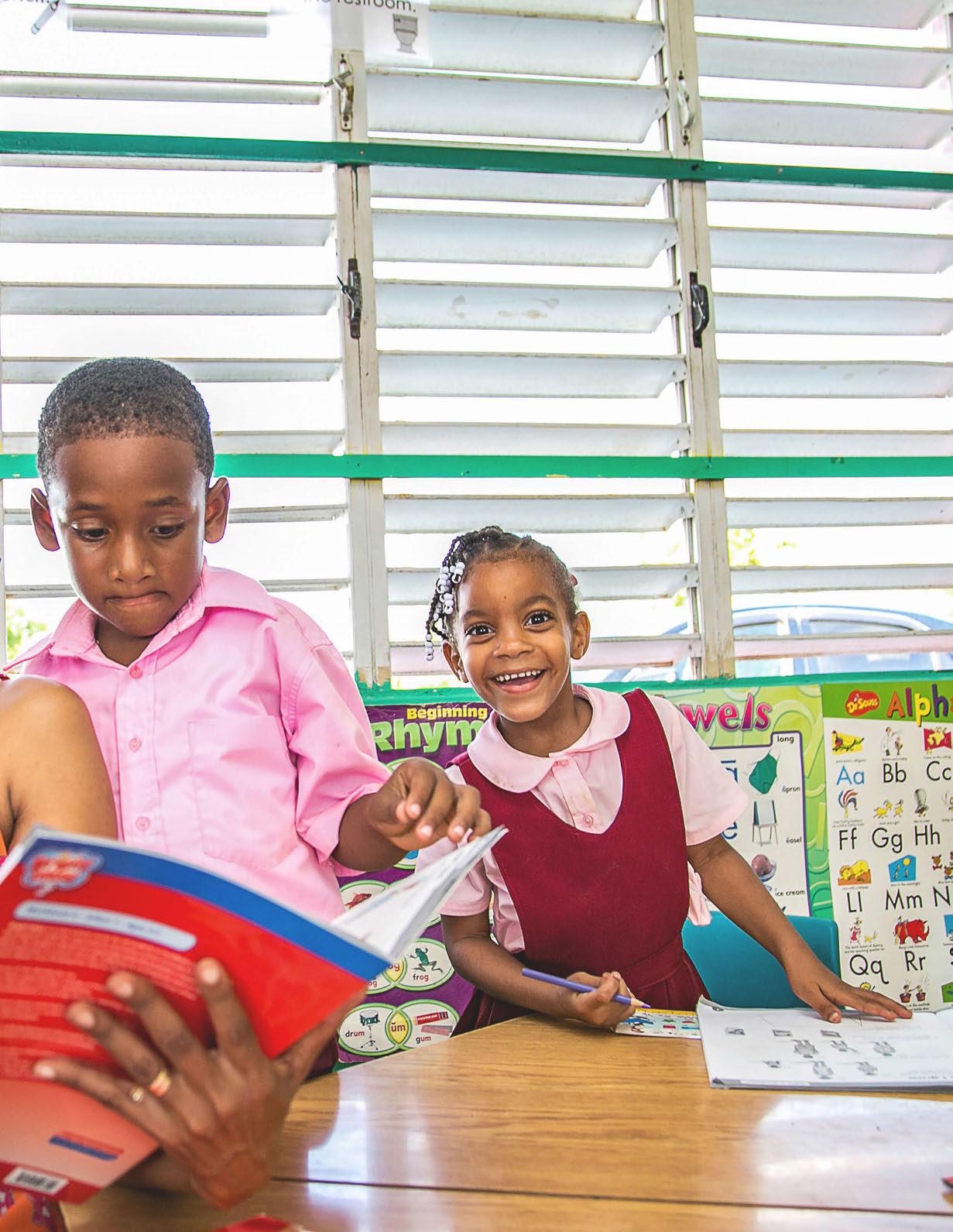
A Policy is a course or general plan of action adopted by a government.1 It is expressed as a statement of intent and is accompanied by the goals or objectives which a government would like to achieve and strategies for achieving these goals and objectives.2
A National Early Childhood Policy embodies a country’s commitment to young children 3. It identifies and guides general programme development areas. It also provides a framework for programme co-ordination strategy, structure, and financing procedures.4
PROCESSES IN EARLY CHILDHOOD DEVELOPMENT (ECD) POLICY DESIGN
Effective Policies need to be well designed. Cross cultural studies have identified a number of processes which have been proven to be essential in the design of effective Early Childhood Policies.
These include viz:
z Adequate preparation;
z Comprehensive situation analysis;
z Broad-based consultation;
z Policy draft and consensus building;
z Final Submission and Adoption of Policy.
1 Oxford Dictionary
2 CARICOM Regional Guidelines For Developing Policy, Regulations and standards in Early Childhood Development Services
3 EFA Global Monitoring Report: Strong Foundations. Early Childhood Care and Education.
4 Emily Vargas-Baron - Planning Polices for Early Childhood Development: Guidelines for Action.

1 Obtain accurate information from the relevant sources on the external operating context.
2 Obtain accurate information - both qualitative and quantitative from the relevant sources on the ECD sector.
3 Conduct the situation analysis.
4 Prepare issues paper based on findings.

a Adequate Preparation
The preparatory stage ensures that planning is done at the requisite level of detail. The most critical aspect of this phase is to recognise that political endorsement is a key success factor for Policy design, as it is the politicians who will ultimately approve the Policy 5. The early involvement of the key decision-makers at this early stage is therefore critical to the overall success of the Policy process. The entire process must be mapped out so that the route to developing the Policy is clearly established. This will include: developing a detailed work plan; identifying key stakeholders; clarifying roles, responsibilities and lines of authority; preparing a budget, and confirming finance.6
A clearly designed organizational structure for the Policy planning process is desirable. Part of this structure should include a planning committee, usually led by a coordinator selected by the lead ministry.7 This process is essential to ensuring clarity among all stakeholders on whose responsibility it is for driving the process and maintaining the momentum to complete the work.
The situation analysis will assist in identifying the key areas of strengths and weaknesses of the sector and will be the foundation upon which the Policy will be developed. It should provide accurate information on the overall operating context (Political, Economic, Social, Technological, Policy, Standards and Regulations); status of the sector (strengths and weaknesses); the driving forces affecting the sector (positive and negative); quantitative and qualitative analysis of the sector, including statistics on vulnerable children and resource assessment.
These consultations should be national in scope, inclusive and participatory. This results in greater Policy ownership, better Policy implementation and improved chances of achieving the goals of the Policy.9
Develop the first draft and improve based on feedback from stakeholders in an iterative process.
e Submission of Policy for Approval by Relevant Government Authority
5 ibid
6 Emily Vargas-Baron - Planning Polices for Early Childhood Development: Guidelines for Action.
7 CARICOM Regional Guidelines For Developing Policy, Regulations and standards in Early Childhood Development Services
8 Planning Polices for Early Childhood Development: Guidelines for Action, CARICOM Regional Guidelines For Developing Policy, Regulations and standards in Early Childhood Development Services
9 Planning Polices for Early Childhood Development: Guidelines for Action
The final document must be sent to the relevant government authority to be accepted and approved.
The selected Good Practice for early childhood Policy development was the process used in Grenada, which demonstrated good practices on all of the key components of the conceptual framework. There were also examples of good practice on specific components of the conceptual framework in Anguilla and Belize and these are referenced where appropriate.
1.3.1.
The Grenada Government commenced the process in 1998 as a joint initiative led by the two ministries with responsibility for early childhood development - the Ministry of Education, which was responsible for the operation of preschools targeting children between the ages of 3 years and 5 years and the Ministry of Social Development and Housing, which was responsible for provision of day care services for children below the age of 3. Financial assistance was provided by UNICEF Caribbean Area Office and technical assistance was provided by the Caribbean Child Development Centre, The University of the West Indies (UWI)
Anguilla and Belize initiated their processes many years later (in 2013) and used the Regional Guidelines for Developing Policy, Regulation and Standards in Early Childhood Development Services 10 to guide their consultation process. Both countries also utilised an inter-departmental approach to their Policy development process, with the most formal expression of this being in Belize where the three ministries - Ministries of Education, Human Development, and Health - collaborated in 2013-2014 to form an ECD Technical Working Group with representatives from the three line ministries.
In the case of Anguilla, oversight was placed in the hands of a committee drawn from the Ministry of Health and Social Development, with representation from each of the Departments for Education, Health and Social Development. In Grenada, there was no formal coordinating entity established and the process was managed through cooperative work between the technical leadership of the two ministries and included briefings/meetings with the Permanent Secretaries in both Ministries.
In all three cases, external consultants were used to lead the technical processes.
10 CARICOM Secretariat. Regional Guidelines on For Developing Policy, regulation and Standards in Early Childhood Development Services

14 Facilitate inter-ministerial collaboration from the start.
15 Develop a formal work plan.
16 Use of external consultants.
17 Use of CARICOM Guidelines.
18 Collect detailed information to understand sector characteristics e.g. number of children, number of operators, trained teachers, and services provided.
19 Assess the quality of the existing services and identify areas in need of improvement.
20 Conduct broad-based consultation involving all stakeholders at every stage - validate situation analysis, input into draft Policy, consensus building on final Policy.
21 Provide diverse opportunities for a wide range of stakeholders to participate.
Early political involvement was also a feature of the Belize and Anguilla processes, with the respective ministers being briefed on the process at a very early stage, and kept abreast of developments at each phase of the process.
The first step in the process in Grenada was the conduct of a comprehensive Situation Analysis. This was done using three different approaches, viz:
z Collection of detailed information on the size, structure and characteristics of the early childhood sector, including numbers of preschools and day care centres, and the number of children using these services. This was done in collaboration with an Education Sector Diagnosis which was being undertaken in the same time period by the Ministry of Education.
z An audit of the day care centres and preschools using a sample survey, which focused on the strengths and weaknesses of the service provision and the challenges being encountered.
z Consultation and feedback from stakeholders on their perceptions of the strengths and weaknesses of the services being provided.
A similar approach was used by Anguilla. In Belize, a mapping of ECD services for children 0-8 years of age across the ministries of Health, Education and Human development and a service gap analysis were conducted.
Broad-based consultation was an integral part of the process in all three countries and was used at many different stages, including the validation of the situation analysis, the identification of inputs into the draft Policy and the consensus building on the final Policy recommendation.
The general approach used in Grenada for the broad-based consultations included the following:
z Invitations were sent to stakeholders — parents, teachers, caregivers, police, finance, health, gender, tourism, police force, special education, Planned Parenthood and Soroptimist International of Grenada.
z Copies of the relevant discussion document e.g. draft situation analysis and draft Policy, were sent to each participant for perusal before consultations.
z The consultations were held across the island in every educational district, thus providing an opportunity for all stakeholders to participate.
z The feedback provided by the stakeholders was recorded and incorporated into the process.
A draft Policy was developed based on the inputs from the stakeholder consultations. In Grenada this Policy was aligned with the development of an Education Sector Plan which was being developed at the same time. In Anguilla, the draft Policy was deliberately harmonised with the education sector strategic plan and with initiatives that were being developed within the Government’s social development department. The draft Policy documents were then circulated to stakeholders for review and feedback within a stipulated time. In Anguilla, the document was the subject of targeted face-to-face consultations with teachers and parents.
The issues addressed in the drafts reflected the national priorities as reflected in the outcomes from the foregoing consultation and analysis. Annex 1 contains the range of issues addressed by the Anguilla Policy.
Feedback from these consultations was used to develop a revised draft Policy. In Grenada and Anguilla, this revised draft was reviewed at National Consultations attended by representatives from all stakeholder groups. The recommendations from these consultations were incorporated into the final draft Policies.
In all cases the final drafts included an implementation plan that was costed by the Ministry of Education, to facilitate inclusion in the national budget. The Belize plan covered the first three years of implementation, while the plans in Grenada and Anguilla covered the first year of implementation.
In Grenada, the draft Policy was formally submitted to Cabinet for approval. The presentation in Cabinet was made by the Minister of Education, with support from the Minister of Social Development, resulting in Cabinet’s approval of the Policy document.
In Anguilla, the consultants were invited to present the draft Policy to the Executive Council 11. This provided an opportunity for the members to ask detailed technical questions and to be provided a broad understanding of the issues under consideration.
The Grenada Policy was approved in 2002, and the Policy has survived three elections cycles, including two changes of government. One of the lessons learnt in this respect, was the need to provide each new minister and administration with an orientation on the purposes and content of the early childhood Policy.
The Policy implementation was also impacted by Hurricanes Ivan in 2004 and Emily in 2005. These hurricanes wrought significant damage to Grenada and
11 Anguilla is an internally governing Overseas Territory of the United Kingdom and therefore does not have a Cabinet. Executive power is exercised by the Chief Minister and the Executive Council.
22 Integrate Policy into existing strategic plans so that it can be implemented as part of ministry’s programme.
23 Use national consultation to generate cross-sectoral ownership of the Policy.
24 Include an Implementation Plan for the first three years with costings.
25 Provide ministers with an opportunity to ask questions and understand issues before final approval.
necessitated a review and updating of the Policy. This was done in 2007.

26 Reorient new ministers and senior officials to the purpose and content of the Policy. Update the Policy in light of changing circumstances - after a set number of years, or following a significant change in circumstances e.g. hurricanes.
The Policy implementation was enabled by a number of factors. These included:
a. Policy design was aligned with country processes in sector diagnostics, and sector strategic planning for education (Grenada, Anguilla).
b. Technical consultants were used to guide the design process in all three countries. Belize had a process over several years utilizing three different consultants, one internal, two external. Grenada was supported by an external consultant for the design of the first Policy and by an internal consultant for design of the updated Policy. Anguilla was supported by an external consultant and expressed the view that this eliminated the potential problem of bias.
c. The initial situation analyses were informed by survey data (Anguilla, Grenada) and statistical information (all three countries) and were very comprehensive, thus providing a very strong foundation on which to work.
d. Political will was critically important to the design process: chief officers in three ministries worked collaboratively to support the design process; this was essential for buy-in (Belize).
e. Costing information on early childhood services was accessible for Policy design (Anguilla, Belize).
A number of challenges were encountered during implementation. These included:
a. Policy ‘survival’ between changes of Government. This required effective briefing for incoming Governments on the design and purposes for the Policy, and alignment with new and emerging political priorities.
b. Development of a Monitoring and Evaluation (M&E) framework. When Grenada was designing its Policy in 2001, an M&E framework was not fully elaborated. By the time Anguilla was developing a Policy an M&E was explicitly recognised as necessary.
c. Initial scoping of laws to ascertain whether provisions already exist to enable standards and protocols. This is an important step to ensure all bases are covered e.g., child protection, health and safety etc. (Anguilla, Grenada).
a. Political endorsement and support for the process.
b. Identification of stakeholders and buy-in to the initiative.
c. Full identification of the country’s needs.
d. Identified strengths and weaknesses of the sector and its key players.
e. Collection of data to inform analysis and programming in key areas.
f. Audit of the learning environment.
g. Establishment of targets.
h. Public awareness of ECD and the challenges to be addressed.
i. Greater Policy ownership by all stakeholders.
j. Improved Policy content.
k. Improved chances of achieving the goals of the Policy.
The Sustainable Development Goals, adopted by the United Nations in 2015, have placed early childhood development on the global agenda, with three targets that directly relate to the development of children under the age of five:
a. Target 2.2. - By 2030, end all forms of malnutrition, including achieving, by 2025, the internationally agreed targets on stunting and wasting in children under 5 years of age, and address the nutritional needs of adolescent girls, pregnant and lactating women and older persons.
b. Target 3.2 - By 2030, end preventable deaths of newborns and children under 5 years of age, with all countries aiming to reduce neonatal mortality to at least as low as 12 per 1,000 live births and under 5 mortality to at least as low as 25 per 1,000 live births.
Achievement of these SDG targets, with their cross-cutting focus on hunger, nutrition, health and early education will require deliberate planning and coordination at the national levels. Such planning and coordination could only be achieved through the development of comprehensive early childhood development Policies, with the kind of inter-ministerial collaboration that has been illustrated in this Guide. CARIBBEAN
c. Target 4.2 - By 2030, ensure that all girls and boys have access to quality early childhood development, care and pre-primary education so that they are ready for primary education.

Early Childhood Programming in Anguilla
Formal standards of operations for early childhood institutions provide specifications for level, quality, or principle of service required. They are intended to ensure that the children attending early childhood institutions are able to achieve the learning outcomes established by Policy and enabled by Statutes.1
Standards need to be well designed so as to create greater opportunities for positive learning and development of all children, regardless of their social and economic background. The process towards standard design includes the following steps:
z Review ECD Policy and Regulatory Frameworks to establish desired outcomes for children;
z Conduct evidence based research regarding practices and interventions that deliver desired outcomes;
z Draft standards based on the outcome of evidence-based research;
z Conduct stakeholder consultation on draft standards and revise to address concerns highlighted;
z Develop specific metrics - qualitative and quantitative - and monitoring indicators; and
z Submit standards and indicators for approval.
1 CARICOM Regional Guidelines for Developing Policy Regulation and Standards In Early Childhood Development Services
Standards need to be well designed so as to create greater opportunities for positive learning and development of all children, regardless of their social and economic background
1 Ensures standards are consistent with Policy objectives.
2 Ensure standards are enforceable through legislation.
3 Clarify the approval process and plan with this in mind.
4 Standards must be evidence-based and include best practices.
5 Reviewed and revised as necessary.
6 Standards must cater to the holistic development of the child.
7 Political involvement and commitment is important for approval of standards.
a Review ECD Policy and Regulatory Frameworks to establish desired outcomes for children
Ensure that the standards are based on and guided by the existing Policy and regulatory frameworks. Alignment will provide internal consistency and coherence, while statutes are needed to enforce implementation. The specific process to be followed for the final approval of the standards should be clarified at this stage.
b Conduct evidence based-research regarding practices and interventions that deliver desired outcomes
Standards need to be well designed and implemented to maximize learning potential. Review of up-to-date evidence-based research and best practices are crucial to determining the design and content of the standards and their related implementation processes. A process of timely reviews and revisions based on current research findings and practitioner experience should also be built into the implementation process.
c Draft the standards based on the outcome of evidence-based research
The draft standards should incorporate the findings of the review of the evidence-based research and best practices, adapted for the local circumstances. Within the Caribbean Community (CARICOM) there is a Draft ECD Minimum Service Standard (2008) that should be used as the basis for country specific standards.
d Conduct stakeholder consultation on draft standards and revise to address concerns highlighted
Stakeholder involvement at the highest level is necessary and must include the entity that will approve the standards. These consultations should be national in scope, inclusive and participatory. This results in greater ownership of the standards, better prospects for implementation and improved chances of achieving the goals of the overall Policy.2
e Develop specific metrics — qualitative and quantitative - and monitoring indicators
Effective standards must focus on the holistic development of the child by emphasizing all the domains of development and learning. 3 Monitoring indicators should be identified as part of the process of developing the standards.
f Submit the standards and indicators for approval.
The final standards and indictors must be submitted to the relevant entity for approval as per the approval process in place in the country.
2 Planning Polices for Early Childhood Development: Guidelines for Action 3 ibid
The selected Good Practice for development of early childhood standards was the process used in Grenada, which demonstrated good practices on all of the main components of the conceptual framework. There were also examples of alternative approaches on specific components of the conceptual framework in Anguilla and these are referenced where appropriate.
The standards development process in Grenada was a joint initiative led by the two ministries with responsibility for early childhood development. These ministries were the Ministry of Education, which was responsible for the operation of preschools targeting children between the ages of 3 years and 5 years and the Ministry of Social Development and Housing, which was responsible for provision of day care services for children below the age of 3. Financial assistance was provided by UNICEF Caribbean Area Office and technical assistance was provided by the Caribbean Child Development Centre, The University of the West Indies (UWI).
2.3.1.
The standards were developed in parallel with the development of the early childhood Policy. The process therefore involved significant exchange of information with the Policy process to identify areas of focus that were emerging from the Policy process for which standards were needed.
The standards development was also informed by the processes linked to the development of the Education Sector Strategic Plan, and revision of the Education Act, which was being developed during the same period. The standards were intended to be promulgated as regulations under the new Education Act.
Of particular note was the Education Sector Diagnosis, which was a comprehensive assessment of the education sector to identify areas of strength and weaknesses. Findings from this Diagnosis also informed the content of the Early Childhood Standards.
The content of the standards was informed by inputs from best practices around the Caribbean region and the world. This input was obtained from a variety of sources, including the Caribbean Child Development Centre, the UNICEF Eastern Caribbean Office and the Early Childhood Coordinator in St. Kitts and Nevis, where a successful standards regime was in place. The Coordinator, Ms. Vanta Walters, visited Grenada and shared the experiences from St. Kitts and Nevis.
8 Review early childhood Policy and broader national processes to ensure consistency with national Policy.
9 Conduct evidencebased research to ensure standards are based on best practices.
10 Conduct local research to ensure standards respond to challenges being experienced by local operators.
11 Draft standards to respond to the findings of the evidencebased research.
Conduct broad-based consultations with
The content of the standards was also informed by the findings of a survey of the quality of the service provision in a national sample of day care centres and preschools throughout Grenada. This survey identified the relative strengths and weaknesses of the service provision across 43 items grouped into 7 categories. The report noted the need to establish minimum levels of service provision in areas that were critical to supporting children’s development e.g. adequacy of space, accessibility of equipment and learning materials, structure of the programme, and support for parents and staff.
A set of draft standards was developed on the basis of the information generated from the research process. This draft sought to provide guidance on the minimum levels of service provision required for the various categories and to address specific areas of weakness identified in the Grenada service provision.
The draft was developed by an external consultant with expertise in the development of early childhood standards. The participation of the consultant was supported by the UNICEF Eastern Caribbean office.
The issues addressed in the drafts reflected the national priorities as reflected in the outcomes from the foregoing consultation and analysis. Annex 1 contains the range of issues addressed by the Anguilla standards.
A broad-based consultation process on the draft standards was launched. This was targeted at all identified groups of stakeholders including parents, teachers, caregivers, police and other relevant regulatory authorities. Consultations were scheduled across the island in every educational district and copies of the draft standards were sent to each participant in advance of the consultation meetings.
The consultations generated significant feedback from the stakeholders and these were used to revise the standards document.
The revised standards document was then submitted to a National Consultation attended by representatives of all stakeholder groups. The consultation reviewed and finalized the document into a recommendation to be sent to the Government for final approval.
The technical consultant used the draft standards to identify and draft the supporting tools required for monitoring the implementation of the standards in the various early childhood institutions. These included:
z Registration form for children entering the system.
z A form for persons applying to open a preschool.
z Registration Certificate for centres.
z Form for inspection of centres.
Other tools developed subsequent to the initial development process included:
z Early Childhood Development Minimum Service Standard in the Caribbean: Monitoring Checklist for Centres (2010).
z Ministry of Education Early Childhood Services Programme for Children 3-5 years old-Routine Monitoring Checklist Guidelines.
z Child health passport.
z Monitoring of growth/development by the Food and Nutrition Council especially for children born underweight.
z Early Childhood Developmental Checklist.
z Checklists developed for monitoring fire hazards, child abuse protocol and first aid.
2.3.6.
The standards document was developed and submitted to the Government for approval in January 2002. It was returned for review and a second revised document was submitted in February 2003. It was then sent to the Bureau of Standards for review, as it had been decided by the legal department that the Bureau was the designated agency in Grenada with the responsibility for the development and adoption of standards. In late 2016, it was formally adopted by the Bureau of Standards, and is expected to be formally approved by the Government before the end of the year.
Notwithstanding these delays, the guidance contained in the standards document has been incorporated into the early childhood practices in Grenada and the early childhood officers have used a variety of strategies to ensure that the practices are being used. These strategies have focused on promoting the content of the standards as “best practices”, without referring to them as standards. This approach has been used across a wide variety of settings e.g.:
z Baseline for training content with teachers, operators and owners;
z Guiding principles for internal decision-making when responding to enquiries, or problems encountered in the field;
15 Clarify the approval process with the authorities before the start of the process.
16 Use facilitating legislation as a basis for standards.
17 Presence of a supportive national environment.
18 Have access to a strong evidence base highlighting the need for standards.
19 Presence of complementary national programming.
20 Ability to reference and draw upon supportive regional initiatives
z Guidance to new operators who are applying for permission to operate early childhood centres;
z Guidance to local and external agencies providing support for the construction or refurbishment of new centres;
z General guidance to operators when doing supervisory visits in the field.
All stakeholders have responded positively to the use of these “best practices” and the measures contained in the standards document have been generally accepted at all levels.
The successful development of the standards in Grenada (and Anguilla) was facilitated by the presence of a number of factors which provided a supportive environment for the standards development process.
These included the presence of facilitating legislation in the provisions of the draft Education Act, a supportive environment created by the Education Sector Diagnosis, the availability of a strong evidence base with data on the existing situation, linkages with complementary national programming and regional initiatives.
The Education Act in both Grenada and Anguilla contained provisions for regulating early childhood institutions (Section III of the Grenada Act ).
The presence of this facilitating legislation was highlighted throughout the standards development process to indicate that the process was implementing the provisions of the Education Act,4 which was already in force.
The standards process in Grenada was facilitated by the existence of a supportive environment at the time that was generated by the ongoing Education Sector Diagnosis and the development of the Education Strategic Plan. This created an environment of analysis and review, with a search for solutions on everything related to education. The early childhood sector was able to capitalise on this in the development of the standards.
4 The Act, which was in draft at the time of the Standards development, and which was assented to by the Governor General on August 30, 2002, came into force on April 04, 2005
The availability of the data on the existing situation that had been generated by the quality surveys, provided a strong evidence-base of the need for improving the service provision through the establishment of standards. The availability and use of the data made it possible to keep the discussions focused on the factual situation and made it difficult for opponents to challenge the need to respond.
Some aspects of the standards deal with matters that are addressed by general child protection programming e.g. child abuse and other types of national programming e.g. health and safety, disaster management.
The standards initiative was able to harness the support of these different stakeholders, who also saw that there were benefits to their programming from contributing to the development of these standards.
The standards process was able to draw on initiatives happening in the region both during the development phase and subsequently, in preparing for implementation.
During the development stage, significant support was received from UNICEF and The University of the West Indies Caribbean Child Development Centre. These organisations were working on a wider regional initiative aimed at developing early childhood standards and were able to draw upon lessons from work done in St. Lucia and in St. Kitts and Nevis, for providing guidance to the Grenada process.
Subsequent to this, the countries that had drafted standards began working on implementation processes, while awaiting formal adoption at home. They produced, inter alia , a monitoring tool The Early Childhood Development Minimum Service Standard in the Caribbean : Monitoring Checklist for Centres (2010). This tool was developed collaboratively by the nine countries of the Organisation of Eastern Caribbean States (OECS) and the Turks and Caicos Islands and is now being used by all the OECS countries to monitor the implementation of the standards in their respective countries.
Some aspects of the standards deal with matters that are addressed by general child protection programming e.g. child abuse and other types of national programming...
21 Clarify the legal process for adoption at the start of the standards development process.
Despite the success of the standards development process in 2001/2002, the Grenada standards have not yet been formally adopted with the force of law, as of September 2016.
The early childhood officials have been experiencing a number of challenges in getting the standards formally implemented with the force of law. These include differences over which legal regime should govern the standards, the impact of changes in government and in senior officials in the Ministry of Education and the impact of extreme weather events.
The extended delay in Grenada was due to differing perspectives on the legal regime that should govern the standards. The standards were developed with the understanding that they would be promulgated as regulations under the Education Act pursuant to Section III. However, when they were sent to the legal department for review, the department recommended that they should be promulgated under the Standards Act, which was administered by the Grenada Bureau of Standards.
It was finally agreed to promulgate the Standards under the Standards Act. However, the presentation and layout of standards by the Grenada Bureau of Standards were different from those used in developing the early childhood standards, so that another process had to be developed to revise the standards to bring them into conformity with the Standards Act. This process is still ongoing at the time of writing.
The challenges with legal regime were exacerbated by changes in the senior management of the Ministry of Education (Permanent Secretary and Chief Education Officer) and changes in the governing political regime in 2008 and 2013. Whenever changes occurred at any one of these levels (Minister, Permanent Secretary, Chief Education Officer), the new officials had to be briefed, with the net result that the internal processes for adopting the Standards were restarted a number of times.
In 2004 and 2005, Grenada was hit by Hurricanes Ivan and Emily respectively. These wrought significant damage on the country. Many of the early childhood institutions were damaged. This shifted the focus during the post2005 period to one of rebuilding and reconstruction and took the attention away from the Policy and standards for some time. In fact, a new quality
survey was done in 2005 to establish the new basis from which the early childhood sub-sector was working.
There is one additional challenge that neither Grenada nor Anguilla has yet to address in full i.e. the design of the regulatory institutions and the systems for support and monitoring.
The authority for establishing the regulatory institutions comes from the legal force of the standards and can only be invoked after the standards have been adopted.
Systems for support and monitoring have been in place for a number of years, but are operating at an informal level, without the power to take strong action if their recommendations are not being implemented. That power will be increased with the formal adoption of the standards.
One of the core issues to be resolved in this regard is the separation between inspection functions and support functions. This has been addressed by other countries across the region and the practice is varied.
Some countries separate the functions of Inspection, carried out by inspectors or other designated officers (Jamaica, Cayman), and registration/monitoring/support functions that are carried out by officers in early childhood units with assistance as required by officers in health and environmental health and related institutions.
In other countries, there is no separate function for inspection (Antigua and Barbuda, St Kitts and Nevis). Decisions on licensing of centres are usually referred to/made by a body established under legislation to carry out those functions e.g. the Children’s Services Board (Barbados, St Kitts and Nevis), the Early Childhood Council (Antigua and Barbuda), or the Early Childhood Commission (Jamaica). Under such models, the appointed body’s membership can include some persons representing both functions - monitoring / support and licensing decisions (The Bahamas, Antigua and Barbuda).
The development and implementation of the standards have yielded many benefits to the Grenada early childhood services. This is best exemplified by the results of the third quality survey that was done in 2014, following surveys in 2000 and 2005.
The 2014 survey results show that the government preschool settings have generally seen a decrease in inadequate provision and an increase in good and excellent provision when compared to the 2005 survey results. These include:
The
development and implementation of the standards have yielded many benefits to the Grenada early childhood services.
a. Reduction between a fifth and two-fifths in inadequate provision of child-related display, space and equipment for gross motor development, furniture and equipment, and room arrangement for learning;
b. Improved provision of books and pictures in a third of settings;
c. Improved staff interaction with children to improve communication skills and reasoning abilities in a third of settings;
d. Decrease in inadequacy of learning activities for children in a third to a half of the settings; and
e. Improved discipline - decrease in inadequacy from 60% to 16% of settings.
In general, centre operators are making a conscious effort to implement the standards.
This positive response to the standards, even though they have not been formally adopted, is due in large part to the inclusive consultative processes used in their development. The processes generated a high level of awareness of the issues involved in providing early childhood services and generated a high level of ownership of the standards by the stakeholders.
The high level of awareness is also reflected in the fact that persons interested in establishing early childhood centres now request a copy of the standards up front and use them in setting up their centres, even though the standards have not been formally adopted.
The Sustainable Development Goals, adopted by the United Nations in 2015, have placed early childhood development on the global agenda, with three targets that directly relate to the development of your children under the age of five:
a. Target 2.2. - By 2030, end all forms of malnutrition, including achieving, by 2025, the internationally agreed targets on stunting and wasting in children under 5 years of age, and address the nutritional needs of adolescent girls, pregnant and lactating women and older persons.
b. Target 3.2 - By 2030, end preventable deaths of newborns and children under 5 years of age, with all countries aiming to reduce neonatal mortality to at least as low as 12 per 1,000 live births and under 5 mortality to at least as low as 25 per 1,000 live births.
c. Target 4.2 - By 2030, ensure that all girls and boys have access to quality early childhood development, care and pre-primary education so that they are ready for primary education.
Achievement of the quality dimension of SDG Target 4.2. will be significantly enhanced by the availability of early childhood standards to provide guidance to the delivery of the early childhood programming. CARIBBEAN
ANNEX 1. – Outline of Anguilla’s Early Childhood Standards
1.1. Personal Suitability of Licensed Providers, Supervisory Staff/Teachers in charge and Staff Members
1.2. Level of Staffing
1.3. Qualifications of Staff
1.4. Personnel Practice
1.5. Staff Access to Written Policies and Procedures
2.1. Equal Opportunities
2.2. Children with Special Needs
2.3. Positive Behaviour Management
2.4. Child Protection
2.5. Confidentiality
2.6. Partnership with Parents/Guardians
2.7. Supervision
2.8. Physical Care of Children
2.9. Meals and Snacks
2.10. Outings and Field Trips
3.1. The Care of Children from Birth to Three Years Old
3.2. Interaction
3.3. Organisation
3.4. Physical Resources
3.5. Learning Opportunities for Children Under Three Years Old
3.6. Observation, Record Keeping and Planning
3.7. Rest Periods
3.8. Transition
4.1. The Curriculum
4.2. Planning for Progress and Attainment
4.3. Assessment
4.4. Staff Expectations for Progress and Attainment
4.5. Teaching Methods Used to Promote Children’s Learning
4.6. Communication
4.7. Systems for Monitoring the Quality of Learning
5.1. Children’s Records
5.2. Staff Records
5.3. Accident/Incident Records
5.4. Miscellaneous Records
5.5. Access to Records
5.6. Insurance
5.7. Complaints and Suggestions
5.8. Financial Records
6.1. Health and Safety Provisions
6.2. Emergency Preparedness and Response
6.3. First Aid
6.4. Hygiene Practices
6.5. Medicines and Illness
6.6. Fire Safety and Evacuation Procedures
6.7. Safety Precautions
6.8. Hazardous Chemicals
6.9. Smoking
6.10. Animal Hygiene
7.1. Premises
7.2. Space Standards
7.3. Ventilation and Lighting
7.4. Bathroom Facilities
7.5. Kitchen Facilities
7.6. Laundry Facilities
7.7. Water, Utilities and Maintenance
CARIBBEAN EARLY CHILDHOOD GOOD PRACTICE GUIDE
EVIDENCE FOR EFFECTIVE EARLY INTERVENTION TO IDENTIFY AND TREAT DEVELOPMENTAL CHALLENGES
Poor children are more vulnerable to inadequate development outcomes 1 Significant development delay (i.e., cognitive, language, physical, and socio-emotional) by socioeconomic gradient is evident from research in many countries of the world 2. Children with lower weight at birth have lower school performance, attainment, and earnings3 ; failure to identify developmental challenges until school age compromises success at school.
Identification and treatment of developmental delays and disabilities, nutritional and growth challenges are essential interventions for optimising children’s growth and development 4 .
Identification and treatment of developmental delays and disabilities, nutritional and growth challenges are essential interventions for optimising children’s growth and development.
1 Grantham-McGregor S. Cheung YB, Cueto S, Glewwe P, Richter L, Strupp B, International Child Development Steering Group. 2007. “Developmental Potential in the First 5 Years for Children in Developing Countries.” The Lancet 369: 60– 70.
2 Naudeau S, Kataoka N, Valerio A, Neuman MJ, Elder LK. 2011. Investing in Young Children: An Early Childhood Development Guide for Policy Dialogue and Project Preparation. Washington, DC: World Bank; Naudeau S, Martinez S, Premand P, Filme Dr. 2011. “Cognitive Development among Young Children in Low-Income Countries.” In No Small Matter: The Impact of Poverty, Shocks, and Human Capital Investments in Early Childhood Development, edited by Alderman H. Washington, DC: World Bank.
3 Case A, Fertig A, Paxson C. 2005. “Lasting Impact of Childhood Health and Circumstance.” Journal of Health Economics 24: 365– 389
4 Denboba A, Sayre R, Wodon Q, Elder L, Rawlings L, Lombardi J. 2014. Stepping up Early Childhood Development: Investing in Young Children for High Returns. Washington, DC: World Bank.
Despite highly trained professionals doing developmental surveillance, the majority of children with social, developmental and behavioural needs are missed.
The earlier the identification is made the greater the opportunity for successful intervention for both developmental delays and behavioural disorders. Greater impacts for development have been recorded for lower income children receiving early childhood interventions5 6 .
In most CARICOM countries immunization is routinely provided for all children from birth to school entry, supported by high immunization rates. Growth monitoring is also undertaken because height and weight are often measured. However we have no evidence that developmental surveillance of children, in which developmental milestones are monitored, is undertaken routinely for the population in early childhood 7. This first step in the process of identifying developmental challenges is essential; however, it has been estimated in the USA that it identifies only 30% of developmental challenges and disorders 8. Despite highly trained professionals doing developmental surveillance, the majority of children with social, developmental and behavioural needs are missed. To identify children who are at high risk of development delay or disability requires screening, a procedure undertaken by a trained health professional using a standardized and validated measure. Based on the nature of the findings from screening, a child can be referred for developmental assessment to be undertaken by a specialist in the field. Once a referral for assessment is made, depending on the findings of the assessment early intervention may be necessary; it is unethical to screen children without having an appropriate intervention system.
Jamaica provides a useful example of early intervention challenges. Based on the findings in the USA that up to 50% of serious emotional and behavioural problems in children go unidentified, the country’s response is centred on the development of a National Screening, Referral and Early Intervention (SREI) system, currently underway. The first step in the system is in place: the Child Health and Development Passport is a parent-held tool for tracking children’s progress from birth, providing information and guidance to parents in many areas such as nutrition and safety. At each of the internationally recommended times for developmental screening (6-8 weeks, 9 months, 18 months and 2-3 years), the parent completes or is assisted to complete a standardised and validated short screening instrument (an adaptation
5 Engle PL, Fernald LCH, Alderman H, Behrman J, O’Gara C, Yousafzai A, Cabral de Mello M, Hidrobo M, Ulkuer N, Ertem I, Iltus S, Global Child Development Steering Group. 2011. “Strategies for Reducing Inequalities and Improving Developmental Outcomes for Young Children in Low-Income and Middle-Income Countries.” The Lancet 378: 1339 –1353. Engle PL, Black MM, Behrman J, Cabral de Mello M, Gertler PJ, Kapiriri L, Mortorell R, Young ME, International Child Development Steering Group. 2007. “Strategies to Avoid the Loss of Developmental Potential in More Than 200 MillionChildren in the Developing World.” The Lancet 369 (9557): 229 –242.
6 It is important to note that many of the references in this section are relevant to children who require early stimulation because of their environments. There are no socio-economic gradients for Down syndrome for example, and for autism, some countries have found higher prevalence among the wealthy.
7 It is not known how many governments provide guidelines to primary health care providers for developmental surveillance
8 Samms-Vaughan ME. 2006. Current status of screening referral and early intervention in Jamaica. Presentation to the annual early childhood conference Ochos Rios, 20th June 2006
of the publicly available Ten Question Screen).9 This is reviewed by the health professional and investigated further should the need arise. If concerns persist, the second step of the SREI is activated and a secondary screening tool, the Ages and Stages Questionnaire Jamaica (ASQJ) 10 is administered. In this second step of the SR&EI system, currently being phased in, children will be referred on for developmental assessment and for early intervention, if required. Currently, centre-based specialist therapeutic services (speech, behavioural and occupational therapy) for developmental delays and disabilities are available only in the private sector, with non-specialist public community and centre based early intervention services available in approximately half of the fourteen parishes in Jamaica. There are not enough services to reach the entire population. Early intervention centres are expected to be opened in two additional parishes in 2017.
1 A screening process: The tool(s) used for screening should be validated for the population and address all domains of development (gross motor, fine motor, speech and language, cognitive and sensory) and status of nutrition.11
2 A referral process: There are two groups of children who require referral for assessment. Children who are identified as having conditions associated with developmental challenges at birth or in the early years of life are referred whenever these conditions are identified (e.g. Down Syndrome). Children who did not have a specific risk identified at birth but who are identified subsequently through developmental screening are also referred.
3 Early intervention services: In developed countries, early intervention services are often well staffed with highly trained professionals, including an early intervention coordinator, supervisors, pediatricians, developmental pediatricians, ophthalmologists, audiologists and therapists, including speech, physical, occupational and behaviour therapists. In many low and middle income countries, where specialist services are often absent or are accessible only in the private sector, community based early intervention services are utilized.
4 A Screening, Referral and Early Intervention (SR&EI) system: A system is needed to ensure coordination between the stages of SR&EI; to provide an identifying profile for each child to ensure continuity of care and to prevent loss of information; to provide monitoring of developmental progress; and, to maintain records of interventions provided.
5 Training and professional development: Programmes need to be accessible to health professionals in the provision of screening services, developmental monitoring and support to parents and children; to doctors and other medical staff in referrals; to specialists in assessment and the provision of treatment plans; to specialists in the provision of treatment and therapeutic services; and to practitioners in early childhood care and education settings.
6 An institutional base: The SR&EI system could be housed as part of community health services, child health and development services, or their equivalent, covering children from birth throughout early childhood. In some countries there is a base in educational services for children of preschool age and older.
9 For details on the screening instrument, validation and use, see: Durkin MS, Hasan ZM, Hasan KZ. The ten questions screen for childhood disabilities: its uses and limitations in Pakistan. Journal of Epidemiology and Community Health l995;49:431-436
10 INSPIRE Jamaica; Early Intervention Screening Project, Early Childhood Commission, Jamaica 11 A number of health conditions impacting development are screened at birth. Relevant conditions include hearing, sickle cell disease and thyroid. Anemia can be screened during the early childhood period.
In St. Lucia, there is a national screening, referral and early intervention system in place under the direction of the Ministry of Health and Wellness in partnership with the Child Development and Guidance Centre (CDGC).
The selected Good Practice for early intervention is the system that has been developed and established for eighteen years in St Lucia. It has demonstrated good practice in the design of the essential elements of a screening, referral and early intervention system.
There are a number of examples of good practice in other countries on one or more elements identified as essential for early intervention, and these are referenced under the elements described below.
In St. Lucia, there is a national screening, referral and early intervention system in place under the direction of the Ministry of Health and Wellness in partnership with the Child Development and Guidance Centre (CDGC).
The CDGC was established in 1998 as a non-governmental organization (NGO). It is led by a pediatrician, supported by two case managers providing specialisms in clinical psychology and pediatric physiotherapy. (For the history of the CDGC see Annex F ). Over 18 years a successful public/ private partnership has been built between CDGC and the Government of St. Lucia Community Child Health Service (CCHS) under the Ministry of Health and Wellness.
The partnership comprises screening, referral, assessment and early intervention services in a system designed to coordinate community and hospital health services with the specialist services provided by the CDGC, and provide the platform for informed support for child development by education services including ‘readiness’ decisions for transition to primary school and beyond.
Screening of young children to identify and treat developmental challenges is undertaken in community child health clinics across the island. The nurses who screen the children have received training by CDGC in the use of the screening tools with children. They screen all the children at 6 weeks, 8 months, 18 months, 3 years and 5 years. The screening process is conducted at all of the child health clinics in the country.
The tools used for screening address the following areas of development: gross motor, fine motor, speech and language, cognitive and sensory, status of nutrition and health, hearing and vision. The screening tools were made from a variety of international instruments including the Denver Developmental
Screening test and two diagnostic tools, the Griffiths Mental Development Scales and the Bayley’s Developmental Scales, combined with other basic child development principles and elements.
It is acknowledged that all screening tools need to be validated for the population, a resource-intensive process that is yet to be undertaken in St. Lucia.
Referral to CDGC for assessment/diagnosis is made either by the nurses at the child health clinics based on the outcome of the screening process or by the hospitals with respect to newborns at risk of developmental delay due to risk factors at birth. As part of the outreach function of CDGC, the pediatric physiotherapist visits the main referring hospital, Victoria Hospital, on a monthly basis as part of a neonatal monitoring programme for at risk infants because of the higher incidence of developmental delays in this population. The infants receive a developmental review on average around three months of age and then a standardized Bayley’s assessment at six months. If problems are identified at any stage of review, the children are included in the CDGC programme for therapy, usually physiotherapy.
It is also possible for the early childhood centres to refer directly to the CDGC; the public day-care centres use an adapted version of the Denver as the basis for making a referral. Private early childhood centres utilize a checklist.
Every child referred to the CDGC is seen. If the first appointment offered is missed, a second is scheduled. If the second is missed, the referring agency is notified and requested to follow up with the family. In this way children are not lost to follow-up and the system in place has a record of needs identified. Key to the success of this proactive engagement with families is the role of the community health staff, both nurses and community-based health workers. They are encouraged to seek out families of children who have been referred, gain their trust and identify the obstacles to taking up appointments. This engagement lays the foundation for subsequent monitoring of interventions with the children, and identification of potential needs of their siblings and other family members.
The administrator of the CDGC is a social worker in training (has an Associate Degree) who plays a role in following up where families have not taken up an appointment and where there may be social or financial issues constraining their attendance at the Centre for appointments.
3.3.3.
Assessment: Assessment of children is undertaken by the staff of the CDGC. The most common cases diagnosed include global developmental delays, speech and language impairment, autism spectrum disorder, cerebral palsy and perinatal asphyxia. Where therapeutic interventions are required the following can be provided on site: speech and language therapy, occupational
1 Provide widely accessible screening services for children and parents.
2 Validate the screening tools used for the population.
3 Undertake screening conveniently for parents and children during visits to the clinics for immunization and development surveillance.
4 Establish a ‘one stop shop’ offering comprehensive diagnostic and assessment services for children referred through screening.
5 Develop a process of working with parents as ‘co-therapists’ able and committed to support of children at home using therapies complementary to those used by specialists.
6 Make specialized assistance available to children within the country, utilizing offers of volunteer assistance from abroad.
therapy, physiotherapy, play therapy, behaviour intervention or support and pyscho-educational assessment by a clinical psychologist. Where children require a wheelchair or specialist seating assistance, orthotics or specialized shoes, the CDGC has been able to meet the needs of each child.
Where a programme of assistance for the child is developed, the parent is involved as “co-therapist” and must consent at each stage to the planned intervention service and participate with the child in all the sessions at the Centre. Sessions are arranged at appropriate intervals to meet the needs of the child.
Specialist input: Where a specialist service cannot be provided routinely at the Centre or elsewhere in the island, the CDGC partners where possible with specialist agencies elsewhere in the Caribbean and in other countries to bring specialist assistance to the island to provide specialist services on an intensive basis for part of the year. Examples of assistance include a neurological clinic twice a year to evaluate children with epilepsy, and an annual orthotics clinic to assist children with functioning and positioning. Support from an audiologist is in the planning stages. The partnership with the Ministry of Health’s Community Child Health Service provides a coordination hub for access to other forms of support both in St. Lucia and elsewhere: for example Community-Based Multi-Disabled Care through selected clinics; advanced surgery through the World Pediatric Project Eastern Caribbean Initiative which has a base in St. Vincent and the Grenadines; neuro-muscular diagnosis from the Caribbean Society of Myology and Enfants Soleils d’Avenir (ESA) Caraïbes in Martinique; and eye care through the Kids in Sight Ophthalmic surgery programme supported by the collaboration between the Virginia Eye Institute, St. Lucia Blind Welfare Association and LIONS club.
In other countries of the region, particular areas of specialism have been developed, generally within the private sector. One example is the Autism Centre in the Virgin Islands that provides outreach support to children on the autism spectrum once or twice a week, whilst they attend preschools. This support continues throughout schooling and after schooling has finished. The support takes the form of helping teachers to develop strategies to assist the child’s learning and speech and to monitor the child’s progress.
Speech and language therapy: Following assessment, all children receive a therapeutic plan with strategies for parents at home and staff to use at early childhood centres. A lengthier report can be available to provide more information with pointers for monitoring. For speech and language therapy, it is explained to parents that children will not make progress coming to sessions alone, and that carrying out suggested activities at home is the most important key to success. For some families, therapy focuses completely on the most effective ways to interact with their children, through taking videos and having parents evaluate their own efforts. Parents are given a written programme with concrete activities (and illustrations for those who cannot read) that they can do with the child, and may be given paper resources and lent a book or toys if needed (see a sample in Annex G). Modelling of the strategies and practice by the parents in the sessions provide the main methods of support. Parents are advised clearly about other actions they can
take to assist communication with their children such as reducing TV and screen usage, and including children in home routines. Guidance can also be provided for the child’s teacher (see a sample in Annex H).
Early stimulation: Where a child is assessed as being in need of early stimulation for development, the CDGC assigns a case manager who coordinates with the parents to develop a plan for specific activities at home or with the staff in an early childhood centre or institution if the child is in the care of the State. Where a child is attending either public or private early childhood services in day care centres and preschools, a staff member is identified as the ‘facilitator’ to work with the child to implement the plan. Each of those early childhood centres receiving a child with a plan developed with the CDGC has at least one long-serving or senior member of staff trained in strategies for meeting needs of children. There are situations where resources constrain a centre’s ability to meet the needs of the child to fully access the recommended plan; in these cases the CDGC lobbies for the resources required (usually in the form of staffing assistance), and if not forthcoming, ensures that families understand that the parent or other family member will need to provide the assistance required on site. Visits to early childhood centres are undertaken by case managers and therapists to determine effectiveness of the planned interventions and to make adjustments as needed.
Where children are not receiving early childhood services in centres, CDGC case managers liaise with the Community Child Health Service to increase support available through clinics. A home visiting service is not routinely provided separate from the family support functions of the child health clinics. Very rarely, when a child really is unable to get to clinic, a home visit is made by the CDGC staff. Such situations arise when there is a need to look at home equipment, where there are transportation challenges or where the child faces end of life issues.
Reporting: Children receiving therapeutic early intervention services on site at CDGC are monitored at each session, and progress reports are generated on a routine basis. Every Monday, the case managers review the progress of each case of a child seen the previous week. Early childhood services or institutions collaborating with CDGC in implementing individualized therapeutic interventions provide informal verbal monitoring reports on the progress of children. CDGC case managers are in regular communication with the ‘facilitators’ at the early childhood centres to obtain verbal reports. The combination of progress reports over time together with the initial assessment and planning documentation provides essential input to the work of the Community Child Health Service and Ministry of Education’s Special Education Unit in planning for transition into school. CDGC and the Special Education Unit will then decide together the best placement for the child.
Measuring outcomes for children’s development: In July 2012, CDGC introduced Goal Attainment Scaling (GAS) in an effort to evaluate the services being offered and to quantify therapy outcomes. The process is described in the poster attached at Annex F. The results revealed significant increases in baseline scores following therapy for all groups measured.
7 Provide training to key staff in early childhood centres to provide leadership and guidance to developmental monitoring and early intervention support in the centres.
8 Provide continuous support to the planning, development and monitoring of programmes of support to children in centres.
9 Establish a system for financial assistance for children who cannot afford the costs of early intervention services.
Costs: The costs of services directly provided to the child by the CDGC are met by the parent, who also meets other costs such as adaptive equipment at home and in transportation. The services are deeply discounted and a sliding scale for all costs is offered depending on the circumstances in each case. Where additional resources are required in an early childhood service to meet the needs of the child these resources are provided by the parent also. Under the Government’s National Child and Adolescent Health programme, provision is made for access to CDGC services by children who cannot meet the cost.
10 Develop a system for screening, referral and early intervention services connected by common procedures and record keeping.
The Community Child Health Care Services provide for comprehensive support to health and development of children within families and communities affected by broad social and economic constraints. It is within this context that the SR&EI system works as a ‘triangle’ between child health clinics, CDGC and the ‘facilitators’ of early intervention services to collaborate in addressing developmental challenges affecting children. Records are maintained as follows:
z Health clinics maintain a record on each child who has been screened, and the basis on which a child has been referred to the CDGC for assessment.
z CDGC maintain records of all children who have been assessed; plans for intervention services; progress reports on children receiving intervention services at the centre; and reports received from clinics and early childhood centres on children’s progress. In this way, the CDGC maintains a complete ‘picture’ of the child’s developmental needs and progress.
z Health clinics and early childhood centres maintain records of intervention services provided, and report informally on children’s progress to CDGC.
z Every child has a national health passport in which the screenings are documented. Additionally the Community Pediatrician and the CDGC will document any relevant information in the child health passport.
Based on the records held by CDGC, staff can assist parents to apply for available assistance for which they are eligible, such as disability grants 12 The disability grant can be used to incentivise parents to bring children to the Centre for therapeutic assistance.
Other systems in the region: Systems for screening, referral and early intervention are being set up in other countries of the region including Cayman Islands, Jamaica and St. Kitts and Nevis. In the Cayman Islands, all the elements of a screening, referral and early intervention system are
12 CDGC in collaboration with the Ministry of Social Transformation Disability Grant Committee has developed criteria for accessing the Disability Grant (See ANNEX D). The Government of St Lucia application and report forms for the disability grants are attached as ANNEX C and ANNEX E.
in place, except for screening. In Jamaica, an EI service providing centre and community based intervention services has been in place since 1975 and has provided services to close to 5,000 children since its inception. A national SREI system is in development, with all instruments, including the Ten Question Screen Ages and Stages Questionnaire Jamaica (ASQJ) already validated for use in Jamaica.
The CDGC provides training and professional development opportunities in response to actual needs in the country. National events that raise awareness of development challenges and special needs affecting children include the annual Autism Awareness conference, at which CDGC staff contributed and facilitated workshops.
Training is provided by the CDGC for early childhood practitioners in routine developmental surveillance, 13 and in meeting the individual needs of children. A resource guide 14 has been developed specifically for use by practitioners to augment understanding of expectations for children’s development. It includes challenges that stress children; interventions for early developmental or behavioural disorder; and, limiting the need for therapy by focusing on early intervention to provide all children an opportunity for effective development. The training plan for the country will ensure that every centre has a senior member of staff who has been trained as a ‘facilitator’ in the creation of inclusive environments in centres and on implementing the joint plans with CDGC plans for stimulating children. A rolling programme of training is currently underway to reach all early childhood practitioners over time.
Training has been provided by CDGC for all nurses in the use of a screening kit and developmental surveillance that is to be undertaken at each visit a child makes to a child health clinic. A manual has been developed and is in use15. The training has been incorporated into the Ministry of Health’s routine professional development programme for all nurses. CDGC provides workshops to address new areas of learning should the need arise.
The CDGC is an NGO that operates in partnership with the health and education services and the Government of St. Lucia. Health services in clinics and
13 Routine developmental surveillance includes monitoring of a child’s growth, progress against developmental milestones and nutritional status. It has been estimated in the USA that this identifies only 30% of developmental challenges and disorders. To identify children who are at high risk of development delay or disability requires screening, by a trained health professional using a standardized and validated measure.
14 The Resource Guide is attached as ANNEX A. Online and written reliable sources on child development were reviewed for the Resource Guide. Information was adapted information based on what is known about differences in developmental norms in St Lucia. Language that was not culturally familiar or relevant was excluded, or substituted as appropriate. The Guide is targeted for local use as part of a larger system of early intervention in St. Lucia and may not be applicable elsewhere.
15 The Manual is attached as ANNEX B. It includes each of the screening tools.
11 A training system for early childhood practitioners includes documented guidance on identification of children’s needs; procedures for obtaining informed assistance for a child; and strategies for meeting needs of all children by ‘starting where they are.’
12 Build inter-sectoral collaboration in early intervention to ensure coverage, efficiency and cost-effectiveness.
13 Put in place stable financing for core costs together with a framework for donations, in-kind contributions, user fees to meet service requirements.
hospitals refer children to the Centre, and provide support and intervention services following assessment of needs by the Centre. The Centre provides outreach support to the Victoria Hospital in monthly perinatal meetings, and in the provision of physiotherapy support to children in the neo-natal unit. There is close cooperation with the Early Childhood Unit in the provision of support to children in early childhood centres. The Unit is housed next door to the Centre enabling ease of communication. The staff members of CDGC participate in the development of policies and programmes in government and non-government agencies, ensuring a high level of inter-sectoral cooperation on issues affecting children and development.
Forty percent of the core funding for the Centre is met by a subvention from the Government which effectively ‘statements’ the partnership with the CDGC. The subvention provides a firm base/basis for attracting volunteer and other assistance from visiting professionals with expertise needed to carry out services in specialist areas not routinely available at the Centre. The remaining 60% of the costs of the Centre is met through user fees and donations, some of which may have special purposes such as construction and training, and some of which are general contributions to the Centre’s work.
In Belize, there is inter-sectoral collaboration between the Ministry of Education (MOE) and Ministry of Health (MOH) in early intervention. The MOH provides screening of growth and development for children from birth to three years of age at each encounter the child has with the health system. Records are maintained within the Belize Health Information System (BHIS), including records on developmental milestones. For children three to five years of age, the Early Childhood Screening Project provides preschool teachers with the training in the use of the Bankson Screen 16, together with screening for fine motor skills and vision. Children can be referred for further assessment at the National Resource Centre for Inclusive Education (NaRCIE). NaRCIE involves parents in the process of planning therapeutic support, and provides guidance for preschool teachers in the use of strategies with the child. Screening is also undertaken as part of the National Literacy Strategy for children aged five years and older going into the primary education system.
z The decision of an NGO to establish early intervention services in St. Lucia, and the response of the Government to partner with the NGO and to provide a measure of core funding, without which the sustainability of the partnership would have been challenged. It may be unprecedented elsewhere in the Caribbean to have such a partnership in which the NGO delivers a complete arm of a government’s implementation strategy in early intervention.
16 The Bankson Screen evaluates receptive language, expressive language, basic concept development, social/behavioural development and cognitive functioning
z The capacity of CDGC on the basis of a core-funded partnership, to attract volunteer assistance from specialists in other countries to participate in providing specialist services in areas in which the country did not have local expertise.
z The freedom of the CDGC to operate as advocate for children and early intervention services, and a clear evidence-base on which to draw to make the case for resources.
z The participation of CDGC staff in regional dialogue and exchange on aspects of the development of SR&EI system in St. Lucia. Of particular value to staff was their participation in the Regional Forum Supporting Children from birth to three years of age, particularly those who are vulnerable, held in St Vincent and the Grenadines in June, 2011. Of the six areas of focus in working groups at the Forum, the working group on Early Intervention led by Professor Samms-Vaughan of the University of the West Indies emphasized the importance of incorporating developmental surveillance into routine clinic visits for immunization and other health matters. This strategy was subsequently adopted in St. Lucia. The Forum also stimulated the concern to address needs of children affected by autism spectrum disorder and this is an area of growth and development now in St. Lucia with the introduction of the Checklist for Autism in Toddlers 17 (CHAT) at 18 months in 2012.
z The accessibility of services to particularly vulnerable children; including those who are in non-parental care. Fees are waived for vulnerable children attached to public institutions such as the Transit Home for Children and those in foster home placements. Under the National Child and Adolescent Health programme, provision is made for all needy children to access the services. Waivers and sliding scales are in place to ensure access to services. In addition, assessment is conducted at CDGC to inform eligibility for a disability grant.
z The role of the Community Child Health Service through the clinics provides for continuity of contact and follow-up with parents and children in the areas in which they live. In addition, support is offered for addressing the medical and social challenges that contribute to developmental challenges and access to external agency inputs through the coordination hub.
z Working with parents as ‘co-therapists’ provides opportunities to demonstrate to parents how to build their children’s skills, to have parents try therapies with their children under guidance, and to tackle any inhibitions they may have in doing the therapies with their child.
z A resource guide on inclusive education developed by CDGC for the early childhood centres that is disseminated for use by practitioners in the centres.
17 Baron Cohen S. et al Early identification of autism by the CHecklist for Autism in Toddlers (CHAT) J.R.Soc.Med. 93: 521-525 (2000)
IN ST. LUCIA:
z The system is in place as designed and functioning; however demand for early intervention is a continuous pressure. The CDGC provides intervention therapy for an active caseload of 360 children and there were over 1,600 appointments attended in the last year, 2015. Annual referrals to the Centre have varied between 200 and 250: in 2015, 232 children were referred of which 156 (67%) attended the appointments offered. In 2016, up to 19th September, there have been 250 referrals of which 96 have attended appointments to date and 139 appointments are outstanding. The contact and follow up of persons referred but not attending appointments offered is a continuous task for CDGC staff together with Community Child Health Services. Perinatal referrals from hospitals numbered 50 in 2015, an increase of 20% on the year before.
z Children are not turned away from CDGC, but in 2015 there was an 8-week wait for an appointment for evaluation. This is increasing steadily and it now takes about three months to get an assessment.
z The high number of non-attendees for appointments is a challenge for the children who miss opportunities for assistance, and for efficient use of the time available for other children to be seen. Booking appointments at times parents have chosen, keeping to a block of time at regular intervals with dates planned in advance for future appointments, writing down the appointments and reminding them the day before, are strategies used to reduce no-shows. These strategies are effective in, eventually, getting a child to the centre. Critical to the success of having a child get to an appointment is the role of the efforts in getting parents to understand the importance of attending to their child’s developmental needs. The nurses do a good job of this. The centre is working to encourage pediatricians to do the same.
z Fees for appointments for initial assessment (XCD150 or USD55) and for the Bayley’s assessments (XCD100 or USD37) are thought not to be the obstacle to attendance; however, parents may perceive this differently. In many cases of hardship the Centre can make financial provision to assist once the child attends. Most parents who pay do not pay the XCD100 fee; the range is usually around XCD20-50 per session.
z There is an absence of any leverage (or legislation) to intervene to assist a child if the parent is not forthcoming or does not consent to diagnostic and early intervention services. The centre has considered whether there is scope to channel cases like this through the Government’s Department of Human Services as instances of potential neglect with a view to obtaining a court order for parents to follow up on therapy, but this course of action has not been pursued. The centre has thus far taken a ‘softer’ approach, trying to convince parents in a concerted effort with the referrer to encourage them, identifying barriers for them (for example, financial, social, intellectual) to
following up with recommendations and attending appointments.
z Families are unfamiliar with the idea of being ‘co-therapist’ and in speech and language therapy parents sometimes do not realise the importance of talking with their child and might be uncomfortable doing so.
z The position of speech and language therapist at CDGC is filled by persons who come for 6 months to a year at a time. There may be a gap in which the service cannot be provided, and there may be differences in approach between one therapist and the next causing a degree of inconsistency for the child. Being the lone speech therapist in the country there is no immediate professional network with which to connect.
z The facilities for the fortnightly clinic in the south are not ideal for the kind of therapies to be carried out, and the location means it is not possible for therapists to see the families as frequently as they are seen at CDGC.
z The Centre and the services available in the country are challenged to provide the support needed for those children who have profound and multiple disabilities.
z The CDGC has identified the need to train 450 early childhood practitioners in private and public early childhood centres in developmental monitoring and intervention therapies with children. The centres are limited in what skilled assistance can be provided as there are few teachers that are either qualified or trained in assisting children with identified special educational and developmental challenges.
z Where resources (especially in staffing assistance) are constrained in early childhood centres and a child’s access to the programme is limited as a consequence, parents are encouraged to go with children to the centres to assist. This presents potentially insurmountable challenges for poor working parents.
z The Early Childhood Unit is constrained in providing direction or support to special needs services for children in preschools as the majority are operated in the private sector. There is no system in place for providing support to early childhood centres, or to a selection of centres, to enable centres to admit children with identified needs or to offer key specialist areas to meet specific needs of children. The Unit also lacks the ability to provide a coordination role such as that played by the Special Needs Assessment Unit for primary schools for the admission and placement of children with special educational needs in early childhood centres, preschools and day care centres. Most early childhood practitioners are not formally qualified as teachers with skills in detection of potential special needs and in implementing individualized programmes to address needs identified.
z The primary school is challenged to make transition smooth for the children and to have resources in place to meet the needs of the children starting school. There is a perception by parents that resources and planning are insufficient to meet the children’s needs throughout primary school, and that
they need to provide supplementary support themselves particularly to assist children with physical disabilities and with communication difficulties.
z In Belize, early intervention services are limited. For children three to five years of age, there is a specialist service provided through NaRCIE at a preschool in Belize City. For persons from outside the city who are referred to the school, there are associated travel or relocation challenges. For children from birth to three years of age, there are very few opportunities for early intervention support through the clinics.
z Elsewhere in the region, screening, referral and early intervention services are limited or only partially provided.
z In several countries in the region there are also examples of preschools providing specialist services for children with identified developmental delays, as in Belize. In Barbados for example, these preschools are generally supported with public financing. The EI programme in Jamaica has two fully outfitted public pre-schools specifically for children in the early childhood age group with special needs; two other such public centres are being built in 2017.
z The screening system provides a common basis for nurses in child health clinics to make referrals that are consistent across clinics, and across the country.
z Having a range of professionals working from the same base, using the same notes and often attending the same appointments with child and family, has been identified by the CDGC as a coherent and consistent approach that allows for a holistic view of the child and a reduction in need for separate appointments for the same family.
z Reminding parents about appointments the day before and using a range of methods to do so (phone, text, instant messaging) minimizes the incidence of non-attendance.
z The establishment of a fortnightly clinic in the south of the island has increased access for families and reduced the cost and time for transportation to the north 18 .
z Access to excellent resources and facilities at the Centre and the ability of staff to make resources as required.
18 This occurred in Jamaica as well. The establishment of the second centre in Jamaica in Portland resulted in five times more children being identified and receiving services.
z Routine informal reports on the progress of individual children attending CDGC and early childhood centres provide information on the effectiveness of early intervention strategies in use, feedback to parents and a basis for planning and adjusting support for children who require continuing services. Together with routine screening assessments of children at three and five years of age the reports provide a comprehensive platform for decision-making on education and support requirements on transition to school.
z The Policy of inclusion of parents as co-therapists provides a clear basis for: parental understanding of the implications of the assessment of their child’s needs; parental consent to the intervention proposed; and, a partnership approach in the use of the strategies to support the child at home that complement the support provided by the Centre. The percentage of parents who co-operate with the co-therapy approach is high.
z The operation of screening, referral, and early intervention services under the umbrella of the Government of St. Lucia’s Ministry of Health and Wellness provides a positive illustration to Governments in the Caribbean region of how the developmental arm of children’s health services can be supported effectively and efficiently in partnership arrangements with specialist agencies in the non-governmental sector or private sector.
The provision of early intervention services to identify and treat developmental challenges contribute to the achievement of the following targets and goals:
TARGET 4.2 Ensure all girls and boys have access to quality early childhood development, care and pre-primary education: Sustained guidance for parenting during a child’s early childhood is critical for all parents with children facing development challenges. Early screening and detection of developmental delays provides the basis for commencing therapeutic interventions as soon as possible. Earlier interventions to support a child’s development are more effective and cost effective than later interventions19
19 Tanner JC, Candland T, Odden WS. IEG Working Paper 2015/3, Later Impacts of Early Childhood Interventions: A Systematic Review, Washington, DC: World Bank, Independent Evaluation Group
ANNEX A. CDGC. Resource Guide: Identification of and Intervention for Developmental Delays in Early Childhood.
ANNEX B. CDGC. Training Manual for Health Practitioners on Developmental Surveillance and Screening in Saint Lucia.
ANNEX C. Government of St. Lucia. Application form for a Grant for Children with Disabilities.
ANNEX D. CDGC. Disability Allowance: Eligibility Criteria for Children.
ANNEX E. Government of St Lucia. Disability Report.
ANNEX F. CDGC. Poster on history and functions of the Centre.
ANNEX G. Sample speech therapy programme for a parent to use with a child.
ANNEX H. Sample speech therapy programme for a teacher to use with a child.
Click the annex title to view the document online.
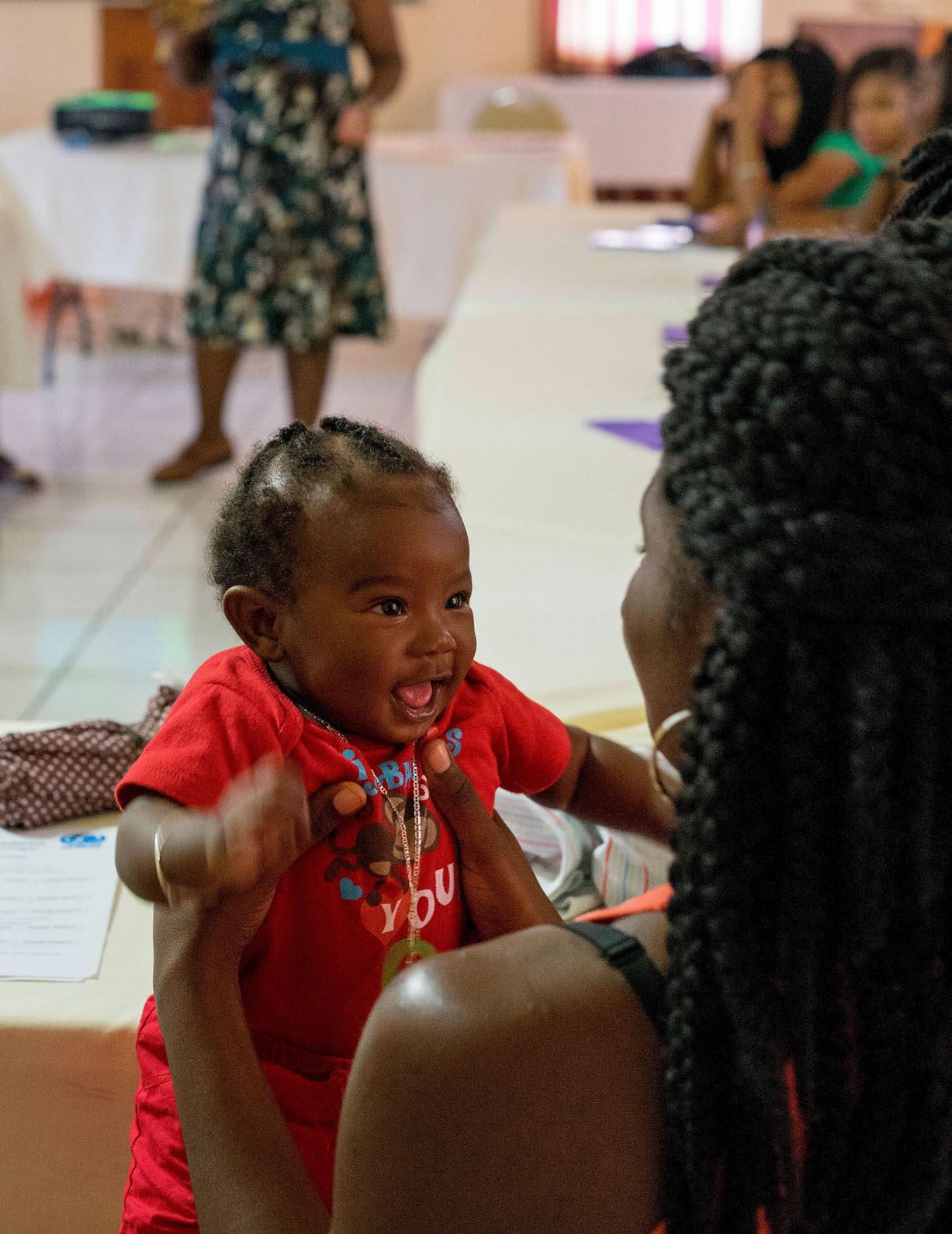
EVIDENCE FOR EFFECTIVE PRACTICE IN EARLY STIMULATION OF CHILDREN
“High stress and insufficient socio-emotional and cognitive stimulation in the earliest years, which tend to be associated with growing up poor, can impair children’s development. In all countries studied to date, whether low, middle, or high income, there is a divergence as early as age three in the cognitive and non-cognitive skills of children in households at the bottom of the national wealth distribution and those in households at the top”1 . Evidence from programmes which incorporate home visits to vulnerable parents is that they “affect the lives of the parents and create a permanent change in the home environment that supports the child”2
EVIDENCE FROM WITHIN THE CARICOM
In Jamaica in the 1980s, a research intervention “introduced an approach delivered by community health aides to show parents simple and inexpensive ways of interacting with their children using homemade toys, books and conversation”34 The intervention was delivered to support parents in a disadvantaged community through weekly home visits starting when their children were six months old and
1 World Development Report 2015. Mind, Society and Behaviour. Washington DC: World Bank
2 Heckman J, 2008. The Case for Investing in Disadvantaged Young Children. Big Ideas for Children: Investing in Our Nation’s Future, 49– 58. Washington, DC: First Focus; Olds D, Robinson J, O’Brien R, Luckey DW, Pettitt LM, Henderson Jr CR, Ng RK, Sheff KL, Karamacher J, Hiatt S, Talmi A. Home Visiting by Paraprofessionals and by Nurses: A Randomized Controlled Trial. Pediatrics 110, 486 –496, 2002; Independent Evaluation Group. Later Impacts of Early Childhood Interventions: A Systematic Review. IEG Working Paper 2015/3. Washington DC: World Bank Group
3 Walker S, Powell C, Chang-Lopez S, Baker-Henningham, H, Smith J, Fernandez K, Wright A. Reach Up: An Early Childhood Parenting Programme. Policy Brief. Tropical Medicine Research Institute the University of the West Indies, Mona, Jamaica.
4 The curriculum used in the Jamaica study is now available on registration with the Reach Up and Learn team www.reachupandlearn.com
In all countries studied to date, whether low, middle, or high income, there is a divergence as early as age three in the cognitive and non-cognitive skills of children in households at the bottom of the national wealth distribution and those in households at the top
continuing until they were three years of age. An evaluation in 1986 5 of the benefits of the stimulation for the development of stunted children demonstrated outcomes that exceeded the benefits of nutrition supplementation. Follow-up evaluations over 20 years showed sustained and very significant benefits extending into adult life: Children were happier and did better in school, and as adults they “had better mental health, demonstrated less violent behaviour and earned more money than similar children who did not receive the programme” 6
The explanation for the success experienced incrementally by the children is that the early learning from the stimulation worked as an investment in their development, by yielding increasing gains as the children were better able to make use of later learning in school and in life. Benefits have become more wide-ranging over time. Even more encouragingly, the children who are now adults and parents themselves are providing stimulating environments for their own children.
1 An organisational base for the home-visiting programme: In the Jamaican study, the base was a health clinic and the home-visitors were trained community health aides. The programme can be “bolted on” to other pre-existing services such as early childhood education services, cash transfer programmes, or services provided by faith-based or community organisations.
2 Good supervision of the trained home visitors: Supervision from the base is essential for training of the home-visitors, supporting them in their visits, deploying the visits, targeting resources where needed and administration.
3 Approach of the home-visitor to supporting parent-child interaction: The approach of the home-visitor to the parent is critical for building skills and confidence. The home-visitor works with and through the mother to enhance mother-child interactions and to support the self-esteem of both mother and child. Over time, the home-visitor helps parents to engage confidently with their children and to establish a connection between their own behaviour and that of their child.
4
A semi-structured cognitive curriculum: The Jamaica study produced a curriculum with guidance on how to use the approaches and concepts in supporting parents of children six to forty two months and produced a toy manual to guide the making of toys from recyclable materials. The curriculum and manual are available online and can be adapted to reflect local context and customs.
5 Frequency (weekly) and intensity (one hour) of the visits.
6 Duration of exposure to the home-visiting programme: Visits were made to each parent of a child who was six months old at the start of the programme until the child was three years of age.
7 Homemade toys left in the home by the home visitor: This was important for encouraging the parent to continue the programme on the days on which there was no visit, and to encourage the making of other stimulating toys.
5 Grantham-McGregor SM, Powell CA, Walker SP, Himes JH. Nutritional Supplementation, Psychosocial Stimulation, and Mental Development of Stunted Children: The Jamaican Study. Lancet 338, 1–5, 1991
6 Gertler P, Heckman J, Pinto R, Zanolini A, Vermeerch C, Walker S, Chang S, Grantham-McGregor, S. Labor Market Returns to an Early Childhood Stimulation Intervention in Jamaica. Science 344, 998–1001, 2014
Programmes from Belize and St. Kitts and Nevis were selected as they demonstrated good practice on each of the elements identified as essential for early stimulation interventions of quality. The focus of the practices was different: the focus in Belize was on support to early stimulation of children in the care of their parents at home; the focus in St. Kitts and Nevis was on the support to the early stimulation of children by non-parental caregivers in the caregivers’ homes. There were also examples of good practice in St. Lucia and Jamaica which are referenced in section 4.3.
Established in 2008 in the Toledo District of Belize, and developed in 2012 to include an area of Belize City, the programme that offers support to parents in early stimulation of children from birth to three years of age is the Roving Caregivers’ Programme (RCP). The RCP is an informal early childhood education programme that seeks to reach children birth to three years of age who do not have access to any formal early childhood education in their communities. Young community members are trained to provide parenting support to caregivers and parents at home in the stimulation of their children. The RCP model was developed in Jamaica and subsequently replicated in Eastern Caribbean countries, Suriname and Belize. Evaluations of the RCP model’s effectiveness in Jamaica (2004) and St.Lucia (2008, 2009) found benefits to child cognitive development and parenting knowledge7. In Belize, the programme operates in marginalised communities and in urban communities affected by violence and is described as providing a safety net for children often exposed to inappropriate practices8. The communities were selected utilising data from the Country Poverty Assessment Report, crime rates and data on lack of access to preprimary education. Parents of children who are stunted and unstimulated (in Toledo) and parents of children who are affected by high levels of crime (Southside Belize City) are prioritised to receive programme support.
With the broad aim of strengthening the care environment of young children up to three years old, the objectives of the RCP Replication Projects are:
Belize, supporting parents to stimulate the development of their children from birth to three years of age.
Belize
7 Communication with the Administrative Coordinator, Foundation for The Development of Caribbean Children
8 Communication with the Coordinator for Early Childhood Development, Ministry of Education, Belize
1 Integrate the early stimulation programme with other public services for children.
2 Put in place a dedicated management structure that has responsibility for recruitment, training and supervision.
3 Establish monitoring mechanisms that obtain and reflect programme principles and feedback from practitioners and beneficiaries.
1 to offer early stimulation to young children and improve parenting practices in disadvantaged communities;
2 to recruit and train caregivers from the communities to assist in the delivery of parent support services; and
3 to transfer the newly acquired knowledge and skills in working with families and communities to a range of local support agencies.
The Roving Caregivers Programme is housed in the Department of Human Services under the COMPAR (Community and Parent Empowerment) Unit. The Department houses other services and programmes for children including child protection and the Building Opportunities for Our Social Transformation (BOOST) programme, the national cash transfer scheme.
The base provides the administrative and supervisory services for the RCP, including the recruitment of the roving caregivers (“Rovers”) and training. Rovers are young women 9 recruited within the communities served by the programme. Rovers are trained by the District Supervisors for the RCP in the communities in which they work; generally they have secondary level education but no prior formal training as a home visitor. Rovers participate in fortnightly sessions on Fridays, four to six hours, for in-service training and discussions on the improvement of RCP 10 .
District Supervisors for the RCP are based within the communities served by the RCP. The District Supervisor schedules visits by Rovers to the families, and visits each Rover once a week in Belize City (twice per month in Toledo, as distances between villages constrain the same level of supervision) to ensure fidelity with the principles of the programme, and to deal with complaints or issues from both parents and Rovers. The effectiveness of the programme is monitored with the participation of parents twice a year using the RCP Quality Assessment (RCPQA), an observation tool designed with the assistance of the HighScope Foundation for use in RCP programmes in the region. (See Annex A for the Training Guide which includes the RCPQA).
Supervision is supported by mechanisms in place for Rovers to write plans for
9 To date, all the recruits have been young women, however the position is not exclusive to women and young men are being encouraged to come forward.
10 The persons recruited as Rovers also facilitate the Rhymes that Bind Programme under the Youth Community Transformation Project (since 2015) and assist in other key areas of community work, for example, in providing assistance following the passage of Hurricane Earl in August 2016.
their home visits and maintain journals of observations of children; these also enable parents to see the progress in the development of their children’s skills. Every six weeks an evaluation of the programme’s work is held with the parents to enable feedback and forward planning; this occasion is also used as a parenting workshop to cover issues Rovers may be observing in the homes. On enrollment of each child to the programme an Ages and Stages Questionnaire (ASQ)11 is completed to identify the child’s development in several areas; thereafter, the child’s development is monitored using the ASQ every six months.
4.3.3.
The Rover teaches the parent how to play with the child and make different activities for the child; while explaining why it is important for the child’s development. The purpose is in part to strengthen the bond between parent and child. Parents are shown how to engage their child in stimulating activities: reading to them; having a play corner and activity box for the children and making toys available for them to use. Parents are also made aware of things that may affect the child’s development, and are offered tips and guidance about how best to promote children’s early development and learning, health, hygiene and safety. Through and practicing a range of activities with the child, the quality of parent-child interaction is enhanced and the development of a wide range of social, emotional and cognitive skills in the child is assisted.
The RCP Training Guide (attached as Annex A with Literacy Extensions12 at Annex B), developed by the Caribbean Child Support Initiative (CCSI) (now the Foundation for the Development of Caribbean Children) for Roving Caregiver Programmes in the Eastern Caribbean during the period 2007 to 2009 from the original RCP Training Guide in Jamaica, has been adopted for use in Belize. The current curriculum approach is built on the principles of interaction and participation in learning developed by the HighScope Educational Foundation, and was developed by consultants from HighScope working directly with CCSI. Guidance is provided for making learning materials and toys. The Training Guide also provides Rovers with information for parents on healthy nutrition, safety and hygiene in the home, and brief ‘messages’ on child development. Rovers guide parents in learning skills for managing children’s behaviour and developing positive discipline.
11 The ASQ is an international standardized measure. Belize uses the 24 Month Questionnaire for children aged 23 months 1 day/25 months 15 days. See: Squires and Bricker © 2009 Ages and Stages Questionnaires ®, Third Edition (ASQ3™) Paul H. Brookes Publishing Co. All Rights Reserved. The ASQ is currently being validated for use with the Jamaican early childhood population as part of the Early Intervention system (please see the Early Intervention section)
12 A question was raised in the writing of this section about the availability of Numeracy Extensions. There are none designed specifically for the RCP, and is not known if any have been developed for this age group by other programmes.
4 Focus the programme on parent-child interaction to stimulate child development and strengthen the bond between parent and child.
5 Guide programme content by sound principles of how children learn and develop.
6 Include in the programme cost efficient ways to create learning materials.
7 Structure the programme to provide the frequency, intensity and duration of support necessary to achieve optimal benefits for children’s learning and development.
8 Create learning resources with the parents at home to ensure ready access by children and appreciation of their value by parents as integral to the home learning environment.
4.3.5. Frequency (weekly) and intensity (one hour) of the visits
The programme provides weekly visits of 30 minutes to one hour in length, based on the age of the child.
4.3.6. Duration of exposure to the home-visiting programme
The structure of the programme facilitates home visits continuing for three years, from a child’s birth to age three. On average the programme supports the family for less than this as duration depends on when the family joins the programme, and when or whether the child accesses preprimary education after his or her third birthday. In the remote rural communities where access to preprimary education is scarce, home visits may continue until the child goes to primary school. For children participating beyond three years the programme provides support in specific school readiness skills including use of pencils for colouring and making marks, counting and recognising some of the alphabet (such as letters of their name), knowledge of nursery rhymes/ songs, talking in Standard English and playing with others.
4.3.7. Homemade toys left in the home by the homevisitor
At each visit, the Rover teaches the parent to make a toy to use with the child when they are engaging in play. Gradually, the parent builds up a collection of toys and learning materials in the home, and is encouraged to develop
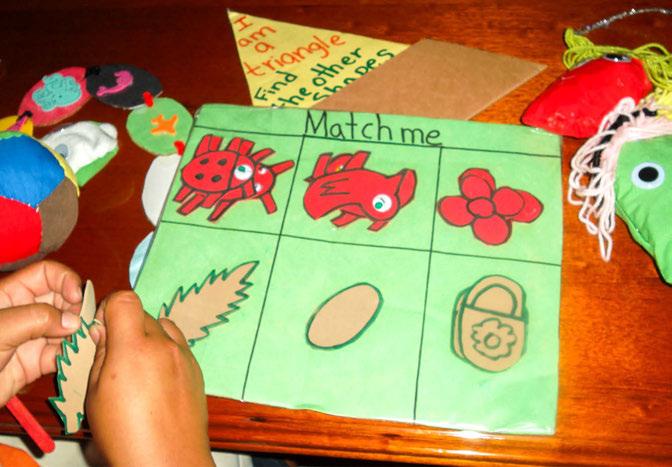
Belize, Early Stimulation, Homemade toys (b)
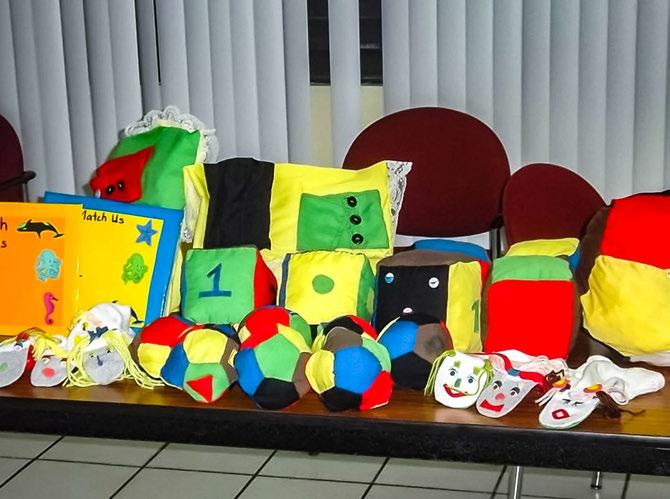
a specific area of the home as a play-corner for the child, a space in which toys are accessible to the child, protected and stored.
z The functioning inter-sectoral collaboration between the Ministry of Education (MOE), Ministry of Human Development (MHD), and Ministry of Health (MOH) helped to expand the Early Childhood Education mindset (ECE mindset) to Early Childhood Development (ECD).
z The interest and commitment of Chief Executive Officers in the respective ministries to address the development needs of young children from zero to three years old. The Chief Executive Officers in all three ministries had participated in the Regional Forum on Supporting the Development of Children from Zero to Three years old, particularly those who are vulnerable (St. Vincent and the Grenadines, June 2011).
z Political will and endorsement for the programme. Initially funded in 2008 by the United Nations Children’s Fund (UNICEF) and the CCSI13, since
13 The work of the Caribbean Child Support Initiative in the promotion of the Roving Childcare Programme continues in the region led by the Foundation for the Development of Caribbean Children, established in 2011.
2013 the Government of Belize has been funding the programme. This support has enabled sustainability. It is notable that in other countries in the region where Government funding has not been made available there have been critical difficulties in maintaining the programme, even at the level of targeting one or two communities.
z The programme focus to provide support to the parent in learning how to stimulate their child and why it is important to do so, evolved from an earlier focus in the RCP in other countries on the Rover playing directly with the child whilst the parent watched. The new focus encourages the parent to play with the child and to “learn-by-doing’ under the Rover’s guidance.
z The programme is designed to be sensitive to local context and adjusts to ensure access. In Toledo, a rural area, programme staff sound out interest within the community first and then plan access to families in consultation with a village Alcade (leader). Cooperation of parents is secured prior to parents being asked to sign a consent form for the programme to commence and continue until the child is 3 (or longer if the child cannot access preschool). In Southside, Belize City, the programme provides opportunities to raise other related concerns affecting the community, for example, programme staff meet with families (mother and father) to discuss how early stimulation can address resilience and prevention of violence against children.
z The initial objective in 2008 in the Toledo area was to encourage play in Mayan households (it was observed that parents did not spend time playing with their children in these communities). Sustainability of the programme will depend in the coming year on its effectiveness in reducing stunting (in Toledo) and in engaging families in communities affected by high crime levels to reduce crime and build resilience (in Southside, Belize City).
z The current focus of the programme is on strengthening the ability of young women/mothers and there is a need to build in a focus on young men/fathers. However, men are often not available: in Toledo men are often absent through work for periods of 2 weeks or more, so the programme focus is necessarily on the mother. Some men go home every day but they do farming so during the day they are at their farms and at night they return home. It is customary in the community that even if the father is at home, stimulation of the child is left to the mother and he watches them do the activities.
z There is an organisational base in place within the government system. It provides for complementary work between the RCP and other services supporting children, facilitating links and referrals to other services such as social or child protection services. Families visit the office when needed.
z The structure for supervision of the work of the Rovers is designed to ensure children benefit from exposure to quality experiences suitable for their developmental level and age, including nutrition support, stimulation of cognitive, language and social development, familiarity with written words and learning experiences in the outdoors.
z Home visits are planned and journals of observations of children maintained. Parents are able to see the rapid development of skills with their children. The Rovers benefit from feedback from the biannual assessment of their performance using the Roving Caregivers Programme Quality Assessment (RCPQA).
z There is a closer bond observed between parent and child: Parents play more with children, and are observed sitting with their child for at least an hour to interact with them.
z Parents are observed to engage in a range of stimulation activities with their children: reading to their children; having a play corner and activity box for the children; and, making toys available for them. Parents are aware of different things that may affect the child’s development.
z The longer the child is in the programme, the more the child is observed to be open to opportunities to play, socialize, sing and to participate in school.
z Children have toys at home that they can play with and the parents have the practical guidance to make more toys and ideas on how to use them in interactive learning. Children recognise the uses of the toys and have ready access to them, with their parents and also when the Rover visits.
z In Southside, Belize City, observed programme impacts include parents being encouraged to pursue their own learning; parents taking an interest in their children’s learning; and, child participation in preschool being increased.
z The Rovers enter the programme with high school education; with the experience of training and supervised programme work, many become more interested in their own education and go on to pursue it to a higher level.
The provision of a structured programme of support to parents in the stimulation of their children’s learning and development from birth to three years of age will contribute to the achievement of the following targets and goals:
TARGET 2.2 Achieve targets on stunting and wasting in children under 5 years of age by 2025, and address the nutritional needs of adolescent girls, pregnant and lactating mothers: Stunting is a reliable marker of poor care and development of children; generally a child whose physical growth is stunted will also suffer cognitive stunting. Child development begins in utero; the mother’s nutrition affects the child from the start and continues as she breastfeeds. Stimulation interventions have been shown to punch above their weight for the development of children who are stunted 14
TARGET 16.2 End abuse, exploitation, trafficking and all forms of violence against and torture of children: Violence against young children hampers their development and begets violent adults. Toxic stress has lifelong consequences, damaging young children’s cognitive and social development and their resilience 15. Prevention of violence against young children is a “two-generation” strategy; support can be provided to children’s social and emotional learning through parenting skills and early stimulation programmes. Parents can be shown how to manage difficult behaviours and to end harmful practices.
TARGET 10.2 Empower and promote the social, economic and political inclusion of all, irrespective of age: Poverty, compounded by inadequate care and stimulation predict a child’s future ability to learn and thrive as an adult. Where resources are scarce, targeted support for parent coaching and better home learning environments, can level the playing field for young children.
14 Grantham-McGregor SM, Powell CA, Walker SP, Himes JH. Nutritional Supplementation, Psychosocial Stimulation, and Mental Development of Stunted Children: The Jamaican Study. Lancet 338, 1–5, 1991
15 Shonkoff, J.P and others 2012.The Lifelong Effects of Early Childhood Adversity and Toxic Stress. With Andrew Garner, Mary I. Dobbins, Marian F. Earls, Andrew S. Garner, Laura McGuinn, John Pascoe, Benjamin S. Siegel and David Wood. Pediatrics 2012;129;e232; originally published online December 26, 2011; DOI: 10.1542/peds.2011-2663
TARGET 4.2 Ensure all girls and boys have access to quality early childhood development, care and pre-primary education: Without good care and stimulation from birth children cannot learn and thrive, and develop to their full potential. Sustained guidance for parenting during a child’s first three years improves cognitive and psychosocial outcomes for children into adulthood 16
A coordinated and comprehensible approach to achieving these SDG targets can be effected through a programme of support to parenting children from zero to three years of age in need of stimulation for their learning and development, in vulnerable and deprived contexts, by connecting efforts to reduce inequality, prevent violence, reduce stunting, and guide the development of young children.
St Kitts and Nevis, supporting caregivers to stimulate the development of children from birth to three years of age
St. Kitts
In St Kitts and Nevis, the programme that supports caregivers to stimulate the development of children from birth to three years of age is the Reaching the Unreached (RTU) Programme. Started in 1997, the RTU is designed to improve the skills of caregivers providing childcare services in their own homes. The programme is provided intensively over a 13-week period to cover the essential training and provide familiarity with useful learning resources that can be borrowed on a library-lending basis.
The programme was a response to the informal arrangements parents made to leave their children in others’ homes whilst they worked. These home based ‘nurseries’ just ‘sprang up’, and they were neither registered, nor licensed to operate. The programme was a strategy for communication with the caregivers, an expression of a desire to work with them in the interests of the children, and to encourage them to improve practice through training and support over a defined period. Now the home care programmes are ‘above the radar’ and formally registered.
1 Develop the capability of a publically funded early childhood service to provide outreach training and support to caregivers in home-based childcare services.
2 Prioritise for support for those caregivers in poor and marginalised communities in which home-based services are ‘under the radar’ for the support services that accompany formal registration and licensing.
It is estimated that a quarter of the population of children from birth to three years of age are cared for in home-based nurseries by caregivers, of which the RTU programme reaches an estimated 75%.
The objectives of the RTU programme are:
1 to encourage, facilitate, and enhance the childcare and development delivery capabilities of home-based nurseries;
2 to improve the early childhood knowledge and skills of parents and caregivers who have no access to any formal training or facilities;
3 to provide adequate and appropriate holistic stimulation for children birth to three years of age in home-based nurseries; and
4 to upgrade caregivers’ status and programme so that they achieve the maximum standards of operation.
4.8.1.
This programme is housed and organised by the Early Childhood Development Unit in the Ministry of Education. The Unit is responsible for the delivery of public early childhood services, and the registration and licensing of those services within the private sector including home-based or “family-run” services.
The officers in the Unit are qualified early childhood teachers. When the RTU programme was introduced in 1997, it was part of a wider initiative to expand access to quality early childhood provision in preschools and in home based care. The RTU programme identifies where caregivers are providing care services in their homes and initiates an invitation for training in practical methods for appropriate care, holistic stimulation, developmental monitoring and record keeping.
Two Officers in the Early Childhood Unit are assigned responsibility for the RTU programme, one in Nevis and one in St. Kitts. Each provides training within the island for identified caregivers. Training is run over thirteen weeks, for two sessions per week each lasting two hours.
During the first six weeks of training, the RTU officers visit the caregivers in their homes during the hours in which they are looking after children. The officers work directly with the children initiating planned developmentally appropriate activities for one hour; this is followed by conducting a training session with the caregiver for one hour. (See Annex D for the training outline, and Annex E for a sample of the training on establishing a daily routine with children).
During the subsequent seven weeks of training, the caregiver plans and conducts activities with the children while the Officer observes and gives guidance for an hour; this is followed by conducting a training session with the caregiver for one hour.
The sessions with the caregiver include guidance on acceptable and unacceptable practices in the care of children from birth to three years of age, and information on the developmental stages of children. Officers provide practical guidance on meal preparation, on administration of the care service, including record keeping, and on planning and conducting meetings with parents.
Officers help the caregivers to organise the space available for the children in such a way that it is conducive for learning activities to take place. They help them develop a daily routine for the children, to include care and learning activities such as reading to and with children, nursery rhymes and songs, free play group activities and outdoor playtime. Guidance is provided to source developmentally appropriate toys including charts, books and manipulatives for the children. (See Annex E).
The Early Childhood Development Unit also carries out additional training sessions for the caregivers where topics are discussed on a wider scale. This evening training also includes instruction on how to make developmentally appropriate materials.
Following training, the caregivers are monitored on a routine basis, as well as in “spot checks” by Resource Teachers who are also Officers from the Early Childhood Development Unit. Monitoring includes the use of questionnaires for both caregivers and parents on their observations following training (See Annex C for the samples of the questionnaires used in the programme).
3 Integrate the support and training of the home-based caregivers with other publically provided early childhood services.
4 Assign officers specifically to reach and contact caregivers, train, supervise and monitor.
5 Adapt monitoring mechanisms used for other early childhood services to provide a basis for data comparison between different types of programme support.
6 Give practical guidance to the caregivers through the demonstration of skills in the actual setting in which the caregiver works
7 Introduce caregivers to a range of resources that will be useful for them to use, and provide them with the means to borrow them.
8 Provide evening training opportunities for caregivers to meet one another and expand their learning and skills.
9 Identify the means for providing caregivers with assistants in their homes to ensure two adults are with the children.
10 Provide training for caregivers with their assistants.
11 Use a structured curriculum that can be adapted for the home-based settings and harmonised with the curriculum used elsewhere in early childhood services in the country for children from birth to three years old.
4.8.3. Approach of the trained home-visitor to supporting parent-child interaction
The focus of training includes the role of the child-caregiver interaction in learning, particularly in language acquisition and cognitive development. An initiative of the National Skills Training Programme (NSTP) provides caregivers with assistants from the People Employment Programme (PEP), ensuring that there are always two adults working with the children at any one time.
A formal curriculum in use in the public services for children from birth to three, developed on HighScope principles, is adapted for use in the home settings by the caregivers and their assistants. Resource teachers conduct training workshops with the RTU programme officers on how to use the learning activities with the children and caregivers; how to make low cost and no cost materials that can be used in the programme; and how to involve caregivers and parents in making toys for the children.
4.8.5. Frequency (weekly) and intensity (one hour) of the visits
The training programme provides for an intense period of training over 13 weeks, including programme and organisational guidance and supervised practice for the caregivers in their homes with the children that they look after. Thereafter, the RTU programme officers and resource teachers from the Early Childhood Development Unit provide regular routine monitoring and “spot checks” to ensure that caregivers are making use of their training and access to available resources. ( See Annex F for the performance checklist used to assess caregivers on a quarterly basis).
4.8.6. Duration of exposure to the home-visiting programme
Children are in the care of caregivers in home based settings for periods of time that vary from a few months to three years, before they are of age to attend preschool. They are therefore exposed to the improved practices of the caregivers who have undergone the RTU programme training, acquired or borrowed resources, and responded to the monitoring and follow up support provided by the officers of the Early Childhood Development Unit.
4.8.7. Homemade toys left in the home by the home visitor
The Early Childhood Development Unit has a toy lending library with a division for toys used specifically in the RTU programme. Toys can be borrowed by the caregivers. Each time the officers visit the homes they carry a training kit with different toys for the children to play with and also to conduct training activities. Some toys are left with the caregivers each time the officer visits. At the end of the training some toys are given to the caregivers to continue the early stimulation activities.
z Support provided by the Ministry of Education Early Childhood Development Unit to the training of caregivers and to resourcing their homes through packages of materials and access to a toy-lending library.
z Sustained support by the Ministry of Education to the programme for almost 20 years, with a supplementary contribution from UNICEF.
z Direct support to parenting is a challenge. Caregivers see parents briefly at beginning and end of day, and are in the process of developing their own skills and confidence before they can pass these on to parents. It is difficult to organize parenting sessions in the evening when parents are busy at home.
z Children are observed to be socially adjusted and settled, and more “prepared” when they transfer to attend preschools.
z Children in the settings are observed to be communicative, active, and stimulated by structured activities and a daily schedule in which they can expect clear routines.
z More time is provided to children to be active outdoors and to be engaged with the caregiver.
z The caregivers demonstrate a better understanding of child development practices and plan appropriate activities to enhance early stimulation.
z Caregivers relay information to parents about the importance of supporting their children’s development at home with the appropriate toys, books and interaction.
z Parents observe that the children are more alert and independent at home.
z Caregivers implement simple record keeping and safety procedures.
The provision of a structured programme of support to parents in the stimulation of their children’s learning and development from birth to three years of age will contribute to the achievement of the following targets and goals:
TARGET 10.2 Empower and promote the social, economic and political inclusion of all, irrespective of age: Poverty, compounded by inadequate care and stimulation predict a child’s future ability to learn and thrive as an adult. Where resources are scarce, targeted support for caregiver coaching and better care and learning environments, can level the playing field for young children.
TARGET 4.2 Ensure all girls and boys have access to quality early childhood development, care and pre-primary education: Without good care and stimulation from birth children cannot learn and thrive, and develop to their full potential. Sustained guidance for caregivers during a child’s first three years improves cognitive and psychosocial outcomes for children into adulthood.
A coordinated and comprehensible approach to achieving these SDG targets can be effected through a programme of support to caregiving for children from zero to three years of age in need of stimulation for their learning and development, in vulnerable and deprived contexts, by connecting efforts to reduce inequality, prevent violence, reduce stunting, and guide the development of young children.
ROVING CAREGIVER PROGRAMME, BELIZE:
ANNEX A. Rovers Training Guide including the RCPQA
ANNEX B. Rovers Training Guide Literacy Extension
REACHING THE UNREACHED PROGRAMME, ST. KITTS AND NEVIS:
ANNEX C. Post-training feedback questionnaires, RTU Programme
ANNEX D. Training outline for caregivers, RTU Programme
ANNEX E. Sample training sessions, RTU programme
ANNEX F. Checklist, caregiver performance
Click the annex title to view the document online.
EVIDENCE FOR EFFECTIVE PRACTICE IN PRESCHOOL CURRICULUM AND PROGRAMME DELIVERY?
There is strong evidence that learning and development can be promoted through preschool programmes, with immediate, short- and long-run effects. This seems to be most pronounced for language and cognitive development but also involve effects on social development and behaviour. Although all children may benefit, there is evidence that disadvantaged children may profit the most.123 Children can be enabled to “succeed against the odds” if exposed to supportive, nurturing environments that provide a high degree of cognitive stimulation and emotional care45, both at home and in school.
Research suggests that the quality of the structure, organisation and processes found in programmes is important and has an effect on outcomes. In addition, there is evidence that negative effects can occur if quality is low 6. Elements of quality that have been consistently identified and seem to make a difference on outcomes include: the education and training of the staff; available learning materials; the learning process; the organisational arrangements; the relationships with families; health, hygiene and safety 7
1 Myers R (2006) Quality in early childhood care and education programmes. Paper prepared for the Education for All Global Monitoring Report 2007 http://unesdoc.unesco.org/images/0014/001474/147473e.pdf
2 Heckman, J J and Masterov DV. 2007. The Productivity Argument for Investing in Young Children. Applied Economic Perspectives and Policy, 29(3): 446-93.
3 Schweinhart L J, Montie J, Xiang, Z, Barnett WS, Belfield CR, and Nores. M. 2005. Lifetime Effects: The High/Scope Perry Preschool Study through Age 40. Ypsilanti, Michigan: High/Scope Educational Research Foundation
4 UNESCO. 2014. Early Childhood Care and Education: Addressing quality in formal pre-primary learning environments. New York, NY: UNESCO.
5 Siraj I and Mayo A. 2014. Social Class and Educational Inequality. The Impact of Parents and Schools. United Kingdom, Cambridge University Press./
6 Myers R 2006 (above)
7 Myers R 2006; Denboba A, Sayre R, Wodon Q, Elder L, Rawlings L, Lombardi J. 2014. Stepping up Early Childhood Development: Investing in Young Children for High Returns. Washington, DC: World Bank
Children can be enabled to “succeed against the odds” if exposed to supportive, nurturing environments that provide a high degree of cognitive stimulation and emotional care.
Strategies that are differentiated work best with boys and with girls, and have been identified as particularly effective for keeping boys out of risk and to have consequential benefits for girls.
Guyana and Barbados built national preschool curricula based on sound principles of how children learn. Evidence from longitudinal research (19992003) in Jamaica 8 that the quality of the preprimary programme is critical to the outcomes for children, particularly for poor children, influenced the development of curriculum innovation in that country for children in the birth to three age group as well as from three years to school entry. Strategies that are differentiated work best with boys and with girls, and have been identified as particularly effective for keeping boys out of risk and to have consequential benefits for girls. 9
In 2004, Learning Outcomes for Early Childhood Development in the Caribbean 10 for children birth to eight years of age were identified and developed by specialists and representatives of eighteen CARICOM countries, addressing six key areas of learning: wellness, resilience, valuing culture, effective communication, intellectual empowerment, and respect for self, others and the environment. The Learning Outcomes influenced the reform of curricula in the region, including the infusion of the HighScope curriculum approach in four Eastern Caribbean countries commencing in 2007.
In addition, the Learning Outcomes provided the framework for the construction of the Early Childhood Development Minimum Service Standard 11, developed with representatives of all 20 CARICOM countries and subsequently adopted by CARICOM’s Council on Human and Social Development in 2008.
8 Samms-Vaughan, M.E. (2004) Profiles: The Jamaican Preschool child. The Status of early childhood development in Jamaica. Planning Institute of Jamaica, Government of Jamaica: Kingston.
9 Cunningham,W. 2009. Framework presentation to Regional Caribbean Conference on Keeping Boys Out Of Risk, May 2009, Montego Bay, Jamaica, supported by the World Bank and the Commonwealth Secretariat
10 University of the West Indies (Caribbean Child Development Centre). 2010. Learning Outcomes for Early Childhood Development in the Caribbean. A Handbook for Practitioners. Available at: http://www.globalchilddevelopment.org/news/ learning-outcomes-early-childhood-development-caribbean-handbook-practitioners
11 CARICOM Secretariat 2008. Regional Guidelines for developing Policy, regulation and standards in early childhood development services. http://caricom.org/store/ regional-guidelines-for-developing-Policy-regulation-and-standards-in-early
1 Programme structure – curriculum and resources:
z A curriculum/ programme approach with clear goals, that is proven to be effective, covering diverse areas or dimensions of development
z Sufficient toys, books and materials for each child to have something to do at all times
z Teachers/practitioners have a good level of education, good early childhood training, and are motivated to work with the children
z Small numbers of children per adult and per room/class
z Learning environment reflects children’s interests and learning activities
2 Programme delivery – organizational elements:
z Continuous planning, present and future, both at the programme and class/room level
z Continuous evaluation and monitoring, of programme and children
z Frequent supervision and guidance for staff on-task
z Opportunities for continuous training and professional growth
z Leadership that fosters communication, work as a team, information sharing, respect
z Efficient administrative procedures
3 Programme delivery – process elements
z A” good” relationship between parents and staff, characterized by frequent informal exchanges about children’s progress and well-being
z Frequent, warm and responsive interactions between practitioners/teachers and children
z Children have opportunities to be in smaller groups most of the time or to be by themselves
z Opportunities for children to initiate as well as listen
z Consistency in discipline and responsiveness
z Children use safe, healthy, and hygienic practices
Curriculum reform in Grenada has been guided by the work of the HighScope Foundation, known internationally for a model of active participatory learning...
The selected Good Practice for Preschool Curriculum and Programme Delivery is the practice designed in Grenada in response to the introduction of the principles of the HighScope curriculum in the public preschools. The practice in Grenada addresses all the elements in the conceptual framework.
There were also examples of good practice on specific components of the conceptual framework in practices in the government owned and government assisted preschools/early childhood education and care centres in Belize, Trinidad and Tobago and St. Kitts and Nevis, and these are referenced as appropriate.
Curriculum reform in Grenada has been guided by the work of the HighScope Foundation, known internationally for a model of active participatory learning that has demonstrated significant outcomes for children’s cognitive, linguistic and social development 12, leading to more productive adult lives including higher earnings, more stable unions and fewer social service interventions. The model has been in use in many countries of the world, and studies as to its effectiveness have been undertaken13
Where positive outcomes for children’s development have been identified, these have been linked to the quality of implementation with respect to: adult-child interaction including support to and engagement of parents in their children’s learning; attention to acquisition of both cognitive and social emotional ‘non-cognitive’ skills by children; and, a structured approach that ensures children are exposed to ‘key experiences’ during the period in which they attend preschool over a two-year period.
5.3.1. Programme structure – curriculum and resources:
z A curriculum/ programme approach with clear goals, which is proven to be effective, covering diverse areas or dimensions of development
The HighScope approach is a structured curriculum that moves the focus of the teacher and the curriculum away from instructing children in a whole group most of the time to a balance between child-initiated and teacher-planned
12 Schweinhart, LJ and Others. 1993. Significant Benefits: The High/Scope Perry Preschool Study through Age 27.Monographs of the High/Scope Educational Research Foundation, No. 10
13 Montie, J.E., Xiang, Z., Schweinhart, L.J. (2006) Preschool Experience in 10 countries: cognitive and language performance at age 7, Early Childhood Research Quarterly 21 (2006) 313-331
instructional activities. Child-initiated activities include children making choices about what they do; learning in a ‘hands-on’ process in small groups; and, receiving guidance from the teacher who moves between groups supporting individual children to reinforce and extend learning experiences.
The curriculum approach as used in Grenada is informed also by the Caribbean Learning Outcomes14 that has been merged with the fifty eight Key Developmental Indicators (KDIs) of the HighScope approach grouped into eight areas: Approaches to Learning; Social and Emotional Development; Physical Development and Health; Language, Literacy, and Communication; Mathematics; Creative Arts; Science and Technology; and Social Studies. (See Annex A). The KDIs are the overarching framework for curriculum delivery providing the content for key ideas children should learn and experience, combined with indicators that capture the development of skills, knowledge and understanding considered important for learning in school and for life15. In practice, the KDIs are the driving conceptual framework, and teachers are expected to use their training to devise learning experiences for children drawing on rich and stimulating learning environments in the centres together with an informed understanding of the children’s context of family and community. To supplement the training of teachers in the use of the KDIs, the HighScope Foundation has produced a number of guides16 and resource books to assist teachers to plan the content of activities.
Prior to adopting the HighScope approach, five of the Early Childhood Officers in Grenada together with one teacher from each of the schools participating in a proposed pilot of a new curriculum approach visited St. Kitts Nevis to observe their curriculum in action. St Kitts and Nevis had had over twenty years of experience in using a curriculum approach informed by HighScope principles. In addition, the Head of the Early Childhood Service in St Kitts and Nevis, Mrs. Vanta Walters, visited Grenada and made a presentation to stakeholders on the implementation of the curriculum in St. Kitts Nevis.
Care has been taken in Grenada to merge the HighScope approach with the tried and tested strategies that were already in use in the local context. One of the strategies in use was the Lesson Study Approach to strengthening programme delivery, an approach in which a small group comprising an officer together with teachers and practitioners collaborate on lesson planning, lesson observation and reflection or discussion of their observations. Other existing strategies included the use of news and message boards in centres for communication between staff and parents, morning assemblies for focusing on moral learning and a strong tradition of observance of faith
14 see footnote 10 above
15 Epstein, A.S. (2007) Essentials of Active Learning in Preschool: Getting to Know the HighScope Curricyulum. Ypsilanti, MI: HighScope Press
16 For example, the following are in use by training officers in Grenada: Hohmann, M., Weikart, D.P., Epstein, A.S. (2008) Educating Young Children. Active Learning Practices for Preschool and Child Care Programs. Third Edition. Ypsilanti, MI: HighScope Press; Marshall, B., Lockhart, S., Fewson, M. (2007) HighScope Step by Step Lesson Plans for the First 30 Days. Ypsilanti, MI: HighScope Press
1 Explore the experience of other countries in reforming early childhood curricula and consider the utility of the experiences for the local context.
2 Select an approach that has been tried and tested in a similar country for potential adaptation to the local context.
3
Harmonise curriculum reform with national Policy and standards in early childhood, and regional frameworks and agreements
and celebration of events in the history and culture of Grenada. These local strategies have been merged with the HighScope approach.
Also, in recognition of the significant change in strategy for programme delivery required by teachers who were used to whole group instruction rather than supporting learning in small groups, an additional adaptation to the local context has been the inclusion in the daily routine of double the amount of time for small group activities than that envisaged in the HighScope approach. The local development of an Early Childhood Developmental Checklist in 2015 draws on expected outcomes from the HighScope approach, the CARICOM Minimum Standard for Early Childhood Development Services (2008) and the Caribbean Learning Outcomes for Early Childhood Development developed in 2004 17
Several other countries 18 in the region have developed national curriculum guides, informed and influenced either directly by the Caribbean Learning Outcomes (2004) or indirectly through the guidelines for Minimum Service Standard for Early Childhood Development Services in the Caribbean Region 2008 19, and methodologies for supporting children’s learning which are both child-directed and engaging of families. Examples include the following:
4 Develop a comprehensive curriculum approach/ framework in consultation and collaboration with service providers and parents’ organizations, building in a process for feedback and annual review.
X In 2005, Trinidad and Tobago merged the six Caribbean Learning Outcomes into five 20 expanded aspects (for example aesthetic expression) and developed curricula that reflected the population diversity and national priorities of the country. The curriculum was influenced by the active participatory learning approach developed in Reggio Emilia 21 in Northern Italy.
The Reggio Approach gives particular emphasis to the content and arrangement of the socio-cultural and physical environment in which children learn, the role of adults as ‘collaborators’ with children in their learning and the development of sustained social relationships with families and communities. All staff members of public centres were trained in this approach during the period 2008 to 2009. The curriculum is currently a working document, last edited in 2013.
X In St. Kitts and Nevis, which has over 20 years of experience in
17 A handbook for practitioners on the use of the Caribbean Learning Outcomes in Early Childhood Development was published in 2010. See footnote 10 above.
18 Cayman Islands (2015); Jamaica (2010); Bahamas (date?) Guyana is in the process of revising the national curriculum that has been in place for 30 years. Barbados had adopted a national curriculum with attainment targets in 2000, serving as a model at that time for many countries in the region.
19 See footnote 11 above.
20 The Five Learning Outcomes for Trinidad and Tobago are: Citizenship/Belonging; Intellectual Empowerment; Wellness; Aesthetic Expression; and Effective Communication. The Caribbean Learning Outcomes are: Wellness; Resilience; Valuing Culture; Effective Communication; Intellectual Empowerment; and Respect for Self, Others and the Environment.
21 For further information, see Cadwell, L.B. (2003). The Reggio Approach to Early Childhood Education. Bringing Learning to Life. Amsterdam Ave, New York, NY. Teachers College Press.
using the HighScope Approach, the emphasis is on children’s active learning to “construct knowledge through interactions with materials, people, events, and ideas” supported by “nurturing adults” who “ help children explore, make decisions, and get excited about learning.”22
X In Belize, The Early Literacy and Learning Model Plus (ELLM Plus) programme has been adapted for the context of Belize and is in use in two preschools operated by La Isla Cariñosa Academy (LICA) with a possibility of expanding to more. The programme is compliant with the standards for programme content of the Ministry of Education Early Childhood Education Curriculum and aligned with its goals. The ELLM Plus curriculum in the USA has proved to be “more effective than comprehensive curricula alone in helping 4-year old preschool children from low-income families acquire emergent literacy skills”23.
The ELLM Plus programme includes an hour a day focused on supporting emergent literacy skills with children, combined with a coaching model that teachers use with children to develop child literacy-focused outcomes (in phonological awareness and phonics connections); oral language, listening and vocabulary development; letter and sound knowledge; read aloud and emergent comprehension; and, print concepts and emergent writing). The model also relies on coaching support for the teacher to develop capacity and expertise in the required planning and reflecting, ongoing assessment and coaching of the children.
z Sufficient toys, books and materials for each child to have something to do at all times
Classes have toys, books and learning materials for each child, in accordance with the basic minimum required by the operating standards for early childhood services in Grenada. There is a sufficient supply for children to use, as long as the supply is well managed and children don’t want to use the same resources at the same time.
However there is a challenge presented by the lack of variety in materials, particularly over the course of a school term or year. Teachers need to be able to rotate materials to keep children’s interest, and to develop skills in making materials, collecting and displaying learning resources that will
22 Submission for the Guide by the Early Childhood Development Unit, St. Kitts and Nevis, April 2016
23 National programme evaluation undertaken in 2004. See Cosgrove, M, McLemore, B, Wood, J. 2004. Evaluation of the Early Literacy and Learning Model (ELLM): A curriculum and Instructional Support System. Florida Institute of Education, University of North Florida. www.unf.edu/dept/fie/ellm See also the high quality of the preschool learning environments based on findings using the Early Childhood Environments Rating Scale, in August, A.L. 2012. Preschool Education in Belize: Research on the current status and implications for the future. Scientific and Academic Publishing , 2(7), 231-238
5 Plan to provide sufficient learning materials for children to have access and to share in a structured, well-organised learning environment.
6 Identify the readiness of teachers and practitioners to learn the new curriculum approach, and plan accordingly for the time and effort required to train and embed the skills and dispositions required.
stimulate children’s interest24. This challenge is being met in part by workshops in materials development. However, the supply of good story books and other reading resources needs to be increased to keep up with the interest of children that has been stimulated.
The materials are available in learning corners around the classroom, and the learning environment as a whole is set up to give children easy access to materials based on the storage capability at the preschools. Baskets of materials are arranged for small group time.
z Teachers/practitioners have a good level of education, good early childhood training, and are motivated to work with the children
New entrants to early childhood teaching all meet the minimum education requirements for entering the teaching profession (passes in the Caribbean Examinations Council Secondary Education Certificate in five subjects including Maths, Science, Social Science and English Language). The members of the existing workforce in the public sector all have some level of training, although this profile varies across the private sector 25. It has long been the practice of the Ministry of Education Early Childhood Unit to provide in-service training through summer workshops over a two-week period and a programme of professional development throughout the year. Teachers are provided with support by the Unit’s Early Childhood Education Officers through supervision and positive, critical feedback in visits to the centres.
24 The HighScope approach encourages the use of recycled, found and ‘real’ materials
25 Across the sector there is a diverse range of types of training amongst the staff: training from the SERVOL Early Childhood Care and Education Progamme in Trinidad (www. servoltt.com/earlychild.htm); training from the Short Wood Training College in Jamaica leading to the Diploma in Early Childhood Education; training from the Theophilus Albert Marryshow Community College (TAMCC) leading to the Associate Degree in Early Childhood Education; and training for those practitioners working with teachers leading to the Caribbean Vocational Qualification Level II in Early Childhood Education.
Since the inception of the HighScope approach, all teachers in the public sector have received specific training in the methodologies and underlying principles. Teachers in the private sector have been included at their own request in some districts and since 2015 all private sectors teachers are being included. Training in the different elements of the approach has been provided on a phased basis, to ensure that the teachers gain confidence in using one element in practice before moving on to acquire the understandings and skills in using the next. There is always a turnover of staff in early childhood centres with new entrants requiring access to elements of the approach that others have already learned; therefore, the professional development programme repeats a number of workshop topics on a rolling basis. (See Annex B for the phased introduction).
In the public sector, the motivation to work with young children has been observed particularly in the enthusiasm of new entrants to the profession wishing to learn the HighScope approach, the willingness of private sector teachers to attend the workshops and in the requests by some teachers from the early years of primary school (Kindergarten, Years One and Two) to transfer to preschool. There has been positive feedback from primary schools to preschools acknowledging the alertness and enthusiasm of children for learning and the progress they are making. Whilst these observations are informal and anecdotal, evidence of teacher motivation to work with children in an interactive, supportive way has been recorded in records of supervision visits by the Early Childhood Education Officers.
The national picture in Belize and in St Kitts and Nevis is a similar one: teachers in preschools have a level of education that matriculates them for training in early childhood education; opportunities for early childhood training can be accessed in-service 26; and pre-service training mechanisms are in the process of being established in-country but are not as yet a requirement for employment.
However, in Trinidad and Tobago the situation differs: all members of the teaching staff in the public sector have a Bachelor’s Degree in Early Childhood Care and Education (ECCE), and a minimum of five years of experience, and teacher assistants have a Certificate in ECCE with a minimum of three years of experience. It is notable that the public ECCE sector in the country offers no permanent positions to teachers; contract renewal is based strictly on performance. The incidence of non-renewals due to non-performance is small which is considered indicative of motivation to succeed. Education and training requirements in the private sector vary.
z Small numbers of children per adult and per room/class
There are 15 children or less in the age group three to four years old in each class with a teacher, in compliance with the standards for early childhood settings. Each class has its own room. The ratio of 1 adult to 15 children is
26 In Belize, in-service teachers in the ELLM Plus Programme who have a high school diploma may enter into the Associate in Arts (AA) in Early Childhood Programme of La Isla Cariñosa Academy.
There has been positive feedback from primary schools to preschools acknowledging the alertness and enthusiasm of children for learning...
similar to that in Belize and Trinidad and Tobago, although in Trinidad and Tobago the ratio in the public centres is lower at 1:12. In St Kitts and Nevis for the preschool age group is 1:10.
The Minimum Service Standard adopted for CARICOM in 2008 indicates 1:12 is the appropriate ratio, or 2:26 in which one of the two adults is a trained teacher and the second of the two adults is a trained teacher assistant.
7 Plan to maintain ratios of children to adult at 26:2 in which at least one adult is a qualified teacher and the other a trained teacher assistant, or where no qualified teacher is available, maintain a ratio of 12:1 adult with secondary education and early childhood training.
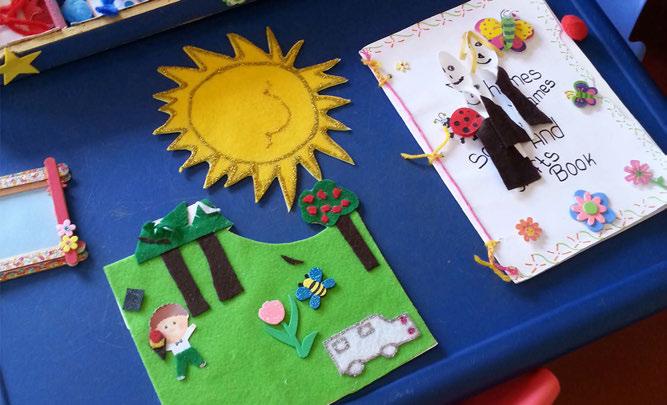
The learning environment is set up to support the curriculum content, children’s interests, cultural backgrounds and current events. The materials for children’s use are in ‘work corners’ set up for ease of access. Children’s work is displayed. The outdoor environment is set up to encourage exploration and fine motor skills development.
8 Provide a stimulating environment conducive for learning, reflecting children’s interests and regularly updated.
9 Establish a process for weekly planning with the teachers and for monthly review of work, and sustain the process with the participation of all the relevant staff.
5.3.2. Programme delivery – organizational elements:
z Continuous planning, present and future, both at the programme and class/room level
Planning happens at several levels:
X the school creates an action plan to address needs in the classrooms and in the wider school based on curriculum requirements and other factors, such as health, safety and accommodation;
X teachers create daily plans and participate with other teachers and assistants in team planning at the end of the day in preparation for the next; and
X children learn to plan their activities for a major part of the day in the ‘Plan, Do, Review’ approach to learning.
– ‘Planning’ and ‘Reviewing’ are processes undertaken together in the group, usually involving all the children in the class, in which everyone hears what individual children want to do before they start to do it, and after working on their plans, the children are brought together again to talk about what they have been doing and to reflect on their learning.
– The process of ‘Doing’ usually involves an appropriate length of time for an activity or project to get underway (for example building, painting or using books), for the teacher to guide the children and interact with them, and for children to make progress before becoming restless and wanting a change. Teacher judgement is used for determining when some children are happy and better off engaged in a learning activity for longer, and, based on the stage at which the activity or project has reached, plan to keep it undisturbed to be resumed later in the day or week.
z Continuous evaluation and monitoring, of programme and children
Monitoring and evaluation processes are undertaken routinely on a daily, weekly and termly basis by, respectively, teachers, teachers-in-charge/heads of schools and officers. Methods of recording what is monitored include:
X Anecdotal notes by teachers who record observations of children’s development and interests, to be used in planning on a weekly basis
X The Early Childhood Developmental Checklist together with the Teacher’s Guide (attached in Annexes C and D) are used to record children’s progress in four key areas: Social and Emotional Development; Physical Development and Health; Language, Literacy, and Communication; and Mathematics. It is used by teachers as a tool in monitoring and planning and is completed for each child over two academic years (ages 3+ and 4+), at the conclusion of which parents receive the completed copy.
X The HighScope Approach Checklist is a monitoring tool for teachers-in charge and officers to use jointly to monitor and evaluate the delivery of the programme in centres. It comprises areas of programme quality extracted from the Programme Quality Assessment (PQA)27 tool. Generally the Officer will use it on termly visits to the Centre as a tool to guide observation and discussion.
27 PQA Preschool Program Quality Assessment. Form A. Classroom Items Sections l – lV. 2003. Second Edition. Ypsilanti, MI: HighScope Foundation
10
Establish a straightforward, practicable monitoring process and system provide useful information on curriculum and programme progress and effects for children.
11 Provide a structure for regular and consistent guidance for teachers and practitioners to ensure they experience support and progress in curriculum aims with children.
In St. Kitts and Nevis the following measures are in use:
X The COR Advantage 28, a validated observation measure developed by the HighScope Foundation that facilitates teachers to objectively record child anecdotes throughout the day, use these notes to make daily plans, and share information with families to extend children’s learning at home.
X The PQA, used to monitor and document teaching practices, relationships with families, staff professional learning and administrative practices, for the purpose of improving same.
Trinidad and Tobago utilise their own quality assurance mechanisms and standardised instruments for monitoring and evaluating children’s progress. In Belize, evaluation of the ELLM Plus programme in the two preschools supported by La Isla Cariñosa Academy is undertaken as follows:
X An annual assessment of the physical environment using the Early Childhood Environment Rating Scale (Revised)(known as the ECERS-R) 29 each March;
X A biannual assessment of the academic content at the beginning of October and the end of May to measure programme effectiveness using the Test of Preschool Early Literacy (known as the TOPEL).30
z Frequent supervision and guidance for staff on-task
Teachers are supervised by Early Childhood Education Officers who visit the public preschools on a regular basis, at least twice per term and the private preschools once for the term. Team visits are made to preschools with particular challenges.
Guidance during the day, on task, is provided by teachers-in-charge/heads of schools.
Guidance can also be provided through discussions at district team meetings, organised once per term, and in meetings of teachers-in-charge also on a termly basis, and by participating in team visits and teacher exchange facilitated by the Ministry of Education Early Childhood Education Unit.
In Belize, the process of support to the ELLM Plus Programme through
28 http://coradvantage.org/
29 The ECERS-R has been used in fourteen CARICOM countries. For details on the instrument see:: http://ers.fpg.unc.edu/early-childhood-environment-rating-scale-ecers-r
30 The TOPEL is an early literacy assessment instrument by Lonigan, Wagner and Torgesen. It measures three important indicators of later success in learning to read: print knowledge, vocabulary, and phonological awareness. It is designed for preschool children ages 3-5 years. It takes approximately 30 minutes to administer and entails receptive responses (responding by pointing to a picture) and expressive responses (responding orally). For details on the instrument see: http://www.proedinc.com/customer/productView.aspx?ID=4020
supervision and through a professional development session for the teachers is planned on a weekly basis.
z Opportunities for continuous training and professional growth
The Ministry of Education provides in-service training in the curriculum through workshops provided in the summer. Topics are identified throughout the year on the needs emerging in the practice of the teachers.
Training is offered in the preschools once a year in the form of a professional development day. Team visits, teacher exchanges and the lesson study approach are undertaken to strengthen practice learned in training.
Regarding professional development and growth, certification programmes are provided as follows:
X The Theophilus Albert Marryshow Community College (TAMCC) has offered the two-year face-to-face Associate Degree programme in Early Childhood Education for one cycle; however, currently it is not being offered.
X The University of the West Indies Open Campus (UWIOC), through the country site in Grenada, offers the three-year online Bachelor Degree Programme in Early Childhood Development and Family Studies.19 teachers are pursuing this programme.
z Leadership that fosters communication, work as a team, information sharing, respect
Leadership is provided on-site in the preschools by the teacher-in-charge/head of school responsible for the tasks of action planning and general administration. Teachers participate in team planning for implementing the curriculum. There are monthly staff meetings for all teachers and practitioners in which information is shared. There is impromptu sharing throughout the working day.
In St Kitts and Nevis, an in-service training workshop has been provided on leadership to foster communication, team-working, sharing and respect. The Taking the Lead-Leadership and Personal Development Training Workshop was sponsored by the Basic Needs Trust Fund (BNTF) of the CDB.
z Efficient administrative procedures
The teacher-in-charge/head of the school is assisted by other teachers in the following areas of administration to:
X plan the implementation of activities for the school year;
X complete and submit records to the Ministry of Education (e.g., financial, statistical, plans, attendance) on a monthly basis;
12 Develop a programme for professional development that specifically addresses the needs of the curriculum, and provides teachers and practitioners with avenues to explore further professional development.
13 Provide professional development in skills required for supporting curriculum implementation including skills in leadership and management.
14 Communicate with parents about how the curriculum works, and how their children are doing, and how to complement the children’s learning at home and at school.
15 Help teachers and practitioners gain confidence in the curriculum approach and enjoy frequent interactions with children individually and in small groups.
X make log entries (including anecdotal notes on observations of children) and complete inventories (including those for replenishment of learning materials);
X complete developmental checklists;
X supervise and monitor teaching and learning;
X organize professional development sessions once per year for all staff;
X create and implement the school’s action plan for the curriculum; and
X address concerns and issues from parents and others.
5.3.3. Programme delivery – process elements
z A” good” relationship between parents and staff, characterised by frequent informal exchanges about children’s progress and well-being
The preschools facilitate the following activities to communicate with parents and to build relationships between parents and teachers.
X On a daily basis: Informal conversation and interaction with parents at child drop-off and pick-up times; and information on the parents’ bulletin board
X On a termly basis: Parents’ day when parents visit to see the work their children are doing; class meetings for parents; and meetings of the Parent Teacher Association (PTA)
X As needed or requested: Parents visit the centre to spend time watching what their children are doing; parent teacher conferences on children’s progress
X Other occasions: The PTA social
In Trinidad and Tobago, parents are also involved in the curriculum and utilized as ‘visiting experts’ in some projects and shared activities between parent and child. In Belize, parents are welcome in the preschool room at any time.
z Frequent, warm and responsive interactions between practitioners/teachers and children
The components of the daily routine facilitate and make time for interaction between teachers and children throughout the day. Some of the components are small group time, greeting time, plan-do-review and outside time.
z Children have opportunities to be in smaller groups most of the time or to be by themselves
The majority of the time that children are in the preschool, the daily routine provides them with opportunities to work in smaller groups or individually. These opportunities include small group time, plan-do-review, outside time, snack times, and rest time amongst others.
z Opportunities for children to initiate as well as listen
The basis of the plan-do-review learning process is that children learn to take the initiative in making choices about what they do. Planning and reviewing are processes undertaken in a group, usually involving all the children in the class, so children have opportunities to listen to one another’s plans and to hear how each child reviews what they have been doing. Children are encouraged to initiate as well as to listen to one another during the times they are doing activities.
Other opportunities to initiate and listen occur throughout the daily routine: greeting time, small group time, outside time, snack time, large group time, and outside time.
z Consistency in discipline and responsiveness
Consistency in discipline and responsiveness is encouraged through the following means.
X Activate participation: Children are busy, actively participating in their learning for most of the time in the preschool. They work with their own set of materials.
X Well organized learning environment: Children work in an environment that is organized for the purpose of supporting learning.
X Well structured routine for the day: The use of the message board informs the children in words, numbers and pictures of the daily routine, when the breaks occur, and what to expect at each point in the day.
X Shared control between teacher and children: Activities are planned and implemented by teacher and students together. The teacher and learners are partners in the learning process. The partnership encourages children to take responsibility for themselves and each other, to be self-controlled, and to be responsive to the teachers’ guidance.
X Responsiveness to difficulties: Some teachers use conflict resolution skills to help children manage their behaviour. Using a six-step approach to conflict resolution, teachers enable children to express emotions safely, come up with solutions, and become confident and capable problem-solvers.
z Children use safe, healthy, and hygienic practices
16 Support the process of children learning in small groups and individually, with teacher guidance to extend learning.
17 Build a balance of opportunities into the programme to enable and encourage children to initiate their own learning activities as well as to hear new ideas and suggestion
18 Develop strategies for children to experience and learn positive discipline and effective behaviour management.
19 Support children learning health and safety practices and becoming independent in looking after themselves and others around them.
Children learning the importance of and becoming proficient in the use of safe, healthy and hygienic practices is facilitated in the following ways:
X Hand washing is encouraged and monitored throughout the day by both staff and students, before meals, after using the toilets and after playing outside.
X Children are encouraged to tidy work and play areas after use, and before other children use them.
X Children clean tables after eating and are encouraged to brush their teeth after snack time.
X Parents are educated on how to support independence training in children with respect to looking after themselves.
z A structure was in existence to design and implement a reformed approach to the curriculum. Grenada has a long-established programme in early childhood education that had been operating with curriculum guides and programme guidelines. Eighty percent of the preschools in the country are publically funded. The Ministry of Education’s Early Childhood Unit provides oversight to the preschools amongst other responsibilities for support in the early grades of primary school. Early Childhood Officers are in the position of being able to develop curriculum reform in the context of supporting transition to kindergarten, and to years one and two of primary school, and continuity for children in public sector provision.
z Exposure to international reform of early childhood curricula and participation in regional technical processes to develop the Learning Outcomes for Early Childhood Development in the Caribbean (2004) and the Early Childhood Development Minimum Service Standard (2008)31 provided the impetus for curriculum reform at home. Support from regional development partners, notably UNICEF, provided the opportunity for orientation to the HighScope approach, and participation with three other OECS countries in a collaborative reform process.
z Regional cooperation in the form of study tours for officers and teachers to see the curriculum in action in another country was a very useful way of enabling practitioners to visualise the new curriculum approach. Grenada practitioners were hosted in St. Kitts and Nevis where there was over 20 years of experience in using a curriculum approach informed by HighScope principles. Support by St Kitts and Nevis for the process
31 See footnotes 10 and 11 above
in Grenada continued in the form of a visit by the Head of the Early Childhood Service in St Kitts and Nevis, to make a presentation to stakeholders on the implementation of the HighScope approach.
z National Policy in Grenada (2002, revised in 2007 following the passage of Hurricane Ivan) addressed the need to provide high-quality learning experiences and clear goals for comprehensive development of children in early childhood. The curriculum was therefore of great importance to the realization of Policy goals. Draft National Standards for early childhood services that are being used to provide guidance addressed the core components for effective programming for children. Use of the draft standards therefore required that a robust curriculum approach be put in place.
z Survey data (2000, 2005, 2014) provided a baseline of information on the key areas for curriculum reform in every preschool. The quality of access to the range of activities children should have, the indoor and outdoor learning environments, the learning materials and the physical health and safety provided for children enabled the Ministry of Education to estimate the scale of curriculum reform required.
z The education and training level of staff presented challenges for the development of confidence and competence in the new curriculum approach. Training needed to be provided at a greater depth and intensity than would probably have been the case had teachers been previously qualified at Associate Degree level or higher.
z Guidance and coaching of staff in supporting adult child interaction is an ongoing challenge that requires focus through both training and visits to centres. Understanding the importance of the quality of interaction, and developing the dispositions and skills in supporting it, are key to the development of thinking and reasoning in children, another area of focus in the training that has yet to be fully addressed.
z The shift in focus in the curriculum to children being actively engaged and making choices in learning requires learning environments and materials that enable access to children individually and in small groups as they work. This shift presented challenges for physical environments set up for more teacher-directed learning, and for the quantity and range of learning materials required to provide children with ready ‘hands-on’ access to learning.
z Winning support of parents for the new approach in the curriculum was challenging as parents needed to be persuaded that their children would
learn effectively, or more effectively, by being more ‘in charge’ of how they learned with the guidance and support of their teachers.
z The implementation of a Minimum Service Standard in the sector as a whole, for both public and private sector early childhood centres and preschools, has been constrained by delays in putting monitoring and enforcement mechanisms in place. This has had particular implications for monitoring quality in the private sector with regard to the curriculum offered, the delivery of the programme, the staff-child ratios and the preparation and support of staff.
z A review of the progress made in curriculum reform (2009-2013) in Grenada 32 found that the children are expecting the daily routine in 92% of cases observed and “are actively engaged in this part of the process”. This is an encouraging finding, indicative too of the work required over a five-year period to embed the new approach to the curriculum into the daily routine of the preschool programme.
z A number of positive benefits for the children from the curriculum approach are noted by the Early Childhood Development Unit in Grenada as follows:
X Improved access to learning resources in the environment:
– Children are making choices in their learning activities
– Materials are arranged in the environment for increasing children’s access and stimulating their interests
– Children are able to work at their own pace
X Communicative and engaged children:
– Children are sharing their ideas freely
– Children speak, and use an extended vocabulary with confidence
– Children are trying to solve problem and take risks
– Children are planning their activities and demonstrating decisionmaking skills
– Children are showing that they are motivated and are enjoying success in learning
32 UNICEF Office or the Eastern Caribbean. (2015) The Curriculum Reform Programme in Grenada. Report of a review undertaken September to November, 2015
Preschool c urriculum and P rogramme d elivery
X Children’s emotional development is supported through greater peer interactiuon:
– Children are observed to show empathy
– Children are self-controlled
X Children are planning and thinking about what they are learning:
– Children manage their time during activities and projects
– Children express their understanding in the review sessions about what they have been doing
z Parents’ feedback in parent-teacher conferences and in meetings has been very positive about the development of their children.
TARGET 4.2 Ensure all girls and boys have access to quality early childhood development, care and pre-primary education: Without good care and stimulation children cannot learn and thrive, and develop to their full potential. Access to education in preschool predicts lifetime achievement, but only if the programme offered is of good quality, comprising a warm, supportive teacher and a curriculum addressing all aspects of development and acquisition of both cognitive and no-cognitive skills. Access by poor and vulnerable children to good quality preschools provides them with the opportunity to ‘level the playing field’. Critically, access to good quality preschool can engage children’s parents at an early stage in their children’s education, and based on their children achieving, can provide momentum to sustaining the process of parents’ long term support to their children’s education.
ANNEX A. Alignment of the HighScope Key Developmental Indicators (KDI’s) with the Learning Outcomes (Mileposts of Development) for Early Childhood Development in the Caribbean
ANNEX B. Introduction of the HighScope Approach in phases 2008-2016, and Capacity Building
ANNEX C. The Early Childhood Developmental Checklist
ANNEX D. The Early Childhood Developmental Checklist Teacher’s Guide (2015)
Click the annex title to view the document online.
CARIBBEAN
IS THERE EVIDENCE FOR EFFECTIVE PRACTICE IN DESIGN OF EARLY CHILDHOOD LEARNING ENVIRONMENTS (PHYSICAL STRUCTURES?)
“The quality of the physical, designed environment of early childhood centres – size, density, privacy, well-defined activity settings, modified open-plan space, a variety of technical design features and the quality of outdoor play spaces – is related to children’s cognitive, social and emotional development 1”. A well-designed environment provides the setting with flexible space that can be adapted to the needs and interests of the children; be arranged and rearranged easily to make the learning opportunities interesting; and, can enable easy movement of adults and children between different activity areas. By enabling direct access to learning activities by children, the design encourages exploration, freedom of choice, social interaction and cooperation between children.
Learning environments that are designed for open access learning also provide staff with ease of visual supervision of children. They provide a better opportunity for interaction with children individually or in small groups than can be provided in environments set out for instruction of children in a whole group.
The location of the physical structure of the early childhood centre (away from persistent loud noise, pollutants and poor air quality), the quality of the physical infrastructure (adequate space indoors and outdoors, lighting and ventilation; functioning toilets, washing and food preparation facilities; sufficient and appropriate equipment in good repair) and the adherence to safety precautions, are associated with children’s safety, health and well-being. 2
1 Moore GT, Sugiyama T, O’Donnell L. 2003. Children’s Physical Environments Rating Scale. Faculty of Architecture, University of Sydney, Australia. http:// sydney.edu.au/architecture/documents/ebs/AECA_2003_paper.pdf
2 Myers R (2006) Quality in early childhood care and education programmes. Paper prepared for the Education for All Global Monitoring Report 2007 http://unesdoc.unesco.org/images/0014/001474/147473e.pdf
A well-designed environment provides the setting with flexible space that can be adapted to the needs and interests of the children...
Evidence from longitudinal research (1999-2003) in Jamaica 3 identified that the quality of physical space, equipment and furniture in the grade 1 learning environment (in which children are 6 years old) is a significant factor affecting cognitive outcomes and school achievement. Guidance has been provided in the region by way of scale drawings for learning spaces appropriate for both children birth to three years and children three years to school entry, and standards for space utilisation and equipment4. Most countries have surveyed learning environments5 and developed national recommendations for health and safety of the physical environment, space requirements per child, child sized furniture, a ‘cosy’ area, interest centres to stimulate children’s learning in at least three areas (e.g., reading, writing and art, construction and problem solving etc.), space for privacy, child related display, space and equipment for gross motor development. Design of good learning environments includes ease of visual supervision of children engaged in diverse activities, both indoors and outdoors, with convenient access to hand washing, toilet facilities, and spaces for rest and meals. Improvements in design have addressed adaptations for children with special needs and the development of flexible space for staff to meet with parents, to prepare learning activities, to store work and to take breaks.
3 Samms-Vaughan, M.E. (2004) Profiles: The Jamaican Preschool child. The Status of early childhood development in Jamaica. Planning Institute of Jamaica, Government of Jamaica: Kingston.
4 The University of the West Indies (Caribbean Child Development Centre). 2010. Learning Outcomes for Early Childhood Development in the Caribbean. A Handbook for Practitioners. http://www.globalchilddevelopment.org/news/learning-outcomesearly-childhood-development-caribbean-handbook-practitioners ; CARICOM Secretariat 2008. Regional Guidelines for developing Policy, regulation and standards in early childhood development services. http://caricom.org/store/ regional-guidelines-for-developing-Policy-regulation-and-standards-in-early
5 Since 2000, twelve CARICOM countries have undertaken either national surveys, or surveys using a representative sample, of early childhood facilities using the Early Childhood Environments Rating Scale (Revised) 1998.
1 Size and density of the centre: allow for children to be cared for in small enough groups/ spaces/rooms for the staff available to give the attention required.
2
Design of the learning and care space enables:
z simple movement of children and adults, including those with special physical needs, between activities and facilities (i.e., arrangement allows for ease of movement);
z flexible adaptation of the space to meet the needs of the group size (e.g., whole group, small group), types of activities and displays of children’s work;
z use of natural sources of light and ventilation;
z visual supervision of areas used by children for rest and activities;
z the environment to be free of chronic noise, toxins and pollutants;
z sufficient storage conveniently located for the learning area e.g., for mats, cots, basic equipment and materials;
z preparation of drinks and food; and
z safety features to be well maintained.
3 Access by the children:
z Facilities for handwashing and toileting are easily accessible by the children, preferably adjacent to the activity areas
z Space for rest is made available for children who need it on an individual basis and during group rest periods
z Design of the activity areas inside and outside optimizes use by children and minimizes interruption i.e., “messy” activities (using water, paint, sand, science equipment etc.) are separated from physical (gross motor) activities and quiet activities (using books, writing, numeracy and construction materials etc.)
z Design enables easy/seamless access between indoors and outdoors
z Small, private areas that are “cosy” allow for children to retreat into for calm and quiet activities
z Ceiling, wall and floor materials; furniture, fixtures and fittings are appropriate and placed/ sized for the ages of children
4 Location and site:
z Location of the building is free of hazards to children’s health and well being
z Site has room for play areas, solid waste storage, waste disposal and other amenities
z Site is secure or can be secured and provides access for emergency response and evacuation
5 Space for administration and meeting includes sufficient room for administration for:
z Office purposes and
z Meeting with parents
z Staff facilities to prepare activities and take breaks and meals
1 Include design requirements in the national standards for early childhood development.
2
Enforce the national standards when new facilities are being built or retro-fitted.
The selected Good Practice for the design of early childhood learning environments (physical structures) were the physical structures developed for nursery schools for children in the age range three years eight months to five years in Guyana, with additional examples of designs for nursery schools in Barbados serving a similar age group.
The guidelines for development of the physical structures in the learning environments in Guyana are enshrined in the Ministry of Education’s non-academic norms for nursery schools introduced in 2002. These norms stipulate the number of children to be housed, the child/teacher ratio, the space per child, the number of toilets, baths and the like.
The norms were developed as part of a process of modernising the physical structures for nursery schools. Prior to 1976, when the Government assumed supervision of nursery education, nursery schools were located as parts of private homes, sometimes underneath these homes. The practice then moved to construction of buildings with four walls and a roof, but no partitions.
The introduction of the Ministry’s non-academic norms in 2002 was followed in 2008 by the publication of the CARICOM Early Childhood Development Minimum Service Standard 6. These developments coincided with a need for bigger and better structures to offer services to a growing enrolment every year. Some of these new structures were funded by external agencies e.g., the BNTF of the CDB which also stipulated the use of the CARICOM Minimum Service Standard. As a result of these developments, nursery schools are now built with adequate space for children, appropriate toilets, rest areas, sick bay, appropriate facilities for children with special physical needs (e.g. ramps), Head Teacher’s office, staff room, kitchenette, store room and security huts.
The use of the standards is enforced through the procedures that are in place for approval and construction of nursery schools, which include provisions for the plans to be reviewed by the Assistant Chief Education Officer (N)7 before approval is given. Upon completion of the construction phase and before commissioning, the building is inspected by the Ministry of Education’s engineers housed in the Buildings Unit of the Ministry, accompanied by the ACEO (N), to ensure that the standards have been incorporated into the construction of the building.
6 CARICOM Secretariat 2008. Regional Guidelines for developing Policy, regulation and standards in early childhood development services. http://caricom.org/store/ regional-guidelines-for-developing-Policy-regulation-and-standards-in-early
7 ACEO (N) - Assistant Chief Education Officer, Nursery Schools
The following sections provide visual examples of how Guyana has incorporated the requirements from the standards into the design of their physical structures. Alternative examples from Barbados are also provided at relevant points.
Photo 1(a) – Tuschen Nursery – 250 children

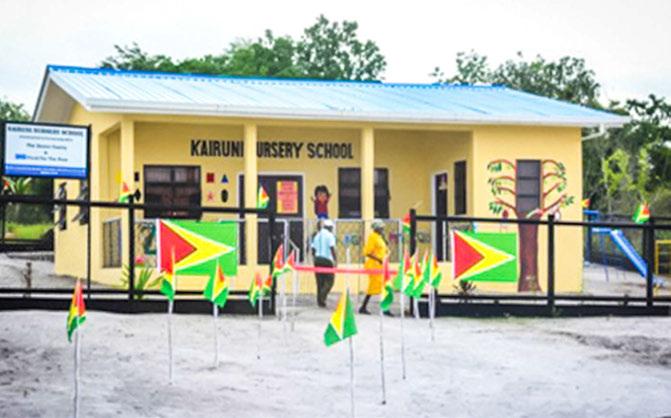
a Size and density of the centre allow for children to be cared for in small enough groups/spaces/ rooms for the staff available to give the attention required
The size of the centres is based on a class size of 20 children, and on a teacher-child ratio of 1:20 8 as enshrined in the non-academic standards. This was operationalised through ensuring that the overall size of the centres was appropriate for the number of children being targeted as illustrated in Photos 1(a) and 1(b).
8 This ratio is the maximum number of children allowed with one teacher. Children in the same age group who are not in the environment of a nursery school with a teacher but who are in day care with a caregiver are cared for on a ratio of 1:10.
b The appropriate design of the Learning and Care Space to achieve the referenced objectives is illustrated in Photos 2 – 8.
i) simple movement of children and adults, including those with special physical needs, between activities and facilities.
In photo 2(a), the layout of the room provides sufficient space for movement on all sides of the tables. This facilitates easy access to the children by the teachers and ease of movement around the room by the children.
All new schools are built with ramps and appropriate toilet facilities for children with special physical needs; renovations are being done to existing schools to make the provision appropriate.
ii) flexible adaptation to meet the needs of the group size (whole group, small group), types of activities and displays of children’s work
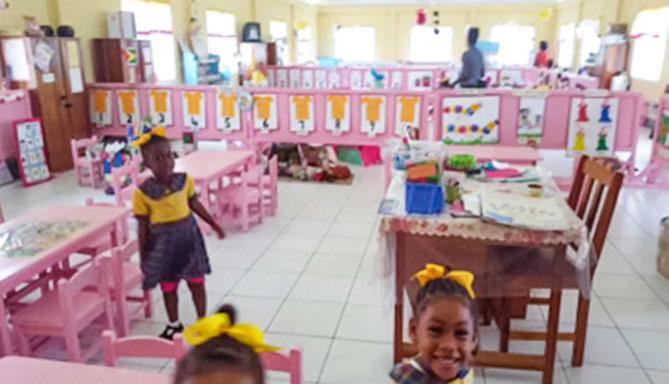
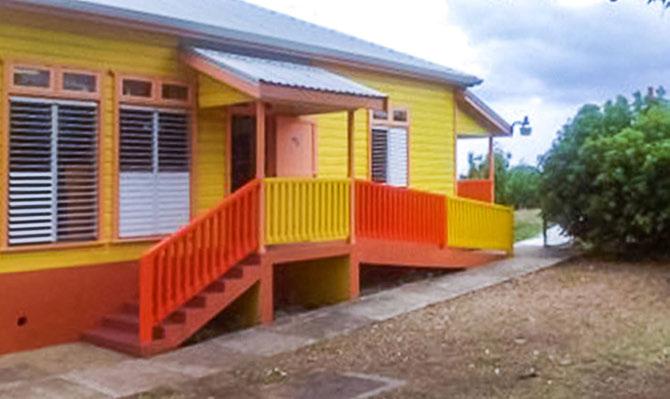
Design of Learning e nvironments(Phy sica L s tructures)
Photos 3(a) and 3(b) illustrate the flexibility of the room layout. This includes its use to facilitate group work among the children and to use the walls to display children’s work at children’s eye level.
Photo 3(c) from Barbados illustrates the use of the room layout for whole group activities.
iii) use of natural sources of light and ventilation
The multitude of windows in the building is clearly visible in Photo 4. The windows allow for inflow of natural light and ventilation.
iv) visual supervision of the areas used by children for rest and activities
The open floor layout of the room in Photo 5, with no permanent separation walls, allows the teacher to visually supervise the children while they are engaged in doing various activities and enhances teacher responsiveness and access, as well as the safety of the children. The use of movable screens allows for the separation between classes and provides flexibility for the reconfiguration of the room, as appropriate.
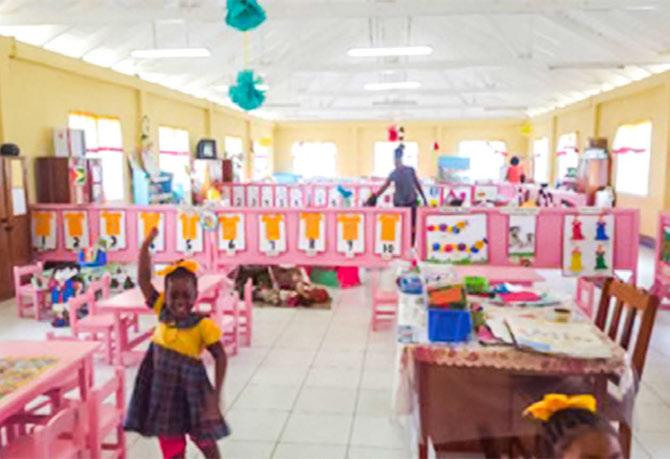
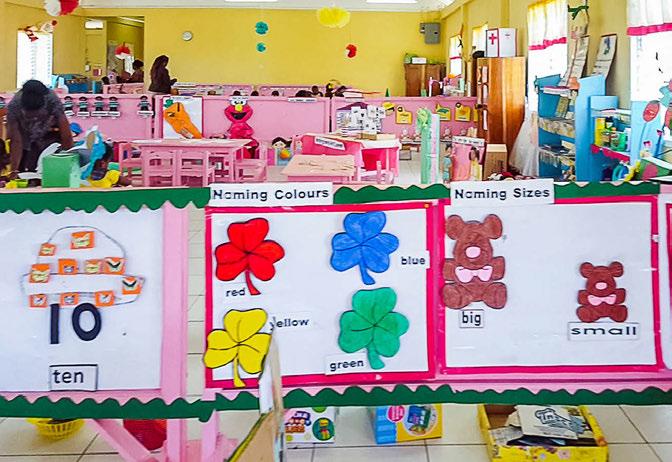
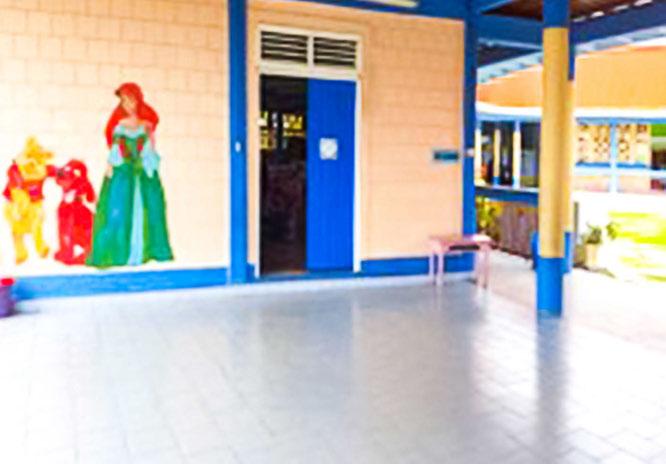
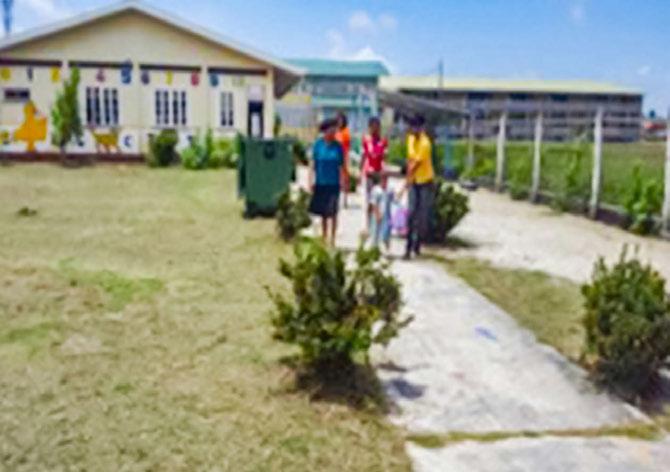
v) the environment to be free of chronic noise, toxins and pollutants
Photos 5(a) and 5(b) illustrate the cleanliness of the internal and external environment – essential for the health and safety of the children.
vi) sufficient storage conveniently located for the learning area e.g., for cots, mats, basic equipment and materials
Photos 6(a) and (b) illustrate the variety of storage options available. Each classroom has cupboards for teachers, as well as carpet/mats and book and lunch kit racks for the children.
of Learning e nvironments(Phy sica L s tructures)
7 – Facilities for preparation of drinks and food

vii) preparation of drinks and food
Each school has a kitchenette and Photo 7 illustrates some of the options available for preparation of drinks and food. There is also an ongoing, countrywide school feeding programme which distributes biscuits and juice (box), and therefore minimal preparation has to be done at the school.
viii) safety features to be well maintained
Photos 8 (a) and (b) illustrate some of the safety features, including a fire extinguisher on the inside and a fully secured entrance to the facility complete with a guard hut and a gate. About 90% of the schools are provided with guard huts, fenced compounds and fire extinguishers and adequate doors in case of emergencies.

Design of Learning e nvironments(Phy sica L s tructures)
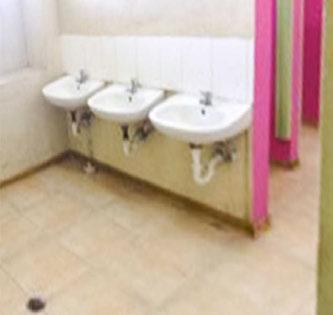
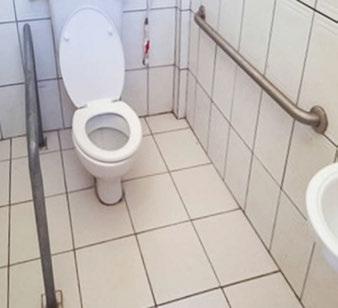
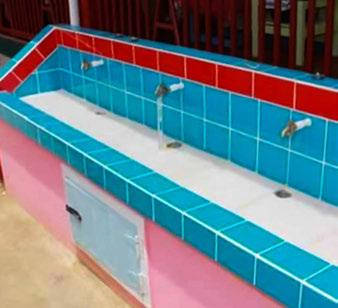
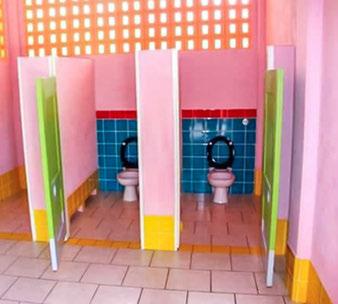
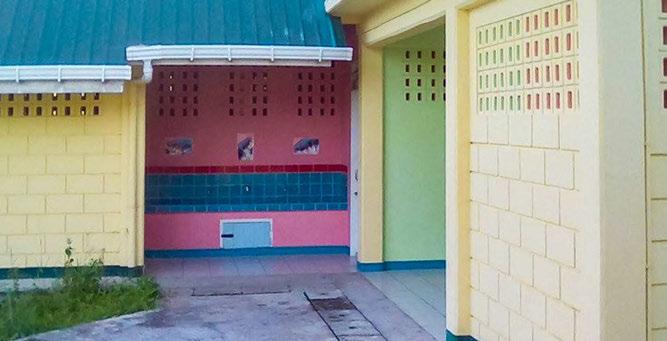
c Access by the children
i) Facilities for handwashing and toileting are easily accessible by the children, preferably adjacent to the activity areas
Photos 9(a), (b) and (c) illustrate provisions for toilets and handwashing. The facilities are all appropriately child-sized and the hand-washing trough is built separately - Photo 9 (b).
Photo 10 illustrates a bathroom outfitted for children with special needs, including a movable hand-bar and additional space for access by wheelchair users.
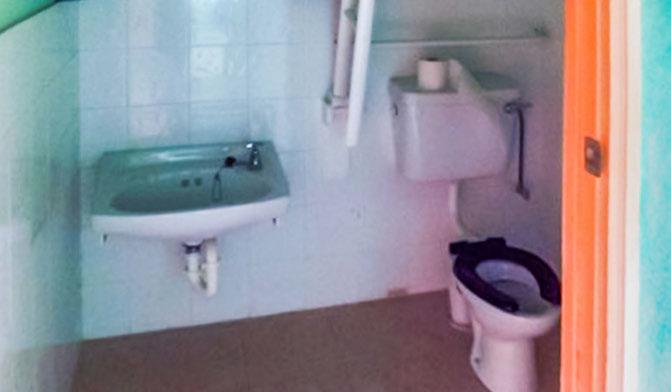
ii) Space for rest is made available for children who need it on an individual basis and during group rest periods
Photo 11 illustrates a separate rest room that is available for children who need it on an individual basis.
Design of Learning e nvironments(Phy sica L s tructures)
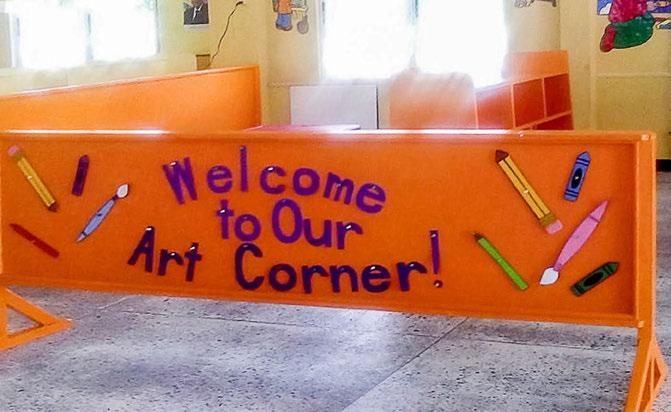
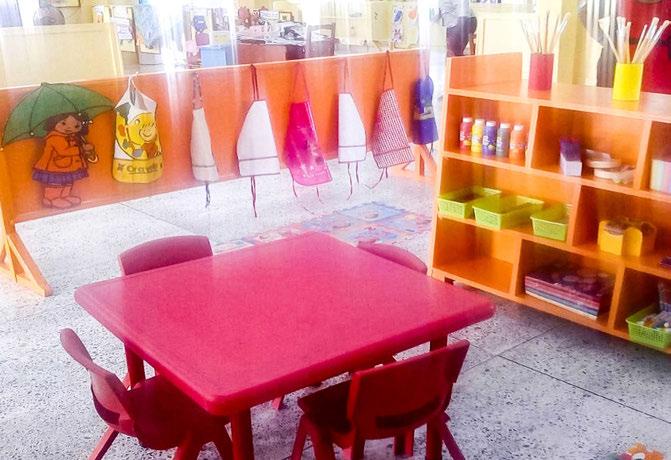
iii) Design of the activity areas inside and outside optimises use by children and minimises interruption i.e., “messy” activities (using water, paint, sand, science equipment etc.) are separated from physical (gross motor) activities and quiet activities (using books, writing, numeracy and construction materials etc.)
Photos 12 (a) to (d) illustrate the design of activity areas inside enabling ease of movement between and access to different learning activities set out in distinct areas.
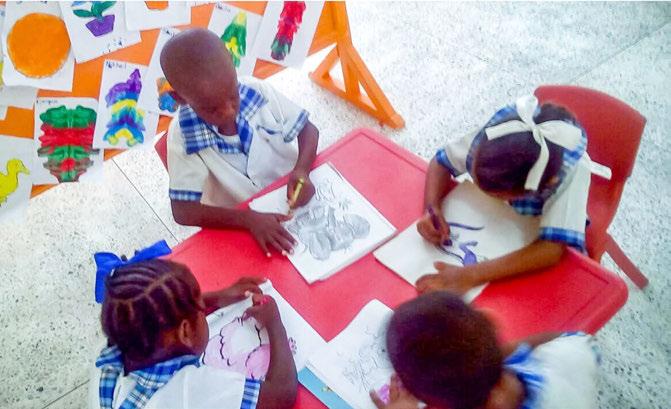
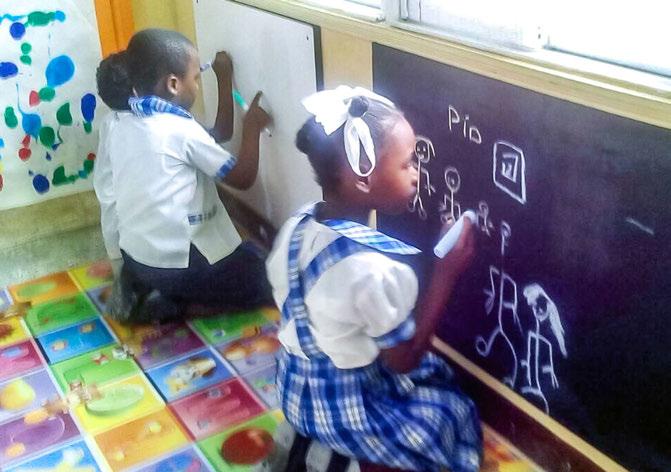
Design of Learning e nvironments(Phy sica L s tructures)
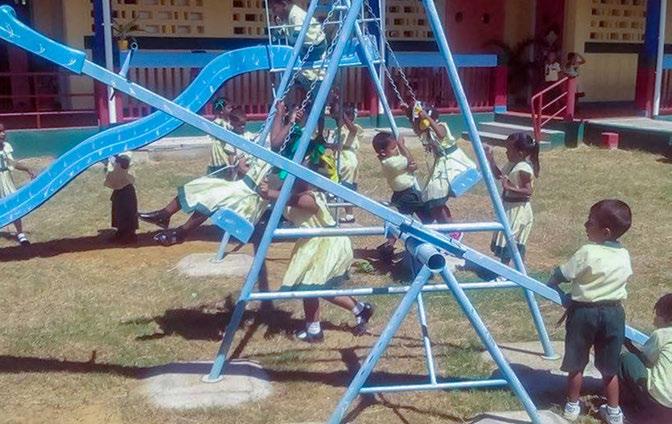
13
area for children to retreat to for quiet activities
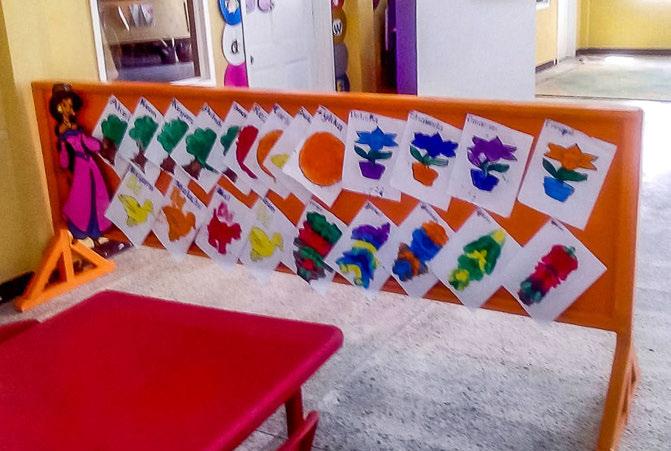
Photo 12(e) shows the outdoor area for gross motor development. The space and equipment provides for a range skills to be developed. The equipment is securely embedded in the ground in concrete. The play surface is grass, providing a soft surface within health and safety requirements.
iv) Design enables easy/ seamless access between indoor and outdoor areas
Photo 12(e) also illustrates the proximity of the indoor and outdoor areas and the easy/seamless access between the two areas.
v) Small, private areas that are “cosy” for children to retreat to for quiet activities
Photo 13 illustrates a quiet room where the child can engage in “quiet” activities.
vi) Ceiling, wall and floor materials; furniture, fixtures and fittings are appropriate and placed/ sized for the ages of children
The use of appropriate ceiling, wall and floor materials and child-sized furniture are illustrated in Photo 14 (same as Photo 4).
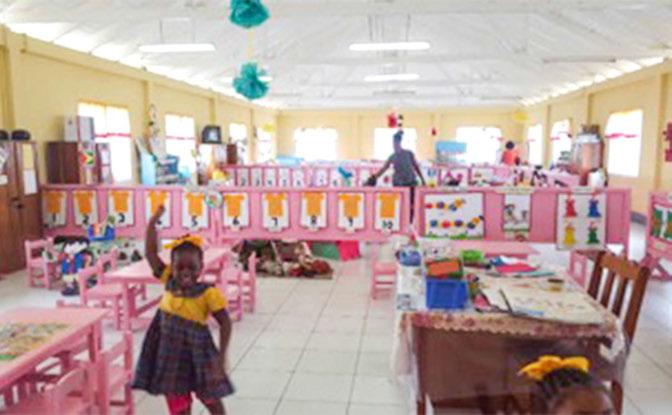
d Location and Site
i) Location of the building is free of hazards to children’s health and well being
Photo 15 shows the full compound free from hazards to children’s health and well-being.
ii) Site has room for play areas, solid waste storage, waste disposal and other amenities
Photo 15 also illustrates adequate outdoor space for play areas, with provision for a number of different play activities.
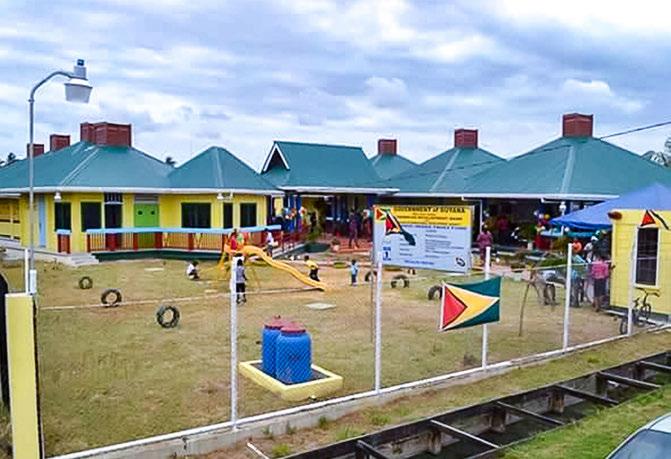
Design of Learning e nvironments(Phy sica L s tructures)
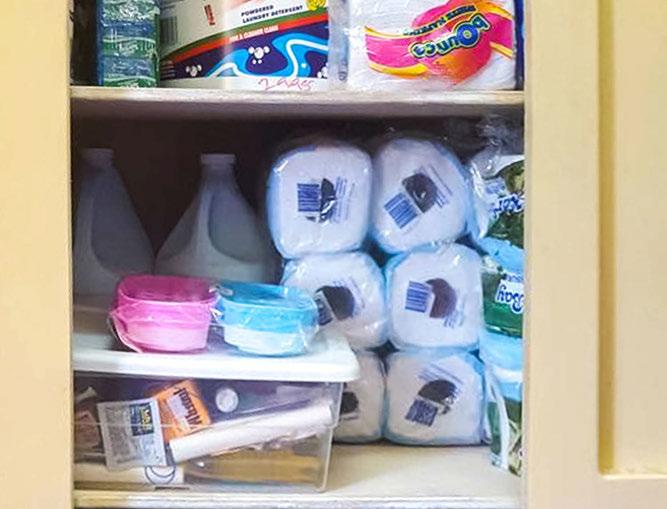
Photos 16(a) and (b) illustrate the availability of indoor storage cupboards and one of the uses of these cupboards, while Photos 16(c) and (d) illustrate provision for solid waste storage and disposal indoors and outdoors, respectively.
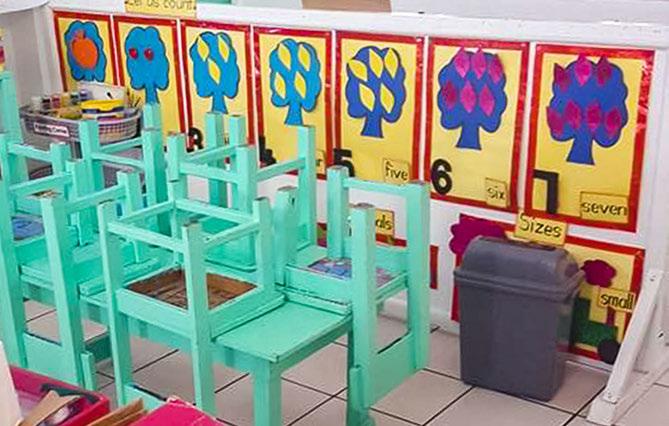
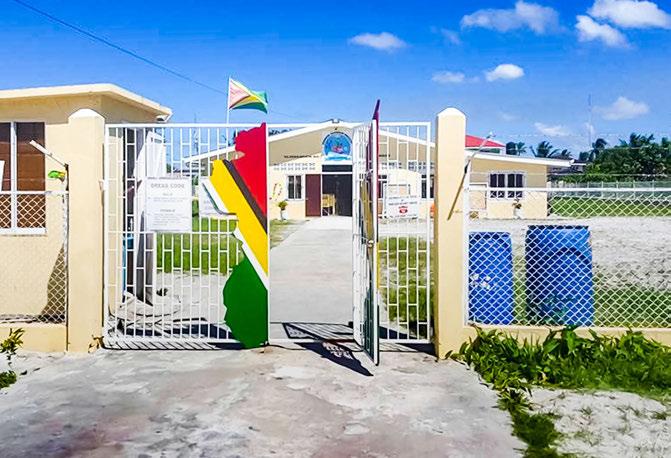
Design of Learning e nvironments(Phy sica L s tructures)

iii) Site is secure or can be secured
Photo 17, together with photo 15, demonstrate the security features of the site, including fencing for the enclosure and a guard hut used by the officials on duty.
iv) Site provides access for emergency response and evacuation
Photo 18 illustrates the designated parking and evacuation area to be used in the event of emergencies.
e Space for administration and meeting
v) Administrative office purposes
Photo 19 illustrates the office area that is available to staff for carrying out routine office work. The designated space meets the requirements for space for administration in the standards. The design enables the administrator to monitor all areas from his/her administrative space.
vi) Meeting with parents
Photos 20 and 21 provide two options for meeting with parents, the former in a small group setting and the latter in a larger group setting.
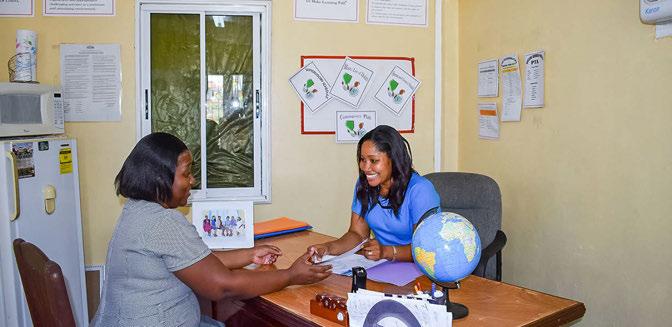
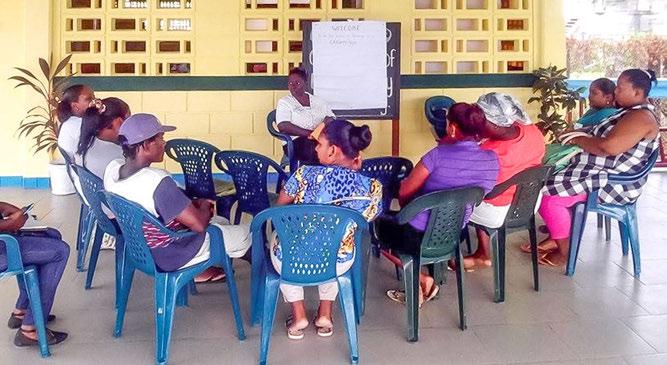
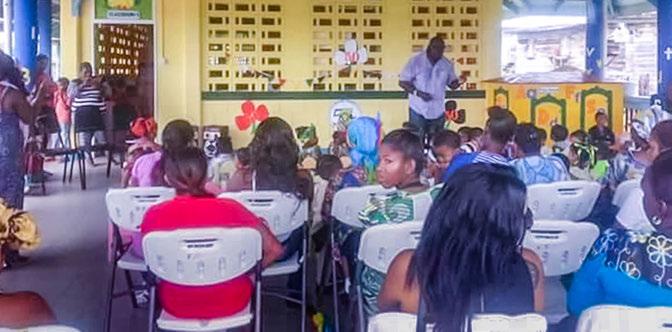
Design of Learning e nvironments(Phy sica L s tructures)
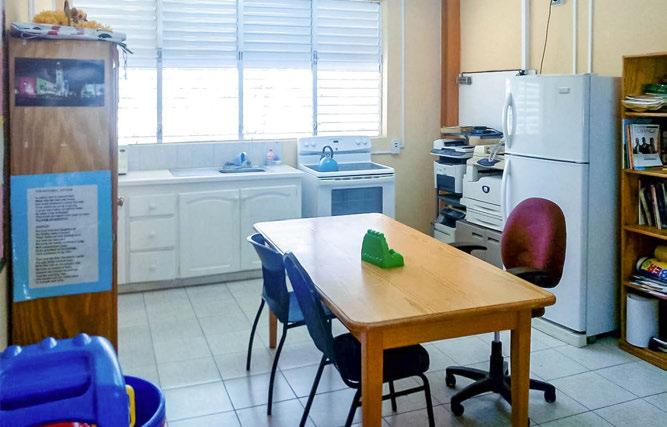
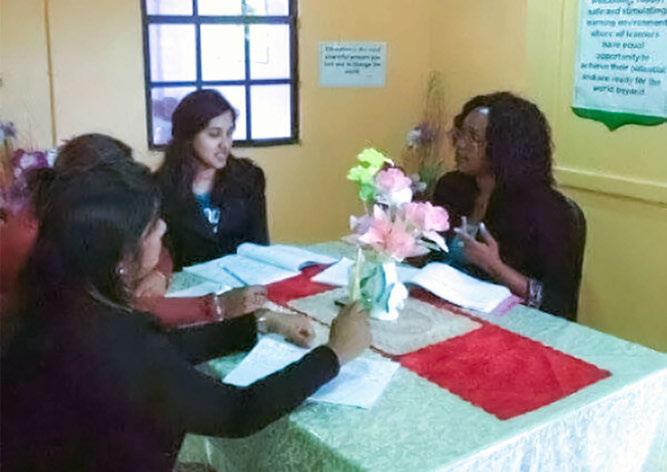
vii) Staff facilities to take breaks and meals
Photo 22 illustrates staff facilities for taking breaks and meals, with appropriate seating space as well as a stove, a refrigerator and facilities for clean up after a meal.
Photo 23 illustrates staff facilities for taking a break and interacting among themselves, including space for preparing activities and sharing with co-workers.
The successful introduction of these building standards and their use was facilitated by a number of factors, viz:
z government decision in 2002 to make the non-academic norms mandatory. These norms are under review and the Ministry of Education plans to revise them in 2017;
z the support received from funders and other stakeholders who stipulated that these norms and standards are compulsory for all buildings that they funded e.g., the BNTF; and
z the work of the Parent Action School Improvement Advisory Committees in the various districts. These Committees were active in identifying areas of needs and concerns through the development of School Improvement Plans and in ensuring that the schools were designed and built according to the set norms and standards.
There were many challenges encountered in implementing the recommended designs of the learning environments. These included:
z increased costs - the cost of a school building increased by a factor of at least 3x e.g. from an average of G$8M (60 children) to an average of G$25M for Grade C school; and an average of $12M to an average of $64M for Grade B school;
z space requirements - Some of the sites on which schools were currently located, or which were identified within communities, did not have sufficient space for providing all of the services required e.g., external play areas;
z dependence on other ministries and departments for putting in the required infrastructure e.g., proper access roads; and
z generating support among senior officials and Policy makers for investing in early childhood.
The enhancement of the learning environment (physical structures) has brought many benefits to the provision of early childhood services in Guyana. These include:
z increased stakeholder consultation related to the planning and construction of nursery school facilities. Prior to the introduction of these design requirements, there was never any prior consultation of early childhood personnel before the construction of nursery buildings. Consultation with key stakeholders is now an integral part of the planning and construction of such structures;
z better class control/management by teachers and improved supervision at all times;
z teachers enabled to recognise children’s abilities and talents and to encourage the development of specific areas of children’s interests;
z safe and secure classrooms with children more comfortable in a conducive environment;
z better participation by children in discussions and activities, including evidence of children completing tasks (take home projects) with assistance of the parents;
z more focused children with improved positive behaviours; and
z teaching children basic values such as packing away, taking turns and keeping their classroom clean and tidy after work/play.
This is evidenced by:
z increased participation in early childhood education - approximately 95% of nursery school-aged children are attending schools on the coastland and about 75% in the hinterlands;
z more parental involvement e.g. assisting children in completing take home projects;
z more regular attendance by children who are less prone to illness; and
z children who display more independence and are prepared to complete given tasks.
The Sustainable Development Goals, adopted by the United Nations in 2015, have placed early childhood development on the global agenda, with three targets that directly relate to the development of your children under the age of five:
a. Target 2.2. - By 2030, end all forms of malnutrition, including achieving, by 2025, the internationally agreed targets on stunting and wasting in children under 5 years of age, and address the nutritional needs of adolescent girls, pregnant and lactating women and older persons.
b. Target 3.2 - By 2030, end preventable deaths of new borns and children under 5 years of age, with all countries aiming to reduce neonatal mortality to at least as low as 12 per 1,000 live births and under 5 mortality to at least as low as 25 per 1,000 live births.
c. Target 4.2 - By 2030, ensure that all girls and boys have access to quality early childhood development, care and pre-primary education so that they are ready for primary education.
Achievement of the quality dimension of SDG Target 4.2 will be significantly enhanced by the availability of positive learning environments. The various dimensions of the physical structures discussed in this guide are essential components of positive learning environments. Their presence in early childhood settings will therefore contribute directly to the achievement of Target 4.2.
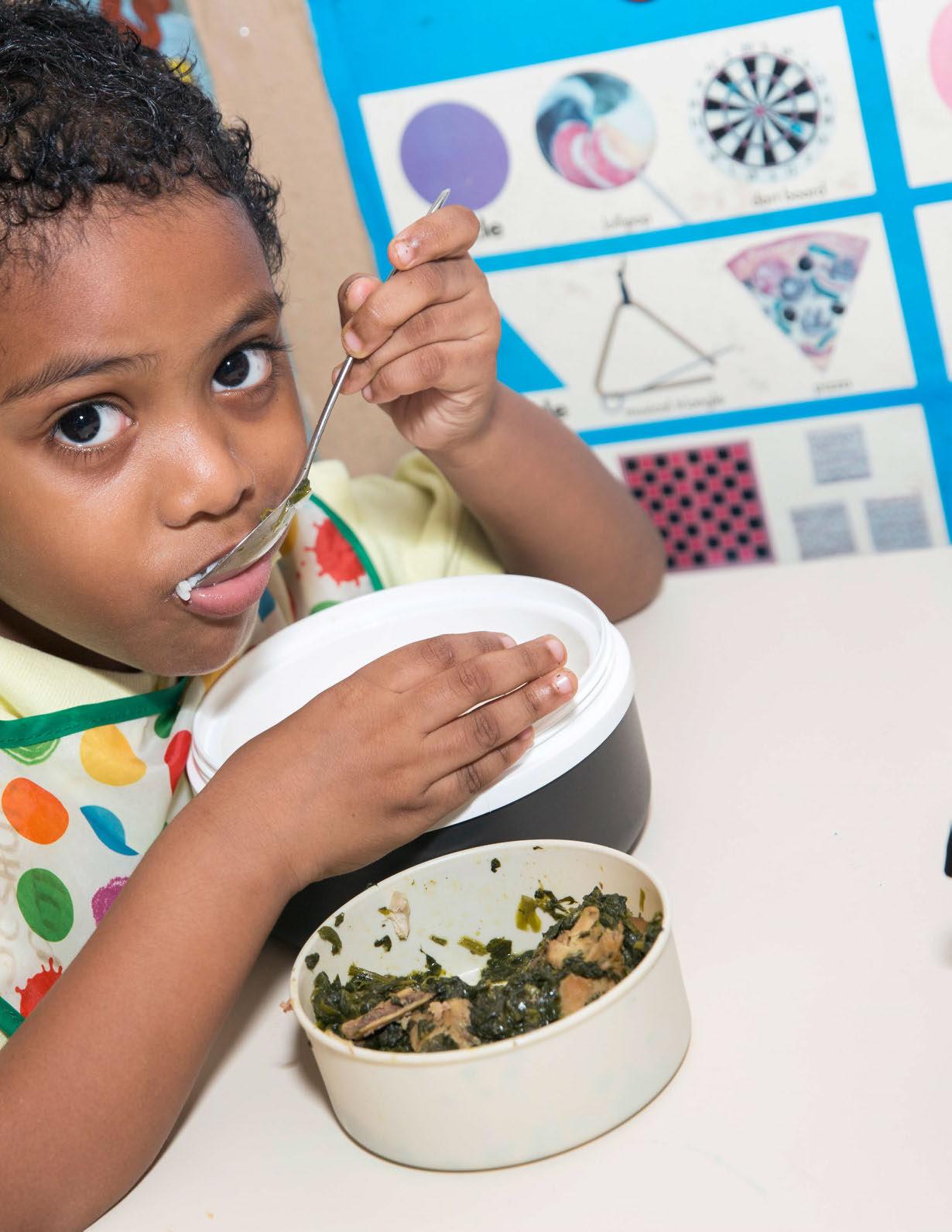

FOR EFFECTIVE PRACTICE IN TEACHER AND PRACTITIONER TRAINING
Well-educated, well-trained teachers and practitioners are the key factors in providing high-quality early childhood education and care with the most favourable cognitive and social outcomes for children. Harmonising expectations for teachers and practitioners encourages continuous child development of staff working with both younger and older children, in both education and in care settings 1. Effective training addresses the development of the skills of teachers and practitioners in both pedagogy and programme content, including:
Effective training addresses the development of the skills of teachers and practitioners... CARIBBEAN
z good understanding of child development and learning;
z ability to develop children’s perspectives;
z ability to praise, comfort, question and be responsive to children;
z leadership skills, problem solving and development of targeted lesson/ activity plans; and
z good vocabulary and ability to elicit children’s ideas2
While it is not necessary that all staff have high general levels of education, the presence of some highly qualified staff can have a positive influence on those who work with them and who do not have the same high qualifications 3 The Education for All Global Monitoring Report 2007 identified the quality of interaction between teacher/practitioner and child as the single most important determinant of programme success in early childhood 4 .
1 Shonkoff, J. P. and D. A. Phillips (2000), From Neurons to Neighborhoods: The Science of Early Childhood Development, National Academy Press, Washington DC.
2 OECD. 2012. Encouraging Quality in early childhood education and care. Research brief: Qualifications, Education and Professional Development Matter. Accessed on 18th March 2016 at http://www.oecd.org/education/school/49322232.pdf
3 Sammons P. 2010 “The EPPE Research Design: an educational effectiveness focus” in: Sylva et al. (eds.), Early Childhood Matters: Evidence from the Effective Preschool and Primary Education project, Routledge, London/New York.
4 UNESCO (2007) Education for All Global Monitoring Report
...most countries in the region are in the process of establishing programmes leading to the Associate Degree in Early Childhood Education.
The development of a child’s non-cognitive “soft” skills is as important as the cognitive skills for character, confidence and success in school and beyond5 Recent research has identified the critical importance of developing a child’s executive function 6 (the mental processes that enable humans to plan, focus attention, remember instructions and juggle multiple tasks successfully) and self-regulation (self-control), including the control of impulses and the development of positive behaviour. Therefore it is essential that training programmes equip staff to support the development of these skills in children.
Expectations for teacher and practitioner training are harmonised within the CARICOM Minimum Service Standard for ECD Services 7 in the profile and preparation for persons providing the care and learning experiences for children. Most teachers in the region in early childhood education do not have higher education, specifically Bachelor’s Degrees 8 ; however, most countries in the region are in the process of establishing programmes leading to the Associate Degree in Early Childhood Education. The region has had occupational standards, curricula and assessment procedures for the Caribbean Vocational Qualification (CVQ) in Early Childhood since 1999, but has not been able to fully implement a regional qualification structure 9. Teacher/ practitioner training programmes in four Eastern Caribbean countries and in Jamaica have been evaluated; The outcomes of the training in the Eastern Caribbean included a recommendation for more practical training of staff in the skills for adult–child interactions 10. In Jamaica, findings of the pilot of the Incredible Years Programme in community basic schools were promising; the programme was found to have increased teacher warmth; increased the extent to which teachers promoted social and emotional development skills; increased children’s appropriate behaviour, interest and enthusiasm; and increased the number of opportunities for children to share and help one another 11 .
5 Heckman J, Pinto R, Savelyev. 2013. P. Perry Preschool & Character: Character skills are more important than IQ in driving better life outcomes. Accessed 18th March 2016 at http://heckmanequation.org/content/resource/ research-summary-perry-preschool-and-character-skill-development
6 Key Concepts in the Science of Executive Function and Self-Regulation, Harvard Centre on the Developing Child, Accessed on16th January 2016 at http:// developingchild.harvard.edu/science/key-concepts/executive-function/
7 CARICOM Secretariat 2008. Regional Guidelines for developing Policy, regulation and standards in early childhood development services. CARICOM Secretariat, Turkeyen, Guyana
8 For example, less than 1% in Jamaica (Early Childhood Commission 2008. Practitioner Qualifications Survey.
9 Charles L and Williams S. 2010. ECCE in the Caribbean Community. Report prepared for the World Conference on Early Childhood Care and Education (WCECCE) MOSCOW, September 2010
10 UNICEF Eastern Caribbean Office 2014. Final Report For The Formative Evaluation Of The HighScope® Curriculum Reform Programme (Febru ary To November, 2014 )
11 Baker-Henningham, H., Walker, S., Powell, C., Meeks Gardner, J. 2009. A pilot study of the Incredible Years Teacher Training programme and a curriculum unit on social and emotional skills in community pre-schools in Jamaica. Accessed at http://incredibleyears. com/wp-content/uploads/a-pilot-study-jamaica.pdf on 14th Jan 2016. This programme is being published on line as the Irie Tool Kit and will be made freely available in 2016
1 Skills in supporting children learning and understanding learning/ development processes:
a. Good understanding of how children develop and learn, and the differences between boys and girls in interests and abilities at different developmental stages;
b. Ability to develop children’s perspectives;
c. Ability to praise, comfort, question and be responsive to children;
d. Leadership skills, problem solving and development of targeted lesson/activity plans;
e. Good vocabulary and ability to elicit children’s ideas. 2
Skills in managing behaviour of children and using positive discipline strategies
Skills in supporting development of children’s executive function
Ability to organize and manage the learning environment for children 5
Ability to encourage children to make choices in their learning
6 Skills in engaging parents in their children’s learning
7 Ability to include children with special needs and abilities, and with diverse first languages
The selected Good Practice for training and professional development is the programme developed for early childhood teachers and practitioners in Grenada in response to the introduction of the HighScope approach to the curriculum in early childhood settings. The programme’s components address all the elements in the conceptual framework.
It is important to clarify that the selected Good Practice is not part of any programme for certification or qualification training for example the Associate Degree or Bachelor’s Degree currently offered in the region. The programme in Grenada is designed specifically as an in-service professional development programme for both teachers and practitioners who are or will be implementing the HighScope approach.
There were also examples of good practice on some components of the conceptual framework in programmes in other countries. These included in-service training in Antigua and Barbuda and St Vincent and the Grenadines, and in-service, pre-service and certification training in Trinidad and Tobago. These are referenced as appropriate.
1 Structure a training programme to cover all the skills and understandings needed to implement active participatory learning with children.
Grenada is one of four Eastern Caribbean countries to have undertaken reform of curricula in early childhood settings utilizing support and guidance from the HighScope Foundation. The Foundation is known internationally for a model of active participatory learning that has demonstrated significant outcomes for children’s cognitive, linguistic, physical, emotional, spiritual, creative and social development. The outcomes are linked to a structured curriculum in which children are enabled to work in small groups, and to make choices in their learning for at least 50% of the time that they are in early childhood centres. Critical to the outcomes is the role of teachers and practitioners in implementing daily routines which include: (1) Small and large group activities; (2) Plan-Do- Review; and (3) Outside time 12 .
The Ministry of Education’s Early Childhood Development Unit has been providing in-service training for teachers and practitioners to implement the HighScope approach to active participatory learning. The process commenced in 2008 with the training of trainers (two persons) by the HighScope Foundation, a training that included orientation to the use of HighScope’s training modules. (See Annex A for the training of trainers outline).
The training of officers, teachers and practitioners commenced in September 2008 with five early childhood education officers and a ‘focus’ group of teachers from three pilot schools in the public sector. Support was provided to teachers in the focus group during the period 2008 to 2009 by officers visiting the centres. In 2009 and subsequent years up to 2015, all teachers in the public sector were clustered in groups by district for summer in-service training for three days within a two week time span. (See Annex B for the phased introduction of the approach). By 2015, the programme of training for public sector teachers had covered all current staff; it was extended in August 2015 to centres operating in the private sector.
The training programme uses reflective practice approaches including video sequences, made in Grenada, of teachers and practitioners in interaction with children. The learning from training is consolidated by teachers and practitioners through “lesson study” (observing other teachers and practitioners at work, followed by reflection and discussion), team visits to centres implementing good practice, and monthly supervision on site by early childhood officers to support implementation. The training methodologies used were interactive to ensure that teachers ‘learned through example’ about the importance of interaction to the children’s learning. (See the sample of activities used in Annex D).
Also introduced in the training is a methodology for assessment in which the
12 UNICEF Office or the Eastern Caribbean. 2014. Final Report For The Formative Evaluation Of The HighScope® Curriculum Reform Programme. See Page 7 and also: http://HighScope.org
teachers record anecdotes and observations of children utilising KDIs developed by the HighScope programme. (See Annex C for the Indicators). These records are used as the basis for planning activities. The progress of the teachers and practitioners following training is monitored by the use of checklists that have been adapted from the HighScope Programme Quality Assessment tool.
This systematic and phased approach to introducing the training and professional development required has been enabled through the commitment of the Government of Grenada and supported with funding for training and materials by the UNICEF Office for the Eastern Caribbean Area. As an in-service professional development programme, it is now institutionalised. By August, 2016 the programme covered all new staff entering the early childhood sector together with existing staff. One hundred and eighty five (185) teachers were trained in the public sector during the period 2008-2016. Over the period 2014 to 2016, eighty four teachers in the private sector were trained also. There have been approximately fifteen intakes of new teachers in the Public Sector within the last two years; these teachers together with the teachers from the private sector are the next groups to be trained.
7.3.1. Skills in supporting children learning and understanding learning/development processes:
a. Good understanding of how children develop and learn, and the differences between boys and girls in interests and abilities at different developmental stages;
The training includes understandings from research into brain development 13 and the implications for child development. Regarding skills to support development, the training includes strategies for adult-child interaction, assessment, arranging the learning environment and the daily routine. Gender differences are addressed in all the training components.
In Trinidad and Tobago, all teachers at the Government-owned Early Childhood Care and Education (ECCE) Centres, including those that are assisted by the Government, possess a Bachelor’s Degree Early Childhood Care and Education. The degree studies include courses that focus on developmental milestones of children and the operation of a fully integrated curriculum for care and education. Staff use narratives for recording observations during centre-based learning time, and developmental checklists for three and four year olds during the two year period at the centres to chart progress in acquisitions of academic, social and emotional skills.
b. Ability to develop children’s perspectives;
The training includes components on supporting children’s social and emotional development; confidence and skills in expressing choices; and skills in
13 Resources include Key Sites such as Hrvard’s Centre for the Developing Child http://developingchild.harvard.edu/ and the Science of Early Childhood Development http://www.scienceofecd.com/
2 Train in the principles of reflective practice, based on observations of how children learn and how adults interact with them to extend learning
3 Establish programme monitoring mechanisms for checking how the training is used in practice by teachers and practitioners.
4 Train teachers and practitioners in the use of monitoring instruments and developmental checklists.
5 Provide access to learning the science of early childhood development and the implications for practice with children.
6 Train teachers and practitioners to make themselves aware of children’s experiences and encourage children to express viewpoints.
7 Provide practical demonstration of how to create an emotionally supportive learning environment
8 Provide training in how to teach social and emotional skills to children.
9 Include in training the experience of planning and implementing activity plans specifically addressing areas of children’s development.
10 Provide learning experiences in the use of strategies to stimulate language, communication and listening skills.
making plans and decisions. Part of the training includes using social stories, a “strategy for solving classroom problems (social conflicts or problems with materials) and setting classroom goals or expectations” 14 .
In Antigua and Barbuda, where the HighScope approach has also been introduced into teacher and practitioner training, stimulating the children to think and express their viewpoints is considered a critical part of adult-child interaction.
In Trinidad and Tobago, teachers are exposed to thematic approach and project-based learning as part of certification training in early childhood care and education (ECCE). Through such training, teachers are provided the opportunity to learn ways in which they can offer opportunities for children to learn through self-initiated and self-directed learning.
c. Ability to praise, comfort, question and be responsive to children;
Training addresses how to establish an emotionally supportive learning environment; provide warmth in adult child interaction; and, support the development of children’s intrinsic motivation through encouraging children and responding to them consistently. Staff members are observed to work in partnership with the children and to build trusting relationships.
In Trinidad and Tobago, both pre-service and in-service training provide teachers and practitioners with different types of approaches to interacting with children, acknowledging that each child is unique. Teachers are taught to build relationships through positive interactions with the children.
d. Leadership skills, problem solving and development of targeted lesson/activity plans;
Training addresses team planning, based on monitoring and assessment of what the children are interested in and what they need, and problem solving strategies. Leadership qualities are addressed as a part of the process of working in a team, reaching consensus on activities and resolving difficulties as they arise. One of the methods used in training is for teachers and practitioners to experience the role of group leader during training sessions. The training addresses how to plan for children’s activities and learning using a lesson plan outline.
In Antigua Barbuda, activities target specific skills/concepts using appropriate teaching methodologies. The teacher maintains records of lessons planned in the ‘teacher plan book’.
In Trinidad and Tobago, teachers are trained in the process of developing plans for children’s learning and taking the lead for a class or for a centre. Internal assessments reveal that the notion of an integrated curriculum is
14 see http://www.HighScope.org/file/NewsandInformation/ Extensions/ExtVol27No1_Trainer.pdf
fully embraced and the capability of teachers to plan such is evident in their submission of standardised documentation.
e. Good vocabulary and ability to elicit children’s ideas
Training addresses skills in communication with children (e.g., open and closed questions); how implement the Plan, Do, Review process to encourage expression of children’s own ideas; how to respond to children’s actions and expressions; how to extend children’s learning in interaction with them; and ways in which to converse with children.
7.3.2. Skills in managing behaviour of children and using positive discipline strategies
Training in setting up an appropriate learning environment, with sufficient and interesting resources for all the children, together with a daily routine that enables children to know what to expect, is key to creating an environment that minimises the incidence of conflict and promotes cooperation. In addition, training addresses the skills teachers and practitioners need to help children learn how to resolve conflicts. Teachers and practitioners are trained in the use of ‘conscious discipline’. Using social stories with children is a method that assists children to cope with challenges they encounter in life. Teachers and practitioners are observed to model the behaviours expected of children, and to work very closely with them, sometimes side by side on the floor.
In St. Vincent and the Grenadines, students are taught practical strategies and the importance for positive discipline and a tolerant approach to children’s behaviours recognising the dignity and worth of each child, and the differences in their backgrounds including environmental influences that impact on behaviour. They are also taught various techniques for managing behaviour. The children are taught to be more tolerant of one another; to take a different or calmer approach to problem solving; to “say sorry”; and to show respect for each other. Classroom environments are also designed to encourage positive behaviours. Home Corners or quiet corners are an integral part of the classrooms and children are encouraged to use these when they feel stressed or troubled.
In Trinidad and Tobago, teachers are exposed to classroom management instructional techniques for managing student behaviour and facilitating their learning activities. Guidelines regarding the discipline of young children are set out in the Standards for regulating early childhood services, and under the Children’s Act, teachers are identified as ‘adults of trust’; these responsibilities are included in the training of teachers.
7.3.3. Skills in supporting development of children’s executive function
Training shows teachers and practitioners how to provide children with opportunities to manage their daily routine, e.g., using markers to identify the parts of the daily routine, and how to engage children in all aspects
11 Train in the skills required for behaviour management.
12 Teach the principles and purposes of positive discipline strategies, and provide opportunities to gain confidence in using strategies with children.
13 Teach the elements of executive function and provide guidance for integrating them to support children’s development.
14 Provide practical experience in imaginative ways to arrange the learning environment to stimulate learning through discovery, and respectful use by children of learning materials.
of the curriculum and to move easily between activities. Training in how to engage children in Plan, Do, Review is modelled on the skills needed for strong executive function, in particular those mental processes needed to focus attention and remember instructions.
In Trinidad and Tobago, teachers are trained at the degree level to use techniques such as creative play and scaffolding to support executive functioning. The variety of learning centres (e.g., sand and water, dramatic play, creative arts) that teachers set up for children are designed to support skills in focusing attention, staying on task and problem solving.
This ability is a central focus of training upon which many other areas of training depend and teachers and practitioners are guided in sessions and on site to arrange the learning environment in a way that facilitates access by children to resources and enables productive use of time on activities and projects. The training includes visits to observe good practice in well-organized settings and to stimulate ideas, sessions on the selection and use of materials for the learning environment and ideas for involving parents in the collection of materials, e.g., recyclable and natural items.
In Antigua Barbuda, there is a focus in the training on the learning environment being ‘child-friendly’, providing easy access for children’s choices without assistance. Children are observed developing as independent learners.
In Trinidad and Tobago, teachers are trained how to set up their space with clearly delineated learning centres. They are also trained internally on how to make the environment reflect a thematic or project-based approach to learning. The daily schedule is so structured that free play and learning activities based on the use of learning centres are featured daily. Interactions with materials are meaningful as teachers are encouraged to create themebased materials for use at the learning centres.
7.3.5. Ability to encourage children to make choices in their learning
Training addresses how to support active participatory learning through a process called ‘shared control practice’, in which learning through an activity initiated by adult or child, can be developed together or led by the child, and throughout which the teacher or practitioner can act as a sounding board for extending the learning. Training builds teacher and practitioner skills in “stepping back” from teaching directly and letting children who are trying to do multiple tasks at the same time find their own solutions. The focus on children working at their own pace reflects how individual children learn in their own way, occasionally making developmental leaps, and occasionally requiring more time and assistance from staff. Training demonstrates that this method of learning has the added advantage for children’s development through increasing the number of opportunities for children to share and help each other.
In Antigua Barbuda, training addresses five ingredients of active learning and teachers and practitioners are expected to give the children opportunities to make choices as a fundamental principle of access to activities. The training specifically addresses the ways in which teachers and practitioners can create these opportunities for children to choose, and to observe how the children “stay on target” longer as they have made their own choices and are motivated to learn the concept or skill that the activity involves.
In Trinidad and Tobago, strategies such as the use of thematic approach and project-based approach to learning are taught both at pre-service level and in-service training. Teachers and practitioners are trained to support children’s self-initiated and self-directed learning, and to understand that the skills children learn in this method can be applied to make choices throughout their lives.
7.3.6. Skills in engaging parents in their children’s learning
Training demonstrates the many ways in which parents can receive information about what their children are doing and learning, for example through parent teacher conferences, bulletin boards and meetings. Training addresses how to involve parents by engaging them in activities that assist their children’s learning. Also, training addresses how the ‘lesson study approach’ 15 can be used to help parents become aware of how and what their children are learning.
In St. Vincent and the Grenadines, students in training also conduct case and community studies as part of the training. These involve discussion with parents about their children’s progress, and plans for helping the family to cope and deal with the problems.
In Trinidad and Tobago, an integral part of the training component that teachers receive focuses on parent-teacher interaction, which encourages regular communication about children’s progress, interest, needs and daily experiences, based on the recognition that parents have a wealth of information about their children and that children progress better when home and school are cooperating and communicating well.
7.3.7. Ability to include children with special needs and abilities, and with diverse first languages
Training addresses knowledge of special education needs and how to implement inclusive education through planning for individual children, and developing activities to strengthen cooperation and interaction between all the children in the setting. Teachers and practitioners are trained in the use of Early Intervention Screening Instruments. The teachers and practitioners are observed to be better able to identify needs of children and to focus on the individual child’s engagement in activities.
15 The Lesson Study Approach is used in professional development to consolidate learning in training through structured observation of other teachers and practitioners at work, followed by reflection and discussion.
15 Train in the strategies for partnering with children on learning activities, providing guidance and challenges as needed.
16 Include strategies for engagement of parents in their children’s learning.
17 Train in the principles of inclusive education and in the strategies for meeting needs of individual children.
18 Provide learning opportunities in training for how to develop the spirit of cooperation and tolerance in groups of children.
In Trinidad and Tobago, there is a strong collaboration between the Early Childhood Care and Education Centres and the Student Support Services who lend support to children at the centres to which they are referred. These children are better able to function once assistance is received.
z Reforms in teacher and practitioner training to teach skills in supporting children’s active participatory learning have been driven in response to the modern understandings from neurological science of how children learn and develop best.
z National Policy and standards in Grenada as in other countries of the Caribbean have been developed to raise the quality of programmes offered in professional development at the early childhood level. Concern across the region with low achievement rates in primary school and attrition rates, particularly amongst boys, has focused Policy attention on interventions to improve children’s ‘readiness’ for school through provision of support to the early childhood level.
z Survey data (2000, 2005, 2014) on the quality of early childhood learning environments in early childhood centres provided information on the areas that could be improved through the professional development of staff. Access to training in effective methodologies for supporting children’s active participatory learning was made available through both technical and financial assistance.
z Grenada and other countries in the region have benefitted from regional initiatives to include the early childhood level in existing professional development programmes:
X The Joint Boards for Teacher Education (Mona and Cave Hill) developed programmes to transition from the diploma in teacher training into the Associate Degree in Early Childhood Education, and harmonized this with matriculation requirements for entry to the Bachelor’s Degree. Programmes at Associate and Bachelor’s levels are being delivered at both University and Tertiary College level, providing greater access to eligible candidates for teacher training.
X The Caribbean Association of National Training Agencies oversees the expansion of programmes for national vocational qualifications, and several territories are implementing these at the early childhood level. The National Council for Technical and Vocational Education and Training (NCTVET) Jamaica has developed programmes and certification for Levels I, II, and III. A number of countries in the region have used or adapted these or developed similar progression routes and programmes for national use.
z Grenada’s approach through in-service training was to initiate a reform process throughout the workforce commencing with a cluster of schools, and gradually scaling up to the workforce as a whole. The challenge is to harmonize the approach adopted with the programmes being offered by tertiary institutions in pre-service and certification training for both teachers and practitioners. The next steps are to ensure that agencies providing pre-service training and certification training for the workforce are orientated to the reforms, and that the skills and understandings required at the different levels of the workforce are built to existing programmes.
z Reforms in teacher and practitioner training are challenged to respond to the modern understanding of how children learn and develop best through active participatory learning. For many programmes in the region, this represents a shift from the more teacher-directed theme-based approach to the more learner-directed project-based approach in which the teacher suggests, guides, encourages and ‘comes alongside’ the child in his or her learning. It is a period of transition for many programmes as the focus is shifted to the skills and understandings required for learner-directed practice, responding to reform momentum from the field. In Trinidad and Tobago, the certificated teacher training includes the methodologies required for supporting both the thematic approach and project-based learning; through such training, teachers are provided the opportunity to learn ways in which they can offer opportunities for students to learn through self-initiated and self-directed learning.
z Some reforms in teacher and practitioner training are highly dependent on the support provided to staff in practice in the early childhood settings, over a long period of time, by both officers and principals, to enable them to utilise their training effectively. In particular, support through adherence to Policy on positive discipline is influential for staff being able to establish an emotionally supportive environment and Policy on the design of the learning environment is influential for setting up active participatory learning. Support to the process of professional development needs resources and leadership to be sustained and embedded over time.
z Resources for qualification training are constrained and access is currently a problem. The Associate Degree in Early Childhood Education offered by the tertiary college in Grenada, the T.A. Marryshow Community College (TAMCC), was offered for one cohort of students, but is not currently being offered. The UWI Cave Hill Bachelor’s Degree in Early Childhood Education is not offered in Grenada. The UWI Open Campus Bachelor’s Degree in Early Childhood Development and Family Studies is offered in Grenada, but it does not qualify teachers and does not provide for supervised teaching practice.
z A review of the progress made in training in relation to curriculum reform in Grenada found that the “teachers observed appear sufficiently empowered to deliver the curriculum and measure children’s developmental progress.” The review noted the intensity of effort over a four year period 2009 to 2013 in which “over 57 different training opportunities were provided to teachers, including Teacher-in-charge, for professional development in the HighScope Curriculum.” The practice of writing anecdotal notes and recording children’s development against the Key Developmental Indicators indicated that teachers and practitioners were reflecting on practice and looking for progress with children. Children are expecting the daily routine in 92% of cases observed and “are actively engaged in this part of the process”.
z A number of positive benefits for the training provided to teachers and practitioners are noted by the Early Childhood Development Unit in Grenada as follows:
X Improved management of the learning environment:
– Children are making choices in their learning activities
– Materials are arranged in the environment for increasing children’s access and stimulating their interests
– Children are able to work at their own pace
X Communicative and engaged children:
– Children are sharing their ideas freely
– Children speak, and use an extended vocabulary with confidence
– Children are trying to solve problem and take risks
– Children are planning their activities and demonstrating decisionmaking skills
– Children are showing that they are motivated and are enjoying success in learning
X Support for children’s emotional development;
– Children are observed to show empathy
– Children are self-controlled
X Children are planning and thinking about what they are learning:
– Children manage their time during activities and projects
– Children express their understanding in the review sessions about what they have been doing
z Similarly positive benefits for the training of teachers and practitioners in Trinidad and Tobago are observed. In addition, the ECCE Unit officers noted that children feel comfortable communicating with teachers. They are also inclined to share personal conflict they may be having at home sometimes. This would not be possible if teachers were not responsive and children were not trusting. Of particular note, children learn in a well-planned and well-resourced environment without fear of harsh punishment and appear excited to come to preschool. Children who are valued and whose parents are valued, progress well throughout the two-year period in which they attend the ECCE centre. Parental involvement is high at this level.
z An initiative undertaken in St. Vincent and the Grenadines for practitioners in training to undertake community study. This research activity helps practitioners pay attention to the influence of the community on the child and family, and understanding the realities of children’s lives.
z With regard to teacher and practitioner competence in monitoring their work, and utilise their learning to improve their practice, the following positive results are noted:
X In Grenada, changes in staff practice are reflected in feedback from parents, the planning charts that show how children plan their work, daily routine cards and ultimately by the outcomes of development checklist assessments of the children. The effects of the training are monitored on site by the use of a checklist and the trainer’s portfolio.
TARGET 4.2 Ensure all girls and boys have access to quality early childhood development, care and pre-primary education: Without good care and stimulation children cannot learn and thrive, and develop to their full potential. Inadequate teaching and care in early childhood centres result in inefficient investments in schools and remedial programmes later in life. Quality education predicts lifetime achievement, but can only be effective when children enter school ready to learn and schools are ready to support their learning. Support to poor children in both urban and rural areas in good quality early childhood programmes delivered by well trained teachers and practitioners provides children with opportunities to ‘level the playing field’ and to engage their parents in the process of long term involvement in their children’s education.
Teacher and Prac T i T io ner Training
ANNEX A. Outline of the training of trainers in the HighScope Approach
ANNEX B. Introduction of the HighScope approach in phases 2008-2016, and capacity building
ANNEX C. Preschool KDIs
ANNEX D. Sample training methodologies to transmit knowledge and skills in interactive learning
Click the annex title to view the document online.
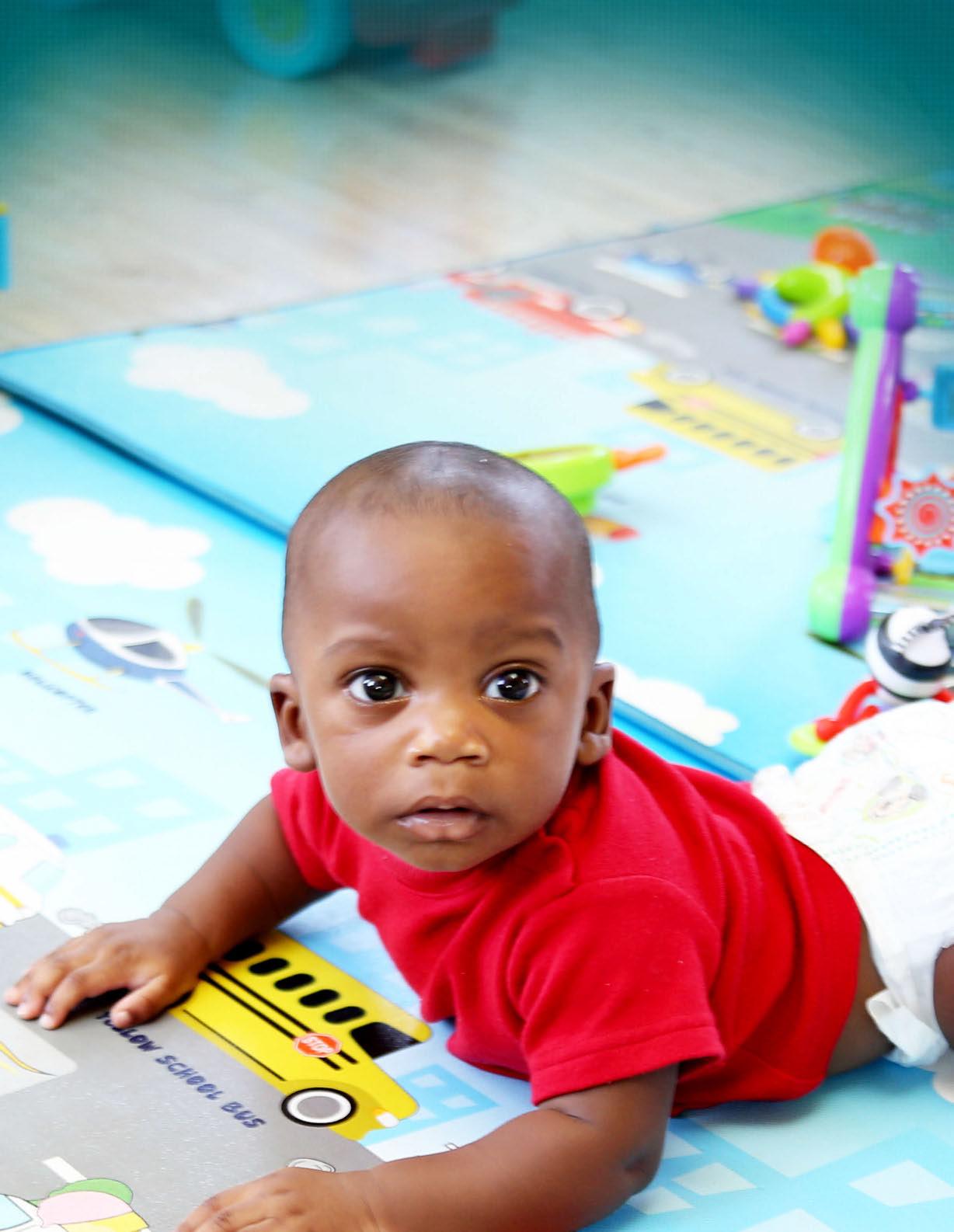
CARIBBEAN EARLY
IS THERE EVIDENCE FOR EFFECTIVE PRACTICE IN PARENT ENGAGEMENT?
Research studies have found that family engagement is a vital element in children’s success in education and life 1. Parental engagement can ‘level the playing field’ for the development of children from disadvantaged circumstances.2 When parents are engaged in their children’s learning and provide practical and emotional support for their learning at home, children can succeed ‘against the odds’ presented by their disadvantaged circumstances. Parents’ ability to communicate aspirations for their children and beliefs in the value of education, and to model these in their own conduct, was associated with the success of their children in early childhood and continuing schooling. Parent engagement is a critical mechanism for encouraging parents through the sharing of information and practical strategies to support their children’s learning - organisationally, emotionally, and on a sustained basis — throughout childhood. One of the elements of quality in programmes that has been consistently identified is the relationships that early childhood centres make with families 3
IS THERE EVIDENCE FROM WITHIN THE CARIBBEAN COMMUNITY (CARICOM)?
Children who are strongly connected to both their families and schools tend to demonstrate more positive than negative behaviours starting in the early years
Parent engagement is a critical mechanism for encouraging parents through the sharing of information and practical strategies...
1 Sourced from the Harvard Family Research Project accessed at http://www.hfrp.org/early-childhood-education
2 Siraj I and Mayo A 2014. Social Class and Educational Inequality. The impact of parents and schools. United Kingdom, Cambridge University Press
3 Myers R 2006; Denboba A, Sayre R, Wodon Q, Elder L, Rawlings L, Lombardi J. 2014. Stepping up Early Childhood Development: Investing in Young Children for High Returns. Washington, DC: World Bank
and continuing into adolescence.4 The connection is particularly important for keeping boys out of risk 5. Strategies that have been used in the region to engage parents include:
X Strengthening the home learning environment for young children through home-visiting to exchange information on what children are doing at home and in the learning setting, and to encourage use of practical ideas for supporting learning, including interaction with the child’s activities, and nurturing children socially and emotionally.
X Joint agreements between teacher/practitioner and parent on areas of learning to be supported and monitored together at home and in the learning setting over a defined period.
X Information sharing sessions at centres between parents and staff (in individual or group sessions) on learning strategies and how to put them into effect at home and at the setting.
X Dissemination of information for parents in digital formats, and in first languages (notably Spanish and French), to enable easy access to information in their own time.
X Giving “homework” a new meaning in early childhood as an activity that needs to be done by parents with children – for example, reading to children, doing activities together if only for five minutes a day, involving children in nutrition (growing, buying, preparing nutritious food), showing affection/praising the child, using positive discipline, and assisting the child with self-help activities. In Guyana, for example, at home time on Fridays, children are invited to select from a box a folded card on which an activity is described for the child to do with a family member that weekend. The card is brought back at the start of the week and the child invited to tell the story of doing the activity.
4 Blum and others 2003. Adolescent Health in the Caribbean: Risk and Protective Factors. American Journal of Public Health, March 2003, Vol 93, No. 3, by Robert W. Blum, MD, PhD, Linda Halcón, PhD, MPH, Trish Beuhring, PhD, Ernest Pate, MD, Sheila Campbell-Forrester, MD, MPH, and Anneke Venema, MD; 5 Brown, J. and Chevannes, B. 1998. Why Man Stay So. An examination of Gender Socialization in the Caribbean. Caribbean Child development Centre, UWI: Jamaica
a The early childhood setting states its approach to engaging parents in their children’s learning.
b Staff responsibilities include engagement of parents.
c A good two-way relationship exists between parents and staff, characterized by frequent informal exchanges about children’s progress and well-being.
d Strategies to engage parents in their children’s learning and development are in use and may include:
X Home visits undertaken for information sharing during which both staff and parents learn about what children are doing/able to do
X Staff sharing information at the setting with groups of parents, or on a one to one basis, on practical strategies for encouraging learning, interaction and nurturing
X Information on supporting children’s development provided in first languages used by parents
X Digital formats used for dissemination of parenting information
X Children given “homework” to do by actively engaging their parents in a learning activity at home
X Efforts are made to engage fathers as well as mothers in their children’s learning.
e Joint planning is undertaken routinely between staff and parents to identify and agree on support strategies for the child over defined periods, which are reviewed and evaluated together.
f Transitions of children to other learning settings including primary school are planned and implemented with parents.
The selected Good Practice for early childhood Policy development was the practice from the Little Trotters Farm and Nursery School in the Cayman Islands.
There were also a number of approaches identified for engaging parents both through centres and through community and national processes, examples of which were recommended for inclusion in the Guide. These are referenced where appropriate.
...one of the strengths of the school is its communication with parents...
The Policy for communicating and working with parents of children attending the Little Trotters Farm and Nursery School is set out on their website.6 The 2013 quality assurance report on the nursery school, published online 7 , notes that one of the strengths of the school is its communication with parents, as evidenced by the effective operation of its open door Policy and the mechanisms for engaging parents in the work their children are doing.
The context for the design of the practice in parent engagement is as follows: the school is privately owned and entirely funded by income from parental fees. It provides education and care from 7.30 in the morning to 5.30 in the evening, all year round. Children can attend for five morning sessions a week, or five afternoon sessions, or for a full day five days a week. Of the 86 children enrolled (2013 figures), a third of the intake were Caymanian. The ages of children range from 18 months old to the age of entry to primary school8. Most of the parents are committed in the daytime with work. The school has a staff group of 14, all of whom are trained at varying levels, and five of whom are qualified and licensed to teach in the Cayman Islands. In summary, the school has built a secure foundation as evidenced by the low turnover of staff and stable financing.
Little Trotters has an open-door Policy for parents which allows them to stop by at any time and have all concerns and questions treated with respect and understanding. The Policy is written and given to parents (see Annex A) together with a ‘Welcome Note’ (see a sample at Annex F).
The key expectations of parents are:
z showing respect for the children’s ‘space’ where they work when parents stop by;
z supporting the transition and settling in of children at different ages and stages;
6 Details on the school can be found on its website at http://www.littletrotters.ky/
7 Data from 2013. See the Inspection Report at http://www.education. gov.ky/portal/page/portal/esahome/publications/early-childhood-careeducation-Inspection-progress-report/little-trotters-farm-nursery-school/ Little-Trotters-Farm-Nursery-School-Inspection-Report-June-2013.pdf
8 In the Cayman Islands, the age of compulsory education is four years nine months old. Children can be admitted to the kindergarten class of the primary school at age four years if they are turning five years of age during the school year. http:// www.caymannewresident.com/education-schools-cayman-islands
z exchanging with staff on a daily basis and arranging to meet on any matters of concern;
z understanding the approach to learning that the school is using, and the mechanisms for sharing information with parents on a weekly basis; and
z appreciating responsibilities parents have for two-way communication with the school.
The Policy also addresses expectations, responsibilities and safeguards for nutrition, health, rest, safety and emergencies.
Montserrat also highlighted the use of a similar open-door Policy under which parents were encouraged to visit the centres at any time.
Strategies were identified to encourage the wider participation of fathers in their children’s development, particularly in situations where a child’s relationship with the father is threatened or absent, viz:
X Involving fathers in the day to day running of an early childhood service: one example is of teachers preparing fathers to take over the running of a preschool for a whole day, during which the teachers left for the day leaving the fathers in charge. It was considered a unique experience as an effort to help fathers understand how important this stage of child development is, and to help make them more comfortable with the small tasks required throughout the day and to build an appreciation for the role of the caregivers.
X Organising events designed to attract a participation of fathers: one example in Jamaica 9 was of a Parents’ Sports Day held by a group of schools together in which mothers and fathers competed in a variety of sports activities throughout the day. Participation of fathers is always high in this kind of activity.
8.3.2. Staff responsibilities include engagement of parents
Engagement of parents at Little Trotters is an integral part of the operations of the school. All staff members have as part of their signed job description ( a sample is attached at Annex B ) that they are expected to communicate with parents on the progress of their children. In practice, this communication takes the following forms:
9 The Project is supported by the Barita Education Foundation, a charitable organization providing support for the development of literacy and numeracy in preschool aged children in vulnerable communities. A critical component of the programme is developing effective participation of parents in the children’s learning.. http://www.barita.com/foundation-about-us
1 Have a clear Policy that encourages parents to engage in their children’s development.
2 Actively support the Policy with opportunities and activities for parental engagement.
3 Include responsibility for communication with parents in the job description of all staff members.
4 Ensure staff maintains contact with parents on matters related to each child’s development.
5 Utilise a wide variety of different strategies to engage parents.
z Informal communication by engaging parents in conversation about their children by telling anecdotes of the day, thus forming an open and easy relationship of relaxed and enjoyable communication; and
z Formal communication through monitoring of children’s progress using a developmental checklist, based on which parents receive a formal written report once a year.
The school organizes various events throughout the year e.g. a cancer run, charity disco, earth day event, and the like, that all require parental involvement to ensure their success. The oldest class has a bake sale, a Christmas concert and the graduation ceremony; the parents are actively invited into the classroom for all these events. The two younger classes do not host such events as the school has found it to be detrimental to the children’s day if their parents come to see them and then leave without them.
The staff is also very prompt, after observation and using correct channels, in approaching parents when they have developmental concerns about their child.
Little Trotters utilises a number of different strategies to engage parents in their children’s learning and development. These include, viz:
a weekly newsletters from each class that demonstrate to parents what their children have been working on and will be working on in the coming week. (Annex C has a sample);
b a poster on each classroom door to let the parents know what to expect each week;
c a report on each child’s progress drawing on a developmental checklist which is included in the report, together with a summary written by the teacher. (Samples are attached at Annexes D and E ); and
d a parents’ evening in each class each year. The focus of this meeting is to provide feedback to parents on progress in the class, together with future plans for discussion. A month prior to the meeting, parents receive the children’s reports which provide them with up to date information for participating in the meeting.
Additional strategies were highlighted by other countries, both at the individual centre level and the national level:
a Practical “homework” for children to do with parents to strengthen social and emotional learning (Guyana).
b Use of online communication e.g. the Tapestry in the Turks and Caicos Islands10. This is an online, password-protected, secure, screener tool allowing parents to track children’s development against the expected milestones for their age. The Tapestry service enables parents to log on to see what their child has been enjoying and learning during the day, view work they have created and photos. It acts as a ‘journal’ mechanism in which parents and staff can upload observations, record progress of child, comments by parents, videos of the child’s activities and the like.
c Use of Facebook e.g. a Facebook page and blog (Anguilla).
a Use of parents and family members as resource persons who share skills with practitioners or directly with the children (Montserrat).
b Strong parental focus for Early Childhood month, with wide range of activities for parents including reading stories to the children, playing indoor and outdoor games, accompanying the centres on field trips, and the like. (Montserrat).
c Annual awards for parents and community members for their collaboration (Montserrat).
d Participation of parents in school-related activities e.g. building projects (The Bahamas).
e Making parents aware generally at the national level through a national Parent Teacher Association (PTA) structure; parenting programmes in the media at strategic points in the day (St. Lucia).
f Making resources available for parents to use: Early Childhood Resource Centres housing ‘Parents Places’ (Jamaica); Learning Channel on television (Guyana).
g Reaching parents who are not literate - e.g. distributing packages for parents through the Basic Education Access, Management, and Support (BEAMS) programme (Guyana).
h Engaging parents in indigenous populations who do not have access to centres (Belize and Guyana).
10 http://www.internationalschooltci.com/nursery-school/
6 Discuss concerns about children’s development with parents and plan a course of action to address them.
7 Transition planning with parents is beneficial.
i Parenting education and information sessions e.g. on healthy eating (The Bahamas).
j Reaching parents who speak other languages through duallanguage communications (Anguilla) and posters in health centres (Guyana).
Little Trotters also works with the home to address individual needs of the children should the need arise. Strategies in this regard include the following:
a Meeting with parents at their request where there are concerns about their child’s development or progress and agreeing together on a course of action, e.g. focusing attention to address the concern, monitoring, working on complementary strategies at home and school concurrently and reviewing progress; and
b Initiating a meeting with parents on an observation made about their child, which needs discussion. Where a developmental concern needs input from a specialist, the school will talk to the parent about a referral to the Early Intervention Programme (Cayman Islands Government) for assessment.
In Montserrat, such joint planning is done during PTA. meetings and Open Days, where parents and staff discuss ways to support the children’s developmental progress.
Towards the end of the school year, the Little Trotters Nursery School holds discussions and role plays during which the children are exposed to the idea of moving to another school, and the expectations. Parents are welcome to attend.
The school also has a ‘graduation ceremony’ for the children who are leaving which the parents attend.
In the Montserrat case, there is also an annual group orientation for new parents, as well as transition planning for the children who will be departing.
The parent engagement practices at Little Trotters are facilitated by a number of factors including:
z the availability of well-trained, motivated staff members, who have access to
professional development opportunities at the school to develop both skills and strategies in how to engage parents, notably building confidence in dealing with interactions with parents and following up on concerns about children’s development;
z the leadership of the school that emphasises the central importance of the engagement of parents for the long term education and development of the child;
z the employment practice of the owner to employ persons with good ‘people skills’, able to communicate easily and confidently with others, and to ensure that staff are happy and supported in their jobs. This practice has resulted in a team of people who represent the school in a very positive manner and who are relaxed when communicating with the parents;
z the financial stability of the school which enables good terms and conditions for staff, thus securing a low turnover and consistency with regard to building relationships with children and their parents; and
z a “whole school” approach as evidenced by the Policy of the school, the cooperation of parents, the progress of the children, and the commitment of staff with regard to on-going professional development. These points are noted in the Inspection Report 2013.
z Where staff do not implement the Policy for working with parents wholeheartedly, it is essential to act quickly to intervene with the staff concerned to ensure the Policy is understood and that they have the disposition and the confidence to implement it. The open communication Policy must be applicable to staff and parents alike, and issues dealt with quickly in a supportive manner;
z Staff need to be constantly appraised of changes in family structures and living arrangements for children so as to operate sensitively in communicating with parents and wider family members, and to be aware of arrangements for children’s safety and well-being, should these change suddenly;
z The application of the basic principles of parent engagement through respectful, warm communication and information sharing in support of children’s development is essential in settings that are relatively resource-poor compared to the one identified in Little Trotters as a comprehensive good practice. Areas in which action could be taken include:
X parent engagement strategies to be a focus of professional development;
X recruitment of staff to include assessment of applicants’ disposition to working with parents as partners;
X sector/centre efforts to engage parents to be included in registration compliance;
X responsibility for engaging parents to be included as an element in the job descriptions of staff and signed by staff;
X parent engagement strategies to be included in monitoring checklists for standards at centre and at national levels; and
X parent engagement to be included in centre Policy and in national ECD Policy.
The ongoing interaction between parents and teachers at Little Trotters has resulted in many beneficial effects on the children and the school. These include, viz:
a the teachers almost become part of the child’s extended family as they learn about the children’s home life, their pets and their visitors, thus reinforcing the security that the children feel with the staff.
b the weekly communication by the school of the upcoming themes and plans, facilitates the parents’ ability to speak with their children and to prepare them for their participation at the school. It also results in resources being provided from home. This increases the children’s interest and anticipation of the theme and also builds their self-esteem. Parents are more aware of the goals and objectives to be covered and are able to work along with their children at home to consolidate the concepts taught and learned.
c the school is very proactive in highlighting children with developmental concerns. Staff also offer support and recommendations for external assistance, if deemed necessary, in order for the children to reach their full potential.
d the transition planning makes the move on to “big school” a hugely positive experience that the children are prepared for and excited about.
The Sustainable Development Goals, adopted by the United Nations in 2015, have placed early childhood development on the global agenda, with three targets that directly relate to the development of children under the age of five:
a. Target 2.2. - By 2030, end all forms of malnutrition, including achieving, by 2025, the internationally agreed targets on stunting and wasting in children under 5 years of age, and address the nutritional needs of adolescent girls, pregnant and lactating women and older persons.
b. Target 3.2 - By 2030, end preventable deaths of new-borns and children under 5 years of age, with all countries aiming to reduce neonatal mortality to at least as low as 12 per 1,000 live births and under 5 mortality to at least as low as 25 per 1,000 live births.
c. Target 4.2 - By 2030, ensure that all girls and boys have access to quality early childhood development, care and pre-primary education so that they are ready for primary education.
Achievement of the quality dimension of SDG Target 4.2 will be enhanced significantly by strong, constructive relationships between the service providers and the children’s parents.
ANNEX A. School policy
ANNEX B. Job description
ANNEX C. Weekly class newsletter for parents
ANNEX D. Sample progress report
ANNEX E. Sample checklist
ANNEX F. Sample welcome note to parents
Click the annex title to view the document online.
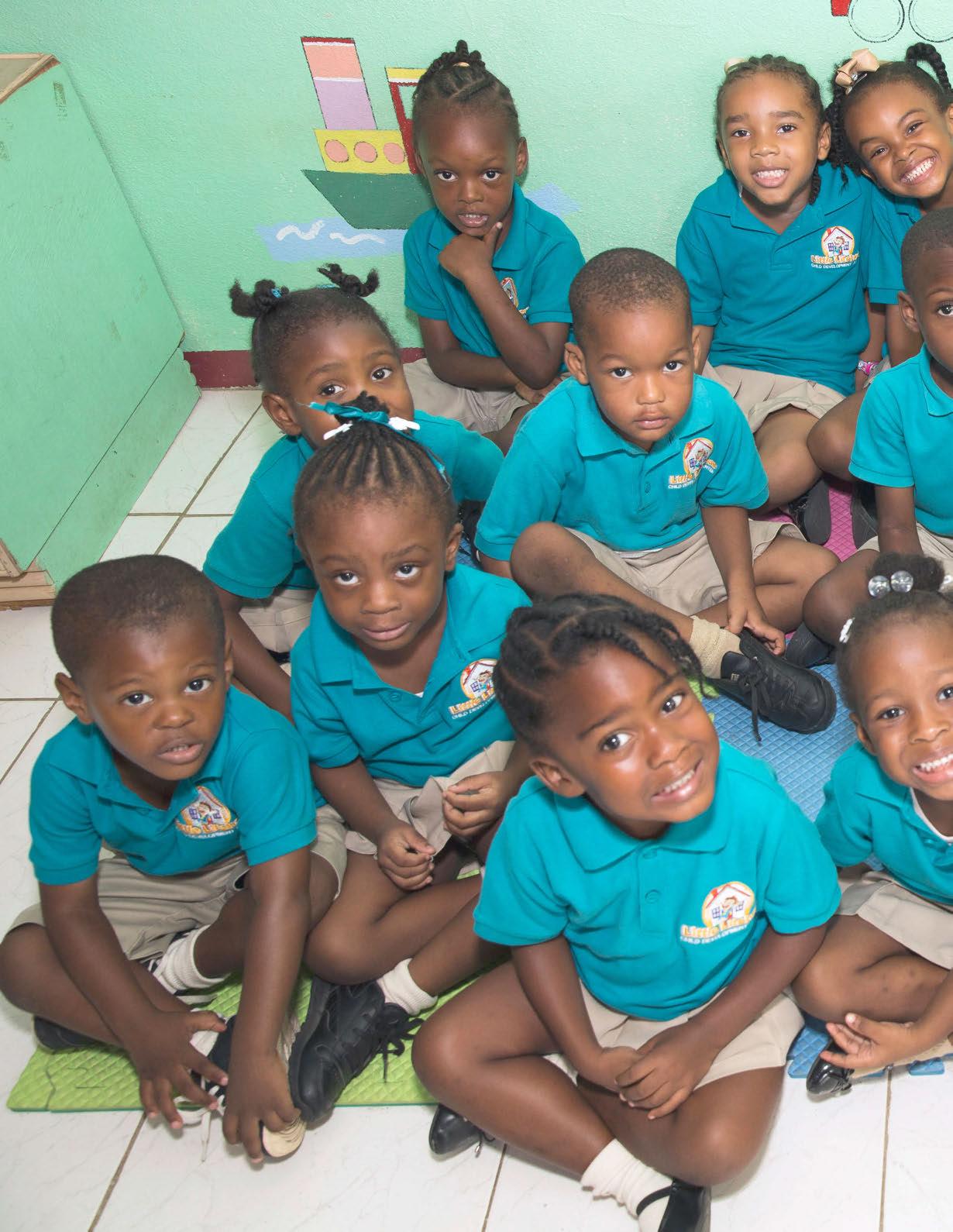
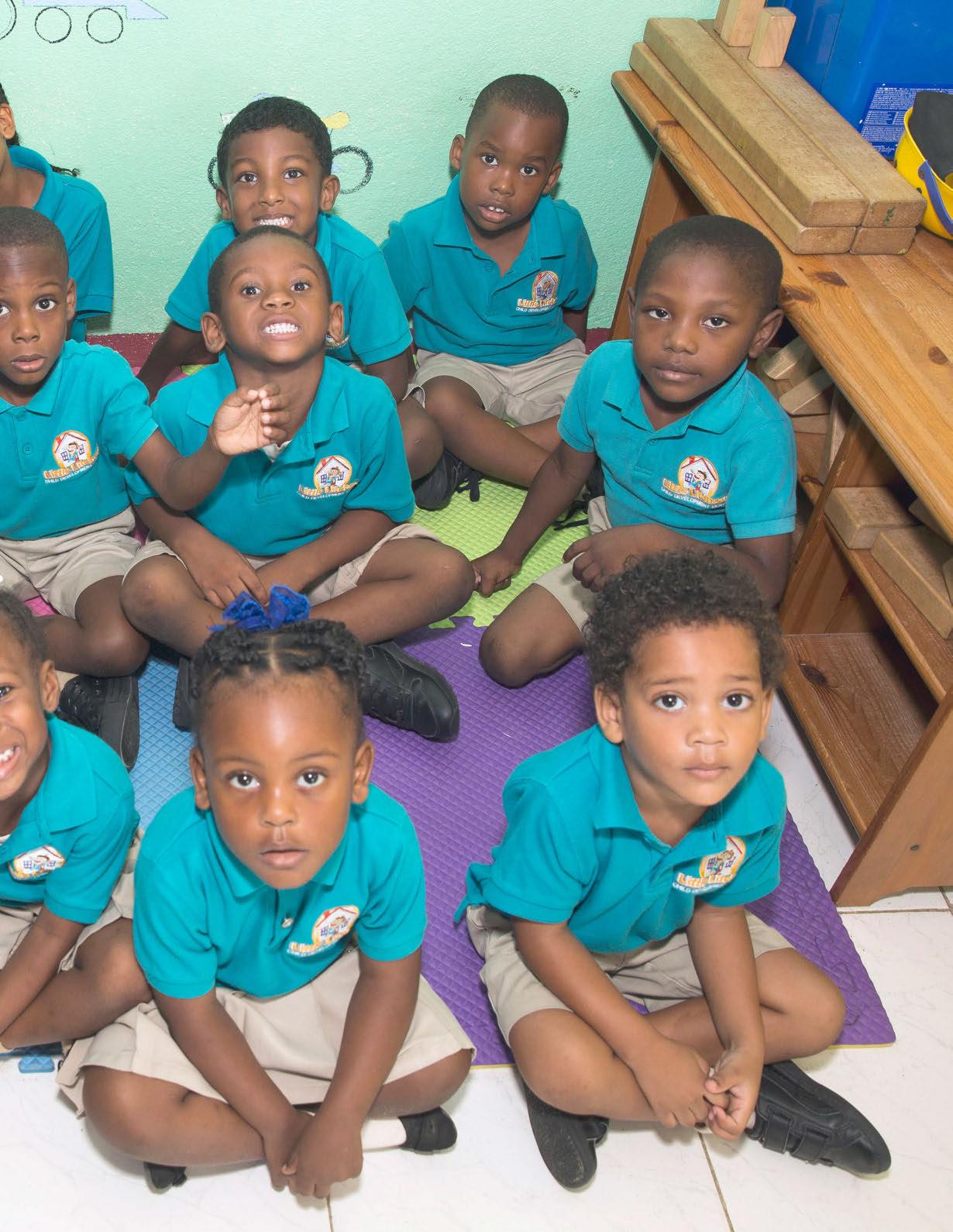
Caribbean Development Bank P.O. Box 408
Wildey, St. Michael
Barbados
BB11000
Tel: (246) 431-1600
Fax: (246) 426-7269
Website: www.caribank.org info@caribank.org www.facebook.com/caribbeandevelopmentbank www.twitter.com/caribank www.youtube.com/caribank
UNICEF Office for the Eastern Caribbean Area
UN House Marine Gardens, Hastings Christ Church
Barbados
Tel: (246) 467-6000
Fax: (246) 436-2812
Email: bridgetown@unicef.org
Website: www.unicef.org/easterncaribbean www.facebook.com/UNICEFeasterncaribbean www.youtube.com/UNICEFeastcaribbean