1 minute read
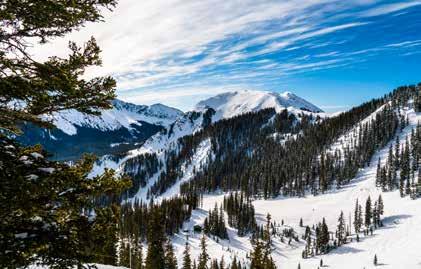
Wheeler Peak


Another fixture of this state’s natural splendor is Wheeler Peak, which proudly dominates the New Mexico landscape. This is the tallest summit of the Sangre de Cristo Mountains, the southernmost range of the Rocky Mountains—at 13,161 feet, it dwarfs its surroundings in an already elevated state. You can dare to traverse its rugged terrain for breathtaking views of the landscape, take a casual hike through about 20,000 acres of forested wilderness flocking Wheeler Peak, and even observe inhabitants like elk, marmots, pika, and golden eagles.
This landmark also lends itself to an excellent day trip to Santa Fe, the state’s popular capital city, which sits about one and a half hours southwest of Wheeler. For a taste of adventure that’s slightly less daring, spectate Wheeler Peak and the surrounding Rocky Mountains from one of the many ski resorts in the area, including Taos and Angel Fire.
The Rio Grande Gorge Bridge
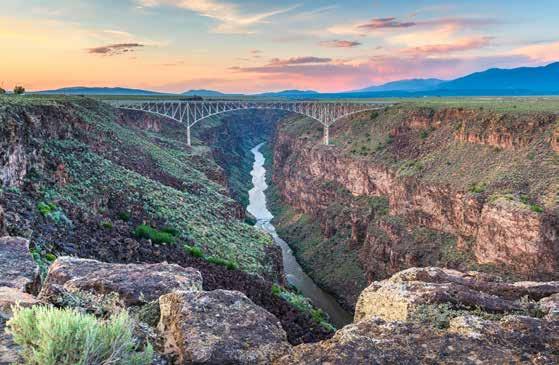
Daring adventurers can also visit an engineering wonder forty-five minutes west of Wheeler Peak that spans the storied Rio Grande River. Those who fear heights, beware: the Rio Grande Gorge Bridge, which connects two mountainous shores high above the riverbed, is one of the nation’s highest bridges. A whopping 650 feet high and over 1,200 feet long, it offers a pedestrian walkway for those who dare traverse it. You can also commemorate your victory over vertigo at one of the gift shops at either end of the rugged valley far below.
Taos Pueblo
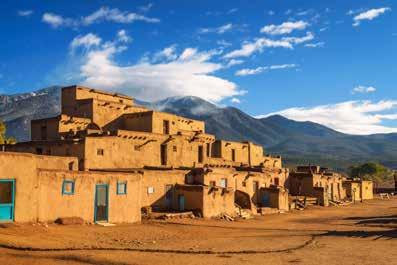
About twenty minutes east, you’ll discover one of the nation’s oldest surviving human-made landmarks, Taos Pueblo—a series of preserved, iconic adobe homes dating as far back as 1000 AD. A site revered by the Pueblo people native to the region, these undulating stories of ancient structures are some of the finest, most intact examples of classic adobe architecture anywhere.
Tribal guides lead tours of the grounds, during which they share details about the ancient homes’ history, composition, and even current significance. Because the site sits upon tribal lands, it is closed from February to mid-April for private events and ceremonies. And although walking tours of the grounds are free, donations are highly suggested. To memorialize your visit, take home a piece of pottery, jewelry, or decor handmade by the descendants of those who have occupied this land for centuries.
For more info, visit newmexico.org