4 minute read
HOME MAKEOVER SOUTHERN-STYLE

How did you develop a love for interior design?
My mom spent a lot of time redecorating our home when I was growing up. She had such a love for home decor that she often said she wished it was her profession. This also inspired me at a young age when I began asking if I could redecorate my room; she was supportive and encouraged me to explore concepts on my own and to not be afraid of selfexpression. In high school, I excelled in an interior design class, and it solidified my decision to pursue this as a career.
When did you start Leah Atkins Design?
After completing my four-year interior-decorating degree from Carson-Newman University in Tennessee, I moved to Atlanta with my husband. There were few jobs to be had during that time, so I began working in a baby-and-kids furniture store. It was there that I got my first interior-decorating gig when a client hired me to design their nursery. This eventually led to my decorating five more rooms in their home. It was then that I decided to officially start my own business. I was only twenty-three years old, but, with encouragement from my husband, I began Leah Atkins Design in 2014.
What are you best known for?
I am known as a high-end designer because I have completed projects ranging from historic Southern homes (the South has many) to Atlanta highrises to lake and mountain homes in northern Georgia and the Carolinas. Because many of my clients are traditionalists, they seek my services to help update and create fresh looks for their homes. They also want something highly personal because it’s more than just the iconic pillars, graceful front porches, and formal dining rooms with great chandeliers. I help my clients find what makes them happy.
What design concept do you like working with the most?
My favorite by far is the grand millennial design—it’s your grandma’s midcentury house that mixes traditional and modern designs. Millennials are purchasing these types of homes and turning them into layered, curated spaces with pleated shades, floral patterns, and wallpaper, accented with some funky pieces to make it just a bit more dramatic. It’s a fun style to work with.
Can you give a little background on the Hamilton Mill project?
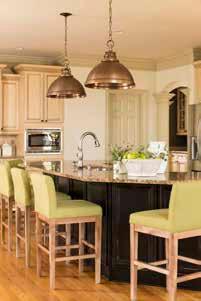
This traditional home was built in the ’90s and is where the client lived for several years and raised their two teenagers. Most of the homes in this community had the same exterior designs and interior layouts, which was very typical of these types of neighborhoods during that era. My client didn’t want to integrate the grand millennial look, but they were ready for an update without having to do major renovations such as replacing the floors, kitchen cabinets, and woodwork. My goal was to create a welcoming feel based on our Southern culture, where large gatherings occur with friends and family. Atlanta is a cosmopolitan area, so creating a homey feeling did not mean patchwork quilts and barnyard decor but rather a touch of drama and color to bring out the home’s overall charm.
What did you love most about this home?
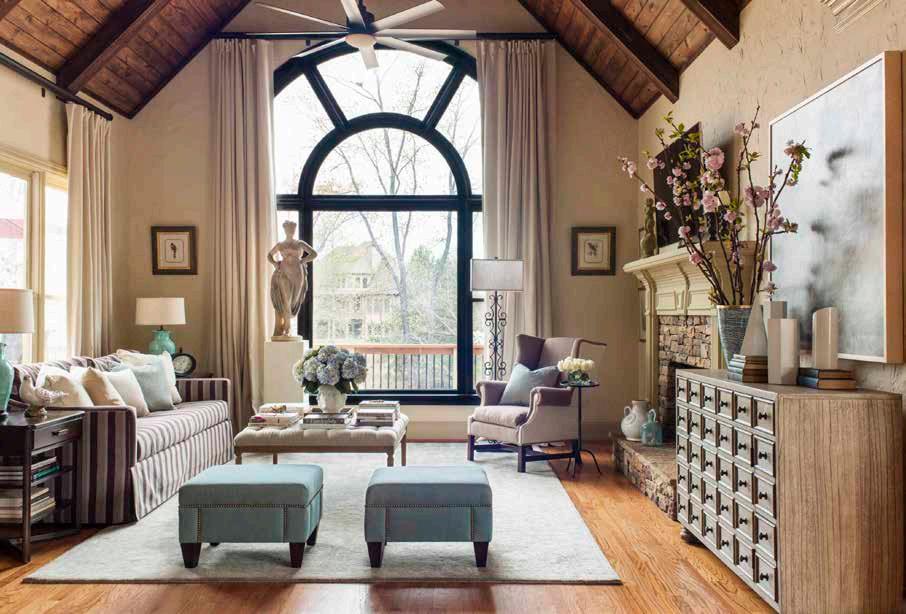
I loved the openness between the kitchen, breakfast nook, and keeping room. We wanted to not only keep these three spaces cohesive but also make the keeping room more of a focal point. We accomplished this by adding beams, boards, and battens to the ceiling and painting the window arches black, which gave the room a wow factor.
How did you integrate the colors and textures to create such a warm, inviting space?
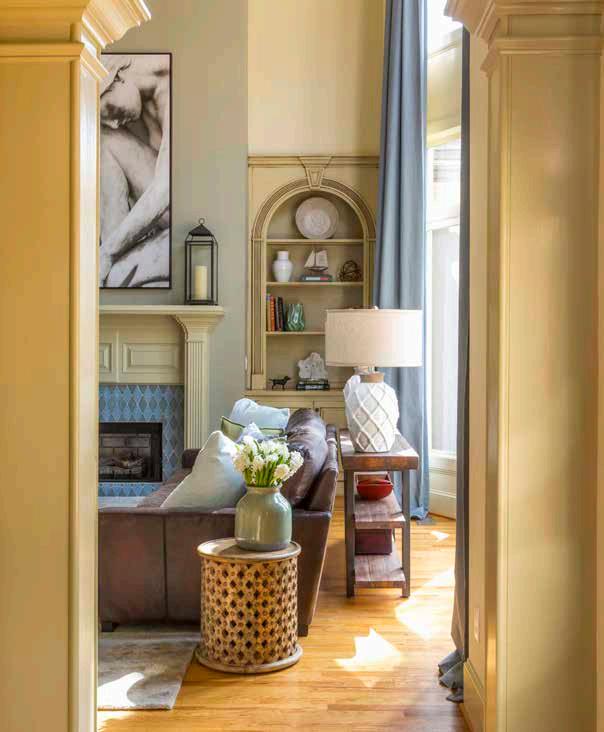
I prefer to use colors like blues and neutrals, some greens, and a little bit of mustard yellow to add some contrast. I find these colors relaxing, welcoming, and easy to live with. I used a mixture of textures and colors by incorporating wallpaper; various designs, patterns, attention-grabbing art pieces, and sculptures (one of which I added to the keeping room); and beautiful, flowing draperies.
How did you approach this project?
I needed to fully understand what their style was—did they prefer gold or silver accents? Bold or more neutral paint colors? I also asked them for pictures of the overall design styles they preferred. My client didn’t want to replace the floors or kitchen cabinets, so I had to work around these limitations. However, in the end, we accomplished the updated look while keeping with the traditional styles they preferred.
Which room did you find most interesting to decorate?
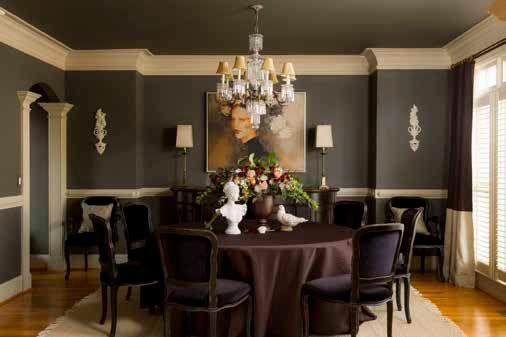
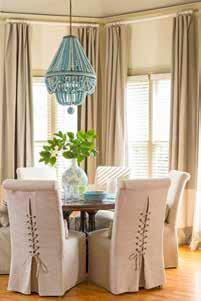
The dining room was an interesting room to work on due to its visually striking dark color palette as compared to the rest of the home, where neutral color tones were used. The old-world- style chandelier, lamps, sconces, and dark furniture added to the vintage and dramatic quality of the room. I am a firm believer that dining rooms should stand out rather than blend in with the rest of the home.
Can you explain how you incorporated the old furniture with the new pieces?
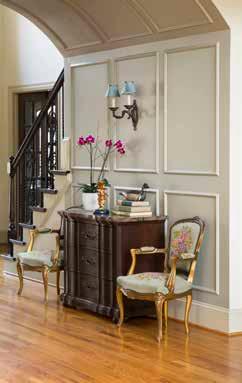
Most of the furniture was replaced other than the dining room table and chairs and a few other minor items. Since the goal was to keep a traditional feel, I incorporated antique art and furniture pieces such as an antique chest and embroidered armchairs with cabriole legs in the entrance hallway.
There is a lot of natural light in this home. How did you balance it with the lamps and overhead lights?
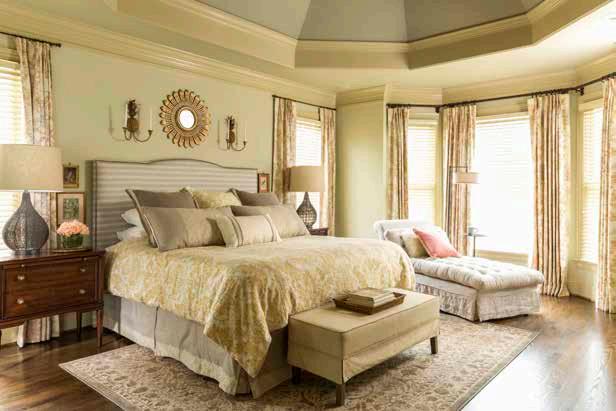
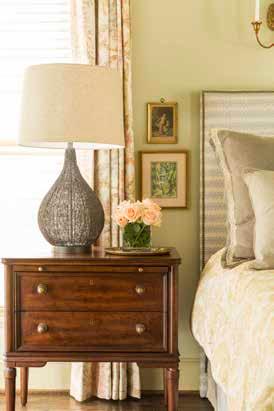
Fortunately, every room in the Hamilton Mill home has ample amounts of natural lighting, which draws your attention to the windows and makes the space feel alive and inviting. Because natural light was abundant, I was able to successfully combine floor lamps with table lamps and sconces. Most people don’t think of using sconces as a form of room lighting, but when mixed with contemporary decor, they give a room a warm, welcoming feel. Also, depending on the brightness of the natural room lighting, I will use varying types of window treatments to tone it down.
What’s your favorite design tip?
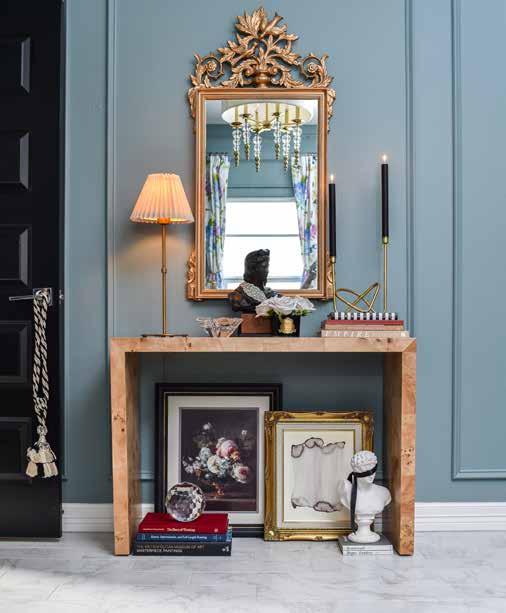
Mirrors are a great way to add natural light to a room. They can also make it appear larger because the light comes through the windows and reflects off them. Using oversized floor mirrors is also a great addition to any home, as well as hanging a mirror by the front door for people as they leave the home. Also, if you have artwork to display, using a mirror is a perfect technique to showcase it through its reflection on the opposite wall.
For more info, visit leahatkinsdesign.com