
September 2022 supply chain suffering behind the scenes of the cal poly bull test & sale RTAP gives permittingpredatorinsight


2 California Cattleman September 2022 THD © CLM REPRESENTATIVES Jake Parnell 916-662-1298 George Gookin 209-482-1648 Rex Whittle 209-996-6994 Mark Fischer 209-768-6522 Kris Gudel 916-208-7258 Steve Bianchi 707-484-3903 Jason Dailey 916-439-7761 Brett Friend 510-685-4870 Tod Radelfinger 775-901-3332 Bowdy Griffen 530-906-5713 WEDNESDAY WEEKLY SCHEDULE Butcher Cows 8:30 a.m. Cow-Calf Pairs/Bred Cows 11:30 a.m. Feeder Cattle ......................................... 12 p.m AUCTION MARKET Address 12495 E. Stockton Blvd., Galt, CA Office........................................... 209-745-1515 Fax 209-745-1582 Website/Market Report www.clmgalt.com Web Broadcast ...... www.lmaauctions.com Upcoming Western Video Market Sales: September 13 • October 27 • November 29 UPCOMING CATTLEMEN’S SPECIAL FEEDER SALES SELECT WEDNESDAYS AT 12 P.M. SEPTEMBER 14 • SEPTEMBER 28 OCTOBER 12 • OCTOBER 26 Visit our Website for Details: www.clmgalt.com ARELLANO BRAVO ANGUS AND DIABLO VALLEY ANGUS PRODUCTION SALE FOLLOWED BY A CLM SPECIAL COW SALE SATURDAY, SEPTEMBER 10 Lunch 11 a.m. • Bulls 12 p.m. • Cows to Follow Featuring Angus Bulls from Arellano Bravo Angus and Diablo Valley Angus with a CLM Special Cow Sale to Follow the Sale of Bulls THOMAS ANGUS RANCH CALIFORNIA BULL SALE TUESDAY, SEPTEMBER 20 Featuring Angus Bulls from Thomas Angus Ranch, Baker City, Ore., selling at 12 p.m. Online Bidding Available through www.CCI.live


Joinuslive or online\at these fallevents! WATCH, LISTEN AND BID ONLINE AT WWW.WVMCATTLE.COM TOP QUALITY LAMBS ALSO SELLING AT FALL WVM SALES! HAYTHORN RANCH HEADQUARTERS • OGALLALA, NE WATCH OUR SIMULCAST OF OUR SEPTEMBER & NOVEMBER EVENTS ON DISH 998 WVM HEADQUARTERS • COTTONWOOD, CA CONSIGNMENT DEADLINE OCTOBER 19 SILVER LEGACY RESORT CASINO • RENO, NV CONSIGNMENT DEADLINE NOVEMBER 10



SEE YOU SOON by CCA Director of Finance and Events Lisa Brendlen
Although we were still plenty busy with our Midyear Meeting in June, other industry events sprinkled in and continued work on issues that don’t take a summer vacation, I’m thankful for the summer months that offer the CCA office a bit of time for slowing down and refreshing. However, I am now looking forward to the events and meetings that will take place in the next few months. With that, I want to use this space to remind you about a few upcoming opportunities for individuals and local groups to get involved as we gear up for a busy fall and race to the end of the year. For the past few years, one of my favorite days of summer has happened to take place at Cattlemen’s Day at the MidState Fair in Paso Robles. In July, I again attended the event with CCA’s Vice President of Government Affairs Kirk Wilbur to help the San Luis Obispo Cattlemen’s Association host a membership drive. It was a fun time to connect with producers and meet more members in San Luis Obispo County while also spreading the news about the work CCA is doing and issues we are tackling on behalf of the ranching community. Thank you to the San Luis Obispo Cattlemen’s Association for hosting us again and helping us gain new members at the state level. Membership drives are something I am more than happy to help coordinate and get set up with any of our local organizations. We are flexible to tailor each drive to when it is best for your association, and I can work to offer specific incentives for joining that will interest producers in your area. If you have even a slight interest in hosting one of these events, I encourage you to reach out to me. In addition to working with local cattlemen’s groups to recruit more members, I am also the staff contact to work with for getting any meetings on the CCA calendar for staff and officers to attend. As we do each spring and fall, CCA staff and officers have already meetingsattendingstartedfallforlocal cattlemen’s associations. If we usually visit your association in the fall and you have yet to work with me on getting your upcoming meeting date on our calendar, please contact me. These meetings are essential for keeping our team up on the issues impacting you locally and the concerns circling in your area. Alongside fall tour meetings having already begun, the plans and preparations for the 106th CCA and CCW Convention and Tradeshow are also well underway. This year’s event is set to take place from Nov. 30 to Dec. 2, back at the Nugget Casino Resort in Sparks, Nev., and will be held in conjunction with the Nevada Cattlemen’s Association. It has been a handful of years since we were able to join conventions with our neighboring ranch friends, and it is great to be working with Martin Paris, executive director of the Nevada Cattlemen’s Association, to make it happen again. As you will see in this issue of the California Cattleman, we already have some great speakers confirmed for the event, and registration is open. Visit www.calcattlemen. org/events to register today and continue checking that page for more information on what to expect at this year’s convention as we announce more speakers and details in the next few Whetherweeks.at a local cattlemen’s meeting or convention, I look forward to hopefully seeing many of you soon. In the meantime, I will be working hard this month to wrap up the current fiscal year as it comes to a close on Sept. 30. With that, our annual audit will take place in October, and I will prepare to share our financials during the business meeting at convention. Should you have any questions or concerns before I see you at a local meeting or convention, please don’t hesitate to call me at the office or email me at lisa@calcattlemen.org.
POSTMASTER: Send address changes to: California Cattleman, 1221 H Street, Sacramento, CA 95814
SERVING CALIFORNIA BEEF PRODUCERS SINCE 1917
Since 1917 With the passing of August, it is hard to believe another summer is almost behind us and that fall is just around the corner.
ASSOCIATIONCATTLEMEN’SCALIFORNIA1221HStreetSacramento,CA95814
Bolded names and businesses in editorial represent only current members of the California Cattlmen’s Association or California CattleWomen, Inc. For questions about your membership status, contact the CCA office at (916) 444-0845. The California Cattleman (Publication #8-3600) is published monthly except July/August is combined by the California Cattlemen’s Association, 1221 H Street, Sacramento, CA 95814, for $20/year, or as part of the annual membership dues. All material and photos within may not be reproduced without permission from publisher.
National Advertising Group: The Cattle Connection/The Powell Group, 4162-B Carmichael Ct, Montgomery, AL 36106,
Periodical postage paid at Jefferson, MO.


Volume 105, Issue 8 ASSOCIATION PERSPECTIVES BUNKHOUSE 4 See you soon YOUR DUES DOLLARS AT WORK 8 Addressing the supply chain NATIONAL PERSPECTIVE 30 The Supreme Court speaks HERD HEALTH WATCH 34 Long-term impacts of drought on herd health BEEF ABROAD 52 Billion-dollar beef months SPECIAL FEATURES Cattle heart health 14 Insight on predator permits 16 Hoping for flexibility on ESA 22 Beef demand in food service sector 32 Value of heterosis visualized 48 Cal Poly Bull Test from start to finish 56 READER SERVICES Buyers Guide 68 Obituaries & New Arrivals 73 Advertisers Index 74 SEPTEMBER 2022 With the arrival of fall and cooler temperatures on the horizon, cattlemen and women will now be converging at bull sales and consignment events across the state. This cover photo taken by Wedge Photography reminds us that with the arrival of fall renewed hope for fall rains will be arriving as well. ON THE COVER UPCOMING CCA MEETINGS & EVENTS SEPT. 4 FALL RIVER-BIG VALLEY SWEET 16 TEAM BRANDING McArthur NOV. 30 -DEC. 2 106TH CCA &CCW CONVENTION Nugget Casino Resort, Sparks, Nev. STAY TUNED FOR OTHER UPCOMING CCA EVENTS! FOLLOW OUR SOCIAL MEDIA PAGES ON FACEBOOK AND INSTAGRAM FOR ANNOUNCEMENTS!


Paf Rita 7096
An extremely complete female that checks every box, including top 20% Heifer Pregnancy (HP), top 30% PAP and inside the top 5% for both foot EPDs. Combine this with her growth and carcass profile and this female handily ranks in the top 1% for $Maternal, 2% for $Beef and consequently 1% for $Combined. She’s square-made with excellent rib shape and striking from the profile; this is one of the highest quality heifers we have ever offered.
Sire: Connealy Confidence Plus 4 MGS: G A R Prophet
$255,000 EXAR Miss 6903, the $120,000 Basin Lucy 4261, the $100,000 EZAR Lucy 8190 and more! CED BW WW YW MA RE $M $B $C +10 +0.5 +94 +164 +0.89 +1.40 +88 +203 +351 4 4 4 4 Female sale offering highlights Tim & Marilyn Callison .......................................................................................................................................................................... Owners Chad Davis 559 333-0362 Travis Coy ............................................................................................................................... ..................................... 559 392-8772 Justin Schmidt ............................................................................................................................... .............................. 209 585-6533 John Dickinson ............................................................................................................................................................................. 916 806-1919 Jake Parnell ................................................................................................................................................................................. 916 662-1298 Sale Book, Videos and Sale Schedule: www.EZAngusRanch.com CED BW WW YW MA RE $M $B $C +12 +1.4 +77 +133 +1.27 +1.05 +94 +200 +353 NewDate THD © 6 California Cattleman September 2022
Sire: EZAR Step Up 9178 4 MGDS: A A R Ten X 7008 S A
EZAR Rita 1409
ranchAngus Angus Female Sale Selling 100 Angus Females SAT., OCTOBER 8 Brunch at 10 a.m.4Sale at 11 a.m. EZ Angus Ranch Headquarters, Porterville, CA
Offering 30+ Spring Bred Heifers serviced to PCC Horizon 025, LAR Man in Black, VAR Conclusion 0234, EZAR Step Up 9178, as well as the $600,000 Basin Jameson 1076. Direct daughters out of the top donors will sell, including daughters of the $220,000 Basin Lucy 4261 and four daughters of the Paf Rita 7096 donor. A large offering of Fall Bred Pairs with calves at side by Basin Deposit 6249 and the $132,500 EZAR Step Up 9178, the record-selling bull from the 2020 EZ Angus Bull Sale, with top 15% $Maternal, top 2% $Beef and top 1% $Combined rankings. Selling 35+ Fall-Born Yearling Heifers sired by Basin Safe Deposit 9324, EXAR Guru 8719B, EZAR Step Up 9178, G A R Home Town and more. The females in this group will have an average $Combined Value over $310. 26 elite spring heifer calves sell, many out of the heart of the ET program, sired by SG Salvation, Connealy Clarity, Basin 9178, the
G A R Home Town and more. Nothing has been held back! Daughters sell out of our top donors including
Safe Deposit 9324, EXAR Guru 8719B, EZAR Step Up
Offering half-interest in this Premium Donor that offers great spread with top 15% CED and top 1% WW and YW EPDs. She’s also in the top 15% for Marbling and top 1% for Ribeye, and when you search the entire database, no other proven female can match her combination of core traits. She is equally impressive in the flesh as she is wide-based, big-hipped and has incredible internal dimension. She works across every mating and her progeny have averaged more than $22,000 in our past two fall sales.


CED BW WW YW MA RE $M $B $C +8 +3.4 +75 +133 +1.00 +0.96 +67 +190 +313 CED BW WW YW MA RE $M $B $C +10 +0.1 +82 +135 +1.07 +0.75 +71 +181 +306 CED BW WW YW MA RE $M $B $C +12 -1.2 +64 +116 +1.06 +0.95 +87 +166 +302 CED BW WW YW MA RE $M $B $C +4 +2.6 +76 +130 +0.39 +0.68 +75 +164 +288 CED BW WW YW MA RE $M $B $C +5 +3.1 +86 +147 +0.97 +1.01 +72 +190 +318 CED BW WW YW MA RE $M $B $C +7 +0.5 +60 +116 +1.03 +1.08 +54 +186 +295 CED BW WW YW MA RE $M $B $C +8 +2.3 +68 +118 +0.90 +1.05 +61 +177 +291 CED BW WW YW MA RE $M $B $C +9 +2.7 +91 +160 +1.90 +0.84 +49 +233 +351 CED BW WW YW MA RE $M $B $C +15 -0.4 +69 +128 +1.28 +0.69 +76 +191 +324 21984 Avenue 160 Porterville, CA 93257 ANGUS RANCHFollow Us on Facebook for Details on the 2022 Female Sale Offering Big-growth female here that is a maternal sister to the $90,000 EXAR Gold Rush 6001, as well as the $115,000 EZAR Blackcap 6012. Powerful Guru daughter here that’s big-topped and stout-boned. She has great spread and ranks in the top 10% for $Beef and top 4% for $Combined. Fall Heifers Fall Pairs Fall Heifers September 2022 California Cattleman 7
This direct daughter of the $255,000 EXAR Miss 6903 ranks in the top 4% Marbling with top 3% $Beef and top 2% $Combined Values.
FWY Rita 8513 EZAR Lucy 1377 EZAR Rita 1448 Riverbend Lucy F729 EZAR Blackcap 1424 EZAR Lucy 1442 Vintage Primrose 6045 EZAR Emma 1426 EZAR Miss 1474 Sire: FF Rito Righteous 6R414MGDS: Connealy Consensus 7229 Sire: EXAR Guru 8719B4MGDS: Vermilion Payweight J8477 Sire: Square B True North 8054MGDS: G A R Prophet Sire: TEX Playbook 54374MGDS: Riverbend Peerless 0016 Sire: EZAR Step Up 91784MGDS: Rito 1I2 of 2536 Rito 6I6 Sire: Baldridge SR Goalkeeper 4MGDS: EXAR Denver 2002B Sire: V A R Foreman 33394MGDS: Connealy Consensus 7229 Sire: EXAR Guru 8719B4MGDS: Gardens Prime Star Sire: G A R Home Town4MGDS: Connealy Consensus 7229 Stout, square-hipped female with extra body and quality look. She sells with a fall calf at side by PCC Horizon 025. Moderate-framed, deep-sided heifer with top 4% Marbling and top 2% $Combined Value. Her dam is the $160,000 Lead Donor of the EZ program. This powerful female is a maternal sister to our $120,000 high-selling heifer in 2020. She sells with a fall calf at side by Baldridge Alternative E125. This Goalkeeper daughter is over +1.00 for both Marbling and Ribeye. She also has a top 4% $Beef and top 10% ranking for $Combined Value.
Big-bodied, wedge-shaped female here with that is attractive from the profile. She sells with a fall calf at side by EZAR Step Up 9178
Deep-bodied Guru daughter here that ranks in the elite 1% if the breed for WW, YW and Marbling – all with top 1% rankings for $Beef and $Combined.


8 California Cattleman September 2022 DUES DOLLARS AT WORK
by
While the Freight Rail Shipping Fair Market Act has not yet been formally introduced in Congress as of press time, draft language has been circulated by Peter DeFazio (D-OR), the Chairman of the House Transportation and Infrastructure Committee. While it is likely that the legislation will not be fully considered until the 118th Congress gavels in next January, CCA has reached out to members of the California Congressional Delegation who sit on the Transportation and Infrastructure Committee to urge their support for the legislation.
Railway Delays Disrupt Availability of Livestock Feed
CCA Enables Greater NCBA Engagement As CCA has worked to avoid disruptions in freight rail deliveries throughout the year, our partners at the National Cattlemen’s Beef Association have sought to be an ally in
...CONTINUED ON PAGE 10
CCA has been deeply engaged in addressing the rail disruptions – among other supply chain bottlenecks – in recent months. First, the Association has been in regular contact with California Secretary of Agriculture Karen Ross and senior staff at the California Department of Food and Agriculture to brief them about supply chain disruptions and enlist the agency’s support in addressing disruptions on the state and federal levels. Additionally, CCA has been working alongside the National Grain and Feed Association and several other stakeholders comprising the Agricultural Transportation Working Group to seek lasting solutions to railway disruptions. For instance, CCA and the Working Group had called on the Biden Administration to establish a PEB to avoid a railway labor strike which would have wrought havoc in the supply chain. Additionally, the Working Group has been working to support the Freight Rail Shipping Fair Market Act, which would increase the reliability of freight rail service. The Act would reauthorize the STB, whose most recent reauthorization expired nearly two years ago. Among other provisions, the Act would require the STB to develop by regulation minimum service delivery standards for each commodity, and to dictate available remedies when those standards are not met by a railway company. The Act would also require contracts between railroads and shippers to specify service delivery standards and remedies.
In recent months, there have been signifi cant delays in railway deliveries of grain to California, causing significant disruption to the feeder sector of the industry. The delays have been driven in part by several extreme weather events and labor shortages impacting railroads. Citing rail congestion caused by high wind events throughout the Southwest and flash flooding from monsoonal rains in New Mexico, BNSF Railway Company on June 23 implemented a service embargo on agricultural commodities “moving to destinations in California.”
Supply chain disruptions are nothing new for the livestock industry. Even before the global COVID-19 pandemic made supply chain concerns an ever-present reality for American consumers, cattle producers had contended with a bottleneck caused by a fire at a Holcomb, Kan., beef processing plant in mid-2019. During pandemic lockdowns, CCA and our national partners worked tirelessly to minimize disruptions in the supply chains impacting cattle and beef production. Few would have anticipated in early 2020 that these disruptions would persist more than two years into the pandemic, but lingering labor shortages – combined with unforeseen natural disasters and the effects of government policy – have ensured these bottlenecks persist. CCA continues to work tirelessly to limit the impacts of these disruptions at our ports and over our railways and highways. Below are details of some of the Association’s latest efforts.
While BNSF’s embargo on agricultural commodities was scheduled to expire at the end of July, the railway company on July 26 noted that it was seeking “to improve the congestion in California by continuing the embargo into August.” On June 15, one California feedyard operator was forced to petition the Surface Transportation Board (STB) for an emergency service order requiring Union Pacific Railroad to prioritize shipments of corn from the Midwest to California to be processed into cornmeal for livestock feed. On June 17, the STB issued the emergency service order. These prominent examples are by no means the full extent of railway disruptions, however. In the second quarter of 2022, 204,000 grain car orders were delayed or unfilled – a 231 percent increase over the same period in 2021. Of those 204,000 orders, 140,000 were delayed by 11 or more days. As a result of these supply chain disruptions, cattle feeders have come within days or even mere hours of being short of feed for their livestock and have been forced to scramble to avoid catastrophic feed disruptions. Further disruption of rail deliveries was avoided on July 15, when President Biden staved off a railway labor strike by establishing a Presidential Emergency Board (PEB) –as authorized by the Railway Labor Act, which governs collective bargaining for the rail industry – to develop recommendations to settle ongoing labor disputes between railway carriers and labor unions. The PEB has 30 days to offer such recommendation.
SUPPLY CHAIN CHALLENGES CONTINUE TO PLAGUE CATTLE PRODUCERS
CCA Vice President of Government Affairs Kirk Wilbur

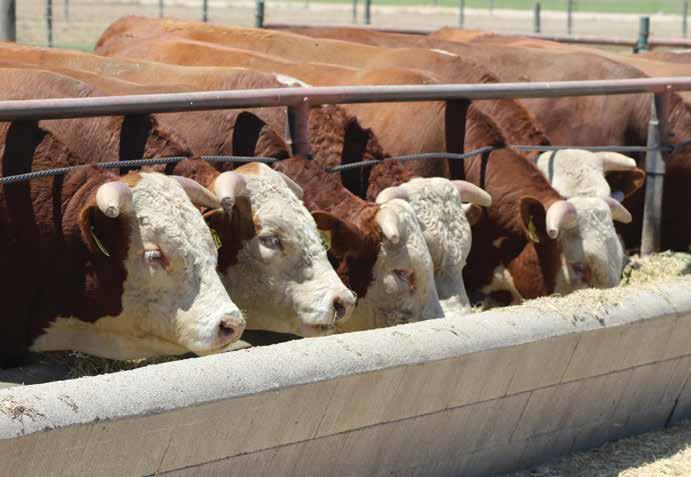


Gino Pedretti ����������������������������������������������������209/756-1609 Mark St� Pierre �������������������������������������������������209/233-1406 Gino Pedretti Jr� �����������������������������������������������209/756-2088 Gino Pedretti III������������������������������������������������209/756-1612 E-mail ��������������������������� GBL1domino@sbcglobal � net Pedretti Ranches Pedretti R anches Registered Herefords Since 1946 A big Selection of Coming Two Year Old and Spring Yearling Bulls Available by private treaty Now! They will produce baldy replacements built for longevity! Consistency. Quality. Predictability. ...In performance, maternal, carcass and convenience traits! September 2022 California Cattleman 9

10 California Cattleman September 2022
While the bill was predominantly aimed at the app-based driving industry (which successfully exempted itself from AB 5 via a 2020 ballot initiative), the legislation had wide-ranging implications for workers traditionally classified as independent contractors, including truckers who own or lease their own vehicles but have working arrangements with specific companies.
While the trucking industry has called on Governor Newsom for relief, it is not yet clear whether he will take any action to shield truckers from the law’s requirements. In short, AB 5’s impacts on independent trucking – and upon industries which utilize independent truckers – is not yet clear. What is clear, though, is that this development has a significant potential to further exacerbate ongoing supply chain pressures. CCA continues to monitor the situation and will communicate with members and policymakers as the issue progresses.
Supply chain disruptions have been a frequent headache for cattle producers in the post-COVID world. While many hoped that these bottlenecks would dissolve as society emerged from pandemic lockdowns, labor shortages, global disruptions in supply-chain inputs and several other factors have only extended supply chain challenges. CCA has been diligently working over the past two-plus years to limit the impact these disruptions have upon California’s cattle producers and will continue working to resolve these issues for as long as they persist.
CCA President Tony Toso addresses “Supply Chain Issues Impacting Cattle and Beef Producers,” at the recent NCBA Summer Meeting in Reno, Nev.
While AB 5 took effect in 2020, its application to independent truckers was on hold as a challenge from the industry worked its way through the Oncourts.June 30, though, the U.S. Supreme Court refused to take up the truckers’ challenge to AB 5. As a result, independent truckers will likely soon be forced to comply with the statute.
impacts of AB 5’s application to independent truckers are not yet clear. The Independent Truckers Association, which brought the legal challenge to AB 5, has warned that many of the 70,000 independent truckers in California may be forced off the road as they seek to comply with the legislation. According to a representative of the Harbor Trucking Association, compliance will likely involve truckers choosing between
...CONTINUED
PAGE 8
AB 5 Raises Questions about Independent Trucking
The recent application of Assembly Bill 5 (Gonzalez, 2019) to independent truckers poses another potential threat to supply chains. AB 5 sought to protect gig workers who should be deemed “employees” with attendant job benefits from being misclassified as “independent contractors.”
CCA has received several calls from members wondering how this new development will impact shipments of cattle and other farm and ranch commodities which may be hauled by independent truckers.Theprecise
CCA Second Vice President Rick Roberti and Toso at the summer meeting. FROM Washington, D.C. These efforts were complicated somewhat by the fact that NCBA’s policy book lacked specific guidance detailing the association’s engagement on such matters, however. To address this concern, CCA brought forth a resolution regarding “Supply Chain Issues Impacting Cattle and Beef Producers” at NCBA’s Summer Business Meeting, held in Reno, Nev., in late July. While rail disruptions were the impetus for the policy, the resolution was intentionally written broadly, to allow NCBA to fully engage on behalf of cattle producers to address any and all supply chain disruptions which may arise. Specifically, the resolution requires that NCBA work “to address supply chain issues, including all inputs, that impact cattle and beef producers’ ability to feed and care for their livestock or which negatively impact their business operations.”Afterbeing endorsed by the organization’s Ag & Food Policy Committee, the policy was approved by NCBA’s Board and now dictates the association’s engagement on supply chain disruptions.
becoming employees of trucking firms or filing as independent businesses. The latter could result in significant costs to truckers, largely in the form of increased insurance premiums.


Lot 1: TEX Deposit 1188 Reg. No. 20074182 • DOB 02/13/2021 BW EPD .8 YW EPD 128 HP EPD 12.7 CW EPD 59 MARB EPD 1.45 RE EPD .39 $M 77 $B 182 $C 313 Lot 1 is a son of Basin Deposit 6249 and TEX Empress 8072. TEX Deposit 1188 is a top performer among the Angus breed with top ranking EPD percentages in MARB, $C, $B, and $M. 7 brothers sell in Sale By The Sea Lot 9: TEX Teton 1152 Reg. No. 20000011 • DOB 02/04/2021 BW EPD 1.4 YW EPD 128 HP EPD 20.1 CW EPD 57 MARB EPD 1.07 RE EPD .79 $M 69 $B 189 $C 314 Lot 9 is out of a Confidence Plus son, TEX Teton 9052, sold to Riverbend Ranch at Performance Plus in 2020. TEX Teton 1152 is a top performer among the Angus breed with top ranking EPD percentages in HP, $C, $B, MARB, CW, RE, and RADG. One brother sells in Sale By The Sea Basin Deposit 6249: Sire to Lot 1 TEX TEton 9052: Sire to Lot 9 TEX Able 8528: Sire to Lot 11 Lot 11: TEX Able 1193 Reg. No. 20155145 • DOB 02/17/2021 BW EPD 2.2 YW EPD 129 HP EPD 10.1 CW EPD 64 MARB EPD .86 RE EPD .94 $M 56 $B 183 $C 293 Lot 11 is a son of our newest herd sire sire, TEX Able 8528 and EXAR Royal Lass 0912. TEX Able 1193 is a top performer among the Angus breed with top ranking EPD percentages in $B, $C, CW, MARB, RE, BW, YW, and CEM. 2 brothers sell in Sale By The Sea sale by the sea 60 Bulls • 4:00PM • Thousand hills ranch • Pismo beach, california HIGH $C AND $B BULLS Playbook (4 Brothers) • Rainfall (5 Brothers) KNow how • Payweight (5 Brothers) & More Offering Progeny from Elite Genetics: SALE WILL BE STREAMED ON DVAUCTIONS HIGH MARB BULLS At the end of the bull offering, we will be selling approximately 30 commerical females, bred & pairs. www.teixeiracattleco.com | 855 Thousand Hills Road Pismo Beach, CA 93449 | 805-448-3869 | cattle@thousandhillsranch.com The Teixeira Family SAVE OUR NEW DATE: SEPTEMBER 7, 2022 John, Heather, Nathan, Joseph & Ben Teixeira John’s Cell: 805-448-3859 • Heather’s Cell: 805-448-3869 Allan & Cee Teixeira Allan’s Cell: 805-310-3353 Tom Hill Tom’s Cell: 541-990-5479 Adam Teixeira Adam’s Cell: 805-459-1519


The 2023 Cattle Industry Convention & NCBA Trade Show is headed to the Big Easy, and funding is available to offset some costs for producers. The National Cattlemen’s Beef Association (NCBA) is offering a variety of scholarships and grants to help producers attend CattleCon23, which will be held Feb. 1-3, 2023, in New Orleans.“We want everyone to have the opportunity to attend the 2023 Convention,” said NCBA President Don Schiefelbein. “These scholarships are perfect for youth, first-timers and others looking to expand their network at the largest event in the beef cattle business.”
producer Scholarships Help cattle ranchers Attend Cattle Industry Convention
Scholarships will be awarded to up to five beef cattle industry members, up to three young beef producers, and up to three students (currently enrolled in classes) in the industry. Applications for all scholarship categories are due by Sept. 23, 2022, and will be evaluated based on eligibility and answers to application questions. In addition to the scholarship program, NCBA also offers the Rancher Resilience Grant, which is designed to support cattle producer attendance at impactful education events, such as Cattlemen’s College held prior to convention. Administered by NCBA, the grant is made possible by a partnership between the National Cattlemen’s Foundation and Cargill Protein. To apply for a grant to cover registration costs and two nights hotel, visit www.ncba.org/producers/rancher-resiliencegrant. Cattlemen’s College will be an event option once convention registration opens in October.
Leachman TopLine Bulls Build Better Cow Herds Fertile. Good Doing. Sound. Extra Longevity. We offer the only bulls with fertility AND udder EPDs! Offering 150 Angus Bulls Leachman TopLine Fall Sale Saturday, Oct. 1st, 2022 101Aromas,LivestockCA We Give a 4 -Year Warranty. What does your bull supplier offer? Lee Leachman, CEO • Office: (970) 568-3983 • www.leachman.com Jim Warren, 101 Livestock (831) 320-3698 Jon Dolieslager, Tulare County Stockyard (559) 358-1070 Jerrod Watson, Leachman Cattle (303) 827-1156 • Todd Stegall, TopLine (530) 713-8755
Scholarship recipients receive a complimentary Education Package registration and discounted housing accommodations for three nights, Feb. 1-3, 2023.
12 California Cattleman September 2022
For Oct.housingregistrationConventionbeefusa.org.onlineandtheseinformationmoreonprogramstoapply,atwww.andopens3,2022.


O’CONNELL RANCH Colusa, CA • OConnellRanch.com Dan & Barbara O’Connell: 530-632-4491 Daniel O’Connell: 530-632-3902 Check Out these Sale Bulls with EPDs and $Values in Red, which Denote the Top 35% or Better for Non-Parent Angus Bulls THEOF 1169 Connealy Clarity x Baldridge Atlas A266 AAA *20296260 BW/R 79/98 WW/R 669/108 YW/R 1,445/113 SC 38.13 CW MB RE $M $W $F $G $B $C +70 +.93 +.77 +74 +71 +117 +71 +187 +317 CED BW WW YW MILK DOC CLAW ANGLE +12 +.4 +79 +150 +24 +31 +.58 +.56 lot4 11997-17-21 G A R Greater Good x EF Commando 1366 AAA *20296270 BW/R 74/91 WW/R 618/100 YW/R 1,360/106 SC 38.22 CED BW WW YW MILK DOC CLAW ANGLE +13 -.7 +79 +144 +26 +8 +.48 +.53 CW MB RE $M $W $F $G $B $C +61 +1.27 +.90 +55 +77 +106 +86 +192 +304 46lot 7-20-21 1310 Tehama Tahoe B767 x R B Tour Of Duty 177 AAA *20296323 BW/R 87/107 WW/R 673/109 YW/R 1,348/105 SC 38.51 1061 G A R Sunbeam x Basin Paycheck 5249 AAA *20316079 BW/R 83/108 WW/R 725/100 YW/R 1,304/106 SC 34.63 CED BW WW YW MILK DOC CLAW ANGLE +10 +1.1 +65 +122 +29 +32 +.56 +.49 CED BW WW YW MILK DOC CLAW ANGLE +7 +1.3 +83 +147 +32 +23 +.53 +.57 CW MB RE $M $W $F $G $B $C +64 +.88 +.86 +54 +81 +108 +66 +174 +280 CW MB RE $M $W $F $G $B $C +64 +1.21 +1.10 +78 +66 +117 +85 +202 +340 26lot 7-29-21 113lot 8-27-21 1308 D R Judgement x Connealy Black Granite AAA *20296322 BW/R 89/110 WW/R 722/117 YW/R 1,397/109 SC 39.48 CED BW WW YW MILK DOC CLAW ANGLE +12 +.2 +76 +130 +32 +17 +.63 +.52 CW MB RE $M $W $F $G $B $C +53 +.74 +.86 +93 +86 +84 +60 +144 +280 97lot 7-29-211234 Connealy Clarity x MGR Treasure AAA *20296283 BW/R 79/101 WW/R 711/115 YW/R 1,439/112 SC 38.78 CED BW WW YW MILK DOC CLAW ANGLE +7 +1.1 +93 +161 +12 +33 +.42 +.41 CW MB RE $M $W $F $G $B $C +60 +1.09 +.55 +73 +74 +98 +74 +171 +295 lot6 7-22-21 RickAuctioneer:Machado,805-501-3210 DONATI RANCH Oroville, CA • DonatiRanch.com Tom & Sally Donati: 530-693-1634 Rocky Donati: 530-693-1640 SALE MANAGER/CATALOG REQUESTS: Matt Macfarlane: m3cattlemarketing.comm3cattlemarketing@gmail.com916-803-3113 Bulls can be viewed at Clarot Feedlot, Modesto, CA. Call Joe Clarot: 209-678-5030. BIDDINGONLINEVIDEOSAND THD © Formerly Black Gold Bull SaleBull DoNatiSalERanch O’Connell Ranchg OROVILLE, CA SEPTEMBERTHURSDAY SELLING 140 SPRING AND SUMMER A N GUS BUL L S BULL SALE CATALOG AND BULL VIDEOS ONLINE : www.DVAuction.com/events/155362 www.M3CattleMarketing.com • www.DonatiRanch.com • www.OConnellRanch.com


“Healthy Hearts Start with Knowing More,” in the August Angus Journal provides an in-depth explanation of the KSU-BCI research. Pulmonary Arterial Pressure (PAP) vs. BCHF For cattle living in hypoxic environments due to elevation, a high mean pulmonary arterial pressure (PAP) score indicates an animal is at higher risk of developing high altitude disease, which in most cases results in BCHF. But what’s most important to remember is PAP ≠ BCHF. Cattle die from BCHF at both high and low elevations. The current question is what’s causing BCHF in cattle at low elevations and what, if any, indicator traits are available that will allow producers to genetically select cattle with a less risk of contracting BCHF at low elevations.
FOCUS ON HEART HEALTH
Breeders grazing at high elevations (greater than 5,000 ft) have been aware of heart disease for decades. Cattle living in hypoxic (low oxygen level) environments can experience challenges to heart and lung function due to the stress on those organs. When similar heart disease cases were reported in feedlots at much lower elevations in the most recent decade, it puzzled the industry. In both cases, cattle die of congestive heart failure, but what causes the onset in these lower elevations and who is most susceptible? The American Angus Association, Angus Genetics Inc. (AGI) and the Angus Foundation set out to understand that through a series of analyses.
14 California Cattleman September 2022
What’s Next? Data from the analyses identified areas for potential research such as subclinical heart disease, which hasn’t been well defined for the industry. Investigating subclinical heart disease at the packing plant and how individual animal performance, including PAP, is associated will provide useful information. While some early genetic selection and diagnostic tools are commercially available, AGI is focused on comprehensive research to target the best solutions for the overall Angus population which may or may not include a genetic selection tool for heart remodeling.AGI,along with industry and academic partners, will continue to research frequency of these subclinical heart cases in the wider Angus population to determine if there is a genetic predisposition to heart health and the potential to develop a selection tool. Bovine Congestive Heart Failure Research from the American Angus Association
In a multistage project, researchers at KSU-BCI looked at more than 4.5 million head on feed to get a better understanding of disease incidence and trends in everything from days on feed to in-weight to seasonality. The first report showed around six head out of every 10,000 head placed on feed died from non-infectious heart disease, more commonly called bovine congestive heart failure (BCHF). An additional analysis looked at railers, or cattle sold outside the group due to low performance, and around nine in 10,000 head were pulled for BCHF. That is a fairly low incidence compared to something like bovine respiratory diseases (BRD), which affects 43 percent of all fed Thecattle.researchers also looked for indicators that would point to a specific type of cattle most commonly affected. They analyzed the information for arrival weight, gender, time of year, breed type (dairy, dairy-beef and beef) and other factors. What did they find? Risk for heart disease was fairly evenly dispersed among all categories.
During the last three years, Angus partnered with Kansas State University’s Beef Cattle Institute (KSUBCI) and their network of commercial feedlots, feedlot consultants and veterinarians. This collaboration aimed to understand non-infectious heart disease deaths of fed cattle, mostly at low elevations, or below 4,000 ft.

RanchTEHAMA TANGUS EHAMA ANGUSRanch23820 Tehama Ave., Gerber, CA 96035 tehamaranch@gmail.com • www.tehamaangus.com Let the Tehama Angus Ranch program work for you. Call or email today to request your catalog! “DRIVEN BY PERFORMANCE SINCE 1943” Ranc h (530) 385 1570 Br yce Borror (530) 526 9404 V i d e o s o n l i n e p r i o r t o s a l e d a y 48th Annual Bull Sale K600 AAA 20225894 CED BW WW YW Milk Marb RE $M $W $B $C +9 –0 2 +73 +140 +31 + 77 + 70 +57 +70 +156 +259 K539 AAA 20242572 K621 AAA 20225899 CED BW WW YW Milk Marb RE $M $W $B $C +11 –1 3 +72 +140 +23 + 97 +1 14 +41 +61 +188 +285 K801 AAA 20371587 K907 AAA 20372320 K881 AAA 20380310 CED BW WW YW Milk Marb RE $M $W $B $C +10 +1 1 +67 +125 +35 + 88 +1 18 +52 +72 +173 +276 CED BW WW YW Milk Marb RE $M $W $B $C +6 +1 4 +86 +157 +32 + 73 + 86 +82 +86 +162 +292 CED BW WW YW Milk Marb RE $M $W $B $C +1 +3 4 +99 +182 +29 + 60 +1 20 +63 +79 +191 +311 CED BW WW YW Milk Marb RE $M $W $B $C +8 –0 1 +82 +161 +33 + 83 + 99 +58 +79 +185 +298 Musgrave 316 Exclusive 5 Baldridge Command C036S S Niagara Z29 5 Connealy ThunderSitz Resilient 10208 5 Tehama Patriarch F028 Sitz Stellar 726D 5 Baldridge Command C036Tehama Patriarch F028 5 Ellingson Chaps 4095Tehama Patriarch F028 5 JMB Traction 292 1:00 pm PDT F R I D AY, S E P T E M B E R 9,2022 Gerber, CA 15 0 S p r i n g & F a l l Ye a r l i n g A n g u s B u l l s S e l l TEHAMA ANGUS…WHERE THE COW HERD MAKES THE DIFFERENCE 50 day breeding season /// Excellent teats and udders…scoring quality, teats, and attachment at calving annually Measuring weights and heights on cows in production /// Running cows in a commercial environment Culling consistently for all of the above Wa t c h & b i d o n l i n e ! TEHAMA ANGUS RANCH September 2022 California Cattleman 15


...CONTINUED ON PAGE 18
16 California Cattleman September 2022 DEPREDATION ON YOUR OPERATION
Here at the Rancher Technical Assistance Program (RTAP) we receive questions about all kinds of issues from ranchers all over the state. Occasionally patterns start to emerge from these questions. Recently we’ve received several inquiries regarding the process for obtaining mountain lion take permits after a livestock depredation. These inquires have been for good reason; it can be difficult to find information about the process and when it can be found it often leaves the reader confused. As such, we thought it may be helpful to review the polices that make up the process for mountain lion take permit issuance. In doing so it is useful to remember that there are two different policies for two different areas: the policy within the Central Coast and Southern California and the policy outside of the Central Coast and Southern California. Encounter Provision
The take must then be reported to the California Department of Fish and Wildlife (CDFW) within 72 hours so that they may investigate and issue a take permit. If the Department is not satisfied that the mountain lion was in the act of “pursuing, inflicting injury to, or killing livestock,” the producer may be liable for the illegal take of the mountain lion. If the provision is exercised, it is important that producers preserve evidence of the mountain lion encounter and promptly report the event to CDFW. In our experience, RTAP has found that many producers are unaware of this important provision which allows property owners to protect their livestock during a mountain lion encounter. Importantly, this provision is available to all property owners throughout the state, regardless of location.
by Noah Lopez for the Rancher Technical Assistance Program obtaining permits to take matters into your own hands
However, before looking at take permit issuance for a depredation that has already occurred, it is important to be aware of the ‘encounter provisions’ allowed under Proposition 117. Proposition 117, passed by the California voters in 1990, addressed mountain lion management in California. The portion relevant to mountain lion encounters was codified in California Fish and Game Code Section 4807 and allows a property owner or their employee or agent to lethally take “any mountain lion that is encountered while in the act of pursuing, inflicting injury to, or killing livestock or domestic animals…”.
Central Coast & Southern California Within the Central Coast and Southern California, mountain lions are proposed as candidates for threatened-


YOUR SAFETY * FULL DETAILS: PARTICIPATING AUTHORIZED ARROWQUIP DEALERS ARROWQUIP.COM/PROMISE | 1-866-383-7827 IF YOU OR YOUR FAMILY INJURE YOURSELVES USING ARROWQUIP CATTLE HANDLING EQUIPMENT, WE WILL GIVE YOU YOUR MONEY BACK.* CHOOSE THE GREEN, YELLOW, AND RED CHUTE FOR SAFER CATTLE HANDLING. GUARANTEED


18 California Cattleman September 2022 ...CONTINUED FROM PAGE 16 species designation under the California Endangered Species Act (CESA). This prompted CDFW to implement a three-depredation policy for lethal take permit issuance in the proposed CESA affected area. An exact map of this area can be found online in the petition and is described as “south of the San Francisco Bay and I-80, west of I-5 to the intersection of I-5 and SR-58, south of SR-58 to I-15, south of the I-15 from the SR-58 intersection to the California-Nevada border, and … as far south as the California-Mexico border.”
As the name implies, under this policy three depredation events must occur before the Department will issue a lethal take permit. According to a CDFW departmental bulletin, “The Department should issue a ‘non-lethal’ depredation permit to pursue/haze the mountain lion” upon the first reported depredation. After a second reported depredation, the Department should “issue a new non-lethal depredation permit specifying additional measures not included in the previous permit”; and upon a third depredation by a mountain lion “the Department shall issue a depredation permit to lethally remove the mountain lion,” provided that any nonlethal measures included in the first two permits have been complied with. RTAP recommends that producers promptly report any depredations to CDFW so that first permits may be issued and the three-depredation permit process may begin. In the past, CCA has raised concerns with CDFW that the issuance of the first ‘pursuit and hazing’ permit is not in compliance with Proposition 117 which requires the Department to issue a take permit following a depredation. CCA contends that pursuit and hazing alone do not constitute a take within the meaning of Proposition 117. The Department has responded by suggesting to CCA that first permits issued under the three-depredation policy would likely include additional non-lethal take measures beyond pursuit, such as nonlethal ammunition.
The Department contends that this policy is consistent with Fish and Game Code section 4801.5 which states that “nonlethal procedures shall be used when removing or taking any mountain lion that has not been designated as an imminent threat to public health or safety…”. However, there have been some reports from producers that the conditions of the first non-lethal take permit are difficult or impractical for ranchers to meet.
While the polices described above may seem confusing and inconvenient, it is worth remembering that ultimately lethal take permit issuance is still an option in both the proposed CESA area as well as the remainder of the state. Further, the ‘encounter provision’ allows ranchers to legally and lethally take a mountain lion that is actively pursuing, injuring or killing their livestock. While processes may be cumbersome, the option to protect your livestock from mountain lion depredation is still available.
RTAP is here to provide ranchers with free assistance in understanding the take permit issuance process, providing helpful resources, as well as contacting the appropriate agency personal. If you would like assistance with this issue or any other regulatory issue or question, please contact us. We can be reached via email at rtap@wrstrat.com or via phone at (916) 409-6902. RTAP is provided by the California Cattlemen’s Foundation and funded by the California Cattle Council. More information about the Rancher Technical Assistance Program can be found at calcattlemenfoundation.org/rtap.
Outside of Central Coast and Southern California In the remainder of the state (where mountain lions are not candidates for CESA designation), CDFW employs a ‘two-depredation’ policy. Under this policy, the Department will issue a non-lethal take permit upon the first reported depredation. After a second reported depredation, a lethal take permit may be issued provided that the conditions or actions outlined in the first permit have been taken.
In a recent meeting regarding mountain lion depredation in Calaveras County, a CDFW representative encouraged producers to suggest to CDFW practical non-lethal take actions which may be included in the initial non-lethal take permit at the time the rancher contacts their regional office to report a depredation. RTAP recommends that when requesting an initial non-lethal take permit, producers suggest non-lethal take measures that would be practical on their ranches.

Western Tim & Kara Coleman, Owners • Tyler & Kathryn Coleman Tim (209) 968-7232 • tim@sierraranches.net Kara (209) 613-6062 • kara@sierraranches.net PO Box 577980, Modesto, CA 95357 • Business Office (209) 526-2333 www.sierraranches.net • Find us on • Fax (209) 524-4561 This powerful, stout, good-looking, heavy-muscled and rugged Angus bull sells, along with a group built just like him! TKC 9013 MONTANA AIR 1052 SIRE: SR TKC 2018 BR BELLE AIR 8036 ET • MGS: H H FAST FORWARD 2268Z ET BD 2/26/21 • RATIOS: BW 85 • WW 120 • YW 101 • IMF 152 CE BW WW YW SC MM MCE CW Fat REA Marb BMI BII CHB 8.7 0.6 65 97 1.3 36 1.2 77 0.107 0.43 0.31 $365 $461 $133 SR 7112 BANKROLL 1711 SIRE: EXR BANKROLL 8130 ET • MGS: GOLDEN OAK OUTCROSS 18U BD 3/14/21 • RATIOS: BW 100 • WW 123 • YW 118 • REA 116 CE BW WW YW SC MM MCE CW Fat REA Marb BMI BII CHB 2.7 4.7 79 136 1.5 34 3.7 101 0.037 1.26 -0.12 $503 $584 $137 SR 5067 BANKERS CALL 1059 SIRE: EXR BANKROLL 8130 ET • MGS: CHURCHILL RED BULL 200Z BD 3/03/21 • RATIOS: BW 97 • YW 103 • REA 123 CE BW WW YW SC MM MCE CW Fat REA Marb BMI BII CHB 8.9 0.2 55 97 1.7 35 5.5 62 0.057 0.59 0.01 448 517 97 TKC T90 3024 ROOSTER 1106 SIRE: SR ROOSTER COGBURN 8002 ET • MGS: HWCC WB 668 WYARNO 9500 ET BD 3/14/21 • RATIOS: BW 98 • WW 104 • YW 103 CE BW WW YW SC MM MCE CW Fat REA Marb BMI BII CHB 2.4 2.5 53 93 0.5 28 1.0 73 0.027 0.56 0.06 $321 $384 $125 50 Spring ANGUSSpringHEREFORDYearlingBullsYearlingBullsSelling A Select Group of Females!and 10 • Complete performance, ultrasound, genetic and fertility evaluation! • 100% Satisfaction Guarantee! • Free Delivery • Anaplaz Vaccinated • One of the most potent Hereford cowherds in AMERICA! • 2022 participant in the Hereford Feedout Program • Take advantage of the only free ride in the cattle business: HETEROSIS, and put the most functional and useful cross into your black cowherd – a POWERFUL Sierra Ranches Hereford Bull! MATT MACFARLANE, SALE C:E:www.M3CattleMarketing.comMANAGEMENTM3cattlemarketing@gmail.com916-803-3113Videos available at SierraRanches.net AUCTIONEER: JAKE PARNELL 916-662-1298 TreasuresVIVOL. SEPT. 16, 2022 • MODESTO, CA • 1 P.M. H B/R ADDISON 2018 ET - A stand-out donor with power and class from a productive cow line. Carcass genetics to com pete with Angus with an IMF Ratio of 15@ 113.9. 1064 is her best son yet, by the leader in CHB Premiums, Belle Air. TKC 2090 HARD BACK 1119 ET SIRE: NJW 73S W18 HOMETOWN 10Y ET • DAM: H RAYLEE 2090 ET BD 3/06/21 • RATIOS: BW ET • WW ET • YW ET • REA 101 CE BW WW YW SC MM MCE CW Fat REA Marb BMI BII CHB 6.3 2.8 59 96 19.9 31 2.9 76 0.027 0.56 0.07 $409 $483 $119 H RAYLEE 2090 ET - A direct daughter of the $175,000 5139R and is among the ranch favorites in the donor herd at Sierra. Thick, stout and powerful are the basics in this unique female’s build. Her impressive profile highlights her feminine features while showcasing her volume and center body dimen sion that is further complemented with a WR of 4@102.8. TKC 2090 AIR HORIZON 1016 ET SIRE: BR BELLE AIR 6011 • DAM: H RAYLEE 2090 ET BD 2/18/21 • RATIOS: BW ET • WW ET • YW ET • IMF 120 CE BW WW YW SC MM MCE CW Fat REA Marb BMI BII CHB -0.1 3.9 65 105 1.9 35 4.1 73 0.017 0.57 0.33 $365 $459 $149 TKC 2018 BELLE ADD AIR 1064 ET SIRE: BR BELLE AIR 6011 • DAM: H B/R ADDISON 2018 ET BD 3/07/21 • RATIOS: BW ET • WW ET • YW ET • REA 103 • IMF 163 CE BW WW YW SC MM MCE CW Fat REA Marb BMI BII CHB 3.4 3.0 69 109 2.0 25 1.7 76 0.037 0.36 0.39 $304 $404 $159 September 2022 California Cattleman 19




1 P.M. FOLLOWING FALL FEMALE SALE Turlock, CAOctober 1 FEMALEANGUSCONTACTTHETEAMATTLAYTODAYTOREQUESTASALECATALOG!BRINGINGINOUTSTANDINGCONSIGNMENTSFROMLEADINGBREEDERSTHROUGHOUTCALIFORNIA!ALLBULLSGRADEDBYAGEWITHONESUPREMECHAMPION•CHAROLAIS•SIMANGUSHEREFORD•REDANGUSBALANCER•ULTRABLACK•BRANGUS•ANDMORE!SALEAT9A.M.FEATURES500TOPQUALITYPAIRS&BREDFEMALES!TLAYREPRESENTATIVESMAXOLVERA...............209277-2063STEVEFARIA209988-7180JUSTINRAMOS..........209844-6372EDDIENUNES..............209604-6848BUDCOZZI...................209652-4480JOHNLUIZ.....................209480-5101BRANDONBABA209480-1267JAKEBETTENCOURT..209262-4019TIMSISIL.....................209631-6054TRAVISJOHNSON.....209996-8645JOHNBOURDET.........831801-2343MATTMILLER..............209914-5116


THE CENTRAL CALIFORNIA MARKETING CENTER WATCH LIVE AND BID ON LMAAUCTIONS.COMTURLOCK LIVESTOCK AUCTION YARD OFFICE: 209 634-4326 • 209 667-0811 10430 Lander Ave., Turlock, CA P.O. Box 3030, Turlock, CA www.turlocklivestock.com95381 CALL TO LEARN MORE ABOUT CONSIGNING YOUR CATTLE TO UPCOMING WVM EVENTS! When marketing calves at TLAY, don't forget how essential the 2nd round of shots is. Make sure to include a modified live vaccination! FOLLOWUSONLINEFORWEEKLYSALEREPORTSANDNEWSABOUTUP-TO-THE-MINUTESALEDATESATWWW.TURLOCKLIVESTOCK.COMORONOURFACEBOOKPAGE!WATCHLIVEANDBIDONLMAAUCTIONS.COMTUESDAY,SEPTEMBER 13 TUESDAY, OCTOBER 11 TUESDAY, NOVEMBER 8 PLUS THE ANNUAL FALL FEMALE SALE & CALIFORNIA BREEDERS BULL SALE! SATURDAY, OCTOBER 1 500 QUALITY PAIRS AND BRED FEMALES EXPECTED! INCLUDING... MARK YOUR CALENDARS FOR THESE FALL ROUND UP SALES!JOINUS SEPT. 13 - OGALLALA, NE OCT.27 - COTTONWOOD, CA NOV. 29 - RENO, NV ELGORRIA LIVESTOCK 175 ANGUS & ANGUS CROSS 4-8 YEAR-OLD FALL CALVING COWS - FOOTHILL & ANAPLAZ EXPOSED! GILLILAND LIVESTOCK 40 ANGUS & SIMANGUS 2ND & 3RD CALF PAIRS


“Some of the recent actions that the administration has taken to expand their regulatory reach under the ESA were expected. We expected the Biden administration, for example, to attempt to expand the scope of what counts as potential habitat,” said Sigrid Johannes, National Cattlemen’s Beef Association (NCBA) and Public Lands Council (PLC) associate director of government affairs and federal lands. “However, some of these changes were unexpected. Actions like the immediate vacatur of three rules, essentially wiping them from the books overnight, create regulatory whiplash that is harmful for cattle producers and harmful to the wildlife they provide habitat for. Overreach under the ESA burdens producers and landowners, often without added benefit for endangered species.”InJuly, a federal judge in the Northern District of California remanded and vacated three ESA rules finalized during the Trump administration. That decision brought the return of the “blanket 4(d)” rule, which extends the same protections against take to both threatened and endangered species. The court decision also removed the requirement for the Fish and Wildlife Services (FWS) to consider the economic impact of species listings or critical habitat designations. Finally, the ruling ended alternative consultation methods that had provided a variety of ways for federal agencies to consult with FWS or the National Marine Fisheries Service before taking action that could impact a listed species. The alternative consultation methods also included deadlines to encourage a more efficient process and provide greater certainty for both regulators and impacted producers, landowners and communities.Earlierin June, the Biden administration repealed the Trump-era definition of “habitat.” This poses a problem for several reasons: the 2019 definition of habitat was formulated to bring FWS into compliance with the Supreme Court’s decision in Weyerhaeuser Co. v. U.S. FWS. The court said that to be designated as critical habitat, an area of land must first be habitat for the species — not if conditions were changed, not at some hypothetical
Since President Biden took office, some of the administration’s top targets for rollback and reform have been the Endangered Species Act (ESA) regulations that were finalized under the Trump administration. Recently, a series of final rules, proposed rulemakings and court decisions have all pointed to a strategy of expanding federal control over land management decisions by expanding the federal footprint over species management — while restricting the flexibility that producers know is necessary for durable conservation work.
...CONTINUED ON PAGE 24
22 California Cattleman September 2022
Changes to
ImplementationESASignalTroubleforCattleProducers from the National Cattlemen’s Beef Association


The Lambert Family Steve Lambert (530) lambertranchherefords.comSlambert5256@gmail.com624-5256 Angus selection from: GARY FORD, SUNBRIGHT ANGUS (530) 526-6128 DAVID HOLDEN, WESTWIND ANGUS 530-736-0727 Butte Bull Sale OCTOBER 15, 2022 | OROVILLE, CA CALL US TO GET ON OUR MAILING LIST OR VISIT US ONLINE: LAMBERTRANCHHEREFORDS.COM POLLED & HORNED HEREFORDS WITH BREED-LEADING GENETICS! BULLS RAISED IN TOUGH COUNTRY AND READY TO WORK CED 6.9 BW 3.0 WW 48 YW 83 MK 26 M&G 50 MB 0.18 FAT 0.017 RE 0.34 $CHB 123 LAMBERT RIBSTONE4432048835JSIRE: XAMR RIBSTONE DOMINO 613 MGS: CJH HARLAND 408 CED 2.9 BW 2.9 WW 61 YW 93 MK 27 M&G 58 MB 0.07 FAT 0.007 RE 0.47 $CHB 112 LAMBERT RINGLEADER 39J SIRE: CRR LR RINGLEADER 7145 ET MGS: NJW 73S 3304 GUNSLINGER 86D ET 44320492 CED 5.6 BW 1.4 WW 45 YW 80 MK 32 M&G 55 MB 0.05 FAT 0.027 RE 0.38 $CHB 109 LAMBERT RIBSTONE 41J SIRE: XAMR RIBSTONE DOMINO 613 MGS:CL 1 DOMINO 105Y 44320496 CED 3.8 BW 2.3 WW 62 YW 90 MK 22 M&G 52 MB -0.08 FAT 0.007 RE 0.46 $CHB 93 LAMBERT RIBSTONE 121J SIRE: XAMR RIBSTONE DOMINO 613 MGS: /S LR ROWDY RED 33027A 44324805 Plus standout Angus bulls sired by breed leaders like: Growth Fund, Werner Flat Top, Baldridge Colonel, Jindra Acclaim and Tehama Patriarch


Using the same argument that climate change warrants drastic measures for endangered species management, the Biden administration has also proposed a change to the “10(j)” rules that allow FWS to introduce nonessential experimental populations of listed species. The administration wants to alter the regulations to allow these species to be airdropped outside of their “historical range.”
“The administration’s key justification for changing the habitat definition was that climate change is an extreme circumstance, and it demands drastic steps to protect species. This logic, however, simply doesn’t hold water for species and land management decisions today. In 1,000 years, the state of Florida might be covered in glaciers but that does not mean it is ecologically appropriate to designate it today as polar bear habitat, just in case. Dealing in hypotheticals instead of evaluating current conditions on the ground gives the federal government a troubling degree of leeway to expand their authority and control more land in the name of preserving habitat that does not exist today,” Johannes said.
particularly troubling because they represent a multipronged push to expand the government’s reach in the name of wildlife species. That is a broader strategy that we are absolutely fighting back against,” Johannes said. Where possible, NCBA will be submitting comments to the federal agencies. NCBA is also exploring legislative solutions, like the ESA Flexibility Act introduced in the House of Representatives by Representative Pete Stauber (R-MN) and Representative Bruce Westerman (R-AR). This NCBA-supported bill would provide flexibility to federal officials when managing species designated as “threatened” and allow them to permit continued human activities in the species’ range — like agriculture — in cases where it’s clear the species is not declining for manmade reasons. A key example of the need for this flexibility is the recent proposed listing of the Northern Long-Eared bat, which is in decline due to a disease called White Nose Syndrome.
The administration’s reasoning is that climate change is drastically modifying endangered species’ habitat and reintroducing those species in their historical range might no longer be feasible. Once again, this is an attempt to take as broad of an authority for FWS as possible and make decisions that are not in line with science-based conservation efforts.
“The ESA Flexibility Act would allow land managers to continue doing critical forest management and fire prevention work in areas the bat inhabits, balancing the need to protect the species with the urgent need to ensure the health of broader forest and rangeland ecosystems,” Johannes said.
Amid all these new rules and court decisions, NCBA has been identifying all the avenues in which we can pushback against government overreach and continue to be a steadfast voice for science-based, locally led species management.“Individually, these are poor decisions in their own right — but when you put them all together, it’s
Each day, NCBA is sharing the story that cattle producers are America’s original conservationists. Good conservation work is what ensures farms and ranches remain profitable and can be passed on to the next generation.“Cattle producers are at the center of so many success stories in endangered species recovery and sustainability as a whole,” Johannes said. “NCBA members expand and maintain habitat for everything from elk to birds to snakes to bats, and they need to be allowed to continue doing this work on both private and public lands. NCBA is proud to share these successes with policymakers in Washington as we advocate for commonsense ESA fixes. Our goal is to make sure that producers can focus on their families and operations — not worry about red tape and restrictions putting them out of business.”
24 California Cattleman September 2022 ...CONTINUED FROM PAGE 22 point in the future, but right now. By stripping that definition, the Biden administration has opened the door for expansive, illogical designations that are neither scientifically sound nor in the best interests of species.

ANNUAL BRED COW SALE > 10 A.M. TRI-TIP BBQ LUNCH > 12 P.M. FAMOSO ALL-BREEDS BULL SALE > 1 P.M. Selling the Best the West Has to Offer plus TOP QUALITY ALL-BREED BULLS FROM THE WEST Angus • Horned Hereford • Polled Hereford • Charolais Red Angus • Simmental • SimAngus • Brangus • Ultrablack® Follow Us on Facebook for Details on Bull and Female Consignments DWIGHT MEBANE 661 979-9892 JUSTIN MEBANE 661 979 9894 Frank Machado .................................................. 805 839 8166 Bennet mebane.................................................... 661 201-8169 Office ............................................................................. 661 399-2981 WEBSITE www.westernstockmansmarket.com 31911 Highway 46, mcfarland, california Your Southwest Livestock Market Leader FEATURING BLACK, FALL-CALVING, FANCY COWS AND PAIRS BRED TO HIGH QUALITY ANGUS BULLS FAMOSO 19652022 57 57TH FAMOSO ALL-BREEDS BULL & FEMALE SALE 125 BULLS plus 250 FEMALES saturday, October 15 WESTERN STOCKMAN'S MARKET Western stockman’s market THD © ALL NEW FAMOSO INVITATIONAL SHOWCASE HORSE SALE Friday, October 14: Preview at 4 p.m. • Sale at 6 p.m. September 2022 California Cattleman 25


“At Superior Livestock, we take great pride in the established relationships we have with our industry partners,” says Danny Jones, president, Superior Livestock Auction. “These relationships are ultimately mutually beneficial for all involved and work together to help our customers provide added value in their cattle. The launch of the Zoetis BLOCKYARD platform is an example of one of these relationships, and we look forward to continuing to work together.”It’sfree to register and add cattle into the digital platform. Enroll animals for parentage and breed composition or order individual or group-level genetic predictions for a per-head fee. Data can be automatically synced with management systems like Performance Beef or added manually.
26 California Cattleman September 2022
Superior Livestock Auction Teams Up With Digital BLOCKYARD Platform From Zoetis
BLOCKYARDlistings.”allows registered users to: Share genomic insights to inform price discovery, management, selection and breeding decisions
BLOCKYARD provides access to a digital copy of an animal, so wherever an animal goes, its data can follow. The platform securely transfers and validates cattle records, like management data and genomic predictions, on individual animals or groups via a permission-based system. This helps producers understand the value of animals and securely share accurate production, health and genomic information.
Customers of Superior Livestock Auction can benefit from BLOCKYARD by having access to accurate animal insights, showing the value of every enrolled animal. The digital platform can showcase the full investment sellers made into their calves and can help communicate that information to potential buyers. Simultaneously, buyers can have more complete information about sale calves, removing the guesswork and giving them a clear starting point.
“BLOCKYARD creates a true win-win scenario.
Producers selling cattle have a new way to document and socialize the quality of their calves, and prospective buyers have access to key genetic and health information to inform purchase decisions,” says Jason Osterstock, vice president, Precision Animal Health, Zoetis. “It’s like a digital wallet, providing a secure and convenient way to let quality feeder cattle speak for themselves, all tied directly to Superior video auction catalog
Communicate genetic merit for feedlot and carcass traits and share related expressed performance
Superior Livestock Auction and Zoetis are collaborating to offer BLOCKYARD™ technology to cattle producers, providing a central, consistent digital source of information for every animal. For cattle buyers and sellers, that means an easy way to access and share cattle records in real time.
Help increase potential returns when marketing feeder and fed cattle for specific programs More accurately predict break-even points when buying cattle

David & Carol Medeiros 2800 Hall Rd • Denair, CA 95316 • (209) 632-6015 mobile: (209) 765 0508 • Matt Angell (559) 217-9064 www.ranchocasinoangus.com RANCHO CASINO DAL PORTO LIVESTOCK Thursday, September 15 • 1 p.m. • Rancho Casino, Denair CA Bull Sale A West Coast Source for Superior Angus Herdsires Selling 140 Bulls, 25 Females and Embryo Lots Online viewing and bidding available sale day at Reg No. 20181260 • DOB: 1/12/21 CED BW WW YW DOC CW MARB RE $M $W $B $C +16 -3.0 +75 +136 +21 +66 +.85 +.99 +80 +80 +180 +313 1% 1% 15% 15% 15% 10% 15% 4% 10% 3% Sitz Achievement 743F X Casino Bomber N33 Casino Achievement U19 Reg No. 20388035 • DOB: 9/1/21 Deer Valley Growth Fund X DPL Anarchy M05 Reg No. 20388027 • DOB: 8/29/21 Deer Valley Growth Fund X Connealy Black Granite Reg No. 20207807 • DOB: 1/20/21 Casino Emerald X Casino More Value F03 Casino Emblem U29 Reg No. 20169877 • DOB: 1/27/21 Connealy Emerald X Casino H64 Aberdeen K70 DPL Emerald Z02 Reg No. 20330067 • DOB: 8/12/21 Deer Valley Growth Fund X Musgrave Big Sky Casino Growth Fund U260 DPL Growth Fund Z149 DPL Growth Fund Z180 Also follow us on social media! 30th annual sale31&th Annual David & Jeanene Dal Porto 82914 Milburn Ave • Anselmo, NE 68813 mobile: (925) 250-5304 • (209) www.dalportolivestock.com535-3657 CED BW WW YW DOC CW MARB RE $M $W $B $C +9 +2.3 +83 +160 +27 +66 +.69 +.85 +69 +69 +172 +292 5% 2% 15% 10% 20% 20% 10% 10% CED BW WW YW DOC CW MARB RE $M $W $B $C +8 +2.1 +86 +139 +28 +73 +.36 +.57 +91 +91 +144 +278 3% 10% 10% 5% 2% 1% 15% CED BW WW YW DOC CW MARB RE $M $W $B $C +13 -1.0 +72 +143 +28 +56 +.82 +.89 +55 +66 +166 +270 10% 10% 20% 10% 20% 15% 15% CED BW WW YW DOC CW MARB RE $M $W $B $C +10 +1.3 +92 +161 +24 +78 +.85 +.65 +71 +94 +175 +298 1% 1% 2% 1% 10% 3% CED BW WW YW DOC CW MARB RE $M $W $B $C 0 +4.9 +89 +166 +12 +86 +.78 1.20 +41 +55 +202 +303 2% 1% 1% 1% 1% 5% September 2022 California Cattleman 27


There will be no shortage of chances to connect with both California and Nevada ranchers as this year’s event is being held with the Nevada Cattlemen’s Association.
2022 CCA & CCW ANNUAL CONVENTION + TRADESHOW
POLICY AND COMMITTEE MEETINGS TRADESHOW WELCOME PARTY
EVENT DETAILS AT WWW.CALCATTLEMEN.ORG/CONVENTION2022
CATTLEFAX BREAKFAST
Patrick Linnell will be giving the CattleFax Outlook at Friday’s breakfast, a favorite presentation of Convention year after year! Brett Stuart with Global AgriTrends will be a General Session speaker. Plus, the National Cattlemen’s Beef Association and the Public Lands Council will give updates on issues they are tackling on behalf of U.S. ranchers. Stay tuned as more speaker details are announced on our website and in the October and November issues of the California Cattleman Cattleman
EXCLUSIVE
Nov. 30 - Dec. 2 • Nugget Casino Resort • Sparks, Nev. NETWORKING OPPORTUNITIES
. 28 California
One of CCW’s keynote speakers for 2022 is author and advocate Michele Payn, CSP, who connects the people and science of food and farming as principal of Cause Matters Corp.
September 2022
WITH THE NEVADA CATTLEMEN’S ASSOCIATION
Enjoy the opening of the California + Nevada Cattle Industry Tradeshow on Wednesday evening while catching up with your fellow cattle producers from the West. CATTLEWOMEN SPEAKERS
Come Thursday to participate in the policy-making process—one of the best ways to get involved and make your voice and vote count.


8 am - 5 pm CRT Board Meeting 9 - 10 am Tradeshow Exhibitor/Allied Industry Meeting 10 am - Noon CCA Officer’s Meeting 11 am - Noon YCC Networking in the Tradeshow Noon - 9:30 pm Tradeshow Open Noon - 1 pm CCA Fire Subcommittee Meeting Noon - 2 pm Calif. Cattlemen’s Foundation Board 1 - 2 pm CBCIA Finance Meeting 2 - 3 pm CCA Finance and Membership Meeting 2 - 5 pm CBCIA Board Meeting 2:30 - 4 pm Media Training 2:30 - 4 pm CCW Executive Committee 3 - 4 pm Cattle-PAC Meeting 3 - 4 pm YCC Meeting 4 - 5:30 pm Opening General Session 5:30 - 6:30 pm Allied Industry Wine & Cheese Reception 6:30 - 9:30 pm Tradeshow Welcome Party 6:30 - 7:30 am Prayer Gathering 7 am - 1 pm Calif. + Nevada Cattle Industry Tradeshow 7 - 8 am Breakfast in the Tradeshow 7 - 8 am LMRF Meeting 7 - 10 am Bloody Mary Bar 8 - 9:00 am CCW Executive Committee Training 8 - 10:00 am General Session #2 9 - 10 am CCW Heritage Meeting 10 - 11 am CCW Meet and Greet with Standing Committee Chairs 10 am - Noon CCA Cattle Health & Well-Being 10 am - Noon Cattle Marketing & International Trade 10 am - Noon CCA Federal Lands 11:15 am - 2:15 pm Cowbelle of the Year Lunch Noon - 1 pm Lunch in the Tradeshow Noon - 1 pm Past Presidents Lunch 1 - 2 pm General Session #3 2 - 4 pm Cattlemen’s Poster Session 2 - 4 pm CCA Property Rights & Environmental Management 2 - 4 pm CCA Agriculture & Food Policy/Tax and Credit 2:45 - 5 pm CCW Workshop 3 - 4 pm CCA Tax & Credit (Policy Breakout) 4 - 5 pm CBCIA Cattlemen’s College Session 4 - 5 pm Local Cattlemen’s Meeting 5 - 6 pm CCA President’s Reception 6:30 - 10 pm CCA & CCW Reception & Awards Banquet 6:30 - 7:30 am CCA Nominating Committee 7 - 9 am CCW Awards Breakfast 8 - 9:15 am CattleFax Breakfast 9:30 am - Noon CCA Board and Membership Meeting 9:30 am - Noon CCW Board and Membership Meeting WEDNESDAY, NOVEMBER 30TH FRIDAY, DECEMBER 2ND THURSDAY, DECEMBER 1ST 2022 CALCATTLEMEN.ORGREGISTERREGISTRATIONATTENDEESCHEDULE&EXHIBITORISOPEN!TODAYAT PRICES INCREASE NOVEMBER 18TH TUESDAY, NOVEMBER 29TH TICKETS AVAILABLE FOR THE AWARDS BANQUET. YCC MEMBERS GET A REDUCED REGISTRATION RATE. MEETINGS WILL HAPPEN THROUGHOUT THE WEEK. VISIT THE TRADESHOW WEDNESDAY AND THURSDAY. 11 am - 5 pm Registration Open September 2022 California Cattleman 29


the supreme court has spoken...again by NCBA Chief Executive Officer Colin Woodall
In 2016, R-CALF filed a lawsuit against USDA claiming the Montana Beef Council, and other State Beef Councils structured as private entities, were not being true to the government speech doctrine. This is because R-CALF did not feel that there was adequate oversight by USDA. For six years, USDA has been working to defend the Checkoff in this case. Montana ranchers Watty Taylor, Gene Curry and Lee Cornwell showed tremendous leadership and fortitude by joining the Montana Beef Council, Nebraska Beef Council, Texas Beef Council, and Pennsylvania Beef Council to intervene in the case and support USDA’s defense. This opened the door for NCBA’s involvement, and one year ago the 9th U.S. Circuit Court of Appeals vindicated the Checkoff and dealt another legal defeat to Bill Bullard’s R-CALF. That didn’t stop them, though, and they followed up late last year by petitioning the Supreme Court to hear their case. In late June, the Supreme Court denied R-CALF’s petition thus ending this case and once again protecting the Checkoff. The Supreme Court found no reason to re-hash old arguments when it was clear that USDA has appropriate and adequate oversight to ensure that all Checkoff funds are being spent in compliance with the Beef Promotion and Research Act and the accompanying USDA administrative order that implements the WhileCheckoff.Iwrote
ALDF spends its resources trying to defeat “ag-gag” laws because they interfere with their targeting of animal ag operations via undercover videos.
In watching activist groups work in D.C., I know that part of their strategy is to divide industries in order to get them to fight each other. While these intra-industry fights are going on, attention is diverted from the activist efforts to weaken the targeted industry. Public Justice does not care about the Checkoff, but given the backgrounds of their staff and connections to animal activists, you can bet that doing whatever it takes to weaken the cattle industry is an opportunity they will not pass up. The Checkoff belongs to you. Yes, there are disagreements about the program, but the last thing we should tolerate is allowing a group purporting to represent cattle producers bring activists into the discussion. As I write this, Public Justice is representing R-CALF in yet another lawsuit against USDA trying to dismantle the Checkoff. I’ll keep you posted.
about R-CALF’s Supreme Court petition late last year, I felt that we needed to talk again about the group that is doing Bill Bullard’s bidding. Public Justice, which was founded in 1982 as Trial Lawyers for Public Justice, has been providing R-CALF with the legal work on this case. All you must do is look at their website to find that the company they keep is not looking out for the best interests of America’s cattle producers. Public Justice’s staff come from organizations such as the Humane Society of the United States, the Environmental Defense Fund, Earthjustice, and other groups that have a track record of antagonizing agriculture. In one of R-CALF’s filings with the U.S. Supreme Court it came to light that they were also doing work for PETA and the Animal Legal Defense Fund. Bill Bullard’s friends and attorneys are the same ones representing groups that want to put us out of business. PETA’s mission statement says they oppose a human-supremacist world view called speciesism, and that they focus their attention on areas like food animal production in which they believe the largest number of animals suffer the most intensely for the longest periods of time. They routinely use shock tactics and celebrities to draw the media’s attention to their efforts in eliminating animal agriculture, hunting, and animal research. They have been behind hidden camera efforts on farms, dairies, and ranches, in which they get animal extremists to gain employment under false pretense in order to secretly film what they believe is cruelty to animals. The Animal Legal Defense Fund (ALDF), much like PETA, supports plant-based diets and has lobbied for moratoriums on CAFOs and large-scale dairies. They criticize us for greenhouse gas emissions and pollution.
In 2005, the Supreme Court of the United States ruled in the case Johanns v. Livestock Marketing Association that the Checkoff was constitutional. Writing for the majority in the 6-3 decision, Justice Antonin Scalia relied on the government speech doctrine by writing “the message set out in the beef promotions is from beginning to end the message established by the Federal Government…” In short, since the Checkoff was established by Congressional action and implemented through USDA’s administrative order, the Checkoff is government speech.
30 California Cattleman September 2022 NATIONAL PERSPECTIVE

Bullseye Breeders Bull Sale September 14, 2022 • Wednesday at 1:00 PM Gonsalves Ranch Bull Development Center, Modesto, CA Joey 209-765-1142 Mike 209-531-4893 Riley 209-968-3006 7243 Maze Blvd., Modesto, CA Steve & Jean Obad 209-383-4373 - cell 209-777-1551 1232 W. Taho St., Merced, CA OakDiamondCattle Roger & Andy 530-534-7211Flood 636 Flag Creek Rd., Oroville, CA FloodCattleBros. Greg Mauchley & 435-830-7233Sons 11375 N. 10800 W, Bothwell, UT DoubleRanchM SALE MANAGED BY & Sale Book Requests Matt m3cattlemarketing@gmail.com916-803-3113Macfarlanem3cattlemarketing.com PROVEN and PREDICTABLE CATTLE with generations of AI sired genetics from the leading bulls in the country. hitting the mark. Selling a SimAngusselectiongreatofAngusandBulls including a select group of yearling calving ease prospects Plus an elite group of commercial replacement females right from the heart of our programs Sires Include SS CCRKCFBaldridgeEXARTehamaNiagaraTahoeMonumentalAlternativeJindraMegahitBennettTheRockVARDiscoveryTSNProtegePremiumRevenueCCRTrailBoss Watch and bid online for FREE! Go to www.dvauction.com to register...it’s as easy as 1, 2, 3... 1. Complete and submit the form on “Create New DVAuction Account” 2. Apply for bidding by clicking “apply for bidding” in the upper left of your screen, at least 24 HOURS PRIOR to the auction 3. Tune into the sale and make your purchases! You will receive an e-mail message to activate your account. Once the account has been activiated, be sure to log back in prior to the sale to confirm your profile has been set up correctly. For questions, contact Western Video Market at wvm@wvmcattle.com or DVAuction at support@dvauction.com. CED BW WW YW MILK DOC CLAW ANGLE +11 +2.1 +75 +144 +26 +20 +.56 +.56 15% 70% 15% 10% 50% 45% 75% 85% 970-21DistinctionOakDmnd MARB RE $M $W $F $G $B $C +.78 +.50 +50 +62 +101 +57 +158 +255 30% 70% 85% 35% 20% 30% 25% 35% AAA *20381146 +*Baldridge Alternative E125 son CED BW WW YW MILK DOC CLAW ANGLE +10 +1.6 +72 +128 +22 +24 +.53 +.48 20% 60% 20% 20% 80% 25% 65% 50% 738-21AlternativeOakDmnd MARB RE $M $W $F $G $B $C +.84 +.77 +52 +61 +96 +62 +158 +257 25% 30% 80% 40% 25% 25% 25% 35% AAA 20381149 +*Baldridge Alternative E125 son CED BW WW YW MILK DOC CLAW ANGLE +5 +.4 +69 +133 +31 +30 +.64 +.57 65% 35% 30% 15% 20% 5% 95% 90% 327-21MajesticOakDmnd MARB RE $M $W $F $G $B $C +.83 +.69 +43 +67 +101 +61 +162 +253 25% 40% 95% 25% 20% 25% 20% 40% AAA 20385698 *EXAR Monumental 6056B son CED BW WW YW MILK DOC CLAW ANGLE +11 +.3 +62 +112 +25 +22 +.57 +.49 15% 30% 45% 45% 60% 35% 80% 55% K19FireSureMr MARB RE $M $W $F $G $B $C +1.23 +.59 +47 +59 +83 +78 +160 +255 4% 55% 90% 45% 55% 5% 20% 35% AAA 20240901 #+*G A R Sure Fire son CED BW WW YW MILK DOC CLAW ANGLE +11 -.2 +66 +111 +24 I+18 I+.59 I+.53 15% 20% 35% 45% 65% 55% 85% 75% 107CFirestormGonsalves MARB RE $M $W $F $G $B $C I+.77 I+.51 +61 +63 +96 +57 +152 +258 35% 70% 60% 35% 25% 30% 30% 35% AAA 20396375 +*Quaker Hill Firestorm 3PT1 son


“During the pandemic restaurants pared down menus to reduce labor needs and save costs,” said Sarah Clymore, NCBA’s manager of manufacturer engagement. “Menu offerings are slowly returning; however, restaurants are creating diverse menu options by using fewer ingredients in unique ways.”
The next time you are eating out, don’t be surprised if a friendly robot delivers your steak dinner. With labor being the primary challenge facing foodservice operators today, technology is rolling in to combat staff shortages.
While robot delivery dogs and mechanical cooks grabbed the attention of show attendees, other hot topics including increasing menu prices, retaining employees and changing supply chain issues were also discussed during educational sessions. In addition, sustainability continued to be a topic of conversation for restaurants working to reduce their environmental impact.
Foodservice Trends Drive Beef Demand from the Beef Checkoff
“Show attendees were eager to talk with NCBA to discuss potential partnership opportunities to promote beef,” said Clymore. “It was apparent that NCBA is the trusted leader in the beef industry and is well known and respected among foodservice professionals.”
Robot servers were one of the top trends highlighted during the annual National Restaurant Association (NRA) Trade Show held in May. Staff from NCBA, a contractor of the Beef Checkoff, attended the show in Chicago to learn about emerging foodservice trends that may impact the beef industry and to connect with restaurant owners, chefs and foodservice executives to make sure beef remains at the center of the plate.
32 California Cattleman September 2022
This need for “making more with less” enforces the importance of educating foodservice operators about the versatility of beef and how cuts can be used in numerous ways for various flavor profiles. NCBA, on behalf of the Beef Checkoff, has made great strides to incorporate beef on menus from fast food to fine dining, and everything in Accordingbetween.toClymore it was clear that beef remains a popular protein at restaurants across the country. She noted that never-ending lines for beef samples wrapped around the show floor demonstrating the power of beef’s taste. Attendees and exhibitors alike were also excited about NCBA’s engagement during the show.
“Attending this show gives us perspective on how to promote beef to the foodservice industry in the future,” said Mark Johnson, director of supply chain engagement at NCBA. “Understanding restaurant trends and needs also helps us keep beef on menus.”
With more than 1,700 exhibitors and attendees from all 50 states and 110 countries, the NRA Show is the largest annual gathering of foodservice professionals in the Western Hemisphere. It is designed for those seeking new and better ways to operate their restaurant establishments, grow their customer base, broaden their networks, and increase their success.
Restauranteurs are looking at every aspect of their businesses to enhance sustainability efforts including reducing food waste and water consumption, using recyclable to-go containers and shortening their supply chain. Sourcing of ingredients also plays a role in sustainability and the pandemic shined a light on the impact ingredients have on the bottom line.

EAGLE PASS RANCH THE SOURCE FOR HYBRID VIGOR REDUCING INPUTS • MAXIMIZING OUTPUT • IMPROVING YOUR BOTTOM LINE MORE INFORMATION - 855/303-BULL OR WWW.EAGLEPASSRANCH.COM FALL BULL SALE WEDNESDAY, SEPTEMBER 28, 2022 at 1PM PDT DOS PALOS Y AUCTION YARD • DOS PALOS, CALIFORNIA FEED INTAKE TESTED GENOMIC ENHANCED EPDS 1ST BREEDING SEASON GUARANTEE EGL DENMARK 417J ASA: 3888162 • SIMANGUS™ SIRE: CLRS DENMARK 874D MGS: W/C UNITED 956Y API TI 133.9 87.3 SIMANGUS™BALANCER®ANGUSREDANGUS EGL GUIDANCE 1040 ASA: 3888111 • RED ANGUS SIRE: EGL GUIDANCE 9117 MGS: RED U-2 RIFF 1213C API TI 159.3 86.7 EGL LIFELINE J034 ASA: 3888050 • BALANCER® SIRE: EGL LIFELINE B101 MGS: EGL GAME CHANGER D136 API TI 110.9 78.4 EGL ROUNDHOUSE J059 ASA: 3888160 • BALANCER® SIRE: EGL ROUNDHOUSE B019 MGS: CONNEALY PROTEGE 5391 API TI 112.8 72.1 75 SELLBULLS AJ MUNGER • 605 / 521-4468 ANDY LEDOUX • 785 / 527-3188 EAGLE PASS RANCH JOEY COZZI • 209/769-4669 JOEL COZZI • 209/769-4660


Drought often reduces the number of days during which green forage is available to livestock. However, forage that cures at early stages of plant development can provide higher than average quality during mid and late summer. Ranchers who adequately reduce stocking rates to account for reduced quantities of forage under drought conditions often experience above average animal performance.
Lactation increases cow nutrient requirements substantially. Continued nursing further delays a cow’s return to estrus when nutritional deficiencies occur. Early weaning of calves may be the most efficient management practice available for maintaining reproductive performance when nutritional stress occurs. from the National Drought Mitigation Center at the University of Nebraska, Lincoln
34 California Cattleman September 2022 HERD HEALTH WATCH
Seasonal patterns in average daily gain of different classes of livestock during the summer grazing season over a 15 year time period in north central Colorado (Klipple and Costello 1960)
Nutritional deficiencies also have an adverse effect on conception rates, especially if cows are thin at calving. Conception rates will first decline in lactating first-calf heifers because they still need nutrients for growth, in contrast to mature cows.
Performance of livestock is a function of nutrient requirements and intake. The quantity and quality of available forage are the primary regulators of nutrient intake in grazing cattle. Animal performance will decline whenever remaining forage falls below a minimum level. Even when drought does not occur, animal performance declines as the summer grazing season progresses (see figure at bottom right). These seasonal declines correspond to advancing plant maturity. When drought occurs, calf gain during late summer may be entirely from the “back fat of the Ifcow.”plant growth is stopped by drought, forage quality may decline rapidly because livestock selectively graze the highest quality forage first. The rate of decline in forage quantity and quality during drought is much more pronounced than in an average growing season.
CONCEPTION AND LACTATION
...CONTINUED ON PAGE 36 LONG TERM IMPACTS OF DROUGHT ON BEEF CATTLE HERD HEALTH


Angus Seedstock • Joe Fischer, cow herd partner (530) 392-0154 • Email: joe@harvego.com www.BruinRanch.com Bruin Ranch SimAngusTM Seedstock • Tim & Jill Curran (209) 765-1815 • (209) 765-0450 Email: circleranch@volcano.net • www.CircleRanch.net Circle Ranch 9/22/2022 • Ione, CA • 90 SimAngus bulls • 60 Angus bulls Between drought, fires, regulations and population; Cattle Producers in the West face a diversity of costs and challenges found no other place in the country. In this environment it is essential that your cowherd works for YOU –not the other way around. Isn’t it time to invest in bulls bred to maximize maternal efficiency in this region? CALL OR TEXT FOR A CATALOG TODAY! Beef Fall Roundup Bull Sale Solutions We each participate in total respectivereporting.forherdourbreeds. September 2022 California Cattleman 35


Drought and Nitrate Toxicity
In plants that survive through drought, nitrates often are high for several days following the first rain.
The likelihood of overgrazing preferred plant species increases as grazing pressure increases.
The amount of nitrate found in plants varies by plant species, stage of growth, plant parts and timing of harvest. Corn grown in drought conditions can potentially contain nitrates. The majority of the nitrates will be in the lower 8 inches of the stalk. Raising the chopper height to 6 to 8 inches will reduce the amount of nitrates in the silage. Ensiling drought damaged corn can reduce nitrates in the silage 40 percent to 60 percent. Before feeding drought damaged corn silage, allow it to go through at least a 21-day fermentation period before feeding.
Maintaining the ecological integrity and financial solvency of ranches requires an understanding of carrying capacity. There are biological limits for animal numbers on every ranch.Carrying capacity is foremost a timing and a level of forage demand that does not reduce vigor of preferred plant species or the hydrological condition in consecutive years. Conversely, it is also a level of stocking that allows livestock to achieve target levels of production and reproductive efficiency. The proper number of animals depends on livestock weight and nutrient requirements, and the length of the grazing season. Real estate land values do not alter the biological constraints of carrying capacity.
36 California Cattleman September 2022 ...CONTINUED FROM PAGE 34
Higher stocking rates increase cumulative grazing pressure and increase the risk of damage to vegetation. Animal performance is less certain with high stocking rates, especially with variable precipitation. Inadequate plant cover increases runoff losses of precipitation and reduces soil water content. Therefore, maximizing yield of animal product per acre requires relatively high levels of ecological and economic risk.
Water use efficiency information can be used as a guide along with establishment, fertilizer and harvesting costs to determine which forage will be the most likely to be profitable in a producer’s production system.
Selecting the right forages and using efficient management practices with limited irrigation water or under drought conditions can result in reasonable forage production with reduced input costs. Seeded forages are usually classified as cool- or warm-season and can be either annuals or perennials.
Stocking rates are generally expressed as units of forage demand per unit of real estate. Livestock don’t consume real estate. They consume plants. Stocking rates must be reduced when drought is likely to extend into the rapid-growth windows of dominant forage and browse species.
Drought conditions can cause high nitrate concentrations in plants. However, some moisture must be present in the soil with nitrate for absorption and accumulation. If the major supply of nitrates for the plant is in the dry surface soil, very little nitrate will be absorbed by plant roots.
Grazing records
If drought-stressed forage crops are part of your feeding strategy, learn about the causes and symptoms of nitrate toxicity, how you can manage nitrates in your feed source, and get a laboratory test of your feed.
Moderate stocking rates reduce ecological risks by leaving more herbage for ecosystem functions and increase the likelihood of optimizing net return per animal sold off grass.
Reducing the length of the summer-grazing season and increasing herd size to obtain the same end-of-season stocking rate increases grazing pressure regardless of grazing system.Stocking rate is the number of animal units per acre for a specified amount of time. Several years of stocking rate, animal performance, and precipitation records can be used to identify levels of stocking beyond which undesirable plant or animal responses begin to occur.
Stocking Rate Must Consider Current Animal Size
In general, warm-season forage crops are more water use efficient than cool-season crops. Annual forages are more water use efficient than perennial forages. Legumes tend to be less water use efficient than grasses; annual legumes are more water use efficient than perennial legumes.
Carrying Capacity
Consider a Moderate Stocking Rate
Determining the appropriate herd size to achieve proper stocking depends on kind, class and weight of grazing animals. Livestock forage requirements can change measurably with changes in weight and/or reproductive status.The average weight of livestock on many ranches has changed over time. Increases in average mature cow weights and calf weights caused by genetics and earlier calving dates increases animal-unit equivalents per cow-calf pair by 30 percent to 50 percent. Without reduction in herd size, these changes increase stocking rate by 30 percent to 50 percent.
Water Use of Alternative Forages
If grazing records are not available, now is the time to begin. Record the class and number of livestock, and all dates of entry and removal for all livestock for each pasture. Animal unit equivalents (AUE) can be estimated by dividing average animal weights for the grazing season by 1,000 lb. Add average offspring weight to dam weights when the average age of the offspring is 3 months. Grazing records are essential for making intelligent changes in grazing management plans.
Water use efficiency estimates for warm-season annual grass forages such as foxtail millet, sudangrass and sorghumsudangrass hybrids range from 2.5 to 3.5 inches of water per ton of yield. Efficiency for oats, a cool-season annual, is estimated at 4.5 to 5.5 inches per ton; cool-season perennial grasses at about 5 to 6 inches per ton; and alfalfa at 6.5 to 7.5 inches per ton. Under limited water allocations, forage water use efficiencies will be different in terms of the total pounds of dry matter produced per inch of water applied than when crops have the water amounts needed to express their full production potential.
Grazing pressure is the demand/supply ratio between dry matter requirements of livestock and the quantity of forage available in a pasture at a specific time.
SONOMA MOUNTAIN HEREFORDS Bulls Available Private Treaty Year Round For more information or to request performance data on the bulls, contact: Jim JMMick(707)Mickelson481-3440 @sonic.net P.O. Box sonomamountainherefords.comPetaluma,2689CA94953 Horned and Polled Hereford Bulls Raised in the mountains and ready to go to work for you! Long yearlings and 2-year-olds available Come by and take a look at this year’s offering! Bobby Mickelson (707) 396-7364 SONOMA MOUNTAIN HEREFORDS September 2022 California Cattleman 37



awarded $63,000 in scholarships to students studying agriculture.APPLICATIONSFOR THE 2022 CCA SCHOLARSHIPS ARE BEING ACCEPTED NOW THROUGH OCTOBER 1, 2022. APPLY TODAY! APPLY BY OCT. 1ST Livestock Memorial Research Fund Scholarship • CCA Allied Industry Scholarship • CCA Feeder Council Scholarship • Tom Grimmius Memorial Scholarship • Terry Bengard Memorial Scholarship • The Al Burtis Memorial Scholarship • Hank Stone Memorial California Beef Cattle Improvement Association Scholarship Learn more about the 2022 requirements for applying & download the CCA Scholarship application at calcattlemen.org/scholarship.
In 2021,
Scholarship interviews will take place on Tuesday, Nov. 29, at the 106th CCA Convention at the Nugget Casino Resort in Sparks, Nev.CCA’s annual convention also offers an opportunity for college students to gain knowledge and hands on experience by serving as a convention intern. Interns will help run CCA’s tradeshow booth, onsite registration and other behind the scenes tasks at the event, in addition to having the opportunity to attend select meetings, general sessions and access to the tradeshow with a complimentary registration. Additionally, interns will be able to interact with professionals and beef industry leaders at the most attended meeting of the year.
Recipients have pursued different career paths ranging from education, veterinary practices, animal health and much more.
Are you a college student looking for a way to connect with others in the industry, learn something new and further your educational experiences? CCA currently has two opportunities available for up-and-coming young members.Theapplication period for the 2022 California Cattlemen’s Association Scholarships is now open, and CCA encourages you to apply! In 2021, $63,000 was awarded to students studying agriculture. The scholarships not only assist students in their current and future ventures but help them to make connections with others involved in the industry.
Opportunities available for young members of the California Cattlemen’s Association
Any young, regular or feeder member are eligible to apply for both the internship and scholarships. Past scholarship recipients and interns are eligible to reapply. If you are not currently a CCA member and would like to join visit https://calcattlemen.org/join. Applications for both the internships and scholarships must be typed and returned in full to Maureen LaGrande at maureen@calcattlemen.org. Scholarship applications are due by Saturday, Oct. 1, at 11:59 p.m. PST. Required materials for applying to be a convention intern must be sent in by Monday, Oct. 10 at 11:59 p.m. PST. CCA
To apply to be a convention intern visit the 106th annual CCA/ CCW Convention page at https:// calcattlemen.org/events.“Beinganinternfor CCA gave me the opportunity to network with producers throughout the state and learn about what it takes to run a successful convention,” shares Kayla Dubowsky, a past convention intern. “My favorite part about the internship was running the registration table because it really gave me a chance to interact with producers and put faces to names in the industry. I recommend everyone to apply for this internship because not only is it a great opportunity in the beef industry, but you also get to take part in the seminars, trade show and concerts with the other attendees.”
38 California Cattleman September 2022
“This scholarship has helped me finish my bachelor’s degree here at UC Davis as well as help me pursue my passion for educating the young and the future generations of our state. Agriculture has a huge strong hold in following my passion in education,” said Catharine Renner a past recipient and recent graduate.


September 2022 California Cattleman 39 MAKE THE EASY CHOICE THIS YEAR BY USING MCPHEE RED ANGUS GENETICS ALL THE WORK HAS BEEN DONE FOR YOU! Nellie, Mike, Mary, Rita & Families • 14298 N Atkins Rd • Lodi, CA 95240 • Ranch (209) 727 3335 • Rita (209) 607 9719 • info@mcpheeredangus com M C P H E E R E D A N G U S As Good As The Best Better Than The Rest McPhee Red Angus cattle are backed by 51+ years in the Red Angus Business. The cowherd was raised right here on the ranch and managed by us with a focus on producing bulls for the commercial bull customer. We have years of selection for calving ease and superior growth traits in conjunction with premium carcass traits, while maintaining structural soundness and docility in our cowherd. We maintain a strong focus on producing cattle that are profitable for our customers year after year. Due to a herd reduction we are offering a rare opportunity to own pairs right from the heart of our herd These cows are proven producers that have been managed just as our commercial customers would their cowherds There is no pampering or babysitting involved, these girls work for a living and do it well. Bulls have been managed right here on the home ranch in a large pasture that keeps them fit and ready to go to work. Guest Consignors Bianchi Ranches Thank You to All Our Customers who Support our Program! Annual Bull & Female Sale September 24, 2022 Females sell 10:30 am PST Complimentary Lunch 12 noon PST • Bulls Sell 1pm PST 60 Bulls Fall Yearlings • Age Advantage Spring Long Yearlings Fall Coming 2 Year Olds 60 Females Fall Open Yearling Heifers • Fall calving Pairs Sale will be broadcast online with videos of each lot. Contact Rita at 209 607 9719 or info@mcpheeredangus.com for catalog and videos. She sells along with others just like her! Sale Lot Videos/Online Bidding
At the Paso Robles Wine Country Alliance, Kramer was elected to the board from 2017 to 2020, including service as Treasurer from 2018-2020 and a Wine Festival Volunteer fromShe2013-2019.hasbeen a Paso Robles Pioneer Day Committee board member since 2016, a San Luis Obispo County Ag Education Committee board member since 2014 and treasurer since 2016, a California Mid-State Fair Heritage Foundation member, a Paso Robles High School Agriculture Department Advisory Committee member since 2016 and she is the Ag Finance Representative on the SLO County Agricultural Liaison Advisory Board after serving as an alternate since 2016. In 2013, she became vice president and commercial relationship manager at Umpqua Bank, and serves today as senior vice president and commercial relationship manager at Bank of the Sierra. Kramer says she takes pride in giving agriculture a voice through her work with CattleWomen and Farm Bureau.
TOM BORDONARO JR. San Luis Obispo County Farm Bureau has selected Paso Robles farmer and community leader Tom Bordonaro Jr. as the 2022 Agriculturalist of the Year.The Agriculturalist of the Year award recognizes distinguished success in the agriculture industry and a lifetime of dedication to advancing San Luis Obispo County’s rich farming andranching heritage. His love of agriculture began at age five spending time at his best friend’s family cattle, hay and sheep ranch. At age nine, he began his lifelong involvement with 4-H and later with FFA showing cattle and hogs. Agriculture was the focus of his education, getting a bachelor’s degree in ag. management from Cal Poly in 1983, and a master’s in agriculture economics from U.C. Davis in 1986. His calling to serve in public office began in the 1994 Republican Primary for California State Assembly. Tom won the 33rd District primary and went on to serve a second term as State Assemblyman. He was appointed by two different governors to serve as a commissioner on the California Board of Prison Terms. Since 2003, SLO County voters have entrusted him as their county assessor.
40 California Cattleman September 2022
Local agriculture organizations recognized three San Luis Obispo County farmers and ranchers during the California Mid-State Fair’s annual Cattlemen and Farmers Day at the Paso Robles Event Center on July 21. The awards were selected by members of the San Luis Obispo County Farm Bureau, San Luis Obispo County Cattlewomen, and San Luis Obispo County Cattlemen’s Association.“Thesethree individuals have made incredible contributions to our San Luis Obispo County agriculture community,” said Farm Bureau Executive Director Brent Burchett. “Our county’s $2.5 billion agricultural economy is built upon the hard work of farmers, ranchers and agribusiness leaders, and today we are proud to recognize a few of our very best.”
Tom and his wife of 21 years, Martha, have four children, Francesca (30), Anthony (28), William (18) and Marc (18), and two grandchildren, Collin (7) and Reagan (6).
Kramer joined the San Luis Obispo County chapter of California Women for Agriculture in 2009, becoming vice president and then president a few years later. She joined SLO County CattleWomen in 2011, where she served in multiple leadership roles including second vice president in 2015 and 2016, president in 2017 and 2018, newsletter chair since 2014 and bylaws chair since 2018. After joining SLO County Farm Bureau in 2012, she became a board member in 2016, treasurer from 2019 to 2020 and has served as second vice president since 2021.
“People – especially government decisionmakers – need to see and hear from people whose livelihood depends on agriculture,” she says. “We need to educate the community as a whole; the general public has no idea where their food comes from or how it is produced, many of them think their food comes from the grocery store.”
Kramer is passionate about teaching kids about the importance of farmers and ranchers. She says her most enriching volunteer role has been with the annual Great AGventure, an agriculture education field trip for fourth graders organized by the SLO County Ag Education Committee.Foryoung people wondering how they can work in agriculture, she offers this advice: “Get involved! Remember, if a beach girl from the OC can do it, you can too! Never stop learning! Learn from those who done it before you. We might have more technology these days, but the basics of agriculture haven’t changed much.
...CONTINUED ON PAGE 42
local agriculture leaders honored at California Mid-State Fair
SARAH KRAMER
San Luis Obispo County Cattlewomen have selected Paso Robles community leader Sarah Kramer as the 2022 Cattlewoman of the Year. Kramer was born in Santa Ana, to Jon and Julie Kramer, and has one brother, Benjamin. She grew up in San Clemente, California and graduated from San Clemente High School. Growing up as the granddaughter of a produce broker, Kramer saw firsthand the work it takes to get fresh produce from the farm to the grocery store. When it came time to go to college, Kramer, a self-described Orange County beach bum, did not know exactly what she wanted to do in life. She came to Cal Poly in 2001 with plans to return home and work for the family business. As happens with so many Cal Poly students, she fell in love with San Luis Obispo County. After getting her bachelor’s degree in agribusiness with a concentration in Marketing in 2005, she began to look for ways to stay in the area.She applied for a position at Farm Credit West a year later, and Farm Credit soon realized they had found someone special. As she moved up the ranks over the next seven years to become Vice President Loan Officer, Kramer says she wanted to get more involved in the community.


Until
EBA Product
Costing the industry more than $10 million annually, Foothill Abortion — formally known as Epizootic Bovine Abortion, or EBA — has robbed profits from ranchers for almost 100 years as the leading cause of calf loss in affected areas of the Western United States. now. After years in development and testing, the new Foothill Abortion Vaccine is available from Hygieia Biological Laboratories. The Foothill Abortion Vaccine has been shown to protect more than 95% of animals from the disease when administered as directed. Administration is safe, simple and proven to give your heifers a strong start for greater productivity. Protect your investment and promote your profitability. Ask your local veterinarian if the Foothill Abortion Vaccine is right for your herd, or contact Hygieia Labs to learn more. Chandler at Hygieia Labs additional information.
September 2022 California Cattleman 41 Announcing the new vaccine from Hygieia Labs: Your Foothold Against Foothill Abortion. HYGIEIA BIOLOGICAL LABORATORIES P.O. Box 8300, Woodland, California 95776 USA T: 530-661-1442 | | hygieialabs.com
916-769-2442 | jenna@hygieialabs.com F:
Contact Jenna
Jenna Chandler, Manager 530-661-1661
for
In his free time, Paul enjoys spending time with family and friends, helping local ranchers with annual brandings and shipping and fishing in Alaska.
At an early age, Paul and his siblings were taught to drive a tractor, build fences, haul hay, care for cattle, repair things and tend to other farm chores with their parents and uncles. As a 4-H member, he would take steers to the Salinas Valley and Mid-State fairs. Paul graduated from Mission High School in 1968 and earned a bachelor’s degree in ag business management from Cal Poly in 1972. While in college, he purchased his first herd of 35 cows for $150 a head. In 1973, Paul began his banking career as a Management Trainee for Security Pacific Bank, working as an ag lender in the Central Coast and later at Sanwa Bank in Fresno until he accepted a position at Heritage Oaks Bank in Paso Robles in 1990. His 22-year career at Heritage Oaks culminated with being promoted to Executive Vice President and Chief Lending Officer before eventually retiring in 2012. For the past four years, Paul has worked part-time at American Riviera Bank. In 1985, Paul married the love of his life, Fran. Paul and Fra have three children, Stephany, Brian and Charlie, and three grandchildren, Chloe, Spencer and Leo.
Paul’s great-grandfather Pietro (Peter) Tognazzini immigrated to San Francisco from Switzerland in 1869 at the age of 17 and began working on dairy farms in Marin and Sonoma County. Pietro came to Cayucos in 1873, starting his own dairy a year later on leased land in Cayucos Creek, then expanded with the purchase of two adjoining properties and an 800-acre ranch in Oso Flaco (Guadalupe). In 1891, Pietro married Maria De Los Angeles Gaxiola, whose family lived in California since 1755. Pietro and Maria had seven children, five of which lived to adulthood. Their oldest son, Romeo, was Paul Tognazzini’s grandfather. Romeo started his own dairy on the Cayucos ranch after graduating from Saint Mary’s College. He married and had two children, Marilyn and Peter, Paul’s father. After Romeo passed away at the early age of 56, Peter took over the ranch in Cayucos, transitioning from dairy to beef cattle in the 1940s. Peter was the first cattleman in the area to raise Limousin bulls. The Oso Flaco property was sold outside the family, but Peter Tognazzini purchased the Cayucos ranch. Paul’s Swiss-born maternal grandfather Antonio Gianolini immigrated to California in 1890, where he settled in Los Osos Valley near present-day Turri Road to start a dairy. In 1904, Antonio married Serafina Male’ and together they had 10 children, nine of which lived to adulthood. Paul’s mother Amelia was the ninth child. Heirs of Antonio still own and operate the Turri Road property today. Paul believes his agricultural heritage and growing up on the family ranch in Cayucos made him the person he is today. “We learned the importance of putting in a long days’ work and working together,” Paul says. “You learn to follow through on your commitments and not let anyone down.”
42 California Cattleman September 2022 Specializing in Truck and Livestock Scales Established in 1959, Scales NW offers a wide range of equipment, from precision lab balances to high capacity rail scales, as well as certified scale service and installation. Contact Steve Orr for more information today! Email: steveorr@scalesnw.com Phone: (503) 510-3540 www.scalesnw.com • (800) 451-0187 Scales NW is proud to serve: WashingtonUtahOregonNevadaMontanaIdahoCalifornia AD_POWELL_LivestockTruckScale.indd 1 1/11/2018 1:35:26 PM ...CONTINUED FROM PAGE 40 But, the best reason to get involved is the people. The agricultural community is just that, a community!”
PAUL TOGNAZZINI San Luis Obispo County Cattlemen’s Association has named fourth-generation rancher Paul Tognazzini the 2022 Cattleman of the Year. Born in San Luis Obispo and raised on the family ranch near Cayucos, Paul is the son of Peter Tognazzini Sr. and Amelia Gianolini Tognazzini and has three siblings, Peter Jr., Phil and Pam. The Tognazzini and Gianolini family’s deep California agricultural roots date back to 1869 and 1890.
Over the years, Paul leased ranches in Cayucos, Los Osos and Huasna Valley, running over 400 cows at one time together with his brothers. Today, Paul operates the Turri Road ranch with his son Charlie and the Cayucos ranch with his brothers. Paul’s son Charlie and his growing family live and work on the Gianolini Ranch today. His volunteer work for the local community spans decades. From 2011 to 2018, he served as a director on the Cancer Support Community Board, where he was honored with the “Founders Award.” Paul has been a 4-H beef leader, and a Paso Robles Ag Tour Committee volunteer for 20 years, and he and Fran were recipients of the California Mid-State Fair “Blue Ribbon Award.” He has been a SLO County Cattlemen’s Association director for many years and serves today as treasurer.Paulsays he is honored to be recognized by his peers with this award, following in the footsteps of his father, Peter Tognazzini Sr., who was named Cattlemen of the Year in 2012. Paul encourages everyone who cares about the future of agriculture to stay involved in advocacy organizations.
“We need to make sure there is a place for future generations,” he says. “The percentage of people involved in farming and ranching continues to decrease, and groups like the Cattlemen, Cattlewomen and Farm Bureau make sure our voices are heard.”


Bid Online! The brand that covers the nation ANNUAL CALIFORNIA BULL SALE | SEPTEMBER 20, 2022 | 1:00 PM | GALT, CA Selling 70 Angus Bulls ANNUAL PRODUCTION SALE | OCTOBER 20, 2022 | 1:00 PM | BAKER CITY, OR Selling 110 Angus Bulls & 120 Angus Females, Breds, Fall Pairs and Donors HD 50K Tested, 60-Day Breeding Guarantee, Groups of Full ET Brothers, Free Delivery to Adjoining States Marbling + = THE CATTLEMAN’S EQUATION FOR SUCCESS Adaptability GENETICS FROM A MULTI-GENERATION RANCH FAMILY THAT DELIVERS DIVERSE PROFITABILITY Sale managed by Cotton & Associates | 517-546-6374 | www.cotton-associates.com Thomas Fireball 1218 | AAA# 20285293 GB Fireball 672 x EF Complement 8088 $F $G $B $C Rob & Lori Thomas | 42734 Old Trail Road Baker City, OR 97814 Office: 541-524-9322 | Rob (c): 541-403-0562 | Lori (c): 541-403-0561 Clint Brightwell, Ranch Operations & Asst. Director of Genetic Selection: 417-359-6893 info@thomasangusranch.com | @thomasangusranch Request your sale book and view our upcoming sales at www.thomasangusranch.com Thomas Maverick 1305 | AAA# 20296847 Poss Maverick x G A R Sure Fire CED BW WW YW MILK MRB RE $M $W $F $G $B $C 4 2.1 78 138 29 1.51 1.14 58 74 120 102 221 345 SELLING IN GALT, CA Thomas Rawhide 1208 | AAA# 20287137 Poss Rawhide x G A R Prophet CED BW WW YW MILK MRB RE $M $W $F $G $B $C 9 1.9 81 142 27 1.16 0.81 69 74 106 80 186 310 SELLING IN GALT, CA Thomas Maverick 1253 | AAA# 20296886 Poss Maverick x Thomas Grade Up 6849 CED BW WW YW MILK MRB RE $M $W $F $G $B $C 4 1.7 70 130 28 1.52 1.02 58 64 125 98 222 346 SELLING IN GALT, CA Thomas Clarity 1241 | AAA# 20287090 Connealy Clarity x Thomas Big River 4081 CED BW WW YW MILK MRB RE $M $W $F $G $B $C 13 -1.9 57 109 32 1.16 0.66 85 67 93 77 170 305 SELLING IN GALT, CA September 2022 California Cattleman 43


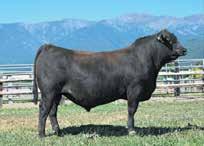


To help make up for the water supplies California could lose over the next two decades, the strategy prioritizes actions to capture, recycle, de-salt and conserve more water. These actions include: Creating storage space for up to 4 million acre-feet of water, which will allow us to capitalize on big storms when they do occur and store water for dry periods
Hotter and drier weather conditions spurred by climate change could reduce California’s water supply by up to 10 percent by the year 2040. To replace and replenish what we will lose to thirstier soils, vegetation and the atmosphere, Gov. Gavin Newsom on Aug. 11 announced California’s latest actions to increase water supply and adapt to more extreme weather patterns caused by climate change.
44 California Cattleman September 2022
“The best science tells us that we need to act now to adapt to California’s water future. Climate change means drought won’t just stick around for two years at a time like it historically has – extreme weather is the new normal here in the American West and California will adapt to this new reality,” Governor Newsom said at the Antioch Brackish Desalination Project. “California is launching an aggressive plan to rebuild the way we source, store and deliver water so our kids and grandkids can continue to call California home in this hotter, drier climate.”
Recycling and reusing at least 800,000 acre-feet of water per year by 2030, enabling better and safer use of wastewater currently discharged to the ocean.
Due Diligence Assistance / Budgeting Site & Improvements Assessment Conservation Easement Opportunities Advising for USDA NRCS Federal Cost-Share Incentives Programs USDA NRCS Technical Service Provider # 04-4096 Design / Installation Oversight / Final Check-Out CONSERVATION PROJECT Planning / Management / Coordination Solar Water Pumping Systems Design & Installation Enhancement Projects / Equipment Evaluation / Range Management Assessments Rangeland Improvements LLC www.freitasrangelandimprovements.com P.O. Box 2479 Livermore, CA. 94551 Jed Freitas Licensed/Bonded/Insured925.580.6415
Governor
The actions, outlined in a strategy document published by the Administration called “California’s Water Supply Strategy, Adapting to a Hotter, Drier Future” calls for investing in new sources of water supply, accelerating projects and modernizing how the state manages water through new technology.Thisapproach to California’s water supply management recognizes the latest science that indicates the American West is experiencing extreme, sustained drought conditions caused by hotter, drier weather. The warming climate means that a greater share of the rain and snowfall California receives will be absorbed by dry soils, consumed by thirsty plants and evaporated into the air. This leaves less water to meet the state’s needs.
Newsom Announces Water Strategy For a Hotter, Drier California
Freeing up 500,000 acre-feet of water through more efficient water use and conservation, helping make up for water lost due to climate change. Making new water available for use by capturing stormwater and desalinating ocean water and salty water
The announcement follows $8 billion in state investments over the last two years to help store, recycle, de-salt and conserve the water it will need to keep up with the increasing pace of climate change, generating enough water in the future for more than 8.4 million households by 2040.
in groundwater basins, diversifying supplies and making the most of high flows during storm events. These actions are identified broadly in the Newsom Administration’s Water Resilience Portfolio – the state’s master plan for water released in 2020 – but they will be expedited given the urgency of climate-driven changes. To advance the infrastructure and policies needed to adapt, the strategy enlists the help of the Legislature to streamline processes so projects can be planned, permitted and built more quickly, while protecting the environment.
Over the last three years, at the urging of the Governor, state leaders have earmarked more than $8 billion to modernize water infrastructure and management. The historic three-year, $5.2 billion investment in California water systems enacted in 2021-22 has enabled emergency drought response, improved water conservation to stretch water supplies and enabled scores of local drought resilience projects. The 2022-23 budget includes an additional $2.8 billion for drought relief to hard-hit communities, water conservation, environmental protection for fish and wildlife and long-term drought resilience projects.


• Pasture, Rangeland and Forage (PRF) Lack of Rainfall • Livestock Risk Protection (LRP) for Market Volatility • Livestock Mortality • Grassland Fire Insurance • Life and Health Insurance • Farm and Ranch Policies • Workers Compensation • Whole Farm Revenue Protection (WFRP) EndoRsEd by 877-920-8500 wsrins.com CA Lic #0b48084 WSR is an opportunityequalemployer. over years THE RIGHT TOOL FOR THE RIGHT JOB build a Risk Management Toolbox That Can do It All At WsR Ranch Protection, we are your one-stop shop for all your insurance needs. Count on us to provide the right tools you will need to properly equip your Risk Management Toolbox ConTACT us TodAy! wsrins.com | 877-920-8500


The study involved a series of virtual workshops with natural-resource professionals, including forest managers, to understand their perceived effects of management actions on ecosystem services and the interactions of the various services. Eleven ecosystem services and nine currently used management actions were considered.
Study collaborator and ecosystem-service expert Benis Egoh, an assistant professor at UC Irvine, points out that, “This research recognized that given the complexity of forest ecosystems across the western United States, the investments required and the management constraints, increasing forest resilience requires a range of actions.” She adds, “Accounting for perceived interactions of ecosystem services is key to multi-benefit valuation of restoration investments and to monetizing those benefits in equitable ways.”
46 California Cattleman September 2022
Study shows how restoring California’s overstocked forests yields multiple, diverse benefits
UC Merced Professor and co-author Roger Bales points out that “reducing fuel loads is increasingly being recognized as an effective measure to transition our forests across the western United States from a destructive to a beneficial wildfire regime.”Bales adds, “Our research supports the perception that California’s wildfire-vulnerable forests should primarily and urgently be restored to conditions that better regulate wildfire severity, and thus provide greater fire protection and other ecosystem-service benefits. Lower-severity wildfire is a natural and beneficial part of these ecosystems.”
In a paper published in Restoration Ecology, researchers at UC Merced, UC ANR and UC Irvine reported that stakeholders perceived fire protection as central to forest restoration, with multiple other ecosystem services also depending on wildfire severity. Researcher Max Eriksson, lead author on the paper, noted that “forest restoration involves multiple fuels-reduction actions that were perceived as benefiting fire protection, with some also offering strong benefits to other ecosystem services such as air quality, wildlife habitat, soil retention and water supply.”
An important contribution of this study is the breadth of both ecosystem-service benefits and management actions considered.
The study showed that the total effect of an action such as mechanical thinning of forests aimed at reducing fuels includes not only the direct effect on reducing wildfire severity, but also secondary effects that improving fire protection has on benefits such as providing water and hydroelectricity for agriculture and communities across the state or storing carbon and reducing carbon-dioxide emissions from wildfire to the atmosphere. Fire management is therefore central to human well-being.Across the western United States, researchers are addressing the huge challenge of transforming forest management from the historical goal of maximum resource extraction (e.g., timber production) to a paradigm built on multiple benefits, or ecosystem services.

September 2022 California Cattleman 47 Invest in your land. Invest in your livelihood. Invest in your legacy. Scan to see what others are saying about investing in their land with Rejuvra. /// Stop the cycle of cheatgrass. Get up to 4 years of control. Cheatgrass isn’t something you have to live with. Get up to 3.5x more forage production with Rejuvra® herbicide.* Powered by a novel active ingredient, Rejuvra stops cheatgrass before it germinates. With just one application, you’ll get four years of control so nutritious forage can thrive. *Forage response is variable and dependent on individual site conditions. Individual results may vary. ALWAYS READ AND FOLLOW LABEL INSTRUCTIONS. Follow label and stewardship guidelines to limit impact to non-target native species. Bayer Environmental Science, a Division of Bayer CropScience LP, 5000 CentreGreen Way, Suite 400, Cary, NC 27513. For additional product information, call toll-free 1-800-331-2867. www.environmentalscience.bayer.us. Not all products are registered in all states. Bayer, the Bayer Cross and Rejuvra® are registered trademarks of Bayer. ©2022 Bayer CropScience. VM-0822-REJ-0067-A-R1


48 California Cattleman September 2022
The economic stability of commercial producers is of great importance, and continuing to push singular breed usage is a detriment to farm and ranch longevity at all levels. The value of heterosis is a reduction of production costs, an increase in animal performance and efficiency, an increase in the value of the products sold, and often simpler breeding programs.Sowhat is heterosis? Heterosis, also known as hybrid vigor, is the superiority of a crossbred animal relative to the average performance of its straightbred parents. Research has shown time and time again that crossbreeding results in calves that are far superior to their straightbred counterparts.
In the beef industry, the effect of direct heterosis on calf performance has been documented. An example of this is if you mate a straightbred parent where the average weaning weight is 550 to another straightbred parent where the average weaning weight is 500. The average weaning performance of those calves is 546. That is 21 pounds heavier than the average of the parent performance.
The Value of HETEROSIS
existdeveloped.breedtwo,seedstockprogramcompositebysimplestpopularperhapsfemales.usingterminalbreedfromprogramscrossbreedingthatrangetwoorthreerotationstocrossespurchasedF1However,themostandtouseisintegratingabreedingwithhybridwherethree,orfourcompositesareThesesystemstodayandareperpetuated by the rise in composite seedstock bulls available in the market. Determining the right breeds needed for a composite program can be evaluated through admixing complimentary breeds — where the strengths of one breed are integrated to address the weakness of another breed. Table 3 provides a glimpse at some of the complimentary options for developing composite programs. While these breed groupings provide a start to developing composites, the more useful tool at your disposal are breed agnostic Expected Progeny Differences (EPD).
...CONTINUED ON PAGE 50 by Lane Giess, Director of Commercial & Nontraditional Data Programs, American Simmental Association
There are two reasons for the resulting boost in performance from crossbreeding: 1) Increasing the level of heterozygosity across the genome lessens the effect of gene dominance for diminished performance (i.e., hybrid vigor), and 2) an increased use of breed complementarity of parent breeds (i.e., maternal line and terminal line).
It’s clear the benefit of heterosis results in improved performance across an array of economically relevant traits, but perhaps even more important is the compounded production advantage through crossbred females. The largest economic impact crossbreeding yields is through maternal heterosis and crossbred females. Would you find it valuable to have females produce 600 pounds more weaning weight and last over a year longer on average than straightbred females? Crossbred females make more money. Period. And maintaining crossbred females in your production system is not as difficult as some may think.
There are many types of
TABLE 1. VARIOUS TRAITS RELATING TO PERFORMANCE AND THE UNIT INCREASE ATTRIBUTED TO HETEROSIS.*
A cross of two strains of maize (left and right) yields a hybrid (center) bigger than both parents. Credit: David Cavagnaro with assistance from Lois Girton and Marianne Smith.
The adage “Our breed can do it all” has — and may continue to be — pressed by some breed association representatives and certainly some seedstock producers. This concept alone is false and in some small way can be attributed to holding back the beef industry and more importantly the commercial cattle producers. Not a single breed by itself can capture heterosis.


65 BULLS • 50 FEMALES Angus • Simmental • SimAngus • Hereford Bulls • Bred Females • Cow-Calf Pairs Show Heifers • Genetic Opportunities SUNDAY, OCTOBER 2ND • 1 P.M AT THE RANCH FORT KLAMATH, OREGON Bull & Temale Sale raynham ranchesT Bulls & Females Like These Sell the 1st Sunday in October at the Fort Klamath Ranch _ EAGLE POINT, OR • FORT KLAMATH, OR BRAD BUCKLEY541-840-5797541-840-8788 SALE BOOK REQUESTS: info@traynhamranch.com SALE DETAILS: www.traynhamranch.com BRAD & BUCKLEY COX Lunch Sponsor: Central Oregon Ranch Supply Guest Breeder: Winter Brook Cattle Co. THD © September 2022 California Cattleman 49


50 California Cattleman September 2022 ...CONTINUED FROM PAGE 48
crossbred calves perform better and are more valuable than their straightbred counterparts. These studies are backed by controlled efforts like the tri-county futurity, which showcased that SimAngus and Simmental-sired calves by English mothers were worth $15 to $24 more than the straightbred English calves. The beef industry demands crossbreeding alternatives for the simple fact it makes commercial cattle producers more profitable. We are already seeing the rise in demand for hybrid bulls, but I suspect as we look into the not-so- distant future of this industry, the concept of “one breed can do it all” will be firmly relegated to the past.
TABLE 2: SUMMARY OF CROSSBREEDING SYSTEMS BY AMOUNT OF ADVANTAGE AND OTHER FACTORS.* TABLE 3: BREED STRENGTHS FOR PERFORMANCE TRAITS, WHERE INCREASING NUMBER OF XS INDICATE HIGHER LEVELS OF THE TRAIT.
Being able to compare parent animals across breeds for the same economically relevant traits without adjustment factors provides commercial producers with targeted tools for hybrid development.
The suite of tools available from IGS benefit from many breed associations sharing their data and developing more relevant and reliable predictions. An example of one of these tools is the Feeder Profit Calculator (FPC), where anyone can use the free service to estimate the relative genetic and management value on commercial feeder calves. The tool takes into consideration vaccination protocols, weaning dates, sex and age of the calves, but perhaps most importantly it appropriately weights the value gained from thatovercomethatThemakecrossbreddetermineinconsiderationthewithcalvespopulationsComparingcrossbreeding.side-by-sideofstraightbredtocrossbredcalvesthesamemanagement,FPCtakesintotheboostperformanceandcanhowmuchthecalvesshouldona$/cwtbasis.toolalsorecognizesgoodgeneticscannotbadmanagement.Researchinformsuscrossbredfemalesand
The EPD generated from the International Genetic Solutions (IGS) genetic evaluation incorporates data from millions of animals across numerous breed populations. The resulting EPD are directly comparable across breeds and are a targeted tool to help commercial cattle producers develop and amplify composites.


STEGALL est. 1995 SCC JUSTIFIED 1007J #4461913 SCC XPORTER 1024J #4461955 SCC JUMPSTART 1033J #4461953 Fall Bull Sale Sunday, September 18, 2022 At the Ranch | Colusa, CA | 1 p.m. PDT SCC JOCKO 1011J #4461861 SCC JEDI 1018J #4461779 SCC JAGGER 1005J #4461933 Interested in a catalog? Connect with us on Facebook and our website or contact us the old-fashioned way with an email or a phone call. STEGALL CATTLE CO. Todd Stegall: 530-713-8755 | 3455 Grover Ave, Colusa, CA, 95932 tmstegall@gmail.com | www.stegallcattle.com Selling: 50 18-Month-Old Red Angus Bulls 30 Open Red Angus Heifers SCC MS FREAK K2013 #4607807 SCC ROBIN K2019 #4607819 SCC NEXA K2006 #4607741 A ampling of the open heifers ... SCC COUNTESS K2011 #4607705 All cattle are: September 2022 California Cattleman 51








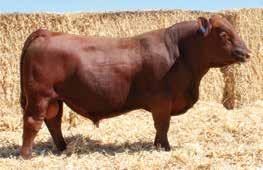







“The first-half performance for U.S. beef exports was nothing short of remarkable, especially considering the growing economic headwinds in many key markets and continued shipping and logistical challenges,” said USMEF President and CEO Dan Halstrom. “The rebound in the global foodservice sector has provided a tremendous lift in 2022, even though it is still far from a full recovery in many Asian and European destinations. We definitely see opportunities for further growth, though inflationary pressure and the stronger U.S. dollar continue to raise concerns about consumer spending power.”
...CONTINUED ON PAGE 54
U.S. BEEF ABROAD FIRST-HALF BEEF EXPORTS ON $1 BILLION/MONTH PACE
52 California Cattleman September 2022 U.S. beef exports remained on a redhot pace in June, topping $1 billion for the fifth time this year (after twice hitting $1 billion in 2021), according to data released by USDA and compiled by the U.S. Meat Export Federation (USMEF). Exports of U.S. pork remained below last year’s large totals in June, while lamb exports continued to trend higher. June beef exports totaled 130,638 metric tons (mt), down slightly from the record volume posted in May but up 16% yearover-year and the fourth largest on record. Export value was $1.05 billion in June, also down slightly from the May record but 31 percent above last year. For the first half of 2022, beef exports increased 6 percent from a year ago to 743,904 mt, valued at $6.19 billion (up 33 percent).
Broad-based growth fuels torrid first-half pace for beef export volume and value Japan was the leading volume market for U.S. beef exports in June, with exports increasing 12 percent to 27,891 mt. Export value was up 15 percent to $211.7 million. First-half exports to Japan were steady with last year in volume at 155,513 mt but jumped 20 percent in value to $1.25 billion. This included 28,045 mt of beef variety meat – mainly tongues and skirts – which was up just 1 percent from a year ago but export value soared 41 percent to $287.4 million. June exports to South Korea jumped 22 percent from a year ago to 24,820 mt, while value increased 36 percent to $230.1 million. First-half exports to Korea were 6 percent ahead of last year’s record pace in volume (150,493), while value soared 40 percent to $1.52 billion. To combat inflation, Korea recently opened a from the U.S. Meat Export Federation

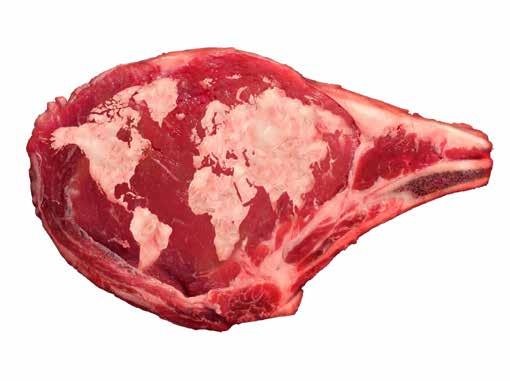

Despite a slight volume decline in June, first-half beef exports to Taiwan totaled 37,243 mt, up 27 percent from a year ago. Value climbed to $444.2 million – 59 percent ahead of last year’s record pace. The U.S. is the dominant supplier of chilled beef to Taiwan, capturing 76 percent market share. First-half beef exports to the ASEAN region climbed 10 percent to 31,581 mt, while value soared 66 percent to $233.5 million. Exports to the Philippines increased 26 percent to 10,928 mt and climbed 92 percent in value to $79.1 million. Exports to Indonesia, where foot-and-mouth disease has recently impacted domestic production, dipped slightly in volume (10,621 mt, down 3 percent) but value still increased 56 percent to $75.3 million. Exports to Vietnam increased in both volume (4,627 mt, up 7 percent) and value ($39.3 million, up 48 percent). In the Caribbean, a rebound in tourism and strong retail demand pushed first-half beef exports to 13,993 mt, up 35 percent from a year ago, while value climbed 82 percent to $120.1 million. Export value more than doubled to the Dominican Republic ($48.3 million, up 115 percent) and Jamaica ($12.8 million, up 166 percent), while also increasing sharply to the Bahamas ($14.9 million, up 58 percent).
June beef export value averaged $447.45 per head of fed slaughter, up 27 percent from a year ago. Through June, per-head value averaged $476.98, up 33 percent from the first half of 2021. Exports accounted for 15.5 percent of total June beef production and 13.3 percent for muscle cuts, up significantly from 13.6 percent and 11.5 percent, respectively, in June 2021. First-half exports accounted for 15.4 percent of total production and 13.2 percent for muscle cuts, up from 14.7 percent and 12.5 percent, respectively.
– WESTERN POLY PIPE, LLC –HDPE PIPE FOR RANCH & FARM WATER SYSTEMS DELIVERY AVAILABLE • (925) 240-3643 GOOD COMPETITIVESERVICEPRICESRANCHER-OWNED Western Poly Pipe —lifetime pipe—
Other January-June results for U.S. beef exports include:
54 California Cattleman September 2022 ...CONTINUED FROM PAGE 52 100,000 mt duty-free quota for imported beef, which is available to all eligible suppliers through the end of the year. The U.S. is the largest supplier of beef to Korea and while the quota will reduce U.S. beef’s tariff rate advantage over major competitors, it is a positive development in that it will help offset the impact of Korea’s weakened currency and bolster the relative affordability of U.S. beef.
Hard-hit by a prolonged, COVID-related slowdown in the foodservice sector, Europe’s demand for U.S. beef is finally rebounding. First-half exports to Europe reached 10,040 mt, up 89 percent from last year’s low totals, while value climbed 110 percent to $131.8 million. In the April-June quarter, imports under the U.S. share of the European Union’s duty-free High Quality Beef Quota were the largest since the pre-COVID total posted in early 2020. Through July, EU imports of U.S. beef under the quota totaled 7,540 mt, up about 35 percent from the same period last year. Strong variety meat demand in Egypt and larger muscle cut shipments to the United Arab Emirates, Kuwait and Qatar pushed first-half beef exports to the Middle East 12 percent higher than a year ago to 36,289 mt, valued at $160.5 million (up 56 percent).
COVID lockdowns extended into early June in some of China’s largest cities, but June beef exports to China/ Hong Kong still climbed 37 percent from a year ago to 25,270 mt. Export value soared 50 percent to $240.7 million, making China/Hong Kong the largest value destination for U.S. beef in June. First-half exports to the region were 27percent ahead of last year’s record pace in volume (135,821 mt) and 44 percent higher in value at $1.25 billion.

66 Years AARON LAZANOFF BEEF OPERATIONS MANAGER (805) ALAZANOF@CALPOLY.EDU801-7058 ZACH MCFARLANE, PH.D. BEEF CATTLE SPECIALIST (805) ZMCFARLA@CALPOLY.EDU756-2685 of Performance-Tested Yearling Bulls Offering Angus, red Angus, and Hereford Bulls. Bull preview and sale will be held at the Cal Poly Escuela ranch and Bull Test Facility. DIRECT INQUIRIES AND SALE BOOK REQUESTS TO: @CALPOLYBULLTEST WWW.BULLTESTCALPOLY.EDU @CP_BULLTEST SUNDAY, OCTOB E R 2 ND AT 1 :00 PM


WHO RUNS THE SHOW?
Behind the Sale Scene
thestarthebullthemerchandisesponsorshipeventmedia,health,research,committeesTheseincludenutrition/socialmarketing,planning,andandnewlyaddedprep.Whilebullsaretheoftheshow,planningof
the sale, clean up, set up, educational day and tradeshow are key events that must be carefully thought out. Each committee creates plans, delegating what must be done to be ready for sale day. Zach McFarlane, Ph.D., Assistant Professor, San Luis Obispo shares that the enterprise has a great group of students willing to give it their all.
McFarlane, along with co-advisor Aaron Lazanoff, San Luis Obispo, oversee the students throughout the duration of the“Astest.an advisor it’s important to make sure the students understand the entire process,” shares McFarlane. BULLS AT
Students who are eager to learn and assist with aspects of the upcoming sale start the enterprise at the beginning of spring quarter. Enterprises are courses that students take to apply what they have learned in their studies to real world situations. To join the enterprise students must fill out an application identifying what committee they would like to serve on as well as an explanation of why they want to be a part of the enterprise. Each committee focuses solely on a certain feature of the bull test.
Emily Ehrke, Arbuckle, the event planning committee manager ,has been on top of scheduling and making plans for the sale and field day, shares McFarlane. Over the weekend, buyers and consignors have the chance to attend a dinner hosted by Cal Poly’s Young Cattlemen’s Association, participate in an educational field day and view the bulls leading up to the sale. Besides putting on a successful production, the goal of the enterprise is to provide an educational component as well as a hands-on experience to those who participate.
by CCA Associate Director of Communications Maureen LaGrande
GLIMPSE OF WHAT GOES ON BEFORE
ENTER THE RING
CAL POLY
Going once, going twice sold! Before the familiar auctioneers chant is pronounced students who sign up to be a part of the Cal Poly Bull Test Enterprise have a few items to check off their to do list. After months of preparation, planning and promoting, sale day for the 66th Annual Cal Poly Bull Test approaches in early October. While the weekend of the sale goes by in a flash, the students who put on the production have been working tirelessly on the details of the sale since March. With close to 120 bulls consigned annually, there is always work to be done. What many who attend sale day don’t see is all that must be done behind the scenes leading up to the muchanticipated event.
56 California Cattleman September 2022

Hands on opportunities such as processing, ultrasounds, semen testing and clipping the bulls provides students a chance to get in on the action. McFarlane added that he has put an emphasis on the importance of understanding the data, Expected Progeny Differences (EPDs) and information gathered from breed associations to his students. McFarlane, with help from his teaching assistant Claire Stevenson, White Sulfur Springs, was able to identify topics regarding the bulls that students were less familiar with and create lessons to enhance their knowledge.
Consignor David Holden, Oroville, of Westwind Angus has been entering bulls in the test for the past 13 years. When determining which bulls to enter in the sale, Holden shares that he looks at their weight and EPDs.
The knowledge students gain throughout the enterprise is something that can be carried with them as they advance to careers in the future. An application from producers to enter bulls in the test must be submitted before the bulls are dropped off in mid-April. This includes information pertaining to the bulls and registration from their respective breed associations.
“The loyal buyers, our bulls doing well in the test and great fellowship,” is what draws Holden to continue bringing bulls back to the test.As the end of the University’s spring quarter approaches the bulls arrive and are weighed, wormed, tagged and vaccinated by the students before finals. During the summer when school is out, most enterprise members have internships away from San Luis Obispo, making it a challenge to constantly have help.
“We are lucky to have a core group of about seven students who are here to assist during the summer,” assistant bull test manager Robee Knoch, Fall River Mills, shares.
...CONTINUED ON PAGE 58
September 2022 California Cattleman 57
Cal Poly Bull Test Secretary Stella Boller, San Luis Obispo, and co-secretary Olivia Jarrett assist in compiling records of all the bulls in the test keeping track of their treatments, feed, billing and putting together
Most of the student workdays occur about once a month throughout the summer. All enterprise members are encouraged to attend if able. Cal Poly Bull Test General Manager Jason Dubowsky, San Luis Obispo, and Knoch work together on communicating with the committee heads and enterprise members. As the manager, Dubowsky shares how critical it is that everyone in the enterprise stays in contact even if they aren’t all in the same place. A texting and email chain allows each committee to provide updates to one another on what they are working on and bounce ideas off each other. The same goes for staying in contact with the consignors.
ARRIVAL OF THE BULLS
SUMMER EVENTS
“We want our students to be able to look at the sale catalog, understand what they are seeing and be able to answer any question a buyer or consignor may have,” McFarlane says.


“The photos and videos of the bulls is an event in itself,” shares Dubowsky. “If you have never seen it before, it’s an interesting experience.”
To keep record of which bulls she photographs, Fields keeps a detailed notebook of the bull in front of her, the number on the camera roll and how many pictures of that bull she took. Once all the bulls are photographed the images are uploaded to the computer to be viewed and cleaned up. Fields shared that Hall was very helpful looking through the photos showing her what to look for and how to erase the background and flies so the bulls would be the main focal point. To ensure the images best represent the bull’s true figure, very little editing is done to the images.
PREPPING THE BULLS
58 California Cattleman September 2022 ...CONTINUED FROM PAGE 57 progress reports. After every weigh day a progress report is created and sent to consignors. The report shares the bull’s weight, EPDs and other data pertinent to their growth.
Mahlon Owens, Red Bluff, the head of the committee is leading a group of individuals who are willing to help with whatever is needed. Clipping the bulls is a strenuous process that takes time, quick thinking and patience. All these tiny parts that go into the enterprise begin to blend with one another as the sale approaches.
Advertisements, flyers and the catalog are the main focus for the marketing team but this year they are creating a newsletter to send out as well. The newsletter will provide an update of how bulls are doing as well as information regarding the enterprise.
Several consignors and supporters were once members of the bull test enterprise during their time in school and have found ways to continually support the students and enterprise.Atthe end of August, the creation of the sale catalog goes into full force for the marketing team.
Jenna Fields, Coyote, a past two-time manager and marketing head of the bull test is coming back as the photographer for the bulls this year. Longtime bull test supporter and photographer Wendy Hall, Nipomo, served as a mentor to Fields as she transitioned into this role. Hall assisted in positioning Fields while taking the photographs. Hall shared with her which angles to use to highlight the bull’s form and identified the best time of day to capture images based on the lighting. Each bull’s photo session is different from the next, depending on their build as well as their cooperativeness.
As an advisor McFarlane shares there is always a decision to be made or thought about as the sale comes together. “What plants should we put in front of the sale ring? Can we get them donated, or do we need to purchase them?”While they might not be a part of the enterprise from the very start, the auctioneer additionally plays a crucial role on the day of the sale. Over the last 20 years Col. Rick Machado, Shandon, and Col. John Rodgers, Visalia, have served as the auctioneers for the bull sale. Periodic updates of the bull’s progress over the summer are shared with Machado. To prepare for the upcoming sale, Machado comes to the Cal Poly Beef Unit a few days prior to look at the bulls so he can take sale notes for the auction. By observing them beforehand, he can identify which bulls are better suited for calving ease, growth and other traits helping to lead buyers in the right direction of what they are looking for. “Interacting and sharing knowledge with the students who put on this production is one of the best parts,” shares Machado. The Cal Poly Bull Test is a time-honored tradition that holds value to future, past and present participants. Without the hard work of the enterprise members, committee advisors, volunteers, consignors and supporters the sale would not be possible. The 66th Annual Cal Poly Bull Test will take place on Oct. 2. For more information visit https://bulltest.calpoly.edu.
McFarlane and Dubowsky both shared how they make it a priority to reach out to consignors and serve as a constant contact to keep them in the loop of what’s going on. Based upon the progress reports, semen test and ultrasound result the top 60th percentile of the bulls make the sale.
THE FINAL STRETCH Cal Poly’s fall quarter begins in mid-September about two weeks before the sale. During these short weeks leading up to the big day is when the wheels go into motion. The bull test facility is cleaned, the sale tent along with ring is set up, pen numbers are repainted and the bull pens are freshened up as well. All the pens are labeled with information pertaining to the bulls who are in them. Even with busy class schedules, the enterprise members really put a foot forward in the weeks leading up to the sale. The time it takes to lay the sand, set up the ring and tent is vigorous.
“We hold out on finishing the sale catalog for as long as we can so that the information, we put into it is as accurate as possible to truly reflect the bulls in the sale,” says McFarlane.
“The consignors come back for the students,” says McFarlane. “They could sell their bulls anywhere but choose to put them in our sale.”
Overall, from beginning to end of the photo taking process is about a week in length. During their time at the bull test facility, the bull’s health and comfort are the highest priority of those who care for them. Morning and night the bull pens are walked by the managers to ensure none are injured or sick, shares Knoch. Student feeders, part of the nutrition committee, see the bulls twice a day as well, keeping track of how much each pen eats and assigning a bunk score. To provide prime living conditions to the bulls, their feed bunks are cleaned on a weekly basis and the water troughs are cleaned every month. The students care for these animals and want to ensure consignors that their bulls are receiving the utmost attention throughout the length of the test.
“When I first see the bull as it walks into the ring, I immediately take note of its strengths,” shares Fields.
To further prepare for marketing efforts the bulls are brought in to be cleaned up for photos and videos. The addition of the bull prep committee this year solely focuses on clipping and torching the bulls as well as the clean-up of the facility.
September 2022 California Cattleman 59 Borges Angus Ranch JOE & PATRICIA BORGES 3130 BYER ROAD, BYRON CA (925) 634-3072 • (209) 456-0632 CONTACT US TO LEARN MORE ABOUT THIS YEAR’S BULL SALE AND PRIVATE TREATY OFFERING! 2022 OFFERING BY: EXAR INSTRUMENTAL 9707B | BALDRIDGE ALTERNATIVE VAR POWER PLAY | MUSGRAVE EXCLUSIVE THE 2020 CAL POLY TOP CONSIGNOR! BRINGING THE BEST 8 BORGES HAS TO OFFER! 4 CALVING EASE, 3 MULTI-TRAIT AND 1 GROWTH BULL B A R RAPTOR ALTERNATIVE 205 AAA 20329854 B A R INSTRUMENTAL 207819 AAA 20266819 SELLING A DIRECT SON OF THE $2.5 MILLION PRODUCING VAR BLACKCAP 9319 SIRED BY GAR HOME TOWN! HCC HOMETOWN ALL AROUND 110 AAA# 20266170 MULTI TRAIT DIVISION E W A PEYTON 642 X V A R DISCOVERY 2240 LOOK FOR HIM IN THE MULTI-TRAIT DIVISION! ADG: 5.16 | RATIO 138.53 | ADJ. YW 1260 | TEST INDEX 119.19 CED 9 BW 1.2 WW 79 10% YW 140 10% CW 65 15% MB 1.67 1% RE 0.84 Fat -.006 $M 61 $W 72 15% $F 114 5% $G 105 1% $B 219 1% $C 345 1% GAR HOME TOWN X CONNEALY ALL AROUND HE’S OUT OF LEGENDARY COW VAR BLACKCAP 9319! CED -3 BW 5.2 WW 94 1% YW 172 1% CW 85 1% MB 1.36 2% RE 0.77 Fat -.001 $M 55 $W 66 $F 128 1% $G 89 2% $B 217 1% $C 336 1% ADG: 3.91 | RATIO: 106.15 |ADJ. YW: 1337 | TEST INDEX: 106.57 PLUS WATCH FOR OTHER IMPRESSIVE PERFORMERS SELLING THIS YEAR AT CAL POLY! 2022 CAL POLY BULL SALE CONSIGNORS B Bar Six Polled Hereford Borges Angus Ranch Cal Poly ChrisCKHildebrandAngus C2-IT Cattle Company Davis Cattle Service Diablo Valley Angus Dixie Valley Angus Eagle Grip Cattle Company Flying RJ Ranch Furtado Angus Gianandrea Angus Cattle Co. Guess Cattle Co. Hertlein Cattle Company N Style Cattle Company Person and Son Cattle Co. P.W. Gillibrand Cattle Co. Rollingwood Ranch Westwind Angus


60 California Cattleman September 2022 RANCH ANGUS Where Cowmen Buy Bulls David J. Holden • (530) 736-0727 38 Montana Ave, Oroville, www.westwindangus.comwstwind@hotmail.com95966 POWERFULLY MADE WESTWIND BULLS! Also look for our son of E W A PEYTON 642 in the Heifer Bull Division with a 102.85 Test Index as well as a son of VAR Power Play 7018 in the Multi Trait Division with a Test Index of 106.54! Over the years we’ve been the choice of many commercial and purebred cattlemen for the consistency of our Cal Poly bulls! CED BW WW YW CW MB RE FAT $M $W $F $G $B $C 10 0.4 86 148 72 0.93 0.94 -0.012 62 75 124 72 196 316 3% 4% 5% 20% 10% 20% 10% 2% 10% 2% 2% Sire: Connealy Clarity• MGS: High Point Werner Cut AboveSire: Poss Rawhide • MGS: Quaker Hill Rampage 0A36 BW: 76 • ADJ YW: 1370 • RATIO 114.70 ADG 4.64 • RATIO: 129.20 • WDA: 3.76 • TEST INDEX: 121.95 CED BW WW YW CW MB RE FAT $M $W $F $G $B $C 6 2.5 82 148 70 0.91 0.80 -0.021 52 68 109 70 179 284 5% 4% 10% 20% 25% 15% 20% 10% 15% 20% 20% RAWHIDE SON LEADING THE HEIFER BULL DIVISION TOP THREE MULTI TRAIT BULL WITH THIS STOUT CLARITY SON BW: 82• ADJ YW: 1321 • RATIO 104.76 ADG 4.27 • RATIO: 114.76 • WDA: 3.63 • TEST INDEX: 109.68 GUESS CLARITY 207J AAA# 20128148 A CALVING EASE STANDOUT! Guess Cattle Co, l lc est. 1964 CONNEALY CLARITY X BALDRIDGE DOWNLOAD Z013 Look for our Multi-trait bul ls sired by Poss Rawhide and Musgrave 316 Exclusive! BW 75 LBS. | ADG 4.05 | RATIO 112.67 ADJ. YW 1349 | RATIO 113 | TEST INDEX 112.78 RODGER GUESS | 559-685-0286 | GUESS559-679-7022ENRICH206J AAA# 20127927 HIGH PERFORMANCE PROSPECT! WILKES ENRICH X CONNEALY IN FOCUS 4925 BW 78 LBS. | ADG 4.47 | RATIO 121.43 ADJ. YW 1385 | RATIO 111 | TEST INDEX 116.16 CED 5 BW 2.3 WW 98 1% YW 163 1% CW 81 2% MB 0.89 20% RE 1.07 5% Fat 0.024 $M 100 1% $W 98 1% $F 120 3% $G 69 15% $B 188 4% $C 344 1% CED 11 15% BW 0.1 WW 74 15% YW 135 15% CW 69 10% MB 0.96 15% RE 0.79 Fat -.007 $M 77 15% $W 76 10% $F 112 10% $G 71 10% $B 183 5% $C 314 3% Angus Ranch 18402 Road 320, Springville, CA Custom Cattle Feeding 24487 Road 140, Tulare, CA, 93274 Calf Ranch 14498 Ave. 208, Tulare, CA 93274


Aaron Cell: (541) 633-3284 Rebecca Cell (541) 771-4151 P.O. Box 38, Fort Rock, OR 97735 AARON AND REBECCA BORROR www.9peaksranch.com Angus Cattle Raised Right beef improvement through real-world commercial conditions join us for our 16th annual bull sale! — Selling 120 Spring and Fall Yearling Bulls — STERLING CONFIDENCE PLUS 804 SITZ STELLAR 726D S A V RAINFALL 6846 S A V PROSPERITY 9131 CONNEALY COOL 39L 9 PEAKS CAL FIRE G806 (2020 TOP SELLING BULL BY TAHOE) 9 PEAKS BLITZEN E890 9 PEAKS LIGHTNING G846 FEATURING BULLS BY THESE OUTSTANDING ALL-AROUND SIRES: WE’RE PROUD TO BE ONE OF THE WEST’S LARGEST SEEDSTOCK OPERATIONS THAT UTILIZES EXTENSIVE BLM AND FOREST SERVICE GRAZING ALLOTMENTS! STERLING CONFIDENCE PLUS 804 SITZ STELLAR 726D THIS 9 PEAKS HERDSIRE IS SHOWN HARD AT WORK IN WYOMING. WITH HUNDREDS OF CALVES REPORTED, DAUGHTERS IN PRODUCTION, AND ACTUAL CARCASS DATA, THIS BULL IS BECOMING A PROVEN STANDOUT ACROSS THE BOARD. THIS HIGH USE AI BULL SIRES WELL ROUNDED, GROWTHY CATTLE WELL SUITED FOR A DESERT ENVIRONMENT. HE’S ONE OF THE BREED’S TOP BULLS FOR FOOT STRUCTURE. BW -0.2 | WW 71 | YW 130 | MB 0.52 | RE 0.57 | $C 247 FEATURING 9 PEAKS STELLAR J712 AAA 20375861 BW 1.4 | WW 80 | YW 151 | MB .73 | REA .35 FROM PATHFINDER COW WITH 11@112 WR BW -1.4 | WW 67 | YW 127 | MB 1.08 | RE 1.04 | $C 321 FEATURING 9 PEAKS CONFIDENCE PLUS J738 AAA 20186542 BW 2.1 |WW 66 | YW 125 | MB 1.12 | REA .91 |$C316 | DAM PRODUCTION 13@103 WR FEATURING A STAND OUT SON OF CONFIDENCE PLUS 804, AND A SON OF STELLAR... BOTH OUT OF A DAM THAT HAS RAISED MORE THAN 10 SUPERIOR CALVES FOR US!


ANGLE
Another Cal Poly grad goes the distance by CCA Associate Director of Communications Maureen LaGrande
Jenna Fields , Coyote, fully immersed herself in the motto over the last four years at the beef unit. During her time as an undergraduate, Fields served as the Cal Poly Bull Test General Manager for two years, Cal Poly Young Cattlemen’s Association President her senior year and a four-year student employee of the Escuela Ranch. While getting to partake in the hands-on side of beef production, Fields also took this time to merge her love for the industry with her major, agricultural communications. “Jenna worked tirelessly to improve the outreach and marketing of our program at all levels. She constantly sought opportunities to improve our social media presence, our website and all marketing material to showcase the great work of our students in the Cal Poly Beef Program,” shares Zach McFarlane , Ph.D., San Luis Obispo.
62 California Cattleman September 2022
Fields’ contributions include serving as photographer for the Cal Poly Bull Test, whose images will be included in bull marketing sections of this magazine, Best of the West and the Cal Poly Bull Test Sale catalog.
“We are thrilled to have her back for the 2022 Bull Test as a recent graduate. She has a passion for our program and for the beef industry,” says McFarlane.
INVOLVED
Now graduated, Fields is operating her own digital media and marketing business J.K.F. Design and Imagery, writes for her local paper and works on her family’s ranch. J enna Fields graduated from Cal Poly, San Luis Obispo in June and was supposed to be included in the graduate recognition feature of the July/ August 2022 issue of the Cattleman.California AT EVERY
California Polytechnic State University, San Luis Obispo’s motto is “Learn by Doing.” This is especially embraced by those in the College of Agriculture, Food and Environmental Sciences.


We believe this business is all about balance. To make our sale, a bull has to be sound structurally and on paper, ready to make a positive impact in the pasture. We’re on a mission to help you build a better cow, while producing calves that don’t skip a beat at the bunk, whether you wean them or take them to the rail. Reach out or visit the website to learn more about our approach and our family farm and ranch. We’d love to hear from you!
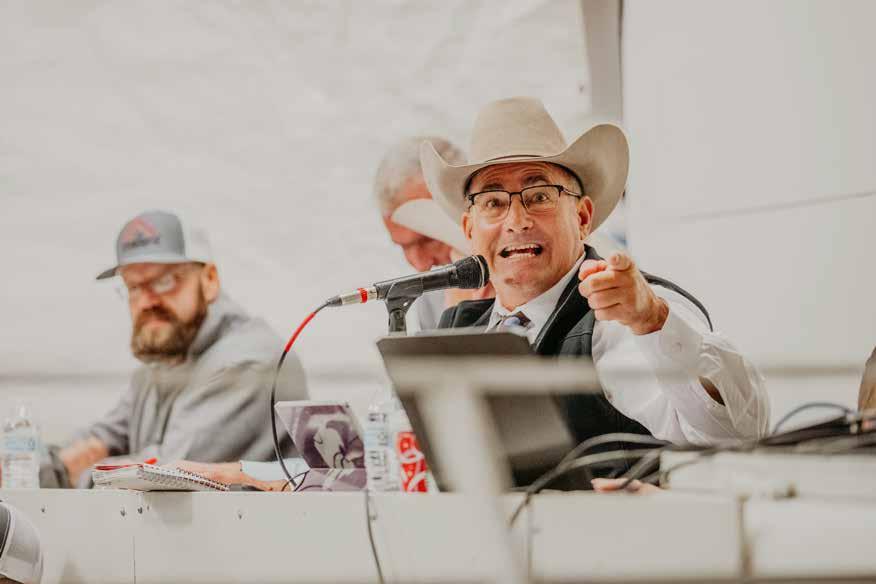

The Luther Burger
• quality Ground Beef - 1/4 pound per person
Portion your ground beef into the size a bit larger than a golfball (about four ounces or a quarter pound). Don’t overwork the meat. Cut the donuts in half with a serrated knife. Heat up your griddle/cast iron (we’re aiming for 420 degrees) and toast all of the donut halves (interior side down... don’t toast the glazed side) you intend to use while the griddle is coming to temperature. If using American Cheese this would be a good time to unwrap the slices (this cook is Oncequick).itreaches temperature place beef balls (as many that will fit while allowing space). Using your spatula use both hands (a towel or oven mitt could be useful here) and smash the patties to about a half-inch thick. At this temperature with this method the patty will be ready to flip in under a minute. Once you see beautiful brown edges on the bottom flip the patties. Season with salt, and top with cheese. Once the cheese is melted transfer the patties to the toasted donut halves (with the glazed sides facing the patty). by Ryan Donahue for the California Cattleman
• crispy Bacon - 1 slice per BurGer
• Glazed donuts - 1 per BurGer
• serrated Knife • napKins (lots) Process
64 California Cattleman September 2022
• Griddle or cast Iron pan
• l arGe spatula
Ingredients
Abstract
We’re digging deep into burger mythology with this month’s recipe, the Luther Burger. Rumored to have been invented or at least thoroughly enjoyed by writer/singer/ producer Luther Vandross. Much like Elvis’ peanut butter, banana and bacon sandwich, the Luther Burger takes a classic sandwich and applies one odd twist. In this case the bun is replaced with a glazed donut. The rumored recipe for Luther’s preferred portion was one pound of ground beef, five slices of bacon and cheese sandwiched between two donuts. Our approach will be a bit more reserved. I was initially hesitant to try one of these burgers but I have to say... the flavors really work.
• american cheese (optional)
• Kosher salt Tools




“It gets harder and harder every year,” Sally Dudley Baker said. “You didn’t have all these rules and regulations and taxes that you have now.” Even so, she added, “we keep plugging along. I think that’s what my family would have wanted, so I keep doing it.”
California Agricultural Heritage Club Recognizes Veteran Businesses for their Services
“As we move forward and fewer farms and ranches have family continuing on, it’s even more important that we recognize and instill the importance of people, the farms and ranches, and ag businesses in operation,” said Judy Culbertson, chair of the Heritage Club and executive director of the California Foundation for Agriculture in the DudleyClassroom.Ranch in Tulare County, got started in 1871 when Moses and Sarah Dudley moved from Minnesota in search of a milder climate.
Other farming and ranching operations recognized this year are listing here.
The California Agricultural Heritage Club is a group of families and businesses who are descendants of pioneer ranches, farms and agribusinesses of early California. Their dedication to preserving agriculture’s heritage as well as moving the industry forward has made California a proud leader in food production and agriculture.
The California Agricultural Heritage Club recognized century-old agriclture businesses on July 20 at the California State Fair & Food Festival in Sacramento. Family farms and ranches 100, 125, 150 and 175 years old are nominated for the honor. Among this year’s recipients of the prestigious honor is long-time CCA member Dudley Ranches of Visalia.The California Agricultural Heritage Club began recognizing longstanding family farms and related businesses in 1948, the centennial of the Gold Rush’s beginnings. Farms, ranches and related businesses and organizations are inducted when they reach 100, 125, 150 or 175 years of operation.
150 years: Steamboat Acres (est. 1848) - Sacramento County; Dudley Ranch (est. 1871) – Tulare County; Hindley Ranch (est. 1872) – Humboldt County 125 years or more of continuous operation: Nichelini Family Winery (est. 1890) – Napa County; Farley – Erickson Rach (est. 1897) – Marin County; Kerr Koontz Farms (est. 1897) – Yolo County; Meissonnier Ranch (est. 1897 – Merced County
100 years or more of continuous operation: Solano County Farm Bureau (est. 1915) – Solano County; Merced County Farm Bureau (est. 1917) – Merced County
66 California Cattleman September 2022
The California Agricultural Heritage Club is sponsored by California Farm Bureau; Farm Credit; The Zenith; and Friends of the California State Fair.
Do you own cattle? You don’t need it, but should still support Cattlemen’sCaliforniatheAssociation Do Anaplasmosisareasgrazetheyinwhereisaproblem?YES NO Do you want to prevent the effects of the disease including severe anemia, weakness, fever lack of appetite, constipation,depression,decreasedmilkproduction,jaundice,abortionandpossiblydeath?YES needdon’tYouto SHOULD YOU ORDER THE ANAPLASMOSIS VACCINE? Anaplasmosis is an infectious parasitic disease in cattle, spread primarily by ticks and blood sucking insects like mosquitoes. The killed anaplasmosis vaccine protects cows and bulls of any age from infection and requires a booster given 4 to 6 weeks after the initial vaccination. Find out below if you should order the vaccine! ORDER TODAY BY CALLING (916) 444-0845! Available in 10 or 50 dose bottles 10 dose bottles: $8.50 per dose 50 dose bottles: $7.50 per dose *10 dose minimum and $10 flat rate shipping SOLD ONLY TO CALIFORNIA CATTLEMEN’S ASSOCIATION MEMBERS NO (Consult your local veterinarian to find out) NO YES


September 2022 California Cattleman 67 GENEPLUS GENEPLUS A STEP AHEAD THE ADVANTAGE YOU CAN TRUST GENETICS BUILT FOR ALL WEATHER & TERRAIN This map shows the states G+ buyers are putting OUR GENETICS TO WORK.

68 California Cattleman September 2022 California Cattlemen’s Association Thank you for a tremendous sale season! Join us again Sept. 2, 2022! CALL US FOR INFORMATION ABOUT OUR PRIVATE TREATY CATTLE OR OUR ANNUAL BULL SALE! 82914 Milburn Ave • Anselmo, NE 68813 KENNY & DIANNE READ 1485 SW King Lane • Culver, OR 97734 Ranch: (541) 546-2547 Cell: (541)480-9340 E-mail: barkdranch@msn.com visit us online at: www.barkdangusranch.com Look for our “Distinctly Different” Angus bulls annually at Red Bluff and Modoc Bull Sales! BAR KD RANCHBAR KD RANCH Elevating Angus to Greater Horizons VISIT US AT WWW.DONATIRANCH.COM! 31st annual Bull Sale Sept. 15, 2022in Denair Mark Your Calendars for the Heritage Bull Sale Sept. 4 in Wilton 916.712.3696 • jj@barrangus.com916.803.2685 Angus RAnch Annual Bull Sale: Sat., September 1, 2018 Inaugural Female Sale: Mon., October 15, 2018 Tim & Marilyn Callison Owners Chad Davis 559 333 0362 Travis Coy 559 392 8772 Justin Schmidt 209 585 6533 Ranch Website www.ezangusranch.com 2022 Bull Sale: Sept. 3, Farmington 2022 Female Sale: Oct. 10, Porterville services for all your on-the-ranch needs Ranch Buyer’s Guide YOU ARE INVITED TO JOIN US AT OUR ANNUAL BULL SALE IN OROVILLE SEPT. 8, 2022!



September 2022 California Cattleman 69 LOOK FOR US AT LEADING SALES IN 2022. Scott & Shaleen HoganH R (530) 200-1467 • (530) 227-8882 Gerber, CA Registered Angus Cattle Call to see what we have to offer you! RED RIVER FARMS 13750 West 10th Avenue Blythe, CA 92225 Office: 760-922-2617 Bob Mullion: 760-861-8366 Michael Mullion: 760-464-3906 Simmental – SimAngus™ – Angus Offering bulls at California’s top consignment sales! Call today about privateofferings!treaty O’NEAL RANCH BULLS OFFER THE COMPLETE PACKAGE O’NEAL RANCH — Since 1878— Gary & Betsy Cardoza PO Box 40 • O’Neals, CA 93645 (559) 999-9510 Join us at the annual “Performance Plus” Bull Sale in O’Neals on Sept. 6, 2022 GROWTH • ADAPTABILITYPERFORMANCE•CARCASS Hoffman Bomber 8743 SIRE: Casino Bomber N33 MGS: S A V Final Answer 0035 VDAR Mirror Image 6207 SIRE: W R A Mirror Image T10 MGS: BCC Bushwacker 41-93 CONTACT US ABOUT SEMEN FROM THESE IMPRESSIVE SIRES... • Calving Ease with Growth • O’Connell Aviator 7727 SIRE: Musgrave Aviator MGS: R B Tour Of Duty 177 VDAR PF Churchhill 2825 SIRE: VDAR Churchill 1063 MGS: VDAR Really Windy 4189 Joe Sammis • (530) 397-3456 122 Angus Rd., Dorris, CA 96023 h (775) 691-1838 • honeranch@frontier.comEFFICIENT,PERFORMANCE-TESTEDHONERANCH.COMQUALITYANGUSBULLSNOWAVAILABLE! You can take to the bank! O’Connell ranch Call us about females available private treaty. Join us Sept. 9 for our annual Black Gold Bull Sale! DAN & BARBARA O’CONNELL 3590 Brown Rd, Colusa CA (530) Nathan,458-4491Melissa & Kate Noah (208) 257-3686 • (208) 550-0531 (530) 385-1570 E-mail...............................tehamaranch@gmail.com Join us at the 48th Annual “Generations of Performance” Bull Sale Sept. 9, 2022 in Gerber! John Teixeira: (805) 448-3859 Allan Teixeira: (805) 310-3353 Tom Hill: (541) 990-5479 A FAMILY TRADITION www.teixeiracattleco.com | cattle@thousandhillsranch.com Angus and SimAngus Ca le Join us for the Donati Ranch and O’Connell Ranch Golden Opportunity Bull Sale Sept. 8 in Oroville!





70 California Cattleman September 2022 Dwight Joos Ranch Manager P.O. Box 1019 • Simi Valley, CA 93062 805-520-8731 x1115 • Mobile dwight.joos@pwgcoinc.com805-428-9781SimiValley,CA pwgillibrandcattle.com P.W. CattleGILLIBRANDCo. Horned and Polled Hereford Genetics Private treaty bulls available or watch for our consignments at Cal Poly! THANK YOU TO OUR BULL SALE SUPPORTERS! JOIN US AGAIN SEPT. 1 IN LAGRANGE! Call us today for information on private treaty bulls or females. MCPHEE RED ANGUIS 14298 N. Atkins Rd • Lodi, CA 95248 Nellie, Mike, Mary, Rita & Families Nellie (209) 727-3335 • Rita (209) 607-9719 website: www.mcpheeredangus.com thank you to our 2022 Buyers! 11500 N Ambassador Drive, Suite 410 | Kansas City, MO 64153 | (816) 842-3757 | aha@hereford.org Chris Beck • 618-367-5397 79337 Soto Lane Fort Rock, OR 97735 Ken 541.403.1044 | Jesse 541.810.2460 ijhufford@yahoo.com | www.huffordherefords.com “Breeding with the Commercial Cattleman in Mind”3L Registered Hereford Cattle & Quarter Horses Annual Sale First Monday in March 42500 Salmon Creek Rd Baker City, OR 97814 Ranch: (541) 523-4401 Bob Harrell, Jr.: (541) 523-4322 THANK YOU TO OUR BUTTE BULL SALE CUSTOMERS. JOIN US IN ALTURAS IN FEBRUARY FOR OUR MODOC BULL SALE! Oroville, LambertRanchHerefords.comCACONTACTUSFORCATTLEAVAILABLEPRIVATETREATYOFFTHERANCH “THE BRAND YOU CAN COUNT ON” REGISTERED HEREFORD CATTLE BARRY, CARRIE & BAILEY MORRELL Barry: (530) 6825808 • Carrie: (530) 218-5507 Bailey (530) morrellranches@yahoo.com519-5189 560 County Road 65, Willows CA 95988 Call us about our upcoming consignments or private treaty cattle available off the ranch. OFFICE@VINTAGEANGUSRANCH.COM WWW.VINTAGEANGUSRANCH.COM Bulls and females available private treaty! SEEDSTOCK PRODUCER SINCE 1978 Greeley Hill, CA • La Grange, CA Stephen Dunckel • (209) TUMBLEWEEDtwd@tumbleweedranch.netwww.tumbleweedranch.net591-0630RANCHES Leading Angus & Ultrablack© Genetics





September 2022 California Cattleman 71 OFFERING HEREFORD BULLS BUILT FOR THE COMMERCIAL CATTLEMAN Jim (707)Mickelson481-3440 THE DOIRON FAMILY Daniel & Pamela Doiron 805-245-0434 doiron@spanishranch.netCellwww.spanishranch.net THD © SPANISH RANCH Your Source for Brangus and Ultrablack Genetics in the West! MedicinesVaccines SupplementsMineral Antonia Old • (209) antonia.old@animalhealthinternational.com769-7663 ...and more! Reliable products you are looking for with the dependable service you need. LITTLE SHASTA RANCH Stan Sears 5322 Freeman Rd. Montague, CA 96064 (530) 842-3950 Genetics That Get Results! Call anytime to see what we can offer you! OMF EPIC E27 Owned with Owned with Oak Meadows Farms & Schooley Cattle. SONS AVAILABLE IN 2021-2022 2015 AICA Seedstock Producer of the Year Feedlot • Rice • Charolais Jerry & Sherry Maltby www.brokenboxranch.combbr@citlink.netPOBox760Williams,CA Mobile: (530) 681-5046 Office (530) 473-2830 CHAROLAIS Bobby Mickelson (707) 396-7364 P.O. Box 2689 • Petaluma, CA 94953 California’s Leading Producers BALD MOUNTAIN BRANGUS, SONORA (209) 768-1719 RUNNING STAR RANCH, LINCOLN (916) 257-5517 SUNSET RANCH, OROVILLE (530) 990-2580 DEER CREEK RANCH, LOS MOLINOS (541) 817-2535 THE SPANISH RANCH, NEW CUYAMA (805) 245-0434 GLASGOW BRANGUS, RAMONA (760) 315-7172 for Brangus, Ultrablacks & Brangus Optimizers Call a breeder near you today for more information! TUMBLEWEED RANCHES, GREELEY HILL (209) 591-0630


72 California Cattleman September 2022 3300 Longmire Drive• College Station, TX 77845 (800) 768-4066 • (979) 693-0388 fax: (979) 693-7994 e-mail: info@bovine-elite.com (208) 345-3163 knipeland.com Lostine Timber Tract - OR 9,772± acres of timber and grazing land $9,319,000. 1,198± acres with creek frontage offered separately. $1,438,260 Cascade Timber Ranch - ID Timbered ranch with meadows, creek, and ponds. Ranch has great hunting, and a private lease on 20,000 more acres. $5,350,000. Or buy part. $2,970,000 KNIPE COMPANYLAND JMM GENETICS JORGE MENDOZA • (530) 519-2678 15880jmmawss@gmail.comSextonRoad,Escalon, CA • A.I, CIDR & heat synchronization • Extensive experience • Willing to Travel • Well-versed in dairy & beef pedigrees Full Service A.I.Distributor&TechnicianSemen REALGENETICSESTATE Watkins Fence Company Over 25 years serving California, Utah and Southern Idaho specializing in oil pipe • chain link • barb wire (805) 649-1568 Lic # shane@watkinsfence.com773420 Matt(888)WWW.BARALEINC.COM258-3333•Williams,CAZappetini(530)526-0106mzappetini@baraleinc.com“PERFORMANCE THROUGH ADVANCED NUTRITION” Performance Through Advanced Nutrition Ranch Deliveries Available with our Truck and Forklift! We also offer custom formulations to meet your specific nutritional needs! We offer blends that contain: Molasses Zinpro® Performance Minerals Availa® 4 Added Selenium Yeast Rumensin® Available Proudly Featuring Conventional Non GMO Certified Organic Sales Representatives: Matt Zappetini (530) 526 0106 Tracy Lewis (530) 304 7246 1011 Fifth Street Williams, CA. 95987 888 473 WWW.BARALEINC.COMinfo@baraleinc.com3333 Premium Livestock Feeds • Mineral Mixes with Ranch Delivery • • Hi Mag - Fly Control - Rumensin - Custom Mixes • • Complete Feeds and Finish Mixes • Williams, CA Matt Zappetini (530) mzappetini@baraleinc.com526-0106 www.baraleinc.com • (888) 258-3333 WANT TO SEE YOUR RESERVEADVERTISEDBUSINESSHERE?KEEPYOURBUSINESSLISTINGINFRONTOFYOURDIRECTAUDIENCEYEARROUND.ONE-TIMEANNUALPAYMENT.CHANGEYOURADANYTIME.YOURBUSINESSSPACETODAY!CONTACTMATTMACFARLANE(916)803-3113ORE-MAILM3CATTLEMARKETING@GMAIL.COM


IN MEMORY ANITA HEELEY
Anita Miller Heeley was born April 19, 1922 in La Crescenta to Georgia (Wilson) from Oklahoma. and Vahan Oundjian from Constantinople, Turkey. Her father, Vahan, later changed this name to William Vahan Miller, therefore Anita’s maiden name was Anita Miller. At a very early age (6), she lost her father in a motorcycle accident, leaving her, her older brother Don, and her mother alone in La Crescenta.Shegraduated from Hollywood Professional School in 1939 and soon participated in theater and stage plays. At 18 years of age, she auditioned for a play for a major role and got it. She starred in the theater production of “She Lost it in Campeche” held at the Mosart Theater in Los Angeles.Inthe early 40s, she joined a trick riding company in Van Nuys where she learned her horseback riding skills and ultimately was one of the opening acts that performed at the newly built Cow Palace in Daly City. She rode with her teammates, Roman Style around the new stadium at high speed, with all performers standing on the backs of one sleek black horse and one sleek white horse.She married Ray Heely in 1948 in Quartzite, Ariz., and moved to Paso Robles in 1951. While residing in Paso Robles for 71 years, she worked for many of the prominent Roblans and Businesses. Starting in the early 60s she worked for Otto Van Horn, as a tax preparer. She then worked for Bill Van Horn with the San Miguel Flouring Mill as a bookkeeper/weighmaster, for the Templeton Sales Yard with Jerold Shreeves as a cattle weighmaster, and for both Burr Webber and Gary Nelson, as a tax preparation assistant. She was an awarding winning salesperson for Mary Kay products and while living in Whitley Gardens with her husband Ray, she worked in accounting for the Whitley Gardens Water District. Anita loved cooking, sewing, riding horses, fishing, working with leather, traveling and camping. She authored an autobiography in 2006 depicting her life from birth to her golden years. She titled it, “My life from Dawn to Dusk.” She lived 16 more wonderful years after publishing her book. She was a courageous woman who stated in her book, “I have always welcomed challenges, and to this day, I will tackle anything I make up my mind to do.”, and she did just that. Her family cherishes her autobiography that displayed her triumphs and her hardships throughout her Anitalife. was a “Centurion” and celebrated her 100th birthday with family and friends this past April. She anticipated this milestone birthday with joy and excitement and was thrilled to share and reminisce over her accomplishments throughout the century. She had seen more changes in the world in her lifetime than most anyone will ever see. Her pride and joy were her two sons, Neil, and Robert Heely. She is survived by Neil Heely from Hatfield, Ark., Robert (Jill) Heely from Paso Robles, and is also survived by her grandchildren: Brant (Emily) Heely from Walnut Creek, Eric (Maggie) Heely from Louisville Ken., and Kaitlin and Madison Heely from Paso Robles. She was also very proud of her four great grandchildren: Rori and Knox Heely from Louisville, Jack Heely from Walnut Creek and Cody Alexander from Hatfield, Ark. She will be missed dearly by all her family. She was preceded in death by her husband Ray Heely in 1995.AsAnita wished there will be no service and in lieu of flowers, the family asks that you think of kindness and donate to a veterans charity. You may consider donating in Ray and Anita’s name to: Honor Flight of the Central Coast, P.O. Box 1750, Paso Robles CA 93447, or Mighty Oaks Foundation at www.mightyoaksprograms.org.
September 2022 California Cattleman 73
TO SHARE YOUR FAMILY NEWS: obituaries, birth and wedding announcements, contact the CAlifornia Cattlemen’s Association at (916) 444-0845 or magazine@calcattlemen.orge-mail
Laura Snell and Shane Starr, Alturas, excitedly welcomed June Faye Starr on August 11 at 2:56 p.m. June weighed 6 pounds, 13 ounces and was 21 inches long. Grandparents are Mark and Cindy Snell of Norwalk, Iowa and John and Sam Starr of Oroville. new arrival


74 California Cattleman September 2022 Advertisers Index Cattlemen’s Livetstock Market ......................... 2 Western Video Market 3 9 Peaks Ranch .................................................. 61 Amador Angus Ranch 68 American Hereford Association .................... 70 Animal Health International 71 Arrowquip 17 Bar Ale 72 Bar KD Ranch 68 Bar R Angus 68 Beef Solutions Bull Sale 35 Birch Creek Angus 64 Borges Angus Ranch 59 Bovine Elite LLC .............................................. 72 Broken Box Ranch 71 Bruin Ranch ..................................................... 35 Buchanan Angus 68 Bullseye Breeders Bull Sale............................. 31 Byrd Cattle Co. 68 Cal Poly Bull Test Sale ..................................... 55 Chico State College of Ag 71 Circle Ranch ..................................................... 35 Conlin Supply Co., Inc. 26 Dal Porto Livestock ...................................27, 68 Dixie Valley Angus 68, 75 Donati Ranches ..........................................13, 68 Eagle Pass Ranch 33 EZ Angus Ranch ......................................6, 7, 68 Freitas Rangeland Improvementws 44 Fresno State Ag Foundation ........................... 71 Geneplus 67 Genoa Livestock .............................................. 70 Grand National Rodeo 53 Guess Cattle Co. 60 HAVE Angus 69 Hertlein Cattle Company 59 Hogan Ranch 69 Hone Ranch 69 Hufford’s Herefords 70 Hygeia Labs 41 JMM Genetics 72 Kessler Angus 69 Knipe Lane Company ..................................... 72 Lambert Ranch 23, 70 Leachman Top Line ......................................... 12 Little Shasta Ranch 71 McPhee Red Angus ...................................39, 70 Morrell Ranches 70 Noah’s Angus Ranch ....................................... 69 O’Connell Ranches 13, 69 O’Neal Ranch ................................................... 69 P.W. Gillibrand Cattle Co. 70 Pacific Trace Minerals ..................................... 71 Pedretti Ranches 9 Rancho Casino ................................................. 27 Red River Farms 46, 69 Rejuvra/Bayer 47 Sammis Ranch ................................................. 69 Scales Northwest 42 Schohr Herefords 70 Sierra Ranches............................................19, 71 Sonoma Mountain Herefords 37, 71 Spanish Ranch 71 Stegall Cattle Co............................................... 51 Stepaside Farms 69 Stokrose Angus ................................................ 63 Tehama Angus Ranch 15, 69 Teixeria Cattle Company 11, 69 Thomas Angus Ranch ..................................... 43 Traynham Ranches 49 Tumbleweed Ranch 70 Turlock Livestock Auction Yard ..............20, 21 VF Red Angus 70 Vintage Angus Ranch 70, 76 Watkins Fence Company ................................ 72 West Coast Brangus Breeders 71 Western Poly Pipe 54 Western Stockman’s Market ........................... 25 Westwind Ranch Angus 60 Wraith, Scarlett, Randolph Insurance 45

LEE NOBMANN, OWNER • MORGON PATRICK, MANAGING PARTNER (530) 526-5920 • www.dixievalleyangus.commorgon@nobmanncattle.com • follow us on facebook! Montague, CAPRIVATE TREATY BULLS ALWAYS AVAILABLE ON THE RANCH Sire: Connealy Confidence Plus • MGS: Connealy Consensus 578B STERLING ADVANTAGE 809 Owned with Revolution Genetics CED BW WW YW MILK MARB +10 +0.2 +74 +135 +33 +0.75 CED BW WW YW MILK MARB +10 +1.4 +85 +150 +219 +1.24 OwnedwithBrookhouserT-BoneAngus Sire: Hoover No Doubt • MGS: G A R Prophet S TERLING PACIFIC “PERFORMANCE,904 GROWTH & CARCASS GENETICS” CED BW WW YW MILK MARB +6 +1.3 +105 +195 +25 +1.00 RE $M $W $F $G $B $C +0.99 +55 +99 +130 +72 +202 +317 Sire: Connealy Gary MGS: V A R Discovery 2240 STERLING LEGACY 0106 $25/straw RE $M $W $F $G $B $C +0.94 +84 +87 +124 +58 +183 +321 RE $M $W $F $G $B $C +0.64 +82 +78 +116 +74 +190 +328 $25/straw$40/straw Sire: Connealy Confidence Plus • MGS: SydGen CC & 7 STERLING BOND 007 Owned with Sexing Technologies CED BW WW YW MILK MARB +5 +1.8 +81 +150 +25 +0.92 CED BW WW YW MILK MARB +13 -0.6 +82 +145 +28 +1.83 OwnedwithPossAngusandReverseRockingR Sire: Poss Maverick • MGS: Poss Easy Impact 0119 POSS DEADWOOD CED BW WW YW MILK MARB +8 +0.3 +84 +144 +36 +1.09 RE $M $W $F $G $B $C +0.88 +126 +106 +102 +75 +177 +359 Sire: Spring Cove Reno 4021 MGS: Connealy Confidence Plus BALDRIDGE HEADSTART $40/straw RE $M $W $F $G $B $C +1.23 +86 +81 +118 +73 +191 +334 RE $M $W $F $G $B $C +0.97 +73 +90 +141 +105 +246 +392 $30/straw$200/straw WATCH FOR DIXIE VALLEY GENETICS AT THESE FUTURE EVENTS! OCTOBER 26 2022 • DEADWOOD PROGENY ONLINE SALE OCTOBER 27 2022 • THE GREAT Y69 ONLINE SALE ADD TO YOUR HERD’S GENETIC FOUNDATION BY CONSIDERING THESE AND OTHER TOP SIRE PROSPECTS FROM DIXIE VALLEY ANGUS: katherine




JIM COLEMAN, OWNER | DOUG WORTHINGTON, MANAGER BRAD WORTHINGTON, OPERATIONS 2702 SCENIC BEND, MODESTO, CA 95355 (209) 521-0537 WWW.VINTAGEANGUSRANCH.COM | OFFICE@VINTAGEANGUSRANCH.COM 36th Annual “Genetic Gold” Production Sale 1 p.m. • Ranch Headquarters Modesto, CA LOOK FOR YOUR CATALOG IN THE SEPTEMBER ANGUS JOURNAL OR ONLINE AT ANGUS.ORG Sire: Field General • Reg No. 19995247 Selling: Donors • Spring & Fall Pairs • Bred Heifers • Fall Yearlings • Spring Heifers SALE DAY • SUNDAY, OCTOBER 9, 2022 217 345$B$C LOT 2A Sire: Doc Ryan • Reg No.20295725198$B327$C Sire: Clarity • Reg No. 20294774188$B323$C Sire: Huckleberry • Reg No.33118920294849$B$C LOT 16A LOT 1A LOT 3A Sire: Home Town • Reg No. 19976679202$B326$C LOT 1C Sire: Doc Ryan • Reg No. 20334793202$B347$C Sire: Alternative • Reg No. 20294796217$B333$C Sire: Clarity • Reg No. 20320273205$B343$C LOT 4 LOT 29A LOT 7 Sire: Fireball • Reg No. 19996922222$B340$C LOT 52 Sire: Thedford • Reg No. 20339888194$B341$C Sire: Clarity • Reg No. 20317796195$B331$C Sire: Huckleberry • Reg No. 20294807 LOT 20A LOT 2 LOT 11B Sire: Reliant • Reg No. 19980388204$B332$C LOT 32 Sire: Rawhide • Reg No. 20317824213$B356$C Sire: Rawhide • Reg No. 20294738206$B362$C Sire: Huckleberry • Reg No. 20321647 LOT 12 LOT 55A LOT 18 Sire: Clarity • Reg No. 20129764219$B348$C LOT 37B Sire: Rawhide • Reg No. 20294831206$B343$C Sire:Three Rivers • Reg No. 20294778209$B341$C Sire: Huckleberry • Reg No. 20296156 LOT 13 LOT 14 LOT 17 Vintage Angus Ranch 207 $B 357 $C 217 $B 370 $C 204 $B 350 $C


