


3841 North Freeway Blvd., Suite 130 Sacramento, CA 95834
PRESIDENT
Steve Arnold, Santa Margarita
FIRST VICE PRESIDENT
Rick Roberti, Loyalton
SECOND VICE PRESIDENTS
Sheila Bowen, Glennville
Frank Imhof, Pleasanton
Mike McCluskey, Red Bluff
TREASURER
Beverly Bigger, Ventura
EXECUTIVE VICE PRESIDENT
Billy Gatlin
VICE PRESIDENT OF GOVERNMENT AFFAIRS
Kirk Wilbur
DIRECTOR OF FINANCE
Lisa Brendlen
DIRECTOR OF COMMUNICATIONS
Katie Roberti
ASSOCIATE DIRECTOR OF COMMUNICATIONS
Maureen LaGrande
MEMBERSHIP & EVENTS COORDINATOR
Gracie Lecheminant
OFFICE ADMINISTRATOR
Katherine Dickinson
PUBLICATION SERVICES
OFFICE & CIRCULATION
CCA Office: (916) 444-0845 Fax: (916) 444-2194
MANAGING MAGAZINE EDITOR
Stevie Ipsen | (208) 996-4922 stevie.ipsen@gmail.com
ADVERTISING SALES/FIELD SERVICES
Matt Macfarlane | (916) 803-3113 m3cattlemarketing@gmail.com
BILLING SERVICES
Lisa Brendlen lisa@calcattlemen.org
SERVING CALIFORNIA BEEF PRODUCERS SINCE 1917
Bolded names and businesses in editorial represent only current members of the California Cattlmen’s Association or California CattleWomen, Inc. For questions about membership status, contact the CCA office at (916) 444-0845. The California Cattleman (Publication #8-3600) is published monthly except May/June is combined by the California Cattlemen’s Association, for $20/year, or as part of the annual membership dues. All material and photos within may not be reproduced without consent of publisher.
Periodical postage paid at Lubbock, Texas, 79402. Publication # 8-3600 National Advertising Group: The Cattle Connection/The Powell Group, 4162-B Carmichael Ct, Montgomery, AL 36106 (334) 271-6100.
POSTMASTER: Send address changes to: California Cattleman, 3841 North Freeway Blvd., Suite 130 Sacramento, CA 95834
CCA Scholarship Deadline | Oct. 1
Contra Costa/Alameda Cattlemen's Meeting | Oct. 7
CCA Convention Internship Deadline | Oct. 11
Los Angeles County Cattlemen's Meeting| Oct. 12
Ventura County Cattlemen's Meeting | Oct. 13
Madera County Cattlemen's Meeting | Oct. 18
Amador-El Dorado-Sacramento Cattlemen's Meeting | Oct. 26
Yolo County Cattlemen's Fall Tour Dinner Meeting | Nov. 2
CCA & CCW Convention | Dec. 4-6 Grand Sierra Resort, Reno, Nev.


8 10
14 28 32
38
CATTLEMEN’S COLUMN
Honoring the past, protecting the future
BUNKHOUSE
Appreciating opportunity
DUES DOLLARS AT WORK
CCA leaders in Washington, D.C.
FOUNDATION FOCUS
Playing offense for beef industry awareness
COUNCIL COMMUNICATOR
Checkoff Program provides good return on investment
HERD HEALTH
Producers and professionals weigh in on BRD treatment

The cover photo for this issue, taken in the Eastern Sierras by Diane Johnson, depicts the changing of the seasons at the close of another catastrophic fire season with hopes that a wet winter is soon on its way.

CCA ZONE 3
Breaking down the numbers
CARCASSES WITH MERIT
Rewarding youth for quality beef in youth programs
FOR TRANSPORT BQA measures to ensure your stock are ready to ship
Tehama


by CCA First Vice President Rick Roberti
As many of you know, I lost my mom a couple of months ago. She was one of the last people in our valley whose parents experienced the hard times of the Great Depression. It was a generation that saw value in serving and volunteering to support their industry and strengthen their communities.
My dad served on several boards, as did my aunt and uncle, and my mom was the local Farm Bureau secretary for over 50 years. It may be harder for some to do that these days, or perhaps our priorities as a society have changed over the years.
Going through hard times made that generation grateful for what they did have and willing to work hard because they didn't want history to repeat itself.
Filling the shoes of leaders who have gone before us seems like a daunting task to me at times. Even though many of our parents and grandparents only had an 8th-grade education, they all seemed well-educated.
I recently attended the funeral of a longtime Plumas County logger and a close family friend. He worked well into his late '80s, and his grandson shared this Greek proverb that genuinely inspired me, "A society grows great when old men plant trees in whose shade they shall never sit." In today's "instant gratification" culture, planning for generations ahead of us often gets left out.
In December, I'll enter my fifth year of being involved with CCA leadership. I've been impressed by so many in our association who have given up a lot of time and energy to help cattlemen and women address current problems and plan for the future of the next generation. When asked to serve, their work and dedication inspired me to join the officer team.
Recently, my wife Carolyn and I, along with seven other people in our group from California, had the opportunity to go to Washington, D.C. I have never been to our nation's capital, and truthfully, I never thought I'd have the chance to go there to lobby on behalf of our members and our industry.
It was a tremendous learning experience for me, and the CCA staff did a fine job scheduling two jam-packed days' worth of visits with legislators and government agencies. Before leaving, Carolyn and I had one free morning to tour the U.S. Capitol.
With eyes wide open to learning and in quiet reverence, we went from room to room and entered the Rotunda—a large, domed, circular room in the center of the Capitol. It was evident to me that our freedom wasn't free and that men and women of great courage and faith fought for a way of life never seen before.

I often take my freedoms for granted, but I am so thankful I've been in the cattle business my entire life, and I hope my family can continue this path for as long as they want to. Though I may never be as smart as my dad, I hope I am wise enough to follow his generation's examples of giving back to this great industry.
As CCA officers and staff members attend fall tour meetings throughout the state, I look forward to encouraging all our members to plant trees for future generations whenever possible.


OCT. 5

OCT. 11 & 12



by CCA Vice President of Governement Affairs Kirk Wilbur
I emerged from the Hyatt Place hotel in Washington, D.C.’s NoMa (“north of Massachusetts Avenue”) neighborhood at 5:20 a.m. on Sept. 10. It was 61 degrees – perfect running weather. I took off south down First Street and hung a left on K Street, though well east of Washington’s famed lobbying district. The lamp-lit streets were empty except for a few young professionals walking their dogs before work. Save for one interruption from a passing Metro train, the only sound was a constant chirping of crickets. It was a beautiful run, a great way to start the day before a slew of Capitol Hill visits.
Exactly one week later, I was running through the streets of Grand Junction, Colo., ahead of the Public Lands Council’s Annual Meeting, struggling to maintain a sub 8-minute/mile pace at 4,646 feet of elevation. After running a mile-and-a-half southwest I turned to run back to the hotel, and as I did I caught the sun beginning to peak out over the Grand Mesa. If the elevation hadn’t already taken my breath away, the view would have.
If you know anything about me outside of my work for the California Cattlemen's Association, you know that I run every day. Up until May 17, 2022, I’d run daily for 2,980 days, just over eight years. While a minor foot surgery briefly took me out of commission, I’ve now gone over two years without missing a day of running.
I’m also a homebody. When I’m not running, I’m at my happiest reclining on my sectional in my small one-bedroom apartment in Midtown Sacramento.
Given that preference, the pressures of work travel can often feel daunting. From September to early December, CCA staff are on the road to national conferences, traveling throughout the state for our annual “fall tour” circuit and, finally, hosting the CCA Annual Convention in Reno.
Running helps me better appreciate the travel (catching up with you all over drinks at my destinations doesn’t hurt, either). Not only does it set my day off on the right foot, I also relish taking in new scenery as I run throughout the state and country.
Thanks to CCA, I’ve run in 24 of California’s 58 counties and in nearby towns like Klamath Falls, Ore., and Reno, Nev. I’m honestly shocked to find

that number is so low; I guess I’ve got some work to do on this season’s tour meetings! National Cattlemen’s Beef Association conventions have afforded me the opportunity to sprint through the streets of San Antonio, Nashville, Phoenix, New Orleans and Orlando (and sometimes take part in NCBA’s BeeFit 5k). Thanks to the Public Lands Council, I’ve taken in the beautiful scenery of Cody, Wyo.; Flagstaff, Ariz.; Park City, Utah; and Great Falls, Mont. during early morning workouts.
Despite it immediately following a week in Washington, D.C., I looked forward to my trip to Grand Junction for weeks, excited to add a new city to the list of places I’ve run (and if you know me, you know that is very much a literal list).
But the running isn’t just good for me – both physically and mentally – I think it’s good for the Association, too. I often do my best work without the benefit of pen and paper or laptop while I’m running. It clears my mind and sharpens my focus.
Most of CCA’s position letters on priority legislation are pre-drafted in my head while I’m running. During an afternoon run last year, a proposed amendment to CCA-opposed AB 554 (Gabriel) – which would have permitted animal rights groups to sue livestock producers in civil court – suddenly materialized in my mind. That amendment wasn’t taken by the bill’s author and sponsors, but their refusal to consider our good-faith amendment went a long way toward ultimately killing the bill.
While it will necessitate leaving my Midtown Sacramento happy place from time to time, I’m genuinely looking forward to running in some new towns as I travel the state this autumn – and maybe strategizing to advance the association’s priorities as I do so. If you see me jogging on the side of the road one morning over the next couple months ahead of your local association meeting, please give me a honk – the encouragement helps me run faster!


25 FANCY BLACK BALDY 1ST CALF HEIFER PAIRS FROMSLCATTLECO./ARTANDERSON|FOOTHILL/ANAPLAS EXPOSED AND QUALIFY FOR SPECIAL PROGRAMS
35 4-6 YEAR-OLD ANGUS/SIMANGUS PAIRS FROMGILLILANDLIVESTOCK|FOOTHILL/ANAPLAS EXPOSED. YOUNG CALVES AT SIDE.CALVES QUALIFY FOR SPECIAL PROGRAMS LIKE GAP LEVEL 4
25 TOP QUALITY ANGUS AND BWF 1ST CALF HEIFER PAIRS FROMONERANCH|FOOTHILL/ANAPLASEXPOSED
25 3-8 YR OLD ANGUS & BWF FALL-CALVING COWS FROM ZANE GOOKIN
20 TOP QUALITY 1ST CALF ANGUS PAIRS FROMSPURRANCH |FOOTHILL/ANAPLASEXPOSED
20 TOP QUALITY 1ST CALF ANGUS PAIRS FROMSPURRANCH |FOOTHILL/ANAPLASEXPOSED
20 FANCY 1ST CALF ANGUS HEIFER PAIRS FROMRONNIESEEVER|FOOTHILL/ANAPLASEXPOSED
35 TOP-QUALITY EARLY SPRING -CALVING ANGUS COWS FROMBETTENCOURTRANCH|4-7YRS.FOOTHILL/ANAPLASEXPOSED
45 TOP-QUALITY EARLY SPRING-CALVING ANGUS COWS FROMBETTENCOURTRANCH|4-7YRS.FOOTHILL/ANAPLASEXPOSED
25 FANCY ANGUS BRED HEIFERS SET TO CALVE OCT. 1 FROMSLCATTLECO./ARTANDERSON|FOOTHILL/ANAPLASEXPOSED
30 RUNNING ANGE ANGUS & BWF FALL-CALVING COWS FROMSLCATTLECO./ARTANDERSON|FOOTHILL/ANAPLASEXPOSED
120 FANCY BLACK BALDY OPEN REPLACEMENT HEIFERS FROMWIEDAMANNRANCH





TUESDAY, DECEMBER 3RD
8:30am - 2:00pm California Rangeland Trust Board Meeting
10:30am - 5:00pm CCA Scholarship Interviews
WEDNESDAY, DECEMBER 4TH
7:00am - 7:30pm Registration Open
8:00am - 5:00pm CRT Board Meeting
9:00 - 10:00am Mandatory Tradeshow Exhibitor Meeting/Allied Industry
9:00 - 10:30am CCA Officer’s Meeting
11:00am - Noon YCC Networking in the Tradeshow
11:00am - Noon A California CattleWomen Heritage Foundation, Inc.
11:00am - 12:30pm California Cattlemen’s Foundation Board of Directors
Noon - 9:30pm Tradeshow Open
Noon - 1:30pm California Rangeland Trust Landowner Appreciation Lunch
1:30 - 2:30pm CBCIA Board Meeting
1:30 - 2:30pm CCA Finance and Membership Meeting
2:30 - 3:30pm Cattle-PAC Meeting
2:30 - 3:30pm YCC Social
2:30 - 4pm California CattleWomen Executive Committee
4:00 - 5:00pm Opening General Session
6:30 - 9:30pm Tradeshow Welcome Party
THURSDAY, DECEMBER 5TH
6:30 - 7:30am Prayer Gathering
7:00am - 5:00pm Registration Open
7:00am - 1:00pm Allied Industry Tradeshow
7:00- 8:00am Breakfast in the Tradeshow
7:00 - 8:00am LMRF Meeting
7:00 - 8:00am Wolf Subcommittee
8:00 - 9:30am General Session #2
10:00 - 10:45am California CattleWomen Workshop
10:00am - Noon Cattle Health and Well-Being
10:00am - Noon Cattle Marketing and International Trade
10:00am - Noon CCA Federal Lands
11:00am - 1:30pm Cowbelle of the Year Lunch
Noon - 1:00pm Lunch in the Tradeshow
Noon - 1:00pm Past Presidents Lunch
1:00 - 2:00pm General Session #3
2:00 - 4:00pm Cattlemen’s Poster Session
2:00 - 4:00pm CCA Property Rights & Environmental Management
2:00 - 4:00pm CCA Agriculture & Food Policy/Tax and Credit
3:00 - 4:00pm Tax & Credit (Policy Breakout)
3:00 - 5:00pm California CattleWomen Board and Membership Meeting
4:00 - 5:00pm Young Cattlemen’s Chute Side Conversation
4:00 - 5:00pm Local Presidents and Secretaries Meeting
5:00 - 6:00pm CCA President’s Reception
6:30 - 9:00pm CCA & CCW Awards Reception and Banquet
FRIDAY, DECEMBER 6TH
7:00 - 8:00am CCA Nominating Committee
7:00 - 9:00am California CattleWomen Awards Breakfast
8:30 - 10:00am California CattleWomen Board and Membership Meeting
9:30 - 11:30am California CattleWomen New Executive Board Workshop
Full Registration - Member $300.00
Full Registration includes all events except Cowbelle of the Year Lunch, CCW Awards Breakfast and CCA/CCW Awards Banquet.
Full Registration - YCC $100.00
Full Registration includes all events except Cowbelle of the Year Lunch, CCW Awards Breakfast and CCA/CCW Awards Banquet.
Full Registration - Non Member $400.00
Full Registration includes all events except Cowbelle of the Year Lunch, CCW Awards Breakfast and CCA/CCW Awards Banquet.

https://calcattlemen.org/convention2024 and complete your registration online or download a mail in form. Call the CCA office at (916) 444-0845 to register over the phone.
Payment Method:
Cardholder’s name:
Cardholder’s phone:
Billing Address:
City/State/Zip:
/

On Sept. 9, CCA officers and staff converged on Washington, D.C. to address some of California cattle producers’ top priorities with lawmakers and regulators at the federal level.
Lobbying on behalf of California cattlemen were CCA President Steve Arnold, Santa Margarita; First Vice President Rick Roberti and wife Carolyn, Loyalton; Second Vice President John Austel, Boulevard; former CCA and National Cattlemen’s Beef Association (NCBA) president Kevin Kester and June Kester, Parkfield; and CCA Cattle-PAC Chair Jack Lavers, Glennville. The members were joined by CCA Executive Vice President Billy Gatlin and Vice President of Government Affairs Kirk Wilbur
Having flown into town decked out in San Francisco 49ers garb, several members of the CCA delegation psyched themselves up for two days of Capitol Hill advocacy by catching the Monday Night Football matchup between the Niners and the New York Jets at a sports bar in the District. The 49ers routed the Jets 32-19, setting a positive tenor for the trip.
Lobbying efforts kicked off in earnest bright and early Tuesday morning as the group hailed an Uber to Arlington, Virginia to meet with Chris French, the Deputy Chief of the U.S. Forest Service (it was the first of many trips CCA leadership would take in a Toyota Highlander, an apparently popular choice of vehicles among rideshare drivers in the nation’s capital).
The conversation with Deputy Chief French was wide-ranging. In the wake of the “Rainbow Gathering” on an active grazing allotment on the Plumas National Forest this July, CCA pressed the Deputy Chief on the need to rapidly respond to the annual unpermitted event to prevent disruption to grazing permittees and minimize natural resource disturbance. The need to reactivate grazable vacant allotments within the Forest Service system was also discussed at length. Lavers urged the agency to explore creative pathways to remove dead and hazardous trees, including entering into agreements enabling grazing permittees to assist in the work. And, of course, the need for aggressive wildfire resilience and response was discussed.
Details gleaned from that first meeting informed CCA’s subsequent Hill visits, with members urging California’s Congressional Delegation to allocate greater appropriations to the Forest Service’s range program and suggesting that USFS be permitted to retain and reinvest permit fees within the agency’s programs
(rather that remitting those fees to the Treasury).
Later that morning CCA was hosted at NCBA’s Pennsylvania Avenue office for a policy briefing provided by NCBA Vice President of Government Affairs Ethan Lane, Public Lands Council Executive Director Kaitlynn Glover, NCBA Executive Director of Government Affairs Kent Bacus, NCBA Senior Director of Government Affairs Sigrid Johannes and NCBA Associate Director of Government Affairs Kelsey Forward. NCBA staff briefed CCA leadership on the outlook of the 2024 General Election, progress toward finalizing the Farm Bill and efforts to renew favorable elements of the Tax Cuts and Jobs Act of 2017 – such as federal estate tax relief – which are set to lapse in 2025.
NCBA staff cautioned, though, that members of Congress were likely to have just one thing on their minds as they met with the California ranchers: the urgent need for the closely-divided Congress to pass a Continuing Resolution keeping the government funded. Lawmakers had only just returned to Washington and had just three weeks to avoid a government shutdown ahead of the Sept. 30 end to the federal fiscal year (after which legislators would return to their districts to campaign ahead of Election Day).
CCA rounded out the morning by meeting with two ag-friendly Democrats, Rep. Jim Costa (CA-21) and Rep. Jimmy Panetta (CA-19). The meeting with Congressman Costa was casual and wide-ranging, touching on the ecological benefits of grazing, the need for continued inheritance tax relief, US Forest Service funding, water availability, wildfire management, and more. Rep. Panetta opened his meeting expressing his frustration with the 118th Congress’ general lack of action, having passed only 78 bills to date. When pressed on the need to extend favorable tax provisions for California’s ranchers, the Congressman enthusiastically agreed, pointing to his efforts to ease ranchers’ estate tax burdens through his Preserving Family Farms Act.
As NCBA staff had suggested, both Congressmen expressed their frustrations about Congressional divisions delaying an appropriations bill.
At noon CCA returned to NCBA’s Washington headquarters for a lunch reception with California’s newest Congressman, Rep. Vince Fong (R-CA-20). Fong warmly greeted the California
...CONTINUED ON PAGE 16

crew – particularly his constituent, Lavers – and provided a brief update on his commitment to California’s agricultural community and on the ongoing efforts to fund the government. Fong brought with him Congressman GT Thompson (R-PA-15), Chair of the House Committee on Agriculture, who provided a detailed update on efforts to finalize the Farm Bill. Thompson affirmed his desire to finalize the Farm Bill during the “lame duck session” (the period after the election but before a new Congress is sworn in on Jan. 3, 2025) but acknowledged that it may not get done until 2025.
In the afternoon, several CCA representatives hopped in another Toyota Highlander bound for the Department of the Interior to meet with U.S. Fish and Wildlife Service Acting Deputy Assistant Director Craig Aubrey. Austel pointed to several recent scientific studies highlighting grazing’s impacts on wildfire prevention and wildlife habitat conservation, urging the agency to carefully consider such findings in analyzing threats to endangered and threatened species and in routine consultations with land management agencies such as the Bureau of Land Management and U.S. Forest Service. The Robertis addressed the need for USFWS grants to assist California ranchers in purchasing and deploying non-lethal wolf deterrents intended to prevent attacks on cattle herds.
The evening brought one last visit to NCBA headquarters, this time to the rooftop, with breathtaking views of the Capitol Building, Washington Monument and more. NCBA’s Bacus grilled up tri-tip and attendees sipped California red wines while watching the sun set on the nation’s capital.
Wednesday was another early start as CCA’s representatives headed to USDA headquarters for a pair of meetings, the first of which was with Farm Services Agency Associate Administrator Steve Peterson and Assistant Deputy Administrator Kimberly Graham. Lavers shared with FSA frustrations that farmers and ranchers have raised regarding challenges communicating with local FSA staff, long delays in distributing assistance funding and general inefficiencies within the agency. Peterson and Graham committed to following up with state and county FSA offices to resolve those concerns. (A couple of helpful tips from Peterson and Graham: FSA staff is required to provide a documented “Receipt for Services” any time assistance is requested, and for those seeking Emergency Conservation Program assistance, producers should be aware that they have the option to receive advance payment of up to 50% of requested funds.)
Austel, a first-generation cattle rancher, thanked FSA’s senior staff for their programs supporting beginning farmers and ranchers,
noting that such programs promoted his early success in ranching.
Next up was a meeting with USDA Under Secretary for Farm Production and Conservation, Robert Bonnie. Unfortunately, Bonnie was unavailable at the last minute, but his Chief of Staff, Tim Gannon, was able to fill in. Much of that meeting focused on CCA’s ongoing efforts to secure federal funds to bolster the state’s wolflivestock compensation program. In some Rocky Mountain states, Environmental Quality Incentive Program funds administered through USDA’s Natural Resource Conservation Service have been made available for conservation practices that deter wolf presence among livestock herds, such as installing fladry, carcass removal and range riding. California is lobbying at the state and federal level to obtain similar authorization in California so that the state’s limited compensation funds can be devoted to direct loss compensating in instances when wolves attack livestock.
The remainder of the day was spent on the Hill lobbying members of California’s Congressional delegation. CCA met with Rep. John Duarte (R-CA-13) and Rep. David Valadao (R-CA-22), again pressing the Farm Bill, the need to pass a tax package extending relief for ranchers and discussing with the Congressmen the benefits of cattle grazing. Austel met with his Representative, Darrell Issa (R-CA-48), addressing many of the same issues but also thanking the Congressman for his assistance addressing border-crossing issues that have arisen in the past on Austel’s ranch near the San Diego County/Mexico border.
Rep. Kevin Kiley (R-CA-03) met with his constituents, the Robertis, discussing predator pressures on ranchers within his district (as well as CCA’s other lobbying priorities). Kiley even arranged for the Robertis to receive a tour of the Capitol the following day ahead of their flight back to California.
Finally, the “CCA Washington, D.C. Fly-In” ended with a drop-in to the office of Rep. Doug LaMalfa (R-CA-01). LaMalfa is a long-time ally of California cattle producers who frequently visits local cattlemen’s association meetings throughout the North State; while CCA’s federal priorities were not news to the Congressman, it was a good opportunity to further foster an already-strong relationship.
With insights gleaned from the agency meetings, CCA staff returns to California with a long list of follow-ups to advance our regulatory priorities and to improve the delivery of federal programs for California ranchers. CCA officers, meanwhile, return with strengthened ties on Capitol Hill, having forged or renewed relationships with key Congressional Representatives who can help advance our federal legislative priorities in Washington, D.C. and who can be called upon to help resolve issues within their districts.


Zone 1 Director: Myles Flournoy
Zone 2 Director: Jason Hunt
Zone 3 Director: Rich Ross
Zone 4 Director: Clayton Koopmann
Zone 5 Director: Bob Brennan
Zone 6 Director: Mike Souza
Zone 7 Director: Claude Loftus
Zone 8 Director: John Hammon
Zone 9 Director: Mike Williams
Myron Openshaw
Greg Kuck
Trevor Freitas
Kevin Kester
Steve Lambert
*Not all cattle owners in these counties are CCA members. These numbers are only used to illustrate proportion of cattle to people in areas within this zone.
Jake Parnell 916-662-1298
George Gookin ......................... 209-482-1648
Rex Whittle.................................209-996-6994
Mark Fischer 209-768-6522
Kris Gudel ................................... 916-208-7258
Steve Bianchi ............................707-484-3903
Jason Dailey 916-439-7761
Brett Friend .................................. 510-685-4870
Tod Radelfinger ........................ 775-901-3332
Bowdy Griffin 530-906-5713
WEDNESDAY WEEKLY SCHEDULE
Butcher Cows 8:30 a.m.
Cow-Calf Pairs/Bred Cows 11:30 a.m.
Feeder Cattle 12 p.m.
AUCTION MARKET 12495 E. STOCKTON BLVD., GALT, CA
Office.............................................. 209-745-1515
Fax .................................................. 209-745-1582
Website/Market Report ......... www.clmgalt.com
Web Broadcast ............ www.lmaauctions.com
Top Consignments from throughout California and Nevada will be Showcased during These Upcoming Special Sales ...
SPECIAL WEDNESDAY FEEDER SALES
October 9 • October 23
November 6 • November 20 December 4 • December 18
CLM ANNUAL BRED COW AND REPLACEMENT FEMALE SALE AND
PARNELL’S 56TH ANNUAL CENTRAL CALIFORNIA ‘WORLD OF BULLS’ SALE
Saturday NOVEMBER 2
Females at 9:30 a.m. • Bulls at 12:30 p.m. Featuring Top Angus, SimAngus, Hereford, Red Angus and Charolais Bulls from Top Seedstock Producers from throughout the West

Galt, California Saturday, November 2

UPCOMING WESTERN VIDEO MARKET SALES
October 18 – WVM Headquarters, Cottonwood, CA Consignment Deadline: October 9
December 3 – Silver Legacy Resort, Reno, NV Consignment Deadline: November 14


Registration is now open for CattleCon 2025, which will be held in San Antonio, Feb. 4-6. This annual event is “where the beef industry meets” to conduct business, attend educational sessions, experience engaging speakers and enjoy family fun.
“CattleCon is the industry’s biggest event of the year,” said Mark Eisele, National Cattlemen’s Beef Association president. “Cattle producers from across the country will gather to make decisions, network, learn and have some fun.”
For those arriving early, there will be an immersive grazing management workshop and tour on Monday, Feb. 3. This pre-convention tour is tailored for cattle producers aiming to deepen their expertise in effective grazing strategies.
CattleCon 2025 officially kicks off on Tuesday, Feb. 4, and the cattle industry will be hard at work guiding both Beef Checkoff and NCBA policy programs. The National Cattlemen’s Beef Association, the Cattlemen’s Beef Board, American National CattleWomen, CattleFax and National Cattlemen’s Foundation will hold annual meetings during the event.
CattleCon attendees can look forward to a variety of educational opportunities including the CattleFax Outlook Seminar, weather and industry updates, sustainability forum and the 32nd annual Cattlemen’s College. Cattlemen’s College will include two days of classroom sessions followed by a full day of live animal demonstrations in the NCBA Trade Show arena.
Industry leaders will be recognized during the Environmental Stewardship Award Program reception, Beef Quality Assurance Awards program and Cattle Feeders Hall of Fame Banquet. More than nine acres of the NCBA Trade Show will provide plenty of room to engage with exhibitors, listen to educational sessions, and enjoy entertainment and daily receptions.
Wednesday night’s event will be the Big TX Fest at Smoke Skybar featuring Texas-inspired food and entertainment by Paul Bogart. Thursday evening is Cowboy’s Night at the San Antonio Stock Show
& Rodeo and Friday includes a special postconvention tour of the King Ranch. Getting to San Antonio is made easier with discounted flights on United, a registration payment plan, and free Thursday trade show registration for FFA and 4-H members. Cattle producers attending CattleCon 2025 are also eligible to apply for the Rancher Resilience Grant, which provides reimbursement for registration and up to three nights hotel. For more information and to apply, visit: www.ncba.org/producers/rancher-resilience-grant.
A variety of registration options are available, including super saver rates for those who register early. For more information and to register and reserve housing, visit convention.ncba.org.
Anaplasmosis is an infectious parasitic disease in cattle, spread primarily by ticks and blood sucking insects like mosquitoes. The killed anaplasmosis vaccine protects cows and bulls of any age from infection and requires a booster given 4 to 6 weeks after the initial vaccination. Find out below if you should order the vaccine!
Do you own cattle?

You don’t need it, but should still support the California Cattlemen’s Association
Do they graze in areas where Anaplasmosis is a problem?
Do you want to prevent the effects of the disease including severe anemia, weakness, fever lack of appetite, depression, constipation, decreased milk production, jaundice, abortion and possibly death?

You don’t need to


by CCA Associate Director of Communications Maureen LaGrande
It’s a warm summer day, the sound of industrial fans, cows mooing and the aroma of funnel cakes drifts through the air. All signs point to the county fair, where the youth of local 4-H and FFA groups come to show and sell the market animals that they have diligently raised all year. For exhibitors who bring market steers to the fair, their investment of time taken to raise these animals is close to nine months. A dream for many who participate in the livestock show at the fair strive to be the one who has the judge select their animal and be handed a blue ribbon. The achievement of a champion animal is an accomplishment in itself, but there are other ways in which a steer can be judged and classified.
While the physical appearance, confirmation, feet and structure of a steer are important, what lies beneath the hide shows the quality of the animal’s carcass. The University of California Cooperative Extension (UCCE) along with the California Beef Cattle Improvement Association (CBCIA) have worked to create a set of standards and guidelines that an animal carcass must meet for weight, quality and yield grade for the Carcass of Merit Program.
Amanda McKeith, an assistant professor and graduate program coordinator for the animal science and meat science programs at California State University, Fresno, started helping out nine years ago to update the CBCIA’s guidelines for the carcass contest. McKeith shared, that when she came in, the standards, while still beneficial,
were not as applicable to the animals being seen at fairs for their hanging weights were heavier, compared to animals from the eighties and nineties. “We wanted to be more reflective of what was happening in the industry,” said McKeith. To reflect these industry changes, the CBCIA revised the standards, for the yield grade, ribeye size and other contributing factors to create a price grid based on the industry market to reflect what the animal carcass grade would be worth. Every year in May before the fair season begins, McKeith revaluates the markets and pricing to put together a new grid system that fairs can utilize for their county contest.
The objective of the carcass contest is to help educate exhibitors on what the standards of quality carcasses look like and how they can raise an animal to meet those standards.
“We are trying to show exhibitors that what they do with their animal while it is alive will affect the impact of the end results when it reaches the consumer’s plate,” said McKeith.
While the information that the CBCIA provides to county fairs is only a set of guidelines, fairs that utilize them can see the classifications for the Carcass of Merit and Gold Seal Criteria. Today, there are two ways in which carcass contests can be judged, physically observing the hanging carcass by a USDA grader in a processing facility or via ultrasound done by a certified technician. Both forms are accepted and enable counties whose animals may not all go to the same processing facility to still
participate in the program with the ultrasound.
UCCE Livestock and Natural Resource Advisors in the counties they cover, play a role in computing and explaining the data to exhibitors, with each county adding their own unique touches to the experience. Dan Macon, UCCE Livestock and Natural Resources Advisor for Placer, Nevada, Sutter and Yuba Counties, has been helping analyze and present carcass contest results to exhibitors for a number of years.
“The fair is a great opportunity for kids to learn how to raise, feed and care for an animal,” said Macon. At the three fairs Macon covers, the carcasses are graded by a USDA grader after the animals are harvested, measuring back fat, ribeye, carcass yield and carcass quality. Once the data has been recorded by the grader, it is sent over to Macon so that he can incorporate it into his presentation for the exhibitors.
The data and educational presentations shared at the carcass contest and awards dinners benefit not only the exhibitors but also the parents and leaders who assist the kids with their projects. “The cool thing in my counties and others that participate in the contest is that it’s a chance to come together and reflect on what went well and what you’d do differently with your project the next time,” said Macon. Having the opportunity to converse and ask questions allows leaders and exhibitors to learn from one another and create an educational foundation as they move forward in their livestock endeavors.
Tracy Schohr, the UCCE Livestock and Natural Resources Advisor for Pluma, Sierra and Butte counties shared that each year the carcass contest presentation and awards dinner look different for the kids in Butte County. The idea behind having a new and fun activity each year not only helps educate the exhibitors on their animals but also provides them with an additional educational opportunity they might otherwise not get the chance to experience.
Working with the University of California, Chico (Chico State) during past events, Chico State students have broken down a beef carcass for the exhibitors, taught them how to make beef jerky and discussing the various cuts of meat that one can get from a steer. Schohr shared that they have also held meat-tasting comparisons, and even put on an etiquette course. “We are fortunate to have a partnership with Chico State, a great local cattlemen’s association and families that generously donate to this event for the kids,” said Schohr.
Local cattlemen and cattlewomen’s associations play a big role in the carcass contest event programs, donating time, funds and even helping to host the dinners for the exhibitors. Macon shared that the Tahoe Cattlemen’s Association has started supporting the contest, paying the top three steers premium that they would receive based on the CBCIA pay grid.
...CONTINUED ON PAGE 26


“There is value in these contests, it helps the kids to understand that it is more than a beauty contest at the fair and that they are raising a food product,” said Macon.
Royce Waltman, of Standish, a member of Johnstonville 4-H of Lassen County, showed his Angus steer named Gus at the county fair in July and was the overall winner of the Lassen County Carcass Contest. Waltman owned Gus since December and worked hard to raise a quality animal, feeding him morning and night, washing, walking and working with him. Gus’ feed plan consisted of grain blend 985, rolled corn, beet pulp and hay. To judge the carcass contest, the Lassen County Fair conducts ultrasounds, and in August, at their group dinner where they receive their premium checks, Waltman learned that he and his steer had won the contest and graded prime.
“Knowing that I raised an animal that graded prime and headed to the buyer’s plate, is a great feeling,” shared Waltman.
No matter the species, county fair carcass contests are an important educational component of an exhibitor’s experience. “The results of a carcass contest help to bring the farm-to-fork aspect, helping exhibitors to see beyond the live animal and understand what the buyer is going to get when the meat reaches their plate,” said McKeith.
Is your county fair looking to implement a carcass contest and want to learn more? Scan the QR Code to view the Carcass of Merit Program’s guidelines.


by CCA Director of Communications Katie Roberti for the California Cattlemen's Foundation
California agricultural organizations, including the California Cattlemen's Foundation, huddled together on Sept. 7 to support the first-ever “Salute to Ag" football game at UC Davis. The University’s Clarity and Leadership for Environmental Awareness and Research Center (CLEAR Center), directed by animal agriculturalist and air quality specialist Dr. Frank Mitloehner, sponsored this home opener to honor farmers, ranchers, workers, and allied industry members.
“Farming and ranching in California are among the best in the United States, if not the world,” Mitloehner said. “The growers and all the partners who make their work possible are showing what can be done when we come together to make the essential undertaking more sustainable.”
As part of the sponsorship, the CLEAR Center offered discounted tickets, encouraging farmers, ranchers, and agricultural professionals to attend the football game and the evening dedicated to celebrating their efforts.
“We count on our farmers and ranchers every day, and the CLEAR Center was proud to honor them at the Salute to Ag UC Davis football game,” CLEAR Center Associate Director for Communications Joe Proudman said.
Another key part of the Salute to Ag evening was giving people the opportunity to learn more about California agriculture. When attendees arrived at the UC Davis Health Stadium, those entering the main gate got a close-up view of tractors and livestock, including a pen of UC Davis heifers. Inside the stadium, space on the east side was dedicated to agricultural groups with educational booths. From dairy farming practices to agricultural research, those who walked through the section could learn about various aspects of agriculture in the state. California ranching families and producers were well represented at the California Cattlemen’s Foundation booth, which proudly displayed facts about the Golden State’s ranchers and all they manage.
“It was exciting to see the UC Davis Animal Science Department bring out cattle, sheep, goats, and tractors to the stadium for fans to experience firsthand,” Proudman said. “It was
also important to have groups like California Cattlemen's Foundation part of the game and fans really appreciated learning more about California cattle production."
The CLEAR Center, University of California Agriculture Natural Resources and the California Milk Board Advisory are a handful of the other groups that connected with fans at the game.
Located directly inside the main gate, the Foundation was fortunate to have a great booth spot, and it was the first stop inside the stadium for many students, fans, and community members. As people approached the booth, a large poster about California's ranching families displayed facts such as:
• California ranching families manage 38 million acres of rangelands and forests;
• 82 perent of ranchers in California have herds with less than 200 cows;
• One cow can consume approximately 27 pounds of forage per day, about 5 tons per year—5 tons which instead could be fuel for California’s next catastrophic wildfire; and
• 93 percent of ranches and farms in California are family-owned and operated.
...CONTINUED ON PAGE 30

Friday, October


BULL SALE CONSIGNORS
• California State University, Fresno
• Flying L Red Angus, Turlock, CA
• Furtado Angus, Turlock, CA
• Garone Ranches, Bakersfield, CA
• HB Cattle Company, Mt. Pleasant, UT
• Person & Son Cattle, Clovis, CA
• Poncetta Farms, Bakersfield, CA
• Red River Farms, Blythe, CA
• Stepaside Farm LLC, Sanger, CA
• The Spanish Ranch, New Cuyama, CA
• Westall Ranch, Santa Maria, CA


...CONTINUED FROM PAGE 28
At the booth, visitors could read and take copies of the featured factsheet about ranching families in California. Other factsheets produced by the Foundation were also available and on display, highlighting how California cattle ranchers are climate champions, why cattle grazing makes California more resilient, and how research has proven livestock grazing has the power to mitigate the impacts of wildfires by reducing fire spread and intensity by minimizing fuel loads and increasing fuel moisture.
The Foundation's booth also offered giveaways, one of which were pins of the California state flag in the shape of a cow. A crowd favorite for many visitors was the chance to take home a Polaroid picture of them in CalResilient’s photo frame while wearing a cowboy hat.
The Foundation welcomes future opportunities to connect with more communities and share about the positive role of ranching as part of the organization’s purpose to preserve and improve our state's natural environment through sustainable grazing and beef production to make California resilient.






from the California Beef Council
A recent economic analysis of the national Beef Checkoff program found that each dollar invested in its demand-driving activities for the most recent five-year period (2019–2023) positively impacted domestic beef demand and U.S. beef exports, creating a total financial benefit of $13.41 for the producers and importers who pay into the program.
This spring, the Beef Checkoff commissioned an independent economic analysis to thoroughly assess the effectiveness and additional financial benefits produced by the program’s demand-driving activities. Conducted by Dr. Harry M. Kaiser of Cornell University, this study’s objectives were to measure:
•Whether national Beef Checkoff demanddriving activities increased demand for beef products (domestically and abroad)
•The combined benefits of those activities in terms of their incremental financial impact to beef producers and importers
•The indirect benefits of national Beef Checkoff demand-driving activities to the broader macroeconomy
“We’re extremely pleased with the results of this latest study,” said Cheryl DeVuyst of Morrison, Okla., chair of the Beef Checkoff Evaluation Committee and current secretarytreasurer of the Cattlemen’s Beef Board (CBB). “The Beef Checkoff’s primary goal is to increase beef demand here in the U.S. and
worldwide. The statistics uncovered by this study tell us that we’re achieving that goal and providing producers and importers with an excellent return on their national Checkoff investments.”
In addition to calculating a ROI of $13.41, the ROI analysis enabled the study to simulate market conditions for beef demand in the absence of national Beef Checkoff investments.
For the most recent five-year period, 2019-2023, had there not been any investments in national Beef Checkoff demand-driving activities:
•Total domestic beef demand would have been 2.4 billion pounds (8.5 percent) lower per year than actual results.
•The steer price would have been 7.8 percent lower per year than actual results.
...CONTINUED ON PAGE 34


PROTECT YOUR BOTTOM LINE AGAINST REDUCED APPETITE AND WEIGHT LOSS.
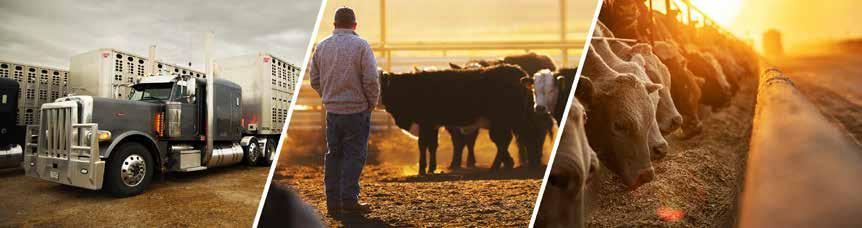
Stress happens every time cattle are handled, transported or commingled. Cortisol levels increase from stress impacting appetite, health and weight gain. Studies demonstrate FerAppease® reduces the impact of stress on calves treated:*
• Reduced cortisol levels
• Improved appetite
• Increased weight gain

• Improved immunocompetence
• Improved health response, better recovery
• Decreased mortality
*Conducted by Dr. Reinaldo F. Cooke, Texas A&M University
HEALTHIER & HEAVIER CALVES = MORE PROFIT
CONTACT YOUR VETERINARIAN OR ANIMAL HEALTH PROVIDER TODAY.


•U.S. export beef demand would have been 372 million pounds (11.5%) lower than actual results in the seven major importing countries included in the study.
The study also evaluated the national Beef Checkoff’s direct effect on the beef industry (i.e. producers and importers that pay into the program) and its indirect effects on the broader U.S. economy. To quantify the total revenue impact of the national Beef Checkoff on the beef industry sector, the study utilized the beef demand (8.5 percent) and U.S. beef export (11.5%) percentages derived from the ROI market simulation analysis. Applying these percentages indicated that the national Beef Checkoff added an incremental $3.3 billion to the beef industry in 2023.

(AMS) guidelines for commodity research and promotion programs. To view the complete study, executive summary or to get more information about the Beef Checkoff and its programs – promotion, research, foreign marketing, industry information, consumer information and producer communications –visit DrivingDemandForBeef.com.
The direct effect of the national Beef Checkoff adding an incremental $3.3 billion to the beef industry sector had positive indirect effects on the broader U.S. economy, including increases in:
• U.S. employment by almost 47,000 people
• U.S. employment income by $2 billion
• Total value added to the U.S. economy of $4.1 billion
• U.S. GDP by nearly $9.5 billion
Furthermore, the national Beef Checkoff contributed to increased tax revenue at the federal, state, and local levels, amounting to a grand total of $743 million in 2023, distributed as follows:
•$34 million in county tax revenue
•$205 million in state tax revenue
•$504 million in federal tax revenue
*This study only pertains to the funds collected for the national Beef Checkoff program. It does not asses the impacts of Beef Checkoff program dollars invested by qualified State Beef Councils for state-level efforts.

“While we’re pleased Beef Checkoff programs are having a positive impact, we know there’s always room for improvement,” DeVuyst said. “The CBB is dedicated to making the best possible decisions on behalf of beef producers and importers. As we head into the remainder of FY24, we’ll take what we’ve learned from this study and continue moving the needle forward.”
All commodity boards conduct an independent evaluation of the effectiveness of their programs every five years, as outlined by the USDA’s Agricultural Marketing Service
Established in 1959, Scales NW offers a wide range of equipment, from precision lab balances to high capacity rail scales, as well as certified scale service and installation.


Contact Steve Orr for more information today!
Email: steveorr@scalesnw.com
Phone: (503) 510-3540


www.scalesnw.com • (800) 451-0187
LM SIGNAL 102L5


BCC CURRENCY 655L

GACC BLUEPRINT 102L17 CRC MACK 894L9

LM SIGNAL 102L6


CRC DATABANK 918L


by Julia Herman, DVM, MS, DACVPM, Beef Cattle Specialist Veterinarian, NCBA, a Contractor to the Beef Checkoff
Cattle health is closely monitored in each sector of the beef industry and continuous improvement is expected from within and outside the industry. Fitness for transport is an important concept that applies to all cattle stages, from calves to feeders to cull cows and bulls. This live animal evaluation is critical to deciding whether an animal is able to withstand the rigors of transport, including standing for long periods of time in variable weather. The most visible aspect of the cattle industry is when cattle are moved across the country on wheels every day. Each stakeholder, from the cattle owner to the transporter, should strive for responsible transport decisions.
The 2022 National Beef Quality Audit (www.bqa.org/resources) shows cattle, beef or dairy, are transported at least once and up to six times during their lifetime, so ensuring the health and welfare of these animals at each transport opportunity is a great responsibility. Trips to the auction market, the next pasture, backgrounding or finishing feedyards, and others are each an opportunity to improve animal welfare through transportation and fitness for transport decisions. The Beef Checkoff-funded Beef Quality Assurance Transportation (BQAT) program was designed for guidance on these topics. The following are a few important aspects to consider when determining whether cattle are fit for transport.
Violative residues are created when animals are slaughtered before the labeled withdrawal
period on the medication label. It is important to always check treatment records and confirm animals have cleared drug withdrawal times before transporting to sale or slaughter. Never ship an animal you do not think can withstand the rigors of transport or marketing. This includes not shipping extremely emaciated animals (Body Condition Score 2 or less on either beef or dairy scale) or cattle with lameness score of 3 or more (according to North American Meat Institute scale of 1-4). Having a plan for caring for or humanely euthanizing a non-ambulatory animal should be part of your protocol since these animals cannot be slaughtered.
It is important to provide cattle access to water up until they load onto the trailer as it improves health in the short term and upon arrival. A modest meal within 24 hours prior to transport, especially trips longer than four hours, has also been shown to improve cattle response during travel and at the destination. This is especially important for younger calves who are more prone to dehydration in hot weather. Duration of transport can have significant animal welfare outcomes and preparing cattle for the trip can improve response to transport stressors. In addition, cattle may have multiple segments of their trip, so ensuring cattle can handle all legs of the trip is an important consideration when deciding to ship that animal.
Temperature and humidity can burden or improve the transport process. Pre-trip planning can help ensure cattle are loaded or unloaded in the most idea part of the day. Pay close attention to the Temperature-Humidity Index to determine the risk of moving or working cattle during hotter weather. Another consideration for younger and smaller cattle is they will need different loading densities vs. older cattle in warmer weather. For instance, high loading densities can cause limited airflow and bruising. Airflow is especially important for cattle welfare, so if the trailer or cattle pot is unable to move or is waiting in line, driving around to increase air circulation in the trailer is one option.
Animal handling is an integral piece to cattle health, especially during transportation events. Moving animals in a low-stress, gentle and quiet manner reduces stress on the cattle during and after transport, reducing the risk of a heat stress event. Using acceptable handling tools such as flags or sorting sticks as an extension of yourself when needed can improve the efficiency of cattle movement. Cattle prods should not be routinely used and only used in specific circumstances. Any kind of abuse is not tolerated, including overuse of cattle prods. These practices also reduce the risk of cattle going down at the plant or auction market as well as product defects such as dark cutters, bruising and wasted product.
Many cull cows and bulls are culled due to a decrease in productivity and illness such as lameness. Fed animals are culled for similar reasons. When cattle are culled proactively, these animals are in a comparatively healthier state with a slightly higher body condition and have less risk of becoming lame or going down in the trailer. Producers are encouraged to work to cull animals earlier in the disease process like cancer eye or pneumonia or lameness, as long as drug withdrawal times are met, so animals can safely make it to their final destination without the risk of being condemned. Proactive culling can improve the welfare of the animal in addition to having a better product. NCBA created the "Right Way. Right Time.: A guide to cull cow management handout using results from the most recent audit results. Producers and veterinarians
can use this resource to evaluate their cull cattle management strategies and improve decision making with fitness for transport decisions. Train workers to understand when animals should be humanely euthanized rather than being shipped, as an animal should not make a long transport journey only to go down on the trailer or at the plant and be euthanized then.
Even with experienced cattle producers and drivers, complacency can sink in when performance is not evaluated. Work with a herd veterinarian, extension agent or BQA state coordinator to conduct a self-assessment on essential skills such as humane cattle stockmanship or facility management. Each operation has the responsibility to train their employees in cattle behavior and handling to improve cattle welfare, human safety and work efficiency. BQA provides a solid foundation for cattle producers and their teams so the ‘why’ is understood for quality cattle care. Continuous improvement through consistent training only improves cattle care, human safety and the final product.
Fitness for transport decisions influence both animal and human safety which can be adapted and improved based on the operation’s goals, workforce and facilities. Other workshops such as Stockmanship & Stewardship (www.stockmanshipandstewardship.org) provide live animal handling demonstrations for professional drivers, farmers and ranchers to improve their stockmanship skills. The BQAT program provides guidance on fitness for transport for animals in addition to providing preparation steps to ensure safe trips for transporters. More information on BQAT’s guidelines and the certification course can be found at www.bqa.org.

In a survey, 520 U.S. beef and dairy producers and veterinarians were asked questions related to treating cattle challenged with bovine respiratory disease (BRD):
• How do you decide whether to re-treat an animal?
• How long do you typically wait to re-treat a sick animal infected with respiratory disease?
• What characteristics are most important when selecting an antibiotic?
When evaluating results, it was no surprise to see producers and veterinarians are doing a lot of things right when it comes to treating cattle. But, as one of the leading causes of loss in U.S. cattle herds, BRD treatment plans should never stay idle.
Nathan Meyer, DVM, PhD, Boehringer Ingelheim, analyzed survey results, and found the following points important for cattle caretakers.
Veterinarians provide tailored protocols for optimum results. When asked how re-treatment of animals is decided, participants were given the option to choose between “visual observation,” “create a protocol with my vet” or “other.” About 70% of beef and dairy producers said they use “visual observation” as their main factor when deciding to re-treat.
Although visual observation is a critical aspect of re-treating animals that are still sick, keeping veterinarians in the loop is crucial.
“Veterinarians can customize and tailor protocols and products to each operation,” explained Dr. Meyer. “Without that customized approach, an operation might miss out on a certain level of success.”
Every herd is unique, and many factors can place cattle at risk for developing BRD, such as nutrition or hydration status, parasite problems, viral disease or simply not following the antibiotic label when administering treatment.
Post-treatment intervals should come down to label and veterinary insight
When asked how long they typically wait to re-treat cattle challenged with BRD, waiting three to four days was most common across both veterinarian and producer responses.
“Post-treatment interval (PTI) is a key focal point when considering a re-treatment,” said Dr. Meyer. “But it’s important to remember that PTI is product-dependent. Because this survey was looking at the overall average PTI, I’m not too surprised by these responses. Although there are benefits to finding a product with a longer PTI.”
In a research trial on calves infected with BRD, six- to nine-day PTIs resulted in the best health outcomes. Every re-treatment not only puts extra stress on animals, but is another cost impacting profit margins. A larger window gives producers and veterinarians the flexibility to make the right decision, based on the herd.
Outside of following the product label, knowing when re-treatment is necessary can be difficult. Dr. Meyer recommends a few basic steps that can make the process easier.
Keep treatment records. Tracking treatment
...CONTINUED ON PAGE 40




status ensures proper PTI and withdrawal times. Accurate documentation will also make evaluating product efficacy or protocols easier during routine conversations with your veterinarian. “If an animal is still looking rough on day three of a five-day PTI, we know that we should hold off on re-treatment because the drug is still working,” noted Dr. Meyer.
Check for clinical signs of illness. He added, “Once the calendar has been checked, and an animal is eligible for follow-up treatment, that’s when we should look for clinical signs.” Dr. Meyer is a firm believer in the D.A.R.T. assessment, which stands for depression, appetite, respiration and temperature. If an animal is struggling with one or more of these signs, a follow-up treatment might be necessary.
These clinical signs are not unique to BRD, but are a sure way to flag animals that are still or becoming ill.
Broad-spectrum coverage of BRD pathogens is important to producers.
When asked what was most important when choosing an antibiotic, the majority of participants ranked the following options in order:
• Broad coverage of main BRD pathogens
• Fast acting
• Long lasting


“Broad spectrum of coverage is a key point, whether you’re a cow/calf, stocker or feedlot operation,” asserted Dr. Meyer. “We know a calf might start out with Mannheimia haemolytica, but later in the disease course, other bacteria become major players. Having a product that has broad coverage makes a lot of sense.”
The benefits of a long-acting antibiotic that quickly reaches the site of infection should not be underestimated.
“Utilizing a product that has very high efficacy up front is beneficial when it comes to reducing stress levels and seeing better treatment outcomes,” explained Dr. Meyer.
Finding an antibiotic that provides 10 days of therapy from a single injection reduces both time and labor associated with extra treatment.
“I think the number one underlying point from this survey is that the veterinarian involvement is important,” said Dr. Meyer. “Their assessment of an operation’s management and understanding of a herd’s disease pressure becomes very valuable when setting up successful treatment plans.”


by CCA Associate Director of Communications Maureen LaGrande
Being a rancher in the state of California is no easy feat. Having to overcome natural disasters, state regulations and the overall challenges of running a ranch can be daunting. But the love for the land, cattle and family continues to shine through any challenge. Tehama County, located in Region 3 of the California Cattlemen’s Association, is home to the multi-generational Tehama Angus Ranch in Gerber. In September, Tehama Angus Ranch held its 50th Annual Bull Sale on the home ranch, marking a milestone in the longevity of the operation. Follow along to learn of the ranch’s history and the hard work that has led Tehama Angus to their 50th sale.
Bill Borror’s father, Dale Borror (along with his brother Mark), were in partnership in a Holstein Dairy cattle operation in Springville. In the early forties, Dale’s nephew Bruce Borror purchased three registered Angus cows for an FFA project. Bruce chose to purchase Angus because the Borror family had seen how adaptable the Angus breed was in their neighbor’s commercial cattle herd. Upon this discovery, the partnership F.S. Borror and Sons began to purchase some registered Angus cattle. In 1943, Bill purchased his first registered Angus cow from T.P. Tupman of Arvin. The genetics from the family’s original purchases are still present in Tehama Angus’ herd today.
In 1948, Dale and his family made their way north and purchased what is now Tehama Angus Ranch, starting out with 25 registered cows and 25 commercial cows. For the first 10 years in the business, the family raised their herd and sold project heifers and steers to kids for the fair. In 1958 Bill returned home with his wife Sandra to the ranch after he graduated from University of California, Davis, and a tour in the U.S. Army.
To continue to grow their herd and build strong genetics, Tehama Angus began to use artificial insemination in 1968, a technology
that was very new at the time. With a strong foundation of Angus bulls, Bill and Dale made the decision to start their own bull sale in 1975.
“Tehama Angus Ranch had the first private Angus bull sale in California,” said Bill. Their first sale consisted of 60 bulls, a few heifers and cows.
From the Tehama Angus Ranch website, the family shares: "At the inception of the herd, the Borrors joined the University of California Record of Performance Program, a precursor to the California Beef Cattle Improvement Association Program. At the time, performance testing of beef cattle was relatively new, the technology rudimentary, but the foundation was laid for swift improvement of the breeding process. Tehama Angus Ranch continues to strive to be at the front of incorporating new technology to improve the acceptability of Angus cattle and their place in the industry through performance testing, artificial insemination, embryo transfer, utilization of genomic enhanced EPDS and the measurement of body composition through ultrasound."
Tehama Angus Ranch is currently four
...CONTINUED ON PAGE 44


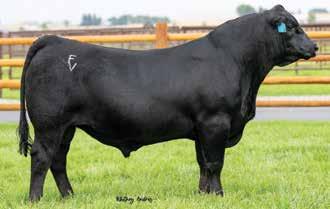





generations strong, with Bill’s son Kevin and his wife Linda and their son Bryce all helping to run the day-to-day operations of the ranch. “We are very fortunate to have Bryce come along and take the cow herd over, he has done a fantastic job with it,” said Bill. As a family operation, each family member has a role. Bryce now oversees the daily operations of the cattle herd, figuring out what needs to be bred, preg checked, vaccinated, or moved. Bill now enjoys working in his woodshop and seeing all that Bryce continues to do for Tehama Angus.
Over the years the family’s operation has expanded not only with their cattle but also with farming. In the early days of their ranch the family produced enough crops to feed the herd, but now have a diversified farming operation run by Bill’s son Eric, growing alfalfa, almonds and walnuts. The last 20 years have brought about a change in the cattle operation as well. At first, all the cattle were raised on the home ranch, but now Tehama Angus runs their cattle in the foothills of Paskenta, Red Bluff, and in Modoc County.
With the 50th sale in their sights, Bill shared, “50, it’s an accomplishment, not many outfits last that long, especially family operations.” After weaning, the bulls enter a 130-day test period where gain is recorded on each individual bull and a 365-day weight is calculated. The results are forwarded to the American Angus Association and entered into the national database. EPDs are calculated for various traits which allows animals to be compared across herds. Bryce shared that the time taken to put the sale book together, gathering data, photographing, and capturing video of the bulls can be challenging, especially while trying to fit in fall calving as well as nut harvest. Even with a busy
fall season, Bill chuckled and stated, “With 50 years under our belts, we’ve done this a time or two.” The week of the sale, all hands are on deck, helping to set up the sale facility, move the bulls, and prepare for the arrival of buyers.
Many of Tehama Angus’s buyers are repeat customers who have purchased the family’s bulls over the years. When asked what the secret is to continue a long-running and successful bull sale, Kevin shared that determination, not following industry fads, and sticking true to your core traits. Bryce added that their operation focuses on the maternal value of the cows, versus the number they have. When forming your herd, “pick a trait that you aim to produce, and stick with it,” said Bryce. Striving to keep Tehama Angus’ customers happy, the Borrors continue to raise females that will produce genetically strong offspring, “the best cows are our future,” added Kevin. The Borrors, have proven true to their word in the department of strong genetics, A descendant of Bill’s first cow purchased by Bill when he was nine years old, Tehama Bando 155, (a bull) born in 1980 was a popular bull used across the country, appearing in many Angus pedigrees. Current research shows this bull BANDO 155 has appeared nine million times in Angus pedigrees.
While the days may be long for a rancher, the acquaintances made in the industry, good cattle and the excitement of sale day make it all worthwhile. When asked what their favorite part of sale day is, Bill smiled as he shared, “When the first and the last bull sell." Bryce added, "It’s the best way to show what we have accomplished and done throughout the entire year, and we can smile at the results."
For those who are thinking about starting their angus herd or wanting to put on their own sale, Bryce encourages those to meet as many producers as possible, sharing that many ranchers are willing to meet, educate others and help out.

The 50th Annual Bull Sale had a lineup of fun activities for all coming out to the ranch. The evening before the sale, the family hosted a buyer appreciation dinner with friends, family and other supporters who listened to live music from Chad Bushnell. On Sept. 13, the 50th Annual Tehama Angus Bull Sale took place.
“California is a great place to raise cattle, hopefully, 50 years from now people are still enjoying beef,” said Bryce. "With the milestone of 50 years of Tehama Angus Ranch in the books, the family looks forward to many more!


30th Annual "Carcass Maker" Bull Sale with Sierra Ranches Sept. 5, LaGrange
Col. Rick Machado

"Distinctly Different" Bull & Female Sale Sept. 1, Los Molinos
Col. Rick Machado and Jayden Byrd 93
Col. Rick Machado
BULL SALE Bar R Angus with Tri-T Farms/Toledo Ranches Sept. 10, Wilton
Parnell


RHOADES RANCH ANGUS GENETICS
Angus production sale featuring ranch horses
Sept. 9, Cambria
Col. Wes Tieman and Col. Randy Baxley Managed by CK6 Consulting
96 Angus bulls .................................................$11,867
7 ranch horses ............................................... $24,179
5 open Angus heifers $23,400
O'NEAL RANCH
"Performance Plus" Angus Bull Sale
Sept. 10, Madera
Col. Jake Parnell
79 Angus bulls $7,699
TEIXEIRA CATTLE COMPANY "Sale by the Sea"
Sept. 11, Pismo Beach
Col. Rick Machado
56 bulls.................................................................. $8,263
47 commercial bred females $3,225
DONATI RANCH & O'CONNELL RANCH
Sept. 12, Oroville
Col. Rick Machado
Managed by M3 Cattle Marketing
145 Angus bulls ............................................... $7,874
TEHAMA ANGUS RANCH
50th Annual Bull Sale
Sept. 13, Gerber
Col. Rick Machado
Managed by M3 Cattle Marketing
143 Angus bulls ............................................. $10,245 20 commercial open heifers $3,200
ARELLANO BRAVO ANGUS BULL SALE with Diablo Valley Angus Sept. 14, Galt
Col. Jake Parnell
Managed by Parnell Dickinson
106 Angus bulls ............................................... $5,449
PERFORMANCE ADVANTAGE BULL SALE with Old Stage Angus & Veenendaal Angus
Sept. 17, Hanford
Col. Dustin Burkhart
74 Angus bulls $6,420
VISALIA LIVESTOCK'S 30th Annual "Range Ready" Bull Sale Sept. 15, Visalia
Col. Randy Baxley and Col. Jimmy Settle 122 bulls $7,245
Red Angus bulls ....................................... $6,139
Hereford bulls ..............................................
BULLSEYE BREEDERS BULL SALE Sept. 18, 2024
Col. Rick Machado Managed by M3 Cattle Marketing 32 Angus bulls ................................................. $6,069
SimAngus bulls ..$5,661
Hereford bulls $5,643
33rd RANCHO CASINO & DAL PORTO LIVESTOCK ANGUS BULLS SALE Sept. 19, Denair
Col. Rick Machado and Col. Max Olvera 142 Angus bulls ............................................... $9,380
DIXIE VALLEY ANGUS BULL SALE Sept. 20, Galt
Col. Jake Parnell Managed by Parnell Dickinson
STEGALL CATTLE CO. RED ANGUS BULL SALE Sept. 22, Colusa
Col. Randy Baxley 50 Red Angus bulls ........................................ $5,422 12 bred commercial heifers ........................ $2,125


Donna Graves was born May 2, 1942 in Turlock to Olin and Leona Graves. Donna grew up in Turlock with her younger brother Dennis Graves, and graduated from Turlock High School in 1960. Donna married her high school sweetheart, Dick Wilkey in 1961. Donna was employed by esteemed attorney, Gilbert Moody as a legal secretary for many years until her retirement in the 1990’s.
Dick and Donna raised two daughters, Danette & Denyse Wilkey. The Wilkey family was very involved in the Turlock Horsemen’s Club, Turlock Hoof & Horns 4-H Club and numerous community volunteer activities. She was a dedicated supporter of her grandchildren’s activities and their biggest cheerleader. Donna was always one of the first people to step up, volunteer, and help when needed. We often joked and told her that she had the word “Sucker” stamped on her forehead. Donna was well known for her high energy, infectious smile, generosity, community involvement, compassion for others and her strong will.
Dick and Donna moved from Turlock to Mariposa County in 1990 where they have been raising beef cattle with their daughter Danette and her husband Tony Toso. Donna is survived by her husband Dick Wilkey, daughters Danette Wilkey Toso (Tony Toso) and Denyse Wilkey Bergman, grandchildren Alyssa Toso Haines (Cody Haines), Gianna Toso Adem (Uhuru Adem), Halie Bergman, Hannah Bergman Moody (Cody Moody), Isaac Bergman, and four great grandchildren.
Donna passed away peacefully Aug. 19 at home, after her long battle with dementia. A memorial service was held Sept. 12 at the Turlock Horsemen’s Club. Donna was fascinated with Hornitos history and often said that if she won the lottery, she would buy the entire town. In lieu of flowers, donations can be made to the Hornitos Historical Society c/o Danette Toso P. O. Box 270 Hornitos CA 95325, if you are so inclined.
To share your family news, obituaries, weddings and birth announcements, please contact the CCA office at (916) 444-0845 or e-mail: magazine@calcattlemen.org.





Frederick Staheli Wilkinson, age 87, passed away Sept. 1.
He was born on April 5, 1937, in Winnemucca, Nev., to George William Wilkinson and Jessie (Staheli) Wilkinson. He was the youngest of two boys and was raised on the Little Meadow Ranch in McDermitt, Nev..
Fred attended primary school in McDermitt until 8th grade, but with no further access to higher education his parents sent him to live with his grandparents (Frank and Polly Staheli) in Washington, Utah. He graduated from Dixie High School in 1956 and attended Dixie College in St George, Utah, before earning a Bachelor of Science degree in education from The College of Southern Utah in Cedar City, Utah on June 9, 1962.
He met and married his wife Judy while attending high school and college in St George. They were married on Aug. 18, 1961, recently celebrating their 63rd wedding anniversary.
Fred's life story is one of hard work, strong values, good decisions, and success, he along with his wife and family built over time an extraordinary business in the agriculture industry, raising cattle. After he married Judy, Fred returned to McDermitt and became a schoolteacher from 1961 to 1967 while also working with his brother George on the Little Meadow Ranch. Always progressive in their thinking, in 1967 they formed the Wilkinson Brothers partnership and expanded their operation by leasing the McCormick Ranch, also in McDermitt. Fred then did what he loved and became a full-time rancher. In 1981 they bought the McCormick Ranch and brought George's son Kimble into the expanded family partnership under Wilkinson Ranches. In 1994 they expanded again, bringing Fred and Judy's son Nick and his wife Jaimi into the family business.
In 2001, the two families restructured, with Fred and family taking over the McCormick Ranch and livestock and George and family keeping the Little Meadow and Minor Ranches. At that time GJ Livestock was formed. GJ Livestock continued to grow with the lease of the Disaster Peak Ranch in 2012, a move that has allowed the family to focus on progressive strategies that support their work to raise beautiful Black Angus Commercial cattle and sustain the family business into the fifth generation and beyond. Fred and Judy along with
Nick and Jaimi have been partners in GJ Livestock for 30 years.
In addition to his success as a rancher and businessman, Fred was very engaged in the community. He was the longest serving member of the Oregon School Board in the state's history and he along with his son Nick coached basketball for 15 years at McDermitt Combined School. He contributed to and supported the Humboldt County 4-H program for multiple years and served on the McDermitt Rodeo Board for at least 25 years in various capacities. In November of 2023 he was honored by receiving the Nelo Mori Heritage Ranching award.
Fred's greatest love was his close and extended family. He enjoyed sitting around the table telling stories and enjoying the fabulous spreads his wife Judy prepared daily. He had a wonderful sense of humor and had fun giving nicknames to both animals and the people with whom he was most fond. He loved sports of all kinds but was particularly fond of BYU, following their games all his adult life. He enjoyed a good Jitterbug with his wife Judy at community dances and playing tennis with friends in the summer months. Fred is survived by his wife Judy who lives on the family ranch in McDermitt, Nev.; his daughter Lori and her husband Glenn from Las Vegas, Nev.; his son Nick and his wife Jaimi, grandson Hyland and his wife and April Wilkinson, and great-grandsons Westyn and Coltynwho all live on the family ranch in McDermitt; granddaughter Staheli Ugalde and her husband Victor and great-granddaughter Laney Jo who reside on the Nine Mile Ranch in Kings River, Nev; brother George Wilkinson, Nampa, Idaho.
Funeral services were held Sept. 6 at the Church of Jesus Christ of Latter-Day Saints in Leeds, Utah. There will also be a Celebration of Life in McDermitt at the Community Hall on Saturday, Oct. 5 starting at 12 noon.
In lieu of flowers, donations may be made to the McDermitt Rodeo Board P.O. Box 416, McDermitt, NV 89421. We want to help support and preserve this small-town 4th of July tradition dating back to 1911.


Teixeira: (805) 448-3859
Teixeira: (805) 310-3353
(541) 990-5479





THANK YOU THANK YOU to all of our 2024 Dixie Valley bull sale customers! to all of our 2024 Dixie Valley bull sale customers!


