
Excellence embodied
A prestigious recognition of a dedicated team
Congratulations to Karl Nikodym Wealth Management Group for being named a Forbes Best-In-State Wealth Management Team for 2025.
The Forbes rating is compiled by SHOOK Research and awarded annually in January, based on information from a 12-month period ending March of the prior year. Eligibility is based on quantitative factors and is not necessarily related to the quality of the investment advice.
This recognition is a testament to this team’s talent and ability to collaborate and problem-solve, always putting clients first—empowering them to pursue what matters most to them. Together, the members of the Karl Nikodym Wealth Management Group, deliver unmatched client experiences and embody leadership, excellence and a deep level of trust and confidence in our people and our firm.
We invite you to explore what this level of leadership, dedication, excellence and trust could mean for you and your family.

advisors.ubs.com/knwm
Karl Nikodym Wealth Management Group UBS Financial Services Inc. 4150 Second Street South, Suite 500 Saint Cloud, MN 56301 320-252-6909 800-444-3809 toll free
.
It is important that you understand the ways in which we
that you carefully read the agreements and disclosures that we provide to you about the products or services we offer. For more information, please review the client relationship summary provided at ubs.com/relationshipsummary, or ask your UBS Financial Advisor for a copy. © UBS 2025. All
UBS Financial Services Inc. is a subsidiary of UBS Group AG. Member FINRA/SIPC. ACC_03312025-1


guide not only what to say, but when, how, where and why to say it.
Ship ship hooray!
Up for debate?
Time to pivot.
Show up locally.

Main Phone: 320-251-2940 / Automated Reservation Line: 320-656-3826 info@StCloudAreaChamber.com / StCloudAreaChamber.com
President: Julie Lunning, 320-656-3804
Director of Finance and Operations: Kristi O'Connor, 320-656-3806
Director of Programs & Events: Laura Wagner, 320-656-3831
Director of Marketing & Communications: Emily Bertram, 320-656-3809
Director of Membership: Bradley Hoelscher, 320-656-3824
Administrative Assistant/Network Administrator: Vicki Lenneman, 320-656-3822
Administrative Assistant: Shelly Imdieke, 320-656-3800
CONVENTION & VISITORS BUREAU STAFF
Executive Director: Rachel Thompson, 320-202-6728
Director of Sales: Nikki Fisher, 320-202-6712
Sales Manager: Olivia Way, 320-202-6713
Sports Director: Craig Besco, 320-202-6711
Marketing Manager: Lynn Hubbard, 320-202-6729
Marketing & Services Coordinator: Melissa Ludwig, 320-202-6770
Information Specialist: Maddy Lindholm, 320-251-4170
ST. CLOUD AREA CHAMBER OF COMMERCE 2024-25 BOARD MEMBERS
Nick Bischoff, Design Electric
Doug Cook, Headwaters Strategic Succession Consulting LLC
Tanja Goering, Celebrate MN, Past Board Chair
Joe Hellie, CentraCare, Board Chair
Ray Herrington, Pioneer Place on Fifth
Hudda Ibrahim, OneCommunity Alliance
Dave Kleis, Central Minnesota Driving Academy
Matt Laubach, West Bank
Laurie Putnam, St. Cloud School District 742
Paul Radeke, Creative Planning, Board Vice Chair
Alex Schoephoester, Moss & Barnett
Brenda Sickler, Theisen Dental
Amy Sip, ASip Consulting
Melinda Tamm, Ms. Melinda’s Dance Studio
Melody Vachal, Arise Cares
Donella Westphal, Jules’ Bistro
Dr. Jason Woods, St. Cloud State University

STRONG AT HEART
CentraCare.com


The Sweetest Thing
My brother Michael first got involved with making maple syrup about seven years ago. He decided to tap 10 trees on my parents’ land in Avon and see what would happen. Using a flat stainless-steel pan propped over a large bonfire on cinder blocks, he would bring the sap to a boil, adding more as the water in the sap boiled off. That first year we boiled about 50 gallons of sap, earning just over a gallon of maple syrup. As he learned and honed his craft, he gradually began tapping more trees and updating his equipment, involving our entire family along the way.
When tapping the trees, Michael tests the sugar content of the sap with a refractometer to make sure it’s ready. We use his side-by-side to harvest it, equipped with a 100-gallon tank and a pump to filter and transport sap out of the collection bags. The sap is then pumped into a water tower type holding tank that feeds the sap at a slow trickle into the new and very improved wood-burning evaporator sap stove. The stove is housed in our sugar shack, constructed last year with lumber that Michael and some friends milled from logs in our woods.
The process takes several days from the tapping to the final boil, which Michael monitors closely with a hydrometer before we can the final product. In the spring of 2024, we tapped 65 trees, collected over 1,100 gallons of sap, and ended up with just over 25 gallons of maple syrup over the course of several weeks. While the sugary treat is a welcome reward for the hard work, the real sweetness comes from the tradition that this hobby has created.
Business as Usual?
Far left is Business Central Editor Emily Bertram (center) kneading bread with DeNae and Mike Hiltner, owners of Great Harvest Bread Company
Left is the vastly improved wood-burning evaporator sap stove.
All of our friends and family know to expect an invitation sometime in late March to come and be part of maple syrup season, because it’s simply a fun process to witness. The steam that rises off the boiler carries a sugary scent, the heat from the stove keeps us warm and toasty, and the mid-way sampling of the syrup is always much-anticipated. People arrive with an appetizer and a story to share, and leave with a pint of the freshest maple syrup around.
There’s something about a product made entirely from scratch that just brings people together. Mike and DeNae Hiltner, owners of Great Harvest Bread Company in Waite Park, have been baking from scratch for 26 years. Every single day they mill their own flour from wheat, delivering fresh bread, baked goods, and a heartfelt smile to everyone they serve. You can read more about their journey and the village they’ve built on page 32.
While I reap the benefits of my brother’s very involved hobby, that’s not to say I don’t play my part. Somebody has to do the pancake flipping and taste-testing, after all. Lucky for me, it’s a pretty sweet gig.
Until next time,

Emily Bertram, Editor
To celebrate the 25th anniversary of Business Central Magazine, we’re sharing a fun fact from the year 2000 in each issue.
In September 2000, St. Cloud State University released the 8th edition of the Quarterly Business Report, a survey of local businesses providing an overview of the local economy. Business owners were asked, “What is your evaluation of the level of business activity for your company six months from now?” At the time, 23.7 percent expected a decrease, 27.1 percent no change, and 44.1 percent an increase. Now, 25 years and over 100 issues later, the January 2025 survey shows 9.7 percent expect a decrease, 35.5 percent no change, and 54.8 percent an increase. Despite changing economic factors, opportunities for growth remain.
Publisher Julie Lunning // Editor Emily Bertram // Founding Editor Gail Ivers
CONTRIBUTING WRITERS
Emily Bertram, St. Cloud Area Chamber of Commerce
Edward (Teddy) Fleming, Lathrop GPM
Christina Hopke, Rinke Noonan
Ari Kaufman, freelance writer
Randy Krebs, freelance writer
Bethany Lawrence, St. Cloud State University
Lynn MacDonald, St. Cloud State University
Jeanine Nistler, freelance writer
Karen Pundsack, Great River Regional Library
Rachael Sogge & Eyecon Graphics team
Miranda Stueckrath, Stearns History Museum
Nate Van Heuveln, Criterion Counseling & Consulting
ADVERTISING
Associate Publisher/Sales
Melinda Vonderahe, Marketing Consultant
Ad Traffic & Circulation
Yola Hartmann, Hazel Tree Media
ART
Design & Production
Yola Hartmann, Hazel Tree Media
Cover Story Photography
Guytano Magno, Switchboard
WEBSITE
Vicki Lenneman, St. Cloud Area Chamber of Commerce
1411 West St. Germain Street, Suite 101, St. Cloud, MN 56301
Phone: (320) 251-2940
Fax: (320) 251-0081
BusinessCentralMagazine.com
For advertising information contact Melinda Vonderahe, (320) 656-3808
Editorial suggestions can be made in writing to: Editor, Business Central, 1411 West St. Germain Street, Suite 101, St. Cloud, MN 56301 or emailed to ebertram@stcloudareachamber.com
Submission of materials does not guarantee publication
© Copyright 2025 Business Central LLC. Business Central is published six times a year by the St. Cloud Area Chamber of Commerce, 1411 West St. Germain Street, Suite 101, St. Cloud, MN 56301. Phone (320) 251-2940 / Subscription rate: $18 for 1 year.


BUILDING PROJECTS + PARTNERSHIPS
DESIGN | BUILD | MAINTAIN
As a true single-source construction firm, Rice Companies helps clients achieve success every step of the way. We promise to listen, communicate, advise, and, most of all, be a true partner.


UP FRONT
Contagious Ideas
Ideas are meant to be shared, but what happens when groupthink goes too far?
By Karen Pundsack
Malcolm Gladwell is back with another thought-provoking pageturner. If you enjoyed his previous works, Blink, The Tipping Point, or Outliers, you’ll love his latest book. In The Tipping Point, Gladwell explored how ideas become contagious. Revenge of the Tipping Point: Overstories, Superspreaders, and the Rise of Social Engineering sheds light on the darker sides of social contagion.
The audio version of this book includes audio clips from his quoted sources — from Supreme Court justices to college admissions counselors. The stories connect ideas such as a bank robbery epidemic or the under-vaccination rate at a school. He examines what rules a community may have under the surface and how those unspoken rules stay within that community.

QUOTABLE
“...there is something uniquely toxic about groups with ‘skewed proportions,’ featuring lots of one kind of person and very few of another kind.”
— REVENGE OF THE TIPPING POINT
The book has nine chapters and is structured in four parts:
Part One: Three Puzzles
• Casper and C-Dog
• The Trouble with Miami
• Poplar Grove
Part Two: The Social Engineers
• The Magic Third
• The Mysterious Case of the Harvard Women’s Rugby Team
• Mr. Index and the Marriott Outbreak
Part Three: The Overstory
• The L.A. Survivors’ Club
• Doing Time on Maple Drive
Part Four: Conclusion
• Overstories, Superspreaders, and Group Proportions
Gladwell is a journalist by trade who also produces the podcast Revisionist History. He is known for his storytelling prowess
and for applying social science concepts to realworld scenarios. He has put together a compelling narrative on the dynamics of groupthink. He raises questions about what we will do with information, as we are more able to identify through technology who the “select few” might be — from superspreaders in a pandemic to those in places of privilege in university admissions.
DCI welcomes new president Dan Larsen joined DCI as president. Larsen brings over 22 years of leadership experience, including roles at Donaldson Company Inc., and as president of Hengst Filtration, North America. With a strong background in strategic growth, organizational development, and global market leadership, Larsen is well-positioned to continue DCI’s tradition of excellence.


Karen Pundsack is the executive director at Great River Regional Library.
CHECK IT OUT!


The book is available for checkout at the public library. Reserve your copy at griver.org.

O’Connor named Coldspring CEO Mike O’Connor is the new chief executive officer of Coldspring, becoming the fourth generation of the family to lead the company. He takes over the role from his father-in-law, Pat Alexander, who has transitioned to the role of chairman of the board. O’Connor, who joined Coldspring in 2019, is known for his thoughtful leadership, strong relationships with employees, and deep understanding of the company’s core values.

Noble becomes owner at AIS Sarah Noble is now part of the ownership team of AIS Planning. Noble, who has been with AIS Planning since 2019, serves as associate advisor and operations coordinator at the firm.
POINT OF VIEW

Business Central asked:
Do you use any form of artificial intelligence in your workday? If so, how?

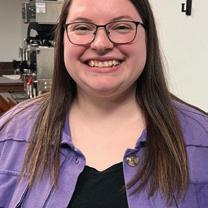
Tina Johanning, Anna
Marie’s Alliance
I use ChatGPT to help me come up with text for social media posts so that I have more variety in what I’m saying.


Mathew Odette, Stop Go Studio
I use it all the time, in everything from Photoshop to tools that I use for video editing, image creation and helping me with meetings.


Mo Philippi, Moxie Creative
The AI tools in Photoshop are great for adding bleed to photos or removing obstacles that are in the way.


Amy Hanfler, CentraCare Foundation
I use tools like Bing Chat to help me with writing flow and readability. I’m able to keep my requests very general and high-level, given that I work in healthcare, and still get valuable output.


We use it all of the time to proof blogs and edit photos, and we tweak the output as needed.

Rachael Sogge, Eyecon Graphics
NETWORK UP FRONT
NEWS REEL
Franklin Outdoor announces promotions Franklin Outdoor Advertising is a third generation, familyowned billboard company based in Clearwater, Minn. Three employees have recently been promoted in the company.

Dan Franklin was promoted to chief executive officer. He joined Franklin Outdoor in 1998 and was most recently director of operations.

Robert Schwartz was promoted to chief revenue officer. He began his career with the Franklin Outdoor division in 1989 as a sales rep, later serving as national sales manager, and most recently as vice president of sales.

Janelle Hennen was promoted to office manager. Janelle joined Franklin Outdoor in 2020, most recently working in administrative support.
Metro Bus hires director of finance

Nene Israel joined Metro Bus as director of finance. Israel holds a Master’s in Business Administration and brings over 10 years of experience in the transportation industry. She currently serves as the treasurer for the Conference of Minority Transportation Officials, is an ambassador for the Transportation Cooperative Research Program (TCRP) and serves as a panelist for a TCRP study on financial management.
PEOPLE TO KNOW

St. Cloud Area Leadership Graduates
Congratulations to the 2025 St. Cloud Area Chamber Leadership program graduates! If you are looking for volunteers to serve on boards and committees, these individuals are a good place to start.
2024-2025 Leadership Class


Adolfo Chavez, Gate City Bank
Laura Chrast, Forever Young Two Wellness and Skincare
Tom Conyers, Patron Transportation
Emily Davis, Greater St. Cloud Development Corporation (EPIC)
Victoria Driscoll, 180 Degrees St. Cloud Youth Shelter
Brandon Drontle, Murphy Granite Carving Inc.
Mitch Eickhoff, Jules' Bistro
Nicole Flynn, Stearns Bank
Jordyn Foss, Paramount Center for the Arts
Ben Hanowski, Deerwood Bank
Shelly Imdieke, St. Cloud Area Chamber of Commerce
Chad Johnson, Catholic Charities
Guy Konietzko, Park Industries


Brittany Liberty, Central MN Mental Health Center
Charlie Lindstrom, Motor Works
Sammie Lundquist, Coborn's Inc.
Shauna Massmann, WACOSA
Sydney Meyer, AIS Planning
Amy Petersen, Coborn's Inc.
Casaundra Pfeiffer, Junior Achievement North - St. Cloud Area
Lois Rengel, Catholic Charities
Lexi Secord, Creative Planning
Meagan Simonson, Lamar Advertising
Alex Stanz, American Heritage National Bank
Rebecca Trelfa, ConnectAbility of MN
Braeden Wahl, Marco


Lance Barthel, Batteries Plus
Chair, St. Cloud Area Chamber Leadership Program
(320) 230-2000


Brittney Goebel, North Creative Co.
Vice Chair, St. Cloud Area Leadership Program
(320) 249-2027

NETWORK UP FRONT
Crew named best workplace
Crew Carwash was named a winner of Glassdoor’s Employees’ Choice Awards, ranking No. 2 out of 100 on the Best Places to Work U.S. Large list. Rankings are determined based on the quantity, quality, and consistency of Glassdoorapproved company reviews submitted by U.S.-based employees between October 17, 2023, and October 16, 2024.

Ebert
reappointed to state council
Quinlivan and Hughes, P.A. attorney Dyan Ebert was reappointed to the Minnesota Legislative Salary Council to represent the sixth judicial district. Her term extends through January 14, 2029. The Legislative Salary Council determines the salaries of state legislators in a manner that is fair, transparent, and reflective of the responsibilities of the legislative office.
ConnectAbility of MN promotes LeClerc
Jaime LeClerc was promoted to director of coordinated services at ConnectAbility of MN. In her new role, LeClerc will work with the leadership team to continue the development and execution of all the divisions of coordinated services that support ConnectAbility of MN's clients, case managers, and services vendors. LeClerc has been with the organization since 2020.
Moxie Creative welcomes Schmitz
Full-service marketing agency
Moxie Creative added graphic designer and illustrator Tyler Schmitz to its team. Schmitz previously worked in the marketing department at Microbiologics.
DIGGING HISTORY

Harnessing History
From horse outfitting to shoemaking, Kindler Leather Shop held a legacy of craftsmanship.
Miranda A. Stueckrath
In the annals of business history, few stories rival the endurance and adaptability of the Kindler Leather Shop, located at 17 6th Ave. N. in St. Cloud. Established in 1869 by Julius Kindler, a German immigrant and Civil War-era apprentice, the enterprise exemplified resilience in the face of sweeping technological and economic transformations. What began as a modest operation evolved into a cornerstone of the community, weathering profound changes, from the rise of automobiles to global wars. The shop’s unyielding dedication to craftsmanship
and customer service ensured its survival where others failed. By the early 20th century, Julius’s son, John Kindler, had taken over the business. Amid the decline of horsedrawn transportation, John faced challenges head-on. While other harness shops shuttered, he diversified. From introducing shoe repair services to mastering niche products like custom dog collars and riding equipment, John ensured the Kindler name remained synonymous with quality.
During World War II, the shop experienced an unexpected renaissance. With gasoline rationing and
Kindler Harness Shop was located at 17 6th Ave. N.
material shortages, farmers and soldiers turned to horses, sparking unprecedented demand for harnesses. John and his brother Charles worked tirelessly, producing and repairing harnesses that were as vital to the war effort as they were to the local community.
The secret to the Kindlers’ longevity was not just their adaptability, but also their unwavering commitment to quality. Every harness was meticulously crafted, often using oak bark tanned leather, hand-cut for precision and reinforced for durability. This attention to detail earned the family a reputation outside of Stearns County, reaching the Dakotas and beyond.
In 1953, under Charles Kindler’s leadership, the shop transitioned to “Kindler Leather Shop,” reflecting a broader focus. The heart of the business — expert craftsmanship and a connection to its roots — remained steadfast. Looking to retire, Charles sought to sell the business in the late 1950s, but he was unable to find a buyer. Kindler Leather Shop closed in 1961, but its story remains a testament to the power of tradition, adaptability, and the human spirit.


Miranda Stueckrath is the public program librarian at the Stearns History Museum.
Photo courtesy of Stearns History Museum
Fueling Growth
Stearns Bank and St. Cloud Toyota support local causes.

St. Cloud Toyota donates $7,900
St. Cloud Toyota raised $7,900 during the month of February through its used car promotion. The funds were donated to the CentraCare Foundation Heart and Vascular Center.
Stearns Bank, Habitat for Humanity partner
Stearns Bank has partnered with Central Minnesota Habitat for Humanity (CM Habitat), committing to purchasing $3 million worth of Habitat mortgages. CM Habitat holds the mortgages of the homes built within the program, limiting its ability to grow in scale. With Stearns Bank now committing to purchasing $3 million worth of CM Habitat mortgages, funds will be freed up to allow increased production of more affordable homes in Central Minnesota.
PASSION MEETS PURPOSE
AWARD WINNER
DSC Communications earns award
DSC Communications was named a 2024 Motorola Solutions Empower Circle winner. Among more than 6,000 professional and commercial radio (PCR) channel partners and value-added distributors, DSC Communications is one of a select group to earn this honor. The Empower Circle Award celebrates local independent distributors and resellers for their exceptional performance and commitment to excellence.

NETWORK UP FRONT

Noyes named VP of operations at GRCM
Jon Noyes is now vice president of operations at Great River Children's Museum. Recently retired from the Social Security Administration, Noyes spent the past 25 years leading teams, directing operations, and managing facilities in Duluth, St. Cloud, and the Twin Cities. He most recently served as deputy area director with the agency, managing 30 offices across Minn. and Wis.

Rice welcomes Waletzko
John Waletzko joined Rice Companies as market development manager in Sauk Rapids. Waletzko brings 18 years of commercial construction experience, from hands-on fieldwork to strategic leadership in preconstruction. He actively serves on multiple community boards and has been recognized as a St. Cloud 5 Under 40 honoree (2023) and St. Cloud State Notable Alumni.
Brenny makes the top 20
Brenny Specialized was recognized by CarriersEdge as one of the top 20 2025 Best Fleets to Drive For. This honor recognizes for-hire carriers operating 10 tractor-trailers or more for providing the best workplace experiences for their company drivers and independent contractors.
Got News?
Send news releases, announcements, or anything you think is newsworthy to Emily, ebertram@stcloudareachamber.com, and we will try to include it.
Fact Versus Fiction
When it comes to your career, leave the fortune-telling to the psychics.
By Nate Van Hueveln

A2024 Gallup study of U.S. employee engagement states that only about 50 percent of American workers reported being highly satisfied with their current job, while only 31 percent reported being engaged in their work. One factor that most certainly contributes to these concerning figures is the decision-making quality of individuals. We’ve all seen or experienced it before:

Contributor
an employee passes up a promotion, stays in an unfulfilling job, or withholds a brilliant solution out of fear of rejection, financial risk, or negative feedback. What do these examples have in common? They reflect an unhelpful thinking pattern called “fortune-telling,” a distorted thinking pattern that can lead to negative career outcomes, such as missed opportunities, burnout, and significant job dissatisfaction.
What is fortune-telling?
Fortune-telling is not strategic forecasting based on relevant data. It is not the careful use of intuition and life experience to make informed decisions. In contrast, fortune-telling is a fear-driven bias that hinders good decision-making and can be the difference between good and not-sogood career outcomes.
What does fortunetelling look like?
Here are some common fortune-telling examples that can lead to missed opportunities, decreased job satisfaction, and selffulfilling prophecies:
• An employee thinks, Not only will I get rejected if I apply for a promotion, but I’ll also embarrass myself.
• A manager believes, I’m probably not going to find a better position, so I’ll just stick around until something better lands on my plate.
• An executive concludes, If I don’t work an excessive number of hours per week, the work won’t get done and I could get fired. Outcomes include career stagnation, work-life balance
Nate Van Heuveln is the owner of Criterion Counseling and Consulting and contracts with Fuller Living and Associates in St. Cloud as a pre-licensed therapist to provide mental health counseling, career coaching, leadership skills development, and workforce consulting.
reductions, and a wide range of challenges to mental health.
How can fortunetelling be controlled?

Managing the threat that fortune-telling poses to your career takes time and practice. Here’s how you can start: Assess the real odds. Ask yourself, What are the realistic chances my feared outcome will happen? What evidence supports and does not support my fear-based prediction?
Gain perspective. Even if some version of your feared outcome does occur, ask,
Would it be temporary? Would it really be that bad? Could I move forward?
Seek support. Work with a professional to challenge unhelpful thinking and keep your decisions aligned to your values.
I know firsthand that bad decision-making can be overcome because not only do I observe this success in my own clients, but I’ve also had to actively challenge my own thinking and learn through practice that fear doesn’t have to steer one’s career.
AWARD WINNER

Rice earns four awards

Four construction projects completed by Rice Companies were honored at the annual Associated Builders and Contractors (ABC) of Minnesota and North Dakota’s Excellence in Construction banquet. The awards recognized: Coborn’s Retail Complex in Otsego; Rice Companies Fargo office; Victory Drive Development in Mankato; and Gordini Distribution Center in North Mankato.
REGIONAL ROUNDUP
BUILDING BRIDGES
Central Minnesota cities are focusing on collaboration, communication and regional success.
By Emily Bertram

Six area mayors discussed their city’s priorities for the next few years, focusing on public safety, development, infrastructure and communication at the Regional Mayors Forum, sponsored by the St. Cloud Area Chamber of Commerce.
St. Cloud
Improving appearances of a city’s infrastructure — for example, its roundabouts — is important to St. Cloud Mayor Jake Anderson, because it “shows how a community feels about itself,” Anderson said. “We need to be able to spruce that up to attract outside investment.”
He would like the process of working with the city to move faster and more efficiently. “I want to instill in our city and
staff a customer service model,” Anderson said. With this, he would also like to see increased engagement and communication from the community. “When you see or have an issue with the particular way things are being done, please bring it up.”
As the city’s comprehensive plan is updated, a focus will be placed on development downtown, both east and west of the Mississippi River. Collaboration between organizations, businesses and area cities is also important. All of the six cities have made plans to meet monthly to share information and better understand each other’s communities.
St. Augusta
Communication is key, according to St. Augusta Mayor Jeff Schmitz. The city is working on revising its website to improve its ability
to share updates, resources and news with residents. “I’m trying to bridge that communication gap, to be that resource to find the information that everyone is buzzing about in the community,” Schmitz said. He is also working with the city to look at its current comprehensive plan and the ordinances that may need to be updated.
St. Joseph
St. Joseph Mayor Adam Scepaniak is focused on business success, safety services and “to be as welcoming as possible.” He envisions growth with the city’s existing community events and amenities, eventually leading to growth in housing and in visitor numbers.
“We have a very full industrial park and that’s a wonderful problem to have,”
Scepaniak said. Despite its full capacity, he sees an opportunity for further expansion to the north. “If we can get more businesses in St. Joseph to help lower the tax base, that’s going to make the residents happy.”
In support of public safety services, Scepaniak floated the idea of a joint fire hall, police and EMS station to better meet the needs of the departments and the community. “We have a very safe city,” Scepaniak said. “But I don’t want to rest on our laurels.”
Sartell
Sartell Mayor Ryan Fitzthum highlighted several areas of opportunity in the city, including the former paper mill site on the Mississippi River, the River Crossing development on Highway 15, and Central Minnesota’s Healthcare Hub. An area of medical-related businesses, the Hub has development opportunities available to the north, and the city has asked the legislature for help in funding infrastructure. “The draw is significant for regional healthcare,” Fitzthum said.
Economic development is also a priority, with Fitzthum’s motto: “Recruit them so much that they don’t want to be anywhere but here.”
Tech manufacturer Niron Magnetics has phase one plans to open its first facility in Sartell by 2026, adding over 170 jobs to the region, and its second phase by 2029, totaling around 700 jobs.
Photos courtesy of Super Cooper Media
Fitzthum doubled down on the importance of collaboration. “As you’re traveling around the area, you don’t know when you’ve left Waite Park and when you hit Sartell and got back to St. Cloud,” Fitzthum said. “And that’s how it should be.”
Sauk Rapids
With the passing of a school bond referendum, the Sauk Rapids school district will be adding a new athletic complex as well as an early childhood building that has the potential to double as a community center. A new little league complex at Mayhew Creek Park will be open soon as well.
In downtown Sauk Rapids, the city has gradually purchased blighted properties to demo and put back on the market as shovel–ready. Business expansion is also a priority outside of downtown. “We would love to see some growth out east of Highway 10, where it’s been kind of stagnant for a while,” Sauk Rapids Mayor Jason Ellering said.
The city was cited in 2023 for a PFAS issue in its water supply and has since made extensive updates to its water infrastructure, including a request for state funding to update its water treatment center. This would provide “every home and every
business that’s hooked up to city services with water from our treatment plant,” Ellering said.
Waite Park
Marketing the city and all its parks and amenities is important to Waite Park Mayor Ken Schmitt. The Ledge Amphitheater is a large part of that, drawing in over 150,000 visitors and over $5 million in economic impact to Central Minnesota since opening in 2021.
In an effort to improve communications between the city and its citizens, Waite Park has launched a monthly “Mayor’s Minute” video series with Schmitt, as well as a
monthly email newsletter to residents. The city is also assembling a development focus group, made up of developers, brokers and property owners, to discuss how to expand economic development in Waite Park.
Construction is planned for 2025 on a new public safety building. “We’re going to remodel our current city hall, police and fire departments into one building,” Schmitt said. The 16-month project will cost $28 million to complete.
Emily Bertram is the director of marketing and communications at the St. Cloud Area Chamber of Commerce and editor of Business Central Magazine.


NEW MEMBERS


Battery Wholesale Inc. (BWI Outlet), battery and accessories sales, 2605 5th St. N., St. Cloud. Pictured: Patrick Hollermann, Calvin Brastad, Sandra Brastad, Harper Brastad, Grant Brastad, Amanda Brastad, Hayden Brastad, Donna Roerick.


143 Broadway
Aslan Health, healthcare provider, 1400 W St. Germain Street, St. Cloud. Pictured: Tauna Quimby, Rebecca White, Clay White, Kristin Hannon


Matthew Noel Photography, corporate photography, 620 7th Ave. N, St. Cloud. Pictured: Julie Forsberg, Matt Skipper, Rachael Sogge.

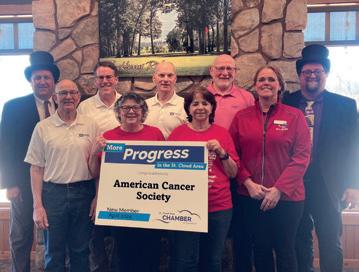
American Cancer Society, cancer research and support, 950 Gentian Road, Ste. 100, Eagan.
(back
Brian Jarl, Tim Feddema, Mike Bauerly, Jerry Lang, Rory Cruiser. (front row): Steve Goulet, Elaine Thyen, Kathy Wilson, Sherri Maanum.

Kraft Mechanical, HVAC, plumbing and mechanical services, 201 Elk Street E, St. Joseph. Pictured: Brenda Eisenschenk, Andrea Wood, Mike Gerdes, Rachael Sogge.

SERVPRO Team Hickman, emergency restoration, 72 10th Ave. S, Ste. 202, Waite Park. Pictured: Rory Cruiser, Tyler Anderson, Bo Nelson, Rachael Sogge.


Midtown Square Mall LLC, 3333 W Division Street, St. Cloud. Pictured: Rachel
Nick


110 2nd Street S, Ste. 115,


St. Cloud Friends of the Library, library services, 1300 West St. Germain Street, St. Cloud. Pictured: Kristin Hannon, Amy Vines, LeAnn Orth, Brooke VanderLinden, Rachael Sogge.
TriUnity Foundation, foundation supporting individuals with terminal illness, 1716 Pine Cone Road S, Sartell. Pictured: Clint Lentner, Franco Cusipag, Jed Meyer, LeAnn Case, Jamie Kleve, Chase Larson, Kristin Hannon.
Keystone Insurance, insurance agent, 80 S Main Street, Kimball. Pictured: Chris Jacques, David Gebhardt, Rory Cruiser.
Herman Consulting LLC, start-up assistance,
Street W, Rockville. Pictured: Mike Brower, Todd Herman, Brain Jarl.
Combat to Creative, supporting Minnesota veterans, 620 7th Ave. N, St. Cloud. Pictured: Julie Forsberg, Lori Parisien, Matt Skipper, Rachael Sogge.
Pictured
row):
Layton,
Wallrich, Hassan Nurie, Jason Miller.
Club Pilates, Pilates classes,
Waite Park. Pictured: Rachael Sogge, Hannah Malecha, Greg Benson, Kari Collett, Rachel Layton.
Colorful Concepts Painting and Custom Finishing, commercial and home painting services, 38922 County Road 1, Sartell. Pictured: Rory Cruiser, Jon Boerger, Lynn Boerger, Rachael Sogge.
Criterion Counseling & Consulting, psychotherapy and consulting, 1727 9th Ave. SE, St. Cloud. Pictured: Rory Cruiser, Nate VanHeuveln, Eric Johnson.
Pasta Buckets, to-go restaurant, 314 3rd Street NE, Ste. 314, Waite Park. Pictured: Kristin Hannon, Amy Gunderson, Brandon Gunderson, Mike Brower.
Credent Care, home and community-based care for rehabilitation, mental health and housing support, 2719 W Division Street, Ste. 9, St. Cloud. Pictured (back row): Amin Ali, Shirwa Adan, Lance Johnson, Ekram Ayanle. (front row):Brian Jarl, Rahima Sanders, Rachael Sogge.

DaBella, contractor, 330 Highway 10 S, Ste. 102, St. Cloud. Pictured: Kristin Hannon, Manny Ruiz, Sawyer Anderson, Ben Carlson, Kaden Emerson, Brian Jarl.

Thrive Awareness, mental health services, 110 10th Ave. N, Ste. 16, St. Cloud. Pictured: Rachael Sogge, Bisharo Dadow, Kelly Doss.

Metropolitan Mechanical Contractors, mechanical services provider. Pictured: Jason Miller, Brandon Bundy, Donna Roerick.

Lutgen Companies, roofing, siding and sheet metal work, 3130 County Road 137, Waite Park. Pictured: Kristin Hannon, Nate Wisniewski, Sean Lutgen, Mike Brower.

Sisu Living LLC, social service agency, 225 N Benton Drive, Sauk Rapids. Pictured: Jason Miller, Summer Collins, Randi Woodford, Amber Harmon, Kristin Hannon.

Milestones, provides professional development for the early childhood community, 314 10th Ave. S, Ste. 180, Waite Park. Pictured: Rachael Sogge, Jeremy Schreifels, Patrick Hollerman.

Refreshing Perspectives Therapy, mental health therapy, 1521 Northway Drive, Ste. 110 St. Cloud. Pictured: Kelly Doss, Sandra Kroll, Rachael Sogge.


Employbridge, staffing agency, 549 25th Ave. N, St. Cloud. Pictured: Mike Brower, Livia Behnke, Greg Bueno, Daniela Hinojos Chavez, Kristin Hannon.

SouthPaw Upholstery, upholstery services, 428 4th Ave. NE, Waite Park.
Pictured: Mike Brower, Charlie Heringlake, Kevin Fleischman, Carla Hanson, Kristin Hannon.
Central Minnesota Repair and Restoration, handyman/maintenance services for home or commercial, 1725 W St. Germain Street St. Cloud. Pictured: Jason Miller, Mark Andersen, Mike Brower.
MILESTONES


30 Years in Business: Batteries Plus, retail and wholesale batteries, light bulbs, smart phone and tablet repairs, 2710 2nd Street S, St. Cloud. Pictured: Brian Jarl, Bernie Perryman, Chris Jacques.

150 Years in Business: Williams Dingmann Family Funeral Homes, funeral, burial and cremation services, multiple locations, 324 2nd Ave. S, Sauk Rapids, 1900 Veterans Drive, St. Cloud. Pictured: Kristin Hannon, James Neppl, Jack Breitkreutz, Doug Dingmann, Steve Larson, Michelle Henderson.
10 Years in Business and 10 Year Member: State Farm InsuranceKyle Hedtke, insurance agency, 1101 2nd Street S, Ste. 102, Sartell. Pictured: Brenda Eisenschenk, Kyle Hedtke, Eric Johnson.

30 Years in Business: High Impact Training, customized learning experience services, 2700 1st Street N, Ste. 201, St. Cloud. Pictured: Jason Miller, Mark Geller, Mike Brower.
40 Years in Business: Cetera Investment Services, provider of financial products and services, 400 1st Street S, Ste. 300, St. Cloud. Pictured: Eric Johnson, Kim Holweger, LeAnn Rummel, Brenda Eisenschenk

15 Year Member: AGC Agency Inc., IT services for business, 1801 Tyler Trail, St. Cloud. Pictured: Chris Jacques, Mark Kroska, Kris Crandall, Greg Kremer, Rachael Sogge.
100 Years in Business: St. Cloud VA Health Care System, Veterans Affairs Health Care, 4801 Veterans Drive, St. Cloud. Pictured: Brian Jarl, Breta Monroe, Tiffany Stang, Theresa Henning, Cheryl Thieschafer, David Hintger, Rory Cruiser.

10 Year Member: ConnectAbility of MN, coordination services, 2901 3rd Street S, Waite Park. Pictured: Patrick Hollermann, Susan Paasch, Sheri Wegner, Kristin Hannon.
25 Years in Business: Papa Murphy’s Take N Bake Pizza, 25 14th Ave. S, St. Cloud. Pictured: Top Hatters Donna Roerick (L) and Jenna Binsfeld with the Papa Murphy's team.

Expansion: ABRA Auto Body & Glass, auto body, glass and paintless dent repair, 41 Division Street, Waite Park. Pictured: Mike Brower, Todd Johnson, Scot Johnson, Louann Johnson, Kedrick Johnson, Danyell Wendland, Mike Pap, Brady DeGagne.
GROW | NETWORK | PROFIT
EVENTS AROUND THE ST. CLOUD AREA Profit!
MORE ON EVENTS : For information on these or other business events, call 320-251-2940 or visit StCloudAreaChamber.com and click on “Calendar.”
The 58th Annual Central MN Farm show was hosted by the St. Cloud Area Chamber of Commerce in February. Over 150 exhibitors in more than 250 booths filled the River’s Edge Convention Center to network, learn and market to the agriculture community in and around Central Minnesota.


The sold-out farm show attracted attendees from all around Central Minnesota and beyond.
Speaker Keith Olander, AgCentric, presented on succession planning.
Mandy Spiess (L) and Rudy Brambrink, Royal Renovations
Stacy Tiegs and Joe Kepper, Finken Water Treatment, Plumbing, Heating & Cooling
Travis Theis, Dick's Nuisance Animal Control (L) and Al Brinkman, Forever Young Two — Co-Chairs of the Central MN Farm Show
Caitlin Heglund and Adam Hagge, Kyle Hedtke State Farm
Farm Show displays included everything from the newest farming technology to the latest tractors and equipment.
John Panzke, Stearns Electric Association on air with KASM Radio during the show.
The Benton County Dairy Association booth was a popular stop at the show.
Dexter Hanson, Central Minnesota Mental Health Center
Network!
St. Cloud Area Evening at the Capital provides an opportunity for members to network with many of Minnesota’s elected officials in St. Paul. The program is sponsored by the St. Cloud Area Chamber of Commerce.


Randi Woodford (L), Amber Harmon and Summer-Ann Collins, SISU Living
Michael Quamme, Apex Engineering and Cathy Mehelich, City of St. Cloud
Guytano Magno, Switchboard and Bri Torborg, Falcon National Bank
Dan Ochsner, KNSI (L) and Steve Gottwalt, Steve Gottwalt Consulting, smile for a photo taken by Rep. Bernie Perryman.
Rachel Lolmasteymaugh, St. Cloud Downtown Alliance (L) and Melody Vachal, Arise Cares and Rise UP Care and Wellness
Nick Bischoff, Design Electric (L); St. Cloud Mayor Jake Anderson; John Ruis, Ruis Consulting Group
Jim Gruenke, Traut Companies (L) and Senator Arik Putnam
Bisharo Dadow, Thrive Awareness (L); Javelia Morrison-Galimore, St. Cloud State University; House Speaker Lisa Demuth; Minnesota Supreme Court Justice Sarah Hennesy; Julie Lunning, St. Cloud Area Chamber of Commerce; Habso Muina, International Solutions
David Borgert (L); Senator Jeff Howe; Michelle Schmitz, Xcel Energy; Lori Kloos, St. Cloud Technical and Community College; Curtis Pederson, the office of Rep. Jim Joy
Eileen Theisen, Envision Capital and Sean Partch, Recovery Community Network
Speaker Lisa Demuth (L); Rep. Bernie Perryman; Jodi Gertken, CentraCare; Ann Rau, Winthrop & Weinstine, P.A.
BUSINESS TOOLS
GROW | NETWORK | PROFIT
RESOURCES THAT HELP YOUR BUSINESS GROW
Always Check the Ice
Terminating employees is part of business – take the proper steps to avoid thin ice.
By Christina Hopke MANAGEMENT TOOLKIT


Terminating an employee without taking time to implement proper steps is like skating onto a lake in December without checking the ice: full of risk. While deciding to terminate an employee may seem like a straightforward process, employers can unwittingly find themselves on thin ice if they fail to think through the following big-picture considerations.

Contributor
Avoid surprises.
Yes, Minnesota is an at-will employment state, meaning that employers do not need a reason to terminate an employee. However, there obviously is a reason for the termination, and that reason should be apparent to the employee based on prior communications and discussions with them. An employee surprised by their termination usually means greater risk.
Christina Hopke is an employment law and litigation attorney
Assess risks.
Would the employee have reason to think that a protected characteristic contributed to their termination? Has the employee recently engaged in protected activity? Is there disagreement among HR and management about the termination? Has the motivation of the person who proposed the termination been evaluated? While the possibility of a lawsuit (even if frivolous) cannot be avoided entirely, a proper risk assessment will better inform the decision and may allow for the process to be tailored towards mitigating those risks.
Consider retaining counsel.
This is not a sales pitch. The easiest and most cost-effective time to consult with an attorney regarding a termination is before it happens. If there are risks, an attorney can help evaluate them and consider the options on mitigating them, such as a severance agreement. Consulting with an attorney will be cheaper than defending a lawsuit.
Plan the meeting.
Arrange for a meeting in a private place and know in advance what will be conveyed. If giving a reason for the termination, determine that prior to the meeting. If the employee is being
terminated for performance or behavior issues, it may be beneficial to have the employee review and sign a write-up summarizing the conduct. The interaction must be professional, and free of any wavering or hesitancy. HR and management need to be on the same page concerning the message. Special rules apply if the employee makes a written request for the reason for the termination, so be familiar with the time frame required for a response.
Address final paychecks, COBRA, and benefits. Requirements for issuing a final paycheck differ when the employer terminates an employee. Be prepared to process the final paycheck prior to normal payroll, if required under the circumstances. If COBRA applies, be sure to provide the COBRA notice. Also ensure that other benefits are handled properly, according to law and company policies.
Clarify equipment ownernship. Be sure the “where, when, and how” of returning company property is addressed. Know what the lawful options are for addressing unreturned or damaged property. Hint: It is
: Tech Strategies / Entrepreneurism / Economy Central by Falcon Bank
at Rinke Noonan.
almost never a deduction from the employee’s final paycheck.
Concluding Thoughts.
Consider whether an exit interview makes sense under the circumstances. Give thought to how the departure will be communicated internally. And ensure that final documentation is placed in the personnel file. The next time you think a termination is warranted, giving due consideration to these items could spare you from an icy plunge.

Granite Partners is a private investment and long-term holding company founded in 2002 in St. Cloud, Minnesota, with a mission to grow companies and create value for all stakeholders. We advance a culture of trust, innovation, and excellence as essential to 100-year sustainability, and we aspire to world-class wellbeing for everyone in the Granite community.

growing companies, enhancing communities
TECH NEWS
Trackers Beware
Employee productivity tracking software seems like a good idea in theory, but the downfalls may outweigh the benefits. In a survey done by Software Finder, one in five employees reported that they are being monitored by an activity tracker. The tracked employees reported higher levels of stress, poorer mental health and less job satisfaction. Many said they distrust their employer and feel pressured to work more hours. Interestingly, the tracked employees were found to be equally as productive as untracked employees. Employers should consider if it is worth the risk to employee satisfaction before implementing such tracking.
Source: BenefitsPro.com

As masters of commercial HVAC, roofing and architectural exteriors, we’ve been building trusted partnerships for five generations. From quality installation to exceptional service and support, we’ll help you protect and prolong the life of your investments.
TOOLS
The (Virtual) Doc Is In
Technology plays a major role in modern healthcare, from treatment to prevention.
By Jeanine Nistler



Healthcare technology, recently considered revolutionary, is now almost required — and innovations are being released at seemingly lightning speed. For quite a while, many of us have been using our laptops or phone apps to make appointments and access our medical records. The pandemic made video visits with providers commonplace. And even robot-assisted surgery is relatively common.
Here’s what’s hot today:
Artificial intelligence (AI) can record conversations between physicians and patients, generating after-visit summaries from the recordings.
Personalized health care recommendations can be based on insurance claims data.
Smart wearable devices can monitor far more than steps taken, including such things as blood pressure, blood sugar and blood oxygen levels, heart rate, respiratory rate, and sleep patterns.
Wireless Workouts
“Fitness apps promote healthy habits and store valuable health data, such as medications and vital signs,” said Terrence Keller, a physician assistant with Rejuv Medical. “While this data can be an effective tool for accountability, it can also create pressure to meet certain health
metrics, which may not always be beneficial.” Keller believes that, while technology is a powerful tool for managing health, listening to your body should take precedence. “Rest when needed and use the data as a tool rather than a source of stress.”
The fitness side of Rejuv “uses and encourages all of its members to use MyZone, a heart rate-based fitness tracking system that uses heart rate data to motivate and gamify exercise,” said Katherine DeLeon, Rejuv’s fitness manager. “MyZone real time data can be displayed live on screens throughout the Rejuv fitness space and can also display on each client’s phone.”
Digital Doctoring
In the laboratory and doctor’s office, technology is resulting in quicker access to test results. In fact, patients often see the results before their providers see them. Artificial intelligence, meanwhile, is listening to and taking notes during a clinic, hospital bedside or video visit. AI then writes a summary of the visit, which the physician or other provider can review and correct, if needed. This can give a provider enough time in a day to see an additional patient or not have to work into the night dictating or typing, according to Lynn McFarling, M.D., an internal medicine doctor and chief medical information officer with CentraCare.
“The tools and technologies we’re putting in place provide
efficiencies for the caregivers and the processes so that perhaps providers can more efficiently and effectively see and treat their patients,” Amy Porwoll, CentraCare’s chief information officer, said. Both women anticipate more technology-based clinical decision supports, noting the importance of thorough vetting of such systems, with patient safety, privacy, and security always at the forefront.
In addition to using AI to write notes about patient visits, CentraCare is using it to draft responses (which are reviewed for accuracy) to questions patients submit through MyChart, the popular patient portal that CentraCare and countless other health care organizations use. McFarling and Porwoll see an opportunity for AI to create a map to guide patients to the care they need, based on the information patients provide online.
Powering Prevention
This type of guidance currently is available to the 300,000 Blue Cross and Blue Shield members who have enrolled in the Blue Care Advisor app. “The whole idea is one app, one place, focused on helping the members get the help they need,” said Matt Hunt, the chief experience officer/vice president of customer service with Blue Cross and Blue Shield of Minnesota. Patients use the app to request their ID card, to
find care, and determine their next best action. The next best action is whatever Blue Cross specifically recommends for a member to do, based on lab or imaging results, conditions such as diabetes or heart disease, or answers they provided to questions posed by the app.
Hunt anticipates seeing 50 to 60 percent of its 1 million members eventually enrolling in Blue Care Advisor. “Why not 100 percent? There are just some people who don’t necessarily want to use digital technology. They want to call our service team.” The advisers talk members through the same information and recommendations that the app would provide.
An October 2024 HealthTechZone.com article noted that “technology is playing a crucial role in improving the quality of

TECH
NEWS
care, increasing efficiency, and reducing costs.” Blue Cross’s Hunt agrees. “If we can get our members to be healthier, we can price our products even more competitively.” Hunt says that the best way to reduce costs is by getting everybody to be proactive in their health care — doing the cancer screenings, getting in to see their primary care physician and avoiding those catastrophic outcomes that can occur when care is avoided.


WJeanine Nistler (jeaninenistler@ outlook.com) is a St. Cloud-based freelance writer whose career has included daily newspaper reporting and editing, and communications work in health care, higher education, and state government settings.

Always Listening
ould it be helpful to have a personal assistant follow you around all day, translating every conversation and thought into a to-do list? What if that personal assistant was actually a small pendant that you tape to your temple and, using AI, it listens to and records everything — even your thoughts? Tech company Omi is making this a reality with its new wearable device that can transcribe and summarize conversations, add events to your calendar, translate into different languages and, yes, read your brainwaves with its internal electroencephalogram. Notepad and pen — who needs ‘em?
Source: Wired.com
At Magnifi Financial, we know that every project is unique. That’s why we combine innovative financial solutions with cutting-edge digital tools to support your vision. Whether you’re securing financing, managing cash flow, or streamlining operations, our business banking technology helps you stay ahead.
Flexible terms, competitive rates, and a commitment to exceptional service. Your success is our priority.
Booths of Opportunity
Trade shows, like any valuable tool in a marketing plan, require preparation and strategy.
By The Team at Eyecon Graphics

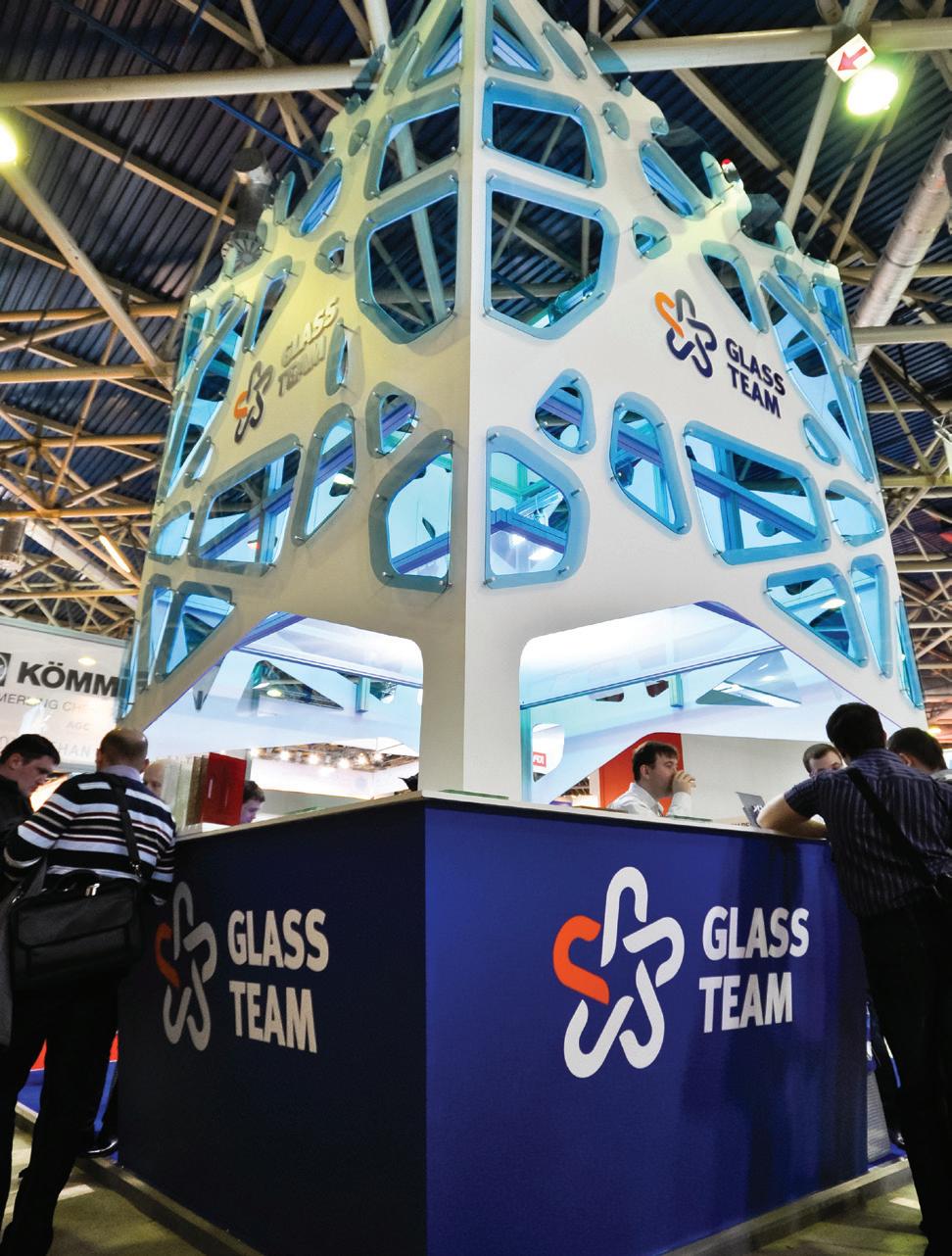
Trade shows are excellent opportunities to network and give your business exposure. According to a report published by event planning company ConferenceSource, for every $1 spent on a trade show, companies earn $4 back. To get the most out of a trade show, it’s important to be intentional about your setup and approach.
DO: Plan Ahead.
DON'T: Wing It.
Research the event: To get the most out of the show, find out who is there. Tailor your strategy accordingly.
Set clear goals: A specific goal allows you to have a stronger approach. A few good approaches for trade shows are looking for lead generation, brand exposure, or networking. Design an attractive booth: Be clean and eye-catching! Large professional graphics, a walk-in setup, and other features unique to you will help you stand out. Avoid last-minute preparation: Set all your materials up ahead of time to appear professional and put together during the show. Double check your booth's location ahead of time, be sure all of your materials are
ready, and be sure staff is fully trained.
DO: Engage.
DON'T: Be Passive
Interact with attendees: Real communication with real people makes a business stick in people’s minds. Greet visitors warmly, ask relevant questions, and listen actively to their needs to form a real connection with them. You aren’t shouting at potential buyers, rather reaching out to attendees to create dialogue. Use social media: A post announcing you’re attending is an inexpensive way to make potential customers aware of the show. If the trade show has a page, tag its social media account! Avoid overwhelming visitors: Watch out for information overload. Take time to gauge interest in the conversation and meet each person where they are. Be sure to follow-up: Collect contact information and have your own readily available. Sending a follow-up message after the event will turn more prospects into projects.
DO: Create an Experience.
DON'T: Cut Corners
Offer giveaways: Have branded merchandise available. Start a raffle for larger items. Give away smaller items with your website and contact information.
Provide refreshments: Offering snacks or drinks will attract attendees to your booth. Bonus points if the treats relate somewhat to what you do as a business.
Don’t use cheap materials: You have a quality business so reflect that in your material. Spend your money on well-made displays to elevate your brand.
DO: Measure Your Success.
DON'T: Ignore the Data
Track your metrics & feedback: Measure the number of leads generated, sales made, and overall return on investment. Ask for feedback from attendees and your team to review later. Analyze and adjust: The data and feedback should be used to refine your strategy. Increase what worked, and cut back on what didn’t to optimize your investment.
Evaluate negative feedback: Constructive criticism is invaluable for improvement. Neglecting to listen when someone gives negative input will only cost you money down the road.
Resist avoiding change: Don’t reinvent the wheel, but give repeat attendees a new reason to return to your booth. Keep those connections rolling and continue to improve your approach for each trade show.
A successful trade show, like all marketing, hinges on planning, engagement, and improvement. Use these do’s and don’ts to help you strategize and maximize your impact. Happy exhibiting!
Eyecon Graphics is a full-service marketing firm that is consulting, creating and connecting you to all things marketing.


Questionable
Teens may live in the digital world, but AI is presenting new challenges. According to a study published by the child advocacy company Common Sense, 35 percent of teens ages 13 to 18 say they’ve been misled by fake online content. Teens are changing their trust in online content, with 72 percent saying they second-guess how they evaluate the accuracy of online information after an experience with deceptive or fake content, and 35 percent saying that generative AI systems make it harder to trust the accuracy.
Source: CNN

Now Serving Sustainability
Food waste is a major issue globally, with about onethird of all food produced for humans wasted annually. Marriott Hotels in the UK, Ireland and Scandanavia partnered with the artificial intelligence company Winnow to confront this issue. Across 53 hotel food outlets, Marriott’s food and beverage team used the AI tool to improve ordering, menu planning and portion sizes. Through its efforts, Marriott decreased its food waste by 25 percent in just six months — the equivalent of 486 metric tons of CO2 from being released into the atmosphere.
Source: Food Digital


GROW BUSINESS TOOLS
ECONOMY CENTRAL
Human Capital

Investing in employee training can improve productivity and deliver a competitive advantage.
By Bethany Lawrence and Lynn MacDonald


In the Future of Jobs Report 2025, the World Economic Forum surveys businesses around the world and looks for patterns in the data. The 2025 job survey shows that worldwide, “employers expect 39 percent of workers’ core skills to change by 2030. While this represents significant ongoing skill disruption, it is down from 44 percent in 2023.” Employers in the U.S. alone anticipate 35 percent of workers’ core skills to change. With so much rapid change that requires workers to have different skills, businesses around the world seem to be relying more


on training programs that promote “continuous learning, upskilling, and reskilling.”
The top core skill that employers value, according to the 2025 survey, is analytical thinking. In fact, analytical thinking has maintained the top spot over multiple years of this report, with seven out of 10 companies viewing it as essential. Other top core skills are resilience, flexibility/agility, and then leadership and social influence. Creative thinking, motivation, and self-awareness ranked high as well. While these skills are ranking high worldwide, it’s not a complete list of necessary skills, and the
Contributors
Bethany Lawrence is an English Studies major at St. Cloud State University, expected to graduate in 2025.
Lynn MacDonald, Ph.D., is an associate professor of economics at St. Cloud State University.
reported level of importance does differ by industry.
Upskilling (teaching new skills) and reskilling (teaching new roles) are different ways to train and develop employees. The proportion of the workforce who have engaged in some kind of training has grown to 50 percent in 2024, over the 41 percent that reported engaging in training in 2023. This growth was found in nearly all industries. Economists refer to training and education as investments in human capital. According to a report by Harvard professor David Deming, developing human capital — people’s skills, knowledge, and aptitudes — has long been recognized as an investment that generates returns. Human capital is an important driver of both economic performance and long-term economic growth.
Upskilling and staying on top of trends is important for business sustainability, and “the rate at which organizations and individuals learn” is an important factor in establishing a “sustainable competitive advantage,” according to a 2014 study by Associate Professors Uday Bhaskar and Bijaya Misra. There is an emerging body of economic literature attempting to analyze the relationship between training and business performance.
Economists Jozef Konings and Stijn Vanormelingen set out to study how on-the-job training affected both wages and productivity. Using data from Belgium, they found that,
when the share of trained workers increases by 10 percent, it resulted in an increase in productivity from between 1.7 percent to 3.2 percent. Interestingly, they found a slightly higher impact of training in non-manufacturing businesses compared to manufacturing. They also found some evidence suggesting that most training programs were general in nature. General training refers to developing skills, such as communication, that workers can carry into several different roles.
The survey results from the World Economic Forum emphasize the importance of core workplace abilities like collaboration and adaptability. The U.S. Department of Labor (DOL) corroborates this emphasis by stressing that soft skills are becoming more important at work. These soft skills include professionalism and work ethic, communication (both oral and written), teamwork and collaboration, and critical thinking/ problem solving. The U.S. DOL goes further to include necessary core competencies such as networking, professionalism, communication, and enthusiasm, just to name a few. While training programs do cost money, they can lead to productivity gains and may help provide a competitive advantage. In Minnesota, the Department of Employment and Economic Development offers resources for job seekers that stress the importance of both on-the-job training and lifelong learning as being necessary for career success.
Residential Building Permits
ECONOMIC INDICATORS & TRENDS
Compiled by Shelly Imdieke, St. Cloud Area Chamber of Commerce
Totals represent data reported as of 4/7/2025
Residential Building Permits
6
Building Permits
Commercial Building Permits
6
$1,738,973 TOTAL: $1,489,533 TOTAL: $1,587,656
St. Cloud Area Association of Realtors, http://stcloudrealtors.com/pages/statistics.
BY
THE NUMBERS
Immigration’s Importance

The Minnesota Chamber published a report in February 2025 outlining the impact of immigration on the state’s workforce and economy. Here are some of the highlights:
Immigration was Minnesota’s leading population growth driver from 2020 to 2024, accounting for 94 percent of net gains in population.
Minnesota’s total foreign-born population grew by 26 percent from 2012 to 2022. Its undocumented population change was flat.
Minnesota had the 4th highest foreign-born labor force participation rate in the nation in 2023, when Minnesota’s foreign born labor force participation rate was 74.3 percent, compared to 67.6 percent for native-born Minnesotans.
59 percent of the state’s total labor force and employment growth came from foreign-born workers from 2019-2023.
Minnesota was home to over 495,000 foreignborn residents in 2023 — the highest number since 1910.
The number of foreign-born Minnesotans with less than a high school education fell by 5 percent from 2010 to 2023, while the share with a bachelor’s degree or higher increased by 7 percent.


From Scratch
MIKE AND DENAE HILTNER, OWNERS OF GREAT HARVEST BREAD COMPANY, BAKE THEIR BREAD WITH A MIX OF KINDNESS, SKILL AND ENTREPRENEURIAL SPIRIT.
Baking bread is a mixture of art and science. It requires a deep understanding of ratios and temperatures, along with a knack for textures and more than a little bit of patience. Humans have been baking bread for an estimated 30,000 years, yet its core ingredients have not varied much in that time: water, flour, yeast, salt, and in the case of Great Harvest Bread Company’s top-selling honey whole wheat bread, a bit of honey. What you won’t find on the recipe card? Family, care, generosity and love — the things that truly set this bread apart.
Mike and DeNae Hiltner met and began dating while they were both students at Apollo High School. They went different directions for college, with Mike attending University of Alaska Anchorage and DeNae enrolling in
St. Cloud State University, then transferring to the University of Minnesota Duluth. Following college, Mike played professional hockey around the U.S. and Europe, while DeNae traveled with him and honed her marketing skills. After returning to St. Cloud, Mike enrolled at St. Cloud State to earn his MBA and DeNae worked in marketing for the St. Cloud Hospital, March of Dimes and eventually the Metropolitan Transit Commission (now Metro Bus). They were married in 1995 after dating for 11 years.
In the spring of 1998, they took a trip to Montana to visit DeNae’s sister, where they met Dave Scheel of the Scheels Sporting Goods family. Scheel began talking about an incredible franchise opportunity with a business called Great Harvest Bread Company — one of which he owned in Missoula, Montana. Scheel’s sister


“Have a good product, treat your customers and employees right, and things will work out.”
— MIKE HILTNER


They opened Great Harvest Bread Company in Waite Park in January of 2000, remaining in a partnership with the Portland-based franchise for two years until Mike and DeNae were able to buy them out. After four years in business, DeNae joined Mike full time at the bakery, leaving her position at Metro Bus. “Once we opened the bakery, that’s really where my heart was,” DeNae said.
ACTIVATE THE YEAST
With the goal of owning property instead of leasing, they purchased the former Country Hearth Bakery Thrift Store building, as well as an adjacent property, which they eventually sold. Before moving in, there was a lot of work to be done.
got the Hiltners’ attention. “Minnesota was a good market, so they were looking for another partner,” DeNae said. “That’s how we got connected.”
Though DeNae didn’t know it yet, Mike had always dreamed of owning his own business. He grew up baking as a hobby, always enjoying it because “you start with nothing, and by the end you’ve got a complete product.” So when the opportunity to “be a business owner and do something I was passionate about” arose, it seemed like a natural fit. “If you didn’t love it, it wouldn’t work,” Mike said.
“When I started taking down the sidewalls, they were full of sawdust,” Mike said. The Hiltners tore down both the front and the back of the building, removed the drop-ceiling to reveal the barn-like structure and redid most of the flooring. Most of the work was done by Mike and DeNae, along with their families.
After about five years in business, they decided to add on to the west side of the building with a space that could be leased out. The architect suggested adding a silo and designing it to look like a lean-to, lending itself to the barn theme. It’s become one of the most iconic Great Harvest locations, and a smart business decision on the Hiltners’ part — as they currently lease out the second storefront to Urban Style Salon. That option for a second income stream has proven to be a wise investment

for the Hiltners. “I’m so grateful that we own the property,” DeNae said.
MIX THE DOUGH
One thing that drew Mike and DeNae to the franchise was its stance on community. “We had to go to Dillion, Montana for an interview,” DeNae said. “They were pretty selective — they wanted people from the community that were going to work the bakery.” Aside from that, with nearly 200 locations in the U.S., the Great Harvest franchise itself has very few rules. “It’s a freedom franchise,” DeNae said. “So we’re free to bake what we want, but we share recipes and ideas.” It’s one of the only franchises of its kind in the U.S.
PERSONAL PROFILES
HOMETOWN
St. Cloud
EDUCATION
DeNae: SCSU, University of Minnesota Duluth
Mike: University of Alaska Anchorage, MBA from SCSU
WORK EXPERIENCE
DeNae: March of Dimes, CentraCare, Metro Bus
Mike: Professional hockey in the U.S. in the International Hockey League and the East Coast Hockey League, as well as in Finland and Germany
CHILDREN
Karli and Cullen HOBBIES
Traveling, enjoying their lake place on Lake Alexander, golfing, fishing and spending time outdoors
The Hiltners figured out the key to success early on. “In our first five years, we were the number one store,” Mike said. “They started calling me, asking, ‘How are you doing that?’ ” Mike began working as an owner-trainer, traveling all over the U.S. to other Great Harvest locations to help teach staff. “I would teach everyone the process of baking — the proofing and mixing,” Mike said. He helped those other locations figure out the flour charts for baking in different climates and environments and worked with them to bake what they needed in order to open. After training on and off for over 15 years, the travel and time demand got to be a lot. “You’re getting up at 3 a.m. and don’t leave until 10 p.m. every day, coming home exhausted,” Mike said. He’s happy to focus more of his time where it matters most. “I have my own bakery to run.”
Per the franchise agreement, all Great Harvest bakeries must use wheat from the same
source and must mill that wheat into flour on-site, every day. “The group buy is what keeps us together,” Mike said. “We have to have specific spring red wheat that we get from what’s called the Golden Triangle in Montana.” This allows Great Harvest locations to offer the highest-quality, most consistent product possible. All of the wheat is graded, cleaned and packaged in Great Harvest’s facility in Dillon, Montana, before it’s sent to the stores. “I know that when I put it in my mill, I get the same quality flour as I will three or six months down the line,” Mike said.
KNEAD AND SHAPE
The Hiltners mill about 260 pounds of wheat into flour every day to bake their breads and goodies. For the signature honey whole wheat bread, they start with yeast, mixing it with honey, their milled flour, salt and water. After letting it rest, they mix it again, rest it some more, followed by hand-kneading and more resting. It’s a very involved process. “We do everything by hand — we’re a 100 percent scratch bakery,” Mike said. Their days are long and physically demanding. “We call it bakery CrossFit,” Mike said. “Every loaf needs to get kneaded eight to ten times and turned a couple more times. So just on one batch of bread you could do 200 kneads.” It’s about a three-and-a-half-hour process to make the bread dough, starting at 4:30 a.m. every day. The timing can
DeNae's Top Advice Stand by what you make and believe that yours is the best.
“People love to come in here because it smells good and we’re nice.”
—DENAE HILTNER


TIMELINE
1998
Mike and DeNae Hiltner travel to Montana and first hear about Great Harvest Bread Company

2000
Great Harvest Bread Company opens in Waite Park
2002
Mike and DeNae buy out their silent partner 2005

The Hiltners put an addition on the west side of the building
2006 to 2012
The Hiltners are in the top five nationally for Great Harvest Bread Company franchise locations, based on efficiency
2002 to 2020
Mike works as an ownertrainer for Great Harvest Bread Company, while still running the Waite Park store
2015
The Hiltners begin providing catering 2025

Great Harvest Bread Company is named the 2025 St. Cloud Area Chamber of Commerce Small Business of the Year.

be affected by outside factors such as humidity and the heat of the air and water, a science that Mike has perfected over the years. In fact, the process and its delicate nature is his favorite part about baking. “I love mixing doughs,” Mike said. “If I could just mix doughs and not have to worry about another thing, I’d be in heaven.”
COMPANY PROFILE
GREAT HARVEST BREAD COMPANY 135 Division St., Waite Park, MN 56387 (320) 259-4622 mhiltner@ greatharvest.com
BUSINESS
DESCRIPTION
Everything is affected by temperature, a variable that Mike controls by adjusting his water. Kneading starts at 8 a.m. and the oven usually doesn’t get turned off until 11:30 a.m., then the afternoon crew takes care of packaging, slicing and prep work for the next day. For Mike and DeNae, it’s worth all the extra work to produce an end product they are proud of. “More so than anything, we have an amazing product — we have a product that nobody in St. Cloud has,” Mike said. “We do it old school.”
Great Harvest Bread Company uses traditional methods of baking to create breads that are truly one-of-a-kind, simple, wholesome, and delicious.
OPENED IN 2000 EMPLOYEES 12 MEMBER OF THE CHAMBER SINCE 2012
As a pair, Mike and DeNae complement each other’s work styles seamlessly. Where Mike would prefer to mix dough all day, DeNae is comfortable in the front, working with staff and customers. “When people ask me if I bake at home, I say, ‘I don’t even bake here,’” DeNae said. Together, they’ve figured out a rhythm that works well. “He knows I respect him for his knowledge, and he does the same for me.”
LET IT RISE
When they first started, the Hiltners sold six different breads and one type of cookie. Since then, the product offering has grown to eight regular breads and nine regular sweets made daily, along with a variety of other items from flavored butters to granola and even dog treats. “I would say the biggest thing we’ve done was add sandwiches,” DeNae said. “And now catering has really taken off.”
They fill about four catering orders a week, ranging from 10 bagged lunches up to 150 meals and more. They make everything in house — from turkey and cheddar to ham and Swiss sandwiches, and all the salads and
cookies. They also include chips with every order and have the option to include soup as well. “Of course, we put it on our great bread and I think that’s why we get comments about just how fresh it is,” Mike said.
They have gotten good at adapting to changing trends in the marketplace over the years. When customers became more aware of their gluten intake, the Hiltners developed gluten-friendly bread. When low-carb diets grew in popularity, they baked lower-carb breads. “A lot of diets come through that give bread a bad rap,” DeNae said. “But it always comes full circle.” The latest customer trend? Sourdough. “Our customers have been begging for it,” DeNae said. “But it’s very labor intensive.” They reintroduced it to their menu in March after weeks of prep and testing.
There have been plenty of hits as well as some misses when it comes to launching new recipes. The Hiltners experimented with peanut butter bread, jellybean biscotti, apple cheddar bread and pies, to name a few. Mike’s advice is to “stick to what you do well,” like in the case of their cranberry wild rice bread. Originally baked exclusively for Custom Catering to use at events, it became so popular with attendees that it’s now on the Great Harvest menu and one of their best-selling loaves.
After years of practice, Mike is good at predicting inventory needs — especially based on the time of year. “We’re very seasonal and holiday-oriented,” Mike said. On the rare occasion that they have a surplus, inventory is carried for one day and then the rest is donated to area nonprofits such as Poor Clare Monastery of Sauk Rapids and Anna Marie’s Alliance, among many others.
The Hiltners seldom say no to donating product to area organizations, especially because it helps to get the product out there. “If it’s a nonprofit, 100 percent we will
help you in one way or another,” Mike said. They’ve given their time and product to many organizations, including Boys and Girls Clubs of Central Minnesota, the March of Dimes and St. Cloud State University.
PUT IT IN THE OVEN
“What we’ve found is, when we’re gone, it’s kind of nice to let go (of the business) a little bit,” DeNae said. “Some good things have come from that, too, even if it’s a new recipe or the staff experiment with something or take on new responsibilities.” In fact, their staff is encouraged to take part in creating recipes whenever possible. While Mike and DeNae were gone for a few days, the employees experimented with blueberry lemon and cherry almond shortbread flavors — which soon started outselling the other flavors.
Mike and DeNae are at the store every day, working alongside the staff, doing everything from cleaning to kneading. “It’s definitely a family-owned business,” DeNae said. With that in mind, they treat the employees like family and believe their daily presence shows just how much they care. It seems to work, because they often have the opportunity to hire multiple people from the same family or friend groups. They even have ex-employees who ask if they can come in and work during the busy holiday rushes. “We offer a safe, respectful work environment,” DeNae said.
“So we have parents who send their kids here to apply.” Mike and DeNae appreciate working with younger employees. “It keeps us young,” DeNae laughed.
They work hard to extend that culture of family beyond their staff to their customers. “People can get bread anywhere. They have to make a special stop to come here,” DeNae said. “So, we make them feel special and it’s a great experience. We have a lot of regular customers who have been coming for years.”
COOL AND ENJOY
Sometimes “family” means more than Mike and DeNae. Just look at Easter 2000, when DeNae was pregnant with their daughter Karli. Great Harvest bakes “honey bunnies,” a rabbitshaped loaf of honey wheat bread that is one of the most popular products each Easter season. DeNae went into labor early — the Wednesday before Easter Sunday, during the honey bunny rush. “My water broke and I said, ‘Go to the bakery and get the orders!’ ” DeNae remembers.
“We called our families, so our brothers and sisters came in at like three in the morning,” Mike said. Though these family members had never made dough or baked bread before, they all came together to support the Hiltners and fill the orders.
A similar situation happened five years later, when Mike had a heart attack, and past
BREAKING BREAD
Wemployees rushed in to help, further evidence of the incredible support system the Hiltners have built through their kindness and love of community. And then there is the Hiltner’s son. When they couldn’t decide on a name for him, they left it to their customers and ran a naming contest. Thus, Cullen was born.
“Success, for me, is that we’ve been able to have so much family time,” Mike said. “We have not missed one of our children’s events.” Both of their families are in the area, so there has been a great support system along the way.
As far as the future, Mike and DeNae are enjoying the ride for now. They will likely sell the bakery one day, but retain the real estate.
Ranked as the number one Great Harvest store for many of their early years, they’ve reached a point where they’re prioritizing work-life balance over saving on labor costs.
“Now, it’s a tradeoff,” DeNae said. “We’re going to work less, and we know our labor percentage is going to go up, but that’s one of the benefits of owning a business.”
“Now that we’ve been in it so long, I just want to enjoy it,” Mike said. And that’s just what Mike and DeNae plan to do.
Emily Bertram is the director of marketing and communications at the St. Cloud Area Chamber of Commerce and editor of Business Central Magazine.
ith a dream of business ownership and a love of baking, Mike and DeNae Hiltner opened Great Harvest Bread Company in Waite Park in 2000. As part of the franchise agreement, they mill the freshest, purest wheat possible on-site every day, providing all the flour they need to bake a wide variety of goods. They originally started with six breads and one cookie, but grew over 26 years to add many other breads and sweet treats, including shortbread and scones, as well as a full menu of sandwiches for dine-in or catering. After ranking number one in the nation for Great Harvest locations for several years, Mike became an owner-trainer, helping other franchise locations open and grow.
The Hiltners care deeply about the St. Cloud community, giving back whenever possible through product or time. They have quietly built a successful business as “your neighborhood bread store,” and continue to serve the area through tasty goods and a friendly staff. All of this led to the selection of Great Harvest Bread Company as the 2025 St. Cloud Area Chamber of Commerce Small Business of the Year.
ST. CLOUD AREA Meetings+Events


River’s Edge Convention Center
The Park Event Center
Holiday Inn + Suites


Events in Greater St. Cloud
Centrally located and full of unique lodging, venue and entertainment options, Greater St. Cloud is the best place to host your next event. From staff outings and board retreats to tradeshows and conferences with thousands of attendees, we have the venues, services, and team to help make your next event unforgettable.
The St. Cloud Area Convention and Visitors Bureau – also known as Visit Greater St. Cloud – is your partner in event planning. The experienced and friendly staff can help you find a venue, secure hotel blocks, coordinate services such as name badges and registration, and even assist with planning itineraries for after-hour and social events. They stay up to date on the latest trends in event planning so that you don’t have to, and there is no cost to you to use their services.
This helpful venue guide is a great place to start your planning, but Greater St. Cloud has so much more to offer.
If you are a member of an association or group that hosts events regularly, reach out.
If you usually book your events in another location and haven’t considered St. Cloud recently, reach out.
If you have no clue where to start and just want to talk through some ideas, reach out. If you want to provide your attendees with an exceptional experience from start to closing ceremony, reach out.




MEET SMARTER
TECHNOLOGY PLAYS A CRUCIAL ROLE IN PRODUCING EFFECTIVE AND MEMORABLE MEETINGS AND EVENTS.
“There was good synergy.”
“We felt busy.”
“I think we moved the needle.”
Whether attending that daily business meeting or the most important annual convention in your industry, who has not heard those kinds of vague answers and clichés when asked, “How did it go?”
By Randy Krebs
“Gulp. Ummmmm, fine.”
“I felt the synergy. Maybe?”
Synergy levels aside, quantifying the results of meetings, trade shows or conventions has never been easy. Now, though, thanks to artificial intelligence (AI), there are numerous (and ever-growing) tools designed to do just that — and so much more.
Whether you’re planning a large-scale convention, participating in a trade show or leading internal company meetings, AI tools can help you get the most out of your efforts.
“It’s where the gold rush is right now,” according to Nick Borelli, marketing director at Zenus, which helps clients worldwide create and host events using AI
tools. “Putting on events is one of the most stressful professions. AI can help organizers plan, execute and analyze their events.”
“Technology is such a vital part of today’s events,” Christine Pribbernow said. Pribbernow is senior event planner with the Minnesota Department of Employment & Economic Development (DEED) and

incoming national president of the Society of Government Meeting Professionals. “Organizers and presenters really need to understand the details about accessing information, using different formats, audio and visual options, and what can be shared after the event.”
“It’s crazy to see what AI can do to supplement human efforts,” according to Nikki Gustafson, director of sales at Visit Greater St. Cloud, destination marketing and management for the area. “In the hospitality industry, AI is already seen as an assistant for delegating staff and scheduling, along with handling emails.”
Borelli is well-versed in the AI environment for live events. He has spent more than two decades in digital marketing and live events and teaches a course for the Professional Convention Management Association about how AI tools can help businesses and organizations improve their events. “If you asked a few years ago if someone was using AI, people would have different opinions,” Borelli said. “Now if someone says they are not using AI tools, they’re just not paying attention. It’s baked into everything.” At conferences, for instance, Gustafson said AI is being used to analyze data and handle the elements that build real-time engagement.
With all that baking going on, Borelli said the exponential increases
being made in developing AI tools should not be ignored — by either event organizers or those partaking in the events. For example, Zenus uses an AI tool known as facial analysis at events. It measures impressions, demographics (age/ sex), positive sentiment and more. Businesses can then examine that data to determine which demographics are the most and least engaged, what works (and doesn’t) for sales and marketing, among other aspects.
“That’s the biggest change in data collection at events,” Borelli said. “Spray and pray, along with soft results, go away. AI gives you momentum based on math. Businesses can use that AI-generated data to see results and then apply those results to improve their performance.” (See sidebar.)
By incorporating AI tools, businesses can provide more personalized experiences, improve efficiency and gain valuable insights that help maximize their ROI from trade shows and conventions.
Of course, AI tools are not just for external-facing events and sales and marketing. There are several that can help day-to-day operations for any business or organization. On a broad level, those include:
Employing virtual assistants to increase efficiency: AI tools can automate administrative tasks like scheduling, note-taking and tracking
PERFORMANCE ENHANCING AI TOOLS
Businesses can provide more personalized experiences, improve efficiency and gain valuable insights that help maximize their ROI from trade shows and conventions by incorporating AI tools.
Here are some examples of what AI tools can do to improve performance at events and trade shows:
Chatbots help engage with attendees and provide real-time answers to common questions. They also can collect contact information and qualify leads.
Scanners use AI to capture and qualify leads efficiently from badges or business cards. These scanners can help track interactions and identify high-quality prospects, as well as store information for later use.
Data analytics assess visitor behavior, time they spend at your location, preferences and interactions in real-time to improve future marketing strategies.
Virtual assistants support an array of event logistics, from managing schedules to tracking supplies. AI can create your promotional content for video, social media posts, blogs and emails — and then use that content to engage with event attendees before, during and after an event.
Using data from previous interactions, AI can help you prepare for your event by simulating face-to-face conversations. By examining individual profiles based on interests, industry and goals, AI can help determine your best sales opportunities by finding the most relevant connections.
of tasks. How can that help day-today operations? AI can transcribe meetings in real time, summarize discussions and send follow-up reminders.
Using data analytics to refine decision-making: AI can analyze data and provide insights during meetings, which can contribute to more informed decisions. Some AI tools also identify trends, provide predictive analytics and offer strategic options.
Improving communication and collaboration: AI-powered tools, such as real-time translation, fill in communication gaps in diverse teams by translating languages or offering suggestions for more effective collaboration.
Providing smarter meeting management: Certain AI tools can analyze past meetings to identify patterns and optimize the structure and content of future meetings. A simple example of this is using AI

to suggest the best times for meetings based on participants' availability and previous attendance patterns.
While AI can be a great assistant in a meeting or for planning events, it cannot make up for human interactions and oversight. Given so many changes over the past decade to organizing events, DEED’s Pribbernow said, it’s critical now for event organizers and presenters/ contractors to be on the same page for everything, from on-site
logistics and safety to post-event use of recorded material.
“Planners have so many details to follow,” Pribbernow said. “The key to a successful event is making sure everyone knows what to expect before, during and after. And that usually means reading the contracts and talking through expectations.”
Randy Krebs is a freelance writer and editor living in Sauk Rapids. He can be reached at randykrebs@charter.net.


THE CONFIDENTIALITY CRISIS
Protect your confidential data by implementing an artificial intelligence policy.
By Edward Fleming

Imagine a St. Cloud clinic worker typing patient notes into an AI tool to save time — only to find those details exposed online. Or a Waite Park manufacturer’s trade secrets leaking after an employee uses a chatbot to draft a supply contract. These are not hypothetical examples. Recent incidents across the U.S. show artificial intelligence (AI) turning efficiency into a confidentiality nightmare. For Central Minnesota businesses, where trust and innovation drive success, employers need
to act fast to harness AI’s benefits without risking their data.
The use of AI promises a competitive edge — streamlining tasks, boosting creativity, analyzing data. But when employees enter sensitive information like customer records or proprietary plans into public AI platforms, it can become public knowledge. The stakes? Legal headaches, lost trust, and a damaged bottom line. Here’s what you need to know — and do — to protect your business.
The Risks in Action Workplace uses for AI are growing, but so are the risks:
Notetaking:
AI transcription tools can leak sensitive boardroom talks to vendors or hackers, especially during merger discussions or client pitches.
Document Drafting:
Feeding trade secrets into AI for a privacy policy risks exposing them to the world— or at least generating generic clauses that miss your legal needs.

Customer Service: Chatbots might spill confidential product plans while answering queries or mishandle personal data thanks to AI “hallucinations.”
For a region rich in healthcare, manufacturing, and retail, these risks hit close to home. A HIPAA violation from an AI slip could cripple a clinic, while a leaked production process might undo a factory’s edge.
Crafting an AI Policy that Works
To stop these leaks before they start, you need a clear, enforceable AI policy. Here’s what it should cover:
Restrict Tools and Data: Ban unapproved AI platforms (think ChatGPT) and prohibit
entering sensitive inputs — customer information, trade secrets, financials — unless the tool’s security is vetted.
Vet Vendors: Before adopting AI, check the provider’s privacy terms. Do they resell your data? Is it encrypted? Tools like Microsoft Copilot with enterprise safeguards might beat free alternatives.
Train and Enforce: Educate staff on risks — show them real examples — and audit compliance. Make violations a disciplinary matter.
Regularly update this policy as AI evolves, and tie it to compliance. Healthcare firms must align with the Health Insurance Portability and Accountability Act (HIPAA).
NOW TRENDING
With the speed that technology is advancing, it’s hard to stay on top of the latest trends. According to a Forbes.com article, here are a few of the top trends to watch as we continue through 2025:
Nuclear Power: Innovation in nuclear power is growing as AI demands more from the energy grid.
Extended Reality (XR): Where virtual reality meets augmented reality, XR has the potential to immerse users in training scenarios in which they can actively engage, ultimately saving on employee education costs.
Agentic AI: Going beyond chatbots, agentic AI refers to “agents” that can perform tasks without human interaction, such as self-driving cars.
Synthetic Media: These new media platforms feature content created exclusively with the help of AI, programmed by editorial journalists.
CENTRAL MINNESOTA BUSINESSES EMBRACE TECHNOLOGY AND INNOVATION IN MANY WAYS. READ ON TO SEE WHICH LOCAL COMPANIES ARE ON THE LEADING EDGE.
Retailers must comply with Minnesota’s consumer data rules. Multinational firms must comply with General Data Protection Regulation (also known as GDPR, a European Union law that protects personal information). A one-size-fits-all approach won’t cut it — tailor yours to your industry and size.
Steps to Stay Safe
You don’t need a tech overhaul to start. Test AI on low-risk tasks — like summarizing public reports — before scaling up. Keep humans in the loop to review outputs for accuracy and leaks. Above all, consult a lawyer to ensure your AI use doesn’t violate state or federal regulations. In Minnesota, a data
breach’s cost — fines, lawsuits, lost customers — far outweighs the price of prevention.
Why It Matters Now
Central Minnesota thrives on small to medium businesses that can’t afford a confidentiality scandal. AI isn’t going away — nor should it. A St. Joseph farmer using it to analyze yields or a Sartell marketer crafting ads can gain an edge. But without guardrails, one careless click could undo years of work. The time to lock down your data is today, not after the headlines hit.
Edward (Teddy) Fleming is an attorney at Lathrop GPM, advising on mergers and acquisitions, business law, and corporate governance in the age of AI.


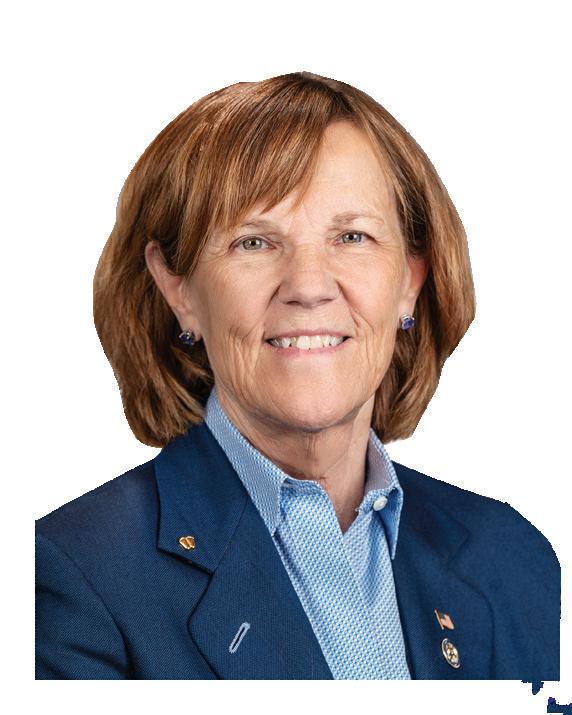


NEW INNOVATION IN MANUFACTURING COMES WITH ACQUIRED PROPERTY


Sunburst Memorials signed a purchase agreement for ten acres located on Electron Dr. on September 2024, only months after the renaming of the St. Cloud Regional Business Park (formerly Airport Business Park). This sizeable acquisition, along with the adjacent 10,000 sq. ft facility, will allow the company to scale its production while improving efficiency. Sunburst is a leader in stone memorials throughout the
we’re not building and moving experts. We’ve been thankful for the partnership.”
In addition to increasing the operating space, the move allows Sunburst Memorials to improve its operations and create a better working environment. Here are a few impactful changes coming:
The expansion adds 30,000 sq. ft. of production and warehouse capacity to the existing 10,000 sq. ft. building.
“Improving our efficiency while also decreasing lead time for production will create new opportunities in this facility.”
—JILL KAMPA, PRESIDENT OF SUNBURST MEMORIALS
Midwest and this expansion will take them to the next level.
The company has been around for more than a century, but this is its first expansion.
“The City has been instrumental in helping us and pointing us to helpful resources,” says Jill Kampa, President of Sunburst Memorials. “We’ve only done this once in 108 years, so
The ceiling height is adequate for cranes, which makes moving heavy loads of granite easier.
Automation is being introduced through the purchase of more than ten new pieces of equipment, ranging from new polishers to new paint booths.

Loading docks will make receiving materials and shipping products easier.
Sunburst Memorials is also investing in a water reclamation system from Full Circle Water in St. Joseph. This will reduce the water used each day by recycling it through the system.
“Improving our efficiency while also decreasing lead time for production will create new opportunities in this facility,” says Kampa.
Sunburst Memorials hopes to be operational by the end of 2025.
“The Sunburst Memorials expansion is truly a community project,” says Cathy Mehelich, Economic Development Director for the City of St. Cloud EDA. “We are thrilled to see this legacy company succeed in St. Cloud and love how they are working with local builders, suppliers, and architects. A move like this sends ripple effects across the entire St. Cloud region.” The expansion project will create 11 new jobs to the existing 63 in St. Cloud. In addition to facilitating the land sale, the St. Cloud EDA matched the project with MN Job Creation Fund, leveraged towards capital investment and job creation. •
EXPAND YOUR BUSINESS WITH OUR DEVELOPMENT RESOURCES
The City of St. Cloud EDA was happy to work with Sunburst Memorials throughout the site selection and land purchase process. Their team helps various businesses reach their growth goals and expand their footprints in the region.
Interested? To explore development & redevelopment opportunities in St. Cloud, please contact Cathy Mehelich developstcloud.com
UNIQUE. SPECIFIC. TARGETED.

By
In its most common form, a marketing plan serves as a guide for achieving business initiatives on a set timeline. Generally, an effective plan consists of items like an analysis of a company’s target audience, its competitors and the overall market. This analysis helps a work group determine the best strategy for achieving their goals. The plan’s length and detail depend on the company's size and the scope of the actual marketing project.
Before writing a marketing plan, it’s a good idea to conduct
thorough market research and assemble a team with complementary skills in marketing strategy, content creation, and data analysis.
A PLAN’S PURPOSE
Michelle Henderson is CEO of BadCat Digital. She believes the purpose of a marketing plan can vary, as well as how often it should be updated. “So many people hear the word ‘marketing’ and think the word ‘advertising,’” Henderson said. “While advertising is a part of marketing, so many other things
impact our marketing efforts.”
According to Henderson, organizations should ask themselves questions like:
How does our organization’s pricing or products fit into the competitive landscape?
What are our core values, and how do our communication channels show those values?
Who is our core audience, and what do they like about what we have to offer?
What communication channels should we be using (e.g. websites, Instagram, networking, podcasts)?
“Marketing plans define all this and more and should be addressed annually in conjunction with your business plan and budgeting,” Henderson said.
Brittney Goebel, a creative specialist at North Creative Co., believes marketing plans should be created annually, at the beginning of a business year, and referred to regularly throughout the year, in order to keep things on track. “In my experience, businesses often forget to align marketing and business goals,” Goebel said. “Your marketing
Ari Kaufman

should always push to help you achieve your business goals.”
PLANNING THE PLAN
When it comes to first steps in creating the plan or important questions to consider, Henderson advises downloading a marketing plan template online and putting in a solid effort. There are numerous templates and components that different types of businesses can use. In general, experts believe a comprehensive marketing plan includes:
Target audience
Unique selling propositions
Pricing/budget allocation
Distribution plan
Marketing channels
Advertising schedule
Conversion strategy
Partner and/or referral strategy
Retention strategy
When working on a marketing plan, organizations should determine how to make their business stand out among the competition and then decide how to communicate that to their market, according to Henderson. Things like great customer service are an expectation all customers have, not something unique. “As with any plan you put together for your business, the more specific you are, the more likely you are to follow the plan,” Henderson explained. “Honestly evaluate your current marketing channels. Is your website loading slowly? Do your print materials have old information in them? When was the last time you did a review of competitors to see if there is someone or something new on the horizon?” One marketing goal, Henderson said, is to stay current in your understanding of your clients and customers and what they want and need from you.
Founder and CEO of WhiteBox Marketing, Carrie Karki sees the power of knowing your business and developing a well-timed and coordinated plan. She believes the foundational elements of growing a successful business have not changed.
“Knowing and understanding your business, setting annual objectives and goals, and knowing your ideal customer’s persona, audience, behavior and geographic approaches are all great starting points,” Karki said. She thinks it is essential to develop a plan that
is foundational, proactive, well thought-out and strategically timed to ensure success. “The primary purpose of a marketing plan is to provide a clear, structured approach to promoting your business,” she said.
EVALUATE, ADJUST, REPLAN
Once the marketing plan is complete, a business should track and eventually evaluate its plan’s success and effectiveness. Goebel says that different marketing strategies require different methods of measurement.
“Digital marketing strategies like social media ads and email marketing typically offer detailed reports showing metrics like reach, engagement and clicks,” she said. Goebel recommends comparing results to industry benchmarks to assess the effectiveness of the marketing. “For example, if you run an ad to generate leads for a specific service, you should see an increase in form submissions and inquiries.”
Goebel says that traditional marketing methods, like print ads and billboards, become more challenging to track directly.
“In these cases, asking customers how they heard about you is important,” Goebel said. She notes that another helpful tactic for tracking traditional media is creating custom URLs or QR codes for your call to action.
“For example, using a URL like yoursite.com/newcustomer on a lead-generation ad can help track website visits generated by that ad.”
Tracking metrics is essential to ensure that funds are used wisely. “Re-evaluate often and adjust any marketing efforts accordingly throughout
the year,” she said. By looking at your performance year over year, companies can better maximize their marketing dollars.
Henderson acknowledges that calculating a return on investment (ROI) is often the biggest question for a business. However, key performance indicators (KPIs) can help determine whether a specific tactic is having an impact rather than jumping right to ROI for short-term evaluations.
KPIs depend on the goals of the marketing plan, and some examples include:
Sales metrics such as customer retention rate, customer lifetime value, and customer acquisition cost
Digital metrics such as email open rate, engagement rate on social media, click through rates on ads, and website visits
“Like most business plans, a marketing plan is a living document that needs to be updated with changing circumstances throughout the year and then re-evaluated annually,” Henderson said. “Great marketing isn't about more sales, it's about more opportunity to sell.” She cautions relying solely on ROI to determine what tactics to use, because it can leave small business owners bouncing “around from tactic to tactic looking for a silver bullet.”
What kind of marketing focus works best, per Henderson? “A strong unique selling proposition to a specific target audience communicated well in a variety of channels over time.”
A former schoolteacher and historian, A.J. Kaufman is currently managing editor for the Business Journal of Tri-Cities and also a correspondent for the St. Cloud Times.
BUSINESS SPOTLIGHT
Driving Success
Business Central Magazine is celebrating 25 years of delivering high-quality business news and stories to the Central Minnesota community. Join us in taking a look back at the companies that graced the cover those first few years.

MARCH 2002
In March of 2002, Don Weeres was featured on the cover of Business Central Magazine. He would appear on the cover again just one year later with his wife Sylvia as the recipients of the Chamber’s 2003 Entrepreneurial Success award. Now, 22 years later, that success has only continued to grow for Spee-Dee Delivery.
What has been the most significant change in your business/industry in the past 25 years? What has your growth looked like?
Spee-Dee Delivery Service was solely a parcel delivery company for many years. Requests over the years led to adding services to better serve customers. Spee-Dee OnCall started as an option for customers that ship on a less frequent basis. The addition of Spee-Dee LTL in 2007 gave customers the opportunity to ship pallets within the Spee-Dee network. Spee-Dee Logistics was established in 2013 due to underutilized space in the second St. Cloud warehouse. Spee-Dee Logistics provides warehousing and fulfillment, and the parcel and pallet shipments generated from the warehouse are fed into the Spee-Dee network for final mile delivery.
Spee-Dee has seen growth of 278 percent from 2002 (when the first article was published) to 2025. While it is common for transportation companies to grow through acquisition, Spee-Dee’s growth has all been internal through service area expansions and new service offerings.
You’ve been in St. Cloud this whole time. What do you like best about the business community here?
The work ethic in St. Cloud continues to be so much better than in large metropolitan cities in other parts of the country.
“I’m a farm boy from Richmond, Minnesota,” Don Weeres said.
“Even as we’ve expanded further from St. Cloud, our company is still deeply rooted in Midwest values. We believe in building partnerships through trust and hard work.”
What is something innovative you are doing in business today?
Technology is critical in the delivery world. Often, package visibility is more important than the package itself.
Spee-Dee Delivery will soon be going live with a Transportation Management System called Spee-Dee shipit. Spee-Dee shipit will enhance the customer experience through a number of easy-touse features, such as real-time shipment tracking, detailed order reporting, online shipper portals, flex capacity, and secure cloud-based access.
What does the future look like for Spee-Dee Delivery?
The leadership at Spee-Dee

takes pride in being a family-owned-and-operated Minnesota business. Spee-Dee Delivery is in the process of transitioning leadership from Don to the second generation, with daughters Jana Schindele and Andra Knapek already key members of the corporate leadership team. A complete restructuring of the company’s organizational chart is currently underway to adapt to leadership changes and company growth.
Spee-Dee Delivery is expanding its geographical footprint as we speak. Three Missouri locations opened in early April, along with service to select ZIP Codes near Topeka, Kansas. This expansion is a direct result of requests from Spee-Dee customers to expand our footprint even further throughout the Midwest.


