
Good Work

Going for the ultimate goal, JLG’s dream team strives to elevate the good work and growth of all women’s hockey organizations. While women athletes rock the rink and break the ranks, our team is skating into a new era of ice arena design. JLG Architects has been at the helm of equitable hockey facility and rink design for over three decades, and we’re happy to break the ice.


SMART TOOLS FOR SMARTER TEAMS When used properly, workplace personality tests can positively impact culture, teamwork, and your company’s bottom line.
FOCUS: RESPECT. COURAGE. HUMILITY. There are lessons for women leaders to learn at every stage of their careers.
Phone: 320-251-2940 / Automated Reservation Line: 320-656-3826 info@StCloudAreaChamber.com / StCloudAreaChamber.com
President: Julie Lunning, 320-656-3804
Director of Finance and Operations: Kristi O'Connor, 320-656-3806
Director of Programs & Events: Laura Wagner, 320-656-3831
Director of Marketing & Communications: Emily Bertram, 320-656-3809
Director of Member Engagement: Antoinette Valenzuela, 320-656-3834
Administrative Assistant/Network Administrator: Vicki Lenneman, 320-656-3822
Administrative Assistant: Shelly Imdieke, 320-656-3800
Director, St. Cloud Downtown Alliance: Rachel Lolmasteymaugh, 320-656-3830
• It’s great to collaborate
• What’s in a hashtag?
• Recovering from workplace trauma
• The art of the cold call
& VISITORS BUREAU
Executive Director: Rachel Thompson, 320-202-6728
Director of Sales: Nikki Fisher, 320-202-6712
Sales Manager: Olivia Way, 320-202-6713
Sports Director: Craig Besco, 320-202-6711
Marketing Manager: Lynn Hubbard, 320-202-6729
Marketing & Services Coordinator: Melissa Ludwig, 320-202-6770
Information Specialist: Maddy Lindholm, 320-251-4170
Growth Opportunities
won’t wait for you to build out or staff up.
Your Partner in Business
At Granterion, we understand that one size doesn’t fit all. We’re dedicated to crafting personalized solutions to ensure your business thrives in the e-commerce world.
Warehousing Excellence: Our cutting-edge warehouse facility is centrally located, secure, and equipped to distribute your products.
Value-Add Services: We go beyond storage. Our team adds value at every step, from receiving to kitting to shipping the product to the customer. We focus on innovative solutions, simplifying operations and reducing cost.
Rework, Product & E-Commerce Prep: We’ll meticulously prepare your products, meeting the highest standards for quality and presentation. Navigate the marketplace effortlessly with our specialized services, including rework and E-commerce prep.
D2C & B2B Fulfillment: Connect directly with your customers through our Direct-to-Consumer or Business-to-Business fulfillment services.
Short and Long-Term Storage Solutions: Whether it’s a brief pause before hitting the market or an extended stay, Granterion has your storage needs covered.


Editor Emily Bertram (L) with Jill Magelssen, owner of Express Employment
Professionals
& The Livin’ Is Easy
Ilove summer and almost everything about it. (I’m looking at you, humidity and mosquitoes.) It’s a season for coming together and exploring. For celebrating and relaxing. For trying new things and seeing new places. Greater St. Cloud in the summer is one of my favorite places.
As a kid, we made a cousins’ trip to Munsinger Clemens Gardens every July. We’d pester the peacocks, feed the geese (oops), play hide-and-seek among the fountains, and plan our weddings on the terrace. It was a summertime staple for me then, and it still is - albeit with fewer bird interactions.
We seldom missed the Lemonade Art Fair. Held annually during Granite City Days on the campus of St. Cloud State University, it features dozens of art and craft vendors, from unique jewelry to handcrafted pottery to custom clothing. After shopping for hours, we ended the day with the world’s best lemonade and the freshest kettle corn you can find.
We would also attend the Benton County Fair in August, despite being lifelong Stearns County residents. We’d kiss the noses of as many horses as possible, battle it out in the squirt gun races on the midway, and eat funnel cakes until we were sick - or maybe that was from the multiple turns on the Gravitron. We’d leave the day sweaty, exhausted and content with giant teddy bears and plastic swords in tow.
These days, I bring my own kids into town to experience these joys each summer. We’ve added Quarry Park & Nature Preserve to our list of favorites, as well as the St. Cloud Farmer’s Market and the Waite Park Family Fun Fest parade. Oh, and this little weekly music festival called Summertime by George!
Started in 2011 by the St. Cloud Rotary, this free Wednesday night concert series includes food truck vendors, two main stage events, games and fun for kids, and the scenic backdrop of Lake George and downtown St. Cloud. Since its inception, it has drawn over 1 million attendees, averaging over 10,000 each week! It brings the community together to celebrate, relax, connect and have great summer fun right in the heart of St. Cloud.
The whole event is operated by Rotary volunteers, who not only plan it throughout the year but also attend it every week. Jill Magelssen, owner of Express Employment Professionals, is one of those volunteers. But she doesn’t stop there. Magelssen is also involved with the St. Cloud Area Chamber, Central MN Council of Boy Scouts, Career Solutions, St. Cloud State Herberger Business School, and the Forum of Executive Women –to name a few of her commitments. You can read the full list, and more about Jill, on page 32.
I will always hold St. Cloud summers close to my heart – there’s just something special about this area. Grab dinner on a local patio, catch the Fourth of July fireworks from Hester Park, or cheer on the home team at a ROX game — you’ll see what I mean.
Until next time,

Emily Bertram, Editor
Publisher Julie Lunning // Editor Emily Bertram
Founding Editor Gail Ivers
CONTRIBUTING WRITERS
Emily Bertram, St. Cloud Area Chamber of Commerce
Vicki Johnson, St. Cloud Area Planning Organization
Ari Kaufman, freelance writer
Sam Kraulik, Whitebox Marketing
Randy Krebs, freelance writer
Mary Krippner, United Way of Central MN
Lynn MacDonald and Edison Jensen, St. Cloud State University
Jeanine Nistler, freelance writer
Karen Pundsack, Great River Regional Library
Stacey Seeger, Pro Resources
Miranda A. Stueckrath, Stearns History Museum
ADVERTISING
Associate Publisher/Sales
Melinda Vonderahe, Marketing Consultant
Ad Traffic & Circulation
Yola Hartmann, Hazel Tree Media
ART
Design & Production
Yola Hartmann, Hazel Tree Media
Cover Story Photography
Guytano Magno, Switchboard
WEBSITE
Vicki Lenneman, St. Cloud Area Chamber of Commerce
1411 West St. Germain Street, Suite 101, St. Cloud, MN 56301
Phone: (320) 251-2940
Fax: (320) 251-0081
BusinessCentral Magazine.com
For advertising information, contact Melinda Vonderahe, (320) 656-3808
Editorial suggestions can be made in writing to: Editor, Business Central, 1411 West St. Germain Street, Suite 101, St. Cloud, MN 56301 or emailed to ebertram@ stcloudareachamber.com
Submission of materials does not guarantee publication
ST CLOUD AREA CHAMBER OF COMMERCE 2023-24 BOARD MEMBERS
Nick Bischoff, Design Electric
Ron Brandenburg, Quinlivan & Hughes
Doug Cook, Headwaters Strategic Succession Consulting LLC.
Tanja Goering, Celebrate MN, Board Chair
Joe Hellie, CentraCare, Board Vice Chair
Ray Herrington, Pioneer Place on Fifth
Patrick Hollermann, InteleCONNECT
Hudda Ibrahim, OneCommunity Alliance
Kevin Johnson, K. Johnson Construction, Past Board Chair
Matt Laubach, West Bank
Laurie Putnam, St. Cloud School District 742
Paul Radeke, Creative Planning
Brenda Sickler, Theisen Dental
Melinda Tamm, Ms. Melinda’s Dance Studio
Melody Vachal, Arise Cares
Donella Westphal, Jules’ Bistro
Dr. Jason Woods, St. Cloud State University © Copyright 2024 Business Central LLC. Business Central is published six times a year by the St. Cloud Area Chamber of Commerce, 1411 West St. Germain Street, Suite 101, St. Cloud, MN 56301. Phone (320) 251-2940 / Subscription rate: $18 for 1 year.

UP FRONT
GROW | NETWORK | PROFIT NEWS & PEOPLE THAT MAKE UP THE CHAMBER NETWORK
INSIDE THIS ISSUE: People to Know / Digging History / The Trouble with Business / Regional Roundup
Unplugging
Technology has undoubtedly made us more efficient, but at what cost to our mental health?
By Karen Pundsack
In Stolen Focus, journalist Johann Hari tells the story of how technology is a root cause of social disconnection and societal distraction. He interweaves his personal experience with scientific research and expert interviews. The book is an easy read, with many real-life examples and explanations from Hari’s research. He offers suggestions and solutions to combat the attack on our ability to pay attention to the things that matter most to us.
In this bestseller, Hari digs into how our mental health is impacted by distraction. He also shares how Big Tech uses addictive strategies in its tools. The shortcuts we use to manage our everyday lives, like digital calendars and email, save us time, but they also cost us if we do not make efforts to curb their many notifications and distractions.
The book has fourteen chapters, each expanding on different causes that affect our ability to pay attention.

Chapter 1: Cause One:
The Increase In Speed, Switching, and Filtering
Chapter 2: Cause Two: The Crippling of Our Flow States
Chapter 3: Cause Three:
The Rise of Physical and Mental Exhaustion
Chapter 4: Cause Four: The Collapse of Sustained Reading
Chapter 5: Cause Five: The Disruption of Mind-Wandering
Chapters 6 and 7: Cause Six:
The Rise of Technology That Can Track and Manipulate You
Chapter 8: Cause Seven: The Rise of Cruel Optimism
Chapter 9: The First Glimpses of the Deeper Solution
Chapter 10: Cause Eight:
The Surge in Stress and How It Is Triggering Vigilance
Chapter 11: The Places That Figured Out How to Reverse the Surge in Speed and Exhaustion
Chapter 12: Causes Nine and Ten: Our Deteriorating Diets and Rising Pollution
Chapter 13: Cause Eleven: The Rise of ADHD and How We Are Responding to It
Chapter 14: Cause Twelve: The Confinement of Our Children, Both Physically and Psychologically
The book is a cautionary treatise on technological distraction. In his conclusion, Hari states Stolen Focus is not intended to be a self-help book, but rather a call to action. He shares the steps on his journey that have helped him regain focus and acknowledges that it is a continuing struggle.
Stolen Focus was named as one of the three best books of the year by Amazon.com, as well as a Book of the Year by the Financial Times, the New York Post, and the Spectator.
Metro Bus acquires land, receives award
Metro Bus acquired two parcels of land on the corner of 2nd Ave. S and Sundial Drive in Waite Park for eventual construction of a secondary hub. This hub will help improve system efficiency, serve underserved and unserved populations, and allow for shorter trips.
JLG hires, announces promotions

JLG Architects welcomed Ryan Rademacher, AIA, principal, to the firm’s national Sports Studio team. Rademacher brings 23 years of architectural experience, with specialized expertise in virtual design construction, complex and high-performing facades, and strategic operations planning.


CHECK IT OUT!


Karen Pundsack is the executive director at Great River Regional Library.

The book and e-audiobook are available for checkout at the public library. Reserve your copy at griver.org.
To listen to Hari's audio interviews with experts, visit BusinessCentralMagazine.com


Adam Barnett, AIA, recreation sports specialist, and Adam Davidson were promoted to principal architects. Barnett leads the firm’s community and recreation projects, leveraging recreation facility studies, sports and rec programming, and community growth trends. Davidson has led JLG’s project teams and collegiate clients since 2016 and is currently leading the Athletics Event Center at Dakota State University in Madison, SD.


NEWS REEL

Kirby named president at Central McGowan
Jason Kirby joined Central McGowan as president of gases and supplies. He has held many roles in the industry, with a blend of operational, managerial, and strategic expertise.
St. Cloud State awarded grant
St. Cloud State University, in partnership with Central McGowan, received a $205,000 training grant from the Minnesota Department of Employment and Economic Development under the Minnesota Job Skills Partnership funding. The grant will help team managers build their skills, develop its emerging leaders, and retain and up-skill employees to advanced positions.

Initiative Foundation promotes Newbanks
Carl Newbanks has been named vice president for philanthropy at the Initiative Foundation. Newbanks joined the Initiative Foundation in 2018 and most recently served as director of development. He will oversee donor relations and planned giving, the foundation’s community philanthropy program establishing donor-created funds, and the foundation’ s grant writing initiatives.
CentraCare introduces doula program
In partnership with Everyday Miracles, CentraCare – Plaza Clinic Obstetrics & Women’s Health is now offering doula services with the goal of providing patients with the most satisfying birth experience through emotional, physical and informational support.
DIGGING HISTORY
Beauty and the Brut
Born in Brooten, Minn., Brutanza made its mark in snowmobile racing history.
By Miranda A. Stueckrath

No one expected that the picturesque country town of Brooten would produce a first-ofits-kind snowmobile, or that it would dominate the racing scene in the 1970s. But that is exactly what Brutanza did.
John Bohmer – banker, collector, and perhaps the biggest advocate for Brooten – investigated snowmobile companies with Gerry Reese, personnel director for Polaris. It was one of the most serious attempts at industrializing Brooten, and Reese and Bohmer ultimately decided to form their own company and build a revolutionary new machine. They invited snowmobile racers and

drivers to join them, quickly moved to the north side of the railroad tracks and began designing. Built by racers for racers, they introduced the “Brut” to the public in the fall of 1971.
The Brut was far ahead of its time. A family-sized, twocycle, three-cylinder machine, the Brut rapidly outpaced its competition and quickly gained success in cross country races.
Entering the Eagles Heartland Grand Prix in Park Rapids, the Brut placed 1st, 2nd, 11th, 12th, 15th, and 24th out of the 68 snowmobiles that entered. In 1972 and 1973 they debuted the Brut LC 44 and the LC 29. The Brut
Top photo: The first two Brutanza snowmobiles
Above: The Brutanza was introduced to the public in 1971.
The John Bohmer collection, Stearns History Museum


Dietz named SCSU interim president
Dr. Larry Dietz is the interim president at St. Cloud State University for the next two years. Dietz served as the president of Illinois State University from 2014 to 2021. He added several undergraduate and graduate programs during his tenure, received approval for a new College of Engineering, and stabilized enrollment.

Swanberg is Psychology Teacher of the Year
The Minnesota Teachers of Psychology in Secondary Schools named Craig Swanberg, as the “2024 Minnesota Psychology Teacher of the Year” for his dedication to teaching high school psychology. Swanberg teaches psychology at St. Cloud Tech High School.
SCTCC adds new program
St. Cloud Technical and Community College is adding an aircraft maintenance technician program. There will be an estimated 1,737 job openings in this field between 2020 and 2030.

Advantage 1 Insurance adds staff
Advantage 1 Insurance Agency welcomed three new staff members: Carrie Kloss specializes in farm and agricultural insurance; Geoff Martinson has over 20 years of experience in group health insurance; Steve Klaverkamp joins the team as a risk advisor.
Calendar Invite. Again.
Meetings are a huge part of a workday and an important tool for effective teams – when they are done well.
By Emily Bertram

Have you ever left a meeting and thought to yourself, “That could have been an email.” Or “That was a waste of time.” It’s a common occurrence, and an expensive one. According to Business Insider, unproductive meetings cost companies $37 billion each year. On the other hand, productive meetings improve communication and teamwork, reduce wasted time, and lower the chance of employee burnout. Hosting better meetings can help your team and your company be more productive overall, but what does it take?
The Don’ts
Some of the most common meeting mistakes include:
Hosting too many meetings. Make sure a meeting is necessary before blocking time on calendars.
Could it be an email? Could it be tacked on to an existing meeting?
Inviting too many people. Involve senior management when a vote is necessary, otherwise provide a recap afterwards. Invite one person from a certain department instead of the entire department. This allows for quicker, better decision making.
Allowing distractions.
Sometimes the lunch hour is the only time a meeting works. Sometimes we need to take important phone calls. And sometimes, we drink too much coffee. But overall, try to avoid distractions like food and phones so that meetings can flow without interruptions, and everyone is present and participating.
Showing up late.
According to Business Insider, 37 percent of meetings start late because someone doesn’t arrive on time. This is distracting, disrespectful, and wastes time catching the latecomer up on discussions.
The Do’s
Once you’ve eliminated the pitfalls, you can focus on what a good meeting does have, which includes:
A good agenda. Itemize the topics of discussion based on priority, list any background needed for each topic, allot a certain amount of time – in writing – to be spent on each agenda item, and clearly outline the goals of the meeting. Also, share this agenda well in advance of the meeting to give attendees time to prepare.
A facilitator. Name someone to take charge of the meeting. That person should keep the group on task with the agenda, encourage positive discussion from all participants – not just the talkative ones – and make sure the meeting stays within the allotted time frame.
A follow-up plan. Based on the goals outlined in the agenda, have a clear plan for
following up on the action items that come out of a meeting. Take detailed notes and have clear assignments and timelines to hold participants accountable. Meetings, when done well, can greatly improve teamwork and output within an organization. In the age of hybrid work environments, they are crucial for accomplishing important tasks. Make the best use of everyone’s time by hosting meetings that work.
PEOPLE TO KNOW


BRANDON VOIT
Falcon National Bank (320) 968-6300
Chair: Sauk Rapids Chamber
The Sauk Rapids Chamber, a division of the St. Cloud Area Chamber of Commerce, promotes a healthy business environment in the community of Sauk Rapids. Volunteers and committee members work in cooperation with member businesses, local government, the public school system and other community organizations. Programs include the Sauk Rapids State of the City address and the Rock the River Business Expo.

ALLISON BAATZ
Emily Bertram is director of marketing and communications at the St. Cloud Area Chamber of Commerce and editor of Business Central Magazine.

St. Cloud Financial Credit Union (320) 252-2634
Chair: NEXT - Chamber’s Young Professionals
NEXT - Chamber’s Young Professionals provides networking and educational opportunities designed for the NEXT generation of business leaders in Central Minnesota.

NEWS REEL

Stearns Electric announces board members, begins construction
Randy Rothstein, Richmond; Jeff Koehler, Belgrade; and Jerry Fries, St. Cloud, were re-elected in districts 4, 5 and 9 respectively to the Stearns Electric Association board of directors and will each serve one three-year term.
Stearns Electric broke ground on its new operations center and headquarters facility in Melrose. The 89,000 square foot building is expected to be completed in the fall of 2025.

Fisk to lead Catholic Charities
Aaron Fisk is the new president/ CEO of Catholic Charities of St. Cloud. Most recently, Fisk was senior vice president of custom partnerships with Microbiologics and has served on the Catholic Charities board of directors since 2022. He has over 20 years of leadership experience across varied industries and has been actively involved in the community and local nonprofits for more than a decade.
Got News?
Send news releases, announcements, or anything you think is newsworthy to Emily, ebertram@ stcloudareachamber.com, and we will try to include it in Business Central.


TOP HATS: MILESTONES


40 Year Anniversary: Dale Gruber Construction, general contracting, 2583 County Road 74, St. Cloud. Pictured: Jason Miller, Rachel Gruber, Dale Gruber, Debbie Clausen.


26
Katharine Brown, Laura Kangas, Donna Roerick.
TOP HATS: NEW MEMBERS


2820 2nd Street S, St. Cloud.
Chris Jacques, Jessie Sandoval, Donna Roerick.


25 Year Member: Sand Companies, Inc., real estate, 366 10th Ave. S, Waite Park. Pictured: Donna Roerick, Mike Wendel, Megan Carr, Nikki Sand, Dave Thelen, Rachel Layton.
20 Year Member: Fingerhut, ecommerce, 6250 Ridgewood Road, St. Cloud. Pictured: Brady DeGagne, Sarah Shegrud, Mike Malley, John Stang, Donna Roerick.
The Design Team, design plans, 127 5th Ave. N, St. Cloud. Pictured: Back - Donna Roerick, Jackie Ohmann, Anna Lentner, Amy Durant, Chris Jacques Front – Sandy Werstlein, Tricia Peters.
Calhoun Companies, business brokerage. Pictured: April Diederich, Jesse Lutgen, Brady DeGagne.
Hoffman Insurance Agency, insurance agency, 14 7th Ave. N, St. Cloud. Pictured: Brady DeGagne, Reva Van Vleet, Matt Van Vleet, April Diederich.
Shanti Yoga Center,
Pictured:
Oblivion CoffeeBar & Mercantile, 27 7th Avenue N, St. Cloud. Pictured: Brady DeGagne, Hailey Koep, Clint Lentner.
25 Year Member: Arvig, business communication services,
6th Ave. N, St. Cloud. Pictured: Rachel Layton, Barry Ross,
Hands On Healing Massage Therapy, massage practice, 2380 Troop Drive, Unit 201, Sartell. Pictured: Brady DeGagne, Amanda Bzdok, Rory Cruser.
Inhale to Exhale Spa LLC mobile massage therapist. Pictured: Rachel Layton, Kristina Carter, Andrew Warburton, Jason Miller.
Strategic People Consulting, coaching. Pictured: Jenna Binsfeld, Jennifer Roelke, Donna Roerick.
PEOPLE TO KNOW


KELLY DOSS
Resiliency Coaching (320) 760-8595
Chair: Waite Park Chamber
The Waite Park Chamber, a division of the St. Cloud Area Chamber of Commerce, is a place where business, education and government come together for the betterment of the community. Programs include the Waite Park State of the City address.


LAURA HOLZHEIMER
Central Minnesota Mental Health Center (320) 293-6952
Chair: The Annual Chamber Celebration
The Annual Chamber Celebration recognizes and honors the many volunteers who develop, support, and lead Chamber programs. Committee members are responsible for planning the event and soliciting sponsorships.


award
Kevin and Julie Johnson received the 2024 City of St. Cloud Heritage Preservation Award for their work in restoring the former International Harvester building in east St. Cloud. The building now houses Iron Street Distillery and Harvester Square event center.
As of January of 2024, shoulder replacements performed at ambulatory surgery centers (ASCs), like St. Cloud Surgical Center, will be payable by Medicare.
This new ruling will allow thousands of patients to rediscover pain-free movement while experiencing a faster recovery, higher quality of care, and lower out-of-pocket costs. Additionally, patients experience a lower infection rate in ASCs.
To learn more about making a better choice for your shoulder replacement surgery, call us today 320.251.8385.
REGIONAL ROUNDUP
Progress, Police and Potholes
Leaders from Sauk Rapids, St. Cloud, and Waite Park reflected on 2023 and looked ahead to the future at annual State of the City reports.
By Emily Bertram


Economic development, roads, and public safety dominated recent presentations by area mayors, city administrators and staff.
SAUK RAPIDS
The City of Sauk Rapids has been purchasing and restoring prime properties in the downtown area, such as vacant houses, to prepare them for private investment. “The city’s economic development authority has invested in downtown properties creating places for people to invest
BY THE NUMBERS
in,” Community Development Director Todd Schultz said.
One investment that is already paying off is The Clearing, which will host season four of the Rock the Riverside concert series, a community favorite. On the recreation agenda are pickleball courts at Bob Cross Park and baseball fields at Mayhew Creek Park, with hopes for a future aquatics center.
Mayor Kurt Hunstiger praised the administration’s fiscal responsibility, which has resulted in reducing city debt
from $29 million in 2006 to under $12 million today. Funding provided by the municipal liquor store ($256,000 in 2023) supports capital expenditures and helps reduce property taxes.
Other highlights:

The Sauk Rapids Fire Department received a record 240 calls in 2023.
The city has budgeted to purchase a new fire engine at the cost of about $500,000.
Housing remains tight. The city and Benton County are partnering to provide funding to a local developer who is working
on a 24-unit single-family residential development.
Second Ave. S will receive two roundabouts over the next two years. “Sauk Rapids has 65 miles of roadway,” Mayor Hunstiger said. “From 2022 to 2025 when we are done with this, we will have resurfaced about 25 percent of them.”
ST. CLOUD
The City of St. Cloud conducts a survey of residents each year. In 2023, survey responses outlined public safety, road conditions, and traffic congestion as priorities.
“Public safety is and always will be a priority for us,” Mayor Kleis said. The community’s biggest crime issues are shoplifting and behavioral calls. The city would also like to build an additional fire station on the south side of town to improve response time. A ballot question in November will address this need.
St. Cloud is a world leader in sustainability, thanks in large part to the work being done at the St. Cloud Nutrient Energy and Water Recovery Plant. The facility has a digester that converts industrial waste, such as used cooking oil, into energy. Within the next year, the city will offer this service for commercial and residential food waste.
Other highlights:
In 2023, the city used 6,208
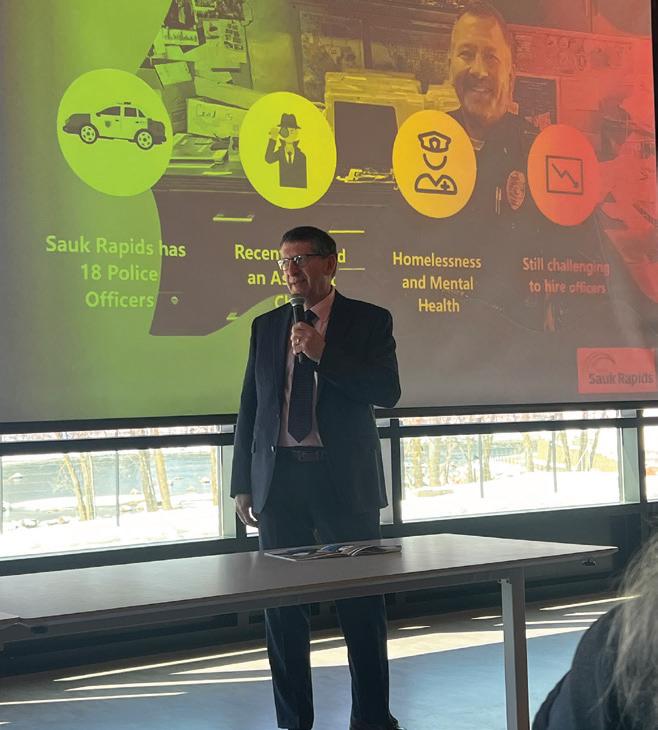
Left: Waite Park State of the City AddressCity Administrator Shaunna Johnson; Above: St. Cloud State of the City AddressMayor Dave Kleis
tons of asphalt to fill potholes.
The city has identified the need for a more walkable, connected downtown. It asked for $100 million in bonding from the state, but since a bonding bill was not passed during the 2024 session, the future of that project is on hold.
WAITE PARK
The City of Waite Park emphasized development, public safety, entertainment and transportation as priorities.
Once again, the Ledge Amphitheater was a highlight for the City of Waite Park and for the region. Since opening in July 2021, there have been over 100,000 visitors to The Ledge, resulting in a $6 million annual economic impact on the region.
“By prioritizing entertainment options, we enhance our city’s attractiveness to residents, tourists and businesses alike, driving investment into our community,” according to Shaunna Johnson, Waite Park city administrator. They anticipate over 50,000 visitors in 2024.
Waite Park entered into joint-powers agreements with Stearns County for EMS, and the St. Cloud Fire Department for fire services. In addition, Waite Park Police Chief Anthony Reznicek outlined seven public safety priorities:
Sauk Rapids State of the City AddressMayor Kurt Hunstiger
1 The Community Outpost
2 Common Language Barriers
3 Inventory of the Existing Transportation Network Options and Resources
4 Community Engagement Unit
5 Public Safety Facility
6 Community Collaboration for Mental Illness and Chemical Dependency
7 A Fire Study
Other highlights:
The city approved the construction of a 48-unit apartment project near the Sauk River that will break ground in 2025.
The city is assessing options for 10th Ave. S from Division Street to Parkway Drive to make it safer and more pedestrian-friendly.
The Sunwood Park area is scheduled for repaving.
In 2022, a higher-thanacceptable level of per- and polyfluoroalkyl substances (PFAS) was detected in the Waite Park drinking water supply. City officials are working with the Minnesota Department of Health to develop a treatment plan. Under current regulations, they have five years to correct the issue.


Emily Bertram is director of marketing and communications at the St. Cloud Area Chamber of Commerce and editor of Business Central Magazine.

THE
TROUBLE WITH BUSINESS
Flexible Futures
From fractional roles to full-time flexibility, the gig economy is changing how we work.
By Ari Kaufman


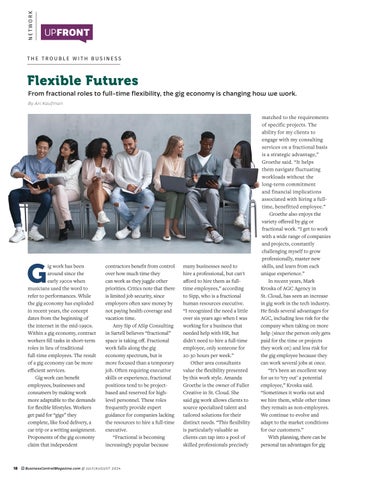
Gig work has been around since the early 1900s when musicians used the word to refer to performances. While the gig economy has exploded in recent years, the concept dates from the beginning of the internet in the mid-1990s. Within a gig economy, contract workers fill tasks in short-term roles in lieu of traditional full-time employees. The result of a gig economy can be more efficient services.
Gig work can benefit employees, businesses and consumers by making work more adaptable to the demands for flexible lifestyles. Workers get paid for “gigs” they complete, like food delivery, a car trip or a writing assignment. Proponents of the gig economy claim that independent
contractors benefit from control over how much time they can work as they juggle other priorities. Critics note that there is limited job security, since employers often save money by not paying health coverage and vacation time.
Amy Sip of ASip Consulting in Sartell believes “fractional” space is taking off. Fractional work falls along the gig economy spectrum, but is more focused than a temporary job. Often requiring executive skills or experience, fractional positions tend to be projectbased and reserved for highlevel personnel. These roles frequently provide expert guidance for companies lacking the resources to hire a full-time executive.
“Fractional is becoming increasingly popular because
many businesses need to hire a professional, but can't afford to hire them as fulltime employees,” according to Sipp, who is a fractional human resources executive.
“I recognized the need a little over six years ago when I was working for a business that needed help with HR, but didn't need to hire a full-time employee, only someone for 20-30 hours per week.”
Other area consultants value the flexibility presented by this work style. Amanda Groethe is the owner of Fuller Creative in St. Cloud. She said gig work allows clients to source specialized talent and tailored solutions for their distinct needs. “This flexibility is particularly valuable as clients can tap into a pool of skilled professionals precisely

matched to the requirements of specific projects. The ability for my clients to engage with my consulting services on a fractional basis is a strategic advantage,” Groethe said. “It helps them navigate fluctuating workloads without the long-term commitment and financial implications associated with hiring a fulltime, benefitted employee.”
Groethe also enjoys the variety offered by gig or fractional work. “I get to work with a wide range of companies and projects, constantly challenging myself to grow professionally, master new skills, and learn from each unique experience.”
In recent years, Mark Kroska of AGC Agency in St. Cloud, has seen an increase in gig work in the tech industry. He finds several advantages for AGC, including less risk for the company when taking on more help (since the person only gets paid for the time or projects they work on) and less risk for the gig employee because they can work several jobs at once.
“It’s been an excellent way for us to ‘try out’ a potential employee,” Kroska said. “Sometimes it works out and we hire them, while other times they remain as non-employees. We continue to evolve and adapt to the market conditions for our customers.”
With planning, there can be personal tax advantages for gig
workers, including expenses like cell phone use, mileage, tools, and more that are part of the job and may be eligible for certain IRS deductions. On the flip side, the same worker must plan for income taxes, as well as other tax implications, since gig employees don’t have any withholdings from pay.
“We watch industry trends and legislation for awareness and compliance,” Kroska said. “Overall, the gig economy is a positive force and is welcomed and needed to help cover gaps of skills.”
IN THE NEWS
The Ruling on Fair Labor
In January 2024, the U.S. Department of Labor announced its final ruling on classifying workers as employees or independent contractors under the Fair Labor Standards Act. This new ruling sought to combat employee misclassification, which impacts workers’ compensation. The rule addresses six factors that guide the analysis of a worker’s relationship with an employer. They are:
Any opportunity for profit or loss a worker might have, based on managerial skill
Whether a worker uses specialized skills to perform work requiring business-like initiative
Whether the work the person does is essential to the employer’s business
A former schoolteacher and historian, Ari Kaufman has worked as a journalist in various roles since 2006. He has published articles in a dozen newspapers and written three books.
The degree of permanence of the work relationship
The degree of control an employer has over the person’s work
The financial stake and nature of any resources a worker has invested in the work
Under this ruling, some workers who previously existed within the gig space may now be classified as employees. The rule went into effect in March 2024.
To learn more about this ruling, visit BusinessCentralMagazine.com.


Grow! Network! Profit!
The Chamber’s annual Business Awards Luncheon recognizes the businesses that are making an impact in Central Minn. Photos by Jeff Yapuncich, YuppyPhoto

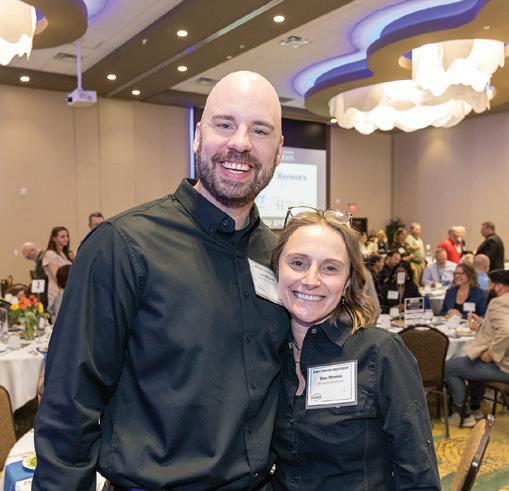


Jill Magelssen, Express Employment Professionals, 2024 Women in Business Champion
Sarah Dean, Central MN CouncilScouts BSA (L); Brad Hoelscher, Gallagher Insurance; and Caitlin Heglund, Kyle Hedtke State Farm
Jeremy Salzbrun, H&S Heating, 2024 Small Business of the Year
Rich & Jodi Erkens, Audio Video Extremes, 2023 St. Cloud Area Small Business Owners of the Year (L); and Paula Capes, Falcon National Bank
Jim, Andy and Dave Jacobs, Jacobs Financial (L); Jeremy and Emily Salzbrun, H&S Heating; and Jill Magelssen, Express Employment Professionals
Emily Salzbrun and her daughter Isabelle, H&S Heating, 2024 Small Business of the Year
Jay & Tina Mrozek, Blacklight Adventures, 2023 St. Cloud Area Emerging Entrepreneurs
Cheryl Hochhalter, Jacobs Financial and Pastor John Jose, Joy Christian Center


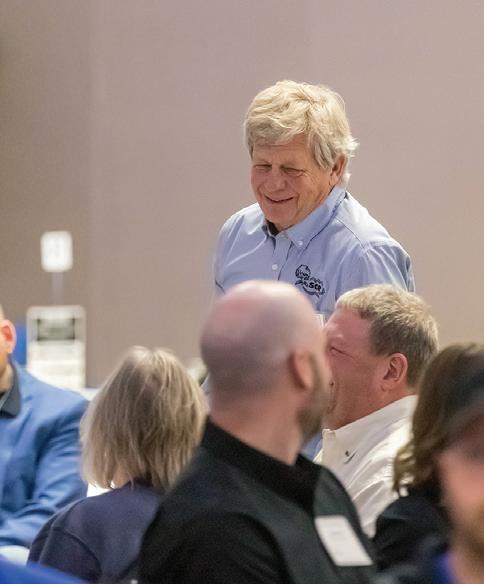


Susan Dean, Newcomer Services and Shelvin Dean, St. Cloud Mortgage
Ron Brandenburg, Quinlivan & Hughes, P.A. (L); Paul Radeke, Creative Planning; and John Herges, Falcon National Bank
Rudy Brambrink, Royal Renovations (L); Caitlin Heglund, Kyle Hedtke State Farm; Patrick Hollerman, InteleCONNECT; Dan Kurowski, Central MN Habitat for Humanity; Chad Johnson, Catholic Charities; Chad Bouley, Central MN Habitat for Humanity; Wanda Schroeder and Nikki Juntunen, Central MN Builders Association; and Jerrid Fisher, Royal Renovations
Tom Bruce (L), Brian McGlynn, Geoff Delp, Steve Nelson, Christine Huston, Matt Knutson and Ron Molitor, Rice Companies
Gary Marsden, Marco (retired), 2000 Entrepreneurial Success Award recipient
Roger Bechtold, American Door Works, 1994 Small Business Owner of the Year
Melinda Tamm, Ms. Melinda's Dance Studio, 2020 Women in Business Champion
Mike Fitch, SCR, 1997 Small Business Owner of the Year
Larry Logeman, Executive Express, 2015 Small Business Owner of the Year
Julie Braun, Smart Organizing Solutions (L); Bri Torborg and Alexis Moonen, Falcon National Bank
Dave Jacobs (L), Jim Jacobs and Andy Jacobs, Jacobs Financial, 2024 Family-Owned Business of the Year
BUSINESS TOOLS
MANAGEMENT TOOLKIT
Beyond the Basics
Crafting a competitive and unique benefits package can boost recruitment and retention.
By Stacey Seeger


Are you struggling to find employees in an intense hiring market? Do you need to offer competitive benefits to recruit new candidates and retain your top talent? You are not alone.
Navigating what you need to offer, can offer, and should offer can be an overwhelming task – but it’s

Contributor
an important one. Benefits are a key part of your employees’ compensation package and can be a deciding factor for whether potential employees accept a job offer.
First, start with the required benefits. By law, employers are required to offer a number of benefits, such as minimum wage,
Stacey Seeger is a benefits manager at Pro Resources, proresourceshr.com
social security, Medicare, workers’ compensation, and unemployment insurance. Though these seem like the basics, they are in fact considered benefits, as they act as a safeguard for employees. Once you have the foundation of legally required benefits, you can begin to build.
Optional benefits can go many different directions depending on the additional wants and needs of your employees. If you are unsure what to offer, a simple survey asking employees to rate the value of a list of benefits you can provide will help give you some direction.
More traditional optional benefits include health, dental and vision insurance; retirement plans; paid time off; holiday pay; and tuition assistance. In an attempt to be more competitive, employers recently began including free gym memberships, day care services, unlimited vacations, and company retreats/ bonding events as benefits.
You don’t need to break the bank to create a desirable benefits package for your employees. Other opportunities could include flexible hours, work-from-home opportunities, unpaid time off, and employee discounts.
For small businesses with few to no people dedicated to
human resource duties, benefits can be overwhelming. Some small businesses choose to partner with a Professional Employer Organization (PEO) to gain buying power when it comes to benefits. PEOs leverage the size of their entire book of business to negotiate competitive benefits at nearly unbeatable prices.
Beyond the actual structure of the benefits and cost, a proper PEO will also provide all administration and compliance requirements on the plans. PEOs will be the experts of the plans, allowing you to focus on the core of your business and what is driving your revenue. In partnership with a PEO, you gain access to experts in the field keeping up to date with all recent legislative updates, as well as gaining access to a robust technology platform for benefits access. By bringing big business benefits down to the small business/non-profit world, PEOs allow you to compete with any company.
No matter how you choose to manage your benefits package, the key lies in understanding what your employees value, and thinking creatively about how you can offer unique solutions.


Brain Power Meets Tech Power
For those with diseases or conditions that limit their movement – such as amyotrophic lateral sclerosis (ALS) – there is hope on the horizon for a more independent lifestyle. Using a type of technology called brain-computer interface and an implant in the brain, ALS patients are able to communicate by sending their thoughts to a computer system. Biotech company Synchron’s brain implant, called a Stentrode, consists of a stent with electrode sensors that can detect electrical brain activity. Syncron has conducted human trials with this technology, and participants are using it to respond to questions, alert caregivers, and may one day operate robotics to help with basic tasks. While there is a long way to go before it’s mainstream, this trial gives hope to patients, and opens the horizons for further developments. Source: CNN.com

No Charge Zone
You can never be too sure about the security of anything, even when it comes to charging your phone. The FBI is urging consumers against using public phone charging stations to avoid cyber attacks on your devices. These sources can become compromised and open you up to a potentially malicious encounter. When in doubt, use your own cord and your own plug to power up in an electrical outlet instead of USB banks or shared power cords. Source: CNN.com
BRINGING YOU I.T. PEACE OF MIND BY SOLVING YOUR TECHNOLOGY NEEDS


Good For Business
Corporate volunteering has the power to create stronger companies.
By Mary Krippner

As local businesses are engaging in corporateled volunteer initiatives, the spotlight shines on the transformative power of giving back. Beyond the altruistic act itself, there are numerous compelling reasons why businesses should embrace employee volunteerism as a core component of their corporate cultures.
Since COVID-19, employee engagement has stood out as a

Contributor

actively participate in community service projects earn greater trust and loyalty from consumers. Studies show that a majority of consumers prefer to support socially-responsible brands, making corporate volunteering a strategic avenue for building brand awareness and credibility. By aligning their values with those of their customers, businesses can strengthen their market position and foster long-term relationships with stakeholders. Volunteering also serves as a valuable platform
only promotes work-life balance but also demonstrates the company’s commitment to social responsibility.
As businesses embark on their corporate volunteer journeys, collaboration with community organizations becomes essential. By partnering with local nonprofits and civic groups, companies can amplify their impact and address pressing social needs in their communities. Together, businesses and nonprofits can create lasting change that benefits the community as a whole.
Corporate volunteerism
Corporate volunteerism isn't just about charitable acts — it's about building stronger communities and businesses.
cornerstone of organizational success, and corporate volunteering offers a unique opportunity to foster it. Research indicates that employees who participate in volunteer activities demonstrate higher levels of engagement, teamwork, and productivity. By engaging in volunteer work together, colleagues forge stronger bonds, creating a more cohesive and motivated workforce.
In today's consumer-centric landscape, brand reputation is paramount. Companies that
Mary Krippner is the director of volunteer engagement at United Way of Central Minnesota, unitedwayhelps.org
for skill development. From hands-on tasks to soft skills like communication and problemsolving, volunteer opportunities offer employees a chance to expand their capabilities and grow professionally. By stepping outside their comfort zones and engaging in meaningful community work, employees gain valuable experiences that enrich their personal and professional lives.
Recognizing the benefits of employee volunteerism, an increasing number of companies are offering Volunteer Time Off (VTO) as part of their employee benefits package. This innovative approach not
isn’t just about charitable acts — it’s about building stronger communities and businesses. By embracing employee volunteerism as a core value, companies can cultivate a culture of giving that enriches the lives of employees and strengthens their connections to the communities they serve.
If you’re interested in discovering how you or your company can contribute to giving back, you can reach out to United Way of Central Minnesota. They’ll be delighted to provide you with more information and guide you through the various opportunities available for making a positive impact in the community.

NEWS
Where’s the Beef?
(It’s in the test tube.)
Imagine a world where your burger didn’t come from a cow. No, not vegetable-based, either. Real meat, just minus the livestock. Currently over 100 different startups are working towards this future in an effort to support sustainability and growing food demand. The process of “growing” the meat starts with harvesting cells, creating “cell lines,” a nutrient-rich broth bath, and eventually combining the cell lines with plant proteins, that are then pasteurized, and pressurized. Sounds delicious! The downsides: the final product is pretty spendy to create, and government regulations, along with general human hesitation, keep it from spreading globally. For now!
Source: AP News


Short, Sweet, Successful
Videos shorter than one minute can be a valuable tool in your marketing mix.
By Sam Kraulik

Short-form videos, bitesized and bingeable, serve to educate, entertain, and build brand awareness. The aim is frequent interaction to keep your brand top of mind. In a world of shortened attention spans, quick and digestible information is crucial on social media. To capture attention, content must be quick, useful, and exciting. This format is not only timeefficient, but also allows for

Contributor
Sam
Short form videos can be used in a variety of effective ways. The following ideas are great places to start as you explore short form videos in your marketing strategy.
1 Engagement
Short-form videos on social media provide a prime opportunity for elevated engagement. Encourage viewers to like, share, comment, or duet (react via video) your posts to expand your reach. This engagement not only connects you with your audience, but also provides valuable insights into their opinions and preferences.

2 Testimonials
creative and enjoyable content creation.
Producing short form video content within the social media editing platforms has never been easier. Before you start filming, take a moment to assess your goals, ensuring each video represents your business effectively. Whether you aim for increased engagement, heightened brand awareness, or driving traffic to your website, a strategic approach ensures purposeful content creation.
Use short-form videos of client/customer testimonials to showcase real-world success stories. Allow your customers to share their experiences and address ideas and questions regarding your products or services. This establishes social proof, which is a psychological phenomenon that says that people copy the actions of others to emulate behavior in certain situations. For example, if someone isn’t sure how to act in a new situation, they take on the actions of the people around them. Similarly, when people see reviews, recommendations or testimonials online, that helps them with a purchase decision because of social proof. This also strengthens your brand credibility.
3.Brand Awareness and Community Building
Snappy videos about your brand create excitement, increase awareness, and position you as an authoritative voice in the community. These content pieces offer a chance to showcase your products or services uniquely, standing out from your competition. Embrace trends, experiment, and have fun with your content.
4 Drive Traffic
Social media serves as a starting point. Build trust by fostering engagement, ultimately directing consumers to your website for actions like filling out a form, booking a consultation, or making a purchase.
5 Continue to Use Assets
If you've worked with a video team before, repurpose that valuable footage. Capture your events, services, products, employees, and business space through professional videography. Don't let your video library go to waste; find creative ways to reuse it, ensuring it's resized for optimal platform compatibility.
If you’re looking for a team of professionals to produce video for you, choosing an agency for your video needs ensures strategic planning tailored to your goals.
Zero Likes, Zero Stress
There is infinite proof of the mental health damages of social media, from addiction to comparison, and isolation to cyberbullying. Much of that stress and anxiety stems from the desire to get more followers and engagement online. What if there was a network that eliminated that entirely? Maven (heymaven.com) is a new social platform that aims to be a healthier alternative. Backed by the founder of Twitter and the CEO of OpenAI, Maven analyzes users’ interests to curate a feed, and there are no followers. The more closely a piece of content appeals to a specific user’s interests, the higher probability it will show up. Without the constant battle for likes and follows, the outcome is – hopefully – more authentic and meaningful connection. And, of course, a lot less stress. Source: Wired.com


TOOLS
ECONOMY CENTRAL
A Woman’s Place
Are gender-based board quotas allowing us to break the glass ceiling?
By Edison Jensen and Lynn MacDonald

The 2023 Women in the Workplace report by multinational consulting firm McKinsey & Company reveals a historic high in women’s presence in the C-suite, with an increase from 17 to 28 percent since 2015. Despite this jump, an underrepresentation of women persists in corporate leadership positions in North American organizations, as reflected in the 276 U.S. and Canadian-based corporations cited in the report.
St. Catherine University produces an annual report that looks at representation of women in 78 large, publicly traded Minnesota-based companies. According to the report, published in Twin Cities Business Magazine, women
hold 22.7 percent of executive positions, a figure stagnant for four consecutive years and which falls below the 25 percent national average. Seventeen of the Minnesota companies have no women executives, with seven companies lacking a single woman executive officer over at least the last five years. This trend is exacerbated for BIPOC executives. BIPOC women represent only 2.2 percent of leadership roles in surveyed Minnesota companies, less than half the national average of 5 percent. Despite these challenges, potential solutions exist. Thorough review of promotion data by gender at each level and flexible work arrangements could help combat a lack of representation.
Beyond North America, similar challenges persist in corporate governance. In Europe, where women constitute 45 percent of the labor force, only 5.1 percent of CEOs were women in 2016, and just 23.3 percent of board members in large, publicly listed companies were women.
In 2003, Norway took a pioneering step to address gender disparities in corporate governance by introducing a gender-based quota, mandating 40 percent representation of each gender on the boards of public limited liability companies. While initially voluntary, lack of compliance led to its enforcement as a legal mandate in 2006. By 2008, Norwegian companies achieved significant compliance. Inspired by Norway’s success, other countries, including Belgium, France, Germany, Iceland, India, Israel, Italy, and Spain, have implemented similar reforms. The European Union (EU) further solidified this trend by passing a law in 2022 requiring corporate board gender balance by 2026. As of 2023, women constitute 33 percent of board members in the EU, with representation closer to 38 percent in countries with binding gender quotas.
Economic researchers are assessing the effectiveness and merit of gender-based corporate governance quotas. University of Chicago economics professor Marianne Bertrand and her team

studied whether Norway’s 40 percent mandate successfully reduced gender disparities in the corporate sector. Their data-driven results indicate that women who secured board positions experienced individual-specific gains, although these gains did not necessarily extend to women who did not receive board positions.
If discrimination or lack of networks are key factors in preventing women from reaching leadership positions, then quotas may be an important first step to disrupt those cycles. Bertrand and her team do caution that, if unqualified women end up getting appointed just to fill a quota, this could reinforce negative stereotypes. That said, their research shows evidence that the women filling board positions after the quota were consistently more qualified than their predecessors.
While quotas may serve as a foundational step, they might not constitute a comprehensive solution to these challenges. A multifaceted approach is imperative to address systemic inequities and foster inclusive environments conducive to women’s advancement in corporate leadership.
Edison Jensen is a master’s graduate of applied economics and Lynn MacDonald, Ph.D., is an associate professor of economics at St. Cloud State University.
INDICATORS & TRENDS
Compiled by Shelly Imdieke, St. Cloud Area Chamber of Commerce
Totals represent data
Residential Building Permits
6
Commercial Building Permits
6
Commercial Building Permits 6
$106,453,097
$75,948,608
$147,517,537
$215,772,443
Sales Closed in St. Cloud
$147,517,537
$1,738,973
$1,587,656
$1,420,811
DID YOU KNOW?
The Childcare Landscape
Alook at the childcare landscape in Minnesota sheds light on the challenges the industry faces. The childcare industry in Minnesota consists of approximately 9,300 early care and education (ECE) programs across the state with 40,000 educators, according to a 2023 report conducted by Wilder Research and summarized by the Minnesota Department of Employment and Economic Development. Programs include childcare centers, licensed family providers, early education programs, school districts and charter schools. Centers have an average of 14 staff, while school-based programs average 17 staff. Of the challenges that the childcare industry faces, burnout was a common experience for many. Staffing challenges and a lack of support lead to feeling overwhelmed. Financial stress was also often noted, especially in centers – intensified by a lack of health insurance. Source: MN DEED & Wilder Research


WOMEN IN BANKING





stcloudmn@Expresspros.com Expresspros.com/stcloudmn
Owners: Jill and David Magelssen
Ownership: 50/50 Business
MATCHING TALENTS, MEETING NEEDS
EXPRESS EMPLOYMENT PROFESSIONALS OWNER JILL MAGELSSEN
BUILDS CAREERS AND COMMUNITY.
STORY BY JEANINE NISTLER // PHOTOGRAPHY BY SWITCHBOARD
Jill Magelssen exudes energy and enthusiasm – for her business, her community, and her family. She is competent, confident, and committed, not to mention great at managing her time.
Magelssen and her husband, David, co-own Express Employment Professionals. The company works with job seekers to help them find the right fit and provides staffing for employers. She runs that show while he runs Northern Management, his property management company.
Magelssen got her first leadership experience as a child. Her mother was hospitalized a lot. “I had to kind of step into the role of taking care of the house and my sisters after school. So, early on, being the caretaker of a sort became my role,” she said.
She knew as a university student at Illinois State in the late 1970s that she wanted a career that involved organizational psychology, even though she wasn’t 100 percent sure what that would look like. Without an internship or shadowing opportunity, Magelssen said, “you had to kind of read the book and then figure, well, this sounds like fun.” Her hunch proved to be right.
She recalls being confident as she went to work for an Illinois bank upon graduation. “I thought I was all that and a bag of chips. I had my degree. I was all set.” After a couple of months on the job, Magelssen was called into a conference room. She expected praise, but “they basically told me that they weren’t sure they were going to keep me. They needed me to make sure I was very focused and staying on track.

PERSONAL PROFILE
JILL MAGELSSEN
Age: 66
Title/role:
Owner, Member of the Society for Human Resource Management
– Senior Certified Professional
Hometown: Chicago, Illinois
Education: Illinois State University
Work History:
Assistant to controller at an Illinois bank, Manpower for 19 years, two years in human resources at Unique Screen Media
Family: Husband David, two adult children Mark (married
to Jess, daughter Amelia), Jessica (fiancé Justis, two sons: Jaxon and Ryker)
Hobbies: Spending time with family and friends, travel, crafting, music
Advice to other women in business: A mentor is a great resource to help navigate business.
Best advice you’ve received and who gave it to you: “Change is the only constant you can count on, be adaptable to change.” – My father
Fun fact: My daughter and daughter-in-law are both Jess Magelssen
That was probably the first time I’d ever had feedback on a job – and I took it very seriously.”
ALL ABOARD
Magelssen stayed in that job for a couple of years before moving to Central Minnesota, where she sought work through Manpower. She was placed as a temporary associate at DeZurik in Sartell, where she worked as an assistant to the plant manager while the permanent assistant was away. When she finished that assignment, Manpower offered Magelssen a job in its office.
“I knew that I could interview people. That was not going to be the problem,” Magelssen said. “But part of the role was actually going to a client’s site and meeting with the client. I was scared to death, scared to death. I wasn’t sure I would like that part. … That, eventually, became the part I love best.”
Magelssen met David when he visited Manpower looking for a temporary associate. They got to know each other through business, started dating, eventually married, and had two children just 19 months apart.
Magelssen was promoted to area manager with responsibility for seven offices in five states, including Manpower offices within client sites. With two children in grade school and a husband with a busy career, Magelssen said, “it was hard to be a working mom and a traveling mom.”
At the same time, Magelssen was not pleased with Manpower corporate changes that reduced her autonomy as a manager. She stepped away and went to work for a small startup in Waite Park, called Unique Screen Media, that asked whether she could hire 120 traveling sales representatives. “I said, ‘Sure!’” The company was “moving in a lot of directions
"JILL HAS THAT SECRET SAUCE THAT COMBINES AN EFFECTIVE BUSINESS OWNER WITH AN AMAZING AND DEDICATED VOLUNTEER, ALL WRAPPED UP IN JUST A WONDERFUL HUMAN BEING."
—TROY FRITZ, ASSOCIATE VICE PRESIDENT, INSTITUTIONAL ADVANCEMENT, SAINT JOHN’S UNIVERSITY
very quickly. My charge was to start an HR department. I found I had an opportunity to use all kinds of talents that weren’t necessarily in my wheelhouse.” When asked to take on an unfamiliar task, she would say, “Well, sure I can. It’s not what I do best, but I can. Yeah. Okay.”
The job, Magelssen said, “was fun and fast-paced.”
LEAVING THE STATION
While working at Unique Screen Media, she had maintained contacts in the staffing world, and soon Express Employment Professionals asked whether Magelssen would consider leaving her job to become a franchise sales representative. She replied that she and her family were not willing to relocate, but she’d be interested if the St. Cloud Express office ever came on the market.
“Ironically enough, within the next year, it did come on the market. My husband, who was very much an advocate of owning your own business, encouraged me that we should take that on,” she said.
And that’s just what they did in 2005.
“The Express folks said to me, ‘This is a different model than what you know.’ And I said, ‘Staffing? How hard can it be?’ Well, I learned it was very different,” Magelssen said. “I needed to be a business owner. Sometimes I would go to them and say, ‘Well, what do we do about the use of this tool or that?’ And they would come back and say, ‘You get to decide.’ That was a little foreign to me.”
Magelssen spent the first year trying to understand the business model and learning how to serve her clients. She clearly figured it out, given the franchise’s growth and the awards that she and her team have won over the past 19 years. “I think the reason I’m still in this industry, and I have the passion I have
for it, is because no two days are ever the same. And I mean that emphatically,” Magelssen said. “In my business day, I work on my business and in my business.”
She explained that by working on her business, she means dedicating time to visioning, strategizing, and planning for what they’re going to do and when they need to do it.
“My role, I think, is to be as strategic as I can to help make sure that we’re using the right tools and we’re focusing our efforts where we can to meet the needs of our clients,” Magelssen said. “Our mission and our goals are tied to helping our clients find the best people and helping people find the best jobs.”
Magelssen’s nearly two decades with Express have not been without challenges.
Challenge: “I faced a client quickly filing bankruptcy, announced on the front page of the local newspaper, identifying us as one of the debtors, while I was getting ready to go on stage and host a leadership breakfast for community members,” Magelssen said. “The next several months were the hardest I had to navigate, and fortunately survive. That was second to buying a new business and a recession that quickly followed. I do believe what doesn’t take you can make you stronger!”
Challenge: Although Express audits the franchise twice a year, a couple of years ago, Magelssen said, “my number came up” for an outside audit. “It’s kind of like somebody looking in your sock drawer. I mean, it was down through the nitty-gritty. … We passed with flying colors, which I’m quite proud of, but that was a little nerve-wracking.”
Challenge: The 2009 economic downturn hit the Express franchise, prompting Jill to trim the size of her staff. And the pandemic presented challenges to Express, just as it did for virtually every business everywhere.
BUSINESS TIMELINE
2005 /Jill and David Magelssen buy a resale Express Professional Services office in east St. Cloud. The office staff consists of Jill and two temporary associates.
2006 /Magelssen hires a business development representative.
2008 /The Express office moves to 1410 West Saint Germain Street.
2009 /The recession prompts Magelssen to reduce staff to one part-time employee. She stays in contact with clients and community members, assisting displaced workers with resumes.
2010 /Express supplies more than 100 workers for the local air show; partners with a client, providing on-site interviews and hiring.
2011 /Express adds another large account; the business has 10 employees.

2012 /Express has $5 million in annual sales; the company adds three large client accounts; with 11 employees Express moves to a larger office space in the same complex.
2014 /Express hosts the Leadership Simulcast Comm unity event, the morning of which news of a client’s bankruptcy appears on the front page of the newspaper. “That was a tough year!” Magelssen recalls.

No matter the ups and downs, Magelssen said, it’s important to communicate regularly and openly with her team, to give them regular feedback, to praise what they are doing well and tweak anything that needs adjustment “before it goes off the rails.”
THAT’S THE TICKET
For one hour every Friday, the office is closed to the public “to have a team meeting that gives us a chance to share, to address training, to discuss procedural changes that are happening,” Magelssen said. “Our business is very much impacted by the laws and regulations in the world of employment. Making sure that we’re using the right forms and we’re using them correctly and we’re following the right procedures, and we are using the right verbiage is really critical to our success.”
FAMILY FOCUSED
Jill's husband David, son Mark, daughter Jessica, Jill and daughter-in-law Jess,
THE SUCCESS EXPRESS
AThe meeting, she said, “also gives me an opportunity to share what I’m hearing in the community. What are the business trends? What are some of my clients’ biggest challenges? Are there things that we can do in tweaking our own level of service that can enhance our service to our clients? And sometimes it’s answering questions about something that’s come up that could help someone do their job the best they can. I think information is really critical. For us to come together and talk through these things makes it a better, more cohesive environment and culture.”
It’s vital that she understands her clients’ workplace cultures, Magelssen said. “I know that my client might have a need and I can identify probably four or five candidates that might meet their need, but maybe only one or two will fit their culture. If I can get the cultural fit with the skills and abilities that are needed, that’s going to make my client happier. That’s going to work better for the candidate being placed. So, getting to know the culture and how they do their business is pivotal to our success.”
fter serving nearly two decades in corporate staffing, in 2005 Jill Magelssen knew it was time for a change. Encouraged by her husband who also owns a business, Magelssen jumped on the opportunity to purchase a resale of an Express Employment Professionals franchise in St. Cloud in 2005. Today, Express has six full-time employees and one part-time employee, and Magelssen often partners with local colleges to bring in interns. Magelssen is a member of the St. Cloud Rotary and chair of the Summertime by George committee. She has been a longtime member of the Central MN Council of Boy Scouts board and served as the first female board chair. She serves on the Career Solutions board, St. Cloud State Herberger Business School Advisory Council and is a member of the Forum of Executive Women. She has held many volunteer roles with the St. Cloud Area Chamber of Commerce, and she is the event organizer of Dinner with Santa, a senior citizen event hosted annually.
As an expert in the human resources industry in Central Minnesota, Magelssen impacts the people around her every day. She leads by example, giving graciously of her time and talent and empowering her staff and associates to work hard, care about others, and build each other up. All of this, plus her commitment to the community, has earned her the 2024 Business Central Mark of Excellence – Women in Business Champion award presented by the St. Cloud Area Chamber of Commerce.
2024 BUSINESS CENTRAL MARK OF EXCELLENCE – WOMEN IN BUSINESS CHAMPION AWARD WINNER
Creative problem-solving is also crucial, she said. “Creativity happens when a client needs 100 people a day for a three-day project, or 375 for a seasonal period. In our world success happens when you can quickly think outside the box and use resources effectively to meet client needs.”
In her early days with Express Employment Professionals, Magelssen jumped into involvement with the Chamber of Commerce and local nonprofit organizations. She loved her time as a Chamber Top Hatter, when she would hop into a car with a couple of others to visit new businesses to sell them on Chamber membership. “It was really fun because I would learn about the things in the community that had happened or had been here. It was a great couple of hours twice a month with some really fun people,” she said.
Magelssen is a committed community volunteer. “I lead committees, take leadership roles where they make sense, or I think it’s a good fit. … I think it’s just looking at how I can make a difference and if I can be of help. … I don’t take on opportunities to give back because I feel it’s something that I have to do. It’s because I want to do it and I want to do the best I can.”
As a business owner, she has to be mindful of her volunteer commitments, Magelssen said. “I have to, because you could absolutely give all of your time to the community. It has to make sense for my business, too, so I tend to connect with opportunities within the community that can help me build and enhance relationships. People get to know you through rolling up your sleeves and working together. I’ve gotten to know some really fabulous people.”
One of the people Magelssen has gotten to know is Scott Jensen, general manager of Granterion in St. Cloud. “Jill gives a damn about her community,” Jensen said. “Some people say it and some people’s actions follow it. Her actions follow her words. She’s doing it because she believes in the programs she’s supporting.”
State Rep. Bernie Perryman, who owns Batteries Plus Bulbs, knows Magelssen primarily through Rotary. They work together every Wednesday for 10 weeks each summer, operating Eastman Tavern at Summertime by
George. “Jill’s involvement and engagement build her skills and understanding of what is needed in our community. She has gained a lot of insights about the challenges and opportunities facing our area,” Perryman said. “Jill is an inwardly sound kind of person. She is collaborative, encourages open communication, and builds consensus.”
ON THE RIGHT TRACK
Express encourages ongoing training and professional development. “I’m an Express certified professional, but in order to maintain that certification, I have to go through training opportunities every year with Express, which I do,” Magelssen said.
In 2015, she was accepted into Express Leadership Academy for owners. “I think it was a game changer from the standpoint that it took my leadership skills and abilities and helped me understand how to fine-tune those and enhance myself as a leader,” she said. “It was a two-year program. I would go once a year to Oklahoma with my cohorts and then I would be on a monthly call.”
She and her accountability partner have stayed in touch. They talk monthly “about the goals that we had committed to for that past month, and we hold each other’s feet to the fire,” she explained. “His leadership style and mine are very different, which makes the call good because you’re not talking to someone exactly like you.”
What lies ahead for Magelssen and Express? “The model we have for our business is unique,” Magelssen said. “I am a local business owner with corporate support for important things like risk management, safety, legal, HR laws and have such resources readily available for me and my clients. I make decisions for my business using tools available. This business has a lot of opportunities to continue to adjust, looking at local market needs and what our clients are doing.”
BUSINESS TIMELINE
2015 /Magelssen is president of St. Cloud Rotary; she is accepted into the two-year Express Leadership Academy.
2016 - 2021 /The St. Cloud franchise achieves the Express Circle of Excellence, based on sales performance, participation, and compliance.

2018 /The St. Cloud franchise hosts the Express Clydesdales, featuring them in two parades and a community event at Lake George.
2019 /Magelssen secures a partnership with a large client; the St. Cloud franchise receives the Express “Brand it Blue Award” for community service, providing $10,000 to area non-profits.
2020 /The pandemic closes the St. Cloud office; the franchise continues to provide associates to essential and non-essential businesses.
2021 / Magelssen opens Specialized Recruiting Group - Professional Services, with a dedicated recruiter.
Jeanine Nistler is a St. Cloud-based freelance writer whose career has included daily newspaper reporting and editing, as well as communications work in health care, higher education, and state government settings.
2022 / Magelssen diversifies the company’s client base; the St. Cloud franchise achieves Bronze Circle of Excellence.


SMART TOOLS for SMARTER TEAMS
When used properly, workplace personality tests can positively impact culture, teamwork, and your company’s bottom line.
By Randy Krebs


Looking to improve team dynamics or communication in your workplace? Need to address some office tensions? Improve retention? Grow your own leaders? Maybe grow your own leadership skills?
Oh, and tackle one, some, or all of these things while keeping your business humming?
While that may seem like a tall order, there are tools available that can help. From workplace personality profiles
to competency-based skill assessments, these types of tools – when administered by trained consultants who know your objectives – can make powerful, positive differences. Not just for individuals at any stage of their career, but for most any business or organization.
The keys are determining what exactly you want to achieve, selecting an appropriate tool (or model), and making the necessary investments to achieve your desired results.
WHAT’S OUT THERE?
Because workplace personality profiles and talent assessments have been around for decades, there is no shortage of models from which to choose. A few of the better known models include Myers-Briggs (MBTI), Emotional Intelligence Quotient (EQi 2.0), Gallup’s CliftonStrengths, DiSC, Hogan Assessments, BigFive, and Korn Ferry, but there are dozens more available.
In general, personality profiles tend to focus on characteristics and behaviors and how those show up in a workplace. Skill assessments are more tailored to a specific person, business or industry; they focus largely on skill development and competency.
“Because there is such a wide variety of assessments available, it’s important to understand what outcome you are trying to drive,” Jennifer Roelke said. Roelke is founder and coach
of Strategic People Consulting, based out of the greater St. Cloud and Brainerd areas. She notes that while some assessments are better for early-career professionals or employees, others are better for supervisory preparation or executive level leadership development. “There are also great options for team building,” she said. “It is critical to understand the outcomes the business or the person is looking for.”
That’s advice echoed by Kristen Miller, chief human resources officer for Blattner Company. In her 25-year HR career, she’s experienced a variety of models, from DiSC, to Korn
“Because there is such a wide variety of assessments available, it’s important to understand what outcome you are trying to drive.”
—Jennifer Roelke, founder and coach of Strategic People Consulting
pick must align to the values and behaviors that are most important to your business’s success,” Miller said. “Then it’s all about how you leverage that into your business. The key is the linkage of the tool to your business model.”
Katie Christensen, CEO and owner of Beekuba, a talent
15 years and focusing on it full-time for the past five years. In her experience, it’s not just about picking a tool, it’s about sticking with it.
“Whatever tool or assessment you choose, go deep and go long with it,” she said. “It really does matter for your people to understand it and use it so they benefit from it.” The point of these tools is to help people work better together, according

Growth Isn’t Accidental.
to Christensen. That’s only achievable when you are willing to put the time in.
HOW DO YOU DECIDE?
Like any important aspect of your business or career, the tool or model you select should be based on your needs and research, including talking to potential consultants about everything from their credentials to your commitment.


Cathy Juilfs, CEO and president of AIS Planning in St. Cloud, said about four years ago AIS changed from using a couple of personality-based models to the CliftonStrengths tool. “The personality models were great for individuals, but they did not really expand to our team,” she said. “We wanted something that would help us get to know each other better.” Julifs believes that CliftonStrengths has definitely done that for her team, deepening their respect, trust and even love for each other.
Juilfs and AIS Associate Adviser Sarah Noble credit Tara Gronhovd, CEO and founder of ALIGN, for making the transition successful. “When
you work with a consultant who cannot just explain it, but incorporate it into your business model, that’s where we’ve seen the difference,” Noble said.
From her perspective, Gronhovd believes it’s all about ongoing engagement. “A lot comes down to the facilitator, not the assessment. The facilitator must have experience and know how they are going to apply it,” she said. “Certification is probably important, but the expertise of the facilitator is more important.”
A SAMPLING OF EXPERIENCES
Across Central Minnesota, there is no shortage of individuals and organizations using a variety of
these tools to help themselves, their colleagues and their businesses.
Jodi Maus is the training and development manager for Magnifi Financial, which started using CliftonStrengths with its leaders about eight months ago. It has plans to eventually engage all 400 colleagues.
“At Magnifi, we’re looking for tools that become part of our culture. We help people learn their styles and strengths, recognize other people’s styles, and then determine how they can collaborate to have better communication. Employees want to be valued at work and when they are using their strengths, they are more engaged
and productive,” Maus said. “CliftonStrengths is helping with those aspects, which is helping us define our culture as a place where teamwork and collaboration are valued.”
Amy Sip of ASip Consulting recently began working with Roelke of Strategic People Consulting on the EQi 2.0 assessment to help develop her individual skills and potential.
“Everybody needs to continually invest in themselves, and this is well worth the time,” Sip said. “Jen is giving me tools and suggestions on strengthening my low areas. Her tips and strategies are very realistic for helping me grow myself and my business for the long term. I’ve
already made improvements in my assertiveness, which is something my assessment identified.”
Blattner’s Kristen Miller, likes Korn Ferry for assessing and developing leaders. “There are tools available that do a great job of linking to competency. They are focused on thinking holistically about assessment and development, not performance management,” Miller said. “Then, when you partner with a consultant who knows what your business wants, you can develop the individuals while helping the business achieve its goals.”
Juilfs selected CliftonStrengths for AIS Planning in part because it applies to the company’s entire staff. “Investing in
CliftonStrengths is an investment in every person,” she said. “Its differentiator is how it uses strengths to bring people together and improve teambuilding and engagement. We do Strengths training quarterly, plus we focus on it at least 10 minutes every week,” she said. “It’s important to make it part of your culture for everyone.”
TOP TIPS
While consultants usually offer a variety of tools, those interviewed for this story generally agree that what’s most important is choosing the right tool for the business and then using it successfully. That means knowing what you or your


business want to accomplish and committing the entire organization for the long term.
It is important to understand what you want your company and your employees to get out of a tool, both personally and professionally. “If you’re looking for a feel-good, teambuilding tool, there are a lot of assessment options,” ALIGN’s Gronhovd said. “If you don’t intend to use it again, those are fine choices. If you’re’ looking for longevity and impact in business, look for depth.”
No two tools are alike. Some are backed by more science and governance, and some not so much. “Be thoughtful about selecting an assessment and
then use it consistently with a population of similar employees so you can measure trends over time and understand how certain trends are helping or hurting your business and its outcomes,” Roelke said.
Perhaps most importantly, getting the buy-in of top leaders within an organization is crucial to the success of these tools. “Without their support,” Christensen said, “committed, individual leaders may have pockets of success, but organizational impact will be significantly limited.”
Randy Krebs is a freelance writer living in Sauk Rapids. He can be contacted at randykrebs@charter.net.

SPECIAL FOCUS
RESPECT. COURAGE. HUMILITY.
BY VICKI JOHNSON
THERE ARE LESSONS FOR WOMEN LEADERS TO LEARN AT EVERY STAGE OF THEIR CAREERS.
This year marks 50 years since the passage of the Equal Credit Opportunity Act (ECOA), allowing women to apply for lines of credit in their own name, regardless of their marital status. This act was instrumental in providing women with the means to take ownership of their own lives, and the ECOA became a critical component for women to enter business – in particular, business ownership.
In the decades since, the role women play in business has continued to grow. According
to the U.S. Small Business Administration, 38.3 percent of small businesses in the U.S. were women-owned in 2018. Closer to home, the Minnesota Chamber of Commerce estimates that women-owned businesses accounted for 35 percent of firms statewide in 2018.
Despite the growth in womenowned firms, gender gaps and perceptions of women in business have persisted, a fact that has not been lost on some of the newest (and youngest) leaders in Central Minnesota. Even with obstacles, new and experienced women in leadership roles are determined
to do what generations of women have and will continue to do –show up and get the job done.
Lead with humility and empathy.
“People don’t listen to us because they think we are not good communicators.”
— GRETA SHOFNER, 16, AVON
“It takes a certain amount of humility to be a leader,” Melissa Kelley said. “You need to be humble enough to learn. As much as I’ve learned now about the industry, I’m still just scratching the surface.”
Kelley was 14 when her dad first opened his jewelry store in 2000. Now, at 38, Kelley is the owner and president of J.F. Kruse Jewelers, a business she has successfully taken over from her father and run for the past decade. “I’ve really focused on creating a culture in which people want to be here,” she said. “And it takes intention. My goal is to make sure the staff feel loved and supported. It’s all about treating people with respect.”
That includes asking for guidance from others. “I never came into this position thinking I knew everything,” Kelley said. “I’ve
learned from my coworkers. I’ve read a lot of books on leadership, coaching, and managing. I’m part of an executive peer leadership group. You’ve just got to keep learning.”
Nothing quite tested her leadership skills like the pandemic. With J.F. Kruse Jewelers forced to close for three months at the onset of COVID, Kelley was pushed to find creative ways not only to lead her employees, but also to keep her business afloat.
“COVID was one of the most challenging things I’ve ever dealt with,” she said. “It pushed me. It tested my confidence and my work ethic. And it challenged me to lead and truly rise to the occasion. It took the grace of God to get up and keep going.”
“I think there is a misconception out there that women can’t do certain things, but the thing is, if you want it enough, you have to put in the work.”
—SARAH FITZGERALD, CO-OWNER OF FUZZY LOON DESIGNS
Quitting was just not an option for Kelley. “As a leader, you need to be able to find that inner strength, that courage, and adapt,” she said. “Leadership is not just a 9-to-5 thing. It’s something that you need to be willing to put in the work.”
Follow your passions with determination.
“I think the biggest challenge I’ve faced is definitely the lack of respect.”
— SAMANTHA PEARSON, 18, SAUK RAPIDS
“I think there is a misconception out there that women can’t do certain things,” Sarah Fitzgerald said. “But the thing is, if you want it enough, you have to put in the work.”
Fitzgerald never set out to become a business owner, but at 35 years old, the St. Cloud native has come to embrace her title. As co-owner of Fuzzy Loon Designs in Waite Park, Fitzgerald and her husband Dan have watched Sarah’s hobby explode into a
full-fledged enterprise over the past eight years.
Starting in her basement making custom gifts for family, friends and coworkers, Fitzgerald has grown Fuzzy Loon Designs into a 10,000-square-foot warehouse, complete with a retail shop and a massive social media presence.
Fuzzy Loon Designs specializes in customized items such as engraved tumblers and
Story continues on page 44
WOMEN TO WATCH: JANELLE KENDALL, ATHENA AWARD RECIPIENT
WOMEN’S EMPOWERMENT TO SOCIAL JUSTICE

By day she’s mentoring the next generation of legal professionals and by night she’s rocking out on her guitar to some of your favorite classic hits, this year’s ATHENA Award recipient is Janelle Kendall! The ATHENA Award is a lifetime achievement award recognizing exceptional women leaders who inspire others to achieve excellence in their professional and personal lives. Janelle was chosen for the ATHENA Award because of her dedication to social justice, professional empowerment of women and being an advocate for girls in our St. Cloud community. Janelle Kendall is currently the Stearns County Attorney, an elected position she’s held since 2003. Janelle is

the first woman to hold this position in Stearns County. Over the course of her career, she’s prioritized the safety of women and girls through numerous public safety initiatives, including the prosecution of violent offenders, implementation of an anti-bullying program in area schools as well as being instrumental in creating the Central Minnesota Child Advocacy Center. Janelle has been a professional mentor to countless women throughout her career. Currently, women make up over half of her staff. Janelle Kendall has been honored with the ATHENA Award at the Women’s Fund of the Central MN Community Foundation’s annual summer fundraiser, Dancing with our Stars Live!
Sponsored by

“It is so easy to get inside your own head, but know that you have a place, you belong, that you are there for a reason. And you probably are inspiring someone else to do the same.”
—RACHEL GRUBER, OWNER AND PRESIDENT OF DALE GRUBER CONSTRUCTION
custom t-shirts. However, the Waite Park business is best-known for its massive sticker inventory, processing between 20 and 50 sticker orders per day.
As a former corrections officer, Fitzgerald never thought she would be at the helm of a business – especially one that has gone viral on TikTok. Through the years, her passion for crafting, and desire to
share her talents with loved ones, transformed her into an entrepreneur. It was a risk she fully embraced in June 2023 after leaving her full-time job to pursue Fuzzy Loon Designs. “You have one life to live, and you need to live it how you want to,” she said.
Fitzgerald is no stranger to navigating career paths dominated by men. However,
she hopes that not only pursuing her passions, but turning those passions into a viable business will help encourage other women and girls to do what makes them happy. “Leaders are people that lead by example. They don’t ask others to do something they won’t do themselves,” Fitzgerald said. “They show up. They try. And they are inspiring.”
Believe in yourself.
“Guys think it is weird taking orders from a girl.”
—BROOKE ANDRUSCHAK, 16, RICE
“It is so easy to get inside your own head,” said Rachel Gruber. “But know that you have a place, you belong, that you are there for a reason. And you probably are inspiring someone else to do the same.”
Often when Gruber, 41, arrives at a job site, she is the only woman there. As difficult as being outnumbered can be, Gruber is determined to show the construction industry that she – and other women – belong at the table.
Story continues on page 46
LEADING WITH PURPOSE AT BLATTNER
Chanda
Lytton, Senior Director of Construction – Solar
Chanda Lytton might be able to operate everything from a backhoe to a sewing machine, but it’s her skills at bringing out the best in people that have brought her the most professional satisfaction.
Chanda Lytton, Senior Director of Construction – Solar, exemplifies the dynamic leadership and mentoring talent that drives innovation at Blattner, one of the nation’s leading utility-scale wind, solar and energy storage companies. With 23 years of experience, Chanda’s journey from a college geology enthusiast, and a construction engineering major, to a prominent female leader in the renewable energy construction industry is a testament to her resilience, compassion and commitment to excellence.

There are so many talented women at Blattner. Supporting each other through challenges and celebrating our successes is crucial. —CHANDA LYTTON “ “
communicative team environment.
Chanda manages multiple highperforming construction teams from coast to coast. Her leadership style is characterized by setting clear expectations and fostering a supporting,
“The true success of a project is when everyone can look back and realize we got through some real challenges safely and as a high functioning, communicative team,” she said.
Mentorship is a core aspect of Chanda’s leadership, especially when it comes to inspiring other women

in the industry. She acknowledges the unique challenges women face, especially balancing professional and personal commitments. “There are so many talented women at Blattner. Supporting each other through challenges and celebrating our successes is crucial,” she said.
Chanda loves teaching and motivating other rising stars at all levels at Blattner. “I enjoy having heartfelt conversations about overcoming hurdles, sharing the load and the importance of maintaining our focus on safety and our unique culture,” she said, “I’m here to help others succeed and find solutions so they can grow in their careers and become our future leaders.”
Chanda’s story is one of resilience, continuous learning and a deep commitment to mentoring others. Her leadership at Blattner not only drives the company’s success but also paves the way for future generations of women in construction. •
Blattner is Leading America to a Clean Energy Future. With more than 115 years of construction experience, the company is focused on renewable energy solutions and has installed more than 25% of America’s total solar and wind energy capacity. Blattner Company is the parent company of Blattner Energy and D.H. Blattner & Sons, of which all are members of the Quanta Services family of companies. Company headquarters are in Avon, Minnesota. 320-356-7351 // 392 County Road 50, Avon, MN 56310
As owner and president of Dale Gruber Construction, Gruber is responsible for running a general contracting company specializing in residential and commercial remodeling. She never saw herself ending up in the construction industry – much less owning the business. But after working for, and alongside her dad since 2008, it became clear this is what she was meant to do. Three years ago, she became the sole owner of the company.
“Honestly, I was expecting to have to prove my place in the industry more,” Gruber said. “But I’m finding out more clients want that diversity. There are not too many female-owned construction companies out there, so many people are excited to work with us.”
While Gruber said she occasionally will come across individuals who doubt her abilities, her mission is not to please everyone. “We are not going to be the company for everyone, and that’s okay,” Gruber said. “But my goal as an owner is to create an environment where everyone is respected, where my team knows they are supported, and they know that I have their best interest in mind.”
By staying true to herself and her values, Gruber is working to grow the company, as well as its presence in the community. More importantly, she is striving to encourage other women to take the road less traveled and explore a career in the trades.
“So far I feel I’ve made an impact on our team, our clients, the industry, and the community,” Gruber said. “My goal is to show people that women can be in this industry and can be successful. The road ahead may not be easy, but you’ve got to take those risks and follow whatever dream is calling you.”
Inspire the next generation.
Despite the challenges that come with being a business leader, Kelley, Fitzgerald, and Gruber embrace their leadership experiences in a way that has left an impact on their employees, businesses, and the community. They understand the important role they play in paving the way for the next generation of women leaders. Those girls are taking notice.
“I want to be able to let everyone in the community know that, regardless of your age, you can make a difference,” Sumaya Abdi, 16, of Waite Park said. “You shouldn’t let anything hold you back from reaching your goals. We’re the future, so don’t give up.”
WOMEN IN BUSINESS DIRECTORY
Women-owned businesses represent 39.1 percent of all businesses in the United States, according to the
MARKETING SOLUTIONS THAT GET RESULTS
Vicki Johnson is the senior transportation planner with the St. Cloud Area Planning Organization. Greta Shofner, Samantha Pearson, Brooke Andruschak and Sumaya Abdi are all members of the Central MN Council of the Boy Scouts of America.


With over 20 years of knowledge and experience, Shawna is helping businesses thrive in an everchanging


GROWING COMPANIES ENHANCING COMMUNITIES
Granite Partners is a private investment and holding company founded in 2002 in St. Cloud, Minnesota, with a mission to grow companies and create value for all stakeholders. We advance a culture of trust, innovation, and excellence as essential to 100-year sustainability, and we aspire to world-class wellbeing for everyone in the Granite community.


As we celebrate this remarkable milestone, we extend our deepest thanks to our valued customers, dedicated employees, and supportive community. Without you, this journey wouldn’t have been possible. Here’s to 30 years of growth, learning, and cherished connections.

YOUR DESTINATION FOR BATTERIES, PHONE & DEVICE REPAIR, KEY SERVICES & LIGHT BULBS AND FIXTURES.





PEOPLE &PLACES
Meet Kim Egan
CentraCare selected Kim Egan as the new chief human resources officer (CHRO). She comes to CentraCare with more than 20 years of health care experience at organizations including HealthPartners, Fairview Red Wing Health Services, and Mayo Clinic.
In her role at CentraCare, Egan will oversee CentraCare’s people strategy and ensure that strategically and operationally progressive approaches are identified that further advance workforce goals.
Egan received her bachelor’s degree in communications from Minnesota State University, Mankato and her MBA from Concordia University in St. Paul. She was most recently the vice president of human resources at HealthPartners for Regions Hospital and the St. Croix Valley Hospitals and Clinics.


NEW FACES
Customer Focused
Stearns Bank welcomes Johnson, Rivera


Marlice Johnson joins Stearns Bank as chief brand officer. Johnson will lead initiatives to strengthen Stearns Bank's brand identity and enhance customer engagement across all touchpoints.'
Maggie Rivera has assumed the role of vice president of corporate social responsibility and inclusion. Rivera will spearhead Stearns Bank's efforts to promote diversity, equity, and inclusion within its commercial operations.

Mueller joins Inventure Melissa Mueller joined Inventure Real Estate as a real estate advisor. She will help identify, analyze, and execute new real estate investment opportunities.

O’Connor joins St. Cloud Area Chamber Kristi O’Connor is the new director of finance and operations at the St. Cloud Area Chamber
NOTEWORTHY
of Commerce.
O’Connor will focus on all accounting duties for the Chamber as well as the Chamber’s Convention and Visitors Bureau. She will also play an integral role in the human resources operations of the whole organization. O’Connor comes to the Chamber with over 20 years of experience in leading finance and human resources teams for various operations.

Noble earns designation Sarah Noble, associate advisor with AIS Planning, earned the professional plan consultant designation, signifying expertise in designing, executing, and servicing retirement plans.
Lindholm joins CVB Maddy Lindholm joined the Chamber's Convention and Visitor's Bureau (CVB) as information specialist.
Deerwood promotes Peterson
Sidney Peterson has been promoted to retail manager at Deerwood Bank's Sartell location. Peterson served in a management role for retail organizations for three years before joining Deerwood Bank in 2023 as a teller. In her new role, she will assist customers with consumer banking services and financing needs, as well as manage the retail banking team at Deerwood Bank’s Sartell location.
Kim Egan
JAMEY AND JENNY MAURER
Driven to Help
Jamey and Jenny Maurer, owners of Advanced Repair, put their customers before their cars –and it has served them well.
By Emily Bertram
Why are you passionate about the auto industry?
Jamey: My grandpa and uncle worked their whole lives with cars. When my mom and stepdad got married, I went out and worked in the garage with him every night after school and all summer long. It’s in my blood.
Jenny: I spent many years bartending, which is how I grew my customer service skills. You have to be good at talking to people, and that’s a big part of this.
What were the early years like?
Jamey: When we bought the business, we went all in. Jenny quit her job, we invested our life savings, and that was it. I am technically the sole owner, but we both run it as owners.
Jenny: It was a struggle in the early days, but we had no choice but to keep moving forward.
Jamey: Every time we started to get ahead, something would break or go wrong. We were finally getting ahead, and then the 2008 Cash for Clunkers program came out and we would sit in the
PERSONAL PROFILES
Jenny Maurer
Hometown: St. Augusta, Minn.
Education: St. Cloud Tech High School
Past Work: Bartending locally, Gilleland Chevrolet Cadillac
window watching new cars go by. It was rough.
What was the turning point?
Jenny: Six months after moving to our current location in 2012, it was a night and day difference. We bought the building instead of renting and overhead was cut in half.
Jamey: We went to the NAPA Expo in 2015 and went to every possible class. We came back and started implementing what we learned, and it changed the way we did business. We learned that 70 percent or so of automotive decisions are made by women. We took steps to appeal more to the female consumer.
How have you set yourselves apart?
Jamey: We were named Minnesota’s first NAPA Gold Auto Care Center in 2019. It allows us to give a nationwide warranty, have access to trainings, and holds us to a higher standard. We also started an alliance with other NAPA centers in the area, called the Central MN Auto Care Association and together we

give back through scholarships to automotive students and partnerships with St. Cloud Technical & Community College.
Jenny: Two years ago, we started doing digital inspections. Our technicians take pictures and make notes through the program, then deliver a full digital estimate with photos and explanation to the customer. It’s creating customer loyalty with transparency.
What advice do you have for other business owners?
Jamey: Surround yourself with successful people and be a sponge. Everybody started somewhere. You can’t isolate yourself – be humble and willing to learn. Plus, we learned early on that this business is about customer relationships, not the cars. Focus on the people first, and the rest will come.
TIMELINE
2001
Jamey and Jenny Maurer purchase Advanced Repair at 2200 W Division Street, St. Cloud. The shop becomes a NAPA Auto Care Center.
2008
Federal “Cash for Clunkers” program and disruptive road construction hits Advanced Repair business hard.
2012
Advanced Repair moves to its current location at 27 16th Ave. S, St. Cloud.
2015
Jamey and Jenny attend the NAPA Expo, implementing significant changes to their business.
2019
Advanced Repair becomes Minnesota’s first Gold NAPA Auto Care Center.
2023
Advanced Repair is named a “Top 10 Auto Shop” in Minnesota by the Alliance of Automotive Service Providers.
Jamey Maurer
Hometown: Round Rock, Texas
Education: St. Cloud Technical and Community College
Past Work: St. Cloud Toyota, Gilleland Chevrolet Cadillac
Children: Adam, Josh and Megan and nine grandchildren
Hobbies: “We have finally reached a place where we are learning to get away and take long weekends. We have a few hot-rods for cruising around and a side-by-side that we like to take out on trails.”

