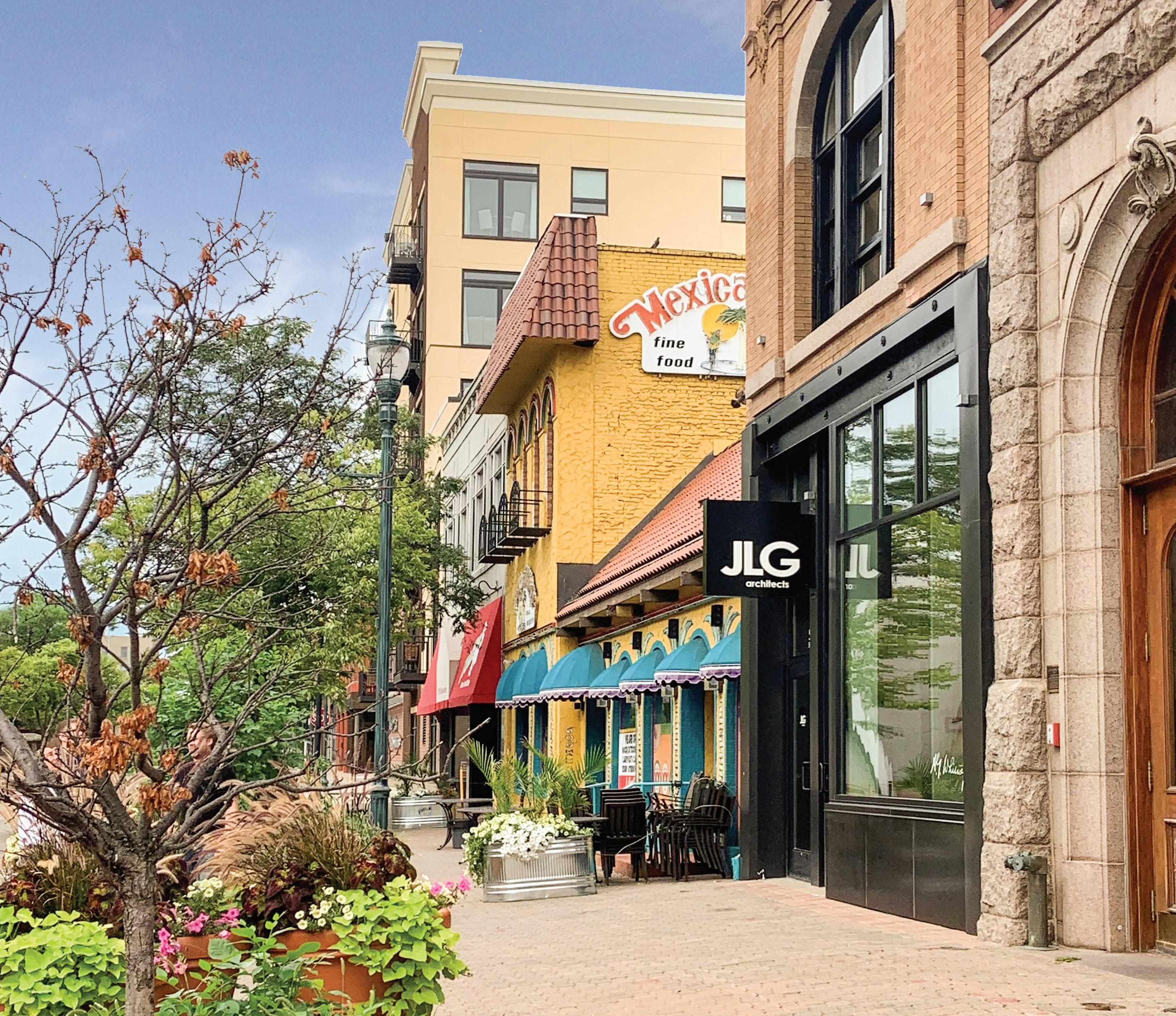
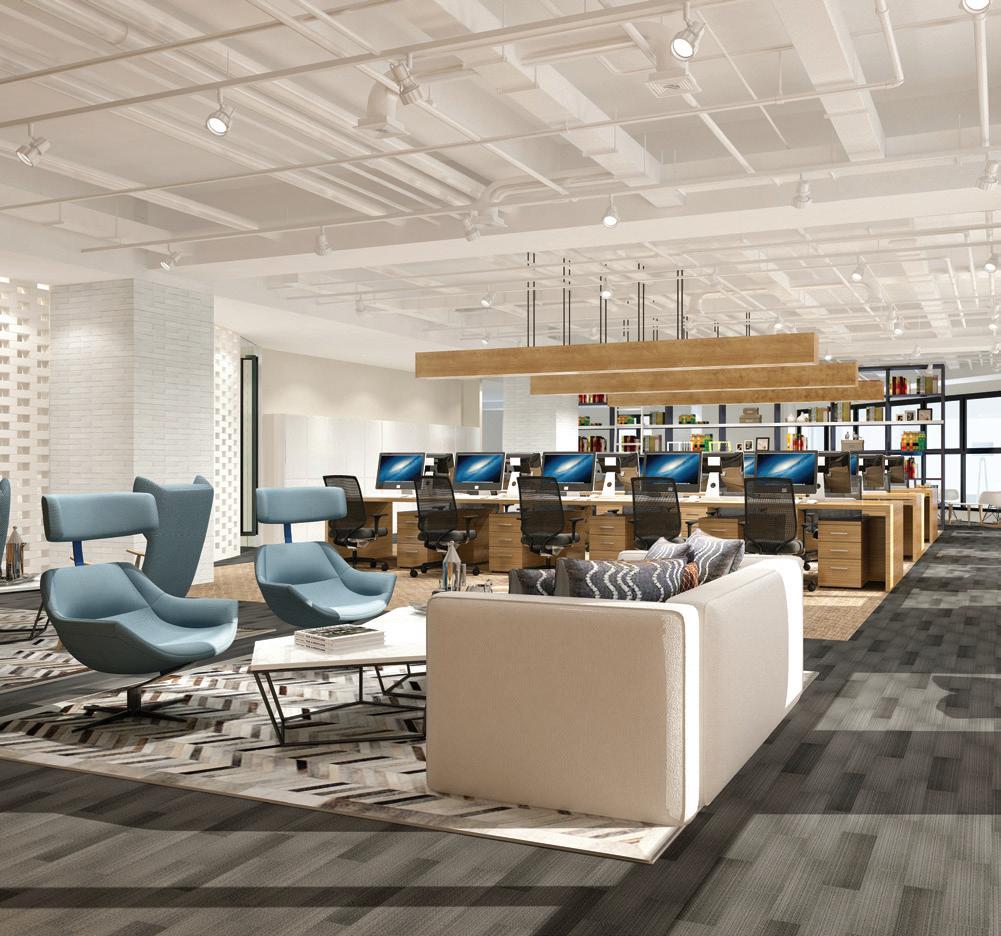
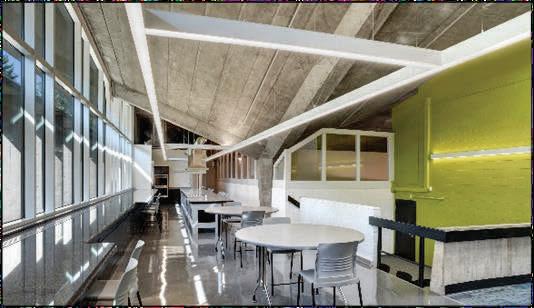
In Downtown St. Cloud, the sky’s the limit. JLG Architects has proudly been working alongside our community partners in St. Cloud since 2009, making our mark with award-winning work like St. Cloud State University’s Herb Brooks National Hockey Center, the River’s Edge Civic Center, Bremer Bank, and the restoration of First National Bank, which earned a Minnesota Preservation Impact Award. In 2019, we planted our roots even deeper, opening the doors to our downtown office to take on a landmark role in restoring vibrancy and safety to the heart, soul, and skyline of St. Cloud.
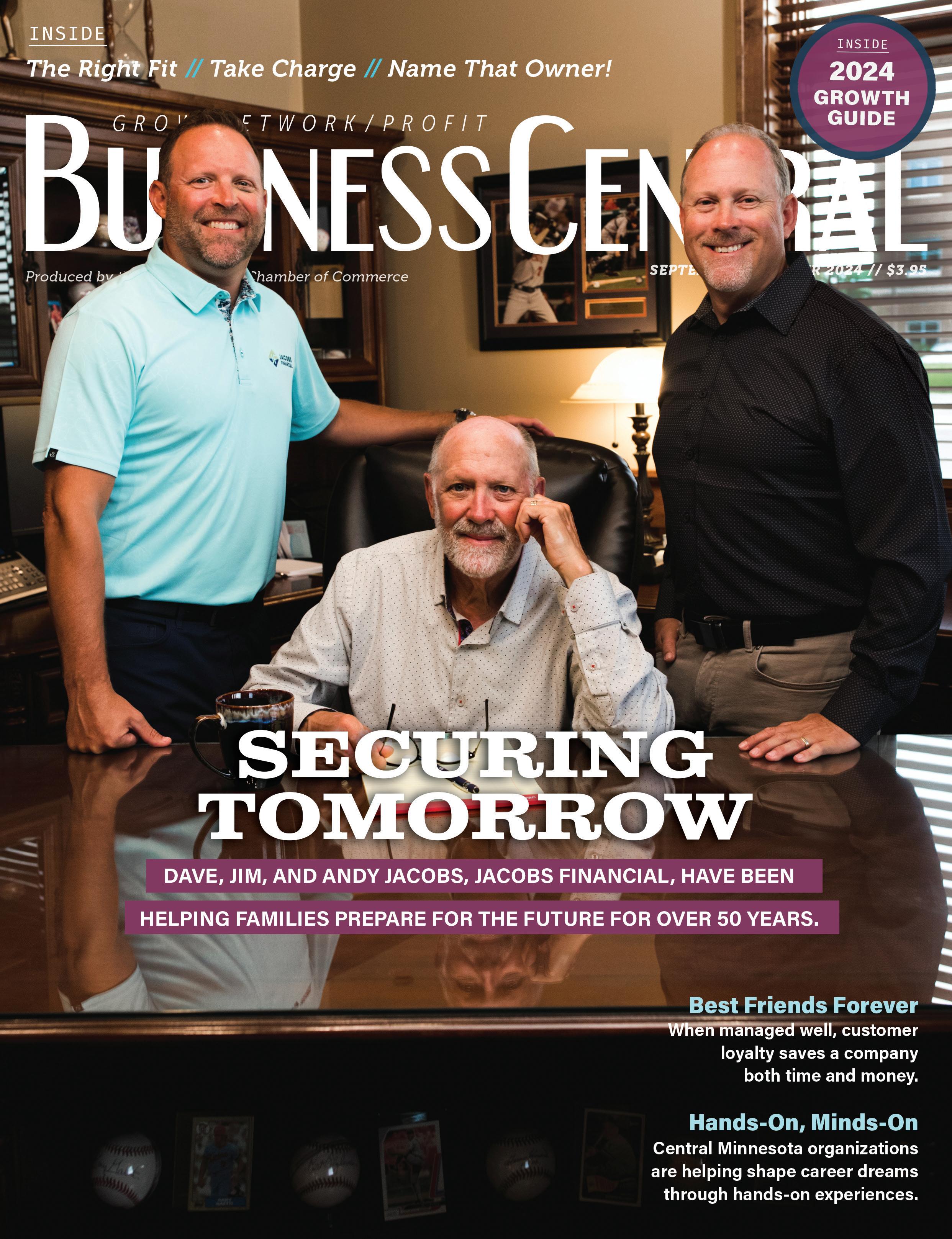
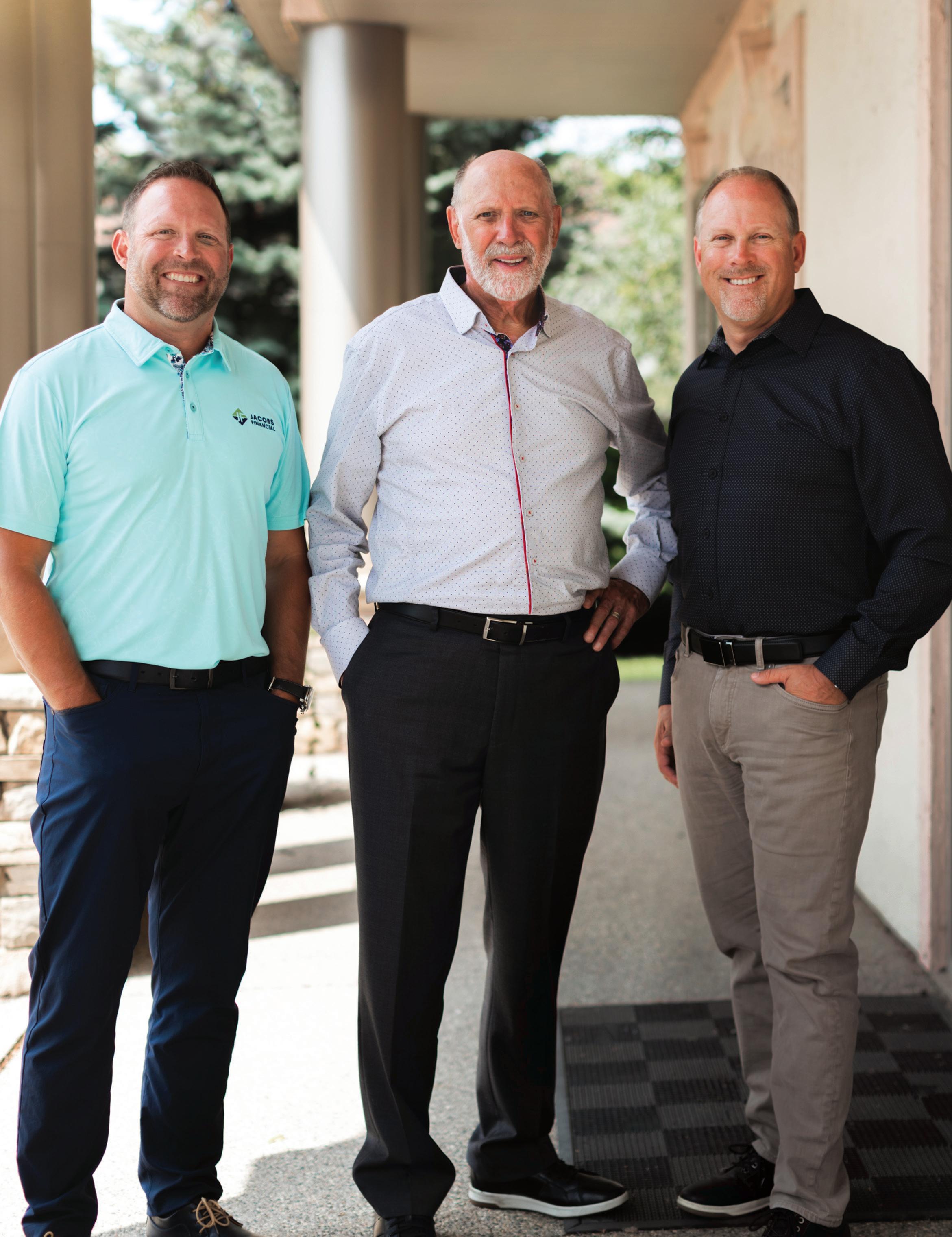
Dave, Jim, and Andy Jacobs, Jacobs Financial, have been helping families prepare for the
FOREVER When managed well, customer loyalty saves a company both time and money.
Central
organizations are helping shape career dreams through hands-on experiences.
Ray Herrington, Pioneer Place on Fifth Hudda Ibrahim, OneCommunity Alliance
Dave Kleis, Central Minnesota Driving Academy
Matt Laubach, West Bank
Laurie Putnam, St. Cloud School District 742
Paul Radeke, Creative Planning
Alex Schoephoester, Moss & Barnett
Brenda Sickler, Theisen Dental
Amy Sip, ASip Consulting
Melinda Tamm, Ms. Melinda’s Dance Studio
Melody Vachal, Arise Cares
Donella Westphal, Jules’ Bistro
Dr. Jason Woods, St. Cloud State University
and personal bests are unique to you. So, what’s your extreme? Our sports medicine experts will help you get there. For an appointment, call 320-253-2663. CentraCare.com/ortho
For the Love of the Game
Imet my husband in December of 2009. As we got to know each other, I learned that he played amateur baseball for the Spring Hill Chargers during the summer. “What a fun hobby,” I remember thinking. That mindset didn’t last long as I came to learn that “town ball” is not just a fun thing to do in the summer – it’s a way of life. Spring Hill, Minn. is a town of 84 people located at an intersection of county roads and farm fields. It is home to a church, an auto shop, two bars and a baseball field. Despite its minimal population, the town swells to well over two hundred people several Sundays throughout the summer, when the area comes out to watch Spring Hill Chargers baseball.
I met some of my best friends sitting in those stands. Celebrating wins, mourning losses, and enjoying a ballpark burger and a room-temp beer together for three months a year, we became a tight knit community. We have been in each other’s weddings, we were some of the first people to meet each other’s babies, and we have shared hundreds of hours together over the years – all thanks to the game of baseball.
I came to learn that
“town
ball” is not just a fun thing to do in the summer – it’s a way of life.
My husband started playing for the Chargers in 2008. He had practice every Friday evening. Many Saturdays were booked with tournaments and scrimmages. Every Sunday was an afternoon game. Summer in Spring Hill meant baseball – and, I quickly learned, sacrificing my valuable lake time. But the years spent with the Chargers were some we’ll never forget.
The players on the Chargers were largely from farm families in and around Spring Hill. The Terres, Schoenberg and Welle families alone filled over half the roster, but the whole team was like one big family. These men were steadfast in their love of the game and the team. Win or lose, most games ended with a team trip to Extra Innings – one of the bars in town. The camaraderie remains today, nearly 15 years later, and it goes beyond the players themselves.
Town ball has been a huge part of our lives, and still is today. There’s just something about the game that will always hold a special place in our hearts. Jim Jacobs, founder of Jacobs Financial, has a similar love of the game – both baseball, and financial planning. Today, his sons Andy and Dave Jacobs have continued to grow that passion in Central Minnesota and beyond – and they’re hitting it out of the park. You can read more about their story on page 28.
My husband played his final season with the Chargers in 2017, when we had our first child, Audrey. The time commitment finally caught up with us, as it does for many of the players when they start raising their families. We still cheer from afar and stay in close touch with all of Kyle’s former teammates and their wives. We just do it from the lake now.
Until next time,
Emily Bertram, Editor
Kyle and Emily Bertram at a Spring Hill Chargers baseball game.
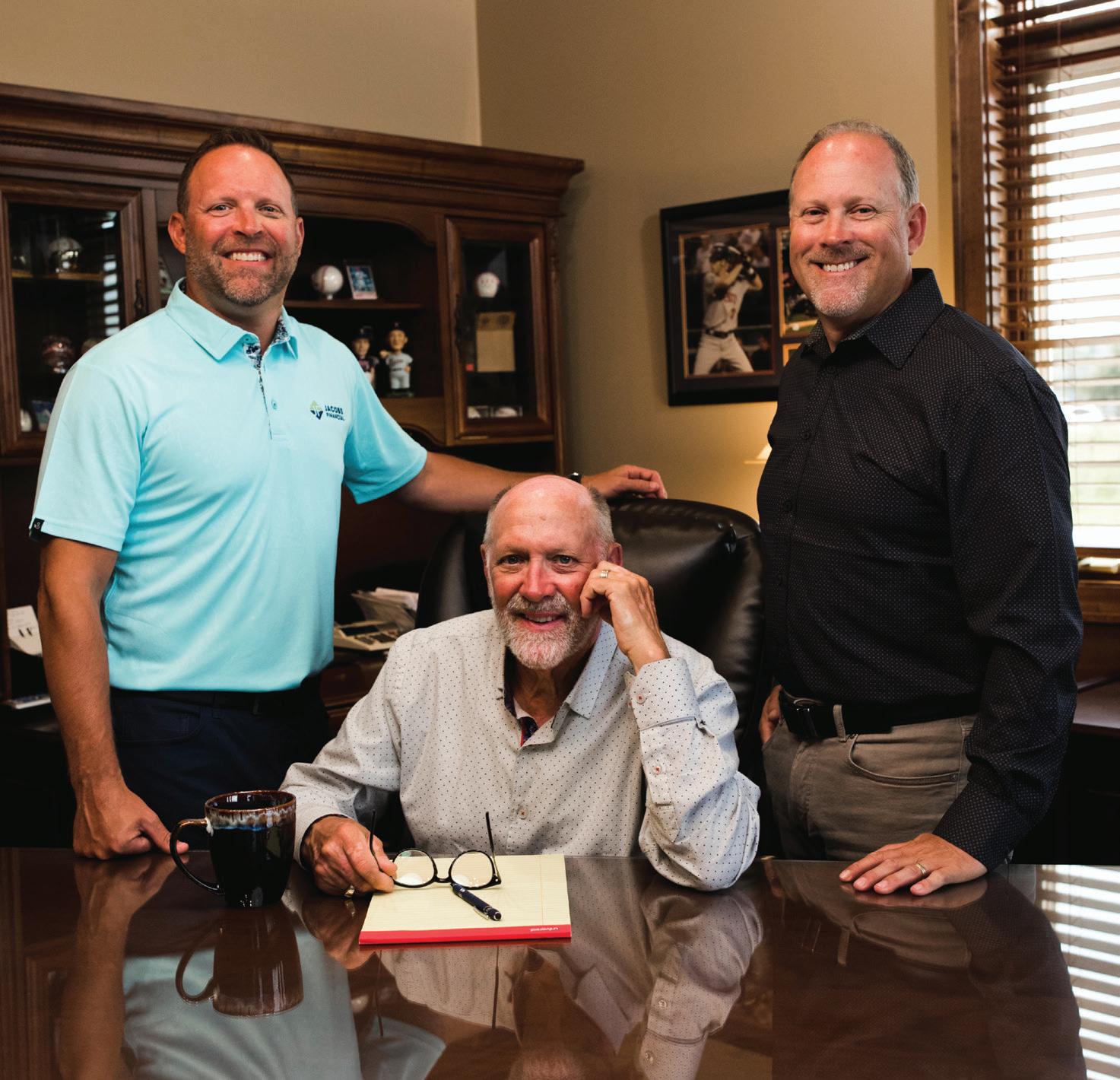
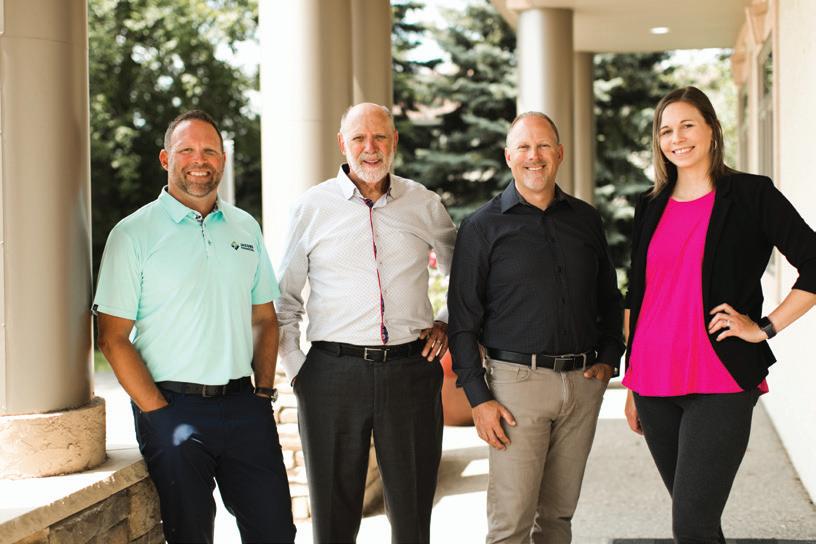
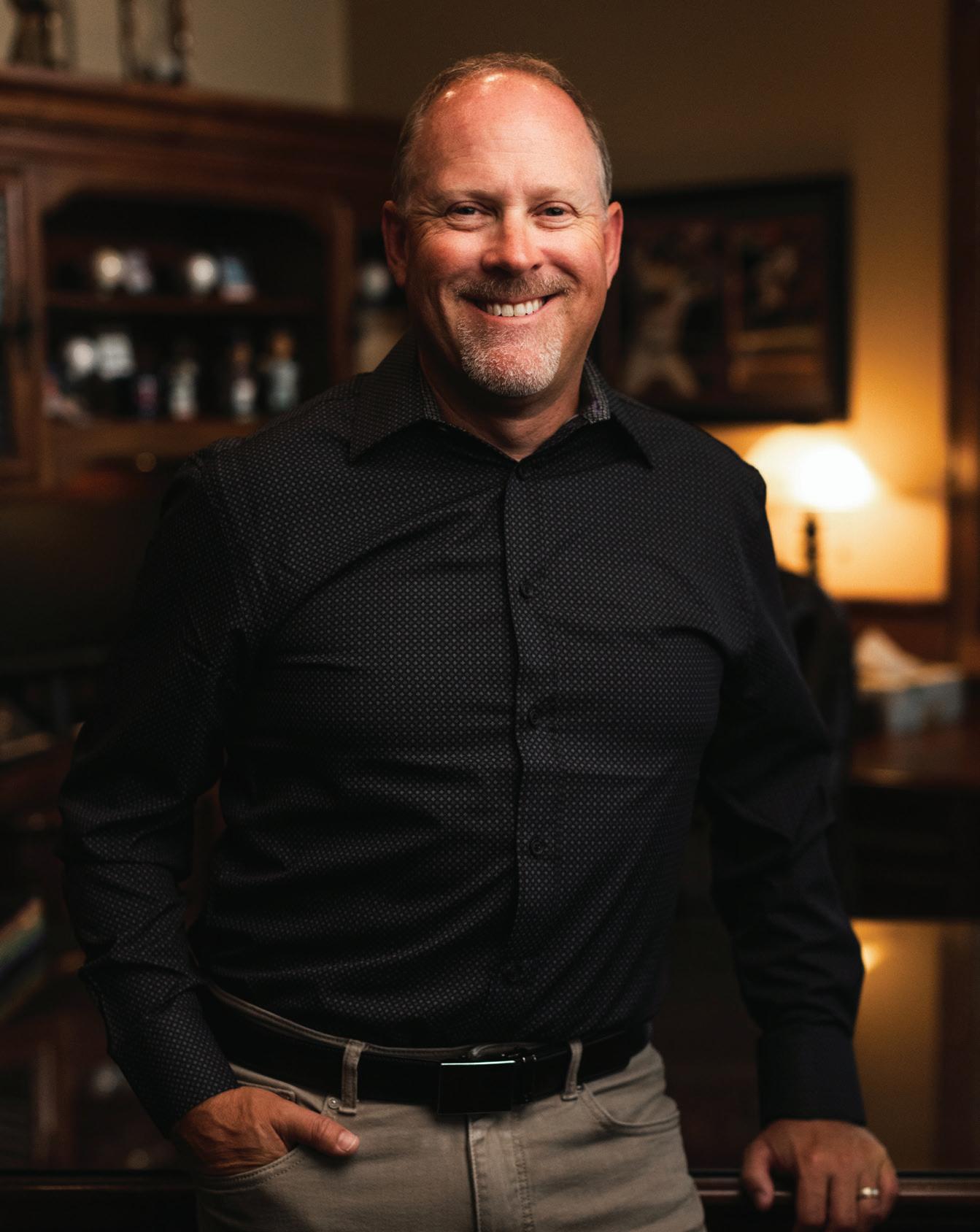
Dave, Jim, & Andy Jacobs, Jacobs Financial, with Business Central Editor Emily Bertram.
Alessia Leibert, MN Department of Employment and Economic Development
Lynn MacDonald and Foday Kamara, St. Cloud State University
Jeanine Nistler, freelance writer
Karen Pundsack, Great River Regional Library
Michelle Skroch, Stearns History Museum
ADVERTISING
Associate Publisher/Sales
Melinda Vonderahe, Marketing Consultant Ad Traffic & Circulation
Yola Hartmann, Hazel Tree Media
ART
Design & Production
Yola Hartmann, Hazel Tree Media Cover Story Photography Guytano Magno, Switchboard
WEBSITE
Vicki Lenneman, St. Cloud Area Chamber of Commerce
1411 West St. Germain Street, Suite 101, St. Cloud, MN 56301
Phone: (320) 251-2940
Fax: (320) 251-0081 BusinessCentralMagazine.com
For advertising information contact Melinda Vonderahe, (320) 656-3808
Editorial suggestions can be made in writing to: Editor, Business Central, 1411 West St. Germain Street, Suite 101, St. Cloud, MN 56301 or emailed to ebertram@stcloudareachamber.com Submission of materials does not guarantee publication
GROW | NETWORK | PROFIT NEWS & PEOPLE THAT MAKE UP THE CHAMBER NETWORK
INSIDE
THIS ISSUE: Digging History / Point of View / People to Know / Your Voice in Government
BOOK REVIEW
You Gonna Eat That?
In a world that prioritizes convenience, is the food we eat doing more harm than good?
By Karen Pundsack
Can you read all of the ingredients on the labels for the foods you eat? Have you thought about what all of those words might mean for your overall health? Why is it so hard to stop eating that next Pringle?
Ultra-Processed People addresses questions about whether what we consume each day is truly the nutrients our bodies need. In today’s quick-fix culture, our food options have morphed to match our habits. Eating something tasty, fast and easy to prepare is part of our on-the-go lifestyle. This book explores the economics of ultra-processed foods (UPF), which is partly driven by the consumption of substances we know to be harmful and addictive.
Author Chris Van Tulleken tells the story of how the choices we have at the supermarket may be contributing to health issues like obesity and dementia. He dives into different experiments and studies that show how UPF affects the human body.
Van Tulleken holds a medical degree from Oxford University, as well as a doctorate in molecular biology. He is an engaging narrator, weaving stories into the science behind UPF. The book is fast paced and evidence based. The author includes many personal accounts of his own relationship with food. It is not surprising that this book spent several weeks on the New York Times bestseller list. It was also a Goodreads Choice Award nominee for Best Nonfiction in 2023.
The book is divided into five parts and 20 chapters. The parts are labeled with interesting questions like “Wait, I’m Eating What?” and “But I Already Paid For This!” The chapter headings are provocative as well:
Chapter 1: Why is there bacterial slime in my ice cream? The invention of UPF
Chapter 2: I’d rather have five bowls of Coco Pops: The discovery of UPF
Chapter 3: Sure, ‘ultra-processed food’ sounds bad, but is it really a problem?
Chapter 4: (I can’t believe it’s not) coal butter: The ultimate UPF
Chapter 5: The three ages of eating
Chapter 6: How our bodies really manage calories
Chapter 7: Why it isn’t about sugar…
Chapter 8: …or about exercise
Chapter 9: …or about willpower
Chapter 10: How UPF hacks our brains
Chapter 11: UPF is pre-chewed
Chapter 12: UPF smells funny
Chapter 13: UPF tastes odd
Chapter 14: Additive anxiety
Chapter 15: Dysregulatory bodies
Chapter 16: UPF destroys traditional diets
Chapter 17: The true cost of Pringles
Chapter 18: UPF is designed to be overconsumed
Chapter 19: What we could ask governments to do
Chapter 20: What to do if you want to stop eating UPF
Gilleland in top five percent Auto
Gilleland Chevrolet Cadillac received the 2023 Chevrolet Mark of Excellence trophy. Gilleland is ranked 150 out of 3,000 Chevrolet dealers across the United States, placing it in the top five percent of dealers.
St. Cloud State recognized
CHECK IT OUT!
Karen Pundsack is the executive director at Great River Regional Library.
St. Cloud State University was nationally recognized as a transfer-friendly institution for the fifth year in a row by international honor society Phi Theta Kappa. Recognition is based on 40 metrics related to the support and success of transfer students, including college cost and financial aid, campus life for transfers, admission practices, and bachelor’s degree completion.
The book is available for checkout at the public library. Reserve your copy at griver.org.
Ultra-Processed People: The Science Behind Food That Isn’t Food; Chris Van Tulleken, 2023, W.W. Norton & Company, New York, NY, ISBN: 9781324036722
Local bus roadeo determines champions Metro Bus’ annual Roadeo tests bus operators on their ability to navigate various real-life driving scenarios in a friendly competition. Keith Drake placed first in the small bus division, and Joel Lafrentz placed first in the large bus division. They can now compete in the Minnesota Statewide Bus Roadeo.
St. Cloud VA receives award, names new director
The St. Cloud VA Health Care System (HCS) received the 2024 Top 25 Environmental Excellence Award from national health care sustainability organization Practice Greenhealth. The award recognizes organizations that continue achievement and innovation in health care sustainability.
Cheryl Thieschafer is the new director of the St. Cloud VA HCS. Thieschafer has more than 23 years of experience with the organization, most recently as associate director. Thieschafer is now responsible for the management and operations of the St. Cloud VA medical center and VA clinics in Alexandria, Brainerd and Montevideo, Minn.
Clara’s House expansion
CentraCare’s Clara’s House is expanding to house the Early Childhood Partial Hospitalization Program (PHP), the first of its kind in the Midwest. The new program will aid in intervening early in matters of mental health by providing evidence-based and trauma-informed treatment interventions.
Karki named top leader Carrie Karki, owner of marketing agency Whitebox Marketing, was named to the Top 50 Women Leaders of Minneapolis for 2024 by Women We Admire. Karki was recognized for her agency’s growth and her involvement in the community.
DIGGING HISTORY
The Candy Man
Andy Virden, owner of Virden’s Vending and Concessions, didn’t let his loss of eyesight stop his entrepreneurial spirit.
By Michelle Skroch
Virden’s Vending and Concessions got its start in an unlikely place from an unlikely individual in 1955.
A native of Waite Park, Minn. Andrew (Andy) P. Virden (1927-2011) was born with a degenerative eye disease that left him completely blind by the age of thirteen. Early in his life, Virden developed an interest in sales. By the time he was 28 years old he had established his own business with the help of the Randolph Sheppard Act of 1936 and the Minnesota Business Division. His shop was originally located in the downtown St. Cloud Post Office lobby on St. Germain Street and later moved to 2nd Street N. His merchandise included
items typically found at concessions, such as newspapers, magazines, candy, pop and gum. Throughout his life Virden used his business as a way to champion others with blindness and physical handicaps. Virden held membership in numerous charitable and awareness organizations at both the local and national level, many of which were dedicated to assisting the blind. In 1973 he was selected as the “St. Cloud Handicap Person of the Year” due to his thriving business and highly active presence in the community. He also received the “Service to Mankind Award” from the Sertoma Club of St. Cloud.
Despite his blindness Virden was an avid consumer of written and radio material. He had a pulse on most of the organizations in the local area, creating an atmosphere of heady discussions in his space. Virden and his business were described by the St. Cloud Times as “a downtown fixture” that acted as the clearinghouse for ideas and information, including everything from gossip to political arguments.
In 1965, ten years after Virden had been in business, he and his concession stand attracted the attention of local artist and St. Cloud State University art professor, William J. Ellingson, who drew a portrait of Virden working behind his counter. This drawing, The Blind Candy Man, is currently in the permanent collections of the Stearns History Museum. By the time Virden decided to retire in 1993 after 38 years in business, he was managing 46 vending machines scattered in buildings throughout the city in addition to a store that had grown threefold since its opening. With his retirement, Virden’s Vending and Concessions was closed permanently.
Michelle Skroch is registrar at Stearns History Museum.
Drawing of Andy Virden by artist William Ellingson
POINT OF VIEW
Business Central asked: What is one goal you are working toward for the end of the year?
Casey Krafnik, United Way of Central Minnesota
I would like to make more time
Rory Cruiser, Lamar Advertising
I am always striving to continue my growth and creativity and to get better at what I do so that I can continue to help others be successful. I am also looking forward to more free time to spend with my family. for hobbies just by myself. I am not
CentraCare Foundation hosts La Gratitude
La Gratitude, sponsored by CentraCare Foundation, honors donors, physicians and community leaders who have generously given their gifts to support CentraCare and the health of its patients and families. The following were recognized: Lifetime Achievement: Jim Christensen Philanthropist of the Year: Jan and Lee Hanson Service to the Foundation: John Schnettler
Rising Star: Lou and Leo Louis Caduceus Award: Dr. David Tilstra Hansen joins BankVista Corey Hansen has joined BankVista as senior vice president, commercial lending. Prior to joining BankVista, Hansen served as a senior commercial lender, where he was recognized as a Pinnacle Top Performer in both 2013 and 2015, along with Legends of Possible in 2017 and 2019. In his new role, Hansen will develop and manage commercial banking relationships.
Area lawyers recognized Quinlivan & Hughes attorneys
Dyan Ebert, Steven Schwegman and Cally Kjellberg-Nelson were named among the top attorneys in Minnesota by Super Lawyers. Super Lawyers is a rating service of outstanding lawyers from more than 70 practice areas who have attained a high degree of peer recognition and professional achievement. Ebert was also named in Super Lawyer’s Top 50 Women list.
PEOPLE TO KNOW
A Healthy Community
Incoming Chamber Board Chair Joe Hellie focuses on community engagement at work and at the Chamber.
Although he’s not a St. Cloud native, Joe Hellie has been a community advocate for 30+ years. After finishing his graduate studies at the University of Minnesota, he moved to the area with his wife and took on a fellowship opportunity in healthcare administration with the Franciscan Sisters in Little Falls, followed by a director of planning role at St. Cloud Hospital.
“We thought, we’ll do this for three years,” Hellie said, “and then we’ll go back to the Cities.” In fact, three years in, he did get an offer that would move his family back towards the Twin Cities. But then they found themselves questioning, “Why do we want to move away? This is such a nice place.” Thirtytwo years and many changes later, Hellie is still with CentraCare. Currently, he is exiting the role of a vice president and focusing on community engagement.
“Initially I was just a passive Chamber member, attending Business After Hours and Friday morning meetings, following legislative issues,” Hellie said. He has also been a speaker for the St. Cloud Leadership Program over the years. Hellie landed his role on the Chamber Board of Directors because CentraCare is typically asked to have representation on the board. “I don’t take that lightly,” Hellie
said. “A lot of people work hard to progress to becoming a board member, and I didn’t have to do that.
“There are the given staples of a Chamber, one of those is a legislative voice, the other is working on local economic development.”
Hellie sees Chamber involvement as vitally important for a large corporation like CentraCare, because it helps keep a pulse on what’s happening at the community and small business level. “In my position, I am in a good vantage point to be able to listen to concerns and to be a liaison between this really big corporation and the needs of the local business community and greater St. Cloud.”
Going into his term as board chair, Hellie would like to spend more time finding out what Chamber members and the community believe should be the priorities of the Chamber. He also hopes to build on the existing work
that is being done within the Chamber. “There are the given staples of a Chamber, one of those is a legislative voice,” Hellie said. “The other is working on local economic development.”
As we draw closer to the 2024 elections, Hellie sees the political climate as a potential challenge – but also an opportunity to figure out how to work together, and what role the Chamber plays in advocating for business. “We want to hold both sides of the aisle accountable for listening and helping to solve issues
– which I’ve seen them do locally,” Hellie said.
As a non-native, but someone who has spent more years of his life in Central Minnesota than not – Hellie is a big fan of the St. Cloud community. “Those of us who have stayed here for a while will probably stay forever because it’s just a great place.” He speaks highly of the geographic location of St. Cloud, the healthcare system, education – both public and private – and more. As he said, “I know it sounds like I’m trying to sell the community, but that’s because I believe in it.” —EB
IN THE NEWS
The Top 200
The Star Tribune surveyed employees to find the top workplaces in Minnesota based on employee count. Several St. Cloud Area Chamber of Commerce members were included.
Affinity Plus Federal Credit Union
Arvig
Bell Bank
Blue Cross and Blue Shield of MN
Bolton & Menk
Brenny Transportation
Bursch Travel
Capital One
Center for Energy and Environment
Centerspace CLA
Compeer Financial
Edina Realty Home Services
Frandsen Bank & Trust
Froehling Anderson
Goodwill-Easter Seals MN
HealthPartners
Kwik Trip
Lunds & Byerlys
Microbiologics
Preferred Credit Inc.
RE/MAX Results
Simonson Lumber
St. Cloud Industrial Products
Central Minn. Big Brothers Big Sisters receives two awards
Central Minnesota Big Brothers Big Sisters (BBBS) received the Growth Award for program excellence, and a Bronze Biggie award for its 2023 annual report at the BBBS of America National Conference. The Growth Award recognizes the branches that have demonstrated a rise in the number of mentors, mentees, Bigs and Littles who are matched year over year. The Biggie Award is given annually to the top three marketing pieces across the country.
Bergerson joins Granite Electronics
Sandy Bergerson joined DSC Communications and Granite Electronics as chief financial officer. Bergerson’s experience in leading multi-location staff, financial process improvements, budget and forecasting, and financial statement preparation brings added value and allows for continued growth for DSC.
St. Cloud Subaru donates over $100,000
St. Cloud Subaru donated over $100,000 to the Greater St. Cloud Public Safety Foundation as part of Subaru’s annual Share the Love Campaign. Part of these funds will benefit the St. Cloud Community Outpost (COP House). St. Cloud Subaru donated $400 for every vehicle sold between November 20, 2023 and January 4, 2024.
Got News?
Send news releases, announcements, or anything you think is newsworthy to Emily, ebertram@ stcloudareachamber.com, and we will try to include it.
YOUR VOICE IN GOVERNMENT
Name That Owner!
The Corporate Transparency Act is now in effect. Does your organization need to report?
By Jeffrey P. Clancy
In the wake of September 11, 2001, the federal government made the reporting of company ownership a focus in an effort to combat the funding of terrorist organizations and money laundering. In 2021, Congress passed the Corporate Transparency Act (CTA), and it became effective on January 1, 2024. Here’s what that means for your business.
The CTA is a federal law that requires owners and companies to report information to the Financial Crimes Enforcement Network of the Department of the Treasury (FinCEN), the agency responsible for adapting regulations and implementing the CTA.
Entities that meet the reporting requirements include:
1. A corporation, a limited liability company (LLC), or was otherwise created in the United States by filing a document with a secretary of state or any similar office under the law of a state or Indian tribe; or
2. A foreign company that is registered to do business in any U.S. state or Indian tribe by such a filing.
The natural question for entities that believe they meet the reporting requirements is when and what information must be reported to FinCEN. The first question to ask is: When was the company formed?
Companies that existed prior to January 1, 2024 must report their beneficial ownership information no later than January 1, 2025. An entity in existence prior to
January 1, 2024 is not required to disclose the company applicant.
Entities formed on or after January 1, 2024 must report both the beneficial owner and company applicant no later than 90 calendar days after formation and 30 days after a change of beneficial owner. In 2025, newly formed nonexempt entities will have 30 days to comply with the filing requirement.
The reporting requirement captures information about the company, each beneficial owner, and the company applicant. For companies, the CTA requires disclosure of:
The full legal name and any assumed or trade names
Complete address
The jurisdiction of formation
Taxpayer identification number (EIN)
The definition of beneficial owner is broad and can capture officers, anyone who has “substantial control” over the entity, or anyone who owns or controls not less than 25 percent of the ownership interest of the entity. Each beneficial owner must report:
Their full legal name
Date of birth
Complete current address (residential, or for company applicants, business address)
A unique identifying
number which can be obtained from a non-expired U.S. or foreign passport, driver’s license, government ID, or FinCEN number. An image of the document from which the unique identifying number is obtained must be uploaded to the FinCEN reporting site. A social security number is not sufficient for this purpose.
There are several entities that are not required to report to FinCEN. These include, but are not limited to, public companies, governmental authorities, banks, credit unions, depository institutions, or money services businesses, inactive entities, public utilities, 501(c) tax-exempt organizations, and notably, large operating companies. A large
operating company is an entity which has more than 20 full-time employees, operates a physical office within the United States, and which filed a federal tax return for the prior year with more than $5 million of gross receipts from U.S. income. It is important to track full-time employees and gross receipts to confirm the company continues to meet this exemption.
If you are unsure if your organization is required to report to FinCEN, connect with a knowledgeable business attorney to avoid any penalties.
NEWS BRIEF
MISSION: OUR FUTURE
Jeffrey Clancy is an attorney at Quinlivan & Hughes, P.A. in St. Cloud, with a focus on business and real estate law.
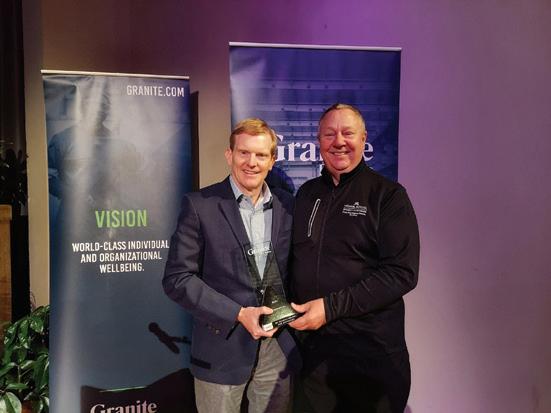
CentraCare President and CEO Ken Holmen, M.D., received the Cornerstone Award from Granite Partners for his “steadfast support of a new medical school in St. Cloud that will enable health and well-being into the future.” The Cornerstone Award recognizes those who have made foundational contributions to Granite Partner’s mission of growing companies to create value for all stakeholders.
REC ONST R UCTIV E FO OT & AN KL E S URG ERY
St. Cloud Surgical Center has an established group of podiatrists dedicated to helping our patients maintain a happy, healthy lifestyle.
“When a patient receives an amputation at any level of the foot, their mortality rate increases by five percent. The more we can help preserve, the better lifestyle we can offer for our patients.”
Dr. Tinawi performs surgeries to treat various podiatric conditions, including bunions, hammertoes, neuropathy, tendon repair, and reconstruction.
“ I always say happy patient, happy life. Using my skills to help my patients return to optimal health is what keeps me going,” said Tinawi.
To learn more about making a
Yara Tinawi, DPM Podiatrist
GROW | NETWORK | PROFIT
EVENTS AROUND THE ST. CLOUD AREA
MORE ON EVENTS : For information on these or other business events, call 320-251-2940 or visit StCloudAreaChamber.com and click on “Calendar.”
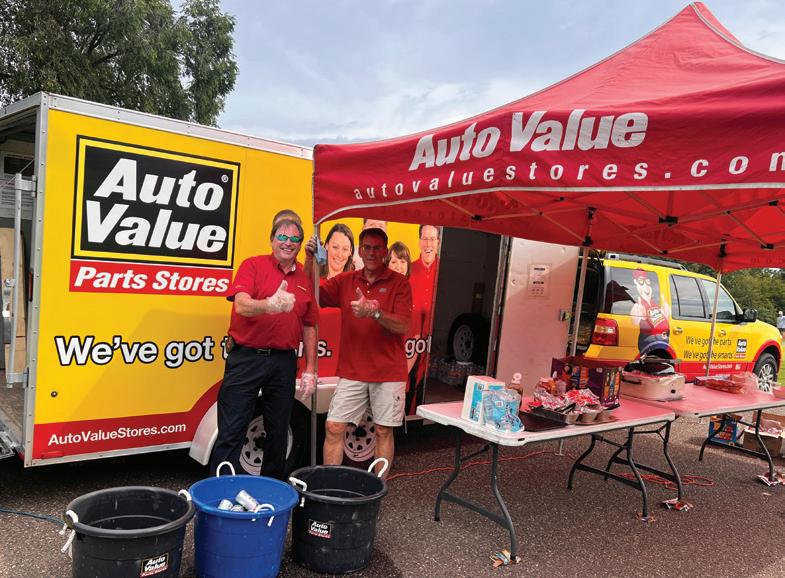
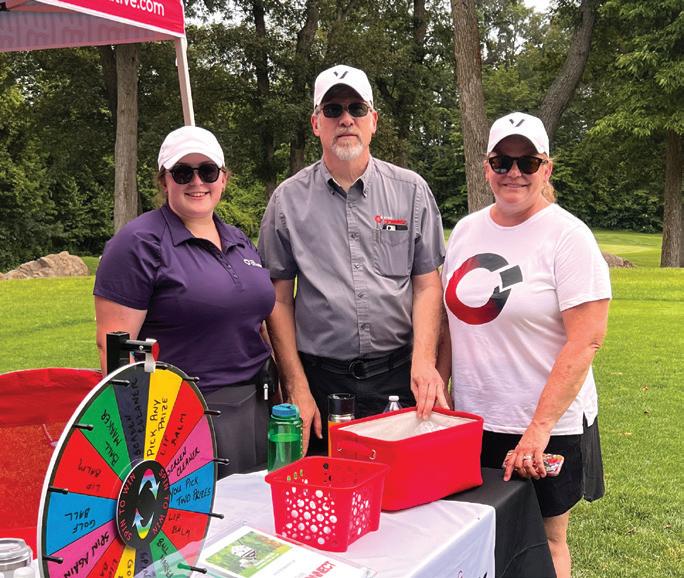
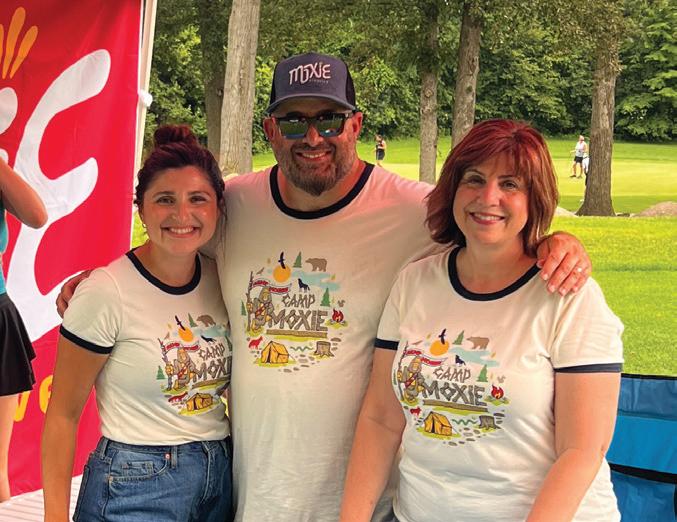
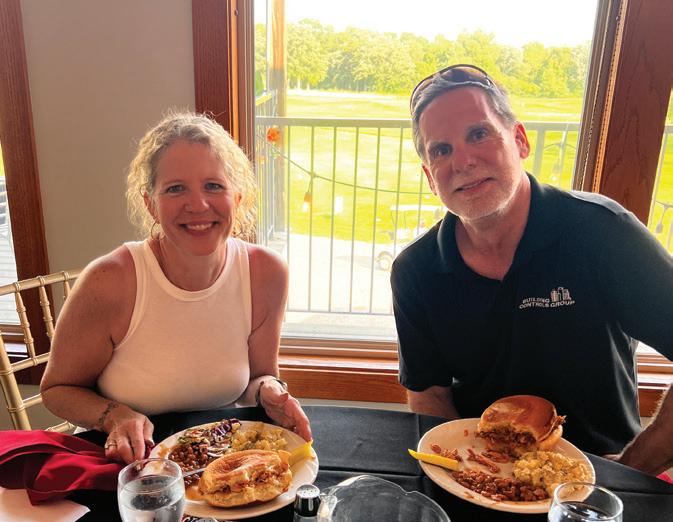
Network!
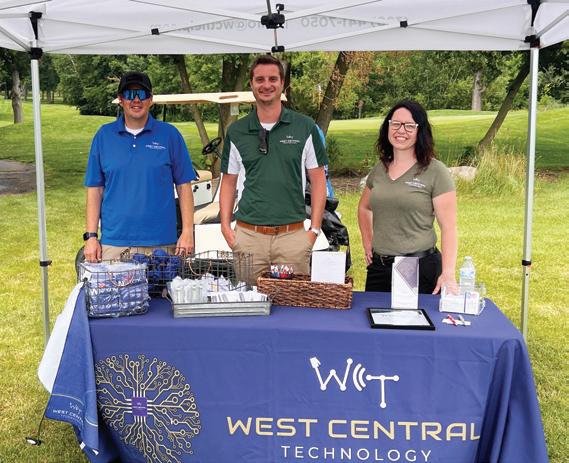
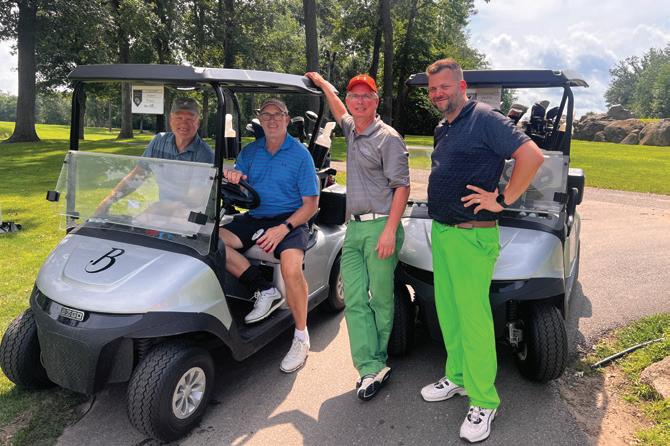
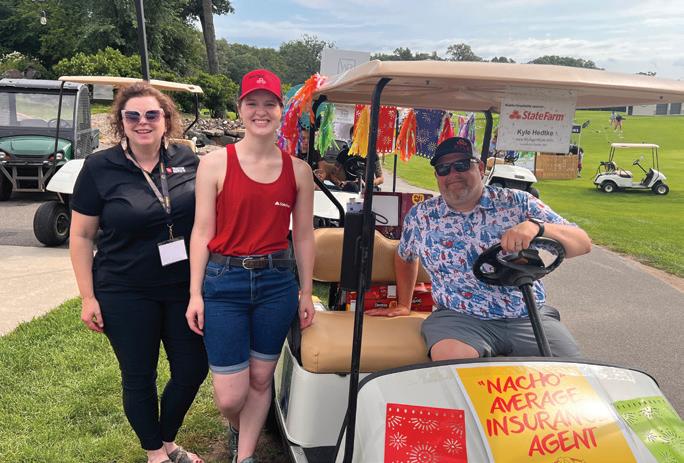
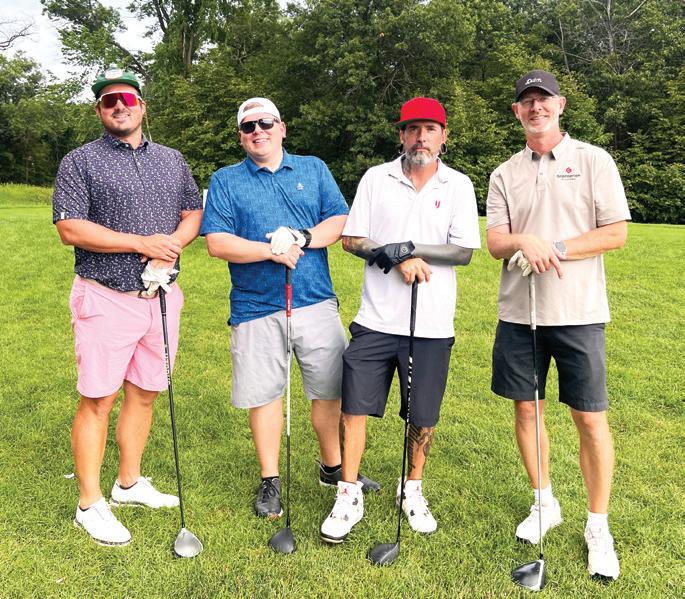
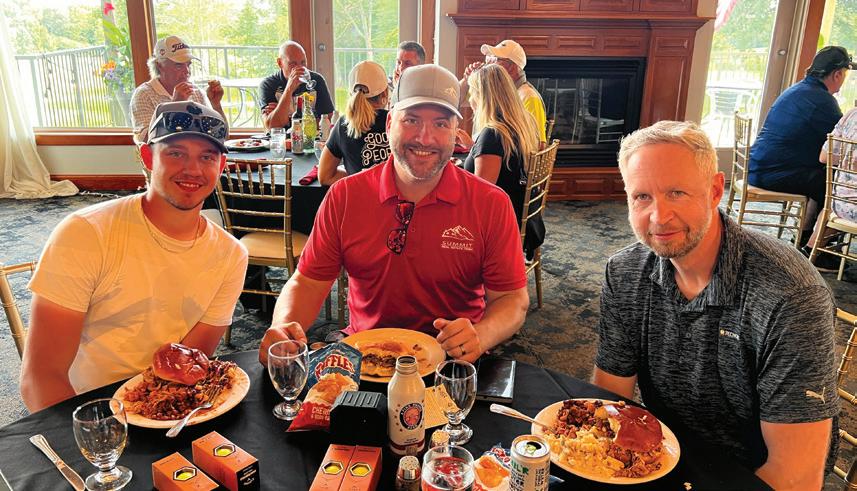
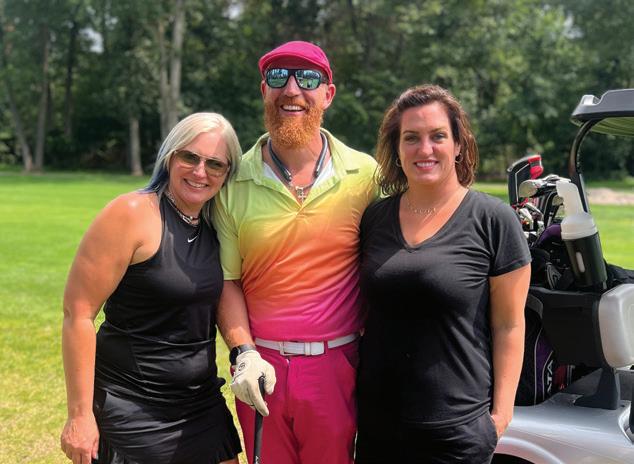
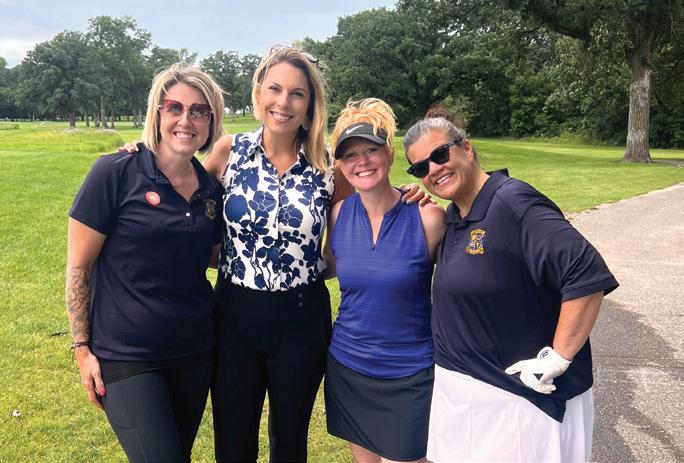
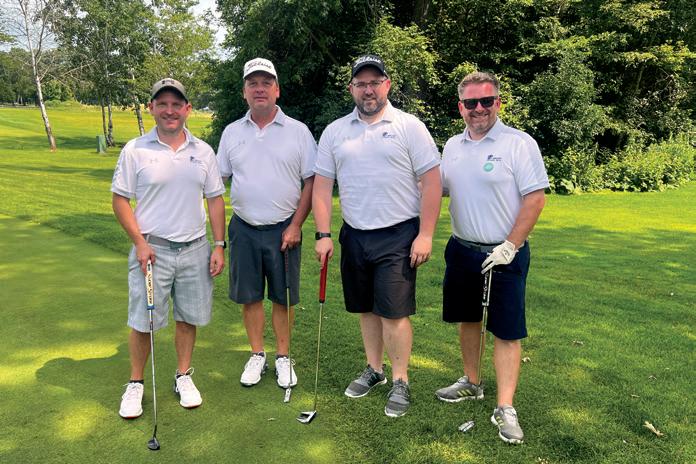
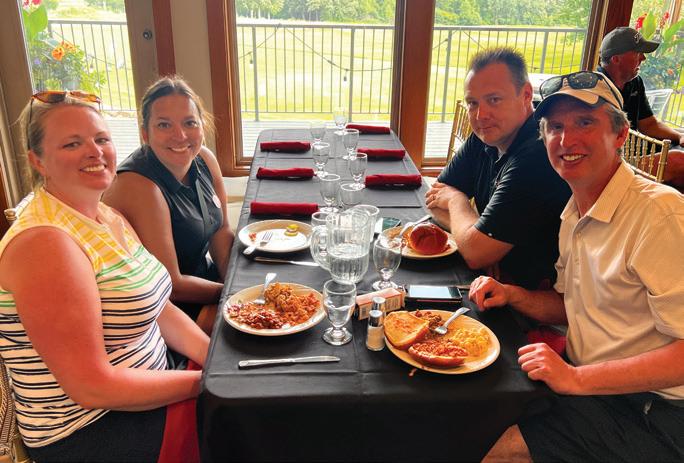
The 78th Annual Chamber Open at Blackberry Ridge Golf Club featured sunny skies, plenty of networking and some great rounds of golf.
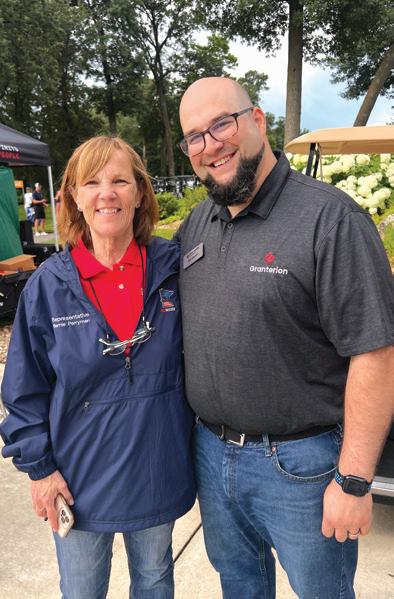
Bernie
Andrew Hoffer
Ryan
and Chris
Jon Hawkinson, Alex Moening and Jill Shaw, West Central Technology
Myron Yatckoske (L), Wayne Elam and Eric O'Brien, Commercial Realty Solutions
Dakota Johnson, Blacklight Adventures (L); David Vee, Edina Realty; Chad Hiltner, Tech Check
Madelyn Thompson (L) and Hailee Woida, WhiteBox Marketing
Guytano Magno, Switchboard
Perryman, Batteries Plus and Jon Hazen, Fingerhut
(L)
Yogerst, Granterion 3PL Solutions;
Schepp, Cream City Tattoo; Brian Schaefer, Granterion 3PL Solutions
Jim Schleper, Deerwood Bank (L); Jon Jackson, Skatin' Place; Steve Nusbaum, St. Cloud Technical and Community College; Jeff Jackson, Skatin’ Place
Heidi Chandler, Tractor Supply Company (L); Caitlin Heglund and Kyle Hedtke, Kyle Hedtke State Farm
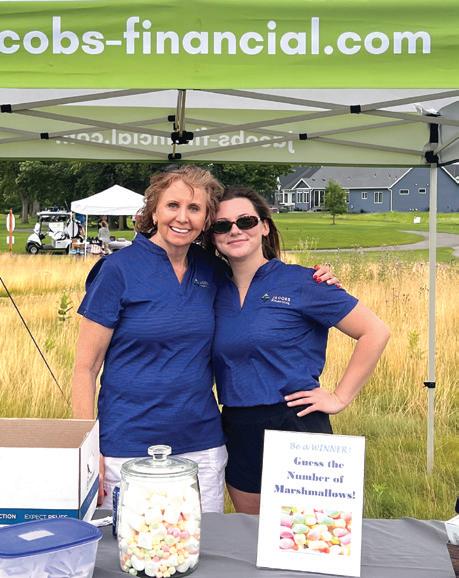
Cheryl Hochhalter (L) and Gabrielle Cooper, Jacobs Financial
Dave Stephenson (L) and Tim Feddema, Automotive Parts Headquarters
Lauren Vouk (L), Patrick Hollermann and Lisa Vouk, InteleCONNECT
Jim Gruenke, Traut Companies (L) and Steve Sauer, Erickson Electric
Taylor Sellnow (L), Mo Philippi and Kelly Cane, Moxie Creative
Sarah Hayden and Greg Slade, Building Controls Group
Emily (L) and Jeremy Salzbrun, H & S Heating, AC, Plumbing and Electrical, and Rachel Lolmasteymaugh, St. Cloud Area Chamber of Commerce - Downtown Alliance
Alex Cameron (L), Troy Cameron, Mark Nettesheim and Brandon Voit, Falcon National Bank
Maia Ouimette (L), Jessica Johnson and Jodi Pundsack, Evermore Co.
Geri Bechtold (L) and Mary Swingle, Boys & Girls Clubs of Central Minnesota
Alyshia Bills (L), Hannah LaDuke, Jenna Binsfeld and Mary T. Schmitz, Newport Healthcare
(Clockwise from left) Angie Hemmesch, Sarah Blake, Jason Mortland and Brad Carroll, Sand Companies
BUSINESS TOOLS
GROW | NETWORK | PROFIT
RESOURCES THAT HELP YOUR BUSINESS GROW
WORKING WELL
The Right Fit
Tailored office space solutions matter in the era of flexible work.
By Alex Bendele
Post pandemic, the conversation around office space is a hot topic that is continually evolving. Articles are published daily about the prevalence of hybrid work, companies instituting return-towork policies and a host of tips to get people back into the office. As many organizations struggle to decide what’s next for their office space, the first thought is often to look at peer companies and ask “Well, what are they doing?”
Contributor
Experience and evidence from the market show that the future of the office is not so much about trends, but about what is right for the unique needs of your company.
Many employers are seeking to provide spaces that offer a variety of work points with dedicated focus areas, accommodate hybrid teams, and allow for greater collaboration. Global architecture and design firm Gensler reports that, with a workforce accustomed to the flexibility and privacy of hybrid and remote work, employees
are looking for greater choice and privacy in the office. Hybrid work also means companies need technology solutions to better support conferencing among mixed remote/in-person teams. Finally, with employees prioritizing their time in the office to work with others face-to-face, there is a shift toward including a broader mix of collaboration spaces.
So – more focus areas, better technology, a variety of collaboration spaces. Throw in a café with donuts and coffee – and then all our problems are solved, right? Not quite. Other factors affect how employees use space, such as job function and industry.
A research and development team might come into the office more often than sales because they use special equipment available in the office.
Creative agencies might prefer open-style collaboration areas, whereas law firms are more likely to choose closed conference spaces that protect client privacy.
The right solution is not industry specific. The right solution is a more tailored approach, customized to the organization.
Sarah Oknick is director of ideation at NextLab, a Fluid Interiors brand partner that specializes in providing
workspace solutions. She looks at all these factors to help companies make decisions about their office design. “I start by asking customers ‘What are your desired business outcomes?’ Starting with the end in mind will help set the stage for what they need to do to be successful,” Oknick said. She seeks to understand a company’s unique culture and engage with their employees to figure out the different work styles within the organization. This way customers can feel confident in making design decisions that are supported with data collected on how their employees work best.
As the work environment continues to evolve with hybrid models and changing employee expectations, organizations must prioritize flexibility, technology integration, and space utilization that reflect their specific culture and business goals. By focusing on tailored solutions informed by data and employee input, companies can create spaces that not only foster productivity and collaboration but also resonate with the individual needs of their workforce. The path forward lies in embracing diversity in work styles and designing office spaces that are as dynamic and adaptable as the people who use them.
INSIDE THIS ISSUE: Management Toolkit / Entrepreneurship / Economy Central by Falcon Bank
Alex Bendele is marketing coordinator at Fluid Interiors.
Virtual Training, Real Results
// For some prisoners, virtual reality (VR) has given a whole new meaning to the phrase “on the job training”. The Maryland Correctional Institution for Women has partnered with Baltimore-based nonprofit Vehicles for Change to provide VR experiences to prisoners that teach them job skills that can be used once they are released. For example, prisoner Tiffany Busch used the technology to learn how to do an oil change, a skill that could help her find a job as an auto mechanic after she is released. The goal is to provide released prisoners with clear paths to successful careers, reducing the odds of returning to prison. The VR headsets are a more affordable alternative to conventional hands-on training, with the ability to add other trainings depending on workforce demands.
Source: CNN.com
It’s in the Bag
// A research team at MIT’s Computer Science & Artificial Intelligence Laboratory is testing out a new technology called RoboGrocery. Combining a soft robotic gripper with computer vision, it has the ability to bag a wide variety of grocery items, from grapes and bread to cans and ice cream containers. Pressure sensors determine the appropriate amount of pressure to use when lifting items as well as the order in which to bag them. “Although we’re not quite ready for commercial deployment, our research demonstrates the power of integrating multiple sensing modalities in soft robotic systems,” Annan Zhang, one of the study’s lead authors, said. Source: TechCrunch
Take Charge
Digital payments can be convenient for consumers, but pricey for businesses.
By Dan Edelbrock
Accepting payments seems like it should be cut and dried. A customer pays an agreed-upon amount for agreed-upon goods or services. All good, right? Well, not quite. Online and digital credit card payment acceptance has grown in popularity over the years because it's so easy and convenient for the consumer. It became even more popular after COVID because it’s also more hygenic and touchless. However, it doesn’t matter how easy, convenient, or touch-free accepting digital payments can be – they still incur acceptance fees.
Contributor
Understanding these common credit card processing fees can help you become more fee-free. What are tips for being more efficient?
TIP #1: Understand various credit card processing fees. Credit card processing fees are fees that are charged for transactions. Understanding the various types of fees can make your business’ payment processing more efficient in the future.
Interchange Fee — This charge is collected on behalf of the payment card network on
every transaction where the card is used to make a payment.
International Fee — This world-traveler of a fee is charged on non-U.S. issued payment cards presented as a form of payment to businesses located in the U.S.
Chargeback Fee — This payment card fee applies when the customer or their cardissuing bank disputes a payment transaction claiming fraud or faulty goods or services and perhaps non-delivery of same.
TIP #2: Pass on the transaction cost.
To offset or minimize transaction costs, a surcharge may be appropriate for customers who want to pay using a credit card.
Yes, you are passing the majority of the credit card acceptance fee to your customer, but with only cents on the dollar, they don’t feel a huge hit on a single transaction. For your organization, however, those cents add up over hundreds or thousands of transactions a day. Debit, ACH payments, eCheck, and cash payments cannot be subject to surcharges, so make sure your customers know that. If the surcharge information is properly disclosed clearly and accurately, it can address consumer concerns and save money for the business.
Businesses that offer their customers an alternative way to pay – aside from in person payment – may also collect a convenience fee for each transaction to help cover the
additional costs associated with the alternative payment method, whether online, through the mail or over the telephone.
TIP #3: Accept ACH payments.
ACH is short for Automated Clearing House. It’s a financial network that allows direct payments via a customer’s bank account. ACH fees can be less expensive for your organization, depending on the total volume received. A larger volume typically translates to less cost per transaction.
Additional Tips Commercial Card
Optimization — If your business accepts many commercial and corporate cards, which carry some of the highest interchange rates, this program makes sure that all of the commercial card transactions qualify at the lower commercial interchange rate, saving your business money.
Debit Card Optimization —
Let’s not forget about the debit cards. This program requires a PIN entry for every debit card transaction. This simple change in debit card authorization can save money by running these transactions through the more cost-effective PIN debit networks.
Credit card fees are an unfortunate, but necessary, part of the payment process. Understanding and managing them well can save your business a lot of money in the long run.
Dan Edelbrock is senior vice president of commercial banking at U.S. Bank.
Fighting AI with AI
In the age of the internet, we are always told: “Don’t believe everything you read online,” especially with the rise of misinformation. Thanks to artificial intelligence (AI) and the depth and breadth of content it can create, it is even more difficult to determine fake news sites from real sites. While AI has contributed to the growth of these fraudulent sources, it also has the potential to detect them. Through the field of natural language processing (NLP), AI can identify certain linguistic patterns behind fake news NLP can be used to identify sentiment, classify text, check named entities, and recognize other indications that can be linked to fake news. It’s a work in progress, though, with issues like data quality and quantity and other forms of fake news like images and videos coming into play. Internet users are still urged to be vigilant and wary, regardless of where they are getting their information. Source: Medium
Granite Partners is a private investment and long-term holding company founded in 2002 in St. Cloud, Minnesota, with a mission to grow companies and create value for all stakeholders. We advance a culture of trust, innovation, and excellence as essential to 100-year sustainability, and we aspire to world-class wellbeing for everyone in the Granite community.
The Power Duo is here to boost your business cash flow and maximize your savings. Combine the highest dividend-earning checking account with a higher savings rate to build your business finances faster.
Once Upon a Brand
Telling a brand’s story is a helpful and effective strategy for sharing its values and services.
By A.J. Kaufman
Storytelling and marketing are essentially the act of using a narrative to communicate a specific message, instead of traditional sales jargon. The goal is to help consumers understand why they should care about a product. Providing that answer via a story can fill that need.
The four storytelling techniques are oral, written, visual and digital. With that in mind, as stories and storytelling move beyond simple business tactics to advance a cause, they sit at the very foundation of marketing.
The importance of storytelling in marketing is straightforward. By enhancing an emotional connection and building trust in your brand, you're likely to also increase engagement levels and customer loyalty, which can result in additional sales.
With 20 years of experience in the marketing industry, Jessica Johnson is a marketing strategist and partner with Evermore Co. Agency in Sartell.
Evermore is a full-service creative marketing agency which has been in business for just over a year. The company has a client base ranging from well-known corporations to small local businesses, and
“Effective
often used as a strategy for brand growth.
“Think of it as sharing a personal story with a friend, helping them understand your experiences and relate to you emotionally,” Johnson said. “Effective storytelling in marketing strengthens the bond with your consumers by communicating your ‘why’ rather than just your ‘what.’”
storytelling in marketing strengthens the bond with your consumers by communicating your ‘why’ rather than just your ‘what.’”
— JESSICA JOHNSON, MARKETING STRATEGIST AND PARTNER, EVERMORE CO. AGENCY
encompasses industries like retail, manufacturing, finance, healthcare, and real estate. The diverse range in clientele means that thoughtful storytelling is
She explained that, while competitors may offer similar features and services, your ‘why’ is what sets you apart and affects a purchase decision.
Storytelling is the best way to convey your ‘why.’
“As marketing professionals, our goal is to evoke strong emotional responses among those who encounter our brand,” Johnson said. Incorporating storytelling into marketing “allows for imaginative concepts with powerful words and imagery and can extend beyond just words and images by engaging all five senses.”
When done right, Johnson believes storytelling fosters and ultimately delivers positive feelings toward a brand, builds loyalty to your products or services, and encourages engagement with that brand.
“Storytelling drives loyalty, because emotions influence buying decisions,” she said. “Individuals are seven times more likely to choose a brand they feel an emotional bond with, rather than being subjected to direct sales tactics.”
Johnson encourages marketers to make their audiences feel entertained or valued, because then they are more likely to participate in a campaign across social media, leave testimonials, give referrals, and make repeat purchases. She outlined some memorable brands that have used storytelling to their advantage in different ways.
Campbell’s took a nostalgic approach to a storytelling campaign, tapping into people’s love of reminiscing. As an example, Johnson cites
Campbell’s soup commercials for evoking feelings of warmth and comfort, which she believes clearly intend to sell more than just soup.
Apple “set the standard for storytelling within marketing,” according to Johnson, by constantly pushing innovation in their ads and “appealing to consumers’ desire to be part of cutting-edge lifestyles associated with higher status.”
Dove’s Real Beauty campaign, launched around the world two decades ago, was another success, Johnson said, because “it resonated globally by celebrating inner and outer beauty.”
A powerful story can enhance a brand and solidify a bond with audiences, while simultaneously differentiating a company from its competitors.
A former schoolteacher, A.J. Kaufman is currently managing editor for the Business Journal of Tri-Cities and also a correspondent for the St. Cloud Times.
There’s a Pill for That
Diagnosing and treating gut-related ailments has gotten easier, thanks to the introduction of Ingestible Microdevices for Anatomicmapping of Gastrointestinaltract (iMAG). Shaped like a pill, once swallowed or placed in the body, it has the ability to collect health data, record images and even deliver drugs. iMAG is not the first of its kind, but it is the most accurate and easiest to follow. This takes minimally invasive to a whole new level. Source: U.S. National Science Foundation
ECONOMY CENTRAL
Caitlin Clark’s Economic Slam Dunk
The rise in popularity of the WNBA has economic significance.
By Foday Kamara and Lynn MacDonald
The Women's National Basketball Association (WNBA) is having a record year. There’s been more interest in women’s basketball and that interest has brought in more money. After shattering records at the collegiate level, college basketball star Caitlin Clark’s WNBA debut has propelled a broader fan base and has put more eyes on the game. This has helped raise awareness of the depth of talent and skill in women’s basketball.
Women’s basketball players are becoming household names. Clark and A’ja Wilson are featured in commercials with Michael Jordan. Revenues, endorsements,
and media contracts have all increased. As of July 2024, the WNBA signed a $2.2 billion, 11-year media rights deal partnering with Disney, Amazon Prime Video and NBCUniversal. The prior media contract brought in $50 million to the WNBA annually. This new deal brings in $200 million per year and “marks a monumental chapter in WNBA history and clearly demonstrates the significant rise in value and the historic level of interest in women’s basketball,” according to WNBA Commissioner Cathy Engelbert.
College stars such as Clark, Angel Reese, Cameron Brink,
Contributors
Foday Kamara is a master’s student in applied economics at St. Cloud State University. Lynn MacDonald, Ph.D., is associate professor of Economics, SCSU.
Kate Martin, Alissa Pili, and Aaliyah Edwards all joined the WNBA this year. These rookies, along with other college players, drew 18.87 million viewers on ABC and ESPN for the women’s 2024 NCAA championship game. Notably, the women’s championship game attracted approximately four million more viewers than the men’s championship game. This was the first time the women’s NCAA finals viewership surpassed the viewership of the men’s games. This interest carried over to the WNBA draft: according to the NY Times, “More than 2.4 million people tuned in to the WNBA draft, beating the previous record by more than 300 percent.”
As of July 5, 2024, halfway through the WNBA regular season, ESPN reported average game attendance of 9,311, the highest average attendance since the 1990s. Already, two games featuring Clark and the Indiana Fever boasted attendance over 20,000. That number had only been reached six times prior in the entire WNBA league history. “Viewership for WNBA on ESPN networks is up 183 percent compared to last season,” according to reports from women’s basketball data service Across the Timeline, as reported by ESPN.
While women’s basketball and the WNBA haven’t previously been studied widely by economists, sports economics is not a new field of study,
and it has many parallels with labor economics. In sports, there is a lot of data connected to both revenues and player performance. In the future, economists will be able to use data to statistically test what factors contributed to wins, attendance, or even revenue generation. Economists have done this in the past related to men’s sports and the NBA. After this season (and hopefully after many more to come), economists will be able to determine how much Clark’s performance and presence have increased WNBA and franchise revenue. In the near future, we will likely see estimates of how much money having Clark on a team is worth to the WNBA. Given this surge in revenues, we should expect to see higher salaries for these players in years to come.
A 2023 report by Wasserman looked to assess the full picture of media coverage for women’s sports across broadcasts, streaming, social media, and digital publications. They found that the share of coverage across these media had increased to 15 percent in 2022 which was significantly higher than previous years’ coverage of between 5-6 percent. A trend of rising media coverage toward women’s sports had begun prior to Clark’s entrance into the WNBA. Fans are clearly voting with their feet and their dollars. Time will tell how this boon in popularity will translate into profits.
Residential Building Permits
Compiled by Shelly Imdieke, St. Cloud Area Chamber of Commerce
Totals represent data reported as of 8/6/2024
Residential Building Permits
6
Commercial Building Permits
$84,561,804
$106,218,141
$147,517,537
Commercial Building Permits
6
BUSINESS TOOLS
TOTAL: $106,218,141
TOTAL: $147,517,537
BY
THE NUMBERS
Artificial Apprehension
Contrary to early fears, a study from staffing firm ManpowerGroup found that over 55 percent of employers expect to increase headcount at their organizations due to artificial intelligence. Only 18 percent of the over 40,000 employers surveyed said they predict that they will decrease headcount, with 24 percent anticipating no change to their workforce numbers.
The top industries expected to see an increase in workforce include communication services, consumer goods and services, energy and utilities and financials and real estate.
While 48 percent of worldwide employers say they have already adopted the use of AI, 31 percent report the lack of skills to use it effectively. Top concerns for AI implementation also include the high cost, and concerns about security.
Source: ManpowerGroup
Not all reward checking accounts are created equal
Knowing how to compare checking account features and benefits will help yield the most for your loyalty. See how our Kasasa accounts can stack up your earning potential!
Here are a few things to consider:
What is the rate offered?
Is there a cap on balances for advertised rate?
Are there monthly maintenance fees?
Are there required monthly qualifications?
What is my earnings potential?
Earn more than $11,000 per year when you maximize our Kasasa Cash Checking and Kasasa Saver accounts.
Scan code to calculate your potential earnings.
Advertised rewards of more than $11,000 per year are based on current rates, all account qualifications being met during each cycle period, and assumed balances of $25,000.00 in your Kasasa Cash account and $250,000.00 in your Kasasa Saver account. APY = Annual Percentage Yield. APYs accurate as of 08/23/2023. When qualifications are met, nationwide ATM fees are reimbursed up to $25.00 and daily balances up to and including $25,000.00 in your Kasasa Cash account earn a non-compounding APY of 6.00%; and daily balances over $25,000.00 earn an interest rate of 0.499% on the portion of the daily balance over $25,000.00, resulting in a non-compounding range from 6.00% to 1.60% APY depending on the account’s daily balance. In addition, daily balances up to and including $250,000.00 in your Kasasa Saver account earn an APY of 4.00%; and daily balances over $250,000.00 earn an interest rate of 0.499% on the portion of the daily balance over $250,000.00, resulting in a range from 4.00% to 3.00% APY depending on the Kasasa Saver account’s daily balance. When your Kasasa Cash qualifications are not met, the non-compounding APY is 0.05% and ATM withdrawal fees are not refunded. In addition, the entire daily balance in the Kasasa Saver account earns an APY of 0.05%. Rates, rewards, and bonuses, if any, are variable and may change after account is opened; rates may change without notice to you. No minimum balance is required to earn or receive the account’s rewards. Fees may reduce earnings. A Kasasa Cash account is required to have a Kasasa Saver account. A linked Kasasa Saver account is required for automatic savings. $50.00 minimum deposit is required to open both the Kasasa Cash and Kasasa Saver accounts. These accounts are not to be used for commercial purposes. Contact Falcon National Bank for additional information and details. Member FDIC. Kasasa, Kasasa Cash and Kasasa Saver are trademarks of Kasasa, Ltd. registered in the U.S.A.
SECURING
TOMORROW
DAVE, JIM, AND ANDY JACOBS, JACOBS FINANCIAL, HAVE BEEN HELPING FAMILIES PREPARE FOR THE FUTURE FOR OVER 50 YEARS.
By Emily Bertram // Photography by Switchboard
If there is one thing that is certain about the future, it’s that it is uncertain. For over fifty years, financial planning firm Jacobs Financial has been helping generations of families prepare for the unexpected. By placing a strong emphasis on faith, family and relationships, James (Jim) Jacobs and his sons Andrew (Andy) and David (Dave) have provided thousands of people with financial confidence and a future they can look forward to. As Dave put it, “There’s really no better feeling than helping my clients feel confident about their financial well-being.”
Jim Jacobs grew up in St. Cloud, marrying his wife Carol in 1972. Carol’s
father, David Willmore, worked in the insurance business through the 1960s in the Twin Cities. In 1973, Jim partnered with his father-in-law to form Jacobs, Willmore & Associates. “For the first years it was insurance,” Jim said. Eventually he and Willmore got their securities licenses. They relocated to the Westgate Mall in 1979, and then to the St. Cloud Business Center downtown in 1981, where the business remained for many years.
After Willmore died in 1992, Jim took over full ownership of the firm, renaming it The Jacobs Agency. He worked solo for over two decades, developing deep relationships with his clients, many of whom are still working
with him today. “Relationship is a big word for us,” Jim said. “I have some clients that are still with me after 45-50 years.”
ALL IN THE FAMILY
Growing up, Andy and Dave Jacobs watched their father continue to grow his business. Dave knew early on that he wanted to follow in his father’s footsteps. Not only does he have a way with numbers, he also saw how his father benefited from the flexibility of being his own boss. “Knowing he could coach the baseball team and take off Fridays in the summer,” Dave said, “that was appealing to me.” Dave joined his father at Jacobs Financial in 2003.
1960S
David Willmore starts selling insurance in the Twin Cities
1973
Jim Jacobs joins Willmore and together they form
Jacobs, Willmore & Associates, still located in the Twin Cities
1979
The business moves to Westgate Mall in St. Cloud
1981
The company moves to a larger space in the St. Cloud Business Center
1992
David Willmore passes away; Jim takes over all
operations and the company becomes known as The Jacobs Agency
2003
Dave Jacobs joins the company
1407 33rd Street South St. Cloud, MN 56301 (320) 217-6006 info@jacobs-financial.com jacobs-financial.com
OWNERS: Andrew and David Jacobs
FOUNDER: James Jacobs
EMPLOYEES: 10 advisors, 7 support staff
MEMBER OF THE CHAMBER SINCE 2006
Andy Jacobs joins the company
2007
The Jacobs purchase and move operations to the Jacobs Executive
Center at 407 33rd Street S, St. Cloud, where operations remain today; Dave and Andy become shareholders 2019 Andy and Dave become
owners of Jacobs Financial
Jacobs Financial expands to Brainerd and Maple Grove, reaching a company goal of 10 financial advisors
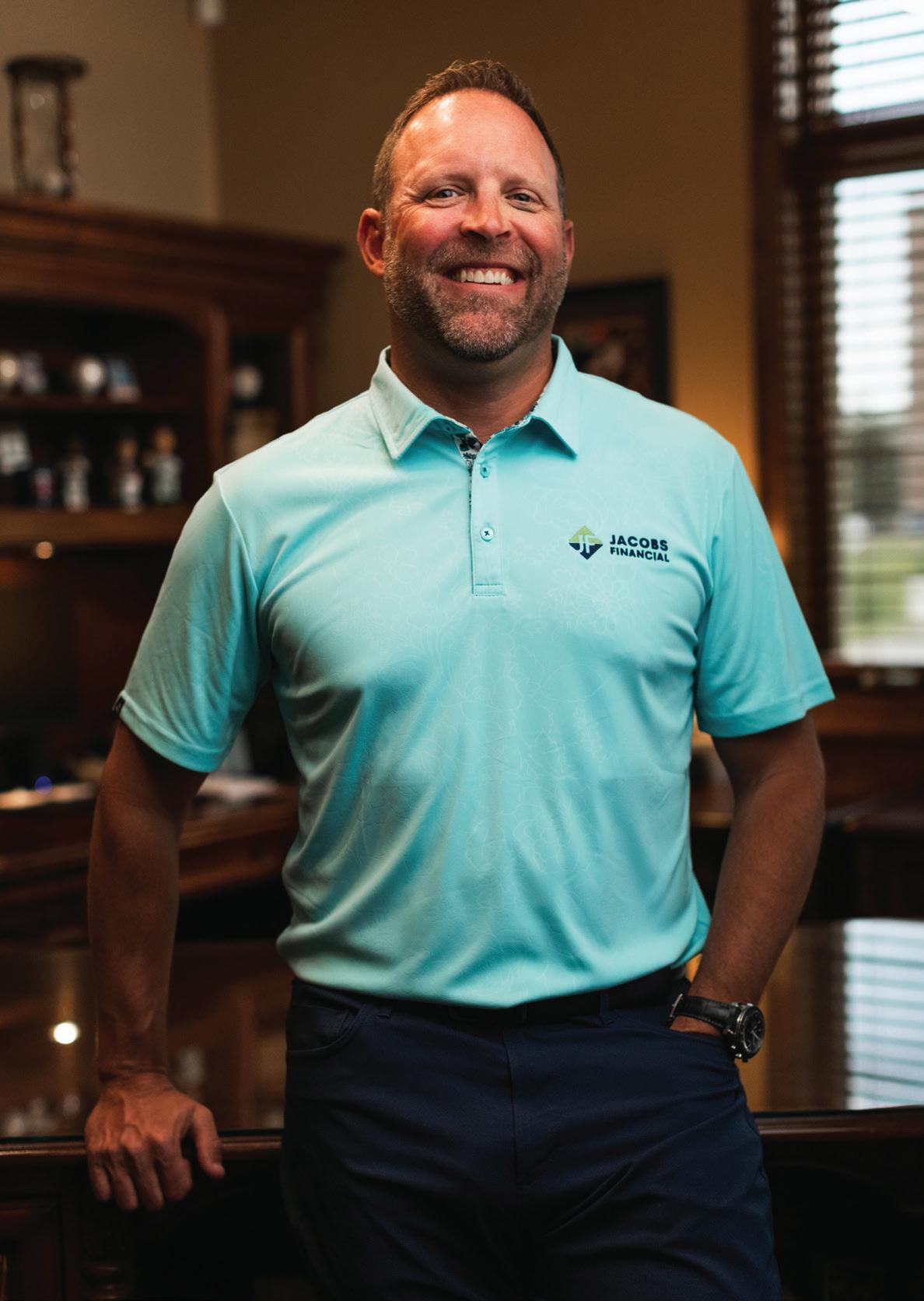
Dave Jacobs
AGE: 45
FAMILY: Wife Kristen and children Alivia (Liv), Kalyn and Devin
HOMETOWN: St. Cloud
EDUCATION: Apollo High School, St. Cloud State University
PAST WORK: Crossroads Cinema in high school, and Green Mill Restaurant in college
HOBBIES: Golfing, hiking in the mountains, spending time with family
FUN FACT: Dave’s daughter Liv is currently attending Arizona State University, pursuing a degree in financial planning
ADVICE TO OTHERS IN THE INDUSTRY
“Never stop learning. I obtained another professional designation this year which is tailored to fit what my clients’ needs are today. For individuals thinking about or just entering the industry, know that it generally takes at least three to four years before you can feel a bit of success.”
After graduating from St. Cloud State University, Andy moved to the metro area and started working in recruiting for an IT consulting firm. In 2002, while taking his securities test, Dave stayed with Andy for a week. At the time, Andy was looking at his career options and trying to figure out what came next for him. “I’ve always enjoyed helping people, serving people and working in sales,” Andy said. He saw what Dave was doing with his career and the timing was just right. He moved back to St. Cloud, quit his job, and decided to join Jacobs Financial in 2004.
Entering the financial advisor industry isn’t easy, and there is a lot of competition. “Especially when you’re first starting out, it takes a lot for a client to say, ‘I trust you with my money, you’ve been in the business for a year,’ ” Dave said. “Fortunately, Jim had almost 30 years of experience when we joined the firm, so that helps.”
That’s not to say the early years were easy, by any means. “Our dad never really gave us any clients,” Andy said. Jim felt that it was important for Dave and Andy to build their own books of business, and he would help along the way. “It was a good character builder,” Andy said. “Now I appreciate it even more.”
GROWING TOGETHER
The Jacobs have learned to be strategic when it comes to adding more staff. If you wait until too late, your customer service will suffer, but too soon and you’re stuck figuring out how to cover the new overhead. That said, growth has its payoffs. “It’s easy to be stagnant in this business,” Jim said. He commends Andy and Dave for their desire and ability to see and act on growth opportunities.
One of those opportunities came in the form of purchasing a building instead of
continuing to lease more and more space. They purchased the Jacobs Executive Center in 2007. “We were able to fill the building up with tenants that partnered with us,” Dave said. The office space in the building that was not taken up by Jacobs Financial was quickly occupied by an insurance agent, title company, mortgage lender, an attorney, and other types of businesses that were compatible with Jacobs Financial. “We only needed five offices at the time,” Dave said. With the growth of the Jacobs team, the building now has three tenants aside from Jacobs Financial.
Around the same time that they purchased the building, Andy and Dave became shareholders at Jacobs Financial. “In the beginning, ownership was 60/20/20 with Jim, Andy and me,” Dave said. “Over time we gradually took on more.” As Jim pulled back on his hours and client load, Andy and Dave
took on more of the managerial roles until they officially took over as owners in 2019.
Jacobs Financial currently has 10 advisors and seven support staff. The business has grown not only by advisors, but physically, with new locations in the Brainerd area and Maple Grove. The growth is intentional. As Jacobs Financial continues to service clients and families for decades, the need for more staff increases. “Nothing is forever, we all know that,” Andy said. “We want our clients to be taken care of for the long haul.” The Jacobs are doing their best to prepare yet another generation of advisors.
“There is a shortage of financial advisors and planners in the industry,” Andy said. Many advisors are retiring, with fewer new advisors entering the field. Retention is also a challenge, with only about ten percent of new advisors remaining in the business after four years. That’s not the case at Jacobs Financial,
where nearly every advisor they’ve brought on over the years is still in the industry. “If we can help a new advisor come into the business and help them be successful, it’s a win for everybody,” Andy said.
Mentoring is one of Jim’s favorite parts of the business, and what keeps him coming to the office. “In the Bible it talks about retiring only one time,” he said. He reflects on the Biblical story of the Levites, who work from age 25 to age 50, and then are required to
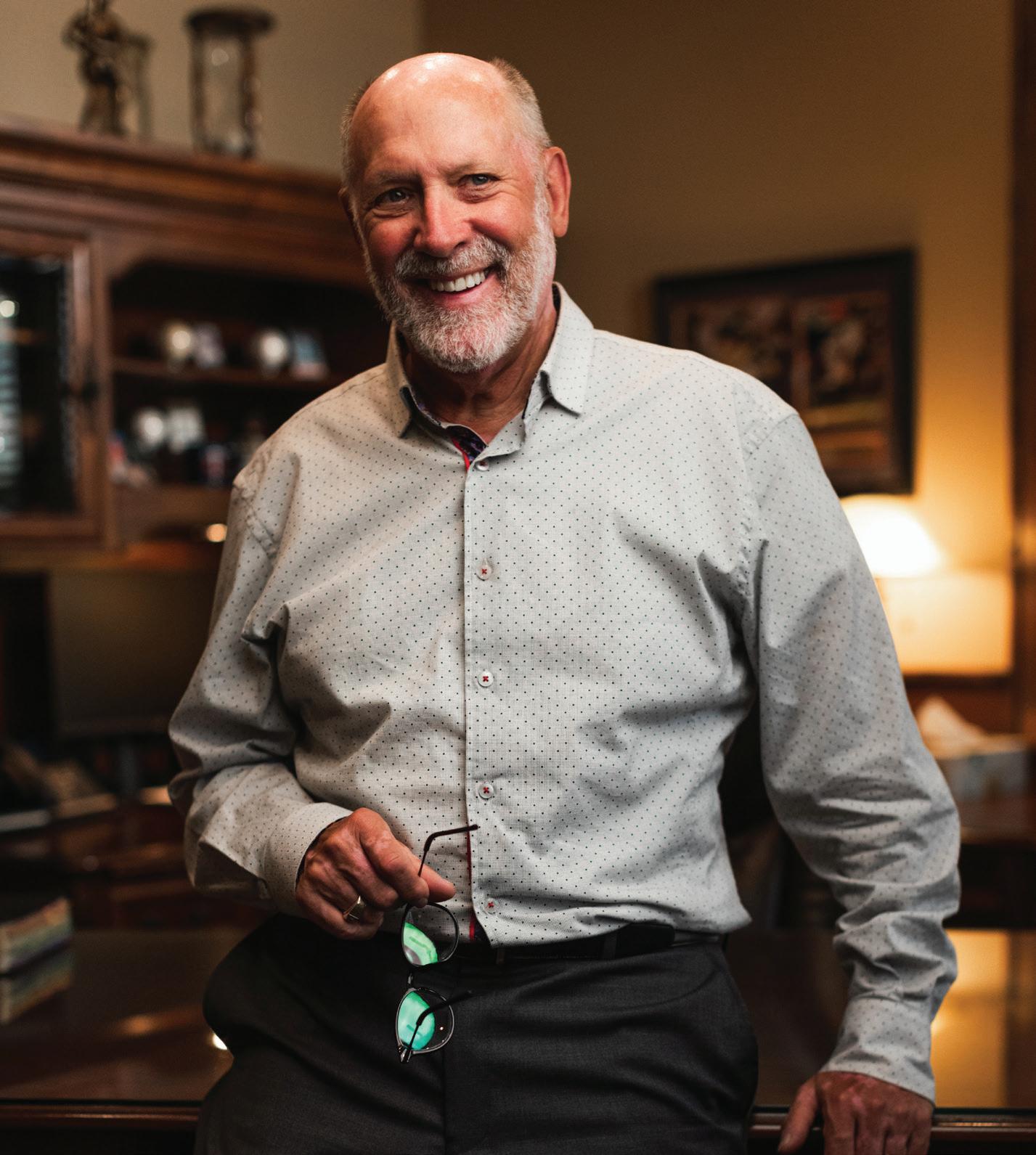
AGE: 79
FAMILY: Wife Carol and children Andy, Matt, Dave, Adam, and Meghan; 16 grandchildren
HOMETOWN: St. Cloud
EDUCATION: Tech High School, St. Cloud State University
PAST WORK: Perkin’s Restaurant
HOBBIES: Spending time with grandkids and watching their sports, playing racquetball, fishing, leading a bible study fellowship with over 50 people
FUN FACT: Jim went on a fishing trip in the Boundary Waters every year for over 30 years.
ADVICE TO OTHERS IN THE INDUSTRY
“There’s the old cliché: if it were easy everybody would be doing it. It also really helps if you have a mentor in this business.”
PERSONAL PROFILE
Jim Jacobs
Andy Jacobs
AGE: 50
FAMILY: Wife Angie and children Mason and Leah
HOMETOWN: St. Cloud
EDUCATION: Apollo High School, St. Cloud State University
PAST WORK: Tek Systems
HOBBIES: Staying active by golfing and working out, spending time with family on Lake Miltona, traveling, coaching soccer, playing card games
FUN FACT: Andy severely broke his leg during a soccer game at age 16 and had to have five surgeries to repair it. He was back playing soccer the next year.
ADVICE TO OTHERS IN THE INDUSTRY
“You have to get into the business for the right reason, and you have to have a passion for it. It’s
not just about making money. That’s an ancillary thing.”
retire. However, they are permitted to come back and give advice to the younger workers. “They are there to mentor the young guys, and that’s what I’m doing.”
THE JACOBS WAY
In the early 2000s, the industry saw a shift from commission-based financial planning to a more comprehensive financial advisory approach. This aligned closely with the values of Jacobs Financial, which focuses heavily on developing relationships. “It’s more of a consulting approach versus just selling a product,” Andy said. “That’s the focus and approach that we prefer.”
A lot of advice comes in the form of coaching, including helping clients
understand their accounts and teaching clients how to remove emotions from their financial decision making. “First and foremost, helping our clients is the main goal,” Dave said. “People need advice. They don’t know all the things they could or should be doing, and in some cases, they miss the boat.”
Jacobs Financial is part of the North Star Resource Group, which opens the doors for a number of customized solutions and other advantages for its clients. “It gives us more of that ammunition in terms of how we can service our clients,” Jim said.
“It’s not off-the-shelf products,” Andy said. “It’s figuring out what do we need to do to make this goal or dream a reality.”
“We’re here to serve others, that’s the mission of what we do and provide,” Dave said. So it’s not surprising that the most rewarding days in the business are when the Jacobs are able to bring their clients comfort, even in the midst of a death or major tragedy. “Being able to tell them, you’ll get through this and we’re there to help with your finances,” Dave said. “That’s a great feeling.”
It’s also rewarding when they can give their clients the go-ahead to spend a little money. “When you get to that point where clients need permission to spend money, that’s the fun part,” Andy said. “When you get to see clients really enjoying their retirement and they’re living comfortably.”
It goes beyond the vacations and home remodels, of course. The Jacobs recognize that, by helping their clients become fiscally sound, they are enabling their clients to give back to the community, something that the Jacobs are familiar with. “If we’re blessed, we can bless others,” Jim said. “And it comes back to us 100 times.”
“The community has supported us and our business,” Dave said. “We want to turn around and support the community back.” For nearly two decades, the Jacobs have been serving the community through an annual fundraising golf tournament. “When we first started the Swing Fore Charity Golf Tournament 18 years ago, we wanted the dollars to stay local,” Dave said. It was important to be able to see the impact. They became familiar with Habitat for Humanity, aligning closely with its mission of, ‘It’s not a handout, it’s a hand up.’ “The dollars are right here in our community and we’re helping people right here,” Dave said.
Jacobs Financial annually donated the proceeds of their golf tournament to Habitat for Humanity until the pandemic. In 2022, when they re-started their golf tournament, they were introduced to the Greater St. Cloud Public Safety Foundation and the St. Cloud COP House. “We liked the idea of giving back to those who have served us, so how can we do that in a local way?” Dave said. It was a natural fit. The first-of-its-kind in the state of Minnesota, the Community OutPost (COP House) is a place where the
St. Cloud Police Department collaborates with residents, community groups, businesses, and St. Cloud State University to assess community needs, build and maintain relationships, and improve access to needed health, wellness, and other services.
HITTING HOME
At the urging of a friend in 2023, Andy underwent a cardiac CT calcium scoring test. One test led to another, and eventually – despite always eating healthy and staying active – he discovered that two of his coronary arteries were nearly blocked. Facing this life-threatening condition, Andy had a week to prepare for double open heart bypass surgery in November of 2023.
“It was a check on my financial situation, but it was an easy one because I already knew I had everything in place,” Andy said. “It allowed me to be with my family and focus on my relationship with Jesus during that time.” The situation gave Andy a renewed focus at work, as he was able to experience firsthand the benefit of being prepared for a bad situation. “You can’t wait to put things in place,” he said.
Jim’s passion for the industry comes from his first love: baseball. In the 1999 movie For the Love of the Game, Kevin Costner plays baseball pitcher Billy Chapel. In the movie, Chapel spends 19 seasons playing for the Detroit Tigers, with the final game of his career facing the New York Yankees. Reflecting on his love of baseball and his impending retirement, Chapel ends up throwing a perfect game (which means the other team didn’t get a single hit). A perfect game is always Jim’s ultimate goal. “In our business, we try to do our best - to be perfect,” Jim said. “For the love of the gamethat’s why I’m here. I try to be as perfect as I can for my clients.”
FAMILY FIRST
For over 50 years, Jacobs Financial has been serving the Central Minnesota community with its financial planning needs. With a focus on building solid relationships that will last for generations and an attention to individual needs, owners Andy and Dave Jacobs and their father, Founding Partner Jim Jacobs, have grown a small operation into a three-location business with nearly twenty employees. The trio has also placed a large priority on giving back to the community, hosting the Swing Fore Charity Golf Tournament benefiting a variety of local charities and projects for 18 years as well as numerous other involvements in local boards and organizations. With its growth, commitment to the community, and passion for helping generations of Central Minnesotans retire with confidence, Jacobs Financial was named the St. Cloud Area Chamber of Commerce 2024 Family-Owned Business of the Year.
Emily Bertram is director of marketing and communications at St. Cloud Area Chamber of Commerce and editor of Business Central Magazine.
The opinions contained in this material are those of the author/presenter, and not a recommendation or solicitation to buy or sell investment products. This information is from sources believed to be reliable, but Cetera Advisor Networks LLC cannot guarantee or represent that it is accurate or complete.
2024 Family-Owned Business of the Year is issued by St. Cloud Area Chamber of Commerce to a family-owned and operated business which has been passed from one generation to another. Nominees must also serve as a majority owner and operator or bear principal responsibility for operating the business with at least a 15-year track record. Listing in this publication and/or award is not a guarantee of future investment success. This recognition should not be construed as an endorsement of the financial professional by any client. No compensation was provided directly or indirectly by the recipient for participation or in connection with obtaining or using the third-party rating or award.
FOREVERBest Friends
When managed well, customer loyalty saves a company both time and money. // By
Jeanine Nistler
Welcoming new customers to your business is exciting. Keeping those customers requires strategy, effort, and teamwork, but the rewards are worth the work.
“The value of a repeat or loyal customer is generally that they are frequent shoppers, and they spend more,” said Dennis Host, Coborn’s senior vice president of marketing and communications. “You have already won them over. They value your brand, the quality of products or variety you offer, the services you deliver, and they prefer to spend their money with you versus elsewhere. They are likely a smaller percentage of your total customer base, but the largest percentage of your total sales. This is a group of customers we work hard at protecting.”
Not only do loyal customers add to your bottom line by returning and spending again and again – they can attract new customers in a way that advertising cannot, said Christy Gilleland, owner of Gilleland Chevrolet. “Repeat business reduces the need for extensive marketing efforts to attract new customers. New customers cost so much more – as much as double or triple – to advertise to,” she said.
In an article on Business.com, business advisor Max Freedman said “word-of-mouth marketing, fueled by customer loyalty, produces compelling brand advocacy. We trust recommendations from friends
and family regarding retailers, services, or companies.”
“It only makes sense that we focus our attention on our current customers and make sure they see the benefit of coming back,” Gilleland said. At Gilleland, the benefits of coming back include free oil changes, discounts on body work, thank you gifts and cookies, social media recognition, and referral bonuses for bringing in family and friends.
Coborn’s MORE Rewards program offers discounts on purchases of gas, pet products, and baby products. A loyalty program gives a business “a leg up to truly understanding consumer behavior and allows a business to leverage that data to drive desired behavior,” according to Host. “It
“REPEAT BUSINESS REDUCES THE NEED FOR EXTENSIVE MARKETING EFFORTS TO ATTRACT NEW CUSTOMERS. NEW CUSTOMERS COST SO MUCH MORE – AS MUCH AS DOUBLE OR TRIPLE – TO ADVERTISE TO.”
—CHRISTY GILLELAND, OWNER, GILLELAND CHEVROLET
is a competitive advantage today to have this information as the days of customer loyalty being something you could just take for granted are over. Consumers today expect and demand that you earn their business. Competition is fierce and consumers have many options to choose from when deciding where to spend their hard-earned money. To drive customer loyalty, you have to truly understand their behavior and leverage what you know about them to nurture them in their buying journey.”
Scheels’ customers who use the company’s branded VISA card are rewarded with gift cards to use on future Scheels purchases. And, while loyal customers appreciate discounts and gifts, they also are fans of great customer service and relationships with staff and they value the opportunity to give feedback.
“Loyal customers will tell you where you’ve gone wrong and right,” said Kevin Murphy, store leader at Scheels in St. Cloud. “They will share with you what
they’d like to see and what they don’t care to see. I believe our success has a lot to do with us focusing on staying consistent in this area by listening and adapting to our changing customer needs.”
Policies, he said, must put the customer first. He cited price matching, a liberal return policy, and offering special order and custom merchandise. Consistent and genuine customer service is also essential, Murphy said. “Greet every customer as they come in, escort them to the space they are looking for, ask questions
A CUSTOMER BECOMES LOYAL BECAUSE OF THE BRAND AND THE EMPLOYEES WHO TREAT THEM THE WAY THEY WANT AND DESERVE TO BE TREATED. IT BECOMES THEIR STORE, AND WE ARE HELPING THEM THROUGH IT.”
—KEVIN MURPHY, STORE LEADER, ST. CLOUD SCHEELS
for what brings them in, learn their name, offer them a ‘thank you’ for their business. Do this each and every visit. Customer loyalty is about consistent personalized attention.”
“A strong element of fostering customer loyalty is ensuring customers know they can rely on you for resolutions to their queries or issues – and that your offerings effectively cater to their needs,” Business.com’s Freedman said. “Knowing customers by their first names and understand-
ing their preferences allows for personalized recommendations and significant assistance.”
With auto sales, Gilleland said, she often sees that customers are more loyal to an individual salesperson instead of the dealership itself, stressing the importance of salesperson loyalty.
“Providing helpful training, a company philosophy, and a friendly work environment can increase the length of employment and reduce the turnover of salespeople.”
“It is important to recognize engaged and passionate associates as the first step to building customer loyalty,” Murphy agreed. “A customer becomes loyal because of the brand and the employees who treat them the way they want and deserve to be treated. It becomes their store, and we are helping them through it.”
For many businesses, it’s not realistic for employees to know the first names and purchase preferences of the vast numbers
of customers at their multiple stores. That’s why Coborn’s uses “data and insights to categorize shoppers into segments by interest, categories they shop, the amount they spend per trip or annually, how broadly they shop, and how often,” Host said. “All of these insights allow a brand or retailer to better understand what their customer values most. They then can turn that into valuable insights to drive strategy and shape consumer behavior.”
While loyal customers may not have personal relationships within businesses they frequent, the term relationship can refer to an “emotional connection that keeps them coming back,” Host said, “and when that happens, it drives loyalty for the retailer who
is delivering the service or goods and instills a confidence in the consumer to know that when they shop here, they know what they’re going to get. It lives up to their expectations, and ultimately instills loyalty to the brand or retailer.”
On Forbes.com, marketer Azlan Raj reported on a study that found “the experience consumers had of a brand was as important as the price, even in the context of the cost-of-living crisis – 90 percent of consumers say poor customer service and communications were damaging to loyalty.”
“Customers remember their best, worst, and last experience with a brand,” according to Raj. “Research suggests that a third
of people will walk away from a brand they love after having just one bad experience.” This suggests that, going forward, loyalty strategies must include a combination of both transactional and value-based interactions.
Coborn’s Host stresses the importance of having a strategic plan. It should leverage multiple marketing tactics that will not only acquire new customers, but also work to grow and retain current customers and win back lapsed customers. “We have a set of ‘brand promises’ that we strive to deliver on every day,” he said. “Built around our company vision to ‘Be Remarkable,’ our brand promises support the vision by offering the best guest experience we can, every day.”
Getting customers to return repeatedly, Gilleland said, “is a lot about how they experience your process. If we have weak links in the process, it can easily work against us. Every touchpoint in our process has to be looked at regularly. This can mean training for our sales team, training on how the receptionist answers the phone, the look and appeal of our exterior and internal building, restrooms, the ease of the transaction and much more. We want our customers to feel welcome, valued, and heard,” she said. “As easy as these things might sound on paper, they are not. It takes a whole team to accomplish this.”
Customer relationship management, according to Raj,
“can also mean reflecting shared social values and concerns.” Gilleland, Scheels and Coborn’s all recognize the importance of doing just that by investing in the communities they serve.
“We really like to make sure our customers and the people in our community see that our business gives back to countless programs in the area,” Gilleland said. “When someone continues to be loyal to us, it helps our ability to give back.”
Jeanine Nistler is a St. Cloud-based freelance writer whose career has included daily newspaper reporting and editing, as well as communications work in healthcare, higher education, and state government settings.
MARKETING SOLUTIONS THAT GET RESULTS
A group of students practice welding at SCTCC.
may (and – equally important – may not) want to do later in life.
“We dive into the explorative side to help kids understand what they like and what they might be good at,” Brady DeGagne said. DeGagne is the director of training and development for the Boys & Girls Clubs of Central Minnesota, which serves about 6,000 youths in grades K-12. “Kids won’t have figured out what they want to do yet,” he said. “But these activities give them experiences they will remember. That’s why our big focus is on high-yield, hands-on
HANDS-ON, MINDS-ON
CENTRAL MINNESOTA ORGANIZATIONS ARE HELPING SHAPE CAREER DREAMS THROUGH HANDS-ON EXPERIENCES.
By Randy Krebs
“What the hand does, the mind remembers.”
Although about a century old, that quote from Italian physician and educator Maria Montessori aptly sums up the approach several Central Minnesota organizations embrace when they engage with area youth to help them determine potential careers.
Whether it’s a summer robotics camp for grade schoolers or a oneday career fair for high schoolers, offering hands-on activities is the go-to technique for helping Central Minnesota youth learn what they
activities, and our goal is to help them understand who they want to become, not what they want to do.”
Leaders of similar area organizations echoed those sentiments in explaining how their respective operations appeal to and connect with today’s younger generations, including exploring potential careers that could land them at local businesses.
An EPIC Experience
Emily Davis is coordinator of EPIC (Exploring Potential Interests in Careers), a community collaborative in partnership with the Greater St. Cloud Development Corporation, that helps connect area students with area businesses for hands-on career learning opportunities. Of its four main platforms for making those connections, its biggest draw is EPIC Student Day, held annually in the fall at the St. Cloud Technical
Members of the Boys and Girls Clubs of Central MN learn about EMT services.
and Community College. “Ten to 15 years ago, it was about earning a four-year degree. Now it’s more about getting the specific training you need to get the job you want,” Davis said.
About 4,500 area students, mostly sophomores, come from up to 100 miles away to explore careers in industries such as healthcare, manufacturing and transportation. The unique aspect of the event is that the approximately 150 participating businesses are strongly encouraged to have a hands-on activity for the students to try.
“Businesses in a specific industry work together to create these activities,” Davis said. “This day is about helping students explore careers, not necessarily about gaining employees for a specific business. It’s a great way for businesses to expose kids to an industry because there are 4,500 kids there in one day.”
Experiential events, like EPIC Student Day, would not be possible without a collaborative community, Davis said. “Central Minnesota’s business community is among the most generous and supportive I have seen.” About 75 percent of EPIC’s budget is donations from area businesses.
“It’s about playing the long game for businesses,” Davis said, explaining that the connections businesses are willing to make today with high school students can pay off in a few years when those students look for jobs based on the skills they discovered through experiences they are having now.
In addition to the fall event, EPIC offers an “EPIC for Influencers” event in the spring that aims to have the adults in a youth’s life better understand what that student wants. EPIC
also provides materials online and at the Great River Regional Library in St. Cloud to help youth and their families learn about careers through hands-on, experiential approaches.
Learn, Work, Earn
For youth who not only want an experience but a paycheck, the CareerONE program operated by Career Solutions is an option. The summer program for youth ages 14 to 17 operates mainly in St. Cloud, with satellite programs in Melrose, Paynesville and Sauk Centre. Participants gain work readiness training through handson experiences with careers in healthcare, construction and manufacturing, early childhood education, and public safety.
In addition to hands-on work, the program helps youth with their math and reading skills. They learn about personal finance, build resumes, take part in mock job interviews (thanks to participating businesses and organizations), and discover the importance of developing teamwork with co-workers they have never met.
Participants who successfully complete the 20-day St. Cloud program receive a stipend of up to $1,020, college credits if applicable, and invaluable handson experience in a potential career field. The satellite programs offer similar experiences, just on a smaller scale.
Tammy Biery is the executive director of Career Solutions, which leads workforce development initiatives for Stearns and Benton counties. “By the second week of the program, many kids really get into the work,” she said. “They’re eager to get up in the morning and show what they can do.”
REMOTE OPPORTUNITIES
Moving Home
TIRED OF THE COMMUTE AND WORKING OUT OF A CUBICLE? HERE ARE THE TOP OCCUPATIONS THAT OFFER REMOTE WORK.
The COVID pandemic brought about hundreds of changes to daily life, and one significant trend is the shift to remote work. A December 2021 Minnesota Department of Employment & Economic Development (DEED) article by Senior Project Manager Alessia Leibert explored the remote work trend, focusing on the top occupations offering remote work.
From 2020 to 2021, the share of Minnesota jobs offering the option of working remotely nearly doubled, going from 5.3 percent to 10.4 percent (see Table 1). The possibility to perform remote work obviously differs by job type, with certain jobs having no incidence and others having more than 30 percent incidence.
The top 11 occupational groups displayed in Table 1 were suitable for being performed remotely even before the pandemic, but the pandemic accelerated existing
Sidebar continued on page 40
Table 1: This table shows the incidence of remote work and the number of job postings that included remote work in the description. It is based on occupation group from 2020 and 2021 and is ranked by the percent of positions allowing remote work in 2021.
Share allowing Telework
Occupation Group JuneSept 2020* JulyOct 2021* Difference
Source: National Labor Exchange (NLX) job postings, author analysis * For 2020, 12 days in June are included in the examined time frame. For 2021, October was added to the examined time frame to pick the most recent trends.
trends. On top of the list, not surprisingly, we find Computer & Mathematical Occupations, which nearly doubled from a 17 percent incidence of remote work in 2020 to 31 percent a year later.
While remote work in Information Technology (IT) and other occupations that involve spending many hours in
are commonly thought of as requiring a high degree of face-to-face contact, like social service workers and salespeople.
During the pandemic some social services were transitioned online, including mental health and correctional treatment counseling. The four percent growth in the incidence of remote work in community & social service occupations suggests that some clients or patients appreciated remote service delivery options. And some direct health care jobs proved suitable for remote work.
Other types of jobs, in contrast, did not offer any or only very few remote work options in 2020 and continued to remain unaffected by these trends due to the nature of the work: food preparation, construction/maintenance/
Various businesses and professions also see the program’s long-term value. For example, CareerONE added public safety as a focus area last year because law enforcement leaders anticipate a long-term need for more officers. “Area police chiefs know it’s going to take years for it to come to fruition,” Biery said. “But if they don’t start now, it’s not going to help them five to 10 years down the road.”
This past summer the program served close to 170 youths across Central Minnesota, triple the amount enrolled a decade ago. “CareerONE gives kids a vision of what their careers could look like,” Biery said. “It helps them pick classes in high school and motivates them to do better in school. Businesses can help in the same way by
CENTRAL MINNESOTA’S MANUFACTURING HUB
The St. Cloud Airport Business Park rebrands to St. Cloud Regional Business Park
The current home to Geringhoff North America and National Vision near the St. Cloud Regional Airport is getting a new name and positioning itself for growth as a regional manufacturing center. The new name as St. Cloud Regional Business Park allows the City to attract industries that can benefit from multiple lot sizes ranging from 5 to 79 acres, and robust regional Minnesota Highways 23 and Highway 10 and for accessing talent suppliers.
The new name as St. Cloud Regional Business Park allows the City to attract industries that can benefit from multiple lot sizes ranging from 5 to 79 acres, and robust regional Minnesota Highways 23 and Highway 10 and for accessing talent and suppliers.
“Our market analysis indicated that there’s actually a significant number, 14.8%, of manufacturing employees located within a 60-mile radius of the business park along with a positive growth rate and younger population base.” In addition, the St. Cloud Regional Business Park has access to 19 different restaurants in a 3-mile radius, and lower housing costs in the area compared to the Twin Cities northwest metro.
The St. Cloud Airport Business Park was developed in partnership with East Central Energy, St. Cloud Opportunities, Inc. and the City of St. Cloud. The partners worked together to acquire, plat and install initial infrastructure improvements
to the property and received “ShovelReady Certification” from MN Dept of Employment and Economic Development in 2011. Shovel-ready designation qualifies sites as having the planning, zoning, surveys, title work, environmental studies, soils analysis, public infrastructure and engineering work completed prior to the site being offered for sale. “Having shovelready property can really expedite the sale and development process for a lot of manufacturers where speed to market with their production is key.” says Cathy Mehelich, Economic Development Director for the City of St. Cloud.
In addition to rebranding, the partners recently rezoned a portion of the property to allow for a mix of industries and construction types. A third tenant is currently proposing a relocation and expansion of its existing St. Cloud manufacturing operations and taking advantage of the wide open spaces to grow and the competitive pricing. With prices starting at $1 per square foot, including public infrastructure to the lot, the City of St. Cloud Economic Development is excited about the future potential for the regional hub. Key industries have been identified as targeted compliments for the business park – including, precision manufacturing, automation, as well as food equipment manufacturing based on the existing workforce and training specialties at St. Cloud Technical & Community College’s new Advanced Manufacturing Center, and St. Cloud State University’s Integrated Science & Engineering Facility.
“We encourage manufacturers seeking room to grow from 10,000 to over 100,000 square feet to consider new construction in St. Cloud Regional Business Park as an option. •
Interested? To explore development & redevelopment opportunities in St. Cloud, please contact Mayor Dave Kleis or Cathy Mehelich Mayor Dave Kleis: 320.255.7201 • dave.kleis@ci.stcloud.mn.us
Students in the Exploring program learn about airplane maintenance and engine diagnostics.
All Ages Welcome
In addition to partnering with EPIC for its fall student day, St. Cloud Technical & Community College offers a wide array of hands-on activities and events for youth between third and 12th grades. Most of those are in middle and high school, and the college puts a particular focus on students in underserved communities.
“This summer we offered a culinary camp, robotics and manufacturing camps, tools camps for construction, scrubs
PASSION MEETS PURPOSE
camps for health care, and sportsrelated camps,” Katie Frank, Vex Robotics and STEAM Outreach coordinator, said. “Students are able to learn and connect way more with the programs we are offering if we provide them a hands-on activity. During the school year, we do tours for many different groups, which include hands-on experiences like wiring up a light bulb or programming a robot.”
STEAM stands for science, technology, engineering, arts and mathematics. Because those fields are so important to countless careers, SCTCC puts great emphasis on them in offering programs for youth. For example, in just the past decade, robotics has become immensely popular
among youths nationwide. Success in robotics requires everything from technology and engineering skills to computer programming and graphic design.
“Robotics is huge and growing,” according to Steve Nusbaum, area manufacturing project manager for SCTCC. “And it’s a lead-in to many of our manufacturing technology programs. There is so much to it that people don’t see, but that gives kids so many hands-on opportunities.”
It’s through those opportunities that youth can make long-lasting connections. “It can be something simple that does not take long,” Nusbaum said. “When they can point to something and say ‘I did that,’ it provides that ‘ah-ha’ moment that teachers talk about. The students see what they are capable of and what they might be interested in.”
Up-and-Coming
While organizations like SCTCC and the Boys and Girls Clubs have been working with youth for years, Scouting America’s chapter (formerly Boy Scouts of America) based in Sartell is starting its second school year of its Exploring Program.
Exploring is a program that connects youth ages 14-20 with area businesses and gives them an opportunity to try different careers. The program includes hands-on activities that authentically show what it is to be part of a specific career. While it’s been part of Scouting America’s national programming for about 75 years, it’s just starting in the St. Cloud area.
Examples of careers that youth sampled last school year included health care, manufacturing, aviation, skilled trades, and entrepreneurship and business. Participants go to their business or organization six times or more over several months, which allows them to try activities in the industry.
THE IDEAL CHOICE
Sarah Dean is the Exploring Program coordinator with Scouting America in Central Minnesota. “We www.alliancebuildingcorporation.com
YOUR TRUSTED PARTNER IN
As masters of commercial HVAC, roofing and architectural exteriors, we’ve been building trusted partnerships for five generations. From quality installation to exceptional service and support, we’ll help you protect and prolong the life of your investments.
feel that having kids go at least six times really helps them decide if they do or don’t like a career field,” Dean said. “They will get a pretty good idea if they like it or if they’re saying ‘Gosh, no, never again.’”
This approach also helps businesses give potential employees a real sense of the skills needed for the duties they will be performing. “The more you can let kids try and do things, the more engaged they are going to be in learning about that career,” Dean said.
Like her peers in other programs, Dean believes connections with and support from the business community are paramount – something DeGagne of the Boys & Girls Clubs echoes.
“Businesses really can shine through this hands-on lens,” he said. “Not only can they showcase their own industry and potentially develop their workforce, they give youth a much better understanding of what goes into a career.”
CENTRAL MINNESOTA GROWTH GUIDE
Randy Krebs is a freelance writer and editor living in Sauk Rapids. He can be reached at randykrebs@charter.net.
Ever-expanding could easily be the motto of Central Minnesota. Explore these snapshots of some of the area businesses and see what new projects are coming to the region.
Youth in the Career Solutions program learn about the medical field.
Alliance Building Corp.
Broadway Garden Estate Phase I
55+ Senior Living Alexandria, MN
alliancebuildingcorporation.com
New construction, additions, or remodels. Let us build your needs!
Building a Better Tomorrow
For more than a century, Blattner has been proudly building the infrastructure of America. Our history started with constructing the nation’s railroads, highways, bridges, dams and mines, and today we’re leading America to a clean energy future. The 450+ wind, solar and storage projects we’ve built are generating enough clean power capacity to supply energy to more than 15 million homes annually. With nearly 10,000 employees as we grow from our headquarters in Avon, Minnesota to project sites across the country, we’re honored to say our heart and heritage are still in Central Minnesota. blattnercompany.com
Bradbury Stamm Construction
Granite City Real Estate Office Renovation
St. Cloud, MN
The Granite City Real Estate Renovation consisted of converting an existing two-tenant office and production space into one 8,000 square foot office facility. The building was taken down to the shell and reassembled to meet the client’s needs. Amenities of this building include a new vestibule addition, several office styles, board rooms, repurposed shop storage space, new Mechanical and Electrical systems, and a new façade. bradburystamm.com
JLG Architects
FUZZY LOON DESIGNS
Learning on the Fly
Fuzzy Loon Designs owners Sarah and Dan Fitzgerald are no strangers to rapid growth and change.
By Emily Bertram
How did you get started?
Sarah: It wasn’t our intention to start a business. We were both working at the prison and just looking for a side hobby to make extra money. Dan bought me a Cricut for Christmas one year, and we started creating and selling car decals. We gradually started designing vinyl stickers, graphic t-shirts and other customized products. Soon, our basement was full of commercial printing equipment, and we needed more space.
How has social media played a part in your business?
Sarah: Social media has been the main source of growth for our business. We have hundreds of thousands of followers across Facebook, TikTok and Instagram. Some of our followers even travel from other states to visit our store in person, which has been really cool.
Dan: We have also met some great friends through social media that do the same thing we do, and we treat them as a community instead of competition.
Sarah: We wholesale at our retail shop, and a lot of the businesses we sell to are our friends or companies we’ve gotten to know through social media. We enjoy introducing our St. Cloud customers to our friends’ small businesses.
What has been your biggest challenge?
Sarah: We have learned a lot
from growing fast. We had a TikTok video featuring one of our holiday t-shirt designs that went viral and had 15 million views. We sold 25,000 shirts from that video over two months. We had just started hiring employees, and now we had to fill this huge volume of orders in 1-2 days – it was stressful. We’ve learned to stock more inventory, use quick-turn suppliers, and have on-call staff for big surges.
Dan: For years we only had an online business and all of our items shipped without talking face-toface with customers. I’ve never worked in customer service like our retail store before, so that’s been a challenge – but it’s getting easier.
What does the future look like?
Sarah: Hopefully, sustainable growth. We are excited to try out new audiences. We have always sold business-to-consumer through social media. Consumer spending has shifted, and we have more demand now for business-tobusiness orders.
Dan: In the future, my daughter will be my boss – at least that’s what she tells me every day.
PERSONAL PROFILES
Dan Fitzgerald, 41
Background: From North Dakota originally and grew up in Eden Valley.
Work History: Various production roles, Minnesota Correctional FacilitySt. Cloud
Children: Zoey and Tucker
Sarah Fitzgerald, 36
Background: Born and raised in St. Cloud and went to St. Cloud State for Criminal Justice.
Work History: Minnesota Correctional Facility-St. Cloud
Hobbies: Camping, ice fishing, gardening and spending time outdoors
Sarah’s Advice : Don’t give up. It’s not always fun, but it’s worth it if you love it. And build a network of mentors who can help you.
Dan’s Advice : Get on all the social media platforms you can. Do your research and don’t jump into anything too fast.
AT A GLANCE
Fuzzy Loon Designs
fuzzyloondesigns.com // (320) 774-1111
First Opened: 2016 Joined Chamber: 2024
Business Description: Fuzzy Loon Designs specializes in custom printing and engraving, offering personalized apparel, promotional items, and unique gifts for both personal and business needs.
Owners: Sarah and Dan Fitzgerald
Employees: 5 part-time employees
2016 // Dan and Sarah Fitzgerald start Fuzzy Loon Designs in their basement
2021 // Dan quits his job at the prison to work on Fuzzy Loon full-time; they move the business into a 900 square foot location in St. Joseph
2022 // Sarah and Dan expand into a 3,000 square foot location in Sauk Rapids; they hire their first employees
2023 // Sarah starts working at Fuzzy Loon fulltime; they move into their current 10,000 square foot space in Waite Park and add a retail store.
Join Network Center, Inc. in person or online for our biggest event of the year - with zero cost!
Discuss the future of technology with experts. W ith sessions on security, AI, collaboration, and more, leave feeling more confident leveraging technology to amplify your business. Visit netcenter.net/nvision to save your FREE seat