www.philippine-resources.com
PENARROYO: SHAPING THE PHILIPPINES’ RESOURCES FUTURE
BUNYE: MENTORSHIP AND LEADERSHIP LESSONS FOR WOMEN IN MINING
GSP ROCK STARS: 80 YEARS OF MAPPING MOUNTAINS AND MENTORING GENERATIONS

www.philippine-resources.com
PENARROYO: SHAPING THE PHILIPPINES’ RESOURCES FUTURE
BUNYE: MENTORSHIP AND LEADERSHIP LESSONS FOR WOMEN IN MINING
GSP ROCK STARS: 80 YEARS OF MAPPING MOUNTAINS AND MENTORING GENERATIONS
Genluiching Mining Corporation (GMC) is a Philippine mining company registered with the Securities and Exchange Commission (SEC) and the Mines and Geosciences Bureau (MGB). It is licensed and authorized to engage in the exploration, quarrying, processing, and trading of iron ore, one of the Philippines’ high-value mineral products for export, as its principal business mission.
GMC partners with heavy construction equipment lessors, land transport and shipping companies, and petroleum suppliers for its exploring, drilling, excavating, hauling, transport, and shipment activities for greater financial fluidity and operational leverage. Its partners in this supply chain include Monark Equipment Corporation, Maxima Steel Mills Corporation, Phil lua Shipping Lines, Caltex Philippines, and Shell Philippines.

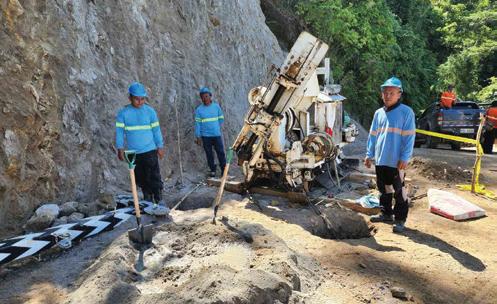
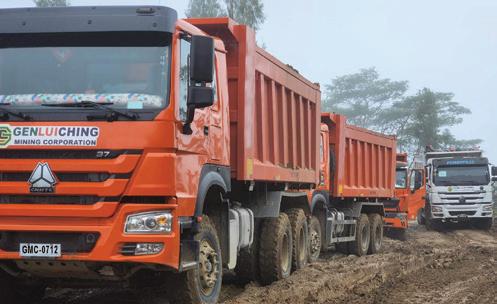
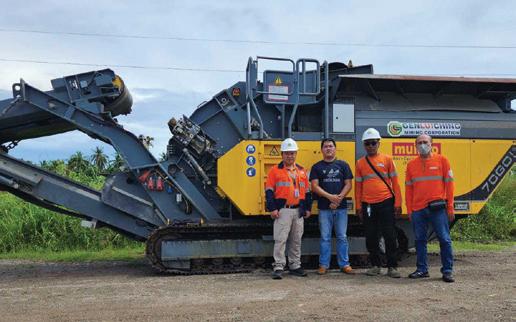
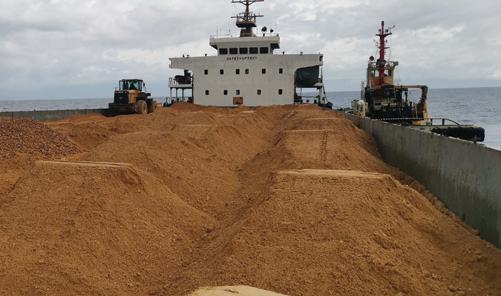
GMC’s concession area in Mati City, Davao Oriental yields iron ore and other minerals that include copper ore, gold ore, manganese ore, limestone, and silica.
GMC’s concession area in Ayungon, Negros mining site yields silica.


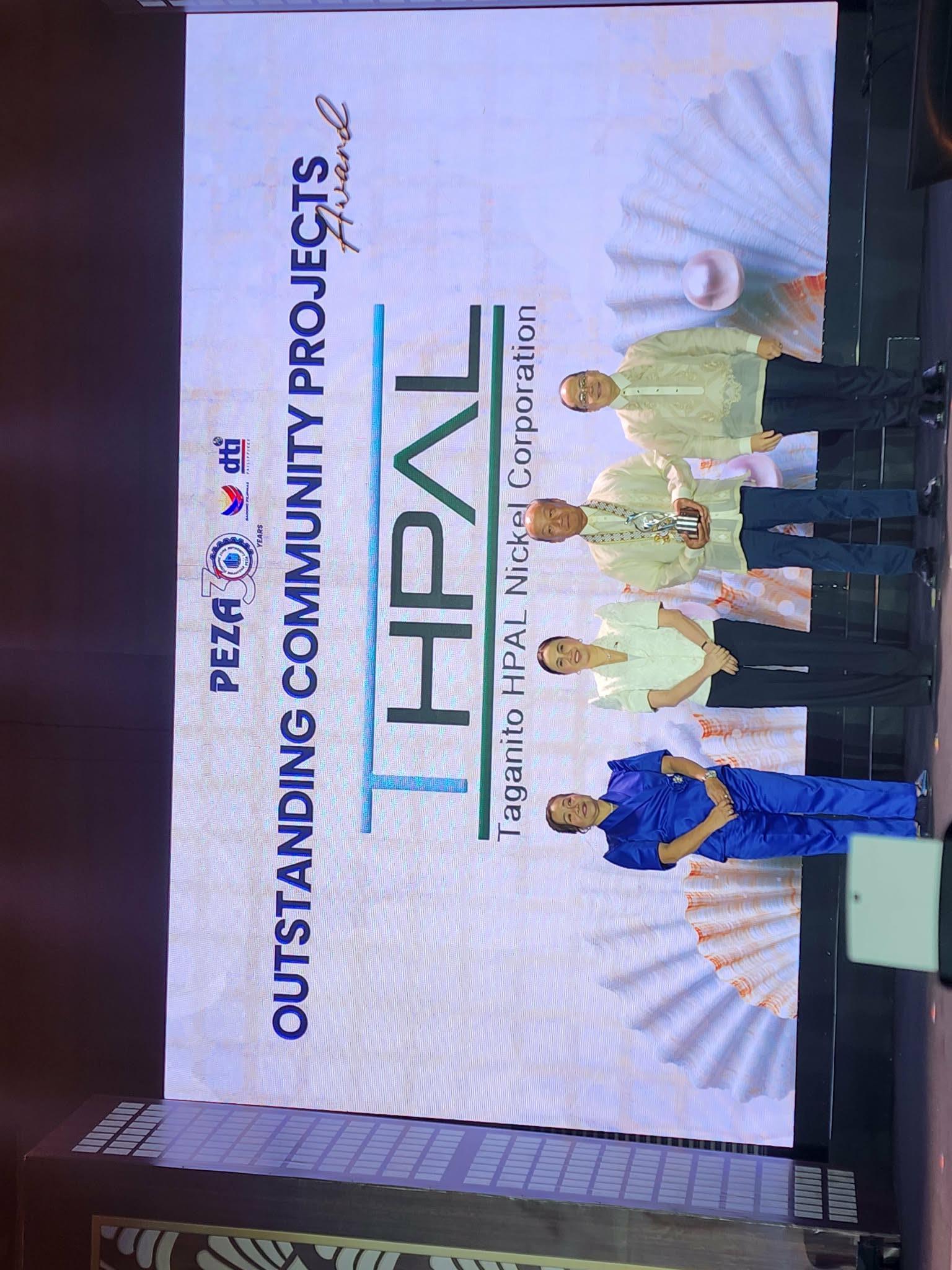

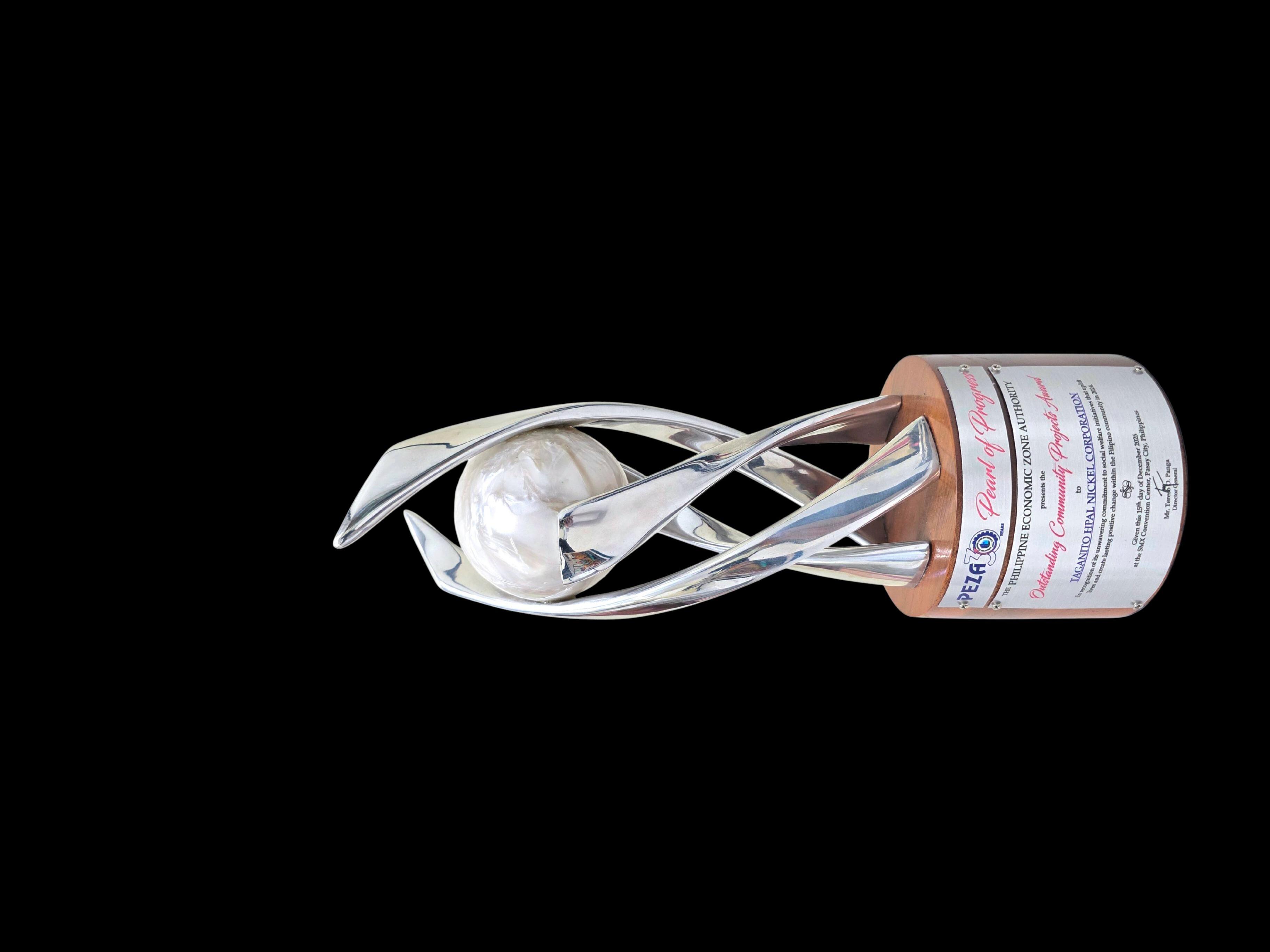
A W A R D E E
O u t s t a n d i n g C o m m u n i t y P r o j e c t s

Finding One’s Voice: Mentorship and Leadership Lessons for Women in Mining
The Geopolitics of the Periodic Table
Mining PH: New Regulations Enable DENR to Unlock Natural Resources Assets
Indonesia, PH Nickel Miners Launch IndoPhil Nickel Corridor for Responsible Mining
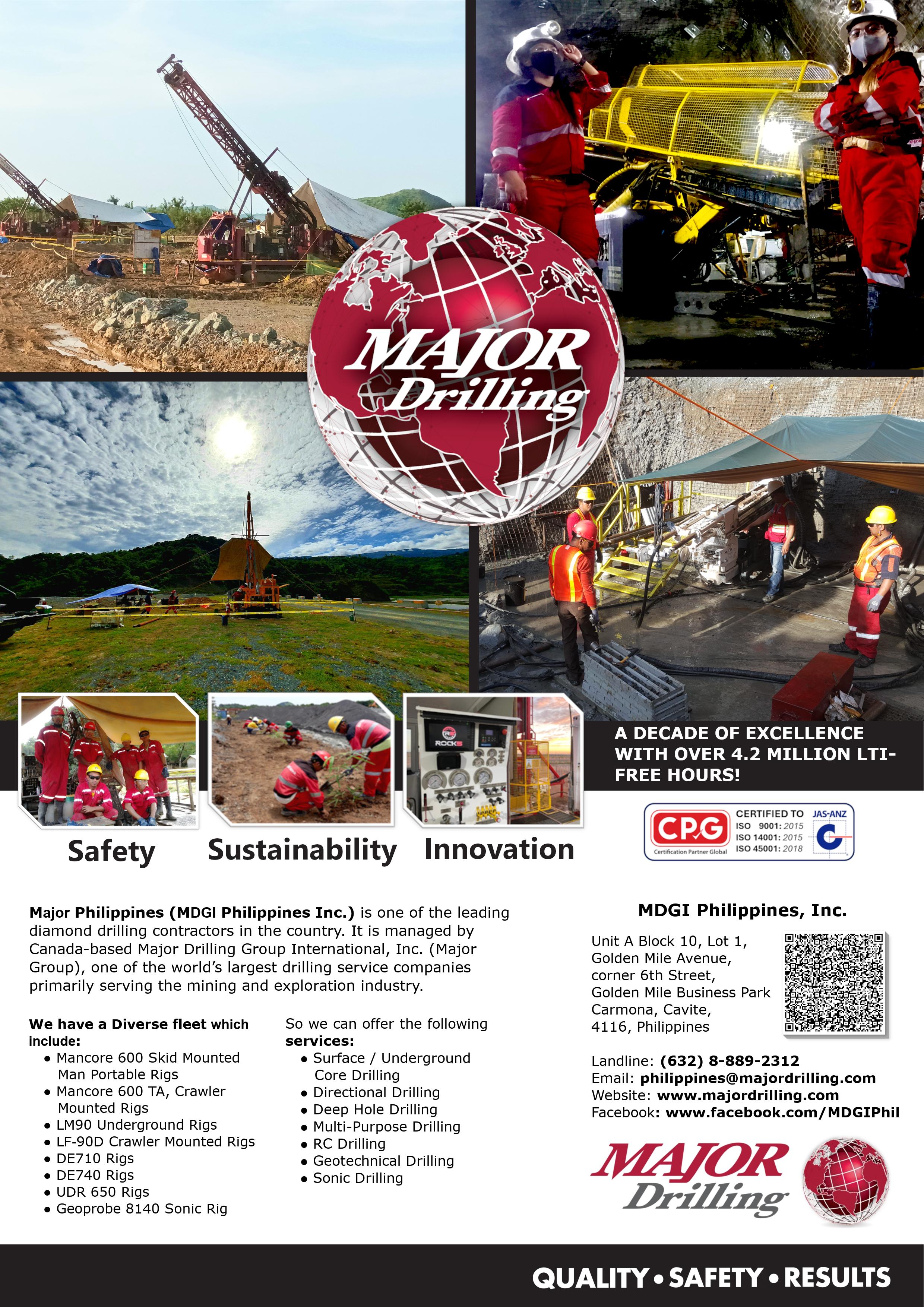
Major Drilling Philippines: A Decade of Safe Operations and Global Innovation
GSP Rock Stars: 80 Years of Mapping Mountains and Mentoring Generations
Digital‑Driven Mining: Highlights from the 2025 DS GEOVIA User Conference Philippines
A Kick Start for 2026 with the First PMEA Monthly Membership Meeting Engineering Excellence in Action
Breaking Ground: Philippines’ First Wireless Blast at Masbate with Orica’s WebGen
Diwata Launches ‘Network to the Next Level’ Mentoring Series in Baguio City
TMC Holds 3rd PO Conference,
Radiation Technology Converts Plastic Waste to Building Tiles
DPWH to Launch ‘Green Lane’ for Contractors to Speed Up Permits, Payments — AB Securities
PECAFORM: Building Smarter, Greener, and Faster for the Philippine Construction Industry
Marcos Says Subway Ahead of Schedule; Demo Run Set for 2028
Australia Acknowledges Role of Media in Maintaining Press Freedom and Democracy
PH AU Business Council Celebrates Golden Anniversary
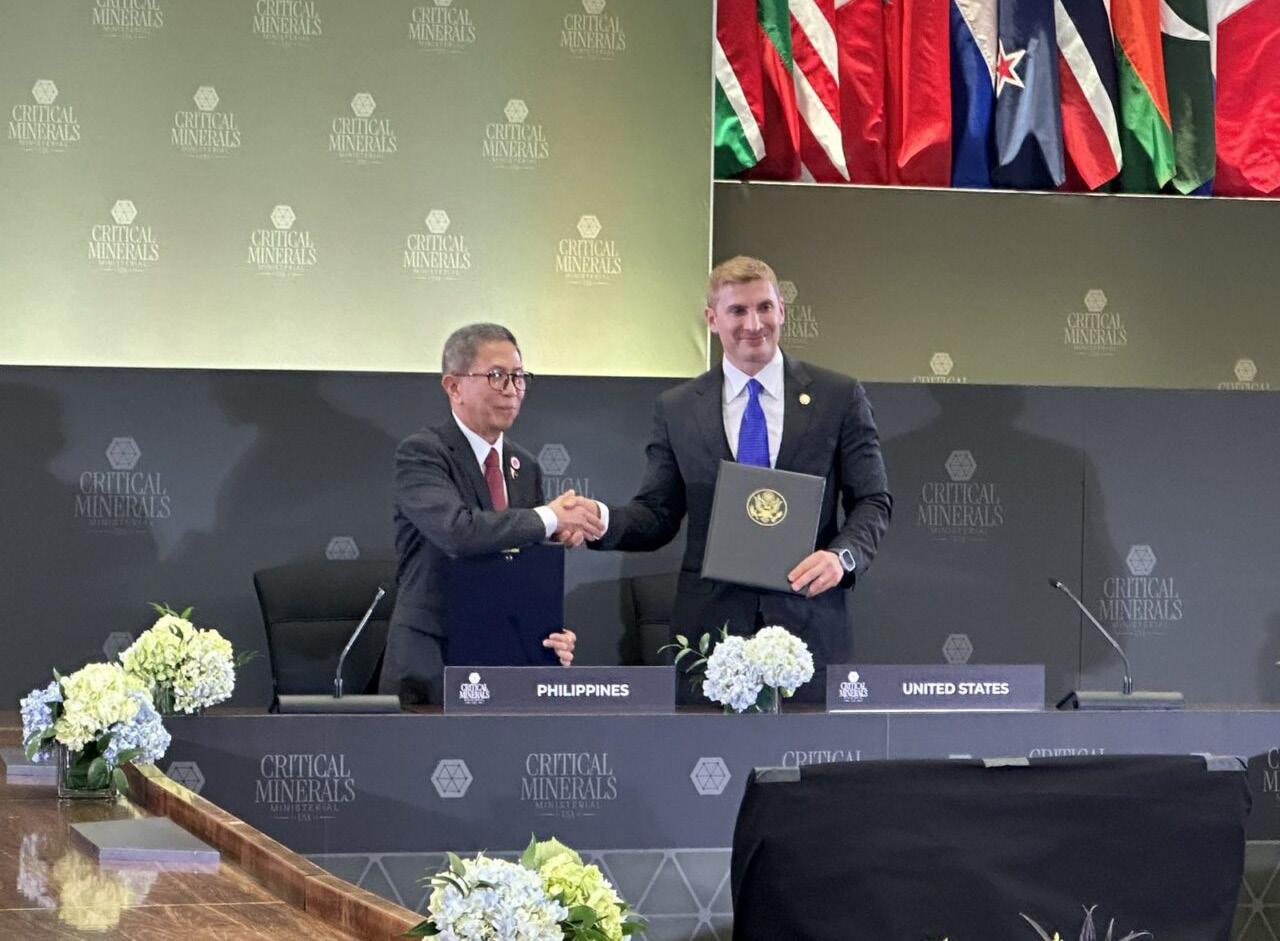
PH Pursues Strategic Foothold in Global Critical Minerals Landscape with New US Partnership
Understanding Pump Curves The Foundation of Effective Dewatering
Johnson Screens: A Legacy of Screening Innovation
Choosing the Right OTR Tire with Higantis
Top Three Belzona Solutions for Mining Industry Maintenance and Repair
Advancing Inclusive Growth Through Skills Development
TVIRD Balabag, Siana Projects Feted by Shell Philippines
Strength. Performance. Uptime.
Engineering Longer Life for WARMAN Slurry Pumps
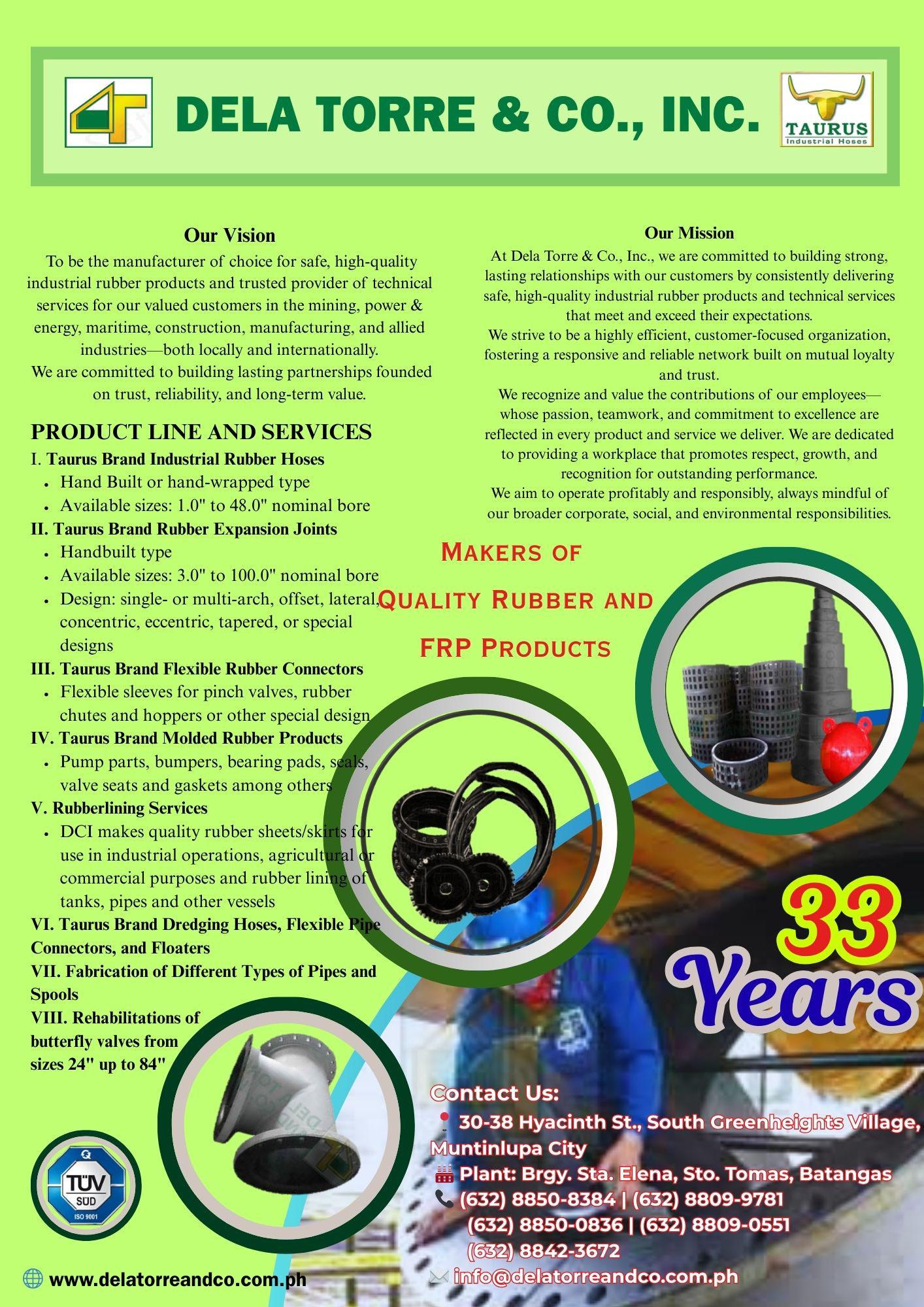
Dela Torre & Co., Inc.: Engineering Strength Through Industrial Rubber Excellence
Paramina Marks 30 Years of Engineering Excellence and Mining Innovation
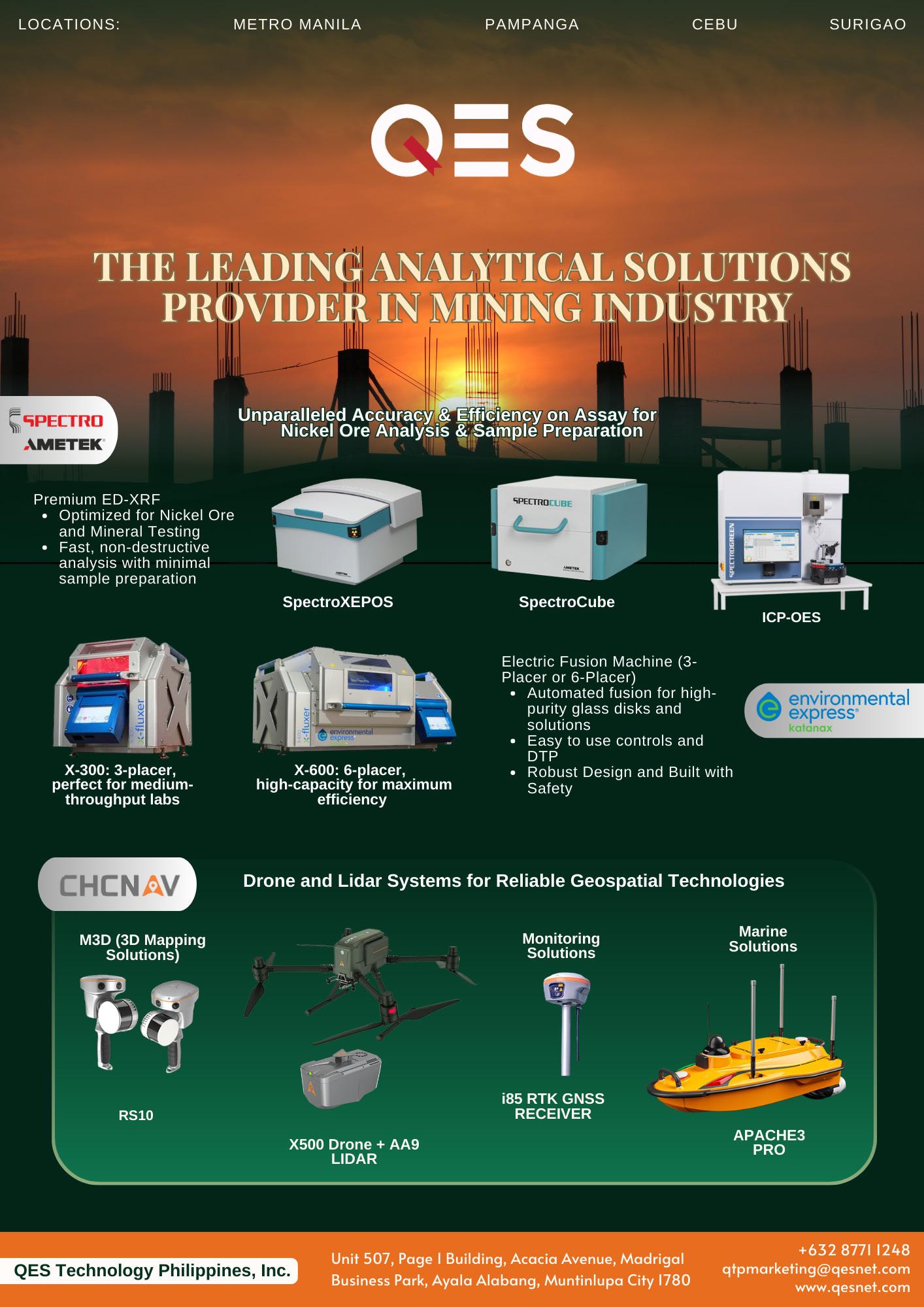
QES Technology Philippines Inc., Expands Beyond Assay Laboratories
TMC Turns Over 5,000 Cacao Seedlings to Claver LGU to Support Local Agriculture
THPAL Supported Fisherfolk Group Harvests 4.9 Metric Tons of Bangus

As the Philippines continues to pursue economic growth through the development of its natural resources, the relevance of laws, policies, and regulatory institutions has never been more critical.
The 2025 Geological Convention (GeoCon 2025), held in celebration of the Geological Society of the Philippines’ 80th Oak Jubilee, brought together geoscientists, policymakers, and industry practitioners to reflect on this challenge under the theme “Forged by Time, Strengthened by Integrity, Driven by Professionalism.”
The convention underscored a pressing national question: how well do existing legal and policy frameworks respond to evolving industry practices, societal expectations, and sustainability goals?
This article draws from the context of GeoCon 2025 and my plenary discourse on 02 December 2025 focusing on the continuing relevance of laws and policies in natural resource development, examining the need for stronger governance, updated regulatory frameworks, and deeper stakeholder collaboration to ensure responsible and equitable resource management in the Philippines.
Collectively, these policy instruments serve as the
written by: FERNANDO PENARROYO
Fernando “Ronnie” S. Penarroyo specializes in Energy and Resources Law, Project Finance and Business Development. He is also currently the Chair of the Professional Regulatory Board of Geology; the government agency mandated under law to regulate and develop the geology profession. He may be contacted at fspenarroyo@penpalaw.com for any matters or inquiries in relation to the Philippine resources industry and suggested topics for commentaries. Atty. Penarroyo’s commentaries are also archived at his professional blogsite at www.penarroyo.com
foundation for a resilient, lowcarbon, and technologically adaptive economy aligned with international sustainability commitments.
The Philippines is positioned to play a major role in the global clean energy transition due to its large deposits of nickel, copper, cobalt, and other strategic minerals. These materials are essential for manufacturing electric vehicle batteries, wind turbines, solar technologies, and energy storage systems.
However, the country currently captures only a small portion of the value chain, as most minerals are exported in low-value form. To shift toward value-added processing, the government must establish stable fiscal terms, investor certainty, and a clear industrial strategy that supports mineral processing, refining, and

Philippine Resources is published independently for executives in Philippine mining, construction, resources, and associated business sectors.
Publisher Elizabeth Galura
Consulting Publisher Greg Brimble
Editor Jimbo Gulle
Sales and Marketing Manager
Matt Brimble +63 927 721 6622 Matthew@philippine resources.com
Account Manager
Merianjay Fallan +63 992 371 7060 merian@philippine resources.com
Administration
Cecilia Pamular +63 917 308 1971 cecille@philippine resources.com
Graphic Designer Bogtong Wangga
Journalists
Marcelle P. Villegas
Contributors Patricia A.O. Bunye Fernando Penarroyo
associated manufacturing. This strategy also depends on energy affordability and infrastructure readiness. Processing plants require continuous, cost-effective, and preferably low-carbon electricity, which aligns mineral development with national decarbonization goals. In parallel, mining operations must uphold strict environmental safeguards, including responsible tailings management, watershed protection, progressive rehabilitation, and transparent monitoring systems.
Market rules should strike a balance between allowing mineral exports and encouraging domestic processing. A milestones-based export policy can help—letting new mines to export early to recover costs and generate cashflow, while gradually
Manila Publishing Office Suite 6, 2nd Floor
Corinthian Plaza Building 121 Paseo de Roxas Legaspi Village Makati City, Philippines 1226 Phone +632 8251 5599
Digital Online Edition www.Philippine Resources.com
shifting toward local valueadded processing as capabilities develop.
At the same time, requiring transparent and fair off-take agreements ensures that pricing and supply arrangements are clear, competitive, and aligned with national development goals.
Natural gas remains a critical element of the Philippines’ power generation mix, providing stability, flexibility, and reliability as the share of intermittent renewable energy increases.
However, the Malampaya field is entering maturity, and without new discoveries or efficient management, the country may face supply shortages and volatility in electricity prices. To avoid this, policies must encourage exploration in frontier basins, provide predictable contract terms, and reduce regulatory risks that slow project development.
At the same time, the Philippines is expanding LNG import capability to supplement domestic gas. To manage this dual-source system effectively, government must clearly define quality standards, interconnection rules, tariff structures, and coordination mechanisms among gas suppliers, pipelines, power plants, and storage facilities. This prevents operational bottlenecks and ensures that both domestic and imported gas can be dispatched efficiently and competitively.
Strengthening midstream access rules—particularly for pipeline connections and terminal capacity—will reduce commercialization risk for new gas discoveries. Combined with transparent market operations and coherent energy planning, these reforms preserve reliability while supporting the gradual transition toward a cleaner power generation mix.
The Philippines has high potential for solar, wind,
hydropower, and geothermal, but slow permitting, unclear land access, and transmission bottlenecks continue to delay project development. A onestop, time-bound permitting system can greatly reduce administrative burden while maintaining environmental and social safeguards. Clear land acquisition and zoning rules are critical, especially for large-scale solar and onshore/offshore wind developments.
Geothermal energy offers continuous, baseload renewable power, which is especially valuable in balancing variable solar and wind generation. However, exploration and drilling are expensive and risky. Government-backed risk mitigation measures—such as drilling insurance, costsharing funds, or exploration guarantees—would encourage increased private participation and accelerate geothermal expansion.
Renewable energy growth also presents opportunities to build domestic industries, including manufacturing components, assembly of battery systems, and clean-energy-powered mineral processing. Tying renewable deployment to local supply-chain development ensures that job creation and economic value remain in the Philippines, not solely in imported equipment or foreign-operated generation assets.
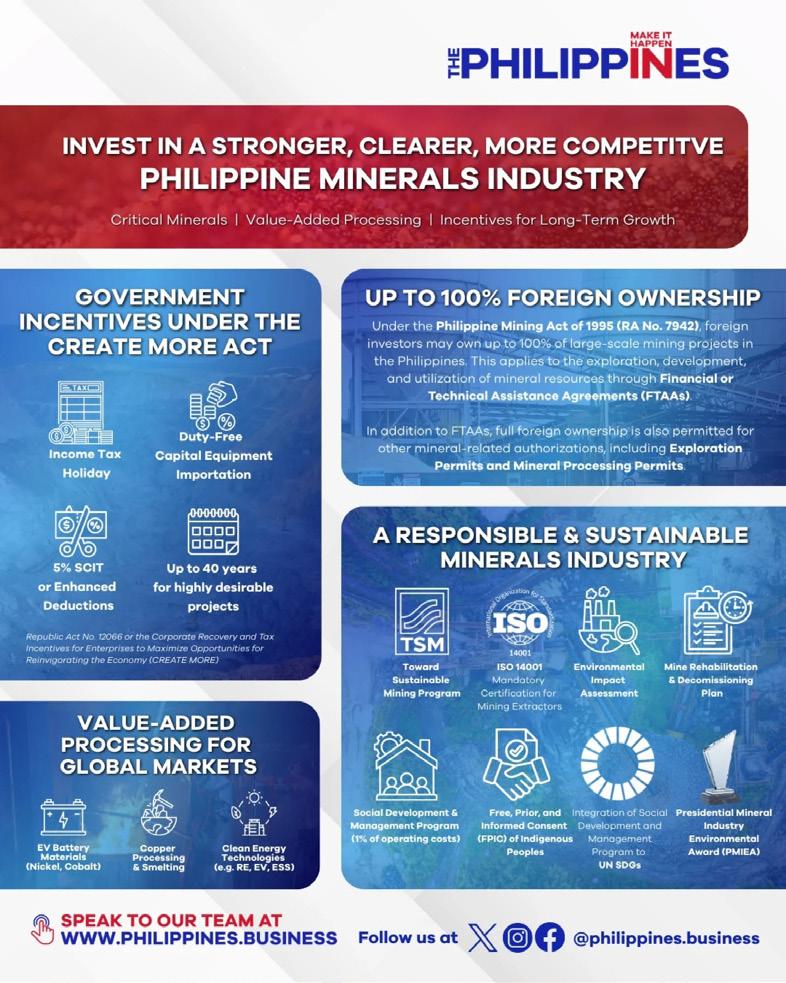
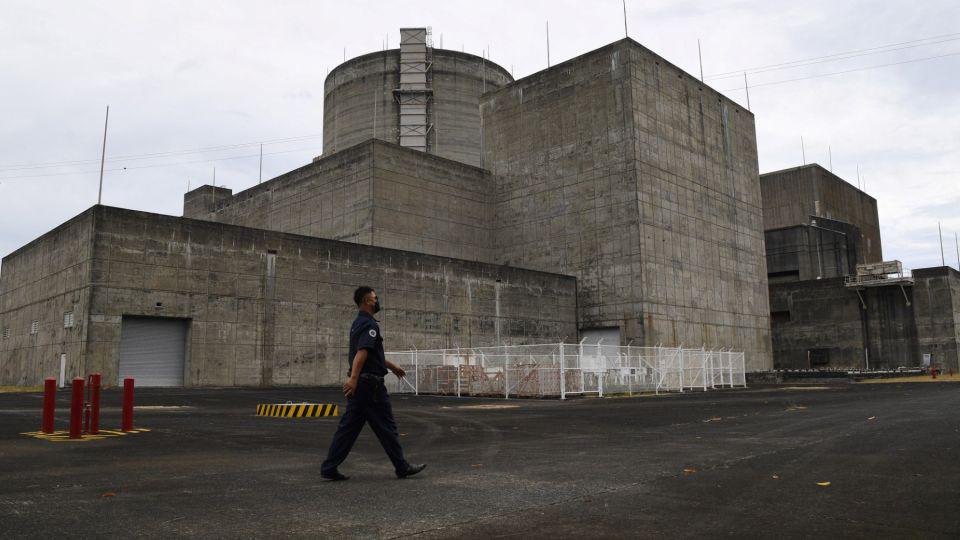
As the Philippines seeks longterm grid stability and lowcarbon baseload power, nuclear energy is being considered as part of the future energy mix. However, this requires careful and comprehensive regulatory preparation. The Philippine nuclear regulatory authority must finalize licensing standards for both large reactors and Small Modular Reactors (SMRs), define inspection and safety protocols, and adopt international best practices on operational transparency and personnel qualification.
Nuclear development also requires public trust and robust emergency planning. This includes transparent siting studies, seismic and coastal safety assessments, evacuation and medical response planning, and ongoing community engagement. Additionally, clear long-term strategies for spent fuel storage, eventual decommissioning, and financial liability are crucial to ensure intergenerational safety and accountability.
To make early nuclear projects economically viable, government may need to establish long-term power purchase frameworks, capacity market recognition, and risk-sharing mechanisms with the private sector. Simultaneously, the national grid must be reinforced to integrate nuclear facilities and ensure system reliability.
Hydrogen has the potential to support industrial decarbonization, long-duration storage, and clean transport, but the market is still emerging and requires policy support. To move from feasibility studies to pilot projects, the government should implement targeted incentives such as tax credits, preferential financing, and demand-side programs in refineries, industrial facilities, and bus or truck fleets.
A national Hydrogen Code must define standards for safety, blending with natural gas, pipeline transport, storage, fueling stations, and worker training. Establishing a Guarantee of Origin (GO) certification ensures hydrogen can enter international supply chains, especially where buyers require proof of low carbon emissions.
Native hydrogen development requires a clear resource governance framework that defines legal ownership, tenure terms, exploration work obligations, data reporting, and environmental safeguards.
Building on the early awards in Zambales and Pangasinan, regulations should ensure transparent exploration results and responsible operational practices. At the same time, a structured pilot-to-commercial pathway is needed—establishing
Page 10 >
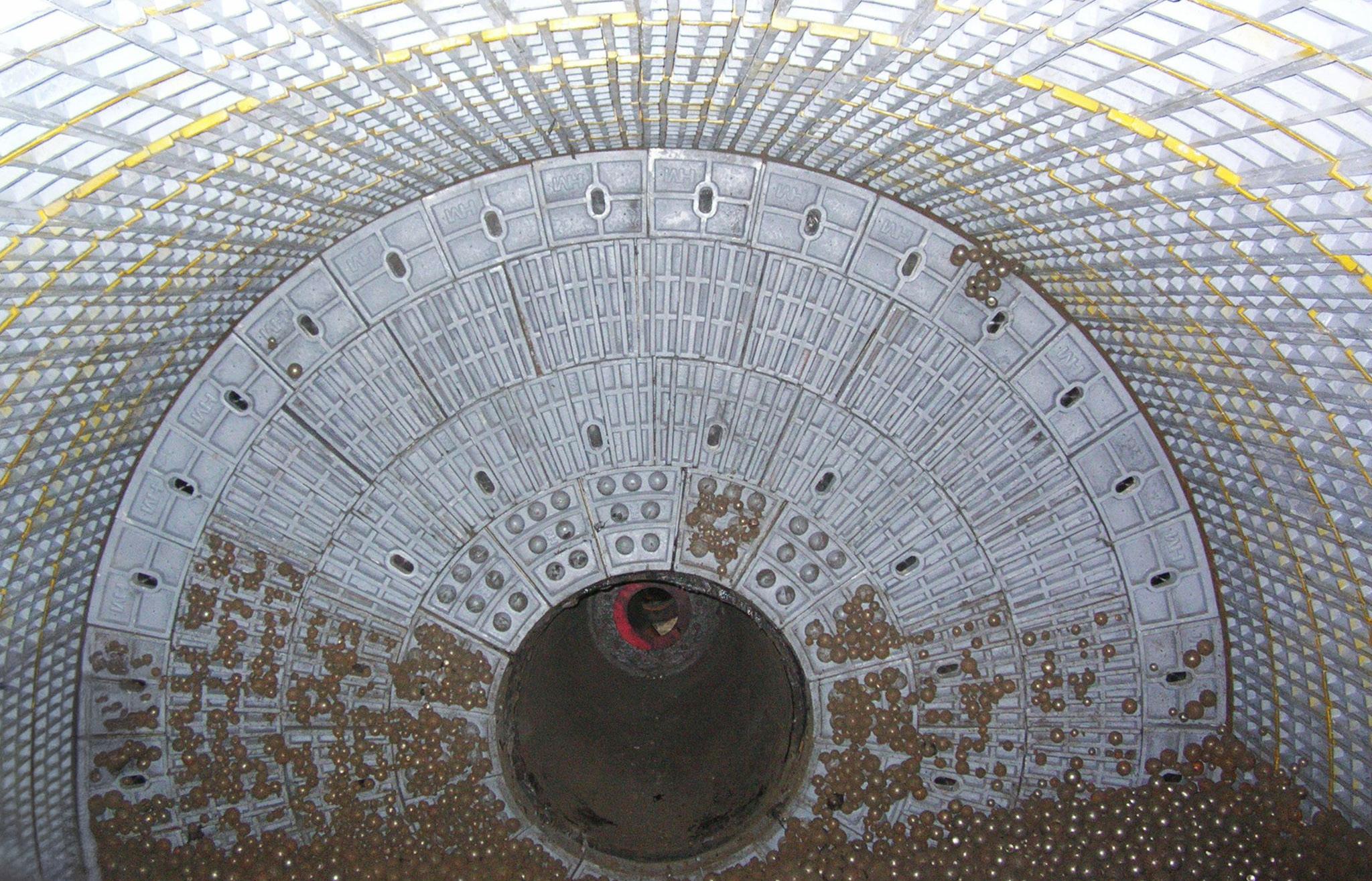
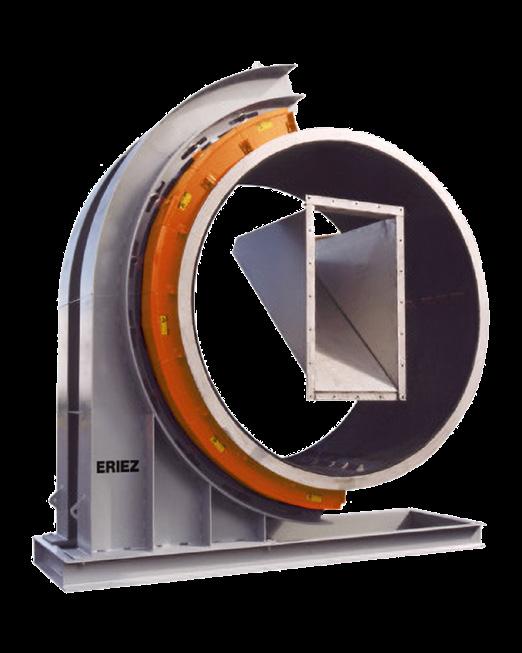
Whether your goal is higher throughput, reduced downtime, lower power usage — or all three — the Eriez Trunnion Magnet System transforms your grinding circuit and delivers proven results.
safety protocols, community engagement requirements, and decommissioning plans for pilot sites, with a streamlined process for scaling up to commercial production if technical and environmental performance thresholds are met.
Open and standardized geoscience data can significantly reduce exploration risk and accelerate the identification of new mineral and energy prospects. By adopting an open-file data-sharing system, the government can ensure that geological maps, drill results, and resource assessments become accessible after reasonable confidentiality periods.
However, this openness must be paired with clear privacy and sovereignty safeguards, ensuring that sensitive information is handled responsibly and used to support—not undermine—local and national interests.
A modern exploration data governance framework should require companies to submit exploration results in structured, digital formats that can be quickly integrated into national geoscience databases. This allows new information to immediately improve the understanding of an area’s resource potential, supporting transparent decisionmaking for future exploration licenses and contract awards. Such a system helps attract credible investors, reduces duplication of effort, and promotes more efficient, evidence-based resource development.
Data governance for digitalized operations should ensure that information generated from sensors, monitoring systems, and predictive maintenance tools is handled in line with national privacy regulations and emerging AI oversight frameworks. This means energy and resource companies must adopt secure data-handling
practices, maintain clear audit trails, safeguard operational and customer information, and ensure that automated systems support—not replace— responsible human decisionmaking.
Many planned renewable and clean energy projects cannot proceed because transmission lines are insufficient or delayed. To unlock investment, grid expansion must be planned ahead of energy development, not after. This includes new transmission corridors, substation upgrades, and inter-island connectivity.
The grid must also be modernized to handle more variable renewable power, energy storage systems, hydrogen-topower facilities, and eventually nuclear plants. Updating grid codes, reserve market rules, and system flexibility arrangements will enable a stable, resilient, and future-ready power system.
The geoscience profession plays a pivotal role in the Philippines’ modernized energy and resources framework by ensuring that exploration, extraction, and resource management are grounded in scientific integrity and sustainability.
Geoscientists lead in mapping, evaluating, and managing critical minerals such as nickel,
copper, and rare earth elements under the Enhanced Fiscal Regime for Mining, while also advancing subsurface studies for renewable, geothermal, and hydrogen energy development. Their technical expertise supports environmentally responsible extraction and provides a foundation for datadriven investment and policy decisions.
Beyond exploration, geoscientists are increasingly involved in advisory and regulatory roles—helping shape standards for environmental protection, carbon accounting, and geological safety.
By combining technical capability with governance and ethical responsibility, the geoscience profession strengthens national energy transition efforts, ensuring resource development that is sustainable, transparent, and beneficial for communities and investors alike.
The Philippines’ evolving energy and resources landscape demonstrates a powerful convergence of policy modernization, technological innovation, and sustainabilitydriven governance.
With forward-looking reforms spanning critical minerals, renewable energy, nuclear development, hydrogen, and digital transformation, the nation is laying a solid foundation for long-term
energy security and economic competitiveness.
These efforts are not merely reactive responses to global trends—they represent a proactive commitment to reimagining national development through cleaner, more resilient, and inclusive systems of energy and resource management.
Ultimately, success will hinge on effective implementation, consistent regulatory clarity, and the meaningful integration of science, policy, and industry expertise.
By fostering collaboration among geoscientists, engineers, policymakers, and investors, the Philippines can ensure that each reform translates into real progress—empowering communities, preserving ecosystems, and reinforcing the country’s position as a regional model for sustainable energy governance.
Fernando “Ronnie” S. Penarroyo specializes in Energy and Resources Law, Project Finance and Business Development. He is also currently the Chair of the Professional Regulatory Board of Geology, the government agency mandated under law to regulate and develop the geology profession. For any matters or inquiries in relation to the Philippine resources industry and suggested topics for commentaries, he may be contacted at fspenarroyo@penpalaw. com. Atty. Penarroyo’s commentaries are also archived at his professional blogsite at www.penarroyo.com
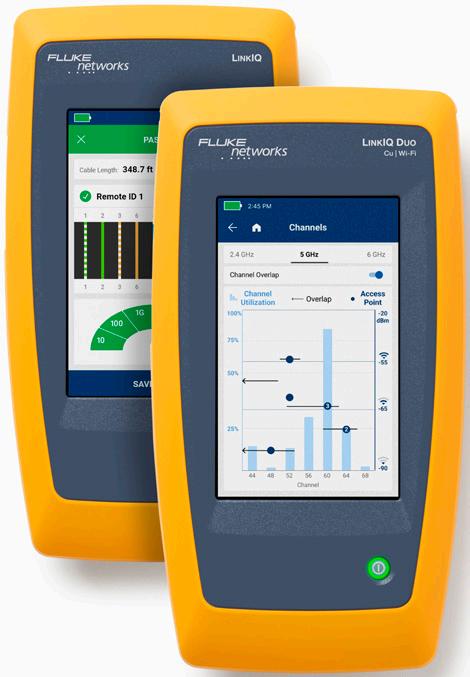
● Cable performance testing up to 10GBASE-T plus troubleshooting (distance to fault, wire map, toning)
● IPv4 and v6 ping, nearest switch diagnostics (IP address, name, port / VLAN number, and advertised data rates)
● Ethernet Alliance certified PoE Verification – detects the PoE class (1-8) and power, performs a load test
● Adds Wi-Fi analysis to Wi-Fi 6E (where approved), including networks, channels, and access points plus warning of common configuration issues
● Manage results and print reports from LinkWare™ PC
www.fluke.com/en-ph
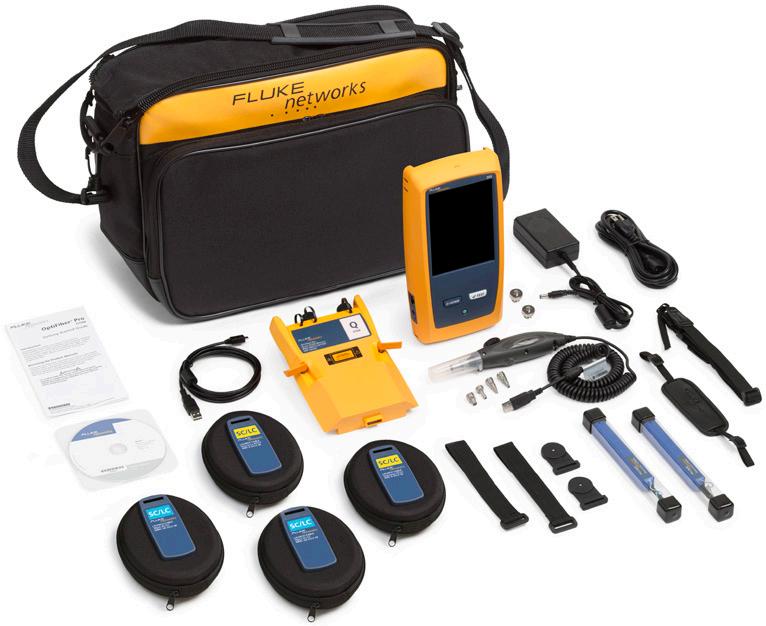
● Designed to make every level of user more efficient working in Mining environment.
● Novice users can set up and shoot traces in no time by using the Auto OTDR function
● EventMap™ feature analyzes traces like an expert, calculating overall loss and reflectance, indicating events such as splices, splitters bends and connectors.
● OptiFiber Pro features an advanced touchscreen interface with pinch and zoom for analysis.



As we celebrate International Women’s Month this March, I am reflecting on how our organization, Diwata – Women in Resource Development, Inc. (“Diwata”) has presented itself as a platform for enabling women’s leadership through mentoring and presenting examples of strong women leaders in the mining industry.
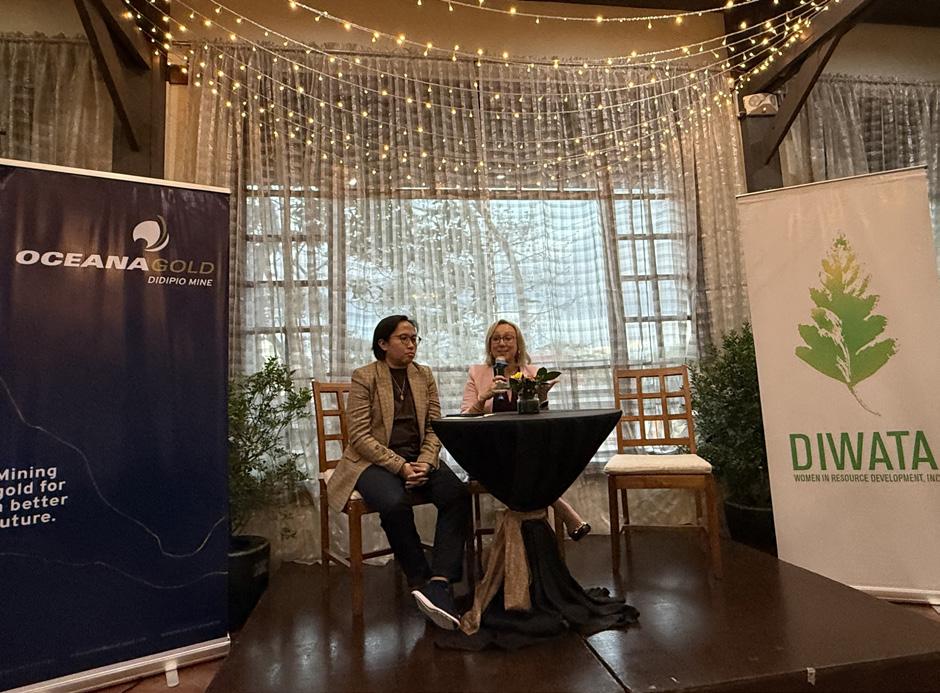
On 18 November 2025, on the sidelines of the Philippine Mine Safety and Environment Association’s Annual National Mine Safety and Environment Conference in Baguio, Diwata hosted “Network to the Next Level”, an informal discussion featuring Tanya Cambetis, Business Optimization Manager of Didipio Mine and Engr. Rodalee Ofiaza, Diwata’s incumbent President.
Both speakers had fascinating stories to tell about how they navigated and thrived in a maledominated industry. Among our special guests were Sweden’s Ambassador to the Philippines, H.E. Anna Ferry, and Eleonore Rupprecht, Counsellor and Trade Commissioner of the Embassy of Canada to the Philippines.
For many women in mining, the greatest challenge is often not technical competence or work ethic. It is confidence: finding the courage to speak, to lead, and to believe that leadership is attainable even when the path is unclear. In telling the story of her career journey, Cambetis offered valuable lessons
written by: PATRICIA A. O. BUNYE
Patricia A. O. Bunye is the Managing Partner of Cruz Marcelo & Tenefrancia where she heads its Mining & Natural Resources Department and Energy practice group. She is also the Founding President of Diwata-Women in Resource Development, Inc., a non-government organization advocating the responsible development of the Philippines’ wealth in resources, principally through industries such as mining, oil and gas, quarrying, and other mineral resources from the earth for processing.
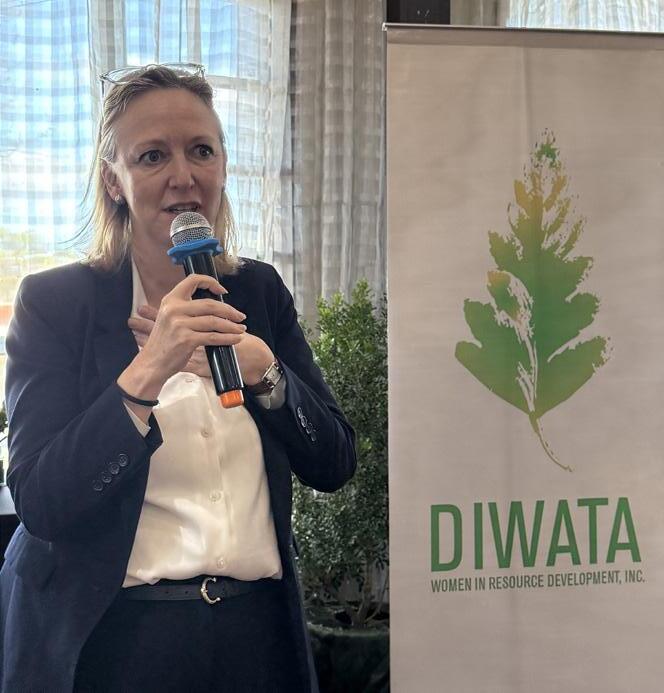
for women navigating these realities across the mining sector, including here in the Philippines.
Cambetis did not enter mining through a conventional route. Her early career was far removed from heavy industry, and she did not begin with an engineering degree or a clearly defined leadership trajectory. Instead, her entry point was operational, hands-on, and deeply human.
What followed was a career shaped by persistence, self-doubt, mentorship, both its presence and its absence, and an unwavering commitment to inclusion.
Her role as Manager for Business Improvement and Optimization at the Didipio Mine places her squarely within leadership, yet her perspective remains grounded in the experiences that nearly pushed her out of the industry.
One of the defining features of women’s careers in mining is
the lack of a visible leadership pathway. While technical roles may be clearly structured, progression into leadership often depends on informal networks, sponsorship, and confidence: areas where women are frequently disadvantaged.
Cambetis’ experience reflects this reality. Despite capability and ambition, there were moments when she questioned whether she belonged. These doubts did not stem from an inability to perform, but from the absence of guidance and representation. Like many women, she struggled with the sense that leadership was something to be “invited into,” rather than claimed.
Mentorship is widely promoted as a solution to gender disparity in mining, yet Cambetis’ early experience with a women’s organization revealed a critical gap. While the initiative was
intended to support women, it failed to make space for difference: difference in role, background, age, and life stage. At the time, she internalized this exclusion as a personal failure. In hindsight, it became clear that the issue was not a lack of fit, but a lack of inclusion. Representation alone is insufficient. Mentorship must be intentional, empathetic, and accessible to women across the full spectrum of mining roles, from operators to engineers to administrators.
This lesson later shaped Cambetis’ own leadership approach. When she assumed mentoring and leadership roles, her guiding principle was simple but powerful: no woman should ever feel that she does not belong in a space created to support women.

One of the most compelling lessons from Cambetis’ journey is the long-lasting impact of small moments. A passing comment, a dismissive tone, or an unspoken exclusion can shape someone’s confidence for years. Conversely, a brief word of encouragement can re-direct an entire career.
In mining environments, often hierarchical and high-pressure, this awareness is particularly important. Leadership is not confined to formal authority. It is exercised daily through behavior, language, and attentiveness to others.
For women already in senior or influential positions, Cambetis’ experience serves as a reminder: someone is always watching, learning what leadership looks like by observing how it is practiced.
Cambetis’ career progression was accompanied by profound personal sacrifice. Leaving
children to work remotely and overseas remains one of the most emotionally challenging aspects of mining careers for women. These decisions are rarely visible in performance metrics, yet they shape leadership resilience in profound ways.
In the Philippine mining context, where family and community ties are deeply rooted, these experiences resonate strongly. Cambetis’ story reflects the reality that leadership does not require choosing between ambition and care, but demands honesty, support, and flexibility.
Completing a mining engineering degree later in life became a defining milestone for Cambetis, not simply as a professional achievement, but as a demonstration of perseverance. It reinforced an essential message for women in mining: growth is not limited by age or timing.
A recurring barrier for women entering leadership is the belief that they must be fully prepared
before stepping forward. Cambetis’ career illustrates how damaging this belief can be.
Leadership does not require having all the answers. It requires curiosity, accountability, and willingness to learn. The expectation of perfection disproportionately affects women, often causing them to hesitate while opportunities pass.
The turning point in Cambetis’ leadership journey came when she stopped allowing doubt to dominate her decisions. Saying “yes” before feeling ready did not diminish her effectiveness but accelerated her growth.
For women developing leadership skills, this also means learning to claim space. Speaking up in meetings, sharing ideas, and encouraging quieter voices are all acts of leadership, particularly in environments where women remain underrepresented.
Cambetis’ journey offers a clear message to women in mining: do not wait for permission to lead. Leadership is built through action, persistence, and support networks intentionally cultivated over time.
“If I could give one piece of advice about how my career has gone, it would be: don’t let that voice be the one that tells you that you don’t belong. When that voice says you can’t, or won’t, or shouldn’t, stand up and say I can, I will, and I absolutely should. Surround yourself with people who support and believe in you. Build your network, seek mentors, and be a mentor. The mining industry needs more women, and each one of us can make a difference”, says Cambetis.
The Philippine mining industry needs women who are willing to step forward, support one another, and redefine leadership through inclusion.
As Tanya Cambetis exhorted the attendees of our forum, “Stand up, speak out, and never let that voice of doubt define your path.”


written by: NOEL B. LAZARO AND REENO E. FEBRERO
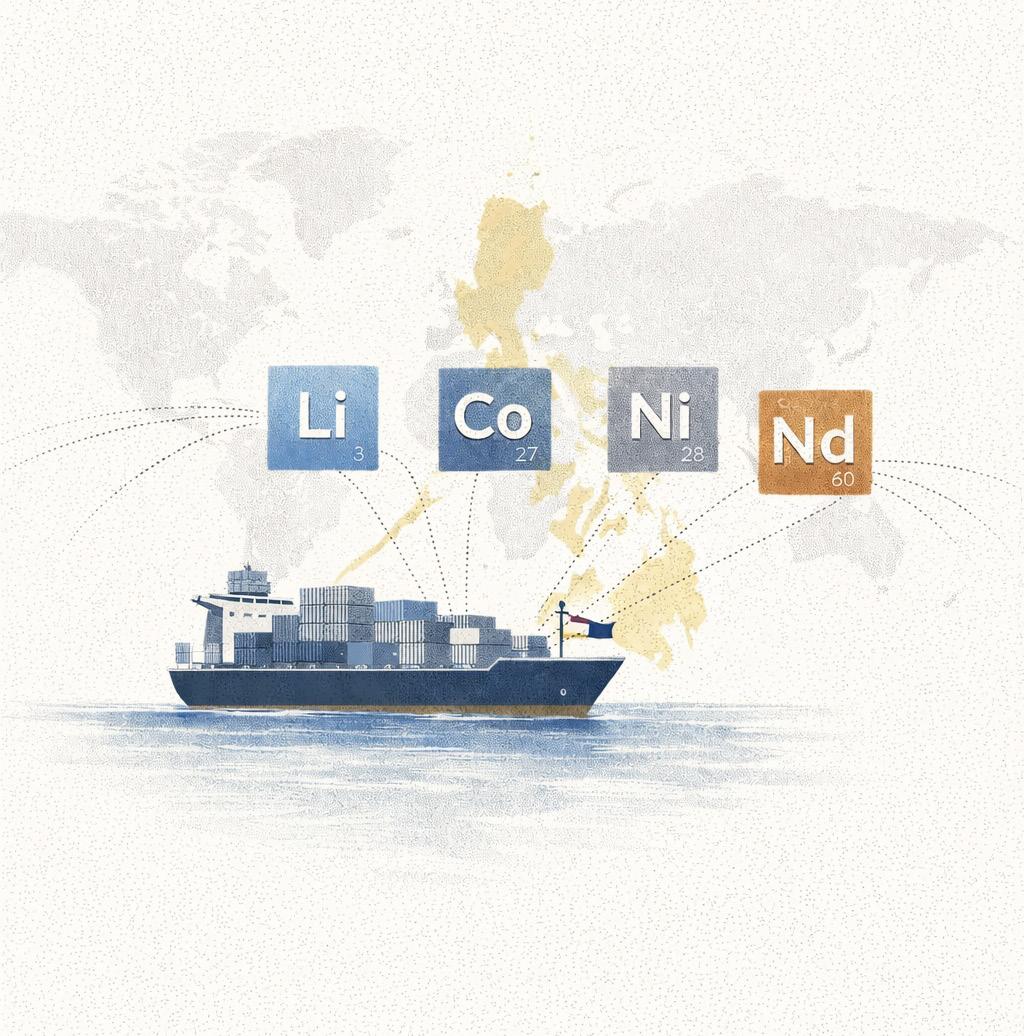
There are moments in geopolitics when the choreography matters less than the quiet exchanges behind it. In late October in Busan, on the sidelines of the Asia-Pacific Economic Cooperation summit, Donald Trump and Xi Jinping staged one of those scenes: a handshake, a photo-op, and a declaration that the rare-earths dispute was “settled.” In reality, the settlement was transactional. Washington agreed to ease a tranche of tariffs and reopen the door to large U.S. soybean shipments to China, while Beijing pledged a one-year pause on its threatened export restrictions on rare-earth minerals and magnets to the United States. Markets exhaled. Analysts sifted through tone and subtext. But the real story—the underlying logic of power at play— remained unchanged. The agreement did not reorder the world; it merely clarified the minerals that now anchor it.
For a century, greatpower politics pivoted on barrels of oil. Then, at the height of the digital boom, it seemed the future would be written in bytes. But the energy transition—and the militarization of supply chains—have rearranged the hierarchy. The building blocks of modern life are no longer fossil fuels or data streams but the atoms embedded in things:
lithium in batteries, cobalt in electronics, neodymium in magnets, gallium in chips.
The periodic table has become a map of twenty-first-century geopolitical anxiety.

Rare earth elements—17 metals with names that sound like they belong to speculative fiction—are geologically abundant but industrially elusive. They rarely occur in high concentrations, and separating them from ore requires complex, hazardous processing. This is why the world’s dependence on China is not an accident but the result of decades of strategic investment.
Today, China mines about 70 percent of global rare earths, refines over 90 percent, and manufactures nearly all high-performance magnets, the essential cores of electric vehicles, wind turbines, and precision-guided weapons. In 2024, it exported 58,000 tonnes of magnets—a volume not just of trade but of leverage.
Even when Beijing loosened export licenses earlier this year, it did so after demonstrating a simple lesson: it can constrict supply at will. Goldman Sachs estimates that diversifying refining capacity will require a decade of massive capital outlay, assuming geopolitical
Atty. Noel B. Lazaro and Atty. Reeno E. Febrero serve with Global Ferronickel Holdings, Inc. Atty. Lazaro was named Top Tier In-House Counsel at the In-House Community (IHC) Counsel of the Year Awards 2025, while Atty. Febrero received the Young Lawyer of the Year (In-House) award from the 2025 Asian Legal Business (ALB) Philippine Law Awards. They are law professors and opinion writers.
conditions remain stable— which they will not.
The Busan announcement, then, was a strategic feint. A temporary pause is not a policy shift; it is a warning shot. Scholars call this “deterrence by demonstration”: wield the weapon once, then sheath it. The world will remember who holds the handle.
In Washington, the truce buys time for the Pentagon’s magnet stockpile and for chipmakers to secure alternative sources. In Brussels, it reinforces the urgency behind the EU Critical Raw Materials Act, which limits reliance on any single supplier to 65 percent. Canada has launched a Critical Minerals Alliance. Japan quietly expanded its Strategic Metals Reserve. The G7 is building buffers, offtake contracts, and recycling mandates.
Yet progress is uneven. According to the International Energy Agency, global demand for critical minerals will triple by 2040; demand for rare earths used in EV motors could grow sevenfold. But outside China, refining capacity is thin, fragmented, and vulnerable to political risk. The United States may have copper, but it lacks separation plants. Australia excels at mining but not
processing. Europe has technology but few deposits. “Security of supply,” once a term of art, has become the central preoccupation of ministries and militaries.
The Philippines is rarely mentioned in rare-earths analyses—yet it should be. The archipelago sits atop one of the world’s richest mineral belts, including nickel, cobalt, and copper, the backbone metals of the energy transition. Geological surveys have also identified rare earth occurrences in Palawan and Nueva Vizcaya, comparable in concentration to deposits in China and the United States. In 2024, the country produced ₱94 billion in nickel despite global price softness. But the economic story is incomplete. The Philippines exports raw ore—low value, high volume. The higherorder value, the conversion of ore into materials and components, continues to accrue to other economies. Only two hydrometallurgical processing plants operate nationwide—Taganito and Coral Bay—with a third planned in Leyte.
The result is a familiar trap: a resource-rich nation earning the smallest share of value.
Page 20 >

In September 2025, a Philippine Mining Club luncheon on “green mining technologies” set the tone. There, Department of Science and Technology (DOST) Undersecretary Sancho A. Mabborang underscored that under the Harmonized National R&D Agenda 2022–2028, DOST has earmarked about ₱300 million for a critical minerals R&D roadmap for 2026–2028, with the long-term goal of positioning the Philippines as a hub for critical minerals and green technology applications, especially for electric vehicles.
A month after, at the Mining Philippines 2025 conference in Taguig, the conversation widened from laboratories to innovation. Speaking at a plenary session, Department of Environment and Natural Resources (DENR) Undersecretary Carlos Primo David explained that new regulations and the auctioning of idle mineral assets aim to lift mining’s share of GDP from about 0.5 percent to roughly 2 percent and revive long-stalled tenements.
By November 21, at the StratBase ADR Institute’s Pilipinas Conference in Makati, the agenda had become explicitly strategic.
DENR Secretary Raphael Lotilla announced that the agency is finalizing an executive order to establish a national framework for developing a critical minerals industry, stressing that “the goal is not simply to mine more, but to mine better, process smarter, and govern with integrity” so that the Philippines becomes a reliable contributor to the cleanenergy transition.
In substance, that framework rests on three pillars: responsible exploration and extraction aligned with
modern ESG standards; downstream processing and circular value chains that reduce dependence on ore exports; and domestic manufacturing that links minerals to industries— batteries, electronics, renewable energy, and defense. Lotilla has also signaled that environmental safeguards will be modernized to keep pace with innovation, climate realities, and market demand, a quiet rebuke to past eras when rules were either weakened or ignored.
Legal reforms point in the right direction. The Philippine Mining Fiscal Regime secures a fairer return for the State, the Corporate Recovery and Tax Incentives for Enterprises to Maximize Opportunities for Reinvigorating the Economy (CREATE MORE) Act directs incentives toward value-added processing, and the amended Investors’ Lease Act lengthens leases for foreign investors to support more sustained investment.
But these instruments need to hold together. Policy remains siloed. Agencies pull in different directions. The DENR cannot build a criticalminerals industry without synchronized work from the Departments of Trade, Science and Technology, Energy, Foreign Affairs, and, increasingly, Defense.
The reality is stark: China’s advantage is not mineral abundance but metallurgical mastery. If the Philippines desires a place in the global value chain, it must build capacity not just to extract but to transform.
The geopolitics of minerals is shifting toward Southeast Asia. ASEAN produces nearly half the world’s nickel and over a third of its tin.
Indonesia has used export bans to force domestic processing, with significant success. Vietnam is entering the magnet industry. Malaysia and Thailand house advanced electronics clusters. The region is becoming a manufacturing basin searching for secure inputs.
The Philippines could be the bridge: a mining powerhouse on the supply side, linked geographically and economically to manufacturing hubs. The U.S.-led Minerals Security Partnership is looking for “second-source” jurisdictions—reliable alternatives to China. Regional manufacturers— from Japan to South Korea— seek diversified supply chains anchored in ESG compliance.
Recognizing the fluidity of global supply chains, the StratBase ADR Institute observes that Manila could strengthen its position by securing a long-term commitment from Washington, ensuring relevance within the U.S.-led critical-minerals network.
But they will only invest where institutions are predictable.
The deeper lesson of the Busan truce is that geopolitical rivalry is now embedded in the stuff of things. Nations that control the minerals and manufacturing of the energy transition will shape the
future requires extracting more minerals, not fewer. Each electric vehicle needs six times more mineral input than a combustion car; each offshore wind turbine needs nine times more rare earths than its fossil-fuel equivalents. The green transition is, in this sense, a mining story.
This raises a fundamental question for resourcerich democracies like the Philippines: will we remain exporters of the past or architects of the future?
To choose the latter will require industrial policy, environmental credibility, social legitimacy, and geopolitical clarity—an alignment of institutions rarely attempted, let alone sustained.
When Trump and Xi posed for cameras in Busan, it was easy to imagine a world on pause. But the clock did not stop. Demand for critical minerals continues to rise. Refining bottlenecks grow sharper. The energy transition accelerates, even as geopolitical tension thickens.
Beneath our feet lie minerals that could define— not merely enrich—the country. They will not wait for us to decide.
In a century shaped by materials more strategic than oil and more enduring than currency, foresight is the rarest resource of all.

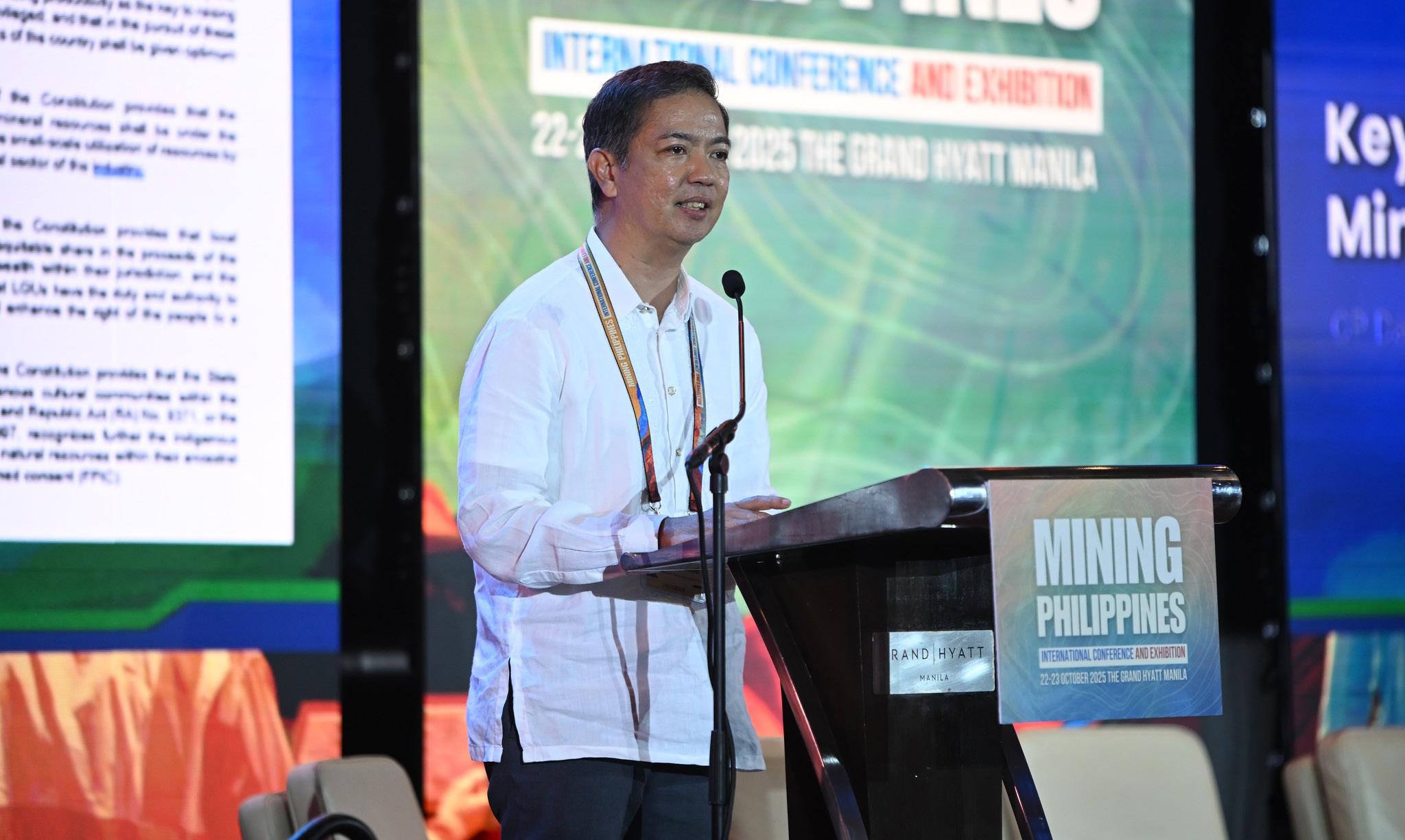
The Department of Environment and Natural Resources (DENR) plans to unlock the nation’s untapped mineral resources by issuing new regulatory policies within the next few months.
This was announced during a plenary session at the Mining Philippines 2025 Conference and Exhibition at the Grand Hyatt Manila on Wednesday (Oct. 22, 2025), by DENR Undersecretary for Integrated Science, Prof. Carlos Primo David.
He said that DENR is looking at increasing mining’s contribution to the Gross Domestic Product (GDP) from 0.5% to about 2%.
“The regulations are part of the overall strategy to unlock the natural resources of the country,” he said.
“A draft Executive Order on the critical minerals framework is like the little sister of the fiscal regime, which, as I see it, is to correct and clarify some of the regulations in the 1995 Mining Act,” David, a licensed geologist and expert in environmental science, said.
He stressed that the DENR Mines and Geosciences Bureau will also start strictly implementing the “Use it or Lose It Policy for Mining Tenements.”
He said, “It will spur even more development when we release these
mineral assets that are there but not used.”
Usec. David added that the DENR-MGB is also looking at strengthening the protection of mining investments from unilateral adverse policy shifts, such as retroactive amendments to local ordinances, including zoning restrictions, bans on certain mining methods, or arbitrary changes to fiscal regimes. Additionally, DENRMGB is planning to standardize a transparent valuation methodology for FPIC negotiations while preserving indigenous agreements.
He mentioned that the provision of royalty for IPs is open-ended, which means they can be from 1% to 99%.
However, he said, this needs to be clarified and come up with a regulation on how negotiations will work. DENR-MGB is also reviewing with the hope of extending the 25-year limit of mineral processing permits for long-term investment security. According to Usec. David, there will be a consultation once the Executive Order is ready.
“For the time frame, I would say the first quarter of 2026. An initial draft has been sent to OP.”
The DENR-MGB is also working on an Alternative Registration of small-scale miners. This is to boost small-scale mining that will raise the
country’s gold production and Bangko Sentral gold buys.
“Majority of small miners are still undocumented or outside Minahang Bayan areas. What we are looking is a tiered registration procedure for, first, as individual groups, the cooperatives, and Minahang Bayan,” he said.
He said registration allows the BSP to transact with small-scale miners.
“Gold produced from illegal or small-scale miners is about 70%.”
“Last month, as part of the draft E.O. even before that E.O. comes out, we are already planning how to dispose of mineral assets that are not moving. There is a list of cancelled and expired EPs, MPAs, and FTAAs, and they shall be offered through a competitive selection process, like a sort of bidding process, where we will look at the capabilities of bidders,” he said.
“On top of these are areas that are mineralized but still untenured.
“Therefore, we will offer this parcel of land for bidding for you to apply for exploration. If you wish to know how many of these idle assets we are targeting, around 50 assets, and if we are if we do our work, this will be an administrative order. “
“A draft has been crafted, and it now goes to Sec. Lotilla for approval,” he said.
Dr. Carlos Primo C. David, Undersecretary for Integrated Environmental Science of the Department of
Environment and Natural Resources
written by: JAMES GALVEZ
The Asosiasi Penambang
Nikel Indonesia (APNI), or Indonesia Nickel Miners Association and the Philippine Nickel Industry Association (PNIA) recently signed a partnership agreement aimed at deepening cooperation across the nickel value chain.
The move comes as secure, responsibly sourced critical minerals become increasingly central to the global energy transition.
The partnership brings together industry leaders from Indonesia and the Philippines, the world’s top nickelproducing countries, to set a shared direction for investment confidence, policy dialogue, and responsible mining that supports the future of energy and sustainable growth.
The signing ceremony was hosted by PNIA’s academic partner, the University of Asia and the Pacific (UA&P), and attended by APNI Chairman Komjen Pol. (Purn) Drs. Nanan Soekarna and PNIA Chairman Antonio L. Co.
The event was also witnessed by Department of Environment and Natural Resources Undersecretary Juan Miguel Cuna; Department of Trade and Industry Undersecretary Ceferino S. Rodolfo; DENR–MGB Officer-in-Charge Assistant Secretary Engr. Michael V. Cabalda; UA&P President Atty. John Philip Yeung; APNI Secretary General Meidy Lengkey; APNI Deputy Secretary Sucianti Saenong; and APNI Advisory Board Member Djokno Widajatno Soewanto.
PNIA Executive Director Charmaine Olea-Capili emphasized that the partnership aligns with the ASEAN Principles for Sustainable Minerals Development, adopted by ASEAN Ministers responsible for minerals development on October 2, 2025, in Vientiane, Lao PDR.
The principles recognize the critical role of minerals in supporting strategic sectors such as energy, mobility, infrastructure, and the green and digital transitions.
They call for coordinated regional
efforts to uphold high standards of environmental stewardship, social responsibility, and good governance to build public trust and investor confidence.
“While this partnership was initiated by industry, we were deliberate in ensuring our cooperation is anchored in and responsive to ASEAN’s direction,” Olea-Capili said.
“We identified five collaboration pillars to translate those regional principles into practical industry action: sharing data and policy perspectives; creating platforms for industry dialogue; facilitating learning and exposure; supporting capability, human capital, and ESG development; and ensuring cooperation remains adaptive as priorities evolve.”
She further explained that the partnership is guided by a common agenda across several priority areas: governance and regulatory coherence; ESG, EITI, and Sustainable Development Goals alignment; investment promotion and valueadding minerals; human capital and talent development; and community development and social acceptance.
These pillars provide a framework for how the industry collectively engages governments, investors, peers, and host communities across the nickel value chain.
“These priorities send a clear signal to investors, governments, and other stakeholders about the direction of our industries,” Olea-Capili said.
“They demonstrate that APNI and PNIA are committed to building a nickel value chain within the IndoPhil
Nickel Corridor that stakeholders can trust to support the energy transition, deliver shared prosperity, and earn long-term credibility.”
IndoPhil Nickel Corridor as a Platform for Regional Nickel Leadership
An immediate outcome of the APNI–PNIA partnership is the promotion of the IndoPhil Nickel Corridor as a platform highlighting the regional significance of Indonesian and Philippine nickel. The initiative aims to support investment, policy coordination, and the global energy transition.
“The Corridor signals that Philippine and Indonesian nickel is developed with clear standards and accountability,” Olea-Capili said.
From Framework to Action
With the partnership formalized, APNI and PNIA will advance implementation through technical working meetings, stakeholder engagement rounds in Indonesia and the Philippines, reciprocal mine visits, and joint learning sessions—turning shared priorities into concrete actions.
“This is where plans meet practice,” Olea-Capili said. “We invite government partners, investors, communities, and other stakeholders to join us.”
“Responsible nickel development must support not only the global energy transition but also deliver tangible benefits to communities on the ground. APNI and PNIA remain committed to listening, engaging, and ensuring this cooperation continues to build trust.”
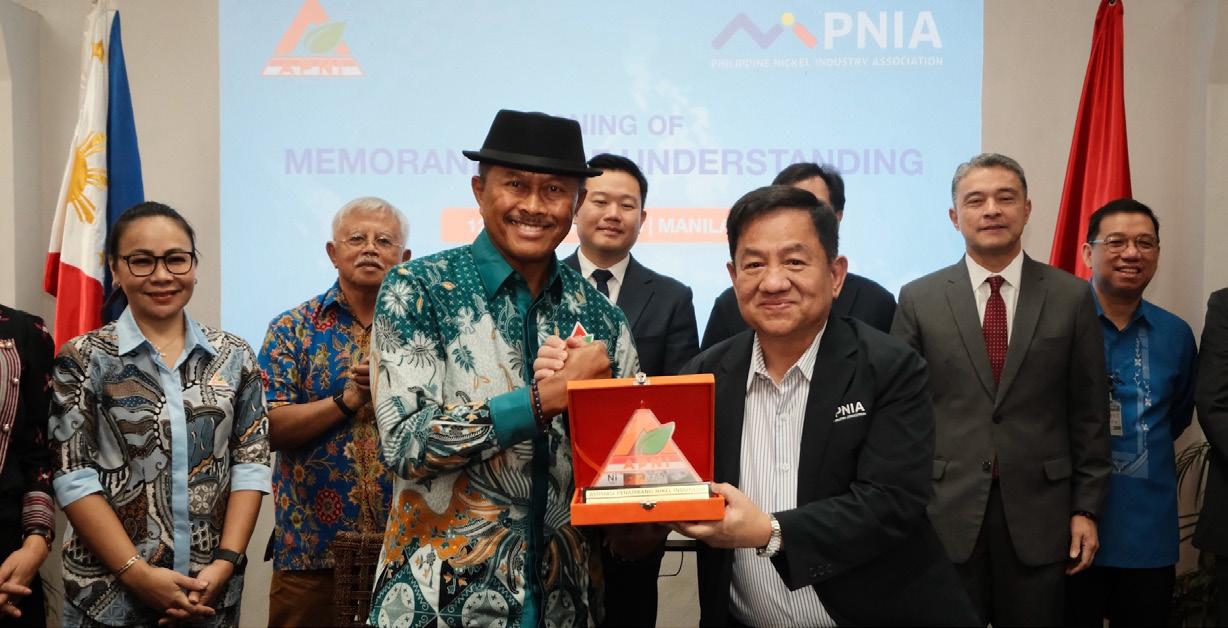
Indonesia Nickel Miners Association (Asosiasi
Penambang Nikel Indonesia or APNI)
Chairman Komjen Pol. (Purn) Drs. Nanan Soekarna (center left) and Philippine Nickel Industry Association (PNIA)
Chairman Antonio L. Co formalize a partnership agreement at the University of Asia and the Pacific on February 12, 2026, geared towards shaping and deepening cooperation across the nickel value chain. The signing was witnessed by key government officials from the DENR, DTI, and MGB, and executives from APNI and PNIA.
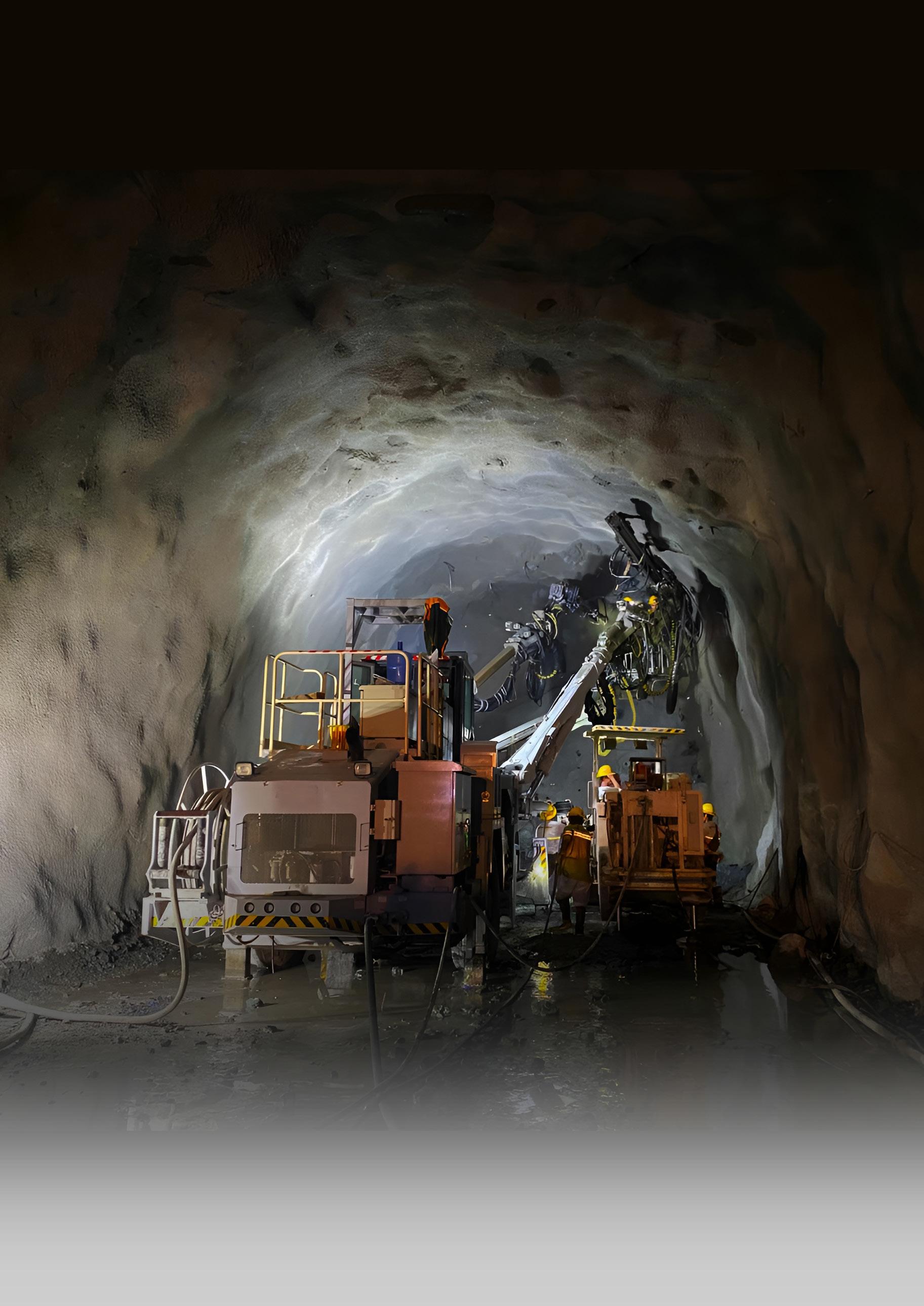
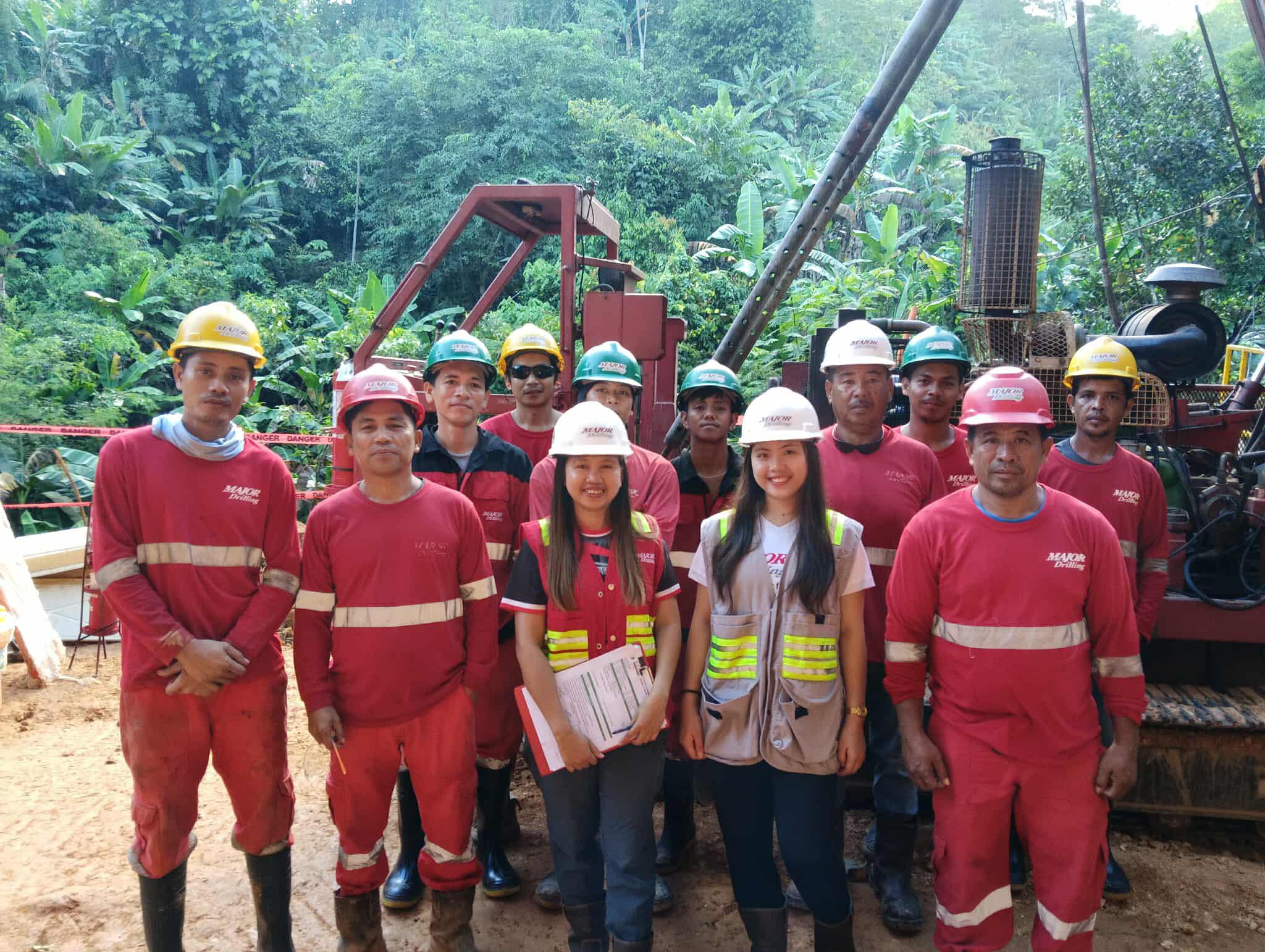
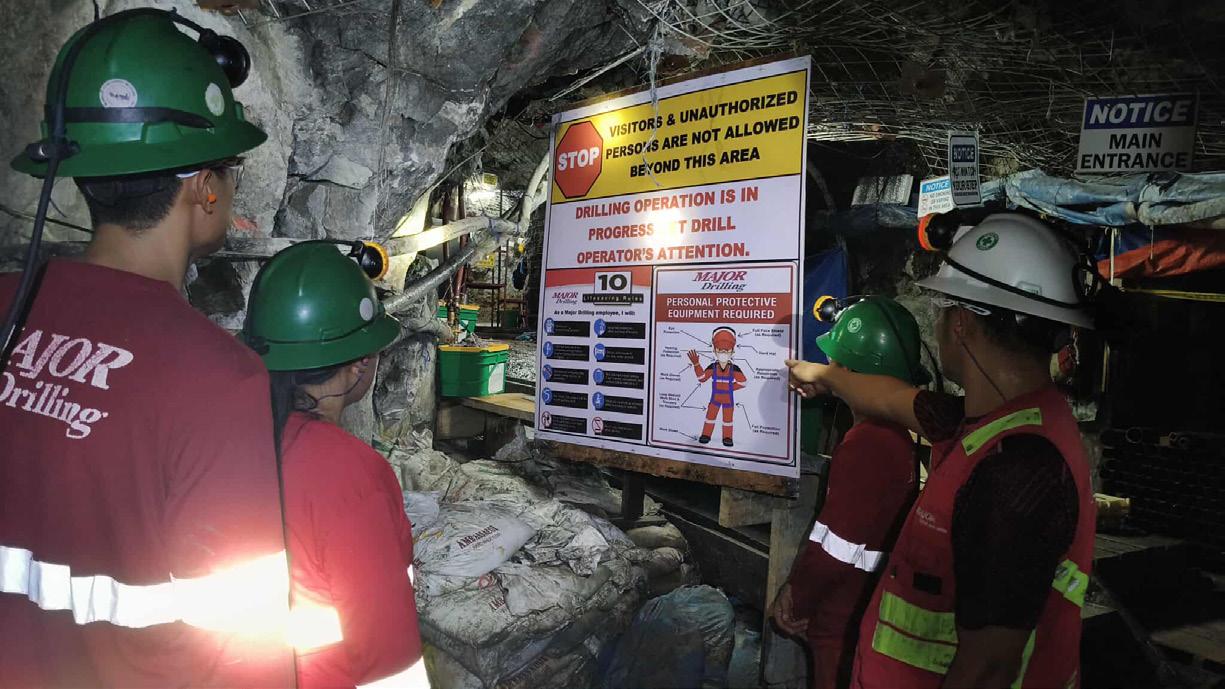
Major Drilling’s Philippines branch achieved a significant milestone—10 years of safe operations without a Lost Time Injury (LTI). In 2025, the branch surpassed 4 million LTI-free hours by emphasizing proactive safety standards, ongoing training, and open communication. This achievement reflects a sustained commitment to workplace safety and operational discipline, setting a benchmark for the mineral drilling sector in the region.
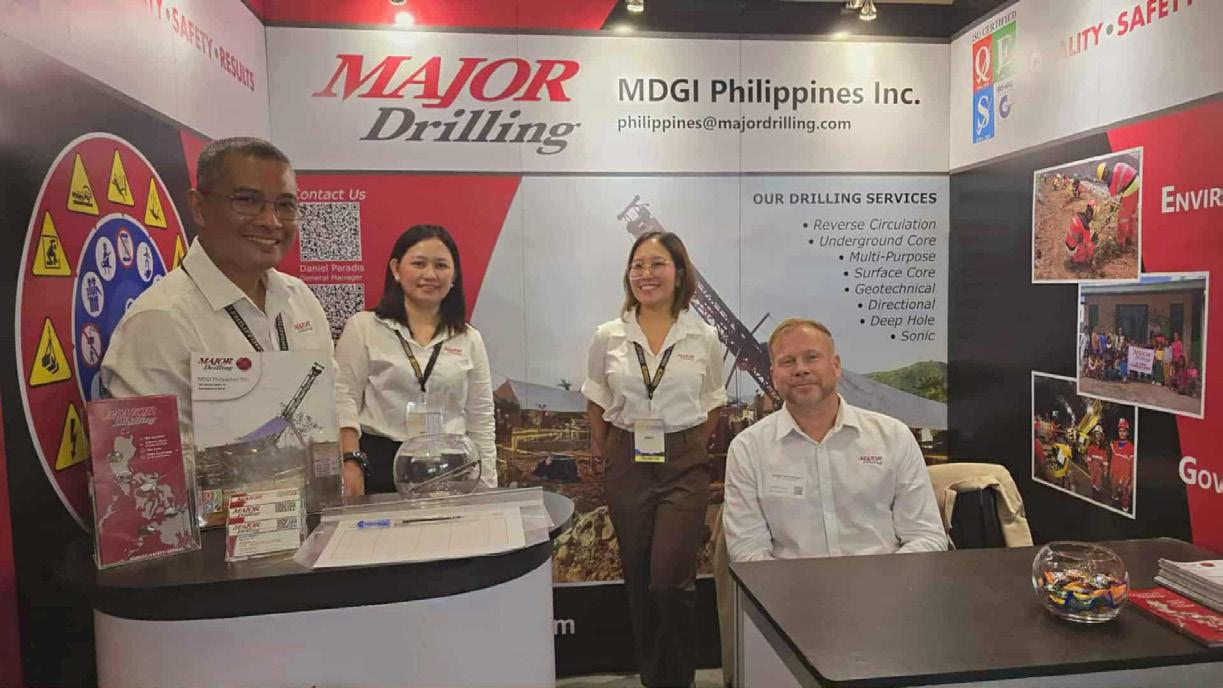
Major Drilling Philippines (known locally as MDGI Philippines Inc.) supports mineral exploration and development projects across the country, providing specialized services such as coring, reverse circulation, underground and geotechnical drilling. The branch has grown alongside the industry’s evolving requirements, applying global best practices in safety and technology while maintaining a strong local workforce.
While the Philippines branch celebrates its safety record, Major Drilling Group International enters 2026 with expanded capabilities worldwide. Founded in 1980 in New Brunswick, Canada, the company has evolved from a regional contractor into a global leader in specialized drilling services. Today, it operates across six continents, offering a broad range of specialized drilling services—supported by technologydriven tools for data capture and analytics.
We’re proud to be part of this great company and bring our branch’s impressive safety record and cohesion to the greater team,” Daniel Paradis, General Manager of the Branch, said,” “This creates productive days for clients and helps us keep our particular focus on safety best practices and social responsibility.”
In fiscal 2025, Major Drilling
reported $727.6 million in revenue and invested $72.5 million in fleet modernization, while achieving a Total Recordable Incident Frequency Rate (TRIFR) of 0.74, its lowest in 45 years. These results underscore the company’s emphasis on operational discipline and safety-first culture.
A major contributor to recent growth was the integration of Explomin Perforaciones in late 2024, adding 92 drills and expanding Major Drilling’s fleet to more than 700 rigs. This acquisition strengthened the company’s presence in South America and increased exposure to copper-focused regions such as Peru, supporting complex
drilling programs across multiple jurisdictions.
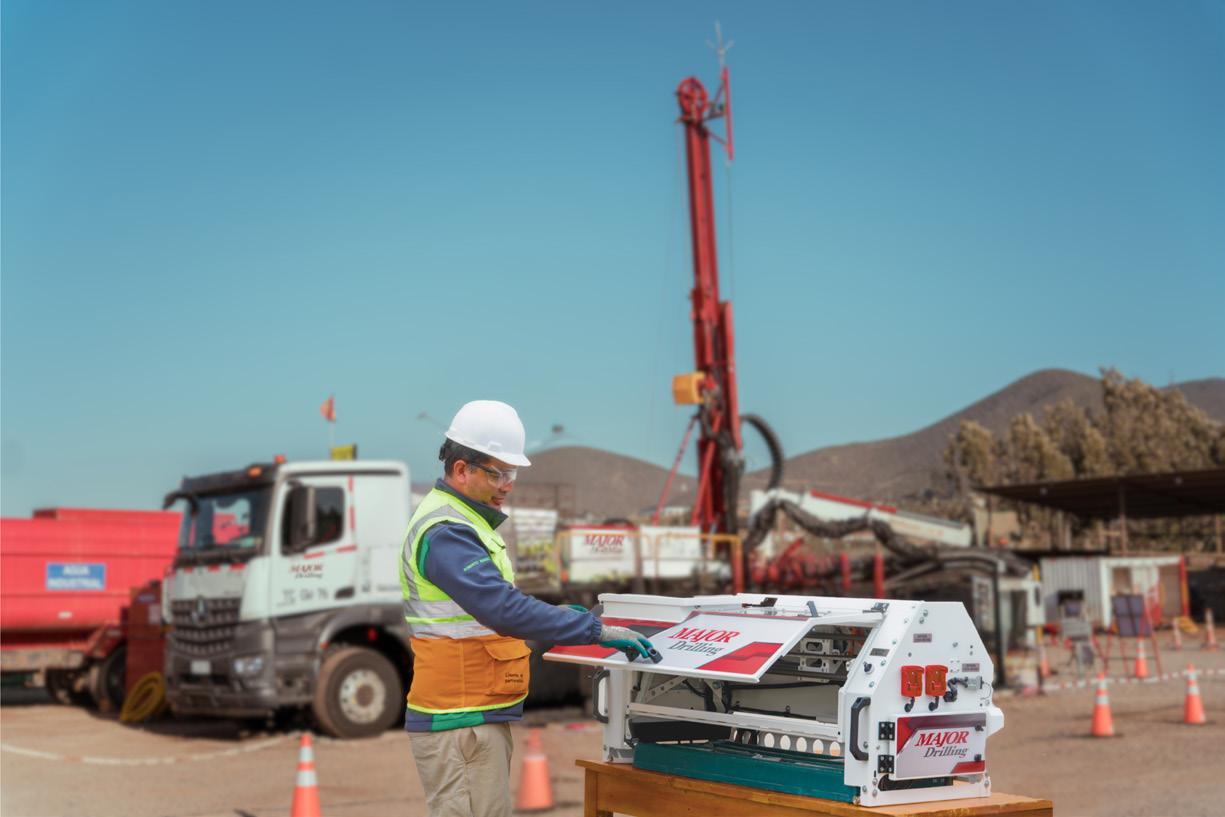
Alongside geographic expansion, Major Drilling has advanced its Major+ innovation platform, combining drilling services with imaging, surveying, and AI-assisted logging. In partnership with KORE GeoSystems, the company introduced a drillside imaging unit that captures high-resolution core photos and uses AI to produce rapid logs, including RQD measurements. Early pilots at G Mining Ventures’ Tocantinzinho


project in Brazil demonstrated improvements in decision-making and data consistency.
The system integrates a ruggedized imaging station at the drill site, equipped with high-resolution cameras and lighting to capture consistent core photographs. These images are processed through KORE GeoSystems’ AI engine, which applies depth referencing, segmentation, and automated calculations such as RQD and fracture counts. The workflow eliminates manual logging delays by generating preliminary logs within seconds, accessible through a secure cloud platform.
Traditionally, core logging is labor-intensive and subject to variability in measurement and interpretation. By automating key steps, the AI-assisted system improves accuracy, repeatability, and auditability. Geologists can validate geological models in near real time, reducing the lag between drilling and decision-making. For project managers, this translates into greater agility—holes can be extended, shortened, or redirected while drilling is still in progress, optimizing resource allocation and reducing unnecessary meters drilled.
The ability to make informed decisions at the rig site has direct implications for project economics. Faster logging reduces downtime, while improved data quality minimizes the risk of costly errors in resource modeling. For remote projects, where logistics and mobilization costs are significant, these efficiencies can represent substantial savings.
Beyond operational gains, AIassisted logging supports data standardization across projects and jurisdictions. Images and logs are indexed, searchable, and depth-referenced, creating a digital audit trail that meets the growing demand for verifiable geodata in
compliance reporting and due diligence. The system also enables remote collaboration, allowing experts to review core images and logs from anywhere in the world capability that became particularly valuable during recent global travel restrictions.
Major Drilling and its technology partners are exploring integration with predictive analytics and geological modeling software, aiming to link real-time logging with dynamic resource models. This could allow drill programs to adapt continuously based on evolving geological interpretations, further reducing uncertainty and improving project outcomes.
Major Drilling employs more than 6,000 people worldwide and invests in workforce development through programs such as Core College and training on new technologies. Its sustainability framework, formalized in 2020, addresses greenhouse gas tracking,
water stewardship, and community engagement, encouraging women in mining, and including partnerships with Indigenous groups. A 2025 idling policy aligns with industry efforts to reduce emissions.
The Philippines branch’s decadelong safety record illustrates how structured programs and practices can deliver measurable results at the site level. As global mining increasingly targets deeper and more complex deposits, and as sustainability and safety standards rise, drilling contractors capable of integrating technology with skilled execution will play a critical role in project success.
For Major Drilling, this means continuing to combine scale with specialized expertise, embedding data and automation into workflows, and maintaining safety performance that meets the expectations of mining partners worldwide.
Visit majordrilling.com to learn more about the company’s services.
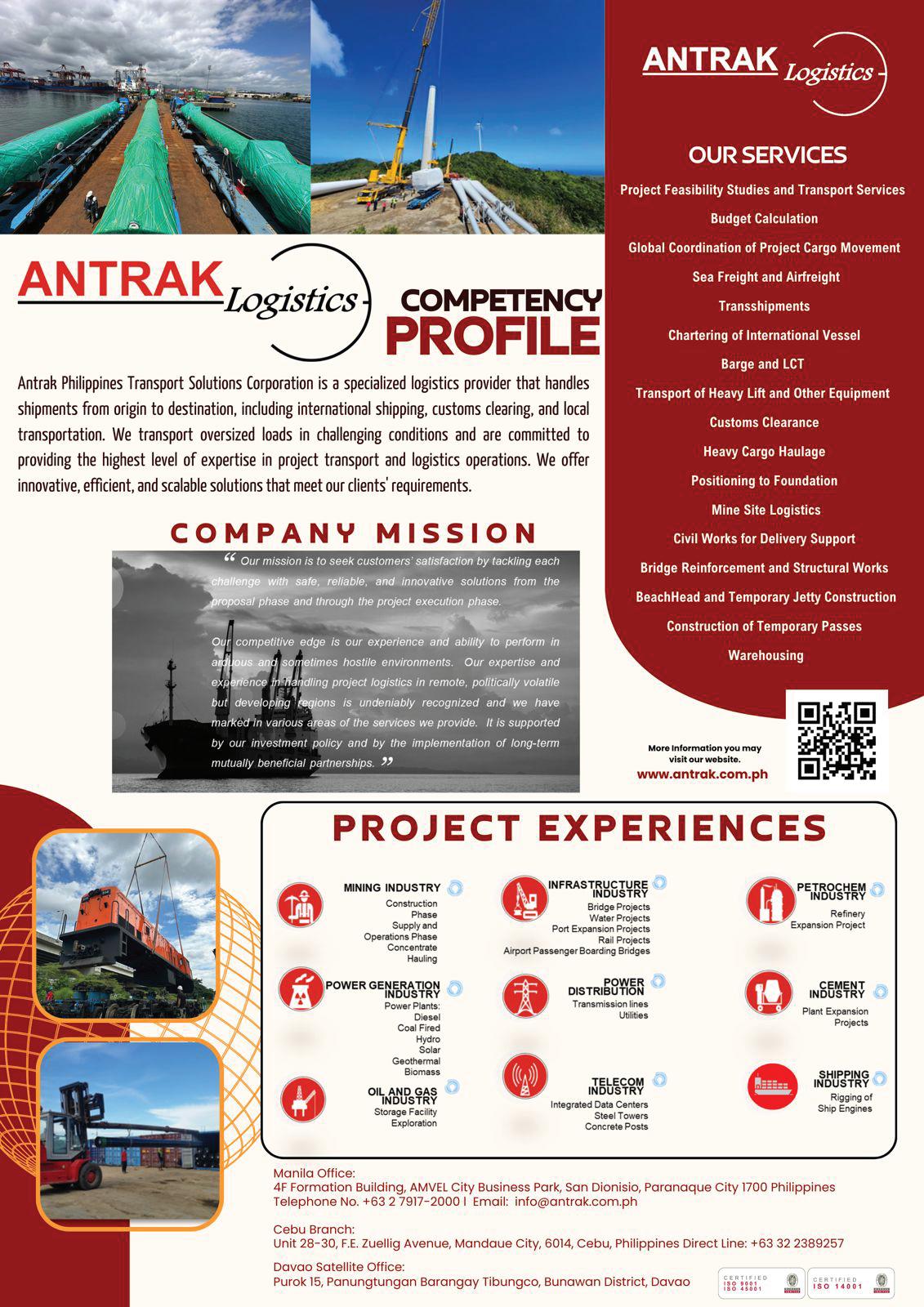
FLS Group Philippines, Inc. is a specialized logistics provider that handles shipments from origin to destination, including international shipping, customs clearing, and local transportation.
FLS Group Philippines, Inc. is a specialized logistics provider that handles shipments from origin to destination, including international shipping, customs clearing, and local transportation.
We transport oversized loads in challenging conditions and are committed to providing the highest level of expertise in project transport and logistics operations. We o er innovative, e cient, and scalable solutions that meet our clients' requirements.
We transport oversized loads in challenging conditions and are committed to providing the highest level of expertise in project transport and logistics operations. We o er innovative, e cient, and scalable solutions
Project Feasibility Studies & Transport Services
Budget Calculation
Global Coordination of Project Cargo Movement
Sea Freight and Airfreight
Transshipments
Chartering of International Vessel
Barge and LCT
Transport of Heavy Lift & Other Equipment
Customs Clearance
Heavy Cargo Haulage
Positioning to Foundation
Mine Site Logistics
Civil Works for Delivery Support
Bridge Reinforcement & Structural Works
BeachHead & Temporary Jetty Construction
Construction of Temporary Passes
Warehousing
written by: MARCELLE P. VILLEGAS
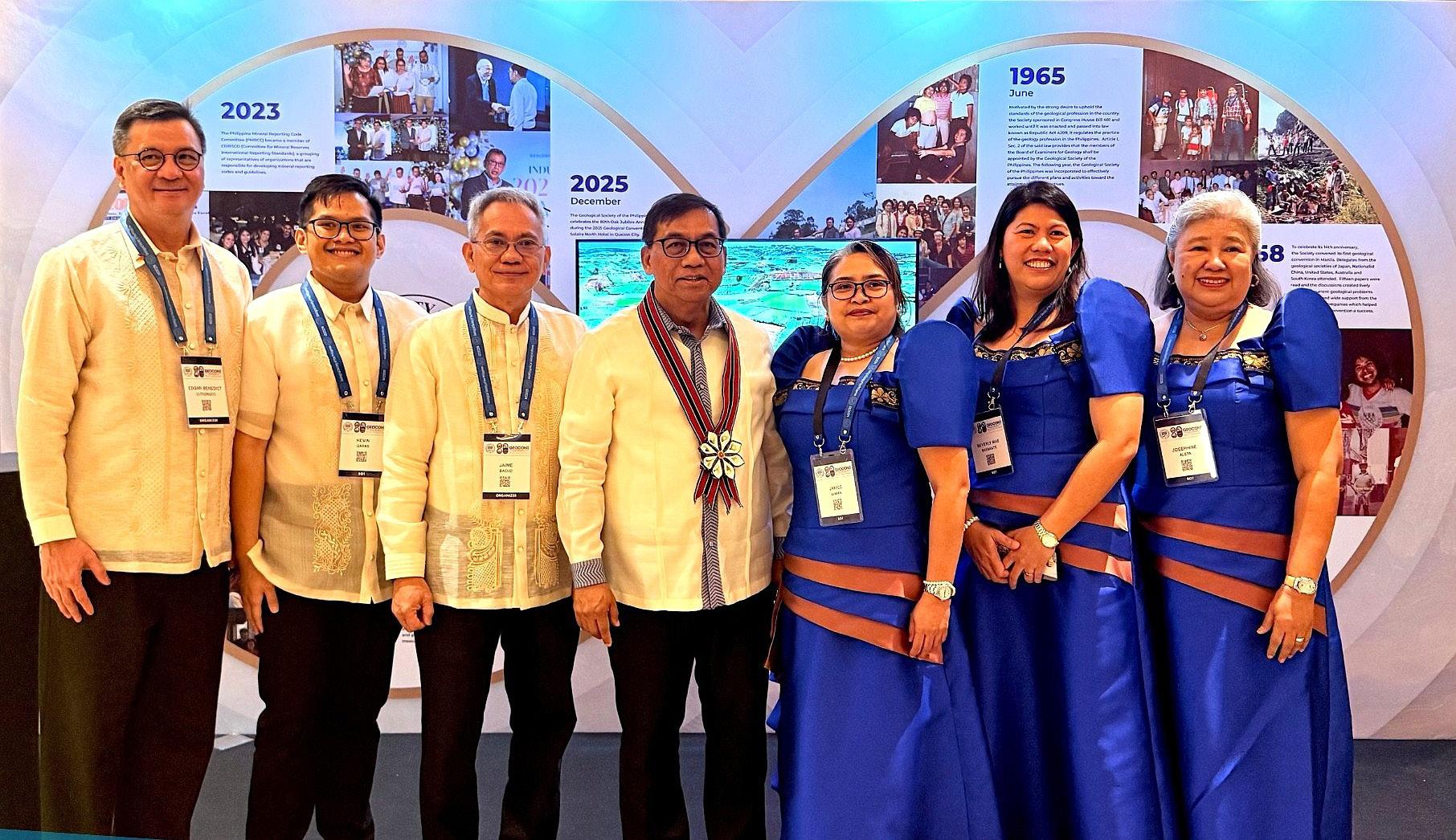
From mapping mountains to mentoring generations, the Geological Society of the Philippines (GSP) has been the pillars of Philippine geology. To celebrate its 80th Anniversary, GSP’s Oak Jubilee and Geological Convention (GEOCON) 2025 was held at the Solaire Resort North, Quezon on December 2-3, 2025.
The event honored the leaders in geoscience, latest research and discoveries in geology, natural hazards, and technology-driven solutions. Dr. Renato U. Solidum, Jr., Secretary of the Department of Science and Technology (DOST) was the keynote speaker.
Looking back in history, GSP was organized on September 2, 1945--also known as Victory Over Japan Day. Rising from the ruins of the newly liberated City of Manila, a group of geologists (mostly Americans) attached to the office of the Chief Engineer, GHQ AFPSC, met with a group of Filipino geologists and mining engineers under the chairmanship of Lt. Col. H. G. Scherick.
Major Robert N. Williams and Dr. Jose M. Feliciano led to the establishment of the Society. The group was composed of 62 original or charter members--39 Americans, one Australian, and the rest are Filipinos.
The first GEOCON was held in Manila on January 9-11, 1958, which was GSP’s 14th anniversary. The convention featured 15 papers. It created lively discussions on current geological problems. Due to the wide support from different mining companies, the first GEOCON was a success and inspired more GEOCONs in the years ahead.
For decades, GEOCON has served as a platform for advancing geoscience in the Philippines, facilitating collaboration and knowledge exchange among professionals from industry, academe, and government, and supporting professional development through technical sessions and workshops. The annual convention also highlighted Filipino geoscience contributions to local and global issues such as natural hazards, resource management, environmental protection, and sustainable development, while fostering camaraderie within the geoscience community.
The theme of GEOCON 2025 is “Forged by time, strengthened by integrity, driven by professionalism”.
Jaime Bacud, GSP Co-Chairperson said, “We had a bigger venue. We had more than 800 attendees which is so much bigger than what has been participated in the past, and we provided a different concept to the presentations. We had a full day of plenary sessions.”
“The event is a big celebration of geoscience, of people, and of ideas. We are able to cross generations from the Gen Zs to the Gen Seniors. And then we were able to provide a homecoming or reunion for most of the people that has been here in the past and those new coming in into the geology professions.”
Dr. Kevin L. Garas, former GSP President mentioned, “So far this GEOCON 2025, we really want to highlight the relevance of our profession to the society and with that we want to revive the fire within GSP members to serve this country and to serve GSP.”
“We can summarize the value or the impact of this GEOCON in five
< Page 32
words. It’s grand . It’s relevant . It’s meaningful and it’s about legacy and being grateful -- grateful for older generations.
Edgar Benedict Cutiongco, GSP Co-Chairperson stated, “What we bring into the celebration, a set of what we call ‘rock stars’ of the geological profession. These are the senior guys--we stand on their shoulders, and they share their technical geniuses and the things they have brought into the profession so that it will not be forgotten.”
The Geological Society of the Philippines (GSP) recently inducted its new Board of Trustees and Officers for 2026, led by President Engr. Janice Wayan and Vice President Ms. Mary Rose Gabuyo. Other officers are Michael Angelo C. Tan, Secretary; Atty. Rene Boy C. Velasco, Asst. Secretary; Leopoldo T. Virtucio, Treasurer; and Trustees Beverly Mae M. Brebante, Darwin Riguer, and David Gotera.
“The Geological Society of the Philippines (GSP) aims to solidify its role as a trusted advisor to the government and the public, ensuring the profession remains resilient and responsive.”
“We commit to our strategy of geographic inclusivity while positioning the Filipino Geologist as a regional leader through international partnerships.” (from GSP social media post)
The Professional Regulation Commission (PRC / Commission) is proud to announce their warmest congratulations to the successful takers and the TOP TEN examinees, who garnered the highest rankings, of the recently concluded November 2025 Geologists Computer-Based Licensure Examination (CBLE). The TOPNOTCHERS emerged from the one hundred and ninety-one (191) successful passers out of the two hundred and ninety-six (296) examinees in National Capital Region (NCR).
The members of the Board of Geology who gave the licensure examination are Hon. Fernando S. Peñarroyo (Chairman), Hon. Benjamin S. Austria and Hon. Elmer B. Billedo (Members).

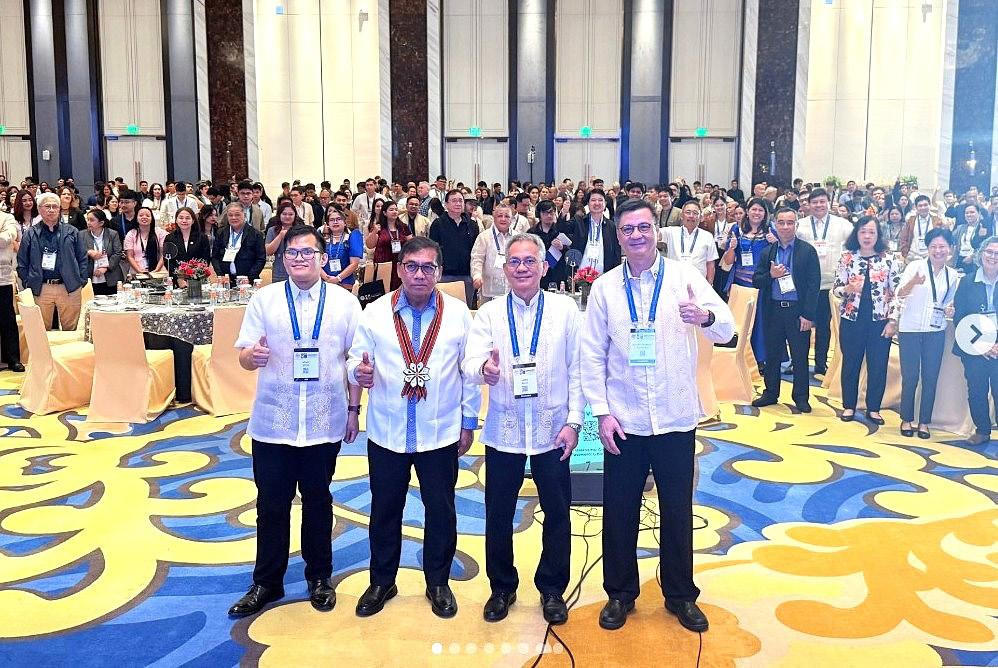
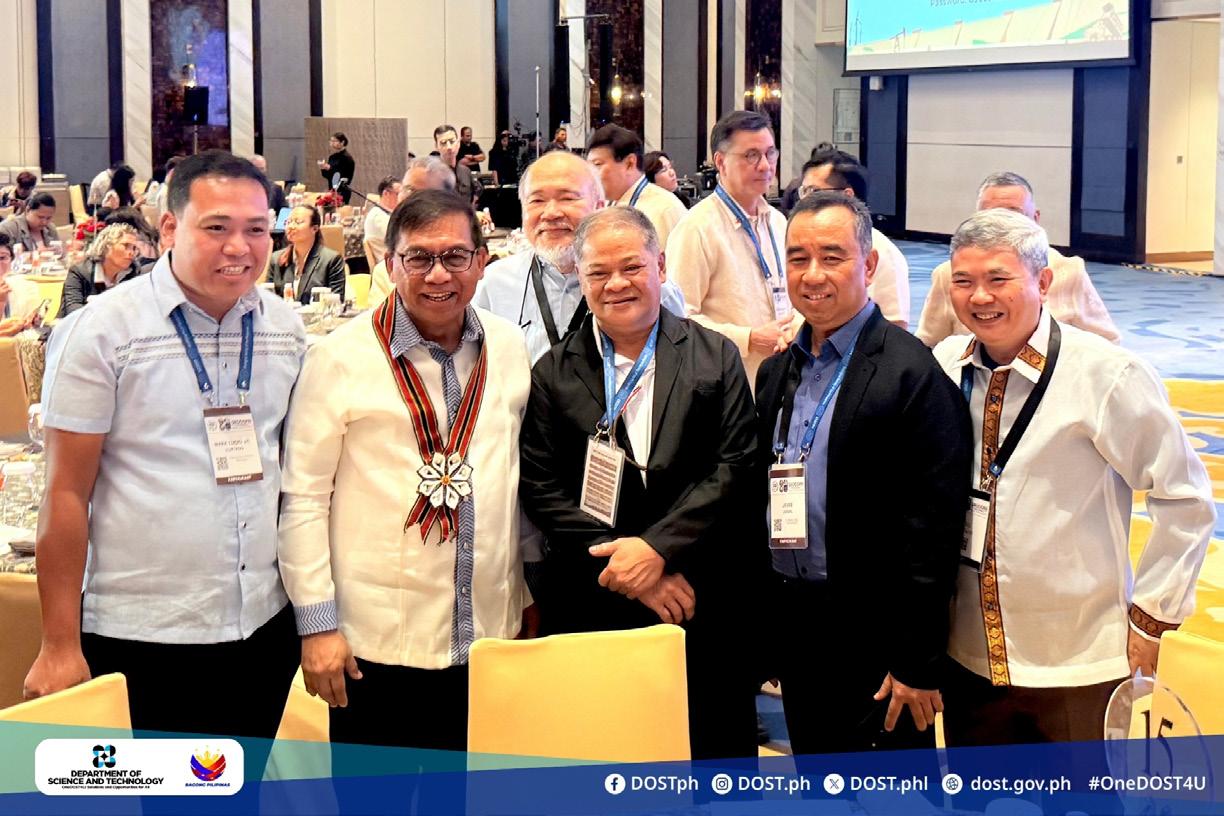
The results were released immediately after the last day of examination.
1) Kryzell Marquez Carmona (86.10%) – UP-Diliman
2) Lorenzo Angelo Dizon Valeriano (86%) - UP-Diliman
3) Chester Llyod Raguingan Lomboy (85.90%), Marcus Gabriel Hernandez Mendoza (85.90%) - UP-Diliman
GEOCON 2025 was an event that
made 2025 memorable for the members of geoscience community. It was a grand gathering where legacy meets innovation, and the stories of pioneers inspire the next wave of geologists. See you on the next GSP event-GEOCON 2026!
--Reference: Board of Trustees - https://www. facebook.com/share/p/1RDu6RbL6q/
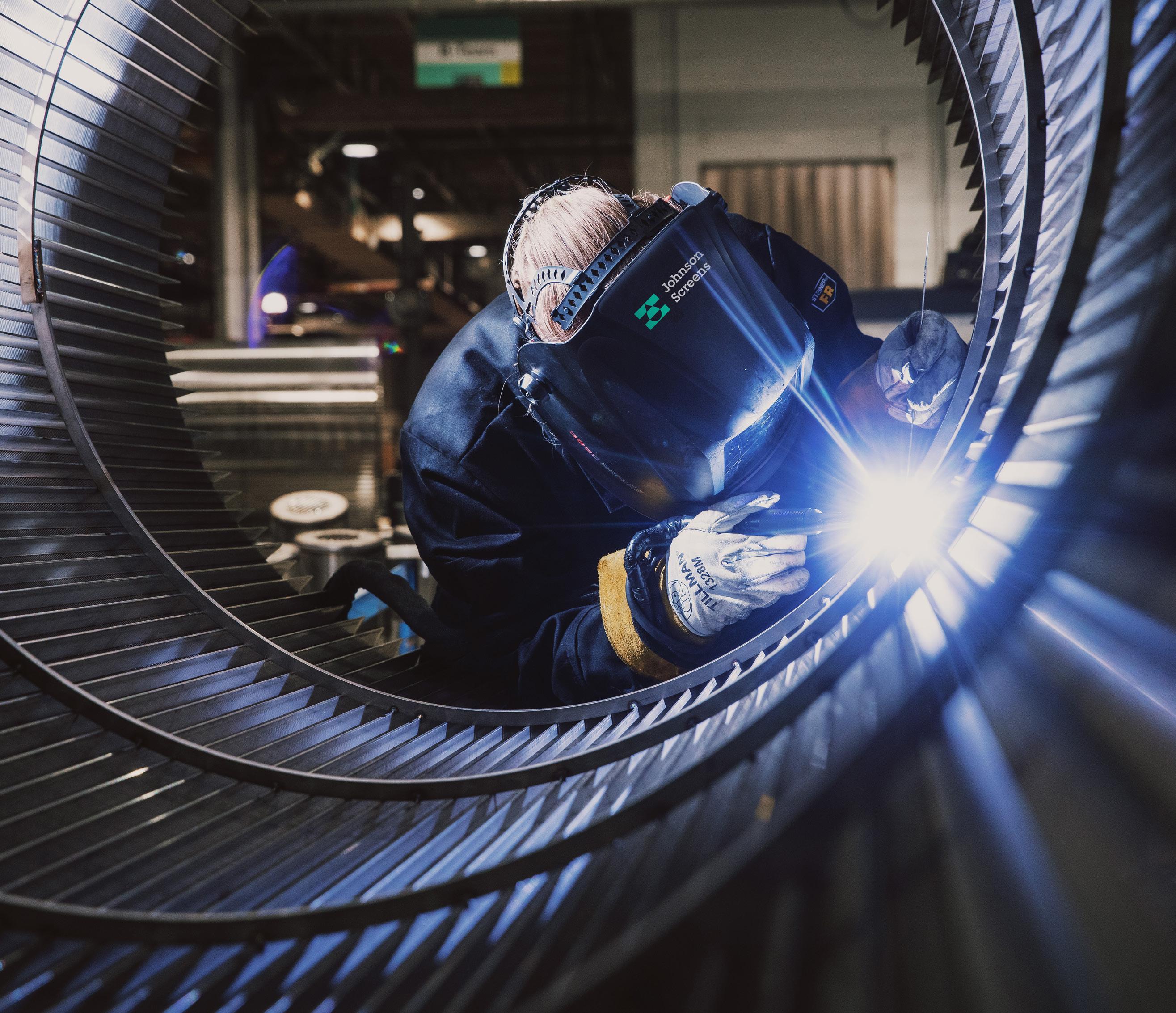
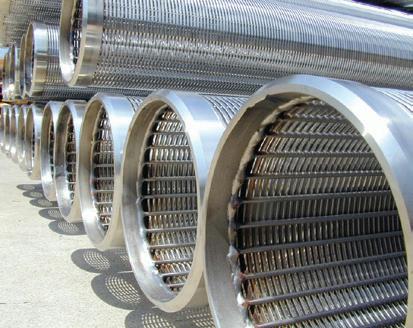
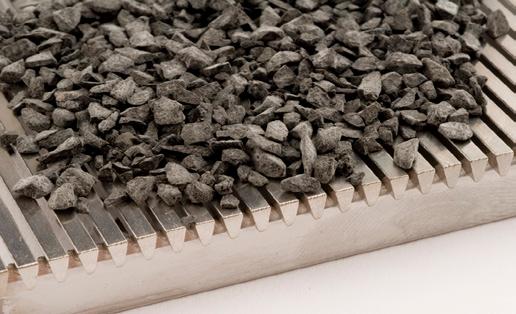
Johnson Screens provides the innovation the mining industry requires with the tradition you want.
Our stainless steel screens incorporate the reliability and resiliency that only the company that invented and perfected the continuous Vee-Wire® technology for over a century can provide.
They are an important part of the complete portfolios of separtion and water well solutions Johnson Screens can offer for the mining industry

written by: MARCELLE P. VILLEGAS
Today more than ever, artificial intelligence (AI), design software and emerging technologies are increasingly shaping how businesses operate, compete, and manage risk. This is most critical in a high-risk industry like mining.
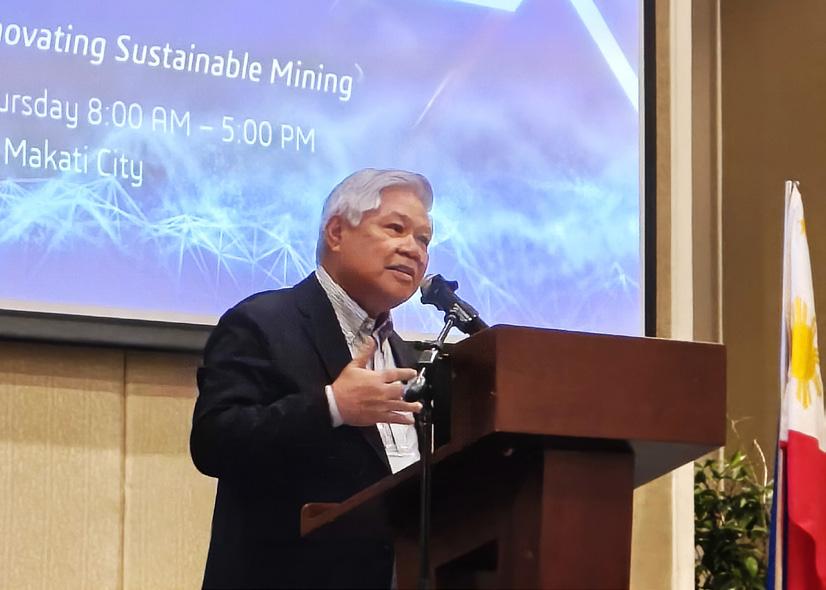
On December 4, 2025, Paramina International, Inc. hosted the 2025 DS GEOVIA User Conference Philippines at the Makati Diamond Hotel, Makati City. It was a free conference that aimed to share presentations, hold meaningful discussions, and provide participants with valuable insights and updates from the field.
The conference was a premier, annual gathering for users of Dassault Systèmes GEOVIA software, bringing together professionals, experts, and industry leaders from the Philippine mining sector to examine the latest advances in sustainable mining through digital transformation and innovation.
With GEOVIA specialists from the Philippines and Australia presenting and attendees from all over the Philippines, the event also provided opportunities for engineers and geologists to network and discuss best practices.
The speakers highlighted the newest GEOVIA solutions in shaping the future of mining, featuring papers from Philippine users and mining companies, and underscored that technical personnel on mine sites can benefit from using GEOVIA software in order to optimize operations.
Alfredo S. Cruz, President and CEO of Paramina International, Inc., stated in his welcome message, “Your presence here shows your dedication to learning, growing, and staying ahead in the mining industry. Today’s program is packed with presentations and discussions and practical insights that are designed to be directly useful to you.”
“You will hear from your fellow GEOVIA users about the usage of the software to optimize operations
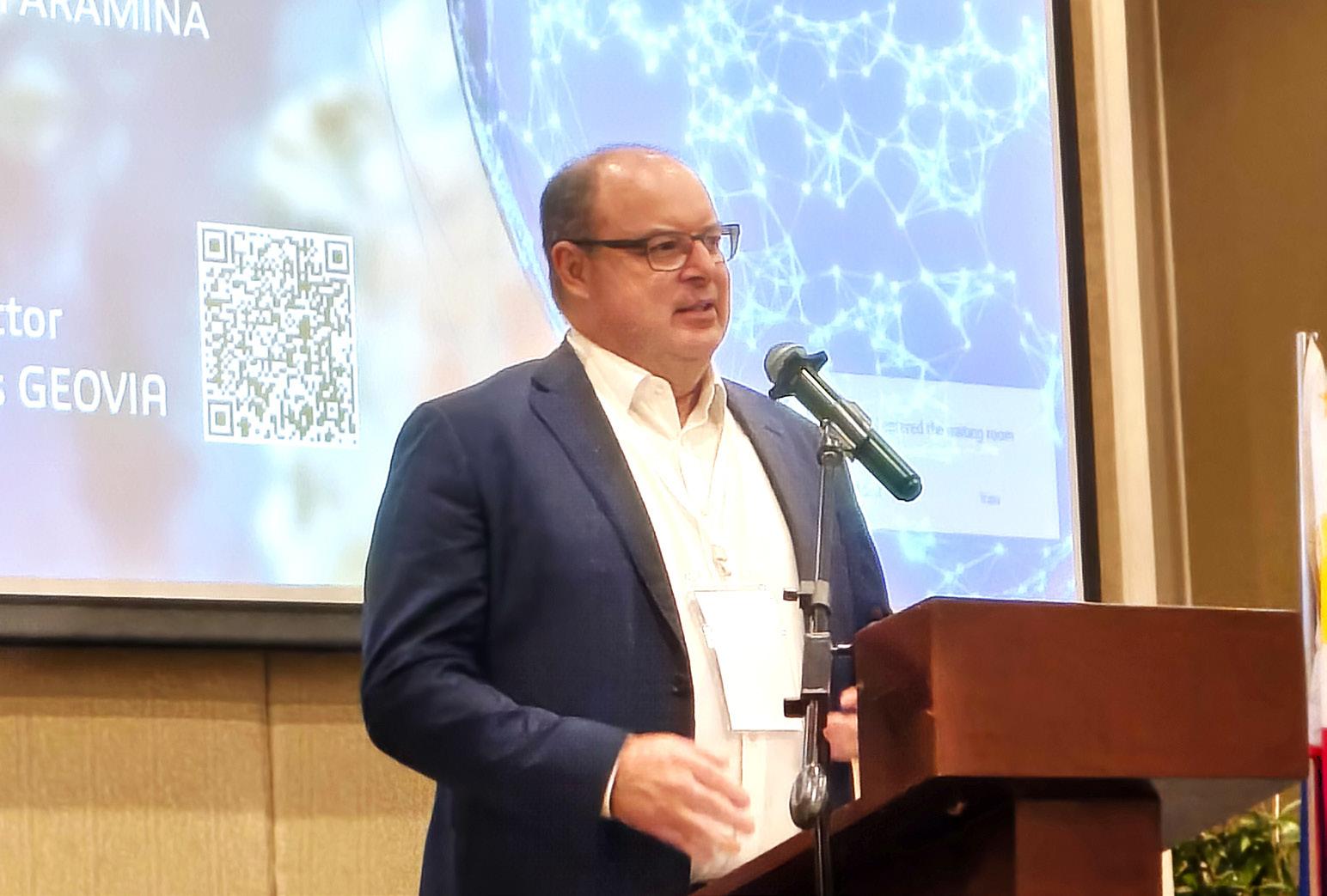
and overcome challenges in the work. You will also learn about the latest GEOVIA solutions that can help you make better, faster, and more information for reliable decision in your project.”
“The theme of this year’s conference ‘Partners in Progress: Innovating Sustainable Mining’ emphasizes the power of collaboration and technology in advancing responsible mining practices. By actively engaging today, you will gain knowledge, best practices and inspiration that you can immediately apply in your organization.”
The event featured keynote speaker, Ralph Smith, GEOVIA Sales Expert and Managing Director of Global Sales partnership of Dassault Systèmes, with his keynote speech on “Access the next generation with Dassault Systèmes”.
With over 25 years of experience in mining and infrastructure, Mr. Smith offers solid expertise in mine planning, design, feasibility study and large-scale project delivery across Australia, Africa, Asia, and Europe. He shared his insight on how technology and collaboration are shaping the future of sustainable
mining, particularly how AI will impact or influence operations in mining.
He said, “In a world where AI can generate just about anything, we have endless possibilities of what we can do. The key differentiator is the knowledge that drives and feeds those systems and those applications to give us outcomes.”
“So, it’s a critical point, the immense potential that AI provides us is only going to be as effective as the knowledge it is based on.”
“...Around the world we have sort of seen geopolitically in the last 12 or 8 months, or ever since COVID, right? We have been challenged in supply chains, [and] we have seen different government entities reshift their focus of different critical minerals. We have seen the drive to take on ownership or sovereigntydriven decisions around different countries to that because of the weight of where some of that is centered.”
“And to be able to accelerate, a lot of this development in different countries, that may not have been adopting those minerals or focusing on them in the past, is going to be our license to operate. How do we ensure that we rapidly expose the industry, but liaise with communities, investors, all key stakeholders and provide
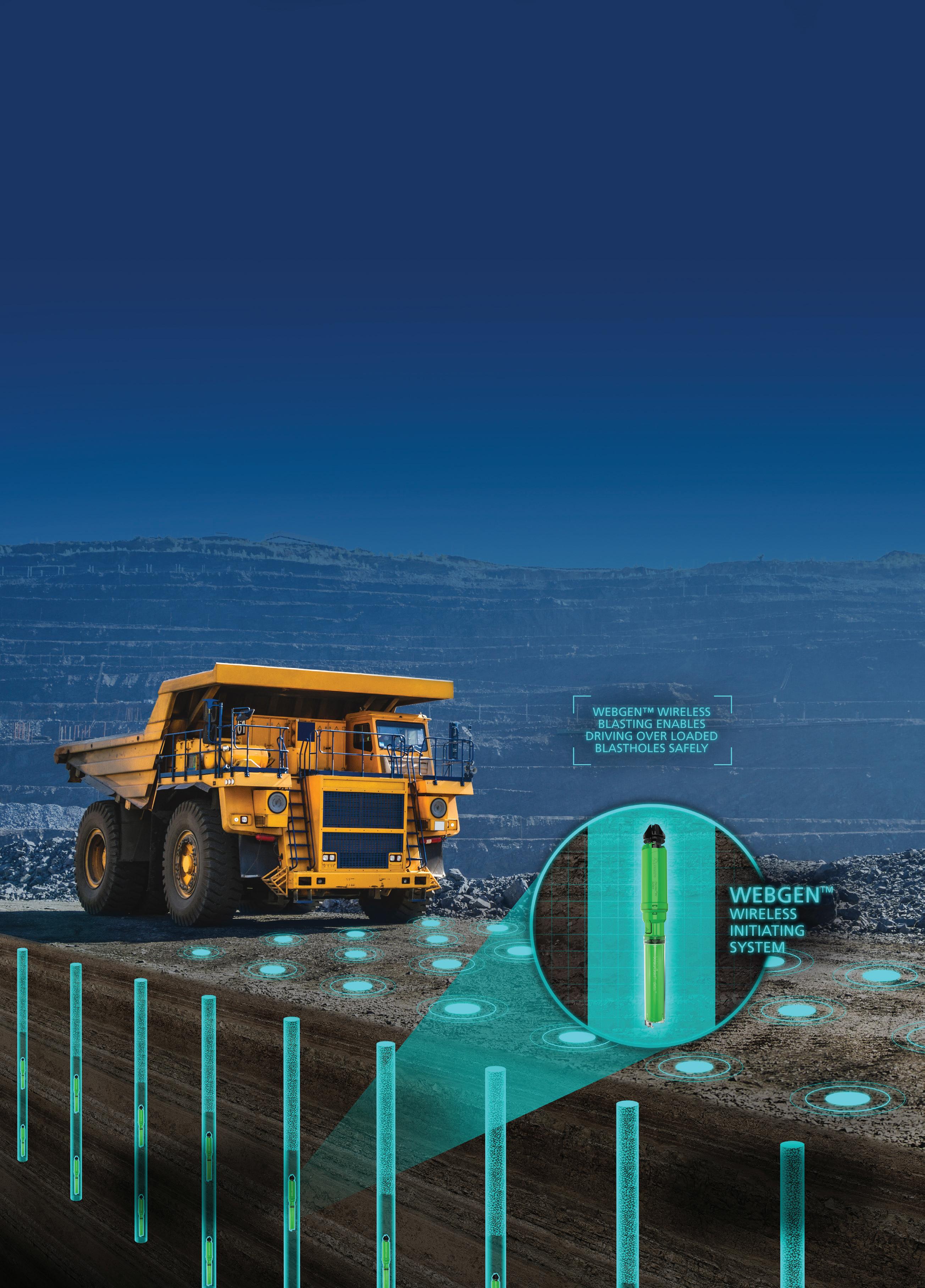
Space is at a premium at the bottom of the pit. WebGen™ 200 Surface eliminates traditional scheduling constraints.
WebGen™ 200 Surface reduces exposure to geological hazards by minimizing the need for revisiting blastholes. With wireless detonation, all explosives are isolated within the blasthole, eliminating the risk of vehicle interactions with explosive components. Making it safe to transform a loaded blast into a productive haul road. orica.com/wireless
GET MORE FROM YOUR BLASTING WITH WIRELESS TECHNOLOGY
Lightning risk reduction Firing on demand Reduced exposure to geological hazards
confidence about what we do? And that’s really going to be through visibility of execution excellence, providing transparency, providing that ability…”
“What we are really driving is that sustainable, minimizing waste, recycling by-products, producing third-party products, so that we are contributing more wholly to a sustainable environment, on moving towards a more circular economy.”
“Now picture one of the world’s most advanced mining operations. Autonomous trucks crisscrossing the terrain, AI-driven models, fine tuning, extracting in real time. The global teams collaborating through an immersive virtual twin of an operation. This is no longer science fiction. This is a competitive baseline. In such a highly digitized and optimized environment, a question arises.”
“When everyone has access to the cutting-edge technology tools and AI-driver operational insights, what truly sets one operation apart from another? It’s not sophistication of the technology. Sure, the richness of the ore body plays a big, important role, but more importantly the real competitive advantage lies in ore body knowledge and how companies manage its inherent risk.”
“To achieve business targets, a collective knowledge and know-how, the intelligence that empowers the innovation, the intellectual property that allows the operation to perform smarter, safer responsibly and more sustainably than even before.”
Other speakers in the conference included:
• Min Liang, GEOVIA Industry Process Consultant and Senior Specialist with a presentation titled “Smart, Accurate, and Efficient -- Model Geology on 3DExperience Platform”;
• Amer Christian Tolentino, Senior Technical Resources Engineer in Paramina International, Inc. with a report on “Parametric Designing with Surface Mine Designer”;
• Carlo Matilac, Senior Vice President for Operations in Global Ferronickel Holdings, Inc. (FNI) who gave a presentation on “Applying R.A. No. 12253 or
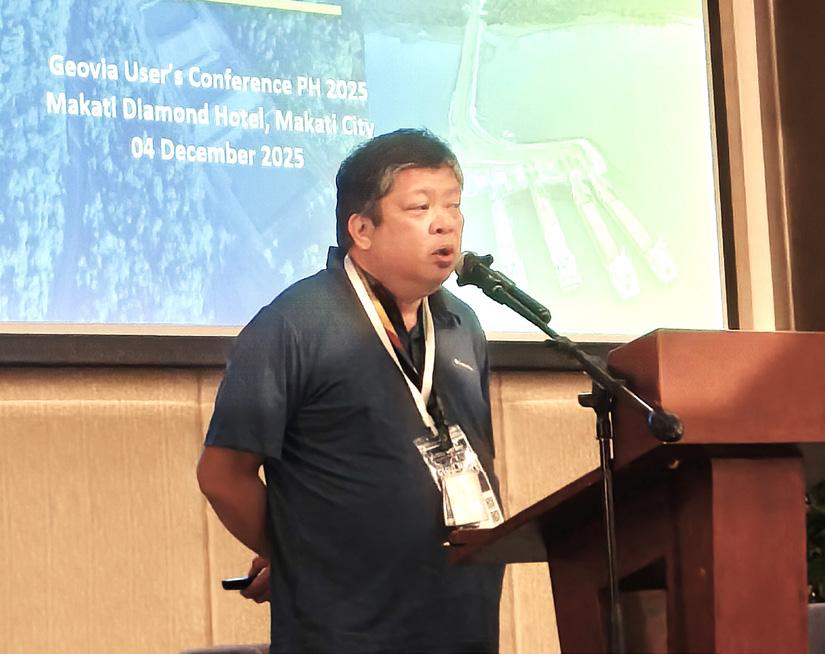
the ‘Enhanced Fiscal Regime for Large-Scale Metallic Mining Act’ to the Whittle Pit Optimization of the Ipilan Nickel Corp. M1 Deposit”;
• Daryl Suarez, Technical Resource Engineer in Paramina International, Inc., with a presentation titled “Enhancing Surpac Capabilities through Python Integration”;
• David Gotera of TVI Resource Development Philippines Inc., who discussed “Geotechnical Model Reconstruction from Combined Domain Mapping and Drilling Data for Open Pit Slope Stabilization Part 2”;
• Kim Leo Mañacap, Technical Resource Engineer in Paramina International Inc., lectured about “DSLS Explained: A Guide to Dassault Systèmes License Server Management”;
• and Engr. Janice Wayan, Senior Technical Resource Engineer in Paramina International, Inc. who gave an update titled “What’s New? 2026”.
At the end of the conference, Grace Tanchee, Business Development Manager in Paramina International, Inc., mentioned in her closing remarks that this conference aims to highlight what is to come in the industry, and most importantly, that we learn from the experiences of our fellow professionals.
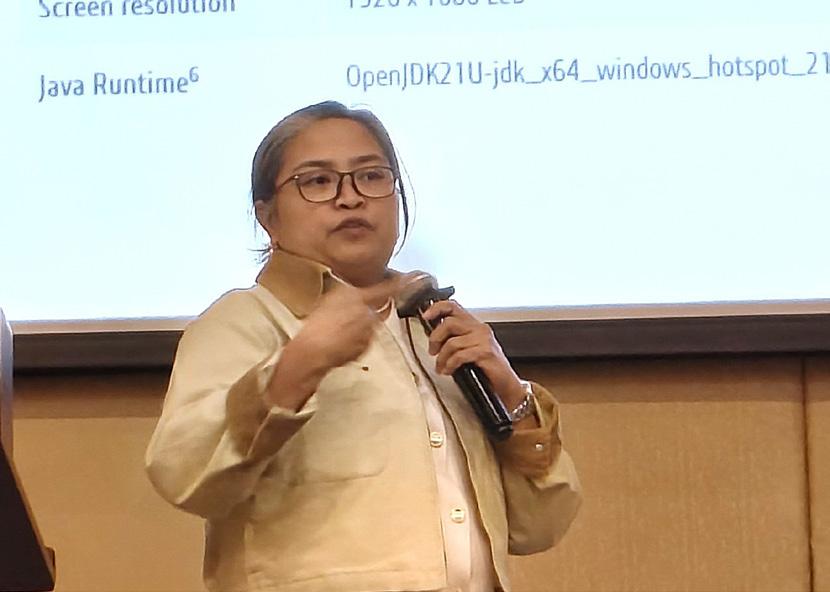
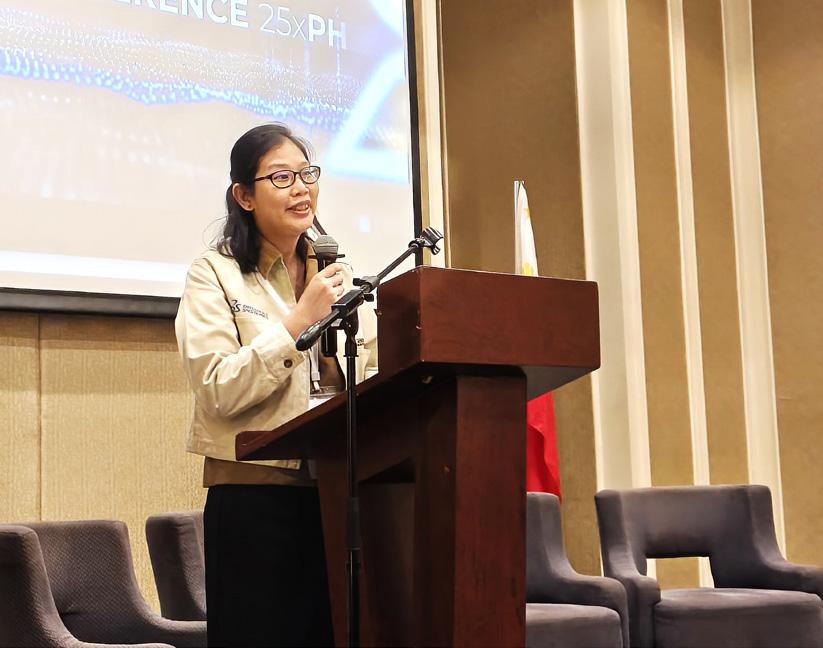
“We share knowledge,” she said. “Why? Because in mining, while it looks deceptively simple from the outside, I mean if you are not from the industry, it looks like you’re just digging... Taking the earth, right?”
“But in truth, what I’ve learned from this industry is that mining is a very difficult and high-risk industry. It is full of intricate nuances, processes, and estimates that you have to get right in order to achieve your goals. And you also need a lot of continuous improvement. So, I hope with this conference we help you in achieving the goal of facing those kinds of challenges and give you an advantage and lead towards your success.”
About the company: Paramina International, Inc. has 29 years of experience in the mining industry. Their team has strong technical orientation and experience which enables them to competently handle planning, management, and execution of complex underground mining projects. They deliver quality work with precision and innovation.
To know more about Paramina and Dassault Systèmes GEOVIA products, visit https://paramina. com/.
Photo credit: Marcelle P. Villegas

written by: MARCELLE P. VILLEGAS
For a wonderful start of the year, Philippine Mining and Exploration Association
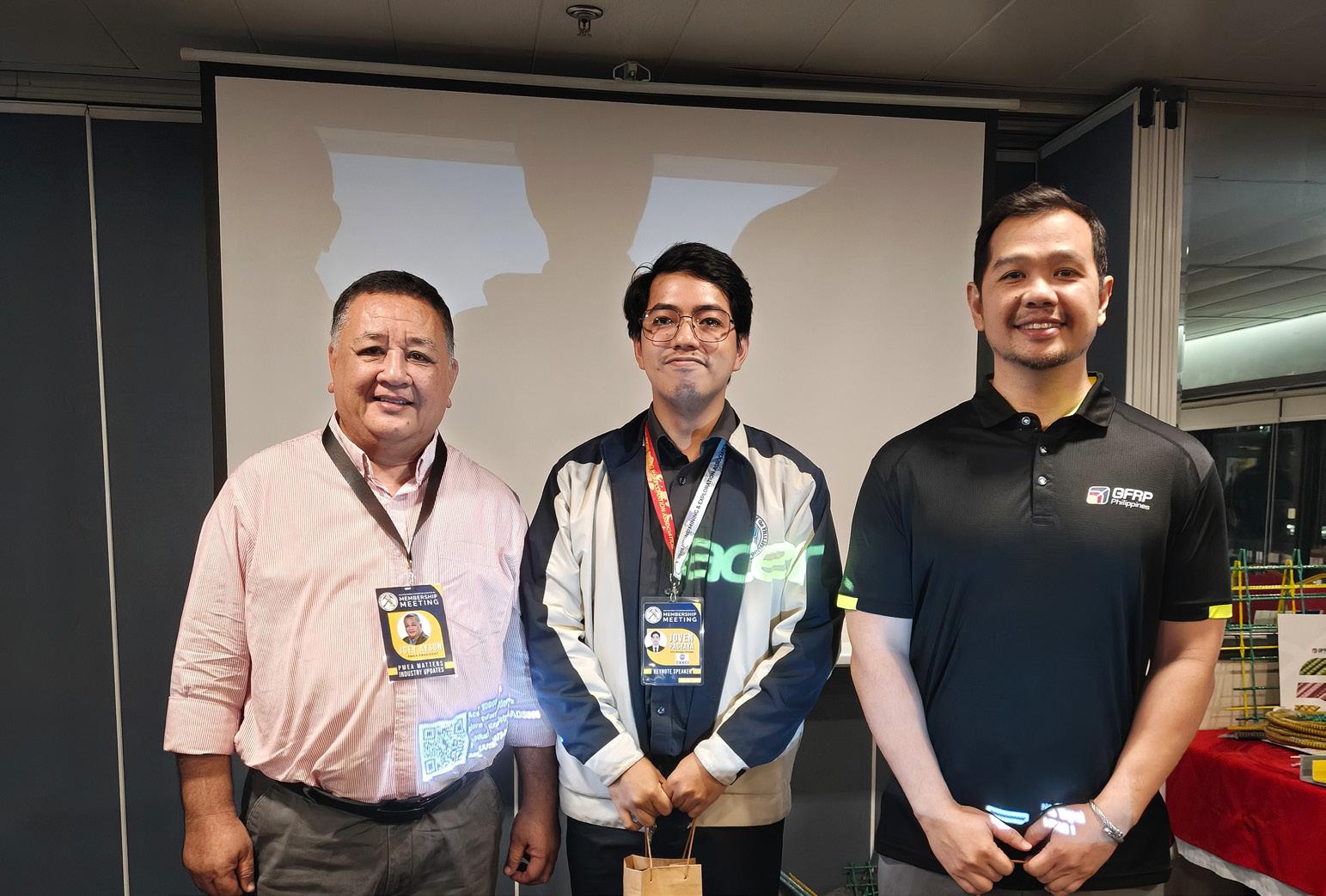
Monthly Membership Meeting focused on sustainable industrial solutions and advanced exploration technology, featuring speakers Michael Maglipon (President) from GFRP Philippines and Joven Brett Pacyaya (Asst. Manager, Geology) from Cordillera Exploration Co., Inc. The meeting was held on February 2, 2026.
PMEA President, Joey Nelson Ayson, reported the Industry Updates and PMEA Matters. The bar sponsored for the evening was GFRP Philippines Manufacturing Corporation.
As of January 31, 2026, PMEA members updates include 15 Regular; 61 Associate; 31 Individual; and 15 Honorary.
DENR-MGB AND OTHER UPDATES
STAFF MOVEMENTS
• AD Ted Sandoval retirement on Jan. 09, 2026
• Marcial Mateo currently OIC AD
› OFFICE HOURS: Effective January 2026: 7AM to 7PM, Monday to Thursday work only
• The 2026 Presidential Mineral Industry Environmental Award (PMIEA) will cover the period January – December 2025. Nomination period has now been opened. Deadline for submitting endorsed nominations to MGB CO is on March 27, 2026.
• HB 5761 - An Act Recognizing the Declaration of Indigenous Cultural Communities/ Indigenous Peoples of Conserved Territories and Areas Within Their Ancestral Domains, Acknowledging Their Contribution to Biodiversity Conservation and Protection, Establishing for The Purpose
the National Indigenous and Community Conserved Territories and Areas (ICCA) Registry, Appropriating Funds Therefor and Other Purposes
- Introduced by Leila de Lima
- ICCAs are considered environmentally critical areas
- No resource development / extraction
•SB 1399 - An Act Recognizing the Indigenous Cultural Communities and Indigenous Peoples (ICCs/IPs) Community Conserved Territories and Areas (ICCA), Establishing for The Purpose the National ICCA Registry, And Appropriating Funds Therefor
- Introduced by Risa Hontiveros
- ICCAs are considered environmentally critical areas
- No resource development / extraction
• SB 1584 – An Act Amending Republic Act 8371 Otherwise Known as The Indigenous Peoples Rights Act Of 1997
- Introduced by Robinhood Padilla (Dec. 09, 2025)
- Insertion of Section 57-A; Entitling IPs/ICCs to a share of not less than 5% of the total gross revenue or total output generated
from the extraction, exploitation, development or utilization of natural resources, including but not limited to natural gas, mineral and energy projects found within the territories covered by an ancestral domain or within areas held under a native title in their favor
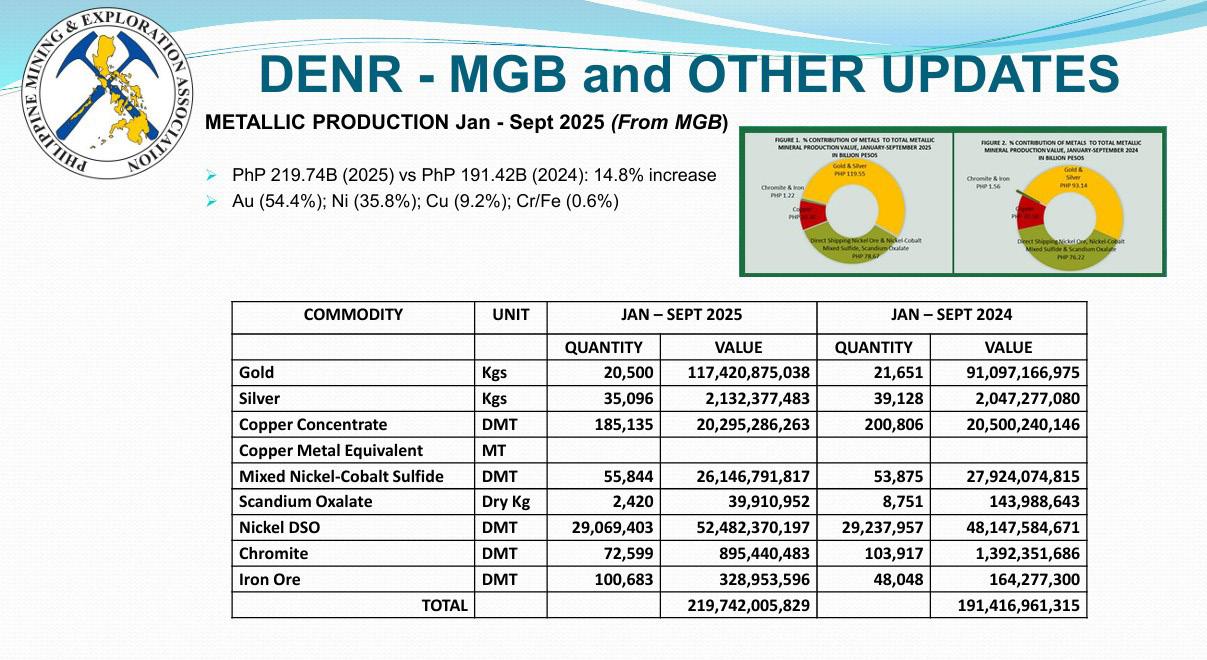
METALLIC PRODUCTION JANSEPT 2025 (FROM MGB)
• PhP 219.74B (2025) vs PhP 191.42B (2024): 14.8% increase
• Au (54.4%); Ni (35.8%); Cu (9.2%); Cr/Fe (0.6%
METALLIC PRODUCTION JANSEPT 2025 TOP PRODUCER GOLD
1. PGPRC – 4,561 kgs
2. AMCI – 2,004 kgs
3. OGPI – 1,960 kgs
4. FCF – 1,559 kgs
5. TVI Balabag – 1,070 / TVI Siana – 911 kgs
BSP Purchases – 5,292 kgs.
(Excluding purchases from BC, OGPI and Hexat)
SILVER
1. TVI Balabag – 15,226 kgs
2. AMCI – 8,382 kgs
3. OGPI – 4,059 kgs
4. PGPRC – 3,720 kgs
5. LCMC – 1,206 kgs
Page 40
COPPER
1. CCC – 102,056 DMT
2. OGPI – 48,139 DMT
3. PMC – 34,564 DMT
NICKEL DSO
1. TMC – 5,161,136 DMT
2. CTP Adlay – 2,395,713 DMT
3. RTNM – 2,390,733 DMT
4. CNC/CTP – 1,959,140 DMT
5. Nickelace/Global Min-Met Resources – 1,848,905 DMT
INDUSTRY UPDATESCOMPANY NEWS
Didipio Mine (OGPI)
- OceanaGold (Philippines) now trading at OTCQX® Best Market in the US
- Q3 2025 production of 21.9 kozAu and 3.1kt Cu (vs Q3 2024 27.9 kozAu and 3.4 kt Cu)
- 8-hole drilling program completed at Mayag (SDN)
Metals Exploration / FCF
Minerals / Yamang Minerals / Woogle Corporation
- Runruno Q4 2025 production of 15,156 oz Au (vs Q4 2024 of 18,829 oz Au)
- Local community access issues in Dupax; drilling indicates target zone to be significantly deeper than predicted
- Ongoing FPIC in Abra
Filminera Resources (B2 Gold)
- Q3 2025 production of 49,519 oz Au
- Mill feed of 0.88 g/t Au with average recovery of 80%
- 7 consecutive years of No LTI
Apex Mining / ISRI
- PhP 2.15B net income in Q3 2025 (vs PhP 1.31B in Q3 2024)
- Q3 2025 production of 27,316 oz Au and 92,969 oz Ag (vs Q3 2024 of 25,112 oz Au and 80,331 oz Ag)
- DMPF for MPSA 234-2007-XI submitted in October 2025
- Undergoing FPIC for AFTA-014XI (Asia Alliance / North Davao)
TVIRD Balabag
- Delivered 40 shipments in 2025 to direct markets in Asia and Europe (42,000 oz Au and 638,000 oz Ag)
- Exploration ongoing to extend LOM
TVIRD Greenstone (Siana)
- Delivered 34 shipments in 2025 to direct markets in Asia and Europe (42,000 oz Au and 27,000 oz Ag)
- TSF 6 Raise Up Stage 1 at 79% completion
- Additional prospects identified at Mapawa and drilling ongoing
TVIRD Mabilo
- Ongoing land acquisition
- Pre-development works
TVIRD Kingking
- Technical team build-up ongoing
- Undergoing resource confirmation and geotechnical drilling
GFNI / PGMC
- Resignation of Joseph Sy as Director
- PhP 902.1M net income in Q3 2025 (vs PhP 293.5M in Q3 2024)
- First shipment of 2026 for Ipilan Nickel; targeting production of 1.5M WMT in 2026
Philex Mining
- PhP 344M net income in Q3 2025 (6,682 oz Au and 4.92Mlbs Cu)
- Structural support failure in the mill resulting to significant reduction in capacity
- Issues with surface claimants at Clifton Project have been resolved
- Silangan (Sta. Barbara 1) target start March 2026 with 66,000 tons stockpile from mine development
Makilala Mining / Celsius Resources
- Retirement of Chair Julito Sarmiento
- Maiden JORC compliant ORE for MCB – 130.2Mt @ 0.66% Cu and 0.21 g/t Au (containing 856kt Cu & 891koz Au)
- DFS completed for a 35 year mine life; first 10 years to mine high grade zone
- Mining method – Transverse Sublevel Open Stoping
- US$ 7.5M drawn from US$ 10M first tranche from Maharlika Investment
Macroasia Mining Corp.
- DMPF approval for the Infanta Nickel Project in Palawan
- Calmia Nickel as operator and will spend $12.9 M to develop the project
Lepanto Consolidated
- PhP 407.77M net income in Q3 2025 (vs PhP 71.96M in Q3 2024)
- Q3 2025 production: 5,496 oz Au and 15,251 oz Ag (vs Q3 2024 of 5,038 oz Au and 11,653 oz Ag)
- Ongoing FPIC activities in Mankayan
Nickel Asia Corporation
- Jan-Sept 2025 Consolidated net income of PhP 5.19B (vs PhP 2.55B in Q3 2024)
- 13.89 WMT of Ni ore sold in the 9-month period
Benguet Corporation
- AGP Q3 2025 net income of PhP 345M (vs PhP 252.3M in Q3 2024)- AGP Q3 2025 production of 1,742 oz Au (vs 1,738 oz Au in Q3 2024)
written by: MARCELLE P. VILLEGAS
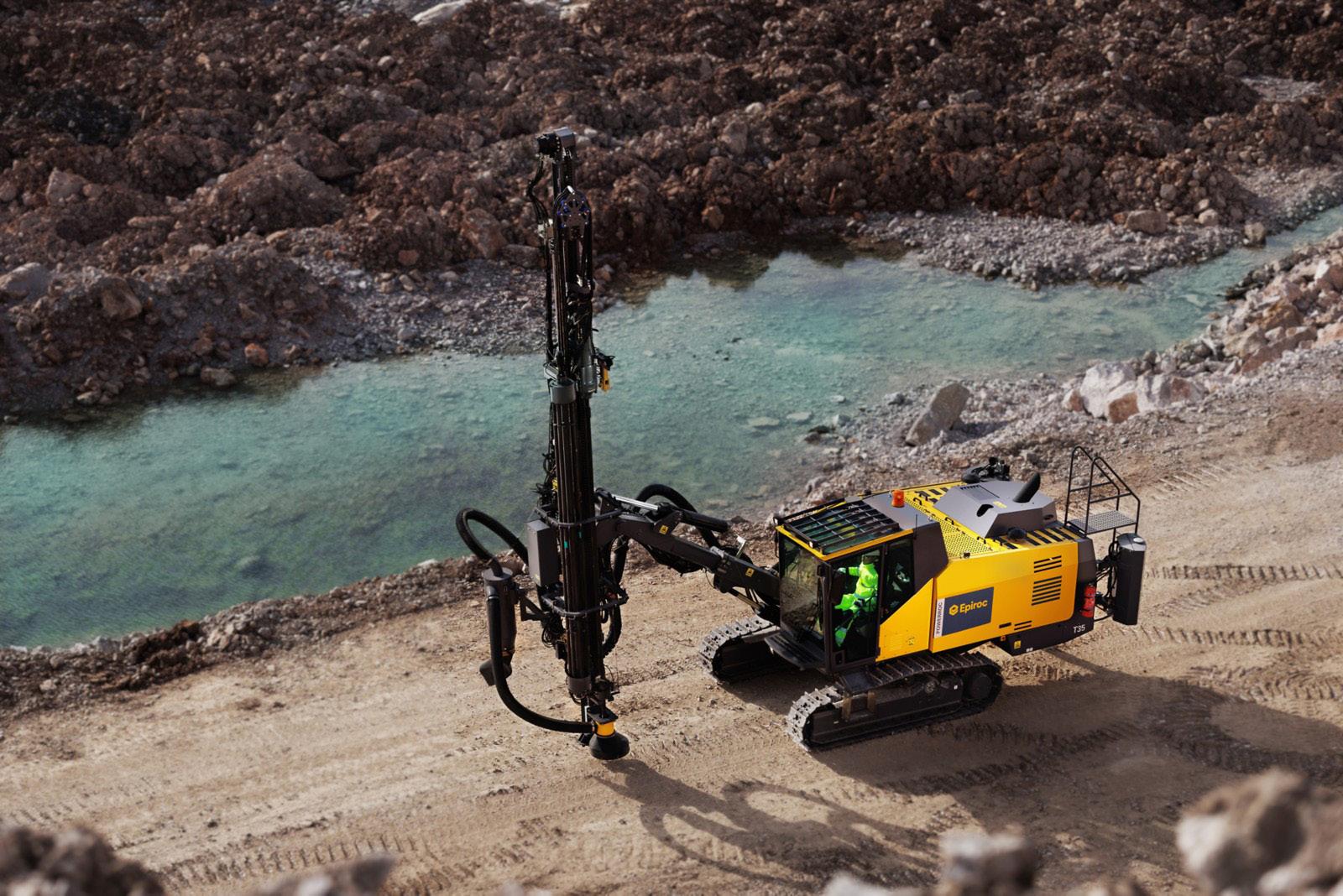
Marking a significant milestone, Epiroc Philippines Inc. currently launched the PowerROC T35 MKII.
Epiroc Philippines Inc. is an industry leader that continues to drive transformative innovation and operational excellence in the Philippine mining & quarrying industry.
Behind every powerful drilling operation is a machine built for precision and strength. The Epiroc PowerROC T35 MKII stands out as a symbol of innovation as it offers smarter control, superior stability, and the strength to handle the toughest terrains.
Engineered for excellence, the Epiroc PowerROC T35 MKII provides optimized drilling capacity and reduced operational costs. Its intelligent design and userfriendly control system make it a trusted partner for construction and quarrying professionals worldwide.
To further discuss the engineering excellence of this model, PRJ interviewed Epiroc’s technical team.
PRJ: Please give us a brief description of the PowerROC T35 MKII.
Epiroc: PowerROC T35 has been developed and designed for demanding applications in construction operations, aggregate and limestone quarries. The PowerROC T35 has a high penetration rate and can give your operation all the performance and power it needs.
The rig is equipped with an intuitive 12-inch touchscreen-andbutton display which monitors its running status. Its one-touch lever operation makes rod changing safer and quicker. In addition, the COP Logic system works in combination with a COP rock drill equipped with a dual damping system which helps to ensure low fuel consumption and high-quality holes.
PRJ: What are the possible operational challenges or objectives that you want to achieve in onsite applications of PowerROC T35 MKII in construction and quarrying?
Epiroc:
• Better Hole Quality -- The rig is equipped with the COPSC19 rock drill and dual damper system , which improves energy
efficiency and maintains high performance even in hard rock.
• Lower Fuel Consumption -The MKII version introduces Auto Engine Speed Control , which optimizes fuel use across operations, reducing consumption by up to 40% compared to previous models
• Easy Maintenance -- The MKII includes a troubleshooting function on the touchscreen and easily accessible service points, along with a new hydraulic return filter that cuts hydraulic oil usage by 50%, extending service intervals.
• Easy Operation -- The MKII features a 12-inch touchscreen with intuitive controls, reducing lever operations by 80% , making it easier for new operators to learn and operate efficiently
The MKII offers ergonomic joysticks and an upgraded air conditioning system , improving operator comfort during long shifts.
PRJ: What is the required technical expertise level or background for its end user?
Epiroc:
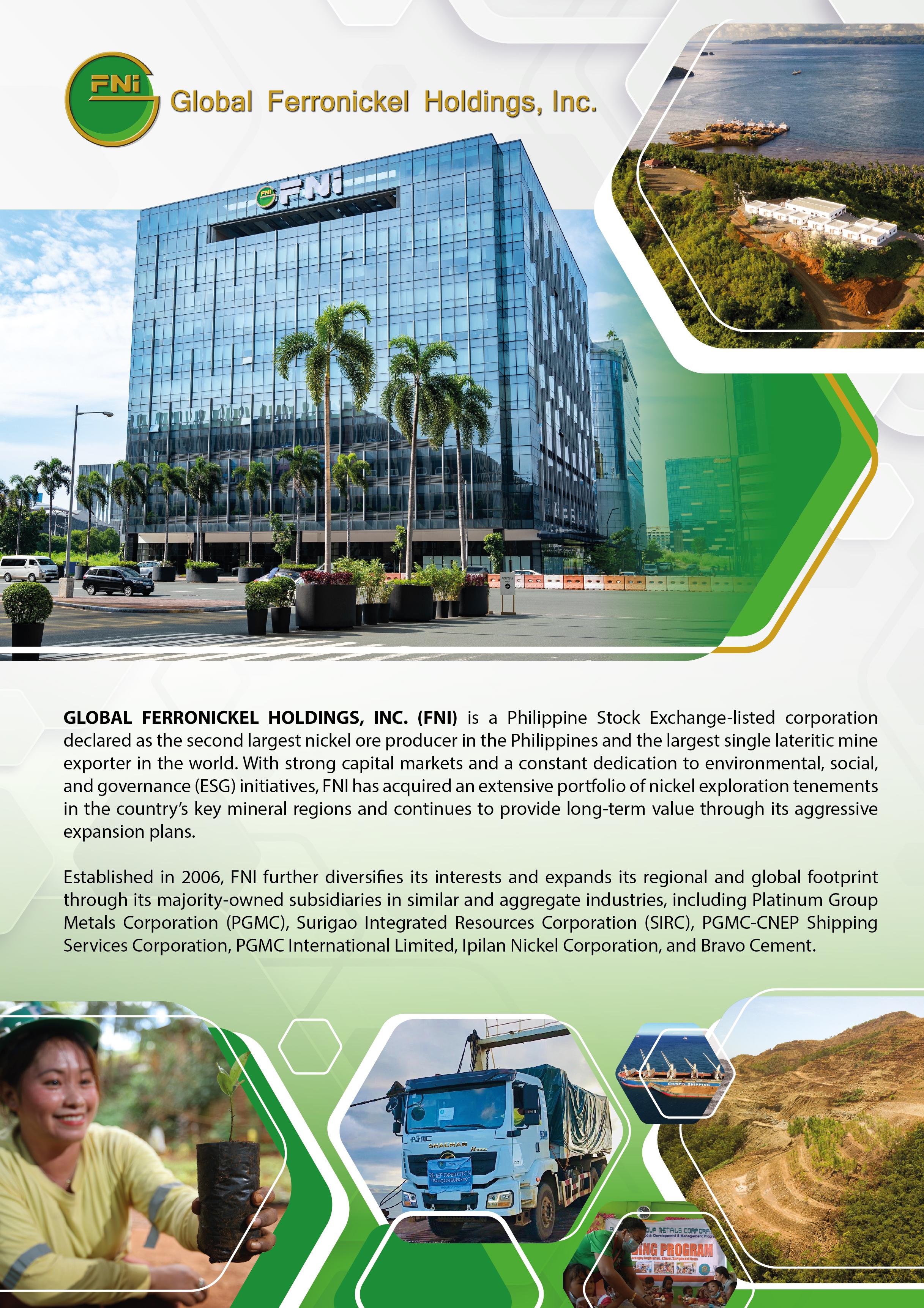
< Page 44
• End Users should understand basic mechanical systems, especially hydraulic components, as the rig relies heavily on hydraulic power.
• Familiarity with routine maintenance tasks like checking filters, fluid levels, and wear parts is beneficial
• Safety Awareness
• Drilling Fundamentals - While advanced drilling theory isn’t required, operators should grasp core concepts like penetration rate, hole alignment, and rod handling
PRJ: The 12-inch touch screen interface is a significant feature. How does this intuitive display contribute to operator productivity? What benefits can new operators expect in terms of training and ramp-up time?
Epiroc:
• It replaces up to 80% of traditional levers with digital controls.
• It reduces physical strain and minimizes errors from manual operations.
• It has a built-in diagnostics guide operators through common issues, reducing downtime.
• This minimizes reliance on external technicians for basic faults;
• Centralizes all key functions drilling, rod handling, engine control on one screen; and
• Cuts down on time spent switching between controls or checking gauges.
PRJ: Could you elaborate on the built-in troubleshooting function and
the accessibility of service points?
How do these features translate into reduced downtime and improved cost-effectiveness for owners?
Epiroc:
• The 12-inch touchscreen provides l ive system monitoring , alerting operators to faults or irregularities as they occur.
• Operators receive step-by-step guidance to identify and resolve issues without needing external support.
• The system categorizes faults by severity and suggests corrective actions.
• Reduces guesswork and prevents minor issues from escalating into major breakdowns.
• Tracks service intervals and component wear, allowing for predictive maintenance
• Helps owners schedule downtime strategically, avoiding unexpected disruptions
PRJ: The availability of both Tier 4 Final/Stage V and Tier 3 engine options provides flexibility. What are the primary considerations for a customer when choosing between these two engine configurations?
Epiroc:
• Environmental Regulations:
-- Tier 4 Final/Stage V engines meet the most stringent emissions standards in regions like the EU, US, and parts of Asia
-- Tier 3 engines are suitable for countries with less strict emissions laws or where Tier 4 infrastructure (e.g., ultra-low sulfur diesel) is not readily available.
Conclusion: Choose Tier 4 Final/ Stage V if operating in regulated markets.
• Fuel and Maintenance Infrastructure
-- Tier 4 engines require cleaner fuel, DEF (Diesel Exhaust Fluid), and advanced service capabilities
-- Tier 3 engines are simpler to maintain , especially in remote areas with limited access to highgrade fuel or DEF.
Conclusion: Choose Tier 3 for rugged, remote sites with basic support systems.
• Initial Investment vs. Operating Costs
-- Tier 4 Final/Stage V engines may have higher upfront costs due to added components (e.g., DPF, SCR systems).
-- However, they offer better fuel efficiency and lower emissions penalties, which can reduce longterm operating costs.
In summary, as projects grow in complexity and demand, the Epiroc PowerROC T35 MKII remains a trusted ally in achieving efficiency and accuracy on site. More than a machine, it embodies Epiroc’s vision of bringing progress through technology that works superbly with people and the planet.
Acknowledgment:
Thank you to Mr. Lois Arjoe Alcala for facilitating this interview with Epiroc Philippines, Inc.
Photo credit: Epiroc Philippines, Inc.
Reference: https://www.epiroc.com/en-dk/ products/drill-rigs/surface-drill-rigs/ powerroc-t35
< Page 42
- AGP mining below Level 2000 being planned
- Pantingan (Bataan): ongoing drilling to test shallow epithermal vein
Cordillera Exploration Company Inc. (CExCI)
- Completed 10,800m of drilling at its Cordon Project (34 drillholes)
- Extensive geophysical coverage – approx. 1,100-line km of
radiometric and 525-line km of magnetic surveys
- Exploration targets in Batangas, Bicol and Eastern Mindanao
Atlas Consolidated Mining & Development Corporation / Carmen Copper
- PhP 871.5 M net income in Q3 2025 (vs net loss PhP 939.3 M in Q3 2024)
- 500th concentrate shipment in November 2025
Domininion Holdings
- Being acquired by Monte Sur from BDO Holdings
- To be dedicated to mining operations
Maharlika Investment Corporation
- Eyeing investments in energy, logistics, agriculture, and mining in 2026
- Mining strategy centered on responsible extraction and domestic processing
Photo credit: Marcelle P. Villegas
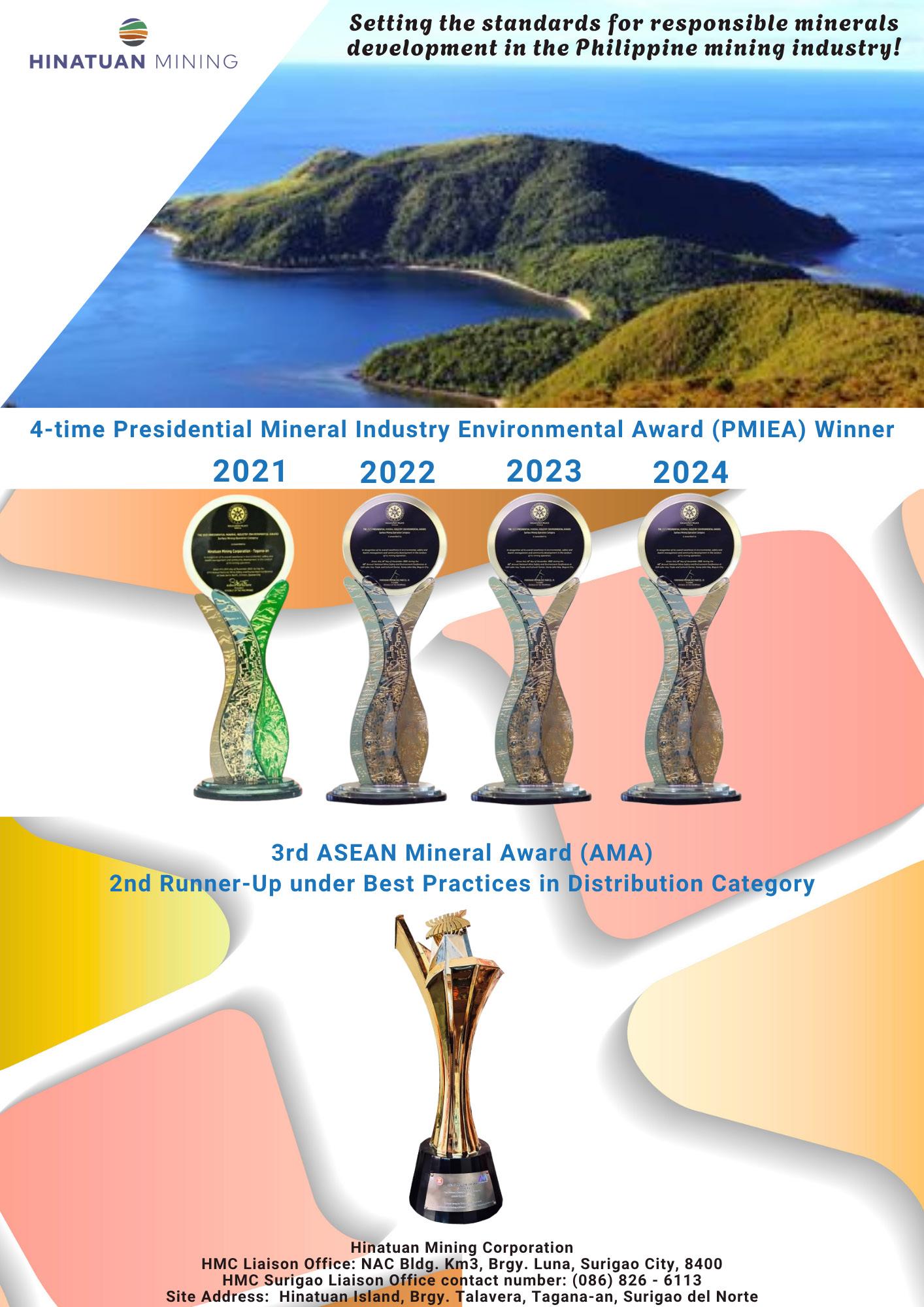
The Masbate Gold Project (MGP) is a joint operation of Filminera Resources Corporation (FRC) and Phil Gold Processing and Refining Corporation (PGPRC). FRC owns, manages, and operates the entire Mineral Production Sharing Agreement (MPSA) awarded by the government while PGPRC owns and operates the gold processing plant and is responsible for the sale of gold.
Orica provides Down-the-Hole (DTH) services to the Masbate Gold Project, delivering bulk explosives and initiating systems into blastholes.
Since 2013, the Masbate Gold Project has used Orica’s uni tronic™ 600 Electronic Blasting System to initiate blasts. The precise control of electronic detonators helps to improve blasted material movement and manage vibration.
The mine is significantly constrained by proximity to the community, with houses within 500m of the pit. The community demands control of vibration, dust, noise, flyrock and fumes from blasting. National regulations prohibit sleeping blasts, which makes designing large, productive blasts difficult. The mine uses water trucks to spray blast patterns to help suppress dust. However, the trucks cannot access the whole pattern of blastholes primed with uni tronic™ 600 electronic detonators due to the wires connecting blastholes. The mine operator asked Orica to investigate how blasting technology could overcome the constraints imposed by wired initiation systems.
Orica proposed a demonstration of its WebGen™ wireless initiation system. WebGen™ uses magnetic induction signals to wirelessly initiate primers in blastholes. In surface mines like Masbate, WebGen™ offers significant security, safety and productivity advantages over conventional wired and signal tube initiation systems.
Stemmed blastholes loaded with WebGen™ primers have no wires or signal tube. They can be safely slept
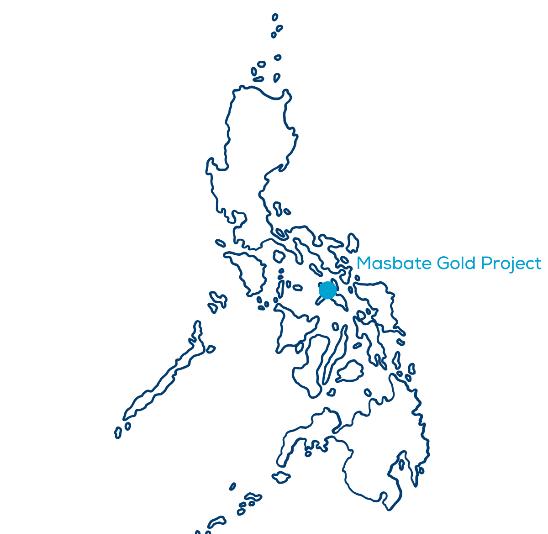
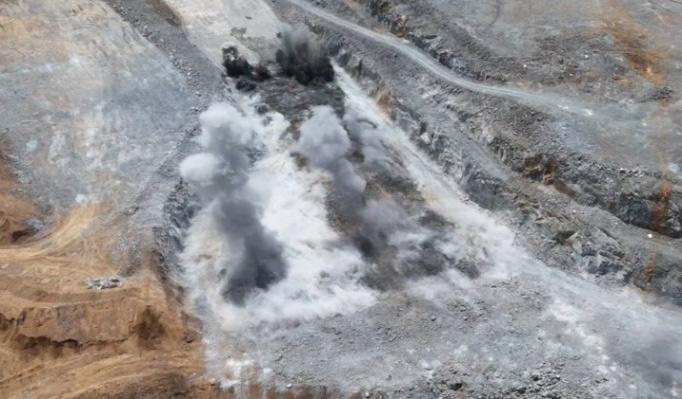
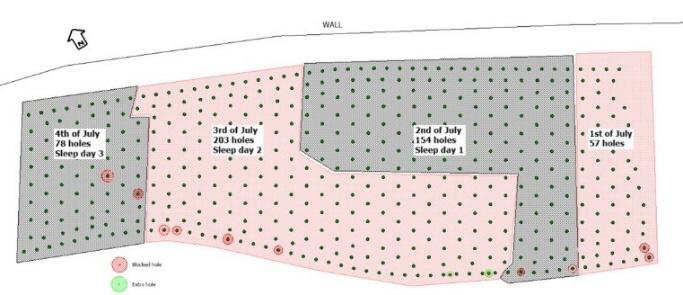
for up to 60 days, with virtually no risk of theft or accidental initiation from lightning, impact, heat or other sources. The risk of misfires due to wire damage is eliminated. After a detailed risk assessment and careful
implementation, sleeping WebGen™ blasts can be graded, watered and used as haul roads. This provides scheduling flexibility and reduces the airborne dust created by dry, fine drill cuttings.
Page 50 >
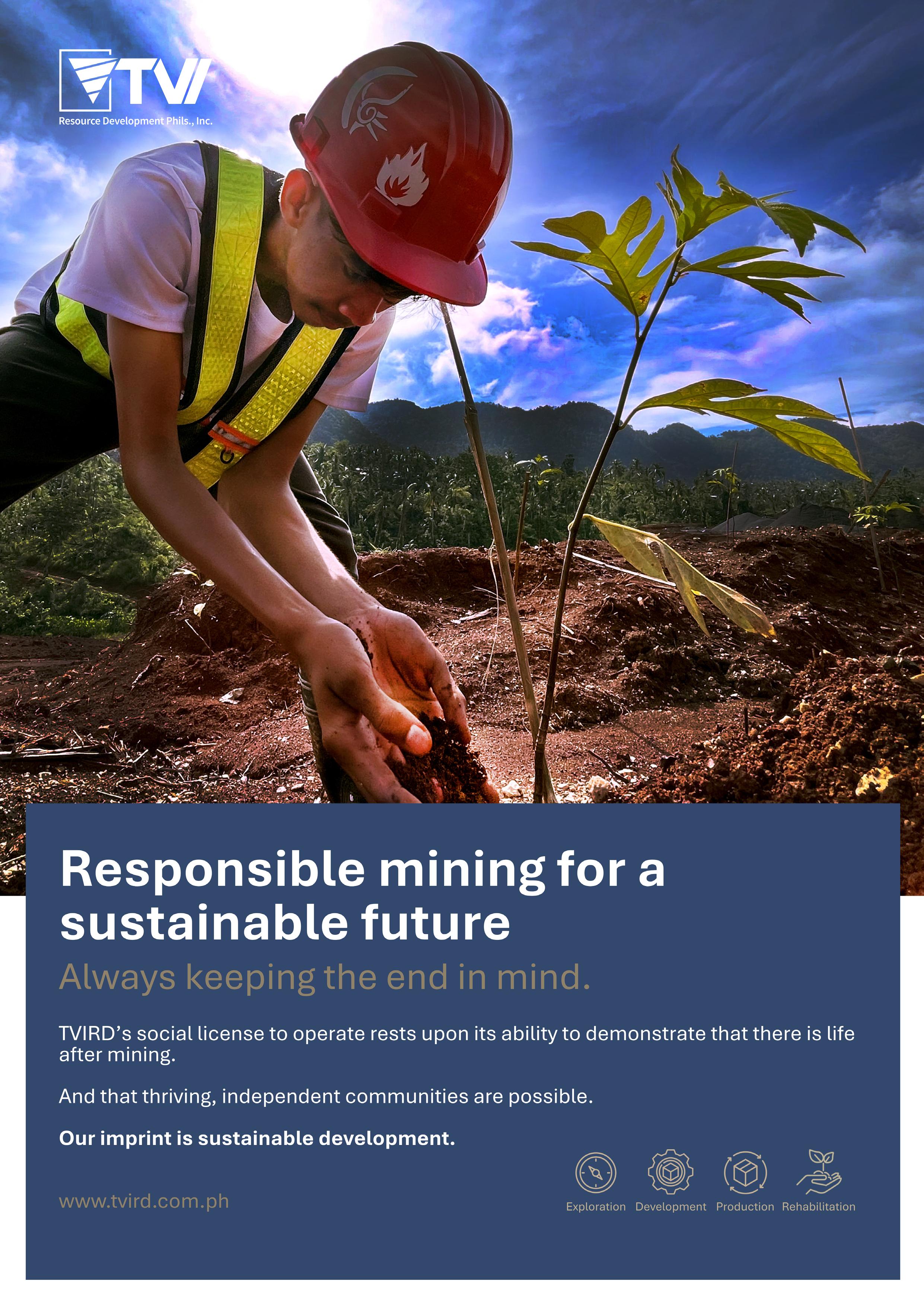
Orica Philippines and the Masbate Gold Project marked a significant milestone with the first-ever wireless detonator blast in the country at Filminera Resources Corporation (FRC). The blast was loaded over four consecutive days and fired on the 4th of July 2025. Four hundred ninety-two blastholes were safely slept for four days, without risk of wire damage or theft.
The wireless blast produced significantly less dust compared to conventional shots (Figure 4). This was achieved by using a grader to remove drill cuttings from the loaded, stemmed holes, then driving water trucks across the loaded holes to thoroughly irrigate the entire pattern. This approach provided more comprehensive dust suppression than the usual method, where a water truck or hydro seeder partially irrigates the blast area from outside the boundary.
Orica used BlastVision® advanced drone video analysis software to make informed decisions. BlastVision® converts the footage into analytics data. The data is analysed with insights reported back to site. From these insights mine site personnel can optimise blasting and monitor the impacts of blasting, improving safety and productivity.
Orica assessed shovel productivity using video and the CyclePro™ analysis software to measure dig rates. In each flitch, excavator productivity exceeded the mine’s benchmark of 525 bcm/hour for the PC2000 excavator.
Fragmentation was assessed using Orica’s Powersieve™ image analysis software. All three flitches produced substantially better fragmentation than the mine’s benchmark of P80 < 800mm. Better shovel productivity and fragmentation cannot be solely attributed to the type of initiation system. However, it is plausible that the larger WebGen™ enabled blast produced better results. The volumetric proportion of edge effects in one large blast is less compared to the equivalent volume produced by many small blasts.
The WebGen™ demonstration project at Masbate Gold Project was the first wireless electronic blast in the
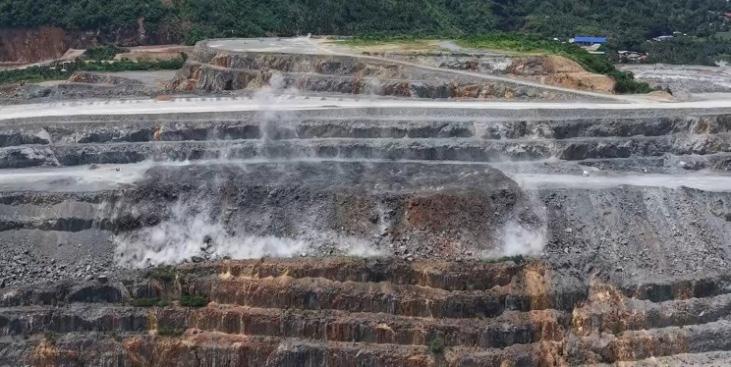
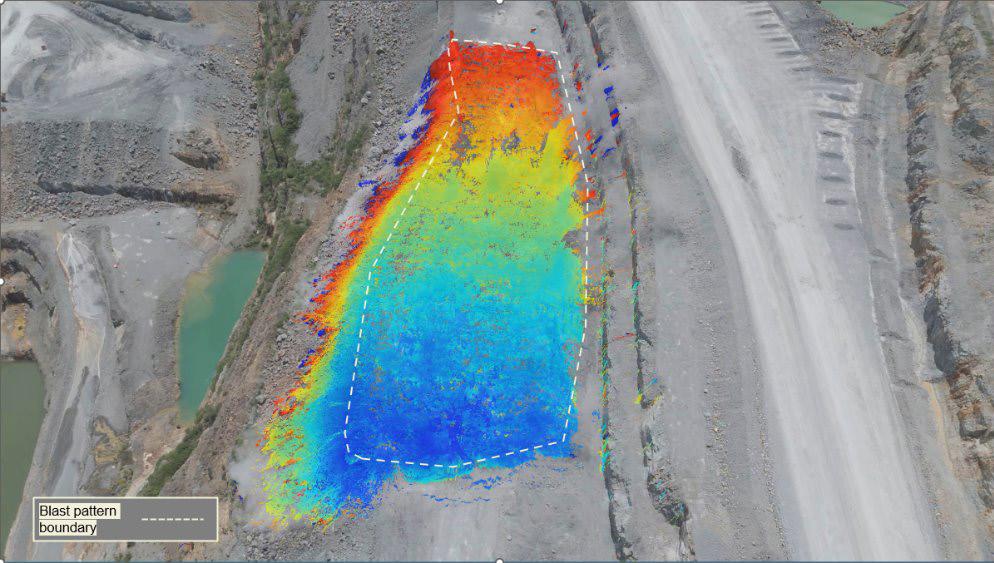
Philippines. Implementing wireless blasts at Masbate is a key milestone for all open cut mines in the country, paving the way for larger, more productive and less dusty WebGen™ enabled, slept blasts.
Summary of Outcomes
• Sleep blasting: WebGen™ allows large, slept blasts with negligible risk.
• Dust Suppression: Innovative pre-blast preparation methods visibly reduced dust emissions.
• Reliability: No misfires or explosive remnants were detected.
• Productivity Gains: All dig rates exceeded customer benchmarks by a wide margin.
• Fragmentation Quality: Particle sizes were well below the maximum limit.
“At the Masbate Gold Project, safety and operational efficiency are always at the forefront of our operations. While we continue to use electronic blasting systems for our mine, we recently conducted a trial of WebGen wireless blasting technology. The
results were impressive, particularly in dust mitigation, as it allowed equipment to operate safely above loaded holes. This not only improved working conditions but also reinforced the potential of WebGen as a safe and efficient complement to our blasting practices.”
Nikko Vanell Dolino, Chief Mine Engineer
Filminera Resources Corporation, Masbate Gold Project, Philippines
“Masbate Gold Project is always exploring innovations in blasting to improve efficiency and responsibility. When WebGen was introduced, we were eager to trial the wireless blasting technology. Sleeping the shot minimized production and community disturbance and driving over loaded shots enabled safer, dust-suppressed blast layouts. The overall trial process required significant effect from both Orica and Masbate teams. Overall, it was a resounding success – a first in the Philippines, which was witnessed and commended as well by government representatives. We look forward to further utilising new blasting

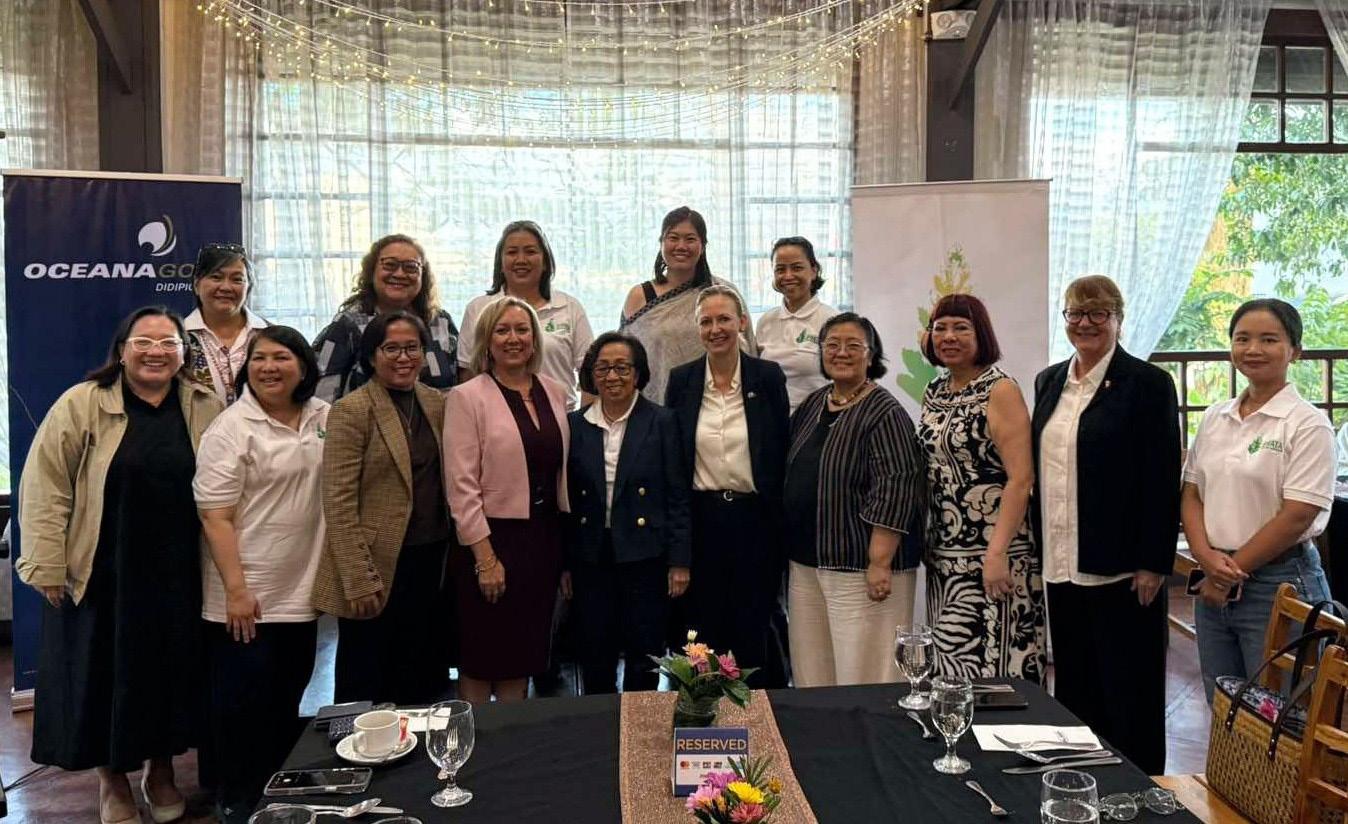
Diwata-Women in Resource Development Inc. (Diwata Inc.) successfully held the inaugural session of its new mentoring series, “Network to the Next Level,” in partnership with Raniag Minera of OceanaGold Philippines, Inc.
The event, held at the historic Hill Station, Casa Vallejo, in Baguio City, gathered female leaders, mining professionals, and students from the Philippine extractives industry.
The session featured keynote discussions on navigating maledominated industries, led by Ms. Tanya Cambetis, Didipio Mine’s Business Optimization Manager, and Engr. Rodalee Ofiaza, Diwata’s 2025–26 President.
Speakers shared practical strategies for professional advancement and advocated for creating more leadership opportunities for women within the sector.
“The pathway for women into leadership positions is not as clearly defined as it is for men,” said Cambetis.
“The ‘glass ceiling’ concept is still very much alive and something we must all collaboratively work
on. What is the best way to ensure that we are identifying, developing, and providing the skills and tools needed for effective leadership to the women in our businesses?”
“Days like today are a great first step toward having these discussions and allowing us to share and reflect on the perspectives of others. Just because our own individual journeys and experiences have not looked like someone else’s does not diminish those experienced by another individual. Growth is about understanding and validating other people’s stories and working together to forge our path forward,” she added.
Diwata’s Network to the Next Level initiates an ongoing series dedicated to the professional advancement of women within the Philippine extractives industry.
Diwata President Engr. Rodalee Ofiaza said, “Network to the Next Level is designed to empower women in the resource development sector by providing practical mentorship and fostering meaningful connections. We are pleased with the turnout for this pilot session and are grateful for the support of our partners and distinguished guests.”
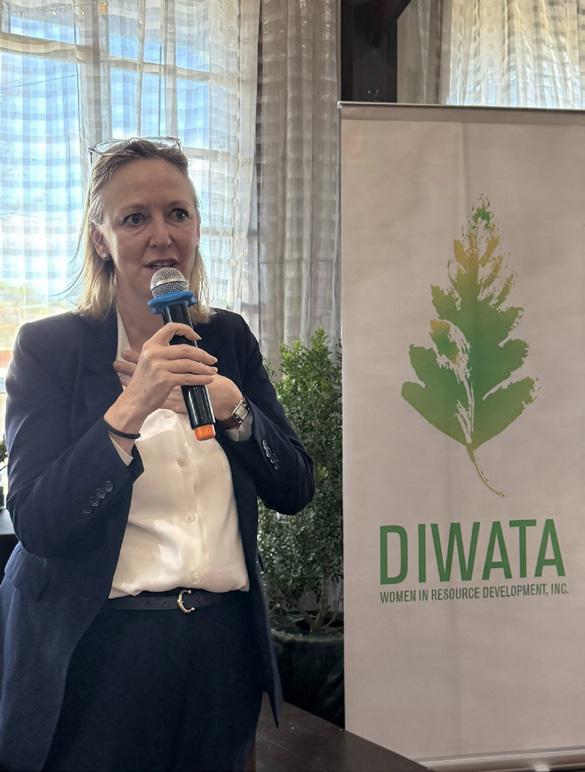
Event attendees included professionals from the Swedish Embassy, Canadian Embassy, Lepanto Consolidated Mining Company, OceanaGold Philippines, Inc., SGV & Co., Ausenco, Mt. Camisong, Delta Earthmoving, Inc., the Mines and Geosciences Bureau, Baguio City Mayor’s Office, NCIP, ERIEZ, OPAPRU, Project Faura, Supreme Elite, SLU Mining Engineering Society, and the Philippine Youth Association for Responsible Mining and Natural Resources (YAMAN PH).
This activity was likewise supported by Diwata Chairperson
The Officers and Trustees of Diwata Women in Resource Development Inc., hold its pilot mentoring series called “Network to the Next Level” at Hill Station, Casa Vallejo, Baguio City on November 18, Tuesday at 3PM. In partnership with Raniag Minera of OceanaGold Philippines, Inc., the event’s featured speakers include Didipio Mine’s Business Optimization Manager, Ms. Tanya Cambetis and 2025 26 Diwata President Engr. Rodalee Ofiaza.
Sweden’s Ambassador to the Philippines Anna Ferry was Diwata’s guest of honor for its mentoring series “Network to the Next Level”.
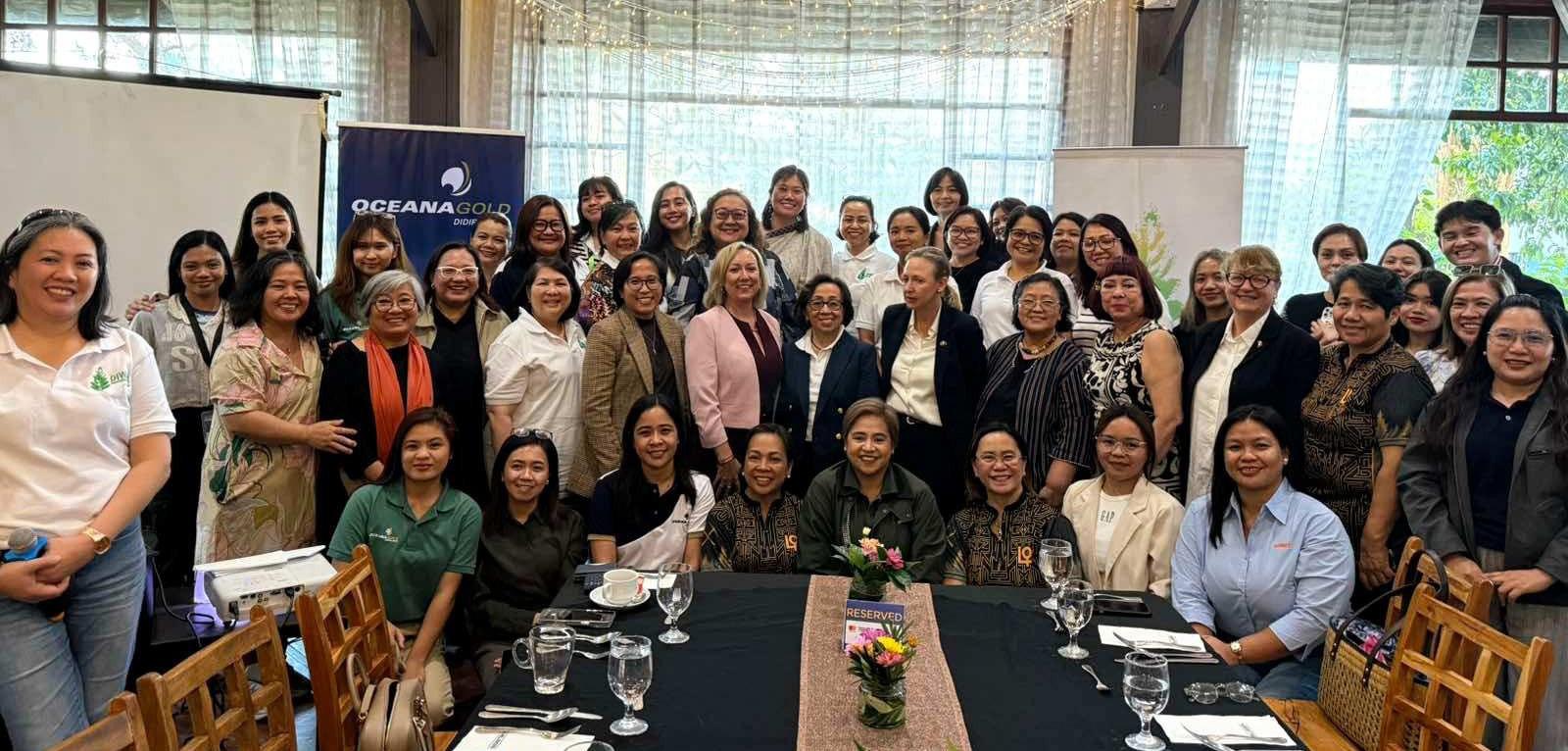
Ambassador Delia DomingoAlbert; Sweden’s Ambassador to the Philippines, H.E. Anna Ferry; Counsellor and Trade Commissioner, Embassy of Canada to the Philippines, Ms. Eleonore Christiane Rupprecht; Executive Director, Office for Peace Sustainability – Office of the Presidential Adviser on Peace, Reconciliation and Unity (OPAPRU), ASec. Susana Guadalupe Marcaida; Office of Mayor Magalong, represented by Engr. Leandro M. Tabilog, Executive Assistant III; NCIP CAR, represented by Ms. Marissa T. Labintas, Administrative Aide VI; and Mt. Camisong Property Chairman, Ms. Ludette Querubin.
Diwata-Women in Resource Development Inc. is dedicated
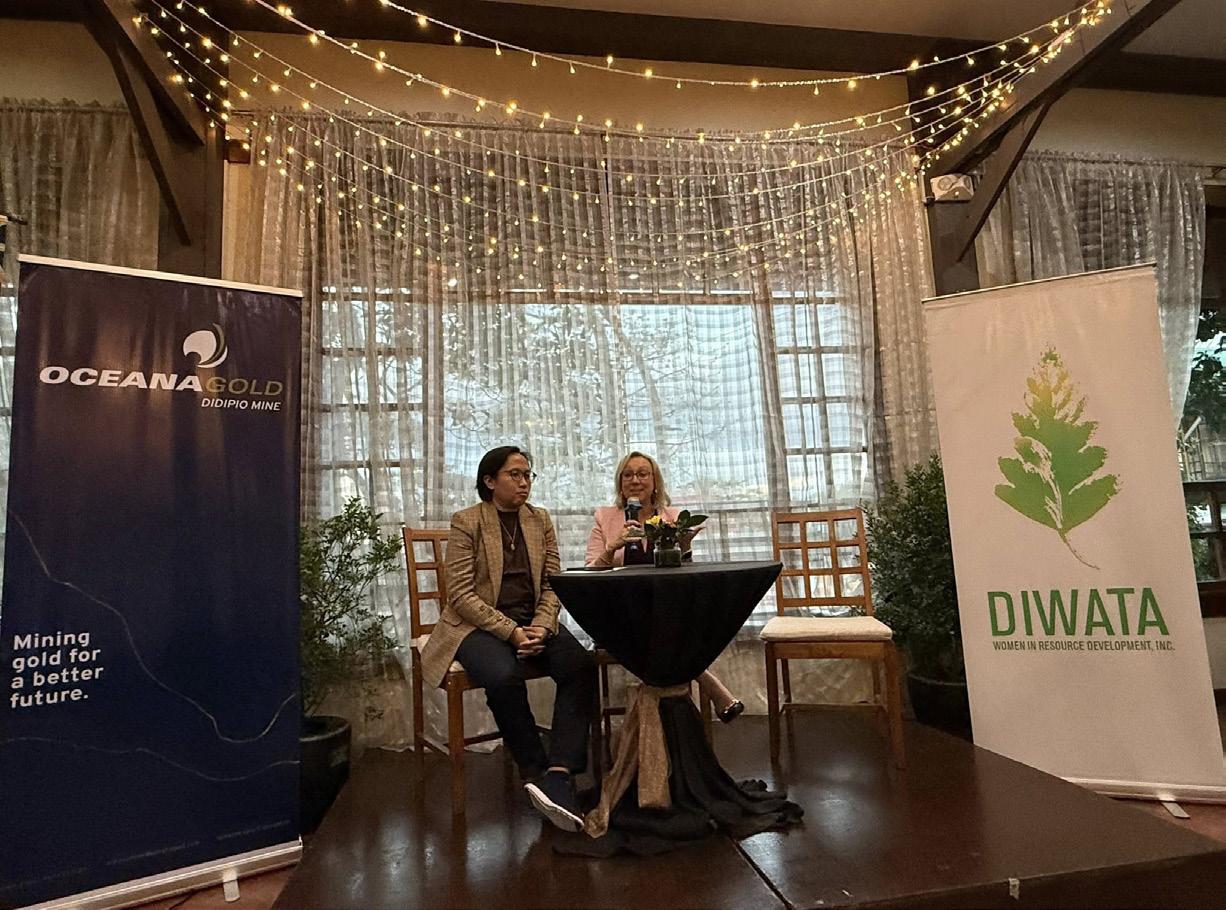
to the professional advancement of women in the mining, oil and gas, and energy sectors in the Philippines. It provides a platform
for networking, mentorship, and advocacy to promote gender diversity and inclusion in the industry.
Diwata, in partnership with Raniag Minera of OceanaGold Philippines, Inc., hosted a diverse group of female leaders, mining professionals, and students from the Philippine extractives industry. The event was the inaugural session of its mentoring series, “Network to the Next Level,” and focused on learning, fun, and connection.
< Page 50
techniques to advance our operations and set new standards in responsible mining.”
Renel Jose Banzon, Mining Manager Filminera Resources Corporation, Masbate Gold Project
ACKNOWLEDGEMENTS
Orica wishes to thank Masbate Gold Project for their support and permission to conduct the trial and publish this case study.
Orica would like to thank Orica Masbate Team, WebGen™ Specialists Team, Orica Graduate Engineers,
Philippines National Police and the Mine & Geosciences Bureau for the efforts and support in achieving the first ever wireless technology blast in the Philippines.
Author: Kerster Jann A. Pages, Carl Joseph B. Dakay, Joryl Mananay, Josh Adrian Bautista
Date: September 22, 2025
© 2025 Orica Group. All rights reserved. All information contained in this document is provided for informational purposes only and is subject to change by the Orica Group without prior notice. Because the Orica Group cannot anticipate or control the conditions under which
this information and its products and/or services may be used, each user must independently review and evaluate the information in the specific context of the intended application. To the maximum extent permitted by law, the Orica Group specifically disclaims all warranties express or implied in law, including accuracy, non-infringement, and implied warranties of merchantability or fitness for a particular purpose. The Orica Group specifically disclaims, and will not be responsible for, any liability or damage resulting from the use or reliance upon the information in this document. The word Orica and the Ring device are trademarks of the Orica Group
Diwata President Engr. Rodalee Ofiaza and the Didipio Mine’s Business Optimization Manager, Ms. Tanya Cambetis, addressed a captivated audience, answering questions about effectively navigating a male dominated industry. Their discussion also covered strategies for helping other women be more assertive in their professional roles, all the while helping create ‘more seats’ for women in the boardroom and the broader professional marketplace.
written by: JEREMY ANG, PRODUCT & MARKETING DIRECTOR AND EUGENE TAN, ASEAN SALES MANAGER, FLUKE SOUTH EAST ASIA PTE LTD
Mining sites are becoming more connected every year. Fleet management, CCTV, access control, processplant control systems, weighbridge reporting, safety alarms, VoIP radios, and site-wide Wi-Fi all depend on the cabling and network links behind the scenes.
When those links aren’t installed and tested properly, the impact shows up fast: dropped connectivity to critical cameras, unstable Wi-Fi around workshops and laydown areas, unreliable access control at gates, and “mystery” equipment faults that steal hours from production. On remote sites, those hours can quickly turn into days.
Getting it right first time promotes safety, uptime, and accountability, especially in conditions where heat, humidity, monsoon rains, and typhoons in the Philippines amplify small weaknesses into major failures.
Even the best devices can only perform as well as the infrastructure supporting them. A modern IP camera, for example, might be perfectly spec’d, until a poor termination or marginal cable run causes power instability or data errors. The real-world symptoms are the ones operators don’t want during an incident review:
• frozen or stuttering video
• night-mode flicker at key moments
• missing minutes of footage
• time-sync drift that makes evidence hard to use
The same pattern applies across mining operations:
Operations networks: Dispatch, fleet telemetry, and production dashboards rely on clean data. Intermittent packet loss or PoE voltage drop can turn into lagging location updates, delayed alerts, and unreliable reporting.
Security and site control: Gate systems and CCTV are only effective
if they’re stable. A network that “mostly works” creates gaps that only become visible when something goes wrong.
Plant and maintenance environments: In process plants and workshops, vibration, dust, and constant equipment movement punish weak terminations. Add corrosion risk in coastal or island locations, and marginal cabling becomes a recurring downtime source.
In short, you might not see the problem on day one. You’ll pay for it later in troubleshooting, callouts, and production disruption.
Remote mining locations already operate with lean teams, long lead times, and limited specialist support. Add local environmental realities and the tolerance for “near enough” shrinks further.
• Monsoon rains and flooding can compromise enclosures, conduits, and terminations. Moisture ingress changes performance and accelerates corrosion.
• Typhoons and lightning activity increase the need for robust protection, correct grounding practices, and postevent verification.
• Heat and humidity push connectors and cable jackets harder, especially in exposed runs between buildings, control rooms, and plant areas.
This is why a test-and-document mindset matter. It creates a defensible baseline before handover, and a reliable reference when troubleshooting later.
One common source of instability is over-reliance on inconsistent field terminations and extra join points. Each additional connection is
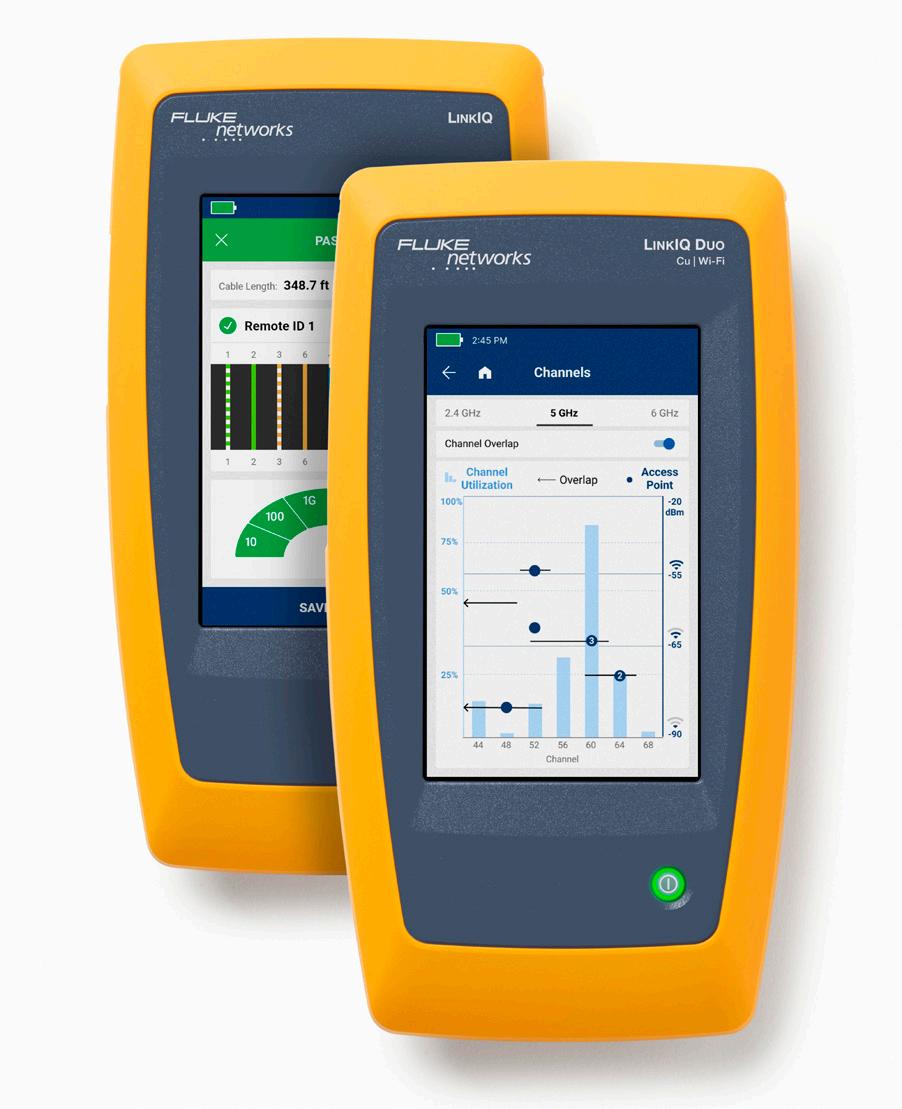
another opportunity for miswiring, poor strain relief, contamination from dust and moisture, and gradual loosening from vibration.
A smarter approach is to reduce complexity where possible and adopt recognised termination methods designed for direct-to-device links. Done properly, you reduce clutter, speed up installation, and remove “invisible weak points” that trigger intermittent faults later.
A link light isn’t proof of quality. Proper testing confirms the cable can reliably carry the speeds and power your mining applications demand, especially for PoE devices like cameras, access points, and control peripherals. It verifies signal performance and whether the link meets the standard required for the application.
This is where professional test tools and workflows make the difference: structured testing, fast pass/fail validation, and reporting you can hand over internally or to contractors as evidence the job was completed to spec.
For day-to-day verification and rapid troubleshooting, Fluke
Networks LinkIQ™ Duo Cable + Network + Wi-Fi Tester
provides teams a practical way to validate what’s happening onsite, checking link performance, identifying connected switches/ ports, confirming PoE delivery, and quickly separating cabling issues from network configuration problems.
Mining sites are tough on wireless. Metal infrastructure, moving equipment, electrical noise, and constantly changing layouts can produce coverage holes and unstable roaming. And even though the last hop is wireless, the backhaul is still cabled, so weak copper can throttle an access point before you’ve even started tuning radio performance.
Using Wi-Fi analysis alongside cable testing helps teams:
• confirm expected coverage around workshops, admin blocks, and critical plant areas
• validate performance after relocations or expansions
• pinpoint whether the problem is RF conditions, backhaul cabling, or PoE constraints
Fluke Networks LinkIQ™ Duo Cable + Network + Wi-Fi Tester supports this “two-sides-of-thesame-problem” approach by helping teams check both the wired feed and the Wi-Fi environment, so fixes are based on evidence, not guesswork.
Paired wired + wireless verification turns “trial and error” into a repeatable commissioning process, particularly valuable on remote sites where revisit costs are high.
A common reason problem recur is simple: teams don’t know what they don’t know. If installers or maintenance crews haven’t been trained on current standards, modern termination approaches, or what test results really mean, then minor defects get normalised until they become outages.
Building capability can be as practical as:
• standardising installation methods and acceptable components per
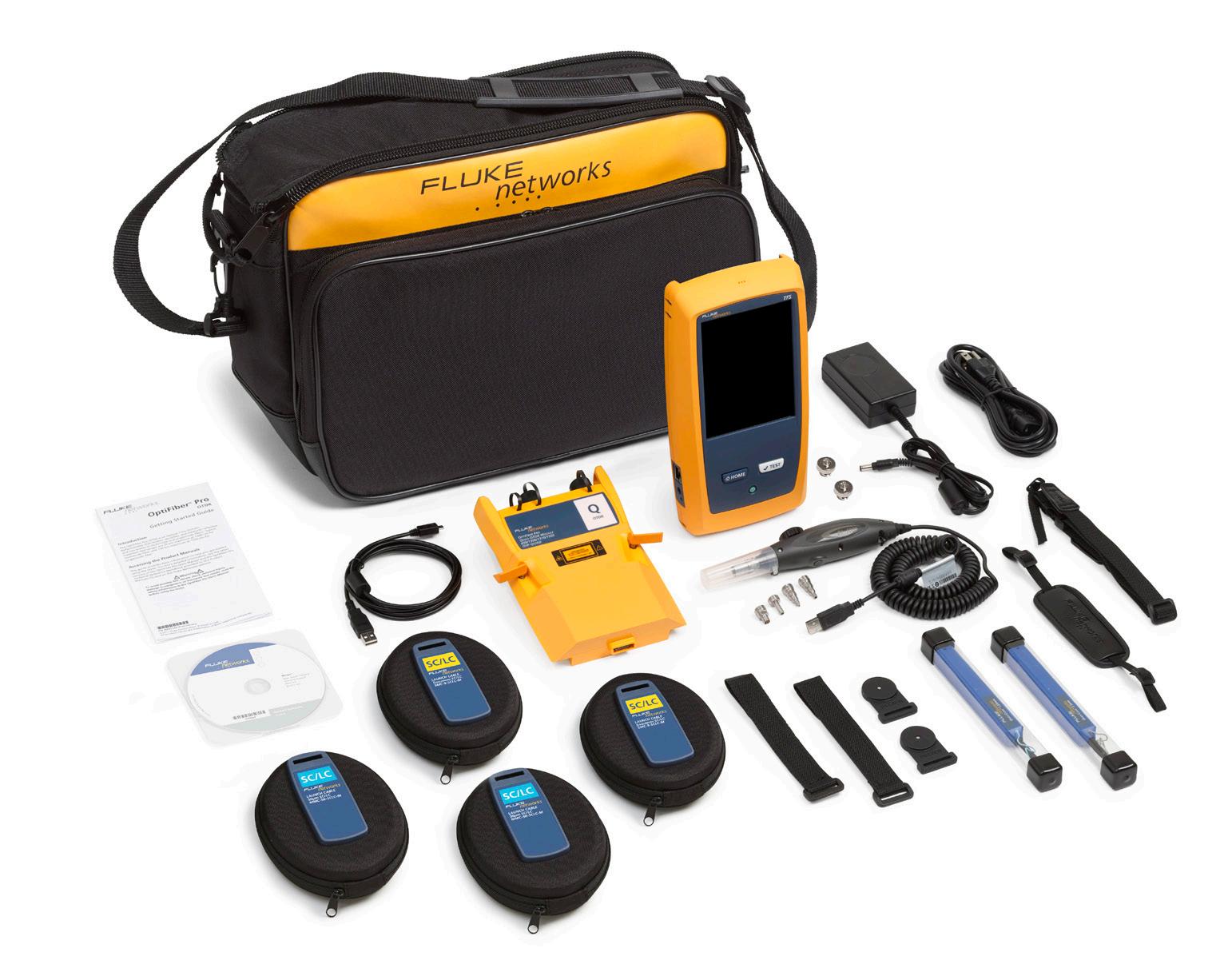
environment (plant vs. admin vs. field)
• training supervisors to interpret certification results and reports • making testing and documentation a required step in every new run, repair, or relocation That’s how “right first time” becomes a system, not a slogan.
In large mining environments, remote sites are often spread far apart, making reliable longdistance connectivity essential. Since standard UTP cabling is typically limited to 100 metres, fibre infrastructure becomes the practical solution for linking remote points within the mine back to the main site.
This is where Fluke Networks’ OptiFiber Pro Series OTDRs play an important role. Built to improve efficiency for users at every skill level in demanding mining conditions, OptiFiber Pro makes fibre testing faster and easier. Novice users can quickly set up and run tests using the Auto OTDR function, while the EventMap™ feature interprets traces with expert-level analysis by calculating overall loss and reflectance, and identifying events such as splices, splitters, bends, and connectors. Its advanced touchscreen interface,
complete with pinch-and-zoom functionality, also makes reviewing and analysing results far more intuitive in the field.
When mining operators treat cabling and wireless links as critical infrastructure, and verify them properly, results compound quickly:
• faster commissioning and fewer delays during ramp-up
• fewer intermittent faults that drain maintenance time
• more reliable security coverage and incident evidence
• stronger confidence in automation, monitoring, and reporting systems
• clearer accountability between contractors, IT, operations, and HSE
Getting it right first time reduces avoidable risk. It stops small installation shortcuts becoming major operational problems, especially on Philippine sites where weather, remote locations, and harsh conditions make every failure far more costly.
To learn more about solutions for mining from Fluke, contact us at fsea.info@fluke.com or scan the QR code to explore our full range of solutions.

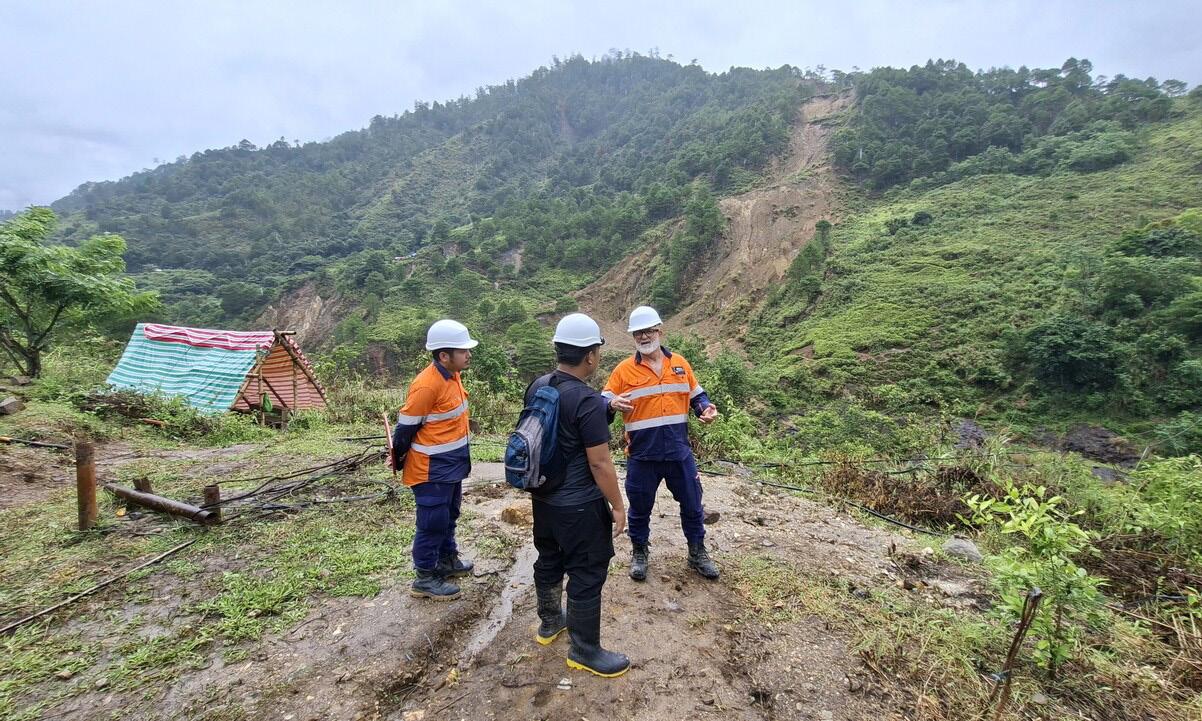
If you are developing or operating a mine in the Philippines, you understand complexity. Geological variability, high rainfall, seismic exposure through to capital discipline all shape decisions from the earliest concept stage.
For 30 years, RDCL has worked alongside mining companies across the Philippines — from investigation and feasibility through to detailed design, construction support, and operations. We are a specialist geotechnical consultancy who are committed to continuity and staying involved. We understand what happens when ground risk is underestimated — and how to manage it properly.
From three decades of involvement in Philippine mining, here are five lessons that consistently stand out.
1. Geotechnics Should Enable Your Mine — Not Slow It Down Your objective is not to get a completed geotechnical report, it is to build and operate a commercially viable mine.
Geotechnical engineering sits at the centre of your project — linking geology, mine planning, structural engineering, tailings design, water management, and operations. When that link functions well,
it strengthens every part of the system. When it becomes isolated or slowed due to cautious mindsets, it creates delay and friction.
The greatest value comes from seamless integration between geotechnical advice and the wider project team. Slope angles influence stripping ratios. Tailings design affects consenting and long-term liability. Foundation performance impacts construction sequencing.
Geotechnical advice cannot sit in a silo — it must reflect the whole mine.
Ground risk must be managed rigorously, but always in alignment with operational and commercial objectives. When geotechnical input enables progress rather than obstructing it, projects move forward with confidence.
2. Decisiveness Is Key
Mining in the Philippines involves uncertainty. Deep weathering, faulting, seismic loading, groundwater interaction, and intense rainfall all introduce complexity.
But complexity should not translate into indecision.
Across feasibility studies, regulatory review, construction, and operations, problems rarely arise because risks were completely unknown. More often, they arise because risks were not clearly
structured, prioritised, or acted upon.
You need geotechnical advisors who will:
• Identify potential failure modes early
• Maintain disciplined risk frameworks
• Evaluate realistic design options
• Make confident, defensible recommendations
Experience sharpens judgement. When you have seen projects through construction and into operation, you understand which risks materially affect long-term performance — and which can be proportionately managed.
Clear decisions protect both capital and schedule. Choose partners who can define the best pathway forward with confidence and certainty.
3. Bench Strength Matters
Geotechnical delivery spans multiple interconnected disciplines across the life of mine. It is not a single technical stream — it is a coordinated framework of expertise.
Mining projects typically require capability in:
• Geological interpretation and ground modelling
• Open pit slope stability and rock mass characterisation
• Underground excavation behaviour and support design
• Tailings storage facility investigation and embankment design
• Seismic hazard and stability assessment
• Groundwater and high-rainfall performance
• Earthworks and embankment construction
• Plant and critical infrastructure foundations
Each discipline carries its own risks and directly influences the others — from mine economics and long-term liability to stability and infrastructure durability.
Effective geotechnical delivery requires breadth as well as depth. It demands integration across technical streams and continuity from feasibility through construction. In environments such as the Philippines — where geological variability, seismic exposure, and climatic pressures compound risk — that breadth is essential.
True end-to-end expertise means having a supplier who has the breadth of skill in their team to navigate a wide range of scenarios, aligning assumptions across each stage, and supporting performance from first investigation through to operation. Choose a supplier who has good bench strength.
4. Make It Simple
Ground conditions in the Philippines can be complex. Communication should not be.
Whether dealing with regulators, financiers, independent reviewers, boards, or operational teams, clarity is critical. You must be able to explain what the ground risks are, how significant they are, how they are being managed, and what residual exposure remains.
Overly complicated explanations erode confidence. Clear, defensible advice strengthens approvals and funding pathways.
If a risk cannot be explained clearly, it has not yet been properly resolved.
Clarity is not simplification for its own sake — it is disciplined risk management.
5. Ground-Up Delivery Requires an Operational Mindset
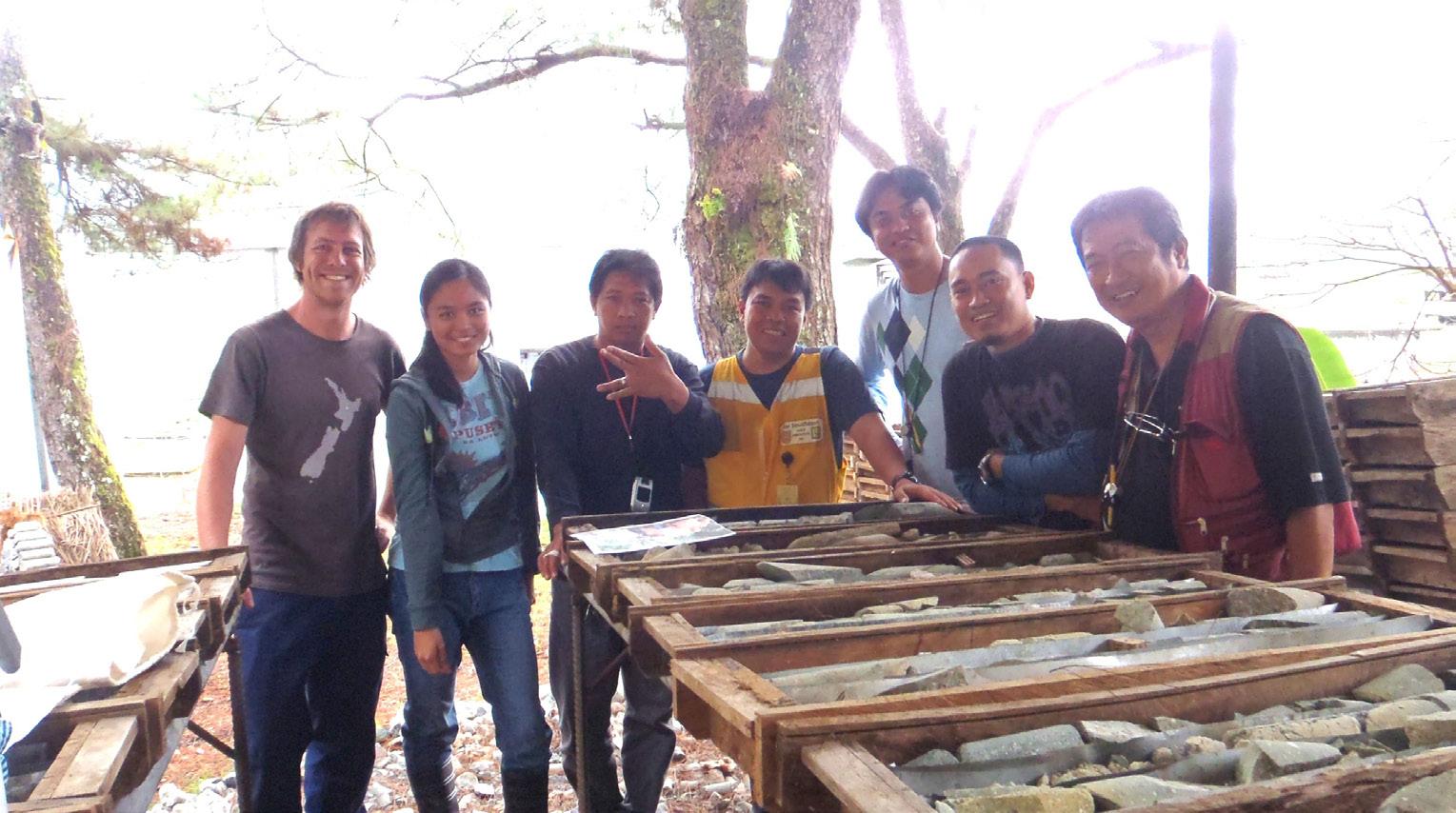
Mining projects are delivered under schedule pressure and in demanding environments. Conditions change quickly. Construction windows are tight. Decisions cannot wait for perfect information.
In this context, geotechnical design must be practical as well as technically sound. It must be constructible. Information must be delivered when it is needed. Recommendations must reflect actual site conditions — not assumptions carried forward from a desktop model.
Ground conditions must be verified in the field. Design assumptions must be tested against observation. Technical judgement must align with how work is carried out on site.
The greatest value comes from geotechnical partners who understand construction sequencing, contractor interfaces, and production pressures — and who can deliver timely advice that keeps projects moving.
Technical knowledge is key. Practical judgement converts it into value.
Operating continuously in the Philippines for over 30 years has provided more than technical experience. It has provided perspective — an understanding of how mining projects evolve over time.
Across these projects, one principle stands out: the greatest value lies in lifecycle integration.
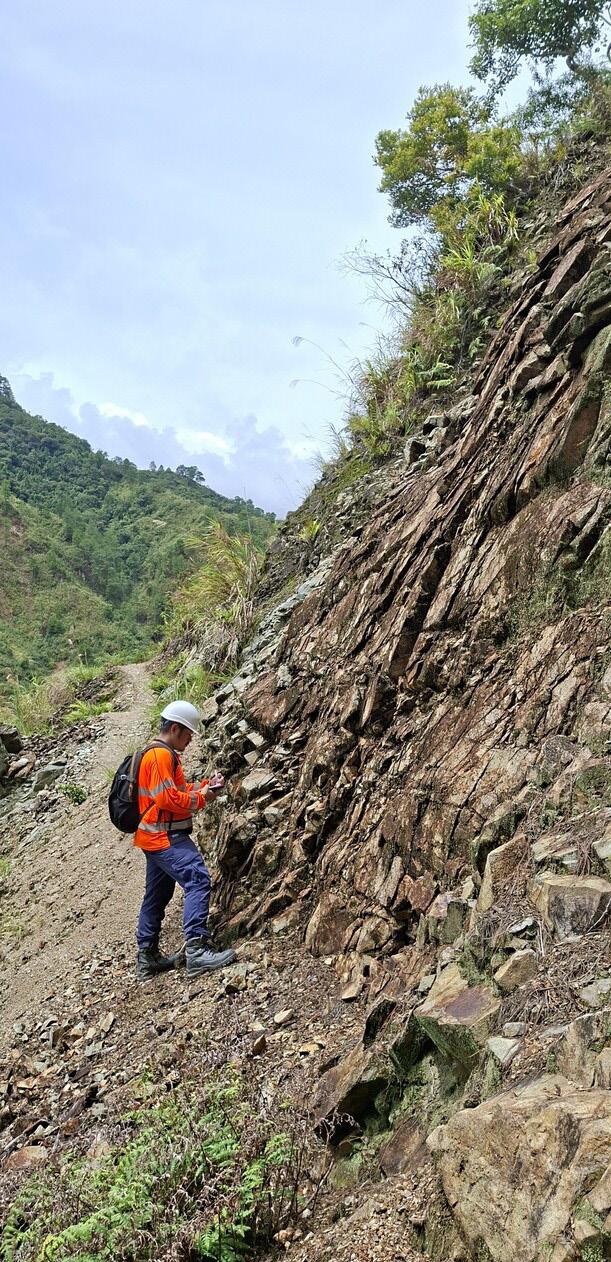
Mining will always involve uncertainty. Ground conditions can never be fully known before excavation. But uncertainty can be managed confidently when geotechnical expertise is applied early, decisively, and across the entire life of the mine.
That is what three decades in Philippine mining has taught us.
About Cam Wylie
Cam Wylie is a Professional Engineer and Executive Director of RDCL, a geotechnical and geophysical consultancy operating in the Philippines, New Zealand and the Pacific. He has 30 years’ experience across Philippine mining and infrastructure projects with special interest in new development.
Tubay, Agusan del Norte -- Agata Mining Ventures Inc., operator of the maiden nickel mining project of TVI Resource Development Philippines Inc. (TVIRD) that is now on its final rehabilitation stage, was recognized by the Technical Education and Skills Development Authority (TESDA) with both regional and national Kabalikat Awards last November 24 at the Philippine Trade Training Center in Pasay City.
The company was conferred with honors for demonstrating its strong commitment to industry development and community empowerment through its partnership with TESDA. Its contributions to technicalvocational education and training (TVET) likewise highlight its role in fostering growth and enhancing the skills of the local workforce.
The Kabalikat Awards is TESDA’s premier recognition program for public and private sector partners whose collaboration has significantly strengthened the country’s TVET ecosystem. This year’s awardees, including Agata, represent diverse sectors that have gone beyond supporting skills training, employability and inclusive workforce development.
The Agata Nickel Laterite Project concluded its successful nine-year run in 2023 – a project that has established the TVIRD Group as a steady supplier of nickel ore to Asian direct markets during its run and helped elevate the host towns of Tubay and Santiago from fourth to first-class municipalities. At the same time, its host Jabonga Municipality progressed from fourth to second-class status, further validating that TVIRD’s approach to social progress is the right one.
Despite already being in its final mine rehabilitation phase and being converted into a nature farm, Agata emerged as the national
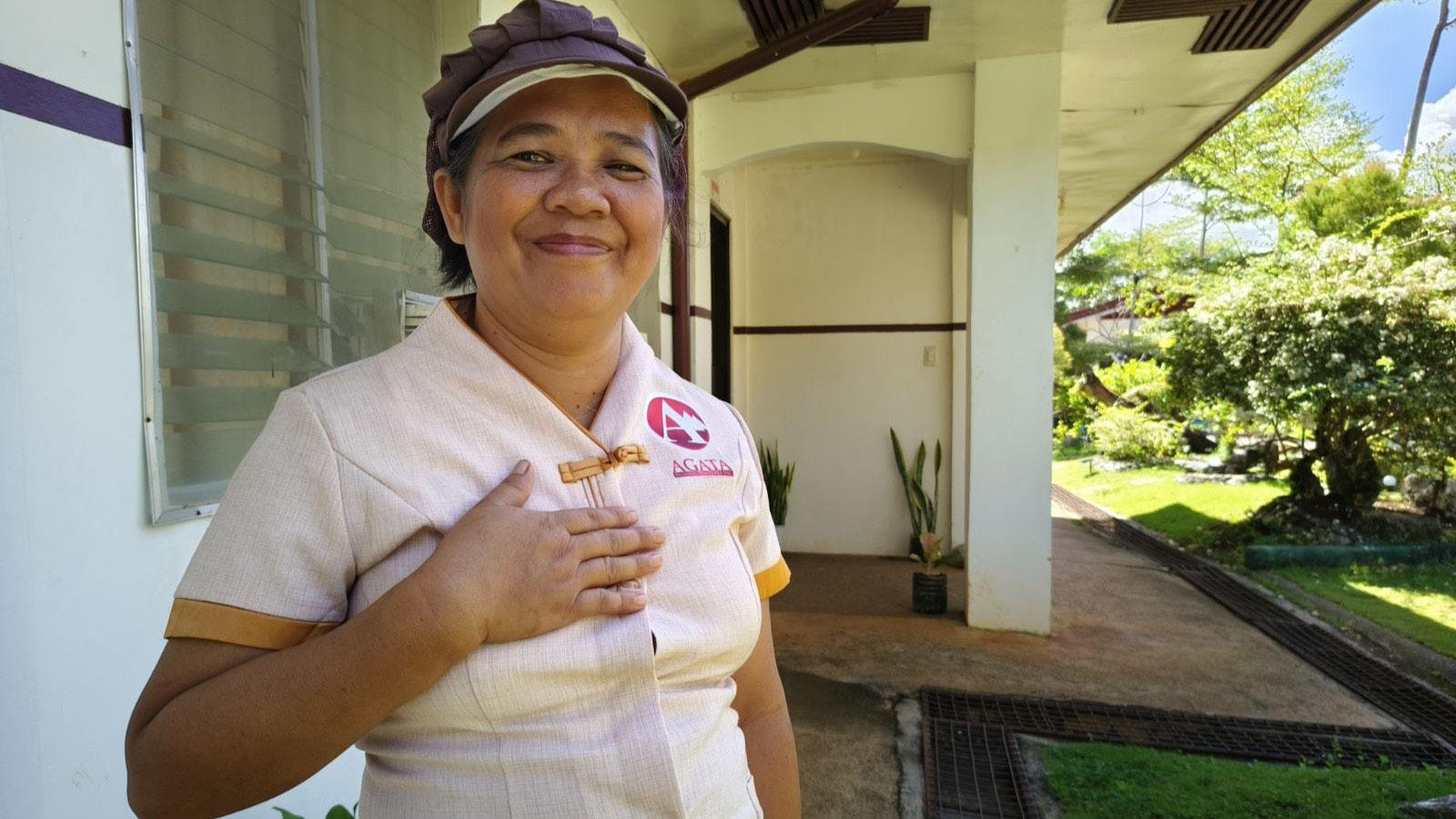
TESDA awardee in the Industry Category for its apprenticeship and employment programs for local trainees through its Mabakas Techno Demo Farm. The award likewise underscores Agata’s role in aligning industry-led skills development with TESDA’s mission to produce a globally competitive Filipino workforce.
“Taon-taon, napapatunayan natin na (every year, we prove that) it takes collaboration to really make the change that we want to see. So, today is a chance for us to once again show that when we work together — that is, the Government, the industry, and academe — we shape a better future for every Filipino,” said TESDA Director General Jose Francisco “Kiko” Benitez during the awarding ceremony, underscoring the importance of partnerships and encouraging greater teamwork.
He further emphasized the pivotal role of private sector Kabalikat Awardees: “You help provide the necessary tools and infrastructure, and you facilitate employment and enrichment of our TVET graduates. Kaya hindi maitatanggi na malaki ang contribution ninyo sa socioeconomic development ng bansa (your enormous contribution to the country’s socio-economic development cannot be denied).”
On the regional level, Agata’s achievement was celebrated along with other local awardees, including the Provincial Government of Agusan del Norte. TESDA Caraga Regional Director Florencio F. Sunico, Jr. expressed that when sectors work together, they can uplift local communities and improve lives through shared initiatives. Agata received top honors last December 18 at the JMX Convention Center in Butuan City of the same province.
“As we close the year, we celebrate another milestone for the TVIRD Group. Being recognized as both a regional and national TESDA Kabalikat Awardee reflects Agata’s unwavering commitment to uplift the lives of its communities through innovative and sustainable livelihood programs,” stated TVIRD Director for Environment and concurrent Agata General Manager for Final Rehabilitation Jesalyn Guingguing, EnP.
This recognition not only honors Agata’s contributions but also emphasizes how its collaboration with TESDA benefits local communities and stakeholders through capacity building and employment opportunities that support socio-economic growth, according to the executive.
The TESDA Kabalikat Awards is one of the highest honors given annually by TESDA to outstanding partners who significantly contribute to strengthening technical-vocational education and training in the Philippines. It recognizes institutions, local Government units, legislators, organizations and industry partners whose consistent support has expanded public access to skills training, livelihood programs and employment opportunities for Filipinos as well as herald TESDA’s mission of building a skilled and globally competitive workforce.
Through its ongoing collaboration with TESDA, Agata advances its social responsibility objectives by empowering Filipinos with skills and opportunities, reinforcing its commitment to inclusive development and sustainable industry growth.
Philippines Inc. (“TVIRD”) is owned in part by TVI Pacific Inc. (TSX: TVI), a publicly listed Canadian mining company focused on the exploration, development, and production of precious and base metals from district-scale, large-system, high-margin projects located in the Philippines. Concurrent ownership of ventures is shared with partner company Prime Resource Holdings Inc.
The Agata Nickel Laterite Mine is the third successful mining project that TVIRD brought on stream in a period of 10 years, while its Balabag Gold-Silver Mine further cements its position as a steady producer of precious metals in the country. With the commercial operations of its Siana Gold Mine, the company’s proven track record and commitment to responsible mining practices promote transparency, responsible stewardship of the environment, and the inalienable rights to life, dignity and sustainable development of its host communities, ensuring a secure and sustainable future for the project. www.tvird.com.ph
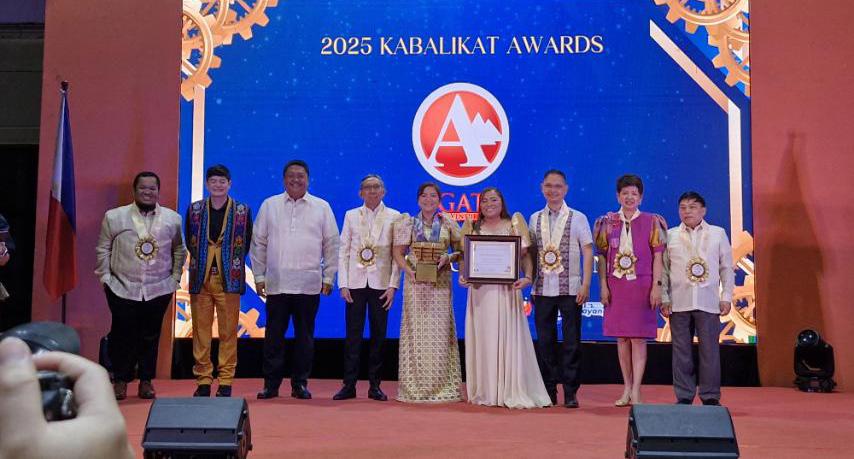
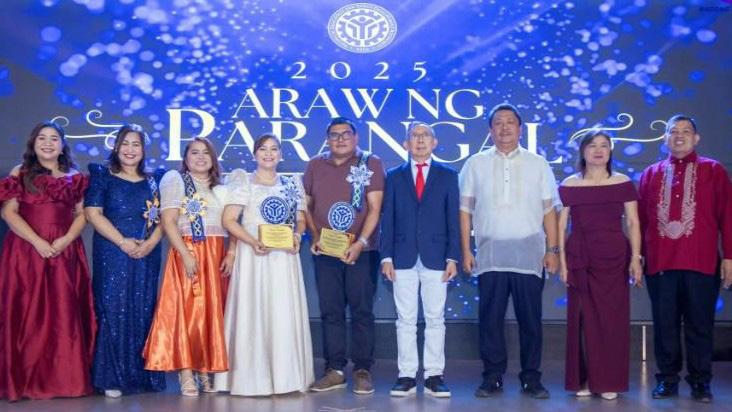


TVIRD Environment Director and Agata GM for Final Rehab Jesalyn Guingguing (center) and Mabakas Techno Demo Farm Administrator
Sheilah Arcala, together with TESDA Officials, receive the National Kabalikat Award at the Philippine Trade Training Center in Pasay City
TVIRD Director Jesalyn Guingguing and Mabakas Farm Administrator
Sheilah Arcala, together with the TESDA Caraga Region officials, at the Regional Kabalikat Awards at JMX Convention Center in Butuan City.
Agata’s Mabakas Techno Demo Farm Community Livelihood Specialist Maritonie Niño uses the community’s handmade basket as she harvests vegetables at the Mabakas Farm Garden.
A Group of mothers who are beneficiaries of Agata’s livelihood program on producing Turmeric Powder show their finished product at the tail end of the course.
As part of its commitment to strengthening People’s Organizations (POs), Taganito Mining Corporation (TMC) held its 3rd PO Conference on February 13–14, 2026, at the Taganito Sports and Cultural Center in Claver, Surigao del Norte. The event gathered over 100 PO memberbeneficiaries.
With the theme “Innovative Strategies for Business Growth,” the conference aimed to enhance the entrepreneurial capacity of POs by providing learning opportunities, sharing best practices, and strengthening collaboration among community partners.
It also served as a venue to recognize the progress of POs in building sustainable livelihood initiatives.
A key highlight of the conference was the launch of the Hulagway Livelihood Magazine, which features the stories, journeys, and products of various POs.
The launch was complemented by a photo and product exhibit showcasing a wide range of livelihood ventures—from agriculture and food processing to retail and smallscale enterprises— developed through collective effort and perseverance.
In his message, TMC Mine Operations Division OIC Engr. Vicente Benamer emphasized the significance of the magazine, noting that each page reflects the hard work, dedication, and faith that have shaped the success of the POs.
TMC Admin Group Manager Agnes Sabijon described the conference as a celebration of partnership, unity, and shared vision, reaffirming TMC’s commitment to supporting people’s organizations as key contributors to resilient and empowered communities.
Claver Mayor Georgia Gokiangkee also addressed the participants, describing the event as more than a typical conference.
She expressed gratitude to private partners, particularly TMC, for their longstanding support and
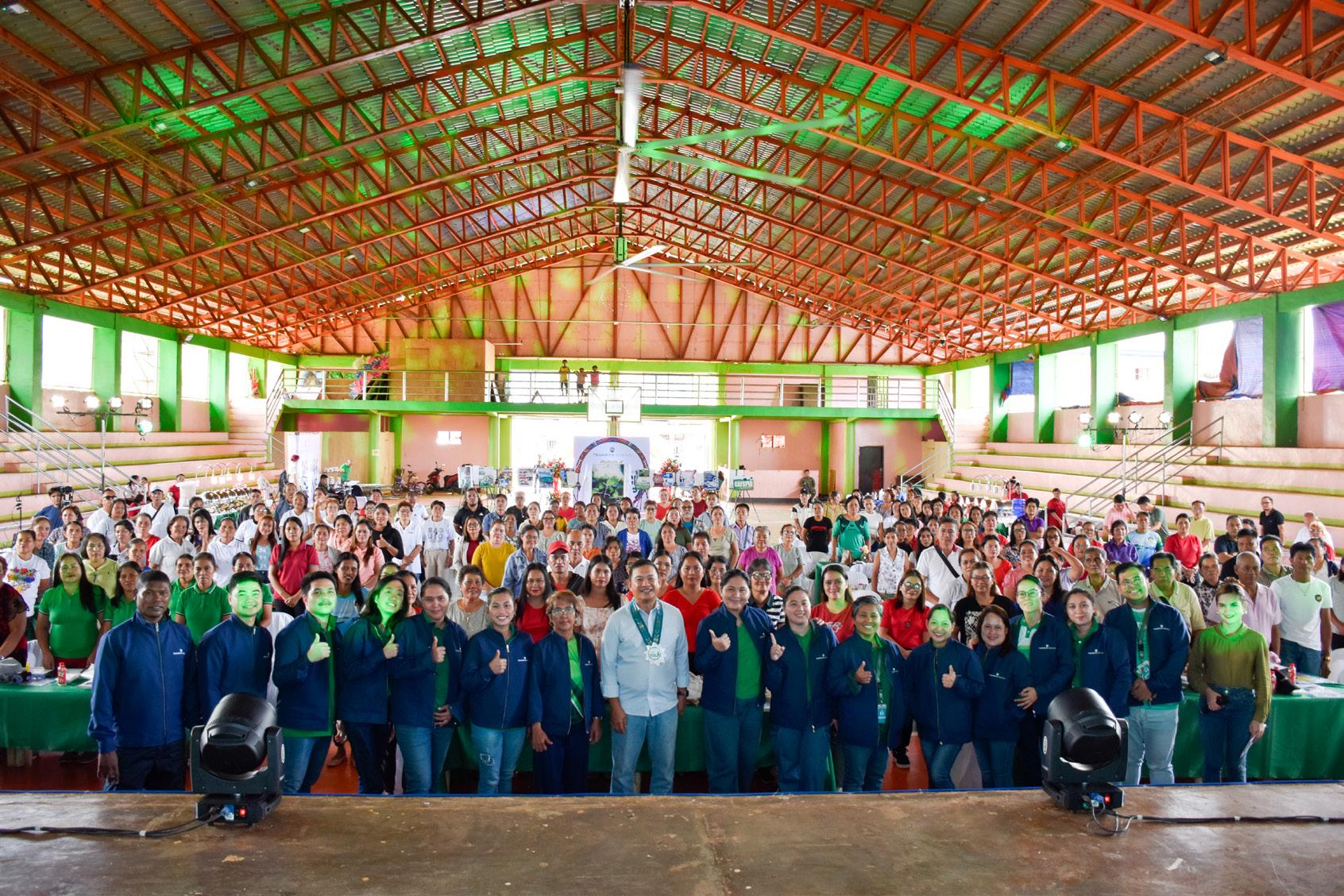
noted the visible transformation of Barangay Taganito and the Municipality of Claver over the years.
To inspire participants, TMC invited successful local entrepreneurs as resource speakers, including Tirso Lisbos of Lisbos Cacao Trading; Jose Feron E. Cacanando, author and owner of Moriah Farms in Bukidnon; and Matilde Mainit of Taganito Bakehouse and General Merchandise. Their talks shared practical lessons drawn from reallife business experiences.
Cacanando focused on financial discipline and wealthbuilding, highlighting key principles such as responsible borrowing, consistent saving, and patience as foundations for longterm financial stability.
The conference concluded with a recognition ceremony honoring POs for best practices in partnership and collaboration, product innovation, organizational and financial management, environmental stewardship, safety, and leadership.
Participants expressed appreciation for the conference and TMC’s continued support. Many shared that the sessions provided valuable insights and motivation

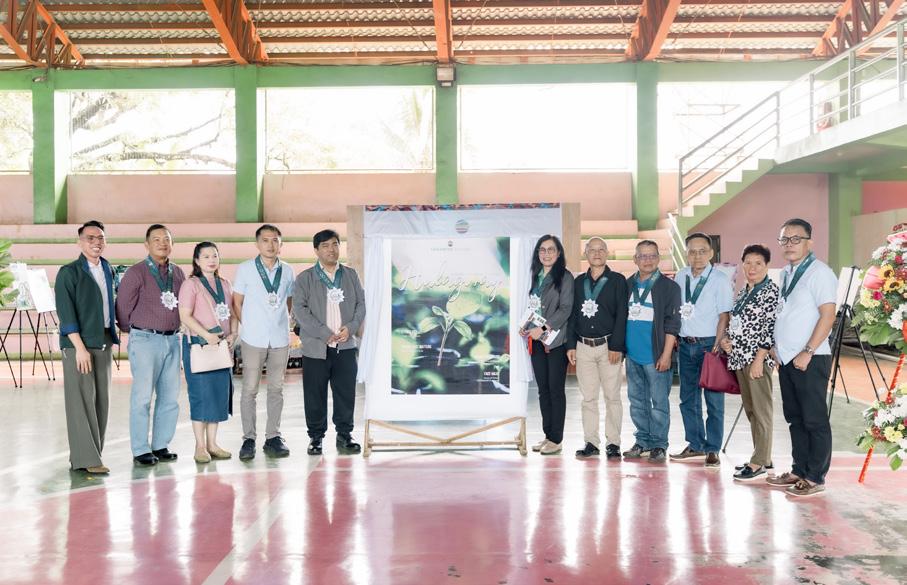
to strengthen their livelihoods and organizations.
Through the 3rd People’s Organizations Conference and the launch of the Hulagway Livelihood Magazine, TMC reaffirmed its commitment to inclusive growth, sustainable livelihoods, and strong partnerships with its host and neighboring communities.

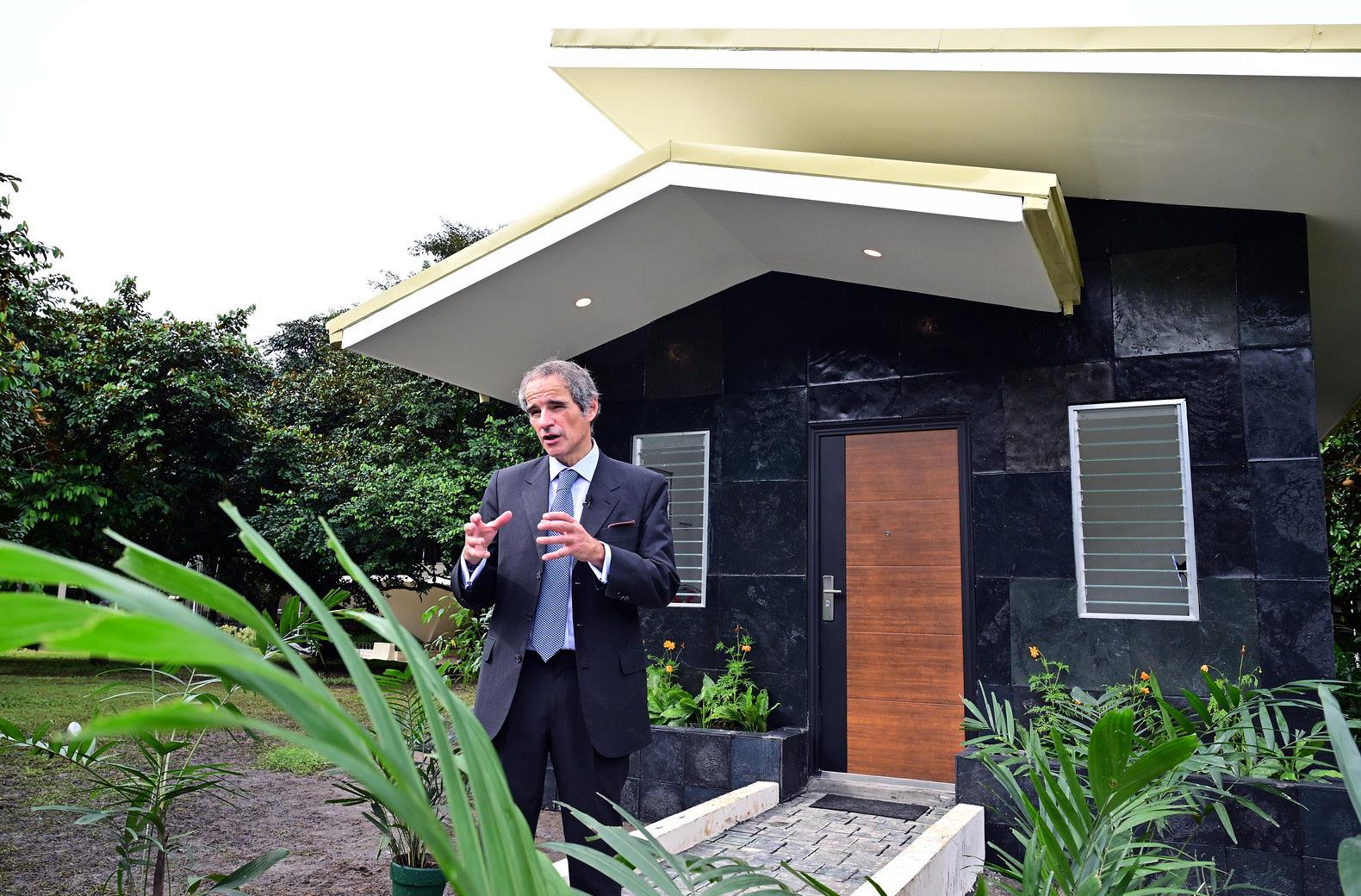
In a recent report by Philippine Nuclear Research Institute of the Department of Science and technology (DOST-PNRI), radiationprocessed plastic waste can now be used as construction materials.
Plastic waste accumulation is a global problem, and the Philippines is particularly identified as the top source of ocean plastic pollution in the world according to multiple studies and reports released in 2025-2026. One of them is a study published in the Marine Pollution Bulletin in 2024 (and cited throughout 2025) which reported that the Philippines is a top contributor to oceanic plastic pollution by 2025, specifically noting it as first globally for riverine plastic emissions.
Likewise in a report from World Bank that was released on December 26, 2025, the Philippines remains one of the world’s leading contributors to marine plastic pollution, with nearly 9% of its mismanaged plastic waste ending up in the ocean.
This is where radiation technology offers an innovative solution to solve this environmental problem. Trash such as plastic packaging and containers can now be modified and processed into durable tiles and bricks that can be used in building homes.
The technology is called Postradiation Reactive Extrusion of Plastic Wastes (or PREx Plastic), spearheaded by the DOST-PNRI.
But is the end-product reliable for actual house construction? To test the strength and effectiveness of the radiation-processed plastic tiles and bricks, PNRI partnered with Envirotech Waste Recycling Incorporated to build the first “PREx Prototype House”.
According to the media release of PNRI, “A prototype of a common residential house that uses PREx plastic for tiles and walls, the PREx House will be the testing site of how the said plastics will maintain strength and durability in the daily household grind.”
Dr. Jordan Madrid, PREx project leader and head of the PNRI Chemistry Research Section explains the science behind this. “Irradiation manipulates the behavior of polymers in plastic for better practical compatibility and enhancing the mechanical properties of recycled materials.”
The use of radioactive isotopes is often associated with medical applications like diagnostic imaging such as CT scan, PET Scans (in detecting cancer and
heart conditions), SPECT Scans (brain image, thyroid, lung, liver, kidney function), bone scan, and heart function scans (or cardiac imaging tests). They are also used for therapeutic applications for cancer treatment, brachytherapy, and bone cancer treatment. Additionally, radioactive isotopes are also used for medical sterilization for biological tissue and pharmaceuticals.
Radioactive isotopes also have agricultural applications like soil and fertilization management of plants, crop improvement (mutation breeding), pest control, and food preservation.
When used properly, radiation has many uses, and now, it is useful in solving the plastic pollution problem in the Philippines, and at the same time, supporting recycling drives, manufacturing and construction industries.
Together with the DOSTIndustrial Technology Development Institute, PNRI and Envirotech are making the most of radiation to upcycle plastic wastes. Additionally, DOST-Philippine Council for Industry, Energy, and Emerging Technology Research and Development and the International Atomic Energy Agency (IAEA) also
The house made from
supports the PREx Plastic project. This partnership and advocacy align with the IAEA NUTEC Plastic Project which harness nuclear technologies for environmental and industrial development.
This study on the PREx House performance will be crucial in controlling the growth of plastic pollution in the country.
Last November 26, IAEA Director General Rafael Mariano Grossi launched the PREx Prototype House on at the PNRI grounds in Quezon City as part of the International High-Level Forum on NUTEC (NUclear TEChnology) for Controlling Plastic Pollution.
The forum was held on Nov. 25-26, 2025, at the Conrad Manila Hotel. Participants from around the world gathered to fight plastic pollution with nuclear science on two fronts:
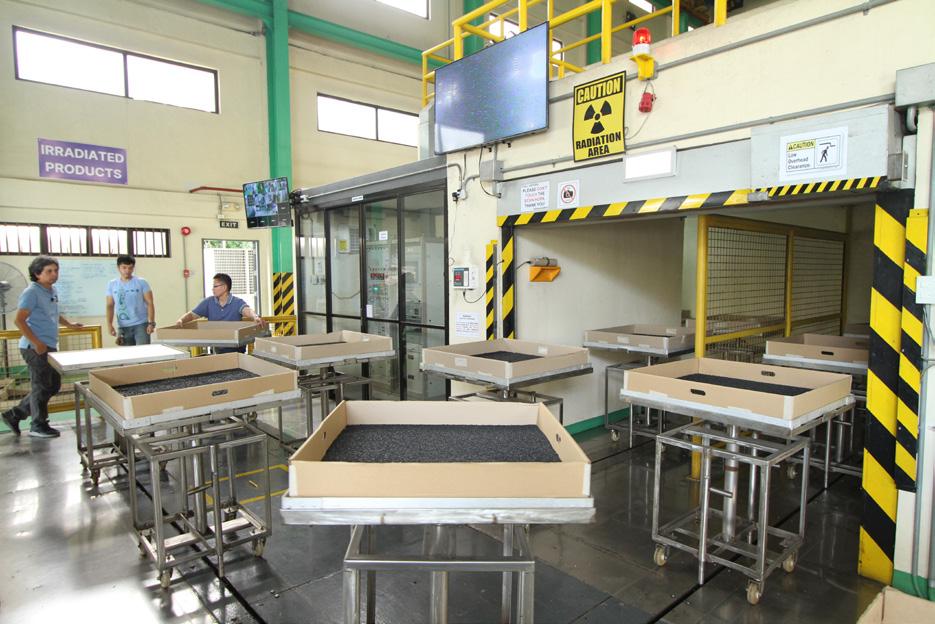
1) At point of source - by improving plastic recycling and developing new bio-based plastics
2) In the ocean, where the bulk of plastic waste ends up.
Reference:
[1] (Nov. 22, 2025) “From trash to tiles: Radiation-processed plastic
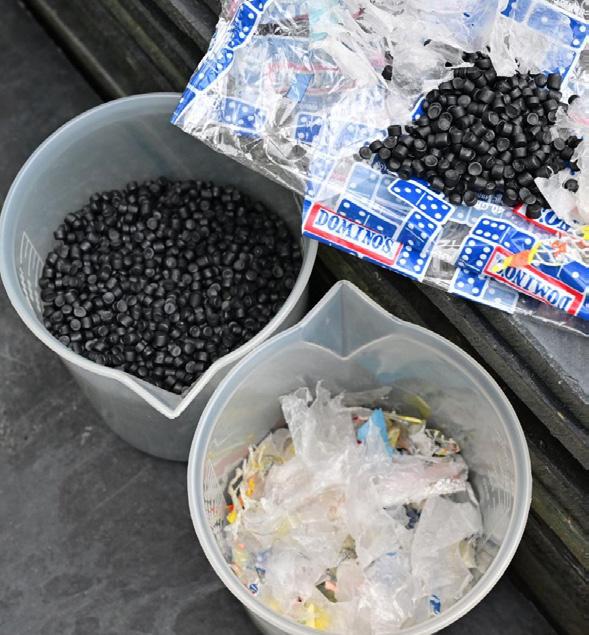
waste now used as construction materials”. PNRI-Nuclear Information and Documentation Section. PNRI-DOST Website
Photo credit:
- International Atomic Energy Agency
- PNRI-Nuclear Information and Documentation Section.
The Department of Public Works and Highways (DPWH) plans to roll out a contractor “green lane” in partnership with the Philippine Chamber of Commerce and Industry (PCCI) to accelerate permit processing and payment flows, AB Securities said in its latest market note.
In a report titled “The Opening Bell: Three Moves,” AB Securities said the initiative is part of a broader effort to restore infrastructure execution following a sharp contraction in public construction activity in the fourth quarter of 2025.
The brokerage cited a 42-percent decline in public construction during the period, which it linked to corruption investigations and stalled projects that disrupted implementation and contractor participation.
AB Securities said the planned green lane, along with the launch of an integrity monitoring portal, signals a governance-driven push by the DPWH to rebuild confidence in the infrastructure pipeline.
“We think this signals a governance-driven effort to restore infrastructure execution and contractor participation,” the company said.

Faster payment processing and reduced administrative friction could improve bid participation and shorten project timelines, helping revive capital expenditure-led growth momentum, the firm said.
“In our view, rebuilding contractor confidence is critical to reviving capex-led growth momentum,” it added.
The brokerage identified the Feb. 23 cooperation signing between the DPWH and the PCCI as a key near-term catalyst, along with early announcements of project restarts.
AB Securities said a meaningful recovery in construction spending could provide incremental support to gross domestic product growth through 2026, given the sector’s multiplier effects on related industries such as building materials, property
development and banking.
However, it cautioned that risks remain.
“Risks include slow implementation or persistent procurement scrutiny delaying actual mobilization,” the report said, noting that reforms must translate into on-the-ground execution to sustain momentum.
On the investment side, AB Securities said it favors constructionlinked developers, cement producers and banks with infrastructure exposure, as improved execution visibility may revive order pipelines and loan demand.
The firm added that sustained payment discipline and transparency reforms would be key signals for a potential rerating of domestic cyclical stocks tied to infrastructure spending.
Walk past any construction site in the Philippines and you’ll likely see a familiar sight — piles of plywood stacked near a freshly poured foundation, warped and water-stained from repeated use. For decades, plywood has been the go-to material for local formwork, even as builders quietly acknowledge its flaws: it’s heavy, wasteful and short-lived, especially in the country’s hot, humid climate.
That may soon change. A new system called PECAFORM, developed by Malaysia-based PLYTEC Group and brought to the country by FASI Forms Inc., is offering Filipino contractors an alternative — a soil-supported, reusable formwork that reduces waste and speeds up construction.
“The idea appealed to us because it directly addresses the recurring pain points of builders here,” said Frederick Erum, founder and CEO of FASI Forms Inc. “It’s simple, efficient, and it works with the way projects are managed locally.”
The concept behind PECAFORM is straightforward: let the soil do the work. Traditional formwork relies on timber or steel supports, adding cost, time and labor to every pour. PECAFORM replaces those with a lightweight polymer sheet that holds the concrete in place using compacted soil for support.
Once the soil is backfilled, the form becomes stable enough for pouring. Because the panels don’t absorb water, they produce a smooth finish and last far longer than plywood.
“We’ve all seen how much material gets discarded after just a few uses,” Erum said. “If you can get the same or better result with something that doesn’t rot or warp, it’s worth adopting.”
Each panel weighs about 2.64 kilograms per square meter, light enough for one person to carry and install without machinery. The
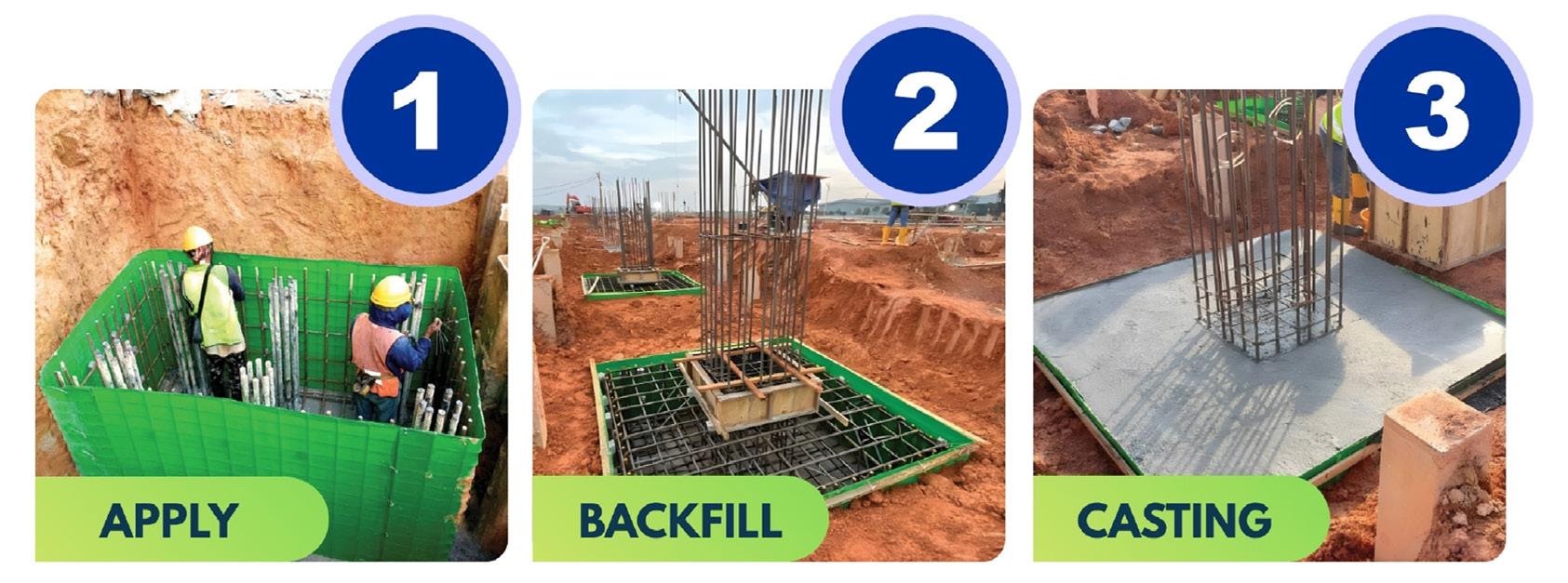
lighter handling helps reduce labor hours and improve on-site safety.
The country’s humid climate and frequent rainfall have long been a challenge for construction. Timber formwork tends to absorb moisture, deform and fail after short use cycles — driving up rework costs.
PECAFORM was designed for exactly these conditions. Made from water-resistant engineered material, it can be reused multiple times and withstand the elements without degrading. On-site, it also reduces waste and clutter.
“It doesn’t take long for people to get used to it,” Erum said. “After a short orientation, crews start working faster because there’s less preparation and cleanup involved.”
The system has been successfully used in Malaysia and Singapore, where similar weather conditions test the durability of formwork.
At Aspen Vision City in Malaysia, contractors reported completing formwork cycles up to 70 percent faster and cutting costs by as much as 40 percent compared to plywood systems.
In an industry where time directly affects profitability, shorter construction cycles can have a significant impact. PECAFORM helps reduce setup and removal time since the forms are left in place permanently, eliminating dismantling and disposal.
“You can see the efficiency on-
site,” Erum said. “Workers spend more time doing structural work instead of setting up and tearing down temporary forms.”
The result is a more organized work environment and a safer workflow, especially in repetitive casting jobs such as footings and retaining walls.
Erum said the system’s appeal goes beyond convenience. Its long life cycle and recyclable composition align with the growing demand for sustainable construction practices.
“Contractors today are under more pressure to consider sustainability,” he said. “If a material helps reduce waste and lasts longer, it makes both environmental and financial sense.”
Each panel is 100 percent recyclable and microplastic-free, meeting Green Building Index (GBI) and VOC-safe standards. The elimination of timber backing reduces the need for lumber and minimizes landfill waste — increasingly important metrics for developers and project financiers.
“Sustainability shouldn’t come at the expense of practicality,” Erum added. “The key is to find solutions that make everyday work more efficient while lessening impact on the environment.”
PECAFORM is most effective for retaining walls, pile caps, edge forms and ground beams — repetitive concrete structures that
often slow down project timelines.
The system’s consistent dimensions and finish quality also minimize rework. In large-scale projects, the cumulative time savings can be substantial.
“Small efficiencies become significant when you apply them across kilometers of formwork,” Erum said. “That’s where systems like this make sense — in the details.”
Erum, a member of the Filipino Inventors Society, has long been known for his contributions to improving construction methods. Over the years, he has registered four patents, including designs for a concrete shuttering system, table formwork and support system, and reusable plastic panel innovations.
“We’ve always tried to look for better ways to build,” he said.
“Not necessarily more expensive or complicated — just more efficient.”
Through its partnership with PLYTEC, FASI Forms Inc. brings proven formwork technologies to the Philippine market, adapting them for local contractors through training and technical support (fasiformsystem.com/about-us; plytec. com.my)
“Our goal is to make modern systems accessible,” Erum said. “Technology should work for the people using it, not the other way around.”
As infrastructure investment continues under the government’s Build Better More program, Erum sees an opportunity for
the local industry to adopt better construction systems.
“We’ve relied on the same materials for decades,” he said. “But conditions and expectations have changed. If we want to stay competitive, we need to do fast construction operations.”
He believes the shift toward smarter systems like PECAFORM will not happen overnight, but sees it as inevitable.
“Change in construction is always gradual,” Erum said. “But once people experience the advantages firsthand — the speed, the cleanliness, the savings — it becomes hard to go back.”
For him, innovation is not about replacing tradition but refining it.
“At the end of the day, the goal is simple,” he said. “Build better, build responsibly, and keep building faster each project.”
President Ferdinand Marcos Jr. has said a demonstration run for the 33.1-kilometer Metro Manila Subway Project (MMSP) is targeted by 2028, as he reported that construction of the country’s first underground railway system is moving faster than originally scheduled.
Marcos made the announcement during an inspection of the Shaw Boulevard Station in Pasig City and the groundbreaking of the Kalayaan Avenue and Bonifacio Global City (BGC) stations in Taguig City in February.
He was joined by Acting Transportation Secretary Giovanni Lopez and Japanese Ambassador Kazuya Endo.
“I’m happy to report that the progress is proceeding and the work is proceeding, and we are very much on schedule,” the President said. “In fact, from the original timetable, we have accelerated the process, and we are moving even more quickly than that.”
The MMSP is funded through a loan agreement between the Philippine government and the Japan International Cooperation Agency (JICA). The project is scheduled for full completion by 2032.
A demonstration run of the system is targeted by 2028, ahead of full
operations, signaling what officials described as steady progress in civil works and system installation.
The BGC stations are projected to serve more than 200,000 passengers daily in their opening year, according to the President.
“This means workers arriving on time, students getting home earlier and our citizens regaining hours that we once lost to congestion,” Marcos said.
The President credited the Bases Conversion and Development Authority and Megaworld Corporation for granting the Department of Transportation a perpetual easement of right-of-way for the construction of the stations.
He said securing 100 percent of the required right-of-way before construction begins addresses what is often the most difficult aspect of major infrastructure projects.
“Because this means that this project begins construction with 100 percent of the required right-ofway already secured,” Marcos said, noting that right-of-way issues have historically delayed rail developments.
Once fully operational, the entire subway line is expected to cut travel time between Valenzuela City and BGC from about one and a half hours to just 29 minutes.
Under Contract Package 104, the Shaw Boulevard Station segment is being implemented by the TokyuTobishima-Megawide Joint Venture at a cost of P18.27 billion.
The package covers the construction of 3.40 kilometers of subway tunnels and two underground stations— Ortigas Avenue Station and Shaw Boulevard Station in Pasig City.
Latest data showed demolition works at Ortigas Avenue Station are 88.15 percent complete, while excavation works at Shaw Boulevard Station have reached 40.77 percent. The segment is targeted for completion by November 2031.
Phase 1 of the project involves the construction of a 33.10-kilometer underground railway system that will reduce travel time between Quezon City and Ninoy Aquino International Airport from more than one hour and 10 minutes to just 35 minutes.
The subway will operate 30 eightcar train sets, each capable of carrying up to 2,228 passengers, significantly boosting the capital’s rail capacity.
Marcos said the accelerated timetable reflects the administration’s sustained push to expand rail and transportation infrastructure to address congestion and support economic growth.
written by: MARCELLE P. VILLEGAS
“Speaking to the media at the Australian Embassy’s Annual Journalists’ Reception, Australia’s Ambassador to the Philippines, His Excellency Marc Innes-Brown, honored Filipino journalists for connecting people and illuminating the truth. He emphasized that fearless reporting and quality journalism are essential for upholding democracy and strengthening ties between nations. In a world flooded with disinformation, Philippine journalists play a vital role in safeguarding freedom of speech and sharing the story of the Australia–Philippines partnership.” (Australian Embassy in the Philippine media release)
The Annual Journalists’ Reception is a yearly gathering hosted by the Australian Embassy where members of the press are invited to have a dialogue with the Ambassador and other foreign dignitaries and officers in the Embassy. This year’s Annual Journalists’ Reception was held on December 4, 2025. In the past, the event took place during summer or mid-year but having it during the holiday season made this gathering extra special and festive.
The Ambassador commended Filipino journalists for their professionalism and determination to strive for truthful journalism. He also emphasized the important role of media in protecting freedom of speech and strengthening partnership between Australia and the Philippines.
He said, “Fearless reporting and quality journalism are essential voices in illuminating the truth and strengthening ties between nations.”
He also described journalists as trusted storytellers who bring together communities and help strengthen the Australia-Philippines relationship.
Australia and the Philippines have a strong Development Partnership spanning over 50 years with a focus on fostering a more stable, prosperous and resilient Philippines.
For Economic Growth, since 2016, Australia has invested P183 million to support enterprises owned and led by women and has also mobilized an
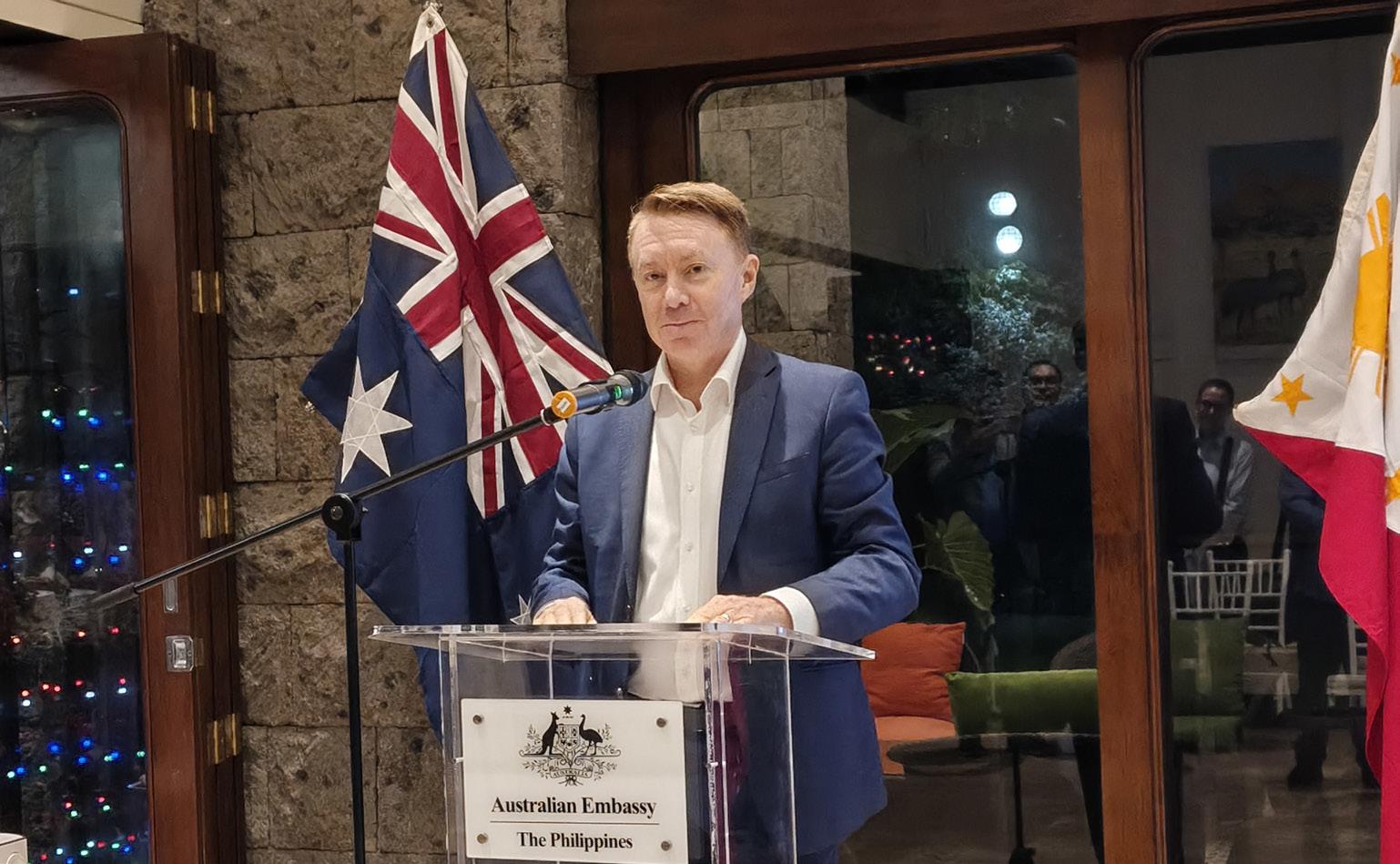
additional P607 million for 34 of such enterprise.
To address poverty and inequality, since 2008, Australia’s P1.6 billion support helped establish and strengthen the Philippines’ cash transfer program for the poor, improving beneficiary targeting and monitoring.
Regarding climate change, since 2006, Australia has responded to 41 major natural disasters, providing P4.6 billion in emergency relief supplies benefitting nearly 10 million Filipinos.
In Civil Maritime, Australia has committed P328 million to support the Philippine Government in protecting its seas and strengthening civil maritime capacity through coral reef restoration, policy and legal reform, marine plastic reduction, and oil spill response and preparedness.
In Trade and Investment, as Strategic Partners, Australia and the Philippines are bolstering our shared economic prosperity by expanding two-way trade investment. “Invested: Australia’s Southeast Asia Economic Strategy to 2040” identified education and skills, agriculture and food, resources and the green energy transition as priority sectors in the Philippines.
Resource – Over 20 Australian mining equipment, technology, and services companies support Philippine mining operations. In March 2024, Australian company Celsius Resources
secured one of the first Philippine copper-gold mining permits in 15 years and is being supported by a P4.37B (USD76.4M) bridge loan facility from the Philippines’ sovereign wealth fund. Green Energy Transition –Australian and Philippine companies are investing heavily in each other’s renewable energy sectors. Blueleaf Energy, a portfolio company of Macquarie Capital, was awarded the first 1.25GW floating solar project on Laguna Lake.
Since 2018, Ayala-led ACEN Corporation has developed 1GW of renewable energy projects in Australia, with a further 13GW of projects in the pipeline—investing over AUD1.6B (P58.6B).
The Ambassador also highlighted the long-standing collaboration in law enforcement as part of Australia’s broader commitment to advancing regional peace, stability, and prosperity.
The Australian Ambassador said that 2026 will mark the 80th anniversary of AustraliaPhilippines diplomatic relations, coinciding with the Philippines’ ASEAN chairmanship. He stated that Australia stands ready to support the Philippines’ priorities as ASEAN chair, reaffirming that the bilateral relationship is founded on trust, cooperation, and long-term commitment.
Looking back on the warm reception he received when he first arrived in Manila, Ambassador InnesBrown said he remains impressed by the deep appreciation for Australia’s contributions and the increasing momentum in bilateral relations.
He ended his speech by thanking Filipino journalists for their steadfast dedication.
“Your work is indispensable. You highlight the meaningful work taking place between our two countries, and we look forward to working with you as we mark eight decades of diplomatic relations and strive toward an even stronger future together.”
Other representatives of the Australian Embassy who were present at the Reception are Ms. Hazel Aniceto (Country Manager of Australian Center for International Agricultural Research), Ms. Johanna Stratton (Counsellor, Political and Public Diplomacy), Mr. Peter Adams (Counsellor, Development), Inspector Joeline Arentz (First Secretary, Australian Border Force), Mr. Brad Marden (Counsellor, Australian Federal Police), and Captain Emma McDonald-Keer (former Defence Attaché, Royal Australian Navy), Mr. Luke Villiers (Counsellor-Economic), and Ms. Luisa Rust (Senior Trade and Investment Commissioner, MinisterCounsellor-Commercial).
Australia and the Philippines are Strategic Partners, working together to promote a region that is peaceful, stable, and prosperous. This is where the role of a Defence Attaché is essential.
For the past two years, Captain Emma McDonald-Kerr was assigned in the Philippines as the Defence Attaché from the Royal Australian Navy. Her presence at the Journalist Reception was a great opportunity to meet her before her departure back to Australia in January 2026. In her speech, she shared her fond memories working here in the Philippines. Throughout her term, she worked to strengthen the bilateral defense relationship, including initiatives like Exercise ALON.
On December 17, 2025, Captain McDonald-Kerr was honored by the Armed Forces of the Philippines (AFP) for her service. She concluded her tenure as the Defence Attaché of Australia to the Philippines with an

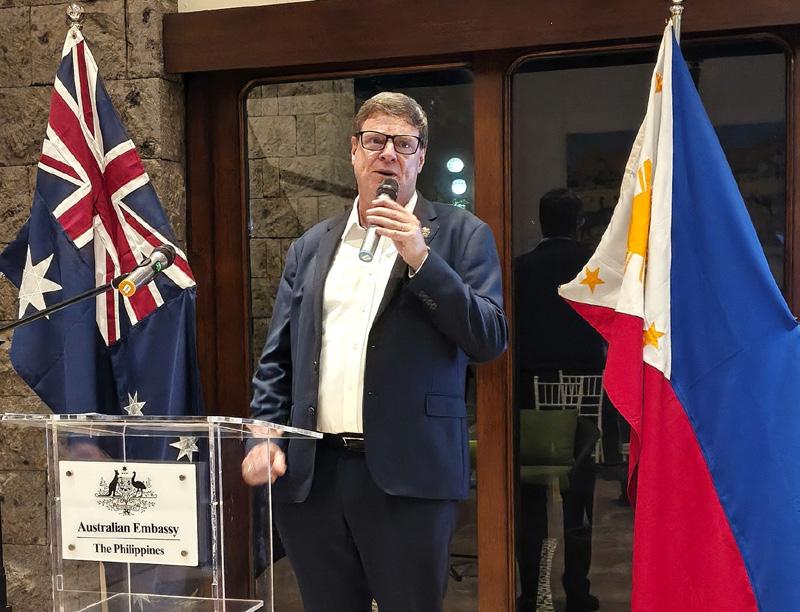
exit courtesy call on December 17, 2025, and a final meeting with the Philippine Air Force (PAF) on January 6, 2026.
During the engagement, Captain McDonald-Kerr expressed her appreciation to the leadership of PAF and for their support during her tour of duty, emphasizing their achievements through sustained military engagement, capacitybuilding initiatives, and defense diplomacy.
She was succeeded by Colonel Travis Day in early January 2026.
The Philippine Internet Crimes Against Children Center (PICACC) is a specialized, multi-agency initiative established in February 2019 to combat the online sexual exploitation of children (OSEC) in the Philippines. The Australian Federal Police (AFP) is a founding member of this task force, working in close collaboration with Philippine authorities and international partners to protect children.
Mr. Brad Marden (Counsellor, Australian Federal Police) reported, “Since its inception in February 2019, and as of last week, the PICACC has
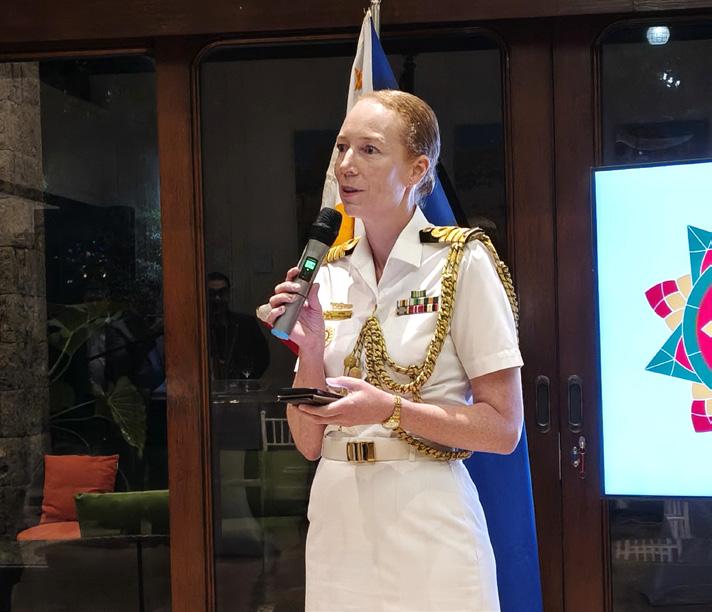
undertaken a total of 318 operations which has resulted in the rescue of 847 victims and 183 suspects/facilitators charged.”
“We have also worked together in the prevention space educating children and their families. Earlier this year we worked with local authorities to translate an Australian cyber safety book ‘Jack Changes the Game’--local title “Cyber Smart Kids are Cyber Safe”.
The book’s objective is to start conversations about being safe online. Designed for ages five through eight, the book gives age-appropriate advice about online grooming, how to recognize the signs that someone online might not be who they say they are, and includes information on how parents can act if something goes wrong.
The book is distributed by the Australian Federal Police and Australian Center to Counter Child Exploitation.
To download the book for free –Cyber Smart Kids are Cyber Safe (“Mga Batang Cyber Smart ay Cyber Safe”) https://www.accce.gov.au/ resources/parents-carers/cyber-smartkids-are-cyber-safe
Photo credit: Marcelle P. Villegas
written by: MARCELLE P. VILLEGAS

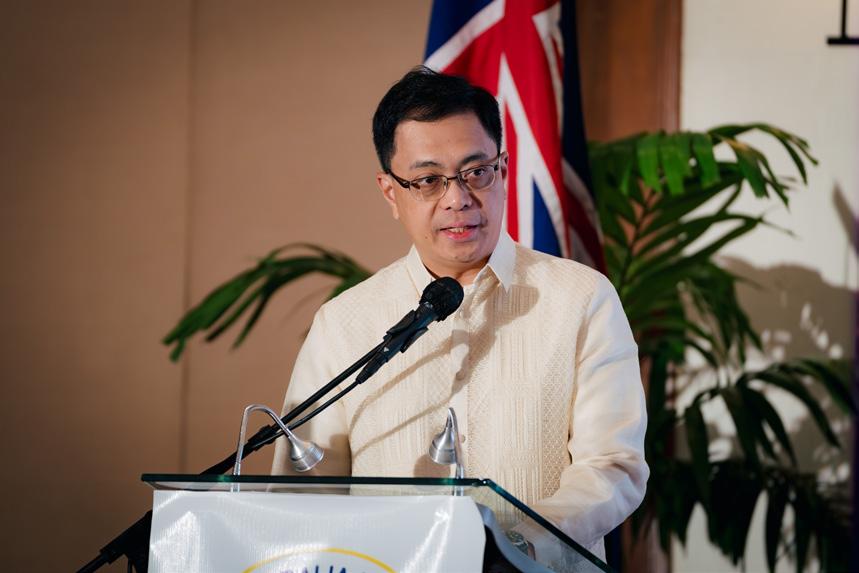
One of the main events of 2025 was Philippines-Australia Business Council’s (PABC) 50th Anniversary. Established in July 1975, PABC commemorated this special occasion in a grand celebration that was held at Manila Polo Club in Makati last November 12.
This milestone event marks five decades of excellence, collaboration, and growth through active engagement across the industries, businesses and government sectors of the Philippines and Australia. Their primary goal is to promote trade, economic cooperation, and fostering friendship between the business communities of both countries.
PABC is more than just a
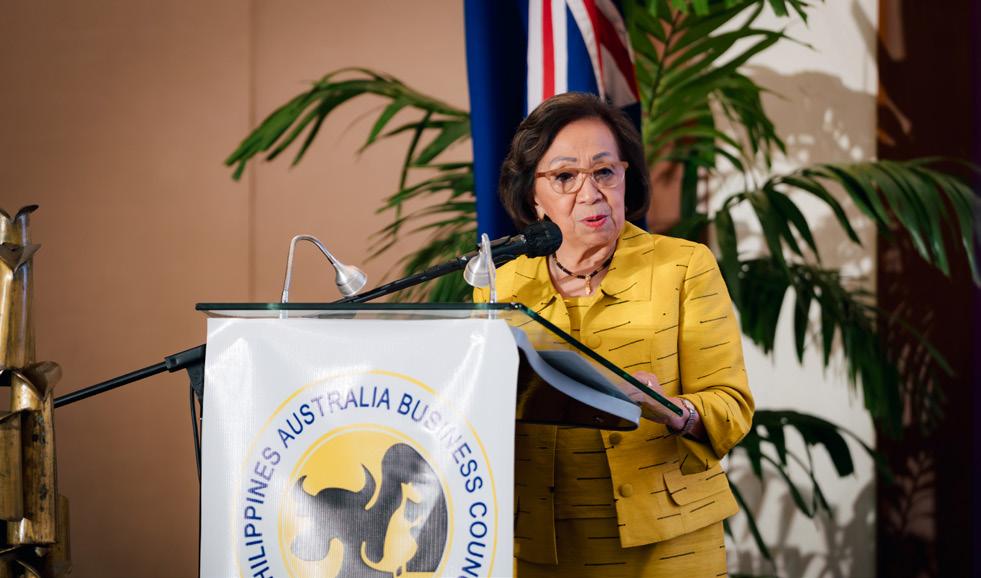
business group. For five decades, their dedication and hard work in establishing good business relations between Philippines and Australia are testaments of their commitment in bringing national prosperity and progress.
Formerly called The Philippines Australia Business Cooperation Committee (PABCC), PABC was jointly organized in Metro Manila in July 1975 by the Philippine Chamber of Industries under its then Chairman, Mr. Raul Boncan and the Council of Economic Development under its then President, Mr. David Sycip. It has a counterpart Council in Australia, the Australia Philippines Business Council (APBC), which was also established in July 1975.
PABC’s main purposes are:
• to promote trade, economic and technical cooperation and tourism between the Philippines and Australia;
• to establish a channel of communication with its counterpart in Australia and with other agencies and organizations concerned with the promotion of Philippine-Australian economic and business relations;
• to foster friendship and understanding between the business communities of the Philippines and Australia in general, and to establish closer cooperation in those areas which will enhance the growth of the Philippines; and
• to promote missions and arrange receptions of visitors when considered appropriate.
Atty. Dennis A. Quintero Chairman of the Philippines Australia Business Council), H.E. Marc Innes Brown (Australian Ambassador to the Philippines), Mr. Antonio V. Enriquez II (PABC past Chair/ ex officio Trustee), Atty. Roberto C.O. Lim (PABC Trustee), Mr. Rafael Toda (President of the Australia Philippines Business Council).
The event was graced by the presence of distinguished guests namely: Hon. Delia D. Albert (former secretary of the Department of Foreign Affairs and Philippine Ambassador to Australia), H.E. Marc InnesBrown (Australian Ambassador to the Philippines), Hon. Allan Gepty (Department of Trade and Industry Undersecretary for the International Trade Policy Group), Hon. Rona Beth Goce (Executive Director of the Department of Foreign Affairs Office of Asian and Pacific Affairs and Acting Deputy Assistant Secretary), and Mr. Rafael Toda (President of the Australia Philippines Business Council).
The celebration’s program was emceed by Antonio Enriquez II and Albert M.G. Garcia.
PABC Chairman, Atty. Dennis A. Quintero, stated in his welcome address, “On behalf of the Philippines Australia Business Council, I wish to welcome and thank all of you for sharing your time with us in PABC’s 50th anniversary celebration.”
“The PABC and our counterpart in Australia the APBC were created 50 years ago pursuant to the trade agreement between the Philippines and Australia in 1975. The two councils were then called the Philippines-Australia Business Cooperation Committee (PABCC) and the Australia-Philippines Business Cooperation Committee (APBCC) founded as initiatives of respective business communities in 1975.”
“In the Philippines, the business leaders instrumental in the PABC’s founding were from the Chamber of Industries of the Philippines (CIP) that eventually formed part of today’s Philippine Chamber of Commerce and Industry (PCCI). Other business leaders who shared these initiatives were in the Council for Economic Development (CED) that have since been incorporated in the mandate of the National Economic and Development Authority (NEDA).”
“On 18 October 1993, the PABCC was strengthened with its registration as the PhilippinesAustralia Business Council (PABC) at the Securities and Exchange Commission.”
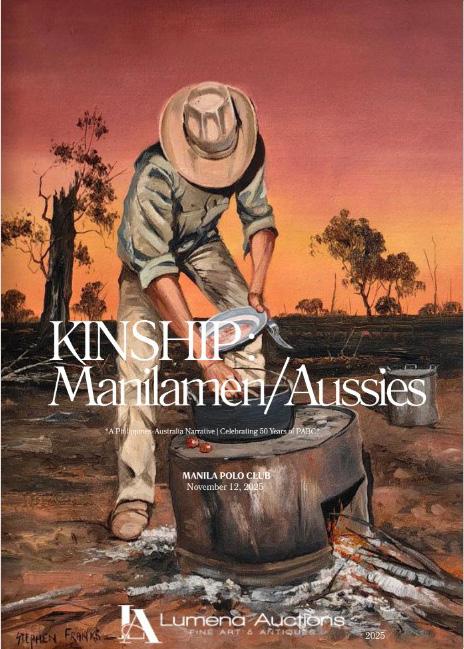
During the celebration, PABC honored and awarded the government and business sector leaders in the Philippines and Australia with whom the PABC has collaborated with during the last 5 decades in their various programs and advocacies. Principal awardees were Ambassador Delia D. Albert and posthumously Atty. Leo G. Dominguez (whose award was received by his daughter Amanda).
Atty. Quintero noted, “The Philippines and Australia are strategic partners in many ways, including in trade and investment. Following the extensive government and private sector initiatives between the two countries, priority sectors (including critical minerals, energy, education and training, and agriculture) have been mutually selected and great effort has been devoted to further grow the bilateral engagement.”
“The council and its members are continuing to work to improve the regulatory framework and promote the priority sectors. We look forward to more years of fruitful, dynamic, and meaningful engagement between the two countries.”
Hon. Delia Domingo Albert is a Filipina career diplomat who served as the 23rd Philippine Secretary of Foreign Affairs from December 22, 2003, to August 18, 2004. She was also the first woman career diplomat to serve as foreign
minister of a Southeast Asian country.
During the PABC anniversary celebration, she gave an inspiring speech where she shared her meaningful and memorable moments as Philippine Ambassador to Australia from 1994 until 2002.
She stated, “Due to my exposure to the mining industry in Australia, President Arroyo appointed me... as the President’s Envoy for the Mineral Industry, which took me around the world several times attending conferences on mining and visiting mining sites and promoting investments in the industry, something I have continued to do…”
“To carry out my mandate as Envoy for Mining, as you heard earlier, I created the Minerals Development Council. The operative word was ‘development’, under the Office of the President as an effective platform to implement the Mining Act of 1995 and implementing the Minerals Action Plan.”
“I thank Australia for remembering me after so many years after I left Canberra...”
“Thank you PABC and APBC for making my assignment to Canberra one of the highlights of a diplomatic career lasting more than four decades. I am delighted, therefore, to see that the relations between our two countries is strengthening and flourishing not only through our economic and political ties, to which you, PABC
written by: JAMES GALVEZ
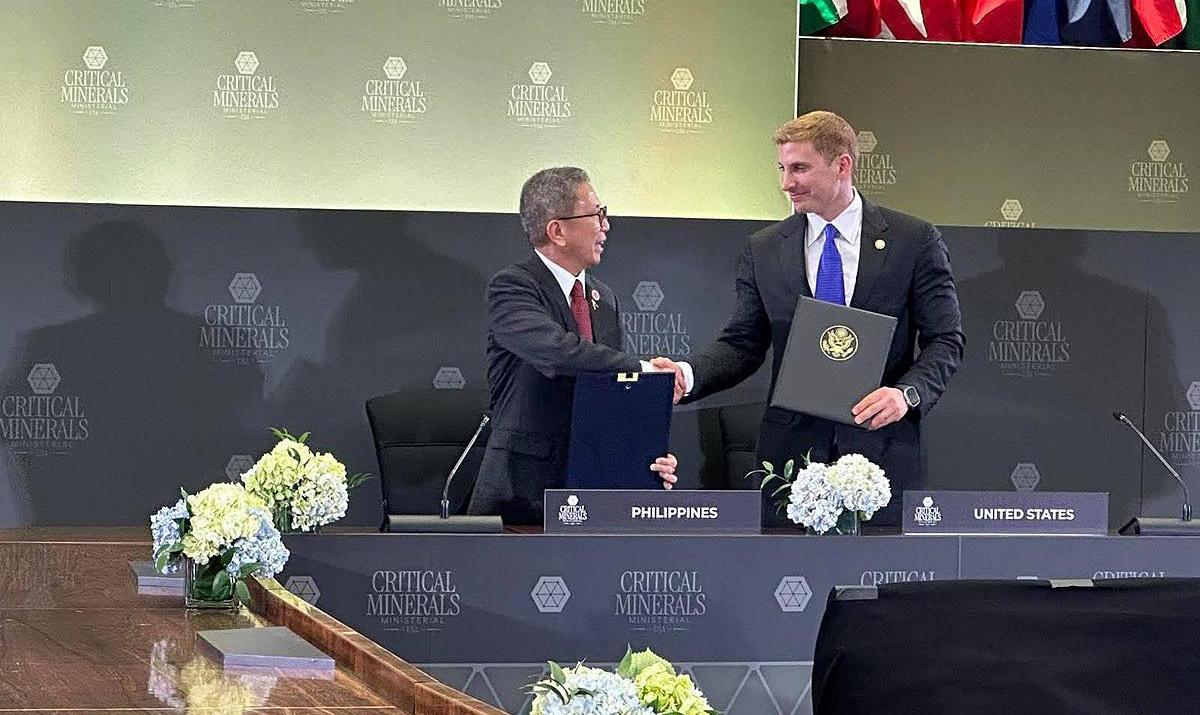
The Philippines has taken a decisive step toward a stronger role in global critical minerals supply chains with a new memorandum of understanding signed with the United States—a move industry experts say could open the door to investment, technology transfer, and more sustainable mining practices.
The deal was inked on February 4, 2026, in Washington at the firstever Critical Minerals Ministerial, a US-hosted forum bringing together more than a dozen nations to rethink cooperation around minerals essential to modern technologies and the energy transition.
Environment Secretary Raphael Lotilla signed for the Philippines, while US Undersecretary of State for Economic Affairs Jacob Helberg signed on behalf of Washington.
According to the State Department, the MOU creates a platform for collaboration on supply chains, market development, financing access, and efforts to make critical minerals markets more predictable and resilient.
PH–US CRITICAL MINERALS
PACT: TIMELINE & WHAT IT MEANS
The agreement also sets a clear
roadmap to shift the Philippines from primarily exporting raw ores to becoming a regional hub for processing minerals that feed clean energy technologies.
The initiative’s timeline began on February 2, 2026, when US President Donald Trump announced Project Vault, a US$10-billion Export-Import Bank initiative to build a strategic reserve of critical minerals—laying the groundwork for the ministerial talks.
On February 3, pre-summit meetings brought together government officials and privatesector leaders to discuss investment, supply chains, and downstream processing.
The following day, February 4, Philippine Environment Secretary Raphael Lotilla and US Undersecretary Jacob Helberg formally signed the MOU on the sidelines of the 2026 Critical Minerals Ministerial.
On February 5, the US Department of State released an official fact sheet identifying the pact as one of 11 bilateral agreements aimed at reducing global dependence on China-dominated mineral markets.
By February 6, Manila’s Department of Environment and
Natural Resources confirmed the deal’s core objective: to pivot the Philippine mining industry toward high-value domestic processing rather than raw ore exports.
Historical groundwork also laid the foundation for this agreement.
In November 2023, a ₱280-million USAID technical assistance program began supporting regulatory reforms and capacity-building in the Philippine mining sector.
In April 2024, Manila formally proposed joining the US–Japan Critical Minerals framework during a Trilateral Economic Ministers Meeting.
The agreement is more than diplomatic symbolism—it could move the Philippines up the mineral value chain, attract foreign direct investment into processing and refining, link Philippine mining to clean energy, electric vehicles, and battery supply chains, and position the country as a strategic Indo-Pacific partner.
The partnership has drawn a positive response from industry groups. Michael Toledo, chair of the
Chamber of Mines of the Philippines, called it a “positive step toward strengthening responsible mining, advancing sustainable resource development, and enhancing the country’s role in securing critical minerals essential for the global energy transition.”
Lotilla told local media the agreement could “advance critical minerals processing at home,” highlighting the potential to generate jobs, retain revenue, and attract technology-driven industries. “Building domestic capacity for downstream activities multiplies economic benefits,” he said.
US officials emphasized critical minerals’ role in economic security and technological leadership. At the ministerial, policymakers framed these resources as foundational to infrastructure, defense systems, and cutting-edge technologies.
US Vice President J.D. Vance noted that unpredictable pricing has historically discouraged investment
< Page 69
and APBC have contributed, and continue to do so, but also to the commitment of both countries to keep our regions safe and prosperous. Maraming salamat sa inyong lahat.”
An art exhibit was also held during the grand celebration at Manila Polo Club, featuring a well curated art collection by Lumena Auctions. The selection delivers a compelling story about common ancestry and artistic brilliance. Some pieces with deep cultural roots include the Ifugao Master Carver’s “Seated Bulul Mayayao Style” from 1920 and “Ritual Punamhan Box” from early 20th century. These selections reflect indigenous traditions from form the bedrock of the celebration.
Atty. Quintero said, “The journey continues through the forged connections of the post-war
and outlined plans for reference pricing floors and tariff adjustments to stabilize markets and support allied supply chains.
While the Philippines has not confirmed participation in a proposed preferential trading zone, analysts say joining could boost export opportunities, market access, and foreign investment in mining, processing, and related technologies.
The deal arrives amid ongoing scrutiny of the Philippine mining sector, particularly environmental impacts, community displacement, and governance transparency.
Industry leaders argue that international frameworks like the US MOU provide benchmarks for responsible mining, including stricter environmental management, community engagement, and sustainability reporting.
The Chamber of Mines stressed that economic gains should go hand-in-hand with social and environmental safeguards.
era, where Stephen Franks ‘The Prospector’ (circa 1970s) embodies the rugged determination that characterized growing economic partnership, while Vicente Manansala’s ‘Baguio’ (1973) reflects our own cherished landscape through his masterful transparent cubism.”
“We hope that you have all enjoyed the art and sculpture exhibit carefully curated by our friends at Lumena Auctions that celebrates the kinship, shared values, and shared interests of Filipinos and Australians.”
Prior to the celebration, the Australia-Philippines Business Council and the PhilippinesAustralia Business Council, on their 50th anniversary, jointly supported the Masterclass on Reduced Impact Mining (Current and Emerging Production Technologies for Gold and Copper) which was held at Marco
Southeast Asia is becoming increasingly central to global sourcing of nickel, cobalt, manganese, and rare earths—key for EVs, renewable energy, and semiconductors.
By integrating its mining sector into multilateral frameworks, the Philippines may accelerate its economic transformation, strengthen its bargaining position in trade talks, and attract technology partners and downstream industries as global demand for critical minerals rises.
The Philippines-US MOU marks a pivotal moment for Manila’s engagement in the global minerals market. By aligning with U.S. strategic goals, the country could gain investment, technology transfer, and improved market access while reinforcing sustainable mining practices.
The real impact will hinge on how both sides implement the framework and translate commitments into tangible results for industry, communities, and the national economy.
Polo Ortigas last October 2025.
Professors Aleksandar Nikoloski and Tina Phiri Chanda from Murdoch University Harry Butler Institute in Perth, Western Australia, presented on proven and emerging beneficiation, extraction and refining technologies in copper and gold production in the context of balancing resource demand/ energy transition needs with environmental stewardship.
The Australian Government Department of Foreign Affairs and Trade sponsored this masterclass. The event was well attended by mining professionals and engineers from the Mines and Geosciences Bureau, Department of Science and Technology, the Philippine Mineral Reporting Code Committee member associations, and the private sector.
For more information about Philippines-Australia Business Council, please visit their website at https://pabc.org.ph/.
Photo credit: Philippines-Australia Business Council
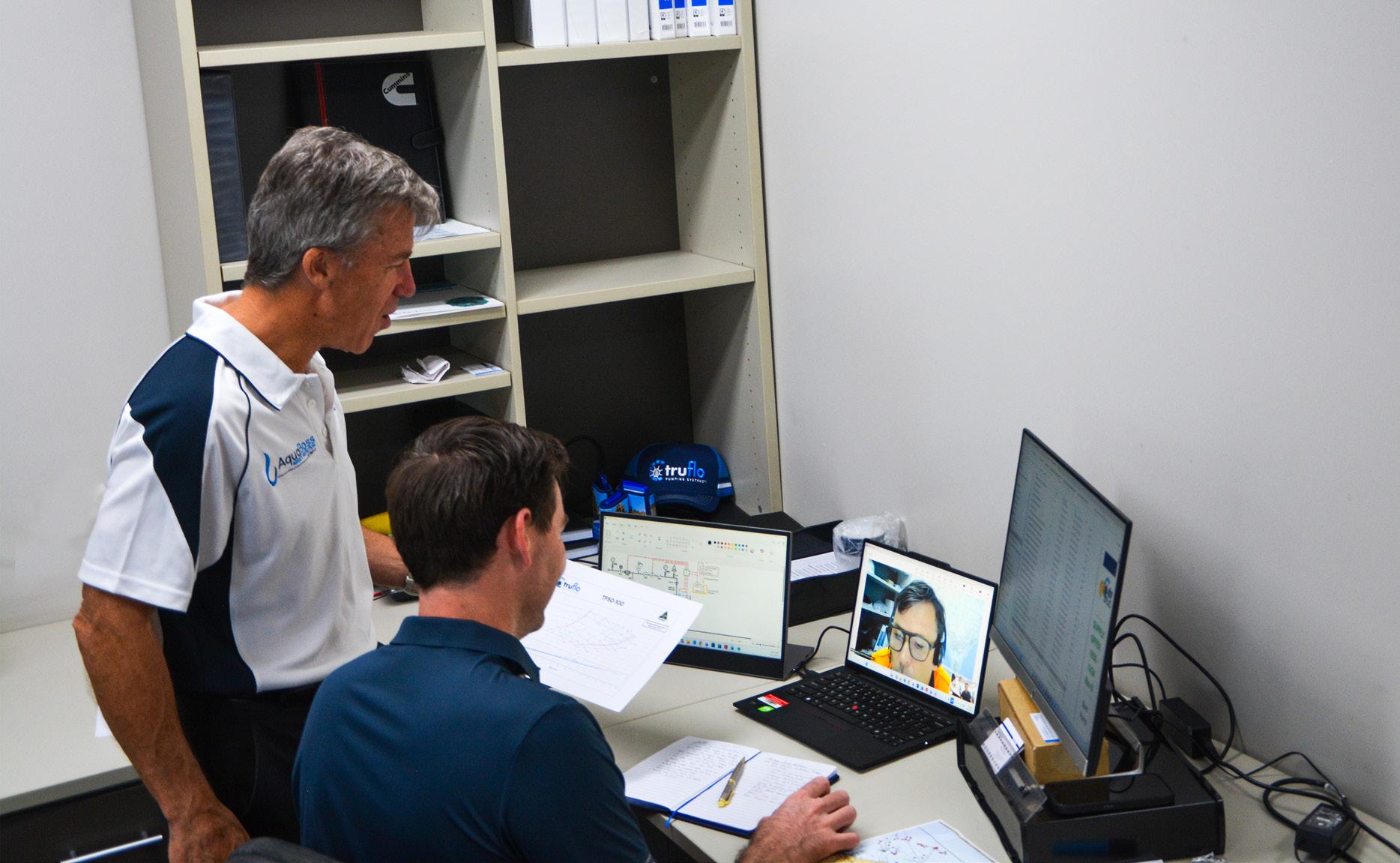
There’s a common misconception in mining and industrial operations that all pumps are essentially the same. Choose one with the right horsepower or suction and discharge size, and you’re good to go. Not quite.
Every mining operation presents unique challenges. Water chemistry, flow rates, head pressure, site access, power availability, operating conditions – they all vary significantly. A pump that performs perfectly at one site may struggle at another, leading to inefficiency, increased downtime, and higher operating costs.
The difference between a wellmatched pump and a poorly selected one often comes down to understanding a single critical tool - the pump curve.
A pump curve is a graphical representation of how a centrifugal pump performs across a range of operating conditions. It illustrates the direct relationship between flow rate and head pressure, along with other critical performance data such as efficiency, power consumption, and net positive suction head (NPSH) required.
Think of it as the pump’s performance fingerprint. It shows exactly what the pump can deliver under various conditions, based on manufactur -
er’s testing and proven performance data.
Here’s the critical point - pump selection without a pump curve is essentially guesswork. The curve is the essential tool that integrates all performance variables, allows you to match the pump to your specific system, and predicts real-world pumping behaviour.
Understanding the pump curve is only part of the story. Equally important is the system curve, which represents the friction losses and static head present within your piping network. In other words, it shows what your system demands from the pump.
Here’s where theory meets realitya pump never operates at an arbitrary point on its performance curve. It operates at the single point where the pump curve intersects the system curve. This intersection is called the operating point.
For example, when the pump operates at a known speed and the system defines the operating head, the pump delivers an output flow matched to those specific operational parameters. Understanding this intersection is critical for predicting how your
pumping system will perform in the field.
At Truflo Pumps, we’ve seen firsthand how proper pump selection transforms operational performance. When selecting dewatering solutions, we look beyond simple flow requirements to examine your specific site conditions and challenges. This includes analysing your system curve, matching it against appropriate pump curves, and selecting equipment that operates efficiently at the required duty point.
The result? Better efficiency, reduced downtime, lower operating costs, and pumps that move water exactly the way you need them to.
Whether you’re operating a remote mine site, a quarry, or a major infrastructure project, the principles remain the same. Understanding pump curves and system curves isn’t just technical knowledge – it’s the foundation of selecting dewatering equipment that will deliver reliable performance over the long term.
Truflo Pumps along with their Philippines partner, Power Systems Inc. are ready to design and supply the best dewatering systems for your site, whether open cut or underground.
At Johnson Screens, the spirit of invention has been in our DNA ever since Edward E. Johnson invented the Vee-Wire in 1904.
Johnson’s original concept for a continuous-slot water well screen was ahead of its time, and we’ve been setting the industry standard for performance and reliability ever since.
Over time, our highly engineered and precisely fabricated products have made their presence felt in virtually every major industrial application in over 100 countries around the world.
From the water we drink and the food we eat to the clothing we wear and the buildings in which we live and work, there’s a good chance you interact with something touched by a Johnson Screen every day. We do this in pursuit of a world where protecting lives and our precious natural resources comes first.
Our screening solutions accomplish this by reducing harmful waste, providing clean water, and supporting our customers on their journey to environmental sustainability.
For the last 120 years and more, Johnson Screens has been the leading manufacturer of stainless steel and PVC well screens, casing, drop pipe, and accessories for water well, environmental, and oil and gas applications.
The continuous Vee-Wire® slot design allows for lower entrance velocity of the water, reducing encrustation rates. Johnson Screens Vee-Wire® also resists plugging and prevents sand from damaging pumps, while allowing minimal drawdown and less energy use to lift the formation fluids.
Our PVC pipe products are manufactured from plastic of Type 1, Grade 1, PVC compound with a cell classification of 12454-B per ASTM D1784. Pipe materials are NSF Certified to the NSF Standard 61 for Drinking Water System Components – Health Effects and are in strict compliance with ASTM D1785.
Equally, our stainless and lowcarbon steel casings are ideal for water well and environmental monitoring applications. Additionally, our family of NSFcertified and PFAS-free NuWell® chemicals for water well rehabilitation are environmentally safe and proven to improve water well efficiencies.
Johnson Screens provides a wide portfolio of screens and accessories to promote liquid/solids and solids/ solids separation for the most diverse industrial and municipal applications. Whether in food and beverage, pulp and paper, or power generation facilities, water that enters an industrial plant often needs treatment to meet the tight quality specifications required in industrial processes.
Johnson Screens provides numerous solutions related to industrial water processes, including products for water intake, separation of water and solids, and water treatment. These high-quality screens for OEM are integrated into the equipment and are designed to meet the strictest customer
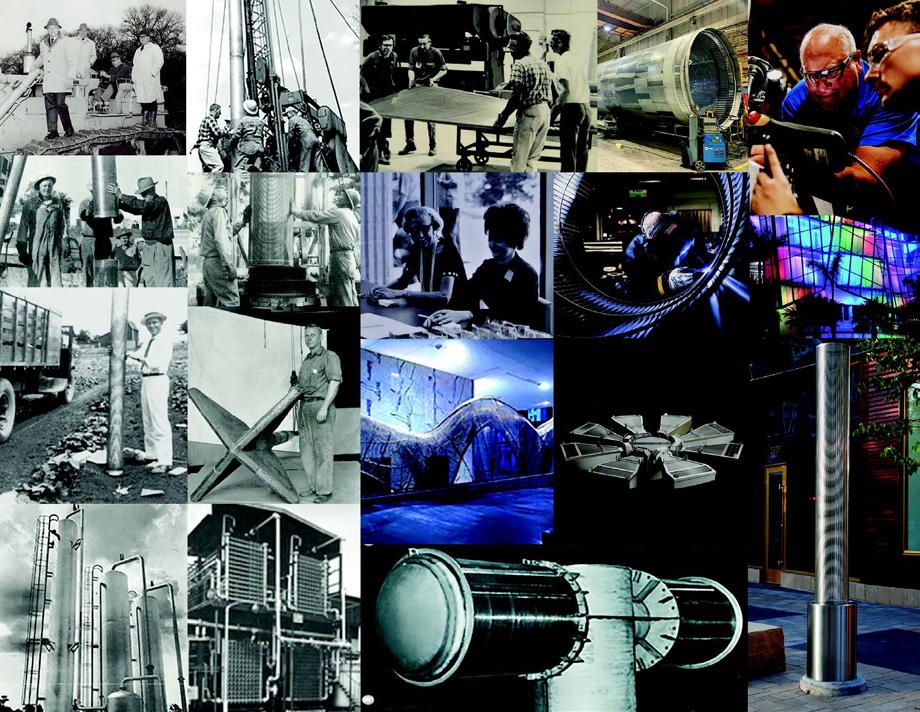
specifications.
Our screens are available in slot openings from 25 µm up to 0.984 in. (25 mm). Although commonly made of 300 series stainless steel, our products are also available made from many exotic alloys to meet specific applications.
Additionally, Johnson Screens has developed world-class proprietary Vee-Wire and polyurethane manufacturing processes for mineral processing applications. Our comprehensive range of products and services is well positioned through in-house product innovation, fitfor-duty material selection, mineral sizing, cleaning, and dewatering know-how.
Selecting the right Off-theRoad (OTR) tire can make a significant difference in the performance, efficiency, and lifespan of your equipment. With different machines, terrains, and working conditions to consider, choosing the right tire can sometimes feel complicated. Higantis helps contractors, fleet owners, and equipment operators find the right tire solutions for their specific applications. One of the key things to understand when selecting an OTR tire is the TRA classification system , which helps identify the tire’s intended use and tread depth.
TRA is the classification system used for OTR tires to indicate both the type of machine the tire is designed for and its tread depth
A typical example is L3, where the letter refers to the equipment category and the number indicates the tread depth and pattern. As the number increases, the tread generally becomes deeper and more durable, making it more suitable for abrasive and demanding environments.
There are four main TRA tire categories used in construction and heavy equipment applications. C refers to tires designed for compactors, G refers to grader applications, E is used for earthmoving equipment, and L indicates loader applications. These classifications help ensure the tire is built to match the type of machine and the work it is intended to perform.
The number in the TRA code represents the tread depth and pattern of the tire. For instance, 1 indicates a ribbed tread with normal depth, 2 indicates a traction tread with normal depth, and 3 represents a standard tread commonly used for general applications. Higher numbers such as 4 and 5 indicate deep and very deep tread designs, which are more suitable for harsh environments where tires face constant abrasion or cuts. A 7 classification refers to flotation-type tread designs that are intended for softer ground conditions.
To illustrate how this works, consider the MAXAM MS501, which is classified as an L5 tire. The
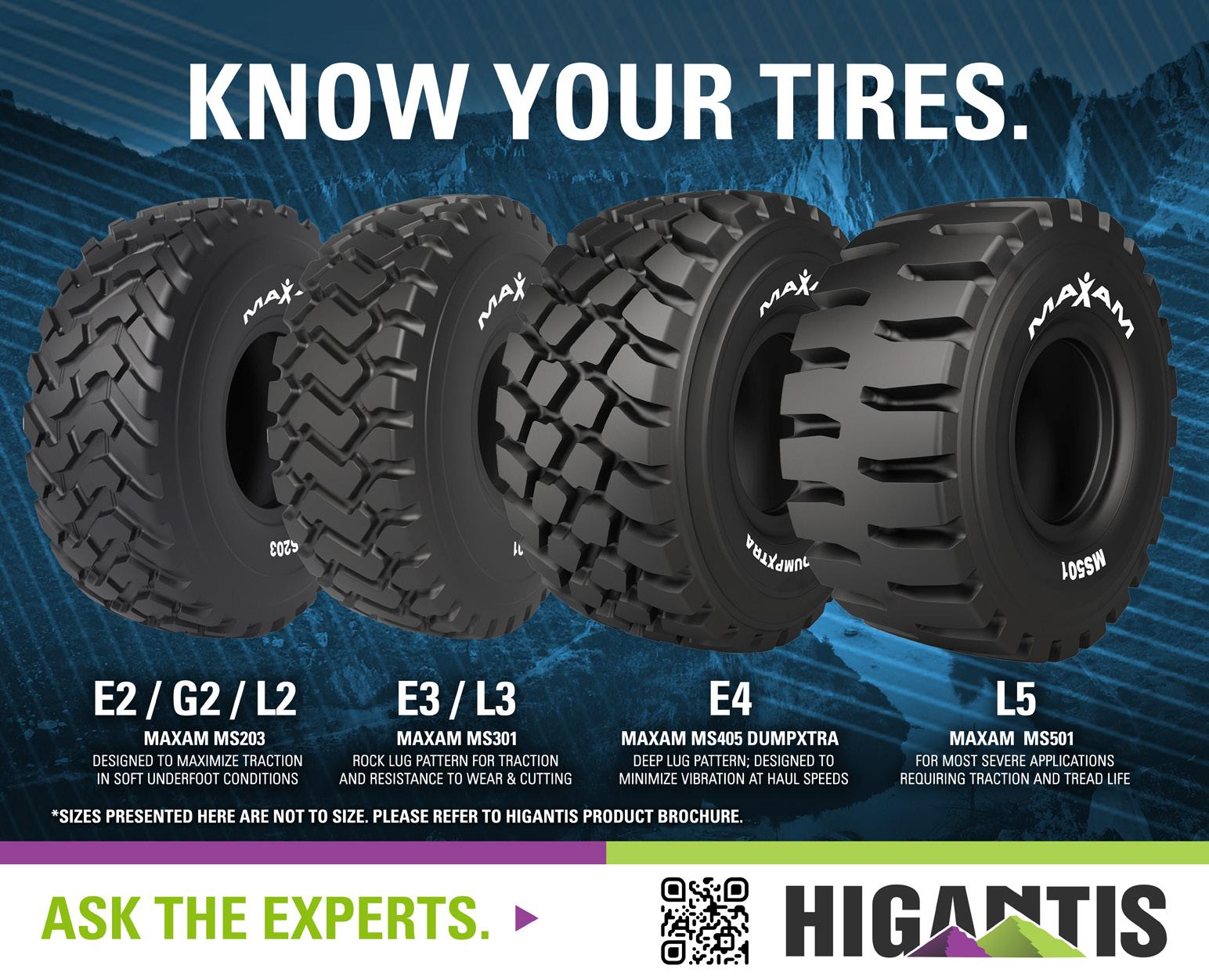
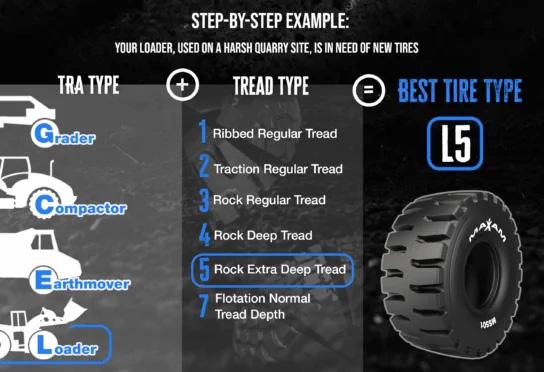
letter L tells us the tire is designed for loader applications, while the number 5 indicates a very deep tread. This means the tire is built for demanding environments such as quarries, mines, and other abrasive worksites where durability and protection are essential.
Another important factor to consider when selecting an OTR tire is how the machine will travel. Some equipment operates mainly within a jobsite, while others may need to travel short distances on roads or be transported by trailer. Tire construction and rubber compounds influence how far and how fast a machine can safely travel. Because
of this, OTR tires are also rated with load indexes and speed symbols to help determine their load capacity and safe operating speeds.
Choosing the right tire involves more than just reading the TRA code. The machine type, terrain conditions, workload, and travel requirements all play an important role in selecting the best option. With expert guidance and access to trusted brands like MAXAM and RoadX, Higantis helps customers identify the most suitable tire solutions to ensure reliable performance, durability, and efficiency in demanding environments.
Learn more at higantis.com.
Mining operations in the Philippines operate under some of the most demanding conditions in Southeast Asia. High-abrasion ore, chemically aggressive slurries, heavy vibration, and continuous production schedules place extreme stress on equipment and plant infrastructure. For maintenance teams, the challenge is not only repairing damage, but doing so safely, quickly, and cost-effectively.
Among the wide range of composite repair technologies available today, three Belzona solutions stand out for addressing the most common maintenance problems in Philippine mining operations: abrasion in slurry pumps, damage to rubber conveyor belts, and deterioration of concrete equipment foundations
Slurry pumps are critical components in mineral processing plants, transporting abrasive mixtures of ore and water under high pressure. Impellers, casings, and internal wear surfaces are constantly exposed to erosive attack, leading to premature failure and costly downtime.
Belzona’s ceramic-filled composite systems, particularly Belzona 1812 and related abrasion-resistant materials, provide an engineered alternative to repeated part replacement. These systems allow worn components to be rebuilt in-situ and lined with a seamless protective barrier that withstands severe particle erosion.
Unlike welding or traditional metal repair, Belzona’s cold-applied systems eliminate hot work permits and reduce safety risks. Fast curing characteristics also shorten shutdown duration. For mining operators in copper, nickel, and gold processing plants, this translates to extended pump life, reduced spare part consumption, and lower lifecycle maintenance cost.
Conveyor systems form the backbone of ore handling operations. Damage to rubber belts, whether from impact, tears, or localized wear, can disrupt production and result in significant
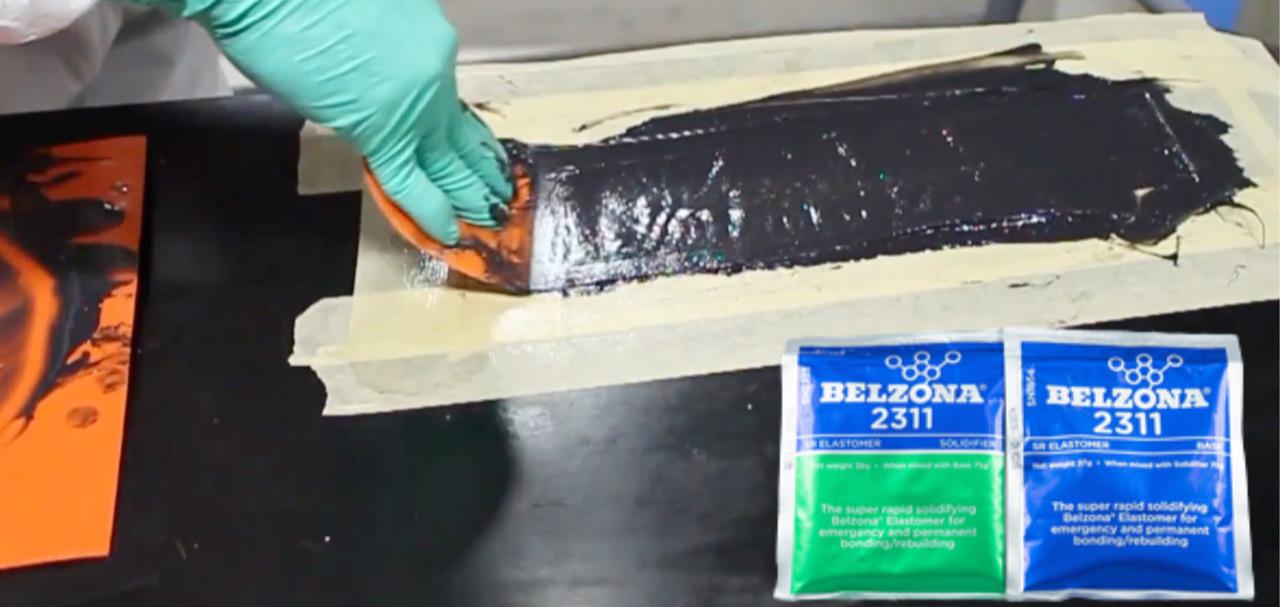
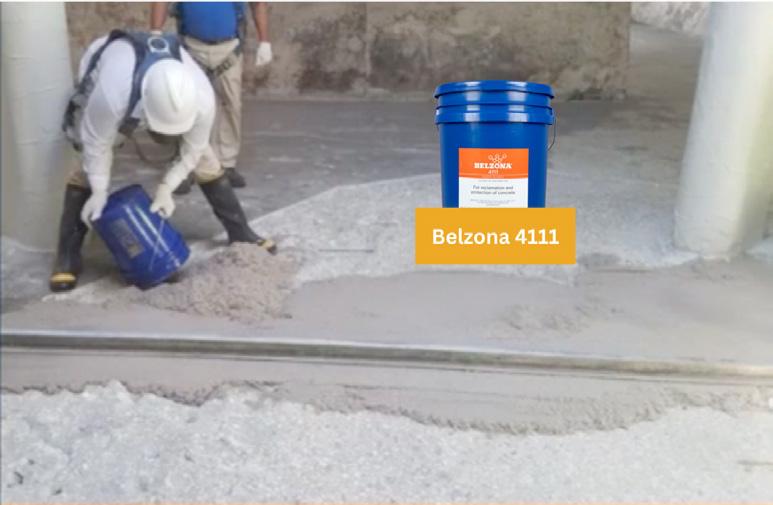
financial losses.
Belzona elastomer repair systems, such as Belzona 2311, are designed for rapid, in-situ restoration of damaged rubber components. These high-performance elastomers bond strongly to rubber substrates and maintain flexibility under dynamic loading conditions.
Rather than waiting for belt replacement or vulcanization services, maintenance teams can perform emergency repairs on-site, minimizing operational interruption. This capability is particularly valuable in remote mining areas in Mindanao and Luzon, where logistics and replacement lead times can delay conventional repairs.
By extending the usable life of belts and reducing unplanned stoppages, Belzona elastomer systems provide both operational resilience and measurable cost savings.
Heavy rotating equipment such as crushers, mills, and vibrating screens impose continuous mechanical stress on their concrete foundations. Over time, cracking, spalling, and surface deterioration can compromise structural integrity and alignment stability.
Belzona 4111 (Magma-Quartz) offers a high-strength, epoxy-based concrete repair solution specifically engineered
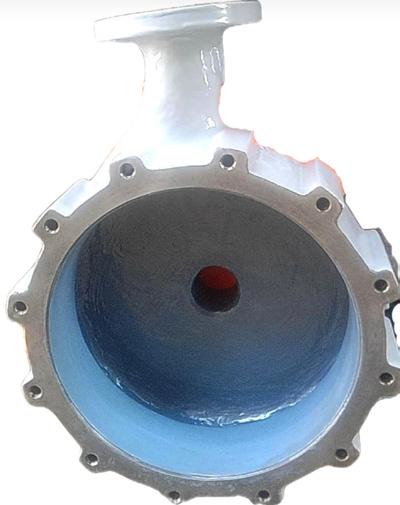
for industrial environments. It bonds exceptionally well to existing concrete, restores original profiles, and resists abrasion and chemical exposure.
Unlike conventional cementitious patching materials, Belzona composite systems provide superior adhesion and long-term durability. Repairs can be carried out without major demolition, allowing faster reinstatement of critical equipment.
For mining facilities across the Philippines, this means improved structural reliability, reduced vibration-related failures, and extended foundation service life.
Across slurry handling, material transport, and structural repair, Belzona composite systems offer mining companies a safer, faster, and more durable maintenance alternative. By reducing downtime, eliminating hot work risks, and extending asset life, these technologies support improved operational efficiency in one of the country’s most vital industries.
As Philippine mining continues to modernize and expand, adopting advanced composite repair solutions will remain a key component of sustainable and cost-effective maintenance strategy.
Wise Industrial Systems, Inc. is the sole authorized distributor of Belzona in the Philippines. Contact: ccaraneta@ wise-indl.com or 09178458098.
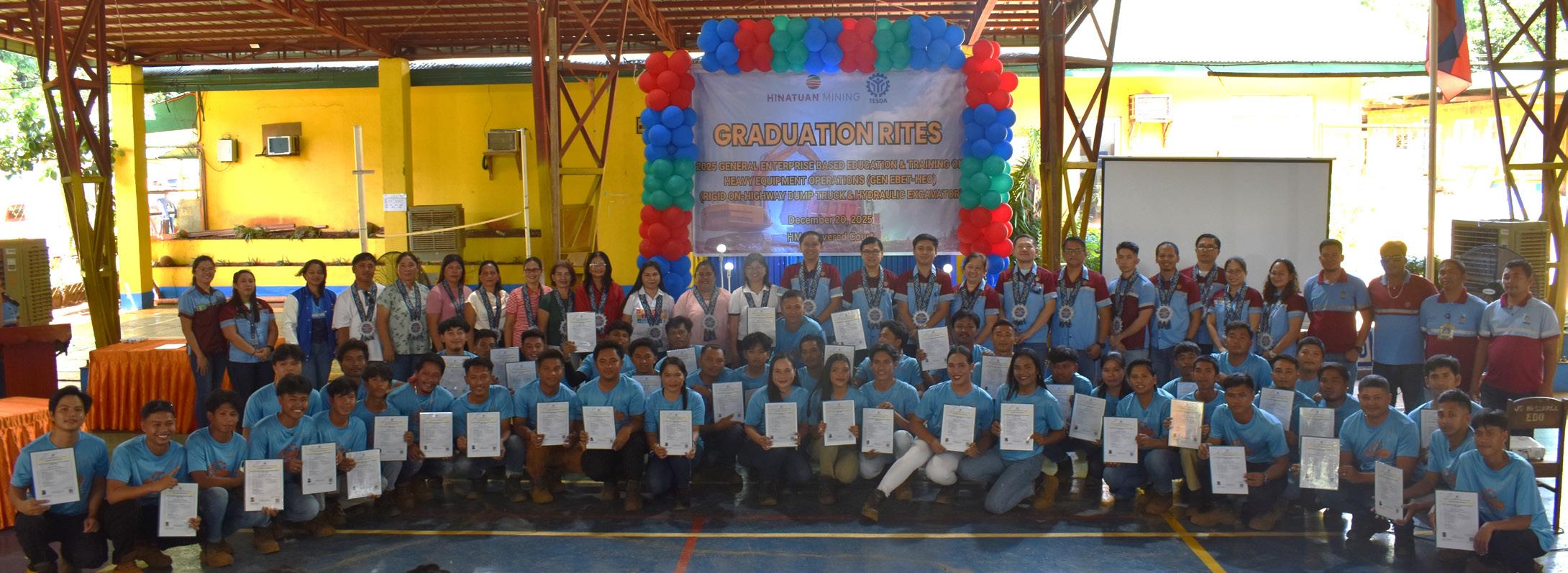
Hinatuan Mining Corporation (HMC), in partnership with the Technical Education and Skills Development Authority (TESDA) and key government and community stakeholders, successfully graduated 74 trainee-scholars under the 2025 General Enterprise-Based Education and Training on Heavy Equipment Operations (GEN EBET-HEO) program.
The initiative focused on developing competencies in Rigid On-Highway Dump Truck and Hydraulic Excavator operations, contributing directly to local employability and workforce readiness.
This milestone reflects HMC’s sustained commitment to human capital development, community empowerment, and inclusive economic growth, reinforcing the Company’s approach to responsible mining and shared value creation within its host and neighboring communities.
The completion ceremony was attended by HMC mine site management led by Engr. Francisco J. Arañes, Jr., Senior Vice President - Chief Operating Officer, and Resident Mine Manager; Dr. Catalina O. Tacubao, Provincial Director of TESDA–Surigao del Norte; representatives from the Mines and Geosciences Bureau (MGB) Regional Office XIII; and
the Representatives of the Host and Neighboring Communities (RHNC) headed by Chairperson Ms. Janeth B. Navarro.
The program exemplifies effective collaboration among industry, government, and communities in addressing skills gaps and enhancing long-term employment opportunities.
In his message, Engr. Arañes emphasized that the GEN EBET-HEO program goes beyond technical skills development, highlighting its role in instilling safety consciousness, accountability, and professionalism.
“Real progress happens when industry and education work hand in hand to empower Filipino workers. Operating heavy equipment is not just about technical skill—it is about responsibility, discipline, and sound decision-making,” he said.
He reiterated HMC’s commitment to embedding safety culture and ethical work values among trainees, underscoring that competent operators play a critical role in operational efficiency and risk reduction.
“Graduation is not the end; it is the beginning of greater responsibility,” he added. “Wherever your careers may take you, be ambassadors of safety, excellence, and professionalism.”
Dr. Tacubao highlighted the program’s contribution to inclusive development, noting that HMC’s investment extended beyond training infrastructure to the empowerment of individuals and communities.
“This program demonstrates what can be achieved when industry and communities collaborate. Skills developed with discipline and determination can transform lives and uplift entire communities,” she said.
The program’s inclusivity—evidenced by the participation of women, youth, and older learners—reinforces TESDA and HMC’s shared commitment to equitable access to skills development and lifelong learning. She concluded by echoing TESDA’s guiding principle: “Basta’t sama-sama, sa TESDA kayang-kaya.”
Representing the Mines and Geosciences Bureau (MGB) Regional Office XIII, Ms. Estephanie Odchimar commended the graduates and recognized the program’s alignment with sustainable development principles, particularly in promoting gender equality and livelihood opportunities.
She emphasized that skills training initiatives such as GEN EBET-HEO contribute to community resilience, workforce sustainability, and responsible resource development, supported by strong institutional partnerships.
On behalf of the host and neighboring communities, RHNC Chairperson Ms. Janeth B. Navarro expressed appreciation for HMC’s continued support of capacity-building initiatives, acknowledging the program’s positive impact on local employment prospects and community development.
Speaking for the graduates, Mr. Kenneth Paul A. Gemparo, a Rigid On-Highway Dump Truck NC II graduate, shared how the program enhanced not only their technical competencies but also their confidence
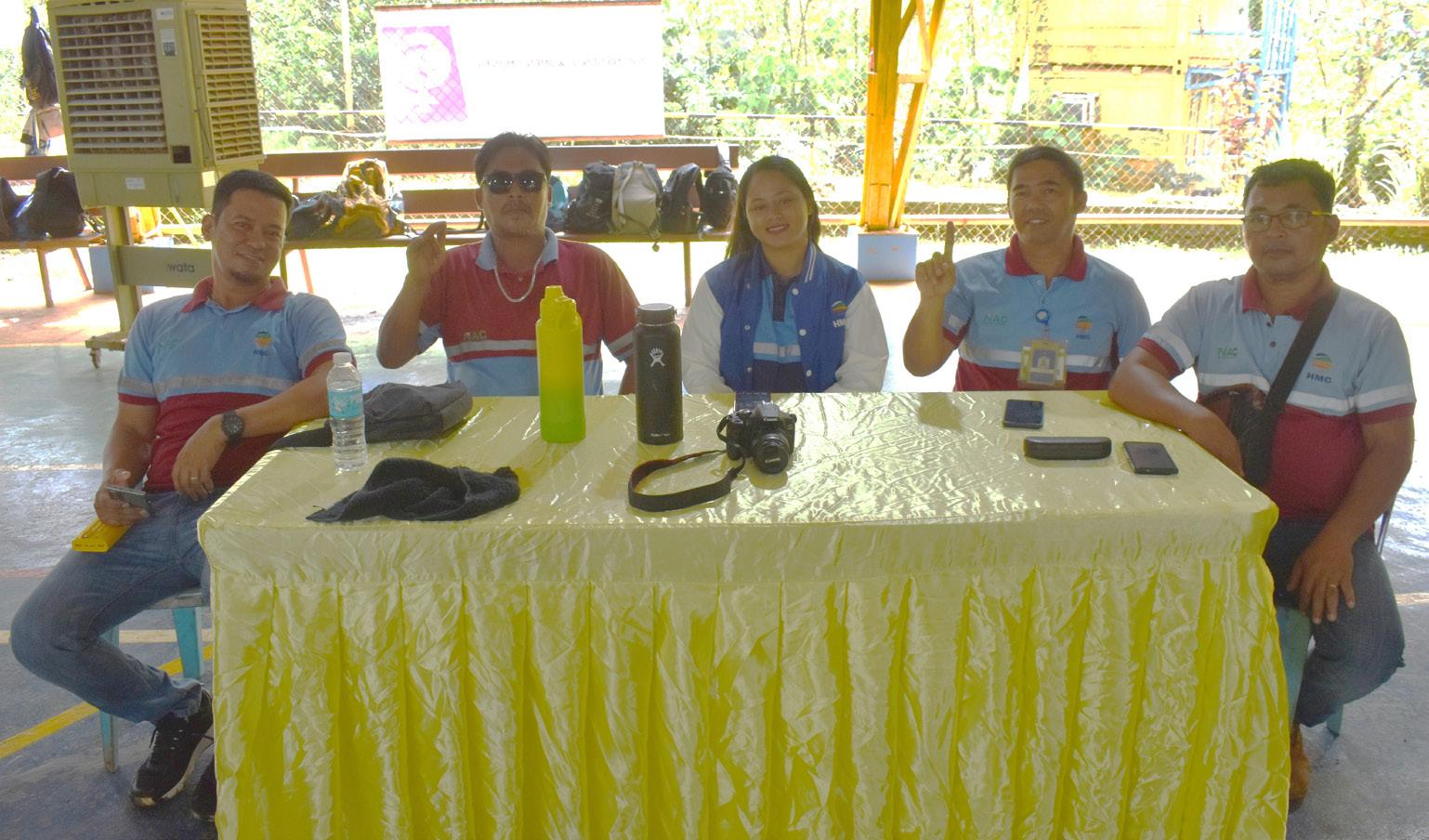
and professional values.
“Beyond skills, we gained discipline, safety awareness, and hope for a better future. This opportunity has prepared us for meaningful employment and long-term growth,” he said.
The GEN EBET-HEO program directly supports HMC’s sustainability framework and contributes to the following United Nations Sustainable Development Goals:
• SDG 4 – Quality Education: Providing industry-aligned technical and vocational training
• SDG 8 – Decent Work and Economic Growth: Enhancing em-
ployability and workforce readiness
• SDG 17 – Partnerships for the Goals: Strengthening collaboration among industry, government, and communities
Through initiatives such as GEN EBET-HEO, HMC reaffirms its commitment to responsible operations, inclusive growth, and long-term community development.
HMC will continue to invest in skills development programs that build local capacity, promote safe and ethical work practices, and create sustainable livelihoods aligned with its environmental, social, and governance (ESG) objectives.
RECOGNIZED
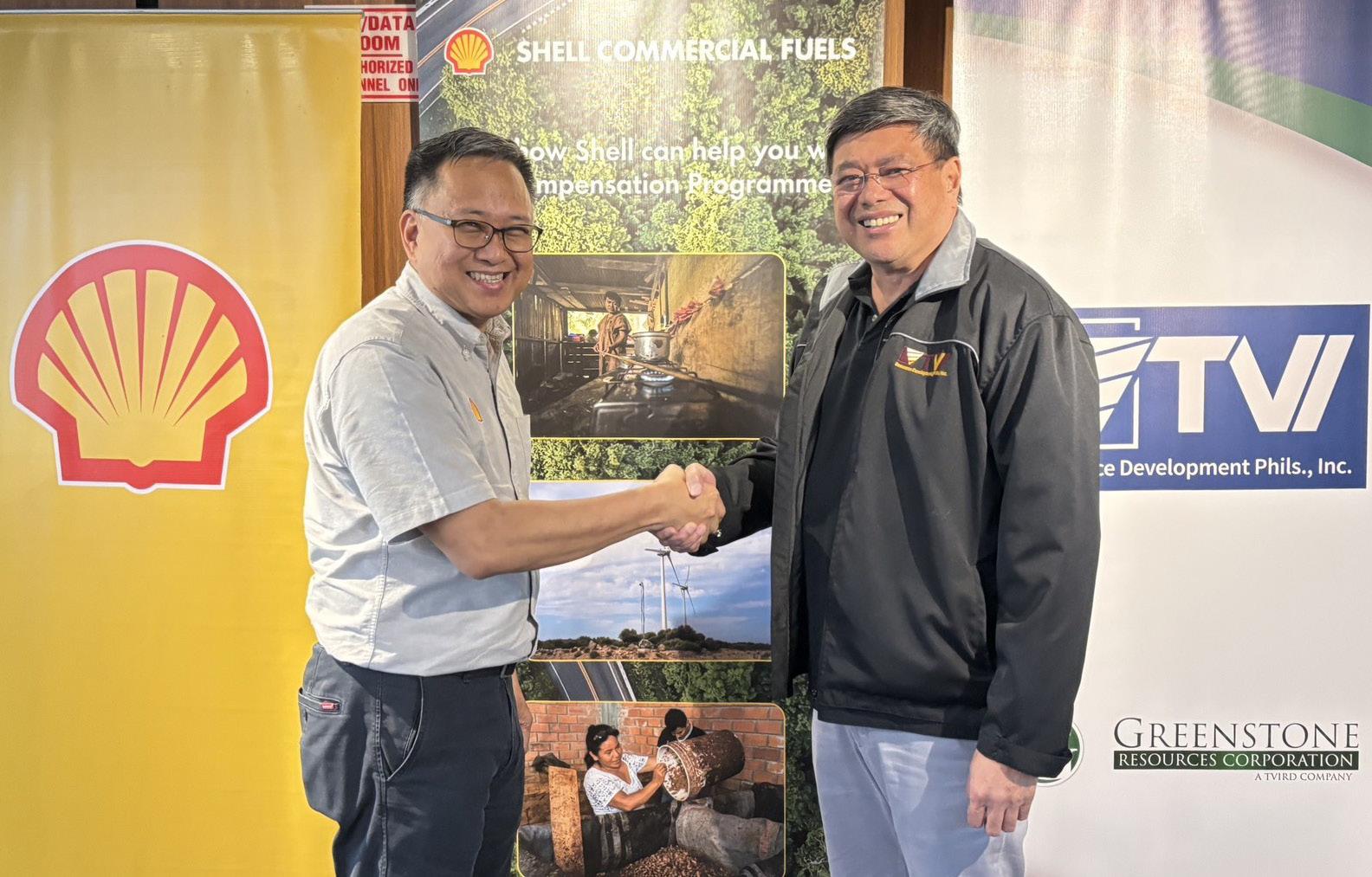
In an intimate recognition of both responsible mining and climate leadership, Shell Philippines awarded certificates of Carbon Credits Retirement to two operating projects of TVI Resource Development Philippines Inc. (TVIRD): Balabag in Zamboanga del Sur and Siana in Surigao del Norte.
Both were honored under the petroleum company’s Carbon Compensation Program, which allows business fleet and retail customers to offset unavoidable CO2 emissions by investing in reforestation and conservation initiatives.
The private ceremony at the company’s Makati headquarters was attended by key officers and staff from both projects and included a learning session on joint sustainability efforts as well as a fellowship activity.
Shell Sales Manager for Commercial Fuels Jose Mari Macaspac officially handed the certificates to TVIRD President Michael G. Regino and Chief Finance Officer Cynthia S. Delfin.
TVIRD directly operates the Balabag Gold and Silver Proj -
ect, which utilizes hybrid Merrill-Crowe and Carbon-inLeach technology driven by diesel power.
Meantime, the Siana Gold Project is operated by the company’s wholly-owned subsidiary, Greenstone Resource Corporation, and is equipped with a modern 1.1-million ton per annum Outotec mill, gravity and Carbon-in-Leach (CIL) mill facility.
In terms of reforestation and conservation, both projects have a combined 1.8 million trees planted and grown, effectively offsetting carbon emissions and further ensuring a sustainable future for its respective host communities.
Shell officers imparted lessons on carbon credits, highlighting the importance of reducing the impacts of carbon emissions from industries that drive the economy. It also highlighted that while inevitable, these can be balanced and supported by verified global climate projects.
The Carbon Compensation Program enables companies to offset
unavoidable greenhouse gas emissions through carbon credits that come from projects worldwide that actively remove or avoid CO , thus helping participating organizations demonstrate climate commitment while working towards long-term decarbonization, according to Shell.
“This partnership reflects our shared commitment to advancing sustainable solutions and supporting highquality projects that deliver meaningful environmental impact.
TVIRD and Greenstone were selected based on their strong alignment with Shell’s vision for responsible and sustainable development,” said Shell Philippines Commercial Fuels Account Manager Isabel Cuevas.
Shell noted that both companies demonstrate strong operational discipline, high environmental stewardship standards and a clear commitment to sustainability.
“By working together, we aim to accelerate progress towards climate goals while promoting practices that benefit both local communities and the global environment,” she added
Greenstone was awarded for sequestering 900 tonnes of CO2-equivalent emissions into Shell’s global carbon credit portfolio in 2025. Similarly, the Balabag Project was awarded for sequestering 965 CO2-equivalent emissions into Shell’s global carbon credit portfolio in 2024.
The group’s responsible mining practices focus on community development and alignment with long-term environmental and social goals inspire confidence in Shell’s vision for a sustainable and resilient industry that balances operational excellence with responsible value creation.
The awarding of carbon credits adds significance to the TVIRD Group’s prior achievements and validates its holistic approach –from exploration and development, all the way to mining and final rehabilitation.
The company developed its projects under a sustainability framework that integrates the environment and community with conservation efforts for the natural environment.
Parallel to this, it has built a reputation for maintaining very high environmental and safety standards that contributed to its recent Presidential Mineral Industry Environment Awards for both projects in 2025.
The joint efforts of TVIRD and Shell demonstrate how resource development and climate consciousness can coexist through transparency and the active adaptation of global climate goals. These likewise align with longterm sustainability strategies to reduce carbon footprint and advance responsible practices that support a sustainable mining industry.
The global fight against climate change is anchored on the UN’s Paris Agreement, a legally binding treaty adopted in 2015 that commits all member countries to limit global warming to well below 2°C with a goal of capping it at 1.5°C above pre-industrial levels. This agreement requires nations to submit and regularly update their
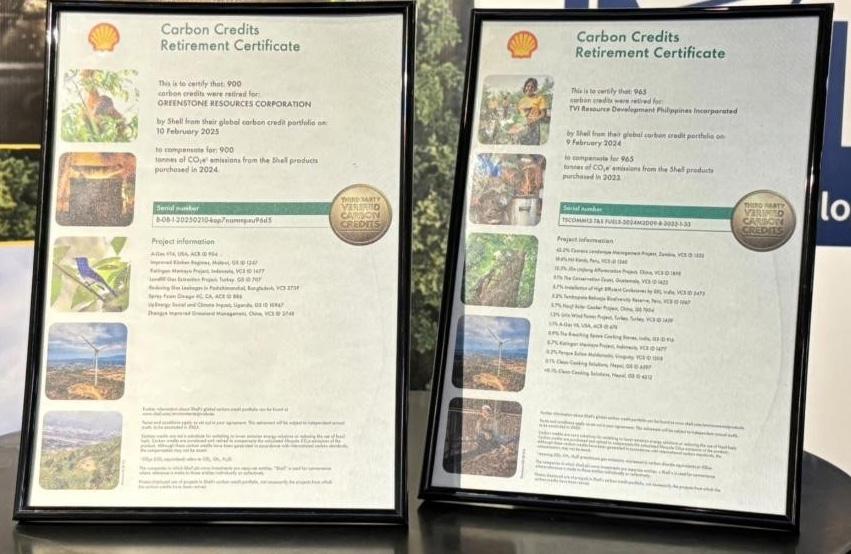
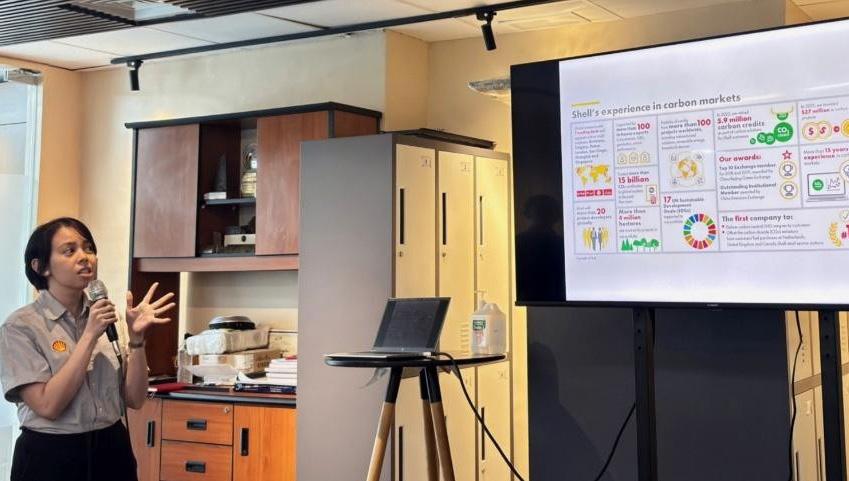
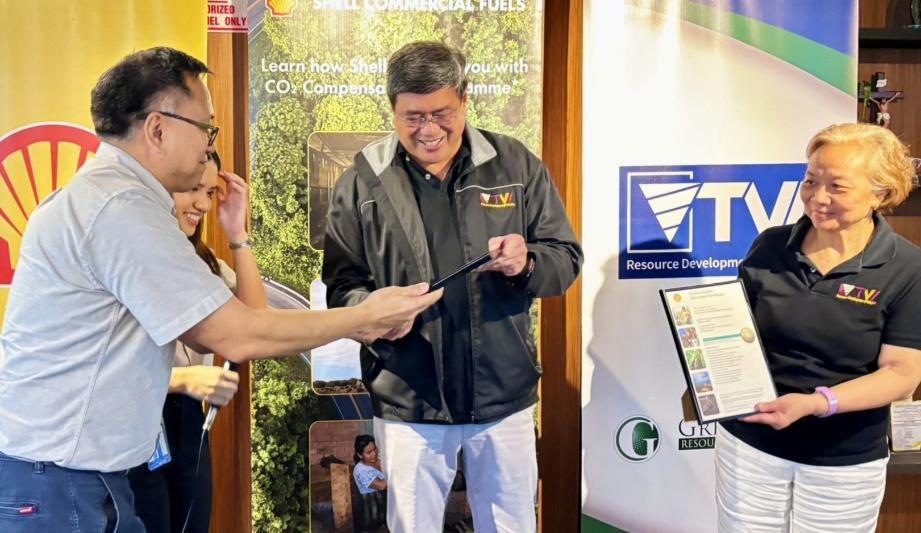
Nationally Determined Contributions (NDCs), which outline emission-reduction targets and climate strategies.
The largest contributors to global warming today include China, the United States, India, and the European Union, driven primarily by fossil fuel use in energy production, transport and heavy industries such as steel, cement and mining. Against this backdrop, the Philippines has pledged to reduce greenhouse gas emissions by 75% by 2030, conditional on international support, while pursuing low-carbon development and resilience-building as part of its climate agenda.
combined 1,865 tonnes of carbon dioxide emissions.
The mining industry, though a source of emissions, plays a critical role in supplying essential minerals such as nickel, copper and cobalt, which are vital to renewable energy technologies and the global energy transition. Within this context, TVIRD contributes by integrating emissions management with responsible resource development, aligning with initiatives such as Shell’s Carbon Compensation Program, and reinforcing its long-standing environmental commitments through reforestation, community livelihood partnerships and award-winning safety programs.
Shell Philippines Commercial
Marketing Manager Tracy
explains how carbon retirement works and how it affects the overall sustainability in industries such as mining companies.
PREMIUM GROUND ENGAGING TOOLS BUILT FOR PRODUCTIVITY, DURABILITY
In mining and heavy construction, downtime is more than an inconvenience — it’s a cost. Productivity, efficiency, and safety all depend on the performance of the ground engaging tools working at the front line of every machine. From extreme abrasion to high-impact loading conditions, equipment components must perform under constant pressure.
That’s where Valley Blades Limited delivers.
For decades, Valley Blades has been engineering and manufacturing high-performance wear parts designed specifically for demanding environments. With advanced heat treatment capabilities, precision manufacturing processes, and strict quality control standards, every component is built with durability and longevity in mind.
Our mining teeth are designed to withstand the harshest digging conditions. In high-impact, high-abrasion applications, consistent penetration and extended wear life are critical. By combining premium alloy materials with controlled heat treatment processes, we deliver superior strength and structural integrity — maximizing uptime and reducing changeout frequency.
Grader blades and links require a balance of toughness and edge retention. Precision cutting performance is essential for maintaining grade accuracy while minimizing wear. Our blades are engineered for consistent hardness throughout the working surface, ensuring reliable performance even in challenging terrain.
Construction teeth demand versatility. Whether in infrastructure development, site preparation, or heavy civil work, dependable wear parts keep machines productive. Our con-
struction tooth systems are designed to optimize penetration, reduce fuel consumption, and maintain structural strength in daily applications.
Dozer edges must handle continuous pushing forces and abrasive materials. Built from high-strength steel and manufactured to exacting tolerances, our dozer edges provide exceptional wear resistance and impact durability — delivering performance operators can rely on shift after shift.
At Valley Blades, manufacturing is not just about producing parts — it’s about producing confidence. Every product is designed to help contractors and mining operators extend service life, lower cost per hour, and improve overall equipment efficiency.
We understand that performance on paper means nothing without performance in the field. That’s why our products are trusted across North America and international markets where operating conditions are among the toughest in the world.
Now, through our exclusive partnership with Uptime in the Philippines, mining and construction companies throughout the region have direct access to premium wear parts backed by responsive local support. Uptime brings industry
knowledge, service expertise, and a commitment to helping customers maintain productivity in even the most demanding projects.
Together, Valley Blades and Uptime are committed to delivering strength, precision, and reliability where it matters most — at the cutting edge.
Because in mining and construction, durability drives productivity. And productivity drives success.
For product inquiries, you may reach us through the following:
Landline: +632 8 687 1000 loc 397
Mobile: 0915 069 2676 | 0949 137 4108
Email: uptimeearthmovingsolutionsinc@gmail.com
Website: www.uptimeearthmoving.com
Facebook: https://www.facebook. com/uptimeearthmovingsolutioninc
LinkedIn: https://www.linkedin.com/ company/uptimeearthmovingsolutioninc
Office: Unit D 10th Flr., CyberOne Bldg., 11 Eastwood Ave., Bagumbayan, Quezon City
For VBL product and company videos, you may visit: https://www. youtube.com/watch?v=xwq9gPCdX7I
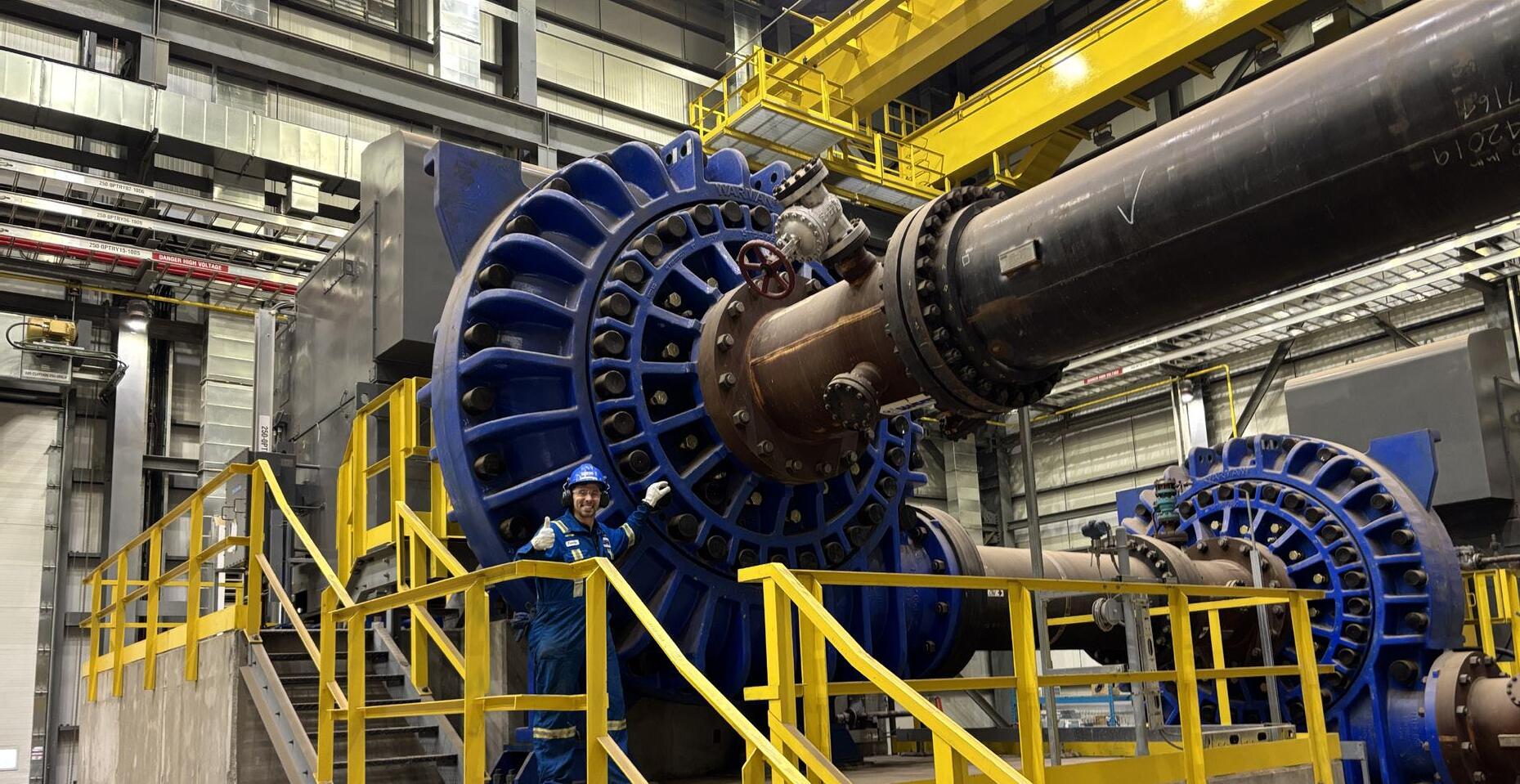
Weir’s materials technology capabilities are a key factor in WARMAN® MCR® slurry pumps continuing to be the preferred solution in mill circuit applications for the world’s major miners.
Notably, Weir’s longstanding expertise in elastomer science which enables its rubber-lined pumps to compete directly with, and often outperform, metal-lined alternatives in abrasive slurry applications.
Mill circuit slurries typically present a challenging wear environment due to wide particle-size distributions and the presence of hard, angular particles. To address this, Weir formulates and manufactures proprietary elastomer compounds engineered for high abrasion resistance, energy absorption and tear strength. These compounds are developed in-house, allowing precise control over polymer chemistry, filler systems and curing processes to optimise performance under dynamic slurry loading.
Continuous R&D investment underpins this capability. Weir’s material scientists and mechanical engineers collaborate to characterise wear mechanisms, refine compound formulations and validate performance through laboratory testing and field trials. This iterative development cycle ensures that the
WARMAN® MCR® pump remains aligned with evolving operational requirements in the mining and minerals processing sector.
Weir’s engineering teams work directly with mine operators to diagnose wear patterns, understand process variability and design component solutions that improve pump reliability and reduce total cost of ownership. This collaborative approach supports broader industry goals around sustainability, process efficiency and operational safety.
The WARMAN® MCR® pump is a direct outcome of this long-term engineering focus, incorporating decades of empirical data, computational modelling and materials innovation.
A key advancement in recent years is the expanded use of Armachrome® material, a highly wear-resistant overlay material engineered for extreme abrasion environments. Armachrome® wear parts are critical pump components for throatbushes, volute liners and, increasingly, impellers.
The material’s high hardness and superior erosion resistance enables significant extension of component life. Importantly,
Armachrome® wear part material is applied selectively – targeting high-wear zones such as the impeller eye – rather than coating entire components. This precision application reduces material usage while maximising functional benefit.
Field data has demonstrated substantial performance gains. In oil sands operations, Armachrome® components have shown markedly improved wear life compared with white iron. Similar results have been observed in WARMAN® mill circuit pump installations, validating the material’s effectiveness across multiple slurry environments.
As the mining industry seeks to reduce energy consumption, extend maintenance intervals and lower carbon intensity, advanced wear materials will play an increasingly important role. Weir’s ongoing investment in materials R&D –spanning elastomers, overlays and composite systems – positions the company to deliver solutions that enhance pump efficiency and durability.
Customers are increasingly selecting Weir products not only for performance but also for their contribution to sustainability objectives, driven by longer wear life, reduced waste and improved operational efficiency.
WARMAN® pumps’ Armachrome® components have shown markedly improved wear life compared with white iron.
In industries where durability, safety, and precision are nonnegotiable, reliability is more than a promise—it is a requirement.
For decades, Dela Torre & Co., Inc. (DCI) has positioned itself as a trusted manufacturer of industrial rubber products and a dependable provider of technical services to the country’s most demanding sectors.
From mining and power generation to maritime, construction, and manufacturing, DCI delivers solutions engineered to perform under pressure—locally and internationally.
DCI’s vision is clear: to be the manufacturer of choice for safe, highquality industrial rubber products and a trusted technical partner to its clients.
The company’s approach goes beyond product supply. It is anchored on long-term partnerships built on trust, reliability, and measurable value.
In industries where downtime translates directly to cost, clients depend on suppliers who understand operational realities. DCI answers that call with products designed for endurance and services grounded in technical expertise.
At the heart of DCI’s operations is a commitment to consistent quality and customer satisfaction. The company strives to exceed expectations by delivering industrial rubber products and services that meet exacting standards for safety and performance.
Equally important is organizational efficiency. DCI operates as a customer-focused enterprise supported by a responsive and reliable network built on mutual loyalty and trust.
Behind every hose, connector, and molded component is a workforce whose technical skill and dedication drive the company forward. DCI recognizes its employees as its strongest asset and fosters a work environment rooted in respect, growth, and recognition for excellence.
Profitability is pursued responsibly, with full awareness of corporate, social, and environmental obligations.
Under its flagship Taurus Brand, DCI offers a wide portfolio of industrial rubber solutions designed for heavy-duty applications.
Industrial Rubber Hoses
Hand-built or hand-wrapped, Taurus industrial rubber hoses are available in sizes ranging from 1.0” to 48.0” nominal bore. These hoses are engineered for demanding industrial environments where flexibility and durability are essential.
Available from 3.0” to 100.0” nominal bore, these hand-built expansion joints accommodate movement, vibration, and pressure variations in piping systems. Designs include single- or multi-arch, offset, lateral, concentric, eccentric, tapered, and custom configurations.
DCI manufactures flexible sleeves for pinch valves, rubber chutes, hoppers, and other specialized applications— ensuring efficient material handling and flow control.
The Taurus line also includes pump parts, bumpers, bearing pads, seals, valve seats, gaskets, and other molded components tailored to industrial specifications.
Rubber Lining Services
DCI produces high-quality rubber sheets and skirts for industrial, agricultural, and commercial use. Its rubber lining services extend to tanks, pipes, and other vessels—enhancing corrosion resistance and operational lifespan.
Hoses, Pipe Connectors, and Floaters
For marine and dredging operations, DCI supplies heavy-duty dredging hoses, flexible pipe connectors, and floaters designed for performance in challenging environments.
Pipe and Spool Fabrication
The company fabricates various types of pipes and spools to support customized industrial systems.
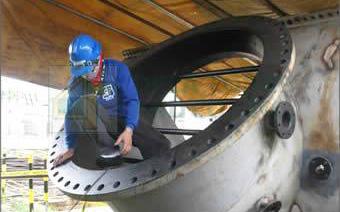
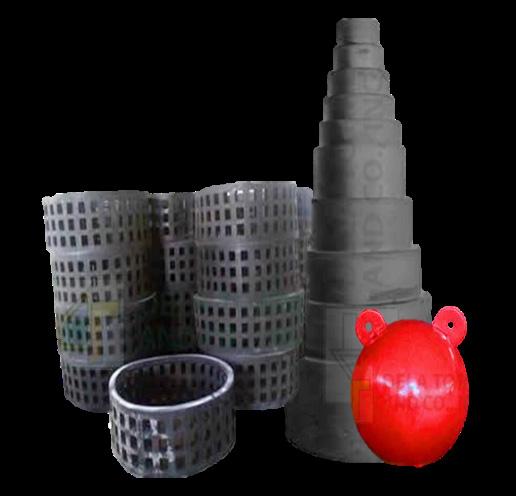
Valve Rehabilitation
DCI also rehabilitates butterfly valves ranging from 24” to 84”, restoring performance and extending equipment service life.
With its main office located in Muntinlupa City and its manufacturing plant in Brgy. Sta. Elena, Sto. Tomas, Batangas, DCI combines accessible customer support with robust production capability.
In an era where industries demand both resilience and efficiency, Dela Torre & Co., Inc. continues to prove that strength is engineered—not assumed.
Contact Us: 30-38 Hyacinth St., South Greenheights Village, Muntinlupa City Plant: Brgy. Sta. Elena, Sto. Tomas, Batangas
(632) 8850-8384 | (632) 8809-9781 (632) 8850-0836 | (632) 8809-0551 (632) 8842-3672 info@delatorreandco.com.ph www.delatorreandco.com.ph





Geo Connect Asia is the annual regional meeting place to bring practical and proven solutions to the market, combining four overlapping exhibitions with a series of conferences to exchange inspiring ideas and share cross industry
Gain access to four shows with one visitor pass
Complimentary Tech Talk & Innovation Stage
Conferences & industry
The Geo Autonomy Summit stage, held under the theme Transforming technology into solutions: underground, land and sea to sky, brings together practitioners, policymakers and industry leaders to advance the use of autonomy across geospatial, marine and uncrewed domains.
The Geo Smart Mining Forum focuses on applying geospatial, autonomous and mapping technologies to sustainable mining As demand for new mineral resources and rare earths continues to rise, the Forum enables investors, operators and exploration teams to identify and develop opportunities responsibly.
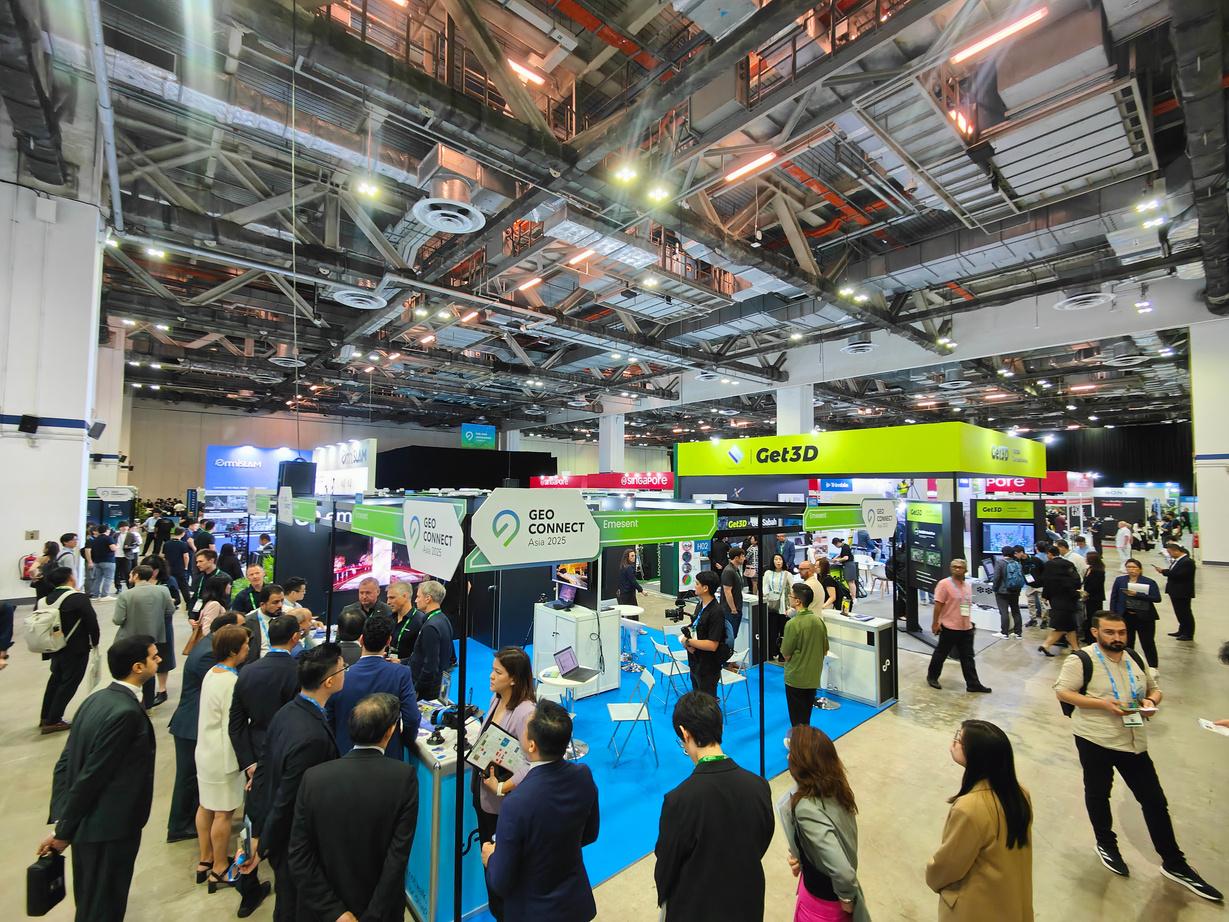
a
of
Complimentary Trade Visitor Pass (worth $55) is also available!





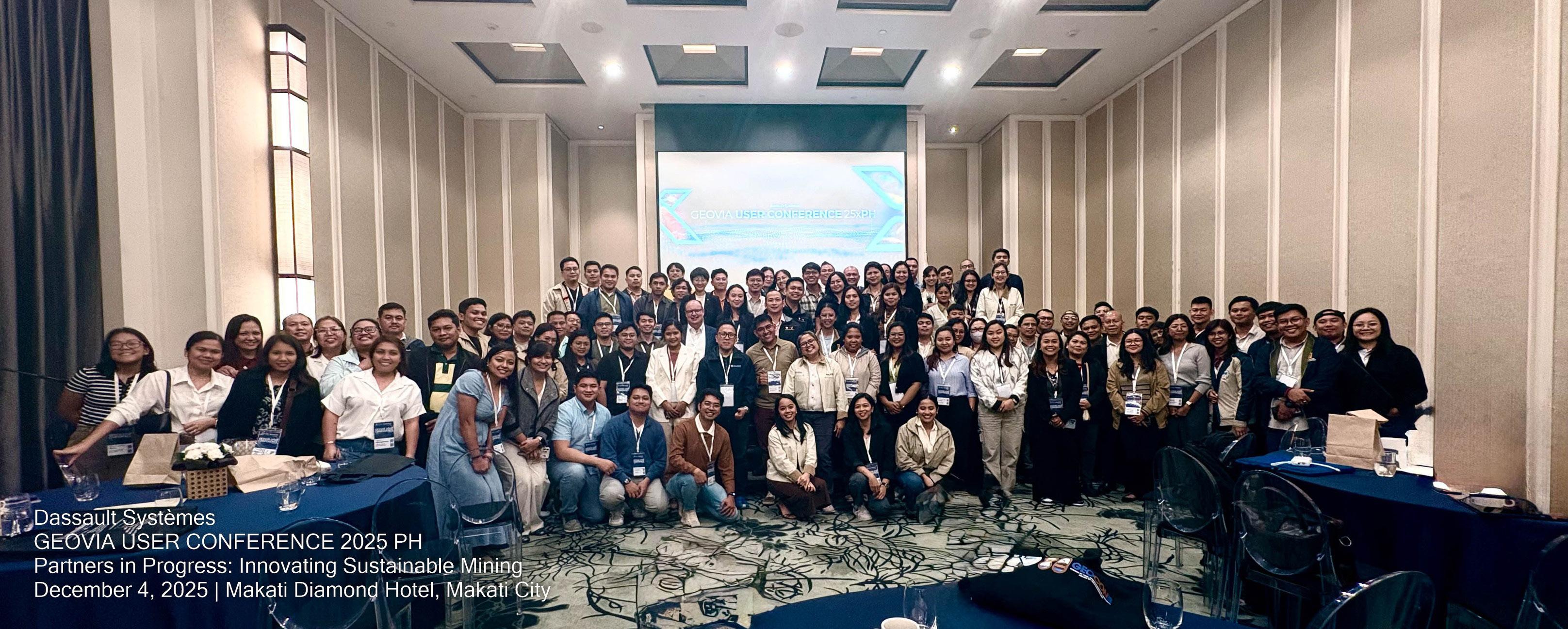
In an industry long dominated by multinational giants, Paramina’s rise over the past three decades reads like a classic David-and-Goliath story. Paramina International — formerly operating as Paramina Earth Technologies — was founded in 1996 as a Philippine-based mining contractor and technical solutions provider with a straightforward goal: fill a gap in the market for a responsive, locally grounded partner capable of delivering reliable, highquality services to mining companies.
Today, as Paramina approaches its 30th anniversary in 2026, the company has transformed from a small challenger into a respected player in underground mining and technical consulting, with projects spanning multiple countries and a growing international footprint.
“When Paramina started the business, we were stepping into an industry dominated by global giants — a true David-and-Goliath landscape,” said Karl Resabal. “The market gap we set out to address was clear: customers needed a reliable, responsive, and locally grounded partner who could deliver high-quality solutions without the delays, bureaucracy, or distance of multinational brands.”
Over time, the company’s mission has broadened beyond simply competing with larger firms. Paramina now positions itself as a comprehensive solutions provider for the mining industry.
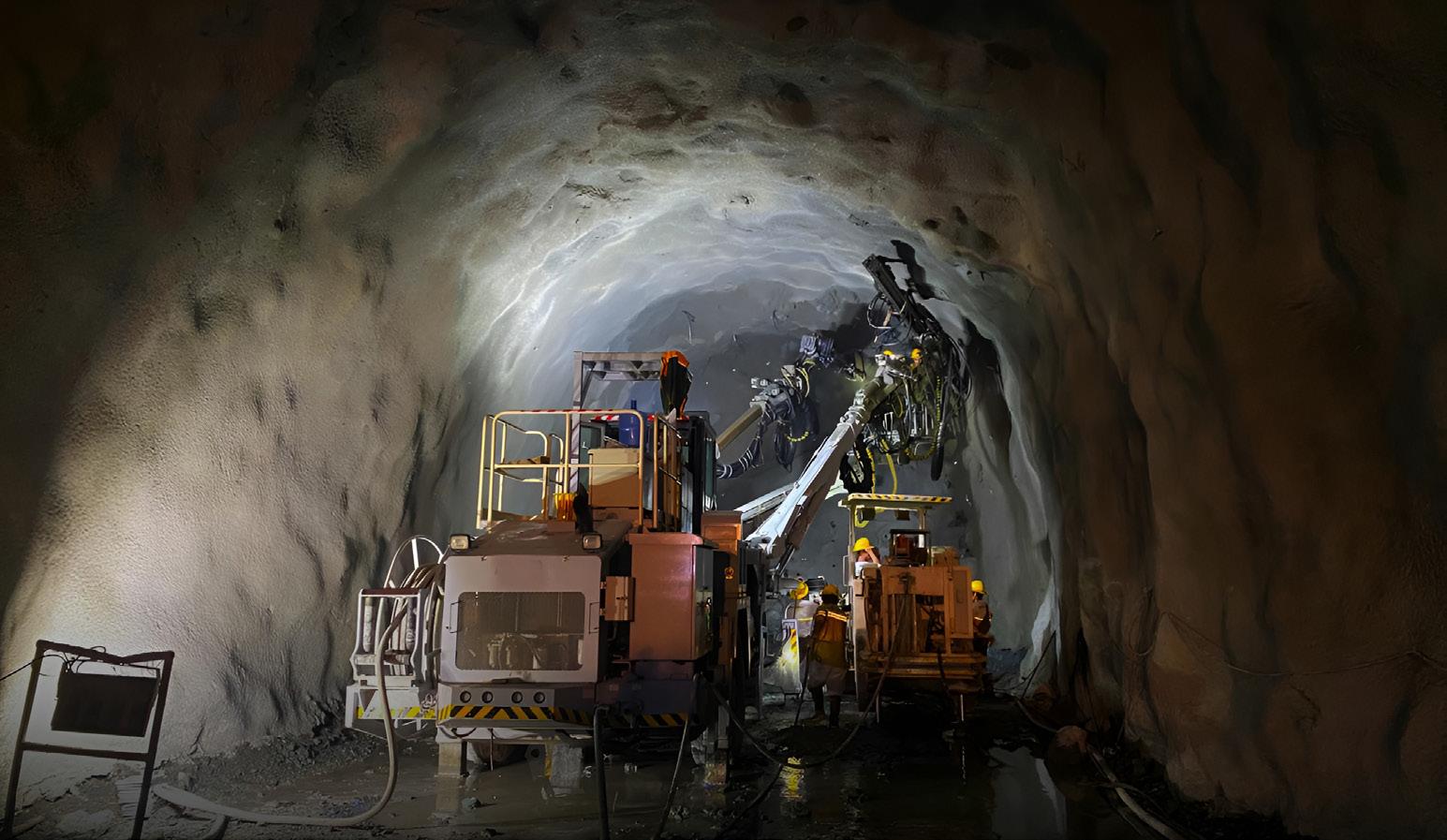
“Over the past three decades, that mission has evolved from simply challenging the giants to redefining what customers should expect from a trusted industry partner,” Resabal said. “Today, Paramina focuses on delivering complete, end-toend solutions built on engineering expertise, service reliability, and longterm partnership — a far cry from the small challenger we once were.”
Paramina’s journey has been defined by several milestone projects that demonstrated both its technical capability and willingness to tackle complex mining environments. One of its earliest landmark engagements was supporting the
development of Philex’s second trackless mining operation in the Philippines. The project involved the deployment of hydraulic long-hole drilling systems, helping modernize underground mining practices in the country.
Another major achievement came in Vietnam, where Paramina helped establish the first two underground gold mines in the country. The project marked a historic milestone for Vietnam’s mining sector while showcasing Paramina’s ability to support pioneering international ventures.
The company also contributed to one of its most technically challenging assignments in Papua New Guinea — the opening of an underground gold mine located at about 1,300 meters
above sea level. The remote terrain required transporting equipment and personnel by helicopter, highlighting the company’s ability to operate in demanding and logistically complex environments.
A key differentiator for Paramina has been its integrated business model. Unlike many companies that focus solely on contracting or consultancy, Paramina combines underground mining services with technical solutions, mine planning support and digital tools.
Central to this approach is its partnership with Dassault Systemes GEOVIA, a provider of advanced mining software and platform solutions.
“Paramina’s partnership with GEOVIA has allowed us to partner with the biggest mining companies in our country, both local and international players, and has positioned itself as the mining solutions authority in the Philippine mining sector, not only as a solutions provider for GEOVIA but also as a mining consultancy and contractor,” Resabal said.
Through this collaboration, the company helps mining operators implement digital tools such as Surpac, Whittle and MineSched to improve mine planning, scheduling and project evaluation.
“Many of our clients swear by the efficiency of using GEOVIA programs such as Surpac, Whittle, and MineSched to optimize their mining operations, be it in planning, scheduling, or even in evaluating the financial viability of a project,” he said. “Through our guidance in software training, they are able to maximize their use of the software in a way that their operations are done smarter, faster, and more efficiently.”
While Paramina began as a local Philippine contractor, its work has increasingly expanded beyond national borders. According to the company, about 70 percent of its projects today are located overseas.
“Around 70% of Paramina’s projects are now overseas,” Resabal said. “We continue to expand wherever our expertise is needed and where
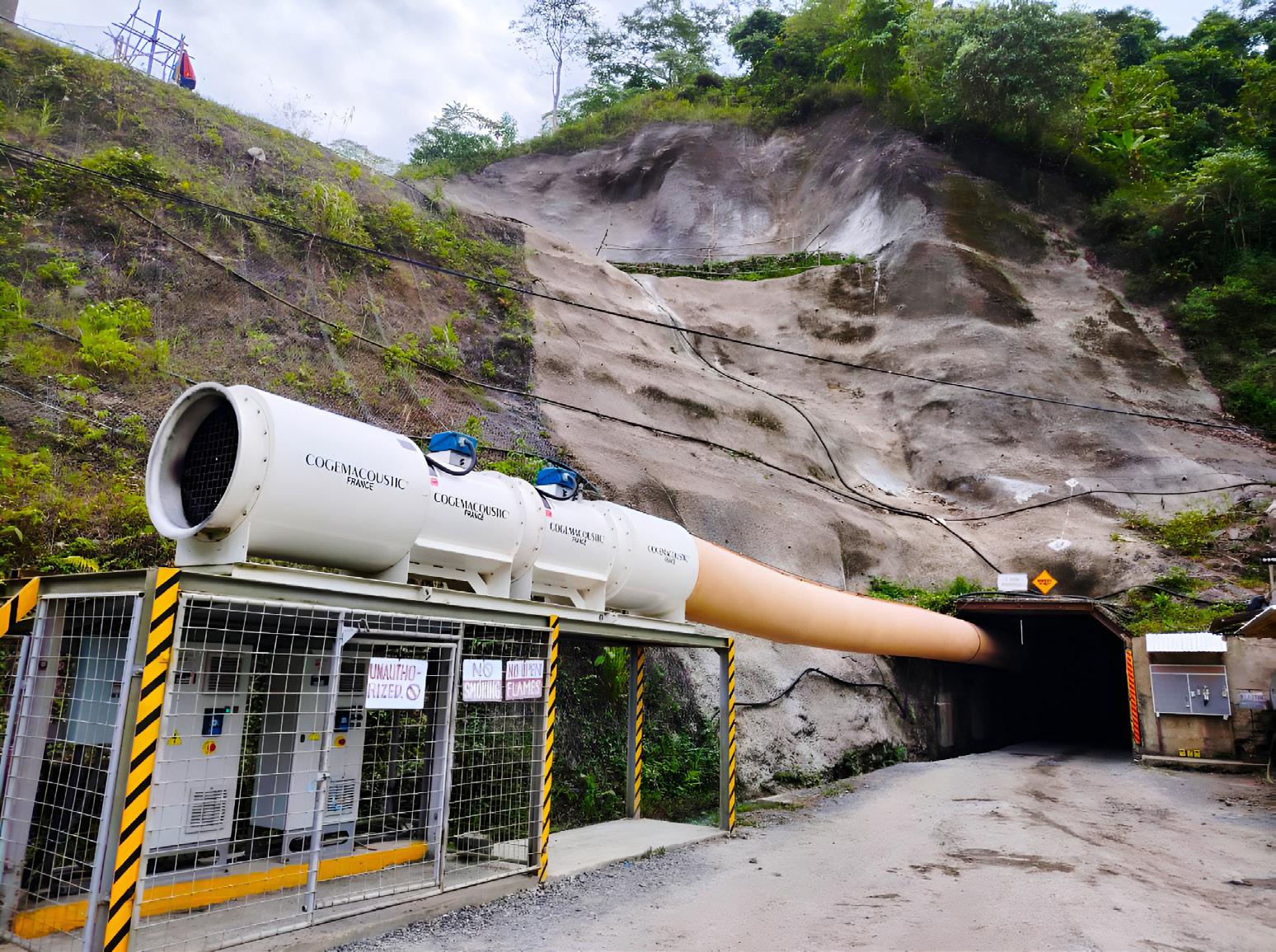
meaningful opportunities arise.”
Interestingly, the company’s international growth has come largely through reputation rather than traditional marketing.
“Despite not engaging in traditional advertising, our work has consistently spoken for itself — and through word of mouth, we have been selected for major international projects across multiple countries,” he said.
Like many players in the mining sector, Paramina is also navigating increasing scrutiny around environmental, social and governance standards.
The company frames its approach in simple terms that reflect its longterm relationship with project sites.
“We treat our mining project as our home. We take care of our home,” Resabal said.
As Paramina looks toward its fourth decade, leadership transition is already part of the company’s long-term strategy.
“In the next five years, Paramina will turnover the management and operations to younger engineers and managers,” Resabal said, signaling a deliberate shift to the next generation of industry leaders.
The goal is to ensure continuity while maintaining the company’s core values of resilience and reliability.
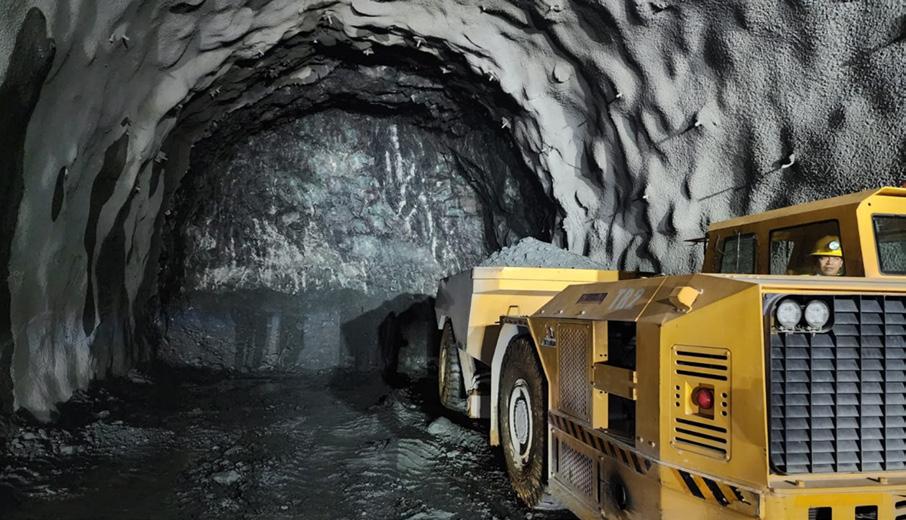
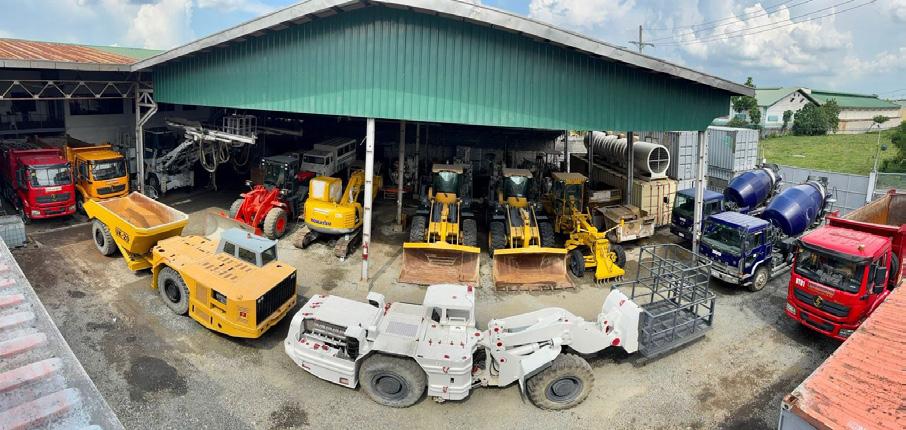
“Because of its resilience through every high and low, Paramina has earned a reputation for consistency, integrity, and strength,” he said.
“By our 30th anniversary, I would like clients and industry peers to describe Paramina as one of the top mining contractors in the Philippines — a company that has weathered challenges, adapted to change, and continued to deliver exceptional results no matter the circumstances.”
Three decades after entering the industry as an underdog, Paramina now finds itself firmly established as a trusted partner for mining projects across the Asia-Pacific region — proof that even in a Goliath-dominated sector, determined challengers can build lasting influence.
QES Technology Philippines, long recognized as a trusted partner in Assay Laboratories for ED-XRF and sample preparation solutions, is now expanding its expertise into advanced geospatial technologies. Through its strategic partnership with CHCNAV, QES now provides integrated geospatial technologies that support mining and other industries to achieve productivity targets, safety goals, and operational efficiency. Beyond supplying advanced equipment, QES ensures clients gain measurable improvements in data accuracy, turnaround time, and decision-making confidence.
CHCNAV X500 DRONE WITH ALPHA AIR 9 LIDAR
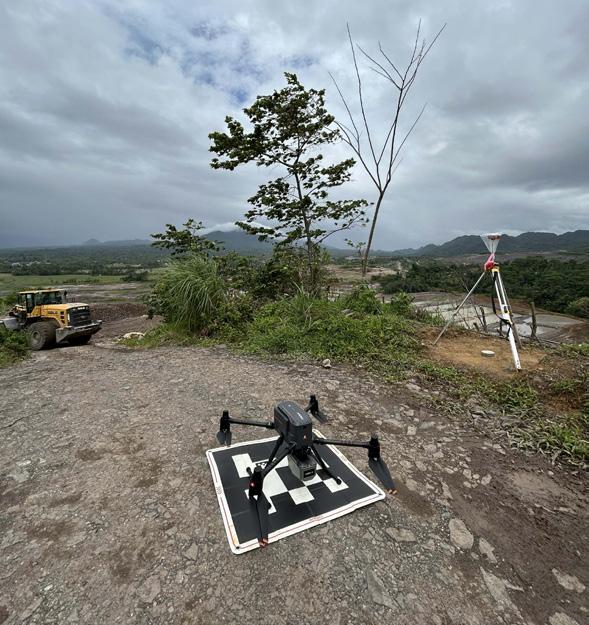
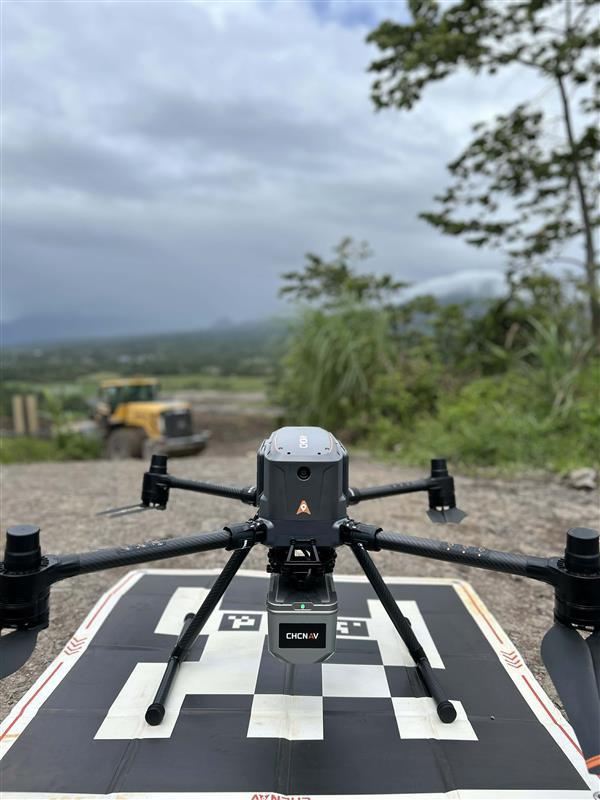
For mining companies, this means faster survey completion, improved production monitoring, and safer operations by reducing ground exposure. Reliable aerial data supports better extraction planning, haul road design, and reporting accuracy.
A mining client shared, “Using the X500 with LiDAR reduced our survey time by more than half while giving us more detailed and reliable data for our monthly volume reports.”
CHCNAV RS10 LASER SCANNER
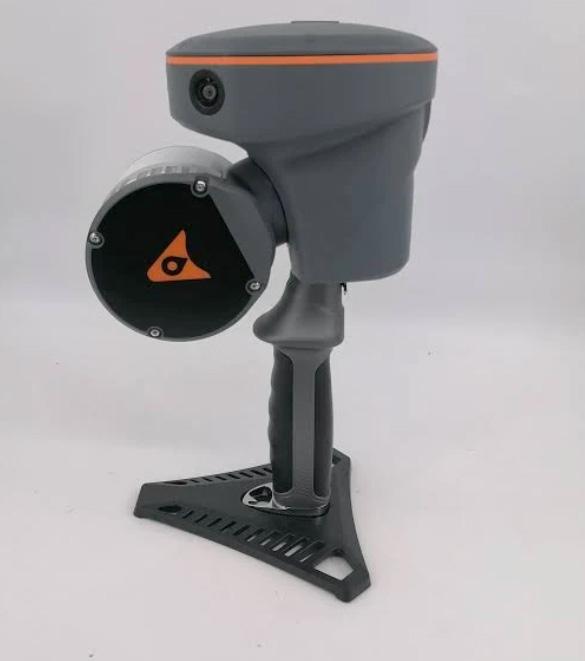
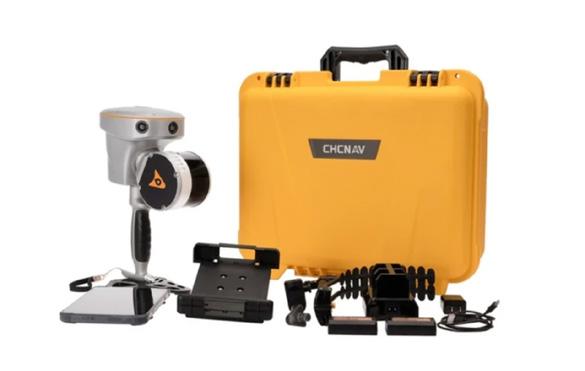
CHCNAV RS10 enhances efficiency by delivering seamless indoor and outdoor 3D scanning through integrated SLAM and GNSS RTK technology. It produces real time, georeferenced point cloud data without complex setup procedures.
In mining, the RS10 accelerates stockpile validation, tunnel mapping, and plant documentation. It reduces rework, improves reporting accuracy, and supports faster operational decisions. In construction and infrastructure sectors, it simplifies
as-built documentation and site inspections.
A client from the construction sector commented, “The RS10 made our facility documentation much faster. We were able to capture detailed 3D data in a single walkthrough.”
CHCNAV I85 RTK GNSS
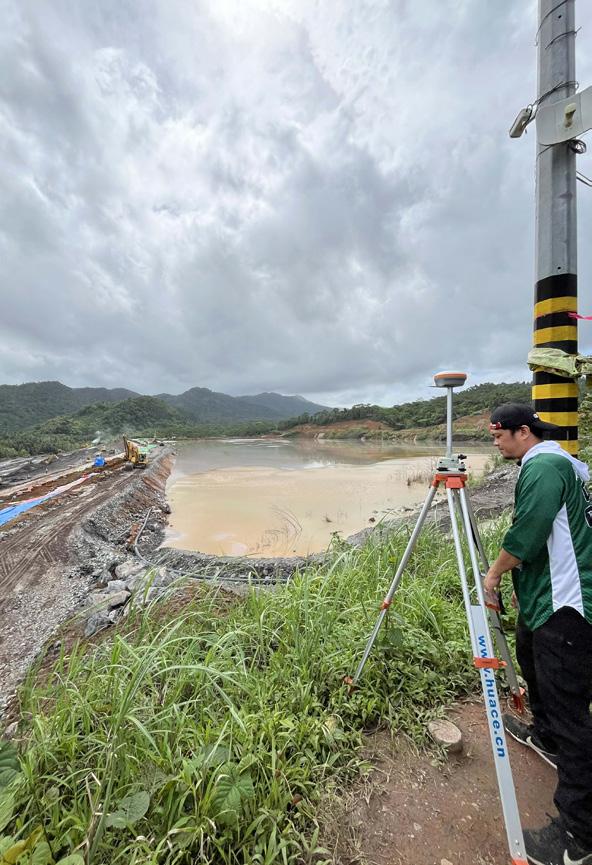
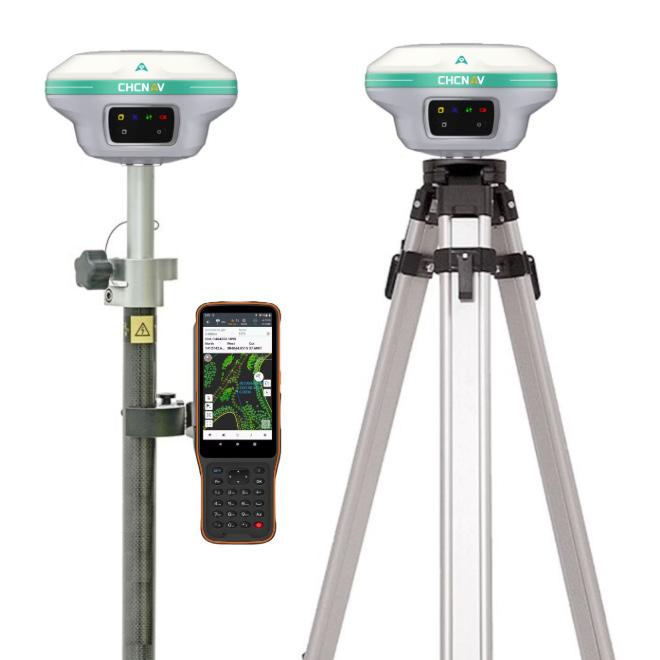
i85 delivers centimeter level accuracy with integrated IMU and laser measurement capability. It allows safe measurement of inaccessible or hazardous points while maintaining reliable positioning performance.
For mining operations, precise ground control improves volumetric accuracy and ensures proper implementation of mine plans. It also enhances safety by reducing the need to physically access dangerous areas. In engineering projects, it minimizes layout errors and boosts productivity.

A mining surveyor noted, “The i85’s laser feature allows us to measure difficult points safely without compromising accuracy. It has improved both our efficiency and safety in the field.”
APACHE 3 PRO USV


CHCNAV Apache 3 Pro supports environmental and operational targets through autonomous bathymetric surveying. Equipped with GNSS RTK and an echosounder, it provides accurate underwater terrain and depth data in tailings ponds and reservoirs.
For mining companies, this ensures reliable water volume monitoring, sediment tracking, and compliance reporting while minimizing personnel exposure to water hazards. It also benefits water resource and infrastructure projects requiring accurate hydrographic data.
An environmental manager from a mining site shared, “The Apache 3 Pro allowed us to safely monitor our tailings pond with consistent and precise results, greatly improving our compliance reporting.”
CHCNAV PS200 GROUNDBASED RADAR
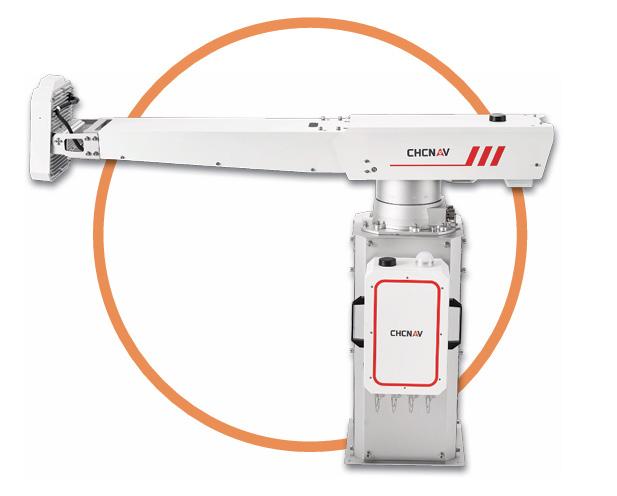
handheld 3D scanning, RTK GNSS positioning, hydrographic surveying, and ground-based radar monitoring, QES Technology Philippines delivers a complete geospatial and monitoring ecosystem. These technologies help mining and other industries achieve faster reporting cycles, improved safety compliance, optimized resource management, and accurate decistion-making.
True to its mission of being a partner in success, QES
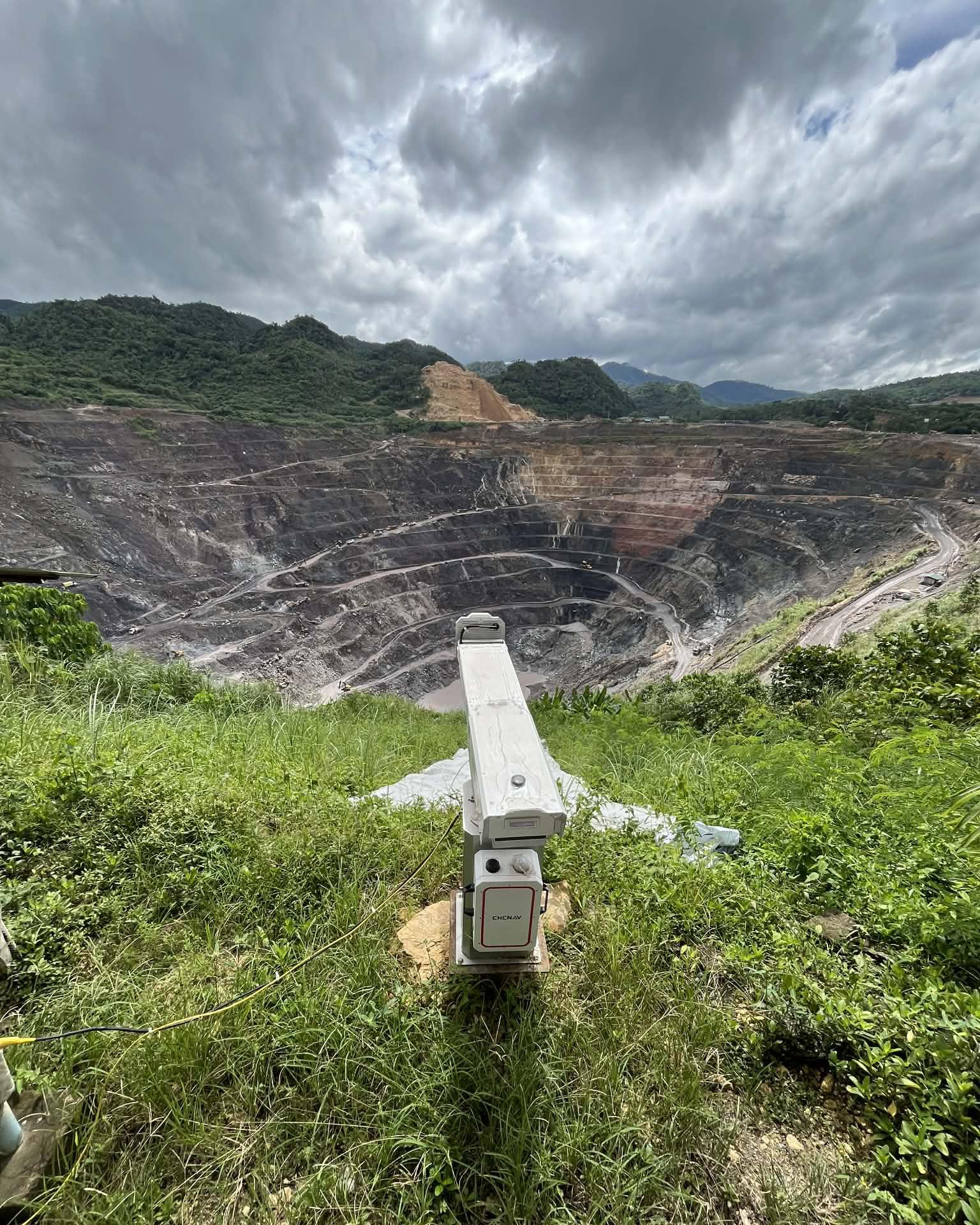
In mining operations, slope stability directly affects safety, productivity, and risk management. The PS200 enhances operational security by providing reliable monitoring data that supports preventive action and reduces downtime.
A mining operations supervisor stated, “The PS200 gives us confidence in our slope monitoring. The early warning capability has strengthened our safety program and protected our workforce.”
By integrating drone LiDAR,
CHCNAV PS200 is a high performance slope and structural monitoring radar designed to provide continuous, real time deformation analysis. It detects minute ground movements in mine slopes and highwalls, offering early warning alerts to prevent potential failures.
Technology Philippines works closely with clients to understand their goals and provide tailored solutions that drive real operational improvements. Through advanced CHCNAV technology and dedicated support, QES ensures its clients consistently achieve their targets with efficiency, reliability, and confidence.
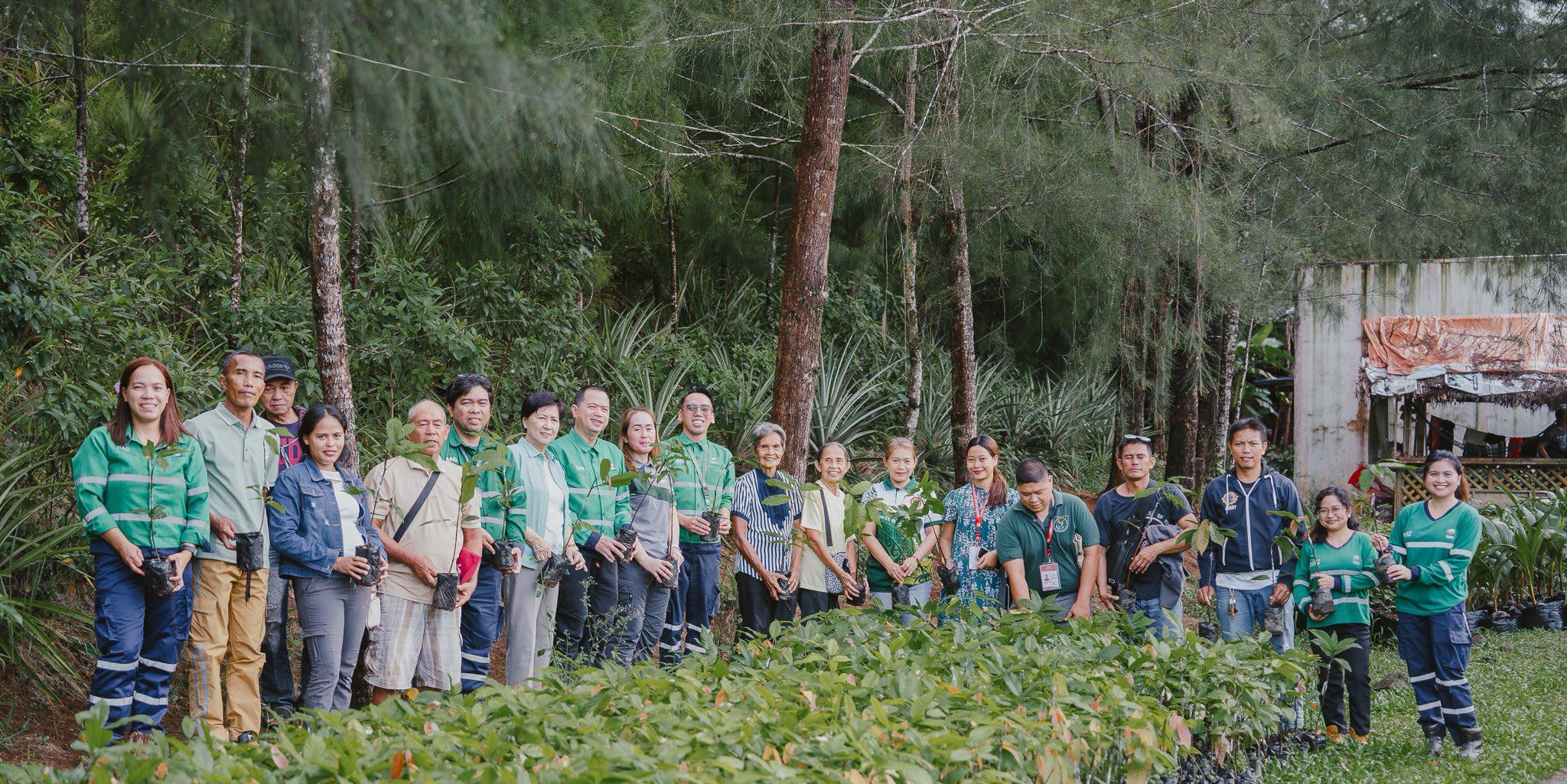
To help strengthen local agriculture and expand livelihood opportunities for its farmer-beneficiaries, Taganito Mining Corporation (TMC) turned over 5,000 cacao seedlings to the Municipal Government of Claver through a Memorandum of Agreement (MOA) signing held at Panatao Ecopark on January 8, 2026.
Leading the turnover were Claver Mayor Georgia Gokiangkee and TMC management headed by TMC Senior Vice President and Chief Operating Officer, and Resident Mine Manager Artemio Valeroso.
They were joined by TMC Mine Environment Protection and Enhancement Office Manager Diane Zaportiza, TMC Land Resource & Development Section Head Charesma Exclamado, TMC Community Relations Manager Mark Vincent Junel Felias, and representatives from the Municipal Agriculture Office and farmer-beneficiaries from stakeholder barangays.
In his message, Valeroso expressed optimism about cacao as a high-value crop and shared that TMC readily committed support after learning of the farmers’ interest in expanding cacao production.
“I look forward to the day when we can proudly say that we are part of Claver’s cacao plantation, with locally grown cacao eventually being distributed across the country and overseas,” said Valeroso.
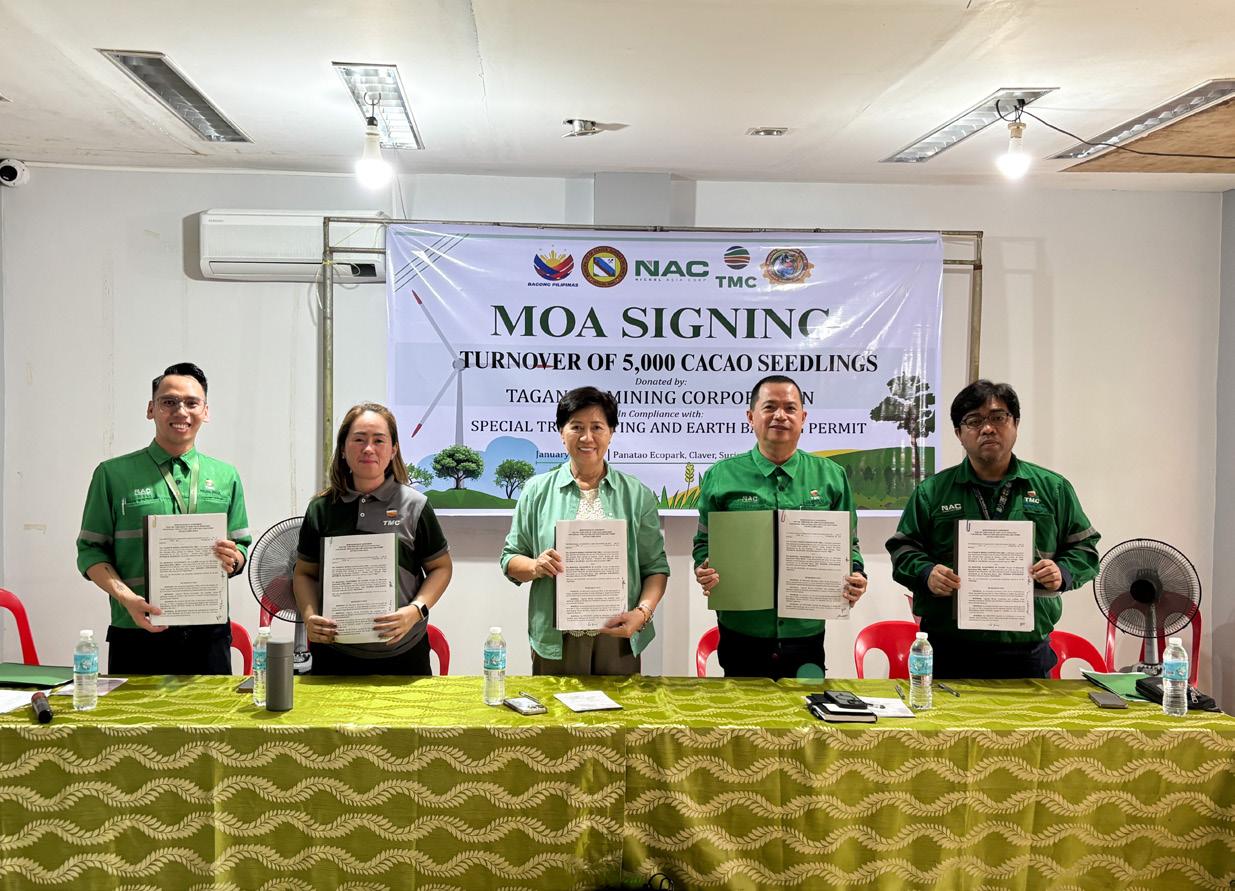
He underscored the role of responsible mining companies as partners in community development, noting that cacao farming can provide sustainable income for farmers within three to five years.
Mayor Gokiangkee welcomed the initiative as a timely boost for Claver’s agricultural sector at the start of the year. She thanked TMC for its continued partnership in creating livelihood opportunities for local communities.
The mayor also recalled that earlier cacao plantings in the municipality showed promising growth but were later affected by the COVID-19 pandemic and the devastation caused by Typhoon Odette, emphasizing the need to revitalize the program.
She added that the LGU has
conducted site assessments in several barangays to identify suitable areas for cacao expansion, highlighting the importance of collaboration among farmers, the local government, and private partners to ensure the project’s success.
“Karon, kinahanglan nato bangonon pag-usab ang atong cacao,” Gokiangkee said, citing the strong global demand for cacao and chocolate.
Known globally as the “food of the gods,” cacao is a high-value crop widely used in the food, cosmetics, and pharmaceutical industries.
With strong and growing market demand, cacao production presents a promising driver for inclusive and sustainable economic growth for Claver.

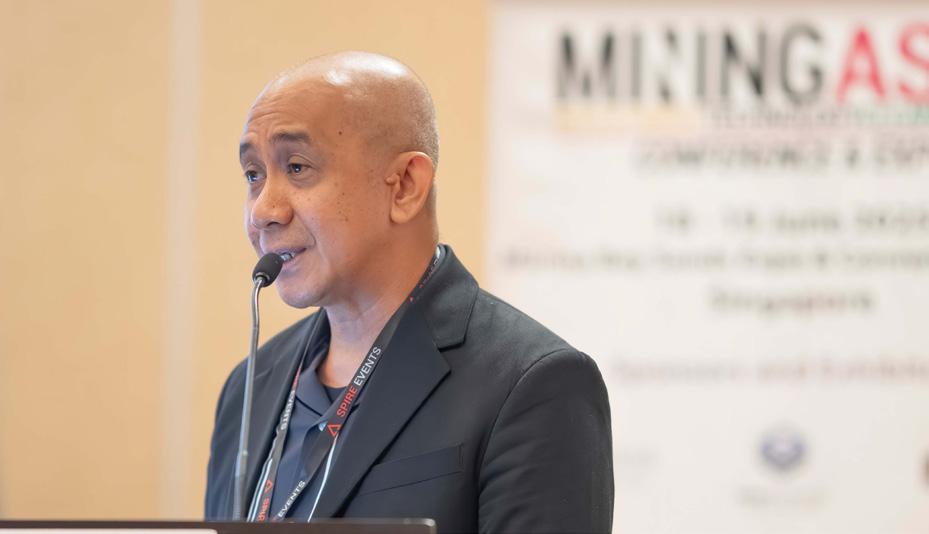
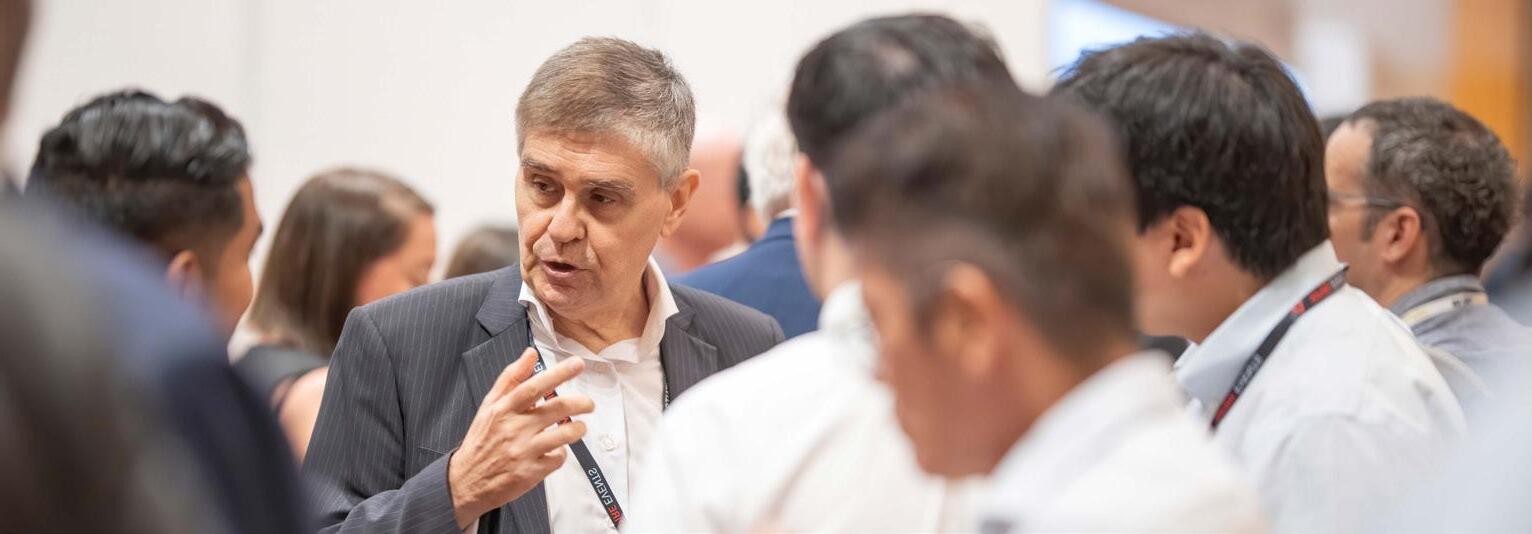
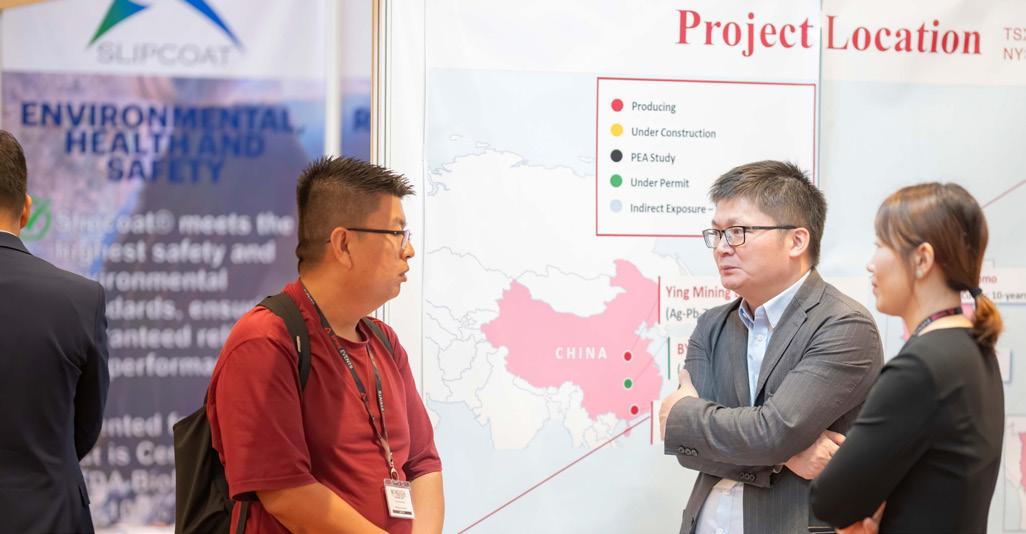

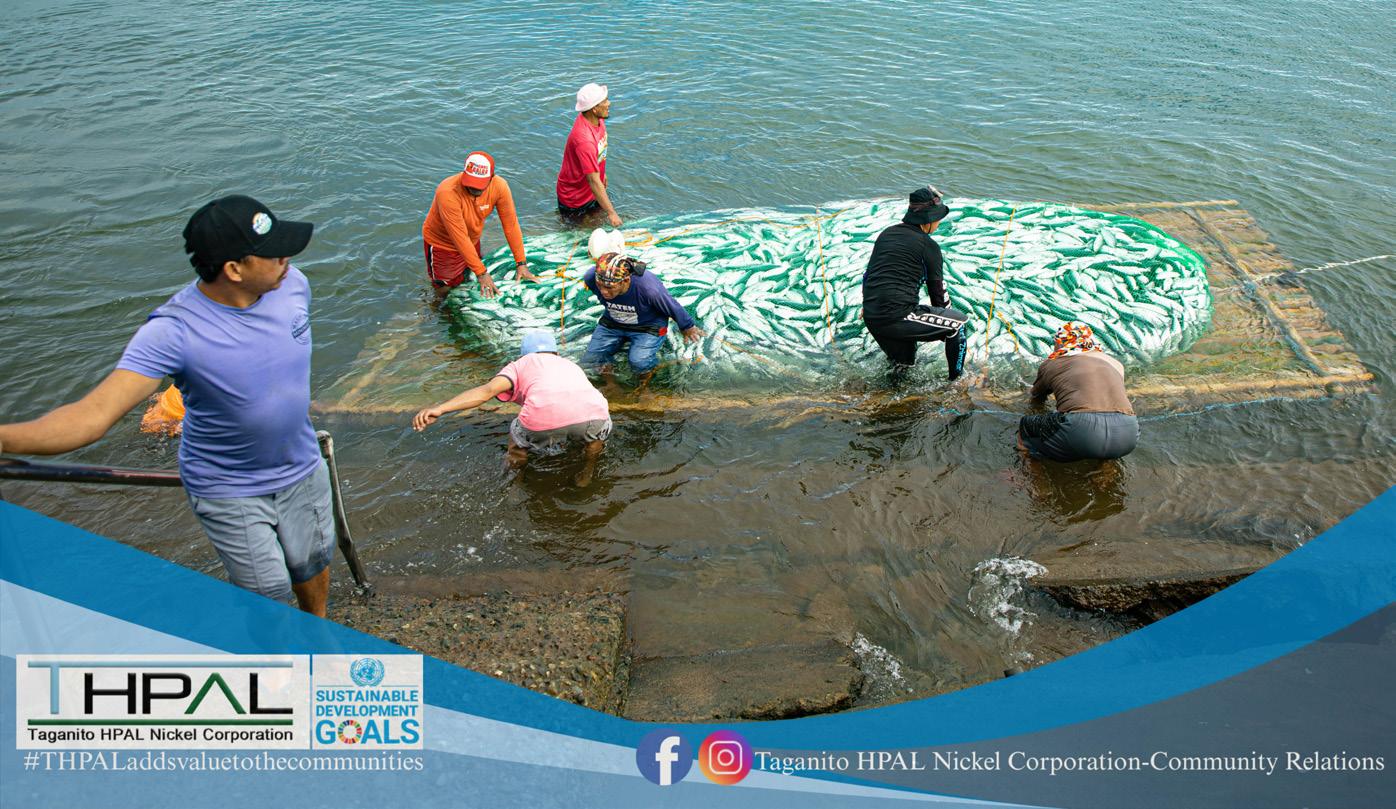
Claver, Surigao del Norte
— The UrbiztondoCapangdan Fisherfolk Association (URCAFA), a people’s organization supported by Taganito HPAL Nickel Corporation (THPAL), successfully completed its first harvest of 4.9 metric tons of fresh, high-quality milkfish (bangus) on January 27, 2026.
The harvest was witnessed by THPAL’s Livelihood Team and the Barangay Local Government Unit (BLGU) of Urbiztondo.
The activity is part of THPAL’s Social Development and Management Program (SDMP) Livelihood Projects.
To kick-start the mariculture initiative, THPAL turned over one unit of a Norwegian marine fish cage, 20,000 bangus fingerlings, and fish feeds to URCAFA on September 2, 2025.
THPAL’s mariculture project reflects the company’s commitment to supporting the Municipality of Claver’s food security goals while providing sustainable livelihood opportunities for local fisherfolk.
The harvested milkfish were sold directly to identified buyers, ensuring market access, fair pricing, and reduced post-harvest losses.
This approach maximized income for URCAFA members and strengthened their confidence in managing market-oriented livelihood enterprises.
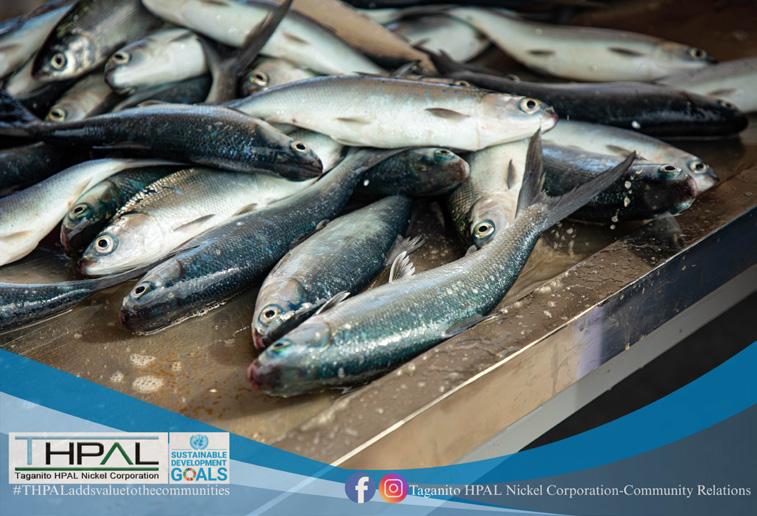
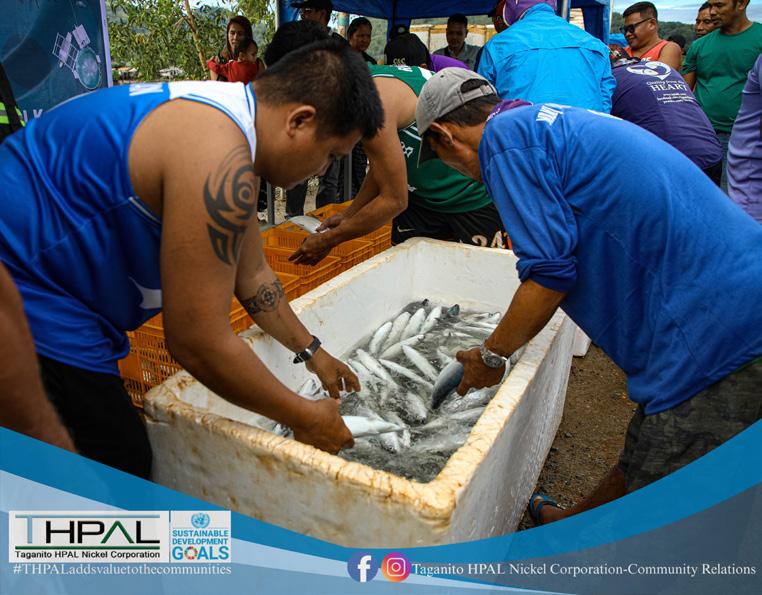
URCAFA officers and members expressed their gratitude to THPAL and the BLGU of Urbiztondo for the technical assistance, logistical support, and continuous guidance that contributed to the project’s success.
They emphasized that strong partnerships such as these help build resilient and self-reliant communities.
This milestone highlights a shared vision of inclusive and sustainable development, achieved through collaboration among industry, local government, and community organizations.
Mount




Philippine Resources Journal offersbothp
The online digital magazine is interactive
Your company advert will be hyperlinked the option to embed a corporate compan
Philippine Resources Journal currently ha
Each newsletter is interactive and all of o company logo shown with a hyperlink to
Our website had over 125,000+ views in 2025! All advertising partners have their company logo on our website, which is hyperlinked to their website.
Philippine Resources Journal offers social media exposure to our advertising partners Philippine Resources has had over 1 million social media impressions! Our social media accounts are updated daily with the latest industry news.
info@philippine-resources.com www.philippine-resources.com