If
we confess our sins, he is faithful and just and will
TRL Chamber begins Launch Stone County



Submitted to Branson Globe
The Table Rock Lake Chamber of Commerce today celebrated the formal kickoff of its “Launch Stone County” initiative, a five-year economic development strategic plan and fundraising campaign to implement it, with a surprising announcement.
The original budget for the plan was $1.1 million over the five years, or $220,000 a year. The Chamber announced they have already received pledges of over $1 million, prior to the public kickoff.
“The response to this effort has been truly amazing,” said Dwayne Falk, Chairman of the Chamber Board of Directors and CoChair of the Launch Stone County campaign. “The commitment from our 32 early investors from the
Reprinted with permission
This story, by freelance writer Kenneth C. Walker, originally appeared August 23, 2023, in AG News, the online news publication of the Assemblies of God. Read more encouraging faithbased news at www.news. ag.org. We at the Globe are glad to hear these kids had a great Branson experience!


When the 2023-24 school year began in Hot Springs, Arkansas, on Aug. 14, students from the Hillcrest Children’s Home were excited to share about their first dream vacation: a trip to Branson, Missouri, in July.
For most of the two dozen foster children living at the home, it marked their initial venture outside Arkansas. Among their thrills were visiting Dolly Parton’s Stampede, seeing a production of “Queen Esther” at the famed Sight & Sound Theater, and enjoying a
meal at the Grand Country Buffet.
Resident director LaDana A. Pate recalls how as a child the first week of classes was always a time to share about a vacation or other fun activities students enjoyed during the summer.
This year Hillcrest students could say, “We went to Branson.”
“Now they have some normalcy in their lives,” says Pate, 52, a former pre-school and elementary teacher. “Our kids don’t ever feel normal and this was a time that they did.
“They didn’t know what a vacation was; they had no clue. To them, vacation now has a meaning. It has a happy memory. That’s big in the world of foster care. In group settings they don’t get to do that.”
In addition to residents, 20 direct care staff members, office staff, case manSEE DREAM VACATION, PAGE 11A
Submitted to Branson Globe
The Vintage Camper Open is happening this weekend at Branson KOA Holiday campground, 397 Animal Safari Rd., in Branson. During the annual event, campers made in 1976 or earlier receive “throwback pricing” as their owners gather for fun and fellowship with other vintage camper fans.

The event is open to the

public on Saturday, September 9, from 11 a.m. to 2 p.m.

If you’ve ever wondered about buying or restoring a vintage camper, this is your opportunity to view some up close. Several will be open for tours of the interior; owners often enjoy sharing about their “oldie but goodie” camper or showing photos of the project in process.
...not all newspapers are dinosaurs.

campground, where staff will direct them to parking. Branson KOA Holiday, managed by James and Jean Sykes, is conveniently located near St. Hwy. 165 and St. Hwy. 76, yet is still peaceful and shady, with great amenities and special events. Learn more at https://koa.com/campgrounds/ branson/.


Visitors should use the main entrance into the Your source for local news and entertainment
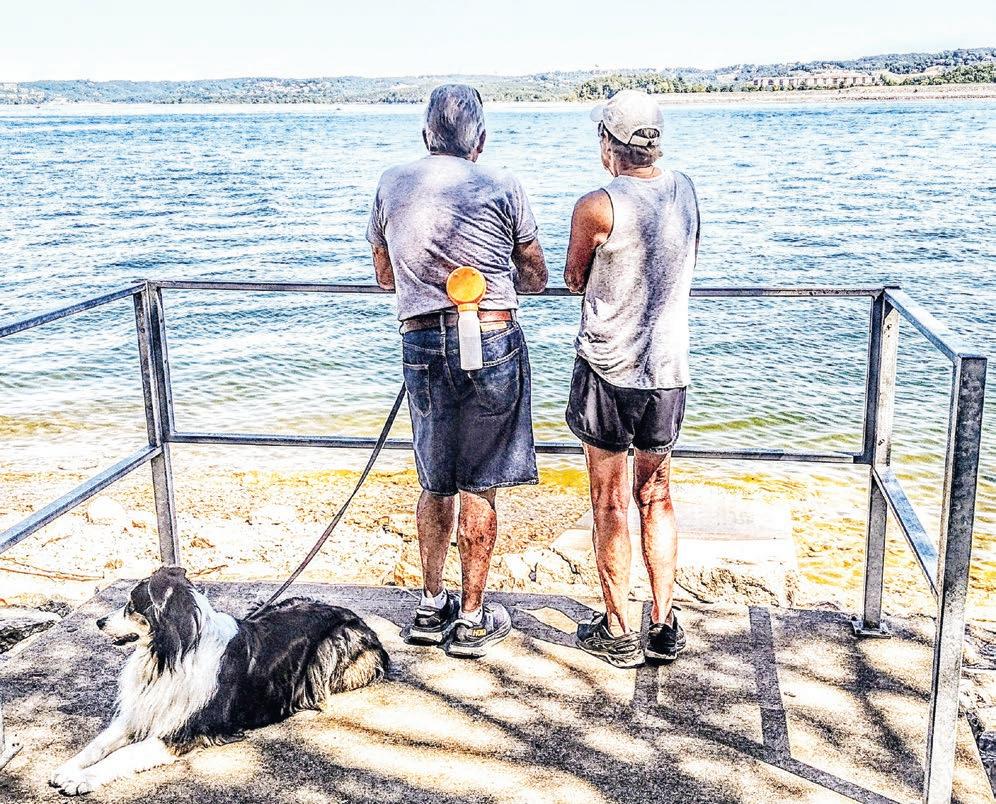
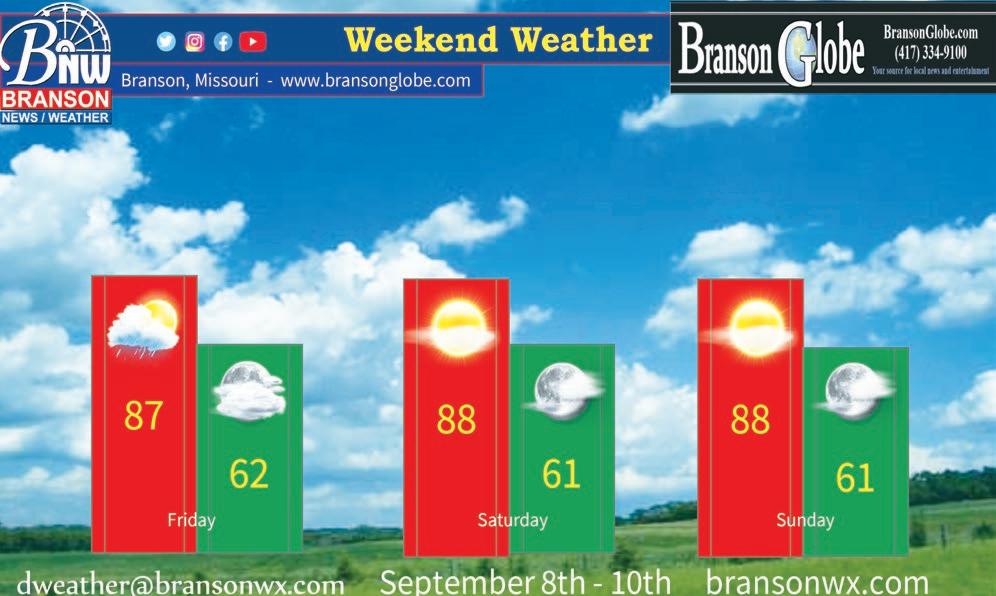
forgive us our sins and purify us from all unrighteousness. – 1 John 1:9 INSIDE: • Around Town 12A • Churches ........... 8C • Classifieds 9C • Entertainment ... 2B • Opinion 4A • Fun & Games 10C • Weather 11A PLUS: Update on the Compton WWRP flood wall SEE PAGE 2A. Linda Page sees world-class illusionist SEE PAGE 1B. Sun Country flies in to BKG. SEE PAGE 1C. WEEKEND WEATHER: Moderating some this weekend, with a chance of rain on Friday. Highs in the upper 80s, with overnight lows in the low 60s. ENJOYING THE VIEW – This kind couple from Arizona is enjoying the view of Table Rock Lake while their dog, Tessa, is enjoying the nearby squirrels. (Photo by K.D. Michaels) Trip to Branson gives children’s home residents ‘a real dream vacation’ Enjoy outfits like this one this weekend at KOA (Courtesy https://koa.com/campgrounds/branson) Visit the Vintage Camper Open at KOA SEE INITIATIVE, PAGE 4C Look! Even an Allosaurus loves reading the new Branson Globe! Meet Al the Allosaurus, the newest fan of the Branson Globe. He tells us he’s not really extinct, just a little shy. Reading the Branson Globe is one of his favorite things to do... even though he has tiny arms,
fingers and
to move his lips when he reads.
he
the Globe so
he’s taken to hiding out in our
You
us
let us know where Al is hiding this week will get a complimentary pass to the World’s Largest Toy Museum! Now, start looking!
September 8, 2023 • Volume 4, Issue #36
only three
tends
In fact,
loves
much
pages!
can help
out by looking for Al each week. The first 10 readers who email us at info@ bransonglobe.com and
UPDATE: Flood wall for Compton Drive Wastewater Treatment Plant
City of Branson UPDATE: A major portion of the initial layout is now complete. Approximately 50% of the primary underground electric has been installed. September is going to be a big month for this project and will see the installation of temporary fencing, excavation work and the arrival of the sheet pile via crane.
COPPER THEFT AT RFD THEATRE – The theft is estimated to have caused six figures in damages.
(Special to Branson Globe)
Copper thieves hit RFD Theatre
Submitted to Branson Globe
Overnight on August 29, copper thieves attempted to steal copper from a transformer outside the RFD Theatre located at 4080 W 76 Country Boulevard in Branson. Electricity to RFD Theatre is provided by White River Valley Electric Cooperative (WRVEC).
“Copper theft is not a victimless crime. Ultimately, our members pay the price,” said White River Valley Electric Cooperative CEO, Chris Hamon.
Beside the cost to repair and replace stolen material, when utilities must focus on copper thefts, it takes their attention away from other important projects in the community to make costly repairs.


The public can help prevent copper theft by calling 911 if they:
• See people working near electric line equipment who are not identified as WRVEC employees or contractors.

• Observe missing or damaged electric equipment.
Notice unusual activity around electric utility equipment.
• See suspicious electric utility work being done late in the evening or overnight. Overnight or weekend work is only assigned to WRVEC crews during outages.
The public is encouraged if they see something suspicious, to say something by calling 911. If possible, take note of any vehicles or persons, and if able, photos and videos of the crime in action.
Opportunities to honor on Monday
BY K.D. MICHAELS, Staff Writer
Two separate events will remember and honor those who lost their lives in the attacks on the United States on September 11, 2001.
The College of the Ozarks will host a 9/11 Memorial Cer-
emony to honor the victims of the 9/11 tragedy. Held at the Lest We Forget 9/11 Memorial on the campus of C of O, the event gets underway at 9 a.m., on Monday, September 11, and the public is invited to attend.
Branson’s annual 9/11 Re-






membrance is set for Monday, September 11, at 6 p.m. at the Branson Landing. This free event pays tribute to the heroic bravery, courage and selflessness of the rescue and recovery workers, fire fighters, police and every person who gave their lives on that fateful day.
Everyone is encouraged to attend one or both of the 9/11 Memorial ceremonies, as we continue, as a city, to “never forget!”
BACKGROUND: The Compton Drive Wastewater Treatment Plant is used to provide sewage treatment for residents and businesses in Branson in addition to parts of Taney and Stone counties.
This project would build a nine-foot-high, permanent flood protection wall around the perimeter of the facility, located along Lake Taneyco-
mo, which is at extreme risk of flood damage. This project is made possible from $13 million in federal and state grant money.
WRVEC announces voting results from its 84th annual meeting

Submitted to Branson Globe White River Valley Electric Cooperative (WRVEC) hosted its 84th annual meeting on Friday, September 1. The meeting was livestreamed and included interactive opportunities for members to participate.
The meeting highlighted general updates from WRVEC. Election results from the eligible board seats were announced and proposed bylaw amendments were passed with tremendous member support. Additionally, there was a live Q&A session where members provided feedback on topics that were important to them that were answered by a live panel.
“What sets cooperatives apart from other electric service providers, is member involvement,” said Cassie Cunningham, Vice President & Chief
Growth Officer. “We are thankful for our members taking the time to be involved in the election process and in using their voices to help set the direction for our organization’s operations.”
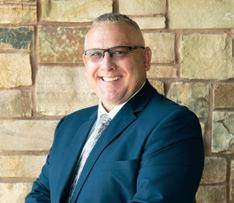
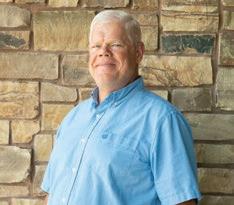
WRVEC members voted in record numbers casting 2,468 votes online or through mail-in ballots. The winners of the 2023 board election are listed below:

• John Cooper (District A)
Jeffrey (Jeff) Hyatt (District C)
Norman (Jim) Britt (District E)
For those who missed the virtual event, a recording will be housed on the cooperative’s website, www.whiteriver.org, for viewing at a later time.
( ) 2A • SEPT. 8, 2023 bransonglobe.com
John Cooper, District A (Special to Branson Globe) Jeff Hyatt, District C (Special to Branson Globe) Jim Britt, District E (Special to Branson Globe)
Counting down to 30 years: IMAX Entertainment Complex announces 30th Anniversary Film Fest
Submitted to Branson Globe
Branson’s IMAX Entertainment Complex is thrilled to announce a kick-off event as part of its year-long anniversary celebration, commemorating 30 years of cinematic excellence and captivating entertainment.
The IMAX 30th Anniversary Film Fest, Sept. 8 through Oct. 8, is an exhilarating showcase of films that spans three decades of IMAX’s very best.
“We opened our doors nearly 30 years ago as the Ozarks Discovery IMAX Theater on October 8 of 1993,” said Tanya Bluto, president of Branson’s IMAX Entertainment Com-
plex. “To celebrate that 30-year milestone, it was important to bring the focus back to our foundation, our beginning – Giant Screen IMAX Adventures.”
A “Giant Screen IMAX Adventure” takes full advantage of the enormous screen size and advanced audiovisual technology that IMAX theaters offer. These films focus on visually stunning content such as nature documentaries, space exploration, underwater adventures and other captivating stories. They’re designed to be dynamic, exciting and immersive, transporting audiences to locations that provide a sense of awe and wonder.
A nearly $2 million upgrade to the IMAX Complex in spring of 2016 ensured that Branson’s IMAX theater was equipped with the most advanced IMAX projection system, IMAX 4K Dual Laser technology. Branson also maintains its standing as the “largest IMAX screen in the Midwest,” with a screen six stories tall and 83 feet wide.
“The lineup for this film fest is perfect,” said Trent Holloway, director of Theater Operations. “The films were chosen to take audiences through the last 30 years, from our very first film in 1993 to 2023 and beyond.”
The IMAX 30th Anniversary Film Fest lineup features six adventures traveling to diverse locations around the globe, filled with vivid storytelling and enchanting wildlife. Each of the films will show daily from Friday, Sept. 8 through Sunday, Oct. 8, 2023.
• 10 a.m. – Ozarks Legacy & Legend


• 11 a.m. – Animal Kingdom
• 12 p.m. – Everest 4 p.m. – Grand Canyon
• 5 p.m. – Ireland
• 6 p.m. – Sea lions
Any of the films can be individually purchased, but to further celebrate 30

Citywide fall cleanup begins September 11



Submitted to Branson Globe
The City of Branson Public Works Department will conduct its annual fall cleanup beginning Monday, September 11, 2023. The city offers this service at no cost to help residents properly dispose of large unwanted items that are not typically picked up by trash haulers.
The cleanup service is available for individual residents of Branson, but not for businesses or commercial entities. The pick-up dates are as follows:
Ward 1 – All items should be out no later than Monday, September 11 – 2 days to finish
• Ward 2 – All items should be out no later than Wednesday, September 13 – 2 days to finish
• Ward 3 – All items should be out no later than Monday, September 18 - 3 days to finish
To find out in which ward


you live, go to the ”GIS & Image Maps” section of the City’s website, BransonMo. gov to see a current ward map.
All items, including brush and limbs, must be at the curb by 8 a.m. on the first day of your Ward’s pick-up. Limbs and brush do not need to be bundled, tied or bagged, but must be cut and stacked at the curb in manageable 4-6 ft. piles. No more than one dump truck load of limbs and brush will be hauled from any residence. Crews will not backtrack and WILL NOT pick up any garbage normally collected by private refuse haulers.
City crews will pick up large and difficult to manage items like old appliances, furniture and mattresses that can’t be picked up by residential trash haulers. For the pickup of exceptionally heavy items such as sofas or large appliances, residents are asked to submit the informa-
tion using the “Report-An-Issue” form on the city’s website, at least 24 hours before their scheduled pick up day.
City crews WILL NOT collect refrigerators, freezers, A/C units, tires, electronics, batteries, bagged leaves or household hazardous waste products including paint, stain or cleaning supplies.
years, a pass to see all six giant screen adventures will be available for only $30. The $30 film fest pass allows the guest to see each film fest film once at any point throughout the film fest.
The IMAX 30th Anniversary Film Fest will also feature a number of throwbacks honoring its 30-year history including a reimagined 1993 logo and design theme, the reintroduction of the notorious “Jim Stafford Ozarks Legacy & Legend was filmed locally and shown exclusively in Branson. (Special to Branson Globe)
Pets of the Week
Dispose of tires at the Taney County Transfer Station, bagged leaves at Hansen’s Tree Service, electronics at Hollister Recycling, Tantone Industries or Computer Recycling of Springfield.


For questions, call Branson Public Works at 417337-8559.

PING. Male, DOB 3-1-2021. Ping and his four litter mates came from a hoarding situation. He has gotten better, but he is still a pretty shy guy. He does not do well with other cats. We are sure with some patience, you’ll become his best friend. As a long-term resident, his adoption fee is discounted to $42.50!
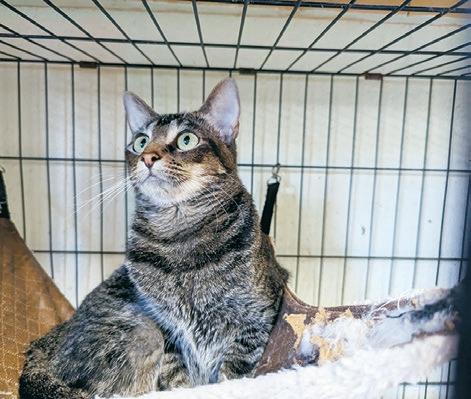
VIOLA. Female Shepherd mix, DOB 1-22-2019. This playful girl loves to be outside and really enjoys water. She is a very loving pup but can seem a little shy at first. Her ideal home is pet free and calm until she can unwind and relax. She was brought in as a stray and has been at the shelter two and a half years. Will you be the one to give her a chance? As a long-term resident, her adoption fee is discounted to $50!

www.turtlecreekbranson.com


info@turtlecreekbranson.com


bransonglobe.com SEPT. 8, 2023 • 3A 9/11 never forget
Tri-Lakes Humane Society, Reeds Spring Call (417)
or visit tri-lakeshumanesoc.org
272-8113
Daytime Server Assistant Wanted A.M. Prep Cook Wanted
SEE IMAX, PAGE 6A
pinion
First Amendment to the United States Constitution
Congress shall make no law respecting an establishement of religion, or prohibiting the free exercise thereof; or abridging the freedom of speech, or of the press; or the right of the people peaceably to assemble, and to petition the government for a redress of grievances.
ROB DOHERTY
Publisher (504) 583-8907 robd@bransonglobe.com
JANET STEINKAMP
Editor editor@bransonglobe.com



GARY J. GROMAN
Independent Journalist
KIM CHAPPELL Ad Designer gabbydor210@gmail.com
PATTY DOERPINGHAUS
Stone Co. Account Rep. (530) 739-5560 pattyd.ads@gmail.com
MARK FEDER Taney Co. Account Rep. (805) 320-3746 shotgunart@yahoo.com
JOHN FULLERTON Area Historian
TIFFANY GRAVETT Staff Writer tiffanykgravett@gmail.com
KAREN HALFPOP Digital/Production Mgr. production@bransonglobe. com
K.D. MICHAELS Staff Writer kdmichaelsbranson1@ gmail.com
LINDA PAGE Entertainment Writer lpage65@centurytel.net

CYNTHIA J. THOMAS Staff Writer cjthomas74@yahoo.com www.cynthiajthomas.com
DARYL WEATHER Weather Forecaster bransonwx@gmail.com
EDITORIAL POLICY:
The comments on opinion pages are the opinions of the writers, and not necessarily those of the Branson Globe, or its staff. Have something to say? Share it with us in your own Letter to the Editor. Letters to the editor sent via e-mail and fewer than 400 words are given preference. Published or unpublished letters become the property of the newspaper and will not be returned. All letters must include, name, address, and verifiable phone number. The editors may refuse publication of any letter that is libelous, in poor taste, or that endorses a business or product. Letters are subject to editing.
BY GARY J. GROMAN a.k.a. The Ole Seagull
Last week, there was an official city-sponsored ceremony at Branson City Hall to sign a marketing agreement wherein the Chiefs designate “The City of Branson/Lakes Area” as the “Official Vacation
Can an alderman’s disrespect honor anyone?
Destination of the Kansas City Chiefs.” This is the first time the Kansas City Chiefs have ever partnered with a city and area to make such a designation.
It was important enough to the Chiefs that the event was attended by Chiefs’ President Mark Donovan and other Chiefs officials.
It was a time to show Branson’s excitement about its support for the Chiefs as valued members of the “Chiefs Kingdom.”
At that time and place, there was no doubt about how Branson and those in attendance felt about the Chiefs and the agreement. Well, except perhaps for
the actions of one Branson Alderman, Chuck Rodriguez. As the officials came out of a private meeting for the ceremony, the Ole Seagull noticed that Rogriguez was wearing a New Orleans Saints hat. At the end of the ceremony, the Ole Seagull asked Rodriquez why he wore the hat to the event. Rodriguez said he was a Derek Carr fan and wanted to honor Derek Carr.
The Old Testament tells us, “There is a time for everything and a season for every activity under the heavens.” An Ole Seagull believes that wasn’t the time or place for anyone,
let alone an elected official of the City of Branson, to purport to honor anyone in that manner.
The decision to wear a New Orleans Saints hat to an official Branson City event honoring the Kansas City Chiefs and designating Branson as “The Kansas City Chiefs official vacation destination” was arrogant and deeply disrespectful. This incident clearly demonstrates a need for more appreciation for the event’s importance, an elected official’s responsibilities, and the principles of respect and professionalism.
First and foremost, the
event was to honor and thank the Kansas City Chiefs for deciding to designate Branson as their official vacation destination. It was a moment to celebrate a partnership that could bring immense economic benefits to Branson. In an Ole Seagull’s opinion, the wearing of the hat of a rival team by an elected city official was a direct insult to the Chiefs’ leadership, their fans, and the city’s interests.
The presence of the President of the Kansas City Chiefs and other Chiefs officials made this event even more significant.
SEE OLE SEAGULL, PAGE 5A
Reflections: Great cars, great bands, great Scripture choruses
go down that trail. . .)
BY CYNTHIA J. THOMAS Staff Writer
Lately, I’ve seen several social media posts from high school friends to the effect that, while we’re not as young as we used to be, we were around for the coolest cars and some pretty awesome music. (The musicians actually played all the instruments, and the harmonies are still great for singing along, but we won’t
Recently, though, I’ve been thinking about something else from my teen and college years—praise choruses that came right out of Scripture, as sitting around a campfire singing “Pass It On” led to setting entire verses or passages to music. And amazingly, as I encounter those verses during my Bible study now, I still remember the tunes and all the words.
A few of my favorites: Beloved, Let Us Love One Another (1 John 4: Sev-en-and-eight, clapclap)
• Hear My Cry, Oh Lord (Psalm 61:2–4)
• We Have Confidence (Hebrews 10:19)
• Lord, You Are More Pre-
cious Than Silver (various versions from Psalm 19)
• The Lord Thy God Is Mighty (Zephaniah 3:17)
And dozens more. If conditions in our culture ever disintegrate to the point Bibles are declared contraband—as they have in some nations—I’ll bet a bunch of us from 1970s and 1980s church youth groups and campus fellowship groups could make a pretty good stab at writing it out from memory based on those choruses!
So, what is the point here?
My point is, setting the verses to music provided a great way to memorize them. When my kids were small, I purchased tapes and CDs of Christian artists singing
children’s choruses straight from the Bible (remember Psalty?) and even wrote a few of my own; now as young adults, all three can still say and sing many of the verses.
Scripture that is committed to memory is one way the Holy Spirit guides us in prayer and in sharing our faith. When I’m feeling stressed or overwhelmed, I still sit down at the piano or with my guitar and sing Psalm 61 and other choruses based on Psalms of lament. During my dad’s last day on earth, singing and praying scripture, along with his old favorite hymns, brought wonderful peace and even helped physically relieve his labored breathing.
Of course, it’s also important to study the context. For example, Jeremiah 29:11 is a great promise and quoted frequently, but realizing it was given during the Babylonian exile helps assure me that even during extended periods of wondering if God has forgotten me, He hasn’t.
If you’re in my age demographic, try resurrecting some Scripture choruses with your kids and grandkids! If you’re not there yet or don’t have a backlog from your teen years, there are memorization plans via devotional apps and Bible apps; but the important thing is, having Scripture memorized has served me well— and it will for you, too.
Been Thinkin’ About... The festival, blind
BY JOSHUA HESTON StateoftheOzarks Media & Design
The countdown to StateoftheOzarks Fest may not be a big deal to you but it is to me. The countdown has to be important to me as so many moving parts go into crafting a successful experience for so many, especially as our current tallies are looking at 100 vendor booths and the last-minute waiting list grows.
“You’ve done this seven times. This is old hat
for you, right?” Hardly. I still get butterflies when the first rounds of vendors roll onto a still-dark Downing Street. I still wake up from nightmares in which I did things like forget to promote the event or forget to put on pants for the big day. No, even with all the lessons of seven years learned, our largest event of the year is best approached with a humble sense of trepidation. For others, StateoftheOzarks Fest might be no big deal. But for me — and I believe my town, and perhaps our region — this festival means something inexpressible yet profound.
StateoftheOzarks Fest is first and foremost a juried arts-and-crafts fair. Respect for true Ozarks artisans — and common folks — is
the heartbeat of StateoftheOzarks, both as an online magazine and as a member community of events. But — seeing as how I am a goofy nerd — I have always layered on as many interesting and surprising aspects of our culture as I can think of, from medieval combat to Japanese anime dance, from goblins to cosplay and Civil War reenactors. It’s a heady mix and makes each year’s festival a once-in-a-lifetime event.
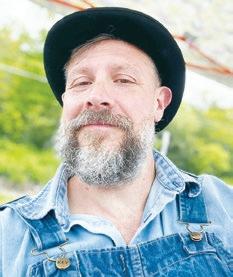
In an effort to do my part, I always try out at least three cosplays (“costumes” for the uninitiated), just to add to the atmosphere. There’s “Hillbilly Josh” which is just me in overalls but some keep mistaking it for a costume. Then there is “Chieftain Josh” which
includes a bowler hat and kilt. Later there is “Cernunnos Josh,” dedicated to an ancient Celtic forest deity with antlers. Lastly, there’s “Plague Doctor Josh” in which I am shrouded headto-toe in cape and wearing a vision-obscuring plague mask. Plague cosplay is creepily unnerving and I can sneak up on close friends without being recognized.
As last year’s festival wound down, I pulled on my plague doctor robes and mask and began navigating the street. Vision severely limited, I essentially could see my feet and little else. Padding southward, I began sounding my location based on voices, working my way through the crowd. Not too far in, I realized I could tell where I was because
I recognized all my vendors’ voices. This was not an anonymous mob. They were friends, compatriots, colleagues, soldiers-inarms, all dedicated to crafting something unique and profound. We were crafting a community, one which will reverberate endlessly, ripples in the time pool, changing, shifting, ever in increasing patterns. An unknowing passerby would have seen an oddly cowled figure slowly stiffen and then relax, knowing nothing of the profundity of the moment. But inside, I realized I would remember this moment through all eternity. A moment of deep amazement. A moment of realization not possible had I not walked the festival, blind.
Breakfast at Tiffany’s: An old farmer with angel’s wings
feel God in a simple smile
front of me. A couple of years before, this scene would have been absolutely frightening to me. Had you looked over and noticed me, I probably would have had tears in my eyes. That is, if I had the strength to look up at you.
BY TIFFANY GRAVETT Staff Writer
Don’t be afraid, for I am with you. Don’t be discouraged, for I am your God. I will strengthen you and help you. I will hold you up with my victorious right hand. Isaiah 41:10
S
itting in a little diner at a table set for one, I gazed in reflection at the single cup of coffee and plate of eggs in
Before that time, I had never experienced such loneliness. It took all the strength I had just to walk into a restaurant alone and see lovers on dates and families enjoying a meal together. I was ashamed to sit in church amongst strong families who were thriving, knowing that mine was falling apart. Sitting alone was embarrassing and uncomfortable. But that day as I looked across the
table with no one looking back at me, I felt surprisingly peaceful there alone with my thoughts, listening to the friendly conversations taking place around me. I realized how far I’d come by the grace of God. Had I never gone through a season of loneliness, I’d have never realized my strength. And now, when I look over and see a table set for one – one who doesn’t have the strength to lift their head – I say a prayer. Then I look at them and smile, hoping they’ll understand the message in my small gesture. That it’ll be ok and they’ll get through this. That this is a season. That maybe, just maybe, they’ll
and know He loves them.
When the time came to pay for my meal, the cashier told me that an elderly man had already taken care of my bill and left. At that moment I felt a deeper sense of God’s presence reminding me that I’m never truly alone. I didn’t get to thank the kind old man – at least not that day. But as if that experience wasn’t miraculous enough, the events that took place a few days later were beyond belief.
I was on my way to work, and my car got stuck in some mud on a side road a few miles outside of town. Knowing there was no way I’d be able to get myself out, I prayed that God would help me. Shortly
after, an old farmer pulled up in a truck, attached a chain to my car, and had me back on the gravel in no time. When I was thanking him, he said, “You look familiar. I think I paid for your breakfast the other day.” Astonished, I proceeded to thank him for that as well.
Not once, but twice, God used that kind stranger to remind me of His words in Isaiah 41:10, “Don’t be afraid, for I am with you. Don’t be discouraged, for I am your God. I will strengthen you and help you. I will hold you up with my victorious right hand.” I’m also beginning to think it’s possible that angels can come in the form of old farmers in overalls and pickup trucks.
4A • SEPT. 8, 2023 OPINION bransonglobe.com
Newspaper, LLC bransonglobe.com info@BransonGlobe.com • (417) 334-9100 • 2460 S. Business 65, Suite 106, Hollister, MO 65672 • P.O. Box 652, Hollister, MO 65673
“Dave Says...” and Stock Market Insights?
find them in our new business section, page 2C.
Looking for Dave Ramsey’s
You’ll
In an Ole Seagull’s mind, it can’t!
Train Up a Child: Why do children bully
try to keep from crying because another child has said something cruel about him/her! Why does this happen?
Sometimes children bully because inwardly they convince themselves that they, themselves are not so bad.
BY PAT LAMB Columnist
It is so sad to watch a child duck its head and
BY HEATHER HAYGOOD Columnist
I am a firm believer in the principle of the same rules that govern a large entity also work in increasingly smaller bubbles of influence, i.e., corporation, Fortune 500, small business, church, family and relationship.
This week let’s look at principles of partnership.
1. Self-awareness
Knowing how you are showing up is always a key to a successful partnership. Are you aware of any toxic traits you have? Do you self-regulate? Do you have the ability to look inward and identify, understand and
Continued from page 4A
These individuals came to Branson to participate in a positive, collaborative endeavor. The wearing of the hat not only displayed a lack of respect for these distinguished guests but also demonstrated a disregard for the honor be-
Sometimes children bully others because they inwardly think that if they can bring another person down, people will think they are better.
Sometimes children bully because they are jealous.
There are other reasons as well. The person bullying may think this makes them the most important person in the room. Of course, we know that isn’t true, but often they do not. How can we handle bul-
Love and marriage
control wayward emotions?
I find that in a job setting most people are better at self-regulation that they are in a romantic relationship. But why would we give less of ourselves to what is supposed to be our longest standing, most important relationship? Lastly, it is no one else’s job to fix our issues. You should not save your issues for a spouse to fix. Long before you enter a marriage you should be working out your issues. When a situation arises that sets off a trigger, you should be equipped to deal with it.
2. Trustworthiness This should be a no brainer, but so many marriages struggle with trust. Many trust issues begin before marriage in our childhood homes or previous relationships. Here is the truth: trust precedes love. Trust is something earned through actions. By the time you’ve gotten
stowed upon the city of Branson by the Chiefs.
Despite the poor judgment shown by one Branson Alderman, Chiefs’ President Mark Donovan conveyed his excitement for the partnership. He said that one of the reasons he believes the relationship will be successful is that the foundational beliefs
to the point of wanting to build a life with someone, you should have established pillars of trust. Trust allows both parties to expose themselves fully without fear of rejection. If someone can intentionally break your trust, it isn’t true love.
(I want to make sure that this isn’t confused with people who expect perfection. No one is perfect and we all miss the mark from time to time. Some people haven’t learned to deal with money for instance and need the space to learn principles of finance, but when trust is a guiding light; the two of them can navigate money issues carefully with love.)
Early on in our marriage, Dominic would ask me if I had learned to trust him. I never wanted to lie, but because of my past I struggled to trust. I would instead say something like this, “I am choosing to trust you be-
of both organizations are aligned. He said, “You guys talk about faith, family, flag, and fun. We talk about faith, family, flag, and football...At the end of the day, we are family-run, Midwestern, and we’re really proud to be associated with Branson.” Remarks that an Ole Seagull feels were genuine and heartfelt.
others?
lying? Here are some suggestions:
1. When a child says something derogatory about another, require that child to write a paper about the good qualities of that person. This will require them to think deeper and give them practice in writing as well.
2. Require the child to


cause I know that you are a good man and I trust you more than I did last year.” It is ok to continue to work through things in marriage if you are doing your work and not expecting your partner to make it right. This brings me to the next principle.
3. Be responsible for yourself. It is not Dominic’s job to make me happy or make me anything really. I am responsible for my emotional well-being, mental well-being, health, relationships with my children, etc. I take responsibility for my own shortcomings without placing blame or projecting my issues onto my partner.

4. Apologize This could easily fit under topic number 3, but it deserves its own mention. Knowing how to apologize shows our partner that we value their love more than our ego and that we have a strong sense of self. Here
The explanation offered by Rodiguez that he wanted to honor Derek Carr is perplexing. Why would someone say they are honoring someone by disrespecting someone or something else? To an Ole Seagull, this particular choice of headgear was calculated and deliberate on this specific occasion,
apologize. If this is a school setting, it may or may not be wise to have the apology done in front of the class.
3. Sometimes a child bullies because they, themselves, feel inadequate. If we can bring others down, we look bigger!
4. The person doing the bullying may be required to tell the class
are a couple principles of apology: Don’t take responsibility for things that aren’t your fault, and an apology should be followed by an action. For example: “I’m sorry that I lost my cool and yelled. I know that I struggle with raising my voice in anger. I am working on this, but can we come up with a plan of action to help me when our conversation starts to get heated?”
5. Learn how to disagree
As in any partnership, you will inevitably have a disagreement. Do whatever it takes to learn how to disagree respectfully. Find a mentor, read a book, go to a counselor or whatever feels comfortable to you. Don’t wait for your spouse to implement principles before you do. Lead by example and apply principle number 3. Be responsible for yourself.
6. Show gratitude I don’t care how long
making it all the more disrespectful.
One can only wonder if any athlete would feel honored by such disrespectful action. He believes that athletes appreciate genuine support and respect from fans and admirers. He finds it especially hard to believe that one with the character of Derek Carr
about the good qualities of the person being bullied. It is interesting to note that many of the reasons children bully are the same reasons that adults gossip about others or are overly critical of others. If we can “nip bullying in the bud,” we would have a much happier world!
you’ve been together. Show appreciation. Learn to say thank you. Gratitude is an easy way to strengthen almost any relationship.
7. Learn to say no
Self-respect is never a bad thing. There are times to be gracious and there are times to say no for the sake of your own well-being. An under rested, unhealthy, wired spouse is not good for anyone. There are seasons of rest just as there are seasons of life in the fast lane. Learn to live in the ebb and flow of life. After all love is a journey, not a destination. If you have been enjoying my articles, please visit hshaygood.com and click The Love Journey tab to order your copy of my new book and sign up for weekly emails. I keep my emails fresh and different from my weekly Globe articles. “Love is a journey not a destination.”
would feel honored by the arrogant disrespect displayed in this case.
The comments on opinion pages are the opinions of the writers, and not necessarily those of the Branson Globe, or its staff. Have something to say? Share it with us in your own Letter to the Editor.
bransonglobe.com OPINION SEPT. 8, 2023 • 5A
• OLE SEAGULL
BVA 913: Veterans Appreciation Day planned for Sunday, October 1

Submitted to Branson Globe
The Branson Veterans of America 913 invites residents of Branson and surrounding communities to the 2023 “Veterans Appreciation Day,” planned for Sunday, October 1, at the Branson Events Center in the Shoppes at Branson Meadows, 4230 Gretna Rd. From 12:30 p.m. to 5 p.m., families can

enjoy entertainment, inflatables and face painting for the kids, and food trucks. The primary purpose of this event is to reach out to veterans who are not affiliated with any veteran’s group or activity. “We believe there are many veterans of all eras who live in the Branson, Tri-Lakes region who do not know what services are avail-

able to them or what organizations that serve veterans do,” said BVA member and event coordinator Dick Burkhalter. “It is our hope that by having this event, many veterans will become more aware of the services and the organizations that provide the services and support.”
Up to 30 organizations that serve veterans are expected to
be represented at the event. The group hopes to reach out younger veterans, who are likely to have young families, while at the same time bringing together older veterans who may not have any kind of veterans group affiliation, meaning they may not be benefiting from mutual support or taking advantage of the available services.
The community is also invited to attend. Many community residents know veterans, and this will be a great opportunity to learn and pass along valuable information as well as enjoy a fun afternoon.
Tri-Lakes Rat Rods & Customs is sponsoring a car show in the parking lot. Trophies will be awarded to
winners of the various categories, and the trophies are handmade and unique! Admission is free to everyone; food will be available for purchase and all veterans will eat free at the catered meal. Pass the word to any veterans you know, and come for some fun and to meet and greet veterans!
Veterans invited to PACT workshop and free toxic exposure screenings
Submitted to Branson Globe
The Veterans of the Ozarks (VOTO) is teaming up with the Veterans and Military Coalition of the Ozarks (VMCO) to conduct a free PACT Act Workshop on Saturday, September 23, at the Elks Lodge, 37 Beach Blvd. in Kimberling City.
From 9 a.m. to 3 p.m., Veterans Administration officials and medical personnel, along with Veterans Service Officers will be on hand to conduct Toxic Exposure Screenings on a first-comefirst-served basis and to help veterans enroll in the VA
healthcare system and submit claims.
The PACT Act (Promise to Address Comprehensive Toxics) is perhaps the largest healthcare and benefit expansion in VA history, and one many feel is long overdue. It expands and extends eligibility for VA healthcare to veterans with toxic exposures and veterans of Vietnam, Gulf War and post-9/11 eras. Among the Act’s provisions are the following:
Adds 20-plus more presumptive conditions for burn pits, Agent Orange,
and other toxic exposures;
• Requires the VA to provide toxic exposure screenings to every veteran enrolled in the VA healthcare system;
• Helps improve research, staff education and treatment related to toxic exposures.


Survivor Benefits are also addressed in the PACT Act:
• A monthly VA Dependency and Indemnity Compensation (VA DIC) payment: You may qualify if you are the surviving spouse, dependent child, or parent of a veteran who
• IMAX
Continued from page 3A
Intro” before each adventure and a renewed “Big, Big, Big” IMAX jingle.
“This event is just the start of a full year of celebrations,” Bluto said. “It’s an achievement to be here in Branson for so many
died from a service-connected disability. A one-time accrued benefit payment: You may qualify if you are the surviving spouse, dependent child, or dependent parent of a veteran who was owed unpaid benefits at the time of their death.
• A survivor’s pension: You may qualify if you are the surviving spouse or dependent child of a veteran with wartime service. Toxic exposure screenings conducted by VA personnel will include questions asking if the veteran
years, and we want to thank our guests and the vibrant Branson community that has made it all possible.”
The IMAX 30th Anniversary Film Fest will count down to the official 30th anniversary on Sunday, Oct. 8, 2023, culminating with a memorable
thinks he or she was exposed to any of these hazards while serving:
• Open burn pits and other airborne hazards
• Gulf War-related exposures Agent Orange
• Radiation Camp Lejeune toxic water exposure

Other possible exposures
All area veterans who feel they may have been exposed to any toxins, regardless of combat experience or era of service, are advised to attend.

Even if you already have a VA disability rating, you are en-
party from noon to 4 p.m. –promising food, cake, giveaways, entertainment and a day of unforgettable fun for the whole family.

couraged to attend in order to get a screening and be placed on the presumptive list. Getting a presumptive rating will not only protect you from future complications as a result of toxic exposure, but will also protect your beneficiaries by ensuring they can continue to receive VA benefits in the future.
Questions or concerns can be addressed to VOTO President Dave “Mac” McAllister, LT USN (Ret) at 417-230-1283. Don’t miss out on this important information about getting the benefits you deserve.
contests, giveaways and future 30th anniversary events, follow our social media: Facebook (https:// www.facebook.com/ bransonimax), Instagram (https://www.instagram. com/bransonimax) & TikTok (https://www.tiktok. com/@bransonimax).
More information on the IMAX 30th Anniversary Film Fest can be found at bransonimax.com. To stay updated on party plans, 6A • SEPT. 8, 2023 bransonglobe.com

bransonglobe.com SEPT. 8, 2023 • 7A
Area school news briefs: Our schools are awesome!



College of the Ozarks dairy featured on KY3’s ‘The Place,’ feature available online
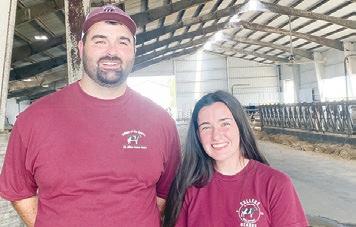
The College of the Ozarks dairy farm was recently featured by KY3 on the television program, “The Place.”

Watch the brief segment at the following link: https:// www.ky3.com/video/2023/08/03/sponsored-place-ozarksheartland-visits-college-ozarks-dairy/.

The video feature was created in July 2023 and aired in August. Michael Gibson, KY3 news anchor and producer, visited the campus and spent time in the dairy operation on July 20. Gibson and his team visited the milking facilities, the Fruitcake & Jelly kitchen, and the Keeter Center to see the production of Nettie Marie’s ice cream, from start to finish.
“Devoted to hard work and the success of the dairy industry on campus, the dairy staff and students work together in a special and unique place,” said Valorie Coleman, public relations director. “They love what they do and are committed to their workplace. This becomes evident as guests visit and watch the cows being milked, walk through the barns with newborn calves, and interact with student workers.”
Ryan Bilyeu, dairy manager and alum of the College, loves that student get to experience every phase of the dairy industry while in his workstation.
“Allowing them to experience every stage of the dairy


industry brings another level of education into the students’ studies,” Bilyeu said. “This makes them better for their future employers and their careers down the road.”
“It’s always like that saying, ‘If you find a job you love, you’ll never work a day in your life,’ and that’s what the dairy industry here is for me especially,” said Niki South, senior agriculture major.
The majors and minors of students who work in the dairy include agribusiness, agricultural development, agriculture education, agronomy, animal science and horticulture.
A new podcast was released last spring on the Branson Podcast Network featuring dairy staff and student workers as well. To listen to the podcast about the College of the Ozarks dairy, visit the following website: https://soundcloud.com/ozarksdynacom/college-of-the-ozarks-our-story-episode-2-a-visit-with-the-college-dairy Hollister Schools honor former School Resource Officer
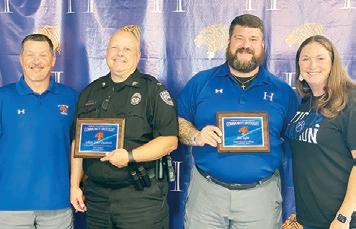
The Hollister R-V School District presented former School Resource Officer (SRO), Bret Taylor, and City of Hollister Police, Chief Schmidt, with its August Community Spotlight Award at the recent board of education meeting. Dr. Brian Wilson, the Superintendent of Schools, presented the award on behalf of the district.
Dr. Wilson expressed gratitude for the SRO program that the police department, City of Hollister leaders, and Taylor have built. “We have the City of Hollister, the Hollister Police Department, and our former SRO Bret Taylor to thank for the great SRO program we have here,” Dr. Wilson stated. “We have a lot to be thankful for and we would not be where we are and have the ability to go farther and continue
Area high school football schedules...
SEE SCHOOLS, PAGE 11A 8A • SEPT. 8, 2023 bransonglobe.com
BRANSON PIRATES (game time is 7 p.m.) 9/1 at Carthage: W 9/8 at Willard 9/15 Nixa 9/22 at Carl Junction 9/29 Neosho 10/6 Republic 10/13 at Ozark 10/20 Webb City FORSYTH PANTHERS (game time is 7 p.m.) 9/1 Buffalo: W 9/8 Clever 9/15 at Fair Grove 9/22 at Skyline 9/29 at Diamond 10/6 at Strafford 10/13 Butler 10/20 at Springfield Central HOLLISTER TIGERS (game time is 7 p.m.) 9/1 East Newton: L 9/8 Marshfield 9/15 at Reeds Spring 9/22 Aurora 9/29 at Logan-Rogersville 10/6 Mt. Vernon 10/13 at Springfield Catholic 10/20 at Lamar REEDS SPRING WOLVES (game time is 7 p.m.) 9/1 Nevada: L 9/8 at Springfield Catholic 9/15 Hollister 9/22 at Marshfield 9/29 at Seneca 10/6 Aurora 10/13 at Logan-Rogersville 10/20 Mt. Vernon
Ryan Bilyeu, dairy manager and alum of the College, loves that students like Nicole South get to experience every phase of the dairy industry while in his workstation (Special to Branson Globe)
Left to right: BOE President Andy Penrod, Taylor, Schmidt, BOE Secretary Renea Daniels (Special to Branson Globe)

bransonglobe.com SEPT. 8, 2023 • 9A
DEATH NOTICES
Boyd, Regina Rae 52 Merriam Woods Cremations of the Ozarks
Brown, Charley Allen 83 Forsyth Snapp-Bearden Forsyth Chapel
Gregory, Leroy James 80 Hollister Snapp-Bearden Funeral Home & Crematory


*Howard, Nel Evelyn 80 Cape Fair Stumpff Funeral Home, Crane

Manson, Donald Allen 82 Hollister Cremations of the Ozarks
ELIYANAH LEILANI WITCHER, 0, BRANSON
Eliyanah Leilani Witcher left this earth before entering it on August 28, 2023, at Cox Hospital in Branson, Missouri. Eliyanah’s life was years in the making and her birth eagerly anticipated.
“My God has answered me with a heavenly garland of flowers.”
When we picked out your name, we had no idea that the “heavenly” would be literal. Every dream and plan we had to bring our little girl into this world was crushed in a moment. Our eyes are sore and puffy, our hearts completely and totally broken. Our only comfort in this moment is knowing that she is enjoying a beautiful eternal life with Jesus. We cannot wait to be with her again—to see her personality and spirit.
Eliyanah is survived by her parents Mark C. and Hannah (Foster) Witcher; grandparents Mark and Betsy Foster, Branson, Missouri; and Mark G. and Christina Witcher, San Diego, California; uncles and aunts Joel Fos -
ter, Joseph and Katelyn Witcher, Scott and Fernanda Witcher, and Blake and Julia Witcher; cousin, Denver Lynn Witcher; one cousin on the way; great-grandparents; and other extended family.
The family wishes to thank the staff at Cox Hospital Branson for their care and compassion, Cremations of the Ozarks for their compassion and providing of services, and family, friends and colleagues for all of their love and support during this difficult time.
Honoring the family’s wishes, no services will be held. In lieu of flowers, the family kindly suggests donations be made to Elevate Branson. Arrangements and cremation are under the direction of Cremations of the Ozarks. To leave an online condolence, please visit www. cremationsoftheozarks. com.
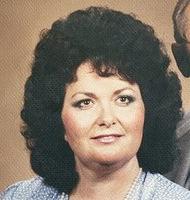
NEL EVELYN HOWARD, 80, CAPE FAIR
Nel Evelyn Howard was called home on August 31, 2023, to be reunited in all eternity with her late husband Dr. Glenn L.
Howard.
Nel was born on August 6, 1943 in Granite City, Illinois, to Evert Faulconer and Cecil (Risner) Faulconer. She married Dr. Glenn L. Howard on May 13, 1978.
Nel lived a full and remarkable life, leaving behind a legacy that will forever be cherished in our hearts. At the age of 80, she was truly young at heart, always radiating a vibrant energy that brought joy to everyone around her.
Nel was not only a pillar of strength within her family but also a trailblazer in her field. As the first woman contractor in Fresno, California, she broke barriers and paved the way for future generations. Her unwavering determination and passion for her work set an inspiring example of how you should never limit your potential. In 1992, she moved to Cape Fair, Missouri, and built her empire: Edgewater Village.
Navarro, Mande Aliena 30 Merriam Woods Stumpff Funeral Chapel, Kimberling City
Scott, James (Jim) H. 87 Kissee Mills Snapp-Bearden Funeral Home and Crematory
Tyler, Judith (Judy) Ann 79 Reeds Spring Stumpff Funeral Home, Kimberling City
Wiatt, John Edward 70 Lampe Stumpff Funeral Home, Kimberling City
*Witcher, Eliyanah Leilani Branson Cremations of the Ozarks
Her love for her family knew no bounds. Nel’s kindness and compassion were evident in her every gesture. She treasured each moment spent with her loved ones, and her presence always made you feel safe and cherished. She taught us the true meaning of unconditional love.
Apart from her work, she had a talent for turning ordinary ingredients into culinary masterpieces. Her delicious creations brought people closer together, creating unforgettable memories around the dinner table. Her kitchen was a place of warmth and togetherness, filled with laughter and the aroma of her signature dishes.
But beyond her external beauty, Nel possessed a heart of gold. Her inner beauty shone through in the way she treated others with kindness, respect and understanding. She touched countless lives and left a lasting impact on all who had the privilege of knowing her.
Nel was proceeded in death by her husband


Dr. Glenn L. Howard; her parents; son Daniel Smithey; brother Evert Faulconer Jr. and sister and brother-in-law, Hazel and Obie Newsom.
Nel is survived by her son Michael Smithey; sister Elizabeth (Warren) Ghens; brother James (Nancy) Faulconer; her granddaughters, Nicole (Carla Campbell) Smithey and Sara (Nick) Penteris; her great granddaughter Olivia Penteris; and her K-9 companion Jethro. Nel is further survived by her nieces, Robyn Shope, Julie (Robert) Lutes, and Ronda (Don) Broombaugh; her nephews, Glen (Rose) Newsom, James Newsom, James Faulconer Jr., Kenneth Helm, and Andrew (Jamie) Ghens and many great nieces and nephews, cousins, as well as many friends.
As we bid farewell to Nel, let us celebrate her life and the profound influence she had on us all. Though she may no longer be with us physically, her spirit will forever guide and inspire us. May her memory be a blessing and may her love continue
to fill our lives.

Nel’s family would like to give a special thanks to Phoenix Home Care and Hospice, Jacob’s House— especially Ms. Maxine and Ms. Carmen, Lee and Inez Risner, Harold and Charlotte Barnette, Bonnie Farley, and Pastors Ron Barrett and Dan Reed.
A celebration of life was held on September 7 at Edgewater Community Church (202 Edgewater Village Dr. Cape Fair) with Pastors Dan Reed, Harold Barnette, and Ron Barrett officiating. Interment at Cape Fair Cemetery.
In lieu of flowers, please make a donation to Pregnancy Life Line and/or Harmony House in Nel’s honor. Cremation was under the direction of Stumpff Funeral Home, Crane, MO.
“It never crossed my mind that there was something I couldn’t do.”
-Nel Howard
10A • SEPT. 8, 2023 bransonglobe.com
SELECT WEEKENDS SEPTEMBER & OCTOBER PURCHASE TICKETS AT MUCITYCENTRE.COM
CENTRE
KING'S AT MUSIC CITY
PRESENTS
Continued from page 1A
agers and some family members went to Branson. It took an eight-vehicle caravan to shuttle the 61-member entourage on the four-hour drive. The trip was made possible by a $30,000 donation from an anonymous donor who doesn’t even live in the state.

“She just wants these kids to get to know Jesus,” says Alan B. Bixler, 53, who recently celebrated his first anniversary as executive director of COMPACT Family Services. “She’ll say constantly, ‘We’re still
Continued from page 8A
getting these kids to know Jesus, right? Take them on vacation so they can get to know Jesus.”
Hillcrest is one of several agencies operated by COMPACT, the Assemblies of God’s national child welfare agency. It offers foster care, adoption and family assistance programs. With offices in Arkansas, Missouri and Oklahoma, Bixler is talking with parties in other states, with an eye on eventually expanding services nationwide.
The shift in recent years in residential care from a long-


to grow, without them and their leadership.”
Stepping in as SRO for the start of the 2023-24 school year is former board of education member and Corporal for the Taney County Sheriff’s Office, Chris Kaempfer. “I am truly honored to step into my role as the Hollister School Resource Officer,” Corporal Kaempfer shared. “I am fueled by the excitement of contributing to the growth, well-being, and success of Hollister students. Together, with the school community, we will continue to build upon the foundation laid by the Hollister Police Department and Taylor. I am committed to building positive relationships, nurturing trust, and ensuring that every student can pursue their education without any hesitation. This opportunity is not just a job for me; it’s a chance to make a lasting difference in the lives of our future leaders.”
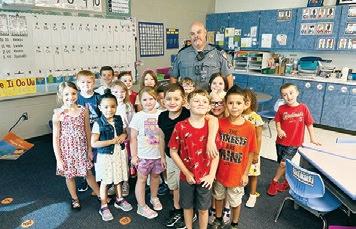
“We are very fortunate to have the relationships we do with the City of Hollister, the Hollister Police Department, and the Taney County Sheriff’s Office,” Dr. Wilson remarked. “The way each of these organizations work together and are willing to come alongside each other and Corporal Kaempfer to ensure a smooth and seamless transition is a testament to what a truly special place this community is.”
“We will be forever grateful for the years that Bret Taylor served as our SRO and the selfless service he gave to our students, staff, and community,” Wilson said.
Reeds Spring Freshman golfer wins tournament
The Reeds Spring High School girls golf team hosted a nine-hole match at Thousand Hills on August 29 and freshman Saylor Johnson won by shooting a 41. The team also competed at the Seymour Invitational later in the week.

term to short-term (typically one year) focus—mandated by the Family First Protection Act—made the recent family vacation that much more meaningful.
Seeing the kids’ faces when the horses rode in during Dolly Parton’s Stampede and all the food that went along with the show let Bixler know the children appreciated the time. Before going to see “Queen Esther,” a staff member led a devotional time so the students would understand the dynamics of the Old Testament story before watching
Volleyball: Reeds Spring High School’s volleyball team went 2-0 last week, defeating Springfield Central in four sets and Seneca in three sets.
the two-and-a-half-hour live stage production.
“Some of the kids may have grown up in church, but for others it’s a completely foreign thing,” Bixler says. “They have no knowledge of church or Bible stories. We laid that foundation and I think that was helpful.”
The break was a wonderful time for the director to be able to connect with employees and residents—which he doesn’t often get to do because of his travel schedule. Bixler also had some “pivotal” conversations with


residents and taught a couple of the special needs children how to play pool, including holding a cue stick and hitting the ball.
“You have moments to do that when you’re removed from your routine,” says Bixler, who is familiar with Hot Springs because of his time there as a youth pastor in the 1990s. “Vacation and other breaks happen because of faithful donors making it possible to provide extras for these kids.

We’re donor-reliant.”



Because all foster children have state case managers, and

some residents are developmentally disabled, Pate points out that securing permission slips and handling other logistics required a lot of behind-the-scenes work. But she knows it was worth it.

“I still hear them talking about it,” Pate says. “We had a mission team here the first week of August and one said, ‘You just went on vacation, didn’t you?’ The kids were telling them all about it and were still excited about it. It clicked with them. It’s something they’re going to take with them for the rest of their lives.”
that will be built behind the middle school.
The district’s wolf mascot has long been a unifying symbol of the five communities that make up Reeds Spring Schools. Wolf Pack Park reflects that spirit of unity, strength, and camaraderie.
“We are excited to introduce Wolf Pack Park as a place where our community can come together, enjoy outdoor activities, and create lasting memories,” said School Board President Perry Phillips. “The name not only pays homage to our school’s rich history but also emphasizes the idea that we are all part of a larger family – a wolf pack – working together to make our community stronger.”

Softball: The Lady Wolves softball team dropped two games last week, falling to Hartville 15-5 and to Nevada 14-0.
Football: Nevada defeated Reeds Spring 46-19. Quarterback Blandy Burall threw a touchdown pass and also rushed for a touchdown. Receiver James Dowdy caught the touchdown pass, and Chris Daniels added a rushing touchdown.
Cross Country: At Strafford, Connor Love placed 11th and Max Hirschi 20th as the Reeds Spring boys finished fifth overall. For the girls, Aubree Davis placed 18th and Kaylee Geniuk was 21st.
Tennis: The RSHS girls tennis team lost to Aurora 6-3, lost to Clever 9-0, and beat Parkview 9-0. Against Aurora, Haven Hodges and Reese Phelps both won their singles matches and won as a doubles team. Reeds Spring School Board names park

After careful consideration and significant community input, the Reeds Spring School Board has chosen Wolf Pack Park as the name of the much-anticipated community park
Wolf Pack Park, with its scenic walking trails, biking trails, fully accessible playground, picnic area, tennis courts, pickleball courts, basketball court, and disc golf course, is poised to become a focal point for leisure and recreation.
The selection of the park’s name was the result of a collaborative effort, with more than 150 suggestions from community members. The district hopes to begin infrastructure work on the park in the coming weeks.

bransonglobe.com SEPT. 8, 2023 • 11A
• SCHOOLS
Fully Licensed & Insured Chimney Sweeps • Gas Fireplace Services • Pellet Stove Services • Inspections & Repairs • Installs & Conversions 417-699-2424
• DREAM VACATION
Kaempfer with students during the first week of school (Special to Branson Globe)
Saylor Johnson (Special to Branson Globe)
Artist’s rendering of Wolf Pack Park (Special to Branson Globe)
Around Town: Here’s what’s going on in the Tri-Lakes
SEPTEMBER
• 8 & 9 New original musical performance in outdoor theater at 13th century castle, Chateau Charmant. Dinner with the cast available and 7:30 evening performance. Tickets available at https://castleshire. ticketspice.com/httpswwwcastleshireorgfaire-rapunzelhtml.
• 9 Branson KOA will host the Vintage Camper open camper, 10 a.m.-1 p.m. Open to the public to stop by and view the vintage campers. All proceeds go to Care Camp.
• 9 Rapunzel: The true story, a new musical, acted out in the outdoor theater at a 13th century castle, 2:30 p.m., Chateau Charmant! Come early and enjoy a small pop-up faire or have dinner with the cast for an additional fee. https:// castleshire.ticketspice. com/httpswwwcastleshireorgfaire-rapunzelhtml.
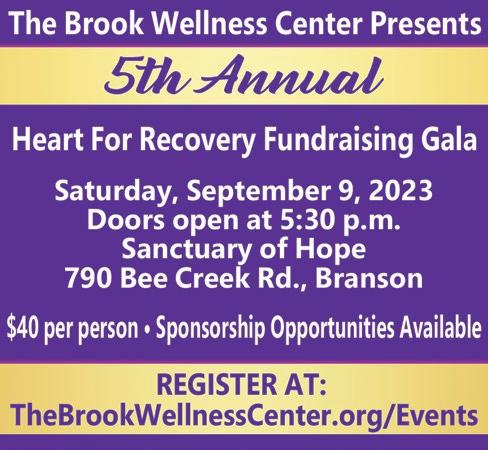
• 9 Brook Wellness Center 5th Annual Heart for Recovery fundraising gala. Doors open at 5:30 p.m. Sanctuary of Hope, 790 Bee Creek Road, Branson. $40 per person. Scholarship opportunities available. Register at TheBrookWellnessCenter.org/Events.
12 Neighborhood watch planning meeting, at City of Kimberling City Community Center/City Hall, 6:30 p.m. Open to all Kimberling City residents. At least one citizen from each neighborhood requested to attend.

• 13 Kimberling Area Library’s Learning on Wednesday, “Prevention of Falls: Powerful Information for Well-Being” Program begins at 10:15 a.m. in Kimberling Area Library Community Room. Attendance is free. Go to www.kalib. org to find other upcoming educational opportunities.
• 13 Christian Women’s Connection (Stonecroft Ministries) invites all women to lunch and for a special presentation by Sylvana Airan who describes her life in Pakistan. Held at 11:30 a.m. at Point Royale Clubhouse, 142 Clubhouse Dr., Branson. Meal is $17. Reserve by 9/11 by calling 417-294-1287.
• 13 Jukebox Winos, Wednesdays, 6-8 p.m., Roadhouse 165, 892 Hwy 165, Branson. No cover. www.jukeboxwinos.com.
14 The 50th annual Autumn Daze, presented by Downtown Branson Betterment Association,
FREE downtown festival with more than 100 vendors, featuring crafts, food trucks and more.
Thurs., Sept. 14 - Sat., Sept. 16 behind Dicks 5 & 10 on the corner of Atlantic & Commercial St.
• 15 Culpepper & Merriweather Circus, Taney County Fairgrounds.

Show times: 5:00 and 7:30 p.m. Info: https:// cmcircus.com. Tickets: cm-circus.squire.site.
• 15 Rapunzel: The true story, a new musical, acted out in the outdoor theater at a 13th century castle, 6:30 p.m., Chateau Charmant! Come early and enjoy a small pop-up faire or have dinner with the cast for an additional fee. https:// castleshire.ticketspice. com/httpswwwcastleshireorgfaire-rapunzelhtml.
• 15 & 16 The Kimberling City Elks Lodge 2505 to host Junk in the Trunk, 8 a.m.-3 p.m. both days.
To sell items, rent parking space for $20 that goes toward fundraising budget for area projects. Contact Keoka Ketcher at 417-818-6463 or Deb Heckler at 815-7358626 to rent a spot to sell your junk.

15 & 16 Two-day Christmas sale, from 8 a.m.-4 p.m. both days at Our Lady of the Ozarks, 951 Swan Valley Drive, Forsyth. https://OurLadyoftheOzarks.com.
15-16 Fly Fishers International Fly-Tying rendezvous. 9 a.m.-5 p.m. Fly tyers from around the country. Raffles and auctions. Branson-Hollister Lion’s Club, 1015 East State Hwy 76, Branson, MO 65616. https://www.flyfishersinternational.org.
• 15 & 16 New original
musical performance in outdoor theater at 13th century castle, Chateau Charmant. Dinner with the cast available and 7:30 evening performance. Tickets available at https://castleshire. ticketspice.com/httpswwwcastleshireorgfaire-rapunzelhtml.
• 15-17 H2Ozarks 23rd annual Shoreline Cleanup Event. To register and/or for sponsorship information, visit the H2Ozarks website at https://h2ozarks.org/ events/cleanup.
• 16 Rapunzel: The true story, a new musical, acted out in the outdoor theater at a 13th century castle, 2:30 p.m.and 6:30 p.m., Chateau Charmant! Come early and enjoy a small popup faire or have dinner with the cast for an additional fee. https://castleshire.ticketspice.com/ httpswwwcastleshireorgfaire-rapunzelhtml.
16 Rock the Spectrum: A benefit event & concert for families with children on the autism spectrum, 2-10 p.m., at the Branson Landing. All monies raised will go to directly help families affected by autism in Branson and surrounding areas. For more info, please see, https://www. facebook.com/Rock -

TheSpectrum


19 Tuesday Talk presentation at Branson Centennial Museum (120 S. Commercial St.), 12:30 p.m., by Ozarks storyteller and teacher, Larry Sifford Monthly talks are planned and hosted by Branson Centennial Museum and the White River Valley Historical Society. wrvhs.org.
• 20 Jukebox Winos, Wednesdays, 6-8 p.m.,


Roadhouse 165, 892 Hwy 165, Branson. No cover. www.jukeboxwinos.com.
• 21 Taney County Federated Republican Women’s meeting, 6 p.m, with featured speaker Taney County Republican Central Committee member, Susan Bearden. Oaxaca Mexican Restaurant, 15920 U.S. Highway 160, Forsyth.
22 Red Cross Blood Drive, 11 a.m. to 3 p.m. at the Lake Taneycomo Elks Lodge, 12951 U.S. Hwy 160, Forsyth. Contact 800-733-2767 or redcrossblood.org to schedule an appointment. Walk-ins are welcome. Please consider donating as there is a shortage of blood.
• 22 Blood drive at Our Lady of the Lake Catholic Church, at the Parish Center, 202 Vaughn Drive, Branson. 11 a.m. https://redcrossblood. org

23 Craft fair fundraiser for the Relay for Life of Branson. 8 a.m.-1 p.m. Vendors needed. Inside at the Lake Taneycomo Elks Lodge, 12951 U.S. Hwy 160, Forsyth. Vendor tables $10 each. Contact Terri Williams, 417-230-6200; terri6536@gmail.com for more information; deadline for vendor space is September 15.
24 Branson Terry Music Awards, Branson Famous Theatre, 645 State Highway 165. Festivities start at 1 p.m. Tickets are $25 per person and provide help for our entertainment community in times of need. For tickets, call All Access Branson at 417-3322121.

• 27 Jukebox Winos, Wednesdays, 6-8 p.m., Roadhouse 165, 892 Hwy 165, Branson. No cover. www.jukeboxwinos.com.
• 28 Learn Hands-Only CPR for FREE! Class
registration now open by going to this link: https://hollisterchamber. net/events and scrolling down to Hands-Only CPR Class. One-hour class held at Taney Co. Ambulance District, 106 Industrial Park Drive, Hollister, beginning at 9 a.m. Park at rear of building.
• 28 Yarn Tanglers Guild presents “Crochet Basics for Beginners” 6-hour course is three 2-hour sessions on Thursdays: Sept. 28, Oct. 5 and Oct 12 from 6-8 p.m. Cost: Yarn Tangler Members, $60; non-members, $75 with all necessary supplies provided. Register at https://yarntanglersguild.wixsite. com/branson/event-details-registration/ ytg-presents-crochet-basics-for-beginners. Contact Shannon Blessing via email (shannon. blessing@outlook.com) or text, 870-688-9308. Deadline for registration is September 21. Payment is due at time of registration.
• 29 & 30 Stone County Fair On The Square in Galena, MO. September 29: 5 to 9 p.m. and September 30: 10 a.m. to 9 p.m.


• 29 & 30 Shepherd of the Lakes Lutheran Church at 13904 Hwy 160 in Forsyth is having a rummage and bake sale, Fri. & Sat., Sept. 29 & 30: Fri. 7 to 4 pm.; Sat. 7 to 12 p.m. in the back of the church inside.
• 30 Taking Aim at Cancer: Clay shooting event, fundraiser for Relay for Life of Branson. Ozarks Shooter Sports Complex, 8:30 a.m. to 11:30 a.m. For more information and registration, contact Ozark Shooters at shoot4me@centurytel. net or call 417-443-3093. Mail registrations and fees to Ozark Shooters, 759 U.S. Hwy. 65, Walnut Shade, MO 65771.
12A • SEPT. 8, 2023 bransonglobe.com
MOVIES september 8 - 13 TIMES SUBJECT TO CHANGE WITHOUT NOTICE. BRANSONIMAX.COM BRANSONMEADOWSCINEMA11.COM MY BIG FAT GREEK WEDDING 3 E 1:00, 4:00, 7:00 THE NUN II R 1:30, 4:30, 7:20 EQUALIZER 3 R 12:50, 3:20, 7:00 THE HILL W 12:30, 3:30, 6:50 BLUE BEETLE E 12:30, 4:00, 7:10 STRAYS R 1:30, 3:50, 7:10 MEG 2: THE TRENCH E 12:45, 3:20, 6:40 TEENAGE MUTANT NINJA TURTLES W 1:00, 4:00, 7:20 BARBIE E 1:30, 4:10, 7:10 MISSION IMPOSSIBLE E 12:30, 3:40, 6:50 THE SOUND OF FREEDOM E 1:00, 4:10, 7:10 NUN II IMAX R 1:15, 7:20 OZARKS: LEGACY & LEGEND W 10:00 ANIMAL KINGDOM Q 11:00 EVEREST W 12:00 GRAND CANYON W 4:00 IRELAND Q 5:00 SEA LIONS Q 6:00 THE NUN II R 4:00 GRAN TURISMO E 12:40, 7:00 OPPENHEIMER R 2:00, 6:50 EQUALIZER 3 R 12:40, 3:30, 7:10 IMAX ELITE Cinema
Area Entertainment: World class illusionist

The Branson entertainment scene is fortunate to have several great illusionists performing in town and ranked right up there as one of the greats and a personal favorite is Reza John Borchardt, known on stage as simply Reza.
BY LINDA PAGE
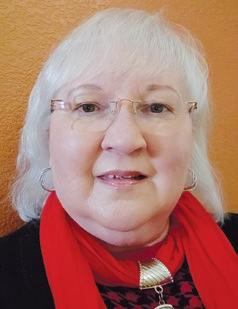
Reza is one of today’s most highly sought after touring illusionists, delivering spectacular performances worldwide.

However, it took many years of honing his skills to reach this level of success. He was born in 1986 and his interest in magic began at the early age of six when he saw his first magic show at his elementary school in Brookings, South Dakota. For his seventh birthday he received his very first magic kit and put on his own magic show at his school. By the age of 14 Reza was
performing for resorts and large corporations across the Midwest and at age 15 he arrived in Branson. His family had vacationed in Branson often when he was growing up and he always knew this was where he wanted to be. Since that time he has performed hundreds of shows here and was voted Branson’s Magician of the Year in 2016 and 2021.
Reza has performed his


“Edge of Illusion” show all over the United States and several other countries, earning him the title of “the nation’s top touring illusionist.” He is currently wowing audiences at the Branson Famous Theatre located at 645 Hwy. 165.
His appearance on TV networks such as MTV, A&E, The CW, PBS, Reelz, CX, Fuji and Telemundo and in live venues

including the Alamodome (San Antonio), Phillips Arena (Atlanta), Villanova Pavilion (Philadelphia) and Mundo Imperial Forum (Acapulco) has turned this young prodigy into a top star in the industry. Reza has been seen on Penn & Teller: Fool Us, Duck Dynasty and other reality shows in over 31 countries.
Even though “Edge of


Fact: Cows who attend college produce better ice cream. CONVENIENTLY LOCATED TWO MILES SOUTH OF BRANSON OFF HWY 65. KEETERCENTER.EDU / 417-239-1900 ELE VATE YOUR ICE CREAM EXPERIE NCE WITH PREMIUM G RADE ICE CREAM, HAND-CRAFTED DAI LY FROM OUR OWN DAIR Y SEPT. 8, 2023 • SECTION B
Reza, just hangin’ out...in front of a giant drill. (Photo courtesy Reza)
REZA,
2B
SEE
PAGE
Entertainment Writer
Rock the Spectrum designed to promote awareness and raise funds

needed funds for families with children on the autism spectrum.
It all began in 2008, when Cristal and Brent Hedrick’s Goddaughter, Shaylee, was diagnosed with autism. Cristal, along with Shaylee’s mother, Michelle, spent days searching for the best possible resources for young Shaylee.
The pair discovered Generation Rescue, based in California. After visiting the organization, they quickly realized that Generation Rescue offered the resources to help Shaylee and that something similar was desperately needed in the Branson area.

they go. In 2009, the first Day for Shay event was held in the Area 57 location in Branson, with all proceeds benefiting Generation Rescue, for bio-medical grants. The Day for Shay event continued for the next two years, helping families get needed help and for their children.
as the foundation makes many strides in the community.

Benefit for Inclusion, is held at the Branson Landing. The benefit concert and other activities raise


FILM FEST FILM FEST



september 8 – october 8


We opened our doors on October 8, 1993 as The Ozarks Discovery IMAX Theater. To celebrate 30 YEARS , we’re hosting an IMAX Film Fest taking you from our very first Giant Screen

The Hedrick family soon founded the Shay and Pals foundation, in honor of Shaylee, to bring about awareness of autism, with a desire to make those with sensory issues feel welcome and safe wherever
By 2012, the Day for Shay fundraiser grew and evolved into Rock the Spectrum, and began to include events for children and families throughout the day and a fundraising concert at night, continuing to provide grants through Generation Rescue, as well as funds for local families of children on the autism spectrum.

In 2015, Rock the Spectrum moved to the Branson Landing. Rock the Spectrum and the Shay and Pals foundation continue to grow and evolve,
This year’s Rock the Spectrum is bigger and better than ever. Set for Saturday, September 16, Rock the Spectrum will include fun-filled activities by day and a fabulous concert at night. Attendees will enjoy bounce houses and activities for the kids, a beer garden and much more. At night the stage comes alive with performances by The Purple Experience—A Prince Tribute Band, The Dirty Saints and Damsel.
Rock the Spectrum, in honor of Shaylee, is a benefit for inclusion for area families with children on the autism spectrum. The event, to be held Saturday, September 16, runs from 2 p.m. until 10 p.m., and will be held at the Branson Landing.
Continued from page 1B
Illusion” is a grand scale production, Reza is not flamboyant, but rather is a soft-spoken, chill guy who connects with his audience on a personal level. When he asks for volunteers from the audience, hands are waving and people are yelling “pick me” and this is not just the kids.
I recently attended Reza’s show and was pleased to see a full house enjoying the show. There were all ages there, and I loved to watch the expressions on the faces of the youngsters as Reza performed his magic and included some of them in the show.

At the start of the show we see an empty stage and in the blink of an eye Reza appears on a motorcycle which is only the beginning of a couple hours of fun and wonderment. People disappear, shipping containers appear, augers pierce a human body, a wedding ring from an audience member turns up in a strange place and the magic goes on and on.
At intermission audience members have a chance to go on stage and have a picture taken with Reza. Then after the show there are backstage passes available to see the magic that goes on behind the scenes.
I overheard a man seated behind me say, “He’s kinda scary,” which I believe was meant as a great compliment. There were some scary, breathtaking moments but you just can’t not look. You can check out Reza’s schedule at REZALIVE.COM or call 417-231-4999 for information and tickets.
2B • SEPT. 8, 2023 bransonglobe.com
• REZA
IMAX
Featuring SIX INCREDIBLE FILMS
SHOWING DAILY – counting down to our 30th Anniversary! BRANSONIMAX.COM 417-335-4832 OUR FIRST OUR ORIGINAL THE FAN FAV 2023’S PICK FIRST LOOK ALL NEW SEE FILMS INDIVIDUALLY OR SEE ALL 6 FILMS FOR ONLY $ BY K.D. MICHAELS, Staff Writer What started in 2009 as a small event to raise money and awareness has become one of the area’s largest and most anticipated annual fundraisers. Rock the Spectrum—a
Adventure to today and beyond
–
GET FREE FOOD, GROCERIES, $10 GAS ON YOUR 1ST VISIT. CALL 417-337-3772
Rock the Spectrum (pictured here in 2022) will rock Branson Landing on Sept. 16. (via Facebook)

bransonglobe.com SEPT. 8, 2023 • 3B
Catholic Church in Forsyth offers unique Christmas collectibles for sale
BY K.D. MICHAELS, Staff
Writer

Christmas is arriving a bit early in Forsyth this year.
The Our Lady of the Ozarks Catholic Church in Forsyth is holding a Christmas extravaganza
Sale September 15 and 16.

The ladies of the Parish Council of Catholic Women were gearing up for their upcoming fall event when they were met with an unexpected blessing.
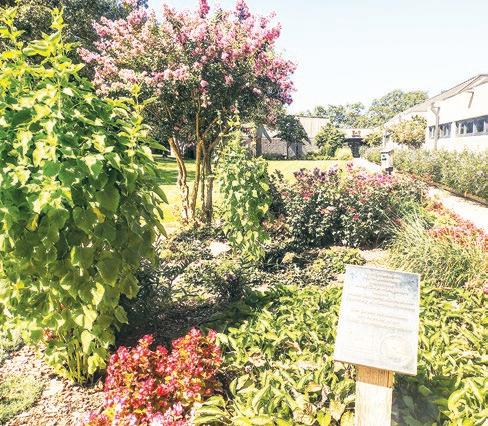
“Our rummage sale pickup posse received a call to pick up a few items for our upcoming fall rummage and bake sale (October 5, 6 and 7),” ex-
plained Barbara Sakowicz Peterson. “When the posse arrived, they were surprised to find that a ‘few’ items grew to over 300 collectible, vintage holiday decor items, including the highly collectible Department 56, Disney Animatronics from the 1990s, Hallmark, and other specialty items.”
The donors had decided to give the majority of their Christmas decor collection to the Catholic Church as they believed it would benefit the small church and contribute to the success of their fall sale.
“This special couple, ‘Mr. and Mrs. Christmas,’ as we fondly call them, have been collecting their entire marriage,” explained Peterson. “When you walk in their home, the Christmas spirit abounds. One room is filled entirely with decorated, themed Christmas trees. You can imagine the sight when all is lit up and in motion. They could easily win the Most Decorated Home in the Neighborhood Award.”
Peterson explained that the community has always been very generous with donations for their annual
spring and fall rummage sales.

“Since this collection included so many unique and retired pieces, we felt the need to showcase them in a separate sale, and invite everyone to see these vintage pieces from over a lifetime of collecting,” Peterson added. “Each piece carries a special story. It was bittersweet hearing the Christmas stories of each piece as we were assisting the couple in packing up, and yet Mr. and Mrs. Christmas knew it was time to let go and let someone else create their own story.”
Entries sought for Hollister band fundraiser
BY K.D. MICHAELS, Staff Writer
The Hollister Band is gearing up for a unique fundraiser.
The third annual Hollister Band Car and Truck Show is set for September 23.
The organization is currently seeking entrants for

the show. Entry categories include Corvette, Classic, 2000 and Newer, Custom, Truck, UTV, Motorcycle and Rust Bucket. There is an early-bird fee for entering a vehicle in the Car and Truck show of just $25 prior to the event or $30 on the day of
the show. Registration can be done online at www. hollisterchamber.net.

All proceeds from the event will benefit the Hollister bands.
The Hollister Band Car and Truck Show Fundraiser will be held on Saturday, September 23, 11 a.m. to 3
p.m. at the Hollister High School parking lot. For more information, call 417-334-3050.
The fundraising event is sponsored by the Tri-Lakes Rat Rods and Customs and the Hollister Area Chamber of Commerce.
The Parish Council of Catholic Women decided to hold a special Christmas sale—which could easily be deemed a Christmas extravaganza, with so many exquisite and unique holiday pieces.
The sale will include over 250 Department 56 pieces (many retired). Also included are Disney Animatronics from the 1990s, Hallmark decor, and other holiday decor for both indoors and outdoors.

For a complete listing of the collectible items to be sold, visit www.ourlady-
oftheozarks.com.





The Christmas sale is set for Friday and Saturday, September 15 and 16, from 8 a.m. to 4 p.m. each day at the Our Lady of the Ozarks Church, 951 Swan Valley Drive in Forsyth.
Proceeds from the sale benefit not only the church, but additionally several community outreach organizations, including Christian Action Ministries, Options Pregnancy Center, LifeHouse, Forsyth Elementary, Boys and Girls Club in Forsyth, and Brook Wellness.
4B • SEPT. 8, 2023 bransonglobe.com
GET FREE FOOD, GROCERIES, $10 GAS ON YOUR 1ST VISIT. CALL 417-337-3772
BEAUTY IN BLOOM – This flower garden is one of several at the Dewey Short Visitors Center. The beautiful gardens are a joint partnership between the Army Corps of Engineers and the Master Gardeners of the Ozarks. (Photo by K.D. Michaels)
BY COWBOY JOHN FULLERTON, a native of Taney County, and a member of the Sons of the Pioneers.
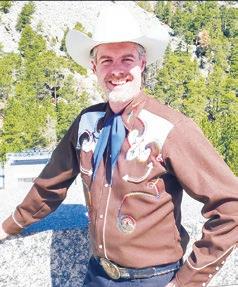
CBS Special took me to my childhood
This past week, CBS aired a fabulous primetime special saluting Bob Barker, who passed at age 99 on August 26. The special brought huge ratings; it’s been rebroadcast twice since it first aired on August 31. Featured were interviews that Bob did in 2007 when he retired from the Price is Right, plus an excellent amount of clips and priceless footage was shown, celebrating his 35 years as host.
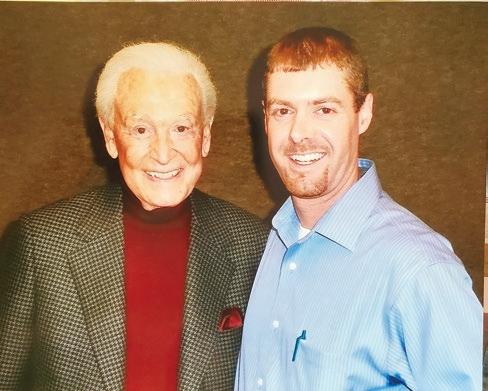
So just what was it that hooked me on Bob and the Price is Right? It was many things. His longevity as host is a huge part, the fact that the show never changed its format; it was simply America’s comfort spot on CBS five days a week at 10 a.m. My earliest memories of Bob and the show were when I was two, and by the time I was three, the
program was part of my daily routine. My Mom Linda never missed it. She always called the prices out loud as if she was talking to the TV! She was a definite fan, and if she had to leave the living room to take care of laundry and other household duties, she knew that I was safe on my own in front of the TV in the care of Bob Barker and Johnny Olson. Those are my earliest memories of the show. It was a real party atmosphere. It was loud with a colorful set, the ‘70s era music package never grew old, and you never knew what Bob would say or how a contestant would react. His professionalism to handle any situation with a contestant was remarkable. I truly admired his hosting abilities. All of us ‘70s and ‘80s era kiddos grew up, and Bob and Price continued—the same man, the same show, that touch of class, still going strong in our adult lives.
In August of 1996 CBS aired a prime-time special honoring the show’s 25th anniversary. It was indeed special. I fired up the VCR and recorded it. They showed tons of old clips, and I was taken back to my early childhood.
From that point forward, I preset the VCR to record each daily first-run episode, and my collection of America’s longest running game

show began! This continued until June 2007 when Bob retired and continued for Drew Carey’s first two seasons through June 2009. By this time I was recording the show daily onto DVD. I also spent an enormous amount of time collecting earlier episodes dating all the way back to the beginning, September 4, 1972.
In November 2002 I was performing with a Springfield area based Bluegrass band, Waterloo Boy, and we had the opportunity to do performances on the California/Nevada border in Pahrump, Nevada. I told my band mates months in advance that being that close to L.A. we needed to get tickets and attend a Price is Right taping! So I did what announcers Johnny Olson and Rod Roddy had always instructed us to do! “For tickets to the Price is Right, send along a self-addressed stamped envelope to Tickets, the Price is Right, CBS Television City, 7800 Beverly Boulevard, Los Angeles, California, 90036.”
I wrote for the tickets in August 2002, requesting tickets for the November 5, 2002, taping. The tickets arrived in September. Leading up to all this I had explained to the band the entire Price is Right taping experience that it would require arrival at the CBS lot at 3 a.m.
Fall happenings at the Stone County Historical and Genealogical Society

 BY CYNTHIA J. THOMAS, Staff

Writer The Stone County Historical and Genealogical Society invite the community to join them for several special events this fall.

This Saturday, September 9, local author Tom Koob will present a history of float fishing in Stone County, at 2 p.m. at the Kimberling Area Library. See this week’s Reader’s Corner for details and learn more about the activity that brought many fishing enthusiasts to Southwest Missouri during the early 20th century.

Mark your calendar for Saturday, September 23, when you can celebrate Stone County’s float fishing heritage at a fish fry to be held at 117 S. Main Street,
Crane, Missouri, from 4 p.m. to 7 p.m. For only $10, enjoy live country, gospel and bluegrass music along with a delicious meal of fish, fried potatoes, coleslaw, dessert and beverage.


The Stone County Historical/Genealogical Society & Museum, located at 103 S. Main St. in Crane, offers books by local authors for purchase, assists beginners with learning to do genealogical research, and maintains historical displays in Galena, Kimberling City and Hurley, as well as a presence at area festivals and special events.
Later this fall, plan to attend “Crossroads: Change in Rural America,” a special Museum on Main Street exhibition organized by the
Smithsonian Institution’s Traveling Exhibition Service and presented in partnership with the Missouri Humanities Council. Museum on Main helps bring the Smithsonian to small-town America through museum exhibitions, research, educational resources and programming, and has visited more than 1,900 communities across America since 1994.
The special exhibit will be available at 117 S. Main St. in Crane on Thursdays, Fridays and Saturdays from October 31 to December 12; hours are 10 a.m. to 4 p.m. Don’t miss this opportunity to see how small-town history continues to influence America, and be inspired to connect and preserve your own stories for generations to come.
at the latest on the day of taping and to expect a 14or 15-hour day. Yes, at that time the line into the studio usually began forming around 2 a.m. at the earliest, the studio capacity was 325. At the last minute, approximately 48 hours prior to the taping my bandmates all expressed that they would like to do other things for a day in L.A. which meant I was going to the show by myself!
The day had arrived! The morning of November 5, 2002. I was so wound-up I had slept less than two hours! After a few wrong turns on the way to L.A. after two in the morning, my transportation dropped me off at the CBS gate around 3 a.m. where a small crowd was already gathered. To confirm I was at the right place I got out of the car and yelled at the top of my lungs, “Is this the line for the fabulous 60 Minute Price is Right?” The crowd cheered, and I took my place in line along the sidewalk. I introduced myself to everyone and discovered I was 31st in line. That meant I would have an excellent seat, third row center. I won’t go into extreme detail with the pre-taping process, but will let you know the producer interviews all 325 people and will select nine to “Come
On Down.” By the time that process was over it was just after 2 p.m. At 2:21 p.m. we entered the studio, the famous Studio 33, the Bob Barker Studio. Oh my gosh, heaven on earth! The set looked beautiful; I couldn’t believe I was there! A stage hand was mopping the floor onstage, and I could tell immediately that because of recognizable props, Golden Road would be the first pricing game played. That also meant that Bob would not enter the stage through door number 2. He would do an audience entrance from the back of the studio. Announcer Rod Roddy came out and did the warmup, then Nancy the sound lady came out and tested Bob’s famous microphone,
the Sony ECM-510, and the taping began!
It’s crazy loud in that studio. So loud that when Rod called the names of the first four contestants, you couldn’t hear him at all. A stage hand held up large posters with the names as Rod called them. When Rod announced Bob’s entry, I knew exactly where Bob would make his entrance and was on my feet quickly so that the crowd could see my reaction and acknowledge his entrance from back of the studio. The taping flowed like a well-oiled machine, literally identical to what we’ve always seen on TV. They recorded the show “live to tape.” Not once did they
bransonglobe.com SEPT. 8, 2023 • 5B
CrAfT FaIr SePtE m B e R 8 -10Th Fri-SAT: 10am - 6pm SUN: 10AM - 5PM Scan for more details THE SHEPHERD OF THE HILLS FOOD TRUCKS LIVE MUSIC & $5 ENTRY | KIDS 12 & UNDER FREE
Memories from the Homestead: Remembering Bob Barker
John Fullerton met and interviewed Bob Barker during his visit to Drury University in Springfield, October 27, 2009. (Photo courtesy of John Fullerton)
SEE BOB BARKER, PAGE 7B
BY JODY JOHNSON GODFREY Wellness Design Specialist




This article will be discussing the “benefits” of combining certain foods in order to get the most nutrition possible. The follow-up column for next week will deliver information on how to take supplements; which ones you may combine and which ones to take alone or separately.
Food combining to stay ‘Fit for Life’: Not necessarily!
When eating our meals or snacks, certain combinations have been known to be central to good health, optimum digestion and possible/probable weight loss. Improper food combining can lead to disease, toxin buildup along with digestive issues – supposedly. Food combining theories started with the ancient Indian medicine (Ayurvedic) and then became more accepted and prevalent in the mid-1800s and referred to as “Trophology, the science of food combining.” All this, pretty much, remained “accepted,” but then again, reviewed by the Hay Diet and stayed on track through present days. Commonly practiced in the food com-
bination diets, foods are assigned to different groups which are broken down into
1) carbs and starches 2) fruits 3) vegetables 4) proteins and 5) fats. But then, some diet methods simply categorize as: acidic, alkaline or neutral. Basically, this is just a chemistry class — but the “rules of thumb” (general conclusion) would be thus:
1. Drink or consume milk or dairy on an empty stomach.
2. Consume fruit on an empty stomach.
3. Don’t combine starches and protein.
4. Don’t combine different/ multiple proteins.
5. Don’t combine starches with acidic foods.
The food combining mentality is based on two presumptions: The first is that due to foods being digested at different speeds—combining a “fast digested” food with a “slow digested” food can cause a blockage or “traffic jam” in our guts, thus causing digestive “chaos.”
The second concept is that different foods require different enzymes to be broken down and need to work at varying ph (acidity) levels in our digestive system. So, obviously, if multiple foods require different ph levels... our bodies can’t perform “digestion,” properly. Imagine this “dysfunction” ongoing each and every day?!
Well, this may have been
MindFlow: Patently broken links

the case many moons ago, but our bodies have evolved on “whole” foods, which usually contain some combination of carbs, proteins and fats. An example of this would be vegetables and grains—these are considered carbs, BUT, they may include several grams of protein, also.
And, another example: Meat is considered a protein, but even the leanest cuts of meat still have SOME fat, too. So, bottom line, due to many foods containing a combination of carbs, fats and proteins... our digestive tract is always prepared to “do its thing” to a “mixed” meal via gastric acid, the enzymes “pepsin” and “lipase” which initializ-
es protein and fat digestion. For this reason, we don’t have to be concerned that our bodies must “choose” between digesting proteins and fats or starches and fats.
The bacteria in our large intestine ferment any undigested carbs such as fiber, therefore, emitting gas (helpful short chain fatty acids) as waste production. In this case fermentation is actually positive as the fatty acids from the bacteria are linked to health benefits such as reduced inflammation, improved blood sugar and lower instances of colon cancer.
Our bodies, have indeed, evolved into an “amazing digestive multi-tasking machine!”
BY DANIEL KOREN, is a local business owner and motivational speaker.

Jeff Easter recently told about his dad, James, who decided to “borrow” a car from a gentleman with two cars. To be sure the old-timer didn’t chase him down, James removed a part from the carburetor of the car he was not stealing, and then hotwired the other car to make his getaway. The car owner heard the commotion, saw him leave, jumped in the remaining car, and tried to race down the road after James. The second car soon sputtered and died.
James laughed and laughed with his friends about this as they took off for a night of irresponsibility and cruising the countryside. Finally, when they had ended their joyride, they headed back to return the car. No one was home, so as his usual style, James left it there all clean and full of gas, which was also “borrowed.”
While James later became a man of integrity who loved Jesus, his story illustrates something we all struggle with. We tend to substitute weak social connections with things. Which things you choose to go after depend on your environment and natural inclinations.
People hope that fast cars, new electronic gadgets, or the latest fashion trends will make them look good to their peers. One hopes that the stuff money can buy will give them status at work, get attention in the community, win them friends, and pos-
sibly attract the right mate. As the prodigal son learned, however, money and the things it can buy will only attract fair-weather friends. The aftereffect only leaves one empty which creates more brokenness. Do you get affirmation from labels on your clothes and the brands on your possessions? Everyone’s heart should swell with satisfaction when getting into a shiny new vehicle. However, one’s self-worth shouldn’t be based on external things. They come and go. My wife and I owned a mobile home for a time and afterward owned a log home. Our children have great memories from both places. I felt like a better father to be providing a bigger home with a basement, but it turns out that stuff is rather insignificant in the long run.
Some “things” that people turn to are internal. In addition to using external
props for one’s broken social links, often those who are hurting turn to various forms of addictions. By self-medicating with drugs, alcohol, gambling, or pornography, one can forget their broken social connections. However, the distraction only lasts a short time, causing one to go back to it repeatedly, and quickly an addiction takes over that person’s identity.
In a previous column, we looked at the hierarchy of social links: your relationship with yourself, your spouse, your best friends, your relatives and community, and your workspace or school. Often people invert the order of those by giving more attention to a lower-level social link than the more important ones. For example, how much more time have you devoted to be more skilled at work than to being a better human? Do you invest more quality time and
attention with your friends than with your spouse?
How does the topic of “things” come into this concept of fixing our broken links? Perhaps a guy starts driving a big truck, hoping to look good on the streets of the community. Ever seen someone start going to the bar to make friends or find a mate? Drugs also might expand a person’s social connections, but not like he’d hoped. One man told me, “I had the most friends when I was the worst version of myself.” Substance abuse, pornography addiction, or compulsive gambling could be a person’s attempt to self-medicate from a broken relationship with his or her own self due to past trauma or heartbreak. Fixing the inner self will serve us much better than depending on outside props.
When James Easter and his friends dropped that car off, they had to walk back to
their homes in the dark. On his way home, James found the owner of the two vehicles still on the side of the road. James felt in his pocket and found the part to the carburetor still there. He walked up to the man and asked what was the problem. The gentleman explained how frustrated he was with the car. James asked him to pop the hood so he could look at it. Out of view, he reinstalled the piece he had removed. “Try it now!” he called out to the driver. Suddenly the car vroomed to life. The driver hopped out and told James, “Thank you so much. I have fought with this thing for hours. My, my, the world needs more fine young men like you!”
That event humorously raises the topic of the final social link that people prioritize incorrectly. Let’s talk about it next time, in this column!
Teens hook wallet full of cash, return it to Iowa farmer
By Andy Corbley, Good News Network
This summer Connor
Halsa reeled in the fishing story of a lifetime when he went searching for walleye and got a wallet.
Inside there was $2,000 cash, wet and soggy, but nonetheless cold and met-
aphorically hard. Still, Connor and his dad agreed immediately they needed to find the owner.
“My cousin opened the wallet up, and he said some words you probably shouldn’t say, and he showed everyone, and we took the money out and
let it dry out,” Connor told WDAY 7 news.
Inside was a presumably soggy business card with a number on it and they used that to track down the owner—600 miles away in Iowa. Jim Denny lost it on a fishing retreat, but that was over a whole year ago if one can believe it.
The resort Denny was staying at had to advance him the stay on credit, embarrassing him terribly, and he suspected the wallet jostled itself loose in the choppy waters.
Denny came all the way up from Iowa to Moorhead, Minnesota to reunite with the old billfold and the cash it contained. Young Halsa refused any amount of the cash inside, saying it was what any decent person would do.
“To meet people like that, who are that honest, I tried to get them to take the money, and they wouldn’t do it,” Denney told WDAY. “I would take Connor as a grandson any day, and I would fight for him any day.”
6B • SEPT. 8, 2023 bransonglobe.com
bransonglobe.com

Blackberry Cobbler
 BY CHEF JEFF WOODWARD

Prep Time: 10 minutes; Total
Time: 1 hour, 10 minutes
Yield: 8 servings
Ingredients:
• 2 C Sugar
2 C AP Flour
• 4 tsp Baking Powder
• 1 tsp Himalayan Salt
2 tsp C Cinnamon
• ½ tsp Allspice
1 ¾ C Whole Milk
• ½ C Butter, melted
4 C Fresh Blackberries
• ¼ C Turbinado Sugar
(Sugar in the Raw)
Instructions:
1. Preheat the oven to 350° F.
2. Butter a 9×13 baking pan.
3. In a large bowl combine the sugar, flour, baking powder, salt, allspice, and cinnamon.
4. Whisk in the milk and butter until smooth.
5. Put the blackberries in the pan, spread evenly.
6. Pour the batter on top
of the blackberries.
7. Bake for 50 minutes.
8. Remove from the oven and sprinkle on the Turbinado sugar.
9. Continue to bake for about 10 minutes or until golden brown.
10. Let cool slightly before serving to allow the cobbler to set up.
GO ROGUE by adding 1 ounce of Amaretto to the blackberries or serving with a Whiskey Vanilla Ice

Cream. If you’d like Chef Jeff to make this delicious recipe or any other meal for you, contact him at www. TheRogueChefBranson. com .
Roasted Cauliflower
 By KERRY DAWN GREEN
One of my all-time favorites
Ingredients:
• Cauliflower florets Olive oil
• Salt
• Pepper Fresh Parmesan cheese, grated
Instructions:
1. Put everything in a zip
top bag and shake well. There are no right measurements; just use as much of each as you like.
2. Bake in the oven until lightly brown and soft. I always serve this with tomato pesto. It’s so good!
Culpepper & Merriweather Circus is coming to Forsyth September 15
Submitted to Branson Globe
The circus is coming to town!
Sponsored by the Forsyth Lions Club, the Culpepper & Merriweather Circus is again coming to Forsyth. The big day is Friday, September 15, at the Taney County Fairgrounds, 445 Burmingham Rd., with shows at 5 p.m. and 7:30 p.m.
The Culpepper & Merriweather Circus has been pro-
• BOB BARKER
Continued from page 5B
stop tape to fix an issue. I truly enjoyed watching the production aspect of it all. It takes a small army to produce the show. Sitting third row center gave me plenty of on air camera time, and during a commercial stopdown, I had a moment to talk to Bob from my seat. So I asked him to share any memories of his years in Taney County, Missouri, and he told us all of his brief time working in Rockaway Beach and fishing memories on Lake Taneycomo.
Soon the taping had come to an end, the whole thing lasted right at 70 minutes and afterwards I stayed around to get in a quick howdy to announcer Rod Roddy, and Bob’s longtime producer and production assistant
viding quality, local family entertainment for 37 years.




This authentic One-Ring, Big Top Circus has been featured on the A & E Special; Under the Big Top; Nick News; On the Road with Circus Kids; and OETA’s Big Top Town. The 2023 performance has some great new features including big cats presented by Trey Key; aerialist extraordinaire Simone on the trapeze; 10th genera-
Roger Dobkowitz. Roger and I had corresponded by letter frequently since 1998, and he knew I was attending that day. As a souvenir he gave me one of Bob’s envelopes with the card that reveals the actual retail price of a prize!

The taping I attended aired on CBS December 23, 2002, a Christmas episode. It was an awesome experience. Fortunately that would not be the last time I got to be with Bob.
In the time after Bob’s 2007 retirement from 50 years in television, he remained very busy with numerous animal rights projects, and his own organization, the D.J. & T Foundation, which helped veterinary clinics provide low cost spay/neuter services for dogs and cats. For several years Bob donated major funds to several law schools, setting
tion Loyal Bareback Horse Riders; the Perez Daredevil Duo on the tightrope and the Wheel of Destiny; Elizabeth Ayala’s foot juggling and hair hang; and favorite Circus Clown Leo Acton.
Make a family day of your circus visit starting at 9:30 a.m. for the tent raising and tour. After watching the big top rise, you’ll get a tour of the circus grounds and a behind-the-scenes look at
up animal law forums, and courses on animals rights. Bob made frequent visits back to Springfield (where he attended high school and college at Drury University).
At Drury he made four visits donating several million for animal ethics courses and in 2009 an endowment for animal law. Fortunately, the staff at Drury welcomed me to attend three out of four of Bob’s visits to the school, and on October 27, 2009,
the show; learn about life on the road; and see the care our animals receive.
The midway will open at 4 p.m. with pony rides, moon bounce, giant slide and face painting; the concession stand and box office will be open an hour before each show in preparation for the entire family to enjoy an amazing 90 minutes at either 5 p.m. or 7:30 p.m. Advance ticket prices are
Bob made another donation of one million dollars, for an animal law program. It was an honor to spend time with him and again, and discuss his Taney County memories. Bob was age 85. He was so nice to me. What a tremendous treasure of memories. Bob and his first Price is Right announcer Johnny Olson are huge influences to me when it comes to public speaking, hosting, voice over, you name
$13 for adults; $8 for children ages 2-12 and seniors 65-plus. Purchase your advance tickets before circus day at Southern Bank, 15775 U.S. Hwy. 160 in Forsyth. By purchasing in advance, you’ll save money and skip the box office line; in addition, a higher percentage of advance sales goes to the sponsor, meaning more money goes back into the Lions Club’s
it. There’s those little things I’ve learned from watching them that I use every day.
community projects right in Forsyth and Taney counties. Ticket sales at the box office are $16 for adults and $9 for children and seniors. Learn more about the show at www.cmcircus .com; visit Culpepper & Merriweather Circus on Facebook or @cmcircus on Instagram; or email cmcircus@gmail.com or call 580-326-8833 with any questions. See you there!
God bless you, Bob Barker, for all the happiness and joy you brought to millions.

SEPT. 8, 2023 • 7B
Honoring the best of the best: Branson Show Awards to be held Sunday
BY K.D. MICHAELS, Staff Writer

On Sunday evening, the best of Branson will be honored during the Branson Show Awards.
The Branson Show Awards is the area’s longest-running awards show.
Established in 2004 by Gary Wackerly, a longtime Branson enthusiast, the Branson Show Awards was designed to fill a gap in the systems that other awards shows were using to determine winners. Wackerly established an award commit-
tee. Committee members see every show in Branson before nominating shows for the upcoming awards and voting on the winners.
Now, with Michael Wackerly, James Kast and Benton Wackerly at the
helm, the Branson Show awards is celebrating 19 years in the business of recognizing and honoring local entertainers and musicians.

The 19th Annual Branson Show Awards is set for Sunday, September 10, begin-
ning at 5 p.m. at the Nashville Roadhouse Theater. Hosted by Michael Wackerly and James Kast, the show will include appearances by The Kendalls, Brandon and Megan Mabe, Leona Williams, Mary Lou Turner, David
Brooks, Dean Z and the cast of Nashville Roadhouse Live. Tickets are only $30 and can be purchased at the box office. From each ticket purchased, $5 per ticket will be given to the Branson Show Awards Scholarship Fund.
Join us for Cedar Fest fall fun at Big Cedar Lodge, Sept. 18 to Oct. 31
Submitted to Branson Globe
The brisk wind, leaves shifting from summer shades to fiery tints – we can’t wait for fall to arrive!
Get ready to fully immerse yourself in the enchantment of fall at Big Cedar Lodge’s Cedar Fest. From September 18 to October 31, an array of autumn adventures awaits, perfect for creating treasured moments with your loved ones. So, let’s cozy up by the bonfires and jump right into the classic fall traditions we all adore!
Explore our fall roundup of the best things to do this season at Big Cedar Lodge: Lady Liberty Fall Foliage Cruise: Lake lovers and food enthusiasts looking for a twist on a typical date night, join us for an incredible evening on the water. Experience the beautiful fall colors and wildlife of the Ozarks while enjoying a buffet-style meal as Lady Liberty navigates down Table Rock Lake’s passage to the Natural State of Arkansas.
This distinctive yacht has a beautifully appointed main cabin, a unique fantail veranda, and a spacious, open-air upper deck holding up to 41 guests comfortably. In addition to regularly scheduled cruises, Lady Liberty is available for private celebrations as well as corporate and group events. ($70/Adult, $35/Kids (4-11).
Trick or Treat Trot: Bring the kiddos out on October 28 in their fun Halloween costume and jump aboard our Big Cedar Trams or grab a clue sheet and take out on a walking adventure, to five different locations around property where we will have candy being handed out to our trick or treaters! Bags will be provided for the candy! Event is at 6 p.m. and concludes with a bonfire on the Swimmin Hole lawn and Dance Party. Complimentary for overnight guests!
Monster Dash 5K: Calling all families and kids in search of Halloween weekend fun! Join us for a fami-
ly-friendly 5k to kick off our Halloween events on Saturday, October 28 at 9:30 a.m.
Put on your best costumes and enjoy an exciting event where little ones can embark on a safe and exciting adventure. Prizes will be awarded to first, second, and third place in different age categories as well as prizes for the best costumes!
Fall Chuck Wagon
Tours: Join us at the Swimmin’ Hole Lawn for a beautiful evening of tram rides, warm soup, or chili and the great outdoors! Our rangers will take you around the property, stopping at some of our best photo sites along the way. Guests will learn about the history of Big Cedar Lodge and maybe even a few stories of legends past!
The tram will take you to our private chuckwagon site where you will enjoy a warm bowl of soup or chili and your choice of beer or wine right by the lake. Tickets include the tram tour, a bowl of soup, and two complimentary
drinks. Additional drinks can be purchased for $5 each. ($45 per person and must be 21 years of age or older).
Fall Crafts: Unleash your creative spirit with DIY fall wreaths ($65 per wreath) and stunning autumn centerpieces ($65 per centerpiece) that capture the essence of the season in a unique way. For additional fall crafty fun, join us for a Paint & Pour ($60 pp), complete with guided painting, two glasses of wine, and snacks, taking your artwork and a Big Cedar apron home. Dive into the world of woodcraft by designing a personalized charcuterie board using wood burning techniques, followed by a charcuterie mastery session featuring an array of meats, cheeses, and veggies. Elevate the experience with a couple of wine glasses for a delightful and imaginative fall afternoon at Big Cedar Lodge’s Cedar Fest! ($130 per pair; includes two boards for burning and two drinks per person). Open to the public!
Saturday fest activities:
The excitement of Cedar Fest continues as Big Cedar Lodge opens its doors to the public for a fantastic Saturday Festival October 1-29 from 1 p.m. to 5:30 p.m. Visitors can partake in all the festivities and immerse themselves in the magic of Cedar Fest.
A guided tram tour will take you to our very own pumpkin patch and after, enjoy pumpkin decorating,
pottery painting, tie-dye, face painting, a balloon artist, outdoor activities and rides on our mechanical bull, Nitro, (ages 5 and up required for mechanical bull)! We will also feature a live DJ with line dancing lessons. Visit us at the Swmmin’ Hole Lawn. After dark, the lawn comes to life with singin’ jack-o-lanterns, bonfires, s’mores, movies (on select nights) and the Ozarks Lost Soul Maze.
All activities during Saturday Fest are booked upon arrival at the hut. The maze can be onsite, or guests can pre-purchase passes online. Trams will be on loop!
Saturday Festival activities include: Ozark’s Lost Souls Maze: Visitors will have to find their way through Big Cedar’s 3,700-squarefoot maze that’s haunted by ghostly souls including Civil War soldiers and other spooky spirits of the Ozark’s past. Scare Hours - The Haunted Maze is offered Friday and Saturdays 8 p.m.-10 p.m. and features live characters. The Ozarks’ Lost Souls Maze is PG and does NOT feature live characters. The Haunted Maze is offered Saturdays 8 p.m.-10 p.m. and features live characters. Prices vary for day guests and overnight guests.
Cost: All you can get lost wristbands Big Cedar Lodge Weekends (Fri/Sat):

Guest: $10 - Public: $13
Fall Tram Rides: Ex-
perience the breathtaking beauty of fall foliage on the Fall Tram Rides. As you ride through the scenic surroundings of Big Cedar Lodge, prepare to be enchanted by the picturesque landscapes and the vibrant colors of autumn. It’s an opportunity to capture Instagram-worthy photos and create lasting memories with your loved ones. ($15 pp).
Pumpkin Decorating: One of the best parts of fall is a trip to the pumpkin patch. Grab the whole family and take a ride on our Big Cedar Tram to our pumpkin patch by the lake where you can pick out the perfect pumpkin of your own to take home! Engage your creative side with pumpkin decorating, where you can turn plain pumpkins into festive masterpieces. Whether you’re a kid or just a kid at heart, these activities will bring warmth and joy to guest’s heart.
Tram ride $7 | Tram ride with pumpkin decorating $15
Reservations are required
Meet at Swimmin Hole Lawn for tram takeoff at 3 p.m. Cedar Fest is our favorite way to celebrate fall as we put a spin on our most-loved guest activities. Head on down to the Ozarks this season and visit us for unforgettable views and a variety of activities. From pumpkin patches, chuck wagon tours, corn mazes and more, the opportunities for authentic fall fun are endless. See you there!
8B • SEPT. 8, 2023 bransonglobe.com
not apply with insurance discounts
Patient Special $149
Does
New

bransonglobe.com SEPT. 8, 2023 • 9B
Gibson Tech offers community night classes
Submitted to Branson Globe
ON THE WATER--Classes include water and boat safety, beginning fly fishing, Tri-Lakes fishing forum
TECHNICAL TRADES—Welding, Aviation 101
BUSINESS & COMPUTERS—Microsoft Office ARTS & CRAFTS—Be-

ginning basket making FITNESS—Zumba, Yoga for everyone, Introduction to Tae Kwondo Enroll now. Register in person, mail form (find a copy of the form at bransonglobe.com/bonus-content) and payment to Gibson Tech Night Classes, 386 W. State Hwy. 76, Reeds Spring,
MO 65737, or phone with credit card (4% fee), 417272-3271. For questions, please contact jgiebler@ wolves.k12.mo.us.

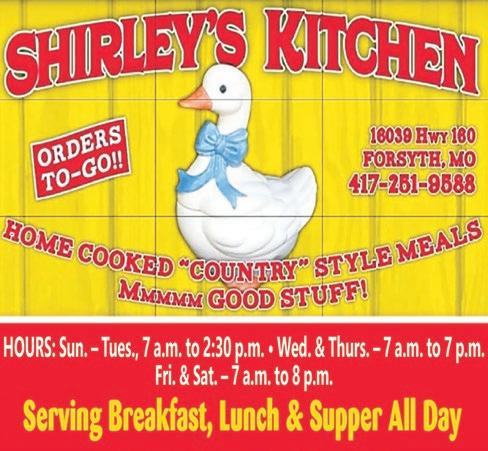

Please note that if Reeds Spring Schools are dismissed early or canceled, night classes will not be held. More information is available at rs-wolves.com/o/gtc
Gibson Technical Center Community Education Night Class Schedule
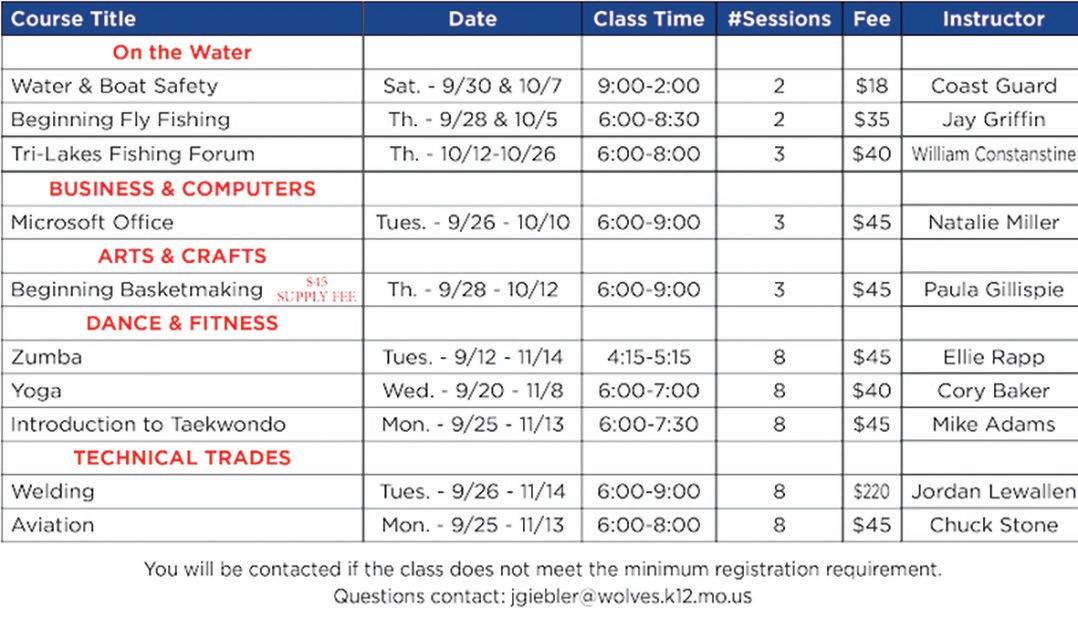
Silver Dollar City Foundation’s ‘Care For Kids’ tops $2.3 million in grants for local children in need
Submitted to Branson Globe
Students in the Ozarks are back to school – some without basic resources like shoes that fit or classroom supplies. Thanks to the generosity of community donors, The Silver Dollar City Foundation’s Care For Kids program recently sent more than $155,000 to 14 school districts in Stone and Taney counties to ease those burdens, with even more funds coming later this fall.
Care For Kids, which has donated more than $2.3 million to area children since it began in 2006, is funded through generous contributions from Silver Dollar City, White Water, Showboat Branson Belle, and Woodland Hills Family Church in Branson, which has made significant donations to the program over the past decade.
Each year, funds are divided among the school districts based on the number of students enrolled in the free or reduced lunch program. It’s up to educators to decide how the money is spent since school staff observe and
understand the children’s specific needs. Administrators say acts of kindness made possible by Care For Kids impact their selfworth. Dr. Michelle Collins, principal of Branson’s Cedar Ridge Elementary, sees it happen all the time.
“A sweet student who has treaded the waters of difficulty felt defeated as she was – once again – sent home with head lice,” Collins recalls. “In an effort to come alongside the family and support her needs in the moment, we were able to access Care For Kids money immediately. This quick action option had her family equipped with treatment supplies and everything needed to eradicate this recurring barrier to her learning journey and further help the child avoid shame or embarrassment.”
Dr. Brian Wilson, superintendent of Hollister schools, agrees that financial support from the Silver Dollar City Foundation gives educators “boots on the ground” options to combat negative experiences affecting students. A teacher in his district
noticed a child was being picked up in a car that had the back window and side window busted out. The windows were covered in plastic but the temperatures outside were getting cold.
“The teacher noticed that there was also an infant seat in the car,” Wilson explains. “The teacher called the counselor who then contacted the parents. The parents knew the importance of their middle schooler participating in school activities but did not have money to pay those fees and fix the car. Within a matter of days, a local business replaced the windows at cost. Safety, security and a sense of belonging were addressed when the district was able to meet the needs of another and express our love for them.”
A total of 4,039 students received assistance through the program last year. Needs included clothing, shoes, meal programs, vision, dental, prescription, or other medical needs. Many students also received help covering the cost of school sports, field trips and graduation expenses. The funds can also assist families with necessities such as rent or utilities.
Silver Dollar City Foundation will release another round of school grants this fall through the Hope Grant. The Hope Grant will be awarded based on feedback from school superintendents about unmet needs such as food and access to early childhood education that the Foundation might address. Learn more about Care For Kids at www.silverdollarcityfoundation.com.
10B • SEPT. 8, 2023 bransonglobe.com
Reader’s Corner:
BY CYNTHIA J. THOMAS, Staff Writer
On Saturday, September 9, the Kimberling Area Library will host the September meeting of the Stone County Historical/Genealogical Society and Museum. Starting at 2 p.m., the meeting will feature local author Tom Koob for “Float Fishing:
Join local author for historical presentation at KAL
Tourism Before the Lake.”
In the early 1900s, Galena, the Stone County seat located on the James River, was known as the float fishing capital of the world. With the construction of Table Rock Dam, float fishing trips started to give way to lake fishing and water sports, but former resort
buildings and the Historic Y Bridge in Galena still testify to the town’s heyday as a destination.
Koob, who first visited the Ozarks in 1965, now lives with his wife, Cindy, in Shell Knob. His interest has led to writing books about area history, including both nonfiction and a historical
novel. His nonfiction book, “Buried by Table Rock Lake,” shares the history of not only the James River arm of the lake but the many other communities that were buried as the waters rose, but live on in the memories of a declining number of older area residents. The book contains fasci-

nating stories and historic photos. Following the presentation, Tom Koob will be available to sign copies of the book, which is also available on Amazon.
Tom Koob’s nonfiction book, Buried by Table Rock Lake is available on Amazon (amazon. com)
Care of houseplants program to be held at Taneyhills Library
BY K.D. MICHAELS, Staff Writer
The Taneyhills Library is the site of an upcoming class on plant care.
Caroline West, a member of the Master Gardeners of
K.D. MICHAELS, Staff Writer
The Taneyhills Library often offers programs and classes for adults, seniors, children and teens.
• In September, “Beginning Computer Classes for Seniors” will be held each Thursday at 10:30 a.m.
• “Bring Your Houseplants in for Fall” by Master Gardener Caroline West is set for Thursday, September 26, at 10:30 a.m.
Tuesday, October 3, at 11 a.m., Michael Prince will present “Understanding Artificial Intelligence.”
• Susie Clark is offering “Intermediate Spanish for Children” each Thursday at 10:30 a.m. Also on Thursdays, Ms. Clark presents “Conversational Spanish for Adults” at 1 p.m. The six-week class session begins October 5 and runs through November 9.
Friday, October 27, at 10:30, Robin Williams offers “Loom Knitting” at 10:30 a.m. Classes
the Ozarks, will share her tips on caring for houseplants before bringing them indoors for winter. West’s love of plants is evident throughout her program,
and the stories she shares are informative and entertaining. This class is perfect for anyone who loves houseplants.
“Bringing your houseplants in for fall” is set for Tuesday, September 26, beginning at 10:30 a.m. in the Taneyhills Library’s Tech Room. The class is
geared towards participants
ten years of age and above.
The library is located at 200 South 4th Street in downtown Branson. There is no price for at-




tending the class, but space is limited so registration is required. Please call the Taneyhills Library circulation desk at 417-334-1418 to register.
will also be held November 3 and 10.

• Saturday, November 4, at 10:30 is a program in a Travel Series presented by Dr. Larry Campbell. The November 4 program is entitled “Rollin Down the River.”
A “Family Technology Safety Class” is set for Tuesday, November 7, 11 a.m., to be taught by Michael Prince.

Each Thursday at 10:30, the younger set enjoys “Story Time with Miss Debi.”
Children are invited to “Milk and Cookies” the third Saturday of each month at 10:30 a.m.
Future classes include a four-week session with Susie Cook entitled “Telling Your Story—Compiling Your Memoirs.” Also a Japanese exchange student will discuss “Japanese Customs and Traditions.”
For more information on any upcoming classes or programs at the Taneyhills Library, visit www.thlibrary.org.
Autumn balanced
BY DON HOLLAND
Then migrating birds discern to gather sensing a steely turn in the weather.

A south or Central American trip will ease the shock of autumn’s chilly grip.
A murmuration of starlings at night. The undulating mass of birds in flight.
Precision aerial maneuvers loosed, that the traveler may find his crowded roost.
The rustle of limbs on the gabled eaves. Leaves shimmering in the backyard trees.
Overnight, a quickened wind from the North, cooling the malingering summer’s warmth.
The stormy passions of our youthful days, eclipse to full days of flower bouquets, that rouse our senses in bleak December. The sweeter in the recall to remember.
Earth’s tilt and rotation from antiquity dark and light, night and day in equity. Nature’s bedrock of solar harmony, the firmament aligns in symmetry.
In our odyssey, fall’s seasonal fest the passage to joy in harvest rest, Prepares the way for winter’s icy blast, when spring and summer hurried by so fast.
THE BRANSON GLOBE welcomes poetry submissions that are less than 300 words. We reserve the right to refuse submissions that are in poor taste, discriminatory, libelous, or contain wording we believe will be offensive to our readers.



bransonglobe.com SEPT. 8, 2023 • 11B
Taneyhills Library has full lineup of programs and classes for all ages GET FREE FOOD, GROCERIES, $10 GAS ON YOUR 1ST VISIT. CALL 417-337-3772
BY K.D. MICHAELS, Staff Writer
A special annual event once again provided end-of-summer fun for pets and their people.


Branson’s annual Doggie Dive In at the city’s AquaPlex offered an evening of fun and excitement as dogs of all breeds, sizes and colors took to the water to swim, play and beat the Labor Day heat.
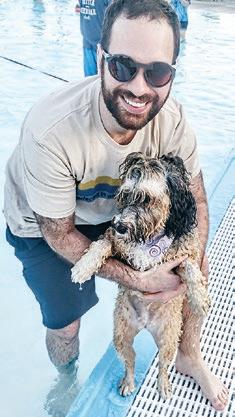
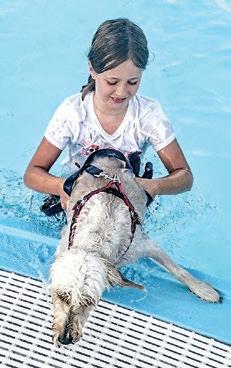


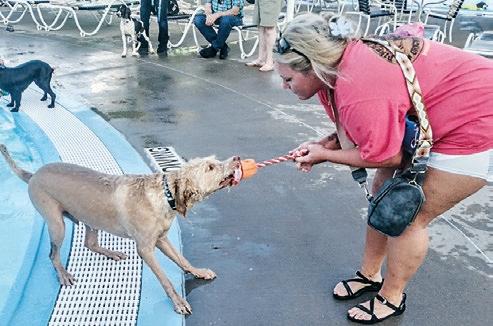


Monday night’s event saw dozens of dogs and their

handlers enjoying the last hours that the AquaPlex was open for the 2023 season. Numbers have not been released for this year’s event, but last year’s Doggie Swim was enjoyed by 101 pets and 171 companions.

The annual event is sponsored by Culver’s, who provides pup cups for all the dogs in attendance.

For the following counties below, must show a valid photo ID. Purchaser may bring up to (6) guests or members of immediate family for the same ticket price. Other restrictions apply. MO: Barry, Christian, Dallas, Douglas, Greene, Jasper, Lawrence, McDonald, Newton, Ozark, Polk, Stone, Taney, Webster, Wright. AR: Baxter, Benton, Boone, Carroll, Fulton, Izard, Madison, Marion, Newton, Searcy, Stone, Washington.
Fed up paying high prices? Come shop our shelves for essentials, birthday gifts, treats and more. Always 40% to 60% off of regular retail.

12B • SEPT. 8, 2023 bransonglobe.com 1600 West 76 Country Blvd. Branson, MO AUG 28 - SEPT 22 AREA APPRECIATION ONLY $6 PLUS APPLICABLE TAXES AND FEES
for Tickets 877- SIX - SHOW theSIXshow.com
Call
* * https://bransonsbinstore.com
Liquidation Discount Store Between Hobby Lobby & Cox Home Health Thursday 7am-7pm Friday 10am-7pm Saturday 10am-6pm Monday 10am-6pm Tuesday 10am-6pm In The Bins This Week... Misc. items and Health & Beauty Thu: $7.99 Fri: $5.99 Sat: $3.99 Mon: $1.99 Tue: 99c
https://facebook.com/bransonsbinstore
(Photos by K.D. Michaels)
UP, UP, AND AWAY – Sun Country Airlines will offer nonstop flights from Branson. (Photo courtesy Sun Country Airlines)
 BY K.D. MICHAELS, Staff Writer
Branson visitors and locals alike now have another way to travel, with the recent partnership between the Branson Airport and Sun Country Airlines.
Beginning August 31, Sun Country Airlines offers nonstop service to and from Minneapolis-St. Paul International Airport in Minnesota. Flights will operate twice per week through mid-November.
Sun Country Airlines,
based out of Minneapolis, provides service to 90 airports across the United States, Mexico, Central America, Canada and the Caribbean. The airline strives to provide safe, reliable, affordable flights that include such amenities as free in-flight entertainment, complimentary beverage service, and in-seat chargers. Flights to and from Branson will take place on Boeing 737 planes that seat 186 passengers.
The inaugural flight from Minneapolis-St. Paul arrived in Branson on August 31, to a water cannon salute from the Branson Airport Fire Department.
“The Branson Airport is very excited for Sun Country to bring its low fares to the Branson and greater Ozarks region,” said Stan Field, Executive Director of Branson Airport. “Making it easier for visitors to travel to our region with convenient and affordable

flights is something Branson Airport has been committed to since opening in 2009.”
Jonas Arjes, Interim President/CEO of the Branson Lakes Area Chamber of Commerce added, “Minneapolis-St. Paul is one of our strongest markets beyond 600 miles, so we are delighted to see Sun Country bring this route to the market. We appreciate Sun Country’s commitment to our region


and the resulting economic impact.”
to learn more about Sun Country Airlines, visit suncountry.com.

To purchase tickets or SEPT. 8, 2023 • SECTION C
Sun Country Airlines offers nonstop flights from BKG
BY
have been very fortunate in our careers. We both have six-figure incomes, and as a result we have a little over $2 million in savings and investments. With this in mind, do you have any advice on how to make sure your kids aren’t spoiled as they grow up in a family that’s doing well financially?
Gary Dear Gary, First, don’t spoil them! Teach them to work, and teach them to be givers.
Oh, and gently remind them ever so often that it’s you and your wife who are wealthy—not them. Yeah, I know. This probably sounds mean to some folks, but I’m talking about simply explaining to them how you and their mom have worked hard, been smart with your money, and that’s why you’re in the position you’re in.
We taught all our kids, from a very young age, just how important it is to
work. Work equals money. When you do that, and kids see it in their parents’ attitudes and actions, it makes a big impression. With little kids, it can start with simple things like cleaning up their rooms or clearing the table after dinner. And it should carry over into their teenage years, as well. Every able-bodied child should be working and earning money, whether it’s their own entrepreneurial idea, at a fast food joint or
babysitting.
Another thing we did was based in our faith. As Christians, we taught our kids that we don’t really own anything. It all belongs to God, and one of our jobs is to wisely manage the things He entrusts to us. The first rule is to take care of your own household—the important stuff. After that, it’s okay to have some nice things, but it’s not all about fun. It’s also about thoughtful giving and be -

ing generous.

As a parent, your job isn’t to be a buddy to your kids. It’s not to give them every little thing they want, and make sure they’re running around carefree and playing every hour of the day. Your job is to teach them about the important things in life, and over time, mold them into mature, responsible human beings who can survive—and succeed—in the real world.
— Dave
Stock Market Insights: Risky game of cash – avoid market timing
the road but was indecisive and started darting back and forth until finally going back to the side he had just come from, barely missing my truck tire. Many investors are like that squirrel, darting back and forth about whether to stay in cash or reinvest in their portfolios. Parking too much of your portfolio in cash might seem like a good plan in today’s investing environment, but it has its risks, too. Peter Lynch was
correct when he said, “Far more money has been lost by investors in preparing for corrections or anticipating corrections than has been lost in the corrections themselves.”
Higher rates this year have led many investors to leave cash out of the market and on the sidelines. As of the end of August, Americans have $5.6 trillion in money market funds, which is a record high and nearly 20% more since the beginning of the year.
Here are three reasons why having too much of your investments in cash can be a risky game.
First, the opportunity cost is high. You’re missing out on daily market growth and income while waiting for the perfect time to reenter the market. Fear can lead investors to sit in cash as stocks march higher.
Second, you won’t keep up with inflation. Even though CDs, Money Markets, and Treasuries are paying more than they
have in a while, they will never outpace inflation.
Third, you can’t time the market. It is impossible to perfectly time reentry in the market, even for professional investors. Reluctant investors rarely get the timing right.
The main thing is to stay consistent with your investment plan. The odds of long-term investors reaching their goals aren’t good when they aren’t fully invested. Since it’s impossible to time the market,
don’t stress about finding the perfect time to reinvest.
Don’t be the squirrel. Have an investment plan and stick to it. I’m not saying to put your investments on cruise control because I am a huge proponent of active management. But understand there is danger in starting and stopping because sometimes it leaves you lying on the road with tire tracks across your face. Have a blessed week!
www.FerventWM.com
Assisting students: Skaggs Foundation accepting spring scholarship applications

Submitted to Branson Globe
Skaggs Foundation is committed to reducing the financial barrier for local individuals pursuing or advancing careers in the medical field.
Between Sept. 11 and Oct. 25, Skaggs Foundation will accept scholarship applications for the spring 2024 semester.
“Our scholarship program is a win-win for the community,” explains Grace Nash, who oversees Skaggs Foundation’s scholarship program. “We are empowering individuals to reach their full potential while doing our part to help fill vacancies in the local healthcare industry with quality, highly
skilled individuals.”
To qualify, scholarship applicants need to have and maintain a GPA of 2.5 or better; be a resident of Stone or Taney counties in Missouri or Boone County, Ark.; or be an employee or immediate family member of an employee of Cox Medical Center Branson.

Since the scholarship fund was established, Skaggs Foundation has awarded $496,700 to students.
Skaggs Foundation was established in 2002 as a primary funding source for Skaggs Regional Medical Center. In 2013, when Skaggs hospital merged with CoxHealth,

Skaggs Foundation Board of Directors chose to retain the Skaggs name, carrying on the legacy of philanthropy that started the area’s first hospital in 1950.
Today, through the generosity of our community, Skaggs Foundation continues to invest in the health and wellness of the people of Stone and Taney counties through patient programs, capital improvement projects, student scholarships, and through its community grantmaking program Skaggs Legacy Endowment.
To learn more about Skaggs Foundation’s scholarship program, or to apply, visit SkaggsFoundation.org.
Thank you for reading the

2C • SEPT. 8, 2023 bransonglobe.com SEPTEMBER 26 Indigo Sky Casino SEPTEMBER 29 Downstream Casino
DAVE RAMSEY, CEO, Ramsey Solutions, and an eight-time No. 1 national best-selling author, and host of The Ramsey Show
DR. RICHARD BAKER, AIF®, is the founder of and an executive wealth advisor at Fervent Wealth Management. https://www. facebook.com/Dr.RichardBaker
Workers
Dave Says:
and givers That squirrel had a death wish.” The squirrel was trying to cross
Dear Dave, My wife and I
GET FREE FOOD, GROCERIES, $10 GAS ON YOUR 1ST VISIT. CALL 417-337-3772
New Hollister business celebrates grand opening and ribbon cutting
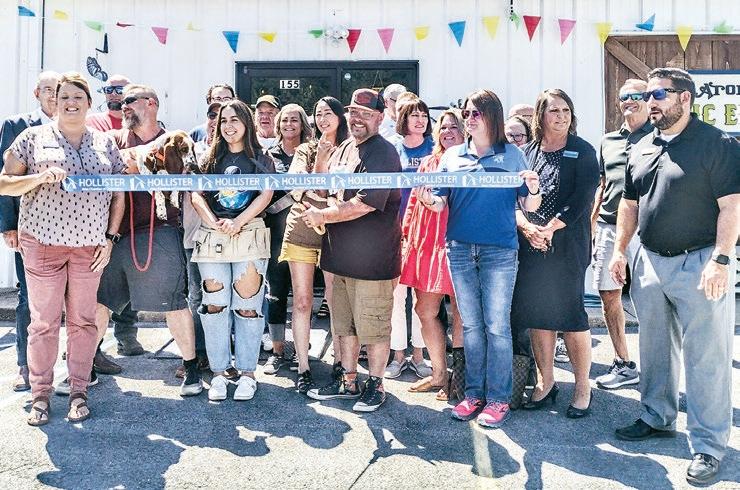
Writer
BY K.D. MICHAELS, Staff
Hollister is home to a unique new emporium. Owned by Scott Pratt, Atomic Tom’s opened just two months ago.
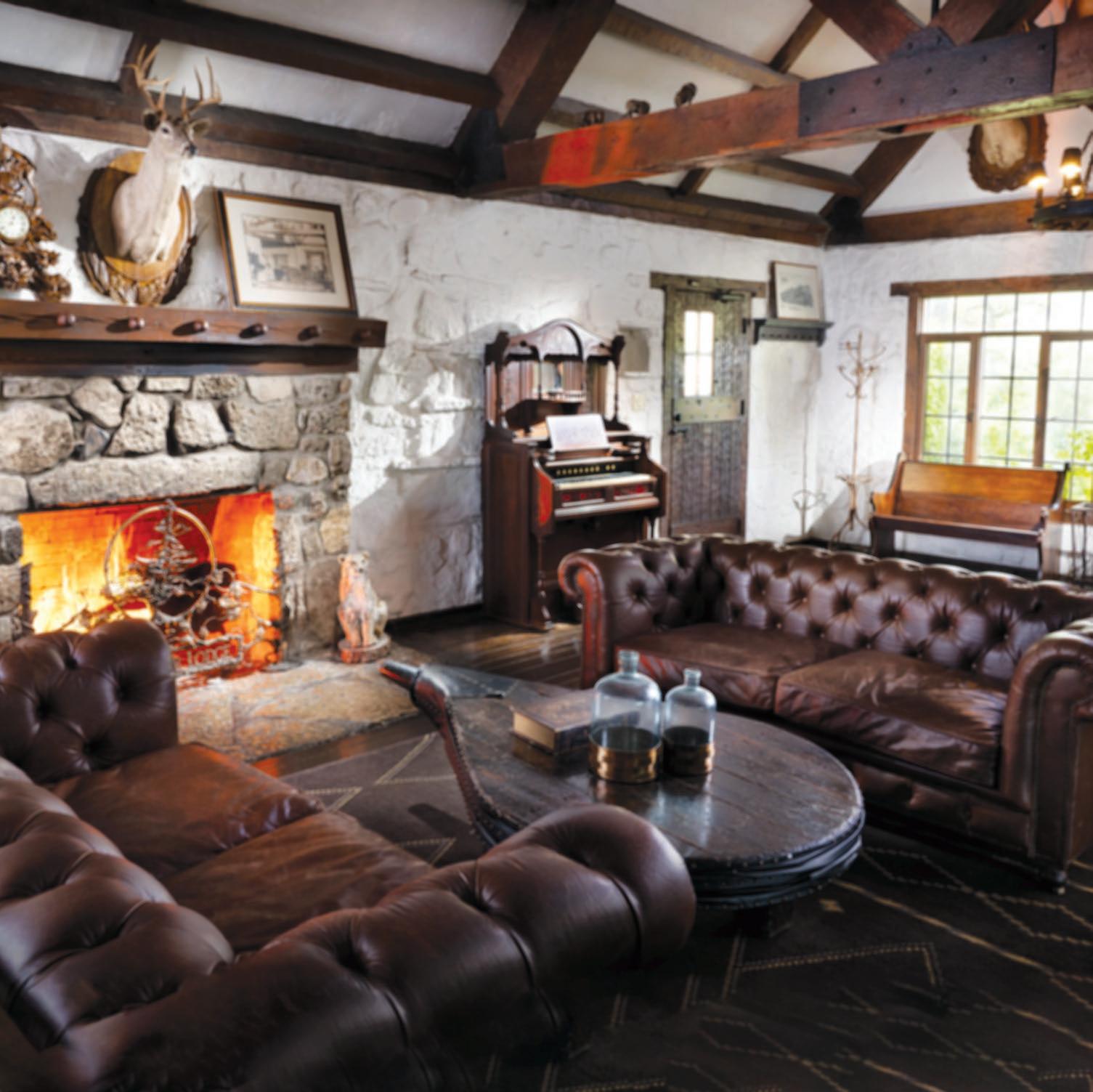
“We are a makers’ market,” said Pratt. “We have 20 local vendors here. Ninety percent of what we carry is handcrafted. We have epoxy resin tables, photography, paint work, metal work, laser engraved items, handcrafted wood items, lathe work, pottery, apparel, hats, leather, purses and a lot of stuff.”
“My dad was an art teacher, and this is what it’s all about,” Pratt continued. “He was an art professor, owned an art studio and sold art
his whole life. Seven of my family members make their living in the arts, and now I do woodwork. It’s just a family thing and it’s always been that way.”
Dozens gathered to enjoy a grand opening and ribbon cutting celebration at Atomic Tom’s. Conducted by the Hollister Chamber of Commerce, the celebration included food, giveaways and tours of the unique shopping venue.
Said Hollister Chamber of Commerce’s John Hagey, “Any time we get to celebrate small business and the growth of our economy and growth here in Hollister that is a fantastic day. We are



super excited to have you. On behalf of the Hollister Chamber of Commerce and all of Hollister, we want to welcome you.”
City Administrator Rick Ziegenfuss noted, “We appreciate your blood, sweat and tears. We know this didn’t come easy. Thank you, and we encourage you to just keep doing what you’re doing.”
Atomic Tom’s, located at 155 Symington Place in Hollister, is open Tuesday through Saturday, 10 a.m. to 5 p.m. You can find out more about Atomic Tom’s on their Facebook Page, Atomic Tom’s, Hollister, Missouri.
Prepare to be a better employee or start your own business with help from Elevate Branson
Submitted to Branson Globe

Elevate Work: Be a better employee
Elevate Work is for anyone looking to expand their job opportunities and access the tools and resources needed to find success in the workforce. You can reroute your future in just nine short weeks by taking the next right step and attending Elevate Work courses.
The next Elevate Work class begins September 11, and it’s not too late to enroll. Classes meet each Monday and Wednesday from 6 p.m. to 8 p.m. at the Elevate Branson campus. Dinner, transportation, and childcare are provided.
Learn more about how to enroll in Elevate Work, or invest in a volunteer opportunity by contacting Elevate Work Director, Donna, at 417-527-1709.
Start your own small business with Elevate Entrepreneurs
The Elevate Entrepreneurs cohort began class on September 5, with nearly 20 students enrolled in this semester’s course. Students are preparing to learn how to successfully launch their own side-businesses to fulfil their creative passions and earn supplemental income. How does Elevate Entrepreneurs work? There are three steps:
1. Community Business Academy: A bi-annual, twelve week course offered in the spring and fall will equip students with education focused on the business essentials – budgeting, marketing, bookkeeping, financing, and more.
2. Business Acceleration Services: Wraparound support services for entrepreneurs will be accessible through their respective business sup-
port coaches. Coaches assist students with focusing, prioritizing, planning, accountability, and connections to services that will help students attain their business objectives.
3. Credit to Capital: Through individualized coaching services, entrepreneurs will connect with lenders and investors to acquire the source of capital that will best suit their
needs.
If you’d like to know more about Elevate Entre-
preneurs, send a message to Entrepreneursinfo@Elevate Branson.org.
Built
Dinner: Tuesday-Saturday, 5-9:00 PM

Cocktail Hour: Friday & Saturday, 3-5:00 PM


bransonglobe.com SEPT. 8, 2023 • 3C B ig C edar L odge B ig C edar C om r idgeda L e , mo (800) 225-6343
gourmet
in the early 1920s as a country retreat for Frisco Railroad executive, Harry Worman, The Worman House has been expanded and meticulously restored to its original beauty. With stunning views of the lake, custom-themed cocktails and
food, you will enjoy an unforgettable evening.
UNIQUE NEW EMPORIUM IN HOLLISTER – Atomic Tom’s celebrates their grand opening with a ribbon cutting with the Hollister Chamber of Commerce. (Photo by K.D. Michaels)
Disney, Spectrum direct customers to other TV services as dispute keeps ESPN off air
 BY DAVID BAUDER, AP NEWS
Both sides of a dispute that has left nearly 15 million cable TV subscribers without ESPN or other networks affiliated with The Walt Disney Co. are directing customers to other ser-
vices where they can watch television. The offers speak to the unusual nature of the business dispute between Disney and Charter Communications, and doesn’t auger a quick resolution.
Charter is telling its Spectrum TV customers about a special deal being offered by the Fubo live television streaming service to get two months at discounts of 25% or 30%, depending on the plan.
• INITIATIVE
Continued from page 1A
business community, Stone County and some of our municipalities has been strong.
To us, this shows this is the right plan at the right time.”
The Chamber announced a “stretch” goal of $1.25 million.
“With additional resources we can provide more services,” Falk said.
The plan, which had input from over 100 community members, includes four focus areas: Business Retention/Expansion/Recruitment; Workforce Development/Housing; Effective Marketing to Visitors; and Community Development/ Placemaking. Each focus area has an overall goal with several supporting strategies designed to achieve the goal, and performance measures.
The plan includes hiring
an economic development director, working on effective business retention/expansion and attraction, completing a housing study to help develop affordable housing opportunities, and assisting local governments with economic development expertise.
The plan also outlines specific outcomes, or performance measures, which will be reported to investors quarterly,” said Steve Verheyen, co-chair of the Launch Stone County campaign. “It’s important to emphasize that this effort requires accountability, and communication and input from our investors.”
“We believe this plan will help grow jobs and the tax base in the county,” Falk said. “Our Chamber president/CEO Sheila Thomas has been working on making this happen for many years
v isitor BRANSON
now, and to finally have the resources to do it will make all the difference.” Early investors in Launch Stone County are the following:
• American Family Insurance, Tracy Carver Agency
• Aux-Arcs Team at Keller Williams - Ann Ferguson
• Blackbeard Marine Branson - Clint Stoffels
BFRealty - Allen and Judy Berkstresser Branson Bank – Bill Jones
• Central Bank of Branson
– Joe Loth
• City of Kimberling City
• Cox Medical Center Branson – William Mahoney

• Dake/Wells Architecture
– Brandon Dake
• DeWitt & Associates –
G.R. Stovall
Generations Bank – Sam
Piche
Great Southern Bank –Andrea Brady HealthMarkets Insurance
“I’ve covered carriage disputes for more years than I would like to remember, and I don’t recall a TV provider ever offering its customers a discount to another TV provider during a channel blackout,” wrote journalist Phillip Swann, who runs tvanswerman.com.
Spectrum had no comment Tuesday on the offer’s implications.
Disney, meanwhile, is also offering upset Spectrum customers online links to sign up for other services, like Hulu, Fubo, Sling and YouTubeTV. A Disney representative said that “discussions continue” with Charter and had no other updates.
The business battle resulted in ESPN, ABC, FX, National Geographic and Dis-
- Nick Morris
Virgil and Susan Moore
• L & J Plumbing – Jeff
Justus
Keller Williams TriLakes Realty Mike Tinnes Farm Bureau Insurance


Ozark Electric Cooperative – Mitchell Johnson
• Reeds Spring School District
Rockn’ Rental at Table Rock – Diane Todd State Farm InsuranceMaureen Darby
Kristi Stephens - Stone County Treasurer
• Stone County Commission
Table Rock Sunset Properties - Kathy and Gary Clark
• Table Rock Community Bank - Dwayne Falk
Table Rock Shore Resort
– Jim Towery
Talking Rocks CavernBruce Herschend
The Village of Indian
ney-branded stations going abruptly dark on Thursday night for Charter’s Spectrum TV subscribers. ABCTV was also cut in seven markets, including New York, Chicago and Los Angeles.
Carriage disputes, involving what cable or satellite customers will pay to carry specific networks on their systems, are not uncommon.
Yet Charter is arguing that the number of people cutting off their cable subscriptions over the past few years means the business is changing rapidly, and any new deal must reflect that. It wants Disney to give customers more flexibility to restrict “bundling,” which requires them to pay for networks they don’t necessar-
Point Tom Martin Shelter Insurance - Tom Martin
• Steve and Robin Verheyen White River Valley Electric Cooperative - Cassie Cunningham
• Deana Wolfe – REALTOR – Reece Nichols

Real Estate
Following the public announcement, the Chamber will be reaching out to additional businesses and community groups to consider investment in the plan. For more information regarding Launch Stone County,
ily want. It also wants Disney to offer its ad-supported streaming services for free as part of the deal, saying it has moved some of its best TV programming over to streaming.
Charter, which has broadband as well as cable customers, is anticipating a day when ESPN transitions to a direct-to-consumer streaming service, said analyst Rich Greenfield of Lightshed Partners.
“Could this end up being a watershed event for the linear TV business that also blows up the entire sports media ecosystem?” Greenfield wrote in an analysis. “Sure. However, we have lived through enough of these battles to know that they usually end in an agreement.”
contact Chamber President/ CEO Sheila Thomas at 417739-2564.
4C • SEPT. 8, 2023 bransonglobe.com Channel 5
WATCH NOW! EVERYTHING TO SEE, DO AND EXPERIENCE YOUR SOURCE FOR IN BRANSON
Sheila Thomas (Special to Branson Globe)
Dwayne Falk (Special to Branson Globe) Steve Verheyen (Special to Branson Globe)
‘We believe this plan will help grow jobs and the tax base in our county.’
A dispute keeps some viewers from watching ESPN. (Photo from apnews.com)
MPA presents prestigious 2023 ‘Bowl of Hygeia’ award to Heather Lyons-Burney, PharmD
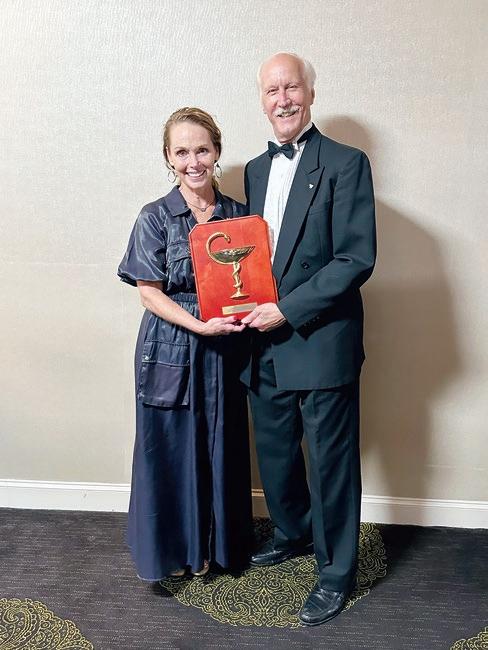
Submitted to Branson Globe
The Missouri Pharmacy Association (MPA) celebrated the outstanding efforts of individuals in the pharmacy profession during the 2023 MPA Annual Conference. A total of nine individuals were presented with the 2023 Excellence Awards. The Excellence Awards were awarded in seven different categories: Pharmacist Making a Difference, Technician of the Year, Distinguished Young Pharmacist, Excellence in Innovation, Faculty Member of the Year (St. Louis College of Pharmacy at University of Health Sciences & Pharmacy in St. Louis), University of Missouri-Kansas City (UMKC), Student of the Year, and the prestigious Bowl of Hygeia
Award. The 2023 “Bowl of Hygeia” Award was presented to Heather Lyons-Burney. The Bowl of Hygeia is the most widely recognized international symbol for the pharmacy profession. Established in 1958, the Bowl of Hygeia Award is considered one of the profession’s most prestigious awards, recognizing pharmacists who possess outstanding records of civic leadership in their communities and encouraging pharmacists to take active roles in their communities.
Dr. Heather Lyons-Burney is an alumna of the UMKC School of Pharmacy and has dedicated her career to giving back to her community, preparing the next generation of phar-
macist leaders, and being a strong advocate for the profession of pharmacy. Her professional career has included being a community pharmacy owner, a UMKC Clinical Associate Professor, establishing a nonprofit clinic, and playing a vital role in opening the first and currently the only Charitable Pharmacy in Missouri. Her dedication to pharmacy students includes teaching electives in entrepreneurship, coaching business plan competition teams, and precepting. She has served as President of the Missouri Pharmacy Association and has continued to stay actively involved with the MPA since then, including co-leading several grant programs related to substance misuse prevention ef-
Tri-Lakes Retired Teachers Association presents $500 grants to area educators
 BY K.D. MICHAELS, Staff Writer
The Tri-Lakes Retired Teachers Association recently awarded funds to some deserving educators.
“Each year our parent organization, MRTA, presents 10 classroom grants to each of MRTA’s 14 regions around Missouri,” explained a representative of Tri-Lakes Retired Teachers Association. “Five of Region 10’s grants were awarded to Stone and Taney County teachers. The grants are used for special projects of each teacher to enhance the education of their students.”
Those teachers receiving a grant included Vanessa Bates (Forsyth Elementary), Montye Michelson (Forsyth 5th Grade Science), Ally Clemans (Bradleyville Special Education), Shelley Starkebaum (Bradleyville K-12 Music), and John Giebler (Reeds Spring Gibson Tech Skills USA).
Each grant was in the amount of $500.
The Tri-Lakes Retired Teachers Association will also be holding a fun-filled event for all retired school personnel. An ice cream social is set for September 12.
“If you have recently retired from a public education career or retired many years ago, we invite you to a ‘Not Going Back to School This Year’ party,” noted the representative. “This event will be held at the Taneyhills Library in Branson, Tuesday, September 12, from 1 p.m. to 3 p.m. It’s a come-and-go event. Come and learn the latest about Tri-Lakes Missouri Retired Teachers Association current legislative information as it relates to public education and our pension system, and just socialize with your retired educator friends.

Bring a friend with you!”
The local Retired Teachers group meets each month at the Taneyhills Library, 200 South 4th Street in downtown Branson. Upcoming TriLakes Retired Teachers Association meetings include the ice cream social in September and Branson Superintendent Brad Swofford as the guest speaker in October.
The group’s November
meeting will feature the presentation of the annual “Apple from the Teacher” award, as well as lunch and a visit to Festival of Trees on the Branson Landing. The Tri-Lakes unit is sponsoring a tree this year for the Christian Action Ministries Festival of Trees Fundraiser.
For more information of the Tri-Lakes Retired Teachers Association or any up-

coming event, please contact unit president Ginger Witty at 662-422-9105.


Among those receiving grants are Gibson Tech USA Skills
Instructor Keith McDannold, Tri-Lakes Member Mary Lynne Grimes, grant winner John Giebler, MRTA Foundation Member Linda Holt and Gibson Tech Director Brian Moler (Special to Branson Globe)
forts. To highlight the words of those who nominated Dr. Lyons-Burney, “She has an incredibly positive attitude and outlook on life which inspires her students and colleagues. She is always looking for ways to improve the world around her, whether through her work at Faith Community Health or My Neighbor’s Charitable Pharmacy, at UMKC in coursework, or with her time with students.”
Established in 1879, the Missouri Pharmacy Association, www.MORx.com, promotes and protects the role of pharmacists as the medication expert in patient care relationships, and as an integral part of the health care team. MPA is the “unified voice for Missouri Pharmacists.”
bransonglobe.com SEPT. 8, 2023 • 5C
Heather Lyons-Burney, left, co-founder of My Neighbor’s Charitable Pharmacy and UMKC Clinical Associate Professor, was recently awarded the Bowl of Hygeia. MPA President Jerry Callahan is pictured at right. (Special to Branson Globe)
Walk that walk
By Stephanie Callahan, Owner/Lightspeed Electrical

Extreme weather can cause all kinds of damage to your property. Downed trees, roof damage and damage to your incoming electrical service.
After a storm with hail, excessive snow, or high winds hits, most homeowners take a walk around their home looking for damage. Too often, they overlook the electrical damage.
Here is what to look for:
Will the stock market crash in 2023?
Let’s take a look with Ramsey Solutions
Ramsey Solutions
2022 sure was a roller coaster for the economy, right? Worries about inflation, rising interest rates, and a bunch of chaotic global events sparked wave after wave of volatility to the stock market.
Stephanie Callahan, Owner/Lightspeed Electrical
completely knocked over by extreme weather.
All the fear and uncertainty led to whispers about the next potential stock market crash—the first since the start of the coronavirus pandemic back in 2020. But here’s the thing: We’re in the middle of 2023 and a crash still hasn’t happened.
So, here are the golden questions: Can the market continue to correct itself?
Check the area near your electrical meter. Is it still firmly mounted to the wall? Are the conduit lines still strapped and secured to the wall? If your home is over 20 years old, remember that the meter may be the original installation and screws and fastener straps may have weakened over the years. Aggressive weather may tear the electrical away from the siding. This creates the possibility for both power loss as well as an electrocution hazard.

Visually inspect the mast and weather head for visible damage. The mast is the pole above the meter and often on the roof, and the weather head is a cap attached to that pole where the service wire exits the home.

Because it often stands above the roof, it can become bent or
Sometimes, your incoming electrical service has been compromised, but the damage is not visible at all. If you notice any flickering or dimming of lights inside the home after a storm, there may be a loose connection somewhere that was caused by the storm. These issues will not go away - they only worsen and become more dangerous over time. You can be your home’s best friend by simply taking the time to do a walk around and being aware of the warning signs after a storm has hit.
If you have storm related electrical issues, or need help with a lightning damage insurance claim, the team at Lightspeed Electrical is here to help. Give us a call at 417-239-5050.
Or is the crash still looming on the horizon? Let’s take a look at some major factors (with a cool, level head) to better understand where the market is going. Is the stock market crashing?
No, as of right now, the market isn’t crashing. So, take a deep breath—the sky isn’t falling (at least, not yet). In fact, on July 17, the S&P 500 was up over 17% since the beginning of the
year. Nice! So even though the market hasn’t rebounded quite as strongly as some experts would like, it’s been a pretty tame and stable year so far.
But there are still a few reasons to stay cautious for the second half of 2023— we’ll go over those in a minute. But first, let’s review what exactly a stock market crash is, what causes it, and how panic can send the market into a tailspin.
What is a stock market crash?
A stock market crash is a sudden, big drop in the value of stocks that’s caused by investors selling their shares quickly. That drives down the value of stocks for all the other shareholders, who also start selling their shares to try to cut their losses. What causes the stock market to crash?
A stock market crash is caused by two big things: A dramatic drop in stock prices and a boatload of panic. (You know, like Gotham City at the end of every Batman movie). How can you track a
stock market crash?
To help us visualize how well the stock market is (or isn’t) doing, we look at indexes like the Dow Jones Industrial Average (DJIA), the S&P 500 and the Nasdaq. If you look at a historical graph of one of these indexes, you can see why we use the term crash. It’s like watching a plane take a nose dive.
So, if investors think the market is headed for harder times, they’ll probably sell their stock to get out with as much money as they can before the value drops. That’s why panic plays just as big of a role in causing a stock market crash as the actual economic issues that led to it.
How does panic selling affect the stock market?
Let’s walk through an example from the coronavirus pandemic that shows just how powerful panic is. As news of the virus spread, grocery and convenience stores across the world sold out of toilet paper in a matter of days. Was there really a toilet paper shortage?
Well, yes and no. There wasn’t a shortage before


Previous crashes: Examples from history
Throughout history, we’re reminded that, yes, a market crash is a very difficult thing to go through, but it’s something we can and will overcome.
The Great Depression, 1929: Over the course of a few days, the DJIA dropped nearly 25%. It took a little over a decade for the economy to get back to predepression levels. It was the industry from World War II that helped get things back up and running.
The stock market crash, 1987: The market lost 22.6% of its value in one day known
as Black Monday. But within two years, it had recovered everything it had lost. September 11, 2001:
Terrorist attacks in our country caused a major hit on the market, but it corrected itself super quick. Just one month later, the stock market had returned to September 10 levels and kept going up throughout the end of 2001. The Great Recession, 2008: The DJIA lost more than 50% of its value in a really short time. But after a couple of years, the market was stronger than ever be-
fore—we were basically in a bull market (a period of strong economic growth) from 2009 to just before the coronavirus crash.
The coronavirus crash, 2020:
In March of 2020, the COVID-19 pandemic triggered the most rapid global crash in financial history. Still, the stock market recovered ground quickly, and the year closed with record highs. Economists are now saying the recession from the coronavirus crash was the shortest on record— only lasting two months.
people started panicking. But when people lost their minds and started stocking up on toilet paper, their actions created a shortage. They literally willed a toilet paper shortage into existence.
The same kind of panic can trigger a stock market crash. Once investors see other investors selling off their stock, they get pretty nervous. Then stock values start to dip, and more investors sell their shares. Next thing you know, everyone is dumping their stocks, and the market is in a full-fledged crash. Look out below!
Our point here is this: While much of a stock’s value is based on fact, like the bottom-line of the of the company behind the stock, perception and prediction of the future are also huge factors. No wonder it feels like such a roller coaster ride! Will the stock market crash in 2023?
Listen, no one can perfectly predict what the stock market is going to do. All we can do is look at the things that’ll influence the market and your investments throughout the rest of the year. Let’s get into some specifics and look at where we are now.
Inflation’s high, but it’s cooling down.
Yep—that pesky inflation is still hanging around, and it’s one of the biggest issues gripping the economy, especially at the gas pump or grocery store. But here’s the good news: Inflation is starting to fall.
Currently, the inflation rate is around 3% (as of June 30), which is much better than the rate of over 9% we hit last year. But don’t take that victory lap just yet. The Federal Reserve (aka the Fed) likes to keep inflation hovering around 2%, so that’s when they’ll likely ease up on hiking interest rates. Interest rates could keep going up.
To combat inflation, the Fed started raising interest rates back in 2022. Currently, the target interest rate is set between 5% and 5.25% (it was 0% at the beginning of 2022).While policymakers voted to skip another rate hike back in June, they haven’t ruled out a few more increases this year. The Fed raises interest rates to discourage people (and businesses) from excessive borrowing and spending. This can help control market stability and encourage people to actually, you know, save their money. But rate hikes come with heavy risks. People who keep using credit may find themselves trapped under a ton of high-interest debt.
SEE STOCK MARKET, PAGE 7C
6C • SEPT. 8, 2023 bransonglobe.com
Yikes! And if rate hikes slow the economy too much, it could send us into a recession. It’s quite a balancing act. There’s still no recession (for now).
Some experts believed we were on a one-way road toward recessionville (the happiest town on Earth . . . not!) sometime during the first half of 2023. But so far this year, the economy has held its own and stayed pretty stable.


We’re not out of the woods yet, but a soft landing (an economic slowdown that avoids a recession) actually seems possible now. The tech industry continues to rally the S&P 500.
The news is filled with stories about the latest technological advances. You know, the rise of artificial intelligence and all those other fancy gadgets and gizmos aplenty. As it turns out, the tech industry has done a ton of work holding up the economy. Is this a good or a bad thing? Well, it’s a bit complicated—so stick with us here. When the stock market depends on a few large-cap tech companies—businesses worth over $10 billion in market capitalization (a company’s value that’s traded on the stock market—think Apple, Google, and Microsoft) that’s called a narrow market. And it can
make investors nervous.
Think about it this way: Without the top seven largecap companies, the S&P 500 would be down 0.8% since the beginning of the year (as of May 2023), instead of the market’s decent recovery we mentioned earlier.
Now, while booming industries (like tech, biotech and e-commerce) can provide confidence for some investors, others might lose faith in the broader market’s ability to support itself. And that lack of investor confidence can lead to panic.
you take your money out of the market, you’re basically locking in and guaranteeing that loss.
Here’s the deal: Smart investors keep a long-term perspective. They don’t stress about how their investments have performed in the past few weeks or what they’ll do in the next couple of months. Nope!
Think about it: The stock market almost always experiences significant gains after a period of decline. So what does that mean for you when the market’s down?
It’s a fire sale, baby!
If you have extra money to invest, now might be a great time to “buy the dip” by buying more mutual funds at lower prices. But keep in mind, it’s always a smart idea to discuss investment strategies with your pro first. They’ll help you make sure it’s a good time to pick up more mutual funds.

4

Things to Do With Your Investments if the Stock Market Crashes
Let’s say you’re investing 15% of your income into your 401(k). You’re probably feeling pretty good about it, right? But what if you wake up one morning and see the news the world’s been dreading: The stock market’s crashing! Here’s what to do next:
1. Refuse to panic.
Like we said before, panic can make the crash just as bad as the actual economic issues we’re facing. Don’t fall for it. Dealing with the unknown creates uncertainty, and uncertainty left unchecked can become fear.
2. If you’re invested, stay invested. But the stock market’s tumbling! It’s time to sell, right? Nope. Not even close. Turn off the news and try to keep on keeping on (unless you need to pause for a while because you lost your income). Remember, when
They’re more concerned about what’ll happen five, 10 or even 20 years from now. And that helps them stay cool when everyone else is panicking like it’s Y2K all over again. Remember, the market has always bounced back. So don’t try to time the market. Focus on time in the market.
3. Talk to your investment professional.
When there are big shifts in the market, schedule a call with your investment professional. You need specific advice for your situation—your age, your funds, the types of retirement accounts you have, etc.
4. Think about buying the dip.
History shows the stock market doesn’t stay down forever—it recovers time and time again. In fact, in all but one time in the past 100 years, every instance of market decline has been followed by a remarkable recovery the year after.
Remember, jumping off the roller coaster hurts (like, a lot).
If you’re checking your 401(k) balance every morning and watching the gloom-and-doom news segments on the economy every night, then yeah . . . you might be freaking out a little bit. But let’s turn off Fox News and CNN for a minute. Take a deep breath, step back, and look at the bigger picture.
Savvy investors see that over the past 12 months (from June 2022 to June 2023), the S&P 500 is up over 17%. And if you pull back even further, you’ll see the stock market is still up almost 64% from where it was five years ago. Sixty-four percent!
Super Blue Moon a rarity
BY K.D. MICHAELS, Staff Writer

Those in the Ozarks enjoyed a rare occurrence last week when they were able to observe the Super Blue Moon on August 30 and 31.

The term Super Blue Moon refers to a moon that exhibits three traits: it is a Full Moon, a Blue Moon and a Super Moon.

A Full Moon occurs regularly, roughly every 29 to 30 days. The term Blue Moon refers to a second Full Moon in a calendar month. Since we experienced a Full Moon on August 1, the second Full
Moon of the month on August 30 was a Blue Moon.
A Super Moon occurs when the moon passes through the point closest to the earth (perigee), at the same time as it is full. Because of its closer proximity to the earth, a Super Moon appears larger and brighter than usual. Viewers notice it seeming about 14% bigger than a typical full moon, and approximately 16% brighter.
If you missed August’s Super Blue Moon, you will have another chance to view it on August 30, 2037.
bransonglobe.com SEPT. 8, 2023 • 7C
• STOCK MARKET Continued from page 6C
Worship Directory




You are encouraged to worship with us!



Psalm 28:7
Sunday Worship: 11 a.m. 155 Second Street Hollister, MO



Located just up the hill from Downing Street
Everyone Welcome!
8C • SEPT. 8, 2023 bransonglobe.com
The Lord is my strength and my shield; my heart trusts in him, and I am helped. My heart leaps for joy and I will give thanks to him in song.
HOLLISTER PRESBYTERIAN CHURCH
Don’t miss the 2023 edition of The Best Bets of Branson Live Talk Show, featuring Carrie Anne Mitchell and Shelley Carroll-Drew, every Thursday at 11:15 a.m., inside the lobby of The Nashville Roadhouse Theater, and streaming live on Facebook and YouTube.
During our 2023 show season, we are excited to be featuring; everything that is fun to share, and to talk about, involving info on the Branson & the surrounding Ozarks area, done from a 2 person, unique local perspective, and a fun, positive spin.
Brought to you by our sponsors: Affordable Insulation Service, Bliss Gas Services, The Branson Show Awards, The Consignment Clothing Exchange, El Lago On 248, Flaming Margaritas Restaurant, Gaga For Glitter, The Great Passion Play, Isom Hunt, The Krafty Kitty Farm, LKS Lawncare, MarieZ, METAGOLF, Michele’s Floral & Gifts, Mintex Appliance Service, The Nashville Roadhouse Theater, and SignsNow. Contact Carrie @ 573-7951921, or Shelley @ 417593-9815 to find out how to become a sponsor of our live talk show.
CELEBRATE RECOVERY is a place to heal from your hurts, habits, and hangups. We meet every Monday night at 6:30 PM at Music City Centre, 1839 West 76 Country Blvd., Branson. For more information call 417–320-2055 See you there!

IF YOU ARE A MILITARY VETERAN in need of a place to live, please call us and we’ll try to meet your needs. GUMI CAMP USA 417-559-3892
THE AMERICAN LEGION POST #220 invites all former and current US Military friends to join us Monday mornings at 9 a.m. for coffee and pastries!! Come join us at Faith Lutheran Church, 221 Malone Dr., Branson, MO. We look forward to meeting you!! HOOAH!!
Eliminate high heating bills with Central Boiler’s NEW, certified Classic Edge Titanium HDX OUTDOOR WOOD FURNACE. Call Ozark Stove and Chimney today. 417-201-6585

IF MY PEOPLE, WHICH ARE CALLED BY MY NAME, shall humble themselves and pray, and seek my face, and turn from their wicked ways; then will I hear from heaven, and will forgive their sin, and will heal their land.
2 Chronicles 7:14
VETERANS & MILITARY COALITION OF THE OZARKS is an all-volunteer organization of veterans serving veterans. Contact us if you feel that you, as a veteran or veteran family, may not be receiving the benefits you deserve. Go to VMCO1.org and click on CONTACT at the top of the home page. VMCO meets monthly on the third Thursday of the month (no meeting in July or November) at the Golden Corral in Branson with 11:15 a.m. (optional) lunch buffet and 12-1 p.m. meeting.
ALZHEIMER’S ASSOCIATION SUPPORT GROUPS meet at location #1: Branson United Methodist Church, 1208 West 76 Country Blvd. Branson, the first Thursday of every month at 1:30 PM; and at location #2: Branson Hollister Senior Center, 201 Compton Dr., Branson, the third Friday of every month at 1:00 PM For more information about either support group, you may call 417598-3122.
GRIEF SHARE SUPPORT GROUP: IN AUGUST, 2023 a new class of Grief Share will begin at the Branson United Methodist Church Aug. 22. This is a 13 week class of support for those who have lost loved ones. We welcome all ages from the community as well as our church family. For questions call Peggy at 641-919-1533. The class will meet every Tuesday at 1 p.m.in the church library.
Add a little color to your advertising, and watch readers take notice! Run an ad just like this one for just $21 a week!
GET FREE FOOD, GROCERIES, $10 GAS ON YOUR 1ST VISIT. CALL 417-337-3772


Classified ads in the Branson Globe are super affordable! Take a look:
• Black & white line ads, 20 words or less...$15/week! Each word over 20 is 25¢
• Add color to your line ad, 20 words or less...$20/week! Each word over 20 is 25¢

PAINTING and POWER WASHING, carpentry, handyman work. 25 years of experience, with references. Call Michael, 417-434-7566.

MASTER ELECTRICIAN. No job too big or small. FREE ESTIMATES. Ph. 417-337-1747.
FREE ESTIMATES AND TIMELY RESPONSE. Full remodels, decks, pole barns, garages, fencing and small projects. Call 417-699-1635.
FOR SALE: 8 x 12 DOG RUN / CHICKEN PEN $100. Call 417-230-3457.
FIFTH WHEEL FOR SALE BY OWNER: 2021 Wildwood, Forest River, Heritage Glen Elite 36FL, luxury fifth wheel. Sleeps 6. 1.5 baths, 4 slides, full gourmet kitchen plus elite outdoor kichen w/TV, Warranty until 4/26. $65k. Branson. Call Ben, 417-699-1133.
Give us a call at 417-334-9100, or place your ad online at bransonglobe.com/advertise

RAZORBACK PROFESSIONAL WINDOW WASHING AND CLEANING. Businesses, hotels, some residential. Free estimates. Branson. Phone 870-421-9651.
ACE HOME IMPROVEMENT: Heating and air, HVAC service and repair, doors, windows, decks, fences, pressure washing, interior and exterior painting, siding, roofing, flooring, tile and drywall. Handyman work! Call Ryan: 417-335-1347.
NEIGHBORHOOD GARAGE SALE, SAT., 9/9 in Still Wood Association on Lake Hill Dr. (right off Branson Hills Pkwy.) Furniture, jewelry, clothes & Christmas & home décor. 8 – 4.
VEHICLE FOR SALE: 2005 GMC SIERRA PICKUP TRUCK. Very clean with extended cab. 350 V8 Vortex. Call for details. Asking $5,000 OBO. 417-327-5546.

RENT TO OWN AUTOS: Low down payment. NO initial taxes & license fees. NO credit check. Free 1 year warranty on motor & transmission. Rent to own your auto today! 1119 E. Hwy. 76, Branson. 417-3355400. renttoownautosbranson.com
ROOMS FOR RENT
SENIOR ROOMMATE
WANTED to share a new, fully furnished 2-bedroom duplex in Kimberling City. $400/mo. Utilities paid. 417434-7566.
GREEN MOUNTAIN INN OFF MAIN STREET. Great location, close to everything. ZERO DEPOSIT with proof of job and good rental history. Under new management. $690 per month, prorated from move in date. Includes utilities and internet. Great deal! Will fill up fast!! Leave a message at 417-336-6700.
WEEKLY MOTEL ROOM RENTAL. Family friendly. Deposit and rule agreement required. Cable/ WiFi, fridge and micro included. Branson West 417272-8414.
FOR LEASE: OFFICE, STORAGE AND COMMERCIAL SPACE ON BUS. HWY. 13 in Branson West. Over 1,000 sq. ft. available. Various sizes and reasonable rates available. Call 417-248-0062.
APTS/CONDOS/HOMES
STYLISH 1,000 SQ UPDATED LAKE CONDO on Taneycomo with 1 bedroom/2 bath, living/dining, new kitchen, paint, wood-like floors, window treatments, walk-ins, low fees, pics/ info & MLS #60245910, $138,000. Call 239-8513700.
FOR RENT: 2 BED/1.5
BATH, 4 PLEX in Branson. W/D and all appliances included. $850/mo. Call 417-339-7777.
HOME TO SELL OR ROOM TO RENT? Let the Globe help you get the word out. Reach thousands of reader each week with an ad just like this for only $17.75!

LUXURY
1 & 2 BR
APARTMENT HOMES
1-1/2 BATHS, POOL, REC. ROOM
1 BR STARTING @ $595/MO
2 BR STARTING @ $725/MO
Furnished Units, Carports & Lakeviews Available CALL 417-546-3334
Shepherd of the Hills Estates www.soheapts.com
YOUR AD WOULD LOOK GREAT HERE! CALL 417-334-9100
MR. GILBERTI’S PLACE. Now hiring all positions. Fun, working atmosphere. Come in and fill out an application. 1451 Arcadia Club Rd., Hollister.
POINT LOOKOUT
NURSING & REHAB is excited to announce that we are currently hiring RNs, LPNs, CNAs, NAs, CMTs, housekeeping, and dietary staff. We are currently offering a great benefit plan. We acknowledge Covid-19 vaccination exemptions. For more information, call 417-334-4105 or apply in person at 11103 Historic Hwy. 165, Hollister, MO. EOE

HELP WANTED: Looking for a senior service coordinator at a Branson upscale private day facility. Duties are:
• Social agenda
• Concierge support
• Snack prep & serve
• Wellness checks 40/hrs. and may work some weekends. $16/$20 per hour
If interested please call 417230-9190 or email Rosehouse8959@gmail.com. Therosehouse-branson.com

FOR SALE: 43” SAMSUNG TV, asking $125. Dresser $40. Call 417-7913082 or 417-320-1055.
OFFICE HOURS: 9am - 5pm Monday to Friday

bransonglobe.com SEPT. 8, 2023 • 9C DEADLINE FOR FRIDAY’S PAPER: Wednesdays @ 10 a.m. GET YOUR ALWAYS-FREE BRANSON GLOBE DELIVERED TO YOUR EMAIL INBOX! Go to www.bransonglobe.com and subscribe to our site today...then watch for your paper on Thursday. NOTICES NOTICES SERVICES OFFERED FOR SALE OFFICE SPACE HELP WANTED GARAGE SALE TO ENSURE THE BEST RESPONSE TO YOUR AD... Please make sure your ad is correct in the first issue in which it appears. The Branson Globe is responsible for one day’s charge of the space occupied by the error. If your ad is not correct, call us immediately to have it corrected.
417-334-9100
lassifieds
FOR SALE
On this date in history...

1858 16th U.S. President, Abraham Lincoln, supposedly says in a speech, “You may fool all the people some of the time; you can even fool some of the people all the time; but you can’t fool all of the people all the time.”
1920 U.S. Air Mail service begins (NYC to San Francisco)
1930 First appearance of comic strip, “Blondie”
1939 32nd U.S. President, Franklin D. Roosevelt, declares “limited national emergency” due to war in Europe
1952 Ernest Hemingway’s novel “The Old Man and the Sea” published
• 1960 Nationwide release of Alfred Hitchcock’s “Psycho” starring Anthony Perkins and Janet Leigh
1966 “Star Trek” premieres starring William Shatner and Leonard Nimoy
• 1968 Arthur Ashe wins first U.S. Open Men’s Tennis era title


• 1973 Hank Aaron sets record of most HRs in one league (709)
1974 American motorcycle daredevil Evel Knievel attempts to jump Snake River Canyon in Idaho but fails, escaping with minor injuries
1974 U.S. President Gerald Ford pardons former President Richard Nixon of all federal crimes
• 1986 “The Oprah Winfrey Show” is first broadcast nationally
Banned Toys
Word find from Beck Museums of Branson


Sudoku



10C • SEPT. 8, 2023 FUN & GAMES bransonglobe.com
Crossword Solution: onlinecrosswords. net/6284 Across 1. Book-jacket copy 6. Petty quarrel 10. Magazine fillers 13. Artist’s stand 14. Curved lines 15. Horne of song 17. Dwelling 18. Waterproof cover 19. Pizazz 20. Salesperson’s handout 23. Skater Lipinski 26. Pen filler 27. “Lou Grant” star 28. Warning sounds 30. Dad’s lad 32. Poem of praise 33. Drink served with marshmallows 34. Soup alternative 36. Currency with Hamilton’s picture 41. Bumbling 42. Broadcast booth sign 44. Part of PST: Abbr. 47. Lawn material 48. Run out, as a subscription 49. “Am not!” retort 51. Male sheep 53. Dutch cheese 54. The b in “doubt,” for example 58. Tater 59. Prefix meaning “self” 60. Customary practice 64. Exercise regimen from India 65. Blueprint 66. Of a king or queen 67. Comfy room 68. Certain 69. Lunch hr. for some Down 1. “__ Clown” (Porter tune) 2. Research site 3. GI show sponsor 4. Snoopy’s foe 5. __ cheese dressing 6. Glossy fabric 7. Shenanigan 8. Field measure 9. Sugar amts. 10. Guinness and Baldwin 11. Part of FDR 12. Trapped 16. Agassi of tennis 21. Bro’s sib 22. Kiddie playground area 23. Tic-__-toe 24. Considerably 25. Timed event 29. President after Jefferson 30. Thin board 31. Rowboat implement 34. Snow vehicle 35. Swiss peak 37. Yoko __ 38. Face-to-face 39. Installed, as a carpet 40. Old Italian money 43. Sleep acronym 44. Smart-mouthed 45. Camera stand 46. Drenching rain 48. CPR pro 50. Four-door car 51. Pave once more 52. Make amends 55. Bugler’s evening call 56. Doozy 57. Successor of the 40 Down 61. Sailor’s “yes” 62. Empty space 63. Shade tree
Family
Last week’s Sudoku solution See more fun puzzles at: https://www.puzzles.ca/sudoku/