BRAIN INJURY professional vol. 16 issue 3
Brain Injury as a Chronic Condition Current State of the Knowledge
BUILDING FUTURES THROUGH BETTER OUTCOMES For over 35 years, Learning Services has been Building Futures by delivering post-acute neurorehabilitation services for people with acquired brain injuries. Learning Services provides a wide range of specialized programs that result in more durable and beneficial outcomes for patients and payer groups: •
Post-Acute Neurorehabilitation
•
Neurobehavioral Stabilization and Rehabilitation
•
Supported Living
•
Day Treatment Rehabilitation
•
Pain Rehabilitation
•
Home and Community Neurorehabilitation (Now Open)
•
Comprehensive Functional Evaluations
Programs are available in Northern and Southern California, Colorado, Georgia, North Carolina, Texas, and Utah. We understand the serious challenges facing people with brain injuries and their families, and we help them navigate the complicated process of treatment, recovery, and rehabilitation.
For more information on our programs, please call 888-419-9955 or visit LearningServices.com.
BRAIN INJURY professional
vol. 16 issue 3
departments
5 7 16 32 34
Editor in Chief Message Guest Editor’s Message Expert Interview Expert Interview Literature Review
features
8
Traumatic Brain Injury as a Chronic Disease Process: Looking Back on a Decade of Research Eric Watson, PhD • Raj G. Kumar, MPH, PhD • Brent Masel, MD John D. Corrigan, PhD • Kristen Dams-O’Connor, PhD
12
Resilience and Chronic Brain Injury Outcomes: Behavioral and Social Pathways for Promoting Well-Being Amanda R. Rabinowitz, PhD • Grace S. Griesbach, PhD Shanti M. Pinto, MD • Lenore A. Hawley, MSSW
18
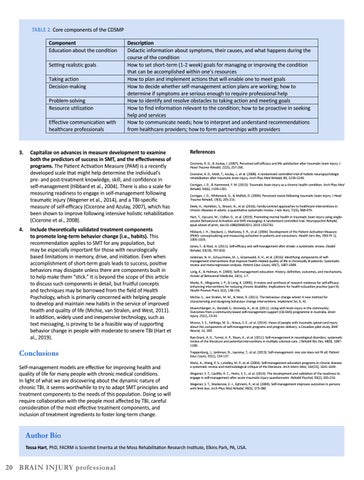
Self-Management Training: A Tool for the Long-Term Management of TBI? Tessa Hart, PhD, FACRM
22
What’s working? Maintaining Employment After Brain Injury Devan Parrott, PhD • Summer Ibarra, PhD • Terri K. Pogoda, PhD Wendy Waldman, BS
26
Sexuality: A Neglected Discussion in Chronic Traumatic Brain Injury Kathryn Farris, OTR/L • Marisa King, PT, DPT Monique R. Pappadis, MEd, PhD • Angelle M. Sander, PhD
30
Addressing the Long-term Needs of Care Partners of Persons with TBI Monique Pappadis, MEd, PhD • Shannon Juengst, PhD, CRC Helen Carmine, MSN, CRNP, CRRN Lenore “Lenny” Hawley, MSSW, LCSW, CBIST
Brain Injury Professional is a membership benefit of the North American Brain Injury Society and the International Brain Injury Association
NORTH AMERICAN BRAIN INJURY SOCIETY CHAIRMAN Mariusz Ziejewski, PhD VICE CHAIR Debra Braunling-McMorrow, PhD IMMEDIATE PAST CHAIR Ronald C. Savage, EdD TREASURER Bruce H. Stern, Esq. FAMILY LIAISON Skye MacQueen EXECUTIVE DIRECTOR/ADMINISTRATION Margaret J. Roberts EXECUTIVE DIRECTOR/OPERATIONS J. Charles Haynes, JD MARKETING MANAGER Megan Bell-Johnston GRAPHIC DESIGNER Kristin Odom BRAIN INJURY PROFESSIONAL PUBLISHER J. Charles Haynes, JD CO-EDITOR IN CHIEF Debra Braunling-McMorrow, PhD - USA CO-EDITOR IN CHIEF Nathan Zasler, MD - USA INCOMING CO-EDITOR IN CHIEF Beth Slomine, PhD - USA ASSOCIATE EDITOR Juan Arango-Lasprilla, PhD – Spain EDITOR EMERITUS Ronald Savage, EdD - USA DESIGN AND LAYOUT Kristin Odom ADVERTISING SALES Megan Bell-Johnston EDITORIAL ADVISORY BOARD Nada Andelic, MD - Norway Philippe Azouvi, MD, PhD - France Mark Bayley, MD - Canada Lucia Braga, PhD - Brazil Ross Bullock, MD, PhD - USA Fofi Constantinidou, PhD, CCC-SLP, CBIS - USA Gordana Devecerski, MD, PhD - Serbia Sung Ho Jang, MD - Republic of Korea Cindy Ivanhoe, MD - USA Inga Koerte, MD, PhD - USA Brad Kurowski, MD, MS - USA Jianan Li, MD, PhD - China Christine MacDonell, FACRM - USA Calixto Machado, MD, PhD - Cuba Barbara O’Connell, OTR, MBA - Ireland Lisandro Olmos, MD - Argentina Caroline Schnakers, PhD - USA Lynne Turner-Stokes, MD - England Olli Tenovuo, MD, PhD - Finland Asha Vas, PhD, OTR - USA Walter Videtta, MD – Argentina Thomas Watanabe, MD – USA Alan Weintraub, MD - USA Sabahat Wasti, MD - Abu Dhabi, UAE Gavin Williams, PhD, FACP - Australia Hal Wortzel, MD - USA Mariusz Ziejewski, PhD - USA EDITORIAL INQUIRIES Managing Editor Brain Injury Professional PO Box 131401, Houston, TX 77219-1401 Tel 713.526.6900 Email: mbell@hdipub.com Website: www.nabis.org ADVERTISING INQUIRIES Megan Bell-Johnston Brain Injury Professional HDI Publishers PO Box 131401, Houston, TX 77219-1401 Tel 713.526.6900 Email: mbell@internationalbrain.org NATIONAL OFFICE North American Brain Injury Society PO Box 1804, Alexandria, VA 22313 Tel 703.960.6500 / Fax 703.960.6603 Website: www.nabis.org ISSN 2375-5210 Brain Injury Professional is a quarterly publication published jointly by the North American Brain Injury Society and HDI Publishers. © 2019 NABIS/HDI Publishers. All rights reserved. No part of this publication may be reproduced in whole or in part in any way without the written permission from the publisher. For reprint requests, please contact, Managing Editor, Brain Injury Professional, PO Box 131401, Houston, TX 77219-1400, Tel 713.526.6900, Fax 713.526.7787, e-mail mbell@hdipub.com.
BRAIN INJURY professional 3
Raising the bar for inpatient and day
rehabilitation services
We offer: • An expansive Inpatient Rehabilitation Program – A spinal cord system of care, brain injury and pediatric specialty programs that have received CARF specialty recognition – A team of brain injury board-certified pediatric physiatrists – Comprehensive care for young patients from birth to age 21 – Therapy seven days a week – 28 private patient rooms • A Day Rehabilitation Program to assist patients during recovery • Technology-assisted therapy through our Center for Advanced Technology and Robotic Rehabilitation • A full-service hospital with emergency services
Learn more or make a referral: 404-785-2274 choa.org/rehab
Children’s Healthcare of Atlanta has: Three hospitals • 27 neighborhood locations • 1 million+ patient visits per year
© 2018 Children’s Healthcare of Atlanta Inc. All rights reserved. REH 11772.ck.12/2018
Children’s Healthcare of Atlanta is Commission on Accreditation of Rehabilitation Facilities (CARF)-accredited for pediatric rehabilitation services.
from the
editor in chief
In their seminal article in 2010, Masel and DeWitt introduced the brain injury world to the concept of Brain Injury (BI) as a Chronic Condition. While this was not a foreign concept for those who experienced brain injury, those who served persons with BI and payers who were accountable for the long term support of those with BI, it was a paradigm shift that allowed all to put into perspective what they were experiencing and seeing. This shift in thinking about brain injury has resulted in a much deeper dive into understanding the long term physical, cognitive, behavioral, degenerative consequences and the healing of injury.
Debra Braunling-McMorrow, PhD
Drs. Kristin Dams-O’Connor and John Corrigan have dedicated their careers to understanding the messiness and complexities in predicting brain injury outcomes. In this Special Edition on Chronic Brain Injury, they have assembled a stellar line up of researchers and clinicians and persons with brain injury and their families. As a result, they have summarized what we know and what we yet do not understand as they explore the persistent variability of outcomes for persons with TBI. Their lead article concisely reviews the research to date. It is an article that will be often cited by clinicians, researchers and persons with brain injury. In addition, this edition helps bring research to practice with articles on building resilience, self-management, sexual dysfunction and return to work. Most of what this edition does is bring the real issues of living with brain injury into focus. The interviews with persons with brain injury and their families help anchor the issues. On another note, It has been a pleasure and a challenge serving as Co-Editor-in-Chief since 2014, taking over that role from Dr. Ron Savage. In this past year as the North American Brain Injury Society and The International Brain Injury Associations have merged, Dr. Nathan Zasler joined me as Co-Editor-in-Chief. Moving forward, I am pleased to announce that Dr. Beth Slomine will be assuming my role as the new CoEditor in Chief along with Dr. Zasler. Many of you know Dr. Slomine’s reputation as an expert in pediatric brain injury and an accomplished researcher. She is an Associate Professor of Psychiatry and Behavioral Sciences and Associate Professor of Physical Medicine and Rehabilitation at Johns Hopkins University School of Medicine. She also holds a number of positions at Kennedy Krieger Institute including serving as the Director of Neuropsychological Rehabilitation Services, The Neuropsychology Director of both the Responsiveness Program and the Concussion Clinic, and the Co-Director of the Center for Brain Injury Recovery. Enough said. She is clearly accomplished and eager to take on the role. They say a sign of a good leader is to be able to hand off a position better than when you arrived so your absence will not be missed (or something like that). While I do hope some will miss me, I am proud of the Brain Injury Professional, and I believe it is uniquely poised to continue its expanding influence in the brain injury world. Thank you to everyone who has contributed to the success of this exceptional publication and for allowing me to be a part of it for these past many years.
Editor Bio Debra Braunling-McMorrow, PhD, is the President and CEO of Learning Services. She serves on the board of the North American Brain Injury Society as Vice Chair. She has served as a chair of the American Academy for the Certification of Brain Injury Specialists (AACBIS), board of executive directors of Brain Injury Association of America, and several national committees, editorial boards, and peer review panels She is a published author and lecturer in the field of brain injury rehabilitation for over 30 years. To contact Dr. McMorrow, please email conference@nabis.org.
BRAIN INJURY professional 5
Proven Experience, Exceptional Care Tree of Life Services has been helping persons with acquired brain injury optimize their functional outcomes for over 15 years under the leadership of Nathan D. Zasler, MD, internationally recognized brain injury neurorehabilitation physician. We provide transitional rehabilitation and long-term assisted living services in home-like settings in our community. We strive to optimize client’s functional outcomes by utilizing evidence based medical and neurorehabilitation assessment and treatment strategies along with close medical oversight. Our competitive, individualized per diem rates make us a cost effective choice given our scope of services , quality of care, and beautiful living environments.
Specialized Post-acute Brain Injury Services
tree-of-life.com 888-886-5462 Call today to make a referral or to schedule a free phone consultation with Dr. Zasler.
from the
guest editors
Traumatic Brain Injury (TBI) can result in lasting changes in cognition, mood, behavior, and physical functioning. It has long been assumed that after an individual recovers for a year or so, things don’t change much – the injury has taken its course. But in recent years, research has begun to quantify something that people living with brain injury, their families, and doctors have suspected for a while: that the effects of a TBI are not static. Some people keep improving for years and years following injury, and sadly others begin to decline after a period of recovery. And for some people, the TBI seems to serve as a catalyst for a wide variety of health problems. Research has highlighted high rates of chronic health conditions experienced by long-term survivors of TBI, drawn associations between TBI and dementia, and consistently found evidence for a shortened lifespan – even among those who survive more than a year following injury. John D. Corrigan, PhD
Kristen Dams-O’Connor, PhD
Ten years ago some of these findings were summarized in a paper published in the Journal of Neurotrauma, and the authors wondered: should TBI be considered a chronic disease? This was a provocative question indeed. The TBI community was activated by the dialog that ensued, and researchers across the globe have begun to investigate the myriad questions that arose: How might a TBI initiate or exacerbate diseases of other body systems? What happens in the brain years after injury to allow a neurodegenerative process to unfold? And most importantly: how can we treat it? As these questions continue to be explored, researchers and clinicians and survivors began searching for treatments, tools, tips and tricks – things that can be done now to maximize health, productivity, life quality, and longevity. In the current issue of Brain Injury Professional, we attempt to summarize the current state of knowledge with respect to TBI as a chronic health condition. Evidence has accumulated to support the notion that individuals with TBI have increased risk for a variety of pre-existing and post-injury chronic health conditions, and there appears to be a link between TBI and some types of neurodegenerative processes. But we’ve also seen clear evidence that a substantial minority of people with TBI continue to recover for years longer than we traditionally believed possible. We don’t yet know why outcomes can differ so greatly. In this issue, we have selected topical articles that present evidence-based and clinically-supported answers for those who wonder how they can be in the group that continues to recover, grow, and thrive. Our team of authors discuss the power of resilience and how to build it, strategies for vocational success (not just how to get a job, but how to keep it!), and specific strategies for health selfmanagement. We consider the support needs of care partners, and the importance of sexuality education in post-TBI rehabilitation. We sought input from experts in living with brain injury who graciously shared their wisdom and advice for living well. We hope that the content of this issue encourages ongoing dialogue about healthy living after TBI. The research summarized here can and should be used to advocate for intensive rehabilitation, long-term health management, and other supports that TBI survivors need and deserve. And the advice contained herein, whether based in empirical science, clinical expertise, or lived experience – is offered with encouragement and admiration for all those who are striving to live well with TBI.
Editors' Bios John D. Corrigan, PhD, is a Professor in the Department of Physical Medicine and Rehabilitation at Ohio State University and Director of the Ohio Valley Center for Brain Injury Prevention and Rehabilitation, which, among other activities, is the designated lead agency in the state of Ohio for TBI policy and planning. Kristen Dams-O’Connor, PhD, is Director of the Brain Injury Research Center of Mount Sinai and Associate Professor in the Departments of Rehabilitation Medicine and Neurology at Icahn School of Medicine at Mount Sinai in New York, NY. She leads the Late Effects of TBI (LETBI) Project, a TBI brain donor program focused on characterizing the clinical and pathological signatures of post-traumatic neurodegeneration. She is also Project Director of the New York Traumatic Brain Injury Model System of care at Mount Sinai.
BRAIN INJURY professional 7
Traumatic Brain Injury as a Chronic Disease Process: Looking Back on a Decade of Research Eric Watson, PhD • Raj G. Kumar, MPH, PhD • Brent Masel, MD • John D. Corrigan, PhD • Kristen Dams-O’Connor, PhD A seminal paper published in 2010 argued for the conceptualization of traumatic brain injury (TBI) not as an isolated injury event, but as a disease process that unfolds heterogeneously over many years (Masel & DeWitt, 2010). The purpose of that paper was to summarize the evidence needed to encourage clinicians and, perhaps more importantly, the insurance industry, to recognize TBI as a condition that may require lifelong care. The World Health Organization defines a chronic disease as one that has one or more of the following characteristics: it is permanent, it requires specialized care, and/or it may require a long period of observation, supervision, or care (Pruitt & Epping-Jordan, 2002). The authors summarized scientific evidence that TBI is associated with an increased risk for a broad range of neurological and non-neurological health conditions, which together supported the notion that TBI may initiate and/or accelerate health decline across multiple body systems. Unlike an injury event (such as a broken bone) which has a finite recovery timeline, the sequelae of TBI appear to persist and evolve for years post-injury.
8 BRAIN INJURY professional
At the time of its publication, this conceptualization was quite novel – and it stimulated a major investment on the part of clinicians, researchers, and the individuals with TBI and their families who have generously participated in research studies, to further investigate whether, and for whom, TBI becomes a chronic disease process. The research conducted in this area over the past decade has led to a better understanding of the heterogeneous long-term outcomes experienced by TBI survivors, and the chronic health burden experienced by some. Here, we will review some of these developments and revisit the ideas first discussed in 2010 in light of new findings, and highlight the pressing questions that remain unanswered.
Physical health The role of both comorbid and pre-existing physical health conditions in TBI risk, recovery and long-term outcomes has become more widely recognized.
Physical health problems in older adults, such as cerebrovascular diseases and activities of daily living (ADL) limitations, are associated with increased risk for sustaining a TBI in late life (Dams-O’Connor et al., 2016) – which suggests older adults with TBI were already sicker than their uninjured peers. One study reported that among adults over age 50 admitted to inpatient rehabilitation for TBI, 70% had at least one chronic disease diagnosis (Kumar et al., 2018), and the most prevalent conditions were hypertensive disease, musculoskeletal disease, diseases of lipid metabolism, and diabetes. Adults with TBI of all ages have a variety of health problems at 10-year follow-up; the most common are hypertension, fractures, osteoarthritis, high cholesterol, and sleep disorders (Hammond et al., 2019). Not surprisingly, the presence of these conditions influences trajectories of functional outcome and satisfaction with life (Malec et al., 2019). Additional studies have highlighted particular health conditions, such as post-traumatic headache which affects over 70% of individuals with moderate-to-severe in the first year after injury (Hoffman et al., 2011). Post-traumatic epilepsy is also a major concern for adults with moderate-to-severe TBI, the incidence rate of new-onset seizure disorder (9.2%) is greatest in the first year post-injury (Ritter et al., 2016). A meta-analysis (Mathias & Alvaro, 2012) of 21 studies found 50% of individuals report some form of sleep disturbance after TBI, and between 25-29% have a diagnosed sleep disorder (insomnia, hypersomnia, or apnea). As discussed further below, chronic pain is among the most commonly reported health problems following TBI in both military and civilian settings (Nampiaparampil, 2008). Finally, several studies have reiterated a link between TBI and hypopituitarism, which can result in a number of downstream clinical consequences (Tanriverdi & Kelestimur, 2015). For a TBI to be considered disease causative and/or disease accelerative, one would expect the overall burden of disease to be greater in those with TBI as compared to those without. Very few studies have directly compared those with and without a TBI, though a few studies comparing dementia risk in those with and without TBI report higher rates of diabetes, cerebrovascular and cardiovascular disease in the TBI groups (Barnes et al., 2014; Gardner et al., 2014).
Behavioral health Research over the last decade has extended and expanded upon the associations identified by Masel and DeWitt (2010) between TBI and depression, anxiety, suicide, and substance use disorder. An exhaustive review observed that the incidence of major depressive disorder and post-traumatic stress disorder following TBI exceeded population rates, commonly emerging in the first year, though onset may be delayed with more severe injuries (Ponsford et al., 2018). However, they also concluded that the frequency of psychotic spectrum, eating and somatoform disorders did not exceed rates observed in the general population. Substance use disorders were more frequent prior to injury among adults who incur TBIs, but may decline post-injury due to both spontaneous behavior change and more severe injuries limiting safety and/or access (Bogner et al., 2019). There is some suggestion that childhood TBI may predispose individuals to adult substance misuse (Cannella et al., 2019; Weil, et al., 2019). There has been some progress in identifying efficacious treatments for post-TBI behavioral health challenges. There is evidence that SSRI’s generally, and sertraline specifically, can mitigate depression after TBI (Jorge, et al., 2016). Research examining the nonpharmacological interventions, such as cognitive behavioral therapy
(CBT), have demonstrated effectiveness in reducing symptoms of depression (Fann et al., 2015), anxiety (Ponsford et al., 2016), and emotion dysregulation (Neumann et al., 2017). However, given the heterogeneity among research designs, psychotherapeutic approaches and population characteristics, comprehensive practice recommendations are not yet possible. Emerging areas of concern include the intersection between opioid use disorder and TBI (Corrigan & Adams, 2018). In suicide prevention, there is growing recognition that among persons with brain injury, risk assessment must focus more on opportunity for self-harm and less on emotional distress (Simpson & Brenner, 2019).
Neurodegenerative disease The associations between TBI, post-traumatic neurodegeneration and Alzheimer’s Disease and related disorders (ADRDs) has received unprecedented attention in the last decade. Just prior to the publication of the 2010 Masel & Dewitt paper, chronic traumatic encephalopathy (CTE) was discovered post-mortem in the brains of several former professional football players (Omalu et al., 2005), suggesting that this apparently unique pathological disease appears to be associated with repetitive head trauma (McKee et al., 2009). Since then, hundreds more CTE cases have been diagnosed postmortem (McKee et al., 2016), which has resulted in renewed interest in the association between TBI and dementia. Masel and Dewitt (2010) report findings from the Institute of Medicine report (IOM (US), 2008) which concluded that there is sufficient evidence of an association between moderate-severe TBI and Alzheimer’s disease (AD). Research over the past decade, however, has highlighted the complexity of these associations a link between TBI and AD in particular has not been consistently replicated. One review determined that among 11 studies assessing the relationship between TBI and dementia, two studies found no association, and four studies observed an association only in specific subgroups (Dams-O’Connor et al., 2016) . The preponderance of evidence does suggest an association between TBI and neurodegenerative disease, but post-traumatic neurodegeneration may be distinct from AD-like clinical symptoms (Crane et al., 2016; Dams-O’Connor et al., 2013; Nordström & Nordström, 2018; Sayed et al., 2013). Importantly, several studies have begun to identify potentially modifiable factors that may be associated with increased risk for dementia following TBI, such as sleep fragmentation and intermittent hypoxia (Lim et al., 2013; Osorio et al., 2015), increased immune response and neuroinflammation (Zhu et al., 2012), and overall burden of chronic health conditions that may at least partially mediate the relationship between TBI and dementia (Wilson et al., 2017). This research is promising as increasing physical activity (Blondell et al., 2014), treating disordered sleep (Cedernaes et al., 2017), and managing physical and psychiatric comorbidities (Diniz et al., 2013; Wilson et al., 2017) could potentially stave off cognitive decline and the development of dementia process in late life.
Mortality The age-adjusted mortality rates following TBI have not meaningfully changed since 2010 (Brooks et al., 2013). Individuals who survive at least one year following TBI are 2.33X more likely to die then their uninjured counterparts, with a reduced life expectancy of up to 9 years (Brooks et al., 2013; Harrison-Felix et al., 2015). We have learned that the absolute incidence of TBI is increasing in the elderly population due to increased life expectancy and mobility in the aging population (Roozenbeek, et al., 2013), and the rate of TBI hospitalization in adults over 75 is exceeding population growth in this age group (Kristen Dams-O’Connor et al., 2013).
BRAIN BRAIN INJURY INJURY professional professional 99
The changes in the demographic landscape of TBI have implications for mortality, as older age at TBI is associated with increased risk for acute mortality, greater acute care complications, comorbidities, use of anti-platelet/anti-coagulants, and conservative acute care (McIntyre et al., 2013). Still, relative to general population, individuals with moderate-severe TBI from all age strata are at increased relative risk for mortality, with the exception of adults over 85 (Harrison-Felix et al., 2012). Teenagers and middle-aged adults are at particularly increased relative risk for mortality compared to their counterparts in the general population. The association between mild TBI and mortality is much more tenuous, with little new evidence in the last decade. A study from the European Union counter-intuitively found a lower 6-month all-cause death rate (5%) in the lower income countries than in higher income countries (8%) (De Silva et al., 2009). An American study found an all-cause in-hospital mortality rate of 1.4% in a large sample of patients with mTBI (Selassie et al., 2011). Across both of these mTBI studies, it was not clear that deaths were directly related to the mTBI, extra-cranial concurrent injuries, or other causes.
Conclusion The study of TBI as a chronic condition has garnered unprecedented support in the past decade, with findings largely confirming the evidence compiled in the 2010 paper by Masel and Dewitt. Still, there are many more questions than answers. Due to scarcity of studies designed to directly compare the physical and behavioral health of those with and without TBI, it remains unclear whether, when and how a TBI leads to the onset or exacerbation of many of these health challenges relative to uninjured adults. More research is needed to distinguish post-TBI cognitive dysfunction from neurodegenerative disease processes and to elucidate the underlying mechanisms driving post-traumatic neurodegeneration. It will be particularly important to characterize the subgroup(s) of TBI survivors who are at elevated risk for long-term evolving sequelae of TBI so that preventative care efforts can be dispatched accordingly. It will also be important to investigate how the sequelae of TBI interact with one another to alter a person’s health and wellbeing. Post-TBI cognitive impairment, for example, may limit a person’s ability to self-manage his/her health and contribute directly to health decline. It may be the case that certain medical conditions contribute to or exacerbate cognitive impairment and behavioral health disorders. For example, other fields studying trauma suggest that underlying biological abnormalities like persistent autonomic dysregulation (Brod et al., 2014), metabolic function (Brenner et al., 2018) and hyperinflammation (Bollen et al., 2017; Kiecolt-Glaser et al., 2015) may cause executive dysfunction that increases the likelihood of behavioral health disorders. This information might guide the development of treatments to maximize post-TBI health. Even as research progresses and knowledge accumulates, current long-term care for TBI survivors can be improved considerably by bringing together leading experts to develop consensus guidelines for treatment of the most common post-TBI conditions and comorbidities. The most valuable clinical practice guidelines will be specific to key subgroups (e.g., older vs younger adults; mild vs severe TBI). The implications of TBI as a chronic disease process on long-term health care needs and health care costs have not yet been fully realized. It is clear that research, advocacy, and policy efforts need to continue at unprecedented levels so that individuals with TBI can more universally gain access to the care they need, when they need it – even decades following the initial event. References Barnes, D. E., Kaup, A., Kirby, K. A., Byers, A. L., Diaz-Arrastia, R., & Yaffe, K. (2014). Traumatic brain injury and risk of dementia in older veterans. Neurology, 83(4), 312–319. https://doi.org/10.1212/ WNL.0000000000000616 Blondell, S. J., Hammersley-Mather, R., & Veerman, J. L. (2014). Does physical activity prevent cognitive decline and dementia?: A systematic review and meta-analysis of longitudinal studies. BMC Public Health, 14(1), 510. https://doi.org/10.1186/1471-2458-14-510
10 BRAIN INJURY professional
Bogner, J., Corrigan, J. D., Yi, H., Singichetti, B., Manchester, K., Huang, L., & Yang, J. (2019). Lifetime History of Traumatic Brain Injury and Behavioral Health Problems in a Population-Based Sample. The Journal of Head Trauma Rehabilitation. https://doi.org/10.1097/HTR.0000000000000488 Bollen, J., Trick, L., Llewellyn, D., & Dickens, C. (2017). The effects of acute inflammation on cognitive functioning and emotional processing in humans: A systematic review of experimental studies. Journal of Psychosomatic Research, 94, 47–55. https://doi.org/10.1016/j.jpsychores.2017.01.002 Brenner, L. A., Hoisington, A. J., Stearns-Yoder, K. A., Stamper, C. E., Heinze, J. D., Postolache, T. T., … Lowry, C. A. (2018). Military-Related Exposures, Social Determinants of Health, and Dysbiosis: The United StatesVeteran Microbiome Project (US-VMP). Frontiers in Cellular and Infection Microbiology, 8, 400. https://doi. org/10.3389/fcimb.2018.00400 Brod, S., Rattazzi, L., Piras, G., & D’Acquisto, F. (2014). “As above, so below” examining the interplay between emotion and the immune system. Immunology, 143(3), 311–318. https://doi.org/10.1111/imm.12341 Brooks, J. C., Strauss, D. J., Shavelle, R. M., Paculdo, D. R., Hammond, F. M., & Harrison-Felix, C. L. (2013). Long-term disability and survival in traumatic brain injury: results from the National Institute on Disability and Rehabilitation Research Model Systems. Archives of Physical Medicine and Rehabilitation, 94(11), 2203–2209. https://doi.org/10.1016/j.apmr.2013.07.005 Cannella, L. A., McGary, H., & Ramirez, S. H. (2019). Brain interrupted: Early life traumatic brain injury and addiction vulnerability. Experimental Neurology, 317, 191–201. https://doi.org/10.1016/j. expneurol.2019.03.003 Cedernaes, J., Osorio, R. S., Varga, A. W., Kam, K., Schiöth, H. B., & Benedict, C. (2017). Candidate mechanisms underlying the association between sleep-wake disruptions and Alzheimer’s disease. Sleep Medicine Reviews, 31, 102–111. https://doi.org/10.1016/j.smrv.2016.02.002 Corrigan, J. D., & Adams, R. S. (2018). The intersection of lifetime history of traumatic brain injury and the opioid epidemic. Addictive Behaviors, 90, 143. Crane, P. K., Gibbons, L. E., Dams-O’Connor, K., Trittschuh, E., Leverenz, J. B., Keene, C. D., … Larson, E. B. (2016). Association of Traumatic Brain Injury With Late-Life Neurodegenerative Conditions and Neuropathologic Findings. JAMA Neurology, 73(9), 1062–1069. https://doi.org/10.1001/ jamaneurol.2016.1948 Dams‐O’Connor, K., Gibbons, L. E., Landau, A., Larson, E. B., & Crane, P. K. (2016). Health Problems Precede Traumatic Brain Injury in Older Adults. Journal of the American Geriatrics Society, 64(4), 844–848. https:// doi.org/10.1111/jgs.14014 Dams-O’Connor, K., Spielman, L., Hammond, F. M., Sayed, N., Culver, C., & Diaz-Arrastia, R. (2013). An exploration of clinical dementia phenotypes among individuals with and without traumatic brain injury. NeuroRehabilitation, 32(2), 199–209. https://doi.org/10.3233/NRE-130838 Dams-O’Connor, Kristen, Cuthbert, J. P., Whyte, J., Corrigan, J. D., Faul, M., & Harrison-Felix, C. (2013). Traumatic brain injury among older adults at level I and II trauma centers. Journal of Neurotrauma, 30(24), 2001–2013. https://doi.org/10.1089/neu.2013.3047 Dams-O’Connor, Kristen, Guetta, G., Hahn-Ketter, A. E., & Fedor, A. (2016). Traumatic brain injury as a risk factor for Alzheimer’s disease: current knowledge and future directions. Neurodegenerative Disease Management, 6(5), 417–429. https://doi.org/10.2217/nmt-2016-0017 De Silva, M. J., Roberts, I., Perel, P., Edwards, P., Kenward, M. G., Fernandes, J., … CRASH Trial Collaborators. (2009). Patient outcome after traumatic brain injury in high-, middle- and low-income countries: analysis of data on 8927 patients in 46 countries. International Journal of Epidemiology, 38(2), 452–458. https://doi. org/10.1093/ije/dyn189 Diniz, B. S., Butters, M. A., Albert, S. M., Dew, M. A., & Reynolds, C. F. (2013). Late-life depression and risk of vascular dementia and Alzheimer’s disease: systematic review and meta-analysis of community-based cohort studies. The British Journal of Psychiatry: The Journal of Mental Science, 202(5), 329–335. https://doi. org/10.1192/bjp.bp.112.118307 Fann, J. R., Bombardier, C. H., Vannoy, S., Dyer, J., Ludman, E., Dikmen, S., … Temkin, N. (2015). Telephone and in-person cognitive behavioral therapy for major depression after traumatic brain injury: a randomized controlled trial. Journal of Neurotrauma, 32(1), 45–57. Gardner, R. C., Burke, J. F., Nettiksimmons, J., Kaup, A., Barnes, D. E., & Yaffe, K. (2014). Dementia risk after traumatic brain injury vs nonbrain trauma: the role of age and severity. JAMA Neurology, 71(12), 1490–1497. https://doi.org/10.1001/jamaneurol.2014.2668 Hammond, F. M., Corrigan, J. D., Ketchum, J. M., Malec, J. F., Dams-OʼConnor, K., Hart, T., … Whiteneck, G. G. (2019). Prevalence of Medical and Psychiatric Comorbidities Following Traumatic Brain Injury. The Journal of Head Trauma Rehabilitation. https://doi.org/10.1097/HTR.0000000000000465 Harrison-Felix, C., Kolakowsky-Hayner, S. A., Hammond, F. M., Wang, R., Englander, J., Dams-OʼConnor, K., … Diaz-Arrastia, R. (2012). Mortality after surviving traumatic brain injury: risks based on age groups. The Journal of Head Trauma Rehabilitation, 27(6), E45-56. https://doi.org/10.1097/HTR.0b013e31827340ba Harrison-Felix, C., Pretz, C., Hammond, F. M., Cuthbert, J. P., Bell, J., Corrigan, J., … Haarbauer-Krupa, J. (2015). Life expectancy after inpatient rehabilitation for traumatic brain injury in the United States. Journal of Neurotrauma, 32(23), 1893–1901. Hoffman, J. M., Lucas, S., Dikmen, S., Braden, C. A., Brown, A. W., Brunner, R., … Bell, K. R. (2011). Natural history of headache after traumatic brain injury. Journal of Neurotrauma, 28(9), 1719–1725. Institute of Medicine (US) Committee on Gulf War and Health: Brain Injury in Veterans and Long-Term Health Outcomes. (2008). Gulf War and Health: Volume 7: Long-Term Consequences of Traumatic Brain Injury. Retrieved from http://www.ncbi.nlm.nih.gov/books/NBK214701/ Jorge, R. E., Acion, L., Burin, D. I., & Robinson, R. G. (2016). Sertraline for Preventing Mood Disorders Following Traumatic Brain Injury: A Randomized Clinical Trial. JAMA Psychiatry, 73(10), 1041–1047. https:// doi.org/10.1001/jamapsychiatry.2016.2189 Kiecolt-Glaser, J. K., Derry, H. M., & Fagundes, C. P. (2015). Inflammation: depression fans the flames and feasts on the heat. The American Journal of Psychiatry, 172(11), 1075–1091. https://doi.org/10.1176/appi. ajp.2015.15020152 Kumar, R. G., Juengst, S. B., Wang, Z., Dams-O’Connor, K., Dikmen, S. S., O’Neil-Pirozzi, T. M., … Arenth, P. M. (2018). Epidemiology of comorbid conditions among adults 50 years and older with traumatic brain injury. The Journal of Head Trauma Rehabilitation, 33(1), 15–24. Lim, A. S. P., Kowgier, M., Yu, L., Buchman, A. S., & Bennett, D. A. (2013). Sleep Fragmentation and the Risk of Incident Alzheimer’s Disease and Cognitive Decline in Older Persons. Sleep, 36(7), 1027–1032. https://doi. org/10.5665/sleep.2802 Malec, J. F., Ketchum, J. M., Hammond, F. M., Corrigan, J. D., Dams-Oʼconnor, K., Hart, T., … Bogner, J. (2019). Longitudinal Effects of Medical Comorbidities on Functional Outcome and Life Satisfaction After Traumatic Brain Injury: An Individual Growth Curve Analysis of NIDILRR Traumatic Brain Injury Model System Data. The Journal of Head Trauma Rehabilitation. Masel, B. E., & DeWitt, D. S. (2010). Traumatic Brain Injury: A Disease Process, Not an Event. Journal of Neurotrauma, 27(8), 1529–1540. https://doi.org/10.1089/neu.2010.1358 Mathias, J. L., & Alvaro, P. K. (2012). Prevalence of sleep disturbances, disorders, and problems following traumatic brain injury: a meta-analysis. Sleep Medicine, 13(7), 898–905. McIntyre, A., Mehta, S., Aubut, J., Dijkers, M., & Teasell, R. W. (2013). Mortality among older adults after a traumatic brain injury: a meta-analysis. Brain Injury, 27(1), 31–40. https://doi.org/10.3109/02699052.2012 .700086
McKee, A. C., Cairns, N. J., Dickson, D. W., Folkerth, R. D., Keene, C. D., Litvan, I., … TBI/CTE group. (2016). The first NINDS/NIBIB consensus meeting to define neuropathological criteria for the diagnosis of chronic traumatic encephalopathy. Acta Neuropathologica, 131(1), 75–86. https://doi.org/10.1007/s00401-0151515-z McKee, A. C., Cantu, R. C., Nowinski, C. J., Hedley-Whyte, E. T., Gavett, B. E., Budson, A. E., … Stern, R. A. (2009). Chronic traumatic encephalopathy in athletes: progressive tauopathy after repetitive head injury. Journal of Neuropathology and Experimental Neurology, 68(7), 709–735. https://doi.org/10.1097/ NEN.0b013e3181a9d503 Nampiaparampil, D. E. (2008). Prevalence of chronic pain after traumatic brain injury: a systematic review. Jama, 300(6), 711–719. Neumann, D., Tsaousides, T., Spielman, L., Kajankova, M., Guetta, G., Gordon, W., & Dams-O’Connor, K. (2017). Improving emotion regulation following web-based group intervention for individuals with traumatic brain injury. Journal of Head Trauma Rehabilitation, 32(5), 354–365. Nordström, A., & Nordström, P. (2018). Traumatic brain injury and the risk of dementia diagnosis: A nationwide cohort study. PLoS Medicine, 15(1), e1002496. https://doi.org/10.1371/journal.pmed.1002496 Omalu, B. I., DeKosky, S. T., Minster, R. L., Kamboh, M. I., Hamilton, R. L., & Wecht, C. H. (2005). Chronic Traumatic Encephalopathy in a National Football League Player. Neurosurgery, 57(1), 128–134. https://doi. org/10.1227/01.NEU.0000163407.92769.ED Osorio, R. S., Gumb, T., Pirraglia, E., Varga, A. W., Lu, S.-E., Lim, J., … Alzheimer’s Disease Neuroimaging Initiative. (2015). Sleep-disordered breathing advances cognitive decline in the elderly. Neurology, 84(19), 1964–1971. https://doi.org/10.1212/WNL.0000000000001566
33rd Conference on Legal & Medical Issues in Brain Injury Roosevelt Hotel New Orleans New Orleans, Louisiana February 26 – 29, 2020
Ponsford, J., Alway, Y., & Gould, K. R. (2018). Epidemiology and Natural History of Psychiatric Disorders After TBI. The Journal of Neuropsychiatry and Clinical Neurosciences, 30(4), 262–270. https://doi.org/10.1176/ appi.neuropsych.18040093 Ponsford, J., Lee, N. K., Wong, D., McKay, A., Haines, K., Alway, Y., … O’donnell, M. L. (2016). Efficacy of motivational interviewing and cognitive behavioral therapy for anxiety and depression symptoms following traumatic brain injury. Psychological Medicine, 46(5), 1079–1090. Pruitt, S., & Epping-Jordan, J. (2002). Innovative care for chronic conditions: building blocks for action: global report (Vol. 2). Retrieved from http://books.google.com/books?hl=en&lr=&id=eCRKMEg8W6UC&oi=fnd&pg= PA1&dq=world+health+organization+chronic+conditions:+building+blocks+for+action&ots=7B_9WPRFiW&si g=kqRUBtw4JD3UpHIzdvjTHwOvfc4 Ritter, A. C., Wagner, A. K., Fabio, A., Pugh, M. J., Walker, W. C., Szaflarski, J. P., … Dreer, L. E. (2016). Incidence and risk factors of posttraumatic seizures following traumatic brain injury: A Traumatic Brain Injury Model Systems Study. Epilepsia, 57(12), 1968–1977. https://doi.org/10.1111/epi.13582 Roozenbeek, B., Maas, A. I. R., & Menon, D. K. (2013). Changing patterns in the epidemiology of traumatic brain injury. Nature Reviews Neurology, 9(4), 231–236. https://doi.org/10.1038/nrneurol.2013.22 Sayed, N., Culver, C., Dams-O’Connor, K., Hammond, F., & Diaz-Arrastia, R. (2013). Clinical phenotype of dementia after traumatic brain injury. Journal of Neurotrauma, 30(13), 1117–1122. https://doi.org/10.1089/ neu.2012.2638 Selassie, A. W., Fakhry, S. M., & Ford, D. W. (2011). Population-based study of the risk of in-hospital death after traumatic brain injury: the role of sepsis. The Journal of Trauma, 71(5), 1226–1234. https://doi. org/10.1097/TA.0b013e318226ecfc Simpson, G. K., & Brenner, L. A. (2019). Suicide Prevention after Neurodisability: An Evidence-Informed Approach. Oxford University Press. Tanriverdi, F., & Kelestimur, F. (2015). Pituitary dysfunction following traumatic brain injury: clinical perspectives. Neuropsychiatric Disease and Treatment, 11, 1835–1843. https://doi.org/10.2147/NDT.S65814 Weil, Z. M., Karelina, K., & Corrigan, J. D. (2019). Does pediatric traumatic brain injury cause adult alcohol misuse: Combining preclinical and epidemiological approaches. Experimental Neurology, 317, 284–290. https://doi.org/10.1016/j.expneurol.2019.03.012 Wilson, L., Stewart, W., Dams-O’Connor, K., Diaz-Arrastia, R., Horton, L., Menon, D. K., & Polinder, S. (2017). The chronic and evolving neurological consequences of traumatic brain injury. The Lancet Neurology, 16(10), 813–825. https://doi.org/10.1016/S1474-4422(17)30279-X Zhu, B., Dong, Y., Xu, Z., Gompf, H. S., Ward, S. A. P., Xue, Z., … Xie, Z. (2012). Sleep disturbance induces neuroinflammation and impairment of learning and memory. Neurobiology of Disease, 48(3), 348–355. https://doi.org/10.1016/j.nbd.2012.06.022
People who attend this meeting will have access to attend the ABI2020 conference.
Author Bios Raj Kumar, PhD MPH, is a neuroepidemiologist and currently a post-doctoral fellow at the Brain Injury Research Center at Mount Sinai where he is studying the effects of physical and mental health comorbidities on recovery from TBI. Eric Watson, PhD, is a post-doctoral fellow in Clinical Neuropsychology and Rehabilitation Research at the Brain Injury Research Center within the Department of Rehabilitation and Human Performance at Mount Sinai. Brent Masel, MD, is a Clinical Professor of Neurology at the University of Texas Medical Branch, and serves as the Medical Director of the Brain Injury Association of America. John D. Corrigan, PhD, is a Professor in the Department of Physical Medicine and Rehabilitation at Ohio State University and Director of the Ohio Valley Center for Brain Injury Prevention and Rehabilitation, which, among other activities, is the designated lead agency in the state of Ohio for TBI policy and planning. Kristen Dams-O’Connor, PhD, is Director of the Brain Injury Research Center of Mount Sinai and Associate Professor in the Departments of Rehabilitation Medicine and Neurology at Icahn School of Medicine at Mount Sinai in New York, NY. She leads the Late Effects of TBI (LETBI) Project, a TBI brain donor program focused on characterizing the clinical and pathological signatures of post-traumatic neurodegeneration. She is also Project Director of the New York Traumatic Brain Injury Model System of care at Mount Sinai.
More information to be posted at
tbilegal2020.org
BRAIN INJURY professional 11
Resilience and Chronic Brain Injury Outcomes: Behavioral and Social Pathways for Promoting Well-Being Amanda R. Rabinowitz, PhD • Grace S. Griesbach, PhD Shanti M. Pinto, MD • Lenore A. Hawley, MSSW
Outcomes after a moderate-to-severe TBI are quite variable, with some individuals exhibiting impressive recovery and others facing severe disability (Thornhill et al., 2000). Deleterious effects on mental health and well-being are among the most common and troubling long-term effects of TBI. Most research on psychological functioning after TBI has focused on the first year after the injury; however, a growing body of work suggests that higher rates of psychiatric diagnoses and poorer subjective well-being and quality of life persist well into the chronic post-injury phase (Corrigan et al., 2014; Hart et al., 2011; Hart et al., 2012). Predicting who will struggle and who will thrive is a challenge. Even with advanced neuroimaging methods for quantifying neuropathology, a large proportion of the variance in TBI outcomes remains unexplained (Betz et al., 2012; Corrigan et al., 2015; Davis et al., 2012; Forslund et al., 2013). In this article, we discuss how personal and lifestyle factors can improve long-term well-being following TBI.
Resilience There is a growing appreciation that the personal qualities that individuals bring to their injuries may influence their recovery, a notion referred to as resilience (Rabinowitz & Arnett, 2018; Richardson, 2002). For example, individuals employing a coping style focused on actively addressing stressors and using humor and enjoyable activities to promote well-being have better psychosocial outcomes (Anson & Ponsford, 2006). Higher resilience has been associated with decreased rates of depression and anxiety and increased life satisfaction following TBI (Marwitz et al., 2018). Resilience has also been associated with increased community participation (Marwitz et al., 2018; Wardlaw et al., 2018), perhaps via direct effects on reducing depression (Wardlaw et al., 2018). Incorporating a focus on resilience into brain injury rehabilitation may be a promising approach for improving long-term functioning. There is evidence that behavioral interventions can boost resilience after TBI. For example, Kreutzer and colleagues investigated the role of Resilience and Adjustment Intervention (RAI) on outcomes after TBI in a group of 160 individuals roughly 19 months following TBI. They found that those who completed RAI had improved resilience and lower psychological distress compared with waitlist controls (Kreutzer et al., 2018).
Quality sleep promotes well-being after brain injury Engaging in emotional and physical health-promoting behaviors is one likely avenue by which resilience may confer its benefits.
12 BRAIN INJURY professional
For example, quality sleep is associated with better cognitive and emotional functioning after TBI. Animal studies have shown that sleep promotes critical neural functions for learning and memory. For example, sleep spindles, which are activity bursts in the thalamus during non-rapid eye movement (REM) sleep, have been linked with neural plasticity (Andrade et al., 2011). Given the impact that sleep has on cognitive function, it is not surprising that attention and memory deficits are greater in TBI patients with concurrent sleep disorders (Mahmood et al., 2004; Wilde et al., 2007). Sleep has been observed to play a critical role in emotional processing as well. Decades of research have established a strong bi-directional link between disturbed sleep and emotional disorders like depression and anxiety (Alvaro, Roberts, & Harris, 2013; Riemann, Berger, & Voderholzer, 2001). Persons with TBI show altered-sleep architecture, characterized by reduced time in REM sleep (Grima et al., 2016), which is particularly critical for processing emotional stimuli and regulating emotional reactivity (Baran et al., 2012; Jones et al., 2016; Wilde et al., 2007). Unfortunately, sleep disturbances are a common complaint after TBI (Gardani et al., 2015; Ouellet, Beaulieu-Bonneau, & Morin, 2015). Multiple studies utilizing polysomnography, the “gold standard” for objectively evaluating sleep, have shown that individuals with a TBI have significantly more sleep disorders compared to healthy controls (Grima et al., 2016). Over half of people living with TBI report difficulty initiating or maintaining sleep (Ouellet et al., 2015; Sandsmark, Elliott, & Lim, 2017). Hypersomnia and fatigue are also common complaints that can result from an array of sleep disturbances stemming from TBI (Imbach et al., 2015; Masel et al., 2001). Untreated TBI-related sleep disturbances are likely to worsen with age (Copinschi & Caufriez, 2013; Griesbach et al., 2018). Although the research on interventions for sleep disturbance after TBI is somewhat limited, there are multiple empirically supported interventions for sleep in the general population that may be considered for treating sleep disorders in the context of TBI. In order to avoid undesirable medication side effects, non-pharmacological interventions for improving sleep are appealing. Common interventions include psychoeducation on sleep hygiene, cognitive behavioral therapy, light therapy and continuous positive airway pressure (CPAP) therapy for sleep apnea. Physical exercise has been gaining attention as a treatment for sleep disturbance (Guilleminault et al., 1995; Reid et al., 2010), and evidence suggests that this may be a particularly promising intervention for persons with sleep disorders related to TBI.
NORTH AMERICAN BRAIN INJURY SOCIETY PRESENTS THE
15 T H A N N U A L CONFERENCE ON BRAIN INJURY BEST PRACTICES IN BRAIN INJURY MEDICINE AND N E U R O R E H A B I L I TAT I O N : IMPROVING OUTCOMES THROUGH INTERDISCIPLINARY C O L L A B O R AT I O N
New Orleans Louisiana February 26-29, 2020 The Roosevelt Hotel
With assistance from:
Physical activity and resilience after brain injury In addition to improving sleep, exercise is associated with a host of emotional, cognitive, and physical health benefits that may improve functioning after TBI. Exercise has direct positive effects on brain function, including development of new cells and blood vessels, as well as increased production of molecules that promote synaptic plasticity (Dostes et al., 2016; Griesbach, 2011; Smallwood et al., 2015). Positive effects on learning and memory are associated, in particular, with changes in hippocampal function (Creer et al., 2010; Griesbach, Hovda, & Gomez-Pinilla, 2009). Studies in animal models of TBI have shown that exercise increases proteins that facilitate neuroplasticity and improve performance in a variety of cognitive tasks (Ding et al., 2006; Mustroph et al., 2012). Exercise induced increases in key proteins have also been observed in humans (Seifert et al., 2009). Likewise, clinical studies have shown improvements in memory and executive function after aerobic exercise in participants with TBI (Chin et al., 2015). Physical activity after TBI is an important factor in maintaining good long-term health in a variety of domains (Kreber & Griesbach, 2016). A sedentary lifestyle increases the risk for developing secondary complications such as hypertension, osteoporosis, obesity and non-insulin dependent diabetes mellitus (Shavelle et al., 2001). Exercise has also been found to promote emotional health. Clinical studies have observed that aerobic exercise decreases symptoms of depression following TBI (Hoffman et al., 2010; Wise et al., 2012). Although physical limitations and logistical challenges can make it difficult for persons with TBI to stay active; promoting safe and appropriate physical activity after TBI can lead to multiple benefits for cognitive, physical, and emotional status, including protection against age-related cognitive decline (Bherer, Erickson, & LiuAmbrose, 2013; Hyodo et al., 2016).
The role of community participation and social support Social and community engagement also promotes better long-term functioning for those living with chronic brain injury. Community participation is associated with decreased depression (Erler et al., 2018), more positive affect (Juengst et al., 2014), and improved life satisfaction following TBI (Juengst et al., 2015). Due to the crosssectional nature of the current literature, it is unclear whether decreased depression and increased positive affect precedes higher levels of participation, or if it is participation that is responsible for the decreased rate of depression and higher levels of positive affect. Andelic and colleagues conducted longitudinal interviews of 44 individuals following TBI. Overall, community integration improved between the 10- and 20-year follow-up periods. Additionally, those with greater community integration at 10 years post-TBI had improved mental health at 20 years post-TBI (Andelic et al., 2018), suggesting that community integration is important for mental health among long-term survivors with TBI. There is a decline in social support after TBI with decrease in size of social networks with loss of friends and increased reliance on family. Unfortunately, this loss of social support may lead to poorer psychosocial outcomes. Greater social support is associated with improved quality of life (Steadman-Pare et al., 2001) and decreased depression following TBI (Douglas & Spellacy, 2000). Living with others, compared with living alone, was also associated with greater community participation following TBI (Erler et al., 2018). In a study of 245 individuals 6 months to 13 years following TBI, close to half of individuals experienced unhealthy family function, and family function was moderately correlated with depression and resilience (Wardlaw et al., 2018). For some, religious groups can be an important source of social support.
14 BRAIN INJURY professional
Prior studies have demonstrated that participation in religious services has been associated with improved life satisfaction, social participation, and decreased depression following TBI (Juengst et al., 2015; Philippus et al., 2016).
Putting it all together For some individuals, the effects of TBI persist for many years or even a lifetime. Individuals living with chronic brain injury are at risk for increased rates of psychiatric diagnoses as well as decreased subjective well-being and quality of life. Activities and interventions that promote psychological resilience may provide protection against these issues, leading to improved psychosocial outcomes and life satisfaction. Resilience interventions should encourage adaptive coping strategies, positive sleep behaviors, regular exercise, social engagement and support, and active community participation. It is recommended that TBI rehabilitation and research efforts incorporate an emphasis on resilience building to improve the lives of those living with chronic brain injury. References Alvaro, P. K., Roberts, R. M., & Harris, J. K. (2013). A Systematic Review Assessing Bidirectionality between Sleep Disturbances, Anxiety, and Depression. Sleep, 36(7), 1059-1068. doi:10.5665/sleep.2810 Andelic, N., Howe, E. I., Hellstrøm, T., Sanchez, M. F., Lu, J., Løvstad, M., & Røe, C. (2018). Disability and quality of life 20 years after traumatic brain injury. Brain and behavior, e01018. Andrade, K. C., Spoormaker, V. I., Dresler, M., Wehrle, R., Holsboer, F., Sämann, P. G., & Czisch, M. (2011). Sleep spindles and hippocampal functional connectivity in human NREM sleep. Journal of Neuroscience, 31(28), 10331-10339. Anson, K., & Ponsford, J. (2006). Coping and emotional adjustment following traumatic brain injury. The Journal of head trauma rehabilitation, 21(3), 248-259. Baran, B., Pace-Schott, E. F., Ericson, C., & Spencer, R. M. (2012). Processing of emotional reactivity and emotional memory over sleep. Journal of Neuroscience, 32(3), 1035-1042. doi:10.1523/ JNEUROSCI.2532-11.2012 Betz, J., Zhuo, J., Roy, A., Shanmuganathan, K., & Gullapalli, R. P. (2012). Prognostic value of diffusion tensor imaging parameters in severe traumatic brain injury. Journal of neurotrauma, 29(7), 1292-1305. Bherer, L., Erickson, K. I., & Liu-Ambrose, T. (2013). A review of the effects of physical activity and exercise on cognitive and brain functions in older adults. Journal of aging research, 2013. Chin, L. M., Keyser, R. E., Dsurney, J., & Chan, L. (2015). Improved cognitive performance following aerobic exercise training in people with traumatic brain injury. Archives of physical medicine and rehabilitation, 96(4), 754-759. Copinschi, G., & Caufriez, A. (2013). Sleep and hormonal changes in aging. Endocrinology and Metabolism Clinics, 42(2), 371-389. Corrigan, J. D., Cuthbert, J. P., Harrison-Felix, C., Whiteneck, G. G., Bell, J. M., Miller, A. C., . . . Pretz, C. R. (2014). US population estimates of health and social outcomes 5 years after rehabilitation for traumatic brain injury. The Journal of head trauma rehabilitation, 29(6), E1-E9. Corrigan, J. D., Horn, S. D., Barrett, R. S., Smout, R. J., Bogner, J., Hammond, F. M., . . . Majercik, S. (2015). Effects of patient preinjury and injury characteristics on acute rehabilitation outcomes for traumatic brain injury. Archives of physical medicine and rehabilitation, 96(8), S209-S221. e206. Creer, D. J., Romberg, C., Saksida, L. M., van Praag, H., & Bussey, T. J. (2010). Running enhances spatial pattern separation in mice. Proceedings of the National Academy of Sciences, 107(5), 2367-2372. Davis, L. C., Sherer, M., Sander, A. M., Bogner, J. A., Corrigan, J. D., Dijkers, M. P., . . . Seel, R. T. (2012). Preinjury predictors of life satisfaction at 1 year after traumatic brain injury. Archives of physical medicine and rehabilitation, 93(8), 1324-1330. Ding, Q., Vaynman, S., Akhavan, M., Ying, Z., & Gomez-Pinilla, F. (2006). Insulin-like growth factor I interfaces with brain-derived neurotrophic factor-mediated synaptic plasticity to modulate aspects of exercise-induced cognitive function. Neuroscience, 140(3), 823-833. Dostes, S., Dubreucq, S., Ladevèze, E., Marsicano, G., Abrous, D. N., Chaouloff, F., & Koehl, M. (2016). Running per se stimulates the dendritic arbor of newborn dentate granule cells in mouse hippocampus in a duration‐ dependent manner. Hippocampus, 26(3), 282-288. Douglas, J. M., & Spellacy, F. J. (2000). Correlates of depression in adults with severe traumatic brain injury and their carers. Brain injury, 14(1), 71-88. Erler, K. S., Whiteneck, G. G., Juengst, S. B., Locascio, J. J., Bogner, J. A., Kaminski, J., & Giacino, J. T. (2018). Predicting the trajectory of participation after traumatic brain injury: A longitudinal analysis. The Journal of head trauma rehabilitation, 33(4), 257-265. Forslund, M., Roe, C., Sigurdardottir, S., & Andelic, N. (2013). Predicting health‐related quality of life 2 years after moderate‐to‐severe traumatic brain injury. Acta Neurologica Scandinavica, 128(4), 220-227. Gardani, M., Morfiri, E., Thomson, A., O'Neill, B., & McMillan, T. M. (2015). Evaluation of sleep disorders in patients with severe traumatic brain injury during rehabilitation. Archives of physical medicine and rehabilitation, 96(9), 1691-1697. e1693. Griesbach, G. S. (2011). Exercise after traumatic brain injury: is it a double-edged sword? PM&R, 3(6), S64-S72. Griesbach, G. S., Hovda, D. A., & Gomez-Pinilla, F. (2009). Exercise-induced improvement in cognitive performance after traumatic brain injury in rats is dependent on BDNF activation. Brain research, 1288, 105-115. Griesbach, G. S., Masel, B. E., Helvie, R. E., & Ashley, M. J. (2018). The impact of traumatic brain injury on later life: effects on normal aging and neurodegenerative diseases. Journal of neurotrauma, 35(1), 17-24. Grima, N., Ponsford, J., Rajaratnam, S. M., Mansfield, D., & Pase, M. P. (2016). Sleep disturbances in traumatic brain injury: a meta-analysis. Journal of clinical sleep medicine, 12(03), 419-428. Guilleminault, C., Clerk, A., Black, J., Labanowski, M., Pelayo, R., & Claman, D. (1995). Nondrug treatment trials in psychophysiologic insomnia. Archives of Internal Medicine, 155(8), 838-844. Hart, T., Brenner, L., Clark, A. N., Bogner, J. A., Novack, T. A., Chervoneva, I., . . . Arango-Lasprilla, J. C. (2011). Major and minor depression after traumatic brain injury. Archives of physical medicine and rehabilitation, 92(8), 1211-1219.
Shavelle, R. M., Strauss, D., Whyte, J., Day, S. M., & Yu, Y. L. (2001). Long-term causes of death after traumatic brain injury. American Journal of Physical Medicine & Rehabilitation, 80(7), 510-516.
Hart, T., Hoffman, J. M., Pretz, C., Kennedy, R., Clark, A. N., & Brenner, L. A. (2012). A longitudinal study of major and minor depression following traumatic brain injury. Archives of physical medicine and rehabilitation, 93(8), 1343-1349. Hoffman, J. M., Bell, K. R., Powell, J. M., Behr, J., Dunn, E. C., Dikmen, S., & Bombardier, C. H. (2010). A randomized controlled trial of exercise to improve mood after traumatic brain injury. PM&R, 2(10), 911-919.
Smallwood, N., Spriggs, M. J., Thompson, C. S., Wu, C. C., Hamm, J. P., Moreau, D., & Kirk, I. J. (2015). Influence of physical activity on human sensory long-term potentiation. Journal of the International Neuropsychological Society, 21(10), 831-840.
Hyodo, K., Dan, I., Kyutoku, Y., Suwabe, K., Byun, K., Ochi, G., . . . Soya, H. (2016). The association between aerobic fitness and cognitive function in older men mediated by frontal lateralization. Neuroimage, 125, 291-300.
Steadman-Pare, D., Colantonio, A., Ratcliff, G., Chase, S., & Vernich, L. (2001). Factors associated with perceived quality of life many years after traumatic brain injury. The Journal of head trauma rehabilitation, 16(4), 330-342.
Imbach, L. L., Valko, P. O., Li, T., Maric, A., Symeonidou, E.-R., Stover, J. F., . . . Baumann, C. R. (2015). Increased sleep need and daytime sleepiness 6 months after traumatic brain injury: a prospective controlled clinical trial. Brain, 138(3), 726-735.
Thornhill, S., Teasdale, G. M., Murray, G. D., McEwen, J., Roy, C. W., & Penny, K. I. (2000). Disability in young people and adults one year after head injury: prospective cohort study. Bmj, 320(7250), 1631-1635.
Jones, B. J., Schultz, K. S., Adams, S., Baran, B., & Spencer, R. M. (2016). Emotional bias of sleep-dependent processing shifts from negative to positive with aging. Neurobiology of aging, 45, 178-189.
Wardlaw, C., Hicks, A. J., Sherer, M., & Ponsford, J. L. (2018). Psychological resilience is associated with participation outcomes following mild to severe traumatic brain injury. Frontiers in neurology, 9.
Juengst, S. B., Adams, L. M., Bogner, J. A., Arenth, P. M., O'Neil-Pirozzi, T. M., Dreer, L. E., . . . Dijkers, M. P. (2015). Trajectories of life satisfaction after traumatic brain injury: Influence of life roles, age, cognitive disability, and depressive symptoms. Rehabilitation psychology, 60(4), 353.
Wilde, M. C., Castriotta, R. J., Lai, J. M., Atanasov, S., Masel, B. E., & Kuna, S. T. (2007). Cognitive impairment in patients with traumatic brain injury and obstructive sleep apnea. Archives of physical medicine and rehabilitation, 88(10), 1284-1288.
Juengst, S. B., Arenth, P. M., Raina, K. D., McCue, M., & Skidmore, E. R. (2014). Affective state and community integration after traumatic brain injury. American journal of physical medicine & rehabilitation/Association of Academic Physiatrists, 93(12), 1086. Kreber, L. A., & Griesbach, G. S. (2016). The interplay between neuropathology and activity based rehabilitation after traumatic brain injury. Brain research, 1640, 152-163.
Wise, E. K., Hoffman, J. M., Powell, J. M., Bombardier, C. H., & Bell, K. R. (2012). Benefits of exercise maintenance after traumatic brain injury. Archives of physical medicine and rehabilitation, 93(8), 1319-1323.
4.875 x 4.875.qxp_front 11/1/17 12:02 Page 1
Kreutzer, J. S., Marwitz, J. H., Sima, A. P., Mills, A., Hsu, N. H., & Lukow, H. R. (2018). Efficacy of the resilience and adjustment intervention after traumatic brain injury: a randomized controlled trial. Brain injury, 1-9. Mahmood, O., Rapport, L. J., Hanks, R. A., & Fichtenberg, N. L. (2004). Neuropsychological performance and sleep disturbance following traumatic brain injury. The Journal of head trauma rehabilitation, 19(5), 378-390. Marwitz, J. H., Sima, A. P., Kreutzer, J. S., Dreer, L. E., Bergquist, T. F., Zafonte, R., . . . Felix, E. R. (2018). Longitudinal examination of resilience after traumatic brain injury: a Traumatic Brain Injury Model Systems Study. Archives of physical medicine and rehabilitation, 99(2), 264-271. Masel, B. E., Scheibel, R. S., Kimbark, T., & Kuna, S. T. (2001). Excessive daytime sleepiness in adults with brain injuries. Archives of physical medicine and rehabilitation, 82(11), 1526-1532. Mustroph, M. L., Chen, S., Desai, S. C., Cay, E. B., DeYoung, E. K., & Rhodes, J. S. (2012). Aerobic exercise is the critical variable in an enriched environment that increases hippocampal neurogenesis and water maze learning in male C57BL/6J mice. Neuroscience, 219, 62-71. Ouellet, M.-C., Beaulieu-Bonneau, S., & Morin, C. M. (2015). Sleep-wake disturbances after traumatic brain injury. The Lancet Neurology, 14(7), 746-757. Philippus, A., Mellick, D., O’Neil-Pirozzi, T., Bergquist, T., Guller Bodien, Y., Sander, A. M., . . . Novack, T. (2016). Impact of religious attendance on psychosocial outcomes for individuals with traumatic brain injury: A NIDILRR funded TBI Model Systems study. Brain injury, 30(13-14), 1605-1611. Rabinowitz, A. R., & Arnett, P. A. (2018). Positive psychology perspective on traumatic brain injury recovery and rehabilitation. Applied Neuropsychology: Adult, 25(4), 295-303. Reid, K. J., Baron, K. G., Lu, B., Naylor, E., Wolfe, L., & Zee, P. C. (2010). Aerobic exercise improves self-reported sleep and quality of life in older adults with insomnia. Sleep medicine, 11(9), 934-940. Richardson, G. E. (2002). The metatheory of resilience and resiliency. Journal of clinical psychology, 58(3), 307-321. Riemann, D., Berger, M., & Voderholzer, U. (2001). Sleep and depression--results from psychobiological studies: an overview. Biological Psychology, 57(1-3), 67-103. Sandsmark, D. K., Elliott, J. E., & Lim, M. M. (2017). Sleep-wake disturbances after traumatic brain injury: synthesis of human and animal studies. Sleep, 40(5). Seifert, T., Brassard, P., Wissenberg, M., Rasmussen, P., Nordby, P., Stallknecht, B., . . . Nielsen, H. B. (2009). Endurance training enhances BDNF release from the human brain. American Journal of Physiology-Regulatory, Integrative and Comparative Physiology, 298(2), R372-R377.
We Put You First ...By improving the lives of individuals with a traumatic brain injury or other neurological impairment through residential and/or outpatient therapies. 5666 Clymer Road • Quakertown PA 18951 215-538-3488 • SuccessRehab.com
Author Bios Amanda Rabinowitz, PhD, is an Institute Scientist at Moss Rehabilitation Research Institute, where she directs the Brain Injury Neuropsychology Laboratory. Her research focuses on both acute and long-term outcomes for individuals across the spectrum of brain injury severity. Grace Griesbach, PhD, is the National Director of Clinical Research for the Centre for Neuro Skills. She is also affiliated with the Department of Neurosurgery, at the University of California, Los Angeles. Shanti M. Pinto, MD, is an assistant professor in the Department of Physical Medicine and Rehabilitation, and director of the Traumatic Brain Injury Model Systems at Carolinas Rehabilitation in Charlotte, NC. Lenore “Lenny” Hawley, MSSW, LCSW, CBIST, is the Brain Injury Education & Resource Counselor at Craig Hospital, where she also serves as a Research Clinician.
BRAIN INJURY professional 15
expert interview The Trials and Triumphs of Traumatic Brain Injury with Mrs. Nicole Keller Interviewed by Monique R. Pappadis, MED, PhD
Nicole Keller
This has been a slow and difficult process, but right now I feel pretty good. This is more of a process than anything. Also, I have muscle weakness and pain. I don’t have as much trouble with balance and weakness as I originally had; however, I still have some loss of ability on my left side. As I have suffered significant physical injuries, it is hard to tell what is TBI-related and what is as a result of other injuries. I still have difficulty focusing and must take medication. I have mood swings and suffer from low self-esteem. I’m currently seeing a counselor who has dealt with patients with TBI, which is helping me deal with my self-esteem issues and learn to cope with my frequent and drastic emotional swings. How has the traumatic brain injury affected your overall life (e.g., relationships, employment, interests/activities)? I was not able to finish my degree. I do not have the reading comprehension I once had. I do not have the type of social life a person my age would have, which at times is a source of sadness. I have difficulty in social situations; I get overwhelmed in groups and when I’m in an environment with lots of stimuli. Do you think the traumatic brain injury will always have an effect on your life? If so, how? If not, why not?
Briefly share when and how you sustained a traumatic brain injury. I sustained my TBI as a result of a car accident on July 28, 2009. After 'the jaws of life' got me out of my car, I was flown by Memorial Hermann Life Flight® to its Red Duke Trauma Institute in Houston, Texas. I spent some time in the surgical and intensive care units before being transferred to the nearby inpatient rehabilitative hospital, TIRR Memorial Hermann Hospital. Once I learned to talk and walk again, and daily activities of living, like using the toilet and eating, I was discharged to continue outpatient therapies at TIRR’s Challenge program and on my own to continue off and on for the rest of my life. Following a traumatic brain injury, individuals may notice cognitive (e.g., thinking and memory), emotional (e.g., anxiety and depression), and physical (e.g., muscle weakness and pain) changes. Describe some of the significant changes you have experienced. My thinking and memory have changed significantly over time. After my injury, I have had a hard time with short term memory, making decisions, poor judgment, being very impulsive, and many more difficulties. Over time, I’ve seen periods of tremendous improvement. In fact, I didn’t experience any improvement for a long time; then all of a sudden, I saw huge improvements. For instance, I couldn’t understand directions, and I couldn’t make out heads or tails on maps. I had no idea how to get from one place to another; then one day I was able to understand maps. It’s been nearly ten years since you had a traumatic brain injury. Are there symptoms or changes that you are still dealing with? Yes, anxiety and depression. I was very, very depressed and angry early on in my injury.
16 BRAIN INJURY professional
When I was in TIRR Memorial Hermann, the staff would tell my family and me that my life would be different, and it would likely never again be what we considered normal before my wreck. It would be a new “normal” that I quickly realized my loved ones, and I would have to learn eventually to accept and hopefully love. It was hard for me to imagine myself or anyone else ever loving the new me, but after several years of hard work and lots of ups and downs, I slowly began to accept and love the new me. I finally could see that others who loved me pre-TBI continued to love me after my TBI. I will never be the person I was before my TBI. I know my personality is somewhat different and now realize that I comprehend things wrongly a majority of the time. That has been a big factor in all these years of lost friendships and me having a lot of unnecessary hurt feelings. I will always have trouble with memory and focus, but maybe one day I will not need medication to help me focus and to help me sleep. I cannot imagine I’ll ever feel completely comfortable in social situations, but I have learned many coping strategies to make life a lot easier, which helps me not to get so overwhelmed or at least not as easily overwhelmed. I accept that I will always laugh and talk a little too loud, although I try very hard not to, and sometimes say inappropriate things. But that’s ok. It’s the person I am now; although, I continuously unintentionally embarrass myself and my loved ones (or whoever's with me). For a while, I was apathetic and seemed to be like a zombie, and I couldn't wait to not be annoyed by everyone around me. But with time, I’ve found that I have become much more empathetic to others than I ever was before my head injury. My views have slowly changed with time, and I now appreciate what I have and appreciate my life more than I ever did before my head injury. Individuals may have long-term effects after their injury. Therefore, some professionals view traumatic brain injury as a chronic health condition, similar to a stroke, diabetes, and hypertension. What are your thoughts and opinions on this way to view traumatic brain injury?
I think that a TBI is a lifelong condition. For me, I have improved so, so much since my accident, but I will never be the person I was before. I was very fortunate because I had extremely good care after my wreck, and I don’t think I would have improved as quickly or as well as I did without that excellent care and education given to me and my family. I do strongly believe a TBI should be considered similar to having a stroke based on the lifelong challenges it causes. I realize I will always suffer from the injury, even though I was lucky to sustain my head injury when young and had very good care. There are some critics of this new way to view a traumatic injury. They believe that a TBI is an acute event (event that causes immediate changes). How would you respond to such critics? I guess a TBI could be considered acute when it first happens, but the resulting effects are chronic and continuously impact the survivor’s life greatly. A TBI is not like having the flu; it’s not even like having diabetes, where medicine can be taken to improve or control the condition. It’s a lifelong, very complicated condition, which includes continuous physical, emotional and psychological issues that are constantly getting better, then worse, and then better. Others believe that by viewing TBI as a chronic condition will cause individuals to be stigmatized or negatively viewed. What are your thoughts? People can be stigmatized for pretty much anything. If someone is upset because I have a TBI, it’s better I’m not around them. I would much rather let someone know I have a TBI than not, it makes it easier for others to understand my challenges. Also, because my behavior is sometimes “different,” I am not shy about telling people I have a TBI. If people start believing that a TBI is like a cold, something that can easily be cured, then those of us who haven’t gotten over our TBIs will really be taunted. I feel life would be a lot easier if everyone really understood how much brain injuries affect our everyday living. And how every single thing in life is a lot harder for someone with a brain injury. Although a lot of us look 'normal,' we feel very far from 'normal.' What advice would you give someone who has recently had a TBI? And what should they expect in the months to years following their injury? Having a TBI is hard, the anger, sadness, frustration is sometimes impossible to deal with. The feeling of being a burden can be overwhelming. It may seem like it won’t get better, can’t get better, but it will. The trick is understanding that what you are feeling is normal. You will laugh again, I did, it took a while, but it happened.
Any last words you would like to share as a female living with traumatic brain injury. I was 21 when I had the accident that caused my TBI. It’s been hard because I’ve never been able to really experience being a 20-something woman. After my accident, I became a little girl again and was treated like a little girl. I’ve had to grow up in the last ten years, and I’ve had to convince my loved ones that I am not a little girl anymore. After my accident, I married my long-time boyfriend, who stood by me through tough times. He didn’t realize there were going to be more tough times, because being married to a person with a TBI is not easy. Our marriage has withstood the mood swings and anger issues, it is still a work in process but getting better all the time. If you are or love someone with a TBI, please try and be patient and understanding, we are and will always be a little slower and more sensitive than others. When I was able to be home for the first time in a long time, I was hit with the harsh reality of my new challenging life. People don't realize, and neither did I that living with a brain injury is extremely hard and every task is challenging and will continue to be for a long time. It's a very long road, but with hard work, perseverance, and determination the road does get easier to travel. Never before had I truly known the meaning of suffering and never before had I really noticed how fortunate I was. I didn't ever think to appreciate every second I was living without being in debilitating pain. I couldn't even imagine the thought of dying, let alone imagine staring it in the eyes. After many years of constant embarrassment of being myself, and years of thinking about how much easier death would be than life, I eventually began to find and love the new me. Life still has many challenges, but I am fortunate to now see clearly for what really matters in life. After years of doctors telling me I could never be pregnant and if I miraculously ever got pregnant, then I would not survive a child growing inside me. I wanted more than anything my whole life to have children. After many years of sadness and then several miraculous pregnancies ending with miscarriages, I just about lost hope. Then, God finally blessed me with the final pregnancy, which I never thought would be successful but prayed and prayed. Well, on Feb 3, 2017, my prayers were answered when the world was given one of God's most precious angels, and my Grace Marie was born healthy and happy, and I lived to talk about it. Life is hard and painful and will continue to be until the end, but perseverance and strong will is key to happiness. Although my new life is harder than I ever imagined, I believe I am now happier than I ever would have been had I never sustained a severe traumatic brain injury as well as the many orthopedic traumas. I can proudly say... I am a survivor, and although I struggle daily, I love the life I am blessed to live.
What suggestions would you give to the healthcare professionals and researchers aiming to improve the lives of persons with TBI?
About the Interviewer
TBIs are not the same for everyone, and you must understand that it takes a really long time to heal, if ever. Those of us who suffer from them and get great care for one year, maybe two years, continue to need care. There needs to be more psychologists or counselors that care for TBI patients and understand our challenges. We need to be able to speak to people after five years and ten years and after.
Monique Pappadis, MEd, PhD, is an Assistant Professor of the Division of Rehabilitation Sciences, School of Health Professions at the University of Texas Medical Branch at Galveston (UTMB) and a Co-Investigator on the Texas TBI Model Systems at the Brain Injury Research Center of TIRR Memorial Hermann.
BRAIN INJURY professional 17
Self-Management Training: A Tool for the Long-Term Management of TBI? Tessa Hart, PhD, FACRM
As highlighted in this issue, moderate-to-severe traumatic brain injury (TBI) is increasingly seen as a chronic condition, with symptoms and comorbidities that may evolve over time (Corrigan and Hammond, 2013). Unfortunately, at least in the US, services for TBI remain front-loaded, with the bulk of healthcare resources devoted to emergency and acute medical treatment. Even those receiving specialized inpatient care may “fall through the cracks” as they try to navigate a fragmented outpatient system. The result is often a high rate of unmet needs for the affected person and family (Corrigan, Whiteneck, and Mellick, 2004), and a host of social and medical problems that might be prevented with a different approach to care. This article addresses whether a type of long-term care model designed for other chronic health conditions, known as selfmanagement or self-management training (SMT), might be adapted to help meet the long-term needs of people affected by TBI.
It follows that there is also greater responsibility placed on the patient—or, the patient and family—for the management of care.
What is self-management?
The main components of the CDSMP, as described in articles by Lorig and colleagues, are listed in TABLE 2. This group program consists of 6 weekly sessions of several hours each, led by trained volunteers (who may have the condition addressed in the group). Inspection of TABLE 2 shows that while the program emphasizes skill development, education is still a critical component. SMT is not intended to replace traditional healthcare, but to act as a supplement. One important objective of SMT is to help patients learn to communicate and form more effective partnerships with providers.
Self-management models were developed as greater longevity led to higher incidence of chronic age- and lifestyle-related conditions such as arthritis and heart disease, even as changes in healthcare reimbursement meant less time available for professionals to educate patients about how to manage these conditions. In contrast to traditional patient education, SMT places the patient in a more active role, as shown in TABLE 1.
18 BRAIN INJURY professional
The most comprehensive and thoroughly tested self-management model is the Chronic Disease Self-Management Program (CDSMP) developed by Kate Lorig and colleagues at Stanford University (Lorig and Holman, 2003). Numerous trials have shown that CDSMP leads to reduced symptom burden, improved emotional coping, and fewer Emergency Room visits for people with arthritis, diabetes, and other conditions (Marks, Allegrante, and Lorig, 2005). This is not to say that the CDSMP is a miracle cure— it may not work equally well for all chronic conditions (Warsi et al., 2004), and it remains to be determined how best to tailor the components to individual patients (Trappenburg et al., 2013). But the model is well-defined enough to serve as a starting point for examining its utility for TBI.
Table 1. Traditional patient education compared to self-management TABLE 1. Traditional patient education compared to self-management trainingtraining Patient Education Patient is in a passive role, receiving information from an expert Expert tells patient what to do to manage the condition Information is received in brief contacts such as doctor’s appointments Information is generic, intended for many patients with same condition
Self-Management Training Patient is actively engaged in acquiring skills as well as information needed to manage the condition Patient creates action plans that will help manage condition Intensive education and training are received separately from healthcare contacts Highly individualized, focused on specific problems and goals of each patient
Table 2. Core components of the CDSMP
What accounts for the positive effects of selfComponent Description management programs?
realistic goals and self-monitor progress. Difficulty with reasoning and problem-solving could undermine the ability to decide on appropriate actions, and deficits in memory and initiation could Education about the condition Didactic information about symptoms, their causes, and what happens during the impede follow-through. Self-efficacy, which roughly translates to confidence in your ability to course of the condition manage andSetting improve your condition, to mediate of realistic goals is thought How to set many short-term (1-2 week) goals for managing improving theheterogeneity condition of Another potential barrier isor the well-known the improvements in symptoms and quality of life (Lorig and Holman, that can be accomplished within one’s resources TBI sequelae. Two people with superficially similar injuries may 2003). You can gainaction self-confidence by learning new Taking Howstrategies, to plan and implementexperience actions that willdifferent enable constellations one to meet goals very of physical, cognitive, and by seeing your own success or the success of others with similar behavioral effects. Andplans considering the dynamic Decision-making How to decide whether self-management action are working; how tonature of the problems, or by being persuaded by someone you trust that “you condition, these to manifestations may also help change in different ways for determine if symptoms are serious enough require professional can do it.” This confidence can lead to more persistent efforts toward Problem-solving Howapproach to identify and resolve different obstaclespeople. to taking action and meeting goals symptom management, as well as an open-minded to new How to find information relevant to the condition; how to be proactive in seeking activities. Resource utilization Both of these obstacles could diminish the effectiveness of a help and services treatment delivered in a group format: It could be difficult to Effective communication with for How to communicate needs; how to interpret and understand recommendations Could self-management work TBI? formulate a group of people with TBI whose concerns are similar healthcare professionals from healthcare providers; how to form partnerships withone providers enough for them to learn from another, and those with more There are several appealing features of SMT. First, it is a positive approach that assumes every person with a chronic condition can gain some control over his or her symptoms. A person who has suffered many losses and setbacks due to disability could find encouragement in this central principle. Second, as noted in TABLE 2, SMT focuses on building skills and competencies. Instead of struggling to remember the information given by a doctor or therapist, let alone figuring out how to put it into practice, the person involved in SMT is supported in creating and implementing plans and decisions. In addition, a group format reinforces the idea that “you are not alone” and allows each participant toEMOTIONAL learn from the successes and challenges of others.
severe cognitive limitations might not receive needed attention or guidance.
Recommendations for next steps What needs to happen for SMT to be adapted to the needs of people with chronic, moderate to severe TBI? Here are a few suggestions based on the literature to date as well as clinical research experience. 1. Obtain input from the people who may benefit from the PHYSICAL
treatment. Surveys or focus groups with people in the target population, as well as caregivers and family members, would help determine what features of SMT are both attractive and realistic, and what the barriers might be. Such input would also help to determine the appropriate content for an SMT program. For example, focus groups with people with spinal cord injury COGNITIVE revealed a critical need for learning how to “manage” others, i.e. paid caregivers (Munce et al., 2014).
SMT principles have been applied successfully to other rehabilitation populations. For patients with limb loss, a group self-management treatment resulted in better pain management and higher selfconfidence compared to a support group (Wegener et al., 2009). SPIRITUAL Heterogeneous treatments with SMT components have also been administered to patients with cognitive impairment, including those 2. Consider a 1:1 format and/ or a model that includes family with stroke (Jones and Riazi, 2011) and multiple sclerosis (Raemembers. While it is potentially more costly, a 1:1 treatment Grant et al., 2011). One uncontrolled trial tested a group program SOCIAL format could be considered for people whose needs might not incorporating some features of CDSMP for persons with stroke be met effectively in a group. Although the prospect of learning and TBI; the severity of injury was not specified, and results were from other participants is appealing, some research on SMT has equivocal (Muenchberger et al., 2011). To date, there has not been a suggested that peer interaction may actually be detrimental systematic effort to adapt SMT to TBI. (Jonkman et al., 2016). Conversely, designing a program that explicitly includes family members (or other caregivers) might What are the challenges? offset some of the barriers related to cognitive dysfunction. There is a growing literature on family-centered approaches to Several potential obstacles might limit the effectiveness of SMT chronic disease management (Deek et al., 2016), which could for TBI. The most obvious one is that some of the very skills that be tapped for ideas. Regardless of the format chosen, materials are critical to self-management might be affected by the cognitive should be adapted for TBI and subjected to cognitive testing impairments so frequently caused by moderate to severe injury. TBI before use. may cause limitations in self-awareness, affecting the ability to set
BRAIN INJURY professional 19
Information is generic, intended for many patients with same condition
Highly individualized, focused on specific problems and goals of each patient
2. components Core components the CDSMP TABLETable 2. Core of theofCDSMP Component Education about the condition Setting realistic goals Taking action Decision-making Problem-solving Resource utilization Effective communication with healthcare professionals
Description Didactic information about symptoms, their causes, and what happens during the course of the condition How to set short-term (1-2 week) goals for managing or improving the condition that can be accomplished within one’s resources How to plan and implement actions that will enable one to meet goals How to decide whether self-management action plans are working; how to determine if symptoms are serious enough to require professional help How to identify and resolve obstacles to taking action and meeting goals How to find information relevant to the condition; how to be proactive in seeking help and services How to communicate needs; how to interpret and understand recommendations from healthcare providers; how to form partnerships with providers
3. Capitalize on advances in measure development to examine both the predictors of success in SMT, and the effectiveness of programs. The Patient Activation Measure (PAM) is a recently developed scale that might help determine the individual’s pre- and post-treatment knowledge, skill, and confidence in self-management (Hibbard et al., 2004). There is also a scale for measuring readiness to engage in self-management following traumatic injury (Wegener et al., 2014), and aEMOTIONAL TBI-specific measure of self-efficacy (Cicerone and Azulay, 2007), which has been shown to improve following intensive holistic rehabilitation (Cicerone et al., 2008).
References Cicerone, K. D., & Azulay, J. (2007). Perceived self-efficacy and life satisfaction after traumatic brain injury. J Head Trauma Rehabil, 22(5), 257-266. Cicerone, K. D., Mott, T., Azulay, J., et al. (2008). A randomized controlled trial of holistic neuropsychologic rehabilitation after traumatic brain injury. Arch Phys Med Rehabil, 89, 2239-2249. Corrigan, J. D., & Hammond, F. M. (2013). Traumatic brain injury as a chronic health condition. Arch Phys Med Rehabil, 94(6), 1199-1201.
4. Include theoretically validated treatment components to promote long-term behavior change (i.e., habits). This recommendation applies to SMT for any population, but SPIRITUAL may be especially important for those with neurologically based limitations in memory, drive, and initiation. Even when accomplishment of short-term goals leads to success, positive behaviors may dissipate unless there are components built in SOCIAL to help make them “stick.” It is beyond the scope of this article to discuss such components in detail, but fruitful concepts and techniques may be borrowed from the field of Health Psychology, which is primarily concerned with helping people to develop and maintain new habits in the service of improved health and quality of life (Michie, van Stralen, and West, 2011). In addition, widely used and inexpensive technology, such as text messaging, is proving to be a feasible way of supporting behavior change in people with moderate to severe TBI (Hart et al., 2019).
Conclusions Self-management models are effective for improving health and quality of life for many people with chronic medical conditions. In light of what we are discovering about the dynamic nature of chronic TBI, it seems worthwhile to try to adapt SMT principles and treatment components to the needs of this population. Doing so will require collaboration with the people most affected by TBI, careful consideration of the most effective treatment components, and inclusion of treatment ingredients to foster long-term change.
Corrigan, J. D., Whiteneck, G., & Mellick, D. (2004). Perceived needs following traumatic brain injury. J Head
Trauma Rehabil, 19(3), 205-216. PHYSICAL
Deek, H., Hamilton, S., Brown, N., et al. (2016). Family-centred approaches to healthcare interventions in chronic diseases in adults: a quantitative systematic review. J Adv Nurs, 72(5), 968-979. Hart, T., Vaccaro, M., Collier, G., et al. (2019). Promoting mental health in traumatic brain injury using singlesession Behavioural Activation and SMS messaging: A randomized controlled trial. Neuropsychol Rehabil, epub ahead of print, doi:10.1080/09602011.2019.1592761 Hibbard, J. H., Stockard, J., Mahoney, E. R., et al. (2004). Development of the Patient Activation Measure (PAM): conceptualizing and measuring activation in patients and consumers. Health Serv Res, 39(4 Pt 1), 1005-1026.
COGNITIVE
Jones, F., & Riazi, A. (2011). Self-efficacy and self-management after stroke: a systematic review. Disabil Rehabil, 33(10), 797-810. Jonkman, N. H., Schuurmans, M. J., Groenwold, R. H., et al. (2016). Identifying components of selfmanagement interventions that improve health-related quality of life in chronically ill patients: Systematic review and meta-regression analysis. Patient Educ Couns, 99(7), 1087-1098. Lorig, K., & Holman, H. (2003). Self-management education: History, definition, outcomes, and mechanisms. Annals of Behavioral Medicine, 26(1), 1-7. Marks, R., Allegrante, J. P., & Lorig, K. (2005). A review and synthesis of research evidence for self-efficacyenhancing interventions for reducing chronic disability: implications for health education practice (part II). Health Promot Pract, 6(2), 148-156. Michie, S., van Stralen, M. M., & West, R. (2011). The behaviour change wheel: A new method for characterising and designing behaviour change interventions. Implement Sci, 6, 42. Muenchberger, H., Kendall, E., Kennedy, A., et al. (2011). Living with brain injury in the community: Outcomes from a community-based self-management support (CB-SMS) programme in Australia. Brain injury, 25(1), 23-34. Munce, S. E., Fehlings, M. G., Straus, S. E., et al. (2014). Views of people with traumatic spinal cord injury about the components of self-management programs and program delivery: a Canadian pilot study. BMC Neurol, 14, 209. Rae-Grant, A. D., Turner, A. P., Sloan, A., et al. (2011). Self-management in neurological disorders: systematic review of the literature and potential interventions in multiple sclerosis care. J Rehabil Res Dev, 48(9), 10871100. Trappenburg, J., Jonkman, N., Jaarsma, T., et al. (2013). Self-management: one size does not fit all. Patient Educ Couns, 92(1), 134-137. Warsi, A., Wang, P. S., LaValley, M. P., et al. (2004). Self-management education programs in chronic disease: a systematic review and methodological critique of the literature. Arch Intern Med, 164(15), 1641-1649. Wegener, S. T., Castillo, R. C., Heins, S. E., et al. (2014). The development and validation of the readiness to engage in self-management after acute traumatic injury questionnaire. Rehabil Psychol, 59(2), 203-210. Wegener, S. T., Mackenzie, E. J., Ephraim, P., et al. (2009). Self-management improves outcomes in persons with limb loss. Arch Phys Med Rehabil, 90(3), 373-380.
Author Bio Tessa Hart, PhD, FACRM is Scientist Emerita at the Moss Rehabilitation Research Institute, Elkins Park, PA, USA.
20 BRAIN INJURY professional
Restore-Ragland
Restore-Roswell
Restore-Lilburn
Restore Neurobehavioral Center is a residential, post acute healthcare organization dedicated exclusively to serving adults with acquired brain injury who also present with moderate to severe behavioral problems. Services range from intensive inpatient neuro-rehabilitation and transitional community re-entry services to long term supported living services. Restore Neurobehavioral Center, located in a suburb north of Atlanta, is the site of our inpatient post acute neuro-rehabilitation program as well as one of our supported living sites. We operate two other community living sites, Restore-Lilburn (GA) and Restore-Ragland (AL).
www.restorehealthgroup.com 800-437-7972 ext 8251 BRAIN INJURY PROFESSIONAL
39
Brain and Spinal Cord Injury Rehabilitation Programs for People of all Ages
Residential Programs • Outpatient Services • Day Treatment • Spinal Cord Rehabilitation Home & Community-Based Rehabilitation • Home Care • Vocational Programs Comprehensive Rehabilitation • Medical Care • NeuroBehavioral Programs To schedule a tour or to speak with an Admissions team member, call 800.968.6644
rainbowrehab.com BRAIN INJURY professional 21
What’s working? Maintaining Employment After Brain Injury Devan Parrott, PhD • Summer Ibarra, PhD • Terri K. Pogoda, PhD • Wendy Waldman, BS Research has consistently demonstrated that employment rates following a moderate to severe brain injury are less than favorable with published rates ranging anywhere from 10-70% depending on the study (Yasuda, Wehman, Cifu, & West, 2001). In a recent largescale study utilizing data obtained through the TBI Model Systems National Database, investigators found that 39.6% of individuals with TBI return to any work, with only 65% of those returning to full-time employment (Cuthbert et al., 2015). There is also evidence to suggest maintenance of stable employment is an issue for some persons with TBI. In fact, Cuthbert and colleagues observed that while some individuals may be successful in initially returning to employment post-injury, there appears to be a significant decline in rates five years post-injury (Cuthbert et al., 2015). Though specific reasons for this decline were not able to be identified in this particular study, it was postulated that the chronic effects of TBI, combined with aging, may have led to a decline. Unfortunately, there are no identified standards or universal recommendations for ensuring individuals with TBI are able to return to work and maintain employment long-term. However, with the increased attention nationally of TBI in both the civilian and veteran populations, several programs have been established that are geared toward assisting individuals in the acute and chronic phases post-TBI in obtaining and maintaining competitive employment. On the civilian side, the Resource Facilitation program at Rehabilitation Hospital of Indiana (RHI) has demonstrated success in this area, while the Department of Veterans Affairs (VA) Polytrauma System of Care (PSC) addresses these needs in the veteran population. Resource Facilitation (RF) is an evidence-based individualized intervention targeted at improving employment rates post-brain injury by connecting patients and care partners with communitybased resources and services. This is met by approaching each patient at an individualized patient-centered level as well as a community level. The RF program begins with a comprehensive neuro-vocational assessment which includes an intake with the resource facilitator, consultation with a neuropsychologist, neuropsychological and vocational testing, and team conference. This culminates in a brain injury specialized team reviewing and producing goals, unmet needs, barriers, and a comprehensive treatment plan. The resource facilitator continues to work with the individual with brain injury by advocating for the individual within the community and navigating available resources. This holistic approach for managing chronic brain injury has shown to be successful in two clinical trials as well as one effectiveness trial with all samples demonstrating higher than average employment rates for RF participants. In fact, in 2010, RHI published the first randomized controlled trial testing RF in 2010 with results demonstrating a successful return to work rate of 64% compared to 36% in the control group (Trexler, Trexler, Malec, Klyce, & Parrott, 2010). Similarly, a larger replication study found 69% of the treatment group returned to previous employment compared to 50% in the control group (Trexler, Parrott, & Malec, 2015). Published program evaluation outcome data show similar results demonstrating the effectiveness and generalizability of the RF intervention in the civilian population (Trexler & Parrott, 2018). In the veteran population, the Department of Veterans Affairs (VA) Polytrauma System of Care (PSC) addresses the various needs of Post-9/11 Veterans with TBI history.
22 BRAIN INJURY professional
Polytrauma refers to multiple injuries to the body that result in physical, cognitive, emotional, or psychosocial impairment (Department of Veterans Affairs VHA Handbook, 2013). This often includes TBI, which typically co-occurs with posttraumatic stress disorder (PTSD), pain (Cifu et al., 2013), and other health conditions (Department of Veterans Affairs VHA Handbook, 2013). Some VA polytrauma/TBI teams include a supported employment (SE) specialist (Pogoda, Levy, Helmick, & Pugh, 2017). SE is an effective vocational rehabilitation program that helps those in need find and maintain competitive employment in the community, rather than placing them in assignments that are set aside for individuals with disabilities (Bond & Drake, 2014). SE specialists work with individuals with disabilities to understand their job interests and skills, and also visit employers in the community to understand their business needs. Equipped with this knowledge, SE specialists match these consumers with employers. Jobs are not necessarily performed during a standard 8-hour workday. For example, if an individual has difficulty waking up early in the morning, the SE specialist may advocate for their work hours to be shifted to a later time or reduced to part-time. If an individual has particular skills that will meet at least some of the employer’s needs, the SE specialist may negotiate with the employer for a modified role. The SE specialist provides as much support as needed with no time limit. This may include going on-site to ensure that that individual understands how to do the job, providing suggestions on improving performance (e.g., create a checklist or electronic reminders), and making other modifications such as having them face the door if s/ he startles easily, adjusting the lighting if there are vision difficulties, and working in a quiet area to reduce distraction. Similar to RF, SE specialists attend polytrauma/TBI team meetings weekly, and communicate with individual clinicians as needed, to discuss those for whom they are providing treatment. Polytrauma/ TBI teams can include, but are not limited to, rehabilitation doctors, social workers, neuropsychologists, counseling psychologists, physical therapists, occupational therapists, and speech-language pathologists. Individuals with brain injury may have problems in the workplace that SE specialists cannot adequately address. The polytrauma/TBI team works with that person on an individual basis to treat these problems, and strategize with the SE specialists on what changes can be implemented in the workplace to increase success. Regardless of population, those who experience TBI have a unique constellation of symptoms and co-occurring health conditions that require an individualized patient-centered approach to care. As a result, it’s difficult to impose a standard one-size-fits-all treatment, as demonstrated by both programs described in this article developing individualized treatments to improve employment outcomes after brain injury.
Obtaining and maintaining employment after brain injury is one of the many obstacles patients face as they return to the community. Programs such as Resource Facilitation at the Rehabilitation Hospital of Indiana and the Supported Employment program at the Department of Veterans Affairs provide a foundation of assistance to support and boost competitive employment in the community while maintaining a patient-centered, individualized approach. Success of these programs supports the value of patient-centered care in management of TBI as well as the impact of multidisciplinary approaches. References
Cuthbert, J. P., Harrison-Felix, C., Corrigan, J., D., Bell, J. M., Haarbauer-Krupa, J. K., & Miller, A. C. (2015). Unemployment in the United States after traumatic brain injury for working-age individuals: Prevalence and associated factors 2 years postinjury. The Journal of Head Trauma Rehabilitation, 30(3), 160-174. Cuthbert, J. P., Pretz, C. R., Bushnik, T., Fraser, R. T., Hart, T., Kolakowsky-Hayner, S. A., et al. (2015). Ten-year employment patterns of working age individuals after moderate to severe traumatic brain injury: A National Institute on Disability and Rehabilitation Research Traumatic Brain Injury Model Systems study. Archives of Physical Medicine and Rehabilitation, 96, 2128-2136. Department of Veterans Affairs Veterans Health Administration. VHA Handbook 1172.01 Polytrauma System of Care. Washington, DC2013. Trexler LE, Trexler LC, Malec JF, Klyce D, Parrott D (2010). Prospective Randomized Controlled Trial of Resource Facilitation on Community Participation and Vocational Outcome Following Brain Injury. Journal of Head Trauma Rehabilitation 25;6, 440-446. Trexler LE, Parrott DR, Malec JF. Replication of a Prospective Randomized Controlled Trial of Resource Facilitation to Improve Return to Work and School after Brain Injury (2015). Archives of Physical Medicine and Rehabilitation. Trexler, LE & Parrott, DR. Models of Brain Injury Rehabilitation: The evidence for Resource Facilitation from efficacy to effectiveness. Journal of Vocational Rehabilitation (2018). 49, 195–203.
Bond GR, Drake RE. Making the case for IPS supported employment. Administration and policy in mental health. 2014;41(1):69-73.
Pogoda TK, Levy CE, Helmick K, Pugh MJ. Health services and rehabilitation for active duty service members and veterans with mild TBI. Brain Inj. 2017;31(9):1220-1234.
Cifu DX, Taylor BC, Carne WF, et al. Traumatic brain injury, posttraumatic stress disorder, and pain diagnoses in OIF/OEF/OND Veterans. Journal of rehabilitation research and development. 2013;50(9):1169-1176.
Scholten J, Danford E, Leland A, et al. Templated Interdisciplinary Rehabilitation Care Plan Documentation for Veterans With Traumatic Brain Injury. Prof Case Manag. 2016;21(6):266-276.
Corrigan, J. D., & Hammond, F. M. (2013). Traumatic brain injury as a chronic health condition. Archives of Physical Medicine and Rehabilitation, 94, 1199-1201.
Yasuda, S., Wehman, P., Tagett, P., Cifu, D., West, M. (2001). Return to work for persons with traumatic brain injury. American Journal of Physical Medicine and Rehabilitation, 80, 852-864.
Author Bios Devan Parrott, PhD, is the Director of the Research, Training, and Outcome Center for Brain Injury at the Rehabilitation Hospital of Indiana and Adjunct Assistant Professor Physical Medicine and Rehabilitation, Indiana University School of Medicine Summer Ibarra, PhD, is the Clinical Director of the Rehabilitation Neuropsychology and Resource Facilitation departments at the Rehabilitation Hospital of Indiana and Adjunct Assistant Professor Physical Medicine and Rehabilitation Indiana University School of Medicine Wendy Waldman, BSW, CBIST, is a local support network leader for the Department of Resource Facilitation at Rehabilitation Hospital of Indiana. She has been working with brain injury for 15 years and is a certified brain injury specialist trainer through ACBIS (Academy of Certified Brain Injury Specialists through Brain Injury Association of America). Terri K. Pogoda, PhD, is a Research Assistant Professor of Health Law, Policy & Management at Boston University School of Public Health.
BRAIN BRAIN INJURY INJURY professional professional 23 21
Are you a clinician of any discipline working in neurosurgery units and rehabilitation services who has experience working in acute TBI care?
Is moderate drinking safe after traumatic brain injury? Rachel Sayko Adams, PhD, MPH John D. Corrigan, PhD
Please take a few moments to take a survey! Understanding the Management of Patients in the Early Stages of Recovery After Traumatic Brain Injury Created by Professor Jennie Ponsford, Dr. Adam McKay, Amelia Hicks, and Sarah Carrier of Monash University.
To take the survey, visit: www.abi2020.org/survey/
24 BRAIN INJURY professional
Most individuals who experience a traumatic brain injury (TBI) reduce their drinking in the immediate weeks or months after injury, yet many resume drinking over time, eventually returning to pre-TBI levels or greater. While excessive alcohol use; such as binge drinking, is clearly not recommended regardless of one’s history of brain injury, little is known about the safety or risks of drinking at moderate levels after TBI. The National Institute on Alcohol Abuse and Alcoholism (NIAAA) defines “low-risk” drinking as no more than 4 drinks on any given day for men, 3 drinks per day for women, and no more than 14 drinks per week for men and no more than 7 drinks per week for women. Studies have found that individuals with a history of TBI who misuse alcohol following injury suffer from more negative consequences, such as lower subjective well-being, unemployment, seizures, suicide risk, and premature mortality. Yet, again, scientific studies have not examined if these risks remain for individuals with a history of TBI who drink at levels generally considered “low-risk” for healthy individuals according to NIAAA. We also do not know how alcohol use of any amount interacts with other aspects of chronic brain injury. Until longitudinal studies are done to systematically address this critical research gap, rehabilitation clinicians faced with questions about the safety or harms of moderate drinking after TBI will be limited to the following response - “We don’t know, though we are sure that not drinking will not harm you.”
Author Bios Rachel Sayko Adams, PhD, MPH, is a Scientist at the Institute for Behavioral Health at Brandeis University's Heller School for Social Policy and Management. She is also a Health Services Researcher at the Veterans Health Administration's Rocky Mountain Mental Illness Research Education and Clinical Center. John D. Corrigan, PhD, is a Professor in the Department of Physical Medicine and Rehabilitation at Ohio State University and Director of the Ohio Valley Center for Brain Injury Prevention and Rehabilitation, which, among other activities, is the designated lead agency in the state of Ohio for TBI policy and planning.
Textbook of Traumatic Brain Injury, Third Edition Edited by Jonathan M. Silver, M.D., Thomas W. McAllister, M.D., and David B. Arciniegas, M.D.
D
espite the increased public awareness of traumatic brain injury (TBI), the complexities of the neuropsychiatric, neuropsychological, neurological, and other physical consequences of TBI of all severities across the lifespan remain incompletely understood by patients, their families, healthcare providers, and the media. Keeping pace with advances in the diagnosis, treatment, and science of TBI, the Textbook of Traumatic Brain Injury, Third Edition, comprehensively fills this gap in knowledge. Nearly all 50 chapters feature new authors, all of them experts in their field. The Textbook of Traumatic Brain Injury is a must-read for all of those working in any of the multitude of disciplines that contribute to the care and rehabilitation of persons with brain injury. This new volume is also a potentially useful reference for policymakers in both the public and private sectors. 2019 • 985 pages • ISBN 978-1-61537-112-9 • Hardcover • $195.00 • Item #37112 2019 • 985 pages • ISBN 978-1-61537-247-8 • eBook • $156.00 • Item #37247 Order @ www.appi.org Email: appi@psych.org Phone: 1-800-368-5777 20% Discount for American Psychiatric Association Members 25% Discount for APA Resident-Fellow Members
AP1904A
Canoeing at Vinland’s main campus in Loretto, Minnesota
drug & alcohol treatment for adults with disabilities Vinland Center provides drug and alcohol treatment for adults with cognitive disabilities, including traumatic brain injury, fetal alcohol spectrum disorder and learning disabilities. We make all possible accommodations for cognitive deficits and individual learning styles. Located in Loretto, Minnesota — just 20 miles west of Minneapolis.
(763)479-3555 • VinlandCenter.org BRAIN INJURY professional 25
Sexuality: A Neglected Discussion in Chronic Traumatic Brain Injury Kathryn Farris, OTR/L • Marisa King, PT, DPT • Monique R. Pappadis, MEd, PhD • Angelle M. Sander, PhD Sexual dysfunction is a problem for 25% to 50% of persons with traumatic brain injury (TBI) at one or more years post-injury (Downing, Stolwyk, and Ponsford, 2013; Sander et al., 2012). Dysfunction can occur at the stages of desire (Downing et al., 2013; Sander et al., 2012; Strizzi et al., 2015), arousal (Sander et al., 2012; Strizzi et al., 2015), and orgasm (Downing et al., 2013; Sander et al., 2012; Strizzi et al., 2015). Sexual dysfunction after TBI can result from damage to parts of the brain involved in regulating sexual function, including the frontal lobe, temporal lobe, and subcortical structures (Sandel, Delmonico, and Kotch, 2007). TBI-related disruption of neurotransmitters and the neuroendocrine system also impact sexual function (Behan et al., 2008). TBI-related changes in physical, cognitive, emotional, behavioral, and social functioning can impact sexuality. Physical changes include spasticity, hemiparesis, balance/vestibular dysfunction, and impaired sensation (Gervasio and Griffith, 1999). Cognitive deficits can also negatively impact sexual function (Aloni and Katz, 2003). For example, impaired attention and concentration can affect a person’s ability to stay focused during a sexual encounter or become aroused. Impaired initiation and planning can affect relationship building and frequency of sexual activity. Reduced abstract thinking and cognitive flexibility can limit ability to fantasize, impacting sexual arousal. Memory impairments can result in an excessive demand for sexual activity that can be distressing to partners. Impaired social communication can result in decreased empathy, reduced ability to read and respond to non-verbal behavior in others, and problems perceiving emotions (Zupan et al., 2014).
26 BRAIN INJURY professional 22
Depression and anxiety, which occur frequently post-TBI (Osborn, Mathias, and Fairweather-Schmidt, 2014, 2016), can inhibit sexual desire and arousal. While hypersexuality is not as common as hyposexuality after TBI (Simpson, Sabaz, and Daher, 2013), disinhibition and impulsivity contribute to decreased self-monitoring of sexual behavior in some people (Bezeau, Bogod, and Mateer, 2004). TBI can negatively impact social relationships, leading to marital dissatisfaction and/or reduced relationship quality (Hammond et al., Davis et al., 2011; Kreutzer et al., 2007). Reduced social participation or social isolation is common following TBI and contributes to sexual dysfunction (Sander et al., 2013). Medication side effects also contribute to sexual problems. Many drugs used to facilitate sleep and reduce cognitive and emotional changes after TBI can have negative side effects on sexual function (Aloni and Katz, 2003; Moreno et al., 2015) Examples include anticonvulsants, selective serotonin reuptake inhibitors, serotonin antagonist and reuptake inhibitors, dopamine agonists, acetylcholinesterase inhibitors, stimulants, and baclofen.
Barriers to Integrating Sexuality into Rehabilitation
Sexual health is a topic that should be addressed in holistic rehabilitation, but is often overlooked (Arango-Lasprilla et al., 2017; Moreno et al., 2015).
Many healthcare professionals believe that sexuality is not relevant during rehabilitation and that persons with TBI are not interested in sex (Dyer and das Nair, 2014) In reality, most survivors feel their sexuality is just as important after injury (Arango-Lasprilla et al., 2017; Kreuter et al., 1998), and are comfortable discussing their sexual/reproductive health and changes in sexual function (Moreno et al., 2015; Sander et al., 2012). However, only 6% to 36% of providers report discussing sexuality with their patients (ArangoLasprilla et al., 2017; Ducharme & Gill, 1990). The most commonly reported barriers to rehabilitation professionals addressing sexuality include discomfort and lack of knowledge, resources, and personal support (Arango-Lasprilla et al., 2017). Diffusion of responsibility occurs when team members perceive discussing sexuality as the domain of a specialist (Dyer and das Nair, 2014) and professionals frequently take a reactive approach (Ducharme and Gill, 1990). An inability to recognize and put aside personal biases or beliefs can lead to moralizing, lack of objectivity, reduced empathy, and anger or denial (Ducharme and Gill, 1990). Providers have expressed fear that the patient might misperceive discussion of sexuality as a sexual advance (Ducharme and Gill, 1990). In reality, hypersexuality is rare after TBI, and can be reduced if the person is assisted in finding socially acceptable outlets. Organizational or environmental structures are another barrier to addressing sexuality in rehabilitation. The organizational culture often lacks policies or procedures that support sexual rehabilitation after TBI (Dyer and das Nair, 2014), leading to stigmatizing or delegitimization of discussing sexuality (Richards et al., 2016). The resulting lack of dedicated time and resources can limit the providers’ ability to address sexuality (Dyer anddas Nair, 2014). Lack of cultural competence can be a further barrier to addressing sexuality. Cultural factors, such as gender, religion, and race/ ethnicity, can impact sexuality, ranging from the meaning of sex to variations in the presentation of sexual dysfunction (Heinemann, Atallah, and Rosenbaum, 2016). For example, vaginal dryness is often perceived as sexual dysfunction; however, in some cultures products are used to facilitate dryness to increase the partners’ pleasure (Hilber et al., 2010; Levin, 2005). In other cultures, the amount of seminal fluid represents vitality (Sabhesan and Natarajan, 1989). Restrictive religious beliefs about sexual behaviors may cause negative emotional responses, like guilt or anxiety (Spadt et al., 2014). A lack of cross-cultural consideration (Moreno et al., 2013) and clinician awareness impacts the effectiveness of addressing sexuality in rehabilitation.
Need for Education Most professionals do not receive clinical training in addressing sexuality issues. Sexuality training programs emphasize building staff knowledge and skills to improve comfort and staff engagement in sexual wellness activities (Gill and Hough, 2007; Simpson et al., 2006). They can include education in: terminology; sexual rights and responsibilities; sexual preferences, values, beliefs and culture; the impact of brain injury on sexual function; positioning, devices and medications to aide in sexual function; safe sex practices; and relationships and communication with partners. In addition, professionals should generally understand how to navigate challenges with cognitive capacity and decision making for sexual activity and issues regarding minors. The PLISSIT model (Permission, Limited Information, Specific Suggestions, and Intensive Therapy) helps healthcare professionals better identify their role and gain comfort by incorporating sexuality into routine assessments and treatments.
Sexuality: A Neglected Discussion in Chronic Traumatic Brain Injury Kathryn Farris, OTR/L • Marisa King, PT, DPT Monique Pappadis, MEd, PhD • Angelle Sander, PhD Create an underlying philosophy Define what sexual concerns mean in your own organization. The philosophy should address the needs of all groups (race, ethnicity, gender, sexual orientation, socioeconomic status, age, physical ability, religious beliefs, political beliefs, or other ideologies), and include themes of choices, values, sexual rights, decision making and responsibility. Build knowledge, skills and comfort among providers Provide sexuality education in interdisciplinary group settings and include consumer input, didactic input, role play, group brain storming, and discussion regarding concerns and clinical applications. Shift your culture through ongoing opportunities to reflect on practices and allow for ongoing opportunities for education. Support organizational structures Develop sexuality guidelines that provide for basic sexual rights while reducing the danger of abuse and exploitation. Gain an understanding of sexuality-related legislation (e.g., human rights laws, public health legislation, disability services). Provide staff training to increase level of comfort and confidence in responding to sexual health concerns and create a network of providers to support referrals between rehabilitation and sexual health specialists. Develop service provision guidelines This entails the provision of informational resources and education that highlights the topic of sexuality for people with TBI, including the use of assessment measures to identify concerns and feelings, the impact of brain injury on sexuality and intimacy, and interventions addressing concerns and challenges among others. Implement the framework Identify champions to lead your sexuality initiative. Determine how to evaluate the introduction or enhancement of your program while keeping to a core set of objectives, performance indicators, timelines, and a review process for quality improvement and long-term monitoring of the services. Reference Simpson G, Anwar S, Wilson J, Bertapelle T. Improving the rehabilitative management of client sexual health concerns after neurological disability: evaluation of a staff sexuality training programme in New Zealand. Clin Rehabil. 2006;20(10):847-859.
23 BRAIN INJURY professional 27
The model allows individuals Permission to be sexual, to desire sexual activity and to discuss sexuality. They receive Limited Information about sexual matters and are given Specific Suggestions about ways to address sexual problems. Incorporating the PLISSIT model into professional training, supports self-reflection, challenging assumptions to develop knowledge and self-awareness (Taylor and Davis, 2007). By providing an avenue to routinely discuss these considerations, professionals become better equipped to meet most needs without specialized treatment or experience. Using a multi-modal approach in interdisciplinary group settings is most successful when working with a range of disability and health areas (Arango-Lasprilla et al., 2017; Simpson et al., 2006). Interdisciplinary group settings normalize sexuality, allowing for sharing of experiences and problem solving outside of individual disciplines, creating an environment that fosters respect. Education should include consumer input, didactic information, observation and role play opportunities, brainstorming, and discussion regarding concerns and clinical application. Ongoing reflection regarding personal values and their influence on clinical practice, as well as the organizational culture, philosophy of care, programming, policies, attitudes and needs, should be incorporated into the training (Simpson et al., 2006). Self-directed learning platforms can be used to maintain the culture through regular conversations, classes and organizational updates. Each survivor and partner will have different readiness for sexuality education at different points in the recovery process. Furthermore, sexual functioning is dynamic and can change over time, with decline following periods of healthy function. Providing education in the rehabilitation setting may result in increased readiness to seek help should problems arise later. Promoting an environment of openness is the responsibility of all disciplines, empowering persons with TBI to discuss their concern(s) when they choose. By improving the knowledge and comfort of rehabilitation professionals, we can close the gap and align ourselves as a community to address sexuality needs for people with brain injuries. References Faris et al (Contributing article) Aloni R, Katz S: Sexual difficulties after traumatic brain injury and ways to deal with it. Springfield, IL: Charles C Thomas Publisher LTD, 2003. Arango-Lasprilla J, Olabarrieta-Landa L, Ertl MM, et al., Survey on International Health Professional Training and Attitudes on Sexuality After Traumatic Brain Injury. Sexuality and Disability. 35(4): 473-484, 2017. doi:10.1007/s11195-017-9503-y Behan LA, Phillips J, Thompson CJ, et al., Neuroendocrine disorders after traumatic brain injury. J Neurol Neurosurg Psychiatry. 79(7): 753-759, 2008. doi:10.1136/jnnp.2007.132837 Bezeau SC, Bogod NM, Mateer CA, Sexually intrusive behaviour following brain injury: approaches to assessment and rehabilitation. Brain Inj. 18(3): 299-313, 2004. doi:10.1080/02699050310001617398
Author Bios
Downing MG, Stolwyk R, Ponsford JL, Sexual changes in individuals with traumatic brain injury: a control comparison. J Head Trauma Rehabil. 28(3): 171-178, 2013 doi:10.1097/HTR.0b013e31828b4f63 Ducharme S, Gill KM, Sexual values, training, and professional roles. The Journal of Head Trauma Rehabilitation. 5(2): 38-45, 1990. Dyer K, das Nair R, Talking about sex after traumatic brain injury: perceptions and experiences of multidisciplinary rehabilitation professionals. Disability and Rehabilitation. 36(17): 1431-1438, 2014. doi:10. 3109/09638288.2013.859747 Gervasio A, Griffith, E: Sexuality and Sexual Dysfunction. In: Rehabilitation of the Adult and Child with Traumatic Brain Injury, 3rd Edition. M Rosenthal, E Griffith, J Kreutzer, & B Pentland (Eds.) F.A. Davis Company, Philadelphia, PA. Pages 479-502, 1999. Gill KM, Hough S, Sexuality training, education and therapy in the healthcare environment: Taboo, avoidance, discomfort or ignorance? Sexuality and Disability. 25(2): 73-76, 2007. doi:10.1007/s11195-007-9033-0 Hammond FM, Davis CS, Whiteside OY, et al., Marital adjustment and stability following traumatic brain injury: a pilot qualitative analysis of spouse perspectives. J Head Trauma Rehabil. 26(1): 69-78, 2011. doi:10.1097/HTR.0b013e318205174d Heinemann J, Atallah S, Rosenbaum T, The impact of culture and ethnicity on sexuality and sexual function. Current Sexual Health Reports. 8(3): 144-150, 2016 Hilber AM, Hull TH, Preston-Whyte E, et al., A cross cultural study of vaginal practices and sexuality: Implications for sexual health. Social Science & Medicine. 70(3): 392-400, 2010. doi:10.1016/j. socscimed.2009.10.023 Kreuter M, Dahllof AG, Gudjonsson G, et al., Sexual adjustment and its predictors after traumatic brain injury. Brain Injury. 12(5): 349-368, 1998. doi:Doi 10.1080/026990598122494 Kreutzer JS, Marwitz JH, Hsu N, et al., Marital stability after brain injury: an investigation and analysis. NeuroRehabilitation. 22(1): 53-59, 2007. Levin RJ, Wet and dry sex—the impact of cultural influence in modifying vaginal function. Sexual and Relationship Therapy. 20(4): 465-474, 2005. Moreno A, Gan C, Zasler N, et al., Experiences, attitudes, and needs related to sexuality and service delivery in individuals with traumatic brain injury. NeuroRehabilitation. 37(1): 99-116, 2015. doi:10.3233/Nre-151243 Moreno JA, Lasprilla JCA, Gan C, Sexuality after traumatic brain injury: A critical review. NeuroRehabilitation. 32(1): 69-85, 2013. doi:10.3233/Nre-130824 Osborn AJ, Mathias JL, Fairweather-Schmidt AK. Depression following adult, non-penetrating traumatic brain injury: a meta-analysis examining methodological variables and sample characteristics. Neurosci Biobehav Rev. 47: 1-15, 2014. doi:10.1016/j.neubiorev.2014.07.007 Osborn AJ, Mathias JL, Fairweather-Schmidt AK, Prevalence of anxiety following adult traumatic brain injury: A meta-analysis comparing measures, samples and postinjury intervals. Neuropsychology. 30(2): 247-261, 2016. doi:10.1037/neu0000221 Richards A, Dean R, Burgess GH, et al., Sexuality after stroke: an exploration of current professional approaches, barriers to providing support and future directions. Disability and Rehabilitation. 38(15): 14711482, 2016. doi:10.3109/09638288.2015.1106595 Sabhesan S, Natarajan M, Sexual-Behavior after Head-Injury in Indian Men and Women. Archives of Sexual Behavior. 18(4): 349-356, 1989. doi:Doi 10.1007/Bf01541953 Sandel ME, Delmonico R, Kotch MJ: Sexuality, Reproduction, and Neuroendocrine Disorders Following TBI. In: Brain injury medicine: Principles and practice. N Zasler, D Katz, & R Zafonte (Eds.) Demos Medical Publishing, New York, NY. Pages 673-695, 2007. Sander AM, Maestas KL, Nick TG, et al., Predictors of sexual functioning and satisfaction 1 year following traumatic brain injury: a TBI model systems multicenter study. J Head Trauma Rehabil. 28(3): 186-194, 2013. doi:10.1097/HTR.0b013e31828b4f91 Sander AM, Maestas KL, Pappadis MR, et al., Sexual functioning 1 year after traumatic brain injury: findings from a prospective traumatic brain injury model systems collaborative study. Arch Phys Med Rehabil. 93(8): 1331-1337, 2012. doi:10.1016/j.apmr.2012.03.037 Simpson G, Anwar S, Wilson J, et al., Improving the rehabilitative management of client sexual health concerns after neurological disability: evaluation of a staff sexuality training programme in New Zealand. Clin Rehabil. 20(10): 847-859, 2006. doi:10.1177/0269215506072180 Simpson GK, Sabaz M, Daher M, Prevalence, clinical features, and correlates of inappropriate sexual behavior after traumatic brain injury: a multicenter study. J Head Trauma Rehabil. 28(3): 202-210, 2013. doi:10.1097/ HTR.0b013e31828dc5ae Spadt SK, Rosenbaum TY, Dweck A, et al., Sexual Health and Religion: A Primer for the Sexual Health Clinician. Journal of Sexual Medicine. 11(7): 1607-1618, 2014. Strizzi J, Olabarrieta Landa L, Pappadis M, et al., Sexual Functioning, Desire, and Satisfaction in Women with TBI and Healthy Controls. Behav Neurol. 247479, 1-7, 2015. doi:10.1155/2015/247479 Taylor B, Davis S, The extended PLISSIT model for addressing the sexual wellbeing of individuals with an acquired disability or chronic illness. Sexuality and Disability. 25(3): 135-139, 2007. doi:10.1007/s11195-0079044-x Zupan B, Babbage D, Neumann D, et al., Recognition of facial and vocal affect following traumatic brain injury. Brain Inj. 28(8): 1087-1095, 2014. doi:10.3109/02699052.2014.901560
Kathryn Farris, OTR/L, has over 25 years of experience as an Occupational Therapist, specializing in acquired brain injury, professional education and patient/family education platforms at Shepherd Center in Atlanta, GA. Marisa King, PT, DPT, has 12 years of experience as a physical therapist, specializing in acquired brain injury at Kessler Institute for Rehabilitation’s West Orange Campus. Marisa oversees the therapy services, staff education and program development for the inpatient acute rehabilitation brain injury unit. Monique Pappadis, MEd, PhD, is an Assistant Professor of the Division of Rehabilitation Sciences, School of Health Professions at the University of Texas Medical Branch at Galveston (UTMB) and a Co-Investigator on the Texas TBI Model Systems at the Brain Injury Research Center of TIRR Memorial Hermann. Angelle Sander, PhD, FACRM is Associate Professor in the Department of Physical Medicine and Rehabilitation at Baylor College of Medicine, and Director of TIRR Memorial Hermann’s Brain Injury Research Center. She served as Project Director for two NIDILRR-funded Rehabilitation Research and Training Centers on Traumatic Brain Injury and has been Project Co-Director for the Texas Traumatic Brain Injury Model Systems at TIRR.
28 BRAIN INJURY professional
Fourth International Conference on
Paediatric Acquired Brain Injury
Save the Date! For the first time in the United States, this interdisciplinary conference brings together professionals committed to improving the outcome of children and young people with brain injury!
A unique educational event promoting wellbeing in children and young people with acquired brain injury and their families
New York New Yorker Hotel August 27-29
2020 Administrative assistance from:
Abstract submission opens January, 2020 For conference information: www.internationalbrain.org For IPBIS information: www.ipbis.org
Addressing the Long-term Needs of Care Partners of Persons with TBI Monique Pappadis, MEd, PhD • Shannon Juengst, PhD, CRC Helen Carmine, MSN, CRNP, CRRN • Lenore “Lenny” Hawley, MSSW, LCSW, CBIST
Individuals who sustain moderate-to-severe traumatic brain injury (TBI) may experience changes in their thinking, behavior, and emotions (Bhalerao et al., 2013). These changes can be lifelong and often require support from family members or friends – care partners – of the individuals with TBI. Most care partners who support individuals with TBI have no formal training or background in providing care or support (Powell, Wise, et al., 2016). Without training and faced with having to manage challenging behaviors, mental health issues, and other issues their loved one is experiencing, care partners often experience their own emotional distress and feel burdened by being a care partner (Carlozzi et al., 2019; Jeffrey S. Kreutzer et al., 2009; Powell, Wise, et al., 2016; Rotondi, Sinkule, Balzer, Harris, & Moldovan, 2007; Tam, McKay, Sloan, & Ponsford, 2015). About 40% of care partners reported moderate to high burden 1 year post-injury (Manskow et al., 2015), and 44% of care partners reported high burden at 4 years post-severe TBI (Bayen et al., 2016). One in five care partners of adults with TBI report depression, anxiety, and physical symptoms (Jeffrey S. Kreutzer et al., 2009), and 60-80% report some degree of emotional distress (Carlozzi et al., 2019; J S Kreutzer, Gervasio, & Camplair, 1994; Ponsford, Olver, Ponsford, & Nelms, 2003). Care partners also report more medication use and substance use, suggesting they are using maladaptive coping skills to cope with burden (Hall et al., 1994). However, not all care partners feel burdened or distressed or turn to maladaptive coping strategies. These negative feelings and poor coping mechanisms happen most often when care partners’ needs are not being met (Gan, Gargaro, Brandys, Gerber, & Boschen, 2010; Manskow et al., 2015). Unfortunately, more than half of care partners surveyed felt that even though they received sufficient medical information, their educational and emotional needs were not being met, especially across transitions of care and over time, as their needs changed (Jeffrey S. Kreutzer et al., 2009; Powell, Wise, et al., 2016; Tam et al., 2015). Care partner needs early after TBI differ from their needs after discharge. During the inpatient hospital stay, care partners want clear information about the condition itself, realistic expectations and prognosis over time, resources (e.g. services, financial planning, etc.), and emotional support (Jeffrey S. Kreutzer
30 BRAIN INJURY professional
et al., 2009; Manskow et al., 2015; Powell, Wise, et al., 2016). After discharge, care partners want information on planning for lifetime management of changes, community integration and social belonging, and availability of resources (Carlozzi et al., 2019; Jeffrey S. Kreutzer et al., 2009; Tam et al., 2015). Over time, care partners report increasing difficulty meeting their ongoing needs, particularly as problems occur in the absence of any professional support (Bayen et al., 2016; Gan et al., 2010). Interventions designed to meet the needs of care partners of individuals with TBI need to be sensitive to changes in needs over time, particularly as individuals transition out of formal care settings to community living, and should continue to be available over time to minimize feelings of burden and distress (Holland & Shigaki, 1998). Furthermore, as individuals with TBI age, they may experience mounting comorbid conditions and cognitive and functional decline that can increase the level of support they need, which can increase care partner burden. Care partners themselves experience functional and health-related changes as they age, affecting their ability to provide support to their loved one with TBI. Sometimes this requires shifting care roles to other relatives who may have only been distantly involved in the individual with TBI’s life and care. Education is at the center of the most effective interventions for care partners (Gan et al., 2010; Grant et al., 2006; Rotondi et al., 2007). Education should include information on the effects of TBI, community resources, financial assistance, and realistic expectations for the future (Holland & Shigaki, 1998). Efforts to address the educational needs of persons with TBI and their care partners have varied based on the initial injury severity (Hart et al., 2018). Provision of education in the outpatient and community settings occur following an acquired TBI. The majority of studies focus on the educational needs in the acute phase of recovery with less attention given to evaluating the long-term effects of education for persons with TBI and families living in the community (Hart et al., 2018). Of the few studies addressing the educational needs at least three years following an injury, educating family members increased
functional independence for the care recipient, effectiveness in managing behavioral challenges, and effectiveness in their caregiving role (Marshall et al., 2019). The content of the education should be current, evidence-based, relevant to familial needs, culturallyappropriate, and provided at the sixth- to eighth-grade reading level to ensure families can use and understand the TBI-related information. Most programs include education as part of a larger component of an intervention aimed to effectively manage stress, enhance problem-solving and skills training, and improve family coping skills (Jeffrey S. Kreutzer, Stejskal, Godwin, Powell, & ArangoLasprilla, 2010; Straits-Troster et al., 2013). When studied as a primary intervention, education or TBI-related information has been helpful in enhancing care partners’ understanding of TBI and related symptoms, how to cope or adjust to the effects of injury, reducing burden and depression, and improving care partner self-esteem. Several modes of education delivery are helpful for training or providing information on how to effectively manage cognitive, behavioral and emotional problems following TBI. For example, web-based videoconferencing is a feasible option for the delivery of information and support to manage long-term emotional and behavioral problems for families in home or rural settings (Hernandez, Scholten, & Moore, 2015; Sander, Clark, Atchison, & Rueda, 2009). When addressing the long-term needs of care partners in the community setting, education is more effective when coupled with training families on how to manage the neurobehavioral consequences of injury (Fisher, Lennon, Bellon, & Lawn, 2015). Training care partners in adaptive coping skills may also improve their lives and well-being. Adaptive coping skills are necessary to work through the adjustment that comes after TBI. Therefore, teaching adaptive coping skills – such as effective problem-solving – to care partners could reduce their burden, depression, anxiety, and substance use (Elliott, Shewchuk, & Scott, 2001; Powell, Fraser, Brockway, Temkin, & Bell, 2016; Rivera, Elliott, Berry, & Grant, 2008). Self-management interventions may be especially effective for teaching adaptive coping skills to care partners of individuals with chronic conditions, including TBI (Baker, Barker, Sampson, & Martin, 2016; Powell, Fraser, et al., 2016; Rivera, Elliott, Berry, & Grant, 2008). Successful living after TBI may be a product of early and lifetime education for individuals with TBI, their care partners, and both healthcare and community support systems. References Baker, A., Barker, S., Sampson, A., et al. (2016). Caregiver outcomes and interventions: a systematic scoping review of the traumatic brain injury and spinal cord injury literature. Clinical Rehabilitation. https://doi. org/10.1177/0269215516639357 Bayen, E., Jourdan, C., Ghout, I. M., et al. (2016). Objective and Subjective Burden of Informal Caregivers 4 Years After a Severe Traumatic Brain Injury: Results From the PariS-TBI Study. Journal of Head Trauma Rehabilitation, 31(5). https://doi.org/10.1097/HTR.0000000000000079
Bhalerao, S. U., Geurtjens, C., Thomas, et al. (2013). Understanding the neuropsychiatric consequences associated with significant traumatic brain injury. Brain Injury: [BI], 27(7–8), 767–774. https://doi.org/10.310 9/02699052.2013.793396 Carlozzi, N. E., Kallen, M. A., Hanks, R., et al. (2019). The TBI-CareQOL Measurement System: Development and Preliminary Validation of Health-Related Quality of Life Measures for Caregivers of Civilians and Service Members/Veterans With Traumatic Brain Injury. Archives of Physical Medicine and Rehabilitation, 100(4, Supplement), S1–S12. https://doi.org/10.1016/j.apmr.2018.08.175 Elliott, T. R., Shewchuk, R. M., & Scott, J. (2001). Family caregiver social problem-solving abilities and adjustment during the inital year of the caregiving role. Journal of Counseling Psychology, 48(2), 223–232. https://doi.org/10.1037/0022-0167.48.2.223 Fisher, A., Lennon, S., Bellon, M., & Lawn, S. (2015). Family involvement in behaviour management following acquired brain injury (ABI) in community settings: A systematic review. Brain Injury, 29(6), 661–675. https:// doi.org/10.3109/02699052.2015.1004751 Gan, C., Gargaro, J., Brandys, C., et al. (2010). Family caregivers’ support needs after brain injury: a synthesis of perspectives from caregivers, programs, and researchers. NeuroRehabilitation, 27(1), 5–18. https://doi. org/10.3233/NRE-2010-0577 Grant, J. S., Elliott, T. R., Weaver, et al. (2006). Social support, social problem-solving abilities, and adjustment of family caregivers of stroke survivors. Archives of Physical Medicine and Rehabilitation, 87(3), 343–350. https://doi.org/10.1016/j.apmr.2005.09.019 Hall, K. M., Karzmark, P., Stevens, et al. (1994). Family stressors in traumatic brain injury: a two-year followup. Archives of Physical Medicine and Rehabilitation, 75(8), 876–884. Hart, T., Driver, S., Sander, A., et al. (2018). Traumatic brain injury education for adult patients and families: a scoping review. Brain Injury, 32(11), 1295–1306. https://doi.org/10.1080/02699052.2018.1493226 Hernandez, H., Scholten, J., & Moore, E. (2015). Home Clinical Video Telehealth Promotes Education and Communication with Caregivers of Veterans with TBI. Telemedicine Journal and E-Health: The Official Journal of the American Telemedicine Association, 21(9), 761–766. https://doi.org/10.1089/tmj.2014.0155 Holland, D., & Shigaki, C. L. (1998). Educating families and caretakers of traumatically brain injured patients in the new health care environment: a three phase model and bibliography. Brain Injury: [BI], 12(12), 993–1009. Kreutzer, J S, Gervasio, A. H., & Camplair, P. S. (1994). Primary caregivers’ psychological status and family functioning after traumatic brain injury. Brain Injury: [BI], 8(3), 197–210. Kreutzer, Jeffrey S., Rapport, L. J., Marwitz, J. H., et al. (2009). Caregivers’ Well-Being After Traumatic Brain Injury: A Multicenter Prospective Investigation. Archives of Physical Medicine and Rehabilitation, 90(6), 939–946. https://doi.org/10.1016/j.apmr.2009.01.010 Kreutzer, Jeffrey S., Stejskal, T. M., Godwin, E. E., et al. (2010). A mixed methods evaluation of the Brain Injury Family Intervention. NeuroRehabilitation, 27(1), 19–29. https://doi.org/10.3233/NRE-2010-0578 Manskow, U. S., Sigurdardottir, S., Røe, C., et al. (2015). Factors Affecting Caregiver Burden 1 Year After Severe Traumatic Brain Injury: A Prospective Nationwide Multicenter Study. The Journal of Head Trauma Rehabilitation, 30(6), 411–423. https://doi.org/10.1097/HTR.0000000000000085 Marshall, C. A., Nalder, E., Colquhoun, H., et al. (2019). Interventions to address burden among family caregivers of persons aging with TBI: A scoping review. Brain Injury, 33(3), 255–265. https://doi.org/10.1080 /02699052.2018.1553308 Ponsford, J., Olver, J., Ponsford, M., et al. (2003). Long-term adjustment of families following traumatic brain injury where comprehensive rehabilitation has been provided. Brain Injury, 17(6), 453–468. https://doi. org/10.1080/0269905031000070143 Powell, J. M., Fraser, R., Brockway, J. A., et al. (2016). A Telehealth Approach to Caregiver Self-Management Following Traumatic Brain Injury: A Randomized Controlled Trial. The Journal of Head Trauma Rehabilitation, 31(3), 180–190. https://doi.org/10.1097/HTR.0000000000000167 Powell, J. M., Wise, E. K., Brockway, J. A., Fraser, R., et al. (2016). Characteristics and Concerns of Caregivers of Adults With Traumatic Brain Injury. The Journal of Head Trauma Rehabilitation. https://doi.org/10.1097/ HTR.0000000000000219 Rivera, P. A., Elliott, T. R., Berry, J. W., et al. (2008). Problem-Solving Training for Family Caregivers of Persons With Traumatic Brain Injuries: A Randomized Controlled Trial. Archives of Physical Medicine and Rehabilitation, 89(5), 931–941. https://doi.org/10.1016/j.apmr.2007.12.032 Rotondi, A. J., Sinkule, J., Balzer, K., et al. (2007). A qualitative needs assessment of persons who have experienced traumatic brain injury and their primary family caregivers. The Journal of Head Trauma Rehabilitation, 22(1), 14–25. Sander, A. M., Clark, A. N., Atchison, T. B., et al. (2009). A web-based videoconferencing approach to training caregivers in rural areas to compensate for problems related to traumatic brain injury. The Journal of Head Trauma Rehabilitation, 24(4), 248–261. https://doi.org/10.1097/HTR.0b013e3181ad593a Straits-Troster, K., Gierisch, J. M., Strauss, J. L., et al. (2013). Multifamily group treatment for veterans with traumatic brain injury: what is the value to participants? Psychiatric Services (Washington, D.C.), 64(6), 541–546. https://doi.org/10.1176/appi.ps.001632012 Tam, S., McKay, A., Sloan, S., et al. (2015). The experience of challenging behaviours following severe TBI: A family perspective. Brain Injury, 29(7–8), 813–821. https://doi.org/10.3109/02699052.2015.1005134
Author Bios Monique Pappadis, MEd, PhD has conducted patient-centered outcomes research in the area of stroke and traumatic brain injury since 2004. She is an Assistant Professor of the Division of Rehabilitation Sciences, School of Health Professions at the University of Texas Medical Branch at Galveston (UTMB) and a Co-Investigator on the Texas TBI Model Systems at the Brain Injury Research Center of TIRR Memorial Hermann. Shannon Juengst, PhD, CRC is a Certified Rehabilitation Counselor and Assistant Professor at the University of Texas Southwestern Medical Center. She has over 15 years of experience in traumatic brain injury research, with advanced training in research design and methodology, statistics, clinical trials design, and psychometric development and evaluation in health care research. Helen Carmine, MSN, CRNP, CRRN has spent the majority of her rehabilitation and advanced nursing career working with people with physical and cognitive disabilities. She is the Clinical Director for the Medical, Aging, and Community Residential System at ReMed, where she is responsible for the clinical oversight of over 70 clients, as well as supervision of clinical staff. Lenore “Lenny” Hawley, MSSW, LCSW, CBIST is the Brain Injury Education & Resource Counselor at Craig Hospital, where she also serves as a Research Clinician.
BRAIN INJURY professional 31
expert interview Sustaining Love and Purpose after Brain Injury: an Interview with Rich and Cheryl Owens Interviewed by Lenore A. Hawley, MSSW, LCSW, CBIST
One of the biggest changes is not being the family breadwinner. I tried to go back to work but multi-tasking was too hard. Cheryl became the breadwinner and my role became taking care of our boys. I’ve had the opportunity to have a great influence on my boys’ lives; that’s been a blessing.” Cheryl – “Rich has done an amazing job of being involved with our boys and supporting me in my work. I’m careful to never minimize his role. He does things around the house like fix the dryer, which I could never do. Our life turned out differently than we envisioned back when we got married. I thought I would be the one more involved with raising the kids. I have some sadness and guilt about missing things with my kids. It still hurts. I remember both boys saying at different times that they knew our family was a little backwards from that of their friends. Their mom went to work and their dad was the one that went on field trips, baked cookies and worked the concessions stand. I don’t think they saw it as a bad thing, just different. Sometimes people don’t understand that Rich is still living with an injury - that can be frustrating. People think he looks fine and he should be able to do everything just fine.” What part of rehabilitation has had the greatest positive impact over the years since the injury?
Cheryl and Rich Owens
Rich – “Of course, learning how to walk and talk again started my recovery journey. But helping me identify my limitations so I could focus on my strengths - that was big! I also think occupational therapy helped me in every way. They helped me with things that really made a difference, functionally, in my life. They helped me put the pieces together.” What is the “secret ingredient” for success in sustaining your marriage and raising two children after your injury?
In 2001, Rich Owens was living a full life as a businessman, husband and father. As he climbed into his car one evening after work, he was attacked by a carjacker and thrown from his car, sustaining a severe TBI. He slowly began to relearn to walk, communicate and complete daily tasks. The past 18 years have taken Rich and his family on a different path than originally planned. Unable to return to work, he became a stay-at-home dad, volunteered at school and neighborhood activities, and has maintained a happy marriage and social support system. He serves as a Consumer Advisor for the TBI Model System grant at Craig Hospital.
Rich – “We had to make a decision to change our roles, and then to embrace those new roles. I take care of the house and the kids and I make her life easier. And she lets me know that she values that. We appreciate each other.”
How has the injury impacted your life?
About the Interviewer
Rich - “Initially I had problems processing information, making decisions and getting overwhelmed. I also had a short fuse. I still have problems with multi-tasking and memory. I keep lots of lists! But overall things have gotten better. Sometimes I still have “bad brain days”. But I realize everyone has bad days, and it might not always be because of the injury. I also find I have to be “in the moment” all of the time. I have to be focused and thinking about what I’m doing. Sometimes that takes away from my ability to focus on others.
Lenore “Lenny” Hawley, MSSW, LCSW, CBIST is the Brain Injury Education & Resource Counselor at Craig Hospital, where she also serves as a Research Clinician.
32 BRAIN INJURY professional
Living Well After Traumatic Table 1. Traditional patient education compared to self-management training Brain Injury Cheryl – “I’ve never had the attitude that he’s “broken.” I don’t think the word victim should be used in conjunction with an injury like this. He was the victim of a carjacking, but not a “brain injury victim”. We live from a place of gratitude. We’re thankful each day that our family is whole, our children are healthy, and that we have wonderful family, friends and neighbors. We tell each other “I love you” every day; we know how quickly life can take a turn. The “secret sauce” is probably that we take turns being each other’s rock, supporting each other. I’m not taking care of him - we take care of each other. We laugh a lot and tease each other. Our marriage is far from perfect, but we make a great team.” What are the one or two important things that keep you going each day? Rich – “Number one is attitude, the determination to do my part, to be productive. Second, is being involved, having a purpose and helping others. I was the Team Dad and the Scout Cubmaster; I helped with school plays and concerts. When they needed a parent to go to Boy Scout camp for a week, I was the one who could say yes! I help my neighbors shovel snow or fix a broken garage door. And I help with the research studies at Craig. I also have interests like racquetball and cycling. I have friends I do those things with and my friends have stuck with me. And I’m active. When I exercise I get an endorphin rush that helps me be positive and avoid getting depressed.” Cheryl - "We tell each other 'I love you' every day." What message would you like to share with brain injury professionals about living life with a brain injury over the long-term? Rich – “Life keeps going after the injury, long after rehabilitation is over. Here I am 18 years later, living my life with a brain injury. People need to find meaning in their lives, keep friendships and social connections, and find ways to contribute – to give back and help others.”
Patient Education
Self-Management Training Patient is actively engaged in acquiring expert information needed to manage the con tells patient what can to dobe tochallenging manage the condition creates action plans that will he AdheringExpert to a healthy lifestyle for all of us. Patient However, individuals condition living with chronic brain injury face unique challenges to living well. Initiating Information is received in brief contacts such as doctor’s Intensive education and training are rec healthy lifestyle changes requires self-awareness, initiation, goal-setting, planning, appointments from healthcare contacts problem-solving, energy, and effort. In addition, reliable transportation and social Information is generic, intended for many patients with Highly individualized, focused on specifi support same are invaluable The of condition resources in attaining healthy living goals. goals of sequelae each patient Patient isMSSW, in a passive role, receiving information from an Lenore Hawley, LCSW, CBIST
chronic brain injury therefore present significant obstacles to living well. Although recommendations for living a healthy lifestyle are readily available online through organizations as the CDC and the American Heart Association, they do not Table 2.such Core components of the CDSMP address the unique challenges of those living with chronic BI. ACRM’s Chronic Brain Component Description Injury Task Force developed an Information and Education Page (IEP) addressing Education about the condition Didactic information about symptoms, their causes, and what hap recommendations especially designed for this population.
course of the condition How to set short-term (1-2 week) goals for managing or improvin This IEP focuses on: that can be accomplished within one’s resources Taking action How to plan and implement actions that will enable one to meet 1. Goal setting and self-awareness: How Getting started on wellness goals can be Decision-making to decide whether self-management action plans are workin difficult for anyone, but can be an even bigger obstacle after BI. Setting determine if symptoms are serious enoughshort to require professiona term goals can raise self-awarenessHow andtoinitiation. Problem-solving identify and resolve obstacles to taking action and meetin Resourceholistic utilization HowUsing to findthe information to the how to be pro 2. A concrete view of wellness: concreterelevant framework ofcondition; The help and services Wellness Wheel emphasizes a holistic view of wellness, including social, Effective communication with How to communicate needs; how to interpret and understand re emotional, intellectual and spiritualfrom wellness, as well as the physical aspects of healthcare professionals healthcare providers; how to form partnerships with provid Setting realistic goals
living well. This framework aims to help individuals with TBI realize that living well is more than diet and exercise, and asks them to address some of the areas of wellness that may be especially difficult after TBI, such as social and spiritual aspects of life.
3. Specific concrete activities that emphasize the 5 areas of wellness: Providing concrete examples of activities that can be added to keep EMOTIONAL PHYSICAL one’s wellness wheel in balance, provides a visual map to help ensure that one area of the wheel is not neglected. In COGNITIVE SPIRITUAL particular, there is an emphasis on activities that address more than one area at a time. For example, SOCIAL walking with a friend addresses physical, emotional and social wellness; doing volunteer work can address all 5 areas of the wellness wheel. (based on the Wellness Wheel, originally developed by Dr. Bill Hettler) The Living Well IEP can be copied to share with individuals with TBI and families (Archives of Physical Medicine and Rehabilitation, 2018;99:1441-2 Lenore Hawley, MSSW, LCSW, CBIST; Tessa Hart, PhD; Wendy Waldman, BSW,CBIST; Mel Glenn, MD; Flora Hammond, MD; and Kristen Dams-O’Connor, PhD)
Author Bio Lenore “Lenny” Hawley, MSSW, LCSW, CBIST, is the Brain Injury Education & Resource Counselor at Craig Hospital, where she also serves as a Research Clinician.
BRAIN BRAIN INJURY INJURY professional professional 31 33
literature review Cognitive Rehabilitation for Pediatric Neurological Disorders By Gianna Loscascio and Beth S. Slomine, PhD Cambridge University Press This book provides a comprehensive resource for the topic of cognitive rehabilitation for children with neurological disorders. The authors define the term cognitive rehabilitation broadly, describing it as "an intervention designed to compensate or ameliorate the impact of cognitive and behavioral effects following neurologic injury or illness". Disciplines who traditionally deliver cognitive rehabilitation interventions include speech-language pathologists, occupational therapists, psychologists and neuropsychologists. Since children spend the majority of their time in school, teachers and therapists can also apply cognitive interventions to help children learn and thrive in an academic setting.
solving therapy and parent skills training. The chapter also provides insights into technology interventions by describing telehealth intervention approaches that can serve families who live a distance from rehabilitation settings. A strong section of this chapter provides guidance on developmental considerations and the timing of the intervention. Case studies are included at the end for both family problem solving and parent skills training that provide information about changes as a result of the training. Pharmacologic intervention is an area that is not typically covered in cognitive rehabilitation books and articles, especially for children. The authors describe a paucity of literature for prescribing medication for children as an intervention for cognition and behavior but do reference the evidence on how this type of intervention can impact outcomes in these domains. What is particularly helpful is the table the authors provide (Table 7.1) that illustrates key areas- medication names, mechanism of action, therapeutic targets and common adverse effects. A case study is presented but the authors make a point in their conclusion that because of the range of effects of acquired brain injuries and the age of the child, much more research is needed to provide evidence of the safety and efficacy of this type of intervention for children.
School is where children return to after an acquired brain One strength of injury but this location the book is the The book makes a unique and substantial of service focuses first section that on learning and the contribution to the field by providing evidence and provides evidenceeffects of health on based interventions examples of interventions as well as health and learning rather than written by specialists school policies, laws, and reimbursement practices medical diagnosis and covering several core symptoms. Therefore, to support treatment of cognitive and behavioral domains of cognition: cognitive rehabilitation Attention, memory, effects of acquired neurological conditions. Further as a medical service sensory perception, the authors writing about executive function area is most likely not hemispatial to happen in schools; intervention reference the work of Mark Ylvisaker, neglect language/ however, focusing on communication a pioneer in the field of cognitive rehabilitation. areas of cognition and and executive instructional strategies functioning. Chapters in classrooms are areas 1-4 and Chapter that offer cognitive 6 offer a specific interventions that focus on a cognitive can be addressed at domain that includes school. The authors are experts in education and offer valuable a definition of the intervention, available evidence and formation of tables of learning characteristics and instructional strategies than practice recommendations for clinicians. The chapters also provide can be included in a child's educational program (Table 8.1). They a description of developmental considerations, strategy training, provide information on educational laws that can ensure students and interventions utilizing technology. Each chapter also offers receive these services (Table 8.2). Case studies illustrate the ideas at least one case study of a child who participated in the domain presented in the chapter. The conclusion section offers insights on intervention and describes outcomes. The chapters all end with how educational interventions targeting strategies and creating an a conclusion and recommendations for future directions for each environment to enhance learning is good methodology for serving domain discussed. the needs of children with acquired neurologic disorders to help them learn and progress at school. Children live in the context of a family environment and this aspect is recognized in Chapter 5 that focuses on family-based Transition to adulthood is an a critical time for children with interventions. This chapter details the relationship between family acquired brain injury and one that is not typically covered in a functioning and children's cognitive/behavioral outcomes and cognitive rehabilitation text book. The authors identify areas provides implications for family interventions. Evidence-based important to adulthood to address for children that include interventions described in this chapter include family problem self-management and health management. Because cognition
34 BRAIN INJURY professional
is a critical area related to acquired brain injury, Table 9.2 in the chapter covers the skills needed for independence in adulthood, necessary cognitive and behavior skills and questions designed to estimate if an adolescent meets those areas. The chapter offers a section on decision-making capacity and also includes techniques for skill training in executive functions, behavioral regulation and social competence to support decision making for adolescents in transition. The last two chapters provide insight into how to support cognitive services in both healthcare and school settings. Chapter 10 discusses billing practices in the healthcare system and describes strategies for how to cover service reimbursement. Billing codes for psychotherapy, cognitive rehabilitation and behavior are discussed along with a comprehensive table (TABLE 10.1) that offers the codes, definition of services and the amount of time per session covered. Guidance for understanding both internal and external billing systems, authorization for services, documentation and peer review if described. What is particularly helpful are letter samples for justification of medical necessity and progress notes for documentation. Chapter 11 offers insights on how to ensure children receive needed cognitive services in both models of care -Healthcare and school settings. A significant gap for serving children that has been mentioned in previous reports and research is the connection between healthcare and school services and coordination of cognitive rehabilitation services after an acquired brain injury. The author proposes several recommendations to improve service access that includes education of professionals, building collaborations between agencies and case management 7.of children. The U.S. Consumer Products Safety Commission found
Mark advanced the field by describing a culture of rehabilitation for children what encompassed context sensitivity, direct and intensive instruction, making intervention personally meaningful, emphasizing strategic thinking and including intervention over the long term to shape academic habits for children through out their school career. These principals of intervention encompass all aspects of cognitive rehabilitation for children living with acquired neurological disorders in both healthcare and school settings. All disciplines that provide interventions for children can benefit from this all-inclusive resource.
About the Reviewer Juliet Haarbauer-Krupa, PhD is Adjunct Faculty in the Department of Pediatrics, Emory University School of Medicine. She is a co-author with Mark Ylvisaker on the first book about cognitive rehabilitation in children, titled, Brain Injury Rehabilitation: Children and Adolescents (1985). She has been in the field for 30 years both as a clinician and a researcher and has over 100 publications and presentations on traumatic brain injury in children and adults.
more than 750 deaths and 25,000 hospitalizations in its 10-year study of the dangers of portable electric
In this comprehensive pediatric cognitive generators. https://www.cpsc.gov/es/content/briefingpackage-on-the-proposed-rule-safety-standard-forrehabilitation textbook for neurological portable-generators disorders, Drs. Locascio and Slomine 8. For the current guidelines: http://wedocs.unep. provide not only evidence supporting org/bitstream/handle/20.500.11822/8676/Select_ the pollutants_guidelines.pdf?sequence=2 importance of providing cognitive to improve children's 9.intervention In an April 2017 carbon monoxide poisoning at a hotel in Niles, but Michigan, first responders for had to be outcomes, also several offer suggestions hospitalized because they were not wearing masks while this they intervention in models of service treated severely poisoned children. In a recent delivery children their families Detroitthat poisoning, the and first responders did not have carbon monoxide detectorsand andschool also might have been experience (healthcare poisoned. CO was not determined to be the cause for 20 settings) and the family environment. to 30 minutes. Theyhttp://www.corboydemetrio.com/news-121.html engaged specialists from diverse Source: 10. disciplines to was write about topics of the 1st “This paper presented at the the Proceedings Annual Conference on presented. Every chapter offers evidence, 11. Environmental Toxicology, by the SysteMed intervention ideas, a casesponsored study in Corporation and held m Fairborn, Ohio on 9, 10th and implementation and conclusions. 11 September 1970.“ Each area of cognition and behavior impactedTHE by acquired neurological ABOUT AUTHOR disorders in children is addressed andadvocate Gordon Johnson is a leading attorney, and author on brain injury. He is a 1979 cum further insights are offered on how laude graduate of the University to fund and advocate for servicesofinWisconsin law school and a journalism from Northhealthcare settings as well asgrad implement western University. He has authored some these ideas in school-based settings. Theof the most read web pages in brain injury. He is the editors include on important Past Chair of thechapters Traumatic Brain Injury Lititopics for childrenfamily interventions gation Group, American Association of Justice. andwas transition to adulthood that provide He appointed by Wisconsin’s Governor to all state’s inclusive information the from the sub-agency, the for TBIacross Task Force 2002 – 2005.lifespan. He is also the author of two novels childhood
Experience You Can Trust in Brain Injury Law With over 30 years of experience in the area of head and brain injuries, nationally recognized Stark & Stark attorney Bruce H. Stern devotes himself to obtaining the compensation his injured clients deserve and to providing them with personal guidance to coordinate and promote the healing process.
Bruce H. Stern, Esq. bstern@stark-stark.com www.StarkInjuryGroup.com www.BrainInjuryLawBlog.com 1-800-53-LEGAL Follow Us: 993 Lenox Drive, Lawrenceville, NJ 08648
on brain injury, Crashing Minds and Concussion is Forever.
BRAIN INJURY professional 35
PHOTO BY HERMAN PRIVETTE
Madison Schwartz, Stanford Law, Randall H. Scarlett, Randall A. Scarlett, Ronnie Pang, Olga Rios, Mary Anne Scarlett, and Brendan D. Nay.
SCARLETT LAW GROUP Scarlett Law Group is a premier California personal injury law firm that in two decades has become one of the state’s go-to practices for large-scale personal injury and wrongful death cases, particularly those involving traumatic brain injuries. With his experienced team of attorneys and support staff, founder Randall Scarlett has built a highly selective plaintiffs’ firm that is dedicated to improving the quality of life of its injured clients. “I live to assist people who have sustained traumatic brain injury or other catastrophic harms,” Scarlett says. “There is simply no greater calling than being able to work in a field where you can help people obtain the treatment they so desperately need.” To that end, Scarlett and his firm strive to achieve maximum recovery for their clients, while also providing them with the best medical experts available. “As a firm, we ensure that our clients receive both
the litigation support they need and the cutting-edge medical treatments that can help them regain independence,” Scarlett notes. Scarlett’s record-setting verdicts for clients with traumatic brain injuries include $10.6 million for a 31-year-old man, $49 million for a 23-year-old man, $26 million for a 7-year-old, and $22.8 million for a 52-year-old woman. In addition, his firm regularly obtains eight-figure verdicts for clients who have endured spinal cord injuries, automobile accidents, big rig trucking accidents, birth injuries, and wrongful death. Most recently, Scarlett secured an $18.6 million consolidated case jury verdict in February 2014 on behalf of the family of a woman who died as a result of the negligence of a trucking company and the dangerous condition of a roadway in Monterey, Calif. The jury awarded $9.4 million to Scarlett’s clients, which ranks as
PHONE
44 BRAIN INJURY PROFESSIONAL
415.352.6264 | FAX 415.352.6265
www.scarlettlawgroup.com
one of the highest wrongful death verdicts rendered in recent years in the Monterey County Superior Court. “Having successfully tried and resolved cases for decades, we’re prepared and willing to take cases to trial when offers of settlement are inadequate, and I think that’s ultimately what sets us apart from many other personal injury law firms,” observes Scarlett, who is a Diplomate of the American Board of Professional Liability Attorneys. In 2015, Mr. Scarlett obtained a $13 million jury verdict for the family of a one year old baby who suffered permanent injuries when a North Carolina Hospital failed to diagnose and properly treat bacterial meningitis that left the child with severe neurological damage. Then, just a month later, Scarlett secured an $11 million settlement for a 28-year-old Iraq War veteran who was struck by a vehicle in a crosswalk, rendering her brain damaged.