Nearly Extinct Parrots Thrive In Queens
A
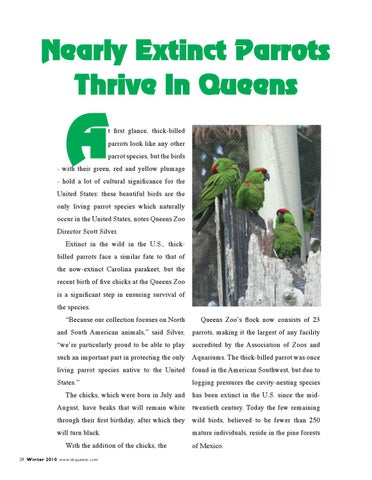
t first glance, thick-billed parrots look like any other parrot species, but the birds
- with their green, red and yellow plumage - hold a lot of cultural significance for the United States: these beautiful birds are the only living parrot species which naturally occur in the United States, notes Queens Zoo Director Scott Silver. Extinct in the wild in the U.S., thickbilled parrots face a similar fate to that of the now-extinct Carolina parakeet, but the recent birth of five chicks at the Queens Zoo is a significant step in ensuring survival of the species. “Because our collection focuses on North
Queens Zoo’s flock now consists of 23
and South American animals,” said Silver,
parrots, making it the largest of any facility
“we’re particularly proud to be able to play accredited by the Association of Zoos and such an important part in protecting the only Aquariums. The thick-billed parrot was once living parrot species native to the United
found in the American Southwest, but due to
States.”
logging pressures the cavity-nesting species
The chicks, which were born in July and has been extinct in the U.S. since the midAugust, have beaks that will remain white twentieth century. Today the few remaining through their first birthday, after which they wild birds, believed to be fewer than 250 will turn black. With the addition of the chicks, the 28 Winter 2010 www.itsqueens.com
mature individuals, reside in the pine forests of Mexico.