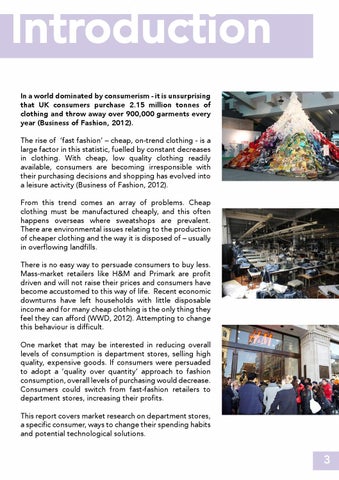
Introduction In a world dominated by consumerism - it is unsurprising that UK consumers purchase 2.15 million tonnes of clothing and throw away over 900,000 garments every year (Business of Fashion, 2012). The rise of ‘fast fashion’ – cheap, on-trend clothing - is a large factor in this statistic, fuelled by constant decreases in clothing. With cheap, low quality clothing readily available, consumers are becoming irresponsible with their purchasing decisions and shopping has evolved into a leisure activity (Business of Fashion, 2012). From this trend comes an array of problems. Cheap clothing must be manufactured cheaply, and this often happens overseas where sweatshops are prevalent. There are environmental issues relating to the production of cheaper clothing and the way it is disposed of – usually in overflowing landfills. There is no easy way to persuade consumers to buy less. Mass-market retailers like H&M and Primark are profit driven and will not raise their prices and consumers have become accustomed to this way of life. Recent economic downturns have left households with little disposable income and for many cheap clothing is the only thing they feel they can afford (WWD, 2012). Attempting to change this behaviour is difficult. One market that may be interested in reducing overall levels of consumption is department stores, selling high quality, expensive goods. If consumers were persuaded to adopt a ‘quality over quantity’ approach to fashion consumption, overall levels of purchasing would decrease. Consumers could switch from fast-fashion retailers to department stores, increasing their profits. This report covers market research on department stores, a specific consumer, ways to change their spending habits and potential technological solutions.
3