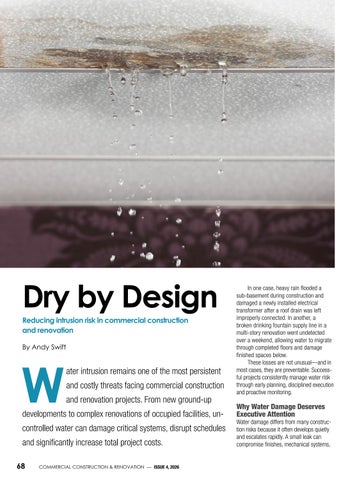
Dry by Design Reducing intrusion risk in commercial construction and renovation By Andy Swift
W
ater intrusion remains one of the most persistent and costly threats facing commercial construction and renovation projects. From new ground-up
developments to complex renovations of occupied facilities, uncontrolled water can damage critical systems, disrupt schedules and significantly increase total project costs.
68
COMMERCIAL CONSTRUCTION & RENOVATION — ISSUE 4, 2026
In one case, heavy rain flooded a sub-basement during construction and damaged a newly installed electrical transformer after a roof drain was left improperly connected. In another, a broken drinking fountain supply line in a multi-story renovation went undetected over a weekend, allowing water to migrate through completed floors and damage finished spaces below. These losses are not unusual—and in most cases, they are preventable. Successful projects consistently manage water risk through early planning, disciplined execution and proactive monitoring.
Why Water Damage Deserves Executive Attention
Water damage differs from many construction risks because it often develops quietly and escalates rapidly. A small leak can compromise finishes, mechanical systems,