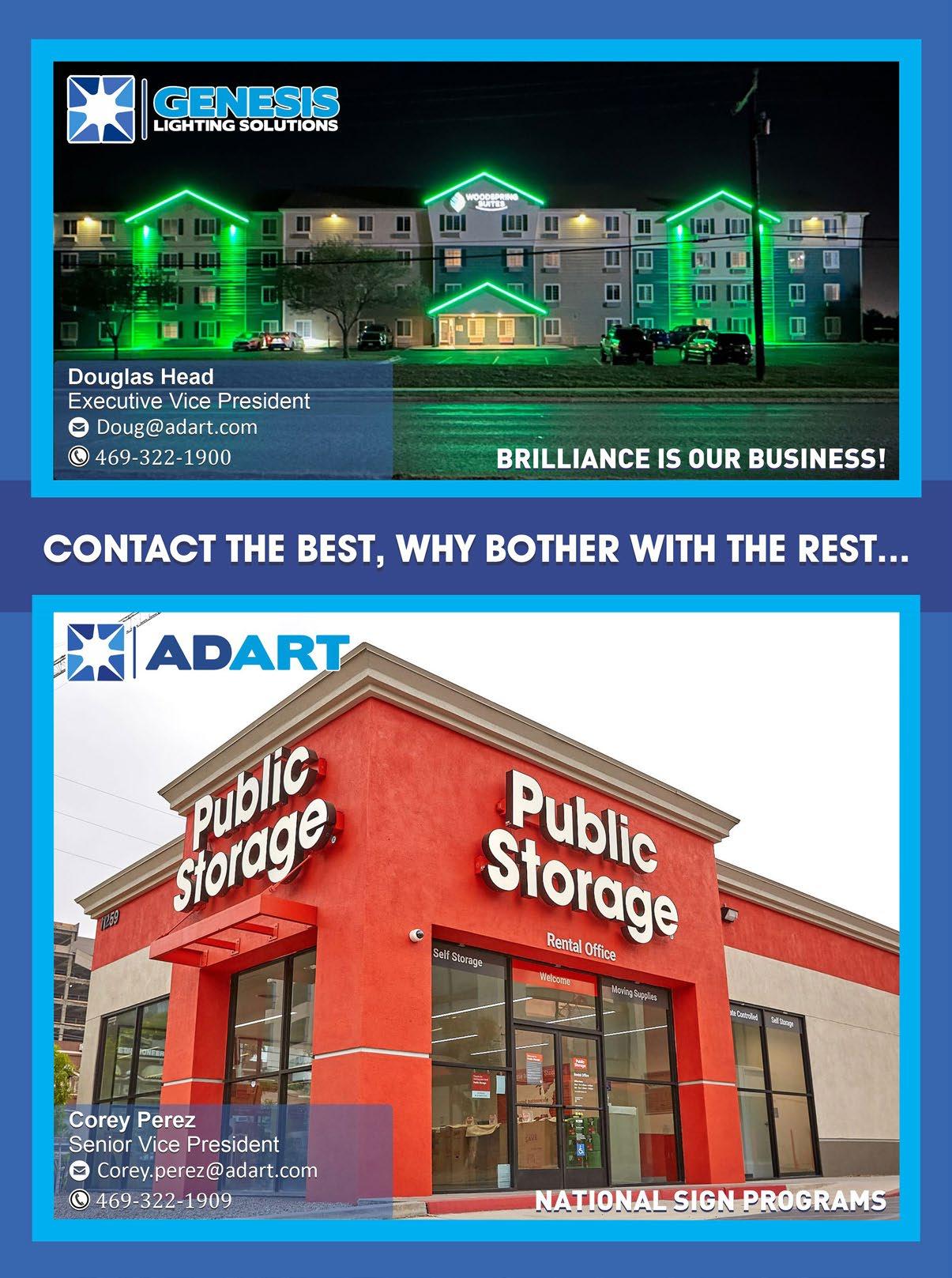
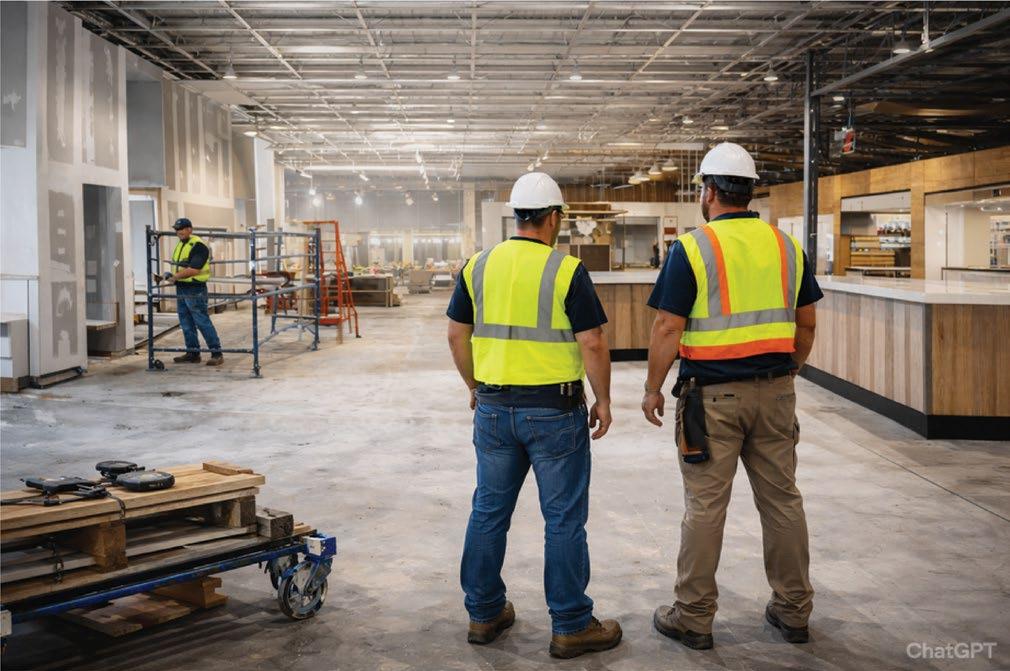
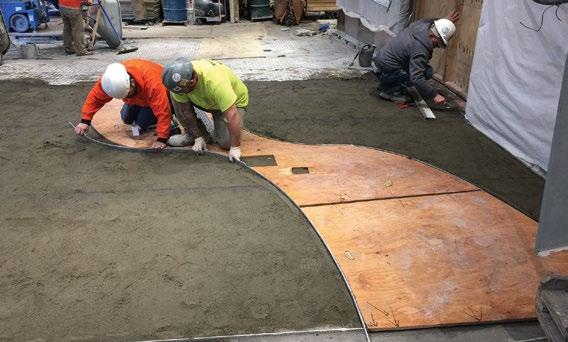
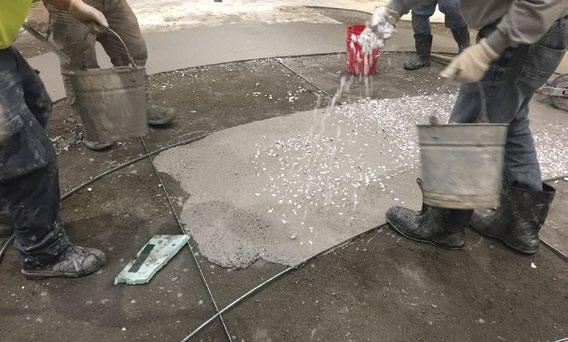
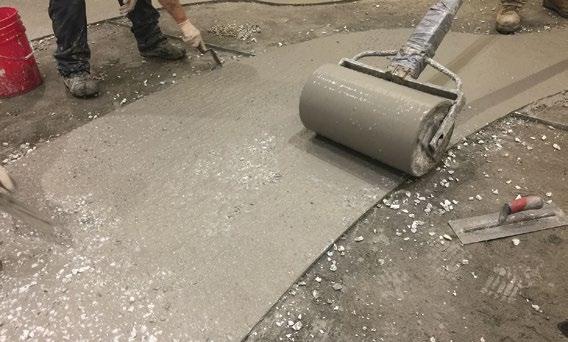
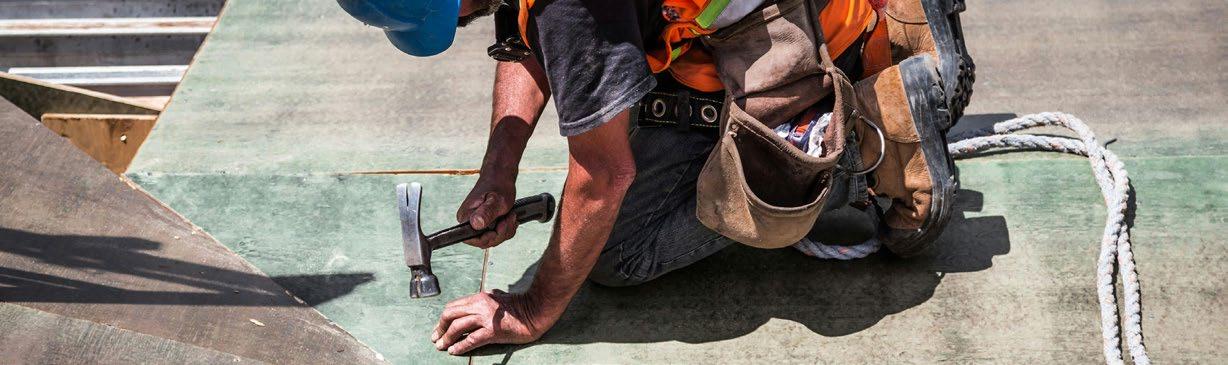
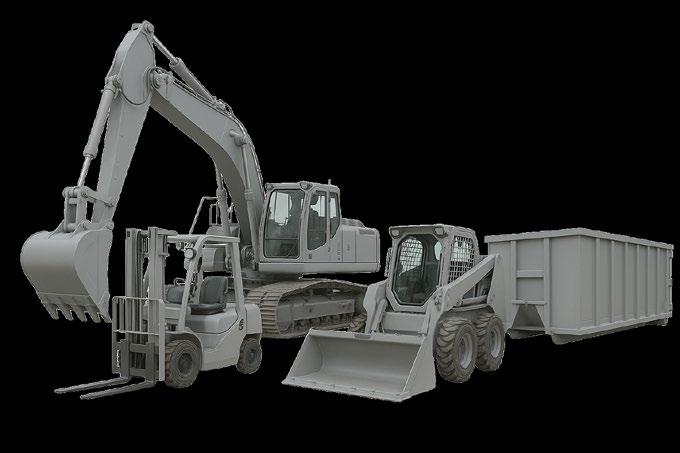
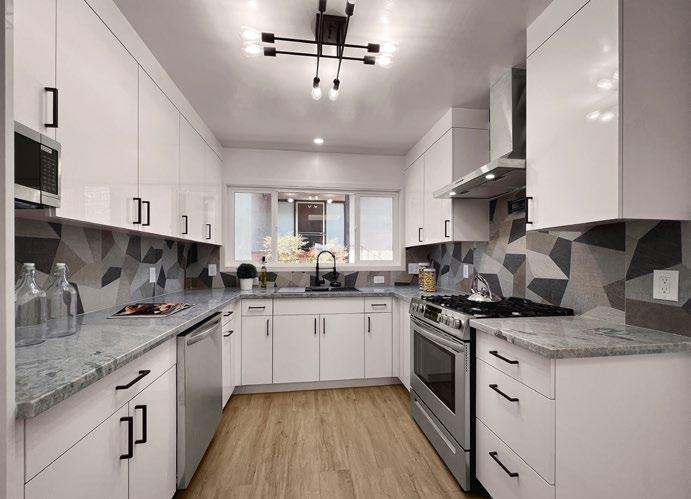
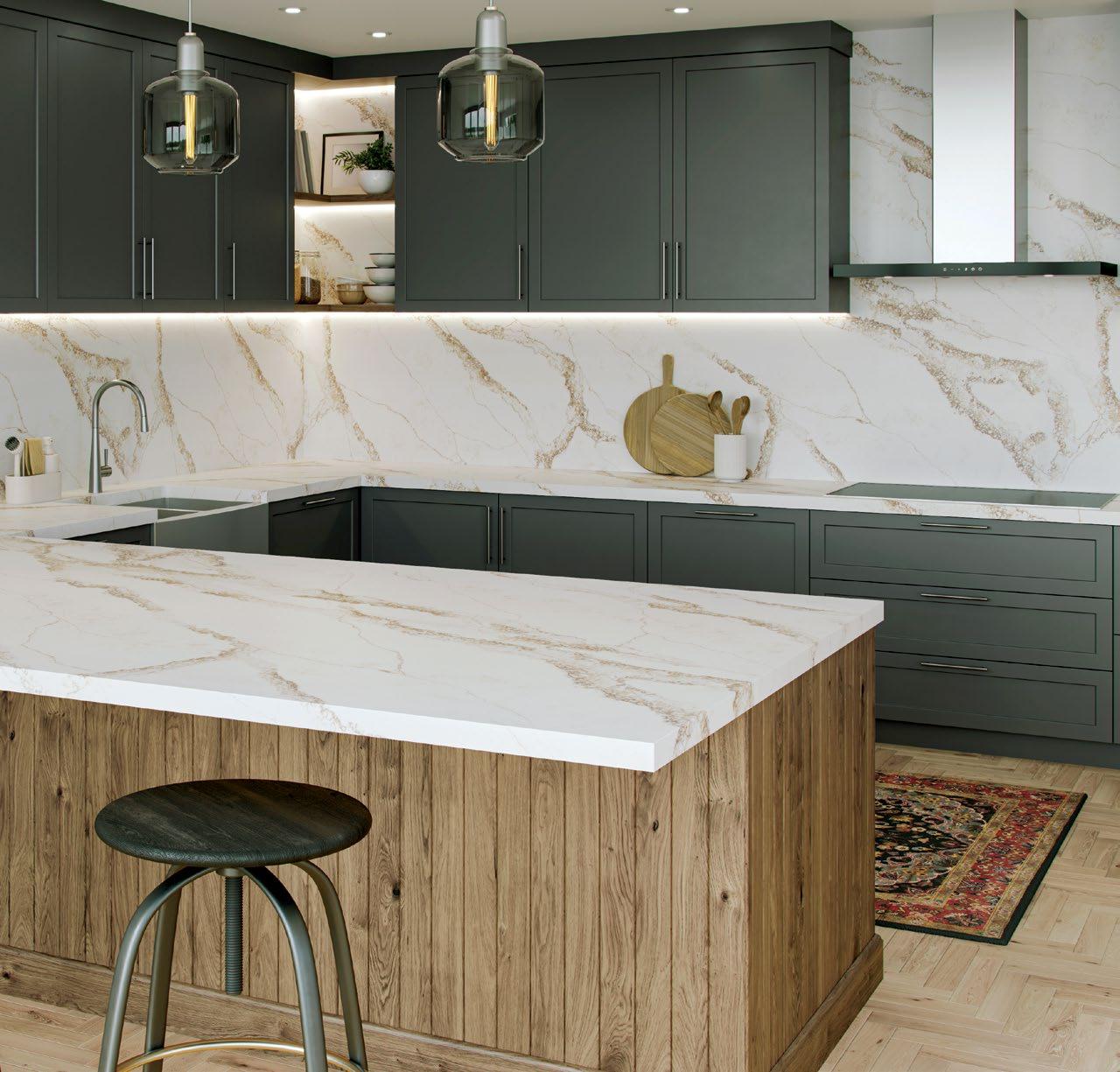
Why 3D construction printing is gaining ground in a high-pressure industry.
Craft Brand and Marketing
117 From What If to What’s Next
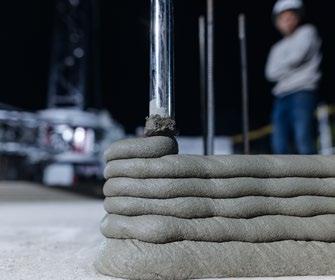
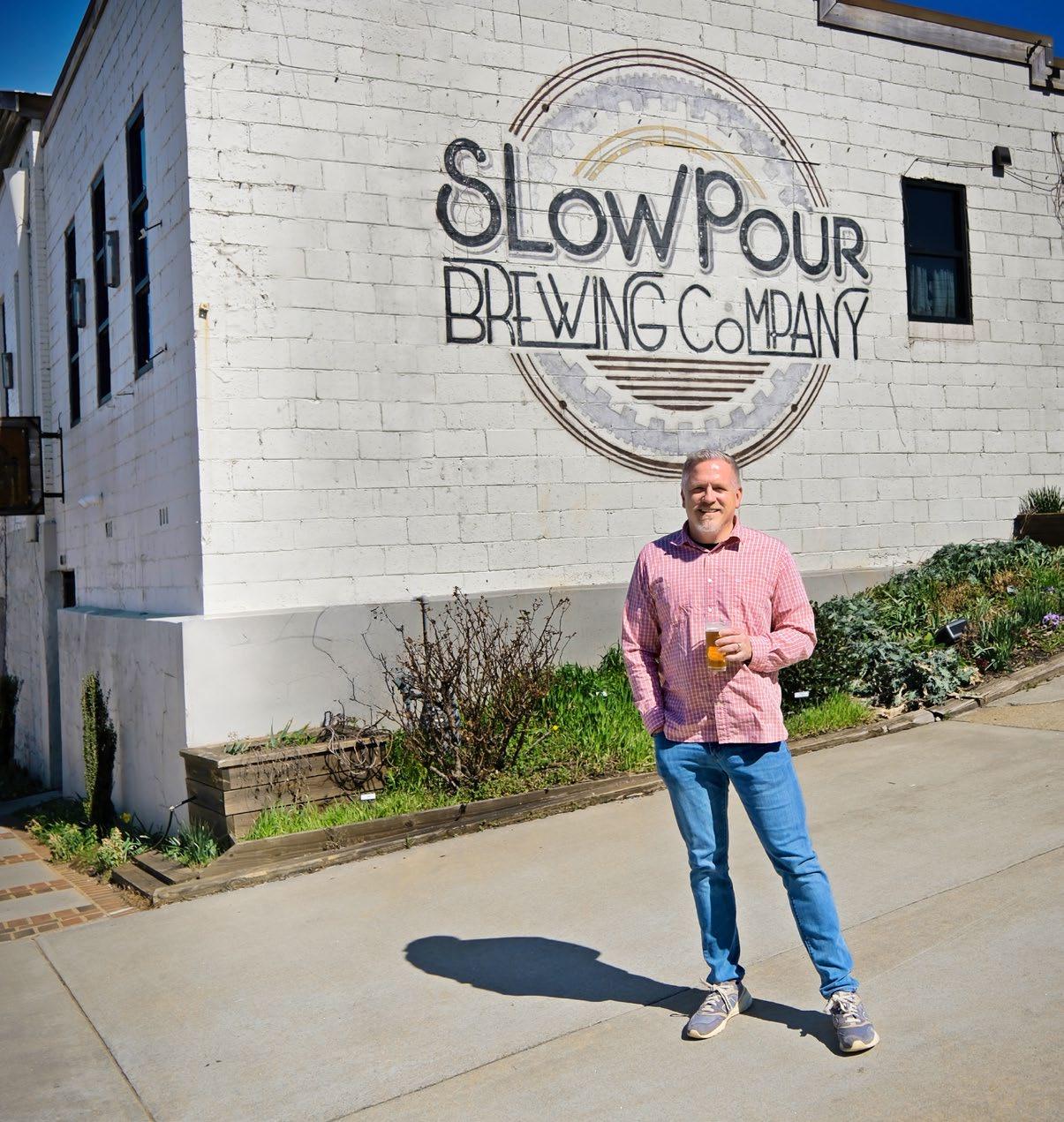
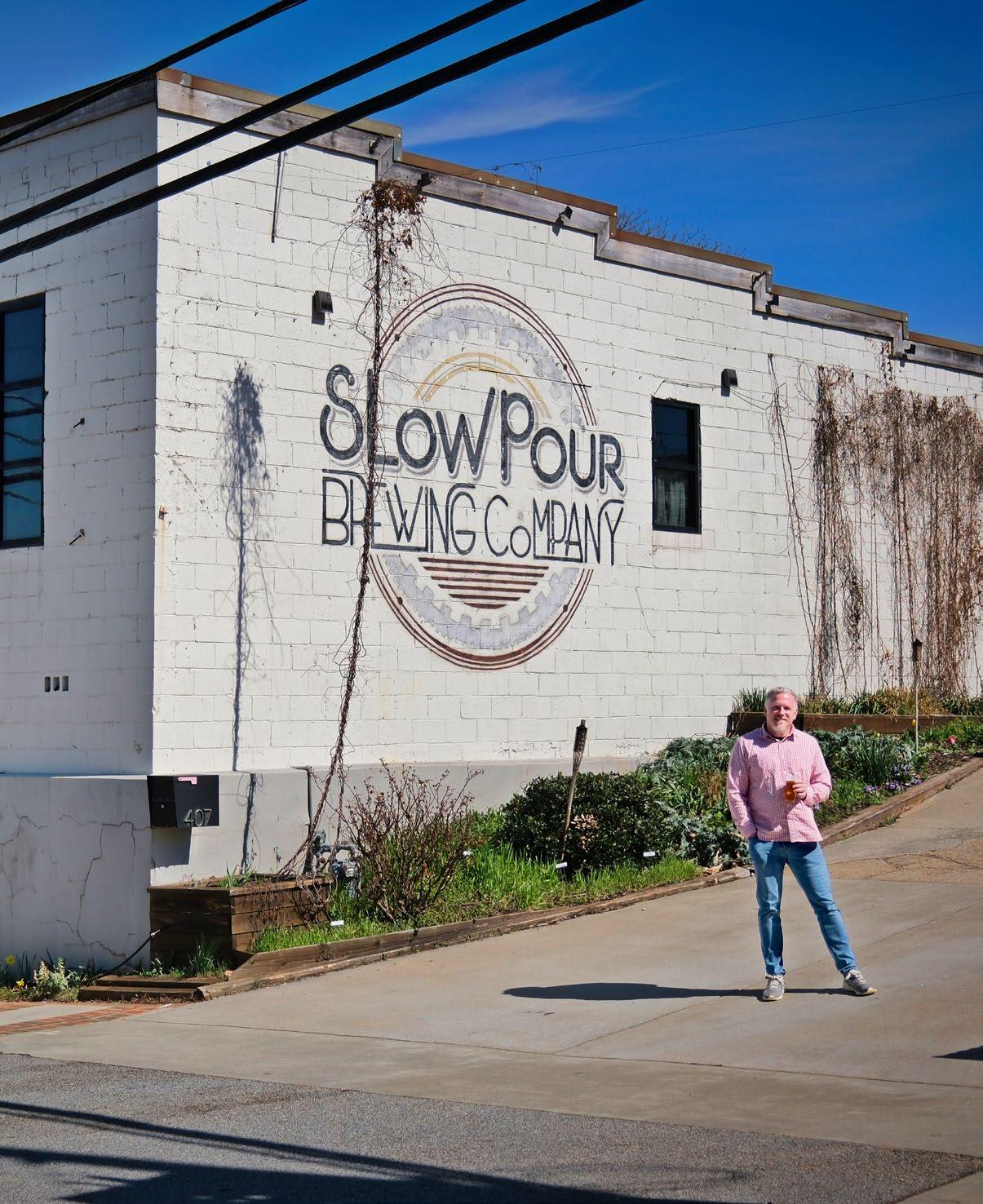
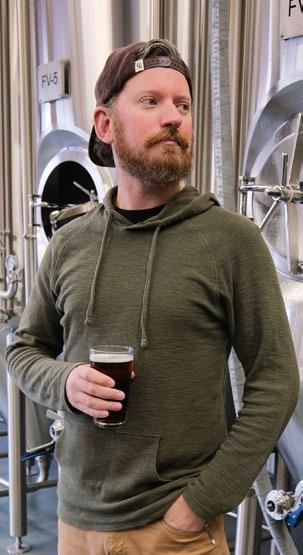
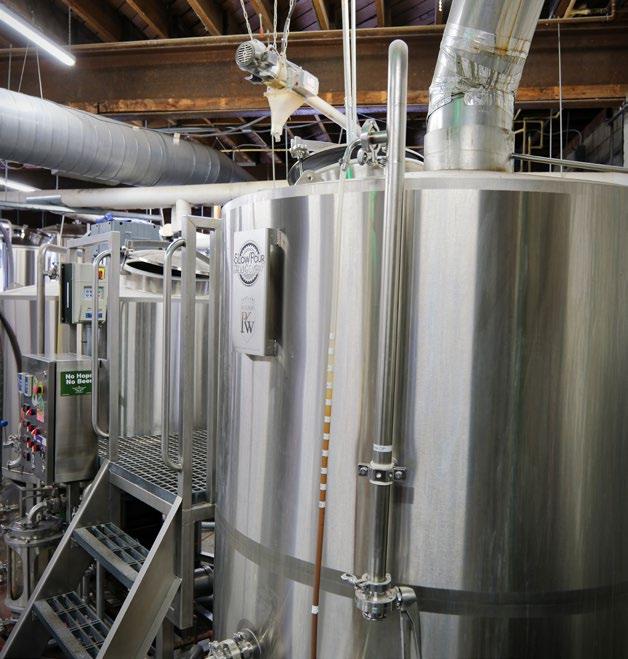
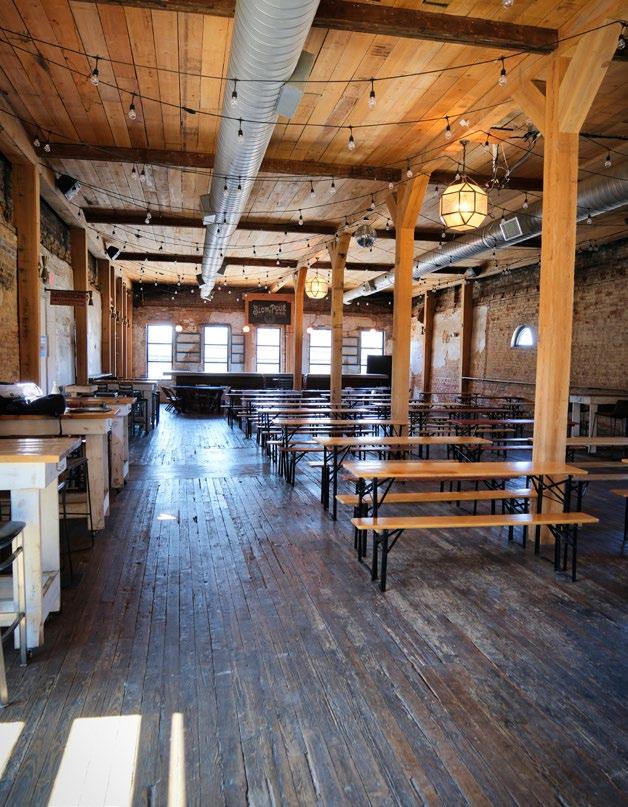
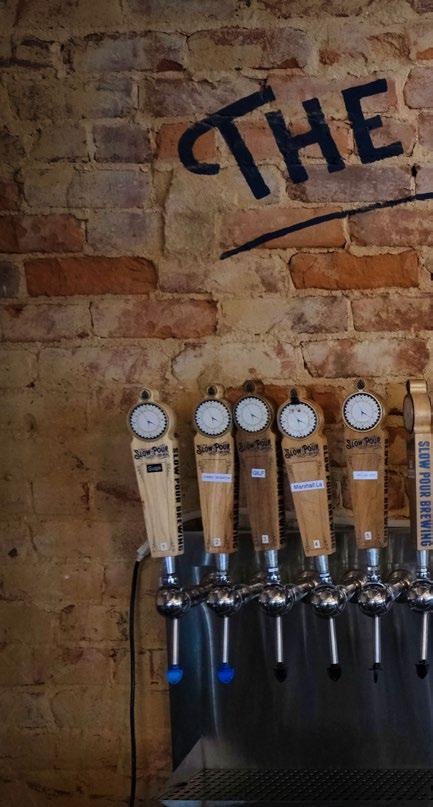
How Slow Pour Brewing is builds community one beer, one conversation at a time.
Federal Construction
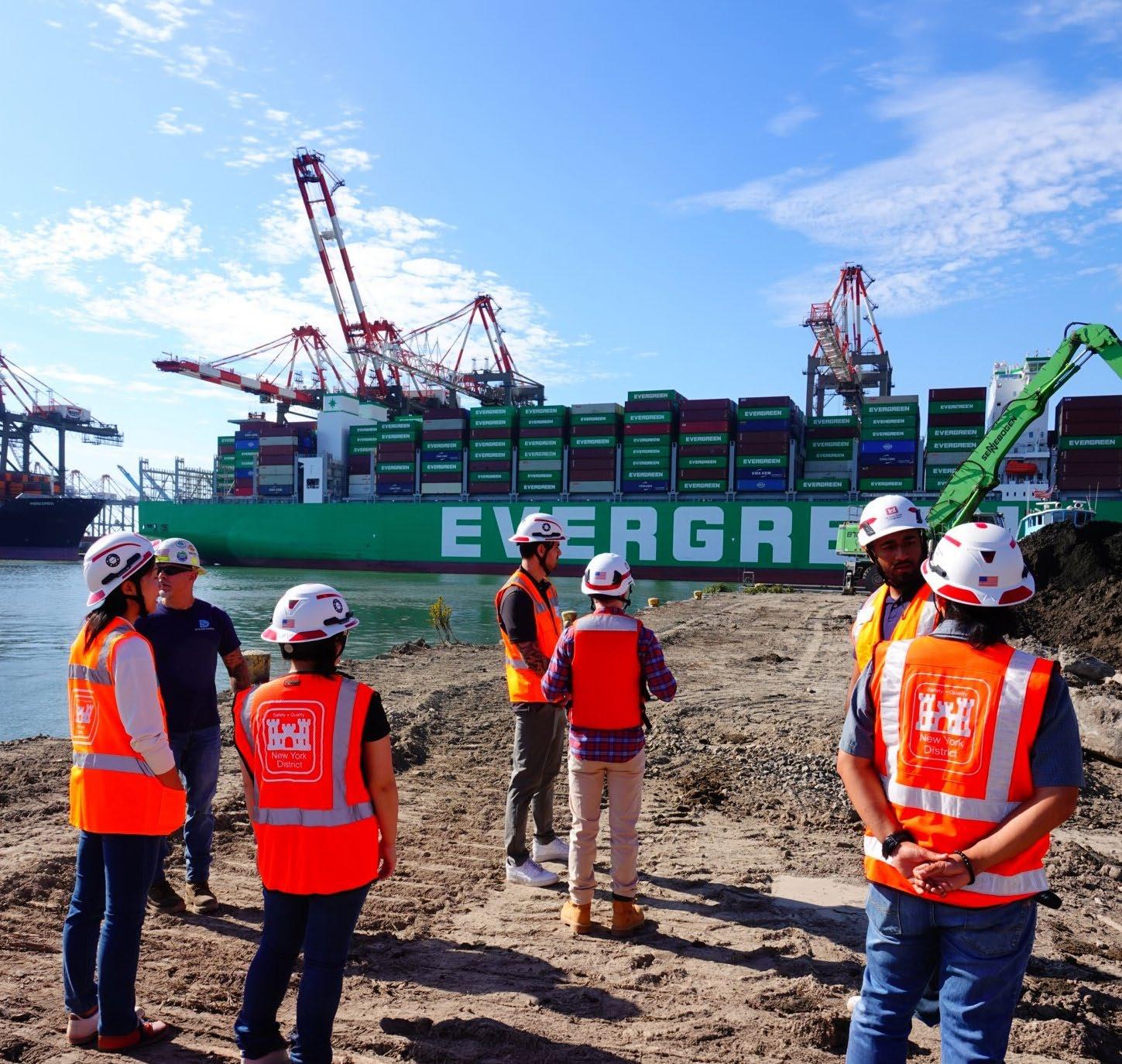
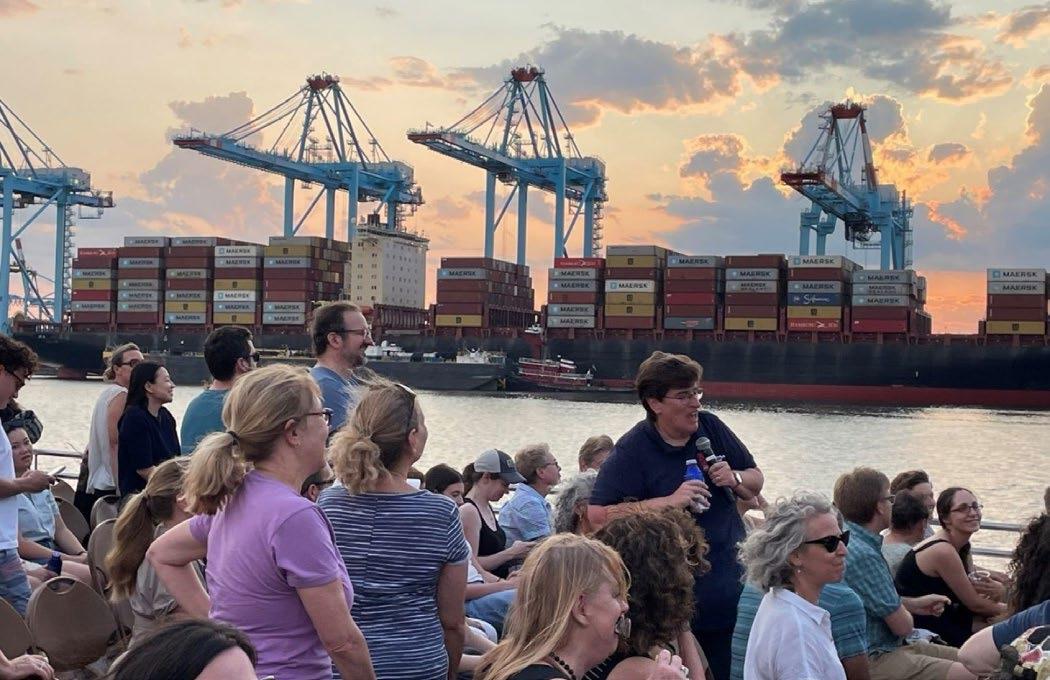
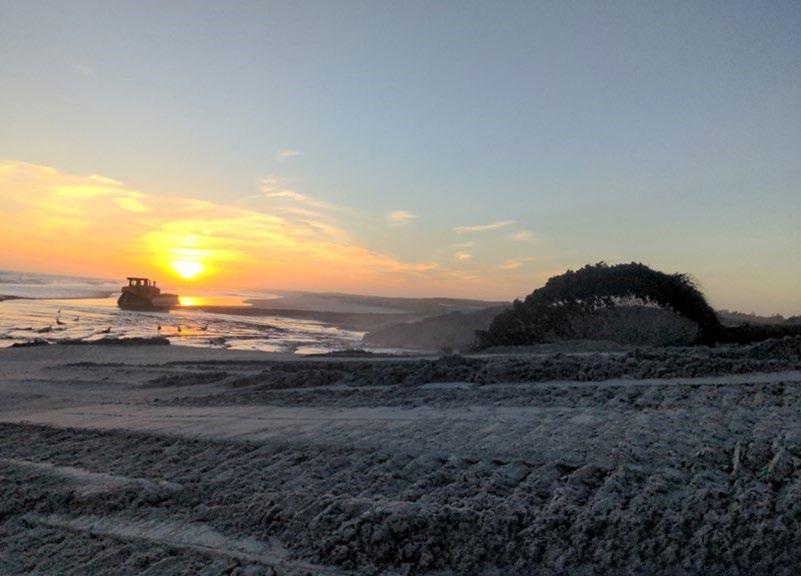
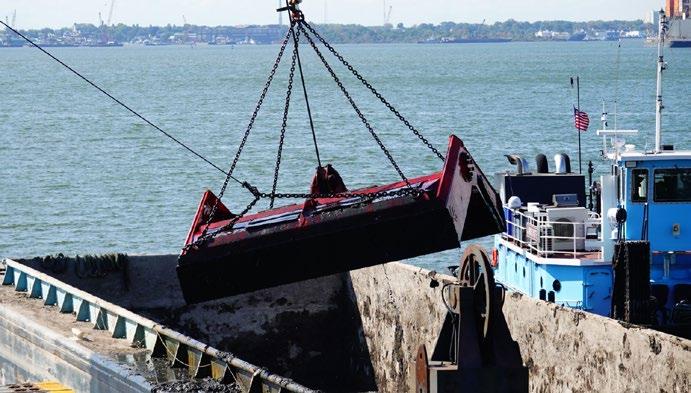
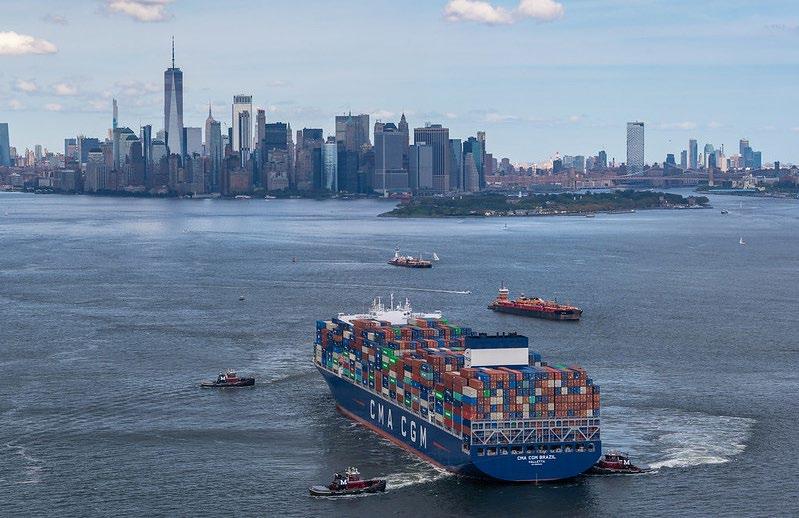
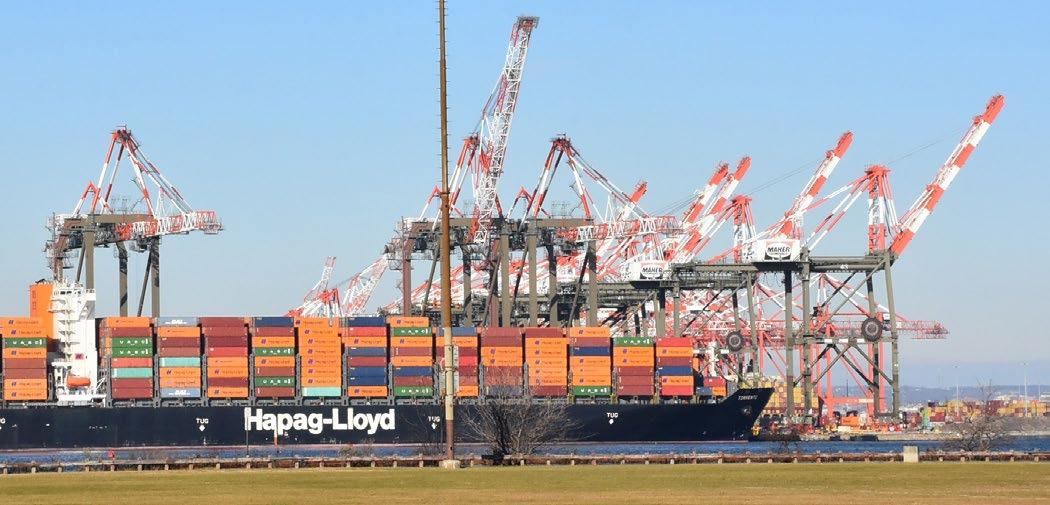
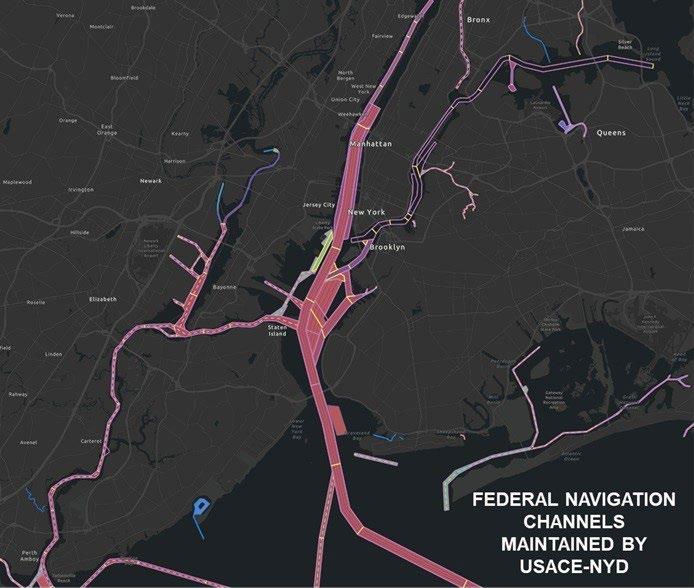
127 Deepening the Channel
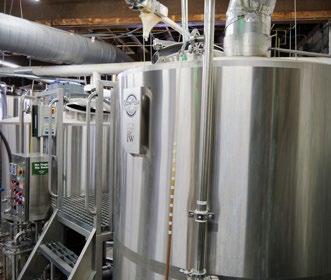
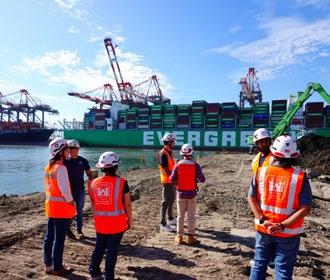
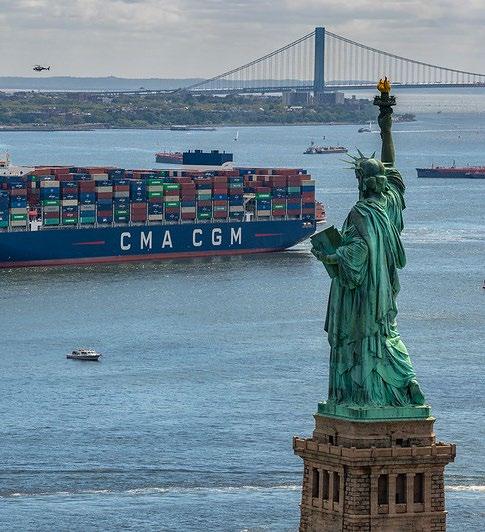
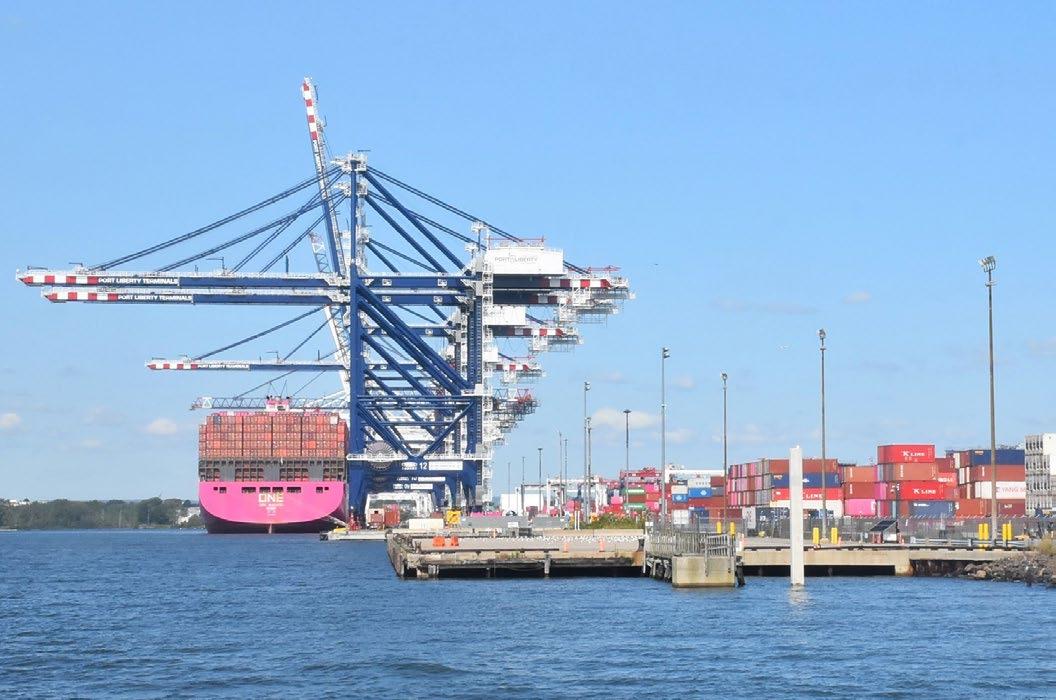
How USACE & PANYNJ keep one of our busiest ports moving—and what’s next.
Campus Facilities
139 Planning for Scale
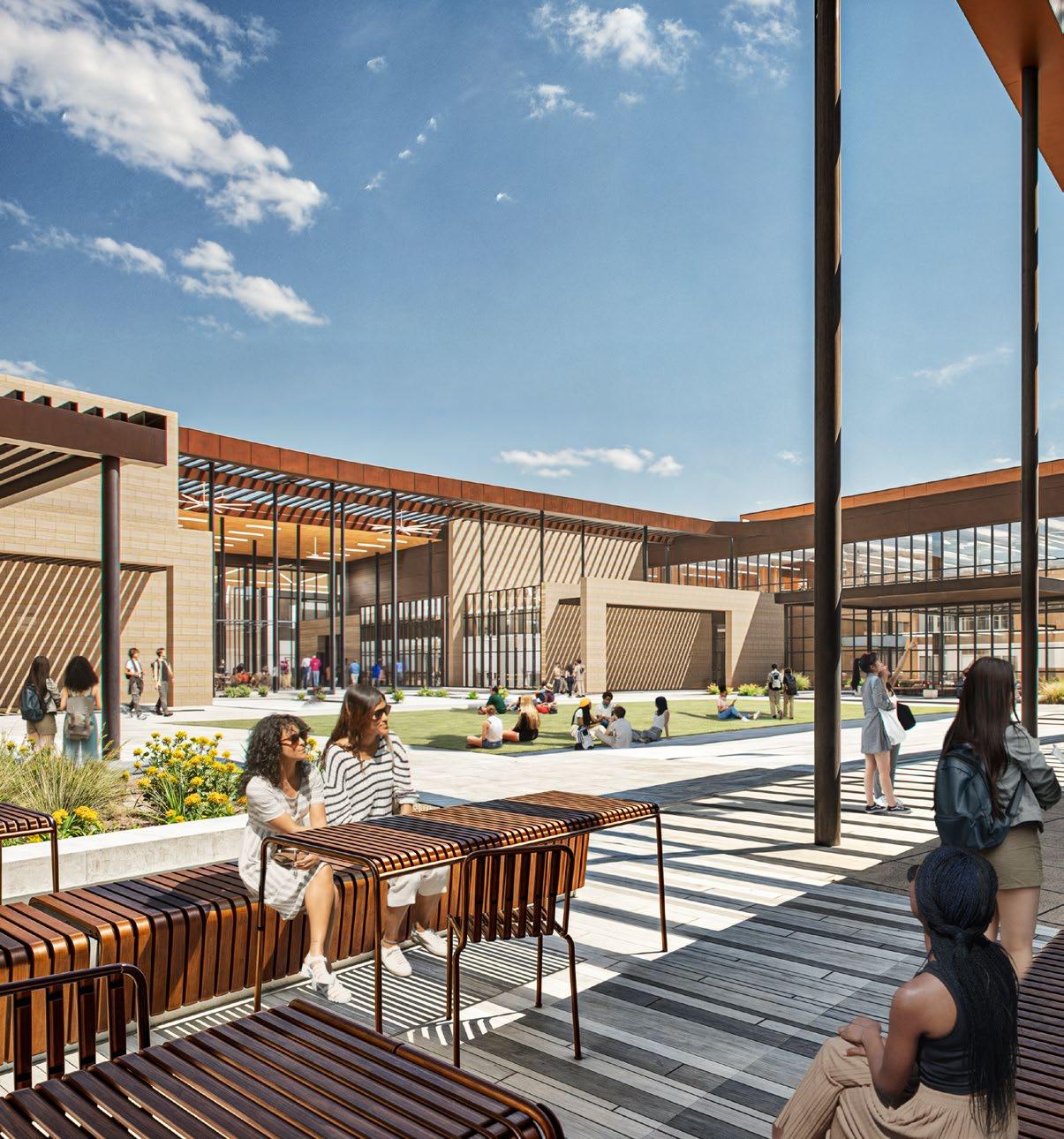
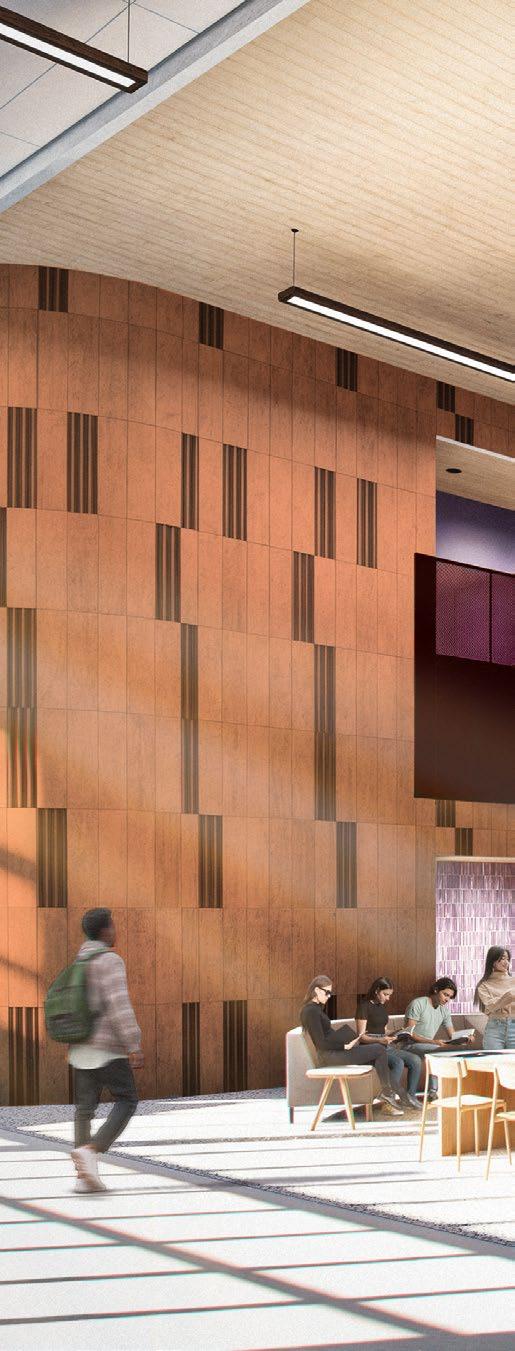
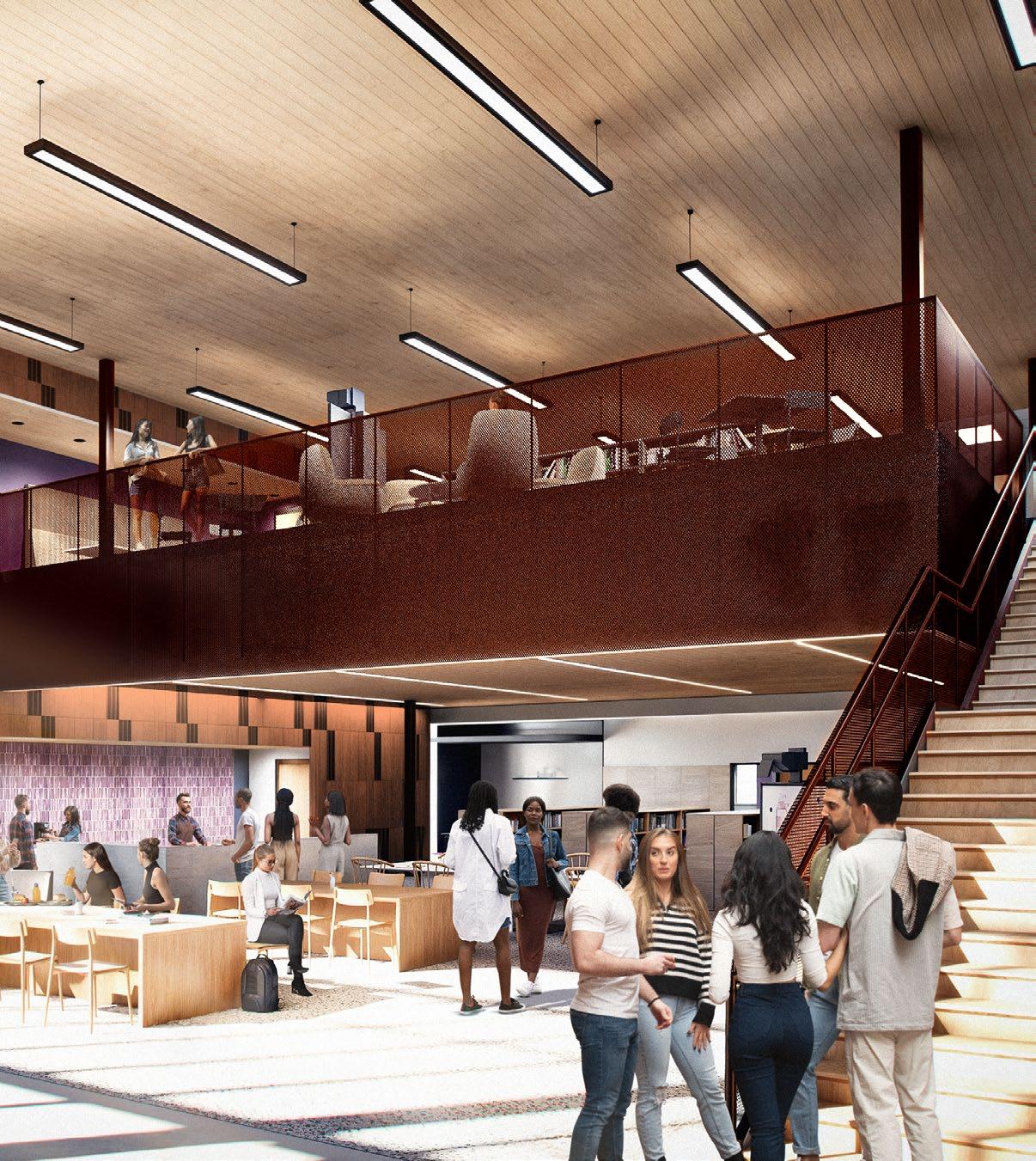
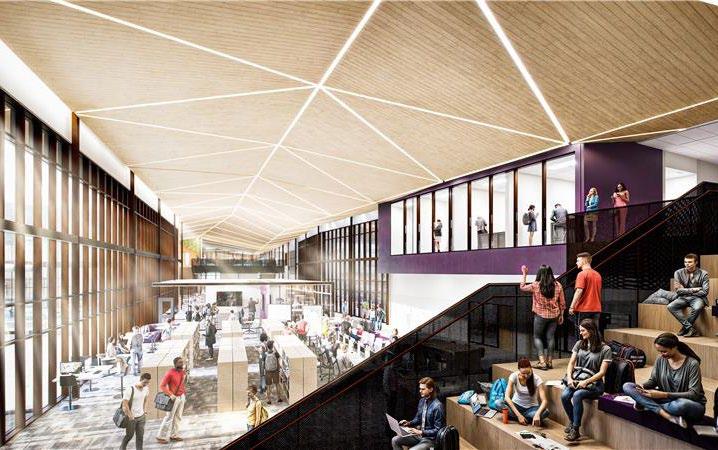
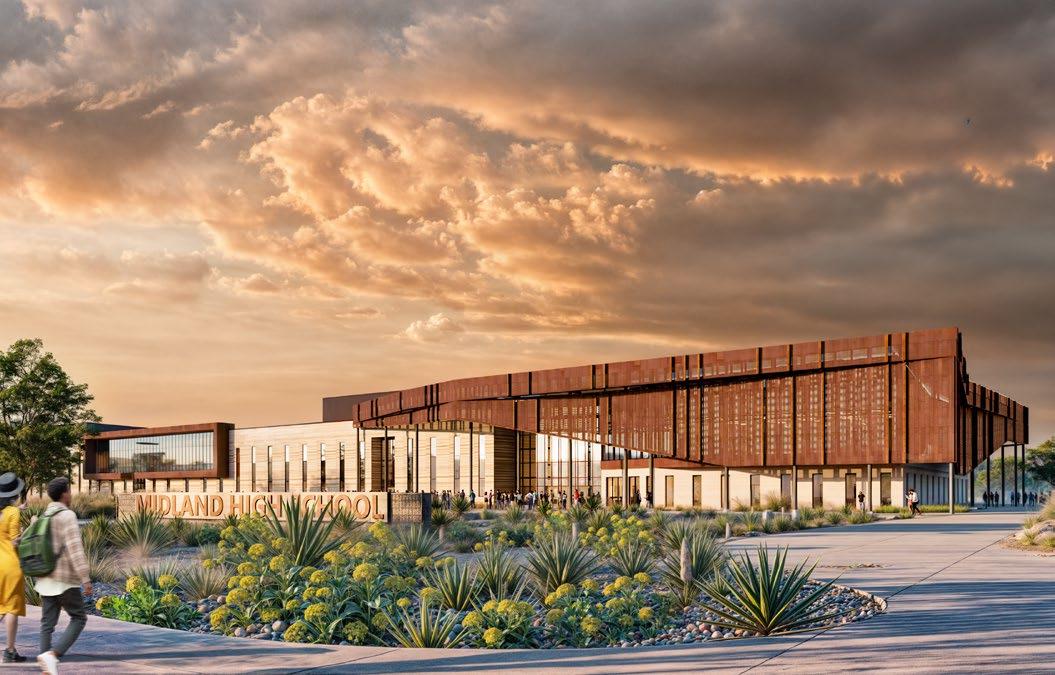
A West Texas community invests in modern, efficient education facilities.
Healthcare in Commercial Construction
153 Inside a Healthcare Retrofit
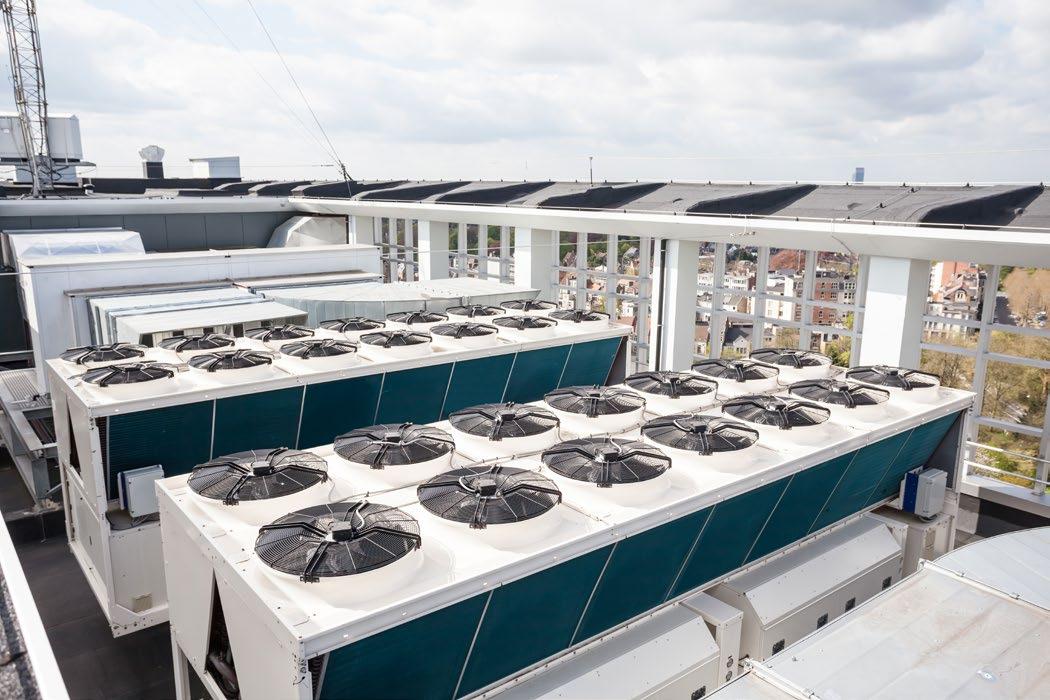
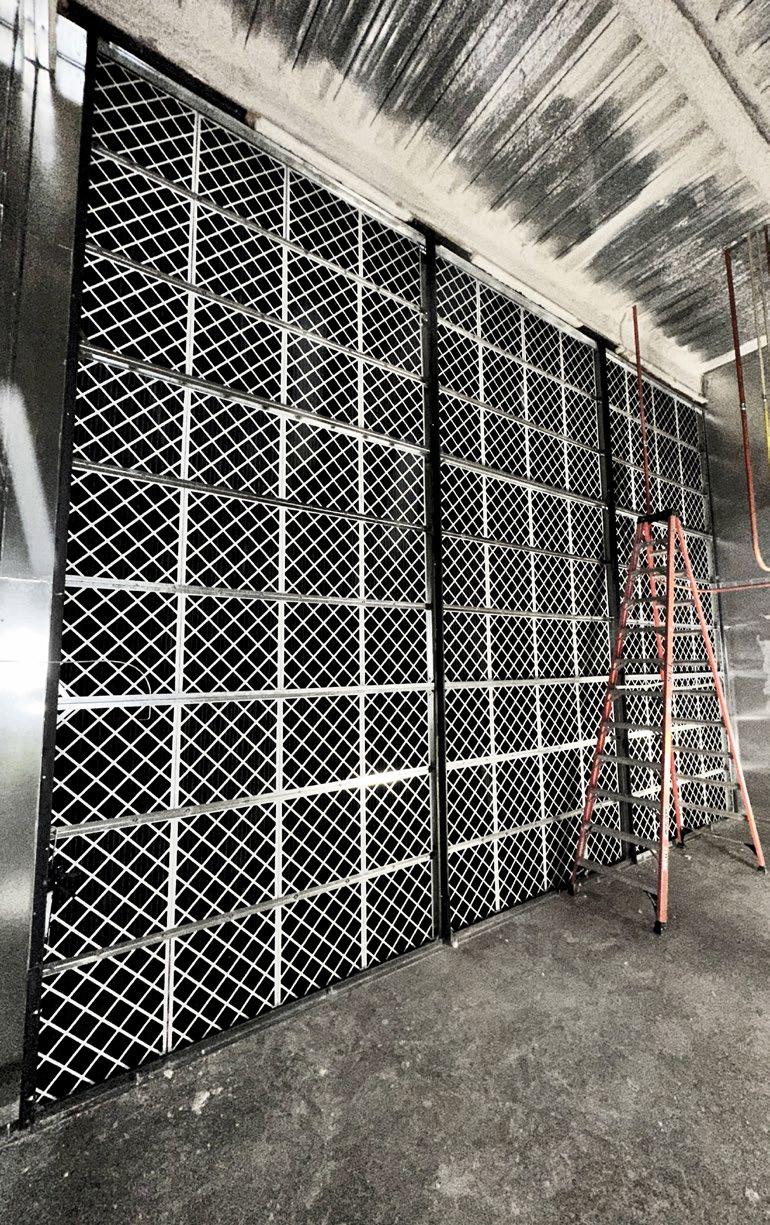
How a hospital solved a critical airflow challenge.
General Contractor Profiles
167 Built Where It Counts
Inside Turelk’s approach to highstakes interiors, tight timelines and lasting client relationships
Commercial Facilities
181 120 Years in the Making
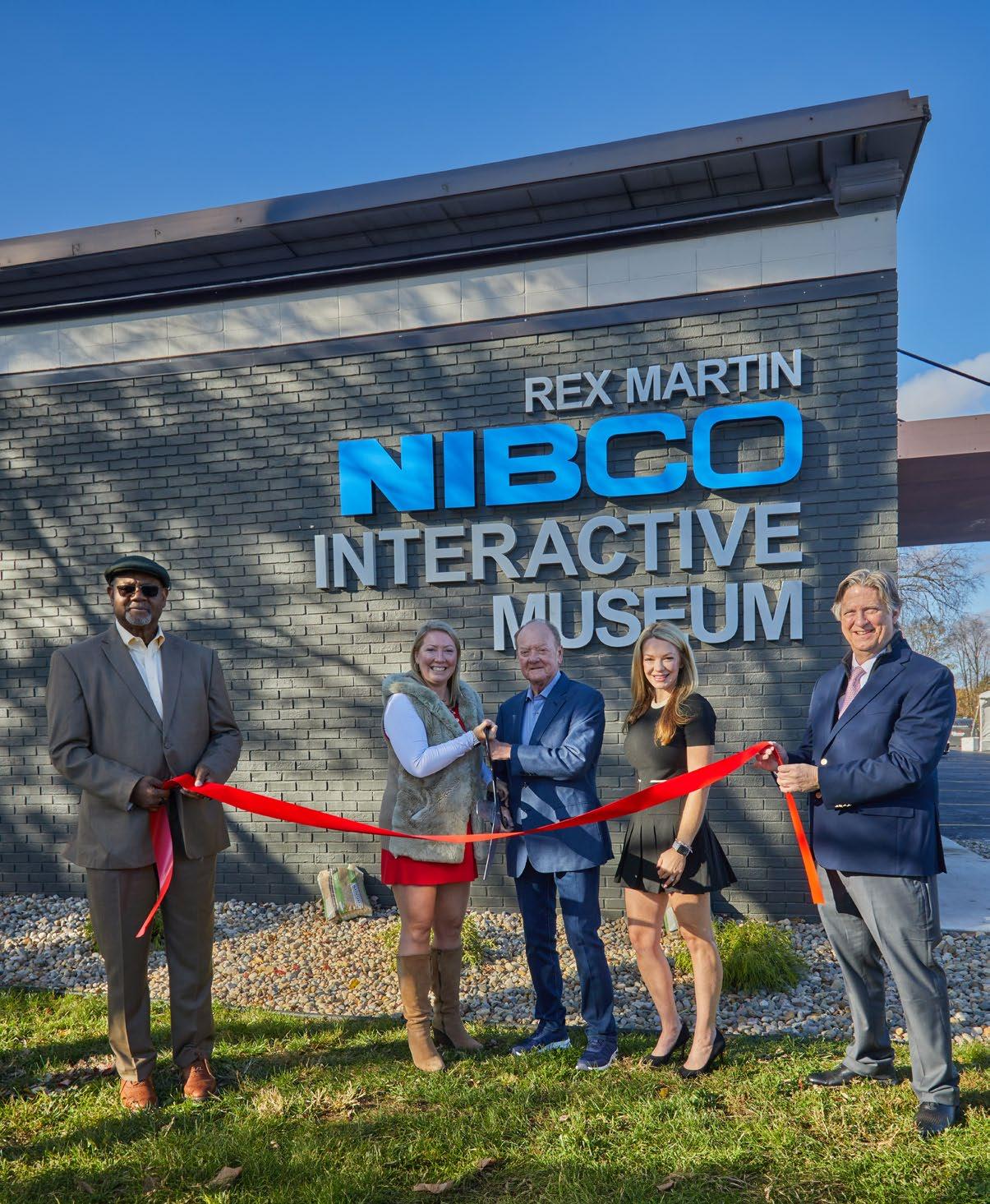
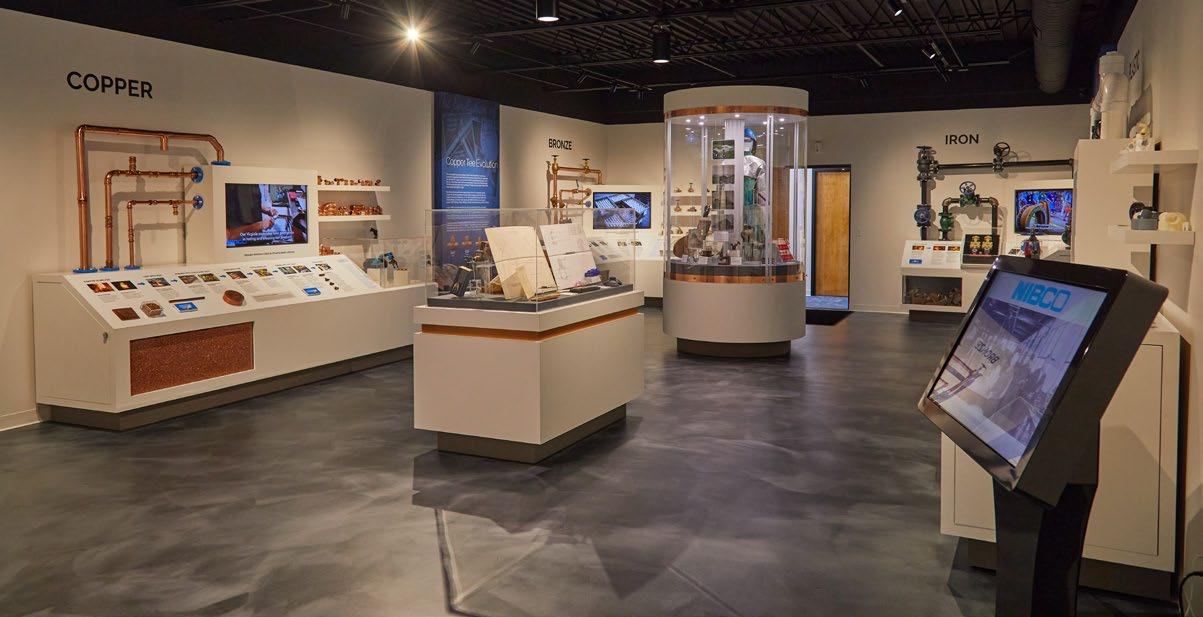
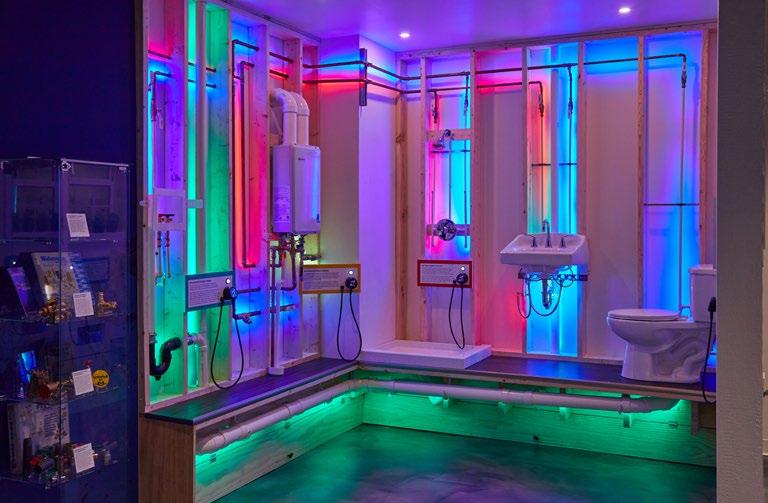
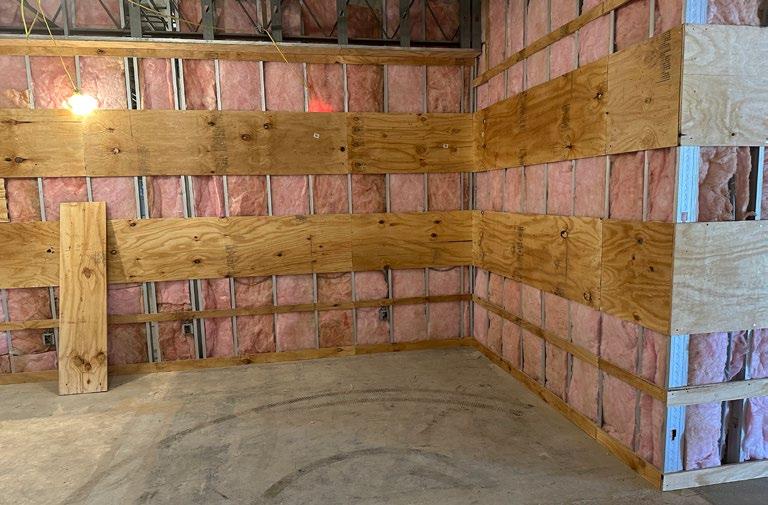
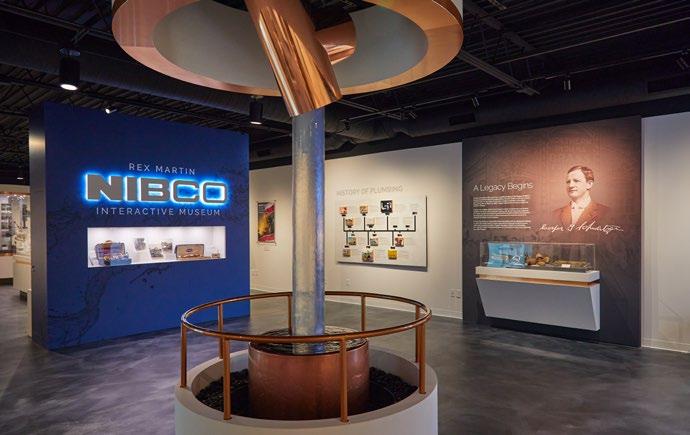
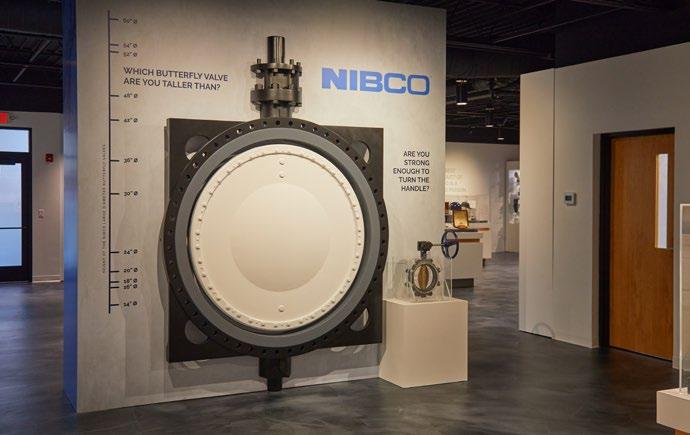
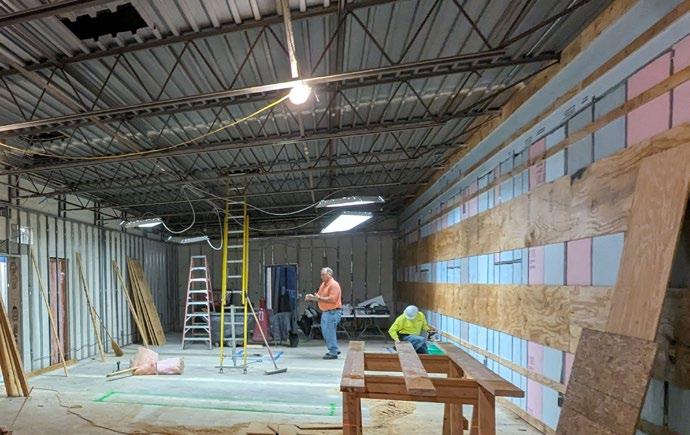
Rex Martin NIBCO Interactive Museum turns history into an experience built to inspire what’s next.
Residental Construction & Remodeling
189 The Baru Blueprint
How Tino Go built a cabinet and furniture company around an industry still waiting to connect.
204 Plant the Value
6 ways to boost your spring curb appeal.
The Open Kitchen Economy
There was a time when restaurant kitchens were hidden by design. They were tucked behind swinging doors. Out of sight and out of mind. Whatever happened in those backroom kitchens was part of the mystique. Walk into a restaurant today and that model feels almost outdated.
Today’s inquisitive and interactive consumers don’t just want to taste the food, they want to understand it. They want to see it. And more than ever, they want to trust it.
That’s what makes Shake Shack’s “We Really Cook” campaign so cool. The initiative isn’t just a marketing play, but a shift in posture. With the public opening of its culinary training sessions at the
In an era where AI-generated content, automation and convenience dominate most of our conversations, authenticity is becoming a differentiator.
Atlanta Support Center—one that is open to its competitors, by the way—Shake Shake is leaning into a level of transparency that goes beyond messaging. It’s putting its process on display and saying, in essence, “This is who we are. Come see for yourself.”
In an era where artificial intelligent (AI)-generated content, automation and convenience dominate most of our conversations, authenticity is becoming a differentiator. Not the kind you can script, but the kind you demonstrate. Cooking is tactile. It’s human. It’s imperfect in all the right ways. And when a brand is willing to showcase this process without any mystique, it builds a different kind of credibility.
Shake Shack is reframing the idea of competition. Inviting everyone into the process is not about giving away the playbook, but showing the confidence it has in it. It signals that execution—not secrecy—is the real advantage.
Moving forward, the brands—fast casual and everyone—that will win won’t be the ones with the best product, but those who are willing to show how it is made.
Is your visibility a strategy or risk? The answer is up to you.
We have always said, if we do a good job the phones will ring.
Established in 1993, Lakeview Construction, LLC is a national commercial project solution provider specializing in all phases of construction.
From concept to completion, our professional teams deliver quality construction and outstanding service, ensuring on-time schedules and cost-effective project management.
Headquartered in Pleasant Prairie, Wisconsin, we operate across all 50 states
CCR EDITORIAL BOARD
ACADEMIA
DR. MARK LEE LEVINE
Professor Burns School/ Daniels College University of Denver
ADA
BRAD GASKINS Principal The McIntosh Group
ARCHITECTS/ENGINEERS
MICHAEL MAGEE
Studio Leader Retail, Store Design Senior Associate Little
FRED MARGULIES Director of Retail Architecture Onyx Creative
STEVEN MCKAY
Managing Principal, Global Design Leader DLR Group
STEVEN R. OLSON, AIA President CESO, Inc.
CONSULTANT
GINA MARIE ROMEO Chief Heart Officer & Principal Consultant, Allied RDI
MICHELLE M COLLINS President & CXO A\N/A A Non-Agency
GENERAL CONTRACTOR
KAY BARRETT
NCIDQ, CDP
Senior Vice President Cushman & Wakefield
PAM GOODWIN Goodwin Advisors, LLC Goodwin Commercial The Pam Goodwin Show
DAVID THOMPSON Vice President TCB Construction Group LLC.
MATT SCHIMENTI President Schimenti Construction
JOHN STALLMAN Marketing Manager Lakeview Construction
JEFFREY D. MAHLER RCA Advisory Board Member
JENNIFER SUSSMAN Director National Accounts & Business Development Powerhouse
HEALTHCARE
CLINTON “BROOKS” HERMAN
Principal Facilities Project Manager, MD Anderson Cancer Center
HOSPITALITY
SAMUEL D. BUCKINGHAM, RS AMS CMCA President of Construction Devco Development
GARY RALL Vice President of Design and Development Holiday Inn Club Vacations
ROBERT RAUCH Chairman Brick Hospitality
JOE THOMAS
Joseph K Thomas Sr. Consulting Senior Consultant Hospitality Engineering
LU SACHARSKI Vice President of Operations and Project Management Interserv Hospitality
ANDY BRIGGS, CHA Managing Principal A14 Capital Management
INFORMATION TECHNOLOGY
CRAIG WEBER Director of Business
Prime Retail Services, US
Prime 3 Retail Canada, Inc.
REAL ESTATE
ROB ADKINS, LEED AP CDP Senior Project Manager Cushman & Wakefield
MEGAN HAGGERTY Founder Legacy Capital Investment
MARIE ANTONETTE G. WAITE
Founder and CEO Finest Women in Real Estate
RESTAURANTS
DAVID SHOTWELL
Director of Construction & Facilities, BOJ of WNC, LLC
DAVID D. DILLON
Principal Design Lead, Templates & Standards Chick-fil-A Corporate Support Center
RETAILERS
AARON ANCELLO Facilities Asset Management Public Storage
DEDRICK KIRKEM Facilities Manager Alice + Olivia
LAURA GROSS Retail Facilities Manager American Signature Furniture
KELLY RADFORD Vice President Facility Services CubeSmart
PERMITTING
VAUN PODLOGAR
CEO, Owner, Founder State Permits, Inc.
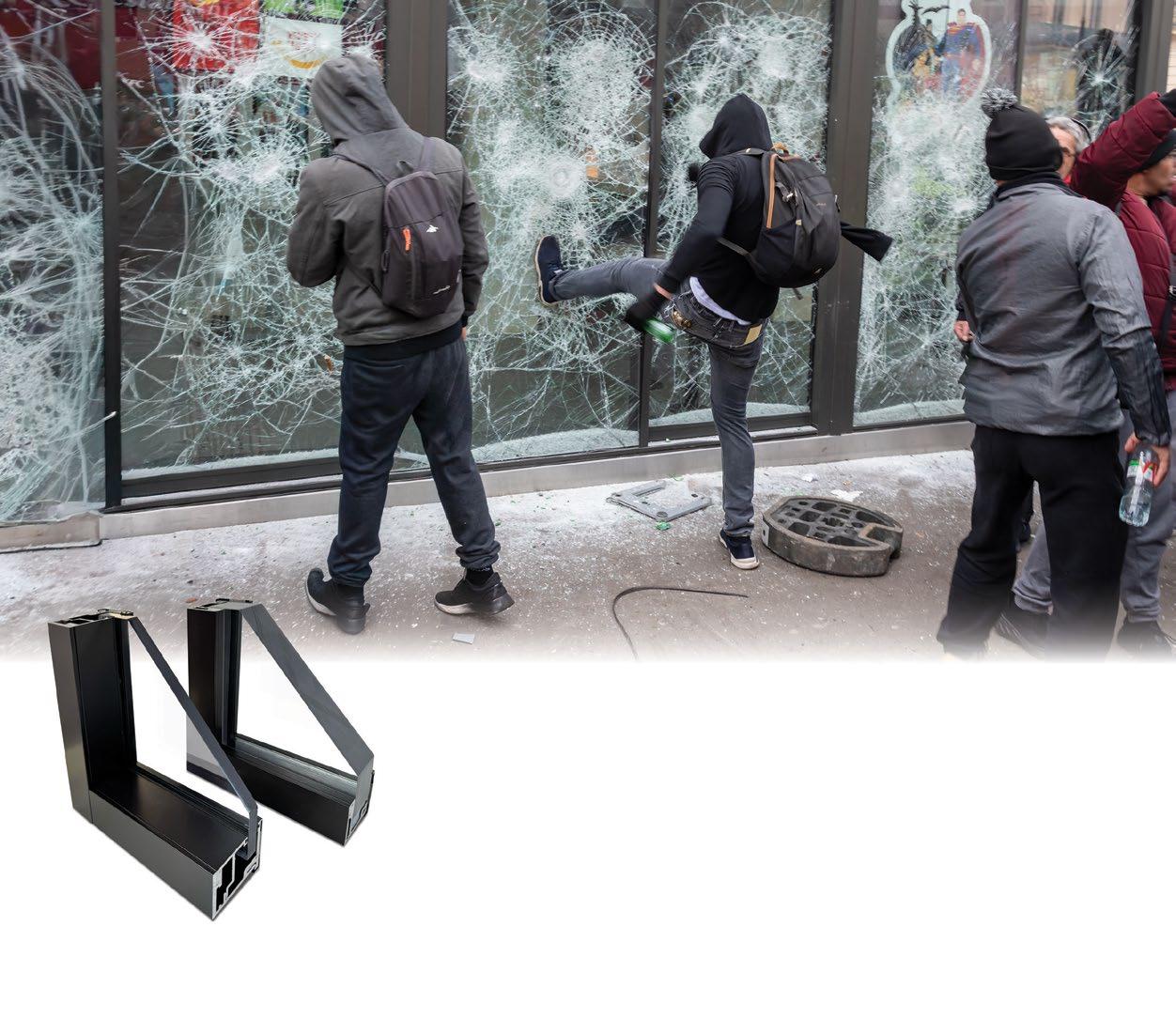
DESIGN EXISTING GLASS TO RESIST FORCED ENTRY
DefenseLite®Pro retrofit security glazing
Harden the building envelope without compromising budget or timelines.
DefenseLite® Pro delivers a high-performance retrofit solution for glass security in commercial environments.
This polycarbonate security glazing system mounts directly over existing glass to help delay forced entry and resist smash-and-grab, riot, and impact events. Designed for real-world threats, DefenseLite® Pro strengthens the building envelope without demolition, downtime, or disruption to occupants.
With heavy-duty anchoring, passive protection, and clear sightlines, it allows architects to specify security that performs while preserving transparency and daylight.
• DefenseLite® Pro mounts over existing glass
• Delays forced entry and impact events
• Heavy-duty anchoring for real-world conditions
• Maintains transparency and natural daylight
• Installs without demolition or operational downtime
• Passive protection with no power required
• ASTM 3561 Level 8 performance
• Ideal for retail, offices, schools, and government
Visit www.defenselite.com or call 888-689-5502.
AroundtheIndustry
HOSPITALITY
Posadas
Posadas is growing its all-inclusive resort portfolio across Mexico and the Caribbean, with more than 1,300 new rooms planned for 2025. New properties are slated for destinations including Nuevo Vallarta, Playa del Carmen and Los Cabos in Mexico, as well as Punta Cana in the Dominican Republic, strengthening the brand’s foothold in top coastal markets.
Aleph Hospitality
Aleph Hospitality has struck a landmark deal with African Hotel Development to manage 26 hotels across 14 countries under the Onomo brand—the largest management portfolio agreement in African history. The move advances Aleph’s goal of operating 50 hotels by year-end and includes new regional offices in Cape Town, Nairobi, Casablanca and Abidjan.
Wolfe’s Hotel
The adults-only Wolfe’s Hotel has opened in Moab, Utah, following a multimillion-dollar renovation by PM Hotel Group and KWC Management. Located near Arches and Canyonlands National Parks, the property features natural materials, a seasonally heated pool, an outdoor barrel sauna and a soon-to-open restaurant.
Two Kings Casino Resort
The Catawba Nation and Delaware North announced that the $700 million to $1 billion Two Kings Casino Resort in Kings Mountain, North Carolina, is set to open in spring 2027. An introductory casino will launch in March with 1,350 slots and 22 table games, replacing the temporary facility. When complete, the resort will feature more than 4,300 slots, 100 tables, a sportsbook and a 385-room hotel.
Venetian Resort Las Vegas
The Venetian Resort Las Vegas has reimagined nearly 500,000 square feet of unused space in a $1.5 billion reinvestment project . The transformation adds 78 penthouse-caliber suites, expands the dining lineup to more than 40 restaurants and introduces new entertainment venues including the Voltaire theater. Renovations are complete in the South Tower suites, with updates underway in the North Tower.
Outrigger Resorts & Hotels
Outrigger Resorts & Hotels is expanding its footprint beyond Hawaii with the recent opening of Outrigger Phi Phi Island Resort in Thailand. The move follows a $60 million renovation of Outrigger Kona Resort & Spa, as the brand continues to merge contemporary design with its beach resort heritage.
Kali Hotel
The Kali Hotel, a $300 million luxury property near SoFi Stadium in Inglewood, is on track to open ahead of Super Bowl 61. Part of Stan
Kroenke’s Hollywood Park master plan, was completed last September after reaching a key construction milestone.
IHG Hotels & Resorts
IHG Hotels & Resorts is expanding in Mexico through a partnership with Alliance Hotels that will convert six properties into voco hotels by 2027. Located in cities, including Cancun, Ciudad Juarez, Guadalajara and Nuevo Laredo, the hotels will add 848 rooms to IHG’s portfolio as part of its strategy to strengthen its presence in key travel markets.
Seahaus Hotel
NewcrestImage has opened the Seahaus Hotel, a 105-room boutique property on the Atlantic City, New Jersey, boardwalk under Marriott International’s Tribute Portfolio. The project represents the city’s largest real estate investment in 20 years and is part of NewcrestImage’s strategy to expand through conversions and lifestyle-driven hospitality, catering to noncasino visitors.
Mayfield
Tom and Melissa Magnuson, founders of Magnuson Hotels, have launched Mayfield, a new soft brand for independent midscale hotels in the US and UK. Debuting with 100 hotels, Mayfield offers owners operational freedom without heavy fees or strict franchise rules, while providing technology support, marketing and access to 650,000 corporate travel agents and online channels.
RESTAURANTS
Shake Shack
Shake Shack is mapping steady progress toward its long-term goal of 1,500 company-owned U.S. locations. The brand plans up to 50 openings this year and as many as 60 in 2026, pairing disciplined unit growth with data-driven marketing, selective promotions and operational efficiencies to support scale.
Raising Cane’s
Raising Cane’s is set to enter Mexico through a partnership with Alsea, with the first locations planned for late 2026. The move expands Cane’s international footprint and aligns with Alsea’s strategy to grow its portfolio of global restaurant brands across Mexico.
Chick-fil-A
Chick-fil-A is transitioning licensed locations, including those on college campuses and in hospitals, to its local owner-operator franchise model as existing agreements expire. The multi-year shift is designed to strengthen customer experience and deepen community engagement at nontraditional sites.
Eggspectation
Eggspectation is leaning into United States growth with 11 locations open and three more on the way, targeting Southern markets such as Charlotte, North Carolina and Nashville, Tennessee. The brunch brand is doubling down on its signature slow-service model, encouraging guests to linger as it scales with larger franchise partners.
Black Rock Coffee Bar
Black Rock Coffee Bar is accelerating growth after reaching nearly 170 locations across seven states, adding 11 new units last quarter. The brand is targeting high-traffic suburban markets with a company-operated strategy and an internal leadership pipeline as it works toward 1,000 locations by 2035.
Babbo
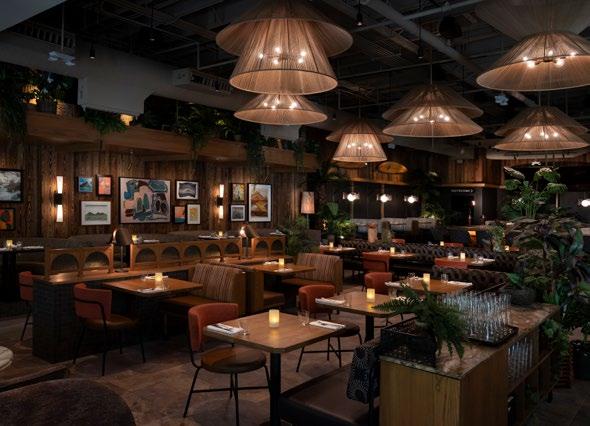
Babbo has reopened in New York City’s Greenwich Village, marking a new chapter for the iconic restaurant following a period of closure. Now led by chef Mark Ladner and restaurateur Stephen Starr, the refreshed concept pairs a redesigned interior with a reimagined Italian menu rooted in New York influence.
Taco Bell
Taco Bell is accelerating its beverage strategy after surpassing its Live Más Café 2025 expansion target with 31 new locations across key markets. Strong early results are fueling a nationwide rollout as the brand builds toward $5 billion in annual beverage sales by 2030.
Newk’s Eatery
Newk’s Eatery surpassed its 2025 franchise growth goals, signing 10 new agreements while expanding commitments from existing multi-unit operators. With continued menu innovation and value-driven offerings, the brand is building momentum for further expansion in 2026.
Wahlburgers
Wahlburgers is pivoting its growth strategy toward flexible, high-traffic formats through partnerships with Home Depot and Bass Pro Shops. By moving beyond grocery kiosks, the brand is targeting captive audiences with adaptable concepts designed to expand its footprint across retail, hospitality and travel environments.
Starbucks
Starbucks is accelerating global growth with plans to open up to 500 international stores and as many as 175 U.S. locations in fiscal 2026. Alongside expansion, the company is investing in store upgrades and AI-driven service enhancements as it works toward more than 2,000 net new units by 2028.
RETAIL LVMH
LVMH is expanding its presence in China with plans to open new stores for Louis Vuitton, Tiffany, Loro Piana, and Dior in Beijing, signaling early signs of a rebound in the country’s luxury market. Developed in partnership with Swire Properties, the openings follow a slowdown in luxury construction and sales, with LVMH also evaluating further growth in Shanghai, including a new Dior store targeted for 2027.
Boll & Branch
Boll & Branch is doubling down on brick-and-mortar retail with new stores in Charlotte, North Carolina, and Bethesda, Maryland, bringing its total store count to 15 and setting the stage to nearly double its footprint within the next year. The brand is using a cluster-based expansion strategy, opening groups of stores in targeted regions and strengthening customer relationships through in-store experiences such as custom monogramming, floral workshops, coffee carts and personalized design services.
Dick’s Sporting Goods
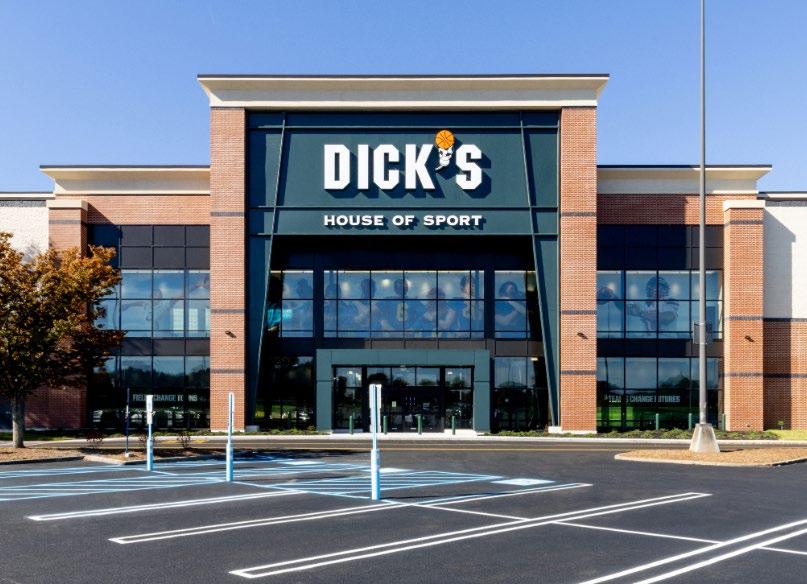
Dick’s Sporting Goods is doubling down on its large-format House of Sport concept, with plans to open dozens more locations over the next decade. Averaging 120,000 to 140,000 square feet, the immersive stores feature attractions such as rock-climbing walls and golf simulators and are generating significantly higher sales than smaller formats.
Universal Music Group
Universal Music Group is expanding its physical retail presence with new UMusic Shop locations opening in New York City and London. Building on earlier stores in Tokyo and Madrid, the openings support UMG’s strategy to create dedicated spaces where superfans can access exclusive merchandise and artist-led experiences tied to its global roster.
Sleep Country Canada
Sleep Country Canada is bringing back Bed Bath & Beyond after acquiring the brand’s name and logos for Canada and the United Kingdom. The retailer plans to relaunch Bed Bath & Beyond next year with both physical stores and an online presence, positioning the comeback as a modern take on a brand long associated with home inspiration.
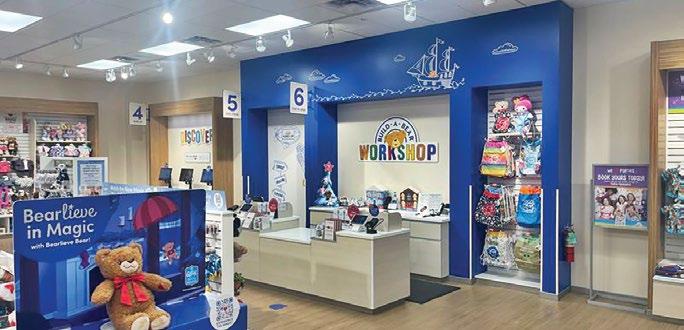
Build-A-Bear Workshop
Build-A-Bear Workshop is expanding its collaboration with Sanrio with new co-branded Build-A-Bear x Hello Kitty and Friends Workshop stores planned for Mall of America in Minnesota and American Dream in New Jersey. Building on the success of their first joint location in Los Angeles, the new concept blends Build-A-Bear’s interactive retail model with Sanrio’s iconic character brands, creating immersive destinations designed to engage fans and families alike. (Continued on next page)
AroundtheIndustry
Goodwill
Goodwill is modernizing its stores to attract younger shoppers and boost donations, rolling out larger, brighter locations with improved layouts and upgraded aesthetics. Inspired by mainstream retailers, some stores now resemble off-price chains like Marshalls or HomeGoods, while added backroom space supports more efficient donation sorting.
Barnes & Noble
Barnes & Noble has debuted dedicated A24 Shop Experiences in nine stores, creating custom-designed in-store spaces that showcase a curated mix of books, films and merchandise from A24. The immersive retail concept is designed to bring A24’s distinct creative world to life for shoppers, with additional locations planned for 2026 as the activation continues to expand.
Belk
Belk is rolled out a smaller-format concept with the debut of its Belk Market store at The Grove at Wesley Chapel in Wesley Chapel, Florida and The Centre at Preston Ridge in Frisco, Texas. The 25,000- to 30,000-square-foot stores will feature a curated mix of national and private-label brands across apparel accessories home décor and fine jewelry with assortments tailored to each community. The move marks Belk’s latest evolution as the retailer plans additional Belk Market openings in 2026.
Granado
Granado is stepping up its push into the U.S. fragrance market with plans to open two new stores in 2026 while tailoring products to local preferences. The Brazilian retailer’s expansion will be supported by digital influencer partnerships and in-person events designed to build brand awareness and deepen customer engagement.
GROCERS
Costco
Costco is expanding its fuel strategy with plans to open its first standalone gas station in Mission Viejo, California, featuring a 40pump facility set to debut in 2026. With a second location planned in Honolulu as part of a mixed-use redevelopment, the company is positioning fuel-only sites as a new growth channel.
ALDI
ALDI is accelerating its expansion this year with plans to open more than 180 new stores and three distribution centers. The push includes entering new markets in Maine and Colorado, along with an expansion of its Haines City, Florida, distribution center to add chilled capacity for perishable goods. The retailer also is planning a website refresh with updated digital tools to enhance the customer experience.
Whole Foods Market
Whole Foods Market has opened its first Daily Shop location in New Jersey with a new store in Hoboken, marking the fifth unit of its smaller-format concept. The opening highlighted local brands such as Abe’s and Nguyen Coffee Supply through in-store sampling and featured charitable donations to local nonprofits, reinforcing the brand’s community-focused approach as it tests more compact neighborhood formats.
Grocery Outlet
Grocery Outlet has launched a store refresh initiative aimed at improving consistency across its fleet following customer feedback around uneven product availability. The effort focuses on clearer store layouts, an expanded core assortment and stronger value messaging. Early pilot results show a mid-single-digit lift in comparable sales, with plans to refresh 150 locations by the end of 2026.
Save A Lot
Save A Lot has recently expanded its footprint in Ohio with the opening of three new locations, increasing access to affordable groceries and fresh foods in Mansfield, Hubbard and Van Wert. In Mansfield, a former grocery store was converted into a Save A Lot franchise by a local family ownership group, combining the assortment of a national grocer with the familiarity of a neighborhood store.
H-E-B
H-E-B is expanding its lower-priced Joe V’s Smart Shop concept with a third North Texas location in Irving, Texas. The store is a curated assortment of produce, dairy and meats, supporting H-E-B’s strategy to grow its value-focused banner in the Dallas–Fort Worth market amid competition from Kroger, Walmart, Trader Joe’s and ALDI.
H Mart
H Mart has opened a new 140,000-square-foot store in Dallas, expanding its North Texas footprint with a large-format location that blends specialty grocery shopping and dining. The store features an extensive selection of produce and seafood, along with a food hall offering multiple restaurant concepts and entertainment elements. The opening adds to H Mart’s existing locations in Plano and Carrollton, with another store planned for Fort Worth.
Associated Wholesale Grocers
Associated Wholesale Grocers is scaling its SmartMeals AI platform across member stores, moving from pilot to broader deployment with nearly 100 locations onboarded. Developed with Breez AI, the tool helps independent grocers compete by integrating AI-driven meal planning and shopping into existing systems.
Opening Pathways
Hilton expands access to hotel ownership through Unlocking Doors
Hilton is rethinking how hotel ownership begins—and who gets a seat at the table. Through its Unlocking Doors program, launched in January, the company is creating new entry points for aspiring owners by combining education, networking and access to capital. The initiative is designed to break down traditional barriers and open the hospitality industry to a broader, more diverse group of entrepreneurs.
The strategy is already gaining traction, particularly among individuals with backgrounds in residential real estate. These entrepreneurs are finding that many fundamentals—financing, devel-
They said it...
opment and operations—translate well into hospitality, especially with the right support system in place. Hilton’s structured approach helps bridge that gap, offering guidance that moves participants from interest to investment.
As new owners step into the space, brands like Home2 Suites, Hampton Inn and Hilton Garden Inn are emerging as popular entry points. The momentum reflects a larger shift across hospitality, where growth is no longer just about adding rooms—it is about expanding opportunity. And in doing so, Hilton is helping shape a new generation of owners ready to build what comes next.
“Kids should never really have to think about food. They should just be able to eat and enjoy life and then go from there.”
— Ted Jones, the owner of Frozen Smoke in Fairbanks, Alaska, on his restaurants motivation for using taco sales to pay for school meals
“Generative AI is reshaping executive recruitment faster than anyone anticipated. Searches are moving more quickly, candidate pools are expanding and leadership expectations are shifting in real time. AI isn’t just improving efficiency— it’s redefining what effective leadership looks like and creating new opportunities for both organizations and candidates across the hospitality industry.”
— Brian Hicks, President & CEO of Hospitality Sales and Marketing Association International (HSMAI), on how Generative artificial intelligence (AI) is changing executive hiring in hospitality
“Our continued commitment to opening new stores is really about showing up for our guests and our communities... These new stores give our teams the tools and environments to bring our merchandising strengths to life, create easier and more inspiring shopping experiences, and use technology to move smarter and faster every day. It’s how we keep growing thoughtfully, stay connected to our communities and make Target an even better place to shop.”
— Target Chief Stores Officer Adrienne Costanzo on its Start Store-Opening Spree, which includes 30-plus stores in 2026
Serving It Forward
Frozen Smoke BBQ turns taco sales into school meal support
In Fairbanks, Alaska, one restaurant is turning everyday orders into something much bigger. Frozen Smoke BBQ has launched a three-week initiative that donates 10% of taco sales to Hunter Elementary School’s meal program—an effort rooted in owner Ted Jones’ own experience with food insecurity and a desire to give back in a meaningful way.
The concept is simple, but the impact runs deep. By tying donations directly to menu items, the restaurant creates an easy way for customers to participate in supporting local students. Each taco sold becomes part of a larger effort to ensure children have consistent access to meals, reinforcing the role restaurants can play beyond their four walls.
For Jones, this is just the beginning. The plan is to expand the initiative throughout the year, partnering with additional nonprofits and causes across the Fairbanks community. It is a model that blends business with purpose— showing how even small, consistent actions can build momentum and make a lasting difference.
Opening the Kitchen
Shake Shack turns training into a brand statement
Shake Shack is pulling back the curtain on its kitchen—and inviting everyone in. Through its “We Really Cook” campaign, the brand is showcasing its made-to-order approach by opening culinary training sessions at its Atlanta, Georgia, Support Center, even extending the invitation to competitors. The sessions, launching this spring, also will be streamed for free on YouTube, widening access beyond the restaurant’s walls.
At its core, the campaign is about reinforcing what sets the brand apart. By spotlighting real-time food preparation and technique, Shake Shack is leaning into transparency at a moment when consumers are paying closer attention to how their food is made. The featured Korean-style K-Shack Fried Chicken Sandwich serves as a centerpiece, highlighting both flavor innovation and hands-on execution.
The move also reflects a broader shift in how brands communicate value. Rather than simply telling the story, Shake Shack is showing it—live, unscripted and open to scrutiny. In doing so, the company is turning training into marketing and positioning its kitchens as both classroom and stage.
The Numbers Game
14
The percentage of U.S. travelers who now begin their hotel search with a familiar brand—nearly triple last year’s figure and the highest globally, according to Deloitte’s Future of Hospitality report. The trend highlights a renewed emphasis on brand trust as hotels compete for direct bookings.
11
The percentage share of the U.S. workforce now identifying as digital nomads, reflecting the continued blending of work and travel, according to Deloitte’s “Future of Hospitality” report. The shift is reshaping booking behavior as travelers prioritize flexibility, shorter stays and value-driven experiences.
1.55
The amount, in trillions, that is projected for U.S. restaurant industry sales total in 2026, signaling a record year despite ongoing economic pressure, according to the National Restaurant Association’s “2026 State of the Restaurant Industry” report. Strong consumer demand for dining experiences continues to fuel growth even as visit frequency slightly declines.
Imagine Your Brand in Lights
We will design something that is uniquely yours using our mastery of light, color and materials.
CORNER
The Slow Build Revolution
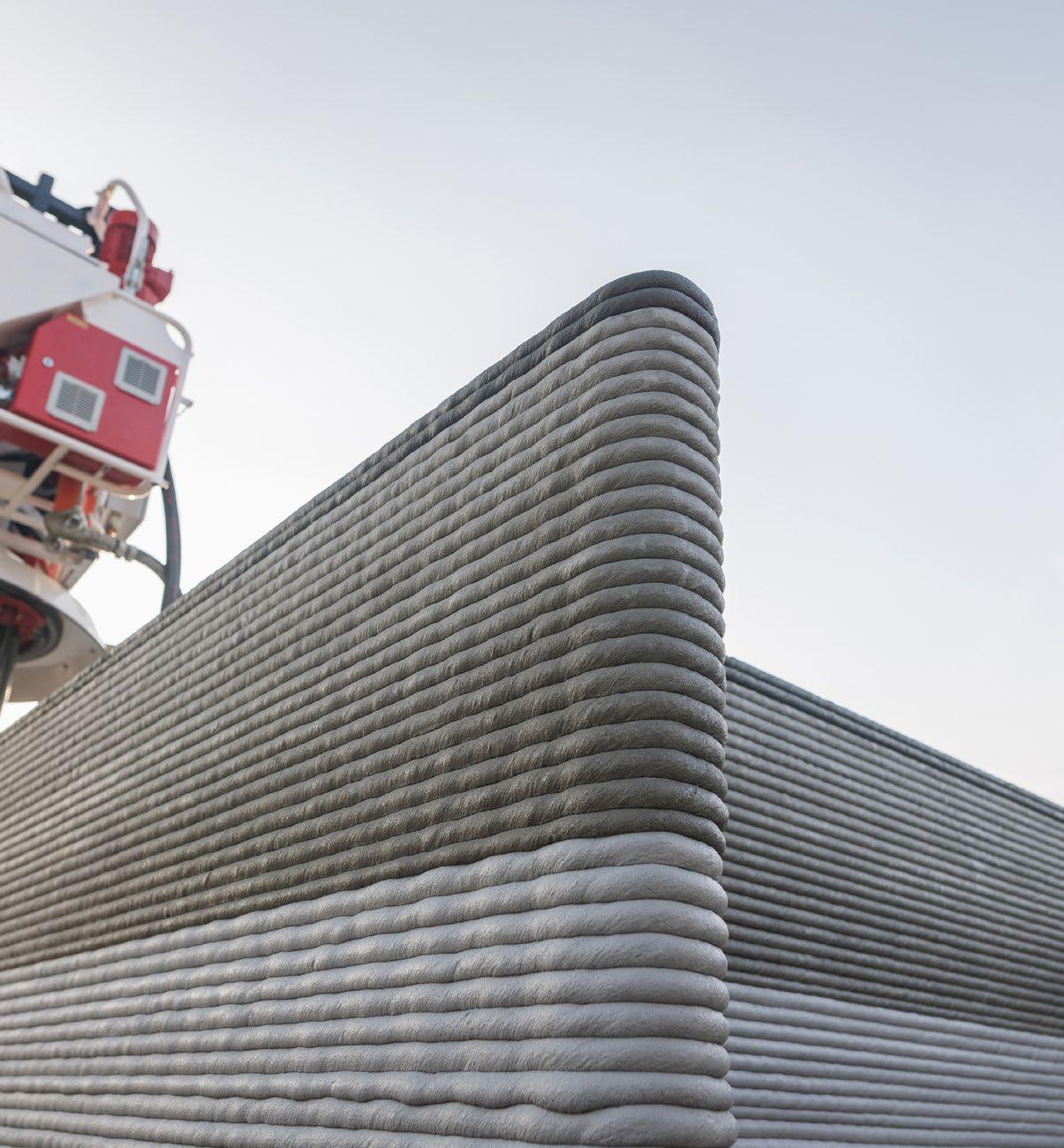
Why 3D construction printing is gaining ground in a high-pressure industry
The Slow Build Revolution
Why 3D construction printing is gaining ground in a high-pressure industry
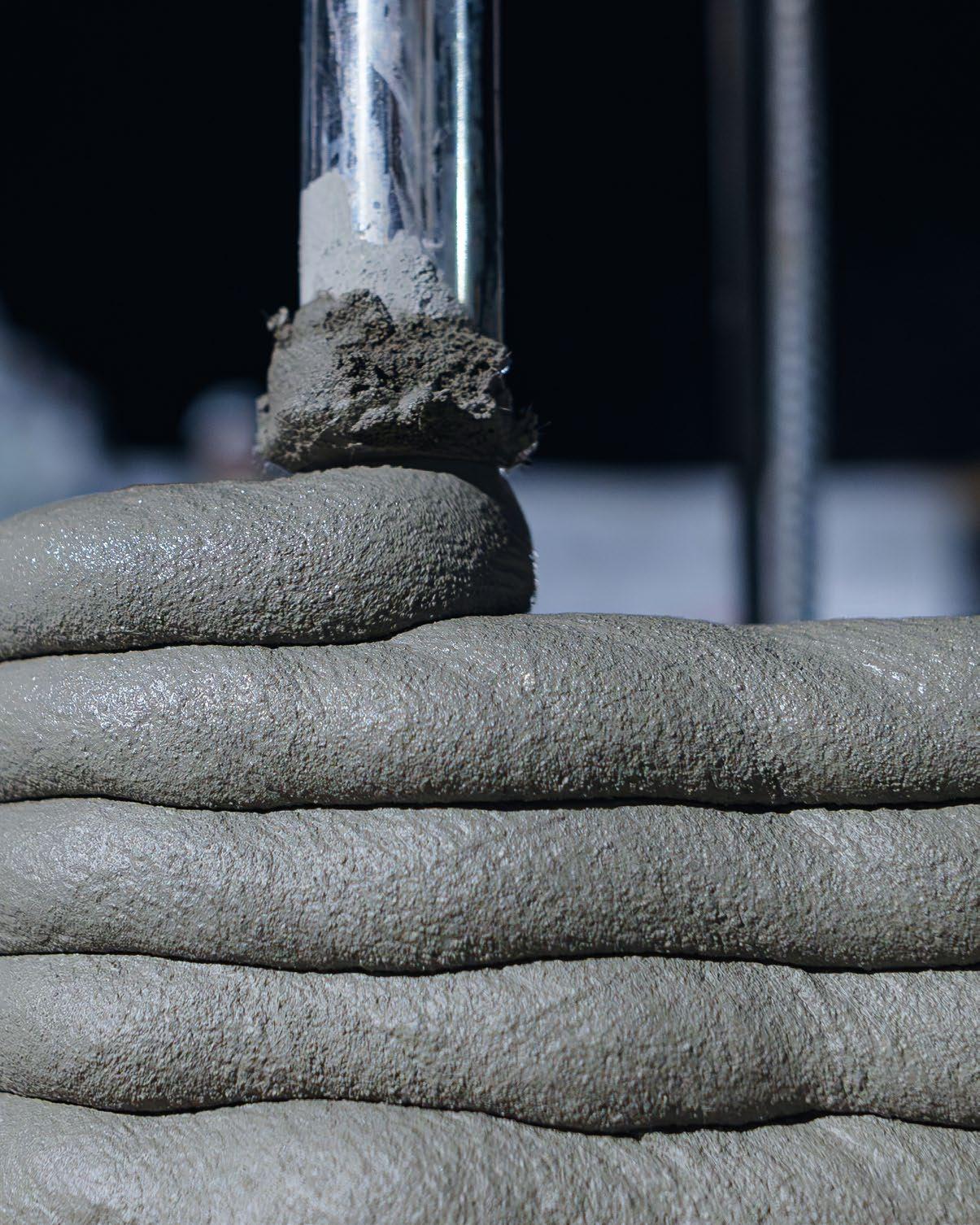
The construction industry continues to navigate a transformative period involving the integration of smart technology, cloud computing and additive manufacturing (commonly known as 3D construction printing (“3DCP”).
Once relegated to experimental prototypes, 3DCP has continued its transition into an evolving construction technology aimed at solving a myriad of issues, including the global housing crisis, labor shortages, and environmental sustainability.
Most credible sources continue to project aggressive growth in the 3DCP market. Mordor Intelligence, a recognized, ISO-certified market research firm, projects that the 3DCP market will rise from a value of $3.34 billion (2026) to $15.29 billion by 2031, maintaining a compound annual growth rate of 35.6%.
A primary trend driving this growth is the shift from single-home to large-scale residential communities. For example, in Georgetown, Texas, the Wolf Ranch development—a partnership between Lennar, one of the largest homebuilders in the United States, and ICON, a 3D technology company—recently completed 100 homes, with approximately 75% of the inventory sold by early 2025.
These homes, starting just under $400,000, utilize solar power and provide significant energy savings, with some residents reporting monthly electric bills as low as $26. Following this success, Lennar and ICON are currently in the planning stages of a second community of 200 homes.
Significant Hurdles to Address
High capital expenditure for large-format printers remains a significant growth restraint, contributing to several high-profile bankruptcies for 3DCP companies between 2024 and 2026, including Black Buffalo 3D, Desktop Metal, and BCN3D. Experts have referred to this industry development as a “repricing,”
where capital flows have become selective and prioritize firms with proven deployment paths and government partnerships.
Even companies who have enjoyed success, including ICON which was last valued at approximately $2 billion, recently laid off 114 workers (or about 25% of its staff) in early 2025, with additional layoffs expected (per TechCrunch). ICON stated that these moves were necessary to align with market conditions, improve efficiency and focus on high-priority growth initiatives like the Phoenix 3D printing system—a multi-story robotic-arc-mounted 3D printer system designed to print entire building envelopes, including foundations and roofs, in one continuous process.
This system purportedly aims to lower construction costs to $99 per square foot, which could significantly expand the feasibility of affordable housing communities using 3DCP methods.
3DCP as an Answer to Affordable Housing
The residential segment of 3DCP is increasingly focused on affordable housing. For
example, in Houston, Texas, the Zuri Gardens project is currently developing 80 detached homes specifically for lower income buyers, with prices starting at $280,000 and the potential for up to $125,000 in city-funded down payment assistance.
These homes utilize the “mass wall” effect, where printed concrete walls are filled after the concrete and MEP work is completed, with concrete foam to create a solid, insulated structure that regulates indoor temperatures and resists mold, flooding, and extreme heat. This resilience has made 3DCP structures increasingly attractive to insurance underwriters for the potential to offer a lower-risk asset in disaster-prone regions.
is focused on expanding 3DCP into the European luxury and “tiny house” markets. This house has a useable area of 47 m², or 505.904 square feet, and was printed in less than 28 hours of net printing time. Built in one of the most expensive countries in Europe, the cost of $320,000 Euros, or approximately $378,000 U.S. dollars, is roughly one-third less than the cost of conventional development.
Material Innovations and Environmental Impact
Current 3DCP industry trends also emphasize low-carbon binders and waste upcycling to mitigate environmental impacts and attempt
The construction industry continues to navigate a transformative period involving the integration of smart technology, cloud computing and additive manufacturing (commonly known as 3D construction printing (“3DCP”).
The Trend Toward Collaborative Business Models
To facilitate industry-wide adoption, firms are moving toward partnership or joint ventures models. One example is the partnership between ICON and Lennar for the Wolf Ranch development. Another is Alquist 3D, who recently announced a partnership with Walmart for the largest deployment of printed commercial structures in the U.S.
Unlike other 3DCP companies, Alquist has developed a model where it functions essentially as a tech company that leases or sells proprietary robotic systems to general contractors while providing the necessary software and training.
Similarly, in August 2025, the first 3D-printed “tiny house” was built in the Luxembourg municipality of Niederanven by a Czech joint venture between ICE Industrial Services and HSF System. This collaboration
to bypass supply-chain volatility (e.g., cement tariffs). Key material innovations include:
> Green Cement – Projects like Zuri Gardens utilize the near-zero-carbon PozzoSlag, a pozzolanic cement made from upcycled fly ash that requires no Portland cement and is manufactured at room temperature.
> Alternative Reinforcement – Scientists at Penn State and MIT are developing methods to embed cables or mesh directly into concrete filaments during printing. This allows for the construction of horizontal slabs and roof structures without traditional formwork, which can account for 40% of concrete construction costs.
> Bio-Based Printing Materials –Recent breakthroughs in “Bio-3D Printing” for construction involve using mycelium
(fungus) or hempcrete as printing filaments. These materials offer superior carbon sequestration properties compared to concrete and are being piloted in Europe for temporary structures and sustainable insulation.
Leaders of 3DCP Outside of the U.S.
Housing projects emerging outside of the U.S. include the DREIHAUS project in Heidelberg, Germany, which consists of 21 residential units. Meanwhile, in Denmark, the Skovsporet project was completed in October 2025, which consists of 36 student apartments and it considered Europe’s largest 3D-printed housing project to date.
In late 2025, China inaugurated the Xiong’an Wings cultural center which employed 3D-printed plastic panels and digital laser scanning to achieve complex architectural curves.
Meanwhile, in Kenya, the Mvule Gardens housing project reached a milestone in 2026 as the first 3D-printed development to earn World Bank sustainability certification.
Dubai has also established itself as a global leader in 3DCP through the Dubai 3D Printing Strategy 2030, which mandates that 25% of its buildings be 3D printed by 2030. To support this vision, Dubai became the first to implement a certification system for 3D-printed construction to ensure material quality and streamline operational procedures.
The 3DCP industry continues to navigate its way through a phase of tempered growth. While financial volatility has claimed some early innovators, the successful delivery of mass-scale residential communities like Wolf Ranch and Zuri Garden, in addition to the DREIHAUS project and Dubai’s aggressive approach toward 3DCP, further demonstrates that the technology is primed to see further improvement and cost savings for the consumer market.
Harmonizing global building codes, adopting low-carbon materials, and integrating AI-driven technology will likely shape the sector’s future and support structural reliability at scale.
Jason Copley and Michael Schwartz are partners in the construction litigation practice at Cohen Seglias Pallas Greenhall & Furman. They are based in the firm’s Philadelphia office. Nathan Marinkovich is an associate based in Pittsburgh.
B uilding E xceptional Retail S paces N ationw ide
S ince 1989, StoreCrafters has spec ialized in retail co nstruc tio n, delivering build- o uts, remo dels, and pro perty develo pment so lutio ns natio nw ide. Pro jec ts are managed end- to - end to ensure prec isio n, quality, and o n- time co mpletio n.
We co llabo rate w ith retailers, landlo rds, develo pers, and vendo rs to c reate hig h- impac t retail enviro nments that enhance c usto me r experience and suppo rt business go als.
Built for What’s Next
From leadership mindset to labor realities, RCA 2026 shows how retail construction is adapting now.
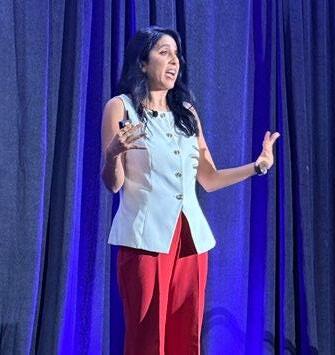
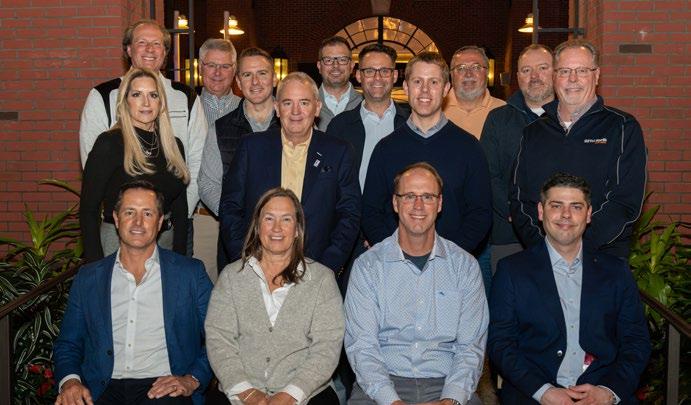
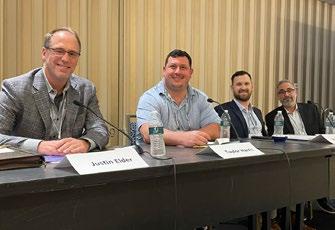
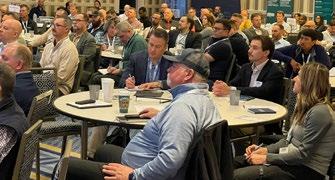
Retail construction leaders gathered March 6–8 at the RCA 2026 Annual Conference in National Harbor, Maryland, for three days of insight, connection and candid conversation. From leadership mindset to labor challenges, the sessions reflected an industry navigating constant pressure with a focus on adaptability.
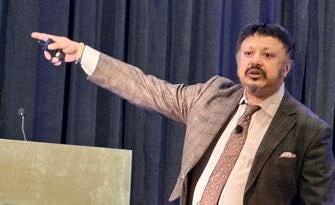
Keynotes set the tone. Workplace performance expert Henna Pryor emphasized leading with clarity over reaction, while Boss Better Leadership Academy founder and podcaster Joe Mull reframed the labor shortage as a “Great Upgrade,” urging companies to build cultures that attract and retain talent.
In addition, economist Anirban Basu, Ph.D., offered a measured outlook—steady growth paired with ongoing uncertainty tied to interest rates and consumer behavior.
Policy discussions added another layer, with Associated General Contractors of
America’s Alex Etchen, VP of Government Relations, outlining how tariffs, tax changes and workforce regulations are directly shaping project costs and risk.
Across every session, one theme stood out: change is constant, but so is the industry’s ability to respond. Contractors are rethinking leadership, investing in people and staying agile in the face of economic and regulatory shifts.
The conversation continues beyond the conference, with RCA’s upcoming regional events set to keep ideas flowing and relationships growing throughout the year.
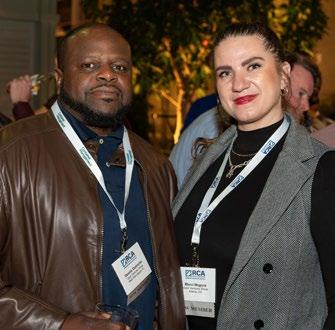
1. Dennis Dumorne and Marci Negura, Open Ventures Group
2. Jim Lennon, Resource Site Services
3. David Martin, H.J. Martin and Son; Hector Ray, RAYWEST DESIGNBUILD
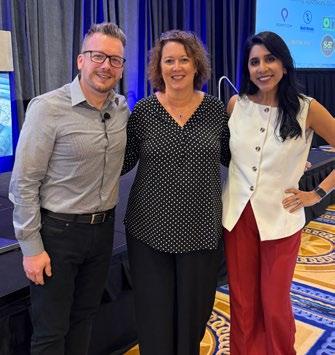
4. Carol Montoya, Retail Contractors Association (center) with keynote speakers Joe Mull and Henna Pryor
5. Larry Schwartz, Procoat Products, Inc; Cheryl Montour and Debbie Albergo, Division 9 Commercial Construction Inc.
6. Eric Handley, W.A. Randolph, Inc.
7. Evgeniy Dudin, Faith Pierce, Rectenwald; Keith Schultz, Solex Contracting, Inc.; Greg Lucivansky, Elder-Jones, Inc.
8. Justin Elder, Elder-Jones, Inc.; Rick Winkel, Winkel Construction, Inc.
RCA Kick Off Reception
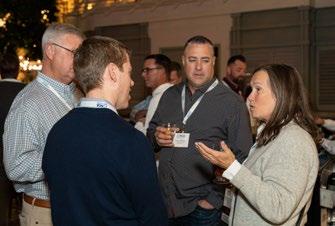
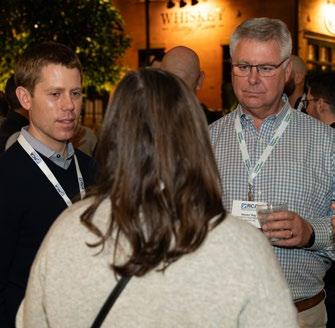
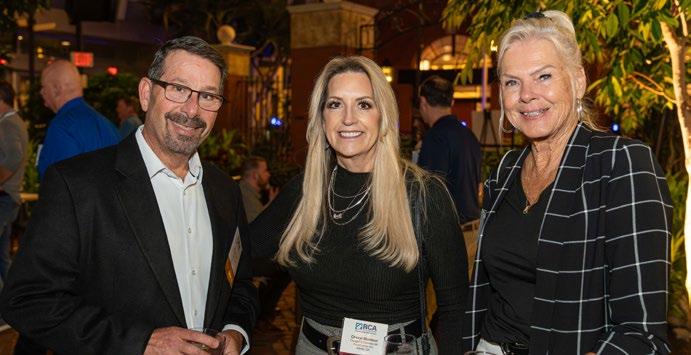
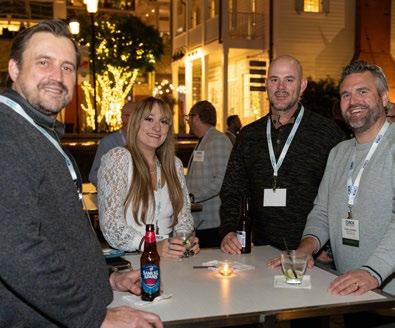
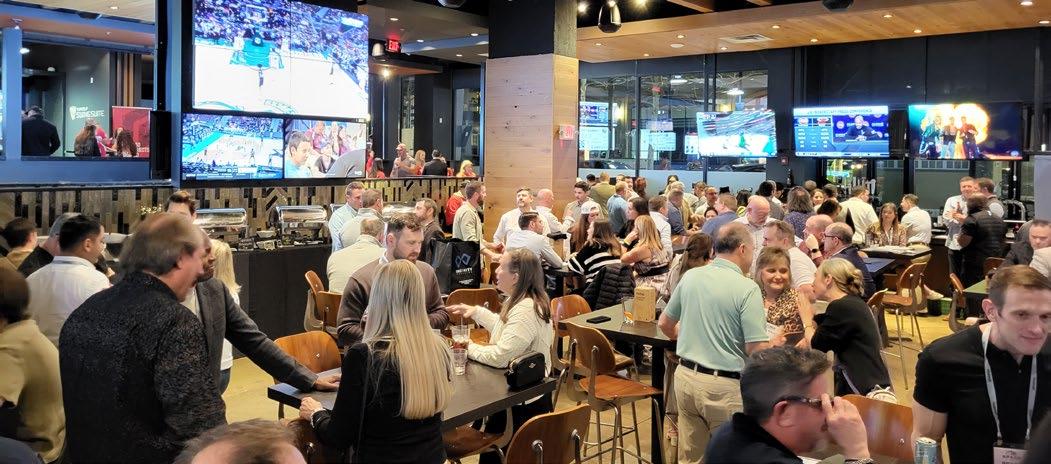
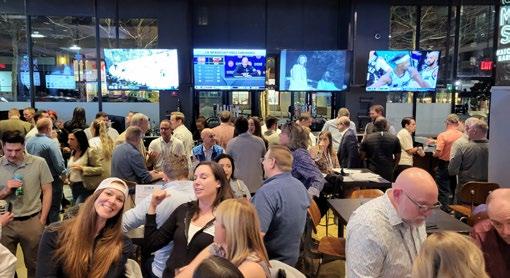
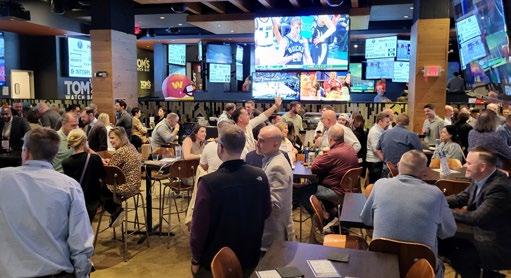
As the SPECS 2026 Conference kicked off at the Gaylord in National Harbor, MD, the RCA held an opening night reception at Toms Watch Bar, located within the retail and restaurant hub that is National Harbor. Tom’s Watch bar was built by new RCA member Infinity Building, headquartered in Bowie Maryland and was a great setting for a night of connections and conversation for the 100 plus in attendance. The reception was generously sponsored by Infinity Building along with Travelstead, DW1 and Downstream.
The reception was generously sponsored by:
DOLCE CEPPO
THE NEW DOLCE SIDE OF STONE
in the news
Built to Connect
SARA NY creates space for conversation, creativity and community
The Society of American Registered Architects (SARA) New York Council is setting the tone for 2026 with a fresh rhythm of connection, creativity and community. Kicking off the year with momentum, SARA NY has launched its new monthly “SARA NY Socials,” an ongoing series designed to bring architects, designers and industry partners together in a more relaxed, engaging setting.
Introduced by Board President Tzara Peterson, the initiative is already gaining traction across the New York City design community. More than a typical networking event, the socials are rooted in SARA NY’s long-standing mission of “Architect Helping Architect.”
Each gathering creates space for real conversation, idea-sharing and collaboration—bridging the gap between the organization’s larger, cornerstone events like the SARA ART exhibit, Blueprint for Success student mentoring program, Meet the Jury event and the annual Design Awards.
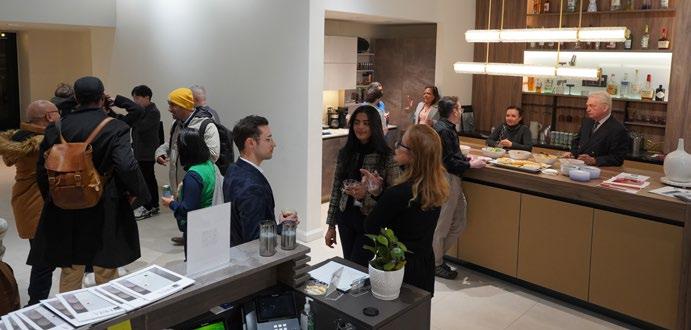
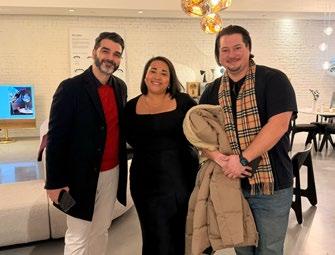
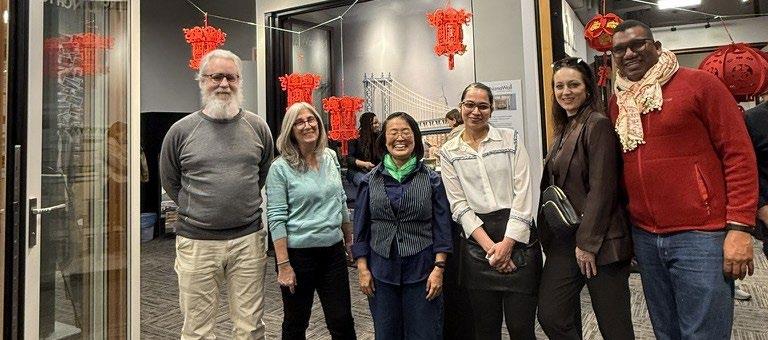
And there’s no shortage of energy behind the rollout. The series, which opened in January at Cucine Design NYC, showcased high-end kitchen design. February followed with a festive Lunar New Year celebration at NanaWall NYC Showroom, while March turned up the volume at Tom Dixon Studio NYC with DJs and raffle giveaways—blending design with a social edge.
Each month, a different showroom partner hosts, offering attendees a firsthand look at innovative materials, spaces and solutions shaping the built environment.
The April 16 social took place at Vermont Quarries NYC Showroom, known for its connection to one of North America’s largest marble factories. The calendar continues to build with upcoming collaborations involving MetroWall, Technogym, Shaw Contract and Vitra—further expanding the reach and diversity of the series.
The momentum also leads into one of the organization’s marquee moments: the 2026 SARA NY Design Awards, set for June 4 at the iconic The New Yorker Hotel.
With a steady cadence of monthly touchpoints, SARA NY is doing more than hosting events—it’s creating a consistent, year-round platform where the design community can connect, collaborate and keep ideas moving forward.
We
Our specialized project management teams are highly effective in maintaining affordable budgets, meeting tight deadlines, and delivering quality construction turnovers on time, every time. From coast to coast, Alaska to Puerto Rico, Hunter Building Corporation has you completely covered on your next construction project!
We offer a multitude of services nationwide ranging from tenant improvements, build-outs, remodels, ground-up construction, and project management. Hunter Building Corporation takes pride in the fact that many of our clients have been repeat customers for many years.
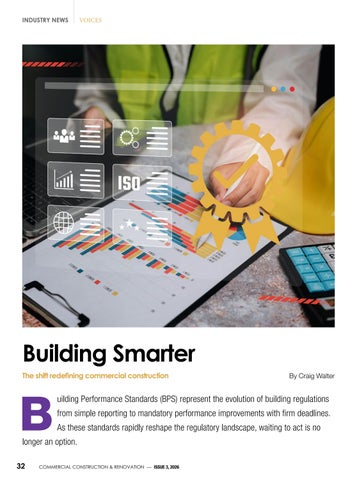
Building Smarter
The shift redefining commercial construction
BBy Craig Walter
uilding Performance Standards (BPS) represent the evolution of building regulations from simple reporting to mandatory performance improvements with firm deadlines. As these standards rapidly reshape the regulatory landscape, waiting to act is no longer an option.
Where Your Vision Meets Our Expertise
Terrazzo is a handcra ed building material; its primary components are assembled on the construction site. For 100-years, the contractor members of the National Terrazzo and Mosaic Association have brought integrity and skill to countless installations. The NTMA has the expertise your project needs. Find specifications, information, color samples, contractor and supplier members at www.ntma.com or call 800-323-9736.
Laudadio
Early assessment and proactive planning are essential to reduce compliance risk and avoid costly penalties, and timely action also allows building owners to strengthen performance and gain a competitive advantage. With requirements and timelines varying by jurisdiction, understanding and navigating regional BPS policies is the first critical step to acting effectively.
Understanding & Navigating Regional Requirements
BPS laws require companies to reduce building energy use or carbon emissions based on defined targets and deadlines. These requirements vary by location and building size, with some jurisdictions applying to properties as small as 5,000 square feet.
already reached their initial compliance target years. We can anticipate these cities to begin enforcing requirements for noncompliant buildings, which may include mandating efficiency improvements or imposing penalties. Other jurisdictions, including Washington and Oregon, face upcoming deadlines with complex requirements. These include developing and implementing energy management plans as well as operational and maintenance strategies, in addition to meeting compliance targets. Building owners must begin significant planning immediately. Failure to meet performance targets can lead to substantial penalties, legal consequences, and even operational disruptions. Recognizing these potential impacts is essential for guiding necessary actions and developing a roadmap to mitigate risks.
Building Performance Standards are reshaping the regulatory landscape.
With deadlines already in effect in some jurisdictions and others approaching quickly, waiting is not an option.
Meeting these standards often involves a combination of operational improvements, electrification, capital upgrades and renewable energy adoption.
Currently, 16 jurisdictions enforce energy or carbon reduction targets, while another 20 mandate actions beyond benchmarking, such as on-site energy audits or retro-commissioning. Additionally, more than 30 regions have pledged to implement BPS by 2026.
Complying with BPS can be a challenge: Each jurisdiction implements BPS differently, creating a complex web of requirements that's nearly impossible to track without dedicated expertise.
Several BPS jurisdictions—including New York City, St. Louis and Boston—have
But the value is more than compliance—companies have the opportunity to invest in a long-term energy management strategy with tangible potential benefits like reduced energy costs, reduced emissions and increased efficiency.
Building an Actionable Roadmap for Short- and Long-Term Compliance
Developing a roadmap to meet performance standards can be complex. Building owners should begin by assessing their building’s current performance and comparing it to upcoming compliance targets. This evaluation helps determine whether minor adjustments will suffice or if more extensive improvements are necessary.
The next step typically involves conducting an ASHRAE Level II audit to identify specific opportunities for improvement. These can range from lowcost measures, such as operational best practices, to no-cost measures, such as significant capital expense improvements that reduce energy consumption, changing how energy is used. The audit findings provide a foundation for prioritizing actions and creating a cost-effective roadmap to achieve compliance.
Effective planning should account for available rebates, tax credits, and grant programs. Some states even offer incentives for early adopters, but these resources are limited and tend to diminish as compliance deadlines approach.
Take Action Now—Next Steps
Immediate action is essential, even for those without urgent compliance deadlines. Meeting performance standards is not a quick fix—early planning helps you stay ahead in a rapidly evolving regulatory landscape. Proactivity reduces the risk of costly penalties, unexpected capital expenditures, and last-minute retrofits.
For buildings with longer timelines, efficiency upgrades present an opportunity to enhance operational performance and add long-term value.
Building Performance Standards are reshaping the regulatory landscape. With deadlines already in effect in some jurisdictions and others approaching quickly, waiting is not an option. Owners should begin by assessing current performance, conducting audits and developing a strategic roadmap to address needed improvements.
Leveraging available incentives and planning early will not only reduce risk and avoid costly penalties but also unlock long-term operational and financial benefits. Acting now positions building owners to stay ahead, control costs and create value in an increasingly performancedriven market. CCR
Craig Walter is the Principal Energy Advisor at ENGIE Impact, a firm specializing in accelerating building decarbonization and sustainability efforts. With more than 30 years of experience in the energy management industry, Walter focuses on helping clients reduce consumption and costs through total energy and sustainability management programs.
Student Insider
Presented by
Student Insider
Dear Skills Trade Student
While construction and technical skills are your primary focus, ConstructEDU Student Insider (CEDU) is designed to supplement your education by providing content that dives into the business of the commercial construction and renovation industry. The bi-monthly newsletter covers areas such as emerging technologies, regulatory issues and other factors shaping the diverse industry’s future. CEDU also features insights and profiles from industry thought leaders on the trends and challenges affecting the marketplace.
Delivered at no charge, we not only encourage you to make CEDU a part of your educational consumption, but also to share it with your peers.
Arizona Builders Alliance Connects Students to Construction Careers in Real Time
The Arizona Builders Alliance is turning workforce development into action—fast. At a recent career fair held at its SkySong office in Scottsdale, the organization brought together West-MEC electrical program graduates and seven leading construction firms for a high-energy, four-hour hiring event that delivered something rare: immediate job offers.
AASHTO Joins National Push to Rebuild Engineering Workforce
The push to strengthen America’s infrastructure just gained a major ally. The American Association of State Highway and Transportation officials and its National Operations Center of Excellence have joined the Engineering Workforce Consortium, expanding a growing national effort to address one of the industry’s most pressing challenges: a shortage of skilled engineering talent.
Oakwood Veneer Invests in Educators and Next Generation of Makers
In an industry built on precision, patience and pride in craft, the future depends on who’s learning the trade today. That’s where Oakwood Veneer is stepping in. The family-owned company, based in Troy, Michigan, has spent more than 35 years producing high-quality wood veneer sheets for professionals, hobbyists and manufacturers around the world.
Read More HERE
Southern Arizona Students Put Construction Metal to SkillsUSA Test
More than 150 high school students traded classrooms for jobsite conditions—hard hats on, tools in hand and skills on full display. At Catalina High School in Tucson, the Arizona Builders Alliance partnered with SkillsUSA Region 6 to host its annual Construction Competition, bringing together students from across Southern Arizona for a hands-on showcase of the trades.
Read More HERE
Building What’s Next
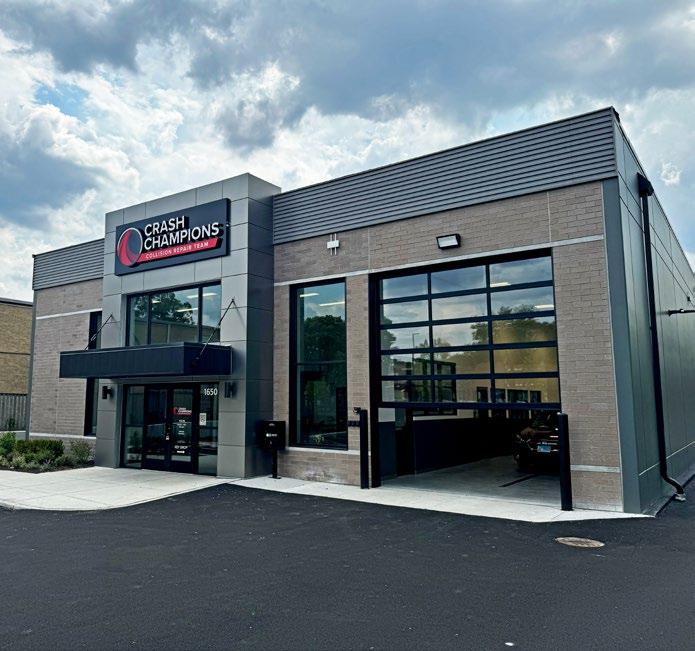
How Crash Champions is helping shape the future for the trades
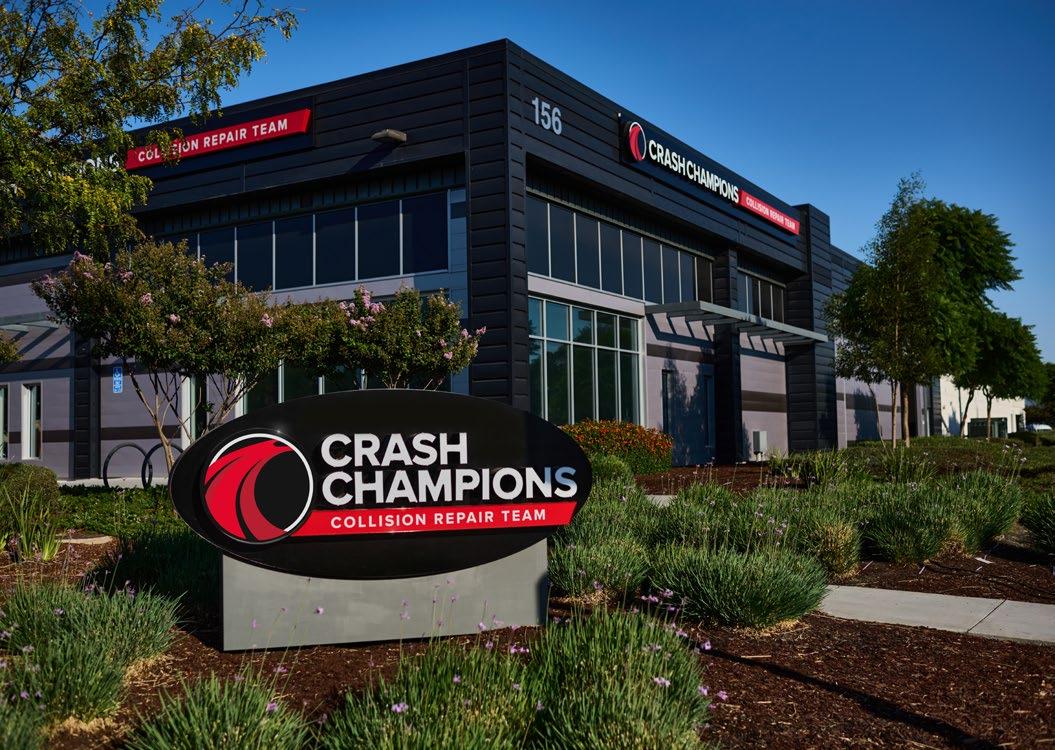
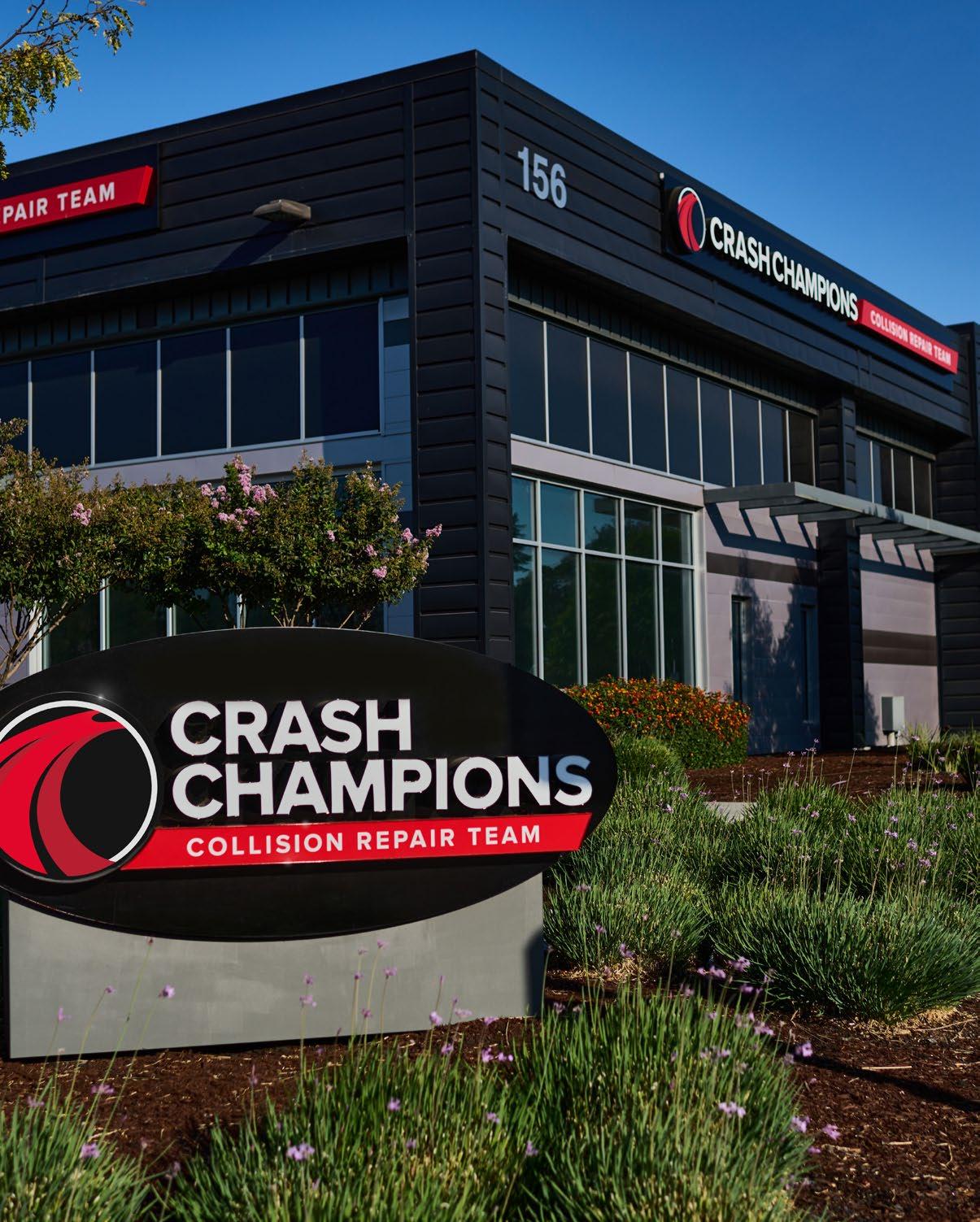
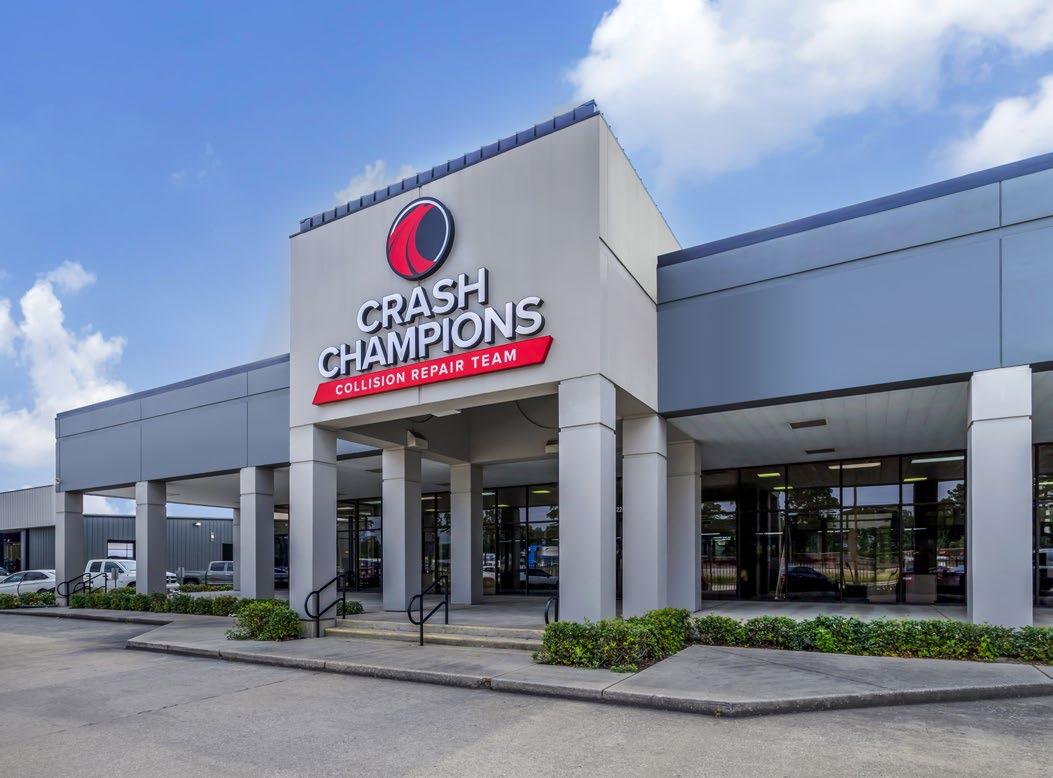
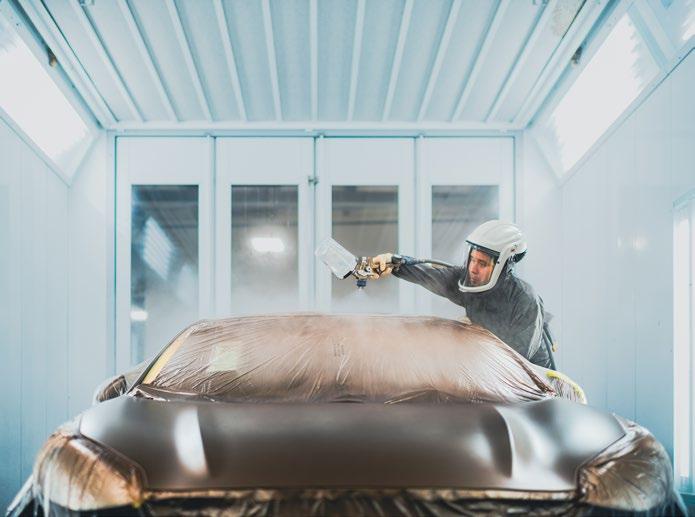
At 16, Matt Ebert crashed his car— and instead of calling it a loss, he asked a local technician to show him how to fix it. The decision didn’t just get him back on the road, but pointed him toward a career he would eventually reshape. Today, he leads Crash Champions, a $3 billion business with more than 650 locations across 38 states and one of the fastest-growing collision repair platforms in the country.
Ebert didn’t arrive here through a corporate playbook. He learned the trade firsthand, built business instincts running a franchise and returned to New Lenox, Illinois, to co-found a body shop in 1999. Those early days were scrappy, including parking friends’ cars out front to make the shop look busy. What followed was a steady climb built on discipline, curiosity and a willingness to keep evolving.
After buying out his partner in 2014, he rebranded the business to Crash Champions and began scaling with intention. Multiple private equity partnerships in 2019 and 2022 helped accelerate national growth. During COVID—when many operators were hitting pause—Ebert expanded.
Through workforce programs and a people-first culture, Ebert continues building a future where blue-collar careers are not just viable, but aspirational.
If we want to be the hero in the story, it’s our duty to communicate clearly, honestly and frequently with our customers in a way that meets them where they are and confidently guides them through the process.
We sat down with Ebert to talk about building a founder-led company at scale, why culture drives everything and what it will take to move the industry forward.
Give us a snapshot of your brand.
Crash Champions is one of the largest collision repair networks in the U.S. For me, it’s simple. We Champion people. Everything we do comes back to that. Every day we aim to
Champion our team members, our customers and our partners.
We’ve grown from one shop to over 650 locations in 38 states, but the focus hasn’t changed. We’re helping people in a time of need and we’re building trust at every turn.
I believe collision repair isn’t just about fixing cars. It’s about showing up when it matters most and doing it the right way, every single time. When you think about
it, we’re a hero for our customers after a vehicle accident. That’s what this business is all about.
What was the inspiration behind that concept?
I didn’t sit down and map out a brand. This came from real experience. I learned early on that people don’t remember the repair. They remember how you made them feel. I had a customer once furious because I didn’t communicate the full repair process, even though we were doing a quality repair. That stuck with me. That’s where it clicked. We’re in the business of Championing people and the difference is trust. And that became the foundation of everything.
What type of consumer are you targeting?
When it comes to collision repair, we’re not chasing a demographic. We’re serving people in a moment they didn’t ask for. Nobody wakes up wanting to visit a collision repair shop. It’s stressful, it’s inconvenient, and there’s uncertainty.
It’s our people and our culture. We’ve built this by betting on people, investing in them and trusting them to lead. That’s what separates us.
Our job is to remove that friction and give our customers a distinctly empathetic and personal touch that earns trust. If we do that in a time of need, we’ll earn customers for life.
What kind of conversations are you having with your customers?
Clear. Honest. Frequent. The collision repair process involves several different and complex steps, from explaining vehicle damage to building a repair plan, ordering parts and explaining our lifetime warranty.
If we want to be the hero in the story, it’s our duty to communicate clearly, honestly and frequently with our customers in a way that meets them where they are and confidently guides them through the process.
We’ve learned that communication builds or breaks trust. If we say we’re calling
BUILDING YOUR BRAND
Our master builders travel wherever our customers want to grow. Decades of cross-country construction allow us to build a Wesco in the northern Michigan snow and ensure that a Real Seafood in Florida adheres to hurricane building codes.
tomorrow, we call tomorrow. Every interaction is either building trust or tearing it down.
So the conversation is simple:
> Here’s what’s happening.
> Here’s what to expect.
> Here’s when you’ll hear from us again.
There are no surprises. We deliver on that promise.
How does the design of your stores accommodate what consumers are looking for today?
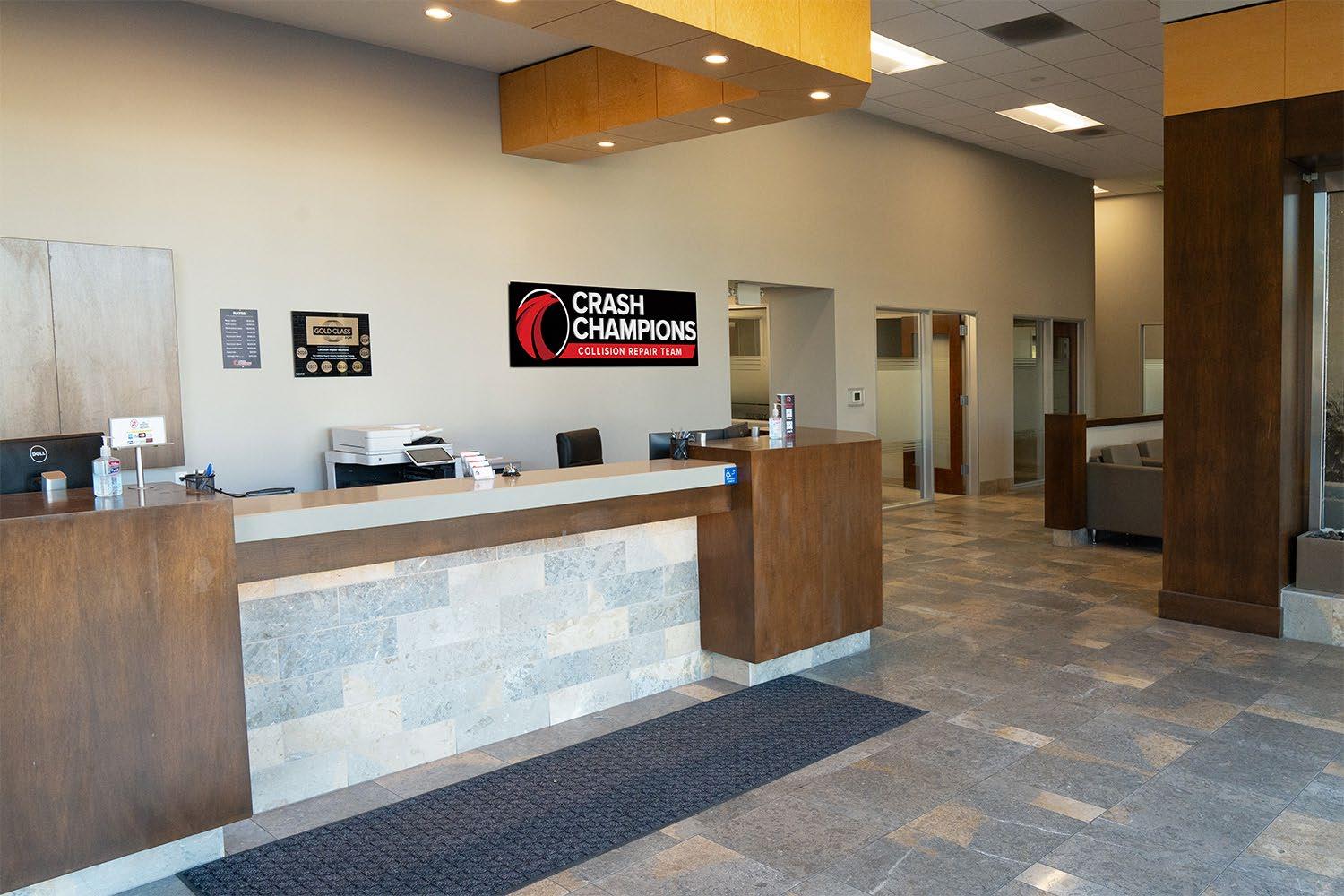
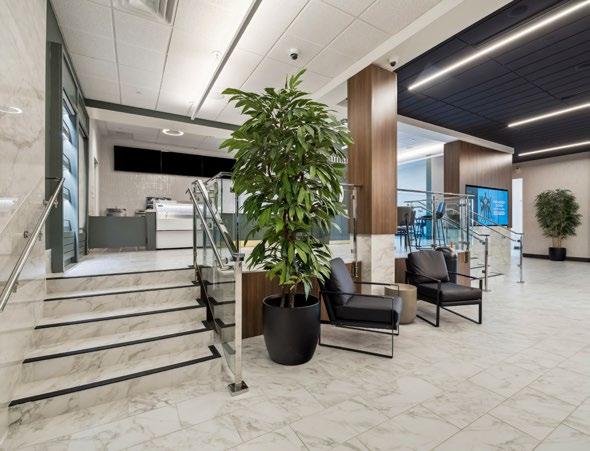
Customers want convenience, confidence and clarity. So we design our locations to feel professional, organized, and modern. Clean front offices. Clear process flow. Technology integrated into the experience. The environment should match the level of repair we’re doing. Today’s vehicles are complex, so the facility, equipment and technology have to reflect that.
Is there a location that really shows how the brand interacts with the community and customers?
What I’ve learned is it’s not about one location representing the brand. The best example is any shop where the leader understands the vision: We Champion People. That’s where you see it come to life.
Here’s an example: In the past three years, we’ve had over 100 locations volunteer with the National Auto Body Council to restore and gift vehicles to people in need through the Recycled Rides program.
This program gives our entire team— from the GM to the body technicians and painters—the opportunity to restore a vehicle together and hand the keys to a deserving community member. These recipients include single mothers, veterans and teachers.
Walk us through how and why it’s designed the way it is. We keep it simple. We design around flow:
> Customer experience up front > Production efficiency in the back > Technology integrated throughout
The goal is to make a hard job easier for the team and a stressful moment easier for the customer.
Take us through your construction and design strategy.
Consistency matters at scale. We’ve built a repeatable model that allows us to deliver the same experience across hundreds of locations. That’s important for our customers and our insurance partners. At the same time, we adapt to the market when needed. Not every building is the same, but the standard is.
Give us a rundown of your stores layout.
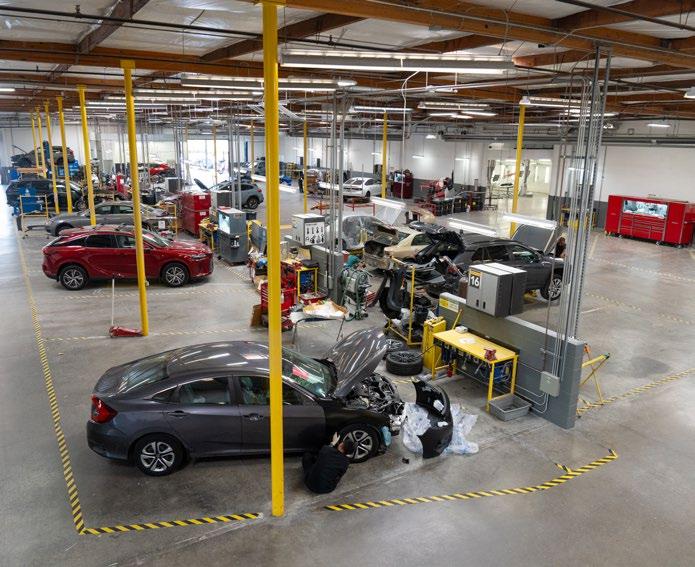
The front of the shop is about the customer experience. The back of the shop is about production and quality standards.
Paper Towel Dispensers
Waste Receptacles
Soap Dispensers
Mirrors
Grab Bars
Shelves and Hooks
Seat Cover Dispensers
Toilet Paper Dispensers
Napkin Disposals
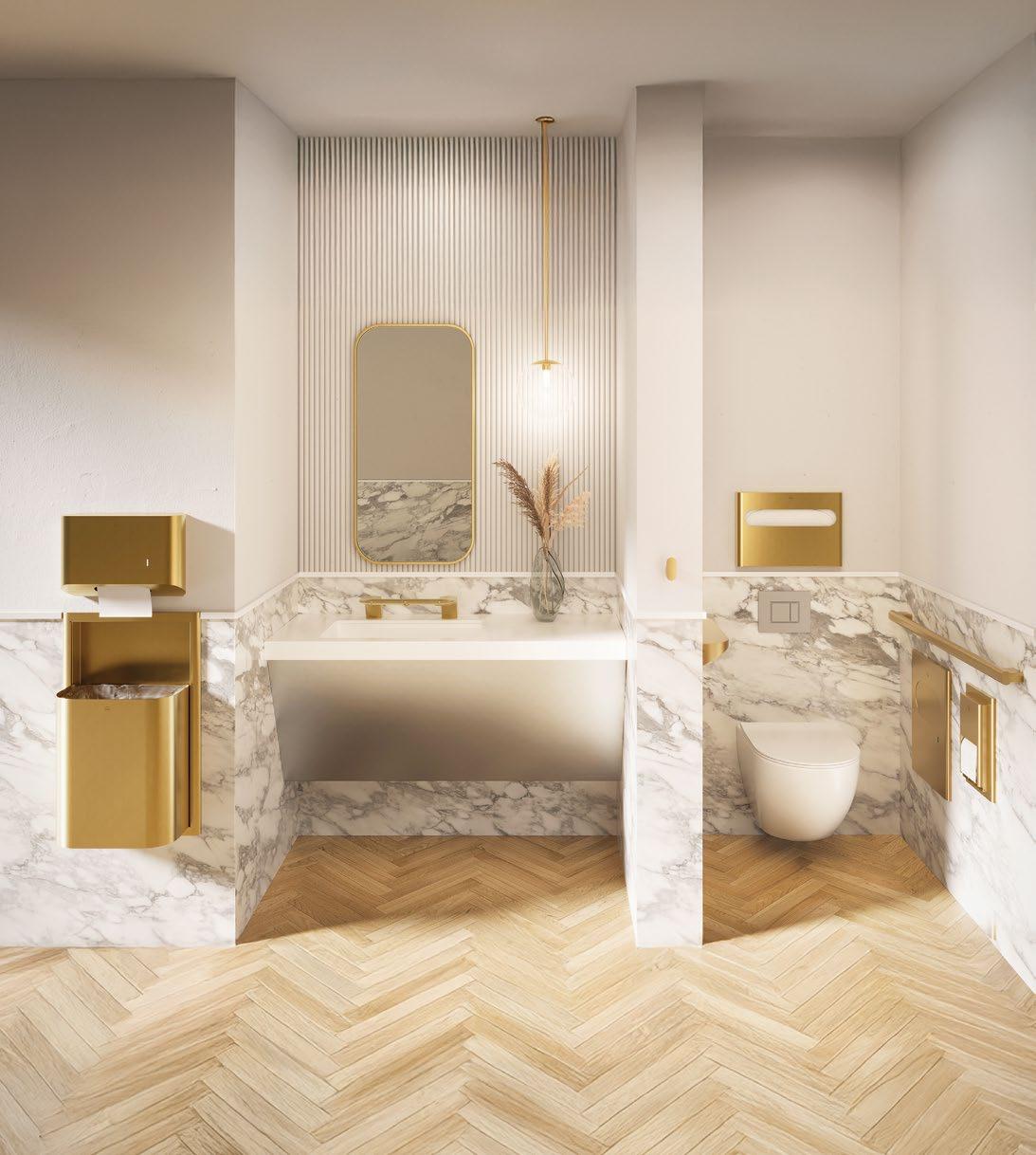
The new Elvari™ collection delivers on design — pairing refined aesthetics and finishes with the most comprehensive suite of commercial washroom accessories. The result is a washroom experience that feels elevated, cohesive, and unmistakably modern. Discover the beauty of unity, only from Bradley.
Available in 5 popular colors and satin stainless.
We separate those intentionally. Customers need clarity, communication and a sense of hospitality. Technicians need space, tools and flow.
When both sides are set up right, everything works better.
What’s the biggest issue today related to construction?
Cost and speed. Between inflation, permitting and supply chain challenges, it’s harder to build fast and stay on budget.
At the same time, the level of investment required to keep up with vehicle technology continues to increase. Today’s technician is just as likely to be holding a computer as a wrench.
In today’s world, we must outfit our repair centers to support not only traditional body and paint repair, but also calibration and diagnostics of advanced vehicles. So you can’t cut corners.
Talk about sustainability. What are you doing?
Sustainability shows up in how we operate every day. We’ve invested in our facilities with that in mind. Waterborne paint systems, energy-efficient lighting and waste reduction are all part of it.
Are you optimistic about the marketplace?
Yes. The collision repair industry is evolving fast. Vehicle complexity is increasing, and no two repairs are the same. The demand for high-quality, certified collision repair centers capable of repairing modern vehicles has never been higher.
AI isn’t taking over fixing cars anytime soon. What it is doing is raising the bar. That creates demand for high-quality repair, highly skilled technicians and well-run operations. If you’re willing to adapt and invest, there’s a lot of opportunity.
What’s your growth plan?
What areas are you targeting?
We’re currently in 38 states across the U.S. That growth comes from a mix of acquisitions and new construction through greenfield development. We’re focused on markets where we can scale and support our partners at a high level. For me, growth
has always been about meeting the industry where it’s going, not just chasing size.
What trends are you seeing?
Technology is the biggest one. Today’s technician is working with diagnostics, ADAS systems and advanced tools. They’re just as likely to be holding a computer as a wrench. The industry is becoming more technical, more specialized, and more capital intensive.
What’s the secret to creating a “must visit” retail environment?
A lot of companies focus on the building.
To me, that’s not it. You can have the nicest facility in the world, but if you don’t have the right people, it won’t matter. It’s not the building. It’s the people.
And in our service business, it’s about serving people in a time of need. Because if you get that wrong, your “must visit” turns into an “out of business” visit really quickly. A great environment is built on trust, communication and consistency.
What’s today’s consumer looking for?
Confidence. They want to know they made the right decision. They want transparency.
They want it to be easy. And, most importantly, they want to do business with someone they trust.
What’s the biggest item on your to-do list right now?
People. Hiring and training technicians while continuing to build awareness around the skilled trades. This industry has a high demand for skilled talent to meet the demands of rapidly evolving vehicle technology. At our size, the company doesn’t scale unless our people do. That’s where the biggest impact is.
Describe a typical day.
There isn’t one. But most days revolve around people. Supporting the team, solving problems, making decisions that move the business forward, and pushing people to think bigger. And continuing to learn. Because the job keeps getting bigger.
Tell us what makes your brand so unique.
It’s our people and our culture. We’ve built this by betting on people, investing in them and trusting them to lead. That’s what separates us. CCR
IT’S THAT SIMPLE
We’re a company with a fresh approach. We are highly skilled and passionate design and construction experts brought together and bonded by mutual trust and respect.
Every member of the PMC team stands ready to deliver, regardless of location, complexity or challenge. We will bring your projects to market with a focus on quality, performance and speed.
Professional Design and Project Management Services for the Retail, Restaurant, Hospitality, Entertainment and the Commercial Markets.
Better. Faster. Smarter
PROJECT PROFILE AWARDS 2026
Setting the Standard
Our 2026 Project Profile Awards showcase the projects raising expectations across every sector
From bold ground-up builds to transformative renovations, the 2026 CCR Project Profile highlights the projects shaping today’s built environment. These spaces reflect precision, innovation and purpose—balancing design, performance and experience while meeting the evolving needs of communities, clients and end users across retail, hospitality, healthcare and beyond.
Chick-fil-A, State St. and Lake St.
Cici and Hyatt Brown Center for Aerospace Technology at Embry-Riddle Aeronautical University
Club Studio
Houston, Texas
Designer: Studio 222 Architects, LLC
Contractor: C.E. Gleeson Constructors Inc.
Club Studio transforms an existing commercial space into a 46,957-square-foot fitness and wellness destination in Midtown Houston. The renovation introduces boutique studios, premium locker rooms and recovery amenities, including saunas. A refined layout creates seamless flow between workout, recovery and social areas, while elevated finishes enhance the experience. The result is a fullservice facility that balances performance and comfort, redefining modern fitness.
Casa Cruz New York
New York, NY
Designer: Hernandez-Eli Architecture
Contractor: Construction Manager: Reidy Construction Group
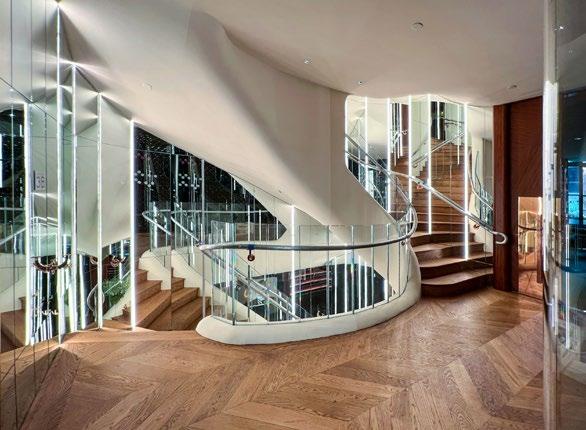
Casa Cruz New York transforms a landmark Beaux Arts townhouse on Manhattan’s Upper East Side into a 12,000-square-foot, six-level hospitality destination. The renovation introduces a private members club, dining rooms, bar areas and event spaces within a cohesive layout. A sculptural central staircase connects each level, creating seamless flow between spaces. Rich material palettes—from illuminated copper and wood banding to upholstered panels and reeded glass— define the interiors. The result is a refined, multi-level venue that blends architectural heritage with modern hospitality through detail, flow and craftsmanship.
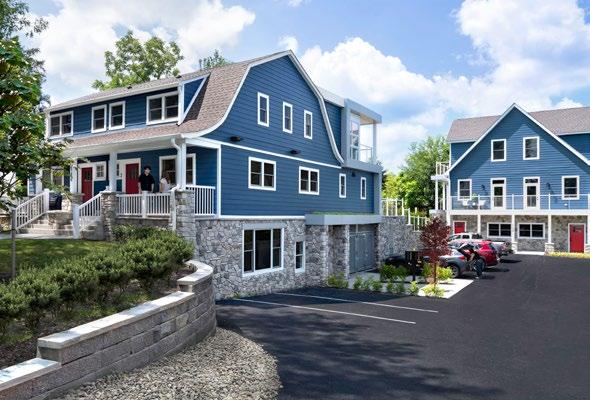
John Street Residence transforms a two-family home into a six-unit, 8,300-square-foot development in Princeton’s Witherspoon-Jackson Historic District. The project combines renovation, expansion and new construction to deliver a “missing-middle” housing solution that respects neighborhood character. The existing structure is reconfigured and expanded, with the basement converted into a new unit. A second building set back from the street adds three residences, preserving the historic streetscape while increasing density with sensitivity.
PROJECT PROFILE AWARDS 2026
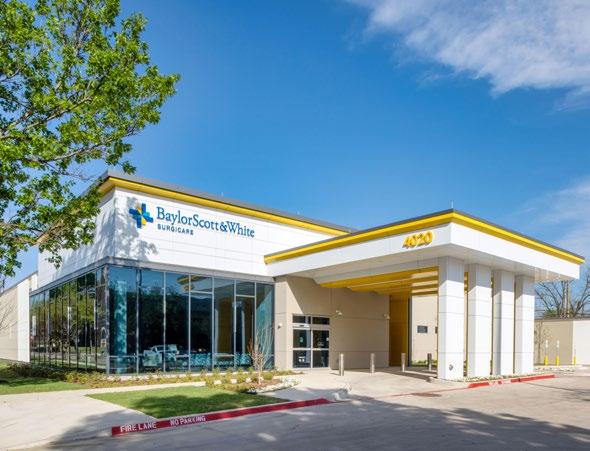
Baylor Scott & White Surgicare – Dallas
Dallas, Texas
Designer: Grace Design Studio
Contractor: Adolfson & Peterson Construction
Baylor Scott & White Surgicare – Dallas expands outpatient care with a 22,900-square-foot, single-story surgical facility. Designed for high-acuity procedures, the center includes eight state-of-the-art operating rooms and efficiently organized clinical support spaces. The layout streamlines patient flow within a dense urban campus while maintaining comfort. Precise design and construction meet rigorous healthcare standards, delivering a forward-looking facility that enhances access and efficiency.
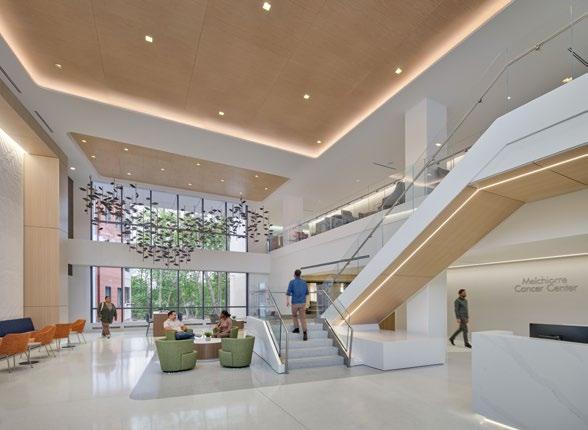
The Melchiorre Cancer Center at Cooperman Barnabas Medical Center
Livingston, New Jersey
Designer: FCA
Contractor: William Blanchard Co
The Melchiorre Cancer Center delivers a 137,000-square-foot facility that combines advanced oncology care with patient-centered design. The project consolidates multidisciplinary treatment and genomic research into a single, efficient environment. A nature-first approach introduces calming elements that support dignity and well-being, while an intuitive layout simplifies navigation for patients and staff. The result is a forward-thinking cancer center that balances clinical excellence with the human experience.
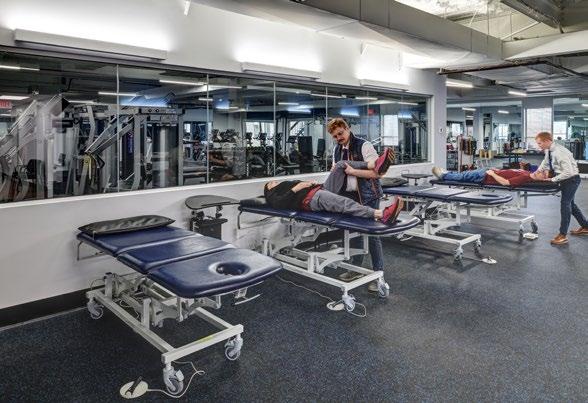
Princeton Sports + Family Medicine expands and redefines its practice through a comprehensive renovation and buildout that doubles its footprint to 8,700 square feet. The project occupies the full ground-floor leasable area, creating a cohesive environment that supports a wide range of services, including family practice, women’s health, physical therapy, and sports medicine. A refreshed material palette reinforces the brand’s identity while enhancing patient experience and flow. Updated programming supports advanced care delivery and key partnerships, including collaboration with the U.S. Women’s Rowing team.
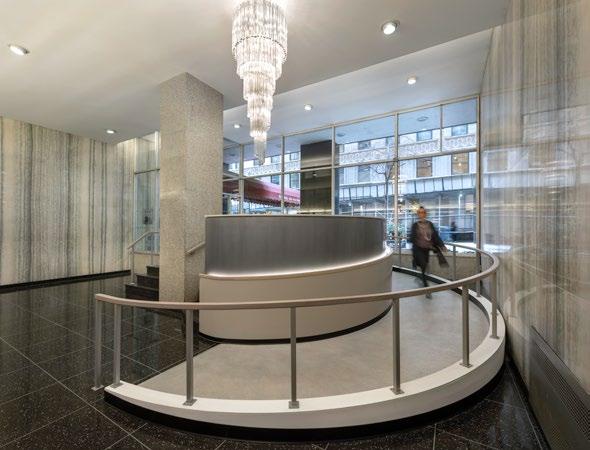
PJCArchitecture reimagines the lobby at 139 East 33rd Street as a welcoming, hospitality-inspired entry for residents. The 1,000-square-foot renovation transforms a dated, multi-level space into a cohesive and accessible environment anchored by a striking circular ramp that unifies circulation and design. Updated elements, including a new lobby desk, attendant station, and integrated storage, enhance functionality for both residents and staff. The design thoughtfully blends existing materials with modern finishes, preserving character while reducing waste through reuse.
Congregation Shaare Zedek
New York, New York
Designer: RKTB Architects
Contractor: Allied Construction Management Services
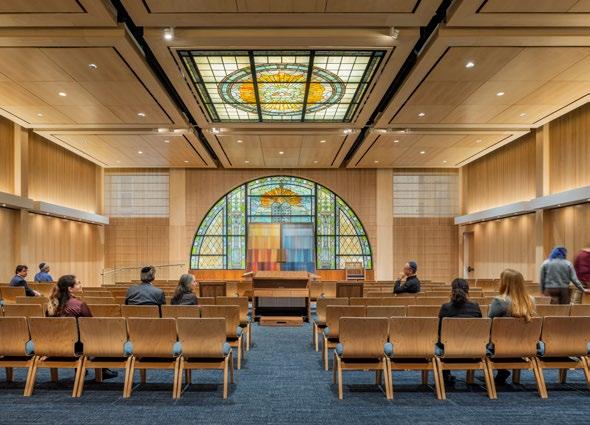
Congregation Shaare Zedek reestablishes its presence with a 16,000-square-foot synagogue integrated into a residential tower on its historic site. The multi-level design includes a sanctuary, social hall, chapel, classrooms and flexible community spaces. Preserved elements from the 1923 building, including stained glass, maintain a connection to the past. The design emphasizes flexibility, accessibility and sustainability, creating a balanced, contemporary space for worship and community.
AutoZone
Las Vegas, Nevada
Designer: Architectural Group International
Contractor: Triad Retail Construction, Inc.
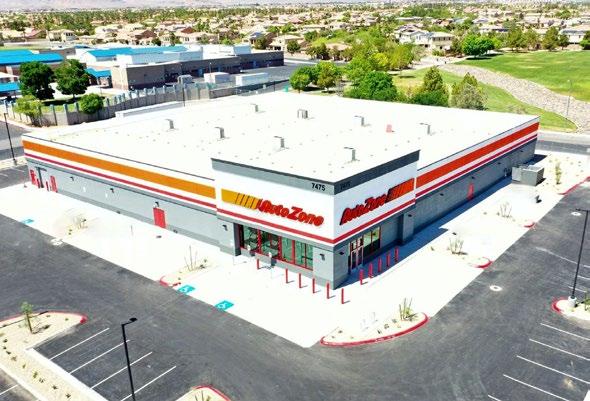
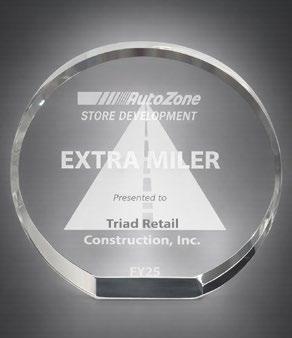
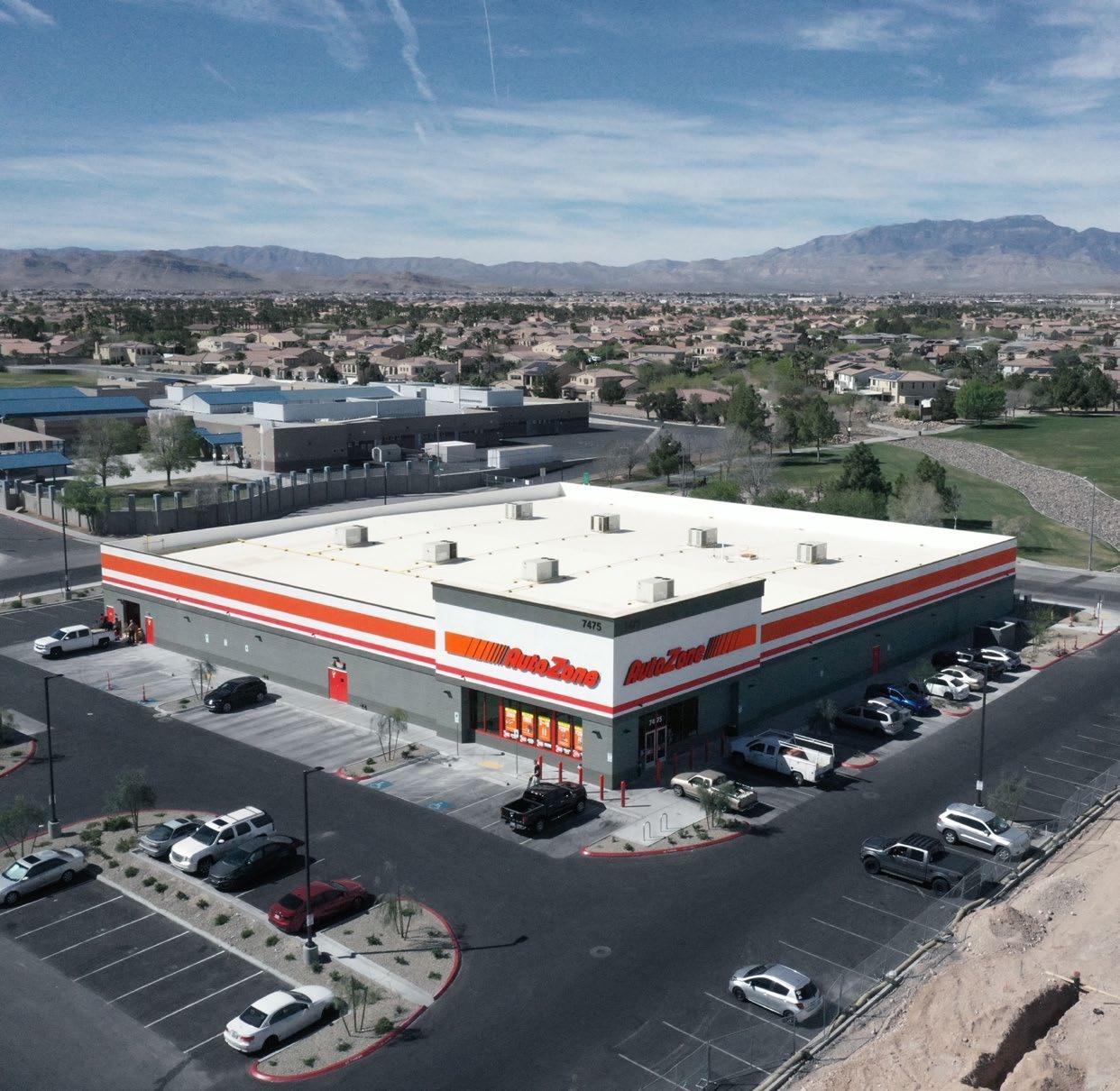
AutoZone’s new Las Vegas location delivers a 30,625-square-foot retail space focused on speed and efficiency. Completed in just five months, the project moved from start to merchandising-ready through a streamlined construction approach. The layout supports a broad range of automotive products, creating an accessible environment for professionals and everyday customers. Strong coordination across all phases ensured rapid delivery without compromising performance.
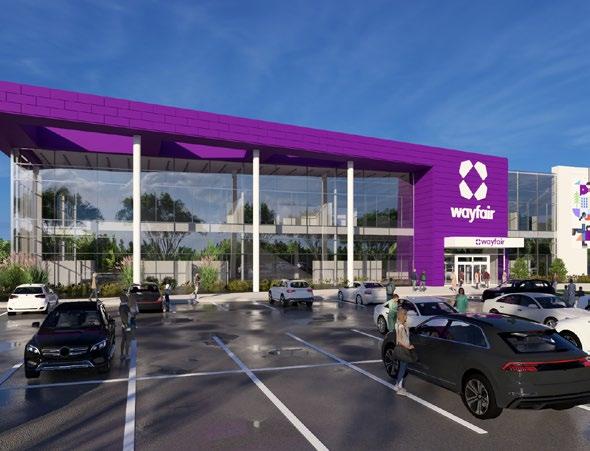
Wayfair’s Columbus location introduces a new retail prototype designed around a smaller, more efficient footprint. The 70,000-square-foot renovation marks the brand’s first store in Ohio, translating its digital-first experience into a physical environment that emphasizes accessibility and product discovery. The layout is tailored to support curated assortments and streamlined navigation, aligning with evolving retail strategies. Careful planning and execution position the store as a model for future locations. It reflects a strategic shift toward scalable, experience-driven retail that bridges online and in-store engagement.
Conference Center at 535 Madison
New York, New York
Designer: Spectorgroup
Contractor: Reidy Contracting Group
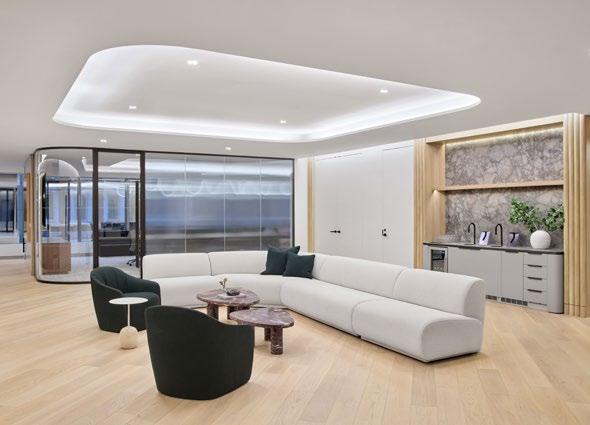
The Conference Center at 535 Madison transforms an 11,889-square-foot suite into a hospitality-inspired workplace shaped by long-term collaboration. The design balances flexibility and refinement, supporting everything from large gatherings to focused work. An open lounge, boardroom and quiet library create a cohesive experience, while a warm palette of wood, terrazzo and metal enhances both function and aesthetics. The result sets a high standard for tenant-focused design and user experience.
Backyard at Xfinity Center, Live Nation
Mansfield, Massachusetts
Contractor: Schimenti Construction Company
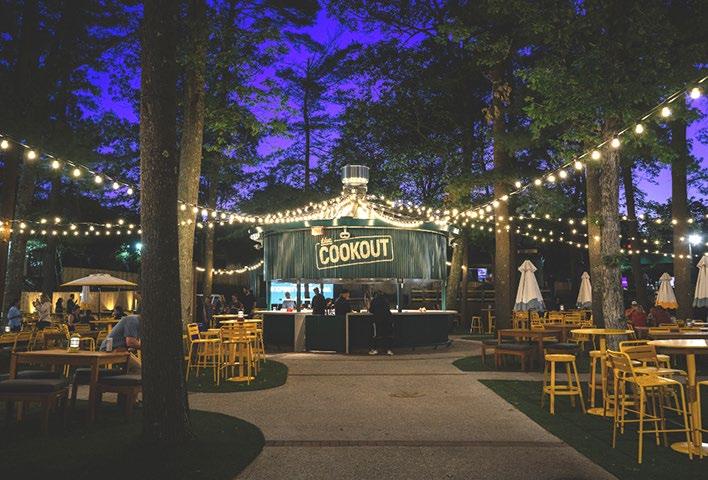
The Backyard at Xfinity Center transforms a former service area into a 5,500-square-foot VIP hospitality destination. Developed with Live Nation, the space features an open kitchen with a wood-fired oven, custom structures and a landscaped setting designed for comfort and engagement. Careful coordination of utilities, structure and specialty installations brought the concept to life. The indoor-outdoor layout supports dining and social interaction, creating a premium, experience-driven addition to the venue.
PROJECT PROFILE AWARDS 2026
F House
Kirkland, Washington
Designer: Goble Berriman Design
Contractor: Krekow Jennings
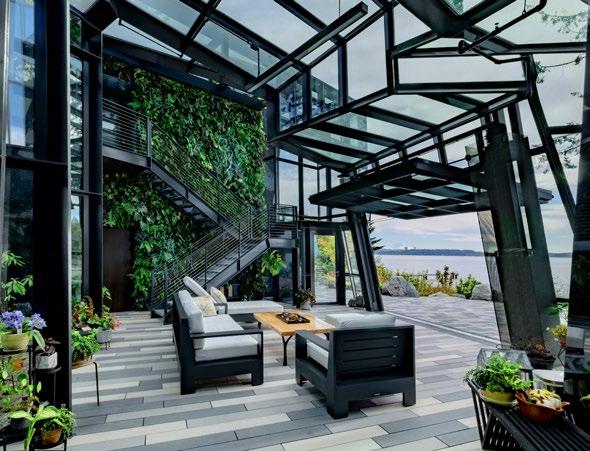
F House pushes the boundaries of residential design with a bold, glass-clad concept by Pulp Studio inspired by a fractured, crystalline form emerging from the landscape. Spanning 7,300 square feet, the home is defined by its angular geometry and fully glazed façade, creating a striking visual identity while maximizing light and transparency. The design required close coordination across multiple disciplines to achieve both structural performance and architectural intent. Advanced façade engineering and precision fabrication bring the vision to life, balancing aesthetics with livability.
Earls Kitchen + Bar Waikiki
Honolulu, Hawaii
Designer: Interplan LLC
Contractor: Swinerton Builders
Earls Kitchen + Bar Waikiki delivers an open-air, island-inspired dining experience shaped by both design ambition and logistical complexity. The 13,833-square-foot renovation required seamless coordination across multiple time zones, with teams working closely to manage site access, procurement, and jurisdictional approvals in a non-mainland environment. The design embraces its coastal setting, creating a breezy, immersive atmosphere while maintaining alignment with the brand’s identity. Engineering played a critical role in balancing the project’s vision with energy code compliance and long-term durability.
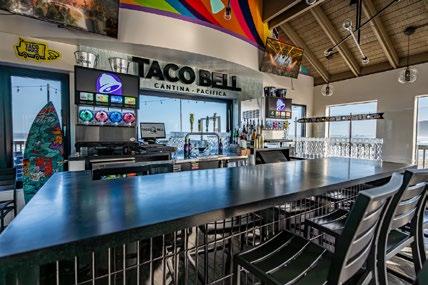
Taco Bell Cantina
Pacifica, California
Designer: Core States Group
Contractor: Graves Construction Group Services, Inc.
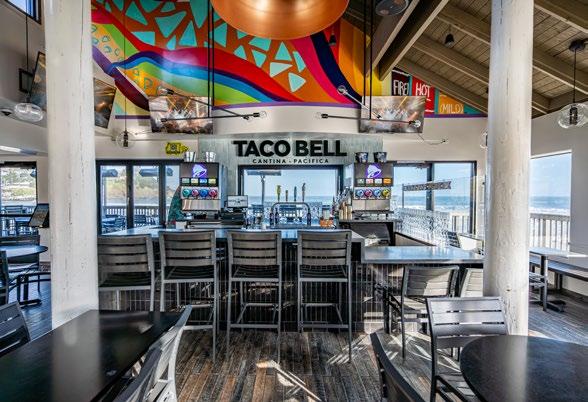
Taco Bell’s Pacifica Cantina—one of the brand’s most iconic locations—has been reimagined through a full interior and exterior renovation. Set along the Pacific coastline, the project balances preservation with upgrades that enhance functionality and resilience. The refreshed design strengthens the connection between indoors and out, blending brand elements with the natural setting. Durable materials and a refined layout support the coastal environment, creating a revitalized flagship restaurant that continues to draw visitors.
Photo credits: 1. Embers & Oak Storyworks
PROJECT PROFILE AWARDS 2026
Komodo Bar, Fontainebleau
Las Vegas, Nevada
Designer: Design Firm: Rockwell Group
Contractor: Glass Fabricator: Pulp Studio
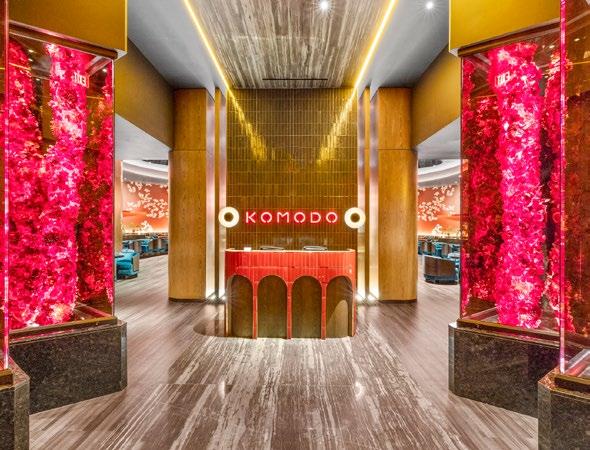
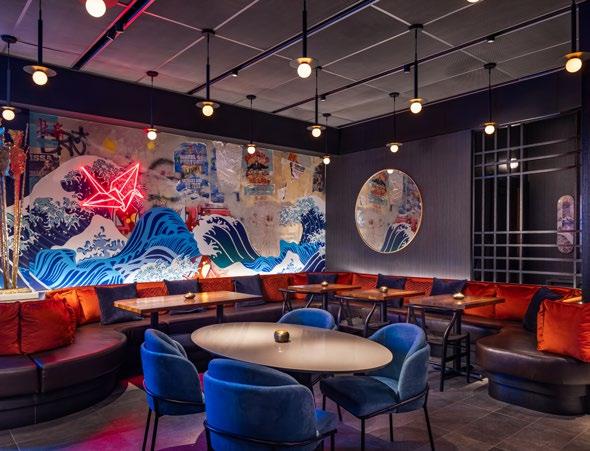
Komodo at Fontainebleau Las Vegas creates an immersive dining environment blending Southeast Asian influence with high-energy nightlife. The interior evokes a dimly lit, futuristic rainforest with layered textures, dramatic lighting and bold design elements. Infinity mirror technology at the entry delivers a multidimensional effect, while bronze-tinted and reflective glass reinforce a cohesive aesthetic. The result is a visually striking, experience-driven destination that elevates both atmosphere and design.
Portland Leather Goods
Seattle, Washington
Designer: Jencen Architecture
Contractor: Lakeview Construction, LLC
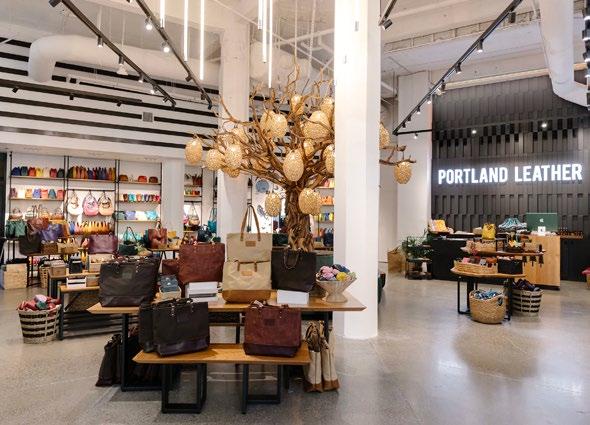
Portland Leather Goods translates its digitally native brand into a 2,255-square-foot retail prototype designed for scale. The space blends modern industrial elements with warm wood tones and greenery to create a consistent, inviting experience. Flexibility allows the concept to adapt across footprints while maintaining identity. Built for rapid growth, the prototype supported expansion from three to 11 stores in a year, demonstrating how design can drive both brand expression and performance.
Contractor: PBS Contractors, LLC & Heatherwood Construction Co.
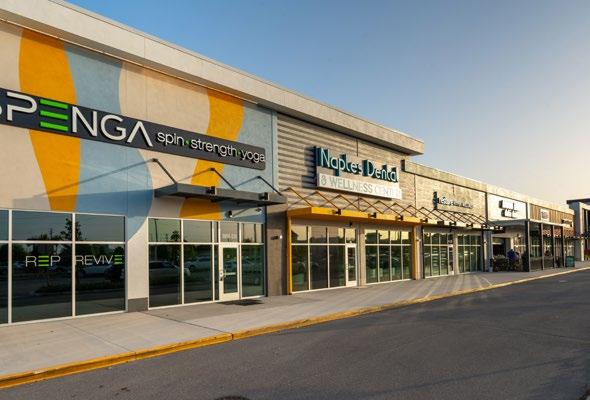
The Plaza at Founders Square anchors the retail component of a 55-acre mixed-use development, bringing everyday convenience and flexibility to a growing Naples community. Designed to accommodate a range of tenants, the center features adaptable leasing configurations that support both national brands and local operators. Anchored by Sunshine Ace Hardware, The Plaza integrates seamlessly with surrounding luxury apartments, medical offices and outparcels, creating a connected, service-driven destination built for long-term growth.
The Pointe at Founders Square
Naples, Florida
Designer: CREATE Architecture Planning & Design, pllc Contractor: Heatherwood Construction Company
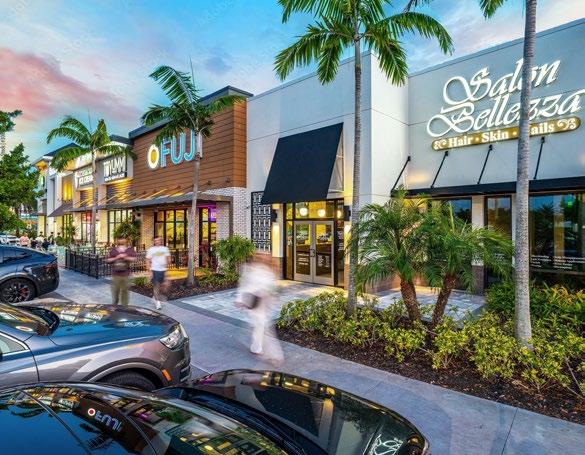
The Pointe at Founders Square brings new energy to Naples as part of a 55-acre mixed-use development. Designed as a restaurantfocused hub, the project uses a unique layout to maximize visibility from the main highway at every angle. The nearly 40,000-squarefoot space features a curated mix of local favorites and national brands, creating a dynamic dining destination. Integrated alongside luxury apartments, medical offices and commercial spaces, The Pointe balances accessibility, visibility, and experience, delivering a vibrant gathering place within a growing community.
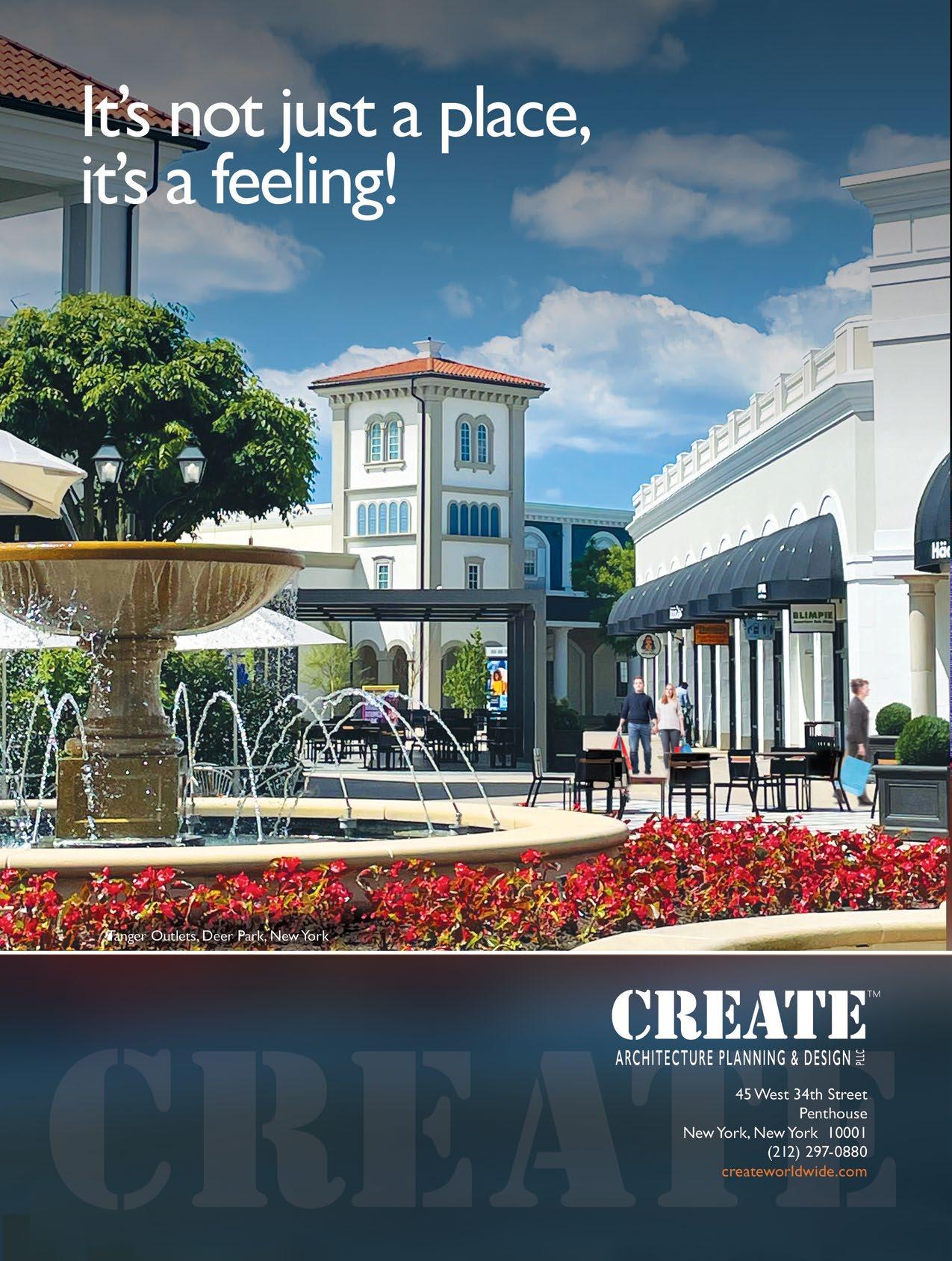
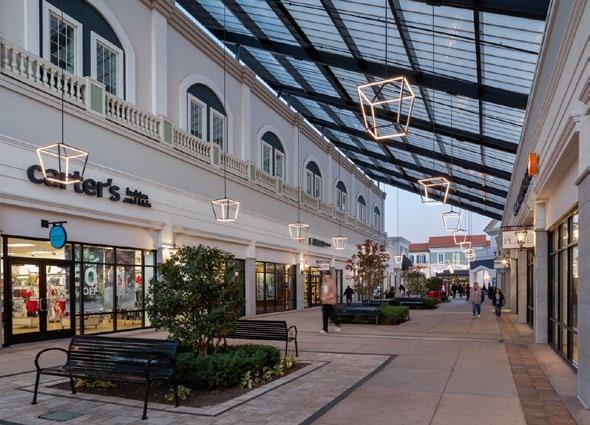
The renovation of Tanger Outlets Deer Park repositions the 700,000-square-foot center as a vibrant community hub. Expansive plazas, shaded seating and landscaped gathering areas encourage visitors to linger. Interactive play zones and flexible event spaces support markets and performances, turning retail pathways into active streetscapes. Inspired by Italian piazzas, the design blends warm materials, upgraded lighting and intuitive wayfinding to create a welcoming, community-focused destination.
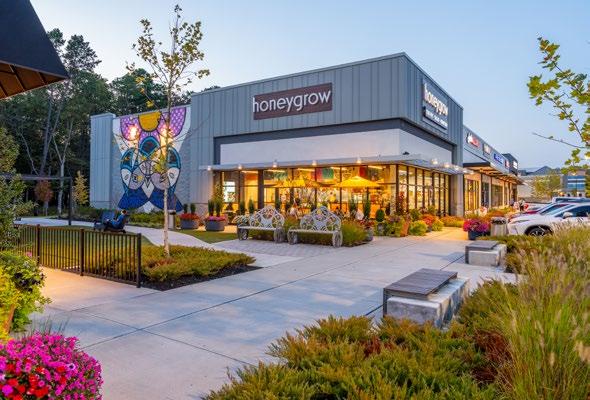
Glenwood Green brings together retail and residential living within a thoughtfully planned community in Old Bridge. Spanning more than 350,000 square feet, the development includes a strong mix of anchors, from a full-service supermarket and major retail to a large ambulatory care center. Set within a 250-acre master plan, the project integrates expansive open space, parks, and communityfocused amenities alongside 1,200 residential units. Designed with a pedestrian-friendly layout, Glenwood Green encourages visitors to meet, shop, dine and spend time within the environment.
PROJECT PROFILE AWARDS 2026
The Reserve at Lone Tree
Lone Tree, Colorado
Designer: Hospitality Design Guild
Contractor: Brinkman Construction
The Reserve at Lone Tree reimagines senior living through a hospitality-driven approach that blends comfort, care and lifestyle. The 323,000-square-foot community includes 209 units across independent living, assisted living and memory care. Wellness amenities, social spaces and chef-led dining encourage daily engagement, while the layout balances privacy with accessibility. The result is a modern senior living model that prioritizes experience, design and long-term well-being.
CPL Office Buildout
Westlake, Ohio
Designer: CPL Architecture Engineering & Planning
Contractor: Fortney & Weygandt
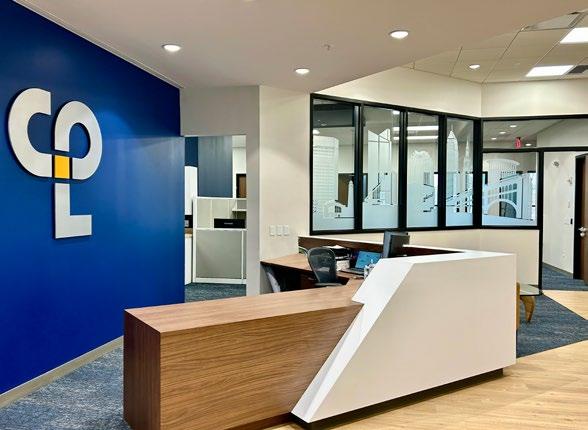
The CPL Office Buildout transforms a former co-working space into a 13,000-square-foot workplace designed for flexibility, culture and performance. Located within the mixed-use Crocker Park environment, the renovation reconfigures the layout to better support daily collaboration. The design balances comfort and functionality to enhance productivity, while careful coordination met strict building requirements without impacting schedule or budget. The result is a tailored workplace within a dynamic commercial setting.
Akris Oak St.
Chicago, Illinois
Designer: David Chipperfield Architects
Contractor: J.T. Magen
Akris reimagines its Gold Coast location with a 4,287-squarefoot flagship that bridges historic character and modern retail. A transparent glass atrium creates a clear entry and strong connection to the streetscape. Rising 36 feet, the façade preserves the original red brick while enhancing visibility. Inside, a refined palette of whitepainted maple and Italian stone reinforces the brand, delivering a balanced expression of transparency and heritage.
➜
& KITTING ➜ INVENTORY MANAGEMENT & TRACKING ➜ FINAL MILE & WHITE GLOVE
From warehousing and inventory to last-mile installation, logistics are managed with precision and transparency. With decades of cross-industry experience, TTG supports projects of any scale, providing real-time tracking, reporting, and proof of delivery so you stay informed at every step.
PROJECT PROFILE AWARDS 2026
Adidas
East Rutherford, New Jersey
Contractor: Schimenti Construction Company
Adidas debuts its first U.S.-only soccer-focused flagship at American Dream, transforming a 9,000-square-foot space into an immersive retail destination. The design blends premium merchandising with cultural storytelling through custom elements and elevated finishes. Careful coordination navigated complex logistics within a hightraffic environment. Timed ahead of the 2026 FIFA World Cup at nearby MetLife Stadium, the store serves as a hub for fans, bringing together sport, culture and retail.
Gravitas showcases precision craftsmanship and material innovation within a 27,000-square-foot hospitality setting. A neutral gray reflective glass entry from Pulp Studio delivers a modern aesthetic while balancing privacy, heat control and glare reduction. Inside, bronze glass handrails add depth and continuity, while switchable privacy glass in the conference room enables seamless transitions between open and private use. The result is a refined environment where performance-driven materials elevate both function and experience.
Ronald McDonald House New York’s 2nd Floor Renovation
New York, New York
Designer: Mitchell Giurgola Architects
Contractor: Structure Tone
The renovation at Ronald McDonald House New York reimagines 7,452 square feet of communal space to better support families facing pediatric illness. Updates to kitchens, recreation areas and programming spaces prioritize comfort, functionality and connection. Phased construction kept the facility fully operational, minimizing disruption. Warm, accessible design enhances both daily use and emotional well-being, reinforcing the role of thoughtful environments in family-centered care.
Photo credits: Opposite page: 1. Zach Benson
Jamul Casino Resort
Jamul, California
Designer: JCJ Architecture
Contractor: C.W. Driver Companies
Jamul Casino Resort expands into a 16-story luxury destination that balances bold design with cultural and environmental sensitivity. The project includes a 254,000-square-foot hotel and 120,000-squarefoot parking structure, integrated within a site shaped by protected wetlands and tribal land. Conceived as a crystalline “jewel box” against the Jamul Mountains, the design pairs strong architectural presence with respect for its surroundings. Nature-inspired interiors, suite-driven accommodations and amenities—including a spa, rooftop pool and biophilic dining—create a cohesive guest experience rooted in place.
Casa Rosa
Miami, Florida
Designer: Studio Rodrigo Buelvas
Contractor: TDS
Casa Rosa reinterprets South Florida’s MiMo heritage through a 4,200-square-foot residential renovation that blends history with contemporary living. The design preserves mid-century character while introducing a refined, tropical aesthetic. Arched openings, organic forms and geometric details are paired with a warm palette of pink, rust and sand. Custom elements—including Saltillo tile and locally crafted furnishings—add depth, creating a home that feels both timeless and rooted in its regional identity.
Alta at Jonquil
Smyrna, Georgia
Designer: 23 Designs
Contractor: Wood Partners
Alta at Jonquil is a 266-unit residential community designed for long-term durability and performance. The project features a highperformance building envelope supporting a complex exterior of brick, fiber cement panels, siding and stone veneer. A comprehensive moisture management system serves as an air barrier, waterresistive barrier and drainage layer, ensuring consistent performance. Integrated drainage channels improve control and installation efficiency, delivering a resilient exterior system built for longevity.
PROJECT PROFILE AWARDS 2026
Glen Oak Country Club
Glen Ellyn, Illinois
Designer: Chipman Design Architecture
Contractor: Summit Design+Build LLC
Glen Oak Country Club undergoes a 45,597-square-foot renovation that balances its 1911 origins with modern performance demands. The project integrates new systems, including a complex HVAC upgrade, while preserving the character shaped over decades. An extensive millwork package elevates the interiors with a refined, residential-inspired aesthetic suited for a high-use environment. Close coordination through a committee-driven process ensured alignment, resulting in a cohesive blend of history, craftsmanship and performance.
Chick-fil-A, State St. and Lake St.
Chicago, Illinois
Designer: Chipman Design Architecture
Contractor: Thorndale Construction
Located at the historic State and Lake elevated station, this Chickfil-A renovation reimagines a 4,500-square-foot space rooted in Chicago’s architectural legacy. The project balances modern brand standards with preservation of the original post–Great Chicago Fire structure. A full interior overhaul and FF&E replacement align the restaurant with current operational and design expectations. Positioned on a high-visibility corner, the update enhances functionality and customer experience within a compact footprint while respecting its historic context.
Old Schoolhouse, City of Azusa
Azusa, California
Designer: Page & Turnbull
Contractor: Act 1 Construction
The Old Schoolhouse in Azusa is restored and relocated to serve as both a community resource and cultural landmark. The 1,400-square-foot renovation transforms a former one-room, segregated schoolhouse into a space for civic use, education and reflection. Original windows and wainscoting are preserved, while modern systems—including HVAC—support year-round use. A reinstated front porch reestablishes its presence, honoring the past while creating an inclusive space for future generations.
Photo credits: 3. City of Azusa/Page & Turnbull
PROJECT PROFILE AWARDS 2026
Flight Club
Washington, D.C.
Designer: Chipman Design Architecture
Contractor: Urban Built, LLC
Flight Club brings its tech-driven entertainment concept to a historic Washington, D.C., setting through an 8,309-square-foot tenant improvement. The project adapts a U.K.-based design across spaces with varied floor elevations, requiring creative solutions to maintain flow and cohesion. Structural constraints informed key moves, including elevating the bar and sequencing concrete pours to address level changes. The design preserves the exterior while integrating modern systems and immersive interiors, delivering a dynamic experience within a complex historic context.
Meliá Pattaya Hotel
Pattaya, Thailand
Designer: PIA
Contractor: CES
Meliá Pattaya Hotel transforms an existing structure into a 234room destination overlooking the Gulf of Thailand. The renovation introduces a rooftop restaurant and sky bar, beach club, multiple dining venues and wellness amenities including a spa, fitness center and pool. Interiors blend contemporary design with regional influences, creating an immersive guest experience. Flexible meeting and coworking spaces support both leisure and business travelers, delivering a full-service hotel that reflects the energy of its coastal setting.
Linden Grove Housing Development
Brooklyn, New York
Designer: Chris Benedict Architecture
Contractor: Elite Wall Systems
Linden Grove is a 13-story affordable senior housing development in Brooklyn designed to Passive House standards. The project pairs energy efficiency with a modern aesthetic that reflects the surrounding context. A lightweight facade system provides continuous insulation, supporting long-term performance within budget. Modular construction—with prefabricated panels—improves quality and efficiency while minimizing delays, resulting in a durable, high-performance residential building.
SoMA at 25 Water Street redefines adaptive reuse at scale, converting a former office tower into the nation’s largest office-toresidential transformation. Spanning more than 1.1 million square feet, the project delivers 1,320 apartments through strategic design interventions. Hundreds of new window openings and two interior light wells bring natural light deep into the building, while a 10-story overbuild expands usable space. More than 100,000 square feet of amenities complete a full residential experience.
The Coronation Park Sports and Recreation Centre marks a significant advancement in mass timber construction in Canada. Spanning 60,000 square feet, the facility features the country’s largest installation of Mass Ply Panels, with exposed wood integrated throughout the roof and wall systems. The project demonstrates how advanced timber solutions can scale to meet the demands of large, high-performance civic buildings. Beyond its technical achievement, the design emphasizes sustainability while creating a warm and inviting environment for the community.
Hackensack Meridian Health & Wellness Center Canopy
Clifton, New Jersey
Designer: Gensler
Contractor: County Glass and Metal
The canopy at Hackensack Meridian Health & Wellness Center creates a clean, modern entry through an efficient glass design. Spanning approximately 1,000 square feet, the horizontal layout minimizes material use while maintaining full coverage over the hospital entrance. Compression-mounted clips eliminate drilling, allowing the system to adapt to uneven conditions and reduce installation time. Varying panel heights add subtle visual interest, resulting in a streamlined canopy that balances durability, efficiency and contemporary design.
PROJECT PROFILE AWARDS 2026
Vallarta Supermarkets Headquarters
Santa Clarita, California
Designer: HGA
Contractor: Graves Construction Group Services, Inc.
Vallarta Supermarkets’ headquarters renovation transforms a 46,000-square-foot, three-story office into a modern, employeefocused workplace. The update introduces reconfigured open workspaces, upgraded conference areas and new offices designed to support collaboration and efficiency. Enhanced amenities, including a test kitchen, strengthen both functionality and culture. Contemporary finishes and a cohesive design language reflect the brand, creating a workplace that supports growth while improving the daily employee experience.
Eataly
King of Prussia, Pennsylvania
Contractor: Schimenti Construction Company
Eataly debuts in Pennsylvania with a 25,800-square-foot destination at King of Prussia Mall, blending retail and dining into an immersive experience. The space combines a full-service restaurant, quickservice counters and a curated market, along with a custom outdoor patio. Precise coordination of millwork, kitchen systems and imported materials maintains brand authenticity. The layout encourages exploration, guiding guests through a series of culinary moments while reinforcing Eataly’s global identity.
Printemps NYC
New York, New York
Designer: Laura Gonzalez
Contractor: Schimenti Construction Company
Printemps makes its U.S. debut at One Wall Street with a refined renovation that blends historic context with modern luxury. The flagship space features an integrated architectural glass wall cladding system that delivers a seamless, high-end finish. Lowiron etched glass panels are backlit to create a soft, luminous environment, elevating the in-store experience and reinforcing the brand’s signature elegance. Precision fabrication and concealed mounting allow the material to take center stage without visual interruption. This approach creates a sophisticated retail setting that balances craftsmanship, innovation and atmosphere.
Photo credits: 3. Bendheim
GENERAL CONTRACTING
DESIGN-BUILD
PROGRAM MANAGEMENT
PROJECT PROFILE AWARDS 2026
Sunbelt Rentals – Grapevine Campus Regional Headquarters and Training Center
Grapevine, Texas
Designer: CESO, Inc.
Contractor: Crossland Construction Company
Sunbelt Rentals’ Grapevine Campus brings together training, collaboration and operations within a purpose-built, 22-acre environment. Anchored by a three-story, 41,790-square-foot office building, the campus includes five new structures designed to support workforce development and regional growth. The headquarters is targeting LEED Gold certification, reflecting a strong commitment to sustainability and long-term performance.
Labouisse Hall Renovation: UNICEF House at 3 UN Plaza
New York, New York
Designer: Spacesmith
The renovation of Labouisse Hall transforms a dated venue into a state-of-the-art conference center supporting executive meetings and global livestreamed events. Designed for flexibility, the space features reconfigurable furniture, full AV integration and upgraded interpreter booths equipped for live translation in six UN languages. Prioritizing sustainability, the team preserved key elements of the existing infrastructure, including HVAC, kitchen equipment and floor systems, reducing waste and controlling costs. The result is a unified, high-performance environment that elevates both function and experience.
Cascada Thermal Springs + Hotel
Portland, Oregon
Designer: Lever Architecture
Contractor: Solterra
Cascada Thermal Springs + Hotel redefines hospitality through a blend of luxury, wellness and sustainability. The 152,000-square-foot development utilizes mass timber construction to reduce embodied carbon while creating a warm, biophilic environment. Designed for LEED Platinum, the project integrates green roofs, solar systems and water reuse strategies to support long-term performance. Natural materials and immersive design connect guests to the surroundings, positioning Cascada as a forward-thinking destination grounded in responsible design.
Photo credits: 2. Victor Higa, 3. LEVER Architecture.
PROJECT PROFILE AWARDS 2026
Suit Supply – Orlando, Florida
Orlando, Florida
Contractor: Hirsch Construction Corp.
Suit Supply at the Mall at Millenia delivers a refined retail environment that reflects the brand’s focus on craftsmanship and innovation. The 5,381-square-foot build-out features a dramatic curved storefront, custom millwork and a prominent in-store tailoring station that brings garment creation into view. Clean architectural lines and tailored display zones create a seamless flow throughout the space, balancing warmth with a modern, elevated aesthetic. Completed in just five months, the project required close coordination and precise execution.
STAUD – West Hollywood, California
West Hollywood, California
Contractor: Hirsch Construction Corp.
STAUD’s flagship on Melrose Avenue translates the brand’s bold identity into a highly customized retail environment. The 5,000-square-foot space features standout elements including a sculptural 3D portal, handmade wallpaper, blackened metal shelving, and bespoke hardware, each executed with careful coordination and craftsmanship. Close collaboration with the client guided valuedriven decisions while preserving the integrity of the design. Intricate details were refined throughout construction, resulting in a cohesive and expressive interior.
Power Commerce Park
Gilbert, Arizona
Designer: Pinnacle Design Inc.
Contractor: Chasse Building Team Inc.
Power Commerce Park, developed by Cavan Commercial, delivers a modern approach to small-bay industrial within a 12-building, 146,000-square-foot campus. Designed to meet growing demand in metro Phoenix, the development offers flexible, move-in-ready spaces with features such as 18-foot clear heights, storefront glazing, oversized roll-up doors, and private outdoor yards. The architecture draws from rural contemporary and farmhouse influences, softening the traditional industrial look and allowing the project to integrate seamlessly with the surrounding Morrison Ranch community.
Photo credits: 2. Stephen Busken; 3. Taylor Granat Gonzalez, Site Snaps Arizona
Empire Scottsdale
Scottsdale, Arizona
Designer: WDS Architecture
Contractor: WDS Commercial
Empire Scottsdale transforms a vacant former art gallery into a warm, modern environment through a collaborative design-build approach. The 10,000-square-foot adaptive reuse project reimagines the space as both a flexible workplace and a community gathering hub, balancing functionality with a welcoming atmosphere. Clean lines, refined materials and thoughtful detailing create a cohesive interior that supports a variety of uses while enhancing the overall guest experience. Strong alignment between design, construction and brand vision drove efficient execution, resulting in a high-quality space that feels both purposeful and inviting.
Prime Independent Living Community
Myrtle Beach, South Carolina
Designer: MRP Design Group
Prime Independent Living Community delivers a modern, resortstyle environment tailored to today’s seniors. Spanning 167,000 square feet, the four-story development features 138 units designed to balance comfort, safety and independence. The layout supports an active lifestyle, with thoughtfully planned amenities that encourage connection and daily engagement. MRP Design Group provided full architectural and engineering services, creating a cohesive environment that blends functionality with a welcoming residential feel.
White Castle – Castle of Tomorrow
Columbus, Ohio
Designer: WD Partners
Contractor: Arlington Construction
White Castle’s “Castle of Tomorrow” reimagines the iconic brand through a modern lens, blending heritage with innovation. The redesigned interior enhances the guest experience while supporting a high-performance kitchen built for speed, consistency and crew efficiency. On the exterior, classic elements are refreshed with contemporary materials and digital touchpoints. Features like a dedicated vestibule and pick-up window improve convenience for mobile and late-night orders, creating a forward-looking prototype that elevates both operations and experience.
PROJECT PROFILE AWARDS 2026
Dick’s House of Sport
Freehold, New Jersey
Contractor: Schimenti Construction Company
Dick’s House of Sport transforms a former two-story department store into a 130,000-square-foot, experience-driven retail destination at Freehold Raceway Mall. Signature features—including a climbing wall and outdoor track and field—create an interactive environment beyond traditional retail. Structural upgrades and careful coordination support the scale of the transformation. As Schimenti’s first full-format House of Sport, the project emphasizes engagement, movement and community, redefining how customers connect with sports retail.
Cici and Hyatt Brown Center for Aerospace Technology at Embry-Riddle Aeronautical University
Daytona Beach, Florida
Designer: Architect: ikon.5
Contractor: Glass Installer: West Tampa Glass
This expansion at Embry-Riddle Aeronautical University brings a bold visual identity to campus through advanced glass design and fabrication. Spanning 85,000 square feet, the project features a dynamic façade composed of multiple insulated glass unit types that create vibrant color shifts and layered visual effects. A key element is the use of specialized interlayers that produce iridescent tones, metallic finishes and subtle rainbow variations, giving the building a distinctive presence throughout the day. The high-performance glass system from Pulp Studio balances aesthetics with functionality, supporting energy efficiency while enhancing natural light.
Avalon Montville
Montville, New Jersey
Designer: The Architectural Team (TAT)
Contractor: AvalonBay Communities
Avalon Montville transforms a former auto salvage yard into a 570,000-square-foot residential community rooted in placemaking. The development delivers 349 units, including affordable housing, addressing a critical regional need. Organized around a central parking structure, residential wings form light-filled courtyards and shared outdoor spaces. Amenities—including a pool, sun deck, pet park and gathering areas—encourage connection, while warm materials and an Americana contemporary palette create a welcoming environment.
Photo credits: 2. Joni Hofmann
PROJECT PROFILE AWARDS 2026
The Compton
Bentonville, Arkansas
Designer: BRR Architecture (architect of record), Marvel Architects (design architect), CRÈME / Jun Aizaki Architecture & Design (interior designer)
Contractor: Flintco Construction
The Compton brings a nature-inspired hospitality experience to Bentonville’s downtown square. The 121,000-square-foot, 142-room hotel draws from the Ozarks, blending local materials and biophilic design to connect indoors and out. A two-story atrium anchors the space with a sculptural bluff and cascading water feature, surrounded by native plantings and natural finishes. Dining and guest spaces continue the narrative, while operable guest room windows—rare in hospitality—deepen the connection to the outdoors.
Harbor Freight Tools
Greece, New York
Designer: ADA Architects
Contractor: StoreCrafters
Harbor Freight Tools expands its retail footprint with a new 20,916-square-foot store in Greece, New York. Designed to deliver a clean, efficient shopping experience, the space supports a wide range of products—from hand tools and power equipment to automotive and shop essentials. The layout emphasizes accessibility and ease of navigation, aligning with the brand’s focus on value and functionality. StoreCrafters managed all phases of construction, ensuring the project was delivered on schedule and to brand standards. The project ultimately delivers a reliable, high-performance retail environment tailored to professionals and everyday users.
Rowan
Albany, New York
Designer: Sargenti Architects
Contractor: StoreCrafters
Rowan introduces its signature ear-piercing experience to Albany with a clean, modern studio designed for both comfort and care. The 1,396-square-foot space reflects the brand’s focus on safety and celebration, with piercings performed exclusively by licensed nurses using hypoallergenic earrings. The layout prioritizes clarity and ease, creating a welcoming environment for clients of all ages. StoreCrafters managed construction from start to finish, delivering the project on schedule while maintaining the brand’s elevated design standards. The project brings together healthcare-minded precision and retail experience in a thoughtfully executed setting.
Very Thai
Los Angeles, California
Designer: Curtis Su Associates
Contractor: Graves Construction Group Services, Inc.
Very Thai marks its U.S. debut with a vibrant renovation at Westfield Century City, bringing the energy and flavors of Taiwan’s largest Thai restaurant group to Los Angeles. The 4,900-squarefoot space features a full interior transformation, highlighted by a grand bar and an open-view kitchen that puts the culinary experience on display. A bold new exterior façade draws on the cultural significance of red—symbolizing celebration, prosperity and good fortune—creating a strong visual identity. This approach delivers a lively, immersive dining environment that blends cultural storytelling with modern design.
Ross Dress For Less
Brooklyn, New York
Designer: MCG Architects
Contractor: StoreCrafters
Ross Dress For Less expands its presence in New York with a new 22,506-square-foot store in Brooklyn. Designed to deliver a bright, easy-to-navigate shopping experience, the space offers a wide selection of apparel, home décor and accessories at valuedriven price points. The layout supports high product volume while maintaining clarity and flow for customers. StoreCrafters oversaw all phases of construction, ensuring the project met brand standards and was delivered on schedule. The space reinforces a consistent retail experience while supporting continued growth in a competitive urban market.
Crypto.com Arena
Los Angeles, California
Designer: NBBJ
Contractor: PCL Construction Services
Crypto.com Arena advances sustainability with a 350 kW rooftop solar array installed across its 960,000-square-foot structure. The system required precise coordination to address roof loading, distribution and waterproofing constraints. Innovative attachment technology efficiently distributes loads across the cantilevered roof while preserving structural integrity. The final installation includes 1,727 panels, exceeding expectations and demonstrating how renewable energy can be integrated into large-scale venues without compromising performance.
PROJECT PROFILE AWARDS 2026
Cathedral School for Boys
San Francisco, California
Designer: The Office of Charles F. Bloszies FAIA
Contractor: Truebeck Construction
Cathedral School for Boys expands its campus through a targeted addition and renovation designed for modern learning and gathering. The project includes a 4,500-square-foot addition and 18,000-square-foot renovation, introducing flexible spaces for assemblies, meetings and quiet study. A lightweight steel structure with a glass and aluminum curtain wall allows the addition to sit atop the existing building without foundation upgrades. Phased construction minimized disruption, while a reimagined entry axis improves flow and connects the campus to a new central hub.
Seminole Brighton Bay Hotel & Casino
Okeechobee, Florida
Designer: Grace Hebert Curtis Architects
Contractor: Suffolk; WilMen
The Seminole Brighton Bay Hotel & Casino replaces a 1980 structure with a new hospitality and entertainment destination. The property includes 100 guest rooms, multiple restaurants, a 10-lane bowling alley, an outdoor pool and flexible event space, creating a wellrounded guest experience. A shift in the façade approach proved critical. Originally designed with metal panels, the team transitioned to a high-performance EIFS system that delivers a realistic woodlook finish while meeting strict hurricane impact requirements. The solution reduced façade costs by 50% and shortened the construction schedule by approximately one month.
Scout Living @ Ponce City Market
Atlanta, Georgia
Designer: Handel Architects
Contractor: JE Dunn
Scout Living @ Ponce City Market introduces a 21-story hospitality living concept designed for stays ranging from one night to one year. Blending residential and retail, the project delivers 400 compact units above ground-floor retail, extending the energy of Ponce City Market. Originally planned with a precast concrete façade, the project pivoted post-pandemic to address cost and logistics. The team implemented StoPanel® Classic NExT ci with a custom StoCreativ® Granite finish, maintaining the industrial aesthetic while reducing costs, accelerating construction and lowering the project’s carbon footprint.
Photo credits: 1. Matthew Millman
PROJECT PROFILE AWARDS 2026
Conrad Orlando / Evermore Resort
Orlando, Florida
Designer: HKS
Contractor: The Stowell Company
Conrad Orlando anchors the Evermore Resort as a 270,000-squarefoot luxury destination, blending resort-style amenities with a seamless indoor-outdoor design. Early value engineering replaced decorative metal panels with Stolit® Milano and StoColor® Acryl Plus, delivering a similar aesthetic while reducing costs by approximately $1 million. Combined with 360,000 square feet of StoTherm® ci, the solution enhances energy performance while maintaining the project’s high-end design intent.
Public Self-Storage at 155 W. 29th Street
Manhattan, New York
Designer: Mancini Duffy
Contractor: Cauldwell Wingate Construction
The 17-story Public Self-Storage facility delivers a high-density solution in Manhattan, prioritizing speed, efficiency and a clean, modern design. A prefabricated façade system using Sto Panel Classic NExT ci and StoPanel Metal ci accelerated installation, reduced on-site labor and supported strict budget and schedule goals. The 270 panels were installed via a 130-ton crane, while varied Sto finishes enhance the exterior. Taller parapet walls also eliminated the need for costly stainless-steel railings across multiple balconies.
200 East 20th Street
New York, New York
Designer: CetraRuddy
Contractor: CM & Associates Construction Management
200 East 20th Street introduces a bold, 52-unit condominium on a prominent Gramercy corner, defined by dynamic setbacks and a sculptural glass-and-metal façade. Curved glazing units deliver uninterrupted city views while referencing the neighborhood’s historic bay windows. Designed to maximize light on a slender site, the project rethinks the typical residential form, enhancing daylight exposure across units. Amenities including a fitness center, landscaped roof terrace and “secret garden” extend the living experience, blending contemporary design with contextual sensitivity.
Photo credits: 3. B&B Italia; Opposite page: 1. Jonathan Hokklo
FoundRae Madison Avenue
New York, New York
Designer: Spacesmith
FoundRae’s Madison Avenue flagship brings a bold, contemporary retail experience to a landmarked Upper East Side building, expanding the brand’s presence in a growing luxury corridor. Designed in collaboration with Spacesmith, the boutique feels more like a curated gallery, with layered rooms that reveal moments of detail and intimacy. Working within strict preservation guidelines, the team retained much of the existing structure and materials, prioritizing sustainability and circularity. The result is a distinctive retail environment that contrasts with its traditional surroundings while honoring the character of the historic building.
Bottom Creek Resort
North Branch, Michigan
Designer: OPA Design Studio, Pophuse
Contractor: C.E. Gleeson Constructors Inc.
Bottom Creek Resort blends craftsmanship and sustainability across a 600-acre property in North Branch. At its core, Bottom Creek Brewery combines a production facility, restaurant and lakeside pavilion within a cohesive $15 million build. The project highlights heavy timber framing, using white oak harvested on-site for structural elements and custom interiors. This material continuity strengthens the connection to the landscape, creating a destination that balances function, experience and environmental stewardship.
Distel Circle
Los Altos, California
Designer: KTGY
Contractor: Nibbi Brothers General Contractors
Distel Circle delivers Los Altos’ first 100% affordable housing community, providing 90 income-restricted homes for formerly homeless individuals and families. Designed to meet a critical community need, the project supports residents across a range of income levels while setting a new standard for inclusive housing. The development also introduces a pioneering construction approach, combining wood-framed modular units over a mass timber podium. This innovative system advances efficiency and sustainability while redefining how affordable housing can be delivered at scale.
PROJECT PROFILE AWARDS 2026
The Grand Center Residence Hall at the University of Tampa
Tampa, Florida
Designer: Baker Barrios Architects, Inc.
Contractor: The Beck Group
The Grand Center Residence Hall delivers a 10-story living and learning environment for nearly 700 students, blending housing, classrooms, offices and social spaces into a cohesive campus hub. Meeting strict material standards, the team integrated StoPanel® systems that align with the university’s traditional plaster and brick aesthetic. Using StoPanel® Classic NExT ci and StoPanel® MVES, the project achieves a high-performance, energy-efficient envelope with consistent finishes across a single standardized wall assembly.
OLIVIA
St. Petersburg, Florida
Designer: api(+)
Contractor: Reno Boyd Building Co
OLIVIA by Chef Chris Ponte brings a refined dining experience to the ground floor of a luxury apartment tower in downtown St. Petersburg. Echoing the brand’s original Tampa location, the design pairs charcoal brick with white stucco to create a clean, modern aesthetic rooted in understated sophistication. A covered outdoor dining area with 180-degree views anchors the space, delivering a seamless indoor-outdoor experience that connects the restaurant to the surrounding streetscape. The layout enhances visibility, flow and guest engagement, positioning OLIVIA as both a neighborhood destination and an elevated dining environment.
Avenida Biscayne
Aventura, Florida
Designer: api(+)
Contractor: Oak Construction
Avenida Biscayne introduces a refined retail destination in one of South Florida’s most competitive corridors, designed to stand apart through elevated placemaking and architectural presence. The project features eight distinct retail spaces that establish rhythm and cohesion while enhancing visibility along the corridor. Restaurant endcaps include approximately 1,500 square feet of covered outdoor dining, creating an inviting, experience-driven environment. By pairing thoughtful design with strategic positioning, Avenida Biscayne defines itself as a destination rather than just another retail option.
PROJECT PROFILE AWARDS 2026
Fish Taco Falls Church
Falls Church, Virginia
Designer: //3877
Contractor: Hope Construction
Fish Taco’s fifth location brings a vibrant, corner presence to the Founder’s Row development, combining a playful aesthetic with a refined dining experience. Building on the brand’s identity, the design introduces a new prototype aimed at supporting future growth and national expansion. Informed by lessons from previous locations, the layout enhances both customer flow and operational efficiency. The result is a balanced environment that strengthens brand consistency while improving functionality for staff and guests alike.
Tilebar – Dallas
Dallas, Texas
Designer: MBArchitechture & Design, LLC
Contractor: Hirsch Construction Corp.
Tilebar’s 8,000-square-foot flagship showroom on Knox Street brings the brand to life through immersive displays and curated material experiences. As its largest location to date, the space blends custom fixtures with high-quality tile and wood detailing to create a refined, design-forward environment that showcases the full breadth of its product offering. Dedicated workspaces for trade professionals enhance functionality, while thoughtful layout and execution balance inspiration with usability, elevating both the customer journey and overall showroom experience.
Residences at Mill 8
Ludlow, Massachusetts
Designer: The Architectural Team (TAT)
Contractor: Dellbrook Construction LLC
Residences at Mill 8 transforms a historic textile mill into a 95-unit, mixed-income community for residents 55 and older, blending adaptive reuse with modern living. The project preserves key architectural elements, including the restoration of a three-story clock tower central to the town’s identity, while introducing updated residential and shared spaces. Expansive windows, high ceilings and exposed original beams highlight the building’s industrial character, while upgrades meet Enterprise Green Communities standards. The result balances preservation, sustainability and contemporary design within a reimagined historic structure.
First Watch Daytime Café #1193 transforms a vacant secondgeneration space into a vibrant neighborhood restaurant, reinforcing the value of adaptive reuse in strengthening local communities. The 7,122-square-foot renovation supports job creation, reduces urban blight and introduces a fresh, welcoming environment for breakfast, brunch and lunch service. Building on multiple First Watch projects, the team applied a proven approach to converting existing spaces into efficient, brand-consistent restaurants. The result balances operational performance with a community-focused design rooted in fresh, made-to-order dining.
Riverdale Men’s Shelter
Bronx, New York
Designer: RKTB Architects
Contractor: Hudson Meridian Construction Group
Riverdale Men’s Shelter introduces a six-story facility designed to support transitions to permanent housing while blending seamlessly into its residential surroundings. Located across from Van Cortlandt Park, the building reflects the scale and character of nearby apartments, presenting as a contextual, community-aligned structure. Brick façades, corner glass bay windows and metal panel detailing echo contemporary residential design, while the interior program fosters stability and cohesion. The result is a thoughtfully integrated solution that balances neighborhood sensitivity with critical social impact.
Watches of Switzerland –Southdale Center
Edina, Minnesota
Contractor: Rectenwald Brothers
Watches of Switzerland brings a luxury timepiece showroom to Southdale Center, transforming a vanilla box into a refined retail environment. The 5,278-square-foot space showcases more than seven watch brands, creating a curated, high-end shopping experience defined by precision, craftsmanship and elevated materiality. A dedicated Rolex storefront with its own entrance anchors the design, strengthening brand identity while enhancing circulation and customer flow. Clean lines, tailored displays and thoughtful lighting combine to create a polished environment that balances exclusivity with approachability.
PROJECT PROFILE AWARDS 2026
Lofts at Lumber Square
Petoskey, Michigan
Designer: Hooker DeJong
Contractor: Wolverine Construction
Lofts at Lumber Square delivers a 60-unit workforce housing community designed to expand access to quality living in Northern Michigan. The three-story development combines modern residential amenities with proximity to downtown and the Greenway Trail, creating a connected and community-focused environment. Extensive site remediation, including the removal of 12,000 tons of contaminated soil, set the foundation for construction. Despite challenging winter conditions and structural complexities, the team leveraged advanced tools and coordination to stay on schedule.
Houseman Field Replacement
Grand Rapids, Michigan
Designer: C2AE
Contractor: Wolverine Construction
Houseman Field undergoes a $5.1 million renovation that modernizes the 102-year-old facility while preserving its historic character. Funded through the Reimagine GRPS bond, the project prepares the venue for continued use as a hub for athletics, graduations and community events. Upgrades include a new turf field with integrated school branding, a surrounding track and LED stadium lighting that improves visibility while reducing light pollution. Additional enhancements to the press box, masonry and parking, along with interior improvements, deliver a refreshed, highperformance facility built for the next generation.
111 Mass Ave – Georgetown University
Washington, District of Columbia
Designer: SmithGroup Architects
Contractor: Whiting-Turner Contracting Company
111 Mass Ave transforms the former “Darth Vader” building into a 325,000-square-foot academic hub through adaptive reuse. The nine-story renovation supports multiple Georgetown programs, creating a flexible, multi-use environment for continuing education, business and health disciplines. Custom glass installations play a defining role in the design, including all-glass entrance systems, oversized markerboards and more than 800 interior glass panels. The result is a modern, light-filled learning environment that repositions a landmark structure for future academic use.
Euro Partitions
Designed to Amaze. Built to Perform.
Bradley’s exclusive collection of Euro Partitions bring a modern sensibility to commercial washrooms, combining precision engineering with sophisticated design. Clean lines, beautiful materials, and seamless construction create cohesive welcoming spaces. For an elevated experience, Euro Partitions offer a solution that’s as beautiful as it is intentional. Commercial Washrooms. Brought to Life.
Phenolic LT Highrise, Float and Loft Series
Tempered Glass Skyline and Lucent Series
CIRCLE
PROJECT PROFILE AWARDS 2026
Godwin Mercado 36th Street Marketplace
Grand Rapids, Michigan
Designer: Ghafari
Contractor: Wolverine Construction
Godwin Mercado 36th Street Marketplace creates a vibrant, community-centered destination within the Wyoming [re]Imagined corridor, supporting year-round markets, events and local engagement. The project combines a 6,800-square-foot enclosed facility with a 2,500-square-foot covered outdoor area, delivering a flexible, pedestrian-friendly gathering space. Built on a remediated site, the structure uses steel framing, masonry and insulated metal panels to create a durable, efficient envelope. The coordinated execution resulted in a dynamic venue that reflects the character of the community while supporting long-term economic growth.
Amsterdam Lofts
Detroit, Michigan
Designer: McIntosh Poris Architects
Contractor: Jonna Construction
Amsterdam Lofts transforms the historic 1905 Cadillac Assembly Plant into a 90-unit residential community, preserving a key piece of Detroit’s automotive legacy. The adaptive reuse project balances historic character with modern living, addressing current housing needs while maintaining the building’s industrial identity. Original materials and architectural features are thoughtfully integrated into the design, creating authentic loft-style residences with expansive spaces and historic detailing. The result is a revitalized landmark that connects past and present while contributing to Detroit’s ongoing urban renewal.
FAUCHON
New York, New York
Designer: Interior Architects
Contractor: Reidy Contracting Group
FAUCHON’s flagship at Bryant Park brings a refined, multi-concept hospitality experience to Midtown Manhattan, blending Parisian heritage with modern execution. The space integrates a bakery, café, barista bar, retail boutique and private dining into a seamless, high-end environment. Complex infrastructure, custom millwork and specialty lighting come together with precision, balancing operational performance with elevated design. The result is a polished destination that captures the craftsmanship and timeless elegance of the FAUCHON brand.
Photo credits: 2. John D’Angelo; Opposite page:
1. Joseph D. Tran
The Naisho Room
McLean, Virginia
Designer: //3877
Contractor: Navko Construction
The Naisho Room delivers a hidden, speakeasy-style experience tucked within The Watermark Hotel, transforming a former fitness center space into an intimate, Tokyo-inspired cocktail and dining destination. Concealed behind a sauna door, the layered entry sequence creates a sense of discovery that defines the guest experience. Within a compact footprint, the design integrates a full bar, omakase dining and concealed back-of-house operations, balancing atmosphere with efficiency. Custom millwork, neon lighting and rich materials shape a moody, immersive environment that elevates the concept beyond a traditional hotel bar.
The Ruth and Nathan Hale Theater at dōTERRA
Pleasant Grove, Utah
Designer: Method Studio
Contractor: Layton Construction
The Ruth and Nathan Hale Theater at dōTERRA delivers a $65 million performing arts facility designed to elevate both scale and experience. Completed in just two years, the 77,950-square-foot venue replaces a much smaller predecessor, expanding seating capacity from 305 to more than 1,000 guests. Designed for performance and safety, the facility incorporates advanced building systems, including automatic smoke vents, while creating a modern, high-capacity venue that supports a broader range of productions and audience engagement.
Hotel Bardo
Savannah, Georgia
Designer: Atelier Pond; Left Lane Development, New York; LS3P Architects
Hotel Bardo transforms an 1888 residence into a 50,000-squarefoot urban resort blending preservation with bold, contemporary design. Near Forsyth Park, the renovation pairs restored Victorian details with modern forms to create a layered “riot clash” aesthetic. The property features 149 rooms, including 50 suites, plus a spa, private club and refined communal spaces. Porcelanosa’s LINKFLOOR flooring adds warmth and durability throughout guest rooms. A PIPA Award winner, the project showcases adaptive reuse that honors Savannah’s past while elevating modern hospitality design.
PROJECT PROFILE AWARDS 2026
Westwood Country Club Pro Shop & Halfway House
Rocky River, Ohio
Designer: Perspectus
Contractor: Fortney & Weygandt
The Westwood Country Club Pro Shop & Halfway House delivers a ground-up addition that enhances functionality and the member experience at the historic 1908 club. Known for its manicured course, stone bridges and scenic water features, Westwood now features a 7,124-square-foot pro shop and 1,508-square-foot halfway house serving as central hubs for golfers. Designed to support daily play and a full slate of tournaments—from men’s and ladies’ events to couples and family competitions—the project reinforces the club’s role as a year-round destination for recreation and community.
Surf Style
Marathon, Florida
Designer: api(+)
Surf Style transforms a vacant 55,000-square-foot big-box into a vibrant retail and entertainment destination in the Florida Keys. Designed as a flagship experience, the store blends shopping with attraction-driven elements to increase engagement, dwell time and repeat visits. A FlowRider surf simulator anchors the space alongside a large-scale marine mural by Wyland, while dedicated zones for apparel, marine gear and souvenirs create a dynamic, lifestylefocused environment that elevates the traditional beach retail model and reinforces a strong sense of place.
Fifty-Five Riverwalk
West New York, New Jersey
Designer: Aker
Contractor: Bromley Caldari Architects
Fifty-Five Riverwalk reimagines a 349-unit mid-rise rental community with a focus on lifestyle-driven design. Positioned just across from Manhattan, the renovation balances urban access with a quieter waterfront setting, shaping a living experience that feels both connected and calm. Guided by a vision of timeless, tactile interiors, the project emphasizes everyday functionality and comfort, from cabinetry by REHAU, to key touchpoints throughout each unit. The result is a refreshed residential environment that moves beyond location alone, delivering a curated experience built around ease, detail and modern living.
Triad Retail Construction earned recognition as winner of a 2025 Extra Mile Award from AutoZone for their outstanding work on Store #4177 in Las Vegas.
The project stood out for being completed ahead of schedule and within budget, despite navigating a range of challenges. This achievement highlights Triad’s ability to manage complex retail construction projects e ciently while maintaining high standards of execution.
Recognition like the Extra Mile Award typically reflects strong coordination, problem-solving, and commitment to client goals—qualities clearly demonstrated on this build.
SUR FACES
Scan to View Brochure
MAX™ Glassboards expand the vision and purpose of your interior spaces. Named to celebrate GGI founder, Max Balik, these made-to-order glass marker boards expand vertical and horizontal surfaces into dynamic surfaces for inspiration, collaboration, and organization. You can count on GGI for contemporary ideas, an inspired approach, and the integrity, reliability, and personal service that come from a family business. When we say we know glass from the ground up, we mean it. We see what glass can do.
info@generalglass.com | www.generalglass.com
Roofing Firms Survey Highlights Teams Protecting Today’s Projects
From large-scale commercial builds and multifamily developments to healthcare facilities, education campuses and retail environments, our Roofing Firms Survey spotlights the companies keeping projects covered from the top down. These teams combine technical expertise with field-tested execution, delivering systems that safeguard performance, durability and long-term value. If you want to be listed in a future issue, contact Publisher David Corson at davidc@ccr-mag.com.
Action Roofing Services
Ryan Krantz, Director of Operations 3009 NW 25th Ave
Pompano Beach, FL 33069 (954) 410-2169 (954) 410-2169
Modified Bitumen Sheet Membranes (SBS or APP), Roof Curbs, Shakes/Shingles, Snow Guards, Solar Panels, Spray Polyurethane Foam Based (SPF), Synthetic, Tiles Markets Served: Commercial
Vermont Slate
Morgan Cathey, Sales DirectorRoofing 6001 Chatham Center Drive Suite 150 Savannah, GA 31405 (866) 339-2038 info@vermontslateco.com www.vermontslateco.com/roofing-slates
Roofing Product/Service: Concrete, Metal Panel Roof Systems, Polymer Modified Bitumen Sheet Membranes (SBS or APP), Shakes/Shingles, Synthetic, Tiles, Clay tiles
Markets Served: Commercial, Residential
The Facade Factor
How rising costs and labor shifts are driving smarter envelope innovation
By Doug Milburn
The construction industry is facing a convergence of pressures that is reshaping how projects are designed and executed. Rising material and labor costs, coupled with a persistent shortage of skilled trades, are forcing contractors, architects and building owners to rethink traditional approaches.
Nowhere is this tension more evident than in the specification of facade and daylighting systems, where installation complexity, performance and long-term durability intersect. Recent industry data highlights the scale of the challenge.
According to Associated Builders and Contractors (ABC), the U.S. construction industry will need to recruit an estimated 439,000 net new workers in 2025 just to meet anticipated demand.
Meanwhile, a study by the National Association of Home Builders (NAHB) and the Home Builders Institute (HBI) quantifies the skilled labor shortage in the residential sector as having an annual economic impact of approximately $10.8 billion, including about 19,000 fewer single family homes built in 2024 and an average construction time delay of nearly 2 months.
In addition, the sector is dealing with cost pressures identified in the 2025 industry outlook by Buildern, which notes that rising interest rates, material and labor costs are challenging project feasibility. The Gordian Q2 2025 report further underscores that labor shortages and material volatility remain key drivers of construction cost growth.
Taken together, these data points suggest a construction market in which labor is both scarce and expensive, and every hour on site comes at a premium.
The Challenge of Traditional Facade Systems
Current market conditions are particularly challenging for facade systems that rely on framed panels. Traditional solutions, such as framed FRP (fiberglass reinforced plastic) panels, polycarbonate panels or conventional stick-framed curtain wall systems, often require specialized, certified labor for installation and workers with these skills are limited.
This reliance on a narrow pool of qualified labor increases overall demand, amplifies schedule risk, and exposes projects to higher costs if labor or materials are delayed.
FRP and polycarbonate panel systems can be installed relatively quickly, but they face inherent long-term performance limitations. Their framed designs create thermal bridges that reduce energy efficiency, and the plastic-based materials degrade over time, becoming brittle, discolored and prone to cracking.
Curtainwall systems, while offering high-quality glazing options, require extensive on-site assembly, more labor, and
According to Associated Builders and Contractors (ABC), the U.S. construction industry will need to recruit an estimated 439,000 net new workers in 2025 just to meet anticipated demand.
higher upfront costs, typically ranging from $198–$245 per square foot, installed cost, depending on glazing specifications.
Consequently, these traditional systems may appear cost-competitive at installation but become increasingly expensive over time due to maintenance, replacement cycles, labor intensity and daylight control tools such as blinds, depending on the material.. By contrast, glass facade systems such as frameless, modular designs exemplified by SoleraWall®, are engineered to minimize on-site labor and long-term operating costs. Panels arrive pre-fabricated, eliminating the need for heavy metal framing and significantly reducing installation time.
Installed costs typically fall in the $175–$180 per square foot range, similar to FRP or polycarbonate systems, but lifecycle economics are substantially better: glass maintains clarity, strength and appearance far longer than plastic composites, and the reduced labor and schedule risk contributes meaningful value in today’s labor-constrained, high-cost construction environment.
Strategic Facade Decisions: Balancing Cost, Labor and Performance
The challenges of traditional framed facade systems, high labor requirements, material degradation and long-term costs make strategic decision-making more critical than ever. In 2025’s construction environment, innovation is increasingly about efficiency, not merely aesthetics or premium materials.
At Flexecution, we believe the best retail environments are built on personal partnerships. It was great discussing your nationwide rollouts and custom build-outs.
R Ready to dive deeper? Let ’s keep the momentum moving and let us Flexecute your next project.
BEYOND BORDERS Connecting the Global Retail Dots:
Nick Harbaugh is on an “International Exploration.” From the bustling aisles of in NYC and the innovative in Hollywood, FL, N NRF MOB Forum to the global stage of in Düsseldorf, Germany. These past E EuroShop few months were about more than just travel; they were about connecting the dots for our partners. Now that we’re back, let ’ s keep the momentum moving forward. We are ready to turn these global insights into your next successful project!
D DON’T MISS THE NOMAD
Whether you have a story to tell or a store to show off, Nick wants to hear from you. Scan the QR code to the left to put your store in the spotlight and connect today!
CONNECTING THE WORLD, BUILDING THE FUTURE.
New York City
Hollywood, Florida
Dusseldorf, Germany
As contractors grapple with severe labor scarcity and escalating costs, every hour saved on site translates to measurable financial and scheduling advantages. Facade systems that simplify logistics, reduce skilled-labor requirements and improve longterm performance provide a significant edge.
Architects and owners, meanwhile, are navigating a tighter decision space than ever. The pressure to deliver design quality and sustainability within fixed budgets means material choices must perform on multiple fronts—cost, efficiency and durability.
Systems that reduce installation complexity while improving thermal performance are not simply innovations in design—they’re responses to an economic reality.
Unitized or modular curtainwall systems represent progress in this context, offering prefabrication and some reduction in on-site labor. However, they still require the assembly, shipping, and coordination of a large and complex array of framing components, leaving significant labor and logistical demands in place. Reducing complexity
further is critical to achieving real efficiency gains.
In this context, modular frameless glass systems represent more than an aesthetic upgrade; they signal a shift toward smarter construction, one that prioritizes lifecycle value and labor efficiency over outdated material conventions.
As the industry confronts the dual challenges of rising costs and skilled-labor constraints, the facade choices made today will define which buildings endure as both economically and environmentally sustainable for decades to come. CCR
Doug Milburn, Ph.D., is a long-time serial entrepreneur and innovator who has brought his vision and passion to manufacturing, engineering, software development and process engineering for more than 35 years. In 1995, Dr. Milburn and his wife, Michelle, co-founded Advanced Glazings, which invented Solera® and Aerogel window products for minimizing sunlight glare in an energy-efficient way. Milburn is proudly based in Cape Breton, Nova Scotia.
Prototype
Permitting
National
Size
Material
Type of Material
Layer 1 0.5 Wear layer Use layer with PU protection
How Slow Pour Brewing is building community one beer, one conversation at a time
John Reynolds Founder and CEO
Slow Pour Brewing Company
From What If to What’s Next
How Slow Pour Brewing is building community one beer, one conversation at a time
It started the way a lot of good ideas do—with a simple “what if?” and a home-brew kit that turned curiosity into something more. For Marty Mazzawi and his brotherin-law, John Reynolds, that moment quickly evolved into a shared vision: build something real, something local and something that would bring people together.
While Reynolds dialed in recipes, Mazzawi searched for a home—and found it in an old garment factory just off the square in downtown Lawrenceville, Georgia. The bones were there. The opportunity was there. Now it was about bringing it to life.
When Slow Pour Brewing Company opened in September 2017, it wasn’t just Gwinnett County’s first brewery—it was a statement. A place designed as much for connection as it was for craft. The tasting room feels intentional. The beer garden invites you to stay a little longer.
And the beers themselves? They’re creative, approachable and built to be shared. From day one, the goal wasn’t just to serve great beer—it was to create a space where conversation happens naturally.
That philosophy still drives everything at Slow Pour today. In a world that moves fast, the brand leans into something different: slowing down, being present and making room for the moments that matter. It shows up in the details, the atmosphere and the people behind the bar.
To get a closer look at the Slow Pour brand, we sat down with Reynolds, founder and CEO; Kyle King, Marketing Specialist; and Nate Groves, Director of Operations, to see how the brewery has grown from an idea into a community anchor.
Give us a snapshot of today’s craft beer market from your perspective.
Reynolds: The craft beer market is in a constant state of change, from a consumer demand and taste perspective. The market shifted from hop-forward West Coast IPAs, to the haze craze, to super fruity sours, to classic beer styles like really well-executed ales and lagers.
If you look around at the state of craft beer in Georgia over the last few years, you’ll see that there has been some contraction in the market. It’s a tough market with
“For us, standing out it is about consistency, producing the best products that we can, and delivering those products to our consumers.”
— John Reynolds, Founder & CEO, Slow Pour Brewing Company
the limitations that craft breweries have. Craft beer has also been competing for shelf space with new products such as RTDs and THCbased beverages.
What consumer trends are having the biggest impact on the craft beer space right now?
Reynolds: Again, I think the introduction of RTDs and THC-based products has had a real impact on the craft beer market. There is just more competition to get consumer attention with a wider range of products on the market.
Tell us your brand story. How did it start? How has your branding strategy evolved?
Reynolds: Well, Slow Pour Brewing Company first opened its doors in September 2017 as Gwinnett County’s first craft brewery, a distinction that
we are still very proud of. The genesis of the company actually started a couple of years before that, when my brother-in-law Marty Mazzawi bought me a 3-tier gravity feed home brew kit for Christmas.
I really enjoyed the process of brewing, and he pushed us from the front yard to creating Slow Pour Brewing a few years later. Marty is a dentist and I was doing corporate IT at the time.
What’s the biggest challenge facing craft beer brands when it comes to marketing and sales today?
Reynolds: I think that we face a few unique challenges as a craft beer brand in the State of Georgia. One of those is the 3-tier distribution model that we are bound to by law, which limits the ability for a craft brewery to succeed in a tough distribution market.
In addition to that, as I mentioned earlier, the introduction of new products in the market and keeping up with consumer preferences can be a challenge.
John Reynolds
Kyle King
Nate Groves
In your experience, what’s the key to building a brand story that really connects with consumers?
King: The human factor is definitely where the story shines. Spotlighting the bartenders, the brewers, our leadership team. Without the people, we’re a building with liquid in a glass. But every beer has had creative decisions and a level of intentionality that give the brand character. In a broader sense, the strongest brand-building comes from storytelling on a micro and macro level, and that can apply to any industry. Give people a reason to care about your brand—not just the product, but the people and the feeling it gives you.
If you could recommend just one marketing move every craft brand should make, what would it be?
King: Don’t be afraid to experiment and be bold. Lean into what makes you different and memorable, rather than trying to follow trends. If you’re not making yourself a little uncomfortable every now and then, you’re playing it too safe. Your target audience are the ones who embrace you when you take risks—embrace them back.
Where do you see the biggest growth opportunities for your brand?
Reynolds: I feel like the craft beer market is still normalizing from the
tremendous growth that it went through in Georgia in the past, and now the regression that it is currently going through. Right now, it is about creating the most opportunities for revenue growth in our own tasting rooms.
What’s the top priority on your to-do list right now?
Reynolds: We’re focusing on continuing to provide a dynamic and unique experience for our guests. By having a highly educated team, unique entertainment options, quality partnerships with our food vendors, and creating moments that matter.
“The human factor is definitely where the story shines. Spotlighting the bartenders, the brewers, our leadership team.”
— Kyle King, Marketing Specialist, Slow Pour Brewing Company
How does your tasting room or distillery experience tie into your overall branding and marketing efforts?
Reynolds: I feel it is the heartbeat of who we are as a company. No one will represent our brand better than our staff in our own tasting rooms.
King: The tasting room is core to the feel of the brand.
Discussions about focusing the identity of any of our brands— Slow Pour, Finished Goods Brew Werks or Outrun Brewing— execution of new ideas in the tasting room is core to those discussions—through the taproom music, styling, customer interactions, merch options. It all ties together.
How has your business model adapted to recent market shifts and consumer expectations?
Reynolds: We have introduced some new products into the market over the last few years to meet consumers where they are. One such example of that is our light lager, SP Light. It fills the demand for a more health-conscious consumer that still wants beer-flavored beer. We’re very happy with it, and know that consumers love it just as much as we do.
With more competition than ever, what’s your approach to standing out in a crowded market?
Reynolds: For us, standing out it is
about consistency, producing the best products that we can, and delivering those products to our consumers.
King: From a marketing and social media perspective, being unexpected has always produced desirable results. Quality of product is key as John
mentioned, but whether it’s a clever or slightly risky beer name, a social post that turns a trend on its head or an attentiongrabbing design.
It can be a challenge to balance consistency with experimentation in the sandbox of your brand, but the results are so worth it when they land.
Sitting down with... The Slow Pour Crew
What’s the most rewarding part of working in the craft beer industry?
John Reynolds: For me I would have to say it is the ability to be creative. All areas of what we do involve creativity, from creating craft beers, branding those beers, managing our teams, utilizing our spaces, and so on. It is really fun to be a part of this team.
Kyle King: The relationship-building for sure. Our staff is easily the most fun, family-style team I’ve ever been a part of. In a business where every dollar matters, the camaraderie and elevated attitudes of the staff make everything feel so casual and low-stakes, which is a very refreshing and rewarding change from more corporate worlds.
What’s the best advice you’ve ever received?
Reynolds: Oh wow that is a big question…. I would have to say you can’t please everybody all the time. It is easy to work yourself into a mindset of trying to make everyone happy in this business. Our aim is to provide our guests with exceptional unique experiences in our tasting rooms and with our products and that is where we try to keep our focus.
King: My best advice echoes what John said, and it’s something I learned from playing music: “If you’re not losing at least part of the audience during a set, you’re not taking enough risks.” I think the same applies to marketing and brand development in general.
Don’t sweat it if you lose a few followers every now and then—anyone who unfollows your brand wasn’t your target audience anyway. Focus on the long-haulers and the new people who have joined because of what you’re doing differently.
How do you leverage collaborations or partnerships to expand your brand reach?
Reynolds: This is an area of focus for us this year. We are trying to be really selective with who we are aligning brands with, and insure that our partnerships are just that—partnerships where all parties are contributing to the success of events that are being hosted, and so on.
What’s the most memorable feedback you’ve gotten from a customer?
Nate Groves: We have adopted cats that help keep the rodent population away from our building. Years ago, we had a guest leave a 1-star review saying “Everything was great, but they let cats just roam around.”
The next few weeks we had new guests coming in and saying, “We came for the cats… where are they?” That 1-star review probably had the most positive impact out of all of our 5-star reviews. Mash and Barley are certainly our unofficial mascots of the taproom.
What inspired you to enter the craft beer business?
Reynolds: I have been a craft beer fan since I was of legal age to drink. I love experiencing the culture of other cities, states, and places through beer, food and entertainment. So that aspect of it really drew me in. I also love the fact that there are limitless possibilities for improvement. Our beer program is in a constant state of innovation and growth.
Favorite beer style or way to enjoy your own product?
Reynolds: I would have to say my favorite style of beer is some of the classic pub styles ales and lagers. If I had to pick just one I would lean towards an ESB Pale Ale. My favorite way to enjoy our own products would be with family and friends.
King: I’m traditionally an IPA guy, but I’ve become a big fan of sours since starting with this company. As for enjoying the product—nothing beats a warm summer day, with a beer brewed by your team, with a band playing on a stage at an event that you conceived, seeing an entire community of people have a great time along with you because they support what you’re doing. That is seeing the fruits of our labor in action.
REDEFINING TOUCHLESS WITH NO VISIBLE SENSORS
Proximity® Sensing Technology offers a new standard in faucet innovation by delivering a seamless touchless experience that enhances hygiene, durability, and design without any visible sensors.
Deepening the Channel
How USACE & PANYNJ keep one of our busiest ports moving—and what’s next
Shipping vessel in the Port of New York and New Jersey with U.S. Army Corps of Engineer, New York District staff in foreground. Credit: Alexander Gregory, project manager, New York District, U.S. Army Corps of Engineers.
Deepening the Channel
How
USACE & PANYNJ keep one of our busiest ports moving—and what’s next
By JoAnne Castagna, Ed.D.
New York City, the cultural and economic power we know today, grew from the waterways that run through it. Over the years, the deepening and widening of the Port of New York and New Jersey allowed ships to bring in goods, foster trade, and carry in immigrants who established communities, industries and infrastructure.
The project created one of the most diverse and prosperous cities in the world and a port that is one of the most crucial in the Nation.
This wouldn’t be possible without the decades-long collaboration between the U.S. Army Corps of Engineers and the Port Authority of New York and New Jersey.
The Army Corps Dredging Program performs sustainable maintenance dredging and deepening projects for the congressionally
authorized waterways within the Port of New York and New Jersey. These projects keep shipping lanes safe and navigable, which supports port activities and the region’s economy.
“The Army Corps takes this responsibility seriously,” says Randall Hintz, Chief of Operations Division New York District, U.S Army Corps of Engineers. “Maintaining the port’s waterways is challenging. We need to deliver, rain or shine, from Montauk Point to Shark River, New Jersey.” Hintz has worked
Performing maintenance dredging and deepening projects is a massive mission spanning about 31 miles of navigational shipping channels within the Port of New York and New Jersey.
with the Army Corps and Port Authority for almost 39 years.
The Port of New York and New Jersey is located in the northeast coast of the U.S. and is among the top three busiest seaports in the Nation. The seaport has grown into a major global trade hub that contributes greatly to the Nation’s economy, supporting more than 580,000 jobs, creating $18.1 billion in tax revenue and moving more than $240 billion in goods annually.
The Port Authority credits much of the port’s success to its long-standing partnership with the Army Corps. “We’ve worked closely with the Army Corps to ensure the port can safely and efficiently handle larger vessels and growing cargo volumes,” says Bethann Rooney, Port Director for the Port Authority of New York and New Jersey.
Shipping vessel in the Port of New York and New Jersey. Credit: USACE, New York District.
Rooney says that beyond harbor deepening, that collaboration extends to maintenance dredging and anchorage improvements that enhance safety and flexibility across the harbor. “This is complex work, but it’s made possible through a strong partnership.”
Performing maintenance dredging and deepening projects is a massive mission spanning about 31 miles of navigational shipping channels within the Port of New York and New Jersey. The port is part of a vast system of waterways that includes the historic New York Harbor, considered the heart or largest part of the system. Extending out from the harbor are rivers, bays and 240 miles of shipping channels that connect to the Atlantic Ocean.
Each year, 2,700 shipping vessels pass through these channels. In 2024,
Bethann Rooney, port director, Port Authority of New York and New Jersey (center with microphone) giving a tour of the Port of New York and New Jersey through Open House New York. Credit: Port Authority of New York and New Jersey
Beach replenishment project using dredged material on Cupsogue Beach, Westhampton, New York. Credit: Alexander Gregory, project manager, New York District, U.S. Army Corps of Engineers.
those vessels delivered nearly 8.7 million twenty-foot equivalent unit containers filled with clothes, furniture, electronics and toys, and 2.8 million metric tons of bulk cargo— everything from road salt and cement to cars and orange juice.
To maintain safe waterways for these water vessels, maintenance dredging and deepening projects must be performed in collaboration with other agencies including the U.S. Environmental Protection Agency, Department of Transportation, Department of Interior, Department of Homeland Security, Department of Commerce, U.S. Geological Survey, and state and city agencies.
Maintaining the Flow
Maintenance Dredging must be performed on a regular basis. On the channel’s seabed, silt, clay and sand sediment naturally accumulates making the waterway unnavigable for ships, so it must be periodically removed, through maintenance dredging.
The Army Corps takes hydrographic surveys maps of the seabed to see areas where there is silt and sediment accumulation to determine how much needs to be removed.
To remove this material, the Army Corps goes out on the channels on vessels called dredges. While on the dredge they either use mechanical dredging or hydraulic dredging to remove the silt and sediment.
Mechanical Dredging involves using mechanical buckets or grabs on cranes to scoop up the material. Hydraulic Dredging involves using cutterheads, a rotating shaft with blades, to loosen sediment, which is then sucked up as a water-sediment mixture or slurry through pipes.
Maintenance dredging is performed periodically, but there are times when the port needs to be significantly deepened, primarily to accommodate the new generation of larger cargo ships.
Some of the Army Corps well-known deepening projects have included the 40-foot dredging of the Ambrose Channel in 1999 and more recently in 2014, the 50-foot dredging project of New York Harbor
Dredging work in progress in the Port of New York and New Jersey. Credit: Alexander Gregory, project manager, New York District, U.S. Army Corps of Engineers.
Shipping vessel in the Port of New York and New Jersey. Credit: Alexander Gregory, project manager, New York District, U.S. Army Corps of Engineers.
Dredging work in progress in the Port of New York and New Jersey. Credit: Alexander Gregory, project manager, New York District, U.S. Army Corps of Engineers.
to accommodate the new generation of larger, deeper-draft container ships—or post-Panamax vessels.
Deepening, especially if it’s many feet, often requires drilling and under water blasting to break up the material on the seabed, especially if it is composed of hard bedrock. To break up the bedrock an excavator is first used to remove as much rock as possible. After this small under water explosives are set off to break up the rock that is then removed by excavator.
The Port Authority understands that this is no easy task. “Believe it or not, New York Harbor is naturally shallow,” Rooney says. “If you go below the water to areas that haven’t been dredged, you’ll hit rock at only 16 feet. It’s very solid, 450-million-year-old bedrock, the same bedrock that provides a strong foundation for Manhattan skyscrapers. That means it’s a long, methodical process
For decades, the Army Corps Dredging Program has worked closely with the Port Authority on the maintenance dredging and deepening of the port and beneficially using dredge material to improve the environment.
to blast that bedrock when dredging work takes place.”
The dredge material, whether from maintenance dredging or deepening projects, is carried away by hopper dredges, pipeline dredges, and barges to disposal areas.
Instead of just disposing of the material, Rooney says the Army Corps and Port Authority together find ways to use it beneficially. “Most of what’s dredged is used to rebuild wildlife habitats, strengthen shorelines
and support sustainable redevelopment across the region, including areas like the Bayonne Golf Course and the parking lot at the Jersey Gardens Mall in Elizabeth.”
Many of these beneficial use projects are focused in the New York boroughs of Queens and Brooklyn, says Lisa Baron, Project Manager for the New York District, U.S. Army Corps of Engineers.
“In Jamaica Bay, dredged material will help restore Stony Creek and Duck Point Marsh
The arrival of the CMA CGM Brazil in September 2020. At the time it was the largest container ship to ever come into the Port of New York and New Jersey. Since then, much larger ships have entered. Credit: Port Authority of New York and New Jersey.
Sniff out regulation changes
To track government construction regulations, you have to continually monitor key agencies and deep dive all the states you work in for those regs. Or, you can now just Hire the Hound —
The BillTrack50 Regulation Hound.
This brand new regulation tracking tool is the first truly great tracker out there.
BillTrack50's Federal and State Regulatory Tracking Hound actually tracks. It runs down the key changes that affect your business, from start to finish. See for yourself.
You can Hire our Hound for a 30-day FREE TRIAL or schedule a demo with one of our experts to see how you can start saving time and money today!
BillTrack50 software dives into the swamp of regulator bulletins, administrative websites, and hard to find documents, breaking them all into individual regulation entries for understanding, and figuring out how they are all related. It handles the mess others ignore.
Islands, delivering ecological benefits and reducing coastal storm risk for nearby Queens communities,” Baron says. “In Brooklyn, material will be used to recontour the bottom of Fresh Creek to improve habitat and hydrology.”
This summer, Baron says additional work at Spring Creek North will restore degraded wetlands, raise the marsh platform and rebuild a tributary—strengthening coastal resiliency for surrounding neighborhoods.
For decades, the Army Corps Dredging Program has worked closely with the Port Authority on the maintenance dredging and deepening of the port and beneficially using dredge material to improve the environment. This work will continue well into the future.
By 2050, the Port Authority foresees cargo volumes doubling or tripling from the pre-pandemic levels, requiring the port to be deepened further to accommodate the growing activity. Because of this, the Army Corps in collaboration with the Port Authority is advancing plans to deepen the port from 50 feet to 55 feet to enable large ships to safely navigate into the port as they have been doing for a century.
JoAnne Castagna, Ed.D., is a public affairs specialist and writer for the U.S. Army Corps of Engineers, New York District. She can be reached at joanne.castagna@usace.army.mil.
Area map of the Port of New York and New Jersey. Credit: USACE, New York District.
Shipping vessel in the Port of New York and New Jersey. Credit: USACE, New York District.
IS YOUR SUPERINTENDENT CERTIFIED?
Ask your GC if they have a Superintendent on your projec t.
Being a retail superintendent requires a market segments. While all construc tion superintendents have responsibilities for schedule, produc tivity, safety, and quality on the projec t site, the challenges and constraints of the retail environment mean that a special training focus is needed. Superintendents must learn how to think like a retailer and a contrac tor throughout these projec ts
RCA’s Retail Superintendent Training Program addresses this need.
• At least three years of experience in retail construc tion
• Completed OSHA 30-hour
• Completed RCA's two - day workshop, which includes in- depth training on retail-focused customer ser vice
Superintendent exam
Planning for Scale
A West Texas community invests in modern, efficient education facilities
Planning for Scale
A West Texas community invests in modern, efficient education facilities
By Casey Mirau & Christian Owens
After years of stalled efforts to modernize aging schools and meet growing enrollment, Midland, Texas, passed a $1.4 billion bond in 2024, signaling a strong community commitment to its students. By May 2025, Midland ISD, alongside Pfluger Architects, Satterfield & Pontikes and Lee Lewis Construction, broke ground on two new high schools totaling more than 1.5 million square feet—marking a transformative moment for this West Texas community.
Campus FACILITIES
Slated for completion in August 2028, Midland High School and Midland Lee High School will each accommodate 4,200 students in grades 9-12. A key design component is the integration of Career and Technical Education, with specialized labs accommodating 12 of the 14 TEA-recognized programs of study.
These spaces are thoughtfully incorporated to support hands-on learning, industry-aligned training and future workforce readiness, reinforcing the school’s role as both an academic and vocational hub.
The design of Midland’s new high school buildings is rooted in the core principles of community, tradition and pride— distilled through the collaborative visioning process and reinforced by the powerful natural context of West Texas.
The architecture draws from the region’s raw beauty: dramatic sunsets,
One of the design’s most innovative aspects was balancing the scale of a large, high-capacity school with the need for an intimate, human-centered experience.
sweeping winds and endless skies. These elements informed design gestures that ground the buildings in their environment— an experience only appreciated firsthand.
Pfluger’s goal was to design these schools to feel rooted in their community—both culturally and environmentally. The perforated metal sun shading scrim animates the façade by shifting light throughout the day, while the gradated brick patterns are a reminder of the ever-changing, wind-swept sand, connecting the buildings to their landscape.
Student input also shaped the new high schools’ design. Many students shared how they spend most of their time outdoors when not in class. That insight guided the design toward a more seamless integration of indoor and outdoor spaces, giving students more freedom to move, gather and learn.
The community’s rallying support for these schools is not just a financial commitment, it is a testament to the collective belief in the power of education and the role of thoughtful design in shaping that experience.
Campus FACILITIES
The program encompasses dedicated spaces for collaboration, CTE, core academics, athletics and fine and performing arts, ensuring a well-rounded educational experience. Pfluger is creating a next-generation learning environment that feels more like a college campus than a conventional secondary school.
The
First 30
Pfluger teamed up with CMTA performance consultants to design three new elementary schools in Denton, Texas, to reduce energy use, improve air quality, and support student wellness.
A few hundred miles west, the same collaborative team—with a shared focus on sustainability and performance from day one— is designing these two new Midland ISD high schools, informed by what’s working in Denton.
Intentional early planning for high-performance systems by Pfluger and CMTA will help Midland ISD weigh tradeoffs, set priorities and make decisions that shape how these schools will function efficiently long-term.
Once the bond was approved in Midland, the district began the design process for two new high school campuses totaling more than 1.5 million square feet, meaning each campus is roughly the size of a regional shopping mall.
The team knew this scale called for intentional planning. It is generally acknowledged that the first 30% of design is when the most impactful decisions are made. CMTA calls it the First 30.
Once those choices are set, they’re hard to undo. Bringing everyone to the table early gives the team space to think
ahead, test ideas, and align on goals before anything gets locked in.
That’s why Pfluger brought CMTA into the process before schematic design began—to make sure performance goals were embedded from the start. One of the first steps was a Health, Wellness, and HighPerformance charrette with district leaders, facilities staff, and other key stakeholders.
Efficiency matters deeply to Midland ISD. The district operates under one of the state’s highest recapture rates, which magnifies the impact of every operational saving. Each dollar Midland saves on energy and maintenance saves local taxpayers $1.47, transforming sustainable design choices into significant community financial benefits.
The most efficient buildings start with a tight envelope. Air leakage is one of the biggest performance barriers, so every joint,
Campus FACILITIES
seam and connection must be deliberate. That mindset shaped the design of both campuses. Inside, the building systems were designed to match the envelope’s efficiency—starting with a CMTA-designed decoupled outside air system.
Rather than relying on a single system to provide both (ventilation and thermal comfort), a decoupled system delivers outside air separately from the main heating and cooling system.
This allows each component to be optimized for its specific role, improving humidity control, reducing waste and creating a more stable indoor environment—especially in Texas’ unpredictable weather. To help maintain a healthy and efficient environment, indoor air quality sensors were installed throughout the campus to track real-time data on CO2, VOCs and other vital metrics.
Pfluger designed the buildings to maximize natural light without overheating the spaces, ensuring both comfort and efficiency. More than 90% of educational areas have direct daylight from either northern or southern exposures—a difficult feat for projects of this scale. This strategic orientation captures abundant daylight while avoiding direct exposure to the harsh West Texas sun.
Translating Vision into Design
Sustainability is embedded in the design through a series of thoughtful water management and ecological preservation strategies tailored to West Texas’ unique conditions.
The Midland High School site is a former golf course, where the layout works around more than 300 mature trees, many of which were moved and are being cared for in an on-site nursery until they can be replanted after construction.
Both campuses incorporate native plantings and low-maintenance landscape design to conserve water and reduce ongoing maintenance costs.
For Midland ISD, these campuses also represent a shift in how learning environments are organized. Collaboration spaces—flexible, open areas where students can work in small
Photos courtesy of Pfluger Architects; CMTA of performance data for Midland schools
North Facing Classrooms
South Facing Classrooms
Campus FACILITIES
groups or teams—ranked as a top priority during the charrette and became a defining design element. This new feature for the district reflects a growing recognition that education doesn’t always happen in rows of desks.
These spaces give students and teachers more freedom to engage, share ideas and build community in ways that traditional classrooms don’t always allow. Shared spaces like the dining commons and media center are centrally located and accessible from all parts of campus, supporting a sense of connection throughout the school.
The academic core wraps around two courtyards—protected outdoor spaces that support both learning and downtime. Along that core, collaboration areas are strategically placed every 100 feet with direct views into the courtyards. These breaks not only invite natural light into the building but also create a sense of openness and comfort, even at this scale.
One of the design’s most innovative aspects was balancing the scale of a large, high-capacity school with the need for an intimate, human-centered experience. Both schools, on separate and very different sites, will provide identical educational opportunities and amenities with a shared architectural language, yet each will embody a unique identity and distinct color palette while fostering a sense of pride within the community.
The planning for these projects included a 100-member citizen, staff and student committee that collaborated on every detail of the final designs, ensuring the new campuses reflect the needs of Midland’s students, teachers and community.
By setting measurable goals early and aligning the design with long-term performance objectives, Midland ISD’s new high school facilities exemplify how thoughtful planning, shared expertise, and trust in the process can make a real and lasting impact.
Casey Mirau is an Architectural Designer at Pfluger Architects, based in the firm’s Dallas office.
Christian Owens is Principal and Design Director at Pfluger Architects, based in the firm’s Austin, Texas, office.
Photos courtesy of Pfluger Architects; CMTA of performance data for Midland schools
Dining Commons and Stack Area Level 1
Dining Commons and Stack Area Level 2
Inside a Healthcare Retrofit
How a hospital solved a critical airflow challenge
Inside a Healthcare Retrofit
How a hospital solved a critical airflow challenge
By Shawn Gilstorf & Chris Taramelli
Hospitals depend on controlled indoor air not just for comfort, but for patient safety, regulatory compliance and operational continuity. In high-acuity environments such as surgical suites, air handling systems must manage particulate contamination, gaseous pollutants and pressure differentials while operating continuously.
When those systems are compromised—even by conditions outside the building envelope—the consequences can include downtime, staff exposure, and risk to vulnerable patients.
That challenge became especially visible at a large hospital in Illinois, where helicopter traffic on a rooftop landing pad introduced jet fuel exhaust directly into the facility’s air handling units (AHUs). With helicopters landing as many as three times per day, the facility began experiencing persistent odors and fumes in areas that demand the highest air quality standards.
This project offers an inside look at how the hospital, working with Air Filter Engineers (AFE), a Rensa Filtration company, addressed a complex air quality problem through a targeted filtration retrofit designed to improve airflow, maintain uptime, reduce labor strain and support healthcare compliance requirements, without major mechanical modifications.
Understanding the Operating Environment
The hospital’s surgical AHUs operate 24/7, pulling in outside air through rooftop intake louvers located near the helipad. In addition to exhaust drawn directly into the system, doors used to transport patients in and out of the facility were opening and closing regularly, further drawing contaminated air into the building envelope.
For surgical areas, this posed two immediate risks:
1. Indoor air quality and staff exposure to gaseous jet fuel byproducts.
2. System performance limitations, as existing filtration components restricted airflow and increased static pressure, forcing fans to work harder to maintain design conditions.
The facility had already implemented a multi-stage filtration approach intended to address both particulate matter and odors. However, the system was becoming increasingly difficult to manage operationally.
The Existing Filtration Configuration
At the time of evaluation, the hospital’s surgery AHUs relied on a two-stage configuration:
Across the surgical system, nearly 1,000 carbon trays were in service. While effective at odor adsorption, the trays represented an older filtration technology that required frequent handling and maintenance. The carbon media needed periodic recharging to remain effective, which meant removing the trays and either sending them off site or refilling them on site—both time-consuming and laborintensive processes.
From a system perspective, the configuration also introduced substantial resistance to airflow. Combined pressure drop across the filter bank approached 1.2 inches
of water gauge (w.g.), reducing available airflow to critical spaces and increasing fan energy demand.
Hospital leadership and facilities staff began looking for an alternative that could maintain air quality while improving efficiency and reducing maintenance burden.
Site Evaluation and Engineering Approach
Air Filter Engineers (AFE), the hospital’s long-time filtration service provider, conducted a site evaluation to assess both contaminant sources and system performance. The goal was not to add more filtration layers, but to rethink the configuration from an engineering and lifecycle standpoint:
> Could jet fuel exhaust be removed without relying on separate carbon trays?
> Could pressure drop be reduced while maintaining or improving contaminant removal?
> Could filter servicing be simplified to support limited staffing resources?
Based on the evaluation, AFE recommended replacing the two-stage configuration with a single filtration solution manufactured by Rensa Filtration: a 2-inch MERV 10 CarbonWeb ® Plus 50/50 pleated filter produced by D-Mark, a Rensa company.
The filter integrates particulate filtration and gas-phase adsorption into a single pleated media. Using Rensa’s patented CarbonWeb technology, the filter blends carbon, activated alumina impregnated with potassium permanganate to
adsorb gaseous contaminants—such as jet fuel exhaust—while also capturing airborne particulates.
This approach eliminated the need for separate carbon trays while maintaining filtration performance appropriate for sensitive healthcare environments.
Implementation: Simplifying the System Without Disrupting Operations
Because the filters were designed to fit standard filter dimensions, the retrofit required no mechanical alterations to the AHUs. AFE removed the existing 2-inch pre-filters and 1-inch carbon trays and replaced them with the 2-inch MERV 10 CarbonWeb Plus 50/50 pleated filters in each unit.
From a construction and operations standpoint, this simplified the system immediately:
> Total pressure drop was reduced by nearly 50%
> Previous configuration: approximately 1.19–1.25 in. w.g.
> New configuration: approximately 0.60 in. w.g.
> Airflow to surgical areas increased, allowing fans to operate more efficiently.
> Maintenance procedures were streamlined, as the new filters could be installed, removed and disposed of in the same manner as standard pleated filters—eliminating the need to recharge or refill carbon media.
The physical handling of filters also improved. Where carbon trays had previously weighed up to 15 pounds per unit, the pleated replacements could be changed quickly by a single technician, reducing both labor time and ergonomic strain.
Performance Outcomes: Air Quality, Uptime and Labor Efficiency
The impact was immediate. Facilities staff observed a noticeable increase in airflow throughout the surgical units following installation. More importantly, this effectively removed jet fuel odors before recirculated air reached critical spaces.
From an uptime perspective, the reduced pressure drop placed less mechanical stress on fans and air handling equipment, improving overall system reliability—an essential requirement in surgical environments where any interruption can affect patient schedules and clinical operations.
The simplified filtration strategy also addressed workforce limitations. With many hospitals facing staffing shortages across technical and support functions, eliminating the need for carbon tray recharging, transport and inventory management allowed maintenance staff to focus on other mission-critical tasks.
Supporting Safety and Compliance Through System Design
While the project was not driven by a single regulatory mandate, the solution directly supported healthcare indoor air quality standards by:
> Improving the removal of gaseous contaminants and particulates
> Enhancing ventilation effectiveness through reduced resistance
> Lowering the risk of airborne exposure for staff and patients in surgical environments
The approach also aligned with broader sustainability and cost-of-ownership goals.
Lower static pressure reduced energy demand, while simplified changeouts reduced labor hours, waste handling and long-term maintenance complexity.
A Scalable Model for Healthcare Facilities
What distinguished this project was not the installation of new mechanical equipment, but a strategic simplification of an existing system. By consolidating multiple filtration stages into a single high-performance filter, the hospital, working with AFE and Rensa Filtration, improved air quality while reducing operational friction.
For healthcare facilities facing similar challenges from rooftop exhaust, nearby traffic corridors, wildfire smoke, or other environmental contaminants, the project demonstrates how climate-smart filtration strategies can support uptime, safety and compliance without significant capital investments.
In environments where air quality is inseparable from patient outcomes, thoughtful engineering decisions at the filtration level can deliver meaningful operational gains. In this case, a targeted retrofit produced what complex systems often promise: better airflow, safer spaces and a more resilient building.
Shawn Gilstorf is VP Products of Rensa Filtration, a leading manufacturer of air filtration solutions for commercial, industrial, and institutional applications. He has more than 20 years of experience in HVAC and indoor air quality systems, specializing in molecular filtration solutions.
Chris Taramelli is the Regional Sales Manager at Air Filter Engineers (AFE), part of the RENSA distribution team covering Illinois and Wisconsin. He specializes in HVAC filtration for health care, data centers and commercial applications with 15-plus years of experience.
2026 MMOC E RCIALCONSTRUCTION&RENO
NOITA HISTORY IN THE MAKING
The Hall of Fame recognizes individuals whose careers have meaningfully shaped the commercial construction and renovation industry through sustained excellence, leadership and lasting impact. This honor is not awarded for a single project or moment, but for decades of building trust, developing talent, delivering consistent results and advancing the industry as a whole.
Beyond recognition, the Hall of Fame serves a broader purpose: preserving the industry’s legacy while inspiring its future.
To that end, CCR has announced plans to develop a permanent, brick-and-mortar Hall of Fame and industry experience center in Cartersville, Georgia’s Museum City. This facility will function as a living archive, bringing the story of commercial construction and renovation to life through curated photography, artifacts and storytelling that connect the past, present and future.
In addition, CCR plans to launch an annual Hall of Fame Reception honoring each new class of inductees, creating a dedicated opportunity for industry leaders, partners and peers to gather, celebrate achievements and recognize the individuals who continue to shape the built environment. Additional details regarding the inaugural reception will be announced in the coming months.
Inductees represent the highest standard of professional achievement in the commercial construction and renovation industry. With a minimum of 20 years of experience, they have demonstrated sustained performance and influence across multiple brands, project types and commercial sectors.
Selection is grounded in proven leadership, accountability, and consistent execution, supported by a verifiable record of successfully delivered commercial projects. Beyond results, honorees are distinguished by their innovation, adaptability and unwavering commitment to doing the work the right way—setting a standard that strengthens the industry and inspires the next generation of leaders.
The Commercial Construction & Renovation Hall of Fame represents more than recognition—it represents legacy.
CCR Hall of Fame Founder’s Board in Planning Stages. For more information: ccr-mag.com/ccr-2026-hall-of-fame
Built Where It Counts
Inside Turelk’s approach to high-stakes interiors, tight timelines and lasting client relationships
Eric Schmitz Senior VP Turelk Inc.
Built Where It Counts
Inside Turelk’s approach to high-stakes interiors, tight timelines and lasting client relationships
For nearly 50 years, Turelk Inc. has built its reputation in Southern California the same way it builds its projects—with precision, accountability and relationships that last well beyond close-out. Specializing in tenant improvements, repositioning and technically complex interiors, the firm thrives where execution matters most: occupied spaces, tight timelines and high-performance environments spanning office, life science, healthcare and advanced manufacturing.
At the center of that approach is a commitment to partnership—from preconstruction through long after the job is done.
Eric Schmitz, Senior VP, shares how Turelk continues to deliver in high-stakes environments while staying grounded in the fundamentals that built its name.
Can you give us a quick snapshot of your brand and the work you do?
Turelk is a Southern California-based commercial general contractor focused on tenant improvements, repositioning, and technically complex interior construction. We’ve been around for nearly 50 years, and our reputation has always been built on relationships, craftsmanship, and doing what we say we’re going to do.
We specialize in projects where execution is critical: occupied buildings, tight schedules, complex MEP scopes and high-performance environments like office, life science, healthcare, studio and entertainment, aerospace, defense and advanced manufacturing.
We’re not just builders, we’re partners from day one in preconstruction through close-out, and we’re still there months or years later when a client calls and needs help.
What
types of clients and markets are your primary focus?
We primarily work with landlords, developers, brokers, architects, and end users across the office, studio and entertainment, life science, healthcare and advanced manufacturing sectors.
A lot of our work comes from repeat relationships with companies like Google, Amazon, Disney, CBRE, JLL, Irvine Company, Kilroy, Lincoln, Rexford, Archer Aviation, as well as direct clients in the tech, aerospace and healthcare sectors who value speed, predictability and quality. We tend to get called in when a project has complexity or risk and the client needs a steady and experienced hand.
How
does your approach to building serve the needs of today’s end-users?
Today’s users expect flexibility, speed, and spaces that actually support how people work, not just how they used to.
We focus heavily on preconstruction, due diligence and site selection, early budgeting, constructability reviews, phasing strategies and identifying long-lead risks upfront. This allows us to move faster and eliminate surprises during construction.
For us, it’s about building spaces that perform and stand the test of time, whether it’s a high-end workplace, cleanroom, sound stage, studio, SCIF or mission-critical lab, all while keeping disruption low and protecting our clients’ operations.
What
drives your construction strategy— efficiency, innovation, client collaboration or a mix of all?
It’s absolutely a mix, but collaboration and partnership is the foundation.
If you collaborate early and often, efficiency, effectiveness and innovation follow naturally. We involve trade partners early, use technology and shop drawings to coordinate conflicts before we hit the field, and stay transparent on cost and schedule.
Our goal is simple: no surprises and no drama. Just cost transparency and predictable delivery.
What are some of the biggest challenges you face in delivering or renovating projects today?
Everyone wants champagne results on a beer budget and yesterday’s schedule.
Clients are being more cost-conscious than ever, which often leads to extended decision cycles, tighter budgets and added scrutiny around every dollar, all of which can slow momentum and create uncertainty in delivery.
Everyone wants projects delivered faster than ever. The irony is decision-making often takes longer, and by the time we get
the green light, we’re still navigating supply chain delays, permitting and utility timelines that aren’t as predictable as they used to be. Layer in working around occupied tenants and the complexity goes up quickly.
That’s why thoughtful planning and clear communication are essential. Bringing the entire team together early—from the end user and broker to the engineer, architect and GC—creates alignment from day one and sets the foundation for success. The more challenges we solve on paper on the front end, the smoother and more efficient the field execution becomes.
How are you incorporating sustainability and resilience into your work?
Sustainability is becoming table stakes, increasingly driven by both client expectations and architect-led design standards. We help clients incorporate energy-efficient systems, smarter material selections and flexible layouts that extend the life of the space. We also focus on waste reduction, reuse strategies
and designing for adaptability so spaces don’t need to be rebuilt every few years.
Resilience ultimately means building smarter today so the space still works tomorrow.
What do you see as the most pressing challenges for the industry?
Labor shortages, speed to market and rising costs.
Owners are demanding faster delivery and tighter budgets, while projects are becoming more technical.
The contractors who win will be the ones who engage early, plan better, leverage technology and truly partner with clients rather than just participate in the hard-bid environment.
What trends are shaping the future of construction right now?
> Advanced manufacturing, multi-family, defense and aerospace growth in Southern California
> More design-build and early contractor involvement
> Technology-driven coordination
> Open Layout workplace redesigns focused on flexibility and experience
> Faster, phased renovations instead of full shutdowns
> Increased competition, tighter fees and greater cost scrutiny are simultaneously pressuring speed, certainty and margins
Clients want agility and value and construction has to deliver both.
Where is your business headed in the next few years?
We’re focused on smart growth, not just growth for growth’s sake. We’re expanding deeper into technical sectors like aerospace, defense, studio and entertainment while continuing to strengthen relationships with brokers and landlords across LA and Orange County.
We’re also investing heavily in technology and preconstruction capabilities so we can add more value earlier in the process.
We pride ourselves on staying boutique in how we serve our clients—responsive,
We pride ourselves on being steady, proactive and solutions-oriented. Many of our clients have worked with us for 10, 15, even 20-plus years. That says more than any marketing ever could.
hands-on, and relationship-focused—but with the sophistication, resources, and experience to execute complex projects for Fortune 100 companies like Google, Amazon and Disney.
What
makes your brand stand out in a crowded market?
We’ve been doing this for nearly 50 years. Everything we’ve built comes back to three things: trust, consistency and repeat business.
With today’s fee compression and competitive hard-bid environment, everyone is being pushed to do more with less. There will always be someone willing to say “yes” to an aggressive number or schedule just to win the job, but that often shows up later as delays, change orders and strained relationships.
At Turelk, we take a different approach. We’d rather be upfront, have the tough conversations early and set realistic expectations
from day one. That transparency creates smoother projects and long-term trust.
A lot of contractors can build. Fewer consistently communicate well, stay organized and make the process easy for the client. That’s where we differentiate.
We pride ourselves on being steady, proactive and solutions-oriented. Many of our clients have worked with us for 10, 15, even 20-plus years. That says more than any marketing ever could.
How are you using technology and innovation to improve efficiency, safety and client outcomes?
We’re big believers in using technology that actually makes the job easier, not more complicated. We standardize on Autodesk Construction Cloud and OpenSpace so all stakeholders—owners, architects, and trade partners—work from the same real-time information.
It gives us better coordination, cleaner documentation, and full visibility into
progress and safety. The result is fewer mistakes, faster decisions, and a smoother experience for the client.
Can you share a client story or project that best illustrates your company’s capabilities and culture?
One project that really reflects who we are was a secure facility build-out for L3Harris
One-on-One with... Turelk’s Eric Schmitz
Describe a typical day.
No two days are ever the same, which is part of what I love about the role.
A lot of my time is spent with clients—breakfasts, lunches, site walks, industry events or just staying close to relationships and opportunities. Business development is a constant rhythm, always working to move a deal forward or support a project already underway.
At the same time, family is everything to me. This job moves fast and the days fill up quickly, so I’m pretty disciplined about my calendar. I try to be there to send my boys off to school in the morning and get real time with my wife and kids at night. If I’m out early or late with clients, I make sure I make up that time. That’s what keeps everything in perspective.
During the day, it’s a mix of team strategy sessions, pipeline and backlog reviews, collaborating with brokers, architects, and clients, and staying engaged with our active projects to make sure we’re delivering exactly what we promised. A lot of what I do comes down to relationships — solving problems, connecting people and keeping momentum moving forward.
Technologies in Yorba Linda.
They were consolidating operations and relocating more than 400 employees into a new, highly secure environment that included multiple ICD-705–compliant SCIF spaces. The work required precision coordination, strict security standards and a hard deadline to avoid disrupting critical defense operations.
We were brought in to lead the effort from preconstruction through turnover, managing complex permitting, coordinating multiple trades and delivering the secure infrastructure while aligning with their relocation schedule. The project was completed on time, fully compliant and operational from day one.
What meant the most was the client’s feedback. They told us our team’s leadership and attention to detail were foundational to the project’s success. That’s really how we measure ourselves, not just building the space, but being the partner our clients trust when the stakes are high.
At the end of the day, my job is simple: take care of our clients, take care of our team and make sure we’re building something we’re proud of.
What was the best advice you ever received?
“Don’t sweat the small stuff, stay true to who you are, under-promise, over-deliver and always pick up the phone.”
Construction is built on trust. If you communicate clearly and do what you say you’ll do, everything else tends to fall into place.
What’s
the best thing a client ever said to you?
What was the job and why?
Probably when a client told us, “You made this easy and fun.” Construction is never easy; there’s a lot happening behind the scenes to keep everything moving. Construction is never easy; there’s a lot happening behind the scenes to keep everything moving. Our role is to absorb that complexity, make it feel simple for the client, and keep the experience positive and exciting as their new space comes to life. We want them to feel energized and proud to move into their new space.
Latest Episodes to stream now
Projectland Insights: Dawn Mahan on Project Leadership
David Corson, CCR Publisher/Editor, sat down with Dawn Mahan—Founder of PMOtraining.com , C-suite advisor, award-winning consultant, international speaker and creator of ProjectFlo®—for a dynamic conversation on the human side of project success. Known for coining Projectland®, Dawn shares insights from her Amazon #1 bestselling book, Meet the Players in Projectland, using engaging storytelling and clever animal avatars to break down project roles, team dynamics and leadership alignment.
Haas Door’s Tina Mealer on Quality, Branding & Growth
CCCT sat down with Tina Mealer, Director of Marketing at Haas Door, to discuss how a family-owned company continues to stand out through a commitment to quality, people and long-term customer relationships. Built on a simple but powerful philosophy—hire quality people to produce quality products—Haas Door has established itself as a trusted manufacturer of high-performance garage doors using premium materials and craftsmanship. Tina shares insights on brand positioning, customer focus and how consistency in both product and culture drives sustained growth in today’s competitive construction and building materials landscape.
An interview podcast that talks to guests that will have business titles in design, construction, facilities, real estate, procurement, development, etc. in retail, restaurants, hospitality, healthcare, federal, multi-family, shopping center owners, developers, cannabis, mixed-use along with the A/E/C sectors plus vendor service suppliers & mfcs who’s products and services are specified, recommend and purchased by enduser brands to build and maintain their facilities in the Commercial Construction Building industry.
To be a guest or sponsor, reach out to David Corson your host at davidc@ccr-mag.com.
Subscribe here to listen to all episodes:
LSI Flooring’s Larry Lane on Growth, Strategy & Trends
David Corson, CCR Publisher/Editor, sat down with Larry Lane, President of LSI Flooring, to discuss what it takes to build a lasting presence in today’s competitive flooring industry. With more than 35 years of experience, Lane shares how LSI Flooring has earned its reputation through high-quality products, strategic partnerships and a hands-on approach to supporting retailers, contractors and designers. From custom carpets and luxury vinyl to large-scale hospitality and commercial projects, the company offers a deep and diverse product portfolio—including thousands of in-stock options and more than 88,000 area rugs—serving clients across the United States and Canada.
REDCOM’s Ryan Teicher on Design-Build Growth Strategy
CCCT sat down with Ryan Teicher, CEO of REDCOM Design & Construction LLC , to explore how a second-generation firm continues to grow by delivering complex, design-driven projects through a fully integrated design-build approach. Established as an extension of REDCOM Engineering & Construction Corp., the company brings together in-house engineers, architects, designers and project managers to streamline every phase of development—from concept and approvals to construction.
120 Years in the Making
Rex Martin NIBCO Interactive Museum turns history into an experience built to inspire what’s next
120 Years in the Making
Rex Martin NIBCO Interactive Museum turns history into an experience built to inspire what’s next
In celebrating 120 years, NIBCO Inc. is not just looking back—it is bringing its story to life. The company has unveiled the Rex Martin NIBCO Interactive Museum in Elkhart, Indiana, a handson, high-tech space that transforms its legacy into an experience designed to engage, educate and inspire what comes next.
Privately held by the Martin family and NIBCO associates since its founding in 1904, NIBCO has grown across five generations into a global leader in flow-control solutions, serving residential, commercial, industrial, marine, irrigation and waterworks markets. Today, the company employs 2,300 associates worldwide, supported by 15 manufacturing plants and 13 distribution centers.
The museum—named in honor of Rex Martin, former chairman and CEO—represents a powerful tribute to the five generations of family leadership and innovation in plumbing and flow control.
“Our decision to build the NIBCO Interactive Museum and name it after my father is a tribute to his remarkable contributions to the plumbing industry and
a continuation of a legacy that began with my great-great-grandfather in 1904,” says Ashley Martin, NIBCO’s President and CEO. Spanning 3,254 square feet of interactive exhibits and educational displays within a nearly 5,000-square-foot building, the museum officially opened its doors on November 12, 2024—exactly 120 years to the day since NIBCO’s founding.
From Vision to Reality
The idea of a museum first flickered to life in 2018 when NIBCO regained possession of a building it had owned for over a decade that had been leased by the American Red Cross. “It was just an idea back then,” says Steve Yaw, NIBCO’s Building Services Manager. “Rex had mentioned the idea of creating a museum someday, but it took time before it really started to happen.”
Fast forward to late 2023: Yaw, a seasoned facilities manager with a background in higher education construction, was tapped as the project manager. Partnering in tandem with Sally Boyer, NIBCO’s director of marketing communications, and their corresponding teams of associates, the two led the museum’s design and development under an ambitious timeline.
Boyer’s team focused on curating the story and historical content, as well as providing creative direction to ensure everything was on brand; Yaw managed the building renovation and construction logistics. “The whole project was fast-tracked,” Yaw says. “There were days when we were designing in the morning and building in the afternoon.”
With a goal of completing the museum by the company’s 120th anniversary, an initial design and corresponding budget were presented to NIBCO’s board of directors. Upon approval, the team hit the ground running with the anniversary goal looming overhead.
A Building Transformed
The original structure, dating back to 1958, had served various functions—including as Blessings Music Store and in later years the Red Cross—before sitting vacant for several years.
To assist with the transformation, NIBCO tapped a local contractor, Ancon Construction Company, in Goshen, Indiana. Offering commercial design, construction, renovation and building services, Ancon had successfully completed past NIBCO projects and in less than a month, their in-house design team created the initial design along with 3-D models.
When the full-scale renovation began, every room was touched. Interior walls were removed to open up the space, the exterior received a fresh coat of paint, and the existing shingle roof was replaced with a modern metal roof. New doors were installed and
accessibility was improved by relocating the main entrance closer to the parking lot.
Most windows were removed to protect the artifacts from deterioration or degradation caused by natural light. Calling homage to NIBCO’s copper product lines, copper awnings were installed over the windows that remained.
Utility systems were upgraded, sewer lines were repaired, and a new irrigation
system and fire sprinkler system also were installed—complete with NIBCO’s own valves and fittings.
All of the original furnaces and air conditioning units, that were nearing the end of their life cycles, were replaced with high-efficiency units. Wherever possible, NIBCO’s mechanical contractor for the project, North Central Mechanical, Indianapolis, installed systems using NIBCO Press in copper;
NIBCO valves and shut-offs for the gas furnace lines and water lines in the lavatories and kitchen area; and Matco-Norca®, a subsidiary of NIBCO, faucets in the lavatories.
NIBCO’s IT department brought the building up to speed with technology. A newly installed building automation system from Johnson Controls was extended from the corporate headquarters to the museum building, enabling temperature and humidity notifications and security alarms to be monitored offsite. “Everything was designed for efficiency and low maintenance,” Yaw says. “We didn’t need to add any staff to maintain it.”
In addition to the museum, the building also houses an 1,100-squarefoot training center that incorporates the “Founders Room,” a training and meeting room, and a 715-square-foot archive area containing an estimated 7,500 archived artifacts, complete with high-density rolling storage racks and a dedicated intake room for new artifacts.
Ashley Martin was closely involved throughout the process. “Ashley had a strong vision,” Yaw says. “She knew what she wanted and she helped guide our choices—from color palettes to layout.”
An Interactive Experience
While the building’s transformation was a feat in itself, what lies within its walls is what truly sets this museum apart. Drawing on inspiration that was received from a behindthe-scenes tour of the Field Museum in Chicago, along with visiting other museums, the NIBCO marketing team set out to completely reimagine the interior space.
“None of us had any previous experience in creating a museum,” Boyer says. “It was instrumental to have that knowledge and the contacts from the Field Museum visit.”
While the construction teams were renovating the physical building, Boyer’s team spent the months gathering, researching and cataloging artifacts that would tell the NIBCO story.
Early in the process, NIBCO also enlisted the help of long-time partner WRX, a full-service exhibit and event fabrication team, that assists brands in telling their stories. With NIBCO’s guidance, WRX built all the displays to showcase the artifacts— approximately 530 artifacts in total. The
artifacts included everything from pictures and posters to documents and objects.
Entering the museum, visitors are greeted by a striking 14-inch copper-fitting water fountain pumping 50 gallons through its reservoir. Next, a hologram display welcomes visitors and provides insights into what the museum offers.
Manufacturing displays with interactive features allow visitors to learn more about manufacturing processes and how products operate.
Honoring the Past, Building the Future
Artifacts from NIBCO’s 120-year history line
the museum walls, divided into separate areas by the various generations of the Martin family and highlighting the corresponding initiatives.
From early foundry tools and original blueprints from the 1930s, to early valves and fittings, philanthropic mementos and treasured collectibles from the Martin family’s archives, the items weave an educational and inspirational story on the history of plumbing, as well as the history of NIBCO.
“It was our goal to create a space where people could learn—especially younger generations—how water gets to their sink or what happens when they flush a toilet,” Boyer says.
An interactive “Plumbing Discovery House,” reveals the hidden infrastructure of the intricate systems behind the walls that keep homes running smoothly. Those curious about the systems that make modern life possible can use visual and audio displays to better understand plumbing systems.
An interactive educational kiosk features NIBCO trivia, puzzles and entertaining games, designed to engage museum visitors. A theater area provides seating for featured video presentations showcasing NIBCO’s recent acquisitions, including Webstone, Milwaukee Valve Company, Matco-Norca and SVF Flow Controls.
Martin sees the museum as both a celebration of heritage and a tool to spark inspiration. “This project was something I wanted to dedicate on NIBCO’s 120th anniversary to make it extra special. It’s about showcasing the profound impact we’ve had on the evolution of plumbing and our contributions to the community.”
A Model of Teamwork
Despite the tight deadline and the novelty of building a museum from scratch, the team pulled together seamlessly. “There were challenges, but everyone was on the same page,” Yaw says. “I am most proud of the teamwork. The collaboration between construction, marketing and leadership was incredible. No one dropped the ball.”
“It was a huge undertaking,” Boyer says. “We estimated that the marketing team dedicated nearly 10,000 hours creating the museum—all within approximately 12 months.”
A Living Legacy
The Rex Martin NIBCO Interactive Museum stands as a testament to a century of craftsmanship, leadership, and innovation. More than a memorial to the past, it offers a dynamic, immersive experience that invites the next generation to explore the importance—and excitement—of flow control systems.
As the company looks ahead, this museum is not just a reflection of where NIBCO has been, but a statement about where it’s going.
For architects, developers, and contactors
Mechanical Engineering
Plumbing Engineering
Electrical Engineering
Structural Engineering
bluestreak-consulting.com
CIRCLE
The Baru Blueprint
How Tino Go built a cabinet and furniture company around an industry still waiting to connect
Tino Go, Affiliate ASID,
The Baru Blueprint
How Tino Go built a cabinet and furniture company around an industry still waiting to connect
Tino Go’s story does not follow a straight line. That’s the point. Born in Indonesia and raised in Michigan as the eldest of four, he grew up in a household shaped by discipline and expectation.
With a physician father and a mother who kept everything moving, Go’s path was to challenge traditional convention. Instead of accepting a college scholarship, he started a business—an advertising production company that would become his first stake in building something from nothing.
By his 20s, the work took him across Europe, living and operating in France, Germany and Italy, where he developed a sharper understanding of how businesses function across cultures, markets and constraints. It also gave him a lens that would define his career—look at the system first, then fix what is broken.
Back in the U.S., Go earned degrees in economics and finance, eventually stepping into roles that spanned corporate finance, operations and manufacturing. Over the next 20-plus years, he became the person companies called when something was not working—serving as a CFO and turnaround executive across industries ranging from chemicals to aerospace components.
But it was a personal frustration that framed his next chapter. In 2014, trying to order a custom bookcase, Go ran into an industry still operating on disconnected, manual processes. The inefficiency was obvious. And Baru—state-of-the-art technology that makes locally-made custom cabinets accessible and affordable—was born.
We sat down with Go to get his insights to road traveled and what’s to come.
What inspired you to establish your company? How has your founding mission evolved over time?
After enduring a slow, opaque, manually intensive process that produced prices weeks after I expressed interest and delivered products months after I committed to buy, I was motivated to analyze the industry.
I concluded that for many reasons, including high industry fragmentation, low barriers to entry and the forces of globalization, the industry would struggle to evolve from current practices that made it a highly price-competitive and cost-sensitive industry.
I saw an opportunity to leverage commonplace technology to offset domestic labor costs and distribution costs, helping to reverse a decline in the viability of small businesses and domestic manufacturing.
I knew from my operations background that CNC routers had become standard equipment, and I discovered that they were largely underused at cabinetmakers across the country. These machines are precise, fast and computer controlled.
The problem was that there were still a lot of manual processes: everything from illustrating a customer’s design intent to translating it into a manufacturer’s machining instructions was still handled by people interpreting information by hand at every step. The iterative process introduced delay, error and cost at every handoff.
Baru’s founding mission was to eliminate those imperfect handoffs by creating a continuous digital thread from the customer’s design decision all the way to the manufacturer’s machine. A customer configures a cabinet on our website or a design tool, sees the price in real time, and the order generates machining instructions that go directly to a local manufacturer’s CNC router. No manual translation. No intermediaries. No delay.
The mission has sharpened over time rather than changed. We started with custom desks for Google employees’ home offices and furniture for New York apartments. After I validated that the distributed manufacturing model would work, we transitioned to custom cabinets.
With the volume of a cabinet order, material yields are higher, the desire for customization occurs frequently, and the demand from designers, contractors, and remodelers is substantial and recurring. We now focus exclusively on cabinets and serve the full range of residential and commercial applications.
Describe the signature style or characteristics that define your projects.
Baru does not impose a style. That is the point. Our platform lets the customer determine the design and our job is to execute it accurately at the specified price.
What defines a Baru project is configurability across a wide range of materials, finishes, dimensions and price levels. A customer can specify a painted shaker door in a
standard size or a high-gloss, easy-to-clean panel material in a fully custom dimension. The price adjusts in real time as selections are made. The customer specifies exactly what they want online and sees how much it costs before they commit.
The other defining characteristic is speed. Because the online design process generates machining instructions directly and because manufacturing happens within the customer’s metro area, lead times are a fraction of the industry average. Most Baru orders are delivered within six weeks. Many take less.
What types of projects do you specialize in? What market segment do you primarily serve?
Baru serves the full spectrum of residential and light commercial custom cabinet applications, including kitchen and bath cabinetry, built-in storage, pantries, laundry rooms, home offices and specialty installations.
On the commercial side, we have completed projects in hospitality and medical offices and have multi-unit residential installations pending.
Our primary customers today are trade professionals: interior designers, remodeling contractors and architects. Some customers order Baru’s production for resale, with their business logo on the cabinets. These buyers value the ability to offer custom dimensions and materials without incurring the operating overhead of a traditional custom cabinet shop.
Baru has no minimum or maximum order size, as we allocate production to the appropriate manufacturers in our network. Customers get instant pricing, guaranteed constructability and reliable lead times. That combination is rare in the market.
We also sell direct to homeowners, and those buyers tend to be renovation-focused consumers who know what they want and are willing to configure it themselves online.
What has been your most challenging project to date?
How did overcoming those challenges shape your approach?
The most honest response is that I had to spend three years selling bespoke cabinet
projects and completing them in the conventional way to understand how the industry currently operates. Though I interviewed seasoned professionals in the field, I was unable to find sufficient agreement and validation for my hypotheses.
So, I had to prove it to myself before committing to developing the software that would power the business model. Finding the team members who could assist me in developing our software with limited financing and resources was the next obstacle, though by then I had convinced myself that the business idea and operating model would succeed.
The cabinet industry is highly fragmented and deeply traditional. However, successful cabinetmakers are astute businesspeople. Though it took some convincing, once they realized that Baru would bear all the customer and financial risk, and all they would have to do was produce the goods for remarkably high profit margins, they were eager to discuss the business.
The breakthrough came when manufacturers realized that Baru’s model solved their core business problem as much as it solved the customer’s. Many manufacturers only use their manufacturing machinery for
two to three hours a day. The rest of the time those assets are idle, generating no revenue against their fixed costs.
Baru orders arrive with low administrative overhead, no sales cost, and no engineering time required. The manufacturer cuts, assembles, and delivers. The profit margin on that work ranges from 70% to 90% pretax. Once manufacturers understood those economics firsthand, their interest in participating accelerated.
Currently, we have over 50 quality manufacturers in 35 metro areas nationwide, ready to activate as customers discover Baru in those regions.
The next challenge was convincing customers that our astoundingly affordable prices did not mean they would get a lower quality product. Introducing customers to the process and visiting our manufacturers’ facilities usually overcomes that hesitation.
Can you share details about a favorite completed project and what made it particularly meaningful or successful?
Three projects come to mind that each illustrate a different dimension of what Baru can do.
Capture the world in quartz
Vadara captures the magic of nature’s most captivating corners, and sets it in one of the world’s most hard-wearing minerals to create a surface from which visions can be realized, and memories made.
SCAN & DISCOVER
Desert Blush V817
A contractor working on a Spark Hotel conversion needed cabinets in the approved brand palette that fit precisely in and around existing casework and other elements that were staying in place. Standard cabinet sizes would not work. A traditional custom shop would have required field measurements, manual drawings, weeks of back-and-forth and a long lead time.
The contractor configured the cabinets directly on our website, specifying the exact dimensions to clear the existing elements. The order generated machining instructions automatically and was manufactured and delivered with an expedited timeline so the hotel could open for business.
A homeowner pricing a custom pantry got a Baru quote 25 percent below what a major home improvement retailer was charging for a mid-tier semi-custom brand. The Baru pantry was built to the exact dimensions of the space and built with higher-quality materials for a comparable price.
The homeowner also had access to specify interior accessories and
adjustable-height pull-out shelves that would have been a more expensive after-market installation and not custom fit.
An architect specifying a medical office needed door and case materials that were fingerprint resistant and durable for easy maintenance and hygiene. That was not a standard specification, but Baru makes ordering it easy. The architect specified the material color and cost and got a price for the project immediately for the client. No phone calls. No meetings. No waiting for a quote.
Each of those projects was facilitated because the customer had access to real-time configuration, real-time pricing and a direct path to local manufacturing.
How do you integrate sustainable building practices into your construction process? What specific eco-friendly innovations have you implemented?
The single most impactful thing Baru does for sustainability is localize manufacturing.
Most Baru orders are produced within less than 60 miles of the delivery location. That eliminates the long-distance domestic and global transportation that characterizes the conventional cabinet supply chain.
The numbers are significant. Conventional cabinet distribution, which routes products from centralized factories through regional warehouses to retailers and customers, emits a carbon footprint of roughly 32 pounds of CO2 per 100 pounds of finished goods. Baru’s localized model reduces that to approximately 7 pounds of CO2 per 100 pounds of finished goods.
That is a greater than 75% reduction in the greenhouse gas footprint from transportation. Baru pays for trees to be planted, so our operations become carbon negative around three years after the sale.
Beyond carbon, local manufacturing eliminates the packaging waste associated with long-distance shipment. Products are not boxed or palletized for common carrier shipping and delivery to a staging warehouse. They move from a shop to a delivery
vehicle to a jobsite. Less packaging, less damage, less waste.
We also eliminate the inventory obsolescence that conventional supply chains generate. Products are made to order, not built to forecast and stored in a warehouse until they sell or are disposed of at year-end.
What sets your company apart from other residential product suppliers and contractors in your market?
Baru is not a product company. It is a process company. That is the fundamental difference. A conventional cabinet supplier maintains a product line, holds inventory, operates a showroom, and staffs a sales force. Their costs reflect all of that structure.
Distribution activities, including shipping, warehousing, packaging, product
damage, and obsolete inventory, account for 60% of the cost of sales in the conventional model, which translates to roughly 40% of revenues consumed before any profit is possible. Those are the same costs, viewed from two angles: as a share of what it costs to sell and as a share of every dollar earned.
Baru replaces that structure with a digital thread. A customer’s design decision generates a machining instruction. That instruction goes directly to a local manufacturer’s computer-controlled equipment. There are no customization upcharges. There is no warehouse between the factory and the customer. There is no sales team or engineer manually translating specifications. There is no finished goods inventory aging on a shelf.
The result is that prices are lower, lead times are shorter, and the product is built
to the customer’s exact specification rather than selected from a fixed catalog.
How do you balance client design preferences with structural integrity and building code requirements?
The platform handles this by encoding constructability into the cabinet configuration process itself. When a customer adjusts dimensions or selects materials on our website, the system only offers combinations that can be built correctly. Structurally problematic configurations do not appear as options. Prices are generated only for specifications that meet material and construction standards.
This is a significant benefit to designers and architects. Traditionally, a designer would specify something, send it
to a fabricator, and wait to find out whether it could be built and what it would cost. That feedback loop could take days or weeks. Baru compresses it to the moment of configuration.
The designer knows immediately whether a specification is buildable and what it costs. That changes how fast decisions get made and how much revision work is needed before a project moves forward.
What emerging trends in residential construction are you most excited about, and how are you incorporating them?
The trend I find most significant is the shift toward trade-direct purchasing. Designers, contractors and architects increasingly want to specify and purchase products without going through a showroom or a dealer who adds margin and lead time to the transaction. They want access to real pricing, real availability and real specifications. Baru is built around that model.
The other trend worth noting is the growing demand for customization at mainstream prices. Consumers who grew up with vast product options online expect that same capability when they renovate their homes. They don’t want to choose from a limited catalog. They want to specify what they need and get an immediate answer on cost and timing. Baru addresses that expectation directly.
On the futuristic technology side, we will develop augmented and virtual reality tools that let customers and designers visualize Baru products in their actual spaces before ordering. Baru received a patent for custom manufacturing using augmented and virtual reality, enabling customers to visualize the product and reconfigure it by changing how it looks. The visualization instructs the custom manufacturing.
How do you approach collaboration with architects, designers, and other professionals during your projects?
The platform is designed to make collaboration efficient rather than to replace
it. An architect or designer uses Baru to generate a confirmed specification with real pricing. That specification becomes part of the project documentation without requiring a separate quoting process or a fabricator meeting.
The design phase, before presenting a proposal to a client, is where collaboration occurs. Designers do what they are trained to do: understand client needs, develop concepts, and make material and style decisions. Baru’s system helps design professionals retain control of design intent, project costs and constructability. Contractors provide labor budgets and finalize the specifications before ordering.
Baru picks up where that work lands, translating final orders into manufacturing instructions without adding friction.
We provide tools for trade professionals to manage multiple projects and clients through a single account, review order status, and coordinate delivery timing with their construction schedules.
Baru’s reporting dashboard is under development. It will report on manufacturing stages and percentage completion status for every stakeholder to help maintain project timelines. The goal is to make Baru the most
reliable and lowest-overhead supplier in their network.
What values drive your day-to-day operations, and how do these translate into the products you deliver?
Transparency. The customer sees the price before they commit, sees the specification before it goes to manufacturing, and gets a confirmed lead time before the order is placed. There are no surprises.
Precision. A cabinet ordered to a specific dimension is manufactured to that dimension. The digital thread from configuration to machining instruction eliminates the manual translation steps where errors typically enter.
Efficiency. Every part of the process is designed to reduce the time and cost between a customer’s decision and a finished product in their space. That discipline applies internally as well. We do not carry overhead that does not serve those two outcomes.
These values were not chosen from a whiteboard. They came from watching the conventional industry fail customers,
manufacturers and designers on all three counts repeatedly.
What trends are you seeing in the residential construction market today? How are they shaping the industry?
Labor shortages are compressing timelines and raising costs across the construction sector. That makes prefabricated, precisely manufactured components more valuable. A cabinet that arrives on a jobsite ready to install, built to exact dimensions, reduces the skilled labor required to make it fit. That is a structural advantage for the digital fabrication model.
Supply chain disruptions and tariff uncertainty over the past several years accelerated interest in domestic, localized manufacturing. Contractors and designers who experienced months-long delays on imported cabinets are now more receptive to a
model that manufactures within their region. That shift has made Baru’s conversation with new customers easier than it was two years ago.
Finally, the renovation market remains strong. Property owners are investing in their existing spaces rather than moving, and cabinetry is consistently among the highest-priority upgrades. That sustains demand for what Baru offers across economic cycles.
What are your goals for your company’s growth and impact on the residential construction industry?
Our sales operations are currently focused on the San Francisco region as we refine our software and processes. Our midterm goal is to scale the manufacturer network to cover the top 100 metropolitan areas by population in the U.S.
Having manufacturing partners in the top 100 metro areas will put a production
One-on-One with...
Baru’s
Tino Go
facility within a one-hour delivery range of over 250 million Americans’ homes and businesses and gives trade professionals a reliable Baru option wherever their projects are located.
The longer-term goal is to demonstrate that the digital thread model works for categories beyond cabinets like countertops, flooring, tile, appliance selection, etc. The inefficiencies we have identified and addressed in cabinetry exist across interior remodeling components. The platform infrastructure transfers. The manufacturer and supplier network expands with it.
The impact we are working toward is straightforward: an interior remodeling construction supply chain where custom products are priced honestly, manufactured locally, delivered quickly and generate sustainable margins for the manufacturers who build them. That system does not currently exist at scale. Baru is building it.
Describe a typical day
My normal day begins at 7 a.m. I usually spend the first hour contacting prospective clients who have emailed Baru through our website or were referred to us by our manufacturing partners. Our local manufacturing partners, such as Millwork Management, frequently decline projects with insufficient budgets. These projects are frequently viable for Baru due to our lower self-service customization and e-commerce costs.
The customer still benefits from Millwork Management’s manufacturing excellence at a lower cost, while Millwork Management gains easy-to-produce, high-profit-margin manufacturing revenues.
The remainder of the day is spent contacting and meeting with venture capital investors, developing marketing content, coordinating any production issues with colleagues or material suppliers, following up with commercial buyers and contractors, and attending various industry and venture capital meetups until 9 p.m. on most days.
Even when I am not in the mood to go out, I try to attend at least one of the scores of published events in San Francisco and Silicon Valley. Almost always, getting out of the office in the Bay Area results in a fortuitous encounter
or meeting with a future customer or someone who provides useful introductions, solid advice, assistance or a chat that yields eye-opening insights.
What’s the biggest item on your to-do list?
Despite the fact that our sales pipeline has risen to a very solid 7-figure level this year, due to the long lead time of real estate projects, I continue to meet with venture capital and family office investors.
The investors’ funds would be used to accelerate our marketing activities and drive regional awareness to fill our sales funnel, even as we continue to refine our software, complete our library’s integration into a design tool, and expand our product portfolio before the projects begin to generate revenue.
What’s the most rewarding part of your job?
I love the vision that Baru could become a bellwether company that transforms supply chains and manufacturing methods with a new operating model and business paradigm.
What’s the best thing a client ever said to you?
Thank you.
Plant the Value
6 ways to boost your spring curb appeal
As the market heats up, there is one place homeowners cannot afford to overlook—the yard.
The TurfMutt Foundation, an advocate for the care and use of backyards, parks, schoolyards and green spaces, is urging sellers to “green up” before they list. Because in today’s market, the first showing happens at the curb.
“Your yard is no longer just a pretty face; it’s meaningful. Home buyers are looking for outdoor spaces with purpose— places to play, gather and live.”
And the payoff is real. Homes with strong curb appeal can see values rise by an average of 7%, while more intentional landscaping can push that premium to 15–20%. In some markets, even basic lawn care delivers returns exceeding 200%, making it one of the simplest—and smartest—investments a seller can make.
“Your yard is no longer just a pretty face; it’s meaningful,” says Kris Kiser, President and CEO of the TurfMutt Foundation. “Home buyers are looking for outdoor spaces with purpose—places to play, gather and live. That first impression shapes how they see everything that follows.”
Above all, Kiser says to keep nature front and center. “Know your climate zone and make sure your landscape choices are appropriate for where you live. Remember your yard is a habitat. Plant for pollinators and wildlife.”
— Kris Kiser, President & CEO, TurfMutt Foundation
To help homeowners make the most of it, the TurfMutt Foundation shares a few key tips:
Tip. No. 1
– Think Like a Buyer
Step across the street and look at your home with fresh eyes. Do you see an inviting yard or one that comes with a big “to-do” list? Be honest with yourself, make a list of things that need attention, then make a plan and get to work.
Tip. No. 2 – Clean Up Winter Debris
Don’t underestimate the value of a simple yard clean-up. Removing dead limbs and clearing out matted leaves is the fastest way to show potential buyers that your home has been well-maintained.
Tip. No. 3
– Care for the Yard
A freshly mowed lawn, neatly trimmed edges and pruned bushes act as a frame for your home, making the entire property look more inviting to potential buyers.
Tip. No. 4 – Add Fresh Mulch
A fresh layer of mulch around trees and in flower beds is a low-cost face lift for your yard. It suppresses weeds and provides a finish that pops in listing photos.
Tip.
No. 5 – Create a Vision
Show buyers how they can use the outdoor space to enhance their lifestyle. Set an outdoor dining table, string lights under a shade tree or set up chairs around a clean firepit.
Tip. No. 6 – Plant with Purpose
Plant colorful flowers (using the USDA Plant Hardiness Zone Map to decide which ones are best for your microclimate) to add visual impact that also feeds pollinators. If it’s too soon to add flowers to your beds, use containers to create a “move-in-ready” vibe.
Building What’s Next
See how three women at USGBC California are redefining leadership in the built environment
Grow. Connect. Thrive. This year’s Women’s History Month theme—“Leading the Change: Women Shaping a Sustainable Future”—captures the momentum behind leaders redefining how communities and the built environment evolve.
Nowhere is that shift more evident than in the green building movement, where women are helping reshape an industry long associated with a different narrative. At U.S. Green Building Council (USGBC) California, that progress is more than a talking point—it is embedded in the organization’s structure. With a woman-majority staff, a C-suite that is three-fourths women and a Board that has been guided largely by female leadership for more than a decade, the nonprofit reflects the future it is working to build.
The impact is measurable. Research from McKinsey & Co. shows companies with at least 30% women in executive roles outperform their peers by double digits. Here, that leadership comes into focus through the voices shaping it day to day. Our conversation brings together USGBC professionals Melanie Peck, Chief Programs Officer; Robyn Eason, Senior Advisor of Policy & Advocacy; and Carrie Hester, Chief Development Officer—three leaders translating vision into measurable impact across the built environment.
Peck oversees program strategy and delivery, connecting sustainability goals to real community outcomes through a people-first approach informed by more than two decades of experience, including leadership roles at Seattle City Light and The Energy Coalition.
Eason leads policy and advocacy efforts with a systems-driven lens, drawing on deep experience in equitable development and sustainability strategy. She previously built an award-winning program for the City of West Hollywood and held key roles in LEED certification and program leadership.
Carrie Hester, Chief Development Officer
Melanie Peck, Chief Programs Officer
Robyn Eason, Sr. Advisor, Policy & Advocacy
Hester guides development and advancement, bringing more than 20 years of experience growing mission-driven organizations. Her work centers on aligning people, partnerships and purpose to accelerate impact.
What do you think women bring to the movement around sustainability, resilience and equity?
Peck: When we talk about the climate crisis, we have to recognize that it’s deeply intertwined with the existing cracks in our social fabric. In the U.S., women often face a “double burden,” where systemic economic inequality meets a heavy responsibility for caregiving; when a climate emergency hits, it’s usually women who have to forgo paid work to keep their families afloat.
We see this play out in the data—take California, for example, where nearly a third of women-led households are ‘energy-burdened,’ meaning a massive chunk of their income goes just to keeping the lights on. Because women also make up nearly 60% of the elderly population most sensitive to extreme heat, these risks aren’t just theoretical; they are life-and-death.
But the most inspiring part of this story isn’t the vulnerability—it’s the leadership. Women have become the absolute nucleus of environmental justice because they tend to lead through collaboration, trust-building and a holistic view of how systems work.
The results are actually staggering: research shows that companies with gender-diverse boards are 60% more likely to cut their energy consumption, and on a national level, increasing women’s political empowerment leads to a significant double-digit drop in carbon emissions.
By reframing ‘care work’ as a vital form of climate resilience, women are moving us past short-term fixes and toward
a long-term, equitable vision for the future. They aren’t just participating in the movement; they are the blueprint for how we’re actually going to solve this.
Eason: When we think about our grandmothers, our mothers, our sisters, our aunties, our daughters and even Mother Earth herself, the through-line connecting them all is that they are nurturers. Women bring an inherent ability to love–to lead with love, to care with love, to inspire with love, to co-create with love, to design with love, to protect with love and to love fiercely.
grassroots organizing. Studies show us women are more likely to participate in civic activities. They are crucial for building healthy communities, serving as change agents, and fostering social cohesion.
Our sustainability work across industries relies deeply on stakeholder engagement and women play a critical role.
Why is Workforce Development at the center of so much discussion today? How has your path helped you connect all the dots and envision pathways?
“Women are foundational to community engagement, often driving initiatives through volunteering, social networks and grassroots organizing.”
— Carrie Hester, Chief Development Officer, USGBC California
This capacity for great attunement with the environment, for designing with dignity, for seeking values-driven community-led solutions, and for centering perspectives and lived experiences often overlooked yield outcomes in the built environment that are multi-faceted and multi-layered.
Frequently holding multiple roles in a household (parent, elder caregiver, daily household duty holder, income earner outside the house, etc.), women regularly bring viewpoints from these roles into the intersectional sustainability movement, be it in building design, policymaking, advocacy, community programming and other pathways for impact.
Hester: Women are foundational to community engagement, often driving initiatives through volunteering, social networks and
“Women have become the absolute nucleus of environmental justice because they tend to lead through collaboration, trust-building and a holistic view of how systems work.”
— Melanie Peck, Chief Programs Officer
Peck: At its core, workforce development is more than just job training—it is the intentional alignment of human potential with the economic needs of the future. In California, we are standing at the intersection of a massive green boom and a rapid technological shift.
While sustainability already supports hundreds of thousands of jobs, meeting our 2030 climate mandates requires preparing nearly one million new professionals.
This is the single most important investment we can make: creating a future-proof ecosystem of workers who are as adaptable as the technology they manage, from smart grids and predictive analytics to the essential construction trades.
My own path—spanning roles as a teacher, climate disaster volunteer, and apprenticeship leader, to executive positions at Seattle City Light and The Energy Coalition—has taught me that high-level strategy only works when it connects to the individual. Now, as Chief Program Officer at USGBC California, I’ve seen firsthand that everyone deserves the dignity of a familysustaining career.
As an architect of human systems, my goal is to ensure this pipeline is inclusive,
especially for those historically sidelined. We aren’t just fixing buildings; we are rebuilding the middle class through the lens of environmental and economic justice.
By reframing community care as a form of climate resilience, we aren’t just reacting to the future—we’re leading it.
How does the strategic investment in and integration of workforce development and advocacy-driven policy create a “force multiplier” effect for your mission?
Peck: At its core, our work is about playing the role of the ultimate connector and convener in California’s green transition. By tying workforce development directly to our advocacy, we create a “force multiplier” that turns high-level policy into real-world community wealth.
headache, it becomes a shared engine for economic mobility. By bringing together building owners, policymakers, and a diverse, future-proof workforce, we’re making sure the shift to net-zero is a deeply human win that lifts up our entire ecosystem
What do you appreciate about policy as a change agent in this space? What got you interested in policy+sustainability?
Eason: Policymaking is not for the faint of heart. It is a potent avenue for change at a broad scale and requires a thoughtful approach that considers the complexities of multiple scenarios all at once. In sustainability, the complexities of policymaking are amplified because of how intertwined and interconnected the sectors are.
Policies on energy use in buildings can be impacted by policies on indoor
“When we think about our grandmothers, our mothers, our sisters, our aunties, our daughters and even Mother Earth herself, the through-line connecting them all is that they are nurturers.”
— Robyn Eason, Senior Advisor of Policy & Advocacy, USGBC California
We aren’t just pushing for tougher building standards in a vacuum; we’re simultaneously building the “talent bridge” through programs like our Green Building Corps, which provides hands-on internships to students and early-career professionals.
A big part of that impact is building capacity for the long term—we aren’t just training individuals; through our California Building Performance Hub, we are helping organizations and businesses scale up so they actually have the infrastructure to support and mentor this incoming wave of workers.
We also bridge the gap for innovators through our Net Zero Accelerator, ensuring that as new technologies emerge, we have the human systems in place to deploy them.
This approach flips the script: instead of climate policy feeling like a regulatory
water use. Policies on outdoor water use can be impacted by policies on site design. And on and on. So it takes a massive amount of knowledge and know-how to successfully design and subsequently implement policies that yield intended outcomes.
I became interested in policymaking after working on the project planning and implementation side of the work for many years. During that time, I often realized there were so many decisions that were made upstream that impacted what one can or cannot do downstream. This made me really curious about working at the policy level, where I can collaborate with community members, industry experts, knowledge holders and other leaders to influence the built environment at a macro scale.
The rewarding parts of this work are the constant lessons learned, the need to constantly update policies, keeping up with industry trends and maintaining consistent feedback loops with those implementing the policies. Nothing remains static and if we are lucky, we see the ripple effect of impact over time.
When considering your area of development, what are the most important characteristics women bring to this field? What’s most important to consider about development in today’s world?
Hester: Women bring a relationship-based transformational approach to development, focusing on trust, transparency and long-term engagement rather than just transactions. They drive innovation through impact-focused giving and storytelling, often leading in areas like sustainability, social justice, education and health.
This research also shows that women bring high emotional intelligence, empathy and active listening to donor stewardship— focusing on the donor’s priorities instead of the organization’s.
This type of leadership has real results of impact. The results show us executive teams with at least 30% women outperform those without gender diversity by double digits. Women make an impact.
Women are also largely the ones who make the decisions regarding donations. Women are either the sole decision maker or at least an equal partner in charitable decision making in nearly 90% of high-net-worth households. Women also hold a significant and rising share of corporate sustainability leadership roles, with 54% to 63% of sustainability executive positions at large companies held by women.
If you’re not yet convinced of the growing philanthropic power of women, female-controlled assets are now projected by McKinsey to nearly double to $34 trillion, representing about 38% of total U.S. assets, by 2030. There is a moral and financial case for women in leadership. CCR
Ready to take your customer loyalty game to the next level?
Look no further than MarketNet – the industry leader in running effective spiff programs!
What exactly is a spiff program?
It’s an incentive program designed to reward and motivate your sales team and/or customers.
Whether you’re looking to boost sales, increase customer engagement, or drive brand loyalty, MarketNet’s spiff programs have got you covered. Here’s why ours stand out from the rest:
1. Tailored Solutions. You’re unique. So our spiff programs are fully customizable to meet your specific goals and objectives, whether you’re a small startup or a large enterprise.
2. Cash. It’s the Irresistible Incentive: With MarketNet, we’ve found cash talks, and everything else walks.
3. Cutting-Edge Technology. MarketNet leverages the latest technology and automation tools to streamline the entire process. Our “plug and play” website interface works WITH your brand, not against it.
4. Proven Results. Our clients have seen proven year-over-year improvements in sales, customer satisfaction, and brand loyalty thanks to MarketNet’s spiff programs. Let
Commercial Construction Data
SUBSCRIPTION SERVICES
New Subscription Application
I wish to receive a FREE subscription to Commercial Construction & Renovation*
YES NO
First Name*
Last Name*
Job Title
Company Name*
Address*
Suite/Number/Dept/Floor City*
State/Province*
Zip/Postal Code*
Country Country (Outside US and Canada)
Phone (enter #’s only ex. 0123456789 - No Characters)
Email Address*
Company Web Address
To receive FREE product information from the individual companies featured in this issue, circle the number below that corresponds to the product number. Valid through May 30, 2026.
Please indicate your organization’s primary business:*
Please indicate your primary job function:*
In the performance of my job, I buy, specify and/or influence renovation or construction projects:*
YES NO
Please indicate the number of new site construction related projects that your company will be involved in over the next 24 months:*
Please indicate the number of remodeled/renovated site construction related projects that your company will be involved in over the next 24 months:*
Signature:
Check here if you do not want to receive industry related information from carefully screened third party vendors.
Would you like information on Commercial Construction & Renovation People? Yes No
Please check here if you would like to receive the Commercial Construction & Renovation email newsletter. Yes No
Brewery/Distributor (N) Hospitality (Hotel, Motel, Resort, Cruise Line etc., and Hospitality Management Company) (C) Restaurant
Architecture Firm (G) Design Firm (P) Engineering Firm (H) Contractor/Builder/ Construction (I) Developer (Q) Management Company (K) Financial/Purchasing Firm
Shopping Center Owner (S) Healthcare Facility (T) Government (L) Manufacturer/Supplier (Z) Other (please specify)
Where Momentum Meets the Finish Line
Momentum. Execution. Finish strong.
Those three words show up everywhere—on the jobsite, in the boardroom and, as we’ve just seen, on the ice.
This past Saturday April 11, 2026, the University of Denver Pioneers captured their 11th NCAA Division I Men’s Ice Hockey Championship. A remarkable achievement by any standard. But what stood out most wasn’t just the win—it was the journey. A long season. Daily discipline. Adjustments along the way. And ultimately, a team that found a way to finish.
Sound familiar?
In our world, every project begins the same way a season does—with a plan, a vision and a commitment to
execute. From pre-construction and design to procurement and buildout, countless moving parts exist. Just like a hockey season, you’re not defined by how you start—you’re defined by how you respond, adapt and push through to completion.
There are setbacks. Delays. Unforeseen challenges. Weather. Labor. Supply chain. We’ve all been there.
But the best teams—the championship teams—don’t lose focus.
> They stay disciplined.
> They communicate.
> They trust the process.
And most importantly, they finish.
That’s what separates a good project from a great one. It’s not just about breaking ground—it’s about delivering on the promise. On time. On budget. And at a level that reflects the pride and craftsmanship of everyone involved.
As we move deeper into Q2, that mindset becomes even more critical. The pace picks up. Deadlines tighten. Opportunities expand. And just like the final stretch of a championship season, this is where execution matters most.
Here at CCR, we are proud to showcase that level of execution in this issue.
Issue 3, 2026 features 90 projects as part of our 9th Annual Project Profile Awards section. These are not just buildings—they are proof points. Proof of vision turned into reality. Proof of teams coming together to solve problems, create value and deliver results.
Every one of these projects represents a finish line crossed.
And behind each one is a story of persistence, collaboration and leadership.
And if you watched the championship game, you saw that lesson play out in real time. The Pioneers didn’t have their best showing in the first two periods. They were out of rhythm. Outplayed. But they didn’t fold. They came out in the third period, reset, tied the game and then took the lead.
They finished.
In this business, it’s no different. You have to play all 60 minutes every day.
So as you flip through these pages, think about your own “season.” Where are you in the process? Early innings? Midbuild? Or closing in on completion?
Wherever you are, stay focused on the end goal.
Because in this industry, just like in sports, it’s not about how you start—it’s about how you finish.
Finish strong and Keep the Faith, as always.
DC
FROM FROSTED GLASS TO FABULOUS FUNCTIONALITY
Privacy and Aesthetics—Redefined with Innovative Window Films
Give your office or retail environment a modern, high-impact upgrade with Window Film Depot®. Our innovative 3M solutions—including DI-NOC architectural finishes, Dichroic films, and energy-efficient solar films—offer a cost-effective way to refresh and repurpose existing frosted glass surfaces.
More than just aesthetics, our decorative window films enhance privacy, create dynamic visual effects, and support sustainable design without the expense of specialty glass replacements. Perfect for offices, retail spaces, healthcare facilities, and hospitality, our solutions help you meet today’s demand for smart, eco-friendly renovations.
From design to installation, Window Film Depot® delivers nationwide service with a single trusted partner. Let’s make your vision a reality—beautifully, affordably, and sustainably.