Slow Flowers Journal SUMMER 2026: American Flowers Week
AMERICAN FLOWERS WEEK | SUMMER 2026
ALSO IN THIS ISSUE
On Location
FLOWER HOUSE at LYNDHURST MANSION
RHS Chelsea Flower Show 2026
BRITISH-GROWN FLOWERS
Floral Collaboration BRIDGES IN BLOOM
American Flowers Week Artist Q+A WITH AMY RICE
EDITORIAL DIRECTOR
Debra Prinzing
DESIGN DIRECTOR
Jenny M. Diaz
COPY EDITOR
Brenda Silva
CONTRIBUTORS
Dee Hall Goodwin
Kathryn Millman
Tony Reale
Susan Sawyers
PHOTOGRAPHERS
Theresa Bear, Corbin Gurkin, Ellen Kyle, Victoria Lin, Kathryn Millman, Susan Sawyers, Scott Streble, Rachel Watson, John Walker
ON THE COVER
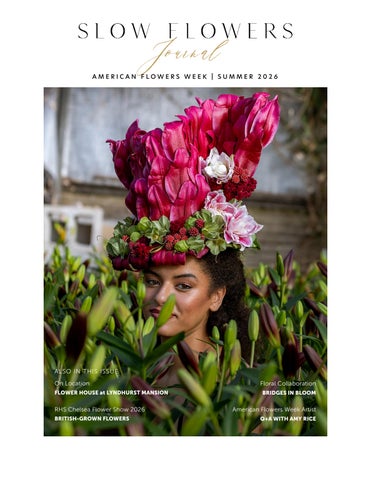
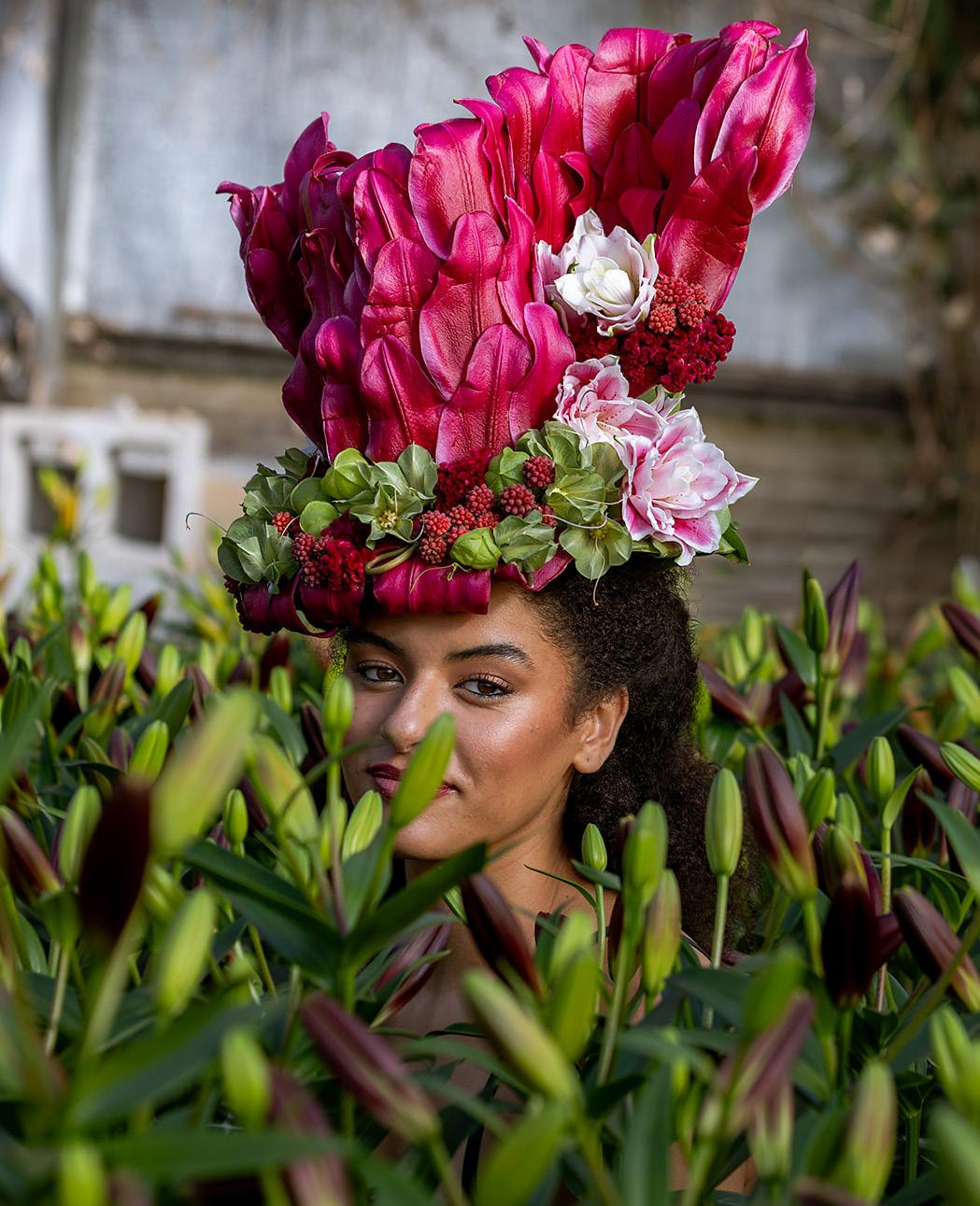
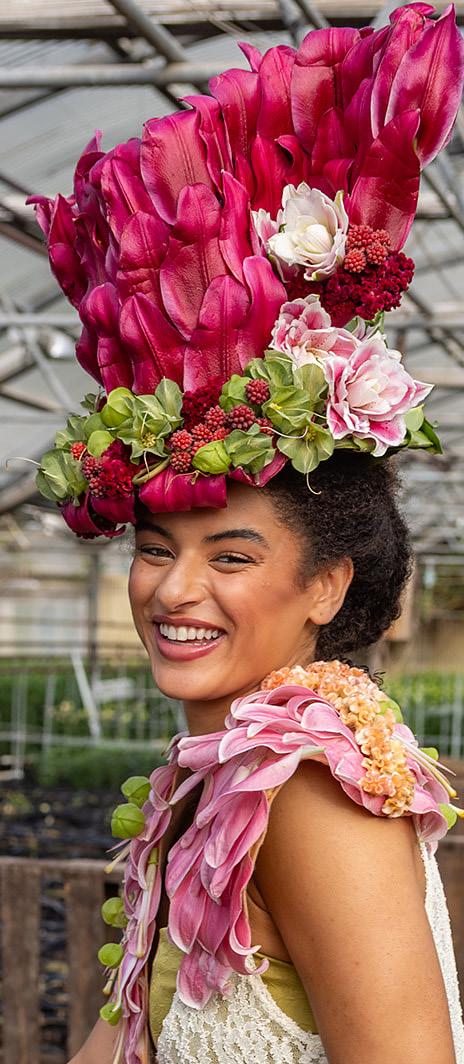
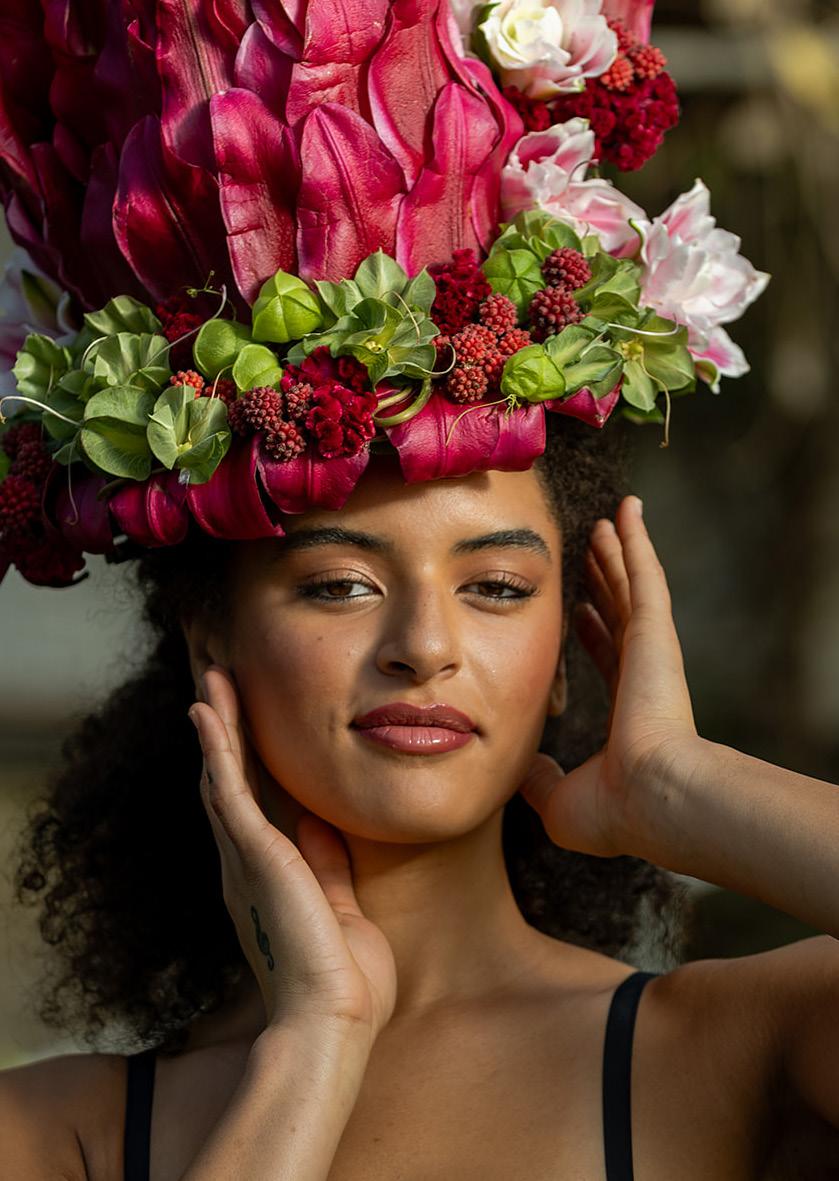
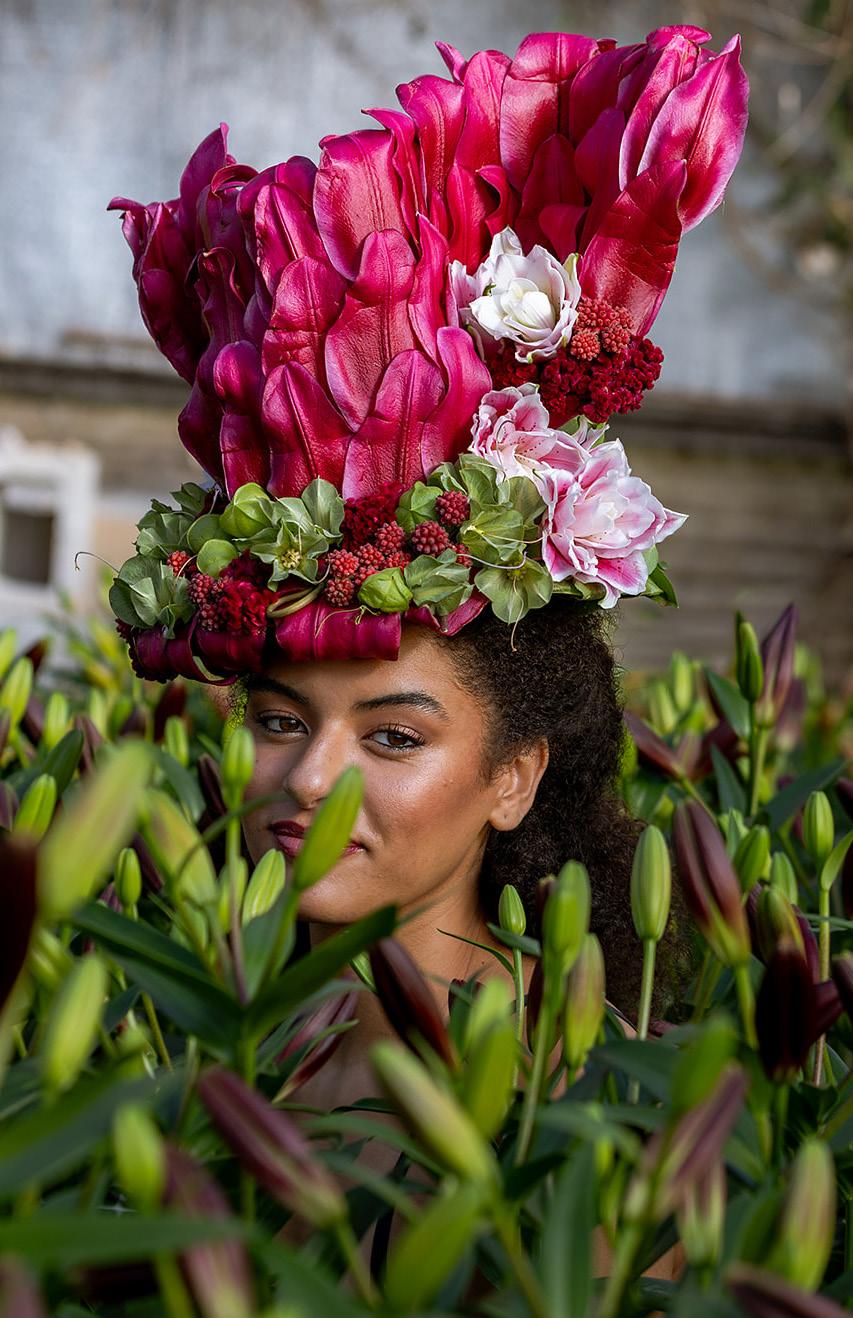
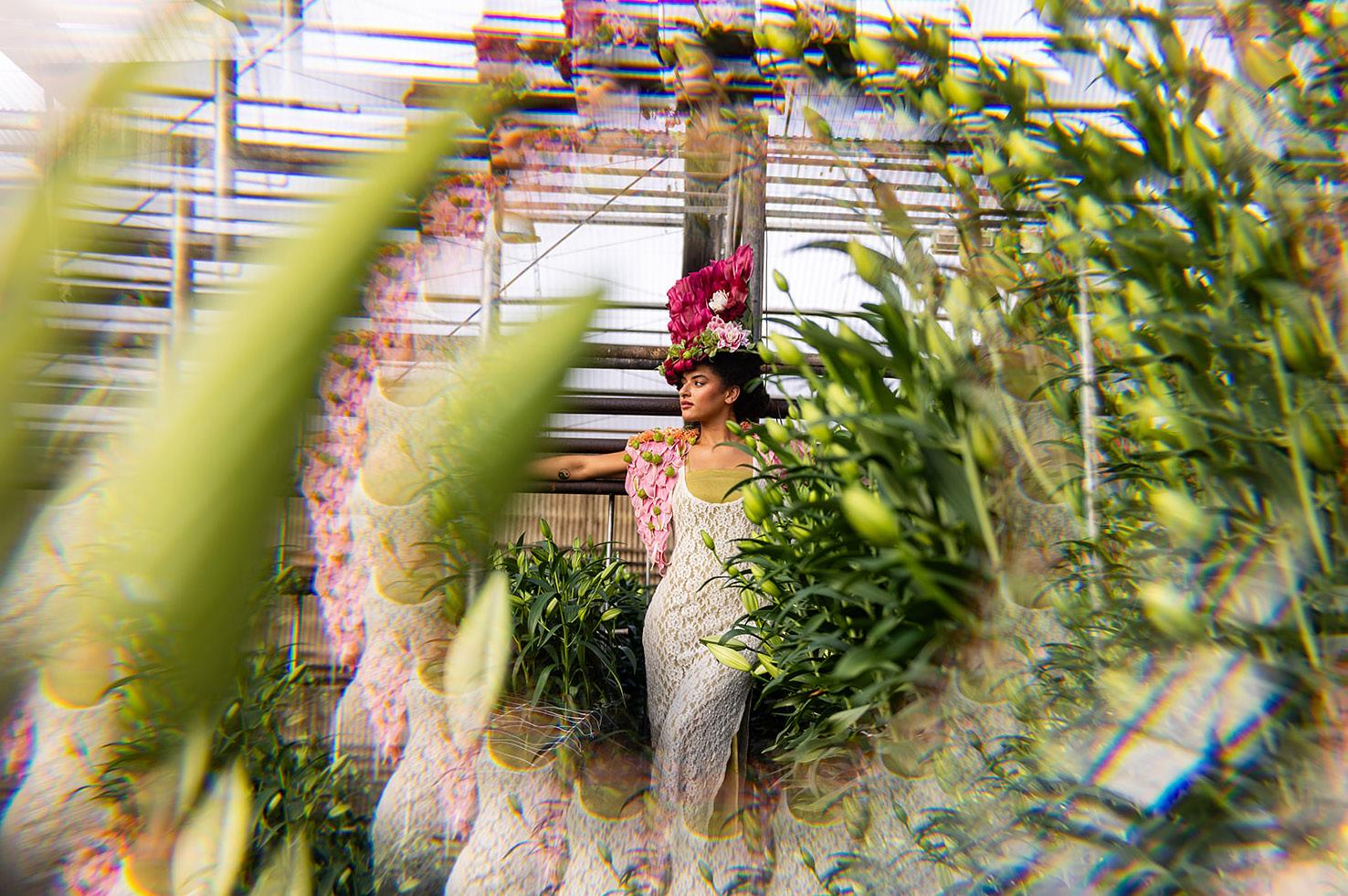
Known for her botanical fascinators and floral headpieces, floral artist Françoise Weeks envisioned an exaggerated top hat for her model, one of two lily-themed botanical couture pieces designed for American Flowers Week 2026. Weeks adorned the headpiece with dark pink lily petals, adding pink-and-white double lilies around the brim.
No part of this publication may be reproduced, stored in a retrieval system, or transmitted, in any formor by any means, electronic, mechanical, photocopying, recording or otherwise, without prior written permission of the publisher.
mission-driven.
Simply put, the mission of the Slow Flowers Movement is to change people’s relationship with flowers. That means considering where, when, and how the flowers we purchase are grown. It also means having an understanding of and support for the people who grow and design them.
This time of the year, which coincides with our annual American Flowers Week promotional campaign and celebration (June 28-July 4), it’s easier than ever to support the Slow Flowers Movement. Flowers are being produced as agricultural crops in all 50 states right now. And consumers have multiple opportunities to grow their own cutting gardens, snip from a U-Pick farm, meet a grower at the farmers’ market, visit a flower farm, and learn design skills from a Slow Flowers florist.
As I’ve said before, “I believe we should be celebrating Americangrown flowers during all 52 weeks of the year, but by choosing to devote one full week to an awareness campaign, we can heighten the attention on this cause – both in the media and in the public.”
And I must add our full embrace of Slow Flowers members in Canada, who produce beautiful local and seasonal cut-flowers in every province and who will be celebrating Canadian Flowers Week later this summer, during August 17-23, 2026. For ways to support this “sister” cause, visit canadianflowersweek.ca.
Please enjoy this year’s glorious botanical couture floral fashions created by three of our talented members: Françoise Weeks, Caitlin Mathes, and Alanna Messner-Scholl. We salute their artistry and their passion for local blooms.
DEE HALL GOODWIN. Dee Hall Goodwin is the founder of Mermaid City Flowers, an urban flower farm and design studio in Norfolk, Virginia. She grows on borrowed plots, and specializes in native plants, unusual cut-flowers, and sustainable, foamfree design practices. Dee is also the founder of the Tidewater Flower Collective and Black Flower Farmers, and her work has been featured in Black Flora and Garden & Gun. She shares her expertise through talks and workshops with organizations including the Garden Club of America, the Pennsylvania Horticultural Society, and the Norfolk Botanical Garden, focusing on floriculture, floral design, and the power of flowers to connect culture and community.
mermaidcityflowers.com | INSTAGRAM
KATHRYN MILLMAN. Kathryn (Katy) Millman is a dedicated art educator and mixed-media artist with over two decades of teaching experience. Certified for grades 5–12, she believes deeply in the power of hands-on learning to build community among her students. Originally from Cleveland, Ohio, Katy holds a B.A. in Fashion Design from Kent State University and a M.Ed. in Visual Art from Lesley University. Her personal art practice explores abstract representational themes through photography, ceramics, sculpture, and fiber art, rooted in a keen appreciation for everyday aesthetics. Now residing in Sudbury, Massachusetts, with her husband and two children, Katy spends her free time reading, working out, gardening, and walking her rescue dog. She approaches both life and teaching as a humble, open-minded doer, driven by a profound compassion for the world around her.
INSTAGRAM
TONI REALE. Toni Reale founded Roadside Blooms with a story to tell and a mission to share, believing that beauty and sustainability don’t just co-exist, they work in concert. Roadside Blooms prides itself on using 100 percent American and locally grown blooms and greens through their retail shop and about 90 percent on the event side of the business. With over 15 years of experience in the event-planning and floral-design industries, Toni’s many adventures have led her to this chapter (ask her about the time she converted a 1971 British ice cream truck into a mobile flower shop; or about her Environmental Geology background). A leader of Charleston’s “green and local” movement, Toni has served on various nonprofit boards, including the Charleston Green Fair, and has been recognized as one of Charlie magazine’s "50 Most Progressive" in Charleston in 2014. While Toni's retail shop is full of beautiful things such as houseplants, crystals, and flowers, she is most proud of creating a welcoming, safe, inclusive space that is community driven.
roadsideblooms.com | INSTAGRAM
SUSAN SAWYERS. Susan Sawyers is a multimedia artist whose work reflects upon the intersection of nature, daily life, and legacy: what we choose to cultivate, what we choose to keep, and what we leave behind. Her current work centers on flower farmers, locally sourced blooms, Paris past and present.
susansawyers.com | INSTAGRAM
6
ON LOCATION in full bloom
Slow Flowers members among featured designers at Lyndhurst’s Flower House
SITE SPECIFIC flowers for a cause
Building connections through nature, art, and community TOP FIVE slow flowers podcast highlights May-June 2026 10 14 20 40
Two Slow Flowers members are among the featured designers at Flower House Mexico
FLORAL INSTALLATION counted at last
A British flower farm came to Chelsea for the first time. An American grower went to watch a movement make waves
FLORAL COLLABORATION bridges & blooms
24
power
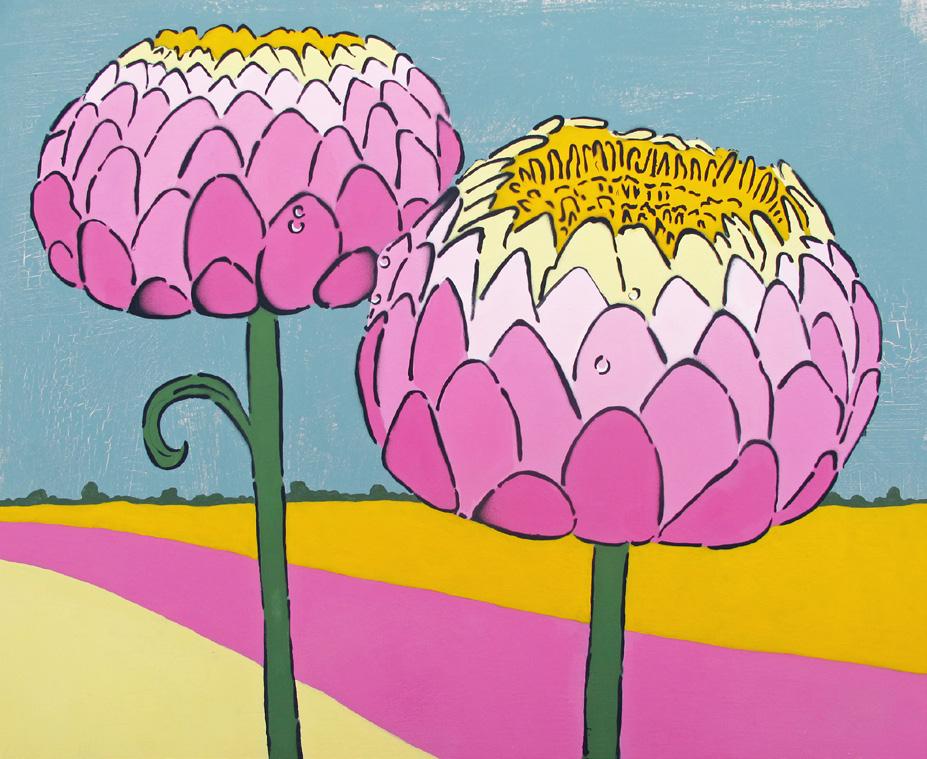
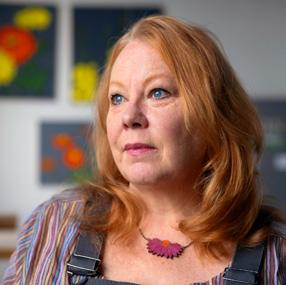
Amy Rice, a Twin Cities-based painter and printmaker, owned and grew cut-flowers at County Line Flower Farm for several years. Of course, her flower farm-inspired artwork is a perfect fit for American Flowers Week!
special section
AMERICAN FLOWERS WEEK 2026
With elements from the flower field, a production greenhouse, or gathered from the wild, this year’s botanical couture collection represents endless creativity and a celebration of nature’s precious gifts.
GUEST ARTIST flower
PHOTOGRAPHY BY SUSAN SAWYERS + RACHEL WATSON
In Full Bloom
Slow Flowers members among featured designers at Lyndhurst’s Flower House
Spring does not arrive at Lyndhurst Mansion — it bursts. For one weekend, the Gothic Revival mansion in Tarrytown, New York, which was designed in 1838 by Alexander Jackson Davis and once home to Jay Gould, is transformed into a floral wonderland. This is not a flower show. This is a conversation between today and the Gilded Age three stories deep in botanical display. And on a late Friday afternoon in April, the light and lusciousness was magnificent.
greenSinner brought exactly what the name promises, a bather to a bathroom — something a little daring, a little lush. Their installation made a charming bathroom into a garden that decided to take back what was always hers.
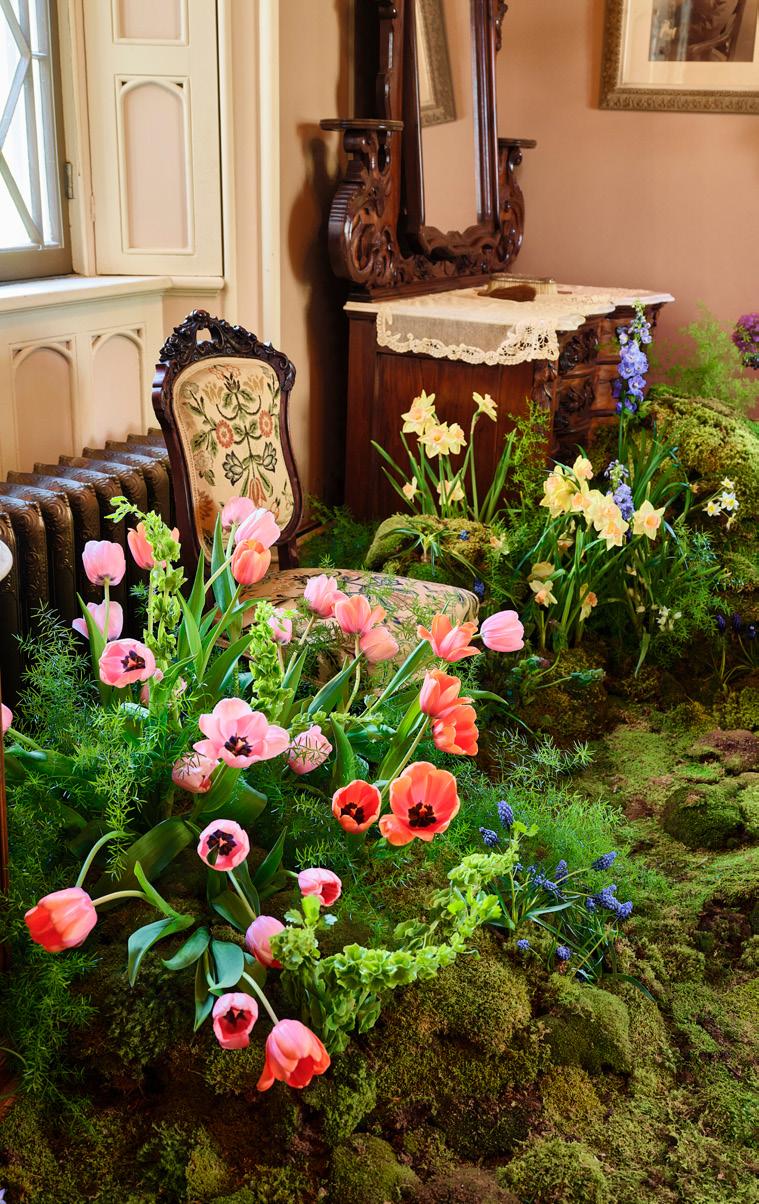
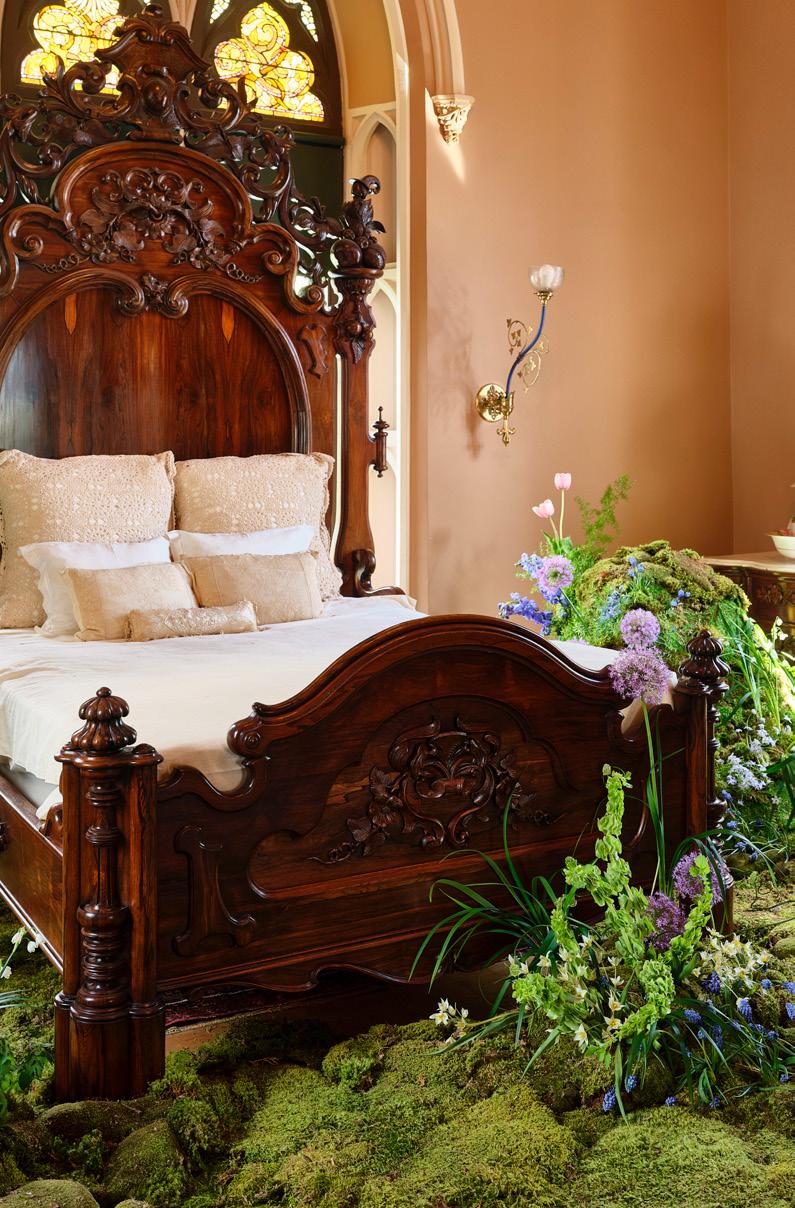
Flora Good Times, new to the roster this year, arrived with the confidence of someone who has never once been bored by a peony. A living carpet garden stretched from one corner of the State Bedroom to the next.
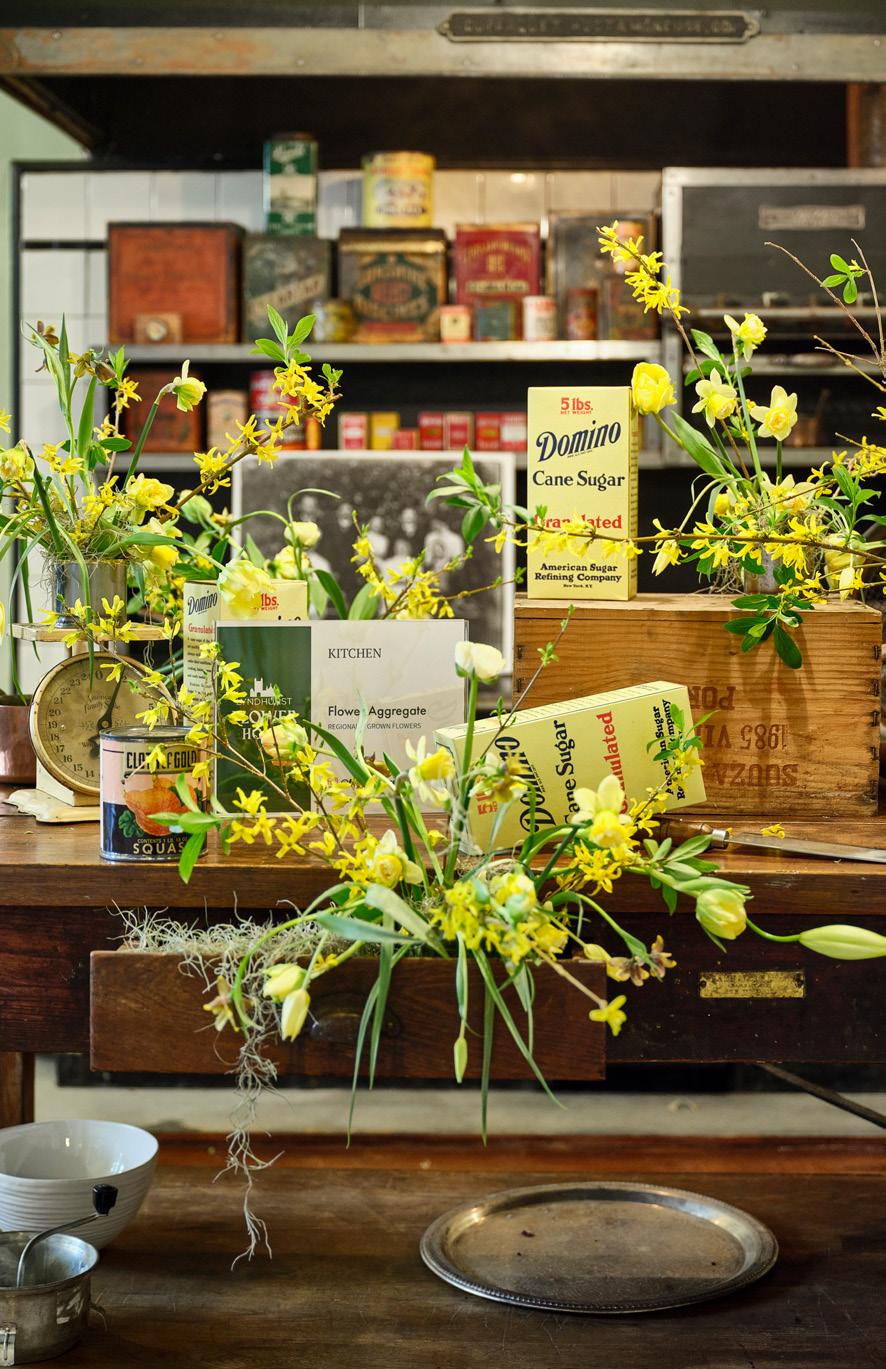
Flower Aggregate worked in abundance and restraint simultaneously — a paradox that only the best floral minds can sustain. Their designs incorporated vintage household items, think ivory snow box, in the servants quarters to brighten up the place where the work got done. And since we are in the scullery, Garbage Goddess deserves a nod here. She brought her oversized compost bags to clear the event’s natural clutter responsibly.
And then there was Muriel Fleurs, whose installation in what’s referred to as the Servant’s Dining Room felt less like decoration than integration. Her tagline, Rooted in Nature, was front and center. Each stem and stick was placed with the kind of attention that reminds you flowers have a function and are meant to mean something.
Twenty-plus designers. One weekend only. Lyndhurst has never needed the occasion to justify itself, especially with its park-like grounds along the banks of the Hudson River — but curated, cultivated flowers in full bloom are an added bonus come spring.
Read on for personal insights from three of the designers, in conversation with editor, Debra Prinzing:
Bathroom:
she bathes in nature
greenSinner’s Jimmy Lohr is based in Pittsburgh, Pennsylvania, and this was his second year participating in the Lyndhurst flower festival. When assigned the bathroom, a mostly unadorned space with beautiful diamond-pane leaded windows, Lohr opted not to repeat past treatments. “Usually, what most people have done in
the past is to decorate like it’s a bathroom – put something in the tub or flowers in the sink,” he said. Rather, Lohr based the design around a marble statue called “The Bather,” a piece in Lyndhurst’s inventory, which he placed on a pedestal in front of a window, with upright sprays of pussy willow at the base.
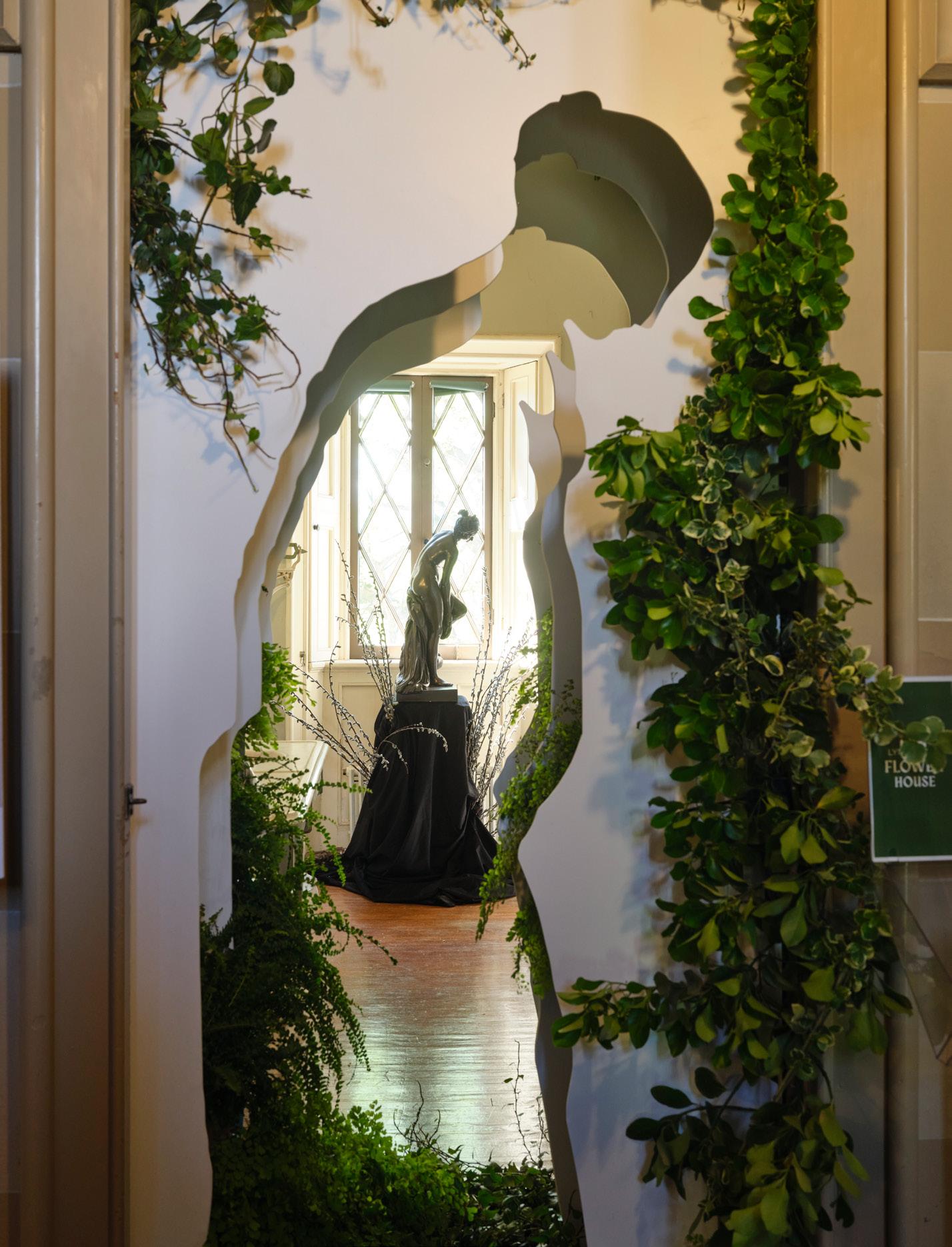
Its position is perfectly aligned to be framed by the doorway – and this is the point where Lohr’s sleight of hand worked like magic. “The idea was to come up the staircase and look through openings in the shape of ‘The Bather’ silhouette. It’s a forced perspective and only one person can look into the room at a time.”
Lohr has been eager to try this application, having seen it used in a similar way at the RHS Chelsea Flower Show in 2016 with a giant silhouette cutout of the late Queen Elizabeth's profile lined in blooms.
At Lyndhurst, people do not enter the bathroom. Instead, the silhouette is created by three cutouts that fill the doorway, with maidenhair ferns and live plants suspended between each. Each opening is gradually smaller to force the perspective of the viewer. The lush, verdant foliage also hangs from the doorframe and contrasts with the rich ornamentation, décor, patterns, and color seen elsewhere in the mansion. “And we were able to repurpose all of the plants for another project later,” he added.
State Bedroom:
In 2019, Corinne Bryson founded Flora Good Times, a retail plant and flower shop and design studio in Beacon, New York. Her earlier plans to create a flower-filled room for Lyndhurst Mansion were derailed due to the pandemic in 2020, so having a chance to “flower” one of its bedrooms this year was immensely satisfying.
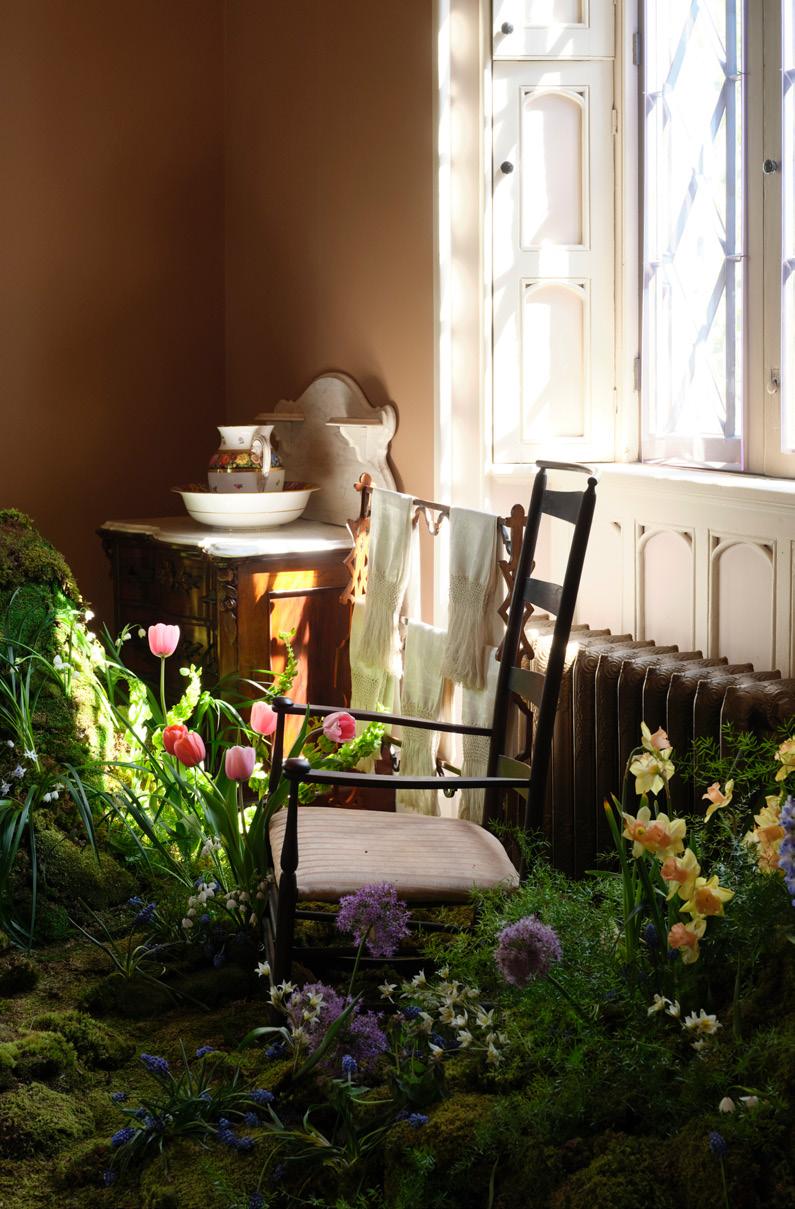
As with any historic property, there were limitations for adding live plants and cut-flowers, which Bryson found creatively inspiring. Rather than layering plastic over furniture in order to display her botanicals, she left the ornate bed, chairs, and side tables unadorned. “I treated the whole room like a big floral arrangement.” An undulating carpet of moss crept across the
spring dreaming
floor, accented with spring blooms that seemed rooted in the green surface. Bryson used “the typical florist trick” by placing objects and shapes of chicken wire under the moss to give it dimension and a sense of movement. Many of the bulb flowers, including daffodils, remained in their pots, which helped keep them hydrated over the course of the exhibition.
“I thought about how a plant would grow in the garden as I placed everything,” Bryson added. “When I arrange, I tend to clump items together. For example, if you have a delphinium plant, it has several spires; if you have daffodils, they naturalize as clumps and then the shapes are repeated.” Her other floral choices included tulips, allium, muscari, and Leucojum.
“I wanted this room to feel like a dream. You know that sensation before you fall asleep? Is it real? It is real, because all the flowers are real. The world in that room looked like it had been taken over by nature.”
Flora Good Times is committed to sustainable practices, so after the event Bryson and her staff collected all of the moss to bring back to their studio and save for future use.
FLORA GOOD TIMES
FLORAGOODTIMES.COM INSTAGRAM
Kitchen:
A Vintage Recipe
FlowerAggregate is a wholesale and retail cut-flower marketplace in Brooklyn, New York, that specializes in regionally grown and pesticide-free flowers.
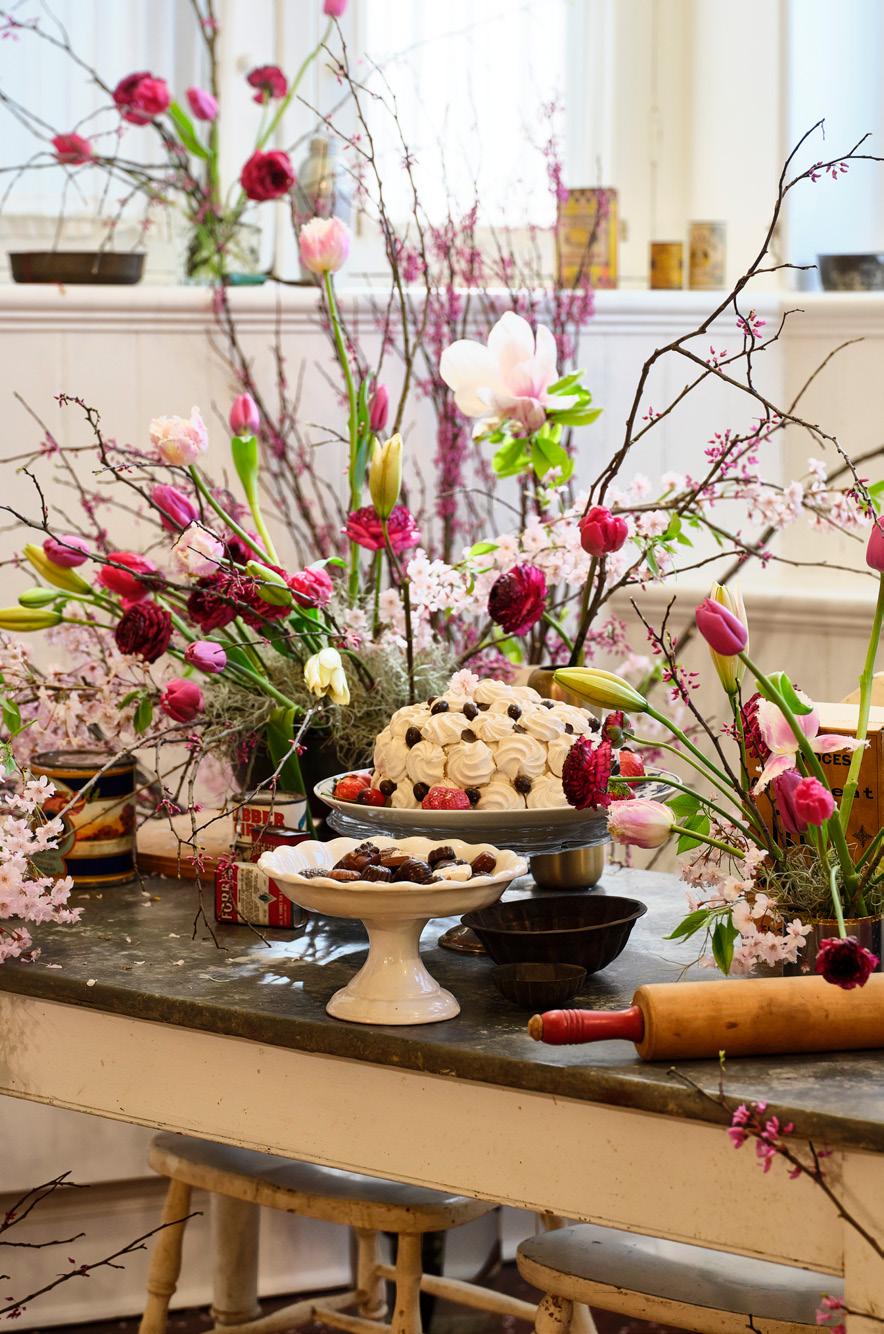
Founder Jessica Balnaves credits FlowerAggregate team members Orli Levine-Rozenvayn and Dani McConaghy, and the dozens of regional flower farmers whose blooms they promote, with the resulting floral period piece in Lyndhurst Mansion’s original kitchen. “I asked for the kitchen – it’s my favorite room of the house,” said Balnaves, who has designed in different rooms on two past occasions. “There are so many artifacts and I was excited to use those as the basis of our inspiration. The kitchen is stocked with 100-plus, years-old cool things.”
Timeworn implements, appliances, and pantry items with gently faded branding are arranged logically, as if the culinary staff was captured in the midst of preparing for dinner service – while surrounded with seasonal flowers.
The utilitarian “downstairs” space contains so many original furnishings, and rather than hide them away, the FlowerAggregate team used the packaging as a departure point for specific
vignettes and palette choices. The butter yellow of spring bulbs and flowering forsythia are whimsically paired with vintage Domino Sugar boxes and canned goods. Among platters, pie dishes, and a rolling pin, the pastry table is a pink-and-red confection, with tulips, ranunculus, lilies, and flowering pink branches. In another area, creamy narcissus and heirloom white calla lilies from a local grower are paired with viburnum branches foraged from the Lyndhurst grounds.
“The thing about designing at Lyndhurst that is really important for my inspiration is to not just put flowers down in a room, but to understand, to integrate the flowers, into the history of that room,” she said. “The kitchen display also conveys the wonderful seasonality of our flowers – and it really exceeded our expectations.”
flowers for a c ause
Two Slow Flowers members are among the featured designers at Flower House Mexico
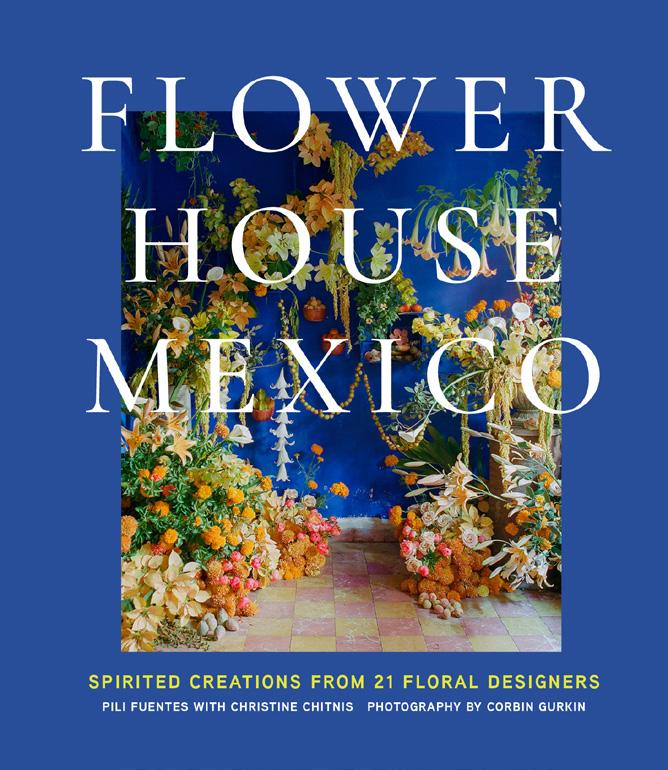
FLOWER HOUSE MEXICO IS THE BRAINCHILD OF PILI FUENTES, a Mexico City-based designer and owner of Las Floristas, who for several years has invited talented designers to showcase their artistry while teaching others and supporting charitable causes
In the introduction to her new book, also named Flower House Mexico, Fuentes writes, “Before I founded Flower House Mexico, my life was already filled with flowers, laughter, and beautiful experiences. But my priorities shifted when I was diagnosed with a rare form of cancer. . . .”
During her treatment, Fuentes was moved by the countless patients and families she met, people facing health crises, as well as economic hardship. “I turned to my friend Ariella Chezar for guidance,” she wrote. Chezar shared the story of Flower House Detroit, a collaborative exhibition by floral designer Lisa Waud, which transformed a dilapidated house into a botanical dreamscape of rooms decked floor to ceiling with American-grown blossoms and plants. Inspired, Fuentes launched Flower House Mexico in 2018.
The book itself is a visually beautiful and immersive experience, and we asked for insights from designer and educator Max Gill of Max Gill Design (Oakland, California) and Ann Arbor, Michiganbased Susan McLeary, floral artist and educator who was part of the original Flower House Detroit design team. They are two of 21 floral designers whose work is included in Flower House Mexico
What I love about Flower House Mexico is that what we’re there to do is such good, so it’s one of the easiest experiences I’ve had of moving (beyond) my own ego. This experience is bigger than the individuals.
FLOWER HOUSE MEXICO
By Pili Fuentes with Christine Chitnis Abrams Books (2026)
FLOWERS FOR A CAUSE
MAX GILL MAXGILLDESIGN.COM INSTAGRAM
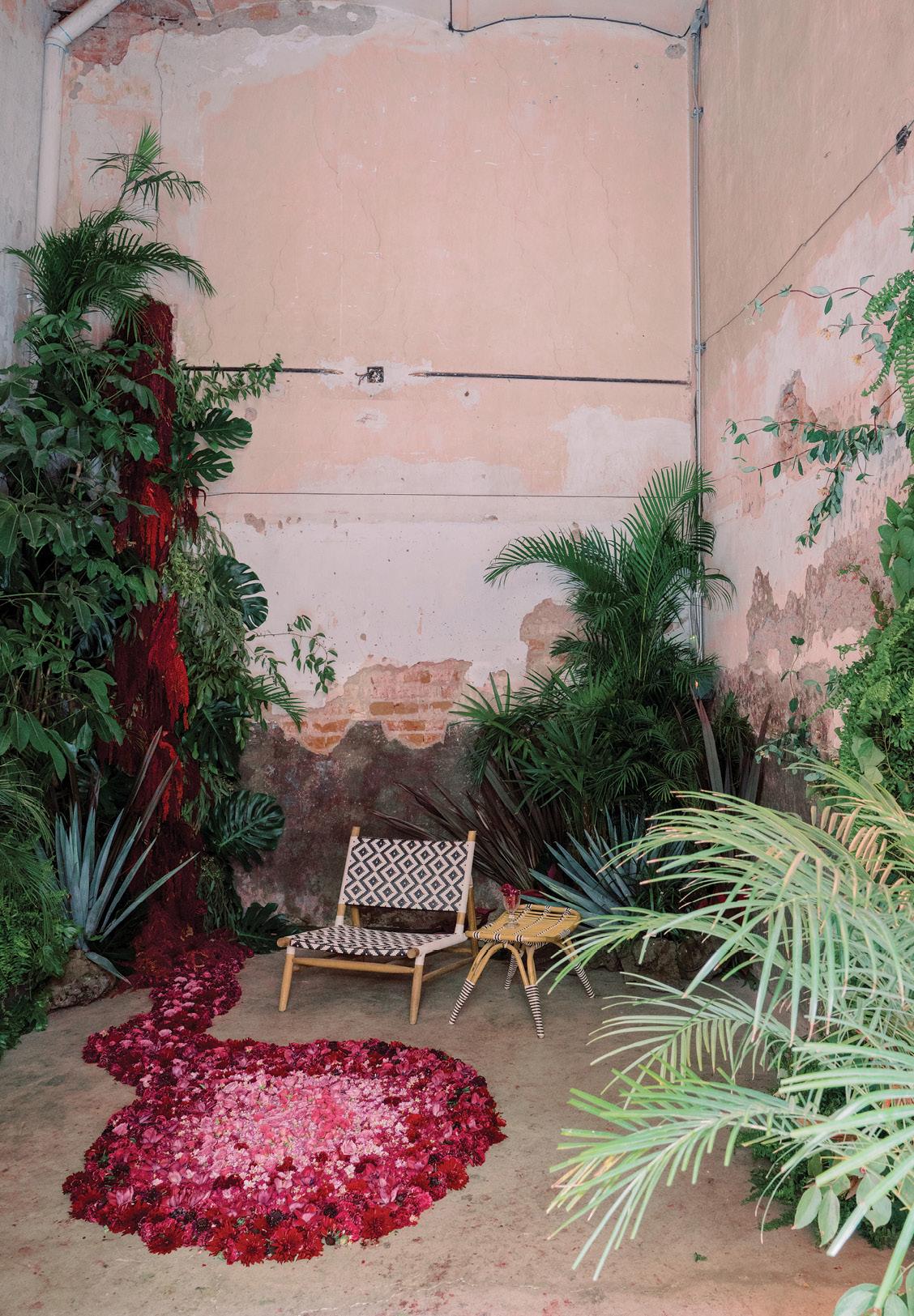
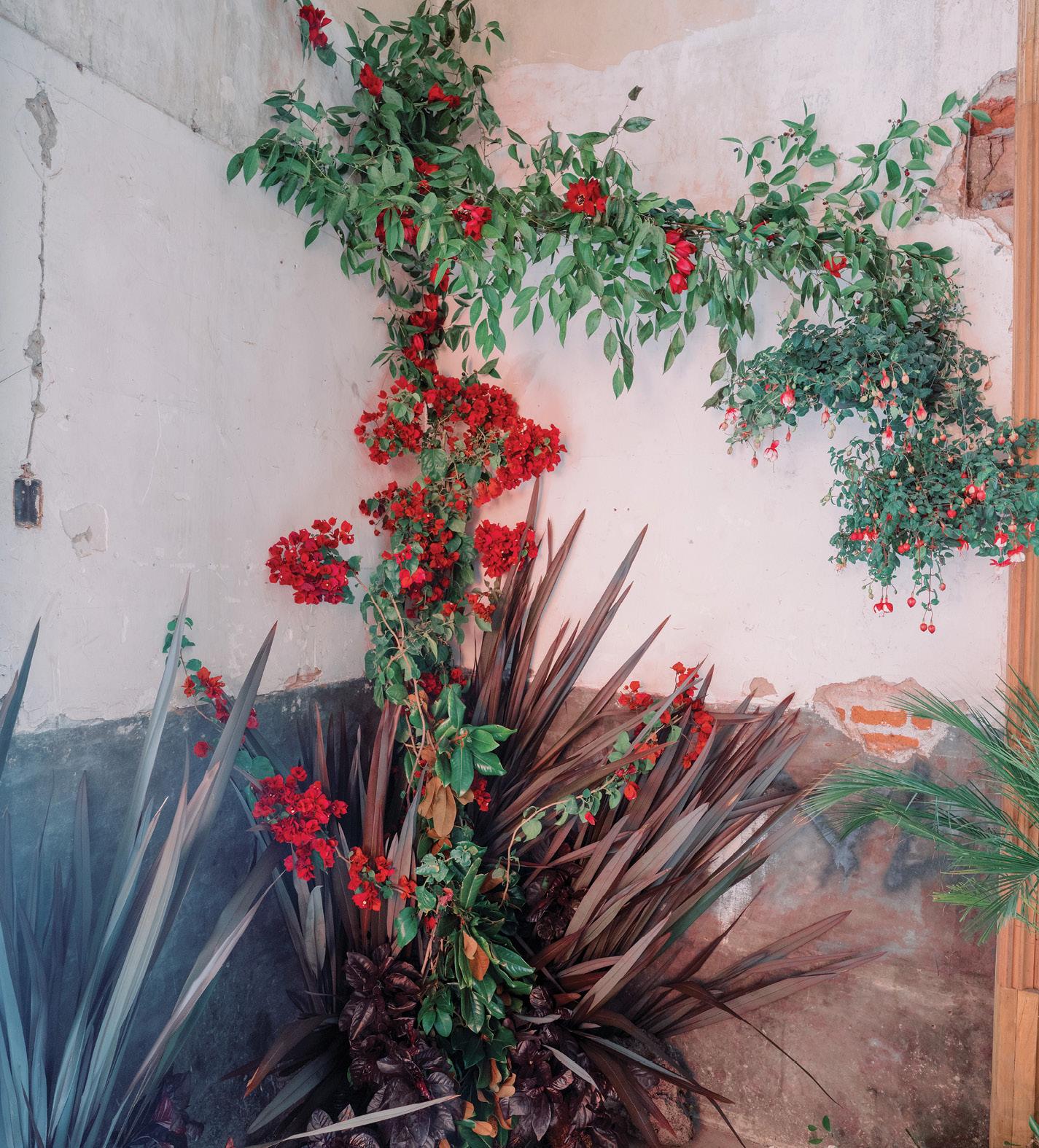
Max Gill and his team created the “Pool of Life,” featuring red amaranth, agave, bougainvillea, lisianthus, chrysanthemums, roses, and foliage. The installation took place in Mexico City’s Proyecto Público Prim during the second annual event. He has participated on three occasions.
SFJ: What motivated you to participate in Flower House Mexico?
MG: I met Pili through Ariella Chezar and I was invited to participate the second year. Designing with flowers is inescapably something that makes a difference in someone else’s life. And doing that was just so fortifying, so gratifying, and restorative. By giving my time and effort to something that has a bigger impact, something that benefits people who are under-resourced, well, that’s perfect.
SFJ: How do you approach projects like this?
MG: My work is botanically inspired. Left to its own devices, my work has always been a love letter to natural process. The “Pool of Life” is very organic, but intentionally placed. We worked with all these plants and flowers and as a concept,
it looked like they were growing from the room. What I love about Flower House Mexico is that what we’re there to do is such good, so it’s one of the easiest experiences I’ve had of moving (beyond) my own ego. This experience is bigger than the individuals. We’re raising money for kids with cancer. It’s not about building your portfolio.
SFJ: What takeaways did the participants receive?
MG: I was very invested in being collaborative, not just directing people in the name of my vision. Flower House Mexico is an opportunity for participants to really understand the process taken by someone whose work you respect, admire, and aspire to. I wanted to offer people an understanding of how I think about my design process; and I’m even happy to have you watch me to struggle as part of that process.
SFJ: What motivated you to participate in Flower House Mexico?
SM: Flower House Mexico is a fundraising event and Pili chooses a different charitable cause to support each time, usually related to health or cancer efforts. It’s organized as a workshop, so the actual fundraiser is the workshop component. I’ve really admired this project from afar. Each year, I try to do something that feels like I’m giving back, whether it’s financially or with my time and being in the room full of very talented, genuinely warm people is also appealing. But selfishly, anytime I’m invited to Mexico City, I will go.
SFJ: How do you approach projects like this?
SM: Each designer comes up with a concept and students sign up or are assigned to one team.
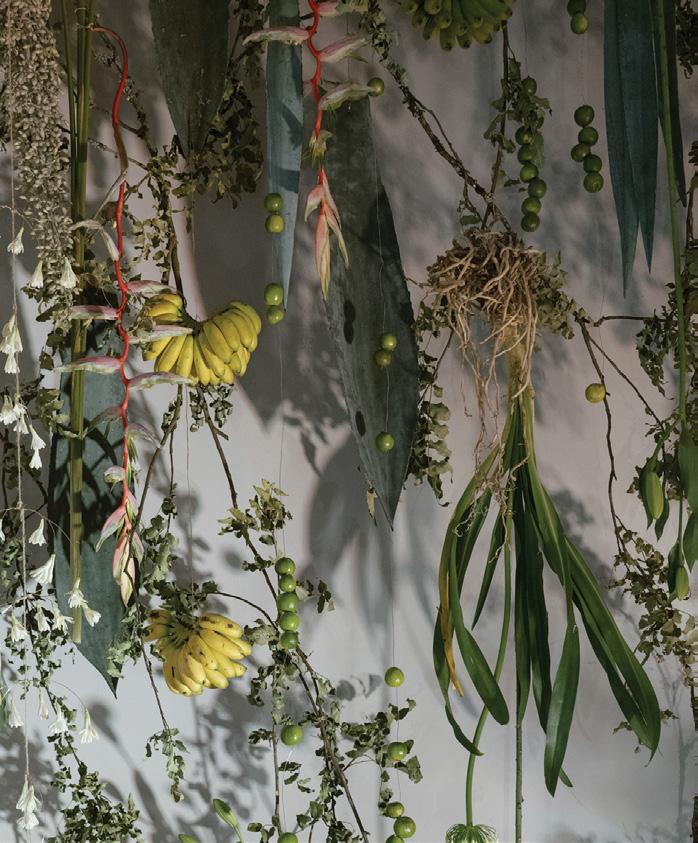
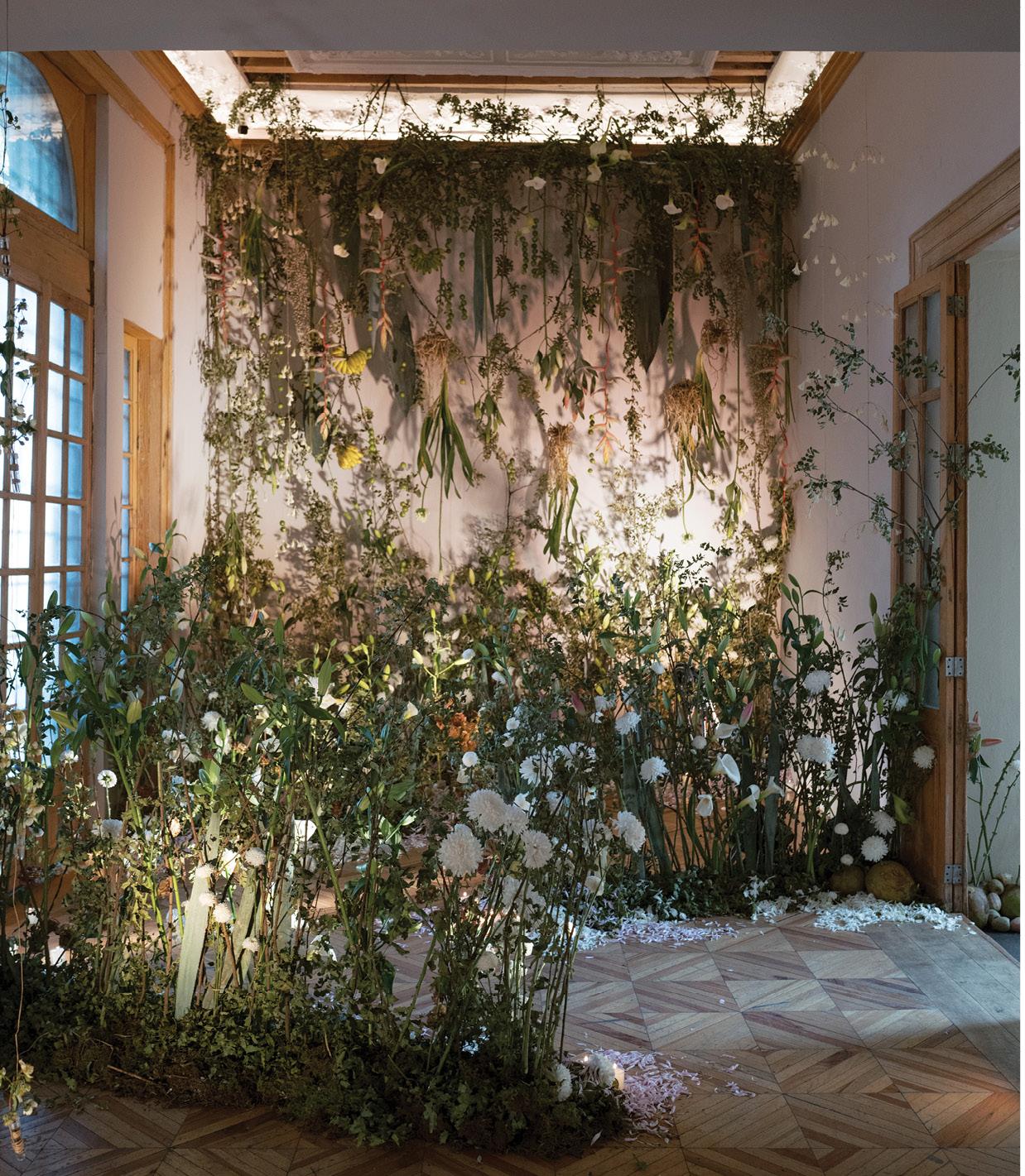
Collaboratively, the designer and group build the installation over three days. I wanted to explore the theme of “abundance,” and whether it can be reflected with a limited or pared-down volume, versus using masses of flowers. We hung portions of the garden upside down, without a water source. For the floor pieces, we built frames on upright boards – they were movable – and mounted water tubes for anything that needed a water source. We also hung leathery, fleshy plants, like the big agave and bananas, which aged pretty gracefully.
SFJ: What takeaways did the participants receive?
SM: The hope is to create something interesting, but also give people practical ideas and techniques that they can recreate or use to stretch or apply their own point of view.
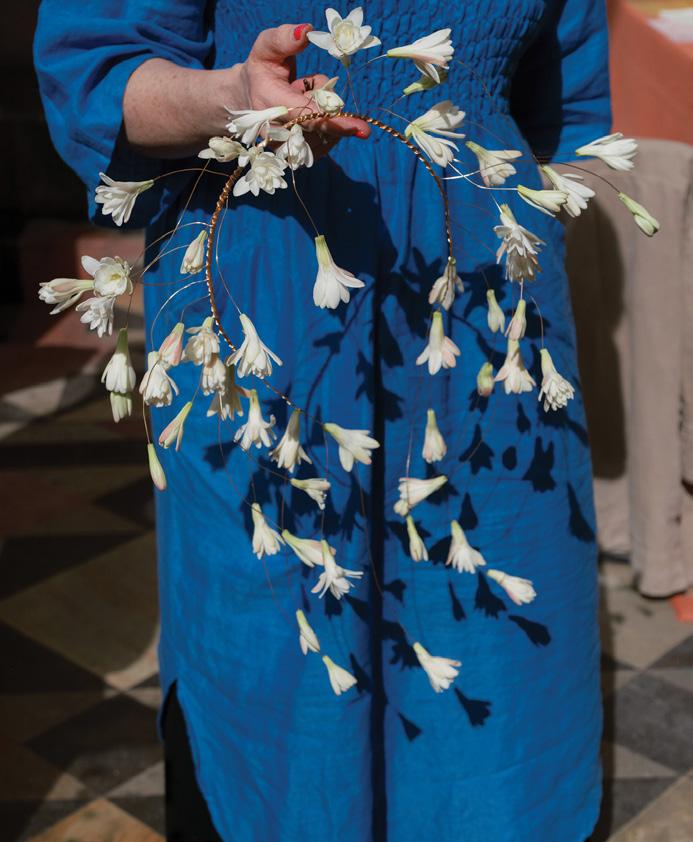
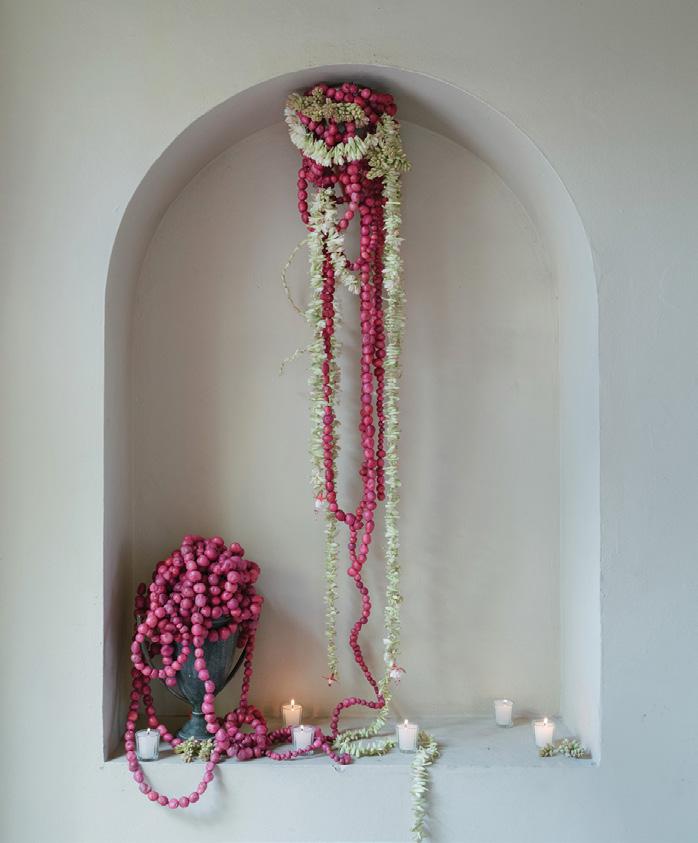
Susan McLeary led a group of about 12 participating designers to produce an installation called “Transparent Garden” at Flower House Proyecto Público Barcelona, in Mexico City. Botanicals included heliconia, agave leaves, lisianthus, calla lilies, Easter lilies, oriental lilies, chrysanthemums, agapanthus, limes, banana clusters, tuberose blooms, and pink potatoes.
counted at last
A British flower farm came to Chelsea for the first time. An American grower went to watch a movement make waves.
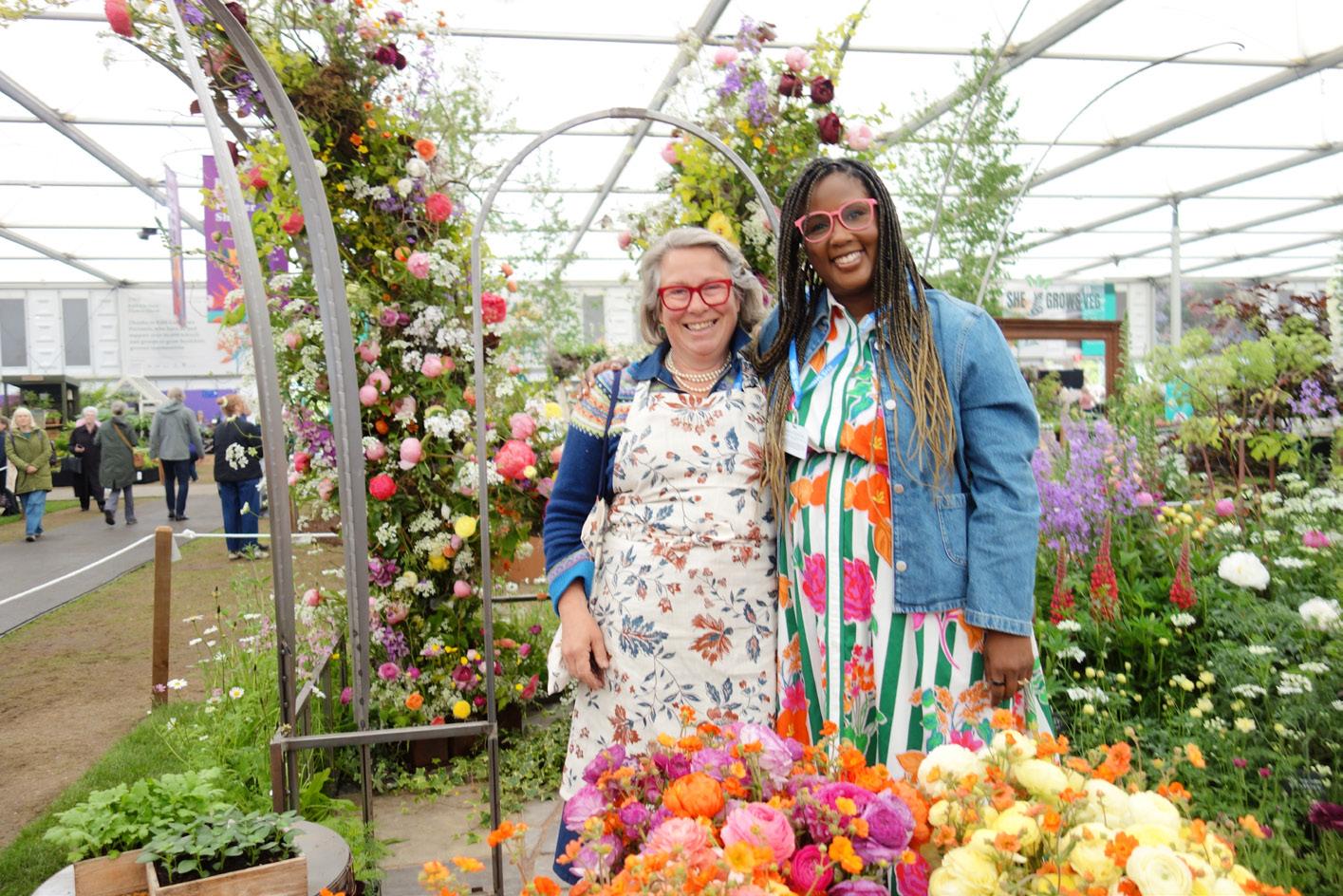
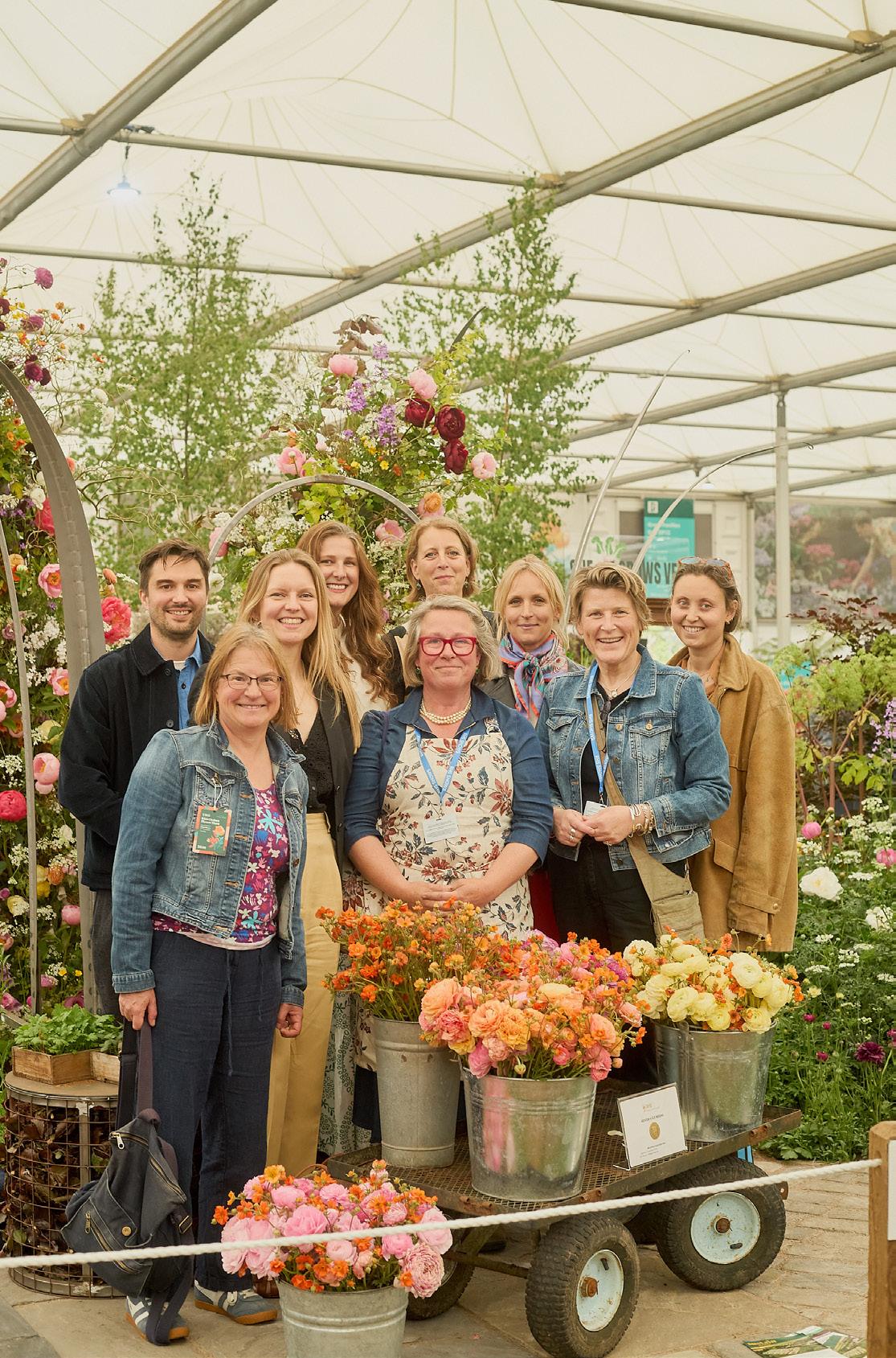
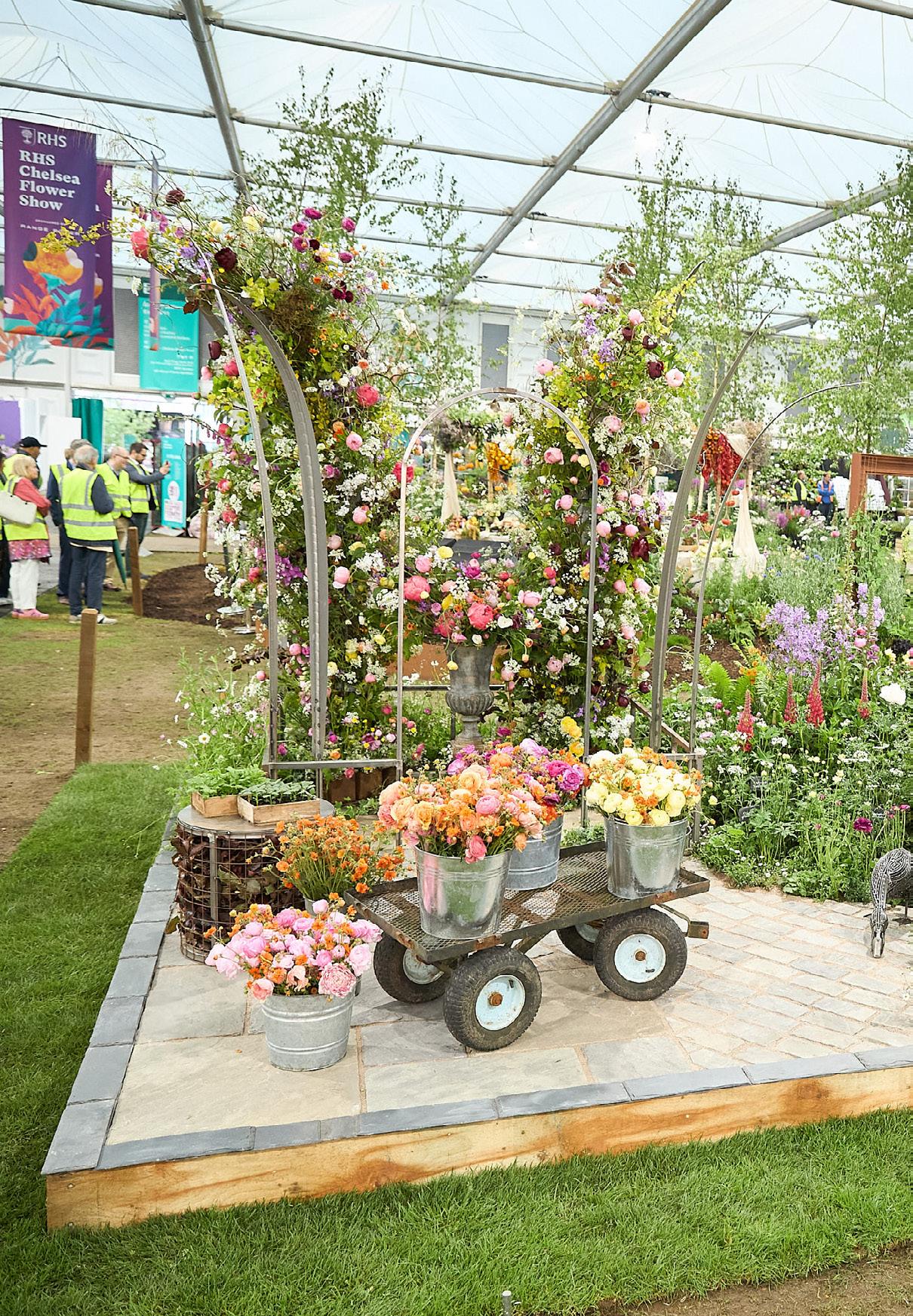
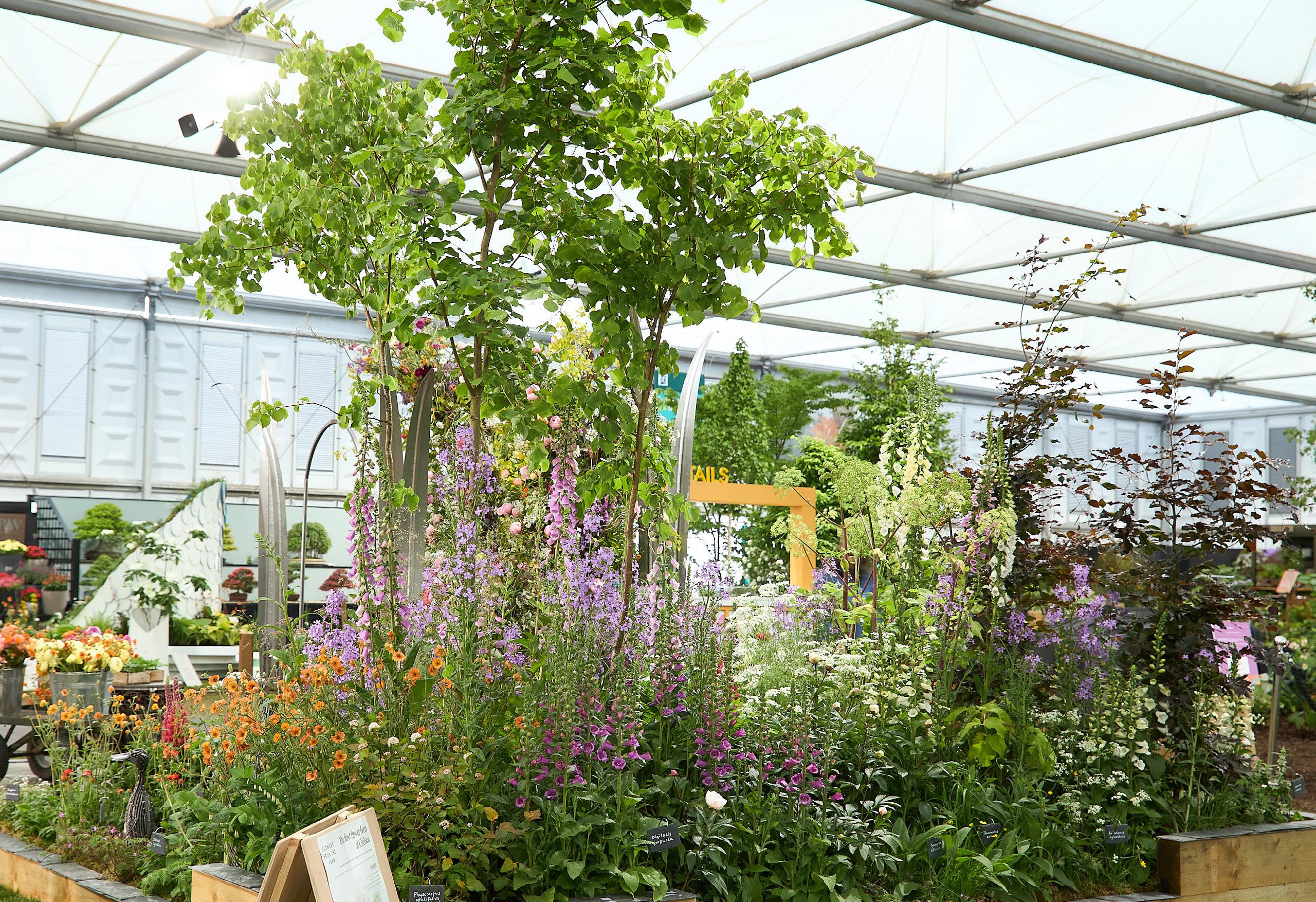
The flowers in the Great Pavilion were the first I had seen all week that needed no translation. Orlaya, foxglove, lupine, and ranunculus, all part of the first flower farm installation in Chelsea's history. I grow most of them on borrowed ground in Norfolk, Virginia. My grandmother grew their ancestors in St. Lucia, from rose cuttings that came off the boat from England. I crossed the Atlantic not knowing that I would arrive in time to watch British growers receive something my own country has not yet handed us. The right to be counted.
That is the real story of Flowers from the Farm at the 2026 RHS
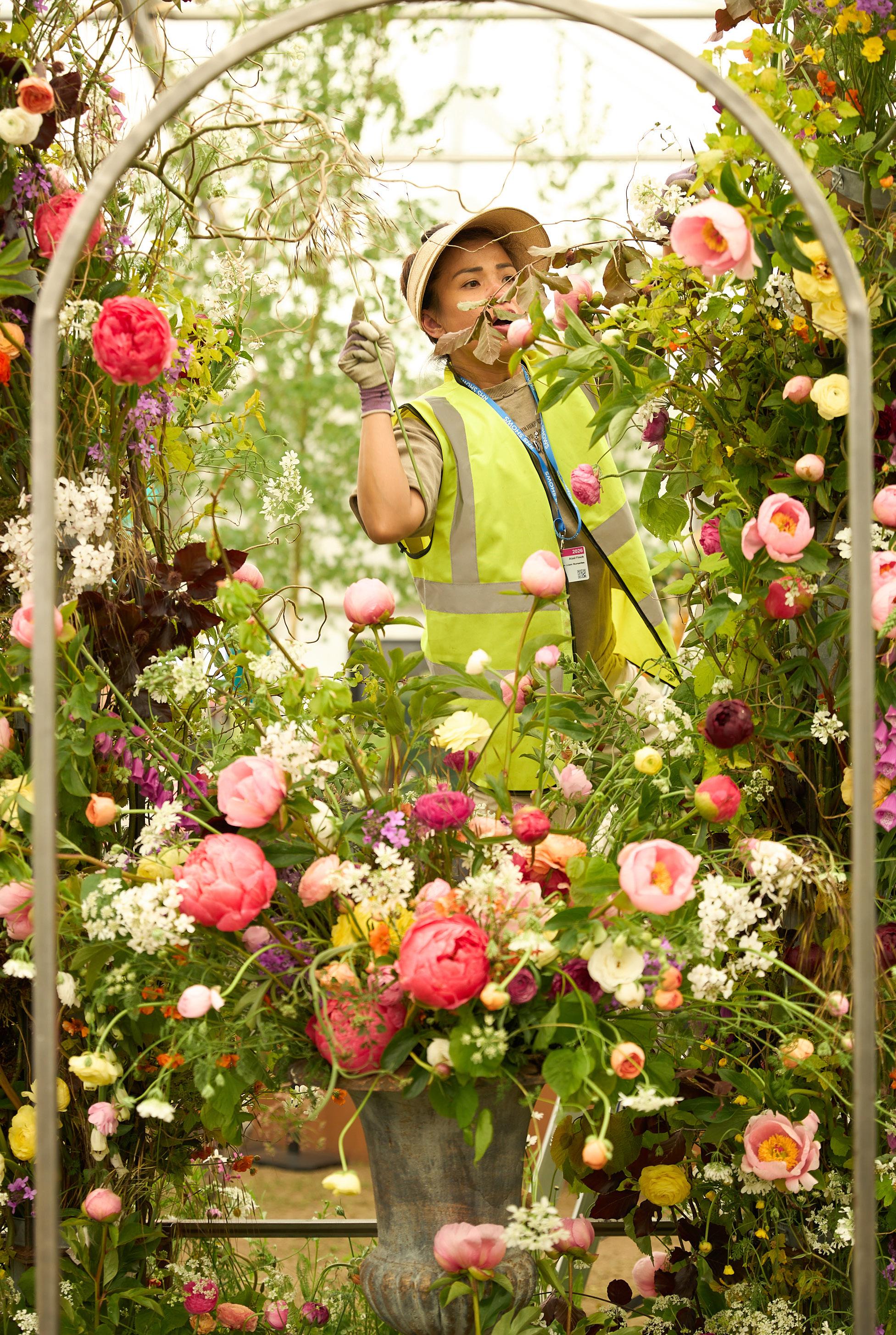
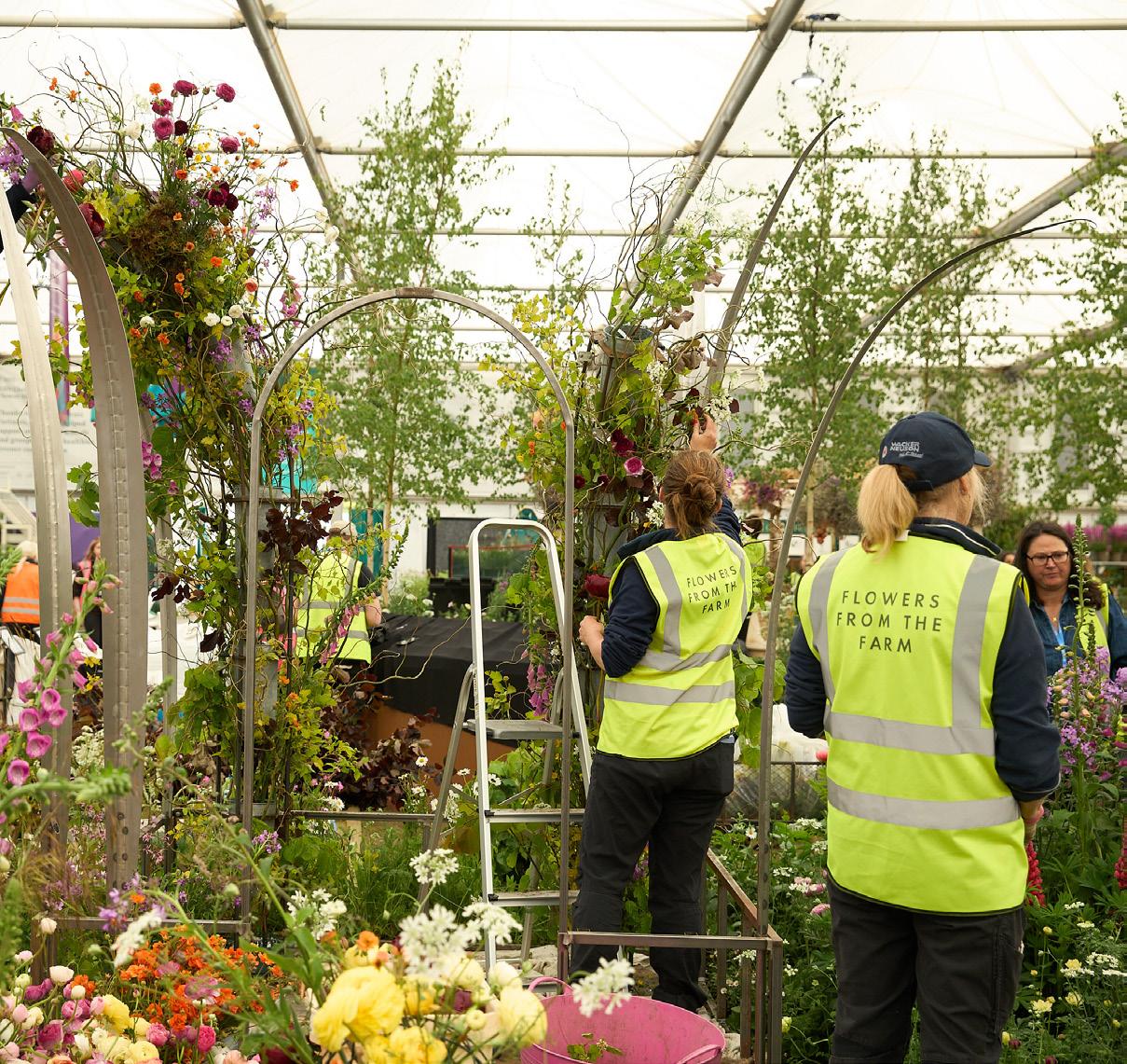
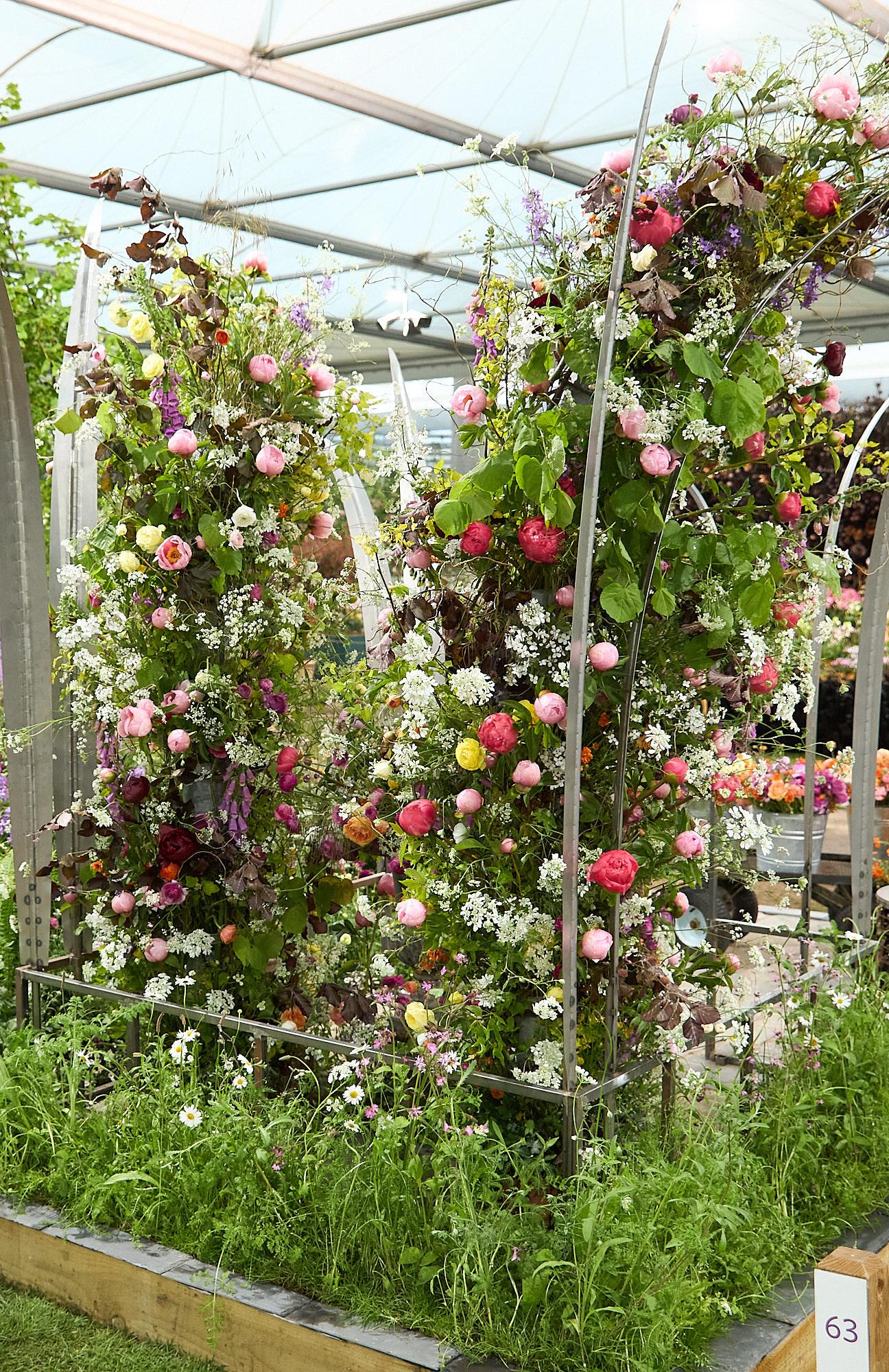
Chelsea Flower Show, and it is bigger than the impressive medal it earned. The installation was all British, all seasonal. The arches were built without floral foam and a water feature at the center of the 15-by25-foot mini flower farm reflected the biodiversity the growers believe flower farms can support. It won a Silver-Gilt medal. But the medal was the smaller victory. The larger prize was a classification code.
Georgie Newbery, who chairs Flowers from the Farm and grows at Common Farm Flowers in Somerset, told me about a phone call she made years ago, when her business first crossed the financial
threshold that requires a British company to charge sales tax. She rang the tax office feeling proud, ready to pay in, and asked to be registered for what her business actually did. The man on the line told her there was no such category. "You can be a farmer, or you can be a florist," she remembers him saying. Flower farming did not exist, statistically speaking. It had no line in the national ledger.
So when she stepped up as external chair, her first objective was establishing a Standard Industrial Classification code, the unglamorous designation that tells the state a sector exists. She set Chelsea as the deadline. It took a year and the efforts of countless growers and Flowers from the Farm board members to press the Treasury to recognize their sector, with the Liberal Democrats' rural affairs spokesperson, Sarah Dyke, backing the campaign. Confirmation came in late April, around Newbery’s birthday. British flower farming is now recognized as its own industry.
A code sounds like nothing until you see what it unlocks. That
morning, Newbery had heard from a grower whose application for land was stalled at the planning office, because the council had no idea what flower farming was. Last week the government did not recognize her business. This week it does. A lot rests on that singular designation, from potential grants and fewer derogations, to an argument she is itching to make about biodiversity.
I recognized the gap at once, because it is mine. In Virginia, we are filed under floriculture, lumped in with nursery sales and singlecrop operations—neither of which is what most of us do on an acre or less. American flower farming has its own names, including the Slow Flowers Movement, the ASCFG, and
a growing web of collectives. We have the language. We do not yet have the ledger.
What struck me was how little else needed explaining. The pressures are the same on both sides of the water. Grower after grower described springs gone dry and windy, and the same remedy: Fewer thirsty annuals and more perennials and natives that hold through the swings. Rozanne Delamore, who farms on one acre near Ledbury in Herefordshire, has responded with mulch laid down in autumn, more water capture, and more long-cropping perennials. I told her my ranunculus skipped its season entirely, dormant when cool flipped straight to hot. She nodded the way
every grower does. Try farming for a living, and the climate stops being an argument.
The market is the same shape, too. Roughly 85 percent of cut flowers sold in Britain are imported. In the States, that number is about 80 percent. Which is why the growers I met aim their rivalry outward, not at one another. "We're probably each other's biggest customers," Rozanne said, and I have said those exact words at home. We freelance for each other, buy each other's overflow, start collectives.
Competition takes on a different shape once
Chelsea was not only about showcasing British-grown flowers it showcased an industry built largely by women who decided they wanted a different relationship with work.
people start growing locally.
The growers were not the only people thinking differently about flowers. At Aesme Studio, sisters Jess Litter and Ally Nutting returned again and again to the importance of understanding plants as living things, rather than products. Whether a designer grows their own flowers or sources from local farms, the shift is the same: Toward
seasonality, plant knowledge, and materials chosen for their relationship to time and place, rather than their ability to travel.
But it was the growers themselves who stayed with me, and how alike they were across the ocean. Donna Sellick of Busy B Blooms started in the pandemic, the way so many of us did. Newbery, who mentors as much as she grows now, preaches a
gospel I needed to hear: Do less, do it better, and work out where your “enough” is before someone shoves you into growth for its own sake.
Again and again, I met women who had arrived through a side door. Teachers. Former professionals. Gardeners whose children had left home and whose vegetable beds had turned to flowers. People who began with a cutting patch and
found a business hiding inside it.
Flower farming attracts people who have already lived another life and bring the skills of it into the field. Perhaps that is why so many growers speak less about scaling and more about sustainability. Not environmental sustainability alone, but a life they actually want to inhabit. Of the more than 1,000 growers in Flowers from the Farm, four in five are women. Chelsea was not only about showcasing Britishgrown flowers, it showcased an industry built largely by women who decided they wanted a different relationship with work.
Standing in the Great Pavilion, surrounded by foxglove, lupine, and growers who had finally secured their place in the national ledger, I found myself thinking about those rose cuttings my grandmother carried home to St. Lucia. Recognition is just another crop. The British movement planted it years ago and is only now harvesting the result. For those of us growing flowers elsewhere, the work is the same as it has always been: plant the seed, tend it, and trust that eventually someone will have to admit it exists.
Flowers from the Farm
is a membership organization for British growers of seasonal, locally grown cut-flowers, with more than 1,000 members, most of them small farms, and a public map that connects buyers to flowers near them. Members generally grow on an acre or less, with average turnover near £33,600, roughly $45,000. The 2026 Chelsea installation was the first flower farm ever staged at the show and won a Silver-Gilt medal. In the same season, the organization helped secure an official Standard Industrial Classification code for flower farming, the first time the British government has counted the sector in its own right. By the organization's estimate, that sector contributes around £30 million a year to the UK economy.
PHOTOGRAPHY BY KATY MILLMAN + JOHN WALKER
&Blooms
Building connections through nature, art, and community
“THIS SPRING, AS CLOSE FRIENDS, WE HAD THE INCREDIBLE OPPORTUNITY TO COLLABORATE ON A PROJECT THAT BROUGHT TOGETHER MANY OF THE THINGS WE VALUE MOST: NATURE, EDUCATION, CREATIVITY, AND COMMUNITY.”
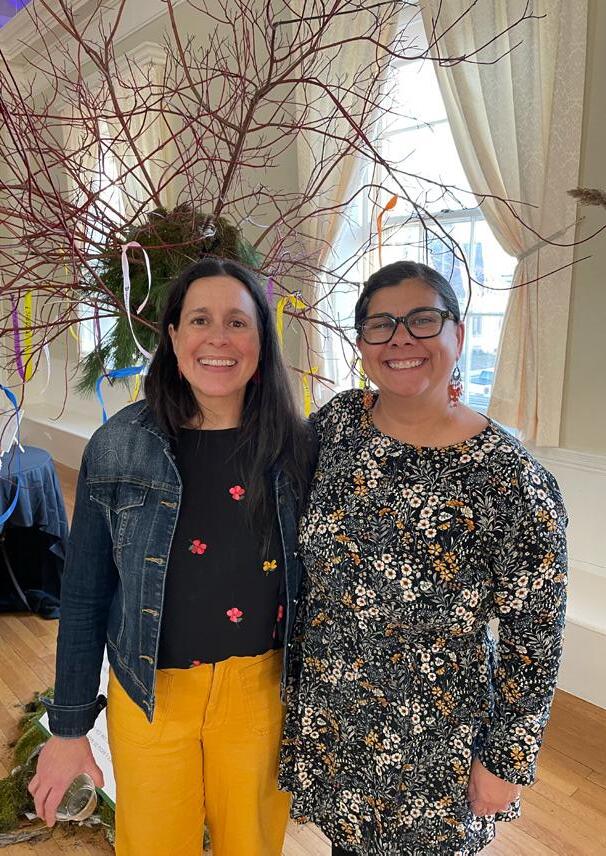
BRIDGES & BLOOMS was a collaborative installation conceived by Framingham High School art teacher Katy Millman, my dear friend since our own high school days. Although our careers took us in different directions, Katy into art education and me into floral design, we both remained committed to inspiring creativity and connection. I eventually founded Roadside Blooms in Charleston, South Carolina, while Katy guided students through a wide range of artistic disciplines, including photography, fibers, ceramics, and sculpture.
Inspired by the historic bridges of Framingham, Massachusetts, the April exhibition explored themes of unity, transition, belonging, and connection. The city's bridges served as both subject and metaphor, reminding visitors that communities are built through the relationships we create with one another and across generations, cultures, and backgrounds.
The project brought together students, educators, gardeners, artists, historians, environmental advocates, and community members in a celebration of the intersection of art, science, history, and nature. Fittingly, the exhibition was hosted at Village Hall, in the heart of the city.
A winding pathway guided visitors through the space, encouraging them to slow down and reflect on their connections to the community and the experiences that unite us. Flowing chiffon fabric represented water, while ground installations were created using foraged plant material and native spring flora. Katy and I worked alongside high school students to create foam-free floral designs, demonstrating how immersive, environmentally conscious installations can bring the outdoors inside with minimal impact.
Throughout the exhibit, members of the school’s Environmental Awareness Club shared their educational displays highlighting the ecological
importance of native plants, composting, and sustainable practices. Led by faculty advisor Rebecca Maynard, the students made all of the infographics for the science component of the collaboration, presenting the critical role plants play in soil health, carbon sequestration, and climate resilience.
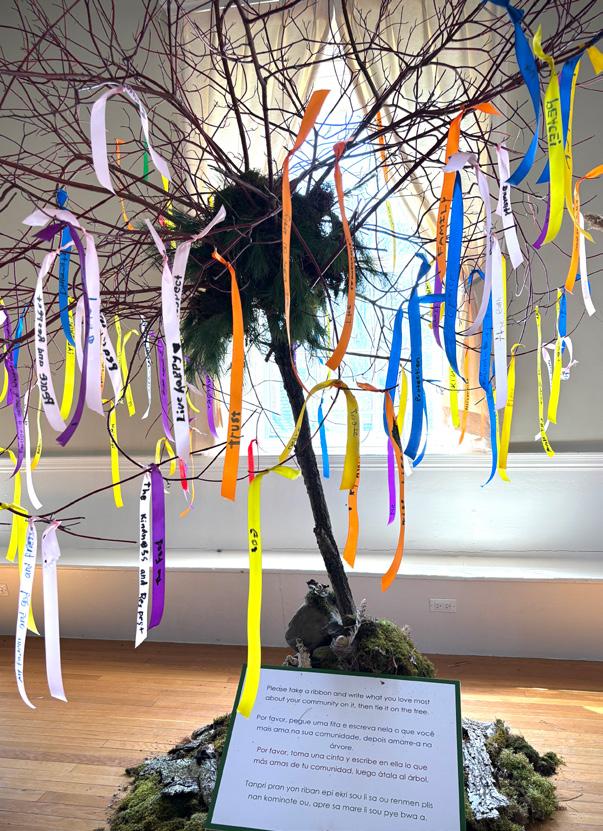
At the end of the exhibition stood a tree constructed entirely from foraged branches, fallen limbs, and moss gathered from the surrounding landscape. The tree became a powerful symbol of community. Visitors were invited to tie ribbons to its branches and write messages in their native language about what they loved most about their community and what they hoped for its future.
That invitation reflected the reality of Framingham itself. As a city shaped by generations of immigrants, the city featured messages in English, Spanish, Portuguese, Mandarin, and many other languages. The ribbon tree became a vibrant celebration of diversity, collecting more than 500 messages expressing gratitude, hope, belonging, safety, opportunity, and connection.
Students played a central role throughout the project. Young people of varying abilities contributed ideas, artwork, and hands-on creative work, and every contribution was valued. Their participation reinforced one of the exhibition's core messages: That strong communities are built when everyone has a place and a voice.
In another interactive activity, students designed mandalas using flowers, leaves, seedpods, branches, stones, and other foraged materials. These temporary works encouraged participants to slow down, observe their surroundings, and consider how every element contributes to a greater whole. Just as in a community, no single piece is more important than another; each adds its own beauty and purpose.
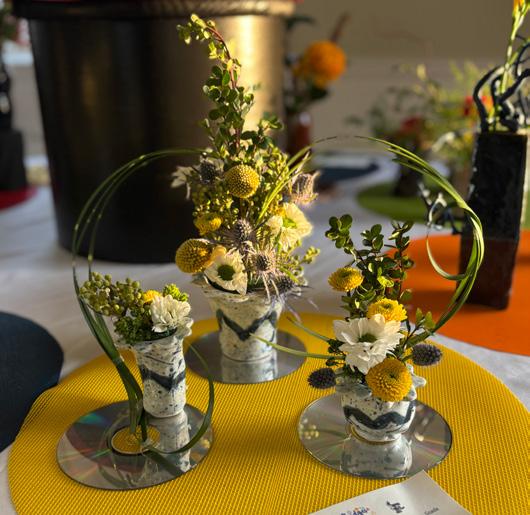
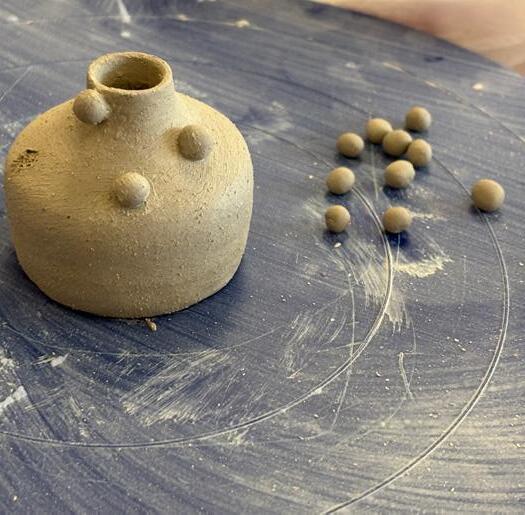
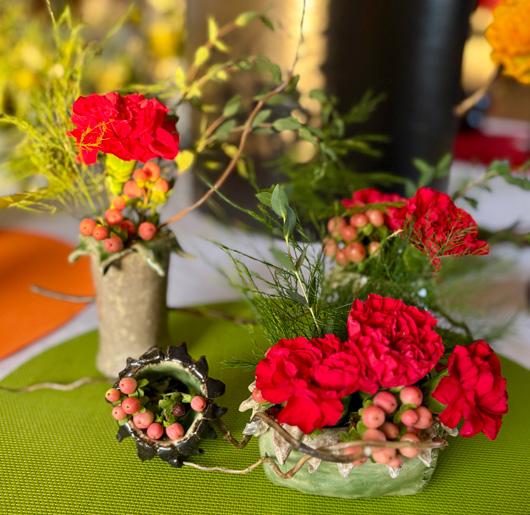
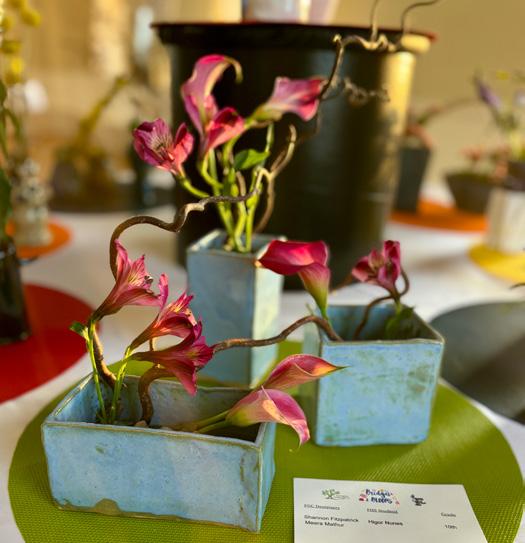
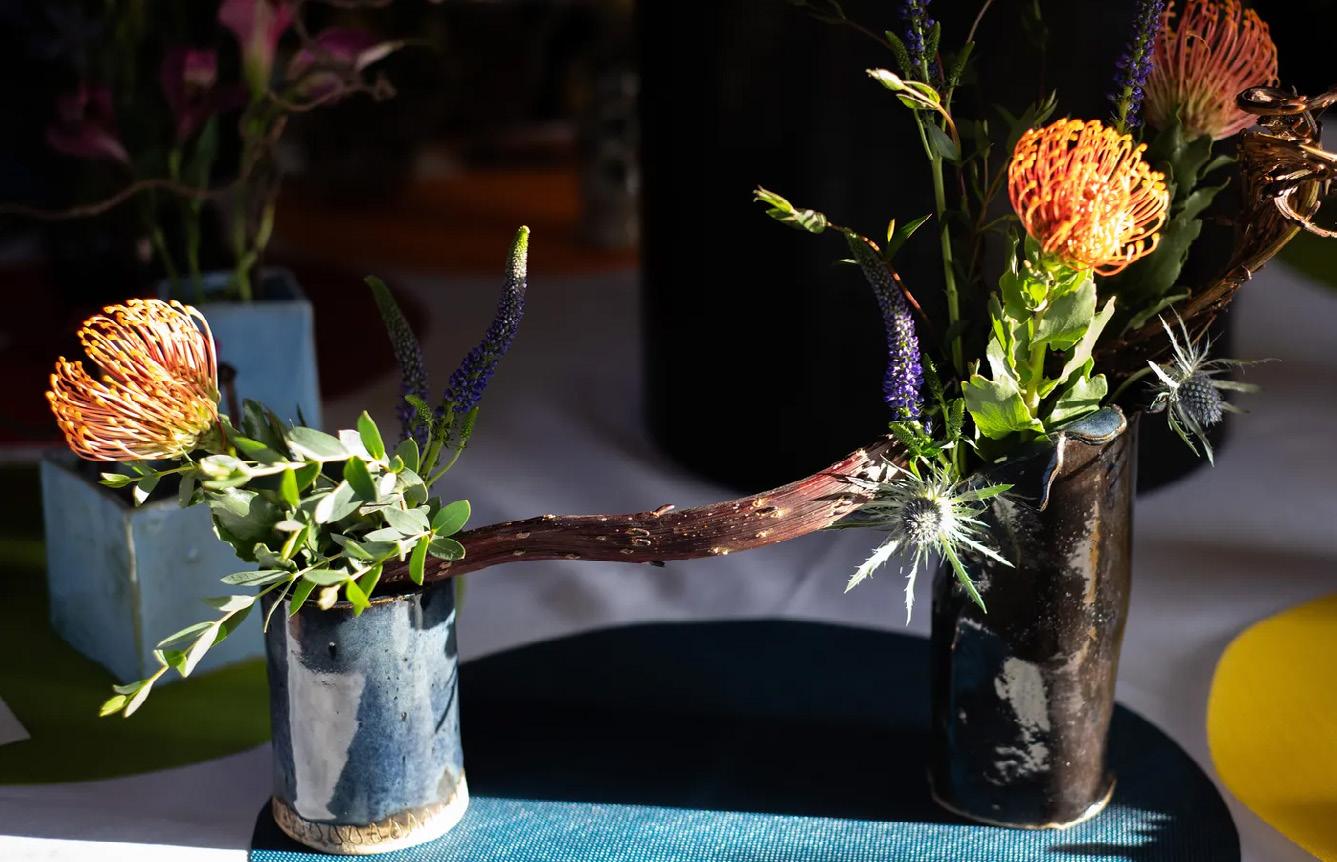
Perhaps nowhere was the theme of bridges more visible than in the partnership between Katy's ceramics students and the Framingham Garden Club. Each student designed and created two or three ceramic vessels that served as the inspiration for floral designs interpreting the exhibition's theme. Throughout the process, Garden Club members visited the high school to offer feedback, encouragement, and professional insight.
Watching students and experienced floral designers work side by side was a powerful reminder that creativity transcends age. Knowledge flowed in both directions. Students gained confidence and perspective from seasoned artists, while Garden Club members were energized by the next generation's imagination and innovation. The finished pieces reflected not only artistic skill but also the relationships formed along the way.
In many ways, this collaboration embodied the very essence of Bridges & Blooms. It bridged generations, artistic disciplines, and lived experiences. What began as a classroom project evolved into something much larger, a shared act of creation that demonstrated how communities grow stronger when people of different ages, backgrounds, and talents come together to learn from one another.
For Katy and me, the project was also a reminder that some of the strongest bridges are built through friendship. Decades after meeting as high school students, we found ourselves working together to create something meaningful and lasting, something our younger selves would have found inspiring. That full-circle moment may have been the most meaningful bridge of all.
American Flowers Week represents a unique intersection of passions–flower farmers and floral designers coming together to promote local, seasonal, and sustainable flowers. This truth is at the core of what distinguishes the Slow Flowers Movement from any other floral industry organization or initiative. It underscores the shared values and celebrates the important, tandem paths of both professions, as well as the ones who call themselves farmer-florists.
The talents of growers and floral artists is expressed beautifully through American Flowers Week. For the 11th year running, we again turn to botanical couture as a metaphor for the creative interdependence between flower farmers and floral designers. When these two fields reimagine fashion through flowers and foliage, everyone is inspired to change their relationships with flowers. Flower enthusiasts and gardeners join in the promotion by sharing photos of their backyard blooms and DIY designs across social media with the hashtag #americanflowersweek.
For 2026, American Flowers Week returns with a stunning botanical couture collection. We salute the growers who nurtured each stem and the expressions of talented floral artists who turned the stems into stunning garments and accessories. Their work is a tribute to community, collaboration, and creativity–and we can’t get enough!
AMERICAN FLOWERS WEEK 2026
amy rice.
Featured artist draws inspiration from her farm and garden
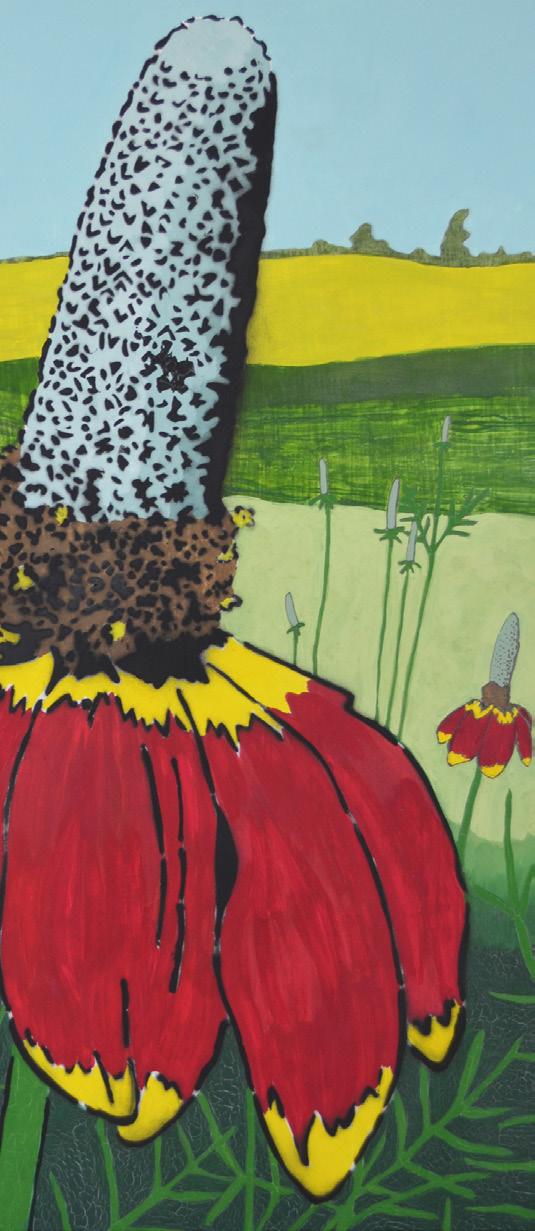
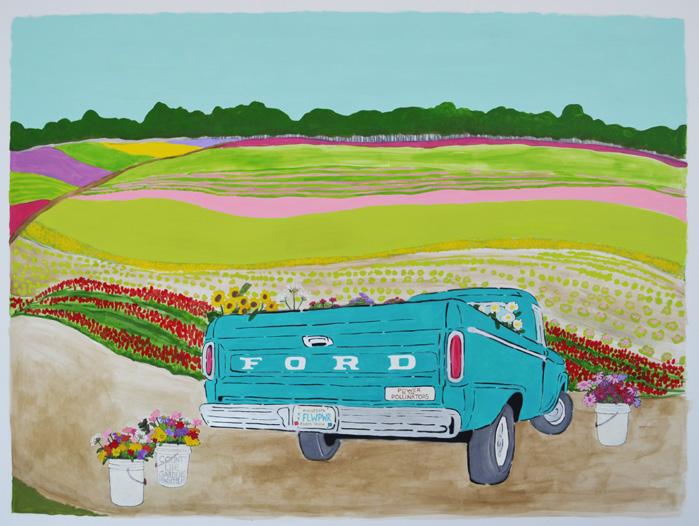
In the ongoing tradition of commissioning a signature work for each annual American Flowers Week celebration, we’re delighted to be collaborating with Amy Rice, a Twin City-based painter and printmaker, who for four years owned County Line Flower Farm. That’s what caught our eye – her flower farm-inspired artwork.
After Debra Prinzing fell in love with and purchased one of Amy’s linoleum prints, entitled “I Can Grow My Own Flowers,” she approached Amy about participating in the 2026 American Flowers Week project. Slow Flowers has licensed the rights for two of Amy’s pieces to use in celebrating this year’s American Flowers Week campaign.
AMY RICE’S ARTIST STATEMENT:
I use non-traditional printmaking methods
— including hand-cut stencils and a Japanese screen-printing toy called a Gocco printer — as a starting point for original mixed-media pieces. I use spray paint, acrylics, gouache, and inks, and print on a variety of surfaces including wood, fabric, and antique papers (preferring handwritten love letters, envelopes, journal pages, sheet music, and maps).
I am most satisfied when I can make a tangible or visceral connection between the materials used and the image rendered. My work is deeply layered, often both literally and figuratively. My imagery, nostalgic and wistful, is largely biographical and reflective of my pensive nature.
I am as inspired in my art as much by childhood memories of growing up on a Midwestern farm as I am the urban community in which I now live. I am influenced by bicycles, street art, gardening, and random found objects, collective endeavors that challenge hierarchy, acts of compassion, downright silliness, and things with wings.
AFW: Amy, we are so excited to collaborate with you this year to promote American Flowers Week! You describe yourself as a painter and printmaker. Can you tell us about your artist’s journey?
AR: I’ve made art my entire life with the exception of the four years I went to college to study sociology. I went to Augsburg University in Minneapolis. I grew up on a dairy farm in southern Wisconsin, and by the time I was done with college, I wanted to be an organic vegetable farmer. Of course, my parents were like, “um, no,” but I was determined. The week I graduated from college, I moved to northern Wisconsin and started working on a collective vegetable farm. Two years from that time, I had my modest vegetables at the farmers’ market in Bayfield, Wisconsin. But I also had all of the art I had made since college—art about wanting to be a farmer, etches of the first wheelbarrow, and my seed packages. People loved that way more than my vegetables and it was kind of a life-affirming moment. The next week, I went to the library in Ashland and I checked out a book – it was from like 1984 – called How to be an Artist. I just followed the directions.
AFW: You were 21 or 22 at the time?
AR: Yes, just fresh out of college. And then, another three years after that, I had my first solo exhibition. It was in a bar! But throughout that time, I was trying to find a balance between wanting to be a farmer and loving my life in the city. Wanting both has been my entire life’s story.
AFW: So, it’s almost like you drew or painted the life that you wanted.
AR: Exactly. My art career was kind of an accident. I always wanted to make art as a hobby. Northern Wisconsin was hard living. I was really poor and it wasn’t a great zone for growing vegetables during a five-month season. And when people liked (my art) and were buying it, I ended up moving back to the city. I started working with people with disabilities and I had a 20-year career as an activist for art and disability. Fifteen years ago this week, I decided that I was going to focus on my own art. I’ve been a full-time artist now for 15 years.
AFW: Do you describe yourself as “self-taught”?
AR: Well, I was in a studio for people with disabilities for 20 years. It wasn’t art therapy. I worked with folks who had master’s degrees in art whose disabilities made it so that it was an obstacle for them to make art as a living. So it was a vocational program. I learned so much about helping others with their art careers and I learned a lot about how to do that for myself. I was showing artwork to galleries for clients, and I was meeting gallery directors and making connections. It was kind of nerve-wracking and scary!
FLOWER POWER ENAMEL, GOUACHE AND ACRYLIC 24" X 32", 2018
AFW: Where did you sell your art in the early years?
AR: I was one of the first people on Etsy. For the first few years, it was absolutely amazing. I haven’t been on Etsy in years and years, but they helped me create a huge reach. They posted my work and that was pretty fantastic. I eventually got to the place where my art career was doing so well and the program for artists with disabilities was doing so well, and I couldn’t be good at both! There’s a lesson in there that I just cannot learn right, since I started flower farming with a successful art career underway.
AFW: Have flowers always been among the subjects of your art?
AR: I want to tell you my cut-flower origin story! I grew up on a multi-generational farm. I remember as a kid, we were entirely self-sufficient, food-wise. My mom and dad and brother and I had an extensive vegetable garden. Almost everything we ate, we grew and canned ourselves. It was the 70s, and my mom started working outside the home at the time when many women were starting to do that. It was late winter and we were planning our gardens. My mom came home from work in town and she had two things: A can of green beans from the store. And cut-flowers—I believe they were tulips. And she had an announcement. There was a lot of math, and I don’t remember how much per hour she made at her job, but the can of green beans cost 40 cents. The result of her announcement was that she was not going to grow green beans anymore—she was done. Instead, she was going to turn the
entire row of green beans into gladiolas, because flowers gave her joy and green beans only cost 40 cents. By the time I left for college a decade later, that entire garden was gladiolas and babies breath, and our house was filled with cut-flowers. There’s never been a time where my mom doesn’t have fresh cut-flowers in her house, no matter what the finances were. Even a few were important to her. And so, they became very important to me!
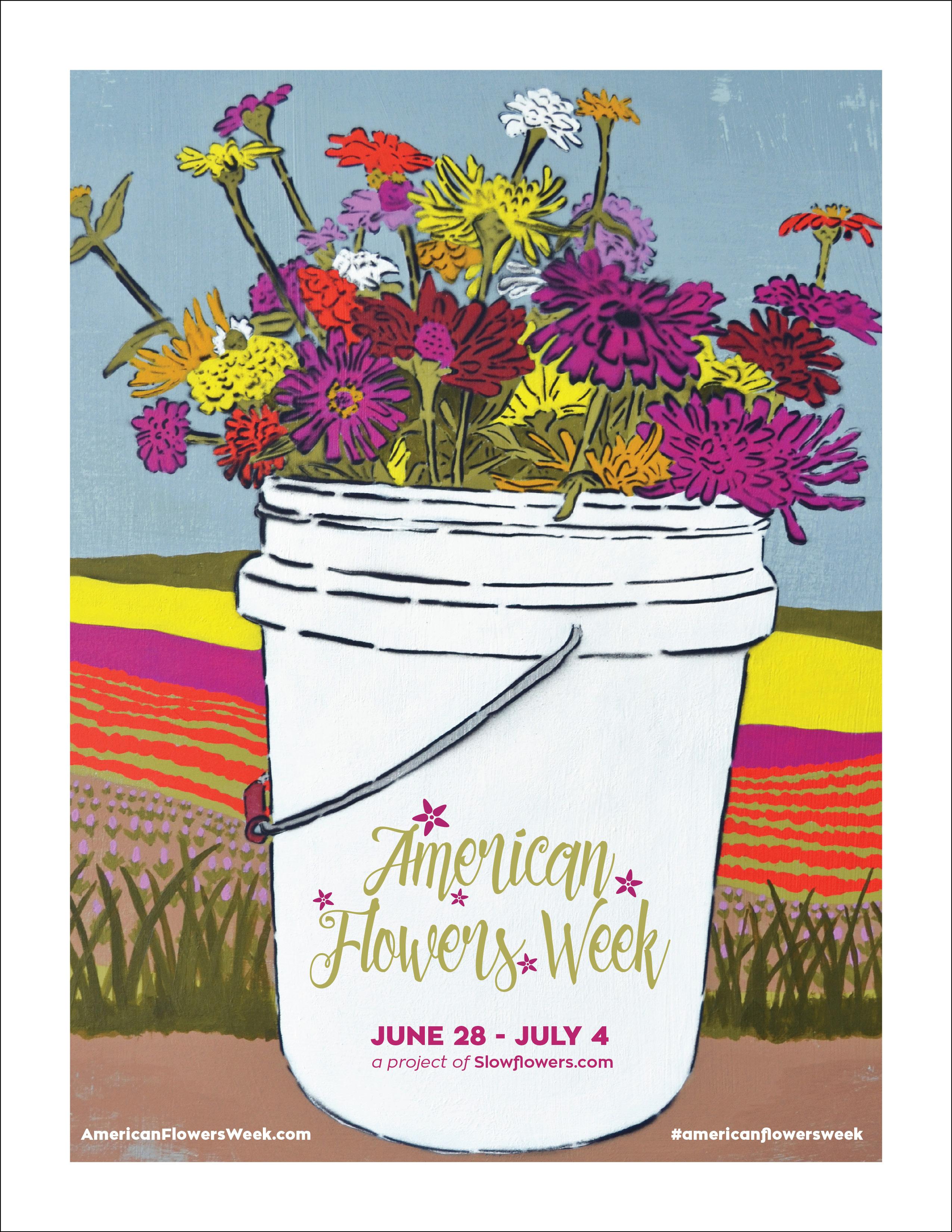
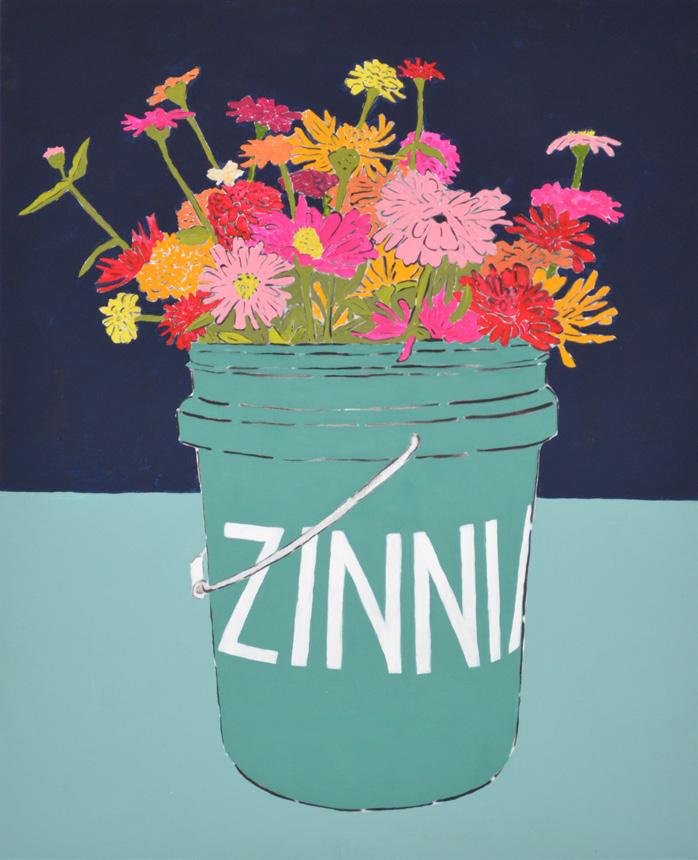
AFW: Can you tell us about the second image we selected for American Flowers Week? The white bucket filled with flowers?
AR: Yes, that was actually the logo for our flower farm.
AFW: That makes us so happy! Can you talk about the actual technique used for these two pieces?
AR: So both of the pieces were made with stencils that I cut by hand. I do the drawing and then I cut stencils from a piece of plastic. It’s like that material you would see if you had a plastic sign that read “Garage Sale.” It’s a very durable plastic that will let you use over and over again. Once I spray the stencil, the image looks like a big blackand-white coloring page. But then I paint it in and reapply the stencil and then cover that again. I often cut up the whole thing and collage it together in different ways.
AFW: It has a mixed-media sensibility, right?
AR: Yes, mixed-media. I wrote a book called Playing with Stencils. I don’t think it’s still in print but you can definitely still find it.
AFW: It sounds like you developed your own technique.
AR: Yes, I developed it. I love applying the black with the stencil with super-flat camouflage black paint. Once that dries, you can start painting with other colors. My early inspiration was graffiti and street art.
AFW: What are some of the pieces that you sell through your studio?
AR: Almost everything is original. I do sell some digital prints, and I make cards from digital prints. My linoleum prints are hand-pulled, so each is an original. Most often, I print on antique ledger pages, or my grandfather’s homework, or sheet music, journal pages, and love letters. I love finding old love letters to print on!
AFW: What are you working on presently?
AR: I received a Minnesota State Arts Board grant this year and the money gave me the opportunity to be a better printmaker, including to find better tools and to
explore the kinds of papers I could print on. The theme of the grant is “Hand Crafts,” including things that my grandmothers passed down, such as embroidery, lacemaking, mending and sewing. There’s also a community component, so for mine, I’m going to be teaching small workshops on mending. I was going to do an embroidery class, but then I realized that people don’t even know how to thread a needle. Mending is something close to my heart (and it was to both of my grandmas), so I’m going to make linoleum printed patches on found fabric and then people will have the opportunity to bring some clothes to mend with them at different venues this summer.
AFW: Where do you make art?
AR: My studio is on the top floor of a sixstory brick warehouse and I have a view of the Mississippi River with gigantic, westfacing windows. That makes it unusable in the afternoon for a good part of the summer, like it’s just too hot to work there. So in the summer, I start my day before the sun rises and go to my studio to work really early. And in the winter, I’m a sleeperinner. But I spend time at my studio almost every day (I have a home studio and I have a studio at the cabin, too). I get crabby if I don’t get to make some art!
AFW: When is your next studio show?
AR: It’s coming right up on May 15th-17th. It’s the largest art crawl in all of North America. It’s 31 years old, called Art-a-Whirl. And my studio is in the original building. There are 120,000 people who attend, and easily, there will be 5,000 people coming through my studio in three days. This is my 23rd year, so I’m used to it, and I can make a big part of my income in three days.
AFW: How do you price your work?
AR: I sell stickers for $4 and I have a $4,000 painting. Last year, my median sale price was $50.
AFW: It sounds like a wonderful tradition for people to support local artists!
AR: It is. I live in the best city and state for art-making. We’re super supported. Artists are appreciated. There’s a lot of opportunities. It’s part of the reason my flower farming was successful, because the people who supported my art were excited to support the next thing I wanted to do.
FIND AND FOLLOW AMY RICE ART: WEBSITE
AMY RICE ON INSTAGRAM
COUNTY LINE FLOWERS ON INSTAGRAM
BUCKET OF ZINNIAS
ENAMEL AND ACRYLIC 20" X 16", 2019
lilY Luxe
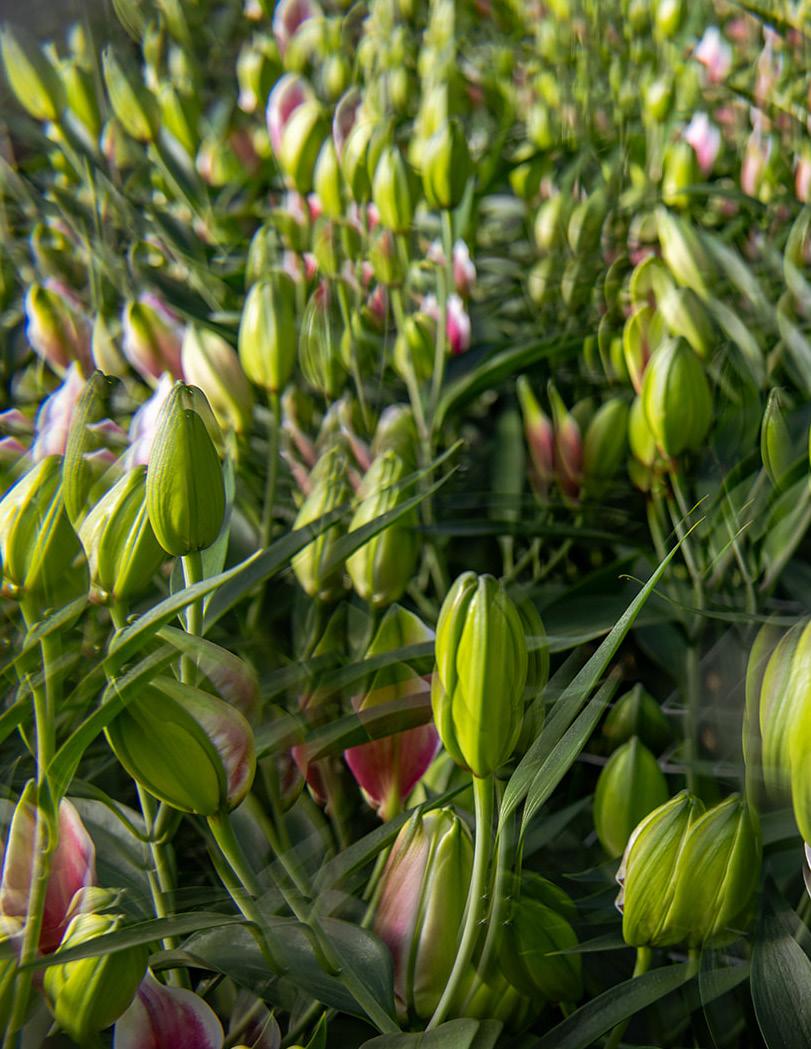
Botanical artist Françoise Weeks reveals the haute couture character of lilies in their many forms
The name of floral artist Françoise Weeks is synonymous with botanical couture. As an educator, she has taught her creative techniques and mechanics to thousands of students around the globe, as well as from her Portland, Oregon-based studio, and online. But she doesn’t claim to be a fashionista. “It’s pretty funny, because I’ve never been interested in fashion,” said the Belgian-raised florist, whose career has evolved from wedding and event design to her present focus on botanical couture, woodland design, and large-scale installations.
“I’ve never bought fashion magazines or anything like that! But something sparked my interest and curiosity almost 20 years ago when I saw a feature of a table setting in this gorgeous Parisian apartment; the hostess gifts were little botanical purses by each plate.” Inspired, she experimented, first fashioning floral clutches and handbags. “Next, I taught myself how to decorate shoes. And then, in 2011, a photographer friend asked me to collaborate and create headpieces, which I’d never done before. I started to enjoy the process.”
A mentor to many in the Slow Flowers community, Weeks recently appeared as a keynote presenter at the 2026 Slow Flowers WORLDWIDE Summit. Slow Flowers asked Weeks to create a botanical couture look for this year’s American Flowers Week collection, an idea originally proposed by Flowerbulb.eu, a Slow Flowers sponsor that promotes U.S. lilies grown from European bulbs to educate gardeners, flower farmers, and florists.
Weeks agreed to design and create a lily look for American Flowers Week. “But I was hesitant, because the petals are super fragile,” she explained. “I knew that I would have to deconstruct the lily flowers, and then I needed to transport the finished garment to the photography location. So, I suggested that I create a stole and a headpiece instead of a lily dress.” She based this on past experience—having learned that when working with delicate botanicals, smaller pieces are more successful. “It’s all trial and error,” Weeks maintained. “If you’ve never worked with a particular flower, you need to test it before making a final piece.”
Fortunately for this production, Peterkort Roses supplied Weeks with hundreds of lilies and accent flowers from their greenhouses outside Portland, Oregon. Peterkort Roses is a third-generation farm whose flowers Weeks has sourced for years. “It was very generous of them to give me extra lilies a couple of weeks ahead of time, so I could do some testing and get a better idea of how to work with the deconstructed flowers,” she pointed out.
Weeks scheduled extra days to allow lily buds to fully open in her studio at room temperature, and she produced the two looks a few days prior to the October 2025 photo shoot. “I was trying to get all my lilies to open at the same time,” Weeks said. “The ones that opened a little earlier went into the cooler until production day.”
StOle
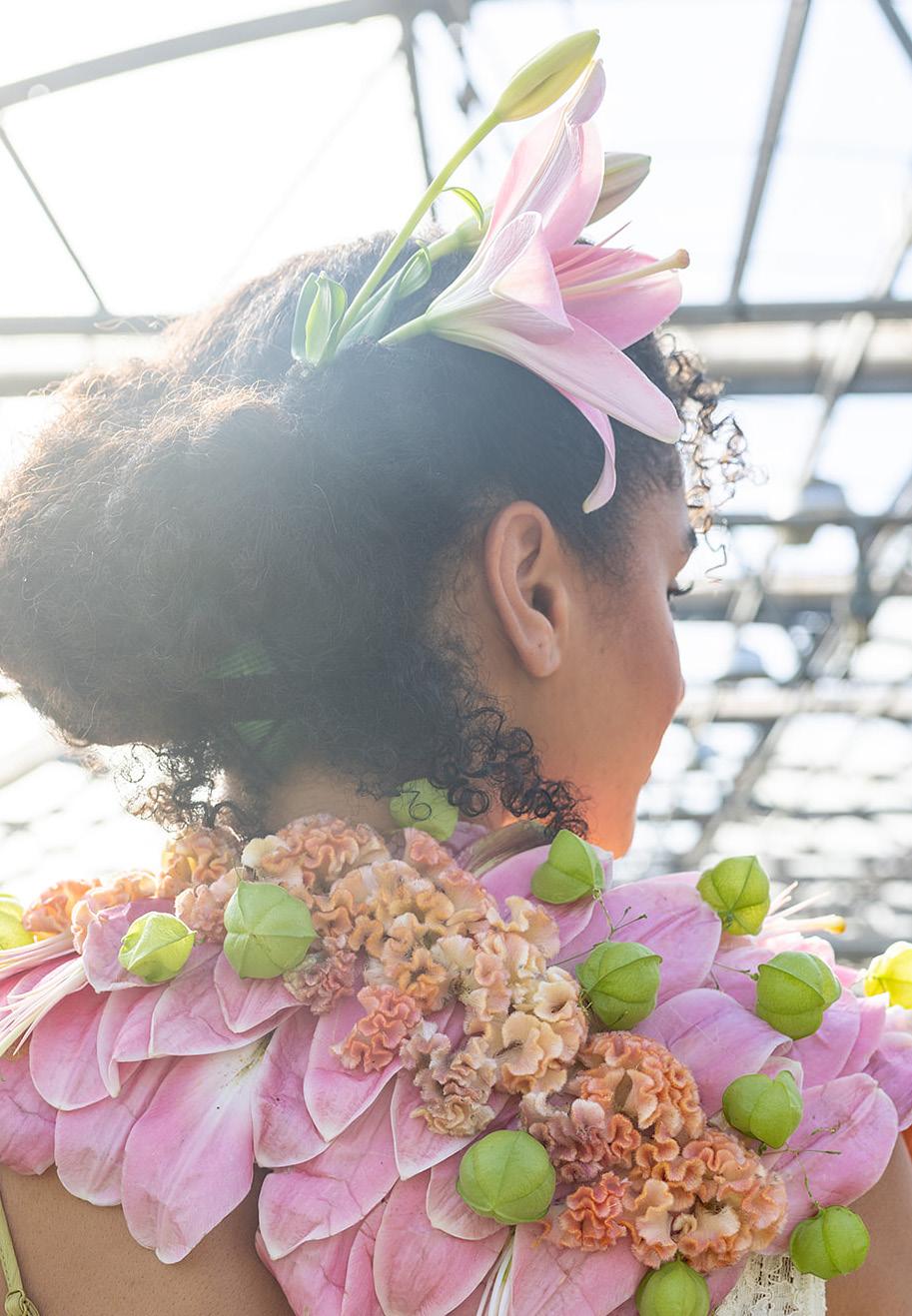
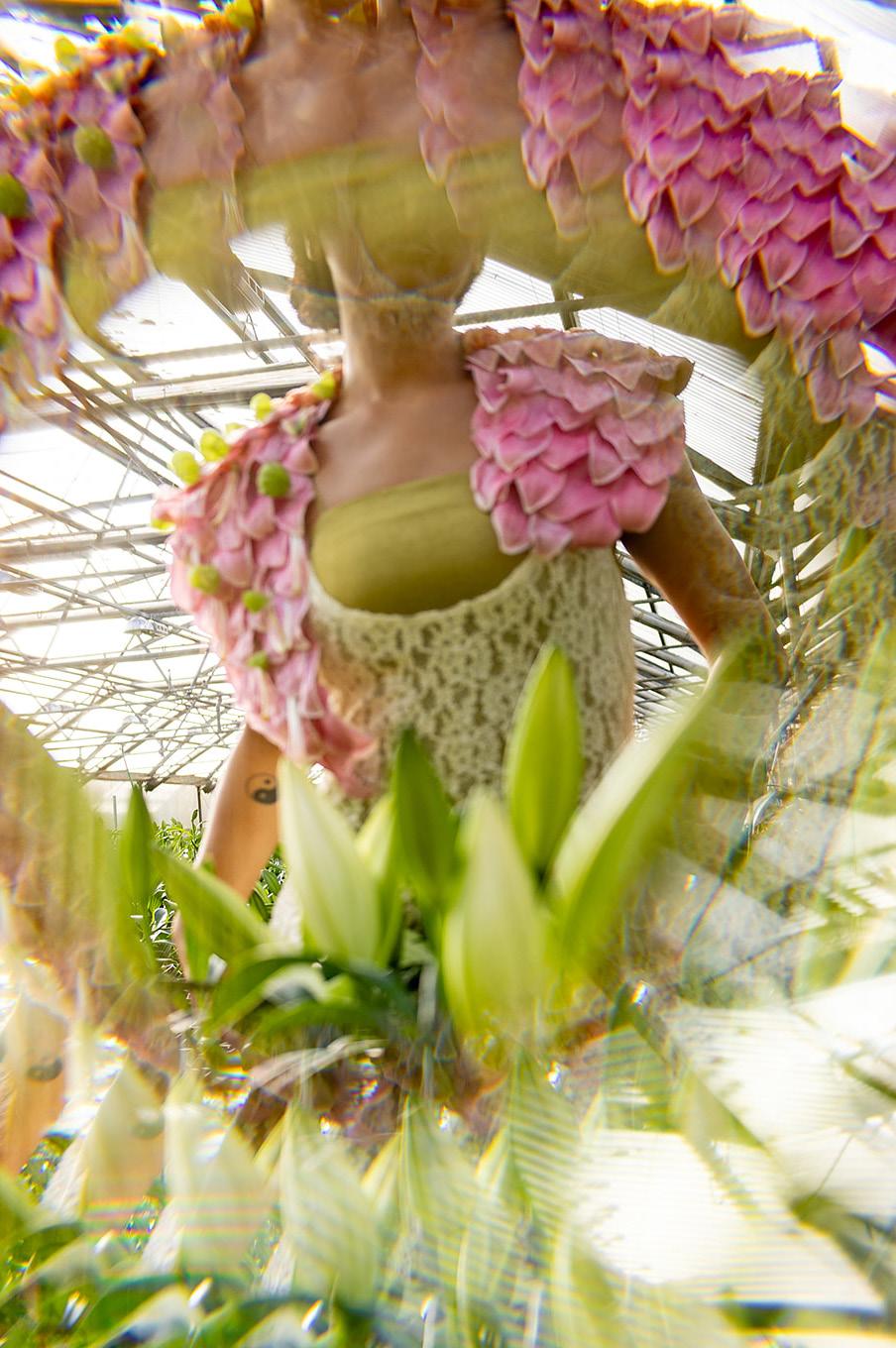
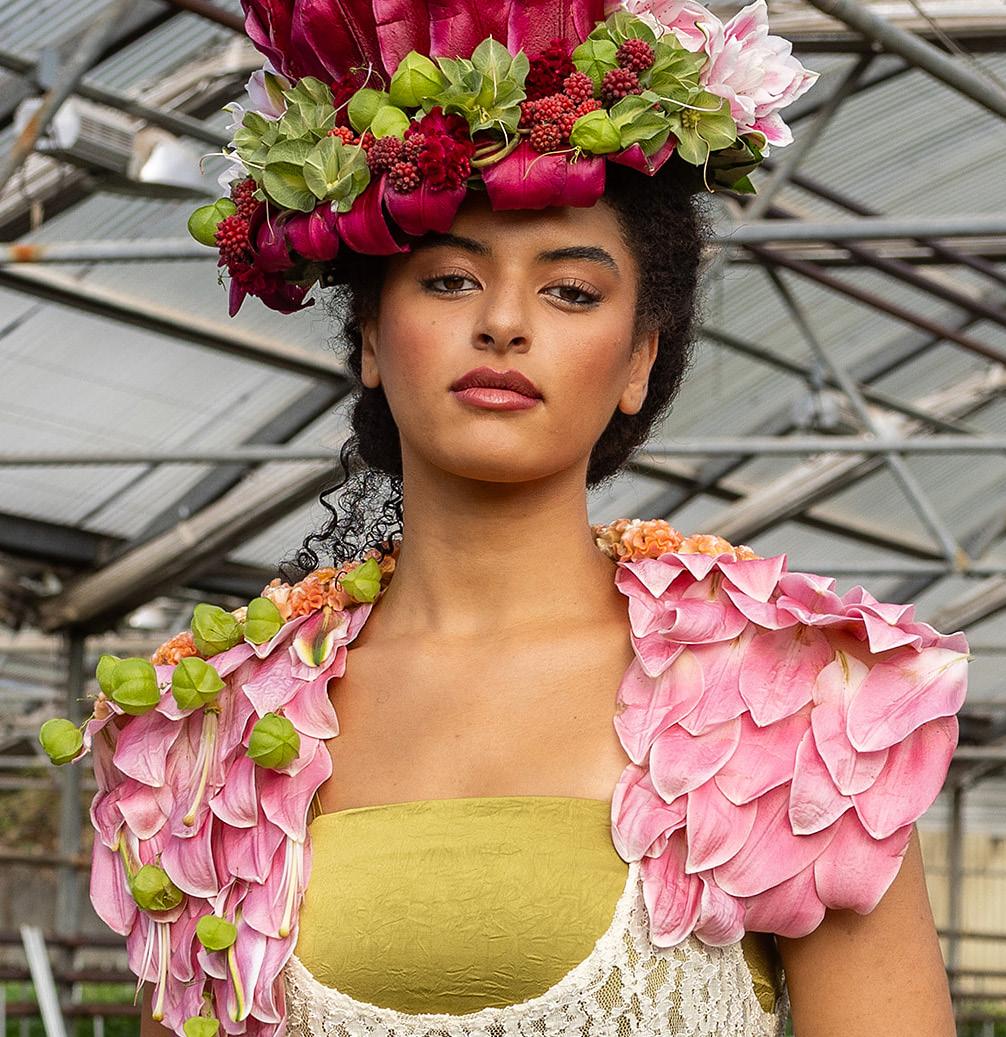
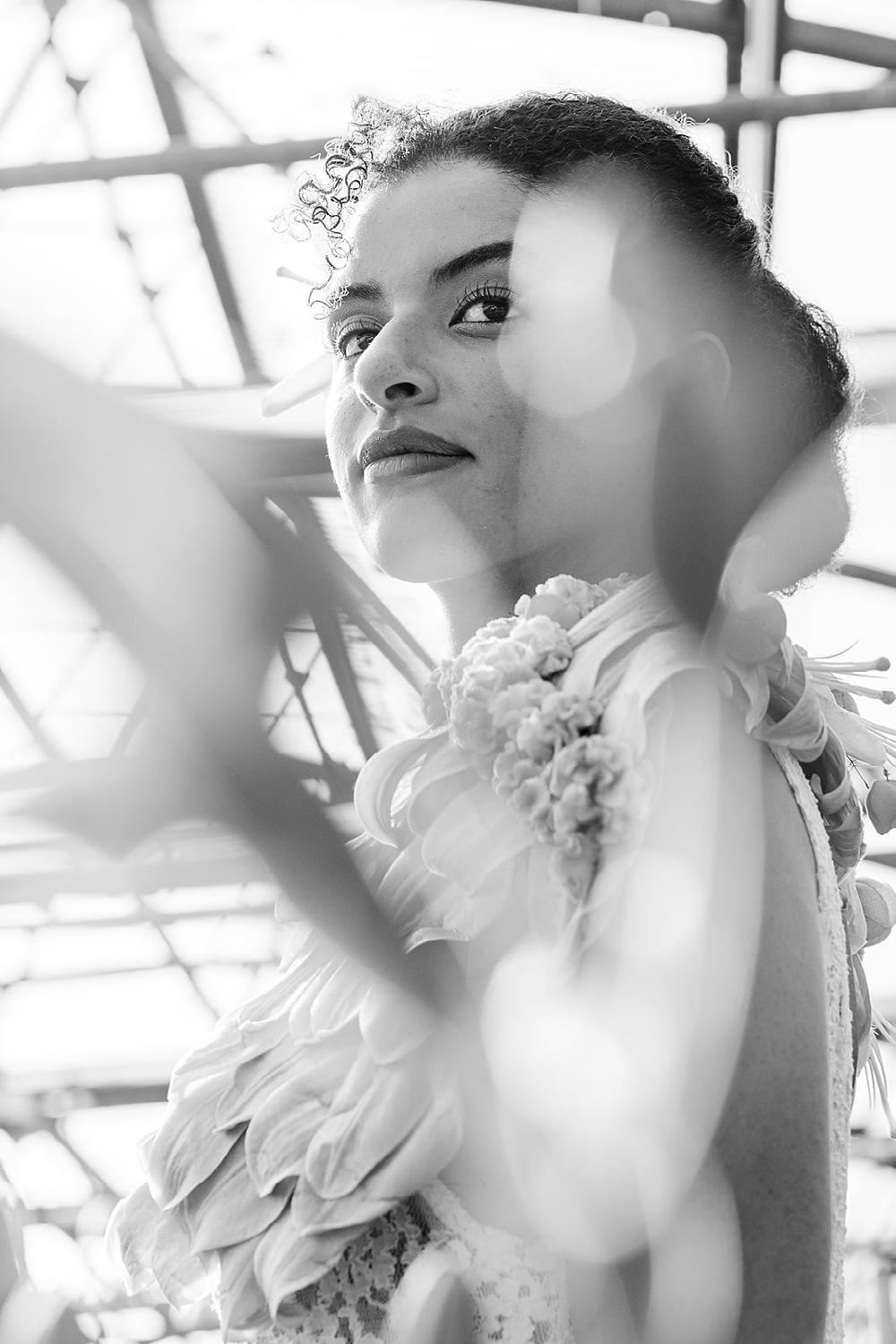
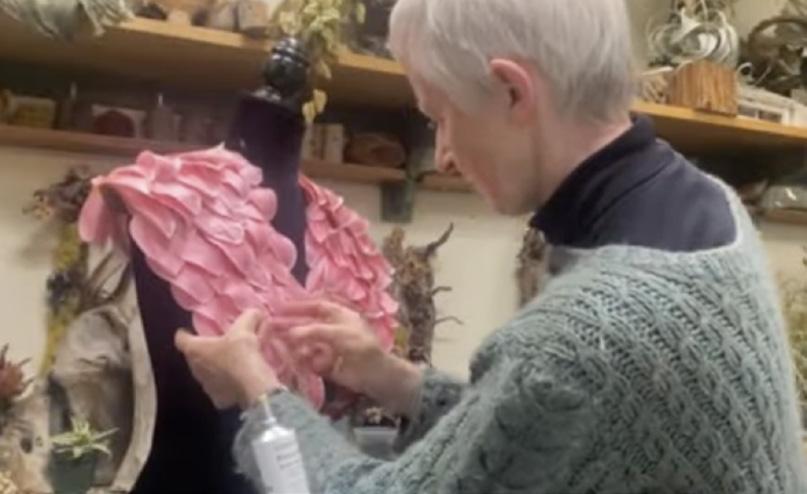
To make the asymmetrical shawl (also called a “stole”), she crafted a paper pattern, using it to cut out a piece of felt in the desired shape. Working with the felt draped over the shoulders of a dressmaker’s mannequin, Weeks methodically covered its surface with rows of pink lily petals. She placed a dot of cold glue to the bottom of each petal and layered staggered rows of petals, one over the next. This overlapping technique hides potential discoloring or cracking from the glue on tender petals, while also adding dimension to the design, Weeks said.
Additional botanical elements adorn the stole: Lime green love-in-a-puff pods from Weeks’ garden and peachtinged coxcomb celosia (grown by Peterkort) seemingly dance across the surface of the lily petals. Clusters of deconstructed lily stamens, randomly added as fringe-like “embroidery” are a delightful finishing detail. The shimmery pink lily petals complement the model’s ivory lace dress, under which is worn a lime-green slip.
Top hat
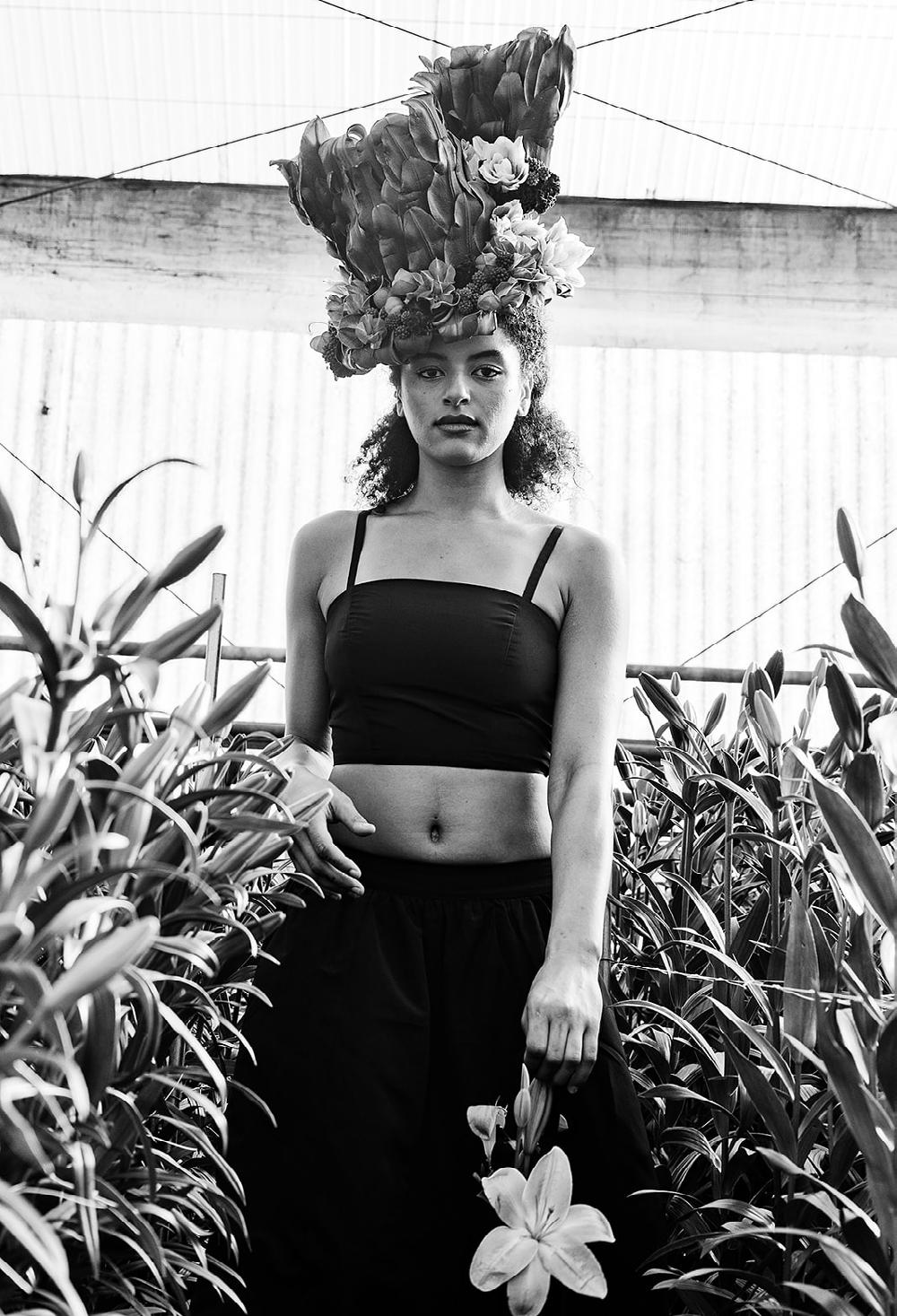
Known for her botanical fascinators and floral headpieces, Weeks envisioned an exaggerated top hat for her model. “I follow a lot of milliners on Instagram to get ideas for hat shapes and I really liked the idea of a floral top hat,” she said. Unique mechanics form its dramatic shape; for the brim, Weeks used half of a large-sized Holly Chapple “pillow”; she shaped the stovepipe-style crown from aluminum mesh sheeting. These elements were first covered with adhesive Press'N Seal Food Plastic Wrap and fastened together with zip ties. “The Press'N Seal covers the plastic and metal, which allows me to glue on salal leaves to hide the mechanics,” Weeks explained.
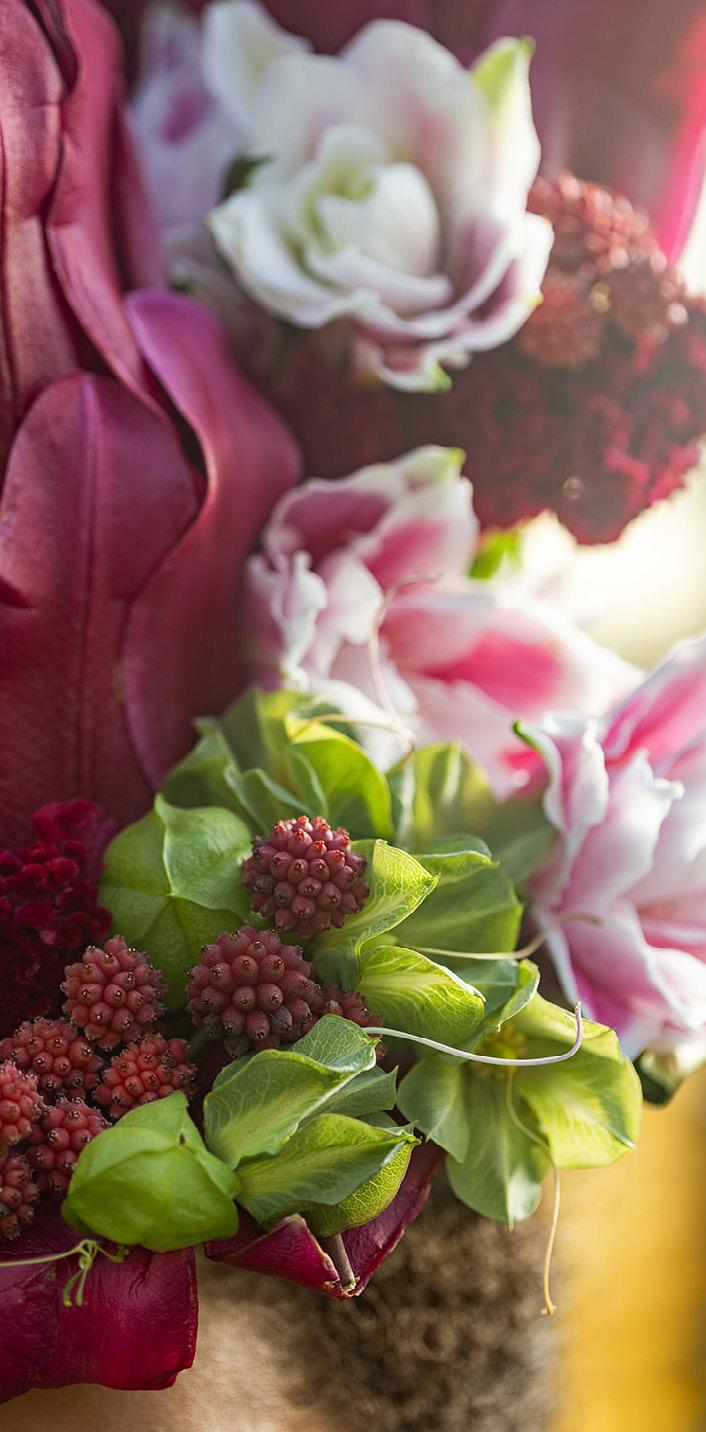
A one-inch-wide plastic headband was added to the base with zip ties. This was secured to the model’s head with bobby pins. Weeks adorned the crown and brim with dark-pink lily petals, using cold glue to layer them as she did with the stole. The scale of the hat also accommodated clusters of Peterkort’s elegant pink-andwhite double lilies around the brim. Weeks harvested and collected more lime green elements that from her garden, including love-in-a-puff pods and seed pods of Cobaea scandens (also known as the cup and saucer plant). Berry-colored pods of a Kousa dogwood tree(Cornus kousa) echo the intensity of the lily petals.
stoRage & traNsport
“I learned how to create a hydration chamber from Gregor Lersch in 2018 and it was a game-changer,” Weeks explained, crediting the German-based educator with whom she has taught. “When it comes to making designs that do not have a water source for several days ahead of a photo shoot, this is a fabulous technique.” The method includes placing the finished piece in a plastic storage box and covering it with moist, but not sopping wet, paper towels. A secure lid turns the sealed box into a humid environment that keeps petals and blooms looking plump and hydrated for several days. Weeks recommends testing this method in advance of an event or photo shoot. While in many cases, boutonnieres, corsages, and other botanical wearables maintain a fresh appearance for up to five days, her testing revealed that the tender lily pieces held for two days.
The photo shoot’s greenhouse setting served as the perfect backdrop to showcase Acariyae McCrae modeling the stole, the top hat, and the two pieces worn together. With hair and make-up by Katherine Sealy of Event Cosmetics and photography by Theresa Bear, Weeks’ frequent collaborators, the lily looks express a feminine attitude, along with a sense of playfulness, as pictured among endless rows of lily production on an American flower farm.
Flowerbulb.eu and their U.S. lily bulb vendors have partnered with Slow Flowers to provide beautiful lily inspiration and farming resources to help growers and florists connect their customers with more lilies. Learn more at Flowerbulb.eu
Marigold Merriment
Strands of floral garlands are draped and transformed into a whimsical outfit, inspired by a medieval page boy costume
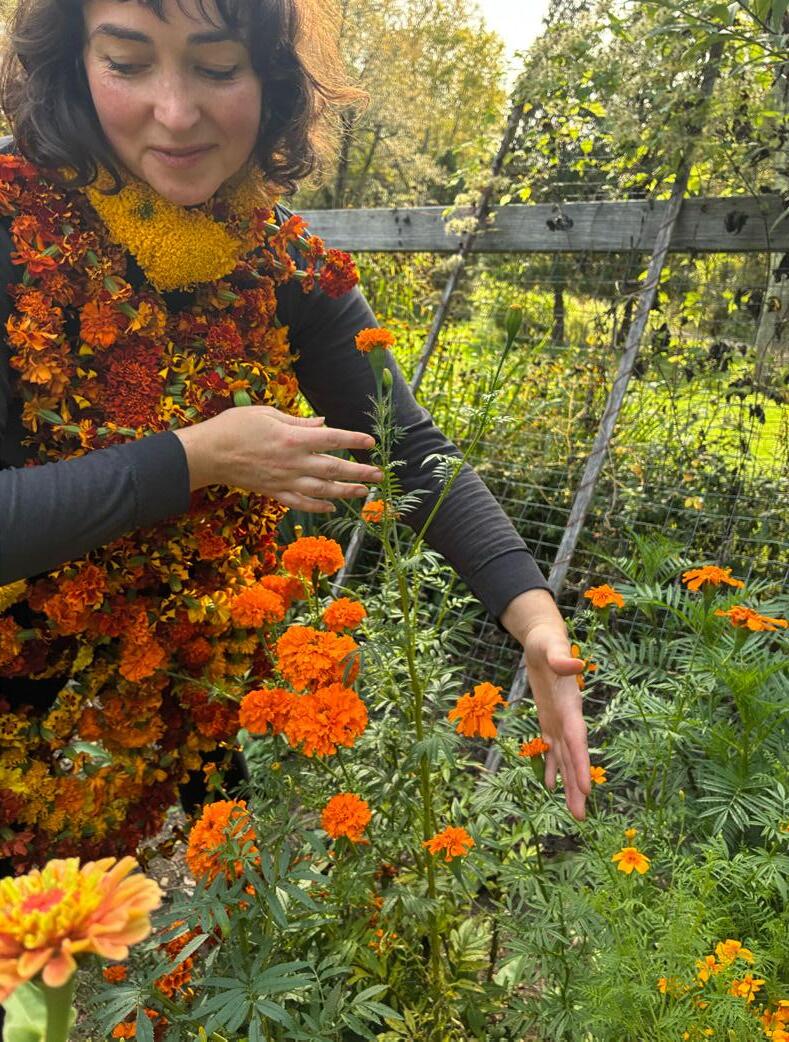
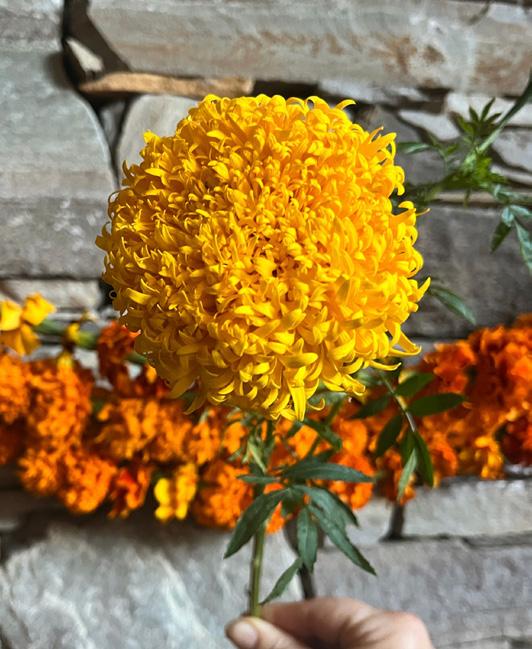
The Marigold Gardens is a singular flower farm that produces more than 40 marigold varieties for garlands and event installations, market bouquets, and use by chefs, bakers, and textile artists. According to founder Caitlin Mathes, “the marigold has given me so much joy and inspiration that I felt the need to become a grower, steward, advocate, and cheerleader for this wonderful flower. It is high time marigolds had their praises sung and I look forward to growing The Marigold Gardens into a beautiful destination for all things marigold.”
Based in Groton, in New York’s Finger Lakes Region, Mathes is a trained opera singer and cabaret performer. When establishing her marigold-themed specialty cut-flower farm, Mathes named it after a 1920s Chicago nightclub, where singer Ruth Etting famously performed. “I could wax poetically about singing and flowers. They both are given away and are ephemeral—sent out and then remembered for the effects they carried. Whether I'm singing, or making floral art with marigolds, I just want to share and provide folks with an experience."
What’s nice about having this niche is that the marigold is the medium. Marigolds are energetic, so versatile, reliable, and truly, splendidly beautiful, like good friends
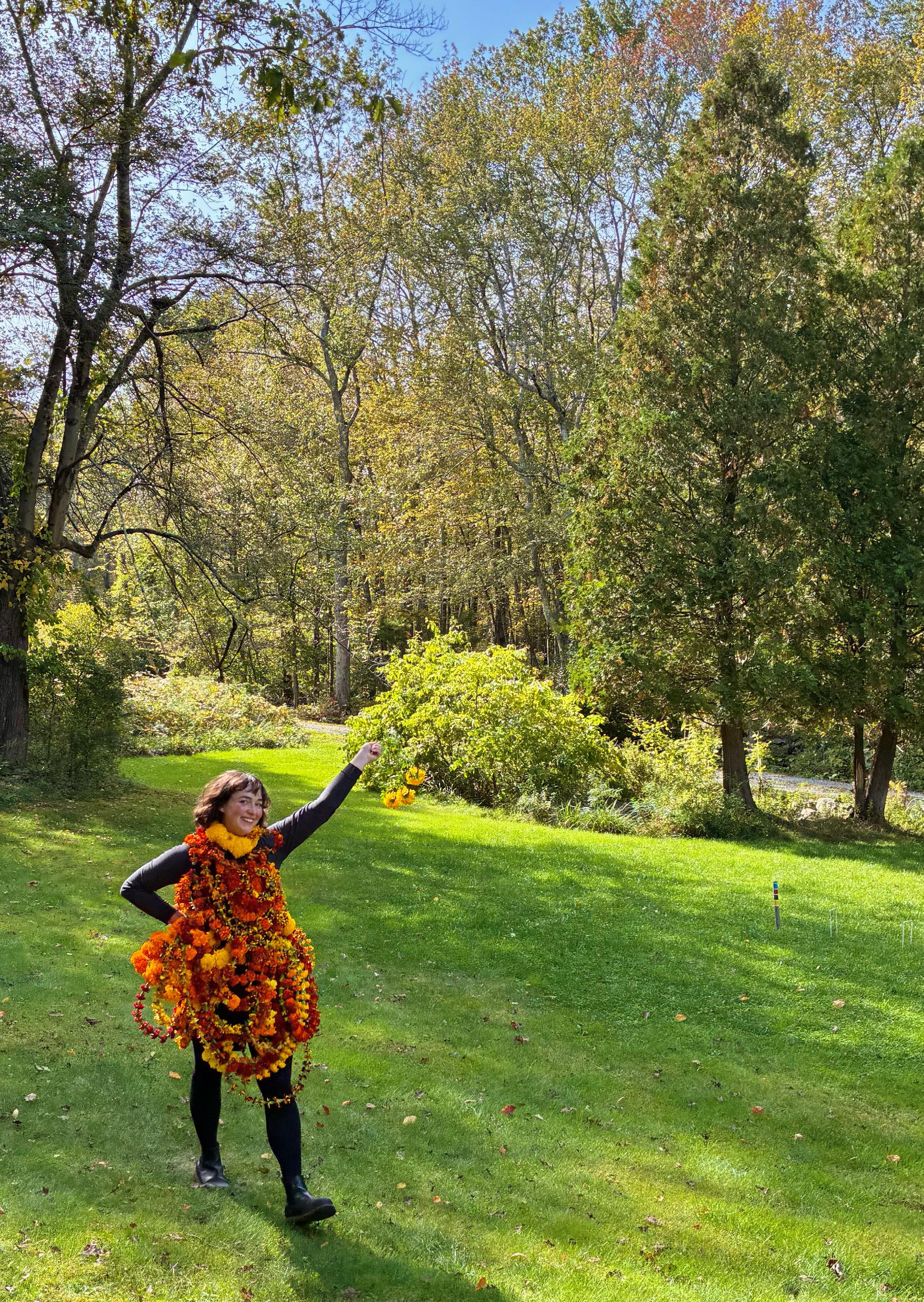
She calls herself a marigold monger, which is just one role filled by this maker, performer, librarian, and agrarian. Slow Flowers invited Mathes to create a marigold garment for this year’s American Flowers Week botanical couture collection and she joined in the fun by growing, designing, fabricating, and modeling a playful look that showcases the beautiful diversity of the species Tagetes and its many cultivars.
The origin of Mathes’s charming, medieval-inspired marigold garment are rooted in a project she launched last year, the Mari-Guild, a playful way to connect with other marigold aficionados. She gave Mari-Guild members playing cards depicting favorite marigolds, sent them marigold seed collections, and produced animated short videos for social media, all in the pursuit of spreading marigold love.
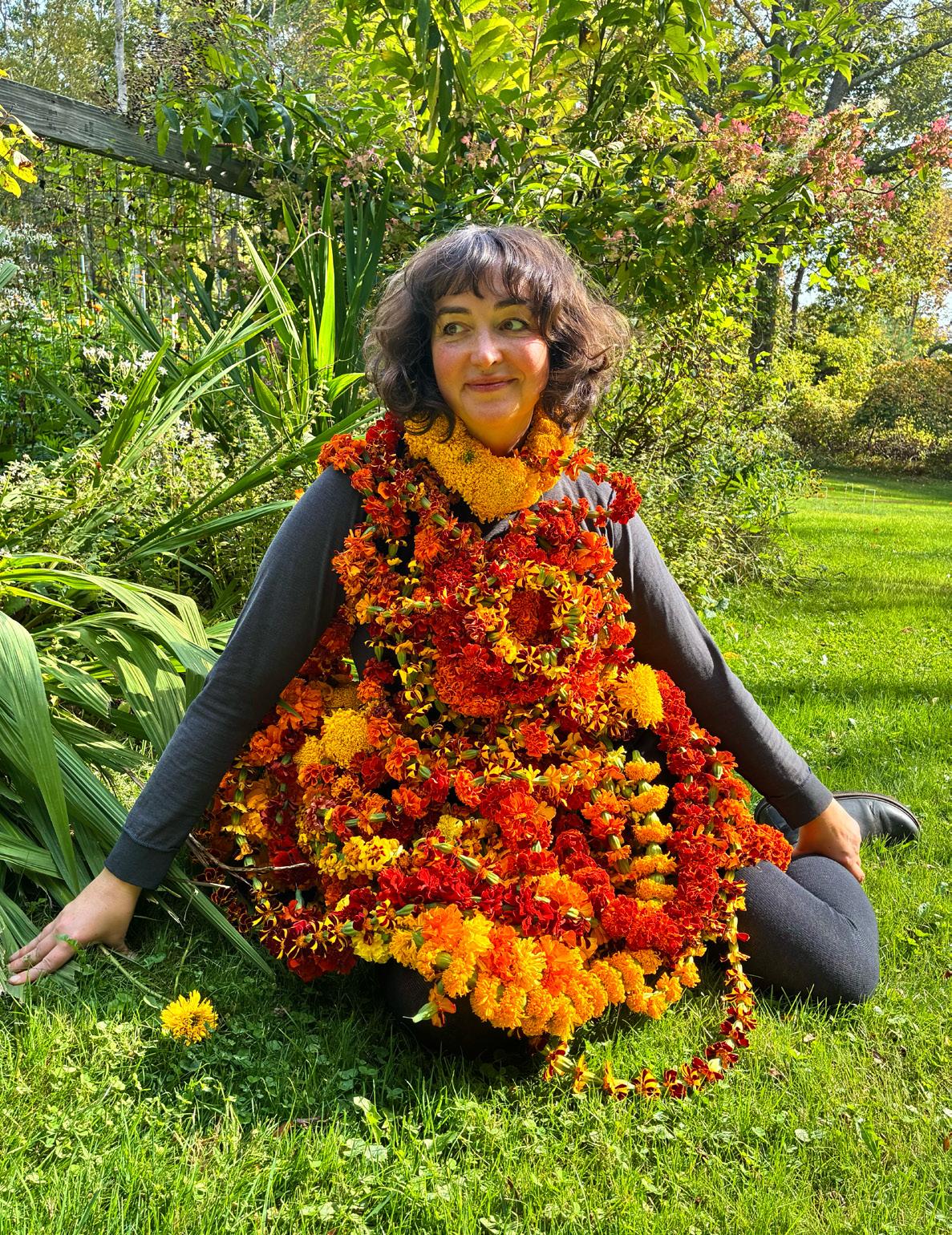
For American Flowers Week, Mathes created a two-piece marigold outfit, pairing a halter top with panniershaped shorts, drawn from vintage theatre costuming.
“The outfit’s silhouette has medieval imagery. In my opera career, I have often sung ‘trouser roles,’ particularly page boys. I also have a photo, probably from the 1940s, of a woman in a page boy costume with a sword. These outfits usually include a structured top and poofy shorts.”
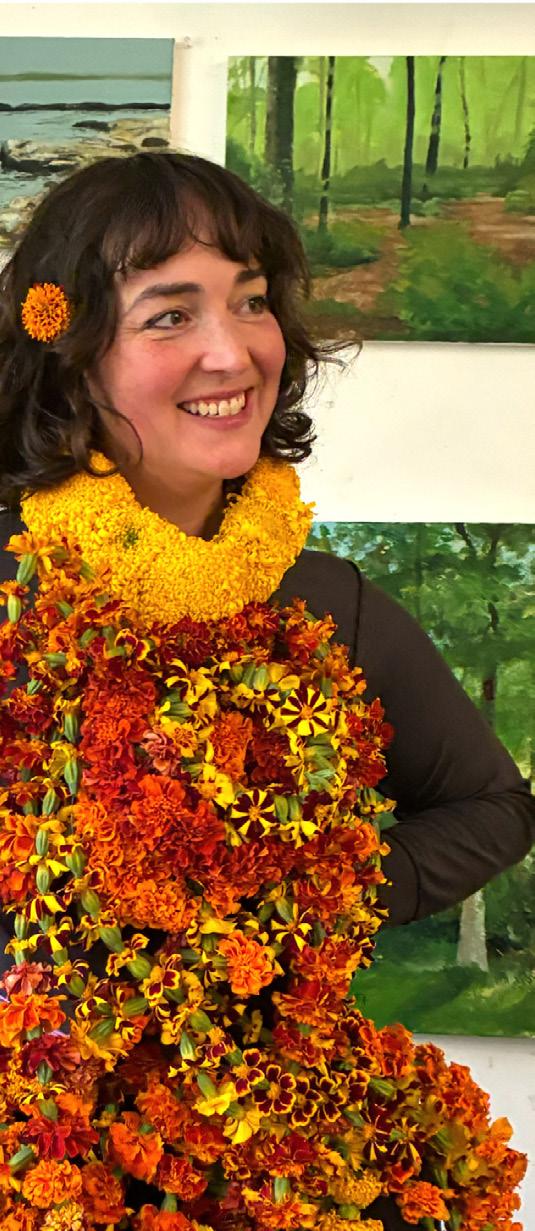
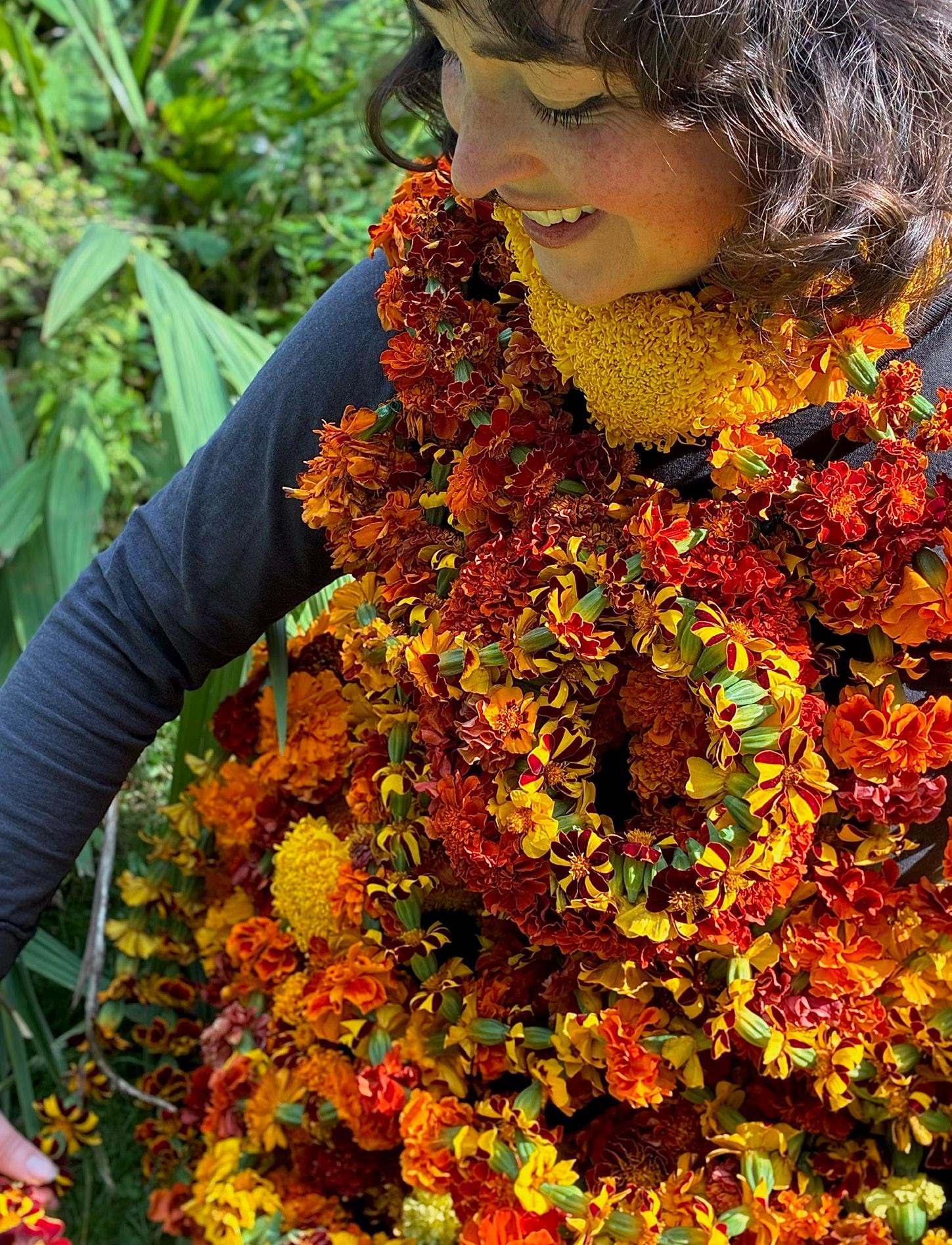
For the halter, Mathes attached strands of marigold-threaded garlands to a neck ruff made from giant yellow, chrysanthemum-style ‘Mission Yellow’ marigolds, draping and tying the pieces around her
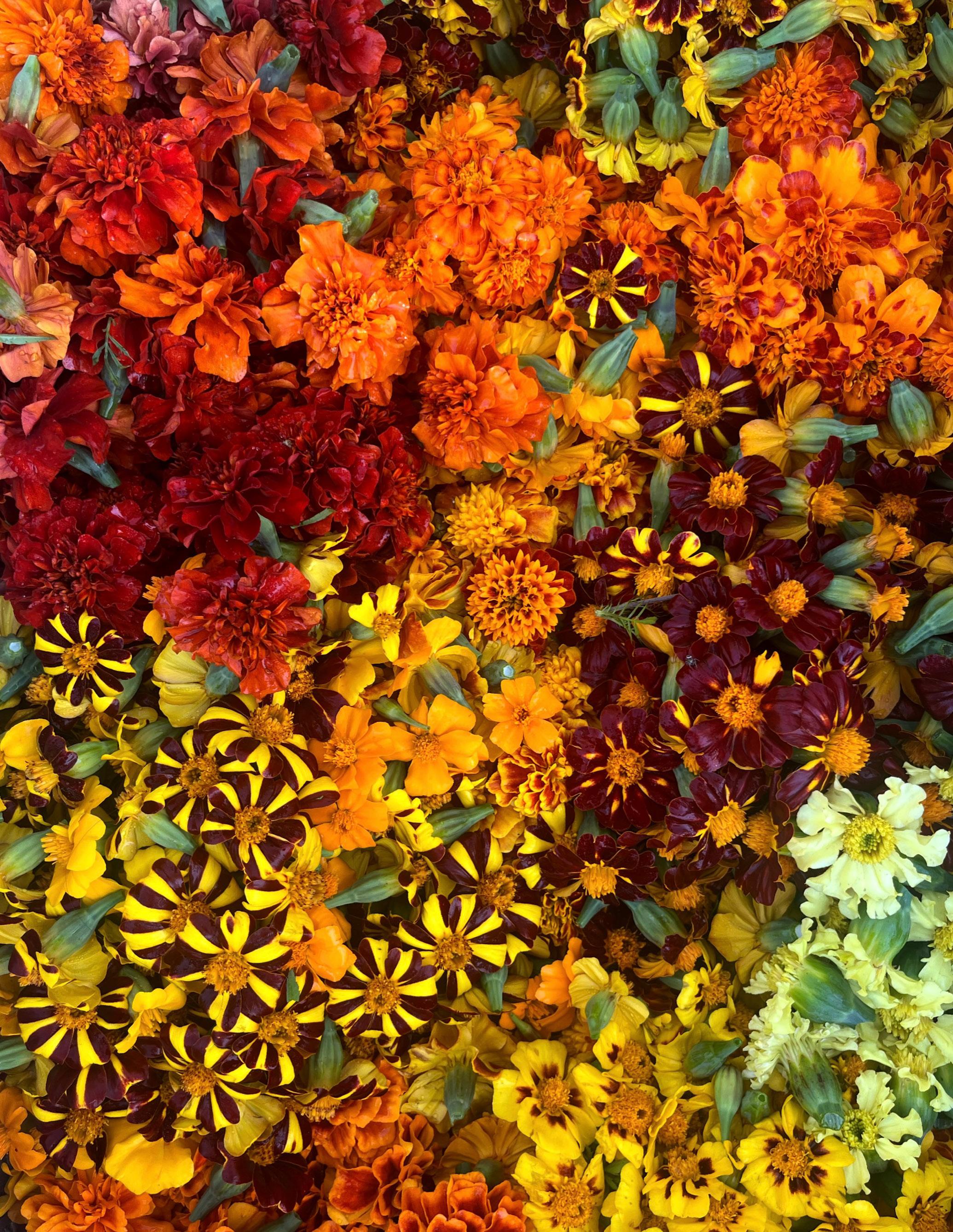
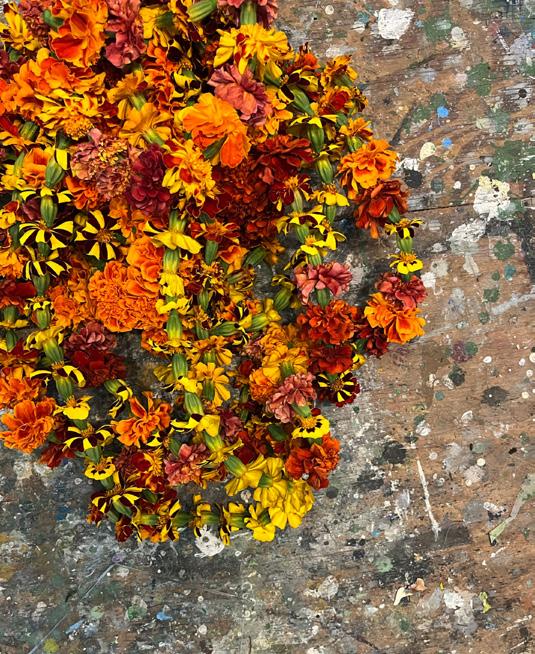
waist. The garlands are threaded two ways—top-to-bottom and side-by-side—and both methods create the impression of a patterned print, thanks to the swirls of golden, orange, and burgundy flowers and the cup-like green bracts at the base of each bloom.
Black tights complete the page boy look, worn beneath upcycled men’s pants, cut to create kneelength shorts and cinched high on her waist. Mathes stuffed paper in the baggy pantlegs to exaggerate the pannier shape at her hips. Long
strands of marigolds are attached to a belt around her waist, with layered loops of flowers embellishing the garment’s surface. Harvested at the peak of summer, hundreds of marigold flower heads appear in the finished outfit, which the flower farmer joyfully modeled.
“What’s nice about having this niche is that the marigold is the medium. Marigolds are energetic, so versatile, reliable, and truly, splendidly beautiful, like good friends."
details
DESIGN + CONCEPT
CAITLIN MATHES
THE MARIGOLD GARDENS
themarigoldgardens.com
@themarigoldgardens
PHOTOGRAPHY
ELLEN KYLE
@ellenkyle
MARIGOLD GROWER
CAITLIN MATHES
MODEL
CAITLIN MATHES
LOCATION
THE MARIGOLD GARDENS, ITHACA, NEW YORK AMERICAN FLOWERS
CAITLIN MATHES'S FAVORITE
MARIGOLD VARIETIES
Bambino
Bolero
Bonanza Flame
Dorabella
Durango Red
Fireball
Frances’ Choice
Fuzzy Yoke
Hot Pak Spry
Jester
Mission Yellow
Mushroom's Sol
Naughty Marietta
Pesche's Gold
Queen Sophia
Red Cherry
Red Metamorph
Strawberry
Blonde
Xochi
of Seed, soil, and Root
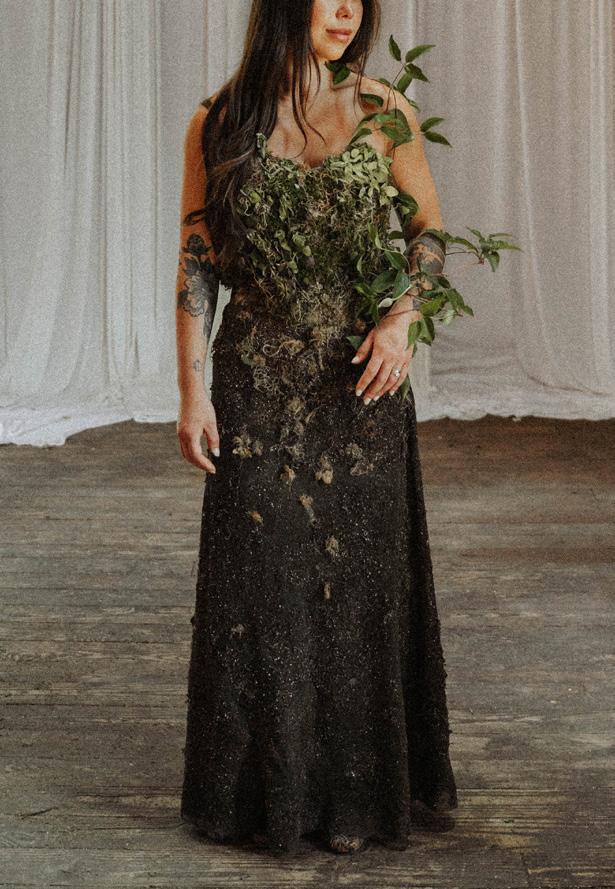
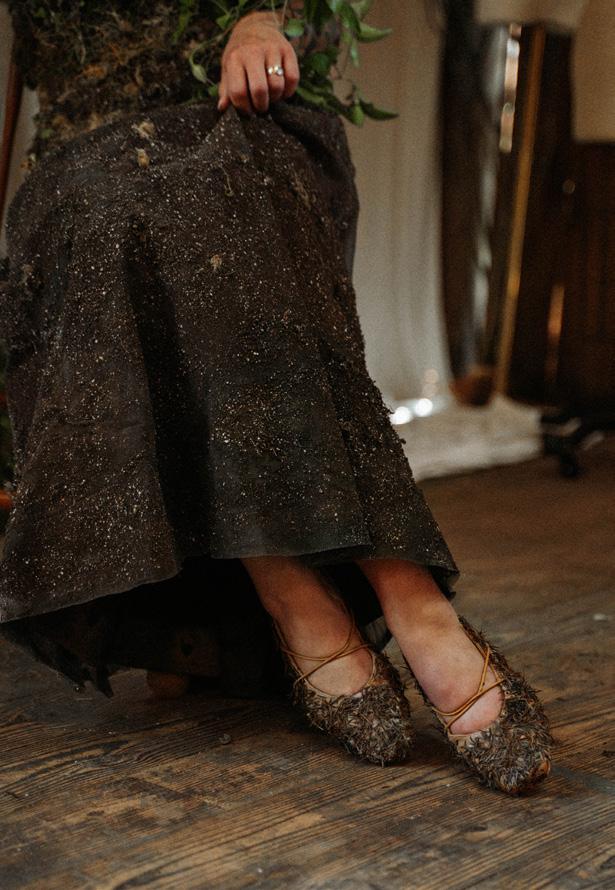
The “Earth Dress” is a slender, floor-length gown that appears to grow from a demure pair of seed-embellished ballet flats
It seems fitting that a sustainable farmer-florist who once attended the Fashion Institute of Technology would create an organic-looking garment using compost, soil, moss, roots, seeds, and vines. “I wanted it to be a concept piece with an organic, natural feeling,” said Alanna Messner-Scholl, owner of Waverly Flower Co. “I’ve used the term woodland, and I’ve been calling it the “Earth Dress” or the “Dirt Dress.”
Having designed botanical couture fashions for Slow Flowers Society’s past two American Flowers Week collections—both of which featured blooms, petals, and foliage straight from her cutting garden— Messner-Scholl was interested in exploring other aspects of flower-growing, so she turned to her potting shed. “I really wanted to showcase the lifecycle of a flower and do so in the most organic and natural way, while exploring the foundation of what it means to grow and design.”
Based outside Philadelphia, Waverly Flower Co. specializes in producing custom-grown weddings for ceremonies not only in the City of Brotherly Love, but also in Manhattan, and beyond. “I am happiest in the garden, when I am growing flowers,” Messner-Scholl confided. “If I had to choose, if I could only grow or only design, I personally would grow.” Fortunately, she added, “We have a team of true designers and they are all fantastic and love being in the studio designing. So that allows me to spend more time out in the field growing the flowers for our clients.”
Flower growing is a demanding practice, especially for a studio that has 45 custom-grown weddings on the calendar for the 2026 season. In fact, Waverly Flower Co. plans to scale back to 20 custom-grown weddings for next year, in order to give couples more attention, and to free up time for other special projects and an influx of corporate installations. By limiting the number of ceremonies designed with Waverly Flower Co.-grown botanicals, Messner-Scholl and her team plan to devote more planning time with each couple during the farm’s off-season so couples experience a process unique to them and their ceremony. “In that off-season, which is typically November through March, we invite them into our studio, or if they’re not local, they meet with us via Zoom. We go over detailed photos of their Pinterest inspiration boards, look at past work of our own during the same time of year, and we talk about what they love and don’t love.” The process includes looking at color palettes of attendants’ gowns and other non-floral décor to create a cohesive mood board. “Finally, we create a visual list of the flowers that we intend to grow for them. We can’t ever guarantee any one specific variety, but we do a good job of anticipating what will be in bloom for their ceremony.”
Custom-grown weddings at Waverly Flower Co. are a luxury option, with an $8,000 minimum. “That encompasses our design fee and ensures that we’re able to give our clients a level of attention and customization, because it’s a lot of work—especially over the winter—for us to plan our gardens.”
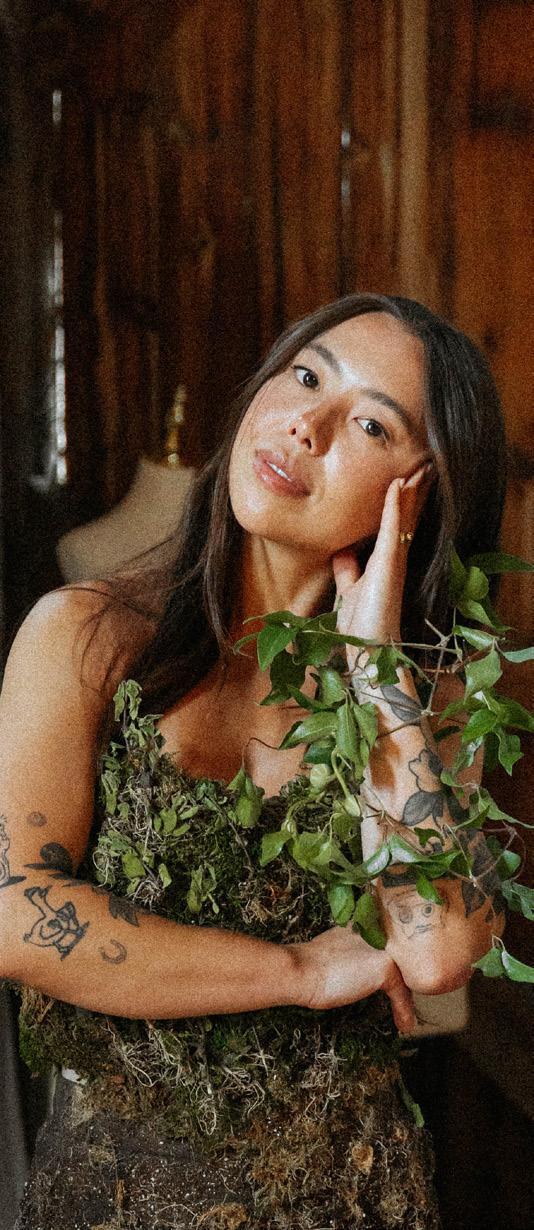
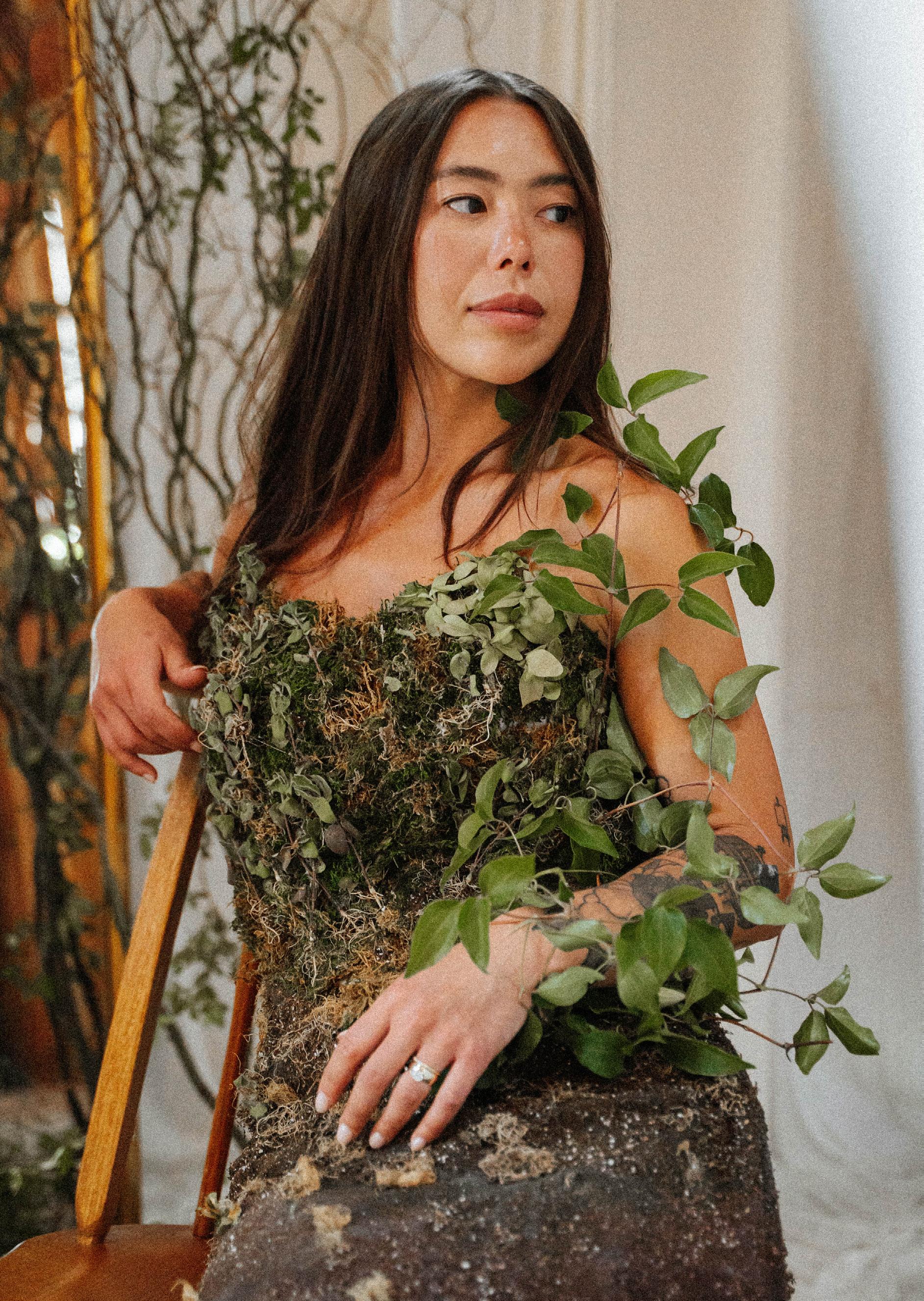
The “Earth Dress” returned Messner-Scholl to her garden and flower fields, as she used unconventional materials to form the fitted bodice and two-layered skirt for the wearable fashion. The concept began with the shoes, as “Morgan Feher, one of our designers, painstakingly glued on seeds, mostly cosmos and basil seeds, to cover them. I really like the idea of the shoes growing out of the ground, which helps to showcase the actual flower-growing process,” she said.
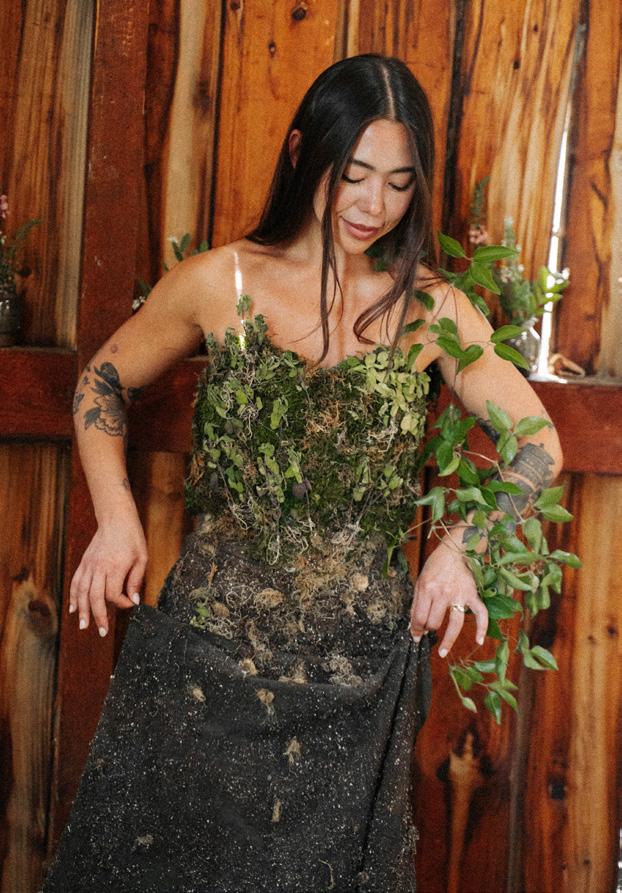
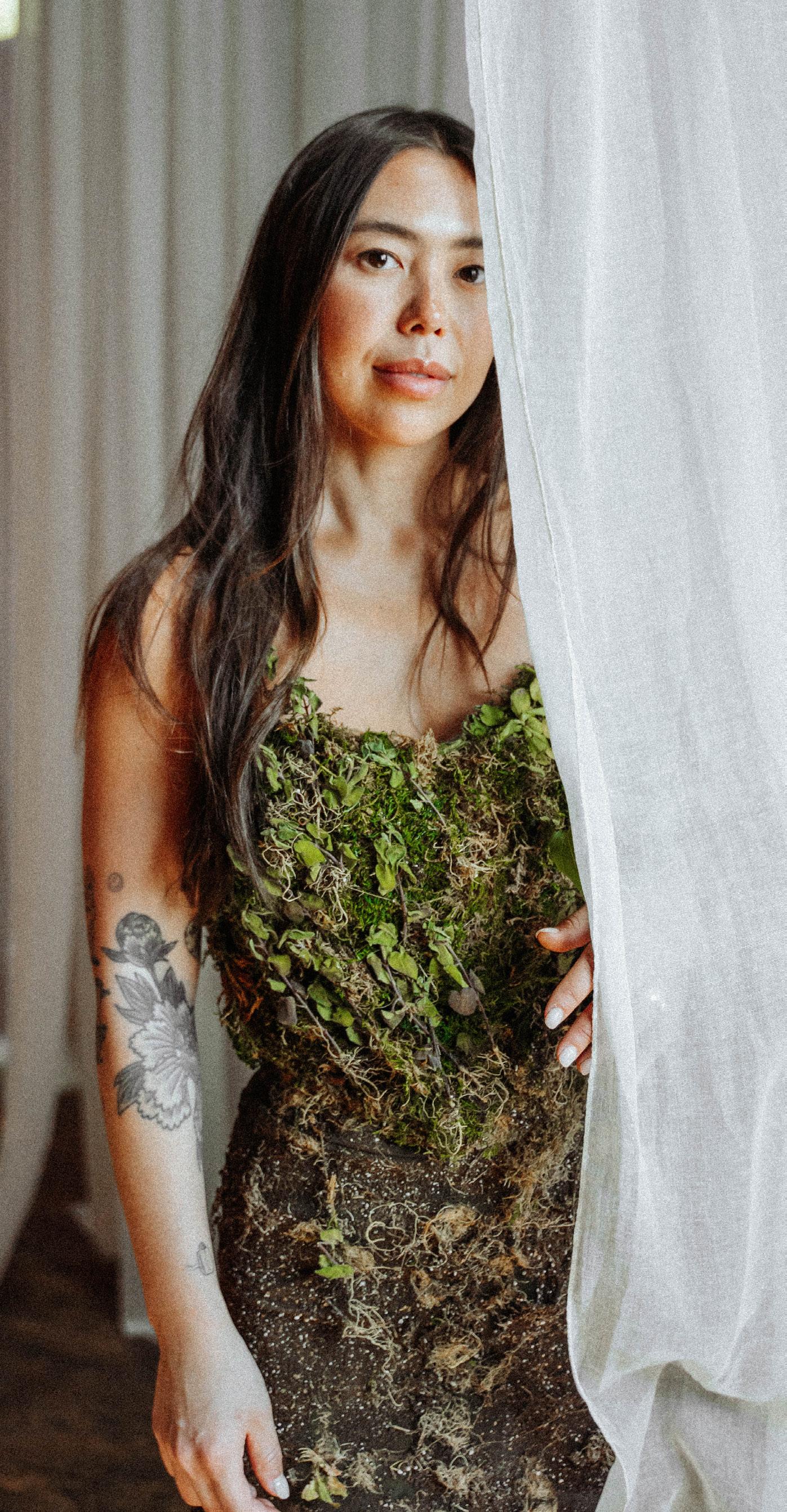
The corset-like bodice was finished with layers of moss, lichen, leaves, gathered woodland elements, and flower seedlings, yet it fits like a body-conscious piece you’d see on the runway. The floor-length double skirt was created by gluing thin layers of “earth” onto soft tulle. The underskirt is covered with compost; the outer skirt is coated with soil and lisianthus roots. “I wanted to include the roots for technical reasons—to show what we were doing with live plants—but I think it adds something aesthetic, too,” Messner-Scholl added.
As a finishing detail, she wove clematis vines around the shoulder and arm of model Amie Bantz. Their delicate lines echo the etched tattoos on her arms, a fusion of the human form and the plant world. Messner-Scholl said, “To have such a conceptual piece for a very different creative process was a lot of fun, and this might be my favorite botanical couture look!”
VICTORIA LIN PHOTOGRAPHY victorialinphotography.com @victorialin.photography
MODEL, HAIR + MAKEUP
AMIE BANTZ @amiebantz
STUDIO + DESIGN ASSISTANCE
MORGAN FEHER @morganbfeher
FOLIAGE + SEEDLING SOURCE
WAVERLY FLOWER CO.
SOIL + COMPOST SOURCE
BARNSIDE MULCH + COMPOST
SEED SOURCE
JOHNNY'S SEEDS @johnnys_seeds
VENUE
WAVERLY FLOWER CO. STUDIO
top Slow Flowers Podcast Episodes (May-June 2026)
EPISODE 768 | MAY 13, 2026
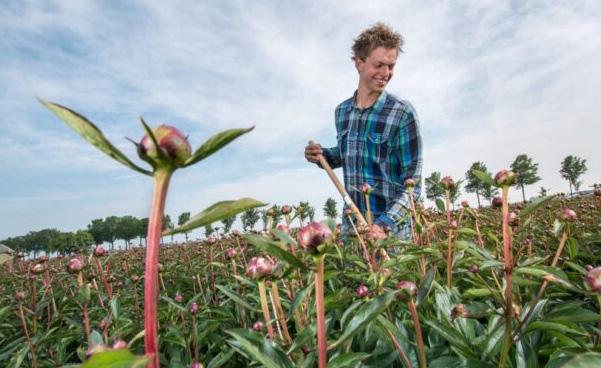
Organic flower farming in the Netherlands with Julian Langelaan of Op Beemster Klei
WATCH HERE
EPISODE 769 | MAY 20, 2026
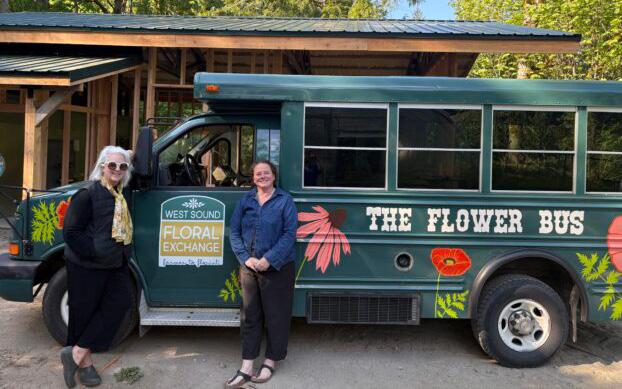
Conversation about local flower hubs with Jodi Logue of West Sound Floral Exchange
WATCH HERE
EPISODE 770 | MAY 27, 2026
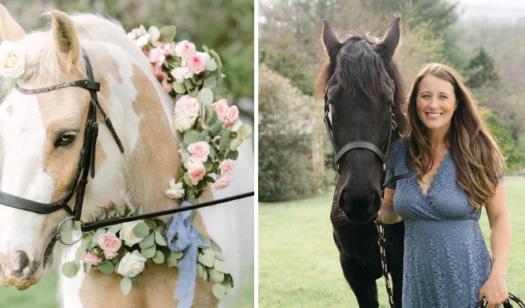
Hudson Valley farmer-florist Rebekah Mindel of Meadow Wildson growing and designing weddings with a sense of season and place
WATCH HERE
EPISODE 772 | JUNE 10, 2026
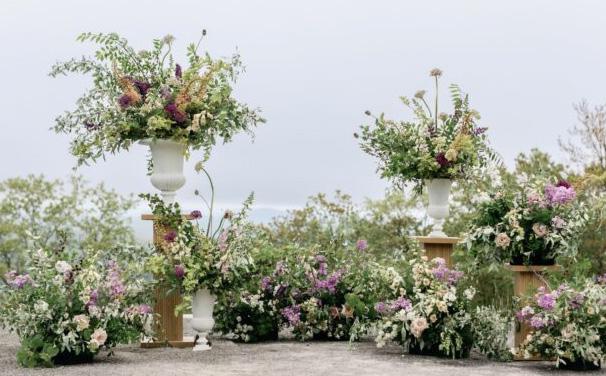
Sweet Pea School with Marryn Mathis of The Farmhouse Flower Farm
WATCH HERE
EPISODE 774 | JUNE 24, 2026
Lily Fashions with floral artist Françoise Weeks, the American Flowers Week Botanical Couture Series, Part Two
WATCH HERE
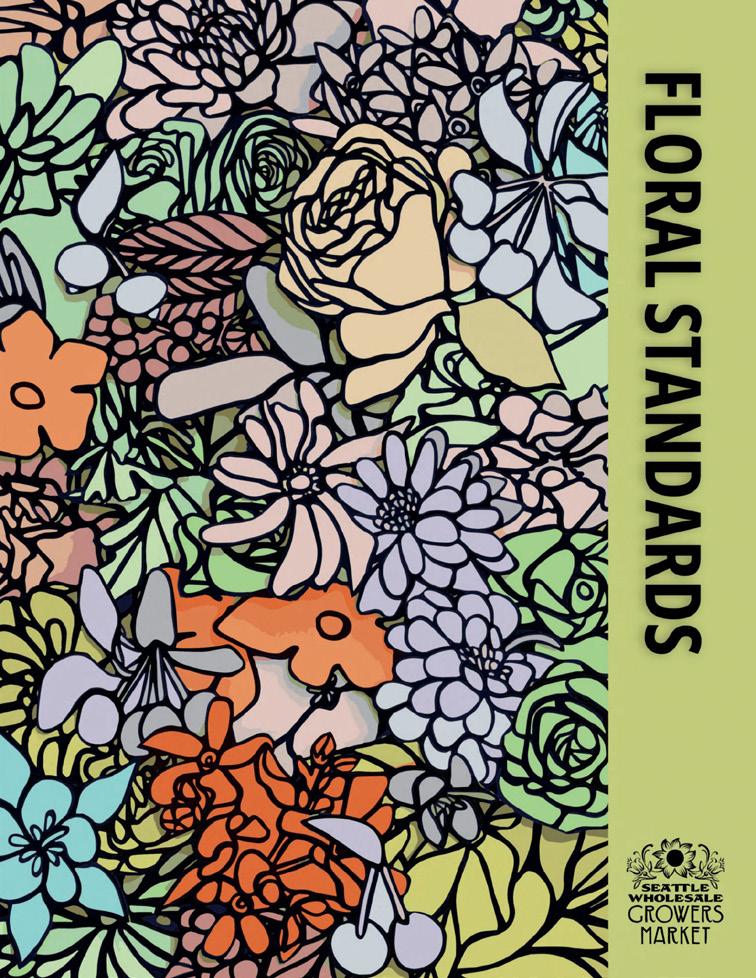
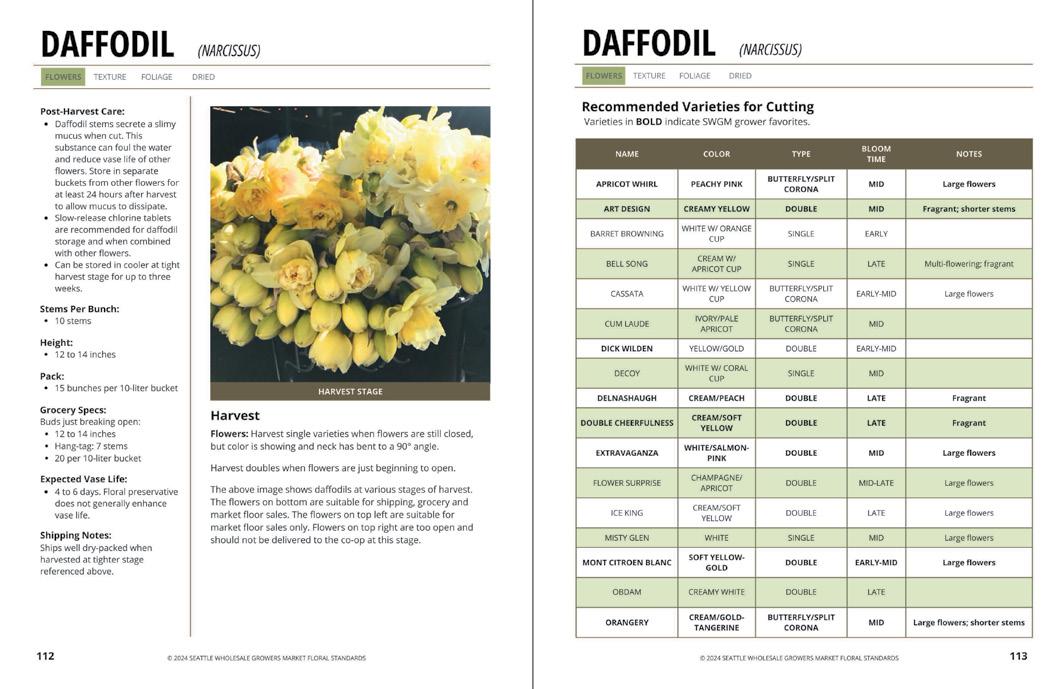
FLORAL STANDARDS
A practical guide for harvesting and delivering professional quality products
Written
by FLOWER FARMERS for flower farmers, growers, and gardeners
"This book is the missing link for flower farmers, both new and seasoned! Learning to grow flowers is one thing, but learning the specific ins and outs of what's required in terms of quality and standards to sell flowers at a wholesale level is another skill altogether. Lucky for us, we don't have to wing it anymore. Floral Standards will lift and strengthen our industry by helping farmers become pros."
LENNIE LARKIN
Farm Business Coach and author of Flower Farming for Profit
SLOW FLOWERS MANIFESTO
Slow Flowers aims to reconnect flower consumers and floral professionals with the source of their flowers. We believe that when the origin of all botanical varieties sold to consumers and florists is clearly labeled, we place higher value on local, seasonal, and sustainably grown florals, used artistically to express beauty.
SLOW FLOWERS COMMITS TO THE FOLLOWING PRACTICES
1. To recognize and respect the seasons by celebrating and designing with flowers when they naturally bloom.
2. To reduce the transportation footprint of flowers and foliage by sourcing as locally as possible.
3. To support flower farmers small and large by crediting them when possible through proper labeling at the wholesale and consumer level.
4. To encourage sustainable and organic farming practices that respect people and the environment.
5. To proactively pursue equity, inclusion, and representation in the floral marketplace, intentionally valuing Black floral professionals and farmers, floral designers, and vendors of Color in our business practices with as much support as we give to environmental sustainability.
6. To eliminate waste and the use of chemical products in the floral industry.
The Slow Flowers Movement puts a priority on sourcing local and domestic flowers. In a way, this also means that we redefine beauty. As a Slow Food chef cooks with what is seasonally available, a Slow Flowers florist designs with what is seasonally available.