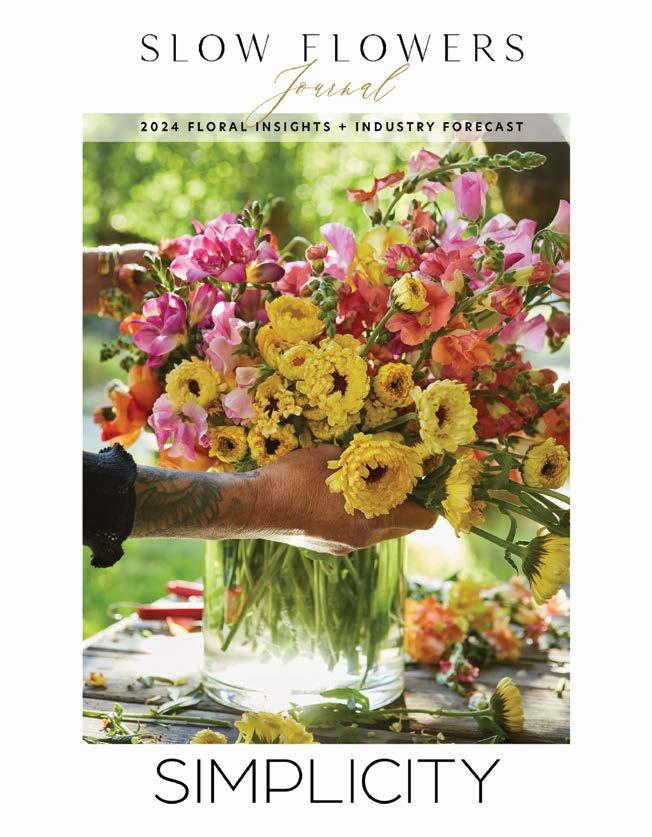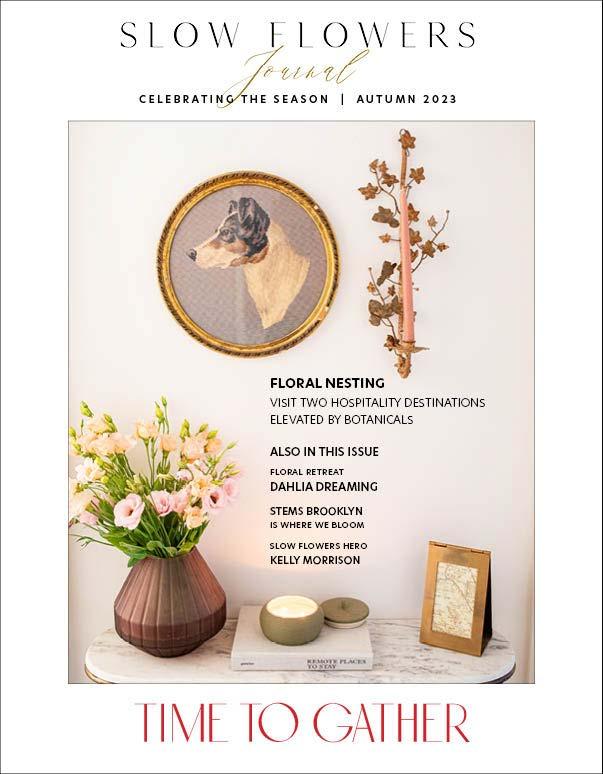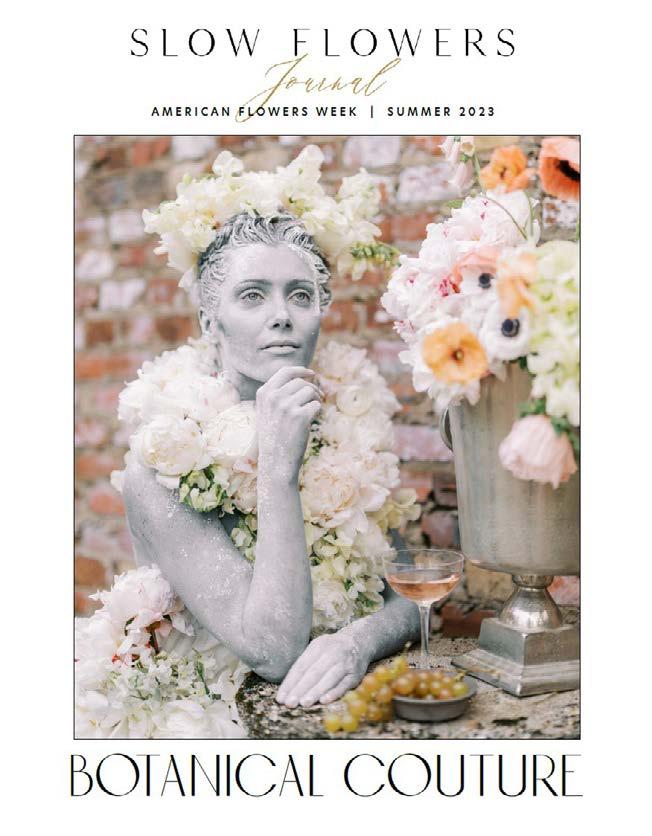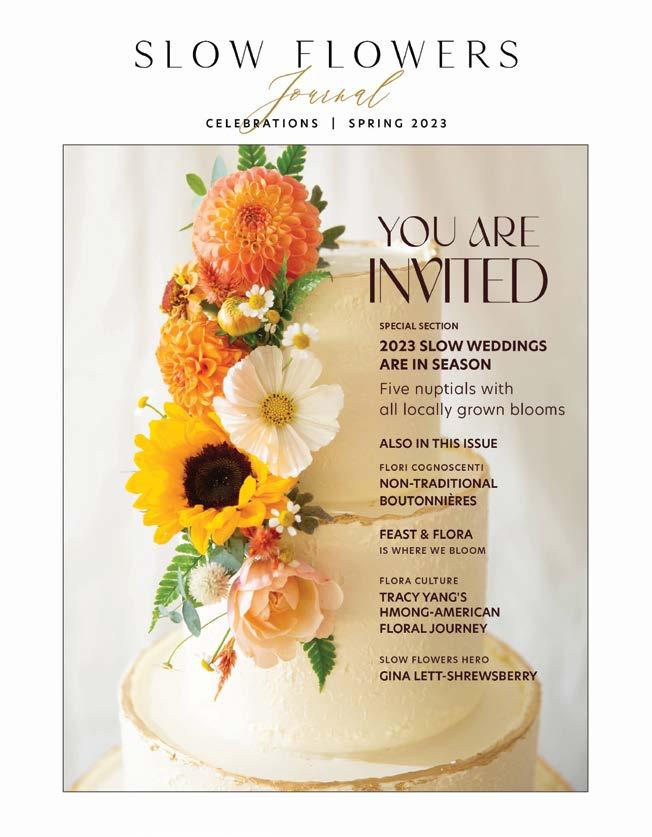
CELEBRATIONS + CEREMONIES | SPRING 2026
SPECIAL SECTION WHEN SEASONAL FLOWERS CONVEY LOVE + SENSE OF PLACE
INSIDE FOUR FLOWER-FORWARD WEDDINGS
IN THE STUDIO
ELIZABETH BARLOW FROM THE HEART MENTAL WELLNESS FOR THE FLOWER FARMER
SPECIAL SECTION WHEN SEASONAL FLOWERS CONVEY LOVE + SENSE OF PLACE
INSIDE FOUR FLOWER-FORWARD WEDDINGS
IN THE STUDIO
ELIZABETH BARLOW FROM THE HEART MENTAL WELLNESS FOR THE FLOWER FARMER

EDITORIAL DIRECTOR
Debra Prinzing
CREATIVE DIRECTOR
Robin Avni
COPY EDITOR
Brenda Silva
CONTRIBUTORS
Xenia D'Abrosi, Jessica Hall, Tammy Myers, LIsa Waud
PHOTOGRAPHERS
DeLine Photography, Lauren Fikkert, Jackie Kalch, Lily Long, Amanda Matilda Photography, Molly McCauley, Rick Pharaoh, Chloe Tews, Stephanie Cammarano, Rochelle Eagle, HC Photography, Lenise Ormsby, Jordan Veitinger, Tamara West, Ellen Best
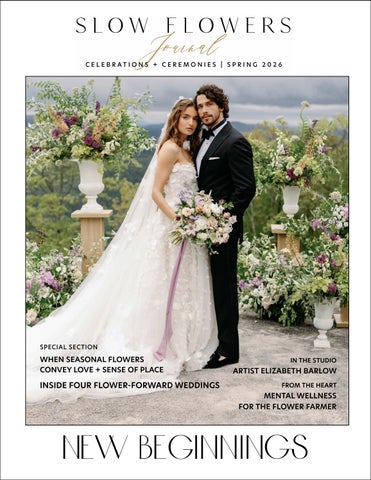
ON THE COVER
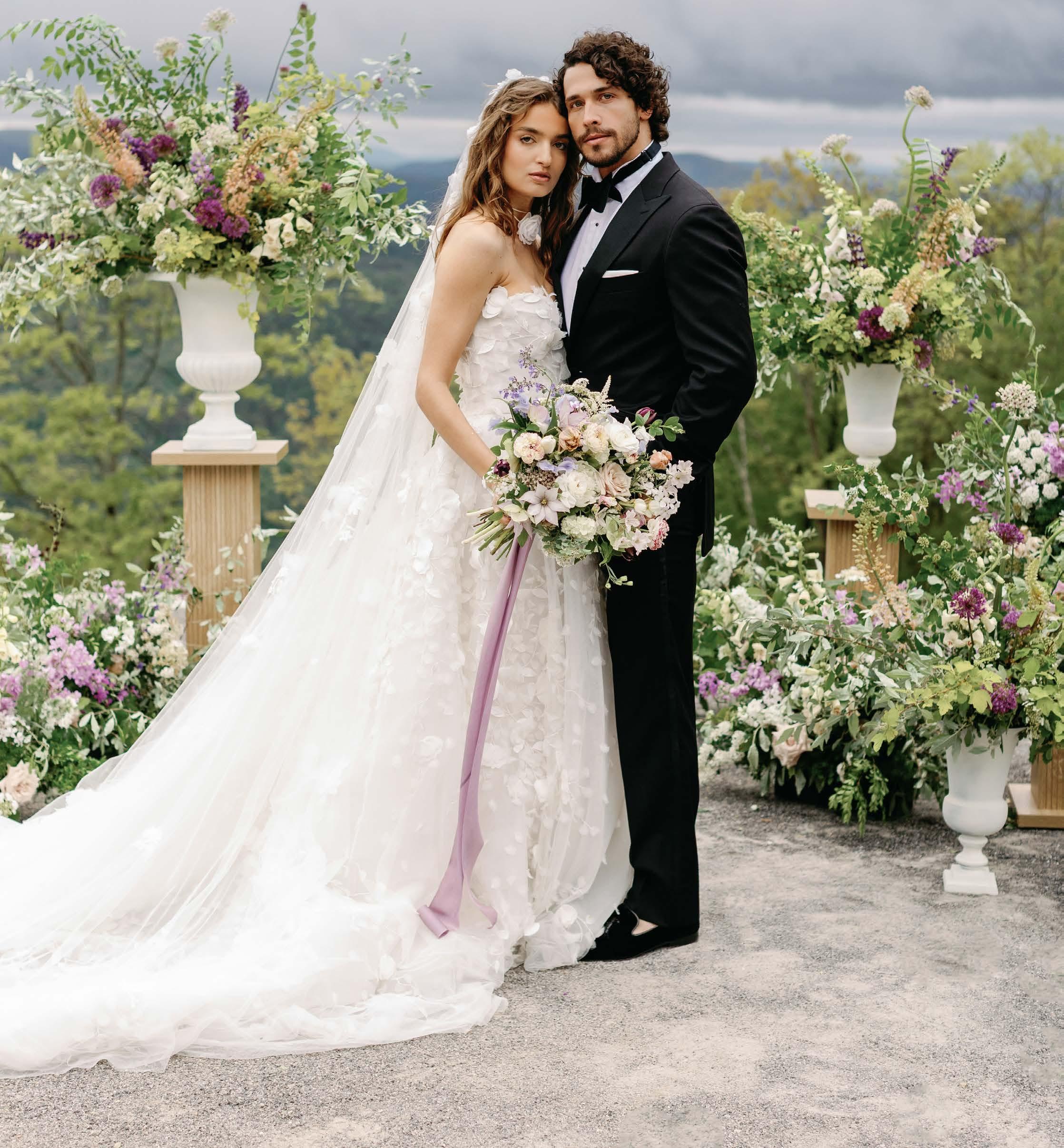
An editorial photoshoot presented farmer-florist Rebekah Mindel of Meadow Wilds a chance to creatively design in a unique place, full of elemental power. She considered the ceremony’s stunning location -- literally on top of a mountain -- as a key element of her beautiful florals.
COVER PHOTOGRAPHER
Molly McCauley
@mollymccauley_photo
© 2026 by SLOW FLOWERS JOURNAL and BLOOM Imprint. All rights reserved.
No part of this publication may be reproduced, stored in a retrieval system or transmitted, in any form or by any means, electronic, mechanical, photocopying, recording or otherwise, without prior written permission of the publisher.
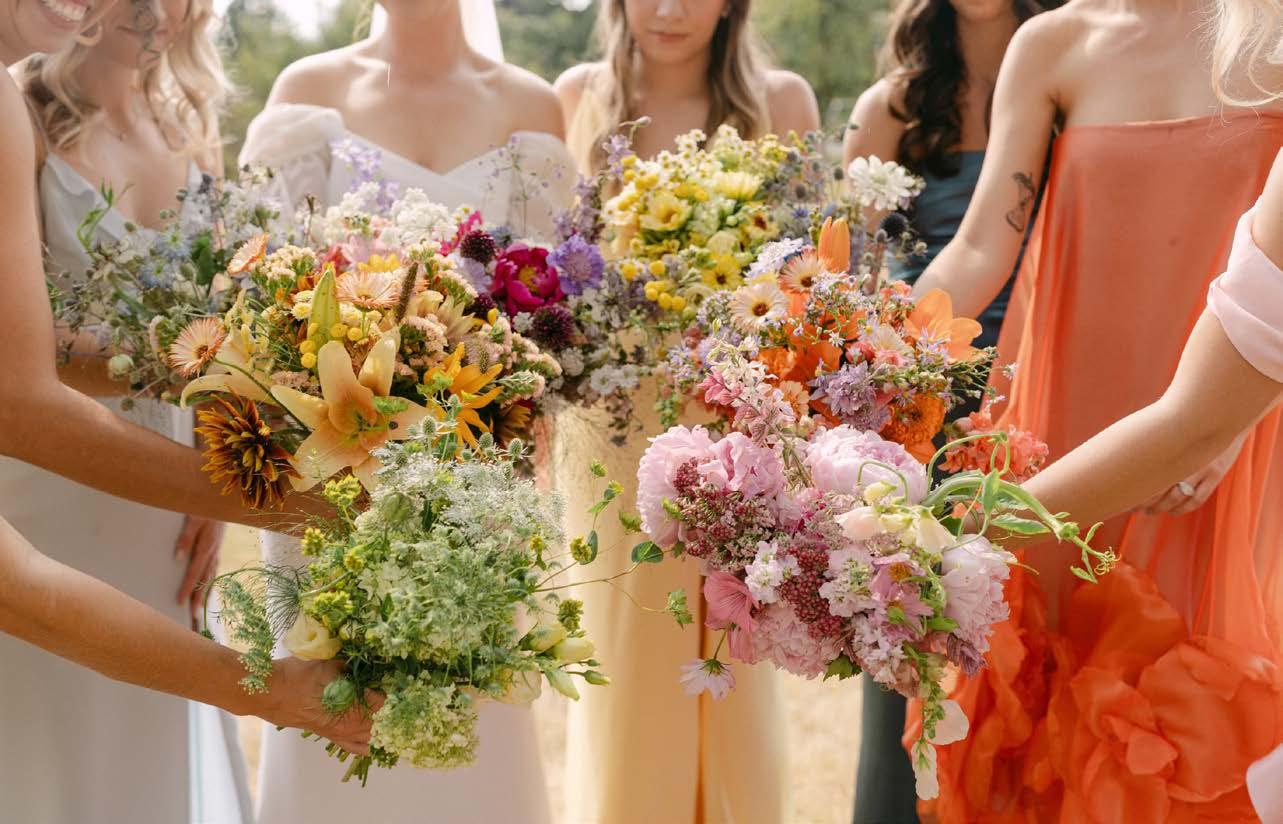
Floristry’s conventional wisdom says the largest expenditure any client will make at any time in their lives is when and how they choose to flower their marriage ceremony. That may be true, but we’re not interested in price tags. Instead, we’re intrigued by the size of the emotional investment in flowers that any couple might make. Again, it’s not about the dollar amount (while that is certainly important), but it’s about the value placed on having flowers – seasonal and local flowers – at the center of a ceremony. We love floralforward weddings, and this issue delivers just that.
Creatives are inspired to do their best work when a couple lets the flowers express their sentiments, be it a backyard family wedding, an elopement for two, nuptials in the dahlia fields, or a classic church ceremony. We hope you are equally inspired by the narratives and the thoughtful artistry collected in these pages.
The Spring 2026 issue of Slow Flowers Journal is all about flowers for weddings, but we also have great contributions from several members whose essays, columns, and a book review round things out in this issue.
Finally, we’re delighted to profile artist Elizabeth Barlow, whose hyperreal oil paintings magnify flowers to monumental scale. More, please!
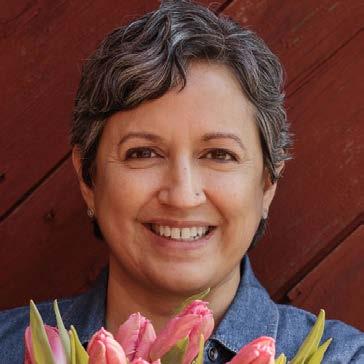
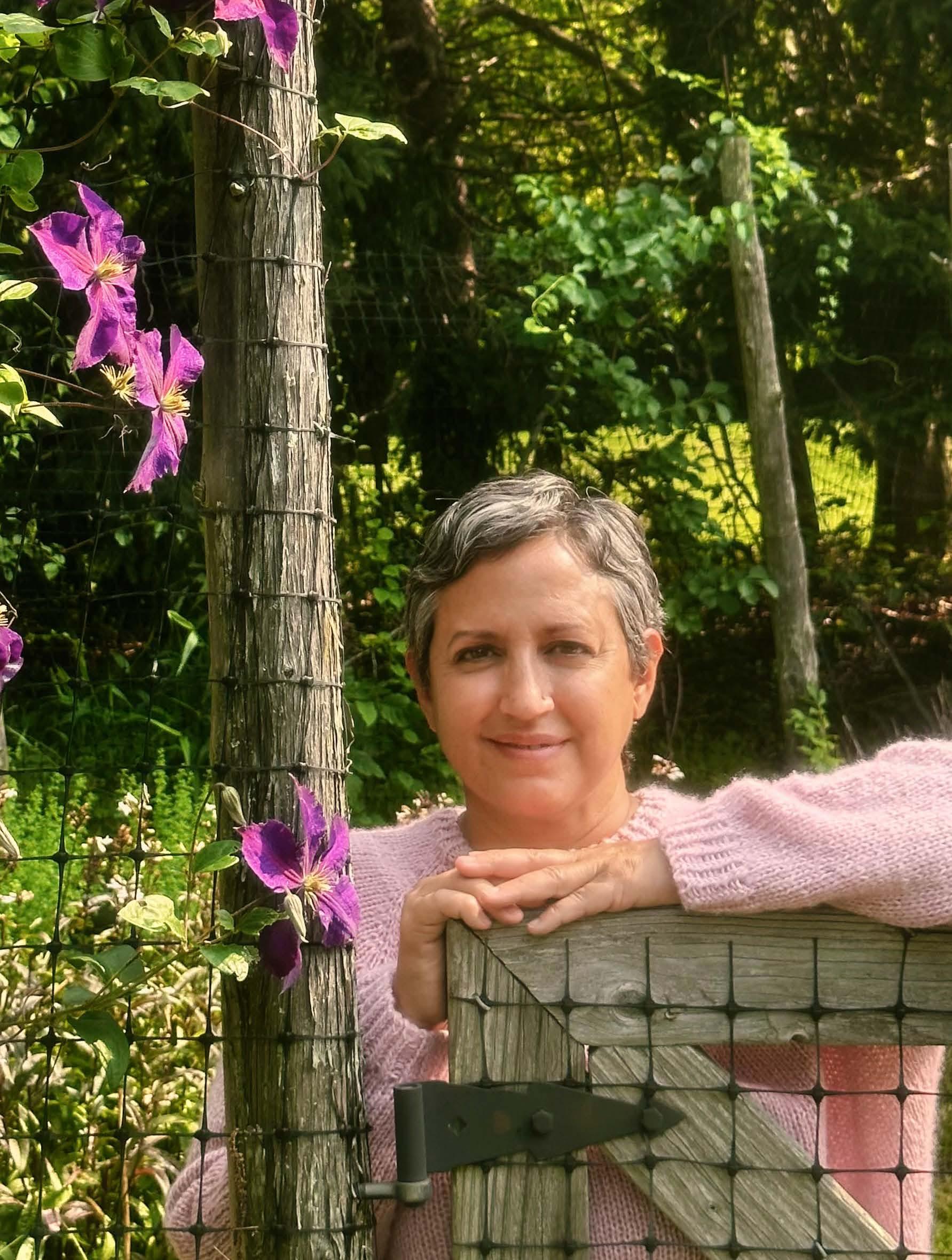
XENIA D’AMBROSI. Xenia is the founder and creative force behind Sweet Earth Co., a sustainable flower farm, design studio, and educational platform. Her work is guided by four pillars— We Grow, We Design, We Teach, We Gather—through which she cultivates specialty cut-flowers, designs garden-inspired florals for weddings and events, teaches eco-friendly gardening and floral design, and creates meaningful experiences that bring people together. She is the creator of the signature course, The Eco-Friendly Cutting Garden, helping gardeners design and grow beautiful, sustainable cutting gardens.
WEBSITE INSTAGRAM
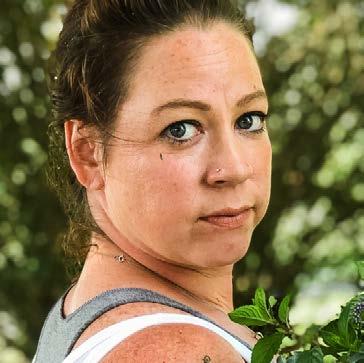
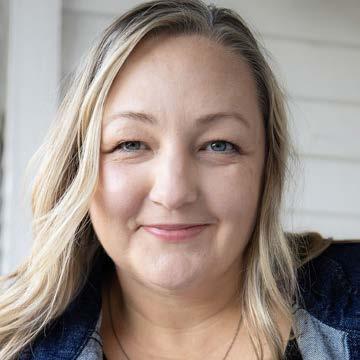
JESSICA HALL. Jessica is the owner and Weeder in Chief at Harmony Harvest Farm, where she brings equal parts grit and heart to the daily rhythm of growing flowers. With years spent in the field and leading her team, she’s seen firsthand the beauty and the pressure of life in the flower industry. Jess is passionate about creating space for honest conversations around mental health, especially in agriculture. When she’s not tending rows or troubleshooting the unexpected, she’s reminding her team (and herself!) that people matter just as much as the flowers.
WEBSITE INSTAGRAM
TAMMY MYERS. Tammy is the owner of Lora Bloom Consulting and a long-time Slow Flowers Member. She understands the necessary balance between creativity and running a profitable business. After more than a decade of floral business ownership and e-commerce, she now consults for other small businesses and creative entrepreneurs to navigate their digital landscape. Tammy applies focus on practical marketing, achievable goals, and digital visibility, which includes emerging tools like AI. She believes technology should support, not replace, artistry and human touch at the heart of floristry.
WEBSITE INSTAGRAM
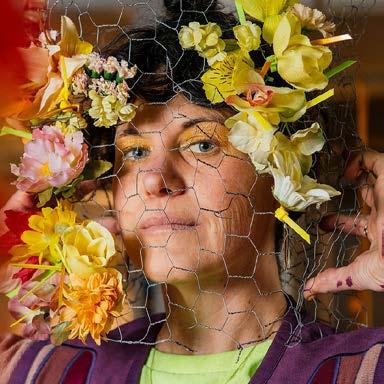
LISA WAUD. Lisa is a botanical installation artist and floral designer creating immersive, site-responsive work with plants and flowers. Based in the high desert of California, her practice explores the space between growth and decay, using locally sourced, foraged, and found materials. Grounded in a background in horticulture, she prioritizes low-waste approaches, including seasonal sourcing, reuse, and composting. Her installations invite visitors into multi-sensory experiences that offer consideration of both the beauty and impermanence of working with flowers.
WEBSITE INSTAGRAM
departments
IN THE STUDIO
12
6 FROM THE HEART mental wellness.
flora as a portrait subject.
Elizabeth Barlow’s paintings are a wondrous, sensory and intimate experience with larger-than-life blooms.
16
CELEBRATIONS + CEREMONIES
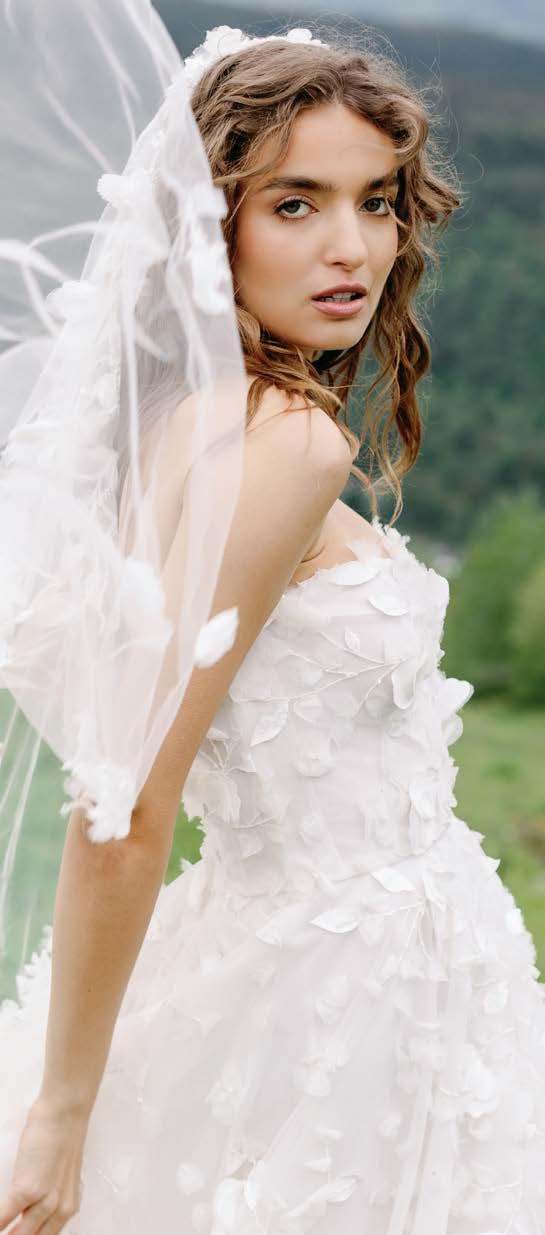
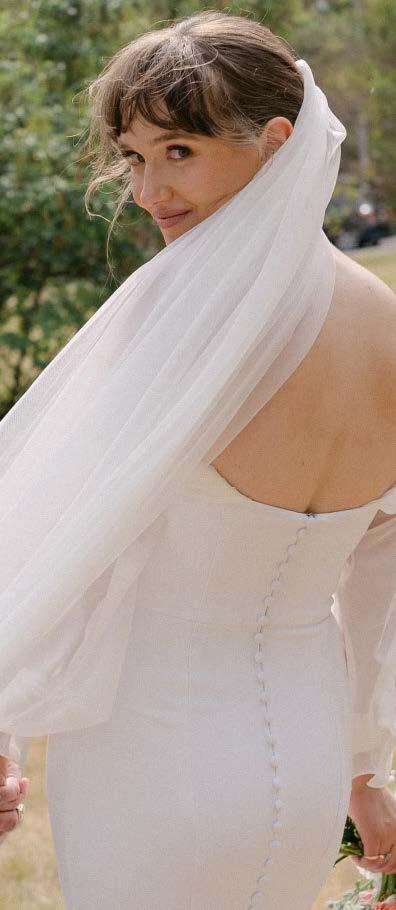
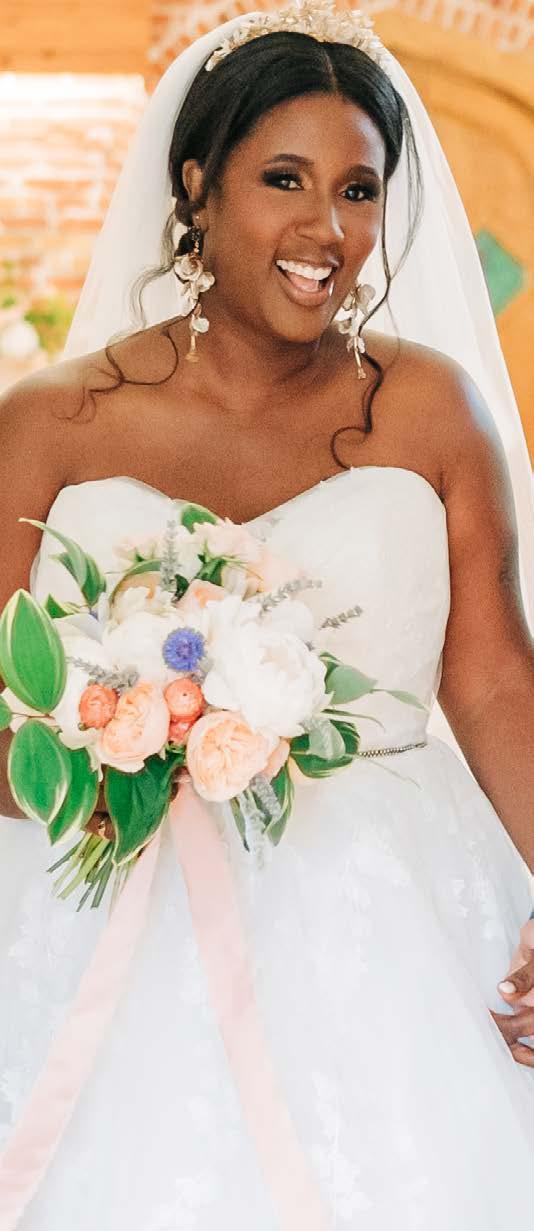
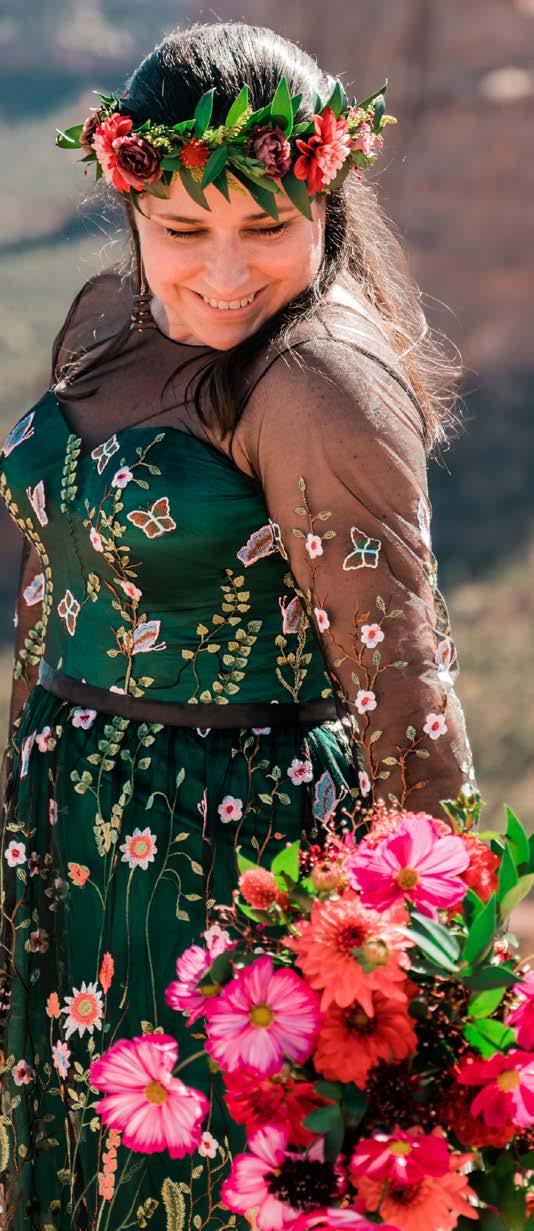
Enjoy our third annual Slow Weddings collection and revel in the seasonal blooms, each with a story to tell.
16 natural high. 25 family values.
46
Drawing lessons from soil, while tending to one’s health.
BETWEEN THE PAGES pretty dirty. An unexpected flower book.
TOP FIVE slow flowers podcast. November 2025 to April 2026
30 farm-to-bride.
35 american-grown weddings.
38 from field to ceremony.
PHOTOGRAPHY BY
RICK PHARAOH
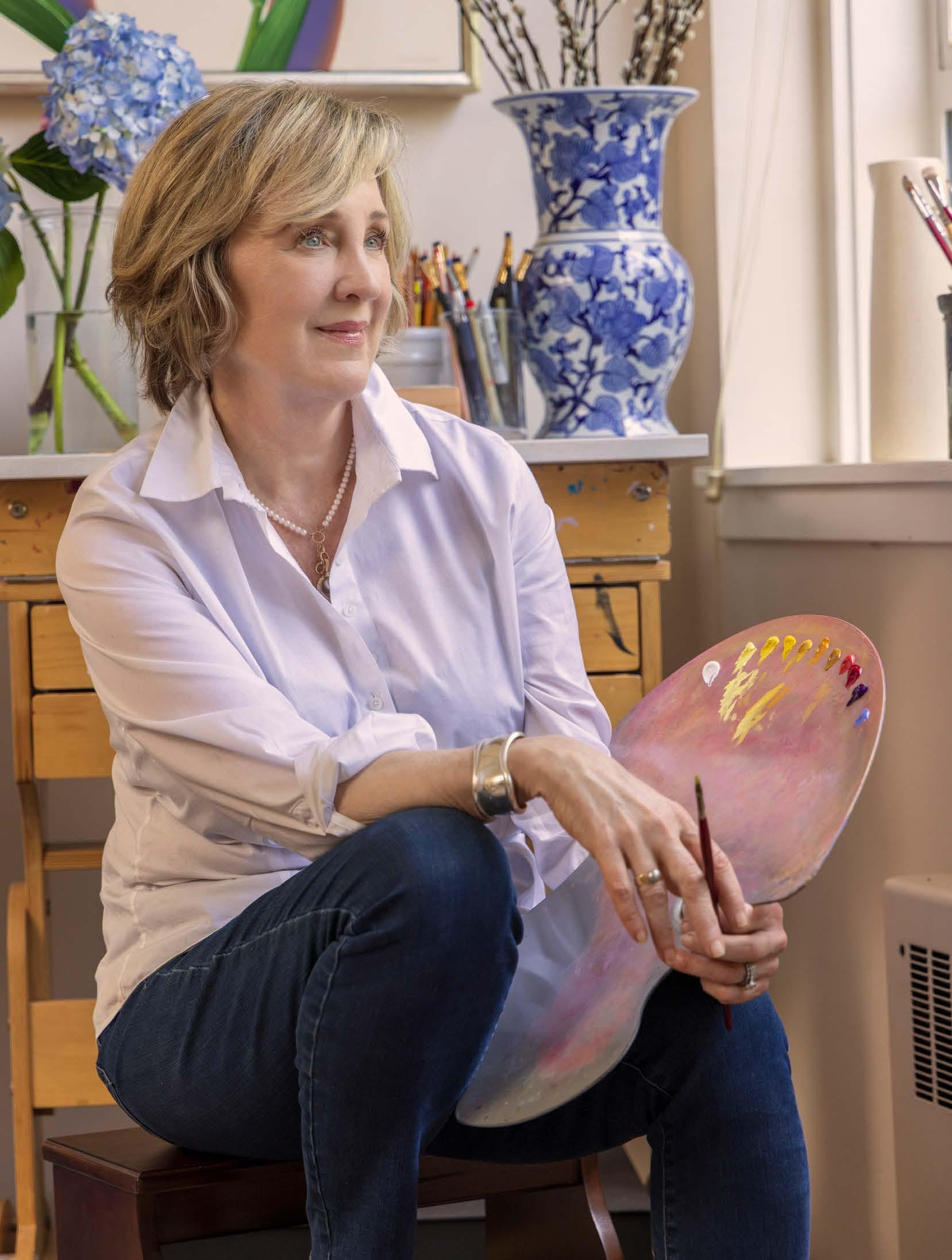
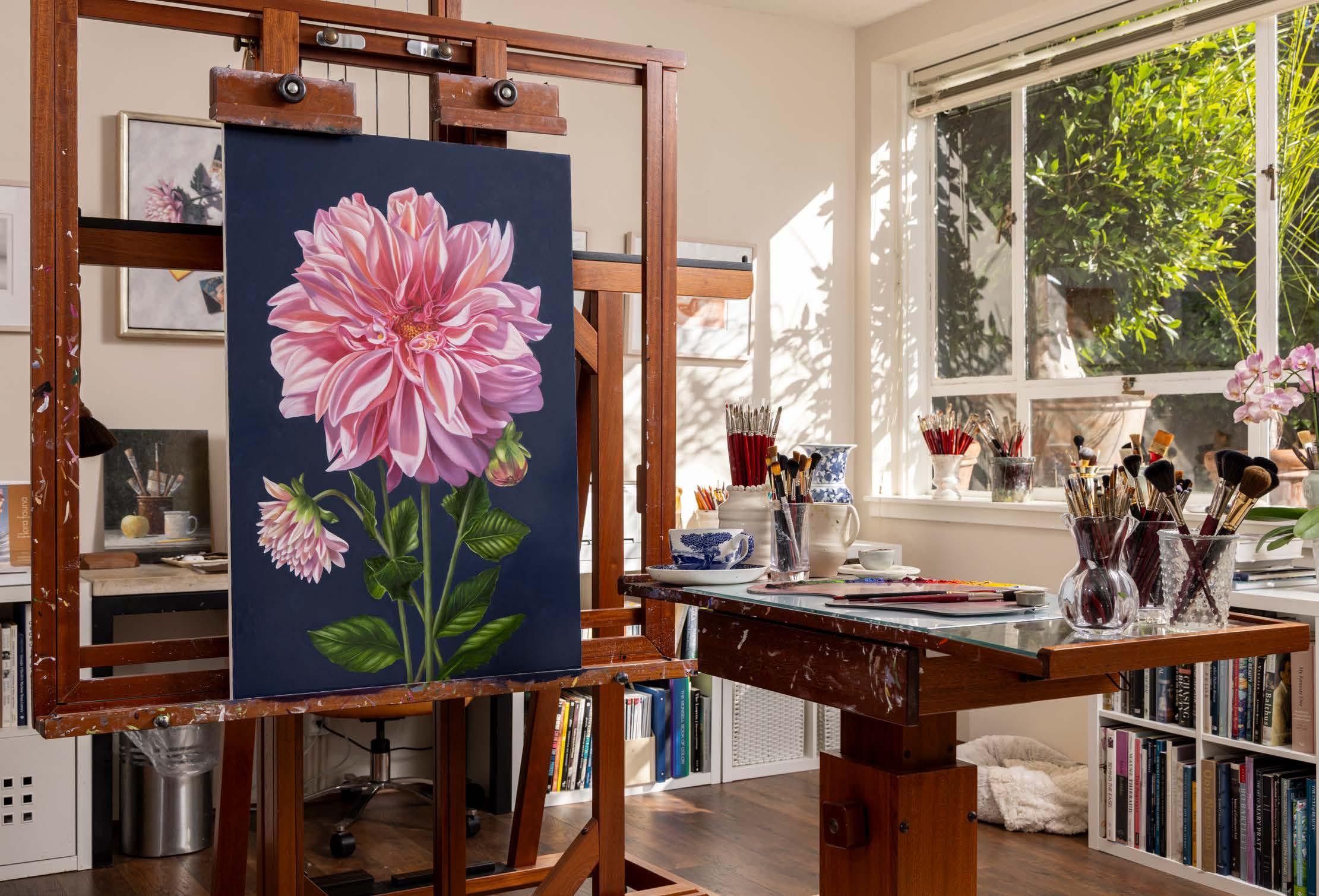
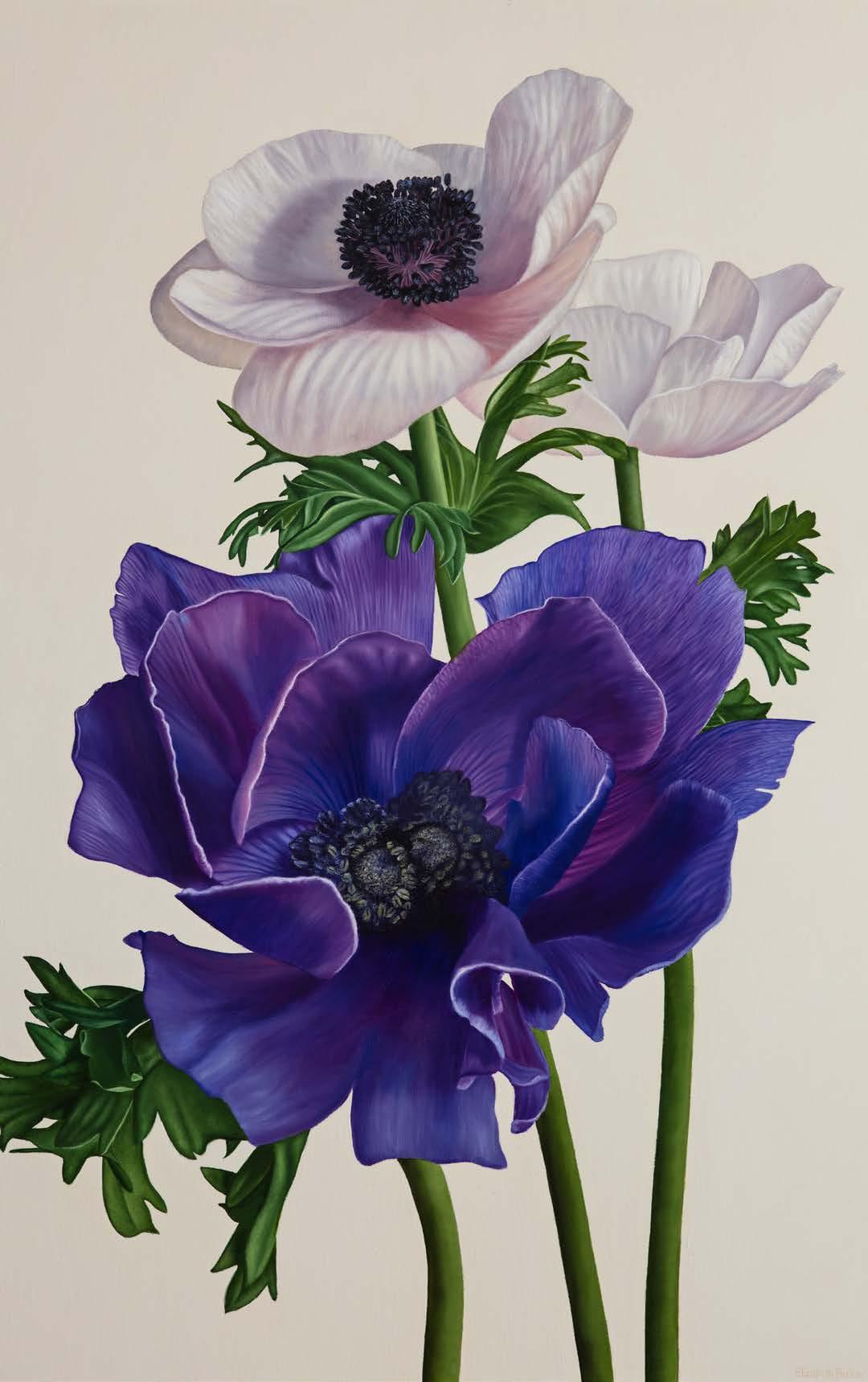
Monterey, CA-based artist Elizabeth Barlow’s hyperreal oil paintings magnify flowers to monumental scale. Rather than botanical illustration or decorative still life, her work treats flora as portrait subjects — exploring fragility, resilience, and presence through sustained observation.
Barlow describes her work as “slow art,” and indeed her paintings slow the viewer down for a wondrous, sensory experience. By isolating blooms against spare, atmospheric backgrounds, she invites an intimacy that feels aligned with the Slow Flowers ethos, honoring flowers as living beings rather than commodities.
Debra Prinzing and Elizabeth Barlow recently discussed her work and here is an excerpt of their conversation:
SFJ: Elizabeth, you have been painting for much of your career, but you transitioned to flowers as your subject about a decade ago. Can you describe how that took place?
EB: I painted “portraits in absentia” for a long time, portraits of people’s belongings. Now I paint flowers, and people will say to me, “So are you just going to paint flowers for the rest of your life?” As if it’s a lesser thing! And I say, “Yes, I am.” I mean, it seems like an endless subject to me.
SFJ: What was the catalyst for your change in focus?
EB: In 2017, there were terrible fires in Sonoma, in the wine country. And a couple who had been collectors of my work, were awakened in the middle of the night by a neighboring
Curated byAndra Norris and Elizabeth Barlow
Inside every flower lies a powerful force — a seed of hope, transformation, and resilience.
EXHIBITION DATES
September 26 – November 7
ARTIST RECEPTION Saturday, October 3, 4–6 PM
Andra Norris Gallery 311 Lorton Avenue Burlingame, California
ELIZABETH BARLOW WEBSITE INSTAGRAM
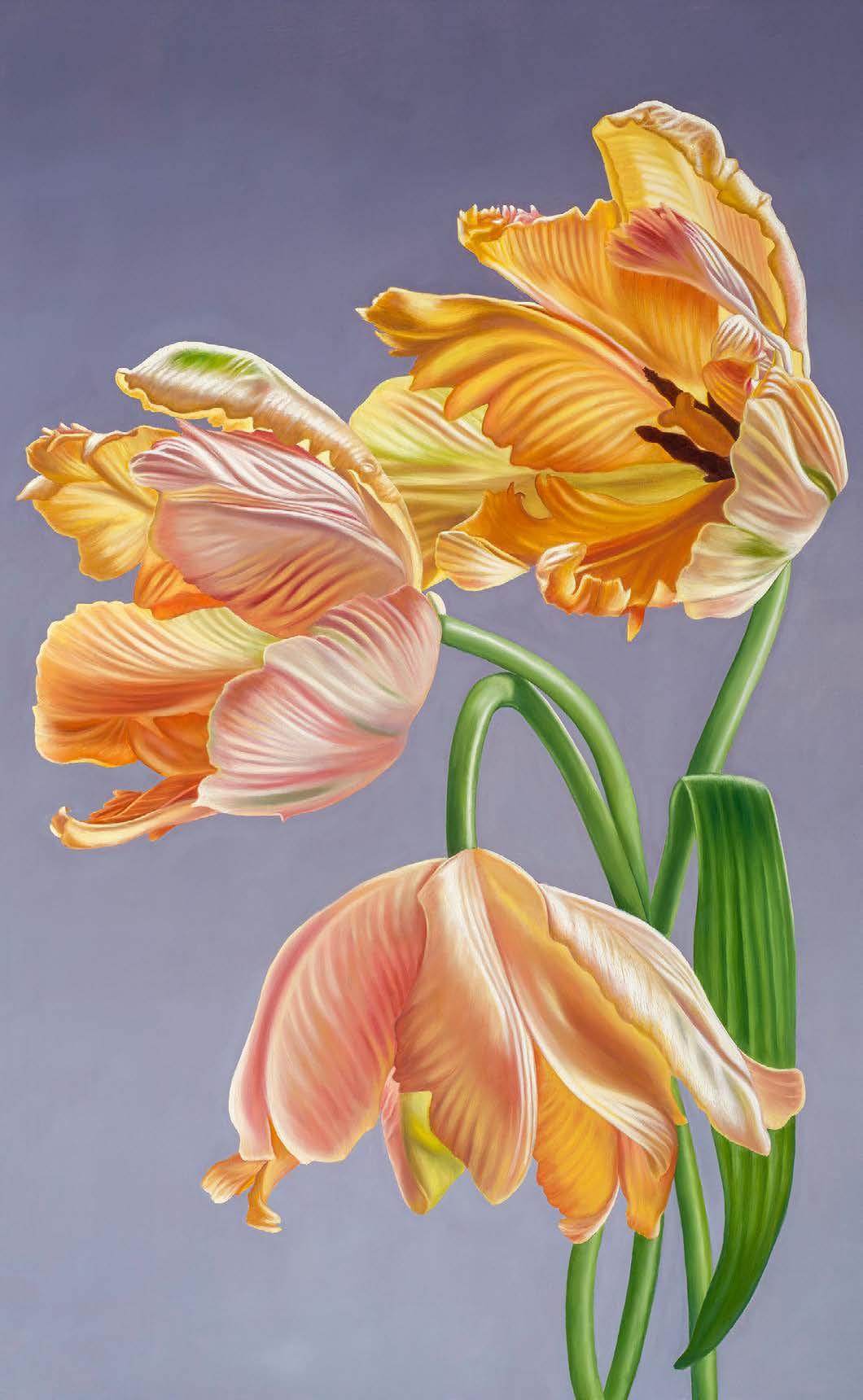
vineyard owner, who told them they had to leave immediately – they could see the flames coming over the hill. Everything was lost. The home, their incredible art collection, and the garden. About six months later, the wife passed away. The man, who was in his early 80s, decided to rebuild on the same property. He contacted me, and he said, “Elizabeth, the only thing that survived the fire was the vines and maybe a redwood tree here or there. And one rosebush.” The rosebush was blooming gloriously. He asked me to do a six-foot painting of the rosebush for his new home. So I went up there, took a thousand photos, and I did this painting. He and I decided to call it the ‘Phoenix Rose,’ because it literally rose out of the ashes.
SFJ: As a viewer, it seems like your paintings represent the personality or character of a flower, while not necessarily being a literal copy of that bloom. How do you interpret what you paint?
EB: There are painters who believe you should only paint from life. And there is a reason I don’t do that. There’s a limitation because a flower dies quickly, even if it’s in a vase in my studio. I’m a slow painter by choice, and I also want a certain light. I photograph the flowers myself. I prefer to photograph in the early morning when the light is beautiful and slants, producing long shadows on the flowers, often purply in tone. Or, I’ll photograph in the late afternoon, just before the sunset, in the
“Painting flowers or growing flowers in the garden are more than just pretty things. They are symbols of nature’s power to regenerate. But also of that little seed inside each one of us, because we are nature.”
SFJ: That story is so powerful and also in a way, a metaphor for the resilience of plants – and humans.
EB: The experience taught me that flowers – painting flowers or growing flowers in the garden – are more than just pretty things. They are symbols of nature’s power to regenerate. But also of that little seed inside each one of us, because we are nature. We can transform ourselves as we go through our lives, or through anything. It taught me that I can use flowers, not just to paint something pretty, but to share an idea about how we can live in this world.
golden hour. I now use the Procreate app to combine my hundreds of photos so what I get on the canvas uses all these different flowers. Once I have an image I like, I draw it on my canvas before I start painting.
SFJ: Your canvases are often two-tothree-feet or larger. How do you go about capturing flowers on such an exaggerated scale?
EB: It was really Georgia O’Keeffe – a great gardener, by the way – who showed us that by enlarging a flower, you see it in an entirely different way than its actual scale. She also said she felt like you could see a
whole world inside a flower when you enlarge it. I’m inspired by that!
SFJ: What is your actual approach when you start to paint?
EB: Usually, I first paint each flower as fully as I can, and I get some background in, which can often change later. Then I go in and add what I call “glazing layers,” where I’m glazing veils of color on top of what’s already there. Those lower layers glow through and it gives the flower the luminosity I want.
SFJ: Is the glaze a different medium?
EB: It’s also oil, but if I need to, I might add a little bit of linseed oil, which is what’s already in the oil paint. The glazing medium is almost like stained glass. I’m putting a veil of a darker color over a really bright color – and that bright color glows through it. Oil is so forgiving. A painting can take many layers, but you can remove layers if you don’t like them.
SFJ: Tell us about your studio!
EB: Living in Carmel, I’m walking past garden after garden after garden to get to my studio every day. It’s really a gift. I actually rent space in a historic church and there is a beautiful church garden outside the window.
SFJ: What are you painting now?
EB: I’m just about to do this
painting that is a “big gulp,” but it’s very exciting. The meditation group that I’m in meets at All Saints Episcopal Church in Carmel. They have a beautiful meditation garden there that I walk through every single day. There are calla lilies that grow in profusion underneath a wisteria tree. I had a dream one night that I painted that scene for the church. I shared the dream with the pastor. A couple of years later, the church came back to me and said, “We would like you to do that painting for the church.”
SFJ: That is incredible! Why is it a “big gulp” for you?
EB: It’s going to be eight-feetby-five-feet! The calla lilies grow up; the wisteria blooms droop down. And the symbolism will be the idea of transfiguration and transformation every spring. It will be installed in the church at the end of July for a big celebration.
SFJ: The practice of being of observer of nature really informs what you put on the canvas. Can you reflect on the universality of flowers?
EB: Well, traditionally, in the 1700s or 1800s, it was decided that there was this hierarchy of painting. At the very top, I think it was narrative or portraiture painting. Then the next tier would have been landscape. And the bottom tier was always still life. And still life was often painted by women. Women,
of course, were kept out of all the academies. So painting flowers was often viewed as something women did; it was domestic. Of course, there were men who painted beautiful flowers, but it was still viewed as “less than.”
And I think that has changed. Georgia O’Keeffe was one of the people who changed it by making her flowers huge.
SFJ: Who are the customers for your canvases portraying flowers?
EB: I would say that of the people who commission my paintings and buy them, it might tip slightly more to men. I think our interest in flowers may stem from a growing concern for the planet. We are more aware of how our world is getting faster and faster and faster with technology; people want a way to slow down. And maybe nature and gardens are an invitation to do that.
SFJ: It must be somewhat hard to spend so much time with a painting, and then “release” it to a customer.
EB: Painting one painting and sending that out into the world is like having a garden. It blooms that one time and then it’s going to be different next year. You can’t replicate it. And so that means embracing life as it is and as it unfolds, and being willing to live in the moment as I accept that in this moment this flower is commanding my attention.
FROM THE HEART BY
JESSICA HALL
PHOTOGRAPHY BY HC PHOTOGRAPHY
There is an invisible strain to building a life and business around beauty in our world. On the surface, flower farming and floral design can seem so romantic. Our days must be filled with sun-drenched flowers; our time is spent in rolling green fields against a canopy of mountains; we connect with people through our flowers. There is a sense of privilege in sharing such personal moments and connections with folks – and it’s all steeped in positivity.
But inside the walls of my business, there was chaos. Challenges are heightened when unexpected weather, perishable products, making payroll, juggling timelines, and the emotional weight of serving the masses are combined with emotions and feelings. For most of my life, I took on the motto “family ox”:
Just push through and do the work. Resilience was my go-to.
Then I was diagnosed with bipolar disorder.
The diagnosis itself did not change who I was. But it did provide answers to what had always been there: the swells of high-capacity productivity, the creative intensity that could dream up entire business lines from nothing, and the deafening crashes that followed when the nervous system could no longer keep up the pace. In farming, uncertainty is expected; in leadership, it is less forgiving.
What I began to learn with my diagnosis was that managing a farm and managing mental health were not entirely different, especially in how I engaged with them. Both required structure. Both demanded observation. And both punished neglect.
Bipolar disorder is often misunderstood. It’s frequently
labeled as unpredictable, but for me, managing it has required the opposite: Discipline. Intentional sleep. Regulated schedules. Guardrails around decisionmaking. Clear communication with my team. A commitment to steadiness so I can lead responsibly.
For most of my life, I misunderstood my intensity for strength. In my workflow, I could always outwork anyone in the field. I could pull off designs under extreme pressure. Pivoting in crisis was second nature. But capacity was not the same as sustainability, and that was not a concept I had mastered.
The gardens eventually provided their own lessons on my journey. Systems that spike without restoration eventually collapse. As farmers, we don’t plant a crop
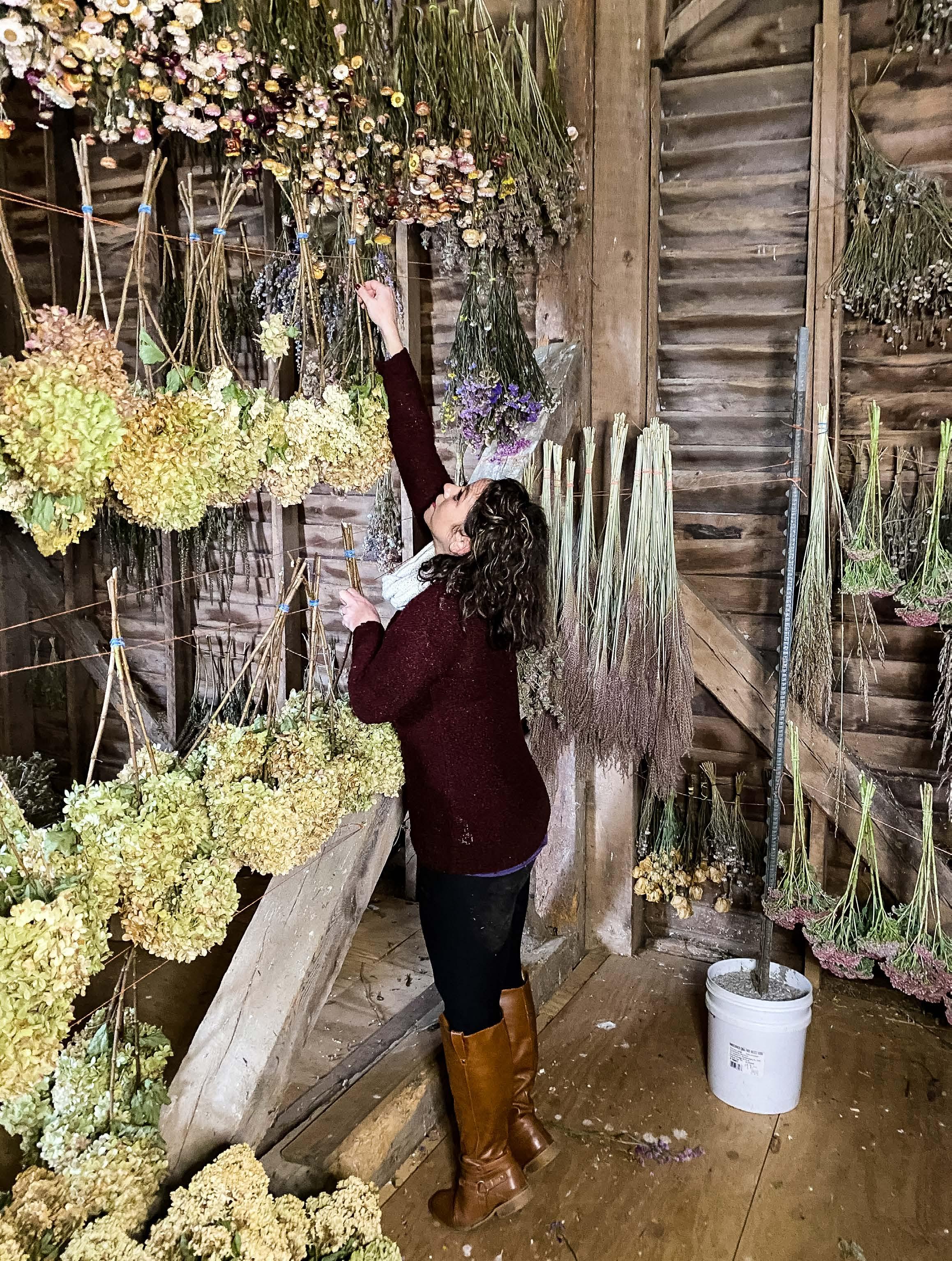
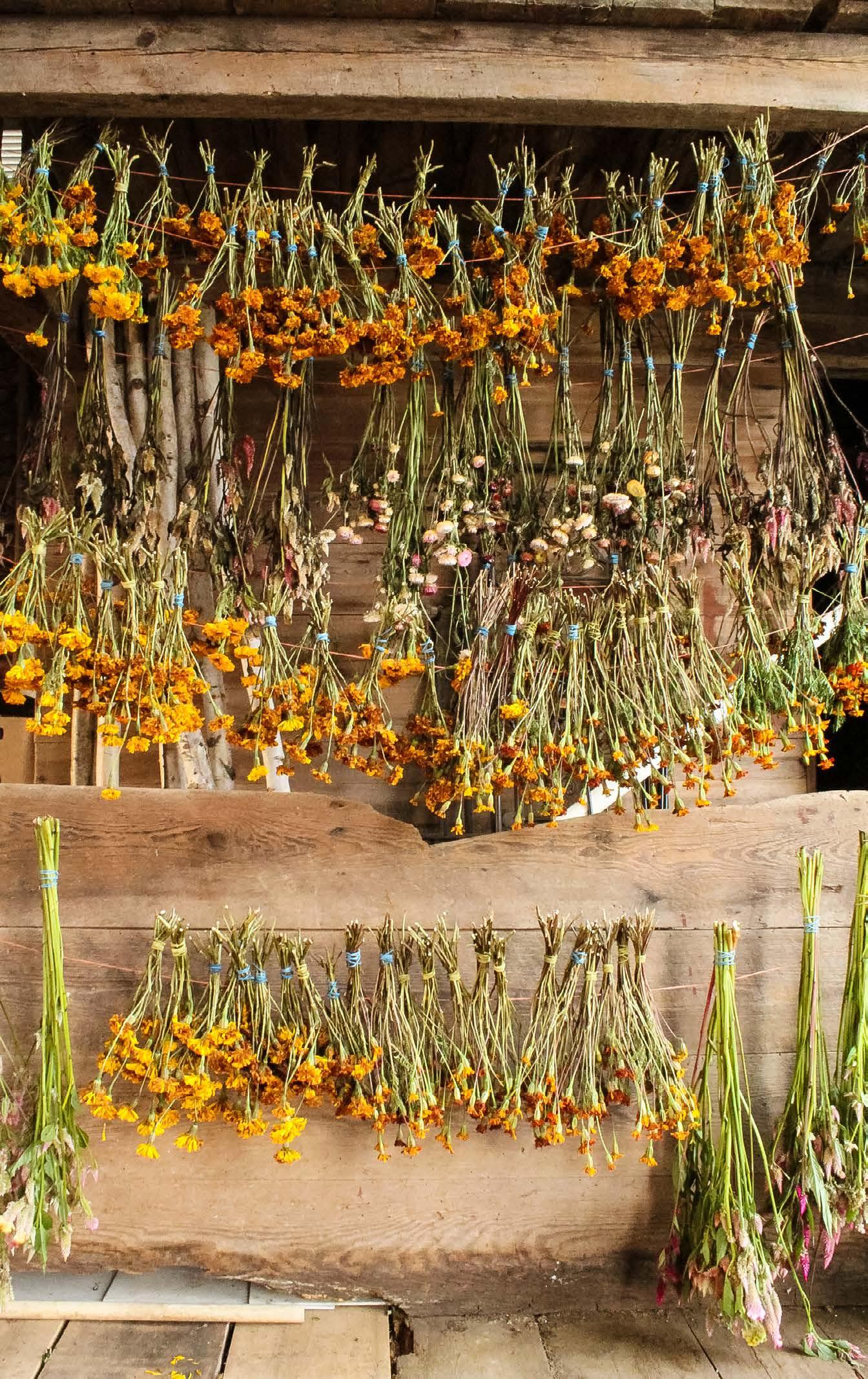
and expect it to give endless blooms all season long. We plant successions. We rotate crops. We rest our fields. We rebuild our soil. Our mental stability is just a different form of agriculture.
From that perspective, resilience began to look less like pushing harder and more like noticing the earliest symptoms of irritability, impulsivity, or overcommitment. Even the smallest of signs creeping into my daily life have needed my attention. I’ve learned to listen to my support team members as “canaries,” alerting me when I don’t pick up on the symptoms myself. It has also meant respecting my own “low seasons” with grace, rather than catastrophizing them.
There is a common misconception that creative industries benefit from emotional extremes, that brilliance is tied to instability. Society often romanticizes the idea that intensity fuels creativity. I’ve found that to be deceptively untrue. My best floral work comes from quiet clarity, not chaos. My strongest leadership unfolds from practiced consistency, not sporadic intensity.
Running Harmony Harvest Farm has forced me to professionalize my mental health and put it at the forefront of everything I do. Embracing that vulnerability
Build a 24-hour pause rule for large financial, staffing, or expansion decisions. Space gives room for emotions to subside and clarity to be regained.
Sleep, nutrition, and predictable structure are not luxuries. They are life tools. Treat them as part of your daily workflow
Your best design does not define your worth. Read that again.
Just as monocropping increases risk, isolation increases stress. Build professional mentors and personal relationships outside your business and make space to nurture them.
HARMONY HARVEST FARM
WEBSITE INSTAGRAM
is part of our farm culture.
For me, that looks like medication regimens without shame, therapy without secrecy, and sleep as a staple rather than a luxury. It means slowing decisionmaking when necessary, creating space for reflection, and building systems that protect stability rather than glorify exhaustion. Our industry is uniquely demanding. We work seasonally but carry year-round expectations, and the line between ambition and depletion can blur quickly in the flurry of the hustle. Understanding my diagnosis did not limit my ability to lead a business. It sharpened my approach to doing so.
I began measuring growth in steadiness rather than speed. I built schedules that allowed grace depending on my mental rhythms and surrounded myself with people who feel empowered to question and guide me when needed. Over time, something unexpected happened. Systems grew stronger. Culture became calmer. Production planning became more thoughtful and intentional.
Stability is not boring. It is powerful and grounding.
These days, I wake up with a renewed sense of strength in
doing the work without the internal drama that once fueled it. I choose disciplined consistency over emotional surges. It is daily work, and I am not perfect at it, but each season I grow more fluid in the rhythm.
Flowers are delicate. Farming is not. Mental health is delicate.
Life is not. The work for any of it demands grit and precision. For me, it demands that I take my mental health as seriously as I take soil health, because both determine what kind of season I will have.
I share my story to pull back the curtain on the human side of building a business in our industry.
We are not just growers and designers anymore; we are culture-setters. We are showing others how to care not only for plants, land, and community, but also for ourselves.
If we want longevity, real longevity, we must cultivate internal stability with the same passion we bring to our fields. The most beautiful seasons are not the most dramatic. They are the most well-tended.
PHOTOGRAPHY BY MOLLY MCCAULEY
Mindel
her
AS A WEDDING DESIGNER WHO GROWS MANY OF HER OWN botanicals and also sources from local farms, Rebekah Mindel’s floral vision reflects the couple’s aesthetic, while capturing the character of the ceremony’s place, venue, and natural setting. Her manifesto appears on Meadow Wilds’ website and includes this statement: “The Meadow Wilds process is collaborative and visionary. We design with an artist’s eye, pulling inspiration from the natural world, sensory experiences, all of Earth’s fine details, and of course, love.”
Holding space for the land to speak through her work, Mindel sought a collaboration that would express the connection between place and design. A unique opportunity came to join an editorial-style photoshoot last spring, at the invitation of Lisa Jaroscak Chin of Elegante Weddings and Events, a planner based in Chicago and Austin. The two met through Jaroscak’s planning for weddings in the New York’s Hudson Valley and Berkshire regions, where Meadow Wilds is based.
At the time, Chin was consulting with Catamount Mountain Resort in Hillsdale, New York. As she helped the property transition from a winter ski resort to a four-season destination
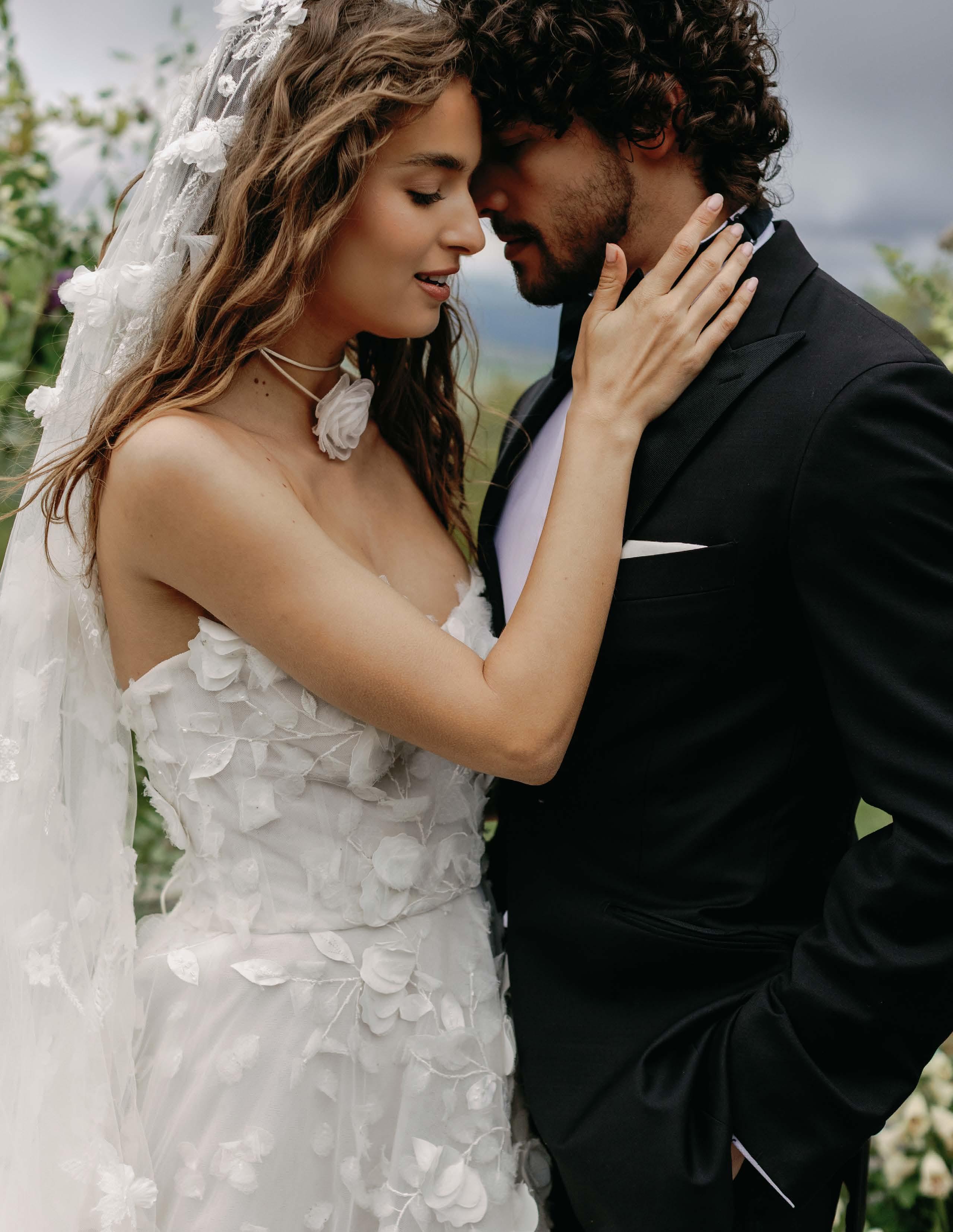
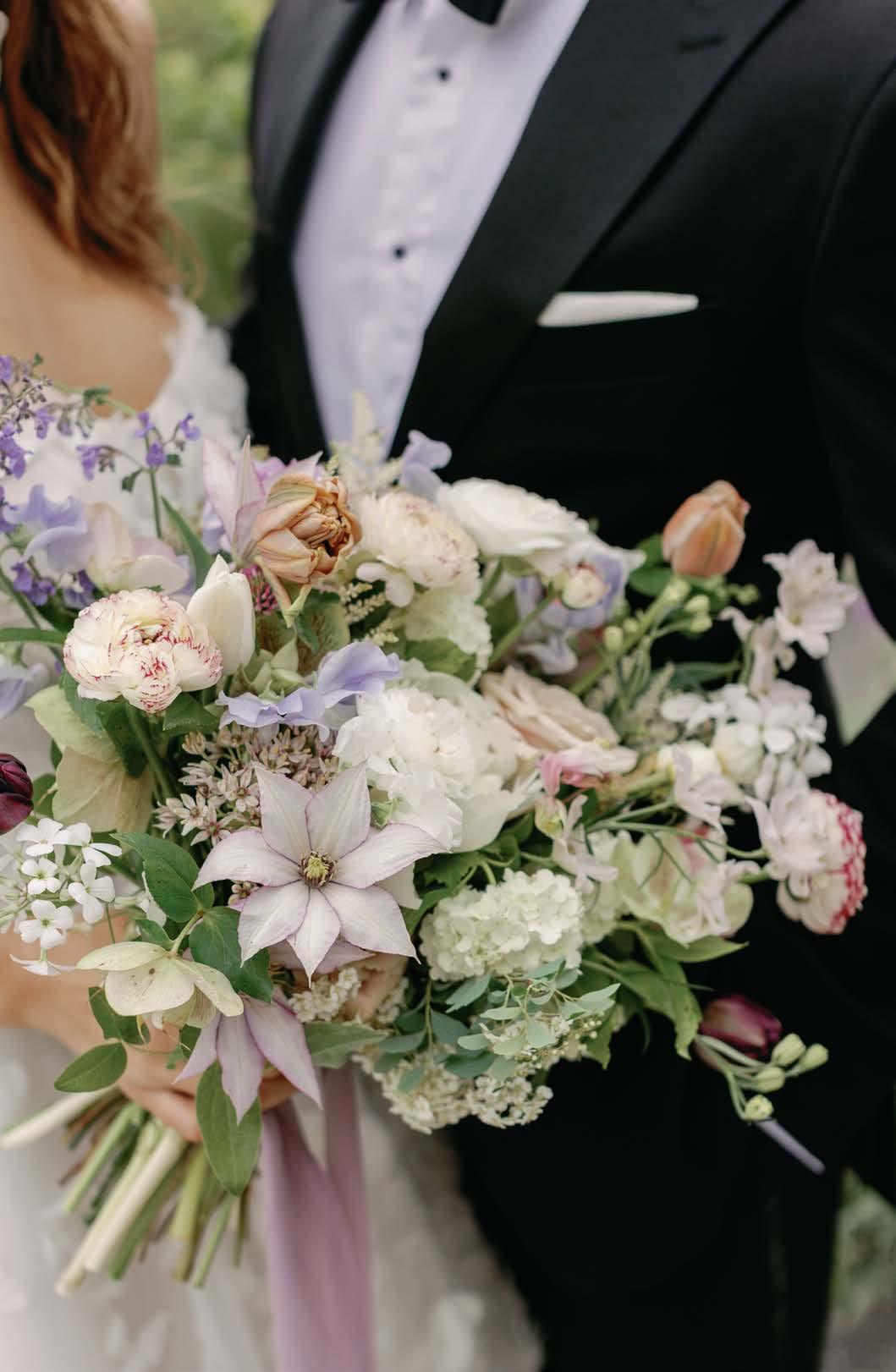
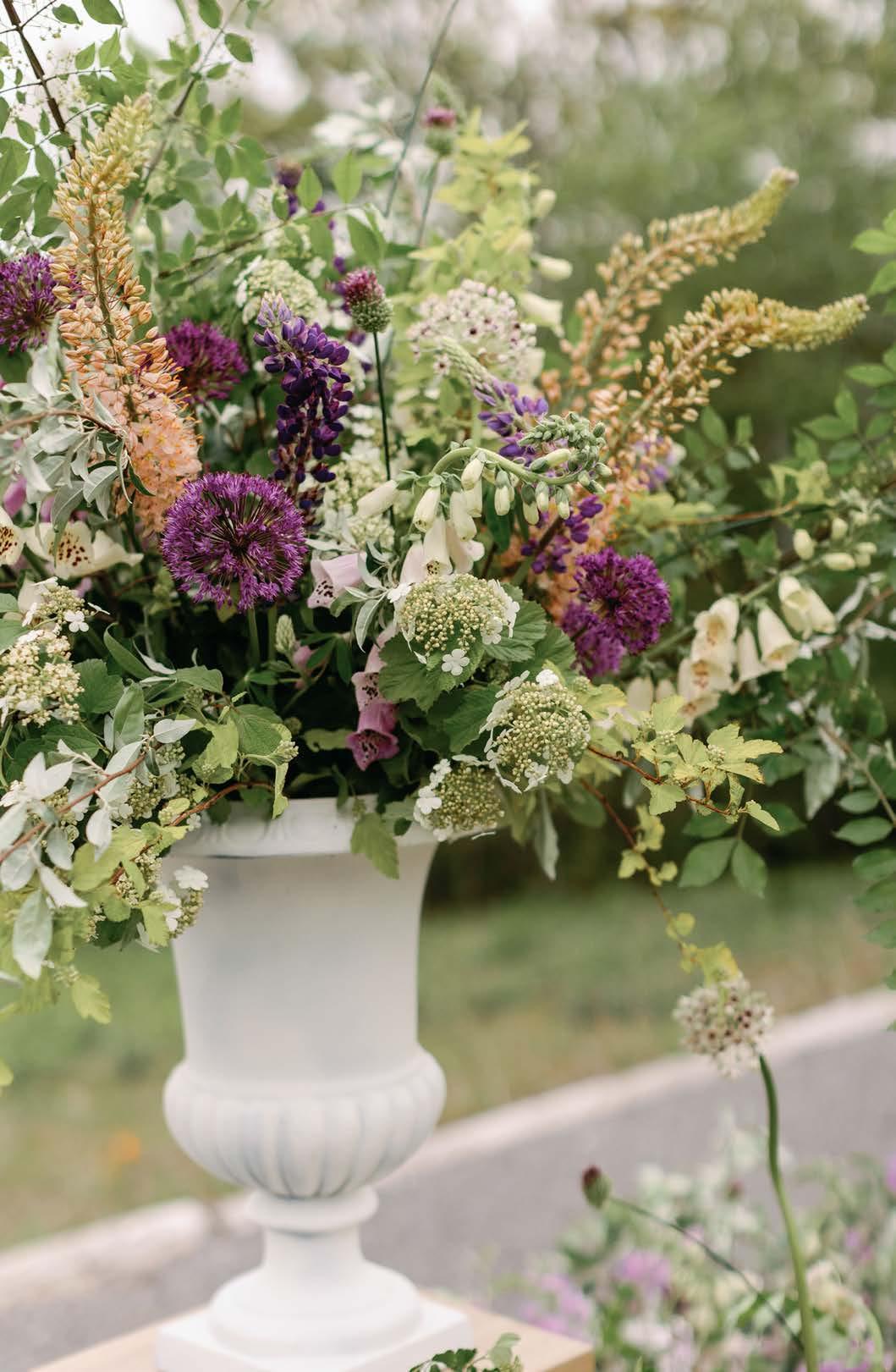
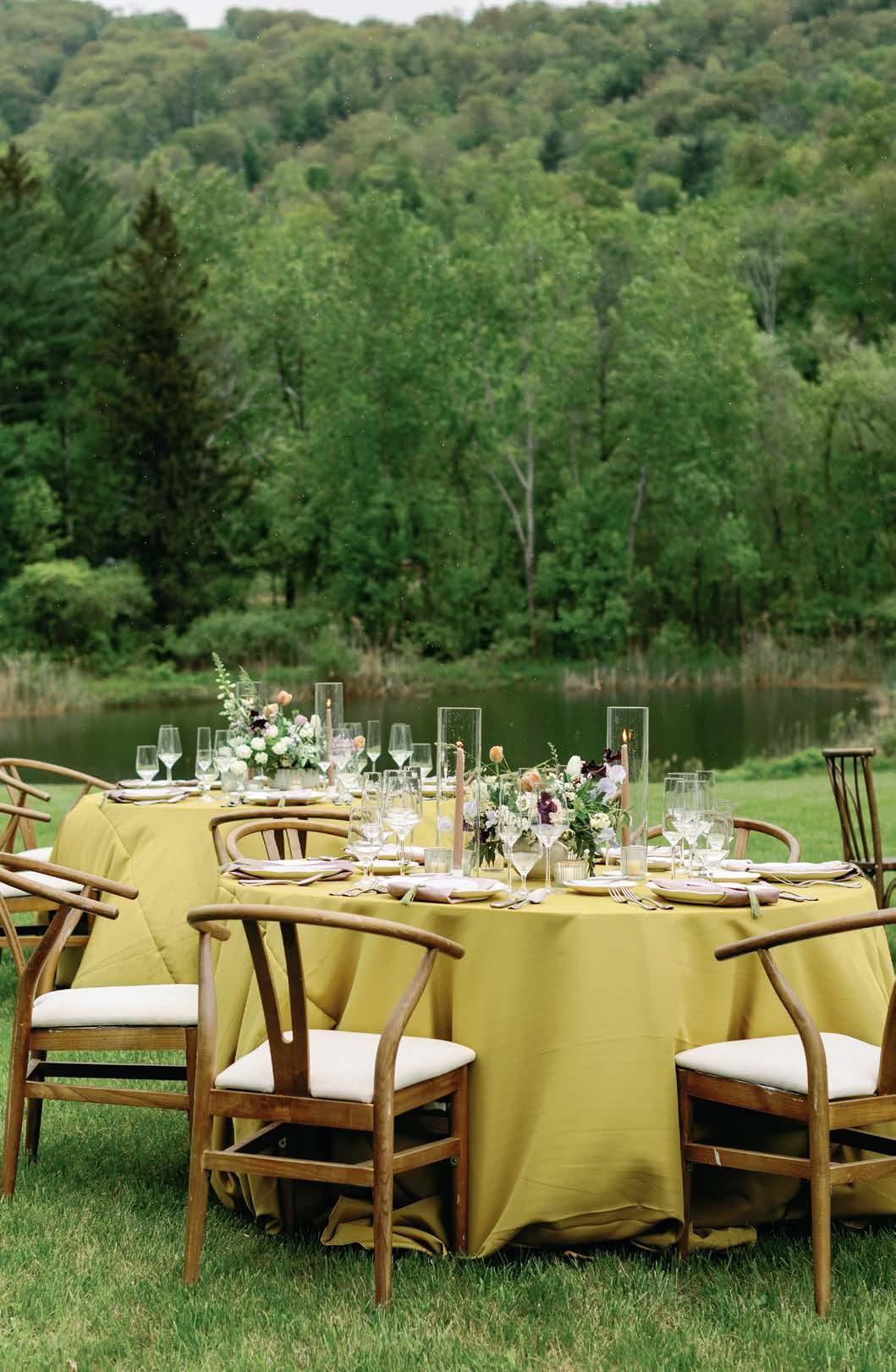
for weddings and events, Chin envisioned portraying a romantic, luxury ceremony and reception that showcased the mountain environment as its backdrop. A hand-picked creative team including everyone from models, hair and makeup artists, and a fashion stylist to florals, rental furnishings, and linens ensured that the photography told that story.
Its design repeated blooms in the bridal and attendants’ bouquets, with the addition of lilies, irises, and honeysuckle vines.
“I added the curly shoots of garlic scapes at the last minute!”
Chin invited Mindel to join the production as its floral artist, tapping photographer Molly McCauley and Columbia Tent Rentals to round out the creative team. “I’ve learned over the years how important it is to have the photographer, designer, rental company, and planner all on the same page – especially when creating the level of shoot that we were looking to do. None of us wanted to do something that didn’t represent our brands,” Chin explained. She prefers to book professional models, knowing their roles are so important to expressing the intended narrative.
Mindel noted that the market for luxury weddings is competitive and brings bold opportunities to play and experiment with a refined scope of floral aesthetics. With her select team of dedicated designers, she collaborated with Chin and photographer McCauley to bring this editorial shoot to life.
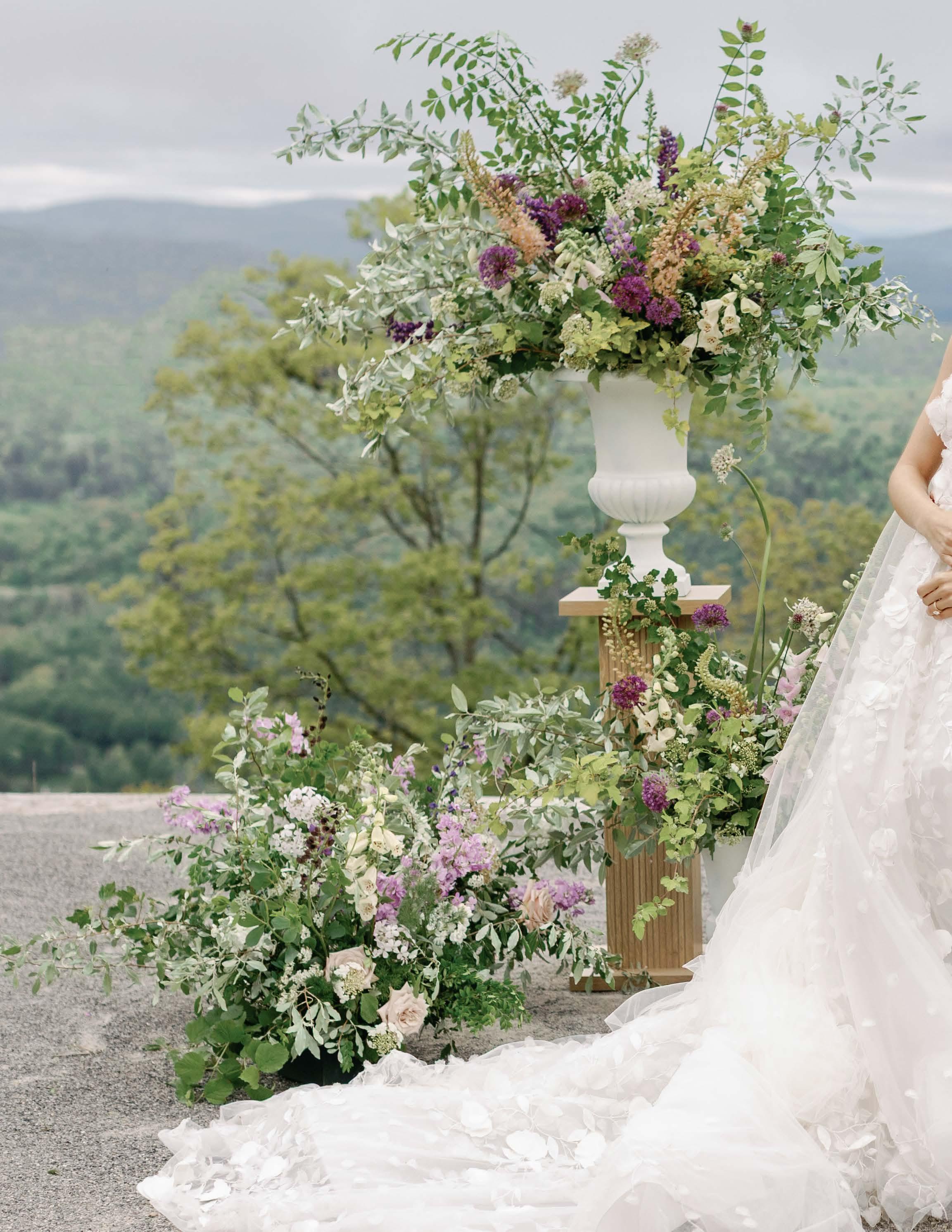
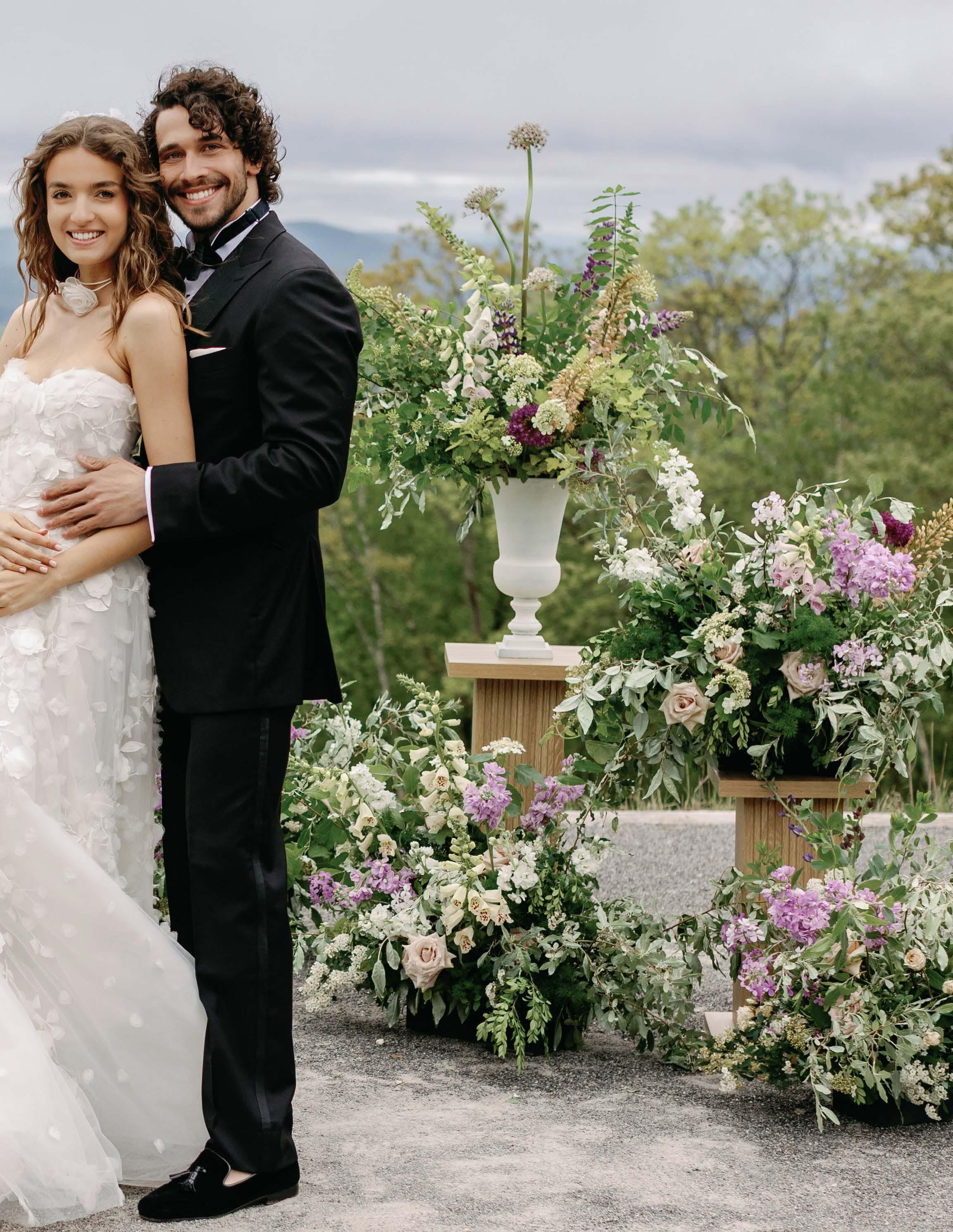
The project also presented a chance to creatively design in a unique place, full of elemental power. “This ceremony’s stunning location was literally on top of a mountain. Windblown textures and the expansive feeling of grand vistas became central aspects of the floral design,” Mindel said.
Like many endeavors, the breadth of the editorial vision expanded once the team started planning. An increased floral budget allowed for a variety of customized
FLORAL DESIGN
REBEKAH MINDEL, MEADOWS WILD
WEBSITE INSTAGRAM
PLANNING
LISA JAROSCAK CHIN
ELEGANTE WEDDINGS AND EVENTS
WEBSITE INSTAGRAM
STYIST
FRANCESCA DISPIRITO
WEBSITE INSTAGRAM
VENUE
CATAMOUNT MOUNTAIN RESORT
WEBSITE INSTAGRAM
RENTALS
COLUMBIA TENT RENTALS
WEBSITE INSTAGRAM
HAIR + MAKE UP
BRIDAL BY ALEXANDRIA
WEBSITE INSTAGRAM
DRESS BOUTIQUE
MIRE COUTURE INSTAGRAM
DRESSES
MARCHESA BRIDAL INSTAGRAM
TALENT
@OLVIYAAAAA
@_THOMASMICHAEL
containers, vases, and props that Meadow Wilds needed to contribute. Those hurdles stimulated even more creativity to achieve the desired floral aesthetic, and Mindel drew from the ornamental shrubs from her farm to create structure, volume, and texture in several stately urns and ground arrangements that framed the ceremony’s setting. Flowering bulbs and perennials from her fields, and from fellow Hudson Valley growers, added to the floral recipe.
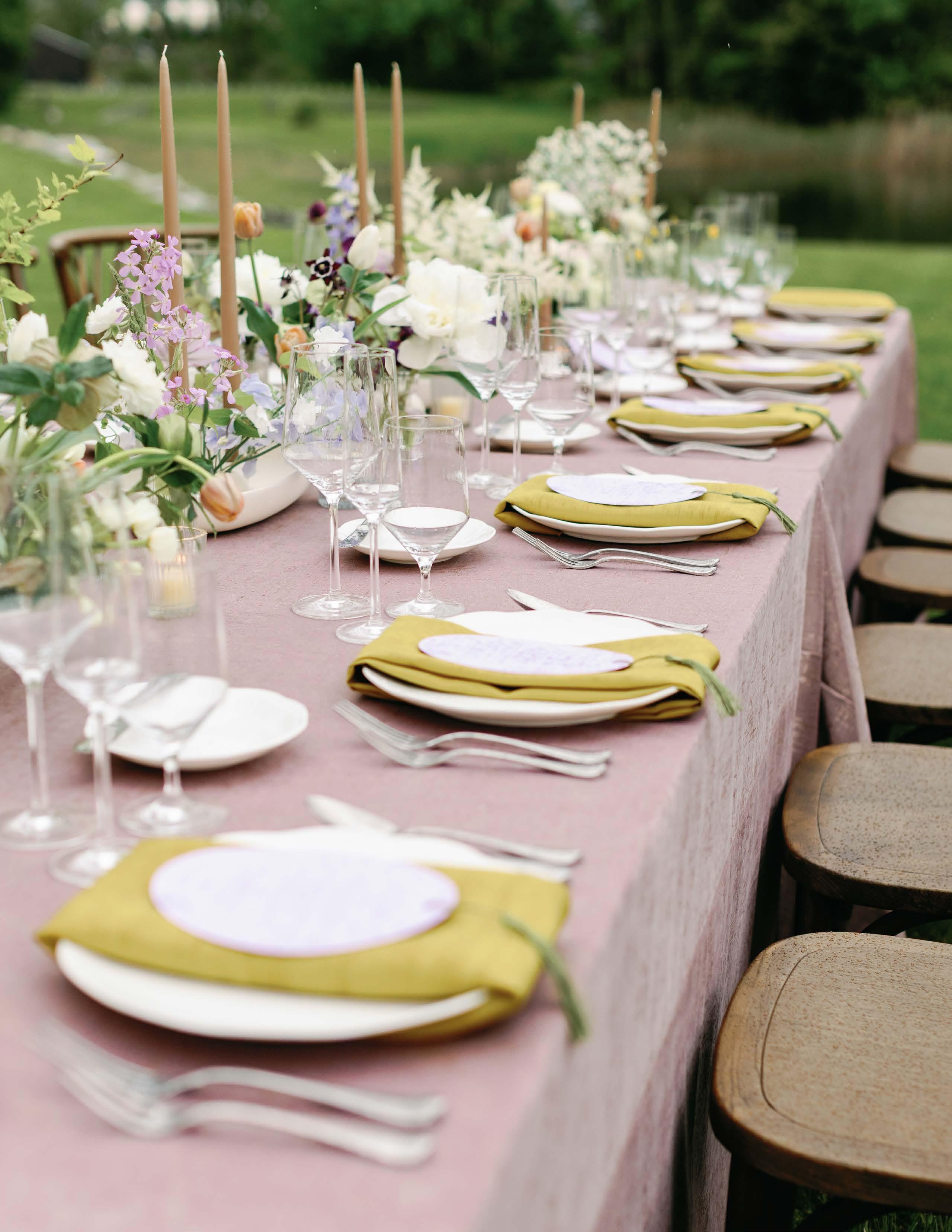
With the outdoor reception designed to showcase the best of linens, seating, dishes, glassware, and flatware, Mindel flowered the tables with one-of-a-kind bud vases, bowls, and accessories. The overall effect for dinner guests: A delicate floral immersion at eye level, enhanced by evergreen mountaintop views in the distance.
The planner and florist worked together to select furnishings and accessories to carry out Chin’s original vision, including a Pinterest board featuring shades of lavender, cream, and chartreuse. That palette shifted to include curry and mauve tones once Chin and Mindel made specific linen choices with the rental company to complement the look.
Mindel’s expertise informed the selection of local and seasonal botanicals. A wide variety of branches, including ninebark and viburnum, created the necessary scale, while an ephemeral, earthy spectrum of apricot, mauve, plum, and chartreuse greens added detail and interest. Allium, foxglove, lupine, tulips, peonies, columbine, and other local blooms play against baptisia foliage, while cultivated and wild-foraged ingredients reflect the beauty of place and time.
“I think the fact that I’m a grower allows me to bring more of an organic quality to this project,” Mindel said.
Chin added, “Rebekah is such an artistic, creative person and partner. She also has an extreme love for nature, and an appreciation for the flowers and how they’ve come to be. I like her focus on local, natural elements – and I wanted the flowers to look like they belonged in this setting, but also be elevated.”
Wedding photography doesn’t always showcase the entirety of one’s floral designs at an event, Mindel noted. “We might not always get everything captured that we would hope for. This photoshoot gave us the valuable opportunity to get all of our work included.”
According to Chin, the overall goal of the photoshoot is to highlight the best of each participant’s brand and vision. For example, she wanted to create an unforgettable visual story of a full-scale wedding and ceremony at Catamount Mountain Resort. The rental company had new inventory items, showcased through the uncommon furniture layout (round and rectangular tables with two different chair styles) and an arresting palette of curry and mauve linens.
Photographer McCauley captured portfolio images of the mountaintop ceremony to help future couples better envision working with her at similar venues. For Mindel, the photography elevated her work, highlighting both the overall aesthetic, as well as the minute details of the florals.
“While designing for a wedding or event, my focus is 100% percent on bringing our clients’ floral vision to life. And of course, the photographer is doing the same from their own perspective. A styled shoot is a creative opportunity where the designer can highlight specific elements of their work. Having a stylist and beauty team present added an extra dimension of care to the overall look we sought to create.”
The production day wrapped up with an industry event that brought together the entire team. “This was Lisa’s brilliance,” Mindel pointed out. “She turned the production into an industry night and invited professionals to come and see Catamount Mountain Resort, appreciate the beautiful flowers and rentals, and experience the location as guests would –an exquisite spring celebration.”
PHOTOGRAPHY BY JACKIE
KALCH
Sustainability and style come together for a zero-waste wedding in the garden
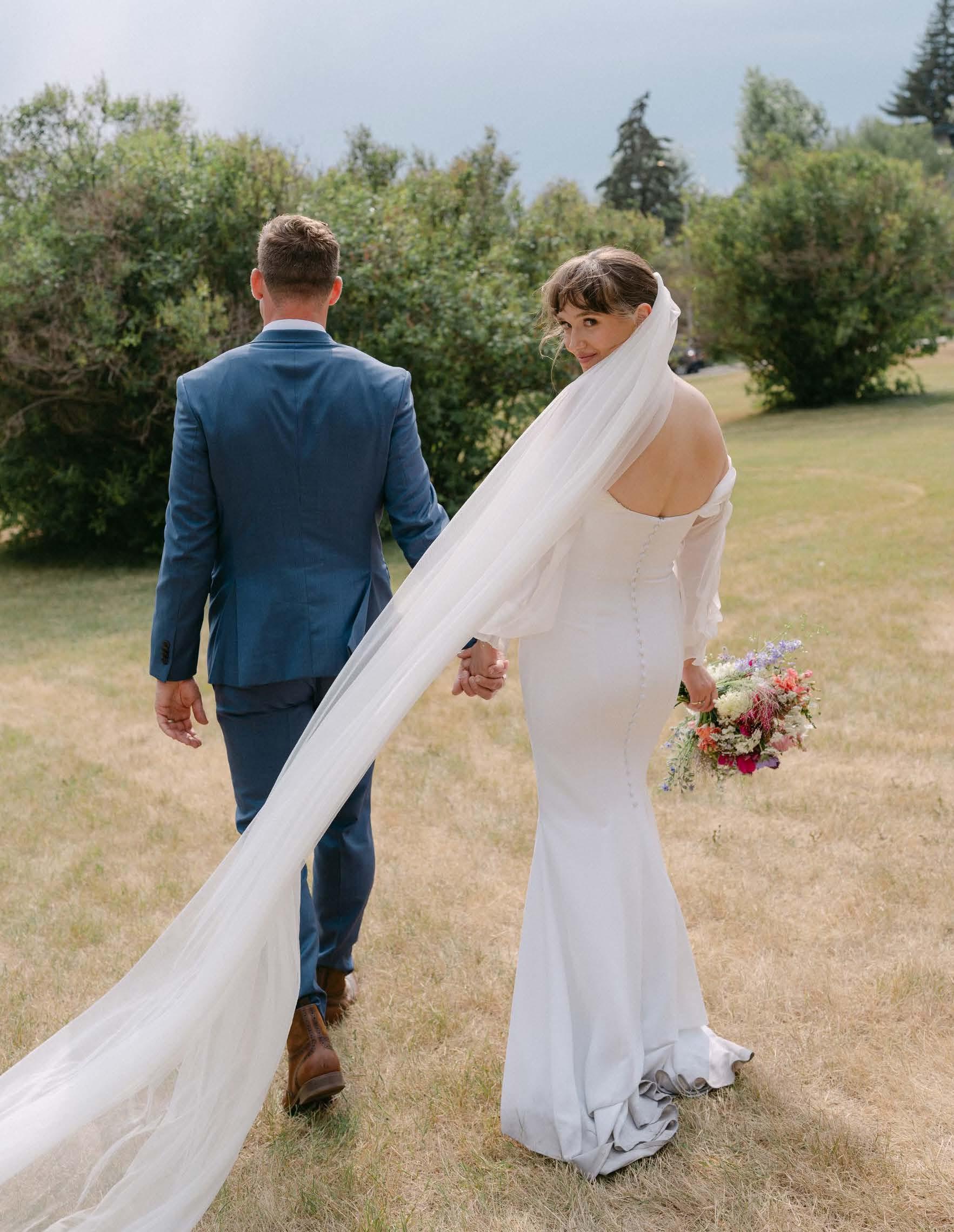
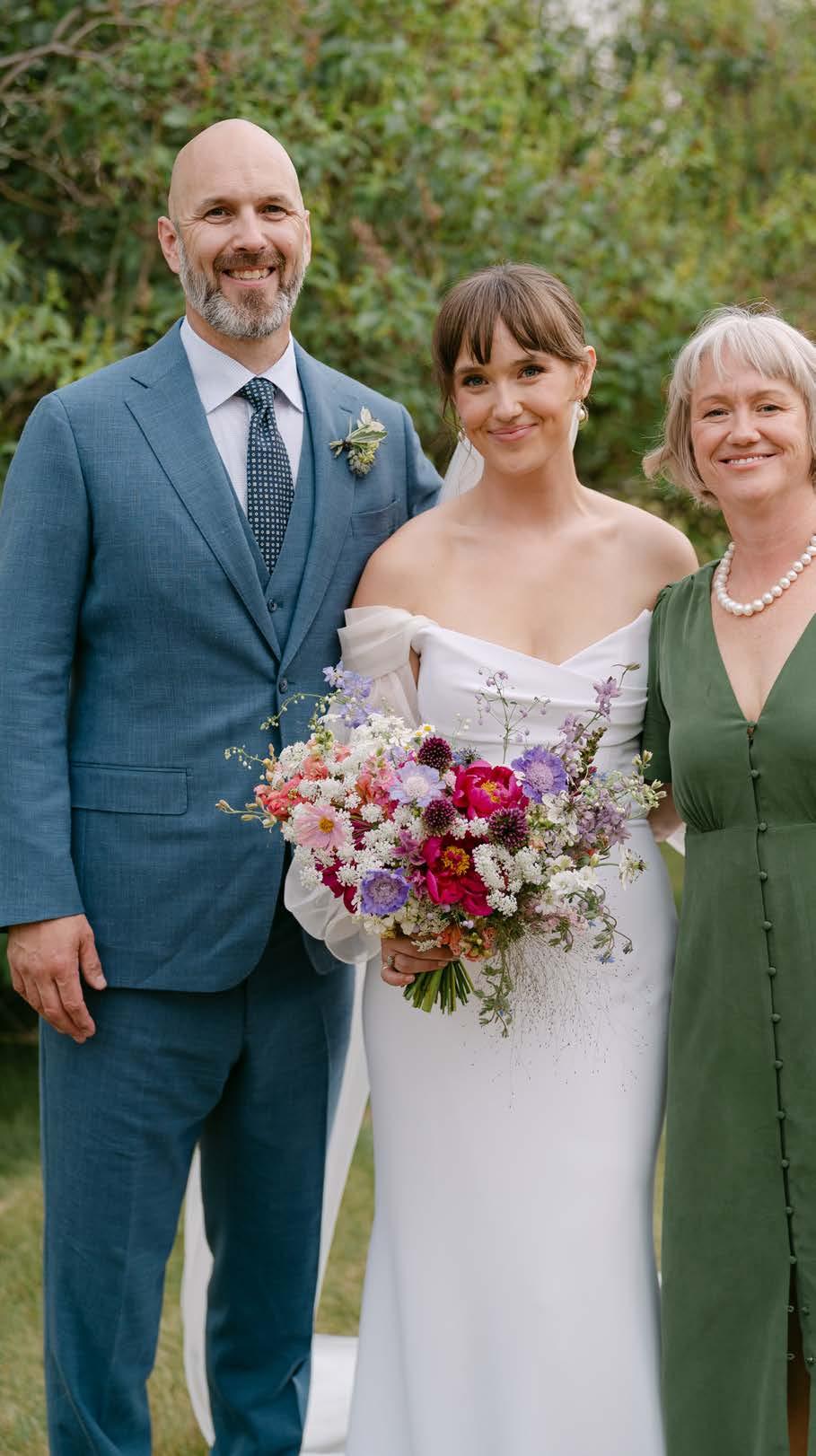
“I’VE ALWAYS DREAMED ABOUT WHAT MY WEDDING WOULD look like. And since I can remember, it’s always been in the back of my mind that I would love to be married at my parents’ house in their backyard,” recounted Claire Locey, who married her sweetheart Travis Locey on August 3, 2024 – yes, in her parents’ garden.
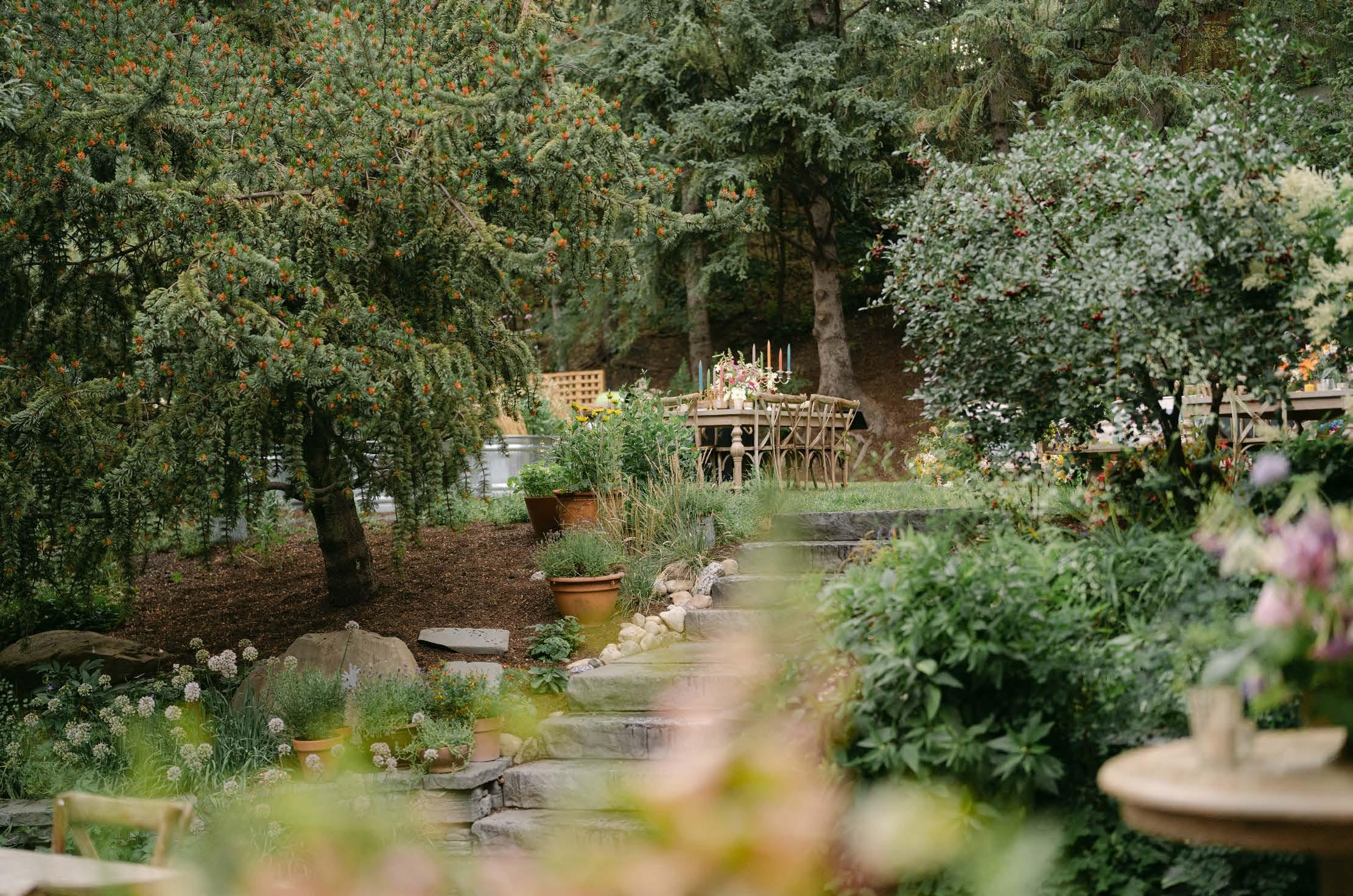
Becky and Colin Feasby, the bride’s parents, live in Calgary, Alberta, where their one-third-acre, tiered landscape accommodates ornamental borders, strolling paths, a cutting garden, a basketball court, and an outdoor living room –reflections of the family’s lifestyle and recreational interests. The verdant setting accommodated 110 guests at the al fresco ceremony and reception adorned with only locally grown Canadian blooms. Because the bride was raised by gardeners –including years when her mother also designed wedding florals through her studio Prairie Girl Flowers – it was a given that the ceremony would be festooned with botanicals from nearby gardens and flower farms.
With a goal of creating a zero-waste event, the couple came up with a checklist and worked with vendors to achieve their vision. “The kind of vibe we wanted to curate for the wedding itself
was to be really easygoing, lovely, and stress-free,” Locey said. “Not everything needed to be flawlessly perfect. There was an informal menu so people could stand or sit to eat. We had a canoe filled with beer and we had hors d’oeuvres passed around. What really mattered was that our guests and family were happy and together.”
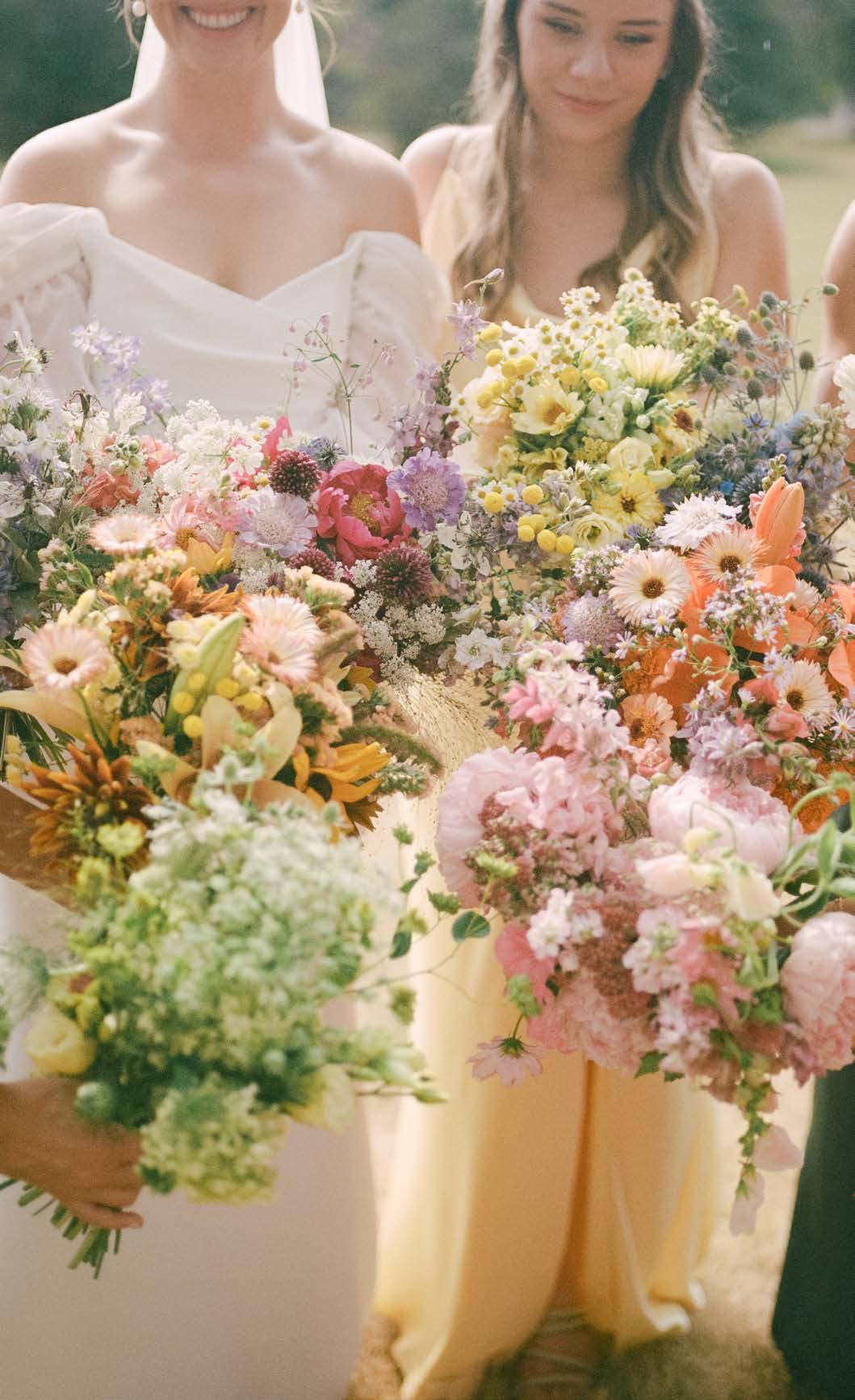
Wishing for a palette of “all the colors,” Locey suggested to her attendants, including her younger sister and co-maidof-honor Katie Feasby, that they each select a gown unique to their style. “I know how expensive it can be to be a bridesmaid or even a wedding guest,” Locey said.
Feasby knew she didn’t have the garden capacity to grow all of the flowers this wedding would require, so she turned to other flower farmers in the province. Seven growers supplied blooms, delivering on Feasby’s goal of a rainbow spectrum. “When I was ordering from the different farmers, I knew that I needed all the colors to go with the dresses, from icy and darker blues to pinks, yellows, oranges, and greens. The orange dress was lined in mauve, so I made sure to have some mauve flowers in there too. Some were easier to find at that time of year, but it all worked.”
The peonies, a favorite of the bride’s, came from Lady’s Hat Farm and farmer Nikki Wiart cold-stored the stems until they were needed. “That meant we had all these lovely peonies for Claire’s bouquet,” Feasby said. Petal shades of deep magenta, complemented by lavender, lilac, pink, plum, coral, green, and white blossoms, were gathered into a bouquet that captured the moment of this special ceremony. “It’s the only way I know how to do flowers,” Feasby insisted. “I’m convinced that if you work with seasonal flowers, it all just works out.”
Apparently, the pollinators thought so, too, joked Locey. “All of us had bees floating around our bouquets!”
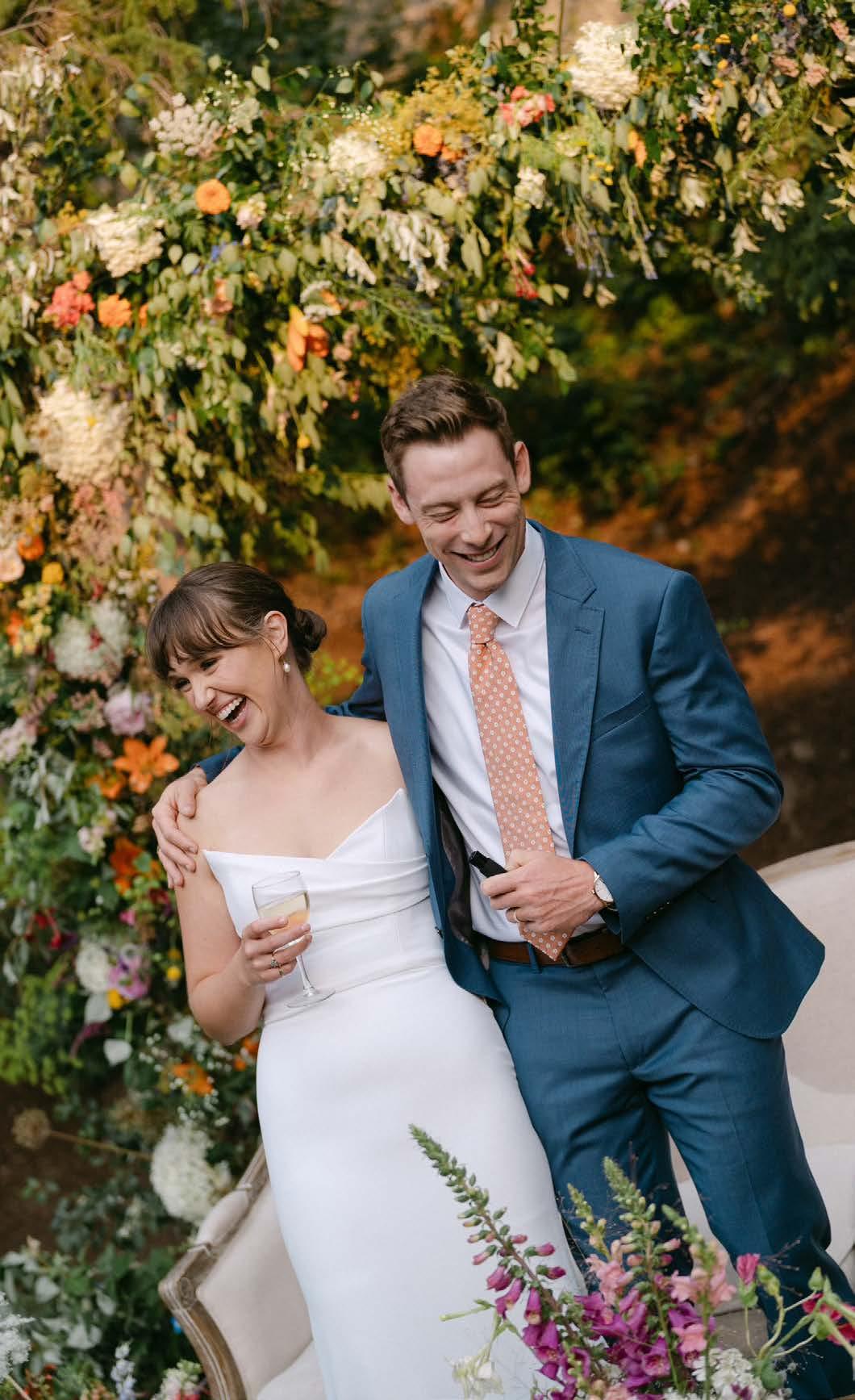
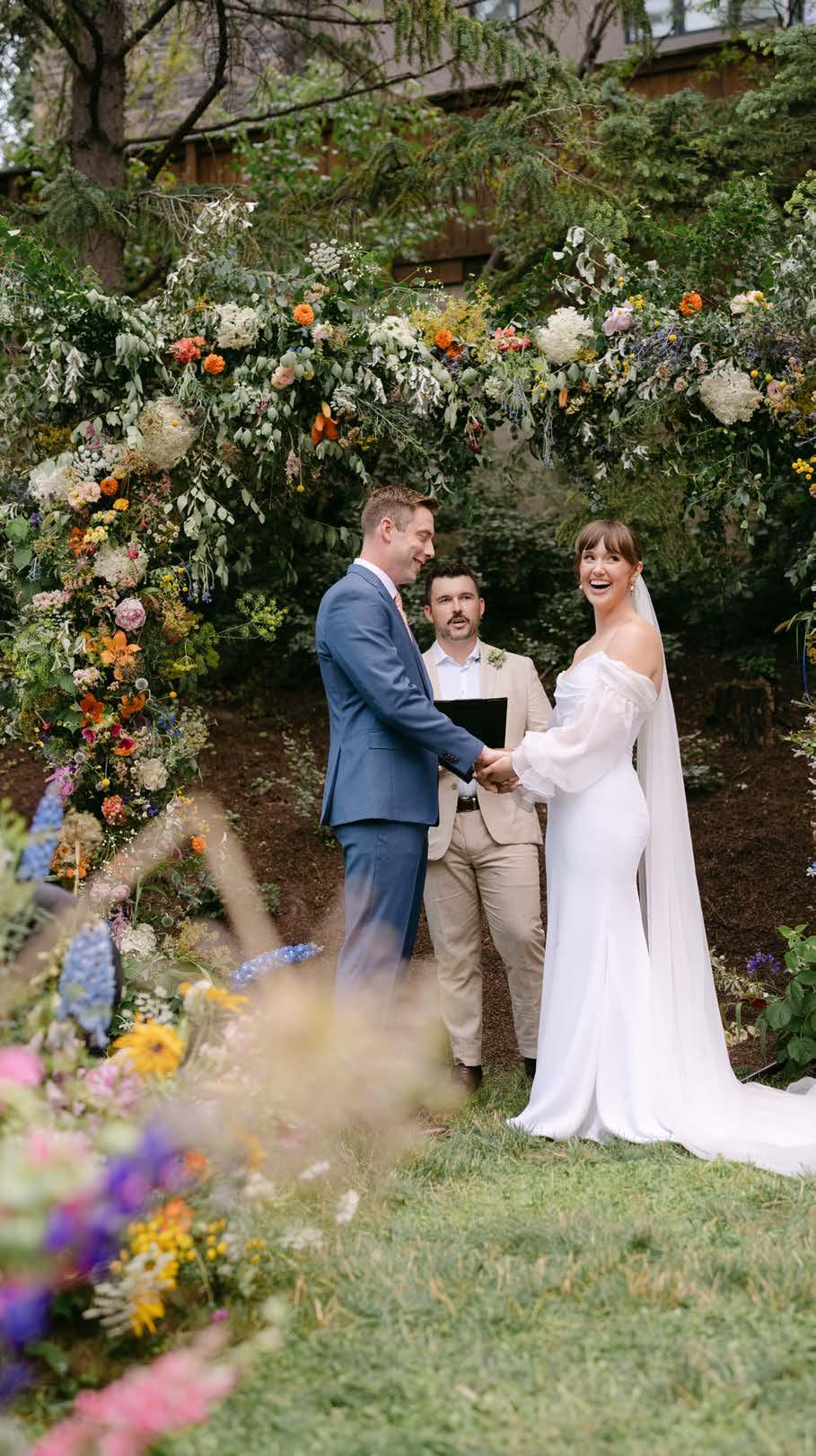
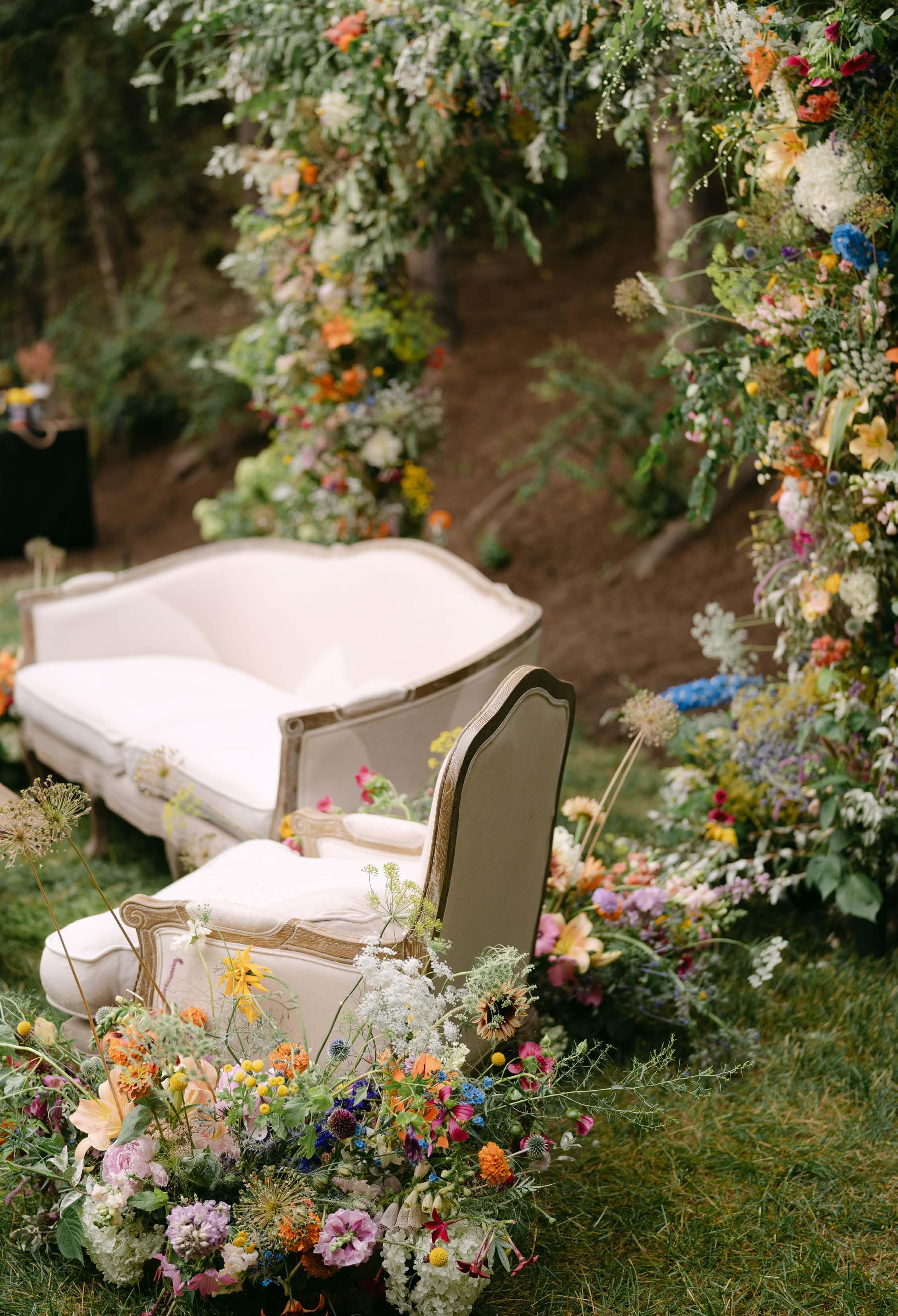
The personalities of the bloom-forward bouquets were echoed in the dramatic floral arch that framed the ceremony and later became the perfect backdrop for socializing and photography.
The groom, a physical education teacher and coach, constructed the framework using salvaged boards mounted
BLUE EGGS AND BLOOMS INSTAGRAM
BLUE MOON FARM INSTAGRAM
BOREAL BLOOMS INSTAGRAM
FIELD FLOWER FARM INSTAGRAM
LADY’S HAT FARM INSTAGRAM
PRAIRIE GIRL FLOWERS INSTAGRAM
PRIMROSE LANE FARM INSTAGRAM
THE PETAL AND POLLEN INSTAGRAM FLOWERS + DESIGN SUPPORT
LADY’S HAT FARM, PRAIRIE GIRL FLOWERS, AND PRIMROSE LANE FARM
JUNIPER GARDENS INSTAGRAM
SERENA HOULE INSTAGRAM
to upright high-jump platforms borrowed from the athletic department of the high school where he teaches.
The lavish, over-the-top floral arch emerged from that simple frame, thanks to creative mechanics by a team of freelancer-friends, led by Wiart. By wrapping the boards with lengths of chicken wire and leaving spaces for hidden water vessels, the entirely foam-free installation seemingly grew from the ground up, fully integrated into the garden with ground arrangements at the base of each side.
The designers created a foliage base using wolf willow (a grey-green shrub native to Alberta), plus an explosion of blooms. “We wanted a loose, wild arch, versus something manicured,” Feasby said. Some of the stems went in dry; others went into the vessels of water; and water picks held others. All of the mechanics were recycled after the wedding, in keeping with the zero-waste goal.
Guests got into the spirit of the day, such as holding onto individual beverage glasses for refills. “People put their recyclables in beautiful metal troughs rather than plastic bins and we bought compostable cotton napkins,” for example, Feasby said.
She also worked with Modern Rentals to reduce the waste that is typically generated from deliveries. For example, she said, “most of those items usually come shrink-wrapped in plastic, and we asked for alternatives. And instead of wrapping the furniture in plastic, everything was delivered in moving blankets.”
Locey was also interested in repurposing her wedding florals. She wrapped up her master’s degree around the time of the wedding, writing a thesis on women’s experiences seeking pregnancy healthcare while also experiencing housing instability. “After the wedding, my mom and some of her florist friends repurposed the flowers into Mason jar arrangements and took them to Alcove Recovery Center for Women, one of the sites I worked with during my research. So all of the residents had beautiful flowers. That was another aspect of sustainability – and a piece from the wedding that really mattered to me. One of the beautiful things about flowers is that they remind us to be in the present and I just wanted to make the most of them.”


PHOTOGRAPHY BY
When a farmer-florist’s bridal bouquet is designed with stems from her friends
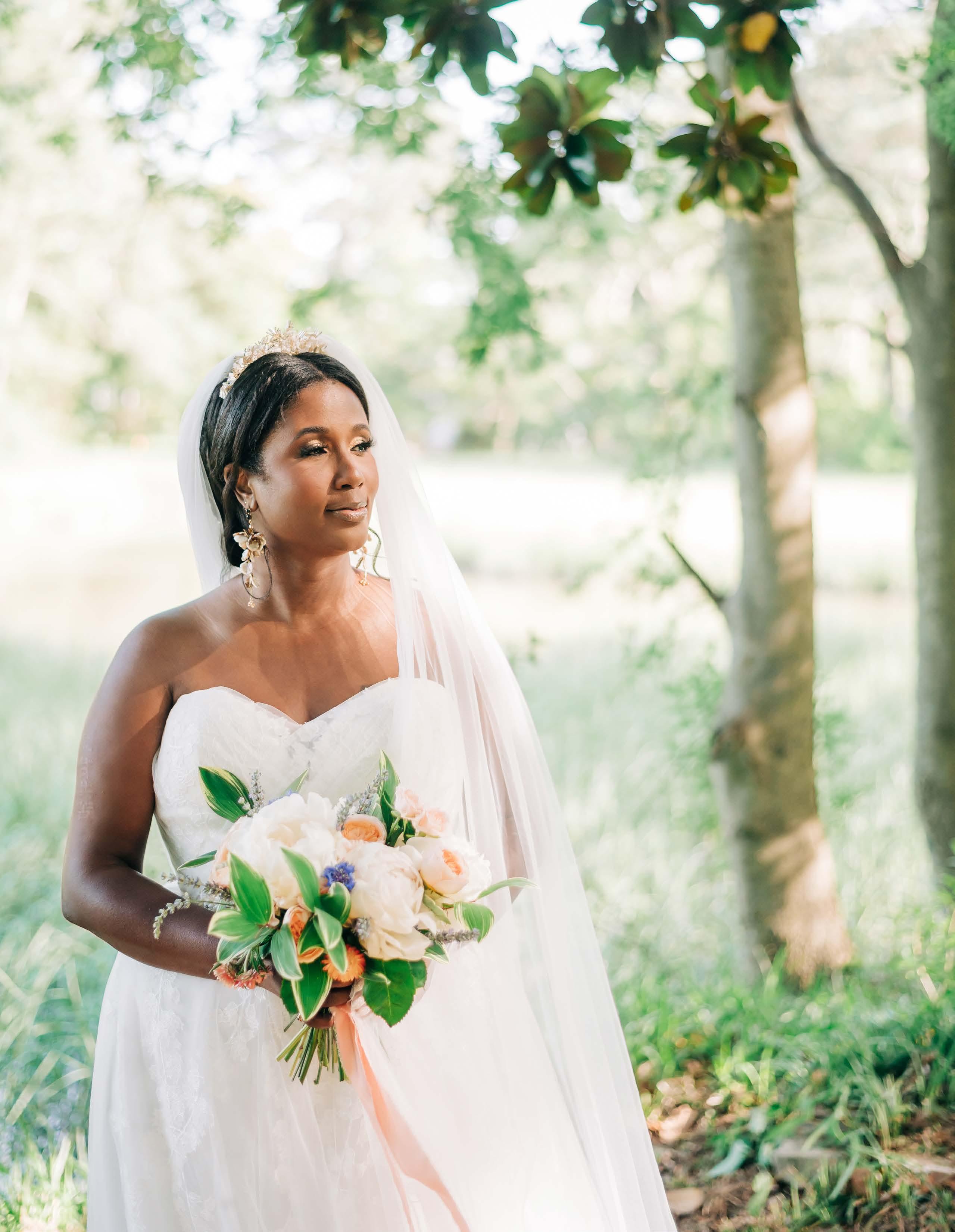
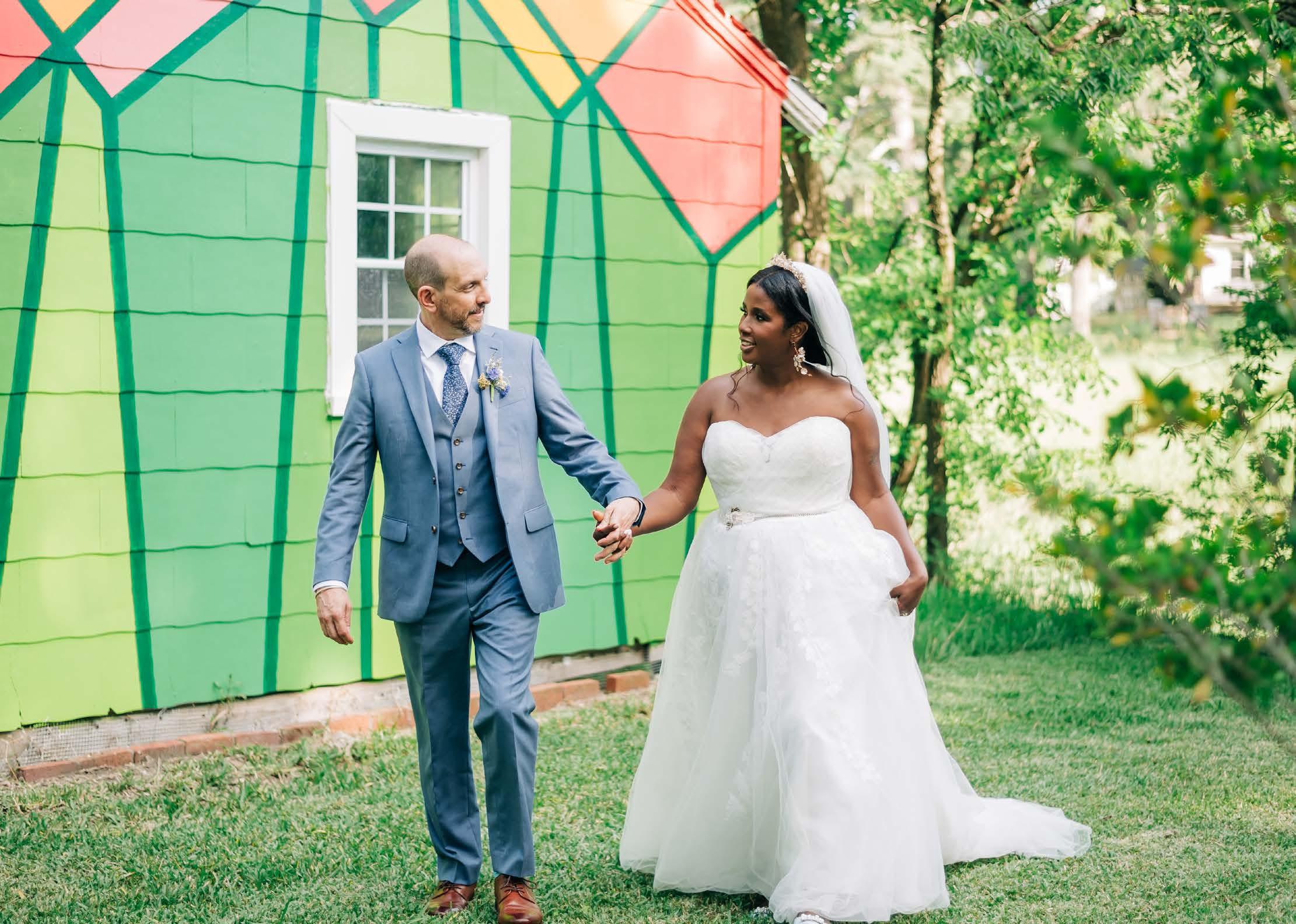
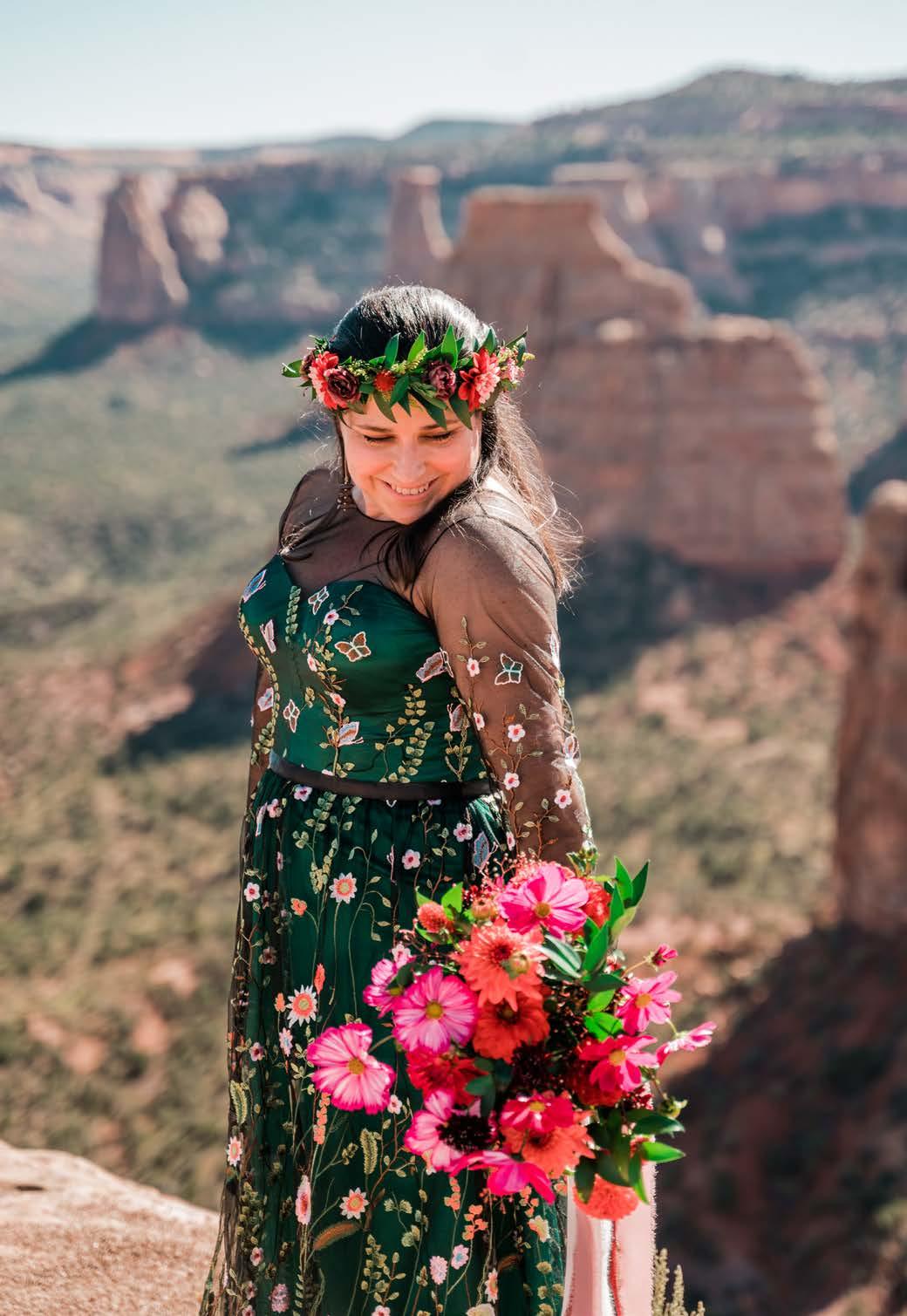
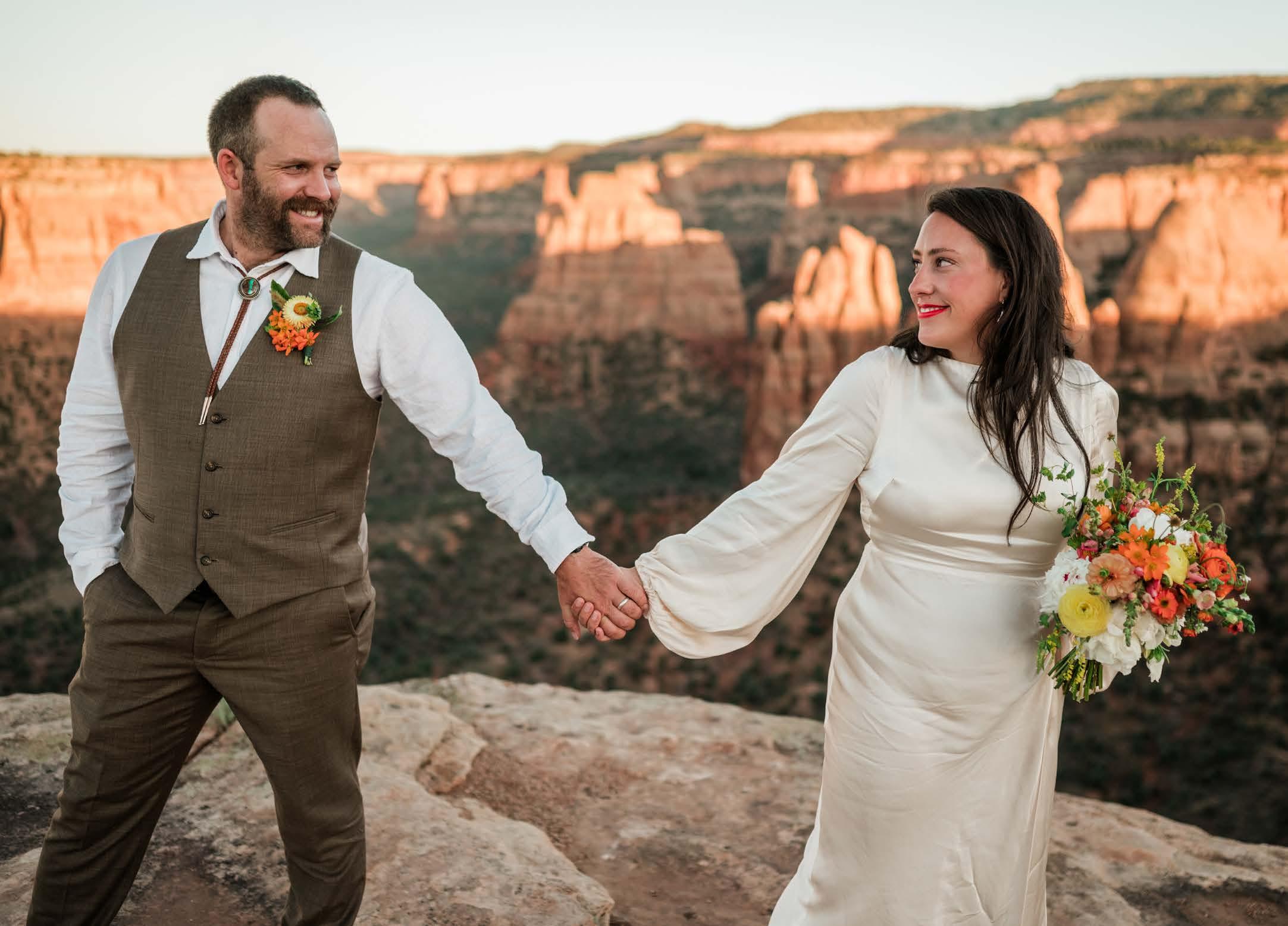
WHEN PLANNING HER INTIMATE WEDDING TO THOMAS Goodwin, farmer-florist Djwana (Dee) Hall knew she wanted to feature flowers from friends and fellow growers. Owner of Mermaid City Flowers in Norfolk, Virginia, and founder of Black Flower Farmers, Hall Goodwin’s apricot, cream, and soft blue floral palette was perfectly suited for the June 1 ceremony and coincided with peony season. Kathy Stewart of Toano Botanicals, a fellow Virginia grower, gifted 50 stems of white peonies to the couple. Those were complemented by 100 lavish, apricot-hued ‘Juliet’ roses, grown in California by Green Valley Floral and provided as a gift by Kelly Shore of The Floral Source.
As farm-to-bride botanical gifts, these were priceless gestures. “Our wedding date was based on floral availability – no surprise,” Hall Goodwin said. “And while I was completely capable of growing all of my own flowers, I really wanted this effort to feel collaborative. After all, weddings are about community! So, I’m grateful to every single floral industry professional who helped me get to the altar in the most gorgeous fashion.”
Hall Goodwin recalls her nuptials through her special friendships.
MERMAID CITY FLOWERS WEBSITE INSTAGRAM
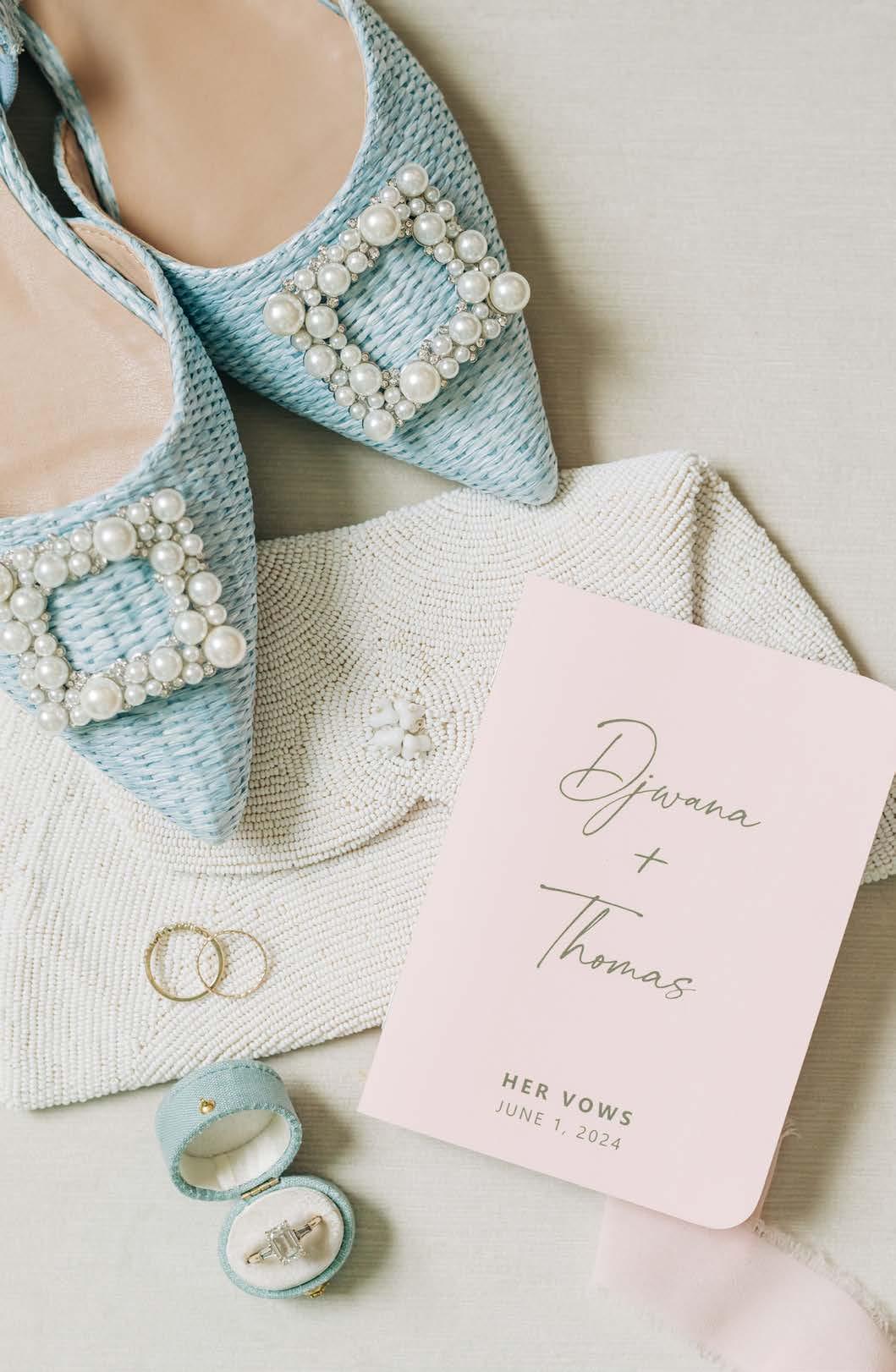
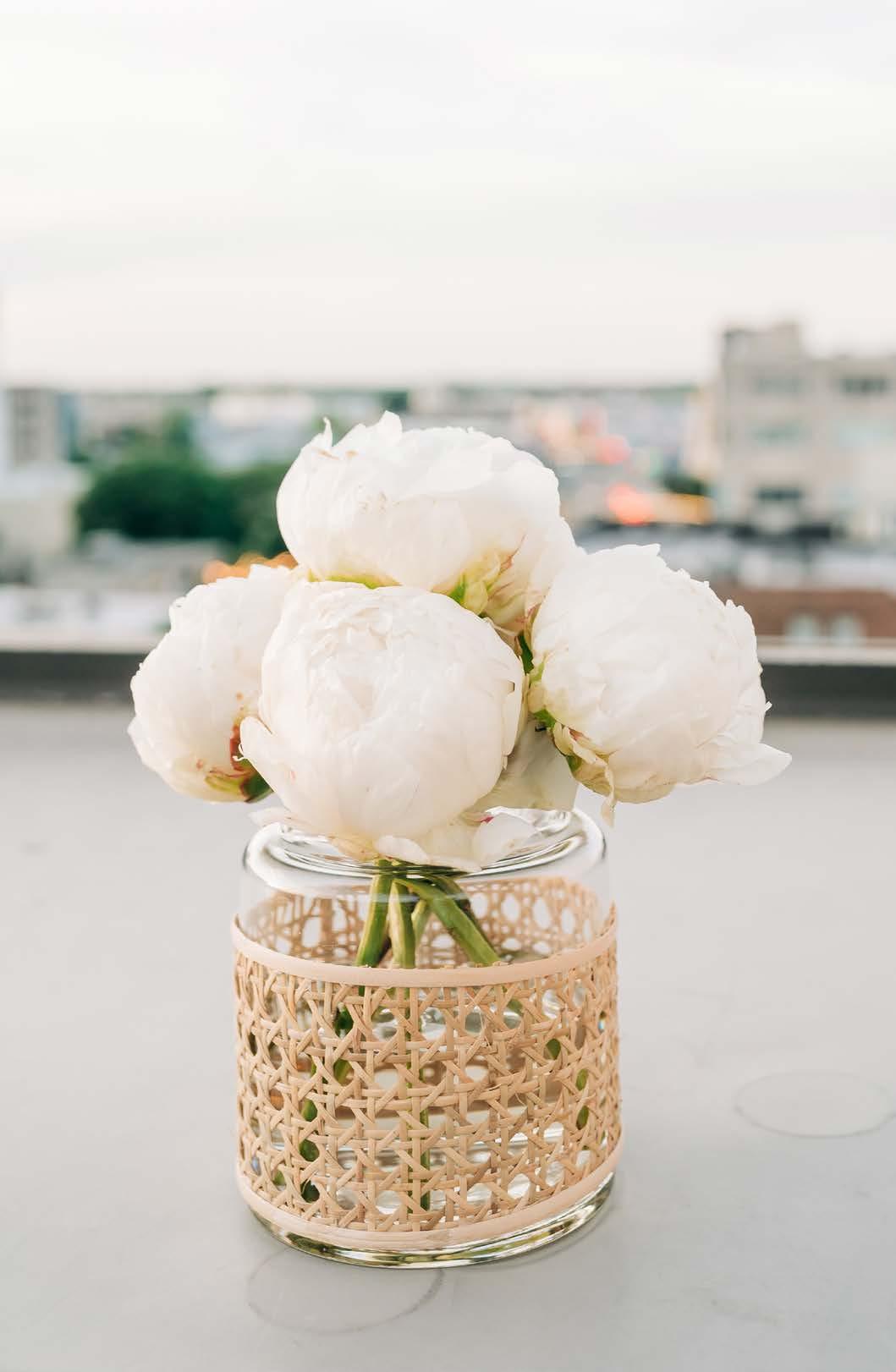
Joined by her friend Stephanie Lejeunesse, who visited from the Pacific Northwest, the bride spent a morning driving to several area flower farmers – each of whom gave her seasonal blooms from their fields.
The design process began at 4 a.m. on the day of her ceremony, as Hall Goodwin made the arrangements and personal flowers for herself and her future husband. “This is always the thing we tell people ‘don’t do,’” she laughed. “I’m a professional and I’m flexible. But I was also the last person to have my makeup done!”
Hall Goodwin describes her design style as “elevated, elegant, and from the garden.” Add in a touch of whimsy and she likens her aesthetic to Miss Havisham’s forgotten garden, a reference to Dickens’ character in Great Expectations. “I really love a wild look,” she laughed.
For the couple’s “first look” photography, they headed to an idyllic riverfront property in Norfolk – one of several plots where Hall Goodwin grows flowers for her microfarm enterprise. “It was 70 degrees and breezy – ideal weather,” she recalled. “We strolled through this gorgeous place, filled with lots of magnolias, hydrangeas, and ferns. It was a perfect, quiet spot before heading to our ceremony venue, filled with people.”
She held a sweet bouquet of flowers, including the peonies and roses, accented by straw flower, lavender, bachelor’s buttons, and variegated Solomon’s Seal foliage – all tied with a pale peach ribbon. The groom’s boutonniere included apricot-colored yarrow, bachelor’s buttons, and lavender, which looked perfect against his blue, threepiece suit.
A lifelong friend, Nirvana Dove, gave a reading from bell hooks’ All About Love, during the ceremony at Larchmont United Methodist Church in Norfolk. Afterwards, the couple and guests moved to the reception, held on the rooftop of Assembly, a local co-working space. There, with their blended family, including teenaged and young adult children, they celebrated the start of a new life together as the sun lowered in the sky.
Hall Goodwin describes her design style as “elevated, elegant, and from the garden.” Add in a touch of whimsy and she likens her aesthetic to Miss Havisham’s forgotten garden, a reference to Dickens’ character in Great Expectations.
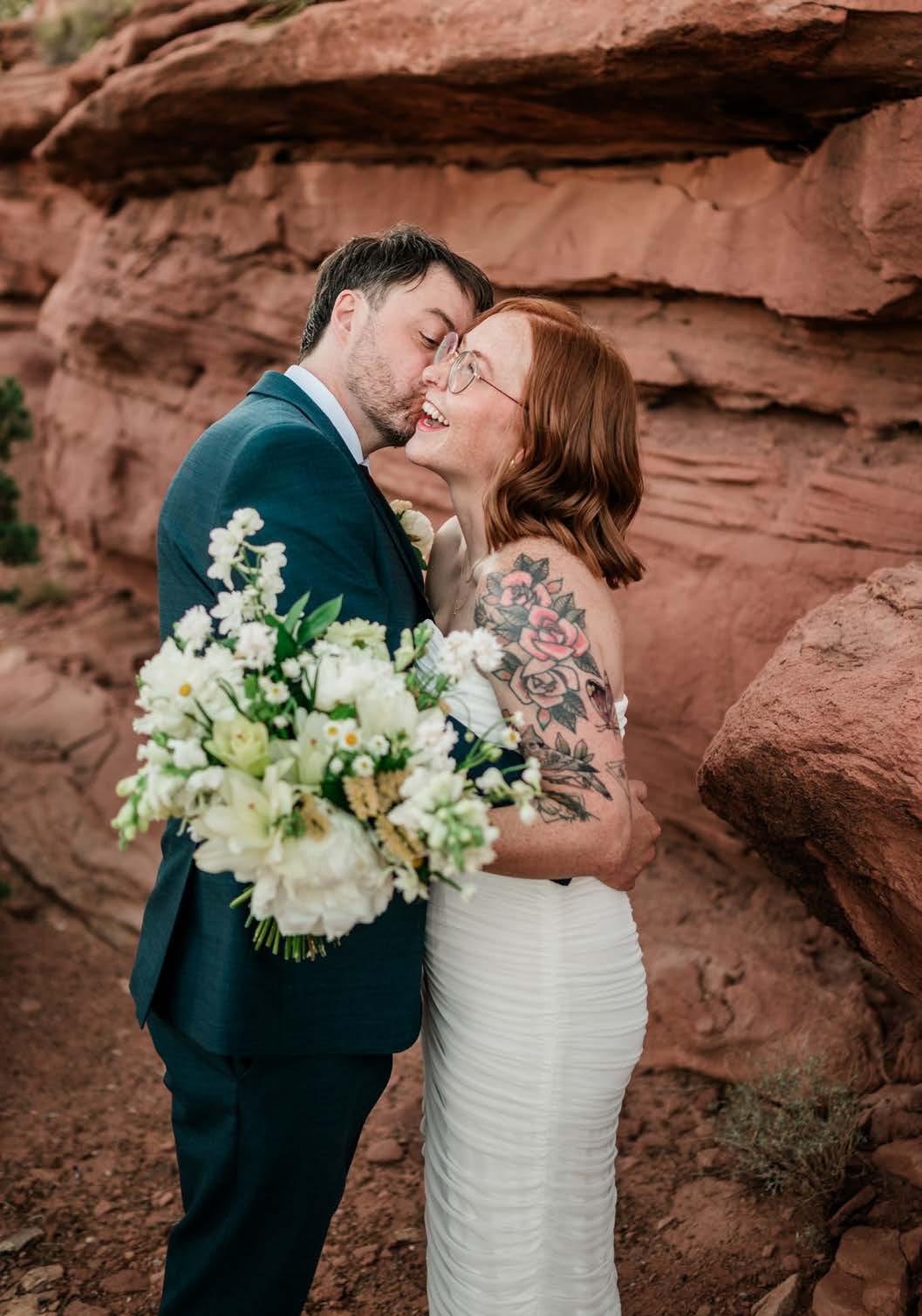
PHOTOGRAPHY BY AMANDA MATILDA PHOTOGRAPHY
How one farmer-florist navigates flower sourcing to support her mission and brand
WHILE THE PERCENTAGE OF PEOPLE LIVING IN COLORADO’S Western Slope is just one-fifth of the state’s total population, the vast area is a magnet for destination elopements and weddings, making Sydney Garvey well-situated to serve couples who value the natural beauty of places like the Colorado National Monument and who want their wedding flowers to reflect those sentiments. “We are two hours away from Telluride, Vale, Aspen, and Moab – in each direction,” she explained. “People come here to get married in the mountains and it’s a lot easier to hire us because we’re here.”
The owner of both Garvey’s Gardens, her flower farm (Palisades, Colorado) and Flowers by Garvey’s Gardens (Grand Junction, Colorado), a retail floral shop that offers everything from personal florals for elopement packages and flower buckets for DIY weddings, to full-service ceremonies and events, Garvey provides couples with a beautiful spectrum of American-grown flowers, depending on the season.
Designing for weddings evolved from Garvey’s early days selling flowers at the local farmers’ market in Palisade. When regular shoppers asked if she designed wedding flowers,
With a “pebble in the pond” approach, Sydney Garvey and her teams on the farm and in the Flowers by Garvey’s Garden’s retail store collaborate with the larger growing community to create florals for couples.
Here is their approach:
Start with ingredients grown by and harvested from Garvey’s Gardens in Palisade, Colorado.
WEBSITE
Rely on flowers grow by other Western Slope flower farms within a two-hour radius of Garvey’s Gardens. These operations grow in similar cultural conditions to the farm in Palisade, Colorado.
Order flowers from the eastern Colorado wholesale hub to complement what Garvey’s Gardens and other Western Slope growers produce, taking advantage of season-extension due to a slightly different climate.
WEBSITE
Flowers by Garvey’s Gardens orders from farms in the national network of fellow members, especially in early spring, for the occasional winter wedding, and to supplement for major holidays like Mother’s Day.
WEBSITE
WEBSITE INSTAGRAM
she made the leap. “It was during my third season of farming and I took just one wedding a month, because it was still just me and one farmhand at that point,” she recalled. “We opened the flower shop in 2023, so we don’t do farmer’s markets anymore. Now, during May and June, we have multiple weddings every weekend. It’s the same in September and October. In between – in July and August – it definitely slows down, because it’s wickedly hot here. That’s when people who are getting married want to be in the mountains where it’s cooler.”
Sydney puts a design priority on farm-grown blooms from her 1.5-acre growing field. “When it’s a big wedding weekend, if the design is colorful, that means our shop will be filled with neutraltoned flowers. If we have a pastel wedding in the spring or a jeweltoned wedding in the fall, the shop’s getting white flowers. If our flowers are not for a wedding, they’re heading to the shop.”
The sister businesses are interrelated, but the design studios are kept separate, Garvey said. “Our retail space is so small that we do all of our
wedding design work on the farm. When we harvest flowers for a wedding, they stay on site in the farm cooler.” She estimates that everyday/retail florals account for 60 percent of Garvey’s Gardens revenue, while wedding florals account for 40 percent. “I would love for it to be 50-50, but since most of our wedding revenue is spread over four intense months in spring and fall, those numbers are understandable.”
Smart staffing and cross-training allows Sydney’s team to shift between the farm and the shop when seasonal spikes occur. “Everyone on my payroll knows how to do it all,” Garvey said. “My farm manager can design and work in the shop and my wedding (design) lead helps on the farm when needed.”
The farm produces around 50 botanical varieties, including a half-acre plot with 250 garden roses and a hoop house filled with ranunculus, anemones, chrysanthemums, and scented geraniums. There is another big field for perennials, re-seeding annuals, and dahlias. Hydroponic tulips and bulb-forcing of tulips, amaryllis, and paperwhites supply winter orders for the retail shop.
The design for most weddings begins on the farm. “Everything we do is 100% American-grown –
and it’s our farm’s flowers, first and foremost. Since I live on the farm, I can go out and harvest first thing in the morning in my pajamas and grab all the little treasures for the bouquet and boutonniere. My team arrives later and we do the big harvest, but I love doing that first task early in the day,” she said.
The design studio also sources from flower farmers in the area –a small, connected community across the Western Slope. “There’s a stress of growing every single element on your own farm, especially when Mother Nature can surprise you, so we know that it’s okay to bring in flowers from other farms,” Garvey explained.
Beyond the hyper-local sourcing, Garvey relies on some product from the Colorado Flower Collective – a farmer hub on the eastern side of the state –as well as from farms outside Colorado, particularly in the American Grown Flowers trade group, of which Garvey’s Gardens is a member. “That usually happens around Mother’s Day, or if a couple has a very specific palette request. It gives us a nice insurance policy while
also supporting other domestic farmers.”
By pricing her own flowers the same as if purchasing from another farm, Garvey said her own-grown versus outside-grown budgets tend to even out. “This just comes from years of also being a retail florist. My flowers aren’t discounted just because I’m the one growing them. It just means that they are way fresher!”
Most wedding consultations occur long-distance, over Zoom. “Couples find me because they are non-traditional. They don’t want roses and baby’s breath –although, we do grow a lot of garden roses! But people want our curated wildflower look.”
She makes sure that Garvey’s Gardens customers know their wedding supports many flower farms. “I use the opportunity to highlight all the farms that supply our studio,” Garvey said. “I might tell the couple, ‘I didn’t grow this stem, but my friend grew it on her farm.’ Just being able to talk about all the flower varieties makes the ceremony a special experience for our couples.”
PHOTOGRAPHY BY CHLOE TEWS, LILY LONG, AND LAUREN FIKKERT
A flower farmer designs her daughter’s wedding with her love language
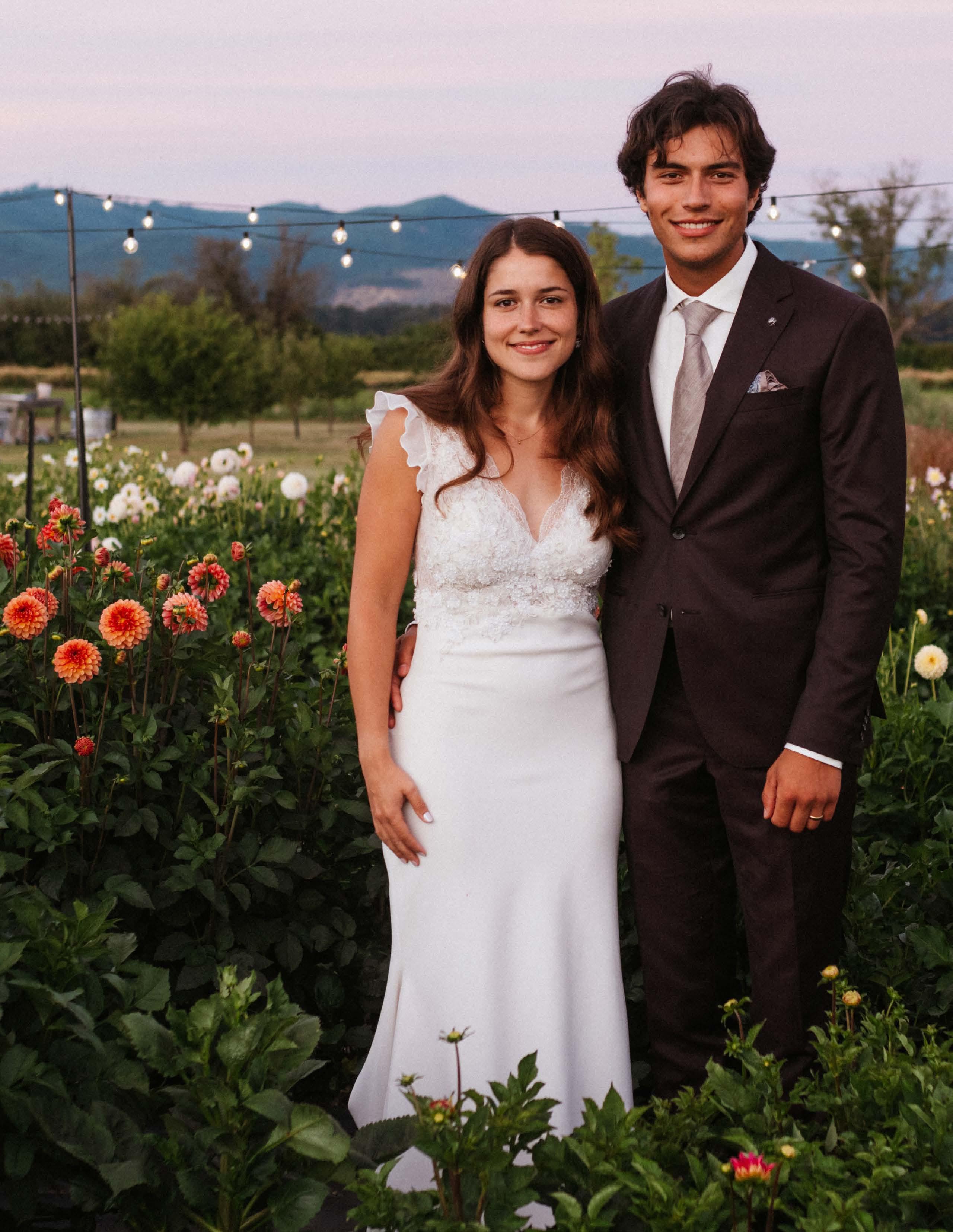
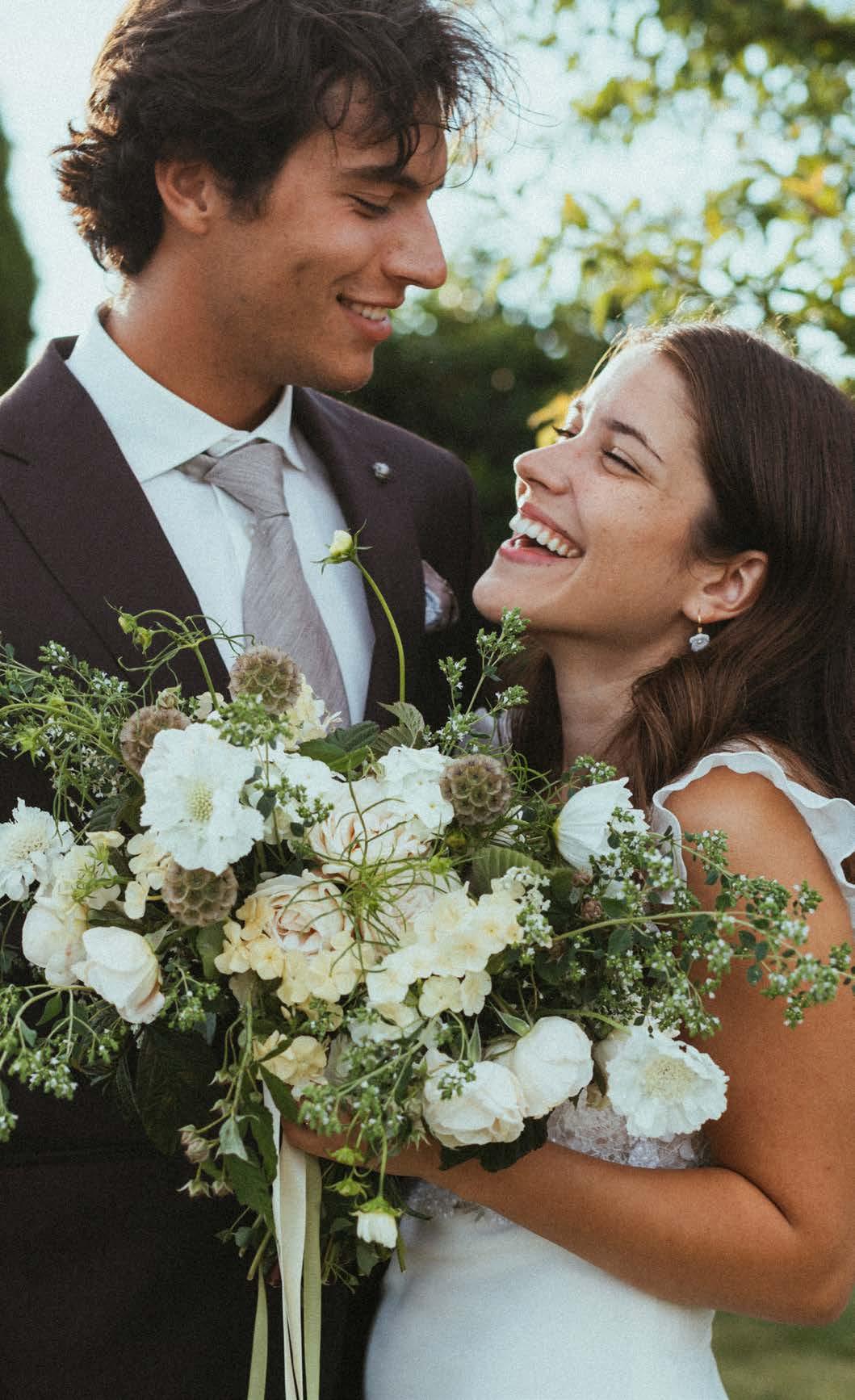
WITH GUESTS INVITED TO THEIR CEREMONY IN “THE FLOWER Fields,” Emma Long and Aron Bargen set the tone for a summer wedding surrounded by rows of blooms. The location: The Dahlia House, an evocative setting in Mount Vernon, Washington. The specialty cut-flower farm and dahlia nursery founded in 2004 by Anne Long, the bride’s mother, was, without a doubt, the couple’s chosen ceremony location.
“I think Emma was four when I started growing dahlias. She would come out and play while I weeded and gardened,” Long recalled. “Once she and her sisters got bigger, Emma especially loved to cut bouquets. They would put the flowers in a little wagon and take them to our neighbors.”
Neighbors, in fact, are credited with naming Long’s backyard passion project as “The Dahlia House,” a business that has since grown into a powerhouse source for roots, tubers, corms, and seeds that supply gardeners and flower farmers around the country. The couple’s dahlia field ceremony was followed by a communal dinner for family and friends, many of whom traveled to the Pacific Northwest from Saskatchewan, where the bride and
THE DAHLIA HOUSE WEBSITE INSTAGRAM
groom met as college students and where they have since settled.
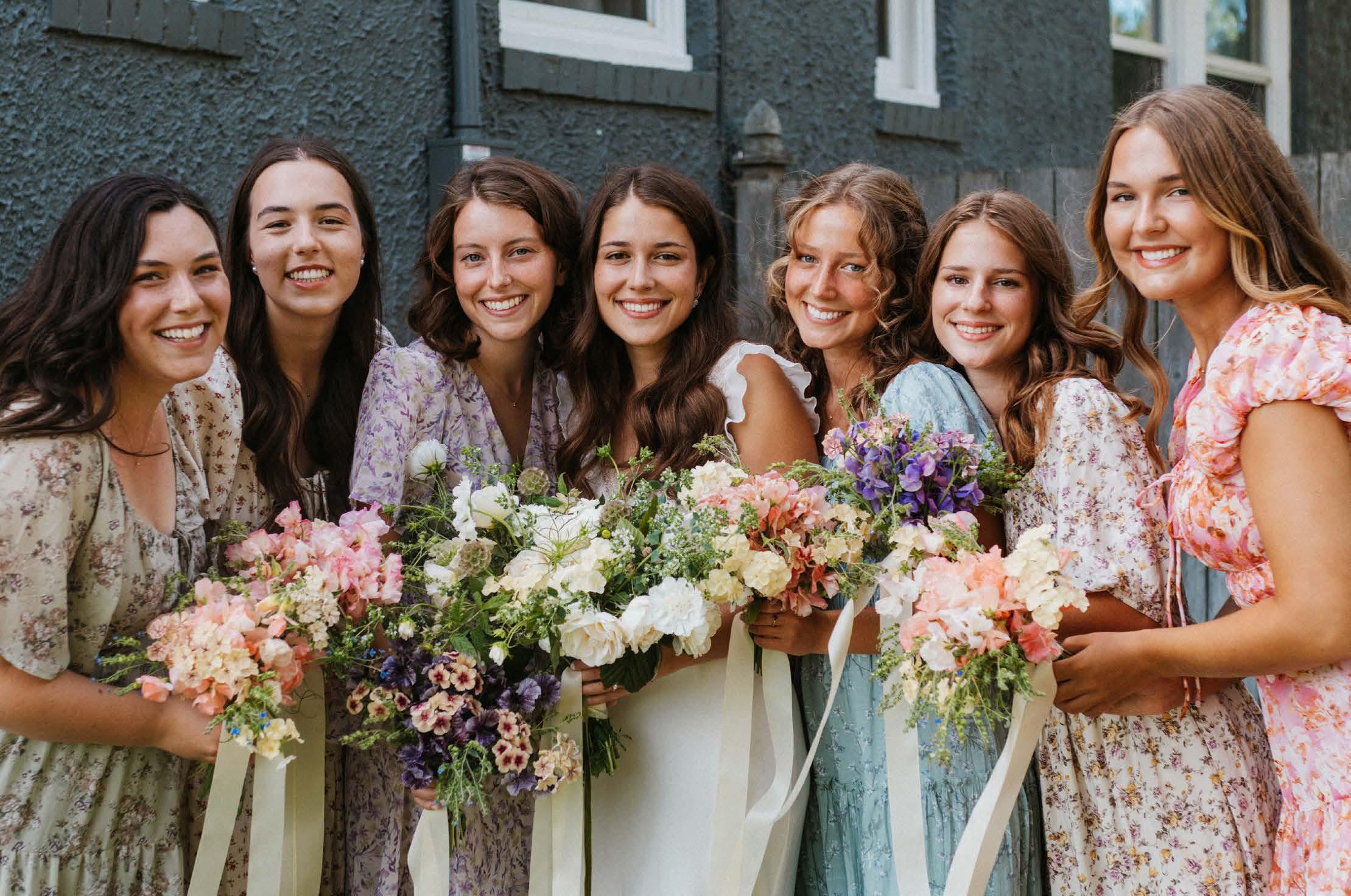
Parents Anne and Taylor Long have raised four daughters. Emma, the second-oldest, was the first to wed in 2024, followed by her eldest sister Alli’s wedding in 2025. Designing her daughters’ wedding florals was a natural expression of love, Long acknowledged. “Emma and Aron are the kind of couple who don’t micromanage things. All Emma wanted was a bouquet designed by me with ‘Mom’s flowers.’”
“I’ve probably designed flowers for five weddings now. I don’t do it professionally; just for friends and family,” Long said. She had help, of course. “All of Emma’s really good friends came into town, not necessarily to be in her bridal party, but to help with the flowers. That’s what I so loved about this experience – everybody pitched in – from the bridesmaids and groomsmen to our neighbors and family. There were tons of people who had never designed flowers before and their contributions were beautiful!”
Comfortable with teaching and instructing past design workshop students, Long deployed guests to harvest armloads and buckets of blooms, including wild-foraged Queen Anne’s Lace from nearby fields, used to create the ground arrangements. She handed out snips and sent one team to
harvest yarrow and forget-menots, while instructing a friend of the bride how to cut cosmos. She chuckled when describing how Austin, a friend of the groom’s, brought concentration and a sense of commitment to making the ground arrangements. “I love that the six-foot-six-inch-tall truck driver sat down and said, ‘show me what to do!’”
With harvesting and flower preparations taking place on Thursday, much of the bouquet design was scheduled for Friday. Three weeks prior to the ceremony, mother and daughter walked the fields together. “I said, ‘you can just show me your favorites.’ And Emma replied, ‘Mom, I know that I want sweet peas for my sisters.’”
Accent flowers came from flower farmer friends whose fields are nearby, including phlox from Brenna Estrada of Three Brothers Blooms. The bouquets coordinated perfectly with the attendants’ dresses, each in a different tiny floral print.
Long intended to make the boutonnieres and corsages on Friday afternoon, but as the day unfolded, she knew she needed help and reached out to Rachel Denham of Every Bloom, a friend and occasional employee. “I called Rachel and told her that we had a ton of flowers in the walk-in cooler. While we were at
the rehearsal dinner, she pulled things together at my kitchen table.”
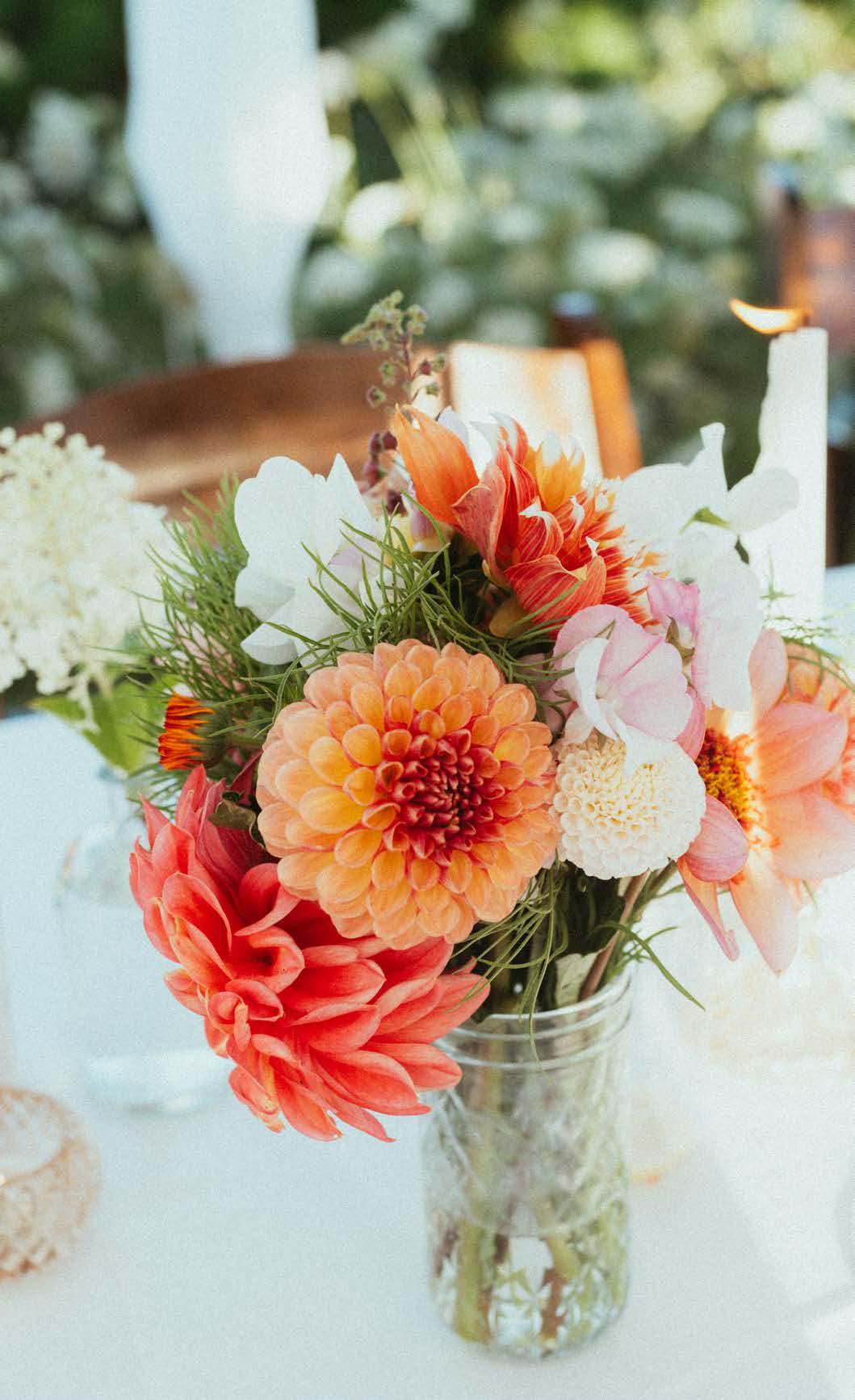
She cherishes the special moments devoted to designing her daughter’s green-and-white bouquet on the morning of the wedding, gathering stems from her garden and fields to fashion her signature-style bouquet. “I like designs that are drippy and free-form. I feel like I do best when people say, ‘have at it and design with the bounty of the day,’” Long said. In addition to creamy white roses, cosmos, flowering oregano, and raspberry foliage with green berries, she added phlox and scabiosa from Estrada’s fields.
The reception meal was served on trestle-style tables in the center of the dahlia fields, which were decorated with a simple constellation of bud vases and stems. Attendees were treated to a pair of snips and Ball jars and encouraged to stroll through the rows and rows of dahlias. “It was so fun and then our guests took home their flowers as wedding favors.”
Long believes that a wedding is one of the unique moments when the richness of one’s relationships in life is revealed. “People come together and they overlap for one special occasion. Honestly, the whole experience was so special, so communal.”
THE BUSINESS OF
FLOWERS BY XENIA D’AMBROSI
PHOTOGRAPHY BY JORDAN VEITINGER
I’ve always believed that being around flowers and connecting with nature has the power to bring joy, inspiration, and even healing. That belief is what led me to this work, and it guides how I grow my business today. This isn’t just about flowers for me, it’s about how flowers make people feel. And over time, that perspective has shaped not only what I grow, but how I share it.
Like many in the Slow Flowers community, my path into this work wasn’t linear. Before Sweet Earth Co., I spent nearly two decades in finance. It was meaningful work in many ways, but it wasn’t until I was diagnosed with cancer that everything shifted. I turned to the garden for healing and well-being. What began simply as growing food and herbs to support my immune system became something much deeper.
Having my hands in the soil also brought me calm and connection at a time when I needed it most. A passion developed, and I decided to pursue this as a career. I expanded into “eco gardens,” creating spaces that were both beautiful and supported the environment and biodiversity. And somewhere along the way, flowers found their way in.
Growing flowers naturally led to designing with them. I began cultivating beautiful, seasonal flowers and creating arrangements that reflect a sense of place. But as my business evolved, so did my understanding of what it could become. What started as growing flowers gradually expanded into
Each of these pathways builds on something you are already doing. They don’t require you to become something new; they simply ask you to recognize the value in what you already know.
This can take the form of workshops, lectures, or educational content. It allows you to share your knowledge in a structured way and reach a broader audience. It also creates an opportunity for year-round income and deeper engagement with your community.
On-farm experiences, including workshops, retreats, farm stays, and seasonal events, create meaningful, memorable connections. These experiences allow people to step into your world, not just observe it, and they often become some of the most impactful and valued offerings.
This includes translating your knowledge into tangible or digital products such as garden plans, seed kits, guides, or memberships. These offerings extend your expertise into formats that can be accessed in different ways and at different price points.
something more: a business built around four interconnected pillars: We Grow, We Design, We Teach, and We Gather.
Flower farming is deeply rewarding work. It is also physically demanding, seasonal, and often financially unpredictable. There are natural limits to how much we can produce, and therefore how much we can earn, within a purely production-based model.
At some point, I began to ask: How do we grow beyond what we can physically produce? Or more specifically, how can we create a sustainable business that can grow and support my family, and be aligned with why I got into gardening and flower farming in the first place?
The answer, for me, came from a shift in perspective. I realized that my greatest asset wasn’t just what I grow, it was what I know. The knowledge I developed, the years of experience, the mistakes I learned from, and the systems developed over time all have value. And more importantly, some people want to learn it; people who might be on a similar journey.
Interestingly, teaching wasn’t something I added to my business; it had always been there. I started as a garden and landscape designer, and from the very beginning, clients were asking questions: What
should I plant and when? How do I maintain this? Why isn’t my garden thriving?
I found myself constantly explaining, guiding, and educating. Sharing knowledge in a practical, accessible way was embedded in my work long before I formally recognized it as a revenue stream. Over time, I began to see that this demand extended beyond my design clients. Home gardeners, hobby growers, and even florists who wanted to grow some of their own flowers were all asking similar questions. There was a clear appetite not just for flowers, but for understanding how to grow them.
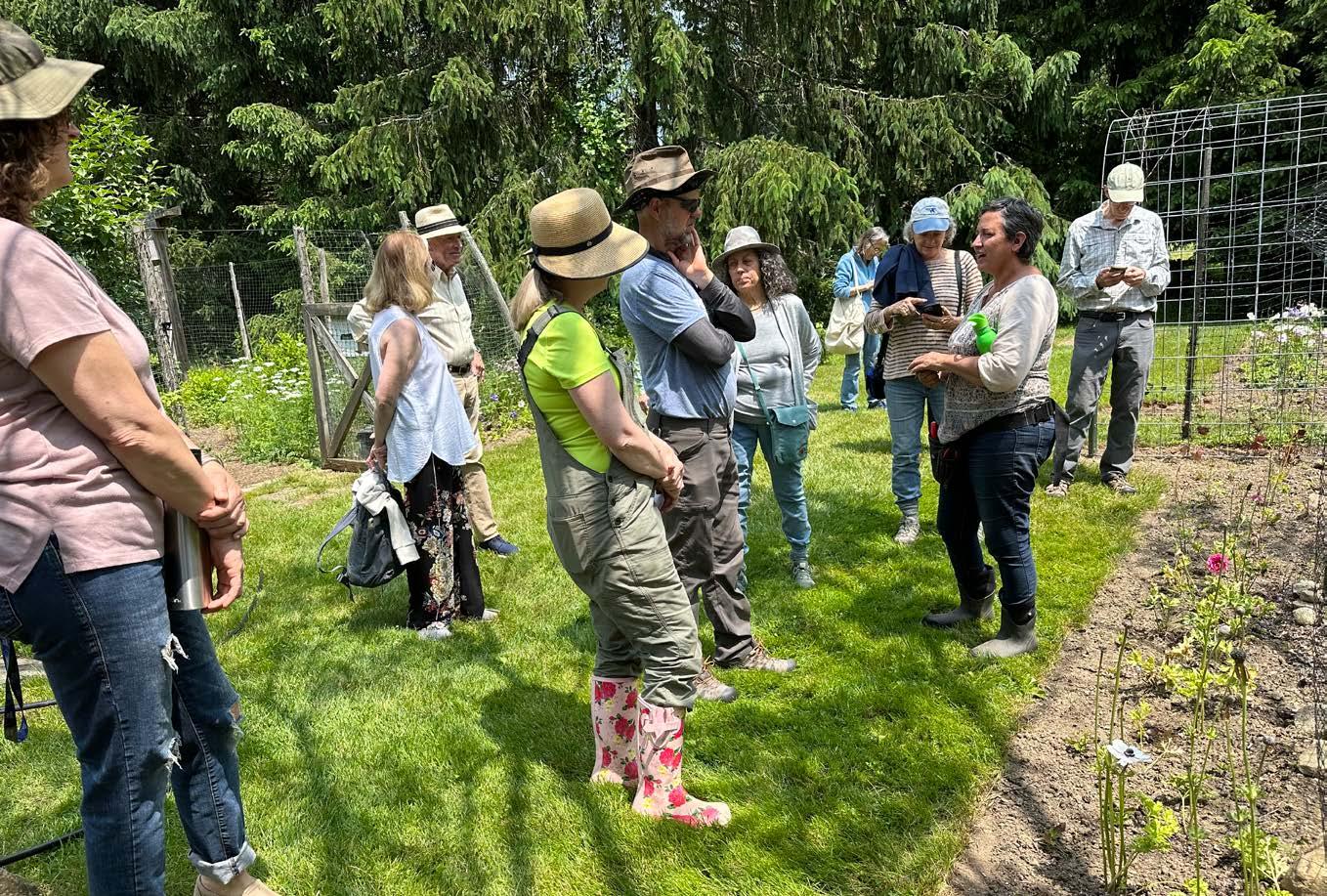
My first step into formalizing that knowledge was through on-farm workshops. These were small, local, in-person experiences; hands in the soil, snips in hand, learning together in real time. They created immediate income, but more importantly, they created connection and community.
But they also had limitations. They were time-bound. Capacity (and parking) was limited. And I could only reach the people who were able to physically come to the farm. What I began to notice, though, was something more subtle and more important. People weren’t just coming to learn. They were coming for the experience.
They wanted to slow down, to be in nature, to feel connected to the land, to the flowers, and to themselves. The learning was important, but it was only part of what they were seeking.
At the same time, I had another lens influencing my work: hospitality. My husband and I own a five-star bed-and-breakfast on Cape Cod called Sea Street Inn, and that experience shaped how I thought about what I was creating on the farm. I wasn’t just thinking about what people would learn, I was thinking about how they would feel: The flow of the day. The atmosphere. The small details that make something feel intentional, welcoming, and memorable.
This shift led me to expand beyond workshops into more immersive on-farm experiences such as day retreats, gatherings, and farm stays, where the goal isn’t just education, but connection. This is where the “We Gather” pillar truly came to life.
There are only so many people I can reach through workshops and one-on-one conversations. If I wanted to help more people become better stewards of their land and create a more sustainable, year-round revenue stream, I needed a way to scale what I was teaching. That’s what led me
to create my course, “The EcoFriendly Cutting Garden.”
The course became a way to take everything I was teaching in person and make it accessible, scalable, and repeatable; something that could live beyond a single day on the farm and reach people wherever they are.
One of the most common concerns I hear from other growers is this: If I teach what I know, am I giving away my secrets? Will this reduce demand for my flowers or my CSA? In my experience, the opposite is true. The people who learn from you often become your most engaged and loyal supporters. They gain a deeper appreciation for the work you do, which strengthens their desire to support your business.
Teaching doesn’t take away demand; it expands it. The numbers don’t lie; 55% of my students have also either purchased my CSA,
purchased flowers, tubers, and/or attended on-farm workshops.
What has been most transformative for me is realizing that this isn’t about just adding new offerings; it’s about building an ecosystem in which the farm is the foundation:
• The farm feeds your content.
• The content builds your audience.
• The audience becomes your customers.
• Experiences you offer your customers deepen connection and community.
• Education allows you to scale your impact.
Agritourism, in this context, becomes a natural extension, not a separate venture, but part of a larger, integrated system. When these pieces work together, the business becomes more resilient, more diversified, and more aligned with your values.
Expanding beyond the bouquet isn’t just about increasing cash flow; it’s about creating a business that can evolve and grow with you. It’s about shifting from a production-based model to an ecosystem-based one. Sharing more, instead of doing more. Creating experiences, education, and connection, instead of simply selling flowers.
For me, this approach has allowed me to deepen my impact while building a more sustainable and fulfilling business. And ultimately, it brings me back to where I started, to the belief that flowers have the power to transform how we feel; to bring us joy, inspiration, healing, and connection.
For those who are interested in exploring this path further – whether through growing your own cutting garden or understanding how to structure what you already know into a teachable framework – I share this work more deeply in my course, “The Eco-Friendly Cutting Garden.”
But wherever you begin, the opportunity is already there – in what you know, in what you’ve learned, and in what you’re already doing every day.
Pretty Dirty is not a how-to book. It’s a mid-career reflection on what it actually means to work with flowers over time. There have been many beautiful flower books that have crossed my work table over the years, and there is something different about Melanie Cecilia Stapleton’s Pretty Dirty
I had some early insight into this book. Mel reached out while she was writing it to ask if she could interview me for a couple of pages, and she shared that it would center around creativity, community, and compost. But I had no idea how differently—and how refreshingly—she would offer those three pillars of her work here.
This book feels multisensory when I’m reading it, most notably in the way it gives as much visual weight to steaming, decomposing piles of compost as it does to styled arrangements. In its
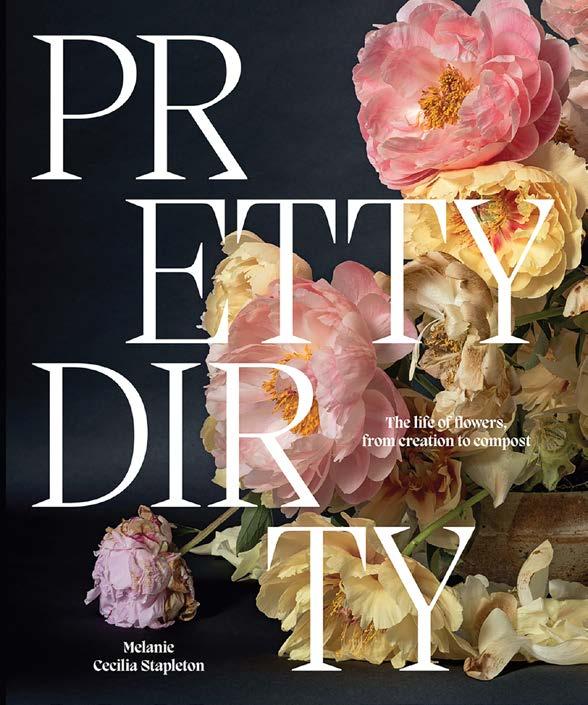
by Melanie Cecilia Stapleton
Hardie Grant Books, March 2026; 240 pages; $40
physical form, the exposed-spine binding is not only beautiful, but allows the book to lay flat— something that feels in quiet alignment with Mel’s attention to detail and her expanded definition of what is worthy of care, attention, and beauty.
When Debra Prinzing asked me to review Pretty Dirty for the Slow Flowers Journal, it felt like a natural confluence: my newly
seeded friendship with Mel, my ongoing commitment to sourcing locally and designing low-waste work, and the clear resonance between Mel’s practice and the principles of the Slow Flowers movement.
The title says more than I initially realized. Pretty Dirty: The Life of Flowers from Creation to Compost speaks both to the full lifecycle of flowers and to Mel’s own life in flowers. It was telling me exactly what the book would hold: the pretty, the dirty, and everything in between, held with equal value and interest.
In this book, Mel traces the full life of flowers—not just from growing to arrangement, but from seed to compost pile. Alongside that, she shares her own story: from her first school holiday job at 16 in a local florist to returning home to Aotearoa, New Zealand. What emerges is not just a book about
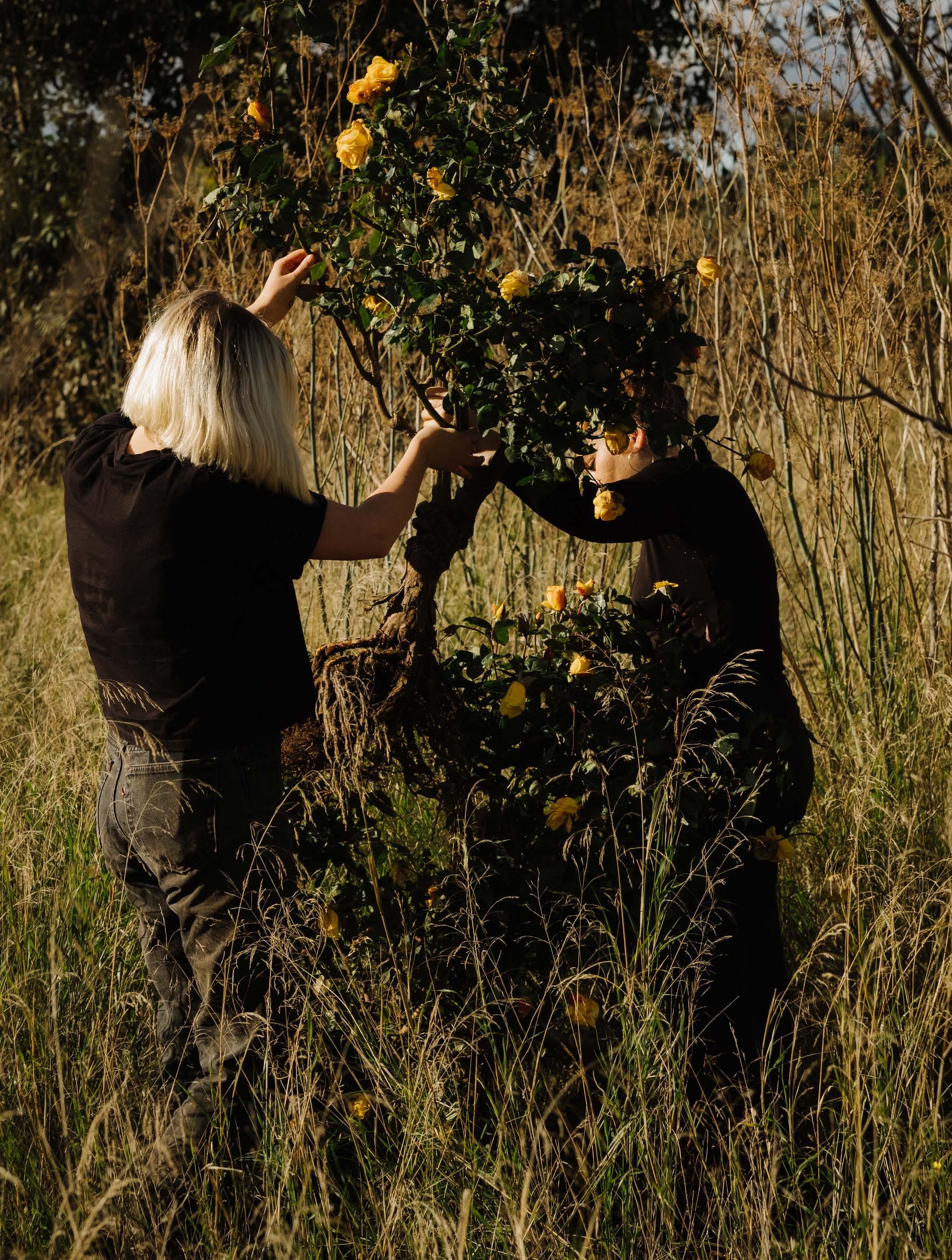
flowers, but about both the pretty and the dirty parts of a life spent working with them.
What feels especially present in this book is the reverence it gives to what happens after the arrangement. Mel brings the after-party of floral design into full view, treating compost as an essential part of the life of flowers. Throughout the book, there is a consistent honoring of what is usually hidden: the wilt, the breakdown, the return.
She frames composting not only as an environmental responsibility, but as part of a larger, circular way of thinking—one that acknowledges that everything we create eventually returns to the earth. This is grounded in real, evolving practices within the industry, from reducing floral foam to rethinking materials and waste systems.
There is a recognition here that working with flowers places us in an ongoing relationship with both life and death—and that this proximity can shape how we move through the world.
Alongside this reverence for what happens after the arrangement is placed, there is a strong sense throughout the book that this
work is not meant to be done alone. In each chapter, Mel includes interviews and features with growers, designers, and composters from around the world. Their stories range from relatable to inspirational, making the floral world feel both expansive and close—like I might run into these folks at the flower market tomorrow morning.
In that same spirit, Mel is generous in sharing her own knowledge, offering perspectives on favorite flowers, sustainable growing practices, and design techniques, while encouraging a redefinition of beauty through a lens of the “perfectly imperfect.” This feels very much in alignment with the kind of knowledge and resource sharing I’ve experienced within the Slow Flowers community here in the U.S.
While creativity is one of the three pillars Mel names in this book, it’s not overly defined—and that feels intentional. Creativity is something most of us in this work are already steeped in. What I appreciate here is that Mel doesn’t ignore it, but she doesn’t overemphasize it either.
Instead, she offers a perspective on creativity that feels grounded in place, shaped by her movement through different environments and the materials available to her. There’s an encouragement to let
nature lead, to work with what is present, and to find beauty in what might otherwise be overlooked.
Creativity, in this book, is not about control or perfection. It’s about attention, openness, and a willingness to see differently. Within the larger context of the book, it feels held in balance alongside community, with a deliberate shift of focus toward compost as the area that most needs our attention.
This book ultimately brings us back to something essential. It reminds us that working with flowers is not just about what we create, but about what happens before and after. For many of us, practices like sourcing intentionally, composting, and reusing are already part of our daily work. What Mel does here is give that full cycle visibility and value, holding it alongside creativity and community as integral to the practice.
Pretty Dirty is for anyone who wants to engage more fully with that cycle. It offers both affirmation and invitation—to continue, to deepen, and to see the work with fresh perspective. It is also a quiet reminder that we are not doing this alone, and that we are collectively shaping what this work can be.
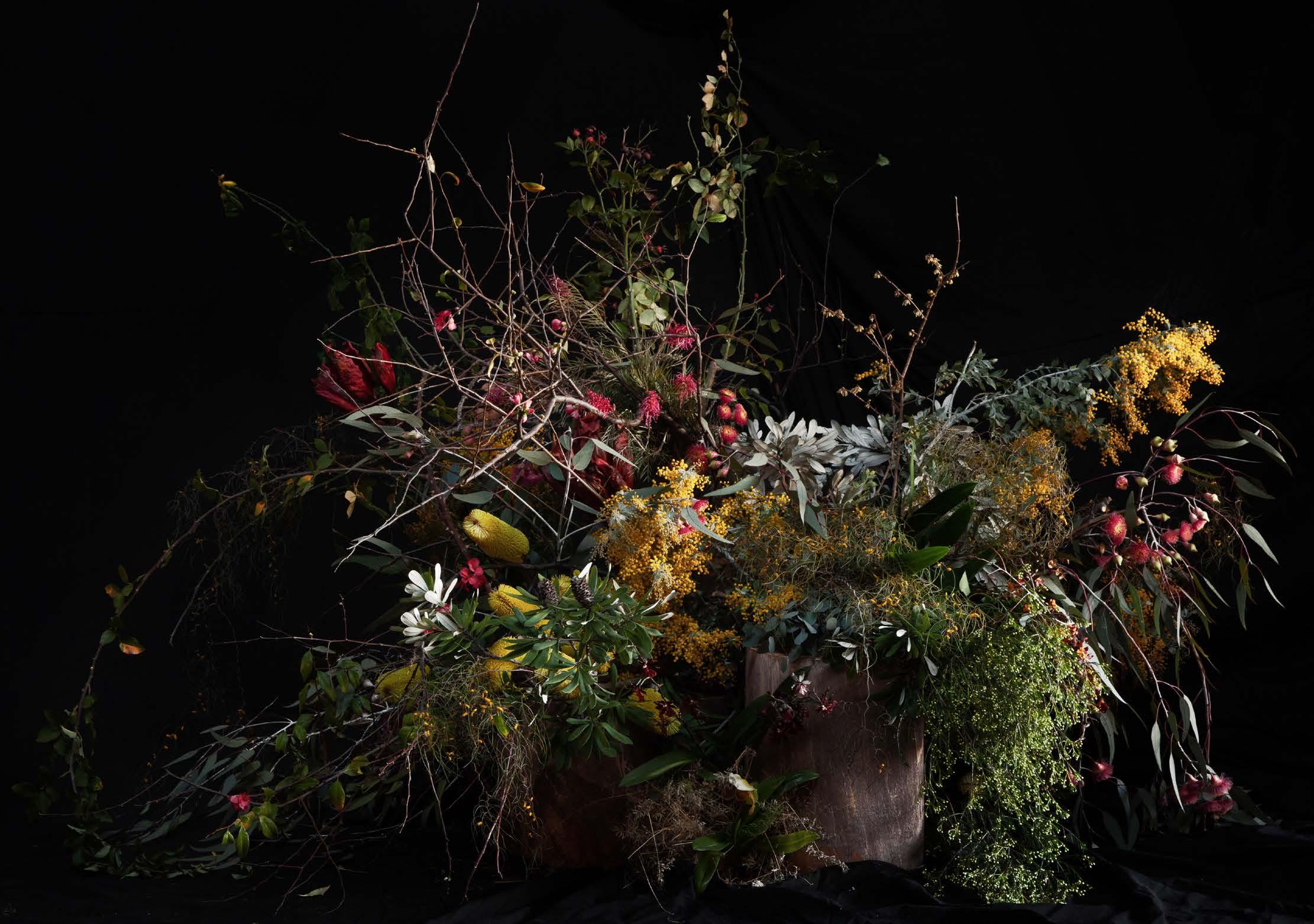
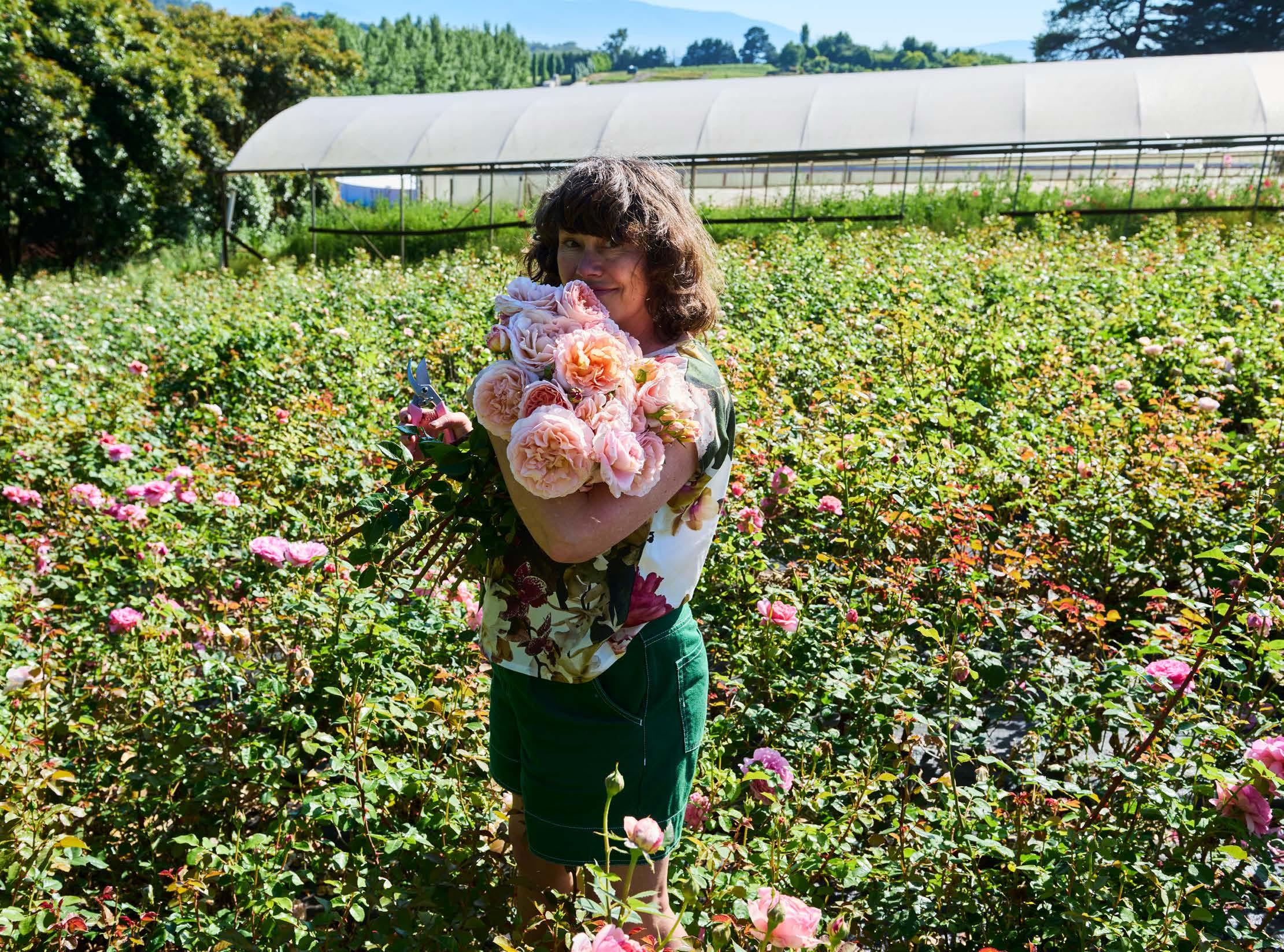
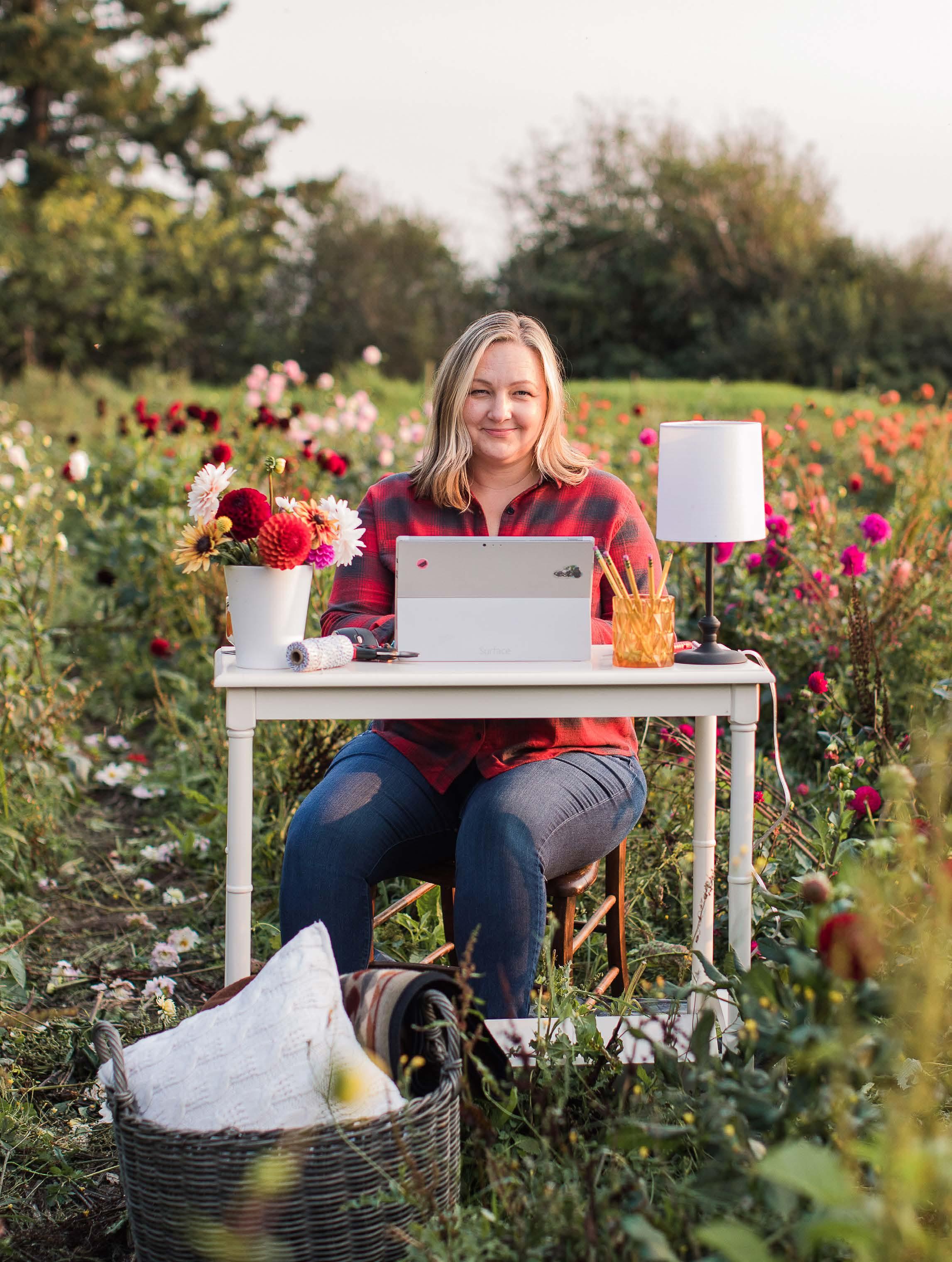
PHOTOGRAPHY
BY
MISSY PALACOL
no longer if, but how.
I was initially hesitant to try AI. Feeling overwhelmed one day, I said, “What the heck! Let’s try it.” I used to be a decent writer. With all of life’s distractions, words just didn’t flow like they used to. AI really helped my writer’s block! However, I quickly learned ChatGPT was more than just a writing tool, it became my first assistant.
Artificial intelligence (AI) is no longer a futuristic concept reserved for tech companies or big-box retailers. It’s already influencing how consumers discover floral businesses, how florists communicate their value, and how small, local shops can operate more effectively with intention. For many floral professionals, the question is no longer if AI will impact their business, but how, and whether they are prepared for it.
The floral industry is rooted in artistry, the love of the craft, relationships, and a deep connection to nature. AI won't change that. What it can do is handle more of the repetitive business tasks that compete for your creative energy, giving you more time to spend on what you do best.
The florists who embrace these tools thoughtfully, and on their own terms, will find themselves with a real competitive advantage in the years ahead. It’s worth paying attention to.
Behind the scenes, AI can help floral business owners save time on tasks that don’t require creative intuition. Writing first drafts of emails, outlining blog posts, organizing content ideas, or summarizing policies are areas where AI can offer support.
The very first thing I would advise a business to do is look at their digital footprint. What are LLM’s (Large Language Models like Gemini and ChatGPT) saying about their business? Literally ask it, “What can you tell me about xyz business?” AI is going to pull from many digital sources. If AI has little or nothing to say about your business, start with your website. I have always said a business’s website is its virtual real estate. Without it, a business has nothing to stand on or claim
as its own. AI is proving this more now than ever.
Preparing for AI does not mean adopting every new tool or becoming overly technical. It starts with asking a few foundational questions:
• Is my business clearly described online?
• Do my words reflect my values and specialties?
• Am I explaining my work in a way both people and technology can understand?
In order for AI to understand your
business, your website needs to communicate a structure and vocabulary it can comprehend. Next, it needs to validate the content from other sources such as Google Business Profile, social media, and other industry-related sites like Slow Flowers.
Despite its growing global influence, AI cannot replicate the heart and soul of floristry. It cannot design with emotion, swoon over a couple’s love story, or replace the relationships built between growers, designers, and business communities. It can’t

duplicate the overwhelming sense of calm felt when walking between rows of dahlias at sunset or the sound of crickets in the distance.
AI also cannot replace valuedriven decision-making. It does not understand the complicated nuance of local sourcing, the ethics of pricing flowers fairly and competitively, or the cultural significance of floral traditions. These are human decisions that still stand as the mission of the Slow Flowers Movement.
LORA BLOOM CONSULTING WEBSITE INSTAGRAM
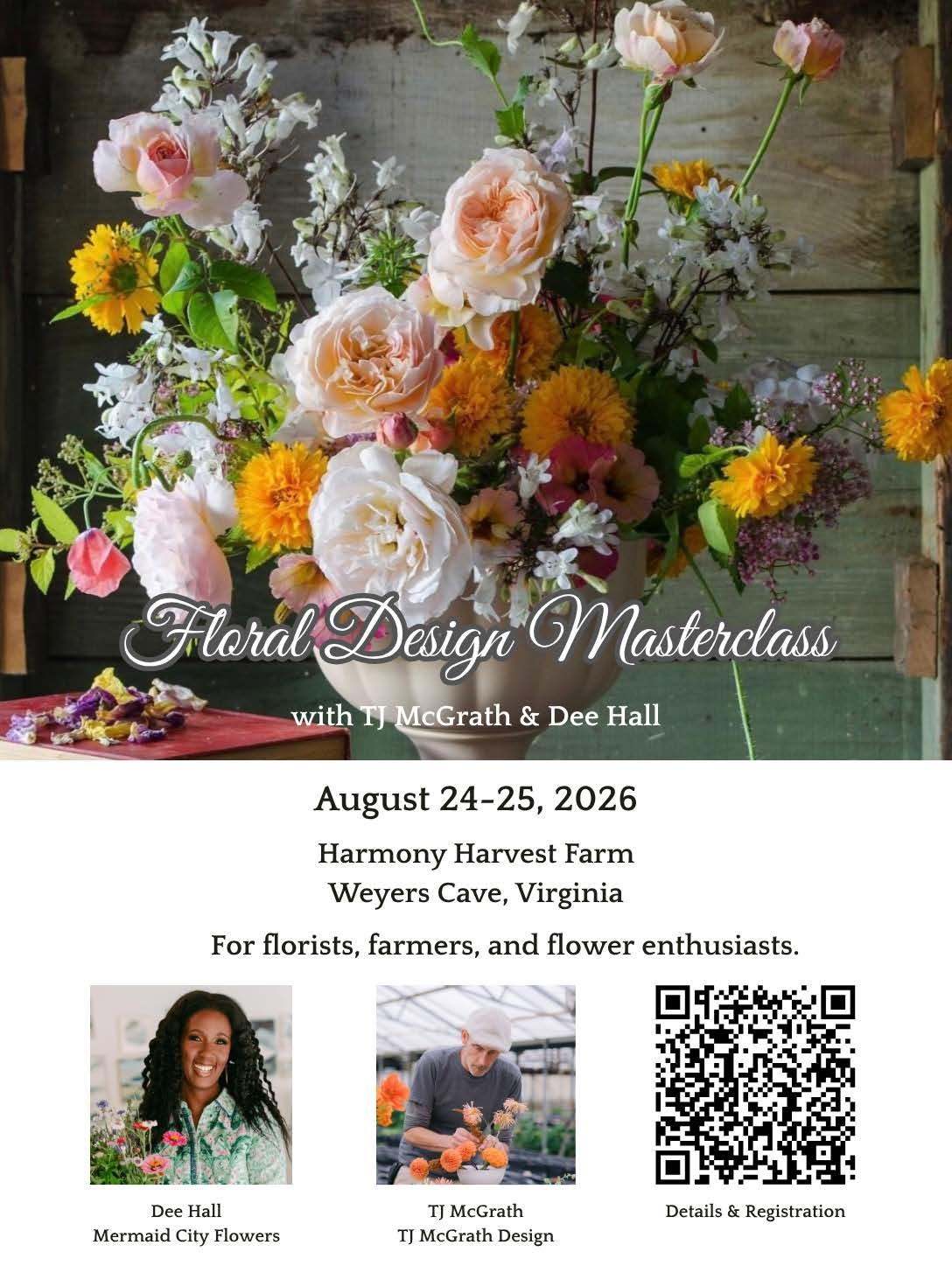
Slow Flowers Podcast Episodes (November 2025-April 2026)
EPISODE 743 (November 19, 2025)
Discovering NYC’s new source for locally grown flowers with Brooklyn’s Flower Aggregate co-founder Jessica Balnaves.
WATCH HERE
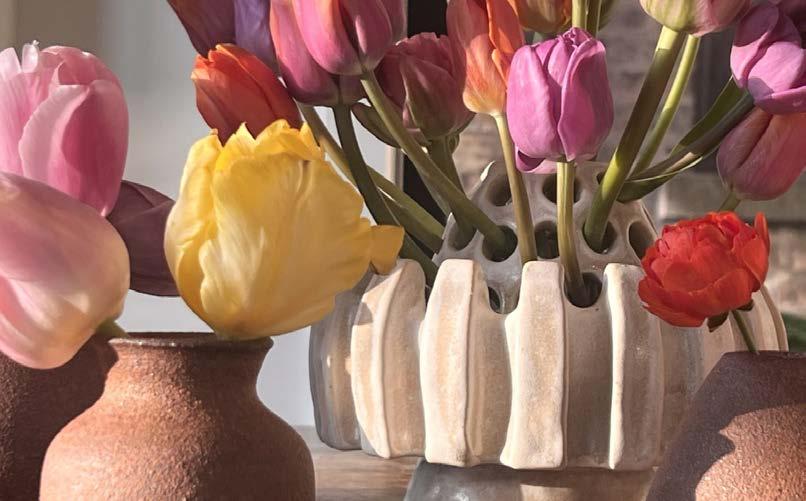
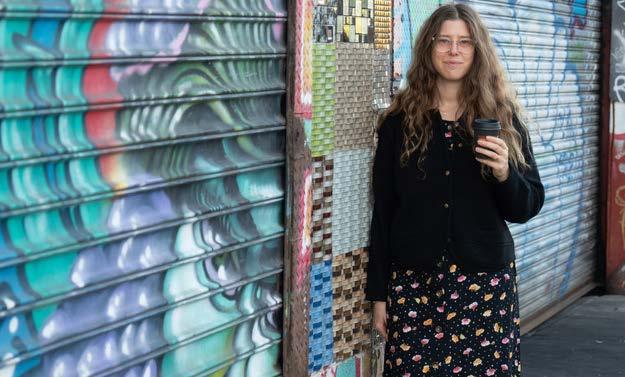
EPISODE 748 (December 24, 2025)
Flowers & Ceramics, creating a floral enterprise that combines one artist’s passions, with Michelle Hartney.
WATCH HERE
EPISODE 757 (February 25, 2026)
Briana Selstad Bosch of Blossom and Branch Farm on her new book, The Regenerative Gardener’s Handbook
WATCH HERE
EPISODE 758 (March 3, 2026)
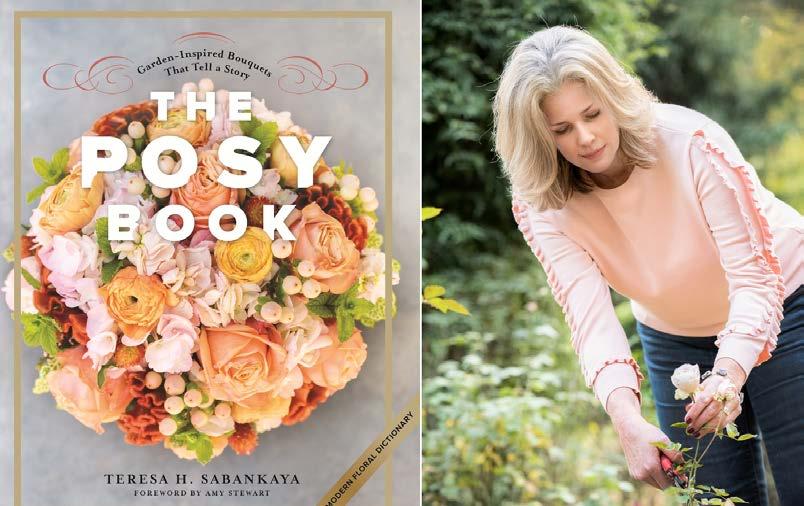
Modern Floriography: Flowers, Gardens, and Gifts Inspired by the Language of Flowers, with author Teresa Sabankaya.
WATCH HERE
Episode 764 (April 15, 2026)
A visit to House Flowers, Megan Homewood’s 100-square-foot flower shop in Shelton, Washington.
WATCH HERE