The cutting-edge sonar equipment just down from the Vedder Bridge is counting salmon around the clock.
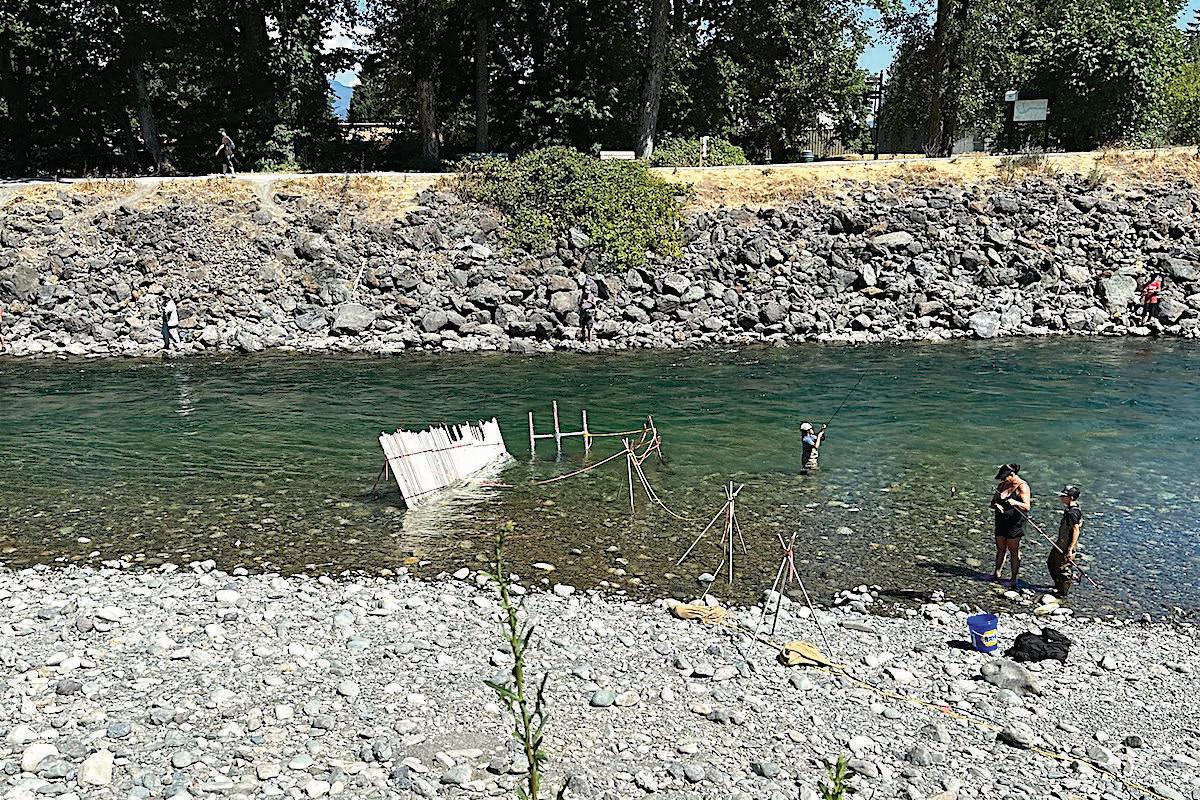
It’s the fourth year of Semá:th First Nation’s five-year Conservation, Guardianship and Harvest plan. They celebrated Tuesday with an opening ceremony, and welcome song on the south side of the Vedder-Chilliwack River at Crossing Park.
Semá:th councillor Chris Silver underlined the critical importance of the river, land, and the salmon:
“Just before we start the song, I would like to announce that we’re on the shared and traditional and unceded territory of the Soowahlie, Ts’elxwéyeqw, and Semá:th people,” Silver said.

“All our villages intertwined right at this one point and a majority of our people utilized every part of the river. I just wanted to give an explanation because this land is so very important to us; this area is so very important to us and our number one food source - the salmon.”
The Conservation, Guardianship






and Harvest team will be on-site collecting data until the first week of August on the sockeye and chinook salmon runs that are returning.
Semá:th councillor Troy Ganzeveld said ultimately they’re after a better understanding of the number of fish that are coming through the system, as well as catch rates, by species, and size, the usage, and recreational impacts to help the nation “re-establish stewardship of the resource”and help the struggling salmon stocks recover, and rebound.
The goal of the stock assessment and abundance survey is preservation and restoration of salmon, while promoting sustainable harvest management. Traditional fishing knowledge from Semá:th fishers and knowledge keepers has been guiding their use of the sonar for the survey. The selective fisheries they’ve been testing out on weekends have been focused on salmon while avoiding stocks of concern, such as Cultus and/or Chilliwack Lake sockeye. By focusing on the Sumas River for harvesting in food, social and ceremonial fisheries, they provide an alternative to Fraser River main stem fisheries.
nice to come home to TOURS AVAILABLECall 604-799-1303 • Independent + Assisted Living • Long Term Care 8445 Young Rd, Chilliwack, BC V2P 4P2 RETIREMENTCONCEPTS.COM KeyFobAccessControl 604-792-8055 5 News Pickleball Couple ends hunger strike protesting noise from courts YOUR COMMUNITY NEWSPAPER • FOUNDED IN 1891 • WWW.THEPROGRESS.COM • FRIDAY, JULY 28, 2023 Friday The Chilliwack
Ribfest Teams go rib-to-rib in inaugural barbecue event this weekend 21 Scan the QR Code above to get local breaking news Sonar
salmon 24/7 at Vedder Bridge Semá:th celebrating fourth year of five-year conservation, harvest plan on Sumas-Chilliwack River Jennifer Feinberg The Progress
So
Life
counts
Continued on Page A10
Anglers fish the Vedder River near sonar equipment that will be counting salmon in the river downstream from the Vedder Bridge. (Jennifer Feinberg/ Chilliwack
Progress)



































































Chilliwack Progress www.theprogress.com Page A2 Friday, July 28, 2023 CHEAPESTSALEITEMSINFRASERVALLEY!!!CHEAPESTSALEITEMSINFRASERVALLEY!!!CHEAPESTSALEITEMSINFRASERVALLEY!!!CHEAPESTSALEITEMSINFRASERVALLEY!!! CHEAPESTSALEITEMSINFRASERVALLEY!!!CHEAPESTSALEITEMSINFRASERVALLEY!!!CHEAPESTSALEITEMSINFRASERVALLEY!!!CHEAPESTSALEITEMSINFRASERVALLEY!!! CHEAPESTSALEITEMSINFRASERVALLEY!!!CHEAPESTSALEITEMSINFRASERVALLEY!!!CHEAPESTSALEITEMSINFRASERVALLEY!!!CHEAPESTSALEITEMSINFRASERVALLEY!!! CHEAPESTSALEITEMSINFRASERVALLEY!!!CHEAPESTSALEITEMSINFRASERVALLEY!!!CHEAPESTSALEITEMSINFRASERVALLEY!!!CHEAPESTSALEITEMSINFRASERVALLEY!!! EVERYDAY LOW PRICES! LOWPRICES! BELOW GOV’T PRICING OW GOV’TPRICING ON SALE ITEMS 365 ONSALEITEMS365 DAYS A DAYSAYYEAR EAR CHEAPEST SALE CHEAPESTSALE ITEMS AROUND!!! ITEMSAROUND!!! FREEICE WITH PURCHASE OVER $30 PRICES DO NOT PRICESDONOT INCLUDE TAX OR BOTTLE DEPOSIT. ORBOTTLEDEPOSIT. GOV’T STORE & OTHER V’T &OTHER COMPETITOR PRICES OMPETITOR CHECKED JULY 26, 2023 CHECKEDJULY26,2023 & MUCH MUCH MORE &MUCHMUCHMORE ON SALE EVERYDAY ONSALEEVERYDAY While Quantities Last Wereserve therightto limit quantitiesof acertainitemwithout any notice. Hardys Riesling 750 ml 750ml $8.99 WHILEQUANTITIES LAST! SALEDATESINEFFECT JULY27-AUGUST9,2023 LIQUORGIANTGROUP.CA 604-744-1550 32131MarshallRd. OFFof ClearbrookExit -Nextto Alpine Inn Motel &Best Western Alberta Pure 750ml $20.91 Crown Royal CrownRoyal Wisers Deluxe WisersDeluxe Barefoot Moscato & Moscato& Pink Moscato PinkMoscato 750 ml 750ml $9.99 750 ml 750ml $15.49 Copper Moon CopperMoon Pinot Grigio PinotGrigio Shiraz 750ml $8.99 750 ml 750ml $20.91 Smirnoff Bacardi White Rum WhiteRum Old Milwaukee OldMilwaukee Pabst Blue PabstBlue Ribbon 15 Pack 15Pack $21.99 24 Pack Cans 24PackCans $32.99 604-792-7717 8247YoungRd.Chilliwack OffYoungRd, acrossfrom Elements Casino MERTINNISSAN ELEMENTS CASINO CREAMERYROAD FRIENDLY MIKE’S LIQUOR STORE YOUNGROAD 750ml $21.99 1.14L $31.78 1.75L $48.79 Stolichnaya Vodka 750ml $9.99 Yellow Tail YellowTail Chardonnay and Shiraz andShiraz Budweiser 24 pack 24pack cans $33.99 Stella Artois StellaArtois 12 btls 12btls $22.99 24 pack 24pack cans $33.99 Coors LT CoorsLT Jameson Irish Whiskey IrishWhiskey 750ml $30.99 750ml $19.49 Fireball 750ml $39.99 1800 Coconut Captain Morgan CaptainMorgan White Rum WhiteRum 750ml $20.91 750ml $21.99 Forty Creek FortyCreek Barrel Select BarrelSelect 1.75 L 1.75L $48.79 750ml $23.49 1.14L $35.99 1.75L $50.99 750ml $22.99 1.14L $31.78 1.75L $48.79 750ml $21.99 1.75L $48.79 750ml $9.99 Mcguigan Black Label BlackLabel 750ml $8.99 Bodacious Smooth Red & SmoothRed& Smooth White SmoothWhite SAVE $6.00 BELOW GOV’T BELOWGOV’T STORE PRICE STOREPRICE SAVE $11.00 BELOW GOV’T BELOWGOV’T STORE PRICE STOREPRICE SAVE $4.50 BELOW GOV’T BELOWGOV’T STORE PRICE STOREPRICE SAVE $11.21 BELOW GOV’T BELOWGOV’T STORE PRICE STOREPRICE SAVE $9.70 BELOW GOV’T BELOWGOV’T STORE PRICE STOREPRICE SAVE $7.70 BELOW GOV’T BELOWGOV’T STORE PRICE STOREPRICE Molson Canadian MolsonCanadian 24 pack cans 24packcans $29.99 SAVE $8.30 BELOW GOV’T BELOWGOV’T STORE PRICE STOREPRICE 750ml $16.79 Kim Crawford KimCrawford Sauv Blanc SauvBlanc SAVE $6.20 BELOW GOV’T BELOWGOV’T STORE PRICE STOREPRICE Bud Light BudLight 24 cans 24cans $33.99 SAVE $10.30 BELOW GOV’T BELOWGOV’T STORE PRICE STOREPRICE SAVE $7.00 BELOW GOV’T BELOWGOV’T STORE PRICE STOREPRICE 750ml $20.91 1.14L $31.78 1.75L $48.79 White Claw WhiteClaw Vol 1 & 2 Vol1&2 12 cans 12cans $24.99 Truly TROPICAL Mix 12 Pack Mix12Pack $21.99 Lemon Life LemonLife Lemonade 12 Cans 12Cans $23.99 Nutrl Mix Pack MixPack 12 cans 12cans $22.69 Nude Vodka Soda VodkaSoda 12 pack cans 12packcans $23.99 Jaw Drop JawDrop 3 different flavours 3differentflavours Lemon/Pink/Orange $10.99 Alberta Premium SAVE $10.20 BELOW GOV’T BELOWGOV’T STORE PRICE STOREPRICE SAVE $7.00 BELOW GOV’T BELOWGOV’T STORE PRICE STOREPRICE Stoneleigh Sav Blanc SavBlanc Sleeman Honey Brown HoneyBrown 12 btls 12btls $19.79 OPENEVERYDAY 9AM–11PM Canadian Club CanadianClub Sleeman’s Original Draught OriginalDraught 24 cans 24cans $32.99 MGD 12 btls 12btls $19.99 750ml $15.99 Oyster Bay OysterBay Sauv Blanc & SauvBlanc& Pinot Grigio PinotGrigio SAVE $5.50 BELOW GOV’T BELOWGOV’T STORE PRICE STOREPRICE 750ml $47.99 Howler Head HowlerHead Bourbon 24 pack cans 24packcans $34.99 Kokanee 12 pack cans 12packcans $23.99 Topo Chico TopoChico Simply Spiked SimplySpiked Lemonade Mix LemonadeMix Absolut Tito’s Vodka 750 ml 750ml $23.49 750 ml 750ml $29.99 750ml $14.49 Apothic Red 750ml $12.49 Yellow Tail YellowTail Bubbles Open Smooth Red SmoothRed 750ml $10.99 750ml $17.99 LaMarca Prosecco SAVE $5.00 BELOW GOV’T BELOWGOV’T STORE PRICE STOREPRICE SAVE $5.50 BELOW GOV’T BELOWGOV’T STORE PRICE STOREPRICE SAVE $5.00 BELOW GOV’T BELOWGOV’T STORE PRICE STOREPRICE Corona Extra 12 btls 12btls $23.49 1.75L $52.99 Ballantine’s Finest SAVE $8.00 BELOW GOV’T BELOWGOV’T STORE PRICE STOREPRICE 750ml $24.99 Captain Morgan’s CaptainMorgan’s Spiced Rum SpicedRum 750ml $7.99 Peller Estates PellerEstates Pinot Grigio PinotGrigio SAVE $11.30 BELOW GOV’T BELOWGOV’T STORE PRICE STOREPRICE SAVE $10.30 BELOW GOV’T BELOWGOV’T STORE PRICE STOREPRICE Twisted Tea TwistedTea Original Original $20.99 SAVE $4.00 BELOW GOV’T BELOWGOV’T STORE PRICE STOREPRICE SAVE $4.00 BELOW GOV’T BELOWGOV’T STORE PRICE STOREPRICE 750ml $9.99 Jacobs Creek JacobsCreek Moscato
Boat patrols and underwater recovery team search for drowning victim at Cultus Lake
Search efforts continued Monday by RCMP to find Surrey resident Ajay Singh, who is presumed drowned at Cultus Lake.
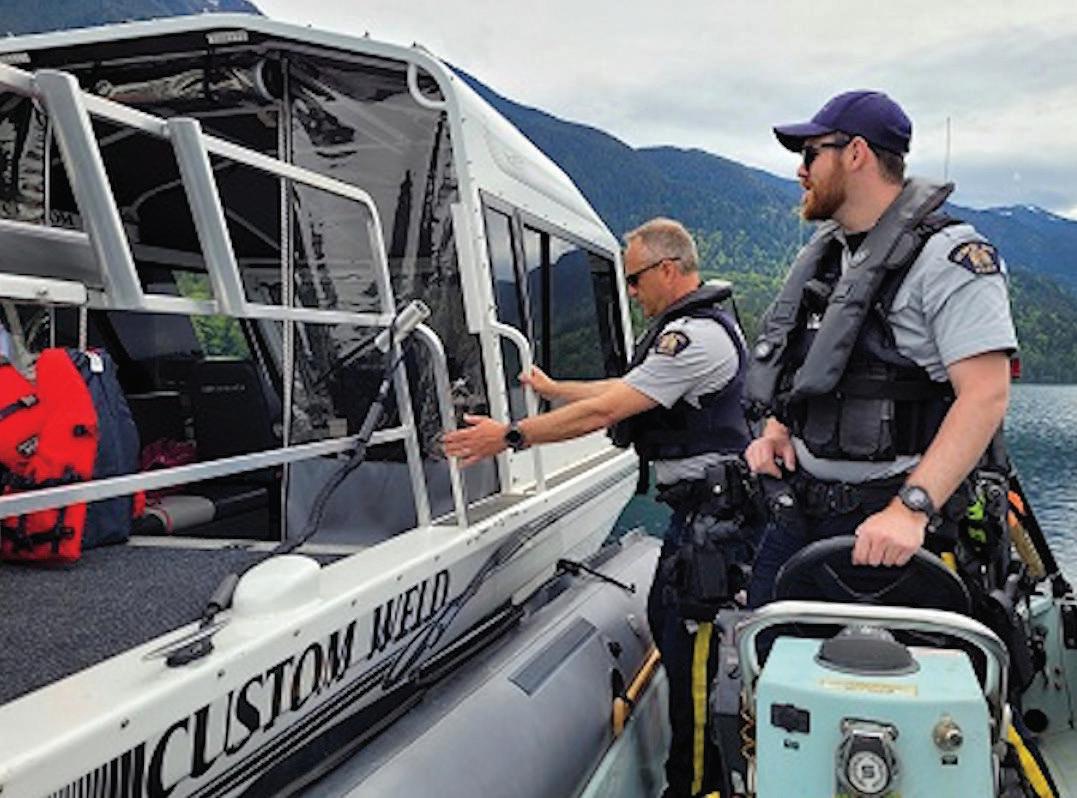
Boat patrols by seasonal policing members of the RCMP were to be conducted on Monday (July 24) with underwater divers be on-site Tuesday.
“Our thoughts and prayers go out to Ajay’s family and friends during this extremely difficult time,” said Sgt. Krista Vrolyk, media spokesperson for the Chilliwack RCMP.
Since the incident July 19, Singh’s friends have been having an extremely tough time of it, according to friend Joban Preet. He contacted The Chilliwack Progress to state that Singh could in fact swim, contrary to some early reports.
Preet was one of a group of three friends who gathered by the water at Cultus Lake July 21, putting up posters titled, ‘Justice for Ajay!’ and asking for the search to be taken seriously. He said they were told they might have to wait until the body resurfaces.
“It is very upsetting,”he said. The family had been at the lake Friday, he said, and had been hoping for a successful search.
Seasonal policing officers were expected to head out on the lake to conduct boat patrols Monday while the RCMP’s Un-
derwater Recovery Team was expected to return Tuesday to resume dive efforts.
When Singh slipped under the water, he had reportedly been trying to rescue one of his friends, who he believed
Chilliwack RCMP have confirmed a 55-year-old man drowned in the Vedder River July 21.
was drowning after falling off a tube.
It was initially reported from eye-witness accounts to police that Singh did not know how to swim himself despite jumping in. Since then it has been stated
Police spokesperson Sgt. Krista Vrolyk said the victim reportedly entered the river to try and rescue a dog around 3:30 p.m. and within minutes police got reports of a possible drowning in the area of Peach
by his friends that he could in fact swim, and one of them said they have proof on video.
“The man went underwater and has yet to resurface,” according to the initial RCMP report.


Road and the Rotary Trail.
The man was pulled out of the south side of the river by a bystander and reportedly received CPR while waiting for emergency response.
Chilliwack Search and Rescue was
There does seem to be some confusion over the man’s age. Singh was 22 years old according to B.C. driver’s licence information, police say, but his friends put out a poster that said he was 23 years old.

paged and sent a boat. Police, fire and ambulance crews accessed the victim by Vedder Mountain Road and B.C. Emergency Health Services sent a helicopter, but the man could not be resuscitated.
Witnesses on shore said they heard cries for help from friends, which alerted nearby boaters, jet skiers and swimmers who attempted to spot him.
Two women who were with Singh were reported safe.
A nearby boater was alerted by the sounds of people in distress and he ran over to bring the others to safety before diving into the water himself in attempts to find Singh.
On the same evening it happened, the Cultus Lake Fire Department deployed a boat in order to search for Singh to no avail. Search and Rescue and a member of the RCMP’s Underwater Recovery Team attended to conduct a site assessment.
The RCMP Underwater Recovery Team, together with Search and Rescue and members of the Chilliwack RCMP’s Seasonal Policing Section began extensive and coordinated search efforts July 20, continuing through the weekend.
Sgt. Vrolyk wanted to reassure the family with these words.
“We know that you will not rest until you have answers,”the officer said in the news release. “It is important that you know that our file remains active and we will continue to dedicate resources in efforts to locate Ajay so that you have those answers.”
NOTE: As of 5 p.m. Wednesday, there was no update from RCMP.
“Our thoughts and prayers go out the family of the victim,”Vrolyk said. The B.C. Coroners Service is investigating although Vrolyk said early indications are the drowning was accidental.
Chilliwack Progress Friday, July 28, 2023 Page A3 www.theprogress.com *Seecentrefordetails NOW ENROLLING 778-344-5525 www.mathnasium.ca/chilliwack chilliwack@mathnasium.ca Up
Front
‘We know that you will not rest until you have answers,’ RCMP tells family of Ajay Singh
Jennifer Feinberg The Progress
The
RCMP confirm drowning death of man in Vedder River
Boat patrols in a vessel similar to this have been searching for a man who reportedly drowned at Cultus Lake on July 19. (Twitter/UFVRD)
Eric Welsh
Progress
Fraser Valley transit strike ends after union members ratify deal
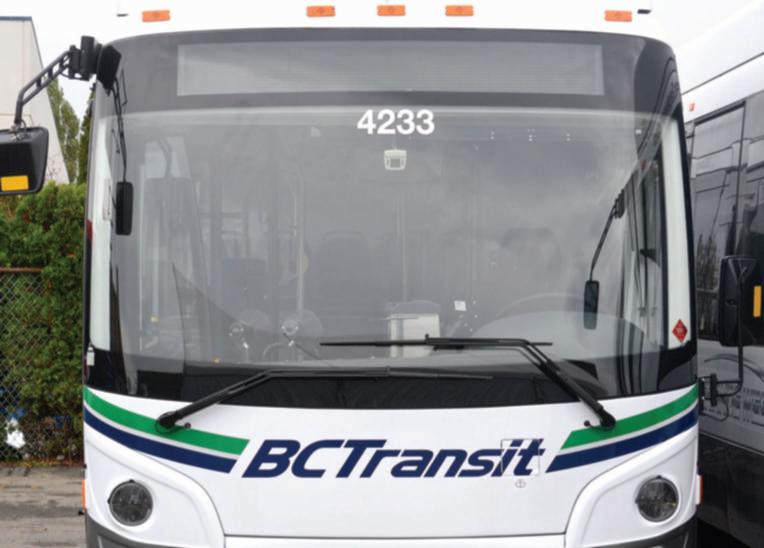
The Fraser Valley transit strike is over after 124 days. CUPE 561 transit workers ratified a mediated settlement with First Transit July 21.
“Picket lines are being taken down and the213transitworkers will begin the returnto-work process,” a union news release reads.
Bus services in Abbotsford, Mission, Chilliwack, Agassiz and Hope have been suspended since March 20 when transit workers went on strike.
According to the union, the two sides reached a retroactive six-year agreement that ends on March 31, 2026 and narrows the wage gap with other transit workers in the region. The settlement also intro-

duces a pension plan that takes effect next spring.





VinceReadywasappointed as a mediator of the dispute by the Ministry of Labour on June 8. He was initially given 10 days to secure a resolution but the deadline was extended.

“Ready’srecommendations were a fair compromise, providing us with a foundation for future rounds of bargaining,”CUPE 561 president Randy Kootte said in a news release. “By ratifying this memorandum of settlement, the members agree that this

contract is a good start in addressing their concerns.”









Kootte says the union will do everything it can to quickly resume transit service in the Fraser Valley and will work with First Transit get buses running as soon as possible.

Chilliwack Progress www.theprogress.com Page A4 Friday, July 28, 2023
Dillon White Black Press
CUPE Local 561 ratified a mediated agreement with First Transit on July 21, ending a strike that lasted for 124 days and suspended bus services in the Fraser Valley. (file photo)
LOCALLYOWNED &OPERATED SHOPLOCAL• SHOPHEALTHY •LIVEA ZEROWASTELIFE VeganStaples•PantryStaples •HouseholdCleaners•EssentialOils •PersonalCareProducts•Bamboo CutleryandReusableStraws•Reusable Containers…& more! PROUDLYOPERATINGENTIRELYCARBONNEUTRAL 604-392-9990 #100-5580VEDDERRD,GARRISON PICKECO.CA FRASERVALLEY’SZEROWASTEGROCERYSTORE Wenowcarry: -Local&OrganicProduce -Sourdough&Hamburger BunsfromBenanna Bakery PickUp or Delivery www.kelmor.ca 604.795.3330 45895PromontoryRd Open7am-4pm Mon-Sat. Closed Sunday KEL-MOR ENTERPRISESLTD. Rocks,MulchandMuchMoreatKel-Mor! • Top Soil •TopSoil • Potting Soil •PottingSoil • Lava Rock •LavaRock • Bark Mulch •BarkMulch • Drain Rock •DrainRock • Landscape •Landscape Rocks
Chilliwack pickleball hunger strike ends without a solution for complainant
Rajnish and Harpreet Dhawan said they will continue protesting the noise from a nearby court
Eric Welsh The Progress
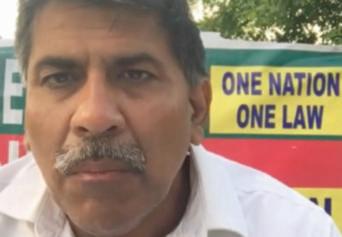
The hunger strike has ended but the battle will continue for a Chilliwack couple fighting noise from a nearby pickleball court.
Rajnish and Harpreet Dhawan started their protest Sunday morning, drawing attention to the courts at Kinsmen Park that were built mere metres from their back yard.
“As staunch followers of Mahatma Gandhi, we have decided to follow the path shown by him to deal with systemic injustice,” Rajnish wrote in a letter sent to City of Chilliwack decision-makers last week that included a demand to decommission the courts.
The hunger strike didn’t last terribly long.
Rajnish said he persuaded Harpreet to abandon the effort after 24 hours due to her fragile health.
“I continued for two days
during which we received a lot of support from the people who came not only from Chilliwack but from neighbouring towns as well,” he said. “Of course, we had our share of detractors.”
When The Progress reported on the idea of a hunger strike, it was met with mocking on Facebook pages, but Rajnish said the tone started become more sympathetic by day two. At 10 a.m. Tuesday, after about 50 hours, Rajnish packed it in.
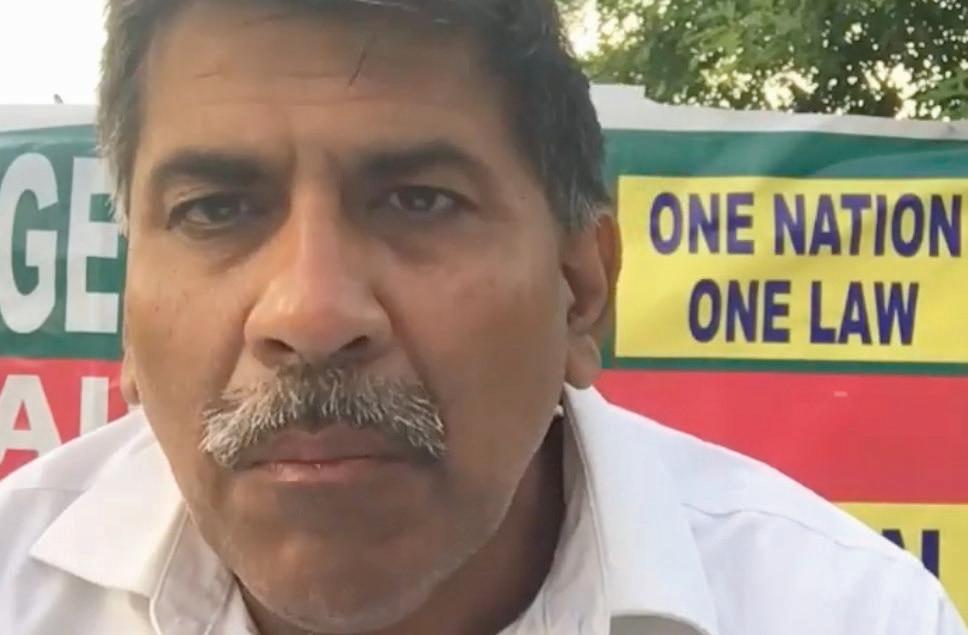
“I released a video yesterday morning, after which I saw a change in the public’s mood, and today I released another video before calling off the strike,” he said Tuesday. “We managed to create the awareness that we wanted to create.”
The Dhawans bought a home on Woodbine Street in 2017. At the time, there were no pickleball courts and they considered it a plus to hear the sounds of the adjacent park.
“I drew creative energy
from activities going on in the park which included watching people play tennis, children enjoying the slides and swings, people taking a stroll or walking their dogs, and youths enjoying late night parties,” Rajnish said. “None of the sounds from such activities bothered us; it became a part of our soundscape, especially during summers when most of the windows of our home are kept open.”
But when the pickleball courts were added in 2019, and resurfaced in 2021, the sound of plastic balls hitting plastic paddles became unbearable. Rajnish brought his concerns to the city 11 months ago, suggesting the courts were installed without consulting neighbours and were constructed without any noise studies.
According to Rajnish, the incessant sound of plastic balls hitting plastic paddles has caused him symptoms of anxiety, sleeplessness, audito-
ry hallucinations, and heart flutter. He said his wife has developed health issues as well. Rajnish said complaints to
the city have fallen on sympathetic but ultimately deaf ears. But according to the city, steps have been taken to help the

Dhawans, including:
- Restricting times of play at the court from 9 a.m. until
Continued on Page A6

Chilliwack Progress Friday, July 28, 2023 Page A5 www.theprogress.com
Rajnish Dhawan said he and his wife have been treated as second class citizens by the City of Chilliwack, which installed a pickleball court metres from their house without consulting them. (YouTube screenshot)
BOOK A COMPLIMENTARY MEAL WITH US!
Homeowner wants courts closed
dusk, with staff following up with the Chilliwack Pickleball Club to achieve better cooperation by ending games by 8 p.m. Club president Lyle Simpson said members have been asked to not play there at all.
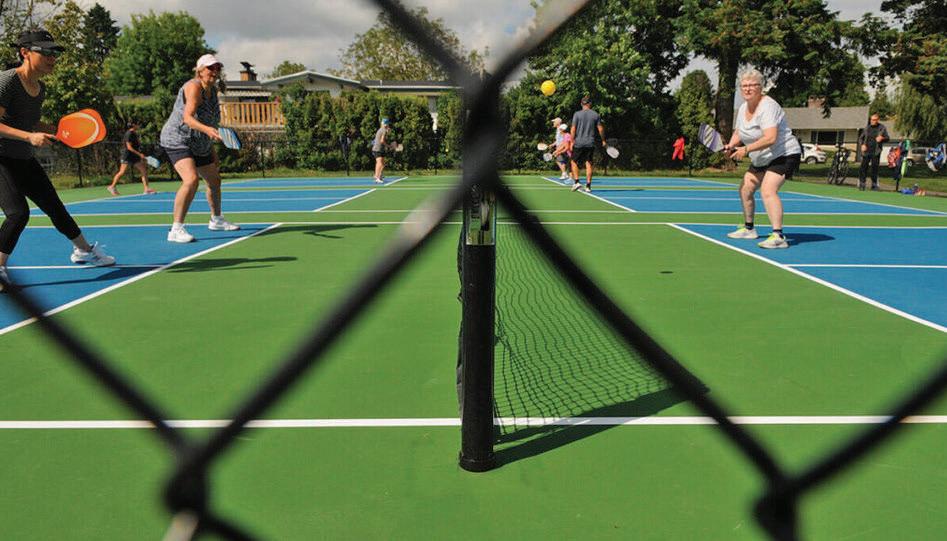
- Posting signage to recommend that practice foam balls should be used after 4 p.m., with staff reaching out to local sports stores requesting that they stock foam balls for local pickleball enthusiasts.
- Closing the courts over the winter and delaying this



spring’s opening until April.
- Installing sound attenuating material to reduce the sound level heard outside of the courts, with staff currently monitoring its effectiveness.



“City staff have taken substantial action to help mitigate the situation and continue to reach out to the complainant to attempt to come to a successful resolution,”said Chilliwack Mayor Ken Popove. “We are also working on an indoor pickleball facility at another location and plan to close the outdoor courts at Kinsmen Park on Portage once addi-
tional playing space is available.
“We know that a large group of residents enjoy playing pickleball and we will continue to work hard to balance the various needs of everyone in our community.”
Rajnish, a former pickleball player, said his beef is not with the sport but with the courts. He said he and his wife have “been contacted by various professionals during these 50 hours and now we will make our next strategy based on the suggestions and feedback that these professionals have provided.”
Chartwell has three retirement residences in Chilliwack, offering you or a loved one a wide selection in finding your next home. From independent living to assisted living, we have a living and care option that will appeal to your unique needs, preferences, and budget.
CHARTWELL BIRCHWOOD 45650 Patten Ave. • 604-426-0456












CHARTWELL HAMPTON HOUSE 45555 Hodgins Ave. • 604-426-0452
CHARTWELL LYNNWOOD 9168 Corbould St. • 604-426-0454

Chilliwack Progress www.theprogress.com Page A6 Friday, July 28, 2023 BEFORE AF TER Textyourcabinetphotosto 1-604-218-7470 www.gleamguardcabinetrefinishing.ca CABINET REFINISHING Loveyourcabinets,butnothowthey’veworn?GleamGuardoffersasimple,cost-effective solution.WeAlsoRefreshcabinets5to15yearsold.Costslessthenrefinishing. GOTGREASE? GOTPEELING? Tracey TraceyBBooth-Founder ooth-Founder 70%lessthan replacing orrefacing WespecializeinProtecting YourInvestment! UP TO BEFORE AF TER CELEBRATING30YEARS REFINISHINGCABINETS Chartwell.com Book your personalized tour!
and
your needs in Chilliwack
Variety
choice to suit
Continued from Page A5
Pickleball players use the Kinsman Park courts on Portage Avenue. (Jenna Hauck/ Chilliwack Progress file)















Chilliwack Progress Friday, July 28, 2023 Page A7 www.theprogress.com 1-45735ThomasRd. Chilliwack,BCV2R3N3 phone:604-858-3011 email:jacks_cycle@hotmail.ca ElectrfyngSummerE-B ke Sale!!! Gazelle MedeoT9City Reg. $3349 SALE$2699 CubeSupremeSport HybridONE400 Reg. $3999 SALE$3699 Gazelle UltimateC8 Reg. $4999 SALE$4299 Norco lndieVLT Reg. $4999 SALE$3499 Specialized ComoIGH Reg. $4999 SALE$3999 CubeStereo Hybrid160SL750 Reg. $8549 SALE$5985 Gazelle MedeoT9 Reg. $3749 SALE$2999 Gazelle ArroyoC7 Reg. $4599 SALE$3999 Gazelle UltimateT10 Reg. $5199 SALE$4299 Norco SceneVLT Reg. $3999 SALE$3599 CubeReaction HybridPRO500 Reg. $4799 SALE$4199 CubeStereo Hybrid160TM750 Reg. $9449 SALE$6615 1-45735ThomasRd. Chilliwack phone:604-858-3011 email:kacks_cycle@hotmail.ca www.jackscycle.ca Pleasecomeinstoretoviewallothersalesone-bikesandeverythingelsethat Str kes!
of View Points
Speed demons are dangerous
There’s no need for excessive speed.
The expression ‘Speed Kills’ has been around forever, but most people choose to ignore it, perhaps wrongfully thinking a fatal incident on our roadways will never happen to them. For those who have been killed in car or motorcycle crashes, it’s too late to contact them to see if they might think differently.
At www.drivesmartbc.ca, we found a post from 2011 that reads as follows:



“‘Speed Kills!’ is a popular road safety slogan that we hear often. It’s pretty simplistic and when I look around me on the highway I am convinced that drivers either don’t believe it or live in a world of denial. Speed alone doesn’t kill, but combine it with poor driving skills or a bad decision and it definitely makes a bad situation worse. The most obvious drawback of speed is that the faster you go, the more likely some road user is going to get hurt or killed when things go wrong.”
Summertime is always the worst for drivers going way too fast.
Factor in the escalation in the number of motorcyclists, cyclists, e-bikes, walkers with dogs, animals cutting across roads unexpectedly and it’s all a recipe for disaster.
Why are we all in such a hurry all the time and is there some great adrenaline rush derived from speeding?
If the latter is true to anyone, you’d be wiser to jump on a roller coaster or some other amusement park ride to satisfy that urge so there will be very little or no chance of death to yourself or others.
If you take a close look at speed limit signs, it says ‘Maximum 80 km/h’ or ‘Maximum 50 km/h’. Get that word, ‘maximum’.
That means the number on the sign is the fastest you should be going, not 20 kmh more than that.
– Black Press
COMMUNITY CAMERA
Social connection is critical in times of crisis
During the heatwave of June of 2021, it was a stifling 38 C in my old, second-floor apartment.
I was surprised when I couldn’t sleep at night and when I looked at my thermometer at 2 a.m. it was still 32 C. The temperature stayed high, both day and night, for days. Months later, a report would come out that there were 740 excess deaths across B.C. during this time, making it one of Canada’s largest deadly weather events. Environmental scientists affirmed that people were dying not only because it was too hot outside during the day, but because it was too hot indoors and overnight, not giving the body a chance to cool.
Many people were alone, suffering from heat-related harms
or a worsening of existing health conditions.
As these heat events become more frequent, there are many resources available through the BC Government and health authorities to help prevent harm to individuals and communities. One piece of the puzzle is often left out of the conversation, however, and that is connection and its opposite, social isolation.
KAITLIN BLOEMBERG
During the 2021 heat event, I heard from colleagues who were working as nurses, paramedics, and in social service community positions that the healthcare system was completely overwhelmed. Healthcare workers were frequently
finding people alone and deceased in their place of residence.
After the heatwave had passed, I realized that after almost two years of living in my apartment I had only one neighbour I would have felt comfortable checking on. If neighbours of mine were unwell, only metres away, I wouldn’t have known. In a survey done by the BC Government on personal preparedness planning in 2018, they found that only 20 per cent of people have any contact or plans to help neighbours in the case of an emergency.
It would seem unsurprising that social connection is a major protective factor in pre-
EditorialStaff:

Jennifer Feinberg, 604.702.5573 jfeinberg@theprogress.com


Jenna Hauck, 604.702.5576 jenna.hauck@theprogress.com
Eric J. Welsh, 604.702.5572 eric.welsh@theprogress.com
venting health-related harms from heat and other climate events, but unfortunately, social isolation is a major issue across B.C. and Canada.
Even before the pandemic, the Vancouver Foundation released a report that showed that 25 per cent of residents living in Metro Vancouver, a densely populated area in B.C., feel isolated and without community.
To mitigate this, there are existing programs. Workshops, called “Connect & Prepare,” are conducted to support communities in utilizing social connection as a tool for emergency preparedness. These workshops have been demonstrated to increase experiences of connection, emergency preparedness, and
AdvertisingStaff:
Maureen Tempel, 604.702.5152 maureen.tempel@theprogress.com
develop greater awareness of collective strengths and vulnerabilities. Communities with high social capital have a greater ability to co-ordinate recovery after climate-related emergencies and in some cases, to prevent them.
Effective efforts to leverage social connection and prevent heat harms can include health services, neighbourhood and building associations, faithbased groups, and public centres such as libraries or swimming pools. The social health of communities also benefits from interventions to build long-term social capital through community-based interventions such as intergenerational programming.
In thinking about my work as a nurse, climate change and
Tara Fanzega Real Estate, 604.702.5562 tara.fanzega@theprogress.com
Larry Krause, 604.702.5557 larry.krause@theprogress.com

planetary health feel like the most important challenges that communities and health systems will face over the next 50 years. There are important things we can do, like advocating for environmentally friendly policies and increasing awareness of the connection between human health and the health of the planet.
Building connected and strong communities feels just as important. Communities where people are known, participating, and committed to each other will help us as we continue to face climate challenges.
Kaitlin Bloemberg, RN, MSN is a member of the Canadian Association of Nurses for the Environment



Chilliwack Progress www.theprogress.com Page A8 Friday, July 28, 2023 www.theprogress.com 104-45833 Alexander Avenue, Chilliwack, B.C., V2P 1L6 • Main Phone: 604.702.5550 • Classifieds: 604.702.5555 • Delivery/Circulation: 604.702.5558 • Advertising: 604.702.5560 Advertising email: publisher@theprogress.com Newsroom email: editor@theprogress.com 604.702.5560 publisher@theprogress.com publisher Tara Hiebert
The Chilliwack
604.702.5143 editor@theprogress.com interim editor Ken Goudswaard Copyright and/or property rights subsist in all advertisements and in all other material appearing in this edition of The Chilliwack Progress. Permission to reproduce wholly or in part and in any form whatsoever, particularly by a photographic or offset process in a publication, must be obtained in writing from the publisher. Any unauthorized reproduction will be subject to recourse in law.
The Chilliwack The Chilliwack Progress is published by Black Press Group Ltd., every Friday at 104-45833 Alexander Ave., Chilliwack. The Progress is a member of the Canadian Community Newspaper Association, British Columbia and Yukon
Newspaper Association and the National NewsMedia Council.
Community
BE OUR GUEST
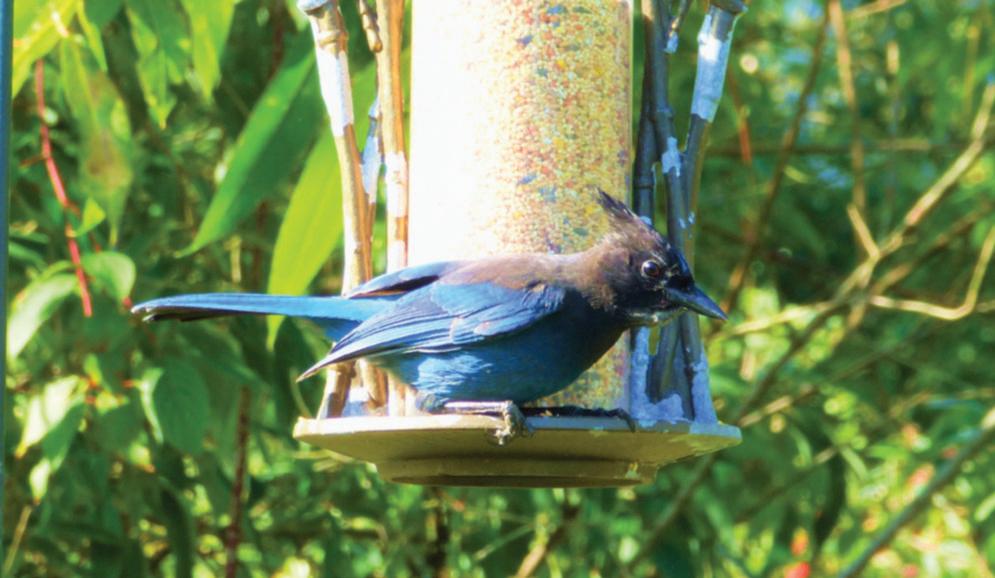
Mimi Desautels sent in this picture of a Steller’s jay taking a break near Hope River Corbould Park. If you’ve captured a photograph of people, places or events from around Chilliwack that you would like to share, email it to editor@theprogress.com, with “Community Camera” in the subject line.
Write Readers

The Chilliwack Progress welcomes letters to the editor, but reserves the right to edit for brevity, clarity and legality. All letters must be signed and include the writer’s phone number (for verification purposes only). Email: editor@theprogress.com

Mail to: Attention: Editor, 104-45833 Alexander Ave., Chilliwack B.C. V2P 1L6

Taking shorter showers will not bring back dead fish

Finding thousands of young trout and salmon cooked to death in July is a disturbing reminder of how vulnerable our rivers and creeks are to the rapid warming we are experiencing in B.C.
Watershed Watch discovered the dead fish in Ford Creek in Chilliwack on July 14. The die-off was caused by water temperatures of 27 C. Young salmon struggle above 20 degrees and cannot survive above 25.
While communities rally to rescue fish from hostile stream conditions, the provincial government’s response in mid-July is to tell us to take shorter showers. Yes, we all have to conserve, but it is clear from the province’s flat-footed response that strengthening B.C.’s watershed security has not been a priority. We are now paying the cost.
The lack of government action to prepare our communities and watersheds for drought is all the more disappointing since the current conditions were entirely predictable following last year’s dry fall and limited spring rain and snow.
So, what should our governments be doing to prevent fish deaths in places like Ford Creek?
First, they should stop approving the destruction of natural infrastructure in our watersheds. In 2022, pursuing an outdated strategy for flood control, regulators approved removing Ford Creek’s critical riparian zone–the trees, bushes and long grasses that grow naturally alongside the water. They also narrowed the waterway.
When Watershed Watch alerted Cheam First Nation to the Ford Creek fish deaths, the Nation’s
fisheries biologist rallied volunteers to transport over 3,000 coho and trout upstream to where forest cover still exists and has kept the water temperature at a comfortable 14 C.
It is well proven that natural streambanks provide shade that cools water, and natural curves in creeks provide cool pools that shelter fish during extreme heat. There are also more effective and fish-friendly ways to protect our communities from flooding. On a larger scale, decades of rampant clearcut logging have made our droughts and floods even worse by gutting the natural capacity for our watersheds to buffer snow melt.
Rather than approving the removal of streambanks, wetlands, and trees, the provincial and federal governments must invest in rebuilding these critical natural defences.
This spring, the province created a new B.C. Watershed Security Fund, which will spend an estimated $5 million annually on watershed renewal. This fund needs to be at least 10 times its current scale to have province-wide impact and should be funded by fees and penalties on those having the greatest impact on our watersheds, like large industrial water users.
Second, when low flows are threatening fish survival, the province should be issuing fish protection orders that require heavier water users, such as industry or agriculture, to use less water. These legal orders exist under B.C.’s Water Sustainability Act for this exact purpose. Yet during last fall’s drought, when thousands of fish were
stranded and perished in dried-up streams, not a single order was issued. This year, orders should have been issued weeks ago, but none have been declared so far.
Third, the province needs to crack down much harder on unlicensed groundwater users. Groundwater aquifers provide clean, cold water to our salmon streams—a lifeline during drought—and it’s time to end the poaching of this precious resource.
Finally, governments must empower local watershed boards to identify and implement the most effective drought prevention measures for their regions and to find collaborative solutions to water scarcity. The Cowichan watershed, already at drought level five (out of five), provides a prime example of why governments need to support stronger local direction and decision-making.
The Cowichan Valley Regional District, Cowichan Tribes, Cowichan Watershed Board, community organizations, and Catalyst Crofton all agree on the need to raise the weir at Cowichan Lake. This will provide additional water storage in winter that can be released in the summer to keep the river flowing. For nearly a decade, this community has asked for provincial funds to do this work. Even now, with federal dollars on the table, the provincial government is dragging its feet. Two weeks ago, thousands of young salmon and trout were found dead in the river.
Despite a brief period of rain, drought is expected to continue for weeks. With temperatures rising,
Did the city save money with the transit strike?
It sounds like we will have transit services again after the four-month break. With that in mind I did a couple calculations, since I can’t go anywhere anyway.
From the property taxes that many of us paid this July, 64 per cent goes to the

City of Chilliwack.
From this amount 16 per cent is allocated to ‘Transportation and Public Transit Operations.’ After a simple calculation, this translates to about 10 per cent of the total tax paid. Since the strike lasted four
months (or one-third of the year) if we knew what the draining and diking portion was we’d be able to see what we paid for no transit. (I would find out how much but I don’t have the time since I’m doing a lot of walking lately).
Perhaps when service resumes a late night bus could be added to the schedule. This was suggested in a conversation by an acquaintance a couple weeks ago. A ‘midnight special’ bus could enable the ‘automotively challenged’
and those who don’t drive at night to attend evening events in Vancouver such as sports, concerts, and social gatherings. Something to think about while you’re waiting for the bus?
Alec McKay

Get dogs to help out with goose problem at Cultus Lake

Re: Goose problem at Cultus Lake out of control, letter by Heather Vickers, Chilliwack Progress, July 21, page 9.
In reference to Heather Vickers’ letter regarding the increase in the goose population on Cultus
and many creeks in the region not adequately protected by streamside vegetation, we are on high alert for more mass fish kills.
Our provincial and federal governments have the tools at their disposal to do so much more to support communities in preparing for drought and to prevent the most serious impacts of water scarcity, such as these devastating fish die-offs.
When British Columbians are asked as individuals to do their part, we should ask, when will our governments do theirs?
Aaron
Hill, executive director and Lina Azeez, habitats program director for Watershed Watch Salmon Society

Chilliwack Progress Friday, July 28, 2023 Page A9 www.theprogress.com The Chilliwack
44310 YALE ROAD • 604-392-9969 44310YALEROAD OPEN7DAYSAWEEK NEWLINGERIEARRIVALS&MAGAZINES Shop OneStopLove XL-7XL sizes in stock instock JonWatts DentureClinic • NewDentures • Partials / PartialAdditions • Regular & SoftLiners OPENMON-FRIBYAPPT •WheelchairAccessible venue ServingChilliwack for50 Years! NOWOPEN! Safetyprotocolinplace https://mmfoodmarket.com/ M&MFoodMarket,CottonwoodMall,Unit#2,45609Luckakuc ourFacebookpagewww.facebook.com/mandmfoodmarketChilliwack/ ChickenStrips 27-33PIECES1.36kg/3lb 2299 MADEWITH 100%WHITE CHICKENBREASTMEAT THERE'S NO RESTAURANT LIKEHOME save $7 ALLPRICESINEFFECT THURSDAY,JULY27 TO WEDNESDAY,AUGUST2,2023 UNLESSOTHERWISESTATED.
Amada Gawor, Semá:th natural resource officer, said the



information the team is collecting will help “build out conservation” for the longer






term.
“We’re trying to work and spread and share ourinformationthatwe

arecollectingwithother users, other stakeholders, with the Department of Fisheries, with




City of Chilliwack and with the recreational angler societies as well.

“We really want to get that information out and it’s time. The salmon are in crisis so wereallyneedtounderstand the impacts that they’re experiencing when heading to their spawning grounds,” Gawor said.
The team asks local residents, visitors and all river users to be aware of the project, and to offer support by avoiding the equipment under the bridge, the trailer, as well as the marked set nets, which will be identified with corks and buoys in the Sumas-Chilliwack watershed.
ThegearthatSemá:th investedinissuperhightech.

Gawor explains: “To explain what you’re seeing here on-site in the water, we have our sonar set up and this is ahigh-frequencyAdaptiveResolutionImaging Sonar or ARIS.



“So this is the same
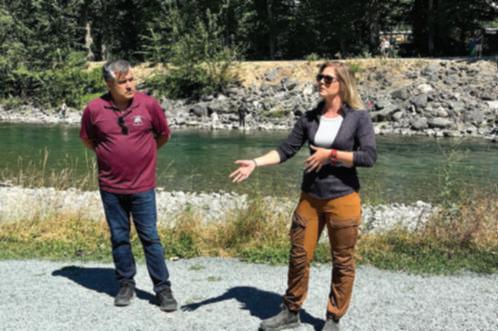
Semá:th councillor Troy Ganzeveld, and Amanda Gawor, Sema:th natural resource officer, at Crossing Park on the south side of the Vedder River. (Jennifer Feinberg/ Chilliwack Progress)
unit that’s used at the Fraser River Mission hydro-acoustic operations.

“Essentially what we’re able to do is position the sonar so it’s shootingstraightacross the channel, and we’re actually able to get the full coverage and to see how many salmon are actually making it upstream, and downstream, and we’re also able to get an idea of theirbehaviouraswell.”







The technicians are working from a spot above the river, where the sonar equipment
is within their field of vision, monitoring the computer screens, and resulting data sets. The salmonaregreyblipson the sonar screen.


As this phase of work gets underway they are hoping to get word to local residents, visitors andallriverusersabout their work on the water. They’re asking everyone to offer support by avoiding the ARIS sonar equipment under the bridge, the trailer, as well as the marked set nets, identified with corks and buoys near the confluence of the
Sumas-Chilliwack system.

Gawor echoed Ganzeveld’spointabout partnerships.
“A big part of this is also building relationshipsandaccountability andtrustbetweenalldifferent user groups and government as well.”
“Sobeingabletoshare that information to understand that we all do want to see the salmon comebackandwewant to see them come back ingoodnumberssothat everyonecanpartakeas well.”
EddieGardner,councillor with Skwah First Nation, who was at the opening,calledthework “quite remarkable” in its scope and vision, and noteworthy that Semá:th leadership is forging ahead using their own source funds to undertake the work.
“It’s the nation taking stewardship, but in collaboration with sportfishers and other groups, to develop collaborative relationships based on trust.”
Chilliwack Progress www.theprogress.com Page A10 Friday, July 28, 2023 Watchthe carversin actioneach daystarting at8am •Foodtrucks •MarketinthePark •IndigenousArtistsplusmore Foracompletescheduleofthe4-dayevent, goto: www.facebook.com/HopeCommunitiesinBloom or@HopeChainsawCarving SPEED CARVING & AUCTION SPEEDCARVING&AUCTION Startingat11am Friday,Saturday&Sunday LARGE CARVING AUCTION LARGECARVINGAUCTION Sundayat3pm WORLDCLASS CallForAwardWinningService604-701-5685or1-855-888-0599 ELECTRIC OLSON LTD SOLARDIVISION SERVICEDIVISION NEED A GREA GREAT T ELECTRICIAN ELECTRICIAN? ? NEED A GREA GREAT T ELECTRICIAN ELECTRICIAN? ? BC’SLARGESTSOLARINSTALLATIONCOMPANY! SOLARBC! SOLAR BC! SOLARBC! GO GO GoSolarBC.com GoSolarBC.com ON OR OFFGRID kohlerpower.com EMERGENCY&OFFGRID GENERATORS SeamlessBack-upPower FROMPLUGS INWALLS toShoppingMalls! *Musthavegoodsunexposure SOLARPOWERFORHOME&VEHICLE Clean,Renewable,AffordableEnergy ASKUSABOUT LEVEL2EV CHARGERS! GET SOLAR POWER FORYOUR EV! R REEPPAAIIRRS S • R REENNOOVVAATTIIOONNS S N NEEW W B BUUIILLDDS S R REEPPAAIIRRS S • • R REENNOOVVAATTIIOONNS S N NEEW W B ILLDDS S S SAAVVE E M MOONNEEYY. . S SAAVVE E T THHE E P PLLAANNEETT. . S SAVE E MOONEY. S SAAVE T TH PLLAAN T. . TSBCLicence#LEL0014301 ELECTRIC OLSON LTD RESIDENTIAL&COMMERCIAL•FRASERVALLEY•SUNSHINECOAST•LOWERMAINLAND THEOLSON GROUPOF COMPANIES NE C H O S A N S U Fire tecti o o r n P Di dt i L si c o itr o el O E son OLSONELECTRIC SOLARDIVISION OlsonElectric.ca Continued from A1
Salmon-counting sonar helps to ‘build out conservation’
DFO closes section of Chilliwack/Vedder river to protect co-migrating sockeye
‘Let’s beef up enforcement if illegal fishing practices are the problem,’
 Jennifer Feinberg The Progress
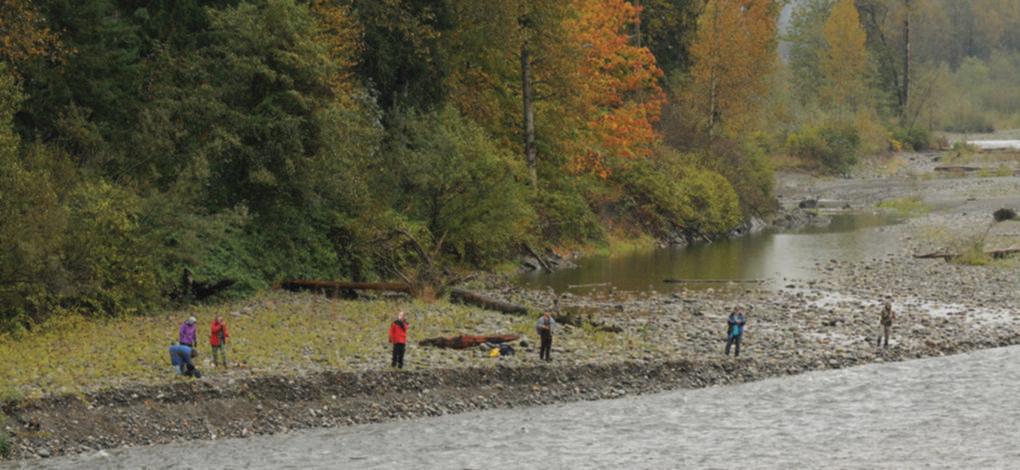
DFO shut down a small section of the Chilliwack/Vedder River to recreational salmon fishing to protect co-migrating spawning Cultus Lake sockeye. The closed section is roughly 200 metres above the Vedder Bridge, to 200 metres below it.
“Due to current concerns around the impacts of observed non-compliance activities in portions of the Chilliwack/Vedder River, the Department (of Fisheries and Oceans Canada) is implementing the following boundary change to offer protection to co-migrating sockeye salmon,”reads the fishery notice of July 24. The closure is on one of the

most heavily fished sections on one of the most heavily fished river systems in the Lower Mainland.
Nathan Bootsma, chair of the Fraser River Sportfishing Alliance said their members are concerned there wasn’t proper consultation or communication with affected stakeholders before DFO went ahead with the closure.
“Let’s beef up enforcement if illegal fishing practices are the problem. Because the closure will just push the law-breakers into places that are even harder for DFO to enforce,” Bootsma said.
“If they had just kept that part of the river open, and put fishery officers at the bridge, they could have both educated, and


handed out fines.”
There was a last-minute conference call DFO held to con-
Rain days finally arrive to interrupt drought
Completethesurveybefore July31 forachancetowingiftcardprizes. Fullcontestrulesandregulations: https://ow.ly/X1Xo50Pb2ks.
says sportfishing rep
harvested? How many? Were there tickets being handed out for illegal fishing?
“Maybe there was lots of evidence of illegal fishing of sockeye. I don’t know. We weren’t given the evidence,” Bootsma said.
“The concern for Cultus sockeye is a legitimate concern. The problem is those sockeye are not in the river now, and won’t be until later.”
With the ongoing drought, the river levels are extremely low, which is putting incredible pressure on returning fish.
There had been a retention fishery for chinook on the Chilliwack River prior to the closure.
sult stakeholders, which none of their members could jump on. In the wake of that call, they had many unanswered questions about what precipitated the closure. Were there sockeye being
When the skies over Chilliwack finally opened up Monday morning to release almost 20 millimetres of rain, it was a welcome respite from more than a month of drought.
A total of 19.8 mm of rain fell throughout the day, up to 9:30 p.m. on Monday (July 24), according to Roger Pannett, Chilliwack’s volunteer weather observer and storm chaser.
“A closure should be the last resort, not the first action they take,” Bootsma added.
“It was our wettest day since the 27.1 mm on April 9,” Pannett enthusiastically reported. “It’s so good for the trees, plants and us all after the 31-day drought!”
ScantheQRcode
Chilliwack Progress Friday, July 28, 2023 Page A11 www.theprogress.com
Anglers fish near the Vedder Bridge in this file shot from Oct. 16, 2014. DFO recently enacted a partial closure to salmon fishing in roughly the same area, 200 metres above and 200 metres below the Vedder Bridge. (Jenna Hauck/ Chilliwack Progess file)
SARAH TRYDAL
ERIC FRIESEN






604-751-6408 info@sarahtherealtor.ca www.stonehausrealty.ca
604-819-9666 efriesen19@outlook.com ericfriesen_realtor
TAYLOR TINNION
PERSONALREALESTATECORPORATION
604-795-0280 hanneselby007@gmail.com www.chilliwack-realestate.com
CRYSTAL DEJAGER
PERSONALREALESTATECORPORATION
604-819-4857 lindasexsmith@shaw.ca www.lindasexsmith.com
BRAD, STEVE&BRUCE
778-999-5803 taylortinnionsells@gmail.com www.taylortinnionsells.com

CARLEY DIACK
604-793-6488 crystalcdejager@gmail.com www.homemastersteam.com
CLARKE MALLORY
PERSONALREALESTATECORPORATION








BARRY WOELDERS

604-845-8756 barrywoelders@remax.net

KRISTINA LEGAULT
604-970-1380 KristinaLegault@outlook.com www.kristinalegault.com
604-791-6885 LathamTeam@gmail.com LathamTeam.com
604-217-1179 cdiackrealestate@gmail.com www.diacksells.ca
https://lathamteam.com/


LINDSAY HALL
JANETTE JOINER


604-703-6868
lindsay@lindsayhallrealty.ca www.lindsayhall.c21.ca






604-819-6564 janettejoiner@remax.net www.homemastersteam.com



604-316-9917 ckmallory@rennie.com www.forsaleinchilliwack.com
SHANE SETTER
PuttingPeopleBefore Properties
604-819-7601 info@shanesetter.ca www.shanesetter.ca
604-819-7111 brad.brears@gmail.com www.homemastersteam.com
TRISH TARONI www.selectrealestate.ca
604-845-0216 trish@selectrealestate www.trishtaroni.com


Chilliwack Progress www.theprogress.com Page A12 Friday, July 28, 2023 BEMOVED. Chilliwack Local Realtors® toknow. DoyouhaveyourRealtor ®?
HANNE SELBY
PERSONALREALESTATECORPORATION
BRAD BREARS
CLARKE SEXSMITH
Electrical fire wreaks ‘major damage’ on Chilliwack home
Deemed ‘accidental,’ 2nd alarm called to contain fire, 22 firefighters responded
Jennifer Feinberg The Progress
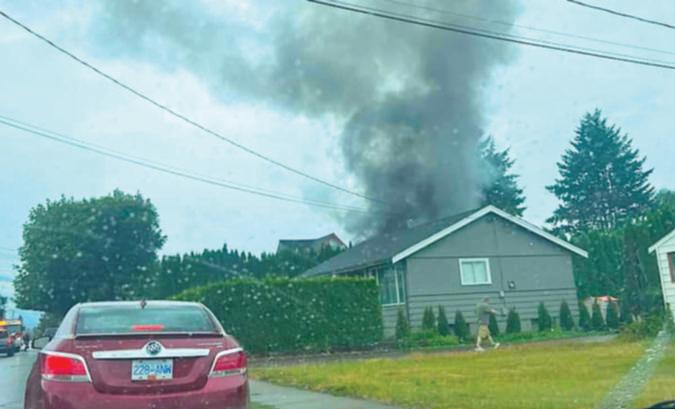
Residents of a Young Road home managed to get out safely from a two-alarm house fire Monday, with several of their pets, before crews arrived from Chilliwack Fire Department.
“This fire is considered accidental and is under investigation by the Chilliwack Fire Department fire investigators,” said assistant fire chief Andy Brown, in a release.
The use of an extension cord was involved.
“The Chilliwack Fire Department wants to remind the public that extension cords are for temporary use only. Have a qualified electrician determine if additional circuits or wall outlets are needed.”
Crews were called out at 10:40 a.m. Monday (July 24) to the residential structure fire in 9800-block of Young Road, with 22 firefighters responding from Halls 1, 2, 4 and 6. On
arrival they found heavy fire and black smoke venting from a suite.
“Fire crews called for a second alarm and worked quickly to perform an exterior attack on the fire, while securing a water supply to bring the fire under control,” a news release stated.
That allowed fire crews to transition into an interior fire attack and search the house.
The quick actions of fire crews prevented the fire from spreading to the main area of the house, containing the fire to the suite of origin, which suffered major fire damage. There were no firefighter or civilian injuries, but several people, including four adults and one child were displaced. Emergency Social Services (ESS) personnel were called to provide assistance.
Fairfield Island gets dog park
The City of Chilliwack has officially opened a new offleash dog park. Fairfield Park at 46219 Clare Avenue is the site of two areas, one for small dogs and one for large dogs, adjacent to the parking lot and baseball clubhouse.
According to the City of Chilliwack website, it’s the sixth off-leash dog park in Chilliwack. Others are located at Vedder Park (45450 Petawawa Road), Island 22 Regional park (45695 Cartmell Road), No. 3 Road (41851),
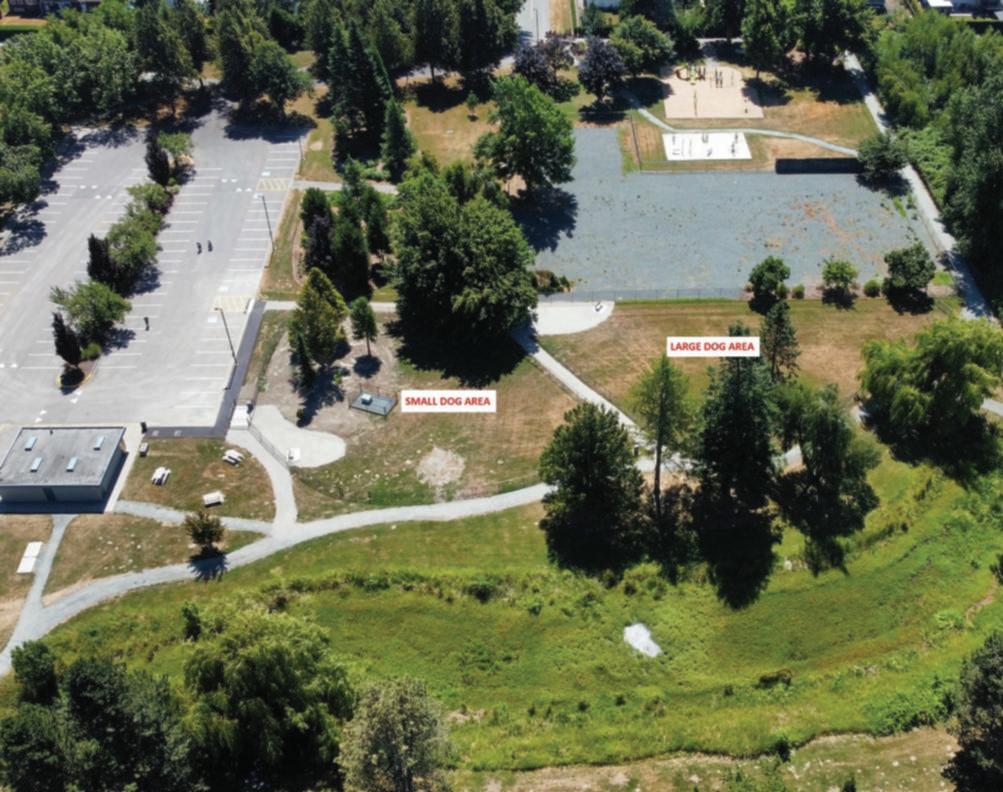






Sheffield (7215 Sheffield Way) and the Vedder North Dyke Trail, from Webster Road to Lickman Road.
Another off-leash dog park was announced in January for the Crimson Ridge neighbourhood of Promontory.

Chilliwack Progress Friday, July 28, 2023 Page A13 www.theprogress.com www.shelfgenie.com https://www.shelfgenie.com/ CallforYour FREE DesignConsultation: 778.719.6933 Formoreinformation,see shelfgenie.com *Limitoneofferperhousehold.Mustpurchase5+Classic/DesignerGlide-OutShelves.EXP08/31/2023.Independentlyownedandoperatedfranchise.©2023ShelfGenieSPVLLC.AllrightsReserved.MAHICLicense#165040 CustomPull-OutShelvesforyourEXISTINGcabinetsandpantry.
Firefighters rallied to extinguish a fire in a Chilliwack home Monday. (Facebook photo)
A City of Chilliwack graphic shows the location of the new dog park at Fairfield Park, next to the parking lot and baseball clubhouse.


























Chilliwack Progress www.theprogress.com Page A14 Friday, July 28, 2023 *all prices plus $495 Documentation Fee & Taxes *allpricesplus$495DocumentationFee&Taxes PRE OWNEDAND CERTIFIEDVEHICLES CALLUSTOSELLYOURUSEDVEHICLE 2022TOYOTACAMRY 2022HYUNDAITUCSON 2022NISSANFRONTIER Stock#21223A +ApplicableFeesandTaxes*+ApplicableFeesandTaxes*+ApplicableFeesandTaxes* Stock#21226A Stock#21160A $36,900 $34,900 $47,400 TEXT US AT USAT 604-330-8788 TEXT US AT USAT 604-330-8788 TEXT US AT USAT 604-330-8788 2021KIASELTOS 2021TOYOTARAV4HYBRIDXSE 2019FORDF-150SUPERCREWCAB Stock#21297A Stock#21243A Stock#B1905A $35,900 $51,900 $51,900 TEXT US AT USAT 604-330-8788 TEXT US AT USAT 604-330-8788 TEXT US AT USAT 604-330-8788 2018NISSANROGUE 2018MINICOUNTRYMANCOOPERS 2017HYUNDAITUCSONSE Stock#21262A Stock#21288A Stock#B1899A $26,900 $25,900 $20,900 TEXT US AT USAT 604-330-8788 TEXT US AT USAT 604-330-8788 TEXT US AT USAT 604-330-8788 DL8176 SEEUSON 8750YOUNGROAD 604.792.1167 WWW.VALLEYTOYOTA.CA WEARECHILLIWACK’STOYOTADEALER! +ApplicableFeesandTaxes*+ApplicableFeesandTaxes* +ApplicableFeesandTaxes* +ApplicableFeesandTaxes* +ApplicableFeesandTaxes* +ApplicableFeesandTaxes*
EcoandLuxeCo. ownerAimeeHofmannisbringing hercollectionofeco-friendlyluxury toDistrict1881 inDowntownChilliwack.Hernewpop-upshop onThunderbirdLanefeatures a dazzlingarrayof intentionalproductsthat she’s hand-pickedfrom fair-tradeartisans,aswellasglobalandCanadian entrepreneurs.Therearesumptuousandsustainable productsforself-care,homeorgifts,many deckedoutwith attractive,recycledpackaging. “I’mtryingtobringinsmallerbrandsfromaroundthe worldthat peoplemaynothavediscoveredbefore.”




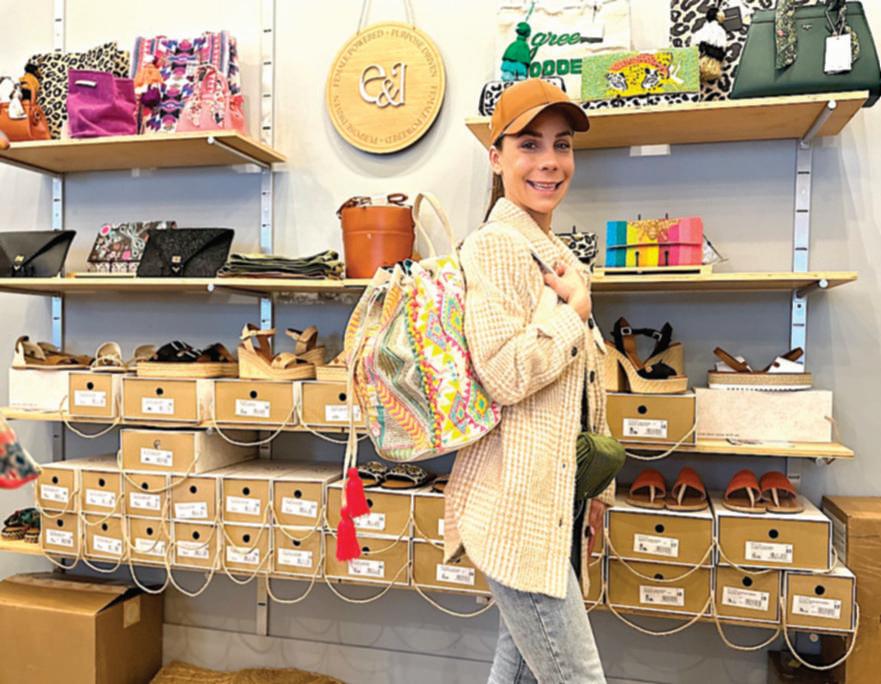



ClientswillfindproductlinesfromUkraine,Latvia, Greece,SpainandItaly, aswellasup-and-coming B.C.brands.WhenHofmannexplainshervisionfor the“purposedriven”aspectofEcoandLuxe,she talksaboutseekingoutfemale-drivencompanies that aregivingbackinsomeway Whileherpop-up shopisopen,Hofmannisdonating$1toWilma’s TransitionSocietyfromevery purchase,tosupport thelocalnon-profit.





Atthebackoftheshop, a summery displayof
sandalsfromSpainwerehand-sewnbyartisans. Thecollectionfeatureswomen’s wellness products,andcosmeticsthat “smelldelicious.”





“Somethingthat mightsurprisepeoplearemyproducts withscents,likeall-oversprays,andperfumesthat are non-toxicandfreeofhormone-disruptingingredients.



“They’rehealthy, theysmelldeliciousandthey’re madewith cleaningredients.”Oneoftheeye-catching displayshasintricatelybeadedhandbags,andpurses, craftedbyfemaleartistsinIndia.EcoandLuxeCo. hasalsobeenbusyfillingonlineorders,andHofmann sayshervirtualcustomersfrom Vancouverand beyondarestartingtomakethetrekouttoChilliwack toseehercarefullychosenwaresintheshop.
“Ithinkthat isreally, reallycool,andit’sa reflectionofDistrict1881andwithitsbeautiful architecture,becoming a seriousdestination.“Ifeel very luckytobe a shopindowntownChilliwack.”




Checkoutthepop-upspaceonThunderbirdLane, andstaytunedasEcoandLuxewillbemovingjust downthelaneto a larger, morepermanentspotin




November

Chilliwack Progress Friday, July 28, 2023 Page A15 www.theprogress.com #9-45966YaleRd •IPhone&AndroidRepairs&Service •IPad&TabletRepairs •AndroidBoxes&More 604.792.4221 Chilliwack’s #1CellphoneRepairShop www.millstreetbarbershop.com WALK-INSWELCOMEORPHONE FORAPPOINTMENT millstreetbarbershop.com Calltodayfor yourappointment 604-792-9112 Tuesday-Saturday 8:30am-5:30pm 9341MillSt. Chilliwack APerfect Place
Consciouslycuratedeco-luxuryfordowntown thismarketismadepossiblebytheseincrediblecommunitypartners Sundays 10am-2pm May28toOct15,2023 9360Millstreet downtown Destination EcoandLuxeCo.(pop-upshop) #102-45922ThunderbirdLane,District1881 www.ecoandluxeco.com
Mom aims to change Amber Alert criteria
Alina Durham, mother of Shaelene Bell, collecting digital and pen-on-paper signatures
would remain the same.
A petition started by a Chilliwack mom to change the wording in B.C.’s Amber Alert is now available for supporters to sign.
Alina Durham, mother of Shaelene Keeler Bell, is asking people to sign either the e-petition or a paper one in honour of her late daughter. Bell, a 23-year-old Chilliwack mother, went missing on Jan. 30, 2021. Her body was found on June 2, 2021 in the Fraser River near Coquitlam.
Durham has worked tirelessly for the past two years to get an alert in place for adults who go missing under suspicious circumstances. She wants to get the wording in B.C.’s Amber Alert system changed to include victims over the age of 18. All other criteria in the alert
“People can take a second to make such a difference,” she said. “By all working together we can all be a part of making change happen.”
Amber Alerts are governed by provincial law enforcement policies, so Durham went to Chilliwack-Kent MLA Kelli Paddon in May and together they wrote up a petition
“The petition of the undersigned, residents, of the province of British Columbia, states that: the criteria for issuance of an Amber Alert be expanded to include people of all ages who are missing but would otherwise meet the RCMP criteria for the issuance of an Amber Alert for adolescents.
Your petitioners respectfully request that the Honourable House urge the government to effect this change and take such action as may be deemed
appropriate,” reads the short, two-sentence petition. She started collecting penon-paper signatures around
NOTICEOFPUBLICHEARING
TUESDAY,AUGUST1,2023AT6:30PM
COUNCILCHAMBERS
8550YoungRoad,Chilliwack,BCV2P8A4 www.chilliwack.com
TAKENOTICEthattheCounciloftheCityofChilliwackwillholdaPublicHearing,asnotedabove,onthefollowingitem:

1.ZONINGBYLAWAMENDMENTBYLAW2023,No.5318(RZ001697)
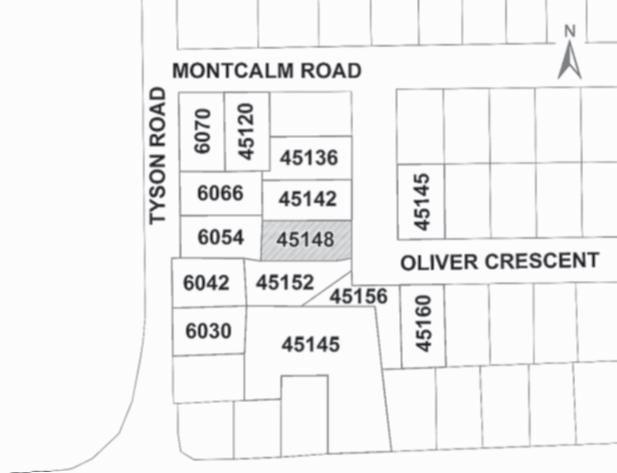
Location:45148OliverCrescent
Applicant: GuideEngineering
Purpose: Torezonethesubjectproperty,asshownonthemapbelow,fromanR1-A(UrbanResidential)Zone toanR1-B(UrbanDuplexResidential)Zonetofacilitateafutureduplexdevelopment.
LocationMap
Canada Day, and now people can sign it electronically. Additionally, hard copies of the petition are available to sign at the following locations in Chilliwack: Duke’s Country Pub (41582 Yale Rd.), Major League Taphouse (45768 Gaetz St.), Fabutan (104-45655 Tamihi Way), and Corky’s Irish Pub (3-45844 Yale Rd.).
“I’m trying to emphasize the impact of working together,” Durham said. “We’ve come this far. This is the final push. This is a joint effort – all of us together.”
Paddon will be presenting the signed copies through the B.C. Legislature when Durham feels she has enough signatures. The earliest it will be brought to the
Legislature is in October when assembly sittings resume. There is no minimum number of signatures needed to present the petition, but they both agreed the more the better.
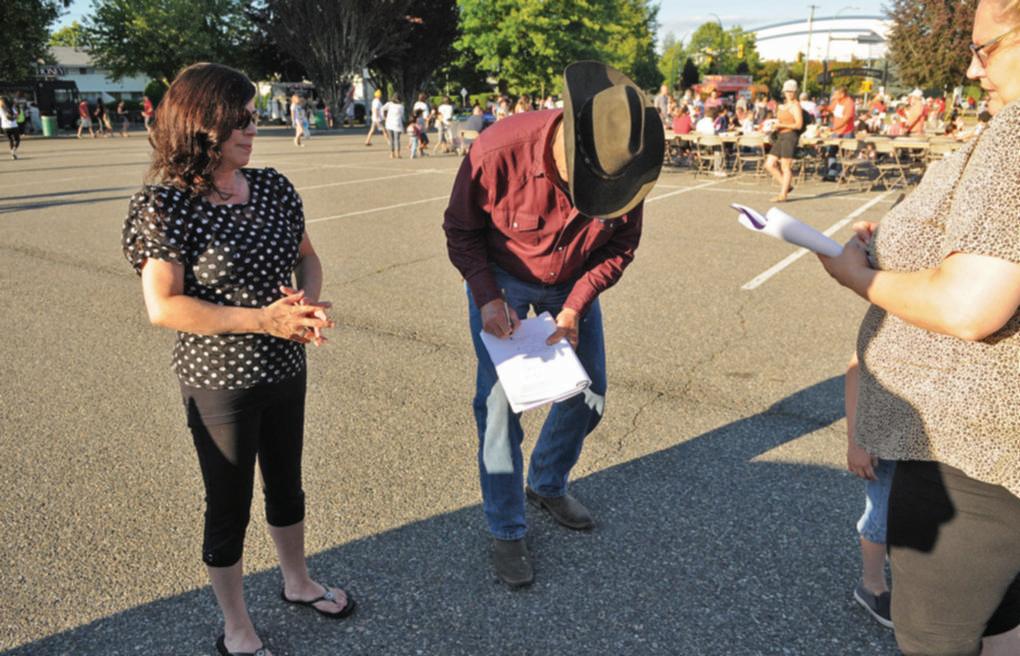
“She is absolutely unwavering when it comes to advocating for things and I think that is fantastic,” Paddon said of Durham.
To sign the e-petition, find this story online titled ‘Amber Alert e-petition in honour of late Chilliwack mom now up and running.’ Download the PDF form in the story, sign it, save it, and then email it to Paddon at kelli.paddon.mla@ leg.bc.ca. Or folks can sign it at one of the four above-mentioned locations.
NOTICEOFDISPOSITIONBYWAYOFLEASE ANDPROVISIONOFASSISTANCE

InaccordancewithSection26ofthe CommunityCharter,noticeisherebygiventhattheCouncil oftheCityofChilliwackintendstoleaseits0.297hectarepropertylocatedat46195FifthAvenue (the“Property”),legallydescribedasPID:031-888-755,Lot1Division“E”NewWestminster DistrictPlanEPP125490,totheChilliwackSearchandRescueSociety(the“Society”)foratermof 50years.
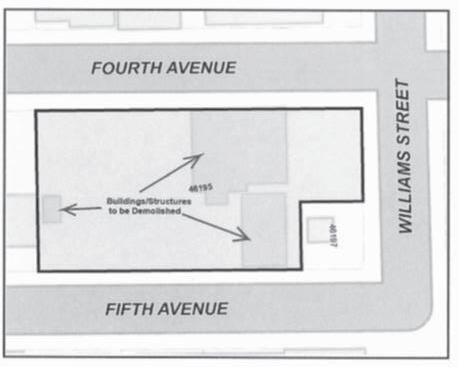

InaccordancewithSection24ofthe CommunityCharter,noticeisherebygiventhattheCouncil oftheCityofChilliwackintendstoprovideassistancetotheSocietyintheformofaleasebeing grantedatlessthanmarketvalueatanannualrentalamountof$1.00andfurther,inexchangefor theSocietyprovidingtheCitysearchandrescueservices,toenterintoaPartneringAgreement tofundthecostsassociatedwithoperatingandmaintaininganewbuildingtobeconstrnctedby theSocietyontheProperty.
ThePropertytobeleasedisshownoutlinedinboldlineageonthemapbelow:
PleasereviewtheinstructionsbelowinregardtotheparticipationoptionsforthePublicHearing:
1.Writtensubmissions, includingyourfullnameandaddress, totheCorporateServicesDepartmentat 8550YoungRoad,Chilliwack,BCV2P8A4orbyemailtoclerks@chilliwack.com nolaterthan4:00pmon Monday,July31,2023.
2.ParticipateinpersonattheCityofChilliwack,CouncilChambers,locatedat8550YoungRoad,Chilliwack,BC. Allsubmissionswillberecordedandformpartoftheofficialrecordofthemeeting.TheCouncilmeetingwillbe broadcastliveontheCityofChilliwackwebsiteviathefollowinglink:www.chilliwack.com/liveforviewingby thepublic.
Thisproposedbylawwillbeprovidedviaemailuponrequestbetweenthehoursof8:30amand4:30pm,Monday throughFriday,excludingholidays,from Wednesday,July19,2023toTuesday,August1,2023, bothinclusive,by thePlanningDepartmentat 604-793-2906 orplanning@chilliwack.com. PleasenotethatnofurtherinformationorsubmissionscanbeconsideredbyCouncilaftertheconclusionofthe PublicHearing.
JacquelineMorgan,CMC CorporateOfficer
InquirieswithrespecttothismattermaybedirectedtoWayneMoseanko,PropertyManager, 604-701-1831orinwritingtoJacquelineMorgan,CorporateOfficer,8550YoungRoad,Chilliwack, BCV2P8A4.
JacquelineMorgan,CMC CorporateOfficer
Chilliwack Progress www.theprogress.com Page A16 Friday, July 28, 2023
Jenna Hauck
The Progress
Alina Durham (left) collects signatures at Chilliwack’s Canada Day celebrations at Townsend Park on July 1. Durham has written up a petition with Chilliwack-Kent MLA Kelli Paddon to get the wording in B.C.’s Amber Alert system changed to include victims over the age of 18. (Jenna Hauck/ Chilliwack Progress)
Roller hockey tourney raises money for Canuck Place
Markus Schouten’s friends play the game in his memory
Eric Welsh
A new Chilliwack tradition with a heartbreaking back story takes place July 29. Friends and family of Markus Schouten are holding the second Roller Hockey in Memory of Markus event, honouring a young man who lost a battle with bone cancer.
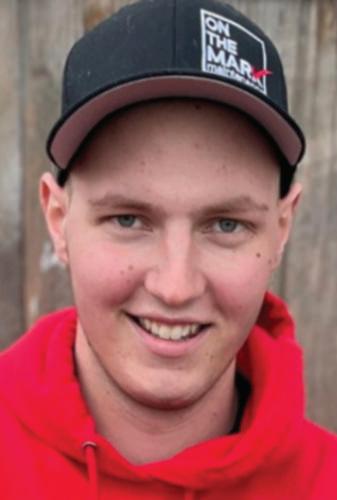
Markus was just 18 years old when he died May 29, 2022 after a 15 month fight. When his friends came to visit him near the end at Canuck Place Children’s Hospice, he asked them to play hockey in his memory.
“Markus was a gift-giver and when he was in hospice he bought gifts for some of his family members,” said father Mike Schouten. “He had a lot of special times with his buddies, and when they came to visit him he said, ‘Look guys. I really wanted to get you something but this all went way faster than I thought. The only thing I can think of is, why don’t you guys go get brand new sets of roller blades and instead of sitting around moping that I’m gone, just go play hockey.’”
The very next day they went to Cheam Sports in Chilliwack, bought their blades and played for a couple hours. From that came the inspiration for the roller hockey derby, which was put together super quick last year and still managed to be an outstanding event.
Participants played for four hours straight on a hot summer day with a fundraising target of $15,000.
They blew it out the water, bringing in $26,000 for Canuck Place.
This year they’re more organized. They’re adding a few more teams of people who were close to Markus, and they’ll play for six hours straight, hoping to raise $30,000.
Schouten said Canuck Place offered exceptional care for Markus from beginning to end.
When his oncologist told him he’d run out of treatment options and there would be no cure, the teenager asked how long he had.
“The doctor said, ‘Markus, we don’t know how long you have, but what we’re going to commit to you is that every day that you’re here, we’re going to make sure you live it the best way possible,’” Schouten said. “And that’s what they did. They provided that care for Markus in our home for six to eight weeks, and when the time came to go to the hospice
in Vancouver, they were so loving and caring and treated him with dignity and respect.
“Even though they knew he was dying, right to the last minute they never gave up doing everything possible to ensure the pain and suffering he was experiencing was managed in a way that he could enjoy his time with friends and family.”
Schouten said last year’s event was overwhelming, mostly because it was organized so quickly, just six weeks after Markus died.

He said the community rallied around it in a wonderful way, bringing barbecues for food, drinks for the players and tents to provide shade for everyone. He said it was incredible seeing how much people cared, and that’s what got Markus’s friends thinking it could turn into something pretty special.
“They recognized that in five or 10 years they’ll all have gone their separate ways and who knows where they’ll be, but at least once a year they’ll be able to come back to do this in his memory, and they’re thankful they can do it,” Schouten said. “I think if Markus could see it he’d be happy that they took his roller hockey suggestion and ran with it, and he’d be particularly touched that they’re doing it to raise money and awareness for palliative care, and the necessity of organizations like Canuck Place.”
The roller hockey derby takes place July 29, three days after Markus would have turned 20, from 10 a.m. to 4 p.m. at 5840 Blackburn Road in Chilliwack.
To contribute to the fundraising or get more info, visit https://my.canuckplace.org/ fundraiser/3991168
Withover40yearsofexperience intheinvestmentindustry,I’vehad theprivilegeofhelpingclientsdevelop plansandstrategiestoachievetheir financialgoals.I’venavigatedthrough manyuniquemarketfluctuationsusing uniqueandcustomizedsolutions.
T:778-369-1104|C:604-556-6226
ingrid.abrahams@raymondjames.ca
www.raymondjames.ca/ingridabrahams
RaymondJamesLTD-MemberoftheCanadianInvestorProtectionFund.




INCHILLIWACK
WelcometoourSummer2023 PROFESSIONALSTOKNOWINCHILLIWACK.
Thisisyourguidetotheprofessionalsinourcommunitywhomay beabletohelpyou.Thisspecialsectionprovidesintroductionto theseprofessionals,informationonthemselves&theirservicesand whyyoushouldconsiderchoosingthem.

covered,24/7.Fromshoppingand negotiatingforthebestrateand terms,tomeetinglenders,ordering appraisals,completingthepaperwork andschedulingtheclosing–we handleitallsoyoudon’thaveto.

Chilliwack Progress Friday, July 28, 2023 Page A17 www.theprogress.com
StevenBrouwer steve@entrustmortgage.ca 604.799.2700•www.entrustmortgage.ca
AtEntrustMortgage,wegotyou
TRUSTus.
The Progress
Markus Schouten died in May 2022 from bone cancer. His dad, Mike Schouten, said Markus would be proud to know his friends are playing roller hockey in his memory to raise money and awareness for Canuck Place Children’s Hospice.
CADREBPresidentsClubMember2014-2023


TheProgressA-ListFavouriteRealtorFinalistinChilliwack2016-2022











REP(RealEstateProfessionals)Top100inCANADA2020&2021&2022&2023






REP(RealEstateProfessionals)Top35under35inCANADA2020





Q:Whatmakesyourteamunique?





Likeawell-greasedengine,ourteamhashonedthecraftofefficiencyandhigh-endservice.Comprisedofmyself, myhusbandSeanElmont,DustinHurleyPREC*,andourlicensedassistantsRondaDixonandTeaganShepherd.As wellasourofficeadministrativeassistants,Alya&Fallon,andourmarketingliaison&stager,AngelaBennett!We areadrivenanddedicatedteamwhoworksseamlesslytogetheraroundtheclocktomakesureallofourclient’s needsaremet.Weensureallinquiriesareansweredpromptlyandallclientshavedirectlinesofcommunication. Weprideourselvesonhavingahighlevelofcustomersatisfaction,whichyoucanreadthroughourtestimonials andourawardsonbeing#1yearafteryear.Attentiontodetailandahighstandardofprofessionalismareourkey ingredients.Weputagreatdealofthoughtintomarketingeachindividualpropertyuniquely,fromourprofessional photographyandstagingservicestoonlinetargetedmarketingtechniques-allofwhichensureyourhomeisseen bytheRIGHTbuyers.WearenotjustaRealEstateTeam,weareafamilyandwevalueourclientsthesameway. Whenyouwantthebest-workwithbest!



Chilliwack Progress www.theprogress.com Page A18 Friday, July 28, 2023 #1REALTOR® CHILLIWACK ANDDISTRICTBOARD 2015,2016,2017,2018,2019, 2020,2021,2022, 2023 MLSSALES 170 HOUSESSOLDTHISYEAR!YOURSCOULDBENEXT! IFYOUWANTSOMETHINGDONE,GIVEITTOABUSYPERSON!STILLTHE#1REALTORSINCE2015! SCANTOACCESS1600+ LOCALLISTINGS! AngelaBennett DesignConsultant OFFICEADMINISTRATION 146-4.9 152-4.9 140-4.95 #1 4.95 8000 WEBPAGEVIEWSPERMONTH!
Chilliwack’s #1 RealtorMLSSales2015-2023
RE/MAXNYDAREALTY
26
YEARSEXPERIENCE 2000+ SUCCESSFULTRANSACTIONS
RE/MAXNYDA
CHILLIWACK’S #1REALTOR MLS Sales 2015-2023 MLSSales2015-2023
AlyaFleming AdministrativeAssistant FallonKelly AdministrativeAssistant
Realtor® PersonalRealEstateCorporation











MeetDyllanPrest,anexperiencedandaward-winninglocalbornandraisedrealtor,dedicatedtotransformingyourhome-buyingandsellingexperiencesintomemorablejourneysfilledwithwarmth,trust,andunparalleledsuccess. Throughouthisthrivingcareer,Dyllan’sprofoundloveforthelocalcommunityledhimtochannelhispassionforrealestateintoafulfillingvocation.Armedwithextensivelocalknowledgeandadeepunderstandingofthemarket dynamics,DyllanremainsattheforefrontofindustrytrendsalongsidetheSarahToopRealEstateGroup,ensuringhisclientsalwaysreceivethemostcomprehensiveandup-to-dateinsightstomakeinformeddecisions.Dyllanbelieves intakingthetimetolistenintentlytohisclients’needs,aspirations,andconcerns,understandingthateachperson’sjourneyisuniqueanddeservespersonalizedattention-eachclientistrulyafriendafterwards!Beyondhisrealestate achievements,Dyllancherishesthetimespentwith2toddlers,familyandfriendsinChilliwacksgreatoutdoors.Whetheryouareafirst-timehomebuyeroraseasonedseller,DyllanPrest’sexpertiseandheartfeltdedicationwillguide you everystepoftheway.Embracetheopportunitytoworkwitharealtorwhotrulyvaluesbuildinglastingfriendshipswithhisclients.ContactDyllantoday,andlethispassionforpeopleandrealestatehelpyouturnyourdreamsintoreality.

MikeFoster
Realtor®
Asalife-longresident(wellalmost,CFBChilliwackwasmyfather’sfinalposting),IamintimatelyfamiliarwithallthatChilliwackhastooffer.It’snotsurprisingthisisoneof BC’sfastestgrowingcommunities!Fromourincrediblenaturalbeautyandunmatchedrecreationalopportunities,Chilliwackisanamazingplacetoliveandraiseafamily, asmywifeVirginiaandIdidwithour3boys.Many,manyhoursvolunteeringwithlocalminorsportsandmusicassociationsshowedveryclearlyhowfamily-orientedour communityis.Ilookforwardtoutilizingmyexperienceandknowledge,coupledwiththeunmatched,award-winningsupportnetworkprovidedbytheSTRG,tomakingyour homedreamscometrue.




ChelseaDunn
Realtor®

IamamarriedmotheroftwowhoispassionateaboutmyhometownofChilliwack,aswellasthebeautifultownsaroundus.Iwasbornandraisedhere;buthavedeeprootsinAbbotsford, AgassizandHarrisonHotSpringsaswell.MyrecenthistoryinvolvesrunningalocalsmallbusinessandprovidingguidedToursofHarrisonLakeandTheHarrisonRiverwhichmakesmequite knowledgeableaboutthehistoryandoutdooropportunitiesinourarea!PriortothisIattainedaBachelor’sDegreemajoringinPsychology,whilesimultaneouslyworkingfor11yearsinbanking assistingclientswithmortgages,investmentsandtheirotherfinancialneeds.ThroughmyvariedbackgroundexperiencesIhaveattainedauniqueskillsetthatensuressharpcontractnegotiations, topnotchcommunicationsandoverallclientexperience,aswellasakeenabilitytogainaquickunderstandingofhowtonavigatewithmyclientstoachievetheirgoals.Iamexcitedtocombinemy knowledgeandtalentsforbusinessmanagement,lending/investing,wealthmanagement,publicspeaking,andcustomerservicewithmypassionforuniquehomes,fresheningupanoldspaceand buildingqualityrelationshipsintheworldofRealEstate.Ifattentiontodetailandhavinganagentwhowillgoaboveandbeyondisimportanttoyou,reachouttomeforadeal“DUNN”right!
Q: What’sthebestwaytogetridofAnts?
•Agreattrickistocreateaborax-juiceconcoction.One partBorax,toatwo-partjuice.They’renotthatexpensive andactuallyworkreallywell,werecommendyoustart withBorax.Whatkindofjuice?Applejuice,orangejuice, anythingsweet.Applytotheareaswhereyou’veseenants.
Q:Whichwaspsaremostharmful?
•Wedealwiththe3mainsocialwasps;YellowJackets,Paper Wasps,andHornets.Theyallhavedifferentbehavioursand nestinghabits,andwillsting.Whiletheyareallathreat whendisturbed,theYellowjacketsaretheonestowatchout for.Thesewaspsareveryaggressiveindefendingboththeir nestandtheirfoodsource.Yellowjacketwaspsdartback andforthquicklyandwithpurposewhereasthelonglegged PaperWaspstendtowistfullyhoverabout.


Chilliwack Progress Friday, July 28, 2023 Page A19 www.theprogress.com
CALLUSTODAYFORAFREEQUOTE! 604-559-9060
FAMILYFROMPESTS. GETRIDOFINSECTSANDOTHERPESTS FAST!-SAFE,AFFORDABLE,&ECO-FRIENDLY
Vancouver’s#1reviewedlocallyownedpestcontrolcompanyisnowservicingAbbotsfordandChilliwack!
PROTECTYOURHOME&YOUR
DyllanPrest |Phone:604-701-8911|Email:Dyllan.Prest@gmail.com
|Phone:604-798-9643|Email:mike@mikefoster.ca
|Phone:604-799-3776|Email:chelseadunnfv@gmail.com
SCANTO ACCESS 1600+ LOCALLISTINGS PreferredReferralNetworkfor RE/MAXNYDAREALTY sarah@sarahtoop.comwww.sarahtoop.com 604-855-8060 CallorText Results That Move You! #1ChilliwackRealtor® since2015(MLSSales) SOLDIN2023! HOUSES 170
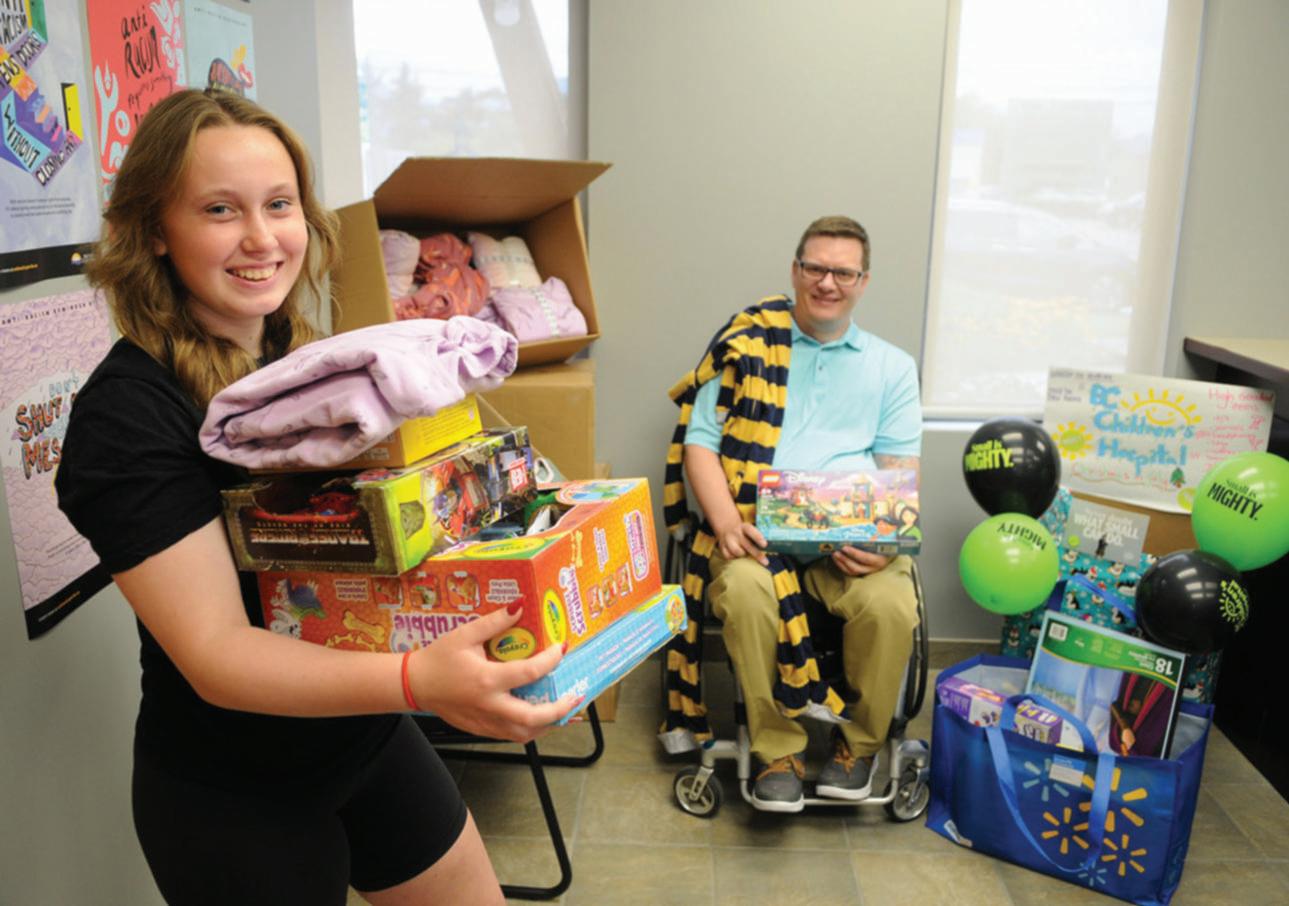
Keira McKenzie, a 15-year-old Chilliwack burn survivor, was recently given the chance to go on a shopping spree at a big-box store where she spent hundreds of dollars.
She loaded a shopping cart with toys, arts and craft supplies, and more. But not one of the items she picked out was for herself.
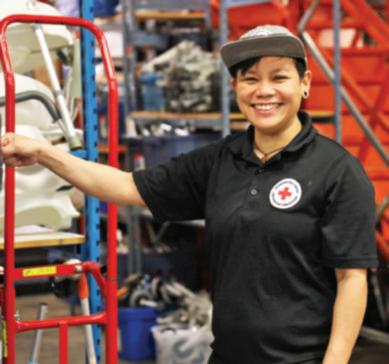
“She chose to spend her money on purchasing toys to give out to kids and their siblings who have to stay in the hospital while the rest of us are enjoying our summers,” said mom Terresa McKenzie.

The toys will be gifted to kids on the burn ward at BC Children’s Hospital, a place Keira is very familiar with. And even though she bought hundreds of dollars worth of toys, she doesn’t think there’s enough for all the kids, so she’s holding a ‘Christmas in July’ toy drive in hopes that other people will also donate toys and clothing to help cheer up kids.
Keira knows firsthand what it’s like to spend weeks in the hospital and not be at home. When she was nine years old, she suffered second- and third-degree burns to about 25 per cent of her body when scalding hot drinks
fell on her lap.

She spent a lot of time at BC Children’s Hospital and remembers how long the days were.
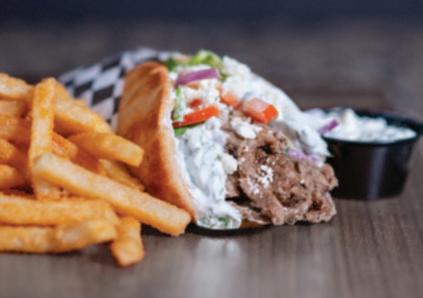
“All I can remember at the hospital is the little gifts I would receive from the doctors, like the arts and crafts that we’d do together… just to make time feel like it wasn’t going so slow.”
It was back in November 2017 when hot tea, coffee and hot chocolate fell on her lap during a drive-thru run. Keira’s parents drove her to Chilliwack General Hospital where her burns were treated but her condition worsened. Strep throat, which she had at the time, caused complications. Keira was eventually transferred to BC Children’s Hospital and when she arrived she had a dangerously high fever and was admitted to the Pediatric Intensive Care Unit. She nearly died 13 days after the burns due to sepsis. Once stabilized, Keira was moved to the burn unit where she spent 10 days undergoing daily burn bath treatments.


Today, Keira returns to the burn clinic every six months for check-ups, and will soon undergo laser procedures to remove some of the visible scarring.

It was Children’s Miracle Network and Walmart that came together to offer the shopping spree to Keira who was chosen as this year’s ‘spokeskid’ for the BC Children’s Hospital Foun-
dation. It’s a well-deserved title for the teen who has been raising money for more than four years for burn survivors.

Keira is asking people to donate toys and clothing to her Christmas in July toy drive which runs now until Aug. 4. If she gets more than enough for all the young patients on the burn ward, she’s handing items to kids on the cancer ward as well.
The gifts are also for the brothers and sister of patients.
“The siblings get forgotten about a lot when their siblings are in the hospital,” Keira said, thinking about her younger sister Hailey.
High-need items include pyjamas, journals, headphones, Lego, rattles, board books, gift cards, clothing, art supplies, crayons, markers and pencil crayons and board games. All items must be new items with tags still on. No plush/stuffed toys.


People can drop items off at two locations in Chilliwack: 1-45953 Airport Rd. (MLA Dan Coulter’s office), and suite 2D 7355 Vedder Rd. (above Sardis Health Foods).
For those who would prefer to do a cash donation Keira has a page set up through BC Children’s Hospital at secure.bcchf.ca/SuperheroPages/main.cfm?Event=ICE&Member=273829&PH=1.

Chilliwack Progress www.theprogress.com Page A20 Friday, July 28, 2023 The Canadian Red Cross is currently seeking Client Services, Delivery and Technician volunteers for the Health Equipment Loan Program (HELP) No experience required. Flexible schedules. APPLYTODAY redcross.ca/bchelp volunteerBCY@redcross.ca 604-709-6687 VOLUNTEER TODAY AND MAKE A DIFFERENCE IN OUR COMMUNITY SilverReefCasino.com I-5 Exit 260 • 360-383-0777 Visit Reef Rewards for details. Management reserves all rights. We’ve Got That LIFE’S A PICNIC Mondays in August Win up to $500 in Free Play Earn 500 points to receive reward. Visit a promo kiosk to play 8AM - 8PM GYRO BEEF OR VEGETARIAN Available daily in August starting at 11AM $13.95
drive for BC Children’s
Keira McKenzie, 15, turns shopping spree for herself into ‘Christmas in July’ toy drive for fellow young burn victims Jenna Hauck The Progress
Burn survivor holds toy
Hospital
SUBSCRIBETOOUR MORNINGNEWSALERTS SUB MORNING www.theprogress.com/newsletters Progress The Chilliwack receivedailynewsalertsrighttoyourinbox!
Keira McKenzie, 15, and Chilliwack MLA Dan Coulter hold toys, pyjamas and art kits that will be given to kids at BC Children’s Hospital as part of Keira’s ‘Christmas in July’ toy drive. (Jenna Hauck/ Chilliwack Progress)
Ready to ‘meat’ and compete at Ribfest
Five barbecue teams, including Guerilla Q, cooking with fire this weekend at Chilliwack Ribfest
competition part of it is the “fun side” for the teams, Moran said.
Get ready to taste some of the best low-and-slow meat around.
Ribfest is coming to Chilliwack for the first time ever this weekend, and along with it will be five teams ready to compete.
“It’s nice on our 10th anniversary to have Ribfest in Chilliwack where I’ve had my biggest support,” said James Moran, owner of Chilliwack’s Guerilla Q barbecue food truck.
The Guerilla Q team will be going up against four other ‘ribbers’ – Gator BBQ(Simcoe,Ont.),SmokeDemBones (Penticton), Prairie Smoke and Spice (Saskatchewan), and Boss Hogs (London, Ont.).
Chilliwack Ribfest runs Friday, July 28 to Sunday, July 30 at Vedder Park. It is hosted by the Greater Vancouver Food Truck Festival.
First and foremost, it is a public barbecue festival. It is also a fundraiser for Chilliwack Rotary Club, and the
“Even though it’s a competition we all work together.”
If somebody needs help with something, if equipment fails, they help one another out and lend supplies to each other.
The judges are all community members (often mayor and city council, or other dignitaries) and sponsors. There will be awards for best ribs, best sauce and people’s choice.
This is the fourth Ribfest for Moran. He competed in his first Langley Ribfest before COVID, then again in 2021 and 2022.
“Last year we took second place. I actually beat my mentor,” he said with a laugh.
He’s speaking of Rob Reinhardt from Prairie Smoke and Spice.
“He’s the best of the best. Nobody has won more than he has in Canada,” Moran said.
Prairie Smoke and Spice is Canada’s most decorated barbecue team, with
accolades spanning more than a decade. Highlights include 23 grand championships, two world champion titles, and more than 250 awards.
Moran has always loved cooking and fell in love with barbecuing around 2010 when his parents had the Big Red Barn Burner BBQ Competition at Chilliwack Heritage Park – which is where he met Reinhardt. Moran helped Reinhardt out at a number of events, including Ribfest in Kamloops, the PNE, and the Cloverdale Rodeo.
Then Moran started his own barbecue business and launched Guerilla Q in 2013. This weekend, he will once again go rib-to-rib against Reinhardt and three others.
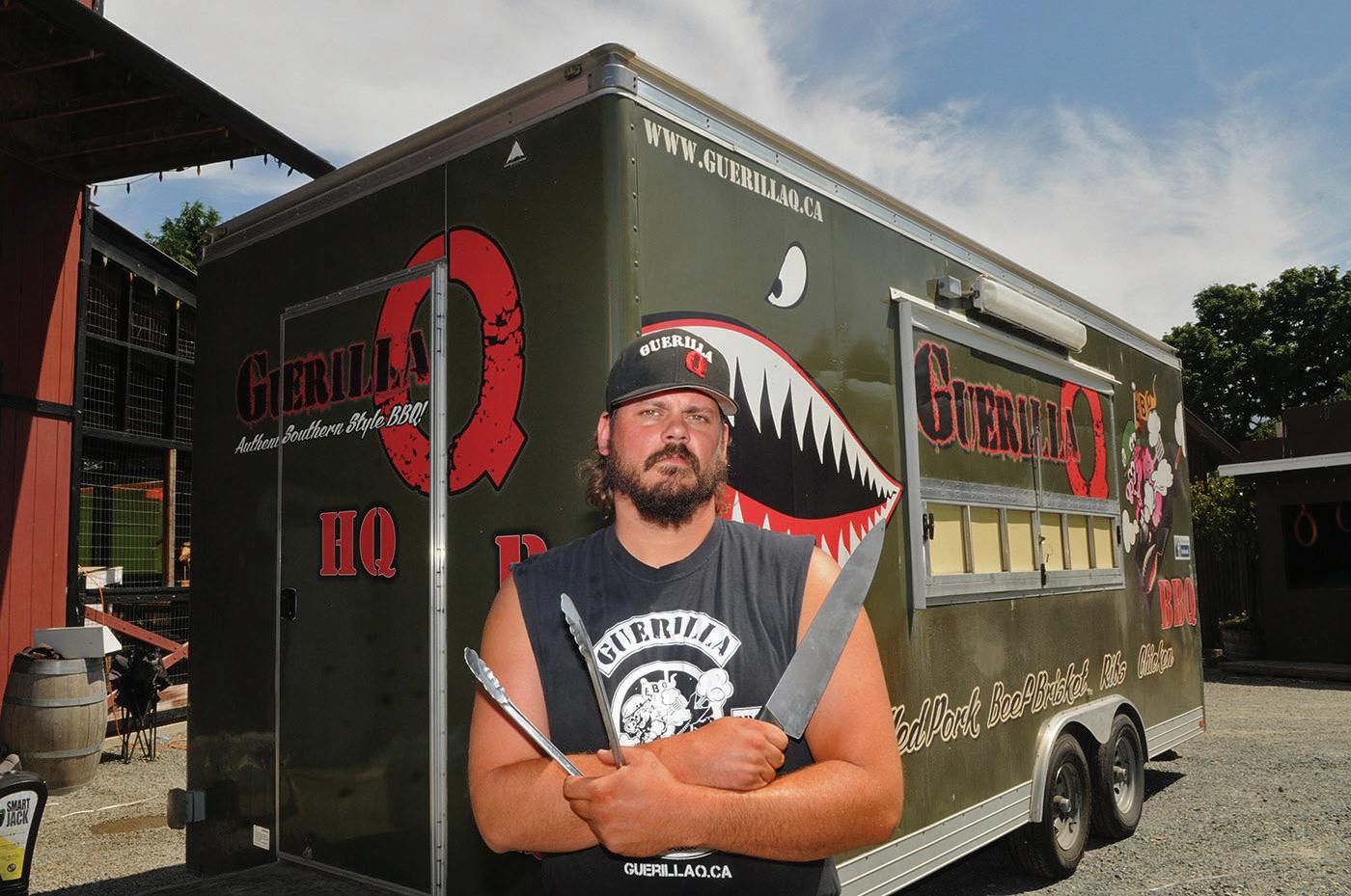
Moran said leading up to Chilliwack Ribfest, he’s been tweaking his recipe as judges found his sauce a bit too spicy in the past.
“We’re taking our barbecue sauce and we’re adding a little sweet to it. Because it’s one bite. You’re judged off of one bite.”
The judges will bite in the middle of
the rib and the meat has to come clean off the bone in a single bite without pulling any other meat off, he explained.
In addition to ribs, Guerilla Q will be cooking up pulled pork, beef brisket, and either chicken or pork belly. Everything will be finished on a live fire, charcoal grill.
“It’s a lot of fun because you’re not just standing in line waiting to get your food, you’re watching it happen right there.”
People pay a by-donation gate admission to get in, and part proceeds will go to the Chilliwack Rotary Club for projects such as maintaining the Vedder Rotary Trail. Inside the gates, folks can buy barbecue meals from any of the five food trucks. The event also includes a beer garden and live entertainment.
There were nearly 40,000 people at last year’s Langley Ribfest. Moran said competitions are always hectic and he lives off the adrenaline.
“I thrive on stress when I’m cooking. I love the chaos of it all.”
Even after 10 years, he said he gets
anxiety before catering a wedding or corporate event, and added that he and his team are always playing with their recipes, experimenting with different types of wood and cook times.
“It’s a good anxiety. It’s a push to always keep getting better with what we do,” he said.
It’s been a “wild adventure” over the past decade, including feeding country stars like Eric Church, Dierks Bentley, Randy Houser and country music duo Big & Rich.
“Actually talking about barbecue with these guys… they grew up in the south where barbecue is very prevalent. It was great to get feedback from people that know about the food.”
Chilliwack Ribfest runs July 28 to 30 at Vedder Park (45450 Petawawa Rd.). Hours are: Friday, July 28 from 4 p.m. to 10 p.m., Saturday, July 29 from 11 a.m. to 9 p.m., and Sunday July 30 from 11 a.m. to 8 p.m.
For more info and tickets (suggested $10 donation), go to chilliwackribfest. ca.
Chilliwack Progress Friday, July 28, 2023 Page A21 www.theprogress.com
Jenna Hauck The Progress
Life
James Moran of Chilliwack’s Guerilla Q barbecue food truck will be competing at Chilliwack Ribfest July 28 to 30. (Jenna Hauck/ Chilliwack Progress)
August12&13,2023
10amto4pmdaily
AcelebrationoflocalcreativityinHope,BC.
Visitpotters,painters,fabricartists,woodcrafters,multi-mediaartists andmorethroughoutthecommunityandsurroundingareas,attheir homesorstudios,orwheretheyselltheirart.Purchaseandview somegreathandmadeartandmeetthelocalartists.



604-869-1301or601-860-3454
Finduson
What’s happening Chilliwack
‘What’s happening Chilliwack’ is a list of events taking place in and around Chilliwack. To get your event added to this list of community events at no charge, email jenna.hauck@ theprogress.com.



July 28 • It’s Cirque de Wack presented by Audio Asphyxiation at Corky’s Irish Pub on July 28 at 8:30 p.m. Non-reserved seating.
July 29 • Bastards & Buzzards perform at Corky’s Irish Pub on July 29 at 8:30 p.m. Cover charge is $10, non-reserved seating.
July 30 • The Royal Canadian Legion Chilliwack-Vedder branch 295 is hosting an open house and community celebration on Sunday, July 30 starting at 10:30 a.m. at 5661 Vedder Rd. Displays and booths open at 10:30 a.m., the barbecue is from noon to 2 p.m., jam sessions run from 1 p.m. to 4 p.m. and live music and dancing start at 6:30 p.m. For more, go to facebook.com/ rcl295.
July 31 • The Food Bank Burger Fundraiser at Corky’s Irish Pub is on Monday, July 31 at 45844 Yale. Rd. Enjoy a burger at Corky’s and help support the local food bank.
Tickets (cash only) are $15 for a burger and fries (veggie burgers available for substitution at no additional cost). Burgers will have onion, tomato, lettuce, and garlic mayo. There will also be a silent auction and 50/50 draw. Feel free to bring non-perishable food items to donate. The fundraiser runs from 5 to 8 p.m. For more, go to the event page.
Aug. 5 • Streams Foundation Canada is hosting Farm BBQ For Everyone, a free community event on Saturday, Aug. 5. It runs from noon to 2 p.m. at 9050 Ford Rd. There will be hamburgers, music, a local fruit tasting and orchard tours.
Aug. 12 • Head to Corky’s Irish Pub for Saturday Night Karaoke on Aug. 12 at 8:30 p.m.
Aug. 18 • Island Brother’s Entertainment host The Steadies at Corky’s Irish Pub on Aug. 18 at 8:30 p.m. Cover charge is $10, non-reserved seating.
Aug. 19 and 20 • Hidden Gems Events presents ‘Chilliwack Emporium’ on Aug. 19 and 20 from 10 a.m. to 4 p.m. each day. This market supports local businesses of all kinds, including ones with handmade and homegrown items. This is
a monthly market which takes place in May, June, July and August. It’s at the Princess Armouries (45707 Princess Ave.). There will also be food trucks on site. Admission is free.
Sept. 6 • Members of the Chilliwack High School class of 1963 are invited to attend the 60th reunion on Wednesday, Sept. 6 for a chance to catch up with old friends and classmates. The event runs from noon to 5 p.m. at the Chilliwack Coast Hotel (45920 First Ave.). Former students living in the Chilliwack area are encouraged to register – more than 30 classmates have chosen to attend from across Canada and the U.S. Celebrations include a buffet luncheon on Wednesday, Sept. 6 followed by a program including a retro power point presentation of the good old days. For those wanting to spend more time together on Wednesday, there will be several local dinner options, plus a breakfast option Thursday morning. To register, email Elmer Wiens at egwiens@shaw.ca, or Myrna (Edwards) Morrison at myrnamorrison@telus.net. General reunion questions can be sent to Myrna (Edwards) Morrison.
Chilliwack Progress www.theprogress.com Page A22 Friday, July 28, 2023
Chilliwack teams have different views on BC Hockey announcement
The Chilliwack Jets are thrilled to be reclassified junior A while the Chiefs are unimpressed
The Chiefs have long been Chilliwack’s junior A club, but they have company for the 2023-24 season. An announcement Tuesday (July 25) by BC Hockey suggests the formerly junior B Chilliwack Jets are being elevated to junior A status as BC Hockey creates a new development pathway.
The move is in response to the BCHL’s split from BC Hockey and Hockey Canada to become an independent league, but the Jets are not going to be a full fledged junior A club right away. They start at tier two and commit to “an enhanced player experience and increased grassroots engagement” with the hopes of moving up to tier one.
“Getting promoted to junior A status is a big step for our organization, and this is a huge opportunity for players from B.C. to be able to play at home and play at the highest provincial level, which has been missing at the junior A level for some time,” said Chilliwack Jets owner/president/ general manager Clayton Robinson.
“As you can see by other recent moves we’ve made regarding staff in the organization, our goal is to become a tier one franchise at the junior level. The transition will be a process but we are excited to be the top level of junior hockey within BC Hockey.”
All 45 teams in the Pacific Junior Hockey League (PJHL), Vancou-
ver Island Junior Hockey League (VIJHL) and Kootenay International Junior Hockey League (KIJHL) are being reclassified as tier two junior A.
“We are excited about the opportunities this new pathway will create for junior hockey players in B.C. and Yukon,” said Stephanie White, chair of BC Hockey’s board of directors.
“Having these teams dedicate themselves to raised standards, first to
junior A tier 2, and eventually junior A tier 1 for some, will provide more of our talented players with a better player experience at the highest level in our province. BC Hockey is confident that this transformation will strengthen the development pathway immediately, and raise the overall hockey experience for players, coaches, and fans alike.”
Over the next three seasons, BC
Hockey said each of the former junior B teams will be evaluated. Those that rise to the top will eventually be able to seek membership in the Canadian Junior Hockey League (CJHL), making their players eligible to compete in the World Junior A Challenge and battle for the Centennial Cup, Canada’s national junior A championship.
The BCHL left the CJHL in 2021.
“BC Hockey is committed to this new junior A landscape,” said BC Hockey chief executive officer, Cameron Hope. “These already strong teams and leagues have earned their opportunity to fill this layer of the pathway.
“It is important that junior aged players in B.C. and Yukon have opportunities to compete at a high level, and eventually at the national level as part of the CJHL.”
The Jets will continue in the PJHL during the evaluation period.

Contacted by The Progress, Chilliwack Chiefs head coach and general manager Brian Maloney appeared unimpressed by the BC Hockey announcement.

“Label leagues whatever you want, but it’s the product on the ice that separates them,” he said. “We could be junior Z. I don’t care. It’s about developing hockey players that have a chance to use the sport to earn a college education or become a pro, and we are more interested in building our league by continuing to pump out scholarships and National Hockey League draft picks.
”There’s a big separation between junior B and A and there’s also a big difference between junior A and the BCHL. So the BCHL and junior A (really junior B) is like comparing apples to oranges.”
See the full BC Hockey announcement at https://www.bchockey.net/ news-listing/bc-hockey-announcesnew-junior-a-pathway.
Former Chief heads to Germany
A former Chilliwack Chief is heading overseas to continue his professional hockey career.
Abbotsford product Kohen Olischefski has signed a contract with Düsseldorfer EG in the Deutscher Eishockey-Bund (German Ice Hockey Federation).
The 25-year-old forward leaves North America after
spending most of the 202223 season in the lower tier of the minors with the ECHL’s Cincinnati Cyclones, an affiliate of the National Hockey League’s New York Rangers. Olischefski collected nine goals and 26 points in 43 games with the Cyclones. He also appeared in 16 games for the Rangers’ top affiliate, the American Hockey League’s
Rochester Americans, where he produced two goals.
Olischefski spent parts of four seasons with the BCHL’s Chilliwack Chiefs from 2013 to 2017 and was part of back to back Fred Page Cup final runs in 201516 and 2016-17. After leaving the junior A level he logged four seasons with the NCAA Div 1 University of Denver

Pioneers and one more with the Providence College Friars.
His German club has a long and storied history dating back to 1935. The team’s heyday was the 1990s when Düsseldorfer EG won five league championships between 1990 and 1996. The last time the team made it to a league final was 2009.
Chilliwack Progress Friday, July 28, 2023 Page A23 www.theprogress.com Sports Scene Progress The Chilliwack Eric Welsh 604.702.5572 • eric.welsh@theprogress.com
Eric Welsh
The Progress
BC Hockey has announced a new development pathway that elevates the junior B Chilliwack Jets to junior A tier-two status. (Stock photo)
Former Chilliwack Chief Kohen Olischefski will continue his pro career in Germany. (University of Denver photo)
Paddlers produce medals at NAIG
Indigenous athletes from the Chilliwack region brought home the hardware from the

2023 North American Indigenous Games, which were held July 15-23 in Nova Scotia.



TheChilliwackRCMParelookingforthe followingpeople. Ifyouseeanyofthem, donotattempttodetainorapprehendthem. PleasecontacttheRCMPimmediatelyat 604-792-4611. To remainanonymous,call
CrimeStoppersat 1-800-222-TIPS(8477)orvisit www.upperfraservalleycrimestoppers.ca


Remember:allofthelistedpeopleareinnocentuntilprovenguiltyincourt.
Autumn Malloway competed in six canoe events, winning medals in five of them. She captured gold in the U16 female 1000 and 3000 metre single person races along with the two-person 1000m event. The Star Nation Canoe Club member earned silver in the mixed 3000m two-person female and mixed races.
BEGLEY,Jordyn Caucasian, Age:32
Height:5’11”
Weight:201lbs.
HAIR:Brown
EYES:Blue
WANTED: S.266CC–ASSAULT
AsofJuly25,2023
CUDNEY,Christopher

Caucasian, Age:40
Height:5’11”
Weight:194lbs.
HAIR:Brown EYES:Green
WANTED: S.266CC–ASSAULT

PRIEBE,Tyler Caucasian, Age:29
Height:5’10”
Weight:166lbs.
HAIR:Brown
EYES:Blue
WANTED: S.733.1(1)CC–FAIL TOCOMPLYWITH PROBATIONORDER

Thisis aPublic ServiceSponsoredAd
604.792.8055
Mason Point went five for five in the U14 male division. The Vikkilynn Canoe Club member picked up gold medals in every race he entered. Four of those came in two-person events, and Point led the field in the 3000m single-person race.
Zane Avery Jasper from Skowkale First Nation teamed with Point for a gold medal in the U14 male 1000m two-person canoe race and snagged silver in

three other events.
William Baker earned a silver medal in the U19 male 1000m single-person canoe race and finished fourth in three others.
Hermione Commodore captured two bronze medals in U19 action, in the female and mixed 3000m canoe races.
Wyze Smithx scored
U14 male 3000m two-person canoe race, and just missed another medal with a fourth place finish in the 1000m single-person race.
Layla Harris came close to the podium in the U14 1000m two-person canoe race, teaming with Vivianna Thomas from Scowlitz to finish fourth.
Caylee Durie brought home gold with Team B.C. in U16 female soccer, and Dustin Durie did the same on the U16 male side.
Jasen Feiss and Kieryn Gillies-Noppen led Team B.C. to silver in U16 male box lacrosse.

Kaylen Godlonton helped Team B.C. to a bronze medal in U19 female softball and Gracie Gutier
same with the U19 female soccer squad. Lane Tunnicliffe, Viola Tosoff and the Team B.C. U16 female volleyball crew placed eighth.
In the pool, Isaiah Trites helped Team B.C. to silver in the U19 male 4x400m freestyle relay.
Kolton Durie competed in wrestling and Torin Savage compet
Chilliwack Progress www.theprogress.com Page A24 Friday, July 28, 2023
YOUR LOCALSECURITY EXPERTS
DON’T MISS THE LATEST: Travel News & Tips Must-Visit Destinations And Much More! westcoasttraveller.com 5 d r a g s t a r s l i v e m u s i c v e n d o r s f o o d t r u c k s f r e e a c t i v i t i e s & k i d s g a m e s l o c a l o r g a n i z a t i o n s A C C E S S I B I L I T Y F E A T U R E S Rainbow Valley theannual chilliw ack pride festival A U G U S T 1 9 / 1 0 - 4 D O W N T O W N C H I L L I W A C K Only 3 Weeks Away!
Huskers host Langley Rams in BCFC season opener
Chilliwack’s Valley Huskers kick off the 2023 B.C. Football Conference slate with a huge home date against the Langley Rams.
The arch-rivals meet Saturday night at Exhibition Stadium with a 7 p.m. start.
It’s the first of five home dates for the Huskers this season and a chance to build on the momentum the team generated last season when they broke through for seven wins (7-3) and a playoff berth.
Langley is coming off a subpar season by their standards.
The Rams finished 5-5 and the Huskers beat them both times
they met to claim the 2022 Cascade Cup.
In conversation with the BCFC’s Gideon Hill, Huskers head coach Bob Reist talked about making the playoffs in three of the last five years and how he wants his team to take the next step.
“It feels good to be heading in the right direction,” he said.
“We’re still not where we want to be at the end of the day, but we do feel like we’ve turned the corner.
“At this point, making the playoffs is what we expect to do and who we think we are. Winning in the playoffs is what we want to do now and that’s the goal of our group this year.”
Reist feels this year’s roster
has a chance to get that done and he hopes they learned from their mistakes last year.
“7-3 is a great record, but we were 2-3 on the road and that’s somewhere we can improve on,” he said. “We had two critical opportunities to secure a home field playoff game, and we let them slip.
“There’s a lot of learning we
Construction is underway in your area.
did last year, but the guys this year seem to have taken some learning steps and we hope that carries on.”
After this weekend the Huskers will have a huge game against the defending national champion Okanagan Sun in Kelowna Aug. 5 followed by a trip to Nanaimo to face the Raiders Aug. 12.
As construction of the Trans Mountain Expansion Project progresses, we want you to be informed about potential activity in your neighbourhood so you can plan accordingly. On our website, you can view an interactive map of construction areas, sign up for notifications, track what’s happening along the route and much more.
As always, safety is our number one priority, every metre of the way.

Chilliwack Progress Friday, July 28, 2023 Page A25 www.theprogress.com Le présent message contient des renseignements importants. Si vous avez besoin d’une traduction, veuillez communiquer avec info@transmountain.com
info@transmountain.com I 1.866.514.6700 I transmountain.com
transmountain.com CELEBRATING YEARS STRONG Since 1953
Eric J. Welsh The Progress
Remembering Loved Ones
Allan‘Sandy’Soderstrom
HerbertHooge
Bernard(Bernie)McNicholl
July7th,2023.
Hewillbedeeply
TheCelebrationofLifewillbe heldfrom11am-1pm,July29th, 2023at44680SchweyeyRoad, Chilliwack,BC.

WICK,VerdaRuth (neeHerrling)
November24,1937-July17,2023
OurbelovedVerda passedawayafter alongbattlewith vasculardementiain
Chilliwack,BC.Sheis survivedbyherloving husbandLeslie,son Randy(Beth),daughter
Norma,sonPaul (Louise)andhercherishedgrandchildren,Ben &AlisonandKathleen&Genevieve.Sheisalso survivedbyherbrotherHarryHerrling(Diane) andnumerousnieces,nephewsandcousins. Sheispre-deceasedbyhermotherRuth,father Sidney,sistersLouise,Mary,Gladys,Iris,and brotherRoy.
VerdawasborninChilliwackandraisedin Laidlawwhereshemether“sweetie”ina oneroomschoolwhentheywere10and11. Theyweremarried9yearslaterinVernon andstartedtheirfamilythere.Theybrought uptheirchildreninBurnaby,PrinceRupert andRevelstokethenmovedtoVernonas emptynestersbeforecomingfullcircleand returningtoChilliwackin2013tobecloserto theirgrandchildren.Devotedpartners,they celebratedtheir66thWeddingAnniversaryin 2022.
VerdastartedworkingforSafewayasa16 yearoldandmadeacareerinretail,mostly atthecheckoutstandwhereshewouldlater winEmployeeoftheYearinRevelstokewhile workingatCoopers.She hadagiftofmaking thosearoundherfeelspecial,lovedand appreciatedandwasadeeplydevotedwife, mother,grandmother,sister,auntieandfriend. Herpassingleavesabigvoid,butherlegacyof love,kindness,compassion,funandloyaltywill alwaysbeintheheartsofthoseshetouched.
SpecialthankstothestaffattheCascades Lodge,particularlytheaidesthatprovided suchlovingcare.Shenowrestsinthepeaceshe sorichlydeserves.Herlifewillbecelebratedon July29that2pmatHenderson’sFuneralHome inChilliwack,BC.
Herbert Hoogepassed away peacefullyJune14,2023 at hishomeinSummerland, BCwithhiswife and bestfriendElsie by his side Herbertwasborn in Matsqui (Abbotsford),BC, on April3,1934.Heissurvived by hiswife Elsie, hissonLindsay Hooge, hisdaughter Sonoama(Randall)Buchanan; grandchildren KellyDahl, Hannah (Jonny)Barel, IsaacHooge, AaronHooge, and greatgranddaughter CamilleBarel Heisalsosurvived by brothers Orlandand Peter, andthemotherofhis childrenEleanor Thoss Herbwaspredeceased by hismother Louisa(1945),hisfather Peter(1985),stepmother Anna(2001),wife Georgia(1999),brotherJohn(2023),andstep siblingsRudyEpp,CathyReimerand Dorothy Hunsberger
Herb enjoyed reading, studyingmaps, travelling throughoutNorth America, corresponding withfriendsand relativesaroundthe world, researchingfamilygenealogy, andsearching for truththrough religiousstudies
Nofuneral byrequest.Memorial contributions may bemade to theBC Cancer Foundation.

HermannaHuttema

HermannawasthefirstbornchildofJan andJantjeOostenbrug.Shewasbornon February7,1937atGrypskerk,Groningen, TheNetherlandsandwasnamedafterher maternalgrandmother.Shehadonesister, Doetje(Dorothy),andonebrother,Sytze (Sidney).
ThefamilyimmigratedtoCanadaon May15,1951andarrivedinQuebecCity, May28,1951.Aftertheirarrivaltheytravelled on,bytrain,toAlbertaandbeganworkingon farmsintheCoaldalearea.Soonafterthatthe familymovedtoBritishColumbiaandstarted dairyfarming.
OnApril26,1957HermannamarriedKlaas Huttema.AfterlivinginSurreyfor10years theymovedtoBanfordRoadinChilliwackand starteddairyfarming.Theirretirementyears werespenttravelingaroundNorthAmerica. Hermannawaspredeceasedbyherhusband KlaasinJanuary,2022,herbrotherSidney in2010,andlessthanamonthagohersister Dorothy.
Momissurvivedbyfourchildren:Linda(John Woelders),Ken(Yvonne),Julia(Berney Fennema),Allan(MaryJo),14grandchildren, and32great-grandchildren.
MomwastakenhometotheLordonthe eveningofJuly18,2023.
ManythankstoDr.BakkerandtheStaffat CascadesLodgefortakinggreatcareofMom.
BernieMcNichollofChilliwackBC passedpeaceablyattheChilliwack GeneralHospital17July2023at theageof97.
Berniewasborn10 Februar y 1926inMontrealQuebec.He grewupinMontreal,andonthe completionofhighschoolatage 16,heandhisclassmatesheaded totherecruitingcentretoVolunteer forwarservice.DuringWW2he servedintheRCAF1942-1945as areargunnerinheavybombers,in 192SquadronRAF,of100GroupSpecialDuty(electronicwarfare). Heenteredcombatatage18and completedover30operationsover NaziGermany,earningthetourof operationswings.Hewasage19andaWarrantOfficer2ndClasswhenthe warended.HeservedintheCanadianArmy1946–1982,firstwiththeRoyal MontrealRegiment,thenin1948withtheRoyalCanadianArmourCorps(LdSH andRCD).HedeployedforayeartoEgyptin1957duringtheSuezCannelcrisis (UNEF1).HeservedinGermanyduringtheColdWar.Inthe70’sand80’she wasextensivelyinvolvedwiththeNavyLeagueCadetsofCanada,ultimately, servedastheCOofthelocalNanaimoNLandthenasCommanderoftheNL VancouverIslandDivision.Berniewasalsoalong-standingmemberoftheAir ForceAssociationofCanada(AFAC),WW2ExAirGunnersAssociation,Lord StrathconaHorseAssociation,andwasamemberoftheRoyalCanadianLegion forover61years.HeservedasaAFACCollishawWingpresidentintheNanaimo 1993-1994,volunteeredastheWing’sAirCadetliaisonofficerandwaspart ofaAFACvolunteerteamthathikedintoremotelocationsonVancouverIsland toplacedhonorarycairnsatdifferentWW2RCAFcrashsites.Itisbelieved BernieMcNichollwasthelastknownlivingWW2veteranintheChilliwackarea. HeissurvivedbyhiswifePatriciaof68years,sons:Robert,Bernard,and Shawn(Tanya),5grandchildren,onegreatgranddaughter,onestepgrandson and4stepgreatgrandchildren.
HonourableJustice R.NeillM.Brown

Remembering Beautiful are memories of a moonlit night with you, The spark of love we lit and all the world felt new. My heart told me I’d known you, in times so long ago, Something deep inside me had set my soul aglow. Soul-mates re-united, bound by the ties of past, Through each and every age this perfect love will last. So at our journey’s end and the time has come to part, An endless cord of love will link us heart to heart.
Itiswithgreatsadnessweannouncethepassingofthe HonourableJusticeR.NeillM.Brown,ourbelovedhusband, father,brother,andgrandfather,onJuly19,2023.

Neill’sfirstdeeprootswereinKamloops,wherehewasbornand raisedandwherehisparent’sfamilieshadlivedsincetheearly 1900’s.HeleftKamloopsforU.B.C.(ArtsBAin’70,L.L.B.in’74)but returnedtoworkasaC.P.R.brakemanduringtheSummerswhere hemetJoan,anewgraduatenursewhowasraisedinNelson. NeillhadadistinguishedcareerinlitigationinVancouverand Abbotsford,whereheandJoanraisedtheirfamily,Christopher, Elizabeth(Mark&Preston),andJoanne(Brian)ontheirAbbotsford farm.Hebecameanexpertinpersonalinjury,specializingin braininjuries.Healsobecameanaccomplishedmediator.

Ashiscolleague,JusticeHeatherHolmes,saidinatributetoNeill,“hisappointmenttothe courtwasapopularonewiththeAbbotsfordbarandthelocalcommunity,wherehehadserved onseveralboardsandhadrunforfederalpoliticalnominationin’84.Asalawyerhewasknown forhisformidablepreparation,hisstronginterestinwriting,andhisgenerousmentoring, aswellasforhisunusualofficepremisesonhisfarmwherehewouldpickapplesforhis staffandclients.Asajudge,Neillwasprincipledandselfless,devotedtotheneedsofthe individualsinhiscourtroomanddeterminedtomakeadifferenceforthem.Asacolleaguehe wasthoughtfulandkind.”
Neillwasalsotalentedinthefieldofarts.Particularlyliterature,music,andwatercolours.His musicalskillsincludedsinging,organandpianoperformance,andcomposingmusic. Asahusbandandfather,Neillwassteady,patient,kind,andfunny.Helovedtolaughand tellpuns,andnevermissedanopportunitytoteachaboutanythinghedeemedimportant. HewasadevoutChristianandraisedhisfamilyatSt.JamesAnglicanChurchinVancouver. InlateryearshesanginthechurchchoirandplayedtheorganatSt.Joachim&St.Ann’sCatholic ChurchinAldergrove.Helovedtoridehisbiglawnmoweronthefarm.HeandJoanplanted avineyardin’05andhewouldproudlydiscussthegrapesandthesmallwinerythateventually developedintoClearbrookVineyards.
ThefamilywishestoextendtheirdeepestgratitudetohiscaregiverLornaLockwood,Dr.Jodi Ching,andDr.Derkach,aswellasthecareteamatEvergreenTerrace.
DonationsmaybemadetoSt.JamesAnglicanChurchStreetOutreachprogramorThe AbbotsfordCyrusCenter.

Chilliwack Progress www.theprogress.com Page A26 Friday, July 28, 2023
At83years young,Sandy passedaway unexpectedly atChilliwack Hospital
missed.
Place your condolences online. (Visit your local newspaper website, obituary page)
Remembering Loved Ones
In
Gladys passed away peacefully on July 7, 2023, atherresidenceinKelowna,BC,inher83rd year. She leaves behind many friends and relatives, which include two children and three grandchildren. By her request, no service will be held.
Gladys’ cremated remains will rest with her parents on Vancouver Island at a later date. Memorial donations may be made, in Gladys’ name, to the SPCA of your choice (spca.com) or RCMP Victim Services Program in your community (www. rcmp-grc.gc.ca/ccaps-spcca/vic-eng. htm). For more about her life or to send condolencesandphotos,visitherobituary pageatwww.springfieldfuneralhome.com
LorneJosephBurant
June21,1933-June21,2023
Lornewentpeacefullyhometobewith hisLordandSaviouronthemorningof his90thbirthday.
HewasbornInMontrealandraisedby hisgrandparentsinthesmallPolish settlementofWilno,Ontarioafterhis motherdiedwhenhewasthreeyears old.Inhisteensheworkedinlumber campsintheareauntilhejoinedthe armyafewdaysbeforehis18thbirthday andservedwiththeRoyalCanadian Engineersfor33yearswithdeployment toKorea,GermanyandEgypt.Thelittle PolishpeasantfromWilno(asheoften calledhimself)wasseeingtheworld. HemetShirleyin1977andtheymarriedonherbirthday,January11, 1979.TheysettledinthefamilyhomeonWaldenStreetinChilliwack wherehelivedouttherestofhisdayshappilyservingtheLord,family andneighbours.
Lornealwayskeptbusyandwasnotonetoeversitstill.Hewas awonderfulneighbourtohaveandwasalwayswatchfulofthe neighborhoodandcaredforthefamiliesonthestreetasiftheywerehis own.Hiscaringhadnolimit.Ifanyoneneededanything,theyknewthey couldturntoLorne.Andallthechildrenalwaysgotagreatchuckleas hedidhisfamous“happyjig”.






Lornewasfamousforbeingareal-life“McGyver”andthereisevidence ofthatthroughouthishomeandtoolshed.Ifsomethingcouldbefixed orresurrectedhewoulddowhateverittook.Ifhethoughtitneededto bemodifiedforeasierorbetterperformance,hedidthattoo.Hewasted nothing.
Heispre-deceasedbytheloveofhislifeandwifeof40years,Shirley in2019.
Lefttoforevermisshimarehis4step-children,Janis,Jerry(Helen), Jermaine(Les),andJason(Brenda)andcountlessgrandchildren, great-grand-children,andevengreat-greatgrandchildren. AmassofChristianburialwasheldJune30thatSt.Mary’s CatholicChurch,Chilliwack.
Harold Ellinson

Inlovingmemory of Harold Edwin Ellinson

February 26,1932 – July14,2023
Averydevotedhusband, fatherandgrandfather. Lifelongloverofall thingstrains.Survived byhiswife,2daughters, 2grandchildrenand3 greatgrandchildren.Heis greatlymissed.
Remembered always, never forgotten
Our beloved Paul was born in Ottawa to John Edward Arnold and Muriel Sophia Paul. The family moved to Edmonton and then to Calgary. Paul graduated from the University of Alberta, and practised dentistry in Chilliwack and, finally, in Victoria.
Paul is survived by his wife, Donna Curtis, and his daughter, Shannon Arnold; predeceased by daughter, Sheena, and by Shannon’s husband, Levend. He leaves stepdaughters Miriam (Greg), Laurel, Kelly, Tracy (Scott) and eight stepgrandchildren. Also survived by his sister, Barbara (Adrian) from 108 Mile Ranch BC, and their daughters, Laura and Jennifer (Bill). Also survived by his brother, Stephen (Carynne) in Kingston ON, by their daughter,Caroline(Geoff)andchildren,William, Alexander, Elizabeth and Samuel; and by their son, Paul Edward John (Beverly) and children, Micaela and Madelyn. Paul is also survived by themotherofhischildren,DonnaPorter.
A proud military family—Paul’s father was an officer in the RCAF during WW2 and his brother, a graduate of Royal Roads Military College, was an officer in the Navy—so it was nosurprisewhenPauljoinedtheArmythrough the Regular Officer Training Plan (ROTP) and became an officer in the Dental Corps, serving in Ottawa and Chilliwack. He went into private dental practice in Chilliwack, creating a loyal team and an innovative practice for 35 years.
Paul was active in his community: in Chilliwack he organized and ran the School District’s“Just Say No” education program, and he was an active member of the Kinsmen. InVictoria, Paul volunteered in an effective citizen counseling program.

Paul loved life! And he could fix anything!Whetheritwasputtering in his barn on Gabriola, hosting Team Edgemen retreats, or planningatripforhisfamily, he was never one to sit still. He took his family on cycling trips around PEI, in Europe, and through the Gulf Islands, and with the family of close friends he cycled from Jasper to Banff. He even cycled to California with four amigos, and organized two camping, fishing and kayaking trips in the Broken Islands with friendsandfamily.
In2008PaulhikedtheOldIncaTrail to Machu Pichu, Peru where he met his future wife Donna Curtis. Married in 2012, they shared a deep unconditional love and respect for each other, which helped them weather the cruelty and indignity of the Alzheimer’s that ultimately took him. Paul was a kind and gentle man and will be remembered for his deep friendships,adventuresomespirit,andamazing senseofhumour.
A celebration of Paul’s life will be held on September23rd,2023at2:00pmintheSequoia Centre at McCall Gardens, 4665 Falaise Drive, Victoria,BC.
In lieu of flowers, donations can be mailed to Citizens Counselling Centre, 941 Kings Road, Victoria, BC V8T 1W7 or at www. citizenscounselling.com


Condolencesmaybeofferedtothefamilyat www.mccallgardens.com

It is agreed by any Display or Classified Advertiser requesting space that the liability of the newspaperintheeventoffailure to publish an advertisement shall be limited to the amount paid by the advertiser for that portion of the advertising space occupied by the incorrect item only, and that there shall be no liability in any event beyond the amount paid for such an advertisement. The Publisher shall not be liable for slight changes or typographical errors thatdonotlessenthevalueofan advertisement.
bcclassifieds.com cannot be responsible for errors after the first day of publication of any advertisement. Notice of errors on the first day should immediately be called to the attention of the Classified Department to be corrected for thefollowingedition.
bcclassifieds.com reserves the right to revise, edit, classify or reject any advertisement and to retain any answers directed to the bcclassifieds.com Box Reply Service and to repay the customer the sum paid for the advertisementandboxrental.

DISCRIMINATORY LEGISLATION
Advertisers are reminded that provincial legislation forbids the publicationofanyadvertisement which discriminates against any person because of race, religion, sex, colour, nationality, ancestry or place of origin,age, andphysicalormentaldisability, unless the condition is justified by a bona fide requirement for theworkinvolved.
COPYRIGHT
Copyright and/or properties subsist in all advertisements and in all other material appearing in this edition of bcclassifieds.com. Permission to reproduce wholly or in part and in any form whatsoever, particularly by a photographic oroffsetprocessinapublication mustbeobtainedinwritingfrom the Publisher. Any unauthorized reproduction will be subject to recouseinlaw.


ON THE WEB:


Chilliwack Progress Friday, July 28, 2023 Page A27 www.theprogress.com
“When great Souls die, after a period, Peace blooms”
loving memory of SCHMIDT Marian “Gladys”
In loving memory of Paul Edward Arnold, DDS May28th,1945toJuly7th,2023
condolences
your local newspaper website, obituary page)
Place your
online. (Visit
We may not be together in the way we usd to be. We are still connected by a cord no eye can see. So whenever you need to find me
We’re never far apart.
If you look beyond the horizon and listen with your heart.
INDEX IN BRIEF FAMILY ANNOUNCEMENTS COMMUNITY ANNOUNCEMENTS TRAVEL CHILDREN EMPLOYMENT BUSINESS SERVICES PETS & LIVESTOCK MERCHANDISE FOR SALE REAL ESTATE RENTALS AUTOMOTIVE MARINE INDEX
IN BRIEF
..............1-8 ....9-57 .......................................61-76 ...................................80-98 .........................102-198 ...............203-387 .................453-483 ........503-587 ...........................603-969 .................................703-757 ...........................804-862 ...................................902-920
P/TSubstituteCarrier

TheChilliwackProgressislookingforapart-time SubstituteCarriertodeliveropenroutesinthe Chilliwack/Sardisarea,onedayperweek.Must haveareliablevehicleandbeavailableFridays forapproximately2-3hoursaday.
Thisisanexcellentopportunityforanindividual lookingtosupplementtheirincome.
Interestedapplicantsshouldemailthe CirculationDeptatcirculation@theprogress.com orcall604-702-5558.






Wethankallthosewhoareinterestedinthis position,howeveronlythoseselectedforan interviewwillbecontacted.


CHILLIWACK



BEACON DOWNS 8533 BROADWAY Street in the Clubhouse Decor, household, clothing & more!

Chilliwack Progress www.theprogress.com Page A28 Friday, July 28, 2023 2005 Chevy Cavalier $2250: 778-539-7158 AMCO Janitorial Services Ltd. 778-228-0188 michelle@amcoclean.com www.amcoclean.com Offices | Commercial | Industrial Daily, weekly or as-needed cleans available. Choose AMCO For All Your Professional Cleaning Needs! VECTOR RENO'S Interior & ExteriorAdditions repairs/strata improvements. Also fences, decks, sheds, garages & wood planters. Call 604-690-3327 LADIES GOLF CLUBS Right Handed, 8 Power Bilt Irons, 5 Woods, King Cobra Putter, plus bag. Exc cond. $300. 604-793-0244 MSB BLUEBERRY FARM
quality,
~ OPEN NOW ~ Daily: 9:00 am ~ 5:00 pm Sun: 10:00 am ~ 5:00 pm 5331 Riverside St., Abbotsford (by
Market)
Chilliwack Garage Sale Sat July 29th 10am - 3pm 68-44523 McLaren Drive Tools, Household items, Computer parts & Craft items.
Top
freshly picked and cleaned blueberries available daily. Various varieties available. Recipes also available
Wong's Farm
604-557-0762 Now Accepted
Garage Sale Townhouse
Sat.
at
Complex
July 29th, 9am - 2:30 pm
GET BACK ON TRACK! Bad credit? Bills? Unemployed? Need Money? We Lend! If you own your own home - you qualify. Pioneer Acceptance Corp. Member BBB. 1-877-987-1420 www.pioneerwest.com • Residential Area • Elevator • Adult Oriented N|S N|P • Sparkling Renovations • 1 Bdrm from $1200/mo 9530 Fletcher St. 793-9572 Camelot Apartments 9197 Mary St. 1 Bdrm 2 Brms Avail. Heat & water incl. Adult oriented Gated u/g pkng. Close to amenities Indoor pool/Sauna No pets Starting at $1300/mo. Call John or Judy 604-795-3159 CHILLIWACK Rooms avail now. Furnished. Utils all incl. Suit Mature adult. Call 604791-9412 msg TOPAZAPARTMENTS 7516, 7504 & 7494 TOPAZ DRIVE Apartment Lifestyle you canAfford! MatureAdults, Seniors Insuite Laundry. Gas F/P, U/G parking. Walk to mall. No Pets Call (604)845-1834 20 Farm Workers Required for the following Greenhouses: • Randhawa Farms Ltd. • Fraser Hothouse Growers Ltd. •TSL Hothouse Ltd. •Riverside Hothouse Ltd. 5-6 days/week. 40-50 hours/week. $16.75/hour. Duties: picking, pruning, twisting and other misc. greenhouse labour. No education, experience or language required. English preferred. Employment to start Immediately. Email resumes: HR@randhawafarms.ca New Roof, Re-roof Repairs & gutter cleaning.BBB glroofing.ca 604.240.5362 Local Family man w/1 ton dump truck will haul any thing, anywhere, any time, low prices. (604)703-8206. TREE SERVICE Tree Removals, Pruning, Hedge Trimming, and Arborist Reports. Fully Insured. Call 604.302.4239 or email tv.arborist@gmail.com to request a quote. Cleaning Services Home Improvements Landscaping Merchandise For Sale Garage Sales Financial Services Rentals Rentals Career Opportunities Roofing & Skylights Rubbish Removal Tree Services Puts Individuals In Touch With Each Other Cars - Domestic A healthy local economy depends on you SHOPLOCALLY 604.575.5555 ...in your community, online and in print BC Classifieds. Classifieds.com It takes 11 muscles to read this ad. Don’t take your muscles for granted. Over 50,000 Canadians with muscular dystrophy take them very seriously. Learn more at muscle.ca


































Chilliwack Progress Friday, July 28, 2023 Page A29 www.theprogress.com THEVALLEY’SMOSTTRUSTED METALRECYCLER! 6048144186 www.everclearrecycling.com WEPICKUPDIRECT/PAYONTHESPOT! Generalrepairand maintenanceto alternatefuels, majorrepairsand rebuilding GASPAINS??GOPROPANE! 604-793-9310 44344YaleRd.,Chilliwack GOVERNMENTINSPECTIONFACILITY WEDOITALL! ROOFCLEANING Siding,SoffitsandGutters Instant Results! InstantResults! BEFOREAFTER ® FULLYLICENSED&INSURED www.budgetroofcleaning.ca 604-846-7776 Call (604) 795-0214 24 Hours Service Locally owned and operated PAUL’sPAINTING& HOMEIMPROVEMENTS WCB–Liability–Covid19Compliant •Seniors10%discount •Interior/Exteriorpaint •Wallpaper •Kitchen/Bathroom •Cabinetrefinishing •DraftingServiceavailable CALLPAUL 6049978353 Ticketed Painter In business 25 Years Have been fully Vaccinated BBB- A+ Senior Discount WCB & LIABILITY * INTERIORS ONLY 604 837 6699 Call Easy - Flo Vacuums 604-792-8015 WE FIX CENTRAL VACUUMS Broken Down We have power heads & hoses in stock. Service&Installation -Furnaces -Central Air Conditioning - Hot WaterHeaters Service -Gas Fireplaces KDWHeating 604-798-2971 TSBC# LGA0210714 kdwheatingservicesandrepair.com onditioning Residential & Commercial Failed Glass • Replacement & Repair Shower Doors • Mirrors Glass Railings • RV & Marine GLASSMAN2000 GLASS 604-537-5006 FREE ESTIMATES CALL DAN Action Eco Lawn Care • Lawn Cutting • Trimming & Pruning • Yard Clean Ups • Pressure Washing • Gutter Cleaning 604-799-1389 WE DO IT ALL 15% Disc on landscaping for July/Aug BarkMulch –Mowing BarkMulch – Trimming –Weeding –– River Rock &More! –Affordable, Reliable, Friendly Affordable, Reliable, Call 604-712-1258 glensyardcare.com MACHINING & METALS RUBBISH REMOVAL CONCRETE & PLACING ROOFING & SKYLIGHTS PLUMBING PAINTING & DECORATING MISC SERVICES HEAT, AIR, REFRIGERATION HOME IMPROVEMENTS HANDYPERSONS CONTRACTORS FLOOR REFINISHING/ INSTALLATIONS LAWN & GARDEN LAWN & GARDEN PLUMBING LOOKING TO INCREASE REVENUE? YOUR OPPORTUNITY STARTS HERE Give us a call at 1.604.575.5555 RUBBISH REMOVAL bcrecycles.ca • Batteries • C ell phones • Electr onics • H ousehold Ha zer dous Waste • M edi ca tion Return them to the appropriate collection site by visiting It’s Not Trash, It’s Recycleable! ServiceProviders ServiceProviders



























Chilliwack Progress www.theprogress.com Page A30 Friday, July 28, 2023 PleaseCall 604-795-2173 ForAFreeEstimate www.classaheating.ca SERVINGCHILLIWACKANDSURROUNDINGCOMMUNITIESSINCE2004 ClassAHeating&AirConditioning 604-795-2173 WhyClassA? THEPROGRESS2019 A-LIST Chilliwack Chilliwack’s Choice forHeating &Cooling Teca Trained A+rating withthe BBB FactoryTrainedInstallers 10 YearParts& LaborWarranty On selectsystems. BUILTRIGHT, INSTALLEDRIGHT Your Comfort SystemSpecialists AirConditioning • HeatPumps • Furnaces It’sAirConditioningSeason.Get A QuoteNow! Saveon a MoreEffective & EfficientWaytoHeatYourHome! Youcancountonusforfastandreliable installation,maintenanceandrepairofyour home’sheating,coolingsystemsallyearround. FreeInstallationEstimatesLicensed & Insured CentralHeatPumpGrantsupto $18,000.00available!Askfordetails Home! CANADIAN O WNED & OPERATED
You will lose access to local news won’t
You will be able to still read and rely on local journalism. That’s a fact.
The Chilliwack Progress team
In light of the Online News Act, Meta has stated it will be removing Canadian journalism from Facebook in the coming days. While our time on that particular platform is running short, we’re not going anywhere.
Our collective passion and commitment to bring you the news that matters most is unwavering.

Fires. Crime. Elections. Community Events. Sports team wins. Birthdays. Volunteering and grass-roots movements. Through it all, we’ve been there to chronicle all that our community has been and all that it can be.

When you need us, we tell the stories that inform and hopefully share something new about your community you didn’t know before.
So how can you stay informed?
• Sign up to local newsletters, delivered right to your digital doorstep. Use the QR code below for quick signing up.
• Add us to your phone’s home screen. This way, in one easy click you’ll find endless local news everyday.
• Help us spread the word. Share this messaging with friends and family so they know how to find relevant local news.
We thank you for supporting the work we do.
cut through

Scan the QR code or visit our website:
theprogress.com/trust-local-news

Chilliwack Progress www.theprogress.com Page F2 Friday, July 28, 2023
Get local news straight from the source