46
T R AV E L
Tunis
Gateway to the Maghreb WORDS BY Mike Sweet
A
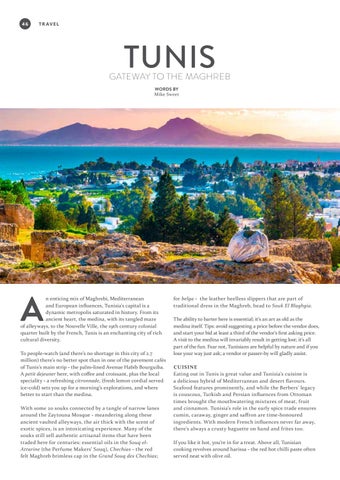
n enticing mix of Maghrebi, Mediterranean and European influences, Tunisia's capital is a dynamic metropolis saturated in history. From its ancient heart, the medina, with its tangled maze of alleyways, to the Nouvelle Ville, the 19th century colonial quarter built by the French, Tunis is an enchanting city of rich cultural diversity. To people-watch (and there’s no shortage in this city of 2.7 million) there’s no better spot than in one of the pavement cafés of Tunis’s main strip - the palm-lined Avenue Habib Bourguiba. A petit dejeuner here, with coffee and croissant, plus the local speciality - a refreshing citronnade, (fresh lemon cordial served ice-cold) sets you up for a morning’s explorations, and where better to start than the medina. With some 20 souks connected by a tangle of narrow lanes around the Zaytouna Mosque - meandering along these ancient vaulted alleyways, the air thick with the scent of exotic spices, is an intoxicating experience. Many of the souks still sell authentic artisanal items that have been traded here for centuries: essential oils in the Souq elAttarine (the Perfume Makers’ Souq), Chechias - the red felt Maghreb brimless cap in the Grand Souq des Chechias;
for belga - the leather heelless slippers that are part of traditional dress in the Maghreb, head to Souk El Blaghgia. The ability to barter here is essential; it’s an art as old as the medina itself. Tips: avoid suggesting a price before the vendor does, and start your bid at least a third of the vendor’s first asking price. A visit to the medina will invariably result in getting lost; it’s all part of the fun. Fear not, Tunisians are helpful by nature and if you lose your way just ask; a vendor or passer-by will gladly assist. Cuisine Eating out in Tunis is great value and Tunisia’s cuisine is a delicious hybrid of Mediterranean and desert flavours. Seafood features prominently, and while the Berbers’ legacy is couscous, Turkish and Persian influences from Ottoman times brought the mouthwatering mixtures of meat, fruit and cinnamon. Tunisia’s role in the early spice trade ensures cumin, caraway, ginger and saffron are time-honoured ingredients. With modern French influences never far away, there’s always a crusty baguette on hand and frites too. If you like it hot, you’re in for a treat. Above all, Tunisian cooking revolves around harissa - the red hot chilli paste often served neat with olive oil.