ask the specialist
sponsored by
Health Effects of Poor Sleep By W. Bishop Kelley, MD
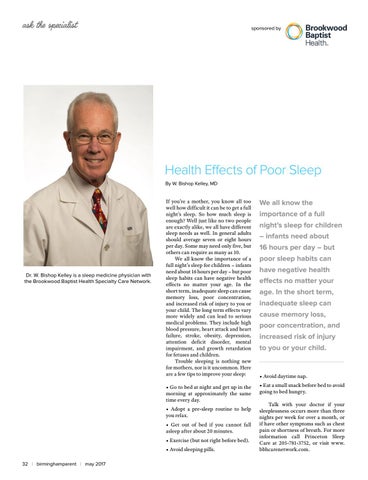
Dr. W. Bishop Kelley is a sleep medicine physician with the Brookwood Baptist Health Specialty Care Network.
If you’re a mother, you know all too well how difficult it can be to get a full night’s sleep. So how much sleep is enough? Well just like no two people are exactly alike, we all have different sleep needs as well. In general adults should average seven or eight hours per day. Some may need only five, but others can require as many as 10. We all know the importance of a full night’s sleep for children – infants need about 16 hours per day – but poor sleep habits can have negative health effects no matter your age. In the short term, inadequate sleep can cause memory loss, poor concentration, and increased risk of injury to you or your child. The long term effects vary more widely and can lead to serious medical problems. They include high blood pressure, heart attack and heart failure, stroke, obesity, depression, attention deficit disorder, mental impairment, and growth retardation for fetuses and children. Trouble sleeping is nothing new for mothers, nor is it uncommon. Here are a few tips to improve your sleep: • Go to bed at night and get up in the morning at approximately the same time every day. • Adopt a pre-sleep routine to help you relax. • Get out of bed if you cannot fall asleep after about 20 minutes. • Exercise (but not right before bed). • Avoid sleeping pills.
32 | birminghamparent | may 2017
We all know the importance of a full night’s sleep for children – infants need about 16 hours per day – but poor sleep habits can have negative health effects no matter your age. In the short term, inadequate sleep can cause memory loss, poor concentration, and increased risk of injury to you or your child.
• Avoid daytime nap. • Eat a small snack before bed to avoid going to bed hungry. Talk with your doctor if your sleeplessness occurs more than three nights per week for over a month, or if have other symptoms such as chest pain or shortness of breath. For more information call Princeton Sleep Care at 205-781-3752, or visit www. bbhcarenetwork.com.