BINMAG.COM $9.95
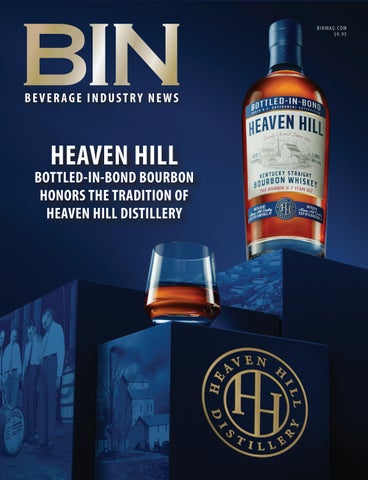
HEAVEN HILL
BOTTLED-IN-BOND BOURBON HONORS THE TRADITION OF HEAVEN HILL DISTILLERY
Black Velvet® Whisky. Imported and bottled by Black Velvet Import Co., Bardstown, KY 40% Alc./Vol 2024 Black Velvet Reserve Awarded Best Canadian Whisky and Gold Medal at 2023 John Barleycorn Awards and Gold Medal at 2023 TAG Global Spirits Awards.
CONTENTS
FEATURES 16 SPIRIT AND COCKTAIL TRENDS IN 2024
No and low-alcohol options, more diverse whiskeys, and Asian spirits are on the rise 18 HEAVEN HILL BOTTLED-IN-BOND BOURBON
First launched in 2019 and now available nationally, Heaven Hill Bottled-in-Bond bourbon honors the tradition of Heaven Hill Distillery 28 WINE TRENDS IN 2024
In the new year, soil health, labor, and cofermentation will come into focus
16
36 INSIDE A TRANSFORMED BEVERAGE WORKPLACE
Beverage industry leaders weigh in on career and salary survey 40 A NEW HUB FOR AMERICAN SPARKLING WINE
With new investments, Oregon winemakers are turning to bubbles
40
48 MAKING THE SHIFT TO A SALES REP JOB
Sales experts share insights on how to make it in beverage wholesale 52 BEER TRENDS IN 2024
Look out for consolidation, improved customer service, and uncarbonated options 62 THE 8 BEST NON-ALCOHOLIC DRINKS, ACCORDING TO RETAILERS
Sales growth in the alcohol-free category is booming
28
PROFILES 24 DESIRE RICHNESS WITH ELIJE MÁS RIQUEZA TEQUILA
Elije Más Riqueza Tequila, reflects this story of ambition, hard work, and dedication 46 CONECUH BRANDS’ SMART GROWTH STRATEGY
Building a legacy of transformation and expansion
DEPARTMENTS 8 NEW PRODUCTS & PROMOTIONS 4 THE FIND
44 WINE BUZZ
32 WHISKEY: WHAT’S NEW
18
62
EDITOR'S WIRE BIN MAGAZINE CELEBRATES 90 YEARS OF EXCELLENCE Hello and Happy New Year! 2024 marks a remarkable milestone for Beverage Industry News (BIN) Magazine as we celebrate 90 years of business with the enthusiasm, passion and dedication to the U.S. Beverage Industry, all of which have distinguished Beverage Industry News since 1934. For nearly a century, Beverage Industry News has been trusted by world-leading companies and is dedicated to being the dominant business to business communications system in the promotion and marketing of beverage alcohol products. As the premier beverage trade journal in the country, resiliency and adaptability have proven imperative to the survival and success of BIN Magazine in the modern age, and our unique platform via print and digital technology enables us to educate, market and showcase products more than ever before. Moreover, our network of national beverage publications, staff writers and expert contributors enable BIN to drive stories that influence and meet the diverse, demanding needs of our print and online audience. A lot has changed since the early days, but one thing that has remained the same is the commitment to excellence by engaging in purpose-driven work, along with building higher relationships with our team members, clients, and partners over the past 90 years. Along with our entire team, I would like to express our gratitude to all of our subscribers, industry members, and everyone that has been a part of the Beverage Industry News Family throughout the years for contributing to our sustained success! Without our loyal customers, we would not have been able to reach this incredible milestone. Happy Anniversary to us! Cheers! In moving forward into 2024, If you're looking to unlock your on-premise profit potential, the 2024 Bar & Restaurant Expo Convention should be on your list of events to attend in this year. One of my personal favorite shows, this year's Bar & Restaurant Expo show takes place March 18-20, 2024, at the Las Vegas Convention Center, and promises to be bigger and better than ever! The Bar & Restaurant Expo is the nation’s most influential meeting of bar and restaurant decision makers and influencers and is a must for suppliers seeking to build onpremise traction for their brands. Enjoy the issue,
Victoria Araceli Vann
VOLUME 91, ISSUE NUMBER 1 FOUNDED IN 1934 www.binmag.com
Editor-In-Chief Victoria Araceli Vann CEO & President - Michael Chu Publisher - David L. Page Marketing Director - Zachary Austin Design & Layout - Melanie Greenwood Marketing Coordinator - Lino Delgado - Contributing Writers Allison Levine Amanda Schuster Marcy Gordon Cesar Ramirez Claudia Alarcon Faith Parker Miko Clark Jack Robertiello Juan Alvarez Kristen Wolfe Bieler Dale DeGroff Jeffrey Lindenmuth Ed McCarthy Francine Cohen Virginia Miller Editorial, Production and Sales Office Headquartered at: 1709 Rimpau Ave., Suite 104 Corona, CA 92881 626-278-1024 For Advertising: MChu@BINMAG.com Letters To The Editor: Victoria@BINMAG.com BIN Beverage Industry News (ISSN 10540423) (USPS # 53880) is published bi-monthly by Industry Publications, Inc., 1709 Rimpau
Victoria Araceli Vann Editor-in-Chief
Ave., Suite 104, Corona, CA 92881. Periodicals postage paid at Corona, CA 92881 and additional mailing offices. POSTMASTER: Send address changes to: Beverage Industry News, 1709 Rimpau Ave., Suite 104, Corona, CA 92881.
2 BIN 2024
Come visit us on Meta, Twitter, Instagram and LinkedIn
www.pacificedgesales.com
•
818-879-0946
THE FIND
THIS MONTH’S
most intriguing and innovative picks
SEASONAL GIFT Alexandre Gabriel, the master blender of Citadelle Gin, has revived the brand’s funky Vive le Cornichon as an annual limited-edition offering in its new Les Excentriques range of unconventional gins. Bolstering the classic Citadelle base of juniper berries and a proprietary assortment of 18 other botanicals is an infusion of cornichons grown by Maison Marc, a family business in Burgundy that shuns insecticides, herbicides, and preservatives, and picks each pickle by hand. The salty, vinegary spirit works especially well in a Dirty Martini.
SRP: $39.99 per 700-ml bottle
AN ALTERNATIVE Mexican-American actor and activist Danny Trejo has an entrepreneurial streak (he’s also behind Trejo’s Tacos and Trejo’s Coffee & Donuts in Los Angeles) that has now sparked Trejo’s Spirits. The line of premium non-alcoholic creations, which taps into Trejo’s sober lifestyle of more than 50 years, kicks off with a zero-proof tequila laden with agave notes and touches of citrus that makes it a natural fit for mocktails and juice blends.
SRP: $36 per 750-ml bottle
BY THE WATER Long Island Spirits in Baiting Hollow, New York, the first distillery on Long Island since the 19th century, has bolstered its Field & Sound collection of bottled-in-bond maritime whiskeys with an American single malt. The 100-proof spirit, which joins straight bourbon, straight wheated bourbon, straight rye whiskey, and cask-strength, rumfinished bourbon whiskey expressions, pairs a 100 percent malted barley mash bill with an English ale-style beer brewed on site to create malty layers complemented by an IPA finish.
SRP: $50 per 750-ml bottle
PUSHING THE ENVELOPE
When Foundation Plant Services at UC Davis asked Morgan Beck to care for 200 baby Savagnin vines, the winemaker at biodynamic Johan Vineyards in Oregon’s Willamette Valley transcended the goal. After cultivating the vines in small pots—Savagnin is native to France’s Jura region, and these were the first examples in the U.S.—she harvested the budwood, grafted the variety into the vineyard, and the result is the mineral-driven, Chardonnay-like 2021 Savagnin.
The quality of boxed wine has been on the rise, and Really Good Boxed Wine is taking the category to even new heights with its limited-release, 100 percent single-vineyard 2019 Cabernet Sauvignon from Napa Valley’s Oak Knoll District AVA. Organic grapes from the Knollwood Vineyard were aged for 26 months (33 percent of the barrels were new oak), garnering black currant notes and silky tannins.
SRP: $40 per 750-ml bottle
SRP: $120 per three-liter box
FRANCO-AMERICAN EXPERIMENT
4 BIN 2024
6 BIN 2024
2024 BIN 7
NEW PRODUCTS
1
2
1. AIX ROSÉ
Now sporting a convenient Stelvin Lux screw cap instead of a cork closure, Aix Rosé, part of the Kobrand Wine & Spirits portfolio, is even easier to serve at convivial gatherings. Made at the Maison Saint Aix estate just north of Aix-en-Provence, the salmon-hued blend of Grenache, Syrah, and Cinsault transports imbibers straight to the South of France.
SRP: $23.99 per 750-ml bottle aixrose.com
4. GOSLINGS
3
4
2. FLAT CREEK ESTATE WINERY & VINEYARD
Hearty beef and pork dishes are choice companions to the Estate Montepulciano 2019 from Flat Creek Estate Winery & Vineyard close to Austin in Texas Hill Country. Its ripe tannins and deep flavors of black currant, blackberry, and cherry are bolstered by a whisper of toasted almond.
SRP: $50 per 750-ml bottle flatcreekestate.com
5
3. HOLISTIC SPIRITS COMPANY
Actor and vegan activist Woody Harrelson and wellness entrepreneur Amy Holmwood have founded the Holistic Spirits Company. Fueled by plant science, its inaugural products—the organic white wheat Origen vodka and Harmony gin made with organic corn—are infused with a proprietary, natural blend of artichoke leaves, elderberries, green tea leaves, and muscadine grapes from the American South, rounded out with juniper berries, coriander seed, hyssop, lemon peel, lime peel, angelica root, and orris root.
SRP: $39.99-$46.99 per 750-ml bottle drinkholistic.com
5. WOODY CREEK DISTILLERS
6. SYMINGTON FAMILY ESTATES
SRP: $79.99 per 750-ml bottle
SRP: $199 per 750-ml bottle
SRP: $105 per 750-ml bottle
goslingsrum.com
woodycreekdistillers.com
symington.com
Goslings launched its Family Reserve Old Rum in 2003 exclusively for the Goslings family to savor. Twenty years later the line expands for the first time with a medley of rums aged in former bourbon barrels, then finished in onetime rye whiskey casks for three years. They imbue the liquid with spicy, herbaceous notes redolent of whiskey that shine in riffs on the Old Fashioned.
8 BIN 2024
Woody Creek Distillers ramps up its collection of Colorado-made spirits with the limited-edition William H. Macy Reserve Straight Rye Whiskey. The 100-proof, 10-year-old bottled-in-bond expression, the inaugural entry in Woody Creek’s premium Barrel Select program, features a mash bill of 80 percent rye and 20 percent malted barley that was developed in close collaboration with the actor, who also serves as the distillery’s “spokesdude.” Nutty notes, punctuated by spiced fruit and smoke, make it ideal for sipping neat or over ice.
Acquired in 2017, Quinta da Fonte Souto, in the Portalegre subregion of the Alentejo in southern Portugal, is the first location from Symington Family Estates outside of the Douro region. Hailing from this cool mesoclimate is the Taifa 2020, a limitededition, super-premium white wine that nods to the area’s Moorish heritage. It marries early-harvested grapes from several plots of mature vineyards with low-yielding vines and tastes of creamy apricot and quince.
6
NEW PRODUCTS
7
8
7. CÓDIGO 1530
Código 1530, the additive-free tequila and mezcal brand, launched its first Cristalino tequila. The unique offering consists of a blend of their award-winning reposado, aged in French oak Cabernet Sauvignon wine barrels, and their six-year-old extra añejo, finished in Cognac casks. Aromas of rich vanilla and roasted hazelnuts yield depth and warmth, while notes of cooked agave offer a delicate and balanced sweetness.
SRP: $89.99 per 750-ml bottle codigo1530.com
10. DASSAI BLUE
Dassai Blue, the U.S. extension of Japanese sake brand Dassai, has unveiled its flagship Dassai Blue Type 23. The Junmai Daiginjo is produced in small batches at Dassai Blue’s newly opened brewery in New York’s Hudson Valley from precisely polished Yamada Nishiki rice sourced in Japan and balances delicate floral and pear flavors with a robust backbone.
9
10
8. OLD OVERHOLT
The first cask-strength whiskey from Old Overholt since the mid-20th century, the 10-year-old Old Overholt Extra Aged Cask Strength Rye was aged in one of the James B. Beam Distilling Co.’s last remaining “escalator warehouses” in Clermont, Kentucky. The 121-proof limited-release morphs from vanilla to brown sugar to leather on the palate.
SRP: $99.99 per 750-ml bottle beamdistilling.com
11. TRES GENERACIONES
In 1973, Don Francisco Javier Sauza created the recipe for what is purportedly the world’s first añejo tequila. To commemorate that milestone, Tres Generaciones has released the limited-edition 50th Anniversary Añejo—its first prestige tequila and the third offering in the Legacy Edition series—aged for 14 months in American oak barrels treated with an in-house charring process that culminates in a gentle smokiness. It’s housed in a green ceramic bottle that aptly calls to mind Don’s original decanter.
11
9. CK MONDAVI AND FAMILY
Baking spice, toasted oak, and touches of mocha and blackberry define the 2022 vintage of CK Mondavi and Family’s Dark Cabernet Sauvignon. The Petite Sirah blend is harvested from grapes sustainably grown on the winery’s 1,850 acres of estate vineyards in Dunnigan Hills, California, outside of Sacramento.
SRP: $7.99 per 750-ml bottle ckmondavi.com
12. PICCADILY DISTILLERIES
The Indri Diwali Collector’s Edition 2023 recently arrived stateside, and now Piccadily Distilleries has debuted its Indri Dru single malt Indian whisky in the U.S. An ode to the ancient ritual of offering gods sips of the divine drink, or soma, from vessels of wood, the 114.4-proof spirit was mellowed in former bourbon casks hand-picked by master blender Surrinder Kumar, garnering layers of vanilla, chocolate, and honey.
SRP: $79.99 per 720-ml bottle
SRP: $199 per 750-ml bottle
SRP: $80 per 750-ml bottle
dassai.com
tresgeneraciones.com
piccadilly.com
12
10 BIN 2024
2024 BIN 11
NEW PRODUCTS
19
20
19. CONTRALUZ MEZCAL
Housed in a dark crystal bottle, Contraluz 11:11 reposado mezcal is the follow-up to the brand’s cristalino expression. Like the original, it’s distilled from 100 percent Espadin agave, but aged in American oak bourbon and Sakura Japanese whisky casks for 11 months and 11 days, yielding notes of vanilla, cherry blossom, and gentle smoke.
SRP: $200 per 700-ml bottle mezcalcontraluz.com
22. REÁL SANGRIA
Peach Fuzz is Pantone’s 2024 Color of the Year, and the soft hue continues to make a splash in the flavored wine category, too. For example, the newest addition to the red and white varieties of Cruz Garcia’s Reál Sangria from Spain stars the refreshing, aromatic fruit. This ready-to-drink, 8% ABV beverage, found on sangria and sweet wine shelves alike, also brightens such easy-to-make cocktails as the spritz.
SRP: $8.99 per 750-ml bottle realsangriausa.com
12 BIN 2024
21
22
20. RENEGADE RUM
Grenada-made Renegade Rum has debuted a flagship range of four terroir-driven Caribbean spirits. The aged All-Island Cuvée: Nova, the Single Farm Cuvée: Dunfermline, and MicrOrigin: Hope, which is distilled from a single field of cane on the eastern side of the island, all explore the notion of cuvée in rum. By contrast, Cuvée: Aura is an unaged, pre-cask assemblage that highlights pure cane flavors.
SRP: $49.99 to $79.99 per 700-ml bottle renegaderum.com
23. LANG & REED NAPA VALLEY
The devastating impact of wildfires on the North Coast County AVA has forced Lang & Reed Napa Valley to look beyond its usual vineyard sources for the tart, juicy California Cabernet Franc 2022. Joining fruit from the trusty local Sugarloaf Mountain Vineyard and T Bar T Ranch in the Alexander Valley, which were planted with the Entav 214 Cabernet Franc clone from the Loire Valley, are grapes grown in Cienega Valley, on the Central Coast, and from Sonoma’s Rockpile AVA.
SRP: $29 per 750-ml bottle langandreed.com
23
24
21. MIONETTO
Prosecco producer Mionetto has expanded its Prestige collection with a low-calorie, low-sugar, alcohol-removed sparkling wine. By extracting the alcohol content from the finished product, the bubbly, which flaunts a less than 0.05% ABV, exhibits notes of peach and green apple that mimic the classic Prosecco Brut.
SRP: $15 per 750-ml bottle usa.mionetto.com
24. VICTORY BREWING COMPANY
Pennsylvania craft-beer pioneer Victory Brewing Company, an Artisanal Brewing Ventures brand, has partnered with Tastykake snack foods, another Keystone State success story, on Koff ee Kake Ale. An ode to Tastykake’s crumb-topped, creamfilled cupcakes, the sweet ale is redolent of cinnamon and pound cake.
SRP: From $10.99 per six-pack of 12-oz. bottles victorybeer.com
2024 BIN 23
FEBRUARY COCKTAILS
THE GLENLIVET FESTIVE FIZZ BEEZ IN THE TRAP Created by Roxy Narvaez, beverage director, The Chloe Hotel, New Orleans
1 ½ oz. The Glenlivet 14 Year Old 1 ½ oz. cream of coconut 1 ½ oz. lime juice 2 oz. tamarind soda Dash cardamom bitters to garnish
2 oz. Chivas Regal XV ¾ oz. lemon juice
Method: Build ingredients in a shaking tin. Add ice and shake. Strain into a rocks glass with ice. Garnish with a dash of cardamom bitters.
½ oz. lavender honey syrup 6 dashes Fee Foam
Method: Pour ingredients into a shaker filled with ice. Shake and strain. Serve up in a Nick and Nora glass. Add a pinch of dried lavender for garnish.
BERRY ROMANTIC SPRITZ 1 oz. Josh Cellars Pinot Grigio 5 oz. lemon juice ¾ oz. cranberry-spiced simple syrup Top with ginger beer
Method: Combine all ingredients, except the ginger beer in a shaker. Shake and strain into a rocks class or a tall glass with ice and top with ginger beer. Garnish with sugar covered cranberries.
MEET ME AT THE CLOCK Created by James Grant, director of mixology, Clockwork Champagne and Cocktails at Fairmont Royal York, Toronto, Canada 1 oz. Hendrick’s Gin ½ oz. lemon juice ½ oz. simple syrup 5 dashes Peychaud bitters
1 ½ oz. Veuve Clicquot Spray of absinthe 1 frosé ball (frozen rosé in a spherical mold)
Method: Combine the gin, lemon juice, and simple syrup in a shaker. Shake well and strain into a coupe glass with the frozé ball. Add Veuve Clicquot and a spray of absinthe to finish.
14 BIN 2024
SEEDLIP RANCH WATER 2 oz. Seedlip Notas de Agave ¼ oz. fresh Lime Juice Club Soda Method: Fill a glass with ice. Add Seedlip Notas de Agave and lime juice. Top with club soda. Garnish with a dehydrated lime disc.
4
SPIRIT AND COCKTAIL TRENDS TO WATCH IN 2024 FROM A NEW ERA FOR NON-ALCOHOLIC BEVERAGES TO A WIDENING WORLD OF WHISKIES, HERE’S WHAT TO EXPECT IN THE YEAR TO COME
I
n 2020, IWSR Drinks Market Analysis reported that global beverage alcohol consumption was not expected to rebound to prepandemic levels until 2024. Here we are; but as we await actual figures, there’s no denying both the surge that certain beverage categories have experienced since the pandemic began, alongside a marked shift in consumer behavior and consumption. And more change is brewing. With nearly half of Gen Z reaching the legal drinking age by the end of 2024, the years ahead will be dynamic, as this younger generation’s value system begins to shape the course of spirit and cocktail consumption.
INTEREST GROWS IN A WIDER 01 |CONSUMER RANGE OF ASIAN SPIRITS Asian spirits such as Japanese shochu, Korean soju, and Chinese baijiu are among some of the oldest and most widely consumed spirits worldwide, though they are still new to many American consumers. While buzz around sake and Japanese whisky has been build16 BIN 2024
ing for several years, a broader range of Asian beverages are expected to gain momentum in 2024. Figures from Datassential show an increase in consumer interest in soju at 50 percent, in baijiu at 37 percent, and in shochu at 40 percent. The latter has benefited from the lobbying efforts of the Japan Sake & Shochu Makers Association to have it more clearly labeled in the U.S., with recent success in California and New York. (For decades it’s been mislabeled as Korean soju, adding to consumer confusion.) “While Gen Z is less engaged with the [beverage-alcohol] category overall, their ‘love it’ ratings for Japanese whisky and soju are on par with their affinity for more established categories like Kentucky bourbon,” says Claire Conaghan, the associate director of Datassential. “This will likely help propel innovation in blended categories that include those ingredients, like sake soda or a soju seltzer.”
AND LOW-ALCOHOL BEVERAGES 0 2 |NOGO MASS MARKET No- and low-alcohol beverage consumption has exploded in recent years, with a Nielsen IQ report showing double-digit growth for the non-alcoholic category between 2020 and 2022. This year saw the category expand and evolve even further.
PHOTOGRAPHY COURTESY OF OURWHISKY FOUNDATION / BRANDON HILL (TOKKI)
BY PAMELA VACHON
COCKTAILS MOVE PAST THE 0 3 |COFFEE ESPRESSO MARTINI
PHOTOGRAPHY COURTESY OF MARKUS SAKEY (RITUAL) / T. COLE NEWTON (USBG) / BILLY ABBOTT (WHISKY EXCHANGE)
ABOVE: Ritual Zero Proof non-alcoholic spirits range.
Ritual Zero Proof non-alcoholic spirits rolled out in 400 Walmart stores nationwide in October 2023, demonstrating new mainstream retail opportunities for alcohol alternatives. “As alcohol sales decline, Walmart has recognized non-alcoholic as a new revenue driver, and one that supports a more inclusive drinking experience,” says Marcus Sakey, the cofounder of Ritual Zero Proof. Wilderton, a botanical zero proof spirit from Hood River, Oregon, opened America’s first non-alcoholic distillery tasting room in July 2023. “While the non-alcoholic category is growing exponentially, general consumer awareness is still limited as to what non-alcoholic spirits taste like, how they are made, and how easy they are to enjoy at home,” says Brad Whiting, the cofounder and CEO, who aims to address that with Wilderton’s tasting room. “The reception has been absolutely incredible.” A fledgling mid-strength trend is also building with the arrival this year of brands such as Sommarøy Spirits, offering gin and vodka expressions with a mellower 27.5% ABV. "In a landscape where non-alcoholic options have gained significant traction, we recognized the absence of a mid-strength spirit that could meet the discerning standards of these moderation-minded consumers,” says Michael Barkin, its cofounder. So far, other brands in this subcategory are based in the U.K., such as Quarter and Luxlo, demonstrating its potential for growth in the U.S. RIGHT: T. Cole Newton, Twelve Mile Limit. OPPOSITE, BOTTOM LEFT: The Tokki Soju range, which launched in 2016.
Rising in popularity over the past few years to become one of the top ten cocktails in the U.S, according to a report by CGA by NielsenIQ, the Espresso Martini has ushered in a new era of coffee cocktails. “It's a great starting point for interpretation,” says T. Cole Newton, the owner of New Orleans’ Twelve Mile Limit and the current president of the United States Bartenders’ Guild. “I was recently tasked with judging a cocktail contest that tasked competitors with updating a classic, and more chose the Espresso Martini than any other,” he says. Many of the top cocktail bars are eschewing variants on the Espresso Martini in favor of other coffee cocktail expressions. Backbar, a bar inventory resource, did some math on that score: more than half of North America’s 50 Best Bars have coffee cocktails on their signature menus, with less than half of those cocktails appearing as Espresso Martini variants. Beverage pros are placing bets on which coffee cocktail will unseat the Espresso Martini. “My money’s on a modern update to the Mind Eraser—a sparkling variation on the Black Russian—toppling the Espresso Martini from its throne,” says
ABOVE: Billy Abbott, The Whisky Exchange.
Laura Unterberg, the owner of The Fox Bar and Cocktail Club in Nashville.
MAP OF WORLD 0 4 |THE WHISKEY EXPANDS Alongside the popularity of Japanese and Taiwanese expressions, whiskeys from other lesser-recognized whiskey-producing countries are attracting attention among aficionados, and pushing established regions and brands toward innovation. Denmark’s Stauning, Israel’s Milk & Honey, Australia’s Starward, and Peru’s Black Whiskey have taken top prizes in competitions and evaluations in the last couple of years. South America could be of particular interest to whiskey fans. “South American whiskeys are exciting as they come from an area without a long tradition, so almost anything goes,” says Billy Abbott, an ambassador for The Whisky Exchange and the author of The Philosophy of Whisky. “Add to that the continent's excellent wines, giving the potential for maturation in casks [not typical] in more traditional whiskey countries, and you’ve got a recipe for new styles and flavors that we’ve not seen before.” With whiskey projected to overtake vodka sales by volume in the U.S. for the first time in two decades, as reported by IWSR Drinks Analysis, look to see more of these world whiskeys enter the U.S. market in the coming year. n
HEAVEN HILL BOTTLED-IN-BOND BOURBON HONORS THE TRADITION OF HEAVEN HILL DISTILLERY Written by Allison Levine
With deep and complex roots, Whiskey and Bourbon are an integral part of the history of America. And since 1935, Heaven Hill Distillery has been a steward of this legacy as a preserver and nurturer of American Whiskey. From its early start shortly after Prohibition to the present day, Heaven Hill has evolved to be the largest familyowned and operated distillery in the United States and the second-largest holder of aging American 18 BIN 2024
Whiskey worldwide. They are one of the only heritage distillers that features every major category of American Whiskey and are at the center of Whiskey Culture and all that it encompasses. With the national release of its namesake product Heaven Hill Bottled-in-Bond, a focus on sustainability, and the building of a new distillery, Heaven Hill’s ongoing evolution balances tradition with innovation and an eye toward the future.
HISTORY OF HEAVEN HILL Heaven Hill Distillery was founded by the Shapira family in Bardstown, Kentucky in 1935, shortly after Prohibition ended. A speculative new business venture, the company was founded with no brands and no available stocks of Whiskey, all at the height of the Great Depression. But in December 1935, they filled their first barrel. Today Heaven Hill is the fifth-largest spirits supplier in the United States and the second-largest holder of aging Whiskey in the world with an inventory of more than 2 million barrels. Heaven Hill has received numerous industry accolades including “Whisky of the Year” by Whisky Advocate Magazine and “Distillery of the Year” by Whisky Magazine. In 2023, six Heaven Hill whiskeys were ranked in the Top 100 American Whiskeys by Fred Minnick, one of America’s leading bourbon and whiskey experts. Five of those six whiskeys placed in the top 20.
for the last 15 years, she has focused on marketing, new product development, and the two American Whiskey visitor centers. Wahl explained that working for a familyowned business means the “opportunity to play the long game and look at the longterm health of the business.” With an almost 90-year history, Heaven Hill Distillery has preserved the tradition of American Whiskey. The company has acquired and revitalized historic whiskey brands, such as Pikesville Rye, Rittenhouse Rye, and Old Fitzgerald. And for the past ten years, Heaven Hill Distillery has also worked towards elevating the distillery name through various initiatives, one of which is by prominently featuring it on more premium products.
Since 1935, Heaven Hill has retained its commitment to independence and family ownership grounded in a mission with core values suited to building for the long term with the third generation of the Shapira family now at the helm.
Today when products feature the “Heaven Hill” name, they showcase both the quality and depth of the entire Heaven Hill Distillery portfolio. The Heaven Hill family of brands showcases Heaven Hill as an authority in whiskey and has gained a loyal following amongst consumers invested in whiskey culture. The products that currently make up this family include both the Heaven Hill Heritage Collection, as well as Heaven Hill Bottled-in-Bond.
These attributes have given Heaven Hill the freedom and flexibility to grow and change over the decades. Susan Wahl, Vice President of American Whiskey at Heaven Hill, has worked for the company for 20 years, and
HEAVEN HILL BOTTLED-IN-BOND First launched in 2019 and now available nationally, Heaven Hill Bottled-in-Bond is one of the newest offerings in the Heaven Hill family. This historic offering of the
company’s namesake Bourbon exemplifies the craftsmanship, patience, and perseverance that are hallmarks of Heaven Hill’s whiskey-making tradition. While Heaven Hill put its first whiskey into barrels in 1935, it was not until four years later, in 1939, that the first Old Heaven Hill Bottled-in-Bond Bourbon was released. At the time, in the early days of the American Whiskey industry, not all the products were up to the same standards that are expected today. During Prohibition, whiskey was often produced through dubious, not to mention illegal, methods. Some less-thanscrupulous merchants would mix spirits with "rectifiers" like prune juice, water steeped with tobacco, or even kerosene, resulting in Congress passing the Bottled-inBond Act of 1897 to guarantee the whiskey’s quality. A Bottled-in-Bond bourbon must follow various regulations. It must be the product of one distillery and distilled during just one distillation season, which can run from January to June or from July to December. The whiskey must be aged for at least four years and must be bottled at exactly 100 proof. In addition, it must bear the name and number of the Distilled Spirits Plant (D.S.P.) where it was produced, and if different, the D.S.P. number of the bottling facility. Bottled-in-Bond was a product that required patience, but it paid off for Heaven Hill. 2024 BIN 19
Not only was it a way for Heaven Hill to showcase its commitment to quality and its standards of excellence, but the whiskey also quickly became the number-one-selling Bourbon in the state of Kentucky. To this day, Heaven Hill produces more Bottled-in-Bond spirits than any other distillery. This designation is proudly featured on many of its whiskeys, keeping an important American Whiskey tradition alive. Today’s Heaven Hill Bottled-in-Bond reflects the same craftsmanship poured into the first bottle by the same founding family. It meets the same standards first outlined in the Bottled-in-Bond Act of 1897. Being both independently owned and having large reserves of aging whiskey has allowed the company to be extremely selective when crafting this Bourbon. The whiskey comes from a limited number of barrels to meet the requirement that the spirit must come from a single-distilling season. It is also extra-aged at 7 years old, 3 years longer than required by law, and crafted from diligently selected barrels. 20 BIN 2024
The Heaven Hill Bottled-in-Bond label was inspired by the historical designs of previous Heaven Hill Bottled-in-Bond releases. Master Distiller Conor O’Driscoll, who is originally from Ireland and joined Heaven Hill in 2019 as the seventh Master Distiller in Heaven Hill’s legacy, explained that “Heaven Hill Bottled-in-Bond is a great whiskey that speaks to the history and legacy of Heaven Hill. We have been making it since the day we started in 1935. It acknowledges and follows those rules of quality and consistency and speaks to our philosophy.” Inside the bottle, Heaven Hill Bottled-inBond offers a smooth, warm flavor profile with aromas of caramel and honey, mingled with oak and char to round out the richness. The finish offers spice notes that meld with the oak and notes of sweet caramel. HERITAGE & INNOVATION Two pillars of Heaven Hill’s whiskey-making philosophy are heritage and innovation – the respectful intention to honor the traditional craft of producing whiskey while also pushing the envelope through innovative mashbills and finishes. These attributes have given Heaven Hill along with Heaven Hill Bottled-in-Bond and the Heaven Hill Heritage Collection, a soonto-be-announced third-line extension will make up the Heaven Hill family under the Heaven Hill Distillery umbrella. The Heaven Hill Heritage Collection launched in 2022 as a collection of extraaged, ultra-premium American Whiskeys. With new editions released every spring,
this collection features Straight American Whiskeys from one of Heaven Hill’s six traditional mashbills. Ages vary by release, but all editions feature the company’s oldest stocks of barrels. The most recent Heaven Hill Heritage Collection release featured a 20-year-old Kentucky Straight Corn Whiskey. The release shocked many in the whiskey world because of its ultraaged nature and the uniqueness of the cornforward mashbill. While sticking to traditional mashbills has been a hallmark of certain Heaven Hill lines, the company is exploring greater avenues for creativity and sustainability with a new line of products slated for release this upcoming summer. Wahl did reveal that the products will involve hand-selected seeds from local, family-run farms. While further specifics cannot be announced just yet, those in charge of the product including Wahl say this line is a long-term passion project for Executive Chairman Max Shapira and the team is excited to be bringing it to life very soon. ENVIRONMENTAL SUSTAINABILITY In addition to being preservers of American Whiskey, Heaven Hill has always strived to be a good steward of the natural resources used throughout the production process. But with pressing environmental changes, the company’s innovation is reflected in its focus on sustainability. In line with the UN Sustainable Development Goals (SDGs), Heaven Hill has established an Environmental Sustainability Strategy with goals to achieve
by 2030. These goals include improving water use efficiency by 15% and reducing carbon emissions from Heaven Hill operations by 30%. There is a goal to reduce waste, including eliminating 10% of waste generated by operations, reducing virgin plastic in Heaven Hill bottles by 50%, and providing zero-waste visitor experiences. To date, two of Heaven Hill’s company facilities have received the EPA’s first-ever ENERGY STAR certification for distilleries in recognition of superior energy efficiency and performance. Heaven Hill is partnering with its grain suppliers to encourage and support sustainable agriculture practices that enhance the quality of life for farmers and the greater society. Some of these practices include funding research to locally grow all types of grains used in its mashbills, as well as supporting the Kentucky Commercial Rye Cover Crop Initiative by choosing to purchase Rye from local farmers in Kentucky instead of elsewhere in the United States or the world. In addition, Heaven Hill participates in other initiatives by sponsoring the planting of 5,000 trees in its local communities and funding logger certifications to support sustainable white oak supply. “Sustainability is important to us as a company,” explained Wahl. “Funding certifications for loggers and working with local farmers highlights how our family-owned company is helping support other industries and other familyowned companies.” The focus on sustainability will continue with the addition of the new line extension 22 BIN 2024
in the Heaven Hill family, as well as the opening of the new Heaven Hill Springs Distillery, set to open in early 2025 in Bardstown, Kentucky. HEAVEN HILL SPRINGS DISTILLERY The Heaven Hill Springs Distillery name pays tribute to the family-owned company’s original distillery that burned down in a devastating fire in 1996. The fire resulted in the loss of the distillery, seven rickhouses, and almost 100,000 barrels of whiskey. After the fire, Heaven Hill moved distilling to the historic Bernheim Distillery in Louisville. However, the bottling and aging of whiskey along with other functions continued in the Bardstown area where they remain today. The more than $200 million project is expected to be operational by early 2025, the same year as the company’s 90th anniversary. The design of this new distillery reflects the company’s dedication to sustainability as the company looks to play an important role in forming a more eco-conscious distilled spirits industry. The site will also include other sustainability efforts such as a wastewater pretreatment system and a program to harness energy creation and recovery, which will alleviate demands on the city’s electrical and water treatment plants. Once construction is closer to completion, the campus will use native plants and natural systems to manage stormwater runoff and improve habitats on the property. O’Driscoll expressed his excitement to be
part of the design and planning of the new distillery. He shared, “At the new Heaven Hills Springs Distillery, we will use live yeasts.” Yeast tubs, a dedicated yeast mashing system, and a microbiology lab will be dedicated to growing, optimizing, and maintaining the yeast culture. “The more control you have on the yeast,” O’Driscoll added, “the more control on the consistency and quality of the end product.” In the new facility, initial production is slated for 150,000 barrels a year, and over time will have the capacity to ramp up to producing 450,000 barrels annually. This will be in addition to the company’s distilling that occurs at the historic Bernheim Distillery in Louisville, which will continue to operate at full capacity of 450,000 barrels annually. With more capacity for American Whiskey production, Heaven Hill Distillery will continue to preserve and nurture the culture of American Whiskey through brands like Heaven Hill Bottled-in-Bond, Elijah Craig, Larceny, and Evan Williams, to name a few. And, as an enduring family-owned and led company, Heaven Hill will continue in its ongoing evolution as a significant player in the U.S. and international spirits industry for generations to come.
@RONCOLONSALVADORENO
NOW AVAILABLE ON
WWW.PREISSIMPORTS.COM ORDERS@PREISSIMPORTS.COM
PREISS IMPORTS 760-789-9000
DESIRE RICHNESS WITH ELIJE MÁS RIGUEZA TEQUILA
Rafael Gonzalez, Founder
Written by Allison Levine Riqueza signifies “aiming high, loving, teaching, learning, and experiencing,” explained Rafael Gonzalez, owner of Elije Más Riqueza Tequila. “It means all the colors represented in life all at once, a clear vision, achieving your personal goals, the American dream.” Rafael Gonzalez followed his dreams and desired “riqueza”. Elije Más Riqueza Tequila, which translates to “desire richness”, reflects this story of ambition, hard work, and dedication. Rafael Gonzalez left Mexico at the age of fourteen in search of the American dream. Like his mother Esperanza, whose name means hope, Rafael chose a life of richness. He dreamed about moving to the United States to join eight of his brothers. And while his mother did not want him to leave, her hope for him was to have success. Rafael was driven to fulfill his goals, which included owning his own horse and taking care of his mother and father. Upon first arriving in the United States, Rafael worked various jobs, learning something different at each one. He carried this knowledge with him from job to job. The biggest lessons he learned were to never give up and never settle. Little by little he learned more and more, gaining more responsibility along the way.
24 BIN 2024
Ultimately, Rafael took a job as a truck driver in California for a distribution company. It was through this job that he discovered the world of spirits. Rafael was exposed to Mexican spirits and the world of Tequila, a world he had not been familiar with while growing up in Mexico. Rafael quickly embraced his heritage and Tequila’s history in the United States. Rafael met his wife Maricela Martinez and, planning for their future, they decided to start their own distribution company, Mara Imports. What set Mara Imports apart from other distribution companies was their focus on unique spirits and small brands often considered “too small” to compete. Rafael set out as a child with a dream that he had since achieved. Not only did he build a successful career, but he was able to take care of his mother and father and own a horse. Most recently he created Elije Más Riqueza Tequila. “This tequila is dedicated to the memory of my mother, whose attitude and energy made a future for her family with only ‘ganas de querer y siempre eligio mas Riqueza’ [love and the desire for more wealth]”, explained Rafael Gonzalez.
Elije Más Riqueza Tequila is produced from estate-grown, hand-selected 7-year-old agaves. Selected at the ideal ripeness by multigenerational jimadores, the agaves are transported the old way to the Tequilera where years of experience and knowledge go into practice creating an amazing blend. Elije Más Riqueza Tequila is produced at the Tres Mujeres Distillery. The tequila is aged 24 months in a mix of Cognac and whiskey barrels. Using a combination of old and new ways of making tequila, the final blend is masterfully put together by Alberto Partida and Rafael Gonzalez. It is the use of tools such as Hornos de Mamposteria to cook the agaves and copper pots during the distillation process that helps to make a balanced product with lots of flavors. Elije Más Riqueza Tequila is packaged in unique bottles designed by a select group of artisans in Dolores Hidalgo. Each bottle signifies what the tequila is about. “We are happiness, we are family, we are friends, we are good times, we are memories, all at once transmitted into this amazing Tequila that took years to be aged perfectly with patience and love,” expressed Maricela Martinez. “Close your eyes, take one sip, and let your heart take you there.”
IMPORTER & DISTRIBUTOR OF
PREMIUM AGAVE SPIRITS
Discover Mexico’s Beauty through its DRINKS www.maraimports.com
info@maraimport.com
+1 (805) 207-6655 Office: (951) 280-4791
12387 Doherty St. 2024 BIN 27 Riverside, CA 92503
5
WINE TRENDS TO WATCH IN 2024
THE YEAR AHEAD WILL FOCUS ON SOIL HEALTH, LABOR, AND INNOVATIONS FROM THE EAST COAST, WHILE COOPERATION AND CONSOLIDATION RESHAPE THE INDUSTRY BY BETSY ANDREWS
nflation, declining sales, labor shortages, climate crises— the wine world had plenty of stress in 2023. But there are also reasons for hope. As eco-minded winemakers push more earth-friendly practices and a new generation puts its stamp on ways of making and enjoying wine, creativity and expansion are on the horizon—if we’re willing to think outside of established boxes. Here’s what to look forward to in 2024.
PHOTOGRAPH CREDIT KIRSTEN DAVIS, ADOBE STOCK // PHOTOGRAPH COURTESY OF MAISON MIRABEAU
I
VITICULTURE |REGENERATIVE 01 IS THE NEW GLOBAL SUSTAINABILITY STANDARD Four years ago, when Maison Mirabeau’s Stephen Cronk bought a vineyard, its soil was so degraded from conventional agriculture that he couldn’t repair it by farming organically. Then he read about Mimi Casteel, the owner of Oregon’s Hope Well Wine. Using a set of principles called regenerative agriculture—improving soil and water health, increasing biodiversity, 28 BIN 2024
integrating livestock, eliminating chemicals, and more—Casteel had created a diverse ecosystem capable of sequestering carbon while yielding great wines. “She was working with nature, not against it,” says Cronk. Today, Casteel and Cronk are the cofounders of the Regenerative Viticulture Foundation (RVF), a new “hub to accelerate understanding of the science behind regenerative agriculture,” as Cronk describes it, supported by big players—Jackson Family Wines, Möet Hennessy, and Famille Perrin. Theirs is not the only such effort. In 2021, Spain’s Familia Torres, among others, formed the Regenerative Viticulture Association, now with 100-plus members across nine countries. It partnered with the RVF in 2023 on a certification program, which follows the U.S.-led Regenerative Organic Certified (ROC) program, launched by Patagonia and the Rodale Institute as part of the Regenerative Organic Alliance (ROA). Porto Protocol, International Wineries for
Climate Action, and other organizations have also taken up regenerative principles. It is a sea change for viticulture. “Regenerative farming is spreading faster than we’d hoped,” says Jason Haas of Tablas Creek, the first ROC-certified winery. “The ROA just announced that there are a million acres under ROC certification worldwide. It’s
Stephen Cronk, Maison Mirabeau.
WINE TRENDS
COMES INTO FOCUS— 02|LABOR BECAUSE IT MUST The motivation for converting Bonterra from biodynamics was ROC’s social component. “For the longest time the conversation has been, ‘how can we farm without exploiting the soil?’ The labor part was left out,” says Brinkley. “It misses the mark to think we can create certifications that don’t consider the well-being of farm workers, but still impact the food system.”
Joseph Brinkley, Bonterra.
A living wage, fair working conditions, a grievance process—wineries benefit from ensuring them. Weekly farmworker feedback sessions enacted as part of Tablas Creek’s certification have led to more efficient workflow and less equipment breakage. “The living wage has meant that we’re able to staff up whenever we need,” says Haas. That’s crucial in an industry where 45 percent of businesses struggle to find workers. Labor abuse and shortages go hand in hand, as workers refuse low-paying, onerous jobs, and desperate estates turn to unscrupled subcontractors. With all this surfacing in the past year, the conversation is now focusing on solutions. Following convictions in Bordeaux and investigations in Champagne over human trafficking by subcontractors, and the death of five workers, the Comité Champagne formed a working group to recommend fair standards for seasonal workers. After an Oxfam report found abuse in the Italian wine industry, Sweden, Norway, and Finland’s state monopolies sponsored a 2023 SWR series on labor issues and human rights. Now the SWR is developing guidance on best labor practices. “Retailers want to see it addressed by suppliers,” says Owtram.
| CONSOLIDATION— 03 AND COOPERATION— RESHAPE THE INDUSTRY “During COVID, selling wine was easy because people demanded escapism,” says Massican Wines’ founder and winemaker Dan Petroski. Post-pandemic sales have declined, and production costs are higher. That’s led to consolidations, as larger players scoop up cash-strapped mid-sized ones. In the first half of 2023, the industry saw 11 major deals. The second half brought Duckhorn’s $400 million purchase of Sonoma-Cutrer, Treasury Wine Estates’ acquisition of Daou for up to $1 billion, and Gallo’s buy of Rombauer and Massican. With its massive logistics operations, Gallo will allow Petroski to focus on Mas-
Paul Tincknell, Tincknell & Tincknell, Inc.
sican’s affordability and accessibility, and Petroski predicts more such deals in 2024. Paul Tincknell, a partner at the marketing consultancy Tincknell & Tincknell, Inc., agrees. Global production is at its lowest in six decades. “I expect to read about mergers and acquisitions that consolidate buying power into fewer corporations, which distorts grape and bulk wine prices, forcing vineyard sales and closures.” It’s even worse in distribution. “Multistate distributors continue to merge with others and expand market share. Combined with big producers, who favor the reach of big distributors, this chokes off access for mid-sized wineries and shuts the door on smaller wineries,” Tincknell explains. The Treasury Department issued a 2022 report with recommendations for government agencies to discourage industry monopolization. Collaborations also suggest a way forward. Jahdé Marley, the founder of [ABV] Ferments and distributor of the By the Hand portfolio, points to Vermont, where Shelburne Vineyards, Eden Specialty Ciders, and Iapetus Wines have merged. “It’s not a big dog coming in, but small businesses banding together for efficiency,” she says. Custom crush facilities are becoming more cooperative, too, focusing on underserved populations, such as AVP Wine Collective in Oregon or Virginia’s Common Wealth Crush.
PHOTOGRAPH COURTESY OF BONTERRA ORGANIC ESTATES // PHOTOGRAPH CREDIT HEATHER KEELING
mostly been biodynamically farmed wineries who’ve jumped in, but it has potential to be more widely adopted. It’s applying cutting-edge science on soil health, which helps address the critique that biodynamics is unscientific.” Given all the buzz, there is a danger of what Porto Protocol’s Marta Mendonca calls “regenawashing.” But third-party verification “allows for higher transparency and accountability,” says Joseph Brinkley, the director of regenerative agriculture at ROC-certified Bonterra. With that assurance, “it’s going to be part of how progressive retailers look at sustainability, and might be built into procurement policies,” says Tom Owtram, the operations and partnerships manager at Sustainable Wine Roundtable (SWR). “It’s going to be the year for regenerative viticulture in 2024.”
PHOTOGRAPH CREDIT SHARIFA ATKINS // PHOTOGRAPH CREDIT // STEVEN MORRIS // PHOTOGRAPH COURTESY OF STAR CHEFS
BECOMES 04|CO-FERMENTATION INCREASINGLY COMMON Marley is incubating a Petit Manseng– pawpaw co-ferment at Common Wealth Crush. It will be among a growing number of co-fermented wines. These are not traditional vinifera co-ferments, nor are they the fruit wines that regional producers have long made for sweet palates. They’re serious experiments in diversification by a young, eclectic generation of winemakers not beholden to vinifera. In Sonoma, Buddy Buddy’s Not My Circus is a Gravenstein apple and Orange Muscat sparkling. In Virginia, Lightwell Survey co-ferments apples with the hybrid grapes Chambourcin and Vidal Blanc. Vermont’s Fable Farm Fermentory co-ferments many ingredients for bottles such as Cuvée Viticole, a fizzy wine of apples, raw honey, maple sap, La Crescent grapes, chagga, sumac, and schisandra berries. Wine pros are claiming co-ferments as expressions of non-European and nonmainstream traditions. Marley notes the cashew wine, mauby, and other fermented drinks of her Jamaican ancestry. Darwin Oniyx Acosta, who will make their own wine through the Common Wealth incubator in 2024, named their queer wine events platform Co-Fermented to express its non-binary nature. Julianny Gómez, the cofounder of the natural wine club Preshift!, points out that the new co-ferments “harken back to traditions of black winemakers, where ancestors made wine Reggie Leonard, Oenoverse.
Annette Boyd, Virginia Wine Board.
with fruit, like plum wine.” As a sommelier of Dominican descent, she notes that these acid-driven wines “cater to BIPOC culinary traditions, complementing spices and cutting through fattier cooking.” They also offer an avenue to new consumers. “We’re seeing more shops and bars carry co-ferments,” observes Reggie Leonard, the founder of Virginia-based wine club Oenoverse. “Co-ferments seem fun, un-serious, and an on-ramp you can enjoy without a background in wine.” For winemakers, co-fermentation also presents a solution to climate challenges. When frost damaged Willamette Valley vineyards in 2022, Lois and Dave Cho padded out production with apples, adding the juice of seven heritage varieties to Pinot and Chardonnay skins for a forcecarbonated sparkling at CHO Wines. Now they’re planning apples, pears, maybe blackberries along with vines on land they just purchased. “Oregon is a place where all these grow well, so it's sustainable and smart,” says Lois.
director for Virginia Wine Board. Viognier, Cabernet Franc, Petit Verdot; hybrids like Norton and Traminette—“There’s a lot of experimentation and excitement for tasting what grows where.” With cult winemakers like Ben and Tim Jordan, the cofounders of Common Wealth Crush, luring younger professionals, Reggie Leonard compares Virginia’s scene to the Harlem Renaissance, “where people moved close to each other to cultivate that emergence.” A similar phenomenon is unfolding in Vermont, where Deirdre Heekin, the founder of La Garagista, has inspired a new generation. “Before her, everyone said it couldn’t be done. Now interest for this region has grown exponentially,” says Kathline Chery, Kalchē’s director of production. New wineries are operating in Maine, New Hampshire, Pennsylvania, and in New Jersey, where wine had a $4.69 billion impact in 2022. Humidity and a hurricane season that coincides with harvest are challenges, but the biggest problem, is “getting people to take us seriously,” says Dustin Tarpine of New Jersey’s Cedar Rose Vineyards and the management company Vinetech. East Coast wine pros are helping. “When I started 10 years ago, no one considered drinking this stuff,” says Frank Kinyon, the wine director at A.kitchen + A.bar in Philadelphia. “There’s a lot of movement now, and a focus on hybrids, which are more sustainable. We sell them by saying you can think of them as the future of wine.” n
EAST COAST MAKES AN EVER 05|THE BIGGER SPLASH Much of the energy around co-fermentation and other trends is coming from the East Coast. “Some influential East Coast voices have come around to looking in their backyards,” says Marley. In Virginia, vineyard acreage grew from under 3,000 in 2012 to over 5,000 in 2022. “It’s a big state with many microclimates,” says Annette Boyd, the marketing 30 BIN 2024
Frank Kinyon, A.kitchen + A.bar.
Mezcal joven CAFÉ TEQUILA
www.casamaestritequila.com Contact: jose@casamaestri.com
@casamaestri
Meet the NEw MEMBERS OF THE CASA MAESTRI FAMILY. 2024 BIN 31
WHISKEY: WHAT‘S NEW CROSSOVER ACT Following the 2023 release of The Undisputed Single Barrel Bourbon, Puncher’s Chance—from Oregon’s Wolf Spirit—has debuted The Unified Belt, a limited-edition 96-proof three-cask blend. First, a four-year-old high-rye Kentucky straight bourbon aged in barrels with a #4 alligator char is paired with four-year-old Irish whiskey matured in ones that formerly held bourbon. Then, to heighten the complexity, 14-year-old bourbon finished in first-fill Pedro Ximénez and oloroso sherry casks for up to 15 months was added to the mix. SRP: $149.99 per 750-ml bottle
HISTORICAL ROOTS For the third installment in The Untold Story of Kentucky Whiskey, Chapter 3, the limited-edition series from Castle & Key Distillery and the Kentucky Black Bourbon Guild, the life of Brack Beverly, a former enslaved person who as a freedman worked at a distillery in the early 1900s, is in the limelight. All proceeds of the 108.6-proof two-barrel blend showcasing Hickory King corn, an heirloom varietal grown by Walnut Grove Farms, will be donated to scholarships championing diversity, equity, and inclusion in the distilling industry. SRP: $175 per 750-ml bottle
CONVENIENCE SHOP The newest ready-to-drink libation from Tip Top Proper Cocktails is the Boulevardier. Like the nine other classic concoctions in the portfolio, the recipe for the 29% ABV Boulevardier was developed by Atlanta bartender Miles Macquarrie of Kimball House and brings together whiskey, vermouth, and red bitters for flavors of baking spice, toasted orange peel, and dried cherry. SRP: $39.99 per eight-pack of 100-ml cans
THE COMEBACK High West’s Scottish-inspired High Country American Single Malt has returned to shelves in limited quantities. Made in copper pot stills in the Wasatch Mountains of Utah, the 88-proof spirit combines whiskeys distilled on the grain and matured in both freshly charred and second-use oak casks for between three and 10 years. Its notes of praline and dulce de leche culminate in a maple syrup finish. SRP: $79.99 per 750-ml bottle
32 BIN 2024
LESSONS FROM FRANCE To further illuminate its mission of producing terroir-driven Irish single malts, Waterford Whisky has unveiled its core range of cuvée concepts. Taking cues from the Grands Vins de Bordeaux and Champagne’s Les Grandes Marques, the trio of 100-proof whiskies made from barley is anchored by The Waterford Cuvée ‘Koffi,’ the flagship—and the distillery’s oldest expression to date—featuring 24 of Waterford’s individually distilled Single Farm Origins offerings and artwork by Nathanaël Koffi. It is rounded out by the organic Cuvée Gaia and the full-bodied, peated Cuvée Fumo. SRP: $89.99 (Koffi and Gaia) and $99.99 (Fumo) per 750-ml bottle
Whiskey from the days when you could name your whiskey Chicken Cock. You may presume a bourbon with a name like Chicken Cock has got to be either horrendous or tremendous. But when you consider that it’s been around since 1856, that distinction should be fairly evident.
SOUTHERN GLAZER’S WINE & SPIRITS OF CALIFORNIA PROUDLY TOASTS WSWA AND ALL THE 2024 WSWA ACCESS LIVE ATTENDEES. THANK YOU FOR YOUR CONTINUED PARTNERSHIP. 34 BIN 2024
INTRODUCING SKYY INFUSIONS ESPRESSO SCAN HERE F O R T HIS S K Y Y R E CIP E
Per f e c t yo ur Espresso M a r t i n i C o n t a c t Yo u r C a m p a r i A m er i c a S a l e s Re p re s e n t at ive To d ay
SKYY Infusions® Espresso. Vodka infused with Natural Espresso Flavors. 35% alc./vol. (70 proof). ©2023 Campari America, New York, NY. Please enjoy responsibly.
INSIDE A TRANSFORMED BEVERAGE WORKPLACE BEVERAGE INDUSTRY LEADERS WEIGH IN ON DATA FROM PROVI AND SEVENFIFTY DAILY’S CAREER AND SALARY SURVEY BY TINA CAPUTO
o say that the beverage alcohol landscape has changed significantly since 2019 would be a massive understatement. The global pandemic halted on-premise sales as restaurants and bars shut down across the country, while also sparking a boom in retail and direct-to-consumer sales.
PHOTOGRAPH CREDIT ISTOCK
T
The events of the last four years—including supply chain issues, energized movements toward racial and social justice, and the rise of a generation driven by purpose rather than profit—have not only impacted consumer behavior; they have had a profound and lasting effect on those working in the drinks industry. These shifts are reflected in the results of Provi and SevenFifty Daily’s 2023 Beverage Industry Career & Salary Survey. Both Beverage Media and SevenFifty Daily are Provi publications. As a follow-up to the previous study, conducted in 2019, SevenFifty Daily and Provi surveyed more than 1,800 beverage alcohol professionals to learn about their compensation levels
36 BIN 2024
and seek their opinions on a variety of topics, from career growth opportunities to issues set to impact the industry. This year’s results revealed dramatic changes in workplace attitudes and priorities. Here are four key takeaways from the 2023 Beverage Industry Career & Salary Survey Report, which span tier shakeups to shifting trends.
DRINKS PROS ARE SWITCHING TIERS The last few years have brought a shakeup in industry tiers, with many employees switching sectors. Thirty-five percent of survey respondents reported changing jobs since 2020, with 14 percent changing industry tiers. While some workers made the change from retailer or producer to wholesaler, tier-jumpers most commonly left on-premise jobs to join the importer/distributor or off-premise sectors. This did not come as a surprise to Neal Bodenheimer, the owner of Cure and Cane & Table in New Orleans, and a Tales of the Cocktail Foundation board member. “Even in the worst of times, hospitality has always been a place where there were jobs to be had,” he says. “The pandemic was the first time in modern history that when times got tough, there were no jobs in restaurants for a long time.”
INDUSTRY ISSUES How Industry Tiers Have Shifted (among those who have changed trade tiers)
23%
15%
14%
13%
12%
17%
Formerly on-premise
Formerly distributor
Formerly off-premise
Formerly producer
Formerly not in beverage industry
Formerly other beverage role
People who spent years building careers in the on-premise world suddenly found themselves without a means to work, he says, which made other sectors of the drinks industry seem more attractive. “I'm also a bartender, so let’s use that as an example,” says Bodenheimer. “When I work, I make money. When I don’t, I don’t. Who wants to be tied to a career like that when times are bad? These are big, honking issues that have to be thought through and that we've got to start making progress on.”
WORKERS ARE LESS OPTIMISTIC ABOUT CAREER GROWTH OPPORTUNITIES It wasn’t only on-premise employees that expressed decreased confidence in their career prospects. Survey results also revealed declines in the importer/distributor and producer tiers. When asked how they would rate their opportunities for professional growth within their sector, only 41 percent of overall respondents described them as “very good to excellent,” compared to 48 percent in the 2019 survey. Bodenheimer sees this as another lingering impact of the pandemic, which put many people’s career advancement plans on hold. “There was a lot of growth and excitement before, and a lot of opportunity,” he says. “People felt like they were really building careers, but then they went into survival mode. You’re not thinking about the future; you’re thinking about getting through the day.” Now that restrictions have been lifted, Bodenheimer adds, drinks professionals—including owners and operators—are
working to regain their pre-pandemic motivation and sense of purpose. “We're all working on trying to do the things that get our teams and ourselves engaged and turned back on,” he says. “What’s been helping me the most is plugging back into the community.” While the survey shows that perceived career growth prospects declined among on-premise and wholesale employees between 2019 and 2023, optimism grew among those in the retail sector, from 34 percent to 37 percent. Tom Wark, the executive director at the National Association of Wine Retailers in Sacramento, California, attributes the gain to the off-premise realm’s educational opportunities. “There's a lot of mentoring that happens on the retail side of the business,” Wark notes. “Becoming a somm has been publicized a lot over the past decade, yet the retail side has sort of been ignored. But depending on the employer, retail offers an
Positive Outlook for Professional Growth 46% % 42 % 8 3 % 37
Off-Premise Producer Importer/Distributor On-Premise
opportunity to delve into every side of the business. You've got to deal with customers, you've got to deal with distributors, you deal with producers who are always coming by. It also offers tremendous access to advancing your palate.” To help employees in various aspects of the industry advance their careers, organizations such as the Tales of the Cocktail Foundation offer education and training, seminars with industry leaders, and direct mentorship. Bart Watson, the chief economist at the Brewers Association in Boulder, Colorado, confirms that he is seeing more industry programs designed to foster career growth and development. “A lot of them are focused specifically around mentorship for underrepresented groups in the industry,” he says, “as opposed to broader-based efforts.” Each spring and fall, he notes, the Brewers Association runs a mentorship program with dedicated tracks for people just entering the industry, professionals looking to develop their careers or change paths, and those in underrepresented groups looking to open breweries. “It’s been great to see people moving through the program and starting to take on new roles or open breweries,” says Watson.
PAID TIME OFF AND HEALTHCARE ARE TOP PRIORITIES When asked which workplace policies are important to them, 73 percent of those surveyed pointed to paid time off (PTO), including sick leave and vacation time, while 68 percent cited healthcare benefits as important. The numbers skewed a bit differently for executives: Only 64 percent prioritized PTO and 62 percent cited healthcare as a top concern—perhaps because most workers in these positions already receive such benefits. Younger workers placed the greatest importance on all of the benefits listed, with 81 percent of respondents aged 22 to 40 prioritizing PTO. “I think a lot of people are focused on their working conditions more holistically, other than just pay,” says Watson. “Peo-
ILLUSTRATIONS CREDIT ADOBE STOCK
Which industry issues are most pressing? ple want to have a job where they have the opportunity to work, but then [they want to] reset. Burnout is something that's just in the ether right now. People are talking about it a lot.” Wark observes that this issue is especially important to younger generations. “They have been convinced that they deserve not just a package of benefits and a decent salary, but they need to have selfcare time,” he says. “They're looking for a great deal more from their employers, including retailers, and employers have no choice but to provide it.” While offering benefits can be cost prohibitive for many small business owners, Bodenheimer says he sees more bar and restaurant owners—himself included— making an effort. Though he does not provide healthcare coverage for all employees at his New Orleans establishments, they cover 100 percent of premiums for managers and 50 percent for bar leads. “To us, it's about making sure that people are getting real value when we offer a benefit, but we have to do this smartly,” he says. “We can’t make decisions that would cause us to go out of business.” Bodenheimer is also looking into OS Benefits, an online benefits marketplace for independent hospitality businesses. Employers pay a monthly fee for each worker, which allows team members to access affordably priced preventive care, crisis services, and wellness resources. For those working on the on-premise side, he says, benefits may be the key to making positions such as bartending into truly sustainable careers. “That means you have a career where you can have children and still do it, and you can get older and
still do it,” says Bodenheimer. “You have the kinds of benefits that someone who works in an office has.”
SUSTAINABLE PACKAGING AND CLIMATE CHANGE ARE GAINING IMPORTANCE When asked which issues and areas of the industry will gain importance during the next year, a large majority of respondents—77 percent—cited sustainable packaging, while 76 percent called out climate change. “We do see continued and increasing interest in earth-friendly packaging and adoption of sustainable business practices, and I expect that trend to continue,” says Allison Jordan, the executive director of the California Sustainable Winegrowing Alliance and the vice president of environmental affairs at Wine Institute. “Many wineries are lightweighting bottles, which can help them reduce their greenhouse gas footprint, reduce shipping costs, and make bottles easier for employees to carry.” In the 2022 Certified California Sustainable Winegrowing Annual Report, she notes, 98 percent of wineries said they included environmental considerations in purchasing decisions and undertook research into alternative materials and products. Sustainable practices can also make wineries more attractive to potential employees, she notes. “I have seen data and have certainly heard anecdotally that sustainability does help with employee attraction and retention,” says Jordan, “especially among younger generations.” Michael Kaiser, the executive vice president and director of government affairs at WineAmerica in Washington, D.C.,
Which workplace policies matter most? 75%
Paid time off
69%
Healthcare benefits
65%
Flexible work arrangement Education opportunities Anti-harassment policies
38 BIN 2024
52% 49%
77%
Sustainable packaging
76%
Climate change
75%
Technology for beverage management
points to Tablas Creek Vineyard in Paso Robles, California, with its high-quality bag-in-box wine, as one of many wineries adopting sustainable packaging. “We are also seeing wineries go with refillable growlers in their tasting rooms,” he says. “Other trends are bottles no longer having capsules, and wineries shunning those heavy bottles. I think we will continue to see more and more companies start to look into being more sustainable.” Along with sustainably packaged products, low- and no-alcohol beverages are expected to gain importance in the coming year. In the 2023 survey, 65 percent said low-alcohol drinks “will grow in importance” compared to just 56 percent in 2019. Fifty-seven percent said the same for non-alcoholic beverages in 2023 versus only 44 percent in 2019. “It’s a growing segment, though it’s still not huge. We're still talking less than one percent of the overall beer market,” says Watson. Even so, he adds, 80 percent of those who buy non-alcoholic beer also consume alcoholic brews. “These are people who are looking to break up a session or have occasions that have now become non-alcoholic ones,” he says. “We’re definitely seeing brewers start to think about that and they're responding to it with different products.” ■ To read more on what the beverage workplace looked like in 2023, download the full report.
THE NEW AMERICAN SPARKLING WINE HUB IS OREGON ARMED WITH THE RIGHT CLIMATE AND GRAPE VARIETIES—AND NOW, THE RESOURCES—OREGON WINEMAKERS SET THEIR SIGHTS ON TRADITIONAL-METHOD SPARKLING WINES
W
ith its cool climate and propensity for growing complex Pinot Noir—and increasingly, Chardonnay—Oregon’s comparison to Burgundy is understandable. But in the past decade, sparkling wine production—traditionalmethod sparkling, especially—has been on the rise. According to Sally Murdoch, the interim director of communications for the Oregon Wine Board, approximately 20 producers statewide made traditionalmethod sparkling wines in 2018. In 2021, that number rose to about 60 producers— a 200 percent increase. In truth, the number could be even higher; at the Willamette Valley Wineries Association, 94 wineries
40 BIN 2024
out of the 240 members self-report being sparkling wine producers. Oregon’s developing sparkling wine industry coincides with American drinkers’ increasing thirst for fizz. According to Wine Intelligence, there was a 30 percent increase in the number of Americans drinking sparkling wine between 2019 and 2022. Given the stateside trend to consume more sparkling wine, it’s an ideal time to invest in sparkling production, and bring to market another category of Oregon wine. Starting with the 2023 vintage, sparkling wine will be assessed as its own category in the annual report from The Institute for Policy Research and
Engagement at the University of Oregon (IPRE), which previously only looked at data from individual varieties. It’s yet another indicator of the importance of sparkling wine in the state. To get a closer look at Oregon’s exploding world of sparkling wine, Beverage Media spoke with several new wineries and production facilities that are diving into bubbles.
WHY OREGON? In addition to Oregon’s well-established success with Pinot Noir, it could be argued that the rising success of Chardonnay in the state is further contributing to the sparkling boom. According to IPRE’s 2022 Oregon Vineyard and Winery Report,
PHOTOGRAPHY COURTESY OF LESTER TSAI
BY SHANA CLARKE
PHOTOGRAPHY COURTESY OF ANDREA JOHNSON / LESTER TSAI
OPPOSITE PAGE: The Momtazi vineyard at sunrise. ABOVE: Vinovate Wine Services in Dundee, Oregon.
Chardonnay plantings have increased by 14 percent from 2021 to 2022, and the price per ton actually surpassed that of Pinot Noir in 2022 ($2,861 versus $2,712, respectively). “I do think [the rise of Chardonnay and the rise of sparkling wine are] very much related,” says Bryan Weil, the managing partner and winemaker of custom crush winery Vinovate Wine Services, who cultivates both Pinot Noir and Chardonnay in the Vinovate vineyard. “Chardonnay is a big player that people went pretty bullish on in terms of planting acreage.” Though acres aren’t yet being tracked across the region, several wineries, including Corollary, Domaine Willamette, and Vinovate, have all planted Pinot Meunier—the third major grape in Champagne—for their sparkling programs. “We're planting almost 10 percent of our vineyard in Pinot Meunier,” says Weil. “We think it adds this great complexity. As a standalone it is a really fun wine, but also in blends it can really add this great depth of flavor and texture and aromatics.”
THE START OF A MOVEMENT Although Oregon—Willamette Valley in particular—was prime for traditional-
method sparkling wine production thanks to its climate and grape varieties, the finances and space needed for equipment stymied many aspiring sparkling winemakers. A decade ago, this prompted Andrew Davis to leave his job at Argyle, one of the first estates to make traditionalmethod sparkling wine in the state, to establish Radiant Wine Company in 2013. After clients create their base wine, Radiant helps with second fermentation, riddling, disgorging, final dosage, corking, and caging. What started with “a handful of peers,” as Davis puts it, has grown to 43 clients. By lowering the barrier to entry, Radiant opened the door for many producers interested in making sparkling wine. Adelsheim made their first commercial sparkling wines with Radiant in the 2014 vintage—a rosé and a blanc de blancs— after experimenting on their own. “We have had an overwhelmingly positive response to our sparkling program in all of our direct-to-consumer channels,” says Adelsheim winemaker Gina Hennen. Their initial 307-case production has ballooned to approximately 1,200 cases annually. The number of producers getting into the sparkling wine game today “shows a maturity of the industry and a confidence in the product we are making,” says Davis. “If it was just Radiant forever, that wouldn't evolve into a mature industry
around sparkling. I'm very excited to be a stepping stone and to see this sparkling in Oregon in its nascency. But moving forward, there's got to be more players.”
NEW PRODUCERS AND FACILITIES One new kid on the block is Corollary, which calls itself a sparkling-only house. They say their all-in approach stems from the region’s potential for producing toptier sparkling wine. Established in 2017, owners Jeanne Feldkamp and Dan Diephouse currently source from nine growers throughout Willamette Valley, working with sites that are, “high elevation, or have a lot of wind influence, or they're a cooler Jeanne Feldkamp and Dan Diephouse of Corollary.
2024 BIN 41
“[Our price points] immediately place us in a cohort of amazing Champagnes, and we earn our place in that world only by making the highest quality wines possible.” — Gina Hennen, Adelsheim
year tirage,” says Culton. “The goal is to offer some 10-year tirage down the road.” Oregon’s sparkling wine industry is poised to take another leap forward with the opening of Dundee’s Vinovate Wine Services in August 2023. The vision is to be a “custom crush facility for high-end, small-lot fermentations,” says Weil. The business model is such that the Vinovate team will manage the entire winemaking process, from crushing through bottling for both still and sparkling wines. But for sparkling specifically, they will also offer partial services that address needs from second fermentation to disgorgement,
much like Radiant. In a few years, however, they will expand their suite of offerings: Vinovate is developing its own 40acre vineyard, with 20 to 30 percent of the land farmed specifically for their clients’ sparkling wine production.
HIGH QUALITY—AND PRICES While there are some examples of pétnats and force-carbonated wines coming out of the region, by and large the focus is on traditional-method sparkling wines. It’s not an inexpensive endeavor and the prices of the wines reflect that. But given the quality of these methode traditionelle wines, producers feel confident in pricing their sparkling on par with Champagne. “It’s expensive to make wine in our region and the prices reflect this reality,” says Hennen. Adelsheim, Corollary, and Domaine Willamette’s cuvées retail between $50 to $75 per bottle, and Davis says some of his clients’ wines reach $100. But Hennen thinks the quality justifies the prices. “[Our price points] immediately place us in a cohort of amazing Champagnes, and we earn our place in that world only by making the highest quality wines possible,” she says. “To be recognized as a region that is making great sparkling, we need to be able to get some of these wines out to consumers that are outside of the Willamette,” says Davis. “But Oregon Pinot was not built overnight. It took 60 years. But I'm actually surprised at how quickly some of these producers have gotten on board and have lifted their production to a point where they are going to start being sold in markets outside of Oregon, which is what needs to happen to be recognized as a quality region for sparkling. It's very exciting nonetheless, and it takes this excitement to snowball into something bigger.” n The team at Vinovate, from left to right: Bryan Weil, Kate Payne Brown, and Aaron Fox.
42 BIN 2024
PHOTOGRAPHY COURTESY OF ANDREA JOHNSON
microclimate, and always with sustainable farming as the baseline,” says Feldkamp. Corollary then works with Radiant on the production end. Recently, they purchased 57 acres in Eola-Amity Hills AVA and are in the process of planting the land with clones and rootstocks that lend themselves best to sparkling wine production. “That's going to be an important part of our evolution,” says Diephouse. “How do we craft something that really speaks to the terroir of Oregon and creates amazing sparkling?” Even well-established estates are investing heavily in their sparkling programs. Willamette Valley Vineyards (WVV) opened a dedicated facility and tasting room for Domaine Willamette, their new sparkling offshoot label, in September 2022. Fruit comes from WVV’s biodynamically farmed vineyards, and cuvées are produced with help from Radiant. Over time, they plan to purchase their own equipment and take the entire winemaking process in-house, according to Terry Culton, the director of winemaking, which will allow more flexibility and experimentation. “We do at least two years en tirage, and we're doing extended tirage on different lots so that we can start offering five-
WINE BUZZ
COLLECTIVE MINDS
NOD TO HISTORY Dubbed America’s craft wine, The Federalist, part of Terlato Wine Group, has added a Pinot Noir to its portfolio of made-in-California offerings. The 100 percent Pinot Noir grapes were sourced from a single vineyard in the Central Coast region, culminating in bursts of dark fruit rounded out by hints of oak and florals.
Dinner party banter led to the creation of the inaugural 50&50 blend in 1988, a collaboration between Tuscan wineries Avignonesi and Capannelle. Thirty-five years later, the warm friendship endures with the 2019 edition of this ripe, red fruitand spice-forward wine fusing 50 percent of Avignonesi’s Montepulciano Merlot with 50 percent of Capannelle’s Sangiovese from Chianti Classico.
SRP: $21.99 per 750-ml bottle
SRP: $130 per 750-ml bottle
BIG THIRTY
NIGHTLY BUBBLES
In 1992, DeLille Cellars opened in Woodinville, Washington, and over the last three decades has been instrumental in helping put the Columbia Valley AVA on the map. D2, one of the first two wines it produced, is still going strong as DeLille’s flagship. The just-unveiled 2021 vintage is made with Merlot, Cabernet Sauvignon, Cabernet Franc, and Petit Verdot sourced from over a dozen vineyard sites.
Fourth-generation sparkling wine producer Paula Kornell has released the Blanc de Noirs 2020, one of her two signature Napa Valley varieties (the other is California Brut), and with its bright layers of Meyer lemon, white peach, and honeyed brioche, embodies the Carneros terroir. It’s a food-friendly wine that pairs well with autumnal spins on chicken and fish.
SRP: $55 per 750-ml bottle
SRP: $50 per 750-ml bottle
COLLECTOR’S ITEM Across from the Tyrrhenian Sea, renowned Tuscan estate Masseto turns out Merlot influenced by the distinctive blue clay soil composition of its vineyard planted atop a hill in Bolgheri buoyed by chilly coastal breezes. The Masseto 2020, its 34th vintage, was harvested in mid-September and melds balsamic notes with balanced tannins ripe for aging, and a long, elegant finish.
SRP: $899 per 750-ml bottle
44 BIN 2024
FLOAT ON CLOUD 9 WITH CLOUD 90 BY CAVIT
BY
©2023 Palm Bay International, Inc. West Palm Beach, FL 33401
CAMPAIGN FINANCED ACCORDING TO EU REG. NO. 1308/2013
BRAND PROFILE
THE STORY BEHIND CONECUH BRANDS’ SMART GROWTH STRATEGY
C
onecuh Brands is the little spirits company that could. Since its 2014 founding, the entrepreneurial New York firm has built a growing family of spirits brands that include Próspero Tequila, McConnell’s Irish Whisky, and the Clyde May’s whiskey line, home to Alabama’s official state spirit. “Our model is to incubate brands and scale them,” says president and CEO Roy Danis. Conecuh’s knack for compelling storytelling, high-quality packaging, and award-winning liquids has drawn interest from fellow spirits companies seeking sprinkles of Conecuh’s 50-state route-tomarket magic.
Roy Danis, CEO and president of Conecuh Brands.
46 BIN 2024
“We get inundated with requests to represent brands,” says Danis. He declines most inquiries; the agency route rarely includes full control over sales and marketing, handcuffing Conecuh’s strengths. But when Van Gogh Vodka contacted Conecuh last year, any hesitancy melted away. The Dutch vodka brand is known for flavored expressions like Double Espresso that are sold in more than a dozen countries. The company’s innovative streak and global reach, coupled with Van Gogh’s willingness to offer an equity stake and full brand control, sealed the deal. Last October, Conecuh acquired the exclusive global sales and marketing rights to Van Gogh Vodka. “They've trusted us to be the caretakers of their brand and we take it very seriously,” Danis says. “It doubles our revenue and instantly makes us bigger.” The landmark acquisition, combined with the opening of Alabama’s forthcoming Conecuh Ridge Distillery—to produce Clyde May’s—and the opening of the McConnell’s distillery and visitor center in Belfast, Ireland, mark a transformational moment of growth for Conecuh (pronounced “cuhneck-uh”). Here’s how the company set itself on the track to long-term success.
BUILDING A LEGACY OF TRANSFORMATION AND EXPANSION The story of Conecuh Brands starts in Alabama in 1946. World War II veteran Clyde May began making moonshine of great renown—and illegality—to support a growing family that numbered eight kids. He died in 1990, but his children continued the family tradition. In 2001, the May family began making Conecuh Ridge whiskey, named after the southern Alabama region where Clyde May distilled. However, the business faltered and the brand trademark fell into legal limbo. That is until an investment group acquired it in 2014, and approached Danis to come on board. At the time, he was the managing director for Campari America, so he initially rebuffed the interest. By late 2015, he decided to leave Campari to become the CEO of what became Conecuh Brands. Anchored by the Clyde May’s line, which includes the four-year-old flagship whiskey and straight bourbon and rye expressions, Danis began constructing a portfolio of purpose-built brands that fill overlooked niches.
PHOTOGRAPHY COURTESY OF CONECUH BRANDS
AFTER ACQUIRING THE GLOBAL SALES AND MARKETING RIGHTS TO VAN GOGH VODKA, CONECUH IS POISED FOR TRANSFORMATIONAL GROWTH IN 2024 AND BEYOND
Take Próspero Tequila. Stella Anguiano, among Mexico’s preeminent distillers, designed the range of all-agave expressions, including a blanco, reposado, and añejo. Conecuh then brought on British pop star Rita Ora for the brand’s 2019 stateside debut. Próspero’s female leadership is front and center. “We focus on female consumers more than other brands because we know they’re contributing a large part to the growth of tequila,” says Danis. To find a unique foothold in the competitive Irish whisky category, Conecuh identified McConnell’s Irish Whisky, a venerable brand that dates to 1776 and enjoyed robust popularity in America from the late 19th century until Prohibition. The brand went dormant in 1958. In 2020, Conecuh revived McConnell’s, settling on a recipe featuring a higher malt content and proof (84 versus the standard 80) that’s aged in bourbon casks for five years. The brand is currently building a distillery inside the Victorian-era Crumlin Road Jail, helping the brand escape standard conventions of Irish whisky. “It's a great selling story,” says Phil West, Conecuh’s vice president of marketing. In 2024, J&J McConnell Distillery will open in Belfast, which will provide new
points of connection for customers. This spring, Conecuh will also cut the ribbon on the Conecuh Ridge Distillery in Troy, Alabama, near where May once made moonshine. (In advance of the opening, Conecuh released the five-year-old Conecuh Ridge Bourbon.) “If you're a craft spirit, you really need a sense of place,” says Danis of the destination distillery located en route to the Gulf Shores. Originally, Conecuh sourced a custom MGP mash bill for Clyde May’s. With the new facility, Conecuh will relocate aging Clyde May’s whiskey to Alabama and start distilling and maturing its own spirits, perhaps closing the historic loop by making and selling a moonshine. “We’re bringing the brand home,” says Danis.
DRIVING NEW VOLUMES FOR ITS PORTFOLIO For Conecuh, taking on Van Gogh Vodka has energized the staff to explore the brand’s untapped potential. “There are always opportunities to add value and drive additional volume,” says Danis. Van Gogh Vodka is primarily known for its sophisticated expressions such as Dutch Chocolate, tropical Pineapple, and dark and bold Double Espresso. “Bartenders know that if you want to make the best Espresso Martini, you use Van Gogh’s Double Espresso,” says Danis. The unflavored vodka, clean and crisp at 80 proof, is often overlooked. Danis senses an opportunity to champion the base vodka to drive continued growth. Currently, about 65 percent of Van Gogh’s business is on-premise, says Danis, while Conecuh’s portfolio is largely sold at retail. Van Gogh’s deep presence at
ABOVE: The new Conecuh Ridge Distillery in Troy, Alabama, is scheduled to open in spring 2024.
bars and restaurants like Morton’s The Steakhouse and Ruth's Chris Steak House chains, plus several Disney properties, provide ripe opportunities to gain new placements for the rest of the Conecuh portfolio. If you like Van Gogh Vodka, you might love the Clyde May’s whiskeys too. One benefit of staffing a smaller company with seasoned leadership is the ability to make swift decisions unencumbered by bureaucracy. When the opportunity arose for Conecuh to make Clyde May’s the official whiskey of the New York Islanders hockey team, Danis pulled off the deal after two meetings with USB Arena and a quick consult with colleagues. “In any other company, we would have gone through so many management layers,” says West. Danis adds, “Our distributor partners like working with us because we are agile and empower our local teams to make decisions.” Like making good whiskey, building a successful spirits company takes time and patience. “Frankly, that's why a lot of big companies don't really get involved in innovation,” says Danis. “They'd rather have companies like us make all the mistakes, if there are any, and spend the money to develop the proof of concept and then acquire it.” Conecuh wasn’t constructed to be sold off to the highest bidder, though. As Danis says, “We’re trying to build a long-term business.” n This content was produced in collaboration with our partner, Conecuh Brands.
Van Gogh Vodka Double Espresso 2024 BIN 47
MAKING THE SHIFT TO A SALES REP JOB SALES EXPERTS SHARE INSIGHTS ON HOW TO MAKE IT IN BEVERAGE WHOLESALE AFTER A LIFE OF RETAIL AND RESTAURANT JOBS BY JANICE WILLIAMS he journey to becoming a wholesale wine and spirits sales rep is common among those who have worked in retail and restaurants. For some folks, particularly those seeking better work-life balance or reconsidering their long-term career prospects, leaving their roles at wine shops and dining establishments for the world of distribution can feel like a natural progression. But the transition can come with challenges, even for those familiar with buying and selling beverage alcohol. Each tier intertwines within the greater wine and spirits industry. And yet, the job function of a wholesale rep is still entirely different from that of on- and off-premise sales. Undoubtedly, having previous experience in retail or
PHOTOGRAPHY COURTESY OF iSTOCK / KAREN WETZEL
T
restaurants gives a potential sales rep an edge. However, past experience doesn’t necessarily guarantee success in the job. “One thing people need to know is that being a good salesperson is pretty important if you’re going to work in distribuKaren Wetzel, wine consultant
48 BIN 2024
PHOTOGRAPHY COURTESY OF ASHER CHONG / JOHN SHIRK
tion,” says Asher Chong, a former JeanGeorges sommelier who now works as a New York City metro sales representative at Wilson Daniels. “And you don’t have to come from restaurants or retail to have that fundamental skill.” So, what do you need to know before switching from being a buyer to a sales rep? There’s a lot to consider, starting with understanding the primary function of the job you’re looking to take on. “The sales rep’s role is first to maintain current business in your assigned accounts,” says Karen Wetzel, a wine consultant and the former director of midwest on-premise sales for Constellation Brands. “You have to be able to work with those buyers, protect the business that the distributor is handing over to you.” Second, a sales rep must grow the business in their accounts and find new business. That can happen in various ways, but more often than not, a sales rep is going at it alone.
BE COMFORTABLE WORKING ALONE—AND ON THE GO Although sales reps work for a company and are usually placed on a specific team, they typically manage their accounts alone. The rep’s job is to get their products in front of buyers and to seal the deal with placements on menus and store shelves. How that gets done, to some degree, is up to the rep. “It’s not a great role for people who need a lot of supervision,” says Wetzel. “Occasionally, a manager may want to go out with you to see what you’re doing and give you advice and training. But wholesale is really a role for self-motivated people because you’ll be doing most of the job independently.” “And be prepared to live in your car,” adds Wetzel. Unlike restaurants and retail shops, where employees spend most of their time in one place for the entirety of their shift, working as a sales rep requires a willingness to travel. Technology and
email have brought a significant change to how reps interact with their buyers. Nowadays, people can place an order without even speaking to sales reps. But at some point, Wetzel says, you have to get out of the office and go to where the buyers are. “If you’re not getting face time with your buyer, guess what? Your competition is,” she says. A year ago, when John Shirk transitioned to sales at Jenny & Francois Selections after working in restaurants for more than 12 years, he realized that many reps weren’t going out in the field and meeting with clients on certain days of the week. So he made sure he was out on those days to get a head start. “I’ve found going out when everybody
“One thing people need to know is that being a good salesperson is pretty important if you’re going to work in distribution.” – Asher Chong, Wilson Daniels
John Shirk, Jenny & Francois Selections
else is in the office doing admin stuff very beneficial,” says Shirk. His restaurant experience helped him understand that buyers rarely work traditional hours. With that in mind, he leaves the emailing and scheduling to when he knows buyers are actually on their computers.
COMMUNICATION IS KEY At a restaurant, it’s all about catering to guests in the dining room. At a retail store, the focus is servicing the customer and helping them pick the right bottle. For wholesale, the exchange occurs between a rep and a buyer, which means the communication style may have to change. “Now, the buyer is the customer,” says Charlotte Randolph, a sales representative for Revel Wine in San Diego. “So the way you talk about wine becomes very different from what it was in your day-to-day life at a restaurant or retail shop. You have to be more technical.” Wetzel says there is no one-type-fitsall personality for being a sales rep—your ability to communicate the product and build relationships with the people you’re selling to is what matters. “You’re going to be juggling many different accounts. You have to know what you’re presenting and who you’re presenting it to.” A key part of this challenge is knowing the new res-
INDUSTRY ISSUES
HIGHER PAY IS A DRAW— BUT IT’S VARIABLE One of the reasons people leave their jobs in retail or restaurants is the chance for better pay and benefits. SevenFifty Daily and Provi’s 2023 Career & Salary Survey
Sales reps often learn by visiting producers.
50 BIN 2024
take the risks of commission-based pay and have more freedom than be tied to the unconventional hours of a restaurant.”
“The way you talk about wine becomes very different from what it was in your day-to-day life at a restaurant or retail shop. You have to be more technical.” – Charlotte Randolph, Revel Wine
found that the median salary for those working in import and distribution was higher than the median salaries of both on- and off-premise positions. Depending on the distributor—especially if it’s a larger company—reps have more room to negotiate salary, bonuses, and benefits. However, while there’s a chance to make big bucks with commission-based pay, it can be unclear exactly how much money a rep will make in a given year. “It can be hard to plan for the immediate future financially,” says Randolph. “There are no benefits for commission employees such as myself, but also, my pay range has much higher potential than it did when I was in restaurants.” So what’s the payoff? “The work schedule,” says Randolph. “I would rather
SCHEDULE FLEXIBILITY IS A BONUS Lifestyle changes are often the biggest motivation for leaving retail and restaurants behind in exchange for wholesale. Whereas the working hours for on- and off-premise positions can be long and vary from week to week, one of the biggest perks of working distribution is that reps usually create their own hours. “I can work as hard as I can during the day, and put everything into it, and then I get to come home, make dinner, and be there for my family,” says Shirk. “My personal life was the last thing I thought about when working in restaurants because all my energy went into the job.” Chong agrees that having personal time to himself has been a major benefit. “The first few months of working in wholesale, I felt like I had a lot of time on my hands,” he says. “I didn’t know what to do with the freedom. But then I realized that most of the working population has off-hours, weekends, and holidays where they get to sit back and relax.” That doesn’t mean Chong is any less busy. Some days, all his time is spent responding to emails, phone calls, and text messages, visiting with customers, or meeting with the brands and producers he represents. However, the workload isn’t as strenuous, and the hours are more regulated. “It’s been a real shift in getting to know the product,” says Shirk. “I get to meet the people that make it, the farmers. I’ve been able to go to France and meet some of the growers. I’ve met winemakers that have come here for portfolio tastings and things. All that has pushed me to love the industry even more.” n
PHOTOGRAPHY COURTESY OF CHARLOTTE RANDOLPH / iSTOCK
taurants and shops opening in your area, staying up to date on news within the industry, going to tastings and events, and networking with others in the field. Keeping an open mind and being flexible goes a long way toward maintaining solid relationships with buyers, too, says Chong. “It’s a new generation of buyers out there, and they operate entirely differently than some who have been in the industry for a long time. It even comes down to how you dress for an appointment,” he says. While Chong will go as far as wearing a “double-breasted suit with a tie” to appointments at private clubs and some restaurants, he says that if he showed up like that at other places, they’d probably “laugh me right out of there. Some places just appreciate a T-shirt and jeans. And these little things really make a huge difference in how buyers interact with you. It’s all about knowing your customer.”
2024 BIN 51
T
ALTERNATIVES WITHOUT CARBONATION, IMPROVED CUSTOMER SERVICE, AND CONSOLIDATIONS ARE ON DECK FOR THE COMING YEAR IN BEER BY: JOSHUA M. BERNSTEIN
he brewing industry endured another bruising year of business. Craft breweries experienced close to zero growth in 2022, while sales declined two percent in the first half of 2023, according to the Brewers Association. The drumbeat of brewery closures bangs weekly, symptomatic of “a mature and competitive marketplace,” says Bart Watson, the chief economist for the Brewers Association. Craft beer is no longer novel, but “this doesn’t mean the industry is in decline or going away,” says Trevor Nearburg, the founder of Beerburg Brewing in Austin, Texas. “It just means that we, as brewers, must get much more refined in our approach.” To survive and thrive, breweries will focus on easygoing lagers with mass appeal, offer crowd-pleasing pizza and burgers at taprooms, and explore producing wine, spirits, and THC beverages— now legally stocked at Total Wine in Minnesota and specialty shops
52 BIN 2024
such as Craft Beer Cellar in Belmont, Massachusetts. “In 2024, craft will have to do what craft does best: adapt,” says Dennis Stack, the sales and marketing director at Lone Tree Brewing in Lone Tree, Colorado, which makes the Ufloric sparkling water with hops and hemp oil. As the brewing industry navigates another 12 months of spirited competition and capricious consumer behavior, these six trends will resonate throughout 2024.
0 1 |TAPROOMS PUT A PREMIUM ON SERVICE AND HOSPITALITY Smiling service hasn’t historically been taprooms’ strength. Why bother? In the late 2010s, customers queued for four-packs and pints no matter a bartender’s attitude. As taprooms evolve into full-service bars and restaurants, brewery owners will dial in service.
PHOTOGRAPHY COURTESY OF ALLAGASH / JOSE MANCHOLA (ALTERNATE ENDING BEER CO.)
6
BEER INDUSTRY TRENDS TO WATCH IN 2024
OPPOSITE PAGE, LEFT: Allagash Brewing in Portland, Maine. // RIGHT: Alternate Ending Beer Co. in Aberdeen, New Jersey. ABOVE: 4 Noses Brewing in Broomfield, Colorado.
PHOTOGRAPHY COURTESY OF LISA HAUSE / ST. ELMO BREWING / MEREDITH PASSINT
“People are looking for good beer and a good experience,” says Jason Bell, the founder of Living the Dream Brewing in Littleton, Colorado. With interest rates stubbornly high, investing in internal operations is a lowcost tactic to boost a taproom’s appeal. Alvarado Street Brewery, which has three California locations in Monterey, Salinas, and Carmel-by-the-Sea, is delaying bigticket projects and looking to improve its worker experience and tighten service standards, says J.C. Hill, the founder and brewer. Even if the beer is excellent, subpar service can leave a bad taste in customers’ mouths. “The consumer experience in our taproom has to be best in class,” says Anthony Martuscello, the founder and president of WestFax Brewing in Lakewood, Colorado.
GET MORE CREATIVE 02 |BREWERIES WITH FESTIVALS AND EVENTS Enticing drinkers to abandon couches for beer festivals remains difficult. “Breweries and event organizers need to be more creative,” says Rob Lutz, the brewmaster and a cofounder of StormBreaker Brewing in Portland, Oregon.
In 2023, StormBreaker rebooted its Brewstillery Fest, pairing local distillers and brewers to curate a spirit-andbeer pairing. The Snallygaster Festival in Washington, D.C., combines rare beers with wine, cocktails, and live music, while Barrel & Flow Fest in Pittsburgh, Pennsylvania, centers Black brewers alongside musicians, artists, and nonprofits. “I see continued upside in this area, especially for those breweries who give a great experience,” says Brady Barlow, the cofounder of West Sixth Brewing in Lexington, Kentucky. It runs an annual IPA festival at its Louisville, Frankfort, and Lexington locations, part of a style-driven approach gathering steam. In particular, expect more celebrations focused on lagers, a growing interest for breweries. Bagby Beer in Oceanside, California, runs the Low & Slow celebration, while Buoy Beer in Astoria, Oregon, produces the Lager Fest. And this June, lager-focused Notch Brewing in Salem, Massachusetts, will debut the Forever Lager music and beer festival.
MORE BREWERS PURSUE NON0 3 |DRINKING ALCOHOLIC AND MINDFUL OPTIONS As the non-alcoholic category expands, companies will leverage brand equity to roll out non-alcoholic versions of popular beers and hard seltzer. December welcomed White Claw 0% Alcohol, while Karl Strauss will release a non-alcoholic version of its stalwart Red Trolley Ale in its pubs during Dry January. Nationally, consumers will find non-alcoholic Blue Moon, the Belgian-style witbier from Molson Coors Beverage Company. “Not every occasion calls for a beer,” says Lesley Albright, the vice president of
TOP, RIGHT: St. Elmo's non-alcoholic Hop Water. ABOVE: Bryan Winslow, St. Elmo Brewing.
marketing for Sierra Nevada Brewing in Chico, California, and Mills River, North Carolina. The company is launching the non-alcoholic Trail Pass line, including an IPA and a golden ale, and adding Hop Splash Citrus, a non-alcoholic hop water. Hop waters will find occasions outside beer-drinking hours. “Drinking multiple non-alcoholic beers in the morning seems strange,” says Bryan Winslow, the owner of St. Elmo Brewing in Austin, Texas, which makes a hop water. “But drinking sparkling water that tastes herbal and citrusy sounds nice.” Hop-infused beverages help secure new drinking occasions and shelf placements. Last year, Brooklyn Brewery took a stake in Hoplark, the maker of non-alcoholic hopped teas and sparkling water. “It’s a great way to follow consumers into areas where beer doesn’t normally go while still working with beer ingredients,” says Eric Ottaway, the CEO of Brooklyn Brewery. Mindful drinking can extend to serving size. Westbound & Down Brewing in Lafayette, Colorado, now packages barrelaged beers in eight-ounce cans. “Less is more,” says head brewer and managing
Trevor Nearburg, Beerburg Brewing. 2024 BIN 53
BEER TRENDS
COMPANIES DITCH 04 |BEVERAGE CARBONATION TO ATTRACT CUSTOMERS Craft beer is no longer the new kid, and many early boosters are reaching middle age. “With a younger generation steering away from a ‘traditional buzz,’ it is getting difficult to keep throwing the same beers at the same people,” says Dustin Ramsay, the director of marketing at 4 Noses Brewing in Broomfield, Colorado. Molson Coors is keying on bloating carbonation as a tension point for of-age Gen Z consumers. “We think a large group of consumers will be entering their ‘bubble-free’ era in 2024,” says Jamie Rotnicki, the vice president of innovation for Molson Coors. This March, the company will release the Happy Thursday “spiked still refresher” in bold flavors like pineapple starfruit. Happy Thursday will join Funny Water, a lowABV line of flavored alcoholic waters, and NOCA’s uncarbonated boozy waters and hard iced tea. Hard tea’s allure of big flavors and no bubbles is borne out in the continued growth of Boston Beer Company’s Twisted Tea brand, which dominates the category. Craft breweries will tee up uncarbonated hard teas tailored for their core markets. Last spring, Great Lakes Brewing in Cleveland, Ohio, debuted the low-sugar SunSail Hard Teas, and Cinderlands Beer Company in Pittsburgh released Cindi’s Hard Mountain Tea.
Alternate Ending Beer Co. lineup of beers. 54 BIN 2024
ABOVE: Eric Ottaway, Brooklyn Brewery.
WILL CONSOLIDATE TO 05 |BREWERIES SHARE RESOURCES AND SURVIVE Even five years ago, becoming a national brand felt inevitable for fast-growing regional breweries. Increased costs and competition, plus changing consumer tastes, have placed midsize breweries in an unenviable position. “Breweries that don’t have the required scale to achieve massive national distribution, but aren’t small enough to be hyperlocal, will feel the squeeze,” says consultant Chris McClellan, the founder of Resin and the Draught Shop. Market pressures will lead to consolidations and alliances to cut costs and fill excess capacity. Last spring, brand house Wings & Arrow merged with Ninkasi Brewing of Eugene, Oregon, to form Great Frontier Holdings; in November, Great Frontier purchased decade-old Ecliptic Brewing in Portland, Oregon, moving production to Ninkasi. “The sale will allow me to pay back our debts and align the brand with a bigger entity to allow it to continue,” Ecliptic founder John Harris said in a statement. Also in November, Smuttynose owner Finestkind Brewing acquired Brooklyn’s Five Boroughs Brewing and will move production to its Hampton, New Hampshire, facility. The same month, Dry Dock Brewing announced it was shuttering its Aurora, Colorado, production facility and relocating most of its production to Great Divide Brewing in Denver.
During craft brewing’s 2010s boom, making great beer was a market differentiator. Now that terrific beer is table stakes, breweries will distinguish themselves through brand values. Recently bought by Tilray Brands, 10 Barrel Brewing in Bend, Oregon, champions a fun-loving outdoor lifestyle. “New consumers view brands as an extension of their personalities and connect with these brands on a much deeper level,” says director of brand marketing Brian Hughes. A brewery’s values can become a potent selling point. “Consumers are looking past the product itself and more at the company they’re buying from,” says Rob Tod, the founder of Allagash Brewing in Portland, Maine. The brewery is doubling down on its Certified B Corporation status by using more Maine-grown grains and strengthening nonprofit partnerships and community giving. “Many breweries are deeply connected to their communities, and this is where they can shine over multinational conglomerates,” says Melissa Walter, the cofounder of Love City Brewing in Philadelphia. Diverse breweries will also use beer to connect with overlooked communites. Lucky Envelope, a Chinese-American brewery in Seattle, makes beers with Asian ingredients like pandan leaves and hosts an annual Lunar New Year celebration. “There will be a more concerted push to appeal to a diverse, atypical beer drinker,” says Barry Chan, the cofounder and head brewer. The last half-decade has seen breweries toss everything on tap, stoking interest through experimentation. The dizzying pace is unsustainable; there’s always another new beer, hard tea, or hop water awaiting. As Mike Contreras, the director of operations for 2SP Brewing in Aston, Pennsylvania. says, “The future of beer relies on building real currency with the consumer.” n
PHOTOGRAPHY COURTESY OF ALTERNATE ENDING BEER CO. / BROOKLYN BREWERY
VALUES BECOME A BIG 06 |BRAND SELLING POINT
partner Jake Gardner. The smaller format “fits into the new era of drinking.”
56 BIN 2024
THE SPARKLING WINE MARKET IS ROBUST ACROSS ALL MAJOR REGIONS, BUT EXPERTS ARE ON STANDBY FOR A POTENTIAL FUTURE SLOWDOWN
THE STATE OF
SPARKLING WINE
BY PAMELA VACHON
THE SPARKLING WINE MARKET TODAY
$36.7 $55.4 BILLION BILLION 2022
30%
The number of Americans drinking sparkling wine rose by 30 percent between 2019 and 2022. Source: IWSR Drinks Market Analysis
The U.S. sparkling wine market is projected to grow by more than 15 percent in volume from 2021 to 2026. Source: IWSR
2028 (PROJECTED)
• That means the global sparkling wine market is expected to reach $55.4 billion by 2028. • This is in stark contrast to the still wine market, which has shown negative growth over the past two years. Source: Silicon Valley Bank
72% MONTHLY
5
(2018 to 2021)
25% WEEKLY
1. California 2. Illinois 3. New York 4. Florida 5. Texas
Americans are drinking sparkling wine more frequently.
Source: Wine Institute
15%
• 72 percent of Americans drink sparkling wine monthly. By 2026, the U.S. is expected to account for nearly 15 percent of global sparkling wine sales by value. Source:
IWSR Drinks Market Analysis
Top Sparkling Wines in the U.S., 2022
PROSECCO
CHAMPAGNE
BOTTLES IMPORTED
BOTTLES IMPORTED
33.7 MILLION
CAVA
21.6 MILLION BOTTLES IMPORTED
Sources: Prosecco DOC, Champagne Bureau USA, DO Cava
58 BIN 2024
Source: IMARC Group
FOR SPARKLING TOP STATES WINE CONSUMPTION
Drinks Market Analysis
134 MILLION
The global sparkling wine market size reached $36.7 billion in 2022, with an expected CAGR of 7 percent over the next five years.
• 25 percent of Americans drink sparkling wine at least twice per week. Source: Wine Intelligence
The growth of onpremise sales for sparkling wine consumption in the U.S. can be partially attributed to an increase in sparkling cocktails and spritzes, fueled by rising demand for lowerABV options. Source: IWSR
Drinks Market Analysis
SPARKLING WINE BY CATEGORY (in number of bottles, 2022)
21% 10%
2 CHAMPAGNE
VALUE
325.5
CHAMPAGNE
Champagne accounts for 10 percent of the world consumption of sparkling wine by volume and 21 percent by value.
MILLION
3 GERMAN SEKT
1 PROSECCO 638.5
284.6
MILLION
Source: Comité Champagne
MILLION
4 CAVA 249.1
7 CAP CLASSIQUE 9
MILLION
5 FRANCIACORTA 20.2
MILLION
6 CALIFORNIA SPARKLING
MILLION*
13.8
ENGLISH 8 SPARKLING WINE
MILLION
5.52 MILLION
*number of bottles produced
SALES GROWTH
2021 TO 2022
+1.8% +1.6% +2.8% +4.58%
PROSECCO CHAMPAGNE GERMAN SEKT CAVA FRANCIACORTA CALIFORNIA SPARKLING CAP CLASSIQUE ENGLISH SPARKING WINE
VOLUME
-1%** -1%*** +1% +1%
**This figure doesn’t indicate an overall trend of decline; sales were especially high in 2021. ***measured by number of bottles produced
10.5%
CAVA
Between 2021 and 2022, Cava grew the most in value (up 10.5 percent) among sparkling wine regions worldwide. Source: DO Cava
75% PROSECCO Prosecco exports nearly 75 percent of its production, while Franciacorta sells only about 11 percent of its bottles outside Italy.
Sources: Prosecco DOC and Franciacorta Wine
ILLUSTRATION COURTESY OF iSTOCK
SALES
= 100 MILLION BOTTLES
SPARKLING WINE PRODUCTION METHODS TRADITIONAL / CHAMPAGNE METHOD: Secondary fermentation takes place in bottle, with still base wines inoculated with additional yeast and sugar in order to produce carbonation.
CHARMAT / TANK / MARTINOTTI METHOD Secondary fermentation takes place in tanks, with yeast and sugar added, and finished sparkling wines are bottled after carbonation.
ANCESTRAL METHOD / PÉTILLANTNATUREL
FORCED CARBONATION
Bottling before first fermentation has finished, allowing the process to complete in bottle with no additional sugar or yeast.
Typically used in bulk winemaking, but is becoming more popular among experimental winemakers. No secondary fermentation, instead still wine is carbonated in a pressurized tank.
WHAT IS THE FUTURE OF SPARKLING WINE? Sarah Trubnick, wine director and cofounder, The Barrel Room
Lydia Richards, founder, Vino Concierge, and cofounder, Hispanics in Wine “The overall U.S. sparkling wine market has shown incredible growth in the past few years, but that growth appears to be unsustainable, with the market becoming stagnant … While Italian sparkling— led by Prosecco—stands at the forefront of all U.S. market share by volume, there is potential room for growth as the market shifts from conservative drinking to exploration, with significantly more consumers preferring to try new styles rather than only choosing the wines they know. Finally, alternative packaging, including small formats, continues to be on the rise.”
60 BIN 2024
"I believe the future of sparkling wine is bright. An international palate shift toward higher acid, lower alcohol wines is boosting demand for sparkling wine. Diversity of the category is increasing as well, with force-carbonated and ancient method/pét-nat wines offering a wide range of flavor profiles and carbonation levels alongside traditional-method and tank-method styles. And as climate change progresses, new regions at higher latitudes and elevations like Michigan and England are producing bubbles in earnest."
Jonathan Eichholz, MS, educator, GuildSomm
"I see the future of sparkling wine hinging on climate change: On one side, it will serve as an entry point for newfound geographies to enter into the space of cool-climate viticulture to showcase new styles. On another, we will see how classic sparkling wine geographies cope with climate change and which varieties they continue to champion."
Bill Terlato, CEO, Terlato Wine Group and Terlato Wines “I believe we’re heading into what seems to be [a] challenging cycle … Only by making thoughtful decisions during challenging times, instead of chasing short term trends, [will] Champagne and Prosecco continue to grow and thrive.”
Leo Braddock, winemaker, Quarky Wines “I expect the future of sparkling wine to see three major shifts for the next generation: First, the rise of fun fruit and wine [grape] co-ferments, from pears and Riesling, to apples and Mourvèdre. Next, sparkling will become more value driven and less propped up by big names. Finally, there will be a trend toward lower ABV options with things such as piquette, an easy drinker that becomes something to be enjoyed for whatever the occasion is.”
THE 8 BEST NON-ALCOHOLIC DRINKS, ACCORDING TO RETAILERS BEVERAGE MEDIA TURNED TO NON-ALCOHOLIC RETAILERS AROUND THE U.S. TO ASK WHAT ZERO-PROOF DRINKS THEY WERE EXCITED TO STOCK THIS YEAR BY CHRIS LOSH
S
ales growth in the alcoholfree category has dwarfed that of its alcoholic peers over the last few years. According to beverage alcohol data and analysis firm IWSR, volumes have grown on average 20 percent a year in the U.S. since 2017. Alcohol-free drinks are now worth $1.8 billion a year, and if there is one thing that’s driving momentum, it’s the shift towards year-round moderation on the part of consumers. No longer is this a category that relies on the themed months of Dry Janu-
62 BIN 2024
ary and Sober October for the majority of its sales. “Commercially speaking, the approach to Christmas has become even more important than Dry January,” says Louie-Joe Findlater, the U.K. director of the French alcohol-free sparkler French Bloom. That said, there’s no doubt that the new year remains a time when many consumers experiment with moderation. And this represents a big opportunity for the growing number of alcoholfree bottle shops springing up across the U.S.
“It’s the Super Bowl of our space,” says Robert Theodorow, the owner and beverage curator of Generation NA in Lafayette, Indiana. “A great opportunity to gain new customers moving forward, not just for one month.” As Grace Vroom, the co-owner of Dear Dry Drinkery in Austin, Texas, puts it, “We are here all year round for whatever works best for you.” With new zero-proof drinks launching all the time, Beverage Media asked 10 retailers what they were most looking forward to getting in front of customers in 2024.
RETAIL APLÓS CALME $48 PER 575-ML BOTTLE Selected by Arianna Laidley, retail manager, Boisson, Los Angeles
Boisson is the nearest thing the world has to a nationwide alcohol-free chain, with five stores in New York City, two in Los Angeles, and one in San Francisco. A ninth, was slated to open in Miami in January 2024. Store manager Arianna Laidley says that her customers are mostly looking for alcohol-free switches of alcoholic drinks—zero-proof versions of classic cocktails or favorite wine styles. But functional beverages, such as the Aplós Calme, are popular too. “It’s the perfect entry-level functional spirit,” she says. “The botanical ingredients are familiar individually, yet are a refreshing new take on verdant distillates with CBD.” Paired with tonic, she says it swiftly induces “palpable relaxation.”
PHOTOGRAPHS COURTESY OF APLÓS; DOMAINE KAMAT; DRØMME; ROOTS DIVINO
DOMAINE KAMAT NAPA VALLEY CABERNET SAUVIGNON $68 PER 750-ML BOTTLE Selected by Alex Highsmith, general manager, Spirited Away, New York City
Opened in fall 2020, Spirited Away was one of the first alcohol-free stores in the U.S., with its focus on premium zero-proof drinks. They stock more than 100 brands, including this dealcoholized Napa Cabernet— the first of its kind—from Domaine Kamat. “The owners take great care in making sure it tastes like a true varietal [wine],”
says Alex Highsmith, Spirited Away’s general manager. “It’s expensive but worth it.” The current release is a 2020, making it unusually mature for an alcohol-free wine. It’s unashamedly a wine for special occasions. “Wine-lovers and teetotalers alike will appreciate the care and complexity of the liquid,” says Highsmith. “But always use stemware for your non-alcoholic beverages. The ritual and presentation is half the battle—I’ll die on that hill!”
DRØMME AWAKE $38 PER 750-ML BOTTLE Selected by Emily Maney, founder, Take Flight Bottle Shop, Colorado Springs, Colorado
Take Flight, which opened in downtown Colorado Springs in January 2023, spent its first year selling sparkling wines, pre-mixed cocktails, and CBD waters to a consumer base of mostly 20 to 40-year-old women. “I love selling functional beverages.” says founder Emily Maney. “They give you the benefits of alcohol, such as an uplifted mood, without the ill effects.” Drømme Awake is her current favorite drink—a pomegranate-coloured botanical spirit with flavors of tropical fruit and Szechuan pepper. “I love the flavor profile,” she says. “It’s distinctive and sophisticated with lots of vitamins and no added sugar. It gives me the same amount of energy I’d get from a cup of coffee but without the caffeine.” She recommends it as a brunch cocktail substitute or for a mid-morning boost.
ROOTS DIVINO BIANCO $40 PER 750-ML BOTTLE Selected by Kirstin Vracko, owner, Cheeky and Dry, Seattle
After a couple of popups to test the water, Cheeky and Dry opened its doors in November 2023. Inclusivity is the watchword. “We have something for everyone, whether you’re sober, sober-curious, or someone who enjoys cocktails,” says owner Kirstin Vracko of her store, just north of downtown Seattle. She plans to back up the lengthy tasting program with alcoholfree mixology classes. Though there is a proud focus on local producers from the Pacific Northwest, Vracko has looked further afield for her star drink. She picked out a dealcoholized white vermouth from Greek liqueur company Roots. Multi-layered and herbal, the Roots Divino is produced on the Aegean island of Lesvos and is best drunk mixed with tonic or soda and a bar-spoon of brine. “They’ve done a masterful job of combining complex and beautiful flavors,” says Vracko. “Almost every time I pour this product for a customer they walk out with a bottle.”
WILDERTON EARTHEN $40 PER 750-ML BOTTLE Selected by Jeff Gustin, general manager, Inmoxicated, Racine, Wisconsin
In the two years his dry bar and bottle shop has been open in downtown Racine, Jeff Gustin has been clear about his mission: “To normalize not drinking alcohol and to show that you can still enjoy a day or night without it,” he says. Earthen, from the Hood River-based artisanal distiller Wilderton, encapsulates 2024 BIN 63
RETAIL
Blå by the Copenhagen Sparkling Tea Company is a recent discovery. Founded in 2017, the Nordic brand was developed by sommelier Jacob Kocemba, during his time at a Michelin-starred restaurant in Copenhagen. “At $40 it’s our most expensive wine-like bottle,” she says. “I would definitely suggest purchasing for a special occasion or gift for someone who will cherish the perfectly balanced jasmine and Darjeeling flavors.”
Just four months after starting out selling non-alcoholic cocktails, bottles, and cans from a small trailer at a food court, Dear Dry Drinkery opened its doors, becoming Austin’s first alcohol-free bottle shop last August. Co-owner Grace Vroom is proud of the fact that Dear Dry Drinkery is a queer-owned and Blackowned business, but also of the “highly curated” selection of bottles they have in the always tricky category of alcoholfree wine. Their wine range, she says, is focused on bottles that are “flavorful, exciting, and not too sweet.” 64 BIN 2024
GOODVINES NA RIESLING $20.99 PER 750-ML BOTTLE Selected by Ed Carino, cofounder, Proof No More (online retailer)
BLÅ, COPENHAGEN SPARKLING TEA $40 PER 750-ML BOTTLE Selected by Grace Vroom, co-owner, Dear Dry Drinkery, Austin, Texas
fessionals Julia Littauer, a certified sommelier, and Alex Littauer, a wine marketer. The alcohol-removed wines are variety and vintage specific, made with certified sustainably grown grapes sourced from a single estate in Clarksburg, California. “The Sovi Sparkling Rosé will continue to be a star of our store,” she says.
SOVI SPARKLING ROSÉ $30 PER FOUR-PACK OF 8.5-OZ. CANS Selected by Kristin Patrick, co-owner, Loren’s Alcohol-Free Beverages, Carmel, Indiana
With two stores opening in less than a year, Loren’s Alcohol-Free Beverages is on a roll, pulling in a wide range of customers from across central Indiana. Most are looking to cut back on their weeknight drinking rather than stop altogether, so wine is the biggest selling category, and for co-owner Kristin Patrick, the convenience of cans is a big plus. “They’re perfect for people who live alone, or whose partner isn’t interested in alcohol-free,” she says. “But parents also love them for boating, camping, and travelling.” She’s a particular fan of Sovi wines, founded by husband-and-wife wine pro-
Ed Carino and his Proof No More cofounders Lars Dahlhaus and Christian Blake first noticed the growth in the alcohol-free category when visiting European craft beer producers eight years ago. Their online store, which ships across the U.S., launched in 2021 and is one of the few retailers that sell single cans of beers or cocktails. Most of their customers are “flex drinkers,” who are mixing alcoholic and non-alcoholic drinks, sometimes during the same occasion. “I’m really enthused about selling the Goodvines wine line from Germany,” says Carino. “Particularly the Riesling.” Based in Heidelberg in the warmer southwest of the country, Goodvines makes only alcohol-free wines, and has made it their mission to avoid adding sweetness or artificial flavors. Riesling’s trademark bright acidity lends itself to sparkling wines, though Carino prefers the still version, describing it as “a good everyday sipper, [that] also works well with spicy foods.” The range will be available at Proof No More from the end of January onwards. ■
PHOTOGRAPHS COURTESY OF WILDERTON; BLÅ; SOVI; GOODVINES
this philosophy. The botanical non-alcoholic spirit won a gold medal in the World Alcohol-Free Awards and the New Orleans Spirits Competition in 2023. “[It is] one of the most unique and versatile beverages out there,” says Gustin. Dry and exotically spicy, with notes of cinnamon, pinesmoked tea, and cardamom, it is front and centre in Inmoxicated’s best-selling cocktail, the Blackberry Sage Cooler, which pairs it with a blackberry sage syrup and blackberry hibiscus sparkling beverage. “The fact that it does not attempt to replicate an existing alcohol beverage makes it suitable for everyone to enjoy,” says Gustin.
MARKETPLACE I Ad Index
Restaurant & Bar Franco's Cocktail Mixes.......................................................... .4 Gratefully Dead Cocktail........................................................ 69 Jose Cuervo Margarita Salt.................................................... .4 Tabasco....................................................................................6
Mixers
Paleewong Trading................................................................. 24 San Miguel Beer..................................................................... 2 6 SGWS..................................................................................... 27 Sunshine lmports.................................................................... 28 Warsteiner............................................................................... 29 Whirley Drink Works ........ 30
Agave Nectar........................................................................... 6 Daily's Cocktail Mixers............................................................. 7 Finest Call Premium Cocktail Mixers....................................... 8 Kelly Y Gonzalez Cocktail Mixers............................................ 9 Kelvin Slush Company........................................................... 10 Lefty O'Douls.......................................................................... 11 Master Of Mixes..................................................................... 12
Wine & Spirits
Beer Abby Saison............................................................................13 Anfora......................................................................................14 Breaklhru Beverage..............................................................15 Chang Beer.............................................................................1 6 DBI Beverage San Francisco................................................. .17 Del Rey Beverage...................................................................18 Great Lakes Brewing .............................................................. 19 Better Booch.......................................................................... 20 Guinness Beer........................................................................ 21 Heineken................................................................................ 22 Heineken................................................................................ 23 Merchant du Vin Specialty Beer lmporter............................... 24
2 BIN MARKETPLACE
Adictivo Tequila.........................................................................31 Araceli Spirits, LLC................................................................... 32 Adult Chocolate Milk.................................................................33 Auspicion Wines....................................................................... 34 Signature Fine Wine & Spirits............................................. 35-40 T he Craft Collection of California....................................... .41-42 Azunia Tequila.......................................................................... 43 Barenjager................................................................................ 41 1 Barrel Rum............................................................................ 45 Breaklhru Beverage................................................................. .46 Breaklhru Beverage................................................................. .47 Breaklhru Beverage................................................................. .48 Caballeros Inc...........................................................................49 Cadee Distillery......................................................................... 50 Centine Wines.......................................................................... 51 Chopin Vodka........................................................................... 52 Chrissa lmports.........................................................................53 Classic Wines Of California...................................................... 54 CNS.......................................................................................... 55 Comisario Tequila..................................................................... 56 D'Aquino Italian lmports............................................................57 Dinastia Real Tequila................................................................ 58 Don Nacho Tequila................................................................... 59
Ad Index I MARKETPLACE
California Classifieds Dos Armadillos Tequila............................................................50 Emperador Brandy.................................................................. 51 Fat & Happy Beverages.....................................................52-63 Firme Mezcal.......................................................................... 64 Fortaleza................................................................................. 55 Ginja 9 .................................................................................... 66 Gran Coramino Tequila........................................................... 57 Grand Mayan Tequila............................................................. 68 l nsolente Tequila..................................................................... 59 J. Lohr..................................................................................... 70 Jaya Sangria........................................................................... 71 JFC International.................................................................... 72 KAH Tequila............................................................................ 73 KAI Vodka............................................................................... 74 Koloa Rum Company............................................................. 75 Kraken Rum........................................................................... 76 LAC Products ......................................................................... 77 Leyenda De Mexico Tequila................................................... 78 Mara Imports...........................................................................79 Mi Familia Tequila .................................................................. 80 Neft Vodka.............................................................................. 81 Nueveuno Tequila................................................................... 82 Mutual Wholesale Liquor........................................................ 25 Pacific Edge Wine & Spirits............................................... 83-89 Pacific Wine & Spirits SGWS................................................. 90 Pacific Wine & Spirits SGWS................................................. 91 Pulcatzco Pulque................................................................... 92 Powers Irish Whiskey............................................................. 93 Rosa Regale........................................................................... 94 Rooster Rojo Tequila.............................................................. 95 Slrrp Shatz.............................................................................. 96 Suave Tequila......................................................................... 97 Soda Jerk Shot....................................................................... 98 Southern Glazer's Wine & Spirits.................................... 99-120 Sunora Bacanora...................................................................121 T ransatlantic Wine & Spirits................................................··· 122 T ransatlantic Wine & Spirits................................................... 123 Tres Ochos 888 Tequila......................................................... 124 Twisted Whipz........................................................................125
Alan Forester.......................................................................141 Art Rodrigues Licenses.......................................................142 Big Printing Solutions..........................................................143 VIA Puerta POS Pros..........................................................144
Winebow Fine Wine & Spirits......................................... 126-131
RNDC............................................................................. •132-140
MARKETPLACE BIN 3
MARKETPLACE | Restaurant/Bar
4 B I N MARKETPLACE
Mixers | MARKETPLACE
MARKETPLACE
BIN 5
MARKETPLACE | Mixers
6
BIN
MARKETPLACE
Mixers | MARKETPLACE
In California Contact: Steve Krug, Western Regional Manager (310) 358-7699 Fax (310) 827-2404 MARKETPLACE
BIN 7
MARKETPLACE | Mixers
8
BIN
MARKETPLACE
MARKETPLACE | Beer
18
18
BIN
MARKETPLACE
B I N MARKETPLACE
MARKETPLACE | Beer
24
B I N MARKETPLACE
Wine & Spirits | MARKETPLACE
Distributed by Southern Wine & Spirits MARKETPLACE
B I N 33
81
BIN
MARKETPLACE
116
BIN
MARKETPLACE
125
BIN
MARKETPLACE
TASTINGS
.COM