FAMILY LAW 101: A MOCK TRIAL by Ari J. Kodeck
“ALL RISE, THE CIRCUIT COURT FOR BALTIMORE COUNTY IS NOW IN SESSION, THE HONORABLE COLLEEN CAVANAUGH PRESIDING.”
witness within the uncontested divorce. In this scenario, Ms. Thomas and Ms. Douglas walked through testimony in which the witness did not know the plaintiff for a long period of time and did not attend the wedding. Ms. Thomas suggested
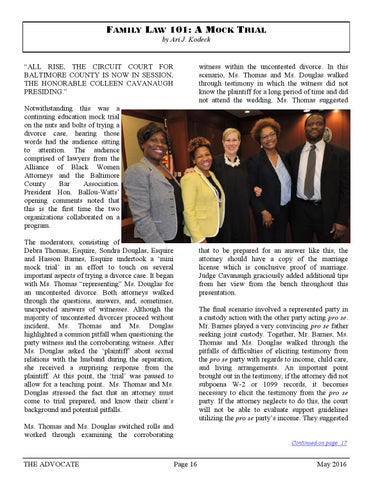
Notwithstanding this was a continuing education mock trial on the nuts and bolts of trying a divorce case, hearing those words had the audience sitting to attention. The audience comprised of lawyers from the Alliance of Black Women Attorneys and the Baltimore County Bar Association. President Hon. Ballou-Watts’ opening comments noted that this is the first time the two organizations collaborated on a program. The moderators, consisting of Debra Thomas, Esquire, Sondra Douglas, Esquire and Hasson Barnes, Esquire undertook a ‘mini mock trial’ in an effort to touch on several important aspects of trying a divorce case. It began with Ms. Thomas “representing” Ms. Douglas for an uncontested divorce. Both attorneys walked through the questions, answers, and, sometimes, unexpected answers of witnesses. Although the majority of uncontested divorces proceed without incident, Ms. Thomas and Ms. Douglas highlighted a common pitfall when questioning the party witness and the corroborating witness. After Ms. Douglas asked the ‘plaintiff’ about sexual relations with the husband during the separation, she received a surprising response from the plaintiff. At this point, the ‘trial’ was paused to allow for a teaching point. Ms. Thomas and Ms. Douglas stressed the fact that an attorney must come to trial prepared, and know their client’s background and potential pitfalls.
that to be prepared for an answer like this, the attorney should have a copy of the marriage license which is conclusive proof of marriage. Judge Cavanaugh graciously added additional tips from her view from the bench throughout this presentation. The final scenario involved a represented party in a custody action with the other party acting pro se. Mr. Barnes played a very convincing pro se father seeking joint custody. Together, Mr. Barnes, Ms. Thomas and Ms. Douglas walked through the pitfalls of difficulties of eliciting testimony from the pro se party with regards to income, child care, and living arrangements. An important point brought out in the testimony, if the attorney did not subpoena W-2 or 1099 records, it becomes necessary to elicit the testimony from the pro se party. If the attorney neglects to do this, the court will not be able to evaluate support guidelines utilizing the pro se party’s income. They suggested
Ms. Thomas and Ms. Douglas switched rolls and worked through examining the corroborating Continued on page 17
THE ADVOCATE
Page 16
May 2016