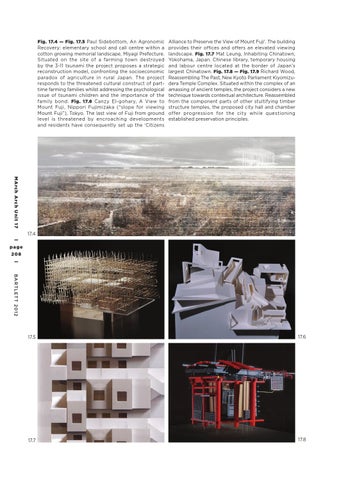
Fig. 17.4 — Fig. 17.5 Paul Sidebottom, An Agronomic Recovery: elementary school and call centre within a cotton growing memorial landscape, Miyagi Prefecture. Situated on the site of a farming town destroyed by the 3-11 tsunami the project proposes a strategic reconstruction model, confronting the socioeconomic paradox of agriculture in rural Japan. The project responds to the threatened cultural construct of parttime farming families whilst addressing the psychological issue of tsunami children and the importance of the family bond. Fig. 17.6 Canzy El-gohary, A View to Mount Fuji, Nippori Fujimizaka (“slope for viewing Mount Fuji”), Tokyo. The last view of Fuji from ground level is threatened by encroaching developments and residents have consequently set up the ‘Citizens
Alliance to Preserve the View of Mount Fuji’. The building provides their offices and offers an elevated viewing landscape. Fig. 17.7 Mat Leung, Inhabiting Chinatown, Yokohama, Japan. Chinese library, temporary housing and labour centre located at the border of Japan’s largest Chinatown. Fig. 17.8 — Fig. 17.9 Richard Wood, Reassembling The Past, New Kyoto Parliament Kiyomizudera Temple Complex. Situated within the complex of an amassing of ancient temples, the project considers a new technique towards contextual architecture. Reassembled from the component parts of other stultifying timber structure temples, the proposed city hall and chamber offer progression for the city while questioning established preservation principles.
MArch Arch Un i t 17 —
17.4
pa g e 208 — B A RT LET T 2012 17.5
17.6
17.7
17.8